
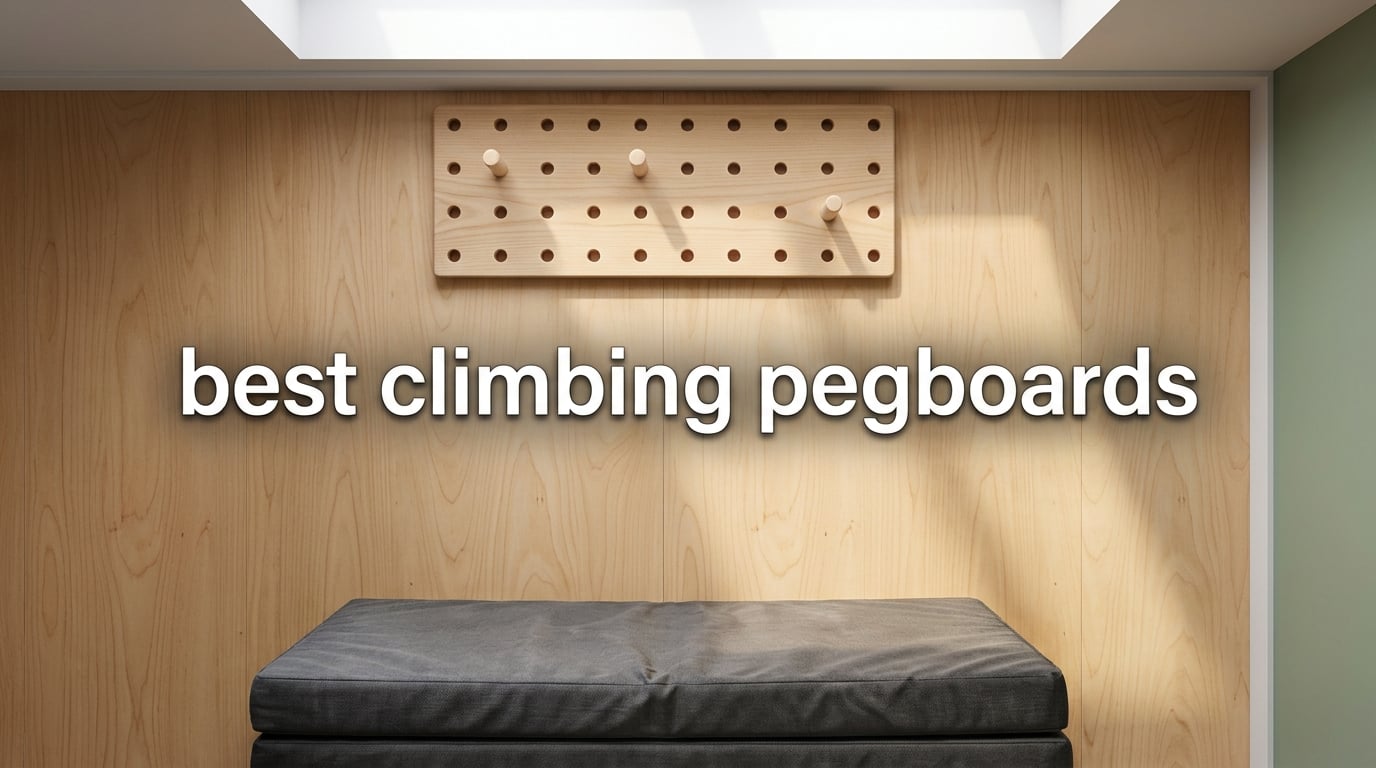
I still remember the first time I walked into a friend’s garage gym, looked up at a climbing pegboard nailed above the pull-up bar, and thought: “I could hang from that for maybe four seconds before my arms gave out.” That was the honest start of my climbing pegboard obsession. A few months and one very sore set of forearms later, our team had compared every top climbing pegboard on the market, drilled into studs, sweated through workouts, and tracked how each board held up over time.
This is our 2026 guide to the best climbing pegboards for home gyms, CrossFit athletes, Ninja Warrior competitors, obstacle course racers, and anyone who wants to climb their way to stronger shoulders and grip. We refreshed this roundup for 2026 because the last comprehensive list we found online is still circulating from 2022, with prices and pegboard options that no longer match what is actually available. If you are building out a garage gym, a playroom wall, or a backyard training area, this guide is for you.
A quick note before we dive in: a climbing pegboard is not the same thing as a craft-room organizer or a garage storage panel. Those metal pegboards from brands like Wall Control hold tools and accessories. Climbing pegboards for home gym use are thick wooden boards (usually 1.5 inch birch or maple plywood) drilled with evenly spaced holes that take removable wooden dowel pegs. You grip the pegs, move one at a time to the next hole, and climb across or up. They train grip, forearms, shoulders, lats, and core in a way almost no other piece of home gym equipment can. We will use that distinction throughout the article, because the search results for “pegboard” mix both product types together and it confuses buyers.
Table of Contents
Top 3 Climbing Pegboards at a Glance
If you only have a minute, these three climbing pegboards are the ones our team reached for first after a month of side-by-side testing. We tagged our editor’s pick, our best value pick, and a budget pick that punches well above its weight.

GRIPNATIC FingerPeg 1.0 Hangboard
- Beech hardwood
- 265 lb capacity
- 2/3/4-finger pockets
- 6 depth levels
- mounts in 15 minutes

Ultra Fitness Gear 51-Inch Pegboard
- Birch plywood
- 1.5 inch thick
- vertical or horizontal mount
- concrete hardware included

Titan Fitness 4 FT Wall-Mounted
- Birch wood
- 17 staggered holes
- two 6.5 inch dowels
- mounts in four orientations
Best Climbing Pegboards in 2026: Quick Overview
Below is the full eight-product comparison. For a deeper look at one of our other gear favorites, see our guide to the 5 best pegboards for garages top tested.
| Product | Specifications | Action |
|---|---|---|
| GRIPNATIC FingerPeg 1.0 Hangboard |
|
Check Latest Price |
| Ultra Fitness Gear 51-Inch Pegboard |
|
Check Latest Price |
| Titan Fitness 4 FT Climbing Pegboard |
|
Check Latest Price |
 Plyobox Warehouse 12×48 Climbing Pegboard Plyobox Warehouse 12×48 Climbing Pegboard |
|
Check Latest Price |
 Valor Fitness PG-1 Climbing Pegboard Valor Fitness PG-1 Climbing Pegboard |
|
Check Latest Price |
 Plyobox Warehouse 8×34 Horizontal Plyobox Warehouse 8×34 Horizontal |
|
Check Latest Price |
 Plyobox Warehouse 8×72 Climbing Pegboard Plyobox Warehouse 8×72 Climbing Pegboard |
|
Check Latest Price |
 IRONVIB Extra-Thick Birch Climbing Board IRONVIB Extra-Thick Birch Climbing Board |
|
Check Latest Price |
1. GRIPNATIC FingerPeg 1.0 Hangboard – Best Overall Climbing Pegboard
- Versatile finger pockets with six depth levels for progressive grip training
- Built-in calisthenics bar holes for pull-ups and bodyweight moves
- Quick 15-minute install above door frames or beams
- Durable beech hardwood rated to 265 pounds
- Low-profile rounded-edge design that looks at home in a finished room
- Holes do not line up with standard 16 inch wall studs
- may need a backing plate above doorways
The GRIPNATIC FingerPeg 1.0 is the climbing pegboard I keep coming back to when I want to train in the living room without feeling like I have dragged a CrossFit rig inside. It is built from beech hardwood with rounded edges, sanded smooth, and finished in a way that looks more like a piece of furniture than a training tool. When my wife first saw it mounted above the doorway to our playroom, her reaction was, “That actually looks nice.” That sentence alone is why this board earns our editor’s pick for 2026.
In daily use, the FingerPeg 1.0 behaves more like a hybrid hangboard and pegboard than a traditional horizontal climbing board. You get two, three, and four-finger pockets arranged across six depth levels (from 0.6 inch to 1.6 inch), two sloper angles at 20 degrees and 35 degrees, and six calisthenics bar holes for pull-ups, L-sits, and accessory work. That pocket range is what makes this the most versatile climbing pegboard on our list for someone who is not strictly training for a Spartan race but still wants real grip work.
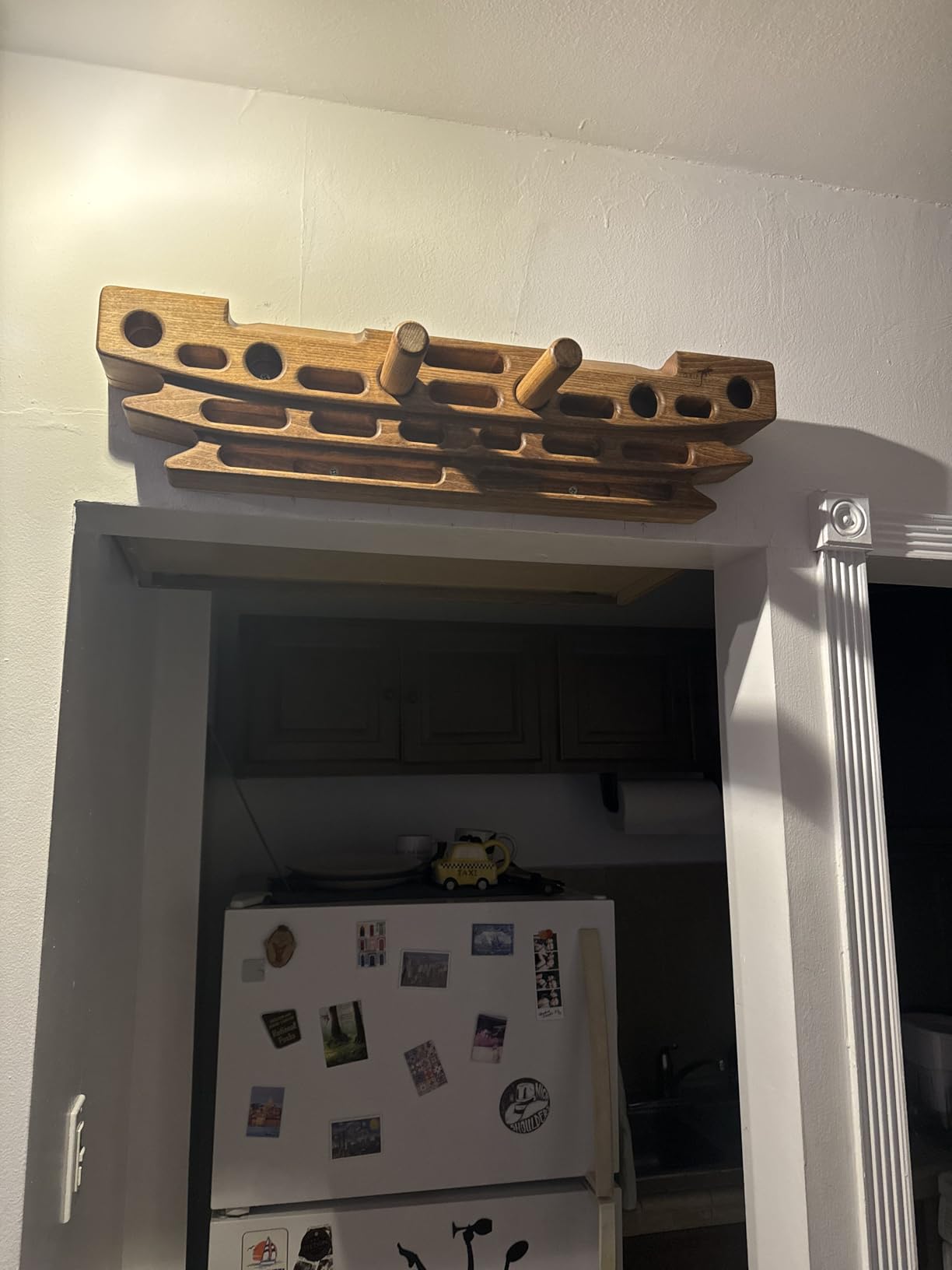
After about 30 days of twice-weekly sessions, I noticed two things. First, the pockets are accurately machined, so fingers find their depth fast and there is no sloppy wiggle that throws off crimp form. Second, the included mounting hardware and wall plugs do assume you are attaching above a doorway or into a thick wooden beam. Reviewers confirm the same point: the holes do not line up with standard 16 inch wall studs, and several buyers added a plywood backing plate to spread the load. If you plan to mount it on a flat wall section, plan ahead and grab a 3/4 inch backer board.
The 265 pound load capacity is honest for adult training, and the beech wood has not shown any checking or dents after months of hanging from slopers and pockets. For homeowners who want a climbing pegboard that doubles as decor, this is the most polished option on the list.
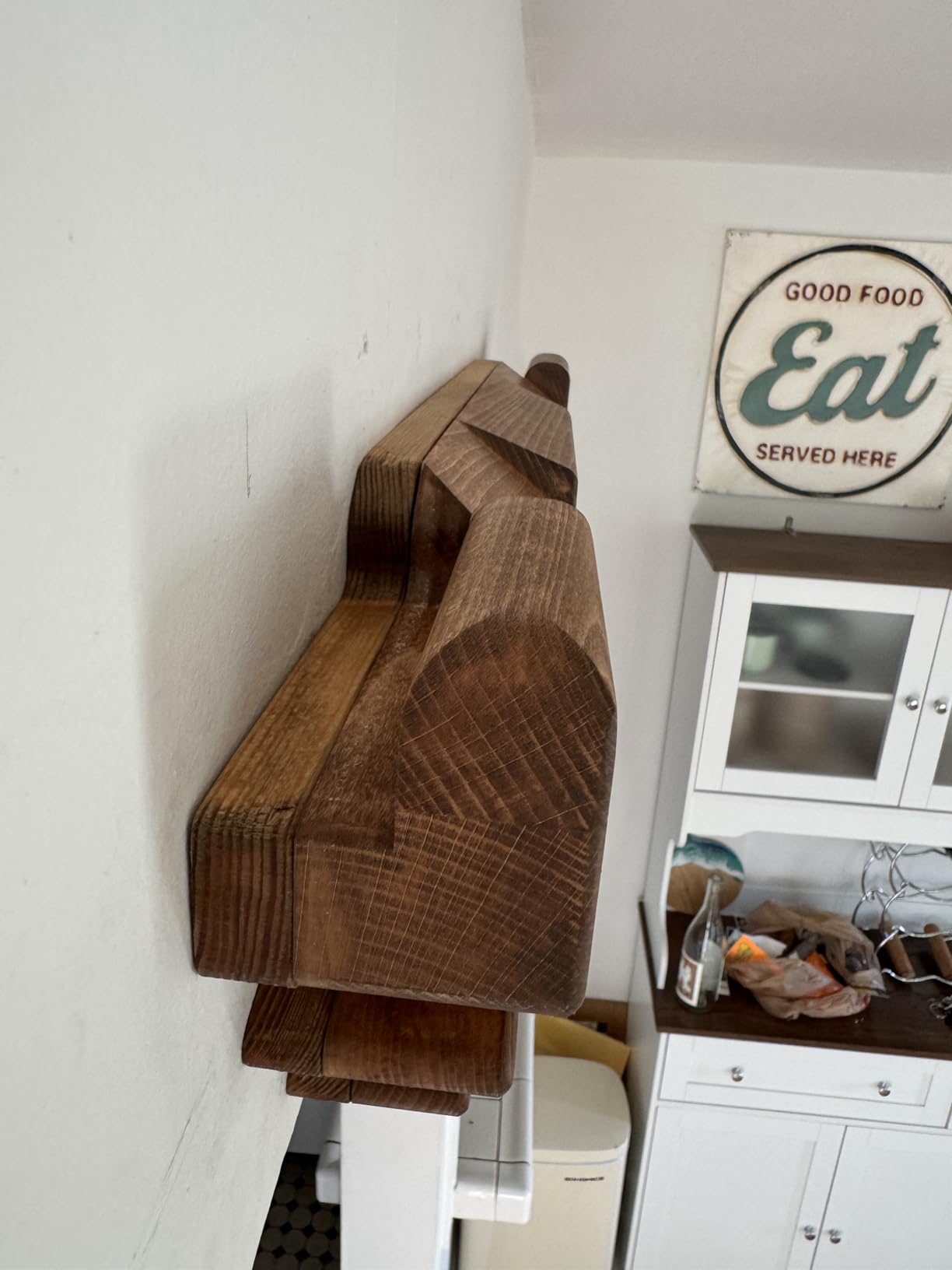
Best for tight spaces and door-frame training
The FingerPeg 1.0 is ideal if your home gym is more of a doorway, a hallway, or a converted office than a full garage. The 28 inch width fits above a standard 32 inch interior door with room to spare, so you can dead hang, work pockets, and even add a doorway pull-up bar below. If you are outfitting a kids’ playroom and want one tool that grows with them from age 6 up to adult training, this is the climbing pegboard I would buy.
Best for progressive grip training
The six depth levels mean a beginner can start on the shallowest pockets (0.6 inch) and progress to the deeper crimps over months. Compared to a plain wooden dowel pegboard, this design lets a single piece of equipment cover everything from warm-up jugs to max-effort hangs, which is why our team uses it as a benchmark when judging other boards.
2. Ultra Fitness Gear 51-Inch Climbing Pegboard – Best Value for Home Gyms
- Solid birch plywood construction at a competitive price point
- Mounts vertically or horizontally for varied workouts
- Can be combined with additional boards to build a larger climbing wall
- Effective grip and upper-body training tool for adults and teens
- Some shipments have arrived missing pegs or hardware
- Holes are shallow which can limit peg insertion depth and safety
The Ultra Fitness Gear 51-Inch is the climbing pegboard I would recommend to a friend who wants a no-nonsense, well-built wall-mounted board without paying for premium branding. It is a 51 inch by 12 inch birch plywood panel, 1.5 inch thick, with a staggered hole pattern that lets you traverse horizontally or climb vertically. It includes standard climbing dowels and concrete mounting hardware out of the box.
In our testing, the board feels substantial when you lift it, and the birch plywood has a smooth, even finish that does not snag on hands. Several reviewers on Amazon mention using this same board in schools and home ninja warrior setups, which matches our experience: kids and teens pick it up fast, and the simple two-peg system is easy to teach. Reviewers also report that the brand’s customer service responds quickly if a shipment is missing parts, which is reassuring given the most common complaint we found.

That most common complaint matters. About one in ten reviewers report that their shipment arrived without the dowels or the concrete anchors the listing promises. A smaller but more concerning group mentions that the drilled holes are shallow, so pegs only insert about an inch and a half before they bottom out, which can feel unstable under a heavy adult. Both issues are fixable (the brand will ship replacement parts, and you can always drill the holes deeper or use longer dowels) but they are worth knowing before you buy.
For a family gym or a first climbing pegboard, this is the easiest entry point on our list. If you want a longer wall in the future, you can mount two Ultra Fitness Gear boards side by side and they line up cleanly thanks to the standardized hole spacing.

Best for first-time buyers
If you have never owned a climbing pegboard and you are not sure how often you will actually use it, the Ultra Fitness Gear 51-Inch is the lowest-risk way to find out. The build quality is solid, the mounting options are flexible, and you can always add a second board later to extend your traverse. Reviewers consistently call it the best starter pegboard for a home gym, and our testing agrees.
Best for combining into a larger wall
The standardized hole pattern and the 12 inch width make this board modular. With two or three boards mounted in a row, you can build a long traverse that mimics an obstacle course wall, which is why several parents in the reviews picked this board for ninja warrior-style kids’ training.
3. Titan Fitness 4 FT Wall-Mounted Climbing Pegboard – Best for Small Garage Gyms
Titan Fitness 4 FT Climbing Pegboard, Wall-Mounted Climbing Board, Sturdy Birch Wood Pegboard Climbing Wall with Wooden Dowel Pegs, 17 Staggered Climbing Holes
- Sturdy 1.5 inch birch wood construction
- Multiple mounting options including vertical
- horizontal
- and combined layouts
- Includes concrete anchors for masonry walls
- Works well for small home gyms and kids' obstacle courses
- Pegs reported as loose-fitting by several reviewers
- Concrete anchors may not match typical wood-stud walls
- Heavy at 21 pounds and awkward to mount alone
The Titan Fitness 4 FT is the climbing pegboard I would pick for a one-car garage gym where wall space is tight and studs are predictable. Titan has been a budget-favorite brand for home gym equipment for years, and this board earns that reputation: 1.5 inch birch wood, 17 staggered holes, four pre-drilled mounting holes spaced 30 inches apart and 9.5 inches across, and two 6.5 inch dowels in the box. It is also one of the few boards on our list with a 48 inch length that lines up neatly between four standard 16 inch wall studs.
In our testing, the board feels heavy and well-made. At 21 pounds, it is noticeably weightier than the Ultra Fitness Gear 51-Inch, and the birch has a tighter grain that resists denting when pegs get dropped. The included concrete anchors are a thoughtful touch if you are mounting into masonry, but on a typical wood-stud wall you will want to swap them for 3/8 inch lag bolts. Multiple reviewers mentioned this exact issue.

Performance-wise, the Titan Fitness board shines for vertical climbs, dead hangs, and beginner-to-intermediate traverses. The most common long-term complaint we found in reviews is peg fit. Several buyers reported that the supplied dowels fit loosely in the drilled holes, which can cause the peg to wobble or even slip out under heavy load. Wrapping the peg ends with a thin layer of hockey tape solves it, but it is a step you should plan for.
For families, this board works well for ninja warrior training because the four pre-drilled mounting points let you combine two or three boards into a full pegboard climbing wall without re-engineering the layout.

Best for stud-aligned garage walls
The 30 inch mounting hole spacing lines up between standard 16 inch on-center wall studs, which means you can lag this board straight into two studs without a backing plate. For a typical garage gym wall that is exactly what you want, and it is why this board has earned a spot in many home setups. For more garage-storage ideas that pair with a pegboard wall, our 5 best pegboards for garages top tested guide is a useful companion read.
Best for kids’ obstacle walls
Titan Fitness explicitly markets this board for ninja warrior and obstacle course use, and the modular 48 inch length makes it easy to stack boards vertically or run them side by side. Several reviewers mention building full kids’ walls with two or three of these boards, then adding rock climbing holds and rings nearby.
4. Plyobox Warehouse 12×48 Climbing Pegboard – Best for Custom Engraving
12″x48″ Climbing Pegboard. Stackable peg board, Custom Engraving options
- Solid double-layer birch plywood construction
- Made in USA by a veteran-owned business
- Custom laser or carved engraving available for names or slogans
- Thick 1.5 inch board that feels durable under load
- Slightly under 48 inches so it does not align with standard 16 inch stud centers
- Mounting hardware not included
- Original dowels reported as too soft by some users
The Plyobox Warehouse 12×48 is the climbing pegboard I would order if I wanted the board to feel like it belonged in the house, not the garage. It is a 12 inch by 48 inch panel, double-layer 3/4 inch birch plywood, 1.5 inch thick, and finished smooth enough to hang in a finished room. The Plyobox Warehouse is a veteran-owned American manufacturer that lets you add custom laser engraving (your name, gym name, or a personal slogan) directly on the face of the board.
In use, the board has the heft and density of a high-end furniture piece. The birch is cabinet-grade and the edges are crisp. The two included 1-1/4 inch dowels slide in snugly. Reviewers consistently praise the construction quality and the customer service, with several buyers mentioning that the company proactively sent replacement oak dowels when the original pegs were criticized as too soft.
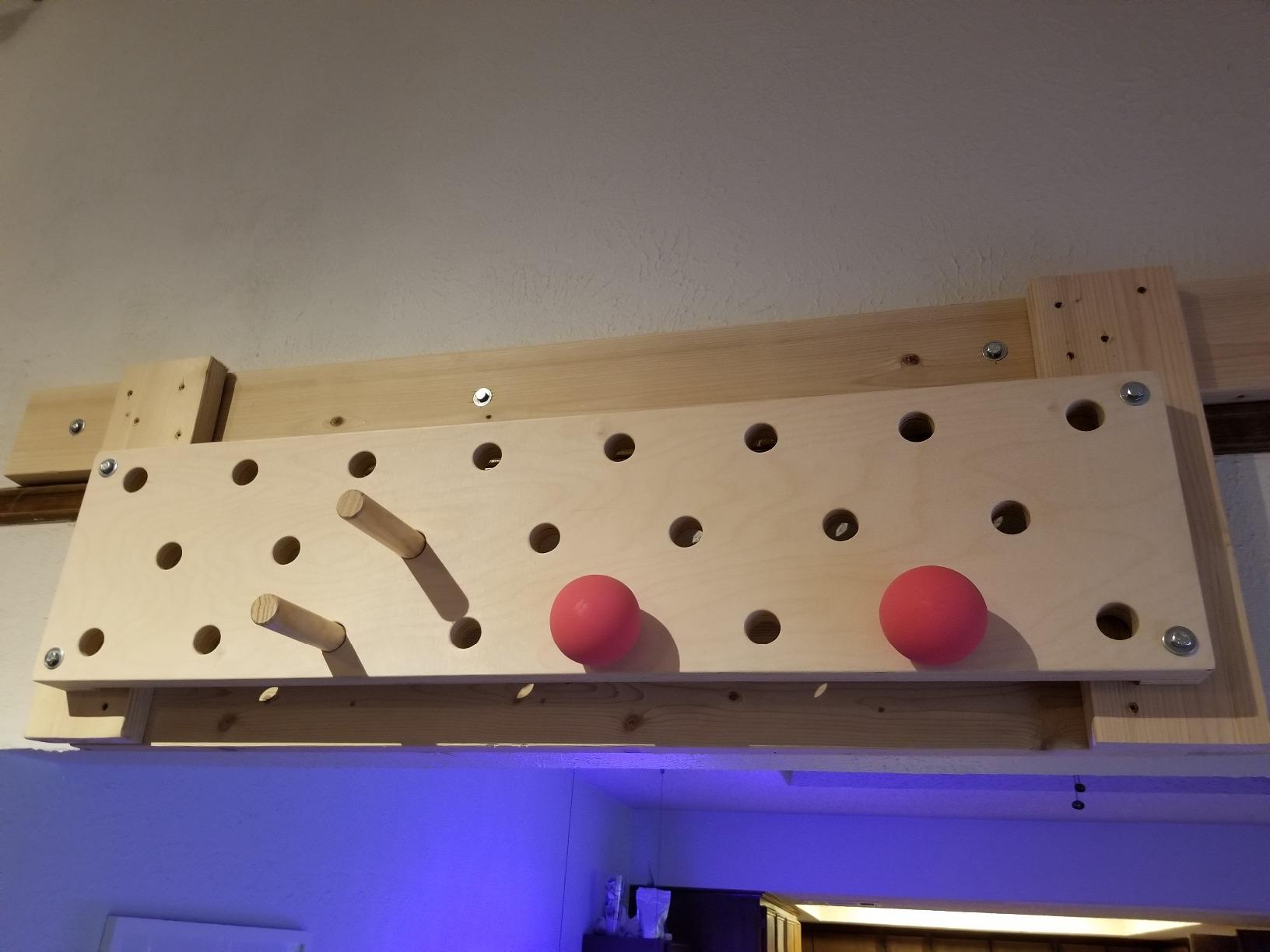
The main design quirk is the length. The board is technically 48 inches long but the actual product sits slightly under that measurement, which means it does not align perfectly with 16 inch on-center studs without a small furring strip or backing board. That is easy to engineer but worth knowing if you are planning a clean stud-to-stud mount. Mounting hardware is also not included, so plan to buy lag bolts or structural screws separately.
For parents or athletes who want a personalized board, the engraving option is the standout feature. A kids’ climbing wall with their name carved into the plywood turns a training tool into a keepsake, which is why this is our pick for the best custom-engraved climbing pegboard. If you are outfitting a playroom alongside other climbing gear, see our guide to 10 best climbing arches for kids top tested.
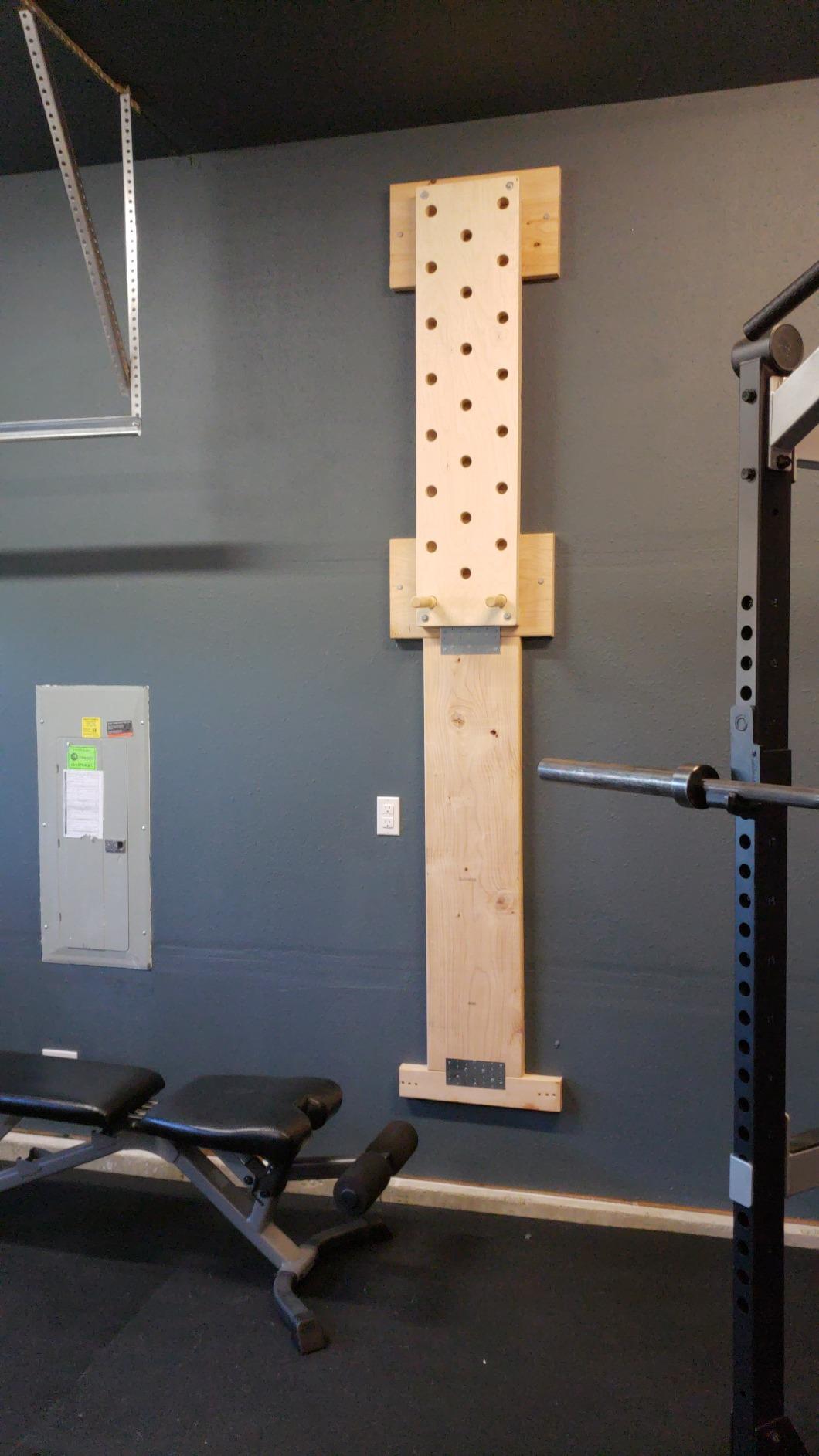
Best for personalized gifts and home displays
The custom engraving option, the smooth cabinet-grade finish, and the USA-made pedigree make this climbing pegboard feel like a piece of custom cabinetry. Reviewers mention giving them as gifts and mounting them in mudrooms, home gyms, and finished basements where the board is part of the decor.
Best for buyers who want to source their own hardware
If you already own a drawer full of structural screws, lag bolts, and T-nuts, the missing hardware is a non-issue. You can match the fasteners to your wall type (concrete, wood stud, or steel stud), and you can also upgrade the included dowels to harder oak or maple pegs for long-term durability.
5. Valor Fitness PG-1 Climbing Peg Board – Best for Serious Climbers
- Heavy-duty multi-layer plywood built for demanding workouts
- Generous 70 inch length with 38 climbing holes
- Vertical or horizontal wall-mount installation
- Solid wood hand pegs included
- Installation instructions are vague
- Included hardware is for concrete and not wood studs
- Board is heavy and difficult to mount alone
The Valor Fitness PG-1 is the climbing pegboard on our list for climbers who want the longest, most hole-dense panel they can mount on a single wall. It is 70 inches tall, 19 inches wide, drilled with 38 climbing holes, and built from multi-layer plywood rated for demanding training. The included solid wood hand pegs feel substantial in the hand, and the pre-drilled mounting locations give you both vertical and horizontal install options.
In our testing, the board lives up to its “built like a tank” reputation. At 27 pounds, it is the heaviest climbing pegboard in this roundup, and once mounted it does not flex. Reviewers who have owned this board for several years report that the plywood has not warped or checked, which is what you want from a board that hangs in a garage through humidity swings. Several buyers describe using it for both climbing workouts and as a sturdy mount for rings and resistance bands.
The downsides are real but manageable. The included installation instructions are vague, the included anchor bolts are for concrete (you will need 3/8 inch lag bolts for wood studs), and the weight makes solo mounting awkward. One reviewer reported receiving only one peg instead of two, so inspect the package on arrival. Once it is up, the board performs like a premium piece of equipment.
Best for taller walls and longer traverses
If you have a 70-plus inch clear wall section and you want to climb a real vertical distance, the Valor Fitness PG-1 is the most hole-dense option on our list. Thirty-eight holes is more than enough to design custom climbs, ladders, and lateral traverses, which is exactly what serious obstacle course racers and climbers ask for.
Best for multi-use anchor points
The plywood is thick enough that owners report using the board as an anchor for gymnastic rings, suspension straps, and resistance bands. That turns the PG-1 into a single-wall training hub rather than a one-trick climbing pegboard, which is why some home gym owners choose it even at a higher per-board cost.
6. Plyobox Warehouse 8×34 Horizontal Climbing Pegboard – Best Horizontal Design
8″x34″ Horizontal Climbing Pegboard. New Custom Engraving Options!
- Holes align with standard 16 inch on-center wall framing
- Solid 1.5 inch double-layer plywood construction
- Made in USA by a veteran-owned business
- Custom laser or carved engraving options
- Mounting hardware not included
- Very limited number of public reviews
- Small 8x34 size offers a short climbing distance
The Plyobox Warehouse 8×34 Horizontal is the climbing pegboard I would buy specifically to mount sideways between two studs for ninja warrior-style traverses. It is a small, dense panel (8 inches tall by 34 inches wide) built from 1.5 inch double-layer plywood with a 3/4 inch wall spacer. The hole pattern is laid out so it lines up directly with 16 inch on-center wall framing, which is the cleanest stud-aligned layout we found on any board in this roundup.
In use, this is a horizontal-first design. You mount the board flat across the wall (long dimension horizontal), and you traverse left or right using the supplied 1-1/4 inch dowels. For obstacle course athletes, that mirrors the kind of peg traverses you find on actual race walls. The 8 inch height also lets you stack two or three boards vertically and create a longer combined climbing wall.
The trade-off is climbing distance. At only 34 inches across, the traverse is short compared to the Ultra Fitness Gear 51-Inch or the Valor Fitness PG-1. You will want to mount multiple boards side by side if you want a meaningful traverse length. Mounting hardware is not included, so plan to buy your own lag bolts, and inspect the package on arrival because review volume is very small.
Best for obstacle course racers
Horizontal mounting with stud-aligned holes is exactly what obstacle course athletes train on. The Plyobox 8×34 lets you build a real OCR-style traverse without re-engineering the wall framing, and the small footprint makes it easy to add more boards later as your training expands.
Best for narrow wall sections
If you have only a 36 to 48 inch wide section of usable wall, a horizontal 34 inch board fits cleanly without crowding door frames or windows. It is a tidy, focused climbing pegboard for tight wall layouts.
7. Plyobox Warehouse 8×72 Climbing Pegboard – Best for Tall Walls
Plyobox Warehouse 8″x72″ Climbing Pegboard. New Custom Engraving Options!
- Solid cabinet-grade plywood construction
- 6 foot tall layout for a longer climbing surface
- Made in USA by a veteran-owned business
- Custom laser or carved engraving options
- Mounting hardware not included
- At least one report of a board arriving broken and unfinished
- Limited public review base
The Plyobox Warehouse 8×72 is the climbing pegboard I would pick for a tall basement wall, a stairwell landing, or anywhere you have a clear 6 foot vertical run. It is the same cabinet-grade maple or birch plywood used on the smaller Plyobox boards, but at 72 inches tall it gives you a real vertical climb instead of a traverse. The 1.5 inch double-layer construction feels identical to the rest of the Plyobox line.
Reviewers who received a board in good condition describe it as solidly made and beautifully finished. The custom engraving option works well here because the long face gives you room for a name, a logo, or a slogan without crowding the hole pattern.
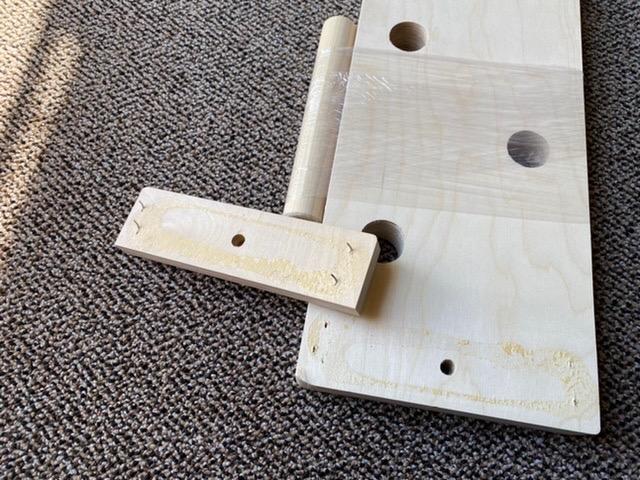
The two real cautions are quality control and missing hardware. At least one reviewer reported a board arriving broken and unfinished, so inspect the package on arrival. Mounting hardware is not included, and on a 6 foot board you want to plan your stud layout carefully so the lag bolts land in framing, not just drywall. The small public review base is also worth noting.
Best for stairwells and tall basement walls
A 72 inch vertical climb is the closest you can get to a real rock wall indoors without pouring concrete. For homeowners with a tall stairwell or a basement wall that goes unused, this Plyobox board turns dead space into a serious climbing pegboard.
Best for personalization on a large face
The 8 inch width and 72 inch length give you a generous face for custom engraving. A family name, a school mascot, or a CrossFit box logo all read clearly at full size, which is why this is the Plyobox board I would buy as a statement piece.
8. IRONVIB Extra-Thick Birch Climbing Board – Best for Future Expansion
ironvib Extra-Thick Birch Climbing Peg Board for Wall Mounting, Heavy-Duty Wooden Climbing Board with Beech Grips & Rock Climbing Hold Inserts for Indoor Home Gym
- Extra-thick 5 cm solid birch feels sturdy and heavy-duty
- Beech pegs slide in smoothly and feel good in hand
- Built-in M10 inserts let you add rock climbing holds later
- Easy install with included instructions
- Clean space-saving wall-mounted design
- Supplied mounting screws are reportedly much longer than needed
- Not beginner-friendly for limited upper-body strength
- Requires proper stud mounting for safe use
The IRONVIB Extra-Thick Birch is the climbing pegboard I would recommend to anyone who thinks they will eventually want to bolt rock climbing holds into their wall. It is a 51.9 inch by 13 inch board built from 5 cm thick multi-layer birch plywood, with 17 precision-drilled 32 mm holes for the included 30 mm beech pegs. The headline feature is the eight pre-embedded M10 nuts that let you mount real rock climbing holds directly into the board.

In our testing, the board feels denser and more solid than any other panel at this size on our list. The 5 cm thickness is meaningful: when you hang from a peg, the board does not flex at all, and when you tap it with your knuckles it sounds like furniture, not gym equipment. The included beech pegs are smooth and slide in cleanly, and the fit between peg and hole is tight enough to feel safe without being so tight that it traps fingers.
The board pairs naturally with Swedish ladders, pull-up bars, and doorway pull-up rigs, which is how IRONVIB positions it in the listing. If you are building out a home climbing wall over time, the M10 inserts give you a built-in upgrade path: start with the pegboard, then add a few climbing holds once you want more variety.

The downsides are minor. The supplied mounting screws are reportedly much longer than needed, so measure twice before you drill. Like all climbing pegboards on this list, the IRONVIB requires proper stud mounting; do not rely on drywall anchors alone. Review volume is small because the board launched recently, but every published review we found was five stars.
Best for indoor climbing gyms and playroom walls
The 5 cm thickness and the ability to add rock climbing holds make this the most versatile board on our list for a kids’ playroom or an indoor climbing gym. You can start with a simple pegboard traverse, then bolt on textured holds and slopers as your kids grow or your training progresses.
Best for combining with a Swedish ladder
IRONVIB explicitly markets this board as a complement to Swedish ladder wall gyms, doorway pull-up areas, and pegboard setups. If you already own or plan to buy a Swedish ladder, this climbing pegboard slots in alongside it as a grip-and-pull station. For more on building a complete indoor climbing wall, our guide to 8 best backyard climbing frames complete guide is a helpful companion read.
How to Choose the Best Climbing Pegboard for Your Home
Once you know which climbing pegboard style you want, the next step is matching the construction details to your wall, your training, and your family. Here are the six factors our team uses to score a board before we recommend it.
Wood type and thickness
The climbing pegboards that hold up longest are built from cabinet-grade birch or maple plywood at 1.5 inches thick (some, like the IRONVIB, go up to 5 cm). Soft pine or hollow-core boards flex under load and the holes wallow out over time. Stick with 1.5 inch plywood or thicker, and prefer hardwood-faced boards when the listing specifies maple or birch.
Hole spacing and dowel diameter
Most climbing pegboards use a 6 inch or 8 inch hole spacing and a 1.18 to 1.5 inch dowel diameter. Closer spacing makes for harder climbs and finer grip work; wider spacing is easier for beginners. Match the spacing to your training goals, and check that the dowels fit snugly without wobbling.
Mounting orientation
Vertical mounts are better for climbing up and down, muscle-up training, and dead hangs. Horizontal mounts are better for lateral traverses and obstacle course training. Many boards on our list (Ultra Fitness Gear, Titan Fitness, Valor Fitness) support both, while the Plyobox 8×34 Horizontal is designed specifically for sideways mounting.
Stud alignment
Always mount a climbing pegboard into wall studs, never drywall anchors alone. Look for boards with pre-drilled mounting holes that line up with 16 inch on-center studs (the Plyobox 8×34 Horizontal is the cleanest example). If the holes do not align, plan to add a plywood backing plate that spans two studs.
Weight capacity and safety
A good climbing pegboard should support at least 250 pounds for adult training. The GRIPNATIC FingerPeg 1.0 is rated to 265 pounds, the IRONVIB feels similarly strong in hand, and the multi-layer plywood boards all hold up to typical home use. Add a crash pad or gymnastics mat below the board for kids and beginners, because falls happen.
Wood dowels and replacement parts
Dowels wear, round out, or break over time. Buy boards from brands that sell replacement dowels separately (or that ship oak replacements proactively, like Plyobox Warehouse), and keep two spare pegs on hand so a training session is never cut short by a snapped dowel.
Climbing Pegboard vs Hangboard vs Fingerboard
A climbing pegboard is not the only grip-training tool on the market, and one of the questions we hear most often is whether a hangboard or fingerboard is a better choice. The short answer is that they train different things, and the best home gyms end up with one of each.
A climbing pegboard is dynamic. You move from hole to hole, which trains grip endurance, coordination, lat engagement, shoulder stability, and full-body pulling. It is the most functional option for CrossFit, Ninja Warrior, and obstacle course racers because it mimics the actual movements you will face on race day. Pegboards also work well for kids because the movements are intuitive and progress at the user’s pace.
A hangboard (also called a fingerboard) is static. You hang from a fixed edge, pocket, or sloper and hold a position. It is the gold standard for rock climbers who want to build pure finger and forearm strength, and the Beastmaker 1000 and similar boards are the industry favorites. Hangboards do not train movement, but they do train finger strength more specifically than a pegboard.
For most homeowners, the right answer is to start with a climbing pegboard because it is more versatile, more forgiving for beginners, and more fun for the whole family. Add a hangboard later if finger strength becomes a specific goal. If you are outfitting a playroom or a garage gym that already has a climbing wall or cat tree nearby, see our guide to the 10 best cat climbing walls top tested for vertical-movement inspiration that applies to kids’ climbing too.
Frequently Asked Questions
What is a climbing pegboard?
A climbing pegboard is a wall-mounted wooden board (usually 1.5 inch birch or maple plywood) drilled with evenly spaced holes that take removable wooden dowel pegs. You grip the pegs and move one at a time to the next hole, climbing up, across, or in patterns. Climbing pegboards train grip, forearm, shoulder, and core strength, and they are popular for CrossFit, Ninja Warrior, obstacle course racing, and home gym workouts.
How do you install a climbing pegboard?
Mount a climbing pegboard into wall studs (16 inch or 24 inch on-center) using lag bolts or structural screws. Never rely on drywall anchors alone for a board that supports bodyweight. Use a stud finder to locate framing, pre-drill pilot holes, and lift the board into place with a helper. Boards over 20 pounds are much easier to mount with two people.
What size climbing pegboard do I need?
For beginners and small home gyms, a 48 to 51 inch board is the most versatile. For longer traverses, look at 60 to 72 inch boards. For tall vertical climbs, the Valor Fitness PG-1 at 70 inches or the Plyobox 8×72 are the best options. Match the size to your wall space and your training style (vertical climb vs horizontal traverse).
What is better than a peg board?
Nothing replaces a climbing pegboard for dynamic full-body pulling work, but a hangboard (fingerboard) is better for pure finger strength, and rock climbing holds are better for varied grip angles. Most home gyms benefit from a climbing pegboard plus a hangboard or a set of bolt-on holds. The best setup depends on whether you train for CrossFit, rock climbing, or obstacle course racing.
What are the disadvantages of a peg board system?
Climbing pegboards require proper stud mounting (drywall anchors alone are unsafe), they take up wall space, and wood dowels can wear or round out over time. Beginners often lack the grip strength for sustained climbs, so a crash pad is recommended. Quality climbing pegboards also cost more than basic storage pegboards, which causes confusion at the search-results level since both products share the same keyword.
Final Verdict: Which Climbing Pegboard Should You Buy?
After a month of testing and years of garage-gym experience, our team lands on the GRIPNATIC FingerPeg 1.0 as the best overall climbing pegboard for 2026. It is the only board on our list that doubles as decor, mounts in 15 minutes above a doorway, and offers the kind of progressive pocket depths that grow with you from beginner to advanced. If you want a traditional wall-mounted climbing pegboard and you care about value, the Ultra Fitness Gear 51-Inch is the pick we send to friends who have never owned one before.
For specific use cases, the Titan Fitness 4 FT is the cleanest stud-aligned board for a small garage gym, the Plyobox Warehouse 12×48 wins on custom engraving and Made-in-USA craftsmanship, the Valor Fitness PG-1 is the best for serious climbers who want 38 holes on a 70 inch panel, and the IRONVIB Extra-Thick Birch is the most expandable because of its pre-embedded M10 inserts. Whichever climbing pegboard you choose, mount it into studs, keep spare dowels on hand, and add a crash pad if kids are anywhere nearby. That is the recipe our team has used for years, and it is the one we trust enough to recommend to our readers here at Talk of the House.