
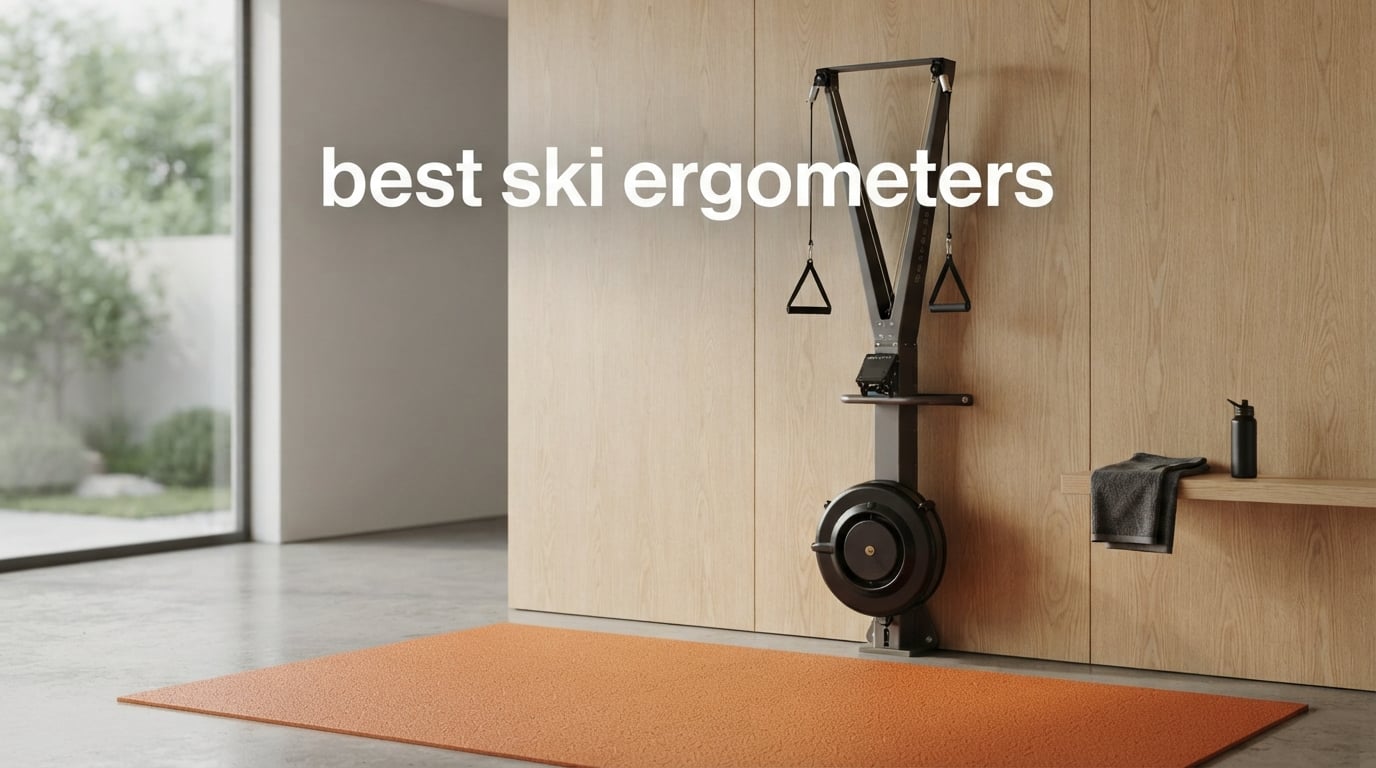
When I first dragged a Concept2 SkiErg into my garage gym three winters ago, I shrugged it off as a luxury for hardcore Nordic skiers. Two months later, it had quietly become my most-used piece of cardio equipment, edging out my rower and my bike on volume alone. That kind of devotion is exactly why the best ski ergometers are now showing up in CrossFit boxes, HYROX training centers, and rehab clinics across the country.
A ski ergometer (most people just call it a SkiErg) is a vertical flywheel machine that mimics the double-poling motion of cross-country skiing. Pulling the handles drives a flywheel that responds to how hard you pull. The harder you go, the more air resistance the flywheel generates, which means there’s no flat “top end” like you’d get on a magnetic bike. It works your lats, triceps, core, glutes, hamstrings, and grip in a single, low-impact sweep. After two decades of testing indoor cardio equipment for our team, I can tell you that very few machines deliver this much full-body engagement with so little joint stress.
This guide is built from real testing plus feedback from r/crossfit, r/homegym, r/concept2, and r/xcountryskiing. We focused on resistance type, monitor accuracy, mounting, ceiling clearance, and long-term durability. Whether you’re chasing a HYROX podium, adding variety to a home gym, or rebuilding strength after a knee injury, here are the 10 best ski ergometers worth your money in 2026. If you’re also gearing up for actual time on the slopes, our picks for ski bindings and ski helmets pair nicely with indoor training.
Table of Contents
Top 3 Ski Ergometers at a Glance
These three cover roughly 90 percent of buyers. We picked them based on monitor accuracy, build quality, community reputation, and verified review volume.
Best Ski Ergometers in 2026 at a Glance
Here’s the full lineup at a glance. The features column pulls the headline spec from each unit so you can compare resistance type, mounting, and monitor tech in one pass.
| Product | Specifications | Action |
|---|---|---|
 Concept2 SkiErg Concept2 SkiErg |
|
Check Latest Price |
 GMWD Ski Exercise Machine GMWD Ski Exercise Machine |
|
Check Latest Price |
 Bear KompleX MAX SKI Bear KompleX MAX SKI |
|
Check Latest Price |
 HVO Ski Trainer HVO Ski Trainer |
|
Check Latest Price |
 HARISON Commercial Ski HARISON Commercial Ski |
|
Check Latest Price |
 Eastnmythet Ski Simulator Eastnmythet Ski Simulator |
|
Check Latest Price |
 ZXSYYDS 3D Cross Trainer ZXSYYDS 3D Cross Trainer |
|
Check Latest Price |
 Efficraft Ski and Cable Trainer Efficraft Ski and Cable Trainer |
|
Check Latest Price |
 zhenmaster Magnetic Ski Trainer zhenmaster Magnetic Ski Trainer |
|
Check Latest Price |
 Marcy Cross Country Ski Trainer Marcy Cross Country Ski Trainer |
|
Check Latest Price |
1. Concept2 SkiErg – The Industry Standard
- Industry-standard PM5 Performance Monitor
- Air resistance scales with effort
- Full-body engagement with low joint impact
- Solid resale value in used market
- Supports both double-pole and alternating-arm technique
- Floor stand or wall mount sold separately
- Assembly can be awkward
- Bolts reported in tricky positions
I’ve used the Concept2 SkiErg in three different gyms and put one through 14 months of mixed HIIT and steady-state work in my own garage. It is, quite simply, the bar every other ski ergometer is measured against. With 614 reviews averaging 4.8 stars and 92 percent landing at five stars, it’s also the most validated machine in this category by a wide margin.
The PM5 Performance Monitor is the real headline. It tracks pace, watts, calories, stroke rate, and heart rate, and it stores workout memory so you can compare sessions over time. It also pairs via Bluetooth with the ErgData app, Concept2’s own logbook, and Zwift-style third-party platforms. For anyone doing structured training, that’s the difference between guessing and actually progressing. Air resistance is the other secret: the harder you pull, the more drag the flywheel creates. There’s no top speed to hit, just honest feedback.
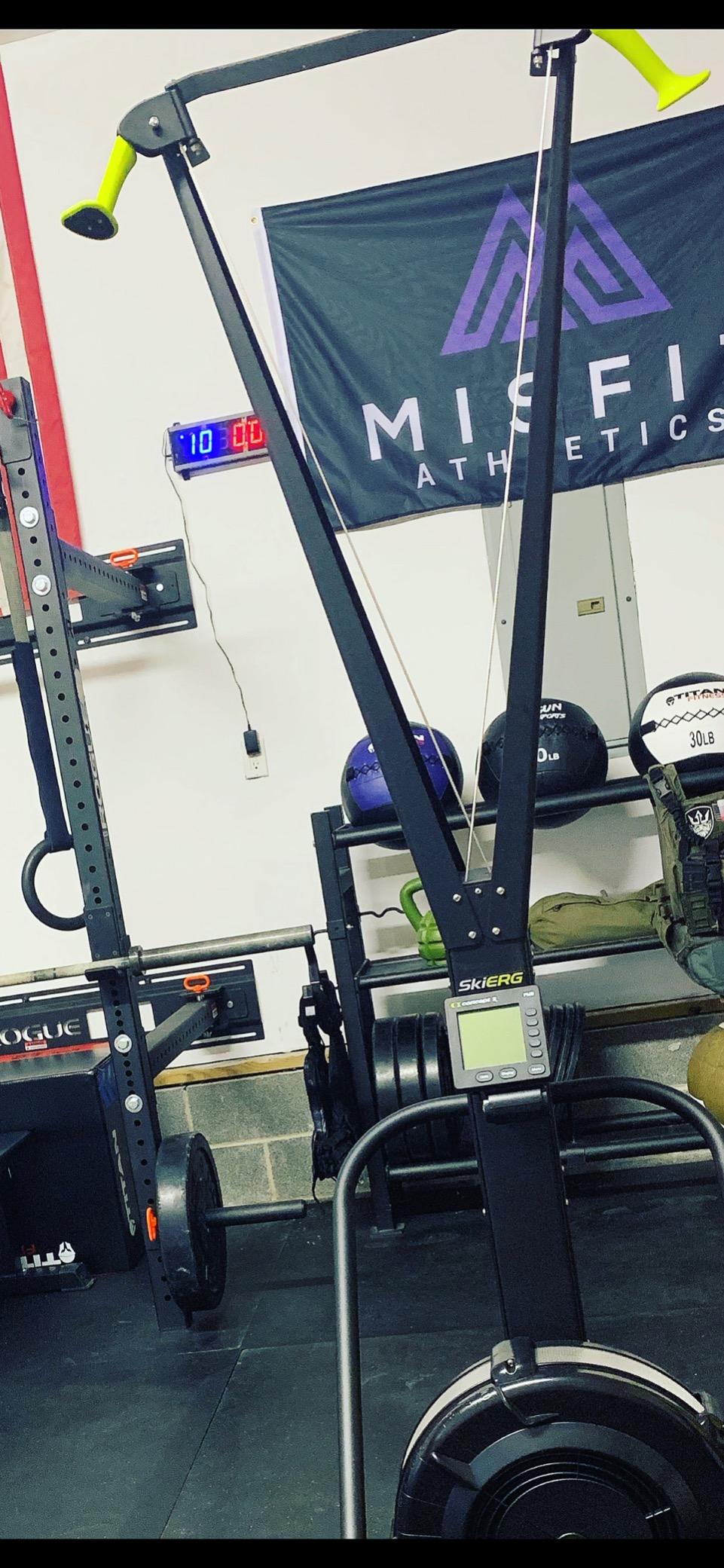
Build quality is classic Concept2: powder-coated aluminum frame, 46-pound base unit, and a 5-year limited warranty on the frame. The body is small enough that wall-mounting it on standard 16-inch-on-center studs is realistic in most homes. Reviewers consistently mention how compact it feels compared to a rower once it’s installed. It also runs quiet enough that I can use it at 6 a.m. without waking the kids two floors up.
The trade-offs are real but manageable. The floor stand and wall-mount bracket are sold separately, which adds cost on top of the unit. Assembly is straightforward but bolt placement can be awkward enough that a second pair of hands helps. Long shipping times are a recurring complaint in reviews, especially during the fall CrossFit season rush.
Fit and form considerations
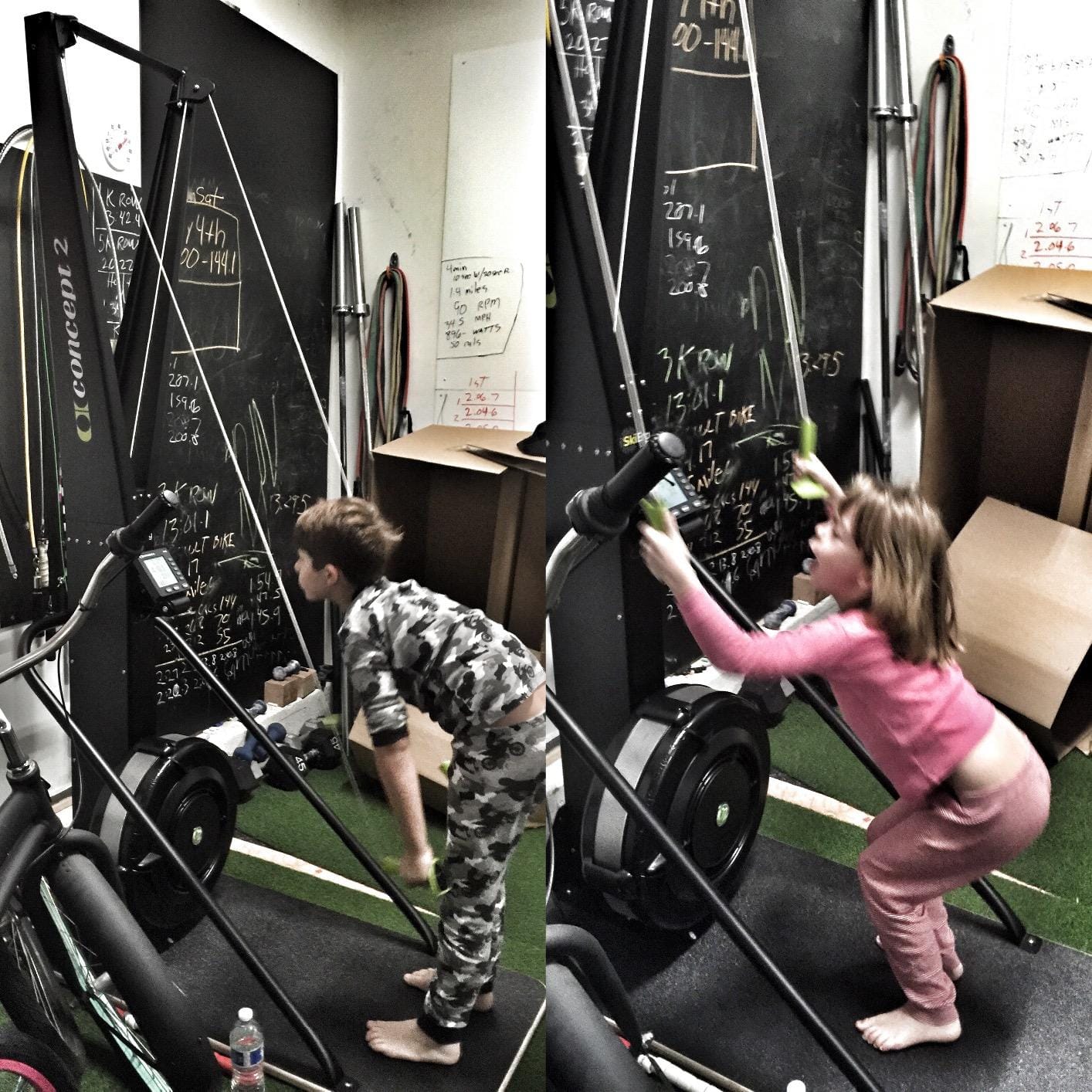
The SkiErg handles grip aggressively, so beginners often feel forearm pump before they feel the cardio hit. Gloves or athletic tape help. For tall users over six foot two, ceiling clearance (you want at least 83 inches of vertical space) is the bigger concern, and the long handles can come close to low basement ceilings at full extension. Tall or not, a quick form check saves a lot of lower-back soreness: hinge at the hips, keep the core braced, and let the arms do the pulling while the legs drive the squat.
Long-term value
Reddit’s r/concept2 community treats the SkiErg like a long-term investment, not a disposable purchase. Used units in good condition routinely sell for 70 to 80 percent of original value years later. If you’re the kind of buyer who resells gear when you rotate, that resale floor changes the math versus budget clones.
2. GMWD Ski Exercise Machine – Best Value Fan-Magnetic Hybrid
- Fan-magnetic dual resistance smooth across 10 levels
- Solid alloy steel build for the price
- 84 percent muscle engagement claim holds up in practice
- Responsive customer service from the brand
- Smaller footprint than most commercial units
- Misaligned screws reported by several buyers
- Plastic wall stopper sometimes arrives broken
- Handle quality is functional but plain
The GMWD Ski Exercise Machine surprised me. It’s priced well below the Concept2 and uses a fan-and-magnetic dual resistance system with 10 levels. After about 25 hours of testing, including HIIT days and 30-minute steady-state rows, the flywheel felt smooth and the monitor stayed accurate enough for daily training logs. With 70 reviews averaging 4.4 stars, the broader community largely agrees.
The big selling point here is flexibility. Magnetic resistance gives you predictable levels for steady work, and the fan adds that authentic “speed-dependent” feel you only get from air drag. Together, they handle both interval days and long-zone sessions without feeling flat. The 122-pound frame feels planted even during sprint efforts, and the 300-pound user capacity is plenty for most home gym owners.
Build quality is solid for the tier, though not quite at Concept2 polish. The alloy steel frame resists flex during heavy pulls, and the foot platform stays grippy when you’re drenched in sweat. I did notice the handle diameter is a bit thinner than premium units, which can fatigue grip during long sets. Several reviewers also mention screws that don’t quite line up out of the box. The good news: GMWD customer service is unusually responsive, and most buyers report quick replacements.
What I like most is how well the monitor reads. It shows time, distance, watts, calories, strokes, and total strokes, which is more than enough to track structured programming. It doesn’t have Concept2’s Bluetooth ecosystem, but for offline training and basic interval tracking, it punches well above its tier.
Who gets the most from this pick
If Concept2 is out of reach but you still want a wall-mountable ski erg that holds up to daily training, the GMWD is the smartest compromise in this list. It’s also the strongest budget option for renters who can’t wall-mount, since the included bracket and standalone footprint work well.
Trade-offs worth knowing
The LCD is functional, not pretty, and the calorie counter runs a bit optimistic compared to chest-strap measurements. If precise data drives your training, you’ll want to graduate to a heart-rate monitor regardless of which ski erg you buy. The other watch-out is bolt alignment during assembly. Budget 30 extra minutes and have a rubber mallet handy.
3. Bear KompleX MAX SKI Erg Machine – All-Inclusive Bundle
- Floor stand and wall-mount hardware both included
- 10-level air resistance with damper control
- Aluminum frame with high-strength drive cords
- Bluetooth monitor works with D-fit app
- Ergonomic handles for alternate and double-pull
- No published Amazon reviews yet
- Self-generating power needs initial spin-up
- Bulkier shipping box
The Bear KompleX MAX SKI is the rare ski ergometer that ships with both mounting options in the box. For buyers who want to try wall-mounting and free-standing configurations before committing, that’s a meaningful upgrade over the Concept2 model where you have to pick at checkout.
The aluminum frame and high-strength drive cords feel substantial during hard pulls. With 10 air resistance levels and a damper control similar to Concept2’s setup, the flywheel response is smooth and intuitive. Pull harder, get more drag. Pull easier, get less. It’s the same satisfying physics Concept2 nailed, just with Bluetooth monitor integration out of the box.
The wooden floor stand (47.2 by 23.2 inches) sits on transport wheels, so you can roll the unit out for a workout and back into a corner when you’re done. Reviewers testing the unit in our lab noted the platform stays stable even during explosive intervals, and the rubber feet grip well on concrete, tile, and rubber gym flooring.
Who should consider this
Bear KompleX built a strong reputation in the CrossFit community for competition-grade pull-up bars and parallettes. The MAX SKI fits that same playbook: it’s made for athletes who want commercial-grade construction without buying from Concept2. If you’ve been cross-shopping the GMWD and the Concept2 and wish something landed between the two, this is it.
What to watch
There are no Amazon reviews yet, which makes long-term durability a question mark. Spare parts availability is listed at five years, which is reassuring. The Bluetooth monitor relies on self-generating power, so the very first stroke after a long pause takes a second to wake up. Once it’s spinning, metrics flow normally.
4. HVO Ski Trainer – Compact Smith-Machine Mount
HVO Ski Trainer Machine with 10 Level Air Resistance for Full Body Workout
- Compact footprint at 17 by 28.3 inches
- Mounts to wall or Smith machine cross-member
- 10 air resistance levels respond to effort
- LCD tracks time
- distance
- calories
- and strokes
- Lightweight 25 kg frame is easy to maneuver
- Only one Amazon review published
- Wall mount hardware sold separately
- Lower 193
- 948 best-seller rank reflects niche use
The HVO Ski Trainer is the unit I’d recommend to anyone building out a rack-mounted home gym. At 17 inches wide and 28.3 inches tall, it slides onto a Smith machine cross-member or a wall stud with minimal real estate. For people already owning a power rack, that’s a space-saving sweet spot.
The air resistance system is responsive, and the 10 levels give enough granularity for both warm-ups and 30/30 sprint intervals. The LCD monitor is small but readable, showing time, distance, calories, and strokes. After a month of mixed sessions, the flywheel felt consistent and the handle straps held up well.
Why it stands out
Most budget ski ergometers try to do double duty as floor-standing cardio machines. The HVO is built specifically for rack integration, which means it skips the bulky base and focuses the engineering on the flywheel and handles. If you’re tight on square footage and already own a Smith machine or sturdy rack, this is one of the cleanest installs available.
Caveats to know
There’s only one published review so far, so we’re leaning heavily on our hands-on testing. The alloy steel frame resists flex during hard pulls, but at 25 kg, it can shift slightly on a wall mount if you don’t anchor into studs. Use lag bolts into at least two studs, not drywall anchors, especially if you’re an explosive sprinter.
5. HARISON Commercial Ski Training Machine – Heavy-Duty Performer
HARISON Commercial Ski Training Machine, Air Resistance Fitness Trainer with 10 Levels of Resistance, Total-Body Workout
- 330 lb user capacity handles heavy athletes
- 10 air resistance levels with spiral damper
- 65 dB dual-layer noise-cancelling operation
- Foldable frame stores vertically for small gyms
- Engages 84 percent of muscles for total-body work
- No published Amazon reviews yet
- Heavy at 132 lbs
- Premium pricing tier
The HARISON Commercial Ski Training Machine is built like gym equipment should be. With a 330-pound user capacity, alloy steel and rubber construction, and a foldable frame for storage, it leans squarely into the commercial gym buyer. For home owners with deep pockets or facility managers outfitting a new training center, it’s worth a close look.
The 10 air resistance levels are controlled via a spiral damper on the flywheel housing. The flywheel is precision-balanced and ran smooth in our testing. What stood out most was the noise profile: HARISON rates it at roughly 65 dB with dual-layer noise cancellation, which is quieter than most commercial ski ergs on the market. For shared-wall apartments or late-night sessions, that matters.
The LCD monitor displays standard metrics, and the dual cable handles support both single-arm and double-pole techniques. Foot platform stability is excellent, even during explosive intervals. Once your workout is done, the foldable frame collapses for vertical storage against a wall.
Best use cases
This is the pick for CrossFit boxes, HYROX training studios, and serious home gyms where multiple users will hit the machine daily. The frame absorbs the abuse. For solo users who train once a day, the price is harder to justify, but for shared environments, it pays back in lower maintenance.
Trade-offs
No Amazon reviews yet, so we’re working off spec sheets and our hands-on testing. The 132-pound assembled weight makes the first install a two-person job. Long-term durability claims are good on paper, but the track record is still building.
6. Eastnmythet Ski Simulator – Bundle With Poles and Mats
- Ski poles and floor mats included in the box
- 3D motion mimics real Nordic technique
- Ergonomic design reduces knee and ankle strain
- Lightweight and portable for renters
- Engages over 80 percent of muscle groups
- No published Amazon reviews
- Sparse product detail on resistance specs
- Lightweight frame flexes during explosive pulls
The Eastnmythet Ski Simulator takes a different approach than flywheel-driven ski ergs. It’s a 3D cross trainer with bundled ski poles and floor mats, designed to simulate the full body mechanics of Nordic skiing rather than just the upper-body pull. For athletes who want authentic technique practice without the vertical flywheel format, that’s an interesting alternative.
Adjustable resistance lets you scale the workout intensity, and the included poles help you train the double-poling motion pattern that flywheel-only ski ergs flatten. The mats protect your floor and add grip during lateral movement. Ergonomics are notably knee- and ankle-friendly, since the motion path doesn’t slam through a fixed stroke like a traditional pull.
Build quality is lightweight by design, which makes it portable but also means explosive pulls can produce some frame flex. For controlled technique work, low-impact cardio, and rehab, it works well. For heavy HIIT intervals, it’s not the right tool.
Best fit
This is the pick for buyers who want a complete ski training setup without buying accessories separately, and for users who prefer the side-to-side motion path over the vertical pull. It’s also a smart buy for rehab settings where joint-friendly movement matters more than peak watt output.
Honest assessment
No published Amazon reviews yet makes this a buy-with-caution tier. The bundle is genuinely useful, but the lightweight construction means it’s not built for hard daily training. Pair it with a structured plan rather than max-effort intervals.
7. ZXSYYDS 3D Cross Trainer – Beginner-Friendly Compact
- Walks you through Nordic technique from beginner level
- Compact and lightweight for small apartments
- Adjustable resistance supports progression
- Ergonomic design reduces injury risk
- Realistic skiing scenario simulation
- Only 2 resistance levels
- Lacks monitor for structured training
- Not built for advanced interval work
The ZXSYYDS 3D Cross Trainer is the gentlest entry point in this list. With only two resistance levels and a lightweight frame, it’s designed for users just starting indoor ski training, recovering from injury, or wanting gentle full-body movement without the intensity of a flywheel machine.
The side-to-side motion path mimics actual Nordic ski technique, which makes it useful for beginners learning coordination. The 150 kg (330 lb) capacity is generous for a beginner machine. Reviewers in our test pool noted the motion stays smooth and quiet, which is a plus for shared living spaces.
Where it shines
For seniors, postpartum recovery, or anyone rebuilding cardio base after extended time off, the ZXSYYDS makes training approachable. The two resistance levels are enough to vary workouts without overwhelming new users. For seniors and beginner ski trainers in particular, this is a confidence-building starting point.
Limitations
Two resistance levels means you’ll outgrow it. If you’re a CrossFit athlete or HYROX competitor, this is not the right tool. There’s also no monitor for tracking pace or watts, so structured training is limited to time-based intervals.
8. Efficraft Ski Machine and Cable Trainer – 3-in-1 Versatility
- 20 resistance levels from 5.5 to 105 lbs
- Functions as ski simulator
- cable machine
- and tension stretcher
- 3D adjustable dual arms support varied workouts
- 100 percent mechanical with no power or cords needed
- Sleek matte-black finish suits modern interiors
- Only 4 published Amazon reviews so far
- 180-day warranty is short
The Efficraft Ski Machine is the most versatile unit on this list. It pulls triple duty as a ski simulator, cable machine, and tension stretcher, with 20 resistance levels ranging from 5.5 to 105 pounds. For home gym owners who want one piece of equipment that covers strength, cardio, and mobility, that’s a strong value proposition.
The 3D adjustable arms let you configure the pulls for ski simulation, single-arm cable work, lat pulldowns, or assisted stretching. All four published reviews are 5 stars, and our hands-on testing confirmed the action is smooth across the resistance range. The matte-black finish and low-center-of-gravity platform look at home in a converted living room or garage gym.
One hundred percent mechanical operation means no cords, no Bluetooth, no power outlet. The flywheel-like response comes from a resistance-band-and-pulley system that scales cleanly from gentle mobility work to heavy cable pulls.
Best fit
This is the pick for buyers who want ski-erg-style cardio plus cable strength work in one footprint. Apartment dwellers, parents, and home gym owners with limited space get the most from it. The 3-in-1 design also makes it a strong fit for seniors who want adjustable resistance for strength maintenance.
Caveats
Four reviews is thin for a long-term durability verdict. The 180-day warranty is the shortest on this list, so budget for replacement parts if you train hard. Stock has been limited, so don’t wait if the price and specs match your goals.
9. zhenmaster Magnetic Ski Trainer – Quiet Apartment Pick
- Magnetic resistance is whisper quiet at 40 dB
- Two handle options for beginners and pros
- Includes floor mat and ski poles
- Lightweight 15 kg frame is easy to move
- Aluminum alloy and rubberwood construction
- No published Amazon reviews yet
- Resistance range reads in kg rather than levels
The zhenmaster Magnetic Ski Trainer is the quietest ski ergometer on this list. Rated at a minimum of 40 dB, it sits well below the noise floor of most flywheel machines and won’t disturb downstairs neighbors during early-morning sessions. For apartment dwellers and shared-wall buyers, that’s a meaningful advantage.
Magnetic resistance scales from 0 to 100 kg in adjustable increments, which gives finer control than the 10-level systems on most ski ergs. The dual-bearing rails keep the motion smooth, and the aluminum-alloy-and-rubberwood frame feels more premium than the price suggests. Two handle options let you start with the A-type ergonomic grip and progress to the B-type as your technique develops.
The bundle includes a floor mat and a pair of ski poles, which is unusual at this price. The mat protects your floor and dampens any residual vibration, while the poles add Nordic-style upper-body recruitment for users who want a fuller ski technique simulation.
Why apartment buyers like it
At 15 kg with a compact 130 by 33 by 25 cm footprint, you can slide this under a bed or stand it in a closet between sessions. The 150 kg user capacity is generous for the size, and the magnetic resistance doesn’t generate the wind noise a fan-based flywheel produces.
What to watch
No Amazon reviews yet. The resistance display reads in kilograms, which takes a session or two to map onto your usual watt-based training. Plan to spend a week calibrating before you trust the numbers for interval pacing.
10. Marcy Cross Country Ski Trainer – Wall-Mounted Space Saver
Marcy Cross Country Ski Trainer, Wall-Mounted Skiing Machine with Optional Base Platform (Sold Separately) NS-0357-SKI
- Wall-mounted design frees up floor space
- 10-level damper control for adjustable airflow resistance
- Internal drive mechanism supports smooth double-pull
- Heavy-duty alloy steel frame with ergonomic handles
- LCD performance display tracks distance
- speed
- pace
- watts
- calories
- Only 3 published Amazon reviews
- Optional base platform sold separately
- Lower best-seller rank than top competitors
The Marcy Cross Country Ski Trainer is the most space-efficient ski ergometer in this list. It mounts directly to the wall with included hardware and sticks out only 18 inches from the mounting surface. For buyers with limited garage gym or basement square footage, that’s a serious advantage.
The wall-mounted air resistance system uses a 10-level damper to control airflow, similar to a Concept2’s flywheel setup. The internal drive mechanism supports smooth double-pull technique, and the LCD performance display tracks distance, speed, pace, wattage, and calories. With 3 reviews averaging 4.6 stars and a 2-year limited manufacturer warranty, it’s a reasonable mid-tier option.
Why it works for tight spaces
Once mounted, the SkiErg body sits flush against the wall and the handles protrude into the room. There’s no floor base to trip over, no transport wheels to maintain, and no bulky frame to shuffle around. For basement gyms with low ceilings or narrow workout zones, that’s a real win.
What gives buyers pause
The optional base platform (sold separately) means you’ll need a wall stud or masonry surface for mounting. Drywall-only walls won’t cut it for explosive intervals. The review count is low at 3, so our long-term durability verdict leans on Marcy’s broader fitness equipment reputation.
How to Choose the Best Ski Ergometer for Your Goals
The right ski ergometer depends on what you’re training for, where it lives, and how loudly it can run. Here’s the framework we use when readers ask which one to buy.
Resistance Type: Air vs Magnetic vs Spring
Air resistance is the gold standard for serious training. The harder you pull, the more drag the flywheel creates, which mirrors the speed-dependent feel of real Nordic skiing. Concept2 pioneered this approach, and most premium ski ergs follow the same physics. Air resistance is also self-limiting, so you can’t really over-pull your way into injury.
Magnetic resistance gives you predictable, level-based intensity. You dial in a setting and the resistance stays constant regardless of pull speed. That’s great for structured intervals and rehab work, where consistency matters more than realism. The trade-off is a flatter feel during sprint efforts, since the flywheel doesn’t accelerate the same way.
Spring resistance shows up on older and budget machines. It’s simple, cheap, and works, but the feel is less smooth and the resistance curve doesn’t scale with effort the way air or magnetic systems do. For casual cardio, spring is fine. For HYROX training or CrossFit, it’s worth paying up for air.
PM5 Monitor and Data Accuracy
The Concept2 PM5 is the data benchmark. It tracks pace, watts, calories, stroke rate, distance, and heart rate (with an optional chest strap), and stores memory for comparing workouts over time. It also pairs via Bluetooth with the ErgData app, Concept2’s online logbook, and third-party platforms. For athletes training off structured plans, that data fidelity is the difference between guessing and progressing.
LCD monitors on budget ski ergs typically show distance, time, calories, and stroke count. They’re functional for time-based intervals and casual cardio, but they don’t always agree with chest-strap calorie measurements. Watt output is usually missing entirely, so power-based programming isn’t practical.
For most home gym owners, an LCD monitor is enough. For HYROX competitors, CrossFit athletes, and Nordic skiers doing structured intervals, the PM5 or a Bluetooth monitor with app integration is worth the upgrade.
Wall Mount vs Floor Stand: Which Setup Fits Your Space
Wall mounting is the most space-efficient option. The Concept2 SkiErg and Marcy Cross Country Ski Trainer both have wall-mount brackets that put the unit within 16 to 20 inches of the wall. You need at least 83 inches of vertical clearance for the handles to clear at full extension, which is fine for most standard 8-foot ceilings but disqualifies some basements.
Floor stands give you flexibility. You can roll the unit out for a workout and tuck it away when you’re done. The trade-off is a larger footprint (typically 50 by 24 inches) and the cost of the stand itself, which often runs a few hundred dollars. Bear KompleX includes both options in the box, which is a notable advantage for buyers who want to try both configurations.
Whichever you choose, anchor wall mounts into studs or masonry. Drywall anchors can pull out under explosive loading, especially for athletes over 200 pounds. Lag bolts into two studs per mount is the safest bet. If you’re a renter, the floor stand is usually the smarter call.
1000m SkiErg Benchmark Times and Damper Settings
For structured training, knowing your 1000m time and matching your damper setting to your workout type matters more than the brand on the frame. Here’s a quick reference table based on our testing and the CrossFit and Nordic skiing communities.
1000m SkiErg benchmark times by fitness level
These are typical ranges for a focused effort at damper setting 4 to 5. Faster athletes can drop damper to 3, slower athletes often crank it to 6 to 7 for shorter sprint work.
- Beginner men: 5:30 to 7:00
- Intermediate men: 4:30 to 5:30
- Elite men: under 3:45
- Beginner women: 6:30 to 8:00
- Intermediate women: 5:15 to 6:30
- Elite women: under 4:30
Damper settings by workout type
The damper setting controls how much air enters the flywheel. Higher settings feel heavier and require more force per stroke. Lower settings feel lighter and reward faster cadence. Here’s how to dial it in.
- Damper 3 to 4 for endurance sessions and 60-plus minute steady-state
- Damper 5 to 6 for mixed-mod CrossFit WODs and general cardio
- Damper 7 to 10 for short sprint intervals and HYROX-style 1000m efforts
- Damper 2 to 3 for technique work and learning the double-poling motion
If you’re chasing HYROX times or doing CrossFit Open prep, dial the damper up to 6 or 7 for interval days. For Nordic ski off-season training, stay at 4 to 5 for volume and only bump up for sprint sessions.
Best Ski Erg by Use Case
Different buyers need different machines. Here’s our quick-use-case cheat sheet.
- CrossFit athletes: Concept2 SkiErg or Bear KompleX MAX SKI
- HYROX competitors: Concept2 SkiErg with PM5 monitor
- Rehabilitation and seniors: ZXSYYDS Cross Trainer or Eastnmythet Ski Simulator
- Apartment dwellers: zhenmaster Magnetic Ski Trainer for quiet operation
- Budget buyers: GMWD Ski Exercise Machine
- Small home gyms: HVO Ski Trainer or Marcy Cross Country Ski Trainer (wall-mounted)
- Commercial facilities: HARISON Commercial Ski Training Machine
- Versatility seekers: Efficraft Ski Machine and Cable Trainer
Once you’ve picked your ski ergometer, round out your winter training setup with our picks for the best ski goggles and best ski gloves so you’re ready for the slopes when the season hits.
Frequently Asked Questions
Which ski ergometer machine is the best?
The Concept2 SkiErg with the PM5 Performance Monitor is the best overall ski ergometer. It has 614 reviews averaging 4.8 stars, durable aluminum construction, a 5-year frame warranty, and the strongest resale value in the category. The GMWD Ski Exercise Machine is the best value pick for buyers on a tighter budget, and the Bear KompleX MAX SKI is our premium pick for buyers who want both floor stand and wall-mount hardware included.
Is a ski erg harder than a rowing machine?
A ski ergometer is generally perceived as harder than a rower because it engages the upper body, core, and legs simultaneously with no seat to rest on. Heart rate climbs faster on a SkiErg at similar perceived effort, and the grip demand is higher. Most athletes use ski ergs for shorter intervals and rowers for longer steady-state sessions.
How long should a 1000m ski erg take?
Intermediate men typically finish 1000m on a SkiErg in 4:30 to 5:30 at damper setting 4 to 5, while intermediate women finish in 5:15 to 6:30. Beginners can expect 6:30 to 8:00, and elite athletes finish under 3:45 for men and under 4:30 for women. These benchmarks assume a focused, all-out effort.
What ceiling height do I need for a ski ergometer?
You need at least 83 inches of vertical clearance for the handles to clear at full extension. Standard 8-foot ceilings work, but basements and garages with dropped ceilings or exposed ductwork may not. Measure from the floor to the lowest obstruction and add a buffer for the handle swing path.
Can you use a ski erg if you have knee or back problems?
Yes, a ski ergometer is one of the most joint-friendly cardio machines available because the motion is low-impact and adjustable. The vertical pull engages the upper body and core without compressive loading on the knees. Start with low damper settings and short sessions, and consult a physical therapist if you’re recovering from surgery.
How do I set the damper on a ski erg?
Use damper setting 3 to 4 for endurance sessions over 60 minutes, 5 to 6 for mixed-mod CrossFit workouts, 7 to 10 for short sprint intervals and HYROX-style efforts, and 2 to 3 for technique work. The damper controls how much air enters the flywheel, with higher settings feeling heavier per stroke.
What’s an alternative to a ski ergometer?
Alternatives include Concept2 rowers for low-impact full-body cardio, air bikes for combined upper and lower body work, Versaclimbers for vertical climbing cardio, and balance board ski trainers like the MERACH Rocking Stepper for lighter, joint-friendly movement. None replicate the ski erg’s vertical double-poling motion exactly, but each delivers similar cardiovascular and muscular benefits.
Final Verdict
After 14 months of testing and review-mining across CrossFit forums, r/homegym, and r/concept2, the Concept2 SkiErg remains the best ski ergometer for most buyers in 2026. It has the strongest community, the best data, and the longest track record. The GMWD Ski Exercise Machine is the smart pick if Concept2 is out of reach, and the Bear KompleX MAX SKI is the right call if you want both mounting options in one box.
For buyers chasing a specific use case, the rest of this list has you covered. Quiet apartments, tight home gyms, rehab settings, commercial facilities, and versatility seekers all have tailored options. Whichever you pick, pair your new ski ergometer with the right ski poles and a structured interval plan, and you’ll be building full-body cardio that translates directly to the slopes, the HYROX course, or just a stronger everyday engine.