
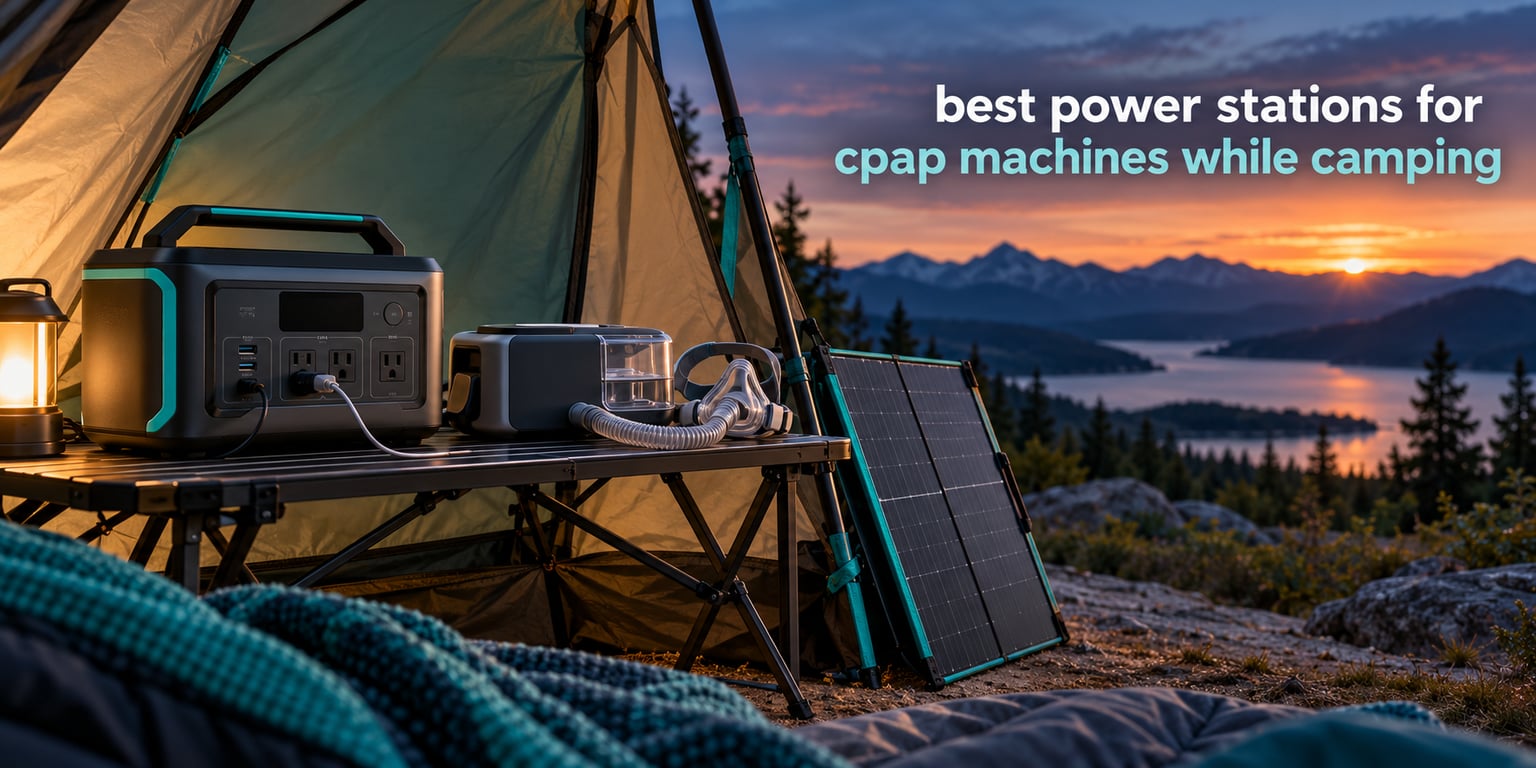
A CPAP is the one piece of gear you should never leave to chance. Lose power in the middle of the night and the machine shuts down, you wake gasping, and untreated sleep apnea comes straight back with the snoring and the foggy head. That is why searching for the best power stations for CPAP machines while camping is a medical-adjacent purchase decision, not a campsite convenience one.
Here is the honest version of the research. We worked through ten of the most reviewed portable power stations on the market, checked their inverter output, battery chemistry, capacity and weight, and then ran the runtime arithmetic against real CPAP draw figures rather than the marketing claims. Most “seven days of CPAP power” headlines assume a 30W machine with the humidifier off and no conversion losses. Real setups land somewhere in the middle.
Two things decide your answer before any brand does: how many nights you are off-grid, and whether you run the heated humidifier. Those two answers take most people from a 256Wh pack that fits in a daypack to a 1152Wh station you load once and forget. We also explain where the cheap options (a 12V car battery, a jump starter, a dedicated travel CPAP battery) genuinely beat a power station, which is something most roundups skip. If you are still choosing a machine, our guide to the best home CPAP machines is worth reading first, since draw varies a lot between models.
We earn a commission when you buy through the links on this page, at no additional cost to you.
Top 3 picks for powering a CPAP while camping in 2026


Jackery Explorer 1000 v2
- 1070Wh
- 1500W pure sine wave
- Three quiet AC outlets
- 30 dB night mode
All 10 picks at a glance in 2026
| Product | Specifications | Action |
|---|---|---|
| Jackery Explorer 300 |
|
Check Latest Price |
| Jackery Explorer 1000 v2 |
|
Check Latest Price |
 BLUETTI AC180 BLUETTI AC180 |
|
Check Latest Price |
 GRECELL T-500 GRECELL T-500 |
|
Check Latest Price |
 ALLWEI 500W ALLWEI 500W |
|
Check Latest Price |
 BLUETTI Elite 100 V2 BLUETTI Elite 100 V2 |
|
Check Latest Price |
 Anker SOLIX C1000 Gen 2 Anker SOLIX C1000 Gen 2 |
|
Check Latest Price |
 EcoFlow Delta 3 Classic EcoFlow Delta 3 Classic |
|
Check Latest Price |
 EcoFlow RIVER 2 EcoFlow RIVER 2 |
|
Check Latest Price |
 EcoFlow River 2 Max 500 EcoFlow River 2 Max 500 |
|
Check Latest Price |
How much power does a CPAP actually use?
A typical CPAP draws 30 to 60 watts continuously, and a night of sleep is eight hours. That works out to somewhere between 240 and 480 watt-hours per night, before you add losses.
The most common machines fall in the middle of that band. A ResMed AirSense 10 or AirSense 11 at standard pressure, a Philips DreamStation and a ResMed AirMini all sit in the same general range, with the heated humidifier and heated tubing pushing a machine toward the top of it. Pressure setting matters too: a 20 cmH2O setting moves the motor harder than a 10 cmH2O setting.
Here is the formula we use for every station in this guide:
Usable watt-hours = capacity in Wh multiplied by 0.85. Nights = usable watt-hours divided by your nightly consumption.
The 0.85 factor covers inverter conversion, the electronics that stay awake while the CPAP runs and the reserve you want to keep so the station never hits empty mid-night. If you plan to run the machine through the AC outlet rather than the 12V DC port, use a lower factor, closer to 0.7, because you are paying for a double conversion.
Worked example: a 1070Wh station gives you about 909 usable watt-hours. At 300Wh a night (humidifier off, mid-range machine) that is three nights. At 480Wh a night with the humidifier at full heat, it is closer to one.
Cold weather and altitude both work against you. Cold dry air makes a heated humidifier run harder, adding 15 to 30 percent on top of your baseline draw, and higher campsites mean the machine works against thinner air. Size for your worst night, not your average one.
AC or DC: the runtime difference most guides skip
Run your CPAP from the 12V DC output whenever you can. Plugging into the AC outlet means the station converts stored DC to AC, and the wall brick in your CPAP then converts it back to DC, and every one of those steps throws away energy. Forum users consistently report roughly 30 percent more runtime from the same battery when they switch to a DC cable.
One user on a camping forum reported getting only 6.5 hours from a station while using the AC output. Switching the same machine to a DC adapter roughly doubled the overnight runtime from the same charge. That is not a small difference, it is the difference between one night and two.
Buy a proper DC cable rather than the thin one that comes in the box. A 18AWG cable can lose around half a volt per foot, and over a six-foot run that is enough to make a machine complain. A 12AWG cable costs a few dollars more and gives you a meaningful efficiency gain on longer DC runs.
Cable compatibility is the part people get wrong. Philips DreamStation models take a straightforward 12V barrel plug. ResMed machines are the exception: many of them need a 12V to 24V step-up converter, and using the wrong one simply means the machine never recognises the power source. Check the model number on the bottom of your machine before you buy anything.
1. Jackery Explorer 300 (292Wh) – the lightest station that will carry a full night
- Lightest option here at 7.1 lbs
- Pure sine wave AC output
- 4000+ cycle LiFePO4 cell
- 100W USB-C PD plus 12V car port
- 292Wh is the smallest capacity in the roundup
- 300W output caps what runs alongside the CPAP
- About 2.8 hours to 80 percent from a 100W panel
This is the pick we come back to. At 7.1 lbs it is the only station in the roundup you can genuinely carry from a car to a distant site in one hand, and that changes what kinds of camping are possible. Everything else in this list is a car-camping purchase. This one can go on a footpath.
Arithmetically it is tight. 292Wh at the 0.85 factor gives about 248 usable watt-hours, which is one comfortable night on a machine running 30W with the humidifier off, and not much more than half a night at 60W with the heater on. Buyers who treat it as a one-night pack and recharge between nights are happy. Buyers who expect three nights are not.
The inverter is the reason it works at all for a medical device. This is a pure sine wave 110V AC output, and the 300W continuous rating sits well above what any CPAP draws. You also get a 120W 12V car port for a DC cable, a 100W USB-C PD port and two USB-A ports, which covers a phone and a headlamp at the same time as the machine.
Over 11,000 reviews averaging 4.6 stars is the largest review base in this roundup, and 81 percent of those are five-star. Owners keep pointing at the same two things: that the pure sine wave output is clean enough for a CPAP, and that the weight is unusually low for the class. The LiFePO4 cell holding over 70 percent capacity past 4,000 cycles is a real long-term advantage over the older lithium-ion packs in the sub-500Wh class.
Who the Jackery Explorer 300 suits
It suits the solo camper doing one night away, the hiker staying at a hut, and anyone whose campsite is a fifteen-minute walk from the car. The 9.1 by 5.2 by 7.8 inch footprint and integrated handle make it genuinely portable rather than theoretically portable.
It also works as a home outage backup for a night, which is where the huge review base comes from. Users run routers, laptops and CPAP machines through it during short outages and recharge it the next morning.
Who it does not suit
It does not suit a humidifier user on a two-night trip, and it does not suit anyone who wants to run a 12V car fridge or a space heater alongside the machine. The 300W ceiling is real, and 292Wh leaves no margin for a second device overnight.
Solar is not the answer on this one. Reaching 80 percent from a 100W panel takes about 2.8 hours, so a single small panel will not recover a night of use in a day of good sun. Plan on wall or car charging between nights, and read our broader portable power station camping guide if you want the full charging picture.
2. Jackery Explorer 1000 v2 (1070Wh) – the best balance for a weekend
- 1070Wh covers multiple nights plus other gear
- 1500W continuous gives plenty of headroom
- Full charge in 1.7 hours or 1 hour in emergency mode
- 30 dB quiet overnight mode
- Three pure sine wave outlets plus two USB-C
- 23.8 lbs is heavy for backpacking trips
- Solar charging only works with Jackery panels
- Panel and AC adapter are not included
This is the station most weekend campers should actually buy. 1070Wh gives roughly 909 usable watt-hours, which is three nights at 300Wh a night or two nights at 450Wh a night, and the 1500W continuous output means you can run the CPAP, a fan and a lantern off it at the same time without thinking about it.
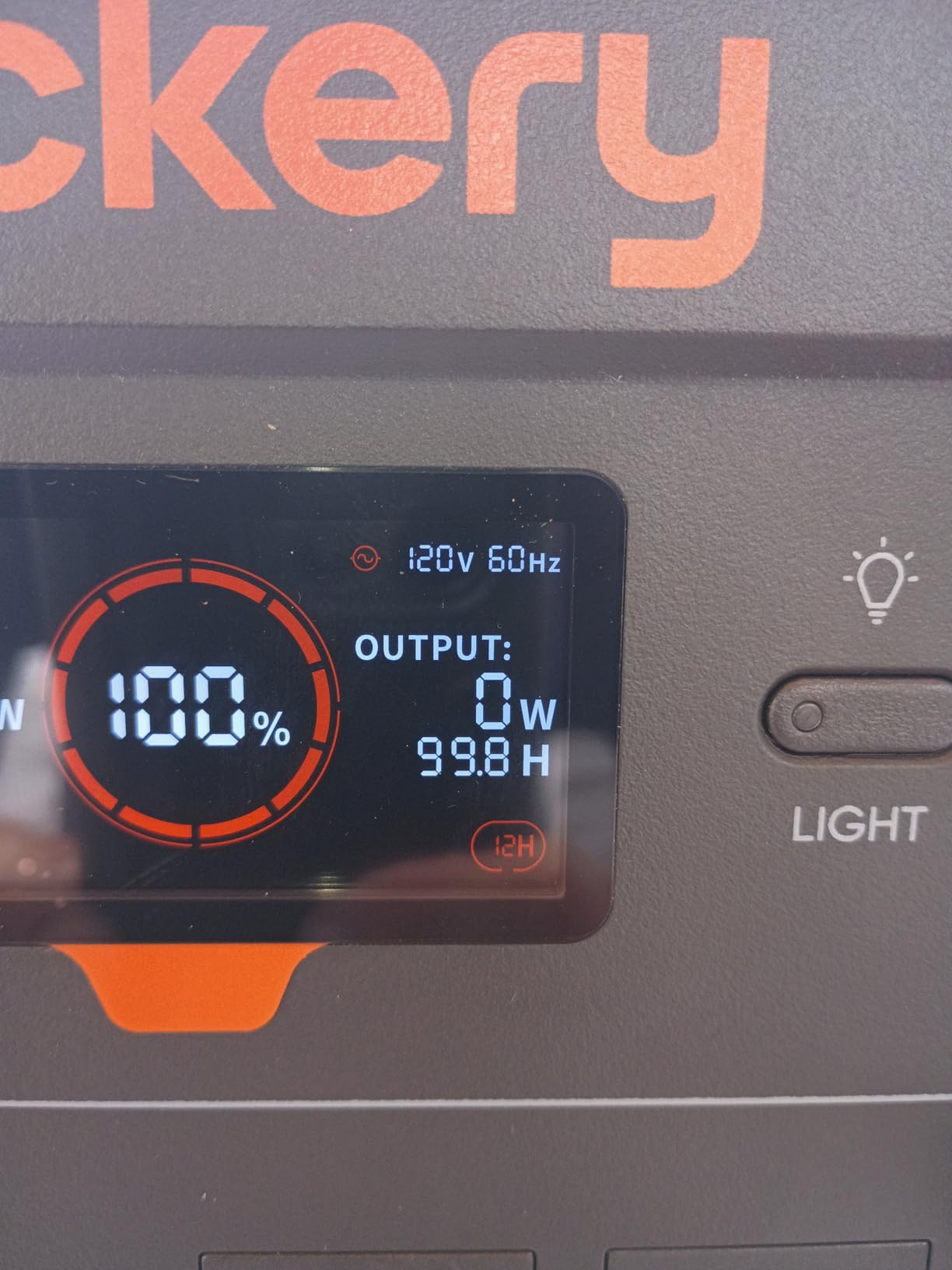
Sleep quality is where this one quietly wins. There is a 30 dB quiet overnight charging mode in the Jackery app, and three pure sine wave AC outlets so you are not fighting a light-sleeper partner for the single socket. The app also exposes an emergency charging mode that takes the recharge from 1.7 hours down to one hour, which is genuinely useful when you get back to camp at dusk.
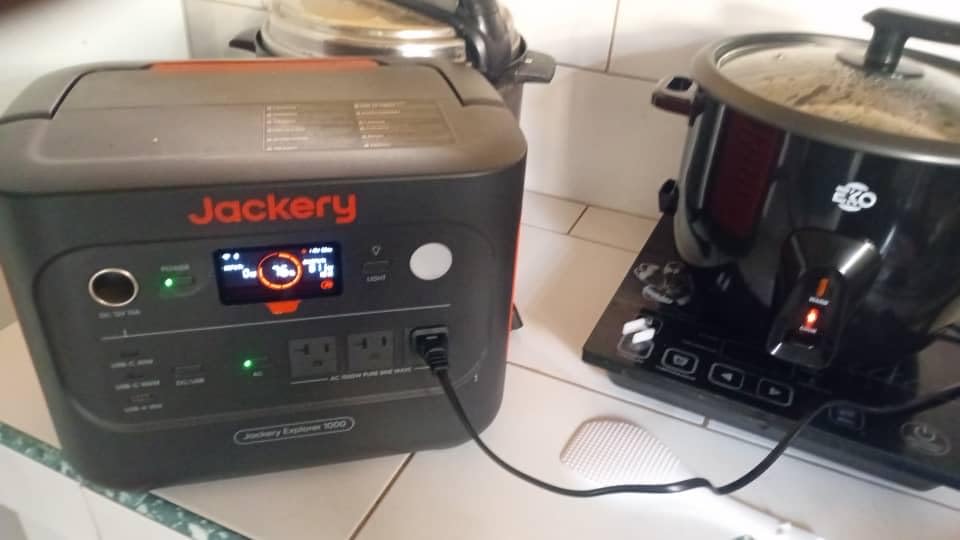
At 4.7 stars across 3,623 reviews, with 85 percent five-star, the feedback is unusually consistent. Owners talk about charging speed, the app-controlled quiet mode and the clean sine wave output. The complaints are equally consistent: the weight, the need to toggle emergency charging back on for each session, and the fact that solar input only accepts Jackery panels.
One more detail worth knowing: the box contains the station and a user manual. The AC adapter and solar panel are separate purchases, so budget for the wall brick if you are not recharging from a vehicle.
Who the Jackery Explorer 1000 v2 suits
It suits weekend car campers, couples sharing a station, and anyone who wants to charge a phone, a camera and a CPAP overnight without planning any of it. Three nights on one charge is the number that matters for a Thursday-to-Sunday trip.
It also suits anyone sensitive to fan noise. The 30 dB mode is the quietest explicitly rated overnight setting we found in this roundup, and for someone who is already sleep-deprived without treatment, that is not a trivial feature.
Who it does not suit
It does not suit backpacking. At 23.8 lbs with a foldable handle, this is a load for a car boot, not a pack. If your site is a walk from the vehicle, the Explorer 300 above is the honest answer.
It also frustrates people who already own third-party solar panels. The solar input is locked to Jackery hardware, so mixing brands means buying another panel. For van-life solar builds, the BLUETTI options further down are more flexible.
3. BLUETTI AC180 (1152Wh) – the van-life station with the biggest solar input
BLUETTI AC180 Portable Power Station 1152Wh 1800W LiFePO4 Solar Generator
- 1152Wh and 1800W give wide headroom
- Full charge in about an hour at 1440W input
- 500W solar input recharges in roughly three hours
- 20 ms UPS switchover
- Detailed app with firmware updates
- 37.4 lbs is the heaviest station here
- 15-20W self-consumption plus a 10 percent reserve cut real runtime
- Wireless charging pad frequently drops connection
This is the biggest battery in the roundup and the one built for people who stay put. 1152Wh gives about 979 usable watt-hours, which is three nights at 300Wh a night with plenty left over, and the 500W solar input means a rooftop panel or a serious foldable can genuinely refill it during a day of good sun rather than over three days.
The 1800W rated output is overkill for a CPAP and that is the point. Owners pair it with car fridges, fans and coolers, and 2,622 reviews at 4.6 stars with 82 percent five-star reflect a lot of real campsite use rather than spec-sheet enthusiasm.
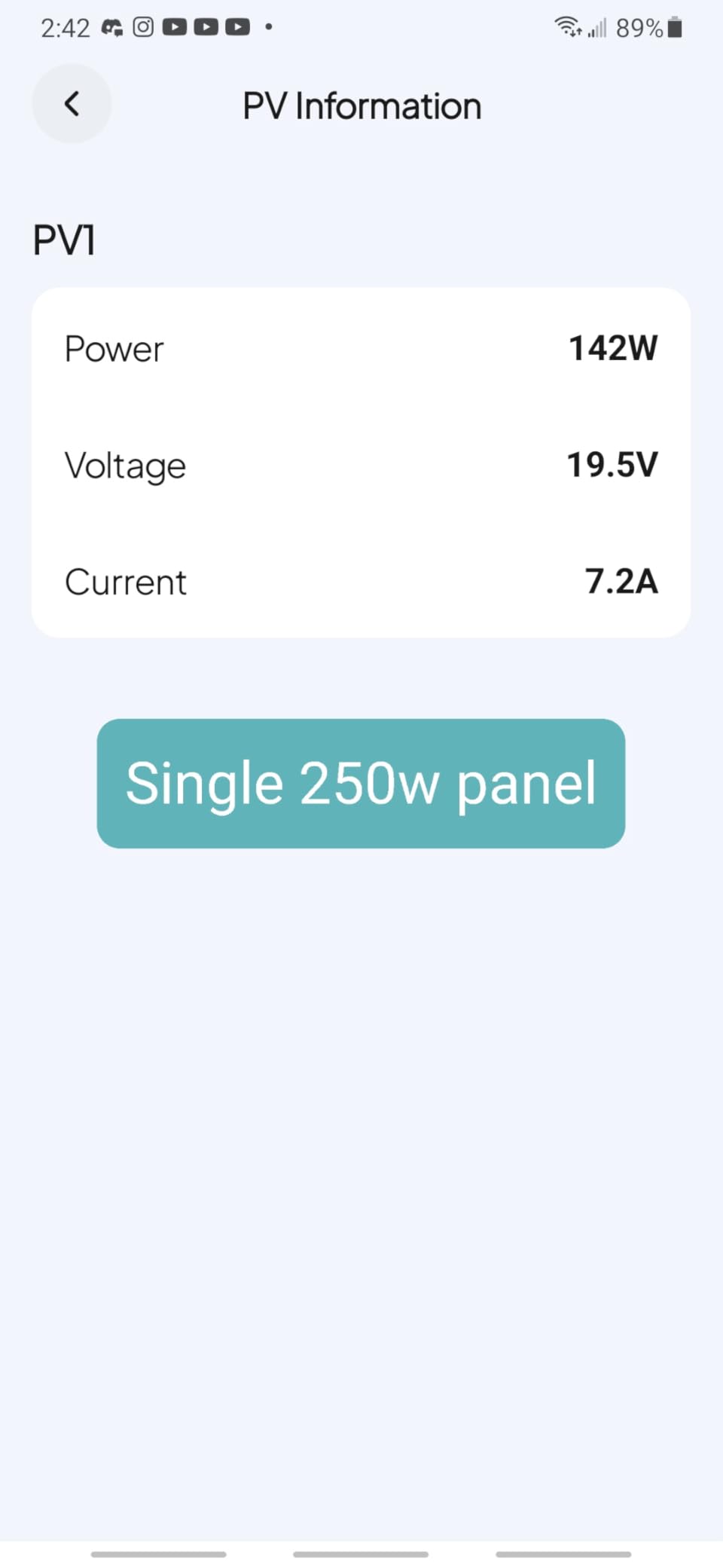
Two numbers deserve attention. BLUETTI’s own documentation says the station draws roughly 15 to 20W per hour with the AC inverter on, and the manual states only 90 percent of rated capacity is usable. Both are documented, and both mean the real overnight figure is lower than 979 usable watt-hours. We build that into our recommendations rather than pretending the headline number is what you get.
The 20 ms UPS switchover is a small but nice touch. If you are using it as home outage backup for a night, the CPAP and your router do not blink off. The app also accepts firmware updates that some owners say corrected inaccurate runtime readouts on early production.
Who the BLUETTI AC180 suits
It suits van-life and RV boondockers who are charging from solar and want a battery that can also carry the rest of camp. Eight outlets, including two AC at 1800W, mean the CPAP is never competing with anything.
It also suits people running CPAP plus a 12V fridge overnight, which is the most common complaint about the smaller stations in this list. Five-year warranty coverage is the longest stated here, matched by the EcoFlow units and the BLUETTI Elite 100 V2.
Who it does not suit
At 37.4 lbs it is not a carry anything. This is a load for a vehicle or a wagon, and moving it more than a few steps from the car is a two-person job.
The inverter self-consumption also makes it a poor match for a long trip where you will not top it up. If the station sits unused between uses with the inverter on, you are paying 15 to 20W for the privilege. Turn the inverter off when you pack it away.
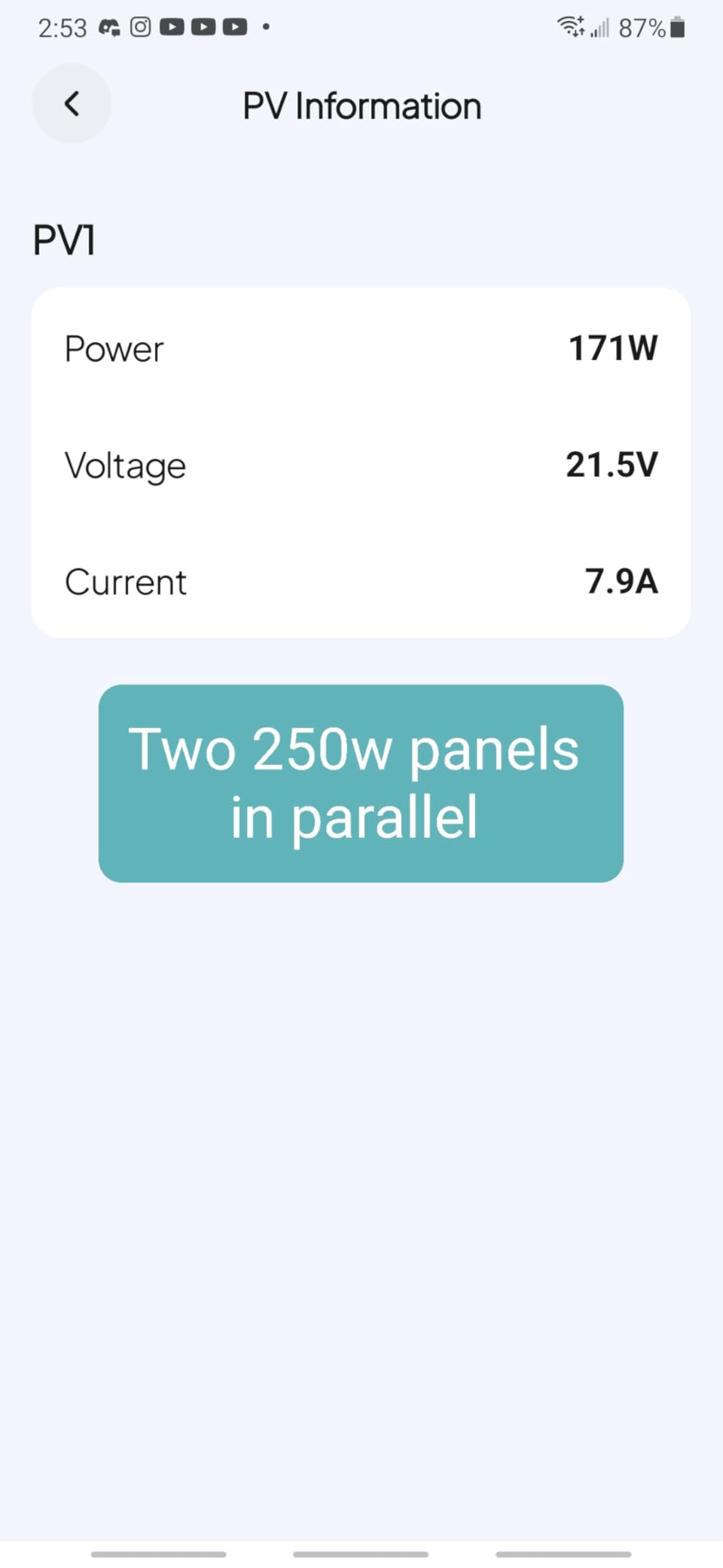
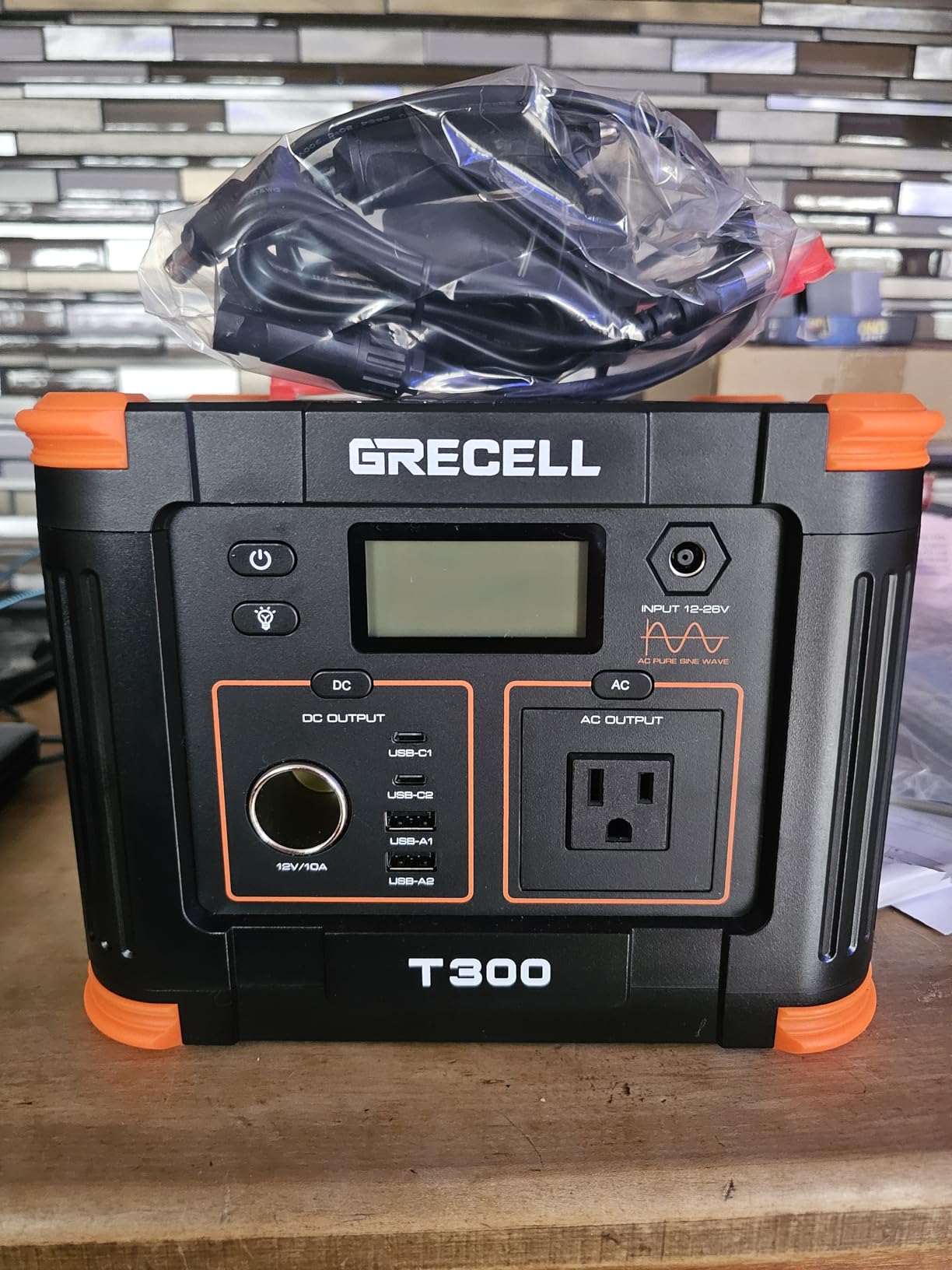
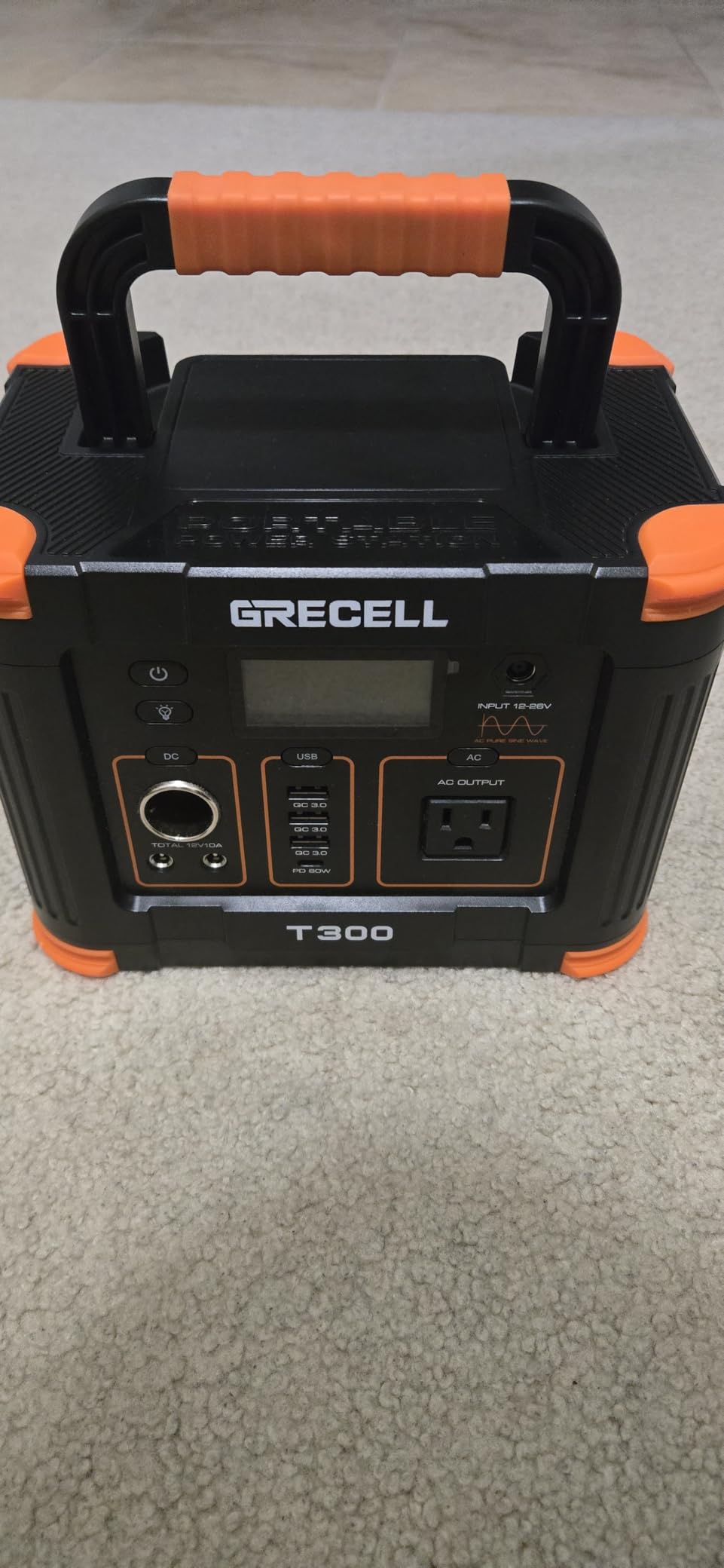
4. GRECELL T-500 (519Wh) – the cheapest way to get pure sine wave output
- Lowest entry point with 519Wh and 500W output
- Pure sine wave inverter for sensitive medical devices
- CPAP machines listed as a supported load
- 14.1 lbs with a built-in flashlight
- 500W ceiling leaves little headroom above a CPAP
- AC output must be switched off manually when idle
- Older lithium-ion chemistry with shorter cycle life
The T-500 is the value pick in this list, and the reason is narrow but important: it puts a pure sine wave inverter and 519Wh in a package that costs less than the other 500Wh options here. That combination is the whole argument, because modified sine wave output is where cheap power stations quietly damage sensitive electronics.
Unusually, the manufacturer names CPAP machines explicitly in the supported device list. 519Wh at the 0.85 factor gives about 441 usable watt-hours, so one night at 300Wh with room to spare, or one night at 450Wh with the humidifier on and no margin left.
The honest part is the review spread. 2,899 reviews average 4.3 stars, with 71 percent five-star but 11 percent one-star, the widest negative range in the roundup. Positive reports focus on value and CPAP compatibility. Negative ones cluster around the 500W output ceiling and durability over multiple years.
Two practical notes. The AC output has to be switched off manually when idle or it keeps drawing, which is a real drain on a station this size. And the cell chemistry is older lithium-ion rather than LiFePO4, so expect a shorter service life than the Jackery or BLUETTI units.
Who the GRECELL T-500 suits
It suits a first-time buyer who wants one night of therapy off-grid, on a tight budget, without compromising on waveform quality. For a single night per trip, the 519Wh is genuinely enough.
It also suits someone who needs a CPAP, a router and a couple of phones and nothing more. Up to ten devices can run at once, and the port selection is unusually wide for the size.
Who it does not suit
It does not suit anyone planning a heated-humidifier multi-night trip, and it does not suit multi-year ownership. The lithium-ion pack and the 11 percent one-star share both point to a shorter useful life than the LiFePO4 alternatives.
The 500W output ceiling is also tighter in practice than the number suggests. A CPAP drawing 60W uses 12 percent of that ceiling, but add a heated mug or a small kettle and you are close enough to worry about startup surge.
5. ALLWEI PPS600-1 (512Wh) – the one with a documented multi-night CPAP field test
ALLWEI Portable Power Station 500W, 512Wh LiFePO4 Battery UPS Backup Power
- Reviewer ran a Luna 2 for 20 hours over 3 nights
- LiFePO4 with 3000 cycles and a 10 year rating
- 13 lbs is light for a 500Wh station
- UPS mode protects sensitive electronics
- Fan noise is a problem in a tent per one owner
- One unit stopped holding a charge after about a year
- 120W solar input ceiling
This is the only station in the roundup where we found a documented CPAP field test in the review data, and it is exactly the kind of evidence that is hard to find. One reviewer ran a BMC Luna 2 for 20 hours across 3 nights, and a Respironics DreamStation 2 at heated humidity for 12 hours across 2 nights. That is a humidifier-on test, which is the realistic case.
512Wh at the 0.85 factor gives roughly 435 usable watt-hours. That DreamStation 2 result lines up almost exactly with the arithmetic, which tells you the 3000-cycle LiFePO4 pack and the 500W inverter are behaving as advertised.
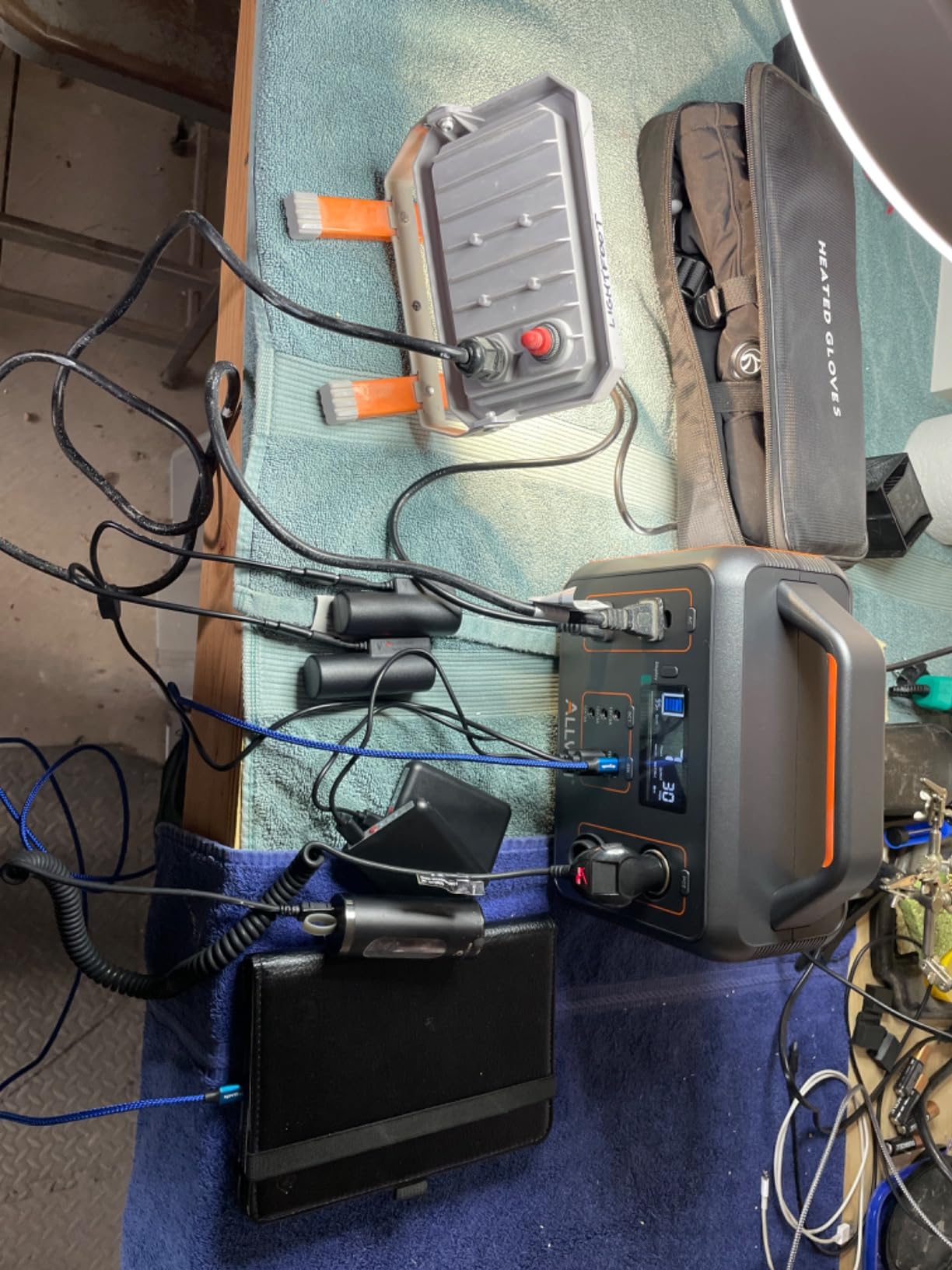
At 13 lbs this is a light station for its capacity, and the port selection is genuinely modern: two AC outlets, a 100W USB-C, a 36W USB-C, two USB-A, two DC 5521 barrel ports and a car port. UPS mode is included for sensitive electronics.
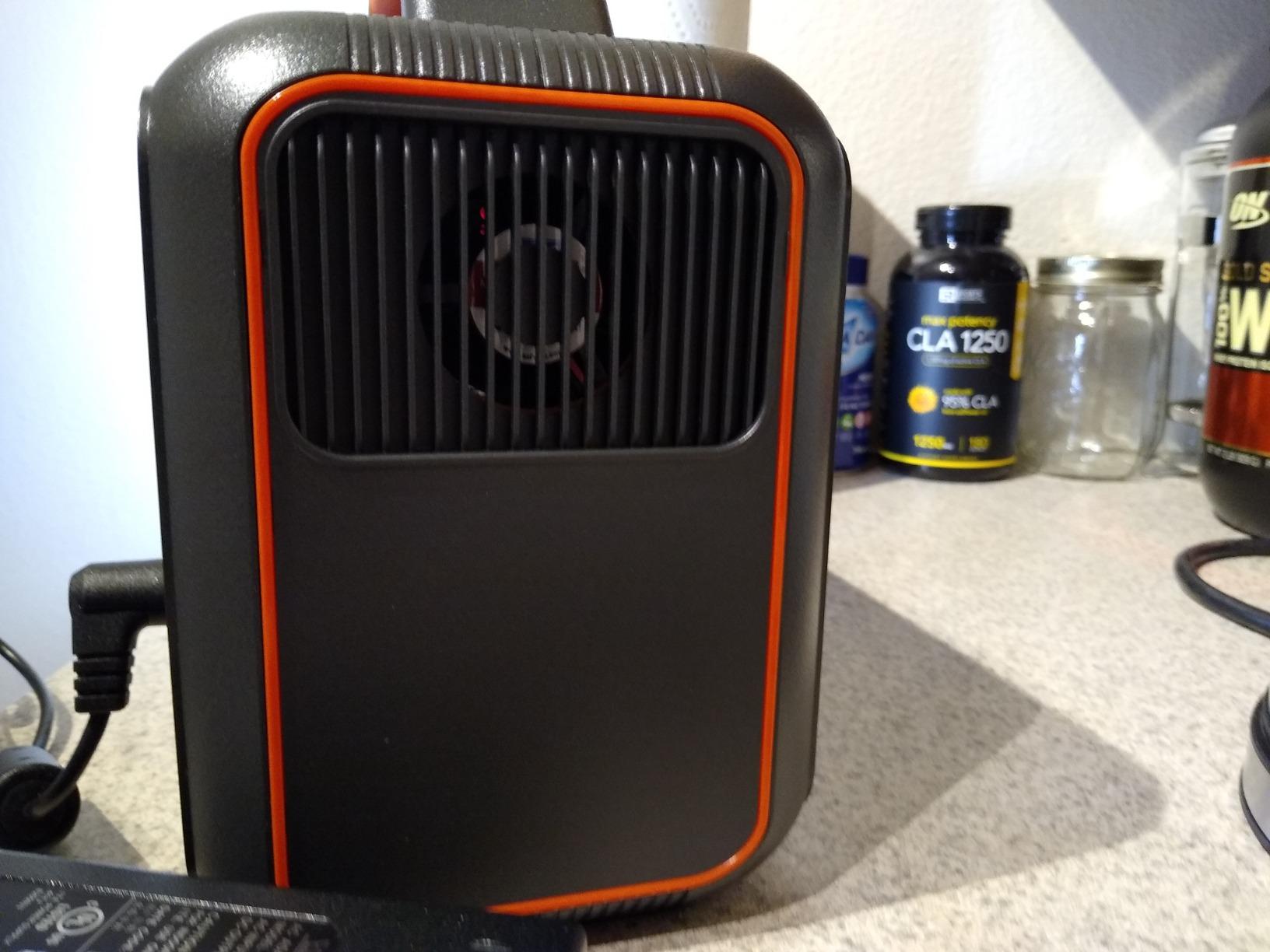
At 4.4 stars from 2,448 reviews with 74 percent five-star, the negatives are specific and worth weighing. Fan noise is the one that matters most for this topic, because one owner reported the fan running for hours at a time with a CPAP in a tent. A durability report of a unit that stopped holding a charge after about a year also appears.
Who the ALLWEI PPS600-1 suits
It suits anyone who wants documented real-world CPAP numbers rather than a spec sheet, particularly heated-humidifier users on a two-night trip. 435 usable watt-hours covers two moderate nights or one humidifier night comfortably.
It also suits light sleepers who can position the station outside the tent or in the vehicle, and buyers who want LiFePO4 chemistry without moving up to a 1000Wh station.
Who it does not suit
It does not suit someone running more than about four nights, and it does not suit a van build that wants to add solar later. The 120W solar input is a hard ceiling, so a bigger panel is not an option.
The output controls catch people out. The centre power button only turns off the display, not the AC or DC sockets, so a beginner can easily leave the inverter running and drain the pack overnight. Learn the button layout before the trip.
6. BLUETTI Elite 100 V2 (1024Wh) – quiet enough for a tent
BLUETTI Elite 100 V2 Portable Power Station for Camping 1024Wh 1800W
- 30 dB silent mode suits overnight tent use
- 10 ms UPS switchover
- 45 minute 0-80 percent AC recharge
- 25 lbs in a 17L footprint
- 25 lbs is still heavy to carry far
- Exposed DC 5521 ports are easy to short
- Low-draw AC loads may not show on the readout
Fan noise is the detail almost every roundup ignores and the one that ruins sleep for a light sleeper running a medical device all night. The Elite 100 V2 has an explicit 30 dB silent mode, and BLUETTI claims it is about 50 percent quieter than comparable 1kWh stations. That makes it the pick for anyone sleeping with the station inside the tent.
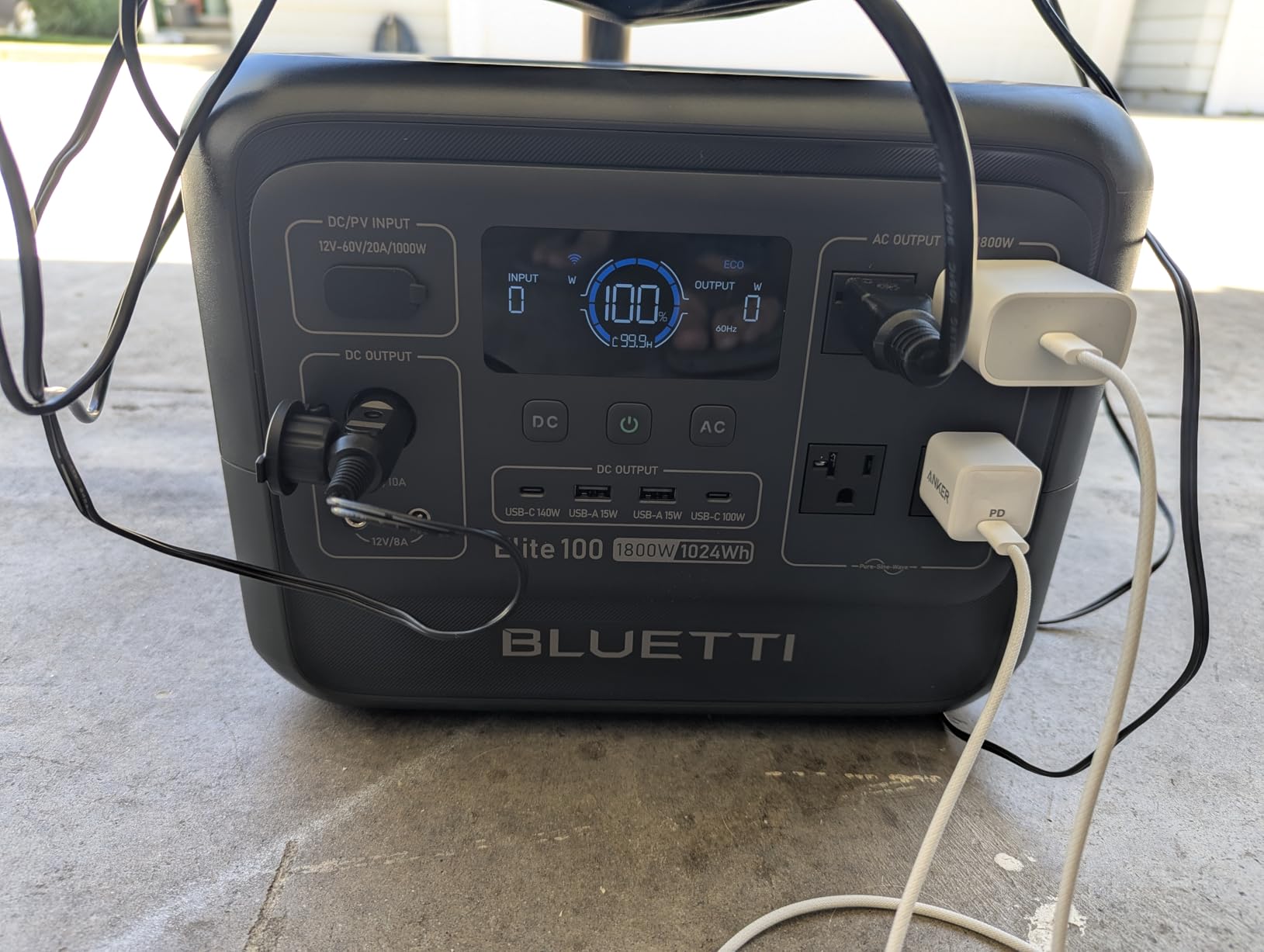
1024Wh gives about 870 usable watt-hours, so three nights at 300Wh a night or two nights with the humidifier on. The 1800W output and 11 ports mean it carries a CPAP, a fan and lights without strain, and one owner reports roughly 30 hours of runtime on a mixed load.
At 25 lbs and 17 liters it is meaningfully smaller and lighter than the AC180, which makes it the more sensible 1kWh BLUETTI for a car-camping setup. The 45-minute 0-80 percent recharge at 1200W AC input means a lunch-break top-up between nights is realistic.
Two details separate this from a generic 1kWh station. The solar input uses standard connectors rather than a proprietary system, so third-party panels work, which matters for van builds. And the 10 ms UPS switchover keeps routers and PCs alive during outages. At 1,782 reviews and 4.6 stars with 84 percent five-star, the technical caveats are the exposed DC barrel ports and a warm 12V socket under heavy draw.
Who the BLUETTI Elite 100 V2 suits
It suits light sleepers camping in a tent, van builders who want to bring their own solar panel, and anyone who values a 45-minute top-up between nights over a larger battery.
It also suits people running a CPAP plus a router during outages, since the 10 ms switchover is among the tightest here.
Who it does not suit
It does not suit anyone carrying gear any real distance. 25 lbs is fine in a vehicle and a problem on foot.
Vehicle charging is also slower than the headline numbers imply without the optional BLUETTI Charger 1, and the exposed 5521 barrel ports are worth covering before packing. One more quirk: a genuinely low-draw AC load may not register on the power readout at all, which can be confusing if you are checking remaining capacity before bed.
7. Anker SOLIX C1000 Gen 2 (1024Wh) – the best documented three-night CPAP runs
Anker SOLIX C1000 Gen 2 Portable Power Station, 1,024Wh, 2,000W, Camping
- Only station here whose maker names CPAP machines as a UPS use case
- Sub-10 ms UPS switchover so therapy never pauses
- Documented AirSense 11 run of 3 nights at about 17 percent per night
- 49 minute full recharge and 15 minute top-ups
- 2000W output gives the most headroom here
- Gen 2 removed battery expansion so capacity cannot be scaled
- One reviewer measured 15-20 percent harmonic distortion under load
- Solar from a 100W panel is slow in practice
This is the most thoroughly documented station in the roundup for our exact use case, and it is the one we would trust for a three-night trip without a mid-trip recharge. Anker is the only manufacturer here whose documentation names CPAP machines as a UPS use case, which tells you how seriously they take the use case.
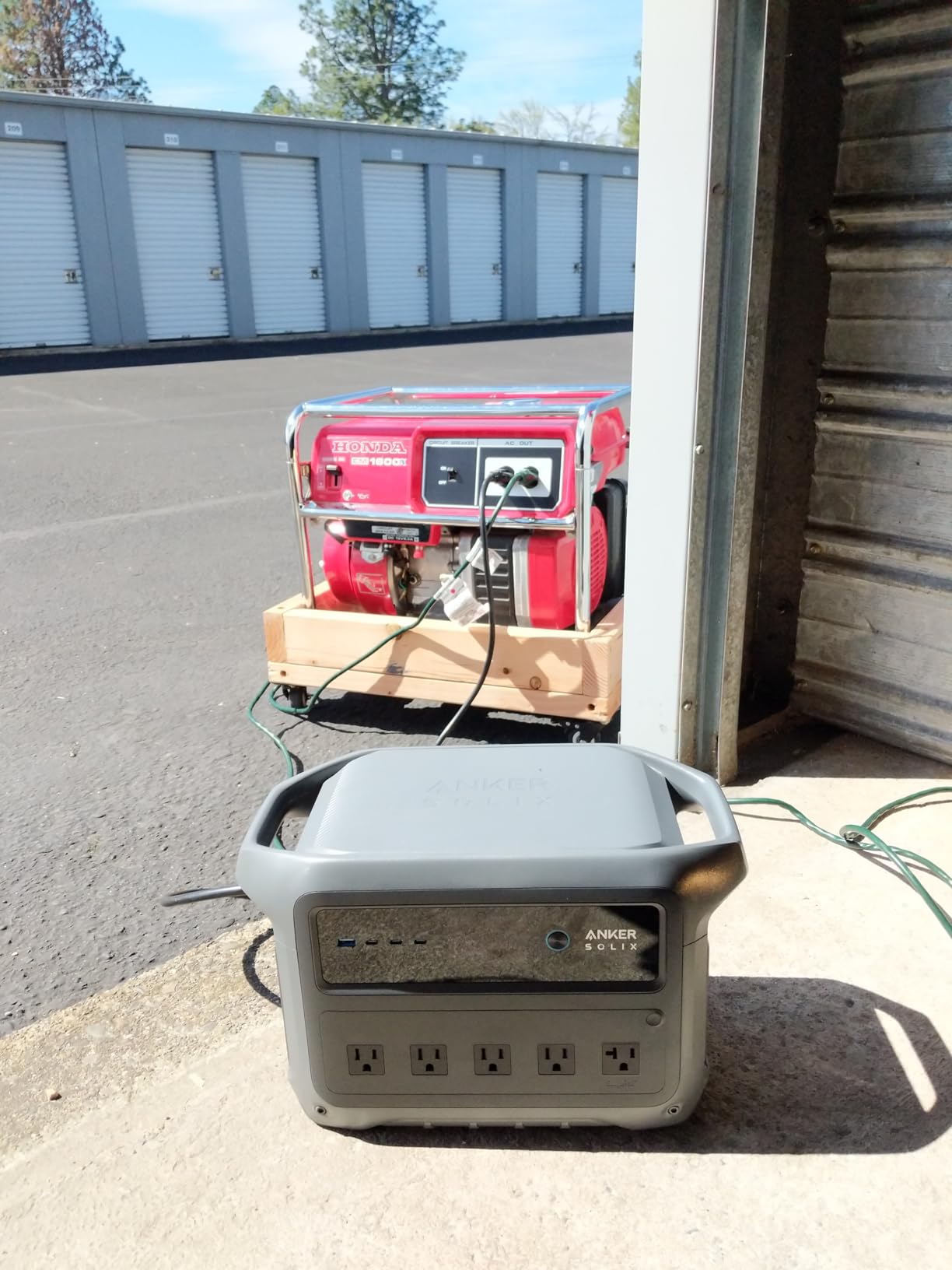
The runtime evidence is the strongest available: an owner ran an AirSense 11 for three nights straight, and a typical night consumed about 17 percent of capacity, leaving 83 percent at wake. At 1024Wh that is a comfortable three-night margin, and it matches the 0.85 efficiency arithmetic almost exactly.
At 4.7 stars with 86 percent five-star, this ties for the highest rating in the roundup. Other owners report a sustained 60W laptop workload on pass-through power while solar charging without dropping below 99 percent, which is exactly the behaviour you want when the machine is the only load that matters.
There is one significant trade-off. The Gen 2 removed battery expansion, so 1024Wh is the ceiling forever. Owners who want to scale up later should look at the EcoFlow River 2 Max below, which accepts expansion in a different class of product. One electrical engineer reviewer also measured 15 to 20 percent harmonic distortion on the inverter waveform under a microwave load, which is worth knowing if you plan to share the station with high-draw appliances.
Who the Anker SOLIX C1000 Gen 2 suits
It suits anyone who wants the highest-confidence multi-night CPAP performance with published numbers behind it. If your machine is an AirSense 11 and your trip is three nights, this is the pick.
It also suits households sharing a station. At 2000W and 10 ports, the CPAP never competes with a laptop, a monitor or a phone for headroom.
Who it does not suit
It does not suit people who expect to add capacity later. The removed expansion on this generation is a genuine one-way door, so think carefully before buying.
No protective case is included despite the number of adapters and cables in the box, so budget for one. Solar from a small 100W panel is also slower in practice than the 600W spec suggests, typically pulling 60 to 80W from a small panel.

8. EcoFlow Delta 3 Classic (1024Wh) – the fastest top-up in the roundup
EF ECOFLOW Portable Power Station Delta 3 Classic, 1024Wh 1800W AC
- Sub-10 ms UPS called out for protecting medical devices
- 45 minute 0-80 percent AC charging
- LiFePO4 cells with EV-grade construction rated 10+ years
- App reliability owners rate above earlier EcoFlow models
- Bright display showing remaining runtime and wattage
- 26.7 lbs is heavy and owners cite carrying it
- No expansion with DELTA 2 or Delta 3 extra batteries
- 12V vehicle charging tops out just over 100W
The Delta 3 Classic is the pick when your trip pattern involves arriving, using and recharging on the same day. 0 to 80 percent in 45 minutes from a wall outlet is the fastest AC recharge here, which means a breakfast-hour top-up covers a whole night of therapy. That flexibility is worth more to some campers than a bigger battery.
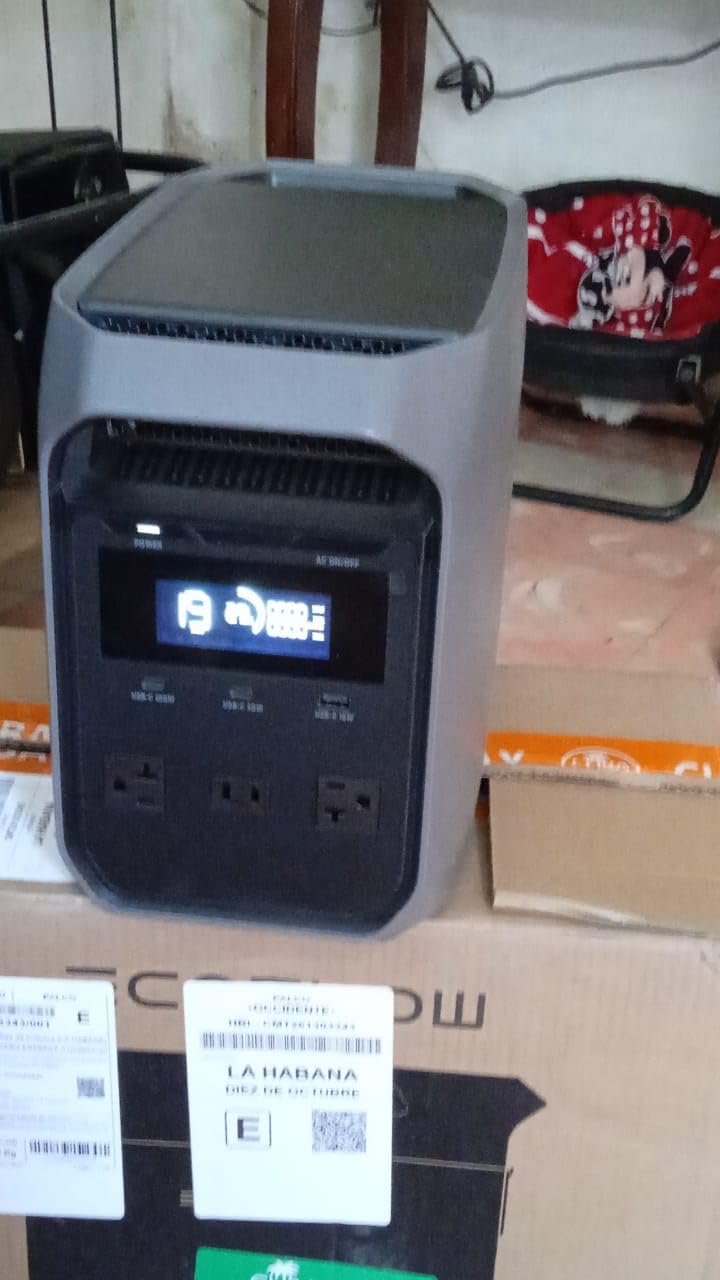
1024Wh gives about 870 usable watt-hours, so the same three-night humidifier-off or two-night humidifier-on maths as the Anker and BLUETTI 1kWh stations. The inverter has a sub-10 ms UPS switchover that EcoFlow explicitly markets for protecting medical devices, which is the second time in this list a manufacturer has called out CPAPs by name.
At 4.7 stars and 90 percent five-star, this has the highest five-star share of any product we reviewed. Owners consistently mention charging speed, build quality and app stability, and several contrast the Bluetooth and app behaviour favourably against earlier EcoFlow models. The physical design gets praise too: two top handles, non-skid base pads and a tuck-away input cover.
The negative tail is small but real. Two recent one-star reviews report samples that would not power on at all, and one buyer received an item described as used. There is also a compatibility catch worth reading twice: this unit does not work with DELTA 2 Smart Extra Batteries or Delta 3 Series Smart Extra Batteries, so expansion is off the table.
Who the EcoFlow Delta 3 Classic suits
It suits campers who cycle through sites, where a 45-minute wall recharge between nights changes what is possible. It also suits anyone who wants overnight therapy plus a CPAP-friendly backup for a home outage.
The app features are unusually useful for this topic, with charging schedules, a Storm Alert mode and a self-powered backup mode for outages.
Who it does not suit
It does not suit van-life builders who expect to add extra battery capacity later. The extra battery incompatibility is absolute, and 12V vehicle charging at just over 100W is too slow for staying put on a long trip.
Overcast weather is the other weak point. A few days of flat light can leave solar input well below what an overnight load needs, so treat solar as a supplement here rather than a plan.
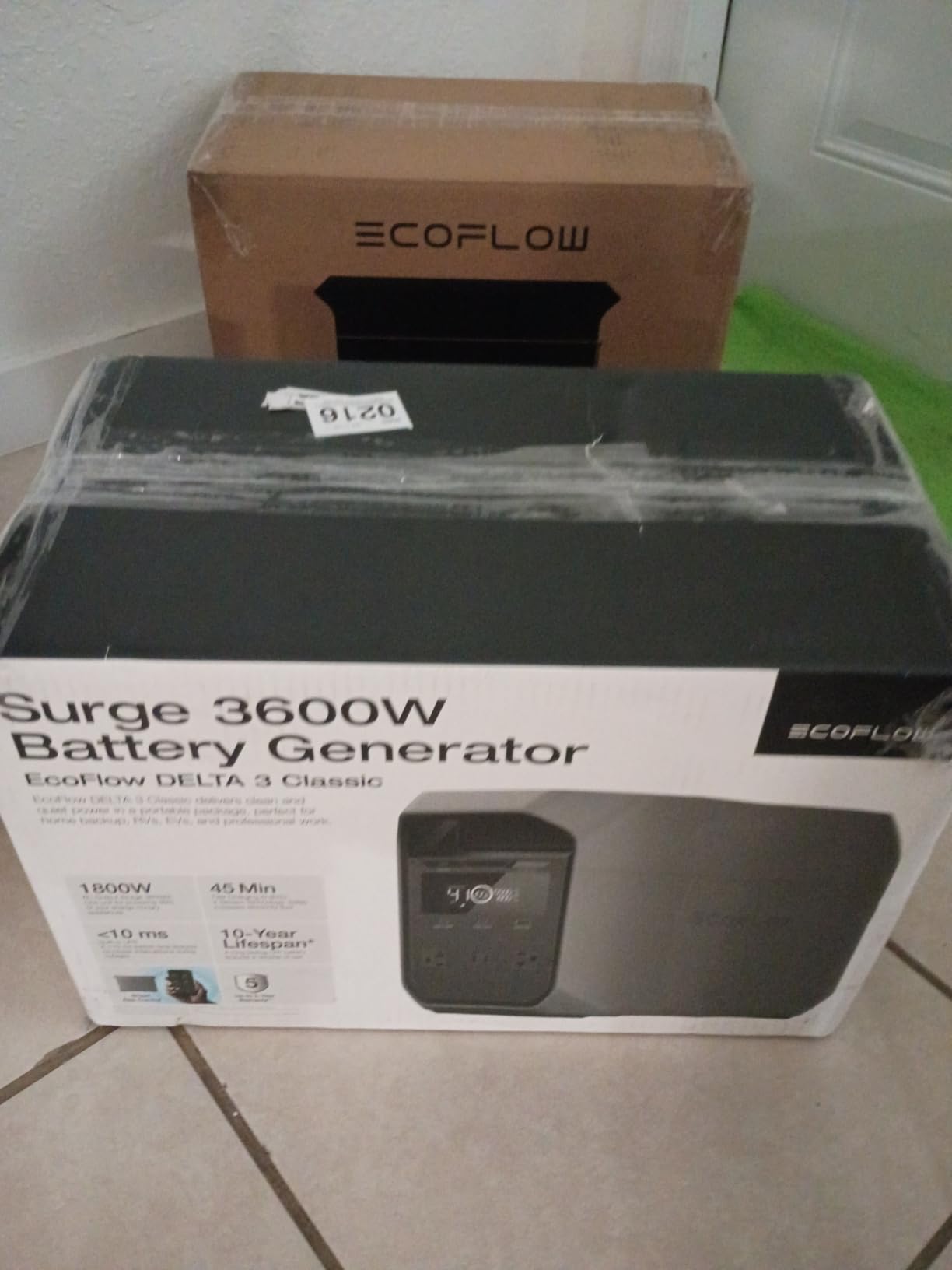
9. EcoFlow RIVER 2 (256Wh) – the smallest station that still runs a machine
- Lightest option alongside the Jackery 300 at 7.7 lbs
- Fastest headline AC recharge at one hour
- 3000+ cycle LiFePO4 rated nearly 10 years
- Pass-through charging and sub-30 ms EPS switchover
- Compact footprint fits a tent or a closet shelf
- 256Wh covers roughly one night of heated CPAP use
- AC inverter reduces usable capacity noticeably
- Two owners reported charge-retention failures in warranty
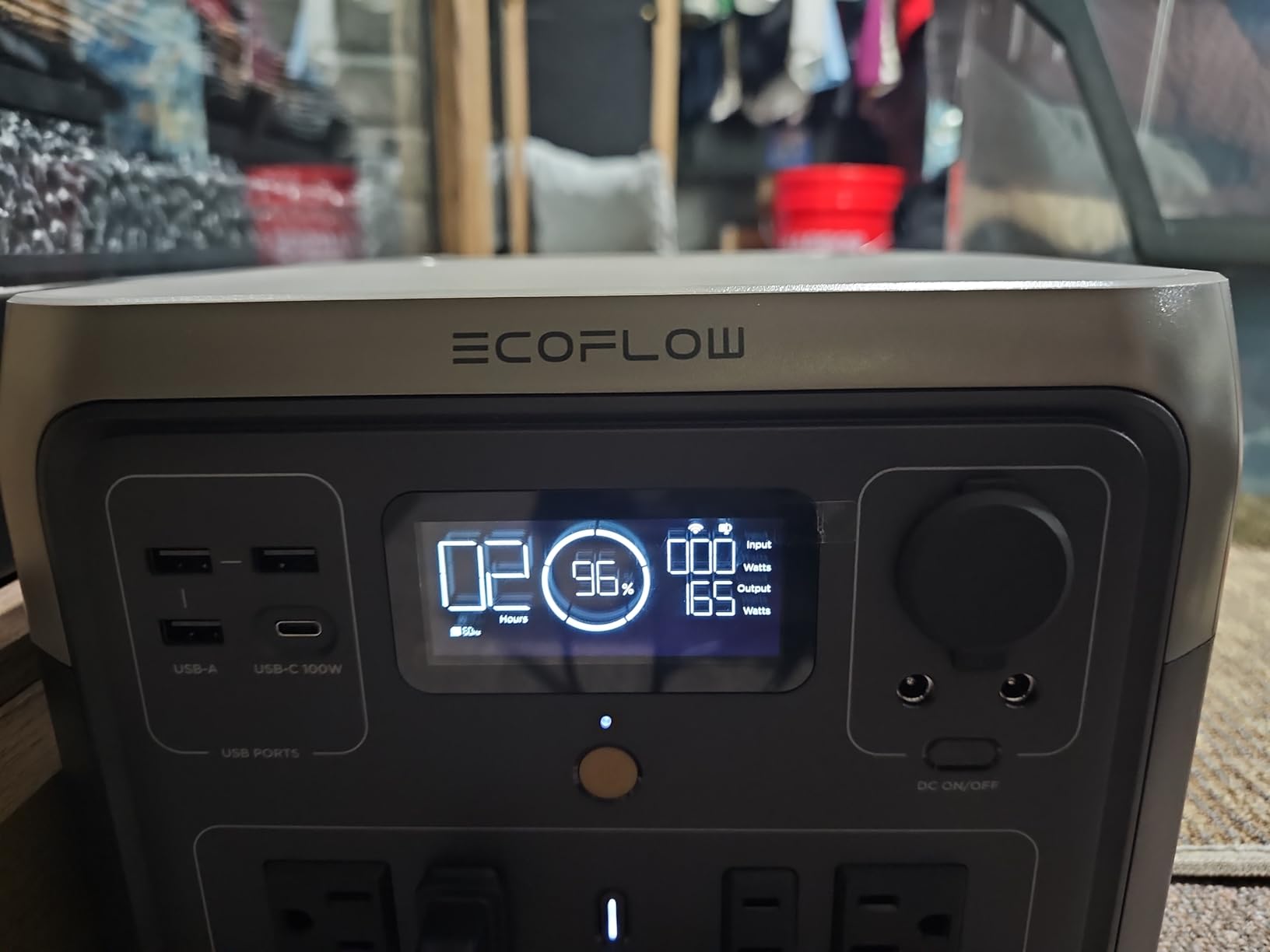
At 256Wh this is the smallest station here, and we want to be blunt about what that means: it is one night, humidifier off, and not much else. Give 256Wh the 0.85 factor and you have about 218 usable watt-hours, which is under a full night at 60W. Owners running a CPAP through outages consistently use it as a short-term backup rather than a trip battery.
What it does have is speed and lightness. Full AC recharge in one hour via X-Stream is the fastest headline figure in the roundup, so topping it up during a lunch break or while the car engine runs is easy. At 7.7 lbs with a built-in handle and a 9.6 by 8.4 by 5.5 inch footprint, it is also one of the easiest to pack.
Its 4,530 reviews at 4.3 stars, with 73 percent five-star and 9 percent one-star, make its failure modes unusually well documented. Enthusiasm centres on portability and charging speed, while the recurring complaints are capacity being smaller than expected under 120V loads, self-consumption from the inverter, and two owners reporting charge-retention failures within the warranty period.
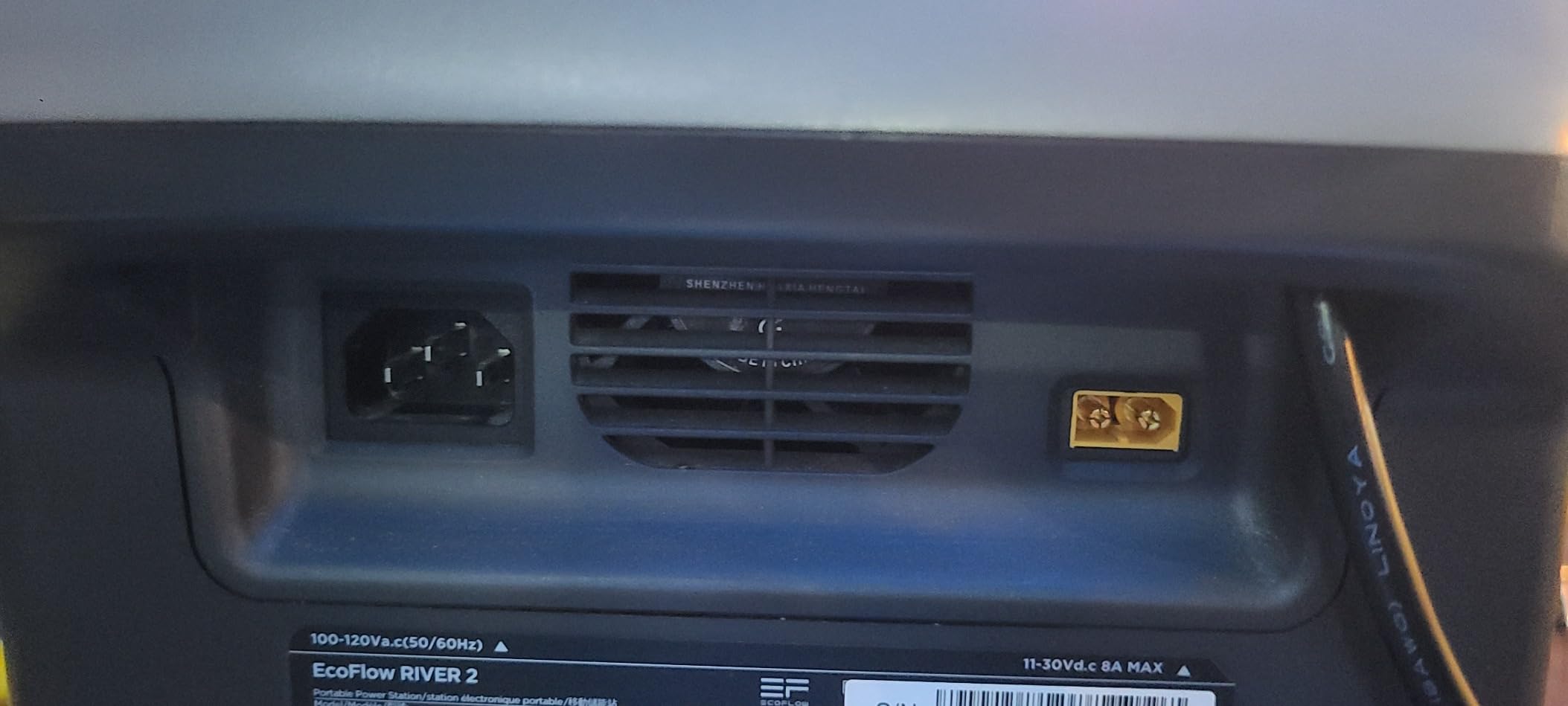
One quirk worth knowing: the AC inverter eats enough usable capacity that small USB loads last far longer than 120V loads on the same battery. If you only need a night of therapy and nothing else, that trade is acceptable.
Who the EcoFlow RIVER 2 suits
It suits anyone who wants a one-night therapy backup and nothing more. A hurricane trip, a blackout, a weekend where the campsite has a mains hookup you would rather not trust, or an air travel kit where weight is the deciding factor.
It also suits anyone who wants to recharge fast. One hour from a wall outlet is unmatched in this list.
Who it does not suit
It does not suit a heated humidifier user, and it does not suit anyone running a CPAP plus anything else overnight. 300W and 256Wh together leave no margin for a fan, a cooler or a phone.
Check the warranty situation before relying on it for a full season. Two owners reported samples that failed to hold a full charge within the warranty period, and a firmware update temporarily broke the charging readout for some users.
10. EcoFlow River 2 Max 500 (499Wh) – the most capacity per pound in the 500Wh class
EF ECOFLOW Portable Power Station River 2 Max 500, 499Wh 500W
- 499Wh at 13.3 lbs is a strong capacity-to-weight ratio
- 1000W across 11 outlets gives real headroom
- One-hour AC recharge and 2.3 hour solar from 220W
- Pass-through confirmed while powering a 60L fridge
- Owners report 17 hours on a modest load
- Bright display readable in direct sun
- Smallest review base here at 1398 and the lowest category rank
- Some owners report audible fan or mechanical noise
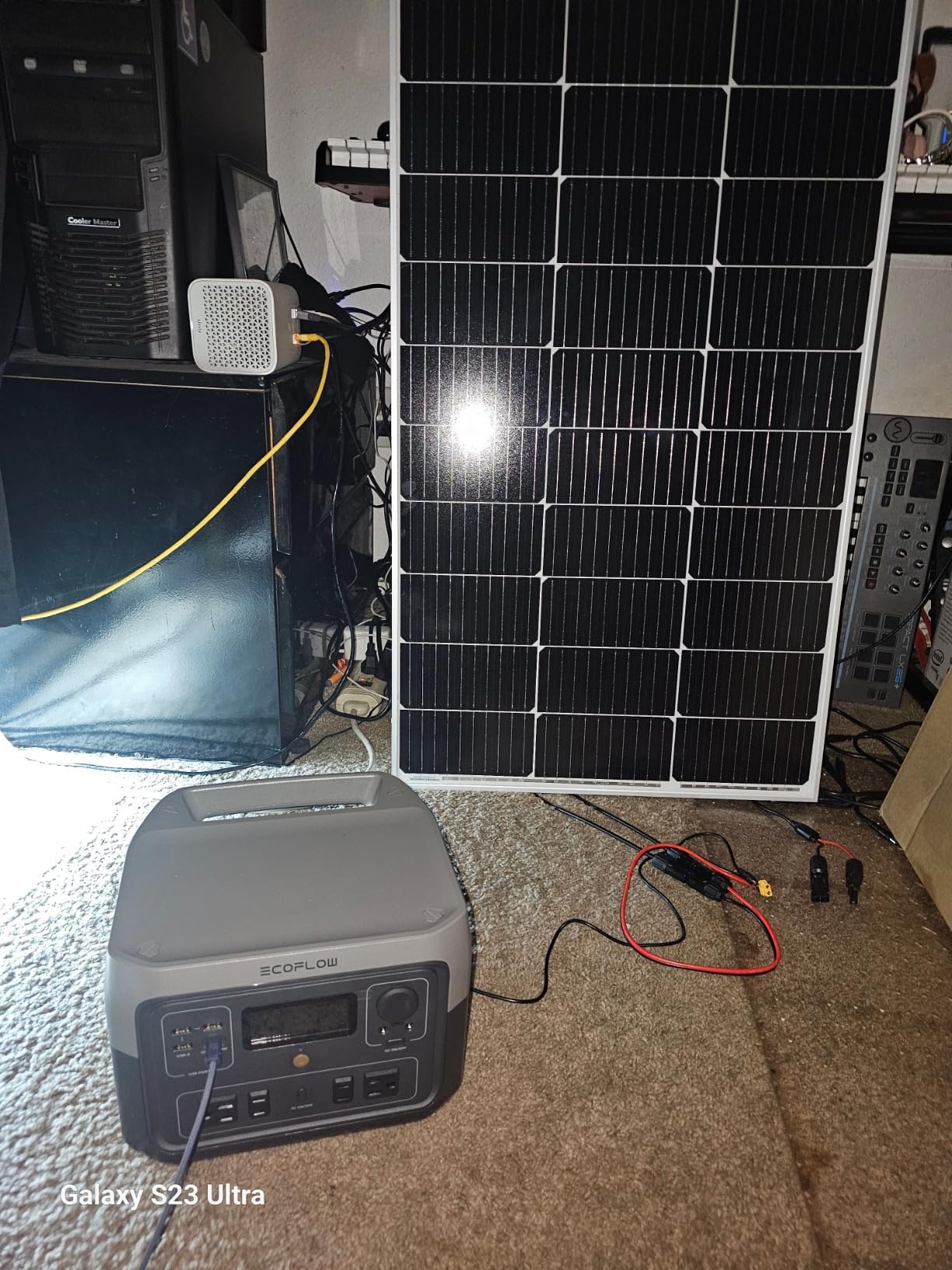
- The bundled 160W panel degrades to about half output over time
- One buyer reported inconsistent app behaviour and failed EPS bridging
- Short practical track record next to the 10 year cell ratings
This is the sleeper pick for someone who wants a 500Wh-class battery without the usual 20 lb penalty. At 13.3 lbs for 499Wh, the capacity-to-weight ratio here is the best of the mid-size group, and the 1,000W output across 11 outlets leaves real headroom above a CPAP for a fan or a small appliance.
499Wh at the 0.85 factor gives about 424 usable watt-hours, which is one night at 420Wh with a little reserve, or two nights at 300Wh. One-hour AC recharge and 2.3-hour solar recharge from 220W input make it easy to keep topped up, and pass-through charging has been confirmed in the field while powering a 60L fridge.
At 4.6 stars with 84 percent five-star, the feedback is positive, but the base is thinner here than elsewhere in the roundup. 1,398 reviews is the smallest set, and its category rank is also the lowest, which tells you this is a newer product with less long-term data behind it.
Two things to weigh. The bundled foldable 160W solar panel reportedly drops to roughly half its rated output after about six months, so plan on buying a better panel or charging from the vehicle. And a buyer reported inconsistent app behaviour with EPS bridging that failed when mains power dropped, which matters if you are relying on it for outage backup.
Who the EcoFlow River 2 Max 500 suits
It suits weekend campers who want more headroom than a 500Wh budget station but do not want to carry 25 lb. Eleven outlets and 1,000W output mean a CPAP, a fan and phone charging all at once.
It also suits anyone who wants the fastest recharge cycle in this capacity class, with a full AC top-up in one hour.
Who it does not suit
It does not suit people who want a long ownership history before committing. The 10-year cell rating is a manufacturer figure, and this product has a much shorter real-world record than the 1kWh stations above.
Fan noise and the optional solar panel degradation are the two recurring complaints. If you are sensitive to noise while sleeping, test the fan in a quiet room before the trip, and do not plan on the bundled panel for multi-night trips.
What size power station do you need? Five sizing steps
Step one: know your nightly consumption. Divide the wattage on your CPAP’s label by the number of hours you sleep. A 40W machine over eight hours is 320Wh. Add roughly 50 percent if you run the heated humidifier at a warm setting.
Step two: multiply by nights. Three nights at 320Wh is 960Wh of stored energy before any losses.
Step three: apply the efficiency factor. Multiply by 0.85 if you use the DC output and 0.7 if you use the AC outlet. That 960Wh becomes about 816 usable watt-hours on DC, or 672 on AC.
Step four: add a reserve. Cold weather, altitude and an aging pack all eat into capacity. Keeping 10 to 20 percent in reserve means you will not wake to a machine that stopped at 3 am.
Step five: round up to the next capacity band. Here is what that looks like in practice.
- One night, humidifier off: 250 to 350Wh is enough. The EcoFlow RIVER 2 and Jackery Explorer 300 both sit here.
- One night, humidifier on, or a weekend: 500 to 600Wh covers it. The GRECELL T-500, ALLWEI and River 2 Max 500 are built for this.
- Three nights without recharging: 1000 to 1200Wh. This is the Jackery Explorer 1000 v2, Anker SOLIX C1000 Gen 2, BLUETTI Elite 100 V2, EcoFlow Delta 3 Classic and AC180.
- Van life, a week or more, or CPAP plus a fridge: 1000Wh with a 500W solar input, so the battery refills itself while you are out during the day.
Our broader portable power station roundup covers the non-CPAP features in more depth, including fridge compatibility and solar sizing.
Five ways to get more nights out of any power station
First, turn off the heated humidifier. It is the single biggest runtime killer and the one users most consistently underestimate. Turning the heater down or off and using a plain chamber or a heat pack can add 30 to 50 percent to your runtime. Users on CPAP forums report doing exactly this, though some wake with nasal and throat dryness and bridge it with saline spray. Test it at home for a few nights before you rely on it.
Second, use the DC adapter instead of the AC outlet. No purchase required beyond a cable, and it is worth roughly 30 percent more runtime from the same battery.
Third, disable sleep mode. Some stations shut their inverter down when the load drops below a threshold, and a CPAP’s draw fluctuates. A station that decides to sleep in the middle of the night interrupts therapy. Check the app and turn the power-saving mode off, or test whether the display stays awake under a CPAP load for a full night.
Fourth, bring redundancy. A second smaller station costs less than a ruined trip. A 256Wh pack in the vehicle as a reserve is cheap insurance, and it doubles as a phone and camera battery on the drive.
Fifth, recharge with solar during the day. Users running multi-night van trips pair a station with 200 to 400W of portable or rooftop solar. A rough sizing guide: divide your nightly consumption by peak sun hours, then divide by 0.75 for conversion losses. For a 300Wh night and four hours of peak sun, you need about a 100W panel as a minimum, and more if weather is uncertain.
Can you run a CPAP from a car battery, deep-cycle battery or jump starter?
Yes, with caveats, and this is the cheapest option by a wide margin. The arithmetic is simple: a standard 12V car battery holds about 48 amp-hours, which is roughly 576 watt-hours. At 300Wh a night and 85 percent efficiency, that is about one night, with some left for a short second night if you are careful.
You need an inverter between the battery and the machine, and you need one with a pure sine wave output. Forum users describe these setups as workable but heavy, and a deep-cycle marine battery that will comfortably power a CPAP for several nights can weigh more than 60 lb before you add the inverter and cable.
Jump starters are the option we would steer you away from. One measured unit pushed 14.8V, which tripped the CPAP’s overvoltage protection after about 20 minutes. A starting battery is designed to deliver very high current for a very short time, not to hold a steady regulated output for eight hours, and the voltage swings that come with it will shut your machine down.
One camper on a camping forum reported covering an entire weekend from a single station charge with the humidifier off, while another got only 6.5 hours using AC. The difference between those two outcomes is almost entirely DC versus AC, which is the point above.
Power station or a dedicated CPAP battery?
A dedicated travel CPAP battery is the right answer in a narrow set of situations, and it wins decisively in some. It is the answer for air travel: anything above 100 watt-hours cannot fly in carry-on under FAA rules, and many carriers cap it at 160 watt-hours. A 292Wh or 1070Wh power station simply cannot go in the cabin or the hold, whereas a purpose-built travel battery is designed around those limits.
It also wins on weight for ultralight trips. There is no power station here that approaches the pack weight of a dedicated CPAP battery, and for someone carrying everything on their back, that difference decides the purchase.
Where the power station wins is everything else. A dedicated battery powers a CPAP and nothing else. A 1024Wh station powers a CPAP, a fridge, a router, a laptop and phone charging, and it doubles as home outage backup. If you are replacing the battery every few years anyway, the maths favours a station with a 4000-cycle cell.
One honest note on standby draw: if you store either device for months, check its idle consumption. A station with the inverter left on can lose meaningful capacity sitting on a shelf, which is why several owners in this roundup report switching the AC output off manually when packing away.
Quiet at night: fan noise, sleep mode and therapy interruption
Two stations in this roundup rate an explicit overnight quiet mode at 30 dB, the Jackery Explorer 1000 v2 and the BLUETTI Elite 100 V2. That number is the difference between a station you can put inside a tent and one you have to leave in the vehicle.
Fan noise is the most common sleep complaint we found. One ALLWEI owner reported the fan running for hours at a time with a CPAP in a tent, and EcoFlow RIVER 2 owners mention the fan is audible during maximum-speed charging in a quiet environment. If you are a light sleeper, test the station in a quiet room at the load you will actually run.
Sleep mode deserves its own warning. A power-saving mode that shuts the inverter down when draw drops is a therapy-interruption problem, not just a battery one. Your CPAP’s consumption rises and falls through the night, and a station that mistakes a lull for idle power will stop. Disable it, or verify the display stays on through a full test night.
Two smaller sleep factors: check the LED brightness before you settle in, because a bright display in a dark tent is a common irritation. And make sure the low-battery alert is audible, since a station that dies silently at 2 am is the exact scenario you are trying to avoid.
Test your setup at home before you leave
Every experienced user in the forums we read says the same thing: run a full night at home first, then read the remaining capacity in the morning. That single test catches more problems than any amount of spec-sheet reading, because it validates your machine, your cable, your adapter and your station together.
Test the real configuration, not a convenient one. If you plan to run DC, test on DC. If you plan to use the humidifier, use the humidifier for the whole night. If you plan to rely on solar, note how much the panel adds across a full day.
A Kill-A-Watt meter on the wall brick gives you the actual draw of your machine at your pressure setting, which is more useful than any estimate. It also tells you whether your DC adapter is doing its job, since a poor cable shows up as a lower reading on the station.
One more habit from the forums: never test a new station for the first time at a remote campsite. A dead-on-arrival unit, a firmware update that changes the charging readout and a missing DC adapter are all far less stressful in a garage.
Frequently Asked Questions
What is the best portable power station for a CPAP machine while camping?
The best power station for a CPAP while camping depends on how many nights you are off-grid and whether you use the heated humidifier. For one night with the humidifier off, 250 to 350Wh is enough. For a weekend or a humidifier on, 500 to 600Wh works. For three nights without recharging, choose 1000 to 1200Wh. Always confirm pure sine wave AC output or use the 12V DC port.
How long will a CPAP run on a portable power station?
Divide usable watt-hours by your nightly consumption. Usable watt-hours are the station capacity multiplied by 0.85 for inverter losses. A 1070Wh station gives about 909 usable watt-hours, which is three nights on a 300Wh night and one night on a 480Wh night with the humidifier at full heat. Running on the 12V DC port instead of the AC outlet adds roughly 30 percent more runtime.
What size portable power station do I need to run a CPAP machine?
Work out your nightly consumption first by dividing the CPAP wattage by your hours of sleep, then add about 50 percent if the heated humidifier runs warm. Multiply by the number of nights, then by 0.85 for DC use or 0.7 for AC use. Keep a 10 to 20 percent reserve for cold weather and altitude, then round up to the next capacity band.
Do I need a voltage adapter for my CPAP?
If your station has a 12V DC car port, yes, you should buy a proper DC cable rather than using the wall plug on the AC outlet. Philips DreamStation models take a straightforward 12V barrel plug. Many ResMed machines need a 12V to 24V step-up converter, and the wrong one means the machine will not recognise the power source. Check the model number on the base of your machine first.
How long will a 12 volt car battery run a CPAP machine?
A standard 12V car battery holds roughly 48 amp-hours, which is about 576 watt-hours. At 85 percent efficiency and a 300Wh night, that gives you close to one full night with a little reserve. A deep-cycle marine battery will comfortably run several nights but can weigh more than 60 lb before you add an inverter. Jump starters are not suitable, as their voltage swings can trip the machine’s overvoltage protection.
Can I bring a portable power station on a plane with my CPAP?
Not a large one. FAA carry-on rules cap lithium batteries at 100 watt-hours without approval, and many carriers allow up to 160 watt-hours. Every power station in this roundup except the EcoFlow RIVER 2 and Jackery Explorer 300 at the smallest end is over that limit, and both still sit close to it. For air travel, a dedicated CPAP travel battery designed around airline limits is the correct choice.
Our final CPAP camping verdict for 2026
The Jackery Explorer 300 is our editor’s choice, and the reason is not capacity. At 7.1 lbs with pure sine wave output and more than 11,000 reviews behind it, it is the only station here you can carry to a site away from your vehicle, and one night is all most people need from a single pack.
For a weekend, take the Jackery Explorer 1000 v2. For three nights without a recharge, the Anker SOLIX C1000 Gen 2 has the best documented CPAP runtime we found, and the BLUETTI Elite 100 V2 is the quietest to sleep beside. For a van with solar, the BLUETTI AC180 wins on solar input and headroom. The EcoFlow RIVER 2 stays home as an outage backup.
Whichever you choose, run one full night at home first, switch off the humidifier where you can, use the DC port, disable sleep mode and read the remaining capacity in the morning. That single habit will do more for your therapy than any specification on the box.
So to narrow it down for you: how many nights will you be off-grid, do you run the heated humidifier, and what make and model of CPAP do you use?