
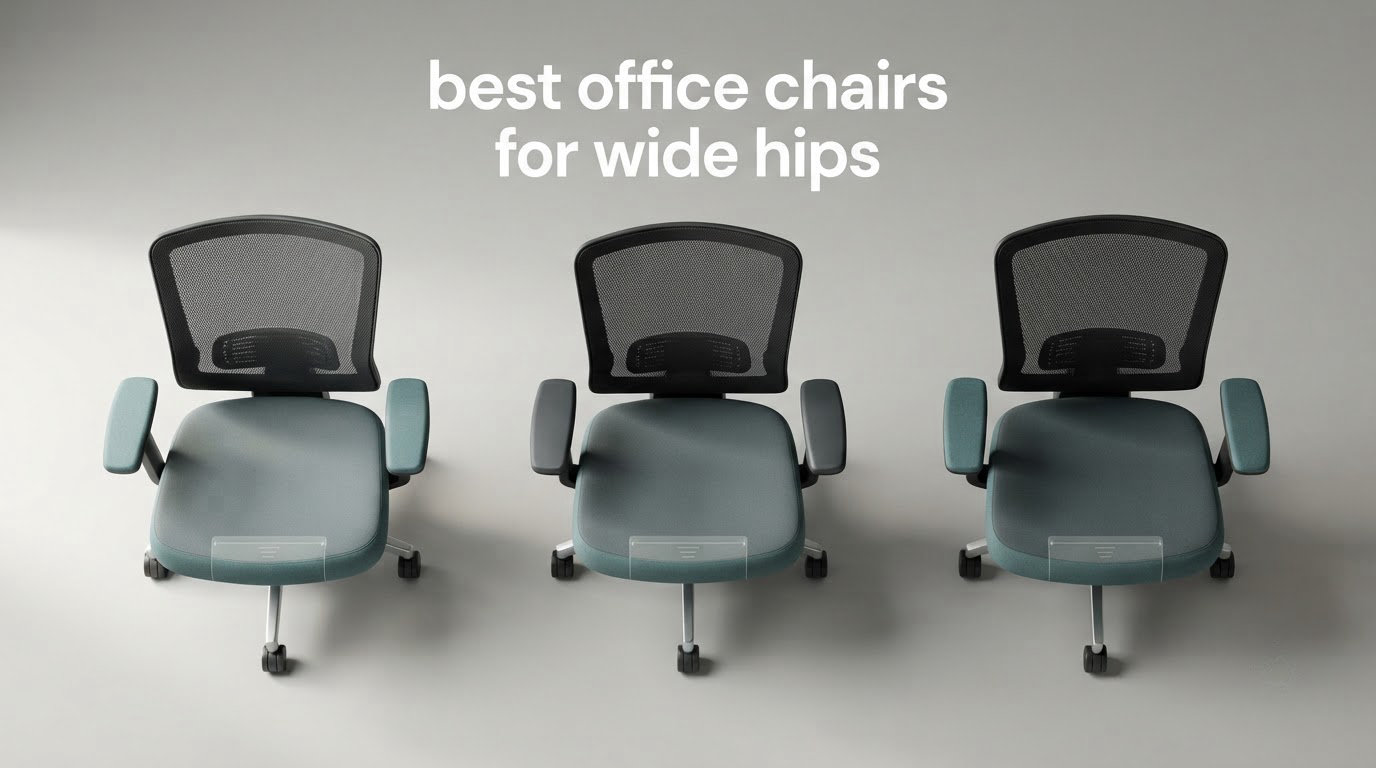
Most office chair shopping guides treat wide hips as a cushioning problem. It is a measurement problem. A standard task chair has a seat pan around 19 to 20 inches wide, and once your thighs and hips are wider than that pan, the hard edges of the armrests and the front lip of the seat press into exactly the places that already ache by the middle of the afternoon.
We spent the last few months working through the wide-seat category so you do not have to. This round covers 10 chairs, all rated between 400 and 750 pounds, all with seat pans that measure at least 21 inches across. We looked at usable seat width, seat depth, weight capacity, lumbar support type, armrest geometry and the upholstery, because those five specs decide whether a chair works for your body or simply sits next to you.
One thing surprised us. The number that matters most to wide-hip sitters is not the seat width, it is the gap between the two armrests. Brands advertise the pan, not the clearance, and the two numbers are often two or three inches apart. We call that number armrest inner width, we return to it repeatedly below, and it is the first thing we check before recommending any chair to somebody who sits cross-legged. If you are still working out what else to look at, our guide to the best office chairs for long hours covers the adjustability side in more detail.
Top 3 Picks for Wide Hips in 2026

GTPLAYER Big and Tall Gaming Chair
- 400lbs capacity
- 3D saddle-shaped seat
- Pocket spring lumbar
- Foot rest and 150 degree recline

COMHOMA Big and Tall Office Chair
- Wide sofa-like seat
- Height-adjustable armrests
- Foot rest and recline
- 400lbs capacity

Efomao Executive Mesh Big and Tall Chair
- 22 inch wide seat
- Pocket spring cushioning
- Breathable fabric
- 135 degree recline
All 10 Office Chairs for Wide Hips Compared in 2026
Every chair below clears 300 pounds, and most clear 400. The four that go higher are worth a look if you are closer to 500 pounds, and the widest seat pan in the group is 23.6 inches across. Where a chair is measured differently by the manufacturer, we use the seat length or seat width figure given in the product specifications rather than the overall chair width, because overall width includes the base and the armrests and tells you nothing about how your thighs will sit.
| Product | Specifications | Action |
|---|---|---|
| GTPLAYER Big and Tall Gaming Chair |
|
Check Latest Price |
| COMHOMA Big and Tall Office Chair |
|
Check Latest Price |
| Efomao Executive Big and Tall Chair |
|
Check Latest Price |
 EXCEBET Big and Tall Office Chair EXCEBET Big and Tall Office Chair |
|
Check Latest Price |
 HOMRELEXA Big and Tall Flip Armrest Chair HOMRELEXA Big and Tall Flip Armrest Chair |
|
Check Latest Price |
 WAILOR 400lbs Executive Office Chair WAILOR 400lbs Executive Office Chair |
|
Check Latest Price |
 Indulgear Big and Tall Heavy Duty Chair Indulgear Big and Tall Heavy Duty Chair |
|
Check Latest Price |
 MAHOMICO 750lbs Big and Tall Chair MAHOMICO 750lbs Big and Tall Chair |
|
Check Latest Price |
 ZSQN 500lbs Extra Wide Executive Chair ZSQN 500lbs Extra Wide Executive Chair |
|
Check Latest Price |
 Cloomey 500lbs Extra Wide Chair Cloomey 500lbs Extra Wide Chair |
|
Check Latest Price |
1. GTPLAYER Big and Tall Gaming Chair – Best All-Rounder for Heavy Use
- 400lbs frame with 3-level gas lift and metal base
- Saddle-shaped 3D seat spreads pressure across the hips
- Built-in pocket spring lumbar
- Foot rest and 90 to 150 degree recline
- Assembly takes 15 to 30 minutes
- Seat foam is very firm
- closer to a board at max weight
- Foot rest tubes feel flimsy
- Included casters are low quality
This is the chair we kept coming back to. With more than 34,000 reviews behind it, there is no guessing about how it behaves after a year of daily use, and the pattern in those reviews is remarkably consistent: wide sitters like the shape of the seat, and almost everyone notices that the foam is firmer than expected.
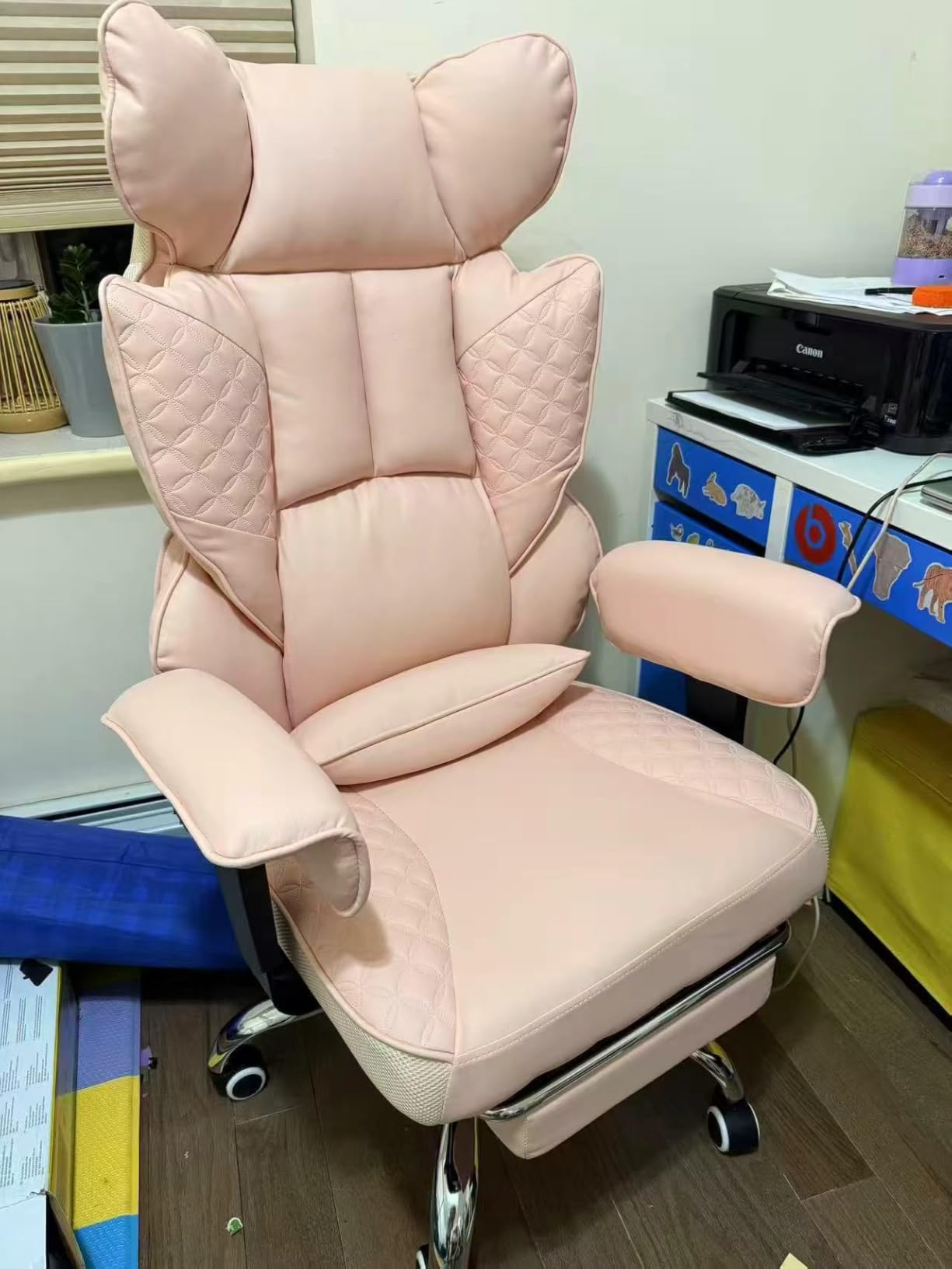
The design detail that matters for hips is the saddle-shaped seat. Rather than a flat slab, the cushion is contoured so the centre sits slightly lower and the edges rise, which spreads your weight across a broader surface instead of letting the two sit bones take the whole load. Underneath that sits a built-in spring back cushion, so the support is mechanical rather than purely foam.
The wrap-around backrest sides are unusual at this level. Most wide chairs use a flat back panel, and wide sitters slide forward off the cushion looking for a corner to lean into. These raised wings give the back something to hold.
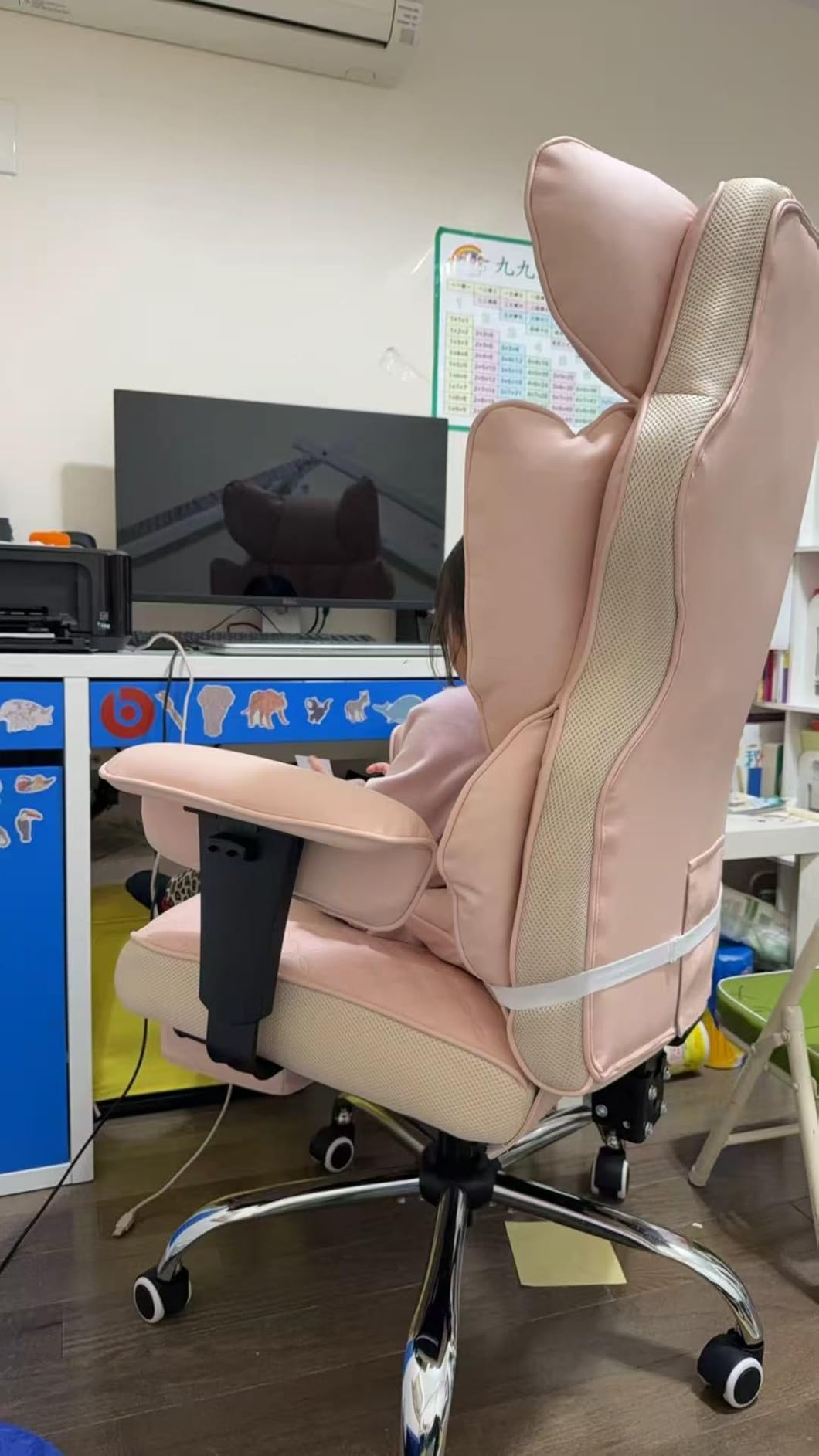
At 400 pounds capacity the base and gas lift are genuinely overbuilt for the job, and the metal frame gives you the confidence to lean sideways rather than sitting rigidly upright. The recline runs from 90 to 150 degrees, which turns the chair into something you can actually read in, and the retractable foot rest means you do not need a separate ottoman.
The honest weakness is cushioning density. Multiple reviewers describe the seat as closer to a board, and that feeling is most pronounced near the 400 pound rating. If your weight is closer to the middle of the range the cushion gives a little, but if you are near the top of the rating, the MAHOMICO and ZSQN chairs below have noticeably deeper padding.
Who it suits
People who want one chair for working, reclining and reading without switching furniture, and who are comfortable with a high-backed gaming silhouette rather than a quiet executive look. The faux leather wipes clean, which also makes it a sensible pick in a house with pets or children.
Who should pass
If you are sensitive to firm foam, sit on it in a showroom before buying. If you need a slim chair that tucks under a compact desk, the high back and foot rest take up more room than most of the chairs in this round.
2. COMHOMA Big and Tall Office Chair – Best Value Sofa-Style Seat
- Sofa-like seat leaves room to cross legs
- Built-in pocket spring lumbar
- Adjustable armrests
- Retractable foot rest with 150 degree recline
- 12-month warranty
- Cushion is only moderately firm
- Foot rest hardware is thin for a 400lbs chair
- Some variation between units
This chair wins on one specific thing: how much room the seat gives you when you stop sitting the way a task chair expects you to. The cushion is deliberately deep and wide, and reviewers describe cross-legged and bent-knee sitting as the reason they chose it, not as a bonus feature.
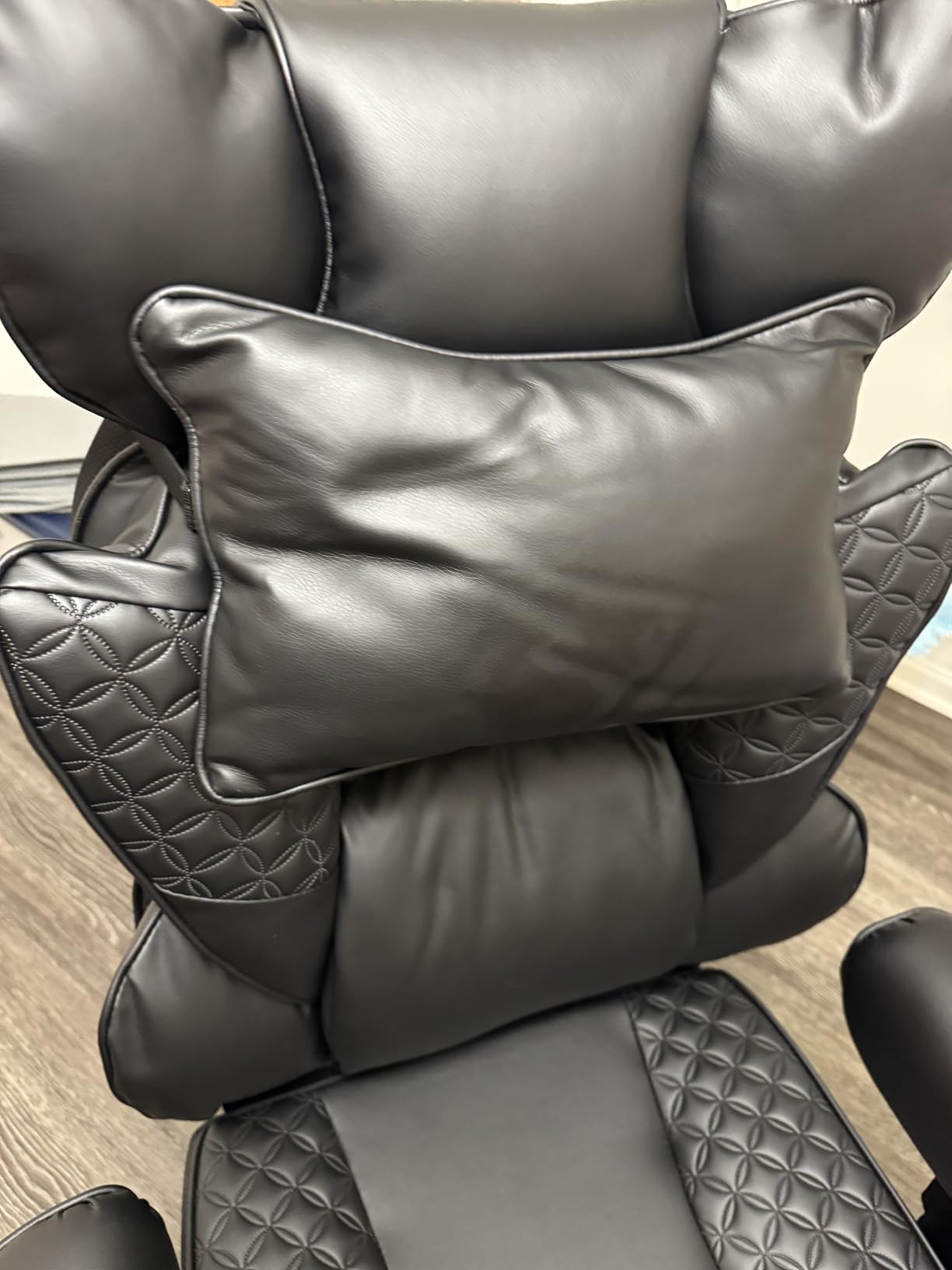
Unlike the first chair, the lumbar support here is a pocket spring assembly built into the backrest rather than a strap-on pillow, so it moves with the seat instead of floating behind you. The backrest is described as high and wide, which matters because a narrow back is just as uncomfortable as a narrow seat for wider frames.
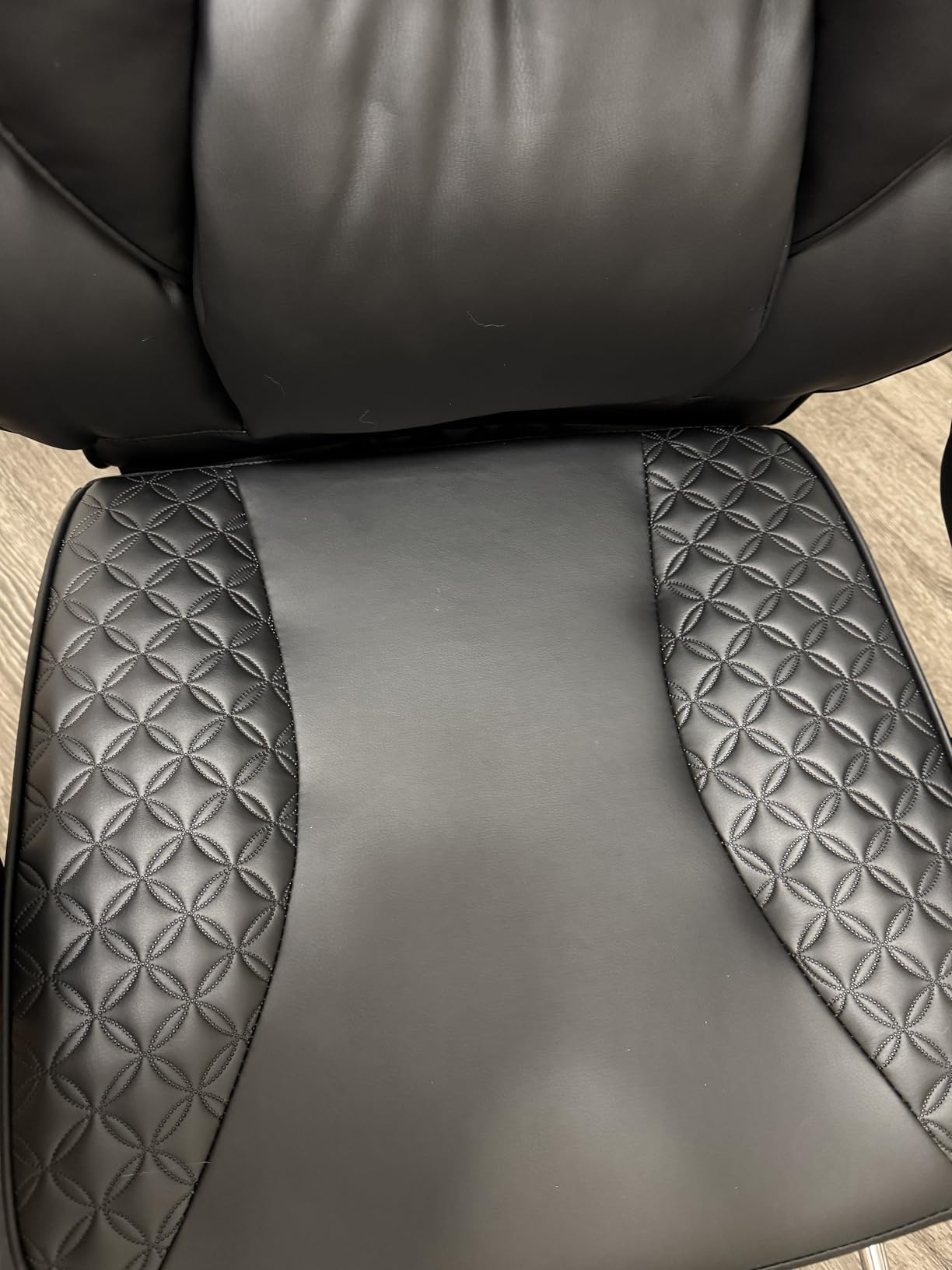
Armrest height adjusts, which is not the same as armrest width adjusting, but it does mean the tops of the arms can be dropped low enough to open up the seat. If your hips are the problem rather than your forearms, that adjustment gets you most of the way there.
At 44 pounds the chair is heavy but not unreasonable to move, and the assembly is straightforward. The 150 degree recline plus the integrated foot rest make it one of the strongest lounge setups in the group, and the embossed faux leather with the embroidered pattern is among the most decorative of the ten.
Who it suits
Sitters who change position constantly, who read in the chair at the end of the day, or who simply do not want to feel like they are at work. It is the most forgiving seat here for cross-legged sitting, because there is no hard armrest edge pressing into the hip when your knees drop outward.
Who should pass
Those who want a firm, supportive seat that holds the pelvis in a specific position. The padding here is moderate rather than dense, so if you spend long hours and prefer a firmer surface, look at the EXCEBET or ZSQN instead.
3. Efomao Executive Big and Tall Chair – Best Fabric Upholstery
Efomao Executive Office Chair, Mesh Black Fabric Big and Tall Desk Chair
- Genuinely 22 inch wide seat
- Fabric upholstery instead of sticky PU leather
- Dual-layer cushion with pocket springs
- 135 degree recline with foot rest
- SGS certified gas lift
- Armrests adjust height only
- Short foot rest that can loosen
- Backrest is low for users over six foot one
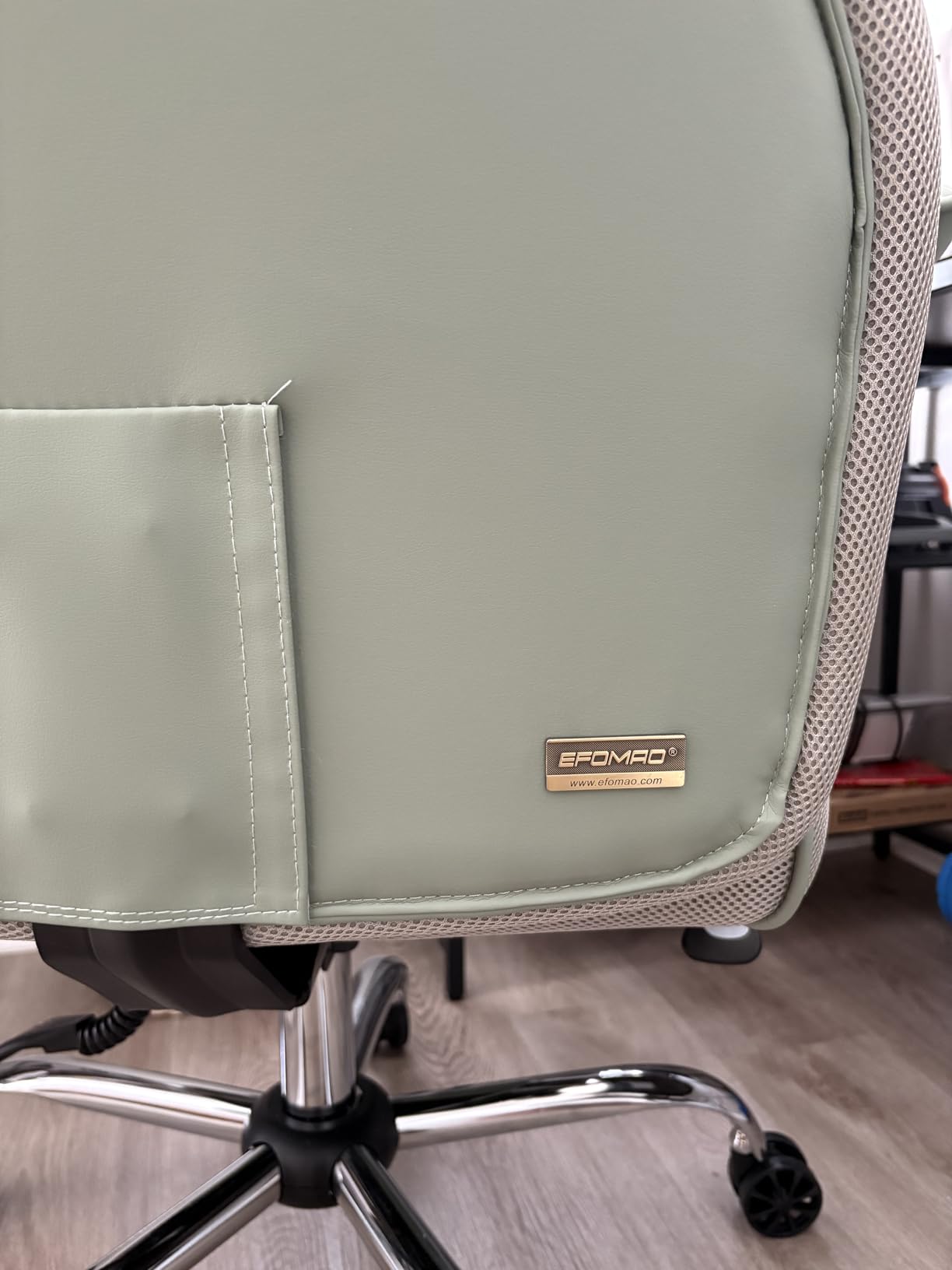
Of the ten chairs here, this is the one with a genuine 22 inch wide seat, and that figure is the reason it exists. If you have measured across your thighs and come out somewhere between 21 and 23 inches, this is the chair whose pan actually matches you rather than the chair whose marketing does.
It is also the only one upholstered in plain fabric rather than faux leather, which matters more than it sounds. Fabric does not trap the same amount of heat against the back of your thighs, and on a long sitting day in a warm room that difference is noticeable. It also spot cleans rather than needing a damp wipe.
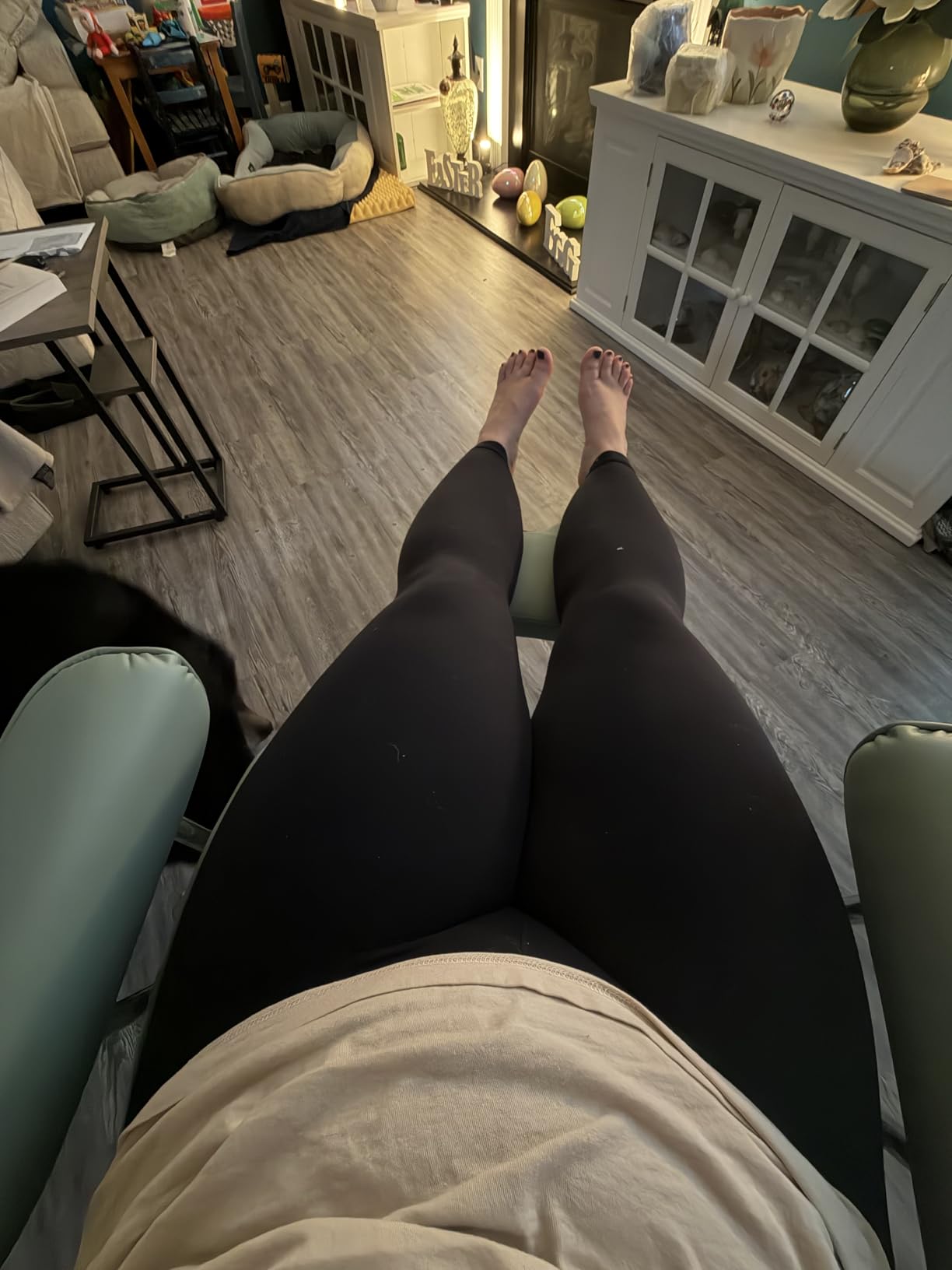
The cushion is a dual layer with pocket springs between the foam and the wood board, so it compresses under your weight and comes back rather than flattening permanently. Reviewers describe the combination as plush but still supportive, which is the description most wide-seat chairs never earn.
Below that sits a reinforced metal base and an SGS certified gas lift, and the package includes an independent lumbar pillow you can move to the lumbar curve that suits you. A 135 degree recline and a soft retractable foot rest cover the lounging case, and assembly takes roughly 15 to 30 minutes with tools included.
Who it suits
Short-to-average height wide sitters who run warm, and anyone who finds faux leather stuffy. The 20.5 inch seat depth keeps your knees bent at a comfortable angle rather than pushing them forward against a desk, and the adjustable height armrests drop enough to tuck under a standard desk.
Who should pass
Anyone over about 6 foot 1 inch. The backrest height is the weak point, and reviewers specifically call that out. If you are tall as well as wide, step up to the Indulgear chair below with its 27.5 inch backrest.
4. EXCEBET Big and Tall Office Chair – Best Arm Width Adjustment
- Arms mount separately and width is set at assembly
- Thick spring-cushioned seat
- Seat depth gives about an inch of adjustment
- Tilt holds where you set it
- High back suits taller users
- Gas cylinder is hard to replace once fitted
- Very firm front seat edge
- Recline is loud and lean-back only
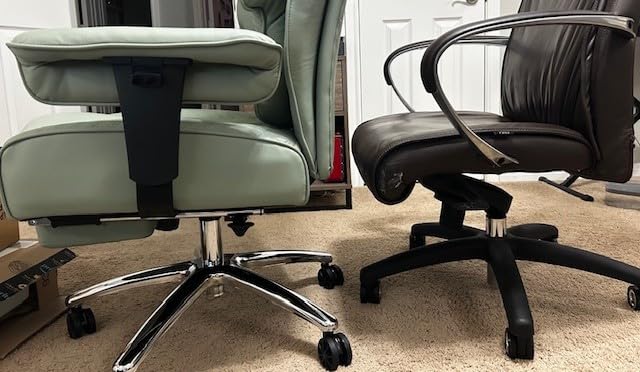
This is the only chair in the round where the armrests physically move outward, and that is worth more to a wide-hip sitter than any amount of extra foam. The arms bolt to the seat rather than the frame, and you decide how far apart they sit while you are putting the chair together.
It is not a ratchet adjustment you can change later, so it is a one-time decision made during assembly. But it is the difference between armrests that sit clear of your hips and armrests that touch them, and reviewers who set them wide report being able to sit cross-legged on a chair that is otherwise a conventional executive design.
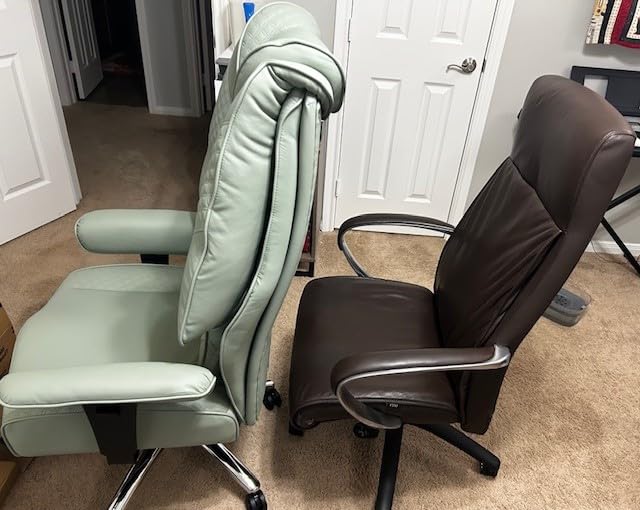
The seat is deep and thick, with elastic sponge cushioning in both the seat and the backrest, and the high back extends above the head for most users, which makes this a better match for tall bodies than several cheaper chairs here. Tilt works, the tension control is usable, and the back stays where you put it.
Two things to weigh carefully. The gas cylinder is not easy to swap once installed, and reviewers report pressure loss around the one year mark on some units. The front edge of the seat is also very firm and can press into the backs of your thighs, which is precisely the complaint this whole category exists to solve.
Who it suits
Tall, wide sitters who want a conventional high-back executive look and who will happily spend ten minutes with a screwdriver to set their arm spacing. The recline is more of a lean-back than a true rocking recliner, so treat it as adjustable-angle support rather than a lounge mechanism.
Who should pass
Anyone who expects to move the armrests later, or who has a long-term memory for hardware failures. The welded base is solid, but the cylinder replacement path is the weak link, and some early units reportedly squeak or creak.
5. HOMRELEXA Big and Tall Flip Armrest Chair – Best for Cross-Legged Sitting
Big and Tall Office Chair, Flip Armrests for Pets & Cross Legged Sitting
- Armrests flip up to open the whole seat
- Plush pocket-spring seat
- 400lbs rating on a reinforced metal base
- TUV tested base and SGS gas lift
- Assembles in about 15 minutes
- Armrest release takes a two-step press
- Only one seat height setting is listed
- Bulky footprint
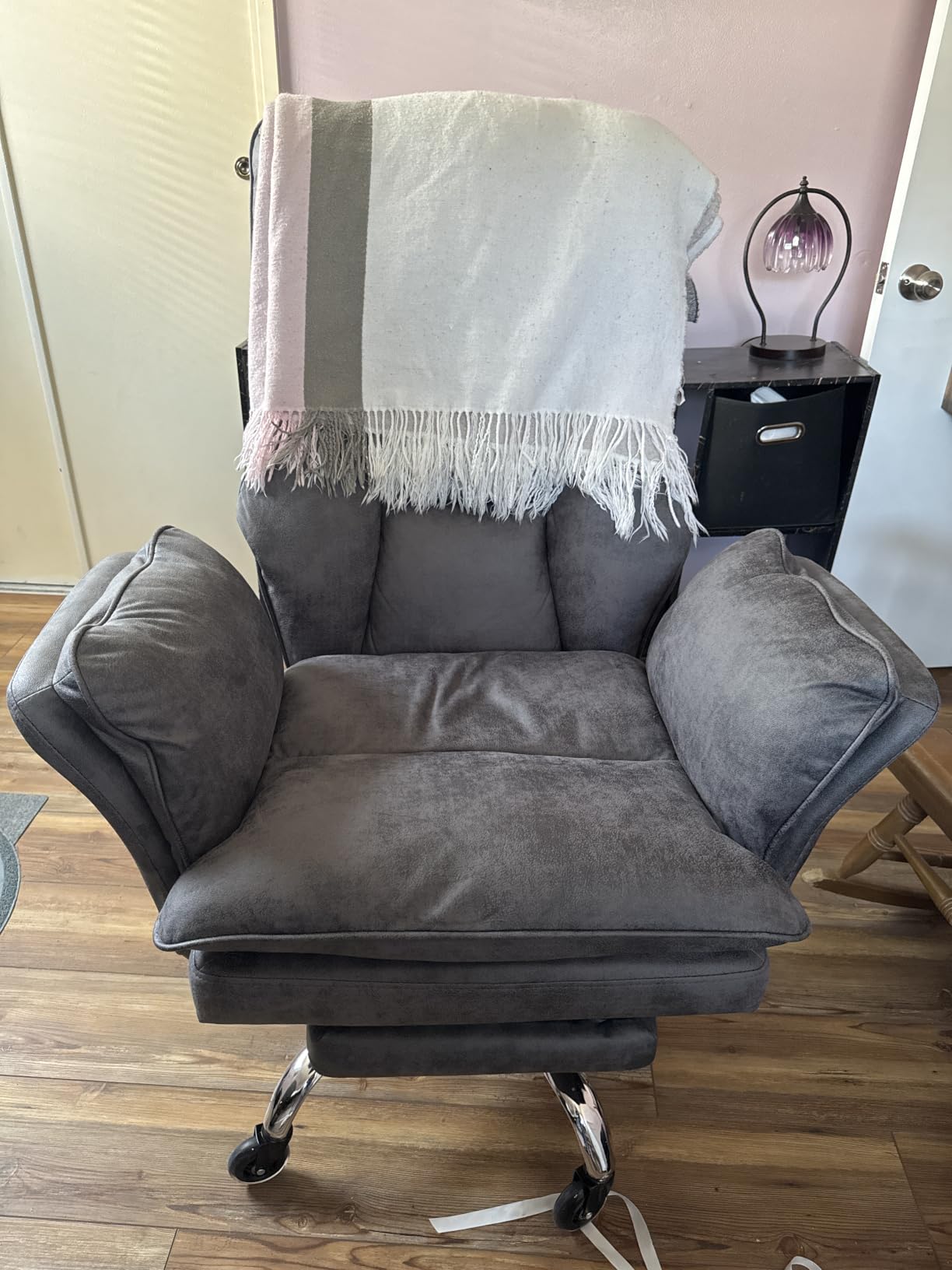
Every other chair in this round solves the cross-legged problem by giving you a wide seat and hoping. This one removes the obstacle: the padded armrests flip outward and away, and when they are up there is nothing between your hip and open space.
That single feature is why people buy this chair, and it also covers a second use case that no other chair here does: sitting sideways with a pet, or stretching a leg out along the seat. The velvet teddy upholstery is soft enough to bare skin against, and the pocket-spring seat below it is among the plushest surfaces here.
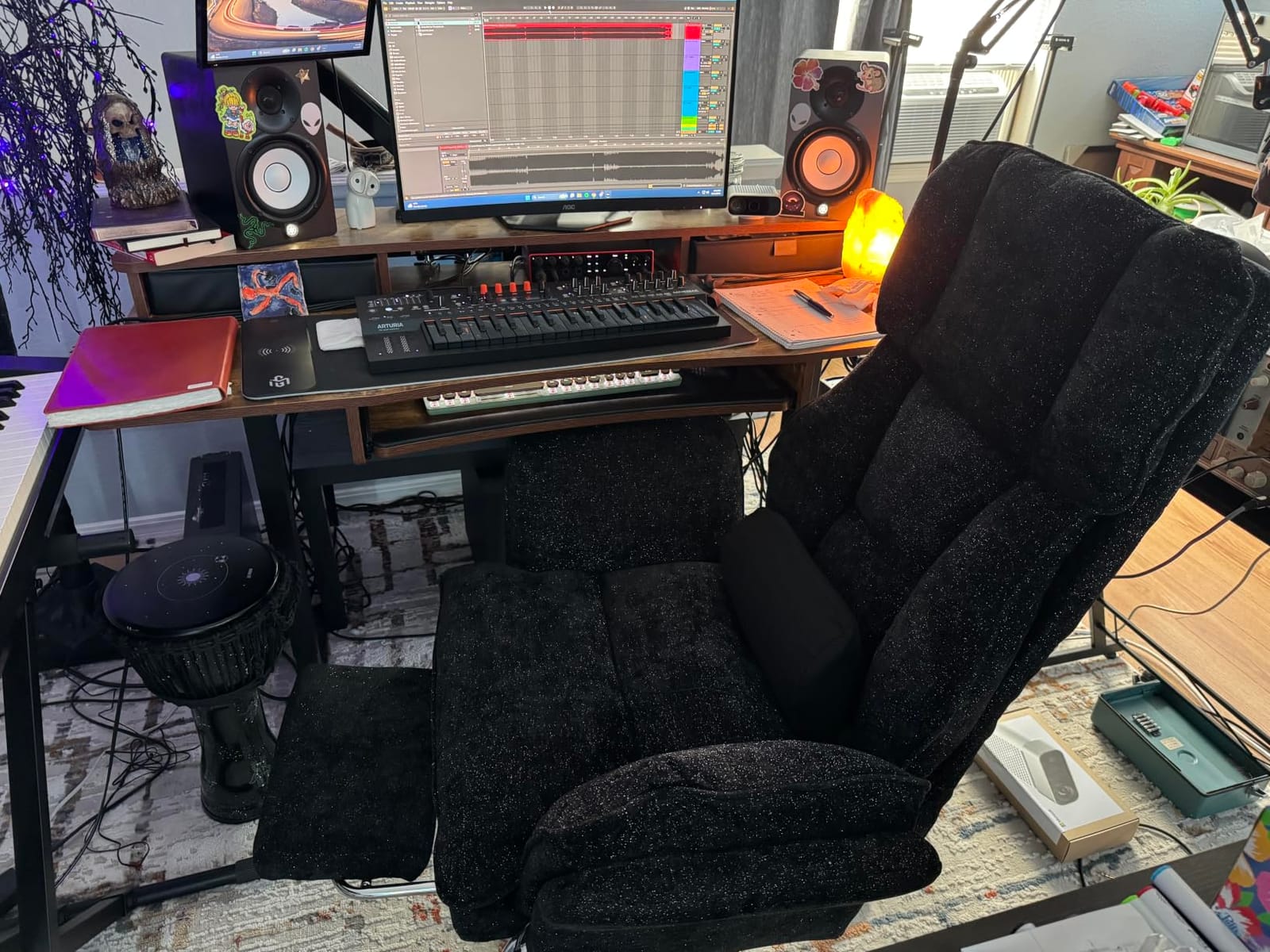
Underneath, the seat is a plush pocket spring with fiber fill and high density foam layered together, so it absorbs rather than resists. The back is tall and adjustable, the base is reinforced metal, and the casters are BIFMA compliant, which is a meaningful detail on a chair weighing 55 pounds.
The base, casters and gas lift are all independently tested, which is unusual at this level and is worth noting because forum complaints about this category tend to cluster around exactly those parts. There is a pull-out foot rest and a recline for relaxing at the end of the day.
Who it suits
Cross-legged sitters, pet owners, and anyone who wants a wide chair that still looks like a chair rather than a gaming rig. If arms are your problem, this is the chair to look at first, because the fix is a mechanical one rather than a dimensional compromise.
Who should pass
Small offices. At 26.8 by 52.4 inches, this is one of the larger footprints here and reviewers mention it specifically. The armrest release also takes a deliberate press inward and down, which is not obvious the first time you reach for it.
6. WAILOR 400lbs Executive Office Chair – Best for Adjustable Neck Support
- Widened seat with 4-layer foam
- Steel-reinforced frame spreads hip pressure
- Linkage armrests sync with the recline
- Adjustable headrest and curved lumbar
- SGS class 4 gas lift and quiet casters
- Linkage hinges limit how far the arms angle
- Foot rest is an add-on step
The angle that sets this chair apart is that it treats hip pressure as a frame problem rather than a foam problem. The steel reinforcement is positioned to spread the load of a heavier sitter across a wider area of the seat instead of letting it concentrate in the middle, and the seat itself uses four layers of foam over that structure.
The headrest is genuinely adjustable on a vertical track, and it is the only chair here where a tall sitter can set support at the base of the neck rather than guessing. The curved lumbar cushion underneath handles the lower back, so the two support points are not competing for the same spot.
The recline runs from 90 to 155 degrees, which is the deepest range in the group, and the armrests are linked to the back so they rise as you lean back rather than staying flat. On paper that sounds like a limitation, and in practice reviewers do note that the enclosed linkage hinges restrict how far the arms angle open.
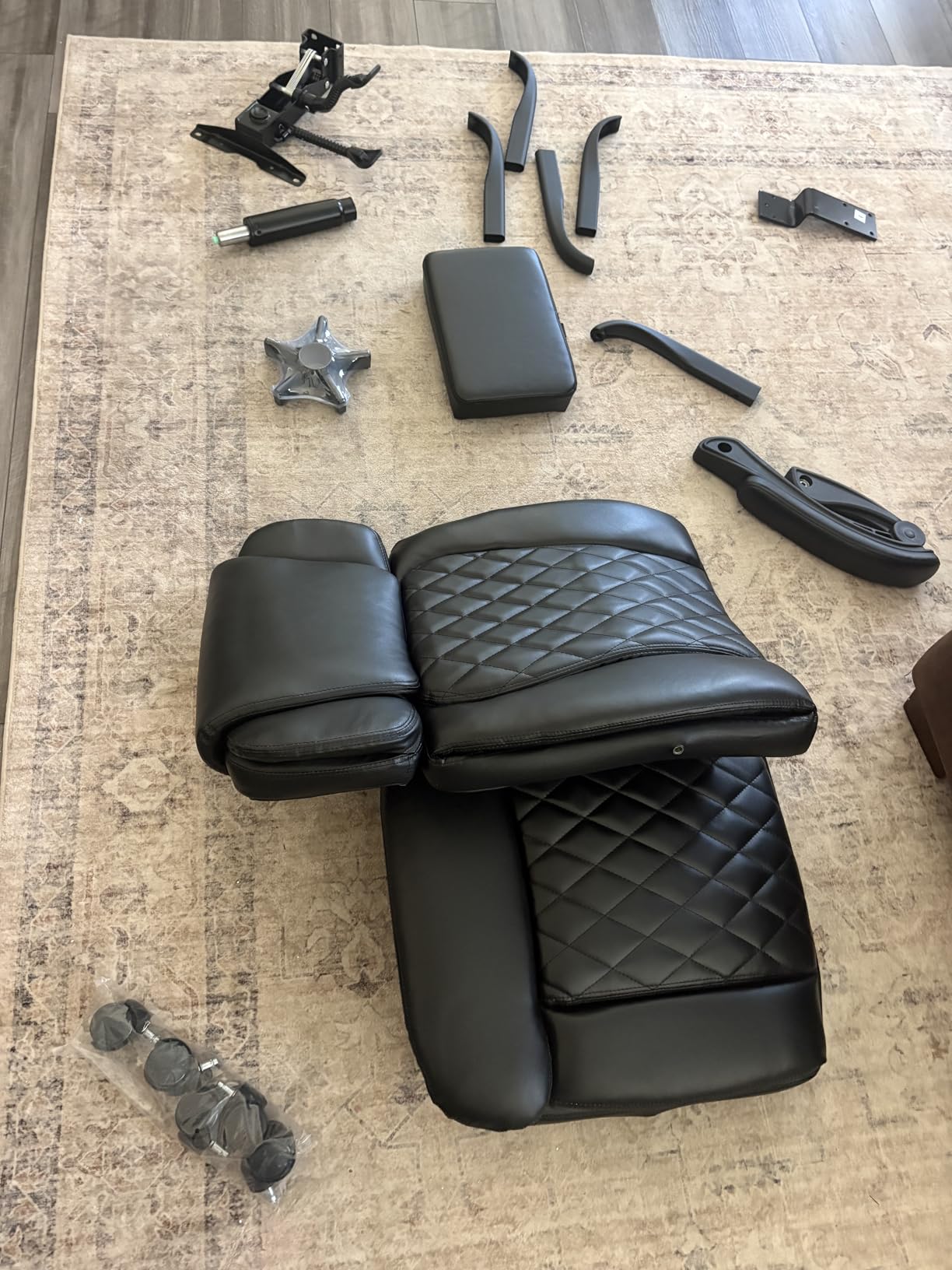
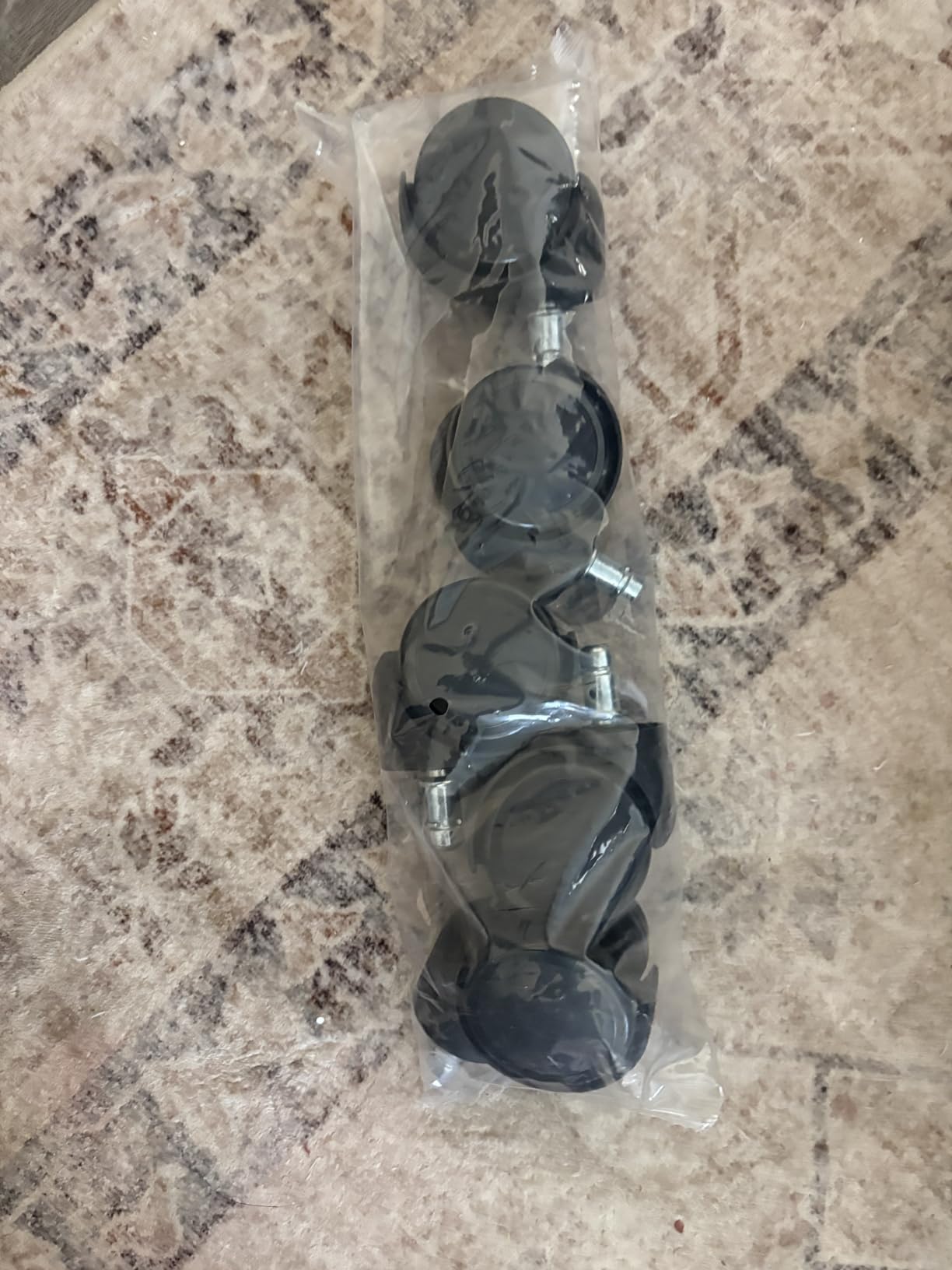
Underneath, an SGS class 4 gas lift and quiet 360 degree casters sit on an FSC certified wood base with a reinforced baseplate. The manufacturer sorts the parts and includes an assembly video, which matters on a chair with this much structure to bolt together.
Who it suits
Long days at a desk where the neck matters as much as the hips, and heavier sitters who want a deeper recline than the other 400 pound chairs offer. The one year warranty covers free replacement of casters, gas lifts and bases, which is the kind of detail that reduces the risk on a heavy purchase.
Who should pass
Those who want a foot rest out of the box; it is optional and adds assembly steps. If your hips are your only problem and you sit wide, the seat width here is good but the armrest linkage may still get in the way.
7. Indulgear Big and Tall Heavy Duty Chair – Best 500 Pound Capacity
Big and Tall Office Chair, Heavy Duty Office Chair for Heavy People
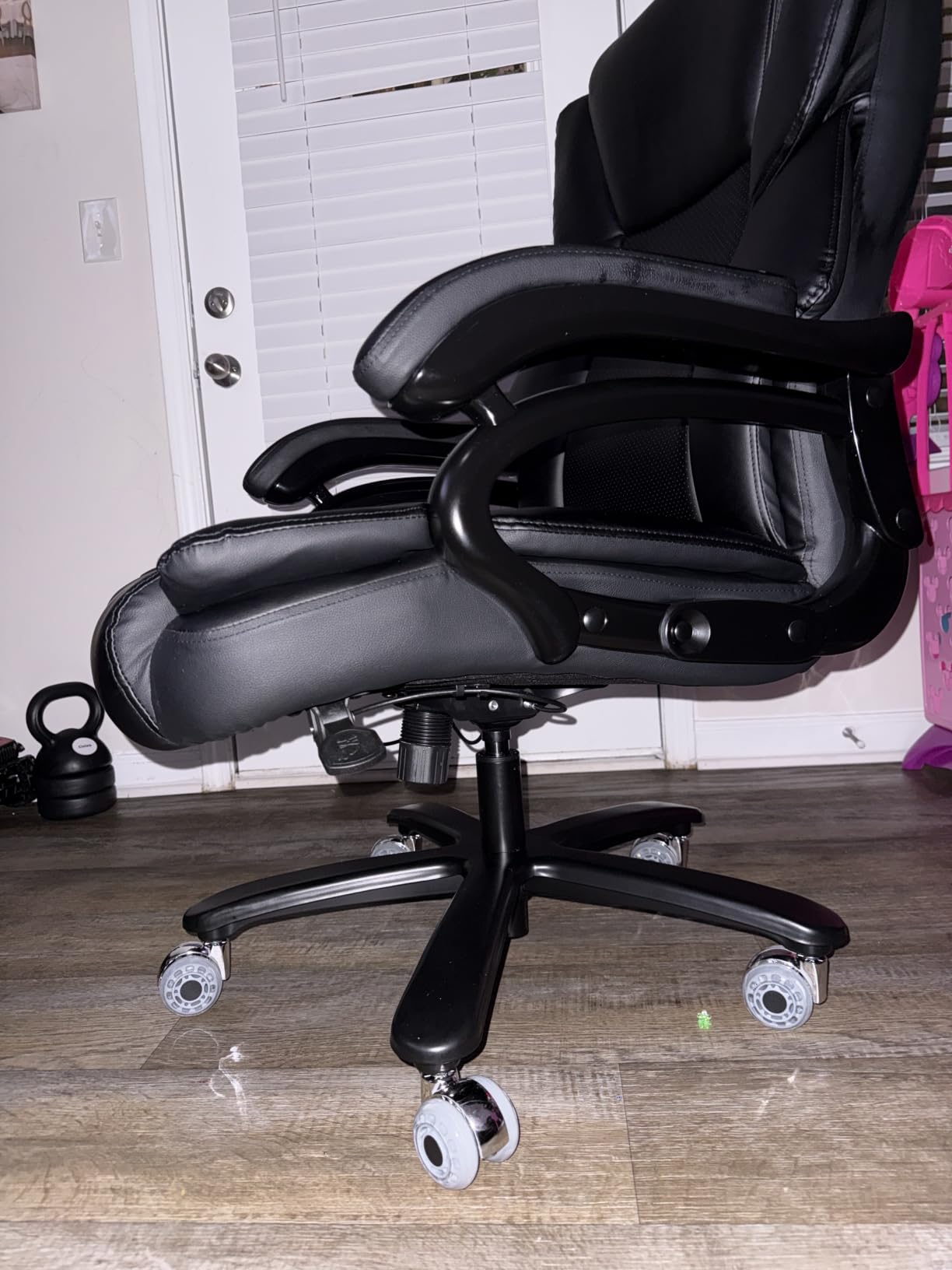
- Extra-wide backrest and deep seat
- Breathable PU leather that resists flaking
- Built-in adjustable lumbar
- Quiet rubber casters safe for wood and tile
- 20 minute assembly
- Bulky footprint from the extra width
- Single listed recline position
- Very heavy at 80 pounds
This is the chair to look at if 400 pounds feels like the ceiling rather than a target. The 500 pound rating is backed by a 4-level gas lift and a heavy duty metal base, and the seat depth of 23.62 inches is among the deepest in the group, so thighs are supported rather than hanging over the front lip.
The backrest is 27.56 inches wide, which is wider than the seat itself, and that extra width is not padding for the spec sheet. On a chair this size there is nothing to brace your shoulders against if the back is narrow, and that brace is what lets a heavier sitter relax instead of holding themselves up.
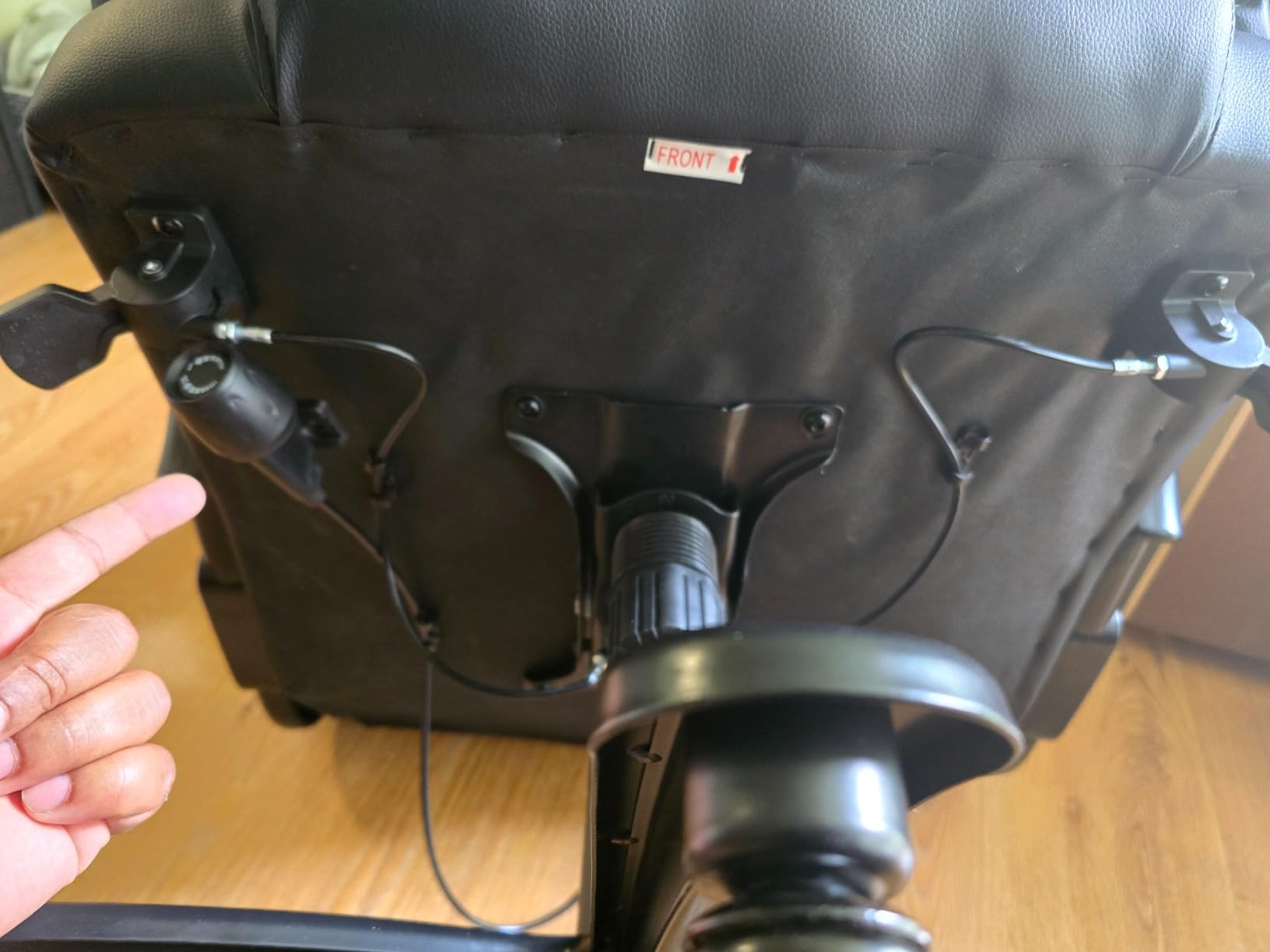
The upholstery is PU leather, but the reviews single it out as holding up better than bonded PU on cheaper chairs, resisting the fading and flaking that ends most faux leather office chairs. The casters are quiet polyurethane rubber, and owners specifically note they roll on hardwood, laminate, tile and vinyl without marking.
Adjustable lumbar support is built in, and the cushioning is a double layer of sponge. Assembly takes about 20 minutes and the parts are manageable, but the finished chair weighs 80 pounds, which is the heaviest in this round and the single most-cited drawback.
Who it suits
Plus-size sitters in the 400 to 500 pound range, especially anyone who needs depth as much as width. The deep seat and adjustable lumbar are the pair that reviewers credit with reducing slouching over a full working session.
Who should pass
Anyone in a small room, or anyone who will need to move the chair often. At 27 inches by more than 48 inches with an 80 pound weight, it is a two-person job to reposition and it will not tuck under a standard desk.
8. MAHOMICO 750lbs Big and Tall Chair – Best for Very Heavy Sitters
- Oversized U-shaped sprung seat cushion
- Highest weight rating in the round
- 4D armrests move in several directions
- 2D adjustable lumbar
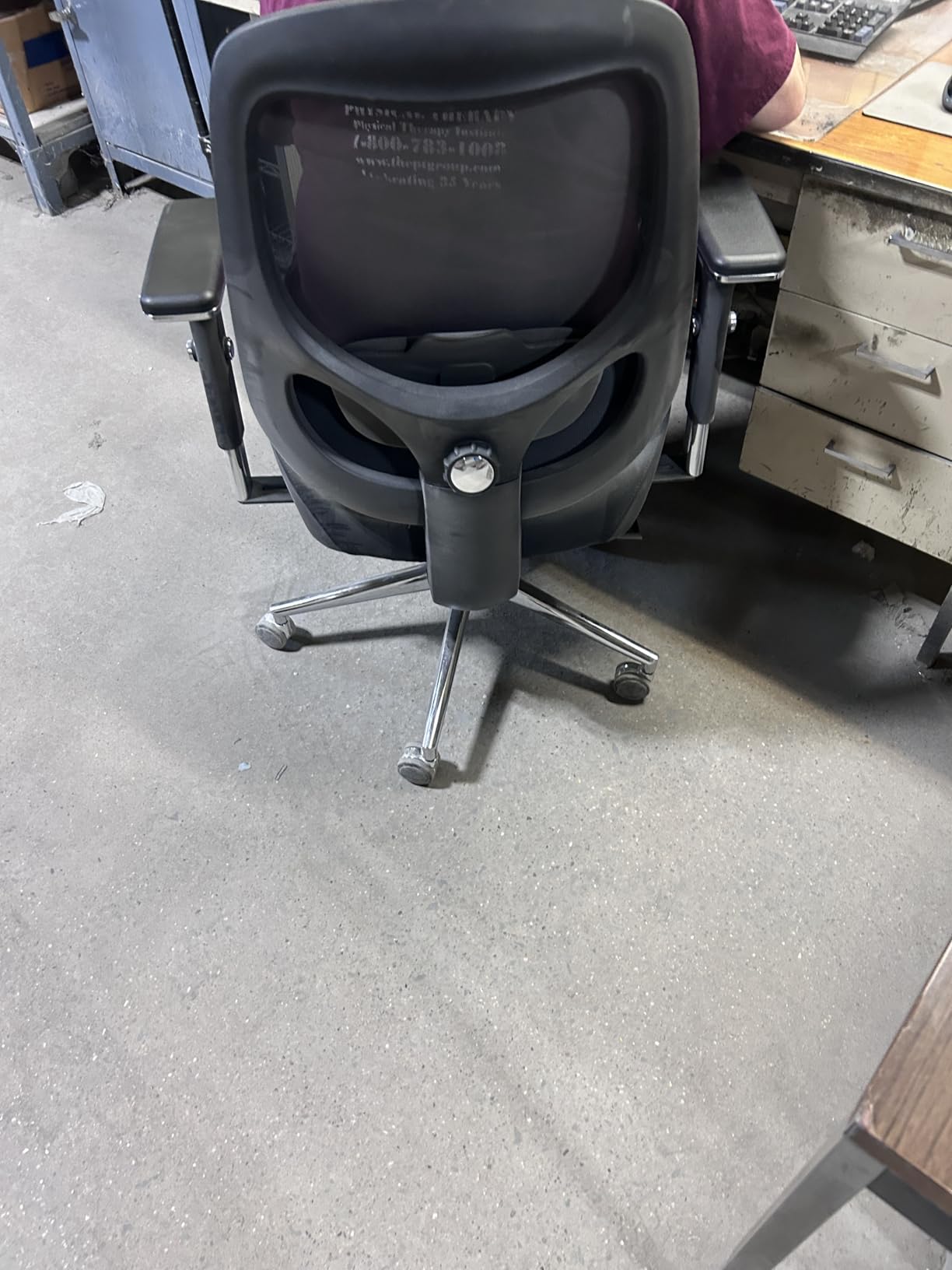
- Breathable mesh keeps the chair cooler
- Mesh back gives less than a padded cushion
- Shallower than dedicated big and tall models
The 750 pound rating is the headline and it is the reason this chair is on the list. If you have written off most of this category because the numbers stopped at 500, this is the one that was built differently, with a reinforced base and a seat designed to take a load most chairs never see.
The armrests are the part we would highlight for hips specifically. Four dimensional movement means they go up and down, in and out, forward and back, and side to side, so you can push them out of the way of your hips and bring them back when you need forearm support at a keyboard. No other chair in this round has that range.
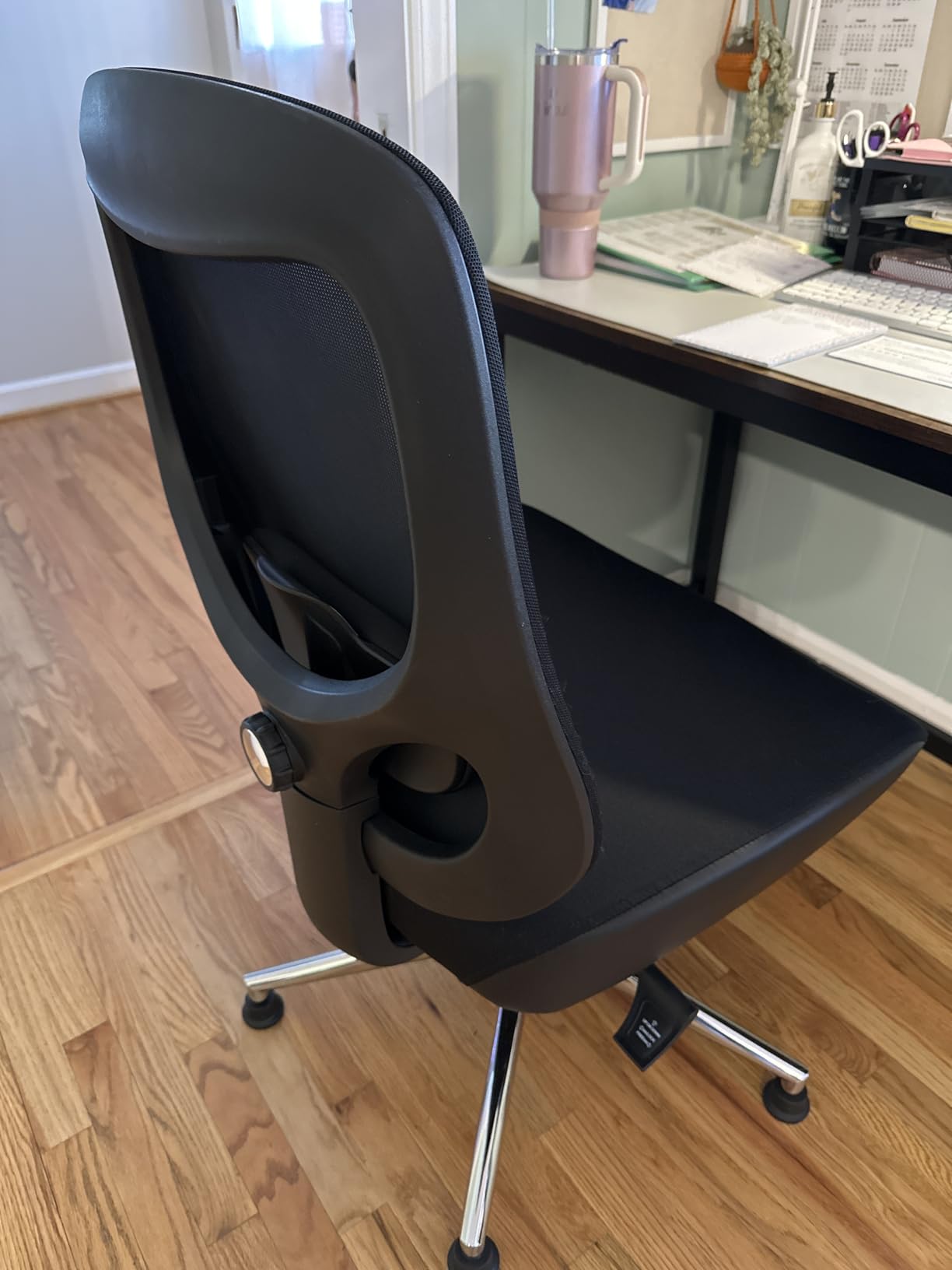
The seat is an oversized U shape with thick padding over a spring system, and the lumbar support adjusts in two directions so you can place the support at the curve that matches you rather than a single fixed height. The backrest is breathable mesh, which keeps heat down over a long day.
It is BIFMA and SGS tested with a one year warranty, and the wheels roll quietly. The honest trade-off is that a mesh back gives less give than a fully padded cushion, and reviewers who prefer to lean back against something soft tend to prefer the padded chairs in this round.
Who it suits
Sitters well above 400 pounds who also run hot, and anyone who needs the armrests to move out of the way rather than to stay put. The 4D arms are the closest this round comes to solving arm clearance by adjustment.
Who should pass
Those who want a deep seat, and the 23.6 by 29.9 inch footprint is wide but not as deep as the dedicated big and tall models, so taller users with long thighs should look at the Indulgear or ZSQN chairs. It also has the smallest review base here at 310, so long term durability data is thin.
9. ZSQN 500lbs Extra Wide Executive Chair – Best Thick Seat Cushion
- 6.7 inch thick spring cushion on a 23.2 inch seat
- Cross-legged wide steel base
- PU leather that resists peeling
- Adjustable lumbar and seat height
- 30-day returns and 12-month parts
- Factory lean-back angle is excessive
- Headrest sits low for users over 6 feet
- Tilt tension feels stiff at its loosest
The cushion is 6.7 inches thick, and that single number is why this chair exists. For a heavier sitter, cushion thickness is the difference between compressing the foam to the base board and compressing it partway, and this is the chair that gets closest to the deep end of that range.
At 4.4 stars it is one of the better rated products here, and the praise is consistent: wide hips get a seat they can spread into, the backrest is a genuine plus size at 22.05 by 27.95 inches, and the lumbar support adjusts to the curve rather than sitting at one fixed height.
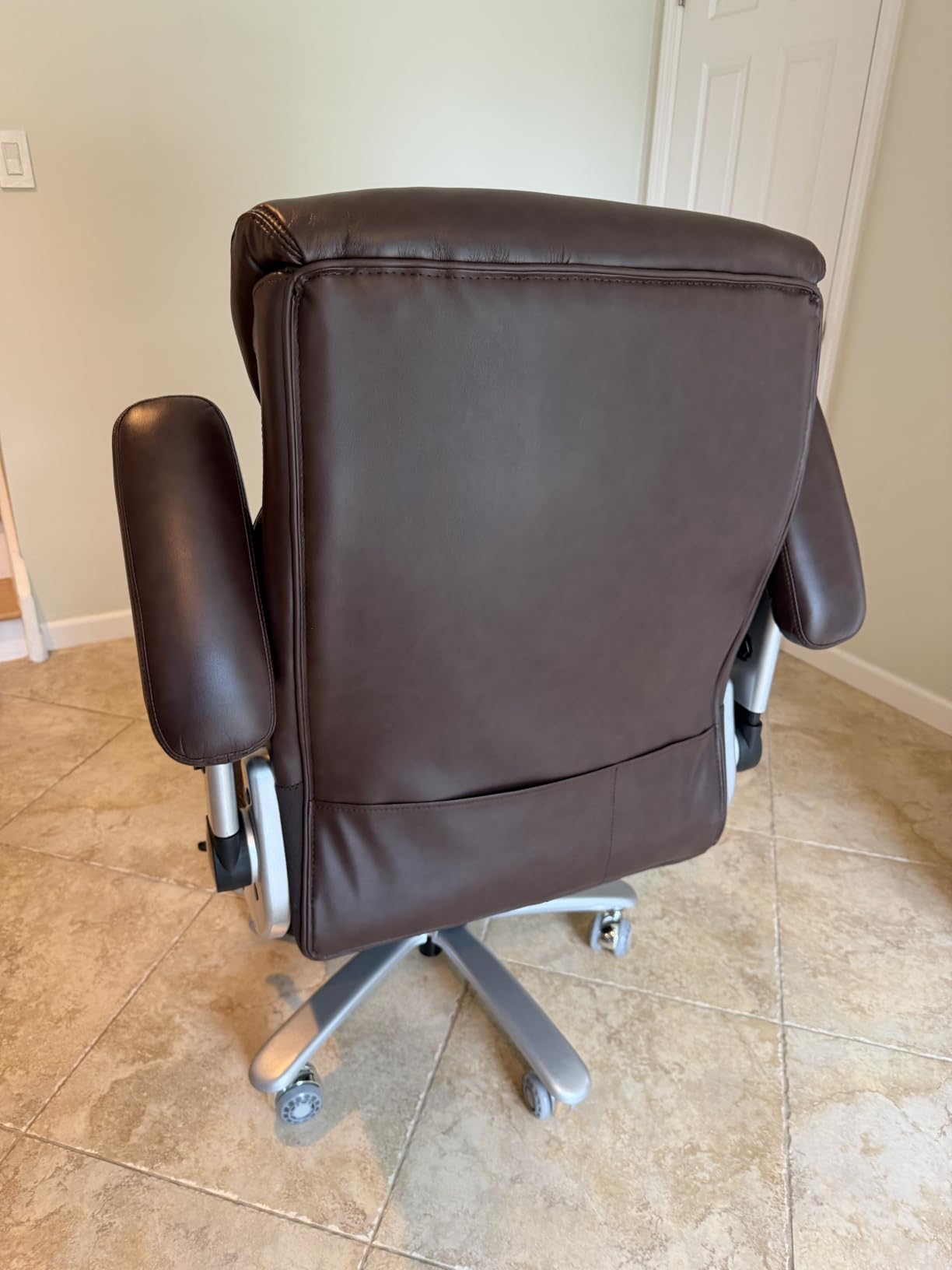
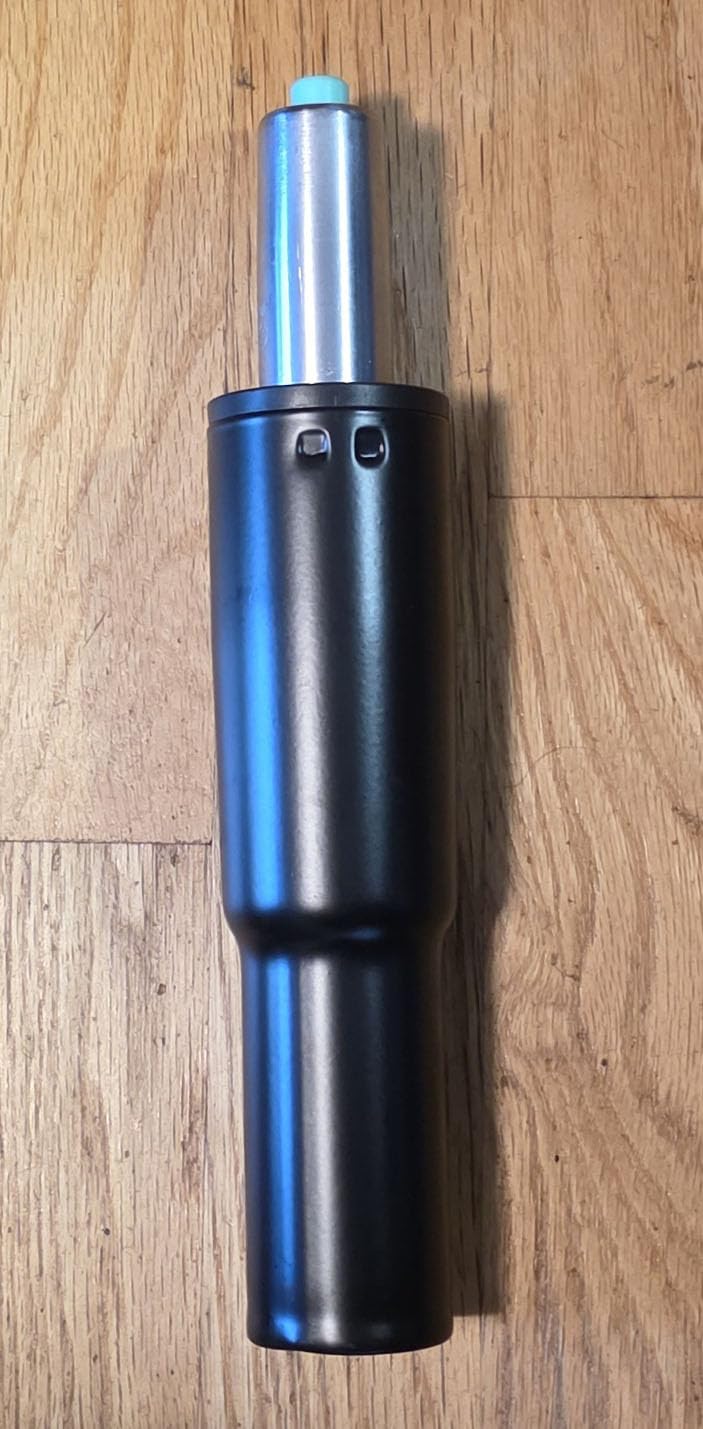
The base is a wide cross-legged steel design, which is what keeps a chair with this much cushion from tipping when you lean back, and the gas lift is BIFMA class 4 rated to 500 pounds. The PU leather is described as abrasion and scratch resistant and, again, as resistant to the peeling that ends cheaper chairs early.
Casters are 360 degree swivel PU that roll quietly on wood, carpet or tile without marking. Seat height adjusts across a wide range, and the armrests are solid enough to push down on when standing up, which is a small thing that matters with this much mass above them.
Who it suits
Heavier sitters who prioritise a soft landing over a precise, athletic posture, and anyone who wants one of the two widest seats in the round at 23.2 inches. The brown faux leather reads more like a traditional executive chair than a home office one, which suits a study or a reception desk.
Who should pass
Users over about 6 feet tall. The headrest sits low, and the chair leans further back than typical even at its most upright setting, which some reviewers read as a factory issue. Tilt tension is also stiff at its loosest, so it is not the chair to recline in.
10. Cloomey 500lbs Extra Wide Chair – Best Air Lumbar Support
- Inflatable lumbar airbag you set yourself
- Extra-wide contoured multi-layer cushion
- Thick pillow-top armrest pads
- SGS grade 3 gas cylinder over 100000 cycles
- Quiet wheels that will not mark floors
- Single listed recline position
- Small review base at 210 ratings
At 4.5 stars across 210 reviews this has the highest average score of the ten, though it also has the fewest reviews, and both numbers belong in the same sentence. The rating reflects a design that is doing something genuinely different rather than a longer track record.
That difference is the lumbar airbag. Instead of a fixed foam block or a sliding rail, there is an inflatable bladder you pump to the level of support you want. For a sitter whose hips and lower back both need help, that is a more useful adjustment than a lever with three settings, and it costs nothing extra to fine tune during the day.
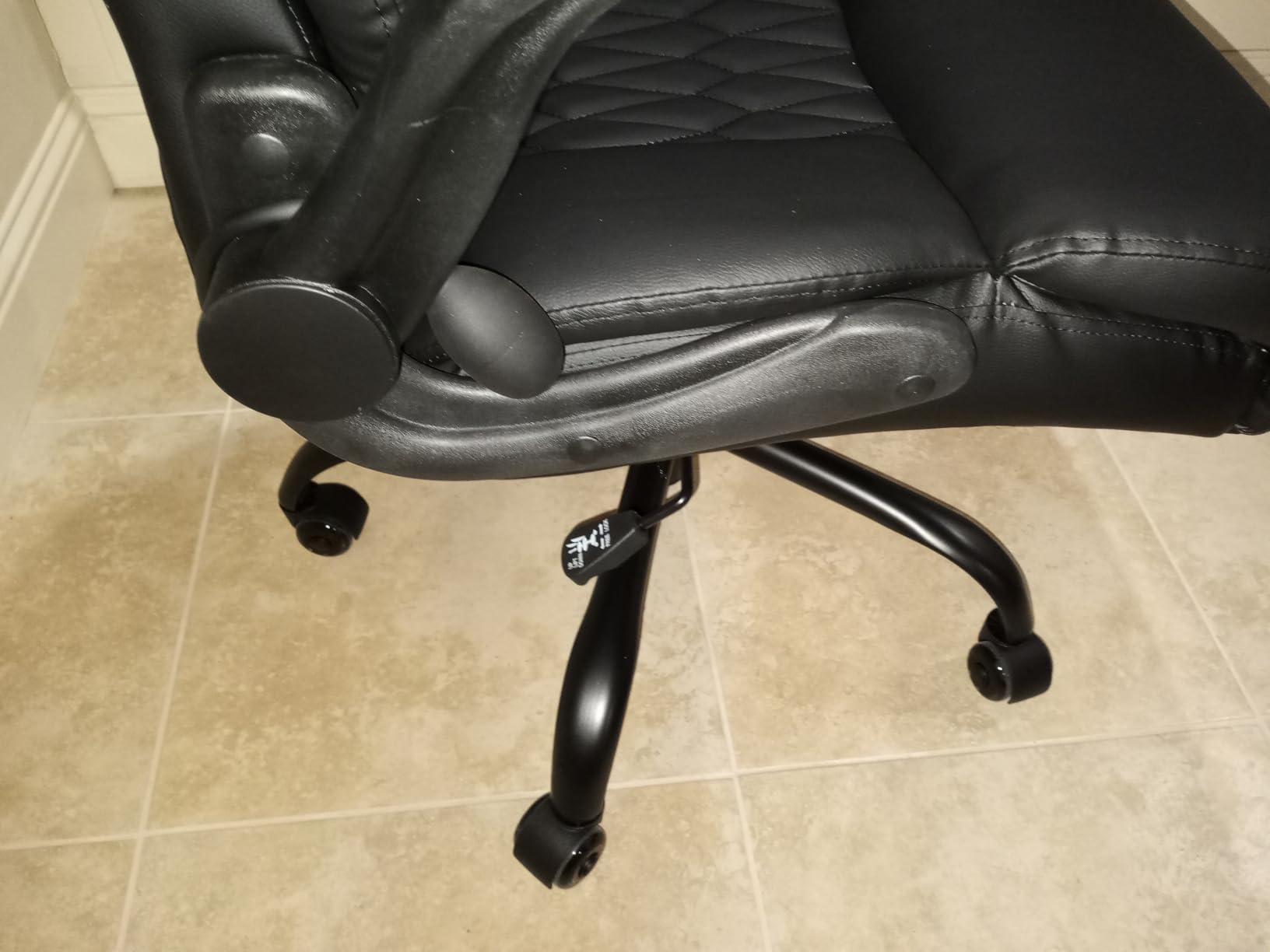
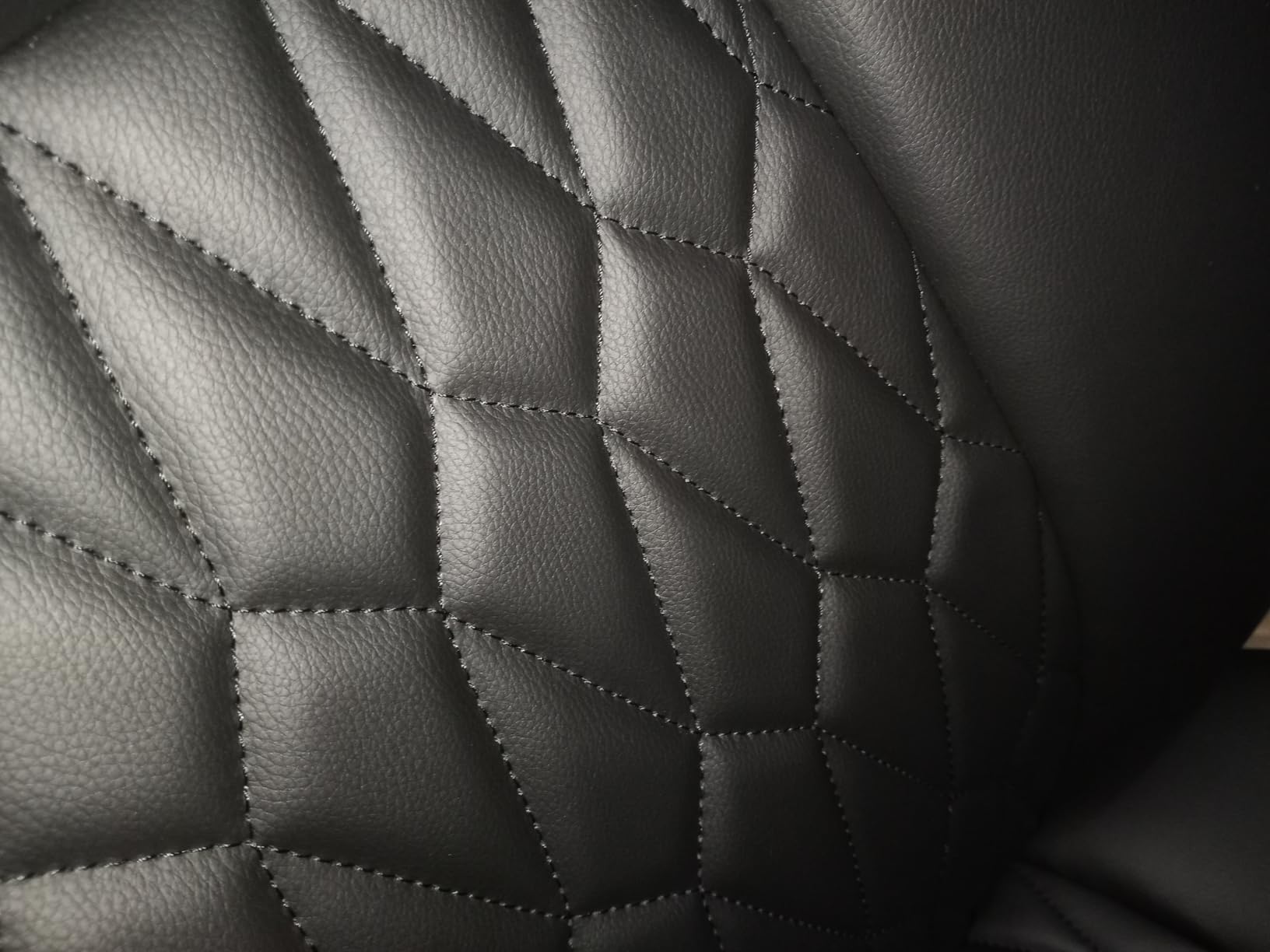
The seat is extra wide with multi-layer thick cushioning shaped to the body contour, and the armrests carry thick pillow-top pads. Those pads are soft rather than hard, which is relevant here because a wide sitter presses outward against the arms more than a narrow one, and a hard surface in that position is exactly the complaint this category exists to fix.
The frame is a heavy duty metal base rated to 500 pounds with an SGS grade 3 gas cylinder tested over 100,000 cycles, and the wheels are soft nylon-rubber polyurethane chosen to stay quiet and avoid marking floors. There is a one year warranty.
Who it suits
Anyone whose main complaint is lower back ache that arrives partway through the day, and wider sitters who find hard armrest pads aggravate their hips. The airbag lets you increase support when you straighten up and soften it when you settle back.
Who should pass
Anyone who wants a real recline; only one position is listed, so the back angle is fixed. Be cautious about long term durability, because with 210 reviews there is simply not enough data yet to say how the airbag and gas cylinder hold up over several years.
How to Measure Yourself Before You Buy a Wide-Seat Chair
Guessing is the expensive way to shop this category. Four measurements take five minutes and will tell you more than any product page. Sit down in a straight chair, feet flat on the floor, and measure the width across the tops of your thighs with your knees about two inches apart. That is your hip width, and it is the number to match against seat pan width.
Next, measure the distance from the back of your seat to the crease where your knee bends while you are sitting upright. Your seat depth should be within about two inches of that figure, no more. A seat that is too deep pushes your knees forward and takes your lower back off the lumbar support, which is the exact reason many wide sitters end up slouching in a chair that is technically the right size.
Then measure your height while seated, from the floor to the top of your head. That is what tells you whether a backrest is tall enough, and it is where the Efomao and ZSQN chairs come up short. Finally, measure the distance across the desk or table you work at, because a chair with flip-up arms or a foot rest may simply not fit underneath it.
Add two or three inches to your hip width when you compare to a manufacturer’s seat pan figure, and treat any published number as a marketing measurement rather than a usable one. Where a chair gives both an overall width and a seat width, use the seat width. Our guide to office chairs for shorter users covers the seat height side of the same problem.
What Actually Matters: Seat Width, Depth, Weight and Lumbar
If you want the short version, the best office chair for people with wide hips is one with at least 22 inches of usable width between the armrests, 18 to 22 inches of seat depth, a weight capacity at least 50 pounds above your own, and lumbar support you can move. That combination removes hip compression, keeps your knees bent at the right angle and holds your spine neutral for a full working day.
Check these in order, and do not skip the first one.
1. Usable seat width. Measure the pan, not the chair. Anything from 19 to 20 inches is a standard chair and will squeeze a wide sitter no matter how good the foam is.
2. Armrest inner width. This is the gap between the two armrests, and it is the number almost nobody publishes. A chair can have a 22 inch pan and 19 inch arm clearance, which means your hips still hit the arms. Flip-up, removable or side-to-side adjustable arms solve it outright; the EXCEBET solves it at assembly time.
3. Seat depth. Match it to your seated knee-to-cushion measurement within a couple of inches. Too shallow and your thighs overhang; too deep and your back floats away from the lumbar support.
4. Weight capacity headroom. Buy the next rating up from your own weight rather than the closest one. For a 300 pound person, every chair in this round qualifies, and the 400 pound models give you the widest selection. If you are closer to 400, the 500 and 750 pound models exist specifically because the gas lift, base and welds are built differently, not because the label changed.
5. Lumbar support type. Sliding rails and adjustable pillows are the most useful. An inflatable bladder lets you change support through the day. A fixed foam block is the least useful and is common on cheaper wide chairs.
6. Gas lift certification. SGS certified lifts and BIFMA compliant casters are the two things reviewers most often praise in chairs that are still going after two years, and both are worth checking on the product page before you order.
7. Recline range and tilt lock. A range of at least 100 to 130 degrees gives you real posture options. Tilt that holds where you set it matters more than a long recline range you cannot adjust.
8. Return window. Fit is genuinely hard to judge from photographs. Give yourself a full month, and check who pays the return freight on a chair that weighs 55 to 80 pounds, because that cost is often what turns a trial into a commitment.
Materials, Heat and What to Do When Nothing Fits
Mesh and plush are a real trade-off, and no material solves both problems. Mesh breathes, which matters enormously if you run warm or if you sit for eight hours, and it is why the MAHOMICO is worth considering. But mesh seats and backs put more pressure directly on the sit bones, and heavier sitters tend to find that uncomfortable over time. Plush and PU leather cushion better and trap more heat, which is why the fabric-upholstered Efomao sits in a useful middle position.
Upholstery choice comes down to your household. PU leather wipes clean in seconds and handles pets, hair and spills, but it can peel at the seams after a few years. Fabric will not peel, but it absorbs odours and stains. Several reviewers on this list specifically call out the PU leather on the Indulgear and ZSQN chairs as holding up better than bonded PU on cheaper models, which is a reasonable tiebreaker between them.
Cross-legged sitting has its own requirement list, and it is short: flat or very gently contoured seat, no fixed armrests pressing inward, and enough width to bring a knee across. The HOMRELEXA with flip-up arms is the only chair here designed around that, and the COMHOMA is the most forgiving without them.
If nothing in this round fits your measurements, the answer is not to keep buying chairs. A gel or memory foam seat cushion can add the two inches you are missing, a lumbar pillow can fill a fixed support, and a footrest solves a seat that sits too high. We covered the cushion options in our guide to the best seat cushions for office chairs, and it is a far cheaper first experiment than replacing a chair that is nearly right.
Frequently Asked Questions
What is the best desk chair for people with wide hips?
The best desk chair for wide hips has at least 22 inches of usable width between the armrests, 18 to 22 inches of seat depth, and a weight capacity at least 50 pounds above your own. Look for flip-up, removable or side-to-side adjustable armrests, and check the armrest inner width rather than the seat pan width, because the two numbers are often two or three inches apart.
How wide should an office chair seat be for my hips?
Measure across the tops of your thighs while seated with your knees about two inches apart, then add two or three inches. That gives you the minimum pan width to look for. If you sit cross-legged or spread your knees, add another two inches, and prefer a flat or gently contoured cushion over a deeply saddle-shaped one.
What is the best office chair for an overweight person?
Pick the weight rating at least 50 pounds above your own, because the gas lift, base and welds are built differently, not just labelled differently. At 300 pounds, every chair rated 400 pounds or higher is suitable. Above 400 pounds, look for the 500 and 750 pound models with a reinforced base and a deeper seat pan.
What is the best office chair for a 300-pound person?
All 10 chairs in this guide are rated for 400 pounds or more, so weight is not the limiting factor. Decide on seat width and arm clearance instead. For a 300 pound sitter with wide hips, the 22 inch seat and adjustable lumbar on the Efomao, or the flip-up arms on the HOMRELEXA, are the two starting points we would test first.
What is the best office chair for bad hips or hip pain?
For hip pain from sitting, start by removing pressure rather than adding cushioning. Choose a chair with 22 inches or more of usable width, armrests that move out of the way, and a seat edge that is flat or waterfall shaped rather than a hard front lip. Adjustable lumbar support, particularly an inflatable one, helps because it stops you slouching forward onto the hip joints.
What are the best chairs to support my hips?
The three features that support hips are a wide flat seat pan, armrests that clear the widest part of your body, and a back that keeps your pelvis neutral. A saddle-shaped cushion spreads pressure across a broader area, but only works if your thighs are not being pinched by the arms. Depth matters too: a seat too deep pushes your hips forward and off the lumbar support.
What type of chair is best for people with bad hips?
An upholstered chair with a thick pocket-spring cushion works best for hip pain, because it spreads pressure rather than concentrating it on the sit bones. Mesh is cooler but gives less, and heavier sitters usually find padded upholstery more comfortable over long sessions. Avoid firm front seat edges, which press directly into the back of the thighs.
Are mesh chairs good for wide hips?
Mesh keeps you cooler over long days and gives in a little as you sit, which some wide sitters like. The drawback is that mesh puts more pressure on the sit bones because it offers less give than a thick cushion, and heavier sitters tend to find that uncomfortable after a few hours. If you run hot, mesh is worth considering; if you sit all day, padded is usually kinder to the hips.
Which Chair Fits Your Body
Match the chair to your shape rather than to the price. Short and wide: the Efomao, with a 22 inch pan, fabric that does not trap heat and a 20.5 inch depth that keeps your knees from jutting forward. Tall and wide: the EXCEBET for the high back and adjustable arm width, or the WAILOR if your neck needs support as much as your hips.
Heavier than 400 pounds: the MAHOMICO at 750 pounds if you run hot and want armrests that move, the ZSQN if you want the deepest cushion, or the Indulgear if you need the most depth and backrest width. Cross-legged sitter: the HOMRELEXA, full stop, because flip-up arms are the only real fix. Achy lower back: the Cloomey with its inflatable lumbar.
Whichever you pick, measure yourself first, and give yourself a full return window to live in it. If you are still narrowing the field on comfort rather than width, our guide to the best premium office chairs under 1000 dollars is the next step. These are the best office chairs for wide hips available in 2026, and the right one comes down to the width between the armrests.