
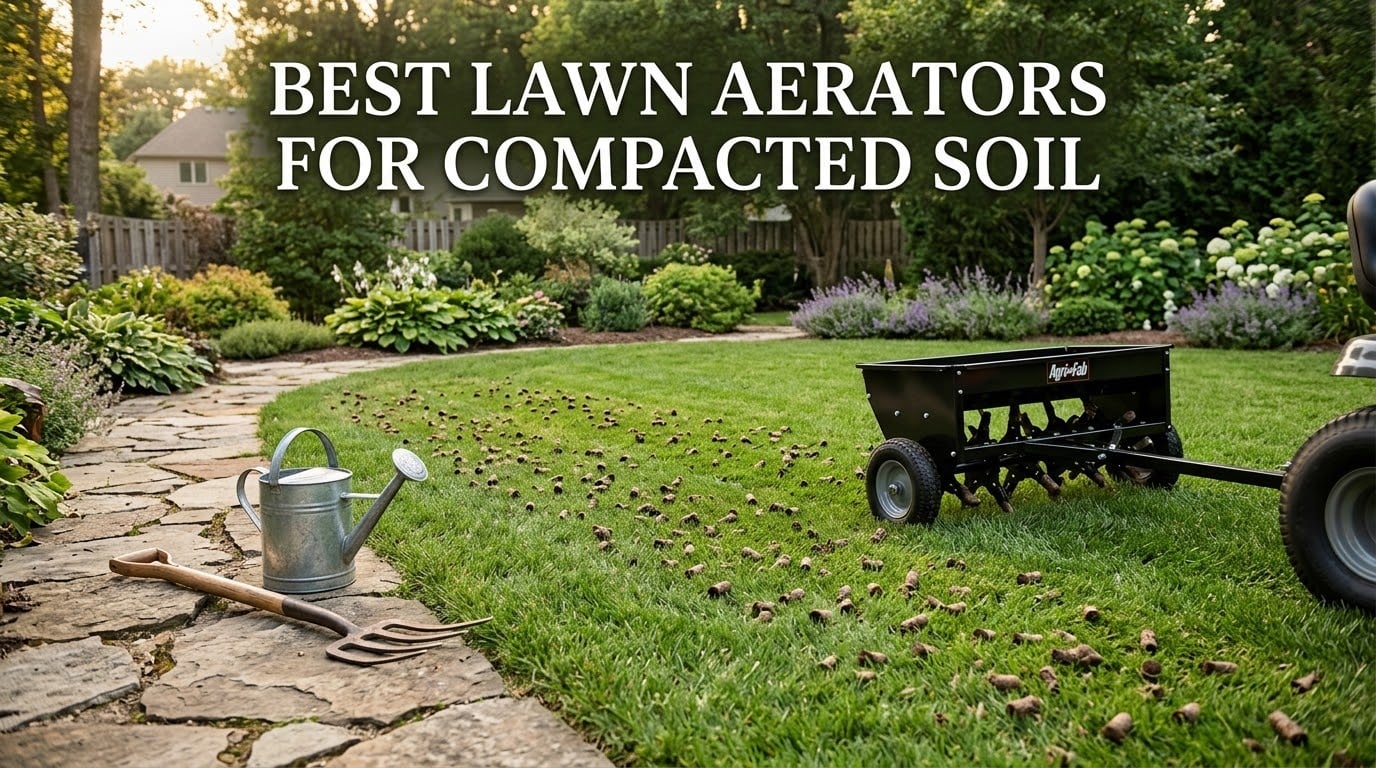
If your lawn has gone thin and patchy even though you water and feed it on schedule, the problem is almost never the fertilizer. It is the soil. Compacted soil squeezes out the pore space that air, water and nutrients need to reach grass roots, and no amount of feeding gets past it.
That is where the best lawn aerators for compacted soil earn their keep. An aerator pulls soil plugs or punches channels so the root zone can breathe again. We spent weeks comparing twelve of them across manual corers, step-on spikes, rolling drums and tow-behind units, with an eye on what actually gets into hard ground.
Before you buy anything, know this: for compacted soil, core aerators win. Extension services including Iowa State, Penn State, Clemson Cooperative Extension and North Dakota State all warn against solid-tine spike aerators, because a solid spike pushes soil sideways and can pack it tighter around the hole. Our picks below reflect that guidance.
We updated this roundup for 2026. We rated every tool on coring ability in hard ground, tine or knife construction, weight capacity for adding ballast, coverage speed, and how often real buyers report the tool failing, clogging or breaking.
Table of Contents
Top 3 Lawn Aerator Picks for Compacted Soil

Yard Butler ID-6C Manual Coring Aerator
- Dual hollow plug tines
- Long handle with foot bar
- Powder-coated steel frame
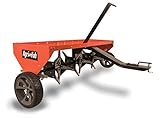
Agri-Fab 48 Inch Tow Plug Aerator
- 32 galvanized self-sharpening knives
- Plugs up to 3 inches deep
- Weight tray rated for 175 lbs
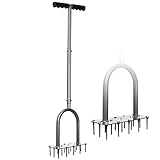
Walensee 15-Spike Manual Aerator
- 15 iron spikes in three rows
- 34.6 inch cushioned handle
- Foot pedal for downward push
Best Lawn Aerators for Compacted Soil in 2026
| Product | Specifications | Action |
|---|---|---|
| Yard Butler ID-6C Manual Coring Aerator |
|
Check Latest Price |
| Agri-Fab 48 Inch Tow Plug Aerator |
|
Check Latest Price |
| Walensee 15-Spike Manual Aerator |
|
Check Latest Price |
 Briliantwerk Aerator Shoes Briliantwerk Aerator Shoes |
|
Check Latest Price |
 Brinly 40 Inch Tow Behind Spike Aerator Brinly 40 Inch Tow Behind Spike Aerator |
|
Check Latest Price |
 Jardineer 36 Inch Spike Aerator Jardineer 36 Inch Spike Aerator |
|
Check Latest Price |
 Suchtale 40 Inch Tow Behind Spike Aerator Suchtale 40 Inch Tow Behind Spike Aerator |
|
Check Latest Price |
 LawnVigor Manual Core Aerator LawnVigor Manual Core Aerator |
|
Check Latest Price |
 Dolibest Coring Aerator with Tray Dolibest Coring Aerator with Tray |
|
Check Latest Price |
 Seeutek 23 Inch Rolling Aerator Seeutek 23 Inch Rolling Aerator |
|
Check Latest Price |
 Colwelt Manual Spike Aerator Colwelt Manual Spike Aerator |
|
Check Latest Price |
 Coopvivi 15-Prong Spike Aerator Coopvivi 15-Prong Spike Aerator |
|
Check Latest Price |
Core vs Spike Aerators: What Extension Services Say
A core aerator uses hollow tines to lift a cylinder of soil out of the ground, and that plug leaves behind a real opening with space around its edges. Air, water and fertilizer move into that space, and the surrounding soil is physically relieved rather than rearranged.
A spike aerator drives a solid rod into the ground. The hole is narrow and the soil displaced from it has to go somewhere, which in practice means it packs tighter around the spike path. Iowa State University Extension, North Dakota State Extension and Illinois Extension have all published guidance steering homeowners toward hollow-tine coring when compaction is the goal.
Spikes are not useless. Penn State Extension notes they can help open the surface of a seedbed so seed contacts soil, and they are cheap and fast for light surface work on soft ground. But for the specific problem of compacted soil, the ranking is unambiguous.
Iowa State also sets out the measurable target most guides skip: aim for 20 to 40 holes per square foot, with cores roughly three-quarters inch across and up to three inches deep. Keep that number in mind, because several tools below simply cannot reach it on a full lawn.
The 12 Best Lawn Aerators for Compacted Soil, Reviewed
1. Yard Butler ID-6C Manual Coring Aerator
- Most reviewed manual corer available
- Long hollow plug tines that actually remove soil
- Foam-padded foot bar gives real downward push
- Powder-coated steel holds up year round
- Slow and tiring across a full lawn
- Plug tines need clearing in very wet clay soil
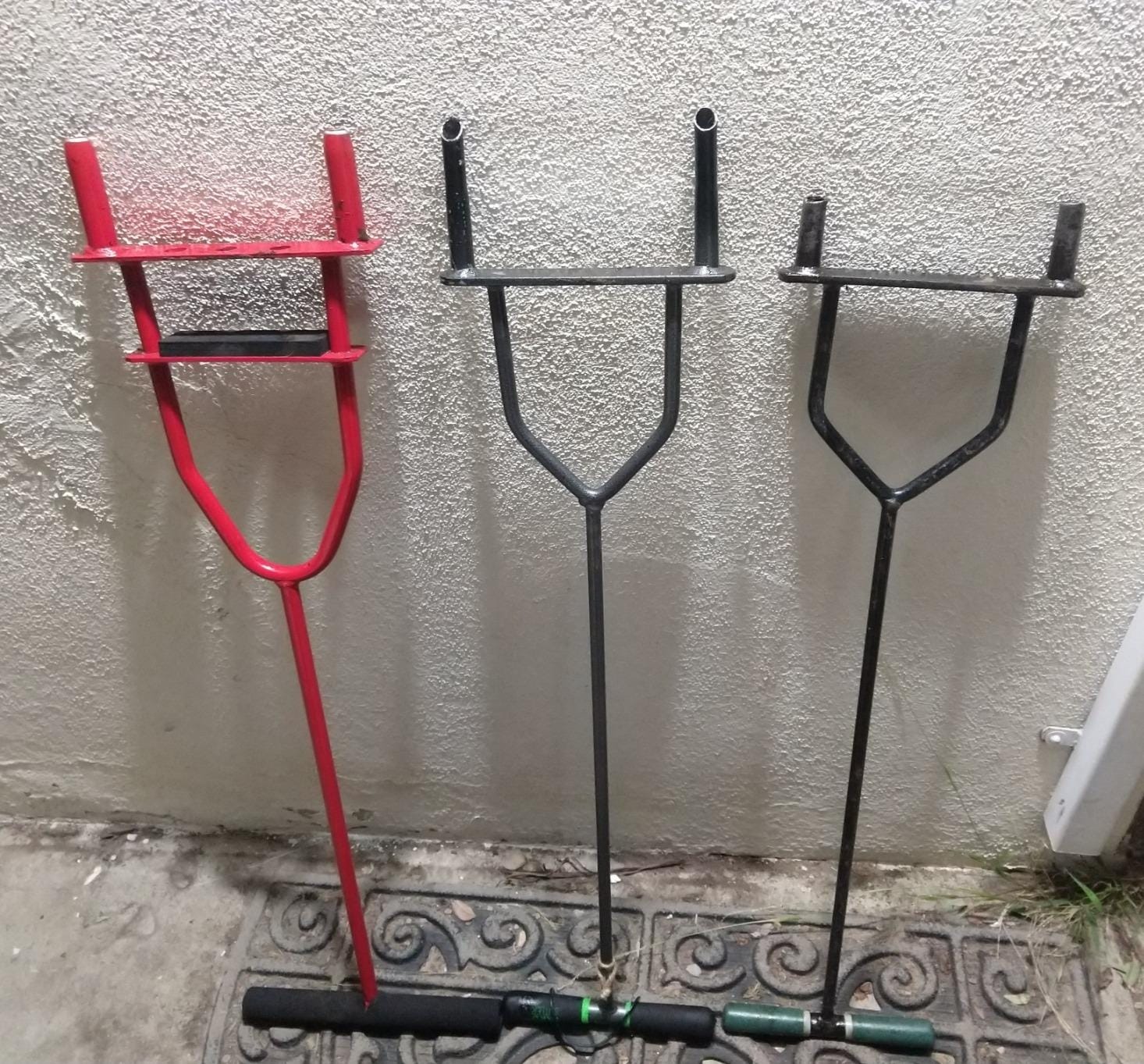
The Yard Butler ID-6C is the tool we keep coming back to for smaller compacted areas. It is a true coring tool with dual hollow plug tines, which puts it in the category extension services actually recommend for compaction.
At 38 inches long with a long handle, it keeps your back out of the worst of it. The foot bar is the part that matters in hard ground: you load your weight onto a wide platform instead of stabbing downward one-handed.
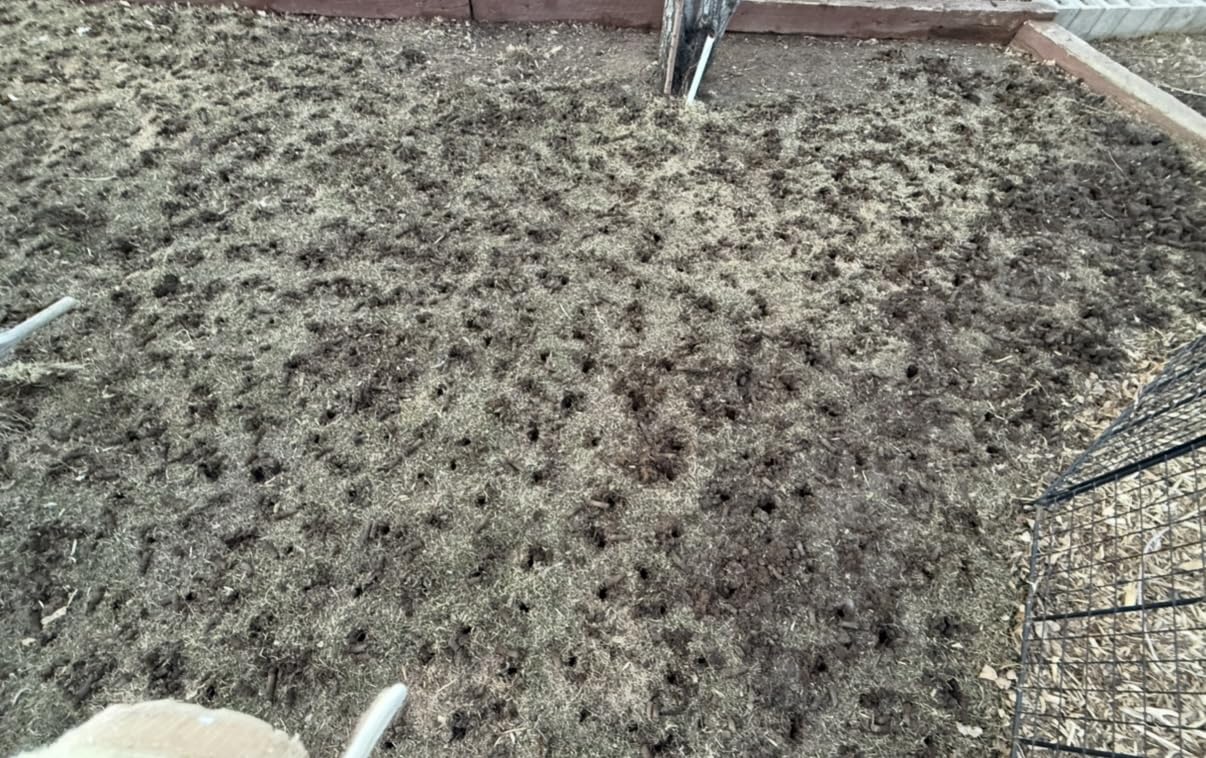
With 8721 reviews at a 4.3 average, this is the most-reviewed aerator in our group by a wide margin. Buyers consistently single out the long handle, the steel build and the way the coring tines open up packed soil.
The honest limitation is physical. This is a manual tool, and a quarter-acre lawn is a multi-afternoon project. On clay soil the plugs will pack into the tubes and need a screwdriver to clear, so expect pauses.
Who this manual corer suits
Homeowners with a small lawn, a high-traffic front strip or a stubborn patch of clay who want a real core rather than a spike hole. The 38 inch handle and the leverage platform make it usable without constant bending.
It also suits anyone who wants a tool that stores in a shed corner instead of needing a tractor. The powder-coated steel frame is what lets it survive being left out between seasons.
Where it falls short
It is not the answer for a large property or for someone with back or joint issues. Coverage per step is small, and the reviewers who rate it lowest are usually the ones who underestimated the effort.
On very wet clay the plugs pack in fast. Water the lawn a couple of days ahead instead of pulling plugs straight from saturated ground.
2. Agri-Fab 48 Inch Tow Behind Plug Aerator
Agri-Fab 48 In Tow Behind Lawn Plug Aerator with 32 Galvanized Knives and Universal Hitch
- Wide 48 inch path covers a full lawn quickly
- Genuine core cutting up to 3 inches deep
- Weight tray takes 175 lbs of concrete blocks
- Flat-free tires and a cantilever transport handle
- At 94 pounds it is heavy to load and store
- Needs a tractor with a universal hitch
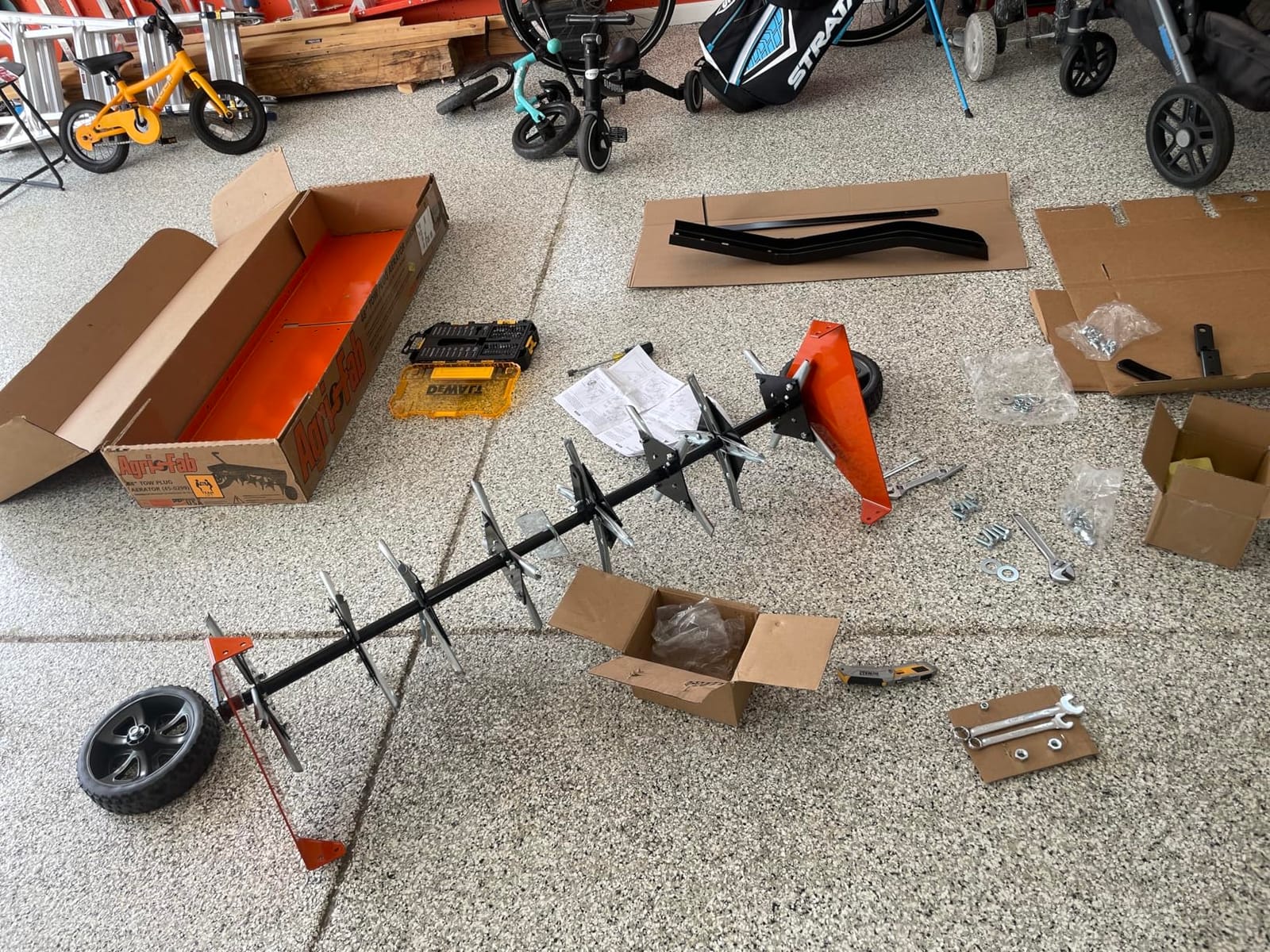
For a serious compacted property, the Agri-Fab 48 inch tow plug aerator is the most complete machine here. Thirty-two galvanized self-sharpening knives pull cores up to 3 inches deep across a 48 inch swath.
That combination puts it inside the 20 to 40 holes per square foot range that Iowa State recommends. Nothing else in this roundup gets a full lawn to that density in one sitting.
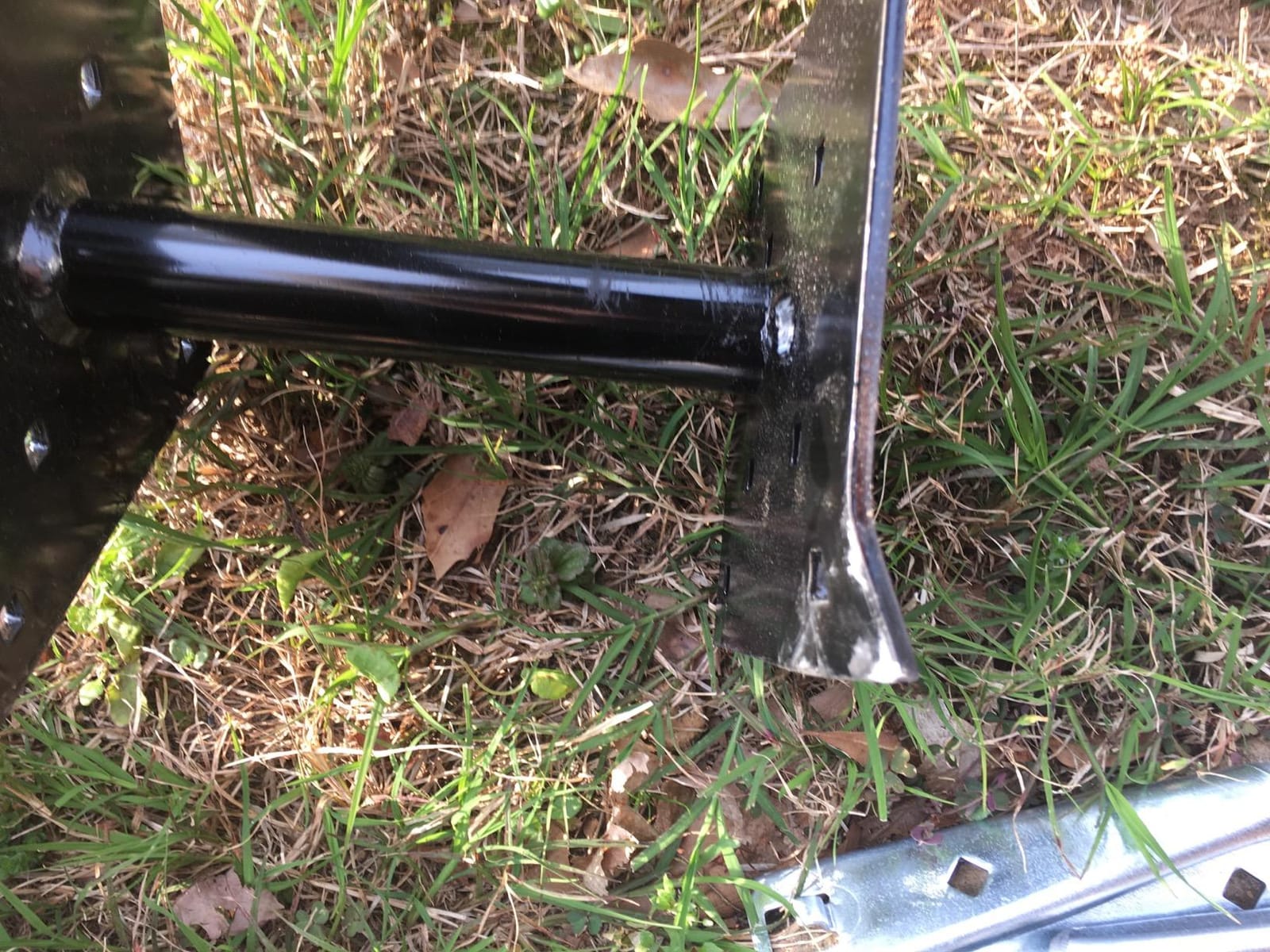
Owners of large or badly packed properties treat it as the way to avoid booking a professional aeration visit year after year. The 175 pound weight tray is the feature hard-soil owners care about most, since you can load concrete blocks or paving slabs to drive the knives deeper.
Flat-free tires roll over driveways and paths, and the cantilever transport handle lets you raise the unit from the tractor seat instead of getting down every time.
Who this tow aerator suits
Large lots, several acres, new construction lawns and anyone fighting clay that has stopped taking water. If you already own a lawn or garden tractor, this is the machine that will actually fix the compaction.
It also suits growers planning a heavy overseeding project, because coring first gives seed a seedbed to fall into without you having to break new ground twice.
Where it falls short
It weighs 94 pounds and it needs a tractor with a universal hitch. For a lawn under a quarter acre, that is an awkward amount of machine, and reversing a loaded tray is genuinely tricky.
It is also a storage problem. Plan where it lives before you buy, because this is not a unit you want to wrestle into a shed corner.
3. Walensee 15-Spike Manual Lawn Aerator
Walensee Manual Lawn Aerator Tool with 15 Iron Spikes, Garden Spike Aerator
- Covers much more ground per step than single row tools
- Long handle with cushioned T grip and foot pedal
- Powder-coated iron holds up outdoors
- Detaches for easy storage
- Not recommended for heavy sticky clay or large jobs
- Dry hard soil needs watering before use
The Walensee covers more ground per step than most other manual spike tools. Fifteen sharp iron spikes arranged in three rows hit far more ground per step than the single-row tools most people start with.
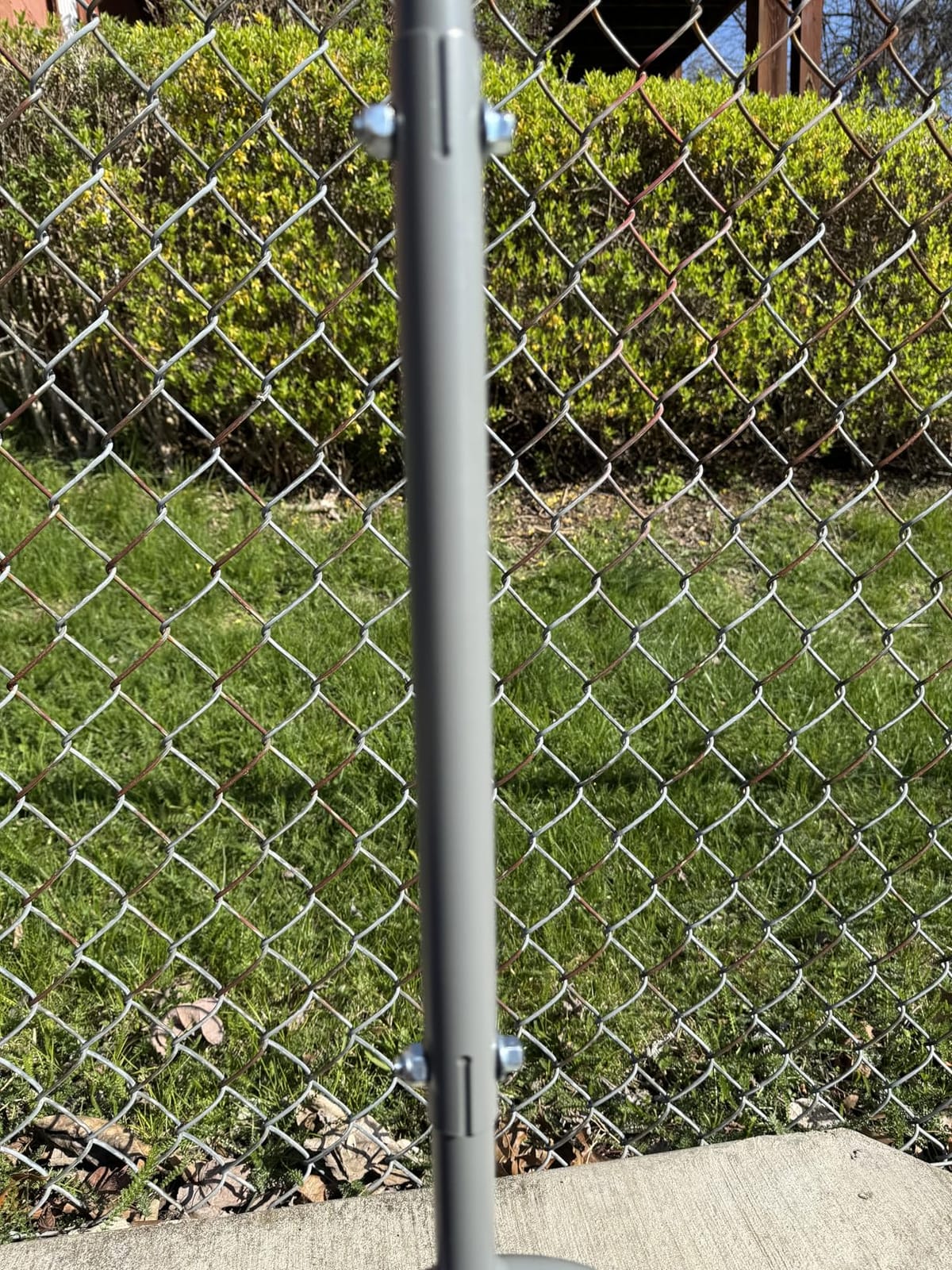
Spikes at roughly 2.8 inches long, on a 34.6 inch handle with a cushioned T grip and a foot pedal that drives the spikes down. Owners like that you can work standing up instead of bent over.
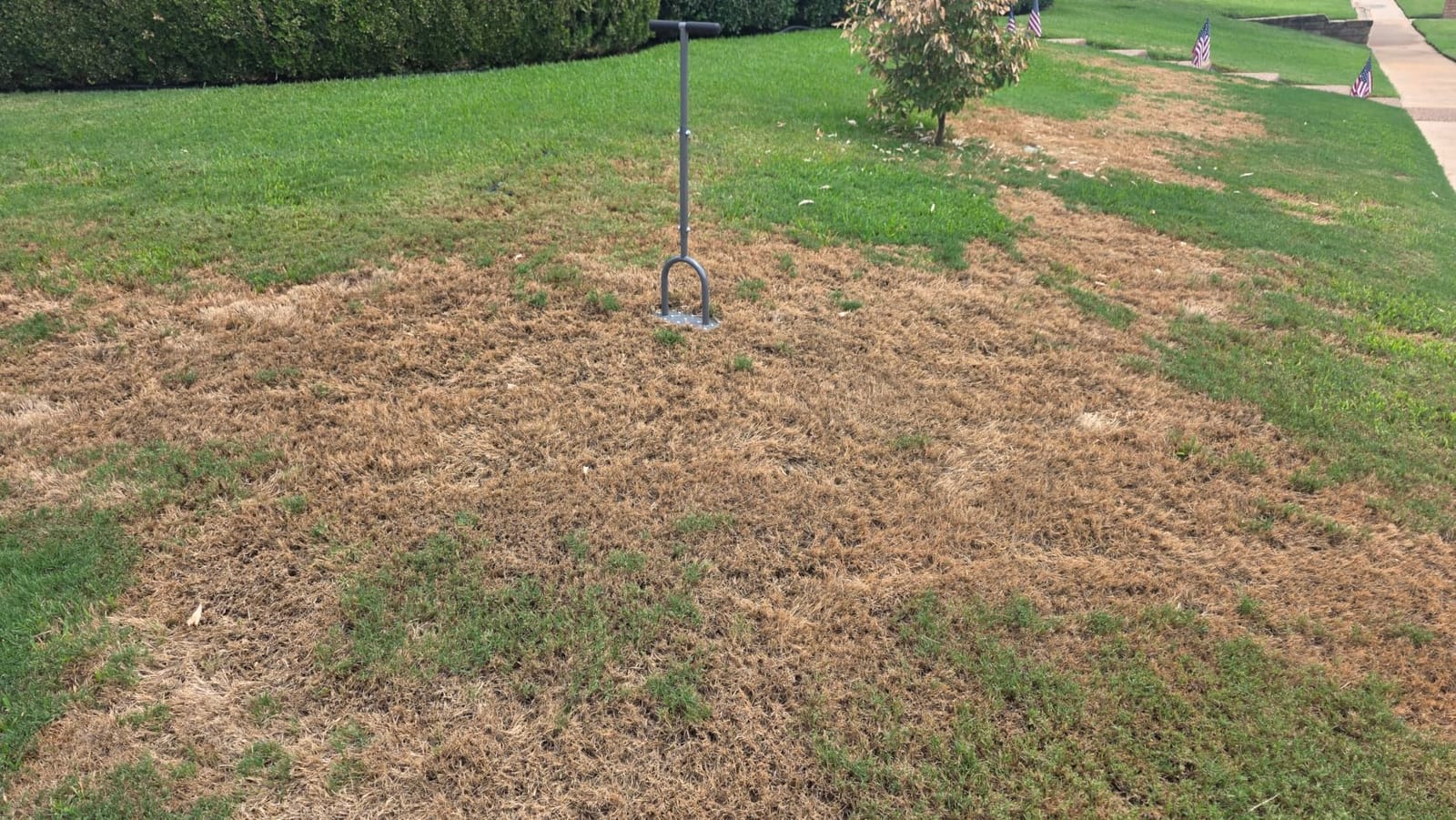
It holds the number one spot in its Amazon category with 2808 reviews at 4.3 stars. Buyers point to the coverage difference and the comfortable handle as the reasons to skip past cheaper single-row versions.
Be clear about what it is, though. This is a spike tool, so it perforates soil rather than pulling cores, and the manufacturer explicitly steers buyers away from heavy sticky clay and large-scale jobs.
Who this spike aerator suits
Small yards, narrow side strips, tight corners under shrubs and around trees. Anywhere a tow-behind unit cannot turn and you want one-handed coverage improvements without bending.
It suits people who want one tool for the whole property rather than a tractor plus an implement. It also disassembles for storage, which matters in a garage.
Where it falls short
It is not a compaction treatment. On hard clay the spikes skate rather than penetrate, and watering first is not optional if you want results.
If your problem is genuinely compacted soil rather than a thinning seedbed, look at a coring tool in this roundup instead.
4. Briliantwerk Lawn Aerator Shoes
Briliantwerk Lawn Aerator Shoes | Yard Aerator Lawn Tool | Screed Shoes
- Low cost way to cover beds
- edges and tight spots
- Two spike lengths for aerating and screeding
- Straps fit US 5 to 14
- Tool-free strap adjustment
- Mud packs under the platform and needs scraping
- Hardware can loosen and some copies arrive missing washers
- Not practical for large yards
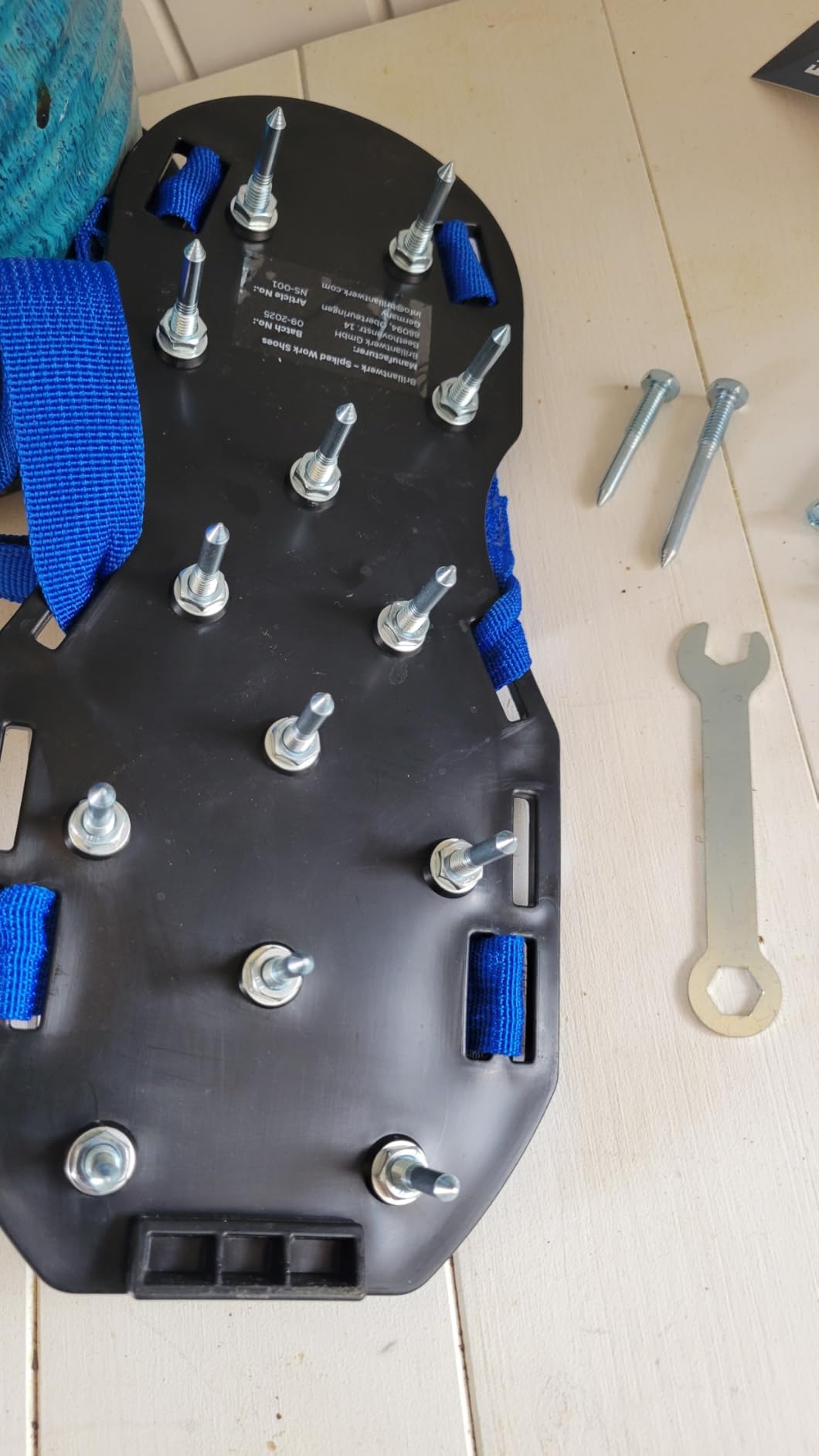
Aerator shoes are the first thing most people try, and for light surface work they are fine. The Briliantwerk pair fits US shoe sizes 5 to 14 with hook-and-loop straps you can adjust without tools.
You get two spike sets, roughly 2 inches for aeration and 1.5 inches for screeding. That dual setup is genuinely useful, since the same pair handles floor prep work.
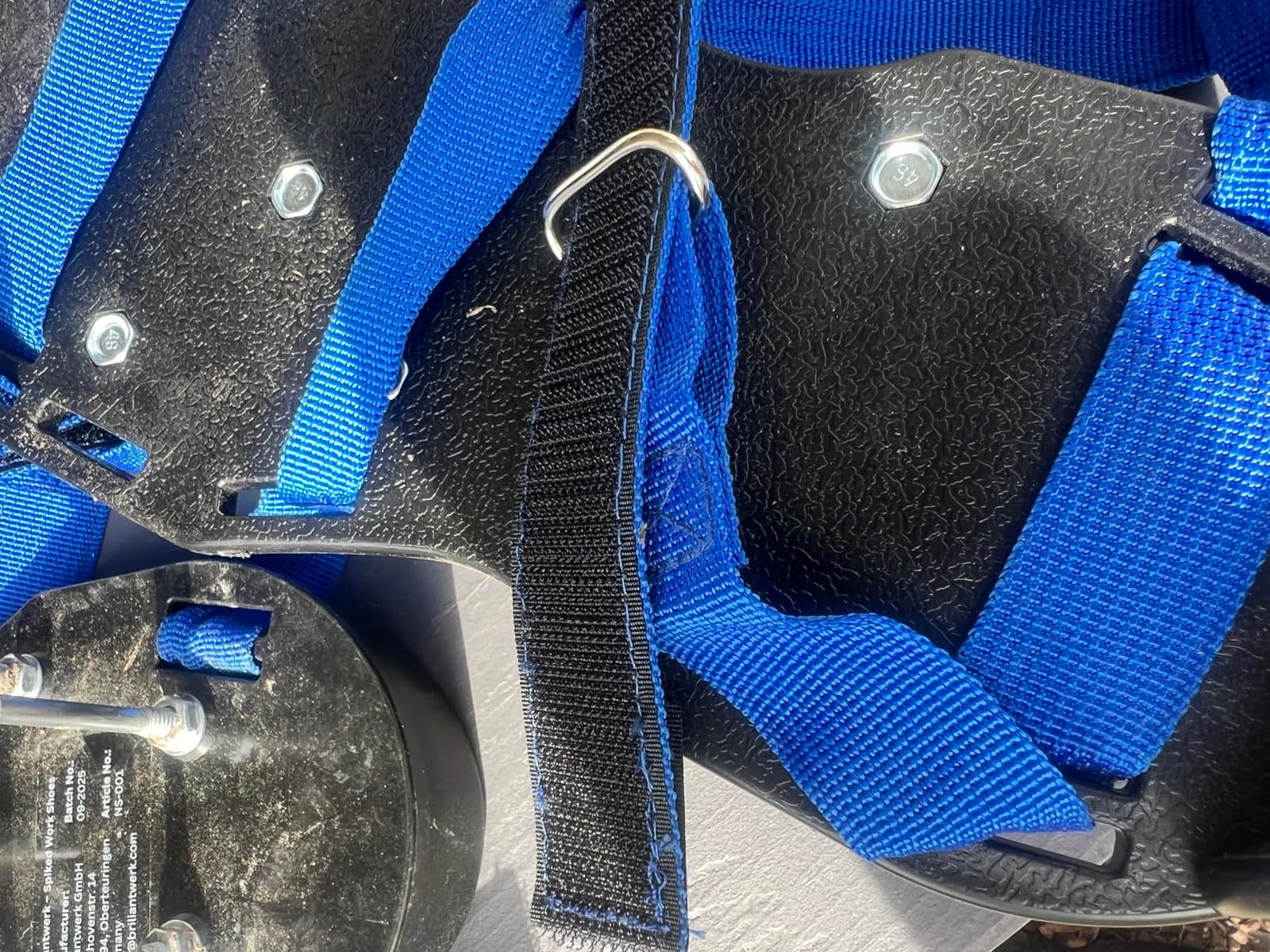
At 1728 reviews and 4.2 stars, buyers mostly like the price and the adjustable fit. The recurring complaints are practical: mud and clay pack under the plastic platform and have to be scraped off constantly.
Several reviewers also reported straps or screws loosening, and a few arriving with missing washers or rounded spike tips. The manufacturer has been shipping replacements when hardware failure is flagged.
Who these aerator shoes suit
Spot work around flower beds, under trees, along edges and in the corners a mower never reaches. They are also a reasonable test to see whether you even enjoy aerating before spending more.
They suit people who do not want to store another long-handled tool. Put them on, walk the patch, take them off.
Where they fall short
They do not fix compaction. Extension guidance is clear that a solid spike pushes soil aside rather than opening pore space, and users switching from coring notice the difference immediately.
On a large lawn they are simply the wrong tool, and mud cleanup alone will exhaust you before you finish.
5. Brinly 40 Inch Tow Behind Spike Aerator
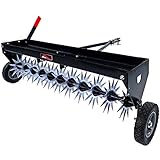
Brinly SAT2-40BH-P Tow Behind Spike Aerator with Transport Wheels, 40″ – Carbon
- Galvanized 3-D tines resist rust and bending
- Single lever transport wheels make crossing driveways easy
- Weight tray takes 150 lbs for hard soil
- Backed by a 2 year manufacturer warranty
- 40 inch width is narrower than some tow-behind rivals
- Punches holes rather than pulling cores
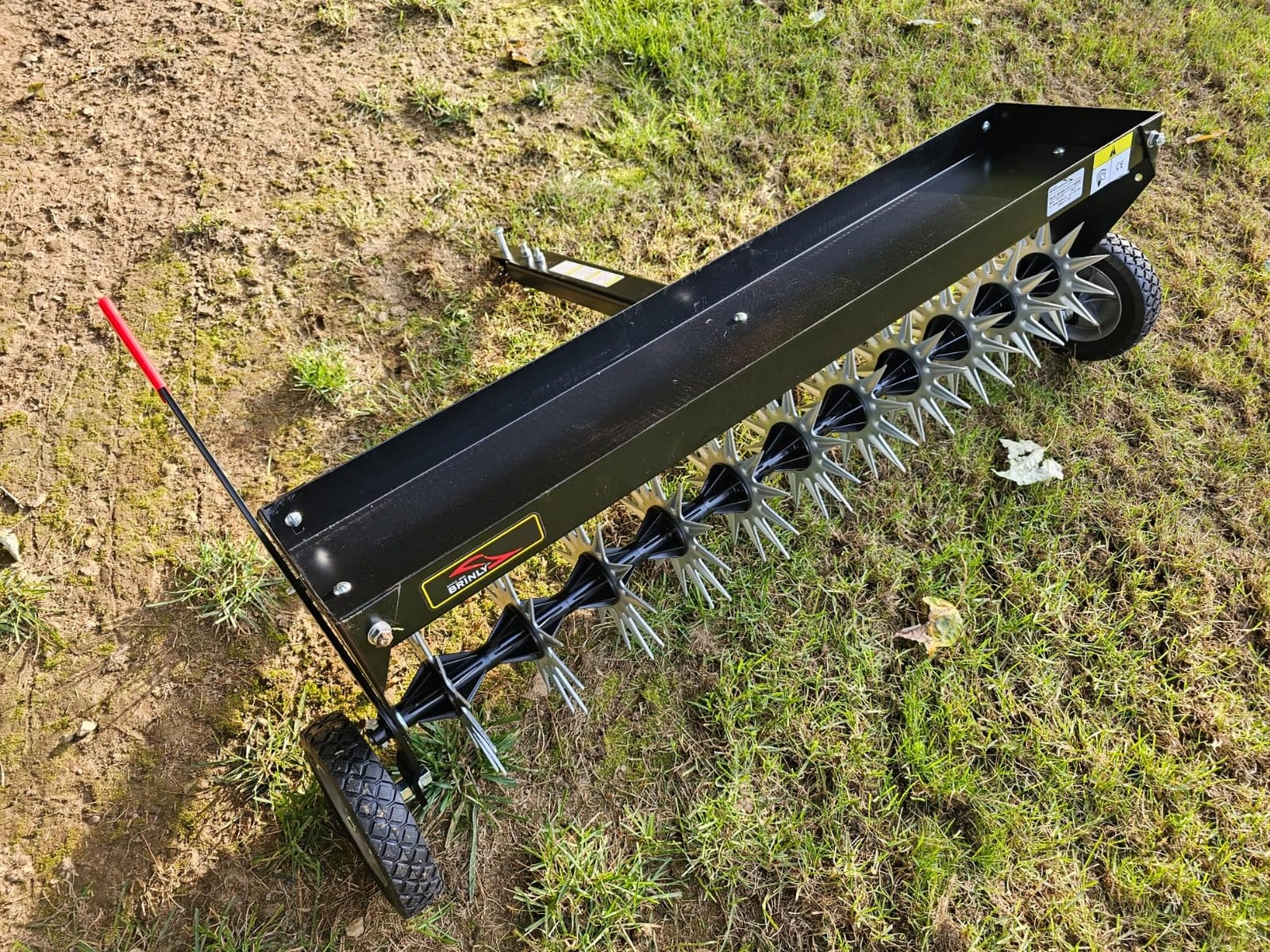
The Brinly SAT2-40BH-P is a spike aerator, and that is its strength when you are preparing a seedbed. Eleven rotating 8 inch tine stars with 12 tips each scatter seed into contact with soil, which is the whole point of a spike tool on a thin, worn lawn.
The star tines rotate independently as you pull, so a compacted patch does not get missed on a straight run. Penetration reaches up to 2 inches once the tray is loaded.
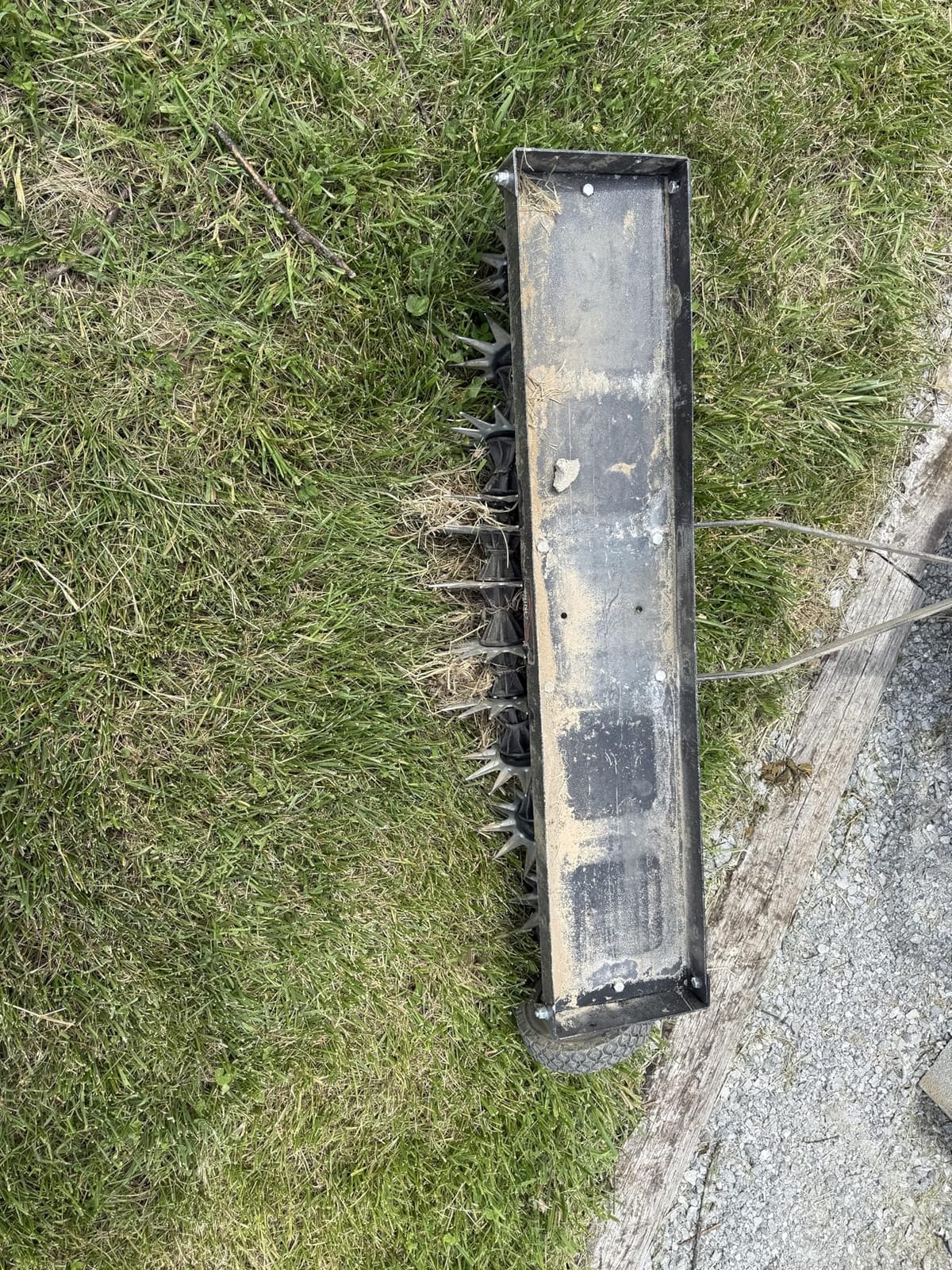
Buyers highlight the patented 3-D galvanized tines for holding up in hard ground and the single-lever transport wheels, which let you cross driveways and paths without unhooking anything.
At 739 reviews and 4.3 stars, the consistent caveat is that it perforates rather than cores. If you are overseeding a thin lawn, that is the right caveat. If you are treating compacted clay, it is the wrong tool.
Who this tow spike aerator suits
Anyone seeding a thin, worn or heat-stressed lawn who wants seed and soil in contact across a wide path. It suits growers who want a lighter, cheaper implement than a plug aerator.
The 150 pound tray and rust-resistant tines also make it workable on ground that is hard but not truly compacted clay.
Where it falls short
Forty inches is narrower than some competing tow-behind units, so large properties take longer. And on heavy clay, a spike tool is working against the problem rather than with it.
If you already own a coring implement, this adds a second tool for a job you could handle with one.
6. Jardineer 36 Inch Spike Aerator
- Heat-treated spikes at 2.75 inches punch into clay
- 36 inch height reduces hand and back fatigue
- Thick foot plate takes full body weight
- Arrives mostly assembled with a wrench included
- Only 12 spikes so coverage is slower than 15 spike models
- Dry hard soil must be watered first
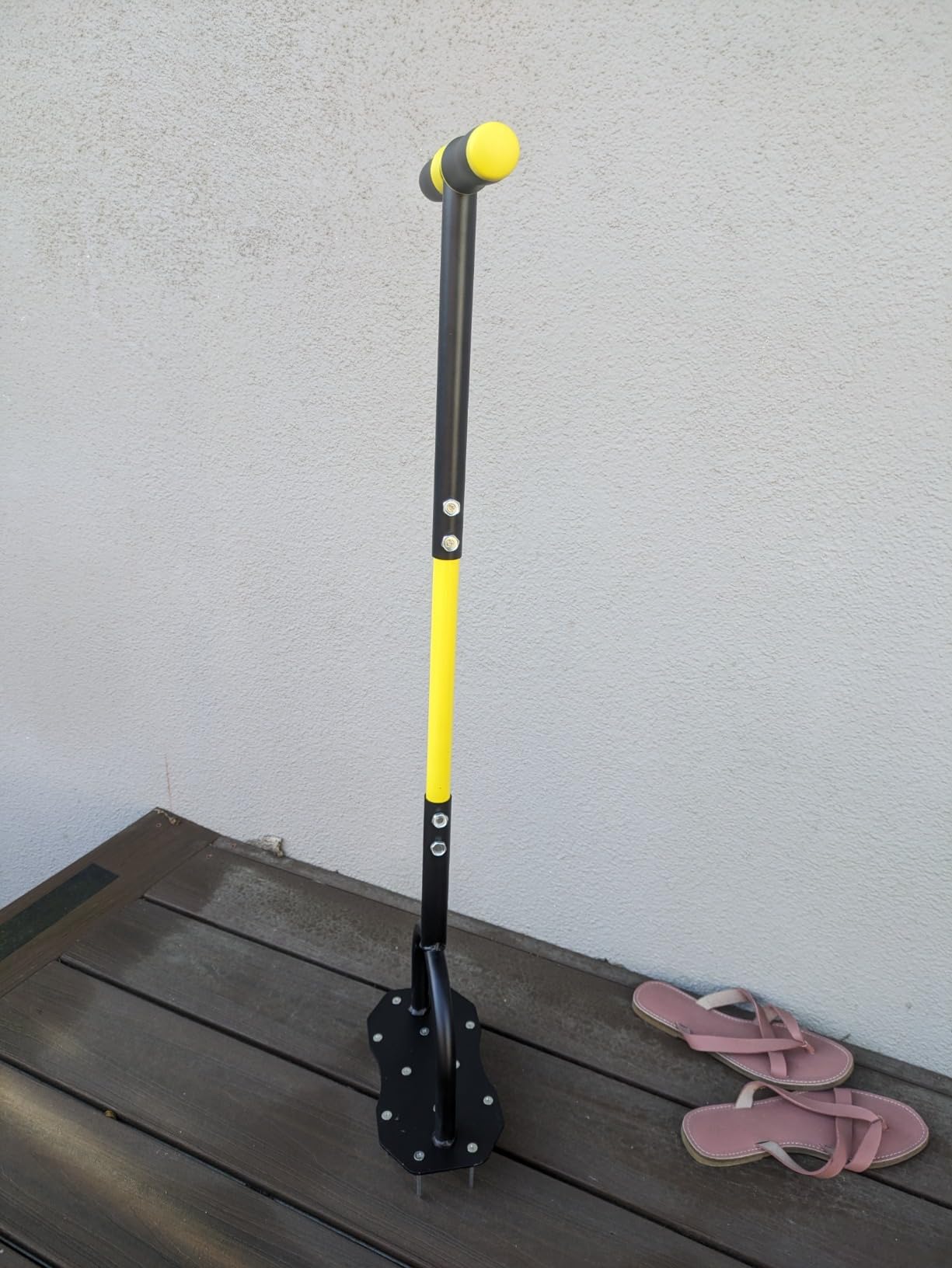
The Jardineer is a straightforward spike aerator that arrives largely assembled, with a wrench and manual in the box. Setup time is close to zero, which matters if you are putting it away for the season.
Twelve heat-treated steel spikes at 2.75 inches work on clay, sand and loam. The 36 inch handle with a rubber grip cuts hand fatigue, and the thick steel foot plate takes your full weight.
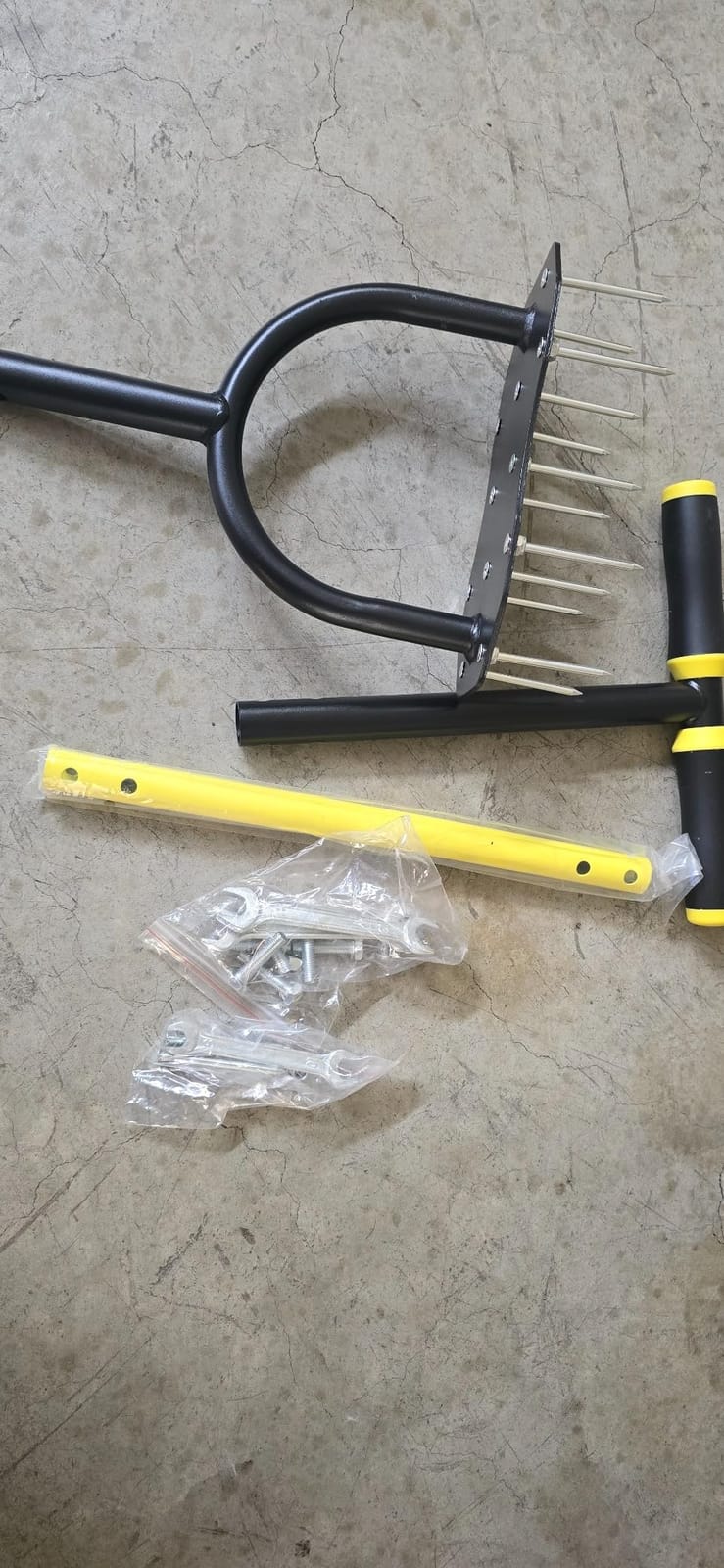
Buyers like the height, the foot plate rigidity and the fact that you are not assembling it on the lawn. It detaches for storage and handles both aeration and light dethatching.
With 547 reviews at 4.2 stars, the criticisms are modest coverage from having only 12 spikes, and poor penetration if you use it on dry ground. The maker’s own tip is to water first.
Who this manual aerator suits
Residential lawns and small yards, particularly if clay and loam are in the mix and you want more spike length than the cheapest tools offer. The 2.75 inch spikes are longer than many competitors at this level.
It suits anyone who will water the lawn first and work methodically rather than trying to cover hard ground dry.
Where it falls short
Twelve spikes is fewer than the fifteen-spike tools, so coverage per step is lower. On a large property that difference compounds quickly.
Like the other spike tools here, it perforates instead of coring, so it is not the right answer for serious compaction.
7. Suchtale 40 Inch Tow Behind Spike Aerator
- Independently rotating star tines reduce missed patches on turns
- 6 mm thick handle and channel tow bar resist bending
- Weight tray accepts 110 lbs for harder soil
- Works well in moist soil without scattering plugs
- Tow arms and spikes can bend on rocks or hard ground
- Included wrenches are low quality
- Tight turns behind a mower are awkward
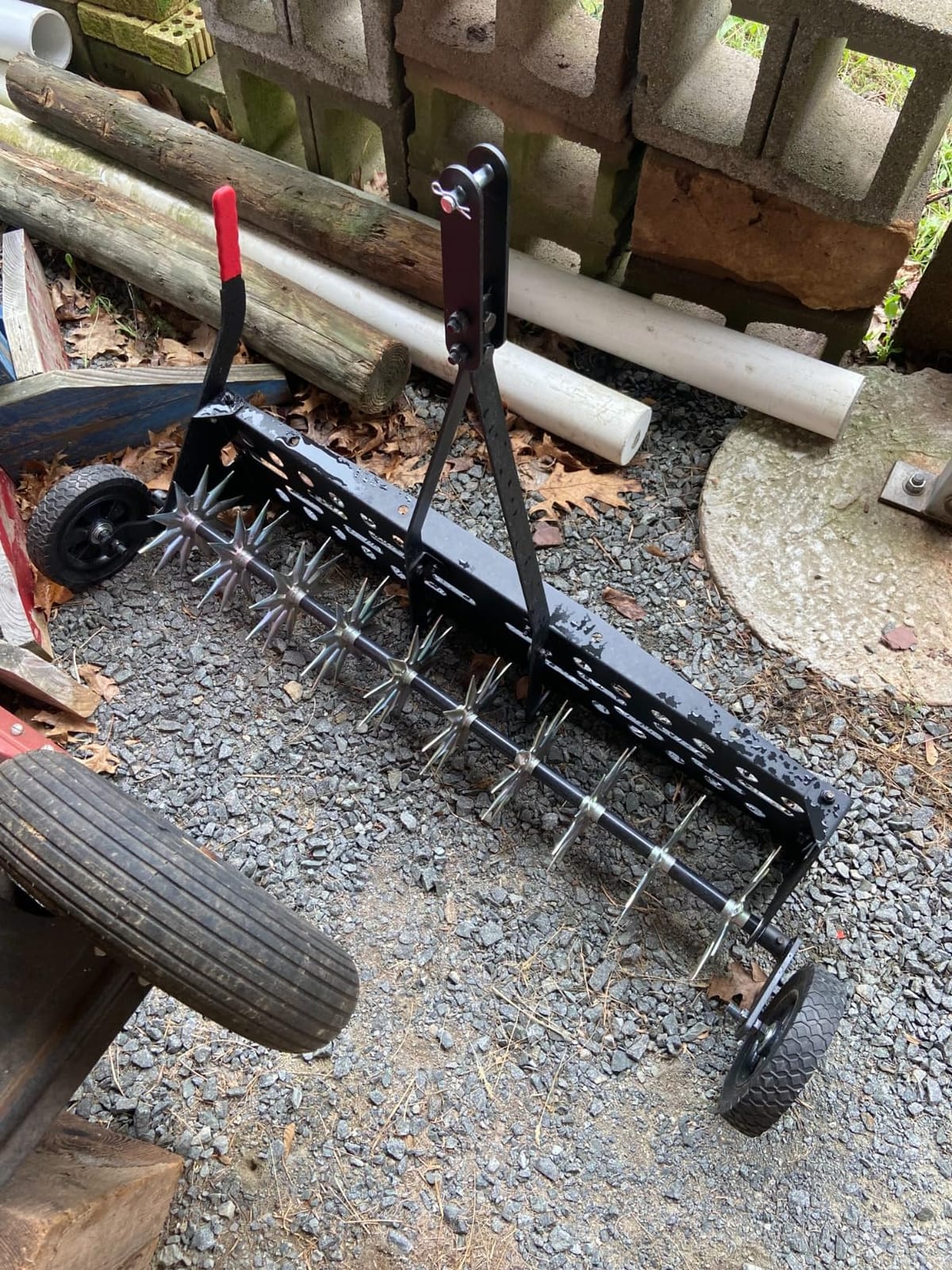
The Suchtale is the value entry in tow-behind spike aerators. Ten 8 inch star tines rotate independently, each carrying ten spike tips that reach up to 2 inches into packed soil.
The independent rotation matters more than it sounds. On a curved pass, fixed tines leave a wedge of untouched soil, and rotating stars sweep through that arc instead.
Buyers often note that it matched the result of a professional aeration visit on soft, moist turf, and adding weight to the 110 pound tray is the most common advice in the reviews.
The build details are deliberate rather than accidental. The adjust handle uses 6 mm steel instead of the usual 4 mm, and the tow bar is a thick channel shape rather than flat bar.
Who this tow aerator suits
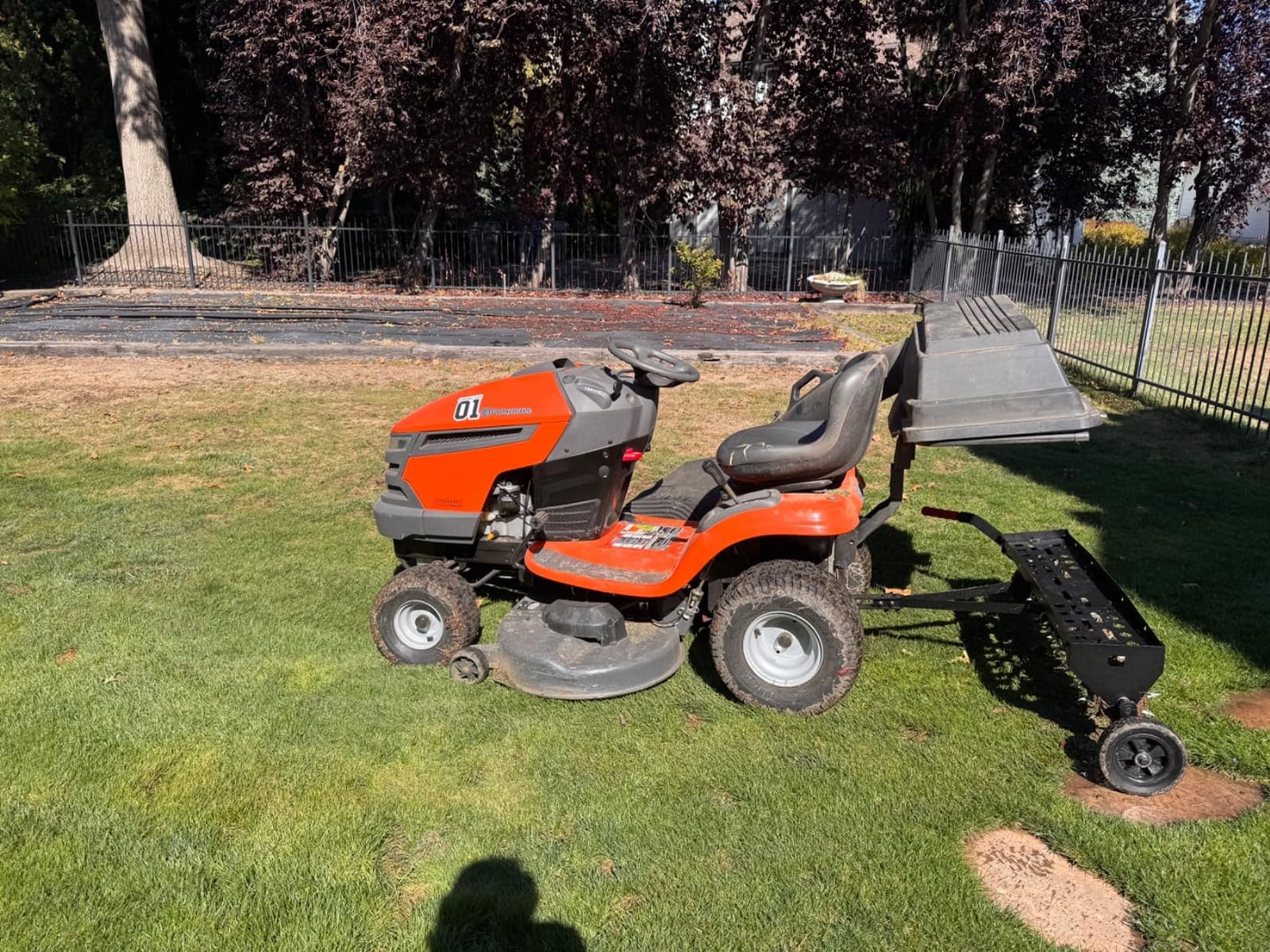
Open, gently rolling ground and anyone who wants spike aeration across a wide path without buying a premium implement. It suits riders who already tow a mower or an ATV.
The pin-style hitch makes swapping implements quick, so you can aerate and then mow in the same session without tools.
Where it falls short
Durability is the real limit. Owners report tow arms and spikes bending after contact with rocks, and several recommend bringing your own ratchet because the included wrenches are weak.
Backing up with a mower or cart attached is awkward, and it perforates rather than cores, so clay compaction still needs a hollow-tine tool.
8. LawnVigor Manual Core Aerator with Hollow Tines
Manual Lawn Core Aerator for Compacted Soil with Non-Clogging Hollow Tines
- Tied for the highest average rating here at 4.5 stars
- Three hollow tines pull real soil plugs
- Plastic inserts help eject plugs and resist clogging
- Replaceable tines survive rocks and roots
- Only three tines means a small area per push
- Needs body weight and a rocking motion in dry soil
- Wet clay still packs into the tubes
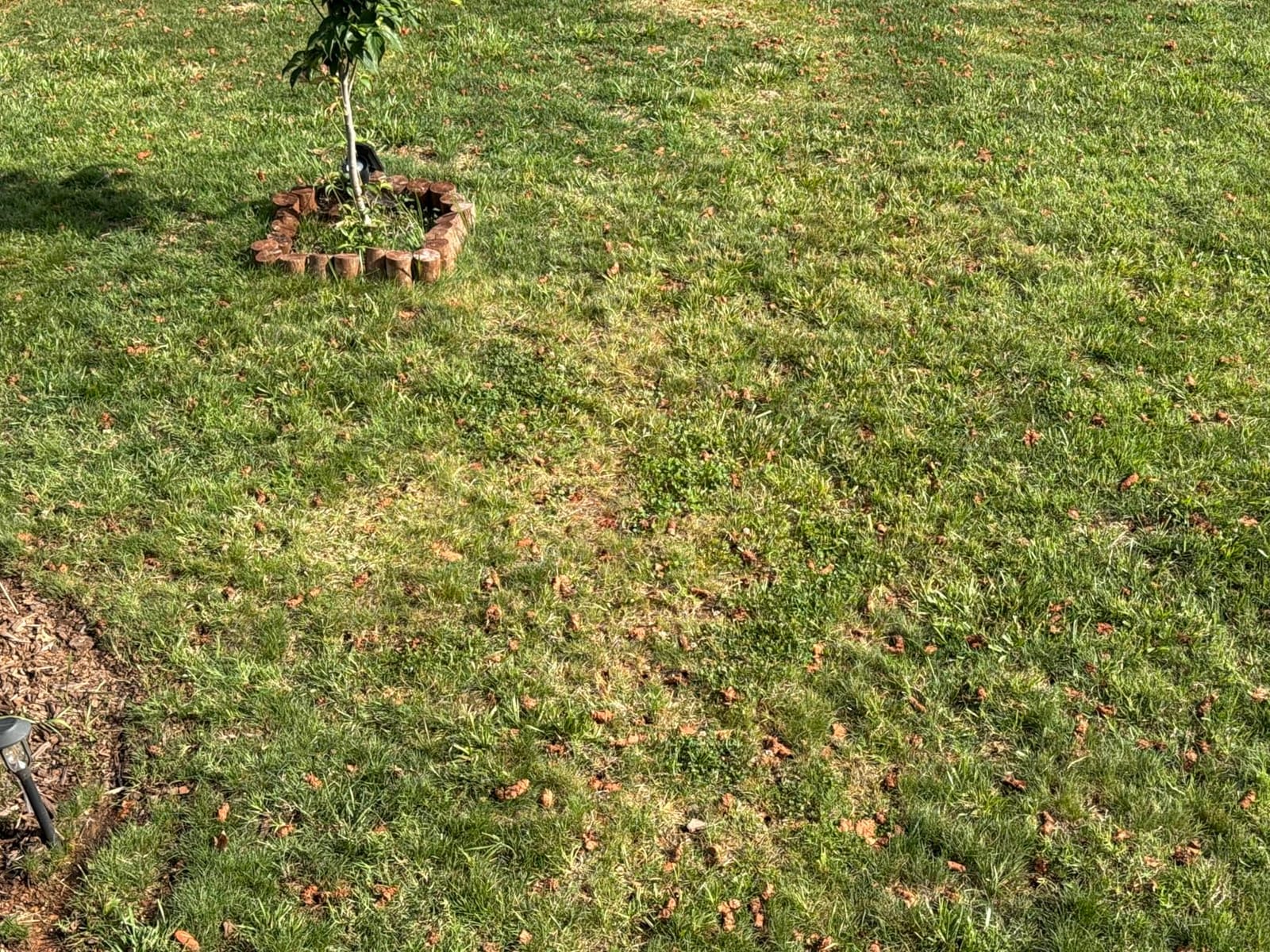
This is the manual tool we would pick if the problem is specifically compacted soil and the lawn is small. Three heat-treated hollow tines pull genuine plugs at roughly 3 to 4 inches deep, with a tine diameter near three-quarters inch.
That core size sits right in the range Iowa State recommends, which is unusual for a hand tool. Most manual models punch holes. This one removes soil.
It scores 4.5 stars across 255 reviews, the highest average in this roundup, with about 75 percent of ratings at five stars. Owners switching from spike aerators say the difference is immediate.
The white plastic inserts inside the tubes help push plugs out, which is the feature that keeps it working in clay. Tines are replaceable, so hitting a rock does not end the tool’s life.
Who this manual core aerator suits
Clay soil, small lawns and anyone who wants a real core without a tractor. It suits the renter or condo owner who needs to fix a patch of hard ground around a path or a shaded corner.
Because tines are replaceable, it also suits rocky properties where a cheaper corer would be finished after one season.
Where it falls short
Three tines is a small footprint, so this is a spot and edge tool rather than a whole-lawn one. Reviews repeatedly note that.
Dry hard soil still requires real effort and often a rocking motion. Wet clay can still pack into the tubes and need a screwdriver, so water the lawn two days ahead rather than the night before.
9. Dolibest Coring Aerator with Storage Tray
- SUS 304 stainless plugs resist rust and bending
- Storage tray collects plugs and saves cleanup time
- Elevated crossbar keeps shoes clear of ejection path
- Soft rubber grip reduces blisters
- Tines clog outside very wet or very dry soil
- Holes are smaller than some competing core aerators
- Four plugs means full-lawn work is very time consuming
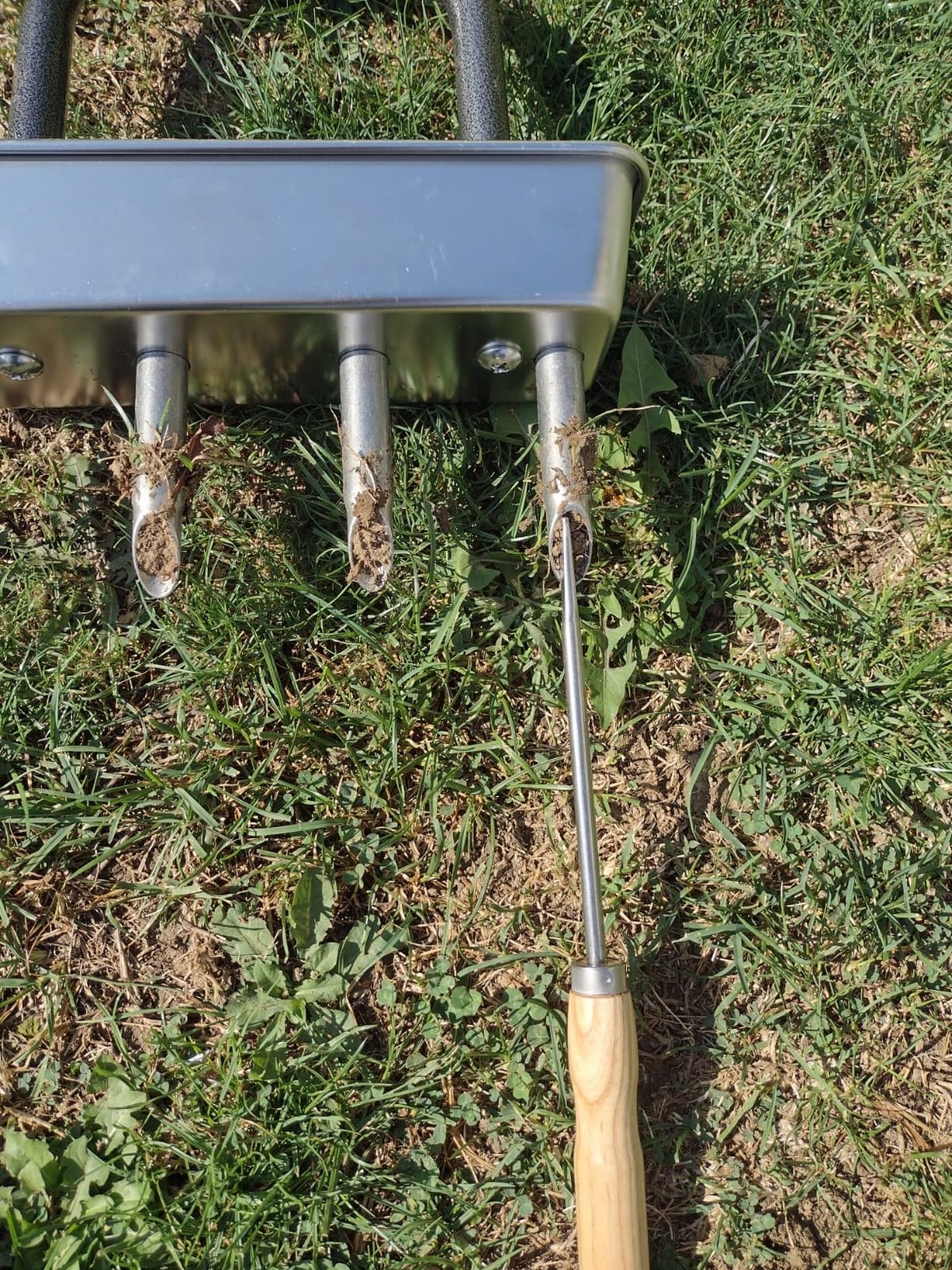
The Dolibest does something the other manual corers in this roundup do not. It collects the cores in a stainless steel tray as you work, so you are not chasing plugs across the lawn with a rake afterward.
Four SUS 304 stainless plugs form the coring head, mounted on solid steel rods with a black powder coating. The stainless steel tray is a genuinely clever piece of design for a hand tool.
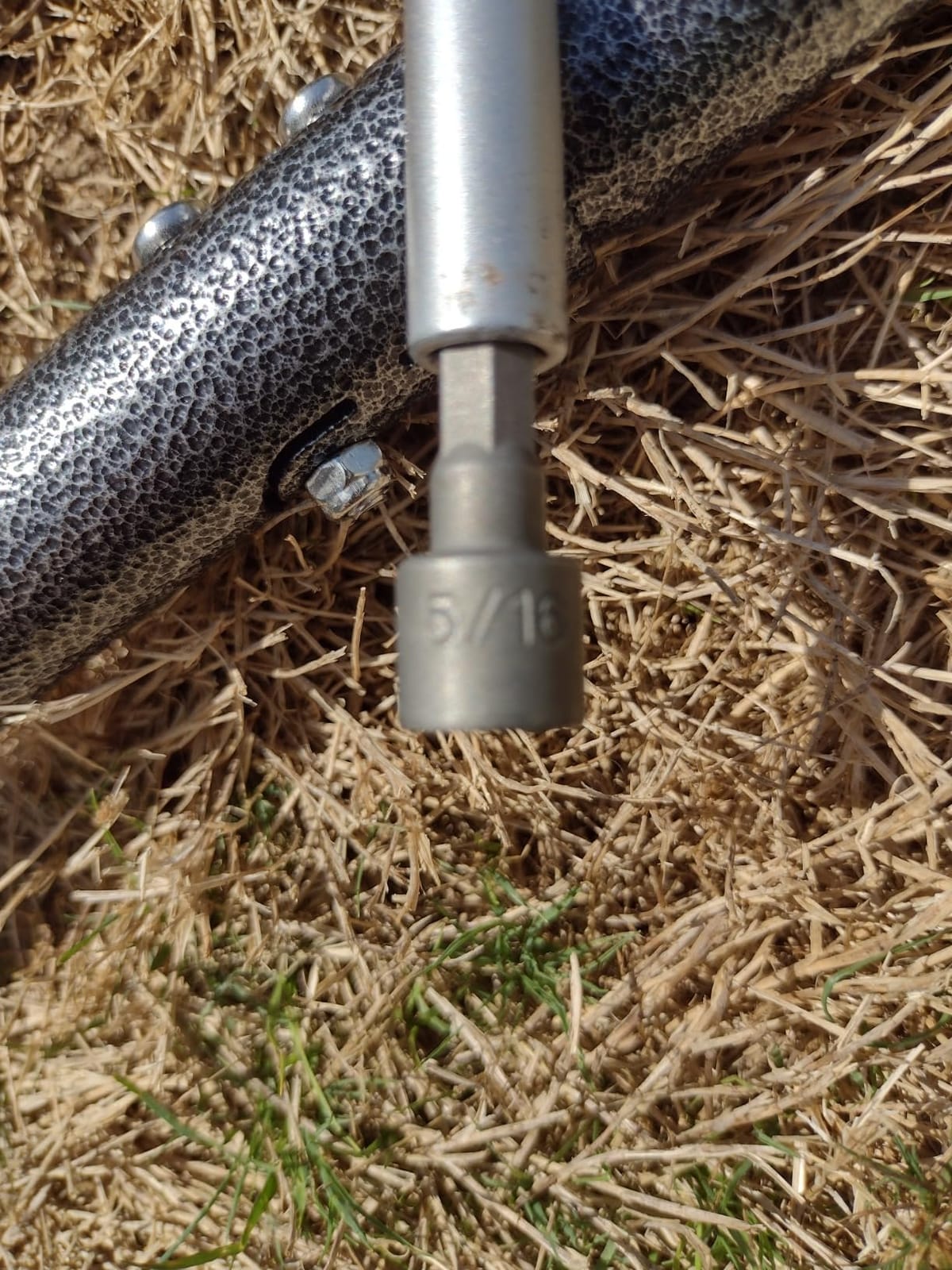
At 276 reviews and 4.2 stars, owners like the stainless plugs, the plug capture and the strong value against big-box equivalents. Several report the manufacturer is responsive when issues come up.
The crossbar sits high enough that your shoe does not block the plug ejection path, and the soft rubber grip is the part that keeps blisters away on a long session.
Who this coring aerator suits
Small lawns and homeowners who hate cleanup. It suits anyone who wants to see what came out of the ground, since the tray shows you the cores instead of hiding them in the turf.
It also suits gardeners doing patch work between plantings, where a 12 inch cleaning and transplanting hand tool is included in the box.
Where it falls short
Cores clog outside the extremes. Reviews report it jams in anything that is not very wet or very dry, which is most of the useful moisture range.
Holes come out smaller than some competing core aerators, and four plugs is a spot-treatment footprint. Assembly is quick, roughly two minutes across three parts.
10. Seeutek 23 Inch Rolling Lawn Aerator
Seeutek 23Inch Rolling Lawn Aerator – Upgraded Heavy Duty Aerators
- Rolls behind you instead of stepping repeatedly on a foot plate
- Three handle heights suit different users
- Fill port takes water or sand to deepen penetration
- Laser-welded thickened alloy resists rust
- Lowest average rating here at 4.1 stars
- Spikes perforate rather than pull plugs
- At 24 pounds it is awkward on slopes and steps
The Seeutek takes a different approach from every other manual tool here. Instead of a foot plate you step onto, it rolls on a 23 inch drum of star-shaped spikes while you walk behind it.
That format is kinder to knees and easier on uneven ground. Three handle height positions and a padded T bar let you set the height to fit you rather than stooping.
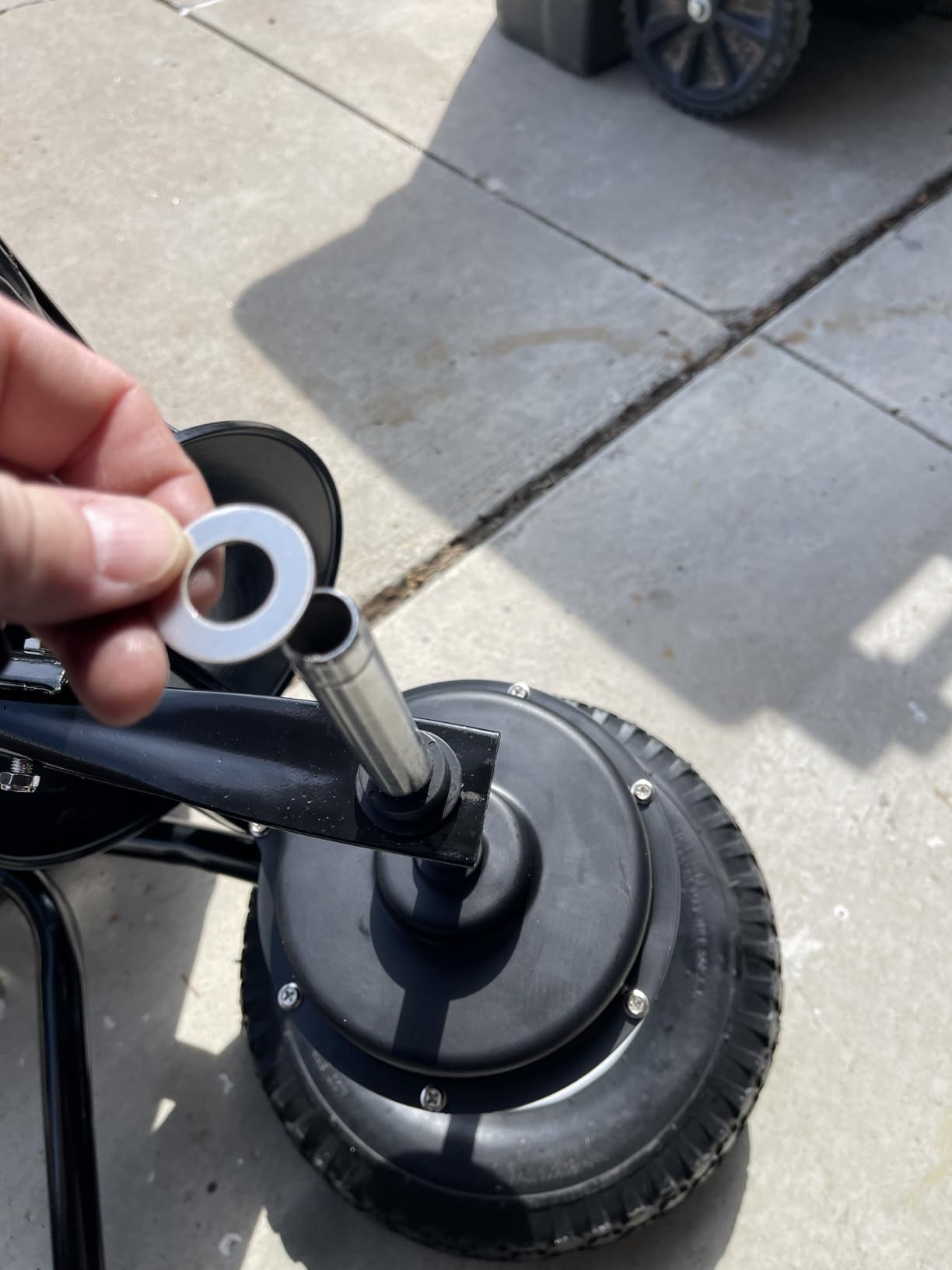
The 2.5 cm side fill port is the interesting feature for compacted soil. Fill the drum with water or sand and you add ballast without bolting anything onto the frame, which pushes the 2 inch spikes deeper.
At 181 reviews and 4.1 stars, this is the lowest average in our group. Owners report lighter build quality than expected and a spike-only result that leaves loose plugs sitting on the surface.
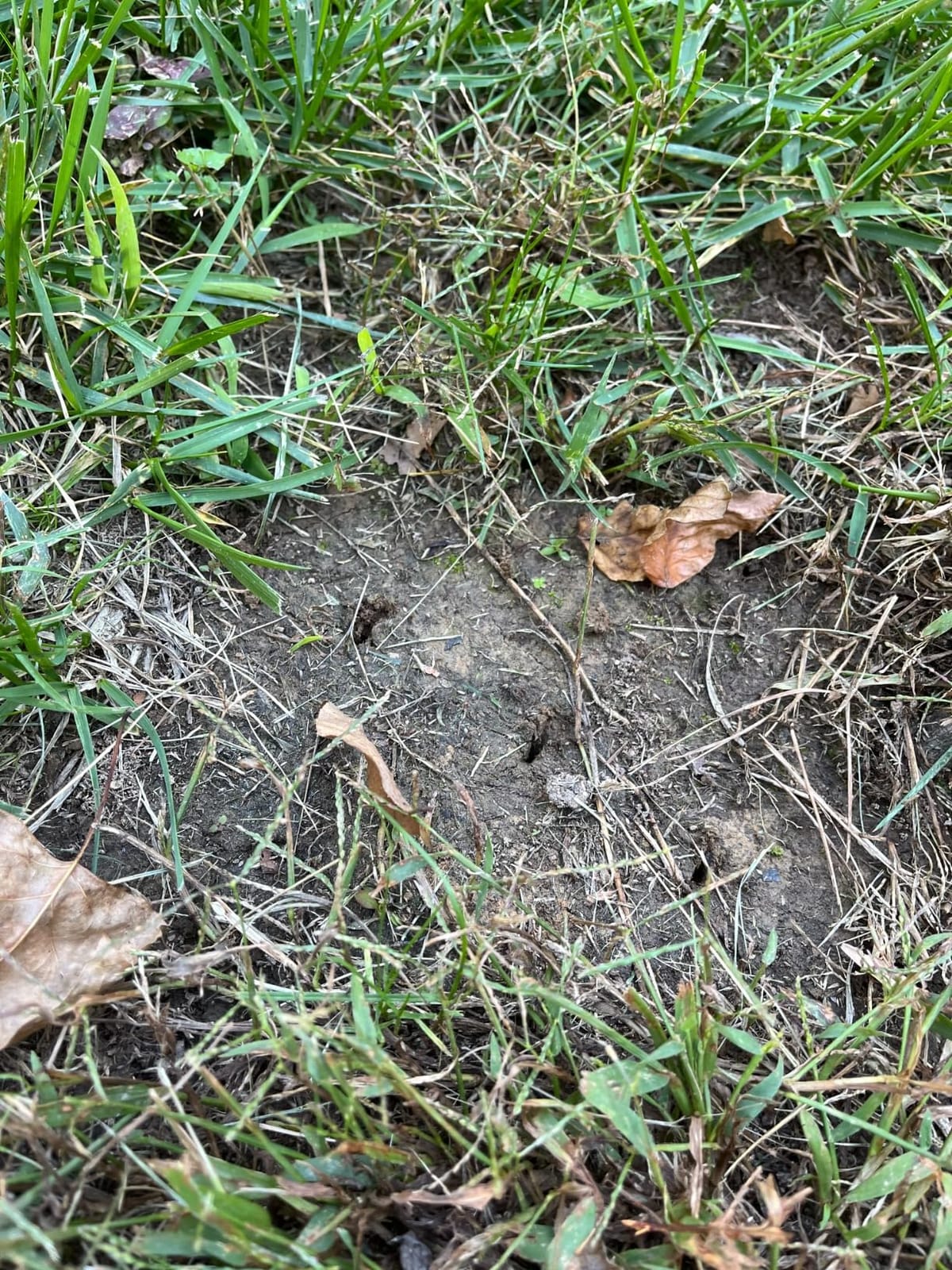
Who this rolling aerator suits
People with joint or back trouble who find repeated stepping on a foot plate painful. It suits sloped or irregular ground where a foot plate tool leaves you off balance.
It also suits anyone who can get their hands on sand or water to weight the drum, since that is where most of its compaction value comes from.
Where it falls short
It perforates soil rather than pulling cores, so it works alongside core aeration rather than replacing it. Expect a layer of surface plugs to break down over a couple of weeks.
At 24 pounds it is one of the heavier hand tools, and it is awkward on steps and steep slopes.
11. Colwelt Manual Spike Aerator
Colwelt Aerator Lawn Tool, Manual Lawn Grass Aerator with Rugged Wide Spike
- Tied for the highest average rating here at 4.5 stars
- Long thick spikes pierce hard clay and make bigger holes
- 38 inch handle and wide foot plate control depth
- Spikes survived repeated contact with rocks and roots
- Only four spikes so coverage is slow and labor intensive
- Handle joints can develop slight play
- Dry hard soil should be watered first
Most manual spike aerators ship spikes around 2.3 inches long and about a fifth inch thick. The Colwelt uses four spikes at 3.5 inches long and two-fifths inch diameter, which is a meaningful jump in both reach and girth.
Thicker spikes make a wider hole. In compacted clay, hole size is the difference between opening a path for roots and merely denting the surface.
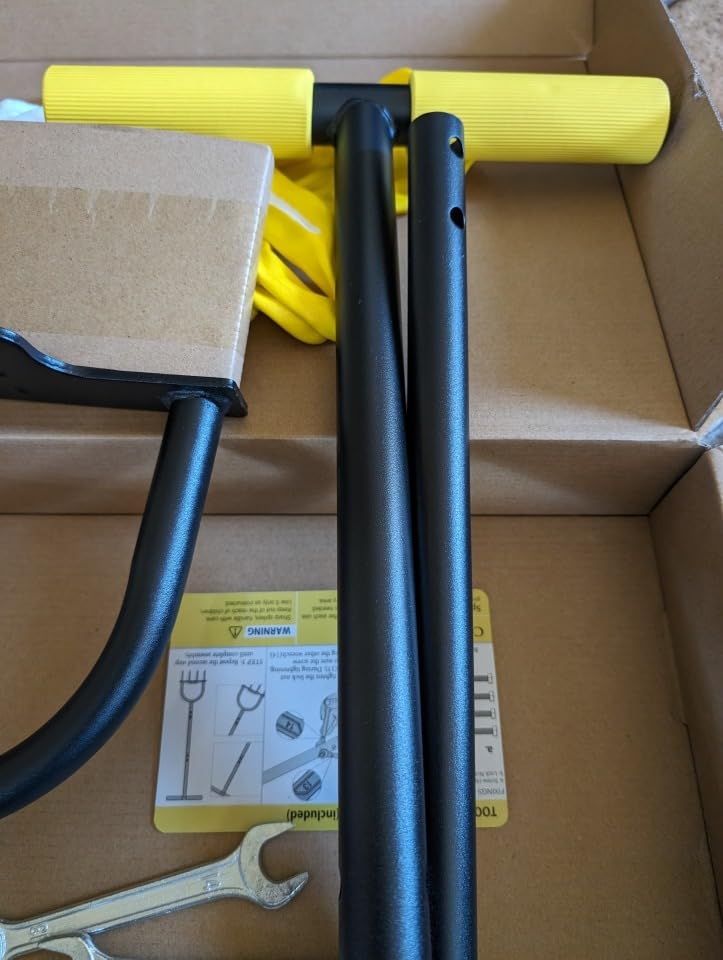
At 230 reviews and 4.5 stars with roughly 76 percent five-star ratings, buyers repeatedly name the spike length and thickness as the reason it outpunches smaller manual aerators in their testing.
Buyers also report the spikes surviving repeated contact with rocks and tree roots, which is where thinner tines usually bend. Assembly takes about 90 seconds and work gloves are included.
Who this spike aerator suits
Anyone with hard clay and a small area to treat. It suits flower beds, borders and garden paths where soil is dense but the space is too narrow to justify anything bigger.
The 38 inch handle and wide 6 inch anti-slip foot plate suit users who want more downward force and better depth control than a narrow foot plate allows.
Where it falls short
Four spikes means slow coverage and real physical effort. This is a small-yard and edge tool, and treating a full lawn with it is a bad trade of your weekend.
Handle sections can develop slight play at the joints over time, and dry soil still needs watering first for the spikes to bite.
12. Coopvivi 15-Prong Spike Aerator
Coopvivi Lawn Aerator Tool – Grass & Soil Aerator for Lawn & Yard Care
- 15 prongs cover much more ground per step
- Heavy-duty iron build with rust-resistant coating
- Thick foot plate supports full body weight
- Disassembles for compact storage
- Spike threads can loosen during use
- Frame feels less rigid after repeated sessions
- Awkward wrist alignment on larger jobs
The Coopvivi is a 15-prong spike aerator with a stand-up handle design, so you work upright rather than bent over the lawn. Fifteen prongs at once means real coverage per step for a hand tool.
The construction is high-strength steel with a powder-coated finish for rust resistance, on a thick foot plate that is meant to take your full weight.
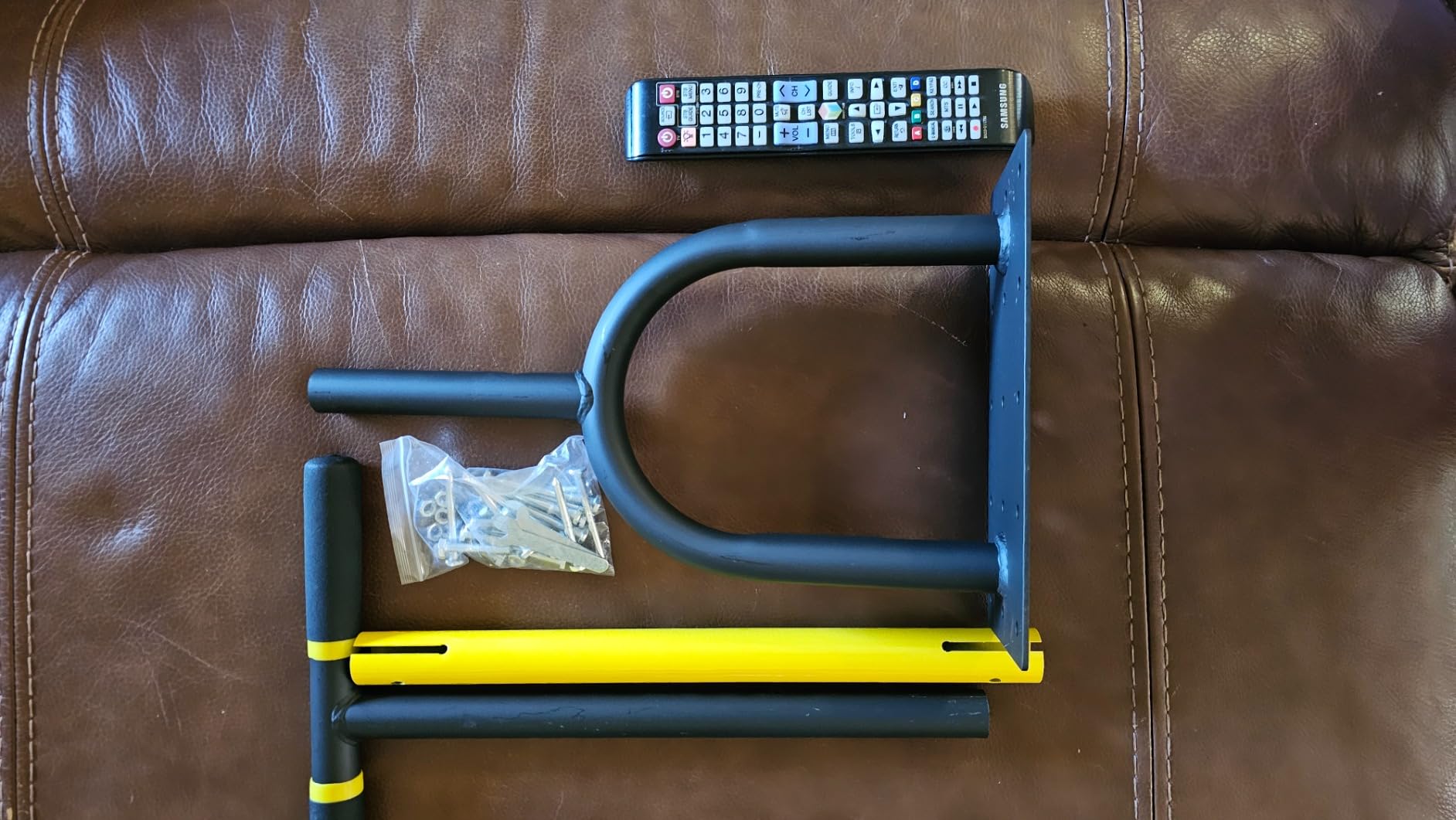
At 209 reviews and 4.2 stars, buyers like the prong count and the sturdy build for spot-fixing bare areas before overseeding. It disassembles for storage, which is a real advantage in a small garage.
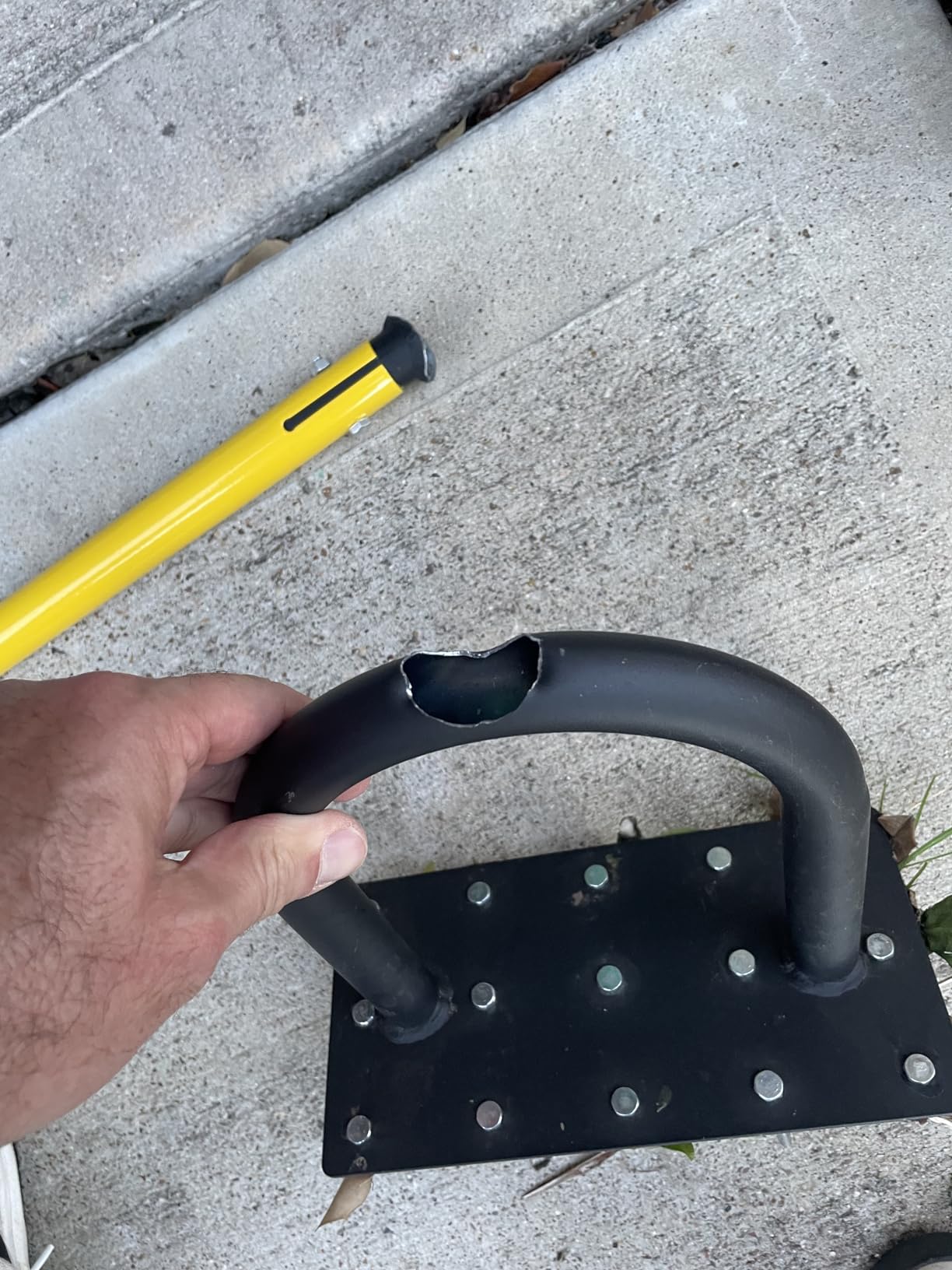
The weaknesses are consistent and specific: spike threads loosening during use, the frame feeling less rigid after repeated sessions, and uneven wrist-to-spike alignment that strains the back on bigger jobs.
Who this spike aerator suits
Patch work ahead of spring or fall overseeding, where you want seed dropped into contact with loosened soil. It suits anyone who prefers standing upright while working.
It also suits tight spaces such as garden beds and patios where a rolling or tow-behind implement cannot reach.
Where it falls short
The spike threads can loosen, and some buyers add thread-locking adhesive to solve it. The frame developing play over time is the other recurring complaint.
It punches holes rather than opening cores, and it is a poor choice for large areas given the labor involved.
How to Choose an Aerator for Compacted Soil
Start with lawn size, because it decides the format before anything else. Under a quarter acre, a manual corer is realistic. Above that, coverage per step stops mattering and you need something you tow or roll.
Then check the tool type against your actual problem. If soil is compacted, you want hollow tines that pull cores. If you are opening a seedbed or scratching a thatch layer, spikes are fine and cheaper.
Weight tray capacity is the spec people overlook on hard ground. The Agri-Fab tray takes 175 pounds and the Brinly takes 150, which means concrete blocks, sandbags or paving slabs. On clay, added weight is the difference between tines entering the ground and skating across it.
Check construction details. Galvanized steel, heat-treated tines and stainless plugs resist rust in the wet conditions that follow aeration. Powder-coated frames are adequate. Thin stamped steel is what bends when you hit a rock.
For large lawns, renting a walk-behind power aerator is worth weighing. You avoid storage and transport entirely, though it is heavy, awkward to load and unpleasant on slopes. Buying pays off over years if you will use it every spring and fall.
Signs your lawn actually needs aerating
Water pools and sits instead of soaking in, or the ground stays soggy long after rain. That is the clearest signal, because compacted soil has lost the pore space that lets water move downward.
Grass pulls up easily, with roots clinging to a thin mat of soil rather than a deep network. Grass blades grow thinner and paler in patches, often in the areas people walk on most.
The lawn dries out faster than it should between waterings and responds slowly to fertilizer. Insect and disease pressure also climbs, because healthy roots support healthier turf.
A spongy feel underfoot is the opposite problem. That is usually thatch rather than compaction, and it calls for a different tool.
Matching tool type to lawn size
Under 2,000 square feet, a manual corer is honest work. A few passes a weekend keeps a small lawn in shape, and the storage cost is a corner of a shed.
Between roughly 2,000 square feet and a half acre, the labor starts to bite. A rolling model like the Seeutek, or a wider step-on spike tool, cuts per-session time considerably, though you lose true coring.
Above a half acre, tow-behind or hire a service. At that scale the Agri-Fab class of machine is the only realistic way to hit the 20 to 40 holes per square foot target, and the professional route becomes worth pricing.
Do the wedge test before you buy anything. Push a garden knife or flat screwdriver into the lawn about 2 inches. If it enters only the top of the blade or needs force to get there, you have real compaction. If it slides in easily to the full depth, your problem may be thatch rather than soil.
When to Aerate and How to Aerate Properly
Cool season lawns, which includes Kentucky bluegrass, tall fescue and perennial ryegrass, are best aerated in early spring or fall. Warm season lawns such as Bermuda and zoysia should be aerated in late spring through early summer as growth ramps up.
Water the lawn thoroughly two days before you start. This is the single most skipped step and the one most likely to change your results. Soil that is moist enough to pull cores will give you 3 inch plugs. Bone dry soil makes tines skate, and saturated soil smears and re-compacts.
Mow first, slightly shorter than your normal height, so the machine is not walking through a tall canopy. Then aerate, aiming for 20 to 40 holes per square foot with cores roughly three-quarters inch wide and up to 3 inches deep.
Leave the cores where they fall. Raking them off looks tidier and throws away much of the benefit. Those cores break down over one to two weeks, and the microbes working on them are the same ones that break down thatch. Mow again one to two weeks later to knock the tops back down.
One warning worth repeating. If you plan to use a pre-emergent herbicide, apply it after aerating, never before. Aeration opens the soil and lets weed seeds reach the surface, and a pre-emergent laid down beforehand will not stop them. Several extension services flag this specific mistake.
Overseed immediately after aerating if that is your plan, since the open soil is the seedbed you were waiting for. If you fertilize, most growers apply that about a week before aerating rather than right after, so the nutrients are already in place when the holes open.
Aeration vs Dethatching: Which Does Your Lawn Need
These two get confused constantly, and they solve different problems. Compaction is a soil problem that coring fixes. Thatch is a layer of dead and living organic matter between the grass and the soil, and it needs removing rather than puncturing.
Thatch matters when the layer is thick enough to block water and light. A simple test: cut a small section of sod and look at the layer between green grass and soil. If you cannot see soil, thatch is a problem.
The order matters. If thatch is genuinely thick, dethatch first, then aerate. Dethatching after coring can tear up the new openings you just made. If thatch is thin, aeration alone usually solves it, because the cores bring oxygen to the layer and microbes break it down.
Do not dethatch warm season lawns in spring. Spring is when Bermuda and zoysia are most vulnerable, and scalping them then does real damage.
Frequently Asked Questions
Will an aerator work on hard ground?
Yes, but only with the right preparation. Tines refuse to penetrate bone-dry soil and smear saturated soil, so water the lawn thoroughly two days beforehand. On clay, load the weight tray with concrete blocks or sandbags to add downward force, and expect to make two passes rather than one.
Which is better, core or spike aerator?
Core aerators, for compacted soil. Hollow tines pull a cylinder of soil out and leave genuine pore space behind. Spike aerators drive a solid rod in and push soil sideways, which can pack it tighter around the hole. Extension services including Iowa State and North Dakota State recommend hollow tines when compaction is the goal.
What is the best month to aerate your yard?
Cool season lawns do best in early spring or fall. Warm season lawns such as Bermuda and zoysia should be aerated in late spring through early summer while growth is active. Aerating at the wrong time stresses the grass more than it helps it.
Should you put down topsoil after aerating?
Only if you want to level low spots or improve a poor soil. For most lawns it is unnecessary and adds cost and work. The cores you leave behind break down into the lawn and improve the soil on their own within a couple of weeks.
Will aeration help with compacted soil?
Yes, and it is the treatment extension services point to. Core aeration physically relieves compaction by removing soil plugs and restoring pore space, which lets water, air and nutrients reach grass roots again. Aim for 20 to 40 holes per square foot with cores up to 3 inches deep.
What are common mistakes to avoid when aerating my lawn?
The big ones are aerating dry soil, raking up the cores, and applying pre-emergent herbicide before aerating rather than after. Dry ground makes tines skate. Removing cores discards the microbial action that reduces thatch. Pre-emergent applied beforehand cannot stop weed seeds pulled to the surface by the holes.
Do you rake up the plugs after aerating?
No. Leave them where they fall. The cores break down over one to two weeks and the microbes feeding on them help reduce thatch naturally. Raking them off looks cleaner and throws away much of the benefit. Mow about a week later to knock the loose tops back into the turf.
How often should you aerate my lawn?
Once a year is standard for most lawns, matched to the right season for your grass type. Lawns with heavy foot traffic, clay soil or standing water may need a second pass. A lot of gardeners aerate in spring and fall for cool season lawns and see the best long term results.
The Bottom Line on Lawn Aerators for Compacted Soil
For compacted soil, the choice narrows fast. Hollow-tine coring aerators relieve compaction, spike aerators perforate the surface, and the manual options differ mostly in how much area they can cover before your arms give out.
Small lawns get the Yard Butler ID-6C. Large properties with a tractor get the Agri-Fab 48 inch tow plug aerator, which is the only tool here that reaches the 20 to 40 holes per square foot target across a whole lawn. Seeders get a spike aerator, and everyone should water two days before starting.
Keep the rest of your lawn program on track with our tested picks from the best lawn mowers buying guide and add path or border lighting from our solar lawn lights picks. If you also maintain a water feature, our pond aerator guide covers circulation for ponds rather than turf.
We will keep updating these picks as tools change through 2026.