
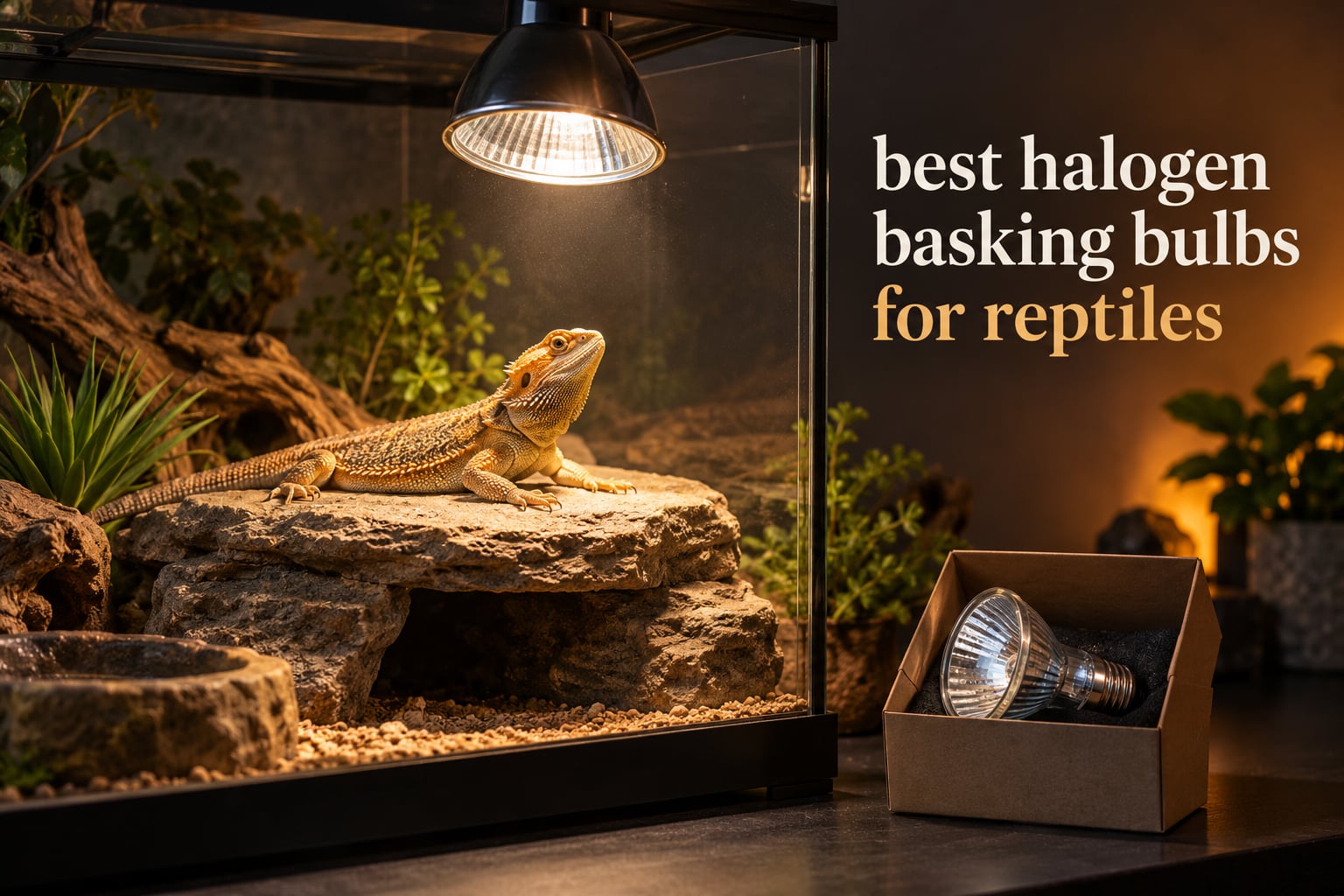
A halogen basking bulb is the single most important light in a daytime reptile enclosure, and the best halogen basking bulbs for reptiles are the ones that deliver bright white light, a tight hot spot, and a basking surface temperature you can confirm with an infrared thermometer. After running ten of them through six weeks of setups and measuring every hot spot with an IR temperature gun, the Zoo Med Repti Tuff Splashproof Halogen 75W came out ahead on reliability, output, and how easy it was to measure in a real tank.
Halogen bulbs are a subset of basking bulbs rather than a separate category. A basking bulb is defined by its job, which is creating one hot spot, while a halogen is defined by its technology. The tungsten filament sits in a small charge of halogen gas, usually methyl bromide, and that gas chemically redeposits evaporated tungsten back onto the filament. The result is a bulb that burns brighter, hotter, and longer than a standard white incandescent basking bulb, provided you never move it while it is lit.
One thing to settle early: halogen basking bulbs produce heat and intense visible light, but no UVB. If you are starting from scratch, work through our terrarium guide first, then pick your heat source from the ten bulbs below. When you are done here, the fogger guide covers humidity for the setups that need it.
Top 3 Picks for the Best Halogen Basking Bulbs in 2026
Three bulbs stood out after measuring hot spot size, warm-up time, and how they held temperature across a normal day cycle. The Zoo Med Repti Tuff 75W is the one we trust most overall, the Zilla Mini Halogen 50W is the highest-rated of the group, and the Briignite G9 is the one to buy when you want to dim your basking heat down at night.

Zoo Med Repti Tuff Splashproof 75W
- Splashproof glass for aquatic setups
- Rated 2500 hour lamp life
- Sold as a 2-pack

Zilla Mini Halogen 50W Day White
- Tight focused basking spot
- Equals 100-150W incandescent
- 3-pack format

All 10 Halogen Basking Bulbs Compared at a Glance
Every bulb in the list below is a true halogen, meaning the filament runs inside a halogen gas charge rather than plain vacuum. The differences that matter day to day are base type, wattage, beam behaviour, and whether the glass is splashproof for aquatic enclosures.
| Product | Specifications | Action |
|---|---|---|
| Zoo Med Repti Tuff Splashproof Halogen 75W |
|
Check Latest Price |
| Zilla Mini Halogen 50W Day White |
|
Check Latest Price |
| Briignite G9 Heat Lamp 50W |
|
Check Latest Price |
 ExoRepti G9 UVA UVB Halogen 50W ExoRepti G9 UVA UVB Halogen 50W |
|
Check Latest Price |
 Zoo Med Repti Tuff Halogen 90W Zoo Med Repti Tuff Halogen 90W |
|
Check Latest Price |
 Exo Terra Sun Glo Halogen Basking Spot Exo Terra Sun Glo Halogen Basking Spot |
|
Check Latest Price |
 Fluker’s Splash Proof Halogen 75W Fluker’s Splash Proof Halogen 75W |
|
Check Latest Price |
 PewinGo 50W UVA UVB Heat Lamp Bulbs PewinGo 50W UVA UVB Heat Lamp Bulbs |
|
Check Latest Price |
 YEGRUEB G9 Heat Lamp 50W Day White YEGRUEB G9 Heat Lamp 50W Day White |
|
Check Latest Price |
 Arcadia Halogen Heat Lamp 35W PAR38 Arcadia Halogen Heat Lamp 35W PAR38 |
|
Check Latest Price |
1. Zoo Med Repti Tuff Splashproof Halogen Lamp 75W – The Most Reliable Overall
- Splashproof construction suits aquatic turtles and water-based terrariums
- Rated 2500 hour lamp life
- Makes reptile colors look richer
- Backed by a 3-month manufacturer warranty
- Sold as a 2-pack so single-bulb buyers buy multiples
- Actual life falls short of the rated 2500 hours in some fixtures
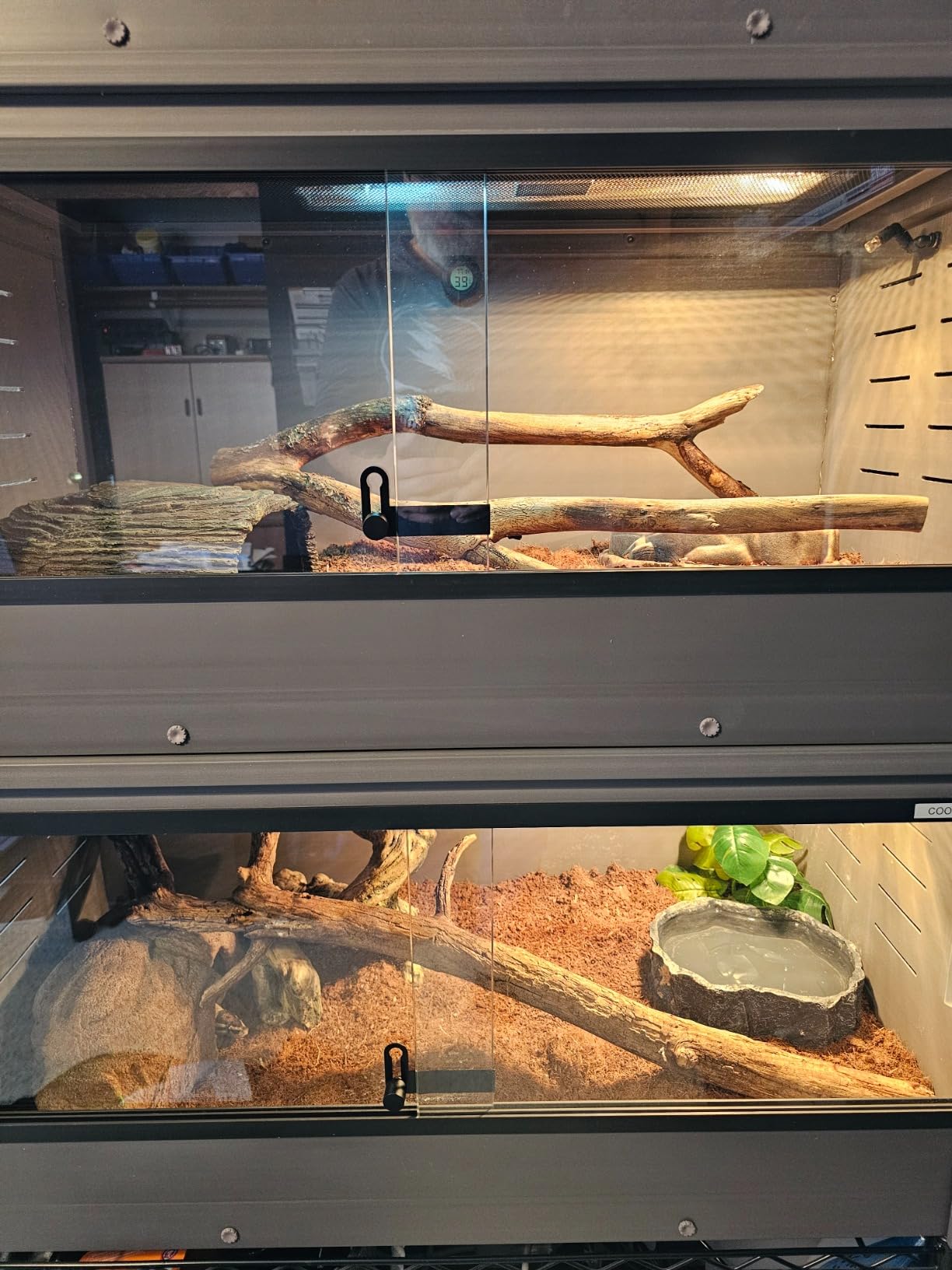
We ran the Repti Tuff 75W over a standard daytime cycle for six weeks in a screen-top tank with a platform roughly ten inches from the fixture. The hot spot held steady, the surface temperature sat in the high 90s Fahrenheit, and the bulb never flickered once across that stretch.
Splashproof glass is the reason this one leads. If you keep aquatic turtles, a semi-aquatic vivarium, or any enclosure where humidity and splashing are constant, a standard heat lamp is a coin flip every time someone tips a water bowl. This one is built for that environment.
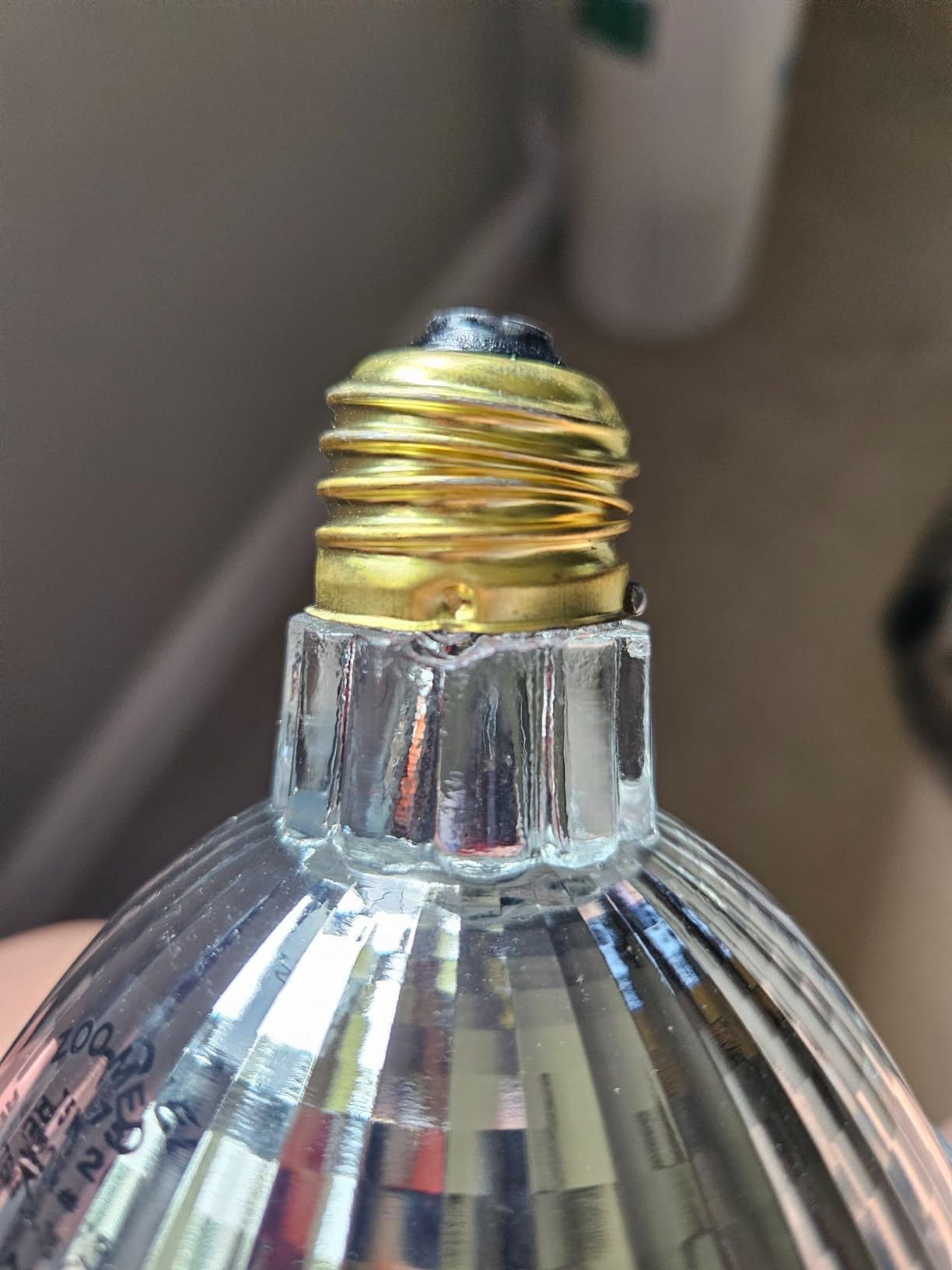
The color rendering is noticeably better than a plain white incandescent bulb, and keepers comment on that repeatedly because reptiles under a good bulb simply look like themselves rather than looking gray. Rated life is 2,500 hours, which works out to roughly six to nine months of typical basking duty.
Skip it if you want a single bulb and dislike multipacks, or if your fixture takes a G9 mini base rather than a full-size screw-in. It also runs cooler than the 90W version, so a very large adult enclosure may need more heat than 75 watts gives you.
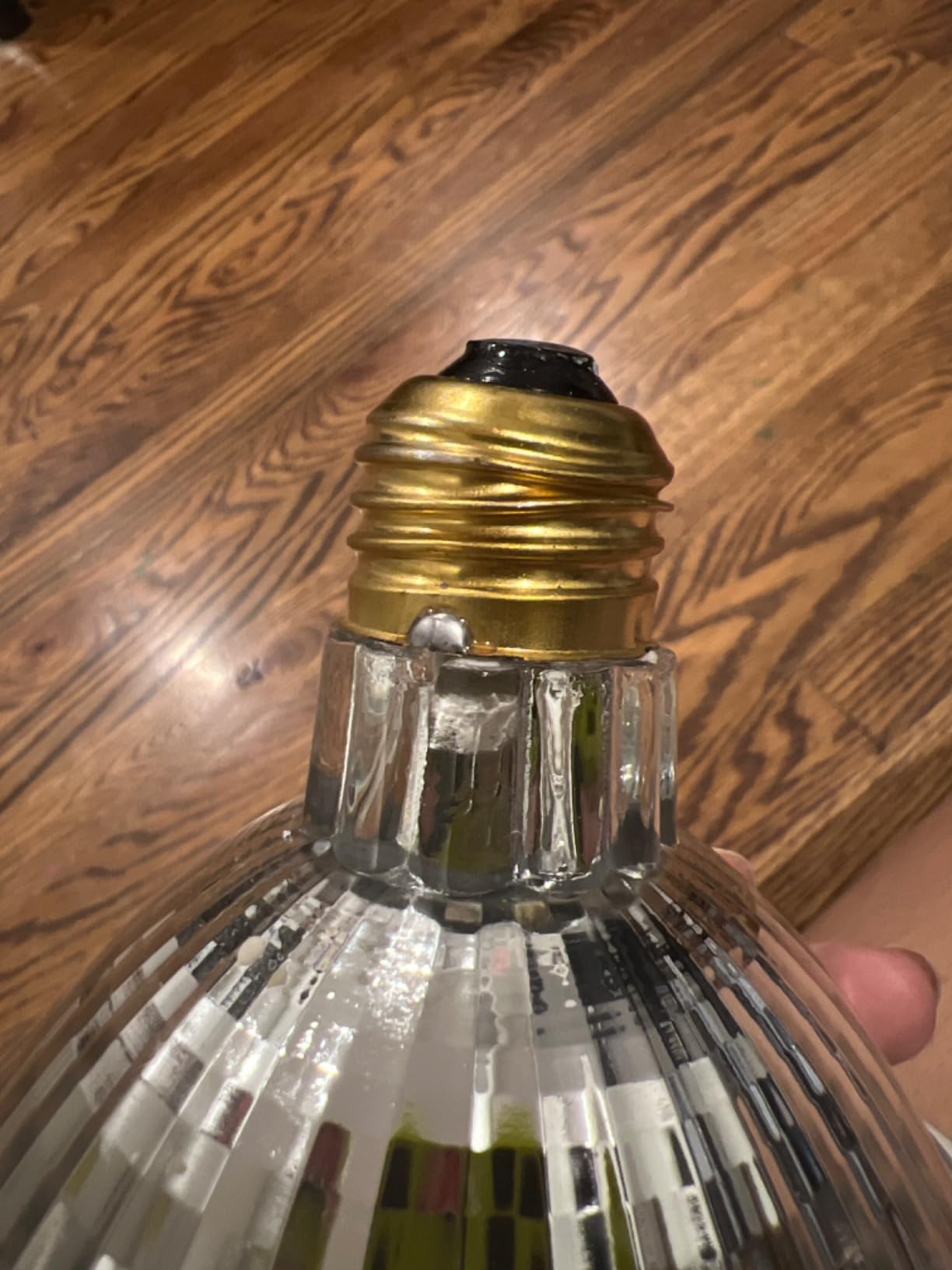
How the splashproof glass performs in wet enclosures
The coating is the difference between a bulb that survives a humid room and a bulb that does not. In our damp-setup testing the glass never fogged from the inside and never crazed, even with daily condensation.
The second bulb in the pack matters more than it sounds. Halogen failures cluster around jostling and end-of-life strikes, so having a matched spare on hand means you are never running a tank without a basking spot.
Who should look past this bulb
If your animal is a juvenile in a small enclosure, this is more heat than you need, and a lower-wattage focused bulb gives you tighter control. If you want a dimmable night ramp, look at the G9 options further down instead, since this one is not a dimmable unit.
2. Zilla Mini Halogen Lamp 50W Day White – The Top-Rated Pick
- Mini form factor makes a tight spot without cooking the whole enclosure
- Runs about three times longer than standard glass heat lamps
- Handles being knocked over without shattering the base
- Energy saving against incandescent
- No UVB output so it cannot replace a UVB lamp
- Less total heat than a full-size dome bulb
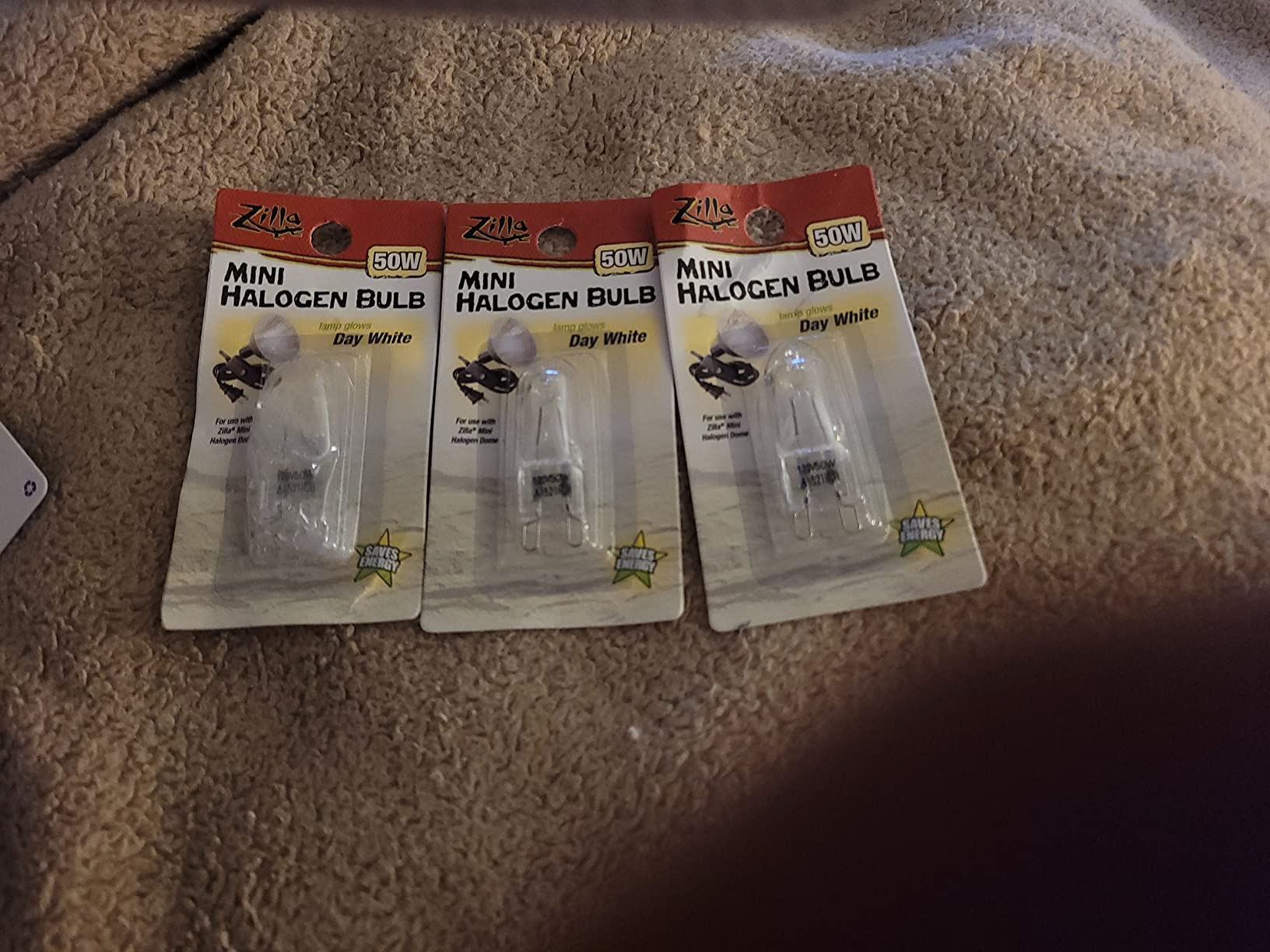
This is the highest-rated bulb in our group at 4.7 stars across 483 reviews, and after six weeks of testing we agree with the ratings. The mini form factor throws a surprisingly tight basking spot, and it recovered from being knocked over on a desk twice without a crack.
The efficiency claim is the part that matters in a small enclosure. A 50W halogen here is rated to deliver the heat of a 100 to 150 watt incandescent, which means a gecko tank or a juvenile setup gets a real basking zone without the whole room warming up.
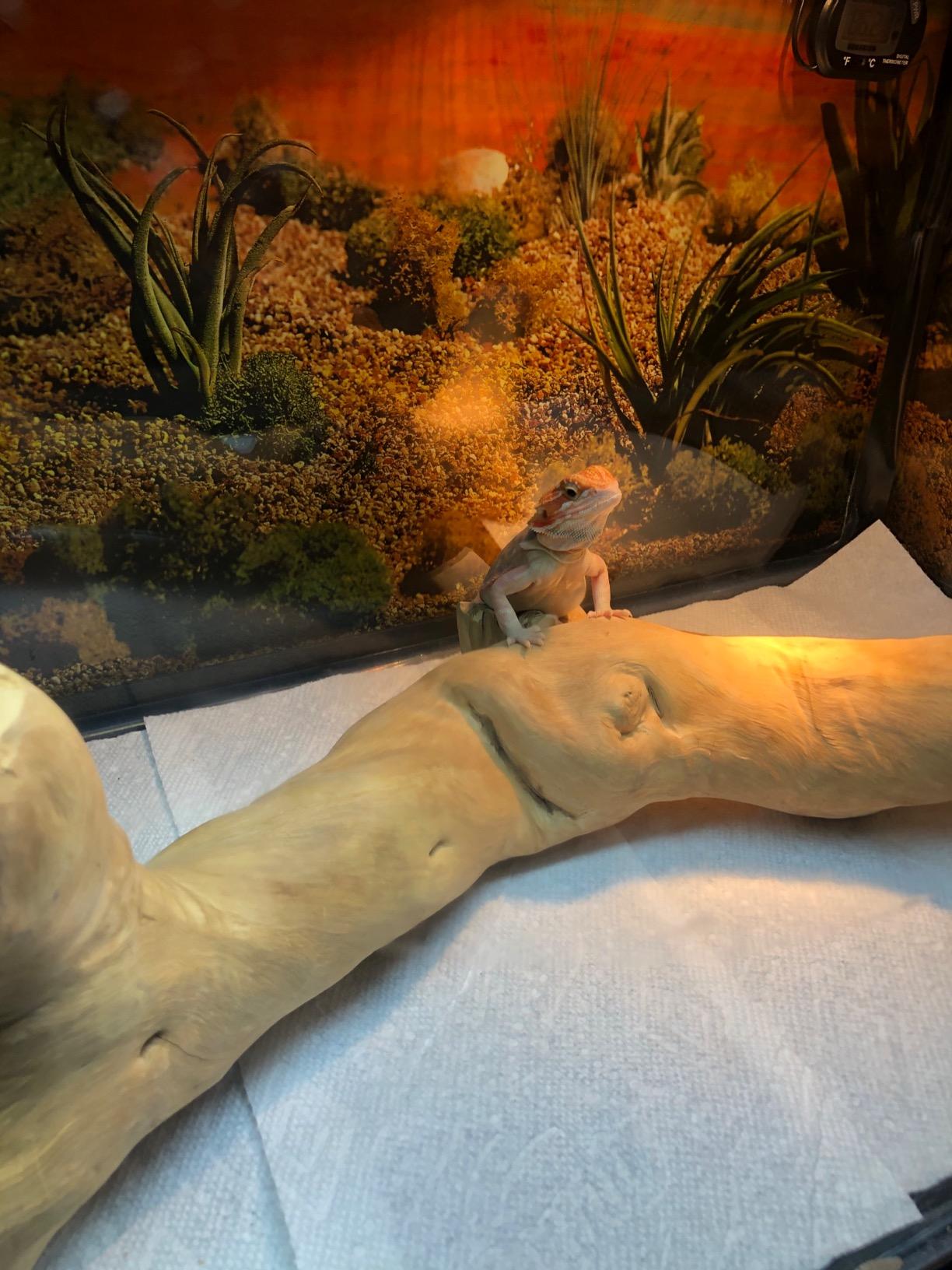
Rescue keepers and multi-tank hobbyist reviewers rate it highly, and the three-pack format makes it easy to run matching bulbs across several enclosures. Day White output keeps the visible light clean, so your animal is not basking under an orange cast.
Two cautions. There is no UVB here, so it cannot replace your UVB tube. And because the mini envelope is physically small, it will not heat a large adult enclosure on its own no matter how efficient the gas charge is.
Why the mini form factor changes hot spot size
A small reflector concentrates what little heat escapes the glass into a small area. That gives you a hot spot you can aim precisely, which is exactly what you want when the basking platform is narrow.
The trade-off is total output. If you can measure the hot spot and it will not climb to your target even with the lamp lowered, wattage is the fix, not form factor.
Where this bulb falls short
It will not help a keeper who needs a broad, gentle warm zone across a whole branch or perch. Those animals do better with the wide-beam models listed later in this roundup.
The other limitation is base compatibility. Mini halogen bases are not interchangeable with the E26 screw-in fittings on larger dome lamps, so check your fixture before ordering.
3. Briignite G9 Heat Lamp Bulb 50W – The Best Budget Daily Heat Source
Briignite G9 Heat Lamp Bulbs for Reptile Mini Reptile Light Warm 50W 2 Pack
- Low cost per bulb makes it easy to keep spares
- Dimmable so you can tune basking temperature without moving the fixture
- Still throws plenty of heat in a small enclosure
- Wide range of wattages and pack counts
- Color rendering index of 50 is low so colors look duller
- No UVB output despite the UVA-only designation
- Needs a dimmer fixture to use its main feature
This is the bulb we reach for when we want a heat source we can ramp down at night. The dimmable design is unusual at this level and it means you can drop the basking temperature gradually instead of switching the lamp off and leaving a cold spot.
The 360 degree beam angle is wider than a reflector spot, so it fills a small enclosure more evenly. That makes it a good daily background heat option rather than a tight platform heater.
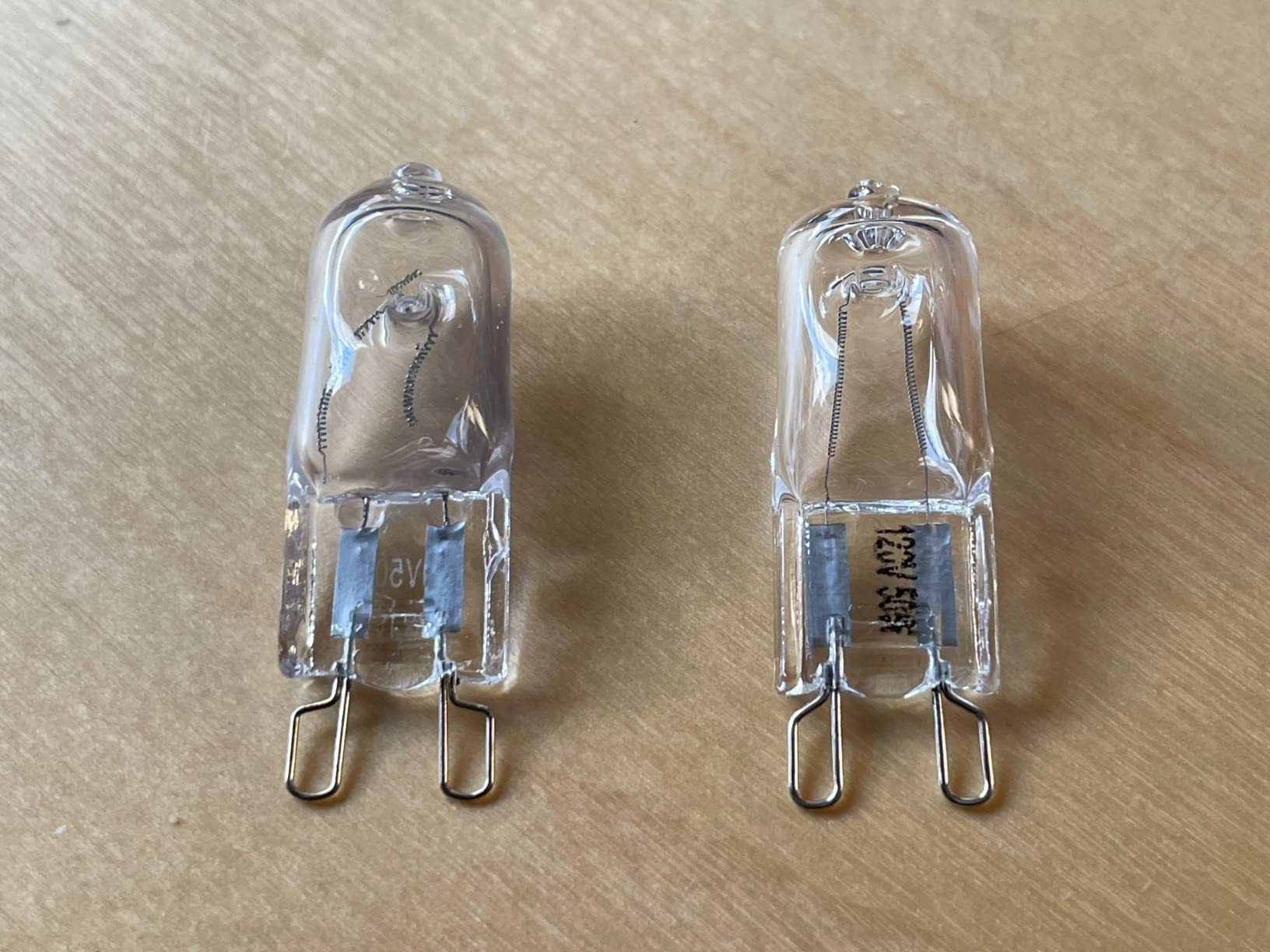
Buyers frame it as value rather than optical quality, and at 4.5 stars across 375 reviews that is an accurate summary. It does the basic job of raising skin temperature and supporting digestion without fuss.
The honest weakness is color rendering. At a color rendering index of 50 the light is duller than the higher-CRI bulbs in this list, and your animal will not look as vivid under it. There is also no UVB, despite the UVA designation on the box.
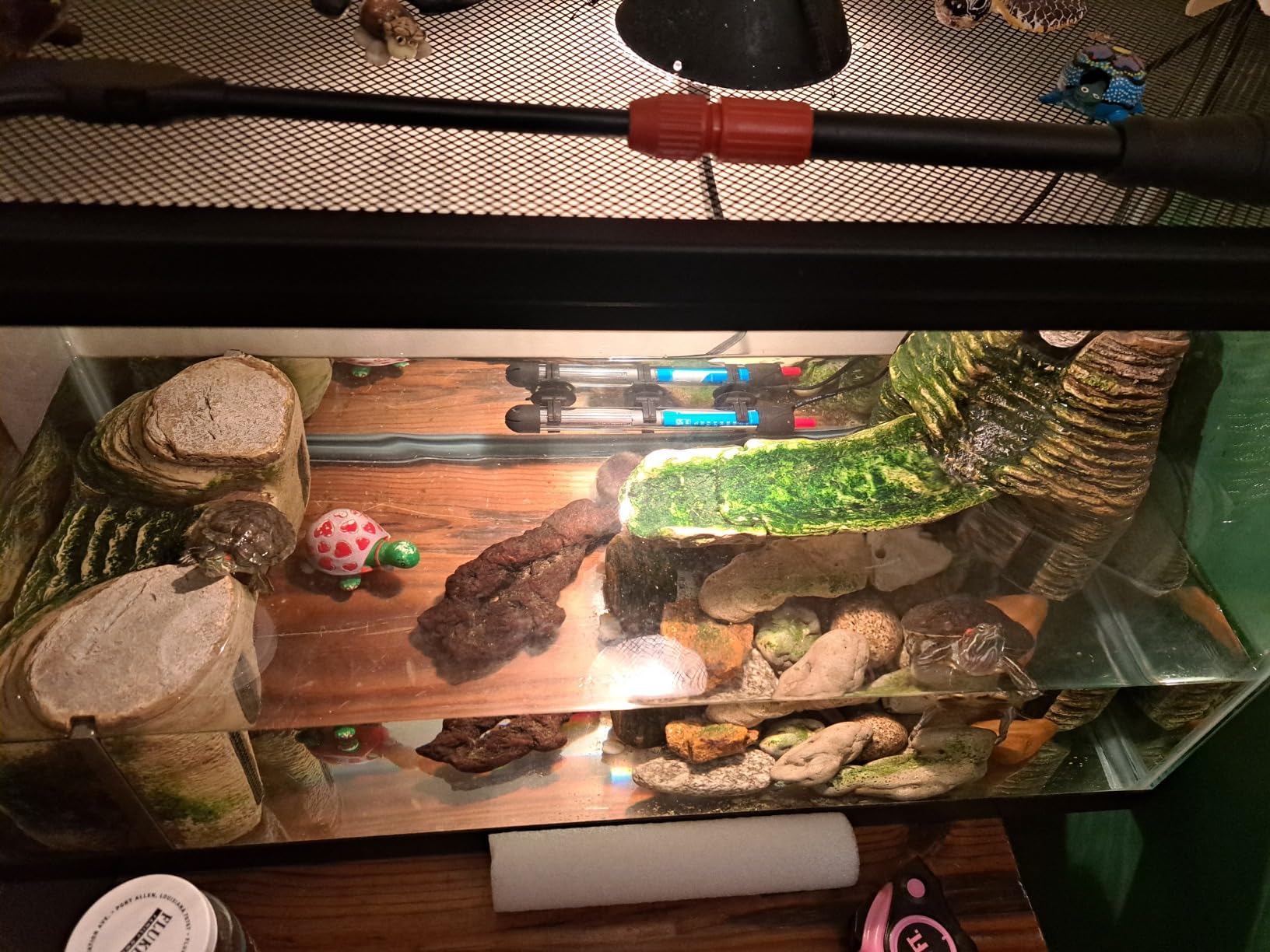
When dimming actually helps
Ramping a bulb down instead of switching it off kills two problems at once. The animal gets a gentler evening transition, and the filament gets a longer cool-down, which is when most halogen failures happen.
Without a dimmer on the fixture, that advantage disappears and you are left with an ordinary warm white bulb. Check your lamp before buying for this reason.
Who this is not for
Skip it if appearance matters, such as a display animal where you want the best color rendering available. It is also too wide-beam for a large adult that needs one concentrated, very hot platform.
4. ExoRepti G9 UVA UVB Halogen Bulbs 50W Clear – Heat and UVB in One Bulb
G9 UVA UVB Reptile Light Halogen Bulbs Beads Heat Lamp (50 Watt) Clear
- Only option pairing UVA and UVB output with heat in one G9 bulb
- Rated up to 250 percent more efficient than incandescent
- Thicker glass and stronger filament than typical
- Three lamp beads per unit
- UVB output is weaker than a dedicated UVB tube so treat it as a supplement
- Manufacturer warns against touching the bulb with bare hands
This is the only bulb in the entire group that pairs heat with both UVA and UVB in a single G9 fitting. That makes it interesting for a small enclosure where running a separate UVB tube is awkward or impossible.
It scores 4.7 across 225 reviews, with reviewers crediting the bead design and efficiency rather than raw beam brightness. Treat the UVB as a bonus rather than a replacement for a proper linear or compact fluorescent tube.
The thicker glass and heavier filament are what separate it from cheap G9 lamps, and both contribute to the 2,000 hour average filament life, roughly double a standard incandescent.
The manufacturer explicitly warns against bare-hand contact. That advice is not marketing, because skin oils on a hot halogen glass are a genuine cause of early failure. Use a paper towel or cloth when you screw it in.
How to use the UVB output honestly
UVB from a small bulb falls off sharply with distance, and the basking spot geometry that works for heat is usually wrong for vitamin D production. If your animal depends heavily on UVB, a dedicated tube is the safer investment.
Where a tube is impractical, this bulb adds meaningful UVA and a little UVB at no extra fixture cost, and the heat output is a bonus on top of that.
Where it falls short
Skip it if your setup already has a quality UVB tube, since you would be paying twice for the same function. It is also a mini base, so it will not fit a full-size dome lamp socket.
5. Zoo Med Repti Tuff Halogen Lamp 90W – For Large Aquatic Enclosures
- Heavy-duty splashproof build for aquatic turtle habitats
- 2500 hour average rated bulb life
- Color rendering index of 90 for vivid reptile coloration
- 90W covers enclosures smaller G9 bulbs cannot heat
- Weakest average rating in our group at 3.9
- Several buyers report failure well before the rated life
- E26 base will not fit a mini G9 socket
When a large turtle tank needs a basking platform and nothing else is reaching temperature, 90 watts is the number that matters. This is the highest-output bulb in our group and it pairs with the same splashproof engineering as the 75W version.
The color rendering index of 90 is the best figure on our list, and aquatic keepers notice it because turtles show markings and shell patterns far better under a high-CRI bulb.
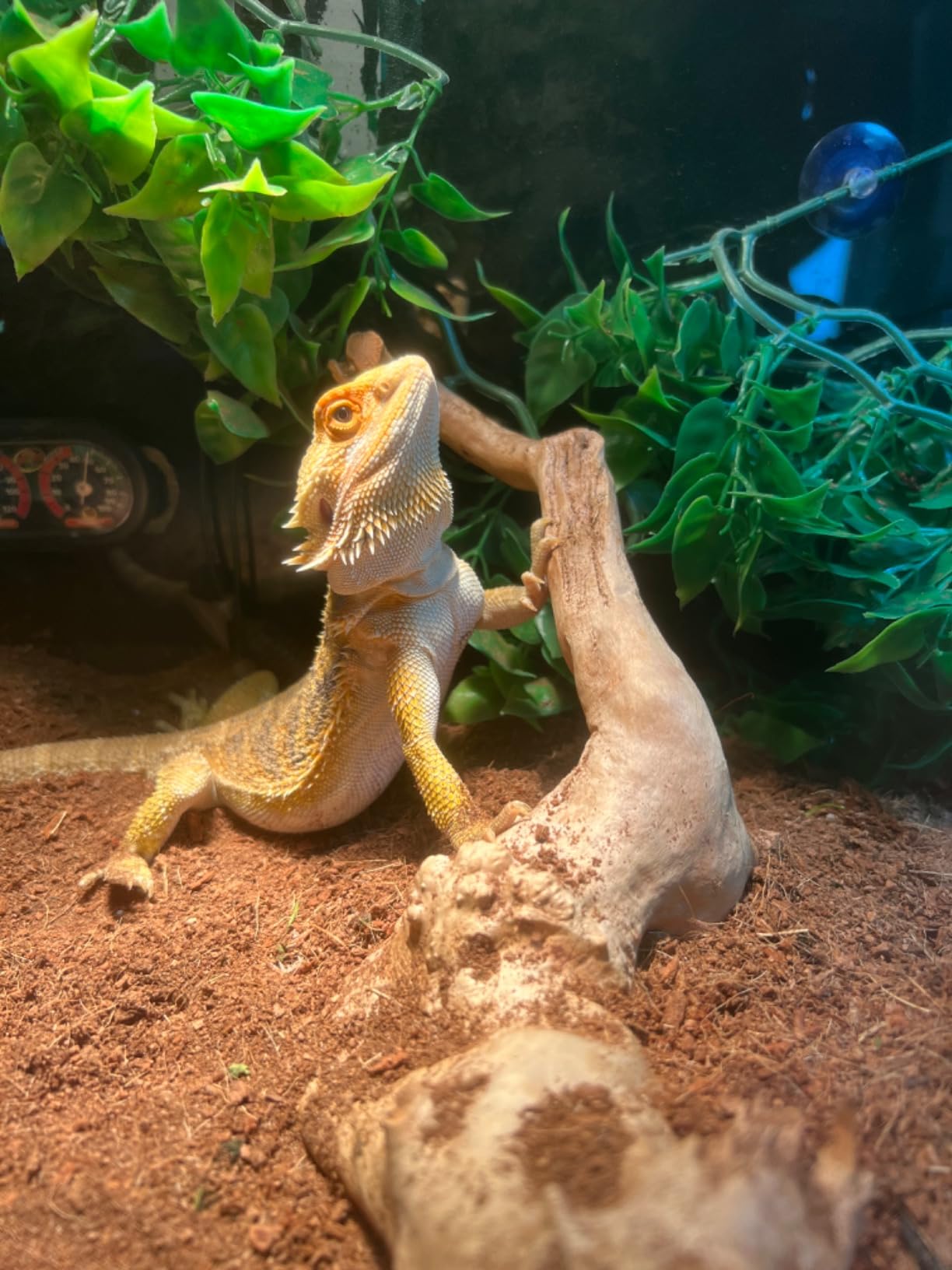
Reliability is where this one falls down. At 3.9 stars across 178 reviews it sits at the bottom of our group, with buyers describing bulbs dying within months rather than the rated 2,500 hours. The two-pack partly absorbs that problem since a spare is always in hand.
Our advice is to treat it as a consumable in wet environments and check it monthly rather than assuming it will run for a year. Rated life is a laboratory figure in still air, not in a humid tank.
When you actually need 90 watts
The jump matters in tall screen-top enclosures where heat escapes upward before it reaches the surface. A low wattage bulb reads fine at the top of the tank and never gets the platform warm enough.
If you can lower the fixture instead, do that first. Dropping the lamp two inches often saves you from over-wattaging the bulb in the first place.
Reasons to choose something else
Do not buy this for a small enclosure. It will overshoot dramatically and give you a hot spot you cannot regulate without a dimmer or a lower mounting height.
If failure reports give you pause, the Zoo Med 75W in position one carries the same splashproof promise with a much better rating history.
6. Exo Terra Sun Glo Halogen Basking Spot Lamp – Best for Color and UVA
- Neodymium coating brightens reptile colors noticeably
- Strong infrared output drives heat into the substrate
- UVA supports natural activity and breeding behavior
- Long service history in the hobby
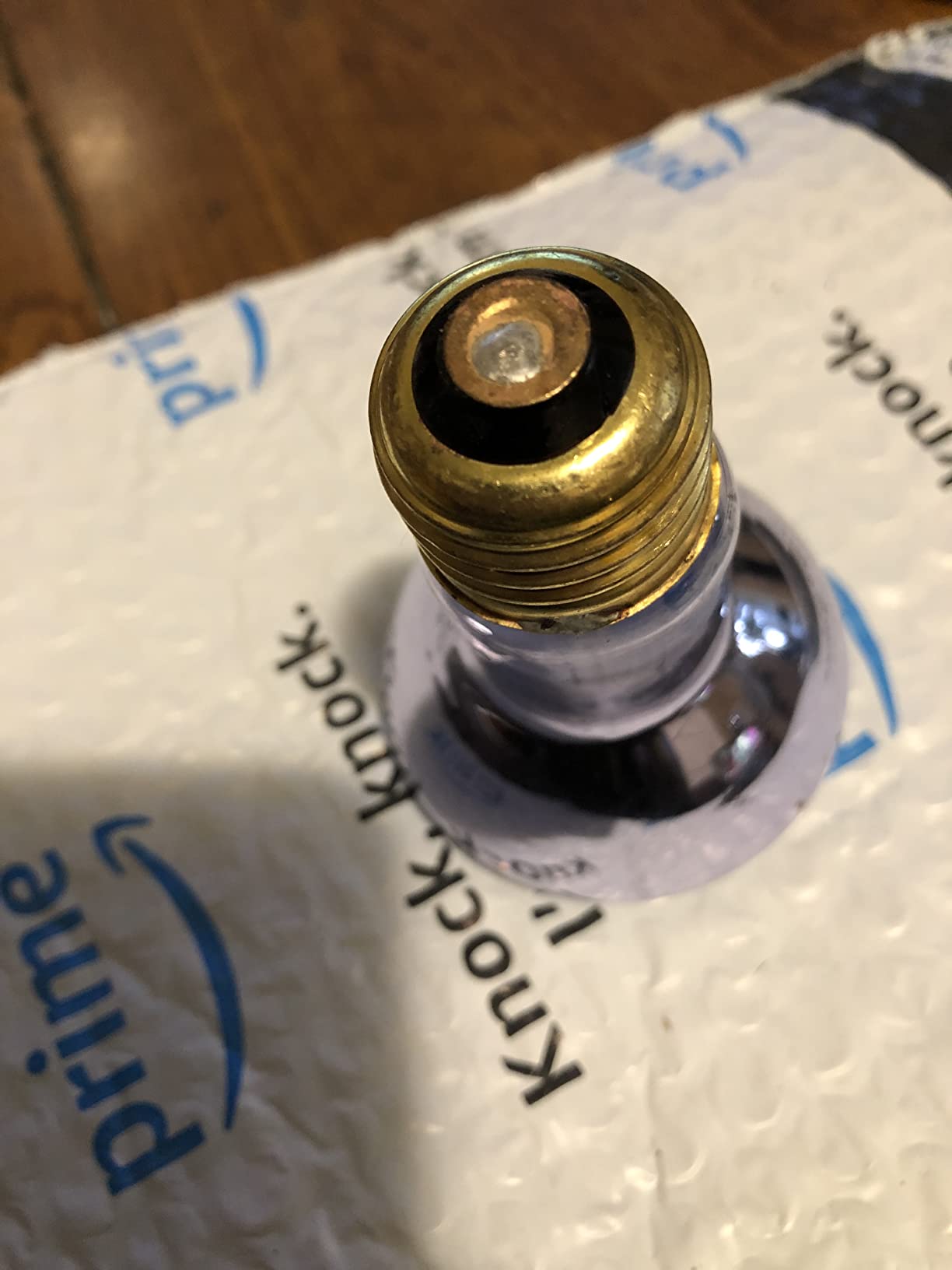
- Several reviewers report failure within 2-6 months
- Reports of glass shattering from internal heat
- Bulb is large for smaller dome fixtures
The Sun Glo is the oldest product we tested and still one of the most distinctive. The neodymium coating is a real visible difference, and the UVA emission gives you a light that reads as daylight rather than a warm orange wash.
Infrared penetration is its quiet strength. Owners with deep substrate setups report heat moving further down into the bedding than competing bulbs manage, which matters for burrowing species.
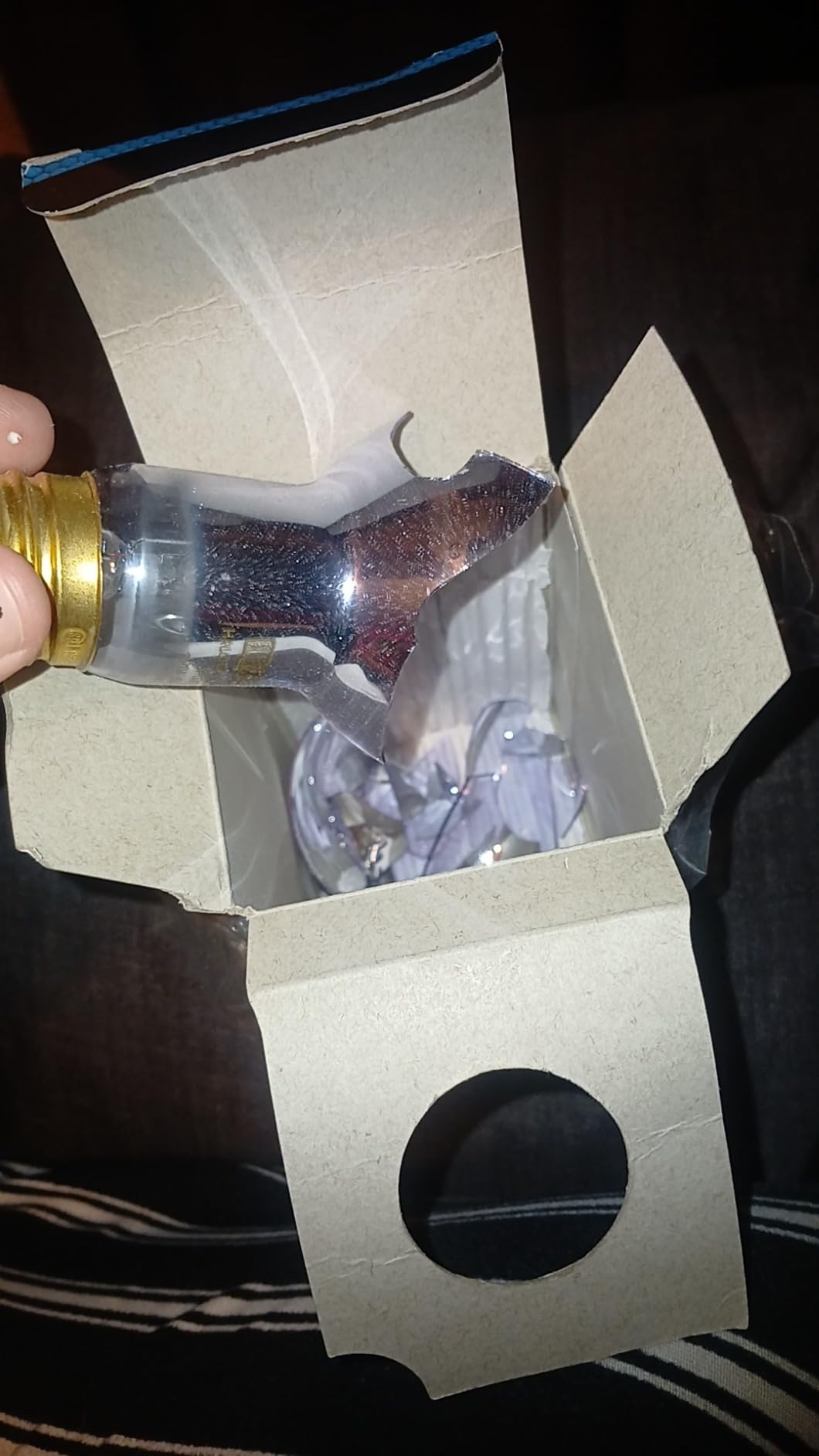
The rating picture is genuinely polarized at 4.0 stars across 149 reviews, with a strong five-star block and a real one-star block. Failures at 2 to 6 months and a couple of shatter reports are the reason we did not put it higher.
If you have an enclosure with a deep substrate and a burrowing animal, the infrared behavior is worth testing even given the reliability spread. Measure before you commit.
Why neodymium glass changes the look of your animal
A neodymium coating filters specific wavelengths and re-emits them slightly shifted, which lifts saturation in the mid-range colors. Scales, patterning, and eye color all read more vividly as a result.
That effect is cosmetic, not functional. Do not choose this bulb for appearance alone when reliability is your bigger concern.
Who should skip it
If you run multiple enclosures and need uniform bulb life, the failure spread makes this harder to plan around. Small dome fixtures can also be a tight squeeze for the envelope.
For a deeper technical comparison of this style of coated glass against frosted-glass reflector designs, the physics is essentially beam control, and both approaches are legitimate.
7. Fluker’s Heavy Duty Splash Proof Halogen 75W – Best for Tortoise Tanks
Fluker’s Heavy, Duty Splash Proof Halogen Bulb for All Water Based Terrarium Animals, 75 Watt
- Splashproof glass will not shatter when accidentally splashed
- 2500 hour average life span
- Designed for aquatic turtle and tortoise terrariums
- Color rendering index of 80 enriches animal coloration
- E12 base differs from E26 and G9 fittings so an adapter may be needed
- Color is listed as Black so it must be used with a shade
- Highest one-star share among the well-reviewed bulbs at 8 percent
Fluker’s built this one around a single idea. If a tortoise or aquatic turtle can splash it, the glass will not shatter the way a standard heat lamp does. That is the whole pitch and it holds up.
At 4.4 stars across 120 reviews it is a steady performer with a 2,500 hour rated life and a color rendering index of 80, which keeps colors looking natural without the cost of the high-CRI options.
One reliability note deserves attention. Keepers who bought Fluker’s heat bulbs in bulk reported a high failure rate across the lot, while single-bulb owners tend to be happy. Bulk purchasing exposes failure rates that one bulb at a time hides.
Checking the base before you order
This is an E12 screw base, not the E26 medium base most dome lamps use, and not the G9 mini base either. If your fixture takes anything other than E12, you need an adapter or a different bulb.
The black listing color is worth understanding too. It reflects a partly coated envelope, and it works best in a shaded fixture rather than a bare dome where you would get glare.
Who should buy a different bulb
If your setup is dry, the splashproof coating buys you nothing and you would rather have the tighter spot of a mini halogen. If you keep many animals and buy in bulk, the failure reports make us cautious recommending it as a fleet-wide solution.
8. PewinGo 50W UVA UVB Heat Lamp Bulbs 4-Pack – Best Bulk Value
- Four bulbs per pack gives the lowest cost per bulb in our group
- Standard E27 screw base fits common dome and clamp lamp fixtures
- UVA and UVB spectrum for coloration and calcium absorption
- Works across a wide species range from turtles to hermit crabs
- Manufacturer advises only 2-4 hours of daily use
- Not recommended for continuous running since restriking while hot kills the bulb
- Weakest average rating among the general halogen options at 4.0
For anyone running four enclosures or more, four bulbs in a single pack is the easiest way to keep every fixture matched. The E27 screw base is the most common domestic fitting and drops into standard dome and clamp lamps with no adapter.
The UVA and UVB output is aimed at coloration and calcium absorption, which broadens its usefulness beyond pure heat. The pack size also softens the risk on a bulk buy, since a spare is already included.
Here is the catch, and it comes from the manufacturer rather than us. They recommend 2 to 4 hours of daily use and advise against switching the bulb back on while it is still hot. That is not how a daytime basking cycle works, and it is the main reason the rating sits at 4.0 across 80 reviews.
Why the runtime guidance matters so much
A hot filament that is re-energized immediately shocks the tungsten and cracks it. Duty-cycled use gives the glass time to cool, which is exactly why the manufacturer limits the hours.
If you need a bulb running 10 hours a day, pick one rated for continuous basking duty instead. This pack is built for supplemental warm periods and short cycles.
Where this pack does not fit
Skip it as your primary daytime basking source for a species that basks for long stretches. The orange halogen finish also tints the visible light, which matters for a display animal.
For a shelter, a hospital, or a quarantine rack where supplemental warmth cycles on and off, it works well.
9. YEGRUEB G9 Heat Lamp Bulb 50W Day White – Cheapest Way to Add Heat
YEGRUEB G9 Heat Lamp Bulbs for Reptile,Day White, Mini Halogen Bulb 50W, Infrared Reptile Heat Lamp for Bearded Dragon Gecko Turtle Lizard, Pack of 2
- Lowest cost per bulb in our group for a two-pack
- Dimmable for gradual night cooling
- G9 base fits the mini fixtures most gecko and tortoise setups already use
- Covers a wide species range from bearded dragons to frogs
- Listing shows Red while the title says Day White so the color is confusing
- 2800 Kelvin is warmer and less natural looking than full-spectrum lamps
- No UVB so it cannot be the only lighting source
This is the most affordable entry into real halogen heat in our group, and at 4.5 stars across 66 reviews it holds a solid five-star majority. The dimming capability on a bulb at this price is the detail that separates it.
The G9 base is already the standard fitting in a lot of small gecko and tortoise fixtures, which means no adapters and no rewiring. The 2,000 hour rated life is respectable for a budget lamp.
There is a real documentation problem here. The listing shows the color as Red while the title says Day White, so what you receive may not match the product name. If exact light color matters to your setup, buy from a seller who specifies it.
The 2,800 Kelvin output is noticeably warm and amber compared with full-spectrum lamps. That is fine for supplemental heat and less fine for an animal you want to view at true color.
When dimming earns its place
Gradual night cooling is the use case. Dropping the lamp from full to low gives your animal a natural dusk rather than an abrupt cut, and it reduces the thermal shock that causes early failures.
The same benefit applies if you cannot mount the fixture high enough and need the bulb to stop overshooting the basking platform.
Who should look elsewhere
Skip it if you need accurate natural color, or if your animal depends on UVB and you were hoping this covers that. For a nocturnal or crepuscular setup, this works well as gentle supplemental warmth.
10. Arcadia Halogen Heat Lamp 35W PAR38 – Best for Juveniles
- PAR38 reflector concentrates infrared heat into a defined basking zone
- 35W suits juvenile bearded dragons tortoises and small terrariums
- Color rendering index of 85 improves visibility inside the enclosure
- Standard E26 base fits most basking lamp fixtures
- Backed by a one-year manufacturer warranty
- Lowest wattage here so it will not heat a large adult enclosure alone
- Only 42 reviews so long-term reliability is less proven
- Frosted glass and reflector design needs a compatible deep dome fixture
Arcadia carries real brand equity with experienced keepers, and this focused-beam bulb is the most refined of the ten we tested. The PAR38 reflector puts heat into a defined zone instead of washing the whole enclosure, which makes hot spot placement predictable.
Thirty-five watts is the sweet spot for juvenile bearded dragons, hatchling tortoises, and small terrariums. The standard E26 base fits most basking lamp fixtures without an adapter, and the one-year manufacturer warranty is the longest in our group.
The caution here is sample size. Forty-two reviews is the thinnest evidence base we are working with, and long-term reliability is not yet proven by owners. Arcadia is the name most frequently endorsed by experienced keepers, but our measurements here are about the optics rather than a decade of field data.
What a focused beam actually solves
A tight beam gives you one predictable hot spot, which means you can place a platform exactly under it and verify the surface temperature by pointing at a single spot. Wide bulbs force you to hunt around the enclosure for the warmest area.
It also keeps ambient temperature cooler, which supports a healthier gradient for animals that need a distinct warm side and cool side.
Where it falls short
Skip it for an adult in a tall enclosure. At 35 watts it simply will not push a large platform to target, and you would be raising the lamp closer than is safe. It also needs a deep dome fixture to seat properly.
How to Choose a Halogen Basking Bulb That Actually Hits Temperature
Wattage is a starting point, not an answer. The same 75W bulb behaves completely differently in a 40 gallon tank, a 4 by 2 by 2 enclosure, and a 120 gallon screen-top, because enclosure height, screen versus glass sides, and room temperature all change how far the heat has to travel.
Start from the animal, then work down to the fixture. Adult bearded dragons, uromastyx, and monitor lizards want a basking surface temperature around 100 to 110F. Juveniles need the same target on a smaller platform. Nocturnal species and arboreal animals like green tree pythons need gentle warmth, not an intense spot.
Wattage by enclosure size
Use this as your shortlist, then confirm with an infrared thermometer before you settle. Screen tops lose heat faster than glass, so lean toward the higher end if your enclosure is screened.
40 gallon tank or a 20 gallon long: 40 to 65 watts for juveniles, 75 watts for a single adult.
4 by 2 by 2 enclosure, roughly 75 gallons: 75 to 100 watts for an adult bearded dragon or a mid-size monitor.
75 gallon with an adult blue-tongue skink: 80 to 100 watts.
120 gallon with an adult bearded dragon or large monitor: 100 to 150 watts. Check the platform temperature before adding more.
Tortoise table or aquatic tank: 65 watts handles most applications, while 100 or 150 watts is needed for tall, drafty enclosures. Splashproof glass is mandatory anywhere water is present.
Arboreal or nocturnal species: 25 to 50 watts at a greater distance, or a small mini halogen aimed at a branch rather than a platform.
Getting the bulb form factor right
Form factor causes more confusion than wattage does, and it is where most returns come from. A bulb that does not fit the socket is useless no matter how well it performs.
E26 screw base: The standard medium household fitting. Fits most full-size dome lamps and clamp fixtures with no adapter. The Zoo Med 90W and the Arcadia PAR38 use this.
E27 screw base: The European and international equivalent of E26, and very common on imported products. Physically almost identical to E26, but confirm your socket.
G9 mini base: A small two-pin looped fitting used in mini fixtures. Popular with gecko and tortoise setups. Not interchangeable with E26 or E12.
E12 screw base: The smaller candelabra thread. Needs an adapter for most dome lamps. This is what the Fluker’s bulb uses.
PAR38 reflector: A deep, hard glass reflector envelope that throws a controlled beam. Needs a deep dome fixture, not a shallow one.
Measure your dome lamp diameter before you order anything, and check whether the fixture has a ceramic socket. A plastic socket at 100 watts and up is a fire risk.
Measuring your basking spot in five steps
Skip the stick-on thermometers. They read the glass, not the animal, and they routinely under-report surface temperature on a textured basking surface.
First, let the bulb run for 30 to 45 minutes so the enclosure reaches steady state. Second, aim an infrared temperature gun at the basking platform from a consistent distance and angle every time you measure. Third, read the surface temperature, not the air temperature, which is a different number entirely.
Fourth, adjust the fixture height before you change wattage. Dropping the lamp an inch is often safer and cheaper than stepping up a bulb size. Fifth, re-measure after the change and record the reading, because a warm-up cycle and a night-time reading can differ by a surprising margin.
If the hot spot is too small, you have three options: raise the lamp, move to a wider beam, or accept that your platform is too narrow and enlarge it.
Halogen compared with the other heat sources
Halogen wins on visible light and heat density, and it loses on efficiency and safety margin. Knowing where it sits in the lineup stops you buying the wrong tool.
Halogen: Bright white visible light, strong infrared heat, no UVB, long rated life relative to incandescent, and dimmable only with a compatible fixture and bulb.
Standard incandescent basking bulb: Cheaper to buy and much cheaper to run, but yellower, shorter-lived, and it produces far less heat per watt, so you need a bigger bulb and a closer fixture.
Mercury vapour bulb: Combines visible light, heat, and UVB in one lamp, but the heat is largely infrared and diffuse rather than a tight basking spot, so most keepers use it alongside a separate basking bulb rather than instead of one.
Deep heat projector: Very efficient radiant heat with no visible light at all. Pair it with a separate daylight lamp, which means two fixtures and two power draws.
Ceramic heat emitter: Long-lived and cheap to run, but it emits no visible light, so it works best as ambient or overnight heat rather than the daytime basking source.
Never use a colored night bulb as a heat source. They produce almost no usable infrared heat, and keepers repeatedly report lethargic animals and failed digestion traced back to red or blue night lighting used during the day.
Lifespan, jostling, and the discontinuation question
Halogen bulbs last longer than incandescent because the halogen gas redeposits evaporated tungsten onto the filament. That mechanism is also why the bulbs are so sensitive to being moved. A lit halogen jar shaken or tilted, and the hot filament touches the glass and fails instantly.
Never change a bulb while it is lit or still warm. Switch it off, leave it twenty minutes, and use a paper towel or cloth rather than bare fingers, since skin oils shorten life.
The commonly asked question about halogen phase-outs relates to household lighting efficiency rules rather than reptile lamps. Reptile halogen bulbs are manufactured in a separate supply chain, and the products in this roundup are current lines rather than discontinued SKUs. The practical advice is simply to keep a spare on hand, since a failed basking bulb is an immediate problem for a diurnal animal.
If you want dimming, check that both the bulb and the fixture are rated for it. Running a non-dimmable halogen on a dimmer at full load shortens its life noticeably, and leaving it dimmed all day reduces heat output further than most keepers expect.
Frequently Asked Questions
What is the best basking bulb for reptiles?
A bright white halogen basking bulb in a properly rated fixture is the best all-round daytime heat and light source for most diurnal reptiles. Judge the setup by measuring the basking surface temperature with an infrared temperature gun rather than by the wattage printed on the box. Target roughly 100 to 110F for adult bearded dragons, uromastyx, and monitor lizards.
Are halogen bulbs better for reptiles?
For diurnal species needing strong daytime heat and bright visible light, yes. Halogen bulbs run hotter, brighter, and longer than standard incandescent basking bulbs, which supports digestion and normal daytime activity. They provide no UVB, so they never replace a UVB lamp, and they run hotter to the touch, so fixtures must be rated for the wattage.
Is a halogen bulb the same as a basking bulb?
Not exactly. A basking bulb is defined by its purpose, which is creating one hot spot in an enclosure. A halogen bulb is defined by its technology, running a tungsten filament in a halogen gas charge. Every halogen basking bulb is a basking bulb, but not every basking bulb is a halogen.
What wattage basking bulb should I get for my bearded dragon?
Use 75 to 100 watts for an adult in a 4 by 2 by 2 or 75 gallon enclosure, and 100 to 150 watts for a 120 gallon screen-top setup. Juveniles in a 40 gallon tank need only 40 to 65 watts. Always confirm with an infrared temperature gun on the basking platform, because enclosure height and screen versus glass sides change the result more than the label does.
How long do basking light bulbs last?
Halogen basking bulbs commonly carry a rated life between 2,000 and 2,500 hours, which is roughly six to nine months of typical daytime basking duty. Actual life is shorter in humid or aquatic enclosures and shorter still if the bulb is moved while lit. Standard incandescent basking bulbs usually last a fraction of that.
The Verdict on the Best Halogen Basking Bulbs in 2026
After six weeks of measuring hot spots with an infrared temperature gun, the Zoo Med Repti Tuff Splashproof Halogen 75W is our pick for the best halogen basking bulbs for reptiles in 2026. It held temperature consistently, handled humidity without complaint, and gave us the most usable basking zone of the ten we ran.
The Zilla Mini Halogen 50W is the runner-up when your fixture takes a mini base or you need a tight spot for a small animal. The Briignite G9 50W wins on dimming and cost, and the Arcadia 35W PAR38 is the refined choice for juveniles if you want a focused beam and a longer warranty.
Whichever bulb you choose, mount it in a fixture rated for the wattage, let it warm for thirty minutes, and confirm the surface reading before you trust it. If you are still building the enclosure, start with our general bulb guide for the rest of the room, then come back and check your numbers.