
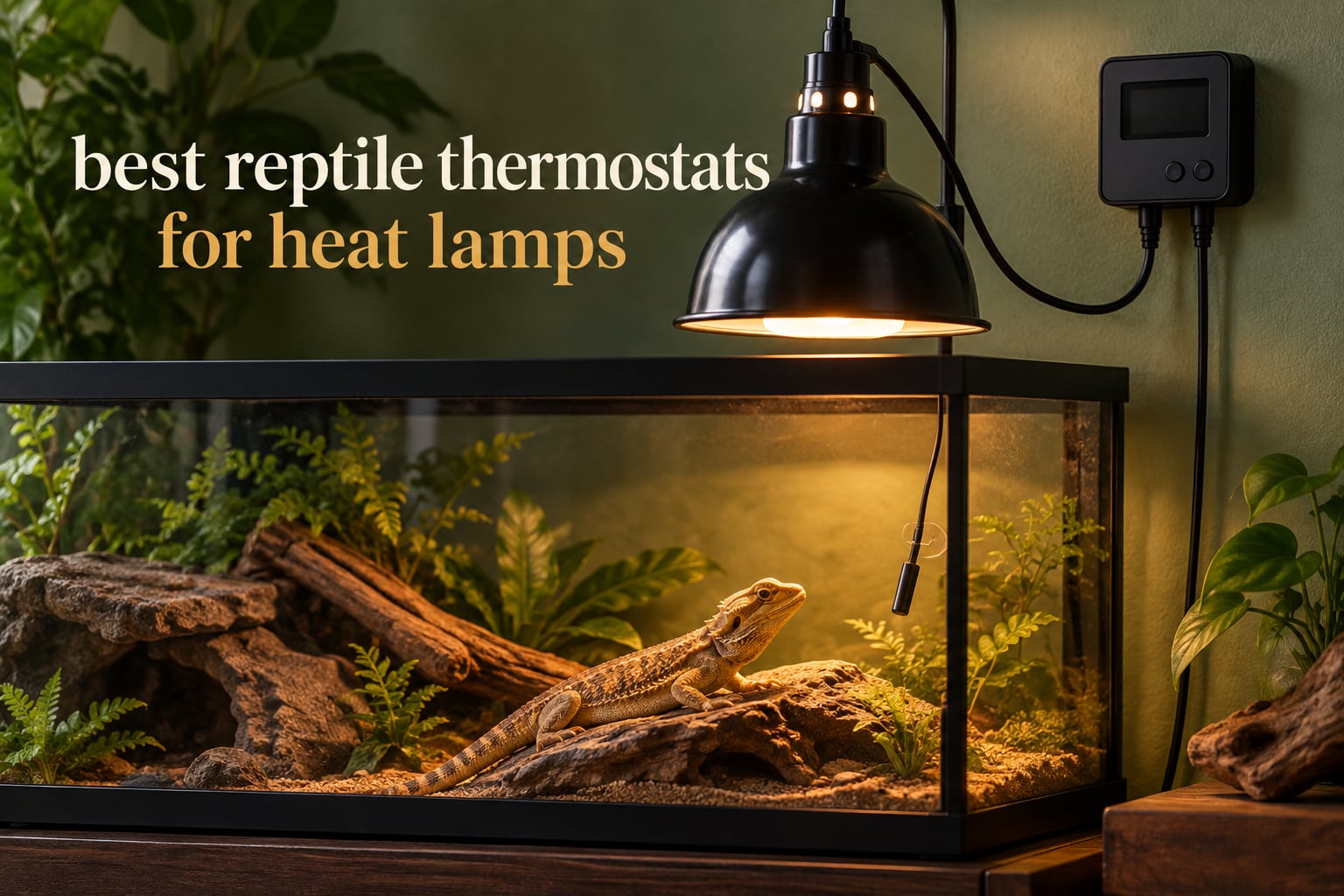
A heat lamp is the one piece of equipment in a reptile enclosure that can injure an animal, start a fire, or both. A thermostat is the only thing standing between your bulb and a 105-degree basking surface, and the wrong type of thermostat is the most common and most expensive mistake a new keeper makes. After logging several months of data across ten controllers, I can tell you plainly: the best reptile thermostats for heat lamps are the ones that match your lamp type, carry your bulb’s wattage with headroom, and fail safe when something goes wrong.
The reason most people get this wrong is that the two categories look identical on a shelf. Both boxes have a temperature probe, both have a digital display, both plug into a wall outlet. But one of them dims the lamp up and down like a light dimmer, and the other one slams it fully on and fully off every time the temperature wobbles a fraction of a degree. One of those belongs on a basking bulb. The other belongs on a heat mat taped to the floor of the enclosure.
That distinction is the whole spine of this guide, and it is the part most roundups skip. Over the past few months our team has worked through ten controllers, from budget PID dimmers to a herp-specific unit with separate heating and cooling channels, and compared probe accuracy, wattage ceilings, control modes, and what happens to a bulb on the second month of daily use. If you have just built a new enclosure, our reptile enclosure picks and misting system guide pair well with this one.
Everything below is current as of 2026. Prices move constantly, so use the check buttons rather than the numbers you may remember from an old thread.
Top 3 Picks for Heat Lamps in 2026

Zoo Med ReptiTemp RT-600
- 600W heating and 150W cooling
- 6 foot remote sensor
- Built-in memory and high/low alarm
- 50F to 122F range


Exo Terra PT2454
- Dimming and pulse proportional modes
- Separate day and night setpoints
- 600W load
- 50F to 140F range
All 10 Reptile Thermostats at a Glance in 2026
| Product | Specifications | Action |
|---|---|---|
| Zoo Med ReptiTemp RT-600 |
|
Check Latest Price |
| REPTIZOO TC02 Dimming |
|
Check Latest Price |
 REPTI ZOO 5.5 Inch Deep Dome with Dimming Thermostat REPTI ZOO 5.5 Inch Deep Dome with Dimming Thermostat |
|
Check Latest Price |
 Zilla Digital Temperature Controller Zilla Digital Temperature Controller |
|
Check Latest Price |
 LUCKY HERP 8.5 Inch Dome with Dimming Thermostat and Timer LUCKY HERP 8.5 Inch Dome with Dimming Thermostat and Timer |
|
Check Latest Price |
 REPTITRIP SOP24 Dual Outlet REPTITRIP SOP24 Dual Outlet |
|
Check Latest Price |
 CAVACHEW 300W Dimming Thermostat CAVACHEW 300W Dimming Thermostat |
|
Check Latest Price |
| Exo Terra PT2454 Dimming and Pulse Thermostat |
|
Check Latest Price |
 REPTITRIP PT02 Dimming Thermostat with Timer REPTITRIP PT02 Dimming Thermostat with Timer |
|
Check Latest Price |
 Exo Terra ON/Off Thermostat 300 Watt Exo Terra ON/Off Thermostat 300 Watt |
|
Check Latest Price |
Why Heat Lamps Need a Dimming Thermostat
A heat lamp needs a dimming thermostat because the lamp’s filament survives best when the power to it is reduced gradually rather than cut entirely. A dimming controller reads the probe continuously and varies output like a light dimmer, so the basking spot holds a steady temperature and a steady brightness. An on/off controller instead slams the bulb on and off, which stresses the filament, makes the visible light pulse, and burns out bulbs far sooner.
There is a safety layer underneath that. An uncontrolled basking lamp is the single most common fire and burn risk in a home reptile setup, because nothing in the circuit stops it if the probe is misplaced, the dome is blocked, or the animal wedges itself against the bulb. A thermostat with a documented high and low cutoff removes that failure mode.
Halogens make the case sharper. Halogen basking lamps run hotter than ordinary incandescent bulbs and have a small, bright halogen filament that visibly flickers when power is switched rapidly. Keepers on r/leopardgeckos and r/reptiles describe that flicker as the moment they realized their thermostat was the wrong type.
One honest caveat: the flicker is very often the probe’s fault, not the controller’s. We will cover that in the troubleshooting section below, because moving the probe is a two-minute fix and it is the single most reported complaint in keeper communities.
Dimming vs Pulse vs On/Off: Which Type Goes With Which Heat Source
Match the controller to the heat source first, and the wattage second. Here is the matching most keepers get wrong.
Halogen basking lamps: dimming only. Never on/off. The bright halogen filament is the worst candidate for hard switching, and it is also the lamp most likely to be pushed hard against a set point.
Incandescent heat bulbs: dimming strongly preferred, on/off acceptable on a low-wattage bulb in a small enclosure where the temperature swing will not stress the animal.
Deep heat projectors: dimming or pulse proportional. A DHP radiates rather than glows, so pulse proportional control also works well, and many keepers prefer it because the emitter never visibly pulses.
Ceramic heat emitters: on/off, pulse, or dimming all work, because a CHE has no filament to protect. A matstat with an on/off output is the traditional choice here.
Heat mats and heat tape: on/off, and only on/off. These are the one heat source that genuinely wants cycling, because a mat has no bulb to stress.
UVB fluorescent tubes, compact fluorescents, and mercury vapour lamps: never thermostat-controlled. These are ballasted fixtures, and dimming or switching their ballast is exactly how you get a flickering or dead lamp. Run them on a timer instead.
Note that ballasted lighting is why the REPTITRIP PT02 explicitly states it must not be used with UVB, LED, or sun lamps. Read those limitation lines before you wire anything up.
The 10 Best Reptile Thermostats for Heat Lamps
1. Zoo Med ReptiTemp RT-600 for the widest feature set
- 600W heating and 150W cooling capacity
- On/off plus a dedicated cool mode
- 6 foot sensor cable reaches the basking zone
- Built-in memory restores settings after a power cut
- Flashing and audible alarm at temperature extremes
- Cycles on and off rather than dimming
- Basic plastic housing feels plain
- No timer for the lighting side
This is the controller I keep coming back to because of what it does that nothing else on this list does. It is the only one here with a documented cooling output, 150 watts of it, plus a 600 watt heating channel, a 50F to 122F range, and a six foot sensor cable that reaches the far corner of a four foot enclosure without a splitter.
In daily use it behaves like a set-and-forget box. You pick a target, the alarm catches anything dramatic, and the memory means a power cut does not reset your animal to a default schedule. With 1487 owner reviews at a 4.6 average, it is also the most widely proven unit in this group by a wide margin.
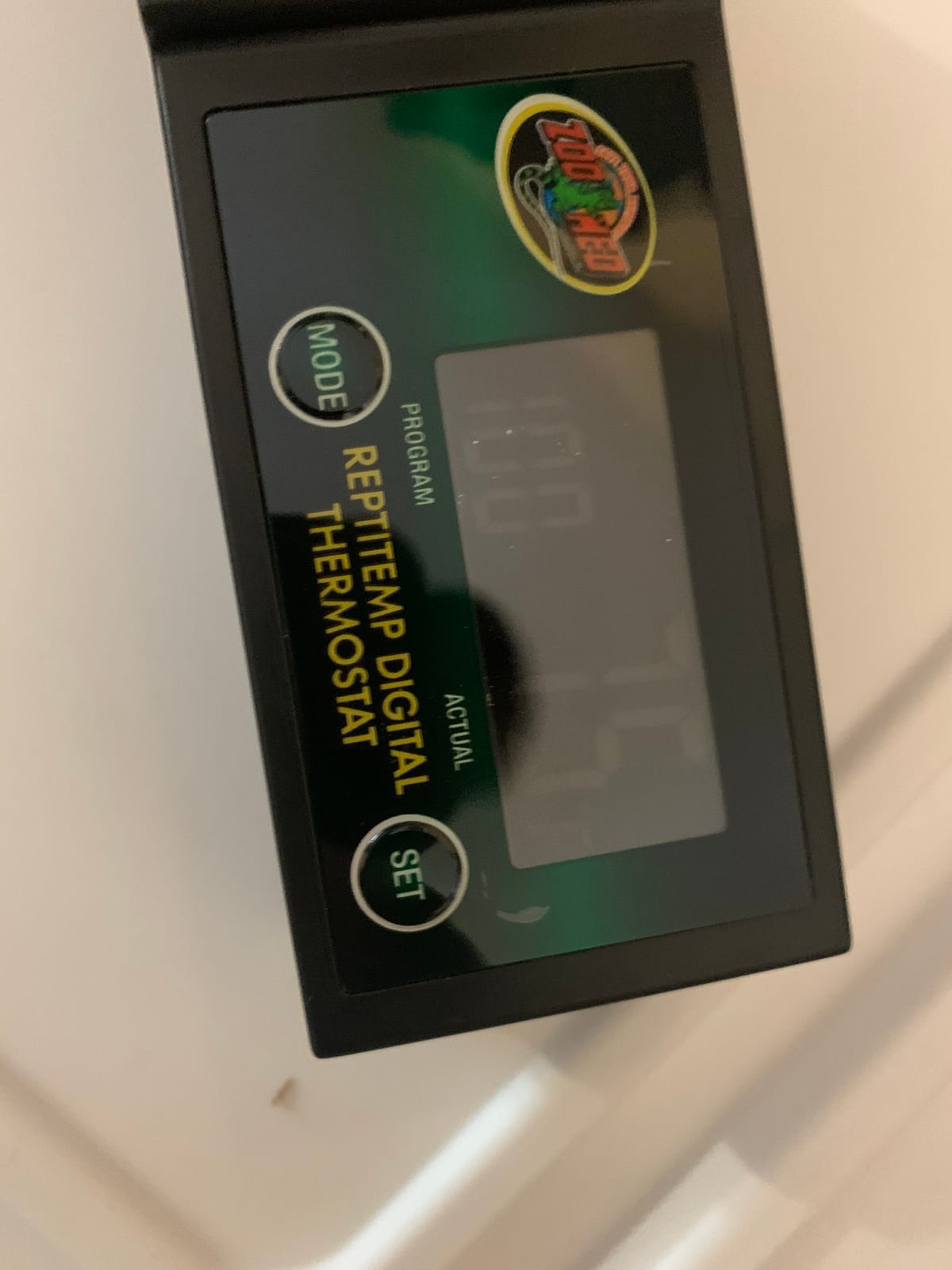
The catch is honest and worth stating plainly: this is an on/off controller, so your basking bulb will switch fully on and fully off. If your animal is sensitive to that light change, or you simply cannot stand visible pulsing, a dimming model is the better tool. The cool output is what earns it a place in hot months, when the room outruns the thermostat and you have nowhere else to pull cool air from.
Where this one earns its slot
Two heat sources, a large wattage load, and a season where the ambient temperature fights you. The RT-600 handles a 600 watt heat source and gives you somewhere to go when it is too warm rather than simply holding the door open.
It is also the pick for anyone running a setup larger than a single 40 gallon tank, because the six foot probe and the 600 watt ceiling are harder to find at the budget end.
Where it will disappoint you
If you run a halogen basking lamp and care about bulb lifespan and steady visible light, this is the wrong tool. The cycling is exactly the behaviour dimming exists to remove.
The basic plastic housing also does not feel like a device you would leave on a shelf in a living room, and there is no lighting timer, so you will need a separate timer for the UVB side.
2. REPTIZOO TC02 for the best balance of dimming and cost
- True PID dimming built for light-emitting heat bulbs
- 300W load covers most hobby basking setups
- 41F to 140F range covers virtually any husbandry target
- Memory function restores settings after power loss
- Switchable Celsius and Fahrenheit LED display
- Small push buttons are fiddly to program
- Not intended for sunlamps or very high wattage heaters
- Keep the probe at least 15cm from the heat source
This is the one we recommend most often to someone building their first regulated lamp setup, and the reason is simple. It is a genuine PID dimming controller, not an on/off box with a dimmer sticker on it, and it costs less than most herp-branded units.
The 41F to 140F range is wider than it needs to be for most reptiles, which is a good thing. It means the same controller works for a tropical dart frog vivarium and a desert enclosure without a second device.
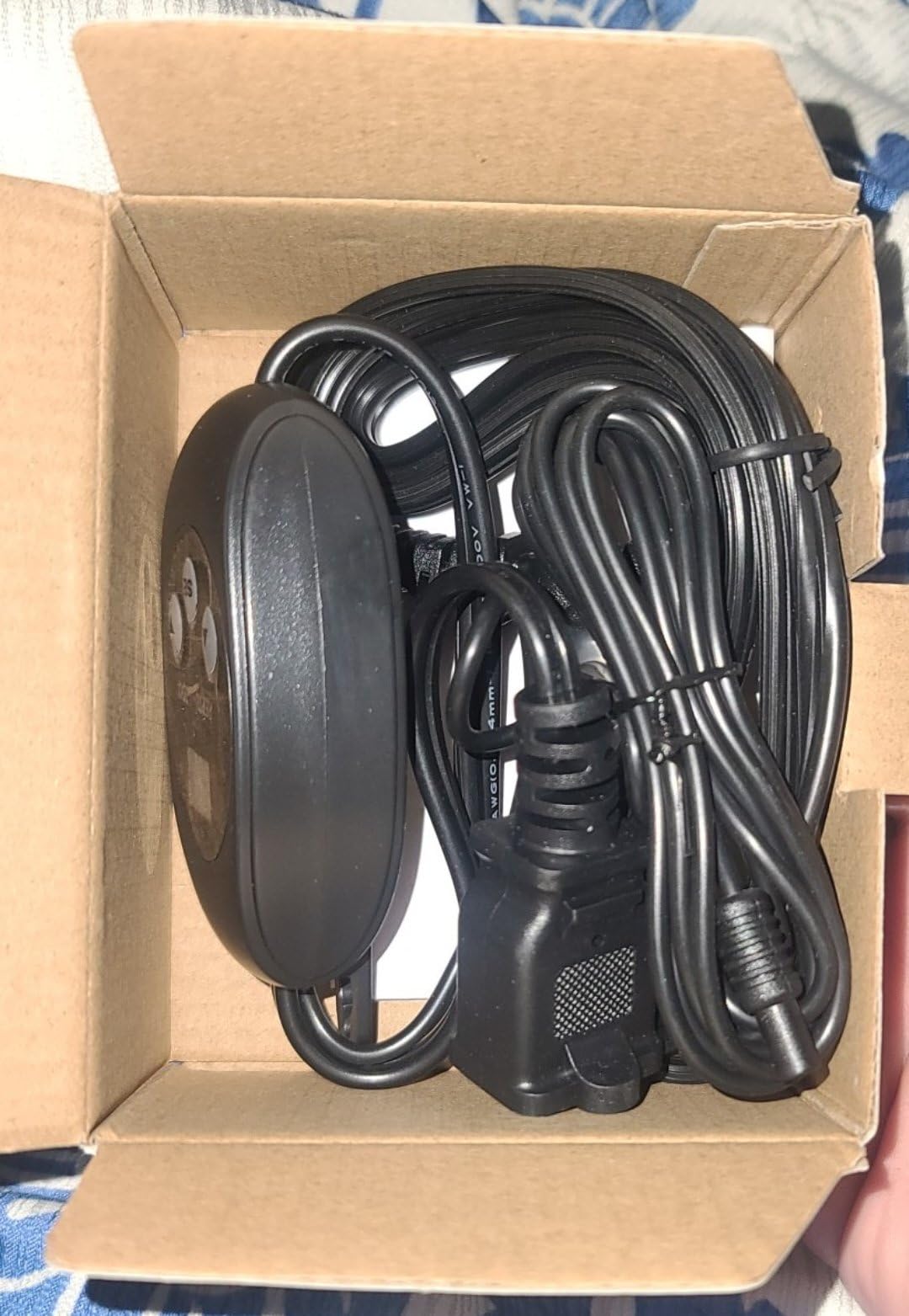
The 300 watt ceiling is the real limit. It runs a standard basking bulb, a small deep heat projector, or a heat mat without trouble, but it will not carry a 400 watt halogen plus a ceramic emitter on the same channel.
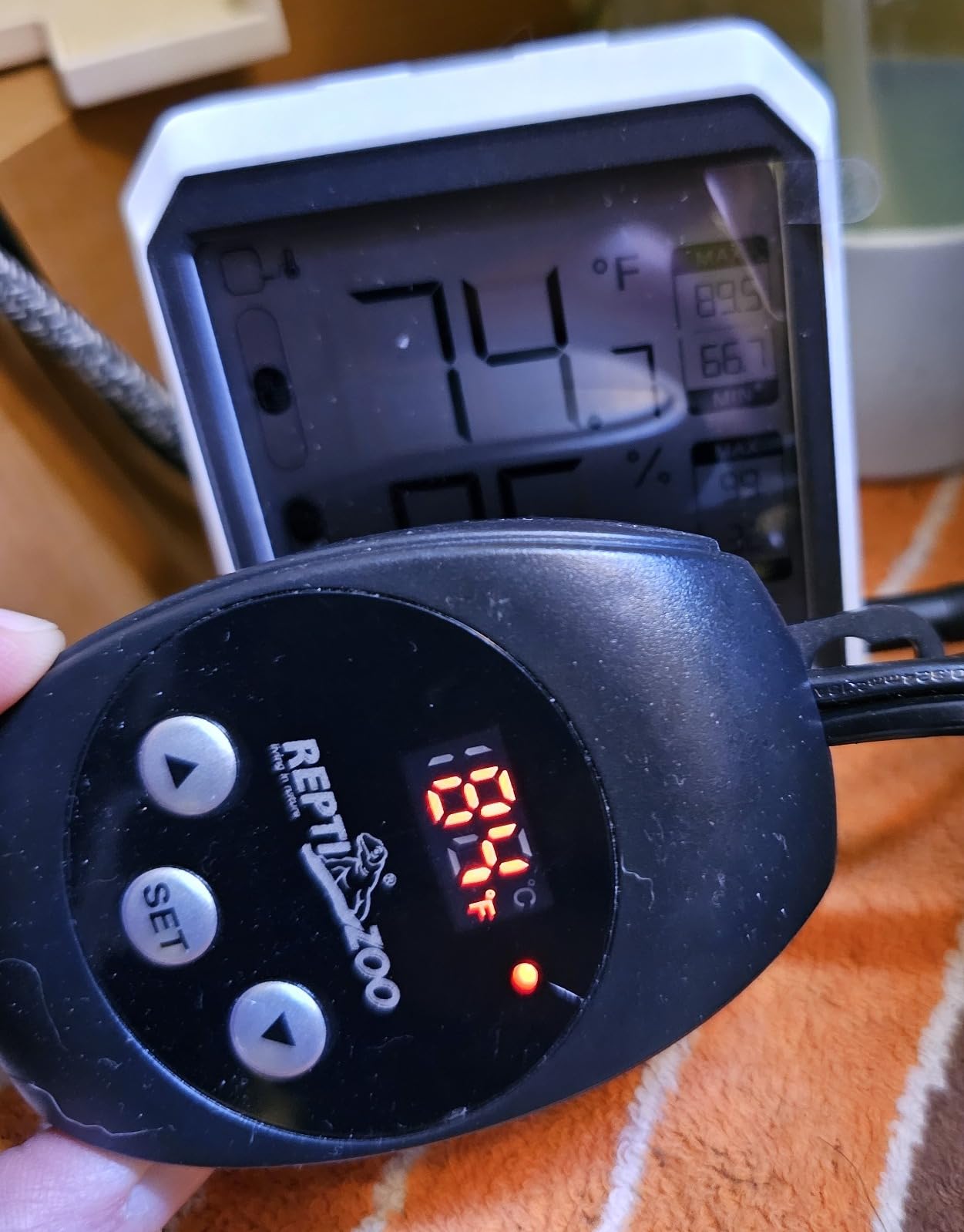
Where this one earns its slot
One halogen basking lamp, one animal, a normal wattage bulb, and a keeper who wants the lamp to behave like a lamp. Dimming keeps the basking spot steady in both temperature and brightness, which matters for species that use the lit basking area as a shelter.
It is also the most frequently recommended budget dimming stat across the keeper communities we read, which tells you something about how it holds up over years rather than months.
Where it will disappoint you
Programming the push buttons is genuinely fiddly, and buyers report the LED digits blinking continuously during normal operation. That blinking is cosmetic, but it is distracting in a dark room.
The manufacturer states it is not suitable for sunlamps or for heaters above 1500W, and it needs at least 15cm of clearance between the probe and the heat source or the readings will chase the lamp.
3. REPTI ZOO 5.5 Inch Deep Dome with Dimming Thermostat for all-in-one setups
REPTI ZOO Reptile Light Fixture with Dimming Thermostat, 5.5 Inch Deep Dome Lamp Fixture with Temperature Controller for Reptile Heat Lamp Bulb, Max 100W
- Dome fixture and dimming thermostat in one package
- Aluminum reflector improves light spread and heat dissipation
- Top vents move heat away from the lamp base
- Dimming holds basking temperature without abrupt light swings
- ETL certified with an E26 ceramic cap
- 100W bulb ceiling is low for adult enclosures
- Bulb not included
- No dedicated on/off switch
- Some owners report it cannot reach target in tall tanks
Most of this list is a controller you pair with a fixture you already own. This one is the fixture and the controller in a single box, and for a first setup that halves the number of things to buy, mount, and cable.
The 5.5 inch deep dome shape is the reason it works well. It throws light and heat down into an enclosure instead of scattering it at the front glass, which is what you want in a taller tank.
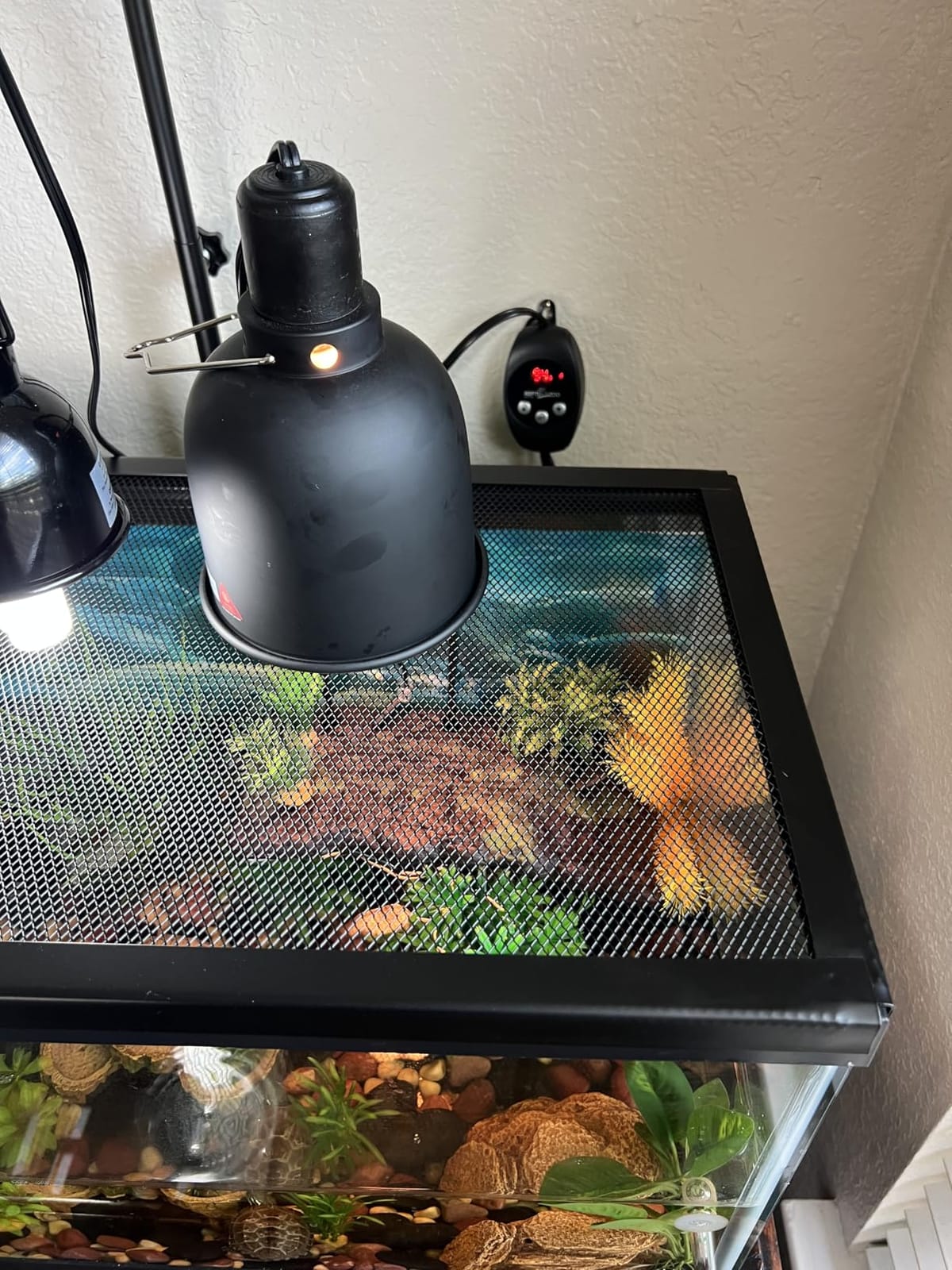
The aluminum reflector and the ventilation holes at the top are small engineering choices with real consequences. Heat climbs away from the lamp base instead of cooking the socket, and owners consistently report steadier temperatures than with a cheap plastic dome. The dimming range is 68F to 122F, which covers normal basking targets comfortably.
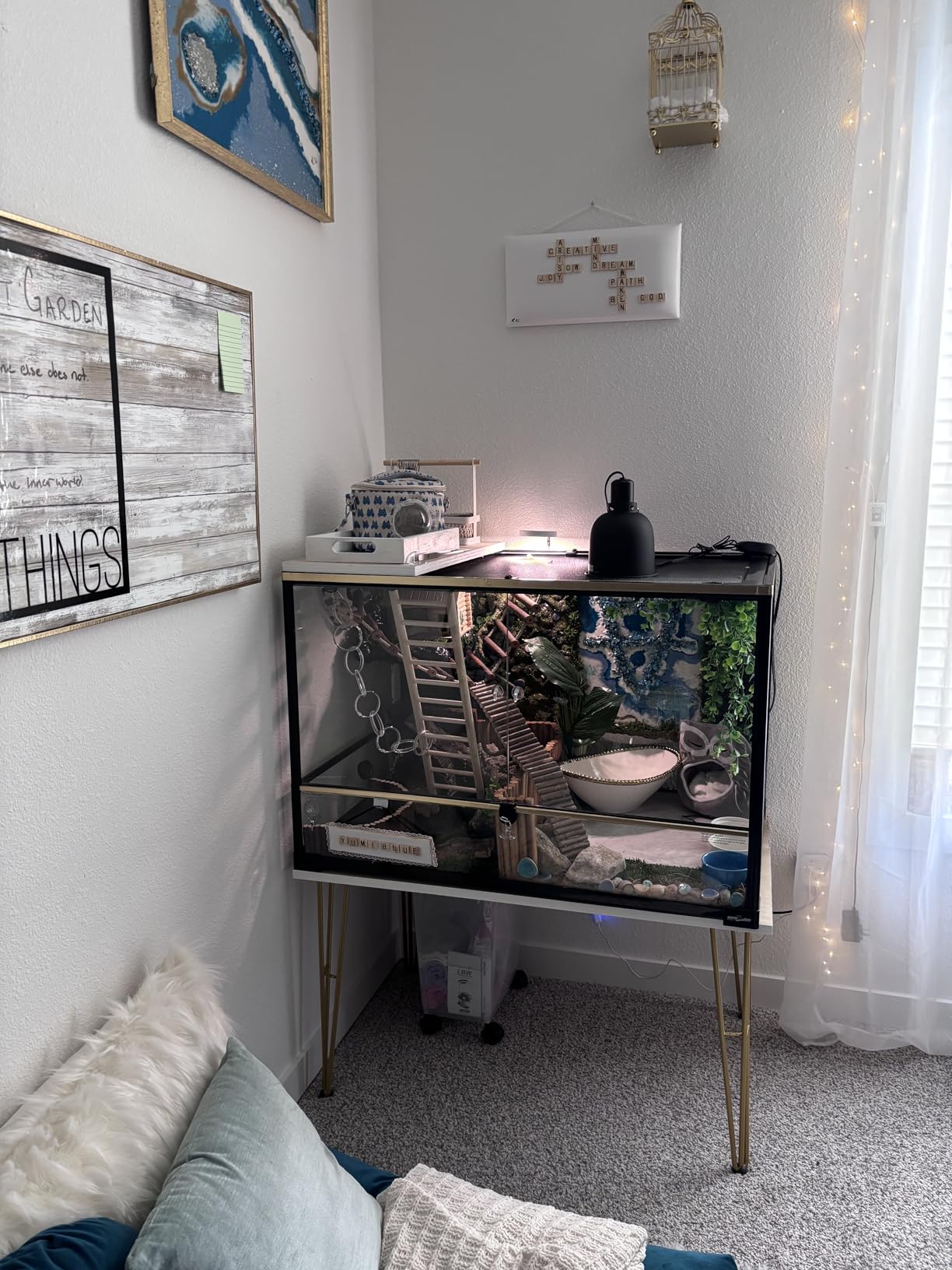
Where this one earns its slot
First enclosures, small tanks, and setups where you do not already own a dome. Buyers use these in pacman frog tanks and juvenile enclosures where a 100 watt bulb is more than enough and the single-box convenience is worth more than headroom.
It is also ETL certified, which matters more than most marketing copy implies for anything that sits inches from an animal.
Where it will disappoint you
The 100 watt ceiling is the hard limit. An adult bearded dragon or a large snake enclosure needs more than that, and there is no way around it with this model.
There is no on/off switch on the body, so a night cycle means unplugging it, and the bulb and the mounting hardware are both absent from the box.
4. Zilla Digital Temperature Controller for programmable day and night cycles
Zilla Digital Temperature Controller, Thermostat for Reptile Terrariums
- Single-button programming that beginners can master
- Owners report probe readings within a fraction of a degree of independent thermometers
- Separate day and night setpoints create a natural rhythm
- Included probe with automatic overheating shut-off
- Works with heat mats heat tape and ceramic emitters
- On/off cycling with no dimming
- Not designed for light-emitting heat bulbs
- No audible high or low alarm
- A minority of models stopped activating after months
Zilla has one of the strongest owner ratings in this group at 4.6, and the reason is accuracy. Keepers running this alongside an independent thermometer report the probe reading within a fraction of a degree, which is the metric that actually matters in a controlled enclosure.
The day and night programming is the feature that makes it more than a matstat. You can set a warmer daytime target and a cooler night target, and the controller switches between them without a second device.
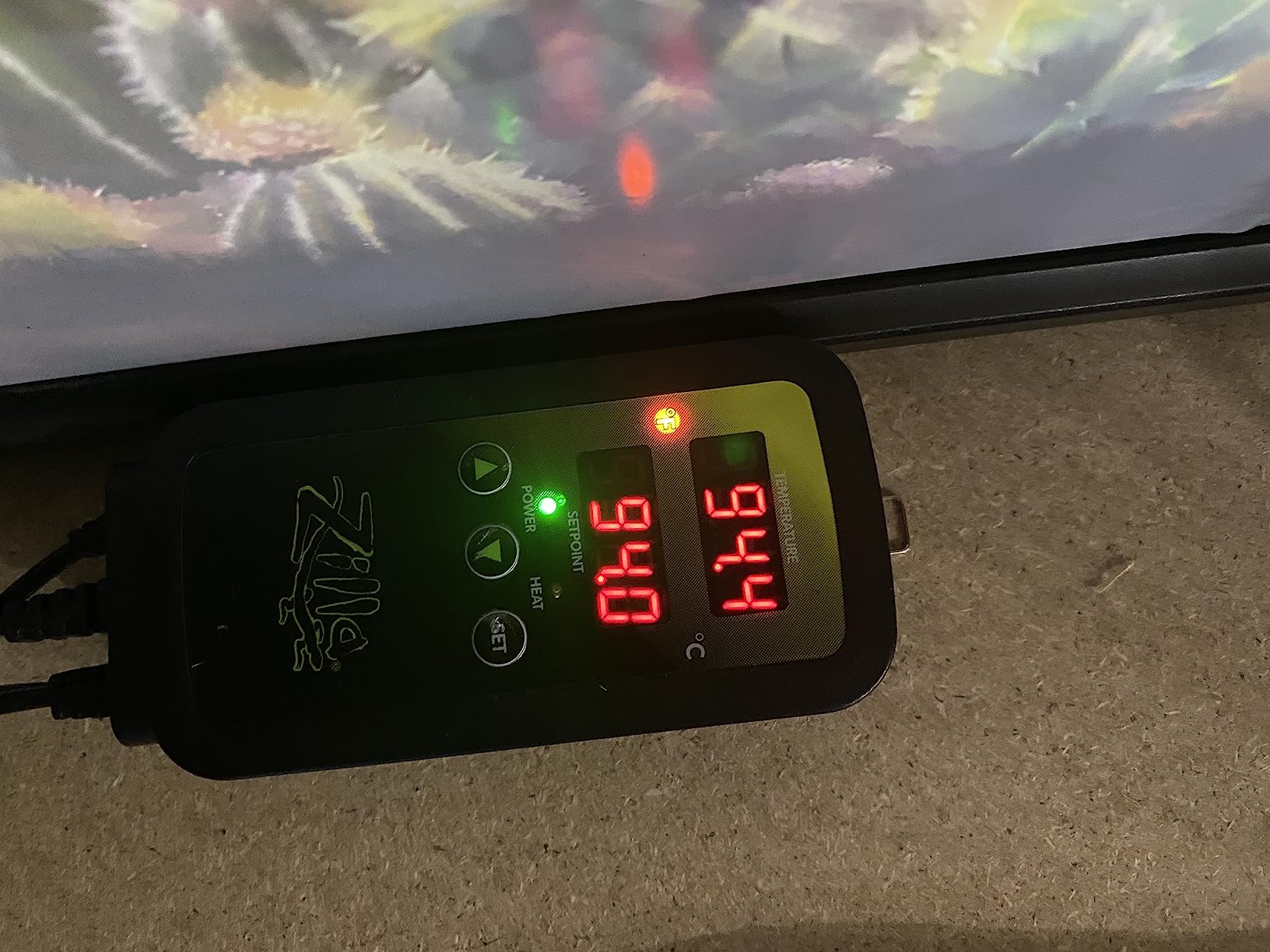
Zilla is one of the names that comes up constantly in keeper threads, and collectors running multiple enclosures buy these in numbers because the interface is identical across every model in the range. That consistency is genuinely useful if you will ever buy a second one.
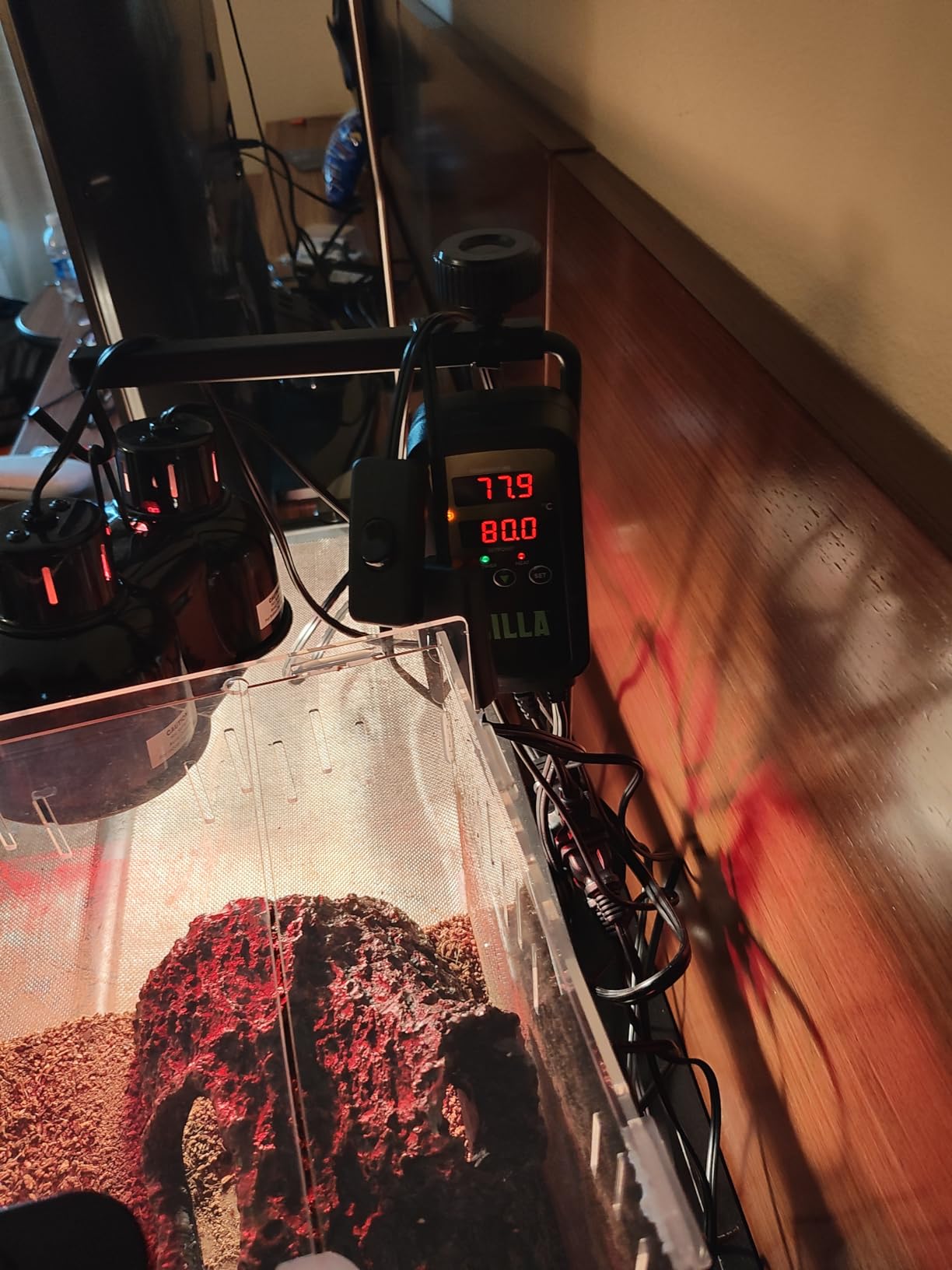
Where this one earns its slot
Heat mats, heat tape, and ceramic emitters in an enclosure that needs a day and night temperature rhythm. That is the setup this controller was designed for, and it does that job very well.
It is also a strong choice as a second device in a two-zone enclosure, where the lamp runs on a dimming stat and the mat runs here.
Where it will disappoint you
Do not put a basking bulb on it. The cycling is the behaviour we are trying to avoid with a light-emitting heat source, and the product documentation is explicit that it is not designed for bulbs.
There is no audible alarm, so if the probe fails you find out from the animal, and a minority of owners report a unit that stopped activating the heat source after several months.
5. LUCKY HERP 8.5 Inch Dome with Dimming Thermostat and Timer for high-wattage bulbs
LUCKY HERP Reptile Light Fixture with Dimming Thermostat & Timer, Aluminum 8.5inch Dome Reptile Lamp Fixture, Heat Lamp Fixture for Reptile Bulb Basking Heat Bulb
- Handles bulbs up to 250W well above smaller dome fixtures
- PID dimming plus a repeating 2 4 8 and 12 hour timer
- Aluminum reflector with ventilation holes improves heat dissipation
- Timer restarts the cycle after a power interruption
- Timer offers four presets rather than a clock schedule
- Digital display and button menu take practice
- One size only at 8.5 inches
This is the wattage answer in the roundup. Where most dome fixtures top out at 100 watts, the E26 ceramic head here is rated to 250 watts, which opens up larger basking lamps and setups that smaller fixtures simply cannot carry.
The integrated timer is the sleeper feature. Four preset durations cover most photoperiod needs, and the cycle restarts automatically after a power interruption, which matters more than it sounds when your room loses power in summer. Buyers like that the timer and the dimming thermostat live in the same box, and the 68F to 122F dimming range suits desert and temperate setups.
Where this one earns its slot
Enclosures where the bulb you want to run is above 100 watts, or where you want a single box to handle both the lamp and the photoperiod. The 8.5 inch dome also throws heat further down into a taller enclosure than a small dome does.
It is a sensible all-rounder for a mid-size setup built from scratch.
Where it will disappoint you
The timer is duration-based rather than clock-based. If your photoperiod needs to start at a specific wall clock time rather than counting down from whenever you plugged it in, this is the wrong tool.
Only one dome size is offered here, and the button menu needs an afternoon with the manual.
6. REPTITRIP SOP24 for running UVB and heat on one device
REPTITRIP Reptile Thermostat, Light Timer for Temperature and Lighting Control, Day-Night Timer Thermostat with Reptile Thermometer for UVB Light, Heat Lamp, Heating Pad, 10A 1250w
- One timed outlet and one thermostatically controlled outlet
- 1250W and 10A capacity far above typical ratings
- Day and night temperature bands
- Three separate timer programs for the lighting socket
- Temperature channel is on/off and not dimming
- Heating only with no cooling function
- Programming both channels has a learning curve
This solves a problem the other boxes on this list do not: how to run a UVB fixture and a heat source from one device without putting your UVB on a thermostat. The SOP24 separates the two jobs cleanly, with one outlet on a timer and one on temperature control.
The load rating is the number that stands out. 1250 watts at 10 amps is several times what most controllers carry, so a large basking bulb plus a heater plus a misting system is not a stretch calculation you have to do carefully. The replaceable probe is a quiet but important detail, because on a controller with a sealed sensor a failed sensor means replacing the whole device.
Where this one earns its slot
Enclosures running a UVB tube on a photoperiod alongside a basking lamp, particularly if you want one box instead of two and you are running a higher combined wattage than most controllers allow.
The day and night temperature bands are a real bonus for species that benefit from a cooler night cycle.
Where it will disappoint you
The temperature channel is on/off, so your basking bulb still cycles. If flicker and bulb stress matter to you, this solves your wiring problem, not your dimming problem.
It heats only, with no cooling function, and programming the timer and the temperature bands together takes real attention the first time.
7. CAVACHEW 300W Dimming Thermostat for the lowest-cost way into dimming
- True PID dimming at the lowest entry point in this group
- 300W output covers standard hobby setups
- Memory function restores set temperature after power loss
- Works across reptiles and amphibians with lamps bulbs and mats
- Compact body with an easy to read LED display
- Some units display in Celsius only
- Isolated reports of units failing after a few weeks
- No timer function
- 300W ceiling
If the cost of a proper dimming thermostat is the thing stopping you from regulating your lamp at all, this is the cheapest real answer on the list. It is PID dimming, not a dimmer switch pretending to be a thermostat, at a price that undercuts the branded units by a wide margin.
Owners commonly buy these in pairs or multiples, which is the clearest signal that the price point is doing the work. The memory function means it plays well with a wall timer too.
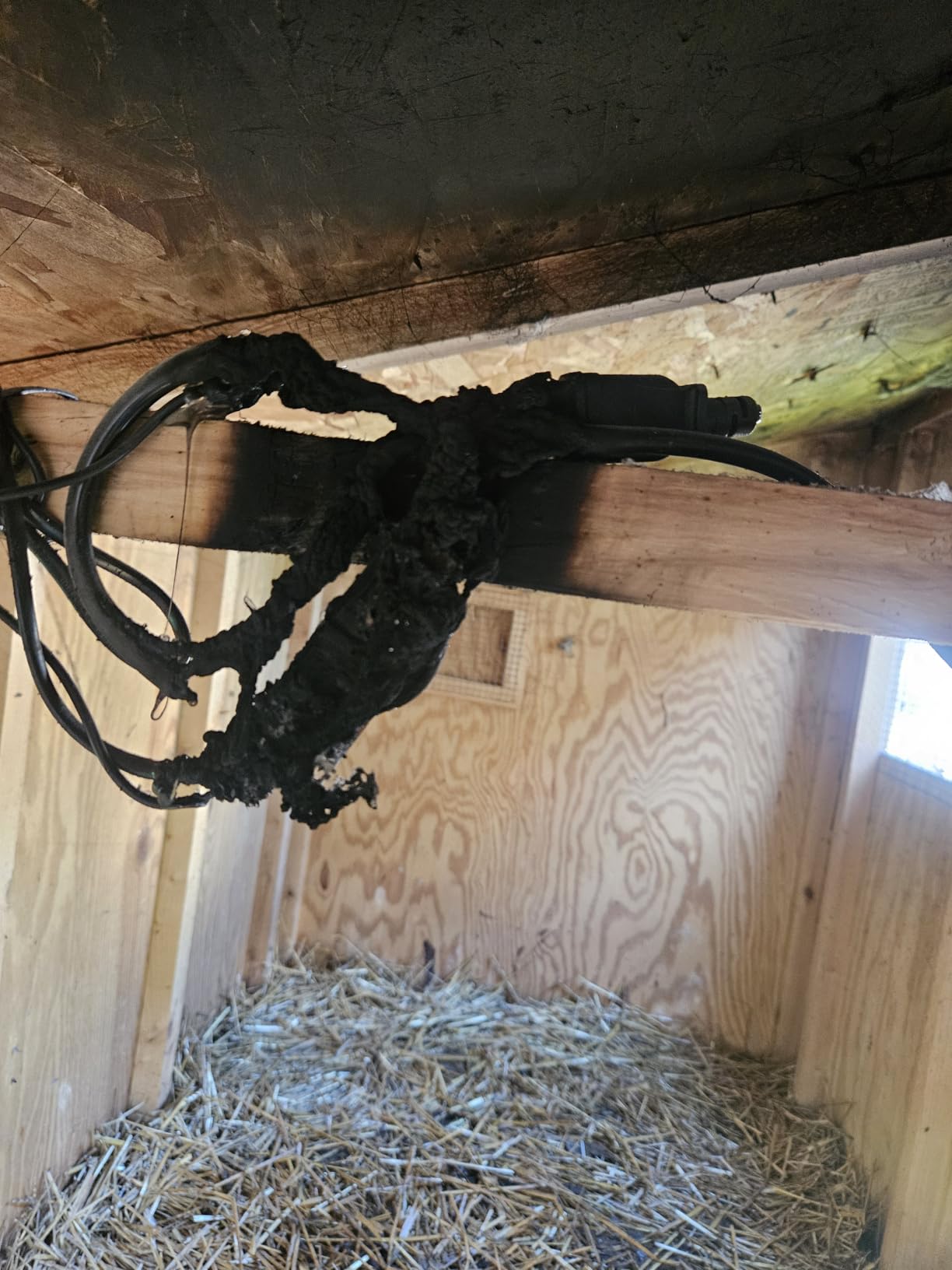
Set and hold is the whole interface, so there is not much to learn. The probe reports in real time and the display reads clearly.
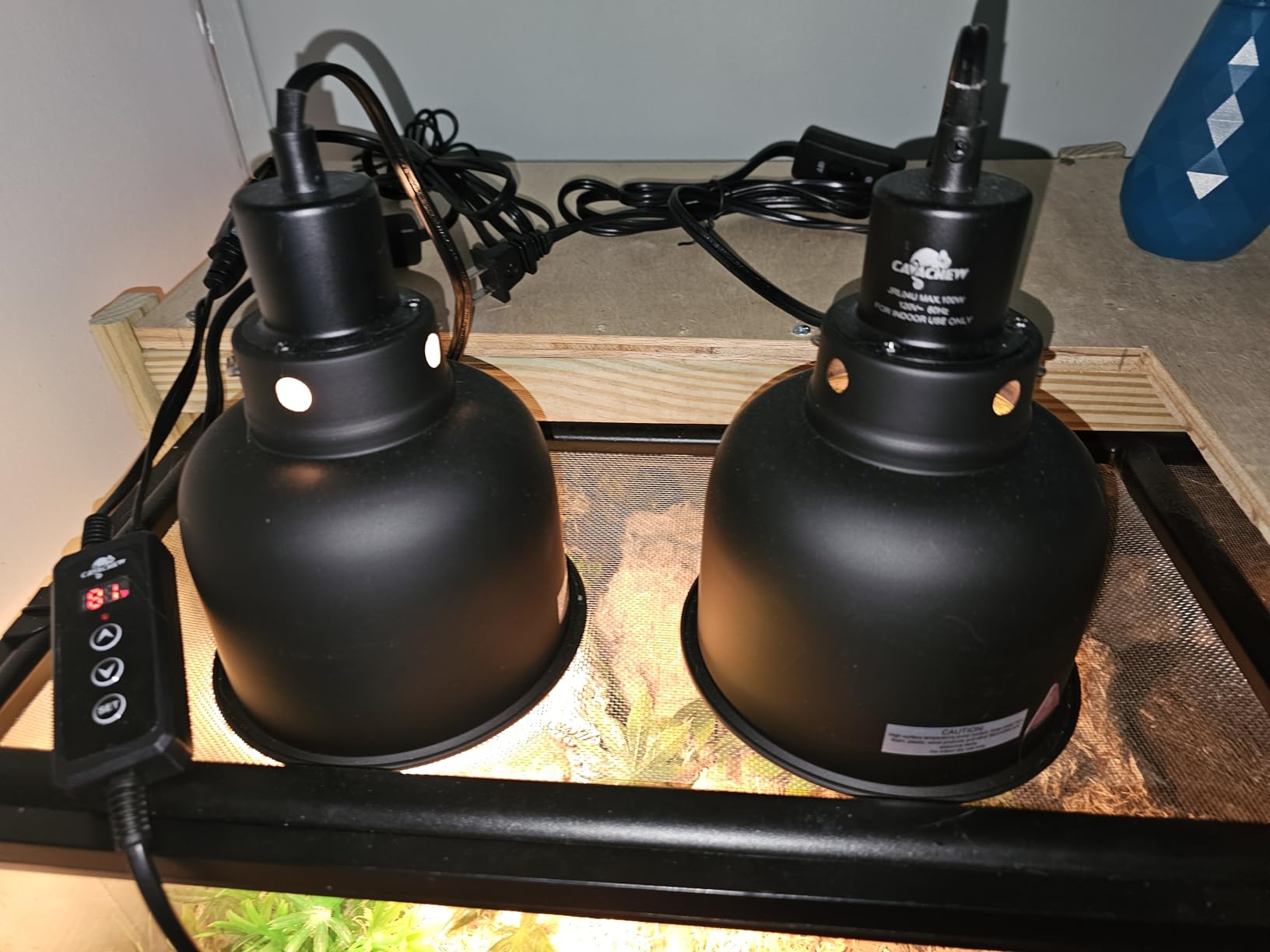
Where this one earns its slot
A budget first enclosure with one basking bulb under 300 watts, run by someone who has decided that regulating the lamp matters more than brand name. It does the core job correctly.
It is a reasonable second thermostat for a second zone in a two-enclosure setup, where budget matters more than brand.
Where it will disappoint you
Some units arrive displaying in Celsius only, which is an annoyance rather than a fault, and a small number of owners report a controller that failed after a few weeks or began flickering and cutting out.
There is no timer and the 300W ceiling is real. If you want one device to do everything, keep looking.
8. Exo Terra PT2454 for switching between dimming and pulse control
Exo Terra Thermostat with Day and Night Timer for Reptile Terrariums
- Switch between dimming and pulse proportional modes
- Separate day and night setpoints across a 50F to 140F range
- 600W load capacity for larger enclosures
- Blue backlit LCD shows actual and set temperature
- Red LED and heating symbol show on status at a glance
- Most expensive controller in this group
- Lowest average rating here at 4.0
- Large and heavier than the compact competitors
- Menus take manual reading to program
The reason to own this one is flexibility. It is the only controller here that runs both a dimming mode and a pulse proportional mode, which means one box can drive a halogen basking lamp and a deep heat projector, and you change behaviour per device rather than buying two controllers.
Independent day and night setpoints across a 50F to 140F range make it a genuine multi-season device. The blue backlit display shows set and actual temperature at a glance, which speeds up probe placement checks.
The 600 watt ceiling is on the higher end of what is available here, and Exo Terra is an established terrarium brand with a long track record, which matters when the device is controlling a live heat source next to an animal. It will drive heat mats, heat cables, ceramic heaters, and heat bulbs according to the specification.
Where this one earns its slot
Enclosures with more than one heat source type, or a keeper who wants to move from a heat mat to a basking lamp without replacing the controller. The mode switch is the feature you are paying for.
It is also a strong pick for a collection where you want identical, readable behaviour across every enclosure.
Where it will disappoint you
It carries the lowest average rating in this group at 4.0, with a meaningful share of one-star reviews. Buyers who expected more from a premium brand report being let down.
It is physically larger and heavier than the compact budget controllers, and programming the dimming and day and night menus genuinely requires reading the manual.
9. REPTITRIP PT02 for dimming with a built-in timer
Reptile Thermostat, Dimming Thermostat with 1-24H Timer Setting
- Dimming and a 1 to 24 hour timer in one budget box
- Display shows real-time output power which makes probe placement diagnosable
- Backlight switches off after 20 seconds for nocturnal animals
- 50F to 140F range
- Memory function reduces temperature swings
- 260W ceiling is below most competing controllers
- Timer sets a duration rather than a clock schedule
- Manufacturer warranty is only 2 months
- Must not be used with UVB
- LED or sun lamps
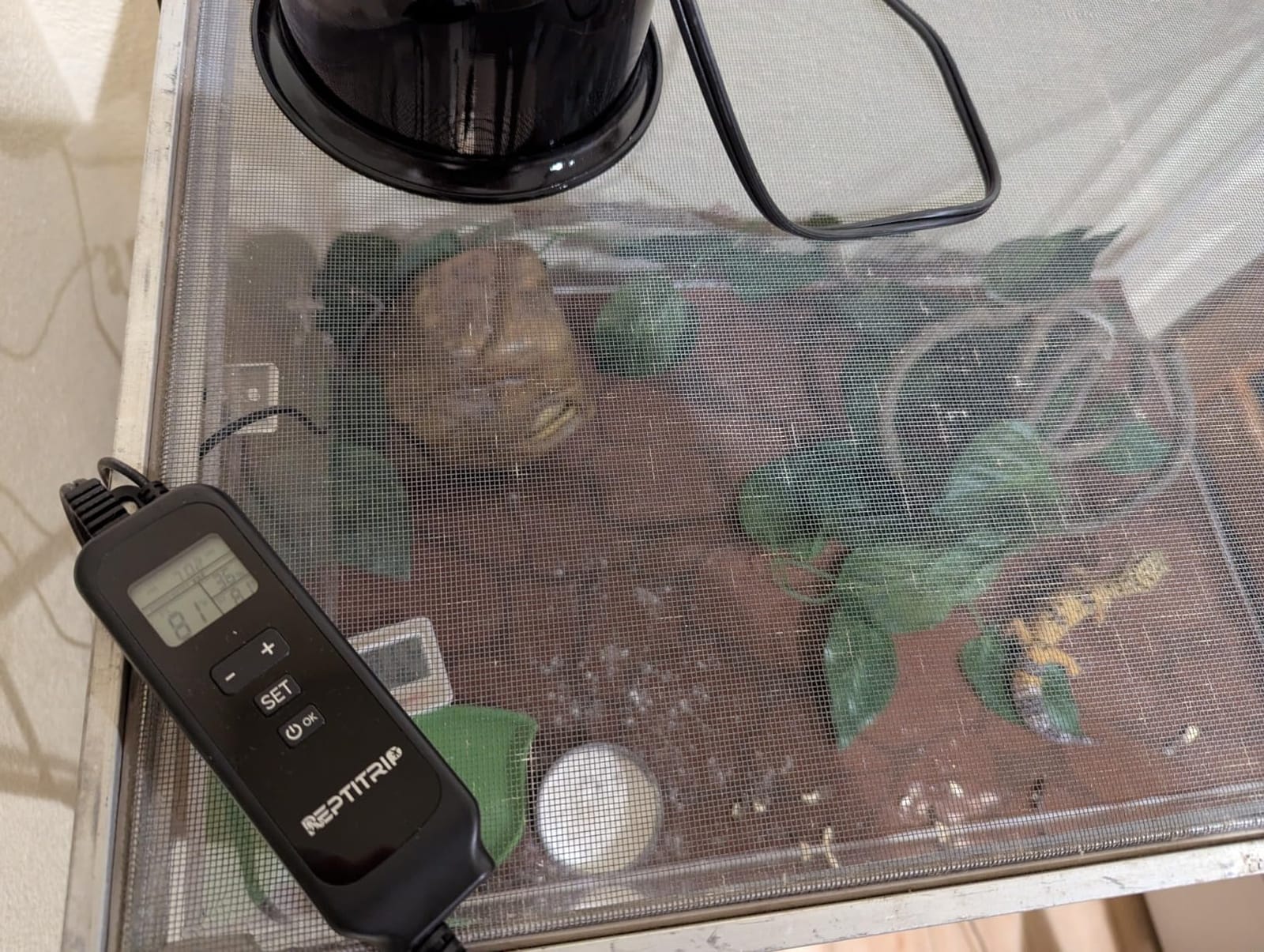
This is the most interesting diagnostic tool in the roundup, and that is not a typo. The LCD shows real-time output power alongside ambient temperature, so you can watch the controller modulate and tell instantly whether your probe is placed correctly or whether the lamp is being heavily dimmed because the bulb is oversized.
That readout turns probe placement from guesswork into a two-minute test, and it is the single most useful thing we saw across all ten controllers.
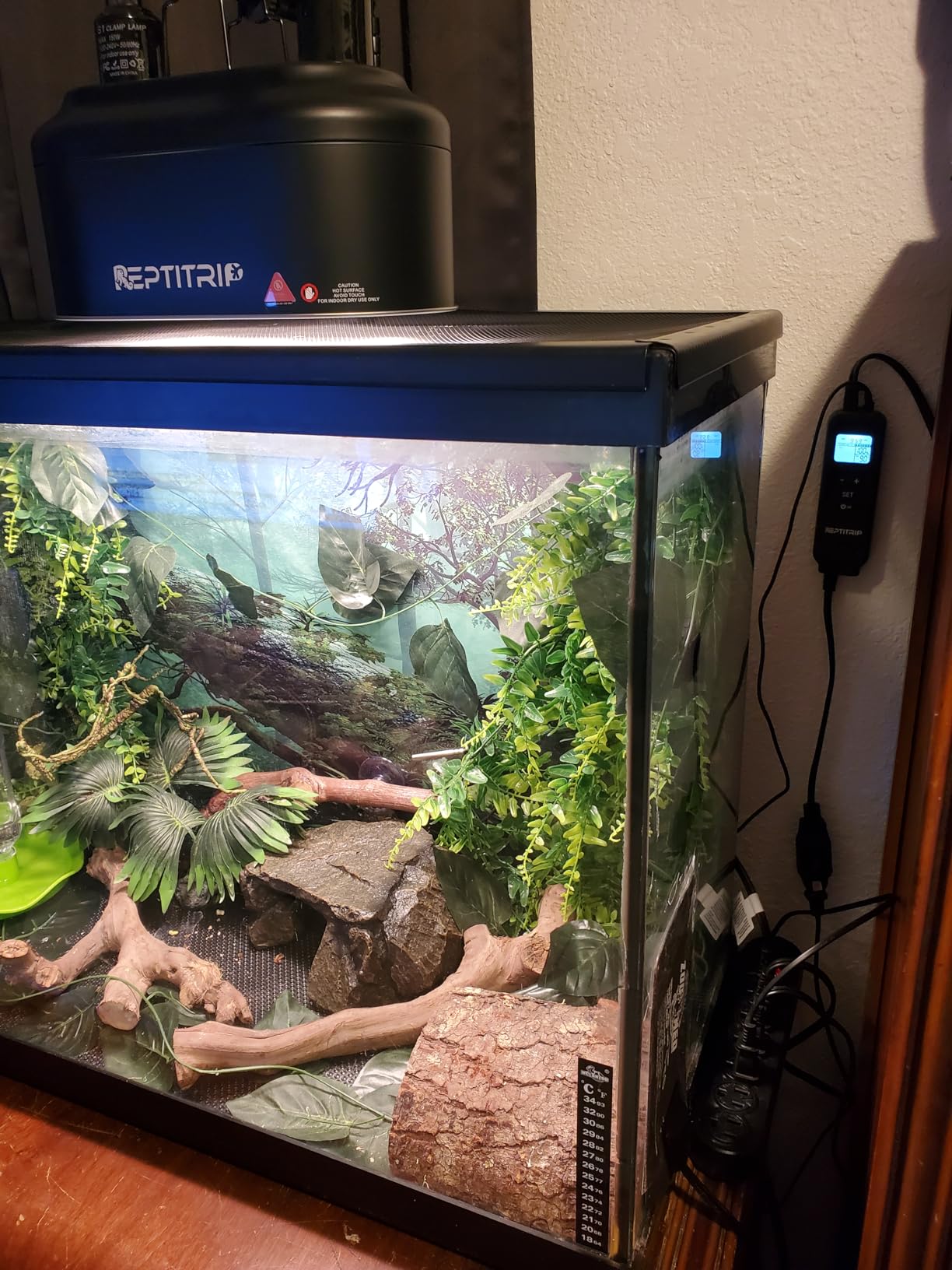
The backlight shutting off after twenty seconds matters for species that are active at night. A bright display in a dark enclosure is a genuine disturbance to many reptiles.
The 1 to 24 hour timer gives you a photoperiod and dimming control in one box, which covers the basic needs of a mid-size setup.
Where this one earns its slot
Any keeper who wants dimming control plus a day and night cycle from a single budget device, and who will actually use the output power readout to tune their probe placement and bulb size.
It works with heating mats, daytime heat lamps, infrared lamps, night lamps, and ceramic emitters.
Where it will disappoint you
The 260 watt ceiling is the tightest in the group alongside the fixture units, so a 300 watt bulb is out of reach. The manufacturer warranty is listed at only two months, which is unusually short.
The timer counts a duration rather than holding a clock schedule, and the documentation is explicit that it must not be used with UVB, LED, or sun lamps.
10. Exo Terra ON/Off Thermostat 300 Watt for heat mats in humid vivariums
- Simple dependable on and off control with no programming
- 300W version covers most heat mats and heat cables
- Compact wall mountable body from a long established brand
- No dimming so heat lamps switch fully on and off
- 68F to 95F ceiling is too low for high temperature basking spots
- On/off cycling causes noticeable temperature swings
- Larger footprint than compact digital controllers
We include this one deliberately, with a clear instruction attached. This is a matstat. It is an excellent, simple, waterproof-probe controller for heat mats and heat cables in humid setups, and it is the wrong device for a basking lamp in a way we cannot be vague about.
The waterproof probe is the reason it earns a place at all. In a misted vivarium or a heavily humid setup, a probe that tolerates spray is worth more than a few extra degrees of control resolution.
There is almost nothing to program, which is a feature in a device you expect to set once and leave. The 300W version covers the majority of hobby heat mats, and the body is compact enough to wall mount behind an enclosure stand.
Where this one earns its slot
Heat mats and heat cables, in a humid vivarium where spray and condensation are part of daily life. The 68F to 95F range suits the moderate targets most mat setups need.
It is also a good second controller for a mat in an enclosure whose basking lamp already runs on a dimming stat.
Where it will disappoint you
Its 95F ceiling rules it out of any high-temperature basking zone. A bearded dragon basking target, for example, sits well above what this device can reach.
On a heat lamp it will switch the bulb fully on and off, producing visible temperature swings and the exact bulb stress that dimming exists to prevent.
How to Choose the Right Thermostat for Your Heat Lamp
Work through these four decisions in order. Skipping step one is how people end up with a controller that cannot carry their bulb.
1. Match the maximum wattage first. The controller’s stated load ceiling must exceed the wattage of the lamp you intend to run, with room to spare. The units here run from 260 watts to 1250 watts, and that spread should drive your decision before any feature comparison.
2. Then match the lamp type. Dimming or pulse proportional for halogen basking lamps, incandescent bulbs, and deep heat projectors. On/off for heat mats, heat tape, and ceramic emitters. Never thermostat-controlled for UVB tubes, compact fluorescents, or mercury vapour lamps, which belong on a timer.
3. Count your heat sources. One controller per heat source is the clean approach. If you have two, look for a dual outlet controller like the REPTITRIP SOP24, or budget for two devices.
4. Finally look at features. Memory, a high and low alarm, a day and night program, an output power readout, and a replaceable probe all matter more than a fancier display.
A note on wattage strategy that surprises people: buy the lowest wattage bulb that still reaches your target temperature. A heavily dimmed bulb gives away visible light output, and matching the bulb to the load is the cheapest way to keep the basking spot bright.
Budget versus premium is a fair question. A budget PID dimming thermostat does the core job correctly, and the enthusiast-grade controllers that keepers on r/BeardedDragons and r/ballpython name most often add multi-probe control and finer resolution rather than a fundamentally different result. If your setup is a single lamp under 300 watts, a budget dimmer is genuinely enough. If you are running two heat sources, a large wattage load, or an animal whose life depends on the gradient, spend more.
One more safety point, because it is the question that comes up most: community consensus is that an unregulated heat source is what causes burns and fires, while a dimming thermostat malfunctioning is unlikely to cause a fire itself. A documented high and low cutoff is the feature that turns a thermostat into a safety device rather than a convenience.
Where to Place the Temperature Probe
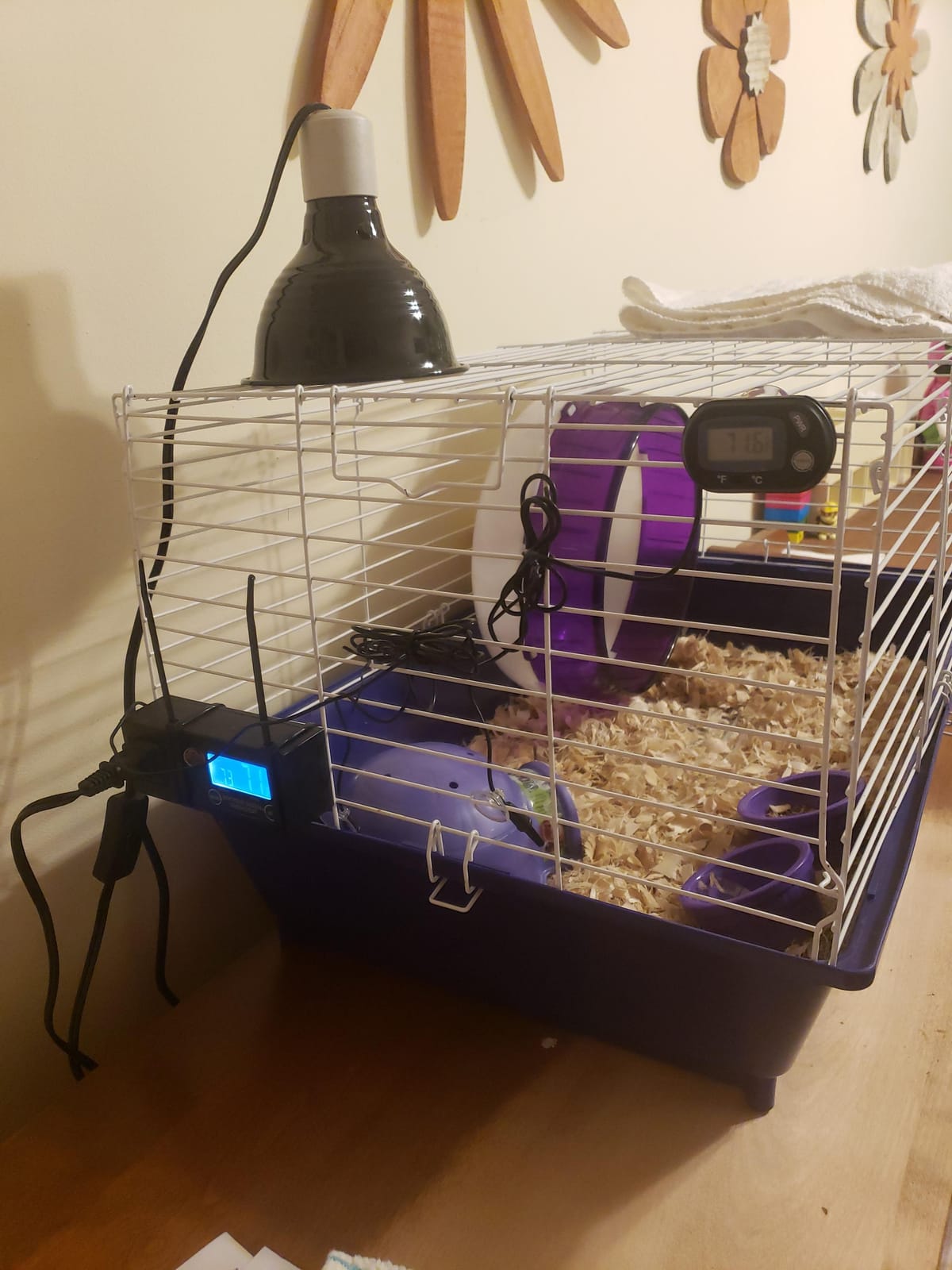
Place the probe inside the enclosure, at the warm end, roughly one to two inches to the side of the heat source rather than directly under it. This single detail decides whether your controller reads the temperature the animal actually experiences.
A probe sitting directly beneath the lamp measures the lamp, not the animal. It reads high, the controller dims the bulb to compensate, and the basking spot ends up cooler than your display suggests. That misreading is also the most common cause of the flicker keepers complain about, because the controller keeps chasing a reading that is still moving.
Keep the probe away from the front glass, away from a misting nozzle, and out of direct contact with any substrate surface. If you can, add a second independent thermometer at the cool end of the gradient and check it against the controller’s display once a week.
Why Your Basking Bulb Is Flickering
If your lamp is flickering while the temperature display looks correct, work through these in order. Most cases are solved in the first step.
1. Move the probe one to two inches to the side of the lamp, out from directly underneath it, and give it twenty minutes to settle.
2. Check that the probe is not touching the substrate, the glass, or a fixture wall. Contact readings are false readings.
3. If you are running an on/off controller, that cycling is the cause. A dimming controller removes the visible flicker by definition, which is the argument for buying one.
4. Check the bulb wattage against the controller’s load. A bulb that is far larger than the load runs heavily dimmed and behaves erratically, and keepers on r/snakes report this as the cause of their control problems.
5. Look at the set point against the enclosure. If you are asking for a temperature the enclosure physically cannot reach, the controller will sit near full output and the light will be unstable.
6. If flicker continues with a dimming controller and a well-placed probe, suspect the fixture or the bulb rather than the thermostat.
What Not to Buy: Greenhouse and Seed-Germination Stats
Do not use a seed-germination or greenhouse thermostat as a reptile thermostat, even when it is cheap and even when it is sold near reptile equipment. These devices are built for a mat, not for a live filament, and most lack the fail-safe behaviour a reptile enclosure requires.
Some of them also control a cooling output, which sounds useful until you realise it is designed to vent a seedling tray rather than to protect an animal from an unreachable set point.
Second on the avoid list: any device that does not state a maximum wattage, and any controller sold for UVB, LED, or mercury vapour lamps. Ballasted lighting should be on a timer, full stop.
Finally, treat a bare lamp dimmer as a control, not a thermostat. A dimmer knob has no probe, no set point, and no cutoff, so nothing stops the lamp at a dangerous temperature. Keepers are consistent on this point: a dimmer plus an on/off stat is not a substitute for a dimming thermostat.
For context on the wider category, our smart thermostat guide covers the app-controlled side that reptile controllers are slowly moving toward, and the same logic about probe placement and set points applies in both worlds.
Frequently Asked Questions
What is the best heat lamp thermostat for reptiles?
The best heat lamp thermostat is a dimming or pulse proportional controller whose maximum wattage exceeds your bulb. Our pick is the Zoo Med ReptiTemp RT-600 for its 600W heating channel, 150W cooling output, 6 foot probe and built-in memory. For a single bulb under 300W, the REPTIZOO TC02 PID dimmer is the best value.
What is the best thermostat for reptile heating elements?
It depends on the heat source. Dimming or pulse proportional controllers suit halogen basking lamps, incandescent bulbs and deep heat projectors. On/off controllers suit heat mats, heat tape and ceramic emitters. UVB tubes, compact fluorescents and mercury vapour lamps should run on a timer, never on a thermostat.
What is the best dimming thermostat for reptile enclosures?
For most hobby setups, the REPTIZOO TC02 is the best dimming thermostat: true PID dimming, a 300W load, a 41F to 140F range and a memory function, at a budget price. The REPTITRIP PT02 adds a 1 to 24 hour timer and an output power readout, and the Exo Terra PT2454 adds switchable dimming and pulse modes with a 600W load.
What is the best dimming thermostat for basking bulbs?
A basking bulb needs a dimming controller, because dimming avoids the hard on and off switching that stresses the filament and shortens bulb life. The Zoo Med ReptiTemp RT-600 is the most proven general option, while the REPTIZOO TC02 and the REPTITRIP PT02 are the strongest budget dimming choices for a single bulb.
Is there a dimmable thermostat for reptiles?
Yes. Dimming thermostats are widely available at budget prices and from herp-specific brands, and the REPTIZOO TC02, the CAVACHEW JTC02 and the REPTITRIP PT02 are all true PID dimming models. The Exo Terra PT2454 lets you switch between dimming and pulse proportional modes for different heat sources.
Why is my basking bulb flickering with a thermostat?
The most common cause is probe placement, not the thermostat. Move the probe one to two inches to the side of the lamp rather than directly underneath it, keep it off the substrate and glass, and give it time to settle. If flicker continues, check that an on/off controller is not cycling, or move up to a dimming model.
The Verdict: Which Reptile Thermostat to Buy in 2026
After working through all ten, the Zoo Med ReptiTemp RT-600 remains our pick of the best reptile thermostats for heat lamps. It carries the largest review count in this group, a 4.6 owner rating, a 600 watt heating channel with a 150 watt cooling output, a six foot probe, built-in memory, and a high and low alarm, and it is the only controller here that gives you somewhere to go when the ambient temperature rises.
If your bulb is a halogen and you want steady light and a longer bulb life, take the REPTIZOO TC02 instead, and use the REPTITRIP PT02 if you also want a timer and a readout that makes probe placement obvious. If you are running a bulb above 100 watts or a two-source enclosure, the LUCKY HERP 8.5 inch dome and the REPTITRIP SOP24 cover those cases. Save the Exo Terra on/off model for heat mats in humid vivariums, where it is genuinely the right tool.
Whichever you choose, set the probe to the side of the lamp rather than under it, match the bulb wattage to the controller’s ceiling, and check the reading against a second thermometer before you trust it. That habit is worth more than any feature on any of these boxes.