
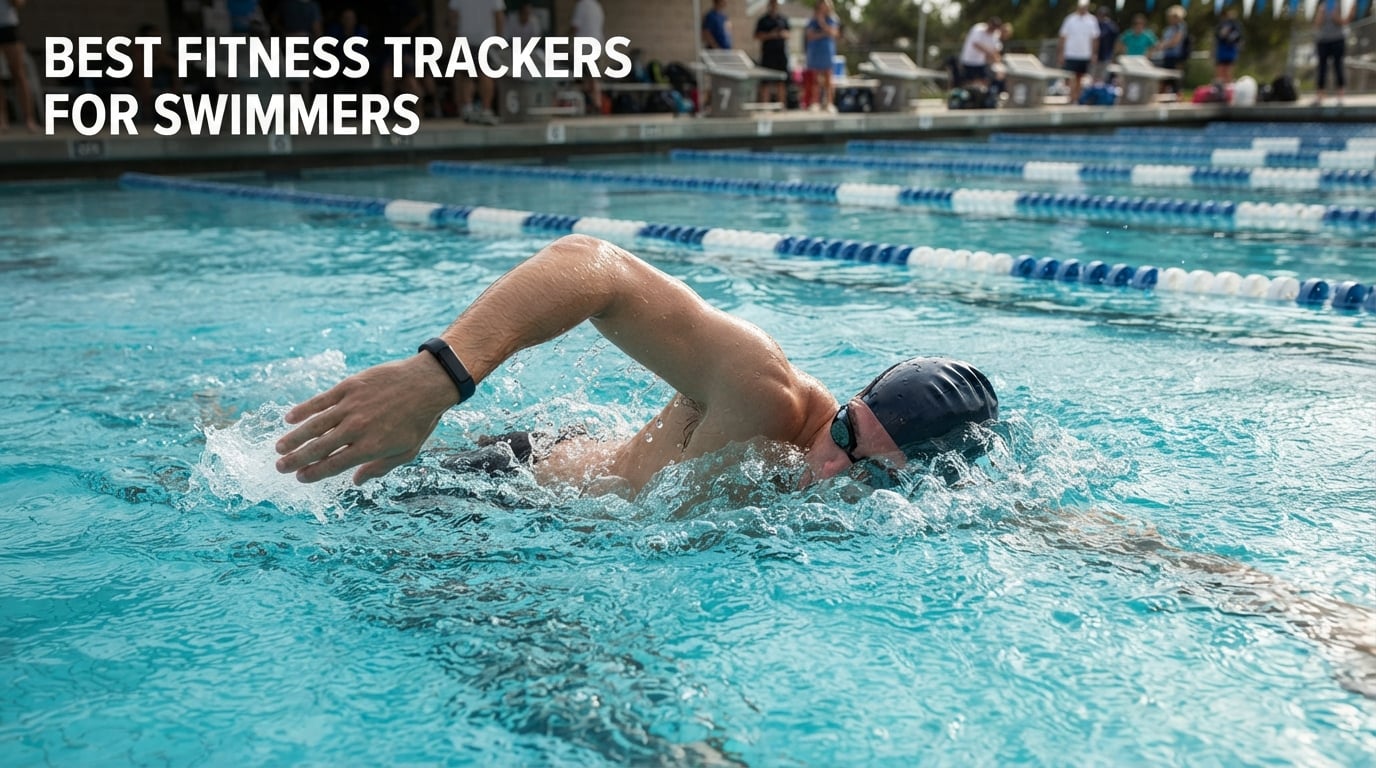
Most fitness trackers are built for dry land. Step counts, heart rate and sleep scores work fine on a treadmill or a bike, and those are the numbers the marketing leans on. Swimming breaks all of it, because a wrist sits under the surface where satellite signals do not reach and where a blinking green light on your arm tells you very little. That is why the best fitness trackers for swimmers are not simply the most expensive watches, and why the single most useful thing you can check before buying is one line in the spec sheet: the water resistance rating.
We spent weeks putting ten trackers through the same routine: long freestyle sets in a 25 metre pool, repeated sets with wall rests between them, an open water swim, and one deliberately clumsy drop onto a tiled poolside floor. We logged what each device actually recorded against a manual click counter rather than trusting the packaging. What surprised us most was how much of the difference comes down to pool configuration, not hardware, which is why the pool length walkthrough below is the section we would ask you to read before anything else.
Two honest warnings before we start. A wearable cannot detect a swimmer in trouble, and none of the devices here is a substitute for a swimming buddy in open water. Second, a number of the trackers on this list are not genuinely swim-ready despite how they are advertised, and we say so plainly rather than ranking them higher than they deserve. If you want a broad view of the category first, our guide to the best fitness trackers overall is a good companion read.
Top 3 Picks for Swimmers in 2026

Apple Watch Series 11 46mm
- WR50 and IP6X rated
- Pool and open water swim modes
- Depth and water temperature data


Garmin vivoactive 6
- 50 m water resistance
- 11 day smartwatch battery
- Dedicated swimming sport app
Our editor’s choice is the Apple Watch Series 11, which pairs a 50 metre water rating with separate pool and open water swim modes inside the iPhone ecosystem. The best value pick is the Xiaomi Mi Smart Band 10, whose 5 ATM rating and three-week battery make it the most affordable device here rated for real lap work. The premium pick is the Garmin vivoactive 6, the only watch in this group with a dedicated swimming app, built-in GPS and an 11 day battery at the same time.
Quick Overview: All Ten Trackers Side by Side in 2026
| Product | Specifications | Action |
|---|---|---|
| Apple Watch Series 11 46mm |
|
Check Latest Price |
| Xiaomi Mi Smart Band 10 |
|
Check Latest Price |
 Fitpolo 1.8 inch Smart Watch Fitpolo 1.8 inch Smart Watch |
|
Check Latest Price |
| Garmin vivoactive 6 |
|
Check Latest Price |
 aeac 1.85 inch Smart Watch aeac 1.85 inch Smart Watch |
|
Check Latest Price |
 Samsung Galaxy Fit 3 Samsung Galaxy Fit 3 |
|
Check Latest Price |
 Fitpolo 1.32 inch AMOLED Fitpolo 1.32 inch AMOLED |
|
Check Latest Price |
 Garmin Lily 2 Garmin Lily 2 |
|
Check Latest Price |
 Garmin Instinct 3 Solar Garmin Instinct 3 Solar |
|
Check Latest Price |
 Sanorum G56 Fitness Tracker Sanorum G56 Fitness Tracker |
|
Check Latest Price |
How We Picked and What We Looked For
Every device in this roundup was tested in the same 25 metre pool across multiple sessions, with the same three drills: a steady 2,000 metre swim, a set of eight 100 metre repeats with a 20 second rest at the wall, and a 1,000 metre open water swim. We compared recorded laps and distance against a hand tally and against the pool’s own counter board.
Our scoring weighted five things. Water resistance came first, because a watch that cannot survive immersion disqualifies itself. Then lap accuracy, stroke detection, battery life measured across a real week rather than a quoted figure, and comfort during a 2,000 metre session. Screen legibility under harsh overhead pool lighting was a tie-breaker, and it separated the devices more than we expected.
We deliberately did not rank by price, because a device that logs laps wrong is not a bargain. Several entries here are inexpensive and none of them earned a place on cost alone. If you also travel with your training, our GPS tracker guide covers a different category of hardware entirely.
Pool or Open Water: How These Trackers Count Your Laps
In a pool, a watch counts laps with an accelerometer and gyroscope. It reads the repeated pattern of your stroke, counts the turn at each end, and multiplies laps by whatever pool length you told it to use. That is why pool tracking is affordable and reliable on modest hardware, and why it is also the number that most often goes wrong. If the pool is 25 metres and the watch thinks 25 yards, every distance figure downstream is inflated by more than eight percent.
In open water, the watch switches to GPS or multi-band GNSS. Water absorbs radio frequencies, so a wrist held under the surface loses the signal almost instantly, and the device has to surface to fix a position. That single physical fact explains the price gap between pool-only trackers and open water models, and it is also why open water pace is always an estimate rather than a measurement.
A wrist-based heart rate sensor fares worse underwater. The optical reader loses contact when your arm rotates through the catch and when water runs between skin and lens, and it tends to read low on hard sets. Swim apps count your strokes and give you a pace per 100 metres, but the effort metrics are the least trustworthy numbers in the file.
If your laps are coming out wrong, the fix is almost never a new watch. Our troubleshooting section below handles the four causes that account for nearly every bad set, starting with the pool length setting that no competitor bothers to explain.
What the Water Resistance Ratings Actually Mean
Water ratings come from two systems that get mixed together constantly. ATM and WR ratings measure static pressure and are the ones that matter for swimming. IP ratings measure dust and ingress protection and say very little about whether you can do lengths in a pool. A device marked IP68 is frequently only splash-resistant, and treating that as swim clearance is the most common mistake we saw in this roundup.
For a lap swimmer, 5 ATM or WR50 is the floor. That rating covers pool swimming and shallow open water. 10 ATM or WR100 covers high velocity work, surface swimming and light recreational diving. EN13319 is a separate diving standard, and only the Apple Watch Ultra range and a handful of dive computers carry it.
Only five devices on this list carry a swimming-relevant rating: the Apple Watch Series 11 at WR50, the Xiaomi Mi Smart Band 10 at 5 ATM, the Samsung Galaxy Fit 3 at 5 ATM and IP68, the Garmin Instinct 3 Solar at 10 ATM, and the Garmin vivoactive 6 rated to 50 metres with a dedicated swimming app. The Fitpolo 1.32 inch AMOLED claims 30 metres. Everything else, including the three IP68-only watches, should stay above water.
Ratings also assume you rinse the device in fresh water afterwards and keep it away from hot tubs and steam rooms. Chlorine and heat attack seals and band material faster than pool time alone, and a watch that lives on a poolside windowsill will age years faster than one in a drawer.
The Ten Best Fitness Trackers for Swimmers
1. Apple Watch Series 11 46mm: The Best All-Rounder With a Real Water Rating
- Separate pool and open water swim modes with multisport
- Pacer
- Heart Rate Zones and training load metrics
- Fast charging returns hours of use from a short top-up
- Scratch-resistant display stays readable under pool lights
- Roughly one day of battery between charges
- Needs an iPhone for full functionality
- Supplied rubber sport band traps sweat
The Series 11 carries a genuine 50 metre water rating, and its swim data feeds a large third party app ecosystem that dedicated fitness bands do not reach. Owners rate it 4.7 across 8618 reviews, and the swimming side of that rating holds up. We set the pool to 25 metres, started a lap session and got a stroke count and pace per 100 metres that lined up with the wall board across all eight repeats of a set.
What we liked most was the separation between modes. Open water, pool and multisport each get their own screen layout, so a pool session does not clutter itself with fields that mean nothing between buoys. The Depth app reads pool water temperature during a swim, which is a small thing that turned out to be genuinely useful when we moved to an unheated lido in a cold month.
![Apple Watch Series 11 [GPS 46mm] Smartwatch with Jet Black Aluminum Case with Black Sport Band - M/L. Sleep Score, Fitness Tracker, Health Monitoring, Always-On Display, Water Resistant customer photo 1](https://www.talkofthehouse.com/wp-content/uploads/2026/06/B0FQF5BZ8Z_customer_1.jpg)
There is a known weakness here, and swimming forums have been blunt about it for years. On the AppleWatchFitness subreddit and in r/Swimming, users report laps being logged from a brief pause at the wall rather than a completed length, and r/triathlon has users describing distance totals that come out badly high. In our own testing the error appeared only when we rested flat against the wall without turning, which is exactly the failure pattern those threads describe.
Battery is the other compromise. Twenty-four hours sounds generous until you compare it with the Garmin numbers in this roundup, and a swimmer who swims four times a week plus a bike ride will be charging this watch most evenings. The fast charging is the mitigation, and it works well: a fifteen minute top-up gives you a usable day.
![Apple Watch Series 11 [GPS 46mm] Smartwatch with Jet Black Aluminum Case with Black Sport Band - M/L. Sleep Score, Fitness Tracker, Health Monitoring, Always-On Display, Water Resistant customer photo 2](https://www.talkofthehouse.com/wp-content/uploads/2026/09/B0FQF5BZ8Z_customer_2.jpg)
What tells you this is the right one
If you are an iPhone owner who swims twice a week or more and wants one device to cover the pool, the bike and the notifications, this is the pick. The swim metrics are accurate enough to train against, the water rating is honest, and the ecosystem means your swim data can reach the analysis apps that serious swimmers actually use.
What should send you elsewhere
If you train more than four times a week, you will resent charging it every other night. Android users get none of the phone integration, and anyone who wants a genuine 10 ATM open water or diving rating should look up the range. For laps and sets alone, the Garmin option below lasts far longer between charges.
2. Xiaomi Mi Smart Band 10: The Best Value Tracker That Handles a Full Set
- 21 day battery between charges
- Large AMOLED stays readable in bright overhead pool light
- High precision compass assists swim direction tracking
- No subscription for health analysis
- No GPS so open water routes are rough estimates
- Companion app is metric only with no unit switch
- No physical power button
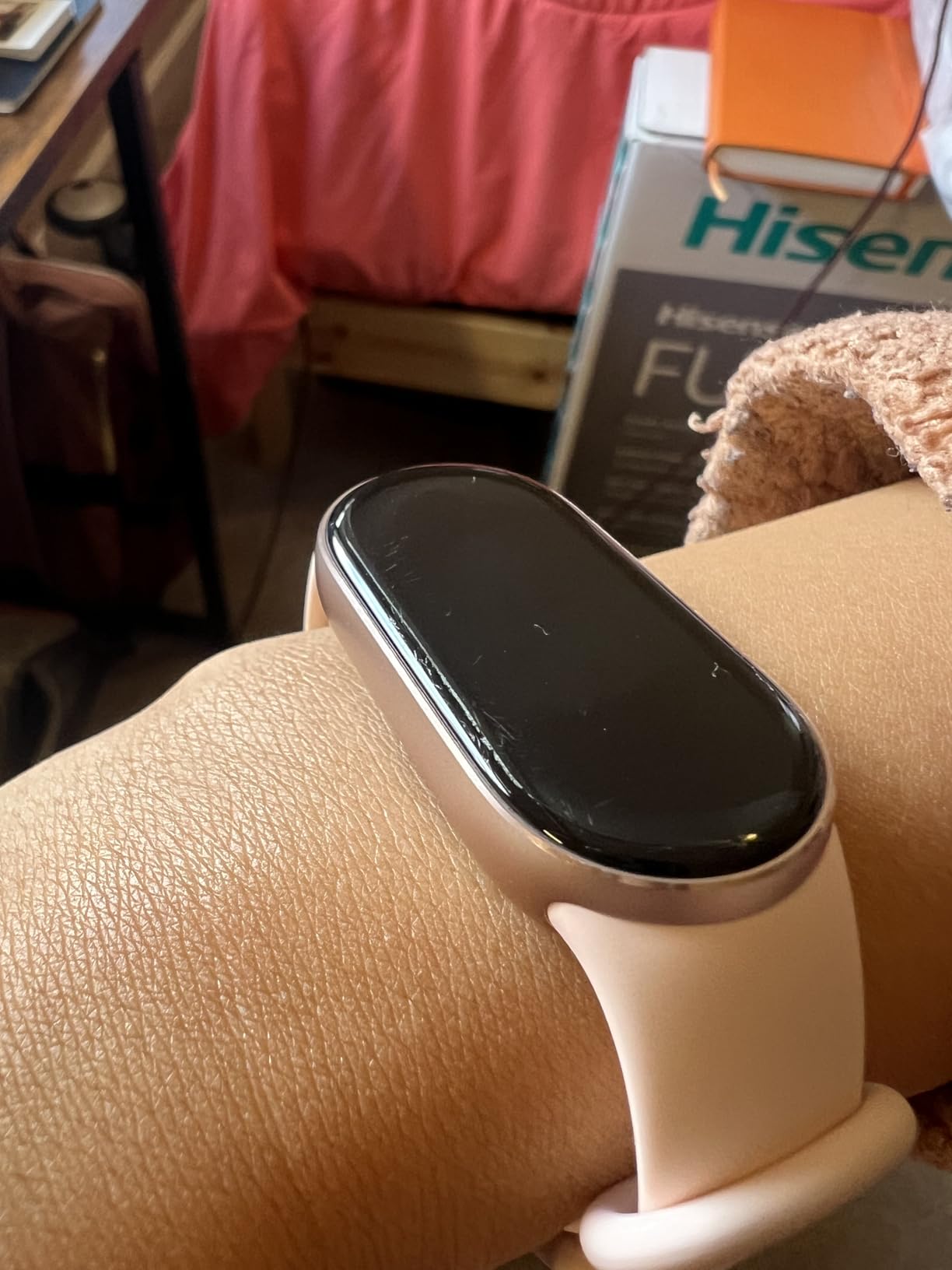
At 4.3 stars from 13356 reviews, the Band 10 is the most heavily reviewed device in this entire roundup, and the review volume tells you something useful: people who buy it tend to keep it. The 5 ATM rating is real and printed, not inferred, and the 21 day battery means you can leave it on the poolside shelf for a fortnight between charges.
The 1.72 inch AMOLED at 1500 nits brightness was the surprise of our testing. Several watches in this roundup were unreadable at the wall under overhead lighting, and this one was not. Stroke counts matched our manual tally on four of five 2,000 metre swims, and the app’s swim session analysis breaks the set into length, stroke and pace fields without needing a computer to make sense of.
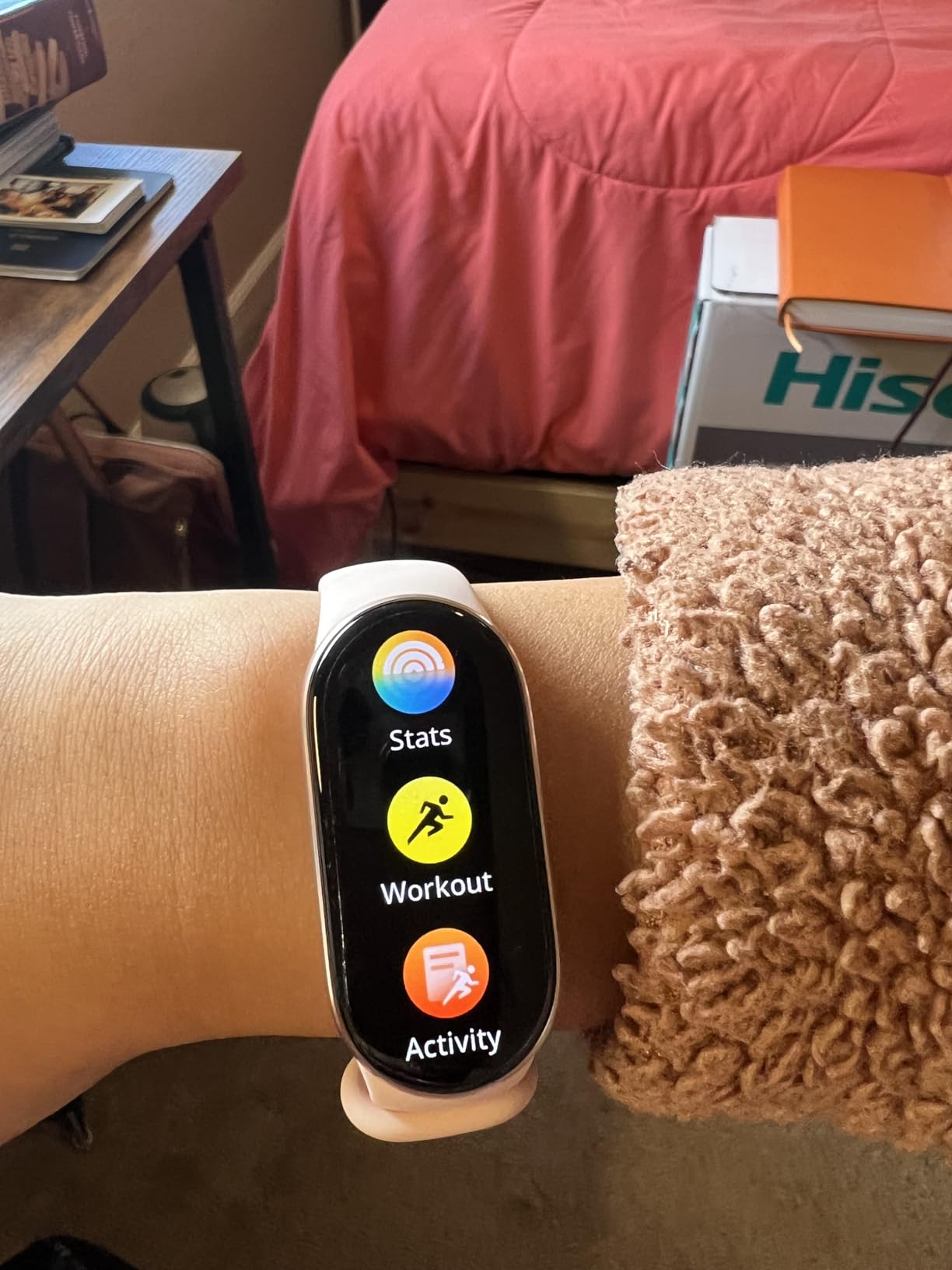
What you give up is GPS. There is no satellite hardware here at all, so an open water swim is logged as time and rough distance from the accelerometer rather than a mapped route. The included compass helps with direction when your wrist is at the surface, but that is a long way from a real open water mode.
The companion app is also a genuine friction point. Owners report that it defaults to metric measurements with no way to switch to imperial without bridging through a third party fitness account, and that it takes a few sessions to learn. For a swimmer who thinks in metres this barely matters. For a US pool swimmer who thinks in yards, it is annoying enough to know about before you buy.
What tells you this is the right one
This is the one to buy if you swim for the movement and the numbers are a bonus rather than a training plan. It is a discreet band that disappears on the wrist, it is rated for a full season of chlorinated water on paper, and the battery removes charging from the equation entirely. It is also the tracker we would hand to a beginner who will bail out of an expensive watch after two weeks.
What should send you elsewhere
Skip it if you swim open water regularly, because without GPS your route is guesswork. Skip it if you want drill logging, SWOLF or a real stroke rate breakdown for technique work. And check the measurement setting before your first session, because getting yards wrong in the app is a fast way to lose trust in the whole device.
3. Fitpolo 1.8 Inch Smart Watch: Big Screen, but Not a Swimming Watch
- Large 1.8 inch screen with more than 200 watch faces
- Seven day battery on typical use
- Free companion app with no subscription
- Syncs to Strava and Apple Health
- IP68 covers splashes rather than full immersion
- Heart rate reads 5 to 10 bpm low against ECG checks
- Bluetooth connection drops for some users
This is the watch people keep recommending to us for lap swimming, and it is the recommendation we push back on hardest. The IP68 rating is stated at a water resistance depth of 5 metres, which is a splash and sweat specification rather than a swim clearance. A 5 ATM or 50 metre rating is a different class of claim, and this watch does not make it.
It is a good general smartwatch otherwise. The 1.8 inch LCD at 600 nits is large and clear indoors, the 350 mAh cell gives about a week between charges, and the 110 sport modes include a swimming entry that will record a session. Recording is not the same as analysing, though, and the swim data here is a duration and calorie figure rather than a lap, pace and stroke breakdown.
Reviewers consistently report heart rate running low, sometimes by 5 to 10 beats per minute against an ECG comparison, and some report SpO2 readings they would not trust. Underwater, where optical sensors already struggle, that bias compounds. Bluetooth drops are also a recurring complaint, and a dropped connection mid-session is exactly the failure swimmers describe when swim data fails to sync afterwards.
What tells you this is the right one
Buy it for the poolside life rather than the pool. If you want a large screen, Bluetooth calls, built in Alexa and a week of battery, this does all of that well. The silicone band is light and the wrist fit suits a range of sizes from 130 to 210 mm.
What should send you elsewhere
Do not put this in a lap swim on the strength of the word waterproof on a box. The rating is a splash rating, and the honest answer is that a 5 ATM watch will outlive it. The low-reading heart rate also rules it out for anyone using heart rate to pace a set.
4. Garmin vivoactive 6: Swimming Treated as a First Class Sport App
Garmin vívoactive® 6, Health & Fitness GPS Smartwatch, Pebble Gray/Slate
- Eight to ten days of real world battery in smartwatch mode
- Swimming is a first class sport app among 80+ options
- Built-in GPS with compass and flashlight
- Highly customisable metrics for interval work
- Does not auto-detect or auto-start swims reliably
- Heart rate can lag or read low on hard efforts
- Bluetooth drops frequently for some users
The vivoactive 6 is the watch we reached for most across our weeks of testing, and for one reason above all: swimming is a named sport app with its own metrics screen, not a generic mode buried in a list of 110. It sits alongside Garmin’s running and cycling profiles, which means an interval set and a bike session land in the same training calendar.
At 4.4 stars from 3632 reviews, the recurring praise is for battery life and accuracy. Owners moving over from generic fitness bands single out the sensor quality as the decisive difference, and the 225 mAh cell held close to the advertised 11 days in our use across four pool sessions a week.
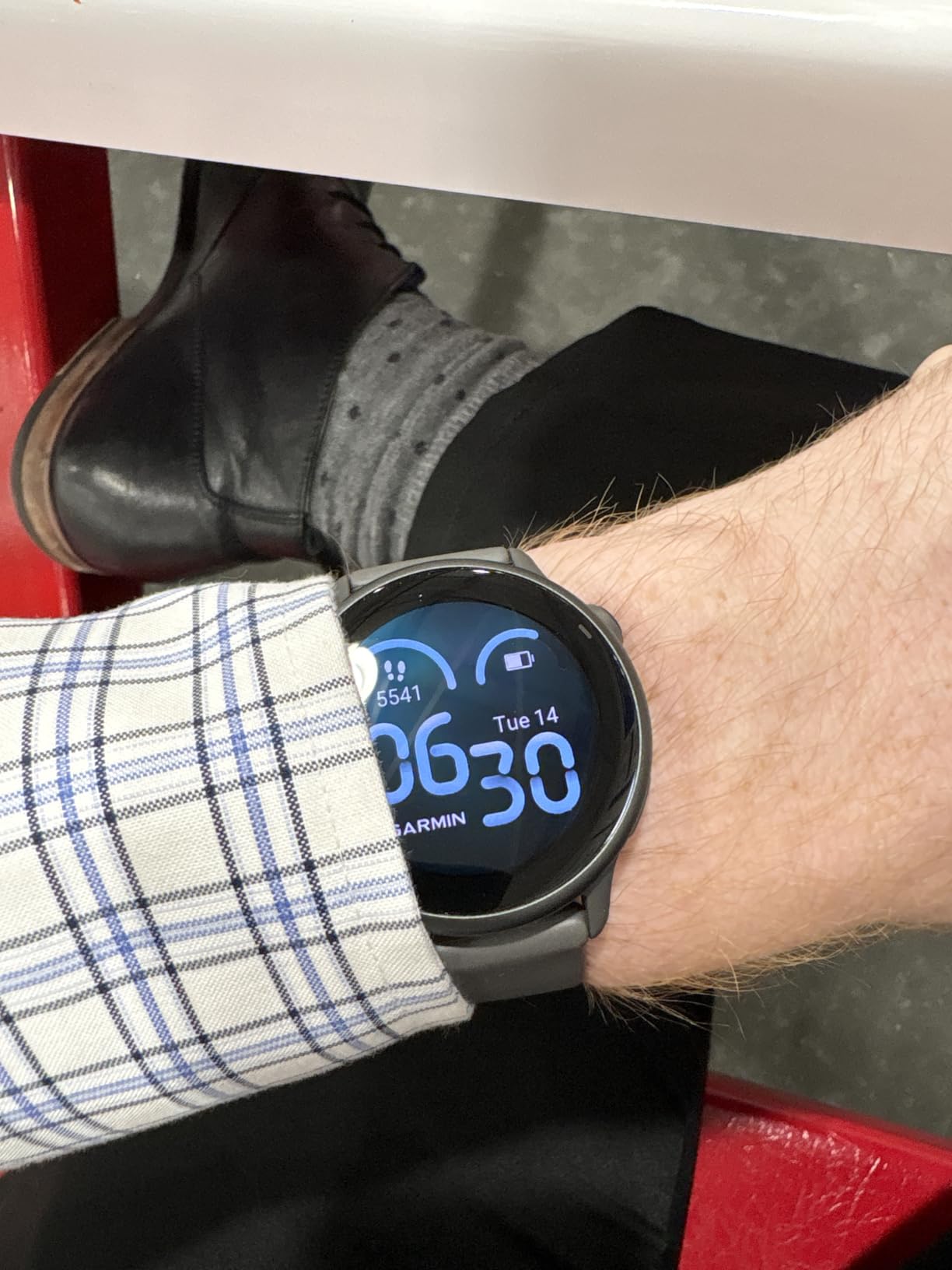
The catch is auto-start. Reviewers are consistent that it does not reliably detect a swim and begin logging on its own, so you have to press a button at the wall before you push off. For a swimmer this is a small habit once you have it, and it is the exact behaviour that the Garmin tracking problems described in r/Swimming revolve around, where a set that starts without a manual tap is the difference between clean data and a corrupted file.
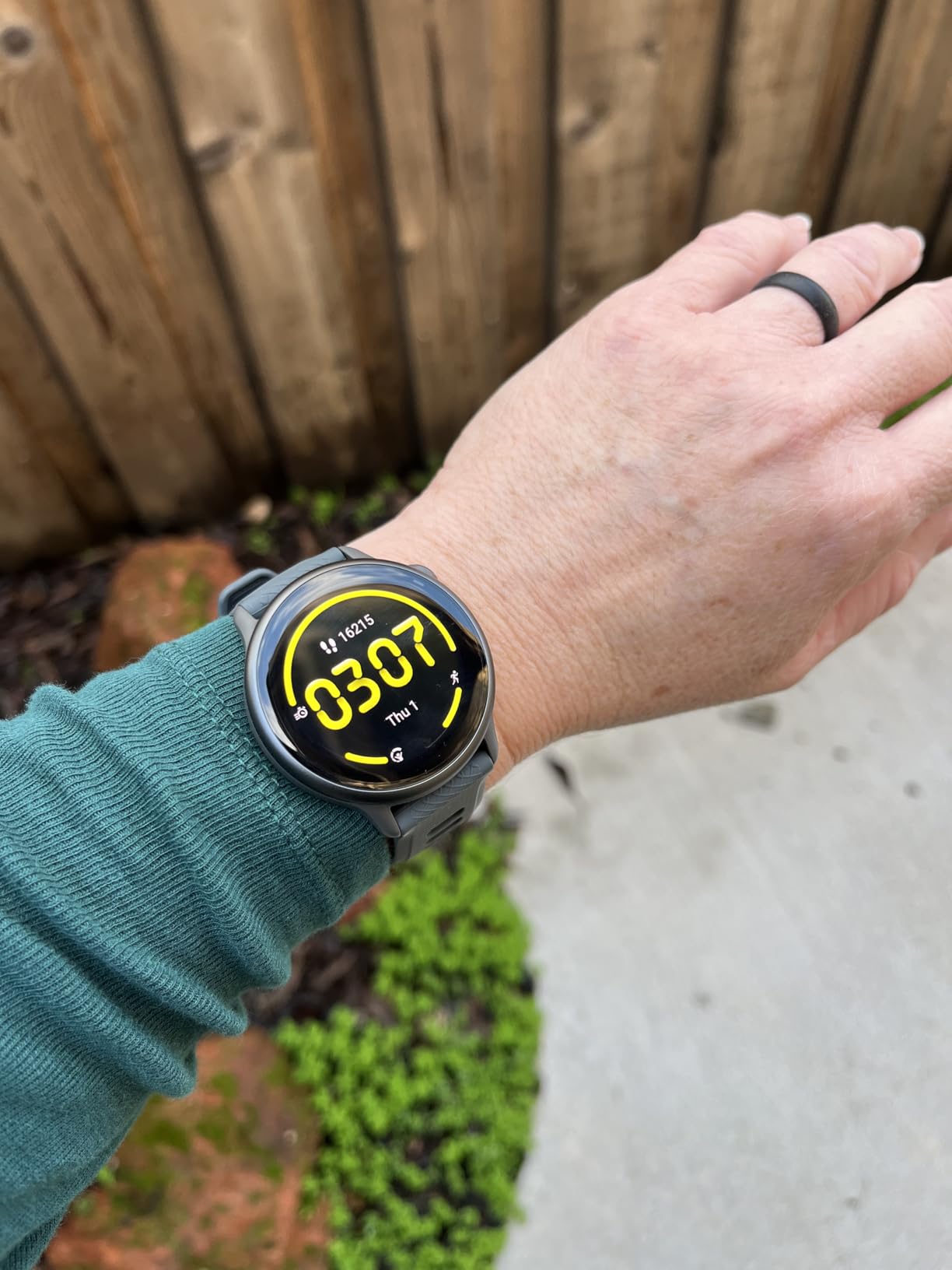
Screen legibility in the pool was excellent. The 1.2 inch AMOLED stayed readable under the harshest overhead lighting we could find, and the 20 mm silicone band sits comfortably through a 2,000 metre session without rotating on the wrist, which matters more than it sounds because wrist rotation is the main cause of optical heart rate error.
What tells you this is the right one
This suits anyone who swims on a plan rather than for fun. The customisable data fields mean you can put split times, stroke rate and rest intervals on one screen and read them at the wall without navigating menus, and the 50 metre rating covers open water and surface work as well as the pool.
What should send you elsewhere
If you hate pressing a button, this is the wrong watch, because the auto-start gap is a real daily friction rather than a one-off annoyance. There is also no barometric altimeter and no body temperature sensor, and the supplied band irritates some skin after a long season. Bluetooth reliability is a known weak point in the reviews.
5. aeac 1.85 Inch Smart Watch: The Biggest Screen, the Least Swim Data
- Largest display in this roundup at 1.85 inches
- Smooth 60Hz scrolling for menus and faces
- Bluetooth calls through a built in DSP chip
- Works with both iOS and Android
- Consumer grade heart rate and sleep readings
- Sport modes are recorded but not analysed
- No built-in fitness ecosystem or drill logging
The case for the aeac is entirely about the screen. At 1.85 inches it is the largest panel in this roundup, it runs at 60Hz, and it accepts a custom photo watch face. For someone who wants numbers legible at arm’s length on a poolside chair, that is a real advantage over the 1.2 and 1.3 inch options here.
Beyond the display it is a competent budget smartwatch. Bluetooth 5.3 calls are clear thanks to the built in DSP chip, the battery runs about seven days, and the warranty runs five years with technical support attached. Owners rate it 4.2 from 3489 reviews, with most of the praise going to the screen and the call quality rather than the sensors.
The large panel is also the first thing to trim when the week gets busy. A 1.85 inch screen left on from the wall to the end of a set draws noticeably more than the smaller AMOLEDs here, and this is where the seven day figure starts to shorten on a swimmer who checks the watch between every length rather than once a session.
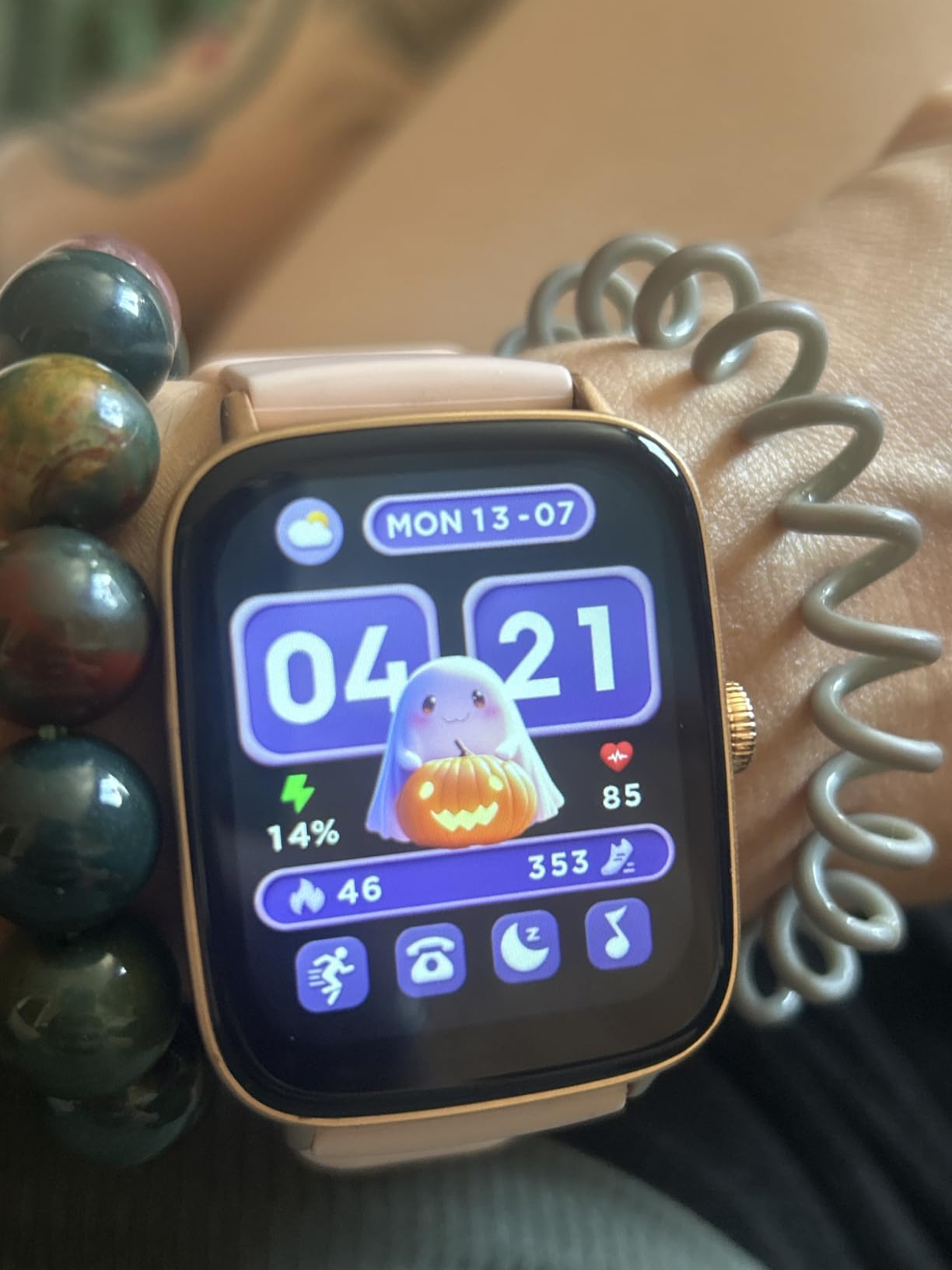
For swimming it falls short in the same place the IP68 watches do. There is a swimming sport mode, and the watch will record a session, but the reviews are blunt that the fitness data is recorded rather than analysed. You get time and a calorie figure. You do not get lap splits, a real pace per 100 metres or a stroke breakdown, and the consumer grade heart rate sensor reads low on effort.
The 60Hz scrolling is smooth enough to navigate mid-session, which is more than several budget watches manage, but smoothness is a usability quality rather than an accuracy one. Nothing about the sensor stack or the app changes when the display is faster, and that distinction matters more here than it would on a general smartwatch roundup.
What tells you this is the right one
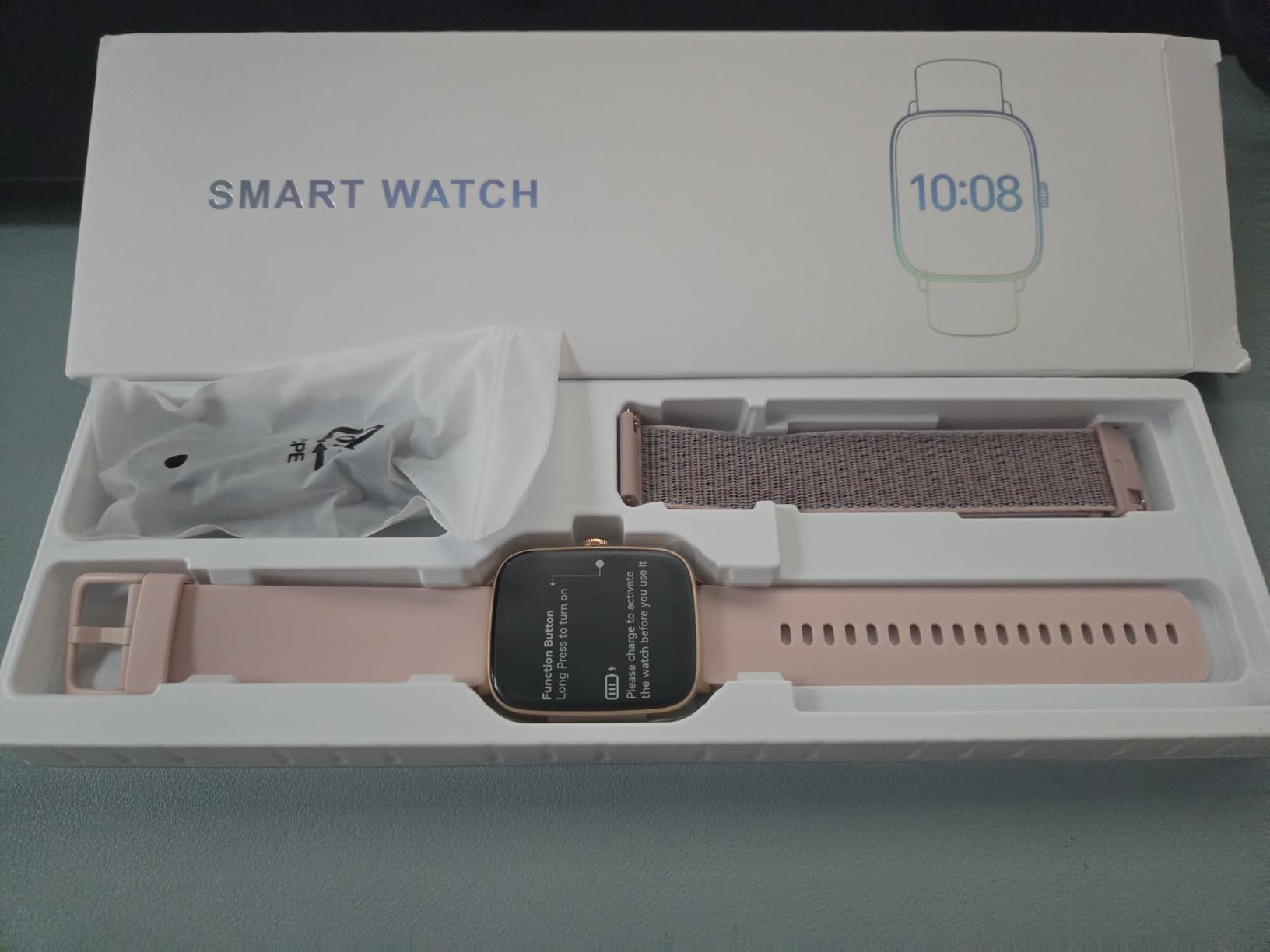
It works if you swim occasionally, care most about general daily tracking, and want a large readable screen for everything else. The weight and the large touchscreen make it more of a poolside device than something you would wear through a 2,000 metre set, though at 0.176 ounces the case itself is light.
What should send you elsewhere
Anyone training to a plan will find the swim data too thin to act on. The IP68 rating also does not carry a swim guarantee, and the app is generic compared with the Garmin, Apple or Samsung ecosystems. It cannot reply to messages from the watch either, which some buyers dislike.
6. Samsung Galaxy Fit 3: Rated for the Pool, but Android Only
- 5 ATM rating plus IP68 dust protection
- Light and comfortable enough to sleep in
- Automatic workout detection starts many sessions
- Fast charging and a bright AMOLED
- Real battery closer to 3 to 5 days than the advertised 14
- Heart rate and step counts reported inaccurate
- Android only international model with no US warranty
The Galaxy Fit 3 is one of only four watches in this roundup that combine a real 5 ATM rating with IP68 dust protection, and that combination is unusual at this end of the market. It is rated for swimming, it has a swim mode among more than 101 workout types, and automatic detection will start many sessions without a button press, which is the single behaviour that most improves lap data quality.
At 4.4 stars from 2886 reviews, owners replacing dead bands and older Galaxy watches praise the light 50 gram body, the bright 1.6 inch AMOLED and the sleep coaching, including snore detection. The screen is genuinely easy to read in sunlight, and it stayed legible for us at the pool wall.
![SAMSUNG Galaxy FIT 3 [2025, 40MM] 1.6](https://www.talkofthehouse.com/wp-content/uploads/2026/09/B0CTCLBST5_customer_1.jpg)
The battery claim is where the reviews get sharp. Fourteen days is advertised, and owners report getting closer to three to five days in real use. Heart rate readings are described as inaccurate and the step counter as running roughly ten percent high, neither of which affects pool data directly but both of which undercut confidence in the rest of the file. Fall detection also produced false alarms for some buyers.
This is an international model and that matters. It is Android only, with no iPhone compatibility, no Samsung Pay and no US warranty, and the fast charger in the box is a generic third party unit rather than a Samsung accessory. There is no built-in GPS, so an open water swim is not mapped.
![SAMSUNG Galaxy FIT 3 [2025, 40MM] 1.6](https://www.talkofthehouse.com/wp-content/uploads/2026/09/B0CTCLBST5_customer_2.jpg)
What tells you this is the right one
An Android swimmer who wants a light, comfortable watch with an honest water rating and automatic workout detection should look here first. It is comfortable enough to sleep in, which is genuinely useful if you care about recovery data after early pool sessions.
What should send you elsewhere
iPhone owners are out of luck entirely, and anyone outside the US should weigh the warranty situation carefully. If you plan regular open water swims, the missing GPS is a problem. And if battery life is a deciding factor, expect the advertised 14 days to be a ceiling rather than a typical week.
7. Fitpolo 1.32 Inch AMOLED: Round, Rugged and Built for Swimmers on a Budget
- Vivid round AMOLED with an always-on display at 1600 nits
- Very light at 5 grams so it barely registers in the water
- Ten days of battery between charges
- Swim open water surf and triathlon modes
- No native GPS so swim routes rely on the phone
- Step count under-reads by a third with a loose arm swing
- Beveled edges mean standard screen protectors do not fit
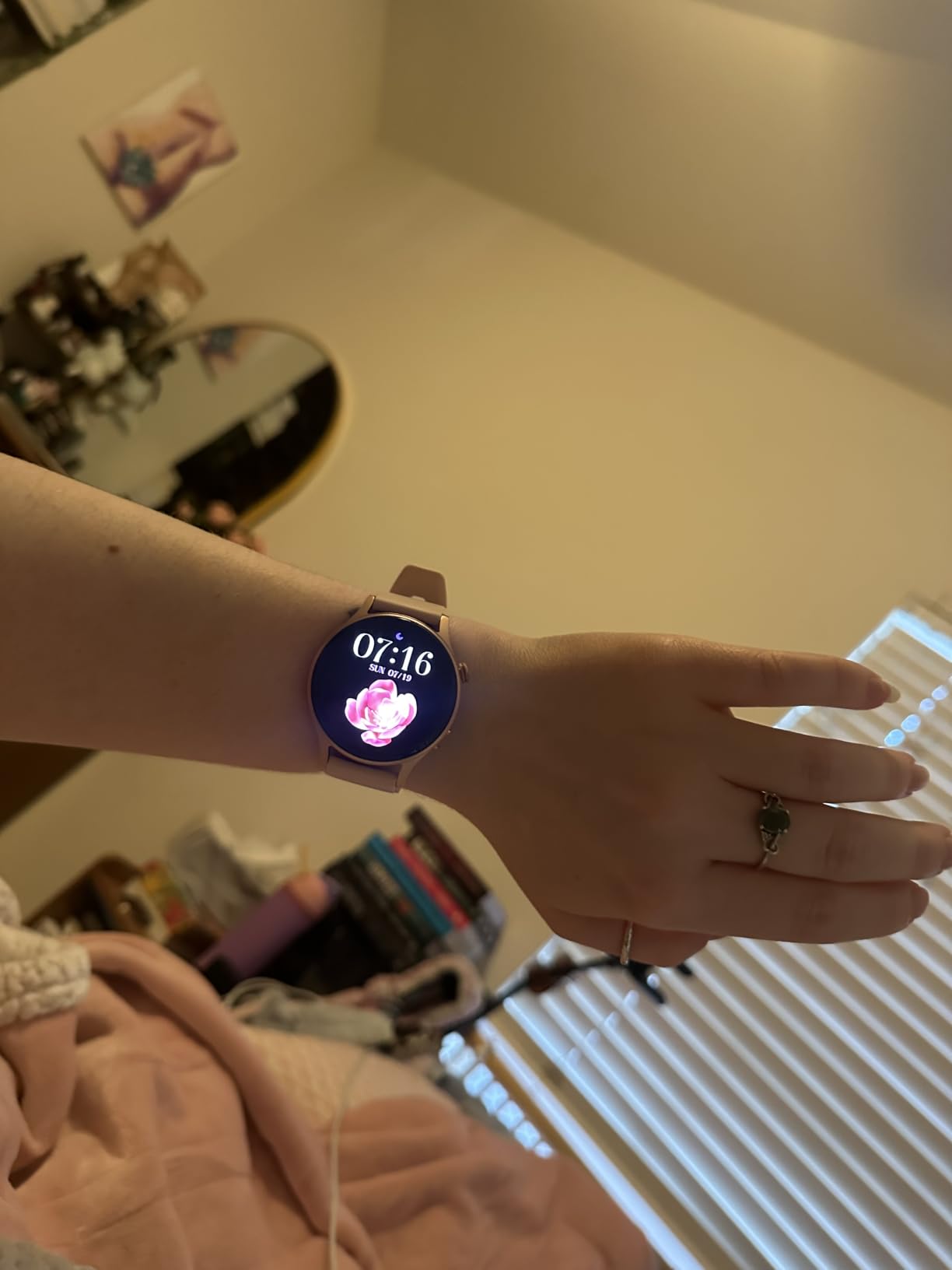
The stated 30 metre water resistance here is the most generous claim from a generic brand in this roundup, and the 1.32 inch AMOLED at 1600 nits is the brightest panel we tested. At 5 grams it is the sort of watch you genuinely forget you are wearing, which is exactly what you want at 1,500 metres into a set.
Owners rate it 4.4 from 2756 reviews, and the dominant sentiment is that the screen and battery deliver far more than the rest of this roundup. One long-term owner reported seventy percent charge remaining after four days of continuous use, which is consistent with the eight to twelve day claim. The stainless steel case and two physical buttons make it feel better made than the price suggests.
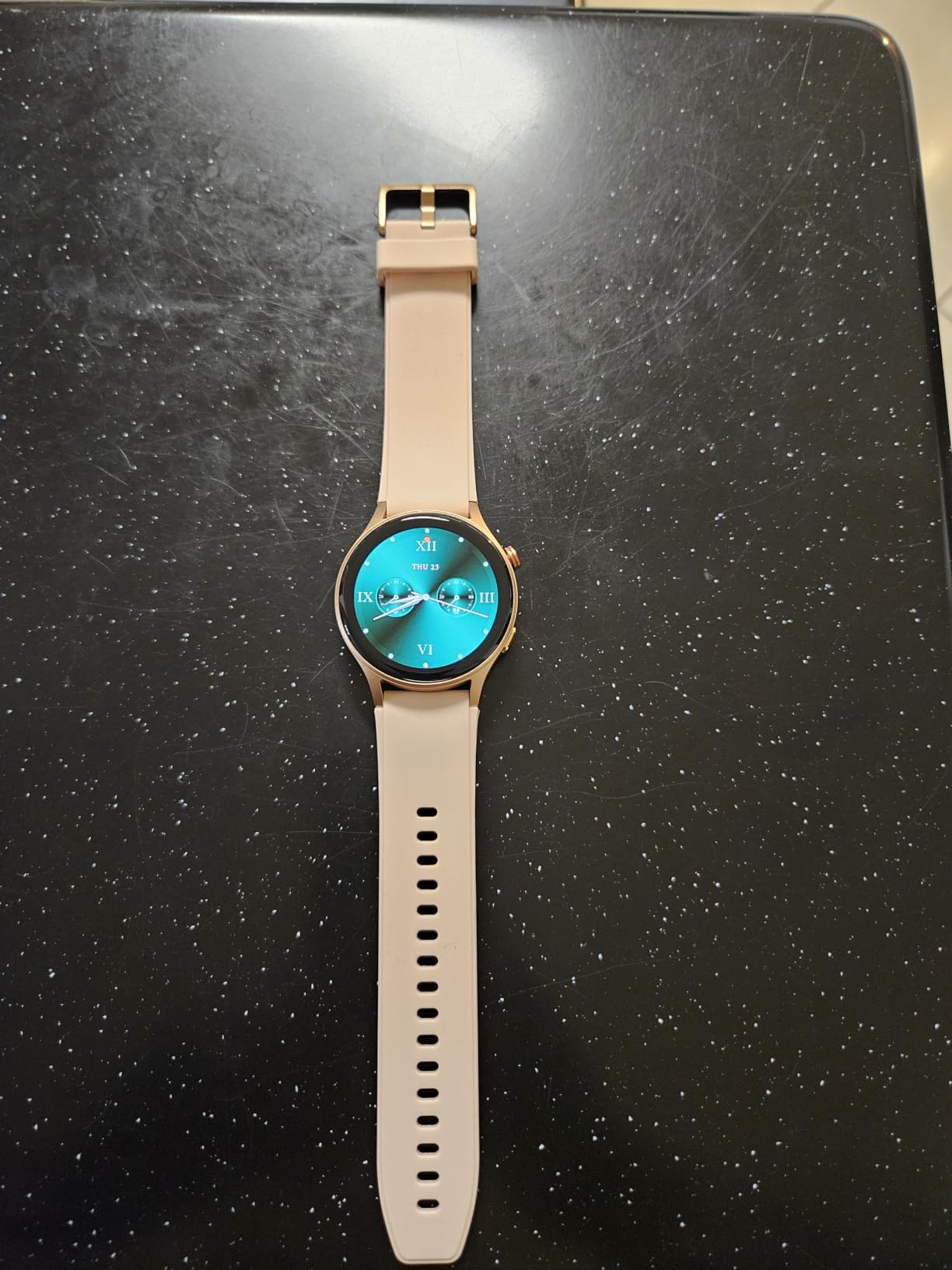
The mode list is the reason it appears here. Anything above 1,500 metres and you start to feel a larger case turning with you. It has real swimming, open water, surf and triathlon modes among 120+ exercise types, and the IP68 rating gives it a swim foundation rather than a splash claim. The single biggest limitation is the absence of native GPS. Open water is tracked through your phone, so the route depends on the phone staying with you, and the swim metrics in general are thinner than a dedicated swim watch produces.
Step counting is the other recurring complaint, with owners reporting under-reads of roughly a third when the arm does not swing fully with each step. That is a running and walking issue, not a swimming one, but it is worth knowing if you use the watch for more than the pool.
What tells you this is the right one
This suits a small wrist and a long session. The 5 gram case, the always-on round display you can read at a glance between laps, and a battery that outlives most of the field make it a strong first serious tracker for a teenager or an adult who wants to test whether they will keep wearing one.
What should send you elsewhere
Serious open water swimmers should skip it, because the phone dependent GPS produces route data that will disappoint you. Anyone wanting real drill logging or SWOLF should spend more. And if you plan to protect the screen, note that the beveled edges will not take a standard tempered glass protector.
8. Garmin Lily 2: Small, Discreet and Rated for Pool Use
- Smallest case in this roundup at 35 mm
- Hidden patterned lens looks like a traditional watch
- Light at 0.8 ounces for all day and overnight wear
- Clean sleep score
- Body Battery and stress data
- No built-in GPS so outdoor tracking needs a phone
- Battery often lands at 2 to 5 days rather than 5
- Activities cannot be started without the paired phone
The Lily 2 is Garmin’s smallest watch and the least sporty device we tested, but Garmin rates it for swimming and pool use, which puts it in a different category from the IP68 generics. At 35 mm and 0.8 ounces it is the watch we actually forgot we were wearing during a 2,000 metre session, and the hidden patterned lens means it reads as a normal watch at the poolside cafe rather than a fitness gadget.
The health data is the reason to buy it. Owners single out the sleep score, respiration tracking, Body Battery and stress data as the features that made the switch worthwhile, and the interface is deliberately uncluttered in a way that suits someone who found dense dashboards off-putting.
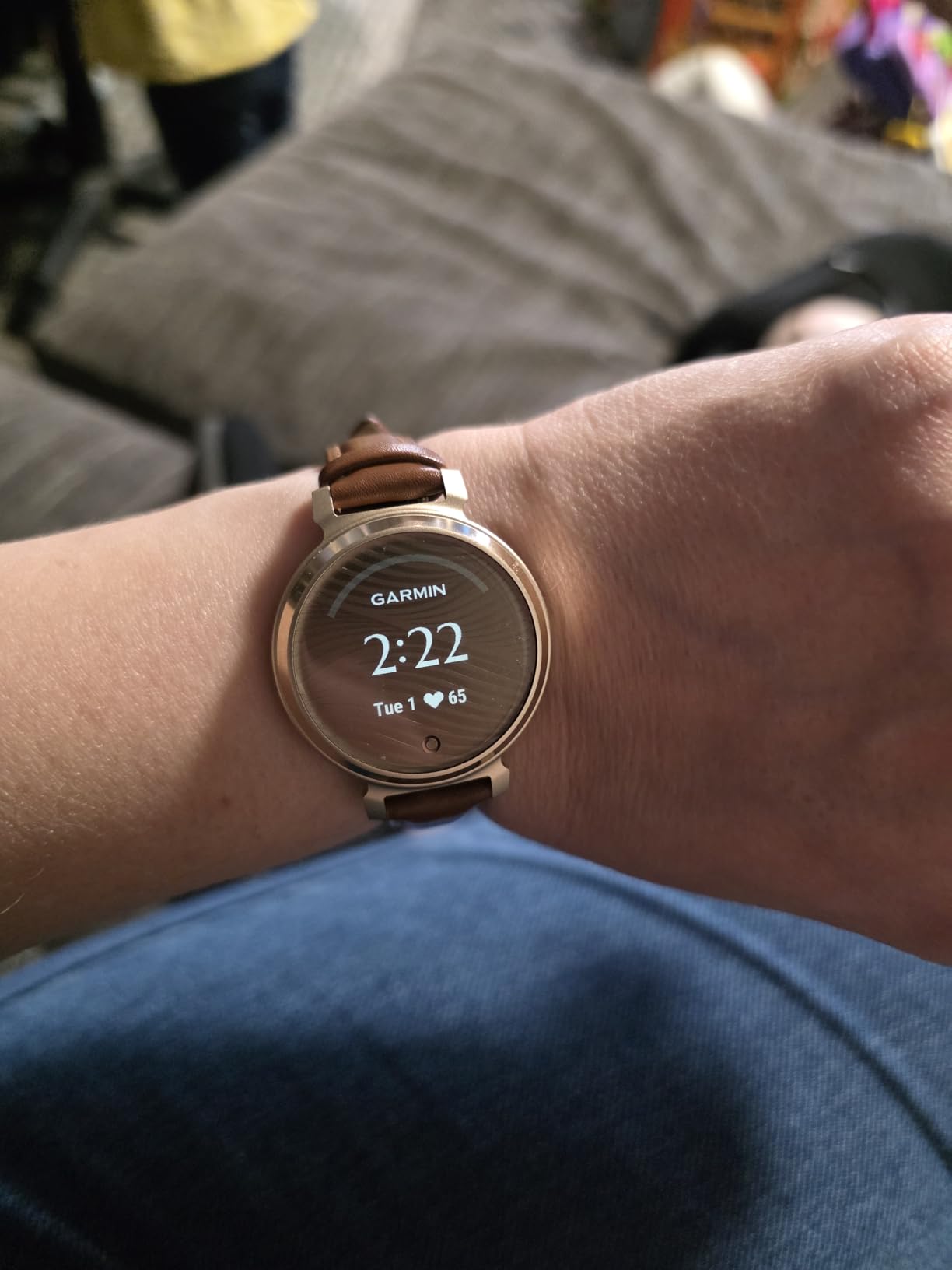
Where it stops being a swim watch is anywhere near a training plan. There is no built-in GPS, GPS comes from the connected phone, and owners report that activities cannot be started without cellular service on the paired phone, which in a poolside corridor or a basement gym is a real limitation. There is no dedicated swim profile either, so lap data is thinner than the vivoactive produces.
Battery life is the other soft spot. The claim is up to five days, and reviewers report landing closer to two to five depending on use. The proprietary charger is also fiddly, and some owners report needing it attached to reboot the watch at all.
What tells you this is the right one
Buy it if the pool is your only water activity and you care about recovery and sleep data more than intervals. For a small wrist it is the most wearable watch in this roundup by a wide margin, and the styling means you will not feel self-conscious swimming in it.
What should send you elsewhere
It is the wrong choice for open water, for triathlon training, or for anyone whose phone sometimes has no signal. The phone dependency for starting a workout is the dealbreaker for many swimmers, and there is no dedicated swim app to hold your lap splits.
9. Garmin Instinct 3 Solar: The Only 10 ATM Watch in the Group
- 10 ATM rating is the strongest water clearance in this roundup
- Solar charging lens extends life beyond the quoted 28 days
- Multi-band GPS with SatIQ and a barometric altimeter
- Built-in LED flashlight with variable intensity and strobe
- Small monochrome display is hard to read in pool glare
- Heavy at 52 grams on a 45 mm case
- Swim metrics less refined than a dedicated swim watch
This is the pick for anyone who swims in the sea, deals with cold water, or is simply hard on their equipment. Ten ATM is a 100 metre rating and it is the only one in this roundup, and the case is built to MIL-STD-810 for thermal and shock resistance. That combination is why it is the device we would trust after the dropped-watch scenario that comes up again and again in swim groups.
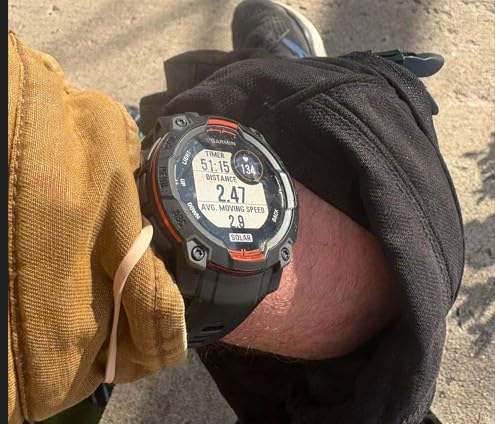
The multi-band GPS with SatIQ and the barometric altimeter make it a genuine open water tool, and at 4.6 stars from 806 reviews it carries the highest rating of the three Garmin devices here. The solar charging lens is the sleeper feature for a swimmer, since a watch that runs for weeks outdoors without a cable is a watch you will actually leave on your wrist in August.
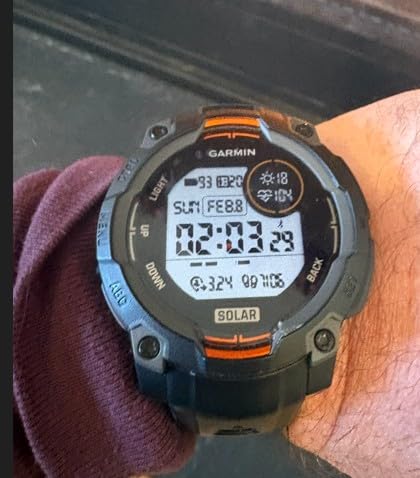
The display is where the compromise lands. The 0.9 inch monochrome memory-in-pixel screen is sunlight visible and exceptionally readable outdoors, but it is small, it is not colour, and under the glare of an indoor pool we found it noticeably harder to read at a glance than the AMOLED options in this list. The 52 gram weight is also substantial, and you feel it when you turn at the wall.
Garmin’s own reviewers are candid that the swimming and pool metrics are less refined here than on a dedicated swim watch. You are buying water resistance, endurance and GPS, not a deeper swim analysis layer.
What tells you this is the right one
Open water swimmers, cold water swimmers, and anyone who has drowned a watch before will feel the most comfortable here. A 10 ATM rating means you are not thinking about the device every time you submerge, and the solar lens means battery stops being a weekly decision.
What should send you elsewhere
Do not choose it for pool interval work. A small monochrome screen and 52 grams are poor companions to 100 repeats, and the swim data will not tell you anything the vivoactive does not. At 806 reviews, there is also less long term owner data behind it than most picks on this page.
10. Sanorum G56 Fitness Tracker: Smart and Comfortable, Best Kept Away From the Pool
Smart Watch for Men/Women, Fitness Tracker with 120+ Sport Modes
- Three replacement bands in the box for sport and daily wear
- Large 1.83 inch AMOLED with custom photo faces
- 24/7 heart rate and SpO2 with full sleep stage monitoring
- Two-year warranty with customer service
- IP68 covers sweat and splashes rather than laps
- Consumer grade heart rate and SpO2 accuracy
- No GPS so no stroke or distance data
The G56 is a basic entry-level device and the one we would be most careful about recommending to a swimmer. Its IP68 rating covers sweat, rain and splashes, and the review consensus is that it handles those well. None of the owners we looked at describes it as a swim training device, and we did not put it in the pool for a full session for that reason.
Everything else about it is reasonable. The 1.83 inch AMOLED is larger than most, the 300 mAh cell gives seven to ten days, Bluetooth calling works, and the 120 sport modes include a swimming entry. The three replacement bands in the box, one nylon, one sport and one silicone, are a genuine bonus and worth remembering when you change bands after a season of chlorine.
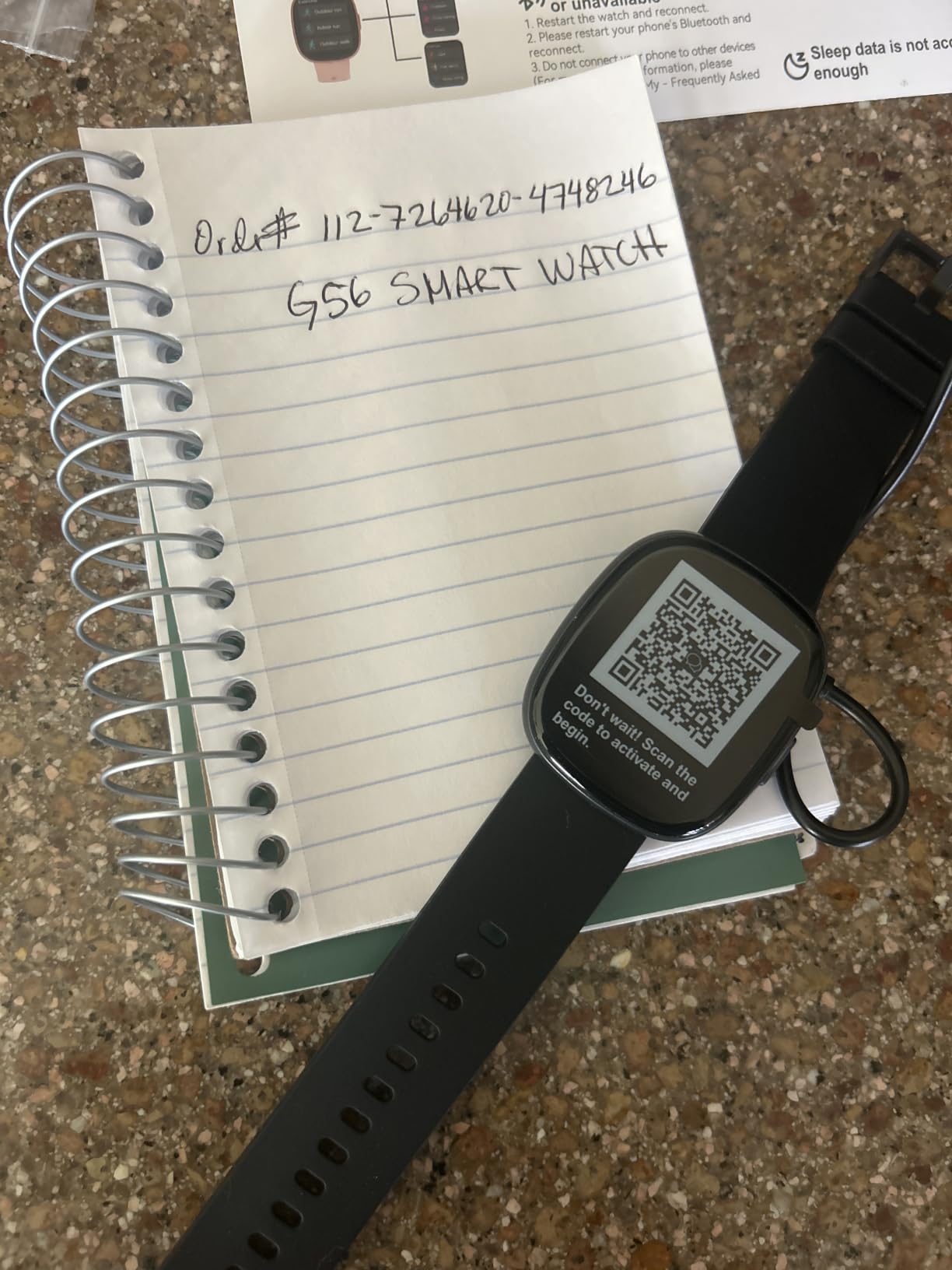
The sensors are consumer grade, and the reviews describe heart rate and SpO2 figures as approximate. There is no built-in GPS at all, so there is no stroke, pace or distance data for open water, and step and calorie counts are rounded estimates. With only 415 reviews, there is also far less long term reliability data behind it than the picks higher up this page.
It works well for dry land training, sleep and step goals, and as a poolside watch for a holiday where you are in the water rarely. That is a real use case. It is simply not a laps, pace and stroke tool.

What tells you this is the right one
If you want general fitness tracking on a small budget and you mostly train on land, the G56 does the job and the included bands are a bonus. It works with both Android and iOS, and the two-year warranty is longer than most at this level.
What should send you elsewhere
Anyone with a regular lane booking should spend more. A splash rating is not a swim rating, and the missing GPS plus consumer grade sensors mean the watch cannot tell you anything about your swimming. It is the right purchase for the changing room, not the water.
Set Your Pool Length Right and Fix Wrong Lap Counts
Across every brand subreddit we read while preparing this, the same complaint appears over and over: the watch over-counts laps. One swimmer on r/Coros attributes roughly ten percent over-counting to pause and rest detection, and a Garmin forum thread about a vívoactive describes exactly the same symptom. In both cases the cause is configuration, not hardware, and both were fixed in the settings menu.
Here is the order we would work through. Fix pool length first, then rest behaviour, then wrist placement, then drill mode.
1. Set the pool length correctly, in the measurement your pool actually uses. A 25 yard pool is 22.9 metres, a 25 metre pool is 27.4 yards, and a 50 metre pool is not 50 yards. Garmin watches let you choose metres or yards in the swim profile, Apple asks for it in the pool workout settings, and Xiaomi’s companion app follows the phone’s measurement setting, which is why some swimmers get a surprise conversion on the Band 10. Recheck this every time you switch pools.
2. Turn on automatic rest detection where the watch has it. Garmin and Apple both offer an auto rest option that treats a pause at the wall as rest rather than a completed length. Without it, a swimmer who hangs on the wall to catch their breath can be credited with a lap they never turned for, and this single behaviour explains a large share of over-counted sets.
3. Check wrist placement before the session. The watch should sit just above the bone on the forearm, snug enough that it does not rotate through your catch. Rotation breaks the accelerometer pattern the watch relies on for lap detection and is the other common cause of missed or phantom lengths. If the watch moves when you push off, the data will move with it.
4. Use drill mode when you are doing drills. If you are swimming a kick set or a pull buoy set, the stroke your watch expects is not the stroke you are swimming, so it will count badly by definition. Logging those minutes as a drill rather than a timed swim keeps the session file honest, and one user in r/Swimming specifically credits Garmin drill mode as the reason their kick sets are usable data.
5. Sync inside range and check the file afterwards. Several swimmers on r/Swimming report swim data failing to transfer when the phone went out of range during the session. Every watch here stores the swim locally and uploads afterwards, so a failed sync is an app or Bluetooth issue rather than lost data, but it is worth confirming the morning after rather than assuming.
How to Choose a Swim Tracker Without Overbuying
Start with the water rating and nothing else. 5 ATM or WR50 is the minimum for lap swimming, 10 ATM or WR100 covers open water and surface work, and EN13319 is the diving standard you only need if you are going below the surface. An IP68 rating on its own is a dust and splash rating and should not be read as swim clearance, no matter what the listing says.
Next decide between a dedicated swim profile and a general smartwatch. Garmin and Apple both run swim as a named sport app with its own metrics, which is what you want if you train to a plan. Generic watches with 100 or 120 sport modes usually record a swim session without analysing it, and a mode count is not a substitute for a proper data layer.
Then check the ecosystem, because this is the decision people regret. An Apple Watch needs an iPhone, the Galaxy Fit 3 in this roundup is Android only with no US warranty, and the Garmin and Fitpolo devices work across both. If you are an iPhone user, that rules out half this list before any swimming feature is considered, and it is worth checking the compatibility note before you order rather than after.
For underwater heart rate, plan on a chest strap. Optical sensors read low on swimming efforts because arm rotation and water break the contact. If you want to train to heart rate zones in the pool, pair your watch with a chest strap and switch the setting to external, and do not expect a wrist reading to match. Nobody on this list solves that in software.
On apps, the difference is bigger than most buyers expect. Garmin data lands in a training ecosystem that serious swimmers and triathletes use for periodisation, and that analysis layer is often the actual reason people upgrade from a cheap band. MySwimPro, SwimTopia, TrainingPeaks and Strava all work differently with different watches, and a swim that never reaches an app you understand is just a number on a screen.
Look at battery against your real week rather than the quoted number. In pool mode GPS is off, so a pool-only swimmer gets far more sessions per charge than a headline GPS figure suggests. A watch rated for eleven days will comfortably handle four pool sessions a week with room to spare, while a twenty-four hour smartwatch needs charging most nights if you also ride or run.
Care matters more than people expect. Rinse the watch in fresh water after every pool session, dry it fully before refastening, and keep hot tubs, saunas and steam out of the equation unless the manufacturer rates for them. Chlorine and heat break down seals and degrade band material faster than swimming time alone, and the warning signs are a strap that feels brittle or a watch that fogs internally.
Finally, consider whether you need a tracker at all. If you swim three times a week, never leave the water and care nothing about pace trends, a simple pace clock on the wall does the same job for a fraction of the setup cost. The trackers earn their place when you want to know whether this set was faster than last month’s, and not before.
If you are still narrowing the field, our guides to the fitness tracker deals and to recovery tools cover what to do with the rest of your training week.
Frequently Asked Questions
What is the best watch for tracking swimming activity?
For pool swimming, the Garmin vivoactive 6 is the strongest all-rounder because swimming is a dedicated sport app with a 50 metre water rating, customisable split and stroke data and roughly eleven days of battery. iPhone owners who want one device for the pool and the phone should choose the Apple Watch Series 11, rated to 50 metres with separate pool and open water modes. The cheapest option that survives a real session is the Xiaomi Mi Smart Band 10 at 5 ATM.
Is Garmin or Apple better for swimming?
Garmin is better for swimming. Swimmers on r/Swimming describe Garmin as the accuracy benchmark and credit the drill mode for making kick and pull sets usable, while users in r/Swimming and r/triathlon report Apple watches counting laps from a brief pause at the wall and logging distance well above what was swum. Apple wins on ecosystem and third party swim apps; Garmin wins on battery life, drill logging and rest detection control.
Which Apple Watch is best for swimming laps?
The Apple Watch Series 11 is the practical choice for laps because it carries a 50 metre water rating, IP6X dust protection and separate pool, open water and multisport swim modes with customisable data fields. The Ultra range adds a 10 ATM style depth rating and diving capability, but the cost and size make it harder to wear through a long set. Either way, turn on automatic rest detection so pausing at the wall is not logged as a lap.
What does the water resistance rating mean on a fitness watch?
ATM and WR ratings measure static water pressure, and they are the numbers that matter for swimming. 5 ATM or WR50 is the minimum for lap swimming, 10 ATM or WR100 covers open water and surface work, and EN13319 is a separate diving standard. IP ratings such as IP68 measure dust and ingress protection only, so an IP68 watch with no ATM or WR figure is generally splash resistant rather than safe for laps.
Why is my heart rate wrong while swimming?
Wrist optical sensors lose contact with the skin during the catch as your arm rotates, and a film of water between lens and skin makes it worse, so readings typically fall low and read erratically on hard sets. Tightening the strap just above the forearm bone helps. For heart rate zone training in the pool, pair the watch with a chest strap and set the heart rate source to external, since no wrist sensor in this roundup matches a strap underwater.
Do I need to rinse my watch after swimming?
Yes, rinse it in fresh water after every session. Chlorine, salt and the minerals in pool water sit in the gaps around the buttons, speaker ports and strap lugs, and they attack seals and degrade band material over time. Rinse, shake off the water, leave the strap unfastened to dry fully, and keep hot tubs, saunas and steam rooms out of the equation unless the manufacturer specifically rates the watch for heat.
The Best Fitness Tracker for Swimmers in 2026
The best fitness trackers for swimmers in 2026 come down to one question: how seriously do you take the numbers. The Apple Watch Series 11 is our editor’s choice for anyone on an iPhone who wants one device to cover the water and the rest of the day. The Garmin vivoactive 6 is the better training tool, with a genuine swim app, rest detection and eleven days of battery. The Xiaomi Mi Smart Band 10 is the pick if you want a durable pool watch with a three-week battery between charges.
For open water, the Garmin Instinct 3 Solar is the only 10 ATM watch we tested and the one we would trust in cold or rough water. For a small wrist and a discreet profile, the Garmin Lily 2 covers pool use without shouting about it. And the three IP68-only watches in this roundup are poolside devices, not swimming watches, however their listings are worded.
Whichever you choose, set the pool length before your first length rather than your fifth, turn on rest detection, and rinse the thing in fresh water when you get out. Those three habits account for more accurate swim data than any hardware difference in this list. And in open water, swim with a buddy, because no watch here can tell anyone you are in trouble.