
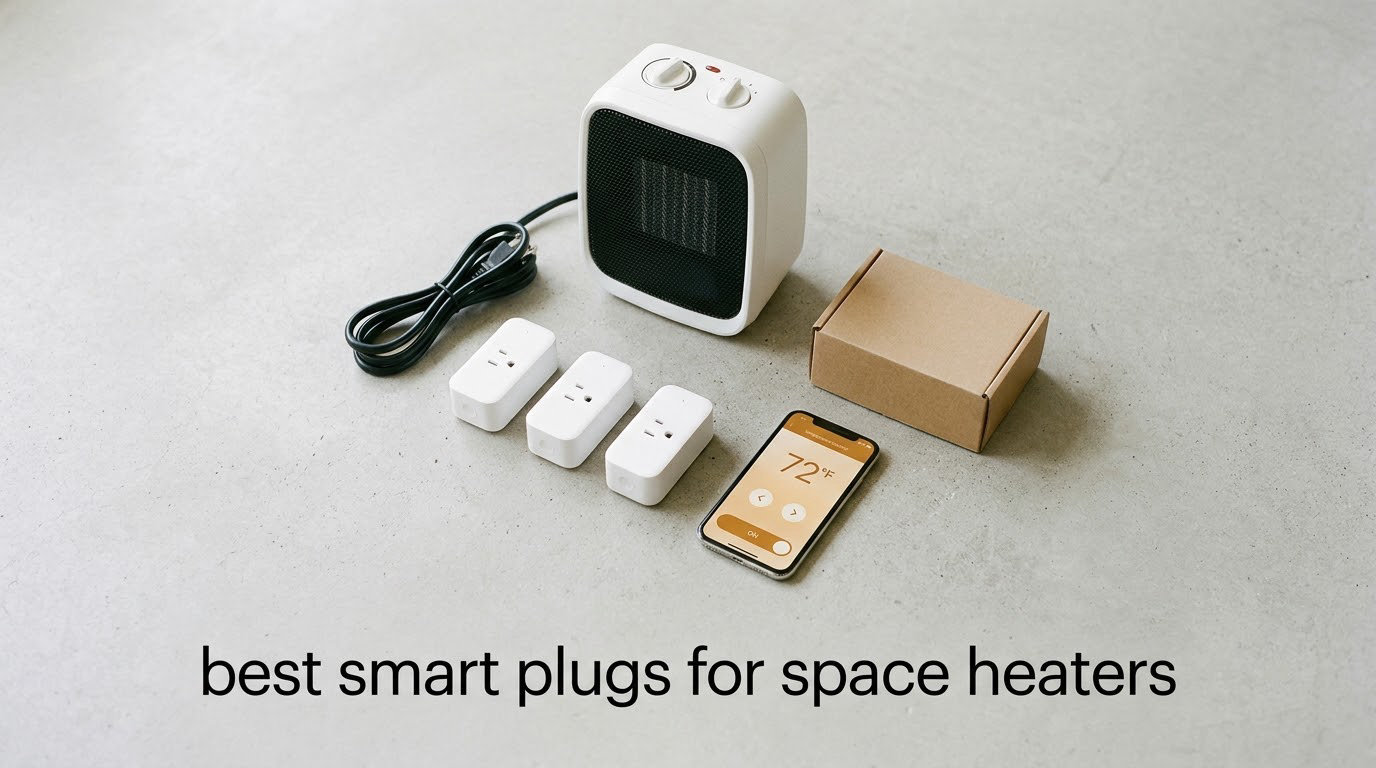
Yes, a smart plug is safe to use with a space heater, with three conditions: the plug’s rated wattage must exceed the heater’s draw with headroom, it must plug straight into a wall outlet rather than an extension cord or power strip, and it should be UL or ETL certified. Almost every plug on the market today is rated 15A, which is 1800W at 120V, so a 1500W heater fits inside a decent plug. The cheap 10A plugs that dominate the bottom of the search results are a different story, and they are the ones that fry.
A portable space heater is the most likely appliance in a house to be switched on by accident and forgotten, because it has no timer, no thermostat dial worth the name, and no memory of what it was doing an hour ago. That is the whole argument for putting a smart plug in front of one. You gain a schedule, a hard cutoff when you leave, and on the right models a real kilowatt-hour readout so you can finally see what the thing costs you per hour.
What you do not gain is a thermostat. A dumb heater on a smart plug is still on or off, nothing in between, so the scheduling has to do the work that a thermostat would otherwise handle. Get that expectation straight before you buy, because it shapes which features matter.
We compared the eight plugs below on the only criteria that decide this purchase: rated amperage, whether they report energy, whether they keep working when the internet does not, and how they behave in the tight outlets that heaters usually end up in. If you have not settled on a heater yet, start with our best space heaters roundup first, because the plug you need depends entirely on what you plug into it.
Table of Contents
Top 3 Smart Plugs for Space Heaters

Kasa Smart Plug HS103
- 15A/1800W rated
- UL certified
- Manual side switch
- Works with Alexa and Google Assistant
Tapo P125M Matter Smart Plug
- 15A/1800W rated
- Matter certified
- Local LAN control
- Compact two-per-outlet body

Kasa KP125MP4 Matter Plug 4-Pack
- Matter plus energy monitoring
- 15A/1800W rated
- LAN control works offline
- Four plugs in one pack
All 8 Smart Plugs Compared in 2026
Every plug on this list is rated for 15A, which is the minimum sensible rating for a 1500W heater. The differences that matter are energy monitoring, Matter support, physical size, and whether the app keeps working when your internet does not.
| Product | Specifications | Action |
|---|---|---|
| Kasa Smart Plug HS103 |
|
Check Latest Price |
| Tapo P125M Matter Smart Plug |
|
Check Latest Price |
| Kasa KP125MP4 Matter Plug 4-Pack |
|
Check Latest Price |
 Tapo P115 Energy Monitoring 2-Pack Tapo P115 Energy Monitoring 2-Pack |
|
Check Latest Price |
 BN-LINK Heavy Duty 15A Smart Plug BN-LINK Heavy Duty 15A Smart Plug |
|
Check Latest Price |
 EIGHTREE 15A Smart Plug 4-Pack EIGHTREE 15A Smart Plug 4-Pack |
|
Check Latest Price |
 Kasa Smart Plug Classic HS105 Kasa Smart Plug Classic HS105 |
|
Check Latest Price |
 Kasa Smart Plug Mini KP115 Kasa Smart Plug Mini KP115 |
|
Check Latest Price |
1. Kasa Smart Plug HS103 — The One to Buy for Most Heaters
- Rated 15A so a 1500W heater fits with headroom
- UL certified with a 2-year warranty
- Manual side switch for local control
- Compact body that leaves the second outlet usable
- Recovers on its own after a router or internet outage
- No energy monitoring
- 2.4 GHz Wi-Fi only with no 5 GHz support
- Bright blue status LED cannot be disabled
- On and off only with no state feedback to voice assistants
The HS103 is the safest generic answer in this whole category, and it is safe for a heater up to 1800W, which covers every portable convection and infrared heater sold in the United States. It carries a 15A rating at 120V, is UL certified, and has a two-year warranty behind it. More importantly, it has a physical switch on the side, so you can turn the heater off without opening an app.
That side switch is not a gimmick when the load is a space heater. If the Wi-Fi drops or your phone is in another room, the heater still needs an off switch that works instantly. Every plug we recommend here has one for the same reason.
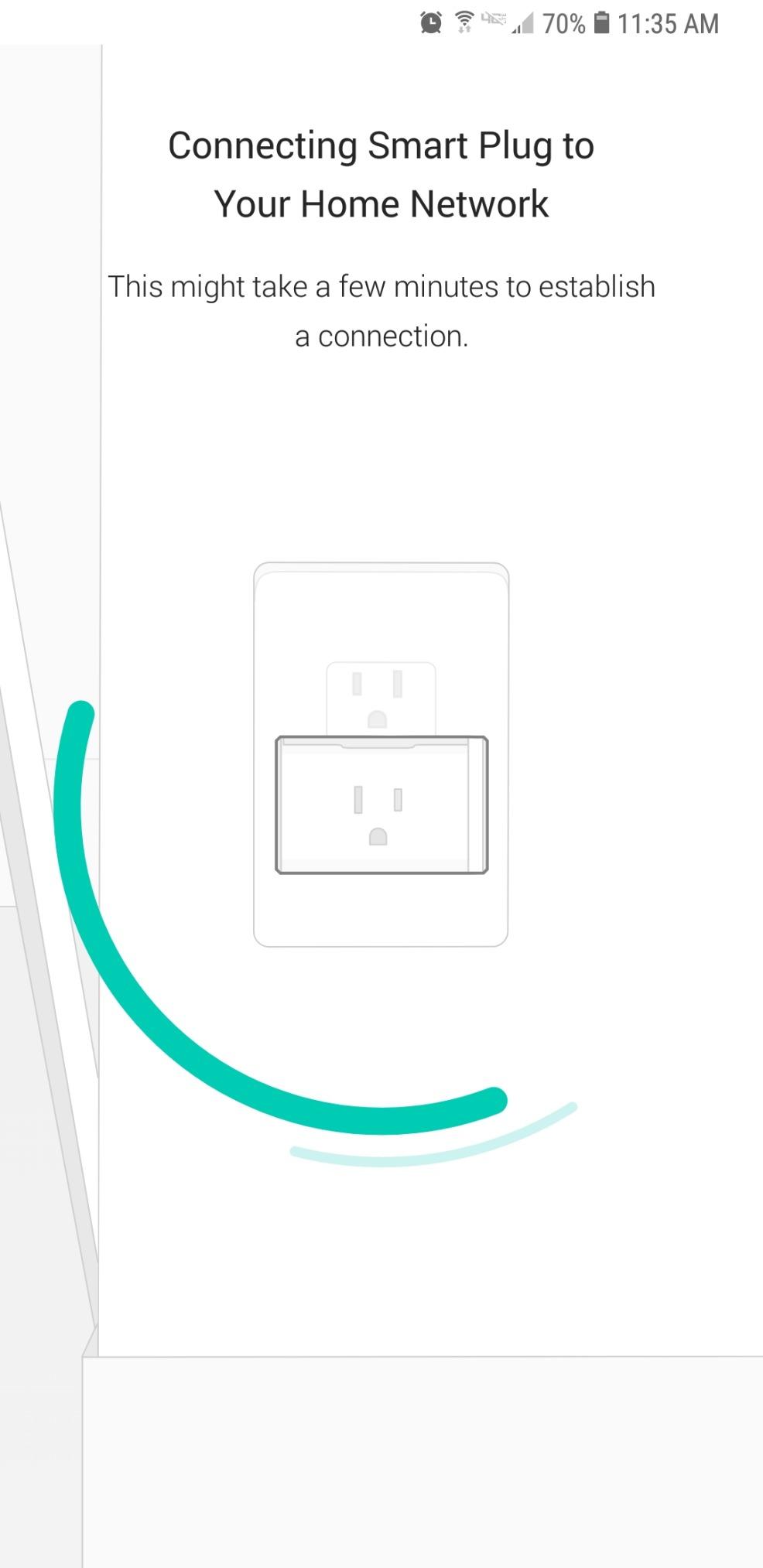
Durability is the real story with this model. Owners report units that have been running for years across dozens of installations, and the recurring theme in reviews is that they reconnect on their own after a router change or an internet outage. The Kasa app handles schedules, countdown timers, and sunrise or sunset triggers, which is everything you need to pre-heat a room before you get up rather than leaving it running all day.
At 1.5 inches deep by 2.62 inches wide by 1.57 inches high and 3.52 ounces, it matches a standard wall plate, which matters in older rooms where the outlets are close together. It also fits two units side by side on a duplex receptacle, so a bedroom with one outlet can still run a heater and something else.
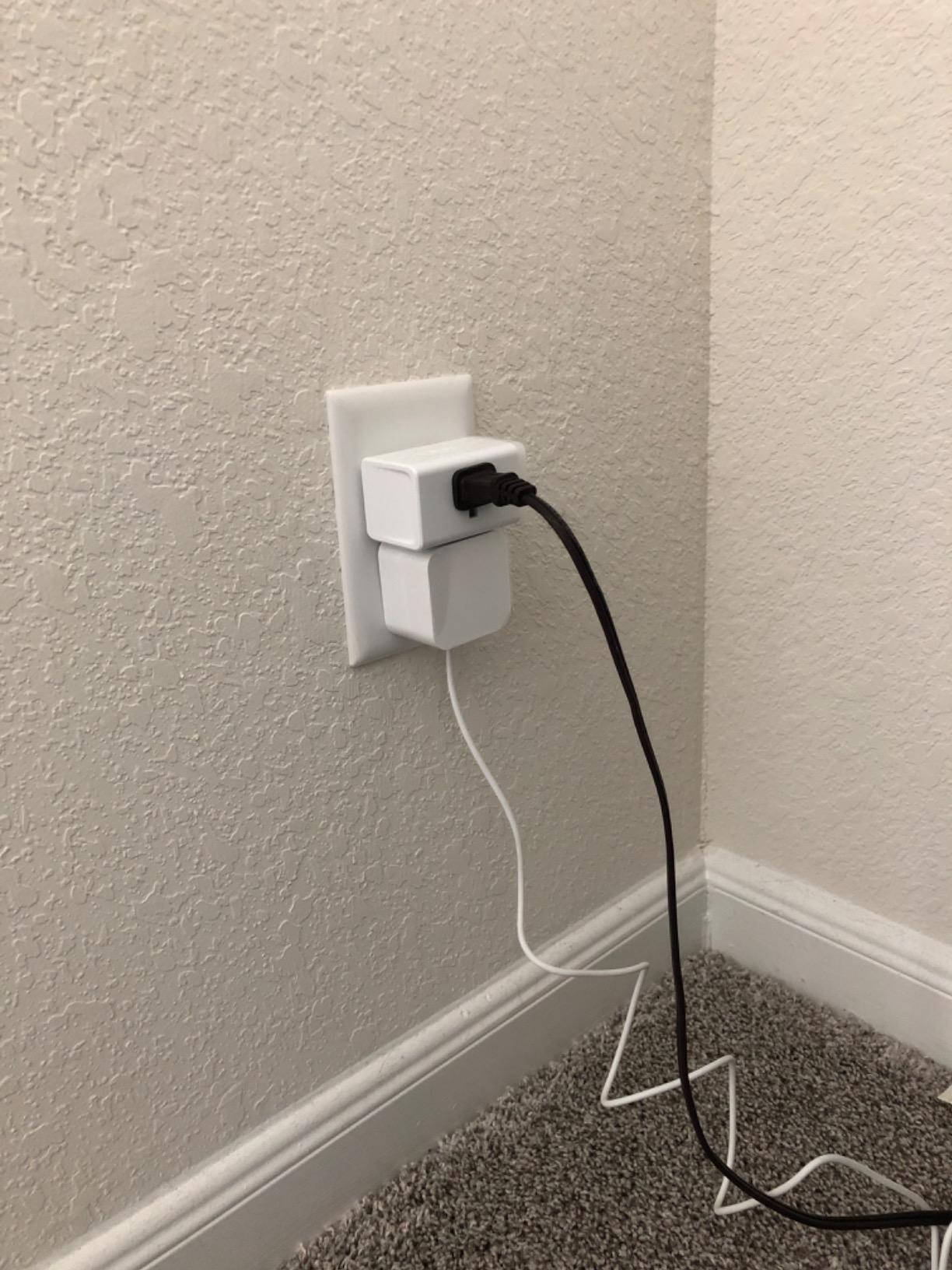
What the HS103 handles well with a heater
The 15A rating gives you real headroom against a 1500W heater, which draws about 12.5 amps steady. The headroom matters because electric heating elements pull a spike of current for the first fraction of a second as the coils come up to temperature. A plug sized exactly to the load has no margin for that spike. This one has roughly 2.5 amps of it.
It also handles the boring reliability requirement well. Reconnects after an outage, keeps a schedule, and works with Alexa and Google Assistant without a hub. If you have been running a heater on a mechanical timer, this is the same idea with better logging.
Where the HS103 falls short
There is no energy monitoring, so you get an on and off state but not a kilowatt-hour reading. If you want to know what your heater actually costs per hour, you would need the KP115 or the P115 instead. That is the single biggest gap and it is worth weighing before you buy.
It is also 2.4 GHz only, and the blue status LED is bright enough that some owners keep a piece of tape over it. Neither is a safety issue, but both come up constantly in reviews.
2. Tapo P125M Matter Smart Plug — Best If You Already Own a Smart Home
- Matter certified so it joins Apple Home
- Alexa
- Google Home and SmartThings at once
- Keeps working over the local network when the internet is down
- UL certified flame-retardant body
- Advanced scheduling and countdown timers
- Compact enough for crowded outlets
- No energy monitoring on this variant
- 2.4 GHz network needed for first setup
- Compact body will not always fit two plugs on the same outlet
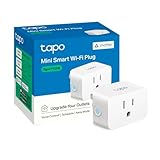
The Tapo P125M is safe for heaters up to 1800W and is the pick to make if you have ever been frustrated by a smart home device that would only join one ecosystem. It is Matter certified, so the same plug appears in Apple Home, Amazon Alexa, Google Home, and Samsung SmartThings at the same time, and you control it from whichever app you happen to have open.
That matters more than it sounds for this use case. A heater is a safety-relevant appliance, and the most common complaint about cloud-only plugs is that they stop responding when a company changes a server or shuts a service down. Matter is not a guarantee against that, but local control is a real step in the right direction.
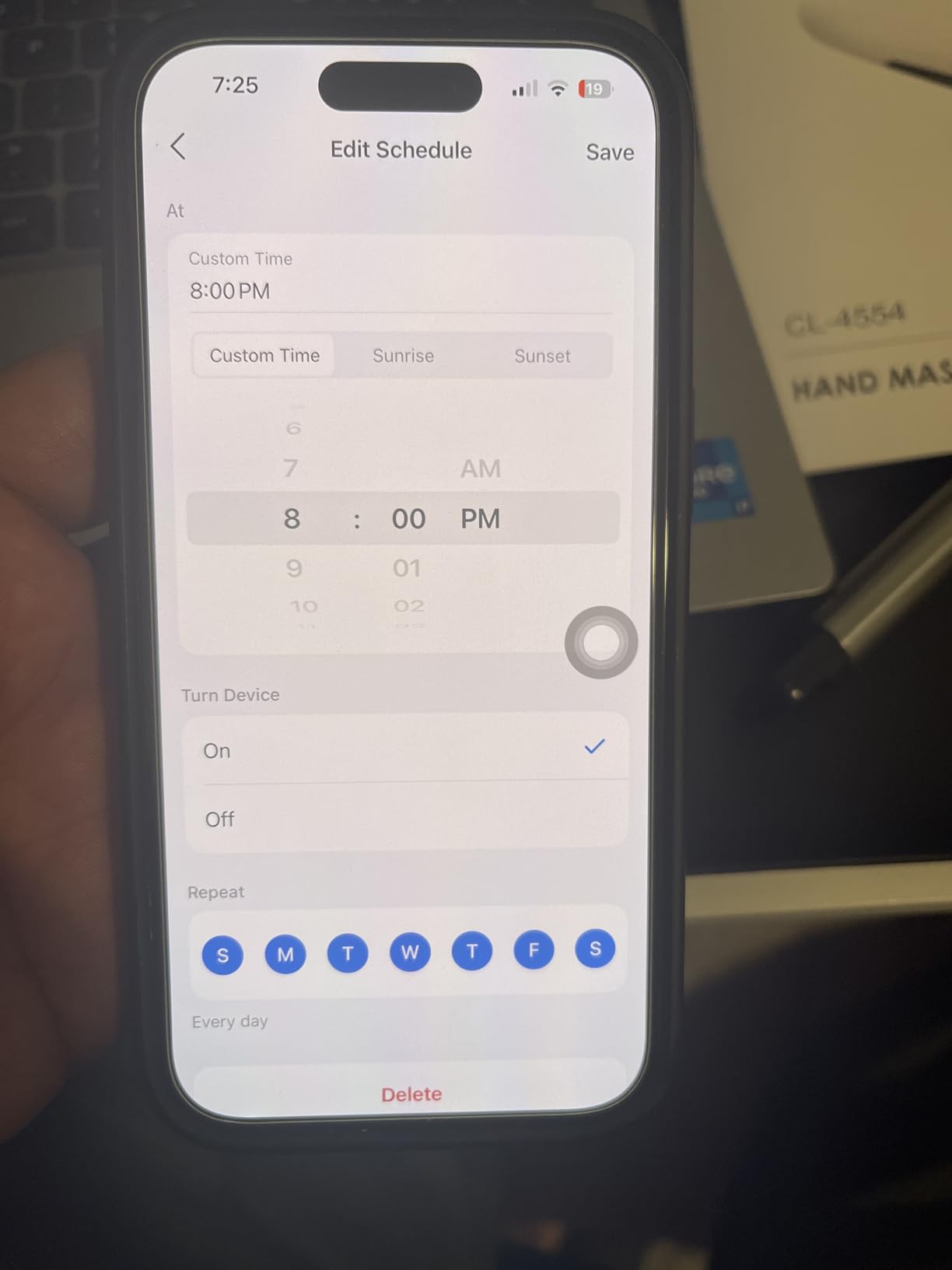
This one keeps operating over the local network even when your internet is out. For a heater, that is not a party trick. It means a scheduled off still fires during an outage, and it means you can still reach the plug from the couch when the router is down.
At 2.36 by 1.5 by 1.3 inches, it is among the smaller bodies here, and it is UL certified with a two-year manufacturer warranty. Metal contacts and a normally closed contact type add a little margin on a high-draw load. Reviewers consistently call out the LAN control and the small footprint as the reasons to pick it over a cloud-only plug of similar price.
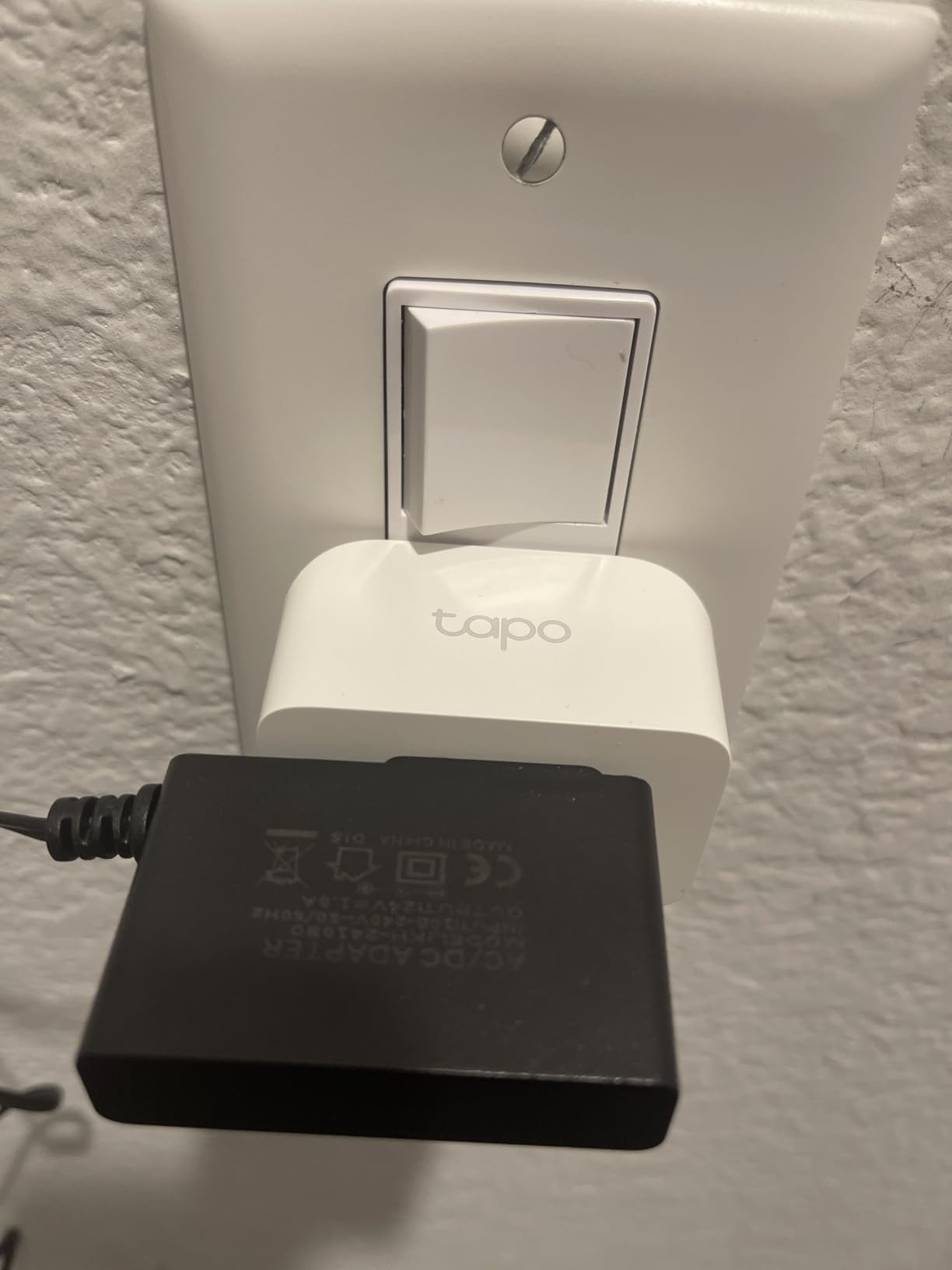
Where the P125M earns its place
If you own a mixed-brand setup, this removes the usual compromise. The 15A rating and UL certification cover a 1500W heater with headroom, and the DIP switch and app controls give you local and remote options in the same box.
For a renter, the fact that it needs no hub and no wiring is a genuine advantage. You can move it between the bedroom, the office, and the garage in the time it takes to unpack a box.
Where the P125M is not enough
No energy monitoring. You will not see kilowatt-hours or cost, so if your goal is to prove to yourself that heating one room beats heating the house, you need a different plug or a different approach.
The 2.4 GHz setup requirement trips people up more than it should, and the compact body means two units will not always fit on a duplex outlet. If your room has one socket and two things to power, plan around that.
3. Kasa KP125MP4 Matter Plug With Energy Monitoring — Best for Multiple Rooms
- Energy monitoring built into a Matter-compatible 15A plug
- Works with Apple Home
- Alexa
- Google Home and SmartThings
- Continues over the LAN when the internet is cut
- Four plugs cover several rooms at once
- UL
- FCC and RoHS certified with a two-year warranty
- Highest cost per plug in this group
- Lowest average rating here at 4.3 with 9% one-star reviews
- Pairing can be finicky across several platforms
- Two plugs will not always fit side by side
The KP125MP4 is safe for heaters up to 1800W and it is the one plug here that gives you both things at once: Matter interoperability and real energy monitoring. That combination does not exist anywhere else in this roundup, and it is why a four-pack of these makes sense if you are heating more than one room on a schedule.
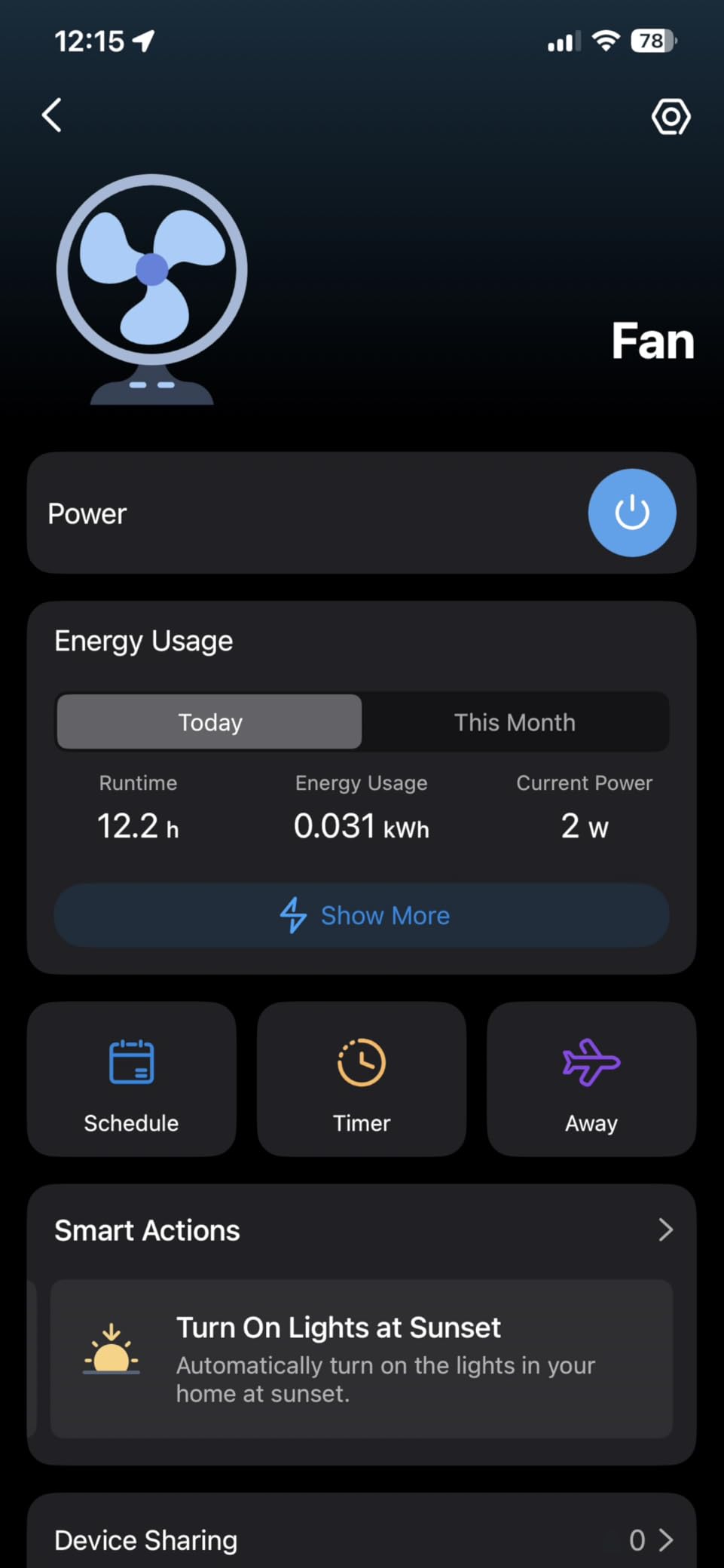
Energy monitoring sounds like a minor feature until you put it on a space heater. A 1500W heater drawing 1.5 kWh for an hour is a very visible line on a graph, and after a week of watching it you stop guessing about your heating habits. The same reading is how you find out whether your heater is actually drawing what its nameplate claims.
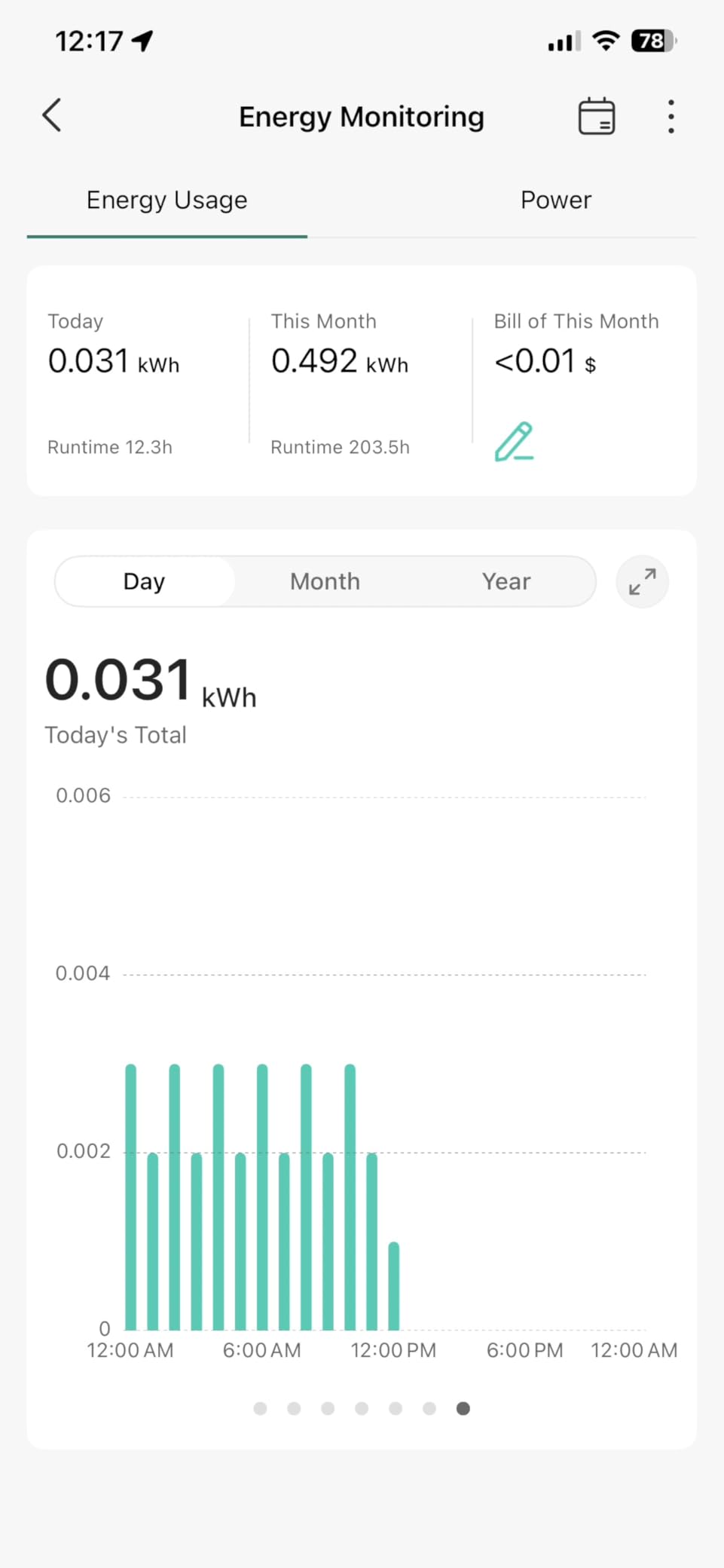
The 15A rating and UL, FCC, and RoHS certification put it in the same safety class as the rest of the shortlist, and the copper contacts and normally open contact type are appropriate for a resistive load that runs for hours at a stretch. The two-year warranty is there as well.
It continues to operate locally over the LAN when the internet is interrupted, so schedules hold. At 2.62 by 1.57 by 1.5 inches it is bulkier than the mini plugs, and reviewers note that two of them will not always sit side by side on one receptacle. Rated to 104 degrees Fahrenheit at the top end, it handles a warm outlet box without complaint.
Why buy four instead of one
Heating one room instead of the whole house is the single biggest lever most households have. A scheduled bedroom heater, an office heater, and a garage heater that only runs while you are in the garage is a coherent setup, and a four-pack is the practical way to run it.
Because each plug meters independently, you also get a room-by-room picture of where the kWh actually goes. That is far more useful than a monthly total.
The drawbacks are real
This is the most expensive per plug in the group, and it has the weakest average rating here at 4.3, with about 9% of reviews at one star. Owners most often point to app and pairing friction across multiple platforms at once, which is the cost of a device that tries to appear in four ecosystems.
Reviewers also note that two units will not always fit side by side. In an older room with one tight duplex outlet, budget for a different model.
4. Tapo P115 Energy Monitoring Smart Plug — Best for Seeing What Heating Costs
- Clear energy charts and daily
- weekly and monthly usage totals
- Can estimate cost by linking a utility billing account
- Scheduling supports off-peak electricity rates
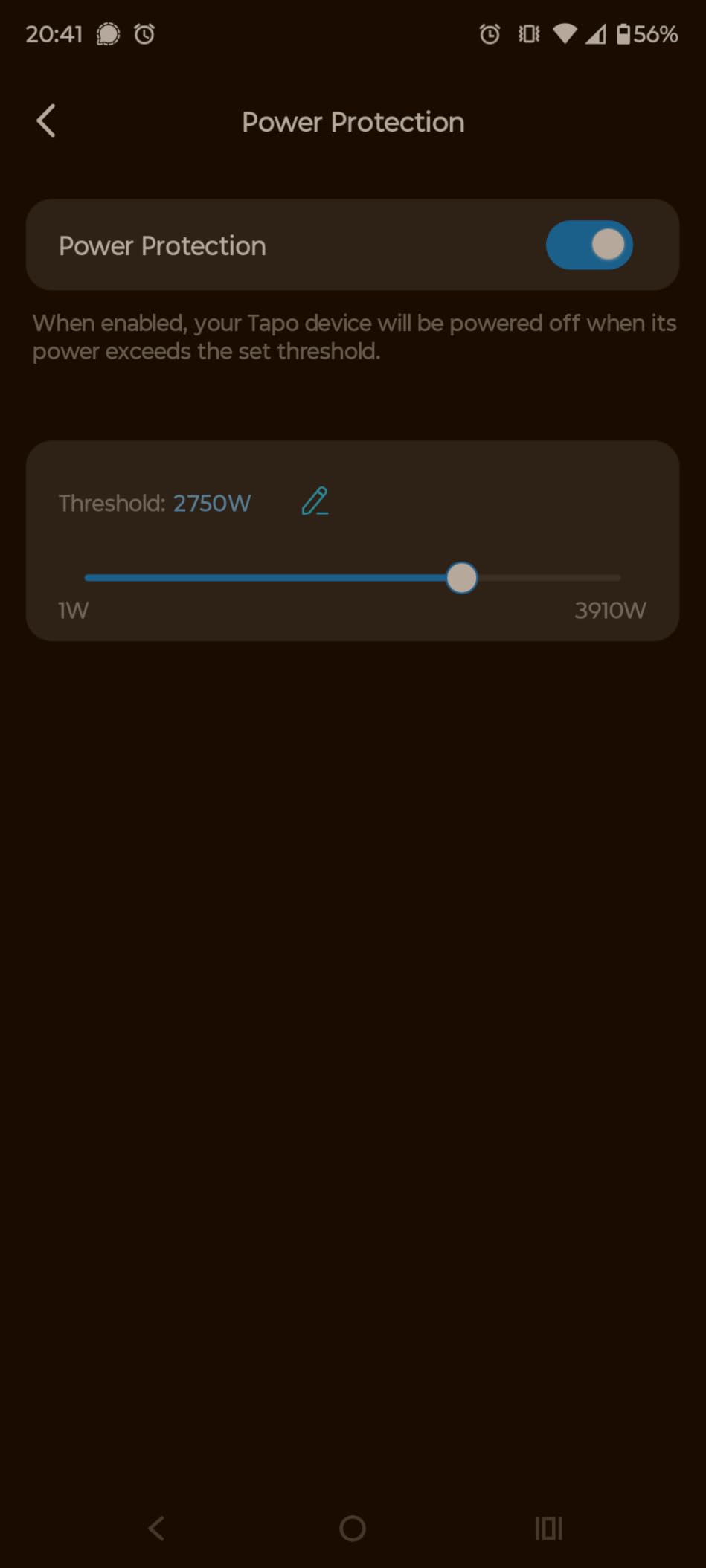
- Auto-shutoff protection against overload
- Two pack covers two outlets
- Not Matter certified so it will not join newer ecosystems
- Voice assistant support is narrower than Matter models
- Cost estimate depends on linking a utility account
- 2.4 GHz Wi-Fi required
The Tapo P115 is safe for heaters up to 1800W and is the most straightforward answer to the question I get asked most: what is my space heater actually costing me. The energy interface is the reason to pick it, with clear charts, historical totals, and a cost estimate once you connect a billing account.
Reviewers single out the bill estimation and the ability to schedule high-draw devices around off-peak rates as the features that justify the plug. If your utility offers time-of-use pricing, running a heater on a schedule during cheap hours can cut the cost of the same heat significantly.
The 15A rating, copper and brass contacts, and ETL certification put it firmly in the safe class for a 1500W heater. It is rated up to 40 degrees Celsius, polycarbonate construction, and a normally open electronic switch, which is the right architecture for a load that cycles on and off all evening.
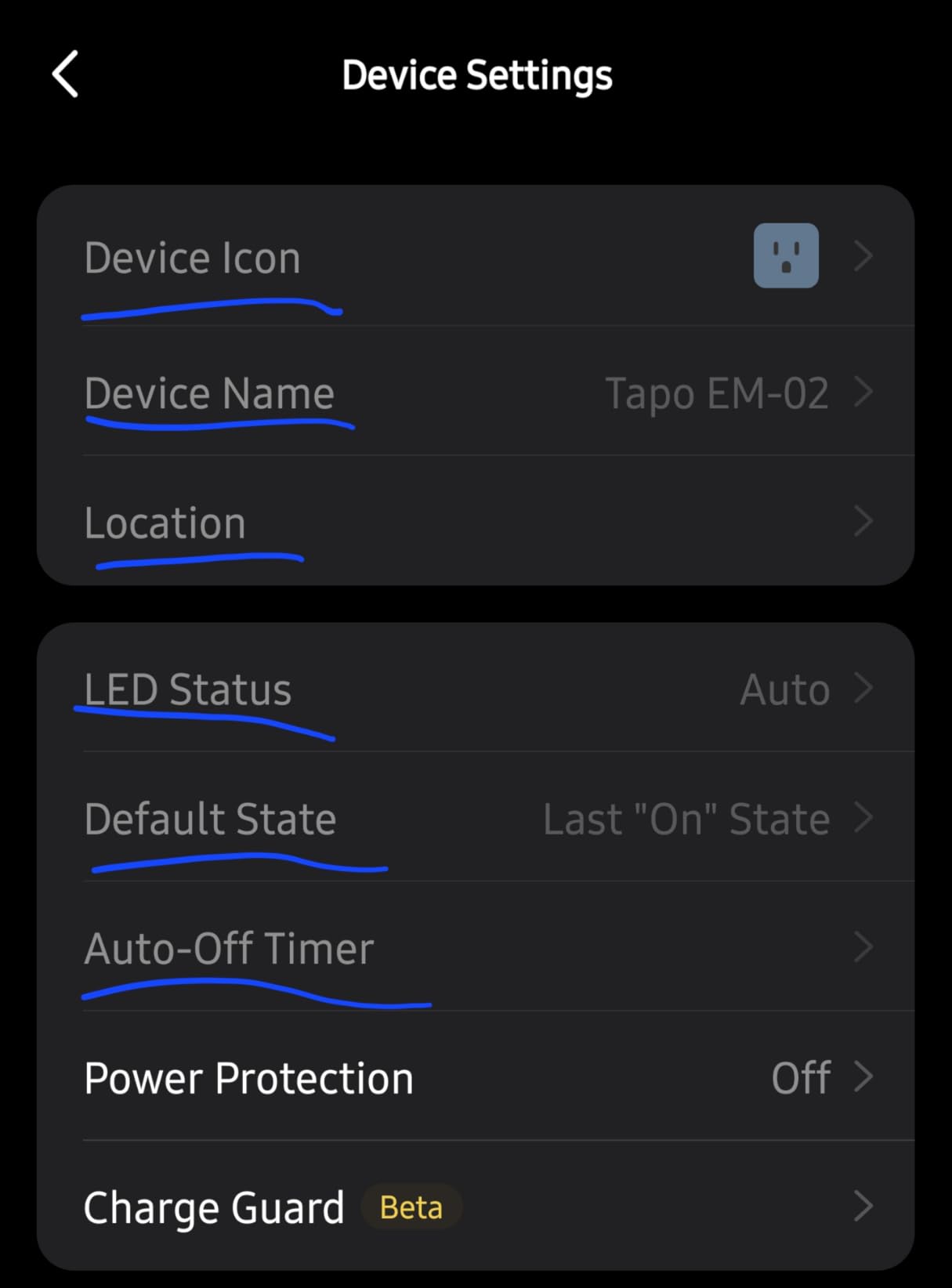
There is also an auto-shutoff feature that protects against electrical overload, and smart charging that cuts power at a set battery level. The two-pack format is the practical way to cover a bedroom and an office without ordering twice.
Why the metering is better here
The app charts are genuinely the point of this plug. Heaters are the largest single-draw item most people own, and a real kWh number changes how you schedule it. Owners who have used it report the interface being the clearest of the energy-monitoring options they have tried.
Linking a billing system and using off-peak scheduling is the feature that turns a monitor into a savings tool. It does require a little setup work, but it is a one-time thing.
What you give up
It is not Matter certified, so it will not join newer ecosystems and it is the narrower choice for voice assistant integration. That is the trade for better metering than its Matter-equipped sibling offers.
Cost estimation also depends on linking a utility account, and the 2.4 GHz network requirement is still there. If you run a 5 GHz only network, you will hit a wall during setup.
5. BN-LINK Heavy Duty 15A Smart Plug — Best for the Highest Rated Load
BN-LINK WiFi Heavy Duty Smart Plug Outlet, Work with Smart Life, 2.4G Only
- Highest stated wattage rating in this group at 1875W
- ETL certified at 15A and 125V
- Works with the Smart Life app alongside mixed-brand gear
- Group and share control lets family members manage it
- Alexa and Google Assistant without a hub
- No energy monitoring despite the heavy-duty rating
- 2.4 GHz Wi-Fi only
- Largest body here and it blocks the adjacent outlet
- Smart Life app is less polished than Kasa or Tapo
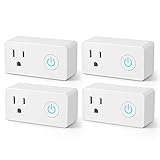
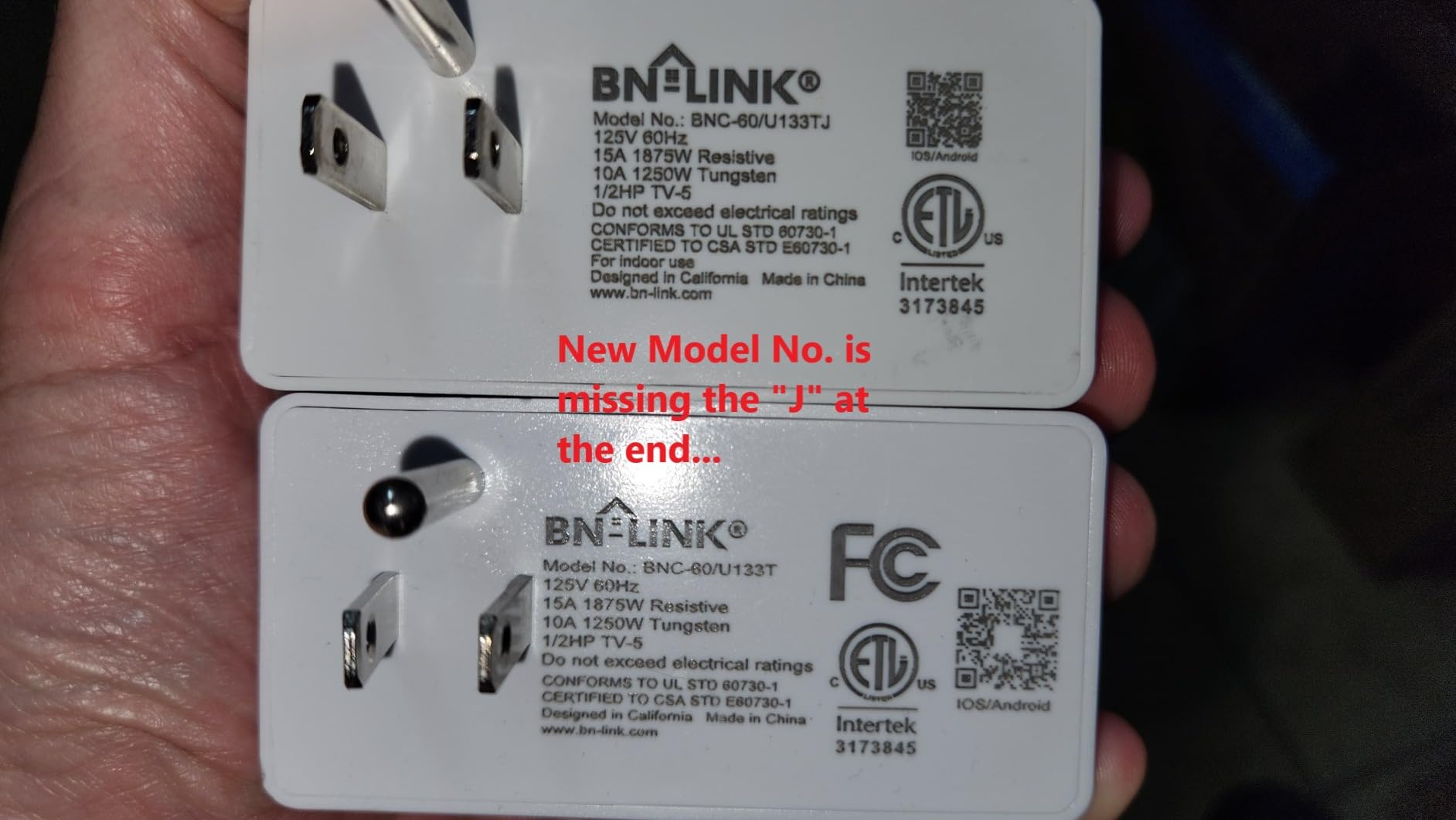
The BN-LINK BNC-60 is safe for heaters up to 1875W, the highest stated load capacity in this roundup, and it is worth a look if you want every last watt of margin under a 1500W heater. It is rated 15A at 125V, ETL certified, and sold as a four pack.
That rating is the entire pitch. Everything else about this plug is standard Smart Life fare, and the reason people choose it is that the number on the box is higher than everyone else’s. For a resistive load that pulls current for hours, extra margin is not a bad thing to have.
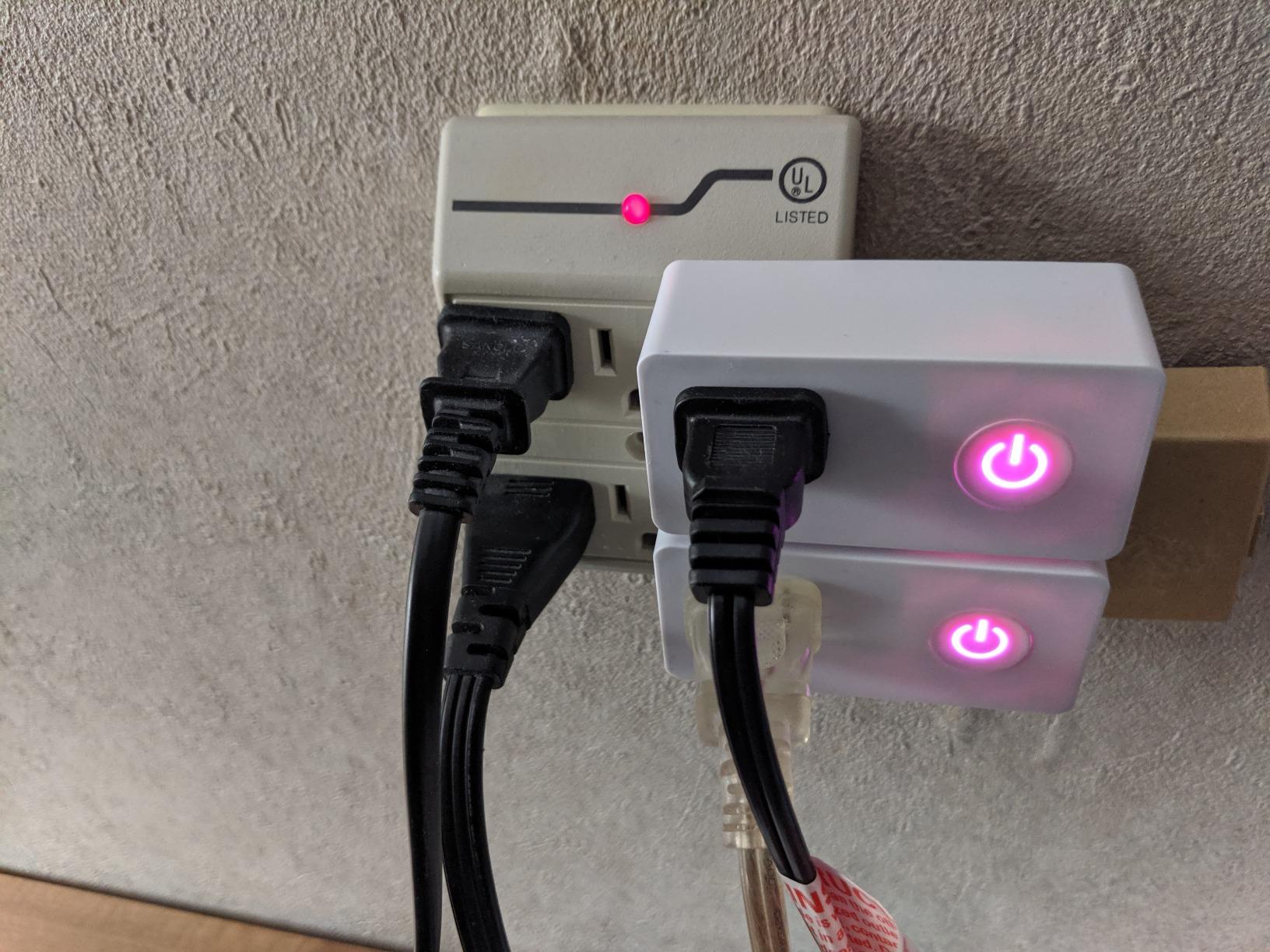
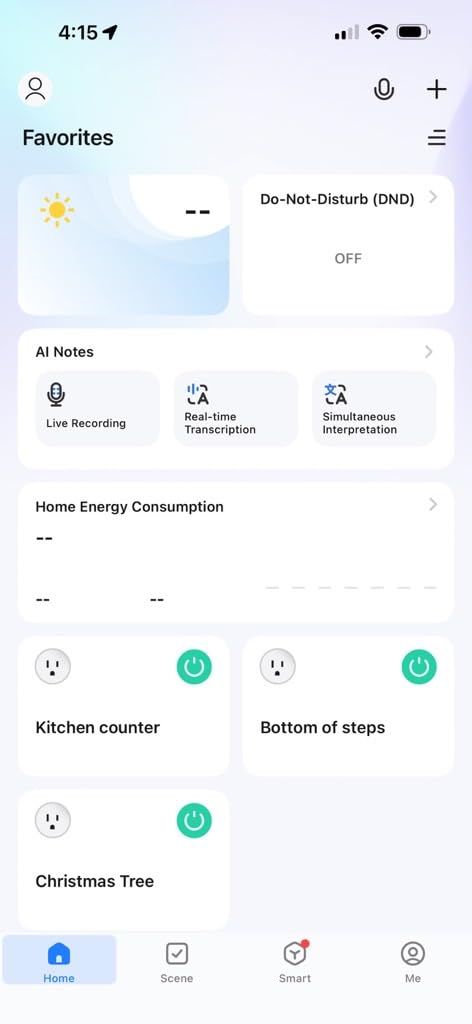
It works with the Smart Life app, which is the same ecosystem as the EIGHTREE plug further down, and it joins existing mixed-brand setups without a fight. Group and share control lets other people in the house manage it from their own phones, which matters if the person using the room is not the person who set up the smart home.
Owners also point to it being a good fit for hard-to-reach appliances, and for anyone who wants to cut power to a device without walking over to it. The push-button actuator gives you a physical off, and Alexa and Google Assistant work without a hub.
What makes it worth considering
At 15A and 1875W, this has the most headroom of anything we looked at, roughly 3 amps above what a 1500W heater pulls at steady state. That margin absorbs inrush current comfortably, which is where cheaper plugs tend to give people trouble.
It is also the option for a mixed-brand house already running Smart Life. Migrating your heater onto a different app for no reason helps nobody.
The trade-offs are physical and digital
At 3 by 2 by 2 inches and 12 ounces, this is the largest body in the group and it blocks the adjacent outlet. In a room with a single duplex receptacle that is a real problem, and it is why it is not our first pick.
There is no energy monitoring at all, despite the heavy-duty rating, which is a strange place to save money. The Smart Life app is also less polished than Kasa or Tapo, and this plug carries the highest share of one-star reviews here at about 10%, with a 4.2 average.
6. EIGHTREE 15A Smart Plug — Best Compact Option for Tight Outlets
EIGHTREE 15A Smart Plug Works with Alexa & Google Home, Smart Outlet 4 Pack
- Explicitly designed and marketed for 15A loads such as heaters
- Thin 1.2 inch body fits behind furniture and into crowded outlets
- Bluetooth-assisted fast setup with no hub
- Works with Alexa
- Google Home and SmartThings
- Four pack with timers
- countdowns
- routines and group control
- Listed wattage in the spec sheet does not match the 15A claim
- No energy monitoring
- 2.4 GHz Wi-Fi only
- Runs on the Smart Life app rather than Kasa
- Tapo or Matter
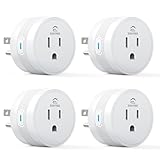
The EIGHTREE ET01 is sold for 15A loads, which covers a 1500W heater, and its selling point is thickness. At 1.2 inches it is the thinnest plug in this roundup, and for a heater pushed behind a sofa or a dresser that is the difference between fitting and not fitting.
Most heaters live in awkward places. A bedroom heater sits behind a nightstand, an office heater gets wedged against a baseboard, and a garage heater is wherever there was floor space. A plug that is 1.2 inches deep removes a real category of frustration.
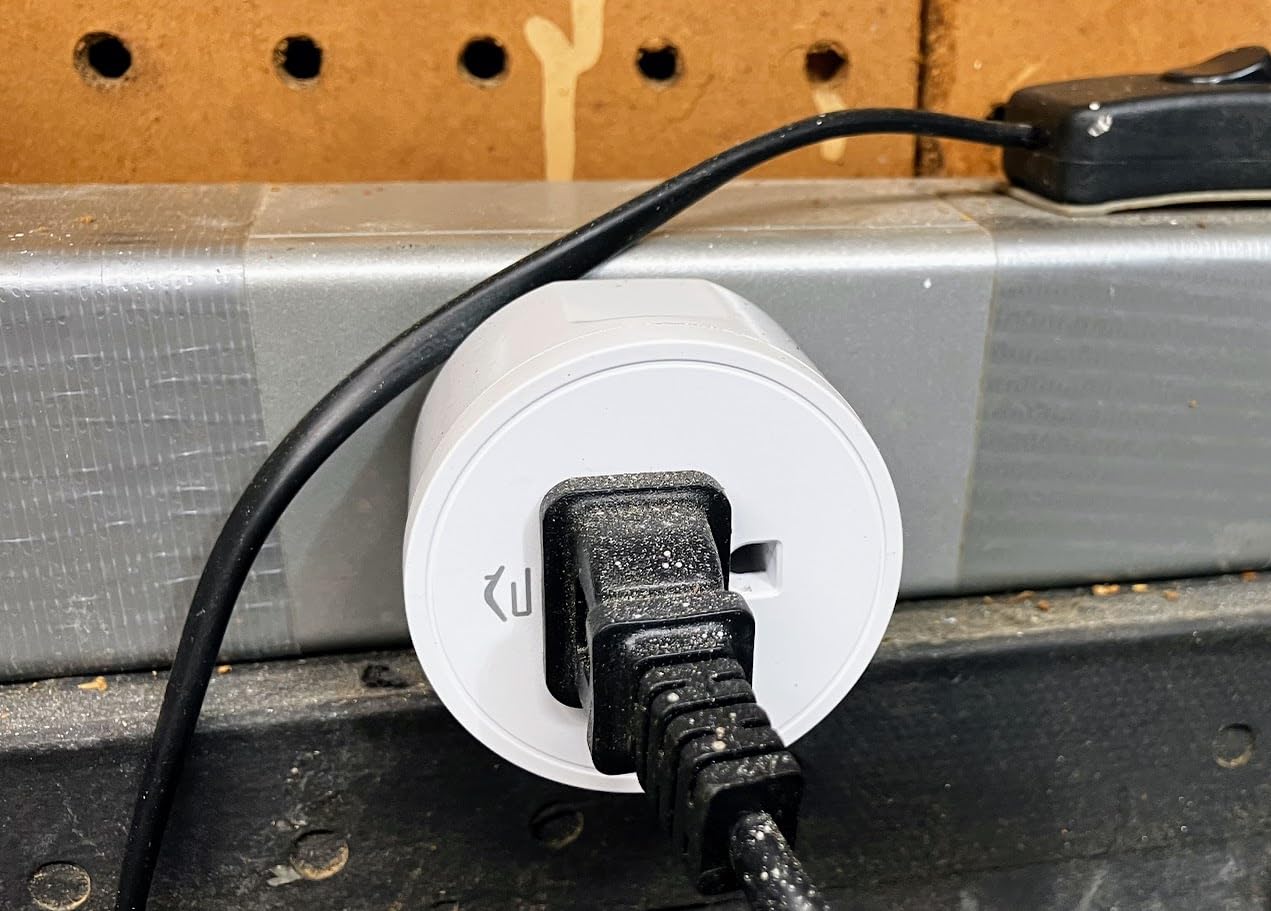
It is ETL certified, rated 15A at 120V, and works through the Smart Life app with Alexa, Google Assistant, and SmartThings, with no hub required. Bluetooth-assisted setup makes the initial pairing fast, which is a genuine improvement over a purely Wi-Fi provisioning flow. The four pack includes timers, countdowns, routines, and group control.
Its IP44 rating and an upper temperature rating of 50 degrees Celsius make it a reasonable choice for a garage or basement where conditions are less controlled. Reviewers consistently name the 15A rating as the deciding factor for high-draw appliances like heaters and air fryers.
Where the thin body pays off
Two plugs on one duplex outlet is the common situation, and a 1.2 inch profile means the second one still fits. That is not a small detail in a room with one outlet where you also need to charge a phone or run a lamp.
Bluetooth-assisted setup, routines, and group control cover the scheduling needs well. Four plugs in one pack is also the efficient way to cover a whole floor.
The specification conflict you should know about
The marketing claims 15A, and the product is clearly designed for high-draw loads, but the listed wattage in the spec sheet does not match that 15A claim. Read the fine print on the actual box, because the number printed on the device is the one that matters for safety.
There is no energy monitoring, it is 2.4 GHz only, and it lives in the Smart Life ecosystem rather than Kasa, Tapo, or Matter. If you are starting a new smart home instead of extending an existing one, a Matter plug is the better foundation.
7. Kasa Smart Plug Classic HS105 — Best When You Need Two in One Outlet
Kasa Smart Plug Classic 15A, Smart Home Wi-Fi Outlet Works with Alexa & Google Home, No Hub Required, UL Certified, 2.4G WiFi Only, 1-Pack(HS105), White
- Compact enough to fit two plugs side by side on a duplex outlet
- Kasa scenes let one control rule handle many devices
- Works with Alexa
- Google Assistant and Cortana
- Straightforward scheduling in the Kasa app
- UL certified with a two-year warranty
- No energy monitoring
- 2.4 GHz secured network required with no 5 GHz
- Older and larger than the current Kasa mini plugs
- Not Matter compatible
The Kasa HS105 is rated 15A at 120V, is UL certified, and carries a two-year warranty, so it handles a heater up to 1800W without question. The reason it is still worth including is its physical footprint, which lets two units sit side by side on a duplex outlet.
That single feature solves the most common layout problem in older rooms. If your only outlet is a duplex and you want the heater plus a lamp on a schedule, the HS105 gets both in.
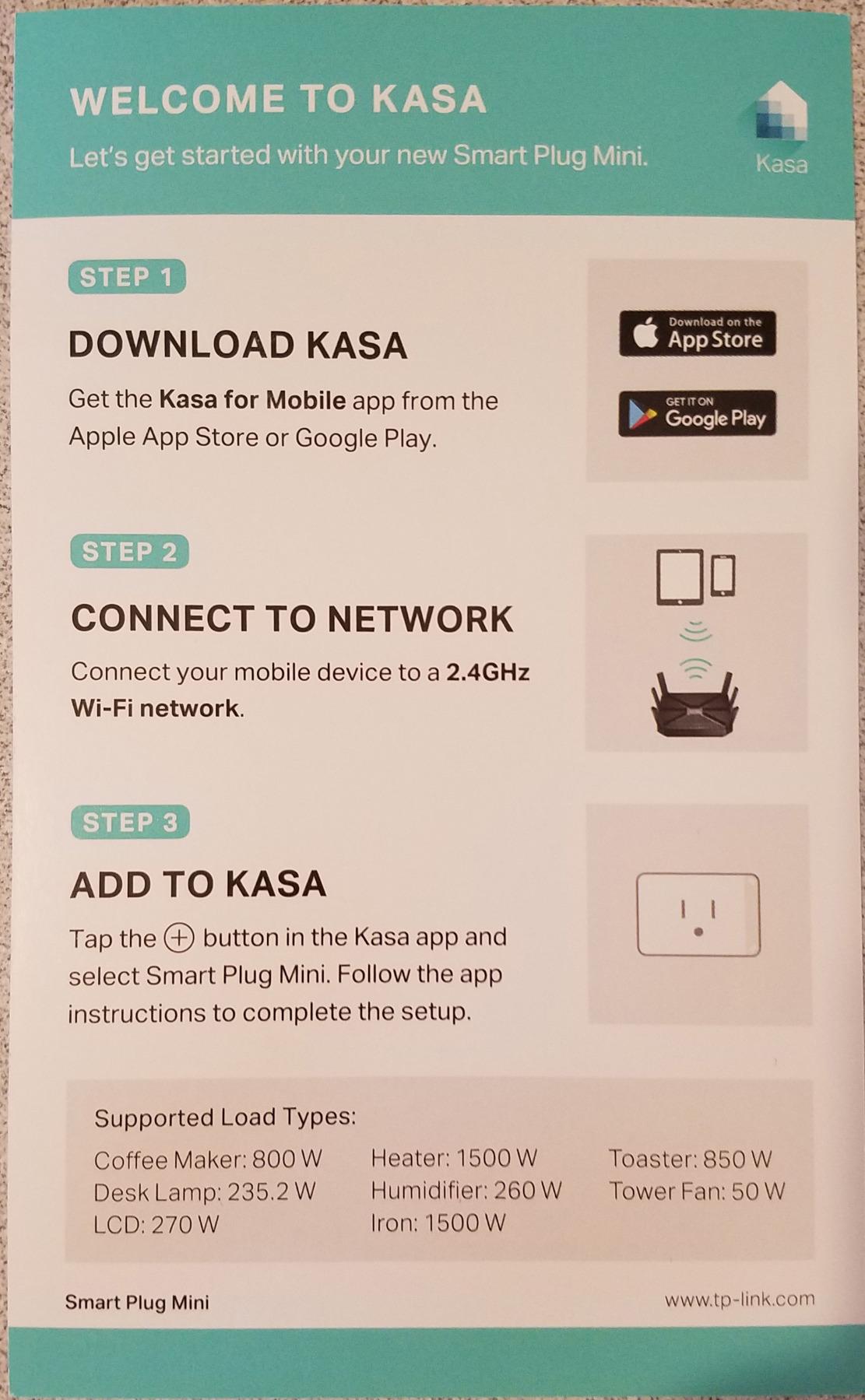
Kasa scenes are the underrated feature here. A scene is a named rule that controls several devices at once, so one tap can turn the bedroom heater, the lamp, and the plug under the desk on together, and one tap turns them all off at bedtime. That is closer to a thermostat experience than the bare on and off you get from most plugs.
It works with Alexa, Google Assistant, and Cortana with no hub, at 3.52 ounces, and the app scheduling is straightforward. Reviewers report long-term reliability and value the two-per-outlet fit more than anything else.

Why the two-per-outlet fit still matters
Older homes often have one usable receptacle per room, and heaters are usually plugged into the one nearest the cold wall or the window. If the plug is too deep, you are left unplugging the lamp to run the heater, which defeats the point of automating anything.
The HS105 sidesteps that, and the scenes feature gives you a one-touch bedtime cutoff that a bare schedule cannot.
Where it is behind the curve
There is no energy monitoring, and it is not Matter compatible, so it will not join Apple Home or a newer SmartThings setup. If you are building a smart home now rather than extending an existing Kasa install, that is a real limitation.
It also needs a secured 2.4 GHz network, and the design is older and physically larger than the current Kasa mini plugs. Two years in, the HS105 is the sensible buy for a Kasa household and a dated choice for a new one.
8. Kasa Smart Plug Mini KP115 — Budget Pick With Energy Monitoring
- Real-time energy monitoring with daily
- weekly and monthly totals
- Compact body fits two plugs in a duplex outlet
- Keeps working locally over the LAN without cloud access
- Overheating protection
- fireproof shell and sliding child safety cover
- UL certified with a two-year warranty and IFTTT support
- Energy usage counter cannot be reset in the app
- Recent firmware removed local API access for custom scripting
- No on-device display so readings need a phone
- 2.4 GHz Wi-Fi only
The Kasa KP115 is rated 15A and 1800W, so it handles a 1500W heater with the same headroom as the other picks, and it adds real-time energy monitoring on a compact body. At 2.62 by 1.57 by 1.5 inches it fits two plugs in a duplex outlet, which combines the two things people most often have to choose between.
It is the one we would hand to someone who wants both a safe heater plug and a real kWh number without paying for the premium Matter model. Overheating protection, a fireproof shell, and a sliding child safety cover make it a sensible choice for a bedroom or a child’s room.
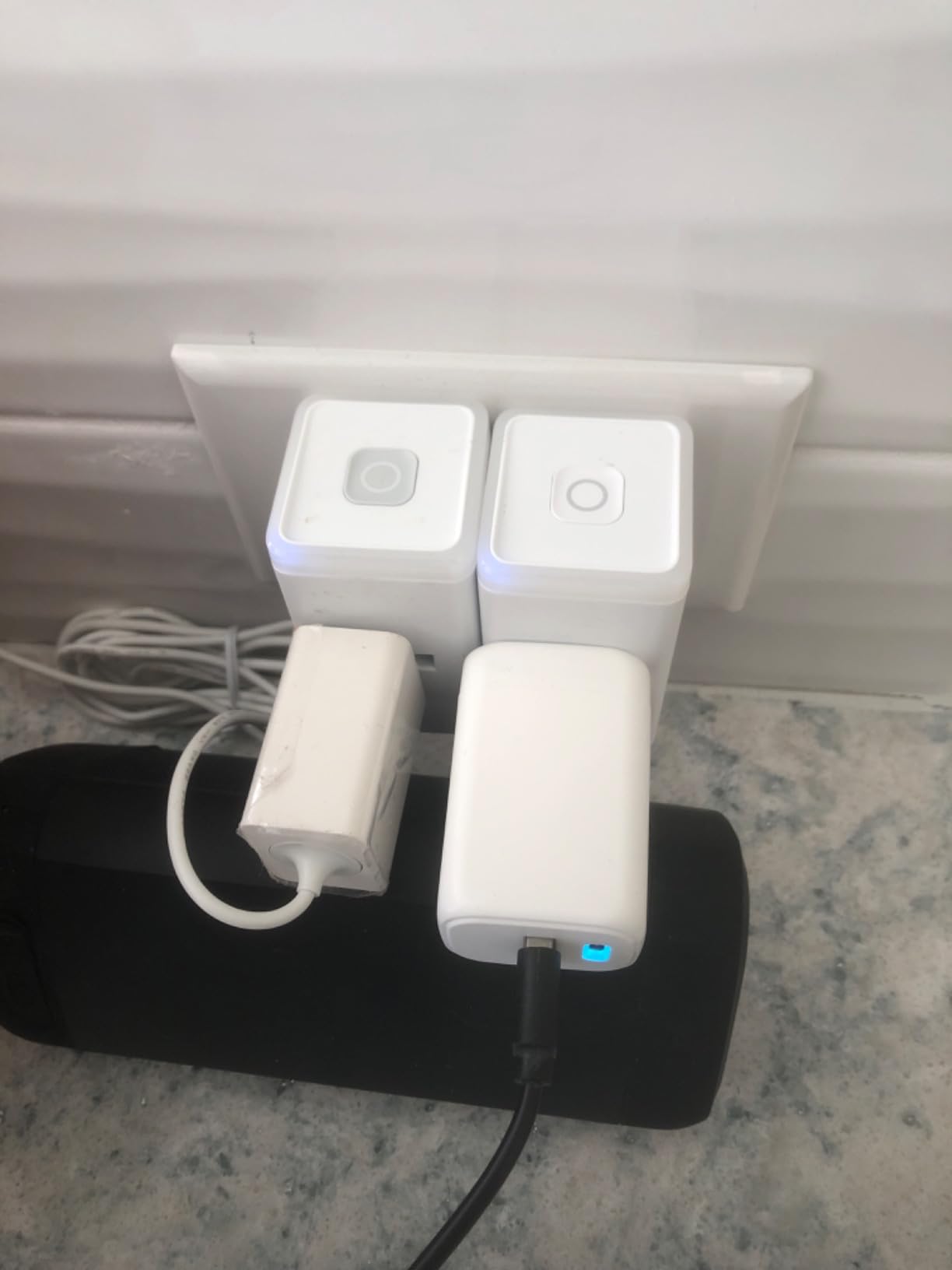
The readings are the reason this one is popular. It reports real-time draw alongside daily, weekly, and monthly totals, and it keeps operating over the local network even when the device is blocked from the internet. Firmware updates ship through the Kasa app quickly, and it works with IFTTT and Vera as well as Alexa and Google Assistant.
Rated to 104 degrees Fahrenheit and down to 32 degrees Fahrenheit, it is built for a season of use in an unheated garage or a cold bedroom. It also carries a two-year warranty.
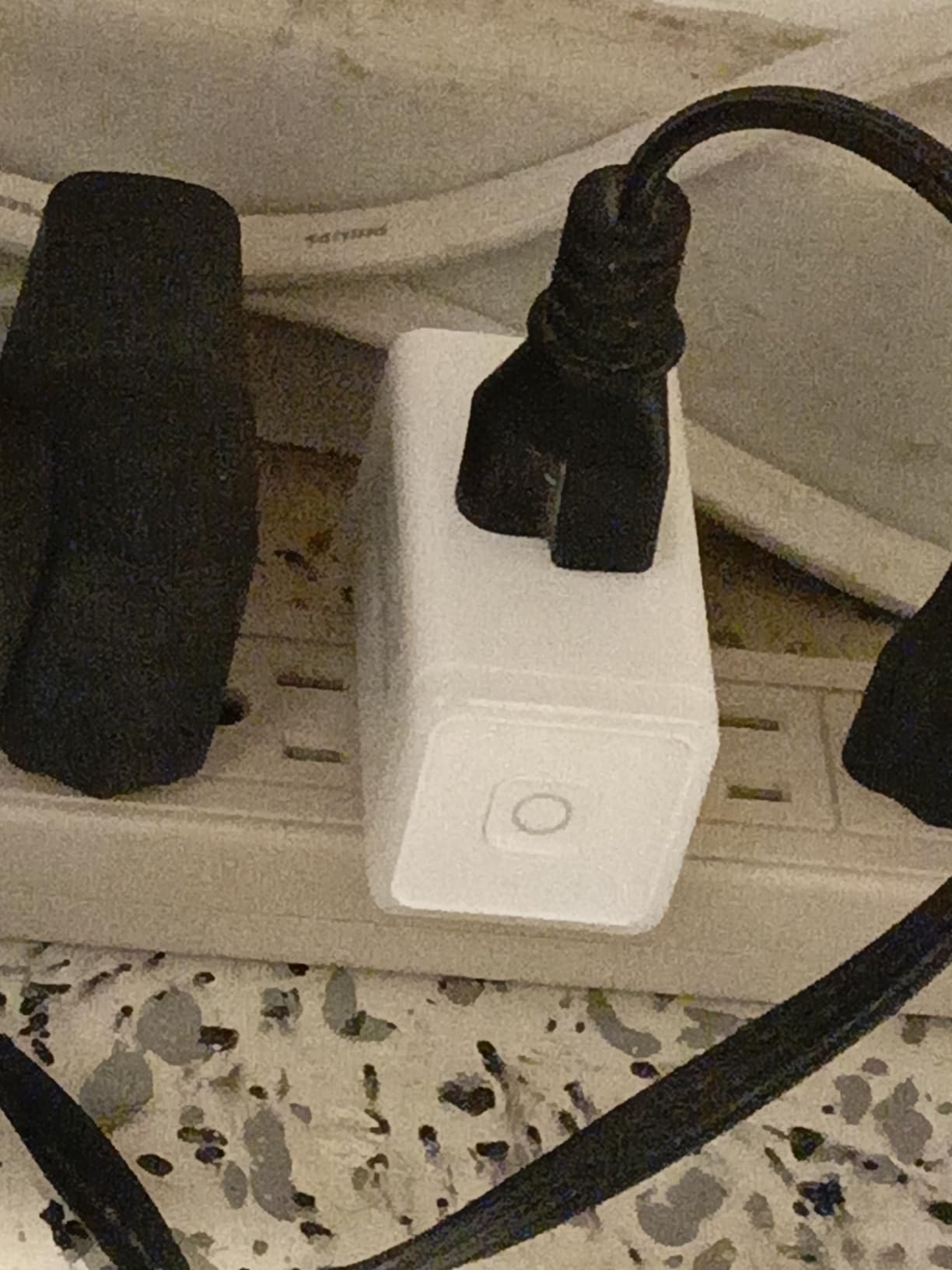
Why it is the value pick
Monitoring plus a two-per-outlet fit is the combination most people want, and this is where you get it without moving to a Matter platform. Users report accurate real-time and historical readings, which is what makes a savings claim verifiable rather than hopeful.
Local operation is another quiet advantage. If your internet is out, the plug still responds on the LAN, so a schedule still fires and the heater still gets shut off on time.
The two limitations to know
The cumulative usage counter cannot be reset from the app, so a long-lived install will keep accumulating history. More significantly, power users report that recent firmware removed local API access, which breaks custom scripting for anyone who was driving the plug directly from Home Assistant.
There is no on-device display, so every reading means opening your phone, and it is 2.4 GHz only. If you rely on custom local scripting, read the Home Assistant thread before buying.
Is It Safe to Use a Smart Plug With a Space Heater?
Yes, a smart plug is safe with a space heater as long as three things are true: the plug’s rated wattage exceeds the heater’s draw with headroom, the plug goes directly into a wall outlet, and the plug is UL or ETL certified. Every plug in this roundup meets the third condition, and all of them are rated 15A, which is 1800W at 120V.
There are exactly three rules, and they are not negotiable.
- Never use an extension cord. A cord adds resistance, which turns into heat at the connection. That heat builds in the plug and the cord, and it is the single most common cause of heater-related fires.
- Never use a power strip or surge protector. A strip shares its capacity across everything plugged into it and adds more connection points that can heat up. The heater goes in the wall, full stop.
- Check the rating against the heater’s nameplate. Read the watts on the heater, then confirm the plug is rated above that number. A 1500W heater needs a 15A plug, not a 10A one.
Two more details matter. Use a dedicated wall outlet rather than sharing the circuit with a hair dryer, microwave, or iron, because those are high-draw loads on their own and sharing can trip the breaker. And keep the plug accessible, because a heater behind a bed where you cannot reach the switch is a heater you cannot turn off quickly.
Heater Wattage vs. Smart Plug Amperage: What Actually Matches
Match the plug’s amperage rating to the heater’s nameplate wattage, and stay a tier above it. A 10A plug tops out at 1440W at 120V, which is not enough for a 1500W heater and leaves almost no margin.
Here is the mapping, with what each heater size requires.
- 750W heater: draws about 6.3 amps. A 10A plug works, but a 15A plug gives you a safer margin and costs almost nothing more.
- 1000W heater: draws about 8.3 amps. Still within a 10A plug, but a 15A plug is the better answer for a load that runs for hours.
- 1200W heater: draws about 10 amps. A 10A plug is at its limit with zero headroom, so use a 15A plug.
- 1500W heater: draws about 12.5 amps. This needs a 15A or 16A plug, full stop. A 10A plug is not an option.
That last line is the one that decides most purchases, because 1500W is the most common portable heater size in the United States and the 10A plugs are what fill the cheap end of the shopping results.
Inrush current is why headroom is not optional. When an electric heater’s coils come up to temperature they pull a spike of current for a fraction of a second, often several times the steady draw. Forum users report thermal overload relays tripping on 1500W appliances at switch-on, then assume the plug is unsafe. In most cases the plug was rated correctly and simply had no margin left to absorb the spike. A 15A plug paired with a 1500W heater has roughly 2.5 amps of steady headroom, which is where the extra capacity goes.
Read the nameplate to find your heater’s actual draw. The watts are usually printed on the back or the base, and if the amperage is listed instead, multiply it by 120 to get watts.
Why You Must Never Use an Extension Cord or Power Strip
A power strip adds resistance and shares capacity across devices, so a 1500W heater can overheat the strip’s wiring and its connections long before any individual device overloads. The heater has to go directly into a wall outlet, and the smart plug counts as the device in that outlet rather than as an extension.
This is worth stating plainly because the temptation is universal. The outlet is in an inconvenient spot, the heater is where you want it, and a six-foot cord solves the geometry problem in about forty dollars of impulse. It is also the practice behind a large share of portable heater fires.
If the wall outlet is not where you need it, the honest options are rearranging the room, using a different heater placement, or having an electrician add a receptacle. If you want help judging a heater for a room that is hard to heat, our guides to infrared space heaters and oil filled space heaters cover the placement and clearance questions that come up most often.
Worth noting that indoor outdoor-rated smart plugs are a different product entirely. If you are running a plug in a garage workshop or an uninsulated porch, our best outdoor smart plugs guide covers the weatherproof ratings you need, though the same no-extension-cord rule applies.
What Happens to Your Heater After a Power Outage?
Most smart plugs restore the state they were in when power was lost, which means an unattended heater can switch itself back on after an outage. That is the single most repeated question in the forums on this topic, and the honest answer is that you have to check your specific plug rather than assume.
There are three things to verify, and they are quick to check.
- What state does the plug return to? Most default to their last state. Some Matter models can be configured to return to off instead, which is the setting you want for an unattended heater.
- Does a schedule survive the outage? Plugs that keep an internal clock keep running their schedule. Plugs that depend on the cloud for time can come back confused and wait for the internet before resuming, so a timed cutoff may not fire until the connection is back.
- Does the plug need the cloud at all? A plug that works locally over the LAN keeps responding during an outage, which is why the Matter and local-control models above earn their place. One Android Central reader reported running a basement office heater on a Kasa plug with a physical side button, which works regardless of what the network is doing.
Owners on garage and home automation forums raised the clock question directly, and the answer is that it depends on the model. The practical habit that works for everyone is to never leave a heater on as a permanent always-on state. Put it on a schedule, turn the physical switch off when you leave the house, and use an automation for away mode rather than a manual always-on.
One more thing nobody mentions: what happens when the plug loses Wi-Fi while the heater is running. The heater keeps drawing power, which is fine and safe, but you lose the ability to turn it off remotely until the connection returns. That is exactly why the physical side switch on the HS103 and the push button on the BN-LINK are worth more than they look.
How to Pick a Smart Plug for Your Heater
Start with the load rating, always. Ignore everything else until you have confirmed the plug is rated at 15A or higher. If a listing shows 10A, it is not a heater plug no matter how many smart features it advertises.
Decide whether you need energy monitoring. It is the feature people underestimate. A plug that reports real kWh turns the savings conversation from guesswork into a number, and it is the fastest way to find out whether your heater is drawing what its nameplate says. If you want the number, go with the KP115, the P115, or the KP125MP4. If you only need a schedule, save the money.
Choose Matter if you are starting fresh. Matter gets you Apple Home, Alexa, Google Home, and SmartThings from one device, and local control means the plug keeps working when the internet does not. If you already run Kasa, Tapo, or Smart Life, staying in that ecosystem is the lower-friction choice and the schedules will be easier to set up.
Measure the outlet before you order. Heaters go in tight spots. A 1.2 inch body like the EIGHTREE fits almost anywhere, while a 2 inch-plus body can block the second receptacle entirely. If your room has one duplex outlet and you need two devices, pick a model rated to fit two side by side.
Check for a physical switch. Every pick here has one, and it is the feature that matters most when the load is a space heater. A plug that requires a phone to switch off a space heater is a bad idea in an emergency.
Avoid the no-name 10A tier entirely for heaters. The plugs under the price threshold that fill the cheap end of the shopping results are almost all 10A, most lack a meaningful certification mark, and none of them have the headroom for a 1500W heater plus inrush. The single most common question on the Shelly community forum is whether regular smart plugs are appropriate here, and the answer there is that they are not, for exactly this reason. A certified 15A plug from a brand with real support costs more and is the only thing we would put behind a 1500W heater.
Work out the savings before you commit. The economics are simple: a 1500W heater uses 1.5 kWh for every hour it runs, and a schedule that cuts an eight-hour overnight run down to three hours removes five kilowatt-hours a night. A heater run on a timer in one room, instead of turning the central system up for the whole house, is the change that actually moves a heating bill. Owners on home automation forums report reductions in the region of 15% on their power bills from plugging heaters and fans into schedules, and the number is reproducible because the meter is doing the measuring.
One last point on applications. A smart plug gives you on and off, nothing in between, so a heater with its own thermostat and tip-over protection is still the appliance doing its job. A plug complements a good heater; it does not replace one. If yours is old, has no tip-over switch, or has a frayed cord, that is a replacement, not an accessory.
Frequently Asked Questions
Is it safe to use a smart plug with a space heater?
Yes, provided three conditions are met: the plug’s rated wattage exceeds the heater’s draw with headroom, it plugs directly into a wall outlet rather than an extension cord or power strip, and it is UL or ETL certified. A 15A plug rated for 1800W is adequate for a 1500W heater. Most cheap 10A plugs are not safe for a 1500W heater.
Which smart plug is the most reliable?
Reliability comes down to app uptime, local control, and a physical fallback button rather than brand reputation. The Kasa Smart Plug HS103 stands out for reconnecting on its own after router or internet outages, a manual side switch, and a two-year warranty. The Tapo P125M and Kasa KP125MP4 are also strong choices because Matter support keeps them working locally instead of depending entirely on a cloud server.
What are the disadvantages of smart plugs?
The main drawbacks are Wi-Fi dependency, on and off control with no true thermostat behaviour, a bulkier body than a normal plug, a small standby power draw, and the need to match the load rating. A smart plug cannot regulate temperature, so scheduling does the work a thermostat would otherwise handle.
What is the best smart plug for high-power appliances?
A 15A or 16A rated plug with a documented wattage ceiling is the right answer, and 1800W is the practical limit for most home models. The Kasa HS103 and the Tapo P125M both rate 15A and 1800W, while the BN-LINK BNC-60 states 1875W. Always check the amperage rating printed on the device rather than the listing headline.
Why can’t I plug my heater into a power strip?
A power strip adds resistance and shares capacity across everything connected to it, so a 1500W heater can overheat the strip’s wiring and connections long before any single device overloads. The heater must go straight into a wall outlet, with no extension cord and no power strip in the chain.
The Best Smart Plugs for Space Heaters in 2026
For most people the Kasa Smart Plug HS103 is the right buy: a 15A and 1800W rating, UL certification, a two-year warranty, a physical side switch, and years of owner reports about reconnecting without being asked. It handles a 1500W heater with headroom and stays out of the way.
Pick the Tapo P125M if your smart home spans more than one ecosystem, the Kasa KP125MP4 if you want Matter and energy monitoring across several rooms, and either the Tapo P115 or the Kasa KP115 if you want to see real kilowatt-hours instead of guessing. The EIGHTREE is the one for a plug that has to fit somewhere cramped.
Whatever you choose, plug it straight into a wall outlet, keep it rated above your heater’s nameplate wattage, and put it on a schedule rather than leaving it always on. If you are still choosing a heater, our propane space heater and space heater roundups cover the units themselves, and the plug goes in front of whichever one you land on.