
The best board games for two players at home are the ones that actually get played on a random Tuesday, not the ones with the longest rulebooks. Most two-player designs run 20 to 30 minutes, fit on a coffee table, and teach in a single round, which is exactly what a weeknight needs.
That is the standard this list is built on. Every game below was chosen because two people can sit down, understand it, finish it before the film gets cold, and still want another round. I have played all of these with my partner, and I have watched each one get finished on a kitchen table, a low coffee table, and once on a hotel desk with a lamp between us.
If your two-player needs are bigger than a duo, our guide to the best two player board games covers the wider shelf, and family game night picks cover the nights when four people show up. This list stays narrow on purpose: two players, one evening, no setup ceremony. Last updated for 2026, with all twelve picks re-checked against current reviews.
Table of Contents
Top 3 Picks for the Best Board Games for Two Players at Home

If you only read one thing, read this: 7 Wonders Duel is the single best all-round pick because three different win conditions keep a 30-minute game from ever repeating itself, and Jaipur is the reason most couples keep coming back to it as a weeknight default.
All 12 Picks Side by Side in 2026
| Product | Specifications | Action |
|---|---|---|
| 7 Wonders Duel |
|
Check Latest Price |
 Othello Othello |
|
Check Latest Price |
 Jaipur Jaipur |
|
Check Latest Price |
 Fox in the Forest Fox in the Forest |
|
Check Latest Price |
 Splendor Duel Splendor Duel |
|
Check Latest Price |
 Mandala Mandala |
|
Check Latest Price |
 Caper Europe Caper Europe |
|
Check Latest Price |
 CATAN Rivals CATAN Rivals |
|
Check Latest Price |
 Watergate Watergate |
|
Check Latest Price |
 Boop Boop |
|
Check Latest Price |
 Battleship Classic Battleship Classic |
|
Check Latest Price |
 Couch Skeletons Couch Skeletons |
|
Check Latest Price |
Every one of these is built for exactly two people, which is a rarer thing than the box fronts suggest. The gap between a game that was designed for a duel and one that merely tolerates a duel is the whole reason this list exists, and the buying guide at the end explains how to spot it in under a minute.
1. 7 Wonders Duel Is the Best Board Game for Two Players at Home Overall
- Three distinct ways to win
- Fast 30 minute sessions
- Loser usually stays close
- Symbols carry most of the information
- Resource pricing takes practice to read
- Small Euro-size cards
- Wonder cards warp over time
Two players, three ways to win, and a session you can start after dinner is served. 7 Wonders Duel is a card drafting game where each round you take turns pulling from a shared row, and everything you build quietly pushes you toward a military win, a science win, or a points win.
What makes it the best board game for two players at home is not the theme, it is the structure. Because the three victory paths are genuinely different, a player who has lost four games in a row on military can switch to science and be dangerous immediately. That keeps a losing streak from turning into a bad evening.
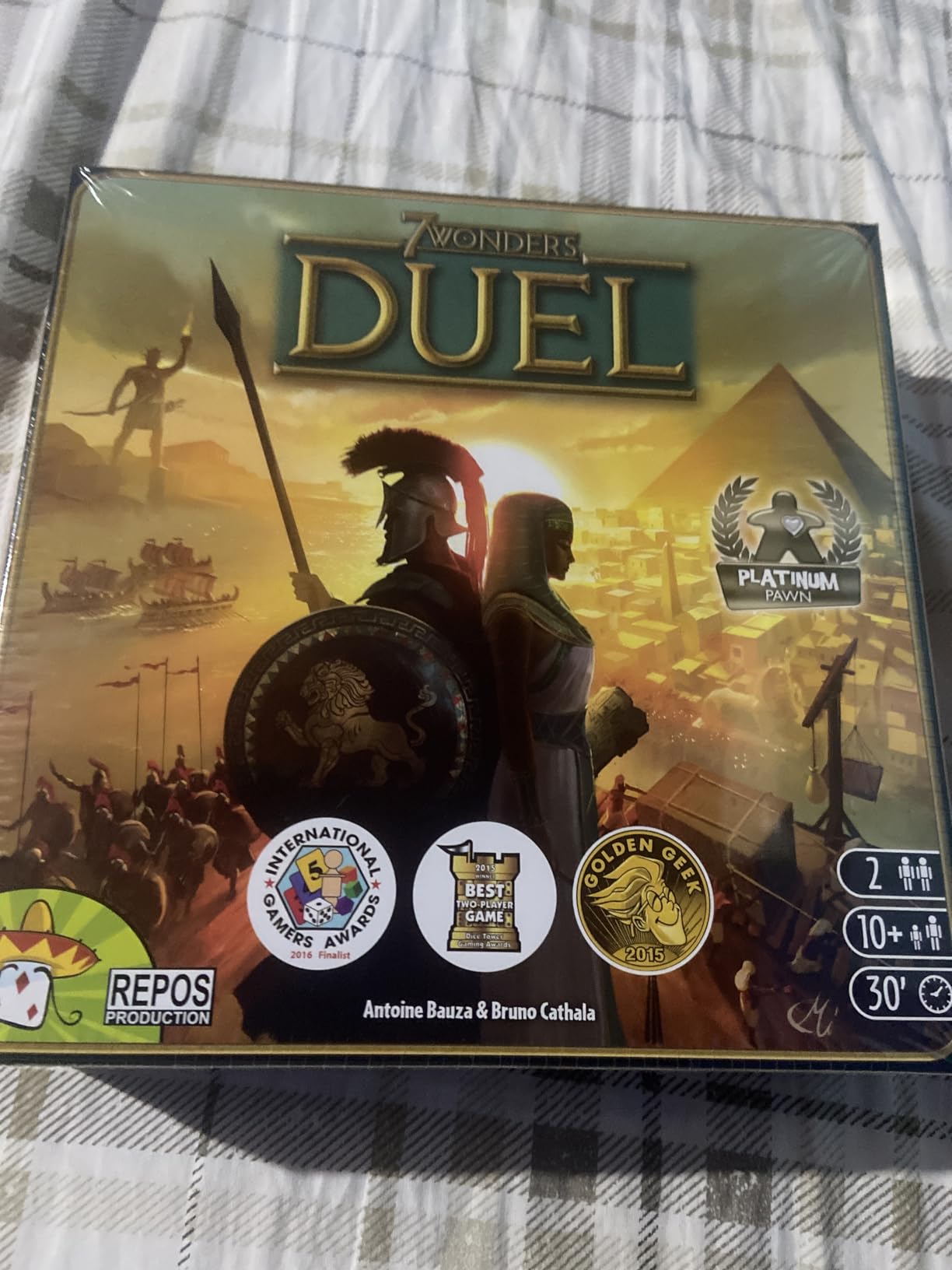
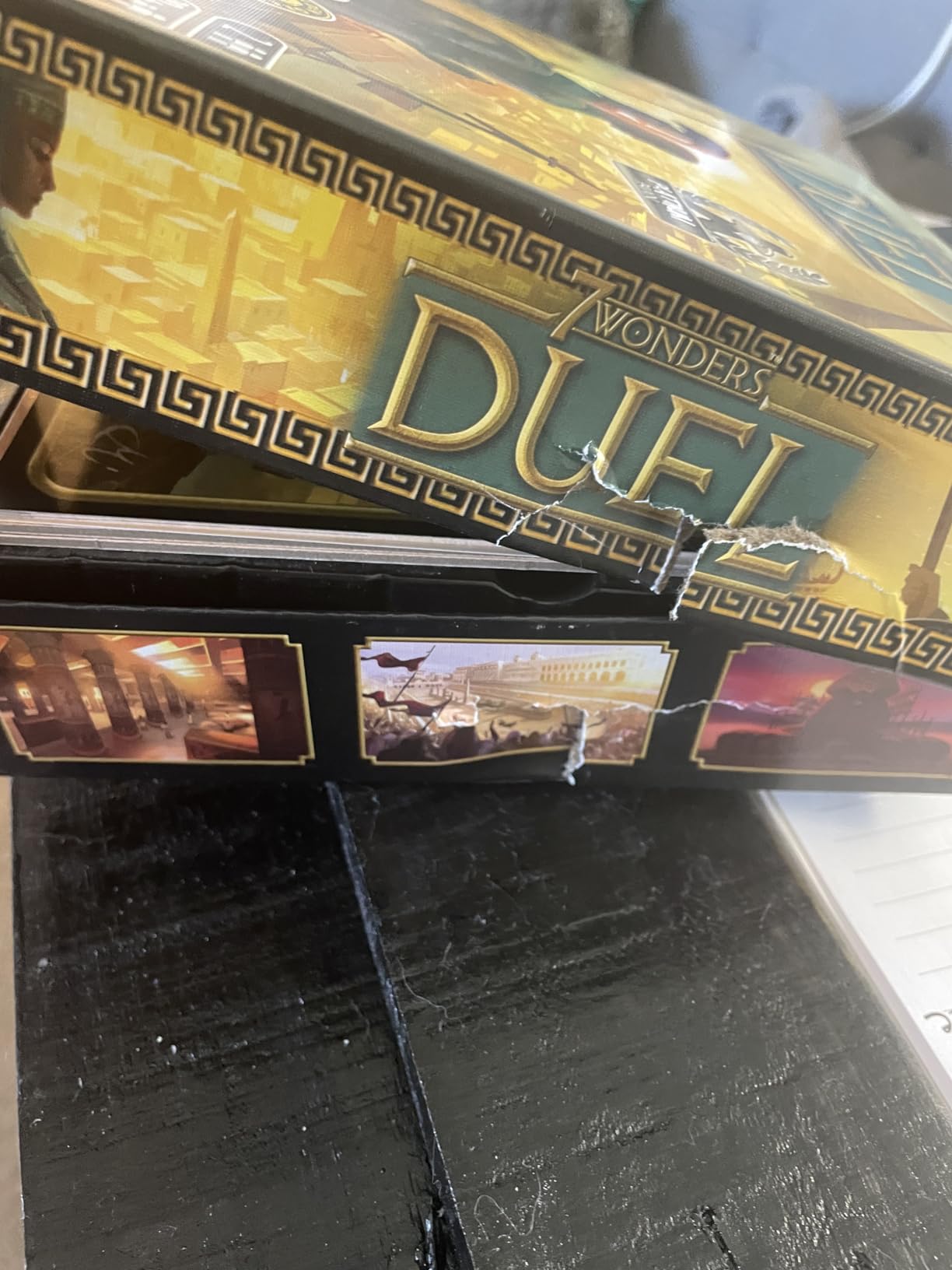
It packs down small too. The whole game lives in a box roughly the size of a hardback novel, and setup takes a couple of minutes because there is no board to unfold. Teardown is the same, which matters more than people expect when the sofa is the table.
The honest weakness is the resource system. The printed rulebook does not explain the pricing ladder as clearly as it could, and several players describe the first two games as a fog of symbols. My advice is to play one full round with the rulebook open and ignore the score, then close it.
It is also a game about drafting rather than attacking, so nobody is actively ruining your plans. Losers of a good 7 Wonders Duel game usually know exactly which turn cost them, which is a very different feeling from being knocked flat on turn four.
Is 7 Wonders Duel too heavy for two casual players?
On the first evening, possibly. The card icons look intimidating until you realise the design puts almost all of its information on the card face itself, so most groups are genuinely playing by round two. If either of you dislikes a game where you are studying a reference card mid-turn, pick Jaipur instead.
Does 7 Wonders Duel ever drag or feel unfair?
At 30 minutes it does not drag, and because you alternate drafting from a common row, neither player gets a hand that is simply worse. Luck shows up in the military path more than the science path, so if you hate randomness, push your partner toward symbols and science early.
2. Othello Is the Best Two-Player Board Game for Learning the Format
- Easiest rules in this list
- 20 minute matches
- Everything stores inside the board
- Smooth discs on a felt field
- Board and pieces read as average rather than premium
- Instructions not in every language
If either of you has never sat at a two-player board, start with Othello and learn the shape of a duel on the cheapest possible surface. You place a disc, you flank an opponent’s run of discs, and they all flip to your colour. That is the entire game.
The 20-minute runtime is the real headline here. There is no setup, no draw phase, no deck shuffling, and a game is over in about ten rounds. My partner and I played four in a row on an evening that had originally been planned around something much longer.
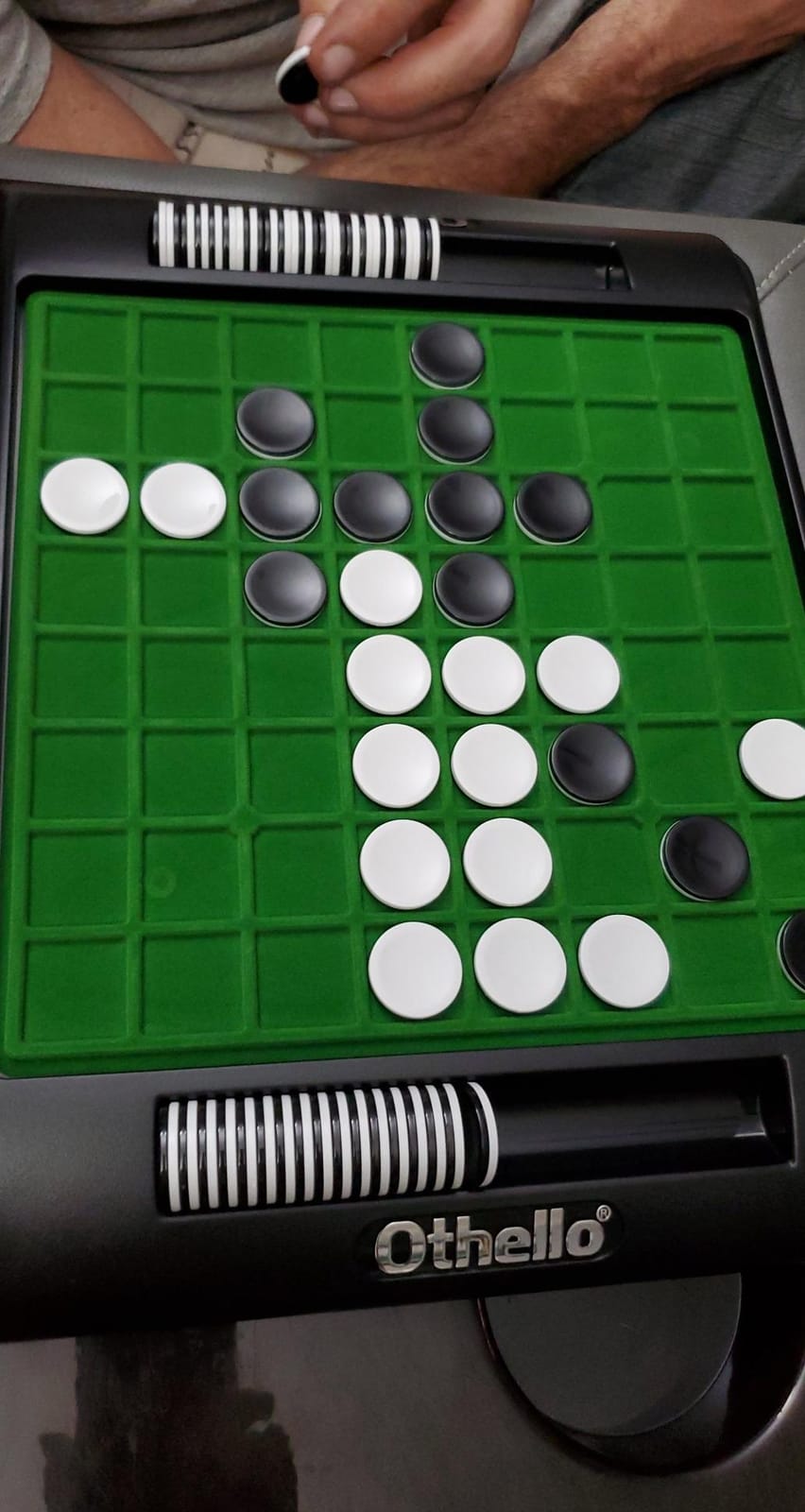
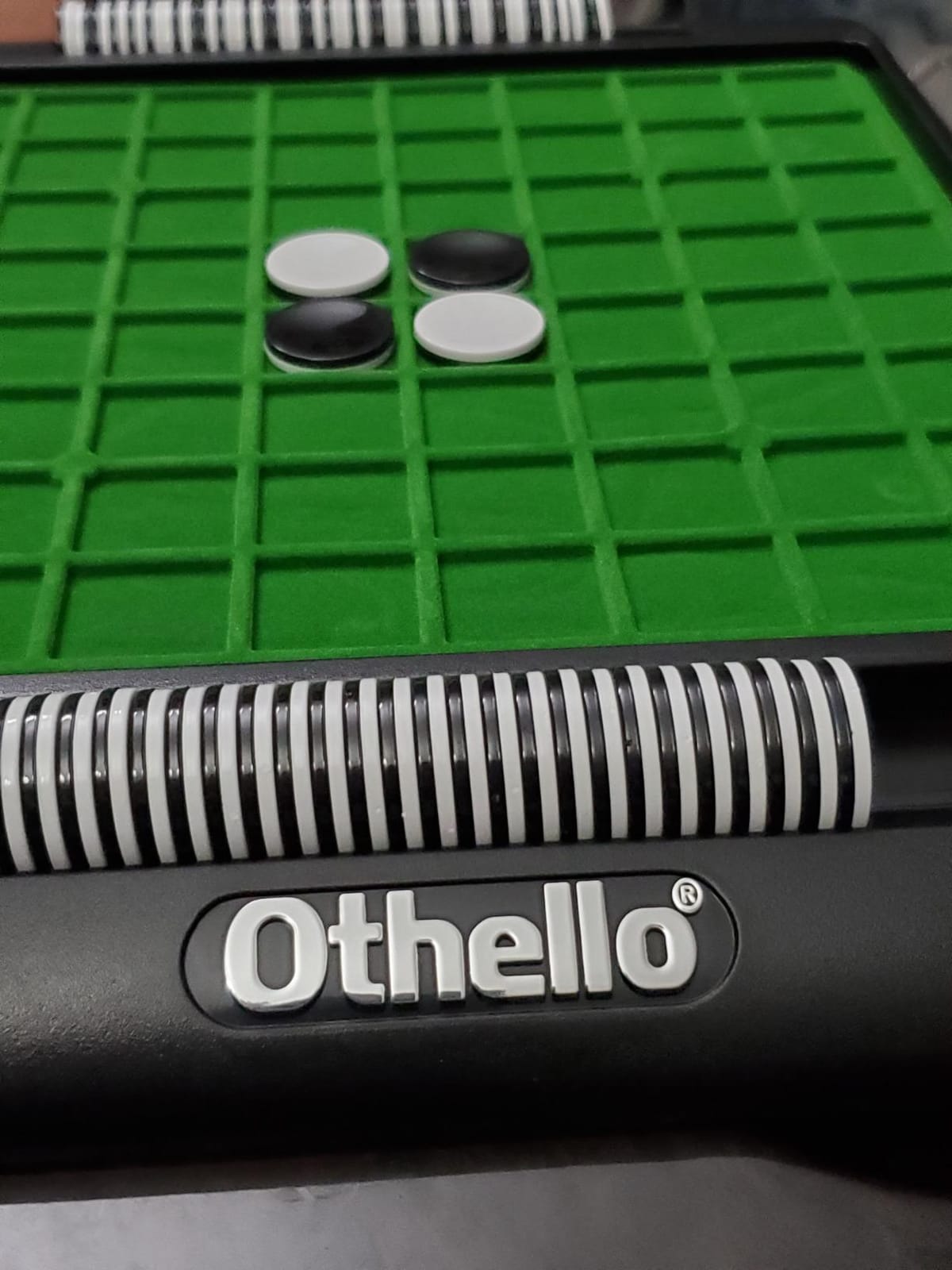
The board itself is a piece of sensible furniture design. Each side has a slide-out drawer holding one colour of discs, so the pieces never end up loose in a drawer six months later. The playing surface is felt rather than printed card, and the discs have a weight to them that survives daily handling.
Where it is thinner is material and rules access. Reviewers consistently rate the board and discs as good rather than premium, and the instruction sheet is not printed in every language, which matters if your home runs more than one. None of that stops play.
What surprised me was how much depth sits under the simple rule. Every placement changes the value of the squares next to it, and experienced players are usually thinking four moves ahead while beginners are still working out the flip.
Is Othello too simple for two experienced players?
For the first few sessions, no. Once you both know that corners are worth more than edges, it becomes one of the sharpest games here for how few rules it takes to explain. The ceiling is high and the entry cost is about four minutes.
Will Othello fit on a small table or a bed tray?
Yes. The board is roughly 11 by 14 inches, so it fits a small side table, a lap desk, or a cleared section of a coffee table. Because the pieces live in the board, setup and clearing away are both a single motion.
3. Jaipur Is the Best Two-Player Card Game for a Regular Weeknight
- Learned in one round
- Card play demands constant adaptation
- Small box
- Works with adults and kids
- Strictly two players
- Rulebook takes a second pass on first read
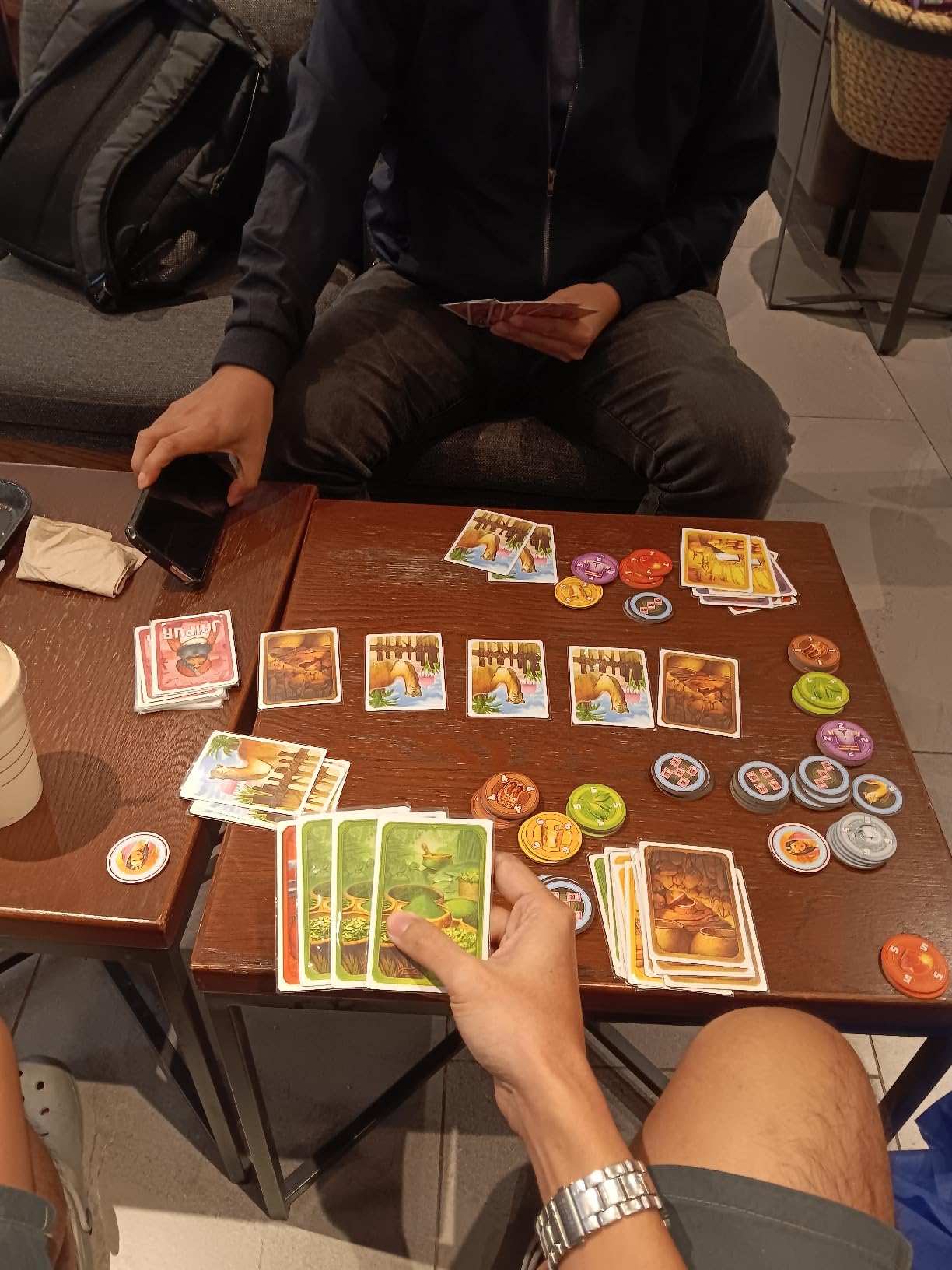
Jaipur is two rival merchants in Rajasthan buying and selling leather, spices, cloth, silver, gold, and gems. You draft cards from a shared market row, and then you decide whether to sell straight away for a seal, or hold and hope for a better price. That decision is the whole game.
It is the pick I recommend most often to couples who say they are not very good at games. The first round is comprehensible, the second round is a real contest, and the fifth round is still producing decisions neither of you saw coming. A single box has carried most of our month for over a year.
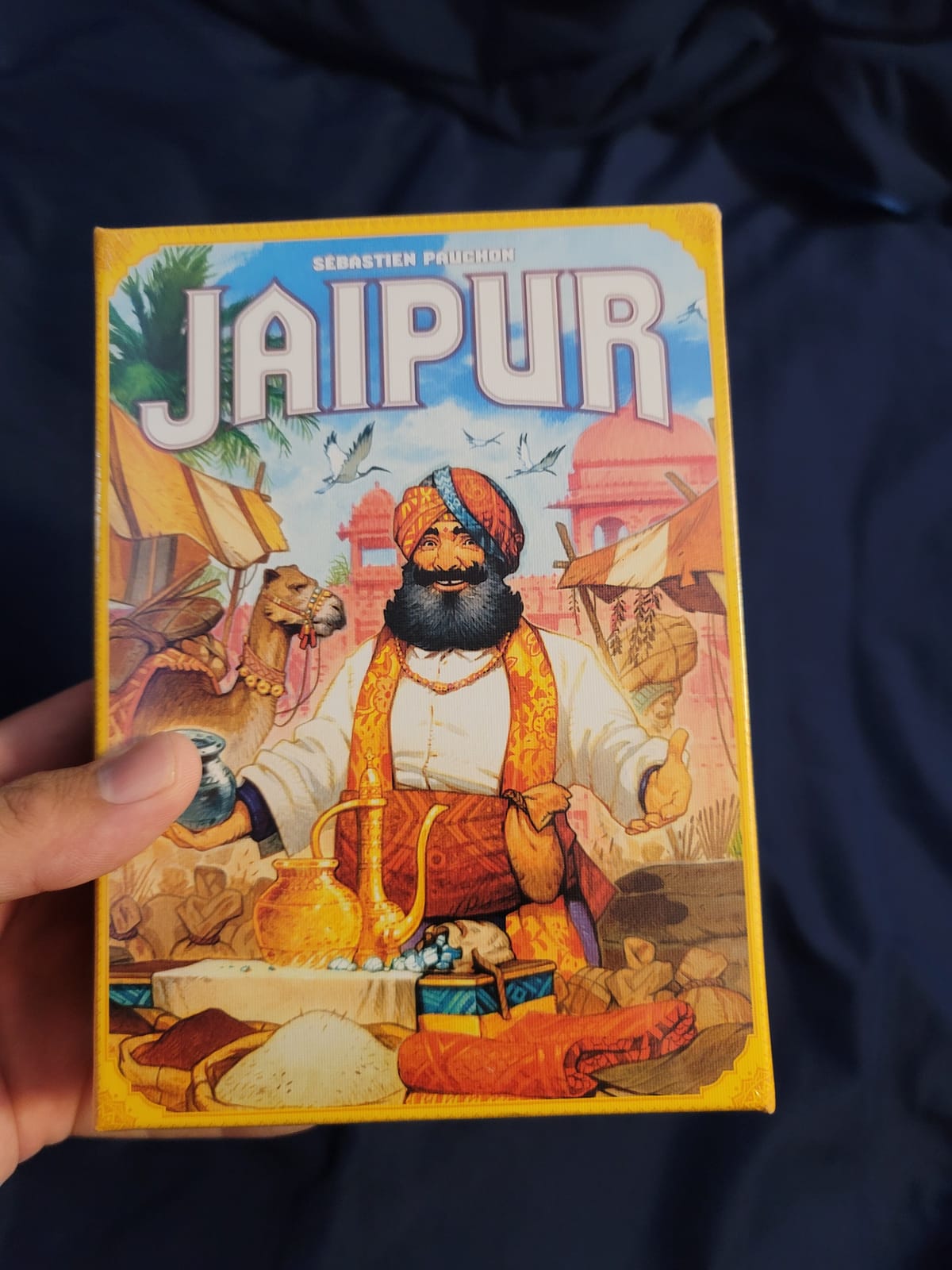
Every session is a new market, so replayability is structural rather than promised. The included component list is compact too: 55 goods cards, 38 goods tokens, 18 bonus tokens, a camel token, three seals, and a metal coin. All of it sits in a box under 7 by 5 inches.
Two limitations are worth stating plainly. It cannot be played by three or four, so it is a strict two-player buy, and a handful of reviewers describe the rulebook as needing a second read before the bonus structure clicks.
Interaction is the quiet strength. You are constantly adjusting to what your opponent just took, and there is very little downtime between turns, which is the whole argument for two-player games in the first place.
Is Jaipur easy to teach to a partner who has never played?
Yes, with one caveat. Show the sell-now bonus, then start playing. The rulebook leads with the scoring maths, which is a slightly odd order for a beginner, but the actual turn structure can be explained in under five minutes at the table.
Can Jaipur work when a third or fourth person joins you?
No, and that is a genuine trade-off. If your two-player nights often become four-player nights, this is the wrong box to buy first. For a fixed duo it is one of the strongest arguments for a single well-chosen purchase rather than a stack of occasional ones.
4. Fox in the Forest Is the Best Travel Two-Player Card Game
- Beautiful botanical card art
- Inverted trick taking
- Small travel box
- Several games fit in one evening
- Win condition takes a few games to internalise
- Thin story
- Mechanics close to a standard deck
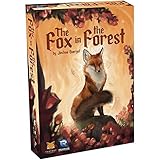
Fox in the Forest is a trick-taking game where you deliberately lose. Each character wins by collecting a specific set of suits and a number of tricks, so sometimes the strongest play is to give your opponent the trick and take a cheaper one. That inversion is the reason it is on this list at all.
It is a very small box, roughly 4 by 6 inches, which makes it the one I pack for a train journey or a hotel room. Reviewers note that multiple games can be squeezed into 10 to 15 minutes, so an evening of waiting for a reservation does not have to be a screen.

The card artwork is the other reason it survives on a table. Botanical illustration rather than cartoon fantasy, printed on cardstock, and the deck is the sort of thing people pick up and look at again while waiting for the next turn.
The learning is real but shallow. The goal structure is genuinely confusing the first time, and the first two games are spent working out how few tricks you can take and still win. Once that lands, the balance is described as fair with no advantage to either side.
One fair criticism from reviewers is that the theme is thin, with little story beyond the card faces, and that the core trick-taking rules could be played with a standard deck. It is still an easy gift and a fast traveller.
Is Fox in the Forest too complex for a first two-player game?
No, but budget an extra game. The rules are short, while the goal maths is the part that needs a second session. Our recommendation is to play one full game as a warm-up and keep score from the second one onward.
Is Fox in the Forest the right pick for a date night at home?
It is a quiet, low-loudness date night game, which is a different thing from a competitive one. The card art gives you something to look at together, and the inverted scoring gives you plenty to argue about without anyone feeling attacked.
5. Splendor Duel Is the Best Board Game for Two Players Who Want Lighter Competition
- Tighter than the original Splendor
- Privilege scrolls add tension
- Quick to learn
- Good card and token quality
- Cards are small across a table
- Only two pearl tokens and they feel strong
- Original box owners often prefer the larger version
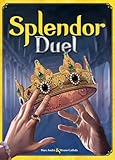
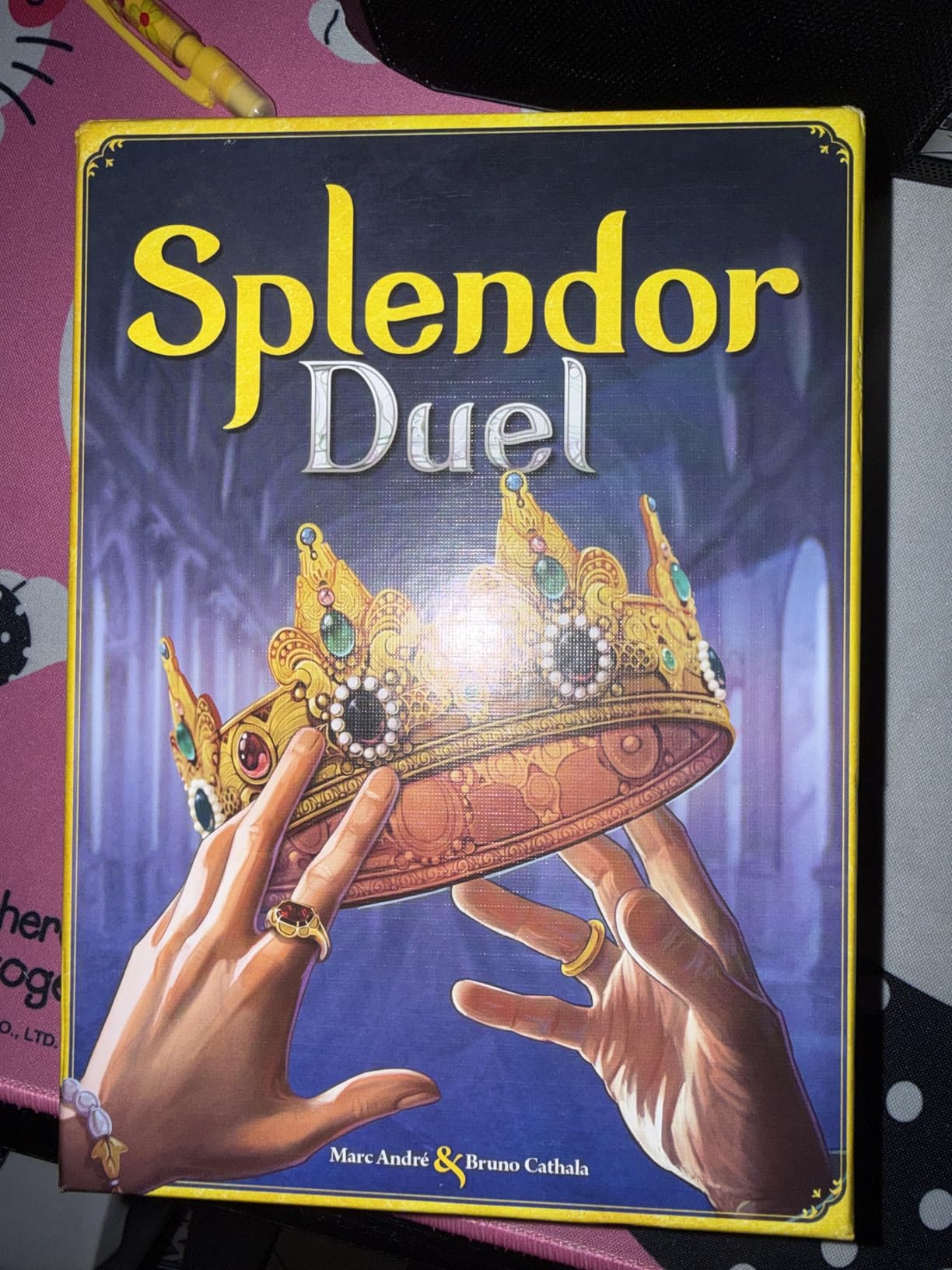
Splendor Duel is a gem collecting engine built for two, and it is the fastest way to get a competitive game on the table without a rule briefing. Each round you claim chips from one of three prestige tiles, then spend them on development cards that generate permanent income.
The duel version adds things the bigger game does not have: victory tiles, privilege scrolls, royal cards, and the ability to steal. That is why two experienced Splendor players often prefer it, because the interaction happens every round rather than every few rounds.
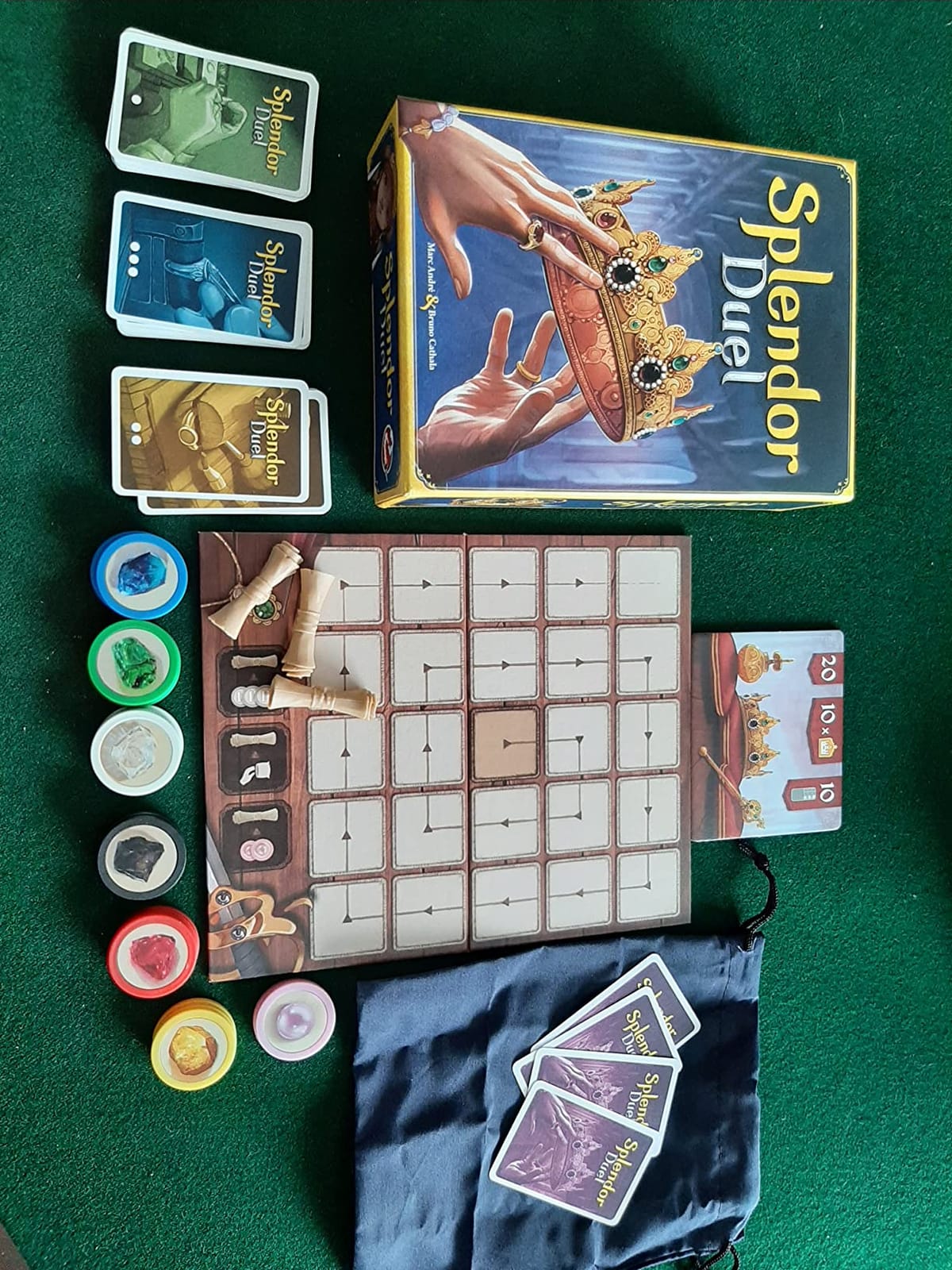
The component list is generous for a compact box. You get 67 jewel cards, 25 plastic gem tokens, 4 royal cards, 3 privilege scrolls, 1 victory tile, 1 bag, and a common board, all in a package about 5 by 7 inches.
The most common critique is card readability. At this size, the jewel cards are hard to read across a wide coffee table, and if your table separates you by more than about three feet, that matters more than the review summaries suggest. Bring the table closer together.
The pearl tokens are the other recurring note. Only two exist, and players describe them as slightly overpowered, which adds swing without feeling unfair in a short game.
Does Splendor Duel work for two players who are not competitive?
It is a gentler duel than most games here. You are building your own engine rather than attacking your opponent’s pieces, and the two of you can be fully absorbed without a single raised voice. That is why it sits well as a date night game.
Is Splendor Duel better than the original three-player Splendor?
Only if you always play two. Owners of the original edition frequently say the bigger box feels more premium and the cards are easier to read, so this is a second-game purchase for existing fans and a first purchase for a fixed duo.
6. Mandala Is the Best Two-Player Game That Looks Like Artwork on Your Shelf
- Original river and mountain scoring
- Learned in under five minutes
- Fabric mat and abstract art look excellent
- Light box plays several rounds
- Square cards shuffle badly
- Unforgiving if you dislike blocking
- Two players only with no expansion
Mandala is the one to buy if your shelf is part of the appeal. Two players build mandalas out of coloured cards, and the two layouts share a mountain, so the scoring is an interlocking river-and-mountain system that no other game in this list has.
It teaches faster than almost anything heavier. Reviewers consistently say they were playing correctly within five minutes, and then discovered how deep the card timing was. That is the rarest combination in a two-player game: instant comprehension with a long tail.
The presentation is a genuine selling point. It comes with a fabric play mat, 108 cards, and a rulebook, and the abstract artwork is the kind people pick up off the table to look at when the game is over.
Two honest drawbacks. The square cards do not shuffle properly, so the box needs a proper mix between games, and the game is not gentle, because taking cards to deny your opponent is a core part of it. If one of you holds a grudge, skip this one.
It is a two-player game with no expansion available, so it earns its place on a shelf that serves exactly two people. The box is roughly 8 by 8 inches, which is easy to find room for.
Is Mandala a good choice for couples who dislike intense competition?
It is not. Reviewers are unusually direct that this is a punishing game if you do not enjoy blocking your opponent. For a low-conflict evening, pick 7 Wonders Duel, Splendor Duel, or Boop instead.
Will Mandala fit on a coffee table and store on a narrow shelf?
Yes to both. The play mat is fabric rather than a rigid board, so it rolls or folds down when the game ends, and the box is a flat 8 by 8 inches that slots into a bookcase without taking a full shelf.
7. Caper Europe Is the Best Two-Player Heist Game for a Themed Evening
- 1950s heist artwork with wooden components
- Every move is back and forth
- Four cities keep sessions different
- Custom trays and travel friendly box
- Card symbols are not well documented
- Better for ages 12 despite the 10 plus rating
- Takes a couple of games to click
Caper Europe is a heist across four European cities where you draft thieves and gear cards to out-think a single opponent. Each round both of you commit to a plan, then reveal, and the interaction happens on every turn rather than occasionally.
The theme does more work than usual here. The artwork is 1950s-inspired, the components are wooden, and the box uses custom trays, so it looks like an object rather than a mechanism. Several reviewers mention the production quality first, before the gameplay.
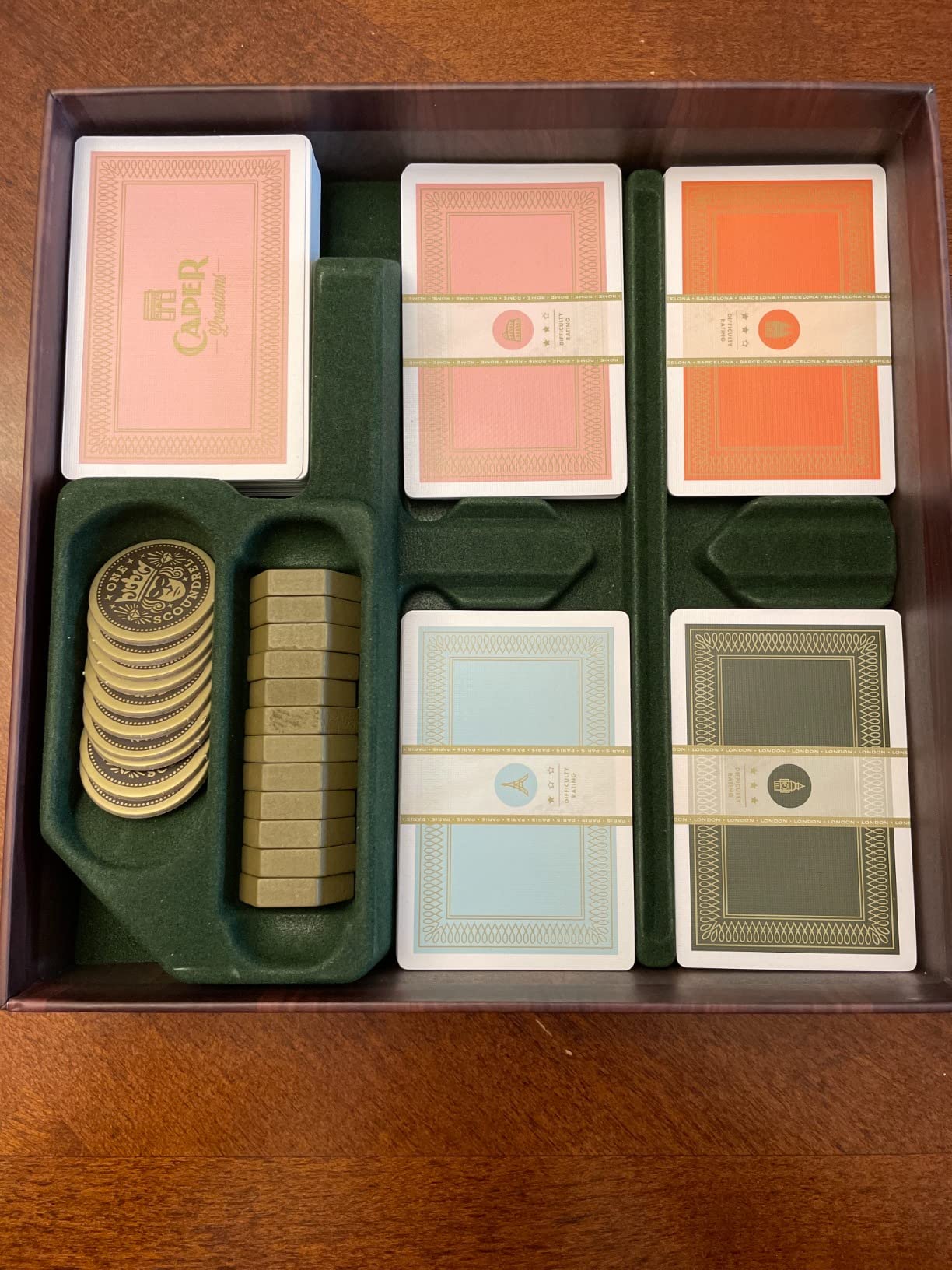
Four separate city decks are the replayability story. Each city has its own cards and its own strategic flavour, so a new box does not feel like the same game played again, and the box is a flat 1.7 by 8.5 by 8.5 inches with custom trays for setup anywhere.
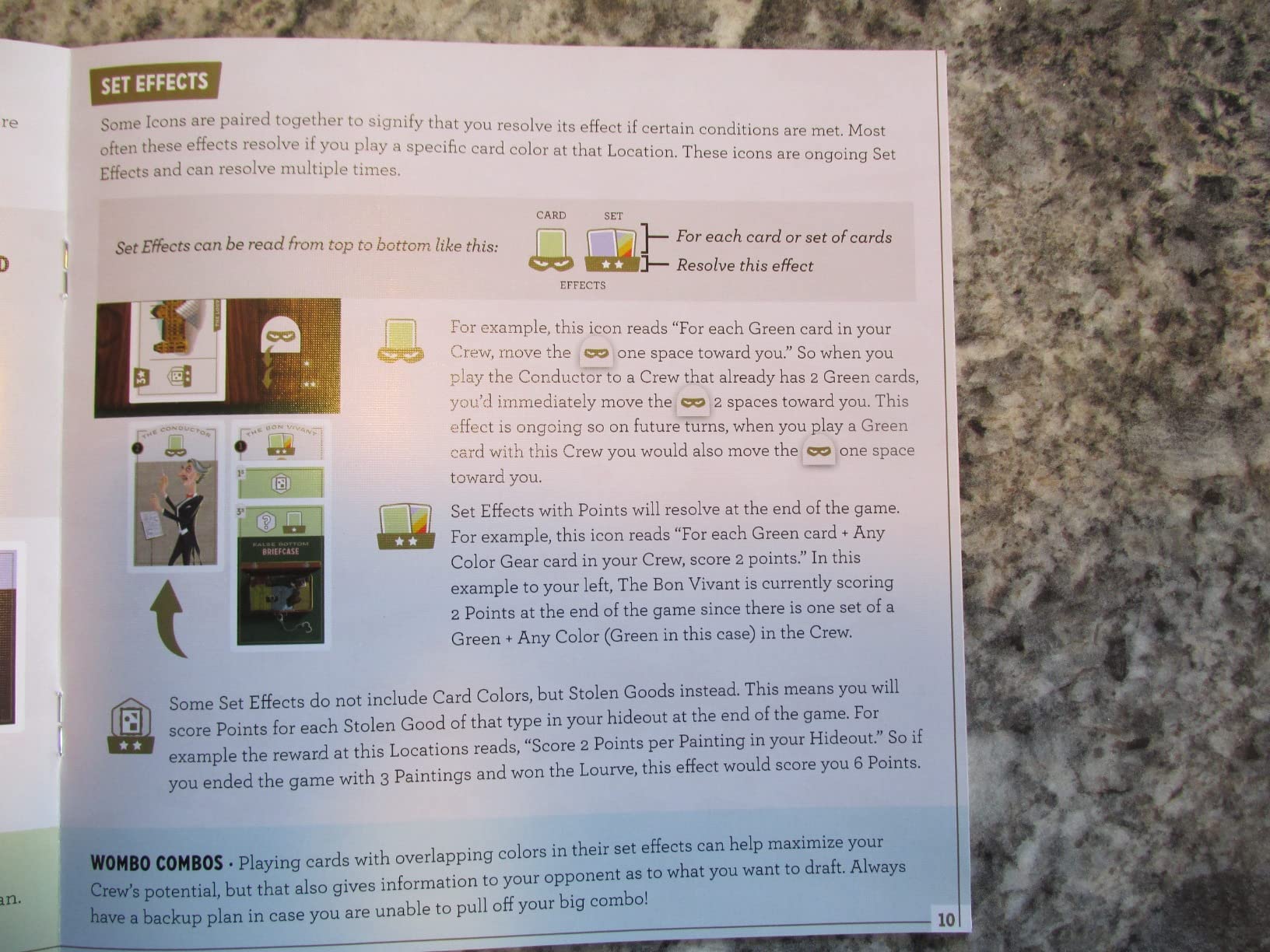
The documentation is the weak point. Reviewers repeatedly say the rulebook and player aids could explain the card symbols more clearly, and that the strategy needs a game or two before it stops feeling like guessing.
It is also worth noting that several owners feel the 10+ rating should be 12+. The amount of information to track grows once you know what the cards are doing, and younger players tend to stall while working it out.
Is Caper Europe easy to learn for a first-time two-player game?
The first game is a learning game. The second is where it turns, because the drafting becomes a conversation about what your opponent probably wants. Budget three games before you decide whether it is for you.
Does Caper Europe have enough variety to avoid getting old?
Yes, better than most at this size. Four cities with distinct decks means the variety lives inside one box rather than in four separate purchases, which is a meaningful difference for a two-player shelf.
8. CATAN Rivals Is the Best Two-Player Game When You Have a Longer Evening
CATAN Rivals for CATAN Card Game – Build, Trade and Conquer! Strategy Game, Family Fun for Kids and Adults, Ages 10+, 2 Players, 45-60 Minute Playtime
- Captures the Catan feel in a card duel
- Three included theme games
- Card abilities ramp up in the second half
- Lower luck than the original
- Trading is largely removed
- Small cards are hard to read
- Nothing secures the cards in the box
- Steep for newcomers to Catan
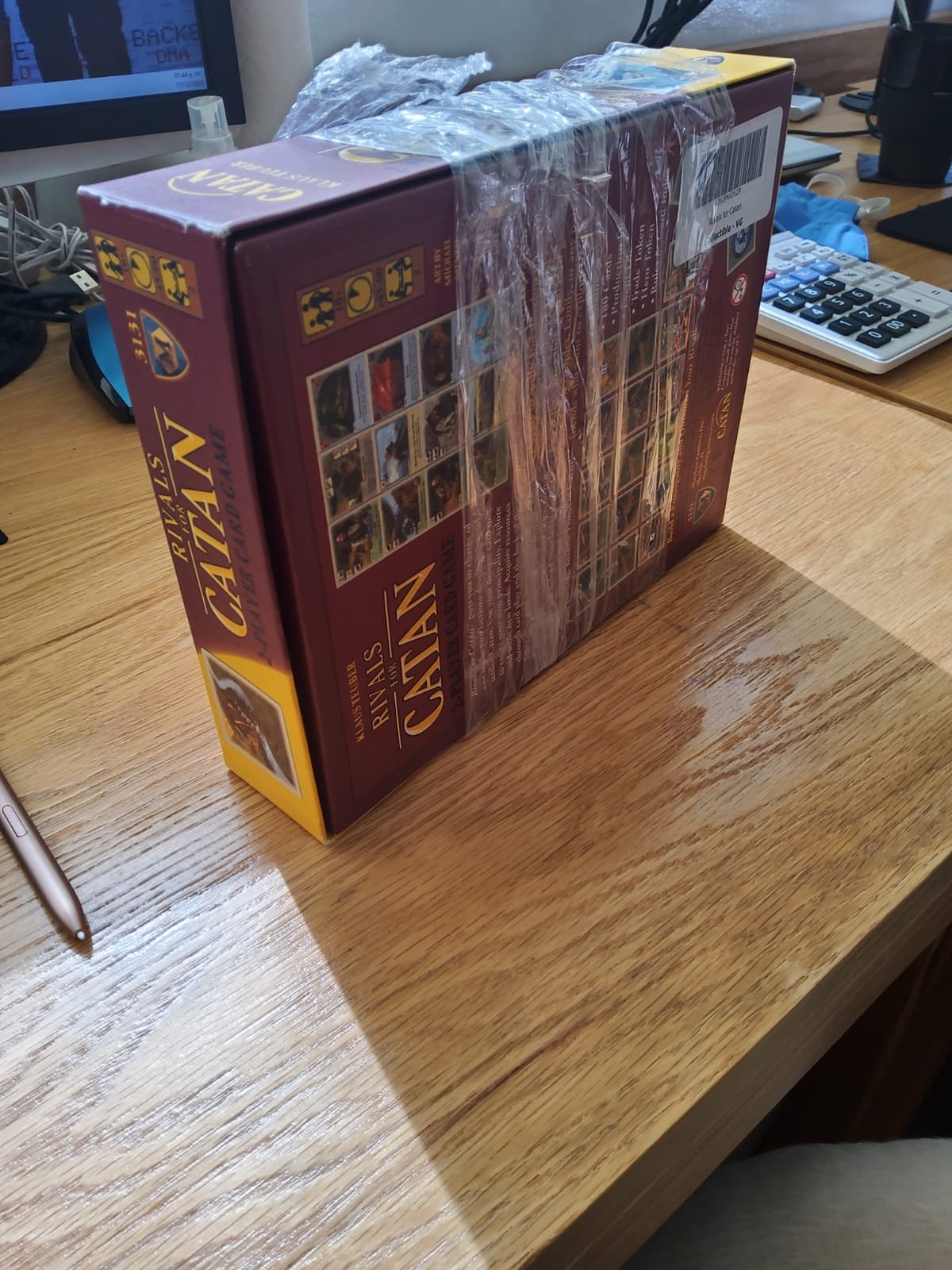
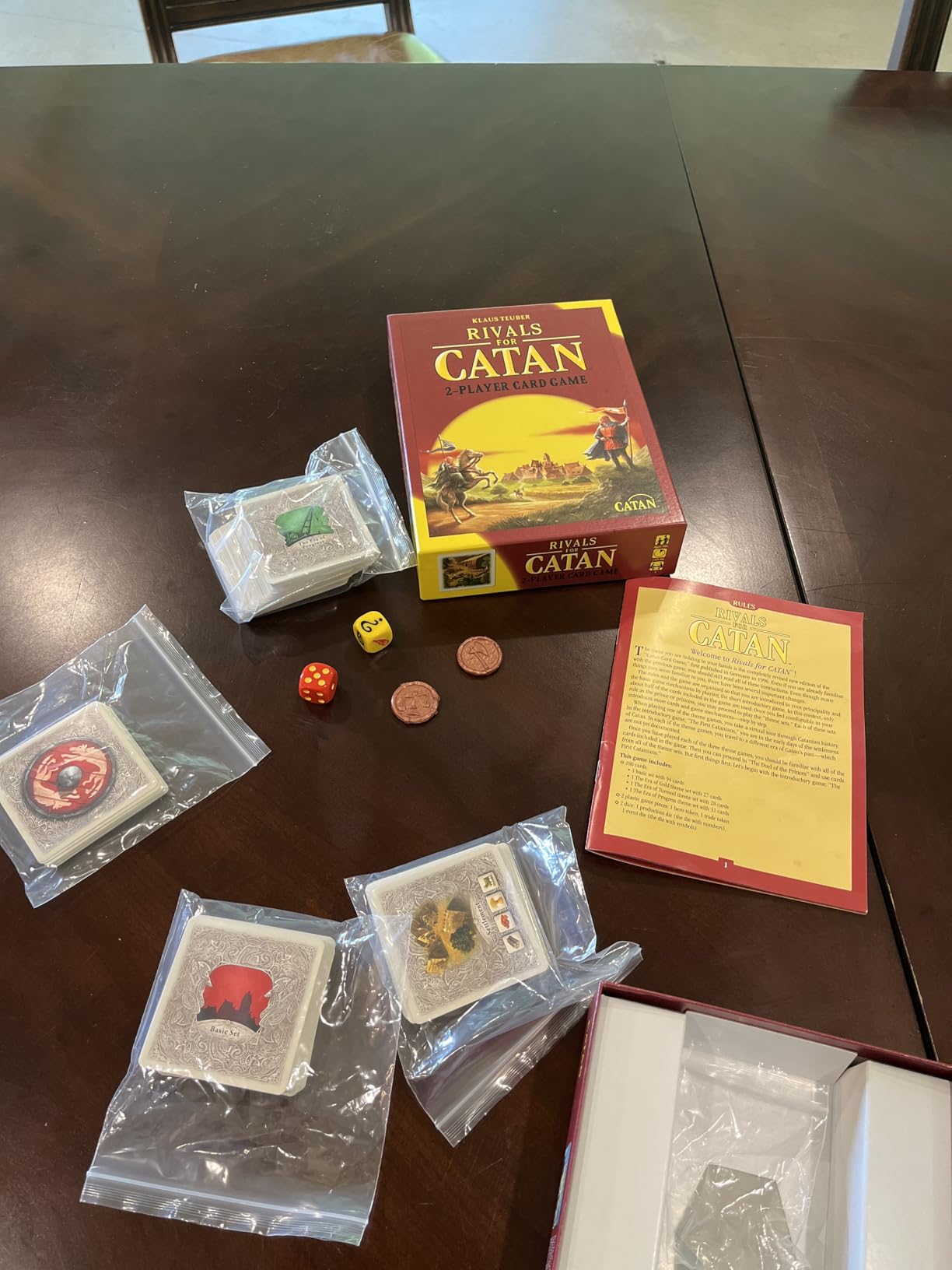
CATAN Rivals is the longest game on this list at 45 to 60 minutes, and it is here because a two-player night does not always fit in half an hour. Two factions settle a new island, acquire resources through card play and dice, and try to out-build each other.
It includes three separate theme games: The Age of Gold, The Age of Turmoil, and The Era of Progress. That is effectively three games in one box, and the second half of each one ramps up as card abilities come online, so the last fifteen minutes are the sharpest.
Regulars appreciate that this version carries far less luck than the four-player original. Games stay close, several winning strategies are viable, and the result usually feels earned rather than dealt, which is a genuine advantage for people who dislike random outcomes.
The trade-offs are real. The trading element that defines Catan is largely removed, which is a disappointment if you came for negotiation, and the cards are small enough to be a problem for older players. The box also has nothing to keep the cards secure, so they need a separate storage solution.
If you are new to Catan entirely, the learning curve is steep enough that it belongs on a weekend rather than a midweek evening. If you have played it before, this is the two-player version you were looking for.
Is CATAN Rivals a good first board game for two people?
It is a poor first game and an excellent fourth. The structure is familiar if you know Catan and genuinely dense if you do not, and it wants an uninterrupted block of about an hour rather than a gap between things.
Does CATAN Rivals need more table space than the other picks here?
Yes. Reviewers specifically mention the draw stacks needing a decent amount of table, so this is a dining table game rather than a coffee table game. The box itself is modest, around 8.4 by 6.25 inches.
9. Watergate Is the Best Two-Player Game for Players Who Like Real Decisions
- Tense and evenly balanced
- No wasted card actions
- Board with string and thumbtacks
- Plays fast enough for several games
- Steep learning curve
- Card edges wear quickly
- Can feel drawn out without interest in the history
Watergate is a tactical duel between a journalist and the Nixon administration, and it is the heaviest thinking on this list. You each have a 30-card deck, and every card carries several possible uses, so the same turn is a move, a resource, or a bluff depending on what you need.
What makes it work at two is that there is no wasted action. You are never waiting for a third player to finish a turn, and the momentum track means one good sequence can swing a game. Players who stick with it frequently describe it as one of the best two-player games they own.
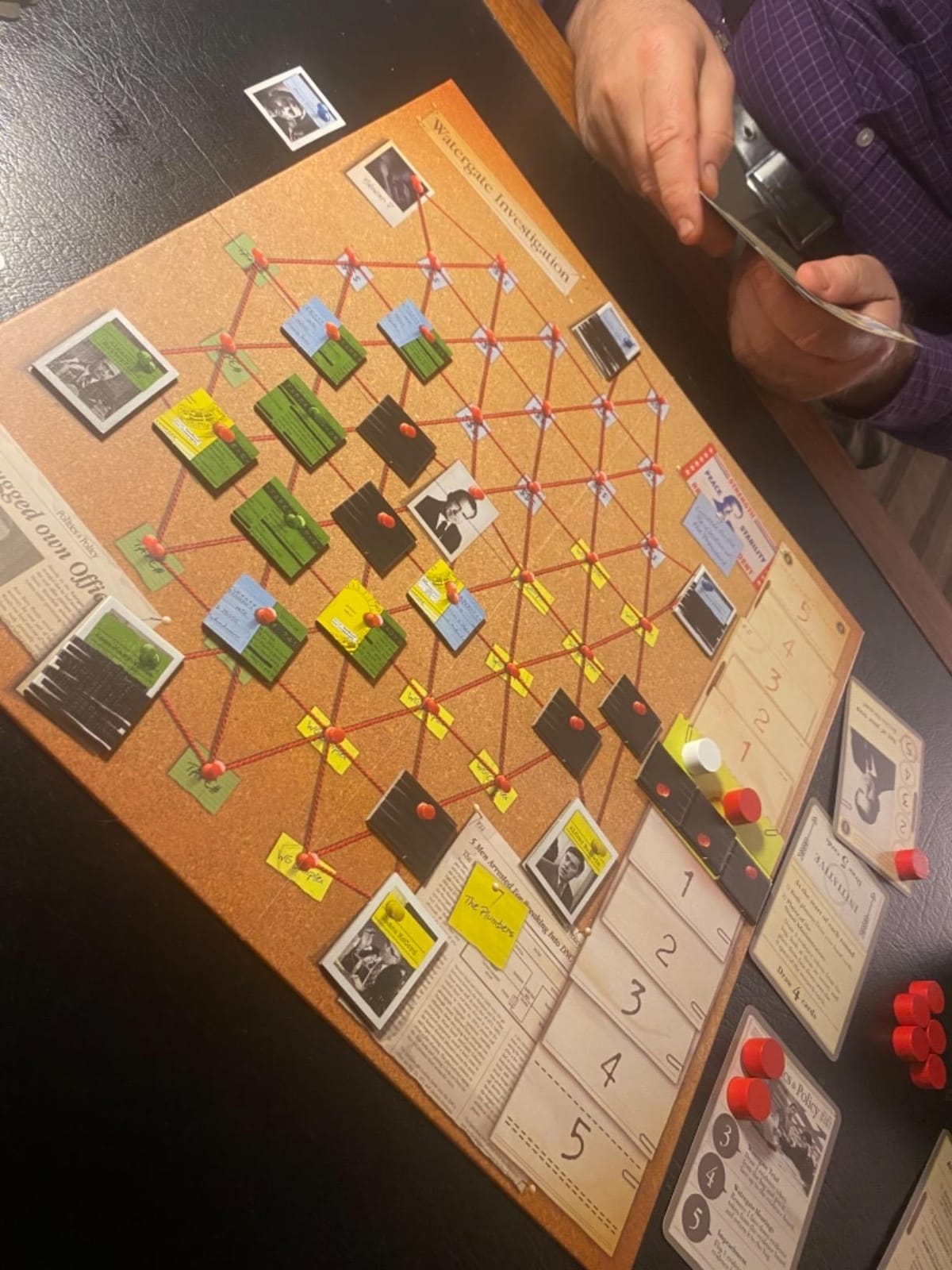
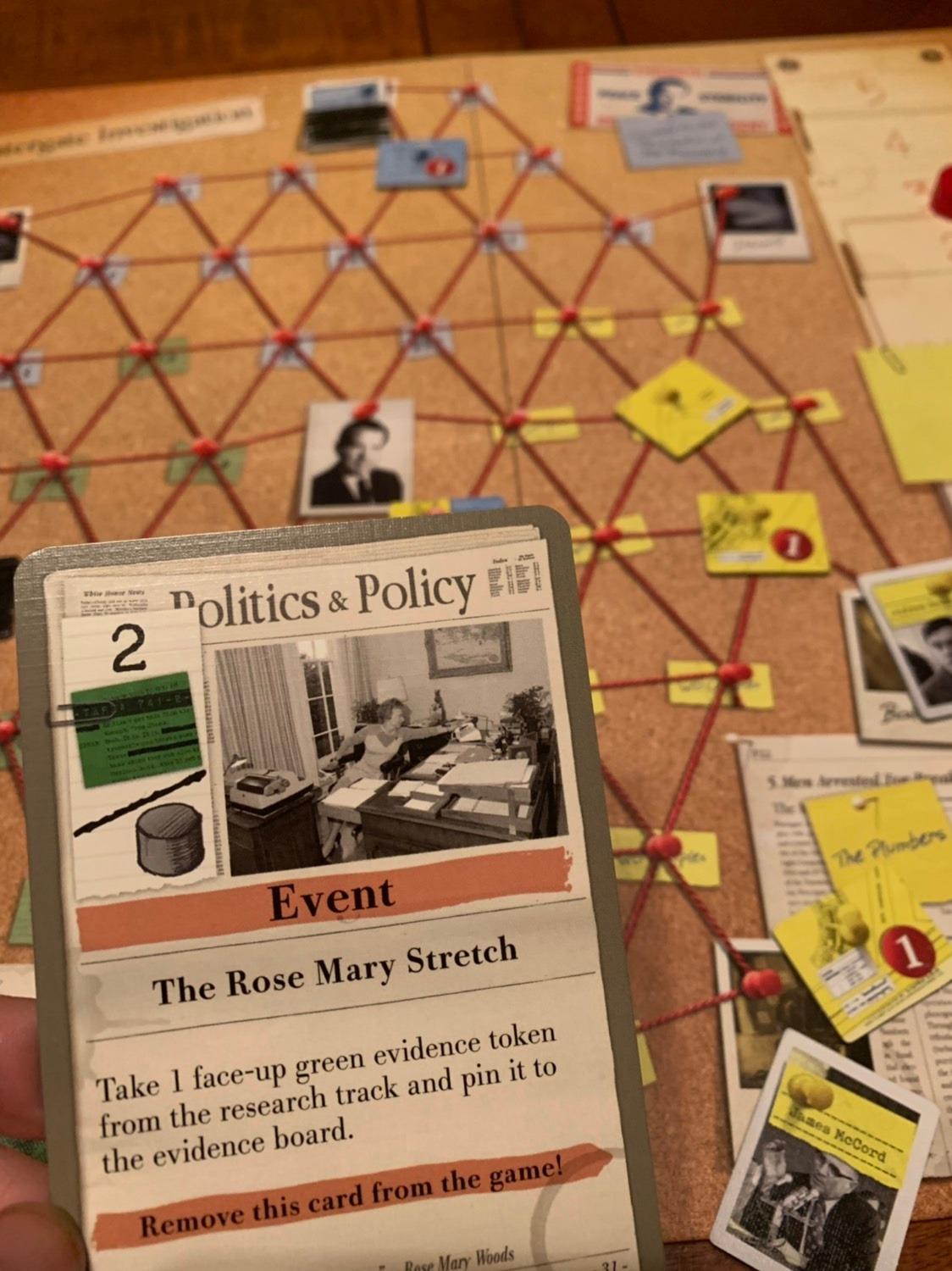
The physical design is a pleasure. The board has string and thumbtacks for building visible evidence chains, 36 evidence tokens, 7 momentum tokens, 10 initiative tokens, 2 informant tiles, and an evidence bag. You can see the story you are building across the table.
The rulebook doubles as a history primer on the scandal, which is a lovely touch for anyone who wants the theme explained rather than assumed. It also contributes to the weight, because there is a lot to read before you play.
Card wear is the practical issue. Edges warp fairly quickly, and you need to know your own deck well to play it at full strength, which raises the barrier for a beginner. The stated playtime is 30 to 60 minutes, so it stretches or compresses with your familiarity.
Is Watergate too complicated for casual two-player evenings?
It is, for the first few sessions. The complexity is less about rule volume than about holding options in mind, and one player running well above the other in experience makes the gap obvious. Sit with it for a month before judging it.
Do you need to be interested in the Watergate history?
You do not, though it helps. Players with no interest in the subject sometimes find a game dragging that others call tense, and the rulebook does a lot of the context work for you if you read it.
10. Boop Is the Best Two-Player Game That Finishes in 20 Minutes
- Boop mechanic keeps the board shifting
- 32 crafted wooden cat pieces
- Quick to learn and quick to play
- Works for newcomers and strategy players
- Board size is large for a small table
- Abstract theme gives little to talk about
- Replay value depends on the same kit
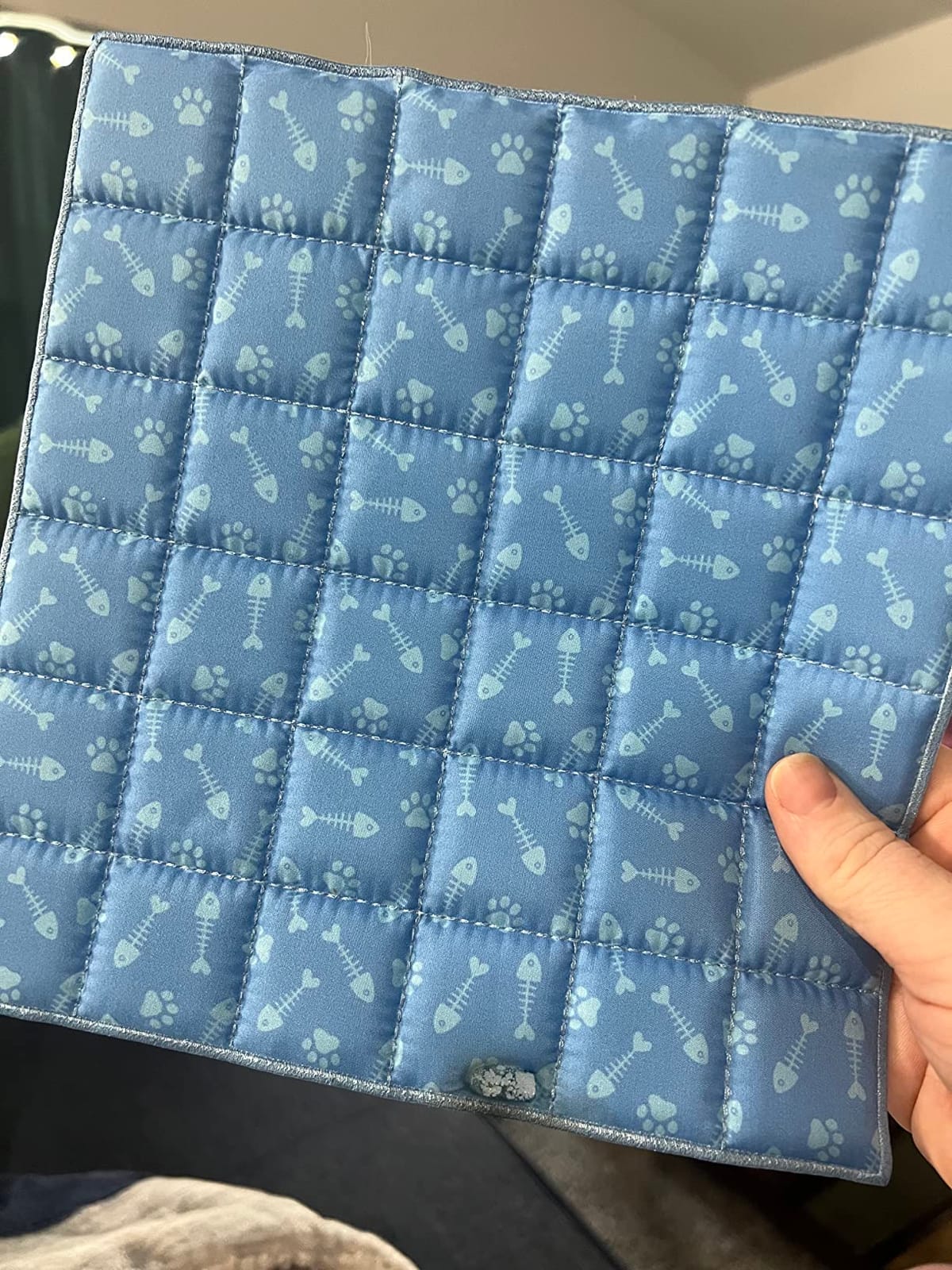
Boop is a cat-themed abstract game where placing a kitten triggers a chain reaction. Every adjacent cat is booped one space, that cat boops its neighbours, and the quilted bed board fills with shifting patterns. A single placement can rearrange a third of the grid.
At a 20-minute playtime it is the shortest game here that still feels like a real contest. That makes it the one I reach for when the evening has already used up its energy, or when you want a second game after dinner but not a second hour of explaining rules.
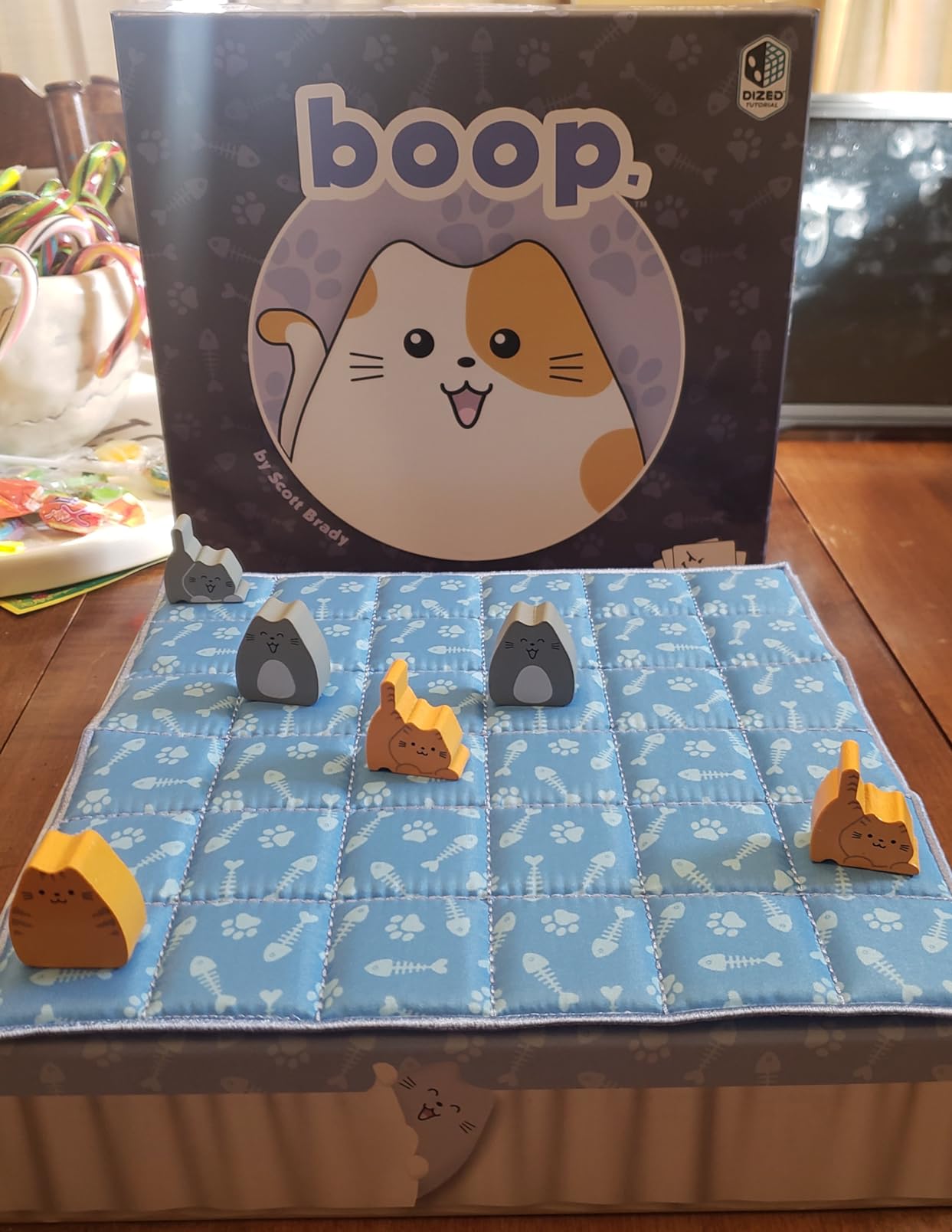
The components are the strongest part. Thirty-two crafted wooden cats and kittens, a soft quilted bed board, and a whimsical theme, all in a box around 9.5 by 9.5 inches. The board is a square footprint rather than a wide rectangle, which suits small tables better than the shape of most strategy games.
The rules are intuitive enough that both newcomers and seasoned strategy players can sit down together without a handicap. The stated age recommendation is 14 and up, and the abstract theme leaves players with a mixed-age table in mind.
Two things to know before you buy. The first is replay value, which depends entirely on the same kit and a different set of opening placements, so a couple who plays three times a week will exhaust it faster than one who plays monthly. The second is the board size, which needs clear space even though the box is not large.
Is Boop a good low-conflict choice for couples who hate losing?
It is moderate rather than gentle. Nobody is destroying your position turn by turn, and the chain reactions feel chaotic rather than personal, but someone is still counting points. If losing genuinely spoils the evening, 7 Wonders Duel is the safer call.
Does Boop work with a large age gap at the table?
Yes. The rules are short and the boop mechanic is intuitive, and there is no reading comprehension involved. The 14+ rating appears to reflect the tactical ceiling rather than any difficulty with understanding the game.
11. Battleship Classic Is the Best Two-Player Game for a Mixed-Age Family Table
Hasbro Gaming Battleship Classic Board Game | Strategy Games for Kids and Adults | Ages 7+ | 2 Players | Fun Kids Games | Family Games
- Instantly recognisable for every age
- Boards snap together for travel
- Pieces store inside the boards
- No batteries or screens
- Can run long with all the grid guesses
- Very many small pegs that get lost
- Less depth than modern two-player games
Battleship Classic is the game you can put in front of a seven-year-old and a seventy-year-old with no explanation. You hide your ships, call out coordinates, and the other player hunts. The rules are two sentences and the first game is genuinely exciting for both players.
It has the highest review volume of anything on this list, which tells you something about how reliably it delivers exactly what it promises. This is a well-made, instantly familiar family favourite, and it works just as well for two adults who want a low-stakes evening.
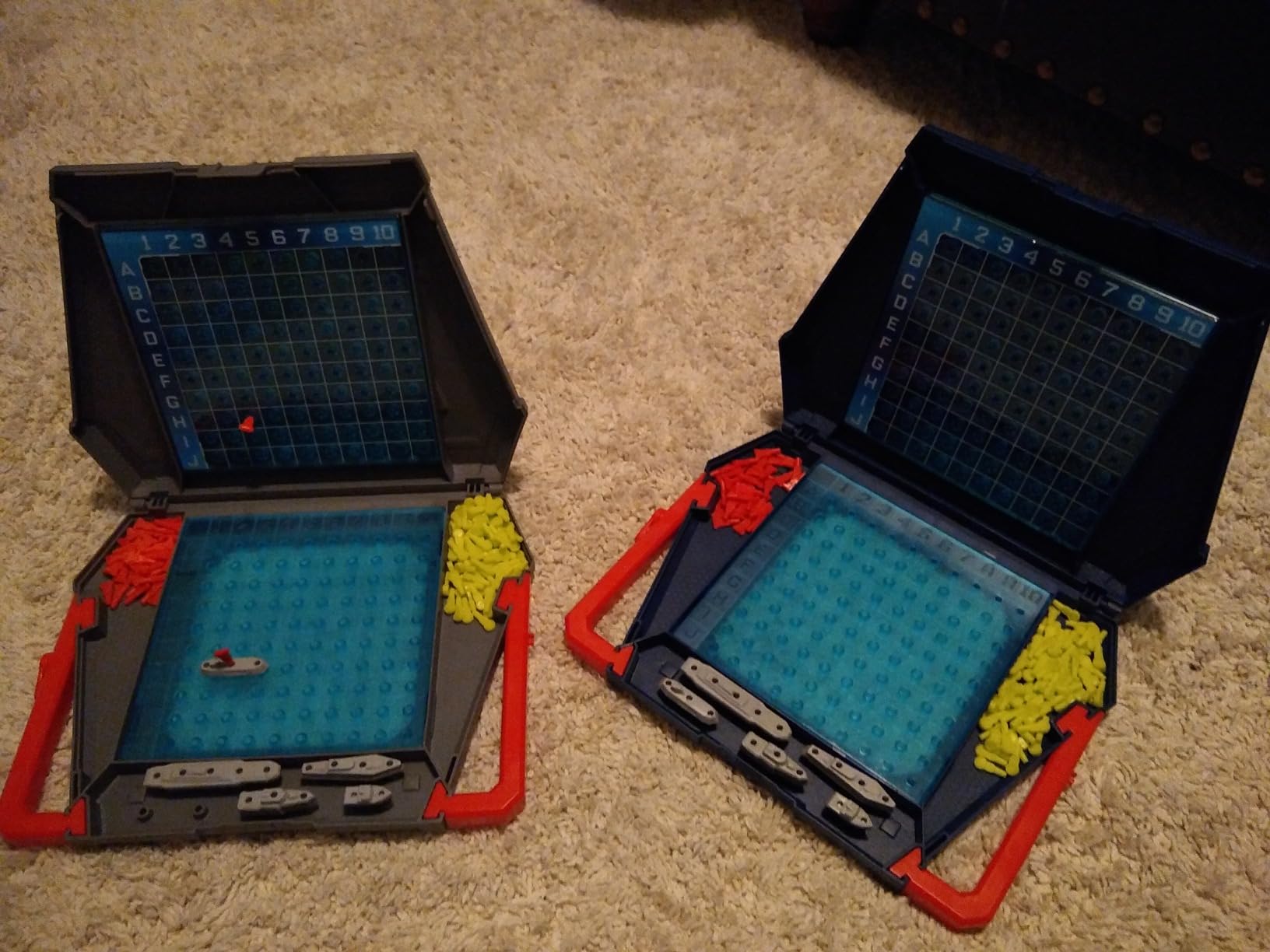
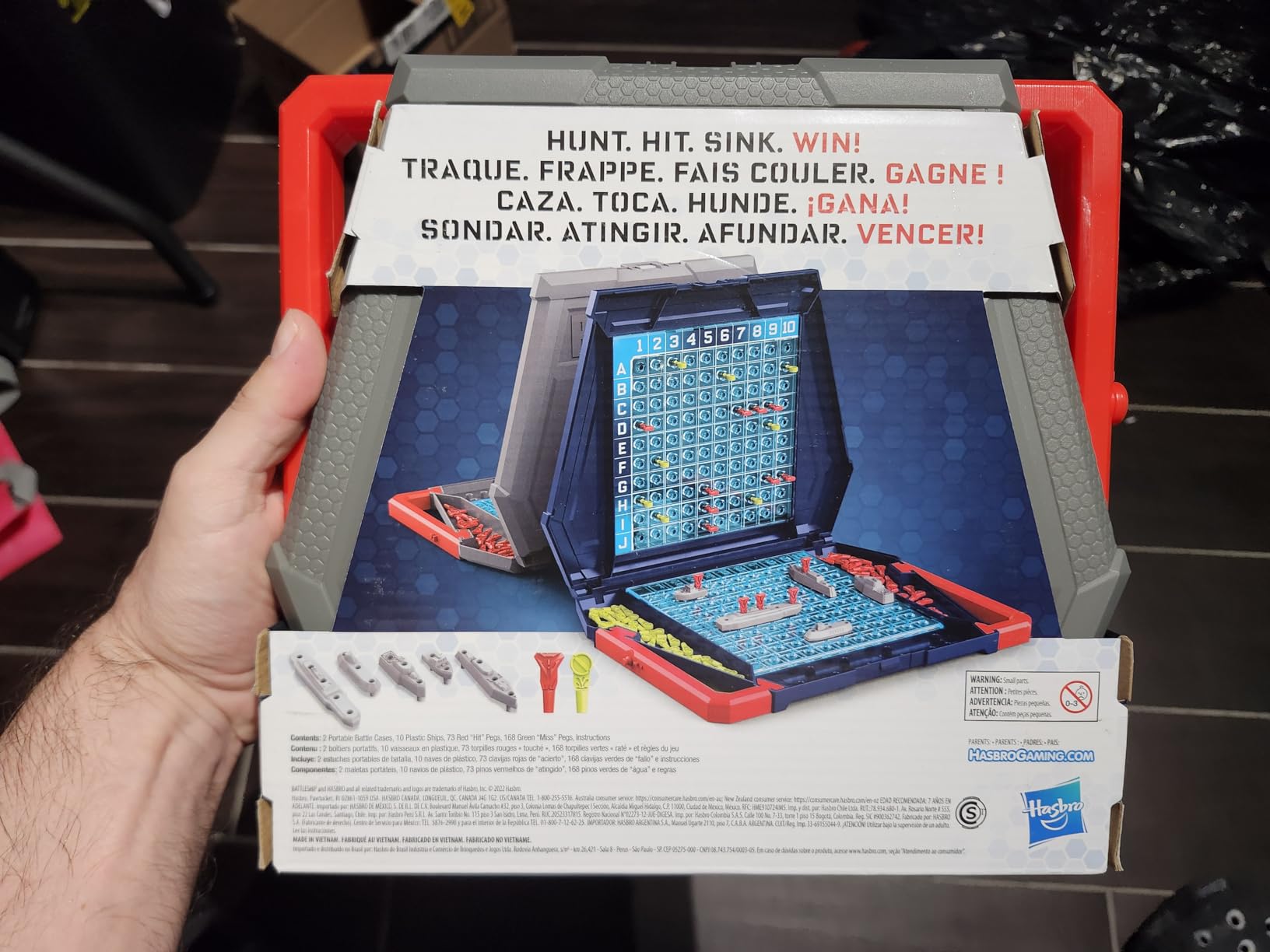
The physical design is sensible in a way most classic games are not. You get two portable battle cases, 10 plastic ship tokens, 73 red hit pegs, 168 green miss pegs, and instructions, and everything stores inside the two boards, so travel and shelf storage are solved.
Where it falls short is depth. There is no hidden information strategy beyond pattern guessing, and a 30-minute estimate often stretches because of the sheer number of coordinate calls. Two experienced players will exhaust the decisions quickly.
The peg count is the other complaint. With 168 miss pegs, you will lose some, and the green and red markers are easy to mix up in low light. Keep the cases on the table rather than the shelf and this stops being an issue.
Is Battleship too simple for two experienced players?
For a first game, no. For a regular two-player night, yes, and it will not compete with the strategic depth of 7 Wonders Duel or Watergate. Treat it as the game you play with guests, kids, or on a night when nothing is required of you.
Will Battleship survive being carried around?
Yes. The two cases are the whole point of the format, since all ships and pegs live inside the boards. Reviewers regularly use it for travel and for tidy shelf storage, and it needs no batteries or power of any kind.
12. Couch Skeletons Is the Best Two-Player Warm-Up Game
Couch Skeletons Card Game – Quick and Easy 2 Player Game by The Dusty Top Hat
- Complete game in about 10 minutes
- Colourful skeleton artwork
- Good quality cards for the size
- Fits in a coat pocket
- Low strategic depth
- Rules need a little interpretation
- Limited replay value
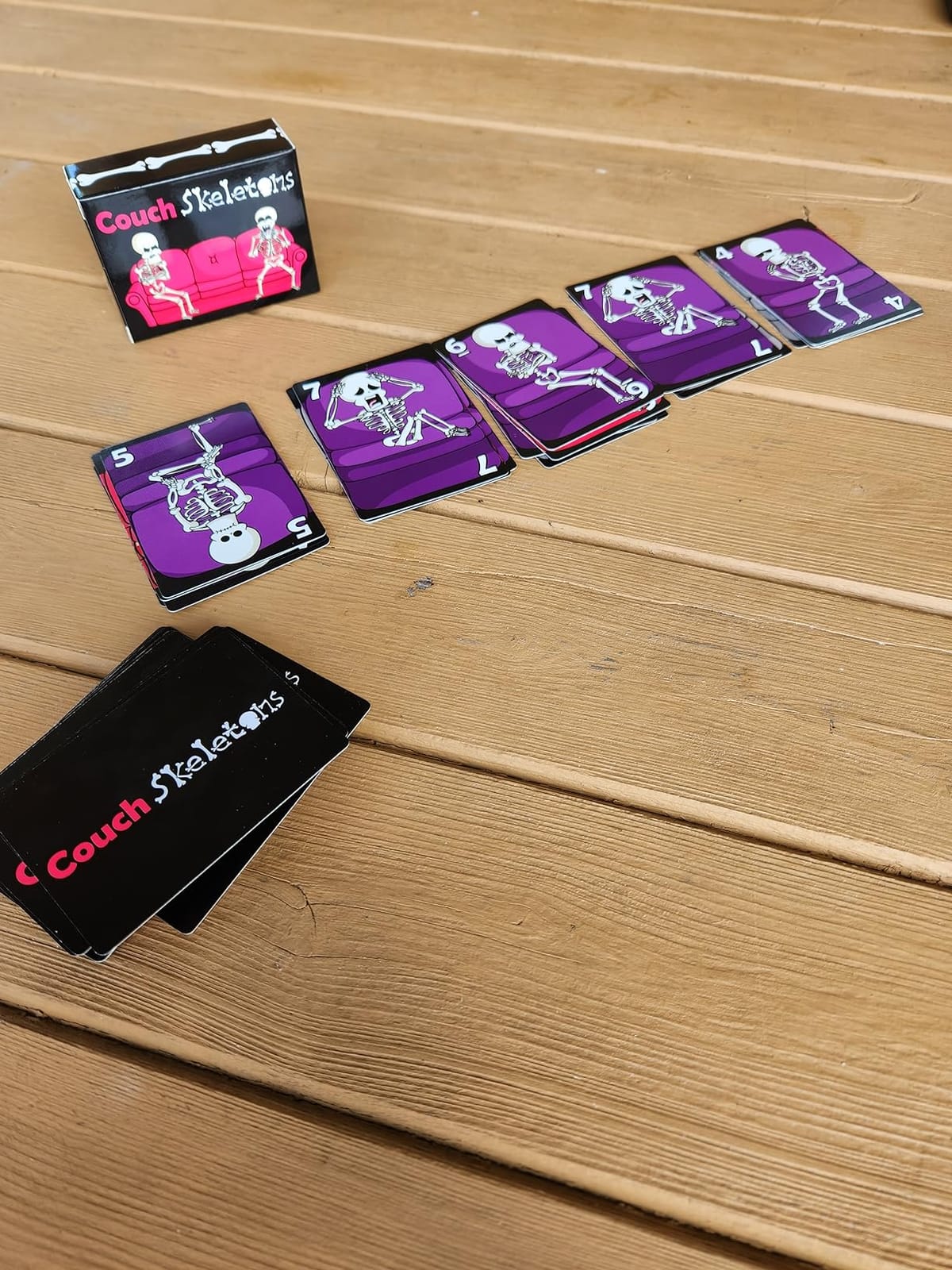
Couch Skeletons is a ten-minute card game about placing skeletons on numbered couch seats so the totals work out. It is not a strategy contest. It is a small, cheerful, ten-minute thing that fills a gap while something else cooks or before the real game comes out.
We use it as a warm-up before a heavier box. Ten minutes of low-stakes play that ends on a laugh is a much better way to start a two-player evening than launching straight into a 30-minute game with a full rule briefing.
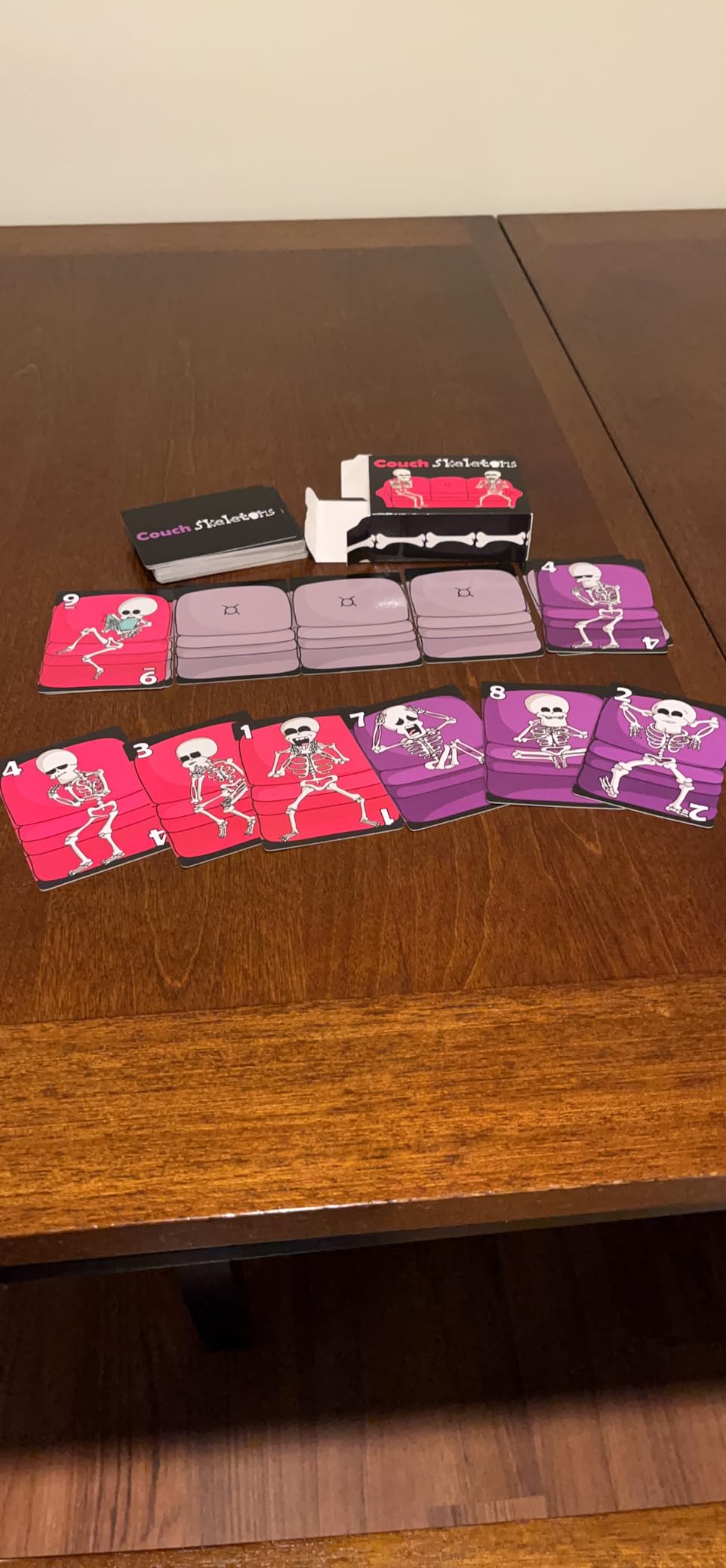
The physical facts support the use case. It weighs under six ounces, measures roughly 4.3 by 2.8 inches, and the card stock feels like a proper deck rather than a novelty. It is the smallest thing on this list and the easiest to pack.
Be clear about what it is. Reviewers describe it as closer to a light solitaire than a competitive strategy game, the rules are not entirely self-explanatory on first read, and replay value is limited without extra decks or rule variants. Some note the format could be recreated with two standard decks.
The artwork is the unexpected part. Colourful, friendly skeletons rather than anything grim, which makes it far more pleasant at a dinner table than the theme suggests from the box.
Is Couch Skeletons a real two-player game or just a filler?
It is a real two-player game, but a light one. If you want a proper contest, buy 7 Wonders Duel or Jaipur. If you want ten minutes that work with a nine-year-old and a dog under the table, this is the correct box.
Can Couch Skeletons be played solo as well as with two people?
It is designed for exactly two, and solo play is not the intended mode. Our broader adult game picks and the strategy board game roundups cover titles that stretch across solo, two, and larger tables if that flexibility matters to you.
How to Choose a Two-Player Game That Will Actually Get Played
The single most repeated complaint about games sold as two-player is that they were designed for four and merely tolerate two. You spend an evening waiting, and the game dies. Learning to tell a true duel from a two-player-capable game is worth more than any individual recommendation on this page.
Three signals give it away. A true two-player game deals one private hand or board to each of you, has a win condition built for exactly two, and lists 2 players rather than 2 to 4. Every game on this list checks all three. If a box says 2 to 5, you are the minimum, not the design.
Next, separate teach time from play time. They are different numbers and they are the reason games get abandoned. Othello and Mandala are playable within five minutes of opening the box. Watergate and CATAN Rivals need a proper read-through, and that is a commitment rather than a complaint. Match the game to how much patience you actually have on a weeknight.
Then think about footprint, which nobody mentions and everybody notices. Jaipur packs into a 7 by 5 inch box. Mandala is a flat 8 by 8 inches with a fabric mat. CATAN Rivals needs real table space for its draw stacks, and Boop wants a clear square for a quilted board. In a small home, the games you can leave out on the coffee table are the games that get played.
Low-conflict play is a legitimate category, not a compromise. A long-running thread on r/boardgames about non-confrontational games for couples exists because losing genuinely spoils some evenings, and the advice there matches what we found: choose games where you build your own thing rather than attack your partner’s, or play something where the randomness is loud enough to absorb a bad result. Splendor Duel and 7 Wonders Duel both fit that brief well.
Finally, check whether the game survives a third and fourth player. Most games here cannot, and that is a real cost. If your evenings regularly become four-player evenings, read our family game night guide first, or add a separate party box to the shelf rather than compromising the duo game.
One last habit worth keeping. Games with a clear win and loss make for better evenings than games that end on a tie, so look for scoring that resolves rather than punts. All twelve picks here finish cleanly with one winner, which is why a rematch is always one word away.
Frequently Asked Questions
What are some good 2 player board games?
Good two-player board games are designed for exactly two, with a private board or hand each and a win condition built for a duel. Our top picks are 7 Wonders Duel, Jaipur, Othello, Splendor Duel, and Boop. Each finishes in 20 to 30 minutes and teaches in a single round.
What board games can two people play together?
Two people can play almost any duel-style game: card drafting like Jaipur, area control like 7 Wonders Duel, abstract strategy like Mandala, and deduction like Battleship Classic. The key is choosing titles built for two rather than games that merely allow two, since the latter leave players waiting through long gaps.
What games to play at home with two people?
Games to play at home with two people should fit a coffee table, finish in under an hour, and need little setup. Jaipur, Splendor Duel, and Fox in the Forest all fit a small surface, travel in a hand, and clear away in a minute. Couch Skeletons works when you only have ten minutes.
What are some good 2 player co-op games?
None of the twelve games on this list are cooperative, because every one is a head-to-head duel and we ranked them on duel quality. For games where two players share one goal, our dedicated cooperative board game roundup covers the best options, including teamwork titles built for couples.
How long do two-player board games take to play?
Most finish in 20 to 30 minutes. Othello runs about 20 minutes, Boop about 20, and Jaipur, 7 Wonders Duel, Splendor Duel, and Fox in the Forest around 30. CATAN Rivals and Watergate stretch to 45 or 60, so save those for an unhurried evening.
What to Play Tonight
If you want one answer, buy 7 Wonders Duel. It is the best board game for two players at home because three win paths keep it fresh, the 30-minute runtime fits an ordinary evening, and the box lives happily on a coffee table shelf.
Ten minutes and no patience? Couch Skeletons. Twenty minutes and a bit of a contest? Boop or Othello. Half an hour and a proper duel? Jaipur for something you will replay for years, or Splendor Duel for something prettier. A whole evening free? Caper Europe or Watergate.
Start with one box and give it a month before buying another. The best board games for two players at home are the ones still on the table in week three, and our strategy board game picks are there when you are ready for a second.