
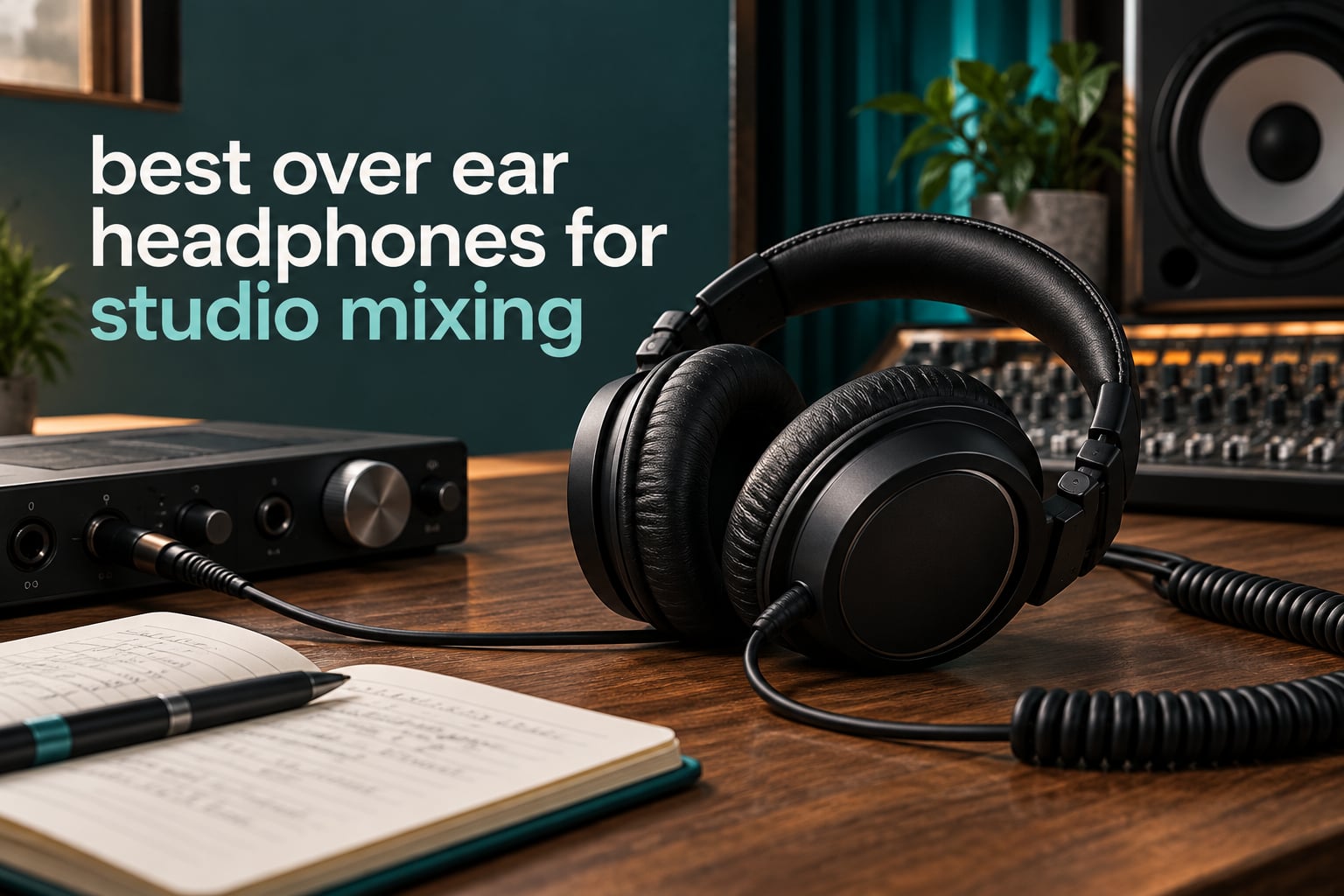
Every decision you make in a mix passes through your headphones before it reaches anyone else. Bass weight, reverb depth, sibilance, stereo placement, the tiny hiss under a vocal that nobody in the control room noticed. If the pair you are trusting is colouring the picture, you will compensate in the wrong direction and ship something that falls apart on the first honest playback system.
That is the entire argument for the best over ear headphones for studio mixing. Not loudness, not bass, not a fashionable signature. Accuracy, low distortion, a wide enough stage to place instruments, and a seal that holds through a six-hour session without turning your ears into a problem. We put ten of the most widely used studio monitoring headphones through that filter, weighed the published specifications against what owners actually report after months of daily use, and sorted the results by what each pair is genuinely good at.
A note on method before we start: everything quoted here comes from the manufacturer specification sheet and from owner review patterns, not from a lab rig. Where reviewers disagree with each other, we tell you. Where a spec sheet and the owner experience conflict, we side with the owners, because you will be living with the headphone at hour five of a mix, not at hour one. We also updated this guide for 2026, and the range of options has not changed much, which tells you something useful about the models below.
If you want the wider context first, our guide to the best studio headphones overall covers editing and tracking applications too, and our best over-ear headphones for music piece covers critical listening beyond the desk.
Top 3 Studio Mixing Headphones Worth the Desk Space in 2026
These three are the ones we would put on a desk without hesitating. The Audio-Technica ATH-M50x is the all-round answer, the Sony MDR7506 is the durable budget standard that has outlasted several generations of competitors, and the beyerdynamic DT 990 Pro 250 Ohm is the open-back we reach for when the room is quiet and the job is critical.

Audio-Technica ATH-M50x
- 45mm rare earth drivers
- 38 ohm impedance
- Detachable cable
- 90 degree swiveling earcups

Sony MDR7506
- 40mm dynamic drivers
- 63 ohm impedance
- Folds flat into a soft case
- Closed-ear isolation

beyerdynamic DT 990 Pro
- 250 ohm impedance
- Open-back wide soundstage
- Velour pads
- 5 Hz to 35 kHz response
Quick Overview: 10 Best Over-Ear Headphones for Studio Mixing in 2026
All ten below are wired circumaural monitors with published specifications and large owner review histories. Design, impedance and driver size are the three numbers that should drive your choice, and they are listed for every model so you can filter before you read.
| Product | Specifications | Action |
|---|---|---|
| Audio-Technica ATH-M50x |
|
Check Latest Price |
| Sony MDR7506 |
|
Check Latest Price |
 Audio-Technica ATH-M20x Audio-Technica ATH-M20x |
|
Check Latest Price |
| beyerdynamic DT 990 Pro |
|
Check Latest Price |
 Audio-Technica ATH-M40x Audio-Technica ATH-M40x |
|
Check Latest Price |
 AKG K240 Studio AKG K240 Studio |
|
Check Latest Price |
 Sennheiser HD 280 Pro Sennheiser HD 280 Pro |
|
Check Latest Price |
 AKG K702 AKG K702 |
|
Check Latest Price |
 Samson SR850 Samson SR850 |
|
Check Latest Price |
 Tascam TH-MX2 Tascam TH-MX2 |
|
Check Latest Price |
1. Audio-Technica ATH-M50x – the all-round mixing reference
- Neutral extended-range clarity that exposes low-level mix problems
- Excellent isolation from the circumaural seal
- 90 degree swivels make one-ear cueing instant
- Detachable cable so a frayed lead is a cheap fix
- Two year warranty on parts and labor
- Swivel hinges and the folding design feel loose and floppy
- Supplied pads and headband padding need replacing after a few years of daily use
- Coiled cable is long and needs managing at a crowded desk
The ATH-M50x is the pair we recommend to someone who wants one headphone that does every studio job well. Forty-five millimetre proprietary large-aperture drivers with rare earth magnets and copper-clad aluminium voice coils give it the extension and clarity to judge low-level artefacts, and the extended 20 Hz to 28,000 Hz range means nothing important is trimmed off the top.
At 38 ohm and 99 dB sensitivity it is driven easily, which matters more than most buyers realise. A modest audio interface, a decent laptop or a phone will produce usable level without a separate headphone amplifier.
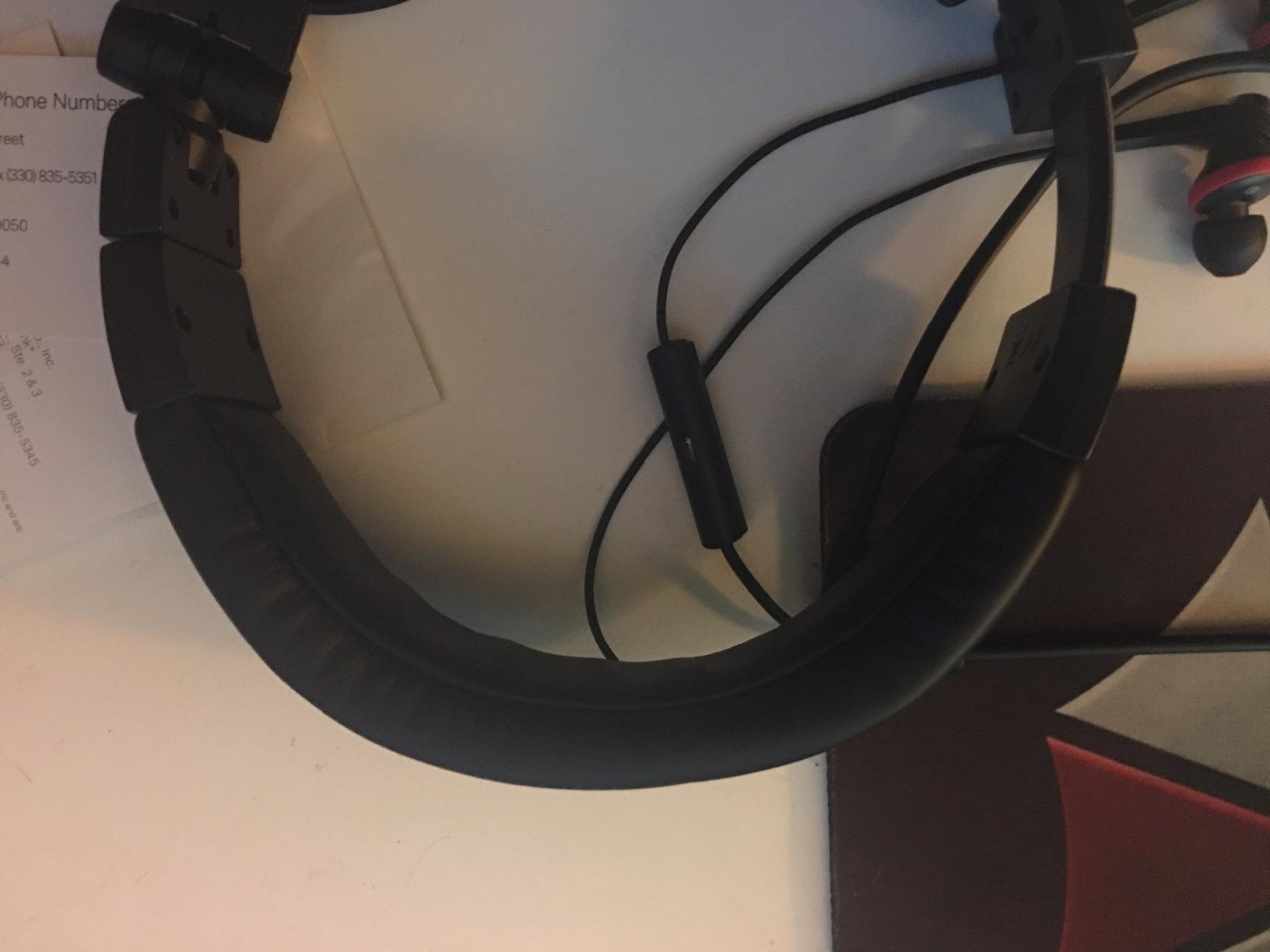
The practical design decisions are the reason it has stayed in studios for so long. Ninety-degree swivelling earcups let you fold one side away for single-ear cueing while tracking, the detachable cable means a damaged connector is a replacement part rather than a dead pair, and the two year parts-and-labor warranty is the strongest cover on this list.
What you are actually buying is isolation that behaves. The circumaural design contours around the ear rather than sitting on it, so the closed seal holds up in a room with other people in it and keeps headphone bleed off a live microphone.
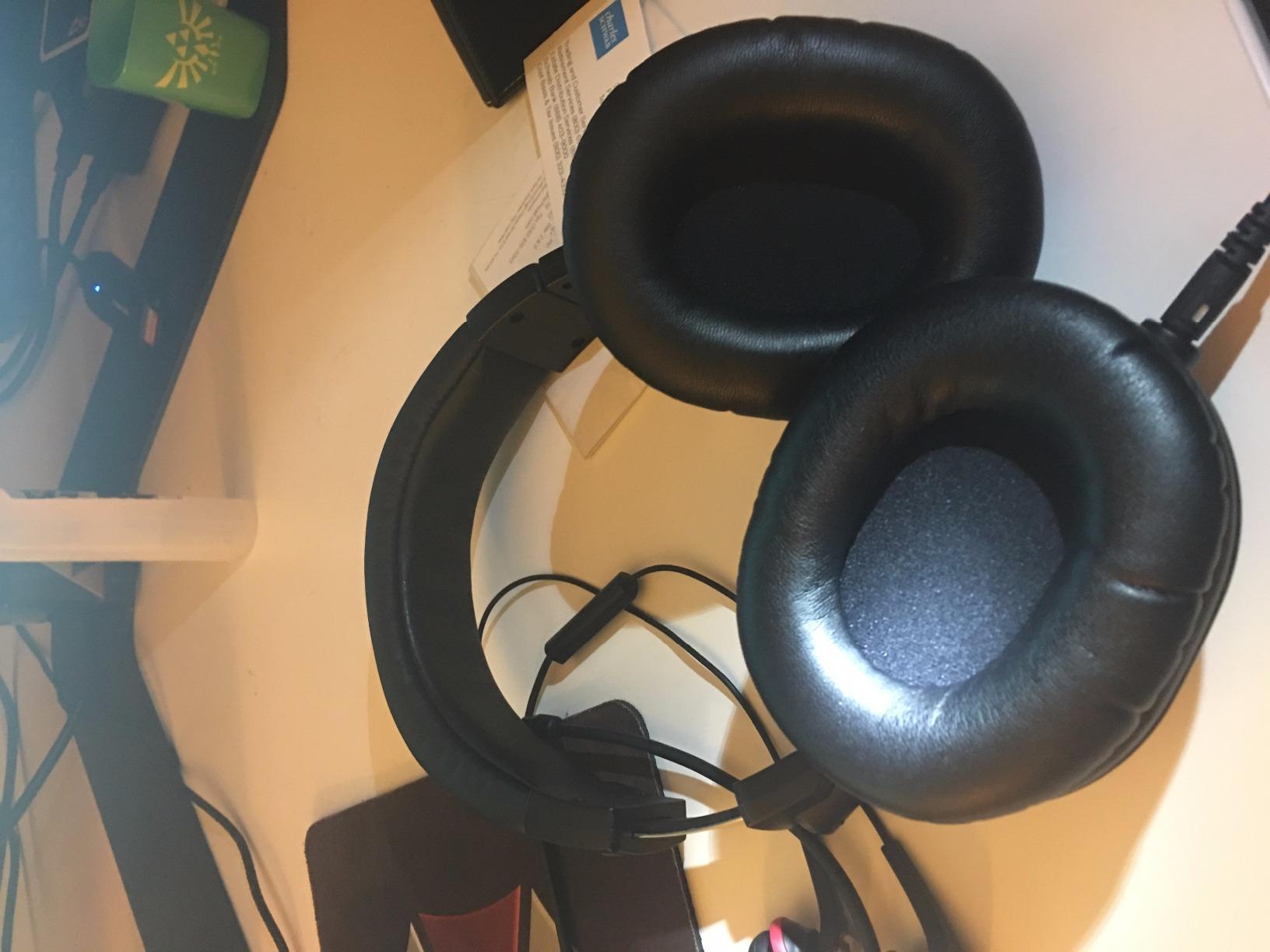
Is the ATH-M50x clamp a real problem?
It is the single most repeated complaint about this model, and reviewers on r/HeadphoneAdvice name the clamp force as a genuine deal-breaker for some ears after extended wear. If you have worn glasses or a smaller head, expect to notice it in the first hour rather than the fourth.
The fix is almost always a pad swap rather than a return. A deeper third-party pad spreads the load, and a stickier headband strip takes pressure off the crown. Neither changes the tuning meaningfully, and both cost a fraction of replacing the headphone.
Is it worth stepping up to the M50x or down to the M40x?
If you track a lot, buy the cheaper M40x instead. It is the flatest of the three, ships with two cables, and at 35 ohm it is even easier to drive, so the extra spend on the M50x mostly buys you a larger driver and better isolation.
Owners also rate the M50x below the M40x for sub-bass extension, which rolls off low unless you apply EQ. If your work is bass-heavy electronic music, audition both and listen specifically at 40 Hz before you commit.
2. Sony MDR7506 – the durable closed-back industry standard
- Exceptionally detailed
- revealing sound that exposes low-level mix problems
- Very light at 8 ounces so hours of monitoring stay comfortable
- Effective passive isolation from a tight closed-ear seal
- Gold plated plug with 1/4 inch adapter in the box
- Folds flat into an included soft case
- Non-detachable cord means a frayed cable ends the pair
- Tuning is bright with slightly emphasised upper frequencies
- Bass is restrained which can leave mixes over-bassed
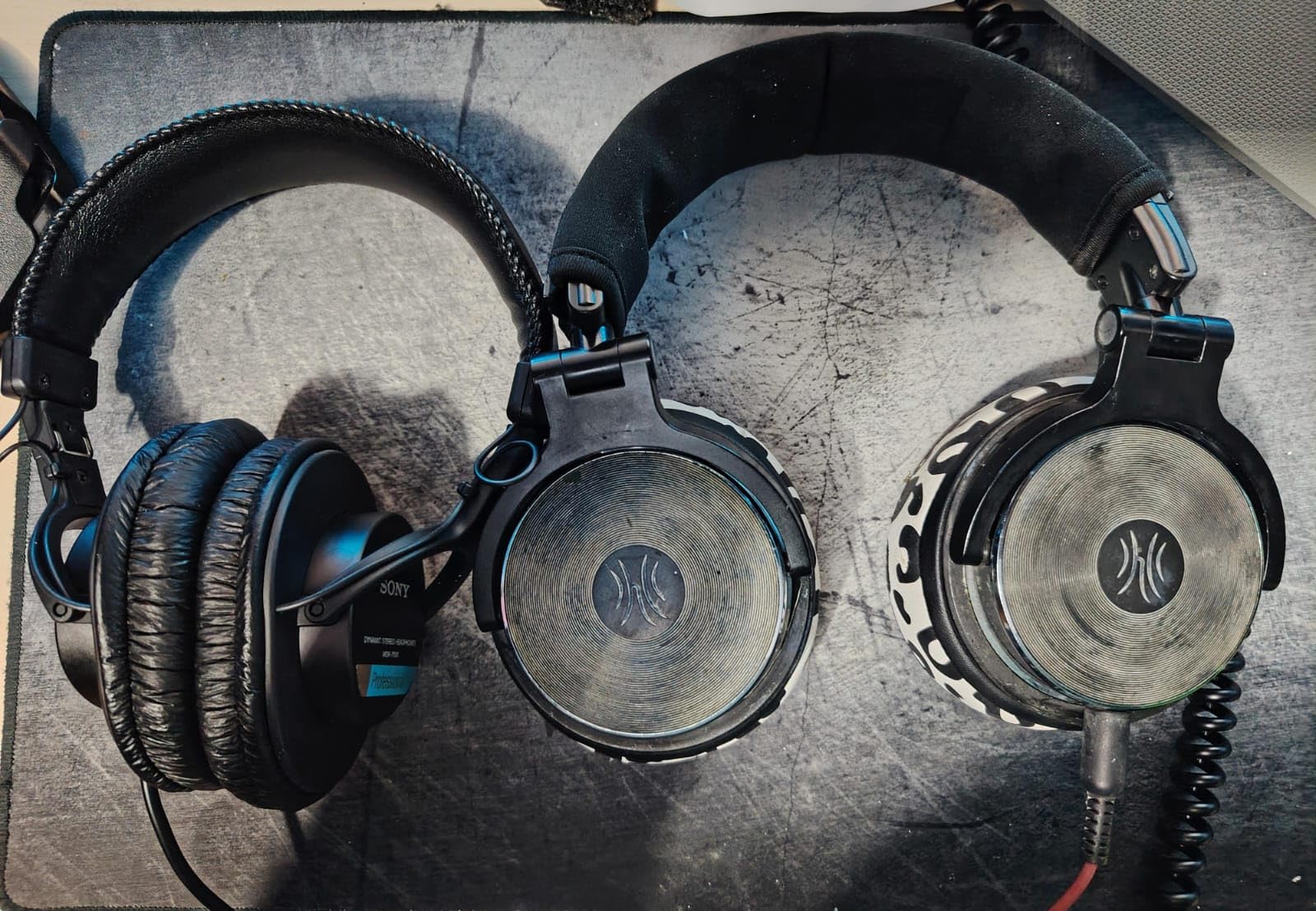
The Sony MDR7506 has been in continuous production since the early 1990s, and that longevity is the review. On r/homerecordingstudio and gearspace it is described almost as an industry standard rather than a product, and owners routinely report decades of use. Forty-millimetre neodymium dynamic drivers cover 10 Hz to 20,000 Hz at 63 ohm.
What makes it work is weight and honesty. At eight ounces it simply disappears on your head, and the closed-ear design does a genuinely useful job of cutting external noise. Producers who switch to it for a tracking session tend to keep it for mixing because that isolation holds up in a shared or untreated room.
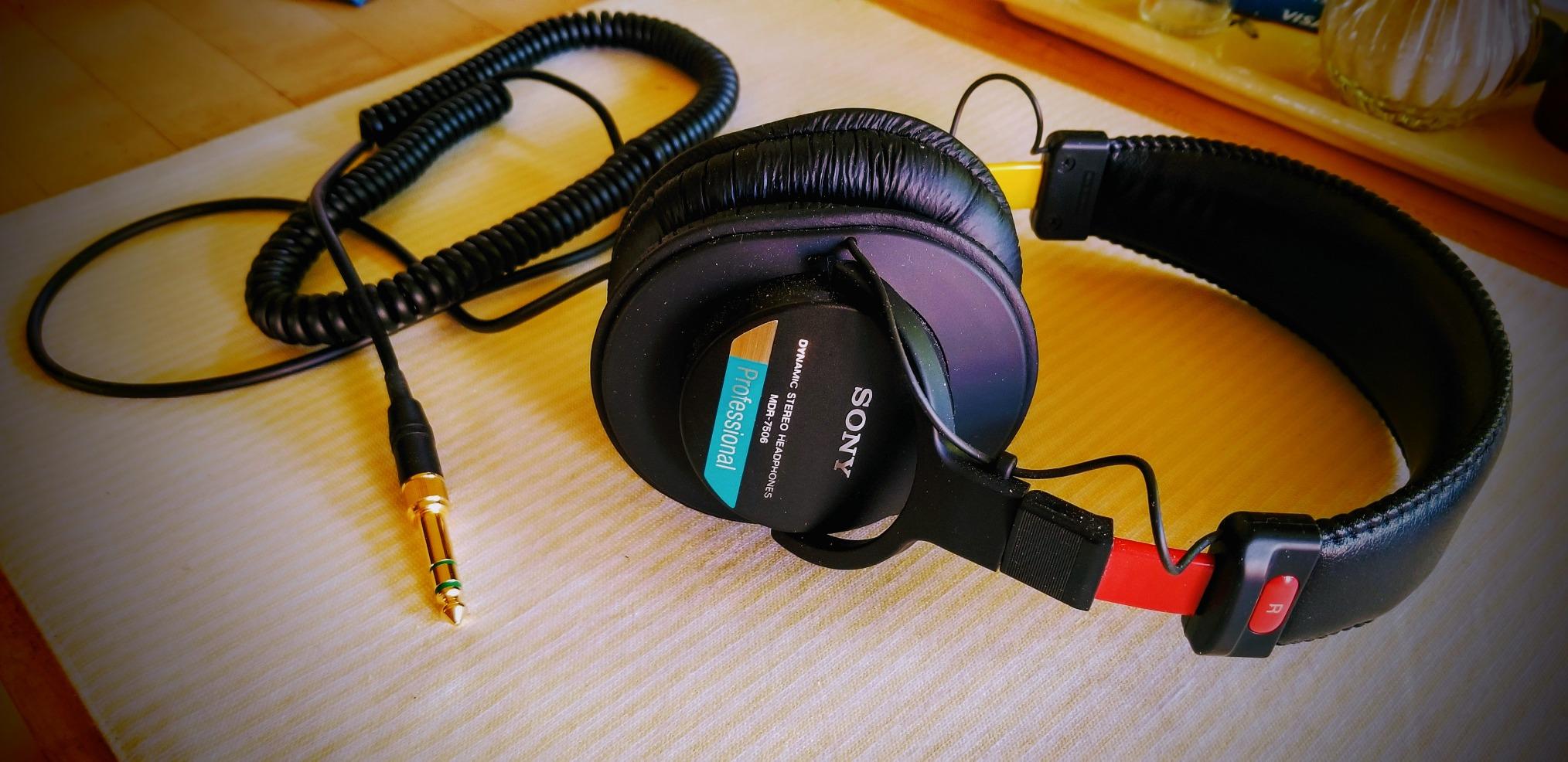
For mix decisions it is revealing in a way that flatter headphones are not. Low-level problems surface early, which means you are hearing the mix rather than a version of it. The 9.8 foot cord ends in a gold plated plug with a quarter-inch adapter in the box, so it plugs straight into an interface.
The folding hinge design lets the pair collapse into the included soft case, which matters more than it sounds when you are moving between rooms or taking a laptop session somewhere else.
Is the fixed cable a deal-breaker?
It is the part owners complain about most, and it deserves an honest answer. Yes, if the cable is the failure point. The 9.8 foot cord is fixed at both ends, so a break at the plug or a strain failure at the earcup means the headphone is finished. That risk is real, and it is the strongest argument for choosing a detachable-cable model instead.
Against that, the repairability is otherwise good. Ear pads are cheap and easy to source, the headband and hinges have proven decades of service, and the driver itself does not fail. Most owners treat them as a pair they buy once and maintain rather than replace.
Will the brightness make me over-correct my mixes?
Possibly, and it is worth knowing before you start. Owners consistently describe the tuning as bright, with upper frequencies slightly emphasised, and bass that is comparatively restrained. Both push in the same direction if you react emotionally: you may pull the highs back and add low end that is not needed.
Level-match against a familiar reference and resist the first instinct. Used as a checking tool rather than the only reference, that forward top end is useful, because it makes sibilance and harshness obvious before anyone else hears it.
3. Audio-Technica ATH-M20x – the honest budget monitor
- Flat
- well balanced monitoring at a very accessible price
- Metal-core structure with metal adjusters feels more durable than the price suggests
- Light enough for nine-hour-plus daily wear
- Circumaural seal gives real isolation in a noisy room
- Highs stay clear without being harsh or forward
- Cord is not detachable unlike the higher M-series models
- Low bass extension means sub content can feel under-defined
- Compact earcups can press on glasses wearers in long sessions
The ATH-M20x is the model we hand to students, tracking engineers working to a budget, and anyone who needs a genuinely flat response without a second thought. Forty-millimetre drivers with rare earth magnets are tuned for enhanced low frequency performance while staying flat and well balanced everywhere else, which is exactly the compromise you want for critical work.
At 47 ohm and 96 dB sensitivity it is comfortable to drive from an ordinary interface, and the 210 gram weight means it disappears quickly. Owners report wearing it for nine hours or more without relief, which is the sort of comfort claim that matters more than a spec sheet.
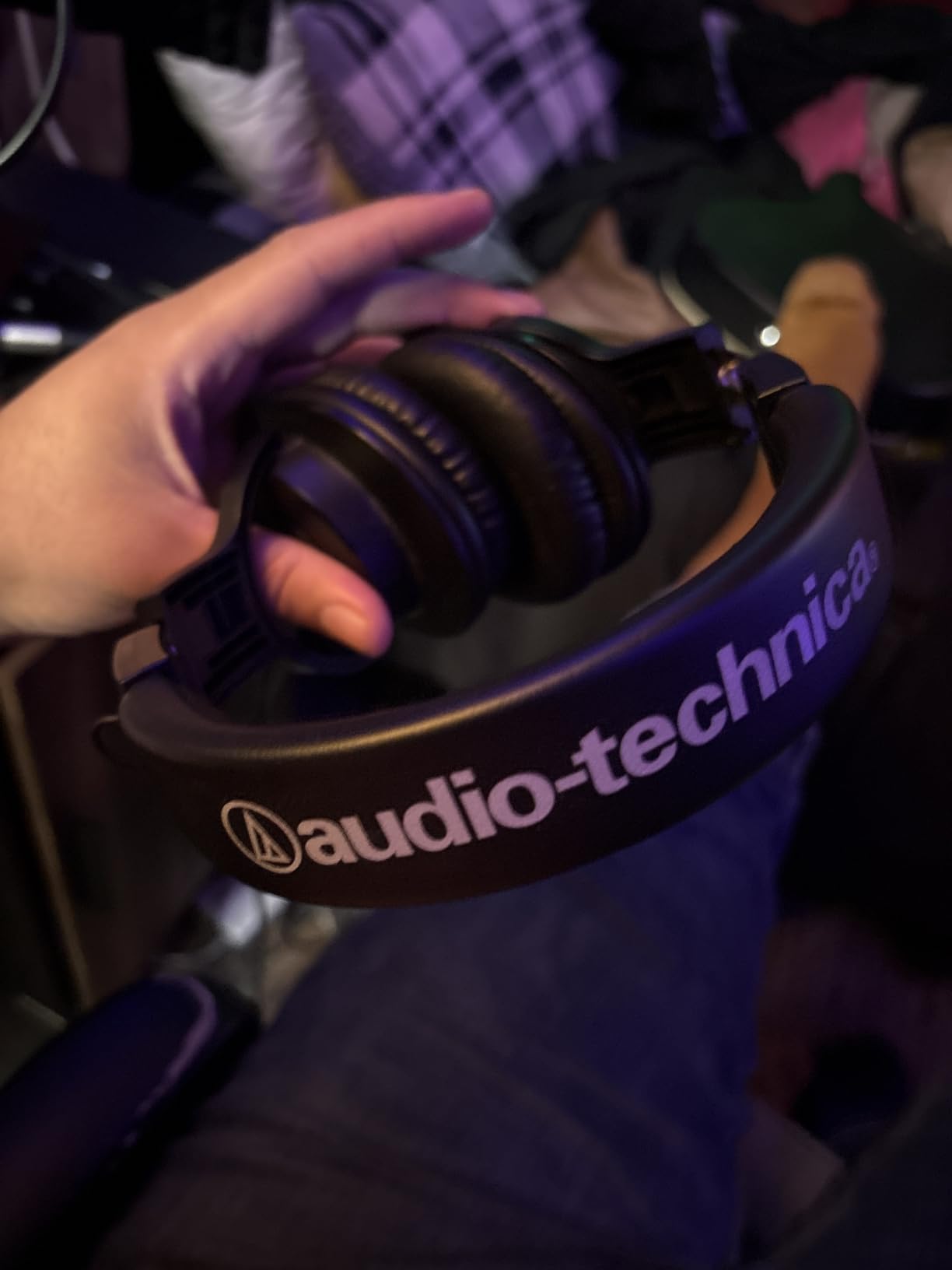
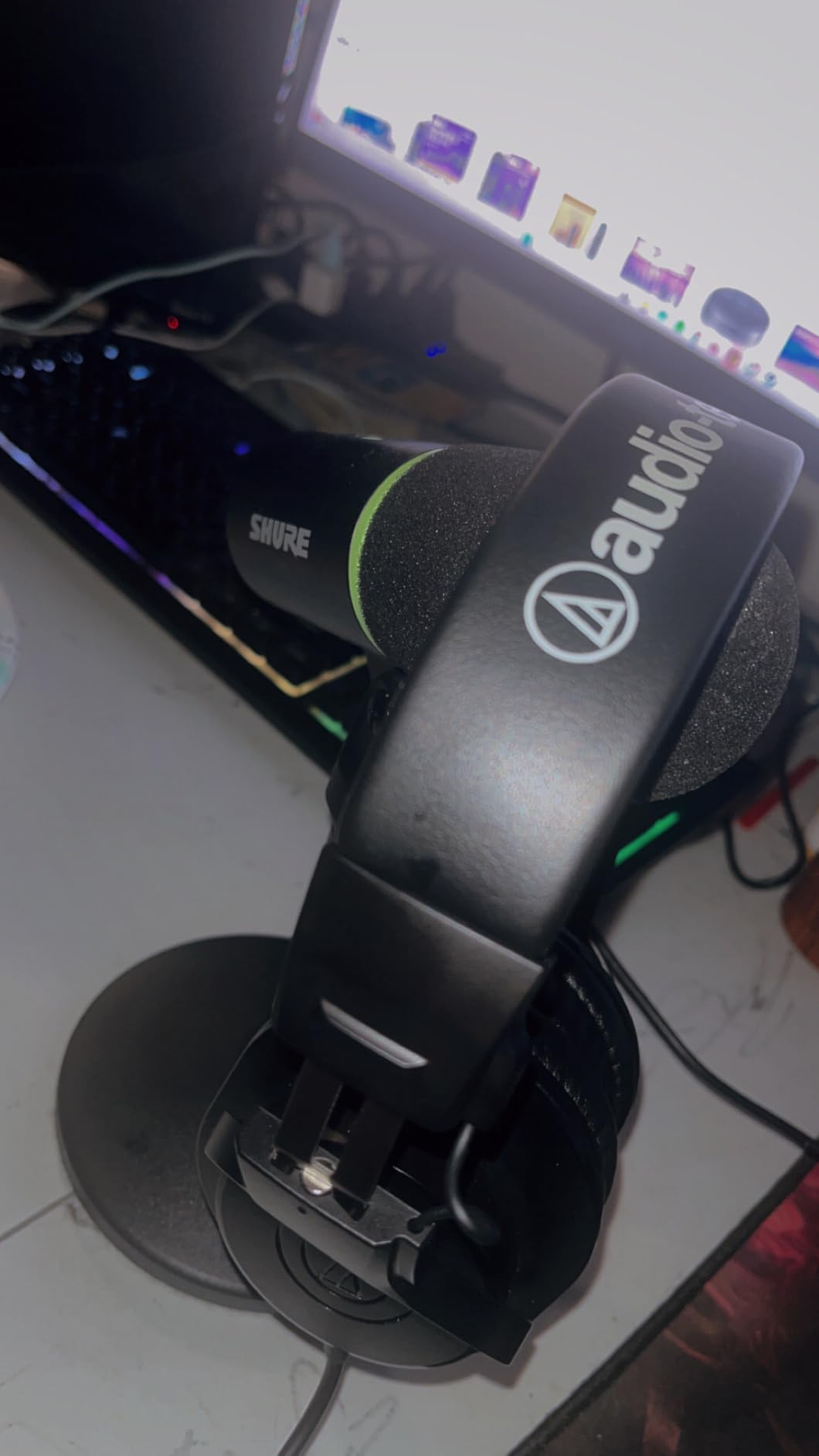
The build is the surprise here. A metal-core structure with metal adjusters feels far more substantial than the tier suggests, and the circumaural design contours around the ear for isolation that works in a busy room. A one-quarter inch adapter for studio gear is included.
The single-sided cable exit is a small touch that makes it easy to manage at a crowded desk, and the tight stitch work on the pads and headband holds up better than expected. For editing, podcasting and day-to-day tracking it is close to ideal.
Is the M20x detailed enough for mixing?
For most work, yes. Owners describe the tuning as flat and well balanced with clear vocal presence and highs that are not harsh or forward, which is precisely the behaviour you want when judging EQ moves. What you give up against the M40x and M50x is resolution, not accuracy.
You will notice the difference on a busy dense mix with a lot of layered reverbs. Sub-bass extension is the other limit, so low content can feel under-defined; if you work in electronic or bass-led music, cut a reference EQ curve on a couple of low shelves and check your low end there.
Who should not buy the M20x?
If you wear glasses, listen carefully. The compact earcups sit close to the head and owners with glasses report pressure after long sessions. Ear cups also run warm over extended wear, which is unpleasant in a warm room.
Anyone who will run a long cable, move between rooms often, or step on cables should note the fixed cord. There is no detachable option at this tier, so a cable failure is a replacement rather than a repair.
4. beyerdynamic DT 990 Pro 250 Ohm – the open-back reference
- Wide natural open soundstage makes instrument placement easy to judge
- Exceptionally clear revealing treble
- Authoritative fast tight bass with sub region extension
- Velour pads and light weight for long sessions
- German build with all parts including pads replaceable
- 250 ohm needs an amp or capable interface for full volume
- Bright treble can grate on poorly mastered material without EQ
- Open-back leaks sound in and out so no live tracking
The DT 990 Pro is the pair that makes closed-backs feel like a compromise. The open-back design produces a wide, natural stereo image, and that width is the whole selling point for mixing: you can judge depth, instrument placement and panning in a way that a narrow closed seal simply does not allow.
At 8.8 ounces with velour pads on a spring-steel headband it is one of the more comfortable open-backs you can mix on for hours. The frequency response runs from 5 Hz to 35,000 Hz, so there is real sub-region extension underneath the fast, authoritative bass.
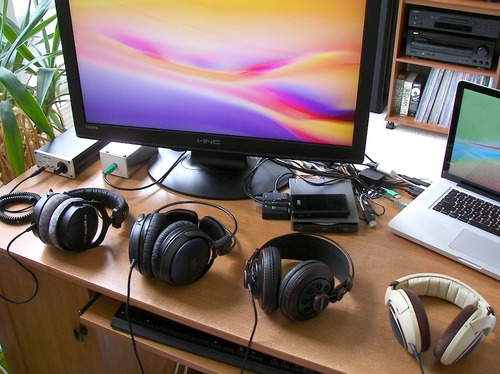
Treble is the defining character, and it is deliberately revealing. Detail is exceptional and the highs expose fine mix problems rather than smoothing them over, which is the correct behaviour for critical listening on well-mastered material.
Construction is German-made with replaceable parts across the board, including pads, which matters for a headphone you plan to own for years. The fixed three-metre coiled cable comes with a quarter-inch adapter in the box.
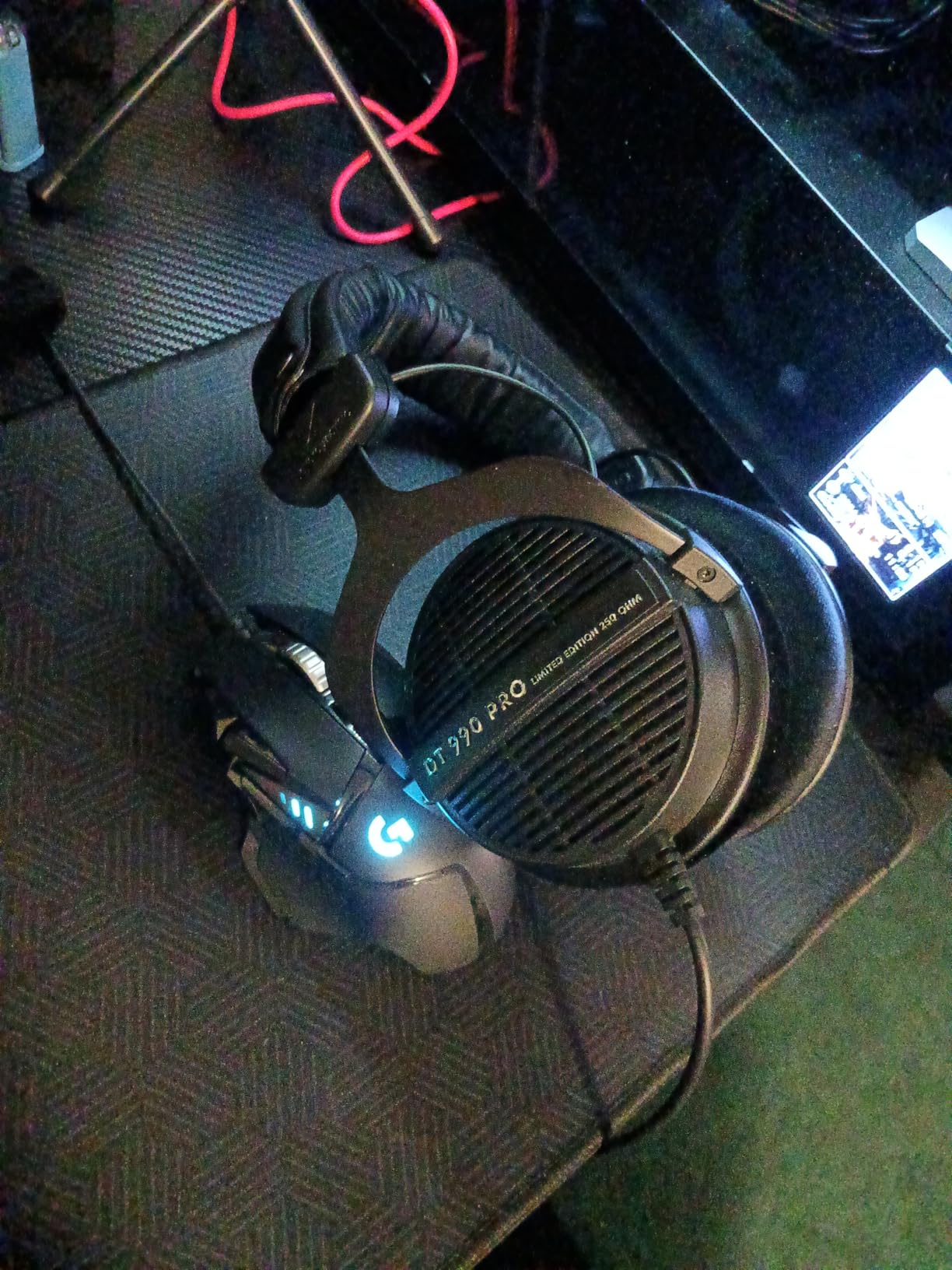
Can my audio interface drive 250 ohm?
Often not, and this is the mistake that wrecks a first impression of the model. At 250 ohm and 96 dB sensitivity, a small interface headphone output will run out of headroom and the sound will lose impact and dynamics long before it reaches full volume on the dial.
That is why lower-impedance versions of the same model exist, and why owners on forums consistently recommend the lower-impedance version for a typical home studio. If you want the 250 ohm version for the extra headroom margin and you already have an amplifier or a capable interface, it is the right call. If you do not, look for a lower-impedance alternative.
Is the brightness a problem for long sessions?
It can be, and owners say so plainly. The treble is deliberately bright and can become grating or fatiguing on poorly mastered material if you mix without any EQ.
Two things soften it in practice. Velour pads rather than leather reduce the upper-mid bite, and a gentle high shelf while mixing keeps you out of fatigue. Just make sure any shelf you add is an editing decision you revert before export.
5. Audio-Technica ATH-M40x – the flat tracking and mixing hybrid
- Very flat neutral response tuned for accurate mixing decisions
- 98 dB sensitivity drives hard from a laptop or phone without an amp
- 90 degree swivels make single-ear cueing effortless
- Two detachable cables of different lengths plus a case in the box
- Good isolation for a closed-back design
- Ear cup swivels and hinges can crack after a few years
- Supplied pads run small for large ears
- Sub-bass rolls off around 70 Hz unless EQ is applied
The ATH-M40x is regularly described as the best flat-response studio headphone in the M-series, and when you compare the three models that description holds up. It is the most neutral of the Audio-Technica line, which makes it the safest pair for mix decisions where you do not want the headphone adding an opinion.
Efficiency is the underrated feature here. At 35 ohm and 98 dB sensitivity it can be driven hard from a laptop or a phone without an amplifier, so you can mix away from the desk and still get a reliable read on balance and level.
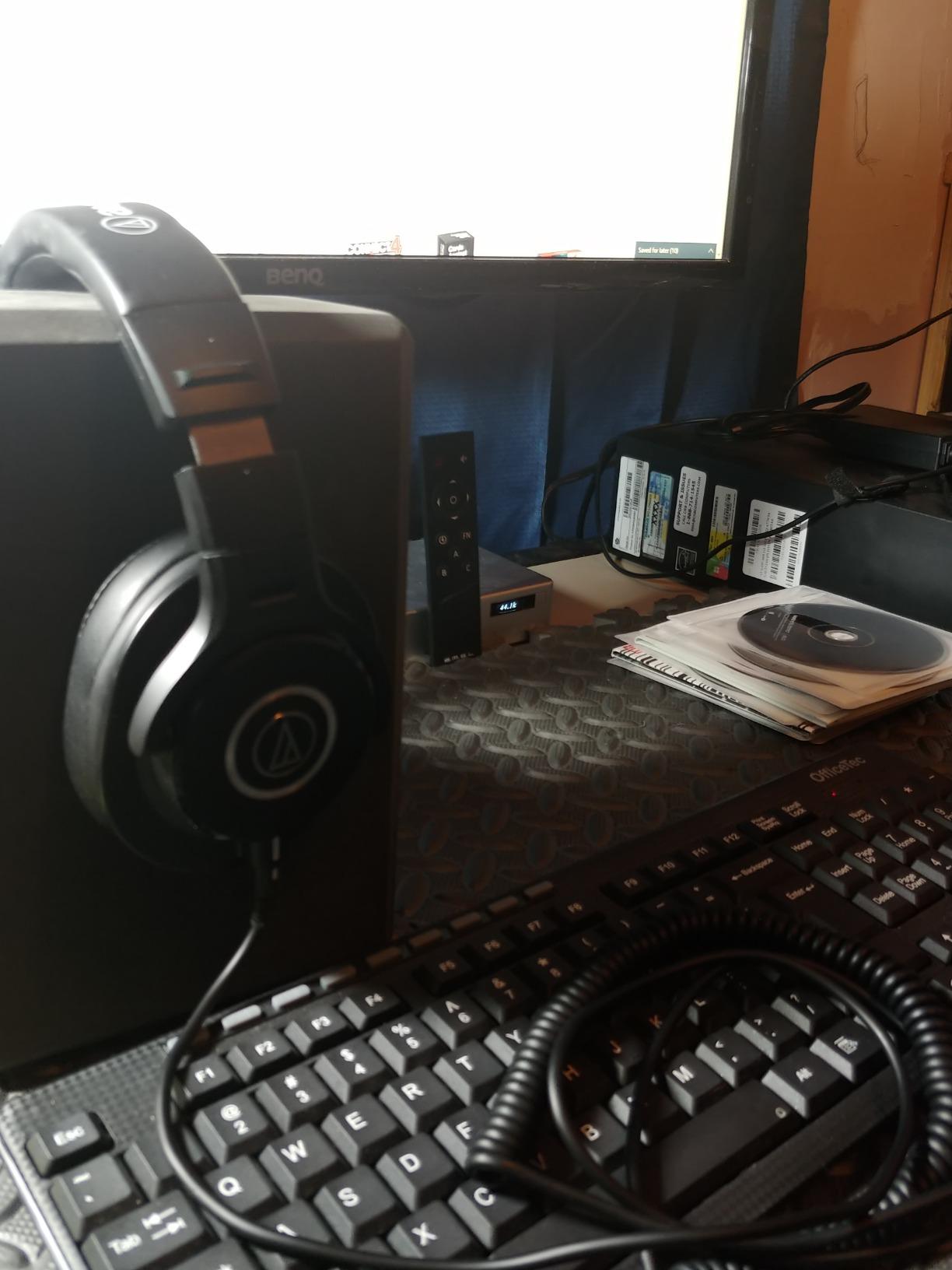
Two detachable cables come in the box, a straight one and a coiled one, along with a screw-on adapter and a protective case. That is the most complete package of the Audio-Technica models and it removes the usual cable length argument at a studio desk.
The ninety-degree swivelling earcups make single-ear cueing effortless while tracking, and the circumaural design gives a closed-back isolation level that holds up when there is a live source in the room. The flip side of that folding, swivelling construction is that it feels loose until you get used to it.
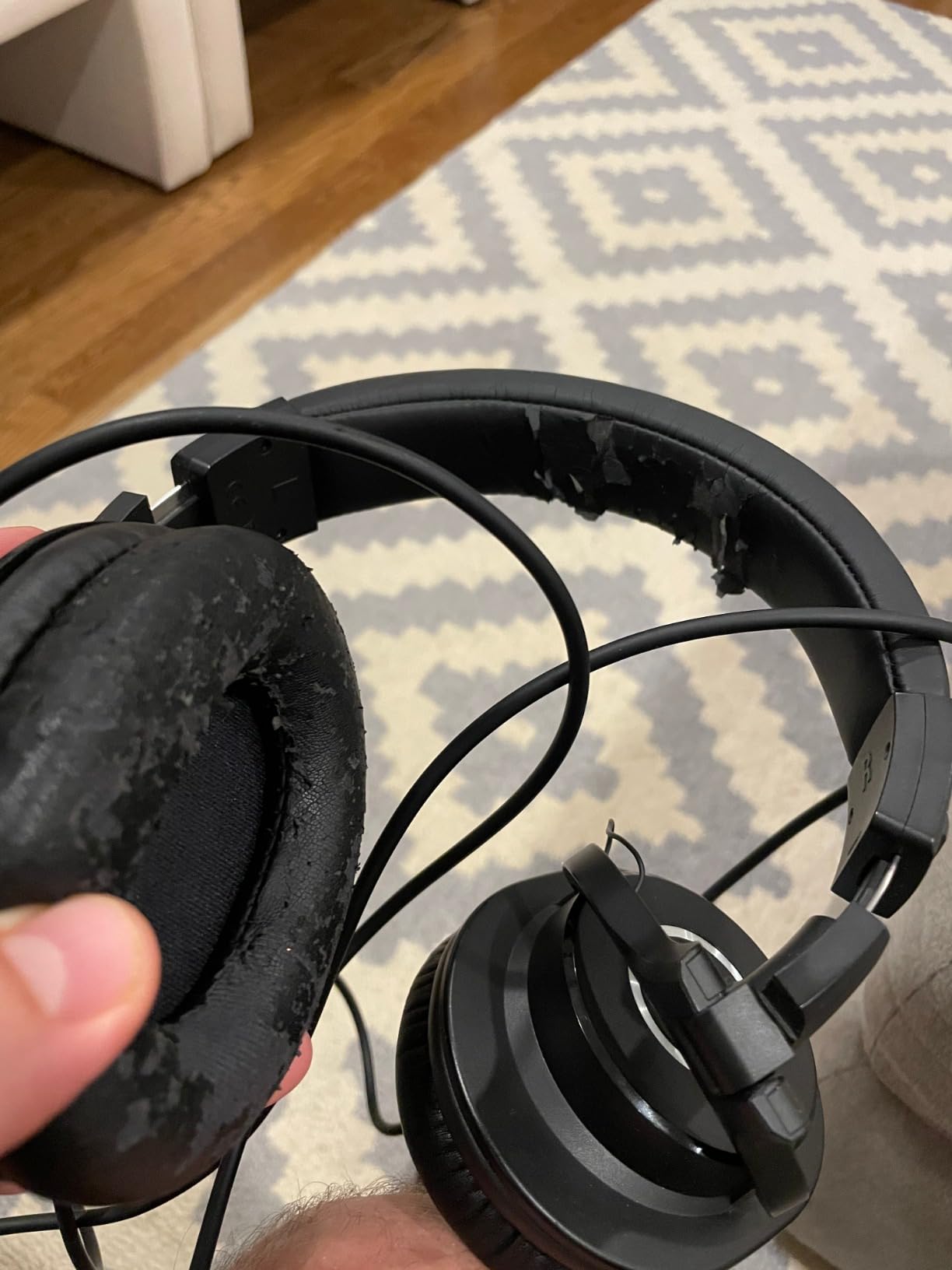
Do the small stock pads cause fatigue?
They are the most common long-session complaint, and large-ear owners feel it first. Supplied pads run small, and the resulting pressure builds over hours rather than minutes. A third-party oversized pair usually solves it, and the ATH-M40x pad ecosystem is one of the easiest to source aftermarket.
The hinges deserve a second look too. Reviewers flag the ear cup swivels and hinges as the weak point that can crack after a few years, so treat the folding action gently and do not hang the pair by one earcup.
Is the M40x better than the M50x for mixing?
For pure mixing decisions, frequently yes. The tuning is flatter and the sub-bass behaviour is more transparent, so you hear what you put in rather than what the headphone adds. Owners also rate the included cables as better than the single lead supplied with the M50x.
The M50x wins on isolation, driver size and extended top-end detail. If your work is mostly tracking and editing, the M50x is the better single purchase; if it is mostly mixing on a good pair of monitors, the M40x is the smarter call.
6. AKG K240 Studio – the light semi-open workhorse
- Neutral accurate monitoring with clear mids and detailed treble
- Light at 240 g so it is easy to wear all day
- Self-adjusting headband grips without manual fitting
- Detachable mini-XLR cable makes a shorter lead easy
- Excellent value for mixing and podcast editing
- Semi-open design leaks both ways so no live recording
- Bass is present but thin below about 100 Hz
- Ear cups and pads feel cheap and need replacing after a year or two
The K240 Studio shows up constantly in producer threads as a first real monitoring purchase. Thirty-millimetre XXL transducers with patented Varimotion diaphragms deliver a clear, airy semi-open presentation with neutral mids and detailed treble, which is more than many closed-backs costing twice as much manage.
At 240 grams it is one of the lighter pairs on this list, and the self-adjusting headband grips well without any manual fitting. That combination is why owners report wearing it through entire production days without thinking about it.
The detachable three-metre cable with a screw-on quarter-inch adapter is a genuine advantage at this tier. You can swap in a shorter lead for a laptop or a tablet, and if the cable fails you lose nothing else.
Frequency response runs 15 Hz to 25 kHz. The mids are where mixing happens, and this is a headphone that keeps them honest, which is why it shows up in home studio lists alongside much more expensive references.
Why can I not use it for tracking?
The semi-open back leaks sound in both directions. The cup is not sealed, so it will neither block out a loud live source nor stop headphone bleed reaching a microphone, and owners use it for mixing, mastering and podcast editing rather than recording.
The same leak means it is a poor choice in a noisy room. If your apartment has traffic, air conditioning or family noise in the background, that audible floor will sit under everything you are trying to judge.
Is 55 ohm easy to drive?
More demanding than it looks. Despite the high 104 dB sensitivity, the semi-open venting costs efficiency, and owners report that phone and laptop outputs can struggle to reach a usable level without adding gain.
A desktop interface with a real headphone output solves it entirely. If you are working on a laptop only, check that gain before committing, and look at a closed-back with a sealed driver if the answer is no.
7. Sennheiser HD 280 Pro – the isolation champion
- Exceptional passive isolation attenuating up to 32 dB of outside noise
- Collapsible earpieces fold flat for instant one-ear cueing
- Neutral natural tuning with no artificial bass boost
- Earpads headband padding and cord are all replaceable
- Lightweight and comfortable for long sessions and travel
- Coiled cable is heavy and permanently attached
- Supplied pad and headband material is low quality and picks up oil quickly
- Clamping force feels tight at first
The HD 280 Pro is built around one number, and that number is 32 dB of attenuation of outside sound. If you mix in an untreated room, next to a busy household or in shared space, that passive isolation is the feature that changes your work rather than the tone curve.
The sound itself is warm and natural with an extended 8 Hz to 25 kHz response and no artificial bass boost, so the presentation stays neutral for critical work. Owners who come from DJ cueing appreciate that it does not colour the low end the way many portable headphones do.
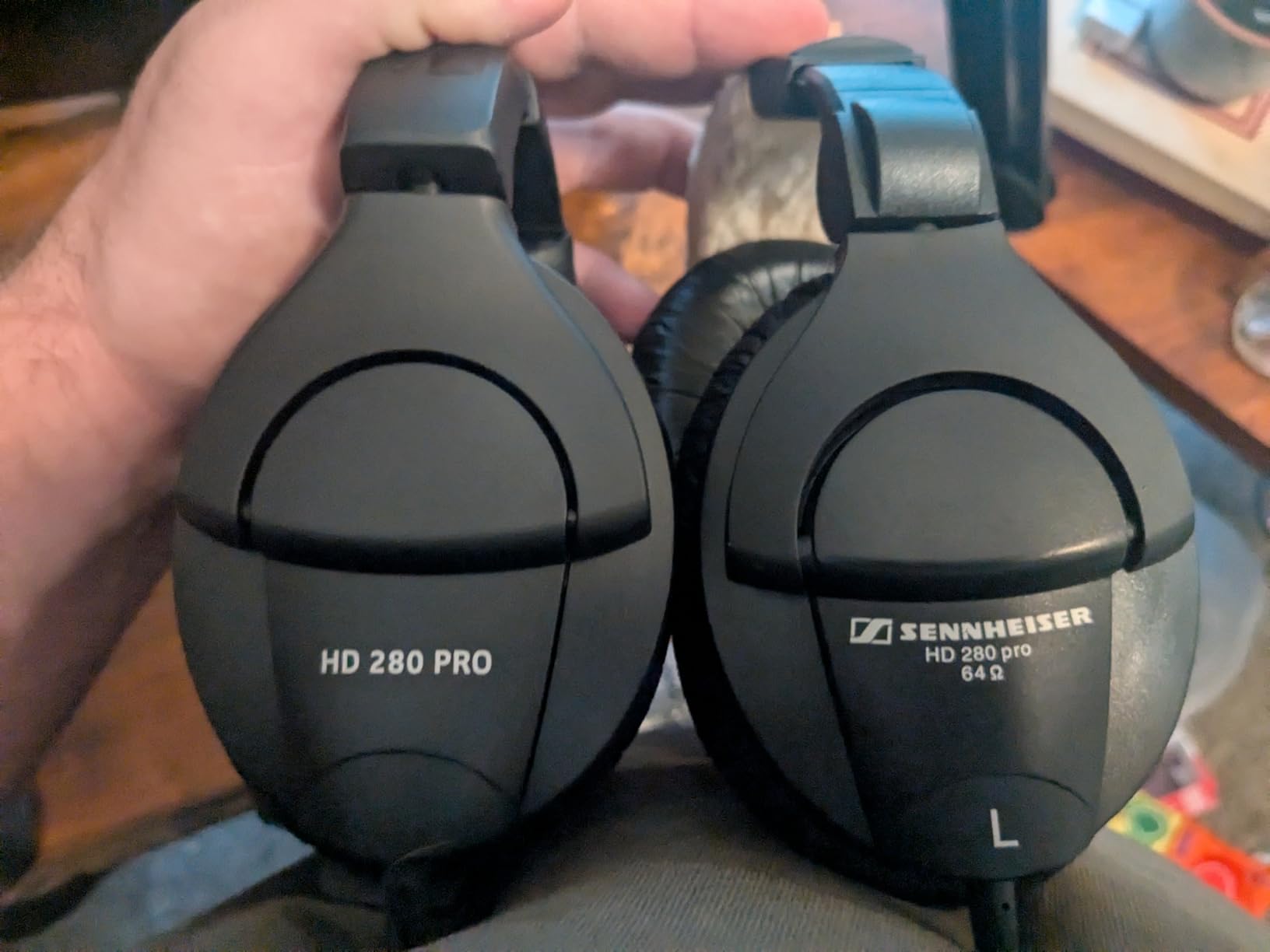
Replaceability is where this model separates itself from cheaper closed-backs. Earpads, headband padding and the audio cord can all be replaced, and it is one of very few budget studio headphones where the headband padding is a serviceable part rather than a sealed assembly.
The collapsible earpieces fold flat for transport and give you fast one-ear cueing when you need to hear a live source. At 64 ohm it drives easily from a normal interface output.
Are the stock pads good enough for long sessions?
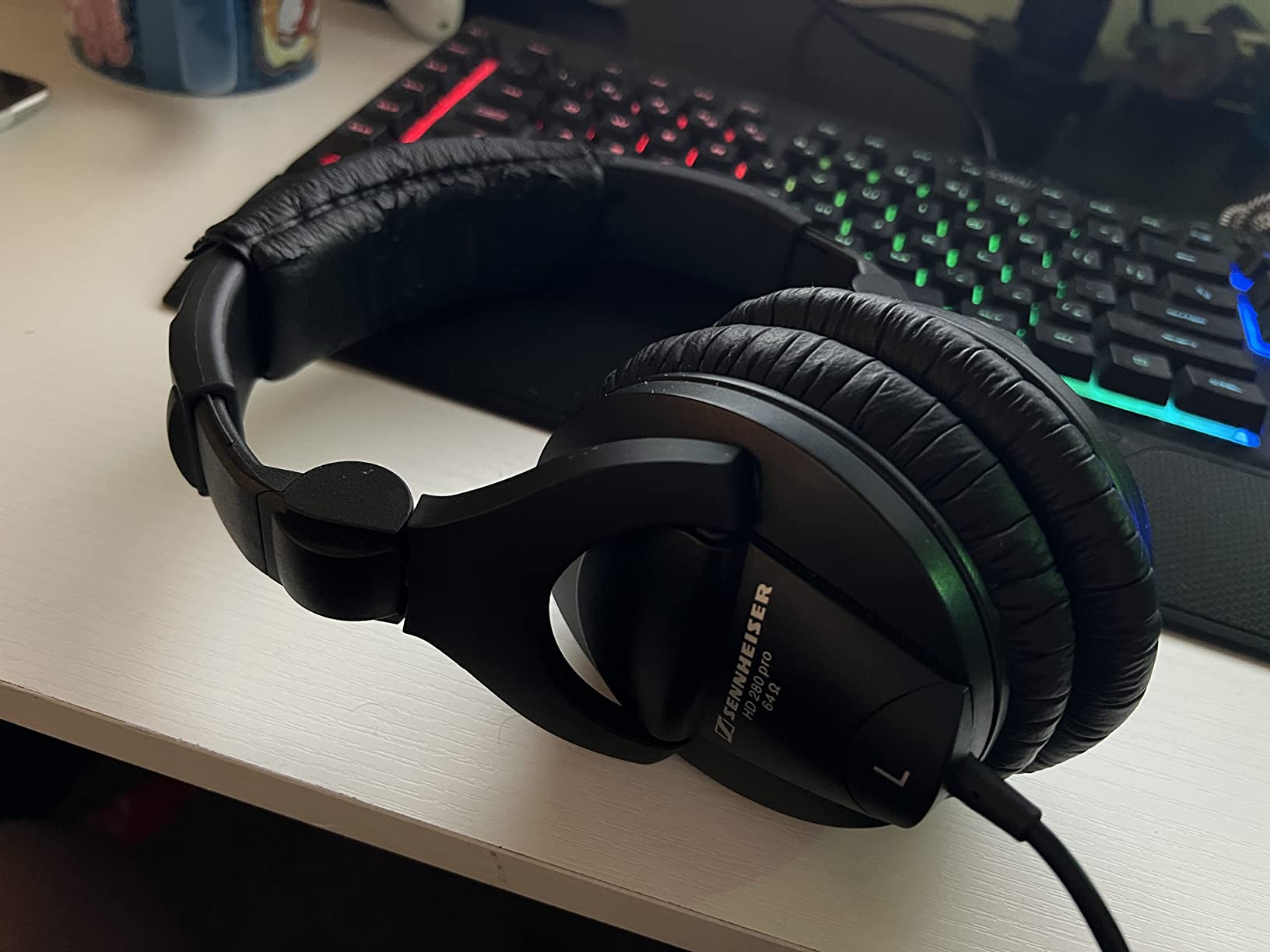
No, and owners are consistent about it. The supplied pad and headband material is low quality, picks up oil and sweat quickly, and the clamping force feels tight in the first few hours.
Replacing the pads with a better material is the single highest-value upgrade on this headphone and it also softens the clamp. Because the parts are supported, that swap costs a small fraction of the headphone.
How does it compare with the Audio-Technica closed-backs?
The HD 280 Pro wins decisively on isolation and loses on resolution. Owners note a narrower soundstage for a closed-back headphone, sub-bass that is slightly under-emphasised against the mid-bass, and a heavy permanently attached coiled cable that pulls on one side when worn.
If you mix in a quiet treated room and want the most detail per dollar, an Audio-Technica M-series model is the better instrument. If noise is your enemy, nothing else here isolates like this.
8. AKG K702 – the airy open-back reference
AKG Pro Audio 2458X00190 (K702) Over-Ear, Open-Back, Flat-Wire, Reference Studio Headphones,Black
- Spacious airy open-back presentation with a very wide soundstage
- Two-layer Varimotion diaphragm delivers detailed extended treble
- Flat-wire voice coil gives high sensitivity and fast transient response
- Detachable cable and replaceable 3D-foam pads extend service life
- Comfortable over-ear fit for extended sessions
- Open-back design provides no isolation and leaks heavily
- Heavier 1.8 lb weight than most closed-back studio monitors
- Bass is less deep than the DT 990 Pro in the same class
- Users report a substantial burn-in period
The K702 is built for one thing above all else: a very wide, spacious and airy open-back presentation. For critical listening to a mix with real depth and wide stereo placement, the space around each instrument makes placement decisions easier than on a narrow closed seal.
The two-layer Varimotion diaphragm improves both the high-frequency range and low-frequency performance, and the unique flat-wire voice coil delivers higher sensitivity with fast transient response and better treble. Those are the parts that reward careful listening.
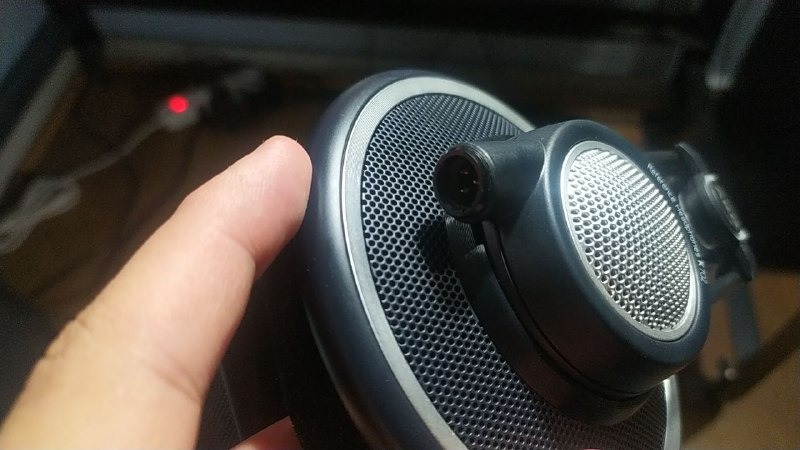
At 62 ohm with a detachable three-metre cable and replaceable 3D-foam ear pads, this is a reference headphone that can be maintained rather than discarded. The two-year AKG warranty applies in the USA and Canada.
It is also the most polarising model in this roundup, with the lowest average rating at 4.2 and a visibly higher share of one-star reviews than the rest. That feedback tracks three specific things rather than the tuning itself, and each of them is a fit or comfort issue you can evaluate in a few minutes.
Why do owners rate it lower than the rest?
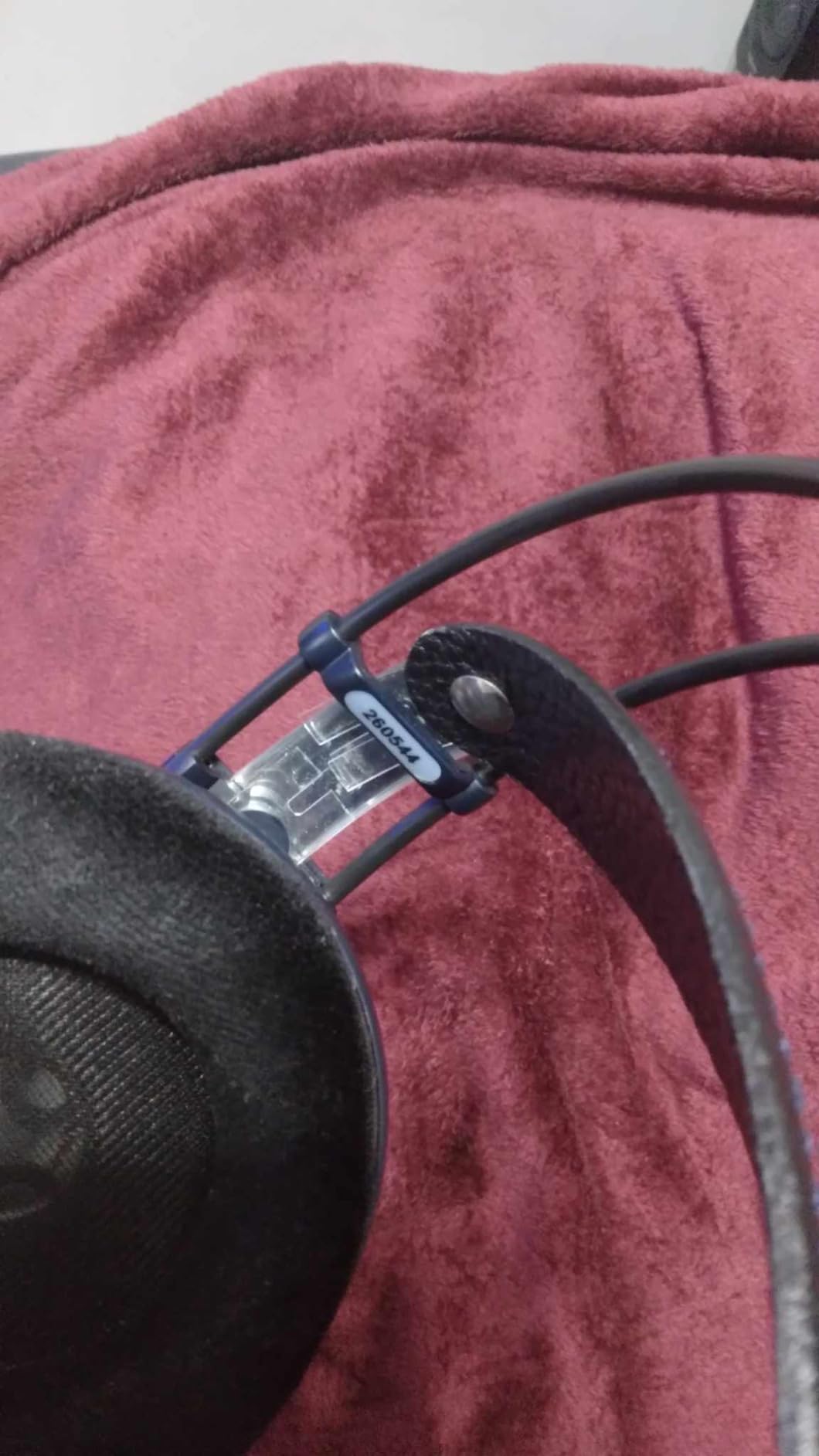
Three things repeat. The 1.8 pound weight is heavier than almost every closed-back studio monitor here, which adds pressure over a long day. The bass is less deep and impactful than the DT 990 Pro in the same open-back class. And there is a substantial break-in period before the sound settles.
None of that means the tuning is wrong, it means this is a headphone that asks for patience and a light head. If you are sensitive to clamp pressure, try before committing.
When is the K702 the right choice?
Choose it when your room is genuinely quiet and your work demands depth and placement judgement, such as orchestral arrangements, acoustic records or dense layered electronic music. Its wide image is a genuine tool for those tasks.
Skip it when there is household noise, when you track live sources, or when you need long sessions without weight on your head. Our guide to open-back studio headphones covers that trade-off in more detail.
9. Samson SR850 – the low-cost way into semi-open monitoring
- Large 50 mm drivers deliver a fuller sound than typical budget monitors
- Semi-open design keeps some ambient awareness while still isolating
- Lightweight and comfortable for extended listening
- Self-adjusting headband needs no manual fitting
- Very low cost of entry for tracking and mixing
- Sound is noticeably less detailed than Audio-Technica M-series at similar money
- Semi-open construction leaks and is unsuitable for live recording
- Velour pads retain dust and degrade over time
The Samson SR850 is the model to buy when the question is whether monitoring matters yet. Fifty-millimetre drivers in a semi-open design give you a fuller, wider-sounding presentation than the typical first studio headphone, with a 10 Hz to 30,000 Hz frequency range that comfortably covers a full mix.
At 32 ohm and 98 dB sensitivity it is easy to drive from anything, including a laptop, which removes the most common early-hardware frustration. The self-adjusting headband needs no manual fitting and the weight stays comfortable through extended listening.
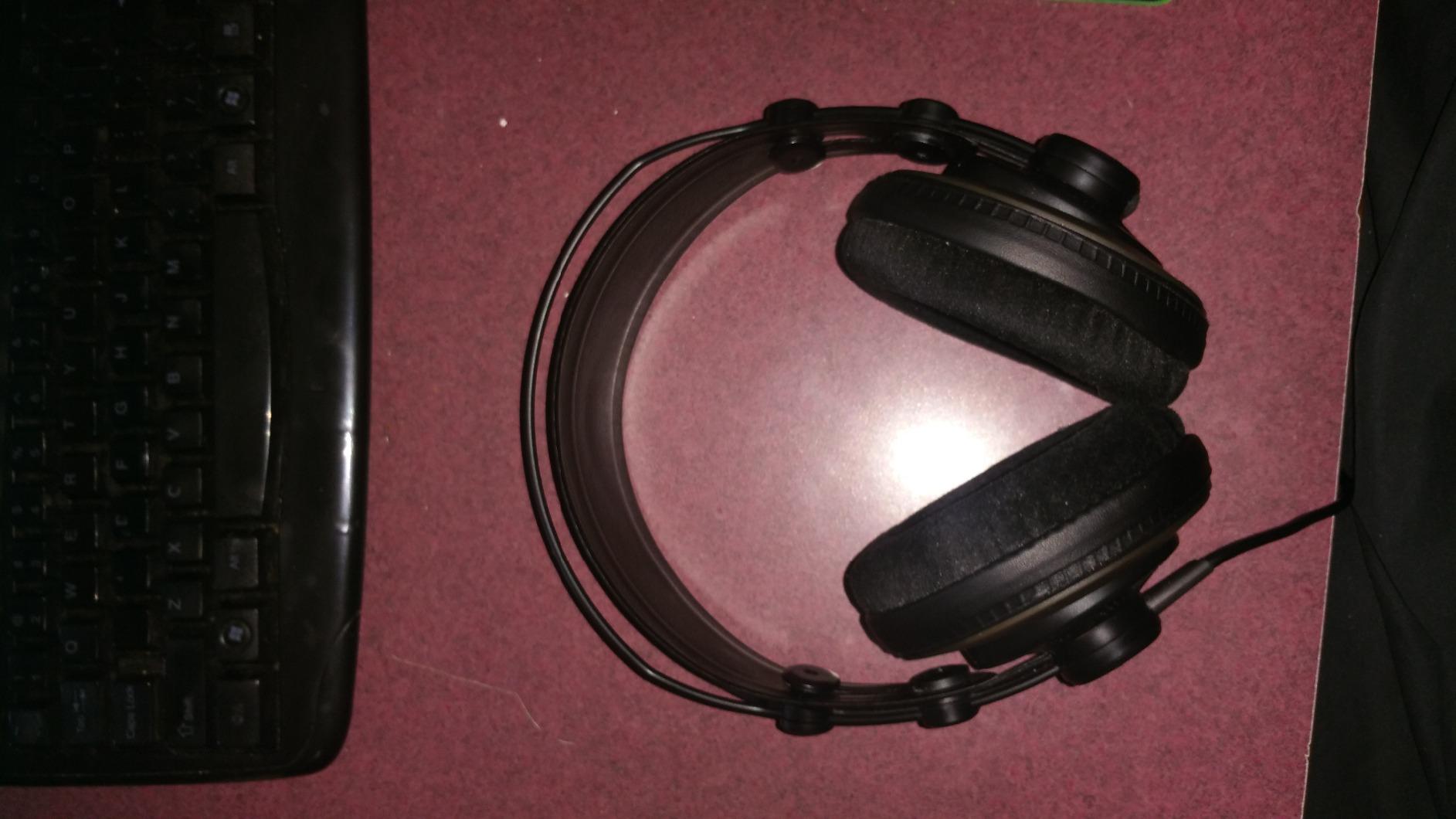
The semi-open design keeps a degree of ambient awareness while still isolating reasonably well, which is a useful middle ground when you are learning to balance a mix. A one-eighth to one-quarter inch gold plated adapter is included, along with a retractable cable.
Owners use it as a stepping stone into monitoring, and reviews describe it as the affordable way to find out whether accurate listening changes the way you work before you spend more.
How much resolution do I actually lose?
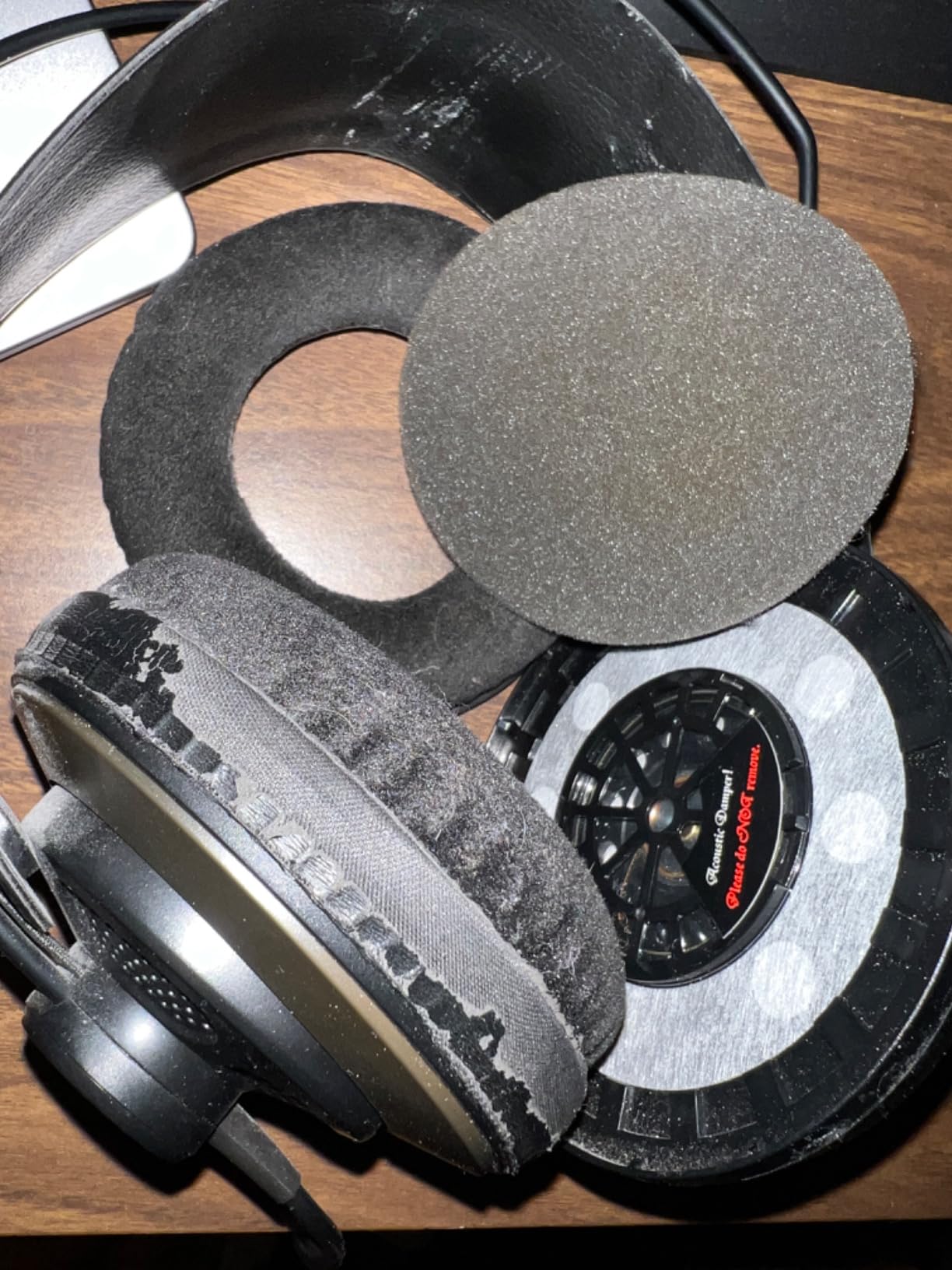
Enough that reviewers compare it unfavourably with Audio-Technica’s M-series at similar money. The consensus is that resolution and tonal refinement are clearly behind the M20x, and the bass, while stronger than the M20x, is less accurate.
That makes it a fine learning tool and a poor final arbiter. If you cannot hear the difference between a rough mix and a finished one, this headphone will not help you develop that ear quickly.
Can I record with it?
Not really. Semi-open construction leaks sound in both directions, so it will not block a loud source and it will let headphone bleed onto a microphone. Treat it as a mixing and editing headphone only.
Velour pads also tend to hold dust and degrade over time, so expect to replace them eventually. Our guide to closed-back studio headphones covers the sealed alternatives if tracking matters to you.
10. Tascam TH-MX2 – the cheapest sealed option here
- Closed-back design gives good isolation for tracking with minimal bleed
- Lightweight and comfortable with a well-padded headband
- Flat usable monitoring response appropriate for basic mixing
- Includes a screw-on quarter-inch adapter and a leatherette carry bag
- Low cost from an established pro audio maker
- All-plastic build feels less refined than Audio-Technica or Sennheiser
- Fixed cable cannot be detached
- Less detail and extension than monitors costing only slightly more
- Ear pads and headband padding are not easily user-replaceable
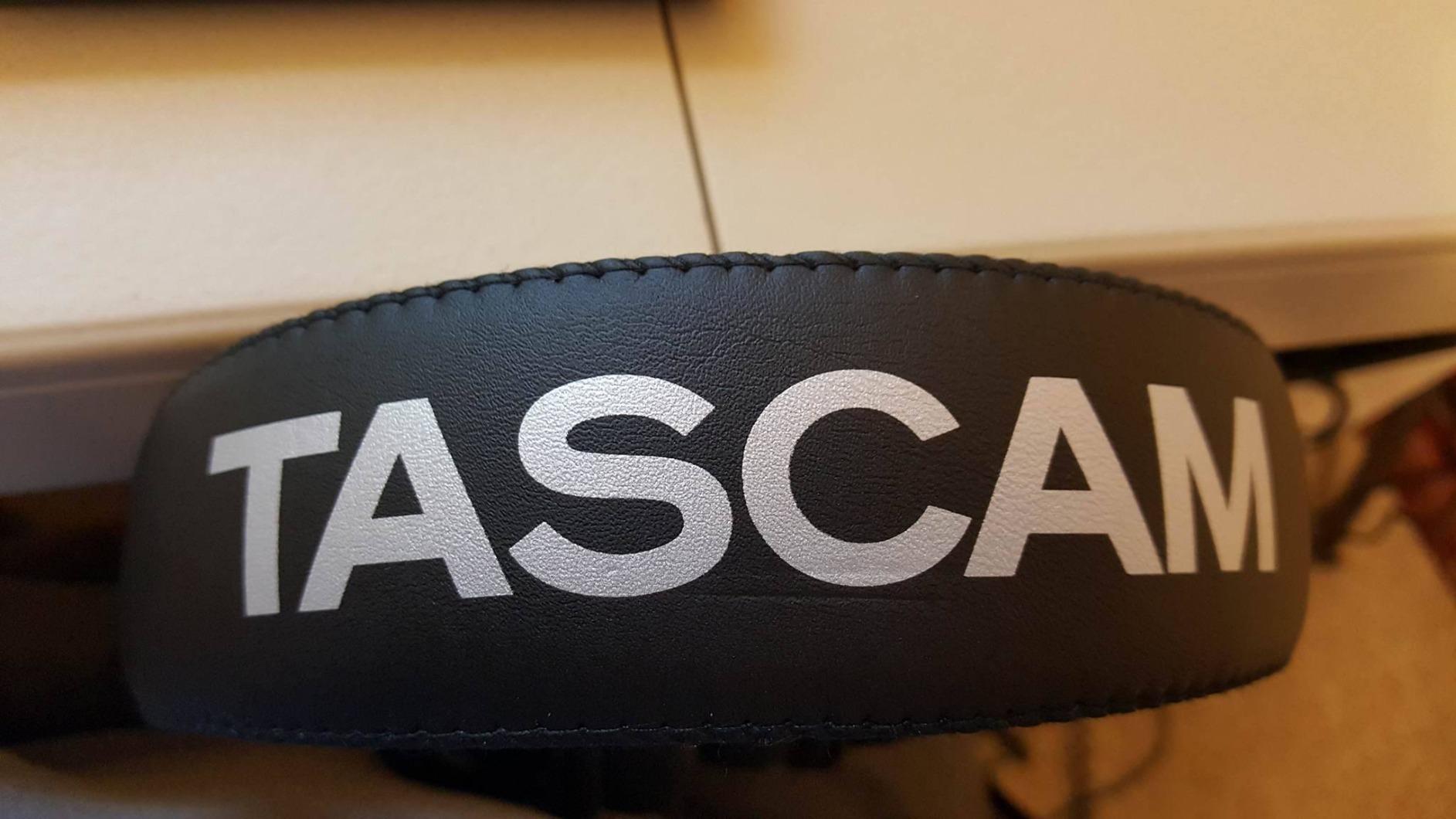
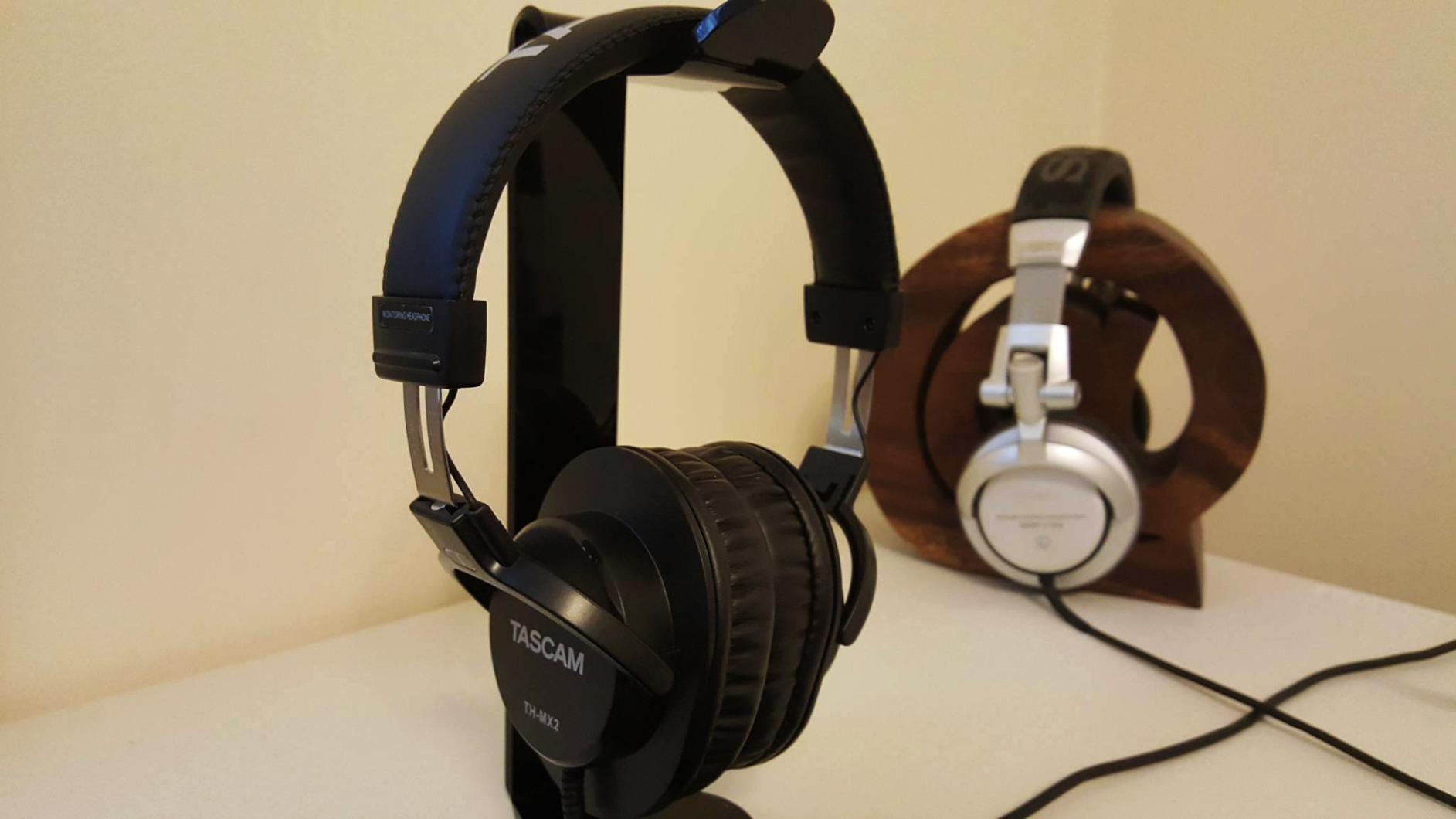
The Tascam TH-MX2 is the least expensive sealed pair here, and for a specific job it is hard to argue with. A closed-back design with a 40 mm neodymium driver gives good isolation without leaking onto a microphone, which makes it the one on this list that works for basic tracking as well as mixing.
It is light at 298 grams, the headband and ear pads are tightly stitched and padded, and a screw-on quarter-inch adapter plus a leatherette carry bag come in the box. For location recording and mobile sessions the bag alone justifies a lot of the appeal.
Monitoring response is flat and usable for basic mixing tasks, at 32 ohm it drives from almost anything, and the retractable cable extends to roughly 9.8 feet when fully pulled out.
Tascam is an established pro audio maker, and that name matters when you are buying the cheapest thing on the list. You are not gambling on an unknown brand with a spec sheet nobody has tested.
Is it a real mixing headphone or just a tracker?
Both, at a basic level. The response is flat and usable, so you can judge balance and rough EQ decisions without being misled by a coloured tuning. What you will not get is the detail or the extension of a monitor costing only slightly more, and owners note that limitation consistently.
It pairs well with a second, more accurate pair for check-down sessions. That cross-referencing habit catches more problems than any single headphone can, and it is the approach we recommend to anyone working this way.
What about build quality and longevity?
The build is all plastic and feels less refined than Audio-Technica or Sennheiser, which is the honest trade-off at this level. Ear pads and headband padding are not easily user-replaceable, so comfort degrades over time rather than improving.
Also note this model has the smallest review history in the group at roughly 1376 ratings, so the long-term owner feedback is thinner than everything else here. One further caution: Bluetooth compression makes wireless sets a poor choice for any actual mixing work, whatever the format on the box.
Open-Back or Closed-Back: Which Design Fits Your Mixing Room
For mixing, use a closed-back headphone. Open-back designs give a more natural and spacious presentation, but they leak sound in both directions and offer no isolation, so they only work in a genuinely quiet room.
Closed-back headphones seal the cup against the ear. That seal gives you sound isolation from the room and stops headphone bleed reaching a microphone, which is why almost every closed model here suits tracking. The trade is a narrower soundstage and a bass response that does not move air, so low end judgements are less physical than they would be on monitors.
All ten models here are wired, and that is deliberate. Bluetooth codecs compress the signal before it reaches the driver, which is exactly the kind of processing you are trying to judge when you mix, so our wireless over-ear headphone guide is worth reading for travel and listening rather than for the studio.
Semi-open sits between the two. The AKG K240 Studio and Samson SR850 keep some ambient awareness while still sealing reasonably well, which sounds useful until you realise it means neither full isolation nor a fully open image.
The noisy apartment problem deserves a straight answer, because it is the real constraint for most home producers. If a road, an air conditioner or another person is audible in the room, an open-back is a mistake, and the Audio-Technica M-series or the Sennheiser HD 280 Pro are the pairs that solve it.
Do You Need a Headphone Amp? Read the Impedance Figure First
You need an amplifier when the impedance is high enough that your interface runs out of voltage. Most desktop and laptop headphone outputs handle everything up to about 64 ohm comfortably, and anything at 250 ohm usually does not.
Look at the numbers on this list. The Audio-Technica ATH-M40x at 35 ohm, the ATH-M50x at 38 ohm, the Samson SR850 and Tascam TH-MX2 at 32 ohm will all play loudly from a modest interface with no added hardware. The Sony MDR7506 at 63 ohm and the Sennheiser HD 280 Pro at 64 ohm are right at the comfortable edge.
The beyerdynamic DT 990 Pro at 250 ohm is the one to plan for. Push it from a weak output and it will feel flat and lifeless long before the volume control reaches the top, which is the single biggest source of buyer regret we hear about. The AKG K240 Studio at 55 ohm is efficient on paper but vents its cup, so it wants more gain than the number suggests.
A quick test costs nothing. Play something dynamic at your normal mixing level, turn the output up as far as it goes, and check whether transients still feel crisp. If they flatten out, you need more voltage, not more volume.
What to Look for When Buying Studio Mixing Headphones
Six criteria decide this purchase, and they are worth checking in this order before you read a single product review.
1. Flat frequency response. A neutral, uncoloured curve is the whole point. Consumer headphones are deliberately sweetened, and mixing on them leads you to over-cut harshness and under-cut bass.
2. Low distortion. Harmonic and intermodulation distortion smears detail at the levels you mix at, so check whether the manufacturer publishes distortion data at all.
3. Replaceable parts. Ear pads wear out first, then headband padding, then cables. Models with replaceable pads and a detachable cable stay in service far longer, and that is the strongest durability signal in this niche.
4. Impedance and sensitivity. Match them to your interface as described above, and prefer lower impedance if you travel or work from a laptop.
5. Comfort over a real session. Weight, clamp force and pad material decide whether you can work eight hours. Our product sections flag the models with known pressure problems.
6. Stage width and imaging. Wider is better for placement and panning decisions. Open-backs win here, closed-backs with good staging do surprisingly well.
Then audition properly. Bring a few reference tracks you know intimately, level-match by ear, and listen to a mix you have already finished. Compare against monitors if you have them, and note every place the headphone disagrees with your memory.
One habit worth adopting early is calibration software. A measurement and correction tool can flatten a headphone whose tuning you dislike, which expands your options when a model is otherwise ideal but sounds slightly bright or slightly dark to you.
Keep your ears safe while you do it. A common guideline is to keep volume below 60 percent and sessions under 60 minutes, with breaks, though the more practical rule is to lower the level the moment you notice fatigue rather than pushing through it.
Frequently Asked Questions
What are the best studio headphones for mixing?
The Audio-Technica ATH-M50x is our overall pick, with a flat response, 38 ohm impedance, detachable cable and strong isolation. The Sony MDR7506 is the durable standard, the Audio-Technica ATH-M40x is the flattest and easiest to drive, and the beyerdynamic DT 990 Pro 250 Ohm is the best open-back for critical work in a quiet room.
What type of headphones are best for mixing?
Closed-back headphones are best for most mixing because they block room noise and keep headphone bleed off a microphone. Open-back designs give a wider, more natural stereo image and are preferred for critical listening when the room is genuinely quiet. Semi-open models sit between the two and are rarely the right first choice.
Should I get open back or closed back headphones for mixing?
Choose closed-back if there is any ambient noise, if you share a room, or if you also track live sources. Choose open-back only when your room is quiet and you want a wide soundstage for judging depth and instrument placement. Mixing with background noise audible in the cup leads to bad decisions.
What is the 60/60 rule for headphones?
The 60/60 rule suggests keeping headphone volume below 60 percent and limiting continuous listening to about 60 minutes before taking a break. It is a guideline rather than a measurement, since hearing damage depends on level and duration together. The practical habit is to lower the volume the moment you notice fatigue.
Do I need an amp for high impedance headphones?
You need one when your interface cannot deliver enough voltage, which is usually anything around 250 ohm. Pairs at 35 to 64 ohm, including the Audio-Technica M-series, the Sony MDR7506 and the Sennheiser HD 280 Pro, play fine from a normal interface output. The beyerdynamic DT 990 Pro at 250 ohm genuinely benefits from amplification.
The Verdict on the Best Over-Ear Headphones for Studio Mixing in 2026
The Audio-Technica ATH-M50x is the pair we would buy first, because it combines a neutral extended-range response with isolation that works in a real room and a detachable cable that keeps it alive. If you need the flattest tuning and the easiest drive, take the ATH-M40x. If you need the widest soundstage and your room is quiet, the beyerdynamic DT 990 Pro is the instrument, with an amplifier in mind.
Whatever you choose, the habit matters more than the model. Level-match, cross-reference your mix on a second pair or on monitors, and revisit it the next morning before you call it finished.