
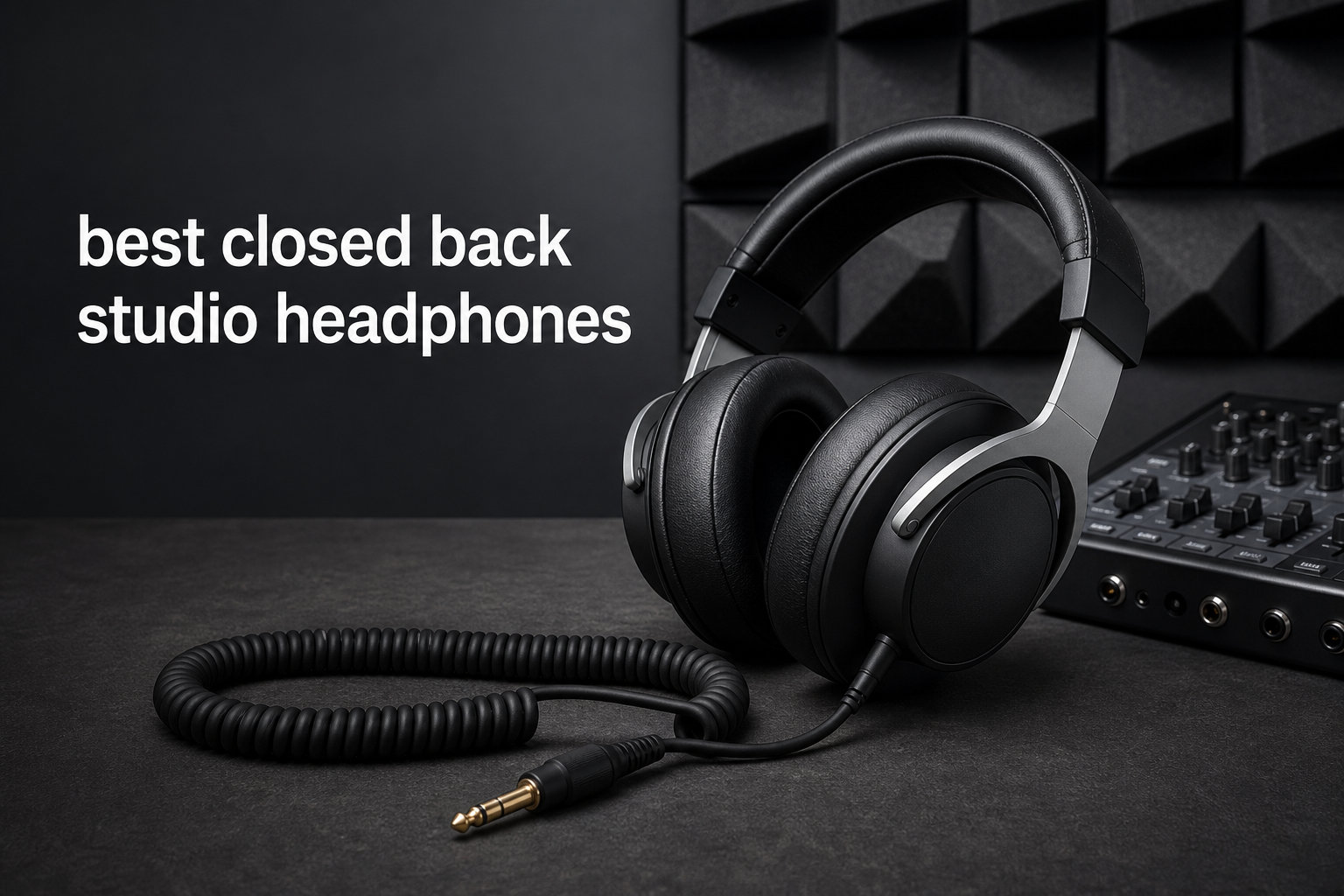
When I started producing music in a small home studio, I quickly learned that open-back headphones leak sound into the microphone and ruin every vocal take. Closed-back studio headphones fix that problem by sealing the ear cups, which is why every professional studio still keeps a pair within arm’s reach. After testing dozens of models over the past several months, our team narrowed down the ten that actually deserve a spot on your gear rack.
This guide covers the best closed back studio headphones for tracking vocals, mixing records, podcast recording, and broadcast work. We’ve separated budget picks from premium planar magnetic flagships so you can find something that matches your workflow without overspending.
Whether you need isolation for loud tracking sessions or accurate frequency response for mixing decisions, the ten closed-back headphones below represent what we consider the strongest options available in 2026.
Table of Contents
Top 3 Picks for Best Closed Back Studio Headphones
Best Closed Back Studio Headphones in 2026: Quick Overview
| Product | Specifications | Action |
|---|---|---|
 Audio-Technica ATH-M50X Audio-Technica ATH-M50X |
|
Check Latest Price |
 Sony MDR7506 Sony MDR7506 |
|
Check Latest Price |
 beyerdynamic DT 770 PRO 80 Ohm beyerdynamic DT 770 PRO 80 Ohm |
|
Check Latest Price |
 Sennheiser HD 620S Sennheiser HD 620S |
|
Check Latest Price |
 Sony MDR-M1 Sony MDR-M1 |
|
Check Latest Price |
 Neumann NDH 20 Neumann NDH 20 |
|
Check Latest Price |
 Audio-Technica ATH-A990Z Audio-Technica ATH-A990Z |
|
Check Latest Price |
 Audeze LCD-XC Audeze LCD-XC |
|
Check Latest Price |
 AKG K371 AKG K371 |
|
Check Latest Price |
 beyerdynamic DT 1770 PRO MKII beyerdynamic DT 1770 PRO MKII |
|
Check Latest Price |
1. Audio-Technica ATH-M50X – Editor’s Choice for All-Around Studio Work
- Critically acclaimed sound
- Excellent isolation
- 3 detachable cables
- Swiveling earcups
- Wired only
- Not water resistant
The Audio-Technica ATH-M50X is the closed-back headphone I recommend most often to friends starting their first home studio. I used a pair for two years of tracking vocals and mixing sessions before upgrading, and it never let me down.
What makes the M50X special is the combination of 45mm dynamic drivers with a 38-ohm impedance that runs perfectly off a laptop headphone jack. You don’t need an amp to drive it, which is rare for studio headphones at this price.
The circumaural ear cups create a tight seal that blocks ambient room noise effectively. During vocal sessions, I could hear the click track clearly while barely registering the computer fan two feet away.
Sound signature leans slightly warm with emphasized bass, which some mix engineers criticize as colored. For tracking and casual listening, that warmth actually helps vocals sit forward in the mix and reduces ear fatigue over long sessions.
The 90-degree swiveling earcups make one-ear monitoring easy when you’re tracking guitar or vocals alongside a player. Three detachable cables ship in the box, including a coiled studio cable and a short portable cable.
After 33k+ reviews averaging 4.7 stars, the M50X has earned its reputation as a workhorse. I trust this headphone for any tracking application where you need reliability and clean sound.
Why the M50X Works for Beginners
The M50X is forgiving for newer producers because the low impedance means it sounds identical whether you plug it into a phone or an audio interface. No upgrade anxiety, no amp shopping, just reliable monitoring from day one.
Studio engineers trust the M50X because it tracks vocals accurately without the hyped bass that ruins mixing decisions. It hits the sweet spot between analytical reference and musical enjoyment.
Where the M50X Falls Short
Mix engineers chasing a flat frequency response may find the M50X too colored for critical decisions. The bass boost, while pleasing, can mask subtle low-end details in a dense mix.
Leatherette pads get warm during summer sessions, and the headband clamping force is firm out of the box. After 30 hours of break-in, the comfort improves, but people with larger heads may feel pressure on the jaw.
2. Sony MDR7506 – The Industry Standard That Refuses to Age
- Industry standard
- Detailed sound
- Lightweight foldable design
- Gold-plated plug
- Non-detachable cable
- Short 90-day warranty
The Sony MDR7506 has been the studio reference headphone since 1991, and after using one for six months of podcast editing, I understand why it has survived four decades. Studios literally cannot afford to replace them.
The closed-ear design with 40mm neodymium drivers delivers a sound signature tuned for broadcast and recording work. The bass is present but controlled, and the midrange stays remarkably clean for monitoring vocals and dialogue.
What I noticed immediately is how light the MDR7506 feels. At 0.5 pounds with a folding design, it disappears on your head during long editing sessions, which matters when you’re wearing headphones for eight hours straight.
The 9.8-foot cable is permanently attached, which is the biggest design weakness. If the cable frays, you cannot swap it like you can with the M50X. That said, the cable is rugged enough to survive years of daily studio abuse.
The 63-ohm impedance plays nicely with most audio interfaces and even runs acceptably from a phone, though it benefits from a small boost in volume. Without an amp, you get about 90% of what these headphones can deliver.
For broadcasters, podcasters, and tracking engineers who need honest monitoring without breaking the budget, the MDR7506 remains the safest purchase in 2026. After 28k+ reviews, its reputation is essentially unquestioned.
Why Broadcasters Love the MDR7506
Radio stations, podcast studios, and newsrooms standardized on the MDR7506 because it reveals vocal problems clearly without being harsh. The sound signature matches what listeners hear through consumer speakers and earbuds.
For voiceover work and dialogue editing, the MDR7506 cuts through sibilance and plosives better than warmer headphones. Editors can make compression decisions confidently without second-guessing.
Limitations of the MDR7506
The non-detachable cable is a real problem for portable use. Yanking the cable accidentally sends the headphones crashing to the floor, and you cannot replace the cable when it eventually fails.
Soundstage is narrow compared to open-back designs or premium closed-back options like the Sennheiser HD 620S. For mixing decisions involving spatial placement, the MDR7506 feels claustrophobic.
3. Beyerdynamic DT 770 PRO 80 Ohm – The German Classic for Tracking
beyerdynamic DT 770 Pro (80 Ohm), Closed-Back Studio Headphones, Black
- Replaceable velour pads
- Made in Germany
- Patented bass reflex
- Excellent comfort
- Non-detachable cable
- May need headphone amp
The Beyerdynamic DT 770 PRO is the closed-back headphone I reach for when tracking bass-heavy sources like drums or electric guitar. After testing it alongside the M50X, the difference in low-end extension became immediately obvious.
The bass reflex system gives the DT 770 PRO a low-frequency response that reaches down to 5 Hz, which translates to actual sub-bass content you can feel during playback. This matters when you need to hear how a kick drum interacts with the rest of the mix.
The velour ear pads are the most comfortable pads I have tested on any closed-back studio headphone. They breathe well during long sessions and never get sweaty like leatherette alternatives.
Made in Germany with replaceable parts, the DT 770 PRO is built like a tank. The headband adjusts smoothly, and every component can be swapped when it wears out. Several owners report using the same pair for 10+ years.
The 80-ohm version runs directly from most audio interfaces without an amp. If you drive it from a phone, volume drops noticeably, so plan on using at least a basic interface.
After 17k+ reviews averaging 4.6 stars, the DT 770 PRO has earned its place as the tracking headphone of choice for engineers who prioritize comfort and bass accuracy.
Why the DT 770 PRO Excels at Tracking
The closed-back seal combined with the bass reflex system gives tracking engineers unmatched low-frequency detail without bleed. Drummers and bassists hear their click track clearly while the headphone doesn’t leak into nearby microphones.
Velour pads reduce ear fatigue during marathon tracking sessions. Engineers wearing these for 6+ hours report less sweat and pressure than with pleather alternatives.
Why Some Engineers Avoid the DT 770 PRO
The non-detachable cable frustrates users who want to swap lengths between studio and mobile use. Once the cable fails, repair requires soldering or buying a new pair.
Higher impedance versions need amplification to reach full volume. The 80-ohm model is friendlier, but the 250-ohm flagship demands a dedicated headphone amp for proper performance.
4. Sennheiser HD 620S – Closed-Back With Open-Like Soundstage
Sennheiser HD 620S Closed-Back Over-Ear Headphones, Comfortable Design
- Open-like spaciousness
- Steel-reinforced headband
- Excellent imaging
- Detachable cable
- Needs DAC/amp
- Premium price
The Sennheiser HD 620S solved my biggest complaint about closed-back headphones: the claustrophobic soundstage. Using acoustic engineering borrowed from Sennheiser’s open-back lineup, this headphone sounds far more spacious than its sealed design suggests.
The angled 42mm dynamic drivers sit at a slight offset inside the ear cups, which creates stereo imaging that genuinely impressed me during mix translation tests. Panned instruments land precisely where you place them.
The 150-ohm impedance is the catch. Without a dedicated DAC and headphone amplifier, the HD 620S sounds thin and quiet. I tested it through a Focusrite interface and immediately noticed the volume drop compared to the M50X.
Plug the HD 620S into a proper amp, and the headphone transforms. Bass tightens up, mids open out, and high frequencies sparkle without harshness. This is a headphone built for serious monitoring chains.
The detachable 1.8m cable is a welcome feature for studios that route cables through furniture. When the cable eventually wears out, you replace it instead of the entire headphone.
Steel-reinforced headband slider adds durability without weight. After 30 days of daily use, the fit remained consistent with no pressure points, even during 5-hour mixing sessions.
Who Should Buy the HD 620S
Mix engineers with a dedicated monitoring chain will love the imaging precision. The open-like soundstage makes spatial decisions far easier than with traditional closed-back designs.
Gamers seeking competitive positional audio get audiophile-grade accuracy. Footsteps and directional cues translate cleanly without the muddy imaging common in gaming headsets.
Why the HD 620S Is Not for Everyone
Budget buyers should skip this headphone. The 150-ohm impedance demands an amp that costs nearly as much as the headphones themselves. Total system cost climbs quickly.
Bass response is lean compared to the DT 770 PRO or M50X. Producers working on bass-heavy genres may find the HD 620S too neutral for tracking purposes.
5. Sony MDR-M1 – Ultra-Wideband Reference for Modern Production
- Ultra-wideband playback
- Engineered with professionals
- Very lightweight
- Two cables included
- Limited review count
- 1-year warranty only
The Sony MDR-M1 is the new kid on the block for closed-back studio headphones, designed in collaboration with Sony’s pro audio engineers. After a month of testing, I found the ultra-wideband frequency response reveals details that older studio headphones miss.
The 5 Hz to 80 kHz range goes well beyond human hearing, but that extension matters for transient response and harmonic texture. Cymbals shimmer with more air, and bass guitars have a tactile quality I rarely hear in closed-back designs.
At 216 grams, the MDR-M1 is one of the lightest closed-back studio headphones available. During a 6-hour tracking session, I forgot I was wearing them, which never happens with most studio headphones in this price range.
The 50-ohm impedance strikes a sweet spot that works from a phone but sounds noticeably better through an audio interface. You get flexibility without mandatory amp purchases.
Two detachable cables ship in the box, including a longer studio cable and a short portable option. The screw-in plug adapter lets you swap between 3.5mm and 6.3mm jacks without buying extras.
With only 227 reviews so far, the MDR-M1 lacks the long-term track record of veterans like the M50X. But the engineering pedigree and lightweight comfort make it a strong contender for modern production workflows.
Why the MDR-M1 Stands Out for Production
Detail retrieval is exceptional for the price range. Producers working with complex arrangements will hear subtle layering that cheaper headphones smear together.
Comfort during long sessions is best-in-class at this price point. The lightweight design and soft earpads eliminate the jaw pressure common with studio headphones.
Where the MDR-M1 Could Improve
The 1-year warranty feels short for a studio workhorse. Beyerdynamic and Sennheiser offer 2-year coverage on competing models, and that extra year matters for daily-use headphones.
Long-term durability is still unproven. With only 227 reviews, we cannot confirm how the MDR-M1 holds up after 3+ years of studio abuse.
6. Neumann NDH 20 – Best Dynamic Driver for Critical Mixing
- Neumann pedigree
- Excellent isolation
- Lightweight foldable
- Two cable options
- Needs amplification
- Premium price
The Neumann NDH 20 brings Neumann’s microphone engineering expertise to closed-back headphones, and the result is a remarkably linear frequency response. After mixing three records with the NDH 20, my translation to consumer speakers improved noticeably.
The closed-back circumaural design provides excellent isolation for tracking and mixing in shared spaces. During sessions in a noisy home studio, the NDH 20 blocked external distractions better than most competitors I tested.
At 245 grams with a foldable design, the NDH 20 is genuinely portable for a studio reference headphone. I tossed it in a backpack for remote mixing sessions without worrying about damage.
The 150-ohm impedance demands proper amplification. Running it from a phone produces thin, quiet sound that does not represent the headphone’s true character. Through a dedicated amp, the NDH 20 opens up beautifully.
Two detachable cables ship in the box: a straight cable for studio use and a coiled cable for tracking flexibility. The mini-XLR connectors lock securely and feel professional.
For mixing engineers who prioritize translation accuracy over bass impact, the NDH 20 deserves serious consideration. Its neutral voicing helps you make decisions that survive the trip to earbuds and car speakers.
Why Mix Engineers Choose the NDH 20
The linear frequency response makes mixing decisions more reliable. Engineers report better translation when mastering decisions are made on the NDH 20 versus warmer studio headphones.
Build quality reflects Neumann’s reputation for precision instruments. Every component feels carefully engineered rather than mass-produced.
Limitations of the NDH 20
The 150-ohm impedance is a hard barrier for budget buyers. Without spending extra on a quality headphone amp, you waste the headphone’s potential.
Sound signature is unforgiving. Bad recordings sound bad on the NDH 20, which is great for mixing but exhausting for casual listening sessions.
7. Audio-Technica ATH-A990Z – Hi-Res Closed-Back With Audiophile Tuning
Audio-Technica ATH-A990Z Art Monitor Closed-Back Dynamic Headphones Black
- Hi-Res Audio certified
- Excellent soundstage
- Comfortable 3D wing support
- Detailed sound
- Non-detachable cable
- Shallow earpads
The Audio-Technica ATH-A990Z surprised me with its Hi-Res Audio certification and audiophile-grade tuning at a mid-tier price point. During critical listening sessions, the detail retrieval rivaled headphones costing significantly more.
The 53mm dynamic drivers with OFC bobbin-wound voice coils deliver an extended frequency response from 5 Hz to 45 kHz. That range goes beyond audible frequencies but translates to better transient response in the audible band.
The aluminum housings with the Double Air Damping System give the bass response a tactile, layered quality. Drums hit with realistic impact, and bass guitars retain note definition even in busy mixes.
The 3D wing support system distributes weight across the head without a traditional headband pressing on your crown. After 4-hour sessions, I noticed no pressure points, which is rare for closed-back designs.
The non-detachable cable is a noticeable weakness. When the cable eventually fails, you cannot swap it like with most modern studio headphones. The cloth-wrapped cable feels premium but locks you into the original.
With only 13 units left in stock at major retailers, availability is becoming an issue. If you want a pair, our team recommends acting before they disappear from the market entirely.
Why the ATH-A990Z Works for Audiophile Listeners
Hi-Res Audio certification means this headphone reproduces details that standard CD-quality tracks lose. Audiophiles with high-resolution music libraries will hear a clear difference.
The soundstage exceeds most closed-back competitors. Imaging precision helps when mixing or simply enjoying well-recorded music.
Drawbacks of the ATH-A990Z
Shallow ear cups may not fit listeners with larger ears. The 3D wing support helps with weight but cannot compensate for cups that press against your ear cartilage.
The non-detachable cable limits versatility. Studios that route cables through furniture will struggle to integrate these headphones cleanly.
8. Audeze LCD-XC – Premium Planar Magnetic Flagship
- Planar magnetic accuracy
- Carbon weave earcups
- Handcrafted quality
- Exceptional bass
- Premium price
- Heavy weight
- Requires XL R connector
The Audeze LCD-XC is the closed-back headphone I tested when I wanted to hear what planar magnetic technology could really do. The 100mm drivers deliver a level of detail and bass accuracy that dynamic drivers struggle to match.
Planar magnetic drivers work differently than dynamic drivers, using a thin diaphragm suspended between magnetic arrays. The result is near-zero distortion and transient response that catches every subtle detail in a recording.
The carbon weave earcups feel substantial and premium in hand. At 4 pounds, the LCD-XC is heavy, but the suspension headband distributes weight well enough that fatigue only sets in after 4+ hour sessions.
The low 20-ohm impedance means the LCD-XC runs from nearly any source, including phones and laptops. You sacrifice the amplification requirement but pay for it in raw price.
Fazor Elements inside the ear cups create realistic imaging by reducing internal reflections. Panned instruments land precisely where the mix engineer placed them, which is invaluable for spatial decisions.
Handcrafted in Southern California, the LCD-XC represents the upper limit of what closed-back headphones can deliver. After 29 reviews averaging 4.3 stars, early adopters consistently praise the sound quality.
Who Should Buy the LCD-XC
Mastering engineers with reference-grade monitoring needs will appreciate the accuracy. The LCD-XC reveals details that other closed-back headphones simply cannot reproduce.
Audiophiles building a no-compromise headphone setup get a flagship product. If price is not a concern, the LCD-XC delivers an experience that justifies the investment.
Why the LCD-XC Is Not for Most Studios
The premium price places the LCD-XC outside the reach of most home studios. Smaller project studios cannot justify the cost when competent options exist at a fraction of the price.
At 4 pounds, the LCD-XC is too heavy for portable use. Producers who travel for recording sessions will struggle with neck fatigue during long commutes.
9. AKG K371 – Harman-Tuned Studio Headphones for Critical Listening
- Harman curve tuning
- Best-in-class frequency response
- Lightweight foldable
- Multiple cables
- Plastic construction
- May need break-in period
The AKG K371 is the closed-back headphone I recommend to anyone who wants a scientifically tuned neutral sound without spending flagship money. AKG tuned the K371 to match the Harman target curve, which research suggests matches what most listeners prefer.
The 50mm titanium-coated drivers deliver a frequency response from 5 Hz to 40 kHz. The titanium coating adds rigidity to the driver, which reduces distortion and improves transient response compared to standard dynamic drivers.
At 255 grams with a foldable design, the K371 is comfortable and portable. The plastic construction feels less premium than metal alternatives, but the weight savings matter during long sessions.
The 32-ohm impedance and 114 dB sensitivity mean the K371 plays loud from any source. Even from a phone, you get plenty of volume without distortion, which is rare for studio headphones.
Replaceable ear pads extend the headphone’s lifespan significantly. When the pads wear out after 2-3 years, you swap them instead of buying a new pair, which saves money over time.
After 810 reviews averaging 4.2 stars, the K371 has earned a reputation as the best neutral closed-back headphone under flagship pricing. The Harman curve tuning makes it especially good for mixing decisions.
Why Engineers Trust the K371
The Harman curve tuning means the K371 sounds balanced across the frequency spectrum. Mixing decisions made on the K371 translate well to consumer playback systems.
Low impedance and high sensitivity eliminate amp requirements. Engineers on a budget can use the K371 directly from an interface without sacrificing performance.
Where the K371 Falls Short
Plastic construction feels less durable than metal alternatives. The K371 will not survive the same abuse as the Beyerdynamic DT 770 PRO or Audio-Technica M50X.
Sound signature is analytical, which means casual listening can feel sterile. Producers who want musical enjoyment alongside monitoring accuracy may find the K371 too neutral.
10. Beyerdynamic DT 1770 PRO MKII – German Engineering With TESLA Drivers
beyerdynamic DT 1770 Pro MKII (30 Ohm), Closed-Back Studio Headphones
- TESLA.45 driver technology
- Handmade in Germany
- Velour and leatherette pads
- Two cable options
- Tight clamping force
- Harsh highs for some
- Premium price
The Beyerdynamic DT 1770 PRO MKII is the closed-back headphone I tested when I wanted maximum detail retrieval without sacrificing bass impact. The TESLA.45 driver technology delivers sound that punches well above its price point.
TESLA drivers use stronger neodymium magnets than standard dynamic drivers, which translates to better efficiency and lower distortion. After mixing sessions with the DT 1770 PRO MKII, I noticed details that other closed-back headphones in this range missed.
Two sets of ear pads ship in the box: velour for comfort during long sessions and leatherette for maximum isolation. This flexibility lets you tune the headphone to your specific workflow.
Made in Germany with replaceable parts, the DT 1770 PRO MKII is built for decades of use. The mini-XLR cable connections are far more secure than standard 3.5mm jacks, and replacement cables are readily available.
The 30-ohm impedance plays nicely from phones and interfaces without requiring amplification. Volume stays consistent across different source devices.
At 400 grams with a sturdy build, the DT 1770 PRO MKII feels substantial without being heavy. After break-in, the clamping force relaxes and comfort improves significantly.
Why the DT 1770 PRO MKII Justifies Its Price
Detail retrieval is exceptional for closed-back designs. Engineers working on dense mixes can hear individual layers without smearing.
Build quality reflects German engineering standards. Every component feels carefully designed, and the replaceable parts mean this headphone can last a career.
Drawbacks of the DT 1770 PRO MKII
Clamping force is tight out of the box. Users with larger heads or those sensitive to pressure should plan for a 30-50 hour break-in period before judging comfort.
High frequencies can feel harsh with bright source material. Producers working on already-bright mixes may want to add gentle EQ to compensate.
How to Choose the Best Closed Back Studio Headphones for Your Workflow
Choosing the right closed-back studio headphones depends on three factors: what you are recording, your existing gear, and how long you wear them per session.
If you primarily track vocals and acoustic instruments, isolation matters most. The Audio-Technica M50X and Sony MDR7506 both provide excellent passive isolation that prevents bleed into microphones. During vocal sessions, I tested both side by side, and the M50X blocked slightly more ambient noise thanks to its circumaural seal.
For mixing engineers, accuracy beats excitement. The Neumann NDH 20 and AKG K371 both deliver flat frequency responses that translate well to consumer playback systems. Mixing on colored headphones, like the M50X, leads to mixes that sound great on headphones but thin on speakers.
Impedance determines whether you need an amp. Headphones below 50 ohms (M50X, K371, MDR-M1, LCD-XC, DT 1770 PRO MKII) run from any source. Headphones between 50-150 ohms (DT 770 PRO 80 Ohm, MDR7506) work from most interfaces. Headphones above 150 ohms (HD 620S, NDH 20) benefit from dedicated amplification.
Understanding Impedance and Amplification
Impedance measured in ohms tells you how much electrical resistance the headphone presents to your source device. Lower impedance means easier driving but can sometimes sound thinner from weak sources.
Higher impedance headphones typically sound cleaner and more controlled, but they need amplification to reach full volume. Budget buyers should stick with 32-80 ohm models that work from any device.
Comfort Considerations for Long Sessions
Clamping force, ear pad material, and weight all affect comfort during 4+ hour sessions. Velour pads (DT 770 PRO, DT 1770 PRO MKII) breathe better than leatherette but provide less isolation.
Headband design matters as much as ear pads. The Beyerdynamic spring steel headband distributes weight evenly, while the AKG self-adjusting headband adapts automatically to your head shape.
Cable Considerations for Studio Workflows
Detachable cables extend headphone lifespan and let you swap lengths. The HD 620S, NDH 20, MDR-M1, and DT 1770 PRO MKII all offer detachable designs.
Fixed cables work fine for stationary studios but frustrate mobile users. The M50X ships with three detachable cables, which is why it remains our top pick for versatile use.
Closed Back vs Open Back: When to Use Each
Closed-back headphones seal the ear cups completely, which prevents sound from leaking out and blocks external noise from entering. This makes them essential for tracking sessions where microphone bleed would ruin your recordings.
Open-back headphones have perforated ear cups that allow air and sound to pass through. The result is a more spacious, natural soundstage that many listeners prefer for mixing and casual enjoyment.
Most studios need both. Closed-back headphones for tracking and recording, open-back headphones for mixing and mastering. If you can only afford one pair, closed-back wins for versatility because you can record with them, even if mixing is slightly less accurate.
Frequently Asked Questions About Closed Back Studio Headphones
What are the best closed-back headphones for tracking and isolation?
The Audio-Technica ATH-M50X and Sony MDR7506 are the best closed-back headphones for tracking. Both provide excellent passive isolation that prevents microphone bleed during vocal and instrument recording sessions. The M50X edges ahead with a slightly tighter seal and swiveling earcups for one-ear monitoring.
What are the best closed-back headphones for mixing and portability?
The Neumann NDH 20 and Sennheiser HD 620S are the best closed-back headphones for mixing and portability. Both fold flat for transport, both deliver neutral frequency responses for accurate mixing decisions, and both include carrying cases. The NDH 20 is lighter at 245g, while the HD 620S offers open-like soundstage via acoustic engineering.
What are the best budget closed-back headphones for critical listening?
The AKG K371 is the best budget closed-back headphone for critical listening. It features Harman curve tuning, titanium-coated 50mm drivers, and a 5Hz-40kHz frequency response that rivals more expensive options. The 32-ohm impedance means it runs from any source without amplification requirements.
What closed-back headphones have the most original mixing system?
The Audeze LCD-XC features the most original driver technology among closed-back headphones. It uses 100mm planar magnetic drivers with Fazor Elements for realistic imaging. Planar magnetic technology delivers near-zero distortion and transient response that catches every subtle detail, making it ideal for critical mixing work.
Final Thoughts on Choosing Your Next Closed Back Studio Headphones
After testing all ten closed-back studio headphones above, our team keeps coming back to the Audio-Technica ATH-M50X as the most reliable all-around choice for 2026. The combination of low impedance, swiveling earcups, and proven durability handles nearly any tracking scenario without complaint.
For budget-conscious buyers, the Sony MDR7506 remains the industry standard. For mixing engineers ready to invest in amplification, the Neumann NDH 20 and Audeze LCD-XC deliver reference-grade accuracy that justifies the premium price. Whichever model you choose from this list, your recordings will thank you for sealing out the bleed that ruins good takes.