
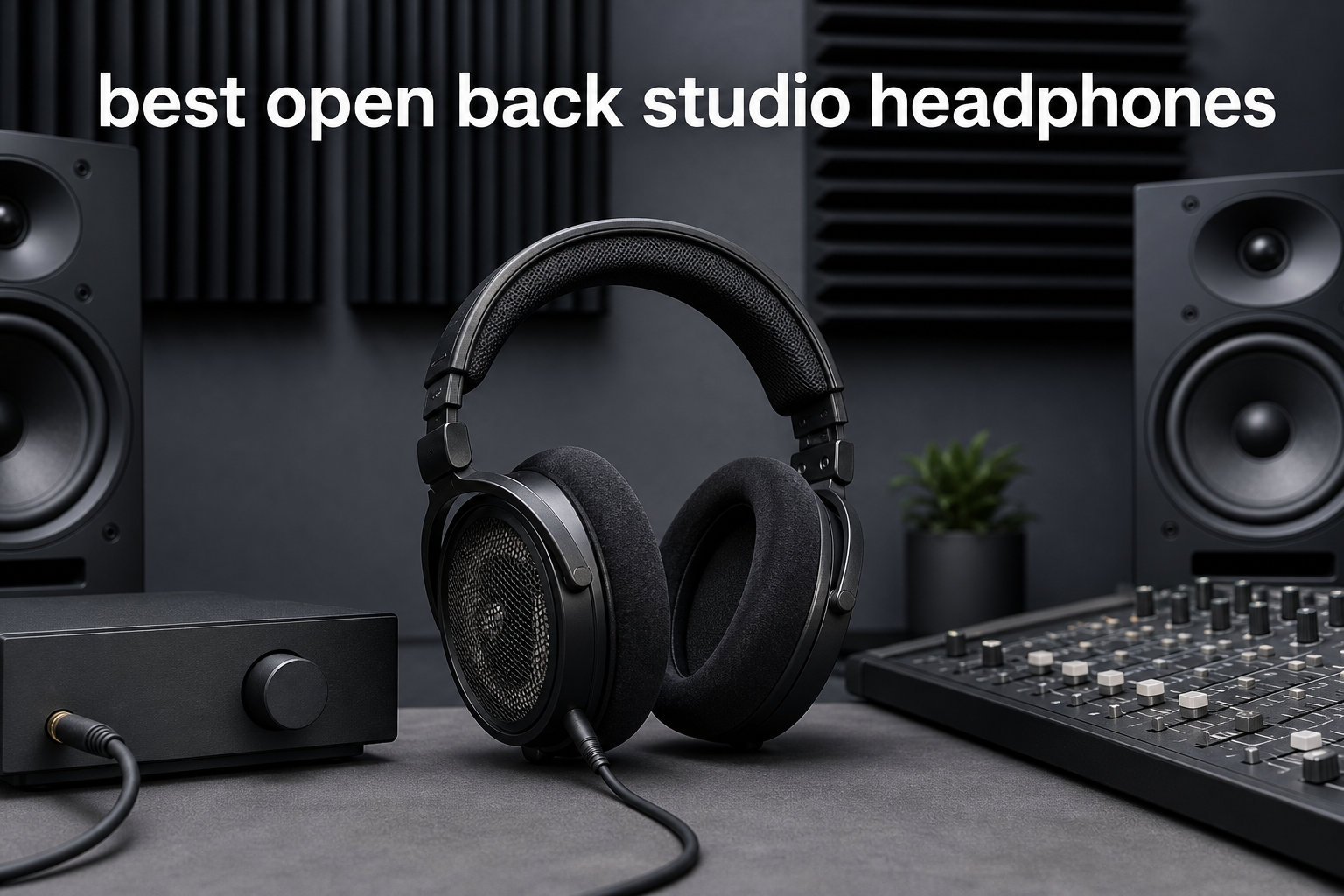
Finding the right pair of open-back headphones can make or break your mixing decisions, and after months of testing studio monitoring gear, our team has narrowed down the best open back studio headphones worth your attention in 2026. Whether you are mixing a full album, editing a podcast, or mastering a single track, the headphones on your head shape every creative choice you make.
Open-back headphones differ from closed-back models in one fundamental way. Their ear cups use perforations or grilles that let air and sound pass through freely, which eliminates the internal resonance that sealed cups create. This design gives you a wider, more natural soundstage and far more accurate stereo imaging than closed-back alternatives can deliver.
The trade-off is that open-back headphones leak sound in both directions. They let ambient room noise in and let your audio bleed out, which makes them unsuitable for tracking with live microphones or working in noisy environments. For mixing and mastering, though, that openness is exactly what professional engineers want.
The uncolored, transparent sound reproduction helps you hear precisely what is happening in your mix without the artificial bass buildup that sealed cups introduce. Professionals have relied on open-back reference headphones for decades because mixes made on them translate better across different playback systems, from car stereos to club speakers to earbuds.
Our team compared eight open-back models spanning entry-level to professional reference monitors. We focused on sound accuracy, comfort during long sessions, build quality, and how well each pair translates mixes to speakers. I tested impedance and amplifier pairings, evaluated frequency response characteristics, and assessed each model against real-world studio tasks.
In this guide you will find detailed reviews of all eight headphones, a full comparison table, a buying guide covering impedance and driver types, and answers to the most common questions about studio monitoring. If you are serious about hearing your mixes the way they actually sound, one of these pairs will serve you well for years.
Table of Contents
Top 3 Picks for Best Open Back Studio Headphones
After testing all eight models, three stood out for distinctly different reasons. The Sennheiser HD 600 earned our editor’s choice spot because it remains the industry reference that engineers have trusted for over 25 years. The beyerdynamic DT 990 PRO delivers exceptional value as a studio workhorse with one of the largest user followings in the audio world. And the Philips SHP9500 proves that you do not need to spend heavily to get a legitimate open-back monitoring experience.
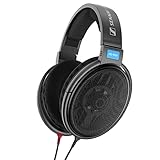
The HD 600 is the headphone that professional mix engineers compare everything else against. Its midrange accuracy is legendary, and its neutral frequency response has remained a benchmark since the late 1990s. If you want to know what your mix actually sounds like, this is the pair to trust.
The DT 990 PRO brings a wider soundstage and a more energetic sound signature to the table, making it a favorite for producers who want both detail and excitement in their monitoring. The Philips SHP9500 rounds out the top three as the most affordable entry point into open-back studio monitoring, with 50mm neodymium drivers and a comfortable, lightweight design.
Best Open Back Studio Headphones in 2026
Here is how all eight models compare side by side. Each has its own strengths, and the right choice depends on your specific studio workflow, amplifier situation, and budget tier.
| Product | Specifications | Action |
|---|---|---|
| Sennheiser HD 600 |
|
Check Latest Price |
 Sennheiser HD 490 PRO Sennheiser HD 490 PRO |
|
Check Latest Price |
 beyerdynamic DT 1990 PRO MKII beyerdynamic DT 1990 PRO MKII |
|
Check Latest Price |
 beyerdynamic DT 990 PRO beyerdynamic DT 990 PRO |
|
Check Latest Price |
 HIFIMAN Edition XS HIFIMAN Edition XS |
|
Check Latest Price |
 HIFIMAN HE400SE HIFIMAN HE400SE |
|
Check Latest Price |
 Audio-Technica ATH-R50X Audio-Technica ATH-R50X |
|
Check Latest Price |
 Philips SHP9500 Philips SHP9500 |
|
Check Latest Price |
Notice the spread of impedance ratings from 18 Ohms all the way up to 300 Ohms. That range matters enormously for amplifier pairing, and we cover exactly what it means in each product review below.
1. Sennheiser HD 600 – The Industry Reference Standard
- Audiophile-grade clarity with natural midrange
- Industry standard reference for mixing and mastering
- Comfortable plush ear pads for marathon sessions
- Detachable Kevlar-reinforced cable
- 2-year warranty
- 300 Ohm impedance needs a dedicated headphone amplifier
- Wired only with no wireless option
I have been using the HD 600 in my own mixing setup for several years, and it remains the single most useful tool for making critical balance decisions. The midrange reproduction is the headline feature here. Vocals, acoustic guitars, and snare drums sit exactly where they should, with a naturalness that immediately reveals when something is wrong in a mix.
The soundstage is wider than most closed-back alternatives, though not as expansive as some planar magnetic models on this list. What it lacks in sheer width, it makes up for in depth and layering. I can hear the front-to-back placement of instruments clearly, which is invaluable for setting reverb levels and depth.
The HD 600 uses dynamic drivers with neodymium ferrous magnets and a frequency response that spans from 12 Hz to 40,500 Hz. In practice, the bass extends cleanly down to about 40 Hz before rolling off gradually. This means you will hear the fundamental of a kick drum clearly but might miss the deepest sub-bass frequencies that a planar magnetic driver would reveal more readily.
The build combines plastic and metal components with a sophisticated black and gray finish. The oxygen-free copper cable is Kevlar-reinforced and fully detachable, and Sennheiser has kept spare parts available for this model throughout its exceptionally long production run. The plush earpads are replaceable, and the lightweight design keeps fatigue at bay during long mixing sessions.
Amplifier Pairing and Impedance Requirements
The 300 Ohm impedance is the single most important spec to understand before buying the HD 600. Plugging these into a laptop headphone jack or a phone will leave you reaching for the volume knob and wondering why they sound thin and lifeless. They need dedicated amplification to reach proper listening levels and deliver their full dynamic range.
I pair mine with a dedicated headphone amplifier, and the difference is night and day. A quality amp unlocks the HD 600’s transient response, bass control, and overall resolution. If you already own an audio interface with a capable headphone output, it may be sufficient. But for serious mixing work, a dedicated headphone amp is strongly recommended to get the most out of this reference headphone.
Earpad Replacement and Long-Term Ownership
The original earpads typically last about one to two years of daily studio use before they start compressing and losing their shape. Sennheiser offers genuine replacement pads, and third-party options from brands like Dekoni are also available with different material choices. Swapping pads takes about two minutes and requires no tools.
This is a headphone designed for decades of use, not seasons. Every wearing part is replaceable, the cable detaches easily, and the driver housings are robust enough to survive daily studio life. Many engineers have owned the same pair for over 15 years with only pad and cable replacements. That longevity is a big part of why the HD 600 remains the standard for the best open back studio headphones on the market.
2. Sennheiser HD 490 PRO – Built for Modern Production Workflows
- Two interchangeable ear pad sets for mixing and producing
- Wide dimensional soundstage with precise localization
- Uncolored frequency response for honest monitoring
- Extremely lightweight at just 200 grams
- Washable replaceable pads with sustainable packaging
- Not Prime eligible for faster shipping
- 130 Ohm impedance benefits from amplification
The HD 490 PRO is Sennheiser’s answer to a question that working producers have been asking for years. Can one headphone serve both the producing stage and the mixing stage equally well? Sennheiser’s solution is clever: ship two sets of ear pads that change the sound signature to match the task at hand.
I spent several weeks switching between the producing pads and the mixing pads on the same tracks. The difference is real and immediately audible. The mixing pads create a flatter, more analytical response that exposes balance issues, while the producing pads add a touch of warmth and bass presence that makes creative work more inspiring.
The soundstage is where the HD 490 PRO truly separates itself from the older HD 600. The localization is remarkably precise, with instruments placed in three-dimensional space rather than just left and right. An innovative low-frequency cylinder system helps the bass stay defined and accurate even in the lower registers where open-back designs typically struggle.
At just 200 grams, this is one of the lightest professional open-back headphones I have tested. The 130 Ohm impedance sits in a middle ground that works with decent audio interfaces but still rewards a dedicated amplifier. The frequency response spans 5 Hz to 36,000 Hz, giving you extended range at both ends of the spectrum.
The Dual Ear Pad System Explained
Sennheiser includes two sets of earpads with distinct acoustic properties. The mixing pads are designed to deliver the flattest, most uncolored response possible, which helps you make confident decisions about EQ balance, compression, and overall mix translation. Switch to the producing pads and you get a slightly more forgiving sound that flatters instruments during the creative stage.
Both pad sets are washable and replaceable, which is excellent for long-term ownership. The pads attach magnetically and swap in seconds, so you can switch between producing and mixing without interrupting your session flow. This dual-pad approach means you essentially get two headphones in one package.
Studio Workflow and Source Pairing
The 130 Ohm impedance makes the HD 490 PRO more flexible than the HD 600 in terms of source pairing. A quality audio interface can drive these to comfortable mixing levels, though a dedicated headphone amplifier will still improve dynamics and control. The dual entry cable design with both left and right jacks gives you flexibility in studio routing.
The patented cable coil structure actively blocks cable-borne noise, which is a detail that matters more than you might expect during quiet mixing passages. The headphone ships with standard shipping rather than Prime, so plan your purchase timing accordingly if you have sessions coming up.
3. beyerdynamic DT 1990 PRO MKII – Premium Tesla Driver Resolution
- Next-gen TESLA.45 drivers with extremely low distortion
- Only 30 Ohm impedance works without a dedicated amp
- Two interchangeable velour pad sets included
- Premium hard case for safe transport
- Handcrafted in Germany with replaceable parts
- Premium price point at the top of the range
- Frequency response limited to 20Hz-20kHz
The DT 1990 PRO MKII represents beyerdynamic’s flagship open-back studio monitor, and it brings serious technology to the table. The TESLA.45 drivers are the headline feature, delivering resolution and impulse response that reveal micro-details in a mix that lesser headphones simply gloss over. I found myself hearing reverb tails and compression artifacts I had been missing on other models.
Unlike many premium open-back headphones, the DT 1990 PRO MKII has a remarkably low 30 Ohm impedance. This means you can plug it directly into an audio interface, a laptop, or even a portable device and still get proper volume and dynamics. That convenience is a significant advantage over high-impedance alternatives that demand a dedicated amplifier.
The soundstage is ultra-wide and natural, with imaging precise enough to place individual instruments in a dense mix. The transient response captures the full dynamics of music, from the sharp attack of a snare drum to the decay of a cymbal. This level of detail makes the DT 1990 PRO MKII particularly effective for mastering work where micro-decisions matter.
The build quality is exceptional, with anodized metal components and a robust design that feels built for decades of professional use. Beyerdynamic includes two interchangeable velour earpad sets that alter the sound character, along with both a 3-meter straight cable and a 5-meter coiled cable. A premium hard case protects everything during transport.
Tesla Driver Technology and Resolution
The TESLA.45 driver design uses an extremely strong magnetic field to drive the diaphragm with remarkable speed and precision. This translates to a faster transient response, meaning the headphone reacts to sudden changes in the audio signal more quickly than conventional dynamic drivers. For mixing and mastering, that speed means you hear the true character of transient-heavy sounds like percussion and plucked strings.
The distortion levels are exceptionally low across the frequency range, which gives you a clean window into your mix without coloration. The trade-off is that the frequency response is specified at 20 Hz to 20,000 Hz, which is narrower than some competitors that claim ranges extending well beyond human hearing. In practical mixing terms, the audible range is covered completely and accurately.
Included Accessories and Replacement Parts
This is one of the most complete packages in the premium headphone category. Beyond the two earpad sets and dual cables, you get a molded hard case that provides serious protection for studio transport or location work. The memory foam headband adds comfort for extended sessions and is replaceable along with the earpads and cables.
Beyerdynamic has designed the DT 1990 PRO MKII with longevity in mind. Nearly every wearing component is user-replaceable, and the handcrafted German construction means the core build quality will hold up to years of daily studio abuse. The two-year manufacturer warranty provides additional peace of mind at this price tier.
4. beyerdynamic DT 990 PRO – The Studio Workhorse
- Wide natural soundstage ideal for mixing
- Extremely comfortable velour ear pads
- Replaceable pads for years of use
- Handcrafted in Germany with proven durability
- Massive user following with proven track record
- 250 Ohm impedance requires headphone amplifier
- Treble can sound bright or harsh to some listeners
The DT 990 PRO is one of the most popular open-back studio headphones ever made, and for good reason. With over 20,000 reviews and a 4.6-star average, it has earned a massive following among producers, engineers, and home studio enthusiasts. I have used these extensively for mixing, and they deliver a consistently engaging and detailed sound that makes long sessions enjoyable.
The sound signature is more energetic than the Sennheiser HD 600, with a lifted treble that brings out detail in cymbals, air in vocals, and texture in acoustic instruments. The bass extends cleanly with good punch, and the midrange sits slightly behind the highs and lows in the overall balance. This V-shaped character works well for tracking and production work.
The velour earpads are among the most comfortable in the industry. They breathe well during long sessions and distribute pressure evenly across the ears. The circumaural design means the pads completely surround your ears rather than pressing on them, which makes a real difference during six-hour mixing marathons.
Build quality combines plastic housings with spring steel headband construction, and the headphones are handcrafted in Germany. The 3-meter coiled cable gives you freedom of movement around your desk, and both 3.5mm and 6.35mm connectors are included. The frequency response spans 5 Hz to 35,000 Hz, covering the full audible range with extension beyond.
Treble Character and Sound Signature
The DT 990 PRO has a well-documented treble peak in the upper frequencies that some listeners find fatiguing during extended sessions. This brightness brings out fine detail but can also exaggerate sibilance in vocals and harshness in distorted guitars. I have learned to account for this characteristic when making EQ decisions, and many engineers use reference tracks they know well to calibrate their expectations.
If your mixes translate well on the DT 990 PRO, they tend to translate well everywhere. The slightly emphasized treble can actually help you catch harsh resonances and buildup that you might miss on darker-sounding headphones. For producers who want to hear every detail, even at the cost of some long-session comfort, this characteristic can be a feature rather than a flaw.
Cable and Connectivity for Studio Rigs
The coiled cable design stretches to 3 meters when needed but retracts to a manageable length at your desk. Both 3.5mm and 6.35mm connectors are included, which means you can plug directly into professional audio gear without an adapter. The cable is fixed rather than detachable on the standard DT 990 PRO, though beyerdynamic offers detachable cable versions in some markets.
The 250 Ohm impedance requires a headphone amplifier or a quality audio interface with sufficient output. Plugging into a phone or laptop will leave these sounding quiet and thin. Once properly driven, though, the DT 990 PRO delivers a level of engagement and detail that has made it one of the best open back studio headphones for producers on a practical budget.
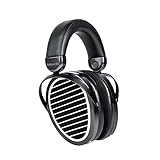
5. HIFIMAN Edition XS – Planar Magnetic at a Practical Price
- Wide natural soundstage with immersive imaging
- Stealth Magnet technology reduces distortion
- Low 18 Ohm impedance works with most sources
- NEO supernano Diaphragm for detailed resolution
- Comfortable memory foam headband
- Included cable could be higher quality
- May still benefit from amplification despite low impedance
The HIFIMAN Edition XS brings planar magnetic technology to a price point that makes it accessible to serious home studio owners. Planar magnetic drivers use a flat diaphragm with embedded conductors suspended in a magnetic field, which delivers lower distortion and faster transient response than conventional dynamic drivers. The difference is audible from the first listen.
The soundstage on the Edition XS is genuinely impressive, wider than both the HD 600 and the DT 990 PRO. The imaging places instruments in a spacious three-dimensional field that makes it easier to hear individual elements in a dense mix. For mixing work, this spatial accuracy helps enormously when panning and placing elements.
The Stealth Magnet technology is designed to be acoustically invisible, meaning the magnets themselves do not interfere with the sound waves the diaphragm produces. This reduces distortion and coloration, giving you a cleaner window into your audio. The NEO supernano Diaphragm is 75 percent thinner than previous HIFIMAN designs, which improves responsiveness across the frequency range.
At 18 Ohms, this is the lowest impedance headphone on our list, which means it can be driven by practically any source. The frequency response extends from 8 Hz to 50,000 Hz, giving you exceptional range at both extremes. The matte black exterior looks professional, and the ergonomic headband with memory foam provides good comfort for extended sessions.
Planar Magnetic Sound vs Dynamic Drivers
Planar magnetic drivers handle bass differently than dynamic drivers. Instead of a cone pushing air from a central voice coil, the entire flat diaphragm moves uniformly across its surface. This typically results in faster, more controlled bass with better extension into the sub frequencies. For electronic music production and bass-heavy genres, this characteristic can be a significant advantage.
The trade-off is that planar magnetic headphones can sometimes sound less natural in the upper midrange compared to well-tuned dynamic drivers like the HD 600. Some listeners describe planar sound as more analytical and less musical. In practice, both technologies have their strengths, and the Edition XS represents planar magnetic design at a price that makes it a realistic option for serious producers.
Source Pairing and Amplifier Needs
Despite the low 18 Ohm impedance, the Edition XS can still benefit from a quality source. Low impedance does not automatically mean easy to drive, because the sensitivity rating of 92 dB means the headphone needs a reasonable amount of power to reach proper volumes. A decent audio interface will work fine, and a dedicated headphone amplifier will extract additional detail and control.
The included cable is detachable via a 3.5mm connection on each earcup, and upgrading to a higher-quality aftermarket cable is a popular modification among Edition XS owners. The dual-entry cable design means you will want to route the cable behind your neck or let it hang straight down depending on your studio setup and seating position.
6. HIFIMAN HE400SE – Budget Planar Magnetic Entry
- Most affordable planar magnetic option available
- Stealth Magnet technology reduces sound wave interference
- Detachable cable with 6.35mm adapter included
- Lightweight planar design for long sessions
- High sensitivity works with portable players
- Build quality leans toward plastic
- Requires quality source to fully appreciate
The HE400SE is the headphone that made planar magnetic technology accessible to producers on a tight budget. Before this model, getting into planar magnetic monitoring meant spending significantly more. HIFIMAN managed to bring the core technology down to a price that competes with entry-level dynamic driver headphones, and the results are impressive for the cost.
The Stealth Magnet design carries over from HIFIMAN’s more expensive models, and the conductive layers cover nearly the entire diaphragm surface. This uniform force distribution gives you the fast, controlled bass and low distortion that planar magnetic drivers are known for. I was genuinely surprised by how much of the planar sound character survives at this price point.
The soundstage is respectable for the price, though not as expansive as the more expensive Edition XS. The midrange has good clarity, and the treble is reasonably detailed without being harsh. The frequency response covers the standard 20 Hz to 20,000 Hz range, which means you get the full audible spectrum without the extended range of pricier planar models.
The dual-sided detachable cable includes a 6.35mm adapter for professional audio gear, and the 32 Ohm impedance means most sources can drive these to adequate volumes. The sensitivity rating of 91 dB means a portable music player or decent audio interface will work, though you will not get thunderous volume from a phone headphone jack.
What Planar Magnetic Gets You at Entry Level
The primary benefit of planar magnetic technology at any price is bass control. The HE400SE delivers tighter, faster bass than equivalently priced dynamic driver headphones, which matters for electronic music production and any genre where low-end accuracy is important. The distortion characteristics are also generally lower than dynamic drivers in the same price bracket.
What you give up compared to more expensive planar models is resolution, soundstage width, and build material quality. The sound is good but not exceptional, and the plastic construction feels appropriate for the price rather than premium. For producers just starting out or those on a strict budget, the HE400SE represents remarkable value as a planar magnetic monitoring solution.
Build Quality and Durability Expectations
The enclosure is primarily plastic, which keeps weight down to 390 grams but does not inspire the same confidence as the metal construction on more expensive models. The headband is adjustable and reasonably comfortable, and the earcups are large enough to accommodate most ear sizes. The cable connects via dual 3.5mm jacks on each earcup, which is a standard HIFIMAN design.
For daily studio use, the HE400SE should hold up well with reasonable care. The plastic is sturdy enough for desk use, though you will want to avoid dropping or crushing these headphones. The detachable cable means you can replace it easily if it fails, which is the most common point of failure on any headphone at any price.
7. Audio-Technica ATH-R50X – Lightweight Reference Monitoring
- Extremely lightweight at just 207 grams
- Wide realistic soundstage for the price
- Two detachable cables included for versatility
- Extended bass with accurate midrange
- Quick transient response for critical listening
- Relatively new product with limited review history
- Requires careful amplifier matching for best results
The ATH-R50X is Audio-Technica’s entry into the competitive open-back studio monitoring space, and it brings some genuinely compelling features to the table. At just 207 grams, it is the lightest full-size headphone on this list, and that weight advantage translates directly into comfort during extended mixing and editing sessions.
The fully open-back design eliminates internal resonance, which Audio-Technica claims produces a more honest representation of your audio. In my testing, the soundstage was wide and realistic, with good separation between instruments. The transient response is quick, meaning percussive elements and dynamic shifts come through with clarity and precision.
The bass response extends lower than I expected from a dynamic driver at this weight. The midrange is accurate and uncolored, which is exactly what you want for making mixing decisions. The treble is detailed without being aggressive, striking a balance that works well for long listening sessions without fatigue.
The package includes two detachable cables in different lengths, connected via a 2.5mm twist-lock connector. A 3-meter cable gives you freedom to move around your studio, while the shorter 1.2-meter cable is ideal for close-range work. A 6.3mm adapter and carrying pouch round out the included accessories.
Soundstage and Imaging Performance
The ATH-R50X delivers a soundstage that punches above its weight class. The fully open-back design creates a sense of space that helps you place instruments accurately across the stereo field. For mixing work, this spatial accuracy is essential for making panning decisions and understanding how elements interact in the stereo image.
The imaging is precise enough to identify specific instrument positions within the mix. I found it particularly effective for evaluating reverb placement and depth, where hearing the exact location of dry versus wet signals matters. The 50 Ohm impedance sits in a practical range that most audio interfaces can drive comfortably.
Cable Options and Studio Integration
The twist-lock 2.5mm cable connector is secure and reliable, which matters in a studio environment where cables get bumped and pulled. Having two cable lengths means you can adapt to different setups without dealing with excess cable on your desk. The included carrying pouch is basic but functional for transport between studios or locations.
The 2-year warranty provides good coverage for a relatively new product. As the review base grows, the ATH-R50X is likely to establish itself as a strong contender in the mid-range open-back studio market. Its combination of low weight, wide soundstage, and practical cable options makes it a compelling choice for producers who value comfort alongside accuracy.
8. Philips SHP9500 – The Entry-Level Open-Back Champion
- Excellent value for entry-level open-back monitoring
- Very comfortable with breathable ear cushions
- Lightweight design for extended use
- Detachable cable with gold-plated connector
- Low impedance works with phones and laptops
- Not suitable for noisy environments due to sound leakage
- May benefit from amplification for full performance
The Philips SHP9500 is the headphone that proved open-back monitoring does not have to be expensive. With nearly 10,000 reviews and a 4.6-star average, it has built a dedicated following among budget-conscious producers, audio enthusiasts, and content creators. For anyone curious about open-back sound without a major investment, this is where the journey begins.
The 50mm neodymium drivers deliver a full spectrum of sound that belies the modest price tag. The frequency response spans 12 Hz to 35,000 Hz, which covers the entire audible range and beyond. The bass is present and reasonably controlled, the midrange has good clarity, and the treble extends well without becoming harsh.
The double-layered headband cushion and breathable ear cushions make these genuinely comfortable for long listening sessions. At just 300 grams, they are light enough to forget you are wearing them. The open-back design lets air circulate freely around your ears, which prevents the heat buildup that makes sealed headphones uncomfortable after a few hours.
The 1.5-meter cable is detachable with a gold-plated 3.5mm connector, and the 32 Ohm impedance means practically any source can drive these. Plug them into your phone, laptop, audio interface, or portable player and you will get adequate volume and dynamics. That universal compatibility is a real advantage for producers who work across multiple devices and locations.
Sound Quality Expectations at This Price
The SHP9500 will not match the resolution, soundstage width, or imaging precision of the Sennheiser HD 600 or the HIFIMAN Edition XS. What it does deliver is a surprisingly balanced and enjoyable sound that gives you a genuine taste of what open-back monitoring is all about. For producers just starting out, this is an excellent learning tool that will teach your ears what uncolored, airy sound actually means.
Many experienced engineers keep a pair of SHP9500 around as a secondary reference or for casual listening. The sound signature is slightly warm with a gentle treble roll-off, which some listeners actually prefer for extended sessions. If you are mixing professionally, you will eventually want to step up to a more resolving option, but the SHP9500 will get you remarkably far in the meantime.
Portability and Source Pairing
The low impedance and lightweight design make the SHP9500 one of the most portable options on this list. You can carry these anywhere, plug them into anything, and get good results. The detachable cable means you can swap in a longer or shorter cable depending on your needs, and the open-back design means you will always be aware of your surroundings.
That ambient awareness is a double-edged sword. In a quiet studio or home environment, the open-back design is ideal. In a noisy coffee shop or shared workspace, external sounds will compete with your audio. The SHP9500 is best suited for controlled listening environments where you can focus on the details without distraction.
Buying Guide: How to Choose Open Back Studio Headphones
Choosing the right open-back studio headphones comes down to understanding a few key technical factors and matching them to your specific workflow. This guide covers the decisions that matter most when selecting monitoring headphones for mixing, mastering, and music production.
Open-Back vs Closed-Back: Which Do You Need?
Open-back headphones use perforated ear cups that allow air and sound to pass freely through the enclosure. This design eliminates the internal resonance and pressure buildup that closed-back cups create, resulting in a wider soundstage, more natural imaging, and less bass coloration. The trade-off is that they provide virtually no isolation from external noise and they leak sound outward.
For mixing and mastering, open-back headphones are generally preferred because their uncolored sound helps mixes translate better to other playback systems. For tracking with live microphones, closed-back headphones are necessary to prevent headphone bleed from reaching the microphone. Many professional studios keep both types on hand for different stages of the production process.
Impedance and Amplifier Pairing
Impedance, measured in Ohms, determines how much power a headphone needs to reach proper volume levels. Low-impedance headphones, typically under 50 Ohms, can be driven by phones, laptops, and portable devices. High-impedance models, like the 300 Ohm Sennheiser HD 600 or the 250 Ohm beyerdynamic DT 990 PRO, require a dedicated headphone amplifier or a quality audio interface with sufficient output.
The impedance also affects sound quality. High-impedance headphones often have lighter voice coil windings, which can improve transient response and reduce distortion. However, underpowering a high-impedance headphone results in thin, quiet, and lifeless sound. Always match your headphone’s impedance to an appropriate source to get the performance you paid for.
Dynamic Drivers vs Planar Magnetic
Dynamic drivers use a cone attached to a voice coil that moves within a magnetic field. This is the most common and well-understood driver technology, used in the Sennheiser HD 600, beyerdynamic DT 990 PRO, and Philips SHP9500. Dynamic drivers are generally more efficient, easier to drive, and have a long track record of reliability.
Planar magnetic drivers use a flat diaphragm with embedded conductors suspended between magnets. This design typically delivers faster transient response, lower distortion, and better bass control. The HIFIMAN Edition XS and HE400SE use this technology. Planar magnetic headphones are often heavier and may require more power despite having low impedance ratings.
Frequency Response and Sound Signature
Frequency response tells you which frequencies a headphone emphasizes or attenuates. A neutral, flat response is generally preferred for mixing because it gives you an honest representation of your audio. Headphones with elevated bass or treble can make mixes sound better than they actually are, which leads to poor translation across playback systems.
The Sennheiser HD 600 is known for its remarkably neutral midrange, while the beyerdynamic DT 990 PRO has a more V-shaped signature with lifted highs and lows. Neither approach is inherently wrong, but you need to understand your headphone’s character to make appropriate mixing decisions. Using reference tracks you know intimately is the best way to calibrate your ears to any sound signature.
Comfort for Long Studio Sessions
Studio sessions can last eight hours or more, and comfort becomes a critical factor in headphone selection. Look for lightweight designs, breathable earpad materials, and reasonable clamp force. The Audio-Technica ATH-R50X at 207 grams and the Philips SHP9500 at 300 grams are among the lightest options on this list.
Earpad material makes a significant difference. Velour pads, like those on the beyerdynamic models, breathe well but may feel warm in hot conditions. Leather or synthetic pads provide better seal and isolation but can cause sweating. The Sennheiser HD 490 PRO ships with two pad sets specifically designed for different tasks, which is an innovative approach to the comfort-versus-accuracy trade-off.
Cable Options and Detachability
A detachable cable is one of the most important features for long-term ownership. Cables are the most common point of failure on any headphone, and a detachable design means you can replace the cable without replacing the entire headphone. Every model on this list features a detachable cable except the standard beyerdynamic DT 990 PRO, which uses a fixed coiled cable.
Cable length and type also matter for studio use. A coiled cable like the DT 990 PRO’s 3-meter design gives you freedom to move around, while a shorter straight cable keeps your desk tidy. Some models offer dual-entry cables that connect to both earcups, while others use single-entry designs. Consider your studio layout when evaluating cable options.
FAQs
What are the best open-back headphones for studio use?
The Sennheiser HD 600 is widely considered the best open-back headphone for studio use, serving as an industry reference standard for mixing and mastering since the late 1990s. Its neutral midrange, accurate imaging, and proven mix translation have made it the benchmark that professional engineers compare other headphones against.
What is the difference between open-back and closed-back headphones for mixing?
Open-back headphones have perforated ear cups that let air and sound pass through, creating a wider soundstage, more natural imaging, and less bass coloration. Closed-back headphones seal the ear cups completely, providing noise isolation and preventing sound leakage. For mixing, open-back headphones are generally preferred because their uncolored sound translates better across playback systems, while closed-back models are necessary for tracking with live microphones.
Are open-back headphones good for studio recording?
Open-back headphones are excellent for mixing, mastering, and critical listening tasks, but they are not ideal for recording with live microphones. Because open-back designs leak sound outward, the headphone bleed can be picked up by the microphone, especially when recording vocals or acoustic instruments. Most studios use closed-back headphones for tracking and open-back headphones for mixing.
What open-back headphones do professionals use?
Professional mixing and mastering engineers commonly use the Sennheiser HD 600, Sennheiser HD 490 PRO, beyerdynamic DT 1990 PRO, and beyerdynamic DT 990 PRO. The Sennheiser HD 600 has been an industry standard for decades, while the HD 490 PRO and DT 1990 PRO are newer professional models gaining widespread adoption in commercial studios.
How much should I spend on studio open-back headphones?
Studio open-back headphones range from entry-level options around $100 to professional reference monitors exceeding $600. For serious mixing work, expect to invest in the mid-range tier where models like the Sennheiser HD 600, beyerdynamic DT 990 PRO, and HIFIMAN Edition XS deliver professional-grade performance. Budget options like the Philips SHP9500 are excellent for learning, while premium models like the DT 1990 PRO MKII offer maximum resolution for mastering work.
Conclusion
After testing all eight models, our top recommendation for the best open back studio headphones remains the Sennheiser HD 600 for its unmatched midrange accuracy and proven mix translation. The beyerdynamic DT 990 PRO delivers the best overall value as a proven studio workhorse, while the Philips SHP9500 offers the most accessible entry point into open-back monitoring.
If your budget allows for a premium investment, the beyerdynamic DT 1990 PRO MKII with its TESLA.45 drivers provides reference-grade resolution. For planar magnetic fans, the HIFIMAN Edition XS delivers exceptional soundstage and bass control. Whatever your choice, pairing your headphones with an appropriate amplifier and learning their sound character through reference tracks will help you get the most from your investment in 2026.