
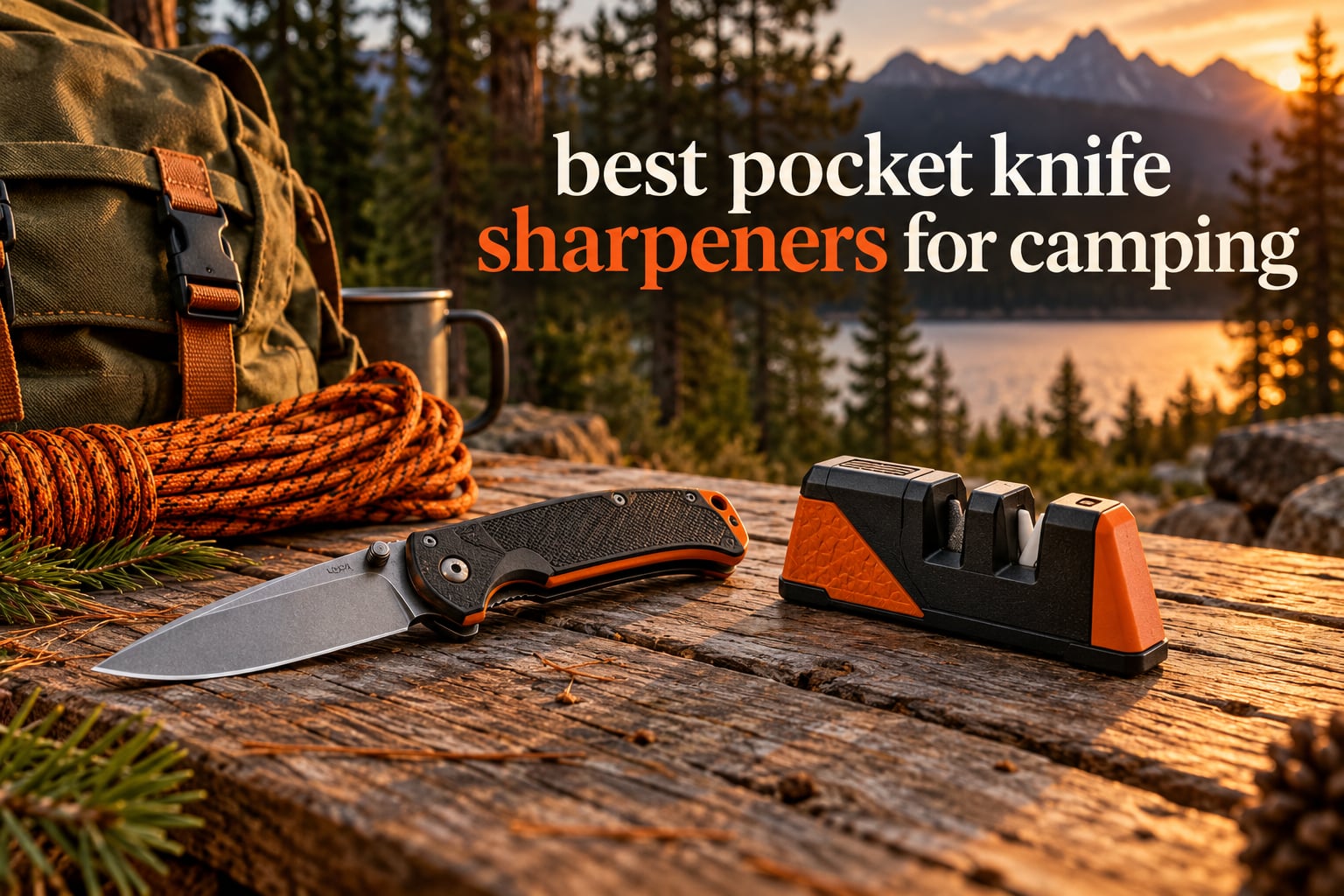
A dull knife at camp is not just an inconvenience, it is the more dangerous one. A dull blade needs more force to bite, and that extra force is what makes it skate off a rope, a rib of hide or a fish bone and into your hand. The fix is not a bigger knife, it is a sharpener small enough that you actually carry it.
That is the whole problem with best pocket knife sharpeners for camping choices. Almost every option on the market works on a kitchen counter. Far fewer survive being clipped to a pack strap, soaked in a river, and used by someone with cold hands and thirty minutes of daylight left.
So here is the direct answer: the AccuSharp Knife Sharpener is the best pocket knife sharpener for camping for most people, because its two-stage tungsten carbide setup puts a usable edge back on a camp folder in seconds with no technique to learn and no water or oil needed. If your trips are base camp and you want a full system rather than a stick, the Work Sharp Guided Field Sharpener does more in one session than anything else in this group. Everything below is built around those two ends of the spectrum.
We pulled ten sharpeners across four formats: guided field systems, multi-function survival sticks, precision diamond stones and ultra-compact pocket tools. Every pick below carries real weight, grit and edge-angle data, plus an honest note on who should leave it behind.
A dull blade is a real camp hazard, but it is fixable in a few minutes with the right tool in your pocket. If you also carry a multi-tool for the same trip, our pocket multi tools roundup covers the tools that sit next to the sharpener in that pocket.
Top 3 Pocket Knife Sharpeners for Camping in 2026
Three products earned a spot here because each solves a different version of the camp sharpening problem: one for the camper who wants zero learning curve, one for the camper who wants a complete system, and one for the camper who wants the most capability per gram.

AccuSharp Knife Sharpener
- Two-stage tungsten carbide
- Reversible carbide blades
- Finger guard
- Straight and serrated slots

Work Sharp Guided Field Sharpener
- Guided 20-25 degree angle
- Five abrasives plus strop
- Rotating ceramic rod
- Broadhead wrench
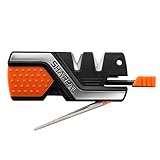
SHARPAL 101N 6-in-1 Sharpener
- Carbide and ceramic slots
- 400-grit diamond rod
- Ferro rod and whistle
- Fish hook groove
Best Pocket Knife Sharpeners for Camping in 2026 Compared
Every sharpener in this roundup, side by side. The weight column is the number most campers care about, because a sharpener you leave at home because it is too heavy is the same as having no sharpener.
| Product | Specifications | Action |
|---|---|---|
| AccuSharp Knife Sharpener |
|
Check Latest Price |
| Work Sharp Guided Field Sharpener |
|
Check Latest Price |
| SHARPAL 101N 6-in-1 Sharpener |
|
Check Latest Price |
 Lansky BladeMedic 4-in-1 Lansky BladeMedic 4-in-1 |
|
Check Latest Price |
 Smith’s PP1 Pocket Pal Smith’s PP1 Pocket Pal |
|
Check Latest Price |
 Victorinox Dual-Knife Sharpener Victorinox Dual-Knife Sharpener |
|
Check Latest Price |
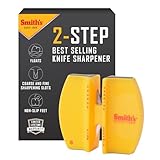 Smith’s CCKS 2-Step Sharpener Smith’s CCKS 2-Step Sharpener |
|
Check Latest Price |
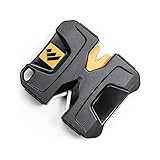 Work Sharp Portable Pivot Sharpener Work Sharp Portable Pivot Sharpener |
|
Check Latest Price |
 Smith’s DCS4 Diamond Combination Sharpener Smith’s DCS4 Diamond Combination Sharpener |
|
Check Latest Price |
 Work Sharp Precision Adjust Sharpener Work Sharp Precision Adjust Sharpener |
|
Check Latest Price |
1. AccuSharp Knife Sharpener – the best overall camp sharpener
- Restores most edges in about ten seconds
- Reversible carbide blades extend service life
- Finger guard keeps hands clear of the edge
- Handles straight and serrated blades
- Lightest full-size unit in this group at 1.6 ounces
- Fixed preset angle cannot be adjusted
- Larger footprint than a stick or keychain sharpener
I have carried this one on more trips than any other sharpener in this roundup, and the reason has less to do with sharpening skill than with the fact that I never have to think about it. You pull the blade through the coarse slot a few times, pull it through the fine slot, and the edge comes back. That is the whole procedure.
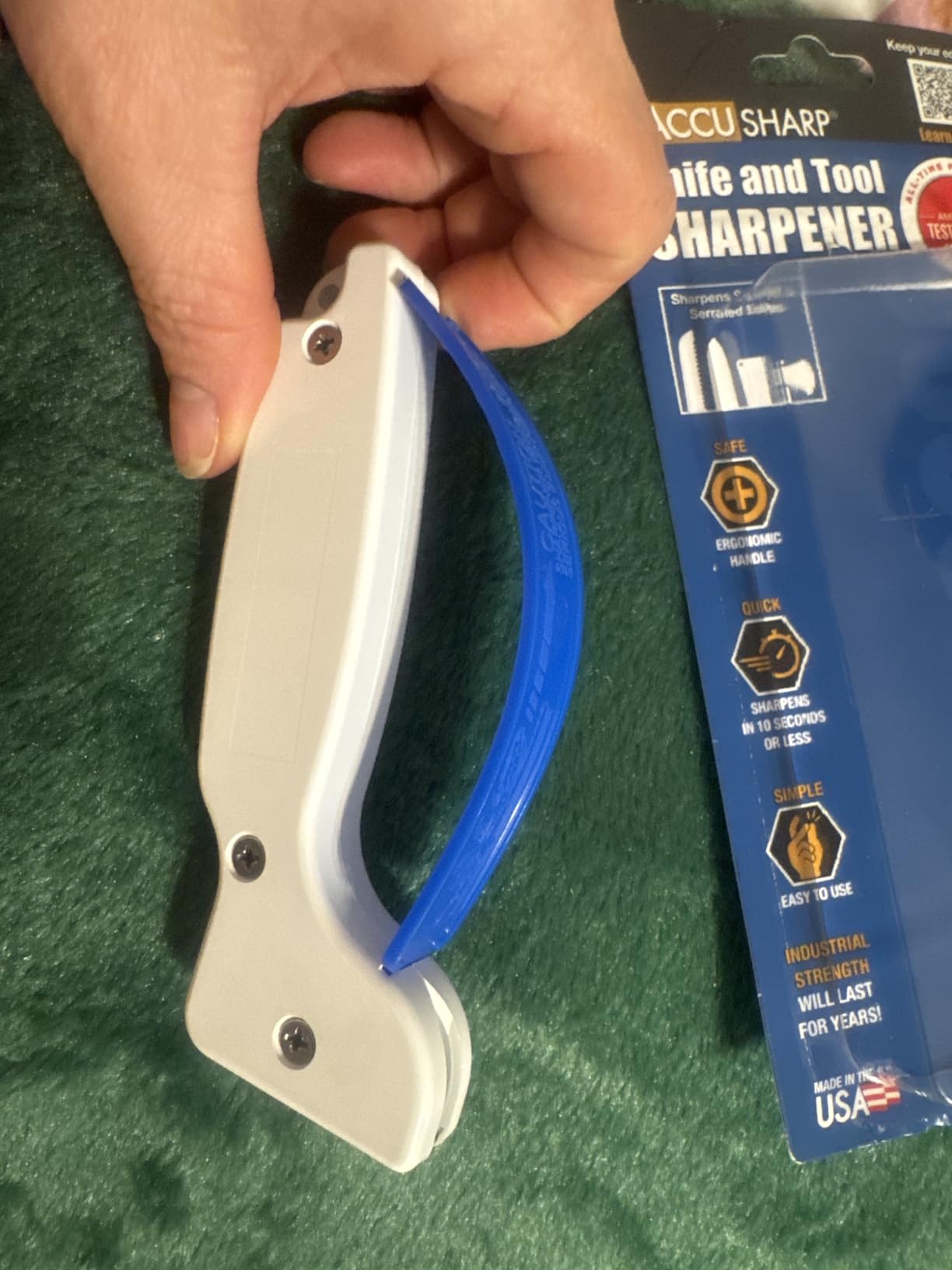
The build is a molded handle with a full-length finger guard and two crossed diamond-honed tungsten carbide blades. Both blades are reversible, so when one side dulls you flip it and keep going. The straight-edge slot is for plain blades and the second slot has a serrated profile that matches the gaps in a partially serrated folder.
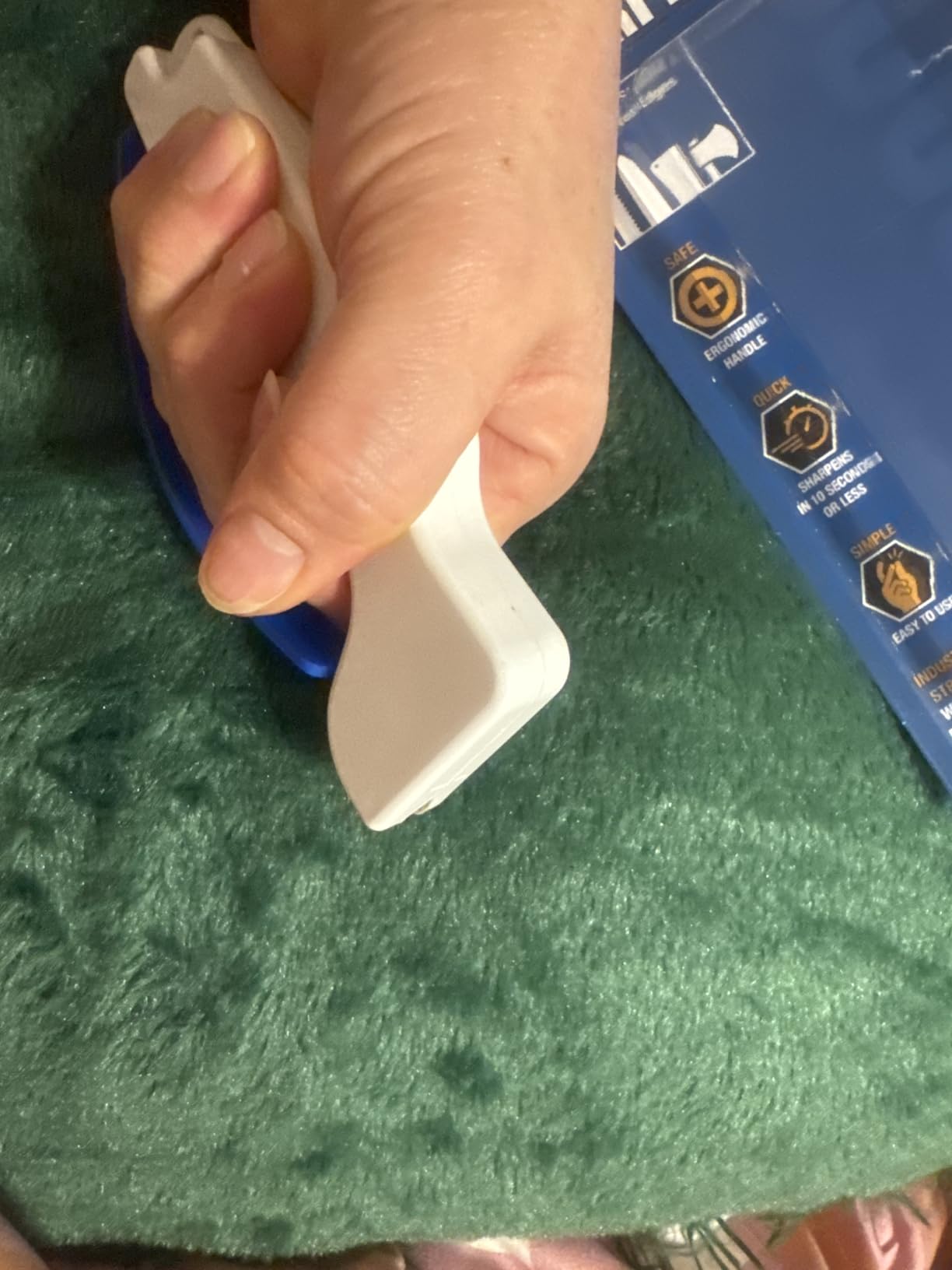
What matters for camping is that it works dry. No water, no oil, no slurry to clean off your sleeping mat in the dark. On a trip where the sharpening happens beside a fire on a rock or a folding table, that single property removes most of the friction people complain about with stone systems.
It sits at 1.6 ounces and 9 by 4 by 1 inches, which is bigger than a stick sharpener but still slides into a jacket pocket or a pack pouch. At that weight it is one of the lighter full-size units here, and it earns its badge because the combination of rating, review volume and zero learning curve is the strongest in this group.
What works about it at camp
The crossed blade geometry sets a fixed angle, and for most camping folders that angle lands close to a standard factory edge. On a knife that came from the box with a 20 to 25 degree per side bevel, three or four passes per side on the coarse stage and a couple on the fine stage bring it straight back to usable.
It handles a broad mix of steel without special technique. S30V, 8Cr13MoV, 154CM and the common factory steels all respond to carbide quickly. It is not the tool to reset a badly rolled or chipped edge, but for maintenance between trips it is close to foolproof.
Who should leave it behind
If you carry a blade at a steeper factory angle and care about preserving that geometry exactly, the fixed slot is a real limitation. Owners of higher-end folders generally pair a tool like this with a guided system at home rather than trusting carbide V-slots to a blade they care about, a complaint that comes up repeatedly on blade forums.
Also skip it if your main sharpening need is serrations or fish hooks. The serrated slot maintains partial serrations but will not touch a fully serrated blade or a hook point.
2. Work Sharp Guided Field Sharpener – the most complete field set
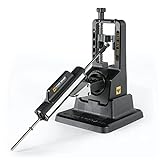
Work Sharp Guided Field Sharpener, Compact Travel Knife Sharpener Tool
- Guided angle gives repeatable results
- Five abrasive surfaces plus a leather strop for finishing
- Ceramic rod indexes between coarse and fine plus a fish hook groove
- Diamond plates unscrew to reveal a broadhead wrench
- Comes ready to use with no assembly
- Too large and heavy for a pocket
- Fixed angle cannot reprofile a damaged edge
This is the sharpener that finally gave me a repeatable edge after years of freehand attempts, and users on r/sharpening and r/EDC describe almost the same experience with it. The blade rides against a fixed guide, so the angle stays consistent along the whole edge instead of drifting thinner in the middle the way a hand-held stroke does.
Inside the case you get five abrasive surfaces across a 20 to 25 degree per side range, a rotating ceramic rod that indexes between a coarse surface, a fine surface and a fish hook groove, and a leather strop for removing the burr. Pull the diamond plates off the front and the body underneath doubles as a head wrench for arrow points.
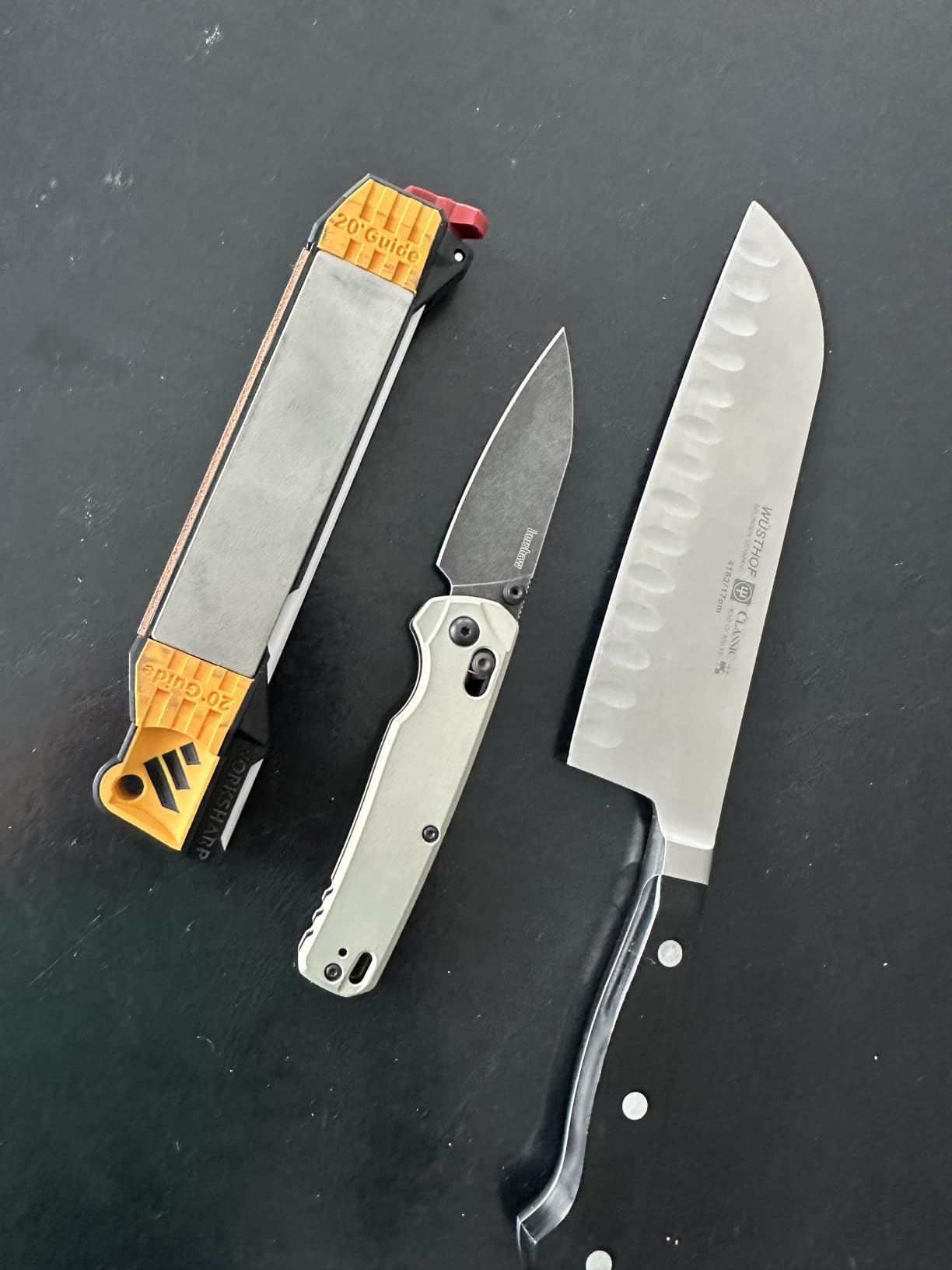
That strop is the part people underrate. A carbide or stone stage leaves a burr that feels sharp but slices rope badly. A few passes on the strop clean that burr up, and the difference shows up immediately when you cut nylon paracord, which is exactly what a camp knife spends half its life doing.
At 135 grams and roughly 9.5 by 5.4 inches, this is a pack item or a vehicle item, not a pocket item. Plan on sharpening at basecamp or at the end of a day rather than at the moment you need the edge. It needs no water, no oil and no assembly, which is why it works on a picnic table in the rain.
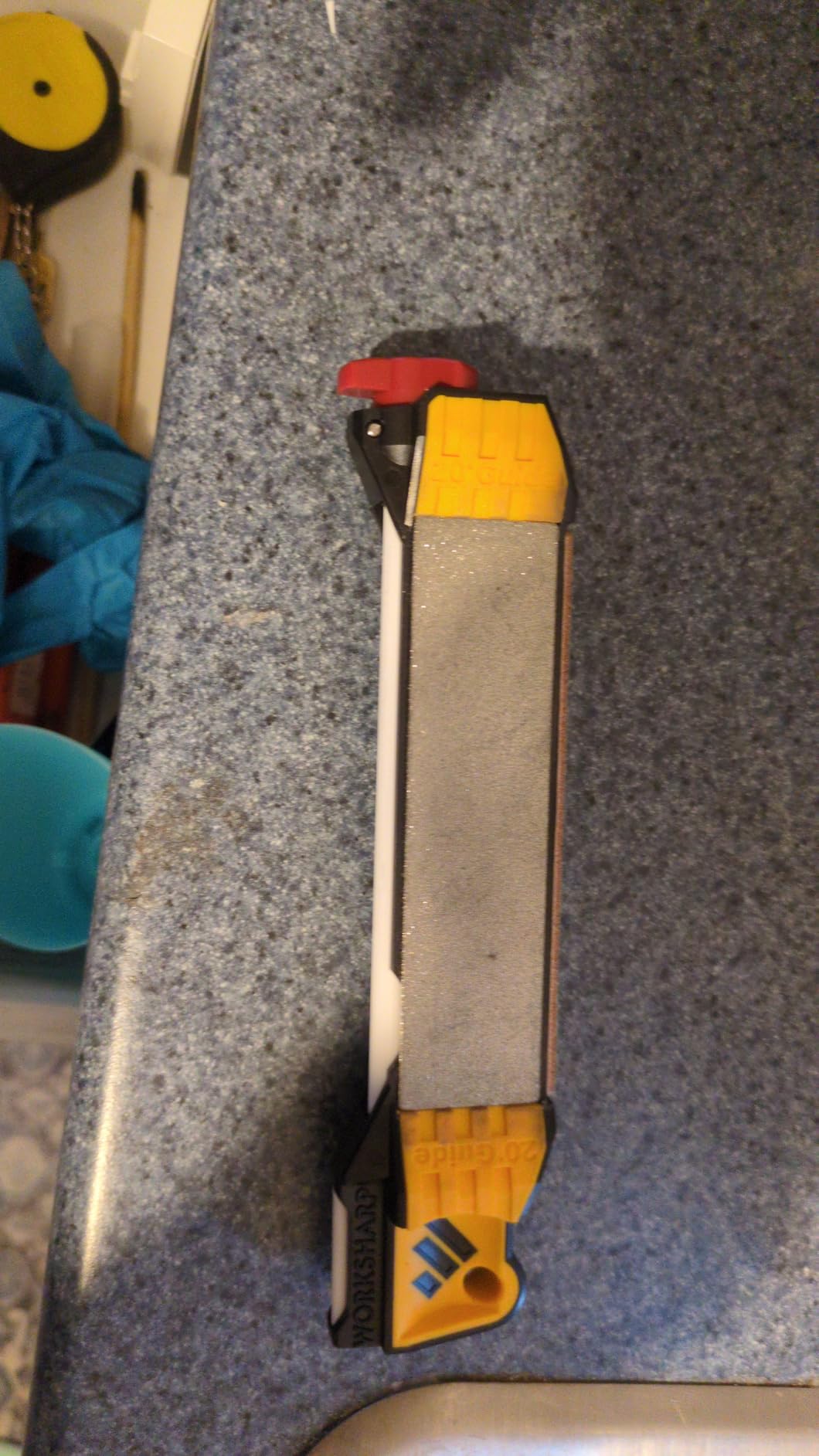
What works about it at camp
It is the only tool here that covers the full job in order: set the bevel, refine it, remove the burr and finish the edge. If you only maintain one folding knife that you actually use at camp rather than collect, one session with this puts the edge back further than an hour with a stick sharpener.
The guided angle also protects edge geometry over time. Because the guide holds a consistent 20 to 25 degrees, repeated sessions do not slowly round the tip and thin the edge the way freehand strokes and heavy pressure on a carbide slot do.
Who should leave it behind
Backpackers with a hard pack-weight budget should skip it. At 135 grams it is the second-heaviest item in this roundup, and the honest answer is that most people end up leaving it in the garage, which is the exact over-buying problem forums warn about.
It is also a fixed-angle system, so it cannot reprofile a badly damaged edge or match a steep 30 degree factory bevel. Experienced sharpeners who care about specific geometry will find the guide limiting rather than helpful.
3. SHARPAL 101N 6-in-1 Sharpener – the best value pick
- Six functions in a pocket-sized body
- Carbide and ceramic stages rated for 10000 uses
- Covers straight edges and serrations plus gut hooks and fish hooks
- Ferro rod and whistle replace two other pack items
- Lanyard hole for pocket or pack carry
- Individual tools are small and fiddly to use
- Not a substitute for a full system on a badly damaged blade
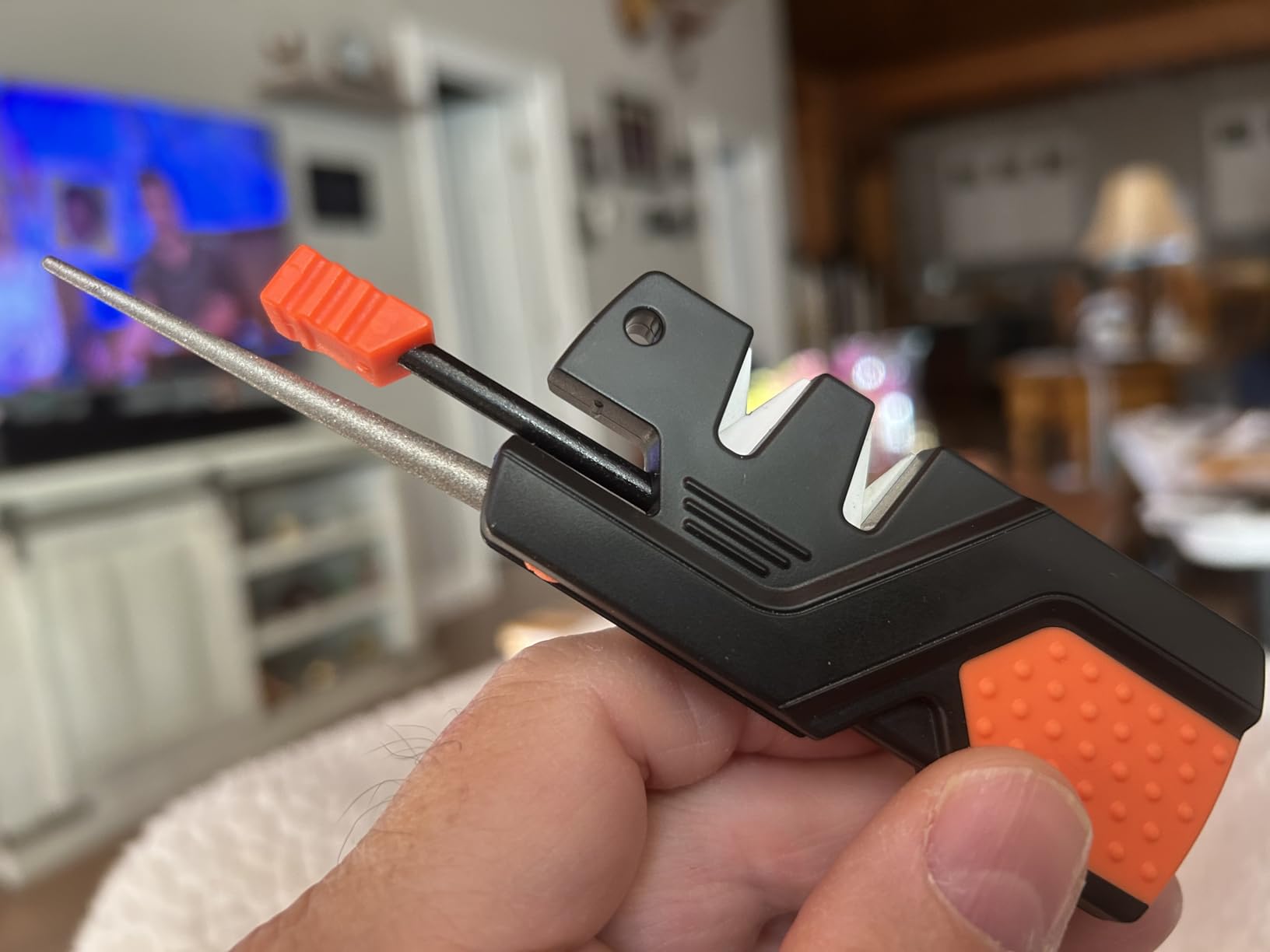
This is the highest-volume reviewed sharpener in the group at more than 39,000 reviews, and the volume is easy to understand once you count the functions. Six tools live in one flat body: a coarse carbide V-notch for setting an edge, a fine ceramic slot for finishing, a tapered 400-grit diamond rod, a fish hook groove on that rod, a ferro rod fire starter and a whistle.
For a camper, the carbide and ceramic pair is the daily workhorse. The diamond rod is what makes it interesting, because that tapered 400-grit surface is how you clean up the inside of serrations and take a point back onto a gut hook or a fish hook, none of which the carbide slot can do.
Replacing ferro rods and cheap survival whistles with a single sharpener is the real pack-weight argument here. If you were going to carry all three items anyway, this consolidates them into 2.4 ounces in one flat stick with a lanyard hole.
It measures about 3.5 by 1.5 inches, so it lives in a shirt pocket or clipped inside a pack lid. Draw it, work the edge, put it away. No case, no loose parts, nothing to set up in the cold.
What works about it at camp
Coverage. Most compact tools here do straight edges only, and most guided systems do nothing for hooks. This one handles a plain edge, partial serrations, gut hooks and fish hooks without a second tool, which is why it keeps showing up in hunting and angling kit lists.
The carbide stage will take an edge back quickly on common stainless folder steels, and the ceramic stage smooths the result without adding much risk. The manufacturer rates the carbide and ceramic components for 10000 uses before they need replacing, which is far more than a casual camper will reach.
Who should leave it behind
Anyone who wants a fine, controlled edge on a premium blade. A stick-format tool in gloved hands at night is not where you want to be aggressive, and the small working surfaces mean short strokes and a light touch, which is exactly what cold, tired hands struggle with.
If your knife is badly dull or chipped, the diamond rod will not restore it. This maintains an edge, it does not rebuild one.
4. Lansky BladeMedic 4-in-1 – the best for serrated blades
- Four surfaces covering straight edges and both sides of serrations
- Metal body with firmly anchored components
- Magnetic holder stops the diamond rod snagging on gear
- Handles gut hooks and fish hooks
- Heaviest stick-format option at about 3.5 ounces
- Hand-stroked so it cannot hold a consistent angle
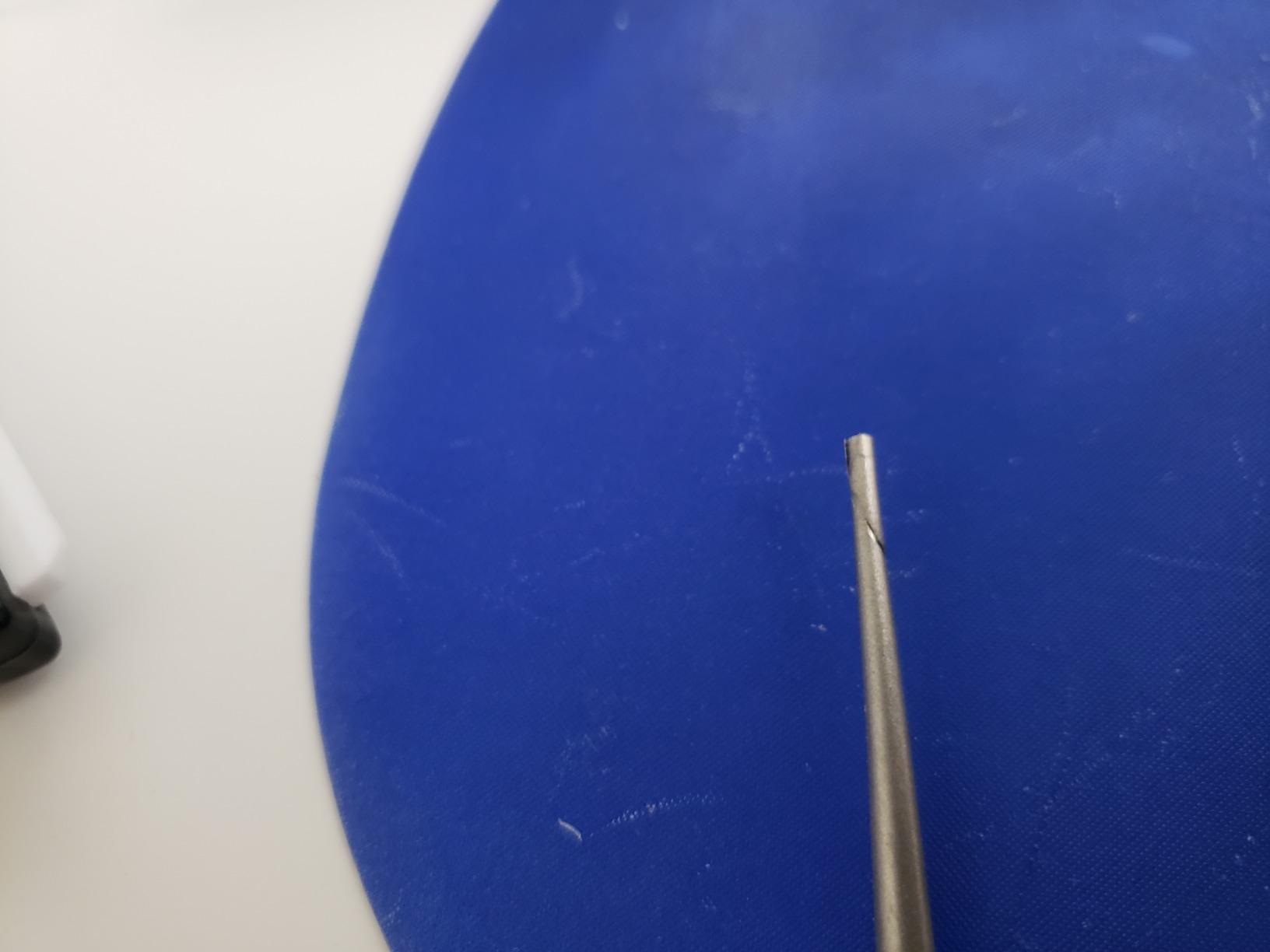
Every other compact sharpener here handles serrations as an afterthought. The BladeMedic treats them as half the job, with two dedicated surfaces: a ceramic serrations sharpener for the outside of the teeth and a tapered diamond grid rod that reaches down inside them. If your camp folder is a full serration, this is the one.
Those two serration surfaces sit alongside a tungsten carbide draw-through stage that restores a straight edge in three or four strokes and a ceramic draw-through stage that polishes it to a finish. So the same tool handles the plain half of a partially serrated blade and the toothed half.
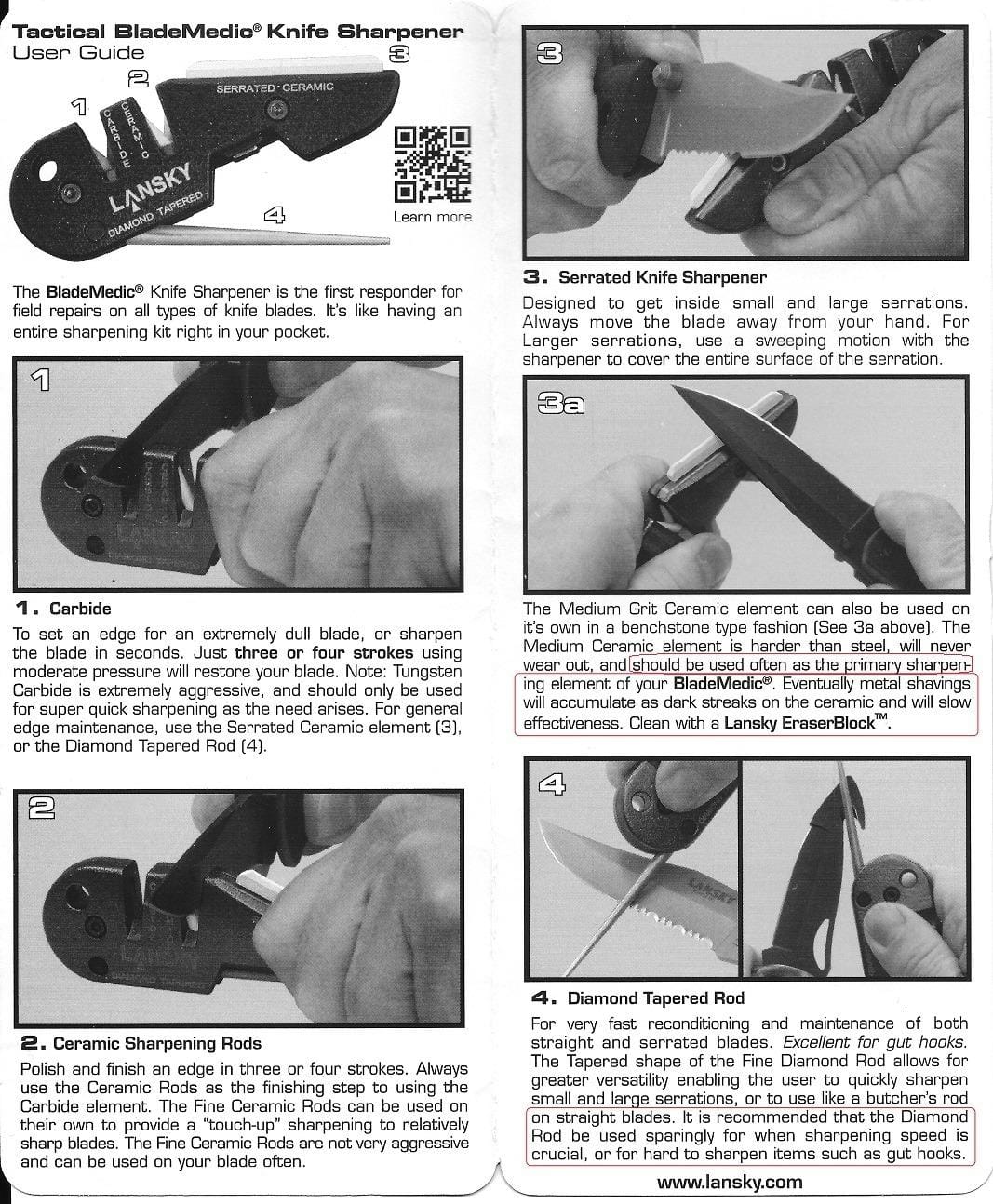
The metal body is the second thing worth noting. Most competitors at this size are molded plastic, and anchored components in a metal housing are less likely to loosen after a season of being dropped in a pack. The magnetic rod holder also keeps the diamond rod from swinging out and snagging on a zipper or a jacket lining, which is the most fragile part of any sharpener this size.
At 100 grams and just over 3 inches long it is pocketable, but it is the heaviest stick-format tool in this group at roughly 3.5 ounces. Budget for that in a pack-weight plan.
What works about it at camp
Serrations, gut hooks and fish hooks. Very few tools under a few ounces cover all three, and the diamond grid is what makes it possible to reach the base of each tooth rather than just smoothing the tops.
It also feels stable in use. The draw-through stages only need three or four strokes, and a firm grip on the metal body means you can apply steady, moderate pressure, which is where carbide works best. Used with a light hand and short strokes it stays well away from the edge-rounding problem.
Who should leave it behind
Anyone who is fussy about edge geometry, because this is hand-stroked. There is no guide holding the angle, so results depend on your stroke, and inconsistent freehand strokes are what round an edge until it feels duller than before you started. Practice on a cheap blade first.
Ultralight hikers who count every tenth of an ounce should skip it. At 3.5 ounces it triples the weight of the lightest tools here for serration capability you may never use.
5. Smith’s PP1 Pocket Pal – the best ultra-compact option
- Only 1 ounce and about 3.5 inches long
- Carbide and ceramic stones are reversible and replaceable
- Fold-out diamond rod handles serrations and fish hooks
- Lanyard hole for keychain or pack attachment
- Backed by a 3 year limited warranty
- Fold-out diamond rod hinge is stiff and can snap in use
- Works better braced on a surface than freehand
- No angle control at all
This is the camp knife sharpener people defend hardest on older forums, and the reason is simple: it has been in hip pockets for decades and the stones can be replaced. Owners keep one in a 72-hour bag for decades rather than replacing it, which is a durability argument no plastic-bodied competitor can match.
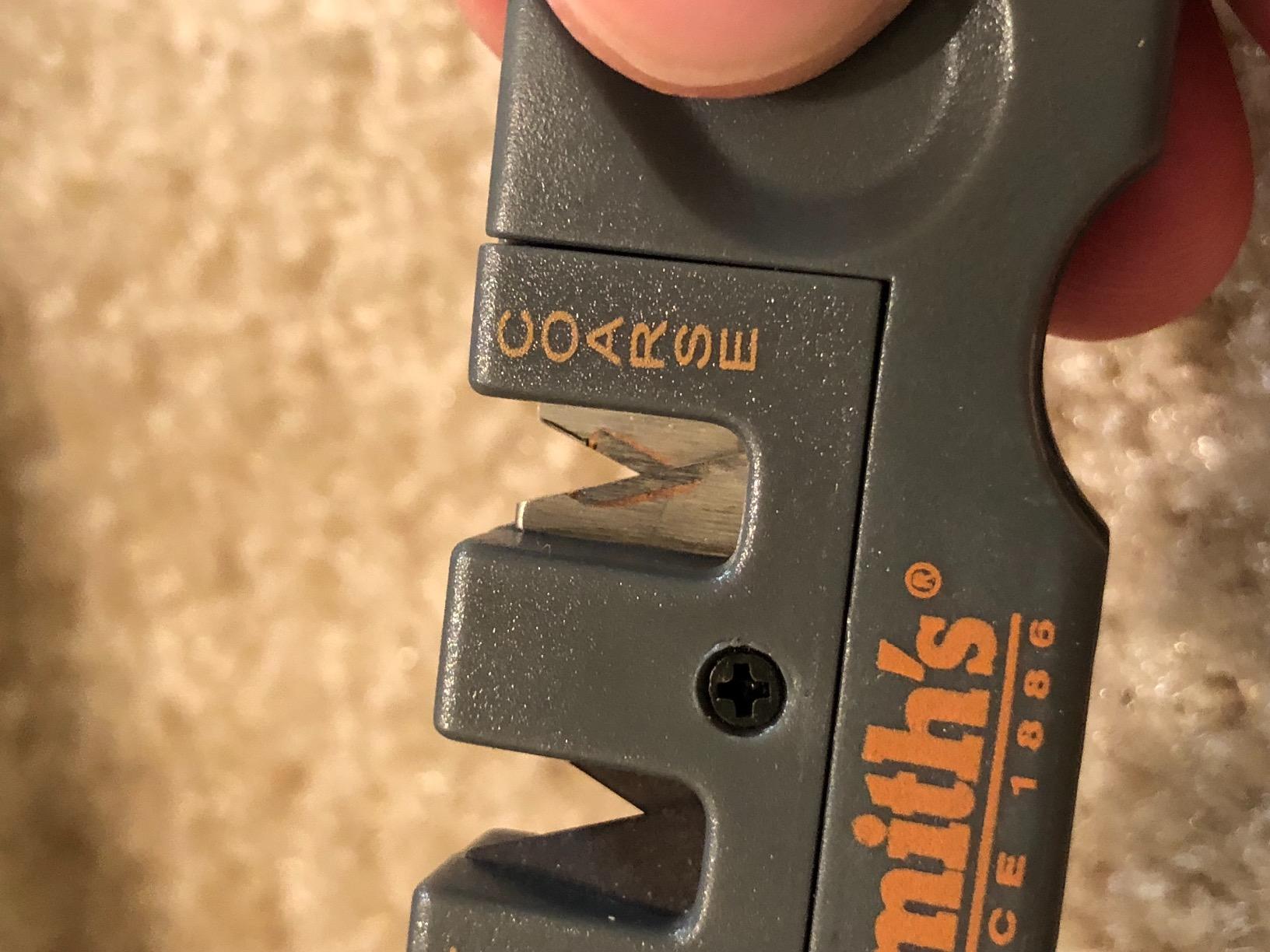
It is genuinely tiny at 1 ounce and about 3.5 inches, with a coarse carbide slot for straight edges, a fine ceramic slot for polishing that is safe on serrated blades, and a fold-out tapered diamond rod for serrations, gut hooks and hooks. Both pull-through stones are reversible, and the carbide and ceramic stones are replaceable when they finally wear flat.
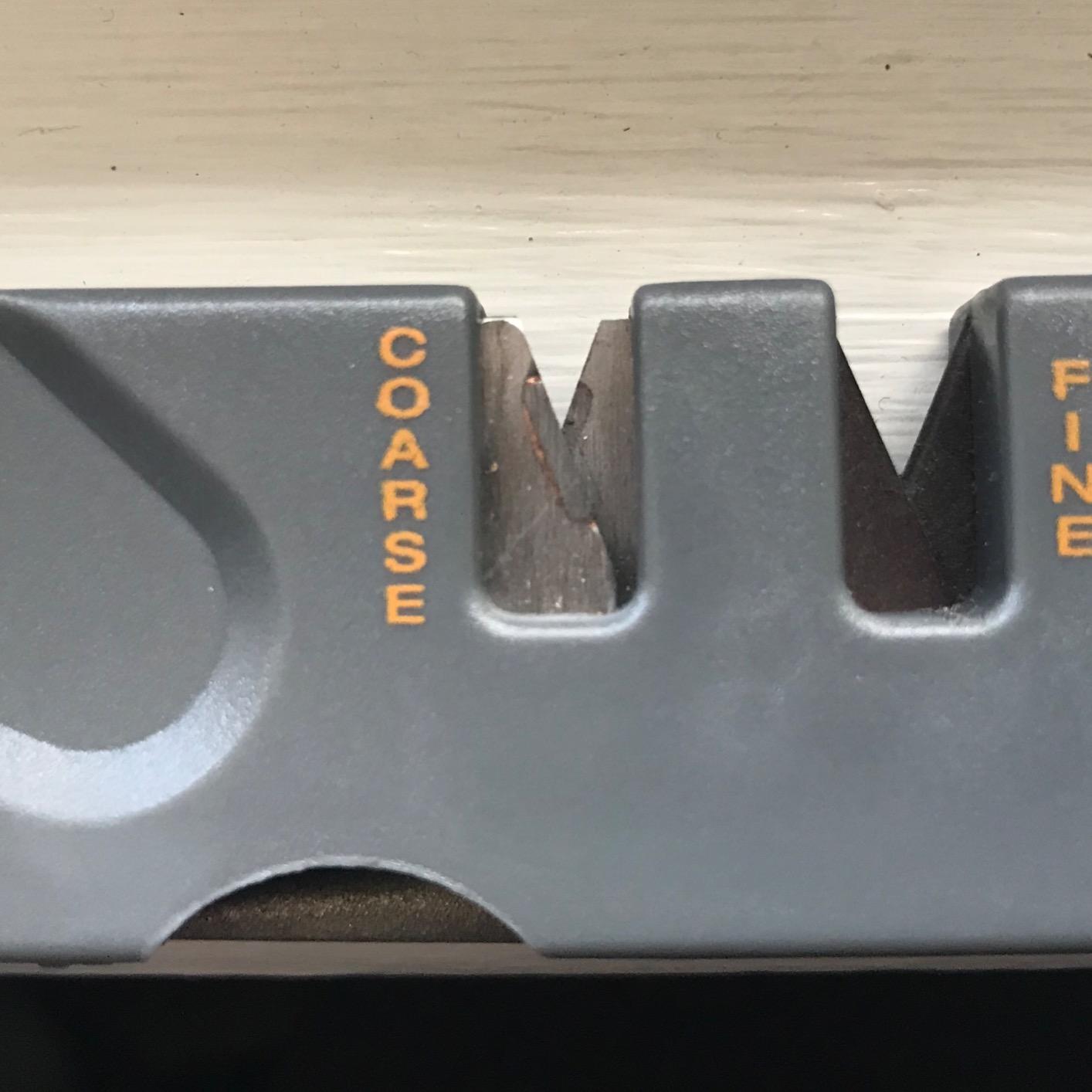
In practice a dozen passes restore a dull edge and a few strokes on the ceramic put a fine finish on a folder. The lanyard hole means it lives on a keychain or inside a pack lid where it costs nothing in pack weight.
The one flaw everyone reports is the rod hinge. It is a tight fit by design, and reviewers describe snapping it while forcing it open or shut, especially with cold or gloved hands. Treat it gently and it will outlast sharper tools.
What works about it at camp
Weight and repairability. At 1 ounce you will not notice it in a pocket, and because the stones are replaceable and reversible this is the one tool here you can genuinely keep for the long term rather than retire when the abrasive wears down.
It is also the only ultra-compact option with real hook coverage. For anglers who carry one tool for the knife and the tackle box, the diamond rod handles both.
Who should leave it behind
Anyone sharpening freehand on a slippery rock. This tool works best braced against a surface, where you can see what you are doing. Used hanging in the air it is the least precise option in this roundup.
Anyone with expensive blades should think twice. A carbide V-slot plus a sharp rod angle and no angle guide is the combination enthusiasts warn against on r/sharpening for premium folders, and it is worth buying a different tool if your knife matters to you.
6. Victorinox Dual-Knife Sharpener – the best straight-edge travel tool
Victorinox Dual-Knife Sharpener Perfect for Straight Blades, Black
- Pocket-sized pencil shape slips anywhere
- Lifetime manufacturer warranty against defects
- Two-stage path from honing stone to ceramic notch
- Ceramic component resists wear in wet conditions
- Straight-edge only with no serration or hook capability
- No angle adjustment for reprofiling a damaged blade
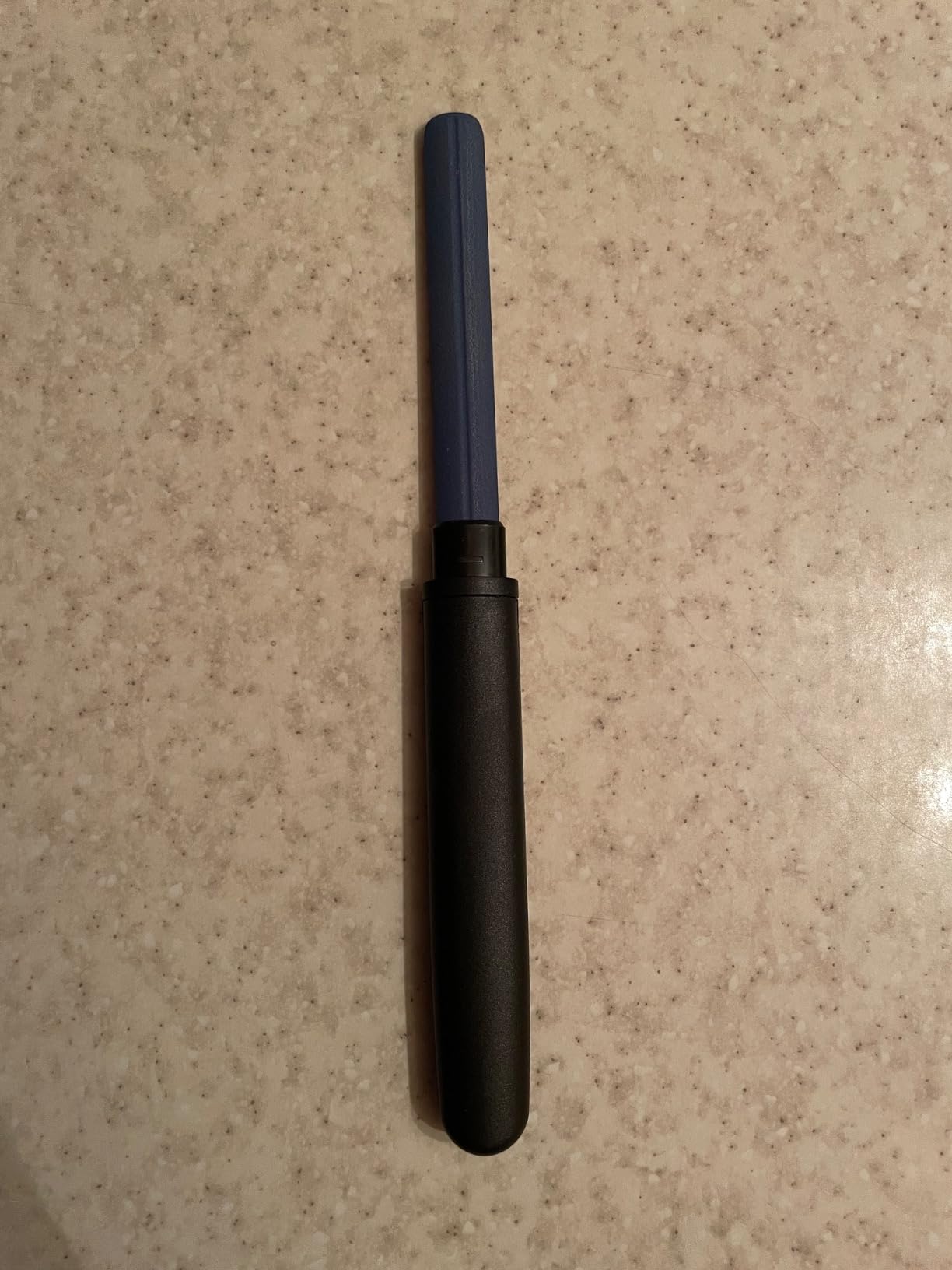
If you carry a Victorinox or any other plain straight-edge folder and nothing else, this is the least fuss option. The body is pencil-shaped so it lives in a pocket or hangs off a keychain without bulking up either, and the Swiss build and lifetime defect warranty make it the only tool in this group with that kind of long-term backing.
It has two stages: a honing stone that pre-sharpens, then a ceramic notch that puts the fine finish on. Run the blade through the stone first to set the edge, then the ceramic to refine it, and you get a complete straight-edge path without water or oil.
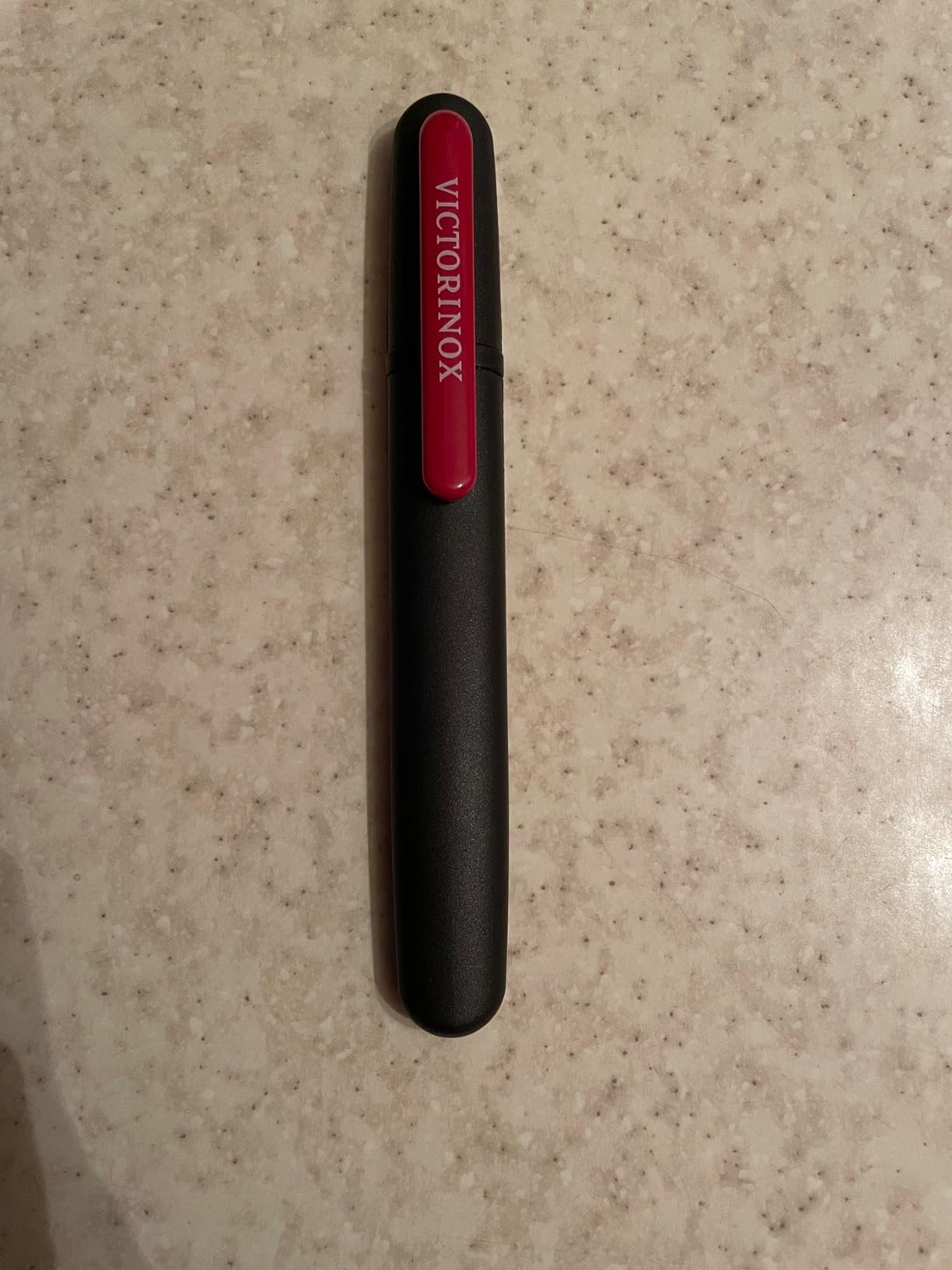
At 1.44 ounces it sits in the middle of the weight range here, and the ceramic components handle wet or gritty conditions well. After a week of rain and mud the stone needs a rinse and the ceramic just wipes clean.
The share of five-star reviews in its ratings is worth noting. Buyers treat it as the travel companion to their knife rather than as a serious sharpening tool, and for a straight blade used on food prep, cord and feather sticks, that is exactly the right level of capability.
What works about it at camp
Pocketability and durability. Pencil format is narrower than every other tool in this roundup, so it disappears into a chest pocket or a money clip, and the ceramic parts do not care about moisture.
It is a maintenance tool for straight blades that just need to be kept sharp between trips. Common factory steels respond quickly, and the two-stage path takes the edge from dull to fine in well under a minute.
Who should leave it behind
Anyone with a serrated folder, a gut hook or a fish hook. There is no serration surface at all here, so those jobs need a different tool entirely.
It also cannot reprofile a damaged edge, because there is no angle adjustment and no real bite at coarse grit. If your blade is chipped or badly rolled from years of abuse, this is the wrong purchase and the cheapest wrong purchase.
7. Smith’s CCKS 2-Step Sharpener – the budget pick for wet trips
- Lowest cost in this group with a genuine two-stage path
- Under 2 ounces and small enough for a tackle box
- Crossed blades hold a consistent preset angle
- Floats in water and wipes clean for fishing and wet camp use
- Straight edges only
- no serration or fish hook capability
- Plastic body feels less refined than metal alternatives
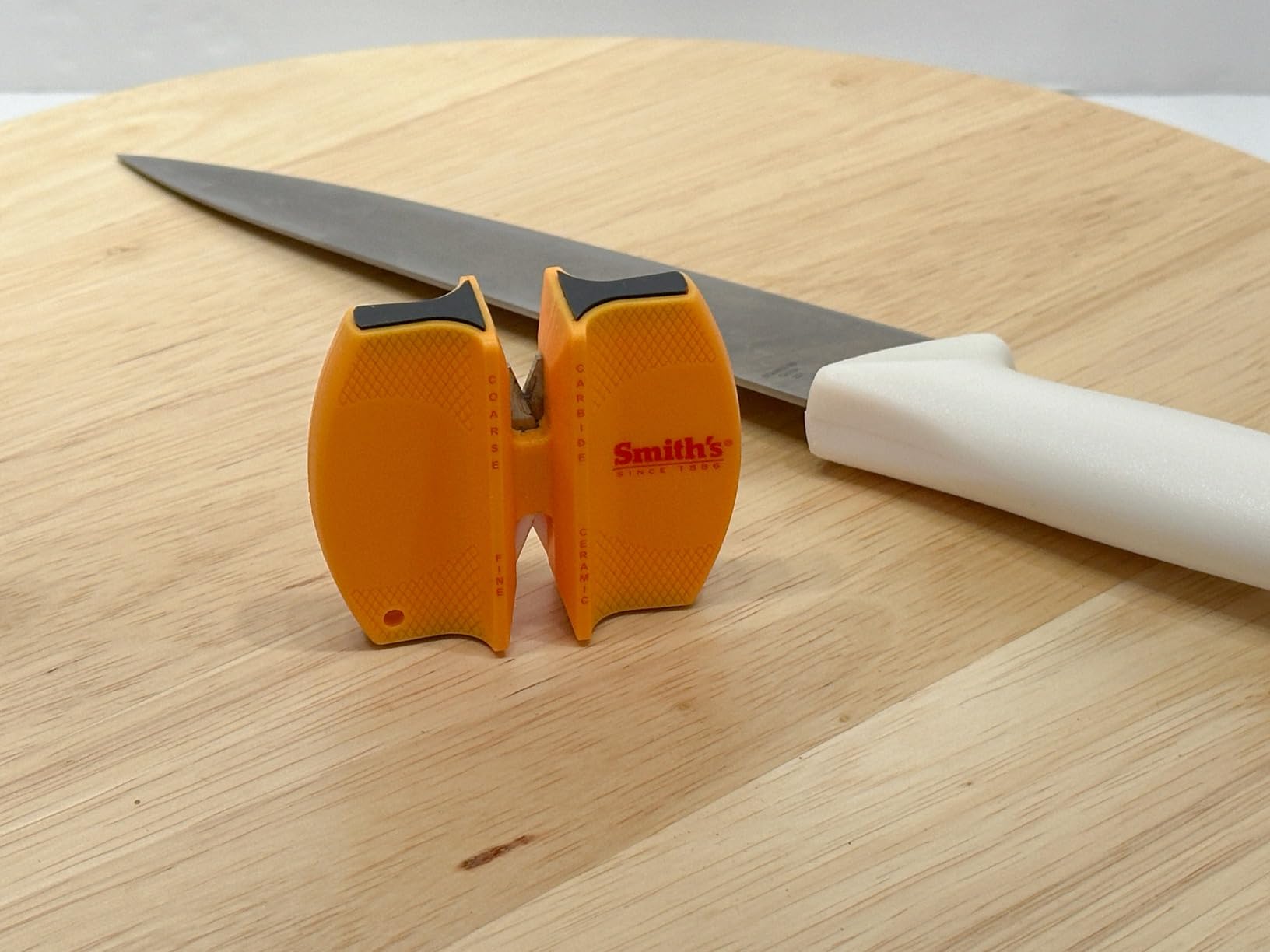
Two things make this the most practical pick for a wet, low-stakes trip. The body floats, so if it goes overboard from a canoe or a wet dock it does not sink, and it wipes clean with a thumb because there is no stone surface to hold slurry.
Sharpening itself is two stages: coarse tungsten carbide to set the edge, then fine ceramic to finish it. The crossed blade geometry sets a consistent preset angle rather than letting the blade wander, and three to four strokes through the coarse slot will rescue a very dull edge on a fillet knife or a camp folder.
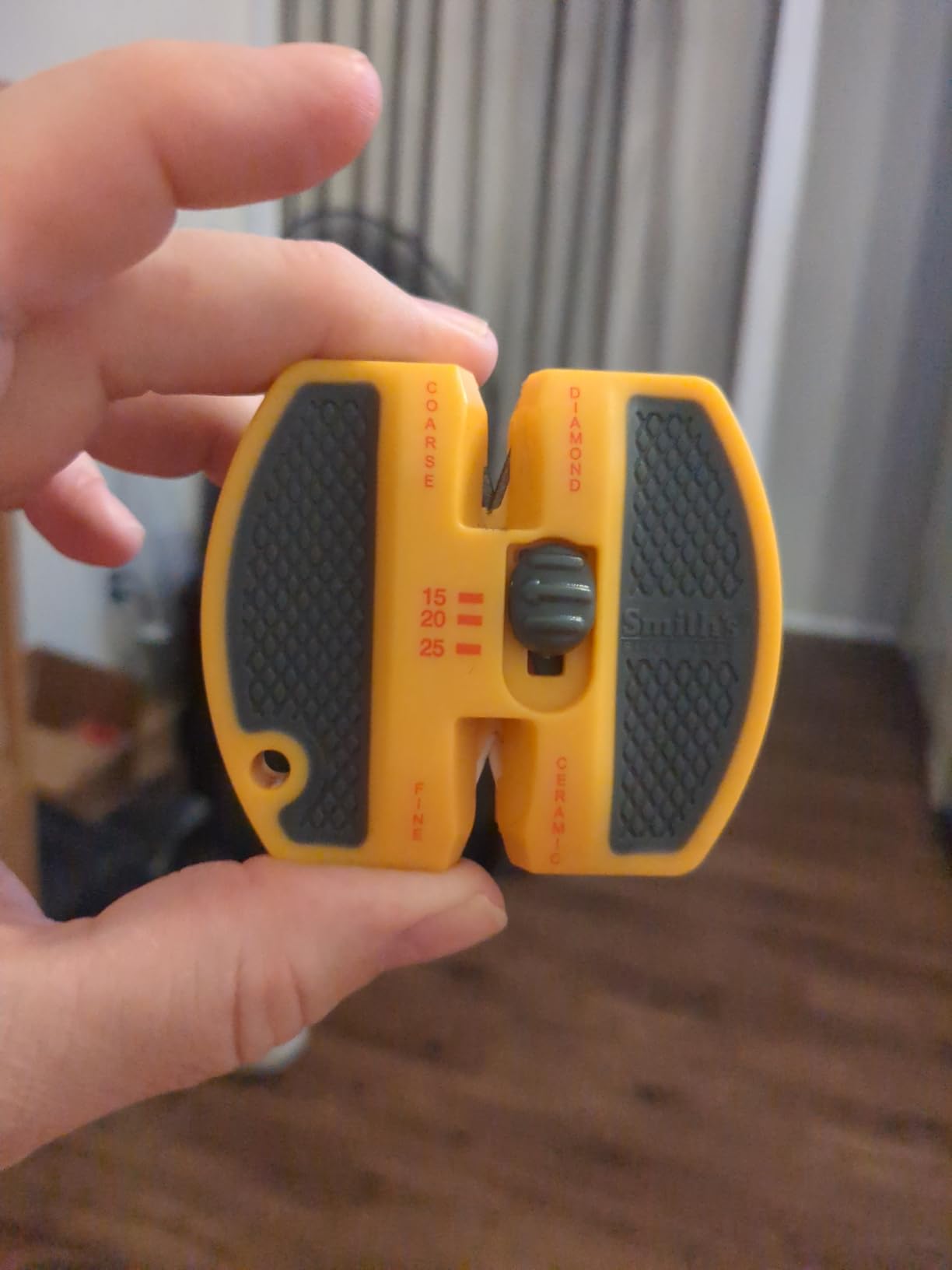
At under 2 ounces and 2.3 by 2.7 inches it goes in a pocket, a tackle box or a glovebox without thought. Non-slip rubber feet give it something to bite into on a wet table, and the lanyard hole lets it clip to a backpack strap or a keyring.
This is the tool to carry for the second knife. The loaner folder, the kid’s knife, the knife you hand to someone else at the cooksite. It maintains an edge quickly and never asks for technique.
What works about it at camp
Water and cost. It is the only tool here that floats, and that matters for kayaking, fishing and any trip where a sharpener ending up in a lake is a realistic outcome rather than a hypothetical one.
The preset crossed angle also makes results repeatable for a beginner. You do not need to develop a feel for a consistent angle because the tool supplies it.
Who should leave it behind
Serrated and hook sharpening. There is no serration slot and no diamond surface, so a full serrated folder or a gut hook needs a different tool entirely.
Anyone who cares about the feel of the finish. Carbide then ceramic gets you serviceable, not fine, and the plastic body is the least refined hardware in this group. It is a maintenance device, not a sharpening system.
8. Work Sharp Portable Pivot Sharpener – the best for quick pocket touch-ups
Work Sharp Portable Pivot Knife Sharpener, WSEDCPVT EDC Black
- Pivot arm follows the blade curve for a consistent angle
- Convex carbide edge is durable and easy to restore anywhere
- Only 1.2 ounces and 2.75 inches long
- Diamond plate handles fish hooks and edge tools
- Lifetime warranty
- Lowest average rating in this group with a notable three-star share
- Maintains and hones an edge rather than resharpening a damaged one
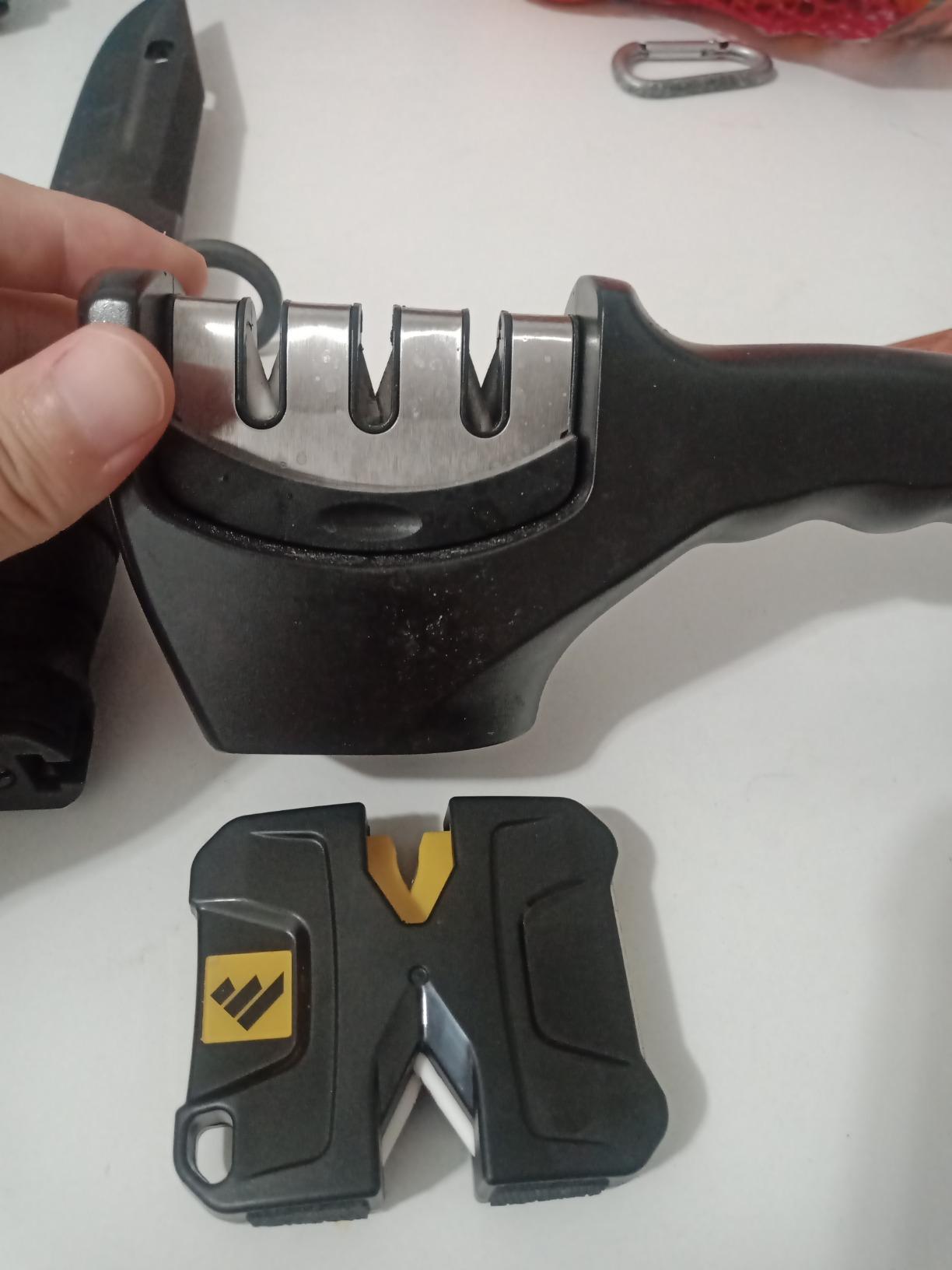
The pivot mechanism is the interesting part here. Instead of asking you to hold a constant angle by feel, the arm tracks the curve of the blade as you draw it through, so the edge angle stays consistent from heel to tip on a blade with a pronounced curve. That is a genuine answer to the freehand problem in a tool small enough for a pocket.
Sharpening happens on a convex carbide stage, which produces a slightly convex edge that is durable and forgiving in the field because it does not chip easily on rope or paracord. A ceramic hone handles fast re-sharpening and a small diamond plate covers fish hooks and edge tools.
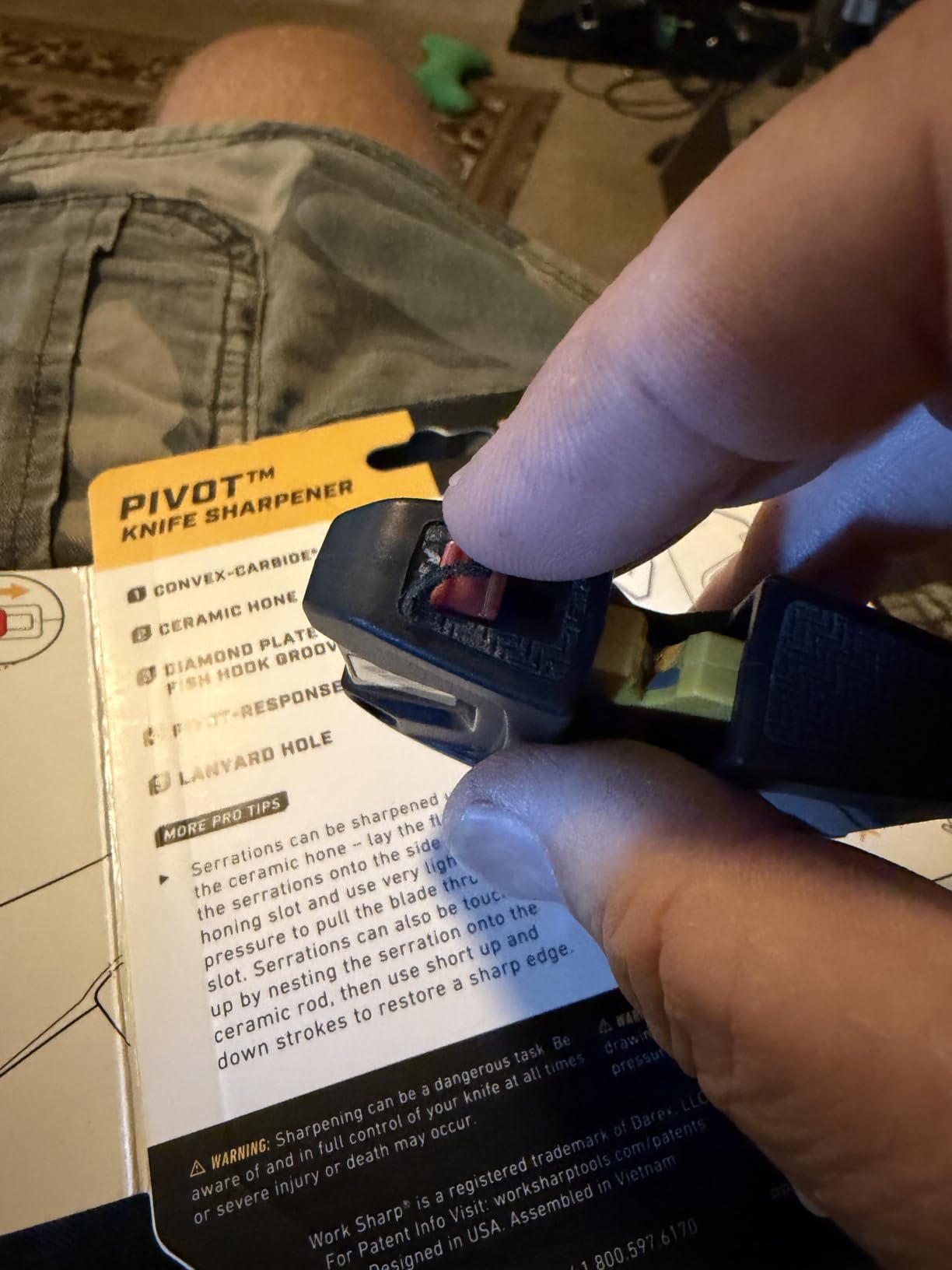
At 1.2 ounces and 2.75 inches long it is one of the most pocketable options in this roundup, and it carries a lifetime warranty. For someone whose knife lives in a pocket and gets used daily, the convenience of touching up an edge in thirty seconds matters more than maximum capability.
It is also the lowest-rated tool here at 4.4, with a three-star share reviewers repeatedly mention. The complaints are consistent rather than random: people expect a resharpening tool and find a maintenance tool.
What works about it at camp
Curved blades and quick work. On a folding knife with a belly curve or a drop point profile, the pivot arm keeps the angle from thinning out at the curve, which is exactly where freehand strokes go wrong.
A convex edge also holds up well against the abuse a camp knife takes. It is less prone to chipping on a hard edge than a thin flat bevel, and it can be restored with the same tool indefinitely.
Who should leave it behind
Anyone with a blade that has already been neglected. This restores and hones; it does not fix a severely dull, chipped or rolled edge. For that you need a coarse diamond stage or a stone.
Anyone disappointed by coarse-to-fine progression. There is one abrasive here, so the finish is functional rather than fine, and enthusiasts chasing a mirror edge will find the result underwhelming.
9. Smith’s DCS4 Diamond Combination Sharpener – the best diamond stone for hard steel
Smith’s DCS4 4” Diamond Combination Sharpener – Double Sided Stone – Outdoor Field Knife Sharpener – Fish Hook & Pointed Tools Micro Sharpener – Lightweight, Compact, Handheld
- Diamond surface cuts fast and resists chipping
- Two-stage 325 and 750 grit path
- Hook grooves and pointed-tool pads on both sides
- Handle stores and protects the stone
- Light at 22.68 grams
- Awkward two-handed use at 9 inches long
- Diamond coating must be dried before storage
- Breaking-in period while the surface wears in
When the knife is genuinely dull, a diamond stone is a different category of tool from a pull-through sharpener. The DCS4 is a double-sided stone with a rough 325 grit side and a fine 750 grit side, color-coded and labeled so you can tell them apart in low light, which is most of the time at camp.
The surface is built from multiple layers of micron-sized monocrystalline diamond with an interrupted design, so it abrades hard steel quickly and does not chip the way a conventional water stone can when you drop it on rock. That durability is why diamond gear is the recommendation on enthusiast forums for powder steels like S90V and M390, which take a long time on carbide.
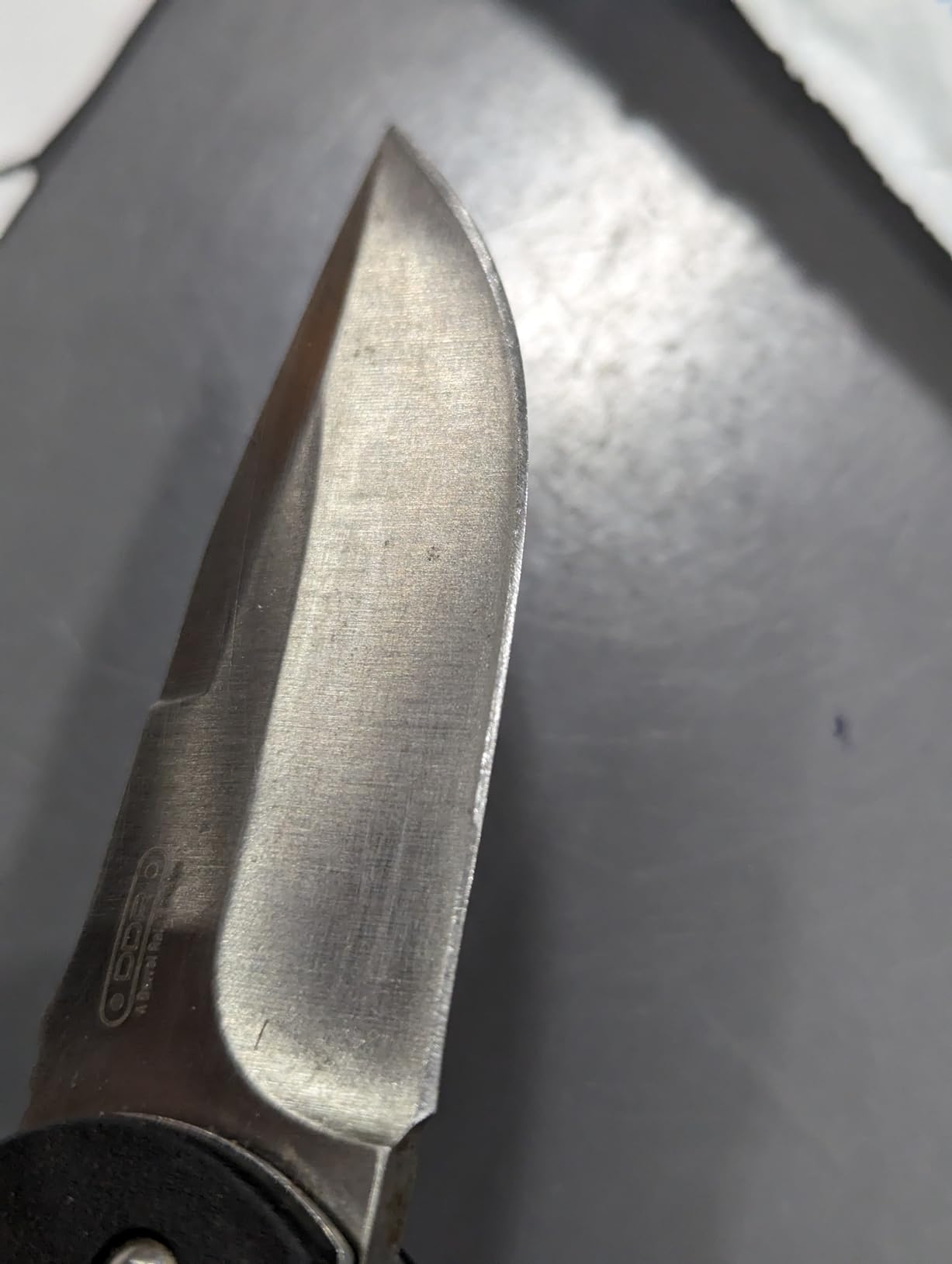
Each side carries a sharpening groove and a micro-tool pad, so fish hooks, needles and small pointed tools get their own dedicated surfaces rather than being abraded with a knife blade. That makes it a genuinely two-purpose tool for an angler or someone sewing or repairing gear.
At 22.68 grams it is light, and the handle stores the stone inside itself so the coated surface is protected in a pack. The rubber grip and thumb guard give you something to hold when the stone is wet or cold.
What works about it at camp
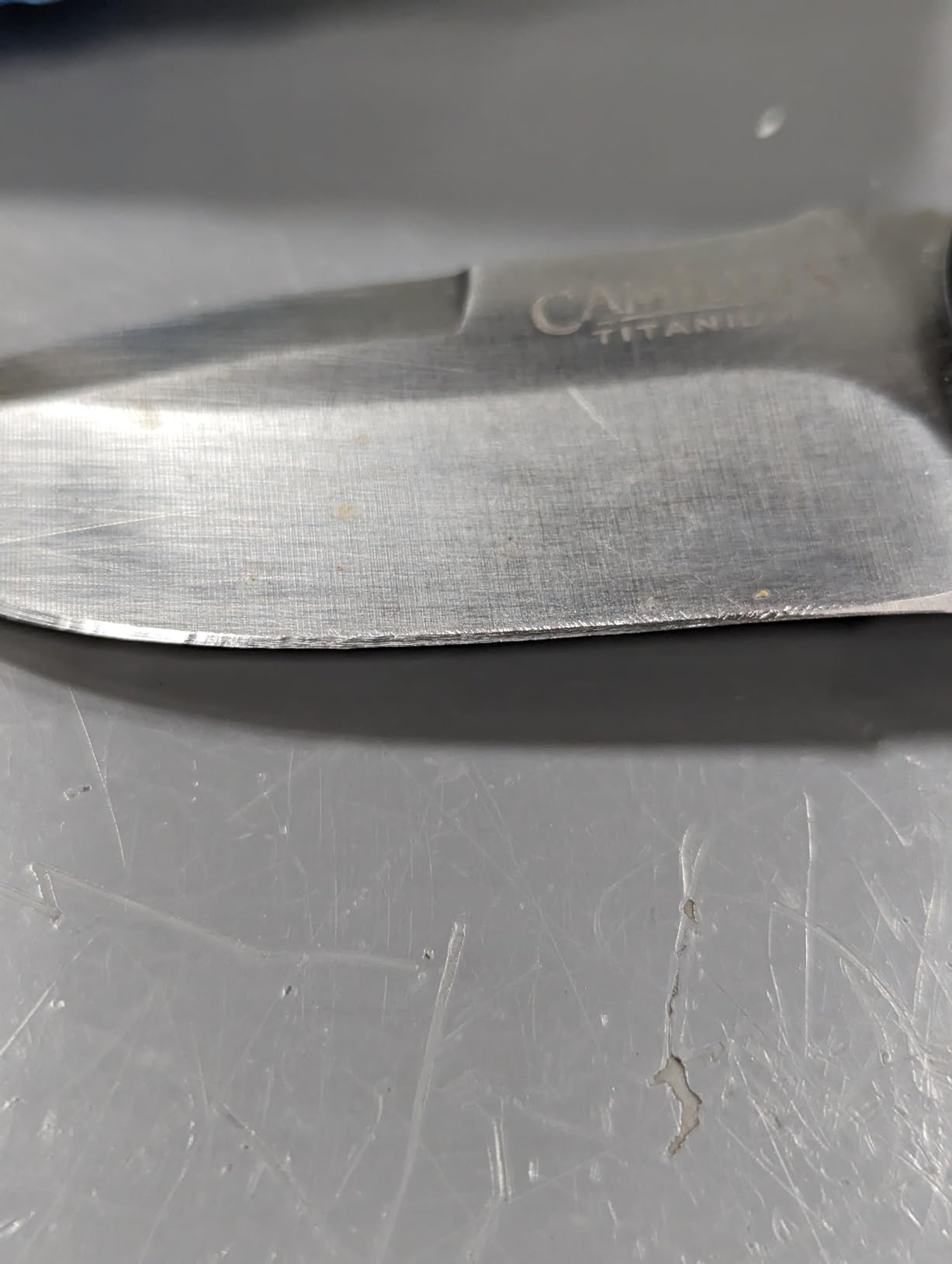
Hard steels and serious dullness. If your knife is S30V, S90V, M390 or MagnaMax and has gone properly dull, a diamond stone is the tool that will fix it. Carbide V-slots grind slowly on those steels and wear themselves out faster than the knife improves.
Fine control of the result. You can take 325 grit to the edge and stop at 750 when the burr comes down, which gives you a predictable place to stop rather than a fixed number of strokes.
Who should leave it behind
Pocket carry. At 9 inches long and awkward to hold two-handed, it wants a flat stable surface and two hands, which means a picnic table at basecamp rather than a knee in the dark.
Campers who cannot keep it dry. The diamond coating needs to be dried before storage or it degrades, and a wet stone packed in a damp bag at the end of a rainy day is how coatings get ruined.
10. Work Sharp Precision Adjust Sharpener – the best for base camp angle work
Work Sharp Precision Adjust Knife Sharpener Kit – Fixed Angle Sharpening System for Kitchen & Pocket Knives – Professional Guided Knife Sharpening Tool
- Only tool here with 15-30 degree adjustment in single-degree steps
- V-block clamp holds the blade at a repeatable position
- Tri-brasive rod covers coarse grit and diamond and fine ceramic
- Handles serrated knives and reprofiling
- Benchtop size makes it impractical to carry
- Heaviest item in this group at 215 grams
- Manual operation takes practice
This is not a camping tool and we think pretending otherwise would be bad advice. At 215 grams with a 6.5 by 9.6 inch benchtop base, it stays home. What it does at home is set your camp knives up properly, so the field sharpener in your pack only ever has to maintain an edge rather than rescue one.
It is the only system in this roundup with true angle adjustment, running from 15 to 30 degrees per side in single-degree increments. The V-block clamp holds the blade in the same position every time, and the three-sided abrasive jig and clamp lets you work both sides quickly without re-setting the height.
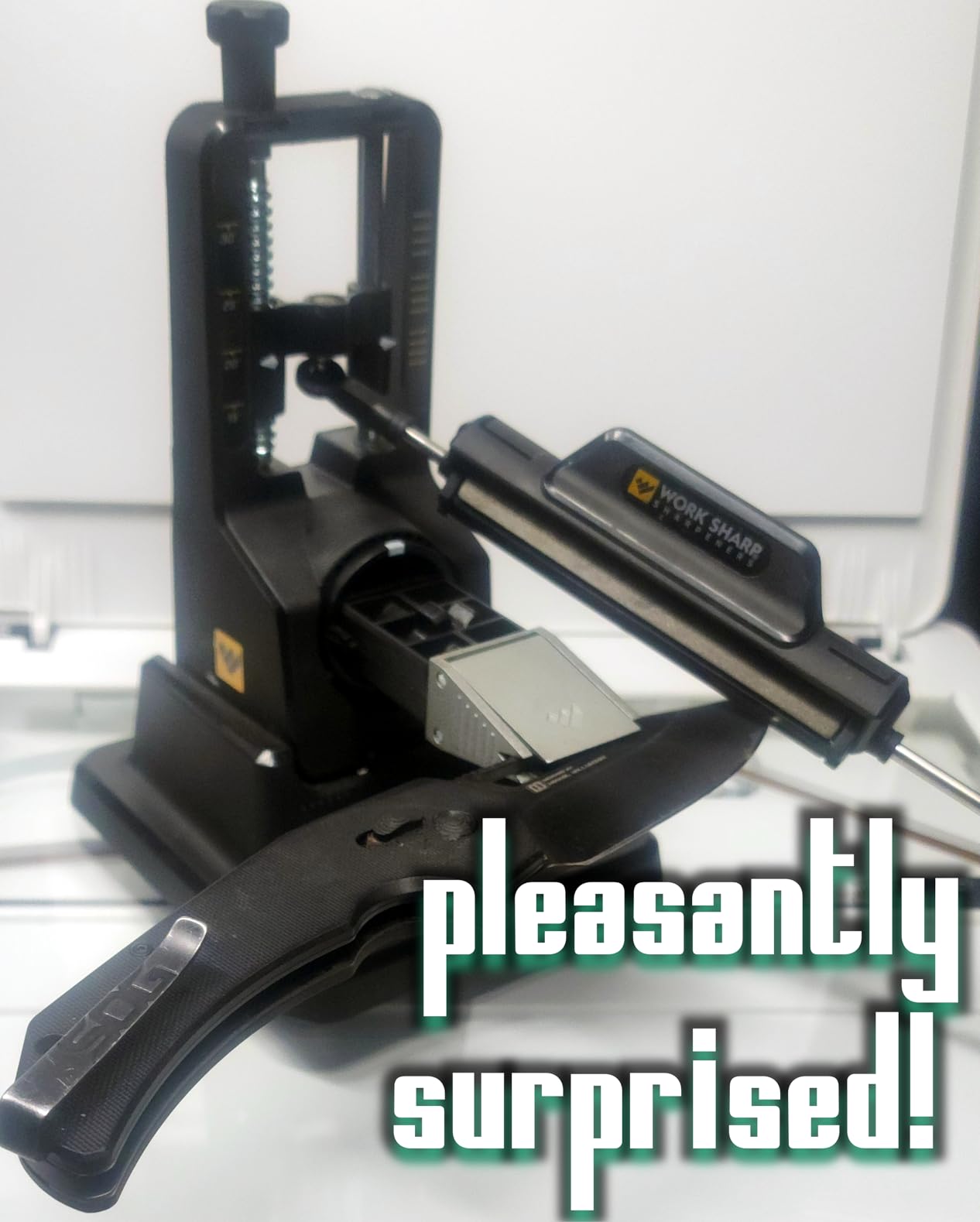
The tri-brasive rod is the clever part. One rod indexes between a 320 and 600 grit stone, a diamond surface and a fine ceramic, so coarse work, general sharpening and polishing all come from one component. It handles serrated knives as well as plain edges.
For most campers the right pattern is a session here before a trip, then a compact field tool after that. Sharpening skill built up on a clamped system transfers directly to freehand work, and a blade set to a known 20 or 25 degree bevel survives camp maintenance far better than one sharpened by guesswork.
What works about it at camp
Preparation rather than camp use. Coming home to reprofile a blade at 20 degrees, then stropping it, means the knife leaves for the trip with correct geometry and a burr-free edge, so the field sharpener only has to do maintenance strokes.
Repairs. If a blade came back from a trip rolled, chipped or rounded by previous carbide abuse, this is the tool that fixes it. Nothing else in this roundup can recover edge geometry.
Who should leave it behind
Anyone who needs to sharpen in the field, full stop. It is the heaviest item here by a wide margin and the benchtop base will not fit a pack, a tent pocket or a vehicle tray in any sensible way.
Impatient beginners. Manual adjustment with a clamp and a jig takes practice, and it is the wrong first purchase if your real need is simply to stop a camp knife from going dull in the first place.
How to Choose a Pocket Knife Sharpener for Camping
Match the abrasive to the steel and the job first, then worry about size. A sharpener that is too small for the task will be ignored, and a sharpener that is too heavy will be left at home, so those two failures cost you the same thing: a dull knife at camp.
Diamond, tungsten carbide or ceramic
Tungsten carbide is a V-shaped insert of cemented carbide that shears rather than grinds. It is fast on soft stainless steels, needs no water, and is nearly indestructible, which is why it dominates cheap and compact tools. Its problem is that it takes a fixed bite out of the edge every time, and on a premium blade those repeated cycles are exactly what wears away factory geometry.
Diamond is a deposited abrasive, either coated on a plate or a rod, and it abrades rather than shears. It cuts hard steels like S90V, M390 and MagnaMax far faster than carbide and does not gouge the edge the same way. It needs no water for field use, but the coating should be dried before storage.
Ceramic is the finishing abrasive. It produces a finer result and is safe on serrated blades, but it is brittle, which means it chips if you drop it on rock, a real risk on a campsite table. Our ceramic sharpener guide covers where ceramic earns its place in a kit.
Whetstone grit numbers work the other way round from sandpaper. A lower number is coarser and removes metal faster; 220 or 325 grit resets an edge and 600 to 1000 refines it. Grit progression from coarse to fine is what removes the burr and leaves a cutting edge instead of a toothy one.
Why angle guides beat freehand
A factory folding knife edge is typically 20 to 25 degrees per side. Holding that by hand is a skill most people never fully develop, and the usual failure is not a too-steep edge but a too-shallow one in the middle of the blade, which feels duller after sharpening than before.
A guide holds a consistent angle along the whole edge. If you cannot hold 20 degrees by feel, buy a guide. Experienced sharpeners call guided systems unrefreshing for exactly this reason, and they are right, but a repeatable mediocre edge beats an inconsistent brilliant one on a camp knife.
What to pack for your trip type
Car campers can carry a guided field system in the vehicle without caring about the weight. Backpackers should stay under a couple of ounces and use a pull-through or a pocket stone. Anglers and hunters need serration and hook capability, which narrows the field to tools with a tapered diamond rod.
Gloved or cold-handed sharpening is the real failure mode nobody warns you about. Short strokes, light pressure, and a stable surface matter more than the tool. Most of the bad edges I have seen come from someone pressing hard on a carbide slot to make up for a lack of feel, and hard pressure is what produces a ragged, rope-slicing edge.
The skip list: what to leave in the store
Be honest about cheap pull-through sharpeners used on good blades. The loudest complaint across r/sharpening and BladeForums is that repeated carbide V-slot passes strip steel from premium knives and destroy the factory edge. A premium folder should not see a carbide V-slot again.
That does not make them useless. Users defend cheap sharpeners as reasonable for loaner knives, kids knives, and the fillet knife at the lake, which is where they belong in a kit. The mistake is putting one to work on a blade worth protecting.
Also avoid carrying two tools when one will do. A 135 gram guided system plus a 1 ounce pocket sharpener is a 5.3 ounce sharpening setup, which is real pack weight for a problem one tool solves.
What to do when you have no sharpener
If a blade goes dull at camp and you have nothing in the pack, stop and fix it before you need it. A few firm strokes along the smooth side of a leather belt set an edge back far enough to cut cord and food. Failing that, the flat back of a spoon works in a pinch. Both are temporary, but a dull blade is what actually ends trips.
To see how far a home kitchen sharpener stretches your camp kit, our kitchen sharpener roundup covers the bench tools that handle the sharpening you cannot do in the woods.
Frequently Asked Questions
What is the best knife sharpener for camping?
The AccuSharp Knife Sharpener is the best pocket knife sharpener for camping for most people because it restores an edge in seconds with no technique to learn and works dry. Campers who want a full system rather than a stick should look at the Work Sharp Guided Field Sharpener, which covers coarse, fine and stropping stages at a fixed 20 to 25 degree angle.
What is the best sharpener for pocket carry knives?
For a knife that lives in your pocket, weight and pocketability decide it. The Smith’s PP1 Pocket Pal weighs 1 ounce, the Work Sharp Portable Pivot Sharpener weighs 1.2 ounces and the AccuSharp comes in at 1.6 ounces. All three handle straight edges, and the PP1 adds a tapered diamond rod for serrations and fish hooks.
What is the best thing to use to sharpen a pocket knife?
A two-stage system beats a single abrasive. Tungsten carbide resets a dull edge quickly, ceramic refines it, and a strop removes the burr that makes an edge slice rope badly. The Work Sharp Guided Field Sharpener is the only tool in this roundup that covers all three stages plus a guided angle, while a pull-through sharpener such as the AccuSharp covers the first two.
Is there a knife sharpener that actually works?
All ten in this roundup work, but they work at different jobs. Pull-through tools maintain an edge in seconds on common steels, diamond stones rescue badly dull or hard steels, and guided systems protect edge geometry. The ones that disappoint are the tools bought for a job they cannot do, such as a carbide V-slot on a premium folder or a ceramic slot on a fully serrated blade.
Can a pocket sharpener sharpen a serrated knife?
Only partially. A carbide or ceramic V-slot works on plain edges and partially serrated blades but not on fully serrated ones. Serrations need a tapered surface that reaches inside the teeth, such as the tapered diamond rod on the Smith’s PP1 Pocket Pal or the serration tools on the Lansky BladeMedic 4-in-1. Fully serrated edges should never be pulled through a slot.
Do pull-through sharpeners ruin knives?
Repeated carbide passes remove more steel than guided systems and can round the tip and thin the edge over time, which is the most common complaint on knife forums about premium folders. On cheap or loaner blades they are entirely appropriate and fast. Match the tool to the knife: carbide for maintenance on a beater, a guided or clamped system for anything you care about.
Final Verdict
For most campers, the AccuSharp Knife Sharpener is the right pick. It combines a 4.7 rating across more than 28,000 reviews with a two-stage carbide path that needs no water, no oil and no practice, which is what makes it the sharpener people actually keep in the pocket instead of the drawer.
Buy the Work Sharp Guided Field Sharpener instead if you sharpen at basecamp and want one system that sets the bevel, refines it and strips the burr at a consistent 20 to 25 degrees. Add a tapered diamond rod tool like the SHARPAL 101N or the Smith’s PP1 Pocket Pal if you fish, hunt or carry a fully serrated folder.
Whatever you choose, put it in the pack before you leave and check it at home first. The best pocket knife sharpeners for camping are the ones that are already on your hip when the edge goes dull, and a dull blade at camp is the one problem a sharpener you left behind cannot solve.