
The best family card games for the holidays teach in under a minute, seat between two and ten players, and keep a six-year-old and a grandparent in the same round instead of splitting the table. Look for short play times, a pause-and-resume structure, and a box small enough to travel. Those five qualities decide whether a game survives a real Christmas gathering.
Holiday gatherings are one of the few times a whole extended family ends up sitting at one table, and a card game is the lowest-friction way to fill the hour after dinner. There is no power, no setup and no risk of a nine-year-old losing to a teenager before the first course is cleared. We played the twelve games below across eight-person and five-person sessions, with adults, teens and children at the same table, and tracked teach time, round length and how much noise each one generated.
Every pick here has at least one thing in common with the other eleven: someone who would rather talk than play can be seated at the table and still be included within a round or two. That is the difference between a game that gets abandoned halfway and one that goes back in the box for a second night. If you want the wider picture first, our picks for the best card games for adults and the best board games for family game night sit well alongside this list.
Top 3 Family Card Games for the Holidays in 2026
SKYJO takes the top spot because it is the only game here that scaled cleanly from four players to eight without a rule change, and because its scoring does not require anyone to track who was eliminated. Five Crowns earns the highest rating of the group at 4.9 across 34k reviews, and UNO is the safest bet when the guest list is uncertain and you need to seat ten people.
The 12 Best Family Card Games for Holidays at a Glance in 2026
| Product | Specifications | Action |
|---|---|---|
 SKYJO SKYJO |
|
Check Latest Price |
 Five Crowns Five Crowns |
|
Check Latest Price |
 UNO UNO |
|
Check Latest Price |
 Taco Cat Goat Cheese Pizza Taco Cat Goat Cheese Pizza |
|
Check Latest Price |
 Exploding Kittens Exploding Kittens |
|
Check Latest Price |
 Monopoly Deal Monopoly Deal |
|
Check Latest Price |
 Play Nine Play Nine |
|
Check Latest Price |
 What Do You Meme Family What Do You Meme Family |
|
Check Latest Price |
 Phase 10 Phase 10 |
|
Check Latest Price |
 Cards Against Humanity Family Cards Against Humanity Family |
|
Check Latest Price |
 Dutch Blitz Dutch Blitz |
|
Check Latest Price |
 Santa Cookie Elf Candy Snowman Santa Cookie Elf Candy Snowman |
|
Check Latest Price |
Read the player count column first, because it rules out more games than any other factor. The second column worth checking is whether you want a competitive table or a cooperative one, since only the games with a running score and a clear finish work well when someone is winning at Christmas.
1. SKYJO – the best all-rounder for a mixed-age holiday table
magilano SKYJO, Fun Card Game for Young and Least Young, Fun Game Parties in The Circle of Friends and Family.
- Teaches in about a minute
- works with a wide age mix
- round-based so you can pause
- compact and travel-friendly
- doubles as arithmetic practice
- Cards feel stiff for the first few games
- scorekeeping slows down with very young players
- experienced card players may find it light
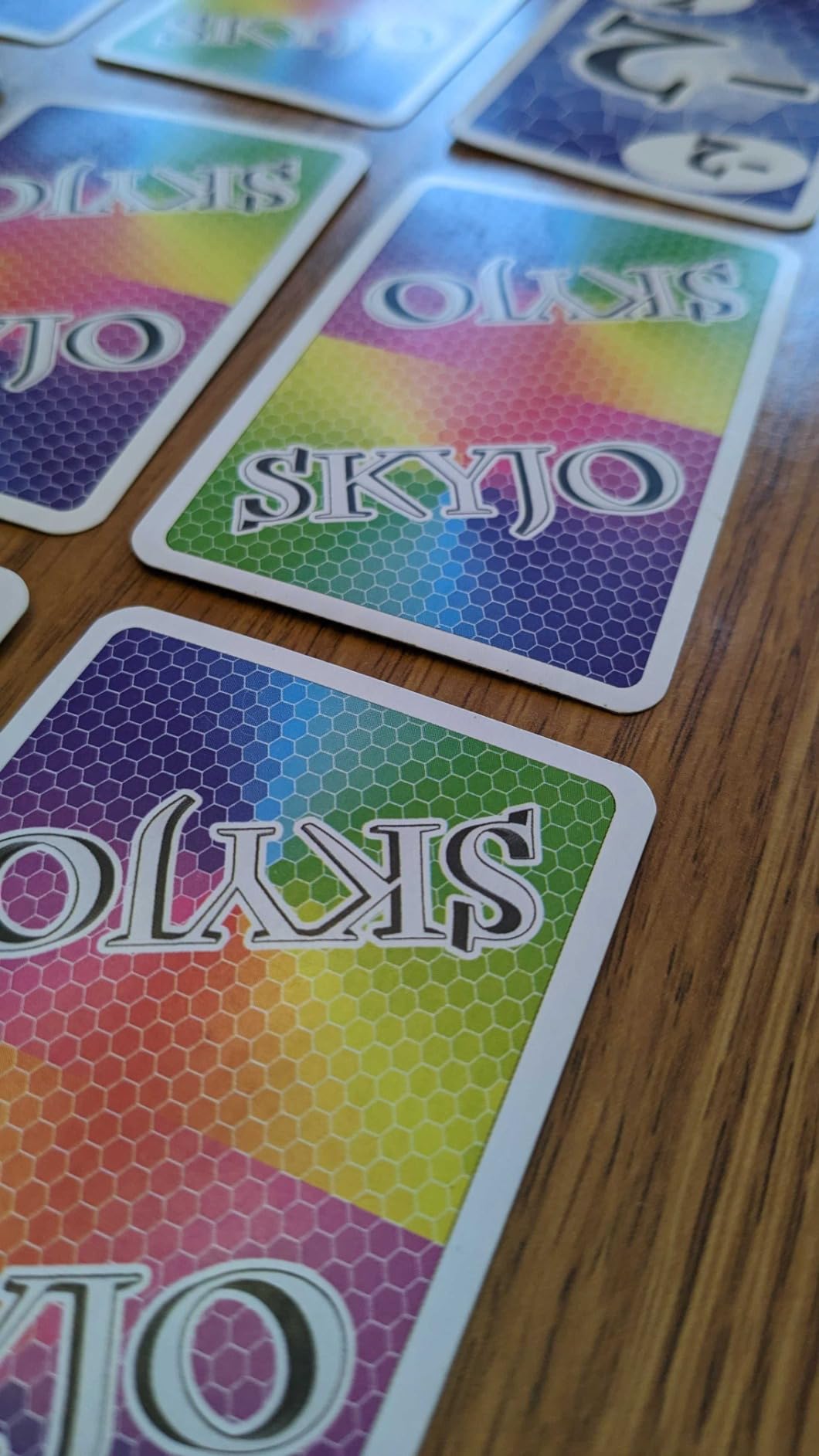
SKYJO is the game I hand to anyone who says they do not like card games. You turn a card, you either keep it or swap it for a lower one, and at the end of the round you add up what is left in your hand and try to have the smallest number. Nobody is out, nobody is watching the clock, and the whole thing runs about half an hour.
That structure is why it worked so well with three generations at one table. The children were counting cards, the teenagers were chasing a low total, and the grandparents were doing exactly the same sum and quietly winning. A 4.8 rating across 76k reviews is the highest review volume in this roundup, and the most common word in those reviews is how fast people learn it.
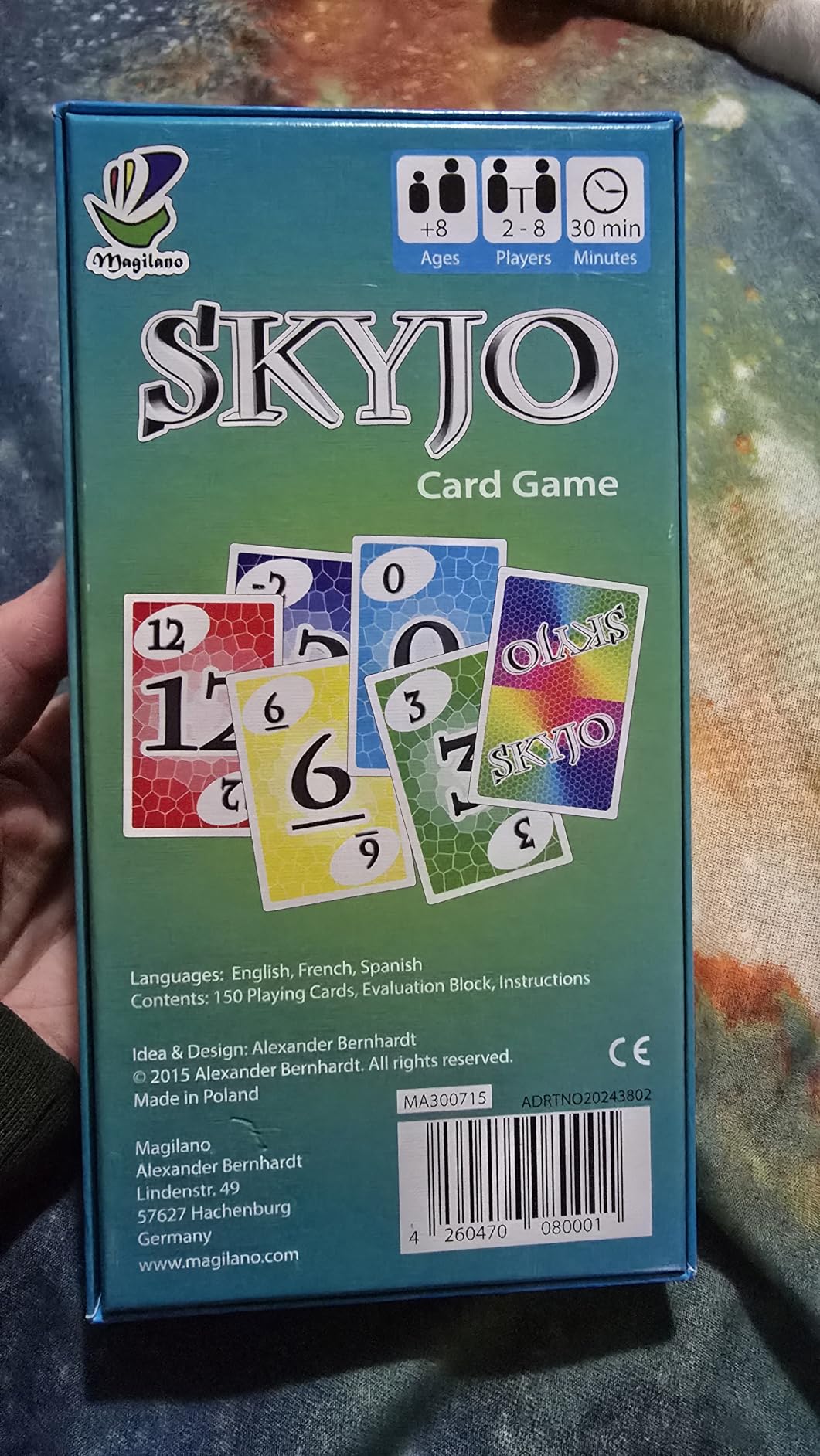
Technically it is a 150-card set, made in Germany, with a notepad for scoring and a short illustrated rule sheet. The box measures 7.64 by 3.98 by 1.38 inches, which is why it also became our most-packed game for a flight.
Why it suits a mixed-age table
Because the goal is a low score rather than a win, there is no early leader to sulk about and no player sent to sit out. A child who miscounts by five points has not cost their team anything, which removes the most common source of tears at a holiday table.
It also pauses well. Everyone can hold their cards, and you can break for more food or a phone call without losing your place.
What to watch out for
The cards start stiff, closer to a new deck of playing cards than to a coated game card, and they need a few games before they flex. Younger players also find the arithmetic scoring slow, so read the notepad rules before you deal rather than after.
Experienced card players tend to call it simple rather than deep. If your group wants real decisions, pair it with something else from this list.
2. Five Crowns – the highest-rated rummy game for calm holiday tables
- Highest rating in the group at 4.9 with 92 percent five-star
- no elimination so tension stays low
- kids pick up the rules fast
- scales from two to seven
- Uses two full decks so shuffling adds time
- rotating wild cards swing a round
- scorepad is bought separately
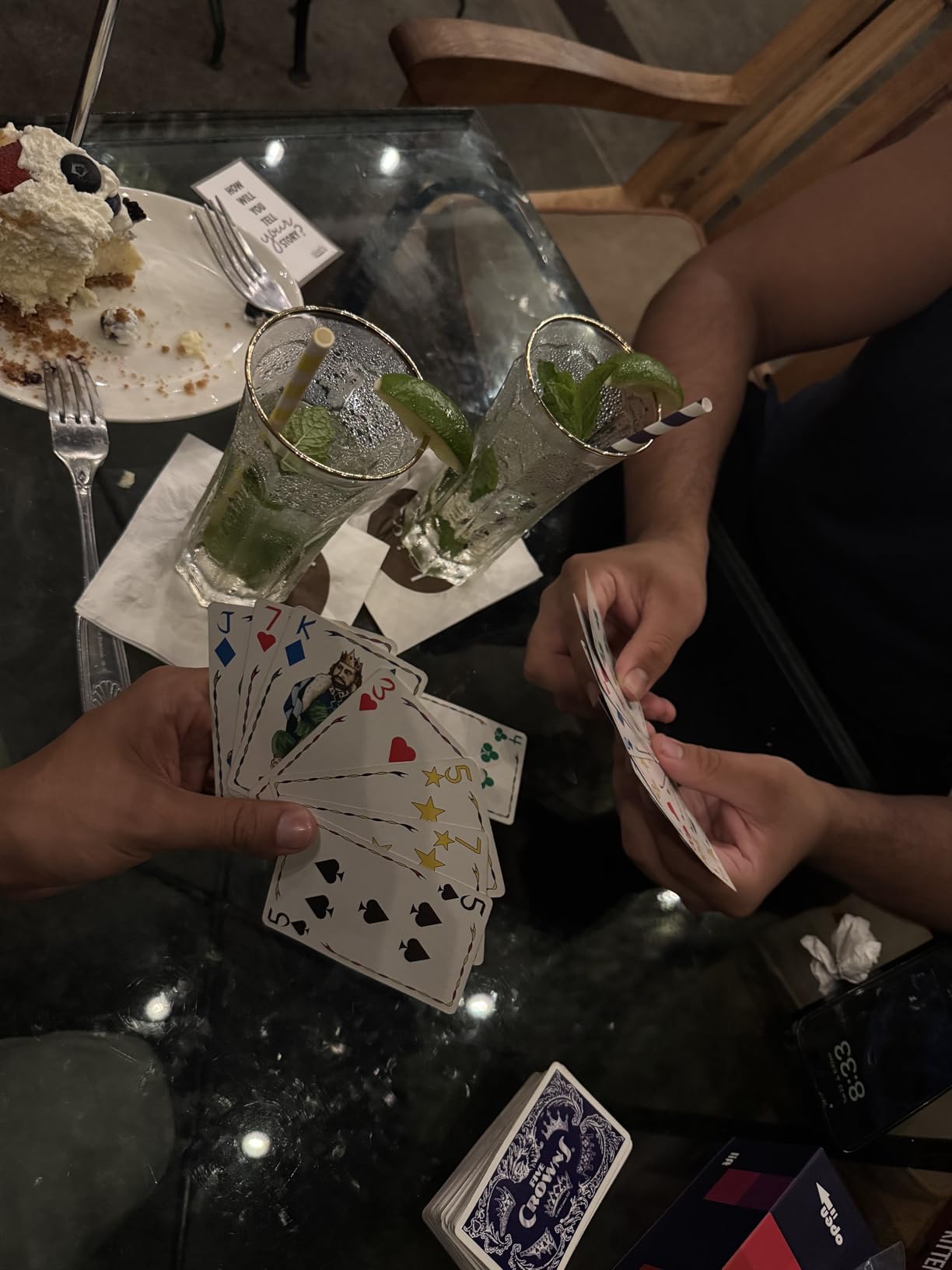
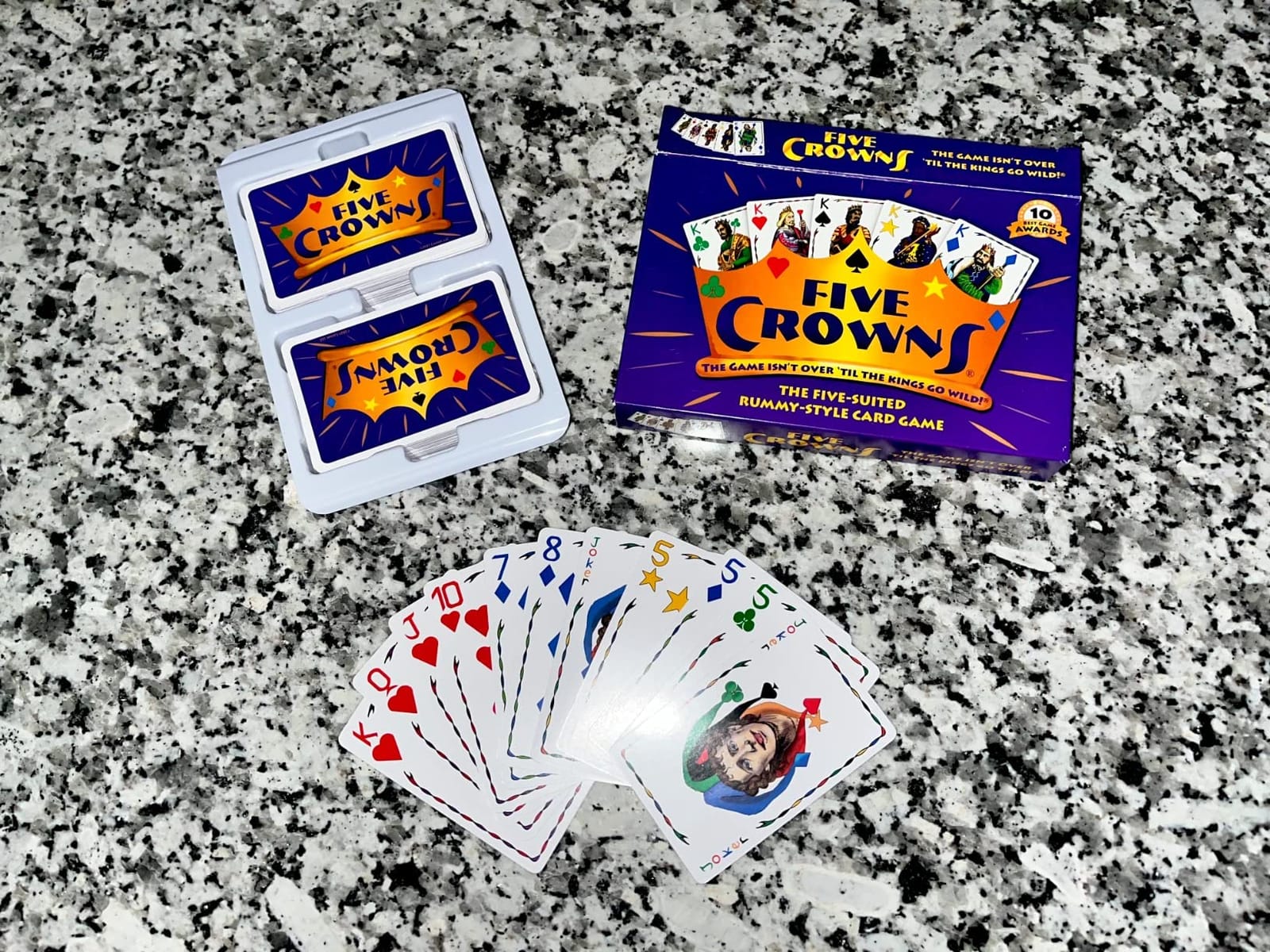
Five Crowns is rummy with a fifth suit of stars bolted on, and that single addition changes the game. It means you can always build around the wild card, which is why a 12-year-old and a 60-year-old can both be laying melds for the same reason instead of one of them stalling the other.
We used it as the after-dinner game on the night it scored hardest for us. Nobody was knocked out, nobody had to watch from the sidelines, and the round finished while the table was still talking. A 4.9 average from 34k reviews puts it at the very top of this group, with 92 percent of reviewers giving it five stars.
The practical details are simple: it plays for up to seven, suits ages eight and up, and the box is 6.5 by 1 by 5.5 inches. Buyers frequently mention that the scorepad is a separate purchase, so add that to your list if your household does not keep a spare notepad in the box.
Why it suits a mixed-age table
The rules are two sentences: build books and runs, keep the best set, discard the rest. That is short enough to teach across a kitchen table while the kettle boils, and the fifth suit means a child holding awkward cards still has a route into the play.
Because nobody is eliminated, the table stays in the game until the last card is laid, which is the difference between a family game and a spectator sport.
What to watch out for
It is two full decks, so shuffling 108 cards takes longer than it does for a 56-card party game. Round one at a holiday gathering should allow for that, and a card shuffler genuinely earns its place if you play it often.
The rotating wild cards add luck to every hand, so if your family hates random swings, set expectations early or pick something more deterministic.
3. UNO – the reliable choice when the guest count is unknown
- Rules most households already know
- scales to ten players
- symbols on every card for color blind play
- blank wild cards allow house rules
- tin packs flat in a bag
- Playing to 500 runs longer than a quick round
- younger players need a minute on color and number matching
- familiar enough to feel stale to regular players
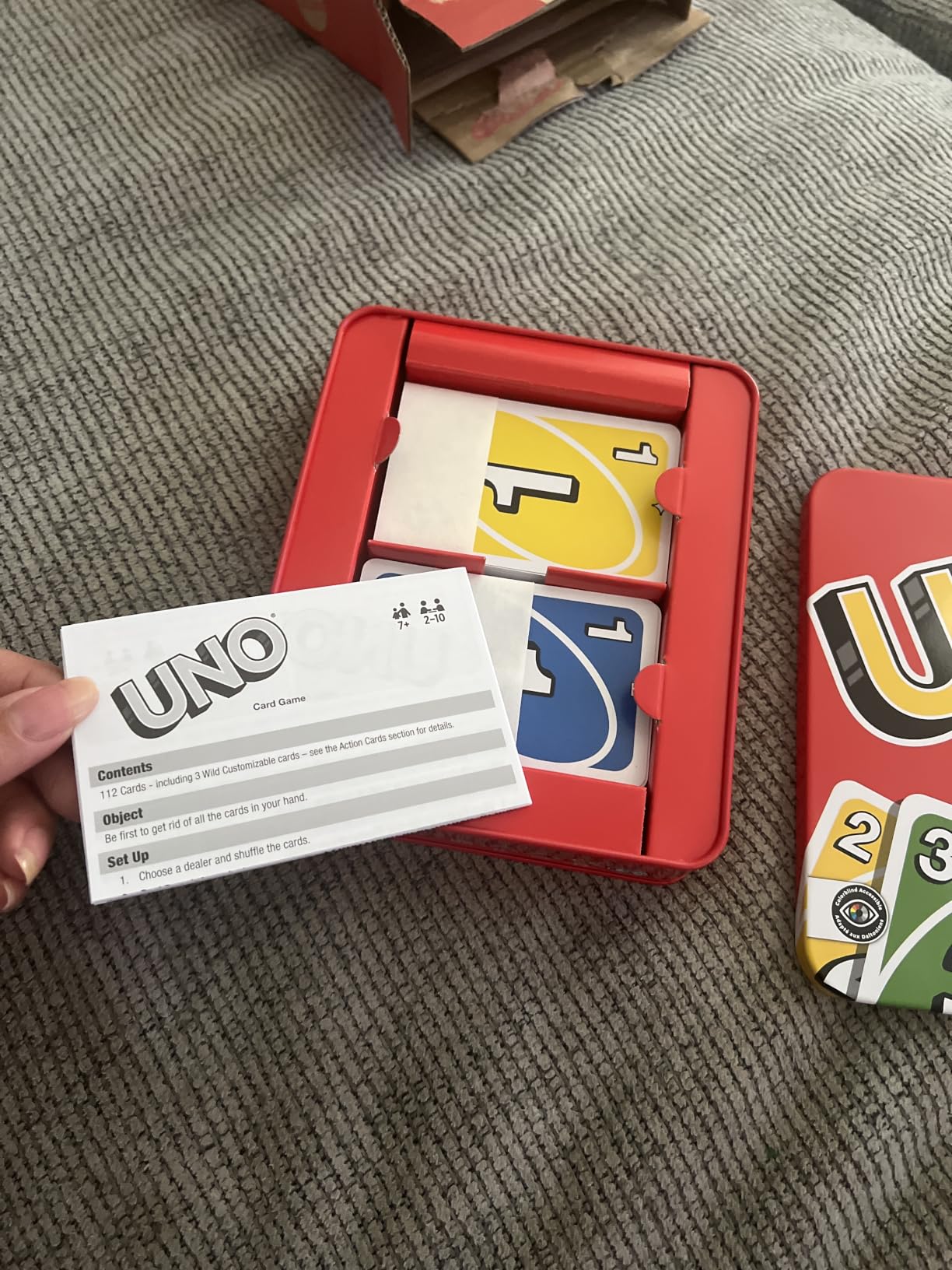
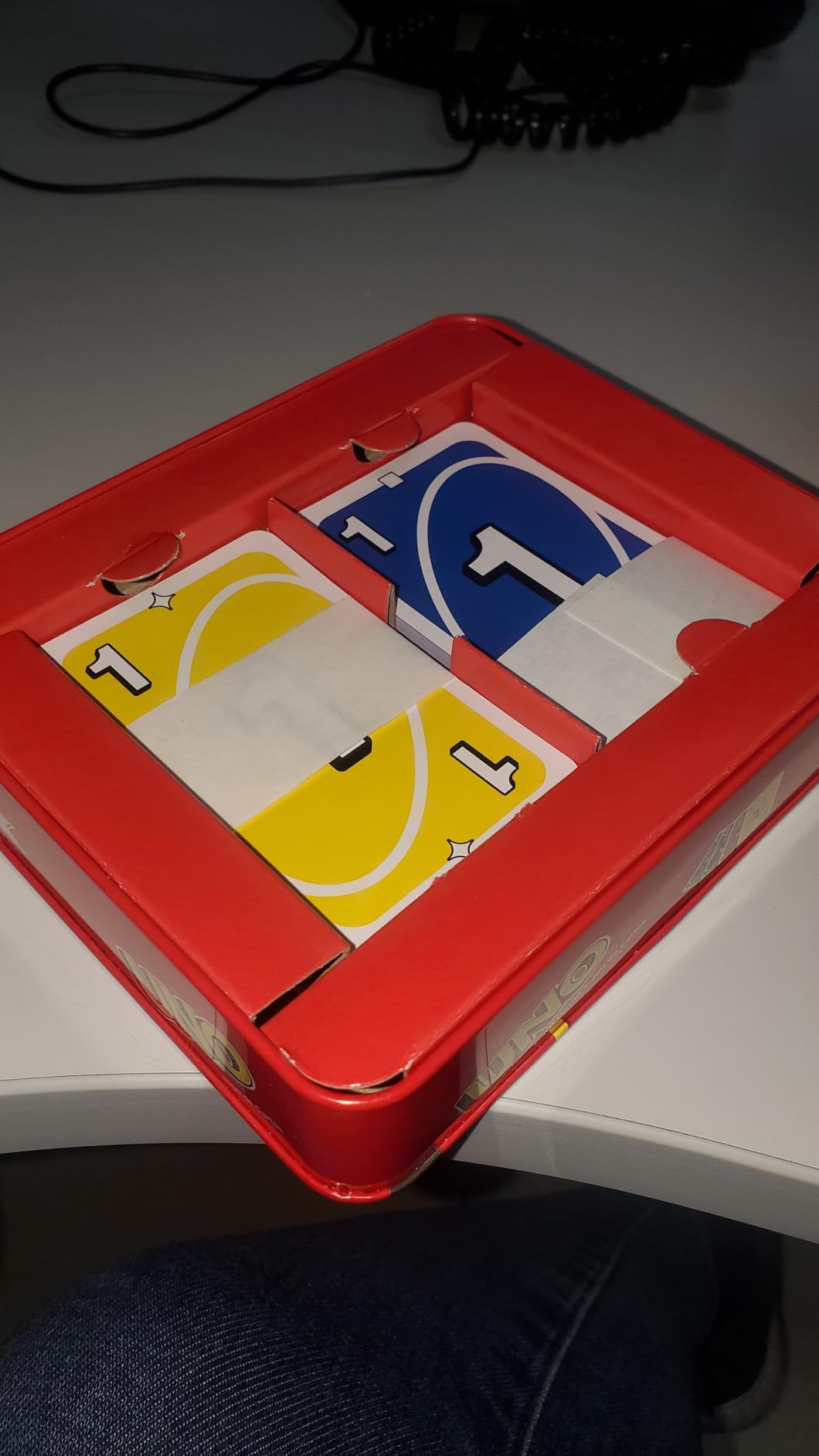
When you do not know how many people are coming, UNO solves the arithmetic. It runs from two to ten players, everyone over seven can take part, and the setup is about a minute. The tin also means it survives a cupboard, a suitcase or a sibling grabbing it mid-holiday.
Two details make it more inclusive than its reputation suggests. Every card carries a graphic symbol as well as a color, so players who cannot distinguish red from green are not quietly losing, and three blank wild cards let a group write its own house rule onto a card for the evening.
It is not a fast game, though. Scoring to 500 means a full match runs a good stretch, so treat it as the evening’s main event rather than the warm-up. It is also the second most reviewed game here at 60k reviews and a 4.8 rating, with 90 percent five-star.
Why it suits a mixed-age table
Nobody needs a rulebook, which removes the teaching bottleneck entirely at a table with a wide age spread. A 15-year-old who has played it at school and a grandparent who has played it at a holiday for thirty years can both start without help.
Teaming is the trick for very young children. Pairs play as two teams and win together, which keeps a seven-year-old in the round instead of watching it.
What to watch out for
The full game to 500 is longer than most people expect from a card game, and it is the one thing reviewers flag repeatedly. Decide the target score before you start, or play a 200-point version with children in the mix.
Regular players can find it repetitive because the strategy is shallow by design. Mix it with a title that has more decision-making rather than letting it be the only game on the table.
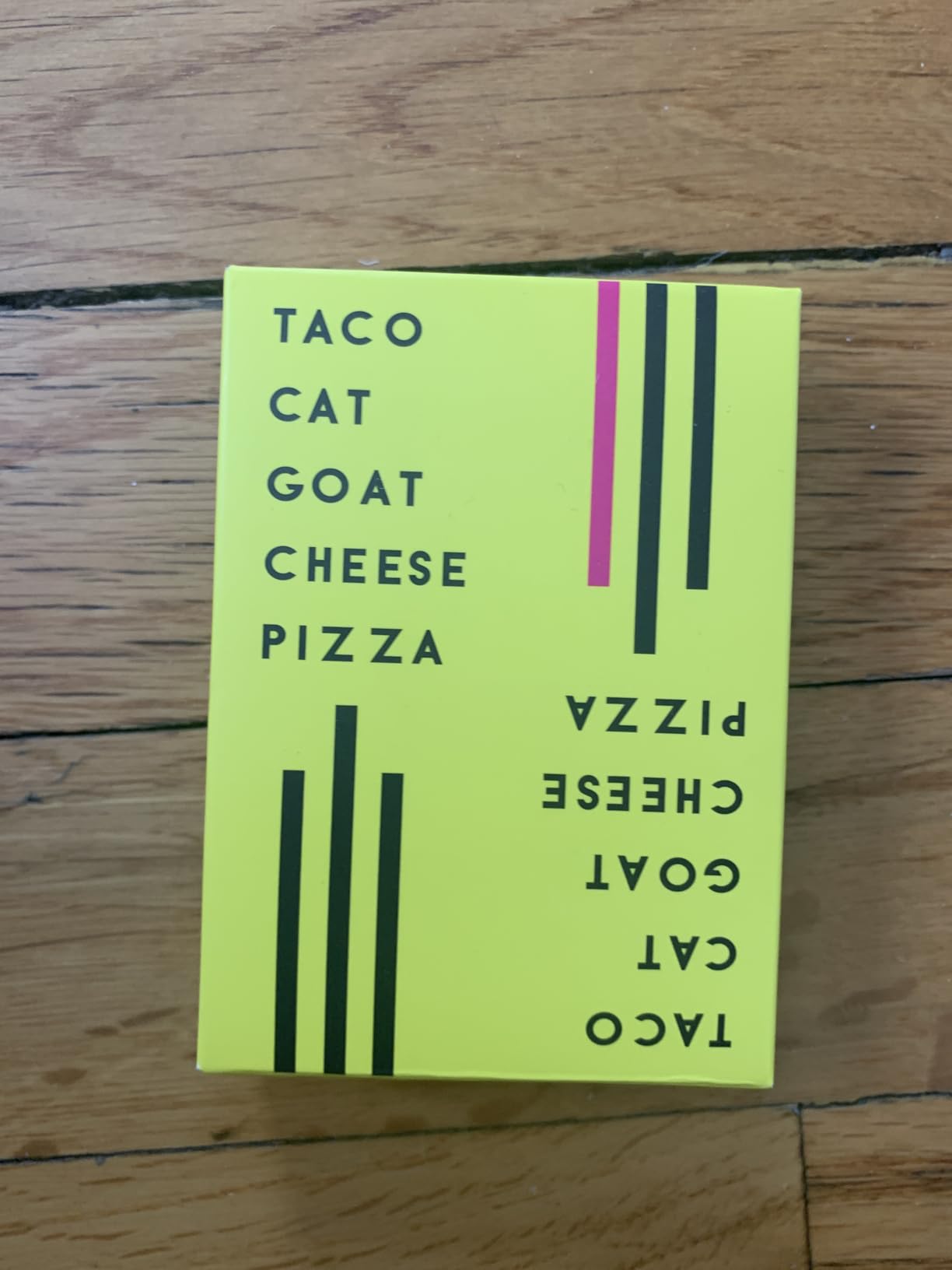
4. Taco Cat Goat Cheese Pizza – the fastest icebreaker for young children
Taco Cat Goat Cheese Pizza Card Game by Taco Cat Games, Age 7+, 2-8 Players
- Learns in under a minute
- 10 to 15 minute rounds
- keeps eight players engaged at once
- durable cards with bright illustrations
- slips in a travel bag
- Gets loud and chaotic
- reflexive slapping can be too physical for calm groups
- a few buyers reported a smaller deck than pictured
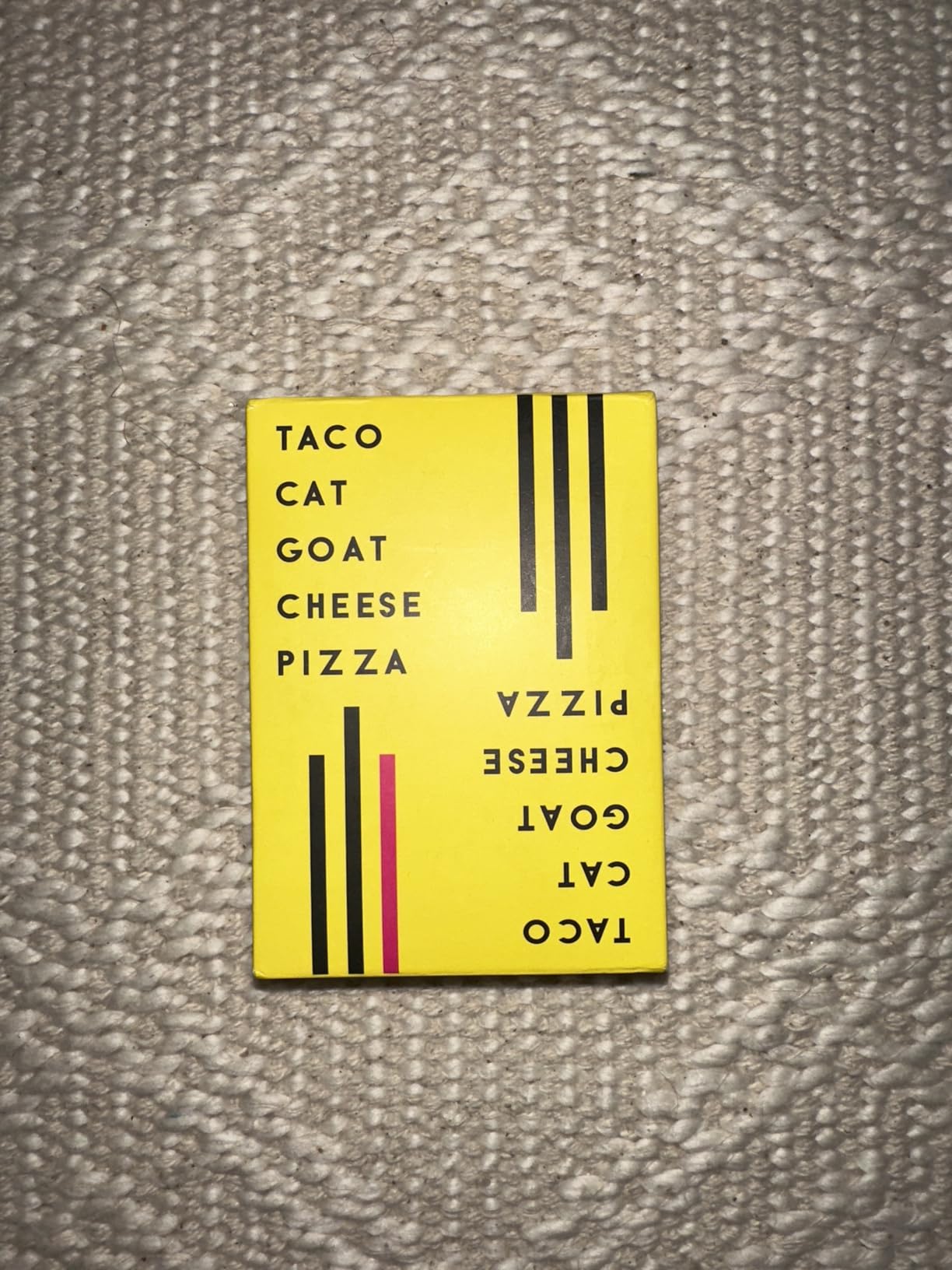
This is the game we hand to a room full of children who have been told to wait for dinner. Deal the cards face down, chant the title in order, and the first player to slap the pile when a spoken word matches the turned card takes it. Setup takes about thirty seconds and nobody is eliminated.
It does the job better than anything else in this list at breaking a mixed group open. Across 54k reviews it holds a 4.8 rating, and the most repeated description is a group that keeps asking for another round because a round is only ten to fifteen minutes.
The box is 2.5 by 0.9 by 3.6 inches and the whole thing weighs 3.2 ounces, so it is the easiest gift on this list to slip into a small bag. Special action cards including the Gorilla, Groundhog and Narwhal change the round when the chant lands on them.
Why it suits a mixed-age table
The physical action is forgiving. A child who mishears the chant still joins in, and an adult who is not paying attention still gets a turn, so the group never separates into players and watchers.
It also works with two players, which is rare for a party game and useful for a sibling pair on a long journey.
What to watch out for
It gets loud. Reviewers mention volume as the recurring complaint, and this is not the game to start if the adults at your table want to keep talking through dessert.
The slapping is genuinely physical, so for a calm household or a group with a younger child who reacts badly to sudden contact, pick a non-contact option such as Five Crowns instead.
5. Exploding Kittens – the easy opener for a group of non-gamers
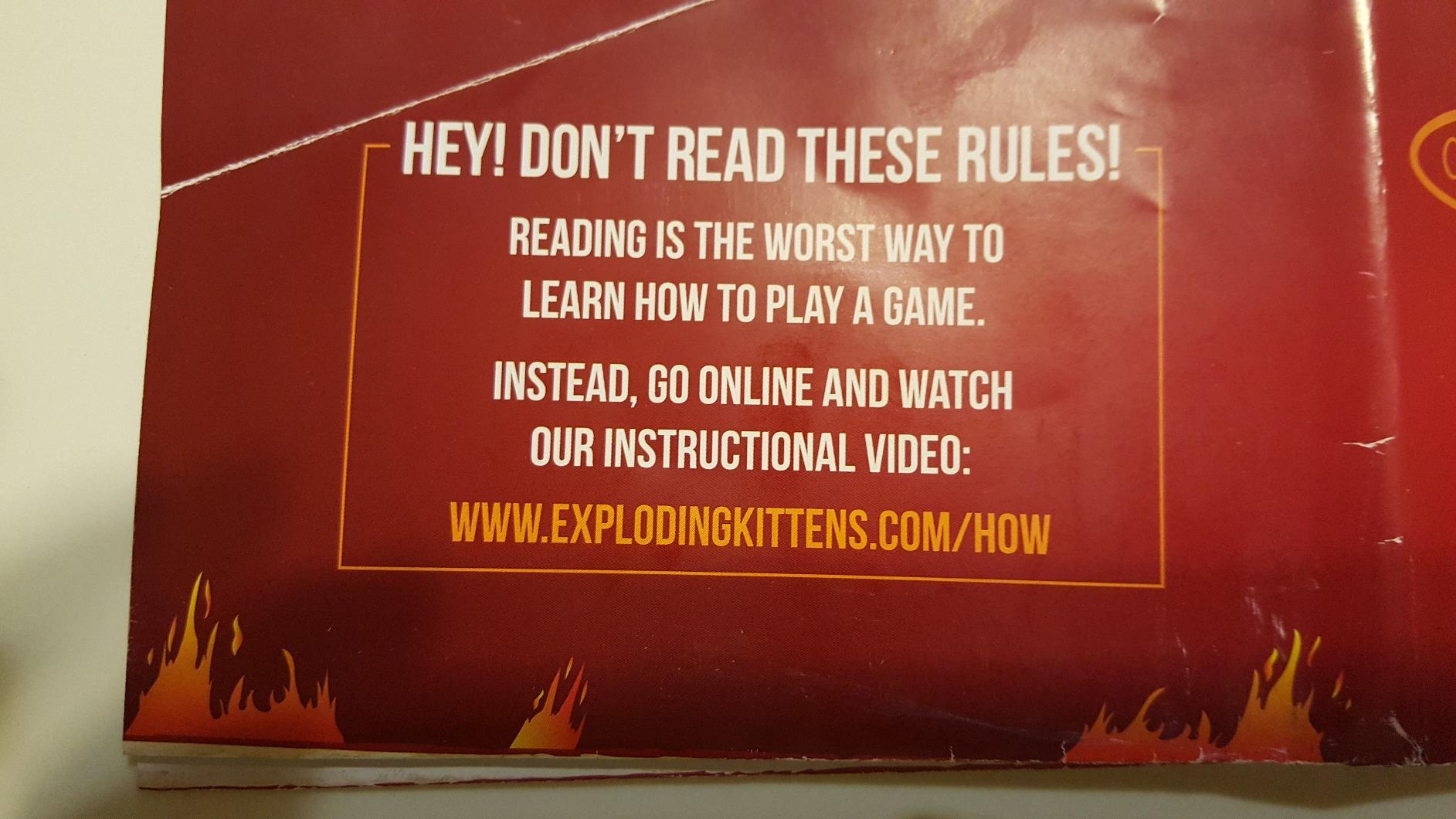
Exploding Kittens Original Edition, 2-5 Players, Ages 7+ Card Game
- Picks up instantly with no explanation
- box fits a small bag
- Oatmeal illustrations give it real character
- shuffle and action cards add strategy
- a good icebreaker
- Only 56 cards so it gets familiar fast
- luck of the draw can frustrate players
- caps at five players
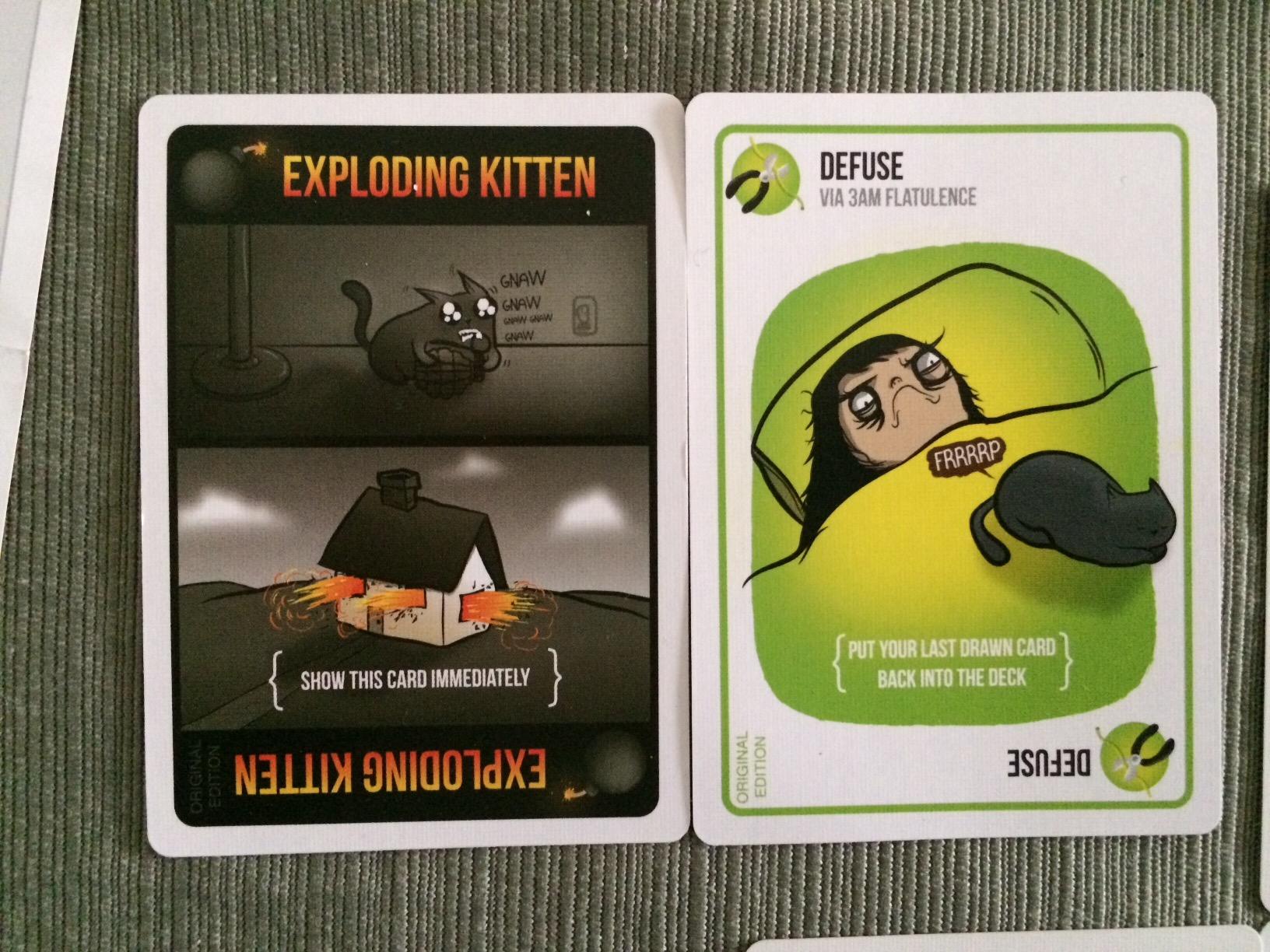
Exploding Kittens is a push-your-luck game with drawings on it, and that is exactly why it converts relatives who claim to hate card games. Draw a card, hope it is not the Exploding Kitten, and use action cards to skip a turn, shuffle the deck or defuse it. The whole thing takes about fifteen minutes.
It is our go-to first game of the evening because the failure state is funny rather than punishing. Being eliminated means you watch for a round, which at a holiday table is socially much less costly than losing a rummy hand to your brother-in-law.
The original edition holds a 4.6 rating across 59k reviews, the lowest average in this group but still comfortably in the top tier. The lower number comes from the same place every time: a small card pool and heavy reliance on the draw, both of which wear thin if your group plays weekly.
Why it suits a mixed-age table
At two to five players and ages seven up, it covers a wide range of ability without a rulebook, and the small 4.41 by 6.38 by 1.5 inch box means it goes to a holiday cottage without a packing negotiation.
It is also a good bridge game: short enough to finish before anyone loses interest, structured enough that strategy players find something to think about.
What to watch out for
Two to five players is the real limitation. At an eight-person table you will be running it in shifts, so have a second game ready for whoever is not in the round.
If anyone at your table dislikes luck-driven elimination, this is the wrong pick. Play Nine and Monopoly Deal mix chance with decisions more evenly.
6. Monopoly Deal – the fastest familiar game to teach and reset
- Compresses a familiar board game into 15 minutes
- reference cards teach new players at the table
- small box suits waiting rooms and flights
- quick reset between rounds
- an easy add-on to a game stack
- Plastic cards can feel thin or slippery
- simplified rules lose the negotiation depth of the board game
- five-player maximum
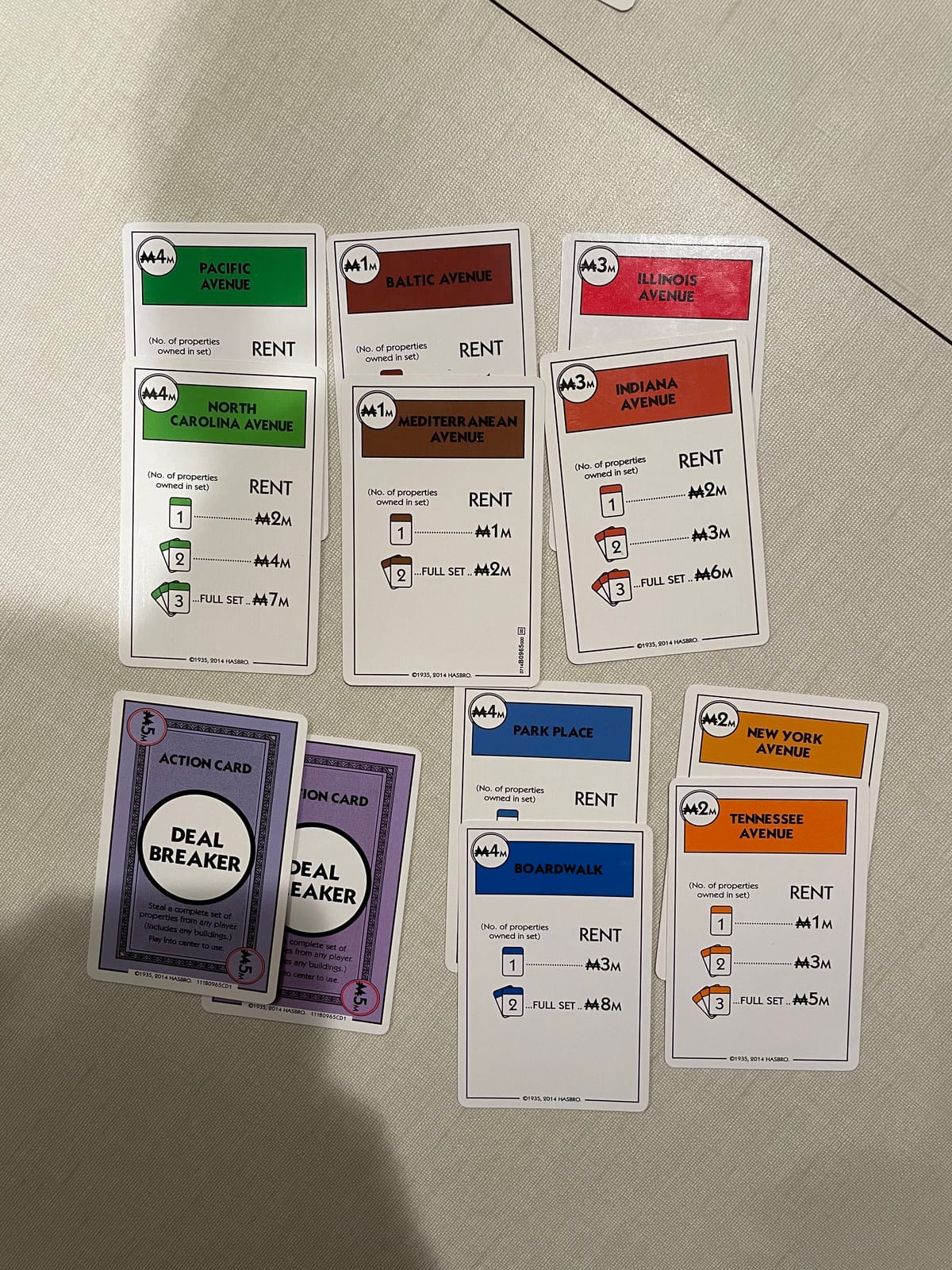
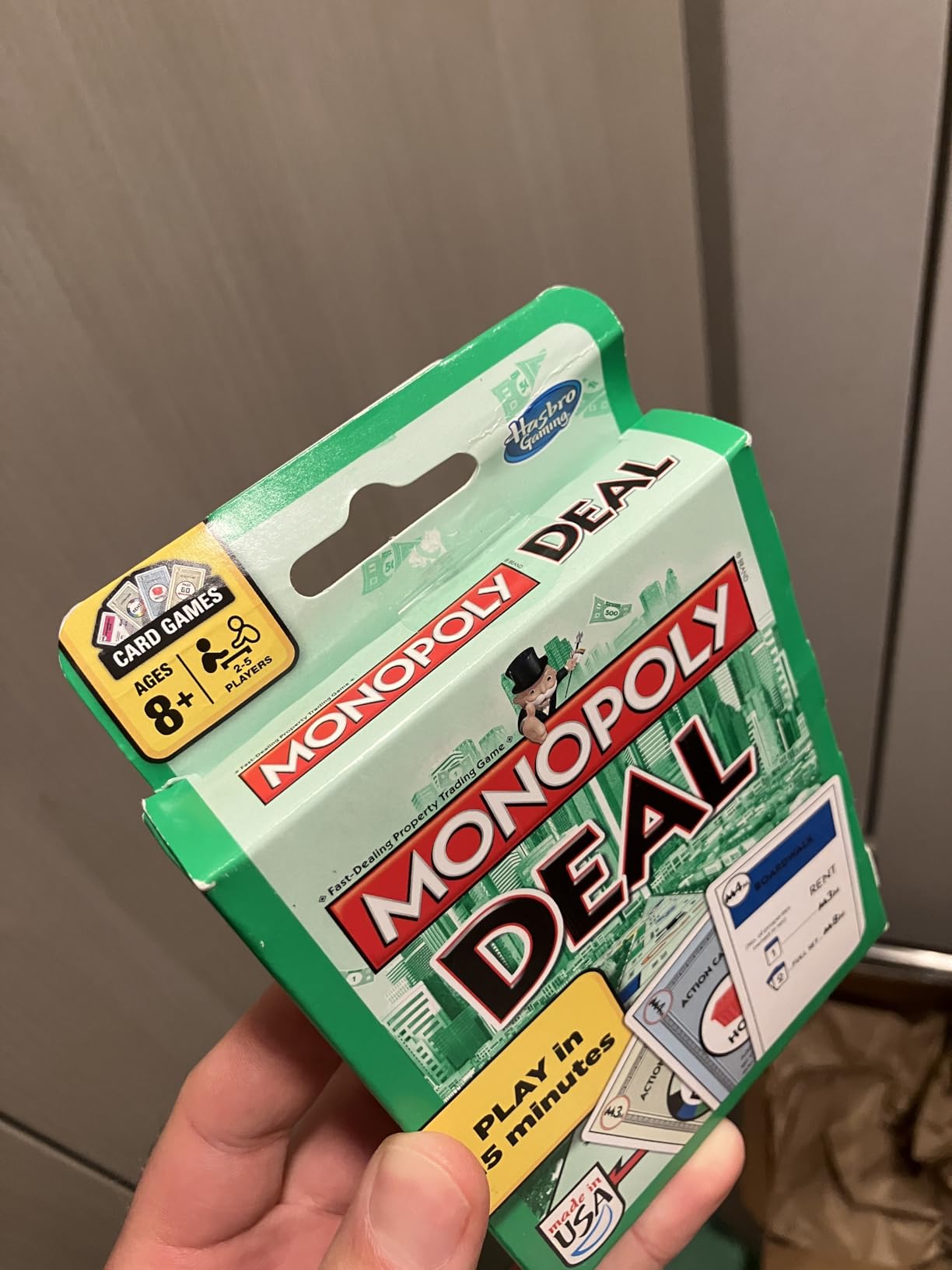
Monopoly Deal takes a property game most people already know and cuts it down to 110 cards and about fifteen minutes. Collect three complete property sets in different colors and you win, which is a decision loop simple enough to explain while still dealing.
It is the most portable thing on this list in practice, because the box is 0.75 by 3.62 by 5.63 inches and the whole game weighs just over 100 g. On a flight, a long drive or a wait for the table to clear, it is the thing we actually put in a bag.
The 4.8 rating across 36k reviews reflects a game most buyers describe as the easiest addition to a game-night stack. The regular criticism is that simplifying the board game removed the trading and negotiation that made Monopoly worth playing in the first place, and that is fair.
Why it suits a mixed-age table
It works for ages eight and up with no reading of a rulebook, because the turn tips and rules sit on reference cards players can hold. That is a quiet advantage when a relative does not want to admit they do not know how to play.
Rounds are short enough to run two or three back to back, which is what a restless group needs on a wet afternoon.
What to watch out for
The five-player maximum is the deal-breaker for big holiday tables. Plan on two tables or choose a game that scales past five, such as UNO or Five Crowns.
The card stock is plastic rather than cardstock, and reviewers who prefer the tactile feel of a rummy game notice. It is a durability-versus-feel trade rather than a quality problem.
7. Play Nine – the calmest game for a table that includes grandparents
- Holds a 4.9 rating with 93 percent five-star
- golf theme plays straight for a mixed age range
- 15 minute rounds
- draw discard and trade decisions are easy to teach
- blends luck and strategy
- Paper stock feels less premium than cardstock rivals
- golf theme does not land with everyone
- scoring needs a pencil and scorecards
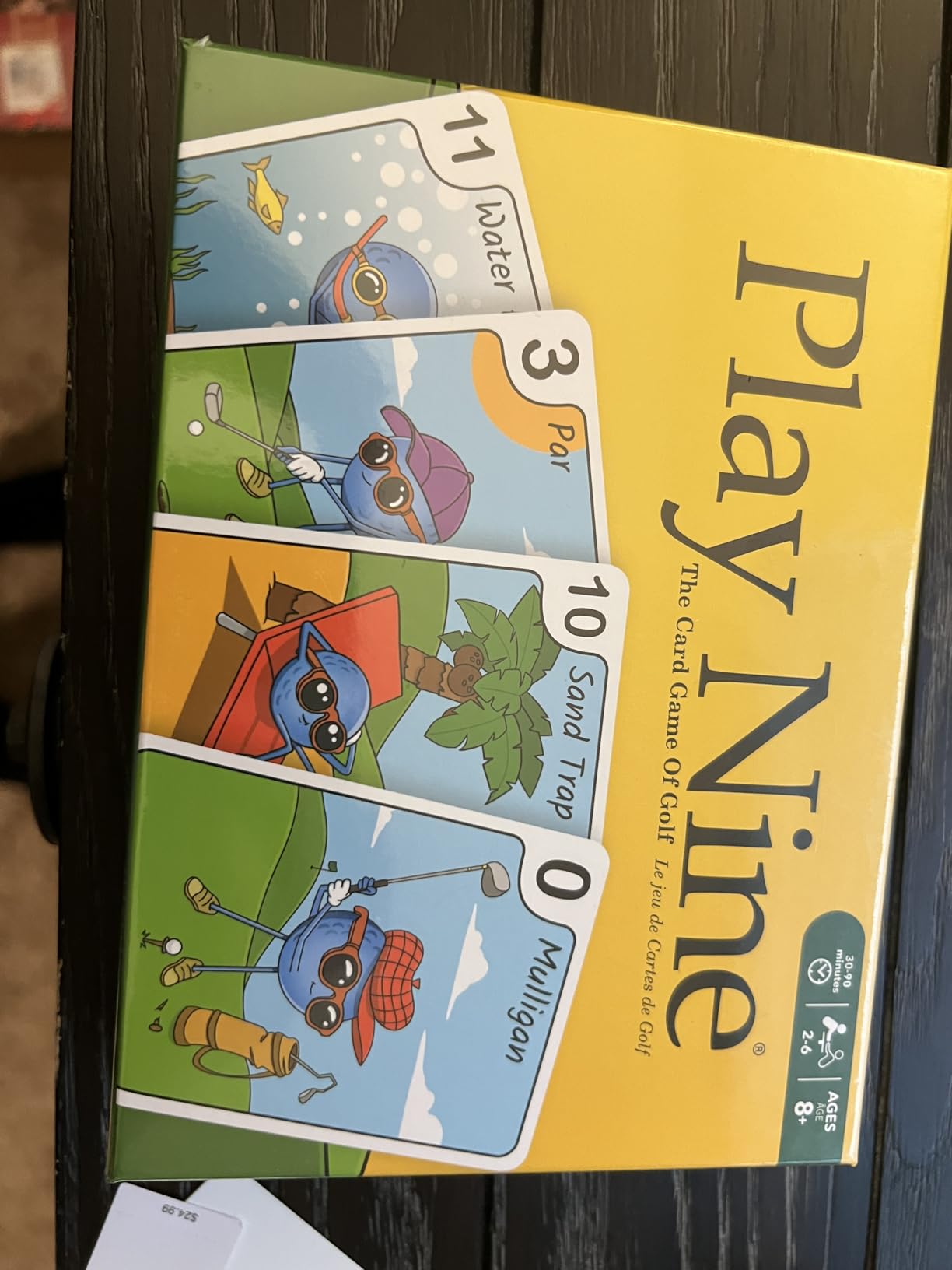
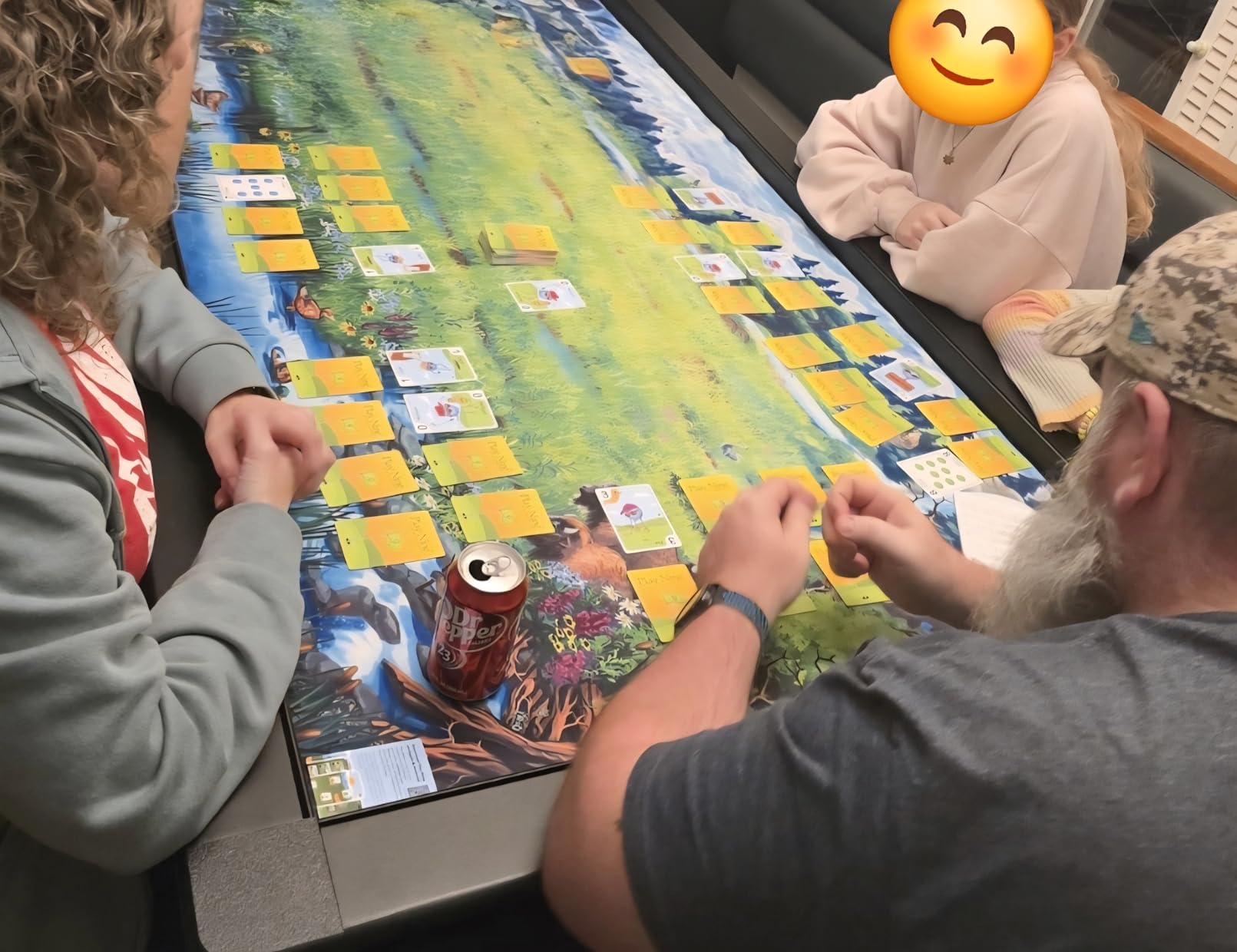
Play Nine is a golf-themed shedding game: everyone is dealt eight cards from a shared deck, and you take turns drawing, discarding or trading to end up with the lowest total. Lowest score wins, everyone finishes in fifteen minutes, and nobody is knocked out along the way.
It is the quietest game we tested, which is why it is the one we now put on the table when the adults are still trying to talk. Nothing in the design rewards shouting, and the decisions sit with each player rather than with a slap.
It shares the highest rating in this roundup at 4.9, with 93 percent of 21k reviews at five stars, and the theme is a genuinely good gift hook for a parent or grandparent who plays golf. Paper stock and scorecards are the two things critics mention, and both are minor.
Why it suits a mixed-age table
It scales from two to six without a rule change, and the golf framing is neutral enough that a nine-year-old and a 70-year-old can both talk about it without one of them explaining the rules to the other.
Because scoring is a running total rather than a knockout, nobody spends a round watching. That is the feature that keeps a game-averse relative at the table.
What to watch out for
Scoring uses a pencil and scorecards, so there is a small setup step before play that matters less with a big group than with two people. Hand out the pencils with the first deal.
The golf theme is a genuine preference, not a rule. If nobody at the table follows the sport, the mechanics still work but the theme adds nothing.
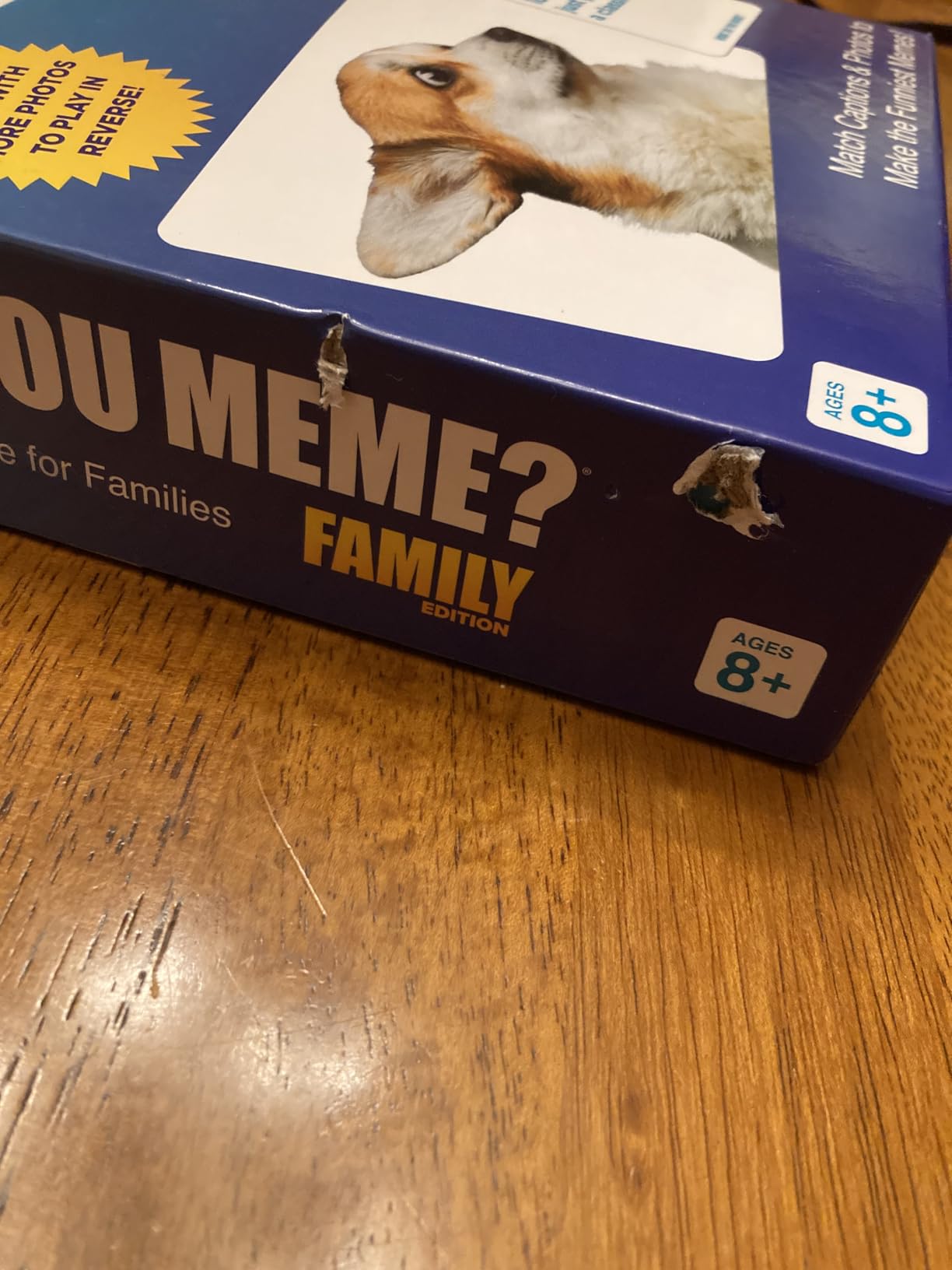
8. What Do You Meme Family Edition – the pick for teens who already hold the room
- Family edition stays clean for mixed-age and public settings
- playable with no explanation
- large cards and easel readable across a table
- huge combination count
- gets kids off screens
- Judge scoring can feel arbitrary
- a subset of meme cards land as weak
- needs a real group of three
- heavy box is poor for travel
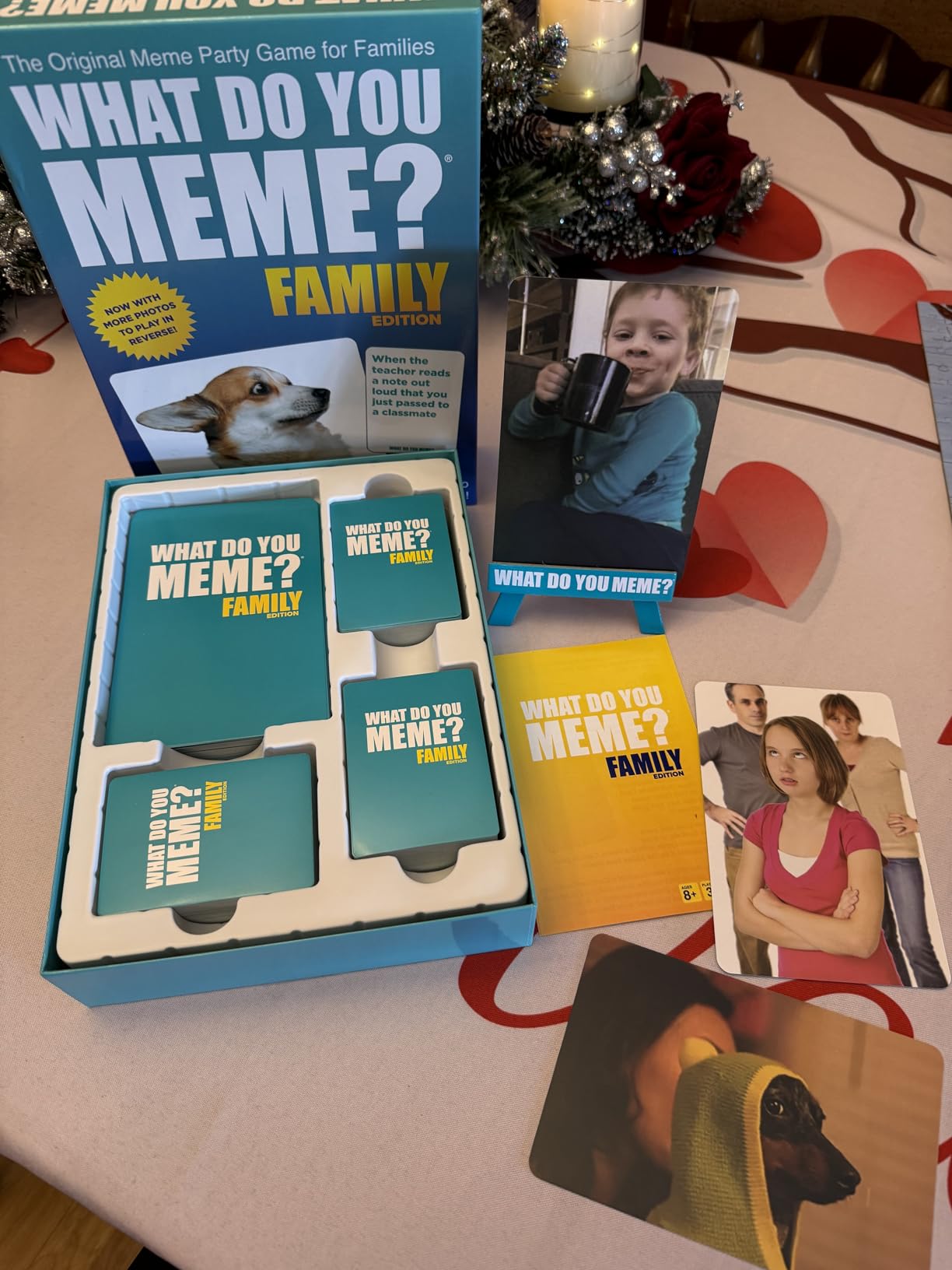
You put a photo card on the easel, everyone picks a caption card, and the rotating judge picks the funniest combination. There is no rule to learn beyond that, and the family edition is written to be appropriate in front of grandparents and in mixed groups, which is not true of the standard product.
For a holiday table with teenagers, it does something the quieter games cannot: it hands the loudest people in the room a job. The 408 cards mean you are rarely in the middle of a round when a table runs dry, and 21k reviews at 4.6 describe it as reliably funny.
The 4.6 is the second-lowest average here and the reason is consistent. Judging is subjective, so a caption that lands badly feels like a wasted round, and a portion of the card pool is weaker than the rest.
Why it suits a mixed-age table
It needs three or more people in practice, which makes it a poor choice for a couple but a strong one for any gathering of six or more. The included easel and large cards mean the table can actually see the play, which matters in a crowded room.
Wholesome content in the family edition means you do not have to audit the box before a mixed-age or mixed-household gathering.
What to watch out for
It is a 1 kg box, which is heavier than every other game in this roundup and genuinely awkward in a carry-on. For travel, pick a flat card game instead.
Pair it with a scoring game later in the evening. Two judge-based rounds in a row and the table can start running on laughter rather than play.
9. Phase 10 – the one with a reason to play it again next year
- Ten phase ladder gives long-term goals across repeat sessions
- tin makes it gift-ready and tidy
- color blind symbols keep mixed-ability groups fair
- scales from two to six
- Missing a phase sends you back to the start
- takes longer to reach a finish than a party game
- needs sustained attention from older players
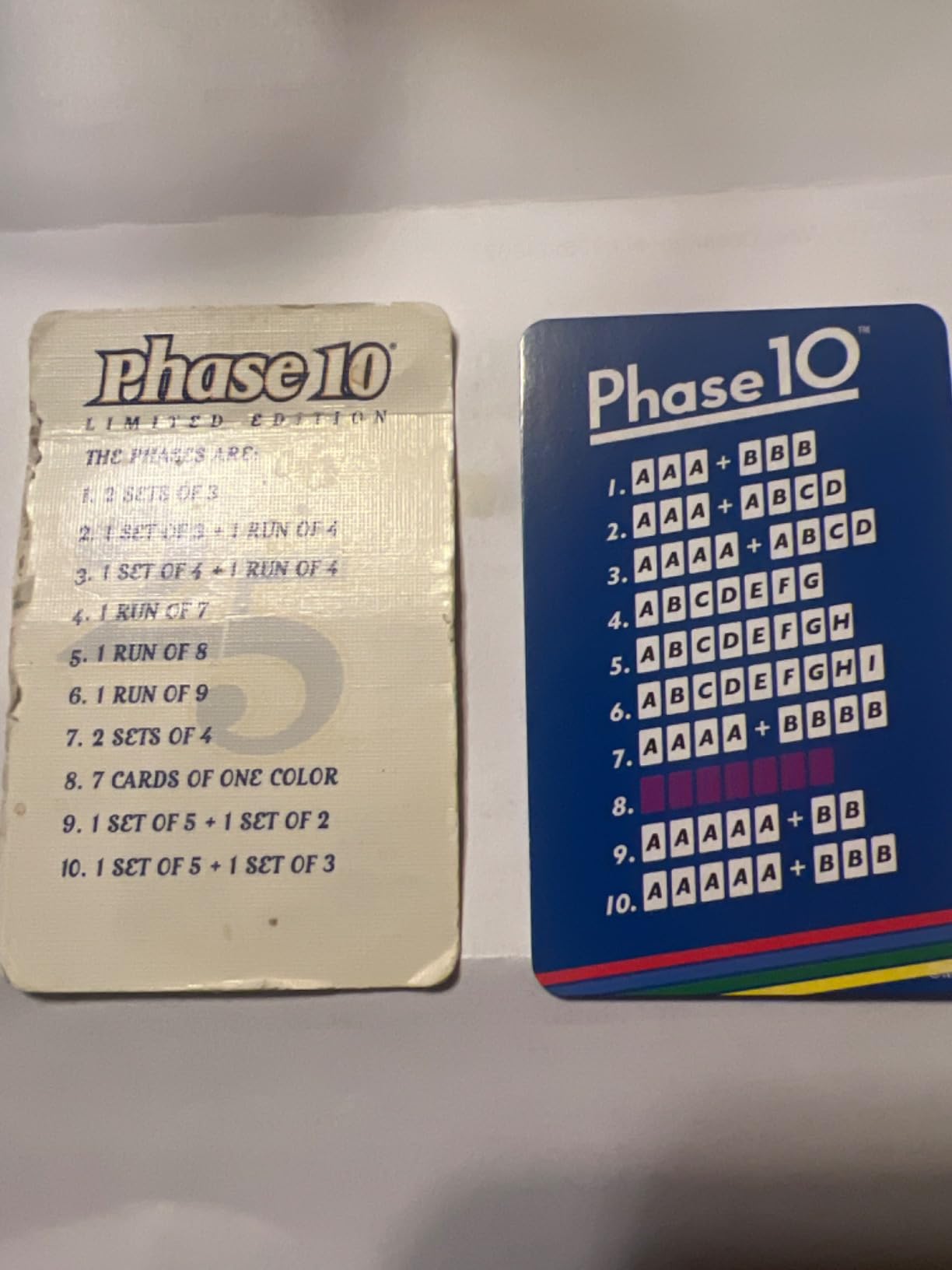
Phase 10 is a rummy-style game with a ladder attached. Complete ten phases in order using runs, sets or same-color groups, and each hand has a specific target, so there is a shape to the evening rather than an endless single round. Wild and Skip cards add the moments that change a hand.
This is the pick for the relatives who get bored with party games after two rounds. The progression is why a family keeps it in the box and plays it again in February, and the storage tin makes it the most gift-presentable option here.
It holds a 4.8 rating across 19k reviews, with 89 percent five-star. The consistent complaint across those reviews is the reset: miss a phase and you are back at the start, which is motivating for a teenager and discouraging for a younger child.
Why it suits a mixed-age table
It covers ages seven and up and two to six players, with graphic symbols on every card so nobody is disadvantaged by color perception. The color blind accessible deck is the same one shipped with UNO and it matters more in a multi-generational group than most buyers expect.
Phases give you a natural way to end early: stop after phase four, and the game feels complete rather than abandoned.
What to watch out for
It is not a fast game. Each phase adds a layer, so budget more time than the quick party options and be honest with a child who wants a five-minute round.
Attention requirements rise with the phase number, so it works best for a table where the youngest player is seven or older.

10. Cards Against Humanity Family Edition – the safe bet for a very large gathering
Cards Against Humanity Family Edition • Card Game for Your Horrible Family
- Largest card pool here at 600
- family edition stays kid-appropriate
- scales to twenty plus players
- new players pick it up immediately
- reliable repeat-play favourite
- Needs four players minimum
- humor skews silly-crude and can wear thin
- heavier box than flat travel games
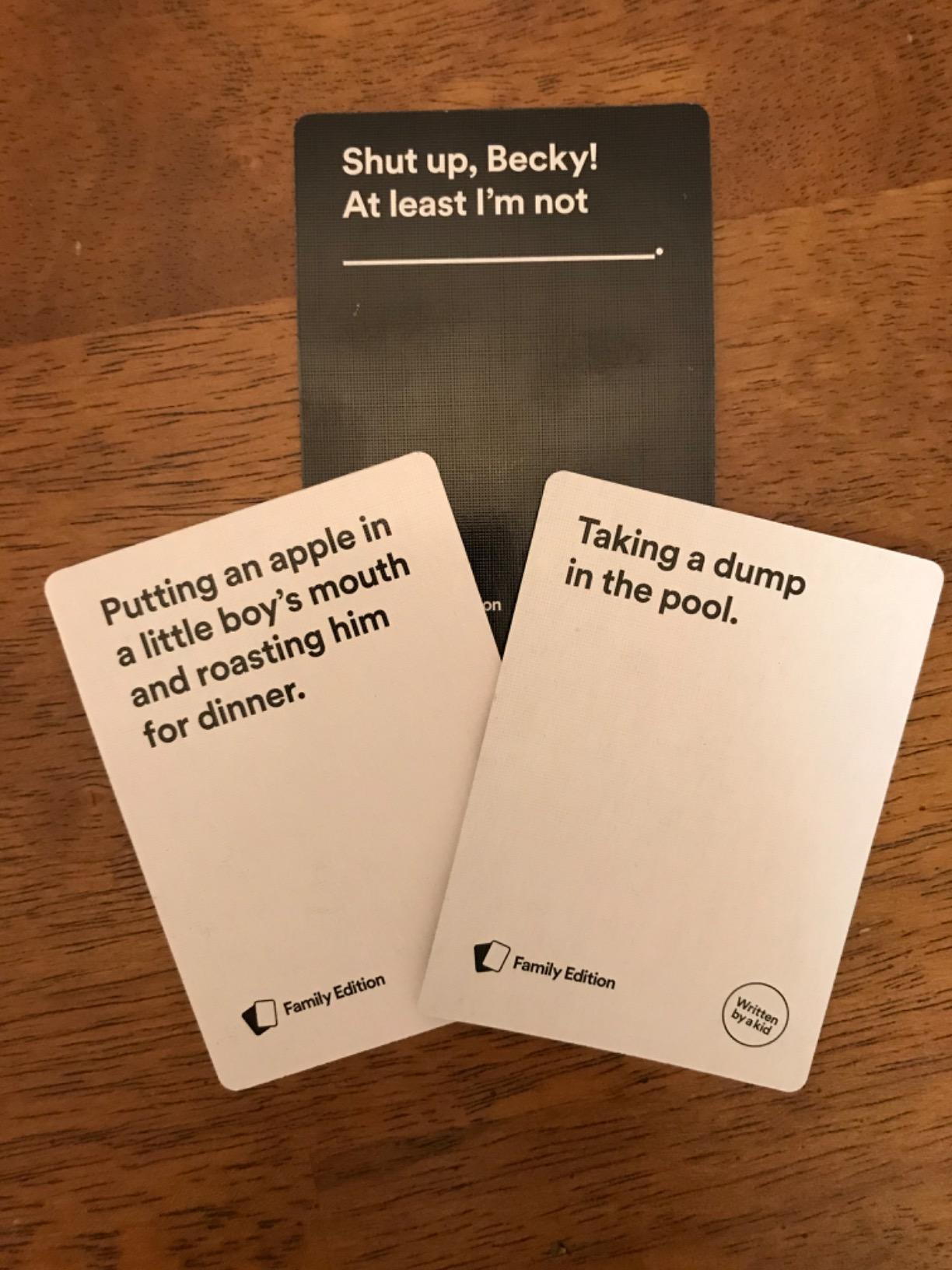
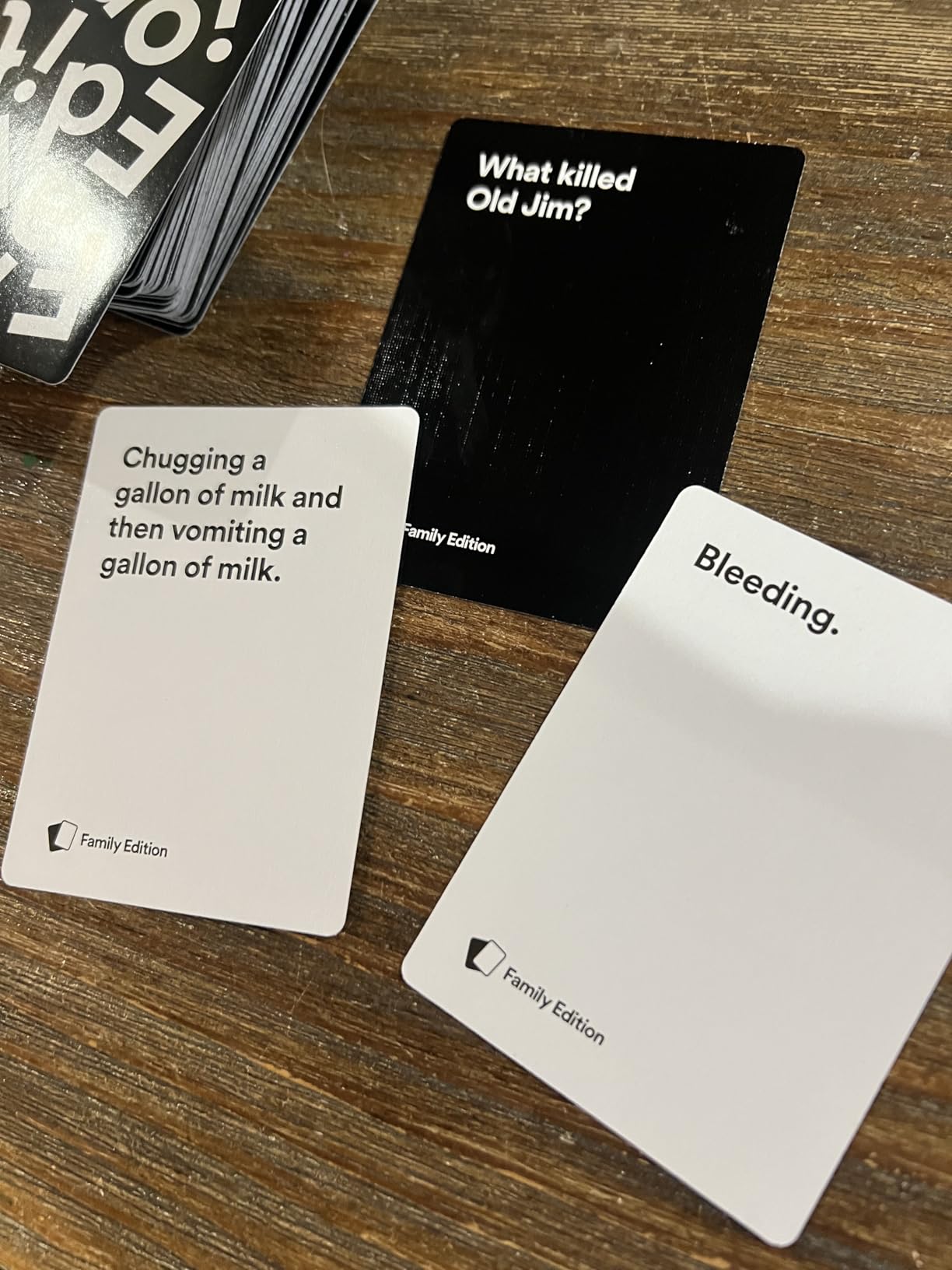
When the group is bigger than eight, a party game that caps at five becomes useless and this one does not. Cards Against Humanity Family Edition plays with four to twenty-plus players, ages eight and up, using the same answer-and-judge format the original is known for.
The family edition is written separately, not lightly edited, which is why it works in front of a mixed-age holiday table and why the card count is 600. A large group burns through cards quickly, and reviewers repeatedly note that the size of the pool is the reason it survives a second and third night.
It holds a 4.8 across 14k reviews, the smallest review pool among the well-reviewed games here. Two caveats recur: it needs four players, so it is useless for a couple, and the humor is deliberately silly, which some families find repetitive after a while.
Why it suits a mixed-age table
At four players and up, it is the natural fallback when extra relatives appear at the door on New Year’s Eve. Nobody has to sit out, and nobody has to be told which edition is in the box.
Because the judge rotates, a talkative teenager gets a turn at the chair, which is often the difference between the game being played or quietly abandoned.
What to watch out for
Do not buy it as a couples gift. The four-player minimum makes it impossible to open on a single evening, and reviewers flag this as the top practical complaint.
Plan only one round of it. Used as an opener it works well; used as the whole evening it flattens, because the humor style narrows faster than the card count suggests.
11. Dutch Blitz – the noisy family tradition worth starting
Dutch Blitz Card Game – Original Fast Paced Family Game with 160 Cards
- All players act at once so there is no downtime
- easy to learn and still improving after months
- durable cards
- a tradition buyers have played for decades
- works for pairs as well as fours
- Very loud and highly competitive
- not for younger kids prone to slap reactions
- standard box caps at four players
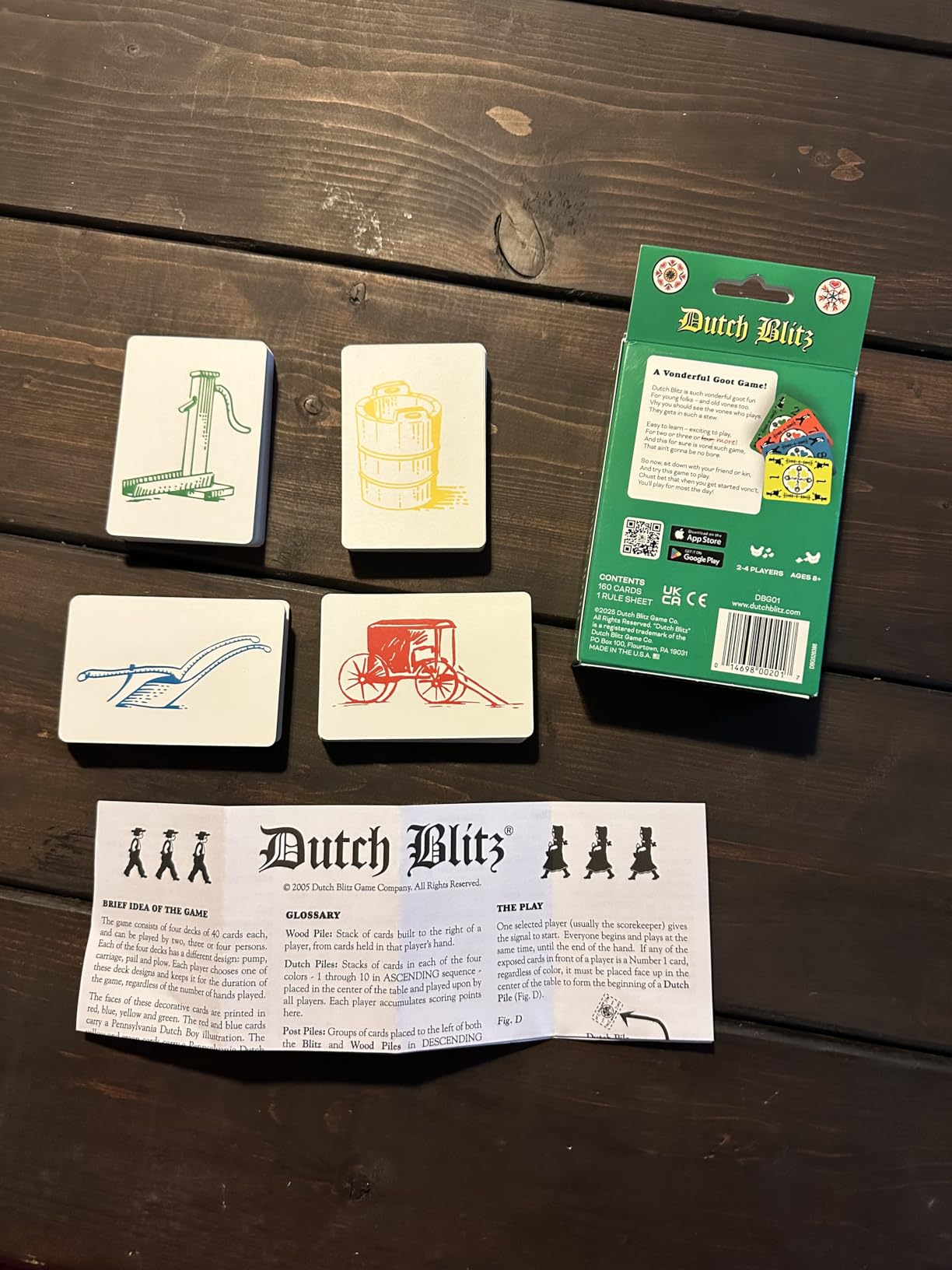
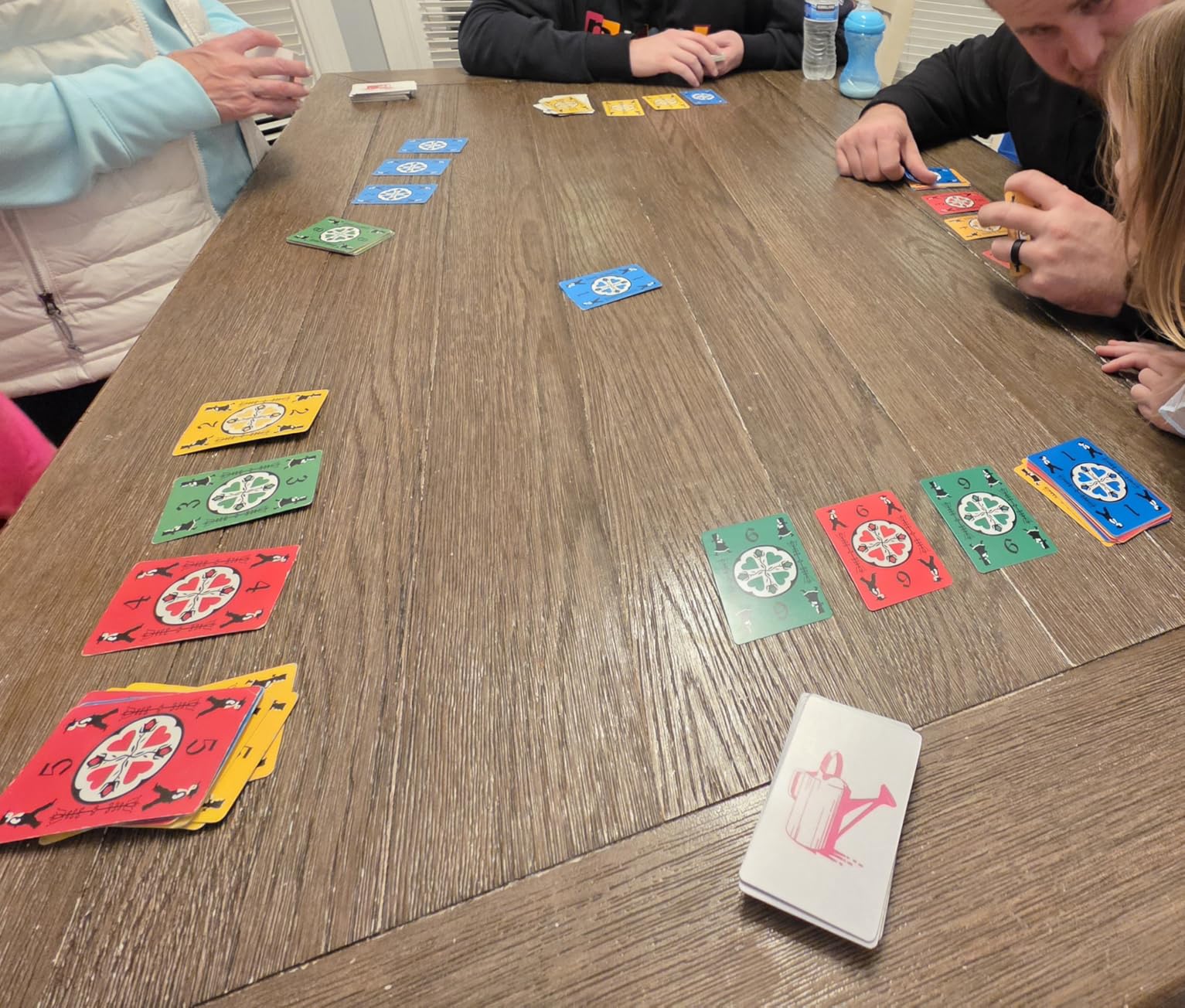
Dutch Blitz has no turns. Everyone plays simultaneously, calling out cards and beating the pile until they have three in front of them and a sequence, at which point they go out. Fifteen minutes per round, and the room gets loud immediately.
It is the game we recommend when a family wants a tradition rather than a one-night novelty. Buyers describe playing it with children who then taught their own children, and the review pattern shows the 4.8 rating holds across households with a long history and with first-timers.
Across 12k reviews, the split is clear. The rules are easy to learn and hard to master, which is the highest compliment a family game can earn, and the same reviews warn that it is loud, competitive and not suited to a calm table.
Why it suits a mixed-age table
Simultaneous play removes the waiting, which is usually what breaks a mixed-age game. A child and an adult are equally busy, and a slow grandparent is not holding up the round.
It also works for two, making it one of the few games here that is as good for a couple on Boxing Day morning as it is for a family of four.
What to watch out for
Volume is the honest caveat. This is not an after-dinner game for a table that wants conversation, and it is a poor match for very young children who react badly to fast, loud card play.
The base box covers two to four players. Beyond that you need the expansion, so check your headcount before committing to it as the main game.
12. Santa Cookie Elf Candy Snowman – the easiest small gift in the list
- Christmas artwork makes it an effortless gift
- same familiar slap mechanic as Taco Cat Goat Cheese Pizza
- compact box fits a small gift bag
- works as an icebreaker for mixed groups
- premium box presentation
- It is a reskin rather than a distinct game
- manufacturer lists ages twelve and up
- needs at least three players
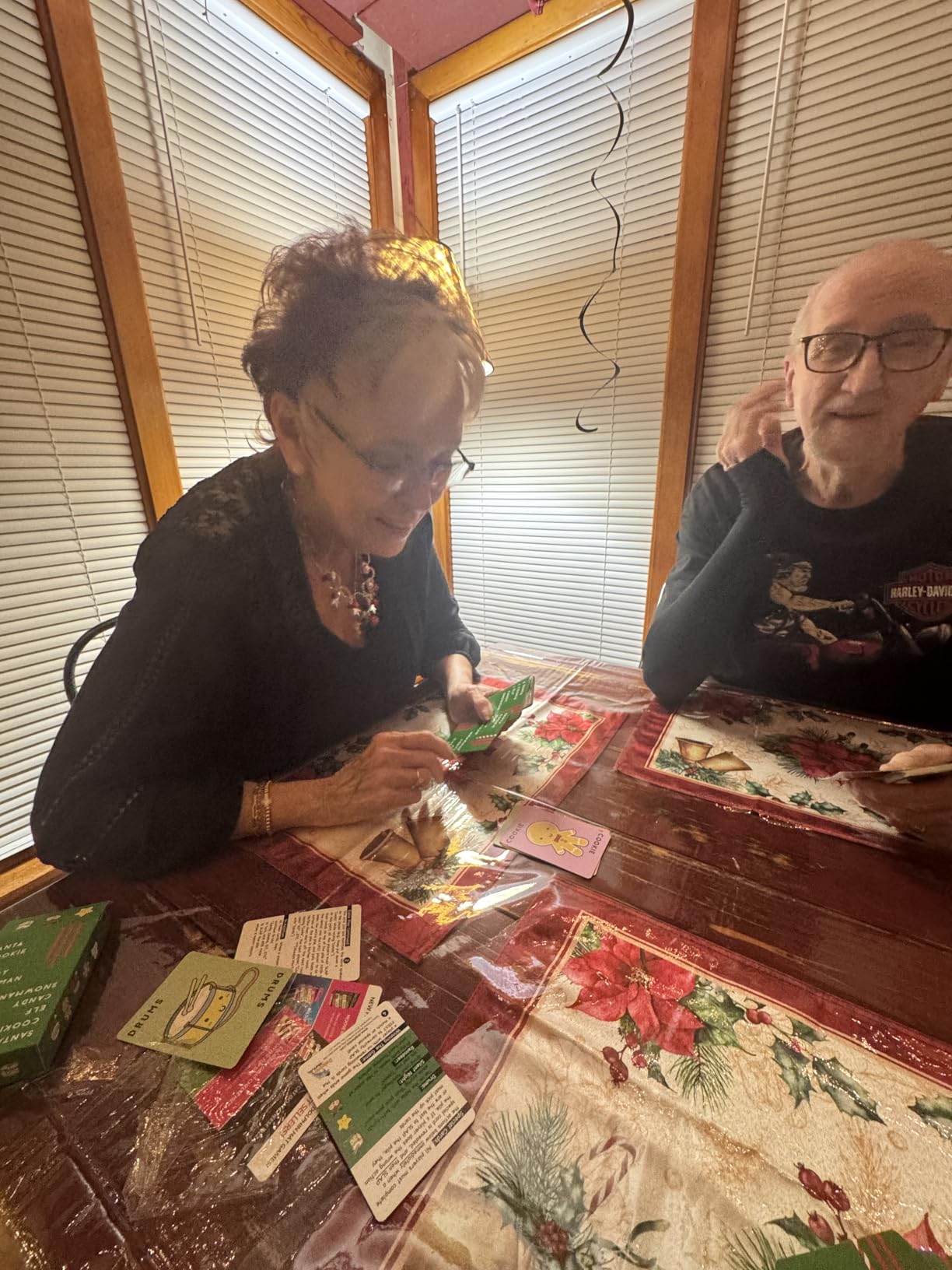
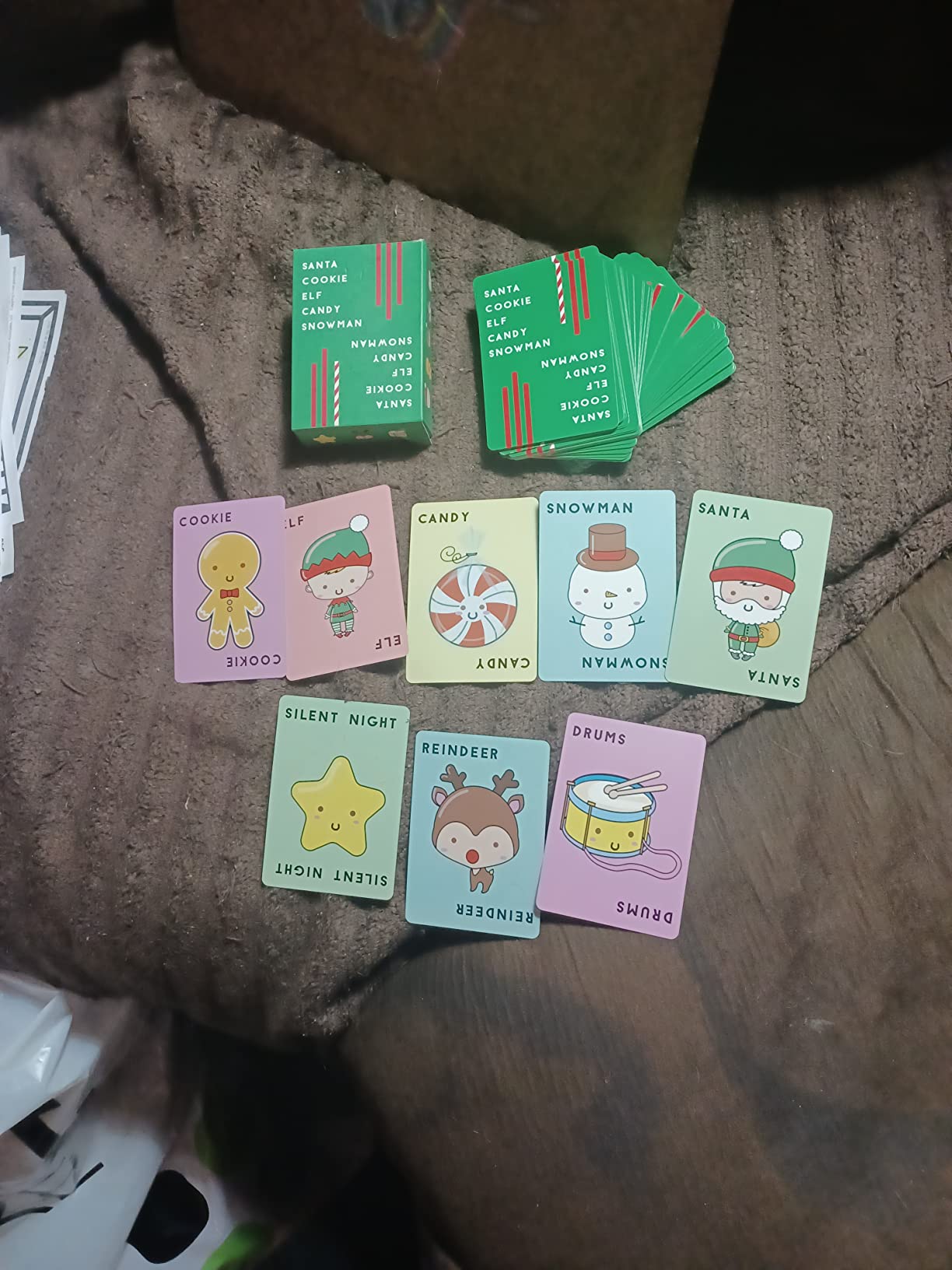
This is the holiday reskin of Taco Cat Goat Cheese Pizza, and that is both its purpose and its limitation. You chant Santa, Cookie, Elf, Candy, Snowman in order and slap the pile when the word matches, with Christmas artwork replacing the original illustrations.
It earns its place on this list for gift reasons rather than game reasons. It is 3.5 by 2.5 by 1 inch, weighs just over four ounces, and arrives in a gift box that looks the part, which makes it an easy small present for a colleague, a cousin or a Secret Santa name you do not know well.
It holds a 4.8 across 4k reviews, the smallest review pool in the group. Reviewers consistently describe it as fun but not original, and note that the manufacturer lists ages twelve and up even though the base game is sold for seven and older.
Why it suits a mixed-age table
If your household already plays the original, this is a no-teach gift: the group knows the mechanic on the box opening. That is a rare luxury at a holiday table where explaining rules usually eats fifteen minutes.
Three to eight players is a useful range for a Secret Santa gift to an adult with a family nearby, and the theme starts an evening faster than most games do.
What to watch out for
Buying both this and the original in one household means playing the same game twice, and reviewers are blunt about that. Pick the holiday version for a gift recipient; pick the original for your own table.
The twelve-and-up rating is stricter than the base game, and it needs three players, so check both before buying it for a specific person.
How to Choose a Family Card Game for the Holidays
Match the game to your age mix
The hardest constraint at a holiday table is not player count, it is age spread. A 6-year-old and a 14-year-old plus two adults is the configuration that splits most gatherings into two tables, and the games that hold it together share three traits: no elimination, a scoring method a child can execute, and a round short enough that attention lapses rarely.
SKYJO and Five Crowns are the two strongest options for a genuinely wide age range, because both score with a sum rather than a knockout. For a slightly older spread, a teenager plus grandparents, Play Nine and Dutch Blitz both work, and the deciding factor is noise tolerance rather than skill.
Games rated seven and up with graphic symbols on the cards, such as UNO and Phase 10, are the ones to buy when color vision is in play. The symbols are not a gimmick; they are what keeps a mixed-ability group honest.
Match the game to your group size
Sort your guest list by the largest number of people who could be sitting down at once, not the average. A 2-10 range such as UNO absorbs almost any scenario, while anything capped at four or five, such as Dutch Blitz, Monopoly Deal or Exploding Kittens, forces you to run two tables or rotate players in and out.
For a group above ten, the shortlist narrows sharply. Cards Against Humanity Family Edition scales past twenty players, and UNO reaches ten. Everything else on this list tops out at eight.
Plan gift tiers without the price guesswork
Decide the gift tier first and the game second. A small Secret Santa or a fill-the-box present needs something that fits a stocking or a small bag, which on this list means Monopoly Deal, the Santa Cookie Elf holiday edition, or Taco Cat Goat Cheese Pizza. A white elephant present has to be fun enough to survive being pulled from a bag in front of strangers, so pick a theme everyone recognises rather than a specialist game.
For a named adult on your list, think about how many people they will actually play with. A two-player gift is a real category here: Play Nine, Five Crowns, Exploding Kittens, UNO and Dutch Blitz all work for two, and anything that needs four players is a wasted gift for a couple.
One practical rule we use: buy one game for the family and one for the person you are buying for. A game that arrives with you on holiday gets played in a group; the same game given as a present gets played whenever the recipient feels like it.
Teach a new game to a mixed-age table in one round
Teach with a demonstration, not an explanation. Deal the cards, then play one fake round where you narrate your reasoning out loud and deliberately make a small mistake so a confident player can correct you. The correction is what teaches the rule.
Keep the first game to two things: the core action and the win condition. Leave special cards, expansions and scoring variants for round two, because a table that learns a game on their first attempt will ask for it again and a table that does not will not.
Say the goal out loud in plain words before you deal. Phrases like get rid of your cards, or end with the lowest total, remove almost all of the confusion we have seen in the first minute of play.
Check noise and portability before you commit
Noise is the constraint families underestimate. Taco Cat Goat Cheese Pizza and Dutch Blitz are both excellent and both loud, so if your holiday evening depends on adults talking through dessert, start with Play Nine, Five Crowns or Phase 10 instead. Save the loud ones for the after-party stretch once the children are still awake anyway.
Portability comes down to box size and loose components. Everything on this list is a card game, so nothing gets lost under a sofa, but the weights vary a lot: Monopoly Deal at just over 100 g is the one we pack for flights, while What Do You Meme at 1 kg is the one we leave at home. If you are planning a cottage or a long journey, our family-friendly vacation destinations guide is a useful companion for the trip itself.
Buy two games for a table of ten or more. One game is a bottleneck once it ends, and the second title is what stops the group splitting into separate screens.
Frequently Asked Questions
What are the best family card games for the holidays?
The best family card games for the holidays teach in under a minute, seat two to ten players, and keep a six-year-old and a grandparent in the same round. SKYJO is the best all-rounder, Five Crowns has the highest rating, and UNO handles the widest group. Each runs 15 to 30 minutes and packs into a small box.
What are the best Christmas card games for a large family?
For a gathering of eight or more, choose a game that scales rather than one that caps at five. UNO seats two to ten and needs no explanation, Five Crowns plays up to seven with no elimination, and Cards Against Humanity Family Edition stretches past twenty players. Avoid anything limited to four players unless you plan two tables.
What card games work well with mixed ages and grandparents?
SKYJO, Five Crowns and Play Nine are the strongest choices because they score with a running total instead of eliminating players, so a child who misplays does not cost anyone their turn. UNO and Phase 10 add graphic symbols to every card, which keeps color vision from deciding the game. Dutch Blitz works too, if the table can handle noise.
What are good family card games to give as gifts?
For a Secret Santa or a fill-the-box gift, pick something small and instantly recognisable: Monopoly Deal, Taco Cat Goat Cheese Pizza or the Santa Cookie Elf holiday edition. For a named adult, match the game to how many people they will play with, and choose a two-player friendly title such as Play Nine or Five Crowns if it is a couple.
What are easy card games to teach a big family quickly?
UNO, Monopoly Deal and Taco Cat Goat Cheese Pizza all teach in under a minute because the action is one repeated verb: match a card, slap the pile, collect a property set. Demonstrate one fake round while you narrate your thinking and make a small mistake, since a confident player correcting you is what teaches the rule fastest.
Which Family Card Game Should You Buy First?
If you buy one thing, make it SKYJO. It is the only game on this list that held a full mixed-age table from four players to eight without a rule change, it never eliminates anyone, and it travels. For a calm table with a wide age range, Five Crowns is the pick with the strongest rating behind it, and for an uncertain headcount UNO seats more people than anything else here.
Whatever you choose, buy two if the table is bigger than eight, and start with the quietest game rather than the loudest. The best family card games for the holidays are the ones still in play after the second course, and these are our twelve best chances at that in 2026.