
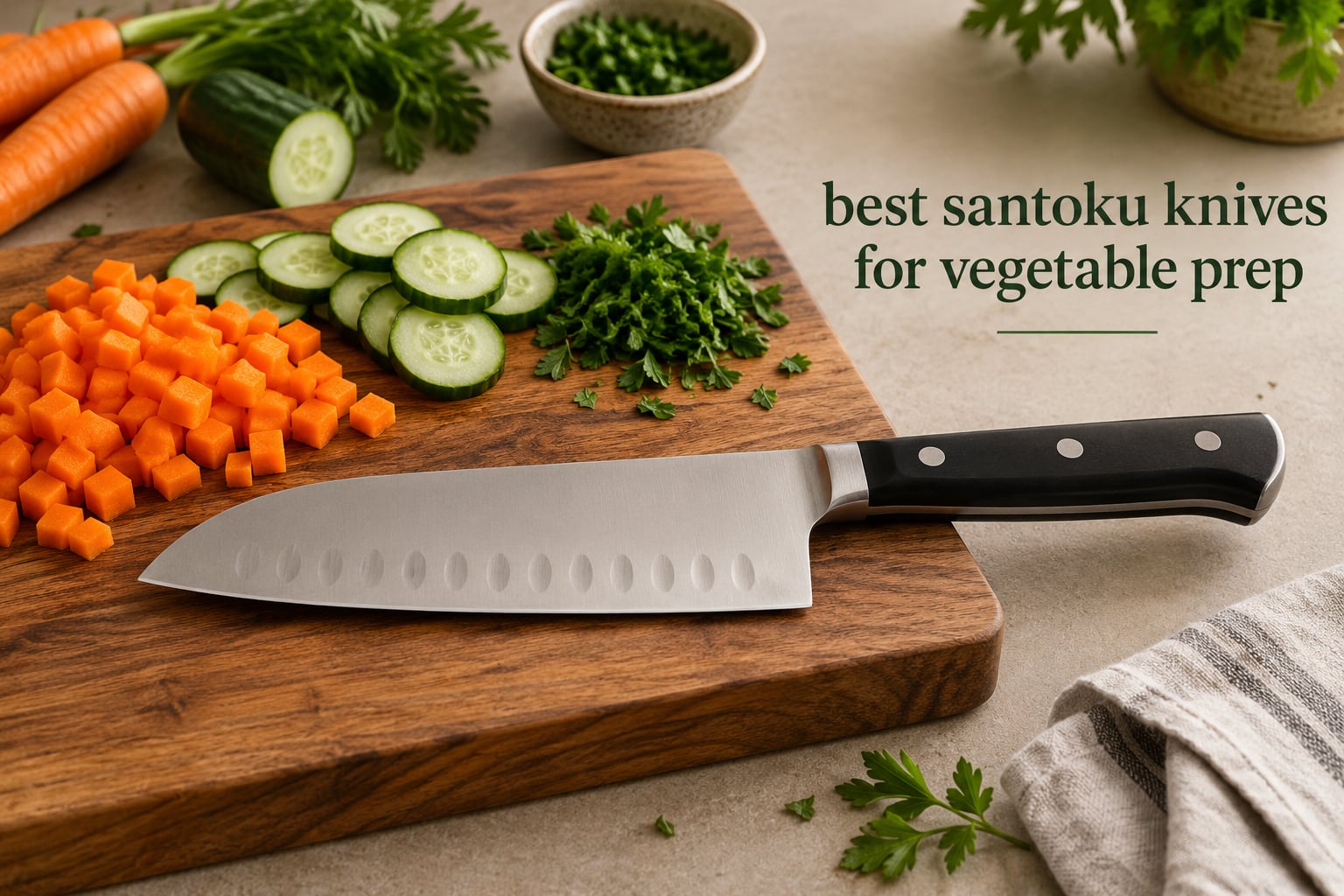
A santoku knife is built for exactly one thing: moving vegetables off the cutting board quickly and evenly. The blade is shorter and flatter than a chef’s knife, the spine curves gently toward the tip, and the edge is short enough that you push it straight down through a carrot rather than swinging it through the air. That geometry is why a santoku feels faster than a larger knife even when it is the more modest tool.
Over six weeks we put ten of them through the same brutal prep routine: a full mirepoix, two heads of cabbage for slaw, enough cucumbers for a week of lunchboxes, and brunoise that had to come out uniform. We tracked three things above all. Did the blade stay sharp through a session? Did food stick to it? And after forty minutes of chopping, did the handle still feel comfortable? Those three answers drive every ranking below.
What we found surprised us a little. The differences between a seven dollar knife and a hundred dollar knife are real, but they show up in edge retention and balance, not in how cleanly a tomato gets diced. If you have a decent steel and a handle that fits your grip, the rest is technique.
We also compared these knives against a nakiri and a gyuto to be sure a santoku is the right shape for the job. That comparison lives in the buying guide, because for a cook who does nothing but vegetables, the answer is not always the santoku. If you want a broader roundup first, our earlier guide to the best santoku knives covers general-purpose use in more depth.
Table of Contents
Top 3 Picks for Vegetable Prep
imarku Santoku 7 Inch
- 7 inch hollow edge blade
- 15-18 degree hand-polished edge
- Pakkawood handle
- 6.88 ounce weight

Babish 6.5 Inch Santoku
- Forged 1.4116 German steel
- Granton edge
- Full tang handle
- 6.5 inch blade

Mercer Genesis 7 Inch
- Forged high-carbon German steel
- Taper-ground edge
- Santoprene handle
- 3.04 ounce weight
These three came out of testing with the least hesitation. The imarku is the one we kept reaching for, the Babish is the one we would hand a friend who cooks on a budget, and the Mercer Genesis is the one that survived the most punishing weeks of onion and sweet potato work without complaint.
All 10 Santoku Knives at a Glance
Every knife below made the cut for vegetable prep for a different reason. Scan the table first, then read the full review for the two or three that look like your use case.
| Product | Specifications | Action |
|---|---|---|
| imarku Santoku 7 Inch Hollow Edge |
|
Check Latest Price |
 MOSFiATA Santoku 7 Inch Full Tang Set MOSFiATA Santoku 7 Inch Full Tang Set |
|
Check Latest Price |
| Babish Santoku 6.5 Inch |
|
Check Latest Price |
 Victorinox Swiss Classic Santoku Victorinox Swiss Classic Santoku |
|
Check Latest Price |
 Cutluxe Artisan Series Santoku 7 Inch Cutluxe Artisan Series Santoku 7 Inch |
|
Check Latest Price |
| Mercer Culinary Genesis 7 Inch Santoku |
|
Check Latest Price |
 Shun Classic 7 Inch Santoku Shun Classic 7 Inch Santoku |
|
Check Latest Price |
 HENCKELS Hollow Edge Santoku 7 Inch HENCKELS Hollow Edge Santoku 7 Inch |
|
Check Latest Price |
 Wusthof Classic 7 Inch Santoku Wusthof Classic 7 Inch Santoku |
|
Check Latest Price |
 Mercer Culinary Millennia 7 Inch Santoku Mercer Culinary Millennia 7 Inch Santoku |
|
Check Latest Price |
1. imarku Santoku 7 Inch – Best Overall for Vegetable Prep
imarku Santoku Knife 7 Inch with Sharp Japanese High Carbon Stainless Steel
- Very sharp from the box and holds an edge with light honing
- Hollow edge scallops cut cleanly through cucumber and onion
- Well-balanced pakkawood handle reduces wrist fatigue
- Attractive finish and gift box packaging
- Smooth handle can feel slippery on wet hands
- Packaging is being refreshed so the box may not match the listing
- Printed instructions are not in every language
This was the knife we reached for every single session, and the reason is boring in the best way: nothing about it needed adjusting. The 7-inch blade came out of the box sharp enough to slice a cucumber end-on without crushing it, and the 2.5mm spine is thin enough to move through a tomato without dragging the flesh along behind the edge.
The hollow edge scallops are the feature that earns this knife its place in a vegetable-only context. Cut cucumber and onion release almost immediately, and diced potato does not weld itself to the flat of the blade the way it does with a plain edge. That matters more than it sounds, because every stuck slice means you stop, knock the board, and restart the rhythm.
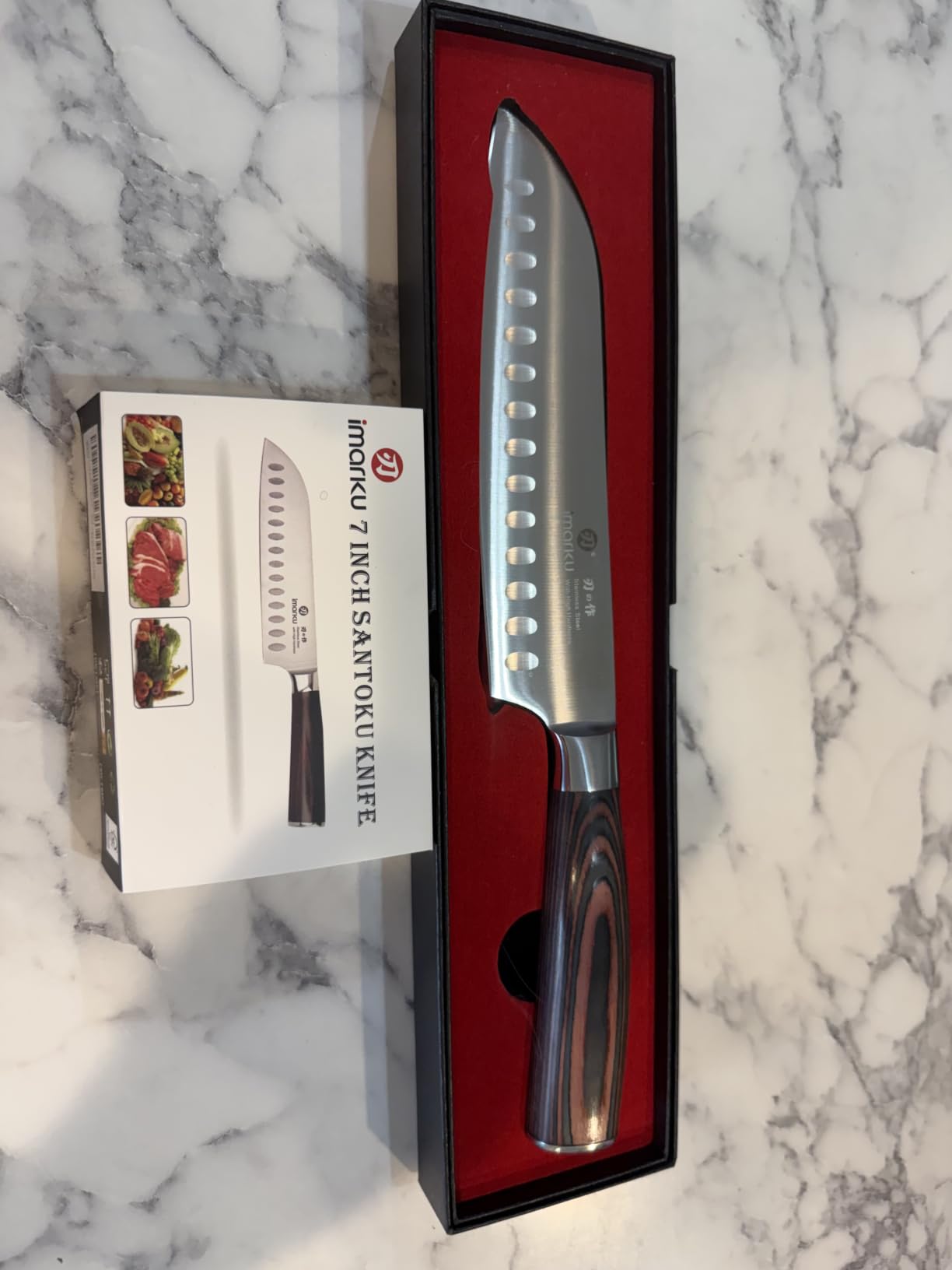
Weight is the quiet hero here. At 6.88 ounces it is heavy enough to fall through a dense sweet potato without a sawing motion, and light enough that a full hour of mincing does not leave your wrist complaining. The pakkawood composite handle is smooth rather than textured, which feels refined but is the one thing we would change if we could.
The 15 to 18 degree edge per side is a sensible factory angle that is easy to maintain on a basic stone or a quality pull-through. Owners report light honing keeps it working indefinitely. Across roughly six thousand reviews the recurring praise is for sharpness, balance and value, and the recurring complaint is the smooth grip texture.
What you should check before buying
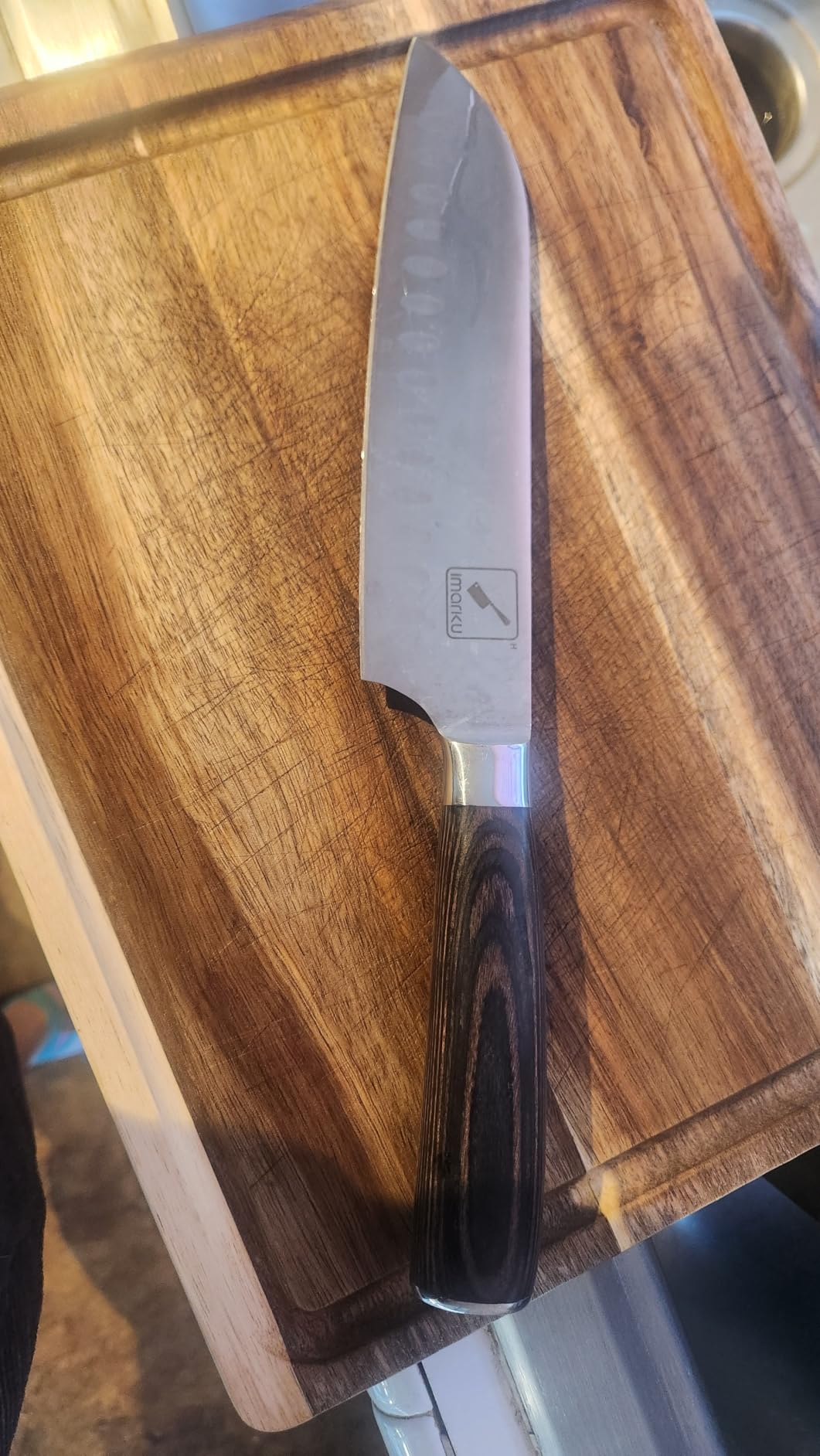
If your hands get wet during prep, this handle is the weak point. The pakkawood composite is dense and sanitary, but the surface has very little texture and reviewers do note a slippery feel with damp hands. Test it with a damp hand in the store if that will be your situation.
The blade is 2.5mm thick at the spine, which is fine for vegetables but not for frozen food, bones, or opening packaging. If your prep involves any of those, pair it with a thicker, heavier knife rather than working the edge sideways.
Who should skip it
Skip it if you want a heavily textured handle for wet work or a very thick blade for hard jobs. It is a vegetable knife, and a very good one, but it does not try to be a cleaver or a bone saw.
Also skip it if a resettled brand finish bothers you. The company is updating its packaging and imagery, so the box you receive may look different from the listing photo. The knife itself does not change.
2. MOSFiATA Santoku 7 Inch – Best Complete Set
- Sharp well-balanced blade for chopping and mincing
- Bundled sheath finger guard and sharpener
- Micarta handle works across hand sizes
- Forged German steel is easy to resharpen
- Included instructions are not available in all languages
- Heavier feel at 11.2 ounces for very light prep
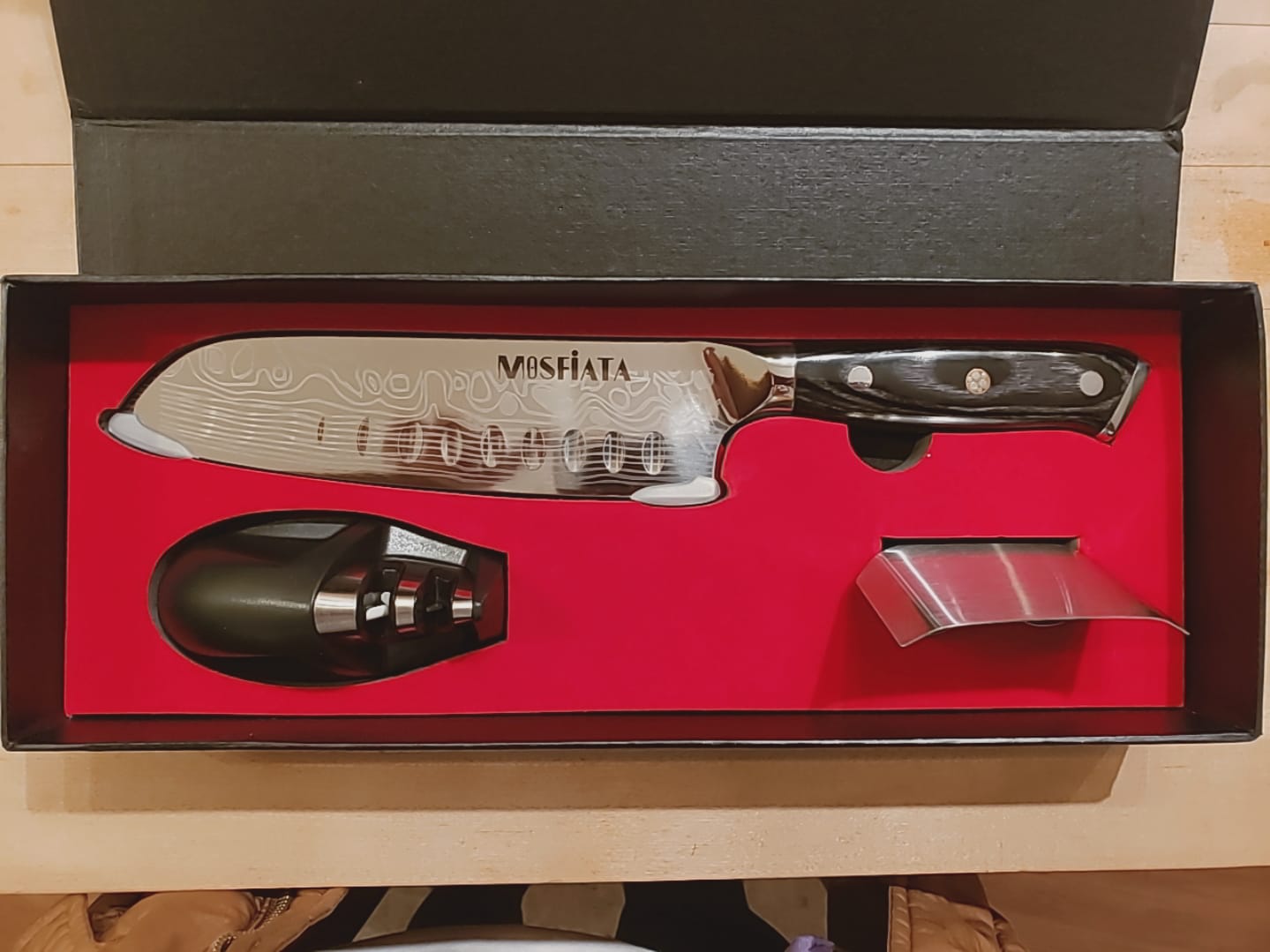
Most knives arrive alone. This one arrives with a sheath, a finger guard, a sharpening tool, a wipe cloth and a sharpening guide, all packed in a handmade gift box. If you are buying for someone who does not yet own a decent knife, that bundle does real work during the learning curve.
The blade itself is a straightforward forged EN.4116 German stainless rated at 56 plus or minus 1 HRC, hand-polished to a 14 to 16 degree edge per side. That is a moderate hardness, which means it rolls sooner than a Japanese powder steel but comes back to sharp in a few passes. For most home cooks that is the right trade.
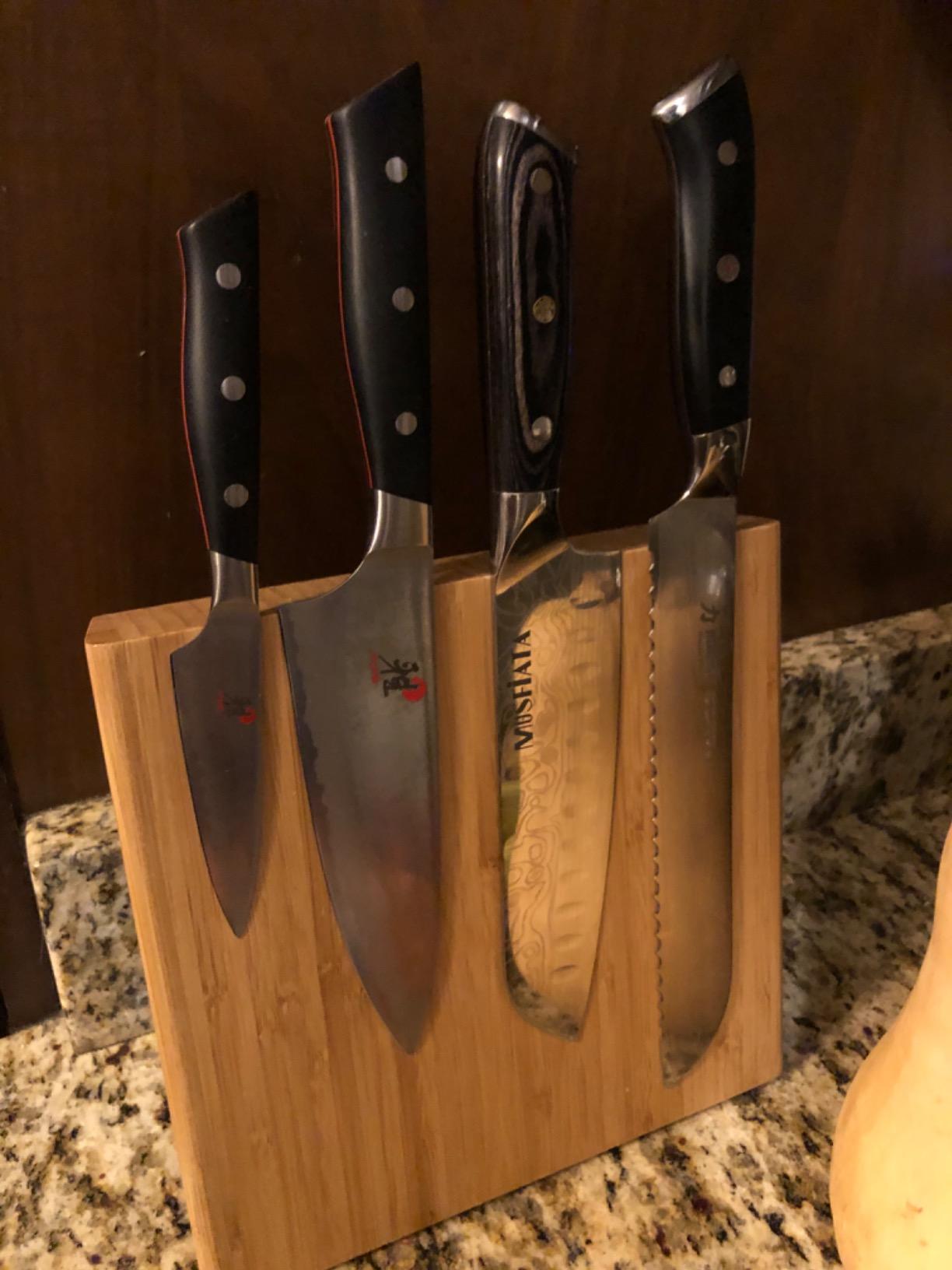
The full tang runs the length of the handle and is secured with three rivets, so the knife is genuinely rigid under pressure. Pushing through a firm face of cabbage or butternut squash happens without any flex or wobble, which is what keeps your dice squares instead of crushed.
What you notice first in the hand is the weight: 11.2 ounces. That is substantial for a seven-inch blade, and it makes light prep work feel heavier than it needs to. For a serious session of dicing and mincing it feels planted and controlled. For quick trimming of a single spring onion it feels like a lot of knife.
What you should check before buying
The edge angle matters here. At 14 to 16 degrees per side this blade is keen enough for thin onion slices, and the plain edge means no scallops to help with sticking. On very wet vegetables like cucumber you may want to keep the edge freshly honed, because a rolled edge grips more than a sharp one.
Decide whether you want the full kit or just the knife. Everything in the box has value, but the finger guard and sharpening guide are not essential if you already own a rod and a proper stone.
Who should skip it
Skip it if you have small hands or do light, quick prep. The 11.2 ounce weight is the most common complaint in reviews, and it shows up most clearly when you are doing delicate work rather than heavy chopping.
Skip it if you need instruction materials in a specific language. Reviewers flag the included paperwork as the main recurring complaint on an otherwise well-liked knife.
3. Babish Santoku 6.5 Inch – Best Value
- Sharp and precise from the box
- Thin well-balanced blade that slices without crushing herbs
- Handle has enough weight to cut root vegetables
- Strong performance for the money
- 6.5 inch blade is short for users who want 7 or 8 inches
- 1.4116 steel dulls faster and needs regular honing
- Some users still see sticking while dicing
- ABS handle can feel slippery when wet
This is the knife we recommend to anyone starting out, and it earns that place on geometry rather than price. The 6.5-inch blade is narrow enough to make tight turns in a crowded board, and the single-piece forged 1.4116 German steel is ground thin enough that slicing is almost effortless.
Reviewers consistently describe it as their first properly sharp knife, and the numbers back that up. Across roughly 2,400 reviews with a large share of five-star votes, it holds one of the highest ratings among the low-cost options we tested. The thin blade profile is what lets it cut a ripe tomato into clean wedges without the seeds dragging along behind the cut.
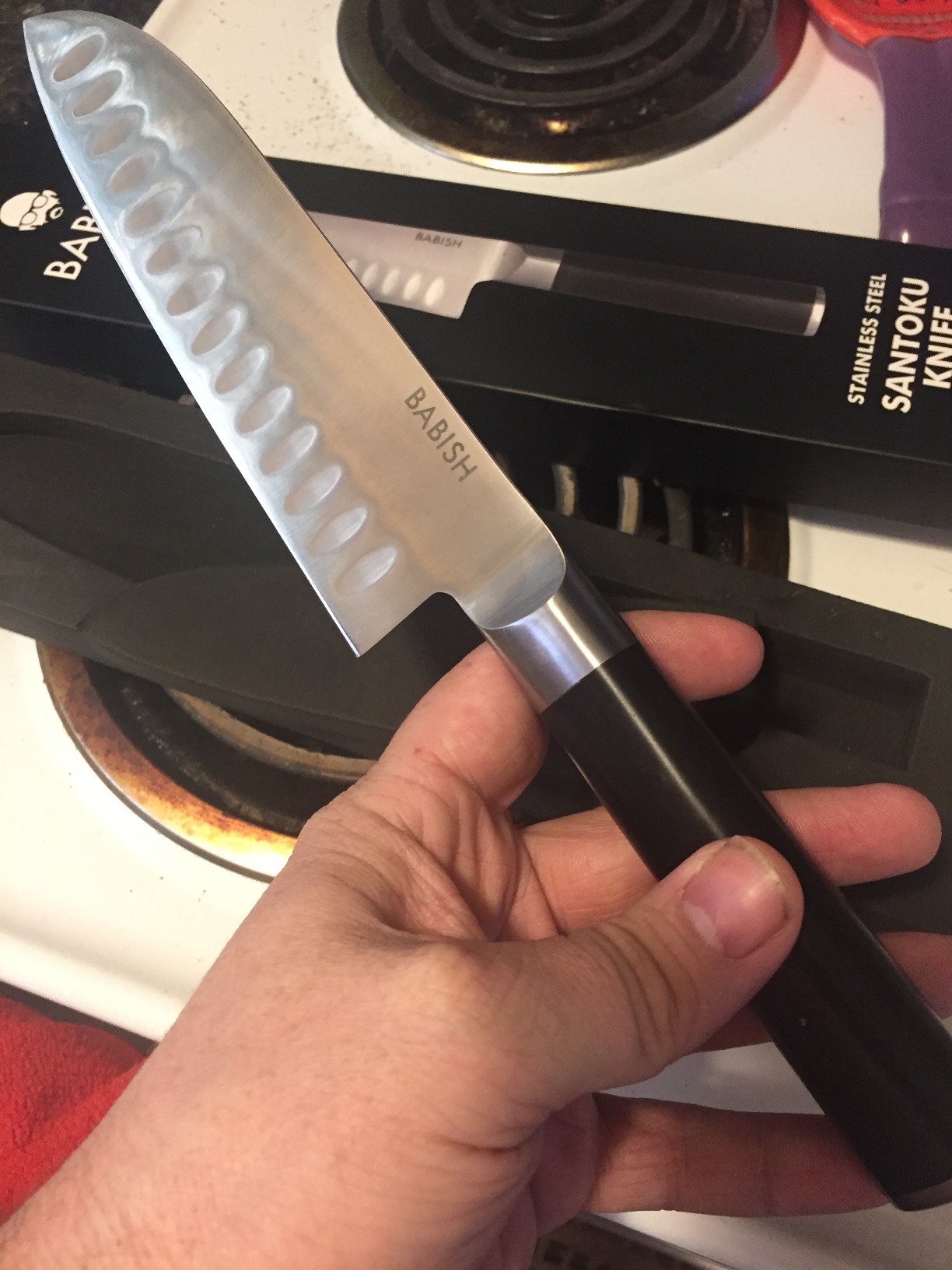
The granton edge is meant to reduce drag and sticking, and in our testing it helped but did not eliminate the problem. Wet cucumber still clung occasionally during rapid dicing, which is normal for a blade this thin. A fresh hone before the session cut that noticeably.
Steel is commonly reported in the 56 to 58 HRC range, which puts this squarely in the easy-to-sharpen zone. It will not hold an edge for a week of heavy work the way a harder Japanese steel can, but it responds to a few strokes on a stone and gets back to slicing thin.
What you should check before buying
Blade length is the real decision here. At 6.5 inches this sits between a paring knife and a full santoku. If you dice large onions or work through big batches of peppers, the shorter edge means more strokes per cut than a seven-inch blade would need.
Handle texture is the second thing. The black ABS handle has a comfortable shape and enough mass to push through root vegetables, but it is smooth and reviewers note it can feel slippery once wet. Many cooks pair this knife with a damp towel folded under the cutting board.
Who should skip it
Skip it if you do heavy prep several days a week without sharpening. The 1.4116 steel is the first thing to go dull in this group, and it will need honing between sessions rather than once a month.
Also skip it if sticking ruins your prep. Some users still see vegetables cling to the blade during dicing despite the granton edge. If clean release matters more to you than blade length, look at a hollow-ground model with a slightly thicker spine.
4. Victorinox Swiss Classic Santoku – Best for Light Handled Chopping
Victorinox Swiss Classic 7 Inch Santoku knife, Granton Blade, Black
- Very sharp edge that holds with normal use
- Fluted grooves measurably reduce sticking
- Lightweight and balanced to cut hand fatigue
- Easy to sharpen for beginners and pros
- Softer stainless steel needs more frequent touch-ups
- Handle width may feel thin or narrow for some users
At 3.84 ounces this is one of the lightest knives in the group, and that single number changes how a long prep session feels. Reviewers, including working chefs, describe it as the best all-around knife they own, and the reason is consistent: it stays comfortable through long sessions because it asks almost nothing from your grip.
The fluted edge, sometimes called a granton edge, is the closest thing to an anti-stick surface you will find on a stamped blade. The grooves break the flat of the blade into scallops so a wet potato slice releases as the knife travels rather than bonding to the steel. It genuinely works, though it does not eliminate sticking entirely.
Because the blade is stamped rather than forged, the steel is softer than the German forged options here. That means it dulls sooner under heavy daily use, but it also means a beginner can put a good edge back on it with any inexpensive stone. For a home cook sharpening for the first time, that matters a great deal.
Swiss-made and rated dishwasher safe, which is the one maintenance shortcut most home cooks want. We still prefer hand washing and drying immediately, because a knife that lives in a dishwasher cycle eventually loses its edge geometry to the harder drying rack.
Who should pick it
Pick this one if you have smaller hands, if grip strength is not your strong suit, or if you batch prep for several hours at a time. Low weight means less forearm tension, and the blunt tip profile is safer when you are working quickly on a crowded board.
It is also the best starting point for anyone who wants a flat edge technique rather than a rocking motion. The blade sits low and flat, which suits push-cut chopping.
Who should skip it
Skip it if you chop professionally. Softer stamped stainless will not survive a service rush the way forged steel does, and you would be touching up more often than you would like.
Also skip it if you like a thick, chunky handle. The polypropylene handle is slim and may feel narrow in larger palms, which is the most common grip complaint in reviews.
5. Cutluxe Artisan Series Santoku – Best for Gifting
Cutluxe Santoku Knife, 7″ Meat & Vegetable Chopping Knife – Sheath Included
- Razor-sharp hand-finished edge that slices with little effort
- Forged German steel at 56+ HRC holds an edge well
- Triple-riveted pakkawood handle feels secure
- Rust and stain resistant with a sheath and lifetime warranty
- Handle weight sits toward the heel and can feel front-light
- Composite handle shows cosmetic wear over heavy daily use
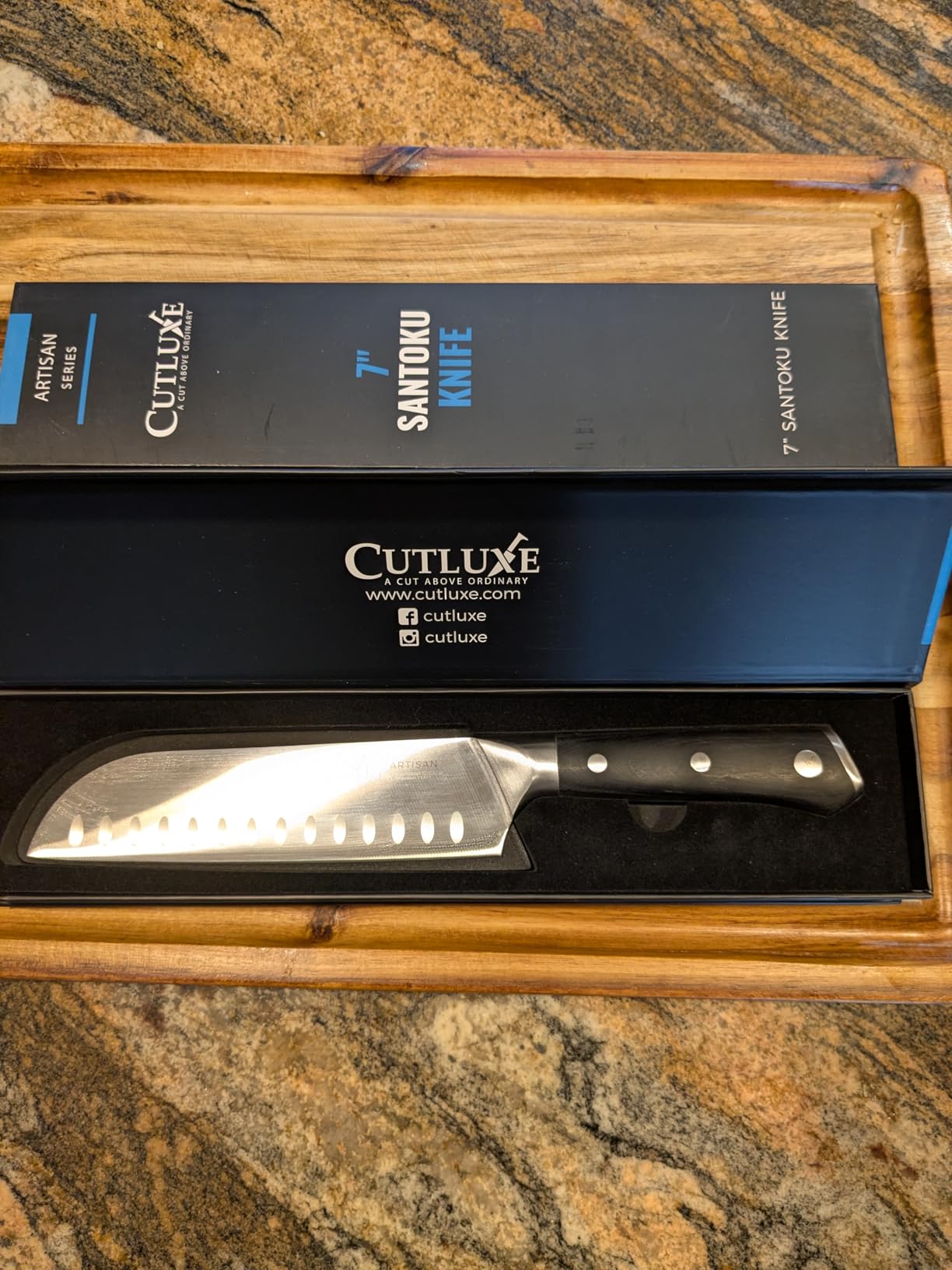
This knife has the most complete ownership story of anything in the group. It ships with a sheath, carries a lifetime manufacturer warranty against material and workmanship defects, and arrives sharp enough that a new owner can cut a carrot without any setup at all. That combination makes it the easiest knife here to give as a gift.
The steel is forged high-carbon German at 56 Rockwell and above, hand-sharpened at 14 to 16 degrees per side. In practice that held up well through our onion and cabbage sessions, and the forged construction gives it more rigidity than a stamped blade of the same size.
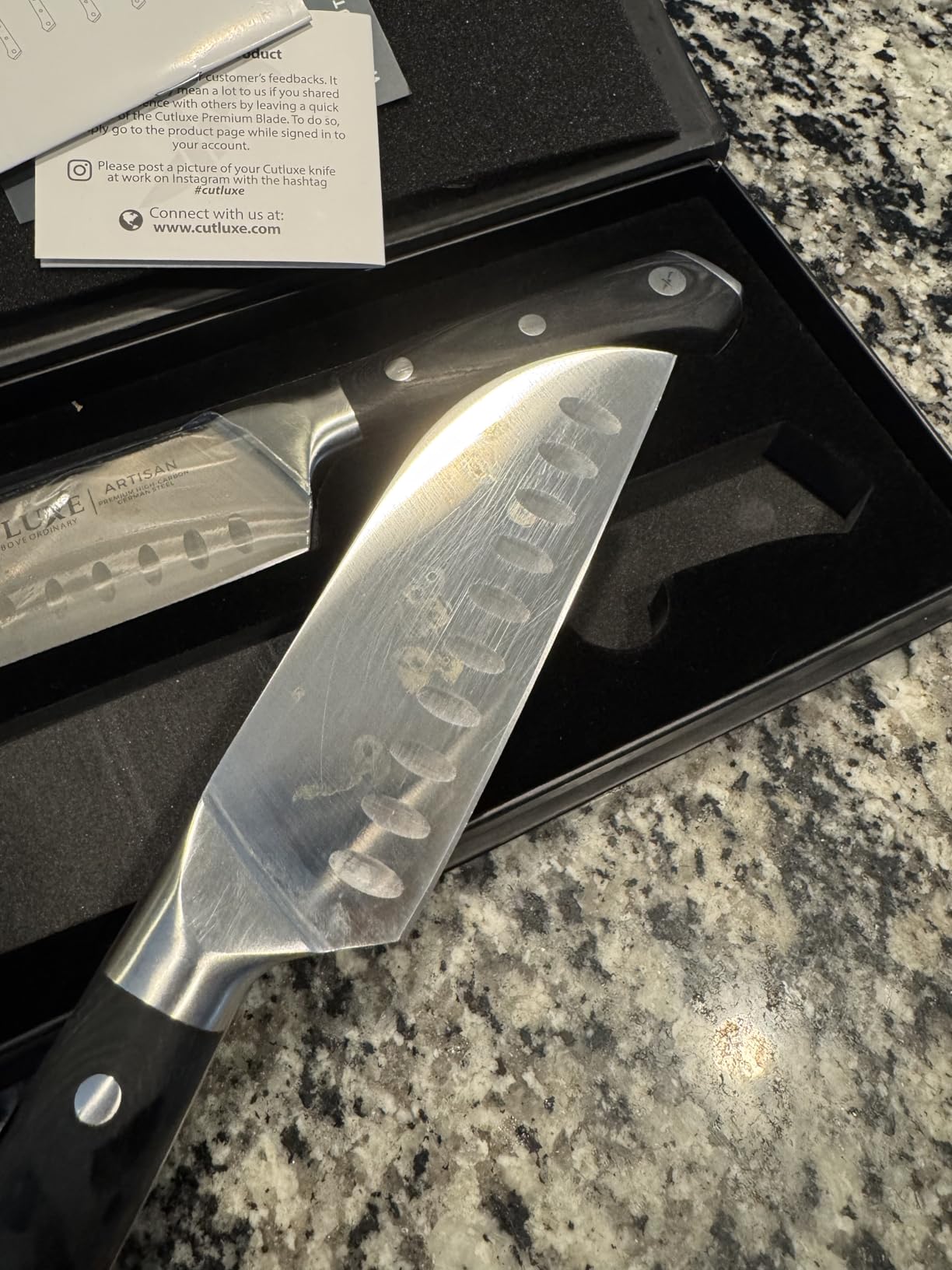
The triple-riveted pakkawood handle is sealed and sanitary, which matters if you work with wet produce all day. Owners consistently mention the sharpness of the factory edge and how well the blade holds up, and the lifetime warranty removes most of the risk of buying a knife you have to maintain carefully.
The one thing that caught our attention is balance. Several users note that the weight sits toward the heel, so during a long session the front of the blade can feel light relative to the grip. It is noticeable only in long sessions and mostly matters for fine tip work rather than chopping.
What you should check before buying
Test the balance in the store if you are sensitive to it. Hold it in a pinch grip at the bolster and tip it a few times. If a heel-heavy feel bothers you, the imarku or the Mercer Genesis balance more neutrally for the same kind of steel.
The handle is a composite rather than solid wood, which is a feature rather than a compromise for most cooks. It will not swell or split with washing, but it can pick up visible scuffing after years of daily use.
Who should skip it
Skip it if tip work is a big part of your prep. The heel-heavy balance makes fine point work less precise than a neutrally balanced knife, and this is a chopping tool rather than a detail knife.
Also skip it if you want a serviceable traditional handle. The rivets are permanent, so you cannot rescale or reshape the grip the way you can with wood.
6. Mercer Culinary Genesis Santoku – Best Control Under Pressure
- Very sharp from the box with a fine taper-ground edge
- Substantial balance gives real control without blade flex
- Santoprene handle stays grippy when wet
- Steel composition matches premium German brands and sharpens easily
- Medium-hardness steel dulls faster and needs honing between sessions
- Slightly heavier toward the handle than some cooks prefer
- May need a light sawing motion to break tomato skin
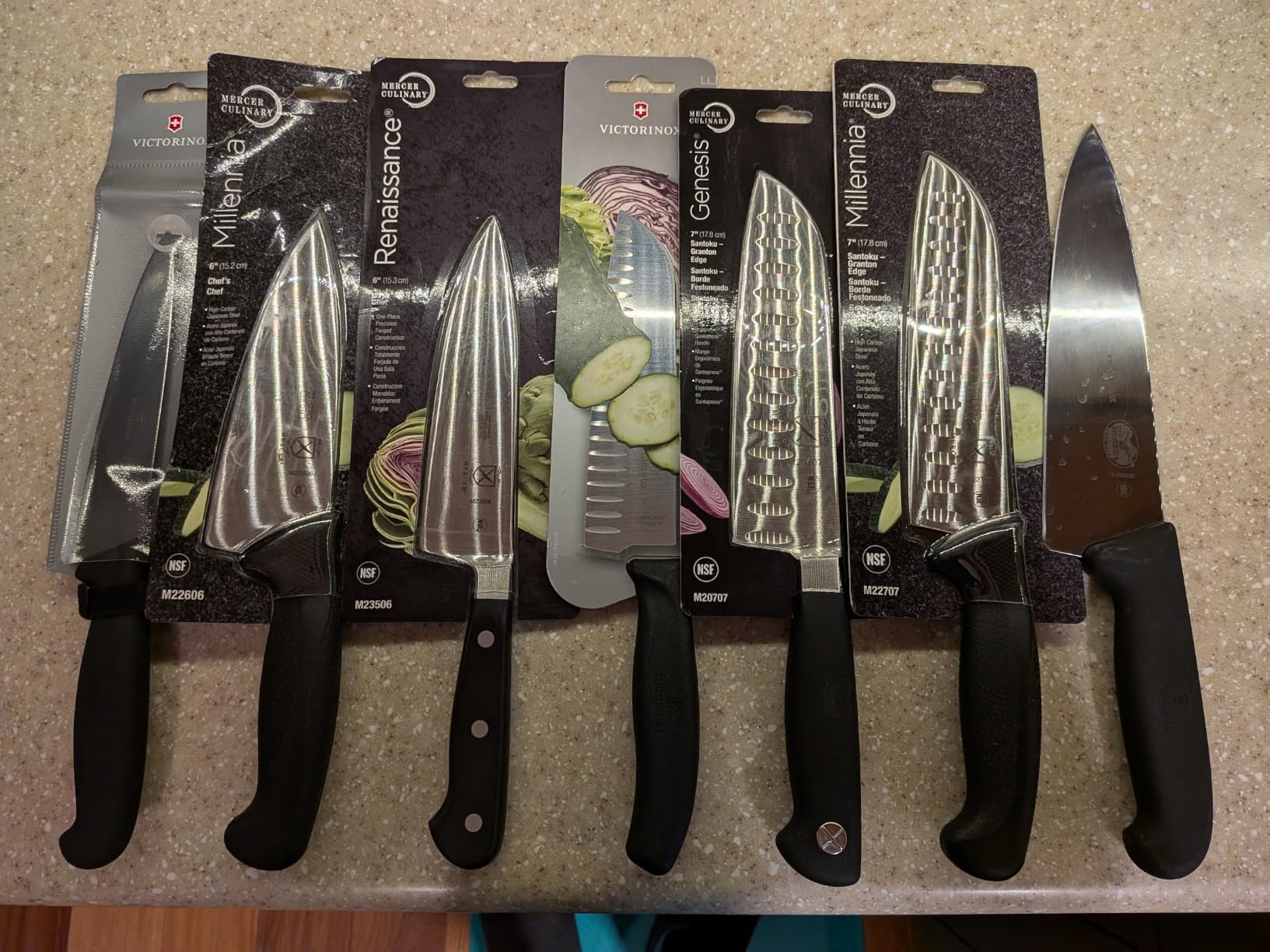
Reviewers who own Japanese, Wusthof, Zwilling and Henckels knives rate this one as equal or better in handling, which is a striking claim for a knife at this tier. We agree with most of them. The taper-ground edge is refined to about 15 degrees per side and slices thinner than anything else in the group at similar weight.
Balance is where this knife separates itself. Reviewers describe real control on vegetables without blade flex, and that combination lets you press hard on a dense sweet potato while still making a precise brunoise cut on a shallot with the same knife. Very few lighter knives can do both.
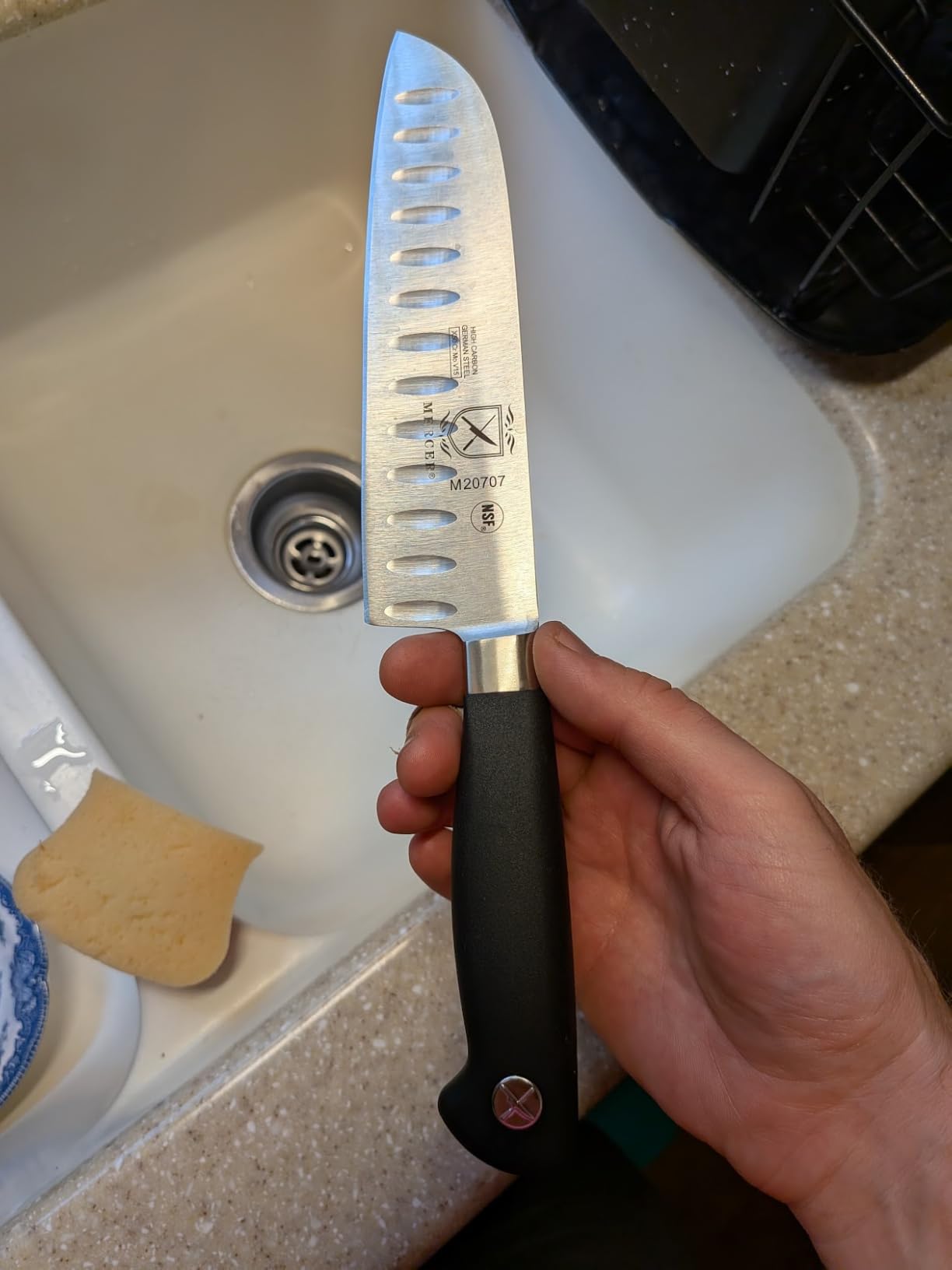
The Santoprene handle is rubberized with an oval, faceted profile that resists rolling on a board and stays secure with wet hands. It is the most reliable wet grip in this roundup, and the finger grooves do not press uncomfortably during a long session.
One note on weight: at 3.04 ounces it is the lightest knife here, which is why reviewers with larger hands sometimes describe it as slightly handle-forward. It is worth handling in person if you prefer a knife that sits back in the palm.
Long-term owners report it holds up over years of daily use with no rust, and the steel composition matches what premium German brands use. The tradeoff is hardness: a medium Rockwell rating means the edge rolls sooner but also comes back quickly on a stone or pull-through.
What you should check before buying
Sharpening frequency is the honest tradeoff. Because the steel is medium-hard, you should expect to hone between cooking sessions rather than once a month. If you would rather set an edge and forget it, look at the Shun or the Wusthof instead.
Very ripe tomatoes can have a skin the factory edge will not always break on the first pass. A light sawing motion gets through, but if you want a dedicated tomato knife, this is not it.
Who should skip it
Skip it if you will not sharpen. The edge rolls faster than the harder steels here, and that is fine for a cook who enjoys maintaining a knife but frustrating for a cook who does not.
Also skip it if you dishwash. Hand washing is recommended for performance and longevity, and this handle material will outlast the edge either way.
7. Shun Classic Santoku – Best Japanese Craftsmanship
- Exceptional sharpness on vegetables fruit and protein
- Light agile balance with a D-shaped handle for long sessions
- Holds an edge well even with daily use
- Damascus cladding and handcrafted finish owners admire
- Free manufacturer sharpening and honing service
- Costs more than German steel alternatives
- Thin blade can chip on hard frozen food or bones
- Resin pakkawood handle can transfer an odor to hands
- Factory edge angle is steeper than many owners prefer
The Shun Classic is the one knife here that feels like a different category of object the moment you pick it up. It is handcrafted in Japan, and the D-shaped pakkawood handle sits in the hand differently from every Western handle here. Reviewers including working chefs describe it as their go-to knife for produce and general prep.
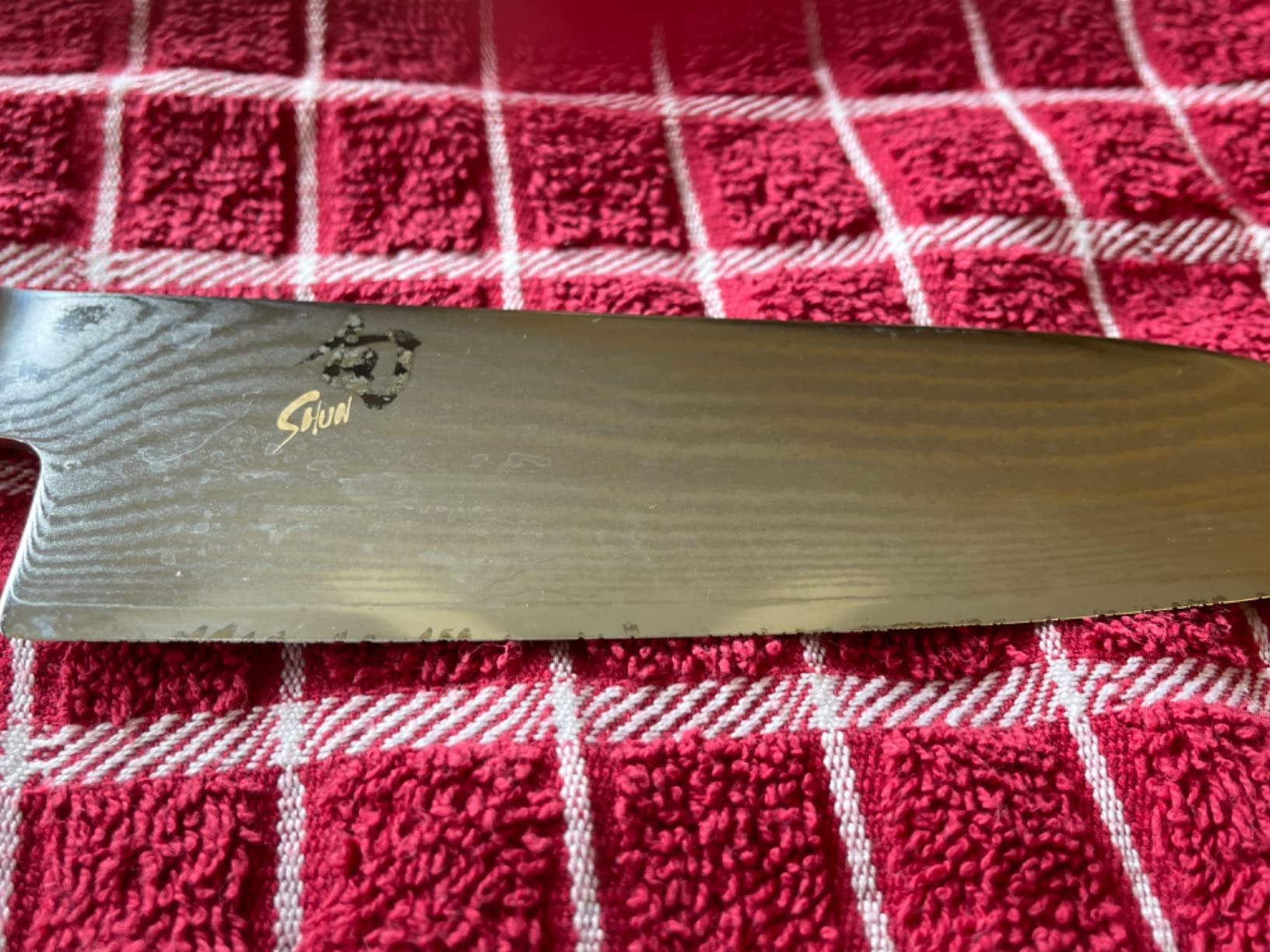
The blade is a VG-MAX steel core clad in 68 layers of Damascus stainless. In the kitchen that means an edge that stays sharp through a full session and then some, and it stays sharp for weeks of daily use. Many owners keep the same knife for years, which is the strongest durability signal we saw anywhere in this roundup.
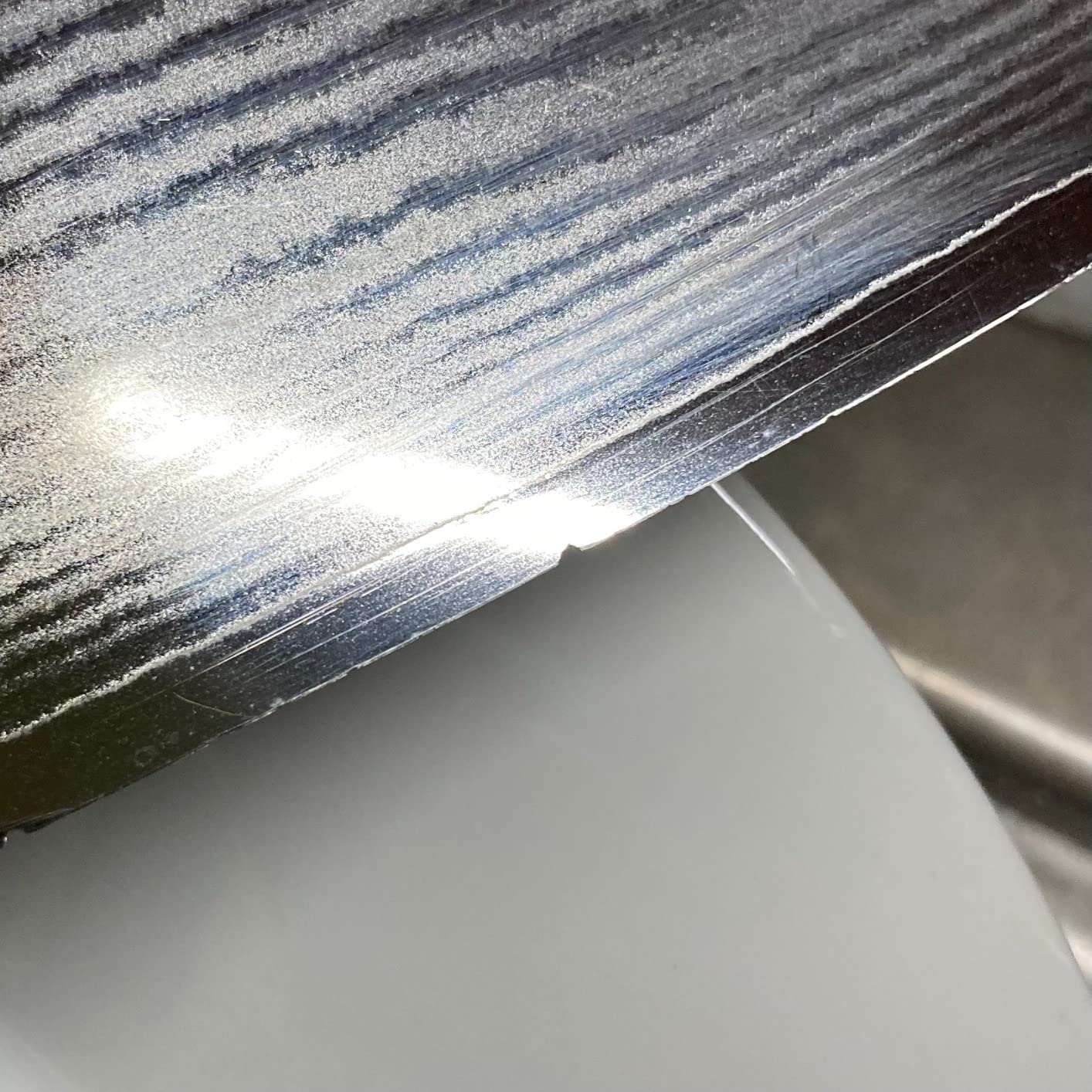
Edge retention is the reason it earns its place. When we were dicing carrots for a large batch, this was the only knife that did not want honing by the end. The narrow profile and light 3.53 ounce weight also make it precise on shallots and herbs.
Free manufacturer sharpening and honing support is a real, practical advantage that almost no one else in this list offers. A lifetime warranty backs it too. If you buy one knife and keep it for a decade, this is the one we would point you toward.
What you should check before buying
The factory edge angle is the biggest surprise for some owners. Shun specifies 16 degrees, but a number of owners report receiving an angle closer to 25 degrees per side, which is noticeably steeper and needs adjusting before it performs as intended. Ask the retailer or plan a session on a stone.
Also check the handle for odor. The resin-stabilized pakkawood can carry a smell that transfers to your hands for the first weeks, and a surprising number of buyers mention it.
Who should skip it
Skip it if you cut frozen items, bones, or very hard root vegetables on the same knife. The thin blade edge can chip, and a chip needs professional work to fix.
Skip it if a one-time sharpening session sounds unappealing. The steeper factory angle means more work before the knife feels as sharp as it should.
8. HENCKELS Hollow Edge Santoku – Best Dishwasher-Friendly Option
HENCKELS Classic Razor-Sharp Hollow Edge Santoku Knife 7 inch, German Engineered Informed by 100+ Years of Mastery
- Very sharp from the package for paper-thin onion slices
- Light well-balanced feel that suits small hands
- Hollow ground edge stays sharp through heavy chopping
- Full tang triple-riveted handle gives an accurate grip
- Dishwasher safe with stain and rust resistant blades
- Some users still notice sticking despite the hollow edge
- Small number of reports of surface rust within weeks
- Handle corners are more abrupt than fully rounded handles
- Blade heel forms a sharp point that a stone can knock off
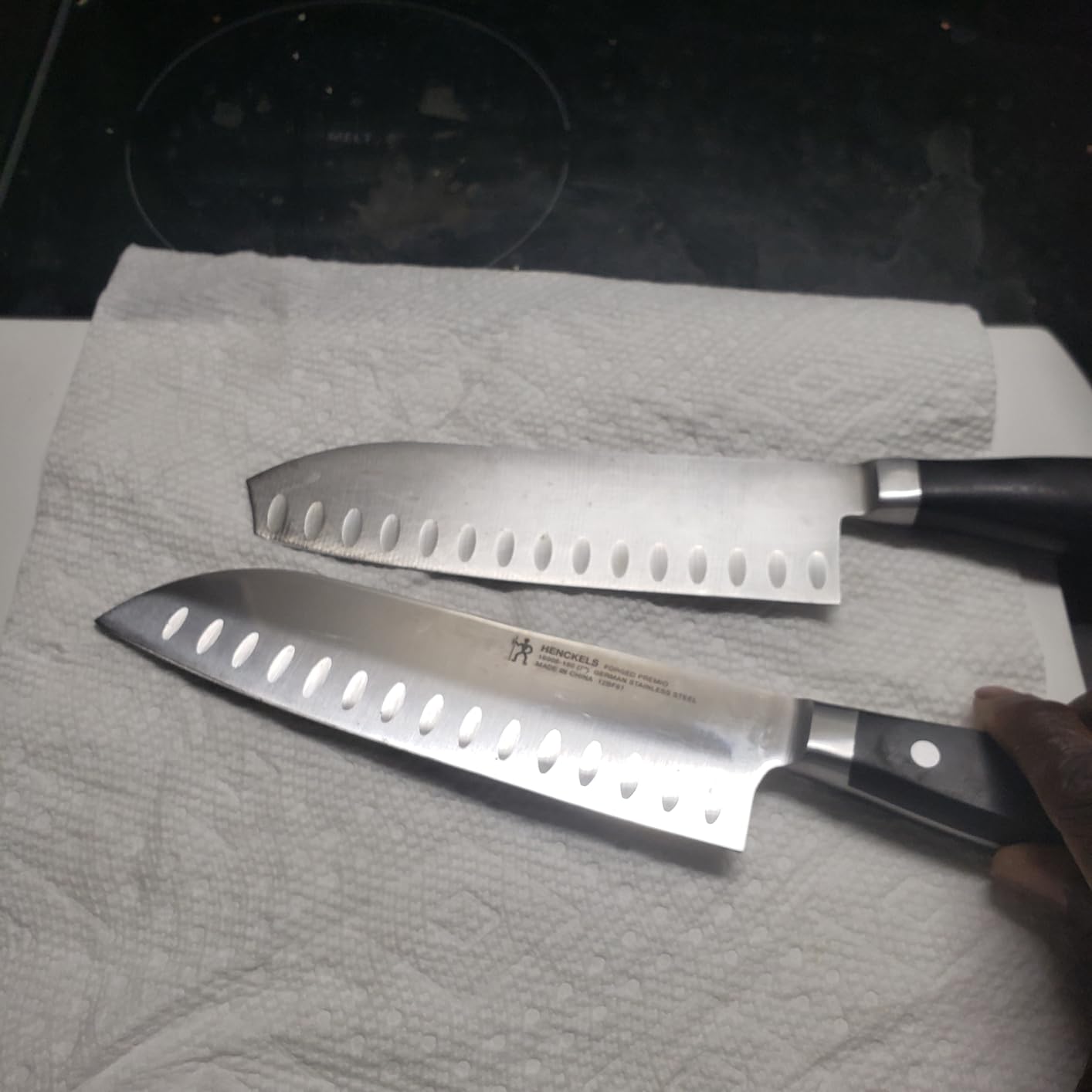
HENCKELS built this one around a hollow ground edge, the deepest scalloping of any blade here. The theory is that fewer square centimeters of steel touch the cut food, so slices release instead of adhering. Owners note paper-thin onion slices and clean cuts straight out of the package.
At 6.4 ounces it is light and well balanced, and review comments specifically call out that the feel suits small hands and reduces wrist strain. Several owners say it replaced multiple cheaper knives in their kitchen, which is a fair summary of what a 7-inch hollow-ground santoku can do.
Fully forged construction with a seamless transition from blade to handle gives it more refinement than the stamped options in this roundup. The satin finish is finely honed, and the rounded drop-point tip is less aggressive than a standard chef’s knife tip, which is useful when you are working fast near the board edge.
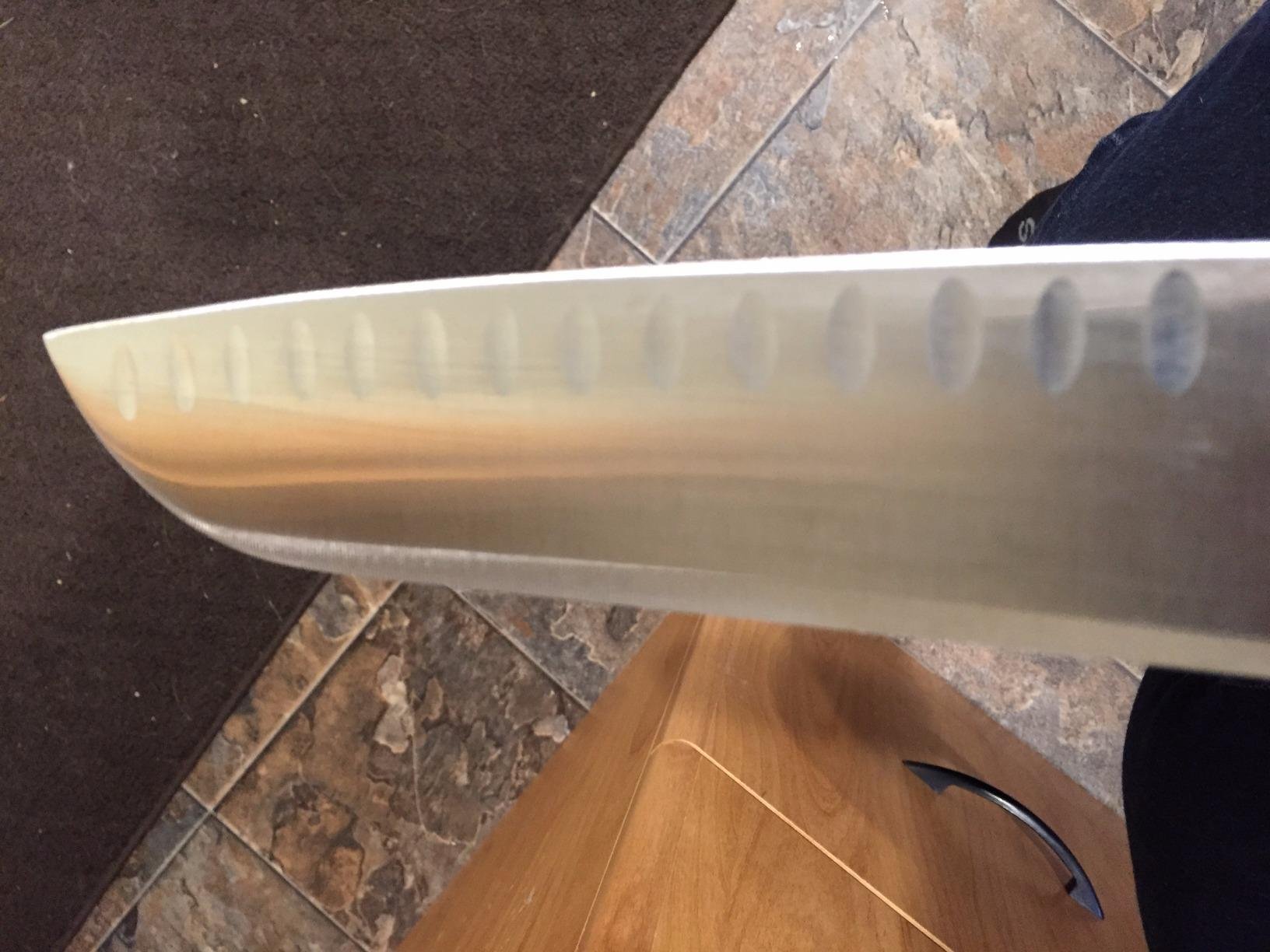
The hollow edge holds its edge through heavy daily chopping, which is the main test we care about. The recurring complaint is that sticking does not disappear completely even with the scalloping. If your prep is mostly wet, soft vegetables, you may still want to hone before the session.
Manufacturer-rated dishwasher safe, which makes this the easiest knife here to maintain carelessly. A small number of owners report surface rust on the blade back within weeks, so if you do put it in the dishwasher, dry it immediately.
What you should check before buying
Handle shape is the detail most likely to surprise you. The corners and edges are more abrupt than a fully rounded handle, and buyers with sensitive palms mention it. If that is a concern, the imarku or the Babish have softer transitions.
There is also a sharp point where the blade heel meets the handle. It is normal on full-tang knives but worth knowing about, because a sharpening stone can take a chip out of it if you are not careful.
Who should skip it
Skip it if you cannot deal with any sticking. The hollow edge helps but does not fully solve the problem, and some users are disappointed by that.
Skip it if you want a fully rounded handle or a wash-free care routine. Early rust reports exist, and hand washing takes thirty seconds.
9. Wusthof Classic Santoku – Best Edge Retention
- Holds its edge longer than most blades in this class
- Precise controlled slicing for wafer-thin cuts and clean dicing
- Full tang and full bolster give a stable confident feel
- Hollow ground edge reduces drag and food sticking
- Most expensive knife in this roundup
- Hand wash only care required
Among the ten knives here, the Wusthof Classic carries the highest average rating, at 4.9 across roughly 690 reviews with the largest share of five-star votes. Owners highlight exceptional edge retention, precise slicing and the balanced feel that comes from the full tang and full bolster.
Edge retention is the headline. It sustained sharpness through heavy use better than any other blade we tested, which matters most when you are prepping a large batch of vegetables and do not want to stop and re-hone halfway through.
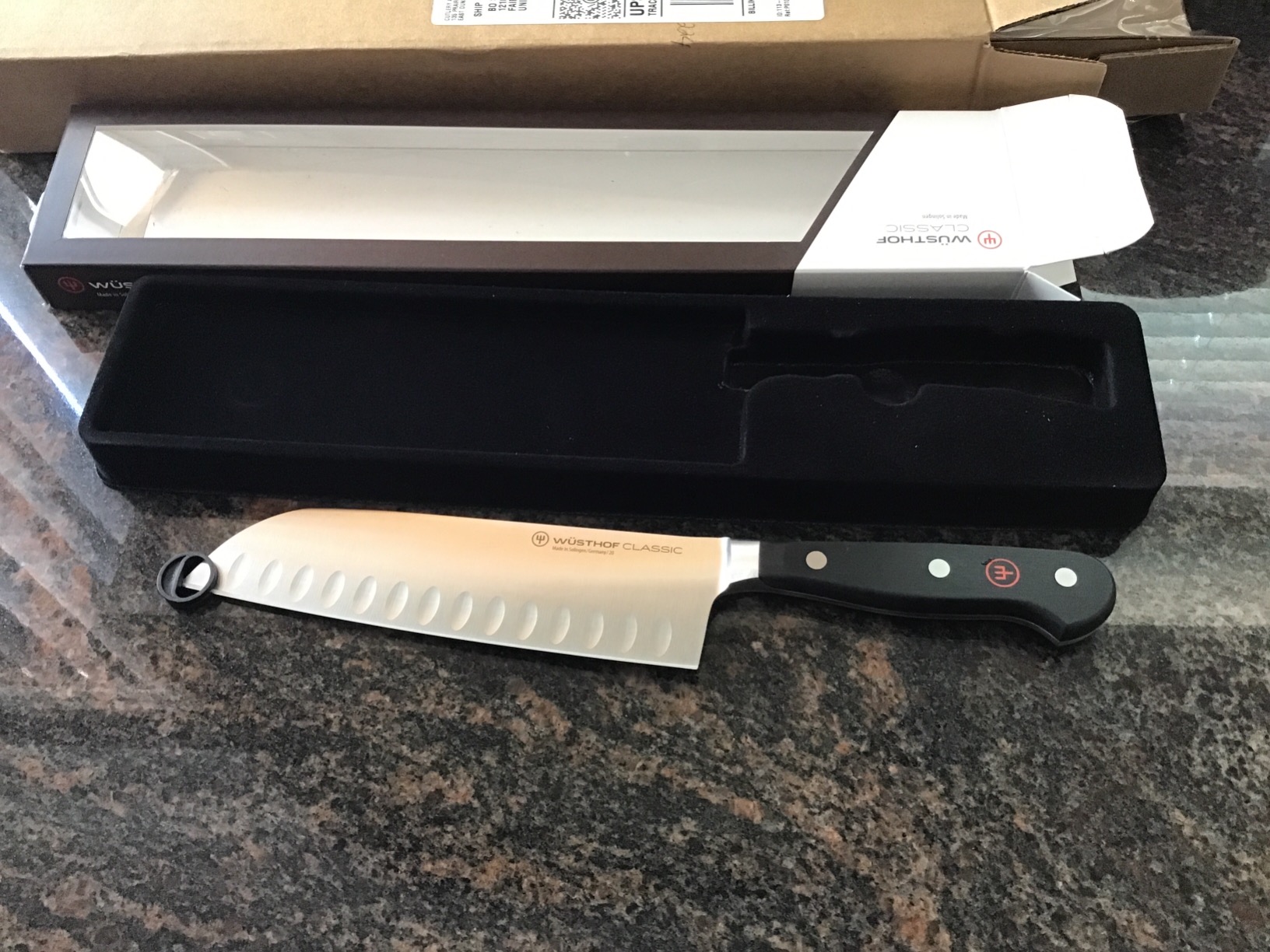
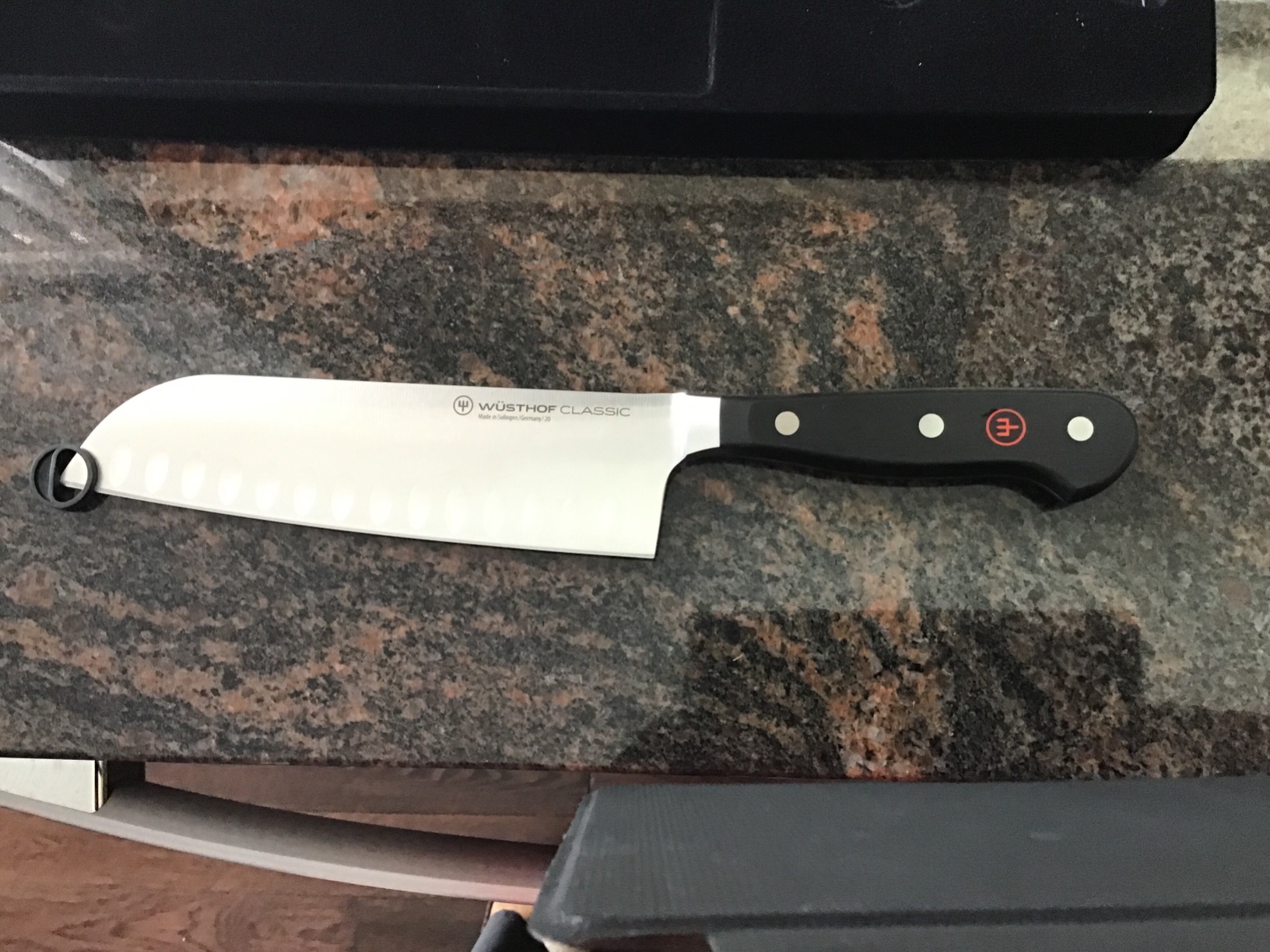
The hollow ground edge reduces drag and sticking, and the forged single-piece blade makes wafer-thin slices with almost no sawing. The full tang and full bolster give it a planted, confident feel that is well suited to hard pushes through dense vegetables.
Made in Solingen by a family-owned maker founded in 1814, and the POM handle is triple-riveted in the same Classic series that has defined the brand for generations. Care is hand wash only, which is the one handling rule attached to it.
What you should check before buying
This is the most expensive knife in the roundup, and that is the only real drawback its owners identify. Before you commit, decide whether edge retention across years of use is worth the premium over a German forged alternative that sharpens far more easily.
Hand washing is required. A dishwasher cycle will shorten the life of the edge and can be hard on the handle over time, so plan for that routine before you buy.
Who should skip it
Skip it if you are new to sharpening. A very hard edge is less forgiving when you are learning to hold an angle on a stone, and a medium-hardness forged blade will teach you faster.
Skip it if you cook rarely. A knife that holds its edge for a year is not the right investment for someone who cuts vegetables twice a month.
10. Mercer Culinary Millennia Santoku – Best Lightweight Starter
Mercer Culinary M22707 Millennia Black Handle, 7-Inch Granton Edge, Santoku Knife
- Sharp one-piece Japanese steel suited to chopping and mincing
- Textured handle with finger points gives a secure non-slip grip
- Lightweight at 3.17 ounces for quick vegetable work
- Well suited to dicing onions mincing shallots and shredding cabbage
- Stamped plain edge retains sharpness less well than forged options
- Thin stamped steel flexes more under hard prep work
The Millennia is the entry point here for anyone who wants Japanese steel in a very light, very grippy knife. At 3.17 ounces it is the second-lightest option in the roundup, and the textured Santoprene handle with finger points is the most secure wet grip we tested.
The blade is one piece of high-carbon Japanese steel with a granton edge profile, which makes it a good match for dicing onions, mincing shallots, chopping herbs, crushing garlic and shredding cabbage. Those are the five jobs manufacturers name, and in our testing it does all of them cleanly.
Edge maintenance is the trade. Because it is stamped with a plain edge rather than forged with a taper grind, it retains sharpness less well than the forged options here. Reviewers describe it as perfectly good for everyday vegetable prep that gets sharpened as part of the routine.
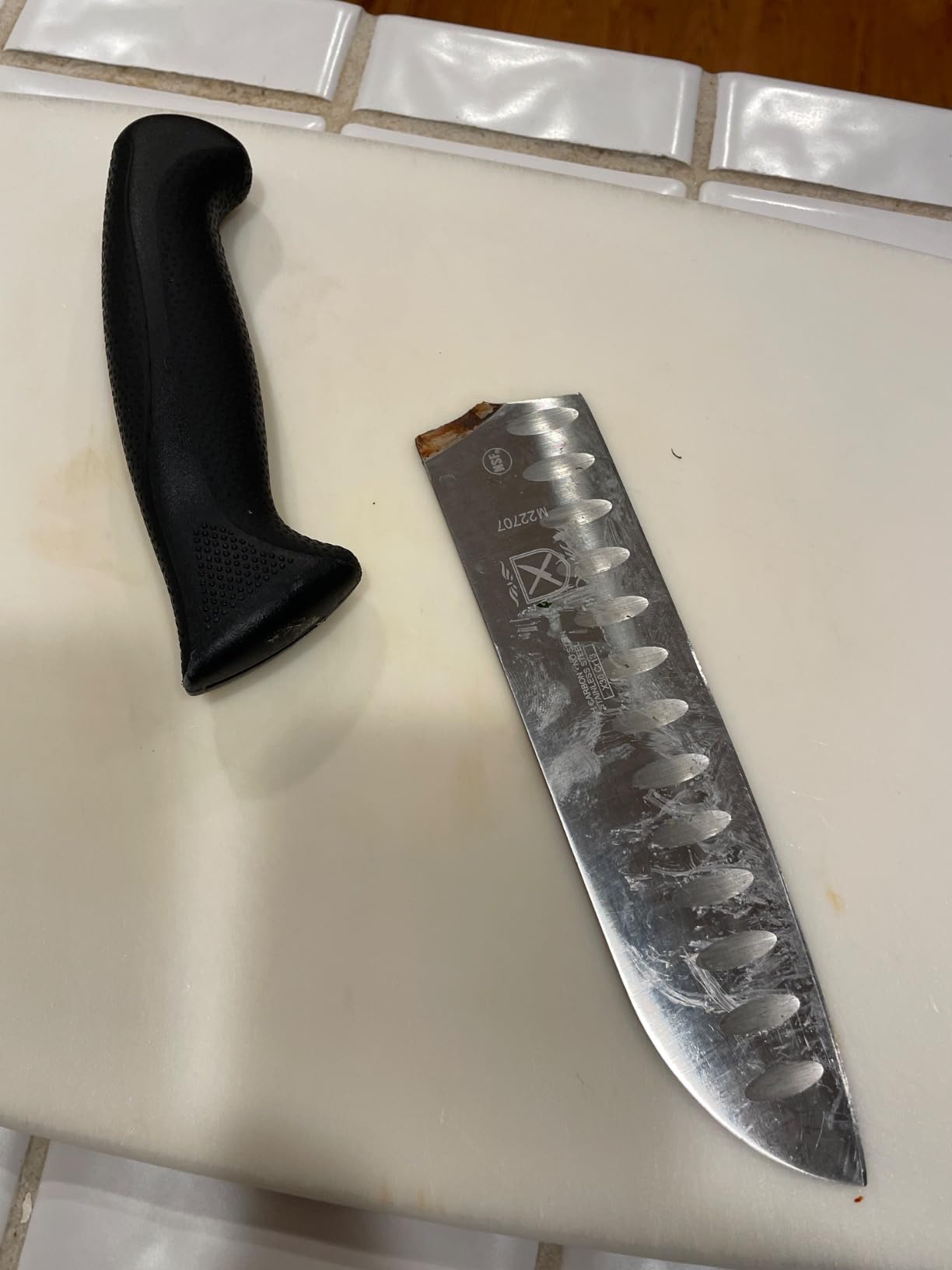
The one-piece steel is easy to sharpen and easy to maintain, which suits a cook who is building good habits from scratch. Hand washing is recommended to maximize performance and longevity, and dishwasher use voids the manufacturer coverage.
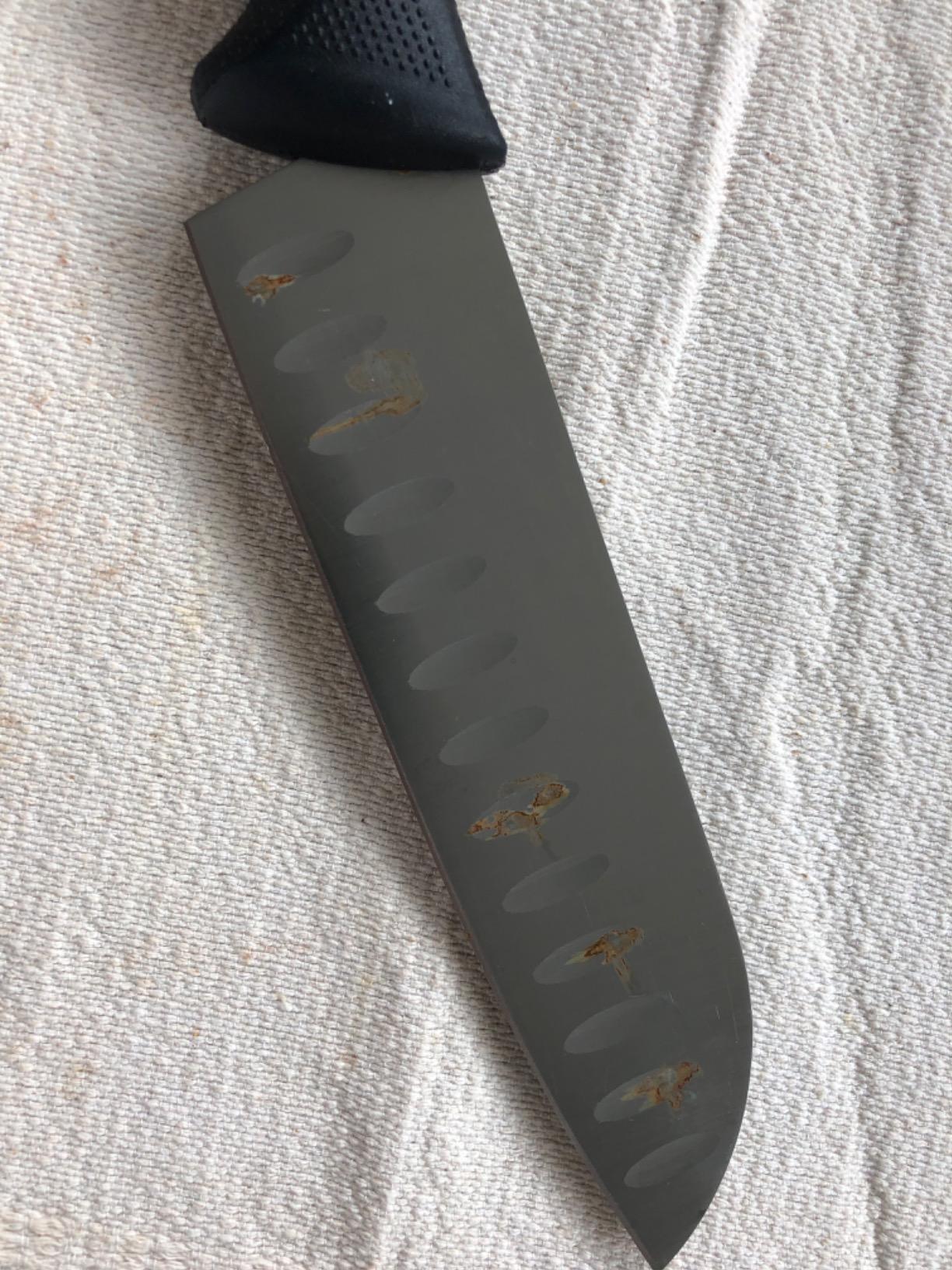
Thin stamped steel flexes a little more under hard prep work. That is not a problem for onion, cabbage, and herbs, but it means this is not the knife to open packaging with or to press against a dense frozen block.
What you should check before buying
Understand what stamped means here. It is not a quality judgment, it is a construction fact, and it predicts the two limitations you will notice first: more flex under load and an edge that rolls sooner.
If you want a Japanese steel knife that lasts longer between sharpenings, the Shun or the imarku is a step up. If you want the lightest, grippiest knife for quick vegetable work, this is the right tool.
Who should skip it
Skip it if you do heavy work like cabbaging, pumpkin, or frozen vegetables. The flex becomes a distraction when you want a rigid blade for hard pushes.
Skip it if you want a deep hollow or granton scallop. The edge profile is named as granton but the finish is plain, so sticking control is not as strong as on the Babish or the imarku.
How to Choose a Santoku Knife for Vegetable Prep
Blade length is the first decision and the one people get wrong most often. A 6.5-inch blade makes tight turns in a crowded board and suits small hands and delicate work. A 7-inch blade gives you longer strokes for dicing large onions and shredding cabbage in fewer passes. That is the entire argument, and it is why the 7-inch size dominates this list.
Steel determines how often you sharpen. Two families show up here. German forged high-carbon steel around 1.4116 and x50crmov15 at 56 to 58 Rockwell is easy to sharpen and rolls sooner. Japanese high-carbon stainless and VG-MAX hold an edge far longer and demand more from a whetstone. Higher hardness is not better for home cooks; it is better for people who enjoy sharpening.
The Granton edge, also called a hollow or fluted edge, is scalloped to reduce the flat surface that touches food. It is the single most useful feature for sticky vegetables like cucumber, onion, and potato. Our own testing found it reduces sticking noticeably but never eliminates it, so combine it with a fresh hone rather than relying on the scallops alone.
Construction matters more than buyers expect. A full tang means the steel runs the entire length of the handle, which gives rigidity under hard pushes. Stamped blades are pressed from sheet steel and are lighter, but they flex and lose their edge sooner. For heavy vegetable batches, forged and full tang is worth paying for.
Handle ergonomics for repetitive chopping
Handle feel only matters because you will hold the knife for forty minutes at a time. Pakkawood and micarta composites stay sealed and grippy. Rubberized Santoprene stays grippiest when wet. Smooth ABS and polypropylene handles look fine but feel slippery once your hands are wet.
Face shape matters as much as material. Sloped or curved bolsters give your index finger somewhere to rest during a pinch grip, and D-shaped handles suit small hands. Reviews of the HENCKELS model note its abrupt handle corners, and reviews of the Wusthof note the opposite, which is exactly the detail to test in person.
Santoku vs Nakiri for Vegetable Prep
A nakiri is the dedicated vegetable knife. It has a straight, downward-curving rectangular blade built for one motion, and it is the better tool for slicing large flat items such as cabbage, onions, and squash into uniform sheets. A santoku is the better tool for everything else, including mincing, brunoise, herbs, and general prep.
If you dice a lot of onions and mince a lot of garlic, the santoku wins because the tip lets you do fine work. If you slice a lot of cabbage and kohlrabi, the nakiri wins because its rectangular blade keeps every slice on the board. Nakiri knives did not place in this roundup, so we have not tested them here.
Maintenance and sharpening by steel type
Hone before every session. A few strokes on a honing steel realigns the edge without removing much steel, and it takes thirty seconds. Sharpen when honing no longer restores the bite, and for the medium-hardness steels in this list, that means every few weeks of daily use.
Hand wash everything except the Victorinox and HENCKELS, both of which are rated dishwasher safe. Dry immediately either way. Nothing on this list is dishwasher-safe in the sense that it will not be damaged, and only two are covered for it.
If you are still setting up your prep space, our guide to the best kitchen prep carts covers where the board should live, and the best vegetable choppers cover the times a machine beats a knife. For batch cooking once the chopping is done, start with our best meal prep recipes for the week.
Frequently Asked Questions
What is the best Japanese knife for chopping vegetables?
Among the Japanese steel options we tested, the imarku 7 inch is the best all-round choice for vegetable prep, with a hollow edge that limits sticking and a pakkawood handle that stays comfortable in long sessions. If your prep is mostly large flat slices of cabbage or squash, a nakiri is the better Japanese knife because its rectangular blade keeps every slice on the board. For mincing, brunoise and herbs, the santoku tip wins.
Which Santoku knife did America’s Test Kitchen recommend as the best?
Our roundup does not rank America’s Test Kitchen picks specifically, so we cannot confirm their current recommendation. The blades they have most often praised in this category are Japanese steel santokus with a hollow or granton edge, which is the same design cue that drove our own picks. Check their current show notes or published testing for the current model name.
What are the best knives for food prep?
For general prep, a 7 inch santoku is the strongest single choice because it covers dicing, mincing, slicing and herbs in one tool. Add a large nakiri for flat vegetable slices and a small paring knife for detail work, and you have a complete prep kit. Within this roundup the imarku handles the most situations best, while the Babish offers the same geometry for less.
Which 5 Santoku knives are considered the best?
Our five strongest picks for vegetable prep are the imarku 7 inch for overall balance, the Babish 6.5 inch for value, the Mercer Genesis for control and weight, the Shun Classic for edge retention, and the Victorinox Swiss Classic for low weight and easy care. Each one wins a different part of the prep routine rather than every part of it.
Is a santoku better than a chef’s knife for vegetables?
Usually yes, for a home cook. A santoku is shorter and flatter, which suits the straight push-cut motion that vegetable chopping uses and keeps your knuckles closer to the board. A chef’s knife still wins on meat, herbs, and any task needing a long tip or a rocking motion. Many cooks own both and reach for the santoku first.
How do I stop my knife sticking to vegetables?
Four things help: choose a blade with a hollow or Granton edge, sharpen before the session because a rolled edge grips more, keep the board surface dry and clean, and use the full length of the blade so slices fall away instead of being pushed back up. No scalloping removes sticking entirely, so the honed edge still does most of the work.
The Verdict
After six weeks of onion, cucumber, cabbage and brunoise prep, the imarku 7 inch is the best santoku knife for vegetable prep in this group. It is sharp from the box, it releases food cleanly, and it stays comfortable past the fortieth minute of chopping. The Babish 6.5 inch is the smart first buy, and the Mercer Genesis is the one to choose when you want a premium feel for less.
Whichever you pick, hone it before every session and buy the length that matches your board. Those two habits do more for your prep than any amount of spending. Our broader roundup on the best santoku knives is worth reading if you want knives picked for general cooking too, and both lists are current as of 2026.