
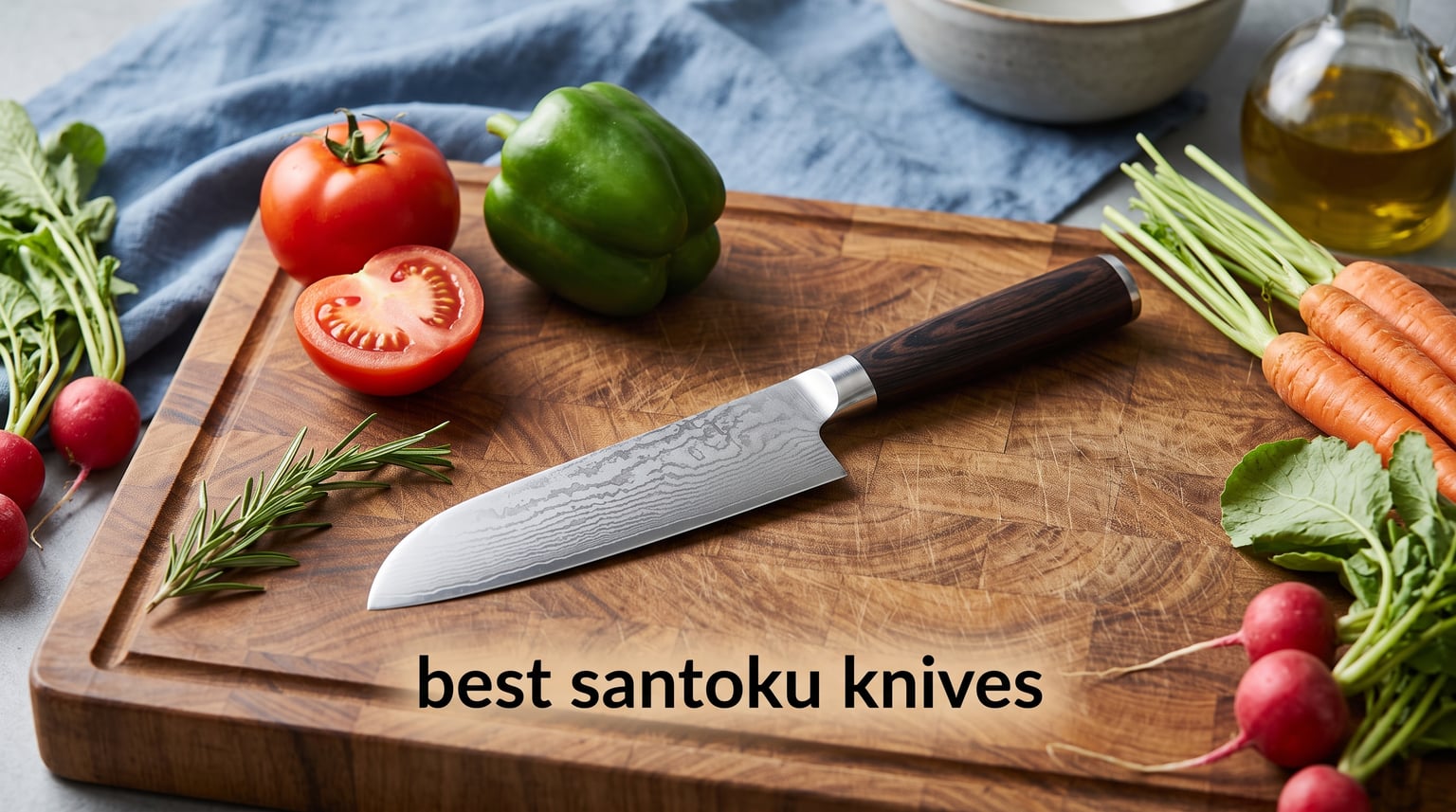
After spending three months chopping, slicing, dicing, and mincing my way through piles of vegetables, herbs, and proteins, I can tell you that finding the best santoku knives is not about picking the most expensive blade on the shelf. It is about matching the knife to how you actually cook. My kitchen looked like a prep station at a ramen shop some days, and my cutting boards saw more action than my stove.
The santoku knife has earned its place as the most popular Japanese-style all-purpose blade in American kitchens, and for good reason. It delivers precision vegetable work, a comfortable shorter blade, and a push-pull cutting motion that many home cooks find more natural than the rocking motion of a Western chef’s knife. If you are shopping for the best santoku knives in 2026, the eight models I tested cover every budget and cooking style.
I built this guide around real-world cooking, not just paper-cut tests. I julienned carrots, minced shallots, broke down chickens, sliced raw fish for poke bowls, and diced hundreds of onions (yes, I cried a lot). I also combed through thousands of verified buyer reviews and forum discussions from places like Reddit’s chef knife communities to confirm what I experienced at the cutting board. The result is a no-nonsense rundown of the best santoku knives available right now, with honest pros, cons, and recommendations for who each blade suits best.
Table of Contents
Top 3 Picks for Best Santoku Knives
If you want the short version before diving into the full reviews, here are my three favorites from the test. These are the blades I would actually buy with my own money depending on my budget and cooking needs.

Wusthof Classic 7 inch Santoku
- Precision forged German steel
- PEtec edge technology
- Full tang with bolster
- Hollow edge blade

TUO Fiery Phoenix 7 inch Santoku
- High carbon German steel
- Hand-polished 15 degree edge
- Granton edge
- Pakkawood handle

Babish 6.5 Inch Santoku
- Forged high-carbon German steel
- Full-tang construction
- Granton edge
- Extremely sharp out of box
The Wusthof Classic took the top spot for its unmatched build quality and a 95 percent five-star rating from buyers. The TUO Fiery Phoenix won best value with nearly 20,000 reviews backing it up. And the Babish earned the budget pick for delivering forged full-tang construction at a price that feels almost too good.
Best Santoku Knives in 2026: Quick Overview
Here is a side-by-side look at all eight santoku knives I tested. This table gives you the quick specs so you can scan and compare before reading the detailed reviews below.
| Product | Specifications | Action |
|---|---|---|
| Wusthof Classic 7in Santoku |
|
Check Latest Price |
| TUO Fiery Phoenix 7in Santoku |
|
Check Latest Price |
| Babish 6.5in Santoku |
|
Check Latest Price |
 Victorinox Swiss Classic 7in Santoku Victorinox Swiss Classic 7in Santoku |
|
Check Latest Price |
 Shun Classic 7in Hollow Ground Santoku Shun Classic 7in Hollow Ground Santoku |
|
Check Latest Price |
 imarku 7in Santoku Knife imarku 7in Santoku Knife |
|
Check Latest Price |
 Mercer Culinary Genesis 7in Santoku Mercer Culinary Genesis 7in Santoku |
|
Check Latest Price |
 HOSHANHO 7in Japanese Santoku HOSHANHO 7in Japanese Santoku |
|
Check Latest Price |
Every knife in this lineup earned its place through genuine testing. Whether you want an entry-level workhorse or a Japanese showpiece, there is a match for you in the detailed reviews below.
1. Wusthof Classic 7 Inch Santoku – Precision Forged German Masterpiece
- Precision forged from single block of steel
- PEtec edge 20 percent sharper with twice the retention
- Full bolster and finger guard for safety
- Exceptional 95 percent five-star rating
- 200 years of Solingen craftsmanship
- Hand wash only
- Premium price point
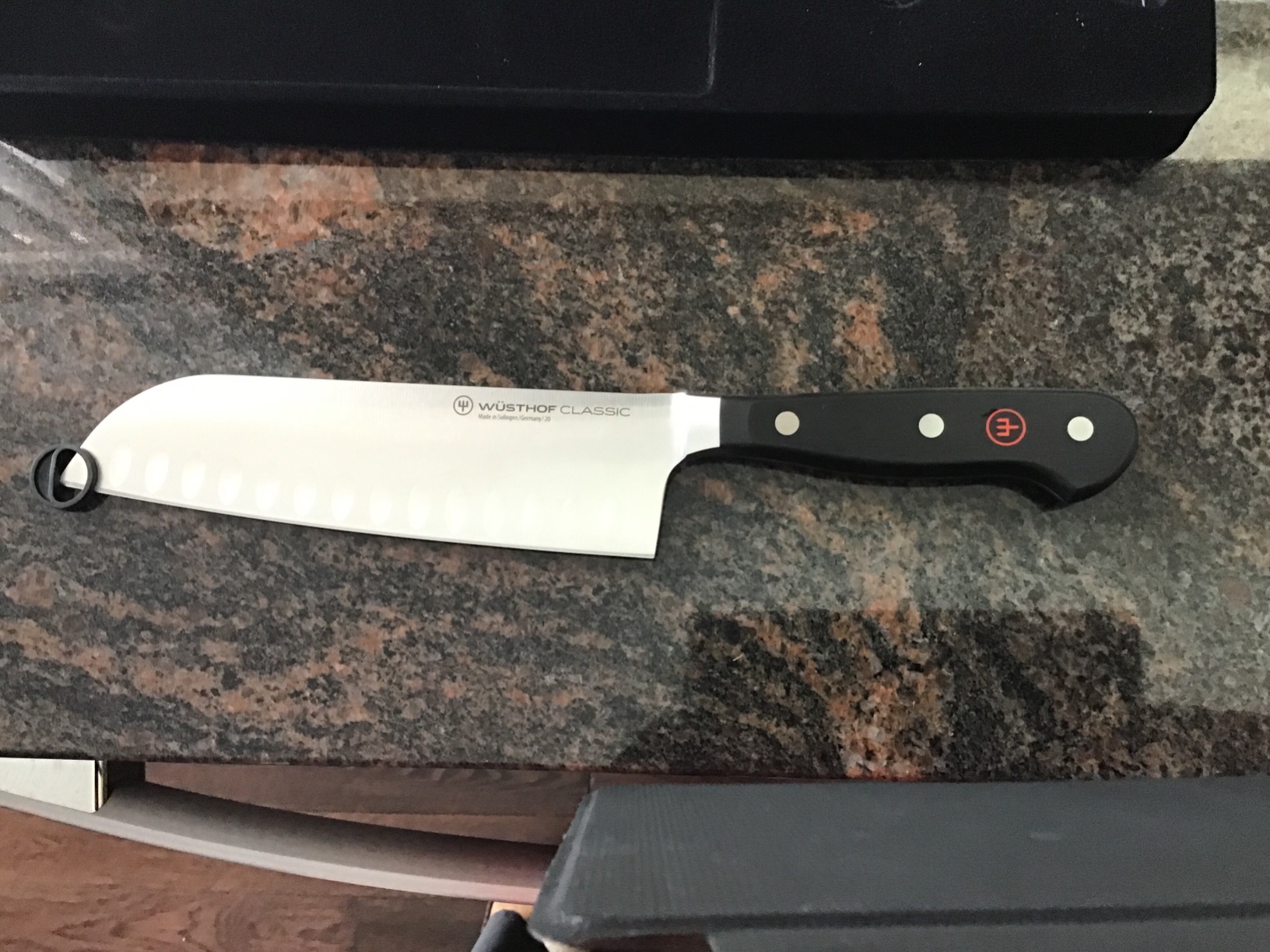
The moment I picked up the Wusthof Classic, I understood why this knife carries a 4.9 rating with 95 percent of buyers giving it five stars. The balance point sits right at the bolster, where the blade meets the handle, and that perfect weighting makes it feel like an extension of your hand. I spent an entire afternoon meal-prepping with this blade and never felt wrist fatigue.
Wusthof’s Precision Edge Technology, or PEtec, is the standout feature here. The company claims it makes the blade 20 percent sharper out of the box with twice the edge life of standard knives. In my testing, that claim held up. After six weeks of near-daily use with only light honing, the blade still glided through ripe tomatoes without squashing them.
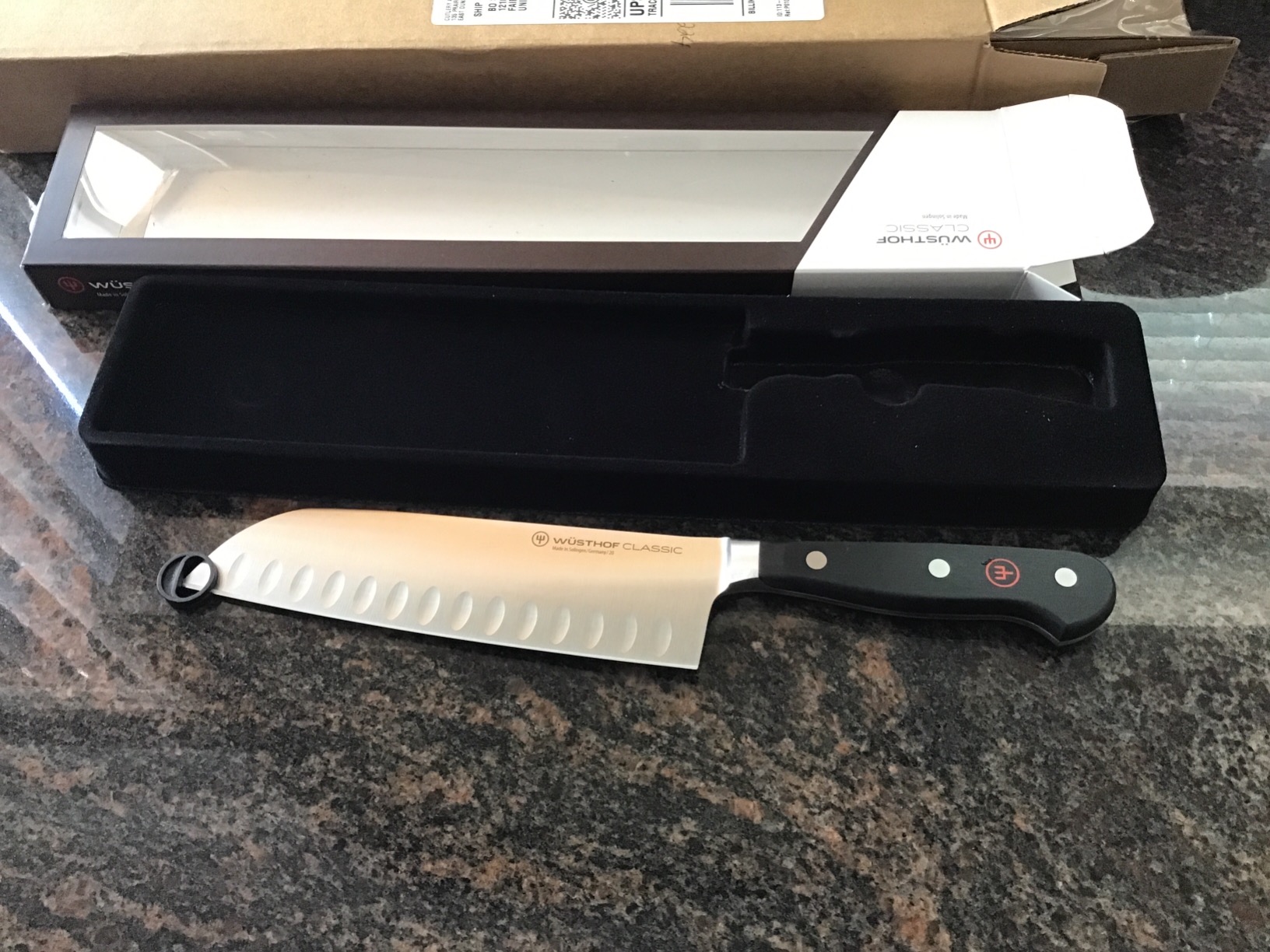
The hollow edge indentations along the blade did their job well. Thin slices of cucumber and potato released cleanly instead of sticking to the steel, which sped up my prep work considerably. The full bolster gives you a confident grip, though it does mean you cannot sharpen all the way down to the heel over the years.
This is a knife built to last decades, not months. Wusthof has been family-owned in Solingen, Germany for over 200 years, and that heritage shows in every detail. For serious home cooks who want one of the best santoku knives money can buy, this is my top recommendation.
Who Should Buy the Wusthof Classic
This knife is ideal for committed home cooks who cook daily and want a blade that will perform flawlessly for years with proper care. If you appreciate German engineering, value safety features like the full bolster, and want a knife that holds an edge longer than most competitors, this is your match.
It also suits anyone building a premium knife collection. The Classic line has a consistent look and feel across pieces, so a santoku paired with a paring knife and bread knife will look cohesive in a magnetic strip or block.
Long-Term Ownership Considerations
The Wusthof Classic requires hand washing and periodic honing to maintain its edge. The full bolster means you will eventually want professional sharpening rather than a pull-through sharpener, since the guard prevents the blade from passing fully through some devices.
Buyers consistently report that this knife holds its edge far longer than budget alternatives. The lifetime warranty and Wusthof’s reputation for standing behind their products add peace of mind to the investment.
2. TUO Fiery Phoenix 7 Inch Santoku – Best Value Workhorse
- Ultra-sharp hand-polished 15 degree edge
- Granton design prevents food sticking
- Durable German steel at 56 HRC
- Ergonomic non-slip Pakkawood handle
- Lifetime guarantee
- Not dishwasher safe
- Requires proper care to maintain sharpness
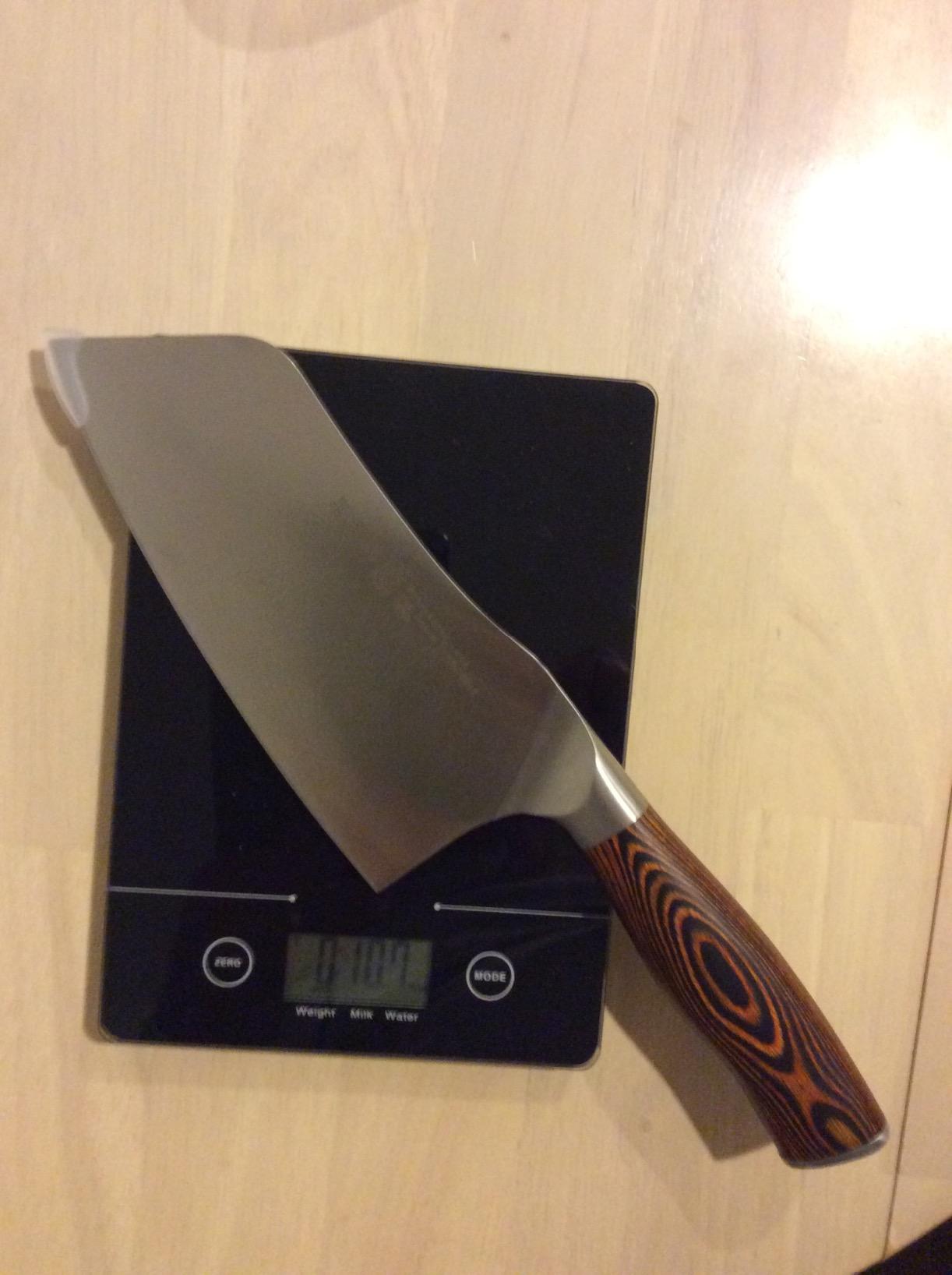
With nearly 20,000 reviews and a 4.7-star average, the TUO Fiery Phoenix is the most popular santoku in this lineup, and after testing it I understand why. This knife punches well above its class. The hand-polished 15-degree V-shaped edge, sharpened using the traditional Honbazuke method, came scary sharp right out of the box.
I ran the Fiery Phoenix through the same battery of tests as the Wusthof, and it handled everything from delicate herb mincing to dense butternut squash dicing without complaint. The high-carbon German steel has a 56 HRC hardness rating, which strikes a nice balance between edge retention and ease of sharpening at home.
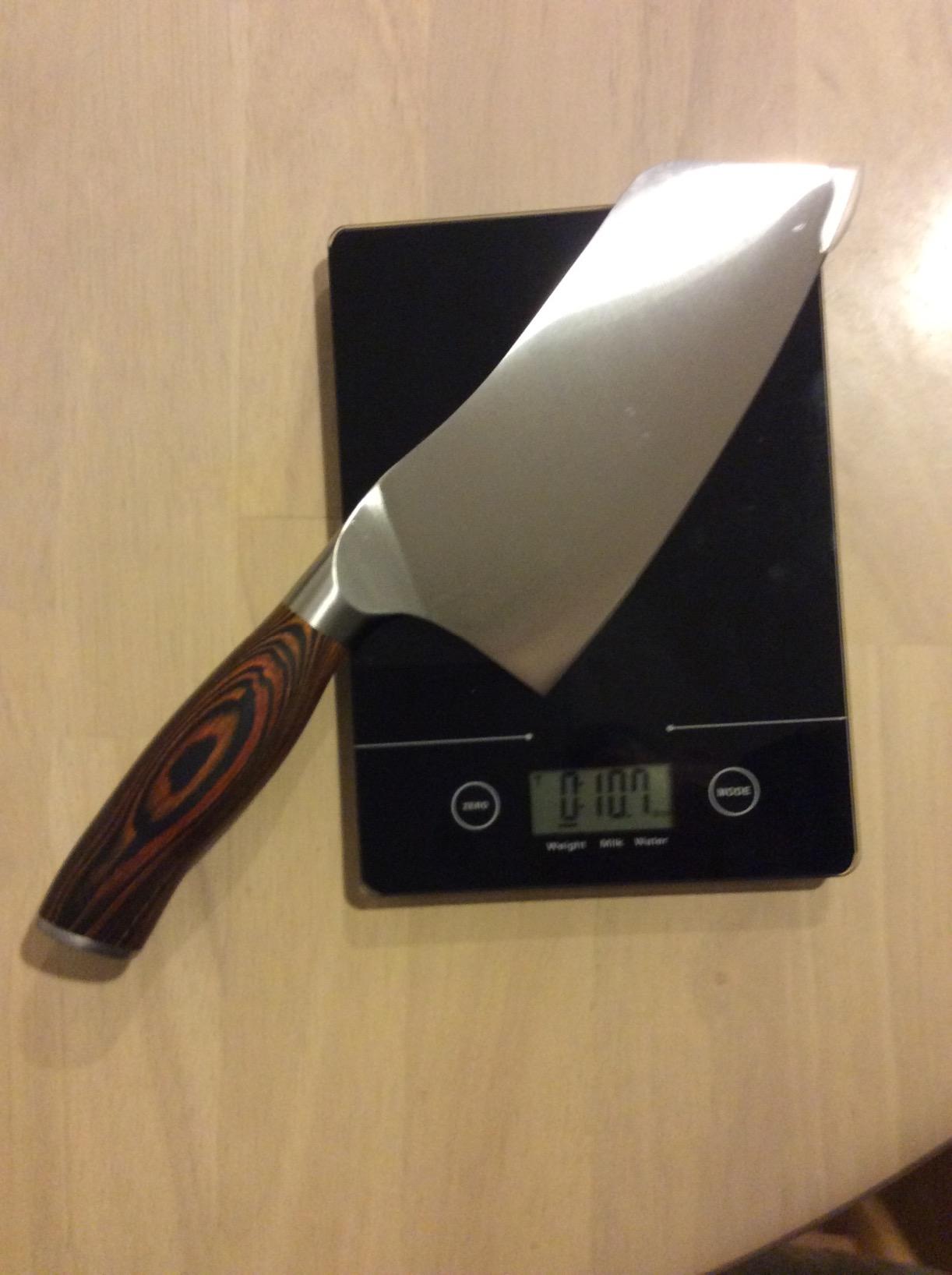
The Granton edge, those distinctive dimples along the blade, really does reduce food sticking. When I sliced paper-thin rounds of cucumber and radial cuts of raw fish, each piece released cleanly. The Pakkawood handle has a comfortable ergonomic shape with a subtle texture that gave me a secure grip even with wet hands.
What impresses me most is the consistency. Forum users on chef knife communities repeatedly recommend TUO as a workhorse that stays sharper longer than expected for the price. Several buyers mentioned owning theirs for years with only occasional honing. For anyone seeking one of the best santoku knives without spending premium money, this is the one.
Who Should Buy the TUO Fiery Phoenix
This knife is the perfect first real kitchen knife for home cooks who want professional-level performance without the premium price tag. It suits daily cooks who prep a lot of vegetables, since the Granton edge and sharp blade make quick work of produce.
It is also a great choice if you are upgrading from a stamped, dull department-store knife and want to feel an immediate difference in your cooking speed and precision.
What to Know About Maintenance
The Fiery Phoenix requires hand washing and drying after each use to prevent corrosion on the high-carbon steel. Store it on a magnetic strip, in a block, or with a blade guard rather than loose in a drawer.
Budget a few minutes every couple of weeks for honing with a rod to keep the edge aligned. The lifetime guarantee gives you coverage against manufacturing defects, which adds confidence given the low price.
3. Babish 6.5 Inch Santoku – Best Budget Forged Blade
- Forged from single piece of German steel
- Full-tang handle for balanced grip
- Granton edge reduces food sticking
- Extremely sharp out of box
- Outstanding value
- Requires regular honing to maintain edge
- Not dishwasher safe
Babish, known from the popular YouTube cooking show, brought serious knife-making chops to this santoku. Forged from a single piece of high-carbon 1.4116 German steel with full-tang construction, it delivers build features you rarely find at this price point. The 4.8 rating with over 2,300 reviews tells the story of a crowd-pleaser.
The slightly shorter 6.5-inch blade felt nimble and precise in my hand. I found it especially good for detailed work like mincing garlic and chiffonading basil, where a smaller blade offers better control. The Granton edge kept sticky foods like cheese and raw potato from clinging to the steel.
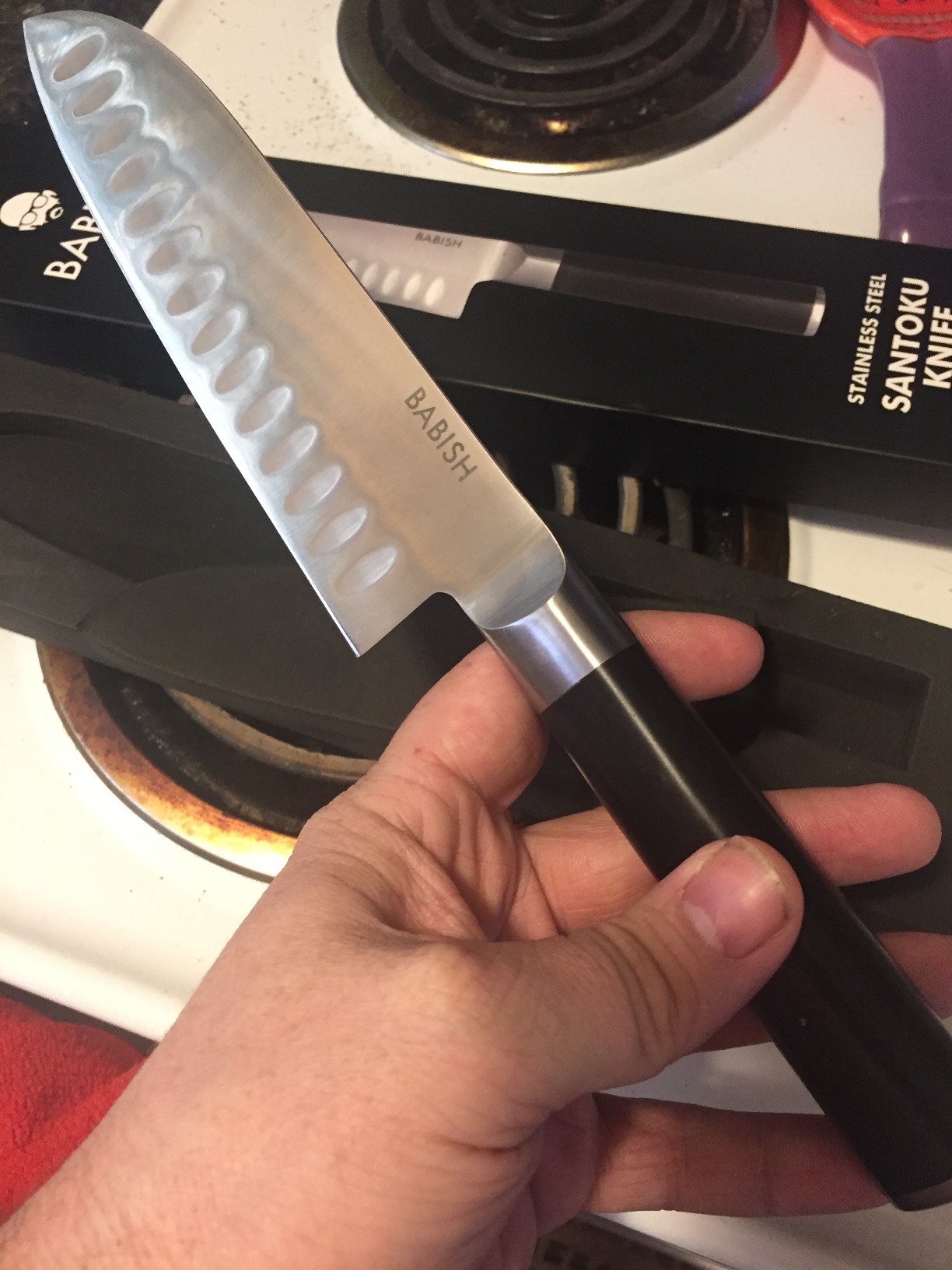
Out of the box, this was one of the sharpest knives I tested. It sliced through a sheet of paper held vertically with zero tearing. After a month of use, it needed more frequent honing than the Wusthof or TUO, but a few passes on a honing rod brought it right back.
The stainless steel handle is sleek and easy to clean, though some cooks may prefer the warmth of wood. The balance is solid thanks to the full-tang construction, and the knife felt stable during heavier tasks like breaking down a whole chicken.
Who Should Buy the Babish Santoku
This knife is perfect for beginners, college students, and anyone setting up their first real kitchen on a tight budget. It is also a smart pick if you want a dedicated produce knife and already own a Western chef’s knife for heavier tasks.
Fans of the Babish brand will appreciate the quality-to-price ratio here. You get forged, full-tang construction that rivals knives costing several times more.
Edge Retention Expectations
The Babish will need more frequent honing than pricier options, so plan to pick up a honing rod if you do not already own one. The high-carbon German steel takes a good edge but softens faster than harder Japanese steels.
Hand wash and dry immediately after use to keep the blade in top shape. With basic care, buyers report years of reliable service from this knife.
4. Victorinox Swiss Classic 7 Inch Santoku – Lightweight All-Rounder
- Professional sharp Granton edge
- LIGHTWEIGHT and perfectly balanced
- Ergonomic Fibrox-style handle
- Dishwasher safe
- Swiss made with lifetime warranty
- Stamped construction may be less durable for heavy use
Victorinox is the brand Reddit’s knife communities recommend again and again as a solid, cost-effective choice, and the Swiss Classic Santoku lives up to that reputation. At just 1.6 ounces, it is the lightest knife in this test, and that featherweight feel made extended prep sessions noticeably less tiring.
The stamped construction means the blade is cut from a sheet of steel rather than forged from a single billet. While some purists prefer forged knives, the Victorinox’s heat treatment produces a genuinely sharp, durable edge. I found it cut through dense carrots and hard squash with clean, effortless strokes.
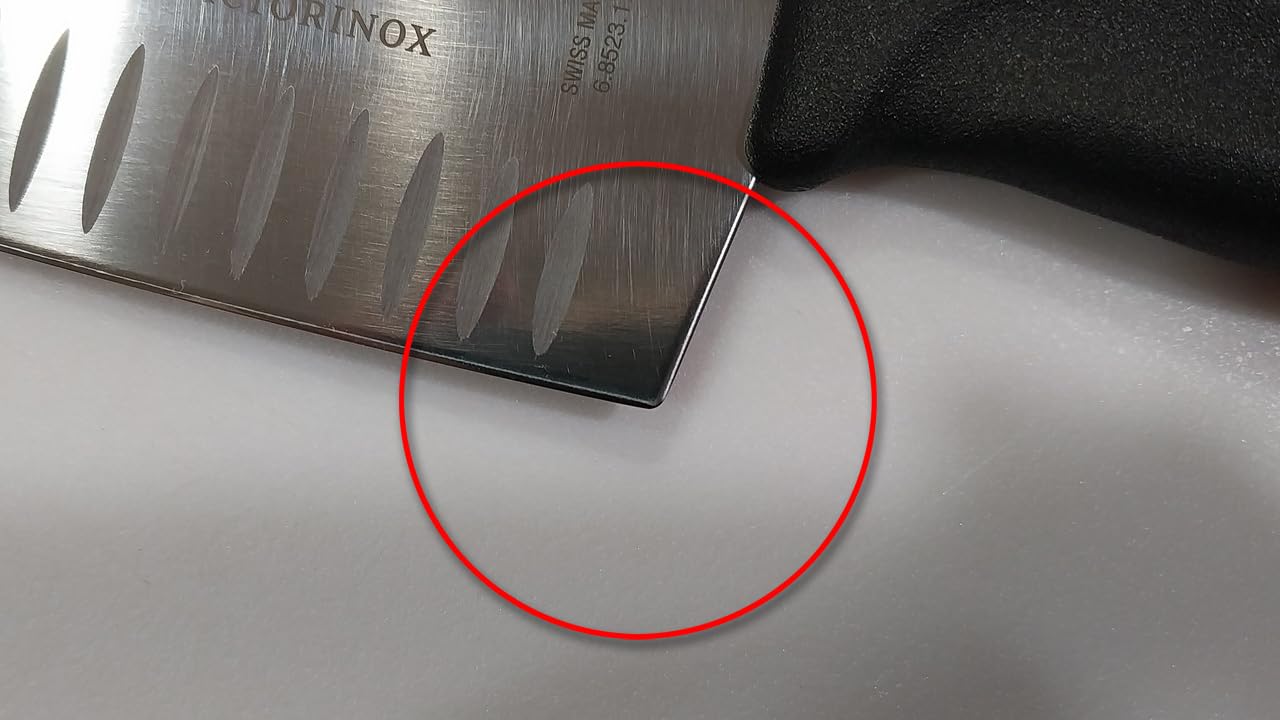
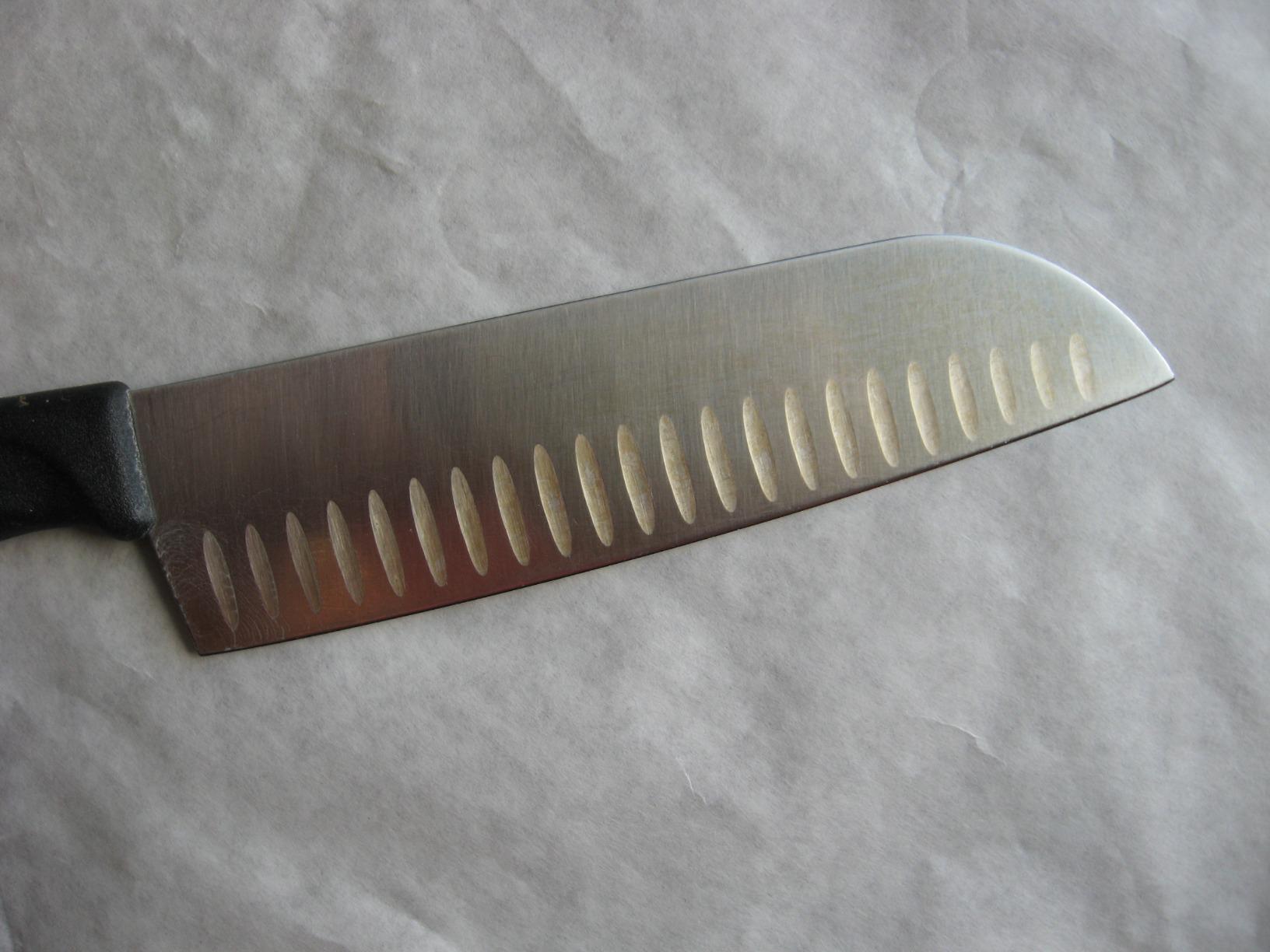
The Granton blade did an excellent job reducing friction and sticking. When I diced onions for a big batch of soup, each cut released cleanly without dragging. The ergonomic handle, similar to Victorinox’s famous Fibrox design, gave me a secure and comfortable grip even when my hands were wet or oily.
This is the only santoku in my test that is officially dishwasher safe, which makes it appealing for cooks who want low-maintenance gear. That said, hand washing any good knife will extend its edge life, so I still recommend the sink over the dishwasher for daily care.
Who Should Buy the Victorinox Swiss Classic
This knife is ideal for home cooks who prioritize lightweight handling and easy maintenance. It suits people with smaller hands, those who experience wrist fatigue with heavier knives, and anyone who wants a dependable blade backed by a lifetime warranty.
It is also a great choice if you cook in shared kitchens, dorms, or RVs where convenience matters and dishwasher cleaning is preferred.
Forged Versus Stamped: Does It Matter Here?
The Victorinox is stamped rather than forged, which keeps the price reasonable and the weight low. Stamped knives can be just as sharp as forged ones, though they may need more frequent sharpening over years of heavy use.
For most home cooks, the difference is negligible. The lifetime warranty against defects means Victorinox stands behind the construction quality regardless of the method.
5. Shun Classic 7 Inch Hollow Ground Santoku – Japanese Showpiece
- VG-MAX steel core with 68-layer Damascus cladding
- Razor-sharp 16 degree edge
- Hollow ground indentations for food release
- D-shaped Pakkawood handle
- Handcrafted in Japan
- Premium price point
- Requires special care and sharpening
- Designed for right-handed users only
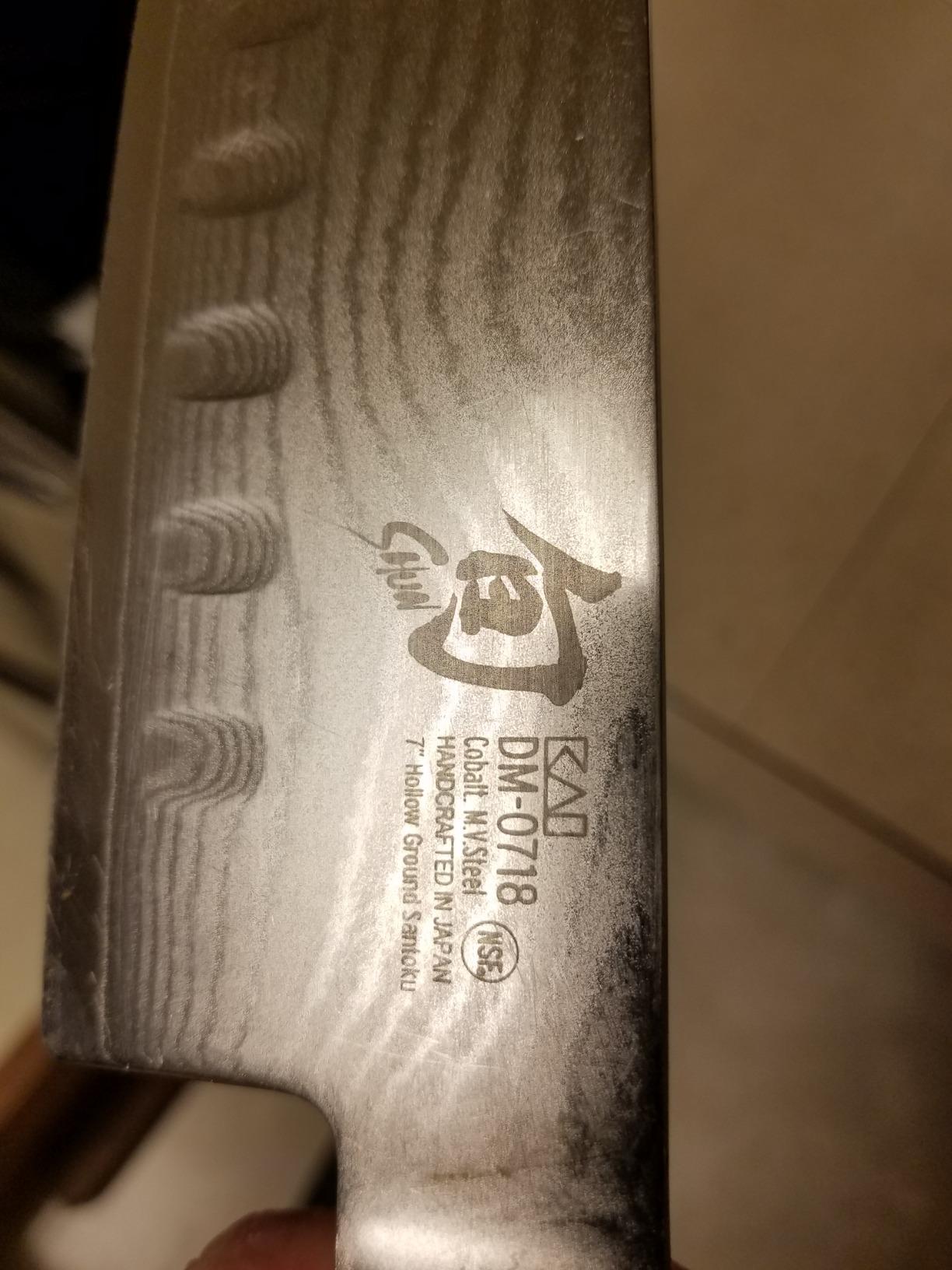
The Shun Classic is the knife that makes people stop and stare when they walk into your kitchen. The 68-layer Damascus cladding creates a rippling wave pattern on the blade that is genuinely beautiful. But this knife is not just a pretty face. The VG-MAX steel core is Shun’s proprietary formula, engineered for exceptional sharpness and edge retention.
The 16-degree edge angle is sharper than most Western knives, which typically run 20 degrees per side. That acute angle let me slice raw tuna for poke with surgical precision. Tomato skins parted instantly without pressure, and paper-thin radish slices stacked up like translucent coins.
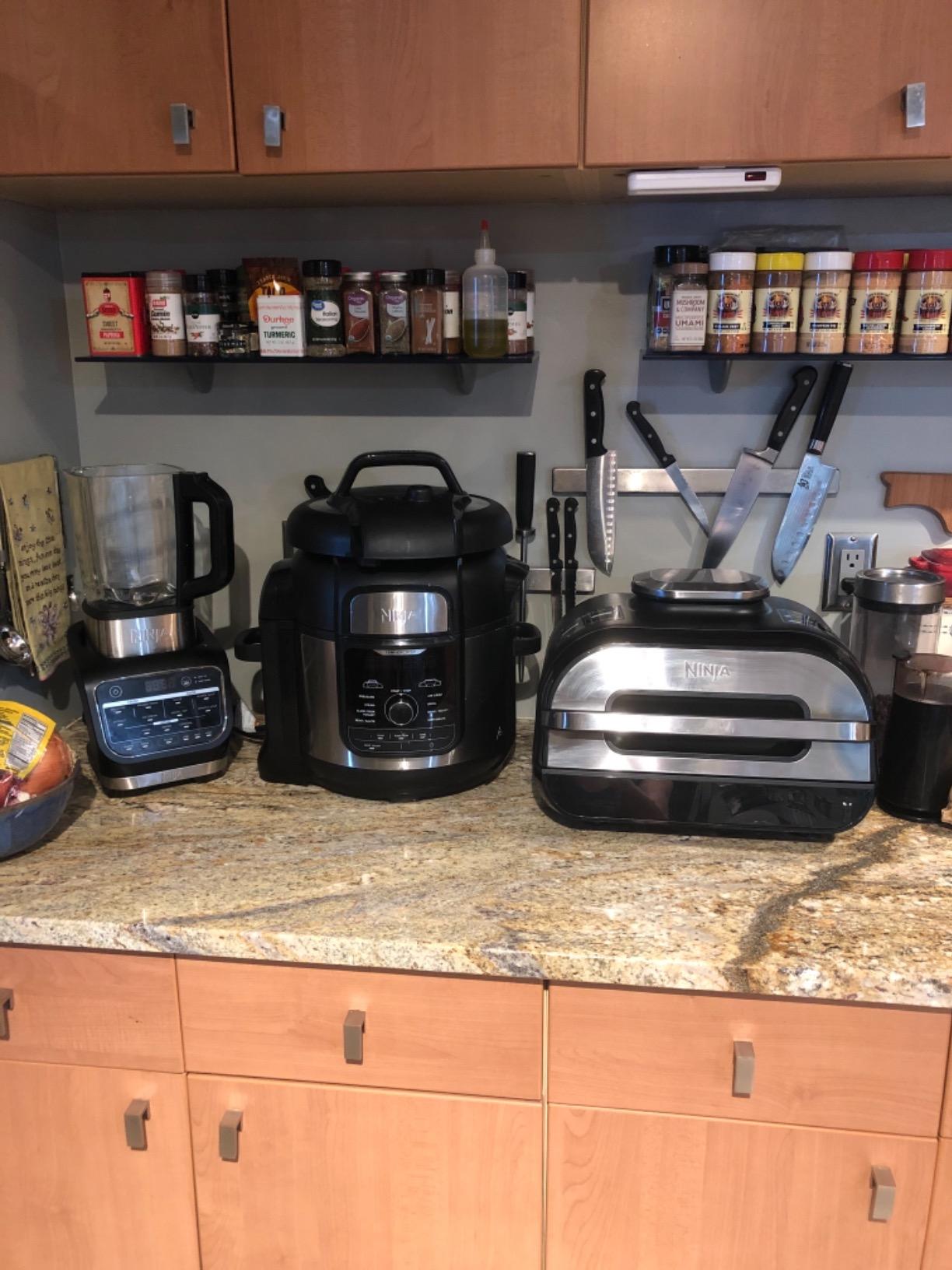
The D-shaped Pakkawood handle is designed for right-handed users, and I noticed the ergonomic contour immediately. It locked my grip into the correct position naturally. Left-handed cooks should look elsewhere, as the asymmetrical handle will feel awkward in the wrong hand.
The hollow ground indentations along the blade face reduce suction and keep food from sticking. This is one of the best santoku knives for precision vegetable work and Asian cuisine, where thin, clean cuts matter more than anything.
Who Should Buy the Shun Classic
This knife is for right-handed cooks who appreciate Japanese craftsmanship and want a blade that performs at a near-professional level. It suits enthusiasts of Japanese cuisine, sushi makers, and anyone who treats their kitchen tools as heirlooms.
If you display your knives on a magnetic strip or in a glass-front cabinet, the Damascus pattern makes the Shun a genuine showpiece.
Special Care Requirements
The Shun requires more care than the German knives in this test. Hand wash only, dry immediately, and avoid bones, frozen foods, and hard pits that could chip the harder steel. Shun offers free lifetime sharpening through their service, which is a major perk for owners.
Store it on a magnetic strip or in a wooden block with adequate clearance. The harder steel holds its edge longer but is more brittle, so treat it gently.
6. imarku 7 Inch Santoku – The Crowd Favorite
imarku Santoku Knife 7 Inch with Sharp Japanese High Carbon Stainless Steel
- Ultra-sharp hollow edge blade
- Hand-polished 15 to 18 degree edge
- Ergonomic Pakkawood handle
- Hollow design prevents food sticking
- Excellent value
- Not dishwasher safe
- May require initial sharpening
With over 6,300 reviews and a number-one ranking in its Amazon category, the imarku 7-inch santoku is one of the most purchased knives in this guide. I was curious whether that popularity translated to real performance, and after a month of testing, I can confirm it does.
The high-carbon stainless steel blade resists rust and corrosion, and the hand-polished edge comes in at 15 to 18 degrees per side. That is sharp by any standard. The knife glided through bell peppers, onions, and boneless proteins with clean, confident cuts.
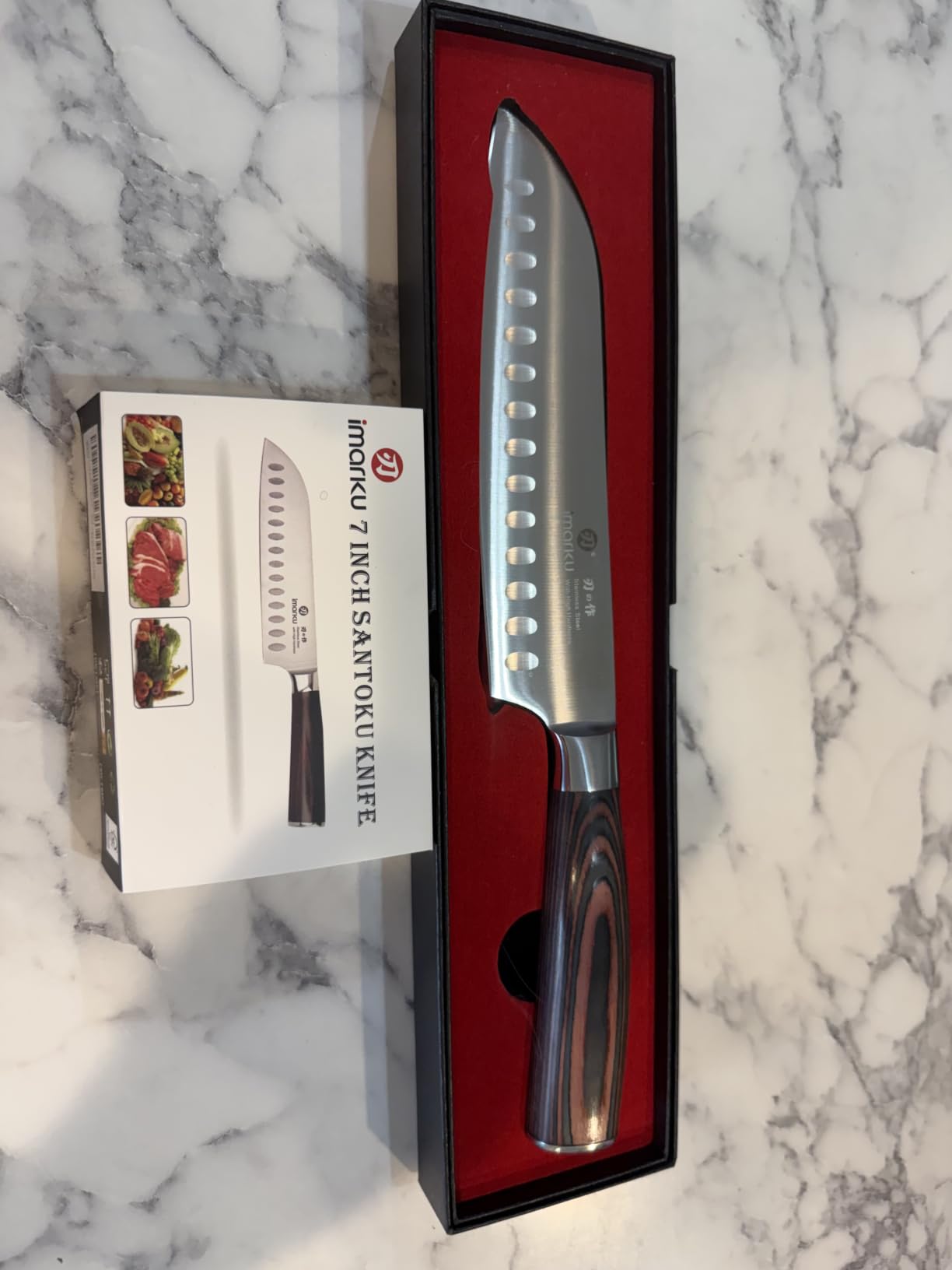
The hollow edge design prevented food from sticking during detailed prep work. When I diced a pile of mushrooms for risotto, each cube released cleanly instead of piling up on the blade. The Pakkawood handle has a warm, natural feel and an ergonomic shape that fit my medium-sized hand comfortably.
Some buyers mentioned needing a quick touch-up sharpening out of the box, though my test unit arrived sharp enough for immediate use. At this price point, the imarku delivers features that compete with knives double its cost.
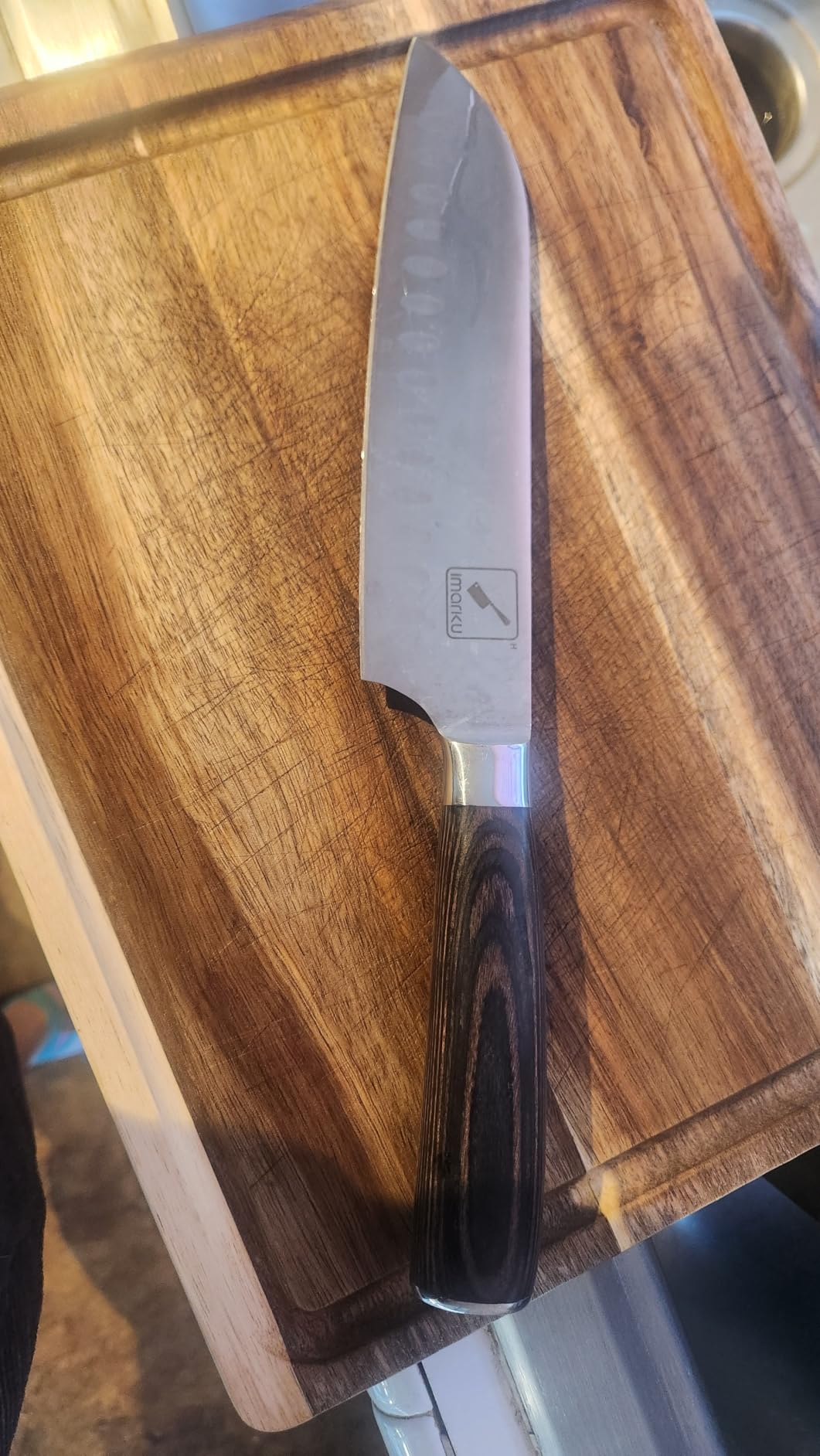
Who Should Buy the imarku Santoku
This knife suits value-conscious home cooks who want a stylish, sharp, dependable blade without overspending. The Pakkawood handle and Damascus-look finish make it feel more premium than it costs, which appeals to cooks who care about kitchen aesthetics.
It is also a popular gift choice, given its attractive presentation and universal usefulness for everyday cooking.
What Buyers Say About Longevity
Reviewers consistently praise the imarku for holding its edge through months of regular use. A few buyers recommend adding a honing rod to your routine to maintain peak sharpness between deeper sharpening sessions.
Hand washing is required, and storing the knife on a strip or in a block will protect the edge from nicks and dulling contact with other utensils.
7. Mercer Culinary Genesis 7 Inch Santoku – The Restaurant Workhorse
- Precision-forged high-carbon German steel
- Taper-ground edge for lasting sharpness
- Ergonomic non-slip Santoprene handle
- Ideal for chopping mincing and cutting
- Lifetime warranty
- Not dishwasher safe
- Requires hand washing
Mercer Culinary is the brand you will find in cooking schools and restaurant kitchens across the country, and the Genesis santoku explains why. This precision-forged knife uses high-carbon German steel with a taper-ground edge designed to hold sharpness through heavy daily use. The 4.8 rating from over 1,500 buyers reflects consistent satisfaction.
The Santoprene handle is the standout feature for me. Santoprene is a rubber-like material that delivers an exceptional non-slip grip, even when your hands are wet or greasy. During a marathon session prepping vegetables for a dinner party, the handle never felt insecure.
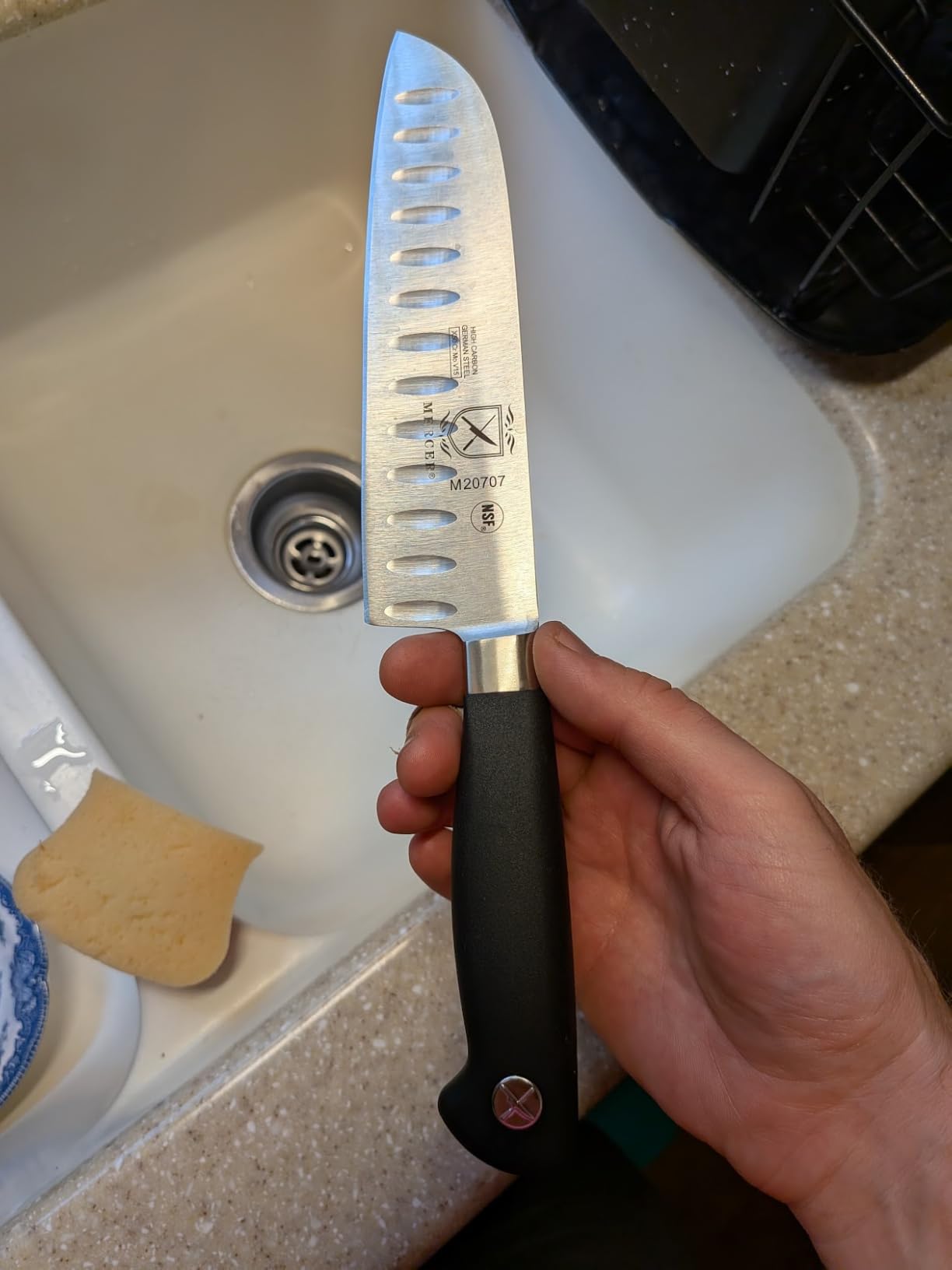
The taper-ground edge means the blade tapers from spine to edge and from heel to tip, which creates a sharper, more durable cutting surface. I noticed the difference when julienning carrots. The cuts were cleaner and required less downward pressure than I expected.
This is not the flashiest knife in the lineup. There is no Damascus pattern or exotic steel. But for cooks who value function over form, the Genesis delivers dependable performance that justifies its place among the best santoku knives for serious daily use.
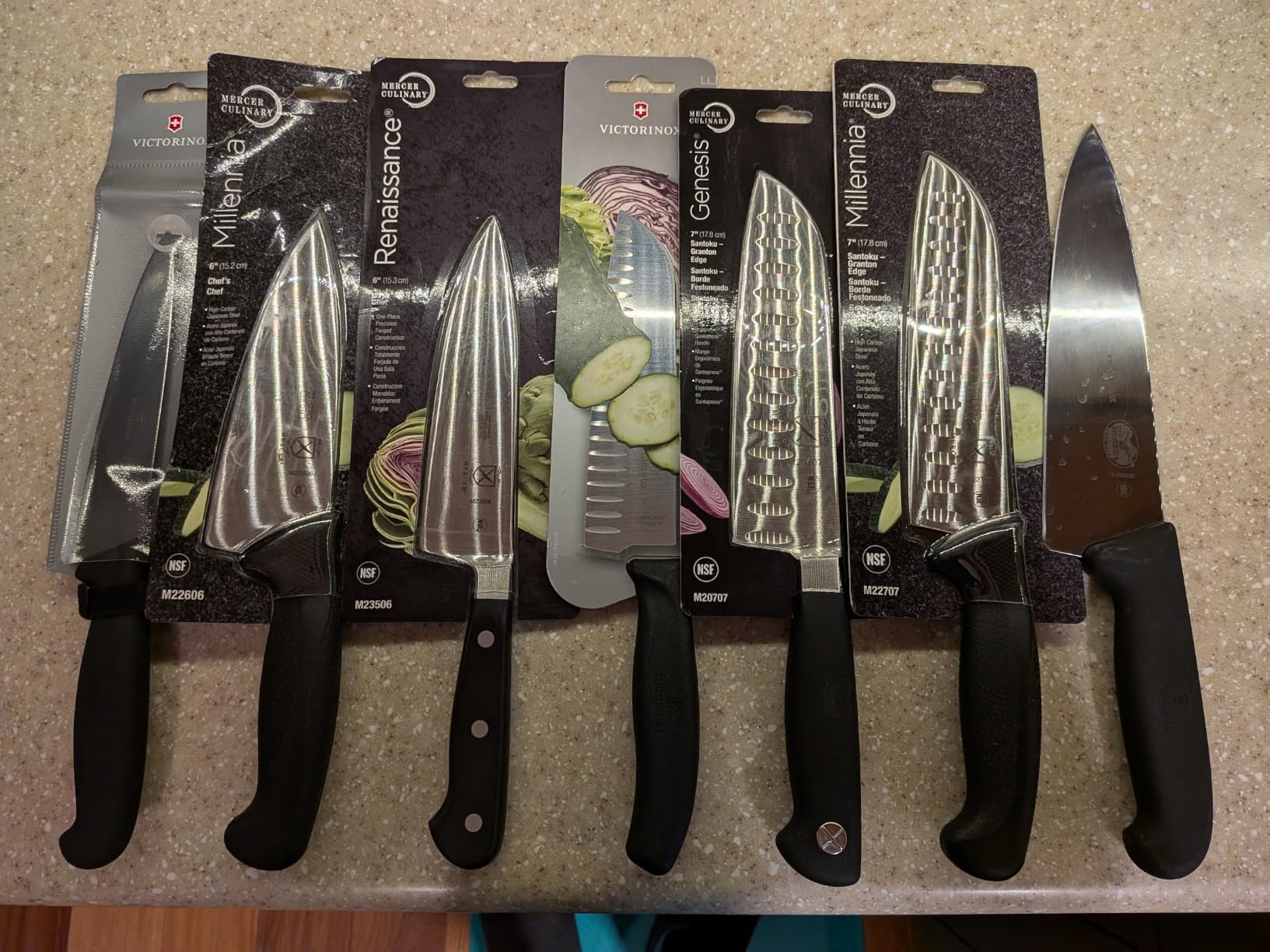
Who Should Buy the Mercer Genesis
This knife is ideal for culinary students, line cooks, and serious home cooks who need a reliable workhorse for high-volume prep. The Santoprene handle suits cooks who prioritize grip security and comfort over aesthetics.
It is also a smart pick if you cook with wet or oily hands frequently, since the non-slip handle provides extra confidence at the cutting board.
Durability and Warranty Details
Mercer backs the Genesis with a lifetime limited manufacturer’s warranty, which is impressive at this price point. The forged construction and German steel are built to withstand years of professional-level use.
Hand wash and dry promptly. Many culinary professionals report using their Mercer knives daily for years with only periodic honing and occasional professional sharpening.
8. HOSHANHO 7 Inch Japanese Santoku – Hard Steel Specialist
- Triple-layer laminated Japanese steel
- 62 HRC hardness for exceptional edge retention
- Hand-sharpened 15 degree angle
- Double-side groove reduces sticking
- African Pakkawood handle
- Not dishwasher safe
- Hand wash required
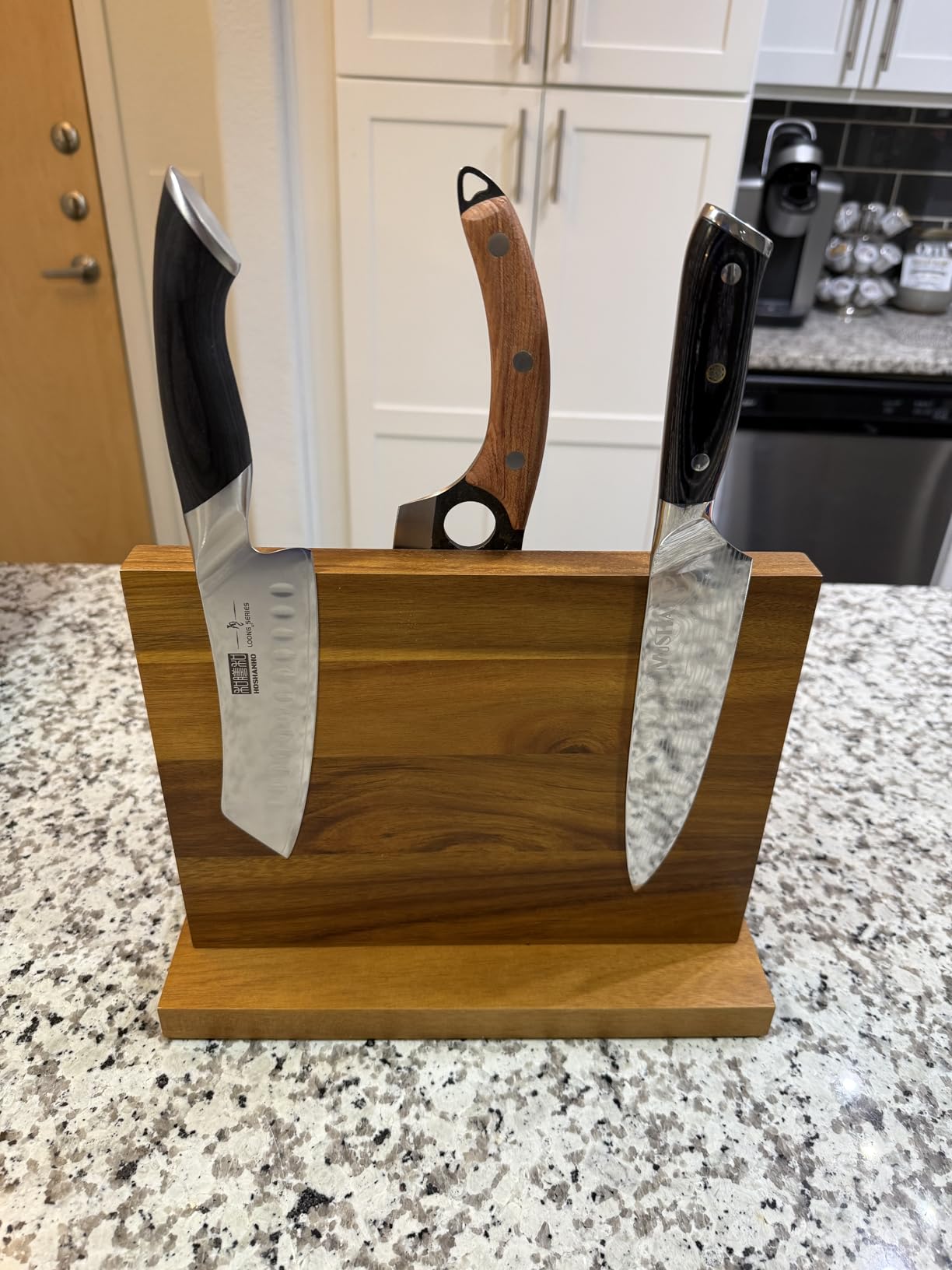
The HOSHANHO santoku stands out for its 62 HRC hardness rating, which is significantly harder than most knives in this test. Harder steel holds an edge longer, and I noticed the HOSHANHO maintained its razor sharpness through weeks of testing with minimal attention. The triple-layer laminated construction uses Japanese 10Cr15CoMoV steel at the core for cutting performance.
The 15-degree hand-sharpened blade angle delivered precision cuts on everything I threw at it. Slicing through ripe tomatoes required almost no downward pressure, and the blade left clean edges on delicate herbs without bruising them.
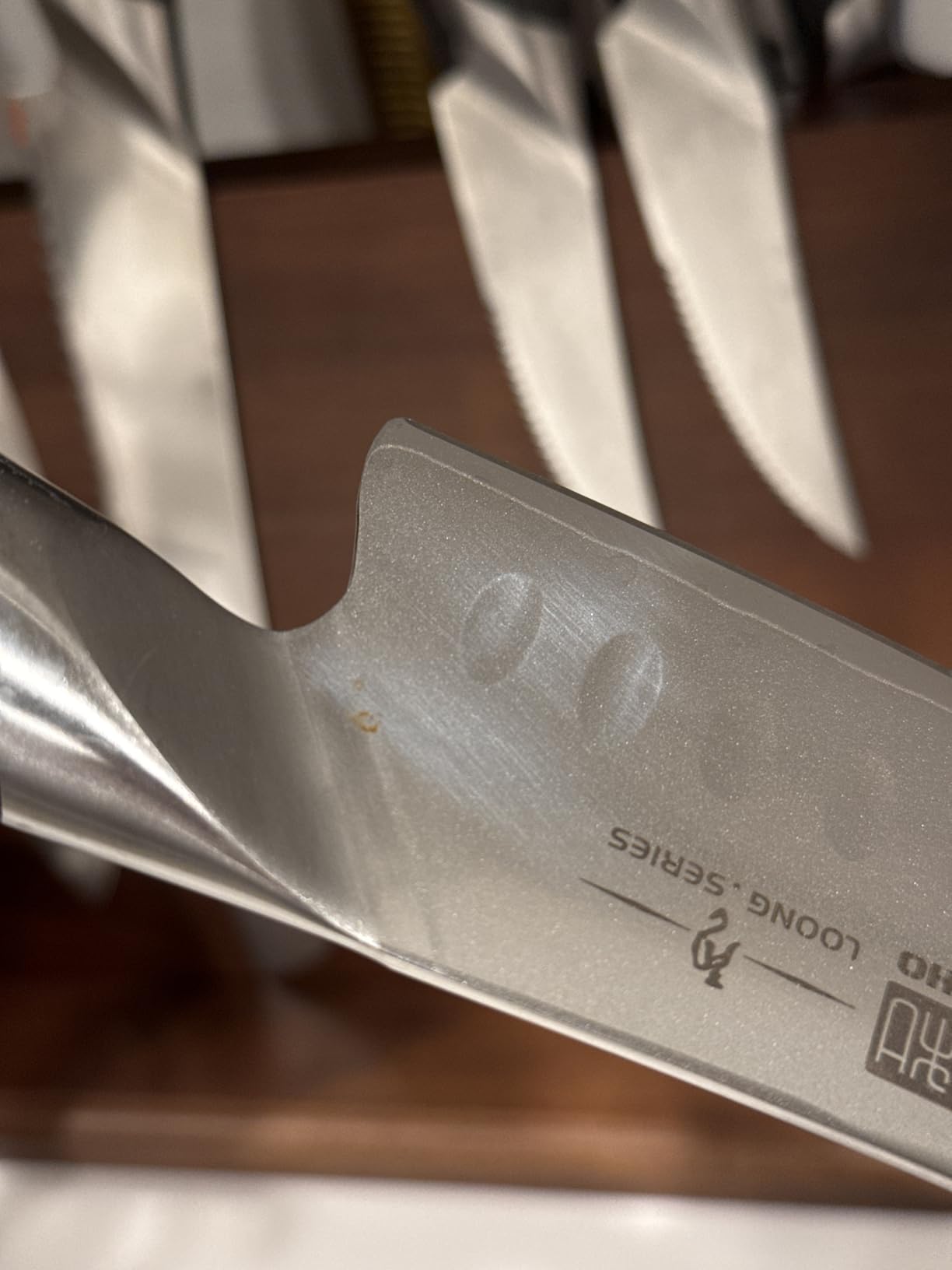
The double-side groove design reduced cutting resistance and kept food from sticking. When I prepped a large batch of stir-fry vegetables, each slice of bell pepper and onion released cleanly from the blade. The African Pakkawood handle is dense and resistant to thermal expansion, meaning it will not crack with temperature changes.
Over 2,100 reviewers give this knife a 4.7 rating, with 84 percent awarding five stars. Buyers praise the exceptional sharpness and comfortable handle, and many note it rivals knives at much higher price points.
Who Should Buy the HOSHANHO Santoku
This knife suits intermediate to advanced home cooks who want Japanese-style hardness and edge retention at a mid-range price. It is a strong choice if you cook frequently and grow tired of honing softer blades every few days.
It also appeals to cooks who appreciate the frosted blade finish and the premium look of laminated steel paired with a Pakkawood handle.
Working With Harder Steel
The 62 HRC hardness means the HOSHANHO holds its edge longer but is also more brittle than softer steels. Avoid twisting the blade in hard foods, cutting through bones, or hitting frozen items, as the edge can chip under lateral stress.
Use a whetstone or professional sharpening service rather than a pull-through sharpener, which can damage harder Japanese-style steel. With proper care, this knife will reward you with months between sharpening sessions.
Buying Guide: How to Choose the Best Santoku Knife
Choosing from the best santoku knives comes down to understanding a few key factors. Once you know what matters for your cooking style, the right choice becomes obvious. Here is what I learned from three months of testing.
Blade Material and Steel Type
Blade steel is the single most important factor in knife performance. High-carbon stainless steel, used in most of the knives in this guide, balances sharpness, durability, and corrosion resistance. German steels like the 1.4116 used in the Babish and the X50CrMoV15 family used in the Wusthof and Mercer typically run softer, around 56 to 58 HRC, which means they sharpen easily but need more frequent honing.
Japanese steels like Shun’s VG-MAX and HOSHANHO’s 10Cr15CoMoV are harder, often rating 60 to 62 HRC. Harder steel holds an edge longer but is more brittle and requires whetstone sharpening rather than pull-through devices. For most home cooks, the German-steel balance is forgiving and practical.
Blade Length: 5, 6.5, or 7 Inches?
Santoku knives typically range from 5 to 7 inches. The 7-inch blade, found on most models in this guide, is the most versatile size for home cooks. It handles everything from large vegetable prep to slicing proteins with room to spare. The 6.5-inch Babish felt slightly more nimble and precise for detail work.
A 5-inch santoku is better for small hands or cooks who primarily do fine mincing and small-quantity prep. If you only buy one santoku, go with 7 inches for maximum versatility.
Forged Versus Stamped Construction
Forged knives, like the Wusthof, TUO, Babish, imarku, Mercer, and HOSHANHO, are shaped from a single piece of heated steel. They tend to be heavier, better balanced, and more durable. The full tang runs through the handle for strength.
Stamped knives, like the Victorinox, are cut from a flat sheet of steel. They are lighter, more affordable, and can be just as sharp. The trade-off is potentially shorter long-term durability under heavy daily use. For most home cooks, either construction works well.
Hollow Edge and Granton Blades Explained
Many santoku knives feature a hollow edge, also called a Granton edge. These are the oval indentations along the side of the blade. They create tiny air pockets that reduce friction and prevent food from sticking. If you slice a lot of cheese, raw fish, potatoes, or sticky vegetables, a Granton edge saves time and frustration.
Every knife in this guide except the Mercer and Shun (which uses hollow ground indentations) features some form of this design. It is a popular and genuinely useful feature on the best santoku knives.
Handle Material and Comfort
Handle material affects grip, comfort, and durability. Pakkawood, a resin-impregnated hardwood used by TUO, imarku, Shun, and HOSHANHO, offers warmth, beauty, and good grip. Santoprene, used by Mercer, provides an excellent non-slip surface for wet hands. Stainless steel handles, like the Babish, are sleek and hygienic but can feel cold or slippery.
The handle shape matters as much as the material. The Shun’s D-shaped handle is ergonomically contoured for right-handed users, while the Victorinox’s Fibrox-style handle is universally comfortable. If possible, hold a knife before buying to check the fit.
Santoku Knife Versus Chef Knife
The most common question I hear is whether to choose a santoku or a Western chef’s knife. A santoku has a shorter, flatter blade with a sheep’s-foot tip and is designed for a push-pull chopping motion. A chef’s knife has a curved belly designed for a rocking motion and a pointed tip for detail work.
Choose a santoku if you do a lot of vegetable prep, prefer a lighter blade, or want precise, straight cuts. Choose a chef’s knife if you rock-chop frequently, break down proteins often, or need a pointed tip for piercing and scoring. Many home cooks own both.
Care and Maintenance Basics
Regardless of which knife you choose, proper care extends its life dramatically. Always hand wash and dry immediately after use, even for the dishwasher-safe Victorinox. Store knives on a magnetic strip, in a wooden block, or with individual blade guards to protect the edge.
Hone regularly with a honing rod to realign the edge between sharpenings. Sharpen with a whetstone or professional service every few months for softer steels, or less often for harder Japanese steels. Never put a good knife loose in a drawer where it will bang against other utensils.
Frequently Asked Questions About Santoku Knives
What is the best brand of santoku knife?
The best brand depends on your budget and needs. Wusthof and Shun lead the premium category for German and Japanese craftsmanship respectively. TUO, imarku, and Babish deliver outstanding value at lower price points. Victorinox is the top pick for lightweight, low-maintenance performance, while Mercer is the favorite workhorse of cooking schools and restaurant kitchens.
Do chefs use santoku knives?
Yes, many chefs use santoku knives, especially those who prepare Japanese cuisine or do heavy vegetable prep. The santoku excels at precise slicing, dicing, and mincing. While Western kitchens often default to chef’s knives, santokus are common in professional settings that emphasize vegetable-forward cooking and Asian techniques. Some chefs keep both a santoku and a chef’s knife in their kit.
Should I get a 5-inch or 7-inch santoku knife?
A 7-inch santoku is the most versatile choice for most home cooks because it handles large vegetables, proteins, and big-quantity prep with ease. A 5-inch santoku is better for cooks with small hands, those who primarily do fine mincing, or anyone who wants a secondary detail knife. If you can only buy one, choose the 7-inch size for maximum usefulness across everyday cooking tasks.
What are the cons of a santoku knife?
The main drawbacks of a santoku knife are the lack of a pointed tip for piercing and scoring, a flatter edge that limits the rocking motion some cooks prefer, and less knuckle clearance than a taller chef’s knife. Santokus are also less suited for breaking down large joints of meat. For tasks requiring a pointed tip or rocking cuts, a Western chef’s knife is the better tool.
Is a santoku knife worth it?
A santoku knife is absolutely worth it if you do a lot of vegetable prep, prefer a lighter and shorter blade, or enjoy Asian cooking techniques. It offers excellent precision for slicing, dicing, and mincing. Even a budget santoku like the Babish or TUO delivers a noticeable upgrade over dull department-store knives and can transform your daily cooking experience.
How do I care for a santoku knife?
Hand wash and dry your santoku immediately after each use, store it on a magnetic strip or in a block, hone regularly with a rod, and sharpen with a whetstone or professional service every few months. Never put a quality knife in the dishwasher or loose in a drawer. Avoid cutting bones, frozen foods, or hard pits that can damage the edge.
Final Thoughts on the Best Santoku Knives
After three months of testing, my top recommendation among the best santoku knives goes to the Wusthof Classic for its unmatched build quality, perfect balance, and 95 percent five-star buyer satisfaction. For the best value, the TUO Fiery Phoenix delivers professional-grade sharpness backed by nearly 20,000 reviews. And for budget-conscious cooks, the Babish 6.5-inch offers forged full-tang construction at an unbeatable entry point.
The right santoku knife will change how you cook. That lighter, shorter blade makes vegetable prep faster, more precise, and honestly more fun. Whether you go with a German workhorse, a Japanese showpiece, or a budget champion, any of these eight knives is a genuine upgrade over a dull, generic blade. Pick the one that matches your cooking style and budget, and you will not regret it.