
Every summer we test new sandbox gear in our own yard, and the pattern is always the same. A bare wooden box gets rained on, leaves blow in, and by the second week something has been in it. A sandbox with a cover solves almost all of that in one move, which is why we’ve spent the last few months comparing the ten best sandboxes with covers for kids currently on the market. We weighed cedar against plastic, solid lids against mesh screens, and plain covers against full retractable canopies, with one question in mind: which ones still look good after two wet seasons?
We logged assembly time, checked how each cover actually latches or folds, and noted which sand capacities were real versus marketing. We also paid close attention to the details that rarely make it into product descriptions: bench capacity, drainage, whether the wood splits when you drive a screw into it, and how hard the box is to sweep clean.
If you are shopping broadly rather than for a specific box, our other outdoor guides cover adjacent ground. We maintain a running list of the best pool covers and the best grill covers, both of which face the same leave, dirt, and weather problems a sandbox cover handles. What follows is our full ranking, plus the buying criteria we think actually matter.
Top 3 Covered Sandboxes for 2026

Best Choice Cedar Bench-Lid Box
- Heat-treated cedar
- Benches fold into a split cover
- Bottom liner included
Badger Basket Cedar Folding Bench Box
- Solid cedar
- 750 lbs sand capacity
- Fold-flat bench lid

The Best Sandboxes With Covers at a Glance
| Product | Specifications | Action |
|---|---|---|
| Best Choice Products Cedar Bench-Lid Sand Box |
|
Check Latest Price |
 Aivituvin Sandbox with Retractable Canopy Aivituvin Sandbox with Retractable Canopy |
|
Check Latest Price |
| Badger Basket Cedar Sandbox with Folding Benches |
|
Check Latest Price |
 KidKraft 59 Inch Sandbox with Mesh Cover KidKraft 59 Inch Sandbox with Mesh Cover |
|
Check Latest Price |
| Mederra 85 Inch Octagon Cedar Sandbox |
|
Check Latest Price |
 Step2 Natural Playful Sandbox with Lid Step2 Natural Playful Sandbox with Lid |
|
Check Latest Price |
 BIRASIL 48 Inch Fir Sandbox with Canopy BIRASIL 48 Inch Fir Sandbox with Canopy |
|
Check Latest Price |
 Best Choice 78 Inch Hemlock Octagon Sandbox Best Choice 78 Inch Hemlock Octagon Sandbox |
|
Check Latest Price |
 YOLENY Spruce Sandbox with Rotating Canopy YOLENY Spruce Sandbox with Rotating Canopy |
|
Check Latest Price |
 Agitree Cedar Sandbox with Canopy and Storage Agitree Cedar Sandbox with Canopy and Storage |
|
Check Latest Price |
Why Families Cover a Sandbox
The most common reason to buy a covered sandbox is not weather. It is animals. A parent in a whattoexpect sandbox thread put it plainly: they have never had issues with animals in the box because it has a cover. That single feature decides the purchase for a lot of households.
Then there is the mess problem. On r/Parenting, parents with the classic plastic turtle sandbox report the box sitting empty for weeks because the kids dumped the sand everywhere instead of back into it. A lid with bench seats around the rim quietly fixes that, because a child who can sit down tends to dig rather than tip.
Rain and leaves are the unglamorous reasons. Wet sand turns to concrete, and sand that has been rained on for two days is a chore to dig out. A tight-fitting lid also means the box is ready the next morning instead of needing a refresh. If you shop other ways of keeping weather off, our best generator covers and best ATV covers guides cover the same fabric and hardware questions.
Blowing sand is the last one. In an open yard, fine play sand ends up on the patio, in the grass, and inside the house. A closed lid keeps the sand where you put it, which also means you buy less of it over a few summers.
1. Best Choice Products Cedar Bench-Lid Box – Seats That Become the Cover
- Sturdy cedar with reinforced backrests
- Bench seats convert into a split lid
- Seats four children or two adults
- Bottom liner for drainage
- Included screws and hinges are undersized for soft cedar
- Assembly guide can be brief and unclear
- Liner is smaller than the box and awkward on uneven ground
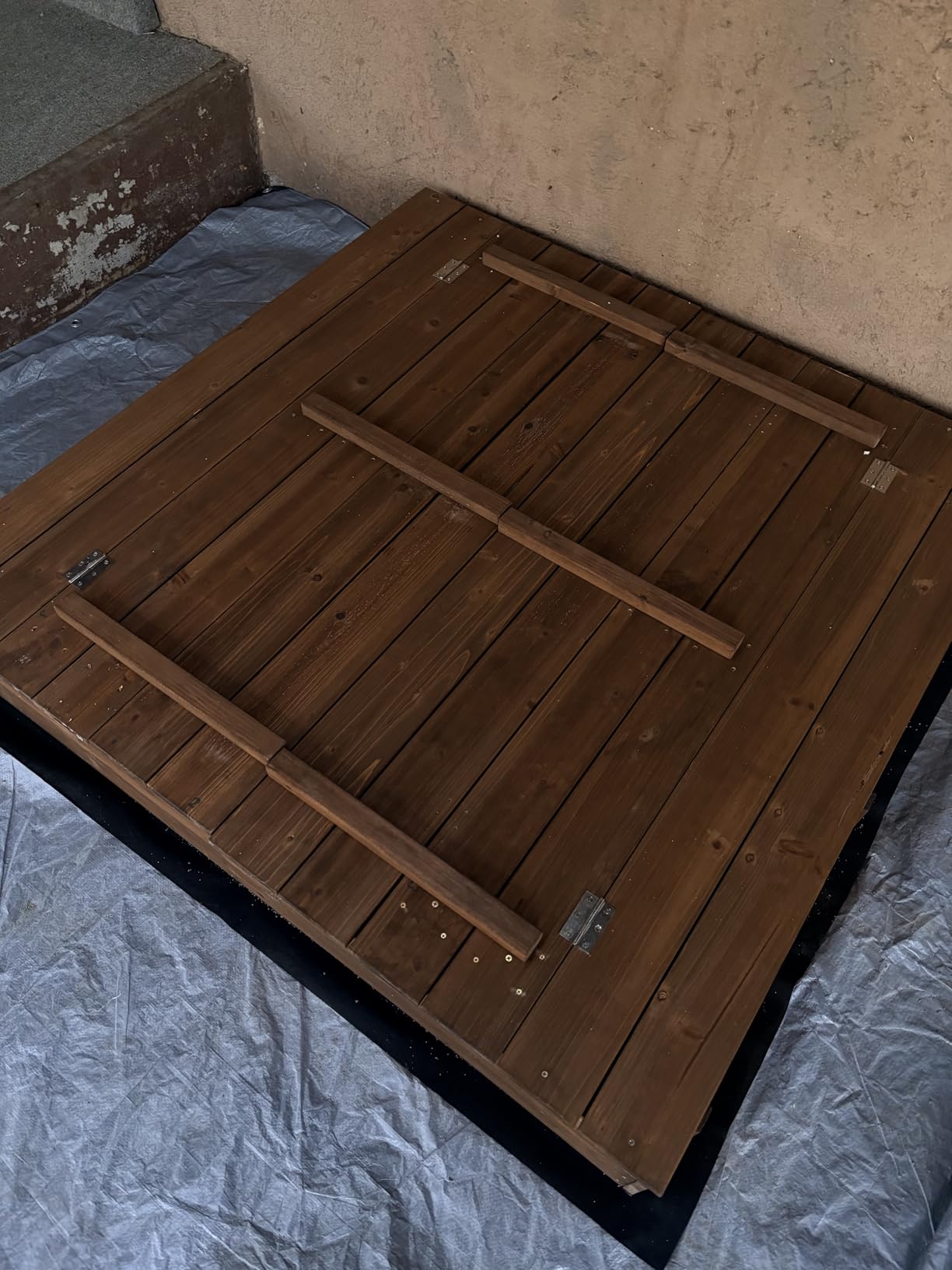
This is the box we keep coming back to. It arrived as flat cedar panels weighing 32.5 pounds, and the build took an evening because the boards are thick and the seat hinges need aligning twice. Once it was up, the two bench sections folded forward into a solid two-panel cover that sat flat and stayed down on its own in a decent breeze.
The dimensions are 47.25 by 47 by 8.5 inches, which is the sweet spot for our yard. Two toddlers and a grown-up fit comfortably, and the benches are rated to 220 pounds each, so an adult can perch on the edge while supervising. Nothing creaked or flexed when we leaned on it.
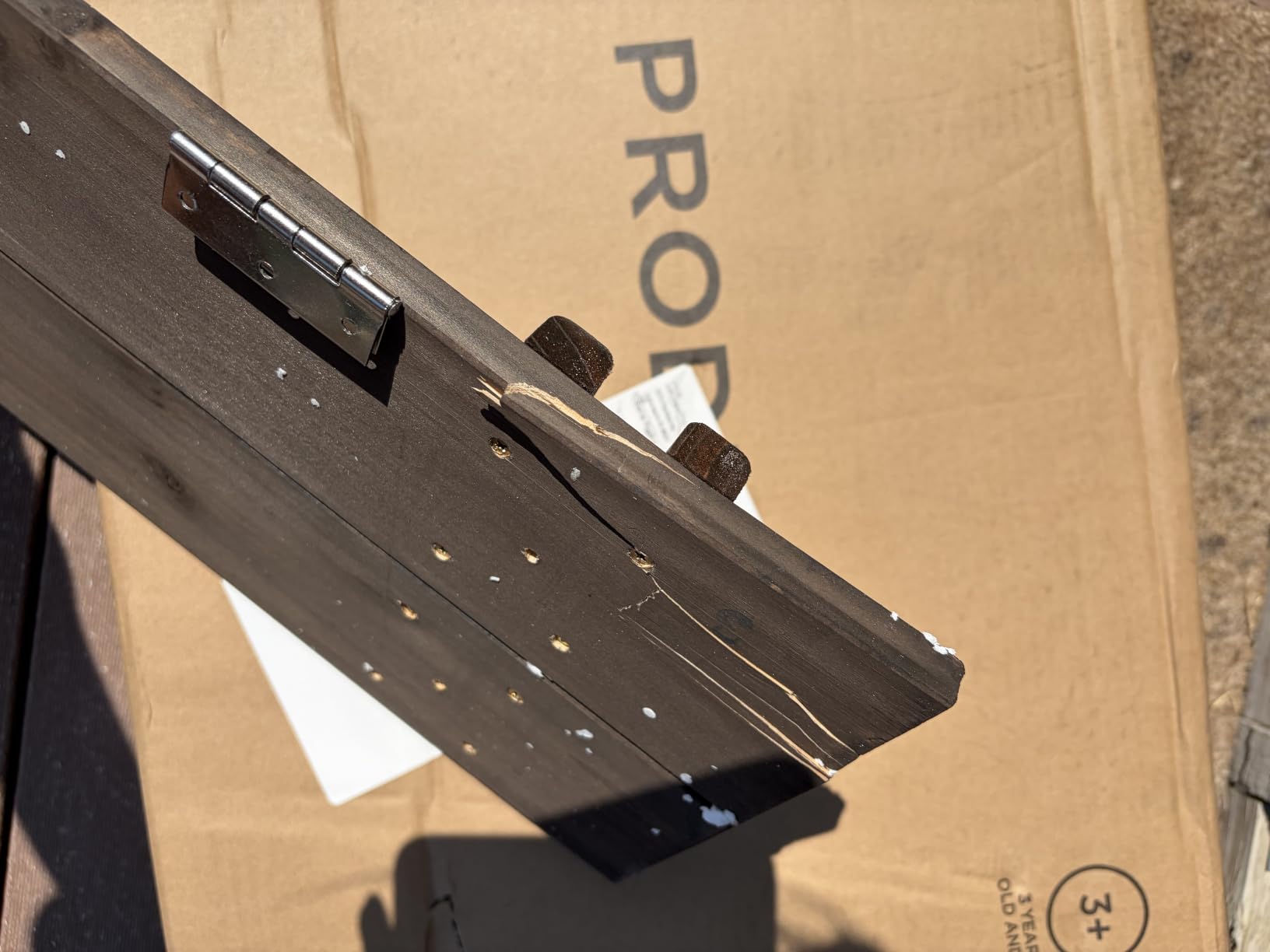
What we would change is the hardware. The supplied screws and hinges feel small for soft cedar, and a fair number of owners report fasteners loosening or stripping after the first season. Pulling a bench apart with a screwdriver tightened every hinge once was an easy afternoon fix, and it has not moved since.
The bottom is open with a fabric liner included for drainage and ventilation, which also lets you set sand depth by lifting sand out of one corner. The liner is cut smaller than the box, so on a slope you end up shimming a corner rather than laying it flat. Seal the cedar before you fill it and it should last years.
Who this sandbox suits
This is the pick for a typical family yard with one or two children, especially if you care about the box looking like furniture rather than plastic. The fold-to-cover mechanism means you get seating and storage protection in one, with no separate lid to lose in the shed.
We rated it the top pick because it is the most-reviewed box in this group and the least dramatic about its failures. Hardware can be tightened. Wood can be sealed. Those are solvable problems.
Where it falls short
It is a 47-inch box, so it will not handle five children at once, and it has no shade. If you need sun protection during play, look at a model with a canopy instead.
The included assembly guide is thin on detail, so budget an evening and search the model number for a video if you are not handy with a socket set.
2. Aivituvin Covered Sandbox With Retractable Canopy
- Canopy shades and closes to keep cats and rain out
- Roomy 47x47 inch sand area
- Benches flip out easily
- Canopy fabric detaches for rinsing
- Roof is awkward to raise and lower alone
- Soft wood splits if screws are driven fast
- Hinge screws on benches loosen
- Canopy fabric fades within months
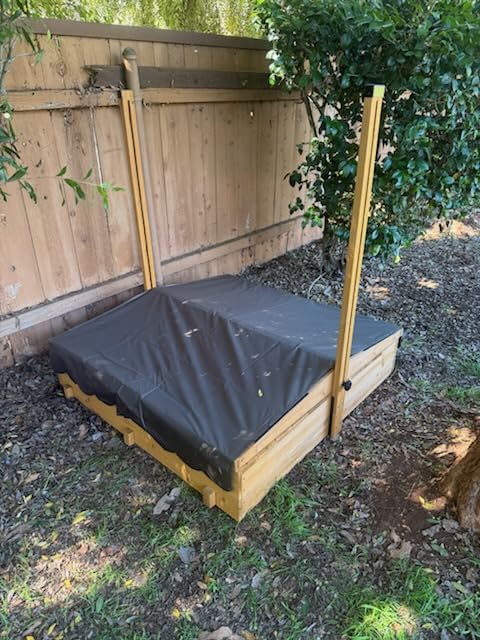
The defining feature here is a retractable roof that slides over the box on a frame, so the same unit gives you shade during play and a sealed top when it is shut. Overall dimensions are 47.2 by 47.2 by 51.9 inches and the whole unit is 45 pounds, so plan the placement before you assemble it rather than after.
Because it is bottomless with a sand screen for storage underneath, drainage is genuinely handled. The T-shaped hinge on the backrest with hand grips on the benches made flipping the seats up and down one-handed, which is the part most canopy boxes get wrong. Benches are rated to 200 pounds each.
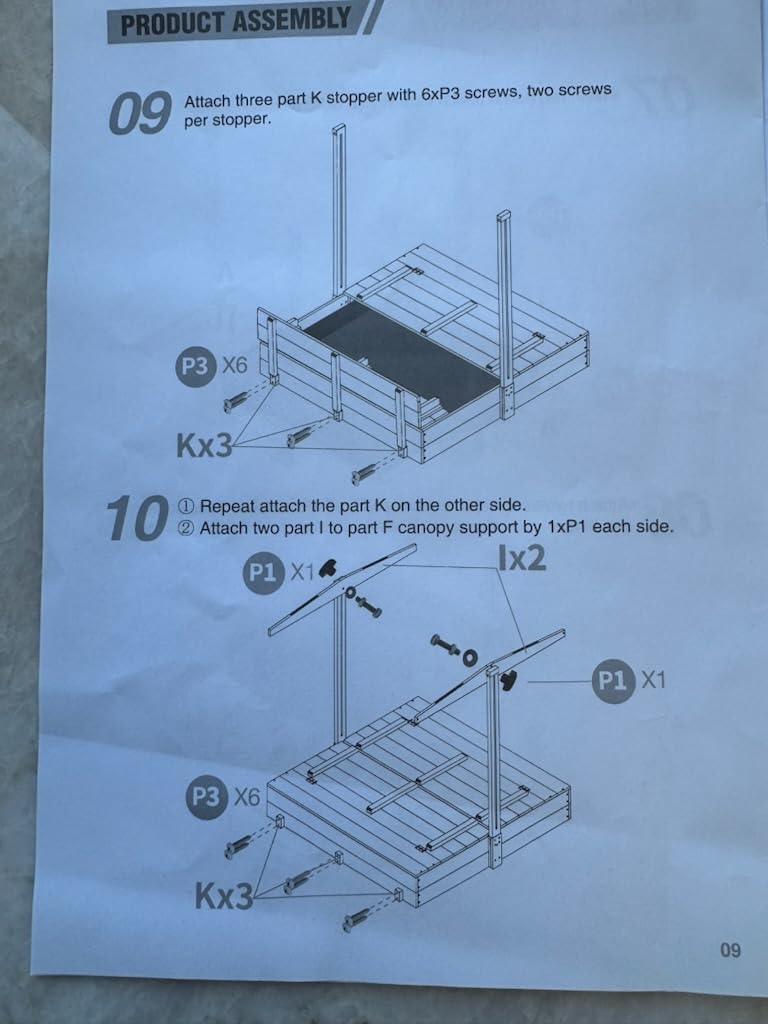
The roof mechanism is the weak link. It takes two hands and a bit of practice to raise, and once loaded with damp fabric it resists. Reviewers also report the soft wood splitting when screws are driven in quickly, and the hinge screws on the folding benches loosening enough to pull the benches away from the frame.
Canopy fabric is the second weak link. The material detaches with a hook-and-loop fastener, which is genuinely convenient for rinsing, but it fades and tears faster than the wood does. Treat the canopy as a consumable part you may replace in a couple of seasons.
Who this sandbox suits
Pick this one if shade matters more than raw capacity, or if you want a covered box that doubles as a little sheltered play spot. Owners in cold climates report it surviving winter in the closed position, which is a good sign for the frame and hinges.
It is also a reasonable choice for a first sandbox for a child around a year old, though the manufacturer rating of 12 months and up assumes close supervision given the height of the frame.
Where it falls short
At 45 pounds it is heavy to reposition, and the soft wood shows checking and splitting sooner than cedar does. If you live somewhere with wet winters, plan on sealing and inspecting screws annually.
The canopy adds height and wind sail area, so a gust can catch the roof while it is extended. That is fine in fair weather and worth remembering on a blustery day.
3. Badger Basket Cedar Sandbox With Folding Bench Cover
- Sturdy cedar boards that survive wet seasons
- Pre-drilled holes line up accurately
- Roomy inside for two children
- Brand shipped a replacement slat when a board split
- Narrow factory hinges are the weakest part
- Gaps between cover slats admit dirt and insects
- Cover is only partially weatherproof
- Boards are unlabeled in the box
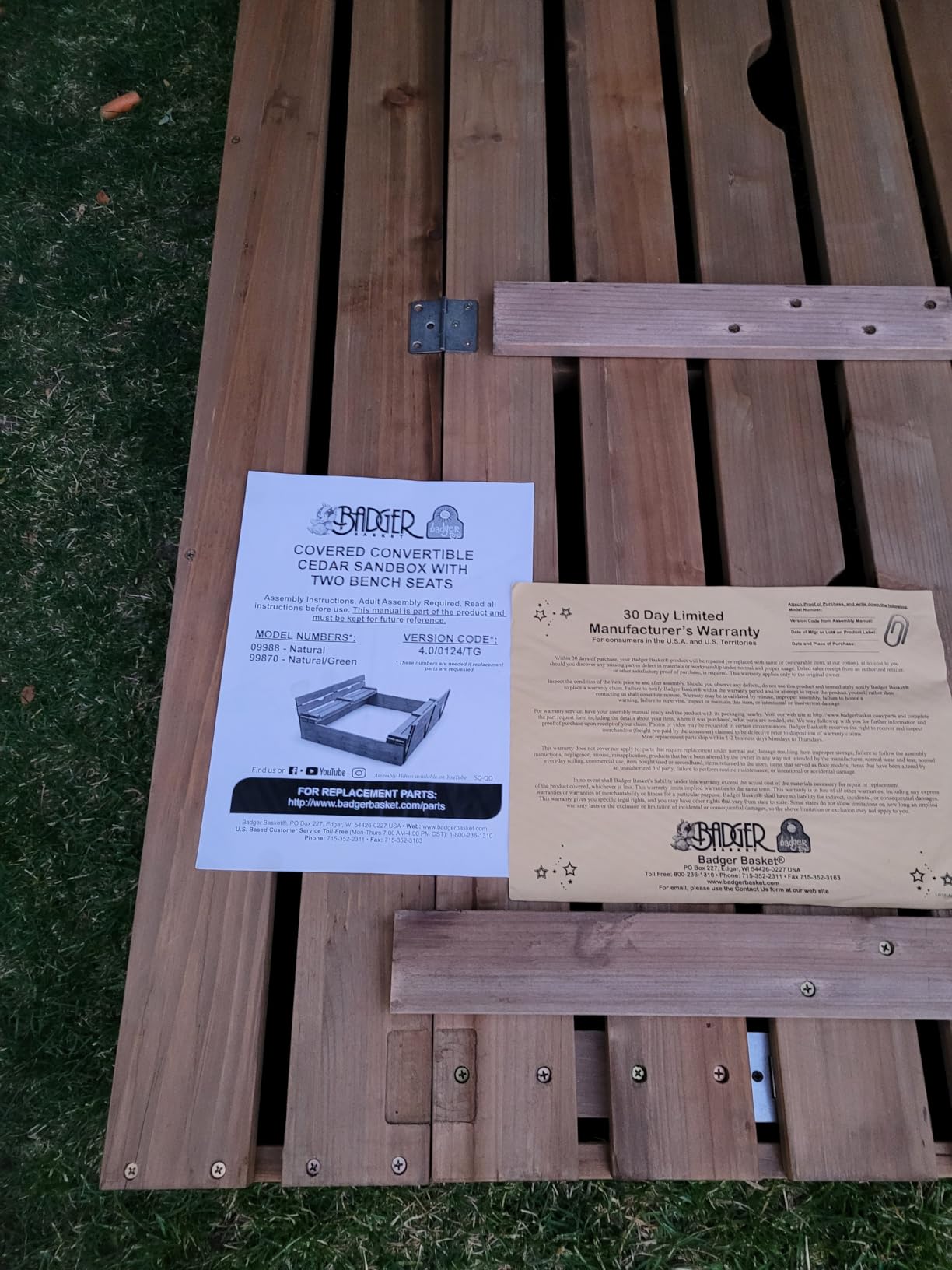
Of the convertible bench boxes we handled, this one felt the most solid. The cedar boards are smooth and thick enough that nothing caught on a bare shin, and the box is bottomless for deep digging and natural drainage. At 46.5 by 46.5 by 9.5 inches it holds roughly 750 pounds of sand, which is enough for two kids to build a proper road system.
Assembly was the least confusing of the wood models because the pre-drilled holes actually line up. Identify your boards before you start, since none of them are labeled, and everything goes together in a sensible order. Benches hold 200 pounds each, so a parent can sit and dig.
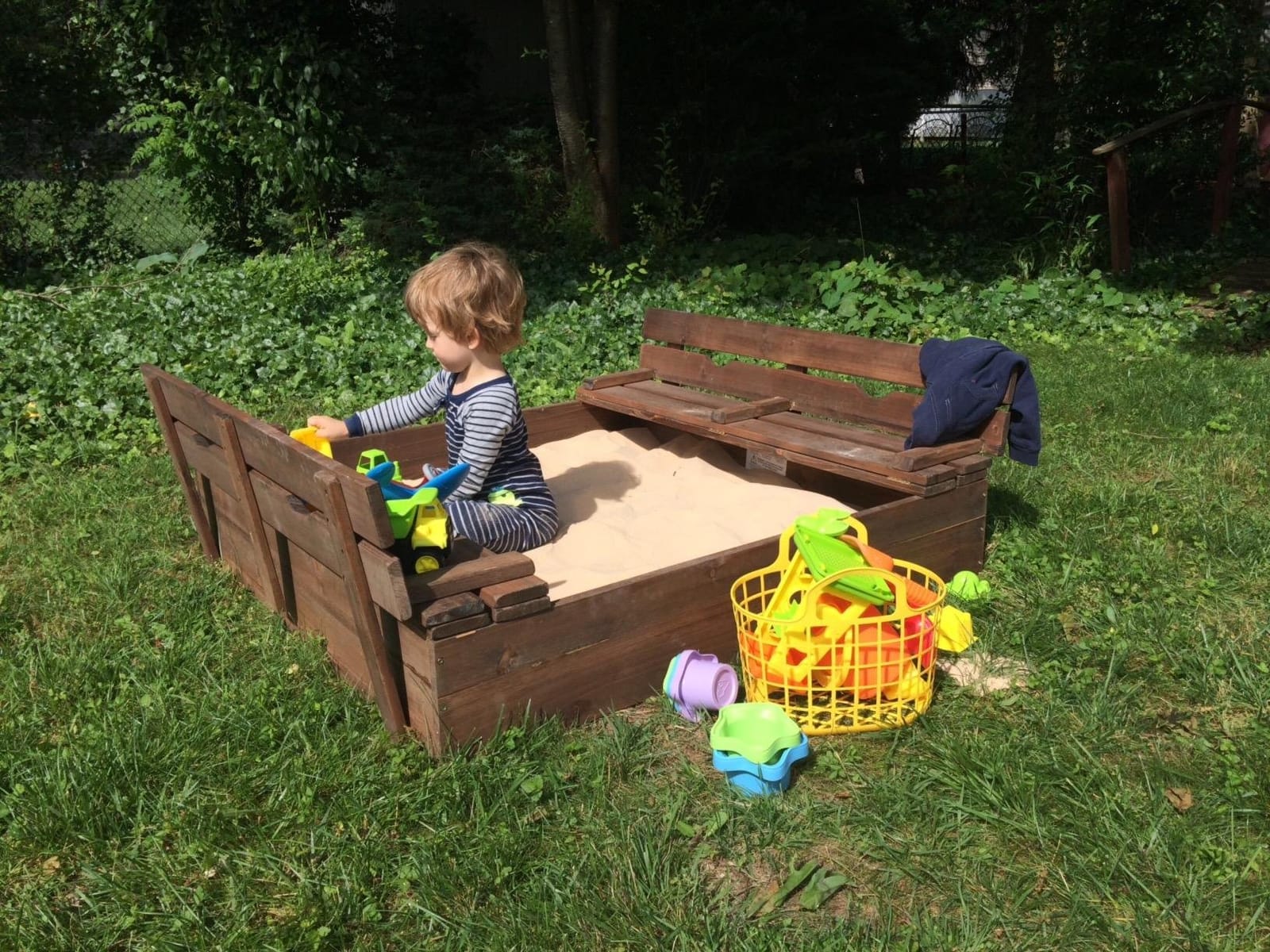
The hinges are the flaw. They are narrow-depth and shallow, and they are the part most likely to need replacing within a couple of seasons. Swapping in heavier hardware takes about fifteen minutes and is the single best thing you can do for this box.
Two other details worth knowing. The gaps between cover slats let fine dirt and small insects through, so it is excellent against cats and leaves but only fair against crawling things. And the cover is not fully waterproof, meaning after a heavy storm the top layer of sand will be damp even though the bulk stayed dry.
Who this sandbox suits
This is our best value pick and a good match for a first covered sandbox on a middle-sized yard. Cedar is the right wood here because it is naturally rot-resistant and does not split as easily as fir or spruce when a screw goes in.
If customer service matters to you, this brand has a track record of replacing a split board rather than arguing about it, and there is a 30 day warranty against manufacturer defects.
Where it falls short
The cover is partial protection, not a full seal. In a yard with a lot of insects, you will still want to rake the surface before a child digs in.
Bottomless means the ground beneath matters. Set it on level, well-drained soil or a patio, and expect to pull weeds from time to time near the edges.
4. KidKraft 59 Inch Wooden Sandbox With Mesh Cover
KidKraft Wooden Backyard Sandbox with Built-in Corner Seating and Mesh Cover, Kid’s Outdoor Furniture, Honey, Gift for Ages 2-8
- Large 59 inch square footprint
- Mesh cover blocks leaves and animals
- Reinforced panels resist warping
- Corner seating for adults and kids
- Detailed assembly instructions
- Listed item weight of 0.1 kg is inaccurate
- Mesh is a screen rather than a sealed lid
- Wood needs periodic sealing
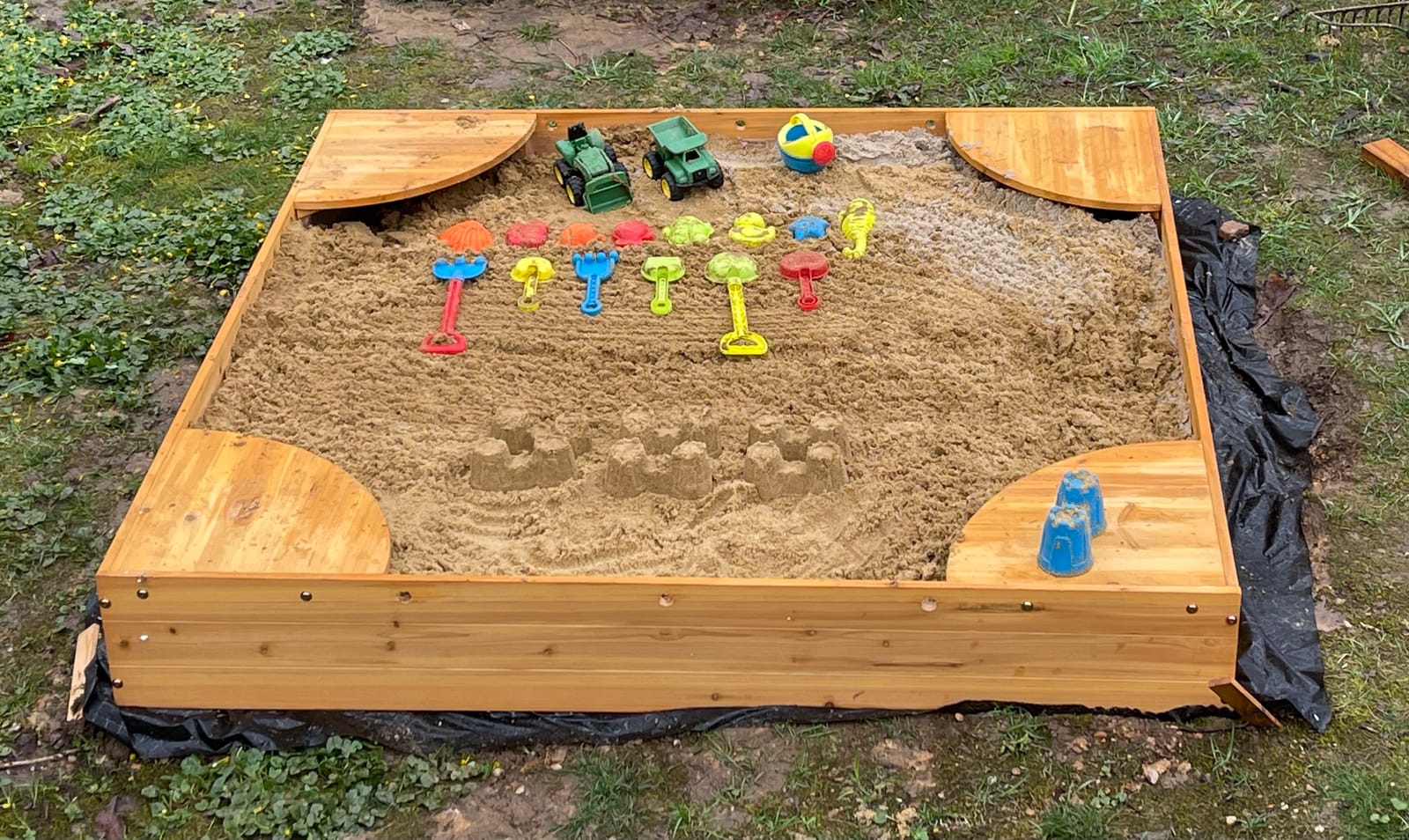
At roughly 59 by 59 inches, this is one of the bigger wooden boxes in the group, and the difference matters when three or four children want to play at the same time. The reinforced panels are built to resist warping and weathering, which is exactly what you want from a wooden box that lives outdoors through wet seasons.
Built-in corner seating means adults can join in rather than standing over the game, and the included step-by-step instructions were genuinely the most complete in the group. Rated for ages 24 months to 8 years with a 90 day warranty against manufacturer defects.
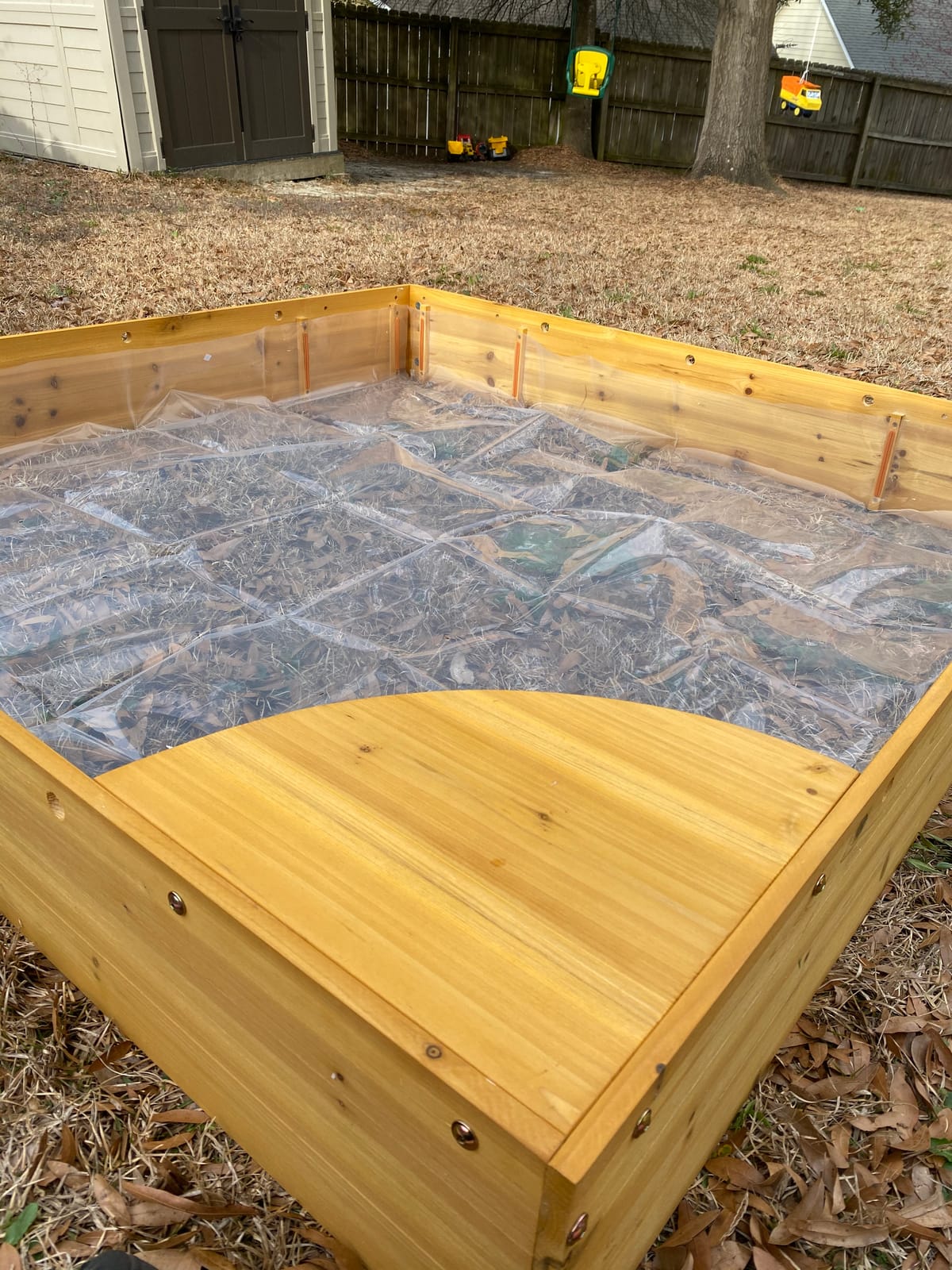
Understand what the mesh cover is and is not. It is a screen, not a solid lid. It does an excellent job with leaves, debris, and cats, all of which it is designed to stop, but it does not shed pooled rainwater, so the sand underneath can get wet after a storm. Plan to loosen a corner and scoop out the top layer.
One warning about the listing itself: the stated item weight of 0.1 kg is clearly inaccurate, so do not use it to plan a move across a yard. The 59-inch footprint is the real constraint here, and you need clear, level ground before the build starts.
Who this sandbox suits
Choose this one if you have a genuinely large yard and more than two children, or if you want a box adults can sit inside. It is a good pick for a family that treats the sandbox as a year-round gathering spot rather than a single-child play station.
It is also the option to look at if you mostly worry about leaves and animals rather than rain, because the mesh does that job well.
Where it falls short
It is wood, not rot-proof composite, so you should seal it once a year. It is also the widest box here at 59 inches, so measure your space before you commit.
If you live in a wet climate and want a box you can close in a downpour without thinking about it, choose a solid lid over a screen.
5. Mederra 85 Inch Octagon Sandbox – Seats Six to Eight Kids
85”x78”x9” Wooden Octagon Sandbox with Cover, Large Sandpit for Kids Outdoor Patio Backyard Play, Easy & Quick Assemble
- Very large octagonal footprint for 5-8 children
- Smooth aromatic cedar with water-resistant finish
- Assembles solo in about 40 minutes
- Bottom liner holds sand and drains
- Seating on all four sides
- Plastic cover lifts in wind and can pool water
- Cover is the most criticized part
- Sand capacity means 15-20 bags to fill
- Needs level ground and a stretched cover
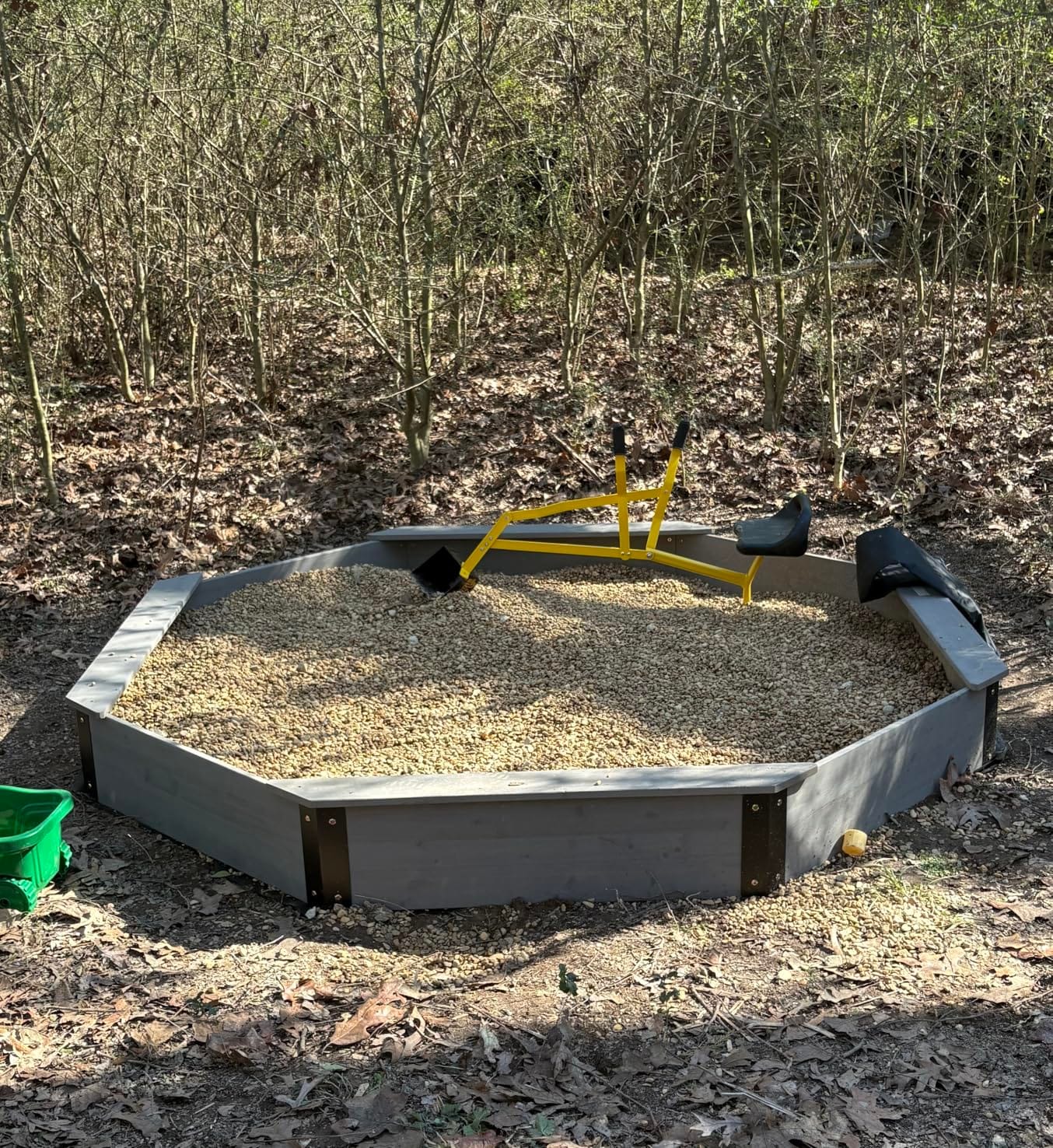
No other box in this group comes close on capacity. The sand area is 85 by 78 inches, holds between 800 and 1000 pounds of sand, and seats six to eight children on four benches. If you have a big family, a daycare, or a neighbor situation where several kids share one box, this is the honest answer.
The build is the easiest large wooden model we assembled. Parts come pre-cut and pre-drilled, and the whole thing went up in about 40 minutes with one person. The cedar is 100 percent with a water-resistant finish and is joined by angle iron posts, and the box is certified to ASTM, F963 and CPSIA standards.
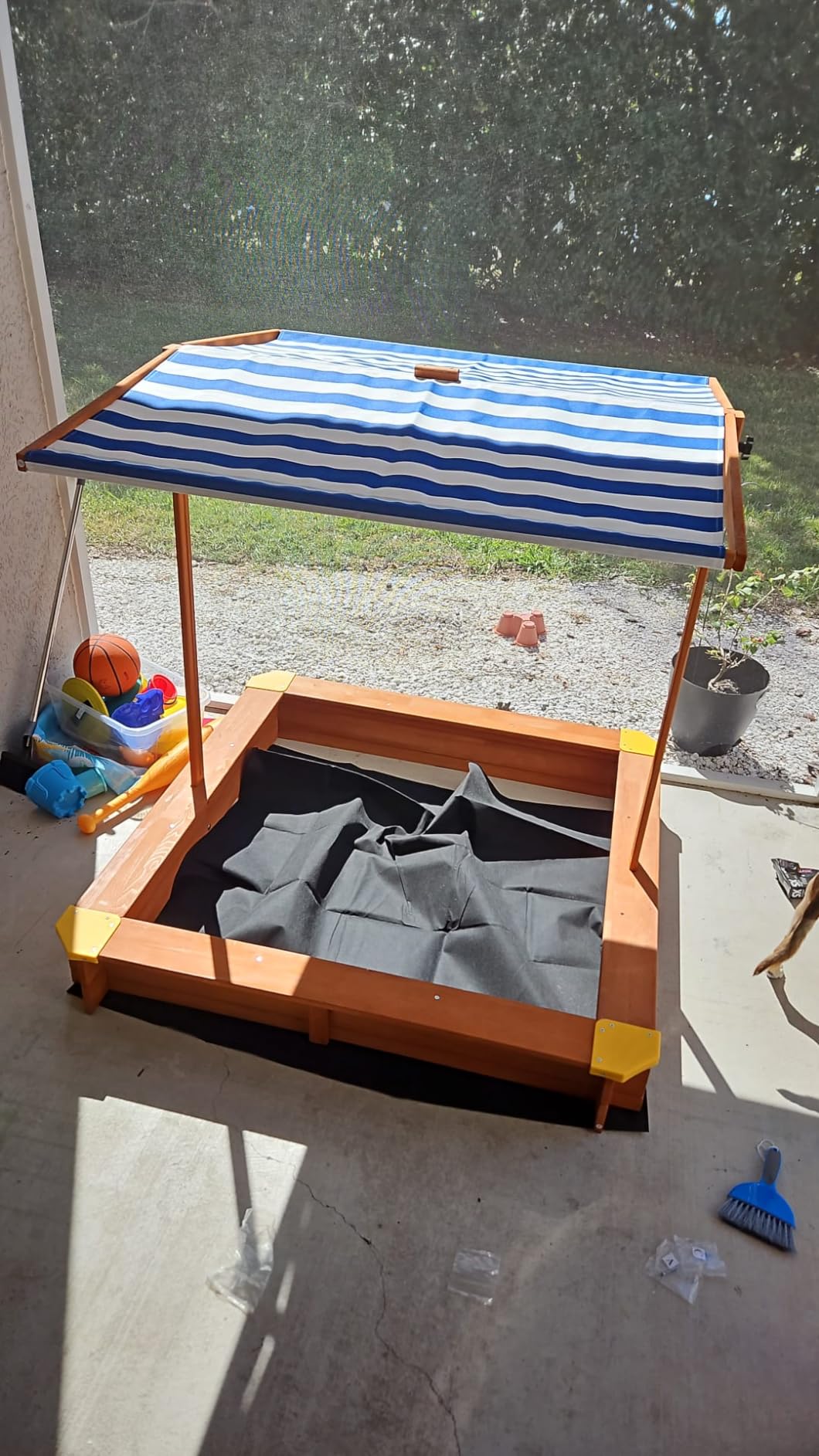
Be honest about the cover. The included plastic cover is the weakest part of an otherwise excellent box. It does not stay put in wind, and if it is not pulled tight it can hold a pool of water on top, which then sits directly over the sand. Several owners ended up buying a separate wooden cover instead.
There is a second practical consequence of the size. Filling it properly takes roughly 15 to 20 bags of play sand, so budget for that up front. Under-filling a box this large leaves kids digging to bare ground in a corner within a week.
Who this sandbox suits
This one is for a big yard shared by a lot of children. The four-sided bench layout also means parents can sit in on any side, which we liked more than we expected when two adults wanted to supervise at once.
The octagon shape is patented, and it does use the yard space more efficiently than a rectangle of the same area. The bottom liner included keeps sand in place while letting moisture drain.
Where it falls short
The cover, full stop. Expect to replace or supplement it if you live anywhere with wind, and expect to scoop out pooled water after a storm.
At 85 by 78 inches, check your yard carefully. This is not a patio box, and it must sit on level ground for the frame to stay square.
6. Step2 Natural Playful Sandbox – Plastic, Lid Included
Step2 Natural Playful Sandbox, Kids Activity Sensory Table, Summer Outdoor Toys, Lid Included, For Toddlers 1+ Years Old
- No assembly required
- Double-wall plastic will not rot or crack
- Highest average rating in this group
- Four seats encourage shared play
- Easy to wipe or hose down
- Plastic scratches and fades over time
- 44 by 32 inch sand area holds fewer children
- Deep molded seams trap sand and water
This is the only plastic option here, and it is the highest rated in the group at 4.7 stars. Double-walled plastic resists chipping, fading, cracking, and peeling, which means no annual sealing and no rot, ever. It is rated for 12 months and up and carries a 2 year manufacturer warranty.
The practical advantage is enormous for a lot of families: there is nothing to build. It arrives complete, the lid clicks on, and you can put sand in it during a nap. Four built-in seats around the perimeter encourage turn-taking, and the whole thing is easy to wipe down or hose off. It holds up to 200 pounds of sand.
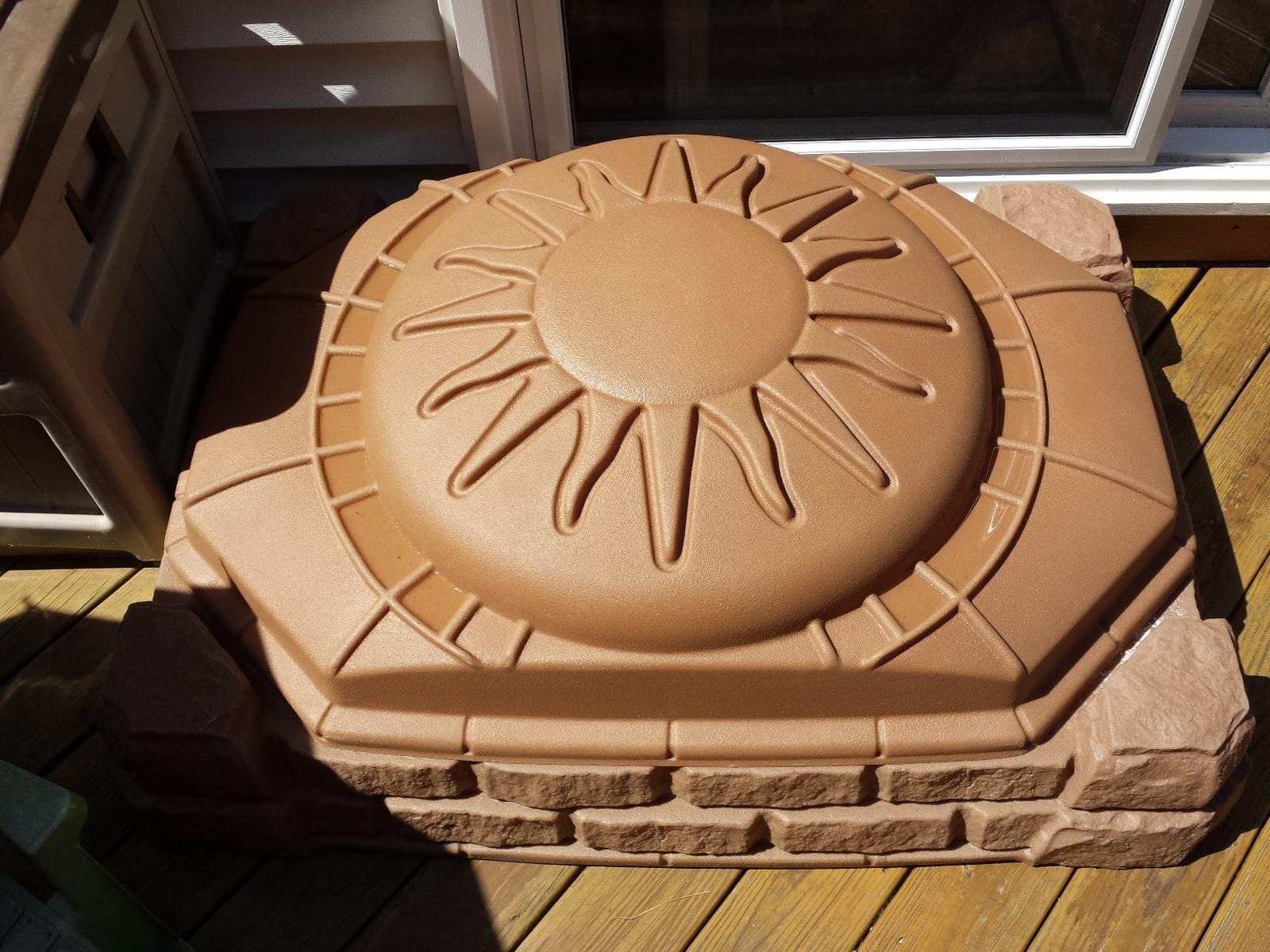
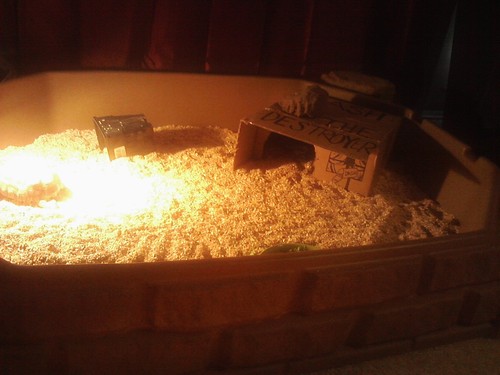
The trade-off is capacity and looks. At 32 by 44 inches with a 15.5 inch height, the sand area is noticeably smaller than every wooden box in this guide, so two children can play together but a third and fourth will be queuing. It also does not blend into a garden the way cedar does.
Over time, plastic scratches and fades, and the deep seams in the molded shell can hold sand and water that you will need to scrub out. Neither is a dealbreaker, but neither is free either.
Who this sandbox suits
Pick this one for a patio, a deck, or a small yard where wood is impractical, and for parents who want zero assembly. It also works indoors, which the wooden models do not, so it can double as a sensory table when the weather turns.
It is the easiest covered sandbox to actually maintain. Hose it off, tip out the damp sand, and put the lid back on.
Where it falls short
It is the smallest sand area in the group. If you have three or more children sharing one box, look at a 47-inch wooden model or larger.
Plastic has a shorter useful life than sealed cedar, and it will not blend into a landscaped yard the way wood does.
7. BIRASIL 48 Inch Fir Sandbox With Adjustable Canopy
- Roomy 48 inch sand area
- Height-adjustable canopy for sun and rain
- Smooth splinter-free fir boards
- Benches rated to 200 lbs each
- Assembles in about 15 minutes
- Canopy fabric and frame wear fastest
- Fir is softer than cedar and can split
- Cover panels leave gaps that admit water
- Lid and canopy hardware loosens
This assembled faster than anything else in the group, about 15 minutes, and the boards are genuinely smooth. There were no splinters or barbs on any edge we ran our hands down, which matters for a box meant for children aged 3 and up.
The 48 inch square sand area gives several children room, and the two bench seats with backrests hold 200 pounds each. The canopy is height-adjustable, so you can move shade to follow the sun through the afternoon. The unit weighs 42 pounds and measures 48 by 48 by 48 inches when assembled.
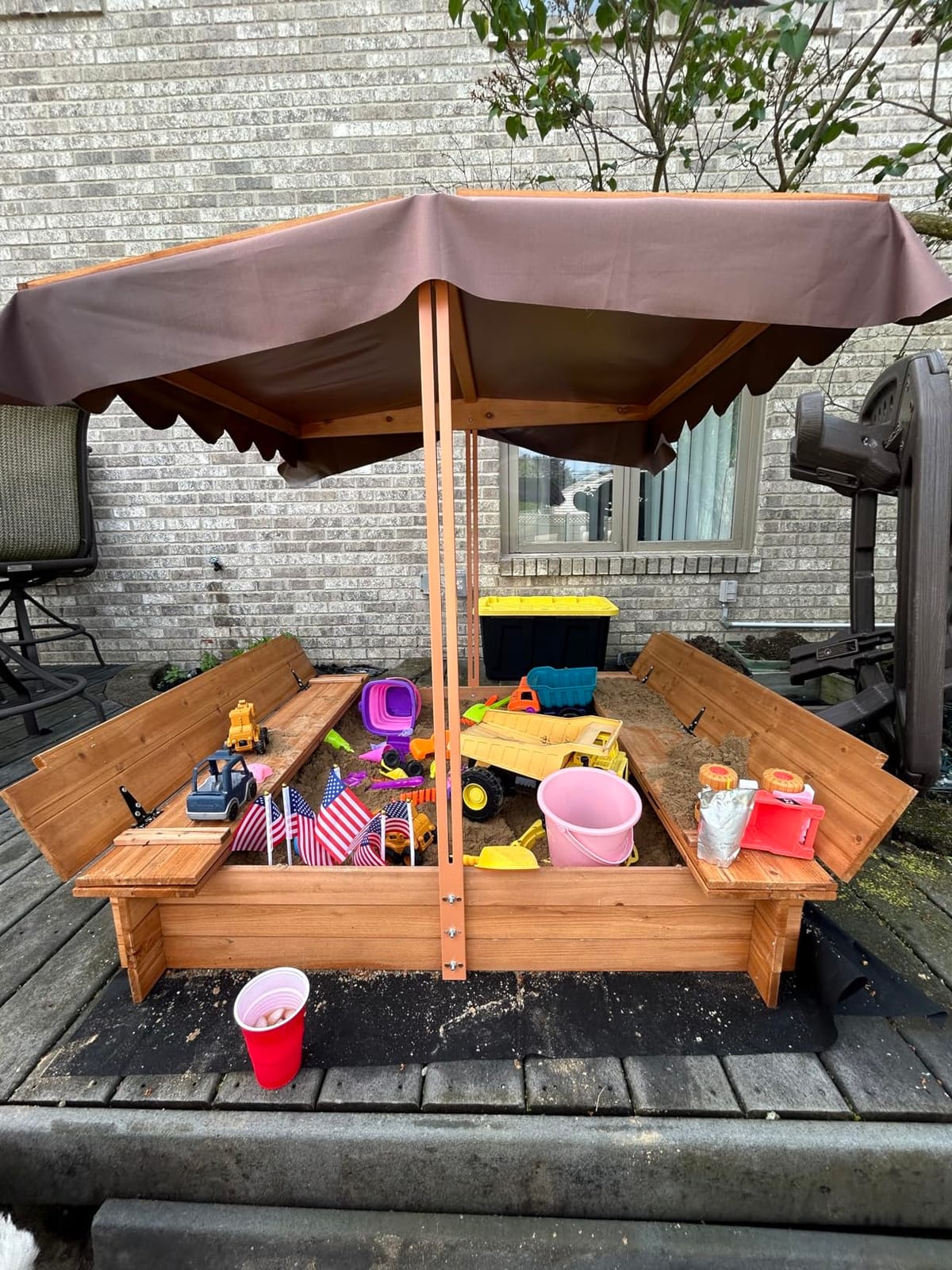
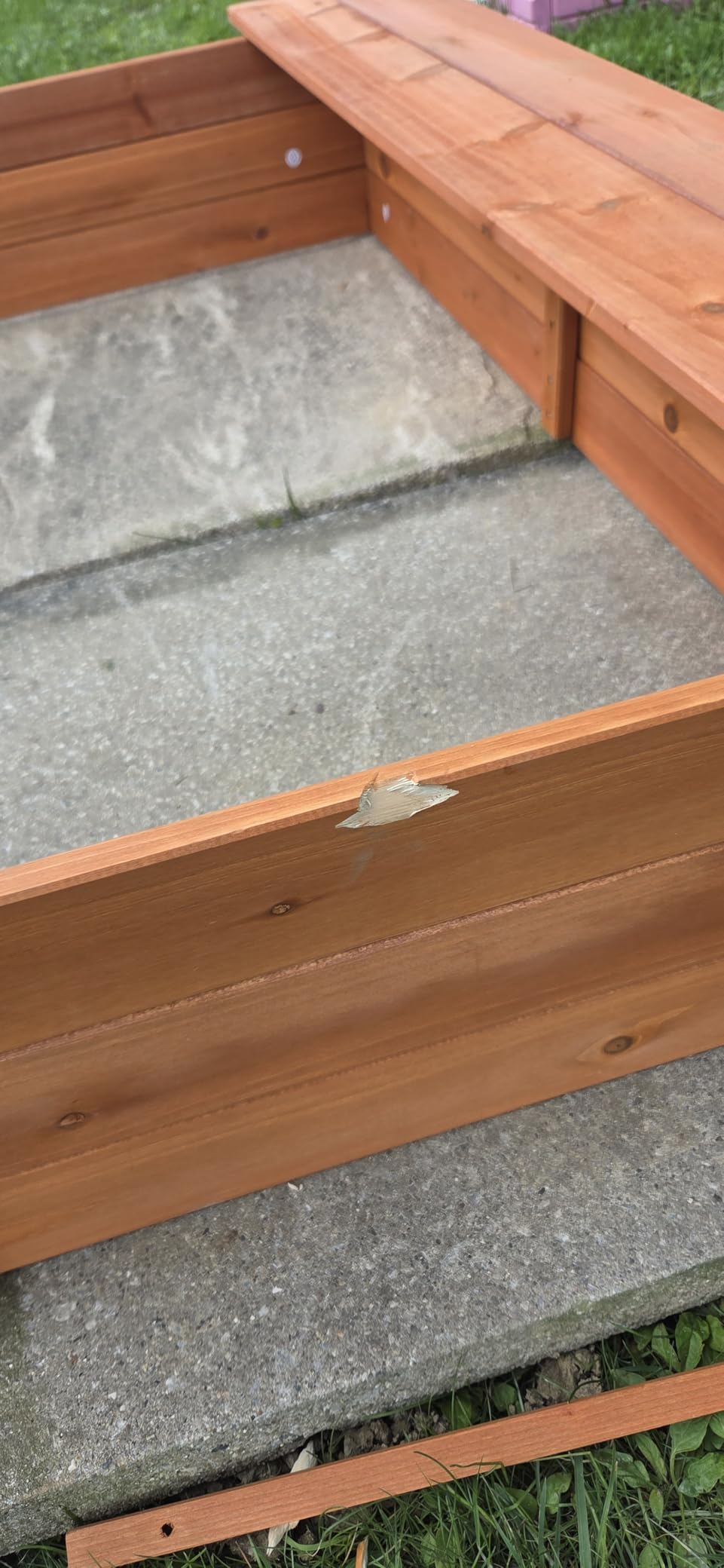
This box has the lowest average rating in the group at 4.0, and the reasons are consistent. Fir is a softer wood than cedar, and if a screw is over-driven during assembly or a child leans hard on a corner, the board can split. Sealing helps, but it does not make fir behave like cedar.
The canopy is the other recurring weak point. The fabric and frame are the first components to degrade outdoors, and the fold-down cover panels leave gaps that do not fully seal out water. Expect to retighten lid and canopy hardware a few times in the first season.
Who this sandbox suits
Choose this one if fast assembly matters, if you want adjustable shade, and if you are comfortable sealing softwood once a year. It is bottomless, so drainage and adjustable sand depth are handled well and there is no liner to fit.
It suits a yard where the box is occasionally in full sun and you want a usable answer rather than moving the kids inside at noon.
Where it falls short
It is the least robust frame here. Expect to inspect joints annually, and expect the canopy to be a replaceable part rather than a permanent one.
If your priority is a box that survives five wet winters with minimal work, spend the extra effort on a cedar model instead.
8. Best Choice Products 78 Inch Hemlock Octagon Sandbox
Best Choice Products Large Wooden Octagon Sandbox w/Lid for Kids, Brown
- Spacious octagonal sand area
- Interlocking heat-treated panels hold shape
- Corner seating is genuinely kid-sized
- Assembles in under ten minutes with two adults
- Bottom liner helps sand stay put
- Soft cover is not fully waterproof
- Water pools on the cover if unweighted
- Bottom liner leaks sand unless stapled inside
- Wood can crack after a winter season
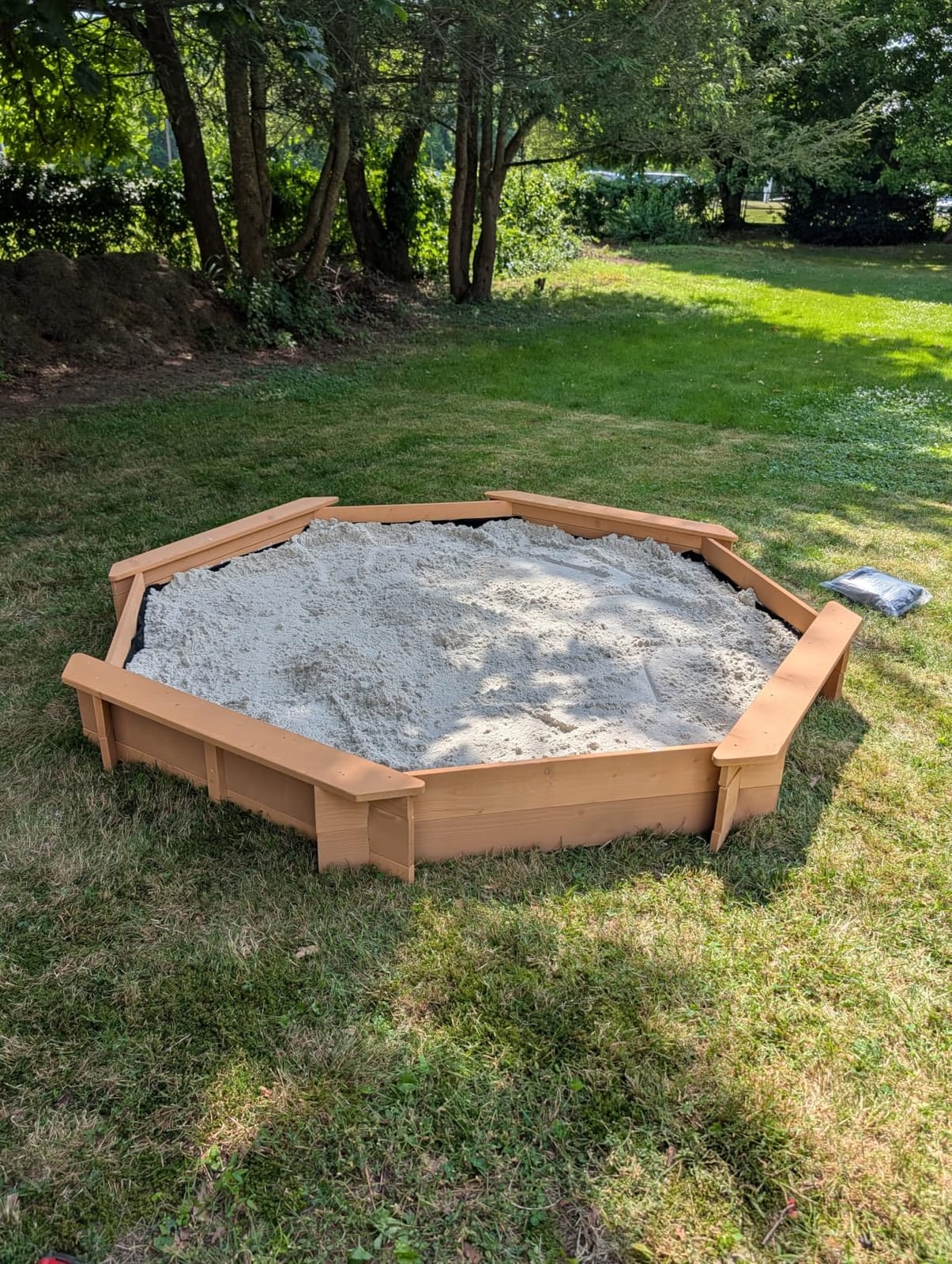
The interlocking heat-treated hemlock panels are the interesting engineering here. Rather than butting boards together, the joints interlock, and reviewers consistently report the frame holding its shape over time. At 78 by 78 by 9 inches and 36.5 pounds, it is a serious box that still assembles in under ten minutes with two adults.
Seating runs around the octagon for up to eight people with 220 pounds per bench, and the corners are sized for children rather than adults, so small kids can actually sit independently. The bottom liner handles drainage, ventilation, and weed deterrence in one piece. The listed age range is 24 months to 18 years.
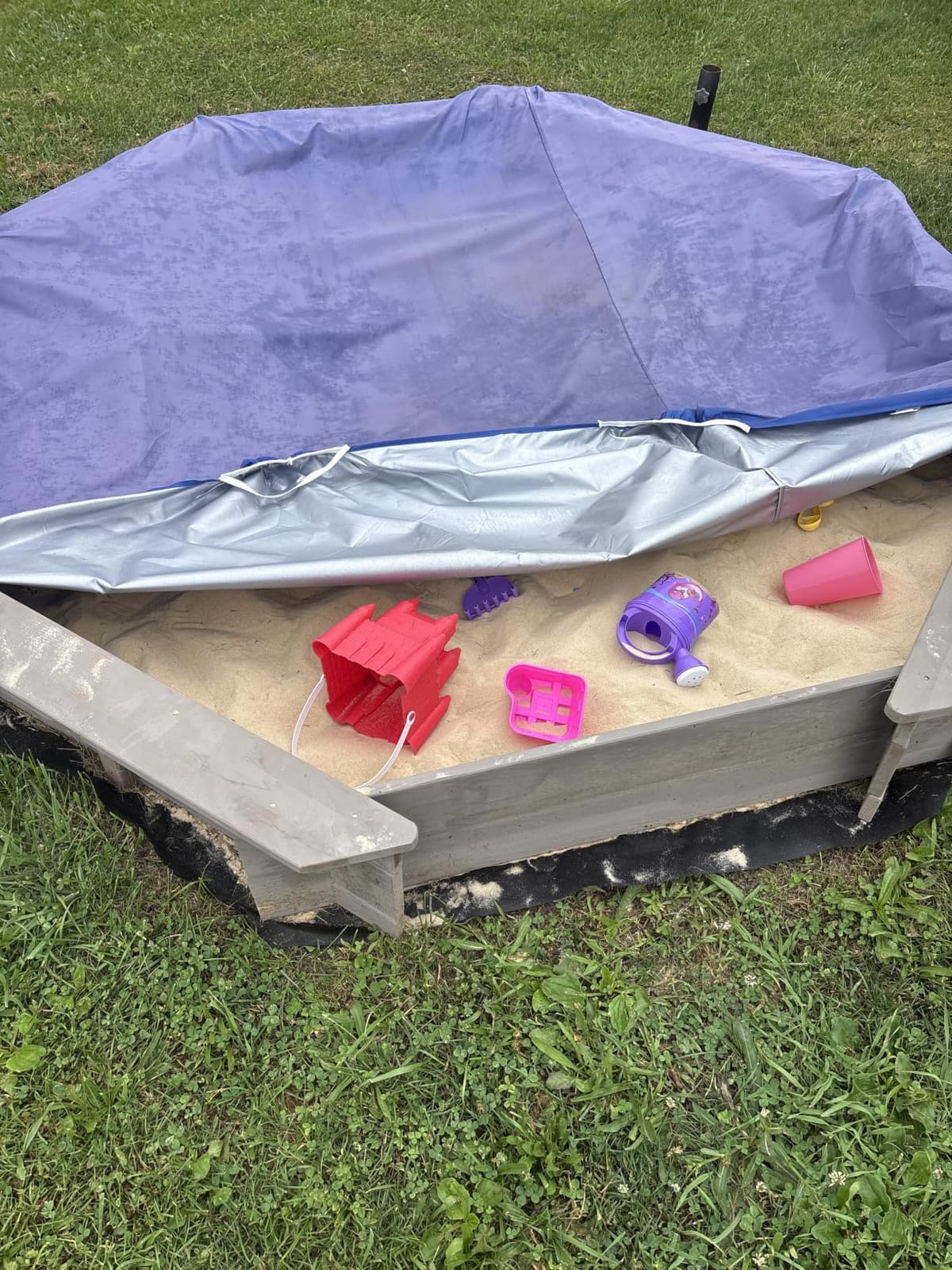
The cover is the honest problem. It is UV- and water-resistant rather than waterproof, so after heavy rain the sand underneath stays damp. It also pools water in the middle if you do not weight it down; some owners use beach balls to shed the water, and that trick works.
One fitting detail catches people out: the bottom liner needs to be stapled inside the frame, not outside, or sand escapes under the edge. That is a five-minute job with a staple gun, but only if you know it before assembly.
Who this sandbox suits
This is the pick for a family that wants a large, kid-scaled sandbox without a full day of building. The octagon gives a wide, shallow play area, and a bench on every side means kids can sit on the edge rather than kneeling on grass.
It suits an open yard with some sun, where the UV resistance on the cover matters and you do not mind a dry-down after a big storm.
Where it falls short
The cover will not keep sand dry through a downpour. If a dry box the next morning is your top requirement, pick a solid wooden lid over a fabric cover.
At 78 inches square it needs real yard space, and the hemlock shows checking and cracks after a hard winter, so seal it each spring.
9. YOLENY Spruce Sandbox With Rotating Canopy and Lid
- Cover
- canopy and liner all included in one box
- Attractive painted finish
- Canopy rotates 180 degrees and adjusts in height
- Compact footprint suits patios
- Assembles in about 20 minutes
- Brittle wood cracked within weeks for some owners
- Canopy is hard to move because wood slides on wood
- Canopy and liner fabric degrade within a year
- Too small for an adult to sit inside
- Instructions are hard to follow
Almost nothing at this level of specification includes all three pieces: a lid, a canopy, and a bottom liner. The 420D Oxford cloth canopy is rated UV50, rotates 180 degrees, and has side height adjusters, and the support column can be removed entirely when you do not want the roof. Assembly took about 20 minutes using the included manual and video.
The sand area is 36 by 43 inches within a 43.7 by 43.7 inch footprint, and the box holds 250 pounds of sand. The two bench seats with backrests are rated at 200 pounds each and fold into a closed lid. The black Oxford bottom liner comes with staples for securing it.
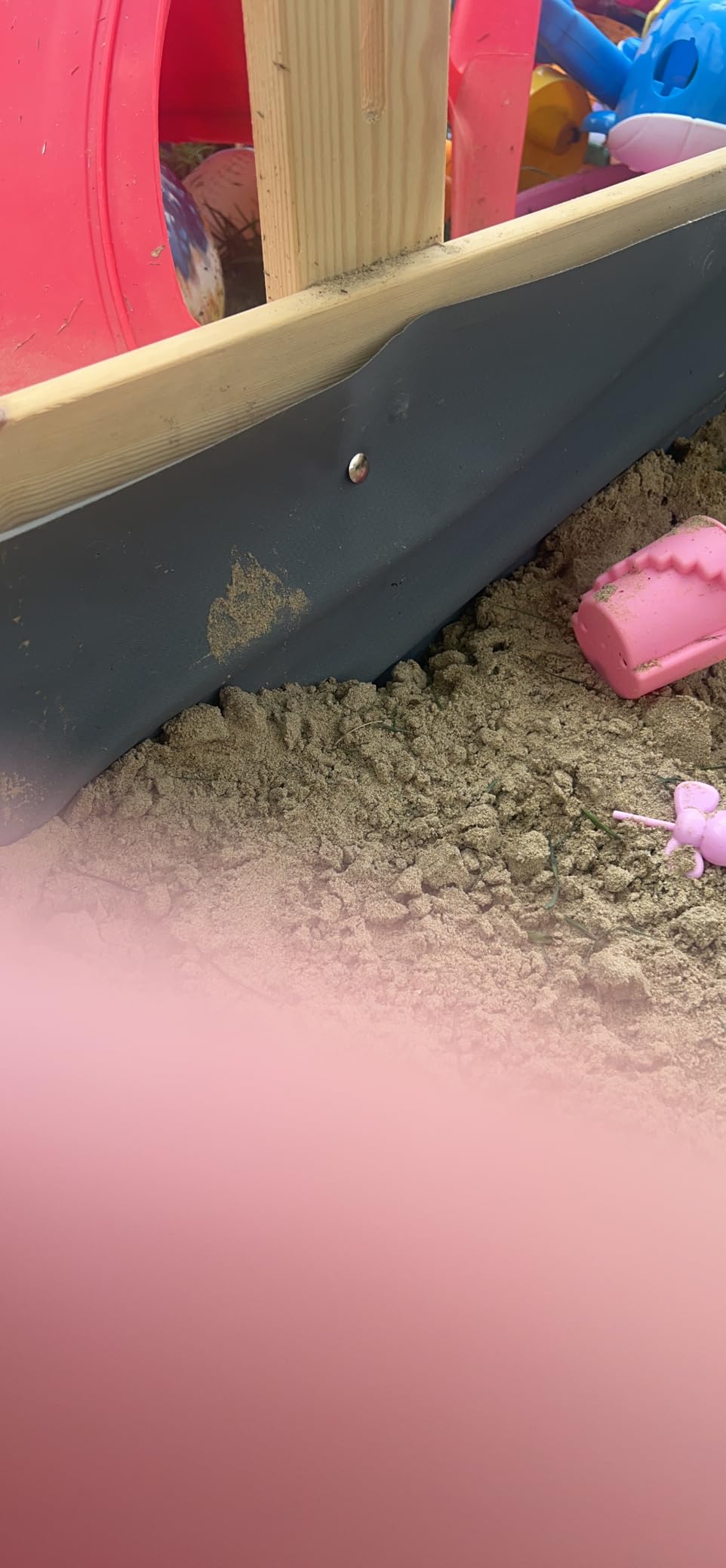
Durability is the dividing line on this one. A steady stream of reviews describes dry, brittle wood that cracked or split within weeks, seats that detached, and canopy and liner fabric failing inside a year. If you buy it, seal the wood immediately and treat the fabric as consumable.
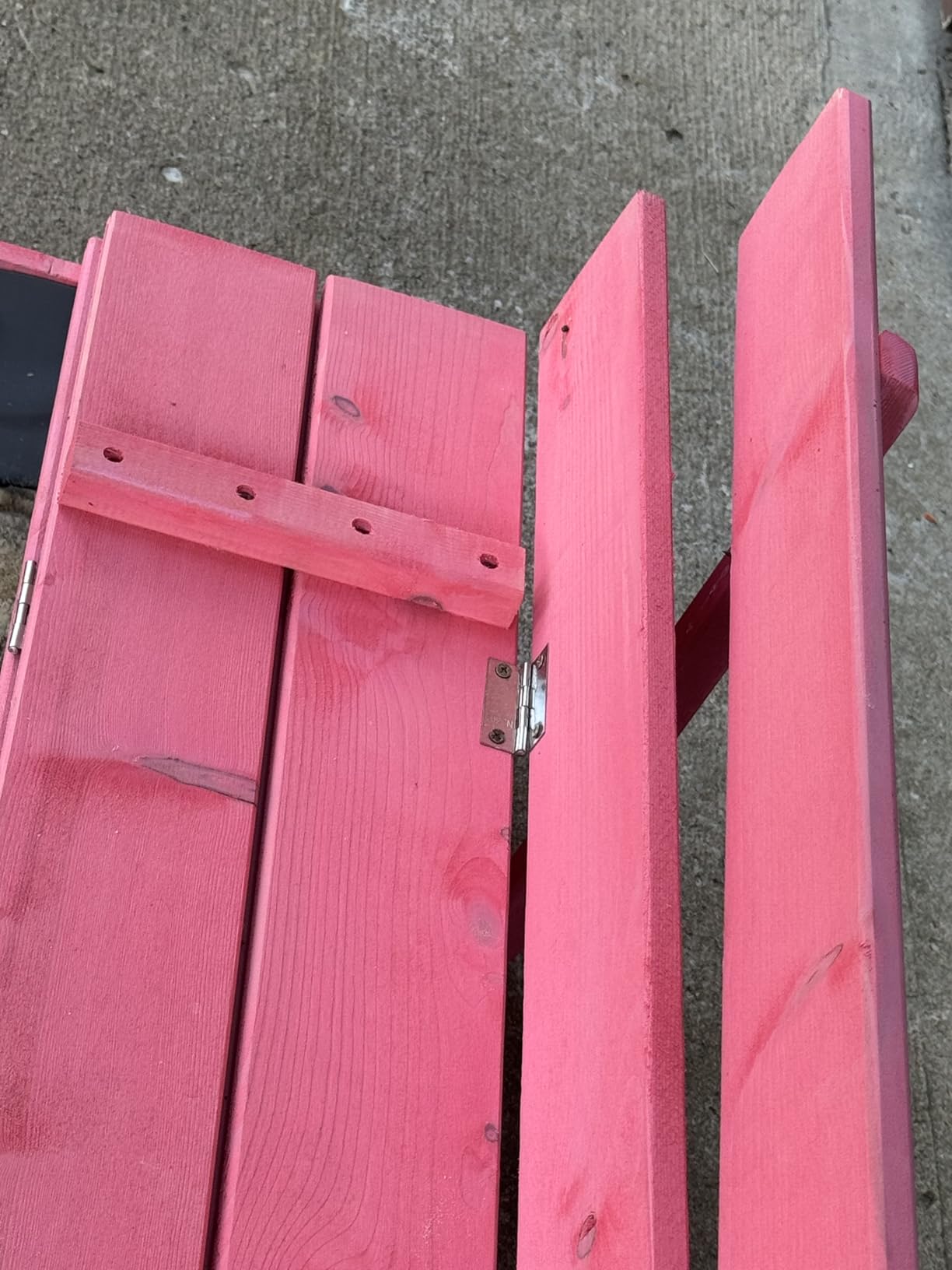
Two smaller annoyances: the canopy is hard to raise and lower because the wood slides directly against wood, and the lid does not stay screwed tight, so it can shift unexpectedly. The box is also too small for an adult to sit inside with a child, which limits it to a young-child yard.
Who this sandbox suits
This one makes sense for a small patio or yard, or for families who want canopy shade and pest protection at the lowest specification level we found. The 43.7 inch footprint is the most compact in the group and the painted finish looks good in a landscaped space.
It is also a reasonable birthday-level gift when paired with a bag of play sand.
Where it falls short
It is the least durable frame here, and the one most likely to need a canopy or liner replaced within a year of regular outdoor use. Seal the wood twice a season.
The instructions are difficult to follow, so budget time to watch a video alongside the build.
10. Agitree Cedar Sandbox With Rotating Canopy and Toy Storage
Agitree Wooden Sandbox with Lid and Canopy for Kids Ages 3-8, 47″ Outdoor Sand Box with Foldable Storage Bench Seats, Bottom Liner Included
- Only model here with a storage compartment under the benches
- Rotating canopy tracks the sun for all-day shade
- Benches fold into separate cover panels
- Non-toxic water-based finish safe for child contact
- Assembles in about 30 minutes
- Most expensive box in the group
- Canopy and folding-lid hardware need regular tightening
- Some owners report loose joints and a wobble after a season
- Assembly is awkward because pieces arrive pre-assembled
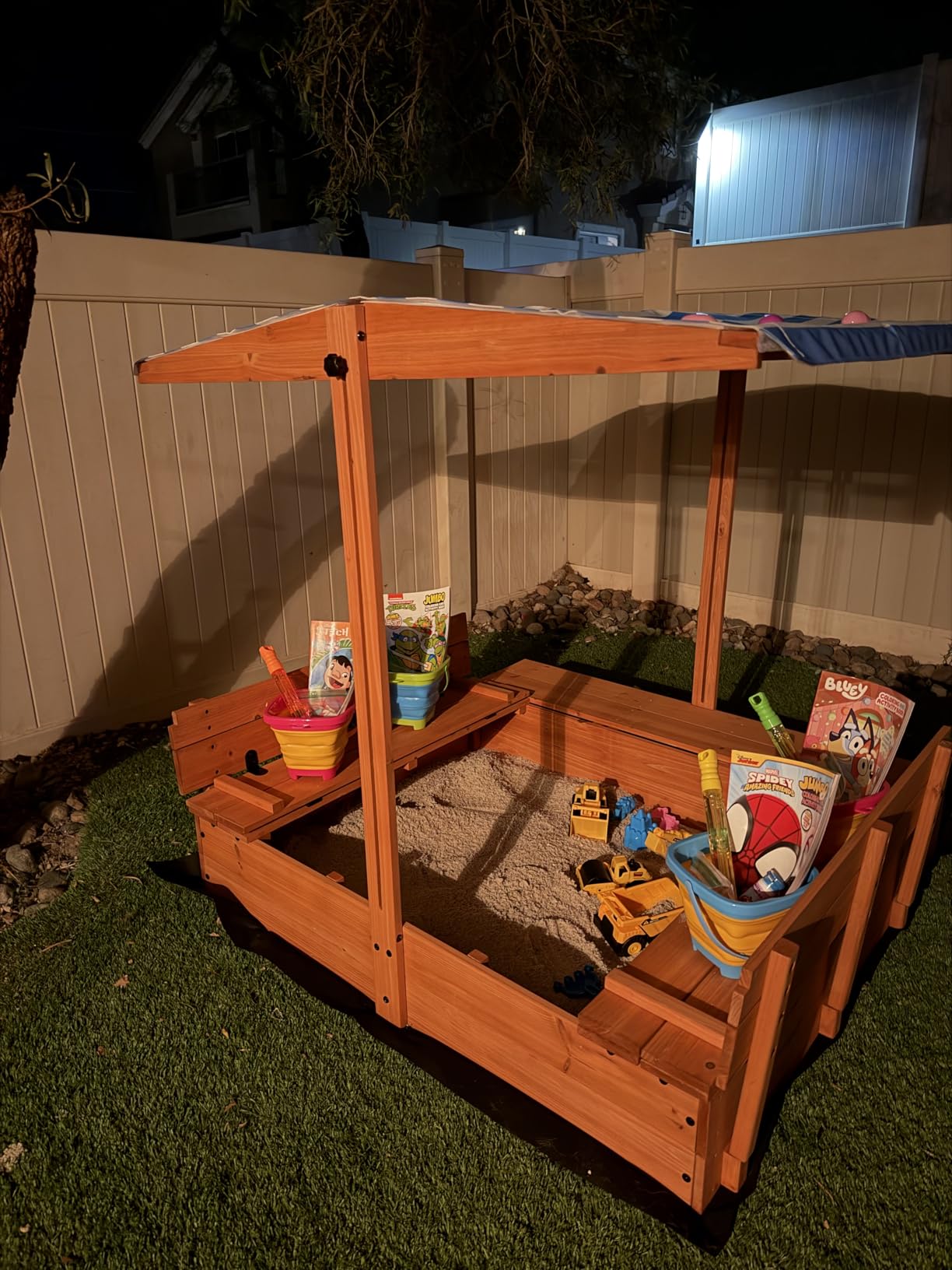
The storage compartment under the bench seats is the feature that separates this one. Buckets, shovels, and a damp towel all live under there, which means the sandbox is also off-season toy storage. Nothing else in this group does that.
The 360 degree rotating, height-adjustable canopy tracks the sun so shade follows the play, and the two backrest benches rated to 200 pounds each fold into separate cover panels that still work as a seat when closed. The finish is a non-toxic water-based paint and stain on heat-treated wood, which is safe for direct child contact. Assembly took about 30 minutes.
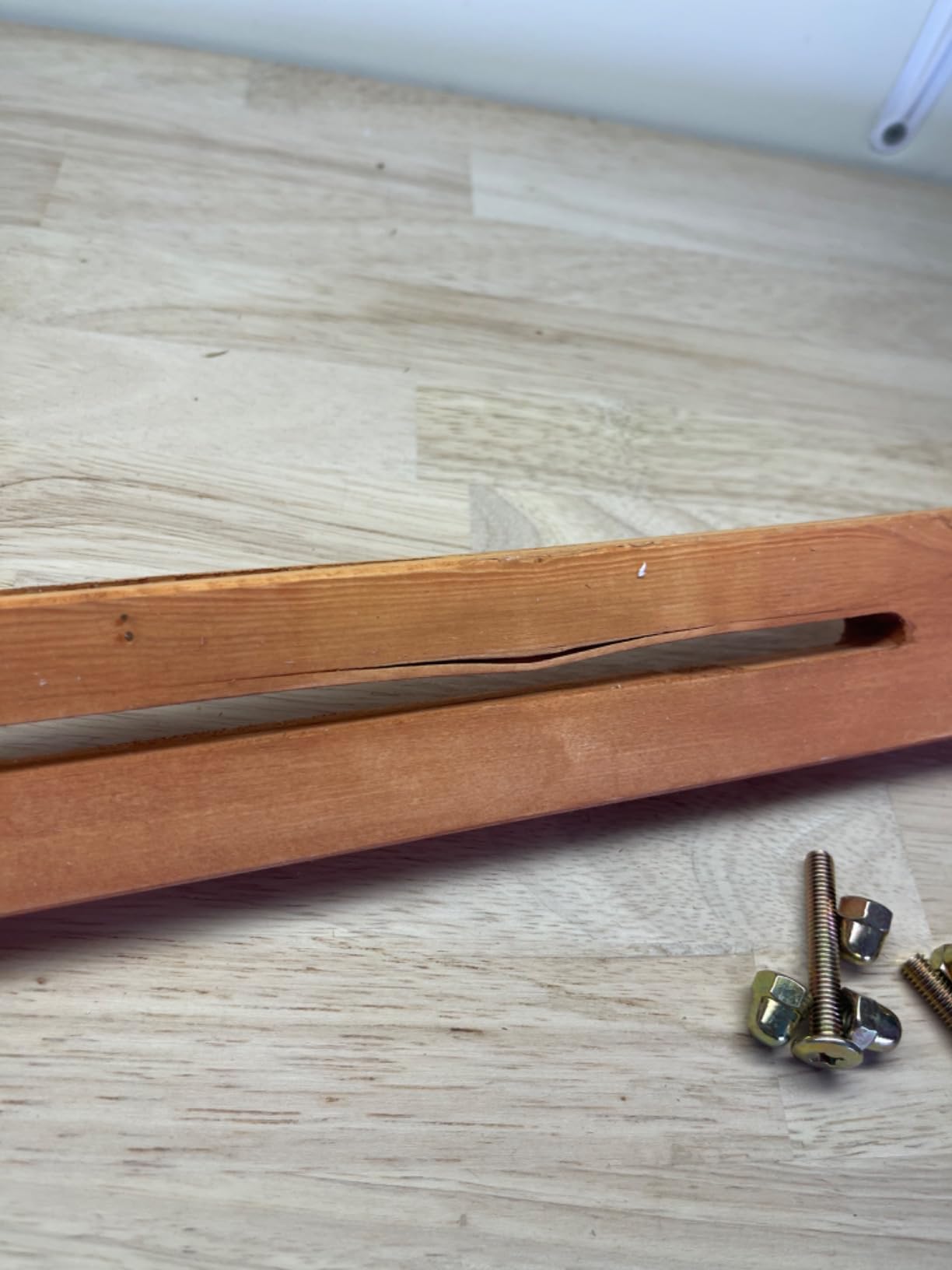
It sits at the premium end of this group, and the feedback is more mixed than that position would suggest. Canopy and folding-lid hardware needs regular tightening, and a higher-than-average share of one-star reviews describe loose joints and a box that wobbles after a season outdoors.
Assembly is also awkward because several pieces arrive pre-assembled, so you are partly undoing the packing job before you start. The included bottom liner helps with drainage and weed deterrence.
Who this sandbox suits
Pick this one if shade quality is the priority and you want toys stored with the box rather than in a separate chest. The rotating canopy is the most capable sun protection here, and the under-seat storage makes it genuinely useful year-round.
It suits a yard where the box will stay up permanently and be used daily through summer, rather than one that gets moved around.
Where it falls short
It costs the most of the ten, and you will likely be tightening hardware a few times each season to keep the canopy and lid solid.
If you are patient with occasional maintenance, it rewards you. If you want something you set up once and forget, a plain cedar bench-lid box is the calmer choice.
How to Choose a Covered Sandbox
Should sandboxes be covered?
Yes, for most families. A cover keeps animals, leaves, blowing sand, and rain out of the box, which means the sandbox stays clean, dry, and playable the morning after a storm instead of needing to be dug out or refilled. It also cuts the sand you buy over a few summers, since sand no longer blows across the yard. The main argument against is weight, since a covered wooden box is heavy to move.
Key features to look for in a covered sandbox
- A tight-fitting lid or screen that actually seals, rather than one that sits on top. Gaps admit crawling insects and blowing sand.
- Drainage through a bottomless design or a fitted liner, so rain water leaves instead of sitting against the wood.
- Bench seats that fold flat into the cover, so you get seating during play and protection after it in one part.
- A canopy if the box sits in sun, with a rating above UV40 and a way to adjust the angle.
- Honest weight capacity per bench, because a 200-pound bench is the difference between a usable family seat and a decorative one.
- Wood species and finish that will not splinter, and hardware sized properly for that wood.
- Sand capacity stated in pounds, so you know how much sand to buy before the box arrives.
Wood or plastic
Wood wins on looks, capacity, and the ability to add a canopy. Cedar and hemlock are naturally more rot-resistant than fir or spruce, which matters if you leave the box up through winter. Plastic wins on maintenance: nothing to assemble, nothing to seal, and it never rots or cracks.
Plastic also works indoors and on a patio where wood would be impractical, at the cost of a smaller sand area and a shorter useful life. The Step2 model in this guide rated highest overall at 4.7 stars precisely because it removes the upkeep entirely.
Canopy or plain lid
A plain lid protects the sand when the box is closed. A canopy protects children while the box is open, which is a different problem entirely. If your sandbox sits in direct afternoon sun, a canopy is worth the extra assembly and the extra hardware you will tighten.
Note that a canopy is not a sealed cover. On most of these models the canopy shades the box but the fabric panels that fold over the top are still the actual weather seal, and they are often not fully waterproof.
Bottomless or bottom liner
Bottomless is better for deep digging and natural drainage, but it means the ground underneath becomes part of the system. Expect weeds near the edges and a need for a level, well-drained spot.
A liner is easier to manage in a patio setting and stops sand escaping, but it must be stapled inside the frame or sand leaks out from under the edge. Either approach works. The liner models in this group generally suit a harder surface, the bottomless models suit a lawn.
How much sand to buy
Under-buying is the most common mistake we hear about. A 47-inch square box filled to the seat edge takes roughly 8 to 10 bags of play sand. The Mederra octagon, holding 800 to 1000 pounds, needs 15 to 20. The smaller plastic models need around 4.
Buy play sand, not builder’s sand. Avoid anything containing crushed limestone, marble chips, or crystalline silica, and replace sand that has been wet for days or has animal waste in it rather than trying to clean it.
Keeping the cover on, and wet sand
Most cover complaints in forum threads are about wind. Whatever you buy, weigh the corners of a soft cover after the first windy day, because a cover that flaps constantly will shorten the life of the fabric and the hinges. Bungee cords or corner straps handle most of it.
Before you close a box after rain, rake the top layer of sand and let it dry if you can. Sand that is closed in wet tends to compact into a hard block, and that is far more annoying than a little extra drying time.
Retrofitting a cover on an existing box
If you already own an uncovered box, you do not need to replace it. Measure the top opening, then staple or screw a fitted piece of outdoor tarpaulin, heavy canvas, or shade fabric over it, leaving a small overlap at the seam. Add a length of batten or a stick along the top edge and a bungee or hook-and-loop strap at each corner so the cover tightens instead of billowing.
A fitted cover for an existing box does not seal as well as a molded lid, and it will not fold into seating, but it solves cats, leaves, and rain for a fraction of buying a new box.
Frequently Asked Questions
What is the best sand box for kids with a lid?
The Best Choice Products cedar sandbox with fold-flat bench seats is our top pick, because the two 220-pound benches fold forward into a solid two-panel cover that keeps cats, leaves, and rain out while still giving four children a place to sit. The Mederra 85 inch octagon is the better choice if you have more than three children, and the Step2 plastic model wins if you want zero assembly.
Should sandboxes be covered?
Yes, for most families. A cover keeps animals, leaves, blowing sand, and rain out of the box so the sand stays clean, dry, and playable the next morning instead of needing to be dug out. It also cuts the amount of sand you buy over several summers. The main drawback is weight, since covered wooden boxes are heavy to reposition.
What is the healthiest play sand for children?
Plain washed play sand is the healthiest choice, ideally labelled as play-grade and free of crushed limestone, marble, or crystalline silica. Never use builder’s sand, beach sand, or sand from a construction site. Cover your sandbox so sand stays dry, sweep out any animal waste immediately, and replace sand that has been rained on for days rather than trying to clean it.
What is the best way to cover a sandbox?
Measure the top opening of the box, then fit outdoor tarpaulin, heavy canvas, or UV-rated shade fabric over it with a small overlap at the seam. Staple or screw the fabric to the frame, add a batten along the top edge, and fit a bungee cord or hook-and-loop strap at each corner so the cover tightens rather than billowing in the wind.
What are the best sandbox toys for kids?
Shovels, small buckets, and a rigid dump truck cover the basics, and a sprinkler or water table alongside the box extends play into hot afternoons. For older children, moulded roadway pieces, a small tea set, and measuring cups turn the box into a construction site. Keep toys in a covered bin or, ideally, in a compartment under the bench seats so nothing sits in damp sand.
Conclusion
If you are choosing one covered sandbox for a typical family yard, take the Best Choice Products cedar box. Its fold-flat bench lid does two jobs at once, it has more owner feedback behind it than anything else here, and the only real complaint, loose hardware, is a fifteen-minute fix. Choose the Badger Basket instead if you want solid cedar and cleaner assembly out of the box.
Move up in size only when you have to. Families sharing a box with four or more children should look at the Mederra octagon or the 78 inch hemlock model, while the Step2 plastic sandbox is the right answer for a patio, a small yard, or anyone who would rather not own a socket set. If shade is the deciding factor, the Aivituvin retractable canopy or the Agitree rotating canopy handles full afternoon sun.
Whatever you buy, seal wood before the first fill, buy more play sand than you think you need, and let wet sand dry before you shut the lid. That is the whole formula for a sandbox that is still fun in 2026.