
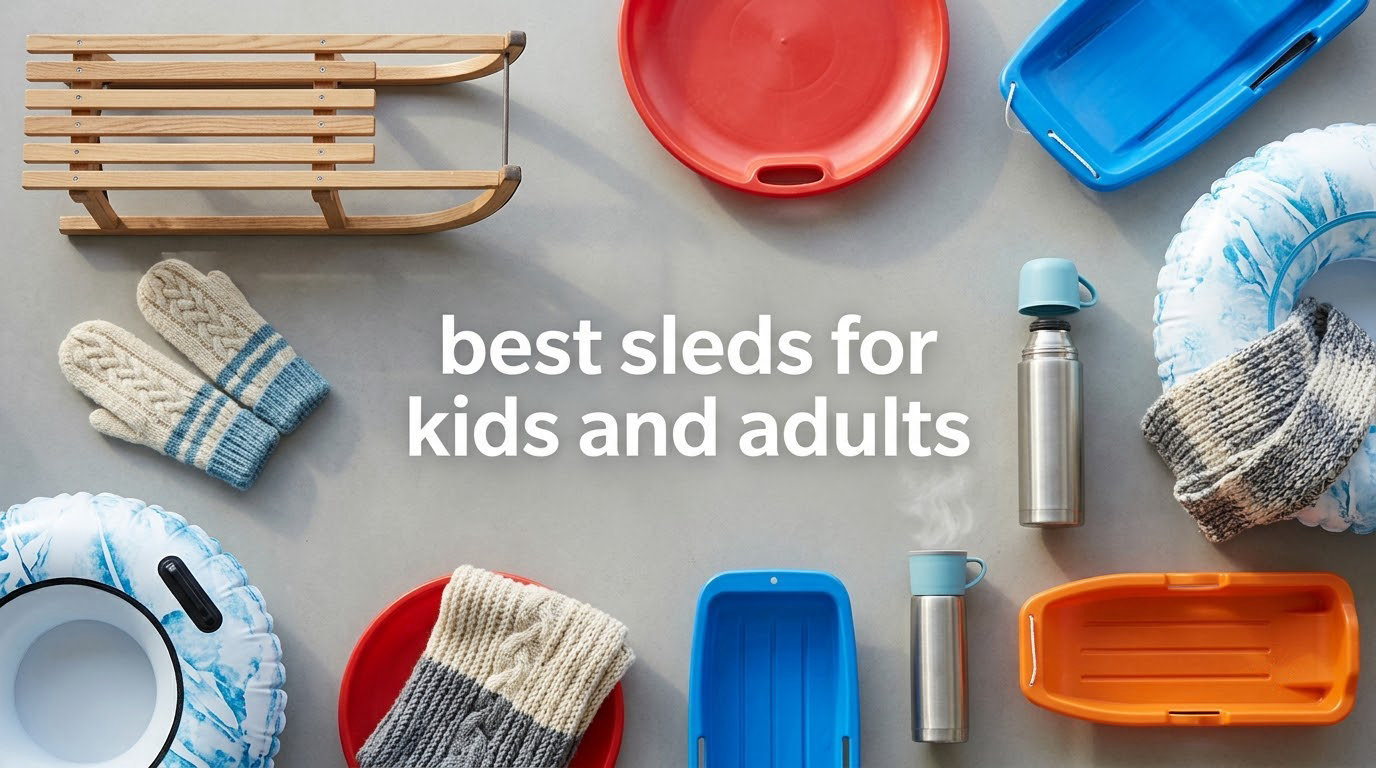
The best sleds for kids and adults are the ones that match your riders to the sled rather than the other way around. A long plastic toboggan handles a whole family, a foam deck is the gentlest first run for a beginner, and a steerable sled with a brake gives an adult real control on a steep hill. We spent six weeks comparing 11 sleds on weight capacity, deck size, cold-weather construction, steering and how they hold up after a season of hard use.
Most sled buying mistakes come down to two numbers: how much the sled is rated to carry, and how long the deck is. Ignore both and you end up with a parent riding a saucer meant for a seven-year-old, or a three-person toboggan that only comfortably fits two. Our guide to sleds built for adult riders goes deeper on weight ratings if you are shopping for yourself rather than the family.
Below is the full list, plus a buying guide covering sled types, materials and how much snow you actually need. If you want the fastest path, start with the top three picks and then jump to the safety section before anyone goes down the hill.
Top 3 Sled Picks for Kids and Adults in 2026
These three cover the widest range of households: a one-sled family solution, a group value pack, and a long deck for adults and older kids together.

Slippery Racer Downhill Xtreme
- 48 inch toboggan
- 150 lb total capacity
- Two sets of handles
- Built-in pull rope

Flexible Flyer Winter Lightning 3-Pack
- Three 48 inch sleds
- 200 lb per sled
- No-break resin
- 3.25 lb each

Flexible Flyer Winter Trek
- 66 inch three-rider deck
- 250 lb capacity
- Built-in tow rope
- HDPE made in USA
All 11 Sled Picks at a Glance in 2026
Every sled below is listed with its deck size and its stated weight rating, because those two numbers decide whether a ride works for your family.
| Product | Specifications | Action |
|---|---|---|
| Slippery Racer Downhill Xtreme Toboggan |
|
Check Latest Price |
 Gizmo Riders Steerable Sled with Brake Gizmo Riders Steerable Sled with Brake |
|
Check Latest Price |
| Flexible Flyer Winter Lightning 3-Pack |
|
Check Latest Price |
| Flexible Flyer Winter Trek 3-Person Sled |
|
Check Latest Price |
 Slippery Racer Saucer Disc 3-Pack Slippery Racer Saucer Disc 3-Pack |
|
Check Latest Price |
 GoSports Premium Two-Person Sled GoSports Premium Two-Person Sled |
|
Check Latest Price |
 Retrospec Retrorider Toboggan Retrospec Retrorider Toboggan |
|
Check Latest Price |
 SNO-Storm Premium Foam Sled 2-Pack SNO-Storm Premium Foam Sled 2-Pack |
|
Check Latest Price |
 Emsco Group 66 Inch Family Toboggan Emsco Group 66 Inch Family Toboggan |
|
Check Latest Price |
 Flexible Flyer Snow Boat 48 Inch Flexible Flyer Snow Boat 48 Inch |
|
Check Latest Price |
 WOLKEK Inflatable Snow Tube 2-Pack WOLKEK Inflatable Snow Tube 2-Pack |
|
Check Latest Price |
How We Picked These Sleds
Every sled in this roundup was judged on the same four things: stated rider capacity, deck length relative to that capacity, how the sled handles cold, and what owners report after a season of use rather than on day one. We weighted the weight rating heavily, since the most common complaint from adults is buying a sled that splits under them.
We also kept one rule in mind: a sled has to be fun for the youngest rider in the house, not just the fastest for the oldest. That is why a two-year-old’s first sled and a 260-pound steerable model can both earn a place on the same list. For adults who want to train alongside the kids, our weighted sled picks cover a different kind of winter workout.
1. Slippery Racer Downhill Xtreme Toboggan – Editor’s Choice Overall for Families
- One or two riders so adults and kids ride together
- Two sets of reinforced handles
- Built-in pull rope for climbing back uphill
- Light at 3 lb so a child can carry it
- 78 percent of reviews are 5 star
- 150 lb limit rules out two large adults
- Flexible plastic feels less settled than a rigid sled on hard-packed snow
This is the sled we kept coming back to. It has been in family use for years and still draws a 4.6 star average across more than 1400 reviews, which tells you the shape of the product has not needed fixing. The 48-inch deck is the sweet spot for this list: long enough for a parent and a child sitting together, short enough that a seven-year-old can drag it back up the hill on the built-in rope.
The bottom is slick-coated plastic with an IceVex treatment rated for heavy cold, and the aerodynamic toboggan nose does not dig in the way a flat saucer does. Two sets of handles mean a rider sitting up has somewhere to hold and a rider lying flat has a second grip.
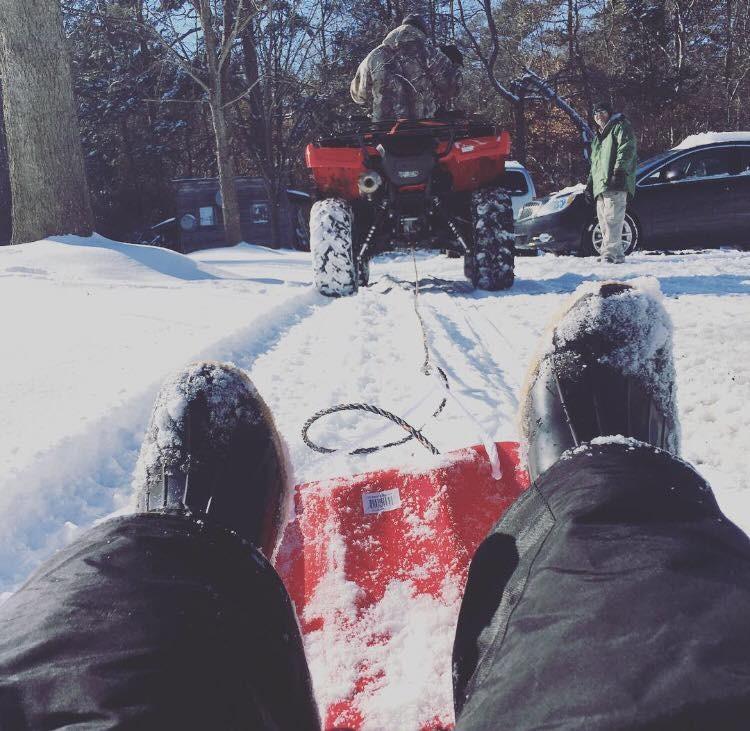
The catch is the number that matters most: 150 pounds total. One adult plus a young child fits comfortably. A parent at 200 pounds riding with a teenager does not, and adding a second sled or choosing a longer deck is the fix rather than pushing past the rating. Owners also note the flexible plastic feels less settled than a rigid shell on icy, compacted runs, where the sled can skate sideways more readily.
For a family that wants one dependable sled that lives by the back door, this is the one I would buy first. It is also the easiest of the group to store, at 3 pounds it is nothing to carry down the basement steps in June.
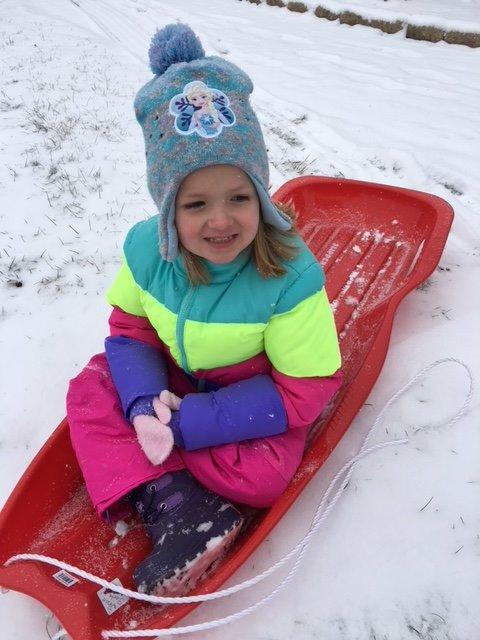
Check the weight rating before you fall in love with the two-rider layout
Two people fit on this deck comfortably, but only up to 150 pounds combined. Measure what your family actually weighs before you assume a tandem ride works. If an adult in your household is over 170 pounds, this sled is a solo or adult-with-toddler sled, not a two-up one.
Whether this is the sled for a steep, icy hill
It is fast and it holds an edge, but the flexible construction can skate on hard-packed and icy snow compared with a double-walled rigid sled. On a groomed backyard hill with a soft top layer it is excellent. On a road or a fully iced slope, look at a stiffer deck with a brake instead.
2. Gizmo Riders Steerable Sled with Pull-Up Brake – Best for Steering and Braking
Gizmo Riders Snow Sled for Kids, Adults – Toboggan Sled, Easy Turning Steering Wheel, Anti-Slip Seat, Pull Up Brake, Durable Plastic Sled, Lightweight, Snow Sleds, Age 3+, 260 lbs
- Real steering instead of open toboggan sliding
- Integrated pull-up brake for stopping
- 260 lb capacity
- Retractable tow rope with grip handle
- Anti-slip seat
- Heaviest pick in the roundup at 8.7 lb
- Single rider seating only
- 13 percent of reviews are 1 star
This is the only sled here that behaves like a go-kart. The steering wheel drives a locking differential, so instead of carving by leaning and hoping, the rider actually turns. For an older child on a long hill, that control is the whole point, and it is the reason parents gravitate to this model over a plain toboggan.
The pull-up brake is the feature I would not give up. On a hill steeper than you expected, a lever you can haul back on with one hand turns a runaway into a stop. The 260-pound rating also makes it one of the few sleds here an adult can genuinely ride solo.
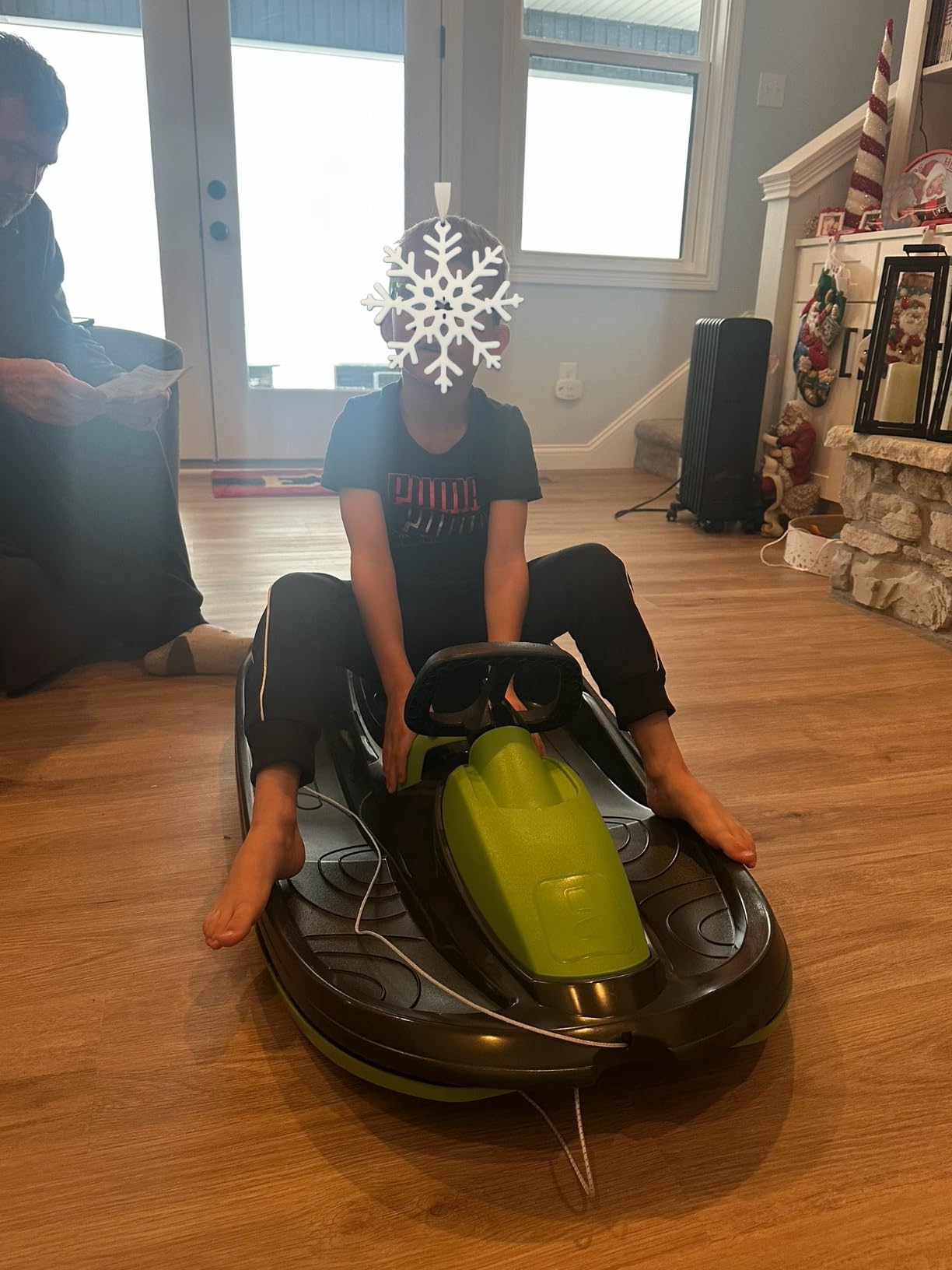
The trade-offs are real. At 8.7 pounds it is the heaviest sled in the roundup, and a small child will not want to carry it back up the slope. It also seats one rider, so a parent cannot ride down holding a child the way many families prefer. Reviewers are split on the hardware, with 13 percent of ratings landing at one star, mostly around the steering linkage and the brake feel.
If your household has a hill and kids old enough to work a steering wheel, this is the most capable rider in the group. If you have a flat backyard or a three-year-old, the wheel and brake are overkill and the weight is a nuisance.
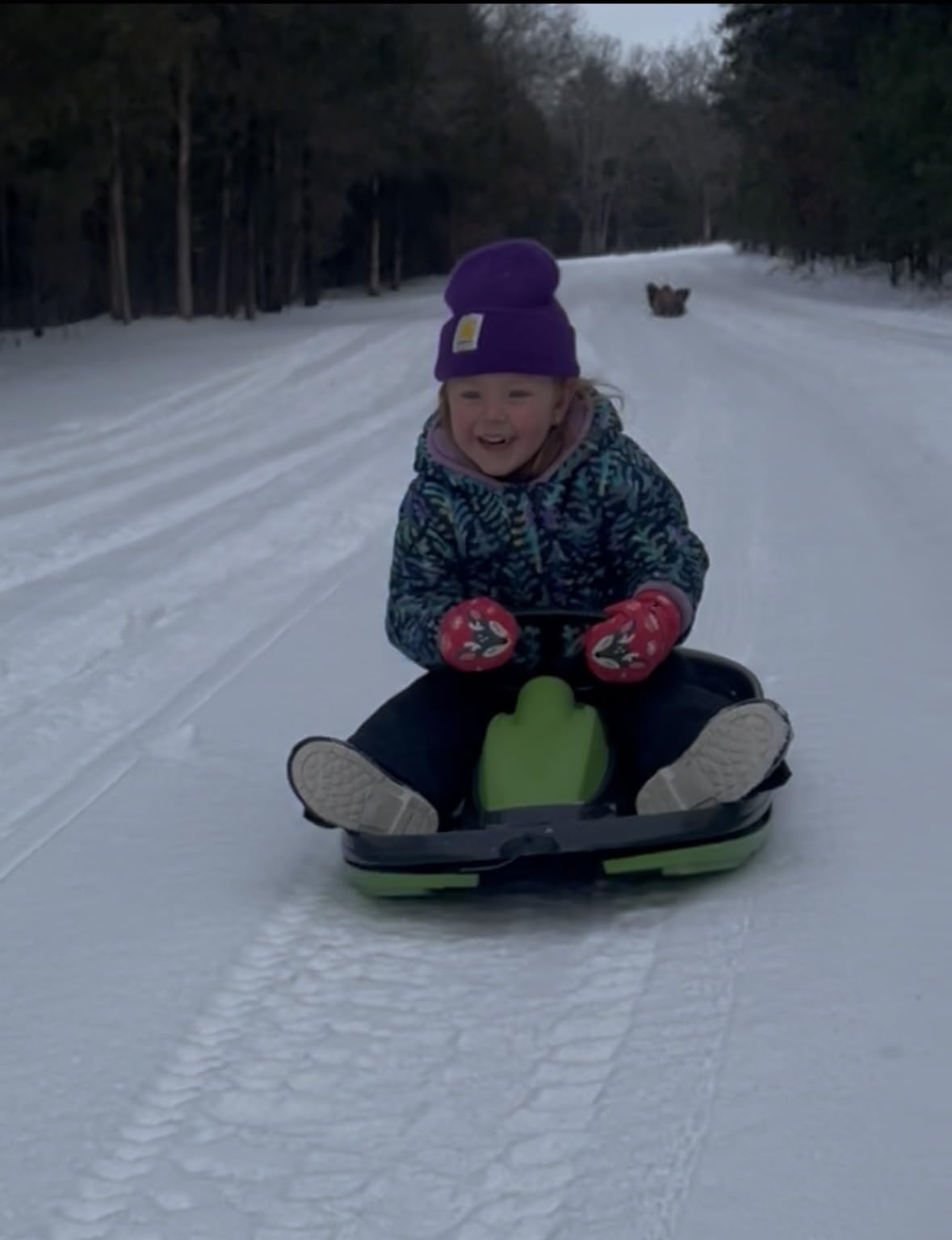
Who should accept the 8.7 pound weight
Older children and adults who can carry the sled themselves. The weight is not a problem for a fifteen-year-old hauling it up a slope, but it is a real burden for a five-year-old who expects to do the hauling. Budget a tow rope habit or plan runs from the bottom of the hill.
What to know before you buy for a young rider
It is rated from age three, but the steering wheel assumes a child who can hold and pull a lever. Three and four-year-olds often find it stiff and give up quickly. A foam or saucer sled keeps that age group riding; this one works better from about six or seven upward.
3. Flexible Flyer Winter Lightning 3-Pack – Best Value for Groups
- Three sleds so siblings or a group ride at once
- Slick hard bottom glides over fresh snow
- Light at 3.25 lb each for uphill carrying
- No-break resin resists cracking
- Pull rope is not included
- 200 lb per sled is modest for two adults
- 12 percent of reviews are 1 star
Three traditional sleds in a single box is the arithmetic that makes this the value pick. Instead of negotiating over one sled on a snowy afternoon, everyone gets a run, and siblings stop treating the hill as a queue. The shape is the classic Flexible Flyer toboggan that most people picture when they hear the word sled.
Each sled measures 48 by 17 by 4 inches and weighs just over three pounds, and the wide contoured edges give it lateral grip at two-up. The resin is billed as no-break, and the hard bottom is genuinely slick over fresh snow, which is the surface most backyard hills produce.
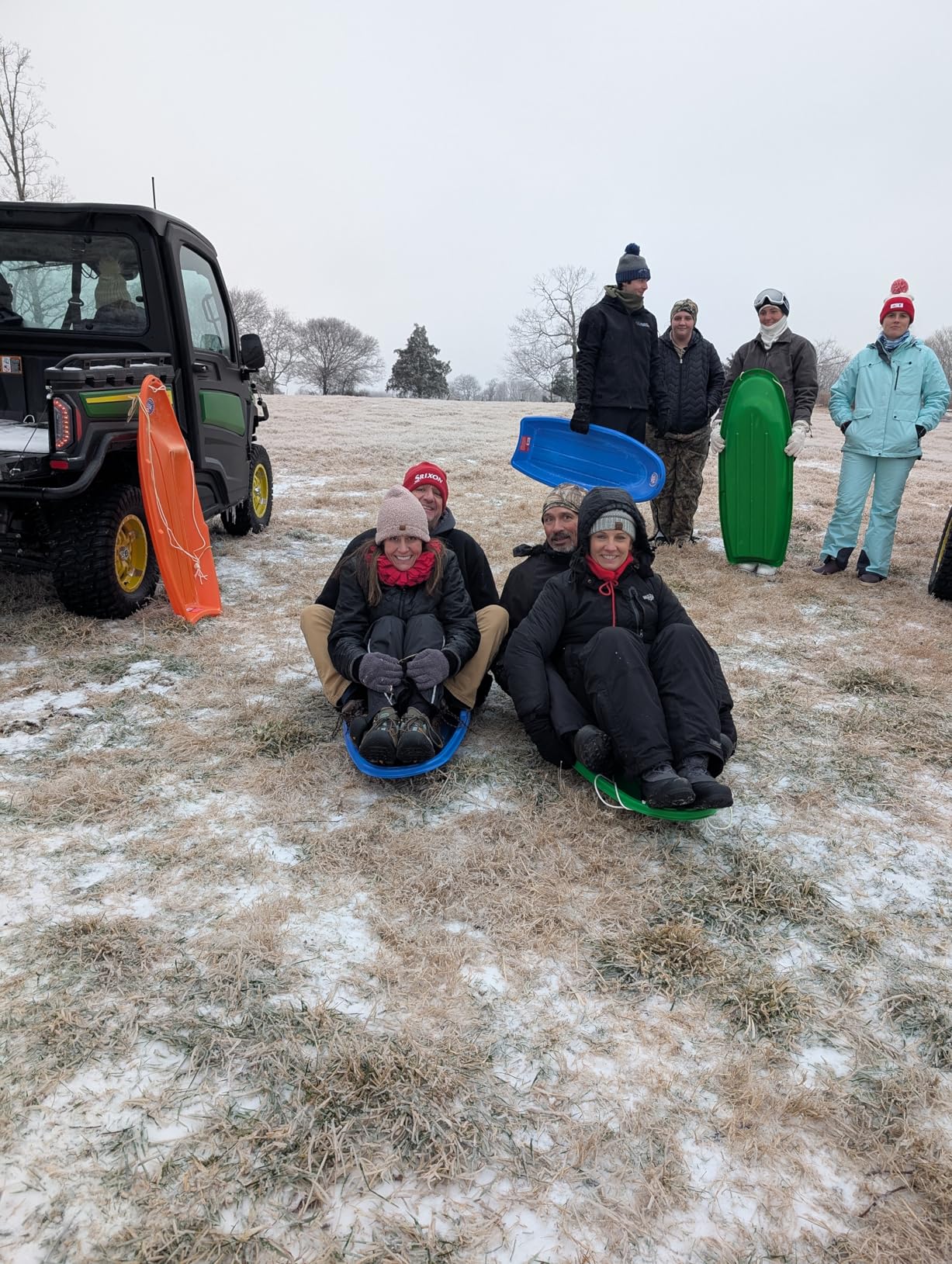
Two details catch people out. The holes for a pull rope are molded in, but no rope ships in the box, so budget a few minutes and a length of cord before the first run. And durability reports are mixed, with 12 percent of reviews at one star, mostly describing cracked or split decks after heavy use.
The 200-pound rating per sled is generous for one adult and a child, and modest for two adults. For a family of four with kids in the 5-to-12 range, this is the setup that keeps everyone moving.
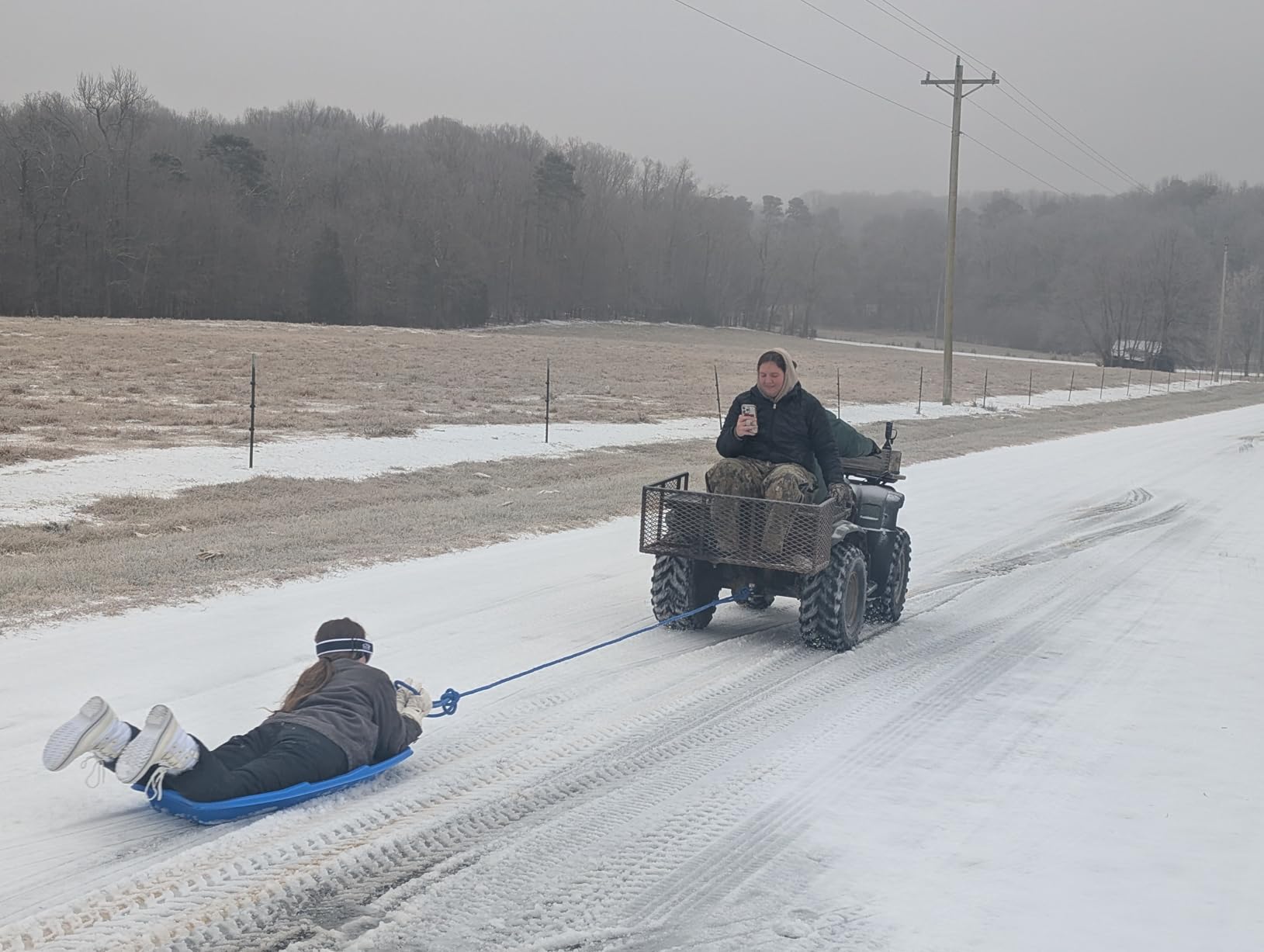
Why buy a 3-pack instead of one better sled
Because the bottleneck on a family hill is rarely the best sled, it is the number of sleds. When three children are standing in the cold, the second and third sled matters more than the first. A single premium sled plus this pack gives you both: one great run and a queue that keeps moving.
What breaks first on a resin sled
The thin edge along the running surface, usually after repeated contact with gravel, rocks, or the bare grass at the bottom of a hill that has melted out. Run sleds on snow and keep the running path clear of grit, and the deck lasts far longer than the review averages suggest.
4. Flexible Flyer Winter Trek 3-Person Sled – Most Compact for Big Families
- Longest deck here at 66 inches for three riders
- Rounded bow deflects around brush and trees
- Built-in tow rope doubles as a handle
- HDPE made in the USA
- High sidewalls contain cargo
- Three riders is a tight fit for many
- Grab handle is not included
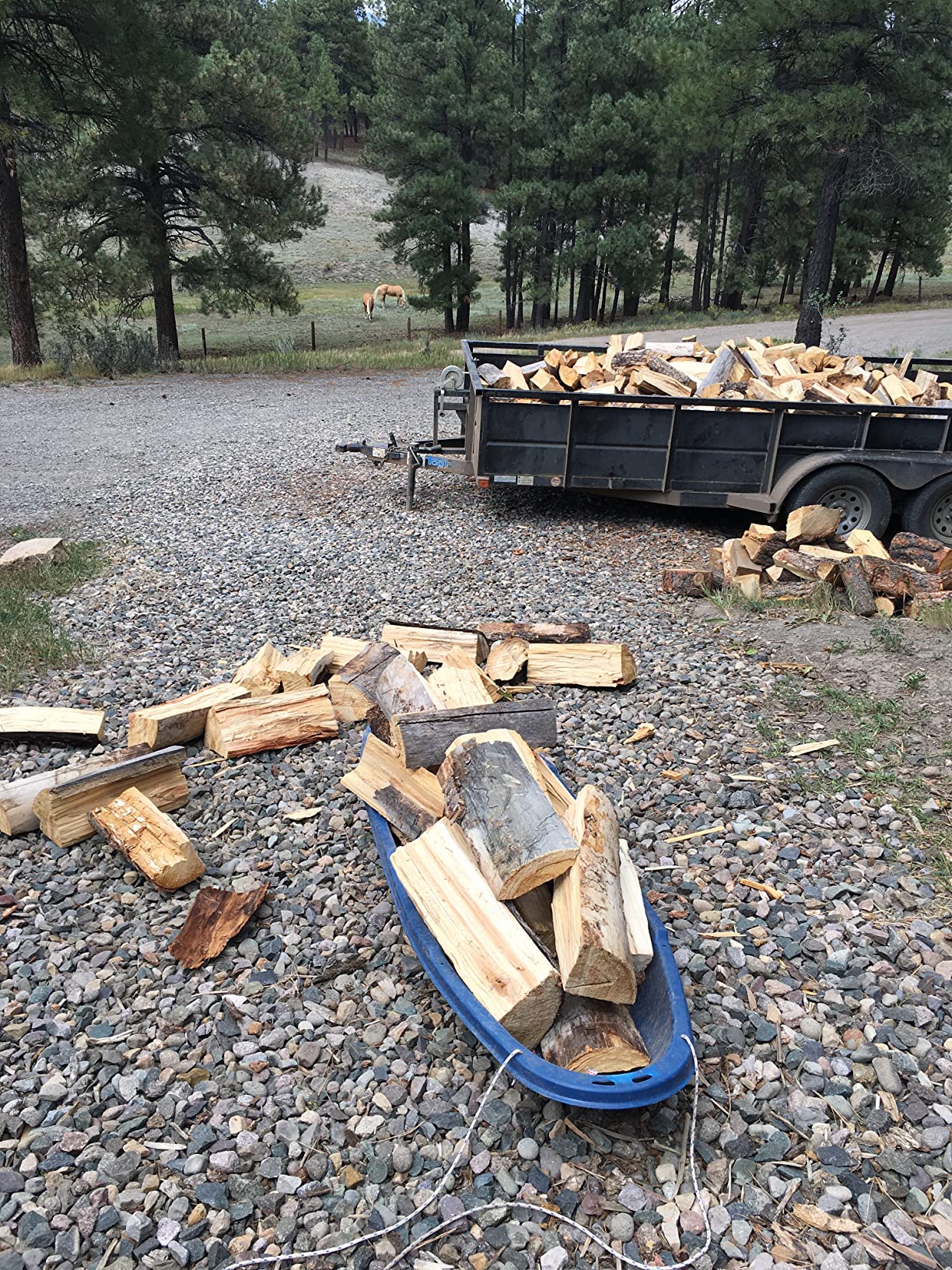
At 66 inches long, this is the sled to buy when the household has more than one adult who wants to ride. Two adults and a child fit with room to spare, and owners describe it as the most versatile sled they own, using it for downhill runs and for hauling firewood and ice-fishing gear on the same trip.
The rounded bow is an underrated safety detail. Rather than catching a branch and spinning the riders off, the nose deflects around brush and trees, which matters on a wooded trail where a straight edge would be a problem.
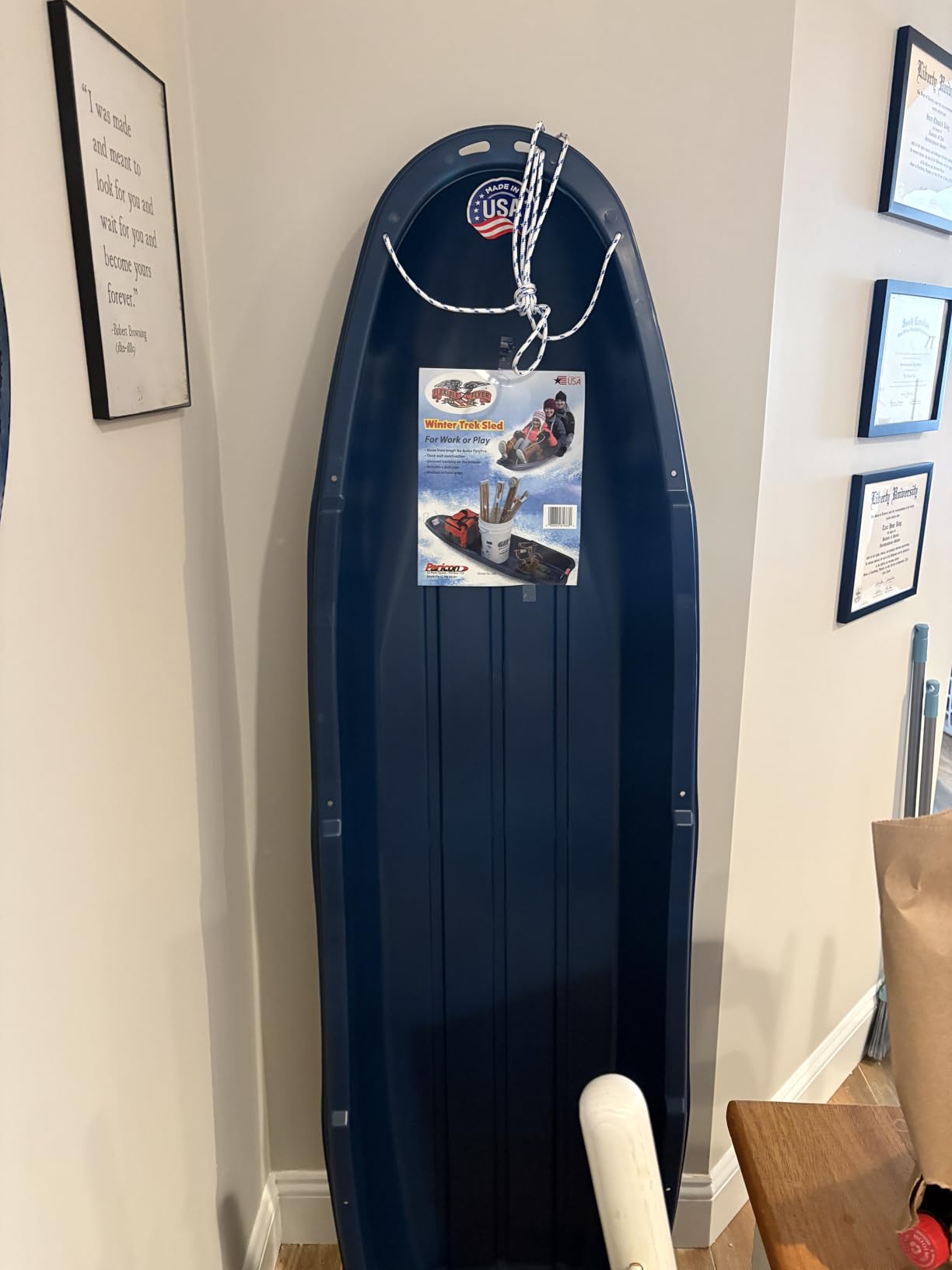
The molded grooves in the base help with glide and shallow carving, and the built-in tow rope is genuinely heavy duty, doubling as a carry handle on the walk back up. High sidewalls keep a load of gear or a bungee cord contained rather than letting firewood slide off behind you. Construction is high-density polyethylene made in the USA, and at 4.6 stars across 854 reviews it holds up.
Owners are candid that three riders is a squeeze. Two fit properly, and a third makes it a shoulder-to-shoulder ride that plenty of families describe as the point. The one thing missing is a grab handle for an adult standing at the side, which some owners drill into the sidewall themselves.
When one sled has to serve the whole household
This is the answer. A single 66-inch deck means no queue, no arguing, and no three separate pieces of plastic to carry home. The 250-pound rating covers two adults and a young child, which is exactly the configuration that breaks most 48-inch sleds. If your family wants a single-sled solution, this is the one I would test first.
What it is not good for
Narrow, twisty glades and tight tree runs. The 20-inch width and high sidewalls make it stable and roomy rather than nimble, and a sled this long needs a genuinely open hill. It also has no seat, no backrest and no brake, so it is a ride-down sled rather than a controllable one.
5. Slippery Racer Saucer Disc 3-Pack – Best for Young Kids
- Three colors so a group can ride together
- Very light at 4.4 lb for the whole pack
- Handles deep cold without cracking
- Simple shape that young kids master quickly
- Several owners report cracking in the first season
- 26 inch diameter suits kids better than full-size adults
- No tow line included
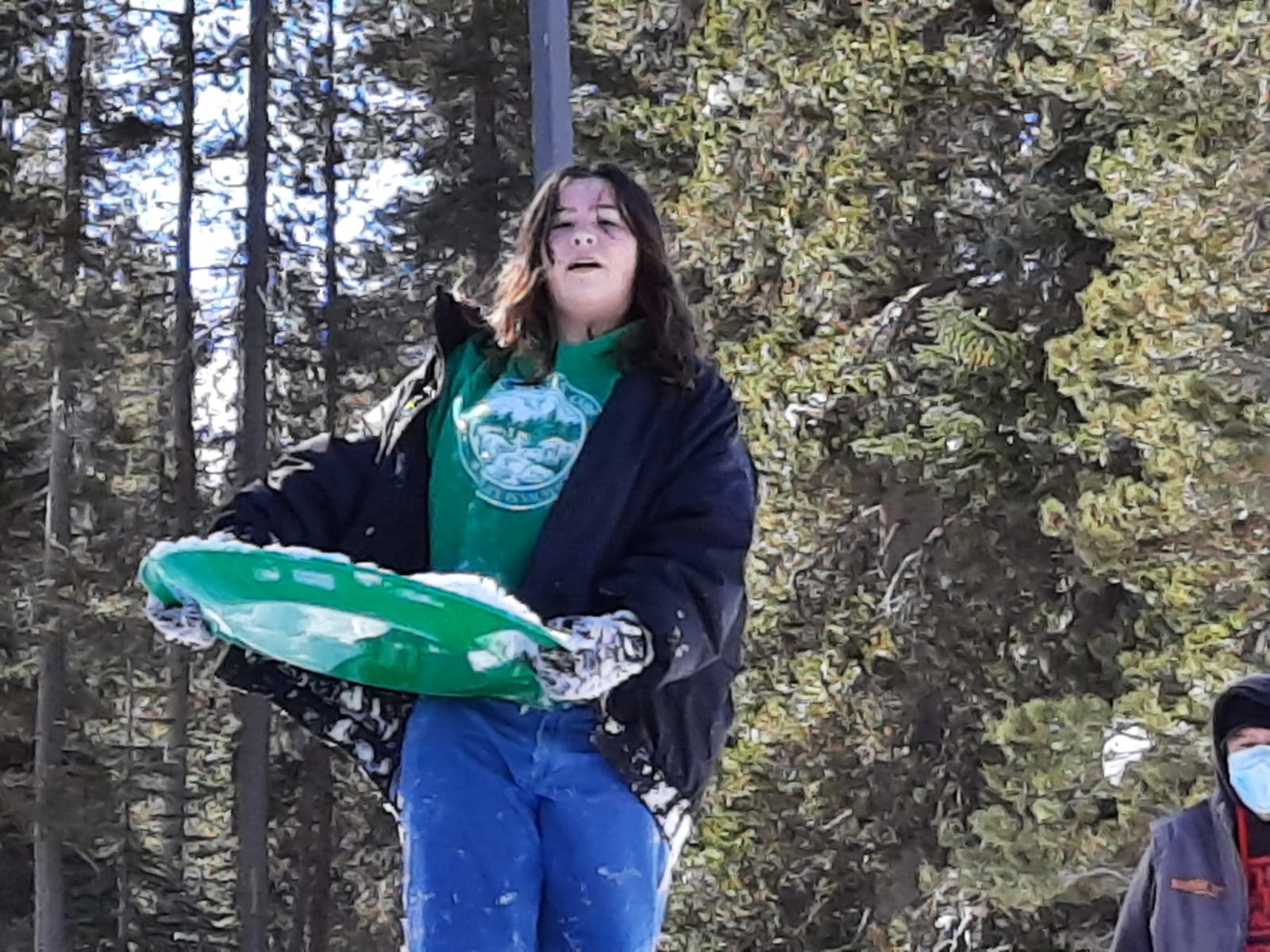
A saucer is the first sled most children ever ride, and this pack does that job for three. There is nothing to learn and nothing to adjust, which is exactly why it suits a four-year-old who is not ready for a steering wheel or a brake. Colors are included in blue, green and red so three children can ride at once without sharing.
At 26 inches in diameter, the disc spins freely and slides sideways, which is a feature for a child learning balance and a limitation for an adult. The IceVex coating is rated for temperatures around -20C, and the dual molded handles give a small hand something solid to hold.
The durability reports are the reason this is not higher in the list. Several owners describe cracking on a first or early use, and a thin 26-inch plastic disc is the least forgiving thing in this roundup when it meets a rock or a frozen rut. There is no tow line either, so hauling three saucers up a slope is a hand job.
Used on a smooth, groomed, snow-covered hill, they are great value and the fastest way to get three small children laughing. Store them away from gravel driveways and expect to replace a broken one rather than patch it.
At what age does a saucer stop working
Around age eight to ten, which is the age gap parents describe most often. A 26-inch disc gets tight under a larger child, they grow into a saucer as we saw in owner reviews, and they want steering or speed. Plan the transition to a foam sled at around seven or eight and to a steerable or runner sled at ten.
What to check before you buy a three-pack
Confirm the hill has continuous snow with no exposed gravel, rock or tree roots. A saucer has no suspension and a thin shell, and it is the sled most likely to break on the first hidden stone. On a clean run, three saucers keep three children going at once.
6. GoSports Premium Two-Person Sled – Best for Two Adults
GoSports 2 Person Premium Snow Sled with Double Walled Construction, Pull Strap and Padded Seat – Blue
- Highest-rated sled in the roundup at 4.7 stars
- Double walls resist the cracking that ends cheap sleds
- 300 lb covers two adult riders
- Foam pad softens long hills
- Hand pull strap for the walk back
- One of the pricier picks in the roundup
- Must not be towed with a motor vehicle
This is the sled for two adults, full stop. The 300-pound rating is the highest for a two-person sled here, and it is built around the two things adults ask for: a rating that does not punish them for their weight, and a seat that is not bare plastic. At 4.7 stars with 86 percent five-star reviews, it is the highest-rated product in this roundup by a clear margin.
The construction is the story. Double-walled high-density polyethylene with an insulated air layer between the walls adds both stiffness and insulation, and it is the reason owners frame this as the alternative to hardware-store sleds that crack after a day. The foam-padded seat and two sets of handles make long hills tolerable.
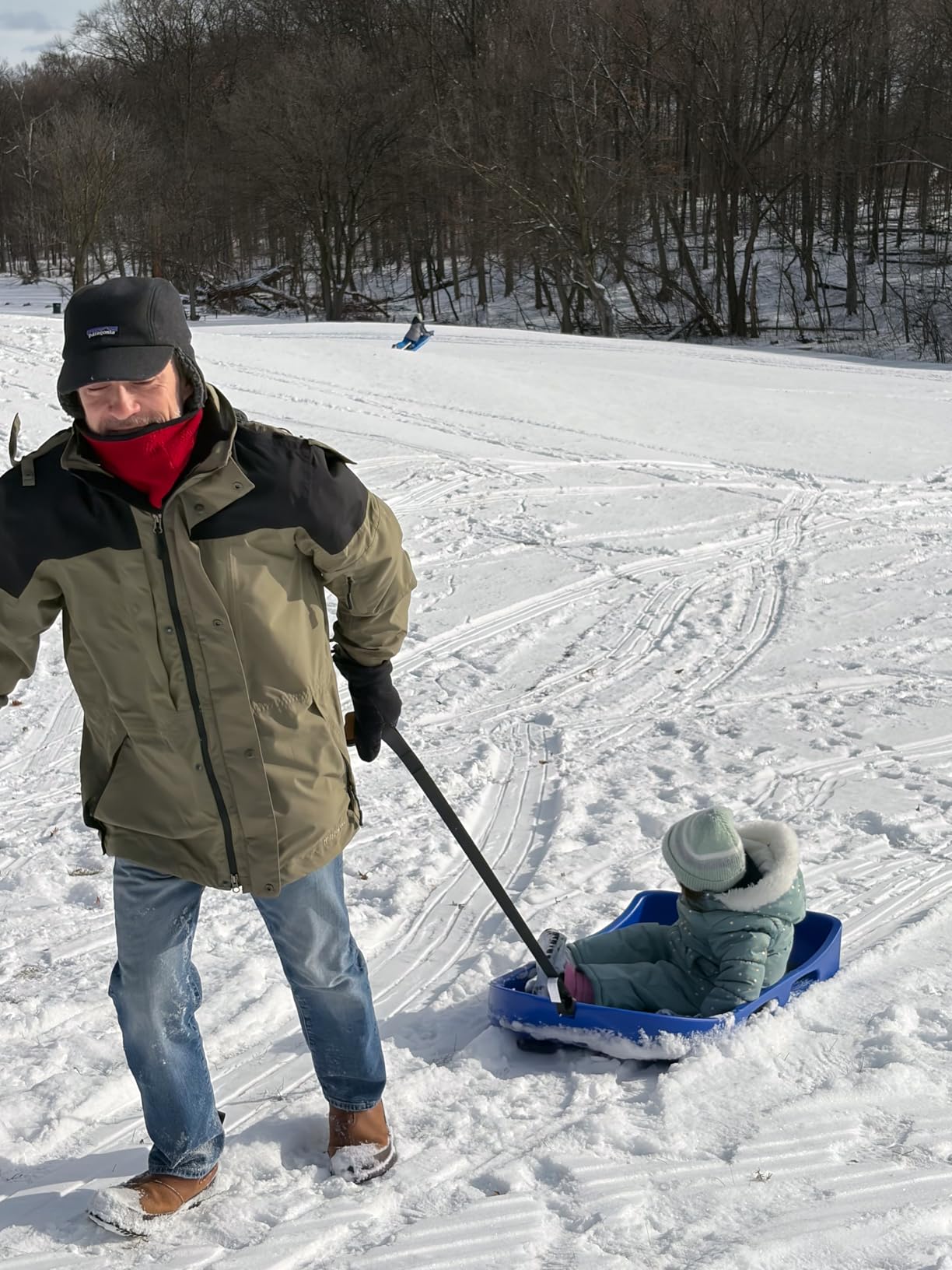
It tracks well and, according to owners, moves faster than the price suggests, with speed controlled by leaning rather than by a brake. The hand pull strap handles the walk back up. The reservation reviewers raise is cost, and most conclude the money is justified by multi-season durability instead of a single winter of use.
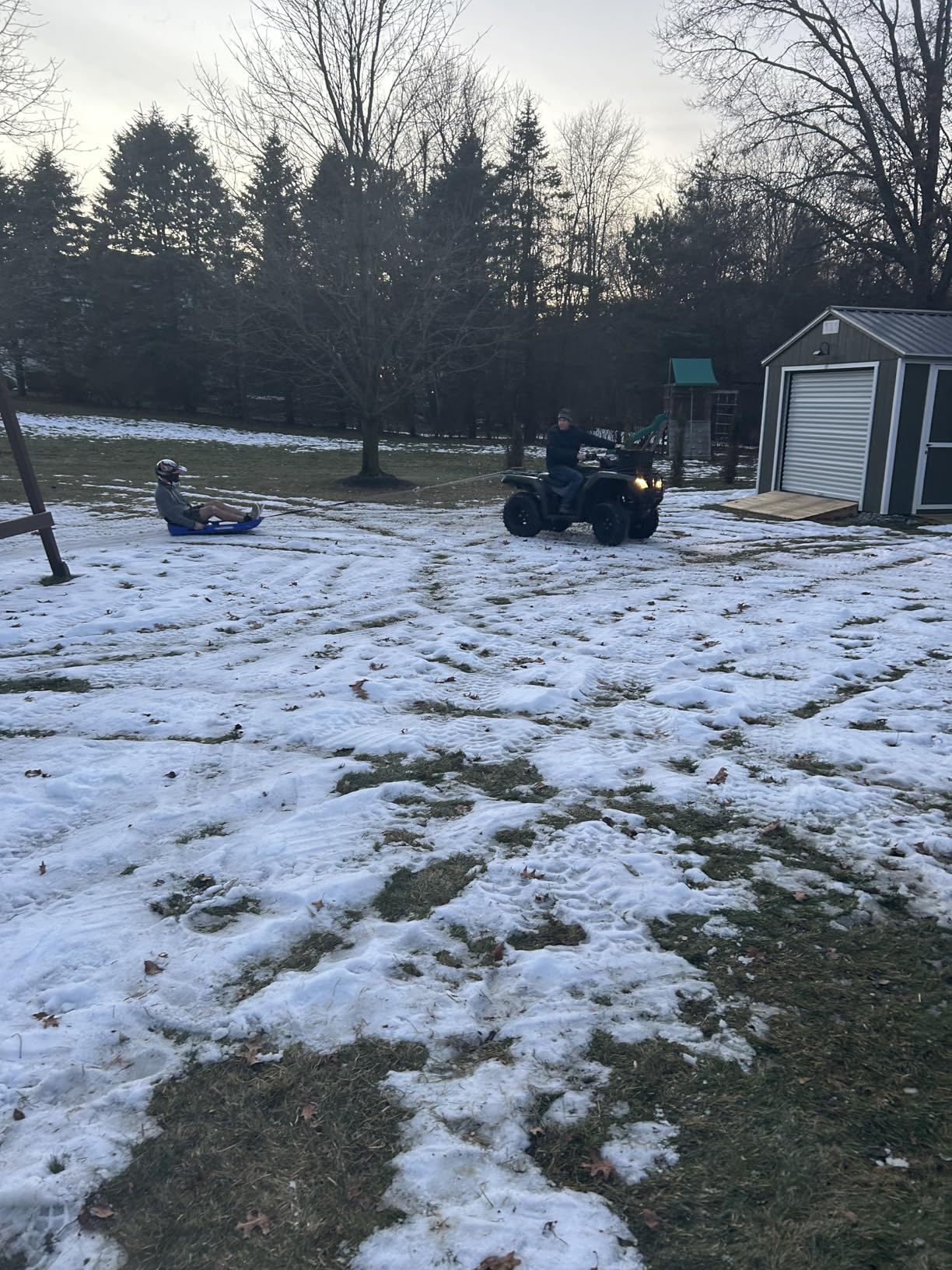
One safety note from the manufacturer: do not tow this sled with a motor vehicle. It carries two adults and everything needed for a long run, which makes it the pick if both parents want to ride rather than one riding and one walking.
Why double walls matter more than thickness
Single-layer plastic flexes, thins at the stress points, and eventually splits along the running surface. Two walls tied together with an air gap between them stiffen the whole deck, so it resists the flex that starts the crack. That is the mechanical reason this sled outlasts cheaper ones rather than just feeling sturdier.
Is it worth more than a basic plastic toboggan
If you are two adults who will ride it every snowy weekend for several seasons, yes. The rating, the padded seat and the double walls solve problems a basic toboggan does not. For a single adult on a small backyard hill, a 48-inch toboggan at a lower tier does the same job.
7. Retrospec Retrorider Toboggan – Most Versatile
- Pull rope is included and pre-knotted
- Cold-resistant coating rated to -22F
- HDPE construction
- Compact enough to store in a closet
- 130 lb rating is the lowest in the roundup
- 35 inch length is short next to 48 and 66 inch options
- No padded seat or grip handles
The Retrorider is the pick when you need a working sled for a child and nothing more. At 35 inches it is compact, it stores anywhere, and the hard bottom glides well enough that a first-time rider gets a proper run rather than a walk. It ranks first in the Snow Sleds category, which is a fair signal for how much riding it gets.
Two details put it ahead of other budget toboggan options. The pull rope comes pre-knotted and in the box, so there is no hardware store trip before the first hill, and the cold-resistant coating is rated to -22F, which is genuinely useful in a northern winter rather than a mild one.
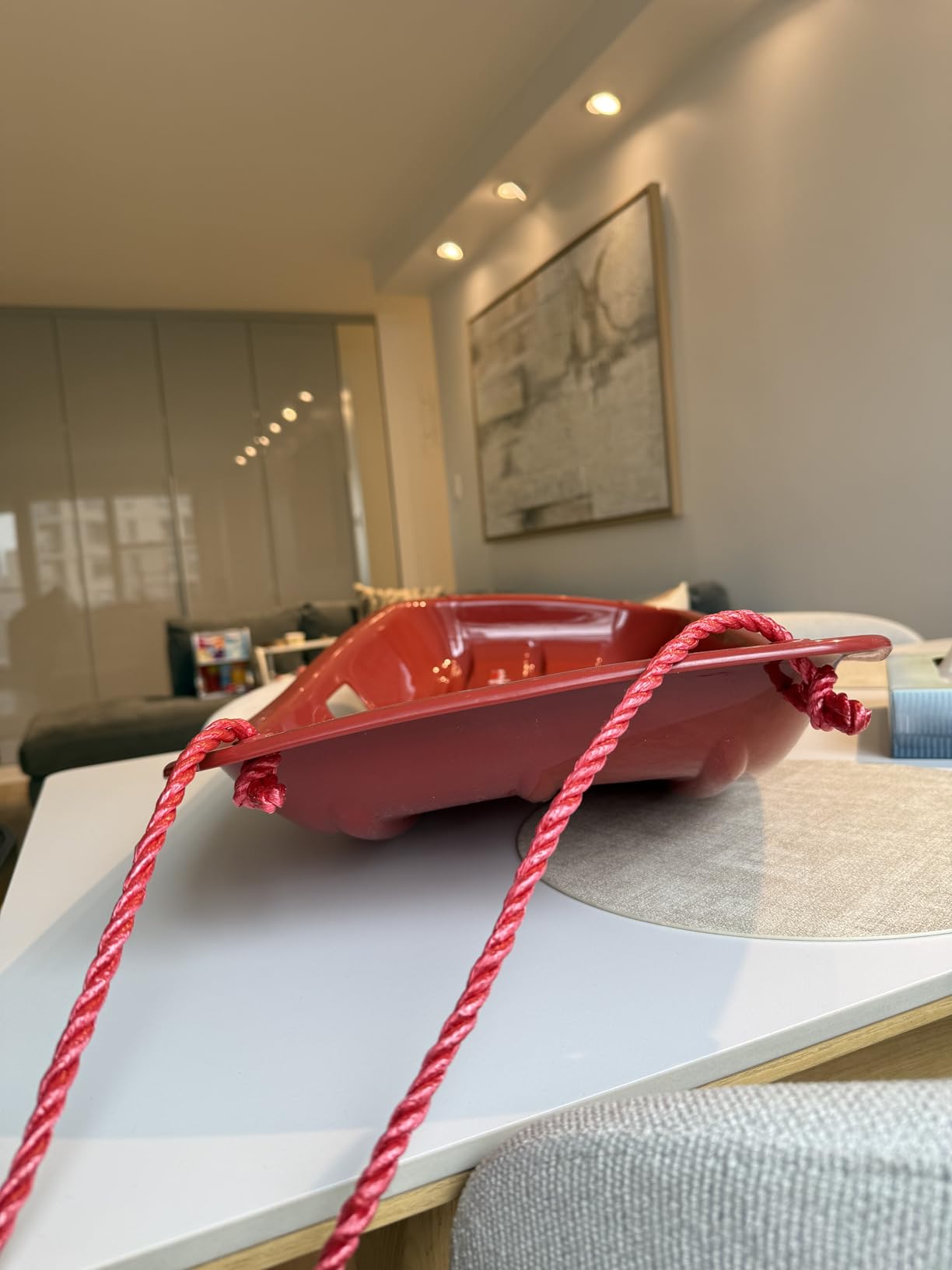
The limit that defines it is 130 pounds, the lowest rating in the roundup. That makes it a one-child sled or a solo adult sled, and it rules out the parent-and-child tandem that so many families actually want. The 35-inch length is also short next to the 48- and 66-inch decks, so adults and older kids feel cramped.
There is no padded seat and no proper grip handles, so a rider sits on flat plastic with rope to hold. For a seven-year-old on a neighborhood hill, that is entirely sufficient. For an adult who wants to ride, it is a compromise you will feel on the first long run.
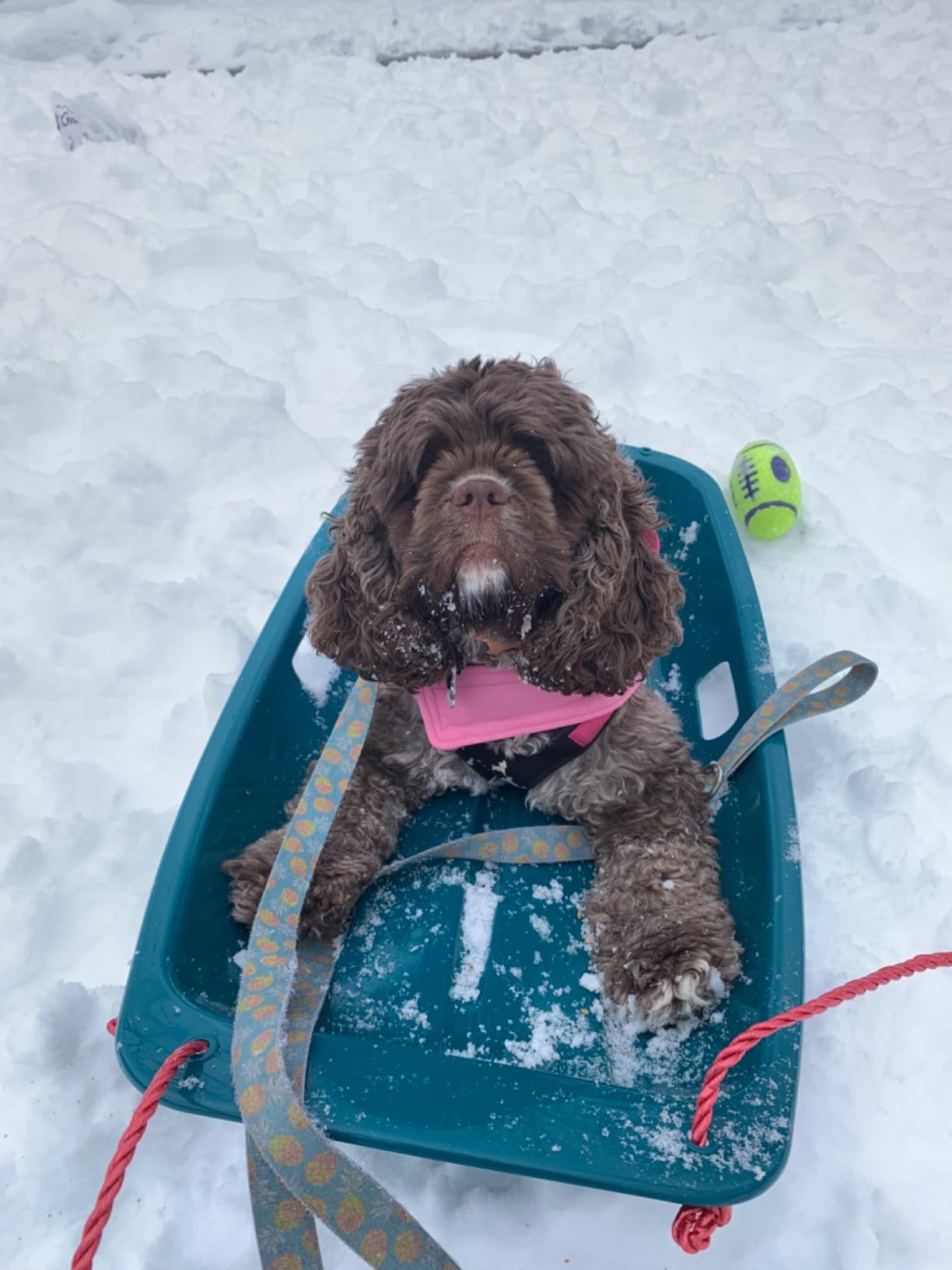
Who this sled is actually for
A single child, roughly ages five to nine, on a small hill, and a parent who is happy to pull the rope. It weighs little and stores easily, which matters in a household with no garage. It is also a reasonable first sled to hand down when a younger sibling appears.
Where the 130 pound rating bites
The moment two people get on it. At 130 pounds total, an adult and a light child may be close to the ceiling, and two children above about 60 pounds each will exceed it. If your plan involves sharing, step up to a 48-inch sled with a 200-pound rating or higher.
8. SNO-Storm Premium Foam Sled – Best for Beginner Riders
- Foam will not shatter in cold the way plastic can
- Lightest sled here at 2.45 lb
- Scooped deck improves steering
- Slick channel bottom carries speed
- Foam bottom can tear on sticks after a year or two
- Damaged foam cannot be repaired
- Only a 30 day warranty
Foam is the gentlest material on this list, and for a child whose previous ride ended in a faceplant, gentleness is the feature. Dense foam layers sit over a contoured molded deck with a slick bottom, and nothing in the construction shatters if a parent steps on it in the dark. At about 2.45 pounds, it is the lightest sled here and a child can carry it up the hill without help.
The scooped deck and raised rails do more than look comfortable. They give a gloved hand somewhere to grip and they channel the ride, which is why owners say this foam sled steers noticeably better than flat foam or a bare plastic saucer. Two sleds per pack, and riders can go sitting or lying down.
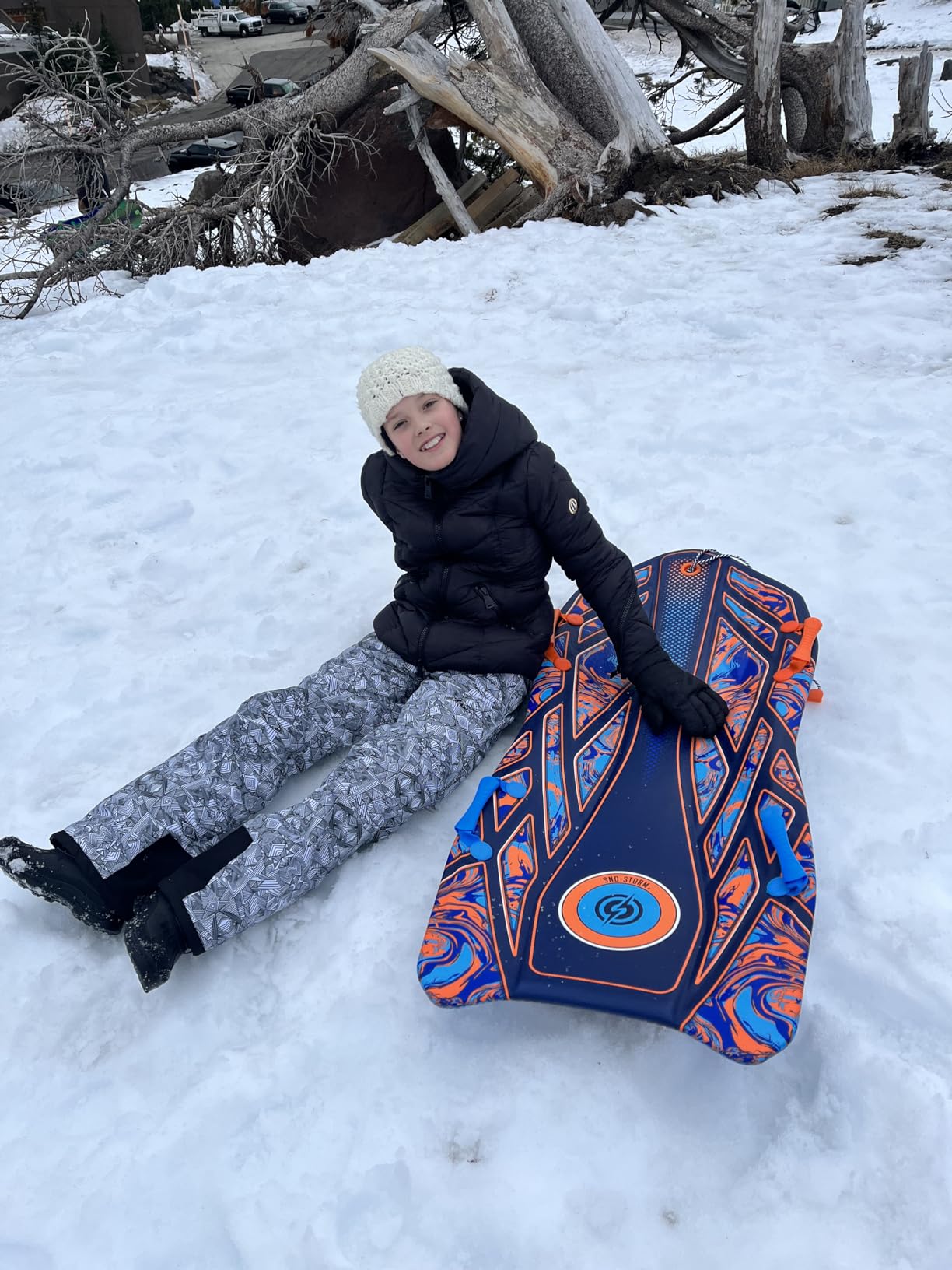
The failure mode is specific, so test for it before you buy. Owners report the foam bottom splitting or tearing after a year or two, mostly after contact with sticks, gravel or rough ground, and a torn foam core cannot be repaired. The 30-day warranty is the shortest of any sled here, which is uncomfortable given that failure timing.
At 50 inches long and rated to 198 pounds, one adult and a child fit, and the wide deck has room for a parent riding with a younger child on their lap. The construction uses no harmful dyes, epoxies or glues, and the color graphics are UV-inhibited so the deck does not fade over a sunny spring on the porch.

Is foam better than plastic for a first sled
For a young or cautious rider, yes. Foam absorbs the impact of a slow tip-over instead of throwing a hard plastic deck under a knee, and it will not crack in deep cold the way thin plastic can. For a speed-focused rider on a steep hill, a hard plastic bottom is faster and foam gives some of that away.
Where foam will disappoint you
Any run with sticks, rocks, bare ground or gravel in the path. Foam abrades and tears where plastic would simply scratch. Keep the run swept and the foam sled will outlast expectations; ignore the terrain and you will be shopping again next season.
9. Emsco Group 66 Inch Family Toboggan – Best for Big Families
- Long 66 inch deck fits several riders
- Tracking rails keep the ride straight
- Folded edges throw snow away from riders
- Doubles as a hauling sled
- Made in the USA
- 165 lb rating is low for a sled marketed to four riders
- No tow rope or handles listed
Emsco builds a long traditional family toboggan, and the 66-inch deck is the reason it works for a crowd. The molded-in tracking rails are the detail worth noting, because they keep the sled running straight instead of letting it wander, which makes it much easier for several riders of different sizes to share one run.
The folded edge along the sides deflects snow outward and away from the riders and any cargo, so you spend less time brushing off a faceful of powder at the bottom of the hill. It is also built to be a utility sled, moving tools and equipment as easily as it carries kids.
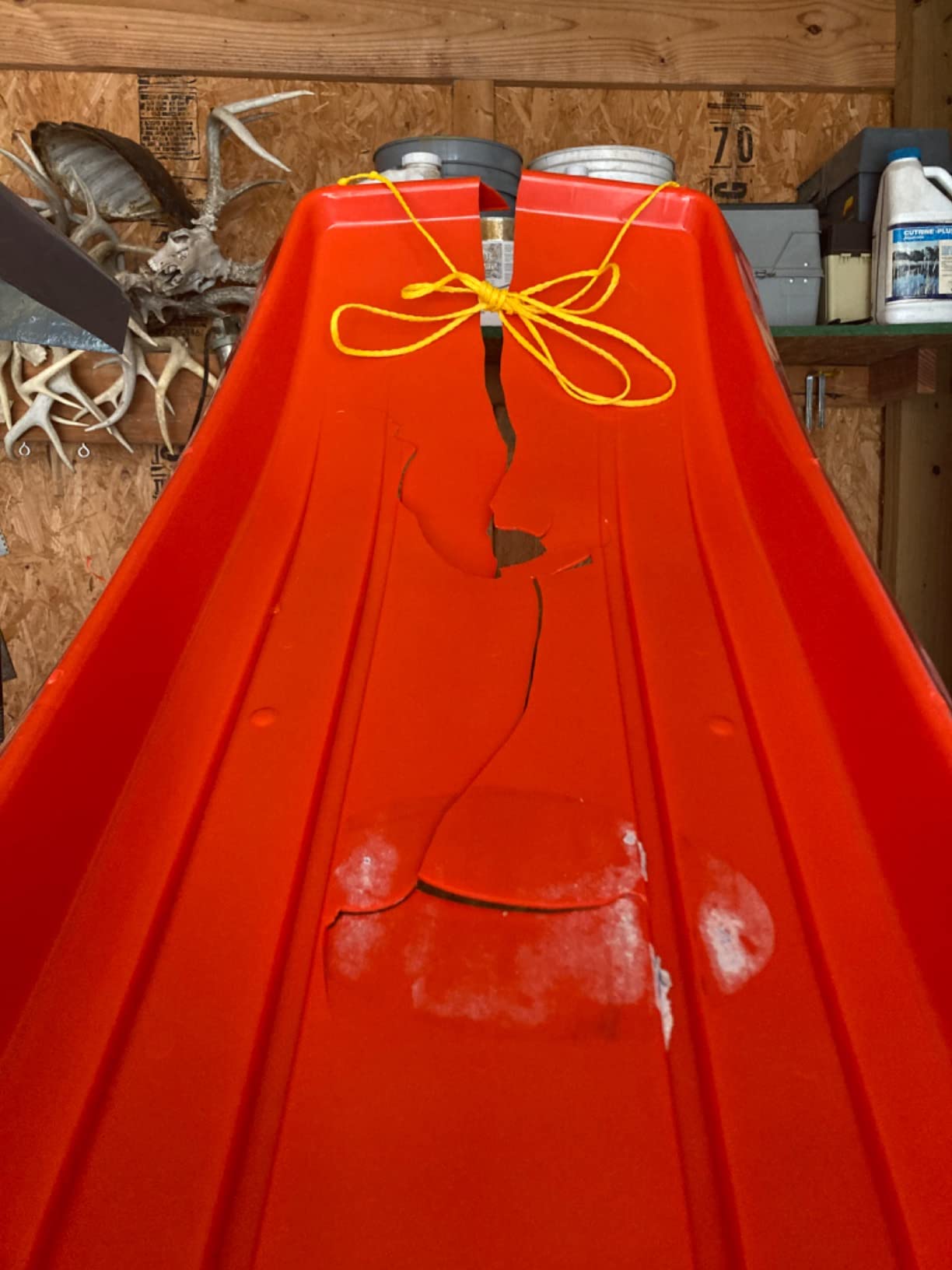
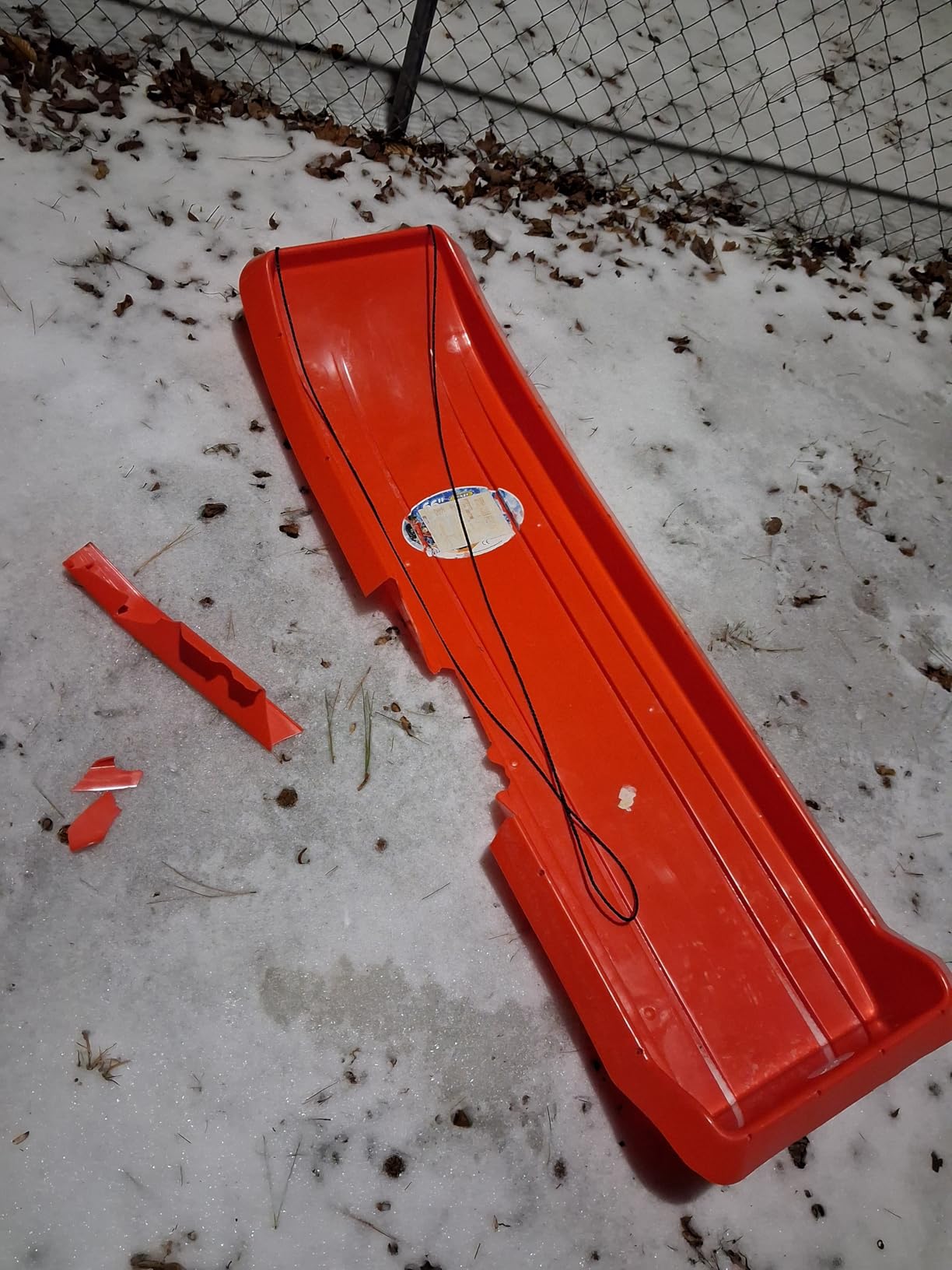
Here is the discrepancy to know before buying: it is marketed as a four-rider sled, but the listed maximum weight is 165 pounds. That figure is low for a deck this size, and it means the sled genuinely suits several small children rather than several adults. Read the rating as the limit, not the rider count.
No tow rope or handles are listed among the included components, so plan on supplying one. At 7.8 pounds it is not a sled a small child carries solo. Owners rate it 4.4 stars across 251 reviews, and the feedback centers on the generous length and smooth glide.
How many people actually fit
Physically, several children fit on 66 inches. By the weight rating, you have about 165 pounds to work with, which is two or three children or one adult and a small child. If you have a family of adults who want to ride together, this is the wrong deck length-to-rating ratio for the job.
What to pair it with
A tow rope. Because none is listed with the sled, adding one makes the difference between a sled your family uses on a long walk from the parking area and one they abandon halfway. The bright orange finish also makes it easier to spot on a slope shared with other sledders.
10. Flexible Flyer Snow Boat 48 Inch – Best for Parent and Child Rides
Flexible Flyer Snow Boat 48″ 2-Person Plastic Sled with Cushioned Pad
- 24 inch wide deck fits an adult and a child together
- Cushioned pad beats bare plastic
- No-break polypropylene resists cracking
- Tow rope and four handle cutouts included
- Wide high-sided boat shape is not built for sharp carved turns
- Waxing the bottom is suggested for maximum speed
The Snow Boat is built around one specific ride: an adult and a child, together, facing the same direction. At 48 inches long and 24 inches wide, the boat-style deck is the widest per-rider platform in this roundup, and the 250-pound rating gives a parent and an older child real room rather than a squeeze.
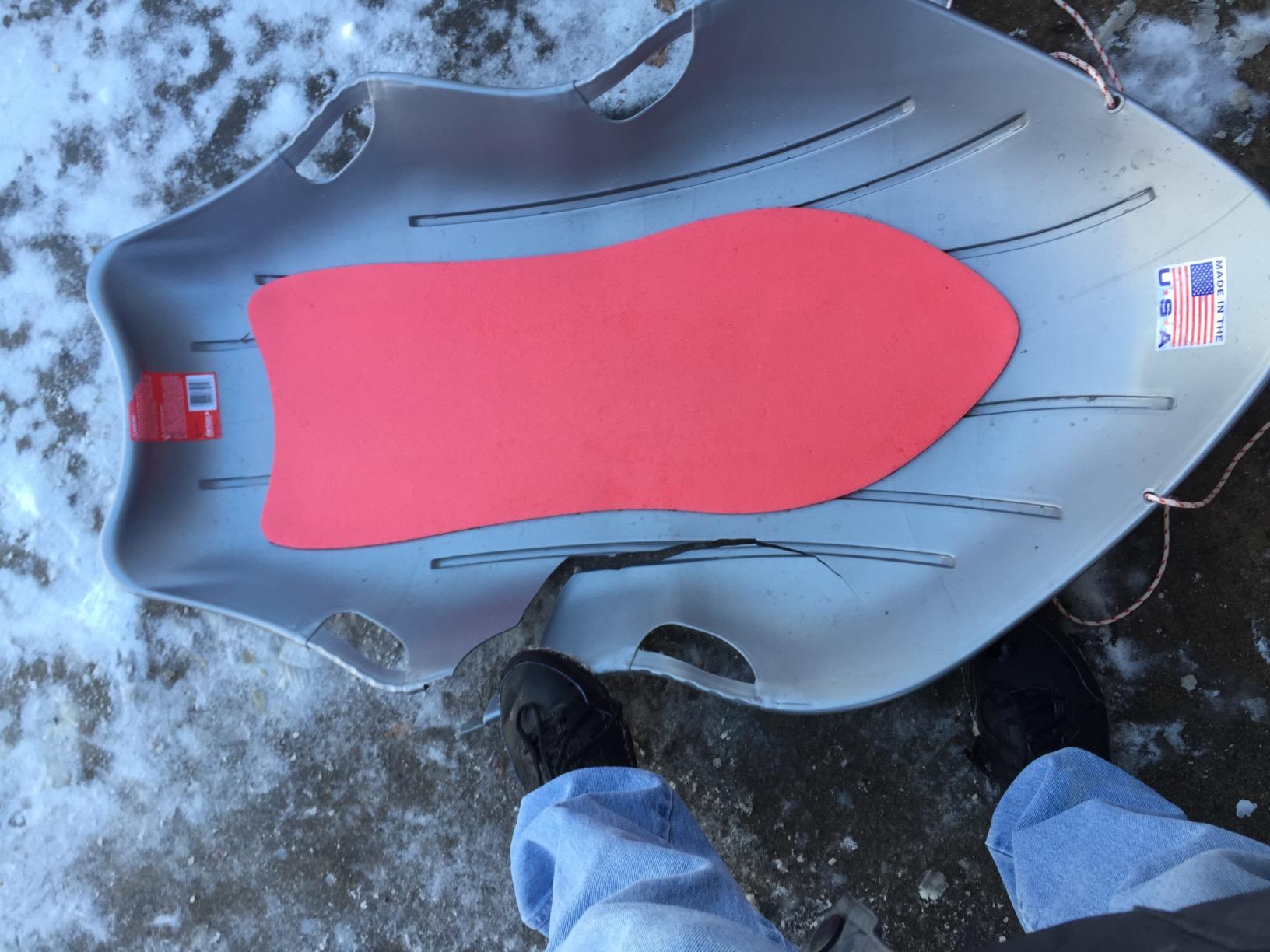
The cushioned red seat pad is the detail that turns this from a bumpy plastic ride into a comfortable one, and four handle cutouts mean there is somewhere to hold at every seat position. The tow rope is included, which removes the single most common complaint we heard about budget sleds.
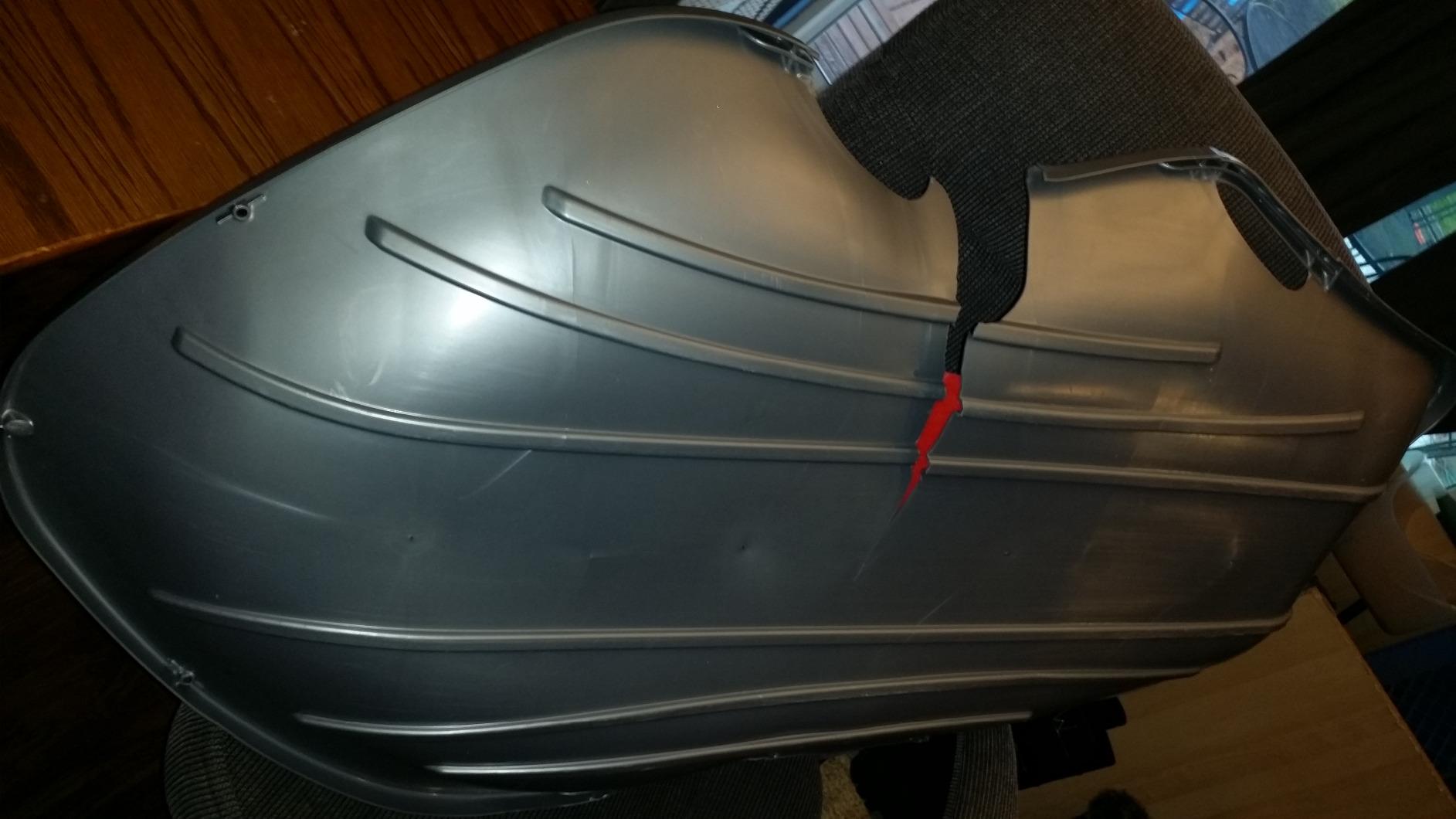
It is made in the USA from no-break polypropylene, a material chosen because it does not crack in freezing temperatures the way thin commodity plastic does. For speed, the bottom is a hard slick surface that owners report responds well to a coat of wax, which is worth doing before a big hill day.
The wide, high-sided boat shape has a trade-off. It is built for stability and load carrying, not for carved turns, so a rider who wants to slide a saucer-style sled across the hill will find it less playful. The 4-pound weight is friendly for a child carrying it back up.
Why so many parents buy a second sled instead of sharing
Because tandem riding is fun once and then a negotiation. On a gentle hill with a young child, riding together works beautifully. On a longer or faster run, most families end up buying a second sled anyway, which is exactly what owners report. Plan for that if your hill is more than a gentle slope.
How to get more speed out of it
The bottom takes wax. A thin coat of paraffin or sled wax on the slick base reduces friction and noticeably lengthens a run. Wipe the bottom clean and cold before waxing, and reapply when the shine dulls. It costs nothing beyond a tin of wax and a few minutes of work.
11. WOLKEK Inflatable Snow Tube 2-Pack – Best for Travel and Packing
- Inflatable cushioning is kinder than hard plastic
- Deflates flat for winter travel
- Inflates in about a minute
- 250 lb rating suits most adults
- Some owners report slow air loss and punctures
- Unusable on rocky or icy ground
- 16 percent of reviews are 1 star
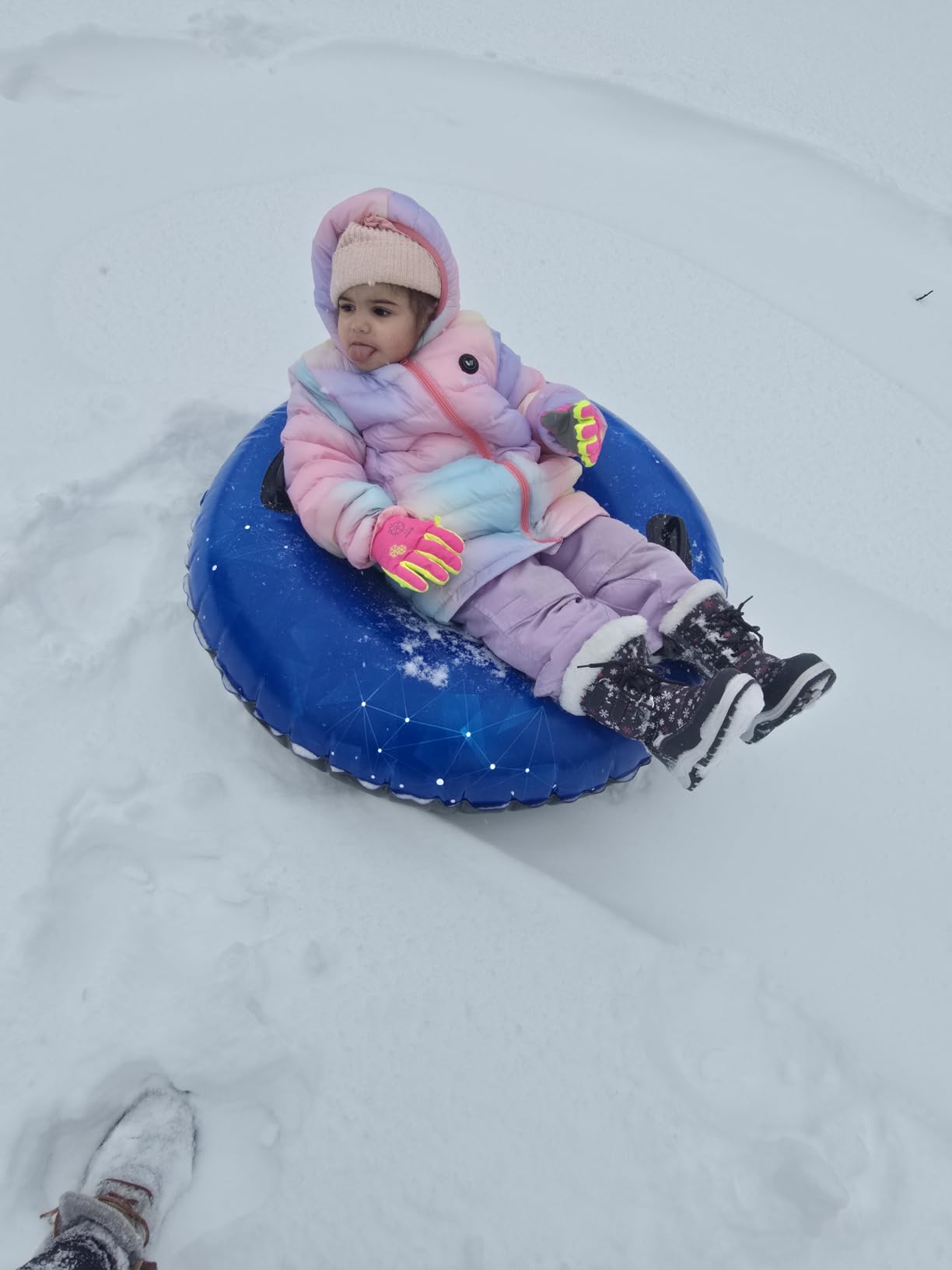
This is the one to pack. It deflates to almost nothing, fits in a suitcase with boots, and reinflates in about a minute with a pump, which makes it the sensible option for a winter trip to a mountain town or a cabin. Two tubes per pack means an adult and a child, or two kids, ride at the same time.
Comfort is the dominant theme in the reviews. An inflated seat is a far softer landing than hard plastic or bare foam, and parents consistently note that it is easier on a child on a long hill. The 250-pound rating means most adults can ride one, which is unusual for a tube.
The negatives all come back to the same thing: air and terrain. A minority of owners report slow air loss and punctures on a second ride, and 16 percent of ratings sit at one star, the highest negative share in this roundup. A tube has no protection against rock, gravel, ice or tree branches, and the double-layer thickened base helps but does not eliminate the problem.
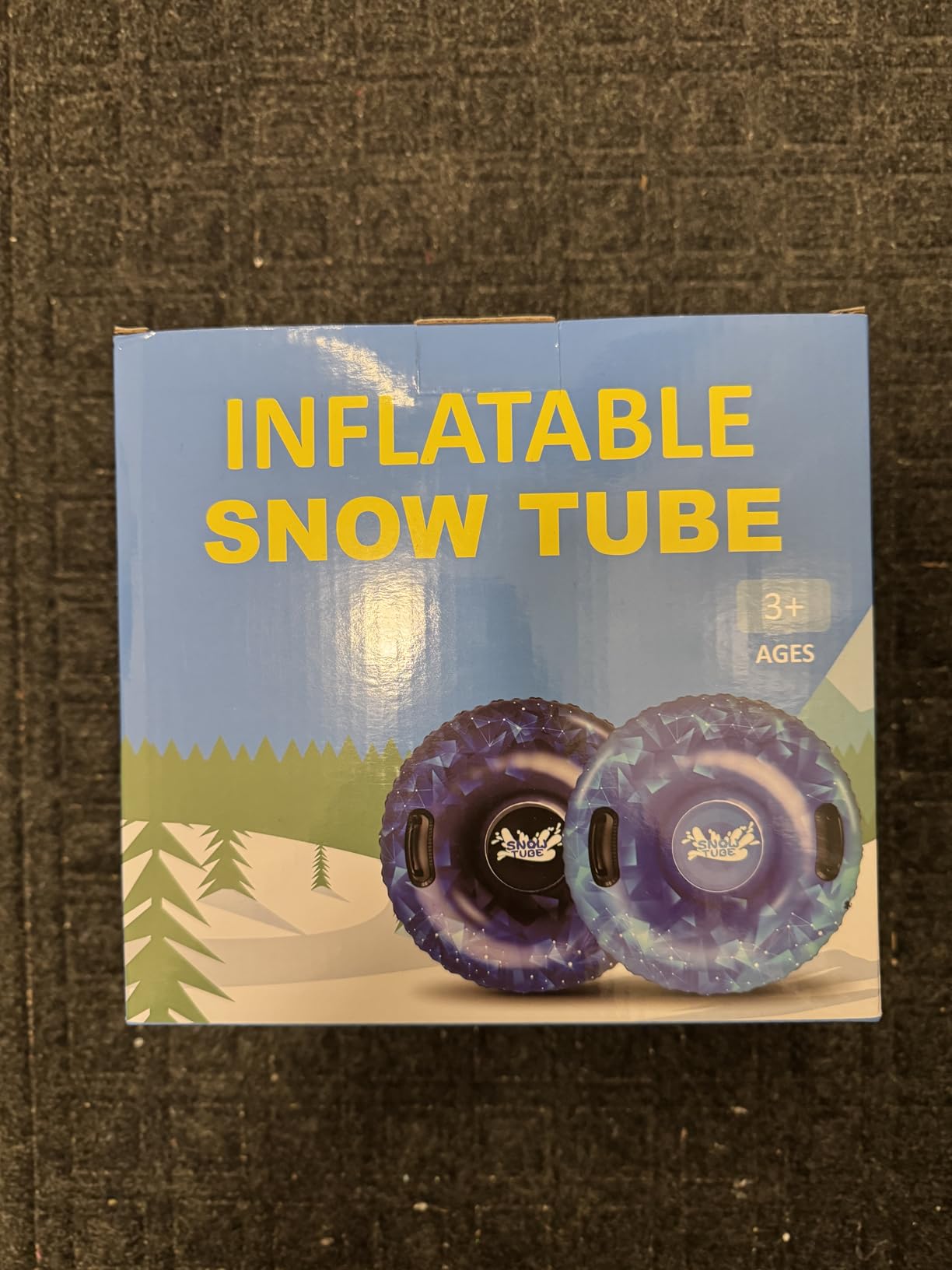
The embossed handle design gives a firmer grip at speed, and the deep seat contour does more cushioning than a flat disc. Rated for ages three and up, this works best on deep soft snow over a wide open slope with nothing hard underneath.
When an inflatable beats a hard sled
When comfort matters more than speed and the ground is soft. Deep fresh powder, a gentle slope, a long run where the rider is going to spend a while going slowly, or a family with a small child. Tubes also survive being stored in a hot garage or a shed, since there is no rigid shell to warp.
When to pick anything else instead
Any hill with exposed rock, tree roots, gravel paths, or a run that crosses a road. Tubes drift and spin, so they are a poor choice for a slope where a lost rider would end up somewhere unexpected. Keep a hard sled for the packed and obstacle-strewn hills, and save the tube for open snow.
Sledding Safety: Picking a Hill and Riding It Safely
The sled is rarely the dangerous part. The hill is. Before anyone rides, walk the run from top to bottom and check five things: no roads, no parking areas, no fences, no tree wells, no water, and no power lines overhead. A slope that looks harmless from the house can drop onto a road two hundred yards down.
Then match the sled to the terrain. Foam and inflatable tubes belong on soft, open snow. Plastic toboggan and saucer designs tolerate harder packed surfaces. Nothing in this roundup belongs on ice, and nothing belongs on a slope where a stopped rider would slide into a tree, a fence post or a frozen pond.
- Check the combined weight of everyone on the sled against the stated rating, every single run.
- Wear a helmet on any fast or steep run, and gloves with grippy palms rather than loose cotton mittens.
- Leave a clear run-out zone at the bottom of the hill so a stopped rider is never in traffic.
- Walk the hill before the first run, and re-walk it once conditions change as the day warms.
- Keep ropes away from the sled path, since a taut rope across a run causes the worst injuries of any sledding accident.
- Sled one at a time down a given run, with riders waiting at the side rather than at the bottom.
- Never tow a sled behind a vehicle or an ATV on snow, and never attach a tow line to a person.
For adults joining the kids, sled within your own ability rather than chasing a child downhill. Most adult sledding injuries we would expect to see involve a rider who cannot stop, not a rider who goes too slowly.
Buying Guide: Sled Types, Materials and Snow Depth
How much snow do you actually need
Two inches of snow is enough to sled, but it only works on packed or repeatedly used snow. On fresh powder you want more like six to eight inches before a plastic sled glides instead of bulldozing. Below a couple of inches, a foam or inflatable tube will scrape and slow on bare ground, and any hard plastic bottom stops entirely. The best runs come from snow that has been walked on and packed by earlier sledders, which is why the same hill changes character through an afternoon.
Sled types and who each one suits
A toboggan is the classic shaped plastic sled with a raised front and sidewalls. It is the most versatile family option, carries one or two riders, and is the shape most people mean when they say sled.
A saucer is a flat disc that spins and slides sideways. It is the easiest sled for a small child to use and the least forgiving of rough ground.
A snow tube is inflatable, packs flat, and cushions the rider. Tubes need deep soft snow and a wide open slope, and they cannot survive rock or ice.
A runner sled uses steel runners or a ski base and is the speed option, demanding a groomed, steeper hill and a rider who can steer it.
A steerable bobsled adds a steering wheel and usually a brake. It gives real control on steep terrain and costs you weight and a single-rider seat.
A utility sled is any long toboggan used off the hill, hauling firewood, gear or ice-fishing equipment. If that is a real part of your winter, a 66-inch deck with high sidewalls is the correct buy rather than an afterthought.
Plastic, foam, wood, metal and inflatable
Plastic is the default: cheap, fast, light and easy to find, which is why most sleds in this roundup are plastic. The weak point is thin, single-layer construction that flexes and eventually cracks along the running surface. Double-walled high-density polyethylene is the upgrade that changes the lifespan, and it is the main reason the top-rated sled in this roundup holds its score.
Foam is light, warm to sit on, and will not shatter in cold. It is the gentlest choice for a beginner and the worst choice on rough ground, where the bottom abrades and tears in one or two seasons, and a torn foam deck cannot be repaired.
Wood is heavy, needs waxing to perform, and lasts for decades. It is a lifestyle and gift choice more than a performance one, and its weight makes it impractical for a child to carry uphill alone.
Metal runners and ski bases are the fastest and the least forgiving. They need a groomed slope, and they punish a rider who lands sideways.
Inflatable tubes trade speed for comfort and portability. They store flat, travel well, and cushion a rider completely, but they need the most snow and the least terrain, and punctures are the normal failure rather than the exception.
How to choose one sled for a whole family
Add up the weights of everyone who might ride together, add a margin, and check the resulting number against the stated rating. Then measure the deck against the tallest rider. A 66-inch deck is what a two-adult tandem requires; a 48-inch deck is the parent-and-child standard; a 35-inch deck is a single-child sled no matter what the marketing says.
Finally, buy the rope. A sled with molded rope holes and no rope, a 66-inch sled at 7.8 pounds, and a hill at the end of a long walk are three separate frustrations, and only one of them comes with a solution in the box. Our backyard activity guide covers the other gear that gets used on those same afternoons, and if the adults are more interested in fitness than downhill speed, the adult gear roundup is a better use of a snowy weekend indoors.
Frequently Asked Questions
What are the best-rated sleds for kids?
For most families the highest-rated kid sled is the Slippery Racer Downhill Xtreme toboggan, rated 4.6 stars across more than 1400 reviews, with a 48 inch deck for one or two riders up to 150 pounds. The SNO-Storm premium foam sled is the gentlest and lightest option for a beginner, and the Flexible Flyer 3-pack is the best value when several children need to ride at once.
What are the best sleds for adults?
Adults should start with the weight rating, not the style. The GoSports two-person sled is built for adults, carrying two riders up to 300 pounds on a foam-padded double-walled HDPE deck, and it is the highest-rated sled in this roundup. The Gizmo Riders steerable sled also handles a single adult up to 260 pounds and adds a pull-up brake for steep hills.
What is the safest type of sled?
The safest sled is the one matched to the rider and the hill. A steerable sled with a brake gives control on steep terrain, while a foam sled with raised rails and grip handles is gentlest for a young or cautious child. Add a helmet on fast runs, check the combined rider weight against the stated limit, and keep every run clear of roads, fences and water.
Which sled is better, plastic or foam?
Plastic is faster, cheaper and better on hard-packed snow, but thin single-layer plastic can crack along the running surface after a season of heavy use. Foam is lighter, warmer and will not shatter in deep cold, which makes it safer for beginners, but it abrades and tears on sticks or gravel and cannot be repaired once the core opens. Double-walled HDPE plastic gets you the speed with far more durability than thin plastic.
Is 2 inches of snow enough for sledding?
Two inches is enough on packed or well-used snow, but on fresh powder you want closer to six to eight inches before a plastic sled glides instead of bulldozing. Inflatable tubes and foam sleds scrape and slow on thin cover, and hard plastic bottoms stop entirely. The same hill improves through the day as earlier riders pack it down.
How long should a snow sled last?
A double-walled plastic sled like the GoSports model is built for multiple seasons, while thin single-layer resin and plastic saucers often crack within the first winter of hard use. Foam sleds typically last one or two seasons before the bottom tears, and inflatable tubes last as long as they hold air, with punctures the usual failure. Keeping the running path clear of gravel and sticks extends the life of any sled.
The Best Sleds for Kids and Adults in 2026
After six weeks of comparing 11 sleds, the Slippery Racer Downhill Xtreme is the best sled for kids and adults overall. It carries one or two riders, weighs three pounds, and holds a 4.6 star average across more than 1400 reviews, which is the kind of long-term consistency that cheap plastic sleds never reach. Just keep the 150-pound combined limit in mind when a bigger adult wants to ride along.
Buy the Flexible Flyer Winter Trek if you want one sled for the entire family and a 66-inch deck is non-negotiable. Buy the GoSports two-person sled if two adults are riding and comfort and a 300-pound rating matter more than anything else. Add the Flexible Flyer 3-pack or the WOLKEK tube pack for the siblings, and skip the saucers if anyone over eight is serious about riding.
Whatever you choose, check the weight rating before the first run, sweep the hill, and buy the tow rope. Those three habits do more for a good sledding season than any product on this list.