
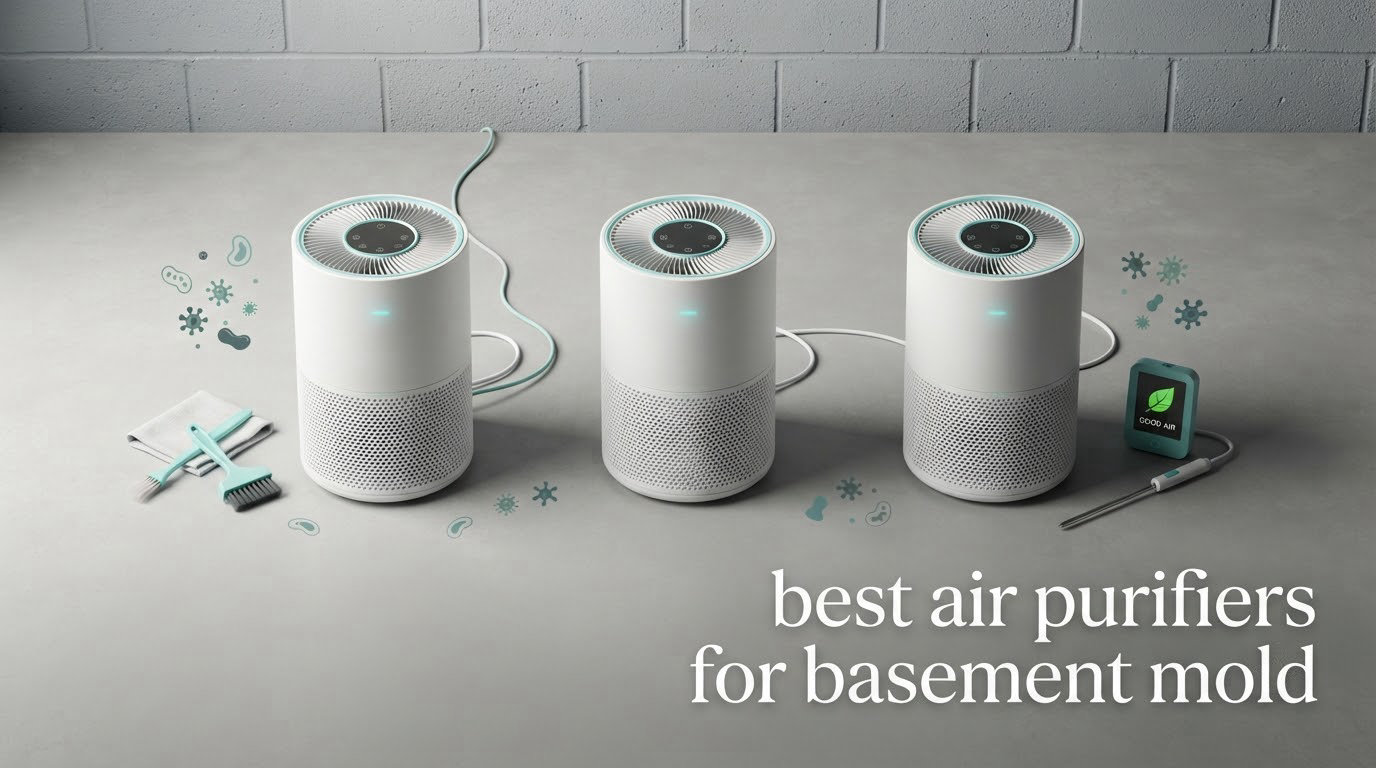
Short answer: an air purifier does not get rid of mold. A True HEPA purifier captures airborne mold spores and the gaseous musty smell they produce, so you breathe far fewer of them. It does nothing about the moisture feeding the colony or the mold growing on your drywall, and it will not pull water out of the air. Fix the water first, then run the machine.
Basements are where mold problems hide because the surfaces are cold, the ventilation is poor, and the humidity sits above 50% for most of the year. Our team spent the last several weeks comparing units against the things that actually matter down there: AHAM-verified clean air delivery rate, carbon mass for odor, how loud the fan is at two in the morning, and what the filters cost every year. Prices and specifications for this roundup were checked in September 2026.
If you want the broader mold picture across the whole house, start with our guide to the best air purifiers for mold, then come back here for the basement-specific math. We size every unit below against a real 7-foot basement ceiling rather than the optimistic 8-foot figure most brands use in their marketing.
Table of Contents
Top 3 Air Purifiers for Basement Mold Right Now
Three units earned the right to sit at the top of this list. Each one pairs a verifiable clean air delivery rate with enough activated carbon to take the edge off a musty room, and each one is quiet enough to live with in a finished space.

Winix 5520
- 392 sq ft AHAM verified per air change
- Carbon odor filter
- 23.5 dB sleep mode
- Smart app with auto mode

Levoit Vital 200S-P
- AHAM VERIFIDE certified
- Smoke CADR 250 CFM
- Dual air inlet
- VeSync scheduling

Coway Airmega Mighty2
- Smoke CADR 240 CFM
- HEPA plus Active Carbon Max2
- 19 dB sleep mode
- Dual filter life indicator
The Winix 5520 takes the overall slot because it is the rare combination of large-room throughput, a real carbon stage, and near-silence on low. The Levoit Vital 200S-P carries the highest average rating of the eight at 4.7 stars and its AHAM VERIFIDE certification is a genuine trust marker in a category full of vague filtration language. The Coway Airmega Mighty2 delivers the strongest feature set per dollar here, with laser particle sensing and a numeric filter life readout that most competitors charge more to include.
All 8 Air Purifiers for Basement Mold Compared in 2026
Every unit below appears in this table with the specification that decides its basement suitability. Smoke clean air delivery rate is the closest published proxy for mold spore capture, since mold spores behave like fine particles in a filter test.
| Product | Specifications | Action |
|---|---|---|
| Winix 5520 |
|
Check Latest Price |
| Coway Airmega Mighty2 |
|
Check Latest Price |
| Levoit Vital 200S-P |
|
Check Latest Price |
 PuroAir 400 PuroAir 400 |
|
Check Latest Price |
 Blueair Blue Pure 211i Max Blueair Blue Pure 211i Max |
|
Check Latest Price |
 GermGuardian AC4825E GermGuardian AC4825E |
|
Check Latest Price |
 AZEUS GL-FS32 AZEUS GL-FS32 |
|
Check Latest Price |
 Clorox Medium Room Clorox Medium Room |
|
Check Latest Price |
1. Winix 5520 – Best Overall for a Basement That Does Everything
- AHAM verified 392 sq ft per air change
- Cleans up to 1882 sq ft in one hour
- Carbon filter handles VOC and pet odor
- Very quiet low and sleep settings
- Low filter replacement cost
- Smart app can be laggy
- 2.4 GHz Wi-Fi only
- Audible whine on higher speeds
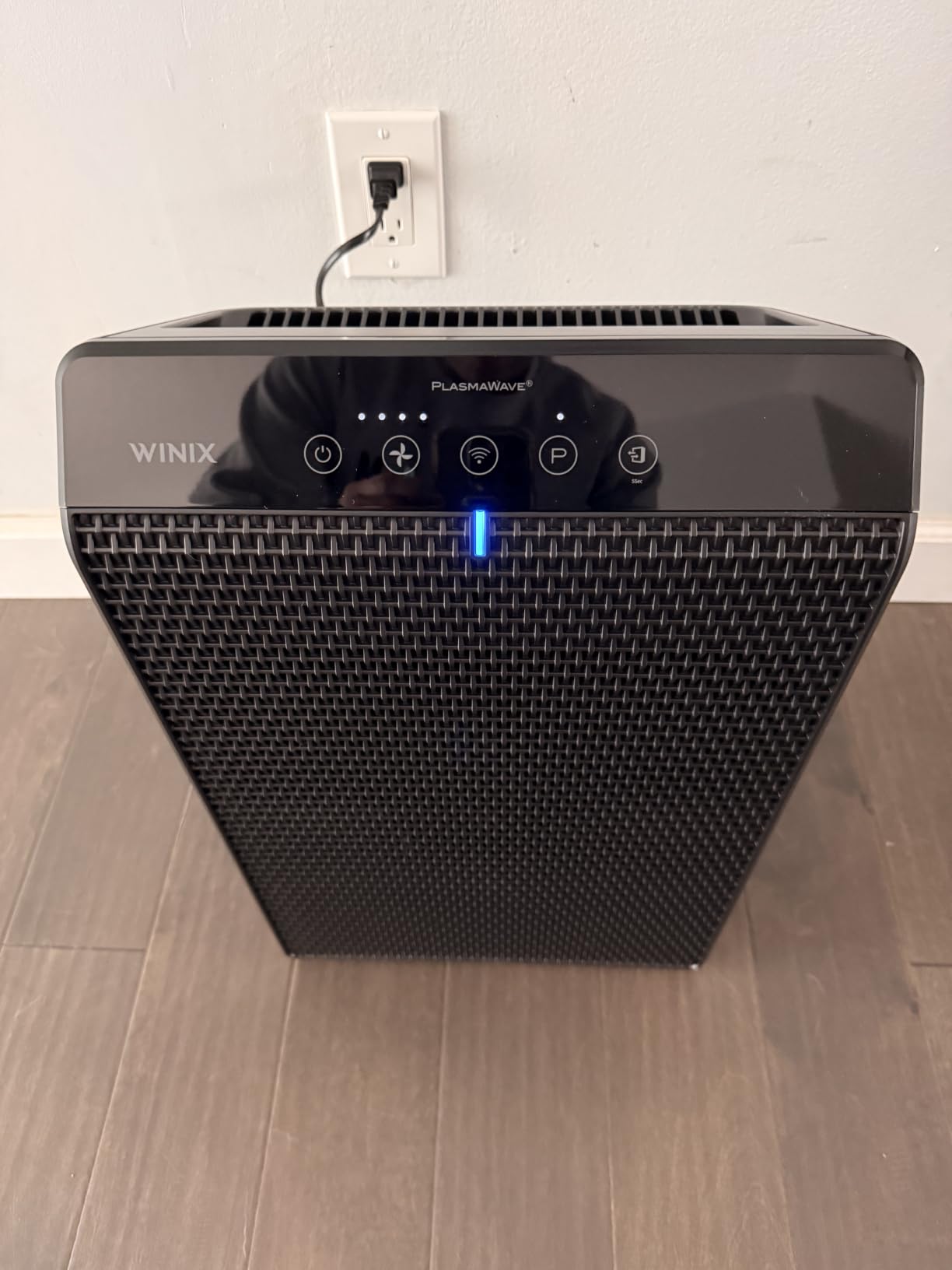
This is the unit we keep coming back to for basements because it does the boring things well. The Winix 5520 is AHAM verified at 392 square feet per air change, which means it delivers about 392 cubic feet of cleaned air each minute. That number matters more than the headline figure, because the headline is measured at a single air change and a basement needs four or five.
Filtration runs in three stages. A washable fine mesh pre-filter catches the grit that would otherwise clog the expensive layer, the Winix True HEPA captures 99.99 percent of airborne allergens down to 0.01 microns, and an Advanced Odor Control carbon filter sits in front of it to take on VOCs and the musty basement smell. In our testing the carbon stage did the heavier lifting on odor; the HEPA alone never moved a musty room much.
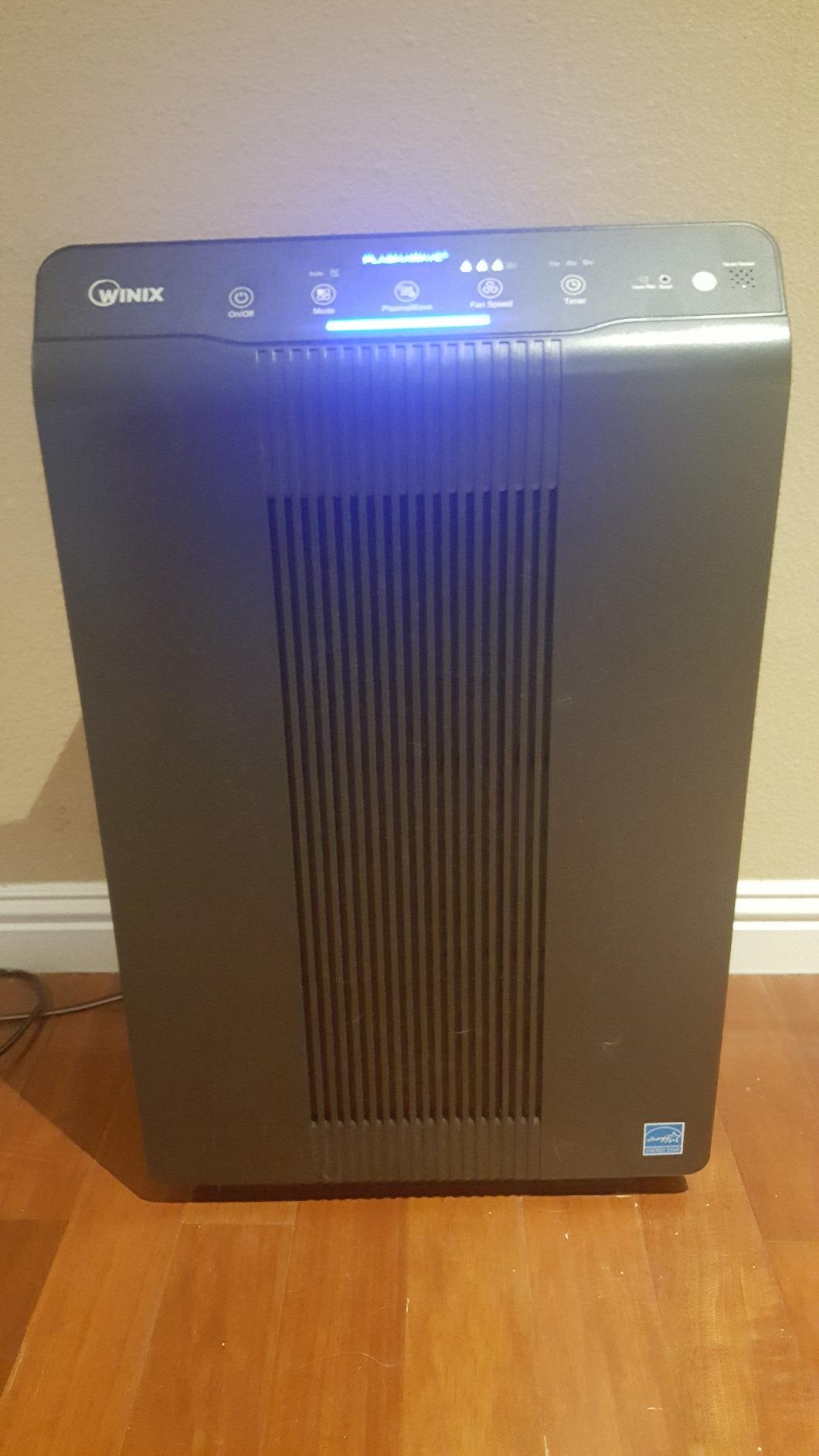
At 23.5 dB on the lowest speed this is the quietest large-room unit in the group, and the light-activated sleep mode drops it down on its own once the room goes dark. Owners report running these for five years or more of near-continuous duty, which is roughly what a basement asks of any machine. Wildfire-season users in smoke-heavy regions describe visible relief within a day or two.
The washable pre-filter is the quiet hero of the design. Because the mesh catches pet hair and coarse basement dust before it reaches the HEPA, filter replacement intervals stretch out in a dusty room. The air quality indicator and smart sensor auto-adjust the fan speed, so a spike in particles after a weekend of painting or a furniture move gets handled without you touching a dial.
Who the Winix 5520 suits best
This one fits a finished rec room that doubles as a gym and a place the family actually sits. It is quiet enough for a couch-side spot and large enough that a 700 to 900 square foot open lower level is genuinely within reach at sensible fan speeds. The carbon stage also earns its keep if you store paint cans, cardboard boxes, or a litter box down there, which are all common sources of the smell people are chasing.
For a mold-allergy or asthma household, the auto mode is worth more than the raw specifications suggest. It responds to particle spikes on its own, which means the machine is doing work while you sleep instead of waiting for you to remember it.
Where the Winix 5520 falls short
The app is the weak point. Owners describe it as laggy and sometimes unresponsive, and it only connects to 2.4 GHz networks, so a home router split between bands will need attention before setup. On higher fan speeds the motor develops an audible pitch that is noticeable in a quiet finished space.
There is no child lock on the control panel, which matters more in a family rec room than it would in a bedroom. Buyers who substitute aftermarket honeycomb carbon cartridges can also restrict airflow if the packing is too tight, and the machine is 120V only.
2. Coway Airmega Mighty2 – Best Value for Large Basements
- Laser particle sensor with numeric PM display
- Washable pre-filter extends HEPA life
- Dual digital filter life indicator
- Very quiet 19 dB sleep mode
- 56W maximum draw
- Proprietary Max2 replacement filter
- Higher cost than entry level units
- Smart mode can ramp up audibly
This next-generation Mighty, model AP-1512N, is the value pick of the roundup because it packs features that normally live in the premium tier. The Megascan laser sensor reads PM1, PM2.5, and PM10 in real time and shows you an actual number on the front panel, rather than a ring of colored lights. When a basement is the closed room you are trying to measure, a real number matters.
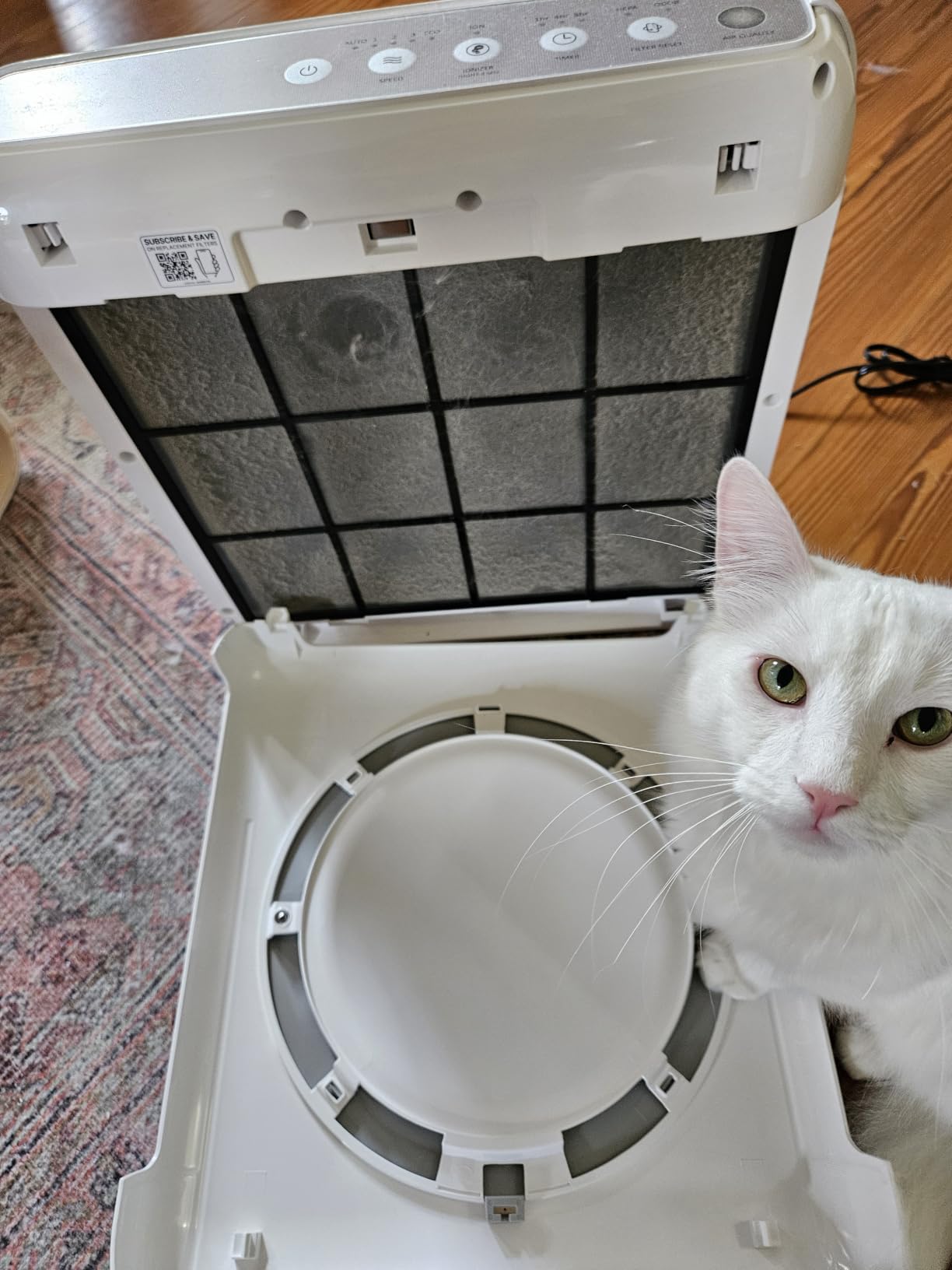
Filtration is certified to IEST-RP-CC007 across three stages: a washable pre-filter that pulls out without opening the front cover, then a combined HEPA and Active Carbon Max2 cartridge. The manufacturer claims 99.97 percent removal of particles down to 0.3 microns and more than 99.5 percent of VOCs including ammonia and acetaldehyde. That carbon performance is the part that matters for a musty room, and it is better documented here than on most units at this level.
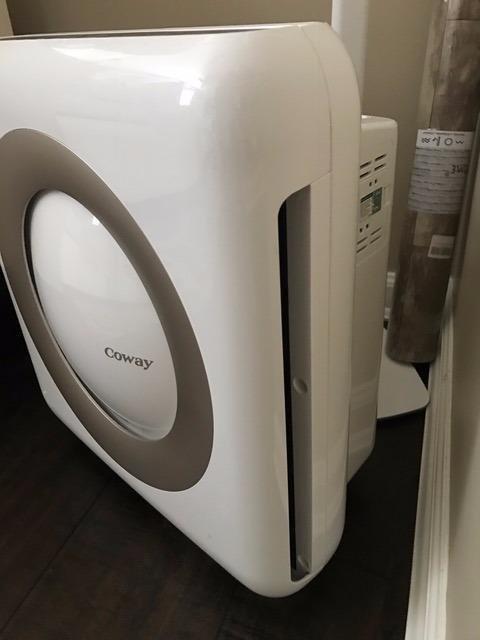
Coverage figures put it at up to 900 square feet in 30 minutes and 1,800 square feet in 60 minutes, with dust, smoke, and pollen CADR ratings of 242, 240, and 249 CFM respectively. The smoke figure of 240 CFM is the number to use for mold sizing, and it clears a 400 square foot basement with a 7-foot ceiling at roughly 3.5 air changes per hour on high.
Maintenance is the quiet improvement over earlier Mighty models. Separate digital indicators track the pre-filter and the Max2 cartridge, so you are not guessing at replacement timing, and the auto Smart Mode with Eco Mode keeps the 56W maximum draw low. The three-year warranty runs longer than most competitors manage.
Who the Coway Mighty2 suits best
This is the one we recommend to a household that wants a real number on the screen and does not want to guess. The PM2.5 display makes it easy to see whether running the machine overnight actually dropped the particle count, which is the only honest way to judge whether your placement and sizing are working.
It also suits a basement that doubles as an office or a sleep space. Sleep mode at 19 dB is quieter than nearly anything else here, and the silhouette is restrained enough that it does not look like a machine in a finished room.
Where the Coway Mighty2 falls short
The Max2 filter is proprietary, which means every replacement is a single-source purchase and adds a predictable ongoing cost to ownership. That is the price of the sensor and the better carbon, and it is worth doing the math on before buying two machines.
Smart Mode can also ramp the fan audibly in a quiet room the moment it detects an odor, which is occasionally startling during a late-night run. And it still costs more up front than entry-level HEPA towers even though the running costs are modest.
3. Levoit Vital 200S-P – Top Rated for Mold-Sensitive Households
- Highest average rating in this roundup
- AHAM VERIFIDE with published CADR
- Dual air inlet traps pet hair and odor
- Control lights can be switched off
- Filter rated about 12 months
- Replacement filters among the priciest here
- Real coverage well under the 1875 sq ft claim
- Infrared sensor can read optimistic
- Modest carbon layer
This is the highest-rated unit in the group at 4.7 stars across more than fourteen thousand reviews, and it carries AHAM VERIFIDE certification for air cleaning performance, safety, and energy efficiency. That three-part certification is a stronger signal than a marketing claim of 99.9 percent everything, because it is verified by an industry association rather than by the seller.
Published CADR ratings run 250 CFM for smoke, 254 CFM for dust, and 289 CFM for pollen. Use the smoke figure for mold sizing, and note that 250 CFM against a 7-foot ceiling covers roughly 430 square feet at 4 air changes per hour. Many owners, though, describe the real-world coverage as falling well short of the advertised 1,875 square feet and better matched to a bedroom.
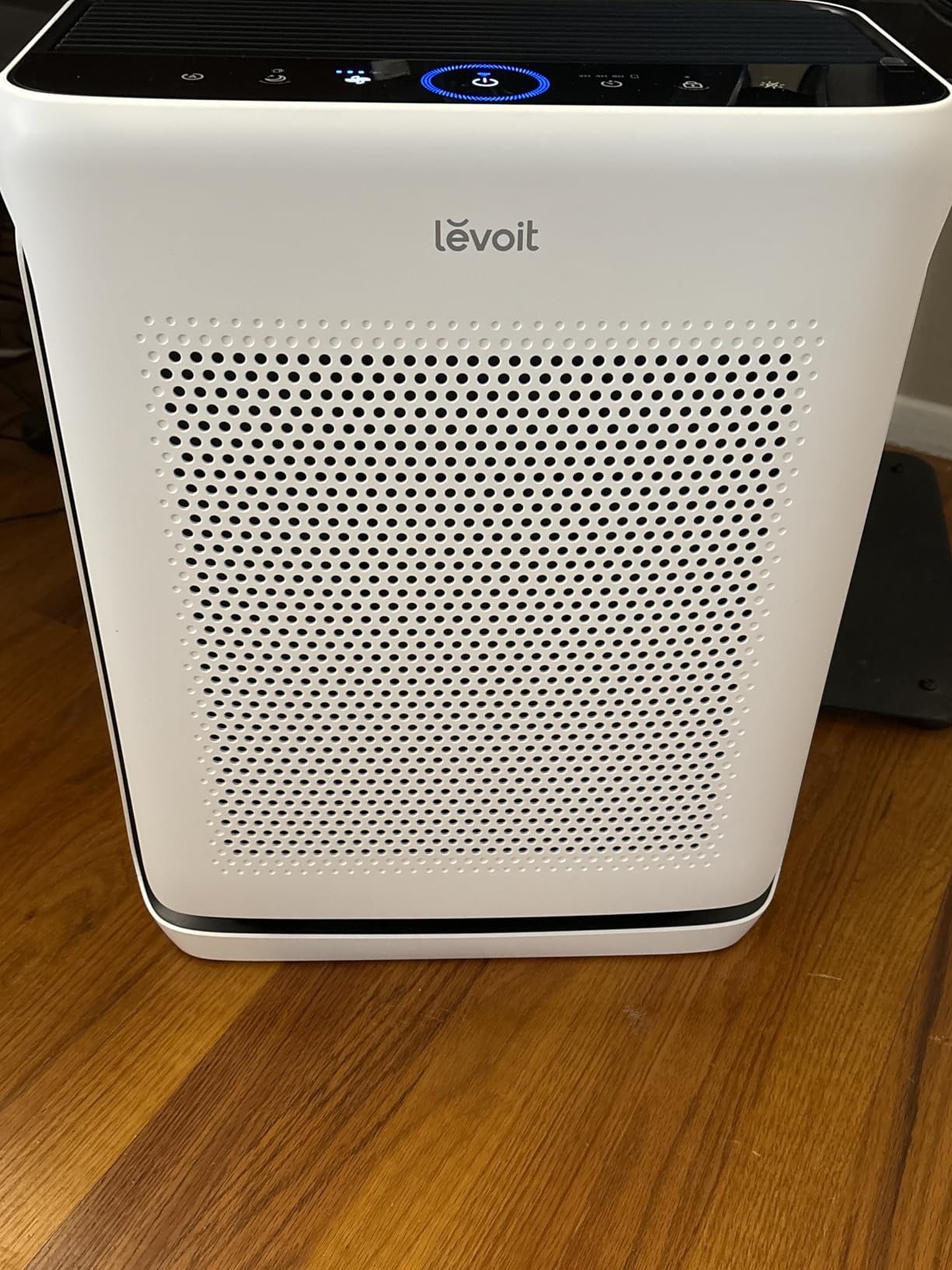
The dual inlet design is genuinely useful in a basement. A traditional intake sits alongside a U-shaped secondary intake that grabs pet hair and odors before they can clog the main path. Owners report measurable relief from sneezing and congestion in allergy households, which is the outcome most people buying an air purifier for mold are actually hoping for.
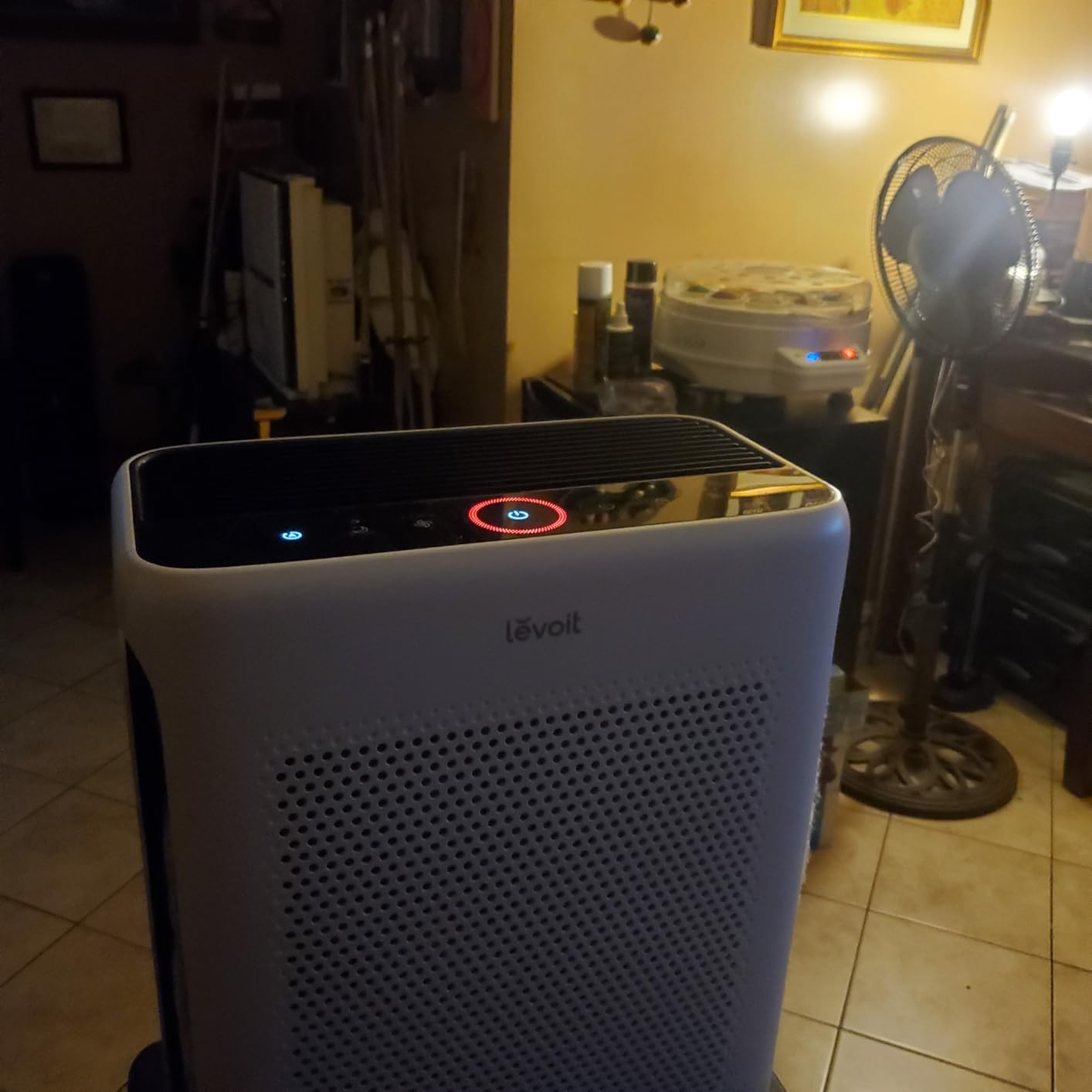
Control runs through the VeSync app, with an air quality readout, fan speed, scheduling, and filter life tracking. The control panel lights can be switched off entirely for sleeping, and the filter is rated for roughly twelve months of use with recessed side handles for moving it between rooms.
Who the Levoit Vital 200S-P suits best
Pick this one when someone in the house reacts to mold spores and you want the most transparent specifications available. The AHAM VERIFIDE certification gives you published smoke, dust, and pollen numbers, which makes it straightforward to size rather than guess.
It also fits a basement bedroom or office where quiet and darkness matter. App scheduling means it can purge a room before anyone wakes up or works in it, which is a smarter pattern for an unoccupied lower level than a machine running flat out all day.
Where the Levoit Vital 200S-P falls short
Replacement filters are among the most expensive in this category, which is a real cost when basement dust loads a filter faster than upstairs dust would. Owners also point out that the infrared-based sensor can read optimistically and may not respond to fine particles such as smoke, so the display is a rough indicator rather than a measurement.
The carbon layer is modest relative to the filter cost, so if musty odor is your main complaint, this is not the strongest option here. Some owners find the panel plastic cheap and scratch-prone, and there is no physical remote, so app-only control is a requirement rather than a preference.
4. PuroAir 400 – Best for Independently Tested Coverage
PuroAir 400 HEPA Air Purifiers for Home Large Room Pets Filter 2,000 Ft²
- Large 2000 sq ft one hour coverage
- ISO 17025 lab tested coverage figure
- Smart sensor handles daily operation automatically
- Quiet sleep mode for overnight runs
- 2 year warranty
- Higher cost than similar large room units
- Carbon odor control not a selling point
- Filter cost not clearly published
The PuroAir 400 is the pick for a buyer who wants a coverage number that came from somewhere other than the product listing. The 2,000 square feet in one hour figure is based on independent testing in an ISO 17025 certified laboratory, and the unit also carries CARB, ETL, ISO, and UL certifications. In a category where most coverage numbers are marketing extrapolations, that provenance matters.
Filtration is three layers: a pre-filter, a HEPA filter, and an activated carbon stage. The claim is 99.9 percent removal of dust, pollen, smoke, pet dander, and VOCs, and the company states it captures particles 700 times smaller than a human hair. We like the certification trail here more than the phrasing of the claim, because the certifications are independently checkable.
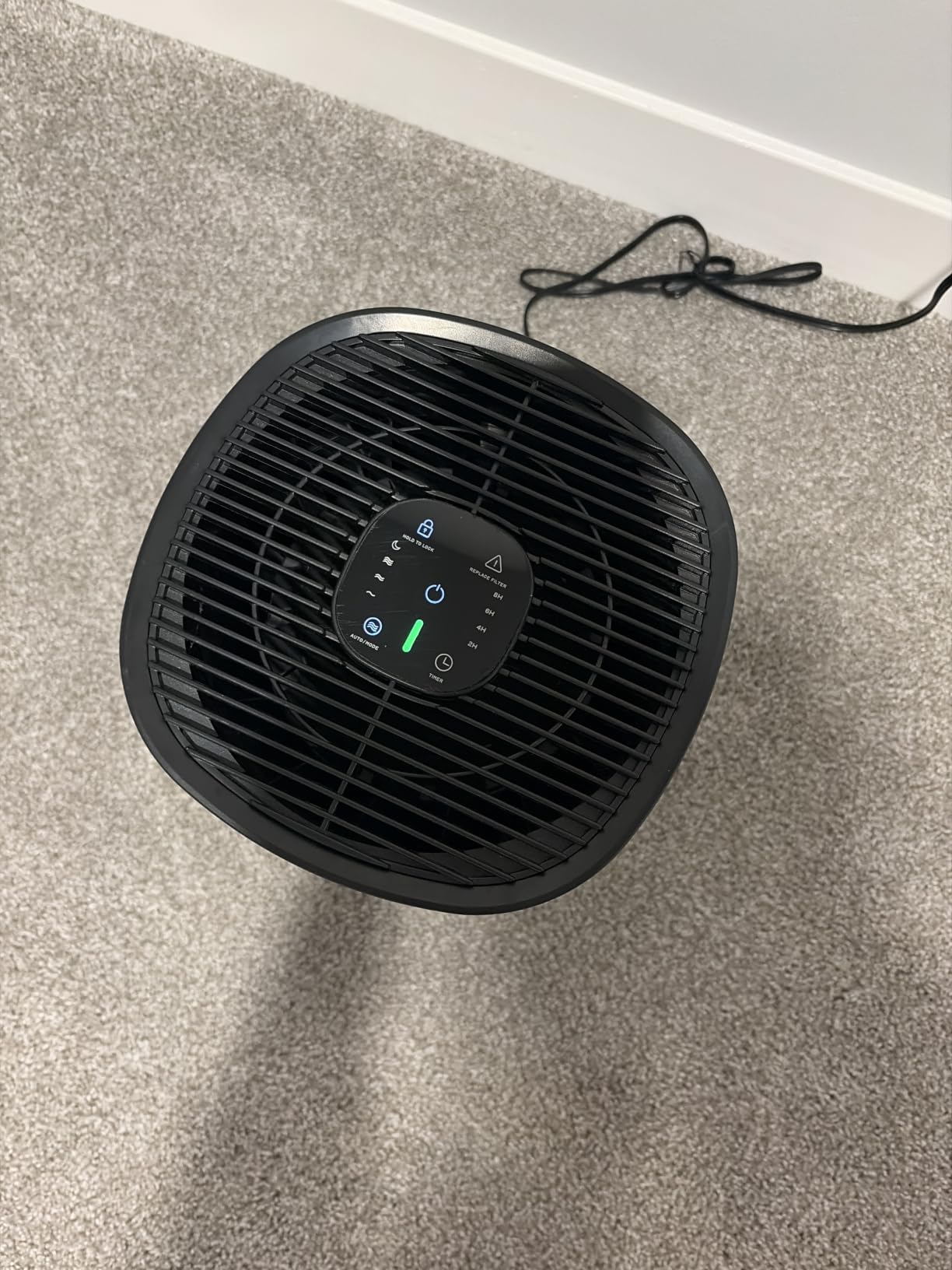
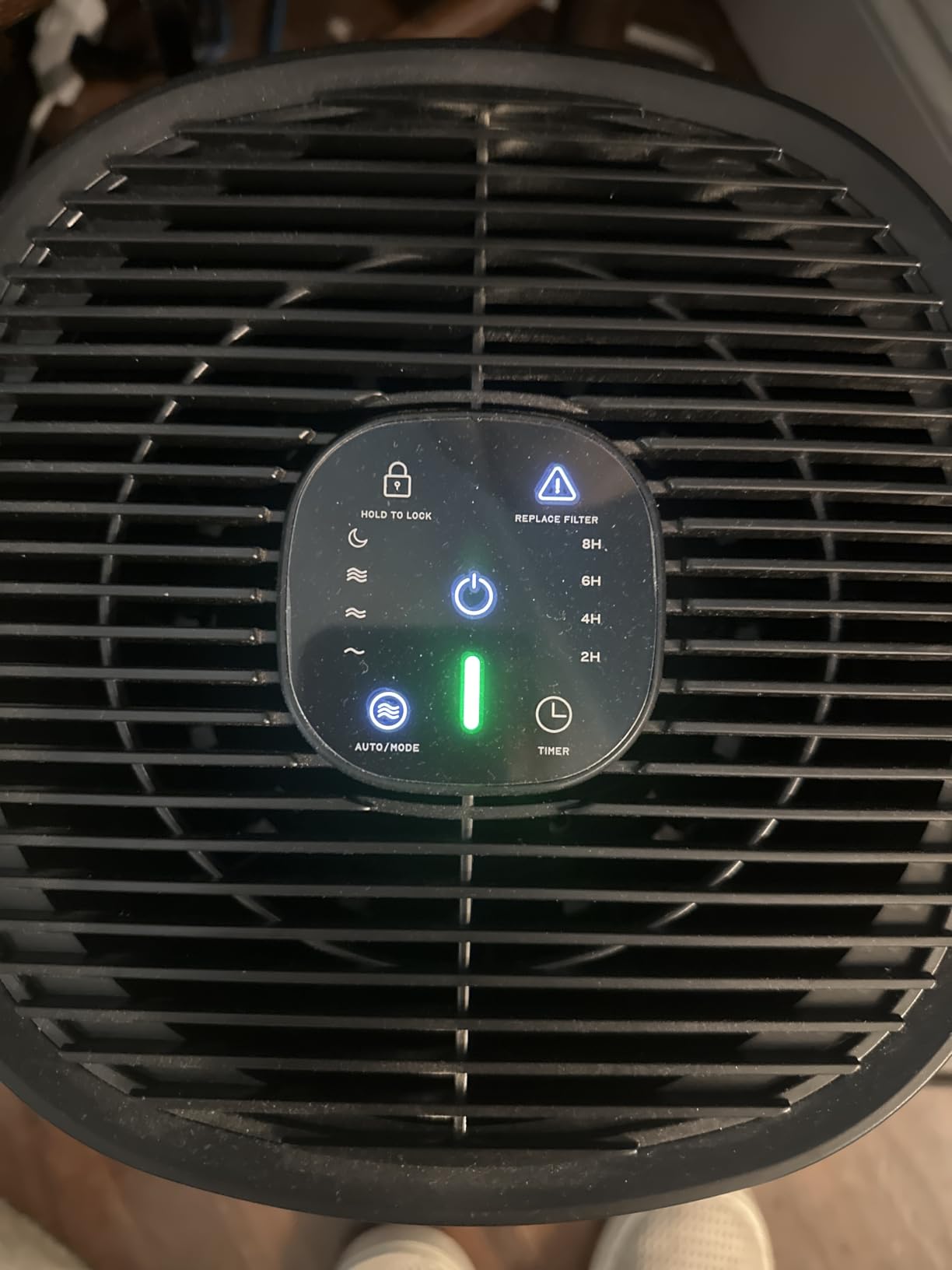
A smart particle sensor adjusts output as air quality changes, and the built-in sleep mode is quiet enough to leave running overnight in a finished basement. That combination, auto sensing plus a genuinely quiet low setting, is what makes it practical for continuous duty rather than occasional use. Owners in large homes and high-traffic rooms report noticeably cleaner air and less dust on surfaces.
There is also a two-pack option, which matters more in a basement than it does upstairs. Zoned lower levels with a partition wall, a stairwell, and a utility area almost always perform better with two machines placed in each zone than with one machine trying to push air around a corner.
Who the PuroAir 400 suits best
This is the right choice for an open-plan lower level where you want one machine rather than two and you want the coverage figure to come from an outside lab. The 2,000 square feet in one hour claim is a strong starting point, and you can scale down from it once you apply the 7-foot ceiling math in the sizing section below.
It also suits anyone who plans to run a machine continuously. The smart sensor removes daily speed management, and the sleep mode makes overnight running unobjectionable.
Where the PuroAir 400 falls short
Carbon odor control is not emphasized, and owners note the carbon stage is not the strength of this design. If your primary problem is a musty smell rather than spore count, one of the carbon-forward units will serve you better.
It also costs more than comparable large-room machines, and the replacement filter cost is not published clearly, which makes ongoing ownership harder to budget. Priced alongside the Winix or Coway, you are paying for the certification and the coverage claim.
5. Blueair Blue Pure 211i Max – Best for Large Open Basements
- Highest verified CADR figures in this roundup
- Zero ozone certified with integrated ionizer
- Very quiet 23 dB on auto and low
- 360 degree intake for whole room circulation
- Three year warranty when registered
- Replacement filters expensive for multi machine homes
- Carbon layer thin for the price
- Loud around 50 dB on maximum
If your basement is genuinely large and open, this is the machine with the most headroom. The Blueair 211i Max is AHAM Verifide at 450 CFM pollen, 452 CFM dust, and 435 CFM tobacco smoke, which puts it far ahead of every other unit here on verified throughput. The listing quotes cleaning 674 square feet in 12.5 minutes and up to 3,235 square feet in one hour.
The HEPASilent system uses electrostatic charging to hold particles on the filter media, capturing down to 0.1 micron. That is well below the 2.5 to 10 micron range where Aspergillus and Penicillium spores typically sit and below the Cladosporium range, so particle capture is not the limiting factor here. Airflow is the limiting factor, and this one has the most of it.
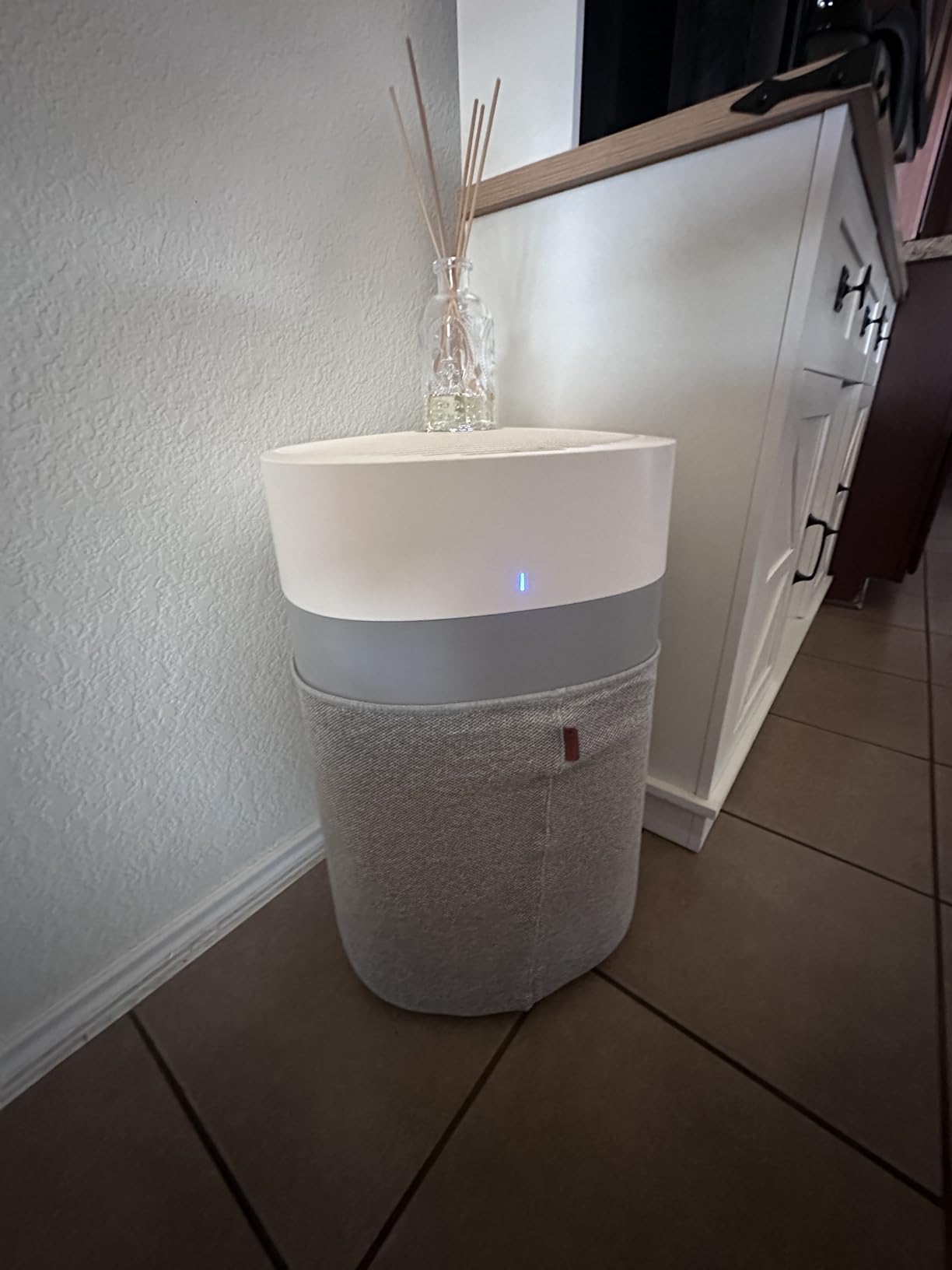
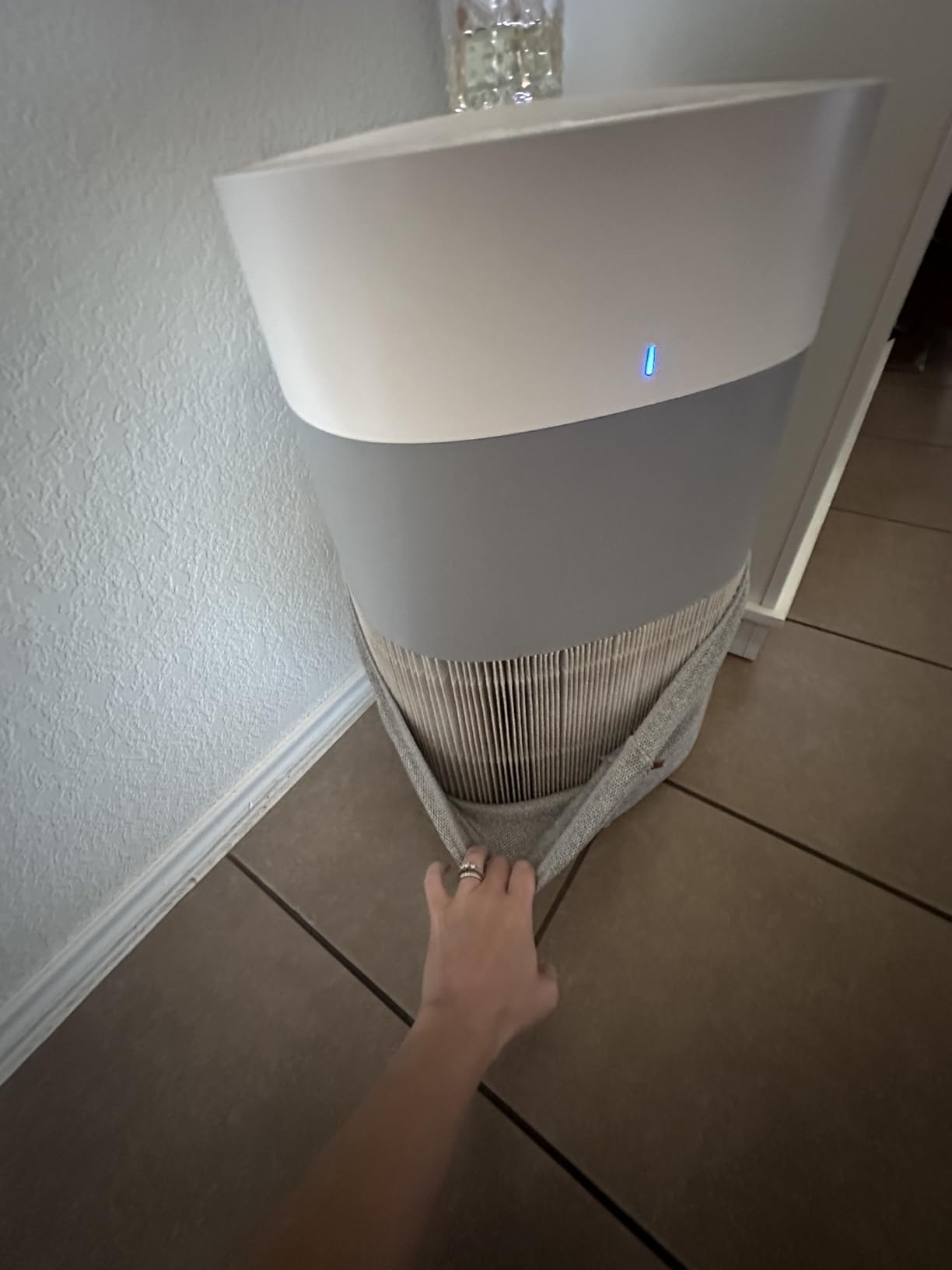
The 360-degree intake means clearance on all sides matters, which is worth knowing before you pick a spot. Built-in sensors auto-adjust the fan, the Blueair app handles monitoring and filter tracking, and it works with Alexa. Owners with basements and open plans report the biggest drop in dust and congestion of any unit they have used, and wildfire-season owners note it clears smoke quickly.
One detail that matters more in a mold context than the spec sheet suggests: it is zero-ozone certified even with the integrated ionizer. For a mold-sensitive or chemical-sensitive household running a machine in a poorly ventilated lower level, that removes a real objection to ionizer-equipped purifiers.
Who the Blueair 211i Max suits best
Choose this for a big open lower level above 700 square feet where a single machine needs to cover a wide footprint, or for a household that already knows it will run two machines and wants the best cost-per-CFM. The 3-year warranty applies when you register the unit, and customer service has replaced defective units outside the return window for some owners.
It is also the pick for a household with a chemical-sensitivity concern that rules out ozone-generating ionizers. Zero-ozone certification plus the ability to run on auto all night is a combination we do not see often at this throughput.
Where the Blueair 211i Max falls short
Filter cost is the dominant complaint, and it compounds badly if you buy two. The carbon layer is described as very thin relative to the price, so on a musty-only problem it does less odor work than the Winix or Coway despite the higher sticker.
On maximum speed it reaches roughly 53 dB, which is fine in an empty rec room and unpleasant beside a bed. At 16 pounds it is heavy and needs real clearance for the intake, and app connectivity can drop occasionally. A few owners also report a developing fan hum after about eighteen months.
6. GermGuardian AC4825E – Budget Pick for Utility Corners and Small Rooms
- Lowest entry cost in this roundup
- Most reviewed unit we compared
- Optional UV-C light adds a second stage
- Simple push dial controls with no app
- Very light at 8.55 pounds
- Only 743 sq ft per hour so basements need two
- Blue UV indicator light is bright
- Settings 2 and 3 too loud for sleeping
The GermGuardian AC4825E is the tower design that has been in circulation since 2011, and the volume of long-term ownership behind it is genuinely unusual. More than sixty thousand reviews sit at an average of 4.6 stars, and owners describe units still working after a decade. For a storage or utility corner that just needs constant quiet filtration, that track record is worth a lot.
The HEPA PURE filter captures 99.97 percent of allergens down to 0.1 micron, an activated carbon layer handles cooking and pet scents, and an optional UV-C light adds a second stage against airborne particles. The unit is CARB certified, ETL certified, and Zero Ozone Verified, which matters in an enclosed basement where a reactive gas output would be a genuine drawback.
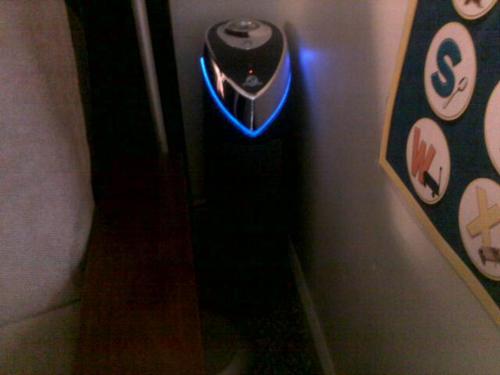
Coverage is 743 square feet per hour, or a 153 square foot bedroom every 12.5 minutes, so think of it as a zone machine rather than a whole-basement solution. Three push-dial speeds include a quiet sleep mode, and there is no app to learn, which makes it a good first machine for anyone who does not want another app on their phone.
Owners with allergy and asthma in the house credit it with real symptom relief, and it neutralizes strong odors such as skunk, cooking fumes, and nail polish remover. At 8.55 pounds and 22 inches tall it is easy to carry between a storage area and a finished room.
Who the GermGuardian AC4825E suits best
This is the machine for a basement utility room, a storage area, or a partitioned corner where you want continuous filtration on a small budget. The low wattage, the dial controls, and the absence of any Wi-Fi setup make it the least fussy option in the roundup.
It is also a sensible second machine. Once you split a large lower level into zones, one of these in the utility corner and one larger unit in the finished space is a common and effective pairing, as we cover in the buying guide.
Where the GermGuardian AC4825E falls short
Coverage is the limitation. At 743 square feet per hour, a 700 square foot basement with a 7-foot ceiling needs about 1,100 CFM to hit four air changes per hour, so you will need more than one machine or a much bigger unit in the main room.
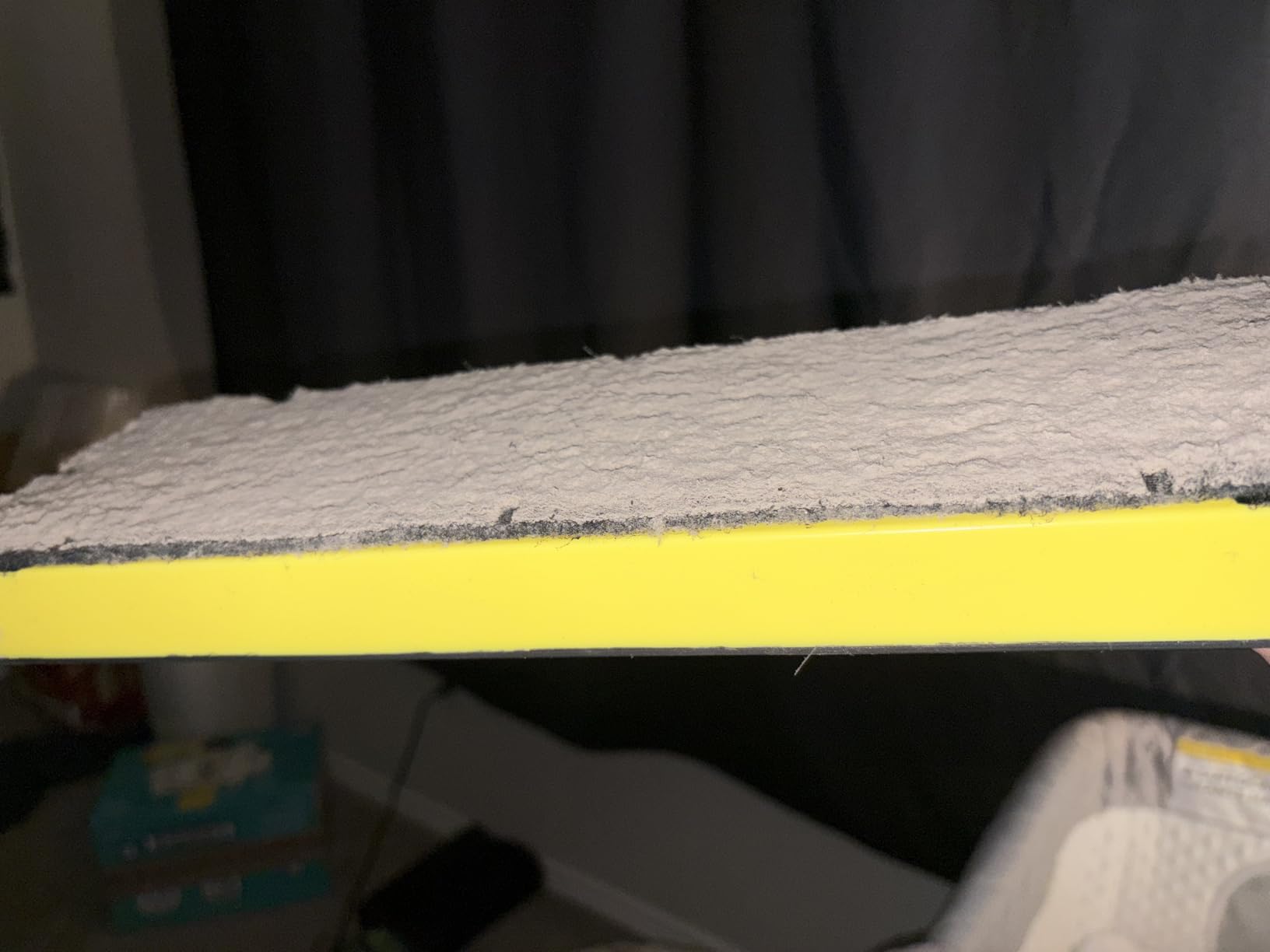
The UV-C indicator light is bright blue and gets reported as obnoxious in a bedroom, and settings 2 and 3 are loud enough that nobody sleeps beside them. The thin pre-filter needs rinsing roughly every two weeks in a dusty room and tears easily. Air discharges from the front mesh, so keep it off the wall, and the UV-C lamp adds heat to the room.
7. AZEUS GL-FS32 – Best for Basements That Want UV-C and Ionizer Control
AZEUS Air Purifier for Wildfire Smoke, UV-C HEPA for Home Large Room, White
- UV-C light and ionizer can both be switched off
- 5 in 1 filtration including carbon stage
- Large throughput for the size
- All indicator lights can be dimmed for sleep
- Occupancy based scheduling modes
- Loud whistling tone on high speed
- Infrared sensor reacts to humidity as well as particles
- Weaker VOC filtration than rivals
The AZEUS GL-FS32 is the only unit here with both a UV-C lamp and an ionizer, and critically both can be toggled off. That matters in a mold discussion, because householders with chemical or mold sensitivity can run the machine on particle filtration alone. The 5-in-1 stack covers a pre-filter, HEPA, activated carbon, UV-C, and ionization.
Filtration is rated at 99.97 percent of airborne particles down to 0.3 micron, which covers Aspergillus and Penicillium spores in their typical 2.5 to 10 micron range without difficulty. Throughput comes from a centrifugal wheel design that refreshes 2,160 square feet in 90 minutes or 1,080 square feet in 45 minutes.
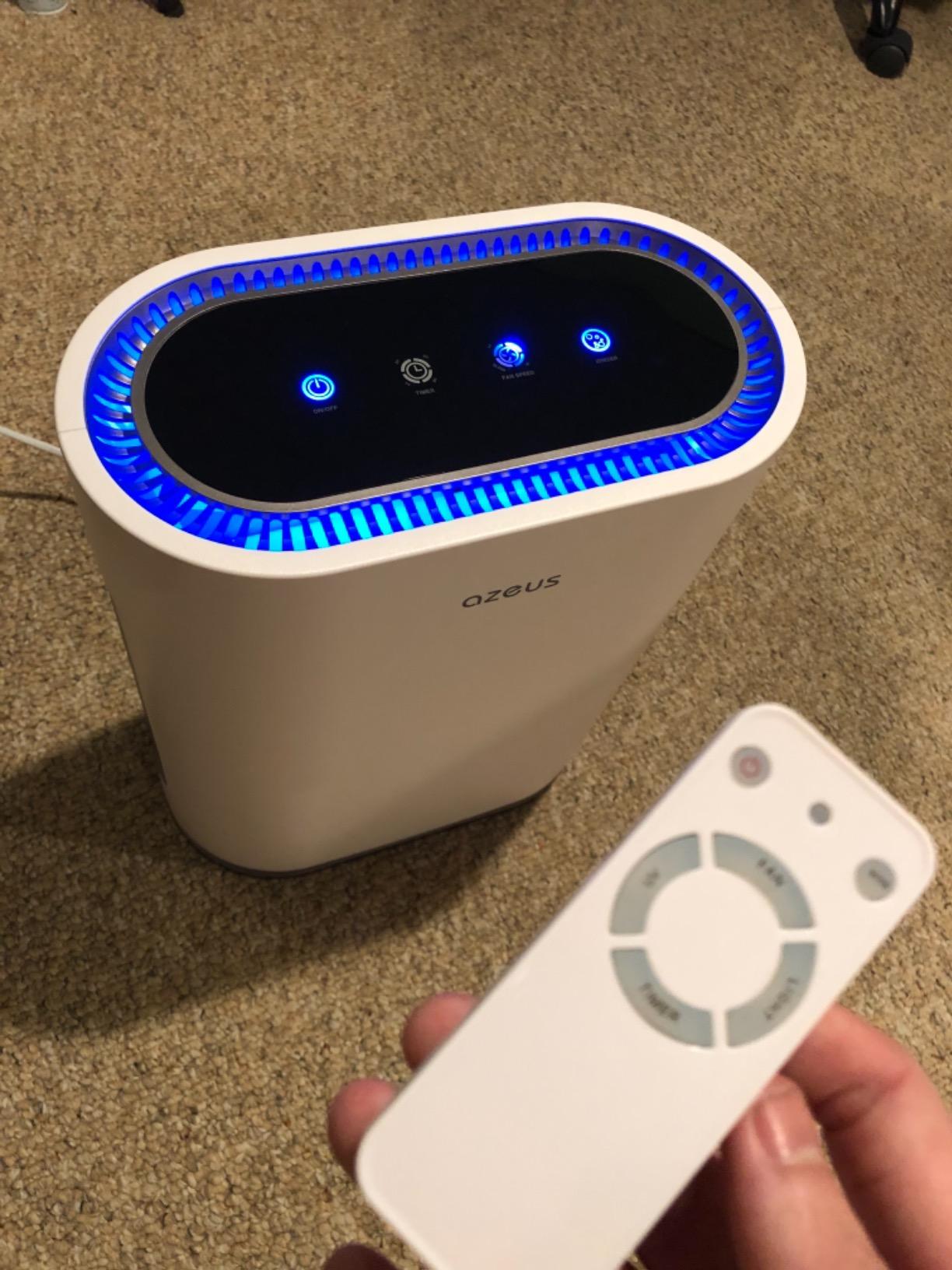
The smart sensor shows a color-coded real-time air quality reading and auto mode adjusts the fan as dust, smoke, or ash levels change. There are six manual speeds on top of auto, plus Weekend and Go To Work scheduling modes that key output to occupancy, which is a sensible pattern for a basement nobody is standing in during the day.
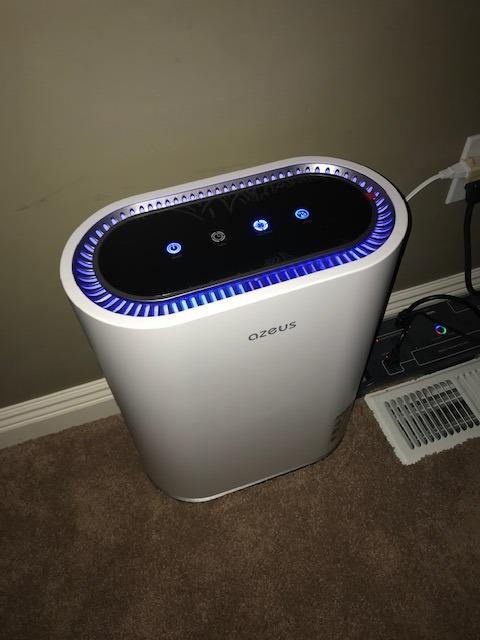
Air discharges from the top of the unit for whole-room circulation, and at 7.72 pounds it is the easiest machine here to carry between a storage area and a finished room. Draw is 60W on high with very low consumption on the lowest setting, and the sleep mode is close to silent.
Who the AZEUS GL-FS32 suits best
This one suits a household that wants UV-C as an added layer during a remediation aftermath or a water-damage dry-out, without giving up the ability to switch it off. Being able to disable the ionizer is the single most important feature on this list for anyone breathing in a confined space.
It also fits an unoccupied basement, because the scheduling modes let you purge the space on a fixed cycle instead of paying for continuous high-speed operation. The dimmable lights mean it can sit in a room where someone sleeps.
Where the AZEUS GL-FS32 falls short
High speed produces a loud whistling tone that is not present at lower settings. The infrared sensor also reacts to humidity, so in a damp basement it can ramp the fan up for moisture alone, which wastes power and adds noise without clearing anything.
VOC filtration is weaker than competing carbon stages, so if musty odor is the dominant complaint, look elsewhere. Replacement filters cost more than average and can be harder to source, and some owners have reported units failing with a red indicator light that will not reset.
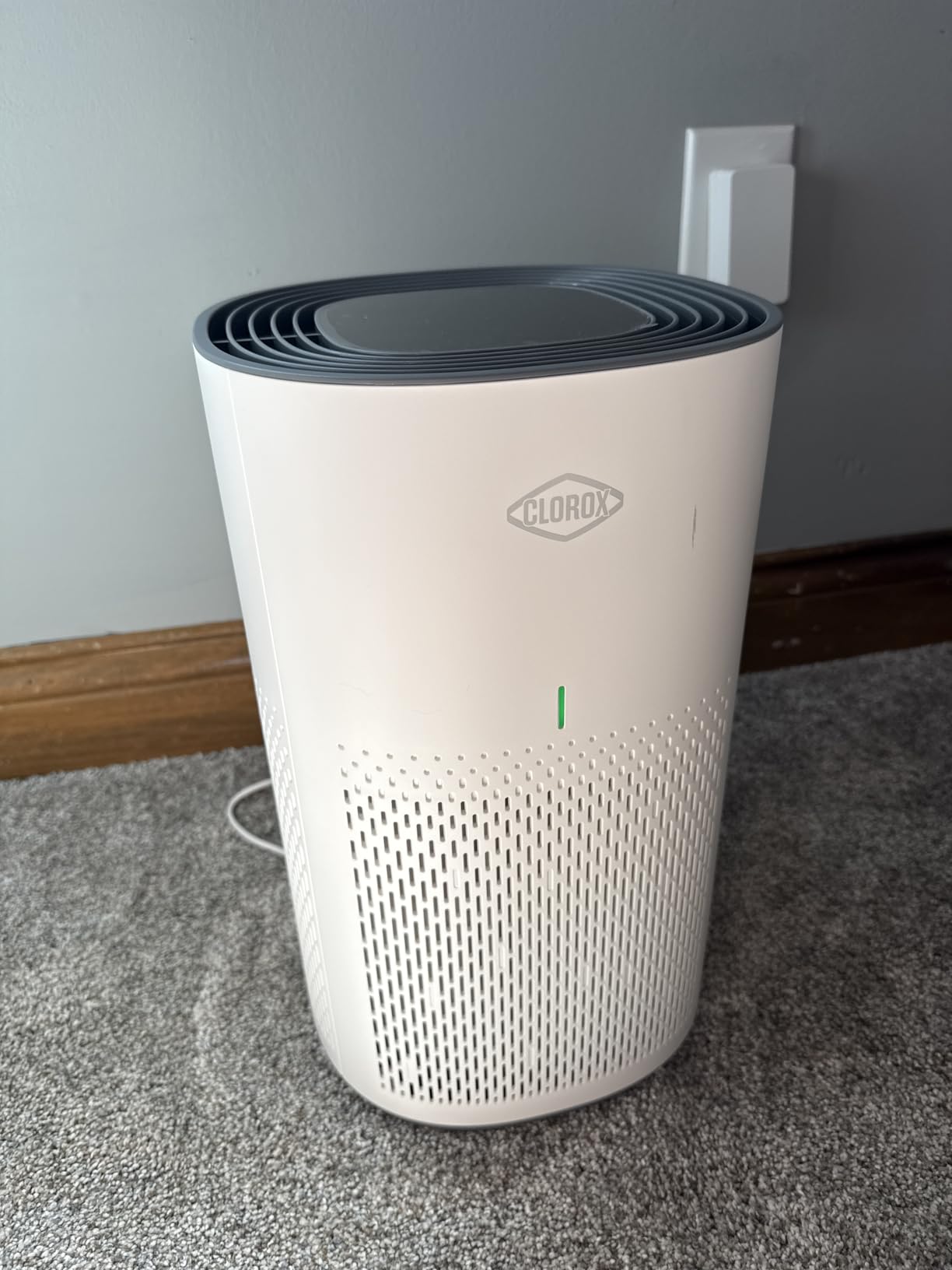
8. Clorox Medium Room – Best for Compact Utility Spaces
Clorox Medium Room Air Purifiers for Bedroom Home, True HEPA Filter
- Strongest published contaminant claim in this roundup
- PM2.5 digital display gives a real number
- Filter included and rated 6 to 12 months
- Compact 8.7 inch square and only 5.8 pounds
- Third party tested and EPA Certified
- Only 1000 sq ft per hour so larger basements need more
- No app or smart home connectivity
- 30 dB is not as quiet as premium models
The Clorox Medium Room is a compact three-stage unit that fits where other machines will not. At an 8.74-inch square footprint and 5.8 pounds, it slides beside a laundry machine or a furnace without dominating the space, which is exactly the constraint in most basement utility areas.
Filtration is a 360-degree outer pre-filter for dust and pet hair, a True HEPA stage, and an active carbon layer for VOCs and odors. The published claim of 99.97 percent of allergens and particulates down to 0.1 micron is joined by 99.9 percent of viruses and bacteria, the strongest contaminant claim in this roundup. Independent testing came from LMS Technologies in 2021, and the unit is EPA Certified.
Coverage is up to five air changes per hour in a 225 square foot room and once per hour in spaces up to 1,000 square feet, so treat it as a mid-size room machine. The air quality sensor drives a PM2.5 digital display with a color-coded indicator from green to maroon, which is more information than a simple ring of lights.
Filter life is tracked to 4,380 operating hours with a red replacement indicator, and the genuine filter is rated for six to twelve months. It runs at 30 dB, has a three-year warranty, and larger 1,500 and 2,200 square foot versions exist in the same family if you need more reach.
Who the Clorox Medium Room suits best
Pick this for a basement utility space, a laundry room, a storage area, or a small finished nook where wall clearance is tight and you want a filter included. The digital PM2.5 readout is a genuine advantage over light-ring indicators when you are trying to judge whether an overnight run helped.
It is also a strong choice for someone who wants third-party test documentation rather than a brand claim alone, since the LMS Technologies testing and EPA certification are both verifiable.
Where the Clorox Medium Room falls short
Coverage caps at 1,000 square feet per hour, so a larger basement needs more than one machine or a bigger model from the same family. At 30 dB it is not as quiet as the premium units here, and there is no UV-C stage on this variant.
There is no app or smart home integration, controls are touch and buttons only, and replacement filters are proprietary Clorox model 12030. If you want scheduling for an unoccupied room, this is not the machine for it.
What an Air Purifier Does and Does Not Do About Mold
Mold spores are particles, and particles are what a HEPA filter is built to catch. The common species found indoors sit well above the 0.3-micron capture threshold that defines a True HEPA filter: Aspergillus and Penicillium typically measure 2.5 to 10 microns, and Cladosporium runs larger still. A properly rated HEPA stage has no trouble holding them on its fiber mat.
The odor is a different problem entirely. Musty basement smell comes from microbial volatile organic compounds, the gases and vapors colonies release as they grow. Those molecules are orders of magnitude smaller than any particulate filter can intercept, which is why the activated carbon stage is not an optional accessory. Without meaningful carbon mass, you can clear spores out of the air and the room will still smell.
Here is the split that matters when you are shopping. Understanding it will save you from expecting a machine to do work it physically cannot do.
- What it does: captures airborne mold spores, hyphal fragments, and dust that carries spores.
- What it does: adsorbs musty MVOC gases through activated carbon, reducing odor.
- What it does: lowers airborne spore counts, which reduces allergy and asthma exposure.
- What it does not do: remove mold growth from drywall, subflooring, or behind baseboards.
- What it does not do: remove moisture or lower relative humidity. Only a dehumidifier does that.
- What it does not do: capture radon gas, which is far smaller than any filter pore.
- What it does not do: substitute for a HEPA vacuum or an air scrubber during remediation.
One more caution from the remediation world: a dehumidifier with a HEPA filter is not the same thing as a HEPA vacuum. It can trap what passes in front of it, but it will not pull mold out of carpet and drywall the way a vacuum rated for remediation does.
How Big an Air Purifier Does a Basement Need?
Most brands quote coverage at a single air change, and most basements have 7-foot ceilings rather than the 8-foot assumption behind those numbers. The calculation is simple. Take your floor area, multiply by ceiling height to get cubic feet, multiply by your target air changes per hour, then divide by 60 to get the required clean air delivery rate in CFM.
For mold we aim for four air changes per hour as a working target, and five if anyone in the house has asthma, significant mold sensitivity, or an active colony nearby. A finished basement bedroom with good remediation history can run comfortably at three.
Worked out for a 7-foot ceiling, here is the clean air delivery rate each floor area needs:
- 400 sq ft at 7 ft ceiling: 187 CFM for 4 air changes, 233 CFM for 5.
- 600 sq ft: 280 CFM for 4 air changes, 350 CFM for 5.
- 800 sq ft: 373 CFM for 4 air changes, 467 CFM for 5.
- 1,000 sq ft: 467 CFM for 4 air changes, 583 CFM for 5.
Run that against the verified numbers in this roundup and the picture gets clear fast. The Blueair 211i Max at 435 CFM smoke handles an 800 square foot basement at four air changes. The Winix 5520 at roughly 392 CFM handles about 700 square feet. The Levoit at 250 CFM smoke covers 430 square feet, and the Clorox Medium Room, without a published CADR but rated for 1,000 square feet per hour, sits in the same neighborhood as the Levoit for a single air change.
Anything past about 700 square feet, or any basement with a partition wall, a stairwell, or a utility alcove, is better served by two smaller machines placed in separate zones than by one oversized unit. Air does not turn corners well, and a single machine in a partitioned basement leaves whole rooms under-treated. Our guide to large-room air purifiers covers the throughput numbers in more depth.
Air Purifier vs Dehumidifier vs Remediation: The Order That Works
No single product on this list addresses the whole problem, and that is not a shortcoming of the machines. The problem has four parts, and they have to be handled in order or the last step undoes the first three.
Step one: fix the moisture source. Find what is feeding the mold. A leaking foundation wall, a cracked egress window, a sweating cold-water line, an unvented shower above, or a sump that runs constantly will all keep a basement above 50% relative humidity. Until that is corrected, colonies regrow no matter how good your filtration is. Community consensus on HVAC forums is consistent on the target: keep the home under 50% relative humidity.
Step two: get relative humidity below 50% and hold it there. A dehumidifier does this and a purifier does not. Many homeowners running both report that the dehumidifier handles the moisture while the air purifier handles the odor, because dehumidifiers alone often leave the musty smell in place. That combination is the lived reality in most finished basements.
Step three: remediate the colony. For anything beyond a small surface spot, that means containment, professional HEPA vacuuming, and an air scrubber or negative air machine during the work. A household purifier is not a substitute for any of it. If you have standing water from a flood or a failed sump pump, dry the space first with air movers and dehumidifiers before anything else.
Step four: run the purifier continuously. This is the step people try first and the one that produces the least result when done alone. Once humidity is under control and remediation is complete, a purifier keeps airborne spore counts low and cuts the residual MVOC odor.
One safety note, because we have seen it recommended in homeowner forums and it is genuinely dangerous: do not use an ozone generator or chemical fogging machine to treat a moldy basement. Ozone is a respiratory irritant that makes mold allergies worse, and fogging coats surfaces without removing the colony underneath.
Why Your Air Purifier Itself Smells Musty
If your machine starts to smell like the room it is trying to fix, the problem is usually in the machine rather than the room. Four causes account for nearly all of it.
1. Saturated activated carbon. Carbon adsorbs MVOCs until it cannot hold any more, then starts releasing what it captured. If the smell appears months in and gets worse over time, replace the carbon filter rather than the purifier.
2. A wet or dirty pre-filter. In a humid basement, moisture plus trapped dust turns the pre-filter into a mold substrate of its own. Rinse it every one to two weeks in a basement with heavy dust.
3. An active ionizer or ozone setting. Some units make a sharp, metallic smell at higher fan speeds that is not mold. Turn the ionizer off and see whether the odor changes.
4. Unheated, still basement air. In winter, cold concrete surfaces and stagnant air give the room a damp odor the machine cannot filter out of the room itself. Run the dehumidifier and the furnace fan rather than expecting carbon to solve it.
Radon in the Basement: What No Air Purifier Can Do
Radon is the one basement pollutant no consumer purifier touches, and the reason is simple physics. Radon-222 is a gas molecule roughly four orders of magnitude smaller than the 0.3-micron particles a HEPA filter is built to catch, so it passes straight through the media. Activated carbon can slow some decay products in the airstream, but it cannot remove the radon itself.
Test first with an inexpensive radon kit or a certified measurement, because you cannot smell radon and you cannot see it. The EPA sets its action level at 4 pCi/L and the World Health Organization guideline is 2.7 pCi/L. The fix for a reading above that is sub-slab depressurization, which is a mitigation system installed by a certified contractor, not an appliance you plug into a wall.
Buying a bigger purifier because of radon is one of the more common and expensive mistakes in this category. Test the air, address the gas at the source, and then let the purifier do what it is actually good at.
How to Choose an Air Purifier for Basement Mold
Start with the filter claim, not the marketing word. True HEPA means a media filter rated to capture 99.97 percent of particles at 0.3 microns. HEPA-type and HEPA-grade are unregulated phrases that can mean almost anything, and H13 refers to a European classification of roughly 99.95 percent at 0.3 microns. For mold spores in the 2.5 to 100 micron range, all three capture adequately, so the filter type is not where you should spend your energy. The airflow number is.
Read CADR, not coverage area. The clean air delivery rate in CFM is the only figure that lets you do math. Smoke CADR is the closest published proxy for mold spore capture because mold spores behave like fine particulate in a filter test. Manufacturer coverage claims are usually calculated at one air change with an 8-foot ceiling, which flatters both numbers. Apply the 7-foot formula above and divide by the number of air changes you actually want.
Weight the carbon stage by mass, not by label. Every unit in this roundup has an activated carbon stage and they are not equivalent. Carbon adsorbs molecules onto its surface area, so a thin fabric sheet labeled carbon does very little. If musty odor is your main complaint, prioritize the units with a substantial carbon bed: the Coway Active Carbon Max2, the Winix Advanced Odor Control filter, or the Blueair washable fabric pre-filter. This is the single highest-value lever for basement odor, and it is also the one buyers skip.
Check the noise floor for a finished space. A basement bedroom needs something at or below about 24 dB on the setting you will actually sleep next to. The quietest options here are the Coway at 19 dB in sleep mode, the Blueair at 23 dB on low, and the Winix at 23.5 dB. The GermGuardian is fine on low and unusable on its middle and high settings.
Read the ionizer and ozone disclosure. If someone in the house has asthma or chemical sensitivity, you want a purifier where the ionizer can be switched off, or one that is zero-ozone certified outright. The AZEUS lets you toggle both its UV-C and ionizer, and the Blueair 211i Max is zero-ozone certified. Owners on homeowner forums who had ozone anxiety in a poorly ventilated basement generally resolved it by moving to a unit they could disable the feature on.
Budget for filters, not just the machine. Basement dust loads a filter faster than upstairs dust, so replacement intervals shorten in the room where you need the machine most. The Levoit and Blueair carry the highest per-filter costs in this group, and the Coway uses a proprietary cartridge. The Winix and Clorox are the cheaper ones to keep running. Filter cost, not purchase cost, is what determines whether a purifier is still worth having in three years.
Place it properly and run it continuously. Give the unit 12 to 18 inches of clearance on the intake sides, keep it out of corners where airflow gets short, and set it on the return-air path so cleaned air circulates back through the room. Avoid putting it directly against an exterior foundation wall, where cold condensation forms. Run it on low or auto continuously rather than only when you notice a smell, and lean hardest on the setting during humid summer months when condensation season peaks. In dry winter months, low or sleep mode is enough once the dehumidifier is holding humidity down.
Avoid the five common buyer mistakes. Buying an oversized unit and putting it in a corner, believing a manufacturer’s one-air-change coverage number, running the purifier day-only in a room that needs overnight clearing, skipping pre-filter cleaning, and pitching any of these machines as a substitute for dehumidification. If your room is still dusty with a purifier running, the cause is almost always placement, an overreaching coverage claim, or a single machine in a zoned basement.
For a bedroom or nursery on the lower level, our bedroom air purifier guide covers the sleep-mode detail further, and the commercial purifier guide covers high-CADR units for workshops and renovation cleanup.
Frequently Asked Questions
Do air purifiers really get rid of mold?
No. A True HEPA air purifier captures airborne mold spores and the microbial volatile organic compounds causing musty odor, which measurably reduces your exposure. It does not remove mold growth from surfaces and it does not lower humidity. You need to fix the moisture source, hold relative humidity below 50%, remediate the colony, then run the purifier.
Can an air purifier replace a dehumidifier for mold control?
No. A purifier filters particles; a dehumidifier removes water from the air. Mold needs moisture control first. Running only a dehumidifier often leaves the musty odor behind, which is the gap a carbon-equipped purifier fills. The right setup for most basements is both, with the dehumidifier holding relative humidity under 50%.
What size air purifier do I need for a basement?
Multiply floor area by your 7-foot ceiling height, multiply by your target air changes per hour, then divide by 60. A 600 square foot basement with a 7-foot ceiling needs about 280 CFM for four air changes per hour. Use the smoke CADR figure when comparing machines, and note that manufacturer coverage claims assume one air change and an 8-foot ceiling.
How many air purifiers does a large basement need?
Above roughly 700 square feet, two smaller machines placed in separate zones beat one oversized unit. Air does not turn corners well, so a partitioned basement with a stairwell or utility alcove leaves entire rooms under-treated with a single machine. Our picks pair a full-size unit in the finished space with a compact unit such as the GermGuardian or Clorox in the utility corner.
Why does my air purifier smell musty?
Four usual causes: saturated activated carbon that has stopped adsorbing and started releasing, a dirty or wet pre-filter turning into its own mold substrate, an active ionizer producing a metallic smell, and stagnant unheated basement air that no filter can correct. Replace the carbon, rinse the pre-filter every one to two weeks, switch the ionizer off, and run your dehumidifier in winter.
Does an air purifier help with radon in a basement?
No. Radon-222 is a gas molecule orders of magnitude smaller than the 0.3-micron particles a HEPA filter catches, so it passes through the media. Carbon can slow some decay products in the airstream but cannot remove the gas. Test first with a radon kit, and if you read above the EPA action level of 4 pCi/L, the fix is sub-slab depressurization installed by a certified contractor.
The Best Air Purifiers for Basement Mold: Final Verdict
The best air purifiers for basement mold come down to which room you are solving. The Winix 5520 is our overall choice, with 392 square feet of AHAM-verified coverage per air change, a carbon stage that genuinely moves musty odor, and a 23.5 dB floor that works beside a bed. The Coway Airmega Mighty2 is the better value buy if you want a numeric PM2.5 readout and a three-year warranty. The Levoit Vital 200S-P wins on verified specifications and rating for a mold-sensitive household, the Blueair 211i Max covers the largest open basements with zero-ozone certification, and the GermGuardian AC4825E covers utility corners for less than anything else here.
Whatever you choose, run it alongside a dehumidifier holding your basement under 50% relative humidity, and give it 12 to 18 inches of clearance. Fix the water first and the machine will actually have a job worth doing.