
Choosing the best UVB bulbs for tortoises is the single most consequential purchase in a reptile setup, and the market is full of parts that look identical from the outside. We spent weeks comparing twelve of the most-reviewed reptile UVB lamps on Amazon, reading every spec sheet and pulling patterns out of more than 12,000 owner reviews, so you can skip the guesswork.
One thing to clear up before we start: UVB light and heat are two different jobs, and beginners constantly try to buy them as one. UVB is ultraviolet-B radiation, and it is what lets a tortoise manufacture vitamin D3 in its skin so it can absorb the calcium in its food. Heat comes from a separate basking lamp, and it is thermostated. Several of the products below do both in a single lamp, and we flag that clearly.
Our methodology: we ranked on four things — the strength and consistency of the stated UVB output, how far that output reaches in a real enclosure, the size of the review base, and the pattern of failures owners actually report. Where manufacturers publish a recommended mounting distance, we quote it rather than guessing. Every product here is what it claims to be, and we note the ones we would not build a setup around.
Last reviewed in October 2026. While you are mapping out your lighting, it also helps to get your general house lighting sorted — our guides to the best smart light bulbs and the best light bulbs for reading cover the human side of the room.
Table of Contents
What Is the Best UVB Light for Tortoises?
A T5 HO fluorescent tube rated at 7 to 12 percent UVB, mounted in a reflector 12 to 18 inches above the substrate, is the best UVB light for tortoises in most indoor setups. It spreads even light across a wide enclosure, costs little to run, and cannot overheat an animal the way a high-wattage all-in-one lamp can.
The five bulb types you will run into, ranked by how well they serve a tortoise:
- T5 HO fluorescent tubes — the current standard. Thinner than T8, roughly twice the UVB output at the same length, and rated for about 12 months of use.
- Mercury vapour bulbs (MVB) — heat, UVA and UVB from one lamp with no separate bulb. Powerful but hot, and they cannot be used with a thermostat.
- T8 fluorescent tubes — the older generation. Still works, cheaper, but lower output and typically a 6 month replacement life.
- Compact fluorescent (CFL) bulbs — cheap, screw-in, and easy to find. Output drops off sharply with distance, so they suit small setups only.
- LED UVB bulbs — the newest category. Very low wattage and slower UV decay, but coverage over a large footprint is still limited.
Two hard rules before anything else. Glass blocks UVB, so a sunny window is not a UVB source. And a bulb that still glows brightly may no longer be producing useful ultraviolet, which is why replacement intervals matter more than appearance.
Top 3 UVB Bulbs for Tortoises in 2026
Our top three cover the realistic range of setups. The Editor’s Choice handles a standard indoor table, the Best Value is the budget-conscious desert option, and the Premium Pick throws usable UVB and heat across a large enclosure from a single lamp.

Zoo Med ReptiSun 10.0 Mini CFL
- 10 percent UVB and 30 percent UVA
- 13 watt self-ballasted compact fluorescent
- UVB transmitting quartz glass
- Mounts vertically or horizontally

LUCKY HERP 10.0 23W CFL
- 10 percent UVB and 30 percent UVA
- 23 watt compact fluorescent
- 6000K with 1265 lumens
- E26 base for 120 volt setups
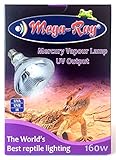
Mega-Ray 160W Mercury Vapor
- 160 watt self-ballasted mercury vapour
- PAR38 reflector shape
- Heat and UVB from one lamp
- 120 volt E26 base
All 12 UVB Bulbs for Tortoises at a Glance
Every lamp in the roundup, with the specs that actually change your setup decision. Match the bulb format to your fixture before you read further, because a T8 tube, a compact fluorescent and a mercury vapour lamp are not interchangeable.
| Product | Specifications | Action |
|---|---|---|
| Zoo Med ReptiSun 10.0 Mini Compact Fluorescent 13W |
|
Check Latest Price |
| LUCKY HERP UVA UVB Reptile Light 10.0 23W |
|
Check Latest Price |
 REPTI ZOO Full Spectrum Mercury Vapour Lamp 100W REPTI ZOO Full Spectrum Mercury Vapour Lamp 100W |
|
Check Latest Price |
 LUCKY HERP 100 Watt Mercury Vapour Heat Lamp Coated LUCKY HERP 100 Watt Mercury Vapour Heat Lamp Coated |
|
Check Latest Price |
| Mega-Ray Mercury Vapour UVB Bulb 160W |
|
Check Latest Price |
 Zoo Med PowerSun UV Bulb 160 Watt Zoo Med PowerSun UV Bulb 160 Watt |
|
Check Latest Price |
 REPTI ZOO T8 UVB Tube 18 Inch 15W REPTI ZOO T8 UVB Tube 18 Inch 15W |
|
Check Latest Price |
 Jugbuy UVB Reptile Light Bulb 10.0 23W Two Pack Jugbuy UVB Reptile Light Bulb 10.0 23W Two Pack |
|
Check Latest Price |
 GeeKoit LED Desert 10.0 UVB 5 Watt GeeKoit LED Desert 10.0 UVB 5 Watt |
|
Check Latest Price |
 Hygger Zoo 26W UVB 10.0 Compact Fluorescent Hygger Zoo 26W UVB 10.0 Compact Fluorescent |
|
Check Latest Price |
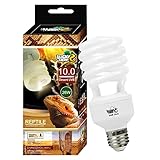 LUCKY HERP Desert UVA UVB 26W Compact Fluorescent LUCKY HERP Desert UVA UVB 26W Compact Fluorescent |
|
Check Latest Price |
 REPTI ZOO Heat Lamp and UVB 10.0 Combo Pack REPTI ZOO Heat Lamp and UVB 10.0 Combo Pack |
|
Check Latest Price |
1. Zoo Med ReptiSun 10.0 Mini Compact Fluorescent Lamp — Best Overall UVB Bulb
- Quartz glass built specifically for UVB penetration
- Works vertically or horizontally so it fits shallow domes and tall hoods
- Suits tortoises and turtles alongside other reptiles
- Self-ballasted so it needs no external ballast
- UVB output drops noticeably after about 6 months
- 13W is lower output than larger CFLs or tube lamps
- A small number of units arrive dead or never illuminate
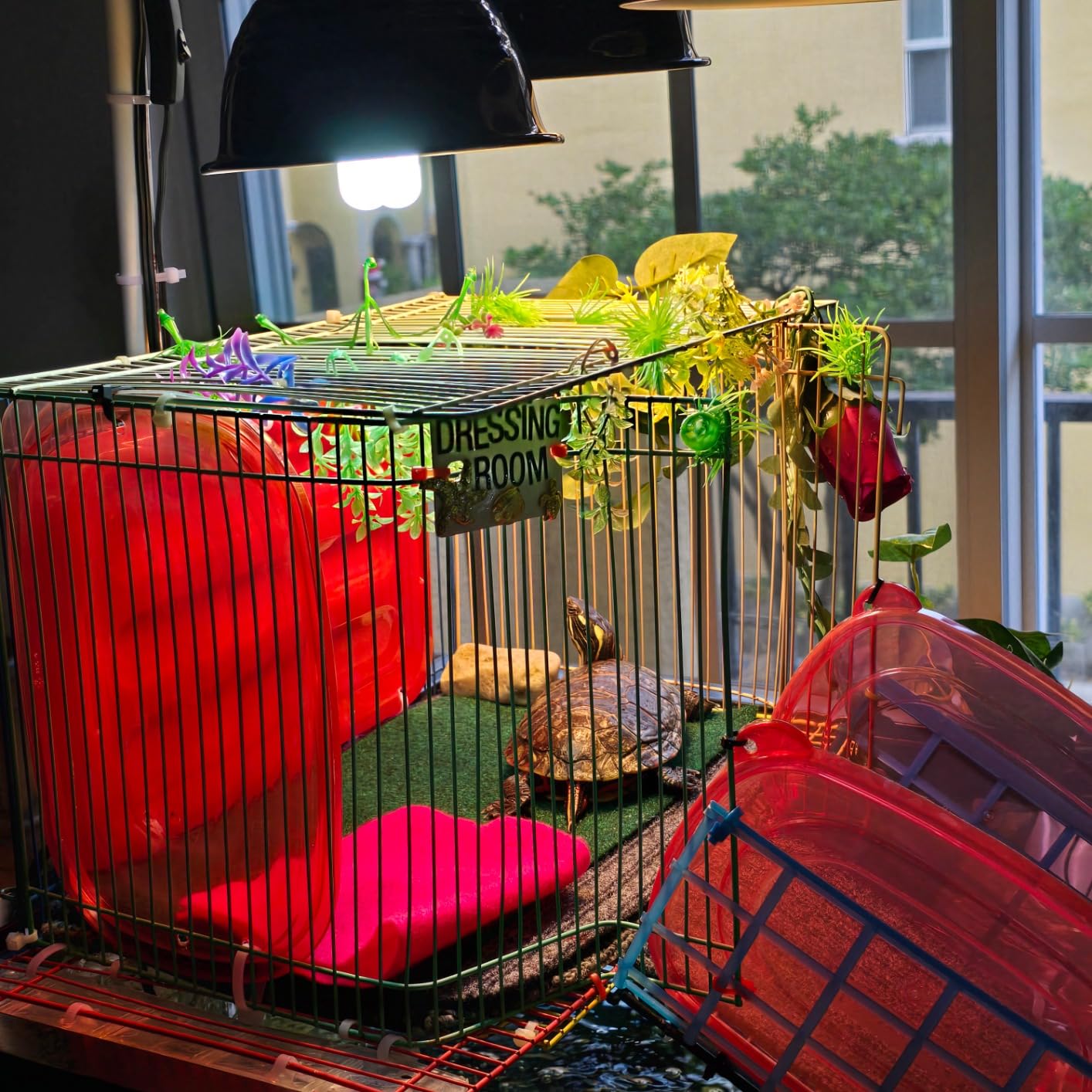
This is the lamp we keep coming back to. At 13 watts it is small enough for a tabletop tortoise house, and the 3,771 reviews at 4.5 stars give it a track record nothing else on this list matches. Owners describe it working for tortoises, turtles and smaller reptiles in the same setup, which tells you how forgiving the output is.
The part that makes it work is the UVB-transmitting quartz glass. Standard glass and standard plastic block most of the ultraviolet, and this lamp is built with glass that passes it. At 6 x 2 x 2 inches it is genuinely compact, and because it can sit either vertically or horizontally you are not forced to redesign your dome to fit it.
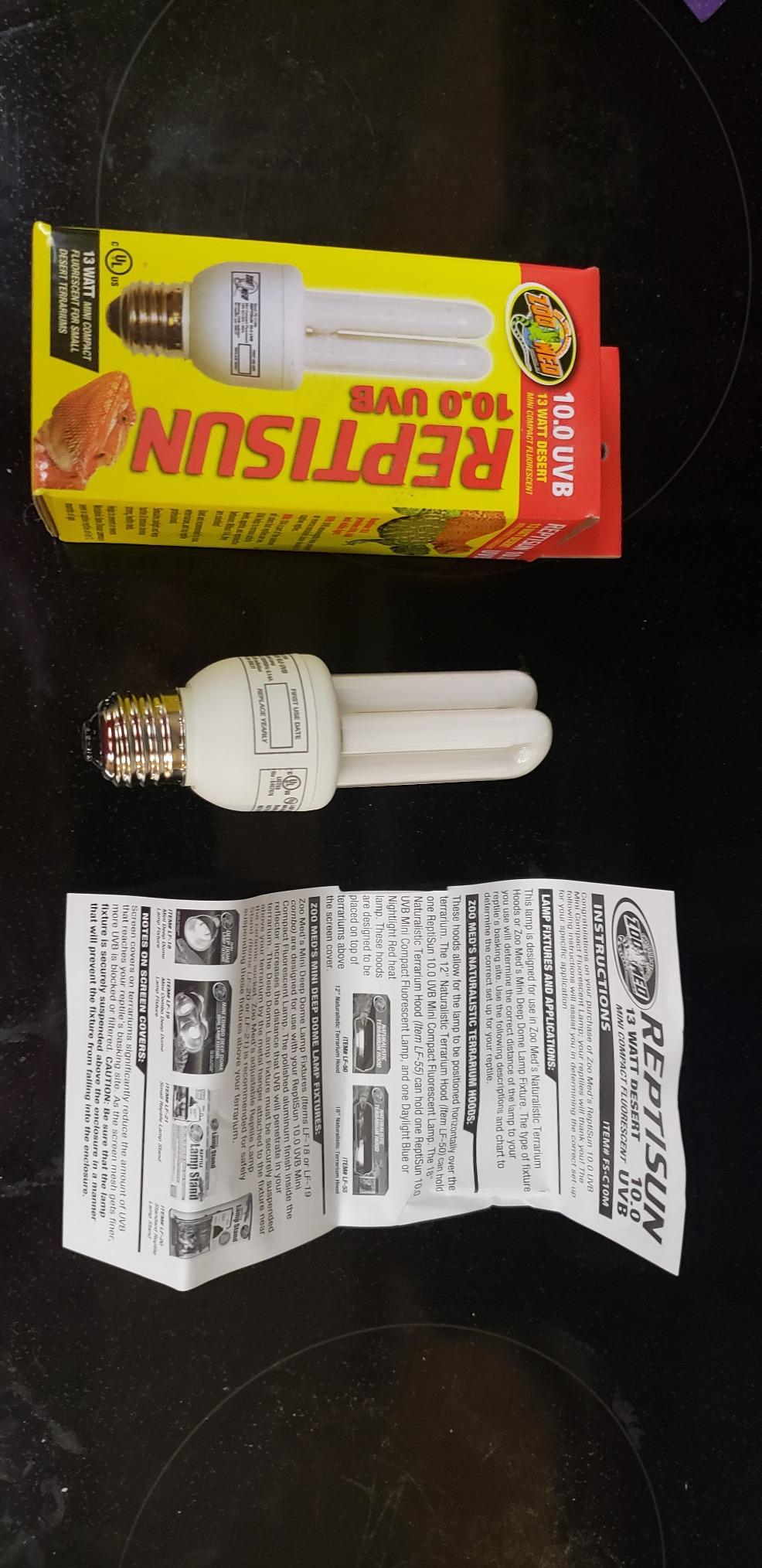
The honest weakness is longevity. A recurring theme in the reviews is that UVB output roughly halves after about six months even though the bulb still lights normally, which means you are budgeting for an annual replacement. Owners also report occasional units that arrived dead or never illuminate, a small minority problem but worth knowing before you buy two.
Is a 13 watt compact fluorescent strong enough for a tortoise?
For a small to medium enclosure, yes. The 10 percent UVB rating is a desert-level output, and at close mounting distance that is more than enough for species like Greek, Hermann’s or a juvenile leopard tortoise. Because it is self-ballasted, you can screw it into a standard E26 socket with no external ballast.
When should you pick something else?
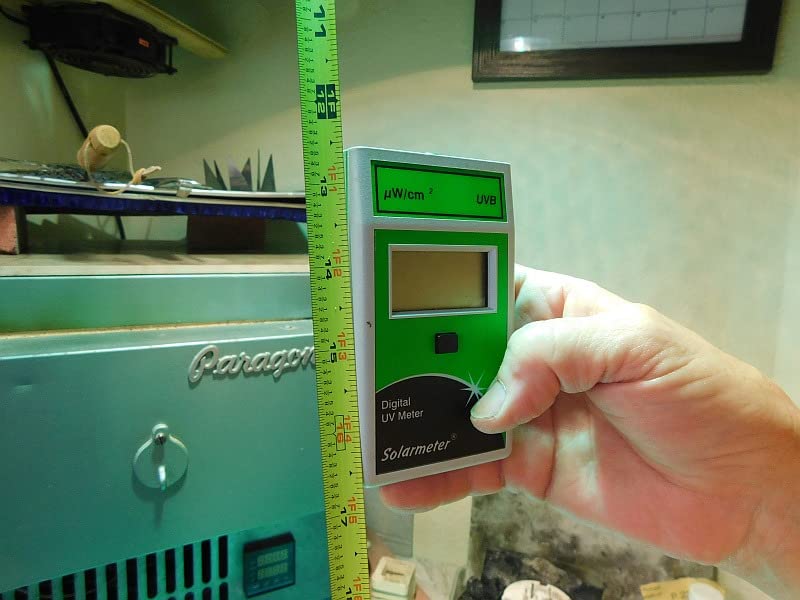
Choose a mercury vapour lamp if your enclosure is tall and you want one fixture doing both jobs, or a T5 HO tube if you are covering a 4 foot or wider space. The other reason to pass is set-and-forget thinking: if you are not going to replace it every six months, the declining output will eventually leave your tortoise without meaningful UVB. A UV meter is the only reliable way to confirm what a lamp delivers, because brightness to your eye says nothing about ultraviolet.
2. LUCKY HERP UVA UVB Reptile Light 10.0 23W — Best Value Desert UVB
- Largest review base among the 23 watt compact fluorescents at 2925 reviews
- Bright output that makes reptile colour look vivid
- Sells in several wattages and UVB strengths so you can standardise
- E26 base works in standard domes
- Some units fail within weeks or arrive partly non-functional
- Occasional flicker at startup
- Designed for 120V so it is not usable on other voltages
If you want a desert-strength bulb without stepping up to a tube fixture, this is the one. At 23 watts it produces a noticeably brighter dome than the 13 watt compact lamps, and reviewers consistently mention how much more vivid their tortoise’s colour looks under it. The 6000 Kelvin output is closer to daylight than the warmer household bulbs most people reach for.
The range matters more than it sounds. The same brand is available in several wattages and UVB strengths, so if you later move to a larger enclosure you can stay with a fixture you already own. It weighs 4.64 ounces and measures 2.4 by 5.7 inches, which is a standard compact fluorescent footprint.
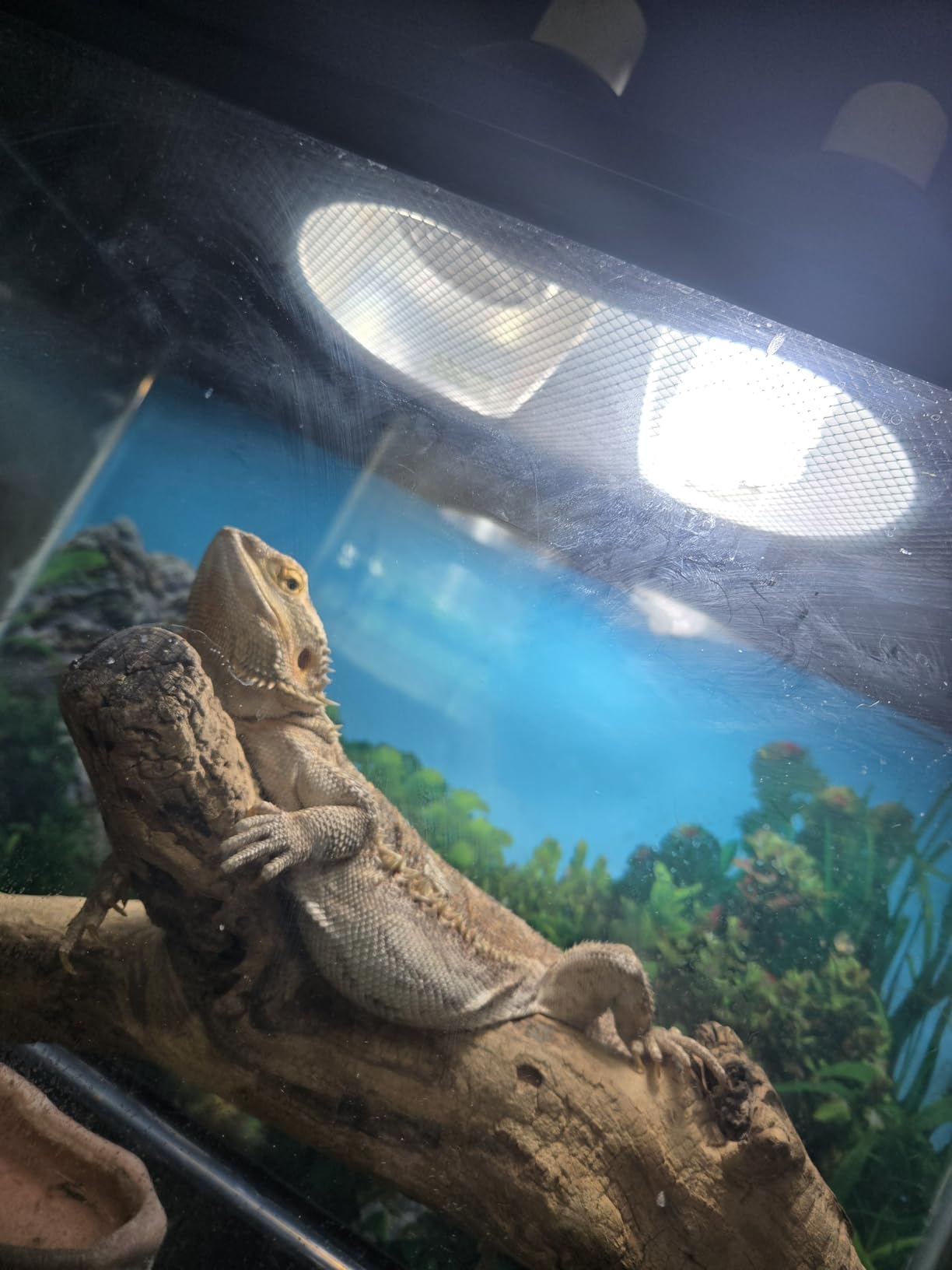
Durability is the weak spot, and it is worth planning around. Owners report occasional early failure, sometimes within weeks, and some flicker at startup. On the positive side, several of those buyers say the manufacturer issued a prompt refund or replacement, so the practical fix is easy if it happens.
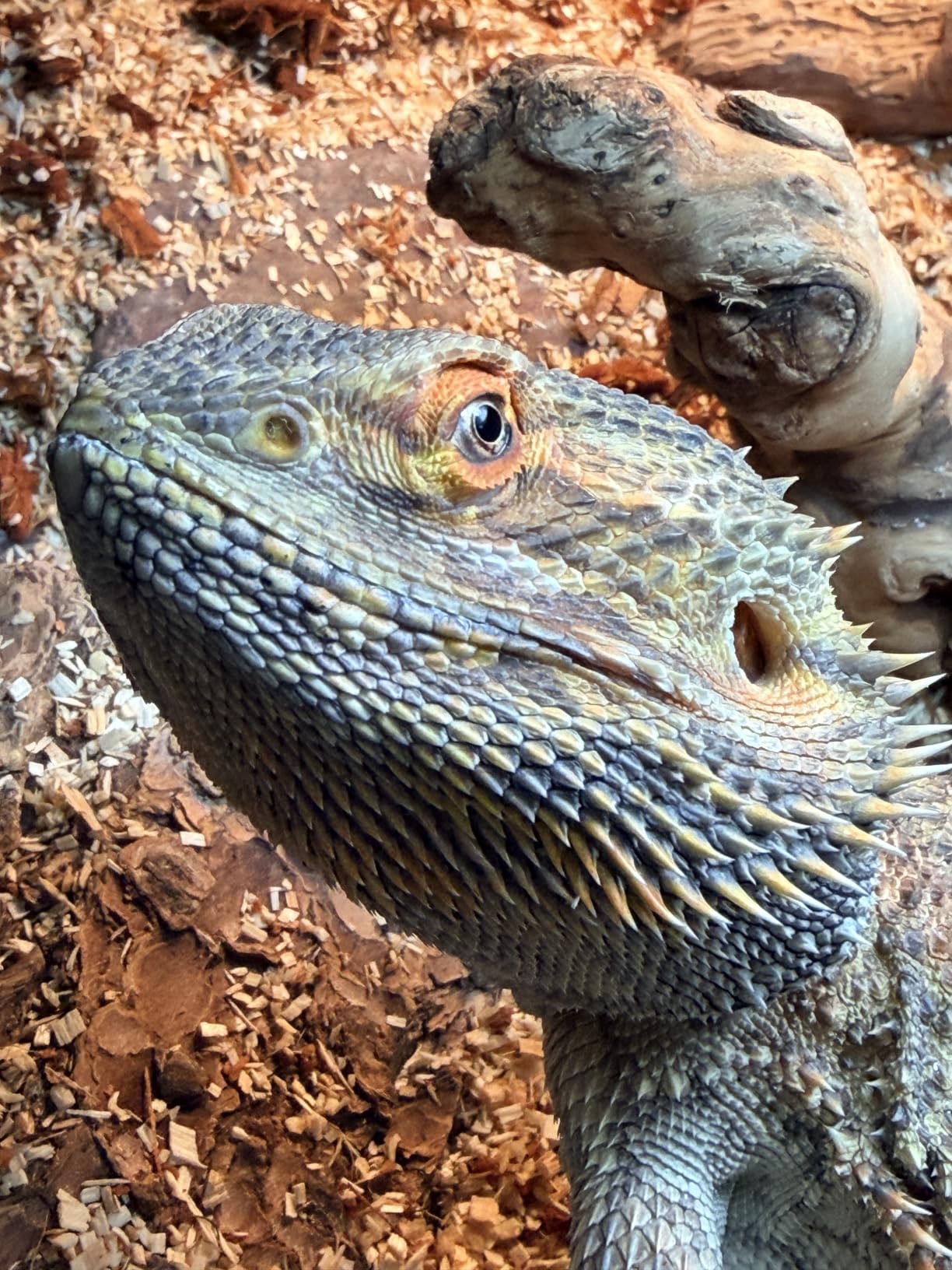
How close should you mount a 23 watt compact fluorescent?
Close, and lower than you might expect. Compact fluorescents lose useful UVB quickly with distance, which is their central limitation compared with a tube. Somewhere between 8 and 12 inches above the substrate is the useful working range. Inside a deep dome the bulb sits far lower than the top of the hood, so measure from the bulb itself rather than the fixture.
What are the drawbacks to plan for?
Two practical limits. Compact fluorescent output is weak across a wide or tall enclosure, so this is a small-setup lamp. And the 120V design means it will not run on other voltages. The bright visible output also makes it tempting to use as a heat source, and it cannot do that job, so pair it with a thermostated basking lamp.
3. REPTI ZOO Full Spectrum Mercury Vapour Lamp 100W — Best Budget All-in-One Lamp
REPTI ZOO Full Spectrum UVA + UVB Sun Lamp Self-Ballasted Vapor Lamp/Bulb/Light for Reptile and Amphibian Use
- Heat and ultraviolet plus visible light from a single lamp
- UV tester cards confirm real UV output
- Strong basking hotspot that tortoises use
- Available at 100W
- 125W and 160W
- Must be used in an open wire-cage fixture rather than enclosed
- Runs very hot so the enclosure needs a cool side
- Some bulbs burn out within weeks
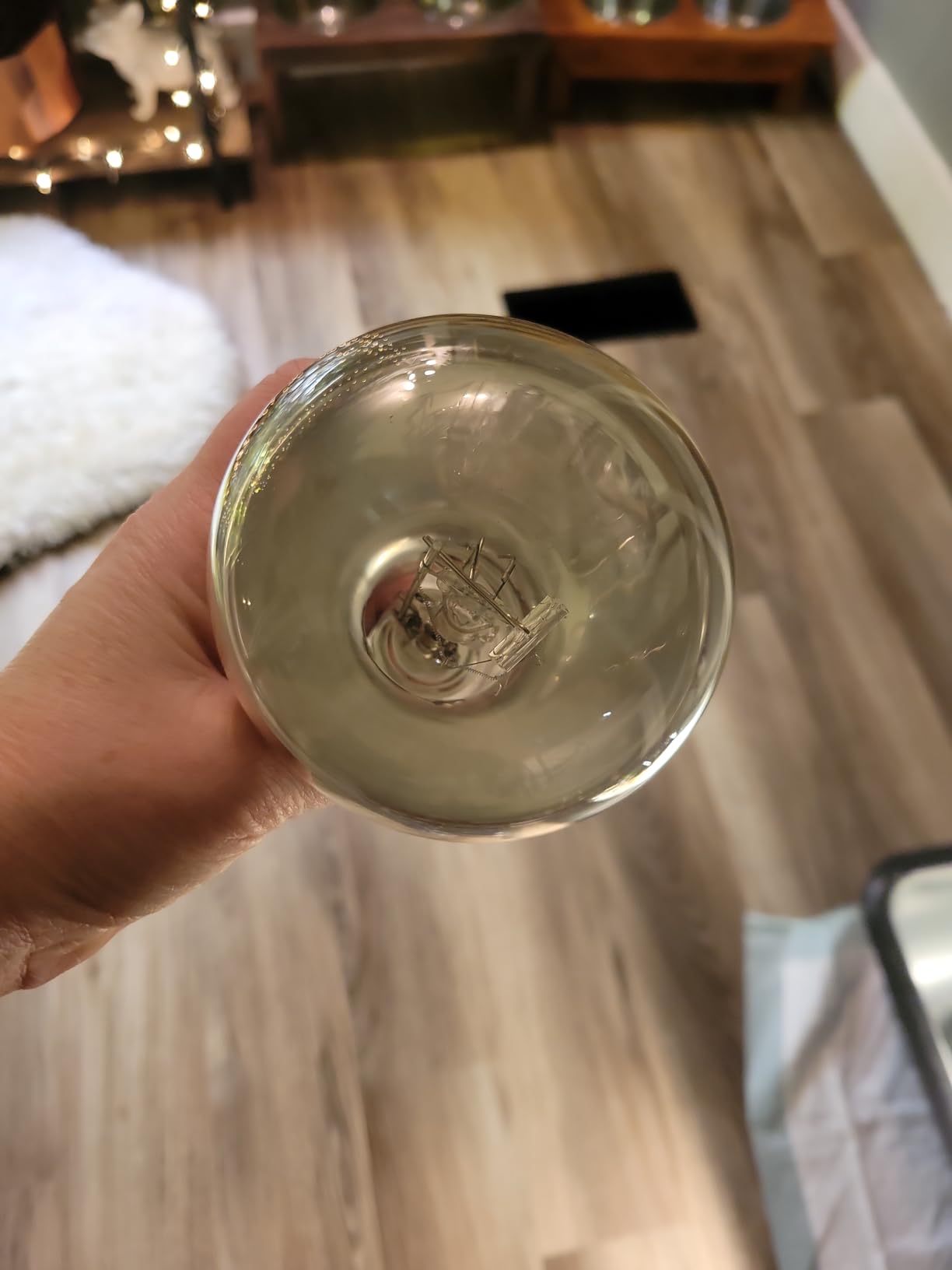
This is the cheapest route to a complete setup, and for a first-time keeper with a simple open-topped table it genuinely works. One lamp gives you basking heat, UVA, UVB and visible light, so you are not juggling a tube fixture and a separate infrared lamp. Owners report tortoises, iguanas, turtles and bearded dragons all using the hotspot properly.
It is also the lamp where safety guidance matters most. Mercury vapour bulbs run extremely hot and must go in an open wire-cage style reflector, not a sealed dome. The integrated thermal protection will cut the lamp out if it overheats or is bumped, and it needs roughly 15 minutes before it will restrike.
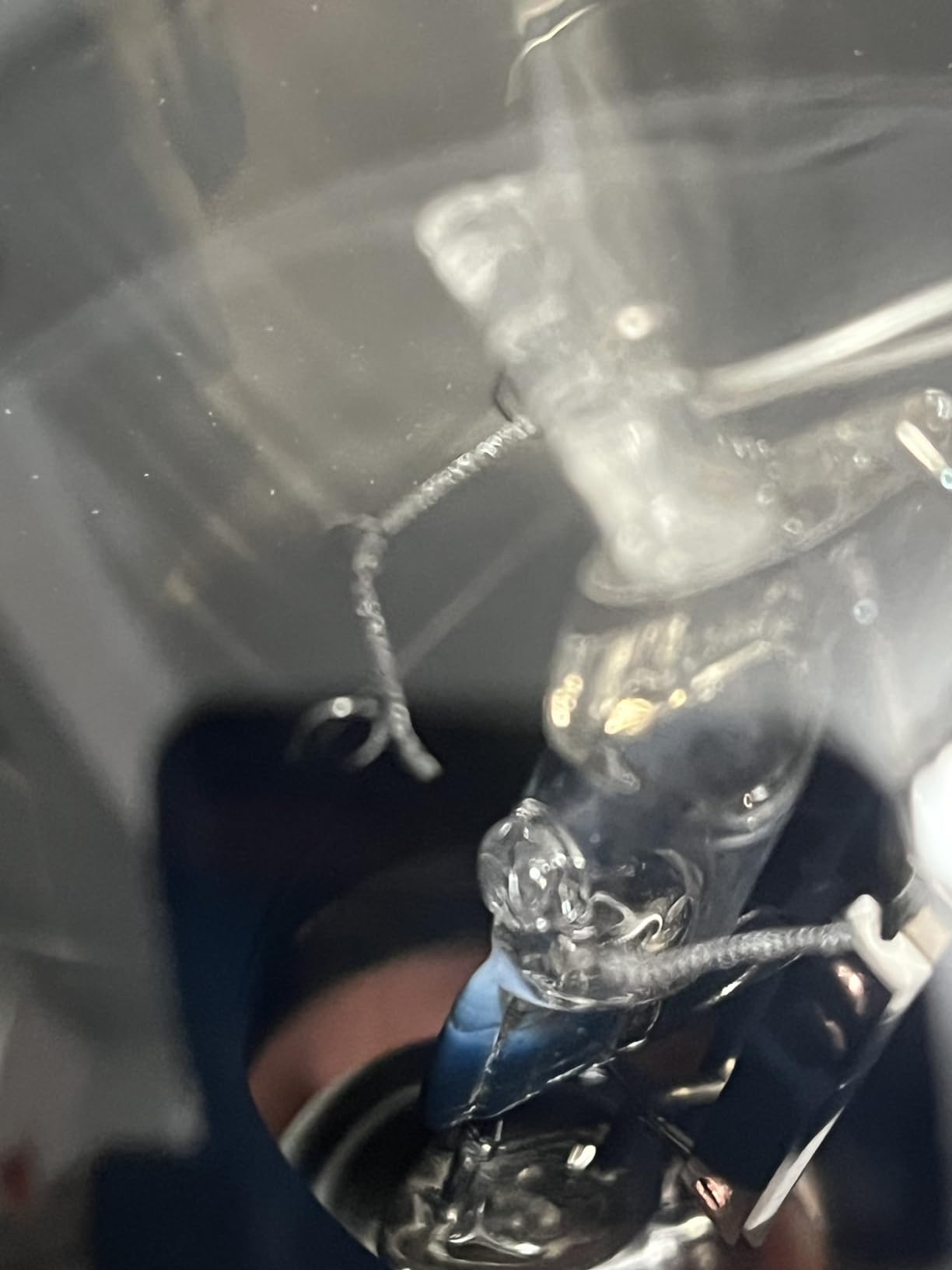
Premature burnout is the leading complaint in the reviews, which is the common pattern with cheaper vapour lamps. Because the lamp cannot be used with a thermostat, you are relying on the bulb’s own output and a thermometer probe placed in the basking zone, which is workable in an open enclosure and a poor choice in a closed one.
Is an all-in-one mercury vapour bulb right for a first setup?
Yes, if your enclosure is open-topped and your species is a desert or Mediterranean one that tolerates a strong basking zone. Having UVB and heat arrive at the same time matches how a tortoise behaves outdoors, where basking and sun exposure happen together. The lamp is also available at 100W, 125W and 160W, so you are not locked into one power level.
What could go wrong with this lamp?
In a closed or top-screened enclosure the lamp cannot be used with a thermostat, so you lose your main safety control and will need a probe thermometer and careful placement. And the heat output means your enclosure must have a genuine cool end, or you will cook your tortoise in the name of giving it more light.
4. LUCKY HERP 100 Watt Mercury Vapour Coated Lamp — Best for Humid Enclosures
- Combines basking heat with UVA and UVB in one lamp
- UVB output of 80 uW per square centimeter is high for the size
- Tortoises and turtles in reviews bask under it daily
- Thicker glass tolerates higher humidity enclosures
- Lifespan often shorter than premium mercury vapour bulbs
- Cuts out if bumped and needs several minutes to restrike
- Bulb is wider than many 5.5 inch dome fixtures allow
Coated bulbs get skipped because they look less impressive than clear glass, and that is a mistake if your enclosure runs humid. The thicker glass on this model is the whole point: it stands up to moisture better than a standard vapour lamp, which matters for tropical setups and for any enclosure where condensation is constant.
Output is strong for a 100 watt lamp, with UVB rated at 80 uW per square centimeter, and the reviews describe tortoises and turtles basking under it daily. A minimum of 12 inches between the bulb and the shell is the working distance, and owners generally treat it as the primary light source rather than a supplement.
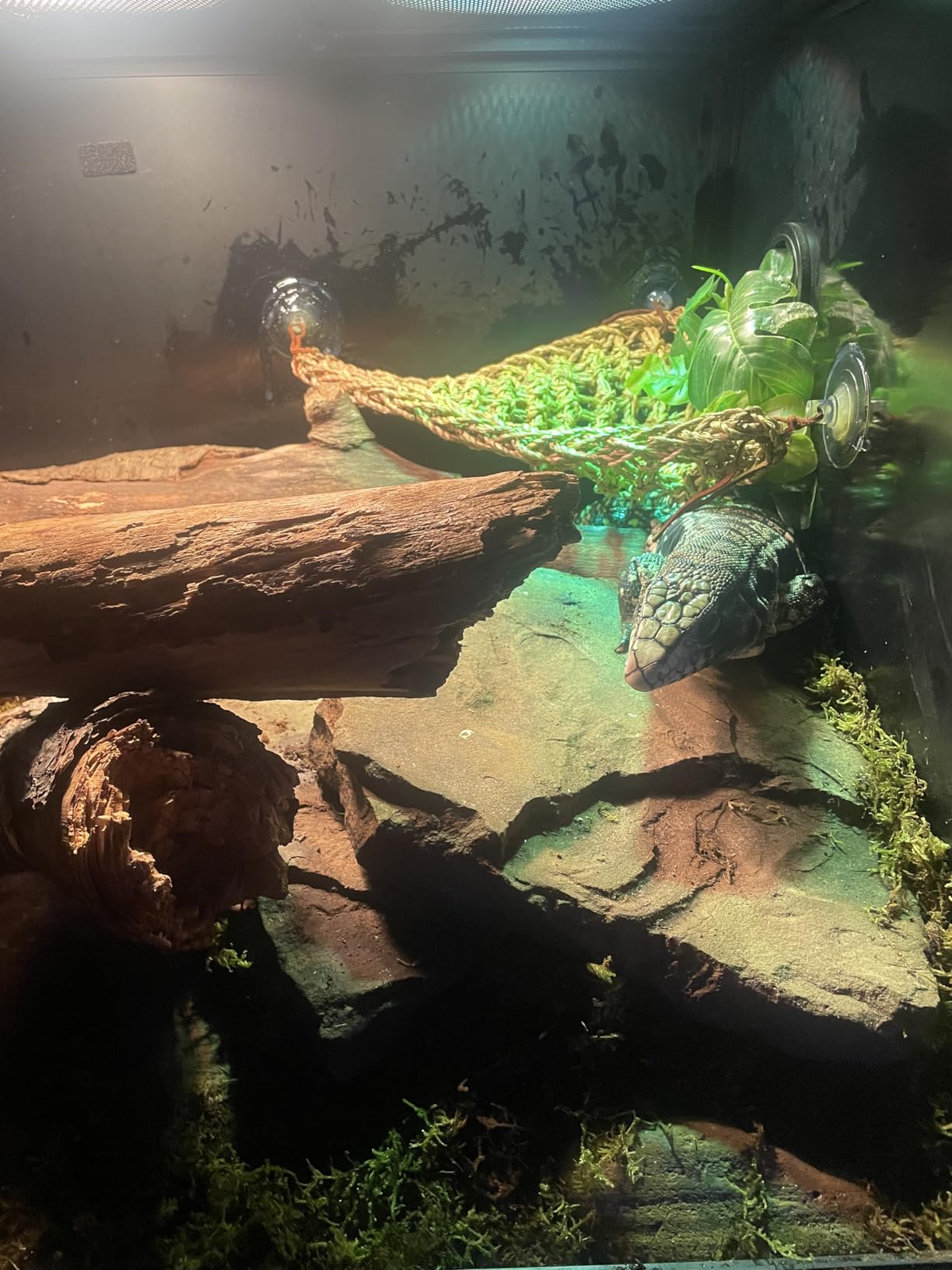
The most repeated advice in the reviews is about handling. Turn the lamp off and let it cool for about 15 minutes before you move it, because the filament fails easily when it is hot, and expect the lamp to switch itself off after a bump rather than treating that as a fault. Several owners also flag that the bulb is wider than many 5.5 inch dome reflectors will take, so measure before you commit.
Does the coating reduce UVB output?
It reduces visible brightness, not meaningfully the ultraviolet. Owners report strong UV output relative to the lamp size, and UV tester cards confirm real emission. What the coating does change is durability in a wet environment, which is a trade most keepers with humid setups consider worth making.
How does this compare with a 100 watt budget vapour lamp?
The differences are the coating, the stated UVB rating and the build quality, and they show up in how the two are described by owners. This one gets comments about reliability and humidity tolerance; the cheaper model gets comments about value and early burnout. Either way it is a 120V E26 lamp and, like all mercury vapour bulbs, is not for use with dimmers or rheostats.
5. Mega-Ray Mercury Vapour UVB Bulb 160W — Best Mercury Vapour for Large Enclosures
Mega-Ray Mercury Vapor UV Light Bulb/Lamp for Reptile and Amphibian Use Tortoise Lizard, UVA UVB, High-Intensity Heat Bulb of UV and Basking – 160 Watts (120V)
- Highest rated option in this group at 4.5 stars
- Very high heat output suited to large enclosures
- Long-term owners report bulbs lasting close to a year
- Owners report better appetite
- colour and activity
- Expensive relative to compact fluorescent options
- Fragile filaments fail if bumped while hot
- One reviewer found UVB insufficient alone and paired it with a tube
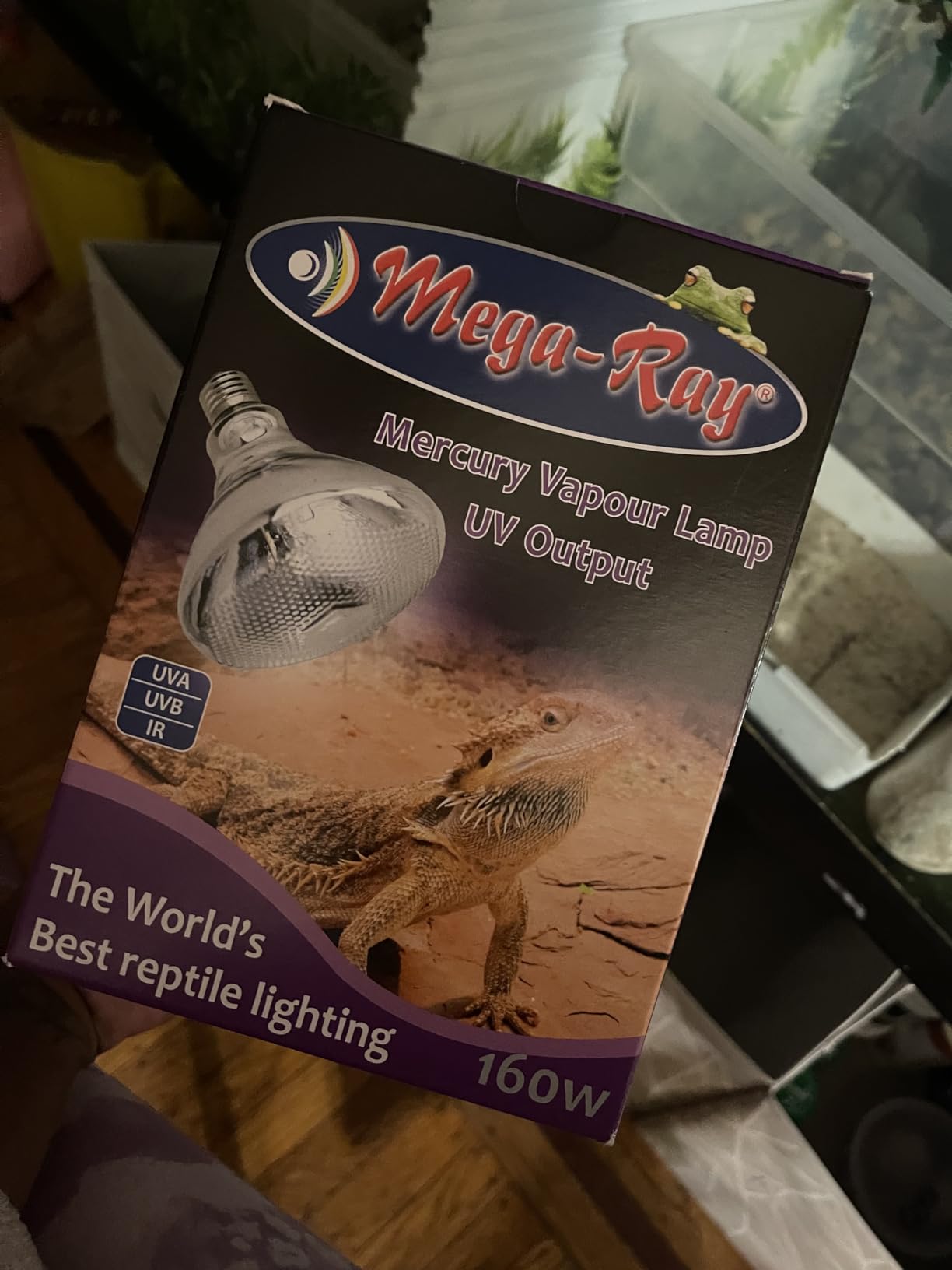
This is the lamp we would choose for a 4 foot wooden enclosure where a tube cannot reach. At 160 watts it throws both heat and UVB a long way, and the 4.5 star rating across 648 reviews is the highest on this list. Long-term owners describe it as the most reliable all-in-one source they have used, with healthy animals to show for it.
The PAR38 reflector shape focuses the output downward into a defined basking zone rather than spreading it thinly, which is what makes it useful in a large space. The reflector also keeps the beam directional, so the rest of the enclosure stays cooler and your tortoise has somewhere to move to.
Two caveats from the reviews. One owner found the UVB output insufficient on its own and paired it with a T5 tube, which is a reasonable move if your animals are juveniles or fast growers. And the filaments are fragile when hot, so the same 15 minute cool-down rule applies before you touch it. The bulb also cuts out if bumped and restrikes after about that long.
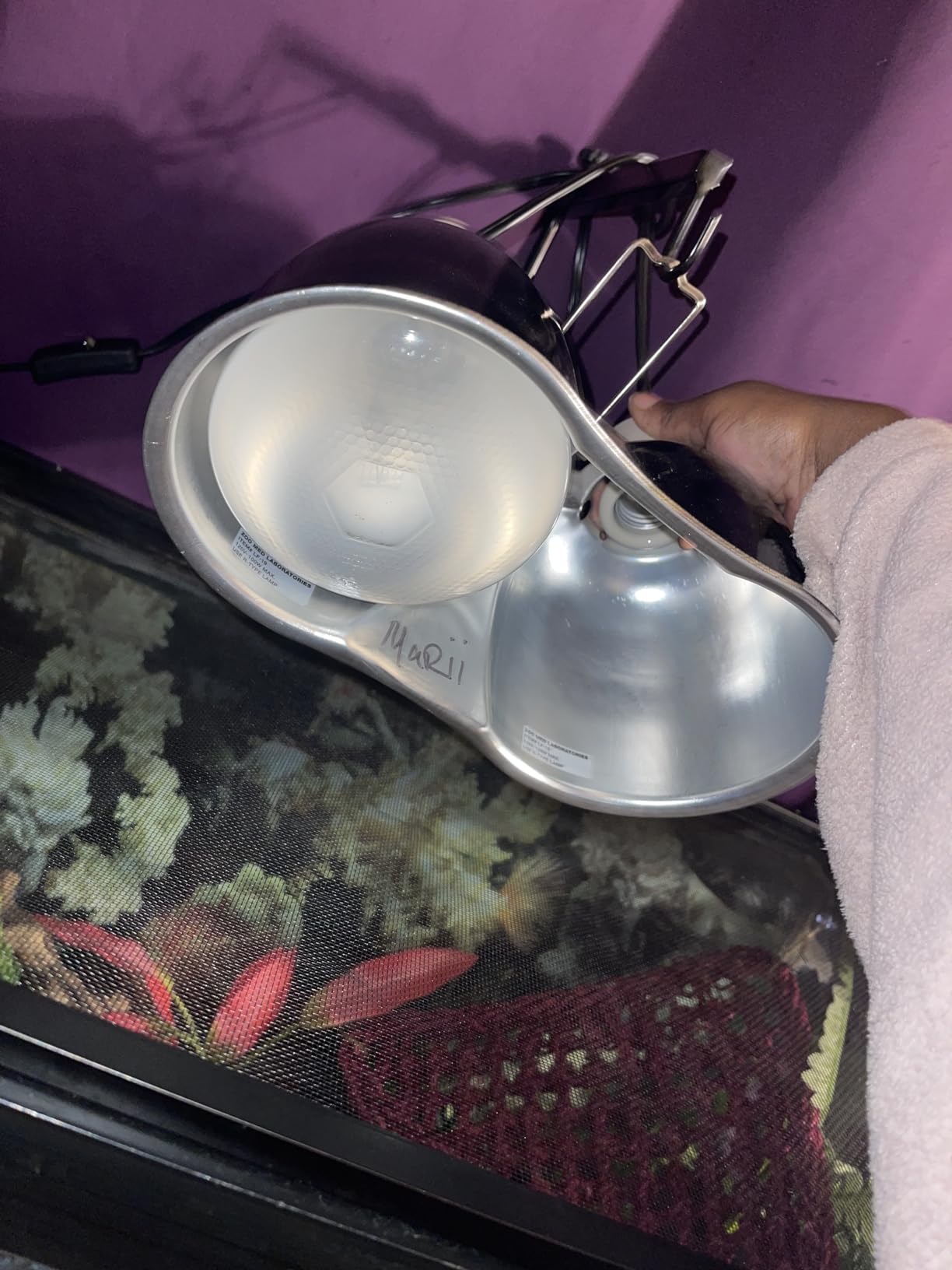
How far above the tortoise should a 160 watt mercury vapour bulb go?
Further than you would guess. The commonly cited minimum for a 160 watt vapour bulb is around 18 inches, rising to about 24 inches for a 275 watt unit. Mount it at that height in an open wire-cage reflector and check the basking temperature with a probe thermometer rather than trusting the wattage. That distance is what keeps the animal safe, and keepers on tortoise forums repeatedly report shell burns from mounting vapour bulbs too close.
Is this overkill for a small enclosure?
Probably. At 160 watts with a directional reflector, a small enclosure will heat up too fast and you will spend the day managing temperatures. For a tabletop setup, a compact fluorescent plus a thermostated basking lamp gives you far more control and costs less to run. This lamp earns its place when your enclosure is large enough that a tube’s output fades before it reaches the substrate.
6. Zoo Med PowerSun UV Bulb 160 Watt — Best Reach for Very Large Enclosures
- Projects UVB several feet
- making it suitable for large terrariums
- Backed by a one year warranty the company honours
- Long track record with tortoise keepers
- Supports good shell and bone health
- Most expensive bulb in this roundup
- Produces substantial heat so a cool retreat area is required
- UVB strength decays and needs replacing about every 6 months
The PowerSun is the reach champion, and owners of large enclosures are explicit about why. A tube mounted high in a big room delivers useful UVB over a small area; this lamp projects UVB several feet from the surface, which is the only reason it works at that mounting height. If your enclosure is 4 feet or wider, that reach is the deciding factor.
It is also the most reassuring bulb to buy in this category. The one year manufacturer warranty is repeatedly described as easy and no-cost to claim, and the nickel-plated threads resist corrosion in humid enclosures better than cheaper lamps. It fits a standard ceramic socket with no ballast, so there is no extra hardware to buy.
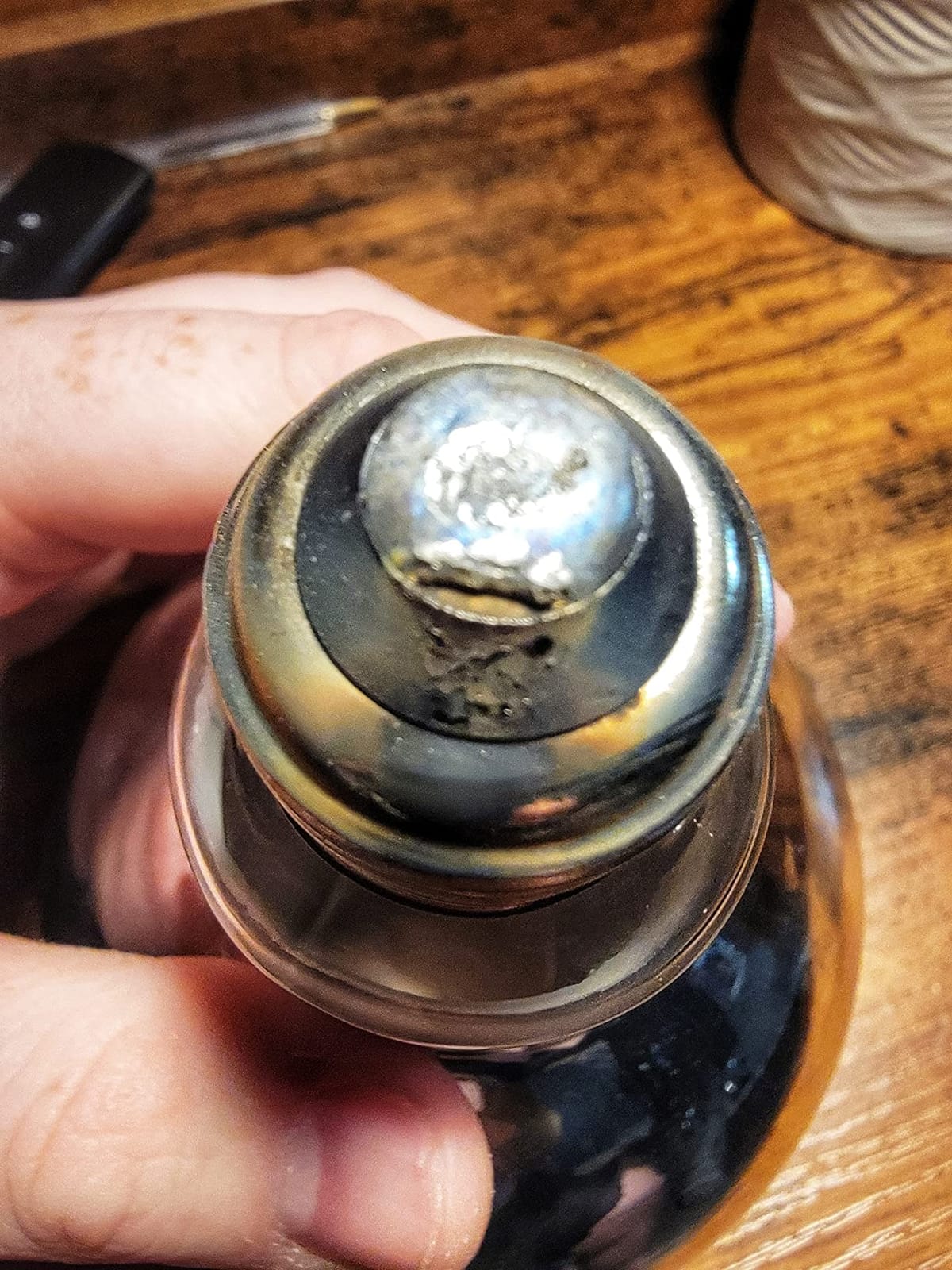
The recurring message in the reviews is that a lit bulb is not necessarily still producing adequate UVB. That is why scheduled replacement matters here more than almost anywhere else, and why several owners use a meter rather than trusting the visible output. Budget for replacing it roughly every six months even when it looks perfect.
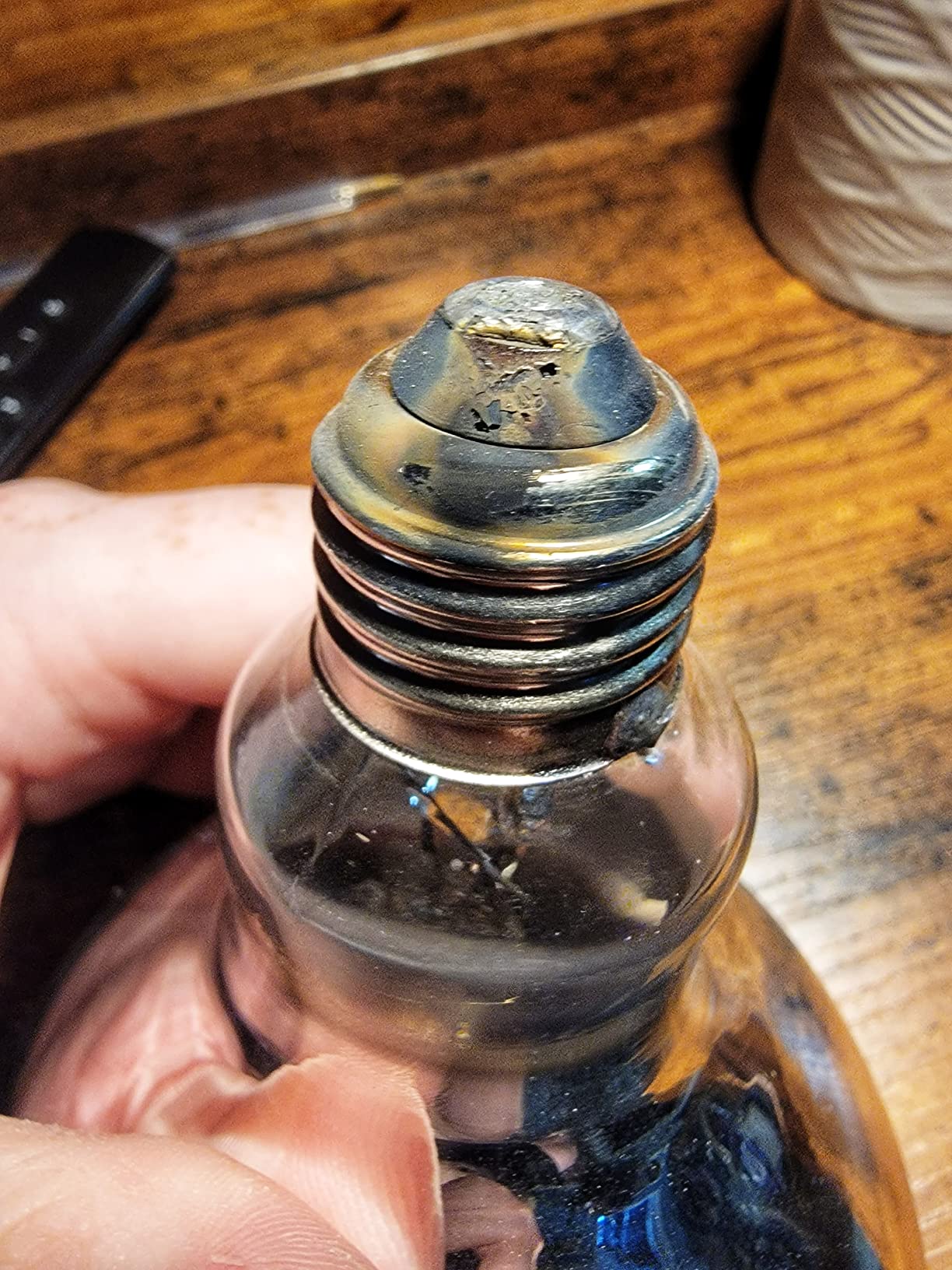
Is the PowerSun better than a T5 HO tube for a big enclosure?
For a very large, very tall enclosure, yes, because nothing else in this roundup throws UVB that far. For a normal 3 to 4 foot wooden enclosure with a hood mounted inside the top, a tube gives you more even coverage across the width and costs far less to replace. Reach is this lamp’s advantage, not evenness. What you trade away is the ability to use a thermostat.
What should I watch for after installing it?
Give it 24 to 48 hours of burn-in before judging the output, and check the basking temperature daily for the first week. At this power level, keep a genuine cool retreat area at the opposite end of the enclosure. A tortoise that cannot escape the basking zone when it wants to will overheat, regardless of how good the ultraviolet is.
7. REPTI ZOO T8 UVB Tube 18 Inch 15W — Best Full-Length Tube
REPTI ZOO T8 Reptile Sun UVB Terrarium Desert Reptile 18 inch UVB Bulb Fluorescent Lamp Tube T8 15 Watt Habitat Lighting
- Even lighting across the full 18 inch tube
- Fits standard T8 hoods including Arcadia-style fixtures
- Inexpensive and easy to schedule six month replacement
- Owners report long service life in some fixtures
- Lowest average rating in this group at 4.1 stars
- Shorter UVB reach than mercury vapour lamps
- Recent buyers report dim flickering bulbs that failed early
If you already own an 18 inch T8 hood, this tube will drop straight in and save you replacing the fixture. T8 is the older generation of reptile tube, thicker and lower output than the current T5 HO standard, but for a straightforward desert setup it still works, and owners describe even light along the whole length rather than a hotspot.
The 15 watt tube is designed for desert species and delivers UVB and UVA in a fluorescent form that produces no meaningful heat. That is a genuine advantage in a small enclosure where a heat-producing lamp would overwhelm the space.
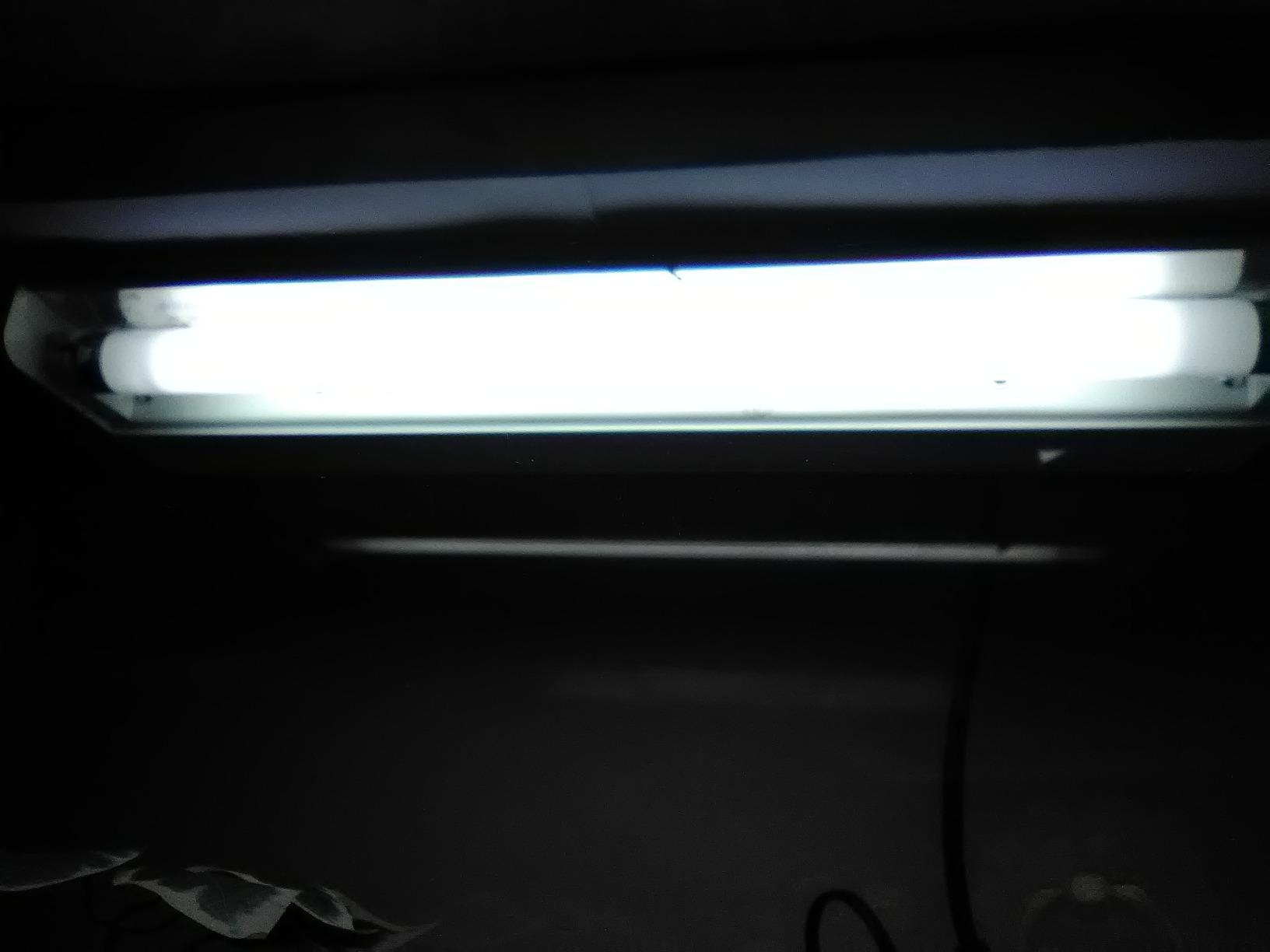
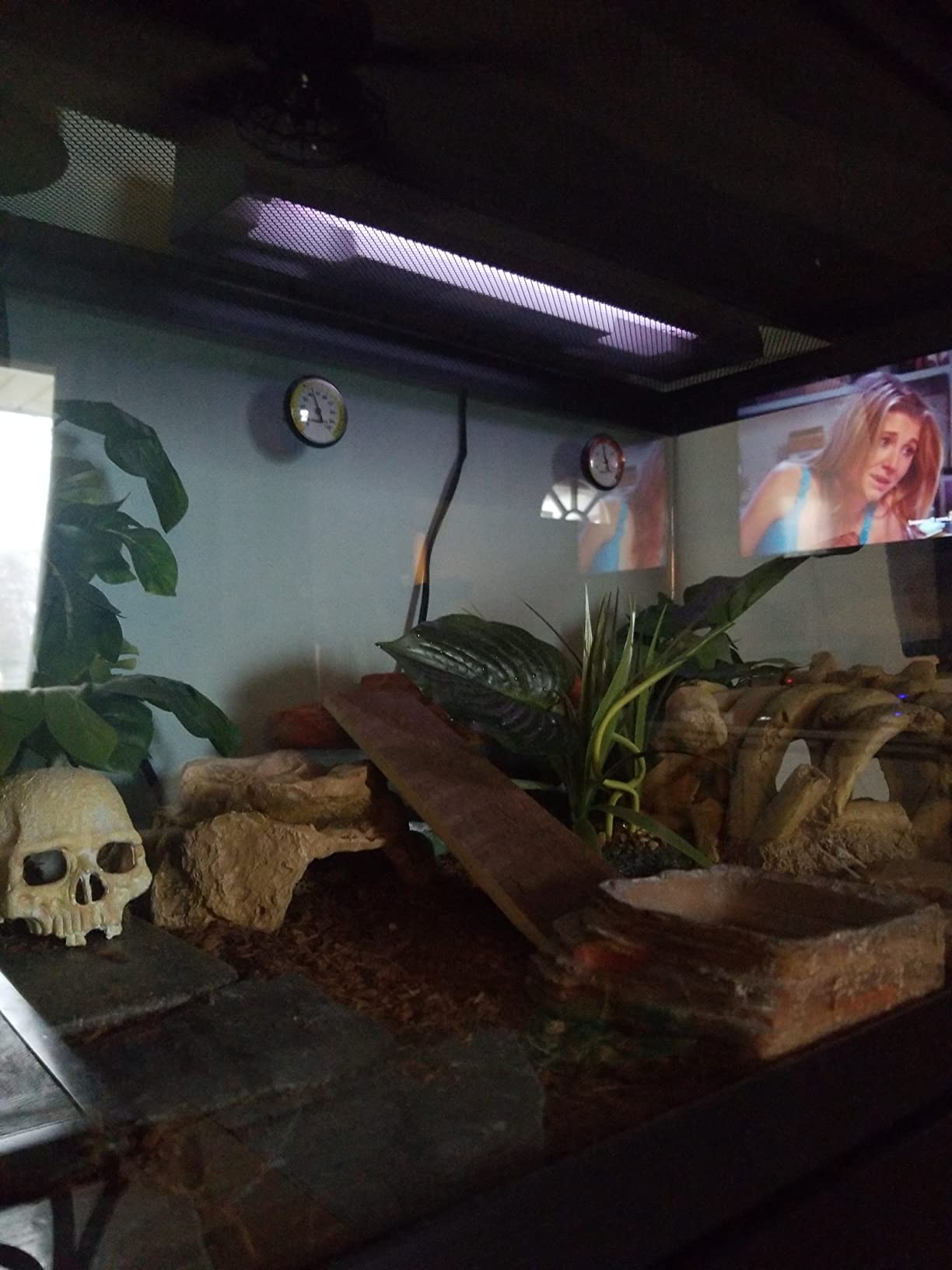
The rating here is the lowest on this list at 4.1, and the reason is a pattern of recent quality complaints. Several buyers report dim, flickering bulbs that failed within days or months, which is a trend worth weighing. A UV meter is the reliable way to check output on a tube like this, because a dim-looking tube can still be underperforming.
Should you still buy a T8 tube, or move to T5 HO?
Buy a T8 if you already have the fixture and your enclosure is modest in size. Move to T5 HO if you are starting fresh or your enclosure is more than about 3 feet long, because T5 HO tubes are thinner, produce roughly twice the UVB at the same length, and last about 12 months against roughly 6 for T8. One compatibility note worth repeating: T5 HO tubes do not physically fit T8 fixtures.
How should I mount a T8 tube?
Low and with a reflector. Mount it in a hood positioned roughly 6 to 12 inches above the substrate, angled so the light spreads along the full length of the enclosure. Pair it with a separate thermostated basking lamp positioned away from the tube, and set the two on the same photoperiod. The tube handles ultraviolet, the lamp handles heat, and neither has to compromise.
8. Jugbuy UVB Reptile Light Bulb 10.0 23W Two Pack — Best for Two Enclosures
- Two bulbs in one pack spreads the replacement cost
- Solar meter readings reported as accurate to 10.0 UVB
- Bright output that fits standard lamp domes
- Long-lived for owners who receive a good unit
- Bulbs sometimes burn out within about two months
- Compact fluorescent output is weaker than tubes in tall enclosures
- Only one month of after-sales coverage
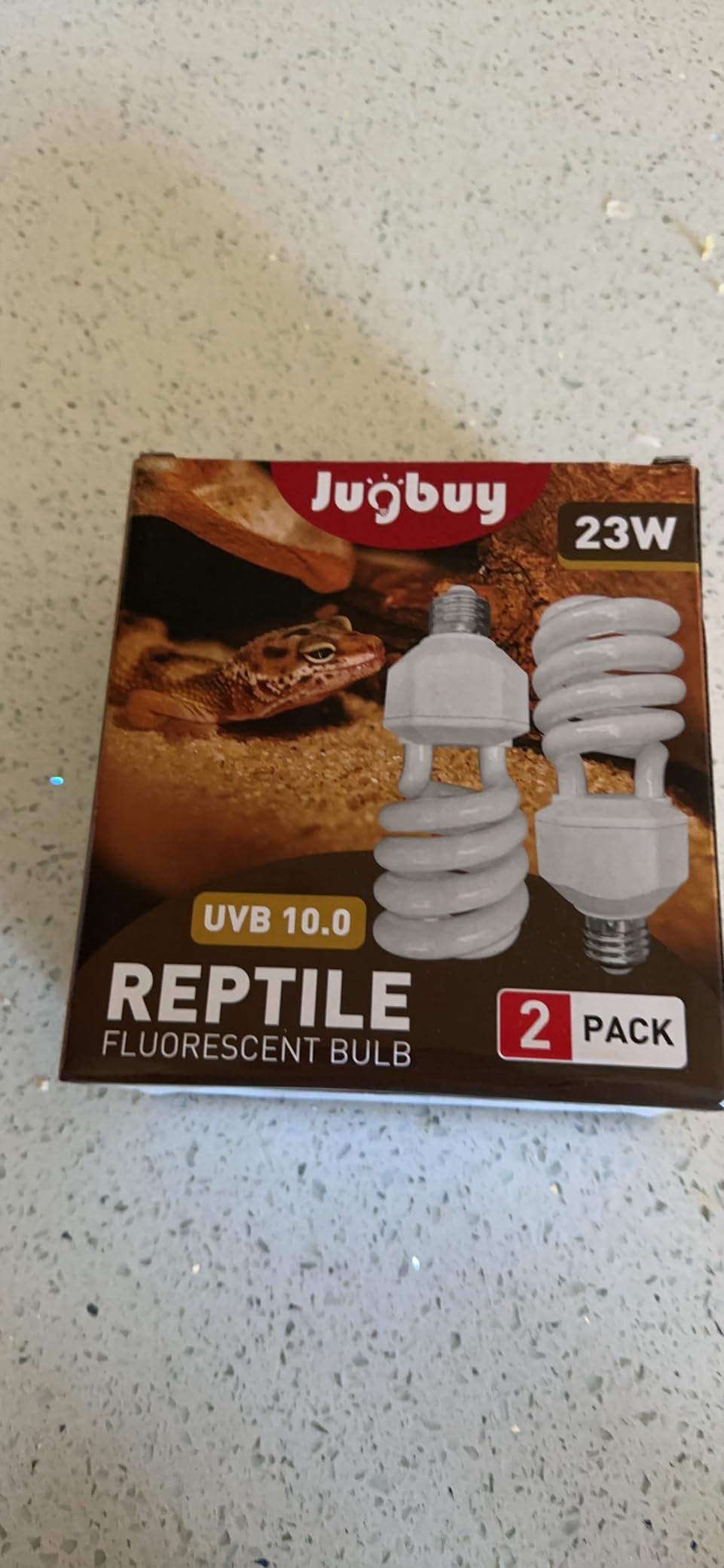
Two enclosures, or one enclosure and a spare, is where this pack makes sense. Each bulb is a 23 watt desert 10.0 compact fluorescent with 10 percent UVB and 30 percent UVA, and having a matched spare removes the scramble when one fails. The spiral form factor fits a standard dome without modification.
Owners who receive working bulbs report value, and some use a solar meter to confirm the output is genuinely around the advertised 10.0 rating rather than taking the label on trust. The quartz glass and the circuit board are both credited with slowing the output fade, which extends useful life beyond the 6 to 12 month window most compact fluorescents get.
The dominant complaint is premature burnout at roughly two months, which is a considerably shorter life than the rated figure suggests. Note also the one month of after-sales coverage, the thinnest on this list. Plan on replacing these more often than you would a tube, and treat the second bulb in the pack as your backup rather than a second set.
Is a two pack a better value than a single bulb?
Only if you will actually use both. If you run one enclosure you are buying a spare you may not need for a year, and the single-bulb options give you a wider choice of brands for the same spend. For a keeper with a tortoise table and an outdoor pen setup, the pair works well, and the same bulb is sold at 5.0 and 15.0 if you change species.
Where does this fit among the compact fluorescents?
Above the 13 watt lamps for brightness and below the established 26 watt models for longevity. If your priority is a bulb that keeps working for a year, a 26 watt compact fluorescent is the better bet. As with all compact fluorescents, mount it low and close, because the 10 percent rating only means something inside a working distance measured in inches, not feet.
9. GeeKoit LED Desert 10.0 UVB 5 Watt — Best Low-Wattage LED
- Only 5 watts
- so UVB is added at very low running cost
- Compact E26 format fits standard lamp holders
- Targets desert species including tortoises and bearded dragons
- Longer rated service life than an equivalent compact fluorescent
- Provides ultraviolet only with no meaningful basking heat
- Not appropriate for leopard geckos or tropical setups
- Small 2 inch footprint gives limited coverage
This is the newest category in the roundup, and the logic is appealing: add ultraviolet to a setup that already has perfectly good heat, without adding another fixture or another watt of electricity. At 5 watts the running cost is negligible, and the LED output is described as decaying more slowly than an equivalent compact fluorescent.
It screws into a standard E26 socket at 110V, measures just 2 by 2.5 inches, and weighs 2.08 ounces. Buyers rate it positively for stable output and easy installation, and the consensus is that it works well as a supplement alongside a separate basking lamp.
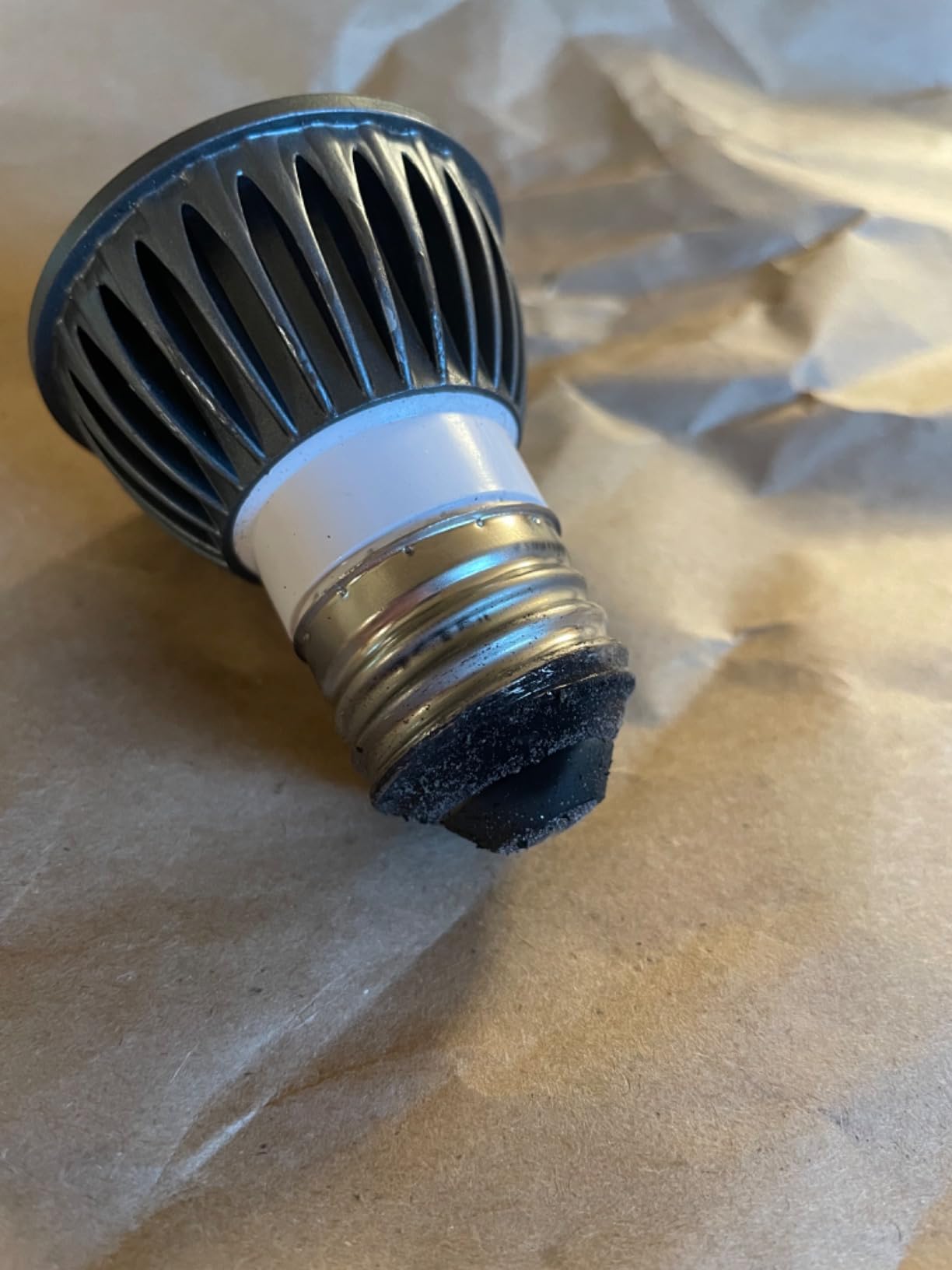
The limitation is coverage, and it is a real one. A 2 inch bulb in a 4 foot enclosure lights a small area well and leaves the rest under-served, which is why we would not call this a full replacement for a tube. The manufacturer also states it is not suitable for leopard geckos, so check your species before buying.
Do LED UVB bulbs replace tubes yet?
Not for broad coverage, and that is the honest answer. A single point source cannot match the even wash of a 24 to 36 inch tube, so LED UVB is a supplement rather than a substitute at present. Where it does excel is a small enclosure, a hatchling setup, or boosting ultraviolet in a zone a tube reaches poorly. The slower UV decay is the interesting part, since better decay would improve the annual replacement maths, though long-term owner data is still thin.
How do I set it up correctly?
Treat it as a supplement. Run it from a separate socket near your basking zone, keep it within the manufacturer’s working distance, and leave heat to a thermostated basking lamp. Because it produces no meaningful basking heat, removing the basking lamp will leave your tortoise without a warm spot entirely.
10. Hygger Zoo 26W UVB 10.0 Compact Fluorescent — Best for Beginner Setups
- Modest cost among the compact fluorescent options
- Several buyers standardise on it across multiple setups
- Good brightness for a spiral compact fluorescent
- Two length options at 5.3 and 6.1 inches
- Some bulbs fail or fuse out in under three months
- Shattered bulbs reported on arrival or during handling
- Compact fluorescent output is limited for tall enclosures
At 26 watts this is one of the brighter compact fluorescents available, and the quartz glass with added heat dissipation is meant to hold output steady rather than fade quickly. It is listed as suitable for bearded dragons, turtles, Russian tortoises, lizards and red-eared sliders, which covers most of what a new keeper is housing.
The two length options matter practically. A 5.3 inch bulb and a 6.1 inch bulb fit different dome reflectors, and getting the fit right before you order avoids the most common return reason for compact fluorescents. Several buyers report standardising on this bulb across multiple enclosures, which suggests the fit is predictable.
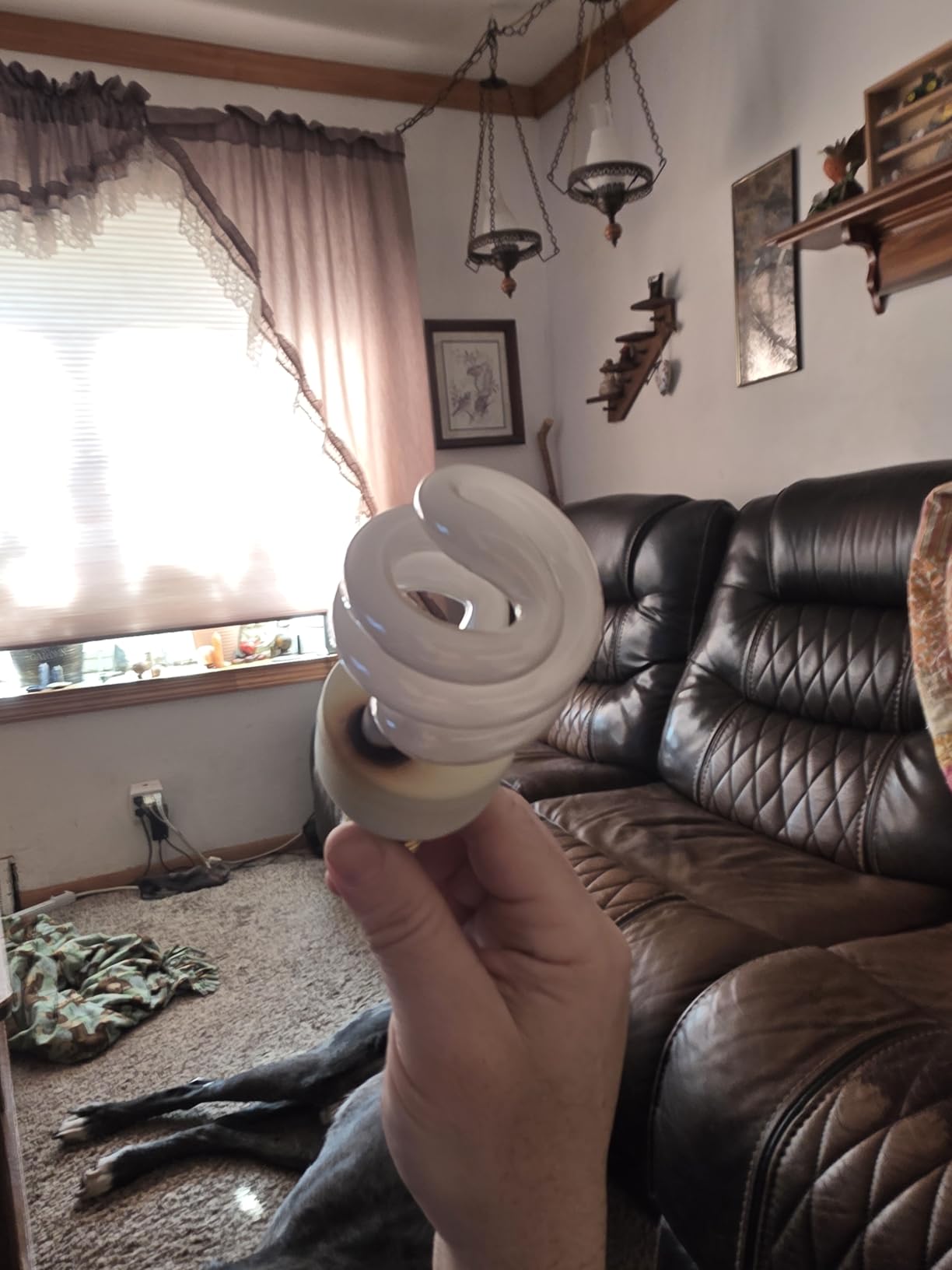
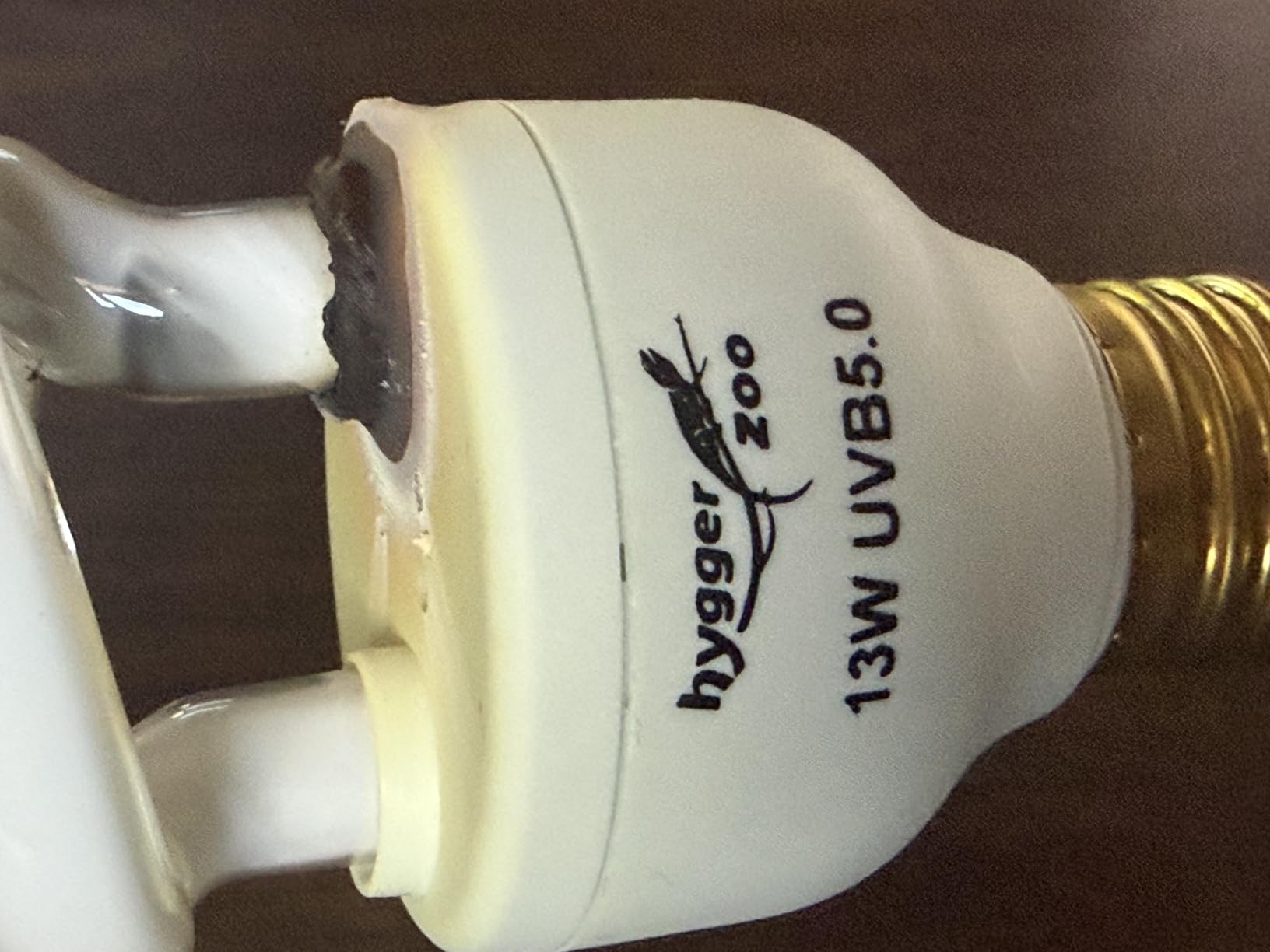
Durability is the issue again. The reviews describe bulbs that burned out, fused or shattered in under three months, and some arrived already broken. At 4.2 stars from 311 reviews it sits mid-table, which is a fair reflection of good output with inconsistent quality control.
Is 26 watts enough UVB for a tortoise?
Yes, at close mounting distance. A 26 watt compact fluorescent rated at 10 percent UVB is comparable in usable output to a smaller tube, and it suits a tabletop enclosure or the basking half of a larger one. It stops being enough when the lamp sits high above a tall enclosure. Mount it low, in the 8 to 12 inch working range, with a reflector or dome to keep the light directed, and that single adjustment fixes most of the disappointing results owners report.
How does it compare with other 26 watt desert bulbs?
The output ratings are broadly similar across this class, so the differences are in glass quality, build and how quickly the output fades. If you want a longer service life, the established 26 watt models with larger review bases are the steadier bet. As always, buy a basking lamp separately.
11. LUCKY HERP Desert UVA UVB 26W Compact Fluorescent — Best Variant Range
LUCKY HERP Desert UVA UVB Reptile Light Bulb 10.0 26W Compact Fluorescent Lamp
- Well-established 26 watt desert UVB format with 893 reviews
- Variants at 13W and 26W across 5.0 and 10.0 strengths
- Compact enough for standard dome reflectors
- Supports appetite activity and breeding behaviour
- 4.2 star rating is among the lower in this group
- Compact fluorescent output is limited for tall or wide enclosures
- UVB decays over time and needs scheduled replacement
The reason to like this lamp is the range around it. The same bulb is available at 13 and 26 watts and at 5.0, 10.0 and 15.0 UVB strengths, which means you can change species or enclosure size without changing fixture. That flexibility is worth more to a keeper planning ahead than a small difference in one bulb’s output.
At 893 reviews this is one of the better documented compact fluorescents in the roundup, so the long-term reliability picture is reasonably well mapped. Owners generally treat it as a dependable budget UVB source for standard dome reflectors, and it is listed as suitable for desert-dwelling species.
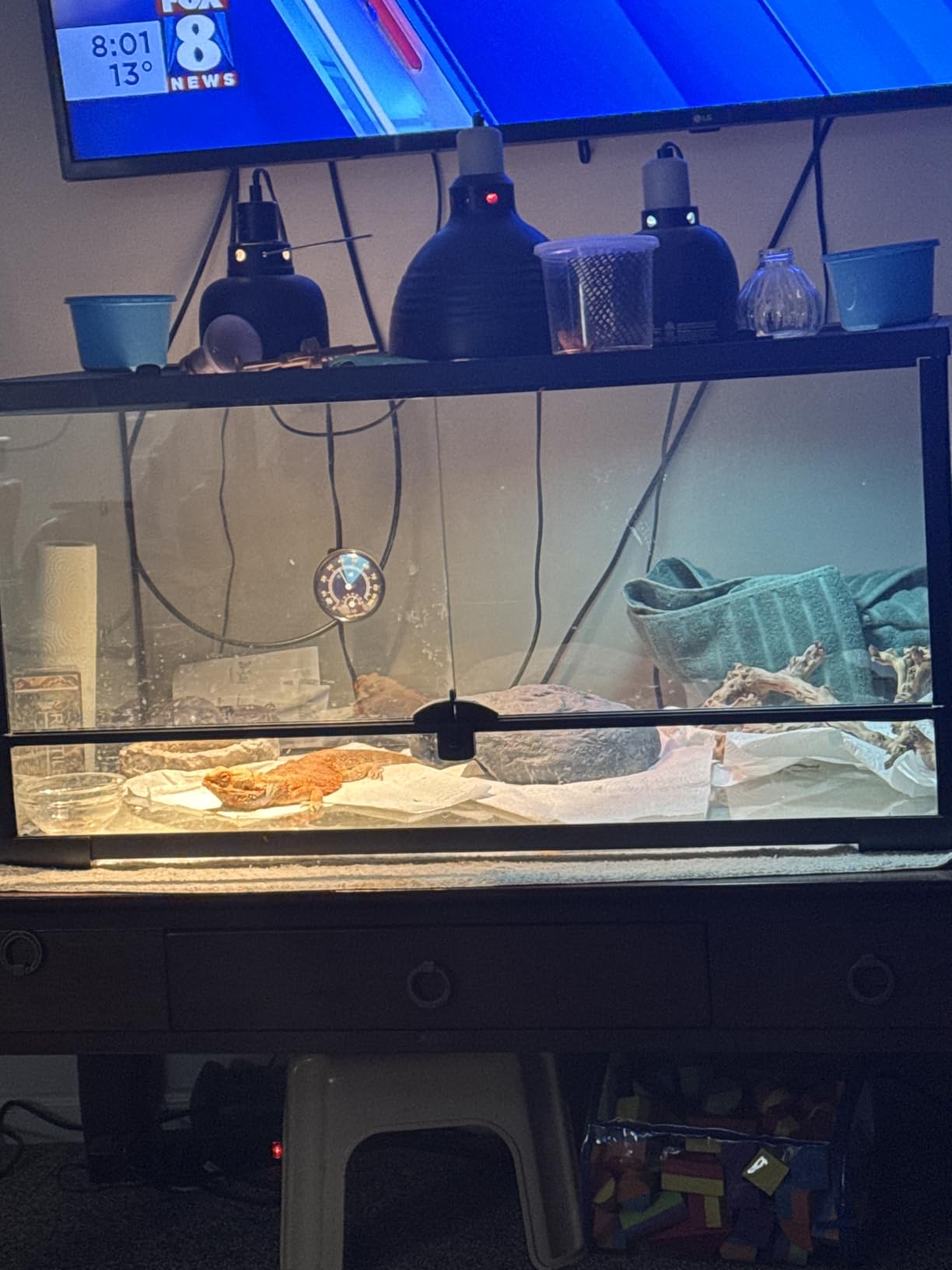
The honest limitation is the one shared by every compact fluorescent. Output is limited for tall or wide enclosures, because the light falls off quickly with distance, and UVB output decays with use regardless of whether the bulb still looks bright. Enclosure height is the real constraint, not the wattage.
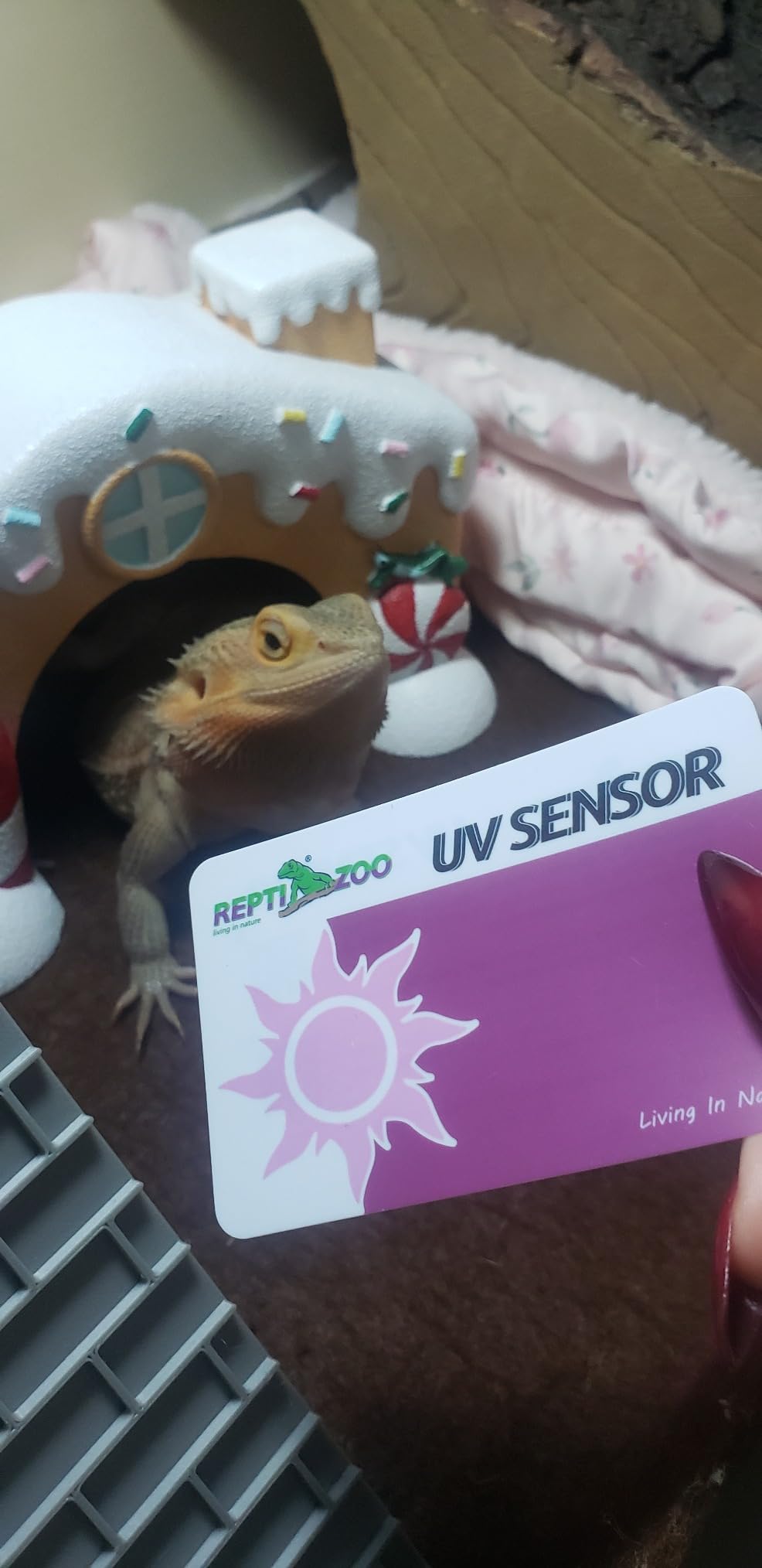
How do you pick between the 5.0 and 10.0 variants?
Match the percentage to the species and to the distance. A 5.0 UVB bulb suits tropical and forest species and shallow enclosures where the lamp sits close. A 10.0 is the desert-strength option for species like Greek, Hermann’s, sulcata and leopard tortoises. Check your dome clearance before ordering, because a 26 watt bulb is taller than a 13 watt one.
Is this a good first UVB bulb?
Yes. It is a mainstream desert UVB compact fluorescent with a large review base and a broad variant range, which makes it a low-risk first purchase. Pair it with a thermostated basking lamp, mount it low, and replace it on a schedule. It will not serve a 4 foot enclosure on its own, so for a large setup look at a tube lamp or a high-wattage mercury vapour.
12. REPTI ZOO Heat Lamp and UVB 10.0 Combo Pack — Best UVB and Heat Combo
- Two complementary bulbs cover both heat and UVB needs
- Turtles
- tortoises and uromastyx show immediate basking response
- Basking lamp raises enclosure temperature noticeably
- Quiet operation with no buzzing or flickering
- Occasional bulbs arrive broken due to flimsy foam packaging
- One reviewer reported the UVB bulb burnt out within about 20 days
- Basking bulb lifespan is shorter than the UVB bulb lifespan
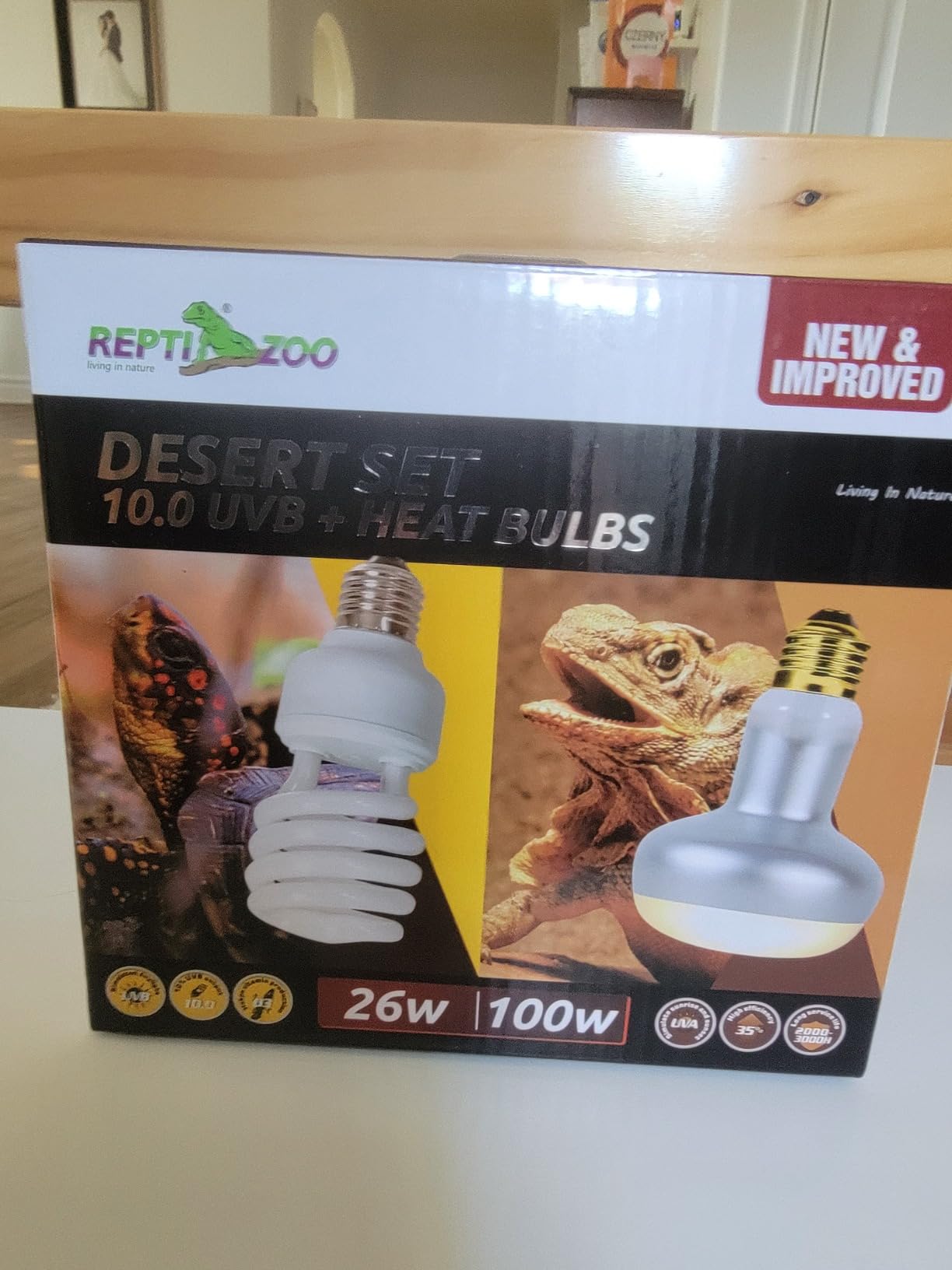
This pack is the answer for anyone starting from nothing. You get a 100 watt intense basking spot lamp for heat and a 26 watt UVB 10.0 compact fluorescent for ultraviolet, both on standard E26 sockets, and the combination covers the two things a tortoise setup cannot do without. Owners report turtles, tortoises and uromastyx responding to the basking spot within minutes of installation.
Two details set it apart from similar bundles. The basking lamp uses a sand-coated process that softens the light, and the whole pack runs quietly with no buzzing or flicker, which matters if the enclosure sits in a living space. It is also ETL certified, which is not universal among the products in this roundup.
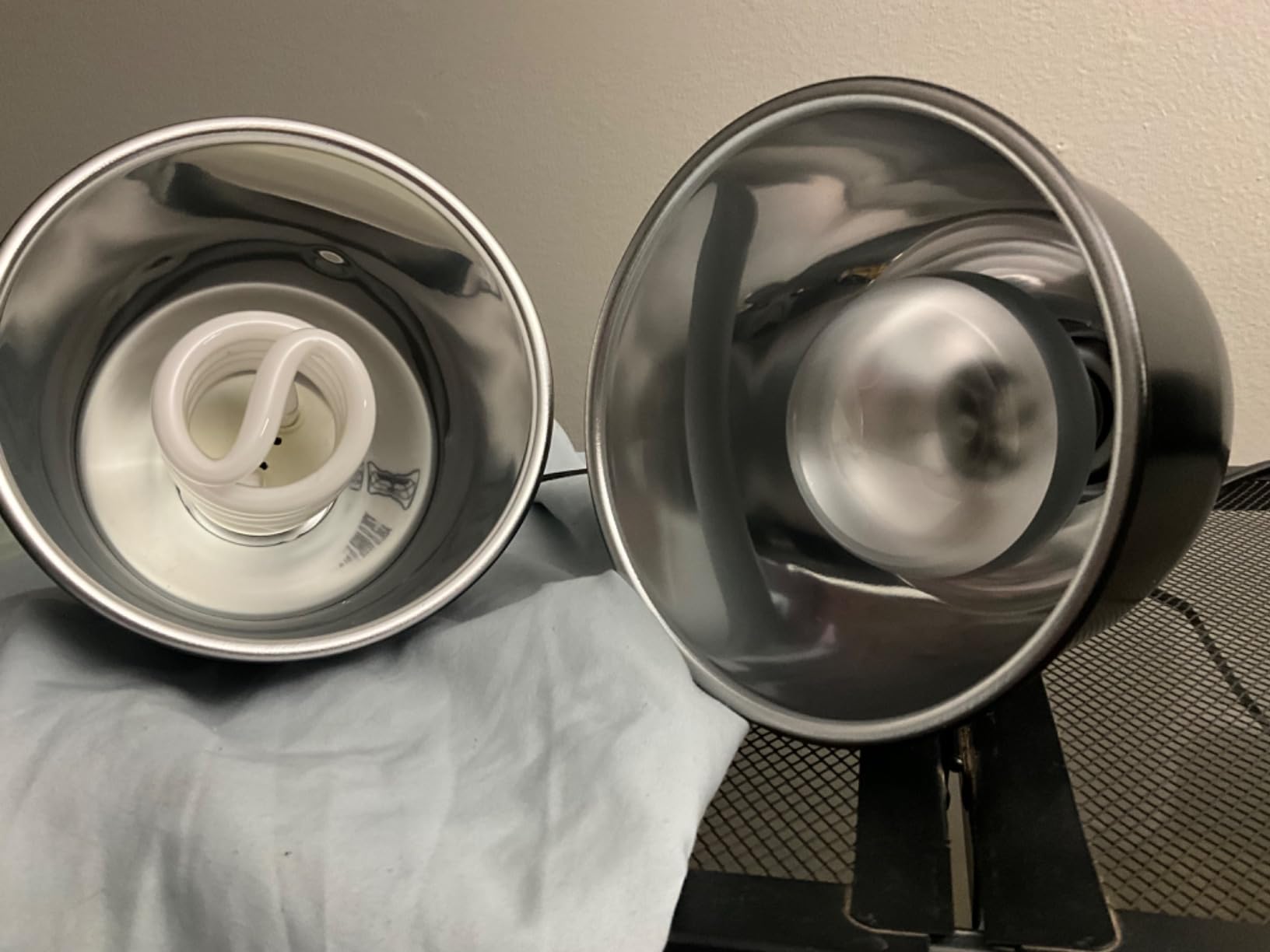
Packaging is the weak point. Reviewers repeatedly describe bulbs arriving broken because of flimsy foam, though in every case described the company’s support resolved it with a refund or free replacement. One owner reported the UVB bulb burning out in about 20 days, and because the basking lamp typically fails sooner than the UVB bulb, your replacement schedule will be staggered rather than simultaneous.
Is buying a bundle cheaper than two separate bulbs?
Usually, and the convenience is the bigger benefit. You get a matched pair where the basking lamp and the UVB bulb are chosen to work together. The UVB bulb here is rated for up to 365 days at 6 to 8 hours per day. Inspect the bulbs on arrival before installing them, since a five-minute check saves an afternoon of troubleshooting a dark enclosure.
Who should not buy this pack?
Anyone with a large or tall enclosure. A 100 watt basking lamp and a 26 watt compact fluorescent are sized for a modest setup, and stretching them across 4 feet means neither the heat nor the ultraviolet is where your tortoise needs it. It is also a heat lamp without a thermostat. If your enclosure is already set up and you only need ultraviolet, buy a single UVB bulb.
Why Tortoises Need UVB Light
Tortoises are not like us. They do not synthesise vitamin D3 in their skin the way humans do in response to sunlight, and a significant portion of the animals kept as pets depend on dietary conversion instead. Without ultraviolet-B light, a tortoise cannot efficiently absorb the calcium it eats.
That is the whole mechanism, and the consequences follow from it directly. Calcium that is not absorbed is not laid down in the shell and skeleton, which leads to metabolic bone disease, soft shells, pyramiding in hatchlings and juveniles, poor growth and reduced appetite. Ferguson zone research, the body of work behind modern reptile lighting standards, links husbandry conditions to precisely these visible problems.
Three things follow that catch out new keepers. UVB does not pass through ordinary glass, so sunlight through a closed window is not a substitute for a lamp, however bright the day looks from inside. UVB output falls with distance, so a lamp mounted too high is effectively weaker than its label. And a bulb that still glows is not proof it still produces useful ultraviolet, which is why manufacturers publish replacement intervals.
Hatchlings, juveniles and breeding females are the most sensitive, because they are growing fastest and laying down the most shell. They are also the group most likely to show pyramiding, the pyramided shell growth that keepers across tortoise forums link back to inadequate ultraviolet early in life.
How to Choose a UVB Bulb for Your Tortoise
Start with the enclosure, not the bulb. The three decisions that matter are the size and height of your enclosure, whether it is open-topped or closed, and the species you are keeping. Get those right and the bulb choice narrows quickly.
Which bulb type should you buy?
For most indoor setups, a T5 HO fluorescent tube in a reflector is the right answer. It gives even coverage across a wide area, produces no meaningful heat, and the tube format means the output is predictable. The T5 HO is the current generation, producing roughly twice the UVB of a T8 at the same length and lasting about 12 months against roughly 6 for T8.
Choose a mercury vapour bulb when your enclosure is tall or very wide and you want one fixture to supply heat and ultraviolet. Understand the trade: it cannot be used with a thermostat, it runs hot, and it must go in an open wire-cage reflector. Choose a compact fluorescent when the enclosure is small and shallow, and understand that its output falls off quickly with distance. A T5 HO tube does not fit a T8 fixture, and a T8 does not fit a T5 HO fixture, so check before ordering.
How much UVB do I need for your enclosure size?
Match the lamp’s spread to the footprint, and keep the mounting distance short. As a working guide: a 24 inch tube or a 13 to 26 watt compact suits a tabletop enclosure up to about 2 feet long, and a 36 inch tube suits 3 to 4 feet. For 4 feet and wider, or for a tall enclosure, a high-wattage mercury vapour bulb is the practical option because it throws UVB several feet. Judge by the surface area the light covers at the substrate, not by the number on the box, since a 26 watt compact is bright but concentrated.
How high should the UVB lamp sit?
As low as the fixture allows. For T5 tubes with a reflector, the working range is roughly 12 to 18 inches above the shell, and Arcadia’s own guidance for its 12 percent desert T5 sits in that band. Zoo Med’s box guidance for its 10.0 T5 HO gives 18 to 36 inches. For mercury vapour bulbs, the commonly cited minimums are about 12 inches for 100W, 18 inches for 160W and 24 inches for 275W.
Too close and you risk overexposure and shell burns; too far and the output falls off the shell before it arrives. Mount with a reflector, check the actual distance from the bulb rather than the top of the dome, and recheck it whenever you rearrange the enclosure.
How long should the light be on each day?
Ten to twelve hours of light, with a genuine dark period for the rest. A timer makes this automatic and stops the most common mistake of leaving UVB on around the clock. Keep the basking lamp and the UVB lamp on the same schedule, and change the photoperiod seasonally if you want to mirror natural conditions. Night-time heating, if your climate needs it, should come from a separate ceramic element rather than from the UVB fixture.
Why is my UVB light flickering, and what do I do?
Flicker usually points to the ballast, the socket or the end cap rather than the bulb itself. Work through it in this order: reseat the tube firmly, clean the contacts, and try a different socket. On a mercury vapour bulb, flicker after a bump is normal, because the lamp shuts itself off and needs about 15 minutes to restrike. Constant flicker on a tube points to a failing ballast or an end cap that has lost its grip, and in both cases the fixture is the problem rather than the bulb.
When should you replace the bulb?
On a schedule, not on appearance. T5 HO tubes are generally rated at about 12 months of use and T8 tubes at about 6, and the product specifications here quote 6 to 12 month replacement windows for the compact fluorescents. Write the date on the bulb when you install it.
Replace sooner if output visibly drops, if the fixture is moved closer to the substrate, or if you cannot confirm the last replacement date. A bulb that still lights normally can be well past the point where it delivers useful ultraviolet, and that is the quiet failure mode most keepers miss.
Common UVB Mistakes to Avoid
These are the errors that show up again and again in keeper conversations, and every one of them is easy to make.
Using a window as a UVB source. Ordinary glass blocks UVB, so a tortoise sitting in a sunny window gets visible light and heat but essentially no ultraviolet. If you want the benefits of real sun, an outdoor pen is the answer, and the indoor enclosure still needs a proper lamp.
Mounting the lamp too high. This is the most common error and the hardest to spot, because the setup looks fine. UVB output falls off sharply with distance, so a tube at 24 inches delivers meaningfully less to the shell than the same tube at 12 inches.
Treating coil compact fluorescents as a full lighting solution. These screw-in bulbs produce a small, intensely bright zone with a steep gradient, which is why keepers across reptile forums repeatedly report eye problems and photokeratitis in reptiles under them. Use them as a supplement at most, and keep the distance short.
Using an all-in-one heat plus UVB bulb you cannot thermostat. In a closed enclosure this is a real safety problem, because you have no control over the basking temperature. Mercury vapour lamps are a good choice in an open-topped table and a poor one behind closed glass.
Never replacing the bulb. A lit bulb is not a working bulb. Put a reminder in your calendar at installation and replace on schedule.
Confusing brightness with ultraviolet. Owners often report a dramatic improvement in colour and activity from a brighter lamp, which is a real benefit but tells you nothing about UVB. Visible light is the most obvious part of the output and not the part your tortoise needs most.
A final note on general household lighting, which is a different problem entirely and one we cover in guides such as our picks for the best light bulbs for bathrooms and the best light bulbs for recessed lighting. Reptile lighting needs specific ultraviolet output, and a brighter room does not change what reaches the animal.
Frequently Asked Questions
What wattage UVB bulb for a tortoise?
Match the lamp to your enclosure rather than to your tortoise’s size. A 13 to 26 watt compact fluorescent suits a tabletop enclosure up to about 2 feet long, a 24 inch T5 HO tube covers 2 to 3 feet, and a 36 inch tube suits 3 to 4 feet. For enclosures 4 feet and wider or ones that are tall, a 100W to 160W mercury vapour bulb reaches further than any tube. Add a separate thermostated basking lamp for heat, because UVB lamps are not heat sources.
Do tortoises need UVB bulbs?
Yes. UVB is what allows a tortoise to synthesise vitamin D3 in their skin and absorb calcium from their diet. Without it, calcium is not laid down properly in the shell and skeleton, which leads to metabolic bone disease, soft shells, pyramiding in young animals, poor growth and reduced appetite. Sunlight through a window does not count, because ordinary glass blocks UVB. Even tortoises with regular outdoor access still need a proper lamp in their indoor enclosure.
Is T5 or T8 better for reptiles?
T5 HO is better and is the current standard. It is thinner than T8, produces roughly twice the UVB output at the same length, and is rated for around 12 months of use compared with about 6 for T8. A T8 tube is still a reasonable choice if you already own an 18 inch T8 fixture and your enclosure is small, but T5 HO tubes do not physically fit T8 fixtures, so check your hood before ordering.
Why is my UVB light flickering?
Flicker usually means a ballast, socket or end cap problem rather than a bad bulb. Reseat the tube firmly, clean the contacts, and try a different socket. Mercury vapour bulbs are the exception: they shut themselves off after a bump and need roughly 15 minutes to cool before they restrike, so a brief flicker there is normal. Constant flicker on a tube means the fixture needs replacing, not the bulb.
How long should an UVB light be on for a tortoise?
Ten to twelve hours a day, with a genuine dark period for the remainder. Use a timer so the schedule is consistent, and keep your basking lamp and UVB lamp on the same cycle. Night-time heat, if your climate requires it, should come from a separate ceramic element rather than from the UVB fixture. Seasonal photoperiod changes mirror what tortoises experience outdoors.
How do I know if my UVB bulb is still working?
Do not judge by eye, because a lit bulb can stop producing useful ultraviolet while still looking normal. Replace on a schedule instead: roughly 12 months for T5 HO tubes and about 6 for T8 tubes, with compact fluorescents commonly quoted at 6 to 12 months. If you want certainty, a UV meter is the only reliable way to confirm actual output, and it is worth buying if you have more than one enclosure.
Why are coil UVB lamps bad for tortoises?
Compact coil bulbs produce a small, intensely bright UVB zone with a steep gradient, so the light is strong immediately under the bulb and weak at any workable distance. That combination is why keepers across reptile forums repeatedly report eye problems and photokeratitis in reptiles kept under them. They are cheap and easy to find, which is exactly why they stay in circulation. Use them only as a short-distance supplement, not as the main UVB source.
How far above my tortoise should the UVB light be?
As low as the fixture allows. With a T5 tube and reflector, roughly 12 to 18 inches above the shell is the working range, and Zoo Med’s box guidance for its 10.0 T5 HO gives 18 to 36 inches. Mercury vapour bulbs need more clearance: about 12 inches minimum for 100W, 18 inches for 160W and 24 inches for 275W. Mounting too close risks overexposure and shell burns; mounting too far means the shell receives little useful UVB.
Conclusion: Which UVB Bulb Should You Buy?
For a standard indoor tortoise enclosure, our pick is the Zoo Med ReptiSun 10.0 Mini Compact Fluorescent, the highest-rated lamp here with the largest review base and quartz glass built to pass UVB. Run it close to the substrate, pair it with a thermostated basking lamp, and replace it on a six month cycle rather than when it dims.
For a large or tall enclosure, the Mega-Ray 160W mercury vapour reaches where a tube cannot. For a brand new setup where you want one purchase instead of two, the REPTI ZOO combo pack covers heat and ultraviolet together. Whichever you choose from this roundup of the best UVB bulbs for tortoises, mount it low, run it 10 to 12 hours a day, and check the distance from the shell rather than the top of the fixture.