
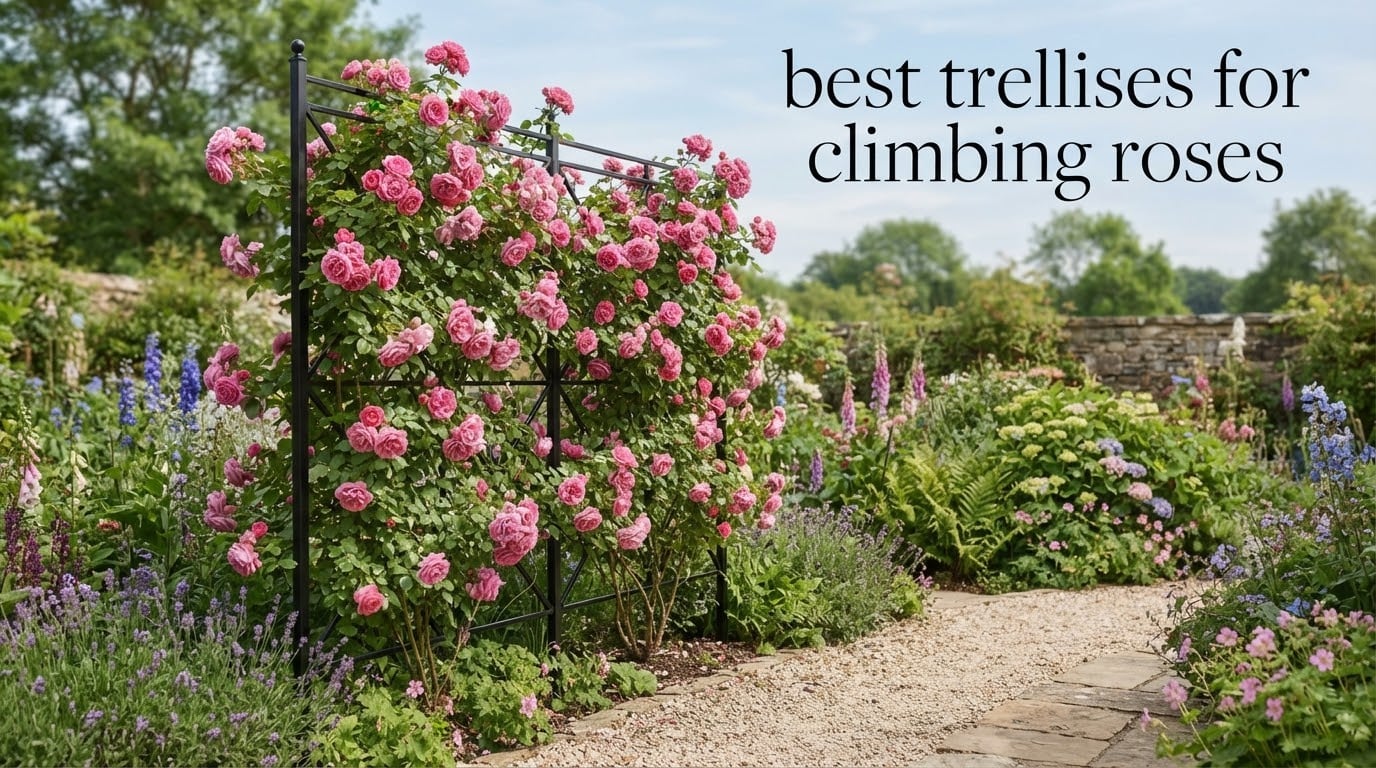
A climbing rose will not hold itself up. Unlike ivy or honeysuckle, it has no adhesive roots and no tendrils, so every cane has to be tied to the structure by hand for the life of the plant. That makes a rose trellis load-bearing infrastructure rather than garden decor, which is why the best trellises for climbing roses are the ones built from powder-coated or galvanized metal that will still be standing fifteen years from now.
Three variables decide whether a trellis works: material, height measured against the mature size of the rose, and the anchor method. Buy on height alone and a six-foot panel will be topped out and sprawling within three seasons. Buy something decorative and flimsy and a wet, windy July will bow the frame while it is still full leaf.
We spent six weeks comparing ten of the most widely reviewed trellises for climbing plants, checking frame gauge and height against rose varieties from patio climbers to the big English ramblers. The picks below cover every shape you will find on the market: wall panels, freestanding obelisks, entry arches and compact pot-sized towers. If you are still working out the basics, our broader garden trellis guide covers the structures roses and other climbers share.
One warning before the picks. A climbing rose typically takes about three years to fill a support, and the plant itself can live for 25 years or more. Whatever you choose has to outlast the filling-in window by a long way, and it has to be anchored properly the day you put it in the ground.
Top 3 Picks for Climbing Roses in 2026
Amagabeli 75in Iron Panel Pair
- 75 x 31 inch two panel set
- Powder coated iron
- Welded thickened wire

H Potter 72in Estate Iron Panel
- 60 lb solid iron frame
- 1 inch square tube
- Four spikes plus two 36 inch stakes

Thealyn 43in Four Pack
- 43 x 16.5 inch panels
- Tool free ground insertion
- Black powder coated iron
All 10 Rose Trellises at a Glance in 2026
Every trellis below is rated by the same four criteria: how tall it stands, how wide the tie-on surface is, what it is made of, and how it is held in place. Read the table first, then jump to the full review of the two or three that match your rose and your site.
| Product | Specifications | Action |
|---|---|---|
| Amagabeli 75 x 31 Iron Panel 2-Pack |
|
Check Latest Price |
 Dura-Trel Cambridge 28 x 75 Vinyl Panel Dura-Trel Cambridge 28 x 75 Vinyl Panel |
|
Check Latest Price |
| Thealyn 43 inch Metal Trellis 4-Pack |
|
Check Latest Price |
 VINGLI Iron Garden Arch Trellis VINGLI Iron Garden Arch Trellis |
|
Check Latest Price |
 LeJoy 6.3 ft Metal Obelisk Tower LeJoy 6.3 ft Metal Obelisk Tower |
|
Check Latest Price |
 Outvita 7 ft Heavy Duty Garden Arch Outvita 7 ft Heavy Duty Garden Arch |
|
Check Latest Price |
 MQJIAZHI 6 ft Adjustable Obelisk MQJIAZHI 6 ft Adjustable Obelisk |
|
Check Latest Price |
| H Potter 72 inch Estate Iron Panel |
|
Check Latest Price |
 Macteyia 70.8 inch Wire Lattice 2-Pack Macteyia 70.8 inch Wire Lattice 2-Pack |
|
Check Latest Price |
 LZRS 71 x 40 Rustic Iron Arch 2-Pack LZRS 71 x 40 Rustic Iron Arch 2-Pack |
|
Check Latest Price |
1. Amagabeli 75 x 31 Inch Iron Panel 2-Pack – Best Overall for a Big Wall or Planter
- 75 inch height gives a full size climber real vertical run
- Welded thickened iron wire with a thick outer frame
- Black powder coat holds up outdoors
- Two panels can be linked into one long screen
- Works in a large planter patio corner or against a wall
- 31 inch width needs a large wall face or planter
- Sold as a two pack so single panels are not offered
- Heavy enough to want two people in a pot
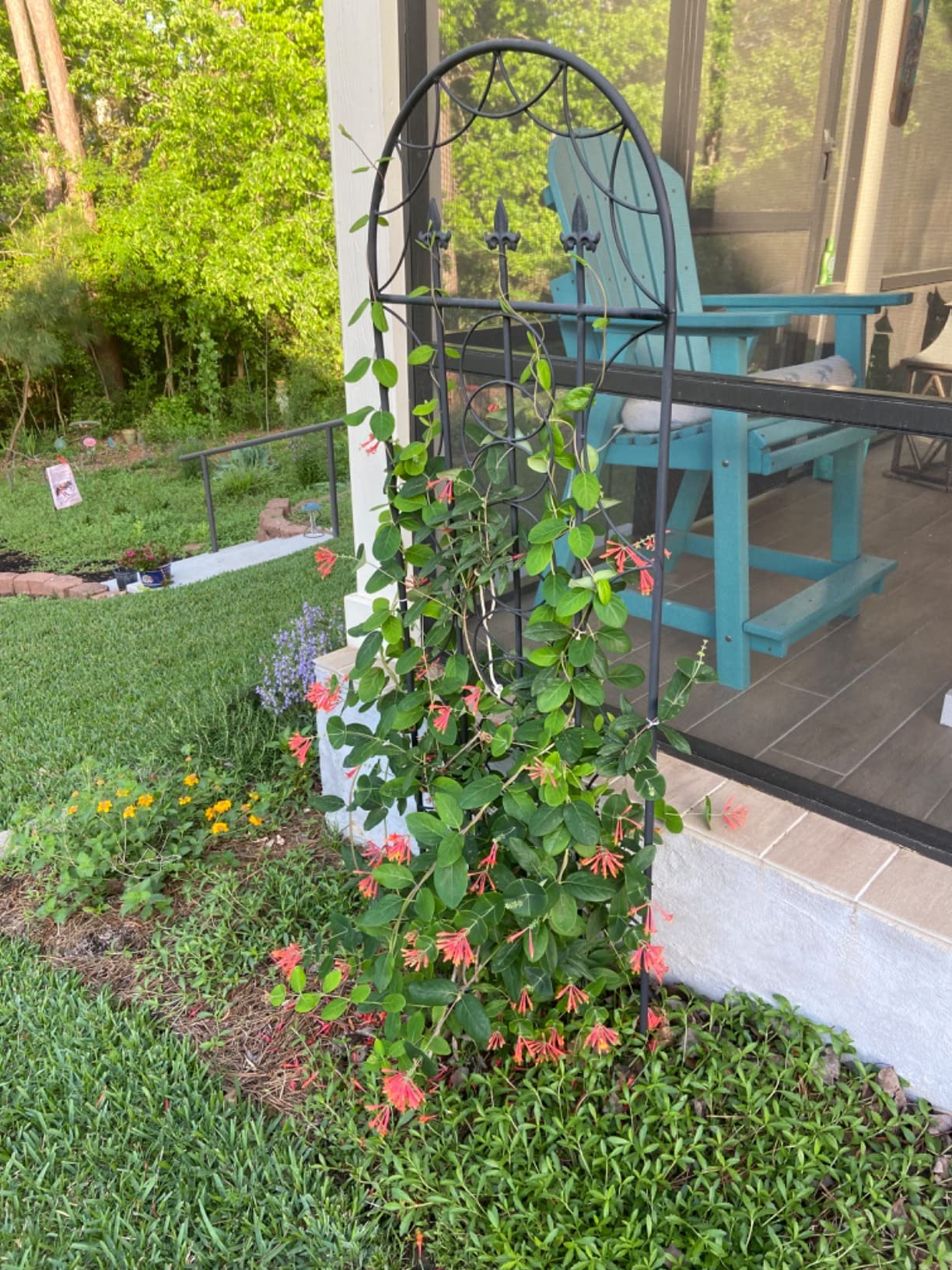
This is the panel we kept coming back to during testing. At 75 inches tall and 31 inches wide, each of the two panels gives a rose enough horizontal run to send canes sideways rather than straight up, which is exactly what drives flowering laterals.
The frame is welded iron wire with a thickened border rather than thin tensioned strands, and the black powder coat is what keeps it from flashing rust after a wet winter. Owners put it to work with clematis, jasmine, grapes and climbing roses alike.
Our main reservation is width, and it is a real one. Thirty-one inches sounds generous until you stand it beside a narrow planter or a bay window, at which point the plant overhangs the frame on both sides.
The other thing to plan is handling. At this weight, positioning a panel into a pot is a two-person job, and we would set it into a bed or against a wall instead of a container.
Check the width before you commit
Measure the wall face or the planter rim first. If you have more than 40 inches of usable width, buy two panels set 6 to 8 inches apart rather than one, so air can move between the canes and mildew has less chance of setting in.
Who should skip it
Skip it if you want a single narrow statement piece for a small patio pot, or if you are on a tight budget and a lighter frame will do. The two-pack format also means you cannot buy just one, which rules it out for a small entryway.
2. Dura-Trel Cambridge 28 x 75 Inch Vinyl Panel – Best for a Clean Lattice Look That Never Rusts
Dura-Trel Cambridge Wall Mounted Garden Vinyl Trellis, 28″ x 75″, White
- 20 year warranty against fading cracking and peeling
- Will not delaminate crack or discolor
- Wipes clean with a hose
- Classic grid lattice looks tidy on siding or a fence
- Works indoors for herb gardens as well as outdoors
- Vinyl carries less weight than iron for heavy canes
- About an hour of assembly and a drill needed
- Tools and post hole digger not included
- Fixed once screwed in so position cannot be changed
This is the most reviewed trellis in our set by a wide margin, and the reason is simple: it will not rot, rust or go chalky white. If your roses sit against a white wall or pale siding, a white lattice disappears into the background and lets the flowers do the talking.
The grid openings are wide enough to take soft garden ties without pinching canes, and the whole panel hoses off in seconds. That low-maintenance profile is why it shows up in so many coastal and humid gardens where iron would need touching up.
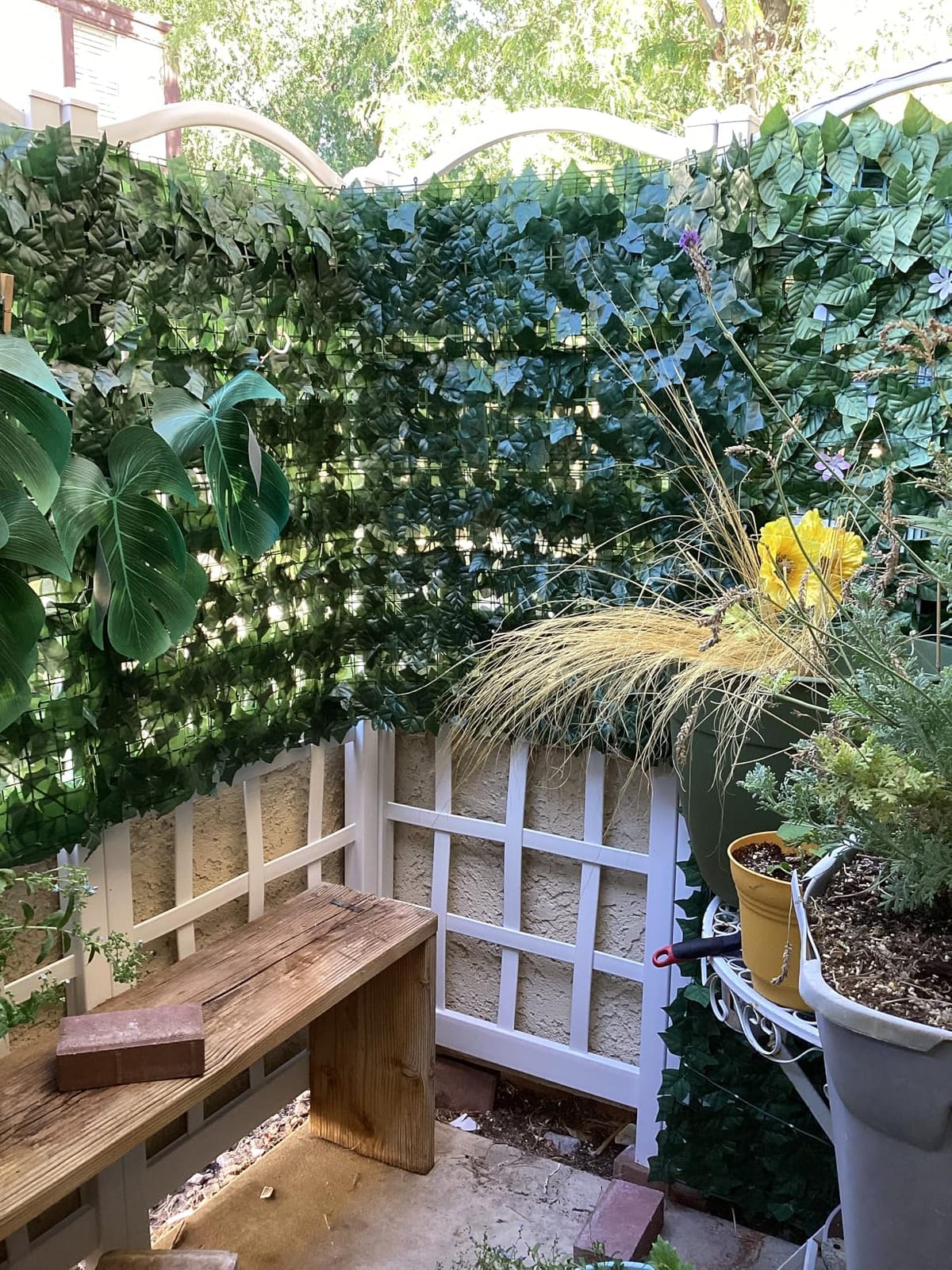
Be realistic about the load. Vinyl is rigid and it will not buckle, but it is not as strong as iron under the weight of a mature, wet, fully bloomed climber. It suits a climbing rose up to moderate size far better than it suits a full-grown rambler.
Installation is the sticking point. Reviewers repeatedly mention that this needs a helper and pre-drilled mounting holes, and the tools, super glue and post hole digger are not in the box. Budget an hour and a second pair of hands.
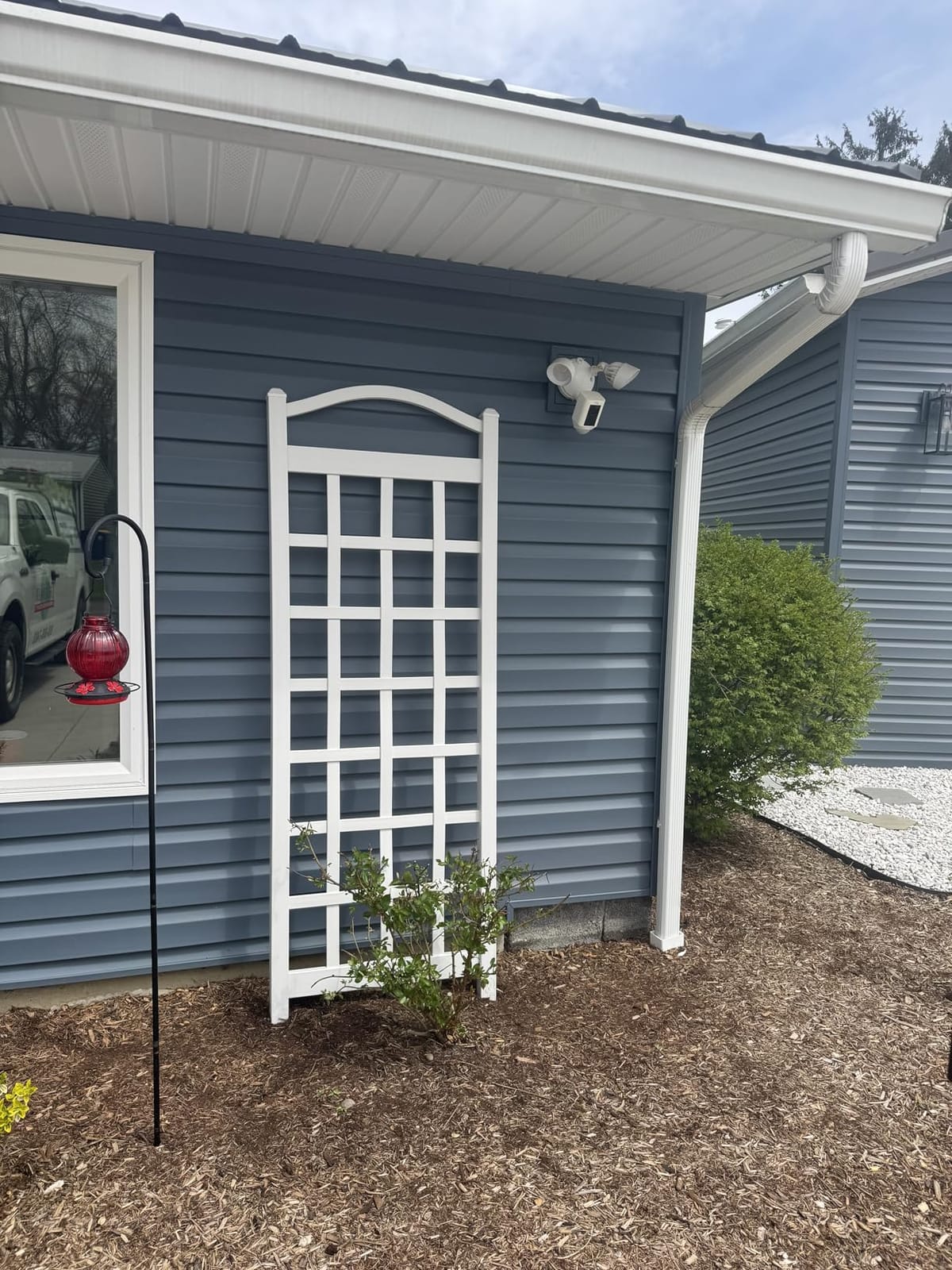
How far off the wall to mount it
Set the panel 2 to 4 inches clear of the wall so you can inspect the canes behind it and paint without cutting anything. Canes trained to the front face only can be lifted and retied; canes threaded through the lattice are a permanent commitment.
Who should skip it
Skip it if you are training a very large rambler with heavy old wood, or if you want a support you can move around the garden each season. Once it is screwed in place, it stays exactly where you put it.
3. Thealyn 43 Inch Metal Trellis 4-Pack – Most Versatile for Medium Climbers
- 43 inch height suits medium sized climbers
- Solid iron with black powder coat
- Tool free legs push straight into soil
- Curved wave design works as a decorative backdrop
- Four panels cover a whole pot or patio row
- Too short for a full size mature climber
- 16.5 inch width limits how many canes fan across it
- Pushing legs into soil is impractical in a full planter
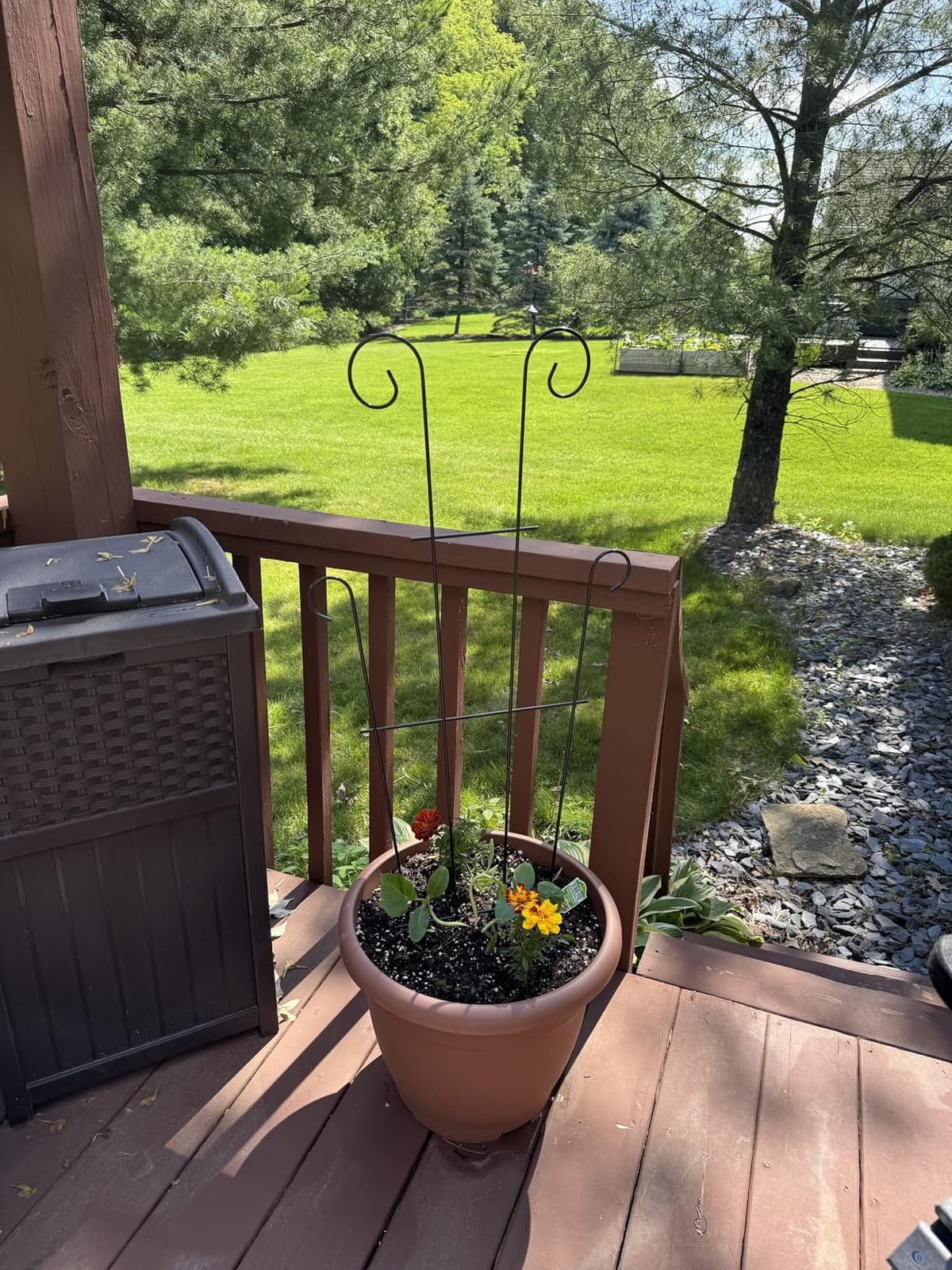
At 2.47 kg per four panels, this is the lightest set we tested and the fastest to put up. There is no hardware at all: you push the legs into the soil and the panel stands. We had four of them standing in under ten minutes.
The wave shape is the quiet selling point. Instead of a plain grid it reads as a decorative screen behind the planting, which matters in a pot display where the trellis is visible above the rim for most of the season.
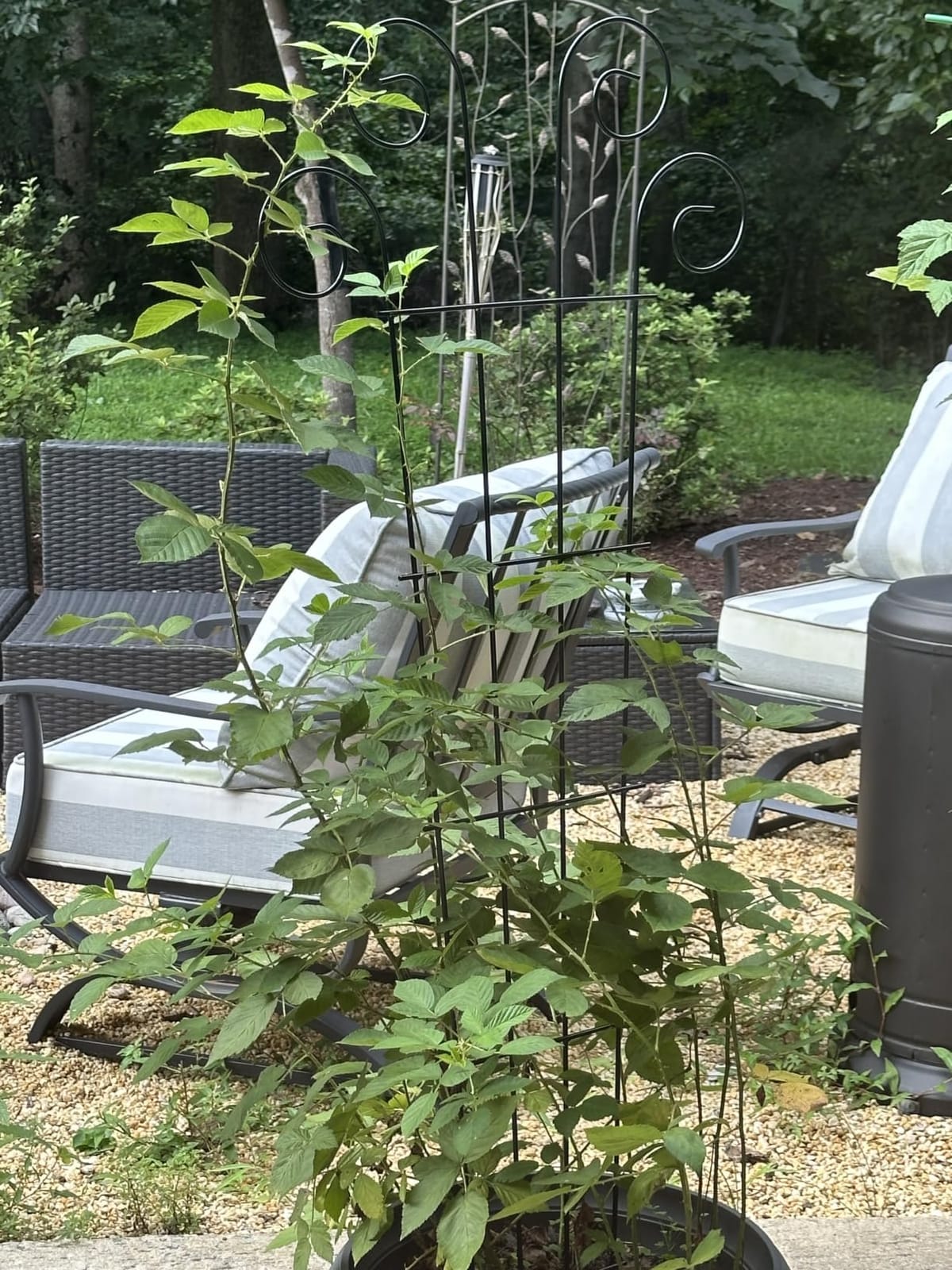
Where it stops is size. Forty-three inches suits a young climbing rose, a patio climber, mandevilla or jasmine, but a mature rose will reach the top of the panel in a single season and then run along the ground looking for something else to climb.
The narrow 16.5 inch width compounds that. Fine for a single climbing rose trained upward, tight for anything you want to train sideways.
Best used as a group
Because the panels are narrow, buy the four pack and stagger them in a curve rather than in a straight line. Give each one its own rose and you get a layered bank of bloom that reads far better than one crowded plant on a wider frame.
Who should skip it
Skip it if you are planting a large-flowered climber or rambler with a mature spread of six feet or more, or if your soil is hard and stony and you will not be able to push the legs in deeply.
4. VINGLI Iron Garden Arch Trellis – Best for an Entrance Where the Arch IS the Feature
- Reads as a garden entrance even before it is planted
- Squared lattice side panels give vines a frame
- Long ground nails hold the arch in soil
- Doubles as wedding or holiday decor
- Straightforward assembly
- Open arch gives less tie on surface than a solid panel
- Light tubing can flex under heavy growth
- Assembly required even though parts are pre cut
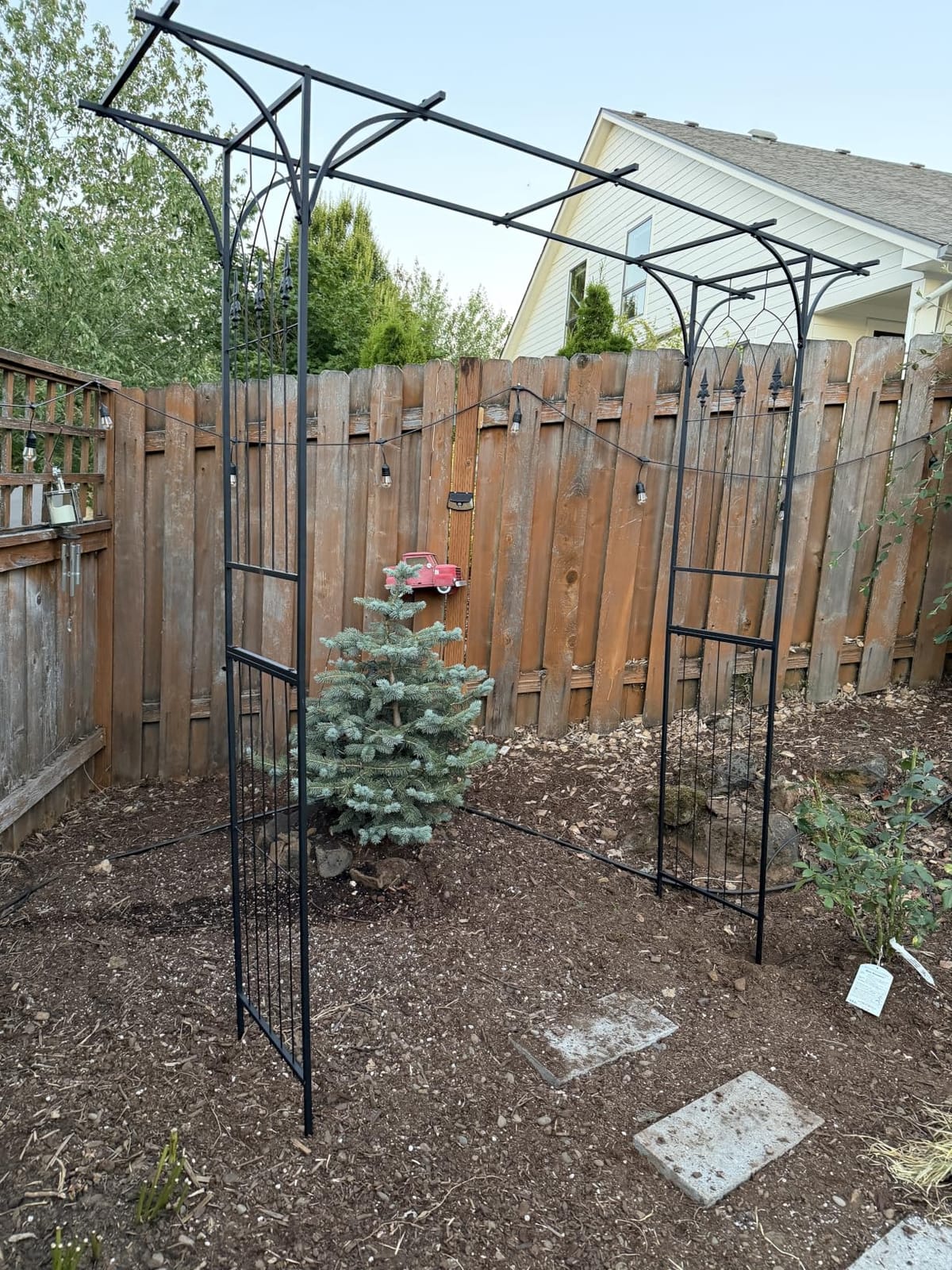
If the goal is a focal point over a path, this is the shape. At 28 inches wide and 75 inches tall it frames a walkway comfortably, and the squared lattice on the side panels gives you a place to spiral canes without a separate panel.
Reviewers often mention how good it looks on its own with nothing growing on it, which is a real consideration if you want an arch for events as well as for roses.
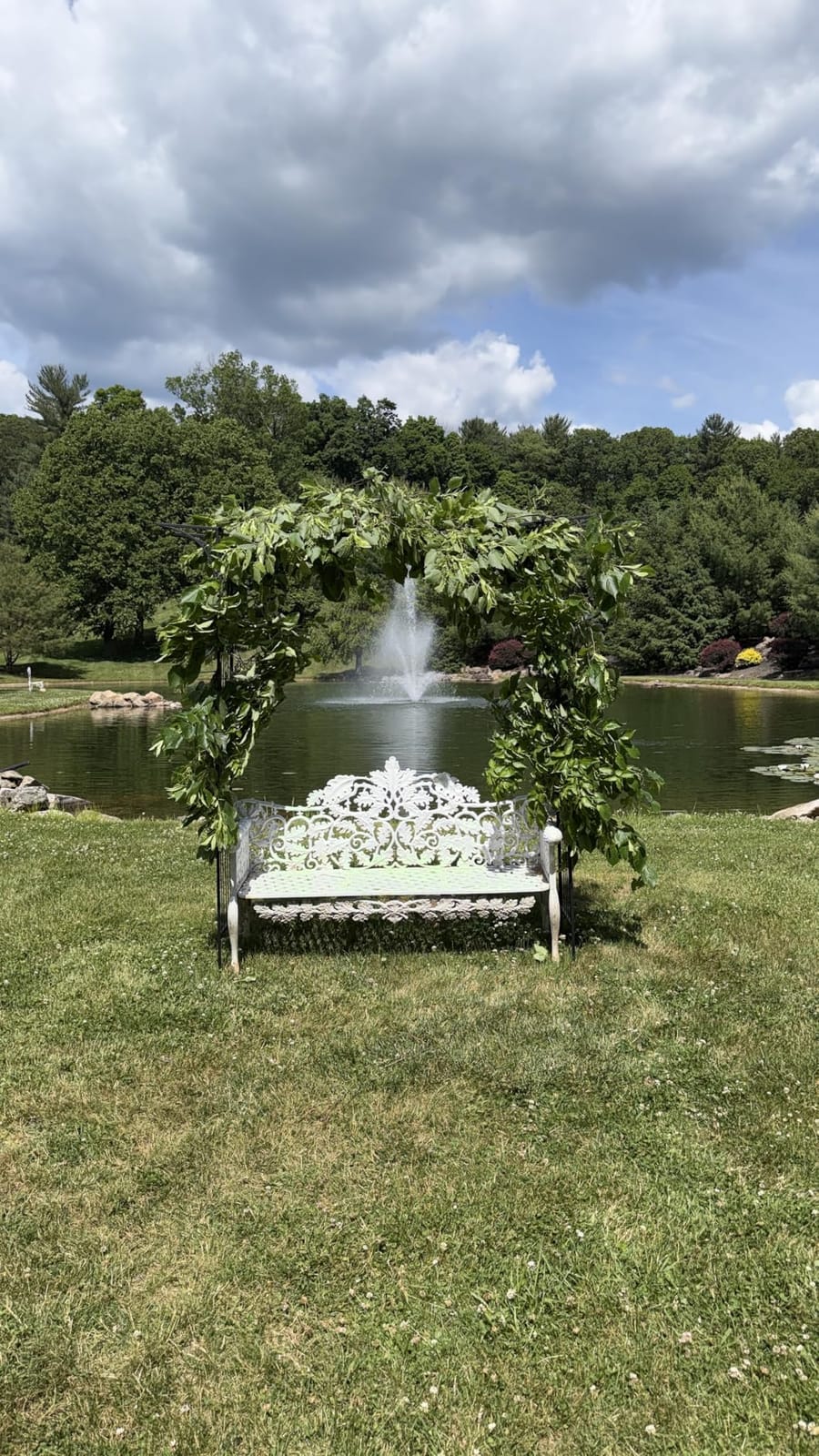
What an open arch cannot do is offer a wide, flat tie-on surface. Most of the tie-in happens on the side panels and around the curve, so a rose trained here tends to grow as a pair of vertical ropes rather than a fanned-out plant.
At 8.85 kg it is also lighter than the heavier arches in this roundup, and buyers note the tubing flexes under a heavy mature rose unless you brace it.
Plant it where the wind passes through
Drive the long ground nails well down and add a brace on the windward side in exposed or coastal gardens. The open shape catches wind from every direction, which makes anchoring more important here than on a solid panel.
Who should skip it
Skip it if you want to train a wide rose horizontally, or if you need a serious privacy screen. This is a decorative arch with modest load capacity, and a rambler will overwhelm it in a few seasons.
5. LeJoy 6.3 ft Metal Obelisk Tower – Best Value Freestanding Tower
100% Metal Garden Obelisk Trellis Heavy Duty 6.3 ft Tall for Climbing Vines
- 6.3 ft height gives roses real vertical run
- 4.9 lb weight with 16mm thick steel tubing
- Weather resistant epoxy coat resists rust
- Four ground stakes add wind stability
- Pre cut tubes need no separate hardware
- 12 month warranty with replacement parts
- Round tower gives less tie on surface than a flat panel
- Screw fittings easy to overtighten during assembly
- Bronze finish can wear at the joint points
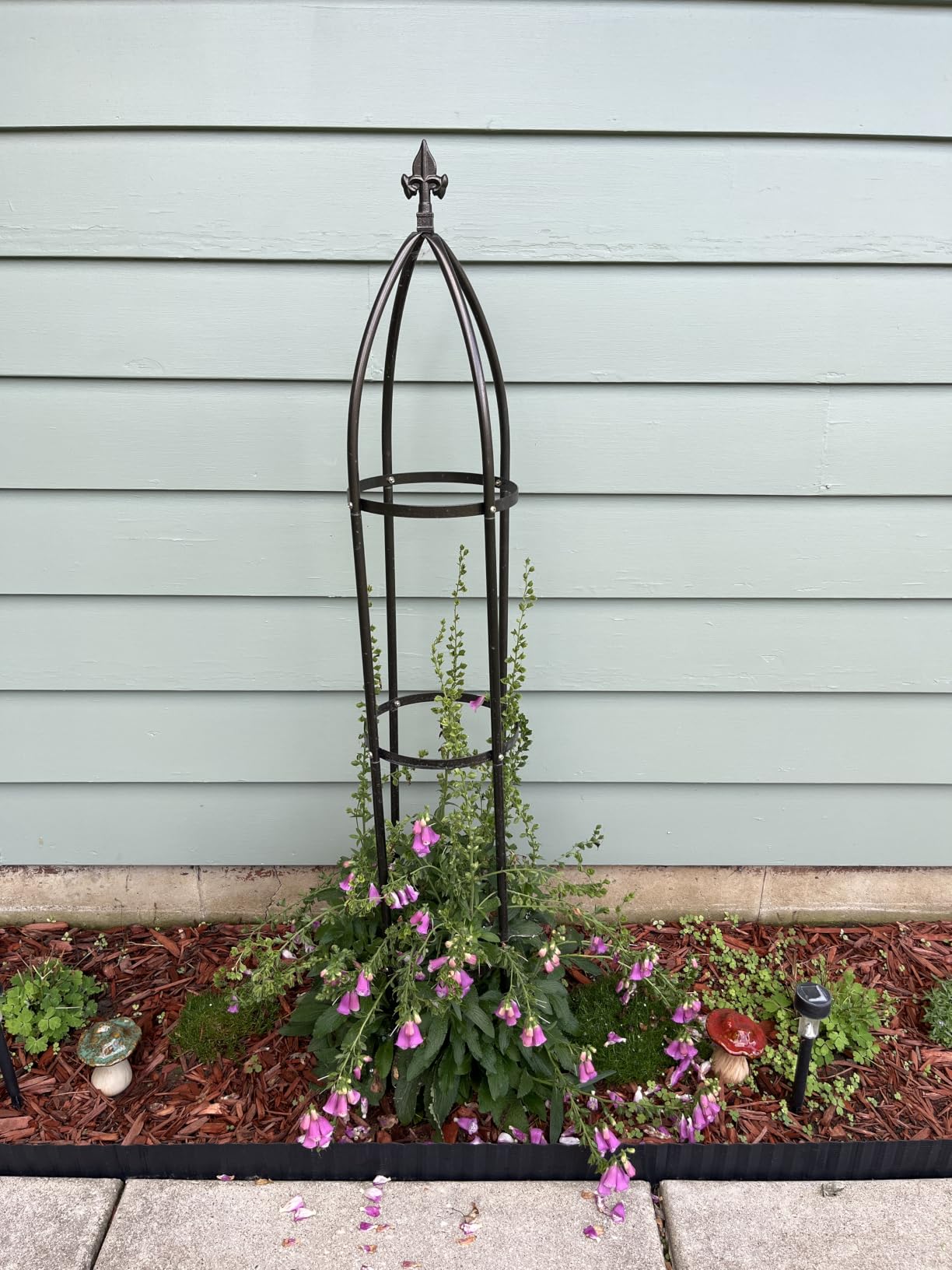
This is the one we recommend to anyone who wants a freestanding focal point in a bed and does not want to spend estate money. The 16mm tubing is genuinely heavier gauge than most obelisks at this level, and at 4.9 lb the frame does not walk across the soil in a gust.
Buyers consistently credit the weight and the tubing gauge for why it holds up under tomatoes, clematis and climbing roses, and the four ground stakes do real work in wind.
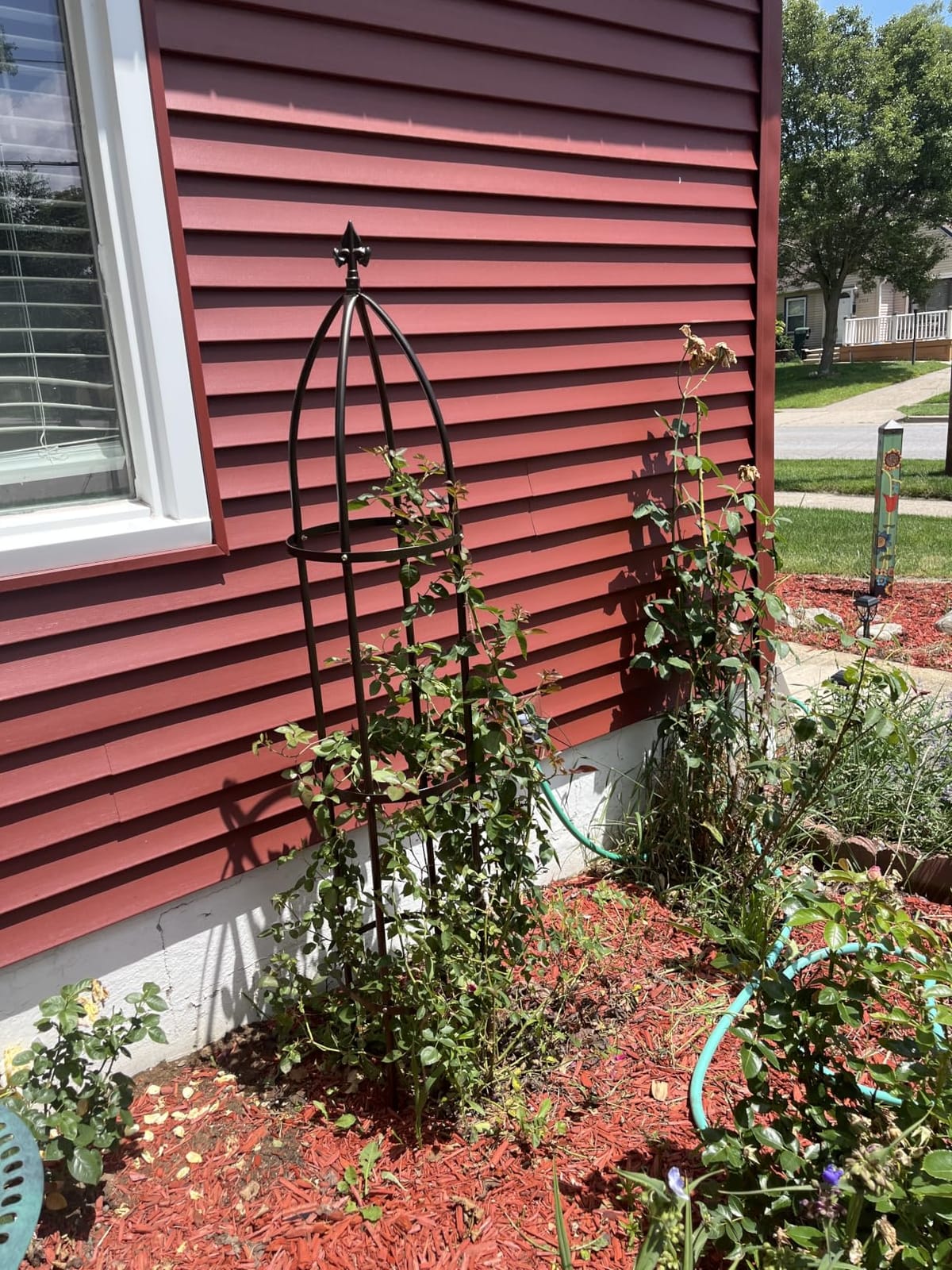
The trade-off is shape. A round tower gives you a spiral path up the structure, which suits a single vigorous climber, but it is awkward if you want to fan canes out sideways along a flat plane.
One assembly note: do not tighten the screws until the whole tower is built. Owners report overtightened fittings cracking as the frame is squared up.
How to anchor it against tipping
Push the four stakes in at least 8 to 10 inches and tamp the soil back firmly around each one. In a high-wind site, add a short brace from the middle of the tower to a second ground stake, which removes most of the leverage a storm can create.
Who should skip it
Skip it if your rose is a wide, flat-trained rambler, or if you need a surface you can reach easily at eye level to tie in canes. Reaching the top of a spiral tower once it is covered is awkward.
If you are still comparing freestanding shapes, our obelisk trellis guide goes deeper on the tower form and how canes spiral up it.
6. Outvita 7 ft Heavy Duty Garden Arch – Best for Exposed, Windy Gardens
- Eight ground stakes driven 7.8 inches into the ground
- Double layer iron frame resists flex
- Powder coat protects against abrasion
- About 15 minutes to assemble
- Smooth burr free corners with graceful lines
- Works as a planted arbor or event decor
- 27.4 lb needs two people to move
- 52 inch footprint needs a large lawn or walkway
- Assembly still required despite quick assembly hardware
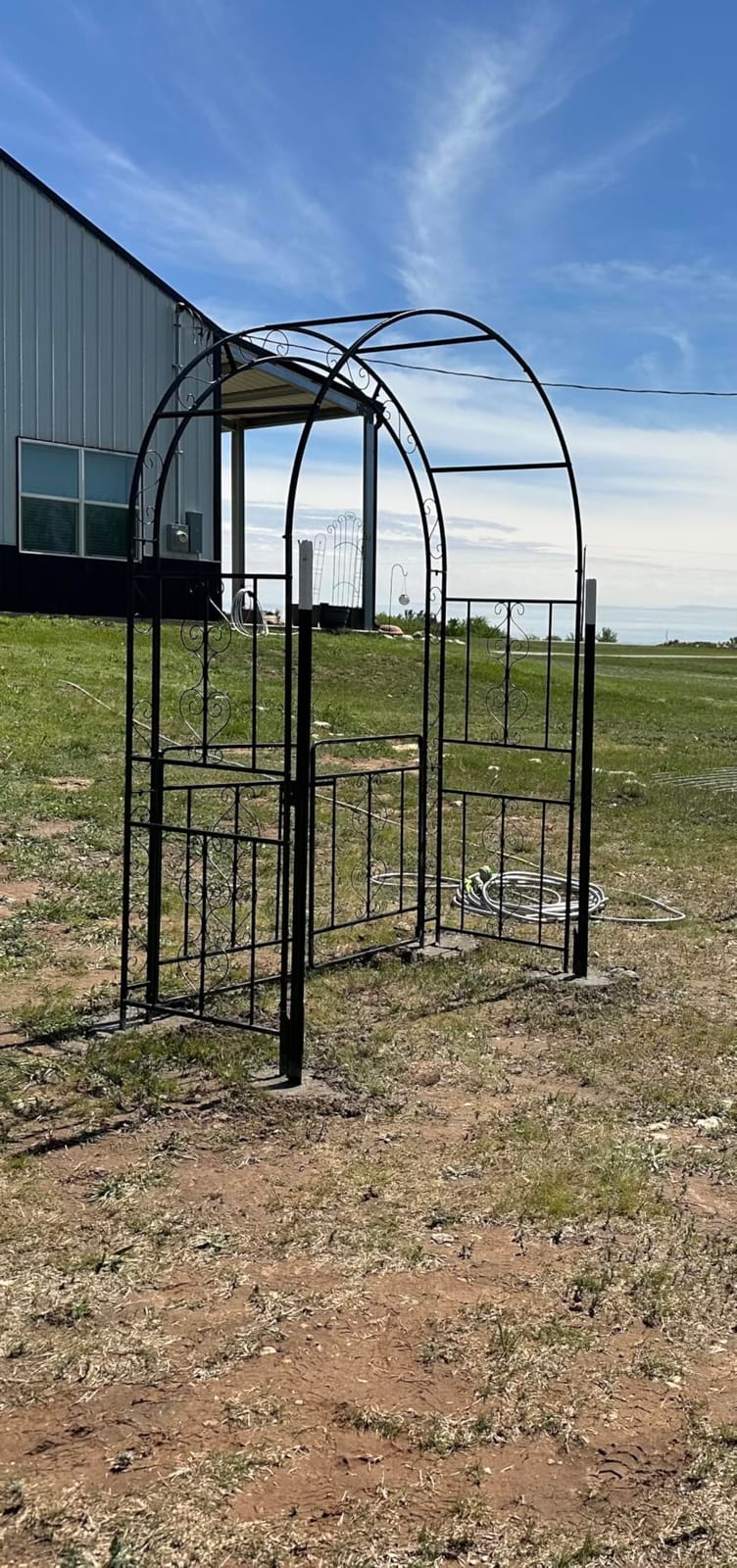
At 27.4 lb with eight ground stakes that go 7.8 inches down, this is the most heavily anchored structure we reviewed. If you garden somewhere with wind off the water or in an open plot, that anchoring depth is the difference between a rose that survives a storm and one that ends up on the lawn.
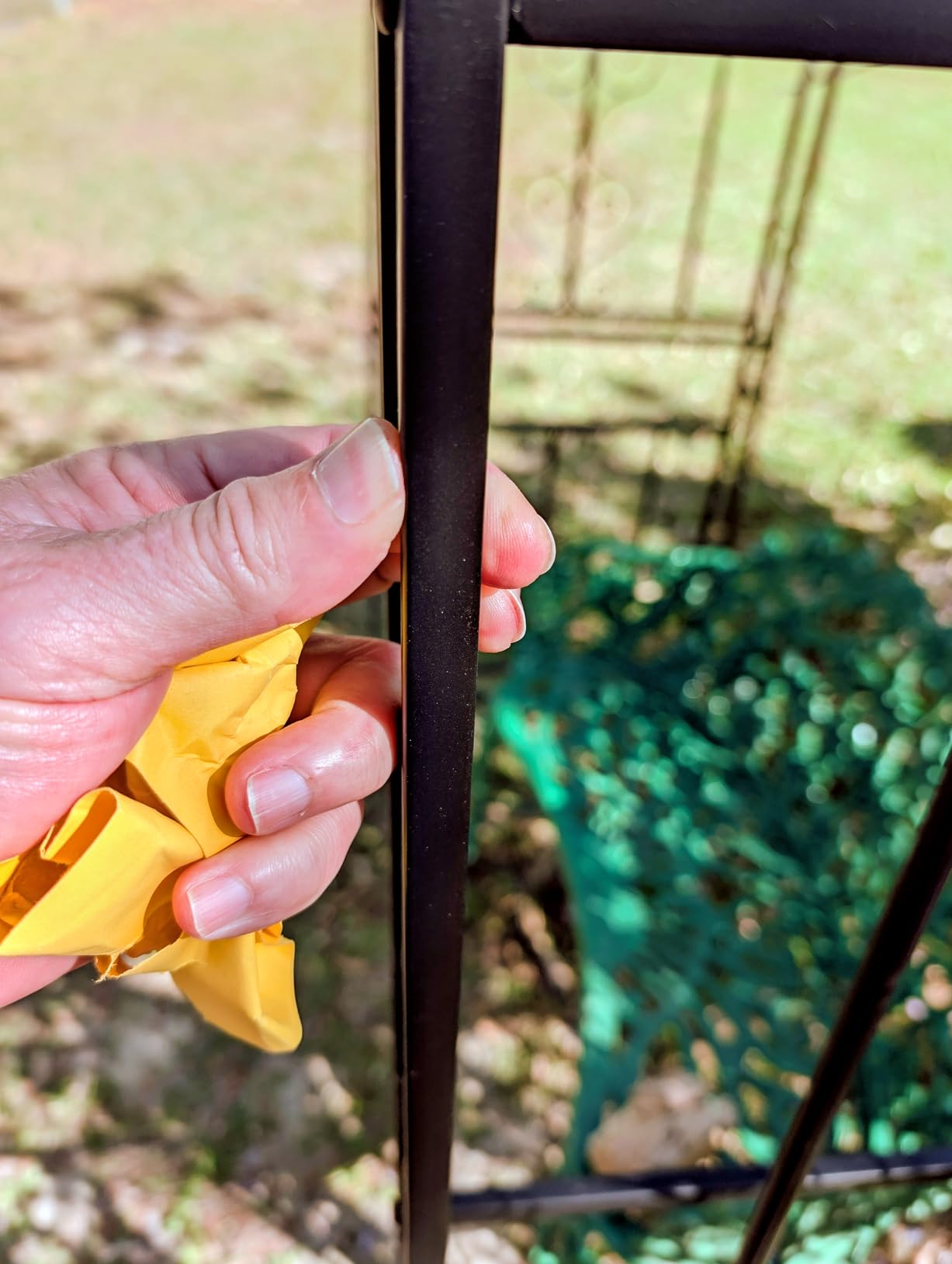
The double-layer iron frame also does not flex under hand pressure, which matters when you are threading canes through the lattice at head height.
Size is the trade-off. A 52 inch wide, 84 inch tall arch needs a generous lawn, a wide path or a driveway approach. It is not a structure for a narrow side passage or a small patio.
Handling is the other trade-off. At 27.4 lb, moving it once assembled or repositioning it after planting takes two people. Assemble it where you want it to stand.
Where to place it
Set it in the middle of an open lawn or over a wide entry path, with room for the rose to spread at least three feet either side. Planting it hard against a fence or wall traps wind and takes away the bracing room the stakes need.
Who should skip it
Skip it if you have a small garden, if you want a support you can reposition, or if you are planting a delicate climber that will look lost on a structure this substantial.
7. MQJIAZHI 6 ft Adjustable Obelisk – Best for Pots and Adjustable Height
- Tool free plug in assembly with no screws or wrenches
- Height adjusts to 36 52 or 70 inches
- PE plastic coating resists rust in rain and sun
- Deep green finish blends into the garden
- Stayed upright in hot and windy conditions for buyers
- Lightest frame here at 2.2 lb and thin for heavy canes
- Assembly instructions are printed backwards
- Narrow triangular footprint has fewer tie on points
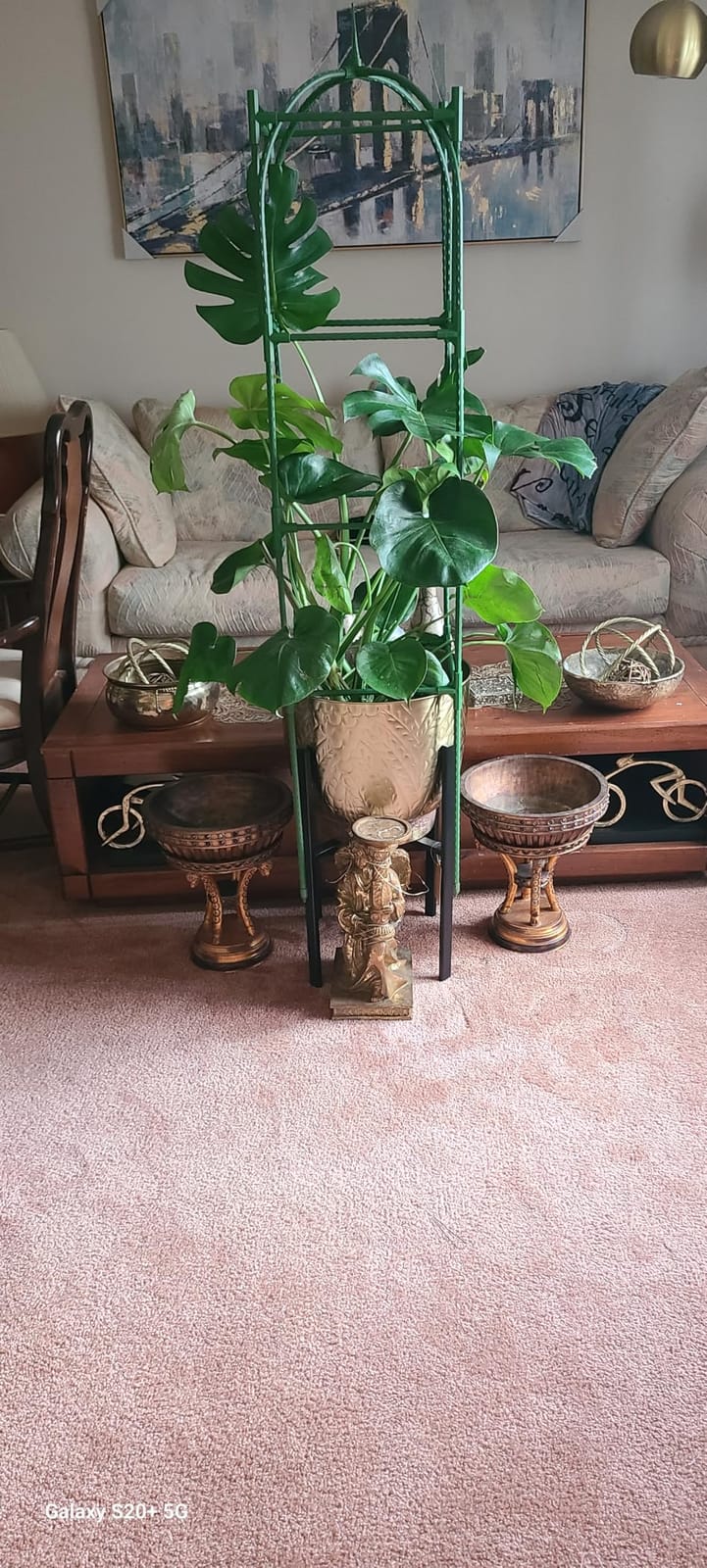
The adjustable height is the idea that works here. You build it at 36 inches, add a section as the plant grows, and end at 70 inches. For a patio pot with a rose that is still establishing, that means one purchase covers three years of growth.
Assembly is genuinely tool free. Sections plug together through a three-port linker and lock as you rotate them, and the deep green PE coating over steel tubing has held up rust-free for buyers through months outdoors.
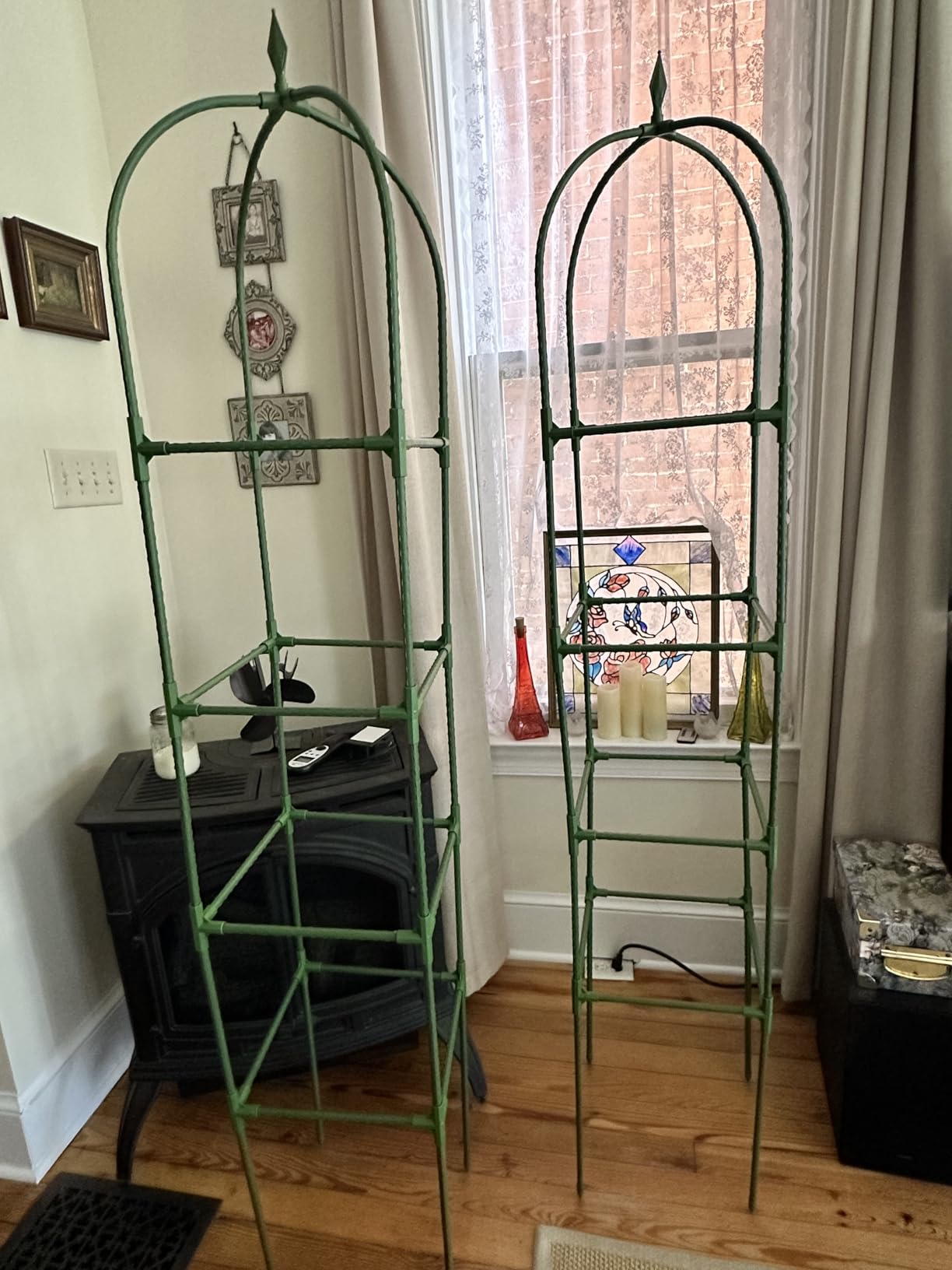
It is the lightest frame in this roundup at 2.2 lb, and that shows up under a heavy mature rose. Think patio climber, young climbing rose or a light perennial vine rather than a big rambler with old wood.
Two practical notes. The printed instructions run backwards, so follow the part numbers rather than the pictures, and the narrow triangular footprint gives you fewer tie-on points than a flat panel.
Getting it into a pot
Because the legs are not meant to be driven into hard soil, set the tower directly in the potting mix and weigh the base with a ring of stones or a heavy pot liner. A 2.2 lb frame in a large pot can tip in a gust if the mix is loose and dry.
Who should skip it
Skip it for thick old rose wood, for a plant you want to train horizontally, or if you cannot lift and steady the tower in a full planter on your own. The narrow base is the limiting factor for containers.
8. H Potter 72 Inch Estate Iron Panel – Premium Pick for a Rose That Will Outlive You
- 60 lb of solid iron with a 1 inch square tube frame
- 10mm scrollwork gives dependable vine support
- Four ground spikes plus two 36 inch stabilizing stakes
- Charcoal brown powder coat with UV sealer
- Highest rated pick in this roundup
- Two person assembly and handling at 60 lb
- Sits at the premium end of the list
- Estate style scrollwork suits formal gardens
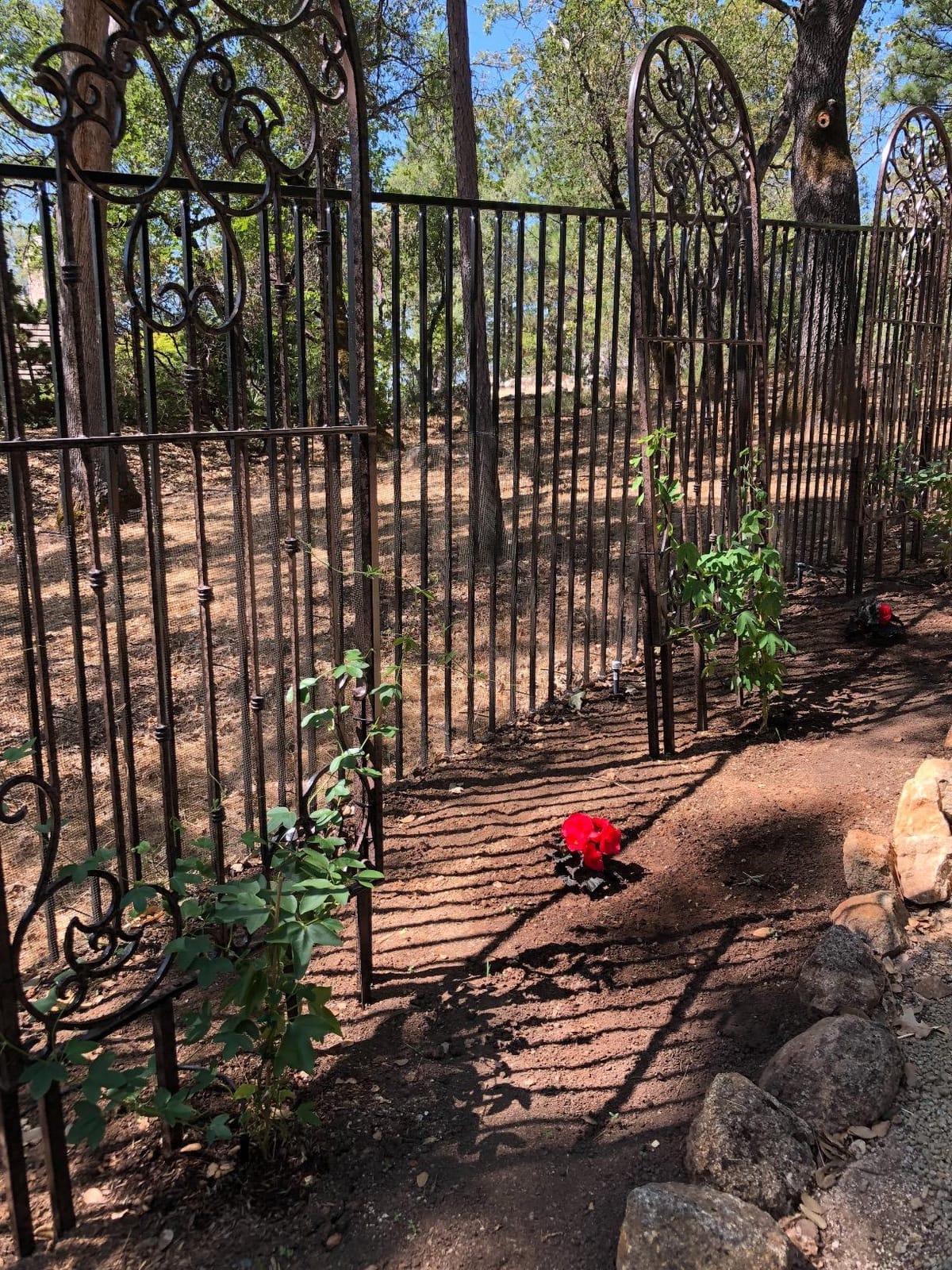
This is the panel for a gardener who plants a rose once and forgets about it. Sixty pounds of solid iron with a one inch square tube outer frame does not flex, spring or creep, and it carries the sort of old, heavy cane that pulls lesser frames out of the ground.
It carries the highest rating in our set, and owners describe it as an architectural panel that holds roses and clematis without movement, with the extra 36 inch stakes doing real work in softer ground.
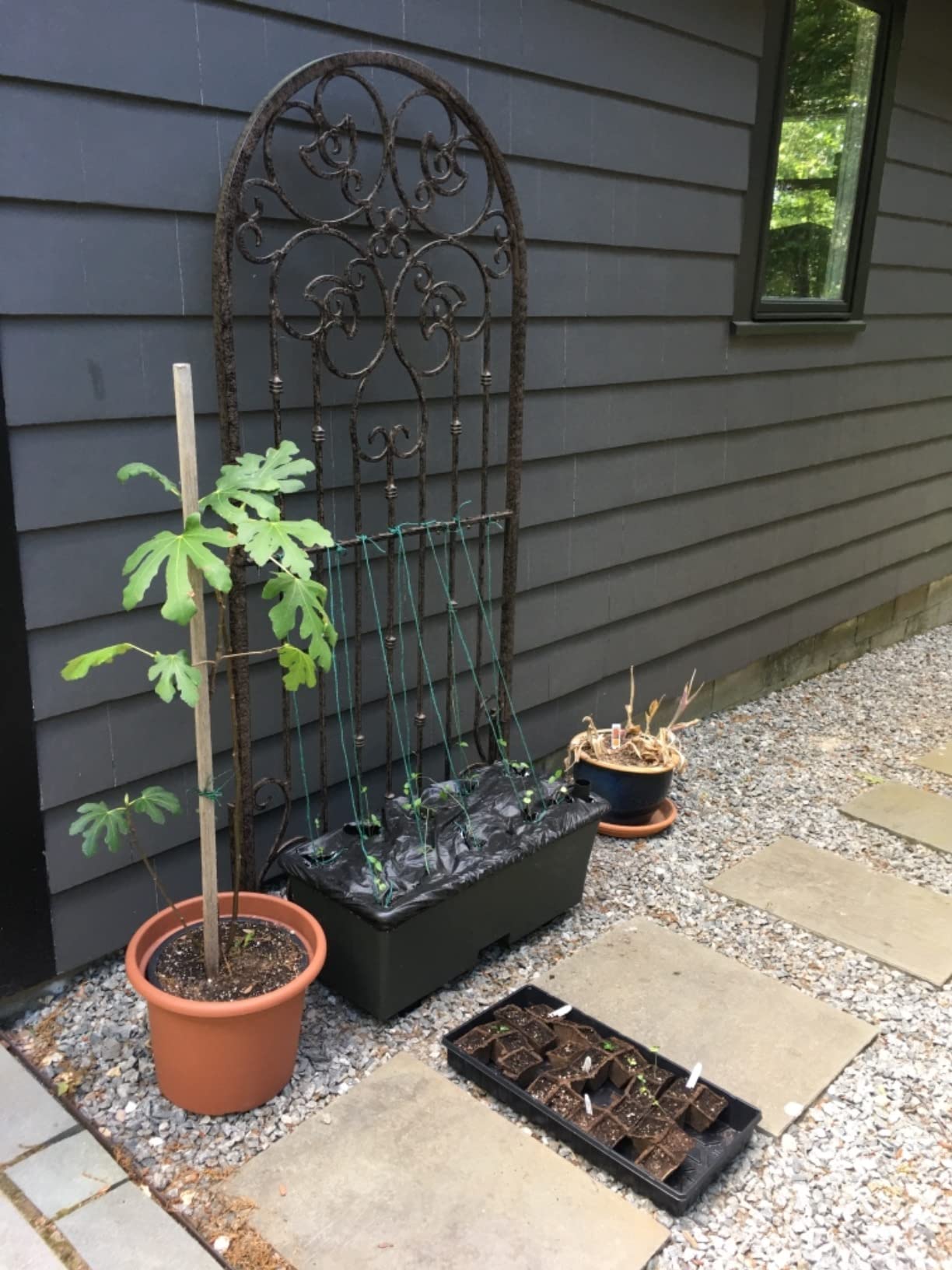
The anchoring is what separates it. Four integrated ground spikes plus two external 36 inch stakes spread the load, which is exactly the answer to the tipping and snapping fear that comes up every time a tall obelisk is discussed in rose forums.
The aesthetic is a consideration. Charcoal brown scrollwork with hand-applied faux detailing reads as formal estate garden, and that may not suit a cottage or rustic planting scheme.
Get help before you lift it
Plan the assembly site first. Two people are required to assemble and to move it, so put it together where it will stand, in a cleared area away from where the rose will go, and then walk it into place.
Who should skip it
Skip it if you are a single-person gardener working alone, if the planting is a patio pot, or if your garden style is cottage rather than formal. It is also a poor fit for a small wall face because of the weight involved in fixing it.
9. Macteyia 70.8 Inch Wire Lattice 2-Pack – Best for Fences and Small Screens
- Ground spike plant tie tape and screws all included
- Sturdy iron with a black powder coated finish
- 8.46 inch ground spike anchors firmly
- Two panels join to form a screen or privacy feature
- Bird pattern lattice is more decorative than a plain grid
- 19.7 inch width is tight for a wide spreading rose
- Flimsy wire spacing needs tape or zip ties
- Spike fix limits where it can stand
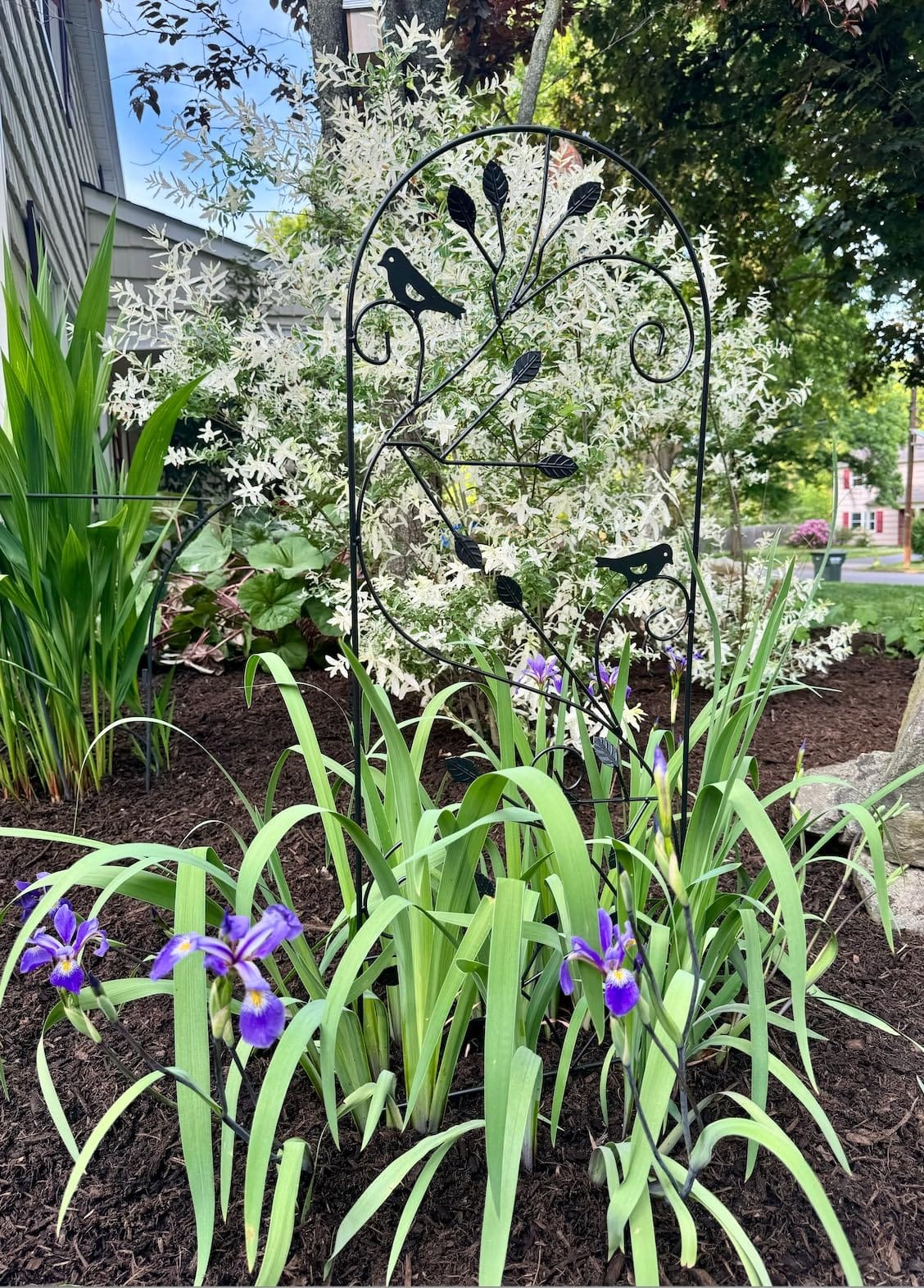
This is the pick for anyone who wants roses up a fence rather than on a house wall. It ships with an 8.46 inch ground spike, plant tie tape and screws, so you can start without buying hardware, and two panels side by side give you a run of screen along a fence run.
At 70.8 inches it is tall enough for most climbing roses, and the bird-pattern lattice is a step up visually from the plain grids at the same height.
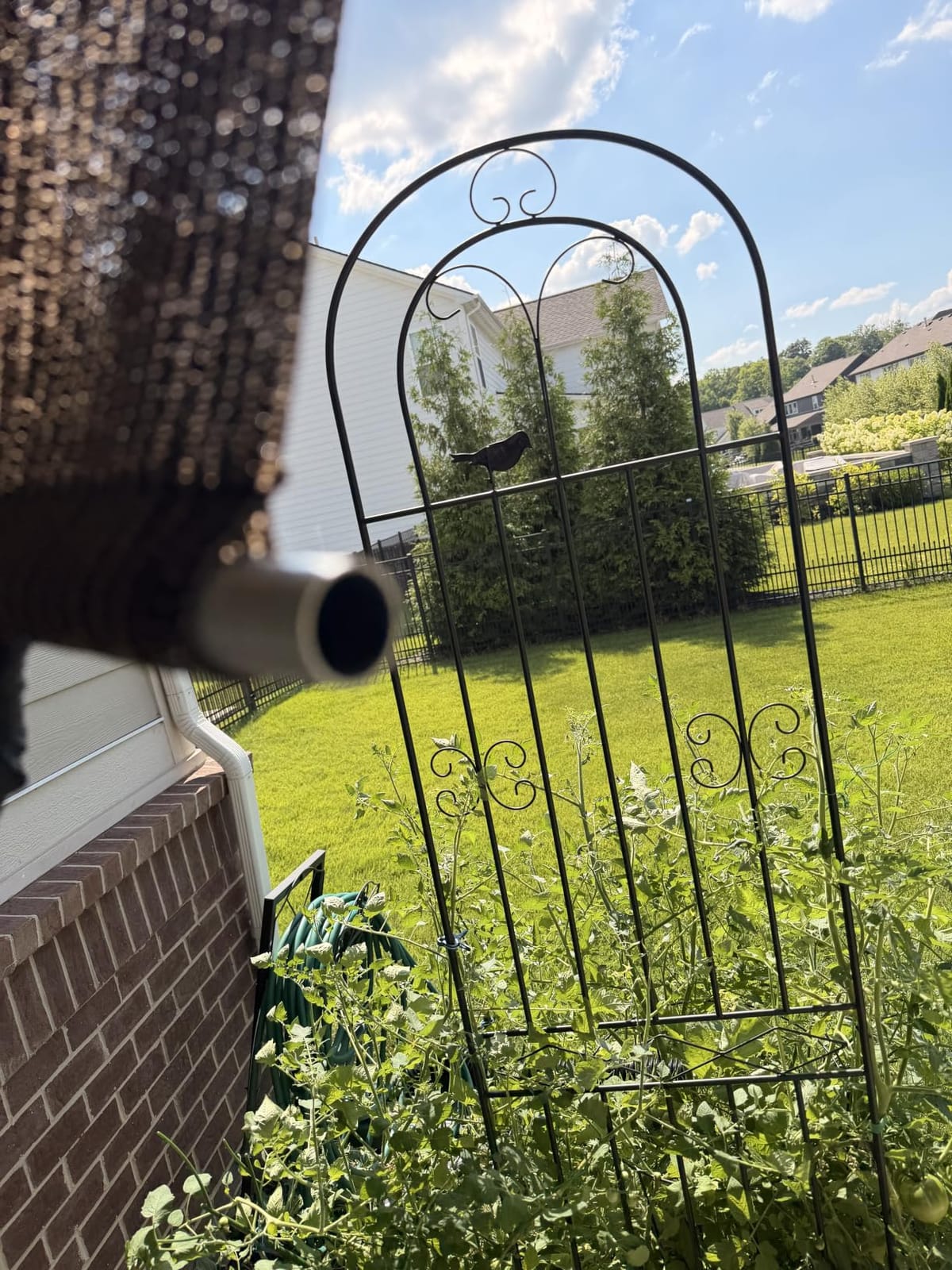
Width is the limit again. Nineteen and a half inches suits a rose trained mostly upward; a wide shrub rose will spill past both edges. If you need a spread of three feet or more, choose a wider panel.
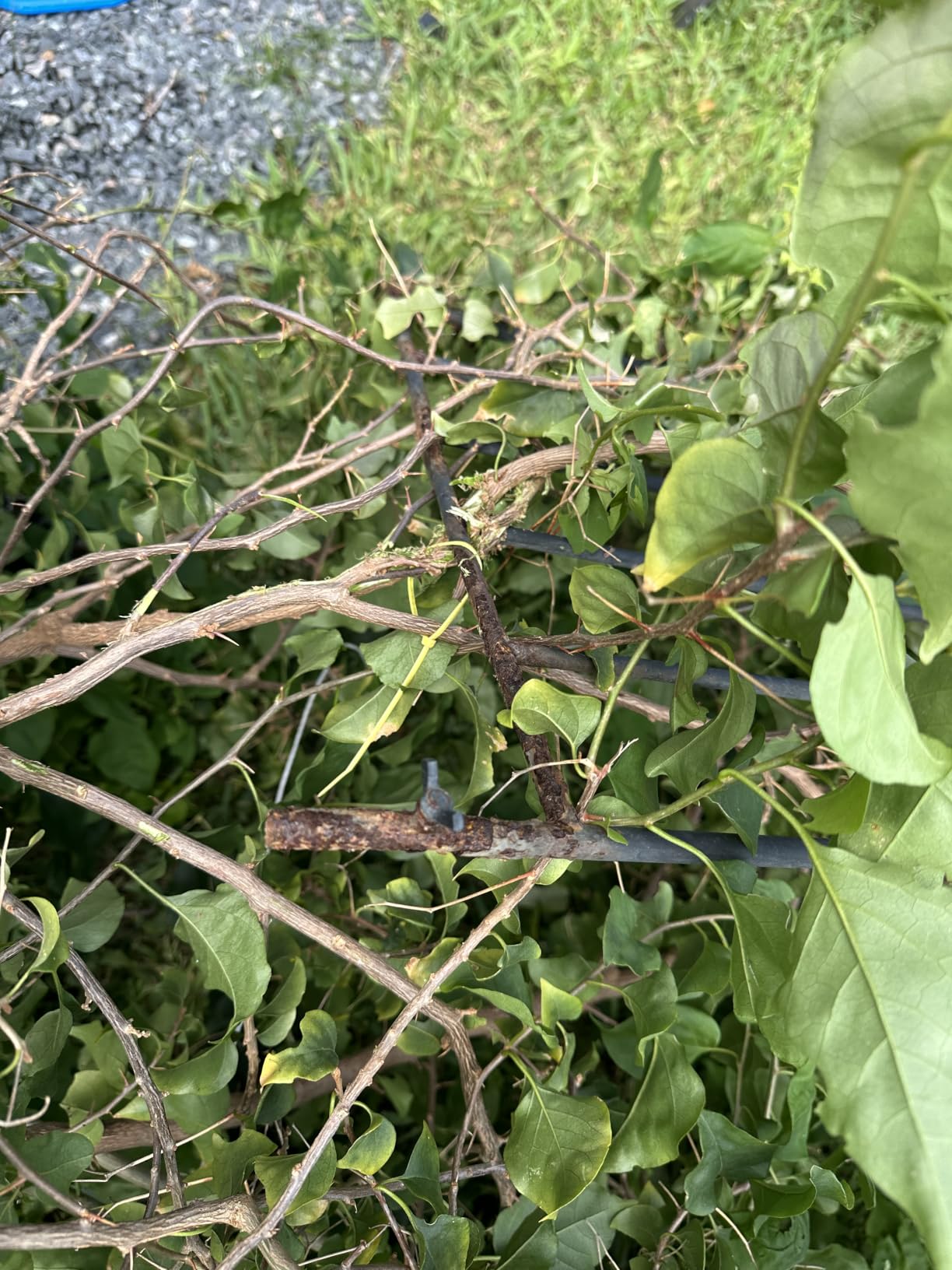
Owners also note the wire is on the slender side, so canes cannot weave themselves in. Use the supplied tape or soft ties rather than expecting stems to lock into the grid on their own.
How to use it on a fence
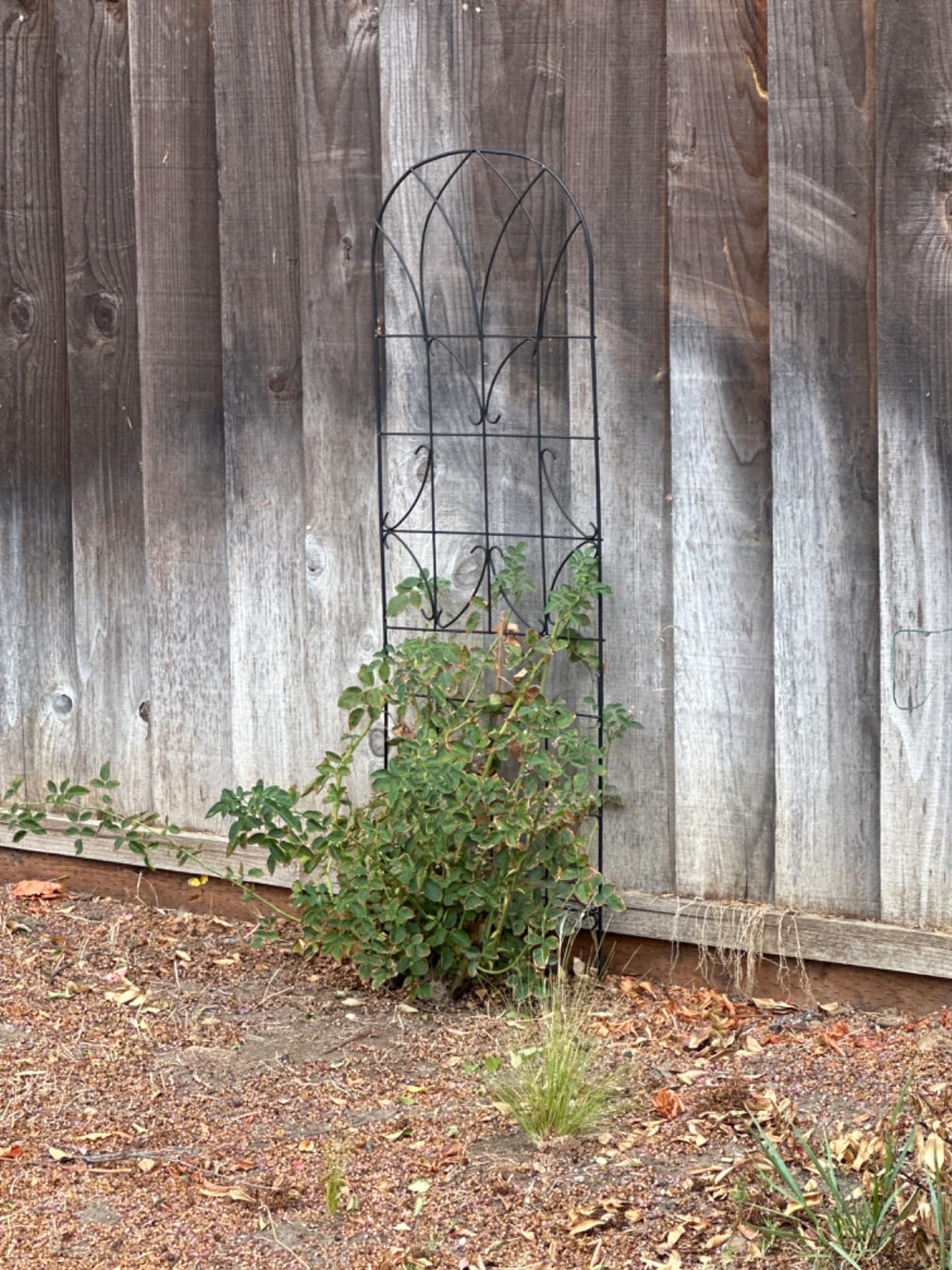
Place each panel just in front of the fence rather than flat against it, leaving 2 to 4 inches of air. That gap lets you inspect for mildew, and it stops canes being pressed into timber where they rot and can be damaged when the fence is treated.
Who should skip it
Skip it if you want a freestanding arch or a structure that will carry a rambler, or if you will not use the ground spike and the panel would sit loose. It is a fence-mounted screen, not a standalone frame.
10. LZRS 71 x 40 Inch Rustic Iron Arch 2-Pack – Best Two-Panel Setup for a Bed
- Adjustable hook design lets you set the angle to suit the plant
- Two panels install side by side for extra coverage
- Thick metal wire with rust proof black powder coat
- Vertical panels add height and horizontal panels save ground space
- Wipes clean with a damp cloth
- Screw assembly required so it is not tool free
- Hook joints can develop play under heavy growth
- 4.35 kg per pair is awkward to move once planted
Forty inches wide and 71 inches tall, this is the widest flat panel pair in the roundup that still reads as an arch. The rust-proof black coat and the rustic profile sit well in a cottage or gravel garden where a formal scrollwork panel would look out of place.
The adjustable hook angles are genuinely useful. You can set the panels at a slant to follow a rising bed or lean them into a corner without forcing the frame.
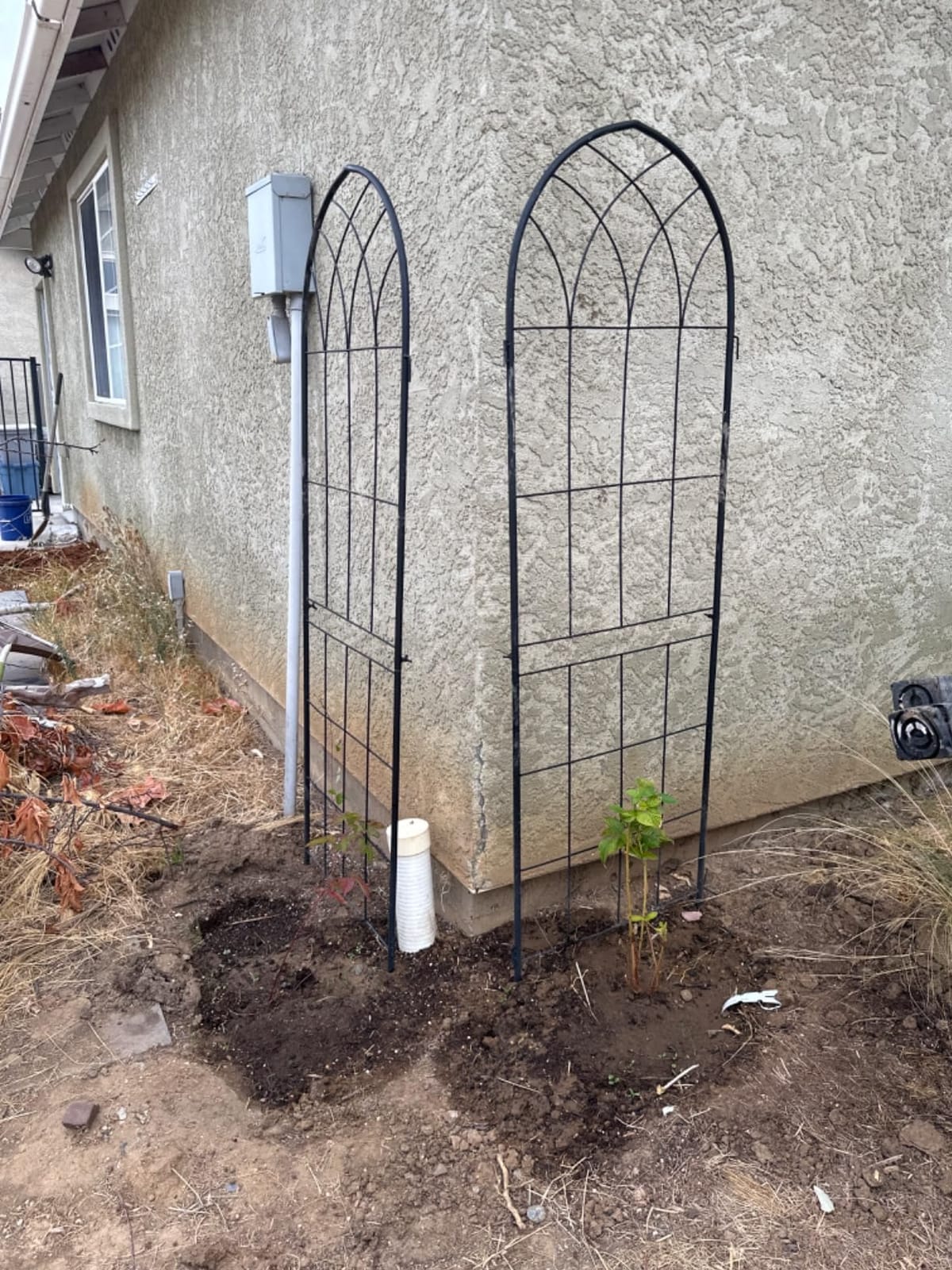
Two panels installed side by side give you roughly 80 inches of support face, which is a lot of room for horizontal training. That makes this one of the better options for a rose you want to spread along rather than send straight up.
It is a screw assembly rather than a plug-in one, and owners mention the hook joints can develop play over several seasons under heavy growth. Tighten the fixings annually and you will stay ahead of it.
Get the angle right on day one
Set the hooks before the rose goes in, because moving a panel later means cutting canes. A slight backward lean toward a fence or wall gives you more tie-on surface facing the garden and fewer canes trapped behind.
Who should skip it
Skip it if you want a tool-free setup, if you expect to relocate the panels once growth is established, or if your style is formal. The rustic finish and visible fixings are not a match for a classical garden.
How Big Should a Rose Trellis Be?
Height is the easy half. The rule most growers follow is that the trellis should match the mature height of the rose, not its height in the pot, because a climbing rose often puts on its main length in a single season once established.
Width is the half almost nobody answers, and it is the question rose gardeners on r/Roses keep asking about varieties like Strawberry Hill and Gertrude Jekyll. A useful working number is two to four times the expected mature spread of the plant. A climber that eventually covers 6 feet wants a panel at least 12 feet of tie-on surface, which is three or four panels rather than one.
If you only have room for two panels, the alternative is to accept a smaller rose, or to grow two plants on one structure at staggered heights, which looks better than a single rose stretched thin across a short panel.
Height guide, by rose class: a patio climber or miniature climber wants 4 to 6 feet; a standard climbing rose wants 6 to 8 feet; an English rambler wants 8 to 12 feet of support and a frame that can be extended rather than replaced.
One more sizing detail that costs nothing to get right. Position the rose crown 6 to 8 inches away from a wall, and 12 to 18 inches off the ground for a panel trellis, so air moves behind the plant and the lower canes are not sitting in damp soil splash.
Do Metal Trellises Burn Climbing Roses?
The short answer is that metal does not conduct enough heat to scorch a rose cane. Gardeners on r/Roses and other rose forums repeat this warning often and it is the single most common reason people buy vinyl instead of iron, but the mechanism people describe is not really heat conduction.
What actually causes damage is contact pressure and airflow. A cane pressed flat against sun-heated metal, especially a south-facing wall in a hot climate, can develop a pale, scorched-looking patch exactly where it touches, and a dense wall of foliage pressed against a warm panel is the environment that gets powdery mildew going.
Three habits prevent both problems. Keep canes 2 to 4 inches off any wall and off any solid panel face, use soft ties so the cane is held rather than pinched, and train enough laterals that air can move through the plant instead of a solid mat forming against the structure.
So the real trade-off is not heat. It is that vinyl never rusts, and iron holds far more weight and never loses that capacity in summer heat. In a dry, sheltered garden, iron is the better structural choice. In a wet coastal garden you will be repainting a rustproofing touch-up every few years with iron, and vinyl is the lower-maintenance answer.
How to Attach a Climbing Rose to a Trellis
Attaching a rose is a five-minute job done twice a year, in spring as growth starts and again in summer if a gust has loosened anything. The ties matter more than the trellis.
Step one, set the main canes against the structure during dormancy, before new growth softens the wood. Step two, fan the canes out as wide as the panel allows rather than running them straight up. Step three, secure each cane with soft garden ties or jute twine, leaving a finger’s width of slack so thickening wood is not strangled. Step four, add a figure-eight loop around the cane and the trellis bar so the tie cannot slide and does not cut into the cane. Step five, check every tie in spring and again after any storm, because a tight tie left on for a season is the most common cause of a lost cane.
On an obelisk or arch, the method is a loose upward spiral instead of a fan. Wrap each cane around the structure as it climbs, keeping the turns a hand apart, and you get even coverage from bottom to top.
Horizontal training is where the extra flowers come from. A cane trained sideways slows sap flow at upward-facing buds, and each of those buds then pushes a lateral shoot carrying its own flower clusters, rather than two or three shoots from a vertically trained cane. It is the reason a wide panel and a wide trellis pay for themselves.
If your rose climbs something other than a trellis, such as a pergola run or a climbing frame built into a wall, the same tie-on rules apply, and our climbing pegboard guide covers the alternative surfaces gardeners fix to walls when drilling is not an option.
Trellis Types: Which Shape Fits Your Rose and Your Site
Shape is decided by where the rose is going, not by how the garden is decorated. A wall or fence run needs a flat panel because that is the only face that lets you fan canes sideways. A bed, a lawn or a path needs a freestanding tower or arch, because a wall-mounted panel has nothing to attach to. A pot needs something narrow with a foot you can push into the mix.
Wall panels and lattice are the choice for a house front, and they are the only shape that supports horizontal training over a long run. Obelisks and towers are the choice for a focal point in an open bed and work best with one vigorous climber spiralled up them. Arches are a shape and a statement at once, useful over an entry but limited in tie-on surface. Compact and adjustable towers are the patio and pot answer.
There is a fifth option that no competitor roundup covers and that rose growers on r/Roses recommend often: no trellis at all, just vine eyes and horizontal straining wire. It is cheap, you can add to it as the rose outgrows it, and it is the only system that scales indefinitely. A cattle panel fixed to posts is the other DIY route people report working well for a single rose bush.
For renters, a freestanding structure that stakes into the ground solves the drilling problem entirely. If you need it against a wall and cannot drill, a freestanding panel stood 6 to 8 inches off the fence is the compromise, and it leaves the wall free of plugs later.
Anchoring and Installation
Anchor hardware is where most trellis failures start. The rule is that the fix must suit the wall or soil it is going into, and that the fix goes into structure rather than into cladding.
On brick, use masonry wall plugs rated well above the expected load and drill into the mortar line or solid brick, not a hollow gap. On timber siding, fix into a stud or a fascia board rather than into the cladding board, because a plug in cladding will pull straight out in the first winter wind. On a timber fence, lag the panel to the posts and not to the pickets. In an open bed, drive the ground spike or stake at least 12 inches and tamp the soil back around it.
Leave the rose crown 6 to 8 inches clear of any wall, and set the trellis 12 to 18 inches above soil level. Both distances exist for airflow, and both keep lower canes out of splash.
If you are moving an existing rose onto a new support, do it in winter dormancy. Lift or pull the plant back to its support, lay the canes along the new structure, and retie. Trying to redirect a rose in full growth means cutting good wood.
Give yourself a maintenance rhythm. Check every tie in spring and after storms, tighten structural fixings once a year, and touch up or repaint rustproof coating before the finish fails rather than after.
Buying Checklist and Common Mistakes
Four things to confirm before you order: the finished height against the mature height of your rose, the width of the tie-on face, the material, and the anchoring method for your specific wall or soil.
Three mistakes repeat more than the others. The first is sizing to the plant in the pot rather than the mature rose, which leaves you topping out in a single season. The second is choosing by appearance, which is how thin wire panels end up bowed under a wet bloomed cane. The third is buying a wall panel for a bed or a freestanding tower for a wall, when neither shape can do the job it was not designed for.
A fourth, quieter mistake is using wire ties. Wire cuts into thickening wood and is the most common reason a healthy-looking rose loses a cane in its third year. Soft ties, renewed each year, cost almost nothing.
Frequently Asked Questions
What are the best supports for climbing roses?
The best supports for climbing roses are rigid, load-bearing structures in powder-coated or galvanized metal, vinyl, or sturdy timber: wall panels for a house or fence, freestanding obelisks and towers for open beds and pots, and arches for an entryway. Height should match the mature height of the rose and the tie-on face should be at least two to four times the expected mature spread.
How do you attach a climbing rose to a trellis?
Attach climbing rose canes during winter dormancy, before new growth softens the wood. Fan the canes across the structure as widely as the panel allows, secure each with soft garden ties or jute twine, and use a figure-eight loop around the cane and the trellis bar so the tie cannot slide or cut into thickening wood. Leave a finger’s width of slack and recheck every tie each spring.
Are metal trellises better than wooden ones?
Metal is stronger and holds far more weight, so it is the better structural choice for heavy mature canes, and powder-coated or galvanized metal will not rot. Vinyl also never rusts and is the lowest maintenance option in wet coastal gardens. Wood suits cottage planting but needs regular sealing and check the frame before a wet winter.
What kind of climber is best for an obelisk?
A single vigorous climber trained in a loose upward spiral is ideal for an obelisk, because the tower gives one continuous path from the ground to the top. Patio climbers, jasmine, mandevilla, clematis and a young climbing rose all work well. Wide ramblers trained horizontally need a flat panel rather than a round tower, where canes are awkward to reach once covered.
What is a good heavy-duty trellis for climbing plants?
A heavy-duty trellis for climbing plants is a powder-coated steel or wrought iron panel or tower with a thick outer frame, welded rather than tensioned wire, and real ground anchors. Look for a frame that does not flex under hand pressure, stakes or spikes at least 12 inches long, and a height that exceeds the mature height of the plant by a year or two.
Our Verdict on the Best Trellises for Climbing Roses in 2026
For most gardens the Amagabeli 75 x 31 inch iron panel pair is the pick we would buy first, because the height and width let you train a rose horizontally, which is where the flowers come from. If your planting is formal or you want one panel to outlast a rambling rose for a quarter century, the H Potter 72 inch estate panel is the stronger structure and the best-rated of the set.
The LeJoy obelisk is the value choice for a freestanding focal point, the Outvita arch is the one to buy if your site is exposed, and the MQJIAZHI adjustable tower is the answer for pots and patios. Whatever you choose, size it to the mature rose rather than the young plant, anchor it for the wind it will actually face, and use soft ties. Those three decisions do more for your climbing rose than the finish on the trellis ever will.