
The best soil test kits for vegetable gardens fall into two very different camps. Mail-in lab kits ship your soil to a real testing facility and come back with a full nutrient panel plus fertilizer rates. At-home kits put a color chart in your hand and give you an answer in minutes, usually for less money.
Both camps have a real weakness, and picking the wrong one wastes a season. We spent weeks working through eight of the most-reviewed kits on the market, comparing what each one actually measures, what it leaves out, and whether the numbers are close enough to act on. Two of these products sit in soil science classrooms and professional operations. Two measure pH and nothing else.
What follows is a kit-by-kit breakdown for 2026, including the honest failures. If you want the short answer first, the MySoil kit earned our Editor’s Choice because it measures 13 plant-available nutrients plus pH and hands you a written fertilizer recommendation. If you just need to know whether your pH is blocking nutrient uptake, a strip kit will do that job for a fraction of the outlay and no lab wait.
Table of Contents
Are Home Soil Test Kits Actually Accurate?
Partly. Home kits get pH roughly right, usually within about one unit of a lab reading, which is close enough to act on. For nitrogen, phosphorus and potassium, accuracy drops sharply, and cheap kits are the least trustworthy of all. A university extension study that checked several DIY kits against laboratory baselines found pH usable and nutrients inconsistent.
The reason comes down to the extractant. A DIY kit shakes soil in plain water, which only pulls nutrients already dissolved. Much of the phosphorus and potassium in garden soil is bound to clay and organic matter particles, so a water extract never sees it. Labs use calibrated chemicals like Olsen, Bray 1 or Mehlich 3 to pull those bound reserves into solution, which is the number a fertilizer rate gets calculated from.
So the honest rule is this: use any of these kits to check pH, and use a mail-in lab panel before you change fertilizer. Treat a colorimetric nitrogen reading as a rough trend rather than a number to dose against.
Top 3 Soil Test Kits for Vegetable Gardens in 2026


All 8 Soil Test Kits at a Glance
| Product | Specifications | Action |
|---|---|---|
| MySoil Soil Test Kit |
|
Check Latest Price |
 LaMotte Model El 5679-01 LaMotte Model El 5679-01 |
|
Check Latest Price |
 POWERED BY SOILKIT POWERED BY SOILKIT |
|
Check Latest Price |
 Soil Savvy Soil Savvy |
|
Check Latest Price |
 Luster Leaf Rapitest 1601 Luster Leaf Rapitest 1601 |
|
Check Latest Price |
| Garden Tutor pH Test Strips |
|
Check Latest Price |
 Dewilde Trading 140 Test Kit Dewilde Trading 140 Test Kit |
|
Check Latest Price |
 Dewilde Trading pH Strips Dewilde Trading pH Strips |
|
Check Latest Price |
1. MySoil Soil Test Kit: Best Overall for Vegetable Gardens
- Lab-grade analysis of 13 plant-available nutrients plus pH
- Written fertilizer recommendations with what to apply and when
- Both organic and synthetic options in the report
- Sample bag and prepaid envelope included
- Single-use
- so repeat tests need new kits
- Waiting period before you can act on results
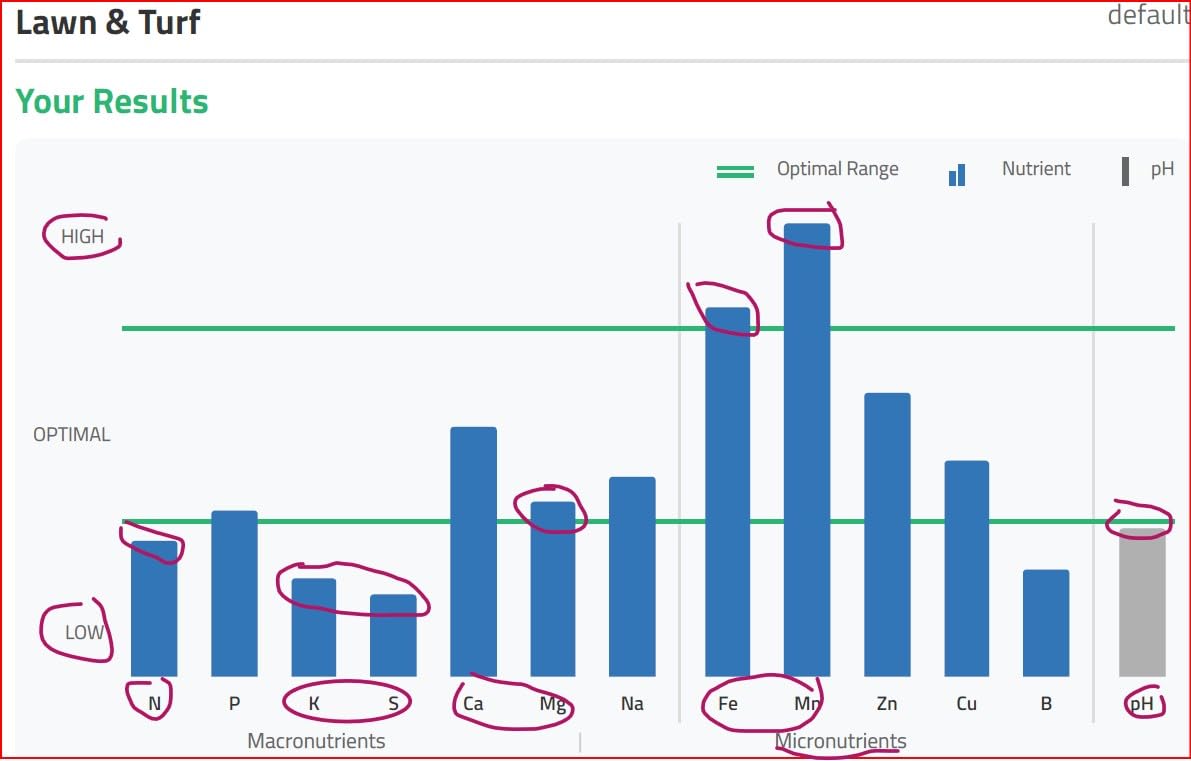
This is the kit we kept coming back to. It is a mail-in analysis handled by Predictive Nutrient Solutions, and the sample is measured for 13 plant-available nutrient levels plus pH. The report is written as recommendations rather than raw data, so it tells you what to apply, how much and when.
That framing matters more than the nutrient count. Most gardeners buying a soil test kit do not know what a Mehlich 3 extraction is, and a lab printout full of ppm values does not tell you whether your tomato bed needs anything at all. MySoil translates the numbers into a plan.
Buyers rate it at 4.6 stars across more than 3,800 reviews, and the rating distribution is unusually top-heavy with 77% five-star. The report also covers raised beds, compost, container media and hydroponics, so it works across the growing situations a home kitchen garden actually contains.
The one drawback is structural rather than quality related: each kit covers one sample. When you retest next fall you buy again. Variants run from a single kit up to 12 kits, so a whole property or several distinct beds can be covered in one order.
What you get that cheaper kits skip
Organic matter percentage and micronutrients. A report that covers boron, zinc, manganese and iron tells you whether a deficiency is a nutrient shortage or a pH lockup problem, which is the difference between buying fertilizer and buying lime.
That diagnostic distinction is the real value. Yellowing leaves are the single most common complaint gardeners bring to a soil test, and pH alone cannot tell you whether the plant is starved or locked out.
Where it falls short
Turnaround works against you in early spring. If you want a result before you plant, send the sample in late winter rather than the week of the last frost. Nitrogen also moves faster than most mail-in lab cycles, so a late-season nitrogen number describes the soil on the day it arrived, not the day it was collected.
Users on gardening forums also point out that a mail-in report tells you what is missing, not how to fix a bacterial or fungal problem. If plants are wilting in soil that tests fine, the issue is biology or drainage rather than chemistry.
2. LaMotte Model El 5679-01: Best for Learning and Repeated At-Home Testing
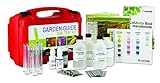
Lamotte Model El – Turf and Garden Soil Test Kit – 5679-01
- Same testing technology used by agricultural and turf professionals
- Everything from reagents to manuals in one box
- Sixty nutrient tests plus thirty pH tests
- Supports classroom soil science work
- Heaviest kit in the group at 2.9 pounds
- Color comparisons need good lighting to read
The LaMotte Model El is the one product here that other professionals use as a baseline. Agricultural producers, turf managers and landscapers rely on the same testing approach, and the kit includes laminated color charts, diagrammed instructions, a Garden Guide manual and the LaMotte Soil Handbook for interpreting results and working out lime and fertilizer rates.
Where it beats every mail-in option is volume. You get 15 nitrogen tests, 15 phosphorus, 15 potassium and 30 pH tests in a single box, which works out well if you have several beds, a lawn and a compost pile to monitor over a season.
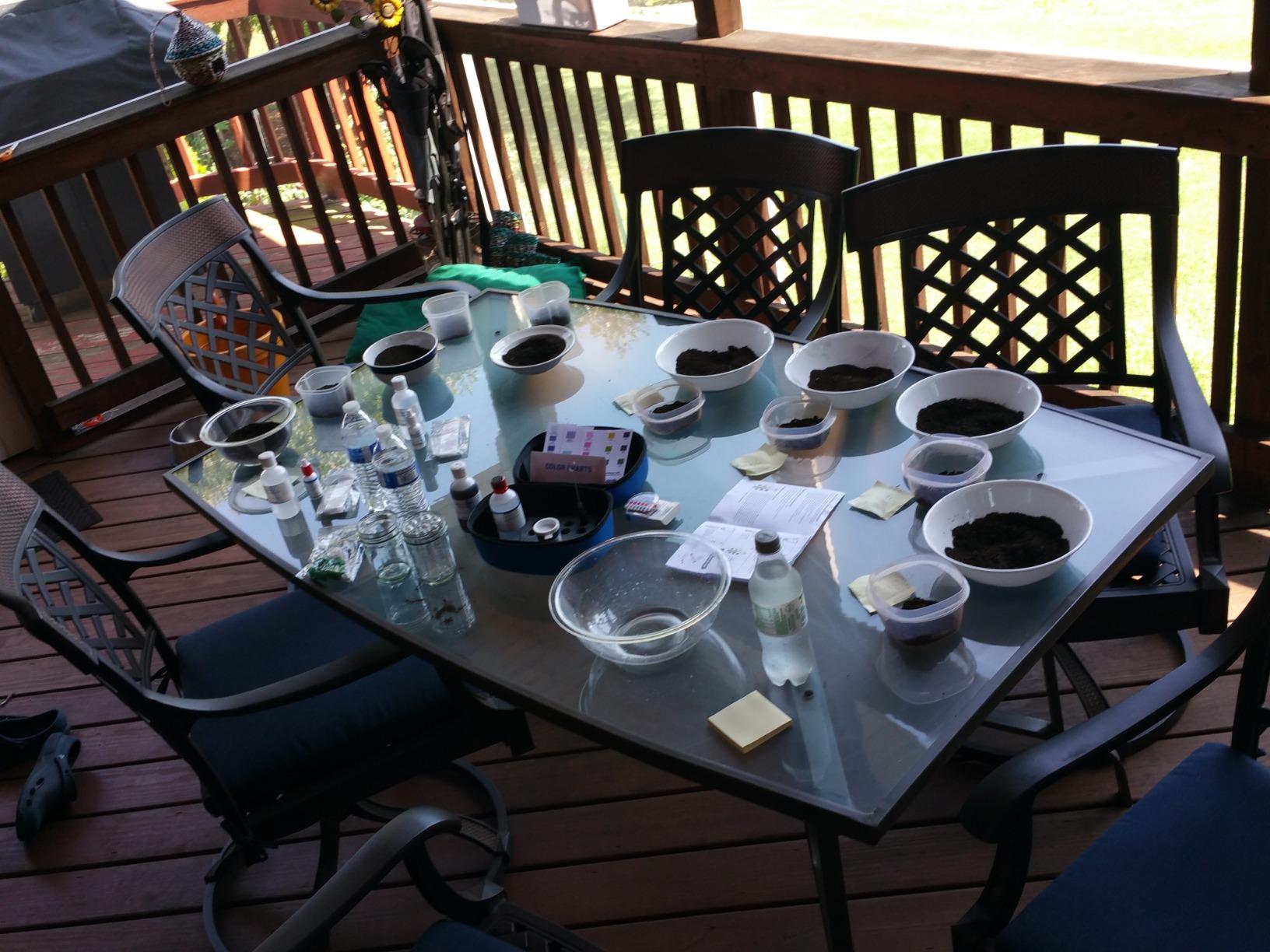
That makes it a genuinely good fit for a school garden or a community plot where many people want to run the same experiment. The STEM framing is deliberate, and the included manuals are the best teaching material in this group.
It also earns a 4.6 average, the joint highest rating here, with 74% five-star and only 2% one-star. Buyers consistently mention the completeness of the box and the quality of the written material rather than the readings themselves.
Where the manual earns its price
The Soil Handbook is the piece that changes behavior. A number without a target range is just trivia, and this kit ships with the interpretation tables a beginner needs to know whether a reading is adequate or deficient. Very few competitors include anything close to that reference material.
It also covers lime recommendations, which is the first amendment most new gardeners need to make and the one they most often guess at.
What you give up for it
Weight and bulk. At 2.9 pounds and 9.5 by 6.5 by 6.5 inches, this is the largest box in the group and awkward to store in a small shed. More importantly, it uses the same water-extraction chemistry as the cheap kits, so the phosphorus limitation described earlier applies here too.
Read it as a teaching tool and a monitoring tool rather than a substitute for a lab nutrient panel.
3. POWERED BY SOILKIT: Best Nutrient Panel Including CEC and Organic Matter
- Mehlich III lab extraction rather than plain water
- Reports CEC buffer pH organic matter and ENR
- Covers P K Mg Ca B Zn Mn and Fe
- QR scanning and square footage calculators for crop-specific input
- Report PDF layout is hard to read or print
- Not intended for potting soil
- Extra features require a paid dashboard upgrade
SoilKit is the most chemically complete option in this roundup, and the reason is the extraction method. It uses Mehlich III, a multi-nutrient extractant that pulls phosphorus and potassium out of soil at a pH where they become available, which is exactly what a plain water shake cannot do.
The report covers pH, buffer pH, organic matter, cation exchange capacity and estimated nitrogen release, plus phosphorus, potassium, magnesium, calcium, boron, zinc, manganese and iron. Organic matter and CEC are the two figures that explain soil behavior, and almost no home kit reports either.
CEC in particular answers a question raised constantly in forum discussions: why do different kits return wildly different pH on the same clay soil. A high cation exchange capacity means the clay holds hydrogen ions tightly, resists pH change and needs far more lime to move a full unit than sandy ground does.
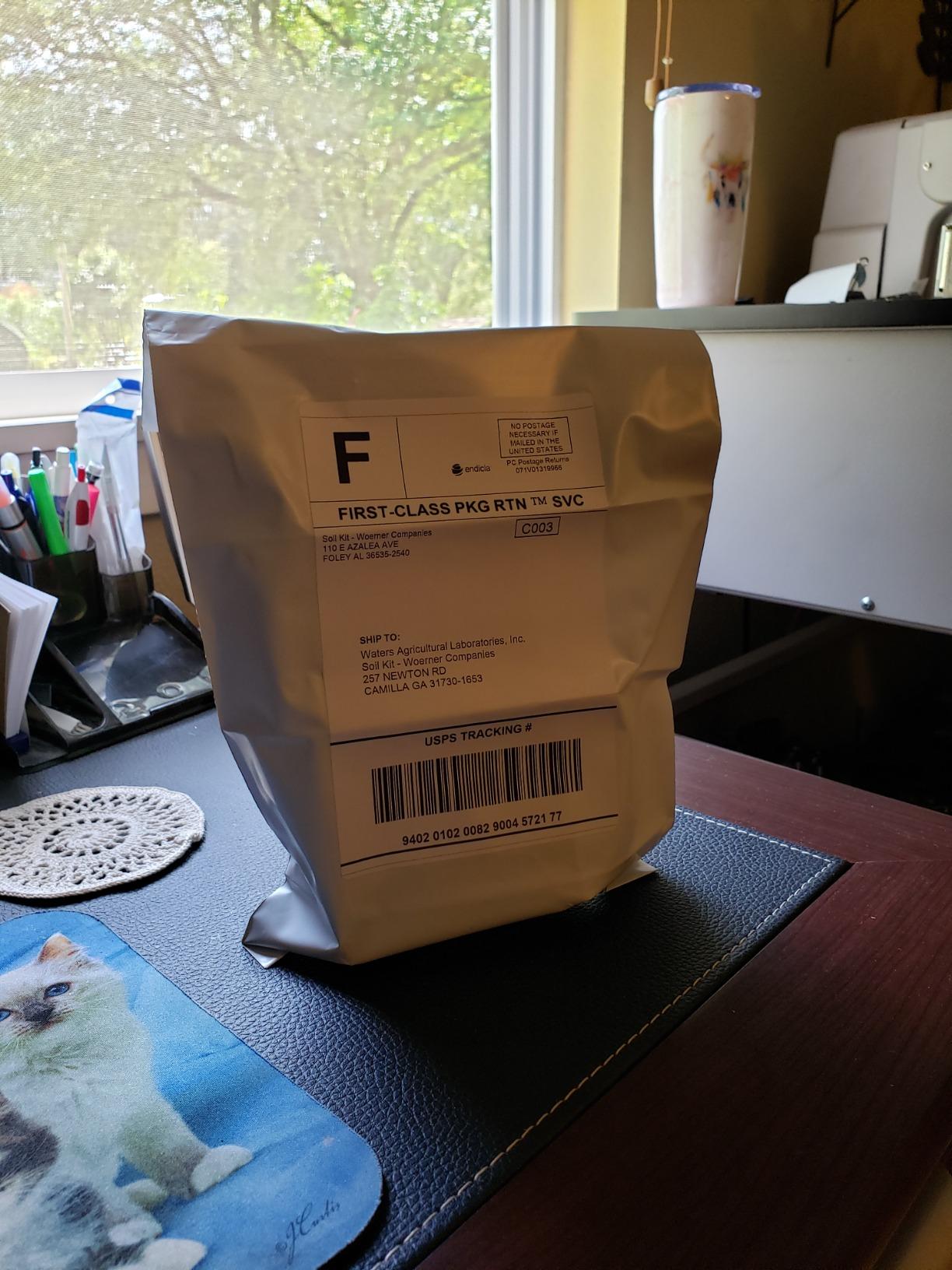
Results arrive by email in a SoilKit365 virtual dashboard, with recommendations adjusted for your garden area and crop. Owners report turnaround of roughly three to five days after the lab receives the sample.
Why CEC matters in a vegetable bed
CEC predicts how much fertilizer your soil can hold between waterings. A low number means nutrients leach out fast and you will be feeding plants constantly. A high number means nutrients stay available longer but also lock up more readily when pH drifts outside the ideal window.
Buffer pH tells you how much lime a soil actually needs, which is a very different number from how much you guessed. Gardeners with heavy clay soils lose whole seasons to lime applications that were simply too small to move the needle.
What to watch for
The report design draws repeated criticism. Buyers like the science and dislike the layout, describing the PDF as poorly designed and hard to read or print. Plan to spend a few minutes sorting the dashboard into a readable summary rather than skimming it.
It is also explicitly not intended for potting soil, so container gardeners buying bagged mix should skip this one. Weed, disease and pest suggestions sit behind a paid dashboard upgrade rather than the base report.
4. Soil Savvy: Best Plain-Language Report
- Professional-grade lab analysis at the lower end of mail-in pricing
- Full panel of pH plus 14 nutrients
- Recommendations written in plain language
- Built to cut unnecessary fertilizer applications
- Longer turnaround than some mail-in rivals
- Single-use resin capsule per sample
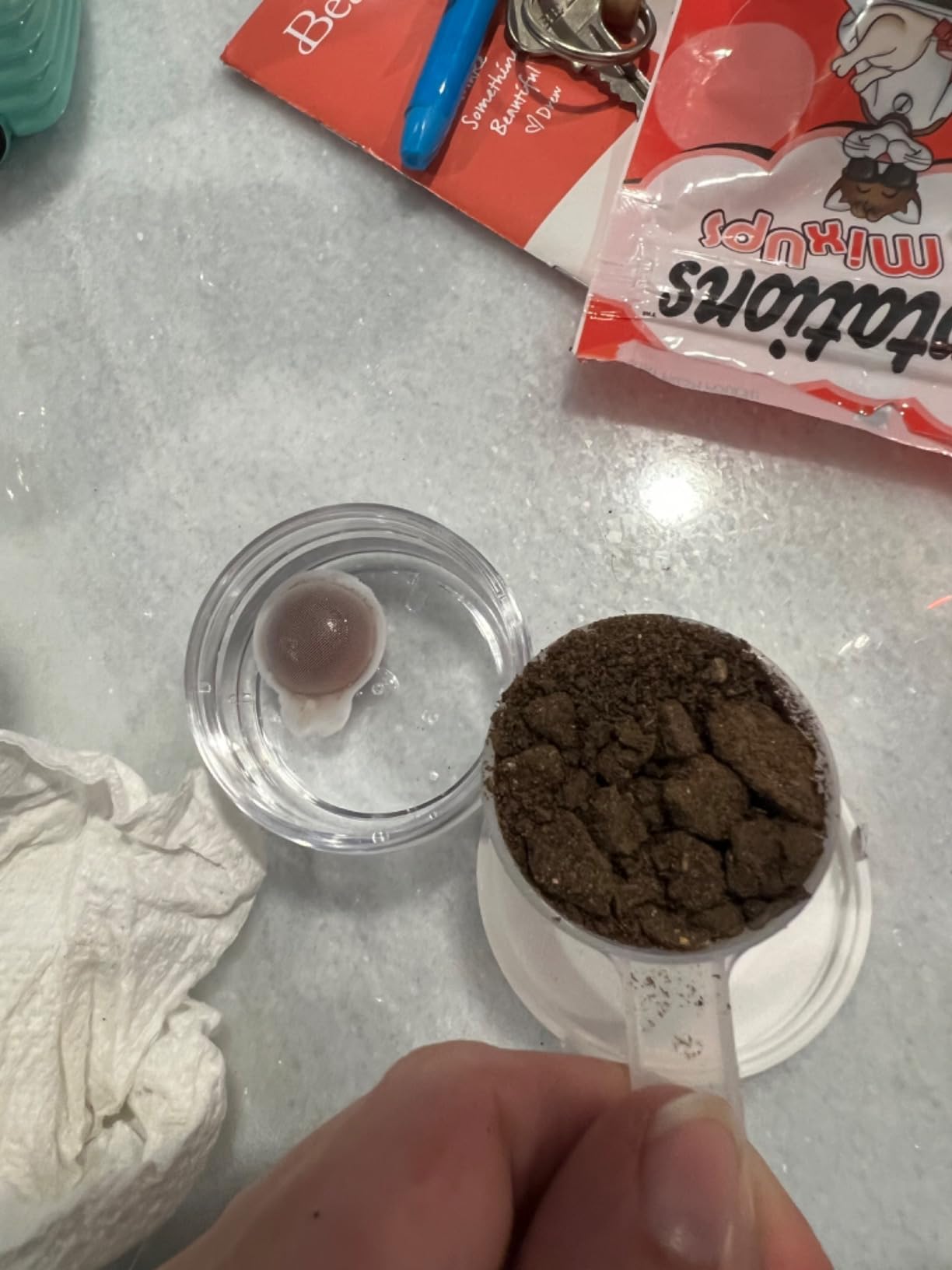
Soil Savvy uses an ion-exchange resin capsule, a method that behaves a little like a synthetic root, drawing nutrients out of soil the way a plant would. It is the same technology used by leading agricultural producers, turf managers and landscapers, made available as a single-use kit for home gardens.
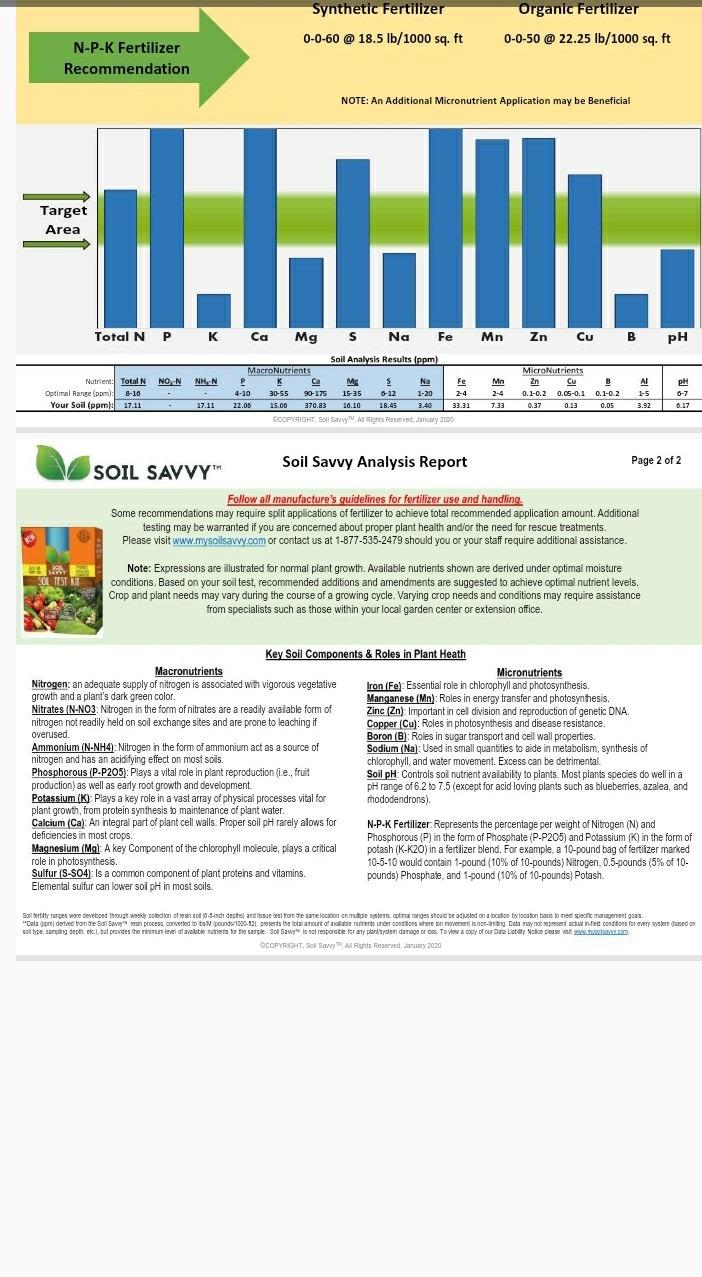
What sets it apart from the other mail-in options is tone. The report is written as a fertilizer recommendation you can read without a decoder ring, which is the exact failure that makes most lab reports useless to beginners.
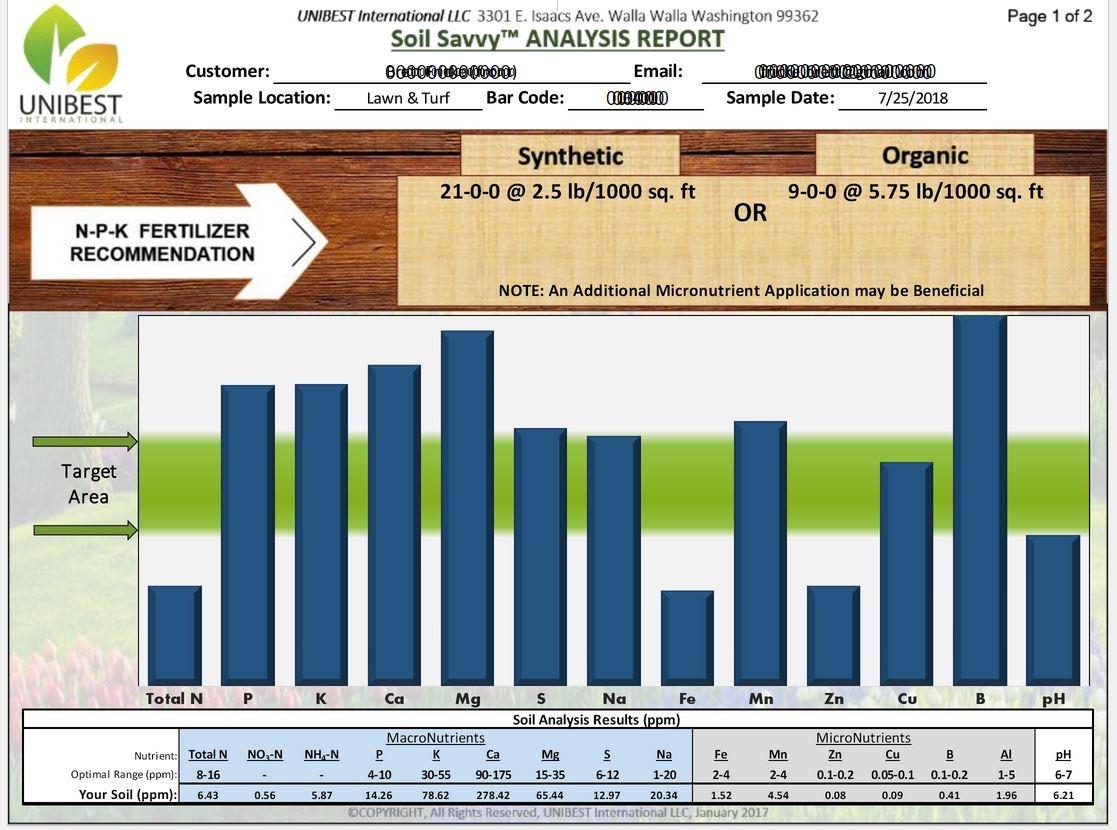
The full panel covers soil pH and 14 nutrients including nitrogen, phosphorus and potassium. The stated purpose is sustainability: determine what the plants actually need and stop applying the rest.
That framing lands well with organic growers. If you have been broadcasting fertilizer every spring out of habit, a report that shows nitrogen is already adequate saves both money and the risk of pushing vegetative growth at the expense of fruiting.
Best fit for a first lab test
This is the one to buy if you have never read a soil report and do not want your first experience to be a spreadsheet. The 4.2 average across 890 reviews reflects that balance, and 64% of buyers gave five stars.
It is also the lowest-rated of the mail-in kits here at 4.2, with a 10% one-star share. That share points at report detail and turnaround rather than the chemistry, which is worth factoring in if you need results before a planting window.
The resin method blind spot
An ion-exchange resin capsule does not report an organic matter percentage or a cation exchange capacity. Those two values are what SoilKit is built around, so the choice comes down to whether you want an easy-to-read fertilizer plan or a fuller soil chemistry picture.
For most home vegetable gardeners, the readable plan wins. For anyone diagnosing a stubborn problem on clay soil, the chemistry wins.
5. Luster Leaf Rapitest 1601: Best Budget Kit for At-Home NPK
- Fast results with no lab wait
- Lowest outlay of the nutrient kits here
- Capsule and comparator system suits beginners
- Reference list of pH preferences for 450 plants
- Color matching is subjective between users
- No micronutrients organic matter or CEC
Rapitest is the name most people mean when they say home soil test kit, and it earns that through sheer review volume. More than 6,700 ratings at a 4.2 average makes it the most widely used product in this roundup by a wide margin.
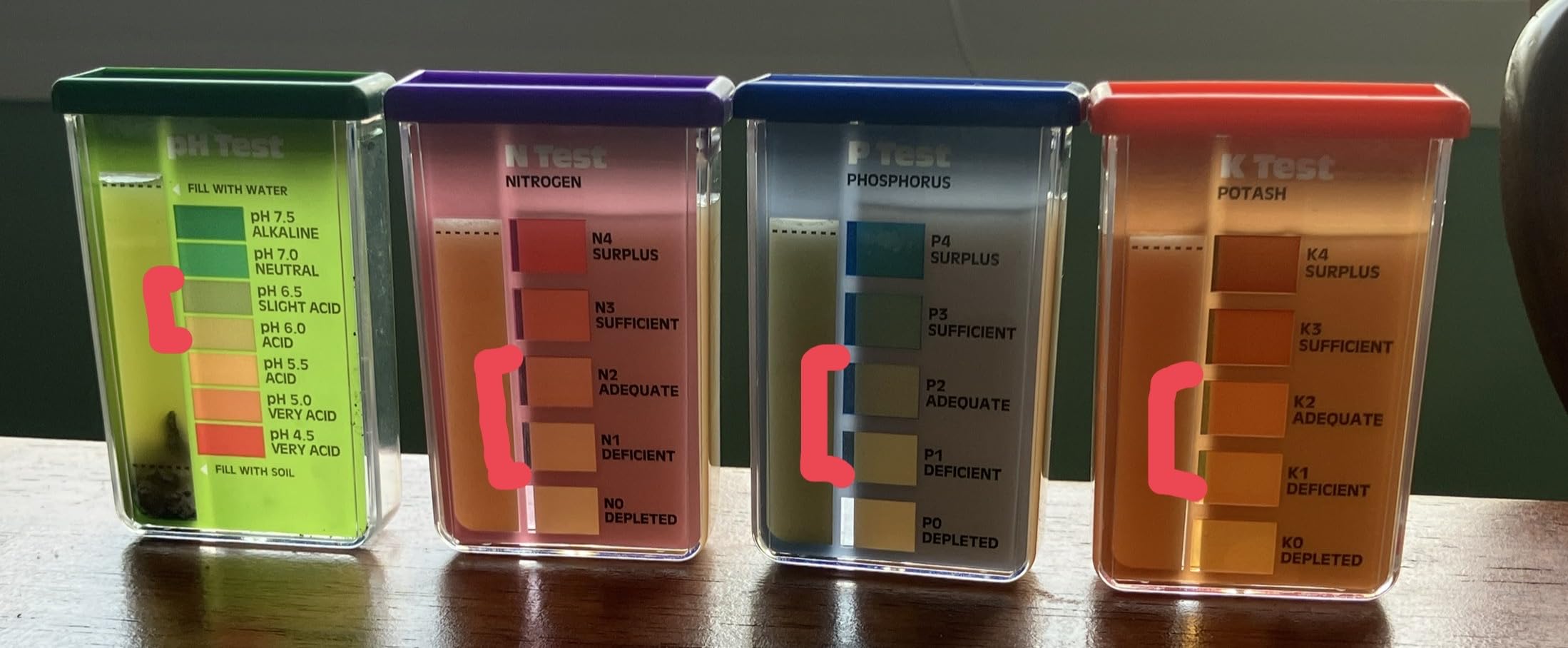
The system is simple. You fill a capsule with soil, drop it in water, and hold the patented color comparator against the tube until the two colors match. Forty tests come in the box, ten each for pH, nitrogen, phosphorus and potash. No batteries, no reagents beyond what is included.
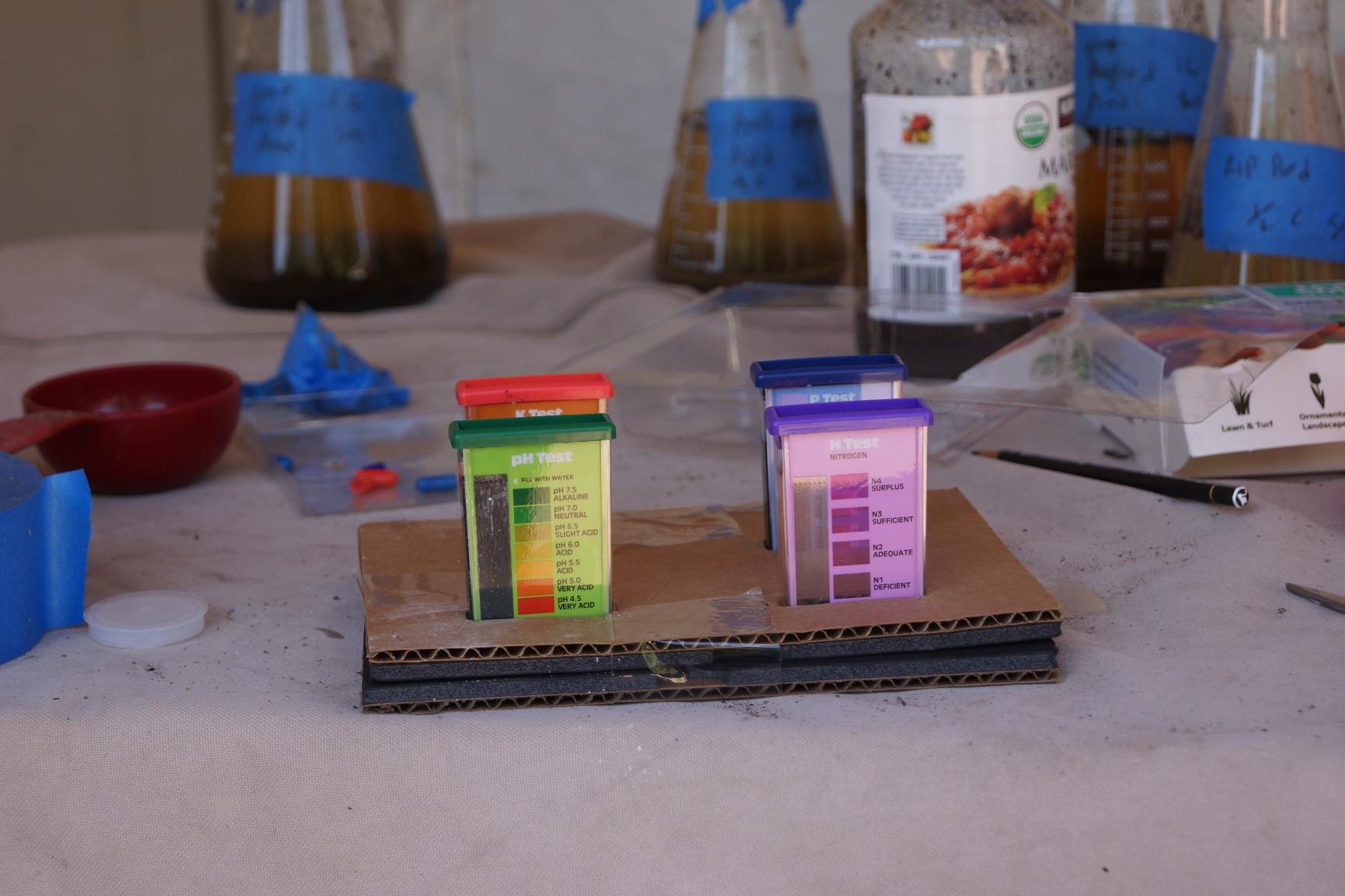
The included pH preference list covering more than 450 plants is genuinely useful. It lets you check a reading against the range your actual crops prefer rather than a generic 6.0 to 7.0 rule, which matters when you are running tomatoes and blueberries in the same season.
For repeat checks across multiple beds, forty tests is a reasonable amount of sampling. You can retest the same bed each season or cover four beds once.
Where the color chart still holds up
For pH, this kit does the job. An extension study found DIY kits land within roughly one pH unit of laboratory values, which is accurate enough to decide whether you need lime or sulfur before planting.
Because pH governs whether nitrogen, phosphorus and potassium are available at all, a pH check is the highest-value thing a cheap kit can do for you. Get the pH into range first and the nutrient problem often resolves itself.
What the extension study flagged
Phosphorus is where Rapitest was weakest in comparative testing against a laboratory baseline. The water extractant only sees dissolved phosphorus, missing the portion bound to clay and organic matter, so a reading can look low when the soil is actually adequate.
Color matching also varies between users reading the same sample. Treat the nutrient bands as a trend to watch rather than a dose to apply.
6. Garden Tutor pH Test Strips: Best Value for Fast pH Checks
- Readings in about 60 seconds with no lab or reagents
- Web-based AI reader improves on naked-eye matching
- Includes a lime and sulfur application estimator
- Works for lawn garden compost and houseplants
- Measures pH only with no nutrient readings
- Accuracy depends on timing the color development
- Web reader needs a device and internet access
When you want to know one thing quickly, this is the kit. It measures pH across a 3.5 to 9 range with third-generation three-pad strips and reads in about a minute. That is the whole product, and for checking whether lime has done its job or whether a new bed needs sulfur first, one thing is enough.
The differentiator is the reader. You photograph the strip against a printed template, upload it to a web tool, and get a digital reading. No app download and no account required, which removes the usual friction that kills strip kits.
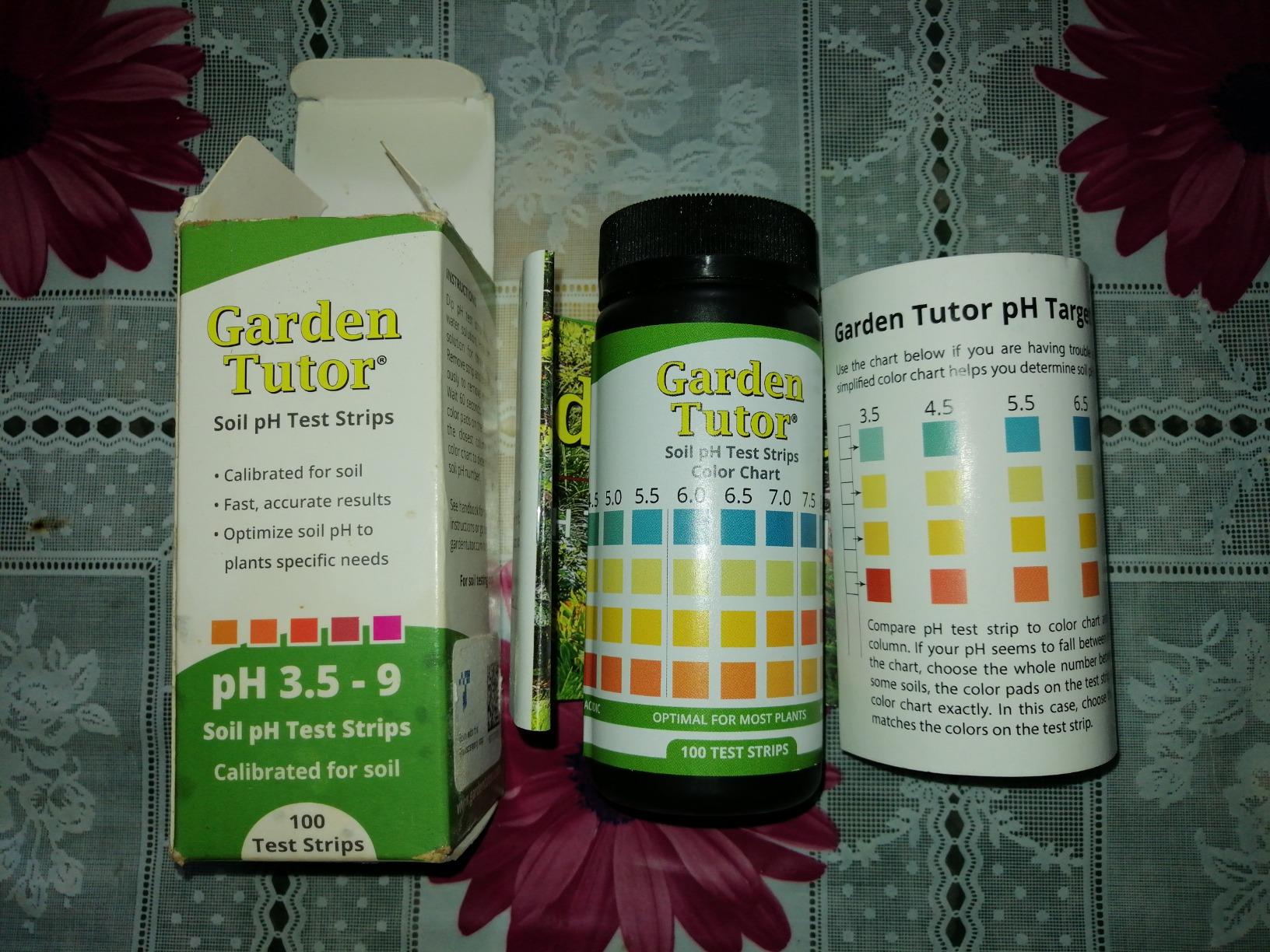
Owners like the speed and the AI reader. The brand reports more than 100,000 gardeners served, and the 4.2 average across 3,848 reviews puts this among the most-used pH products available.
The bundle also includes a full-color pH handbook and an online lime and sulfur application estimator, so you can move from a reading to an actual amendment quantity rather than guessing at a rate.
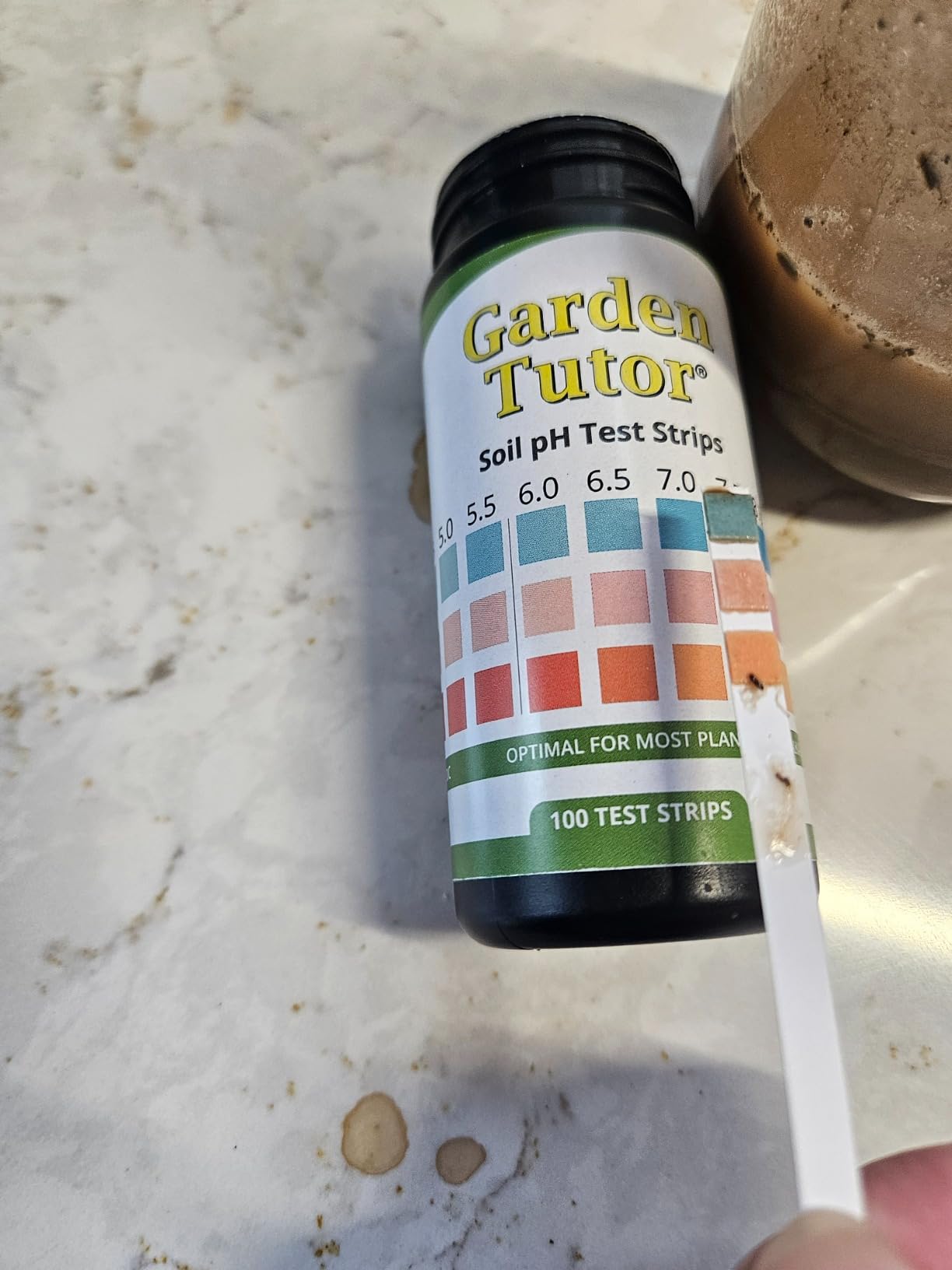
Best for tracking a pH change over time
Because a single test tells you little on its own, the value here is the repeat. With 100 strips you can sample multiple beds weekly while a sulfur application works through the soil and watch the number actually move.
That feedback loop is something a mail-in lab cannot offer. A report is a snapshot, while a strip kit lets you confirm the fix landed before you replant.
The limitation to accept up front
There are no nitrogen, phosphorus or potassium readings. If your plants are yellowing and the pH reads fine, this kit has nothing more to tell you and you need a nutrient panel instead.
Accuracy also depends on timing the 60-second color development rather than reading early or late, and the web reader needs a device and a connection.
7. Dewilde Trading 140 Test Kit: Most Tests in a Single Box
- About 140 tests per kit
- the largest count among at-home kits
- Covers ammonia in addition to nitrogen phosphorus and potassium
- Low cost per test makes routine monitoring practical
- Instructions updated for 2026
- Lowest average rating here at 4.0 stars
- Color readings need careful timing and lighting
- One-star share is higher than peers
Volume is the argument for this one. Roughly 140 tests per box, about 40 per parameter plus roughly 20 for nitrogen, gives you a very low cost per test. If you intend to monitor a large plot or several raised beds repeatedly, that math matters.
It is also the only at-home kit here that reports ammonia alongside nitrogen, phosphorus, potassium and pH. Ammonia and ammonium nitrogen are the forms most available to roots in cool spring soil, so the extra reading is more useful than it sounds.
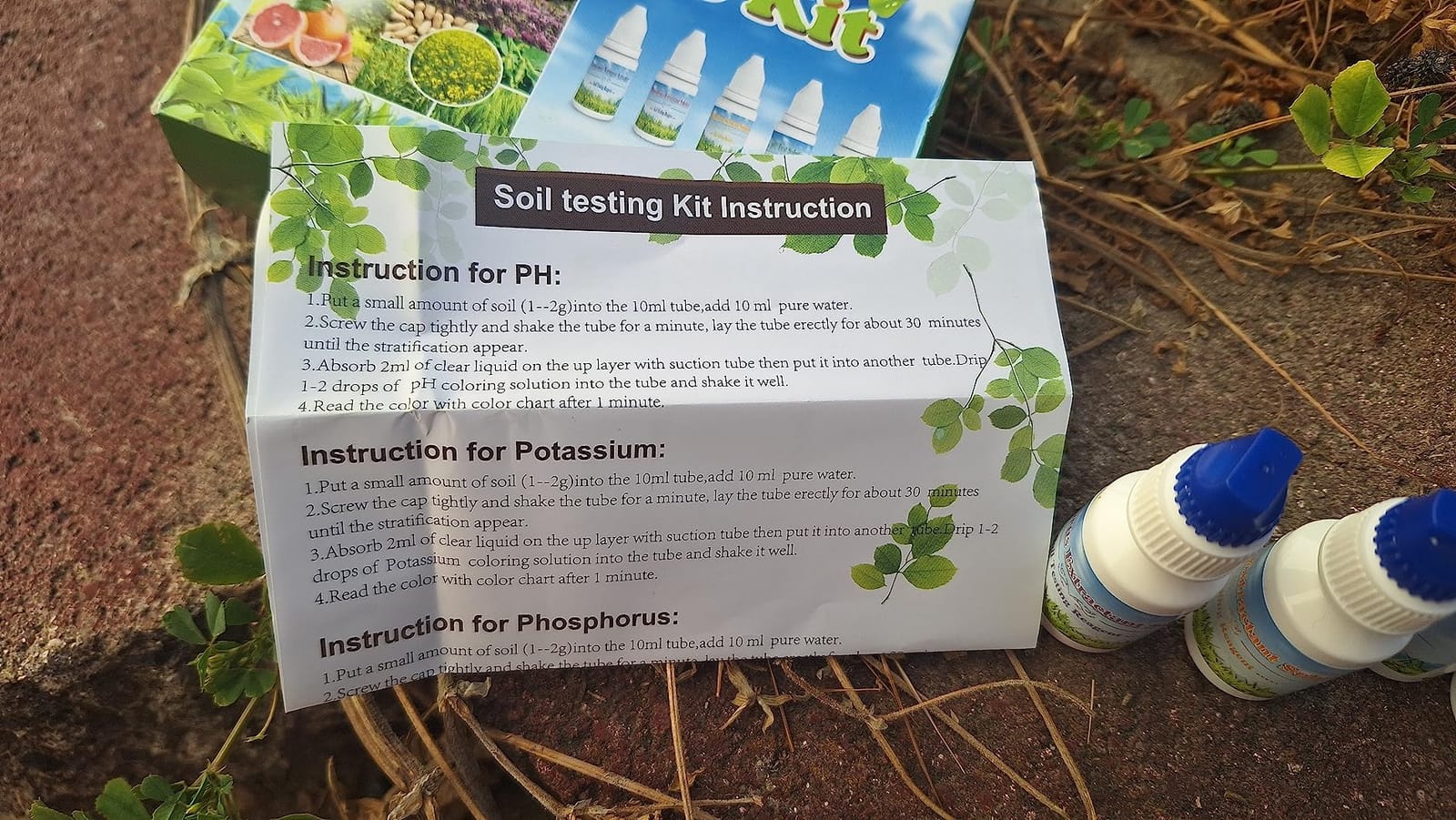
The instructions were updated for 2026, and the box covers lawns, gardens, vegetables, turf, flowers, compost, trees, vines, houseplants and hydroponics. At 3.52 ounces it is also small enough to live in a garden shed.
Liquid test tubes beat capsules for repeat sampling speed. You can run several beds in one sitting without waiting on comparators to settle.
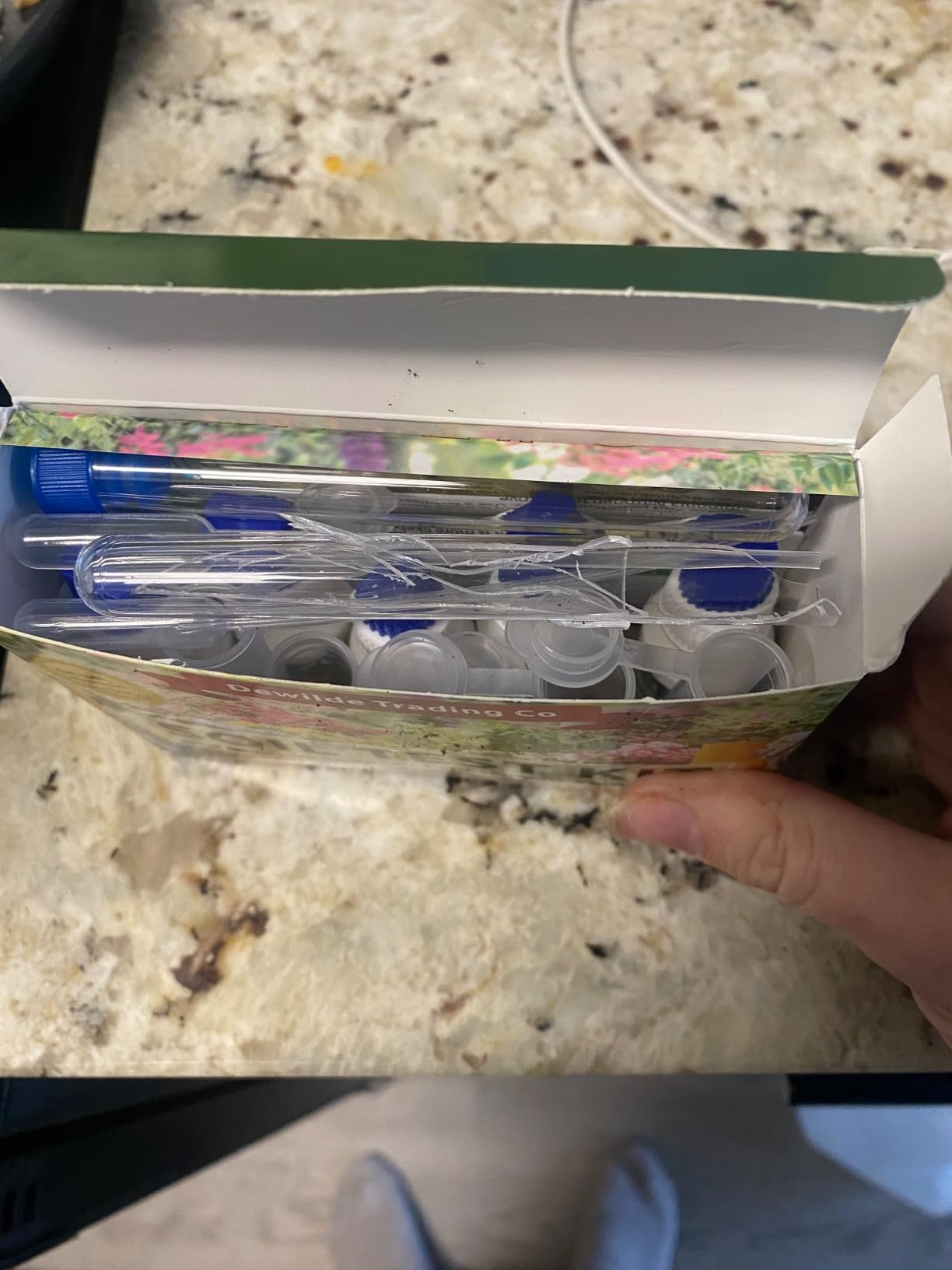
Best for a large plot or a school group
A 12 by 40 foot vegetable garden on a five-acre property is a common scenario, and one composite sample normally covers it. The point of a large test count is not a bigger garden but more sampling locations, so a bed with visible variation gets cores from several corners rather than one.
That makes this a sensible teaching purchase for a community garden, where many students can run the same procedure and compare results across plots.
Where it falls behind the group
The 4.0 average is the lowest here, and the rating distribution shows 10% one-star with more three-star ratings than any peer. Accuracy complaints and difficulty interpreting the color charts pull the score down.
It shares the water-extractant limitation of the other at-home kits, so treat the phosphorus band as a rough signal.
8. Dewilde Trading pH Test Strips: Cheapest pH Check for Multiple Beds
Soil Test Kit – 100 Soil pH Test Strips (3.5–9 Range) for Garden, Lawn & Indoor Plants – Easy At-Home Soil Testing
- Lowest cost point of any kit analyzed
- 100 strips per bottle support frequent retesting
- Simple mix dip compare procedure
- Portable enough to spot-check multiple locations
- Measures pH only with no nutrient readings
- Color chart matching is subjective without a reader
- 30 minute settling and 60 second timing must be followed
This is the simplest tool in the roundup and the easiest to justify. One hundred pH strips across a 3.5 to 9 range, a bottle-mounted color chart, and a procedure you can learn in under a minute.
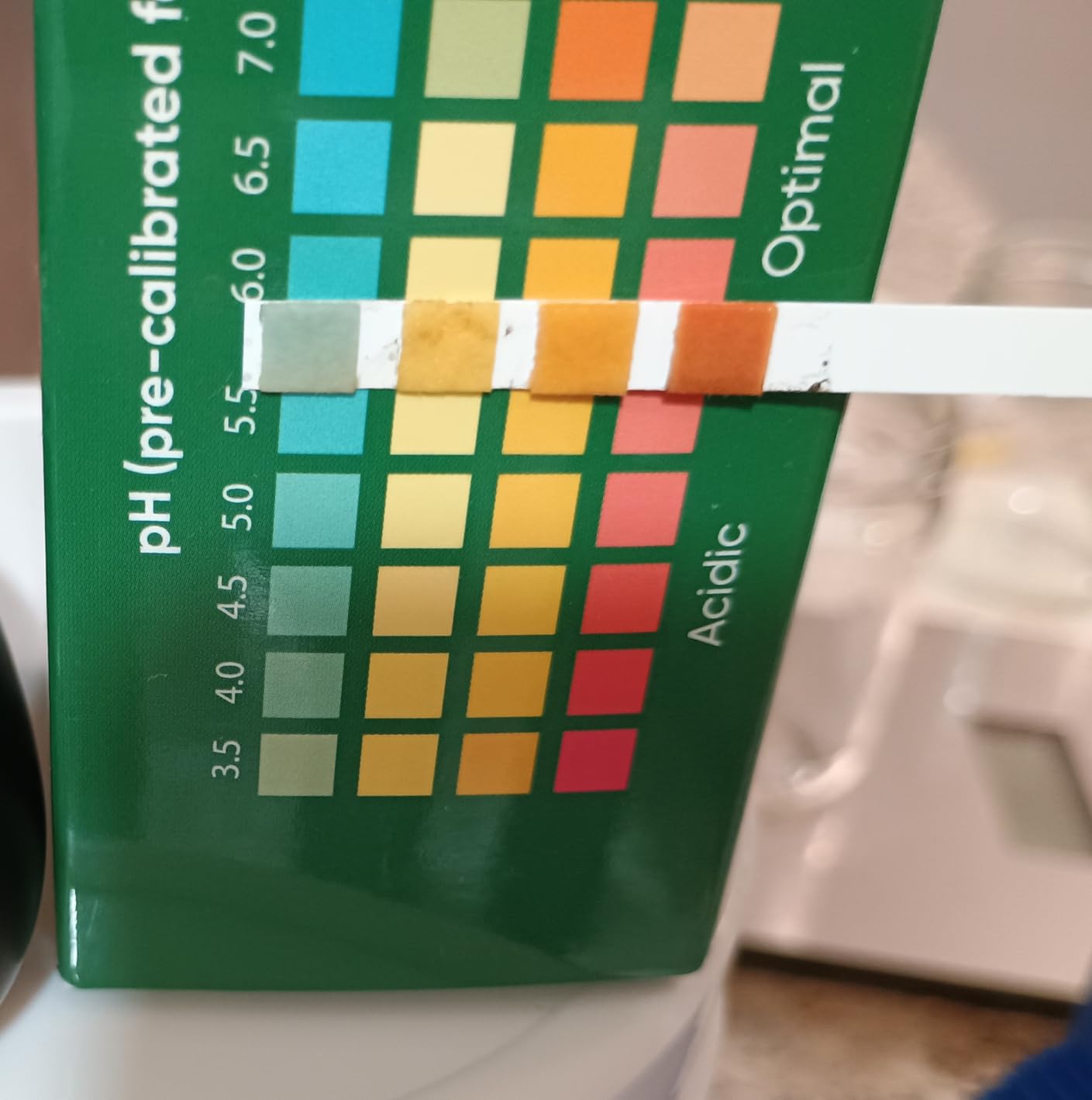
Mix soil with water, let it sit for 30 minutes, dip a strip for three seconds, hold it horizontally for 60 seconds, then compare against the chart. Those timing steps are not optional. A reading taken early or late drifts by a noticeable amount.
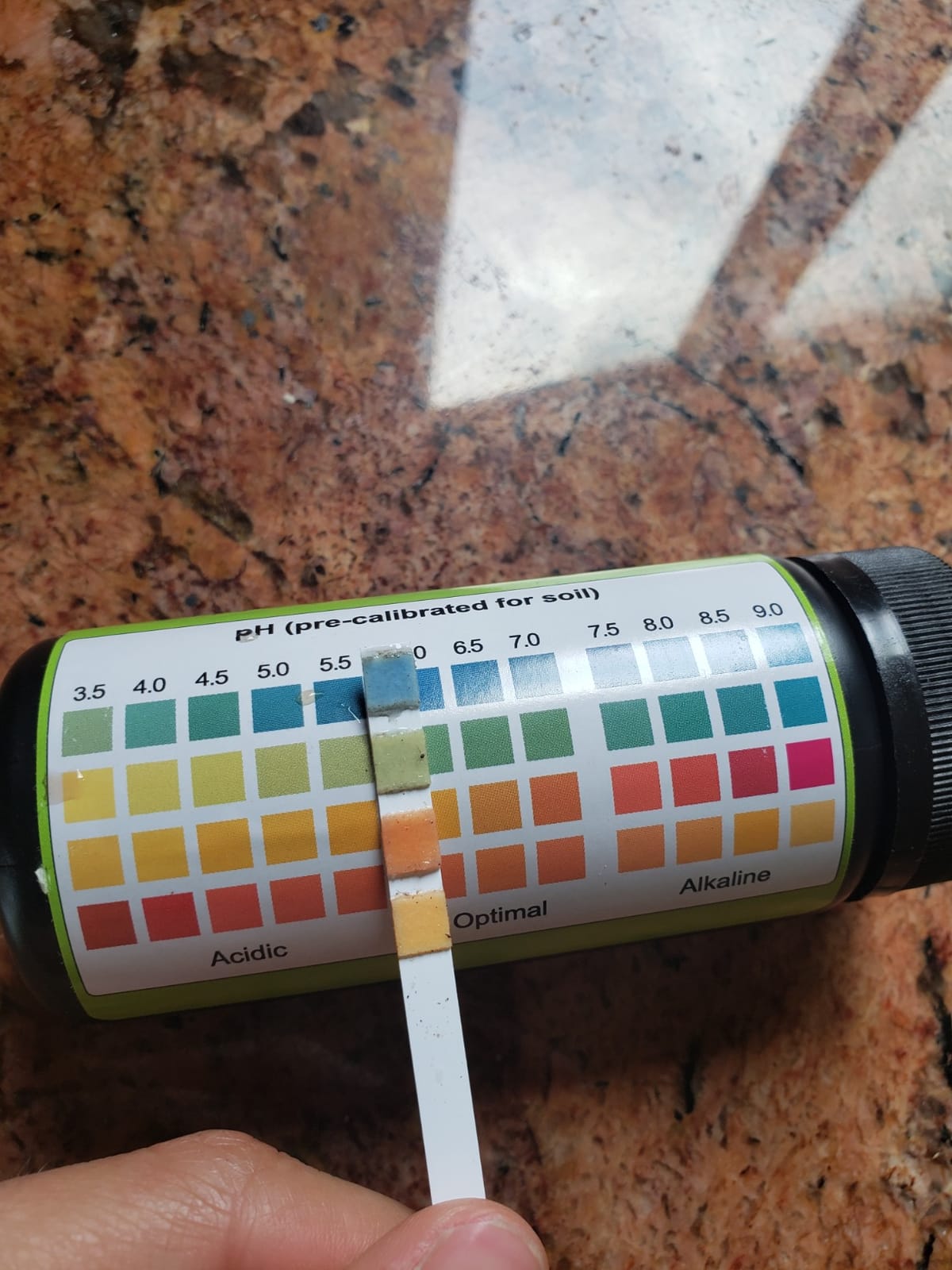
At 4.2 stars across 569 reviews with 62% five-star, it holds a solid middle position. The strips are portable enough to carry to several beds or to a new site before you commit to building anything permanent.
That portability makes this a good scouting tool. Test a few candidate spots for a new bed and see where the pH sits before you spend money improving the wrong location.
Best used as a scouting pass
Run a strip test across every bed, the lawn and the compost pile, then invest in a real panel for the two locations that matter most. Strips give you a map of where the problem is; a lab tells you what to do about it.
For gardeners with a single small plot, this may be the only tool you need each year. Lime and sulfur decisions are pH decisions, and pH is what this measures.
What you give up
There are no nutrient readings at all, and the chart comparison is subjective without an electronic reader. The Garden Tutor strips cost slightly more and add a web reader that reduces that subjectivity.
Follow the 30 minute settling and 60 second timing exactly. Almost every accuracy complaint we saw traces back to rushing those steps.
How to Take a Composite Soil Sample the Right Way
A wrong sample returns a wrong result no matter which kit you own. The fix is compositing, meaning taking small cores from several spots, mixing them together, and testing the mixture so one number represents the whole bed.
One test per 2,500 square feet is a workable rule for most home grounds. Combine raised beds filled with identical purchased media into a single sample, since the mix is likely the same batch. Do not combine beds that were amended differently.
- Pick a dry day and sample mid-morning, before irrigation or rain.
- Take five to seven cores about 6 to 8 inches deep in a vegetable bed, scattered in a zigzag pattern rather than clustered.
- Avoid the first few inches of surface, the compost pile itself, and any spot where fertilizer granules recently landed.
- Break up clods, remove stones and roots, and mix the cores thoroughly in a clean bucket.
- Take about a cup of the mixture for the sample, following the volume your kit specifies.
- Label the bag with the bed, the date and the crop before it goes into the kit or the envelope.
Containers and raised beds of purchased media are a special case. A bed built from sphagnum peat, compost and vermiculite has no native soil to measure, so testing often tells you little about what you already know from the bag label. Test in-ground beds and native soil first.
How to Read Your Report and Fix the Problem
Most vegetables want soil between pH 6.0 and 7.0, with 6.2 to 6.8 the sweet spot. Below 6.0, phosphorus and magnesium lock up and aluminum can rise to toxic levels. Above 7.0, iron, manganese and zinc become unavailable, which produces yellowing leaves that look like a nutrient shortage.
Nitrogen is different for crop types. Leafy greens and brassicas are heavy feeders that want steady nitrogen. Fruiting crops like tomatoes and peppers want nitrogen early, then lower levels once flowering starts, because excess nitrogen produces leaf at the expense of fruit. Root vegetables prefer moderate nitrogen and higher potassium.
Act on pH first, because nothing else works until availability is fixed. Low pH calls for lime, applied according to buffer pH rather than a guess. High pH calls for elemental sulfur, applied more slowly and monitored with a retest.
Then correct nutrients in one direction at a time. Compost is the slow option that improves structure and biology along with nutrients. Fertilizer is the fast option that fixes a specific deficit. Test in fall for a baseline, confirm in spring, and retest after a major amendment before you change anything else.
Which Soil Test Kit Fits Your Garden
Choose based on the question you are asking. If you want to know whether your soil chemistry is limiting a crop, pick a mail-in lab panel like the MySoil kit for readable recommendations, or SoilKit if you also want cation exchange capacity and organic matter.
If you want a repeated pH trend across many beds, pick a strip kit. Garden Tutor adds a digital reader and amendment estimator; the Dewilde strips are the simplest and cost the least. For at-home nutrient screening across a large plot, Rapitest or the Dewilde 140 test kit cover it without a lab.
Before buying anything, check whether your state extension office offers soil testing. Many charge a modest flat fee for a full analysis with interpretation, and the results come from a lab that uses proper extractants. That option is genuinely competitive with anything in this roundup and is free advice in many counties.
If you are growing on a property built before 1979, or near a road, an old roof or a burn scar, test for lead separately. None of the nutrient kits here screen for contaminants. If you are short on space rather than short on data, our guide to the best countertop gardens covers the self-watering setups that grow well with a controlled, soilless mix, while our picks for the best indoor herb gardens focus on the windowsill options most likely to survive a kitchen. Automatic smart indoor gardens manage their own nutrients, which removes the soil question entirely.
Frequently Asked Questions
Are home soil test kits accurate?
Home kits are reasonably accurate for pH, usually within about one pH unit of a laboratory reading. Their nitrogen, phosphorus and potassium readings are far less dependable because a plain water extract only pulls dissolved nutrients and misses what is bound to clay and organic matter. Use a home kit to check pH and use a mail-in lab panel before changing fertilizer rates.
Which soil test is most accurate?
A mail-in lab kit using a calibrated extractant such as Mehlich III or Olsen is the most accurate option available to a home gardener. Those chemicals pull bound phosphorus and potassium into solution the way a laboratory baseline does. Among the kits reviewed here, SoilKit and MySoil both use lab analysis rather than at-home color matching.
How can I test the soil quality in my vegetable garden?
Take a composite sample. Dig five to seven cores 6 to 8 inches deep across the bed in a zigzag pattern, mix them together in a clean bucket, and test about a cup of the mixture. One sample per 2,500 square feet is a workable rule, and beds filled with identical media can share one sample.
How many soil samples do I need for my garden?
One test per 2,500 square feet is the standard rule for most home grounds. So a single 12 by 40 foot vegetable garden needs one sample. Sample separately if beds were amended differently, or if you want to compare a lawn area against a vegetable plot rather than averaging them together.
What is the best soil test kit for a vegetable garden?
The MySoil kit is the best overall choice because it measures 13 plant-available nutrients plus pH and returns written fertilizer recommendations covering what to apply, how much and when. SoilKit is the better pick if you also want cation exchange capacity and organic matter, and a pH strip kit is enough if lime and sulfur are the only decisions you plan to make.
Why is baking soda used for soil testing?
Baking soda tests for acidity rather than nutrients. Mix soil with water, add baking soda and stir. If it fizzes, the soil is acidic, because the carbonate is releasing carbon dioxide gas as it reacts with hydrogen ions. It gives a yes or no answer, not a pH value, so it cannot replace a real test.
Our Verdict for 2026
The MySoil kit is our Editor’s Choice because it closes the gap that makes most home testing frustrating. Thirteen plant-available nutrients, pH, and a written plan that tells you what to apply and when, all from a single-use kit you can send from a kitchen table.
Choose SoilKit when you need cation exchange capacity and organic matter alongside the nutrients, especially on clay soil where pH moves slowly. Choose Soil Savvy when readability matters more than chemistry depth.
For anyone testing at home repeatedly, the Rapitest kit and the Dewilde strips cover pH and a rough NPK trend without a lab, and both are honest about their limits. Test pH first, correct it, then confirm with a lab panel before you change fertilizer.
Whichever kit you choose, sample in fall for a baseline and confirm in spring before planting. That single habit does more for a vegetable garden than any device on this list.