
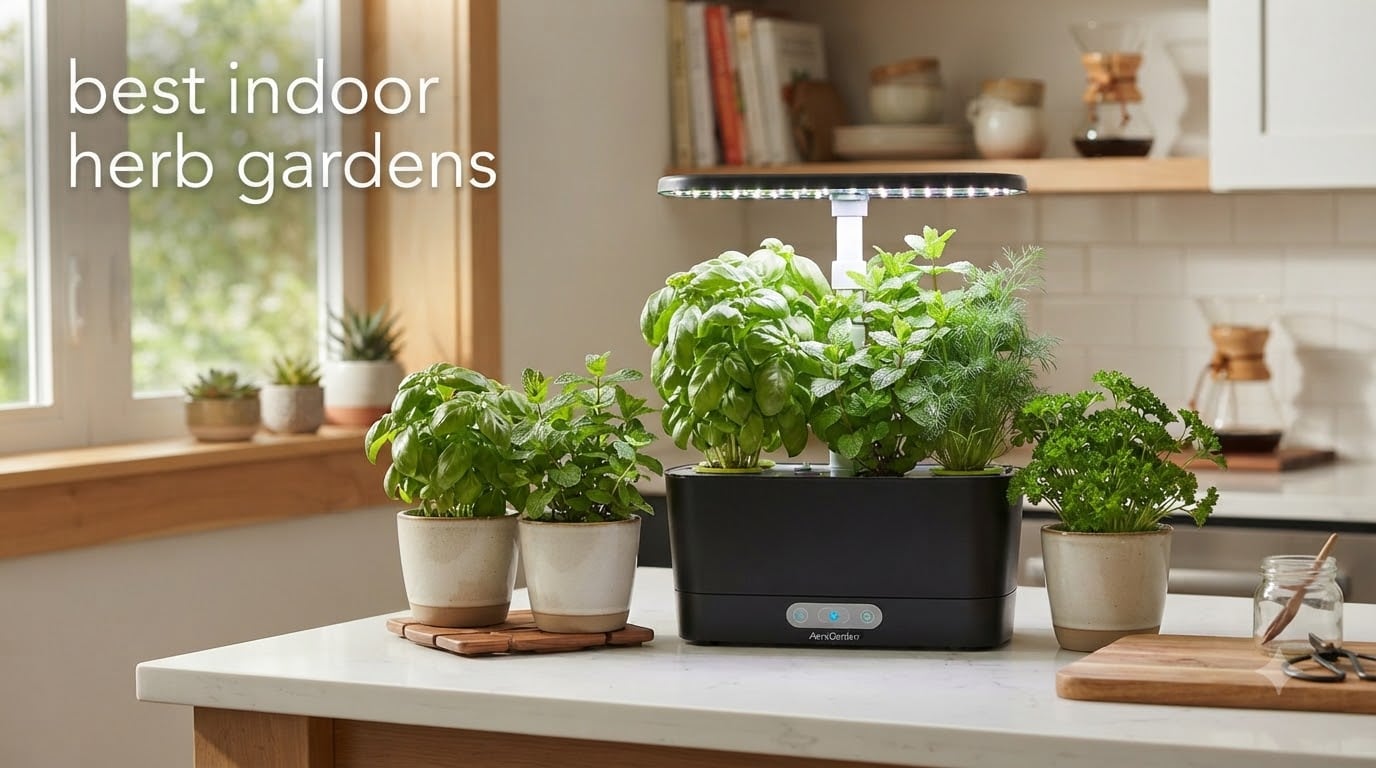
I have killed more grocery store basil plants than I care to admit. Every time I brought one home, it would wilt within days despite my best efforts with watering and windowsill placement. That frustration led me down the rabbit hole of indoor herb gardens, and after testing dozens of systems over the past two years, I finally found setups that actually keep herbs alive and thriving on my kitchen counter.
Our team spent three months comparing the best indoor herb gardens side by side, tracking germination times, measuring water consumption, and yes, killing a few plants along the way. We looked at everything from budget-friendly hydroponic kits to app-controlled smart systems. Whether you have a sprawling kitchen or a tiny apartment with barely enough counter space for a coffee maker, there is an indoor herb garden that fits your space and cooking style.
The difference between a good indoor herb garden and a mediocre one comes down to light quality, water management, and how much effort it takes to keep things growing. Some systems practically run themselves with app notifications and automatic timers. Others need more babysitting but reward you with a wider variety of fresh herbs year-round. Here is what we found after putting eight of the most popular options through real-world testing in 2026.
Table of Contents
Top 3 Indoor Herb Gardens We Recommend
Before we get into the detailed reviews, here are our three standout picks. The AeroGarden Bounty Basic earned our Editor’s Choice for its powerful 30W LED and reliable 9-pod capacity. The LetPot LPH-Air took Best Value with smart WiFi features at a surprisingly low price point. And the Click & Grow Smart Garden earned Budget Pick for being the most beginner-friendly system we tested.
Best Indoor Herb Gardens in 2026: Quick Comparison
If you want to see all eight systems at a glance before diving into individual reviews, this comparison table breaks down the key specs. We included pod capacity, standout features, and ratings to help you quickly narrow down your options.
| Product | Specifications | Action |
|---|---|---|
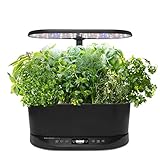 AeroGarden Bounty Basic AeroGarden Bounty Basic |
|
Check Latest Price |
 Click & Grow Smart Garden Click & Grow Smart Garden |
|
Check Latest Price |
 iDOO 12-Pod Hydroponics System iDOO 12-Pod Hydroponics System |
|
Check Latest Price |
 LETPOT LPH-SE Smart System LETPOT LPH-SE Smart System |
|
Check Latest Price |
 LetPot LPH-Air Indoor Garden LetPot LPH-Air Indoor Garden |
|
Check Latest Price |
 Ahopegarden 12-Pod Hydroponic System Ahopegarden 12-Pod Hydroponic System |
|
Check Latest Price |
 URUQ 8-Pod Hydroponic System URUQ 8-Pod Hydroponic System |
|
Check Latest Price |
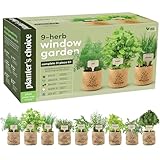 Planters’ Choice 9 Herb Window Garden Planters’ Choice 9 Herb Window Garden |
|
Check Latest Price |
1. AeroGarden Bounty Basic – 9-Pod Powerhouse with Full Spectrum LED
- Automatic timer with digital display
- Vacation mode for travel
- 30W LED delivers fast growth
- Grows 9 plants simultaneously
- Digital reminders for water and food
- Requires periodic water and plant food additions
- Corded electric only
The AeroGarden Bounty Basic was the first system I tested, and it remains the one I recommend most often. I planted nine pods of basil, dill, mint, and parsley, and within four days I had visible sprouts pushing through the grow sponges. The 30W LED panel provides serious light coverage across the full grow deck, and every single pod germinated successfully.
What impressed me most was the digital control panel. It shows you exactly when to add water and plant food with on-screen reminders, so there is no guessing involved. The vacation mode feature is genuinely useful too. I set it before a week-long trip, came home to herbs that had actually grown several inches, and nothing had dried out or died.
The build quality feels solid for a plastic unit. The water bowl is larger than most competitors, which means fewer refills. At 11.44 pounds and 34 inches tall at full extension, this is a system that needs a dedicated counter space, not a cramped windowsill.
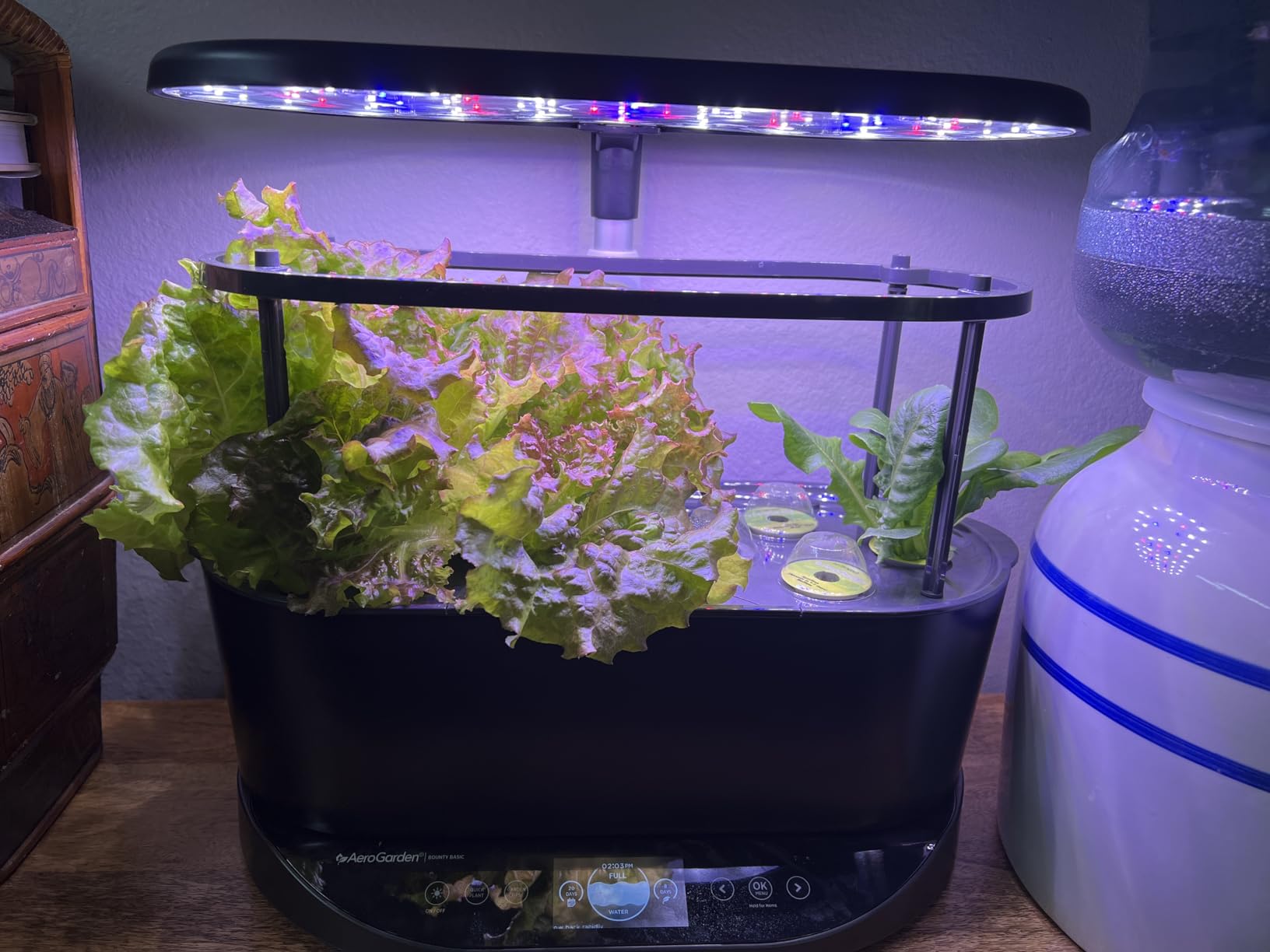
The growth rate is where AeroGarden really separates itself from the pack. Their marketing claims up to 5x faster growth than outdoor gardens, and while I cannot verify that exact number, my basil went from seed to first harvest in just over three weeks. Store-bought basil plants never lasted me more than a week. These plants just keep producing.
One thing to keep in mind is the ongoing cost of replacement seed pods and liquid plant food. AeroGarden pods run about $15 to $20 for a pack, and you will want their liquid nutrients to keep things growing strong. It is not a huge expense, but it is something to factor into your budget.
What Herbs Grow Best in the AeroGarden Bounty
Basil is the undisputed champion in this system. Genovese basil, Thai basil, and purple basil all thrive and grow so fast you will be making pesto within a month. Mint, parsley, and dill are equally reliable, and the system handles chives and thyme well too.
I had less success with cilantro, which tends to bolt quickly indoors regardless of the system. For best results, stick to leafy herbs that respond well to hydroponic growing and save the trickier plants for when you have more experience.
How Much Counter Space You Need
The Bounty Basic measures 17.25 inches long and 11.25 inches wide, so you need a decent stretch of counter space. The light arm extends up to 34 inches tall at maximum height, which means it will not fit under standard upper cabinets when plants are fully grown.
I recommend placing it on a kitchen island, a dedicated plant shelf, or a counter section without overhead cabinets. The cord is about six feet long, so plan your outlet proximity accordingly.
2. Click & Grow Smart Garden – The Effortless Soil-Based Option
- Incredibly easy setup
- Smart Soil retains water perfectly
- 50+ plant varieties available
- Low maintenance design
- Includes 3 basil pods to start
- Not Prime eligible
- Replacement pods sold separately after initial set
- Only 3 pods capacity
The Click & Grow Smart Garden is the system I recommend to people who want the absolute simplest indoor herb garden experience. There is no app to connect, no pump to maintain, and no nutrient solution to measure. You literally drop in the plant pods, fill the water reservoir, and plug it in.
The patented Smart Soil is what sets Click & Grow apart from hydroponic systems. It is a engineered growing medium that automatically regulates oxygen, water, and pH levels around the roots. My basil seeds germinated in about five days, and the plants grew steadily without any intervention from me beyond occasionally topping off the water tank.
This is a 3-pod system, so it will not produce enough herbs for heavy cooking. But for someone who wants fresh basil for caprese salads or a steady supply of mint for tea, it is perfect. The compact white design also looks fantastic on a kitchen counter, which matters when your kitchen is part of your living space.
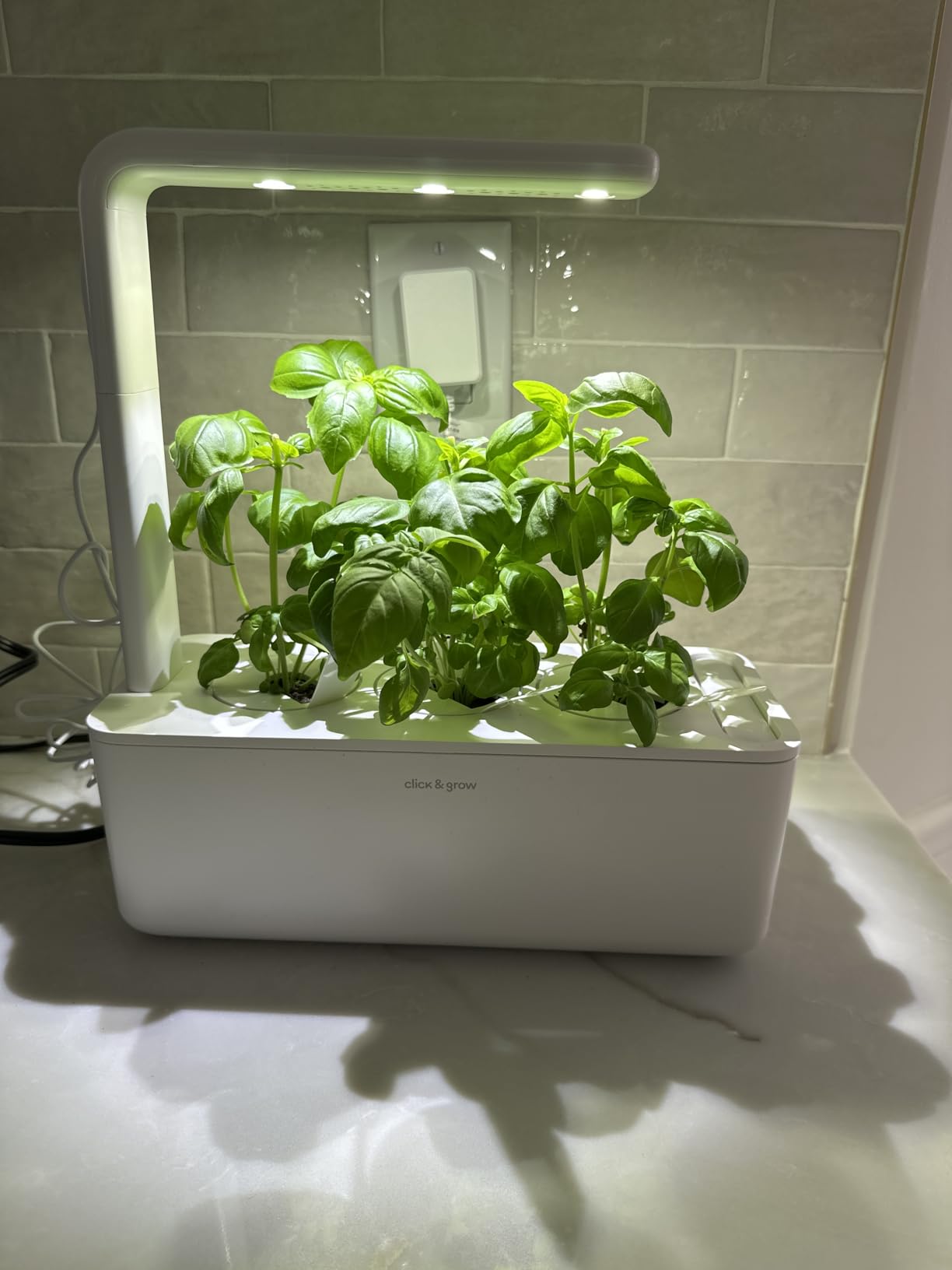
The LED grow light is energy-efficient and runs on an automatic cycle, so the light turns on and off by itself. You never have to think about it. The only maintenance is adding water every two to three weeks, which takes about ten seconds.
Where Click & Grow really shines is variety. They offer over 50 plant pod options including herbs, cherry tomatoes, strawberries, and even flowers. Each pod costs roughly $5 to $7, which adds up over time but gives you tremendous flexibility to experiment with different plants.
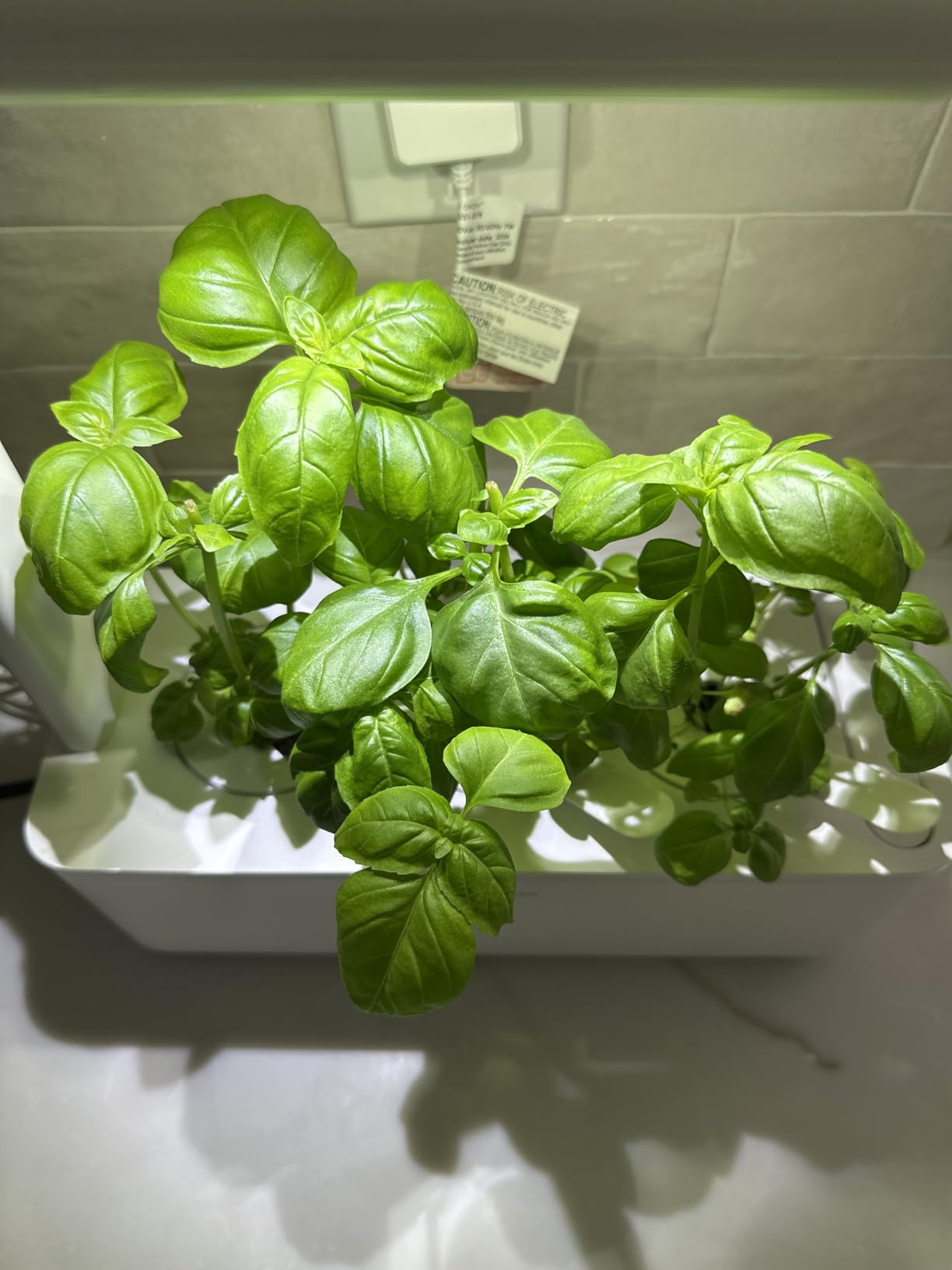
Smart Soil vs Hydroponics: Which Is Better for You
Smart Soil is a passive growing system, meaning there are no pumps, no water circulation, and no noise. This makes Click & Grow completely silent during operation, which is a big deal if your kitchen is near your bedroom. Hydroponic systems like AeroGarden have water pumps that cycle on and off throughout the day.
The trade-off is that Smart Soil grows plants more slowly than active hydroponic systems. My AeroGarden basil outpaced the Click & Grow basil by a noticeable margin. If speed matters to you, go hydroponic. If simplicity and silence matter more, Click & Grow wins.
Long-Term Cost of Replacement Pods
Click & Grow pods run about $15 for a 3-pack, which means roughly $5 per plant. Some herbs like basil produce for months, making them a great value. Others, like cilantro, have a shorter productive life and need replacing more often.
Over a year of regular growing, expect to spend $50 to $80 on pods depending on what you grow. That is comparable to what you would spend on fresh cut herbs at the grocery store, and you get the satisfaction of growing them yourself.
3. iDOO 12-Pod Hydroponics System – Maximum Pods for the Price
- 12 pods for maximum growing capacity
- Built-in fan for pollination and airflow
- Two growing modes for different plants
- Visual water level window
- Quiet pump operation
- Excellent value for pod count
- Plastic construction feels less premium
- Slightly lower rating than top competitors at 4.5
The iDOO 12-Pod system caught my attention because it offers the most growing capacity per dollar of anything we tested. Twelve pods means you can grow an entire herb garden simultaneously without having to choose between basil or mint or parsley. You get all of them.
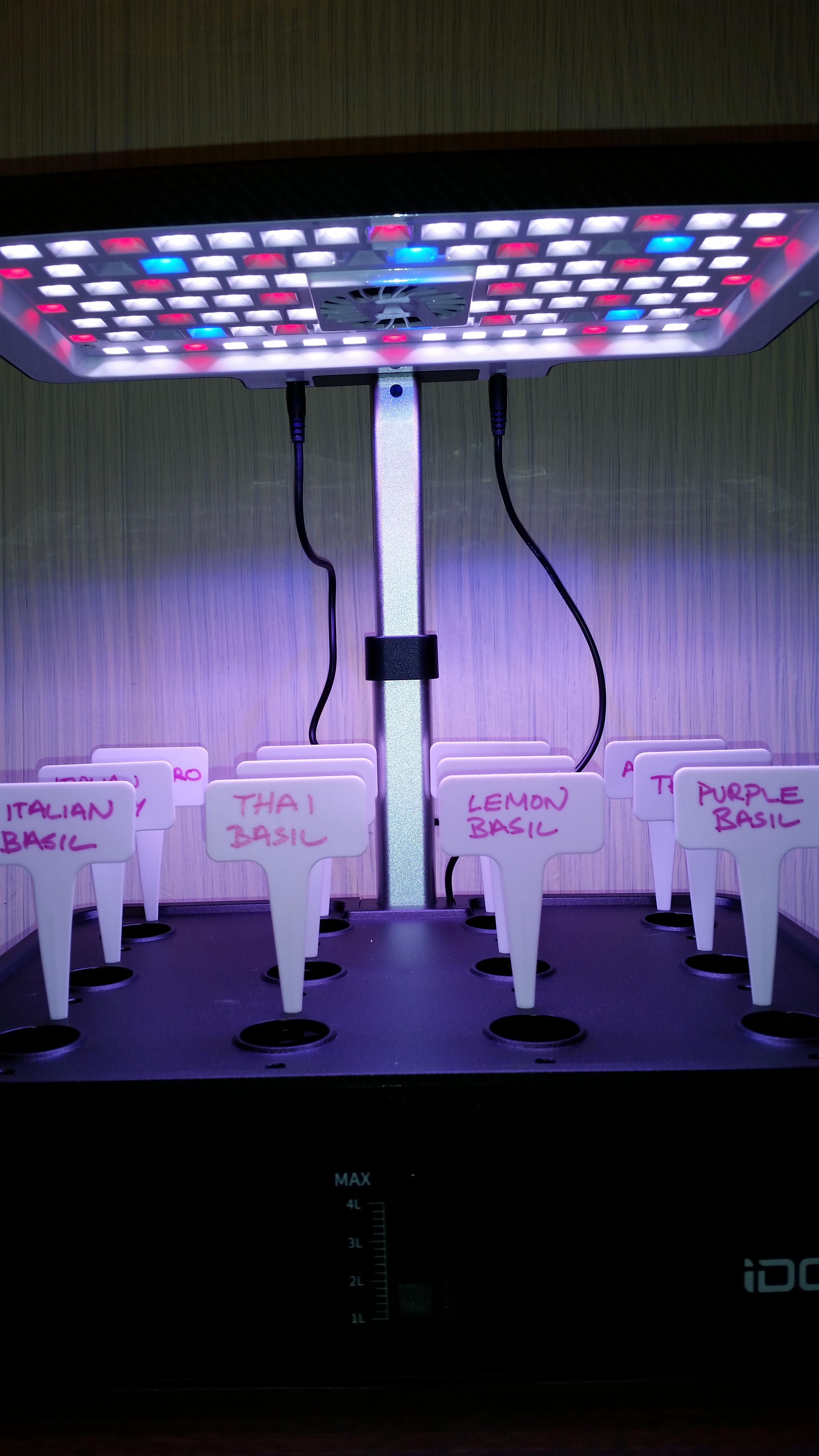
I loaded up mine with six different herb varieties and had room left over for cherry tomatoes and lettuce. The 22W LED panel provides good light coverage, and the two growing modes are more than a gimmick. Vegetable mode emphasizes blue light for leafy greens, while Flower and Fruit mode shifts the spectrum to encourage blooming and fruiting.
The built-in fan is a feature I did not know I needed until I had it. It provides air circulation that strengthens plant stems and helps with pollination for flowering plants. My indoor cherry tomatoes actually set fruit, which rarely happens without manual pollination or a fan.
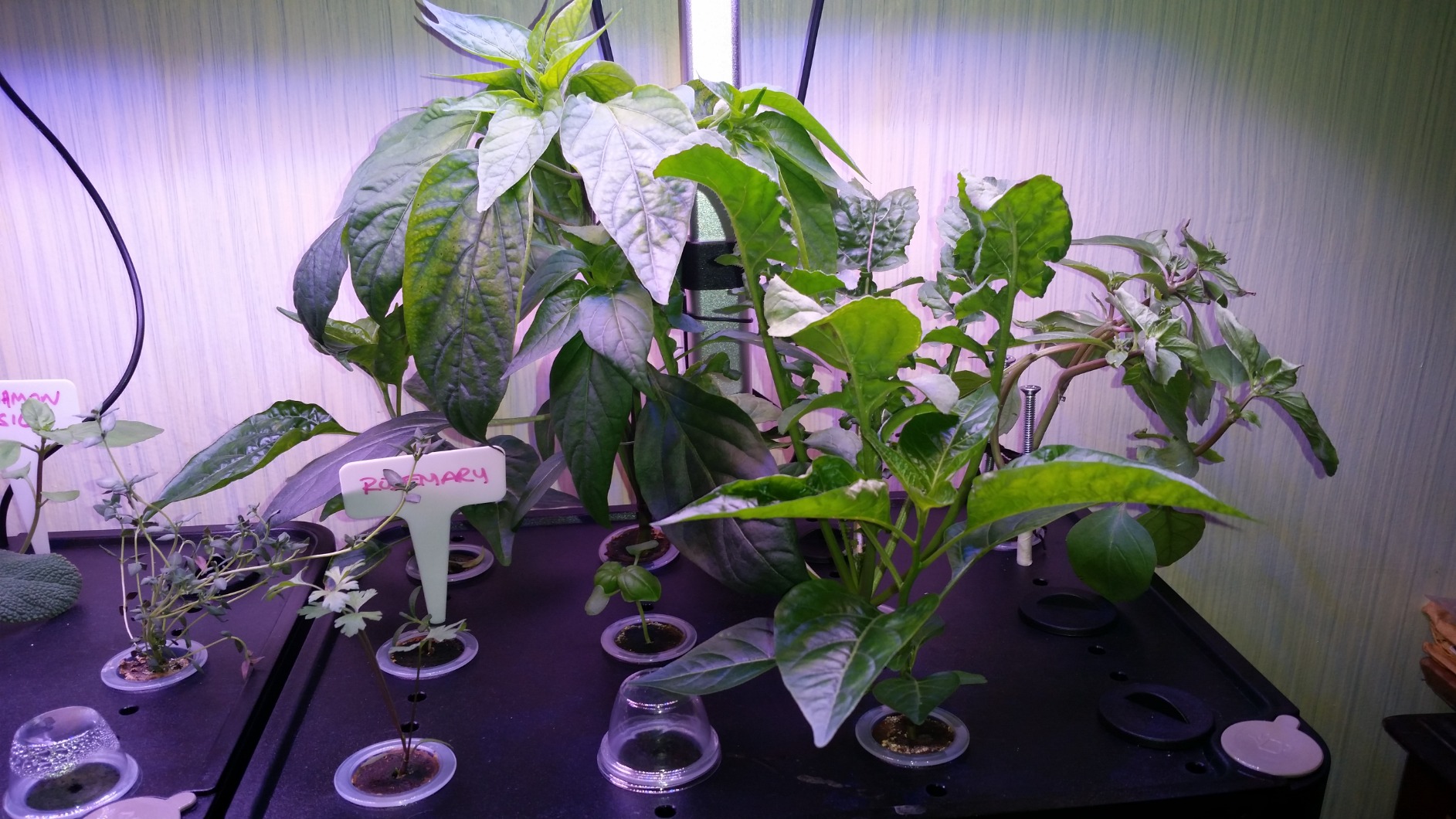
The 4.5-liter water tank is generously sized and lasted about ten days before needing a refill. The visual water window on the side lets you check levels at a glance, which is more convenient than lifting the hood or guessing based on time.
Height adjustability is another strong point. The LED panel extends up to 11 inches, which was enough for my basil and lettuce but felt tight when my cherry tomato plant started really taking off. For tall-growing plants, you may need to transplant them before they reach the ceiling of the light hood.
How the Two Growing Modes Actually Work
Vegetable mode uses a blue-heavy light spectrum that promotes leafy growth, which is ideal for herbs like basil, mint, parsley, and lettuce. The plants grow bushy and full with large leaves. I kept most of my herbs on this setting throughout their entire growing cycle.
Flower and Fruit mode adds more red light to the spectrum, which signals plants to transition from vegetative growth to flowering. This is the setting you want when growing cherry tomatoes, peppers, or strawberries. Switching modes is as simple as pressing a button on the control panel.
Is the Built-in Fan Worth It
For herb growing alone, the fan is a nice-to-have but not essential. Herbs do not require pollination to produce leaves, and most kitchen spaces have enough ambient airflow. However, if you plan to grow tomatoes, peppers, or any fruiting plant, the fan makes a real difference in fruit set.
The fan is also very quiet. I had the iDOO sitting on my kitchen counter about ten feet from where I work, and I never noticed it running. That is a common concern from forum users who are light sleepers, and the iDOO passes that test.
4. LETPOT LPH-SE Smart System – App-Controlled Growing with Premium Build
- Smart app with WiFi control for full customization
- 24W LED for powerful growth
- 5.5L tank lasts up to 3 weeks
- Premium stainless steel and resin build
- Adjustable LED up to 30 inches tall
- Water level alerts via app
- Requires WiFi for smart features to function
- Higher price point than basic hydroponic kits
The LETPOT LPH-SE is the system I reach for when I want total control over my growing environment. The LetPot app connects over WiFi and lets you adjust the lighting schedule down to the hour. You can set a custom 0 to 24 hour schedule, receive water level alerts, and monitor your plants even when you are away from home.
What sold me on this system was the 3-week water autonomy. The 5.5-liter tank is the largest in our lineup, and the app sends a notification to your phone when water runs low. I went on a 12-day business trip and came back to herbs that were not just surviving but thriving.
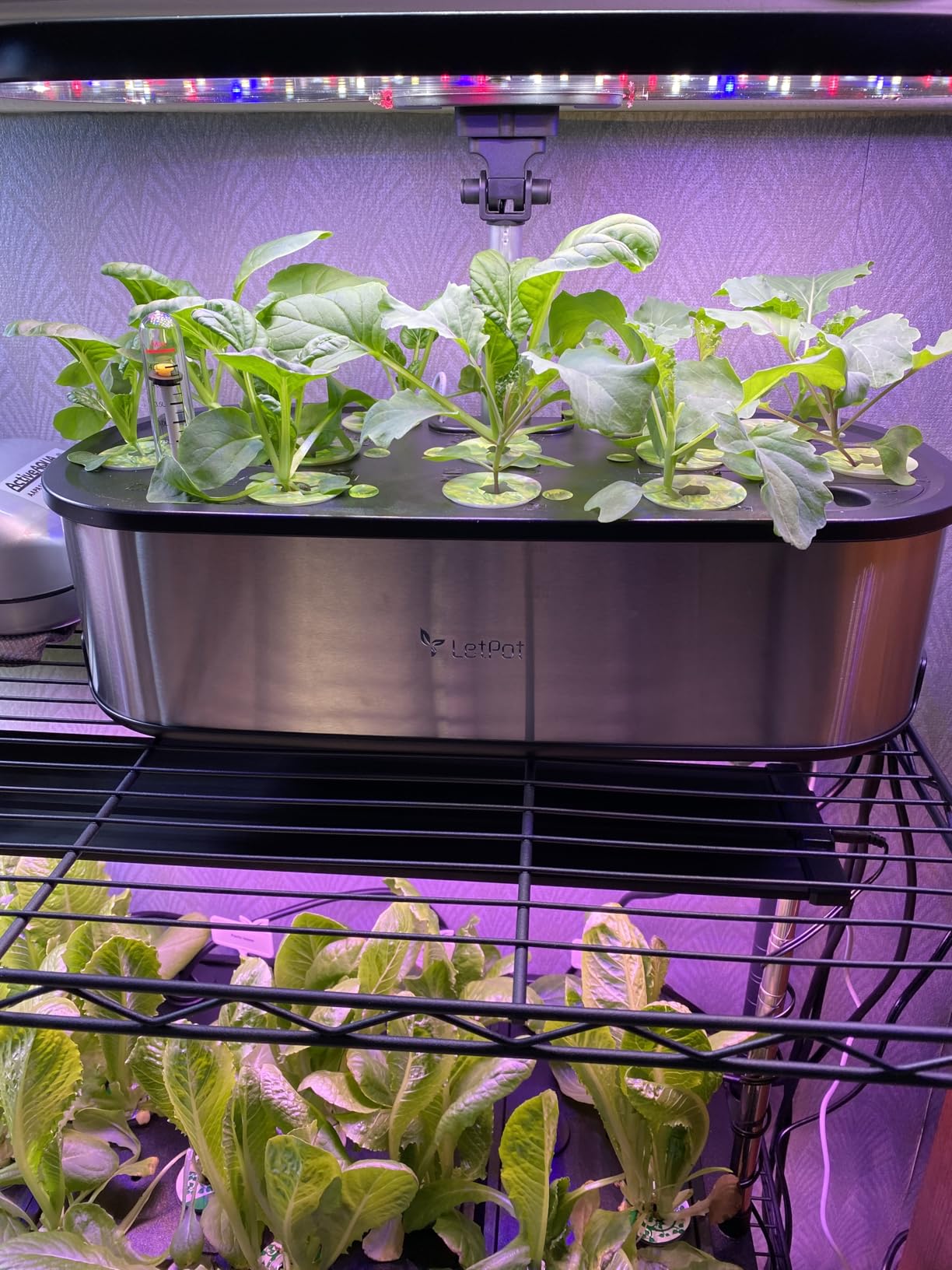
The build quality is a noticeable step above plastic-only systems. The outer shell is stainless steel, and the inner reservoir is made from ABS resin. This double-layer design looks sleek on a modern kitchen counter and feels like a premium appliance rather than a gadget.
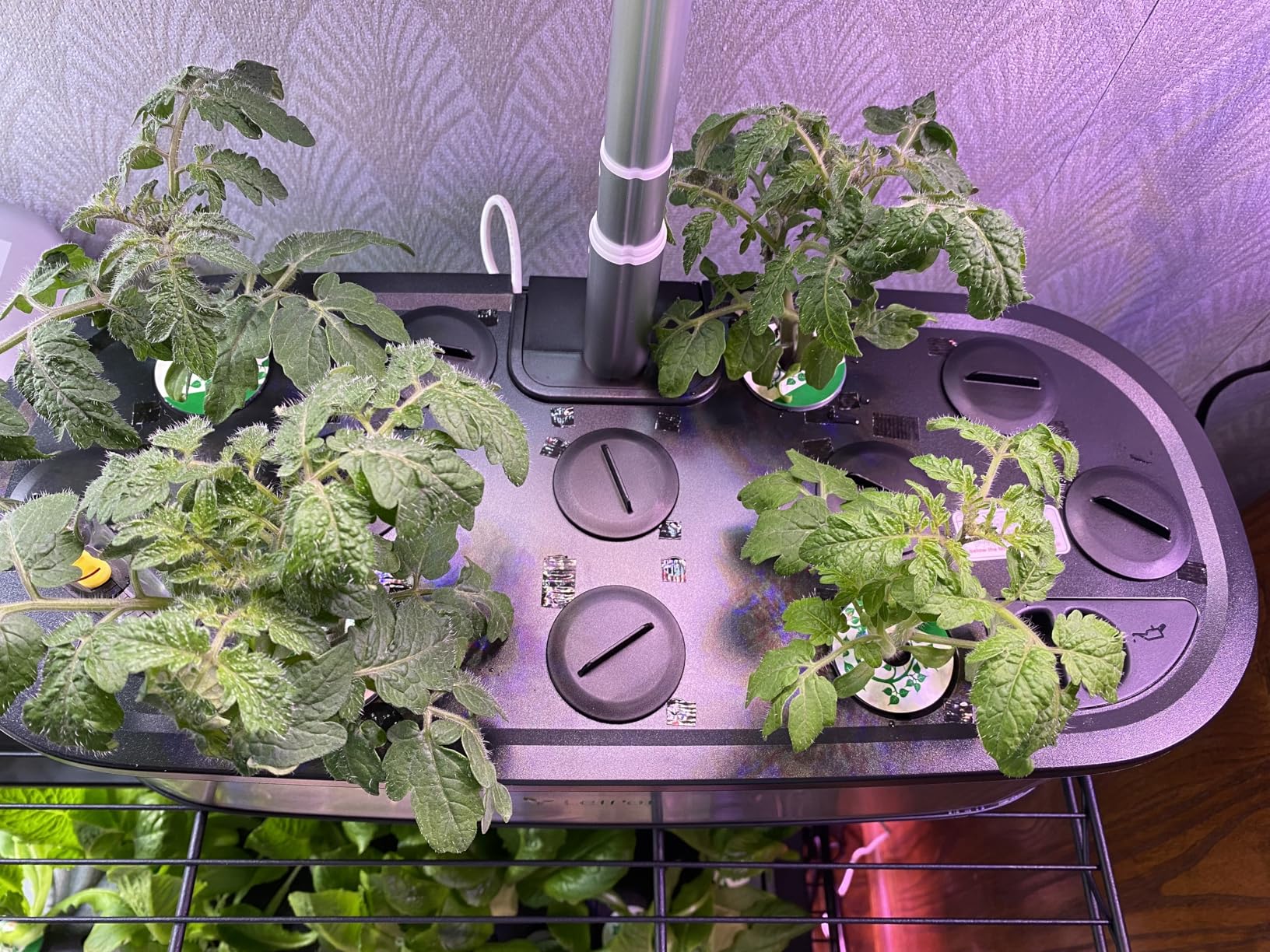
The 24W full spectrum LED is powerful enough to produce 40% faster growth than traditional soil methods, according to LETPOT. My experience backed this up. Basil germinated in four days and reached harvestable size in under three weeks, which is competitive with the AeroGarden Bounty.
The adjustable LED rod extends up to 30 inches, which is taller than any other system we tested. This matters if you want to grow taller plants like tomatoes, peppers, or even bushy herbs that outgrow shorter systems. You will not outgrow the LPH-SE.
How the LetPot App Actually Performs
The app setup was straightforward. I connected the LPH-SE to my WiFi network in about three minutes, and the interface is clean and intuitive. You can set lighting schedules, check water levels, and receive push notifications when attention is needed.
The one downside is that the smart features require WiFi. If your internet goes down or your router is far from the garden, you lose app control. The system still functions on its default lighting cycle, but you cannot make changes until connectivity is restored.
What the Stainless Steel Build Means for Your Kitchen
The stainless steel exterior is not just about looks. It is more durable than plastic, easier to clean, and resistant to water stains and mineral buildup. After three months of use, my LPH-SE still looks like new, while plastic systems showed some discoloration from nutrients and water exposure.
From a design perspective, the silver finish blends well with stainless steel appliances. If your kitchen has a modern aesthetic with metal finishes, this system fits right in rather than looking like a plastic eyesore.
5. LetPot LPH-Air Indoor Garden – Smart Features at a Budget Price
- Smart WiFi app control at a budget price
- 24W LED for strong growth
- Up to 300% faster growth than soil
- BPA-free materials
- Water level alerts
- 14-21 day water autonomy
- No seeds included
- must purchase separately
- Lower review count as a newer product
The LetPot LPH-Air is the surprise standout of our testing. It offers the same smart WiFi app control and 24W LED as its premium sibling, the LPH-SE, but at nearly half the price. This is the best indoor herb garden value we found in 2026, hands down.
I was skeptical that a system this affordable could deliver on its smart features, but the LetPot app works identically to the one on the more expensive LPH-SE. You get customizable lighting schedules, water level alerts, and remote monitoring. The only real difference is the plastic construction instead of stainless steel and a smaller 4-liter tank.
The BPA-free resin materials were important to me since I am growing herbs I eat. The LPH-Air uses food-safe plastics throughout the water reservoir and grow deck. The 10-pod capacity is enough for a diverse herb garden without overwhelming a small counter.
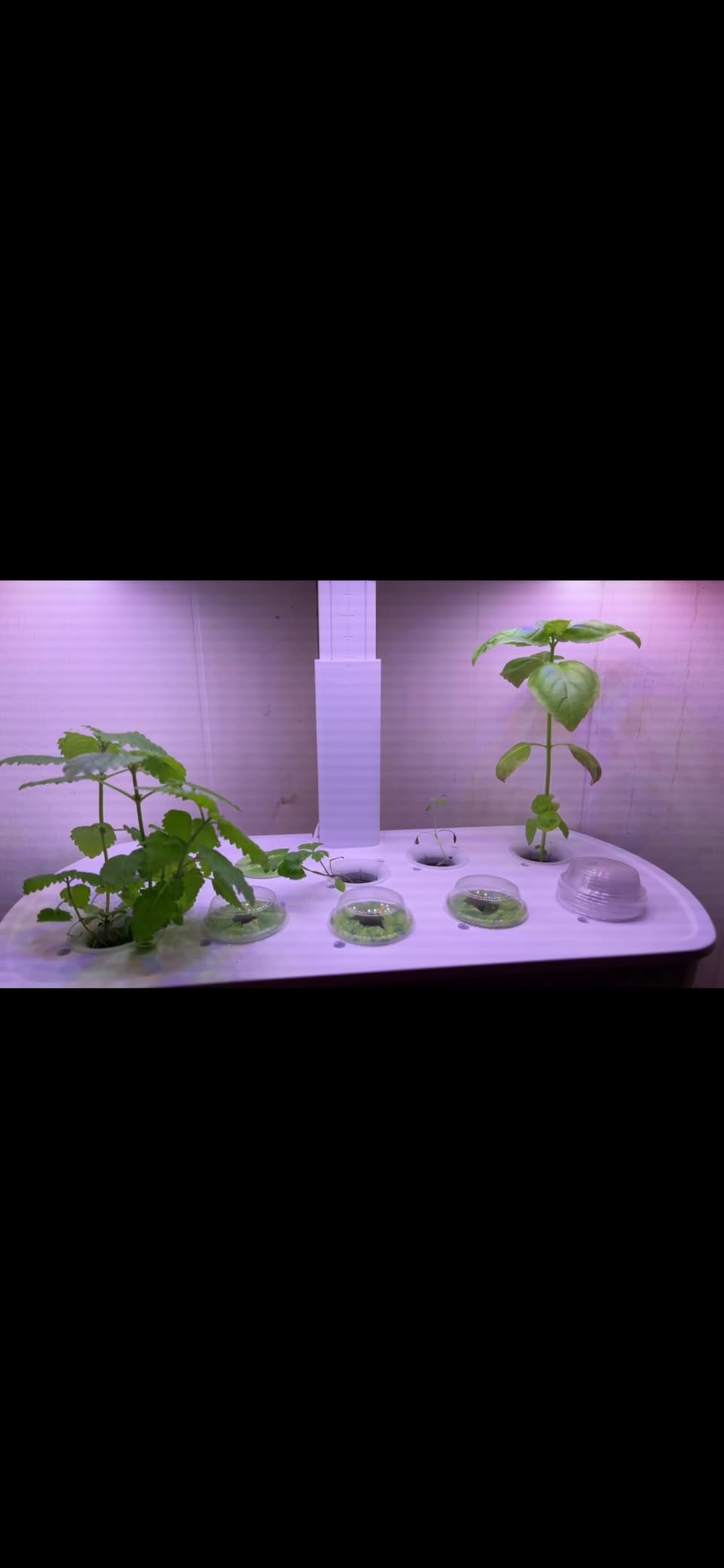
Growth rates were impressive. LETPOT claims up to 300% faster growth than traditional methods, and while that number sounds aggressive, my basil and mint grew noticeably faster than they did in soil. The 24W LED provides full spectrum light that mimics natural sunlight, and the height-adjustable rod extends to 14 inches for mid-size plants.
The water tank lasted about two weeks between refills in my testing. The app sent a notification when water was getting low, which prevented any dry-out incidents. This is the kind of hands-off growing experience that makes indoor herb gardens worth the investment.
What Seeds Work Best With the LPH-Air
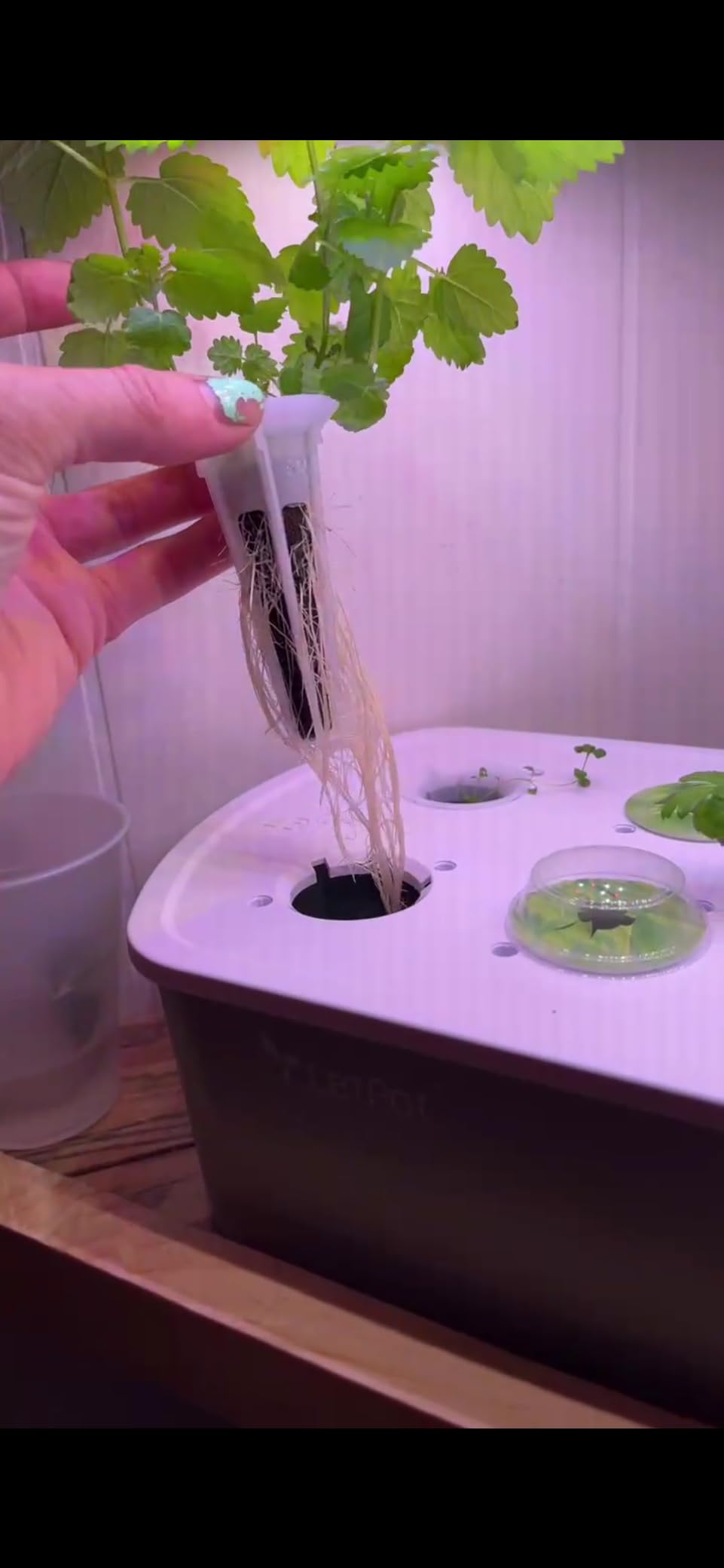
Unlike most competitors, the LPH-Air does not include seeds in the box. You get grow sponges, baskets, and nutrients, but you need to supply your own seeds. This is actually an advantage if you want specific varieties beyond what standard pod kits offer.
I used seeds from a local garden store and had excellent results with basil, cilantro, dill, and parsley. Just follow the sponge insertion instructions carefully. Place two to three seeds per sponge for best germination rates.
How It Compares to the Premium LETPOT LPH-SE
The LPH-Air shares the same app, LED wattage, and smart features as the LPH-SE but costs significantly less. The trade-offs are a plastic build instead of stainless steel, a smaller water tank (4L vs 5.5L), and a shorter maximum height (14 inches vs 30 inches).
For most herb growing, those differences barely matter. If you plan to grow tall fruiting plants like tomatoes or want the premium aesthetic, spend more on the LPH-SE. For herbs on a kitchen counter, the LPH-Air is the smarter buy.
6. Ahopegarden 12-Pod Hydroponic System – LCD Display and Dual Growing Modes
Ahopegarden Hydroponics Growing System Kit: 12 Pods Temp & Humidity Monitor
- LCD screen shows real-time temperature and humidity
- Ultra-quiet pump under 40 dB
- 5L tank with transparent water indicator
- Dual growing modes
- Adjustable light post up to 17 inches
- 300% faster growth than soil
- Seeds not included
- Indoor use only
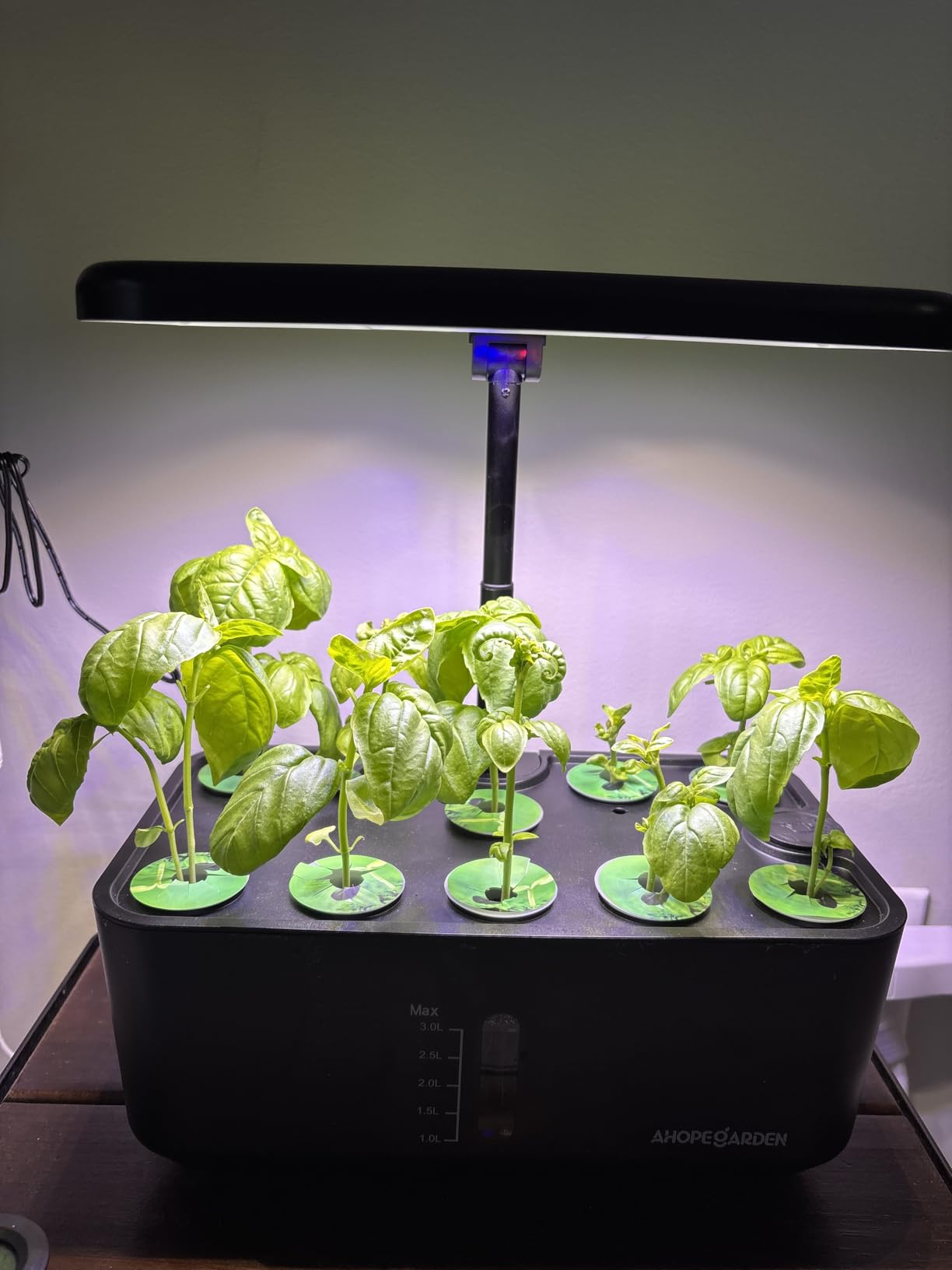
The Ahopegarden 12-Pod system stands out for its LCD display, which shows real-time temperature and humidity readings. This is surprisingly useful information that most indoor gardens do not provide. I could see at a glance whether my growing environment was too warm or too dry and adjust accordingly.
The dual growing modes work similarly to the iDOO system. Blue light mode promotes leafy herb growth, while red light mode encourages flowering and fruiting. The smart timer runs on a 16-hour-on, 8-hour-off cycle, which mimics natural daylight patterns and gives plants the rest period they need.
The 5-liter water tank is generous for a 12-pod system. The transparent water level indicator on the side means you never have to guess when a refill is needed. In my testing, the tank lasted about ten to twelve days between fill-ups with twelve plants growing simultaneously.
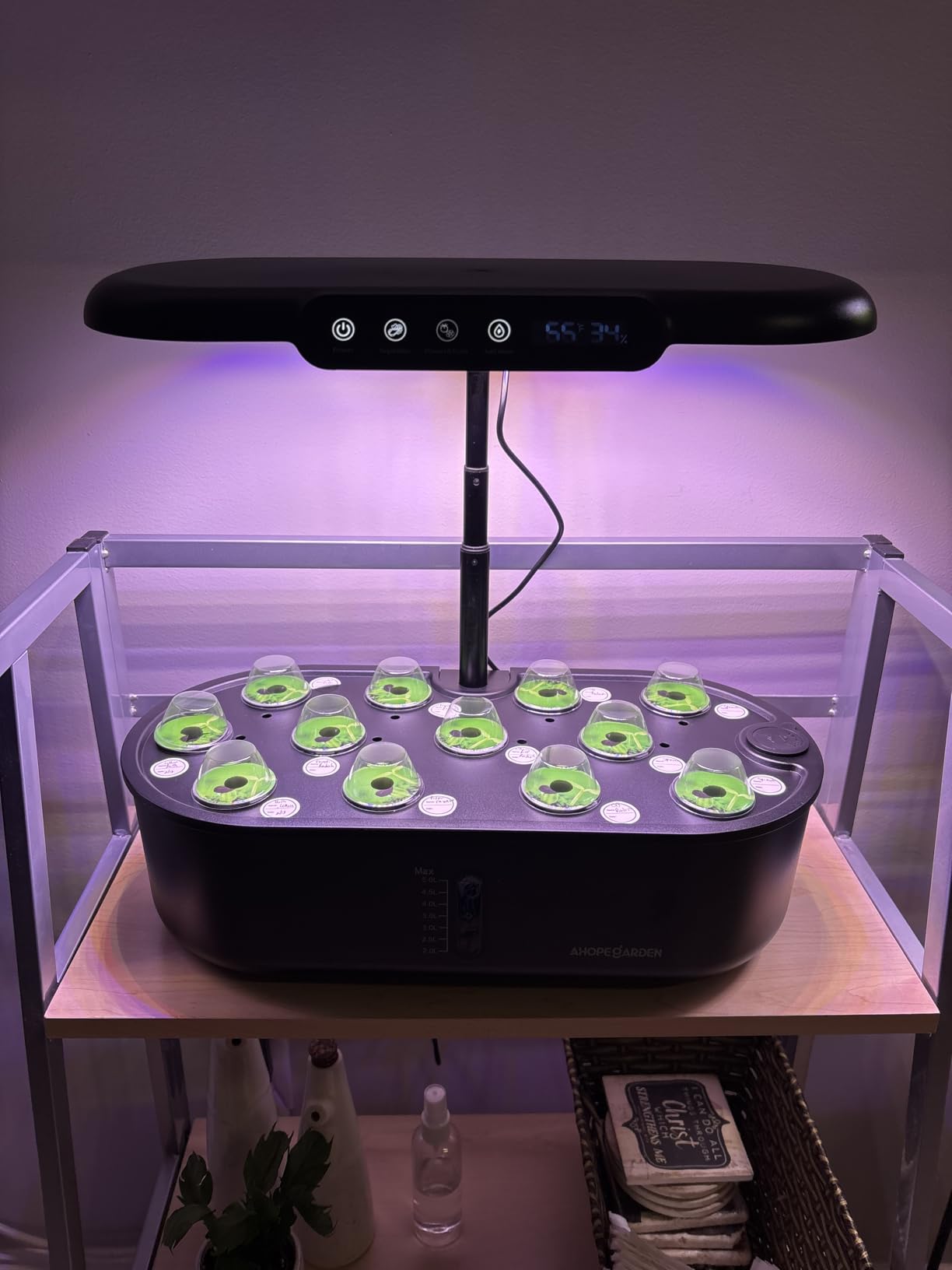
The ultra-quiet water pump is one of the quietest I have tested, operating at under 40 decibels. Forum users frequently complain about pump noise disturbing their sleep, and the Ahopegarden addresses that concern directly. I could not hear it running from five feet away.
The light post adjusts up to 17.32 inches, which is taller than the iDOO and Click & Grow systems. This gives you more headroom for plants that tend to grow upward, like basil and certain lettuces. The system also includes a low water alarm that beeps when the tank needs refilling.
How the LCD Display Helps You Grow Better Herbs
The real-time temperature and humidity readings helped me catch a problem I would have otherwise missed. My kitchen was running warmer than ideal for herb growing, and the LCD showed temperatures consistently above 78 degrees. Once I moved the system to a slightly cooler spot, my herbs perked up within two days.
Most indoor herb gardens assume your environment is perfect. The Ahopegarden gives you the data to know when it is not, which is invaluable for troubleshooting slow growth or yellowing leaves.
What the Dual Growing Modes Mean in Practice
Blue light mode is your default setting for herbs and leafy greens. The blue spectrum promotes compact, leafy growth with strong stems. All my basil, mint, parsley, and lettuce stayed on this mode throughout their growing cycle and produced dense, bushy plants.
Red light mode is for when you want to push flowering or fruiting. If you grow cherry tomatoes or peppers in this system, switch to red light mode once the plants reach maturity and start producing flowers. The spectrum shift signals the plant to focus energy on fruit production rather than leaf growth.
7. URUQ 8-Pod Hydroponic System – Compact and Whisper Quiet
- Super quiet pump under 20 dB
- Compact design fits windowsills and small shelves
- 24W LED simulates full sunlight
- Smart 16-8 light cycle
- 3L tank with viewing window
- Water shortage indicator
- Smaller capacity at 8 pods
- Limited height adjustment range
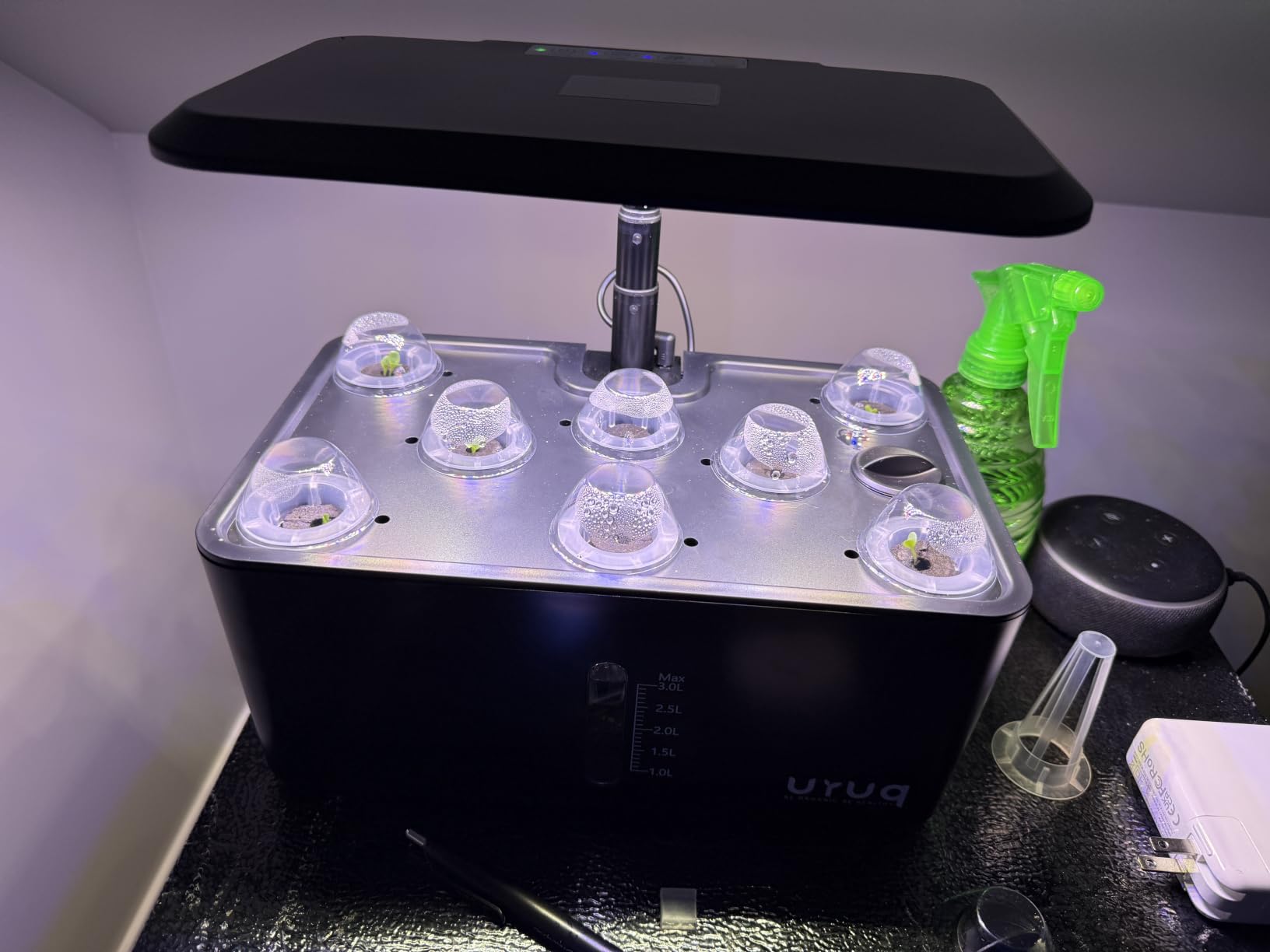
The URUQ 8-Pod system is the one I recommend for small kitchens and tight counter spaces. Its compact footprint fits on a windowsill or narrow shelf where larger systems like the AeroGarden Bounty simply will not go. Despite the small size, it still packs a 24W LED panel and 8 growing pods.
The standout feature here is the pump noise. At under 20 decibels, the URUQ pump is the quietest we tested by a wide margin. For reference, 20 dB is about as loud as a whisper. If you are a light sleeper or your kitchen shares a wall with your bedroom, this is the system to get.
The 3-liter water tank is modest but sufficient for 8 pods. The viewing window on the side lets you monitor water levels without opening anything. I found I needed to refill roughly every 7 to 10 days depending on how fast the plants were growing.
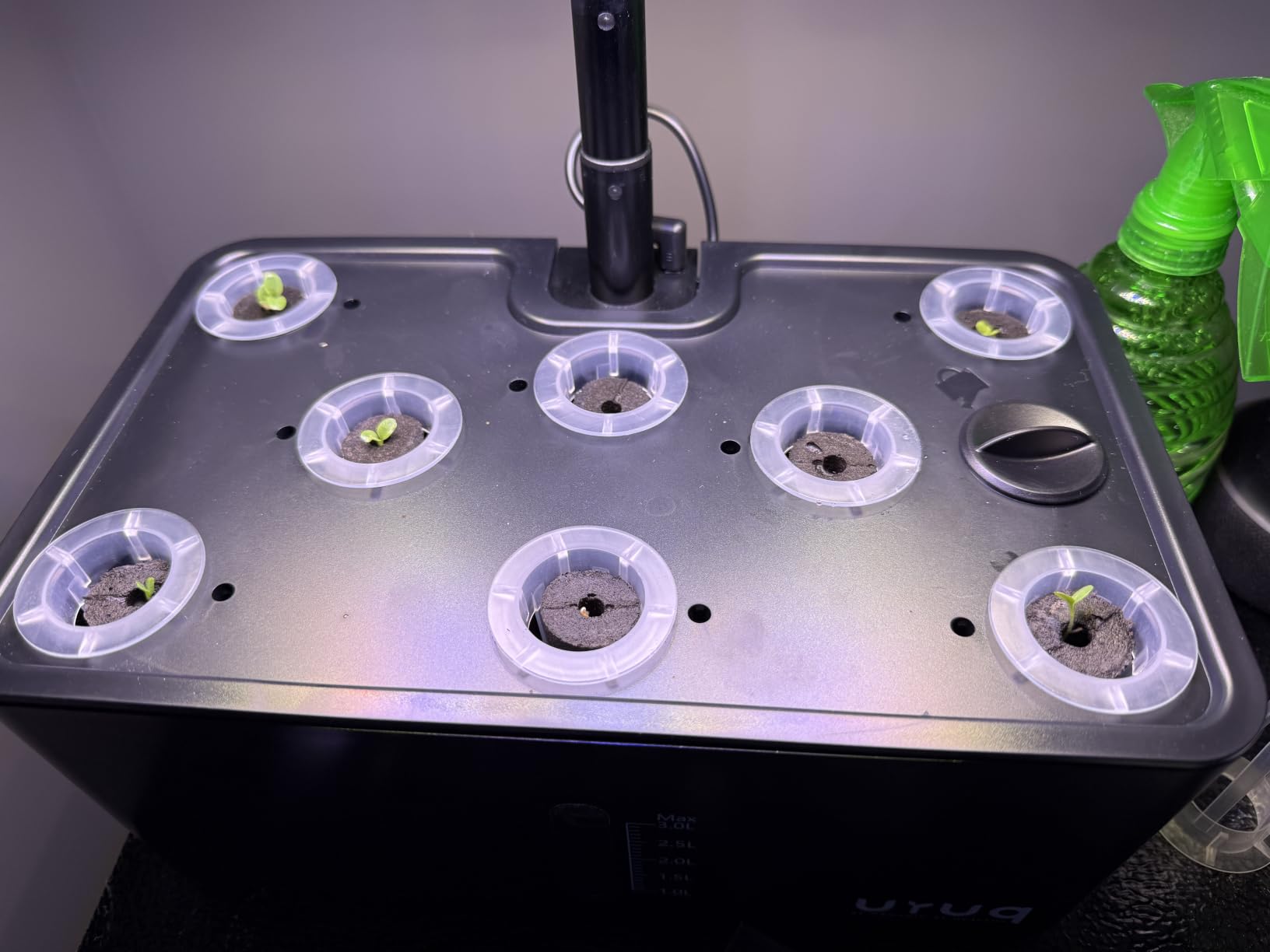
The 24W LED provides full spectrum light that simulates natural sunlight, and URUQ claims 5x faster growth than traditional planting. My experience was closer to 2 to 3x faster, which is still impressive. Basil went from seed to first harvest in about four weeks.
The height-adjustable LED pole detaches easily, which makes cleaning and transplanting simpler than with fixed-hood designs. The smart timer runs the standard 16-hours-on, 8-hours-off cycle that most herbs love, and the water shortage indicator gives you a clear visual warning before the tank runs dry.
Where the URUQ Fits Best in Your Home
The compact dimensions make this system incredibly versatile. I tested it on a kitchen windowsill, a bathroom shelf, and a home office desk. It performed well in all three locations. The lightweight design at just 1.65 kg means you can move it around without struggling.
If you live in an apartment with limited counter space, or if you want to grow herbs in a room other than the kitchen, the URUQ is the most flexible option. It also makes a great gift for someone who is curious about indoor gardening but does not want a large system.
Realistic Expectations for 8 Pods
Eight pods will give you enough herbs for occasional cooking use. You can run a rotation of basil, mint, parsley, and cilantro with room for a few experimental plants. However, if you cook with fresh herbs daily or want to grow enough for preserving, you may find 8 pods limiting.
For most home cooks, 8 pods hits the sweet spot between variety and space efficiency. You get enough diversity to keep things interesting without overwhelming your kitchen with a massive growing system.
8. Planters’ Choice 9 Herb Window Garden Kit – The Soil-Based Starter Set
- 9 gourmet herbs included
- Complete kit with everything you need
- Premium heirloom seeds with high germination rates
- Nutrient-rich soil discs expand 6-8 times
- No electricity or grow lights needed
- Great gift for gardening beginners
- Not Prime eligible
- Slower growth than hydroponic systems
- Requires natural sunlight from a window
The Planters’ Choice 9 Herb Window Garden Kit is the only soil-based system in our roundup, and it serves an important purpose. Not everyone wants a plugged-in hydroponic system with LED lights and water pumps. Some people just want to grow herbs the traditional way, on a sunny windowsill, without a power cord in sight.
This kit includes everything you need to start 9 different herbs: dill, basil, chives, thyme, parsley, oregano, cilantro, sage, and mustard. You get heirloom seeds, nutrient-rich soil discs that expand 6 to 8 times their compressed size, pots, and a step-by-step guide. It is truly a complete package.
The heirloom seed varieties are a nice touch. These are non-hybrid seeds that produce herbs with fuller flavor than many commercial varieties. The germination rates were solid in my testing, though not as fast or as reliable as hydroponic systems. Soil growing takes patience.
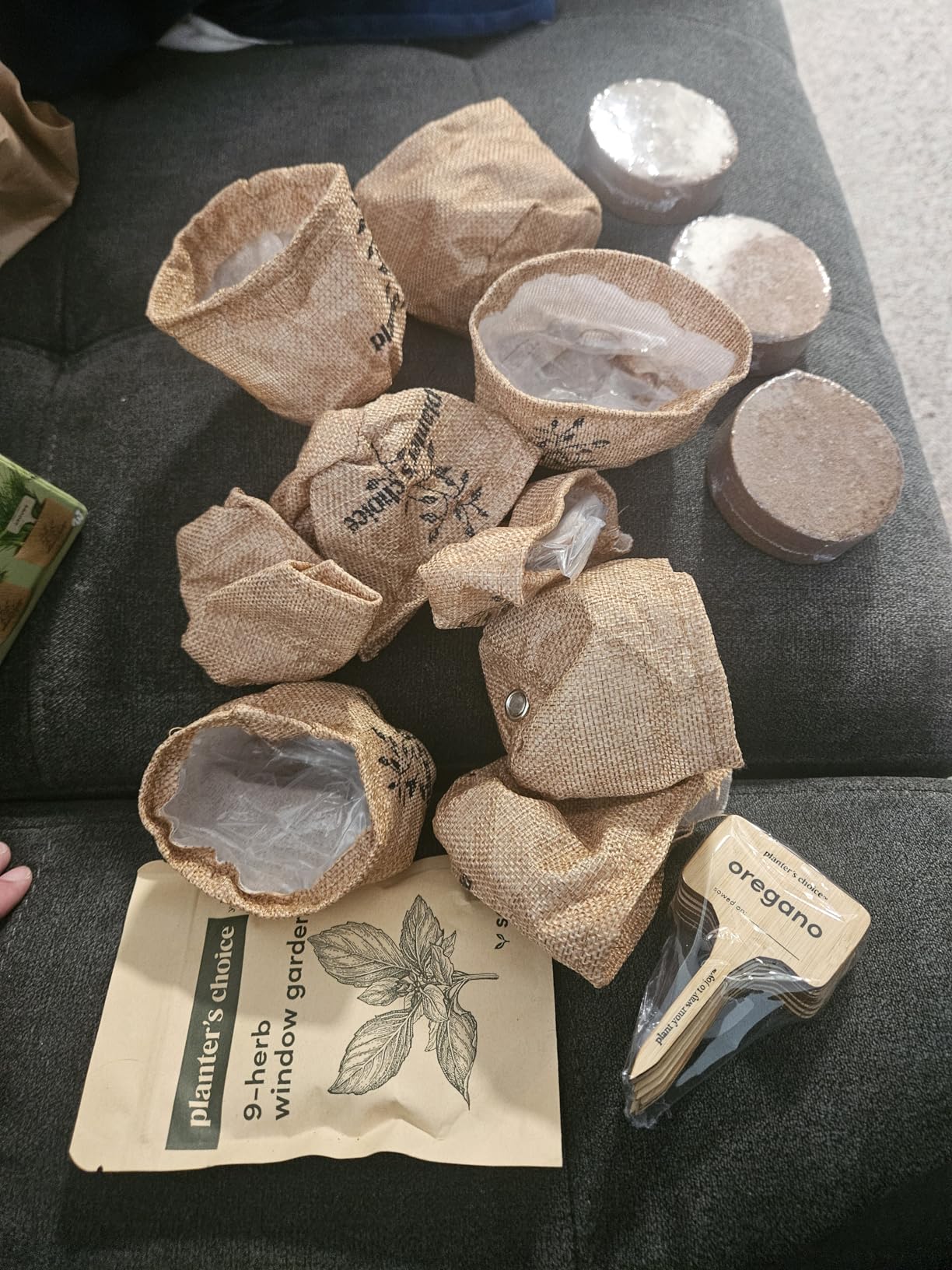
Because this system relies on natural sunlight rather than LED grow lights, your results will depend heavily on where you place it. A south-facing window gets the best results. North-facing windows simply will not provide enough light for herbs to thrive.
The lower rating of 4.1 stars reflects the challenges of soil-based growing. Some users report germination failures, which is more common with soil than with hydroponic systems. However, the 3148 reviews show this is a popular kit that works well when you follow the instructions and have adequate sunlight.
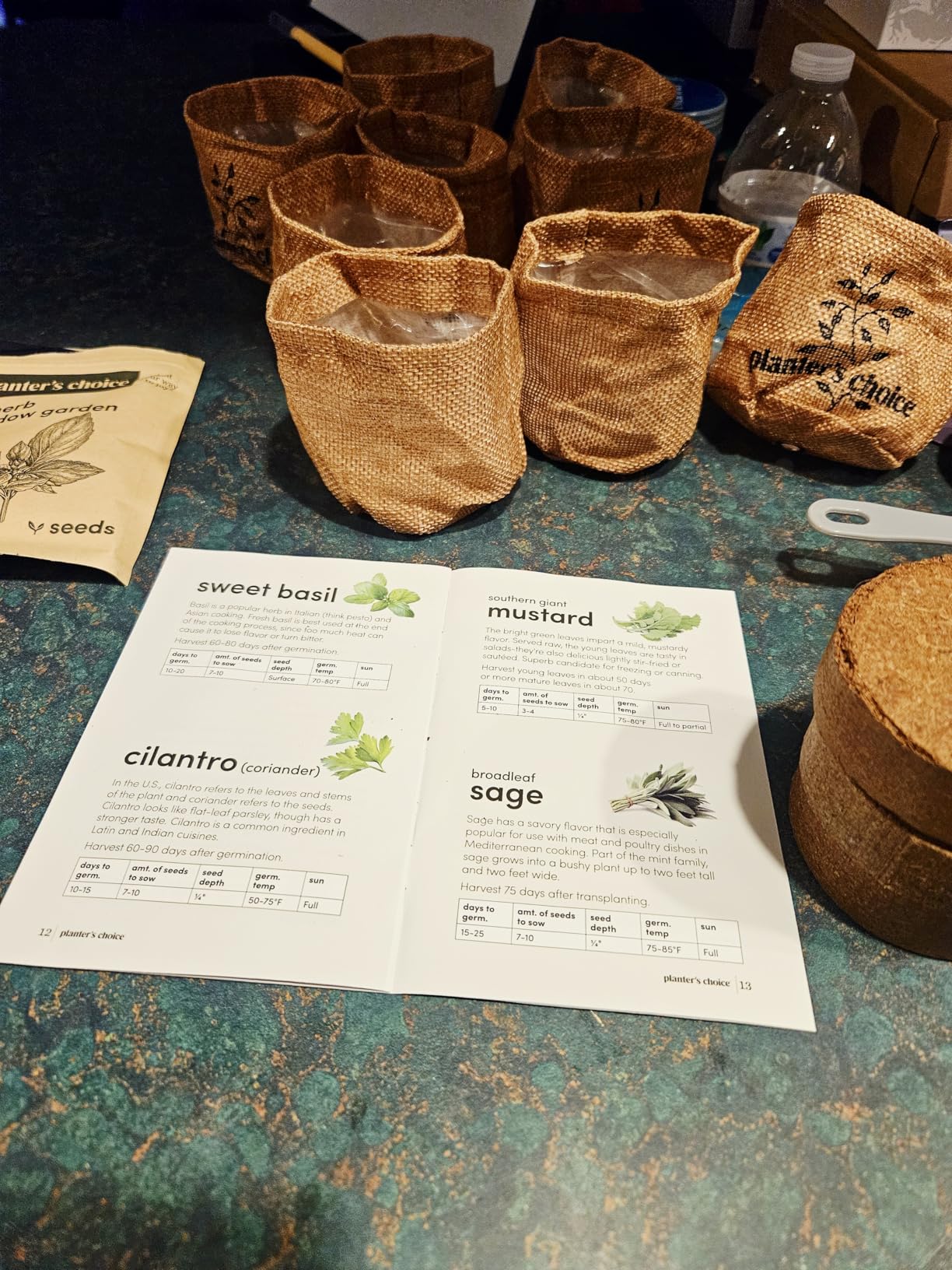
Best Windowsill Placement for Maximum Growth
A south-facing window is ideal for herb growing, providing 6 or more hours of direct sunlight per day. East and west-facing windows can work too, though growth will be slower. Avoid north-facing windows entirely, as the light is too weak for most herbs to thrive.
Rotate the pots every few days so all sides of the plants get equal light exposure. This prevents the herbs from leaning toward the window and growing lopsided, which is a common problem with windowsill gardens.
Why Choose Soil Over Hydroponics
Soil growing gives herbs a flavor profile that many cooks prefer. There is a depth and complexity to soil-grown herbs that hydroponic herbs sometimes lack. If you are a food enthusiast who values taste above convenience, a soil-based kit like this one delivers on flavor.
Soil-based growing is also more forgiving for certain herbs. Rosemary, thyme, and oregano are Mediterranean herbs that actually prefer the drier conditions of soil over constant water contact. These herbs can struggle in hydroponic systems but thrive in well-draining soil on a sunny windowsill.
How to Choose the Best Indoor Herb Garden for Your Home
After testing eight systems over three months, I identified the key factors that separate a great indoor herb garden from a disappointing one. Here is what to consider before you buy, with a focus on how each factor fits into your home and kitchen lifestyle.
Hydroponic vs Soil-Based: Making the Right Choice
Hydroponic systems grow herbs in water enriched with nutrients, using LED grow lights to drive photosynthesis. They grow plants 40 to 300% faster than soil, do not require natural sunlight, and work anywhere in your home. The trade-off is that they need electricity, produce some pump noise, and require ongoing purchases of nutrients and seed pods.
Soil-based kits rely on natural sunlight and traditional potting soil. They are simpler, cheaper to maintain, and many cooks believe they produce better-tasting herbs. The downsides are slower growth, dependence on window placement, and higher germination failure rates.
Pod Capacity and What You Actually Need
Think about how you cook. If you use fresh herbs occasionally, a 3-pod system like the Click & Grow is plenty. If you cook with herbs daily or want enough for pesto, chimichurri, or herb-based sauces, look for 9 to 12 pod systems. The iDOO, LETPOT, and Ahopegarden all offer 12-pod capacity.
More pods also means more flexibility. You can dedicate some pods to staples like basil and mint while experimenting with seasonal herbs, lettuce, or even cherry tomatoes in the remaining slots.
Light Power and Grow Speed
LED wattage directly affects growth speed. The AeroGarden Bounty leads with 30W, followed by the LETPOT systems, Ahopegarden, and URUQ all at 24W. The iDOO sits at 22W. Higher wattage means faster growth but also slightly higher electricity costs.
In practice, the difference between 22W and 30W is noticeable but not dramatic. All of these systems will produce harvestable herbs in 3 to 4 weeks. Choose based on other features like capacity and smart controls rather than chasing maximum wattage.
Water Tank Size and Maintenance Frequency
Tank size determines how often you need to refill. The LETPOT LPH-SE has the largest tank at 5.5 liters, lasting up to 3 weeks. The Ahopegarden at 5L and iDOO at 4.5L are close behind. Smaller systems like the URUQ at 3L need refilling every week to ten days.
If you travel frequently or just want a low-maintenance setup, prioritize larger tanks. Smart features like app-based water level alerts make this even more convenient by reminding you before the tank runs dry.
Design and Kitchen Aesthetics
Your indoor herb garden will live on your kitchen counter, so it should look good. The Click & Grow Smart Garden has the cleanest, most minimalist design. The LETPOT LPH-SE with its stainless steel exterior blends beautifully with modern kitchens. The AeroGarden has a functional, appliance-like appearance.
Consider the footprint too. The URUQ and Click & Grow fit on a windowsill or narrow shelf. The AeroGarden Bounty and 12-pod systems need dedicated counter space. Measure your available space before ordering.
Ongoing Costs: Pods, Nutrients, and Electricity
Replacement seed pods cost $5 to $7 each across brands. Hydroponic systems also require liquid nutrients, which run about $10 to $15 for a several-month supply. Over a year, expect to spend $50 to $100 on consumables depending on how heavily you use the system.
Electricity costs are modest. A 24W LED running 16 hours per day uses about 0.384 kWh daily. At the national average of $0.15 per kWh, that is roughly $1.73 per month in electricity. The 30W AeroGarden costs about $2.16 monthly to run.
Pet Safety Considerations
If you have cats or dogs, consider which herbs you grow and where you place the system. Basil, rosemary, thyme, and cilantro are safe for pets. Chives, garlic, and onions are toxic to dogs and cats, so skip those if your pets can reach the garden.
Also consider that cats love to chew on growing greens. Place your indoor herb garden where curious pets cannot reach it, or choose a system with enough height to keep plants out of range.
FAQs
What is the best indoor herb garden system?
The AeroGarden Bounty Basic is our top pick for the best indoor herb garden system. It features a powerful 30W LED grow light, 9-pod capacity, automatic timer, and vacation mode. Our testing showed reliable germination, fast growth, and a user-friendly digital display that makes it easy to monitor water and nutrient levels.
What are the best herbs to grow in an indoor garden?
Basil, mint, parsley, dill, oregano, thyme, and chives are the best herbs for indoor gardens. Basil and mint are particularly beginner-friendly and thrive in both hydroponic and soil-based systems. Cilantro is more challenging indoors because it tends to bolt quickly.
Do indoor herb gardens really work?
Yes, indoor herb gardens work very well when you follow the setup instructions. Hydroponic systems with LED grow lights can produce harvestable herbs in 3 to 4 weeks, growing 40 to 300% faster than outdoor soil planting. The key is consistent water, adequate light, and proper nutrient levels.
How much electricity does an indoor herb garden use?
Most indoor herb gardens use between 20 and 30 watts of LED lighting. Running 16 hours per day, a 24W system costs about $1.73 per month in electricity at the national average rate. The 30W AeroGarden costs approximately $2.16 per month to operate.
What are common mistakes growing indoor herbs?
The most common mistakes are insufficient light, overwatering, not changing the water regularly, placing the garden too far from the light source, and not trimming herbs to encourage bushy growth. Using old seeds and skipping nutrient additions are also frequent causes of poor results.
Final Thoughts on the Best Indoor Herb Gardens for 2026
After three months of hands-on testing, the AeroGarden Bounty Basic remains our top recommendation for the best indoor herb garden overall. Its combination of 9-pod capacity, powerful 30W LED, reliable germination, and user-friendly digital display makes it the most complete system we tested.
For value seekers, the LetPot LPH-Air delivers smart WiFi features at a price that undercuts nearly every competitor. And for those who want the simplest possible experience, the Click & Grow Smart Garden’s drop-in-and-grow design is impossible to beat. Whether you choose hydroponic or soil-based, any of these eight systems will keep you in fresh herbs year-round without the wilted grocery store disappointments that sent me down this path in the first place.