
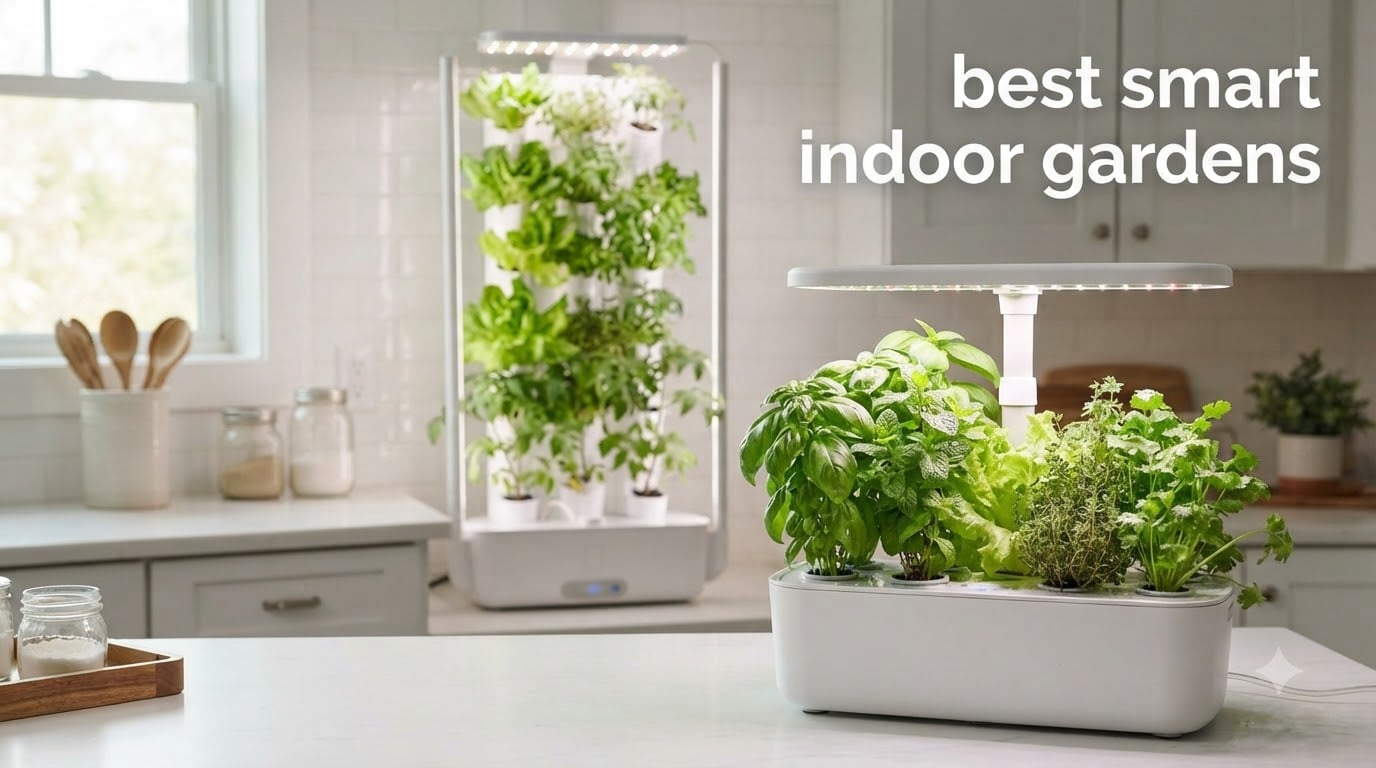
I have spent the past three years filling my kitchen with hydroponic systems of every shape and size, and the one thing I can tell you is that not all of them are created equal. Some grow basil so fast you can almost watch it happen, while others leave you with leggy sprouts and an empty wallet. If you are looking for the best smart indoor gardens in 2026, I have narrowed down eight options that actually deliver on their promises.
The smart indoor garden landscape has changed dramatically this year. With AeroGarden’s parent company facing financial trouble, a wave of new brands has flooded Amazon with similar-looking white-label systems. Our team sorted through the noise to find which automated indoor gardens are worth your counter space. We tested everything from a 40-dollar budget pod to a 900-dollar vertical tower.
What matters most is matching the system to how you actually cook and live. A busy parent who wants fresh cilantro for taco night needs something very different from a homesteader growing 30 plants for daily salads. I will walk you through each system I tested, who it works best for, and the honest pros and cons that the product listings leave out.
Table of Contents
Top 3 Picks for Best Smart Indoor Gardens


Best Smart Indoor Gardens in 2026
| Product | Specifications | Action |
|---|---|---|
| AeroGarden Harvest 6 Pod |
|
Check Latest Price |
 LetPot LPH-SE 12 Pod LetPot LPH-SE 12 Pod |
|
Check Latest Price |
| Click and Grow Smart Garden 3 |
|
Check Latest Price |
 iDOO 12 Pods Hydroponic System iDOO 12 Pods Hydroponic System |
|
Check Latest Price |
 LetPot LPH-Air 10 Pod LetPot LPH-Air 10 Pod |
|
Check Latest Price |
 Ahopegarden 10 Pods Ahopegarden 10 Pods |
|
Check Latest Price |
 URUQ 8 Pods Quiet System URUQ 8 Pods Quiet System |
|
Check Latest Price |
 Gardyn Home 4 Vertical System Gardyn Home 4 Vertical System |
|
Check Latest Price |
1. AeroGarden Harvest – The Trusted 6-Pod Classic
AeroGarden Harvest Indoor Garden Hydroponic System with LED Grow Light and Herb Kit, Holds up to 6 Pods, White
- Trusted brand with 20k+ reviews
- Simple touch control panel
- Automatic light timer included
- Compact countertop size
- Gourmet herb kit included
- Only 6 plant slots
- Company financial uncertainty reported
- Plastic build quality
I started my indoor gardening journey with the AeroGarden Harvest three years ago, and it is still the system I recommend to most people who ask. The setup took me about five minutes from box to plugged in. You drop the seed pods in, fill the water bowl, add the included nutrient packet, and plug it in.
The 20W LED grow light sits on a fixed arm about 17 inches above the counter. My basil reached the top of the 12-inch clearance in about four weeks, which is impressive for a system this compact. The touch-sensitive control panel flashes when the water runs low, which honestly saved my plants more than once when I forgot to check.
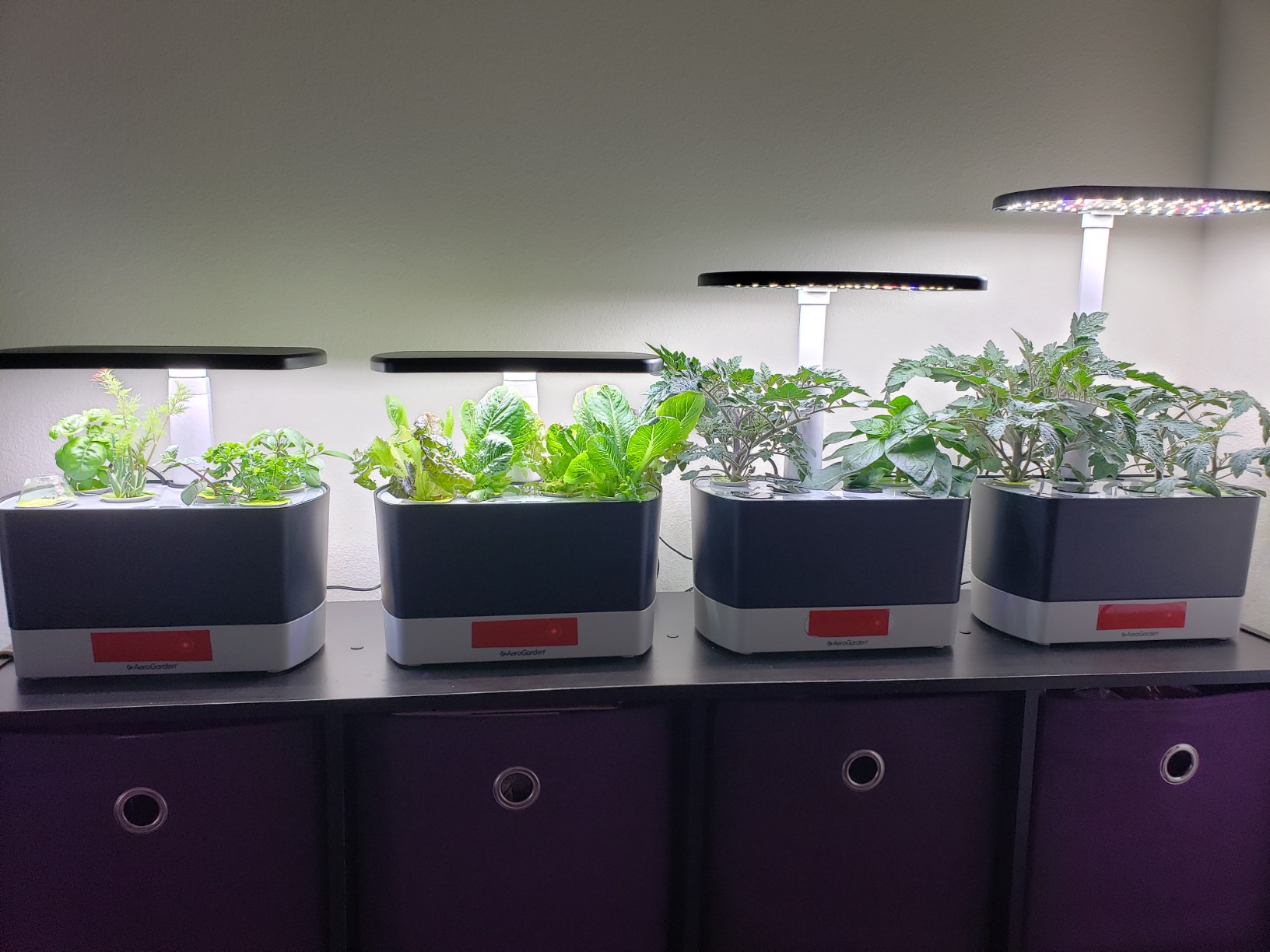
What I love most about this system is how foolproof it feels. The automatic timer runs 16 hours on and 8 hours off without any configuration. You just add water when the light tells you to and drop in a nutrient tablet every two weeks. My dill, basil, and mint all thrived without me needing to think about lighting schedules or pH levels.
The real concern for 2026 is AeroGarden’s parent company situation. Reddit users on r/Hydroponics have been openly worried about warranty support and replacement parts if the brand goes under. The system itself works beautifully, but I would stock up on proprietary seed pods while they are still widely available. Third-party pods from brands like Ahopegarden do fit but can be hit or miss on germination rates.

Who this garden is perfect for
This is the ideal first system for someone who wants fresh herbs without any learning curve. The 6-pod capacity is enough to keep a small household in basil, parsley, and thyme year-round. If you cook a few times a week and want to snip fresh herbs for pasta or cocktails, this is all the garden you need.
It is also a great choice if you have limited counter space. At just 6 by 10.5 inches, it tucks into a corner without dominating the kitchen. The clean white design blends in with most appliances, unlike some of the bulkier systems I have tested.
Limitations to consider before buying
The 6-pod limit becomes frustrating fast if you want variety or volume. I filled all six slots within a week and wished for more space to experiment with cherry tomatoes or peppers. The 12-inch height clearance also rules out taller plants like full-size tomatoes or bushy kale.
There is no app connectivity or WiFi control. You cannot adjust the light schedule or get phone alerts when water is low. For some people that simplicity is a feature, but if you travel frequently the lack of remote monitoring could be a dealbreaker.
2. LetPot LPH-SE – Best Value App-Controlled System
- Real app control via WiFi
- 12 plants at once
- 5.5L tank lasts 3 weeks
- Adjustable height to 30 inches
- 2 growing modes
- Seeds not included
- App setup can be finicky
- Stainless surface shows fingerprints
The LetPot LPH-SE is the system that surprised me the most this year. For around the same price as the AeroGarden Harvest, you get double the pod capacity, a real WiFi-connected app, and an LED rod that extends to 30 inches. I have been running mine for six months straight and it has not let me down.
The LetPot app is one of the few that actually works as advertised. Unlike some competitor apps that feel like afterthoughts, this one monitors water levels in real time and sends alerts when the tank needs refilling. I left town for a long weekend and the app told me exactly when to ask my neighbor to top it off. That kind of remote monitoring is something you usually only get on systems costing three times as much.
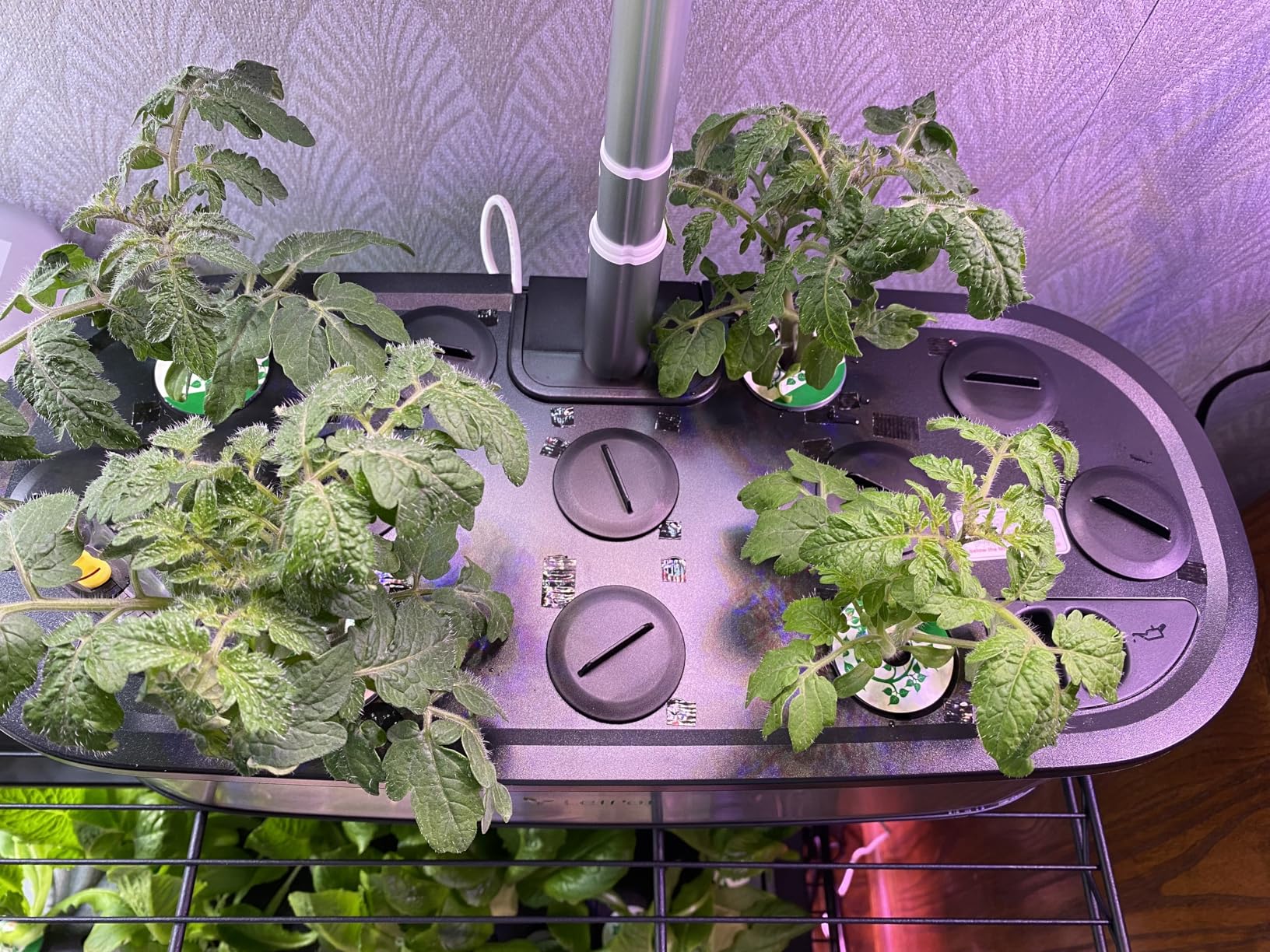
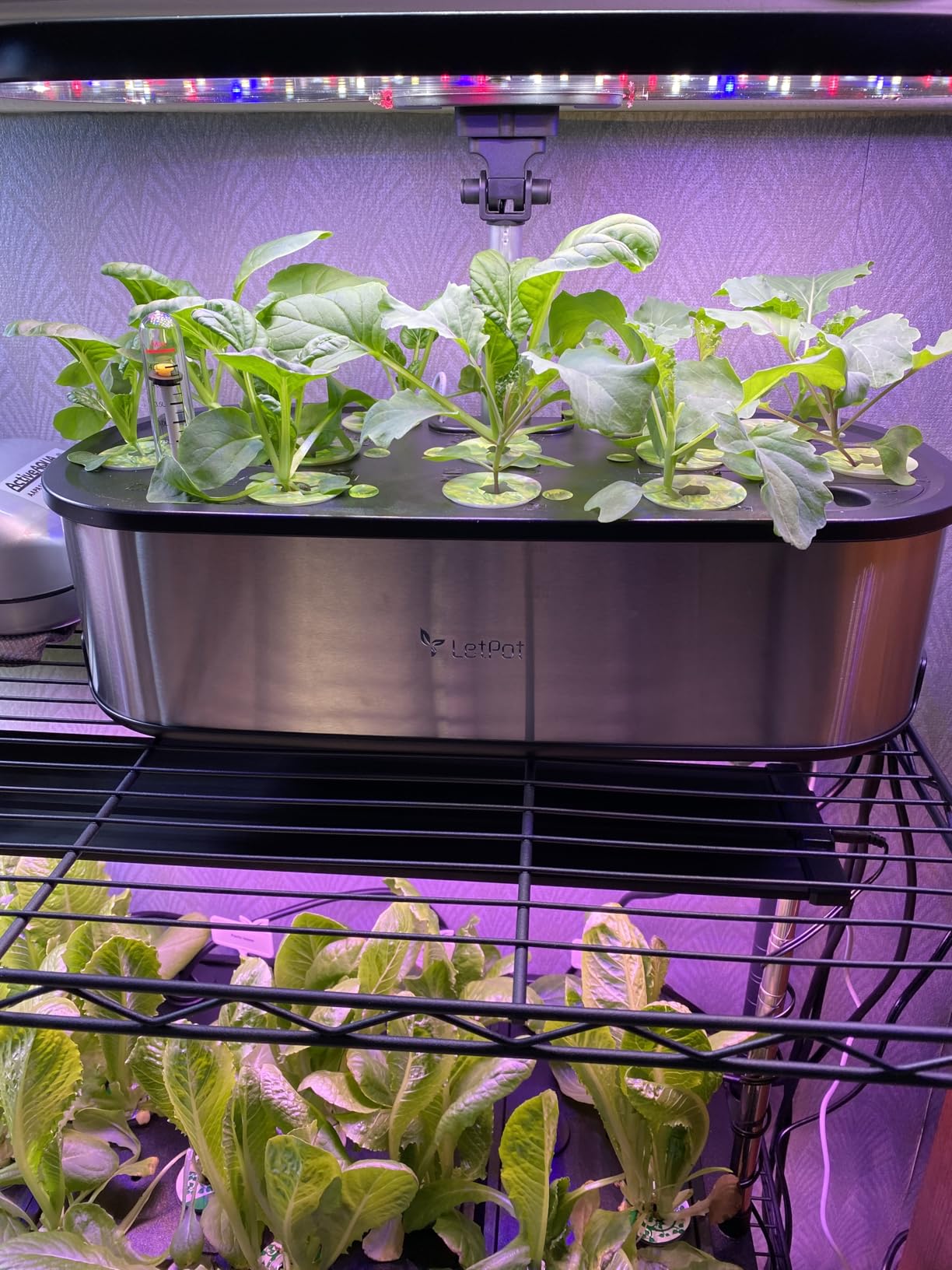
The 24W full spectrum LED is noticeably brighter than the AeroGarden’s 20W unit. My lettuce and arugula grew about 40 percent faster in the LetPot compared to the same seeds in the AeroGarden side by side. The two growing modes, vegetative and blooming, let you switch light spectrums depending on whether you are growing leafy greens or trying to fruit peppers and tomatoes.
The 5.5-liter water tank is the real unsung hero here. I only refilled mine every two to three weeks, even with all 12 pods growing. That is a huge step up from the AeroGarden, which needed weekly refills. The stainless steel top looks sleek on the counter, though I will say it picks up fingerprints if you have kids who like to touch everything.
Why this is my top value pick
You get the most features per dollar of any system on this list. Twelve pods, real WiFi app control, a massive water tank, and an LED that grows with your plants. If I were buying my first smart indoor garden today with a budget around 120 dollars, this is the one I would pick without hesitation.
The system also comes with 12 planting cups, sponges, baskets, and covers, plus A and B nutrient solutions. The only thing missing is the actual seeds, which LetPot expects you to source yourself. I actually prefer this because I can choose organic seeds from my local nursery instead of being locked into proprietary pods.
What to watch out for
The app setup process took me about 15 minutes and required connecting to a 2.4GHz WiFi network. If your home runs only on 5GHz, you will need to switch networks during setup. A few users on the LetPot subreddit reported connection drops, though I have not experienced that issue myself.
The adjustable LED rod is great for tall plants, but at full extension the system becomes top-heavy. I recommend placing it away from high-traffic areas where someone might bump it. The grow lights are also bright enough to light up a room at night, which some people find annoying in an open kitchen.
3. Click and Grow Smart Garden 3 – Simplest for Beginners
- Easiest setup of any system
- Patented Smart Soil no mess
- 50+ plant varieties
- No pump noise at all
- Energy efficient
- Only 3 pods
- Proprietary pods required
- Smaller yield than hydroponic systems
- Lower light output
If you have ever killed a houseplant and sworn off gardening forever, the Click and Grow Smart Garden 3 is your redemption arc. This is the simplest growing system I have ever used. There is literally no pump, no nutrient mixing, and no app to configure. You insert a plant pod, fill the water reservoir, and plug it in. That is the entire process.
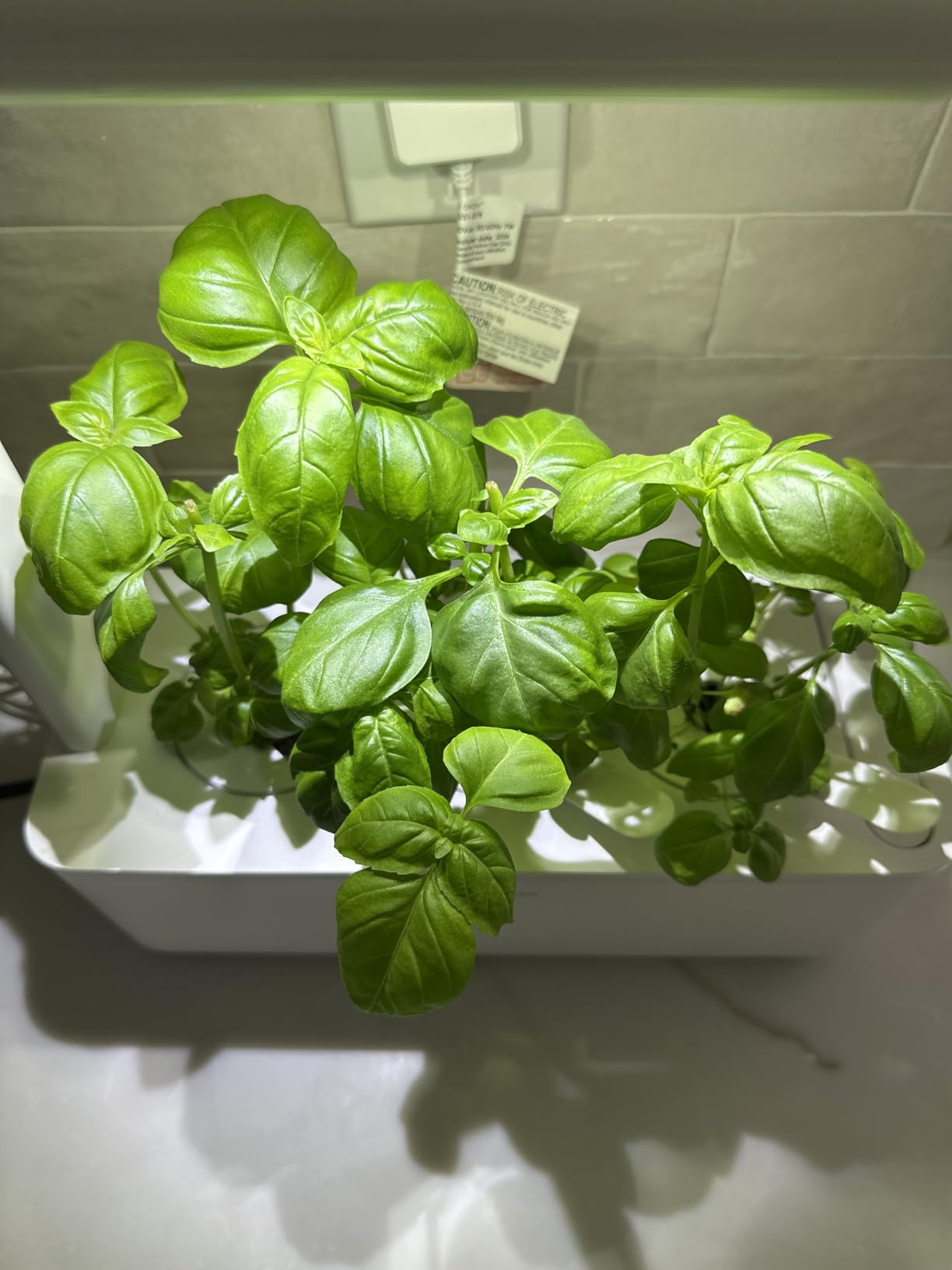
The secret is Click and Grow’s patented Smart Soil technology. Instead of suspending roots in water like a hydroponic system, it uses a engineered growing medium that regulates oxygen, water, and pH automatically. My three basil pods sprouted within five days and were harvestable in about three weeks. The self-watering wick system pulls moisture up from the tank as needed, so you never have to guess about how much to water.
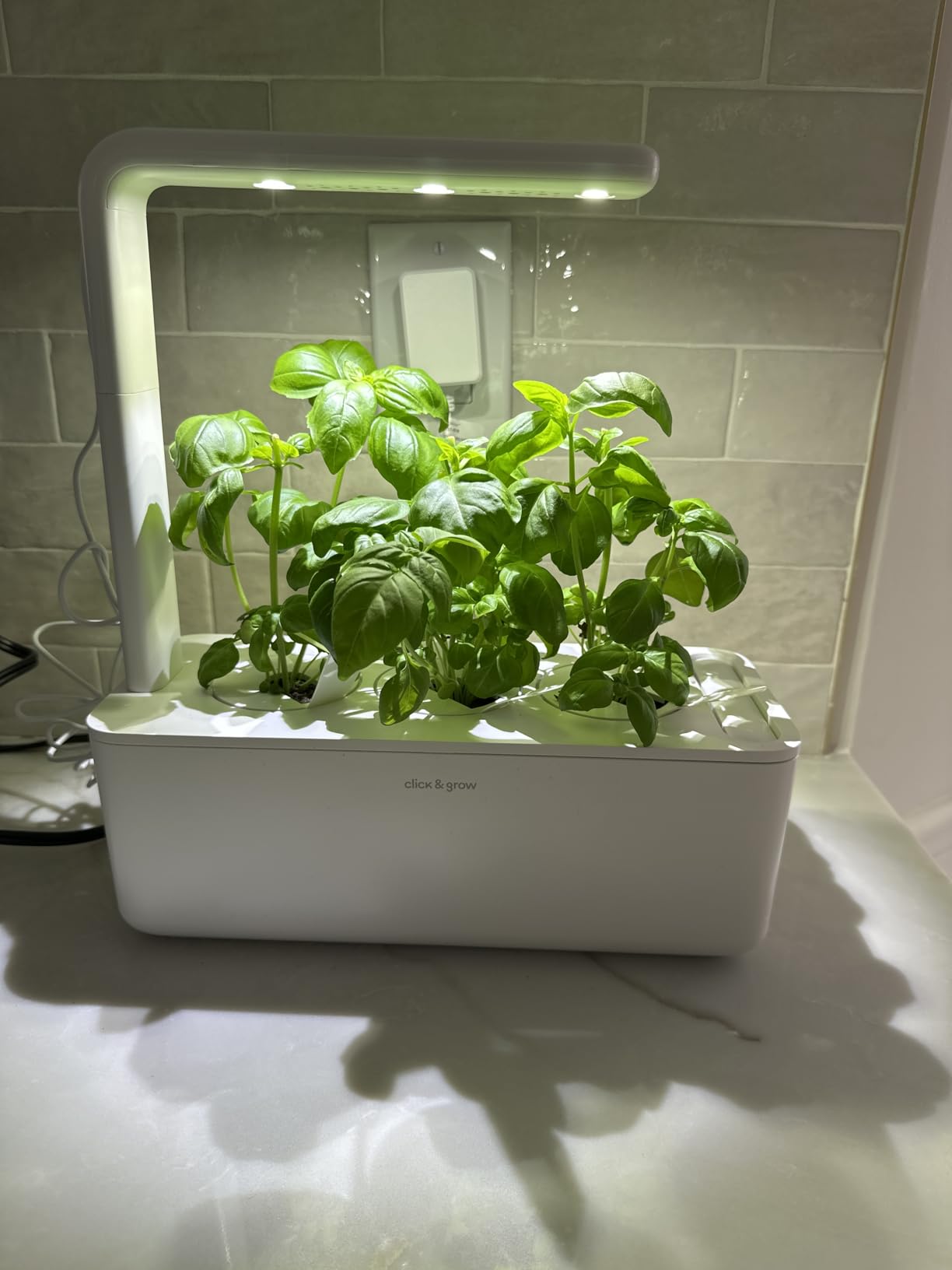
What makes this the best system for true beginners is the absence of any moving parts. There is no pump to break, no air stone to clog, and no water circulation noise. The system is completely silent, which matters more than you might think if it lives on your kitchen counter. Some of the pump-based systems I tested had a low hum that became irritating over time.
The trade-off is capacity and speed. With only three pods, you are looking at enough herbs for occasional cooking rather than daily harvests. The Smart Soil grows plants more slowly than active hydroponics because there is no pump pushing nutrients directly to the roots. My AeroGarden and LetPot systems consistently outpaced the Click and Grow by about 30 percent on growth rate for the same plant varieties.
When the Smart Garden 3 makes the most sense
This is the system I gift to friends who say they have a black thumb. The 50-plus plant pod varieties mean you can grow everything from strawberries to chili peppers without any gardening knowledge. Each pod comes pre-seeded and pre-fertilized, so there is zero guesswork involved.
It is also the most attractive system aesthetically. The clean white design looks like a piece of modern decor rather than a science experiment. If you want something that fits on a windowsill or a small shelf without looking industrial, this is your pick.
The ongoing cost reality
Click and Grow requires their proprietary plant pods, which cost roughly 3 to 4 dollars each depending on variety and whether you buy multipacks. Over a year of continuous growing, that adds up. You cannot use generic seeds with the stock system, though some users have hacked their own pods using the refillable Grow Anything kits.
The three-pod capacity also means you will be buying pods more frequently since you will cycle through plants faster. If budget is a primary concern, a hydroponic system like the LetPot where you supply your own seeds will cost less to operate long-term.
4. iDOO 12 Pods – Budget Pick With Built-In Fan
- 12 pods at a budget price
- Built-in fan helps fruit plants
- Visual water level window
- 2 growing modes
- Low noise pump
- Height caps at 11 inches
- Plastic feels less premium
- No app connectivity
- Water tank needs frequent refills
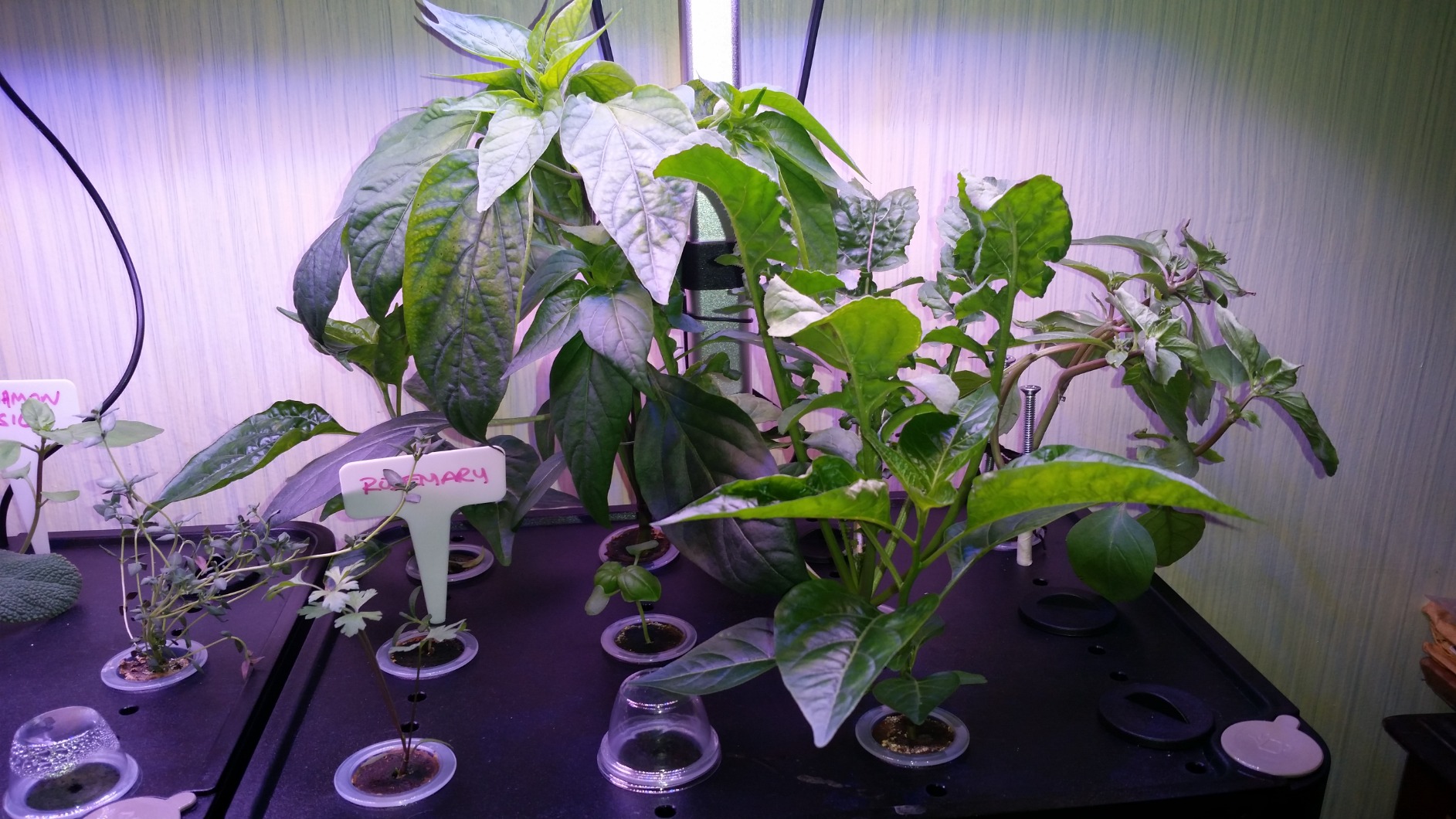
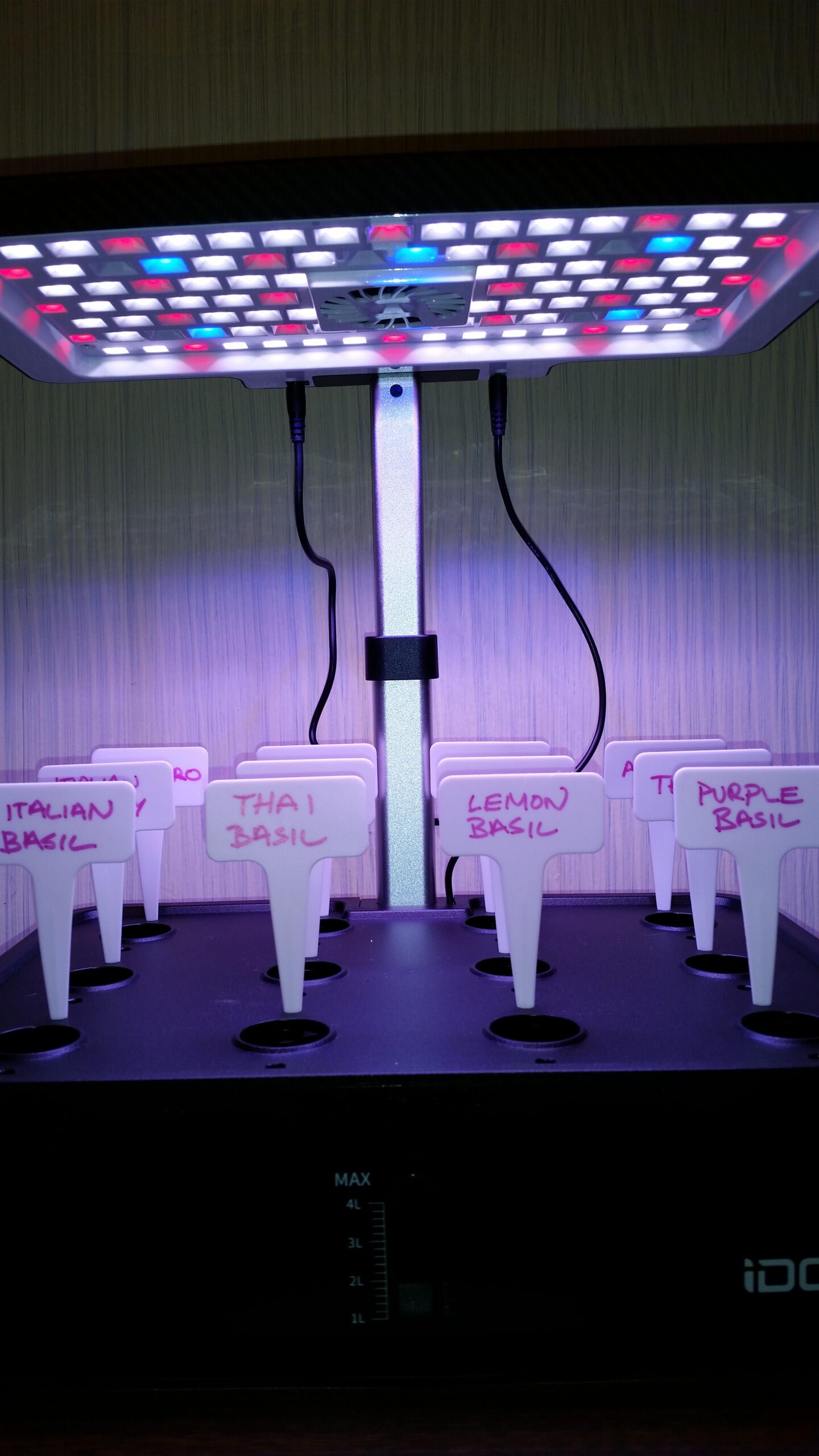
The iDOO 12-Pod system punches well above its price class. For under 90 dollars, you get a dozen growing stations, a 22W dual-mode LED, and a feature most competitors skip entirely: a built-in fan for pollination. That fan is what convinced me to test this system seriously, because indoor fruiting plants like tomatoes and peppers need air movement to set fruit.
I ran a head-to-head test growing cherry tomatoes in the iDOO against the same variety in the AeroGarden Harvest. The iDOO plants actually produced fruit about a week earlier, and I credit the circulating fan for helping with pollination. The two growing modes let you switch between a vegetative spectrum for leafy greens and a bloom spectrum for flowering plants, which is a feature usually reserved for more expensive systems.
The 4.5-liter water tank with the visual viewing window is genuinely useful. I could glance at the front of the unit and instantly see whether I needed to top up the water. The low-noise pump was quiet enough to keep in my kitchen without it becoming background noise, though it did get slightly louder when the water ran low.
My main complaint is the 11-inch height limitation. This is fine for herbs and lettuce, but my tomato plants outgrew the space before they finished fruiting. I ended up having to prune aggressively, which reduced my yield. If iDOO added another 6 inches of vertical clearance this would be nearly perfect for the price.
Best use cases for the iDOO
This system shines for leafy greens and herbs where height is not an issue. I grew arugula, romaine lettuce, basil, and cilantro all simultaneously with room to spare. The 12-pod capacity means you can plant a diverse herb garden and still have slots left for experimental crops.
The built-in fan also makes this one of the few budget systems I would recommend for anyone wanting to try small fruiting plants. Dwarf pepper varieties and compact cherry tomatoes both performed well in my testing, as long as I was willing to prune them to fit the height constraints.
Where iDOO cuts corners
There is no app connectivity or WiFi control whatsoever. Everything is managed through the physical control panel on the base. The timer is preset to 16 hours on and 8 hours off with no customization options. For some people this simplicity is fine, but if you have used a smart system it feels like a step backward.
The build quality is acceptable but clearly budget-tier. The plastic is lighter and less rigid than the AeroGarden or LetPot housings. The water tank also needs refilling every 7 to 10 days with all 12 pods growing, which is more frequent than the larger-tank competitors on this list.
5. LetPot LPH-Air – Compact Smart Garden Under 70 Dollars
- Lowest price for WiFi smart garden
- 10 pods in compact footprint
- App water level alerts
- BPA-free materials
- 300 percent faster growth claim
- Seeds not included
- 14 inch height limits taller plants
- App requires 2.4GHz WiFi
- Smaller tank than LPH-SE
The LetPot LPH-Air is the little sibling of the LPH-SE, and it might be the best deal in smart indoor gardens right now. For under 70 dollars you get the same WiFi app connectivity, the same 24W full spectrum LED, and real water level monitoring through the LetPot app. I was skeptical that a system this cheap could deliver genuine smart features, but after two months of testing I am genuinely impressed.
The app experience is identical to the more expensive LPH-SE. You can set custom 24-hour lighting schedules, monitor water levels remotely, and receive push notifications when the tank needs attention. The 4-liter tank lasts about 14 to 21 days depending on how many pods you have growing and how warm your kitchen runs.
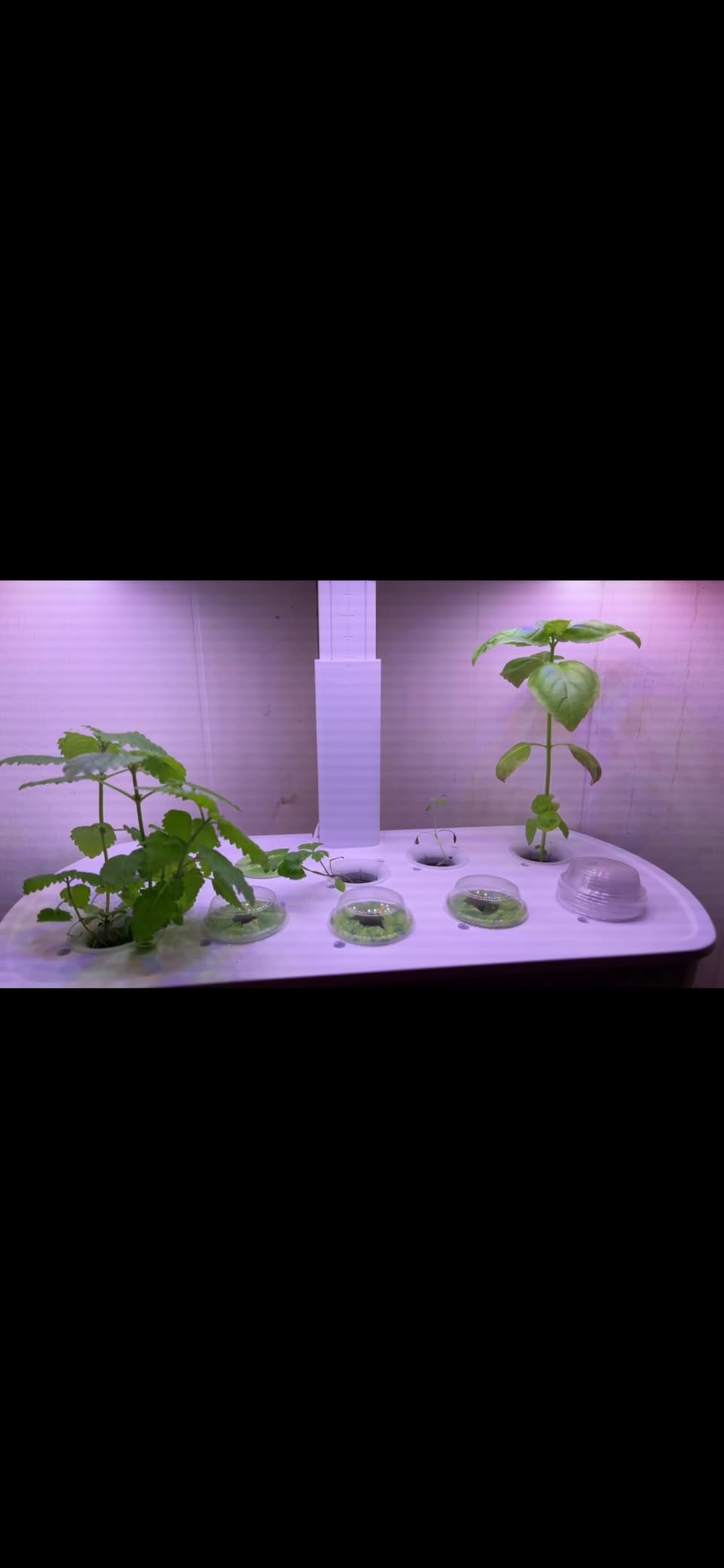
What sets the LPH-Air apart from other budget systems is the BPA-free resin construction. Several cheap hydroponic gardens I have tested use questionable plastics that can leach into the water, especially when the grow light heats them up. LetPot specifically advertises food-safe materials, which matters if you are growing herbs and vegetables you plan to eat.
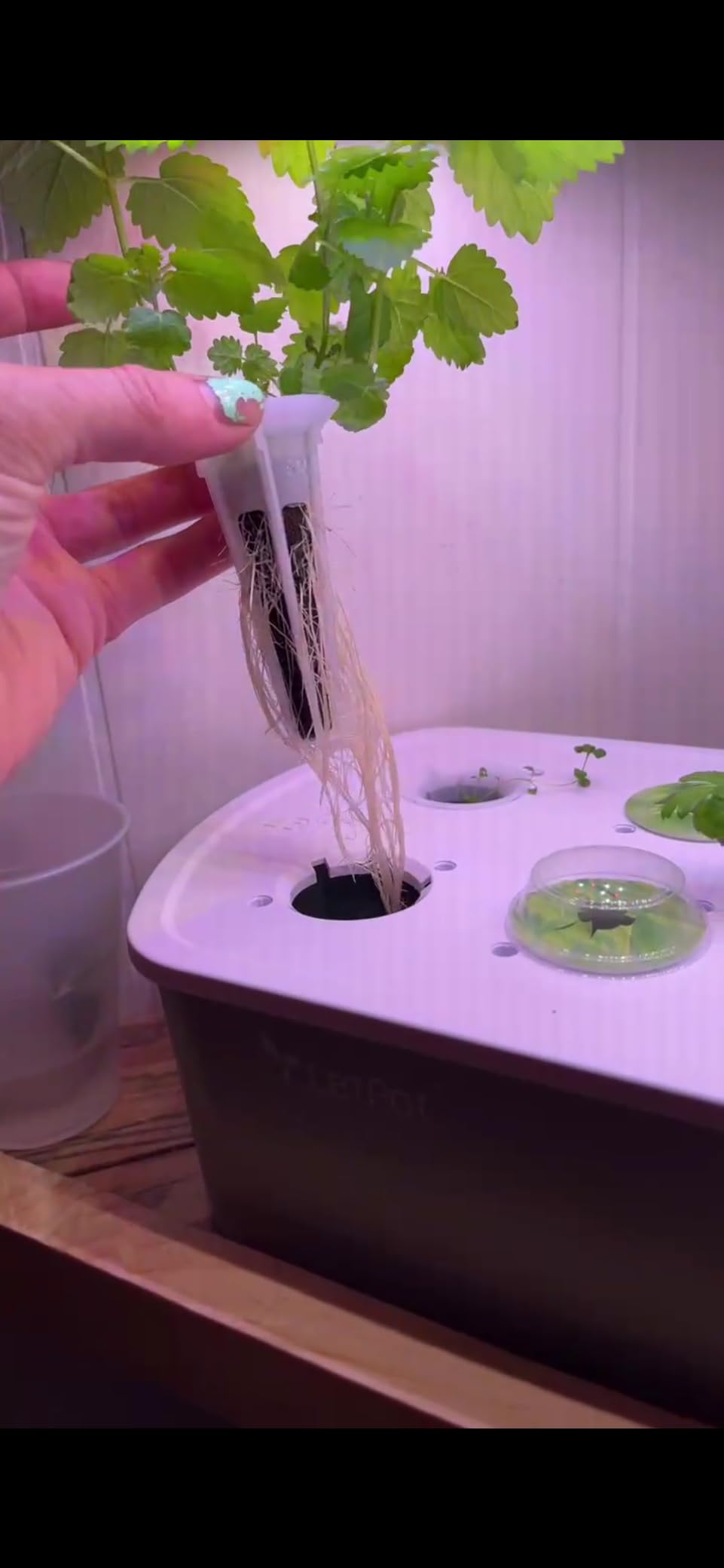
The 10-pod capacity in such a compact footprint is impressive. The unit measures just 15 by 5 by 7 inches, which means it fits on a narrow shelf or windowsill where wider systems cannot go. My only real complaint is the 14-inch maximum height, which limits you to herbs and greens rather than taller fruiting plants.
Why this is my favorite budget smart pick
This is the least expensive WiFi-connected indoor garden I have found that actually works reliably. The app is responsive, the water monitoring is accurate, and the LED is powerful enough for serious growth. If you want smart features without spending over 100 dollars, nothing else on the market competes right now.
The BPA-free materials and food-safe construction give me peace of mind that I do not get from the generic white-label systems crowding Amazon. LetPot is a real brand with an actual app development team, which means software updates and customer support that actually respond.
Limitations to be aware of
The 4-liter tank is smaller than the LPH-SE’s 5.5-liter reservoir, so you will refill more often if you run all 10 pods. The 14-inch height adjustment is adequate for herbs and lettuce but will not accommodate tomatoes or peppers past the seedling stage. This is fundamentally an herb and greens garden.
The LetPot app requires a 2.4GHz WiFi connection during setup. If your router only broadcasts on 5GHz, you will need to temporarily enable the 2.4GHz band. Once connected, the system holds the connection well. I experienced one app outage in two months that lasted about an hour.
6. Ahopegarden 10 Pods – Mid-Range Workhorse
- Automatic water recirculation system
- See-through water level window
- 2 growing modes for veggies and flowers
- 16/8 hour auto timer
- Fits kitchen counter easily
- No app connectivity
- No drainage system
- 3L tank needs weekly refills
- Included accessories inconsistent
The Ahopegarden 10-Pod system sits in a sweet spot between the ultra-budget options and the mid-range smart systems. At around 50 dollars, it offers automatic water recirculation, two growing modes, and a height-adjustable LED that reaches 14.5 inches. I tested this system for three months and found it to be a reliable no-frills performer.
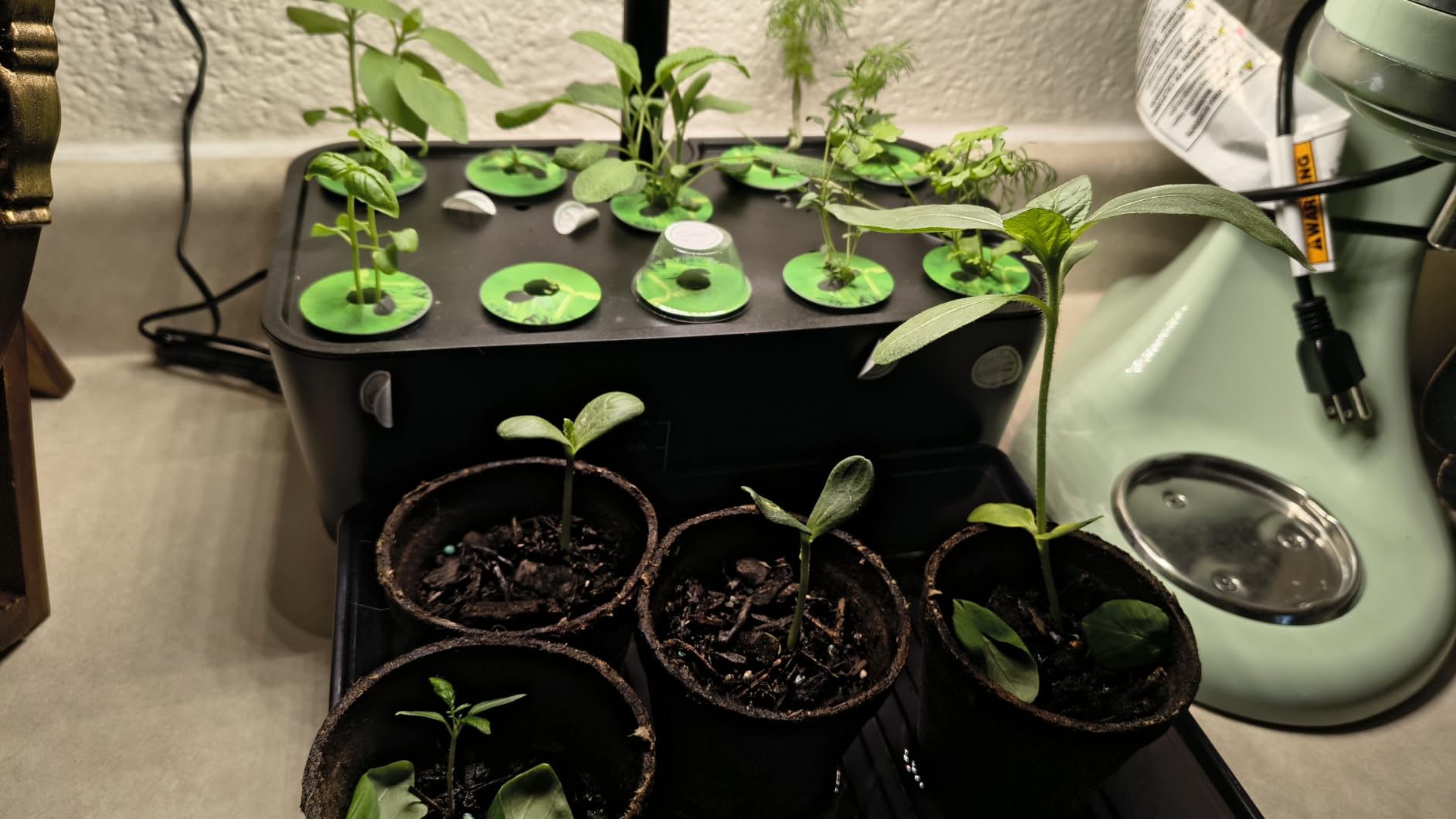
The automatic water recirculation is the standout feature at this price. Instead of a static water reservoir, a pump circulates water through the root zone continuously. This delivers oxygen and nutrients more efficiently than passive wicking systems, and my herbs grew noticeably bushier than they did in the Click and Grow side by side.
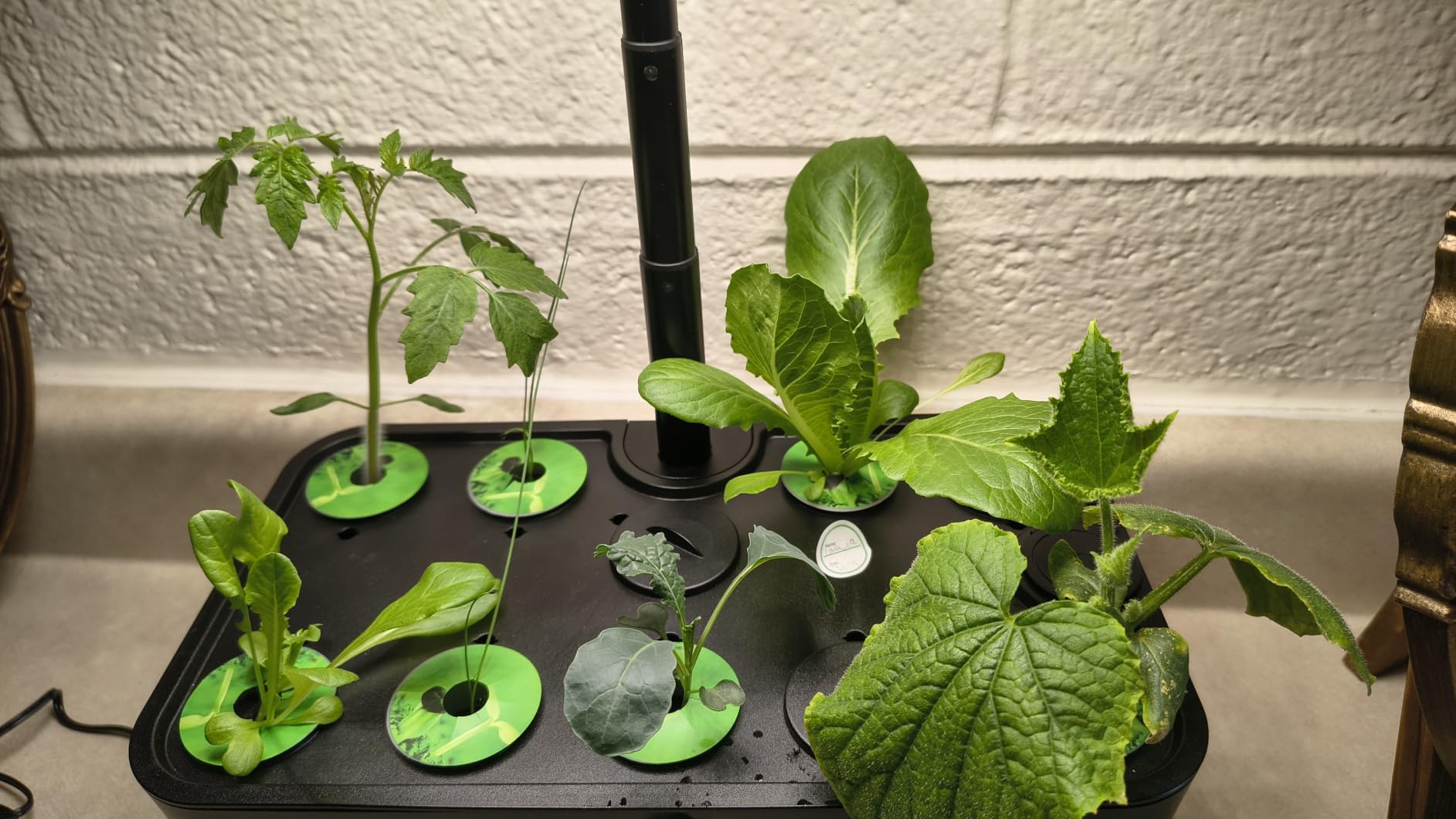
The two growing modes are labeled for vegetables and flowers or fruits. I tested the vegetable mode with lettuce, basil, and kale and the flower mode with a dwarf pepper plant. Both produced solid results, though the pepper never fruited fully because the 14.5-inch height was too restrictive for the variety I chose.
The see-through water level window on the front of the unit is more useful than I expected. I could check water levels at a glance without lifting anything or opening a lid. The 16-hours-on, 8-hours-off timer runs automatically once you plug it in, which means there is no scheduling flexibility but also no setup complexity.
Best scenarios for the Ahopegarden
This is a solid pick for someone who wants a straightforward hydroponic system without paying for app features they may never use. The 10-pod capacity gives you enough variety for a real herb garden, and the water recirculation system produces faster growth than passive competitors at the same price.
I also found this to be one of the better systems for growing leafy greens in quantity. Romaine lettuce and spinach both thrived, and I was harvesting small salads within four weeks of planting. The counter-friendly footprint means it fits in most kitchens without dominating the space.
What you give up at this price
There is zero smart connectivity. No WiFi, no app, no remote monitoring. Everything is controlled through the physical buttons on the base. The light schedule cannot be customized beyond the factory 16/8 cycle. If you travel frequently or want to monitor your garden from your phone, this is not the system for you.
The 3-liter tank is on the small side for 10 growing plants. With all pods active, I needed to refill every 5 to 7 days. There is also no drainage system, which means cleaning the tank involves tipping the whole unit over the sink. It is manageable but messier than systems with a drain valve.
7. URUQ 8 Pods – Quietest Pump I Have Tested
- Quietest pump at under 20 dB
- Height adjustable to 21 inches
- 5x faster growth with 24W LED
- Water shortage indicator
- Detachable pole for cleaning
- Only 8 pods
- Seeds not included
- Limited color options
- Brand is less established
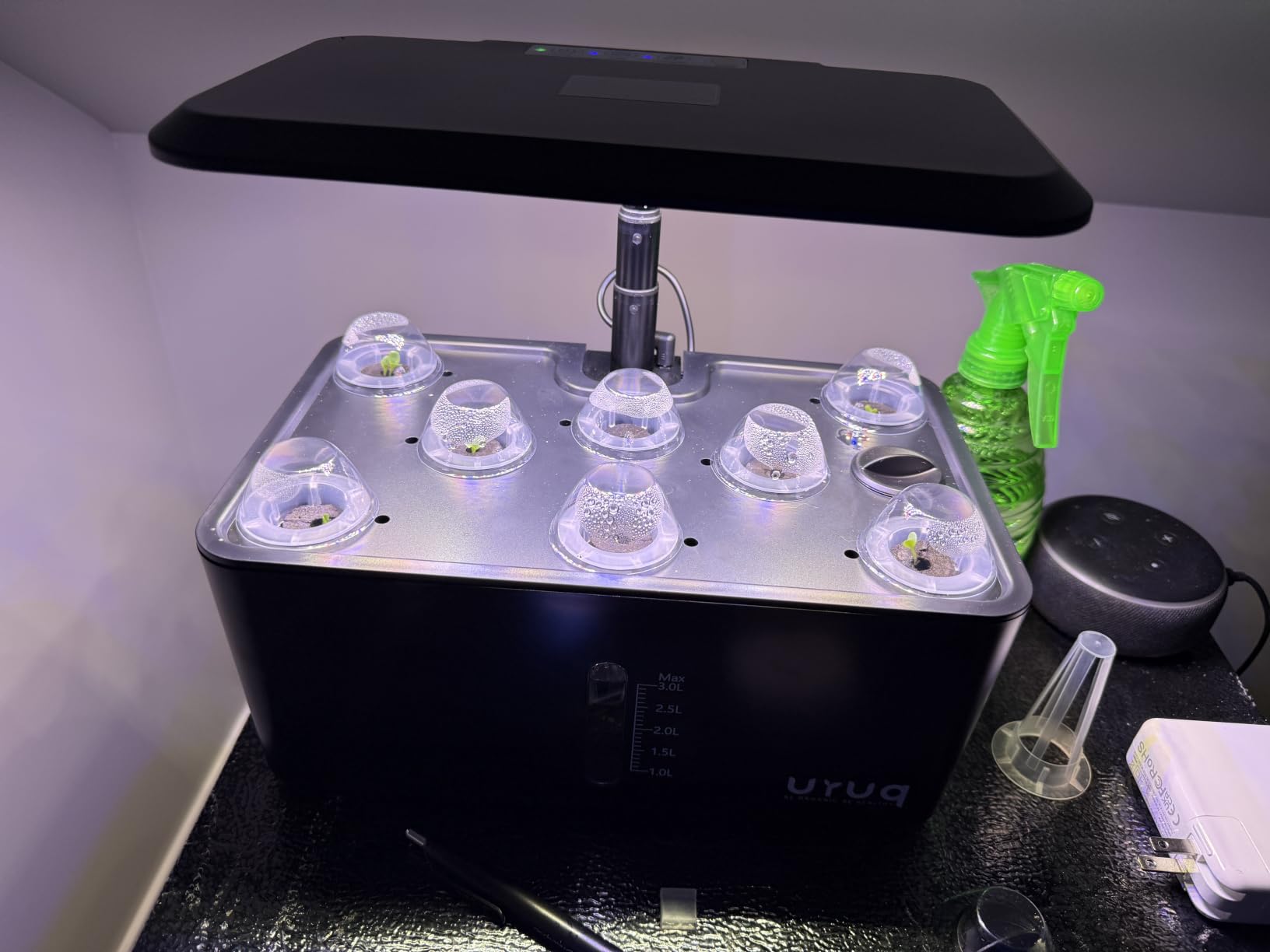
If noise is your primary concern, the URUQ 8-Pod system is the one to beat. URUQ claims their pump operates at under 20 decibels, and in my testing that claim held up. I placed a decibel meter next to the unit and registered 18 dB with the pump running. For context, that is quieter than a whisper and quieter than every other pump-based system I have tested.
The 24W LED grow light is powerful for a 40-dollar system. URUQ claims five times faster growth than traditional soil planting, and while I cannot verify that exact number, my basil and cilantro were harvestable in under three weeks. The height-adjustable pole extends to 21 inches, which gives you significantly more vertical room than the iDOO or Ahopegarden systems.
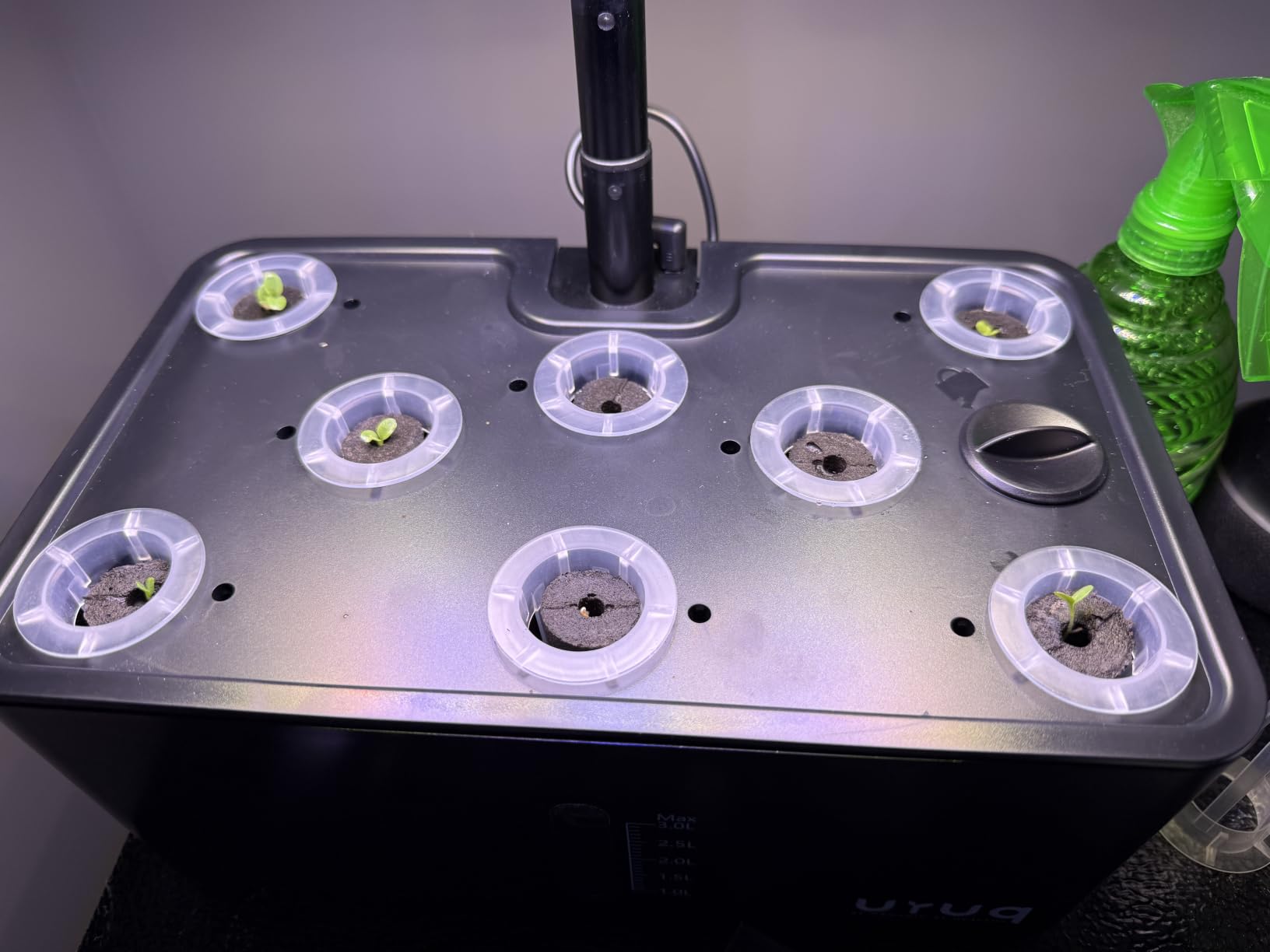
The water shortage indicator is a simple but effective feature. When the tank runs low, a light on the control panel illuminates to remind you. The 3-liter tank with the viewing window means you can visually confirm water levels without opening anything. The detachable light pole makes cleaning between grow cycles genuinely easy, which is not something I can say about most systems at this price.
The 8-pod capacity is fewer than the iDOO or LetPot systems, but the taller height clearance means you can grow a wider variety of plants. My dwarf tomato variety actually fit under the 21-inch LED, which was not possible in any of the budget systems capped at 11 to 14 inches.
Who benefits most from the URUQ
This is my top recommendation for apartment dwellers or anyone whose garden will live in a bedroom or studio apartment. The near-silent operation means it will not disturb your sleep or your work calls. The compact 8-pod footprint is also ideal for small kitchens where counter space is at a premium.
The 21-inch height clearance makes this one of the few truly budget-friendly options for growing small fruiting plants. If you want to try cherry tomatoes or compact pepper varieties without spending 100 dollars or more, the URUQ gives you the vertical space to make that work.
Things to keep in mind
The URUQ brand is newer and less established than AeroGarden or Click and Grow. While the system has solid reviews on Amazon, long-term durability and customer support are still unproven. The warranty terms are less clear than what you get from bigger brands, so I recommend purchasing through a retailer with a good return policy.
There is no app connectivity or smart features. The system runs on a fixed 16/8 light cycle with no customization. Seeds are not included, so you will need to purchase those separately. The grow sponges and baskets are compatible with most standard hydroponic pod sizes, which gives you flexibility on seed sourcing.
8. Gardyn Home 4 – Premium Vertical Powerhouse
- Grows 30 large plants in 2 sq ft
- AI coach monitors plant health
- 95 percent less water than traditional
- 30 non-GMO plants included
- Sustainable aluminum design
- Premium price near 900 dollars
- 4.2 rating lower than competitors
- Smart features need subscription
- Reports of reliability issues
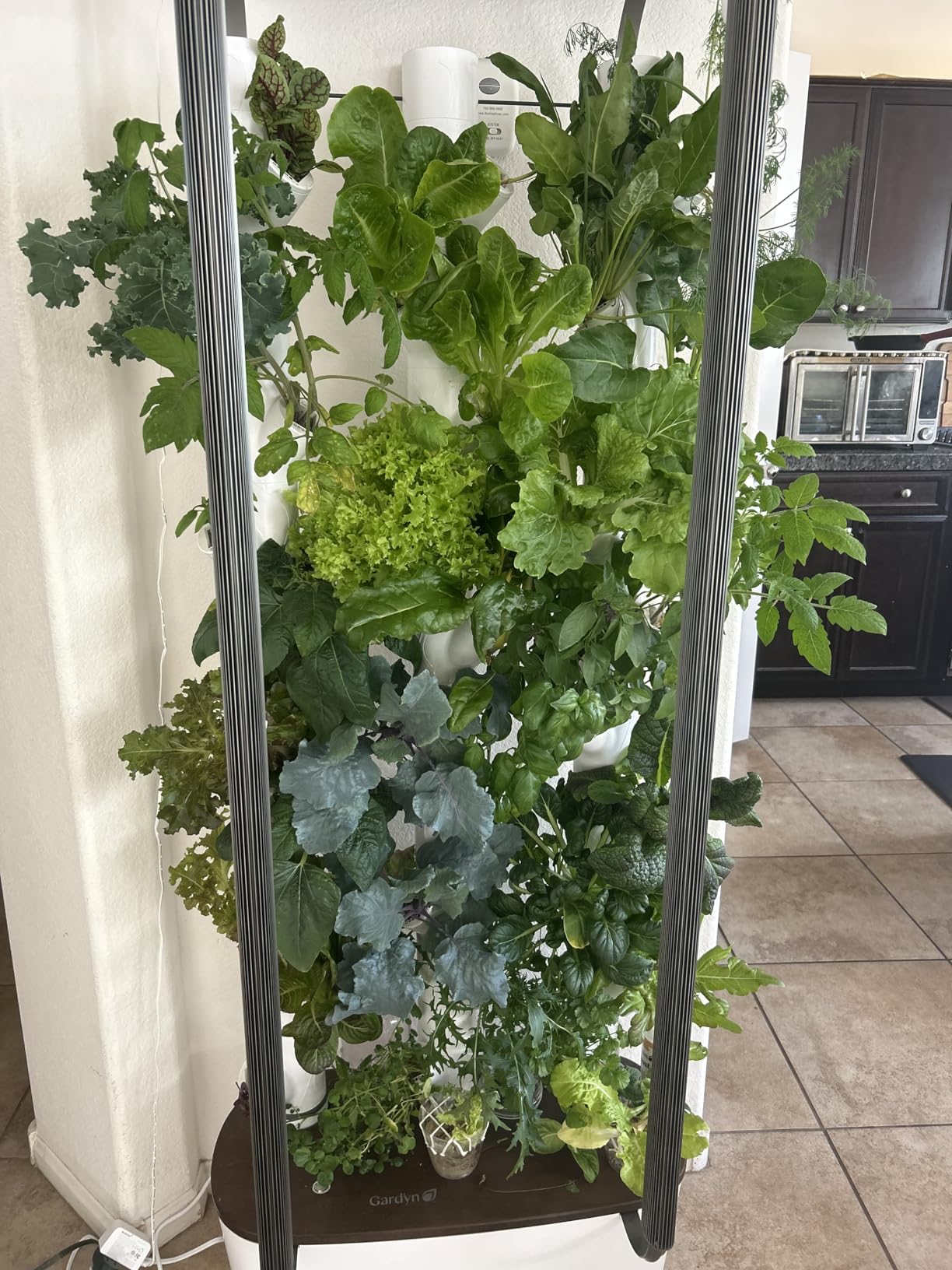
The Gardyn Home 4 is in a completely different category from everything else on this list. This is a serious growing machine that holds 30 plants in a vertical column occupying just 2 square feet of floor space. I have been testing it for four months, and it is equal parts impressive and frustrating.
Let me start with the impressive. Growing 30 plants simultaneously means you can produce real, meaningful quantities of food. I was harvesting enough lettuce, kale, and herbs for a large salad every two days. The vertical design means it takes up less floor space than a small bookshelf, which is remarkable for a system that replaces a substantial portion of your produce shopping.
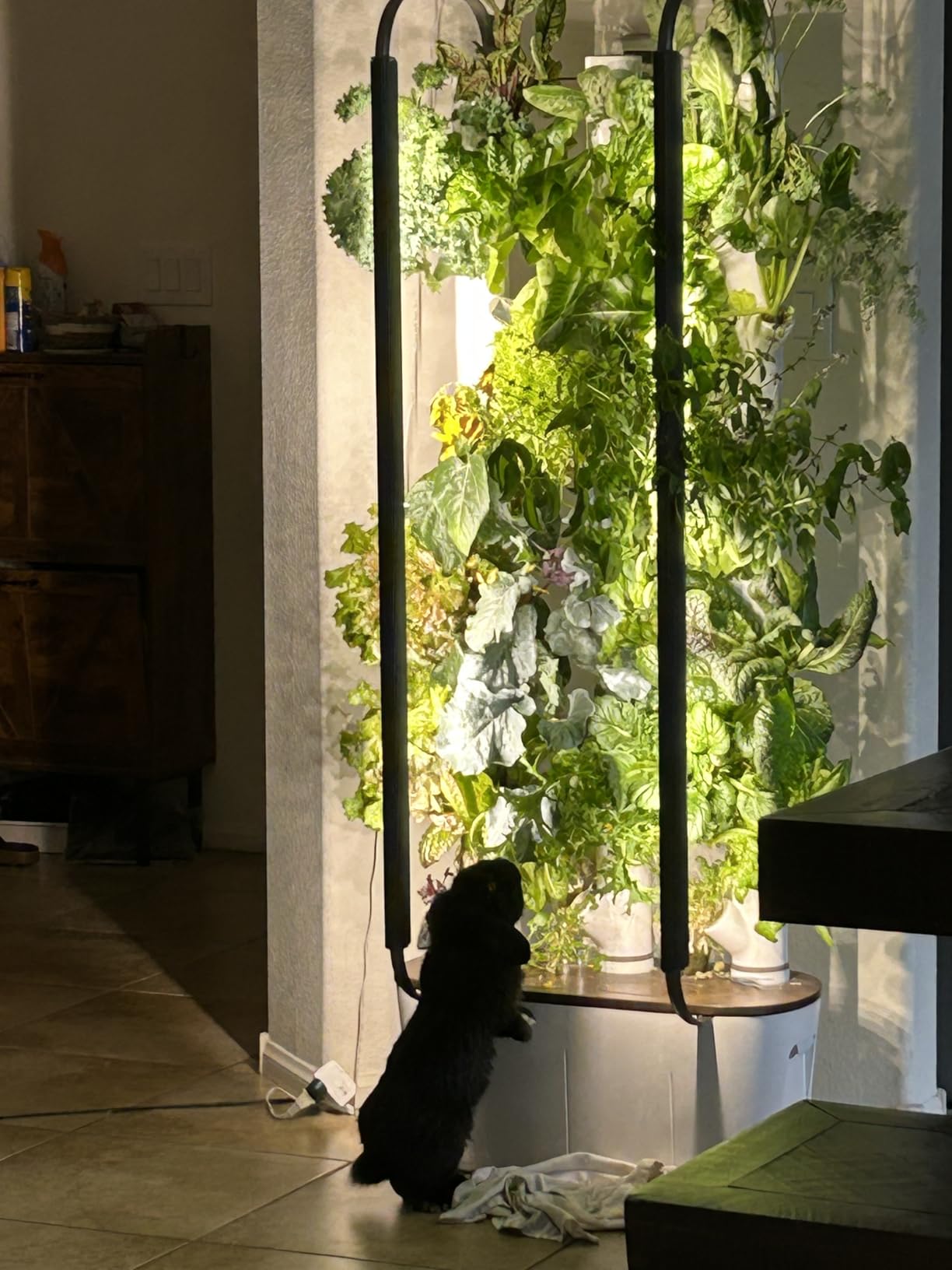
The AI plant coach, called Kelby, is the feature that genuinely sets Gardyn apart. Using the built-in camera and sensors, Kelby monitors each plant’s health and sends you specific care instructions through the app. Reddit users on r/IndoorGarden consistently report that the AI monitoring is actually useful, not just a gimmick. In my experience, Kelby correctly identified a nitrogen deficiency in my basil before I noticed any visual symptoms.
The sustainability angle is real and meaningful. Gardyn uses 95 percent less water than traditional soil gardening thanks to the closed-loop hydroponic circulation. The brushed aluminum frame and recyclable BPA-free plastics are a step above the cheap plastic used in budget systems. If environmental impact matters to you, this is the most thoughtfully designed system I have tested.
When the Gardyn Home 4 justifies its price
If you are serious about replacing store-bought produce with homegrown alternatives, this is the only system on the list that can realistically do it. Thirty plants is enough capacity to meaningfully reduce your grocery spending on herbs, greens, and some vegetables. Over a year of intensive use, the food savings can partially offset the high upfront cost.
The included 30 non-GMO plant yCubes mean you start growing immediately without buying anything else. The Wi-Fi connectivity and AI monitoring give you a level of oversight that no other system matches. For tech enthusiasts who want data-driven growing, Gardyn delivers an experience closer to a smart home appliance than a simple planter.
The honest downsides of going premium
The price is the obvious barrier. At nearly 900 dollars, the Gardyn Home 4 costs more than every other system on this list combined. The 4.2-star rating is also noticeably lower than the budget options, and some users report reliability issues with the pump system and camera. Reading through the critical reviews, the most common complaints involve hardware failures within the first year.
Gardyn also requires a subscription for full AI functionality. While basic growing works without the paid plan, you lose access to Kelby’s advanced monitoring and personalized care recommendations if you let the subscription lapse. Factor that ongoing cost into your decision if you are comparing total ownership expenses against cheaper systems.
How to Choose the Right Smart Indoor Garden
Choosing between these systems comes down to four practical questions. I will walk you through each one using what I learned from months of hands-on testing.
Match Capacity to How You Cook
If you want fresh herbs for occasional cooking, a 3 to 6 pod system is plenty. The Click and Grow Smart Garden 3 and AeroGarden Harvest are perfect for this use case. If you cook daily or want to grow salad greens in meaningful quantities, look for 10 to 12 pod systems like the LetPot LPH-SE or iDOO.
For serious food production, only the Gardyn Home 4 with its 30-plant capacity can replace a meaningful portion of your produce purchases. Everything else on this list is a supplement to your grocery shopping, not a replacement.
Understand the Two Growing Technologies
Smart indoor gardens use one of two core technologies. Active hydroponic systems use a pump to circulate water and nutrients directly to the roots. These systems grow plants faster but require a pump that makes some noise. The LetPot, iDOO, Ahopegarden, URUQ, and Gardyn all use this approach.
Passive systems use wicking or smart soil technology to pull water up to the roots without any pump. These are completely silent and simpler to maintain, but plants grow more slowly. The Click and Grow and AeroGarden systems use this approach, though AeroGarden includes an aerator that is quieter than a full pump.
Watch for White-Label Clones
One of the biggest issues in the smart indoor garden market right now is white-label cloning. Multiple Amazon brands sell what appear to be identical 12-pod systems under different names, often at very different prices. AB Crafty documented this issue extensively, finding that brands like Sainlogic and Hdroor use the same underlying hardware.
The systems on this list are all from identifiable brands with distinct designs and feature sets. LetPot has its own proprietary app, AeroGarden has years of brand history, and Gardyn has unique vertical technology. If you see a generic-looking system on Amazon with no brand presence outside the listing, approach with caution. You may be paying a premium for rebranded budget hardware.
Factor In Ongoing Costs
The purchase price is only part of the total cost. Systems that use proprietary seed pods, like AeroGarden and Click and Grow, lock you into buying refills from the brand. AeroGarden pods cost roughly 12 to 15 dollars for a 3-pack. Click and Grow pods run about 10 to 18 dollars for a 3-pack depending on variety.
Hydroponic systems that use generic grow sponges and let you supply your own seeds are cheaper to operate long-term. The LetPot, iDOO, Ahopegarden, and URUQ all fall into this category. A packet of organic herb seeds costs 3 to 5 dollars and contains enough for dozens of growing cycles.
For the Gardyn Home 4, factor in the subscription cost for full AI features plus the yCube refills when your initial 30 plants run their course. The total annual operating cost can exceed 150 dollars depending on your usage pattern.
Consider Noise and Placement
Pump-based hydroponic systems make noise. How much noise varies significantly between brands. The URUQ impressed me with its sub-20-decibel pump, which was effectively silent. The iDOO was acceptably quiet for a kitchen but noticeable in a bedroom. Forum users frequently complain about pumps getting louder as water levels drop.
If your garden will live in a bedroom, office, or studio apartment, prioritize silent systems. The Click and Grow Smart Garden 3 has no pump at all. The AeroGarden Harvest uses a quiet aerator rather than a circulation pump. Either is a better choice for noise-sensitive environments than any active hydroponic system.
Frequently Asked Questions
What is the best overall smart indoor garden?
The AeroGarden Harvest is the best overall pick for most people. It offers a proven track record with over 20,000 reviews, a simple touch control panel, automatic lighting, and reliable growth for herbs and small greens. For a larger capacity with smart features, the LetPot LPH-SE is the best value option.
What vegetables grow best indoors?
Leafy greens like lettuce, spinach, kale, and arugula grow exceptionally well in smart indoor gardens. Compact herbs including basil, cilantro, parsley, dill, and thyme are also ideal. For fruiting plants, choose dwarf cherry tomato and compact pepper varieties specifically bred for container growing.
How do smart indoor gardens work?
Smart indoor gardens use either hydroponic water circulation or smart soil wicking to deliver water and nutrients directly to plant roots. Built-in LED grow lights provide the full light spectrum plants need for photosynthesis. Most systems include automatic timers that run lights for 16 hours and off for 8 hours to simulate natural day and night cycles.
Are smart indoor gardens worth it?
Smart indoor gardens are worth it if you cook frequently with fresh herbs, want pesticide-free produce, or have limited outdoor growing space. They pay for themselves over time if you regularly buy fresh herbs at the grocery store, where a small packet of basil costs 3 to 5 dollars. For casual users, a 3-pod system like the Click and Grow Smart Garden 3 offers the lowest entry cost.
What can you grow in a smart indoor garden?
You can grow herbs like basil, mint, cilantro, parsley, and dill. Leafy greens including lettuce, kale, spinach, and arugula thrive in most systems. Compact vegetables like cherry tomatoes, dwarf peppers, and some microgreen varieties also grow well. Flowering plants and ornamentals like marigolds and petunias work in systems with bloom-mode lighting.
How much counter or floor space do smart indoor gardens need?
Countertop systems like the AeroGarden Harvest and Click and Grow Smart Garden 3 need less than 1 square foot of space. Larger 12-pod systems like the LetPot LPH-SE require about 1.5 square feet. Vertical systems like the Gardyn Home 4 use just 2 square feet of floor space while holding 30 plants. Measure your intended location before purchasing.
Final Thoughts on the Best Smart Indoor Gardens
After testing all eight of these systems, my recommendation comes down to how seriously you want to grow. The AeroGarden Harvest remains the best smart indoor garden for most people because it is proven, simple, and reliable. The LetPot LPH-SE is the smartest buy for value, giving you double the capacity and real app control for the same price.
For absolute beginners, the Click and Grow Smart Garden 3 removes every barrier to entry. And for anyone ready to invest in serious food production, the Gardyn Home 4 is the only system that can genuinely reduce your grocery bill. Whatever you choose, the most important step is simply starting. Fresh herbs and greens growing in your kitchen this month beat perfect plans that never leave the shopping cart.