
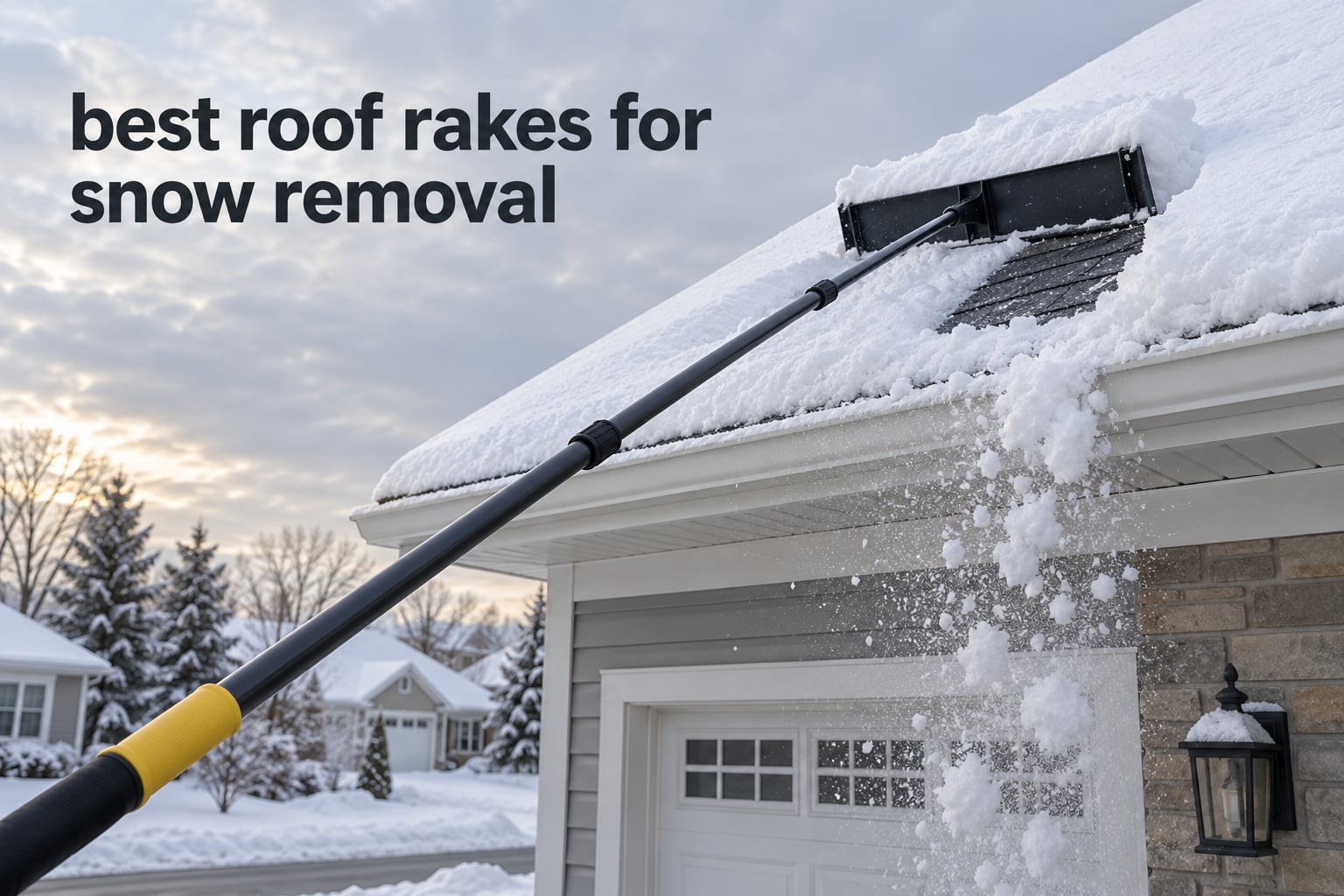
If you have ever watched a slab of wet snow let go near your gutter and land on the walkway, you already know the argument for owning a snow roof rake. The best roof rakes for snow removal let you pull that load off the roof while both feet stay on the ground, which is the only version of this job that is genuinely safe to do yourself.
Last updated October 2026. Our team compared eight snow roof rakes on published specifications, owner review patterns and the practical questions that decide a purchase: how far the pole reaches, whether the blade rides on wheels or scrapes, how much the thing weighs at full extension, and whether replacement parts exist when something bends. We have not climbed onto a roof to test these, and we never suggest you do. Every judgment below comes from the specs and from what owners report after a few winters of use.
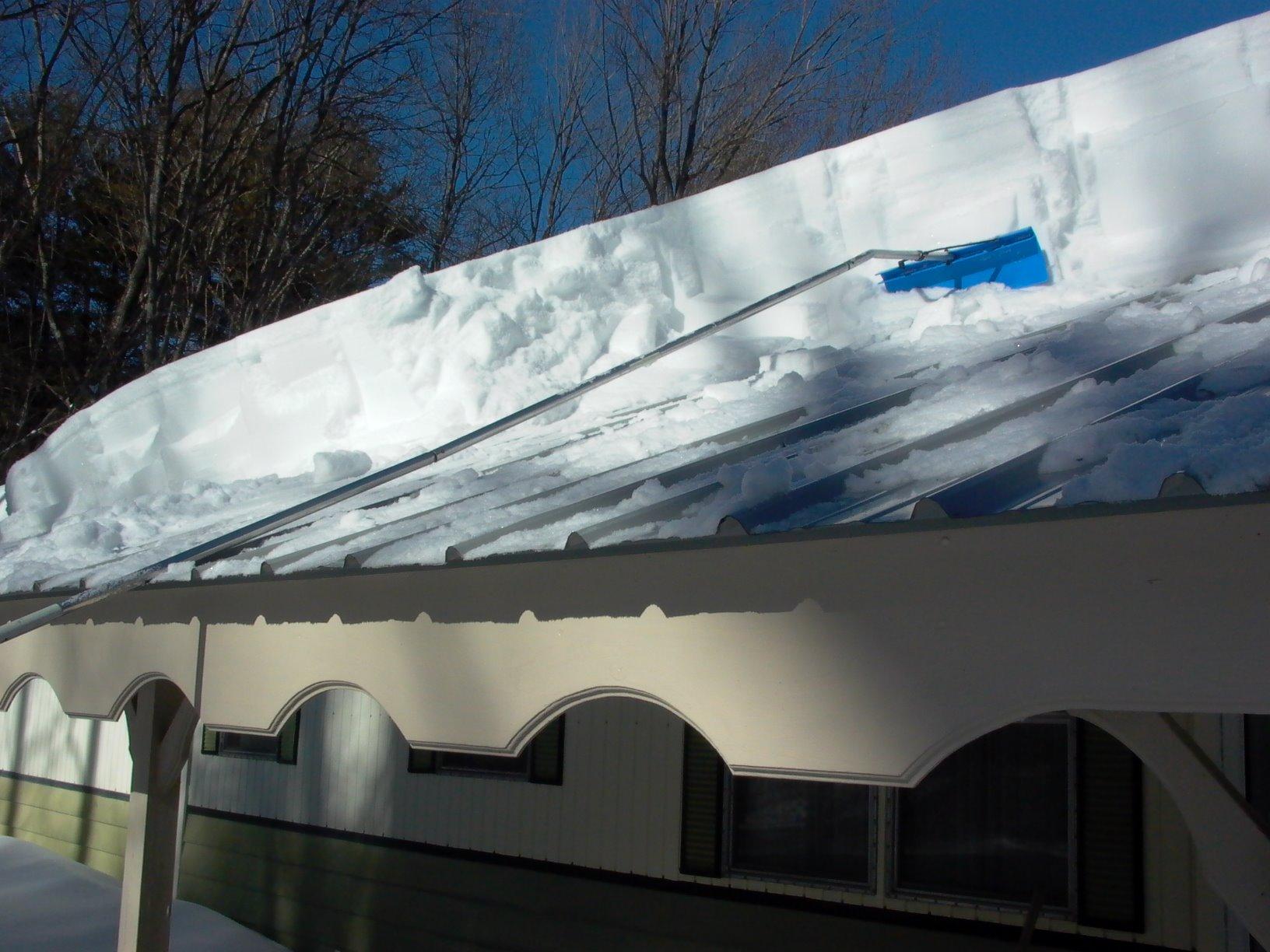
Snow itself is not the real enemy. Ice dams are. When snow sits at the eaves, meltwater runs down to the overhang, refreezes, and builds a ridge that traps water behind your shingles. That water backs up under the roof covering and finds its way into your ceiling. Clearing the lower two to three feet of the roof breaks the melt-and-refreeze cycle, and it also takes weight off your trusses and your gutters during the storm when it matters most.
There is an honest limit to what raking fixes. Homeowners on r/homeowners and r/Roofing who have raked diligently and still ended up with a spring leak generally arrive at the same conclusion: attic insulation and ventilation are the real cure, and a rake buys you margin in a bad winter. A rake is a maintenance tool, not a roof repair.
If you are shopping for other rooftop or vehicle-mounted gear while you are at it, our picks for the best car roof racks, the best van roof racks and the best overland roof racks cover a different job, but the same ground-versus-height logic applies.
Top 3 Roof Rakes for Snow Removal in 2026

Quick Overview of Every Roof Rake We Reviewed
The table below is the short version. Every rake here works from the ground, and the real differences sit in reach, blade geometry and how the head meets the roof surface.
| Product | Specifications | Action |
|---|---|---|
| Snow Joe Telescoping Roof Rake RJ204M |
|
Check Latest Price |
 Extreme Max 5600.3207 Shingle-Saver 21 Extreme Max 5600.3207 Shingle-Saver 21 |
|
Check Latest Price |
 SNOWPEELER Premium 30 ft Roof Rake SNOWPEELER Premium 30 ft Roof Rake |
|
Check Latest Price |
 Avalanche Original 500 Roof Snow Rake Avalanche Original 500 Roof Snow Rake |
|
Check Latest Price |
 USA-Made 20 Foot Snow Roof Rake USA-Made 20 Foot Snow Roof Rake |
|
Check Latest Price |
 EZ Smart Adjustable Snow Roof Rake EZ Smart Adjustable Snow Roof Rake |
|
Check Latest Price |
 MinnSnowta Dynamo Snow Roof Rake MinnSnowta Dynamo Snow Roof Rake |
|
Check Latest Price |
 VEVOR 26 Inch Adjustable Roof Snow Rake VEVOR 26 Inch Adjustable Roof Snow Rake |
|
Check Latest Price |
1. Snow Joe Telescoping Roof Rake (RJ204M) – Best Overall for Most Homes
Snow Joe Telescoping Roof Rake, Extendable Leaf & Snow Shovel with Poly Blade, 25 Inch Wide, RJ204M
- Lightest rake here at 4.8 pounds
- Twist-n-Lock telescoping adjusts in about a minute
- Oversized 25 inch poly blade clears fast
- Also handles leaves and debris
- Small brace screws loosen or fall out
- Handle bows at full 21 ft extension
- Too light to break crusted snow
The Snow Joe RJ204M is the one I would put in the hands of most people reading this. It weighs 4.8 pounds, which sounds like a small detail until you have pulled a wet mat of snow twenty feet up a roof slope and felt where the fatigue actually lands. Multiple owners with limited shoulder mobility single it out for exactly that reason.
The Twist-n-Lock pole extends to 21 feet, which works out to about 27 feet of overhead reach once you account for the blade and your own height. That covers a typical two-story eaves line without anyone approaching a ladder. Length changes take roughly a minute, so you can drop to 10 feet for a low section and push back out for the peak without breaking stride.
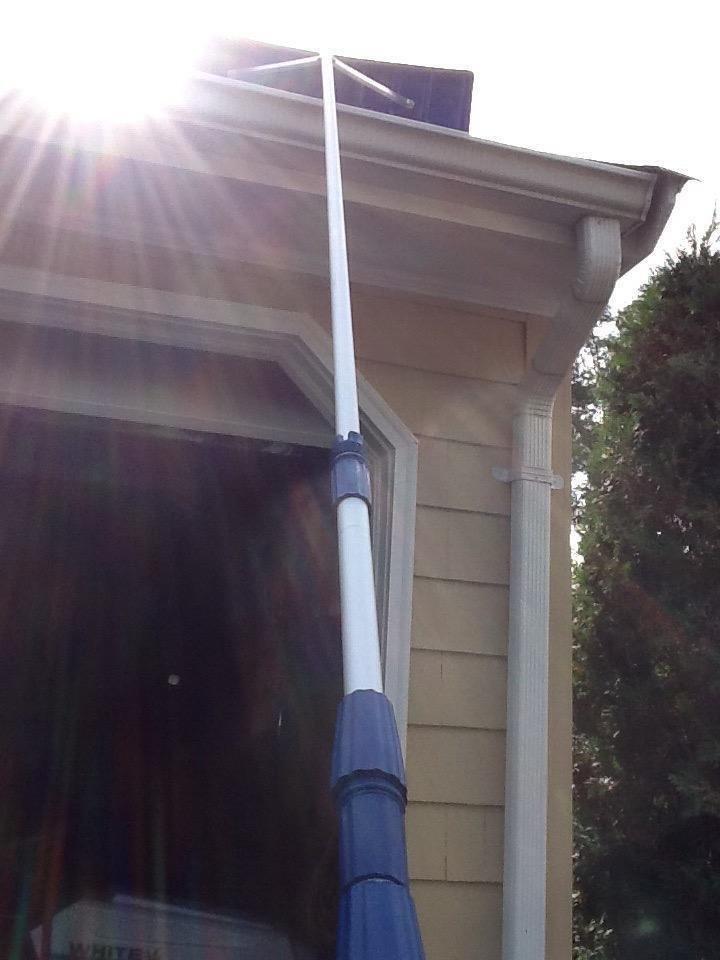
The blade is the reason the spec sheet says 6 by 25 inches. That is a wide swath compared with most 20-something inch heads, and it means fewer passes over the same patch of snow. The poly construction is the right call on asphalt shingles: it will not bite into granules the way raw aluminum does.
Owners also use it well beyond winter. Wet leaves, seed pods and general roof debris come off the same head, and there is a r/homeowners thread where a poster describes clearing a low-slope porch roof after a windstorm with this exact tool. That is a fair test of build quality, because leaves jam and twist far more than snow does.
The honest weakness is hardware, not design. The small screws that hold the support braces to the plastic head can loosen or vanish mid-session, and the strap inserts molded into the blade are a known stress point. Several owners reinforced that connection with stainless bolts and washers and stopped worrying about it. Check those fasteners before every use and the tool holds together fine.
Who this rake suits
This is the choice if you are a one-or-two-person household, you do not want to wrestle with a heavy head, and your roof is asphalt shingle or a similar surface that punishes scraping. The low weight makes it the least tiring option for the frequent small jobs: pulling back a few inches of accumulation before it soaks in, rather than stripping a full foot after every storm.
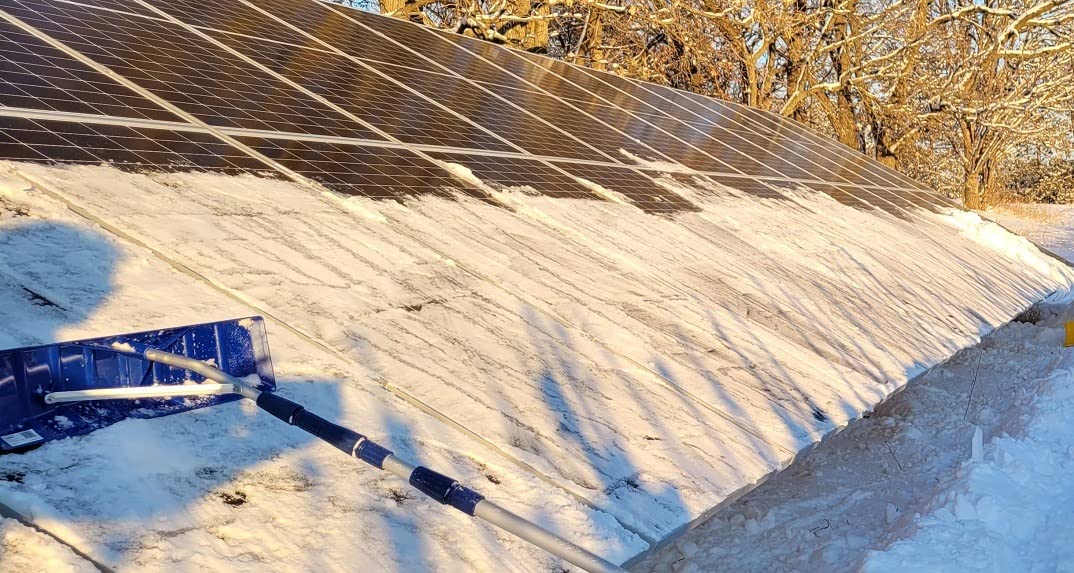
It also works for people who have solar panels. A poly blade and a floating head are far kinder to glass and mounting hardware than bare metal, and owners confirm it works on panel roofs without cracking anything.
Where it falls short
Light has a cost. At 4.8 pounds this head will not break through crusted or refrozen snow, and users report it slides across a hard pack rather than cutting it. If your region gets repeated thaw-and-refreeze events with heavy wet snow, you are signing up for two tools or a lot of persistence.
The handle also gets unwieldy at full 21-foot extension, and the twist-lock nuts can bind in deep cold if moisture gets into the threads. Neither is a dealbreaker, but both are reasons to dry the pole off before you collapse it in the garage.
2. Extreme Max 5600.3207 Shingle-Saver 21 – Best Value with Real Replacement Parts
- All-metal with no plastic parts to snap
- Shingle Saver rollers protect granules
- Replacement blades and tubes made for it
- Angled head suits low-pitch roofs
- Aluminum struts bend if you push instead of pull
- Raw aluminum edges can cut hands
- Rollers detach easily
The Extreme Max Shingle-Saver is the pick I recommend to anyone who rakes a lot, seasons in a row, and would rather fix a part than replace a tool. It is the only rake in this group with a genuine parts ecosystem behind it: replacement blades, angled tubes, extension tubes, wheels and grips are all made for this model.
That matters more than it sounds. Roof rakes live in garages and take abuse from being dragged through wet snow and then shoved against a wall. Owners report two full seasons of northern and lake-effect use with the structural frame intact, which is not a given for a head this light.
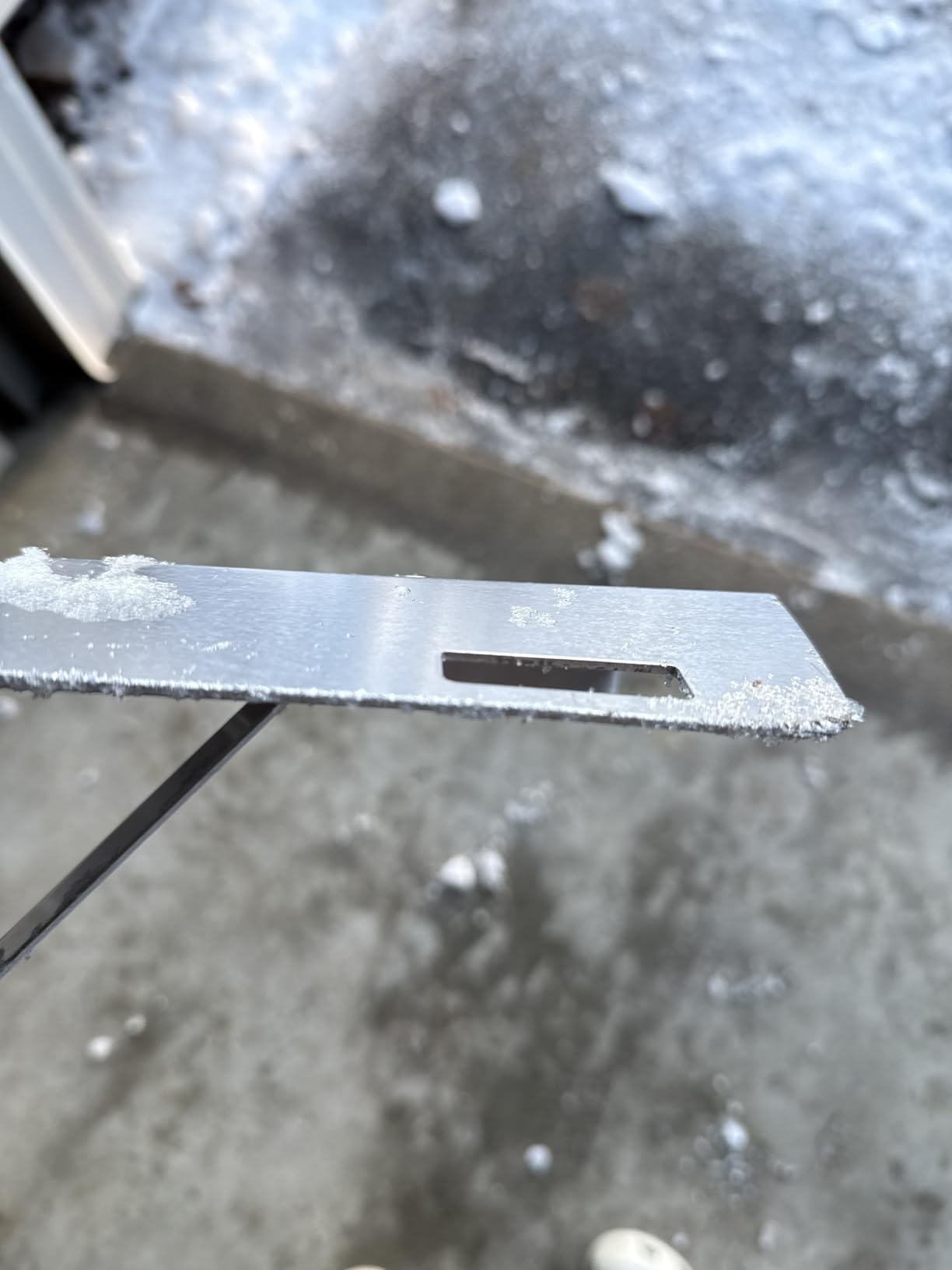
The Shingle-Saver rollers are the headline. They let the blade shave close while the head rolls on small wheels rather than grinding along the shingle surface, which is the difference between clearing your roof and granulating it. The angled blade geometry also behaves well on low-pitch roofs and on the eaves of a two-story house, where a straight head tends to catch.
There is one operating rule that decides whether this rake lasts: pull only. Owners are emphatic that pushing it, or racking it back and forth, bends the aluminum support struts and can work a bolt loose at the rod tip. Treat it as a one-direction tool and the failure mode essentially disappears.
Two years is a normal warranty for this category, and the U.S. manufacturing behind the brand adds a little confidence. The one-star share maps almost entirely to bracket failures inside the first season, which is exactly the part the replacement program covers.
Who this rake suits
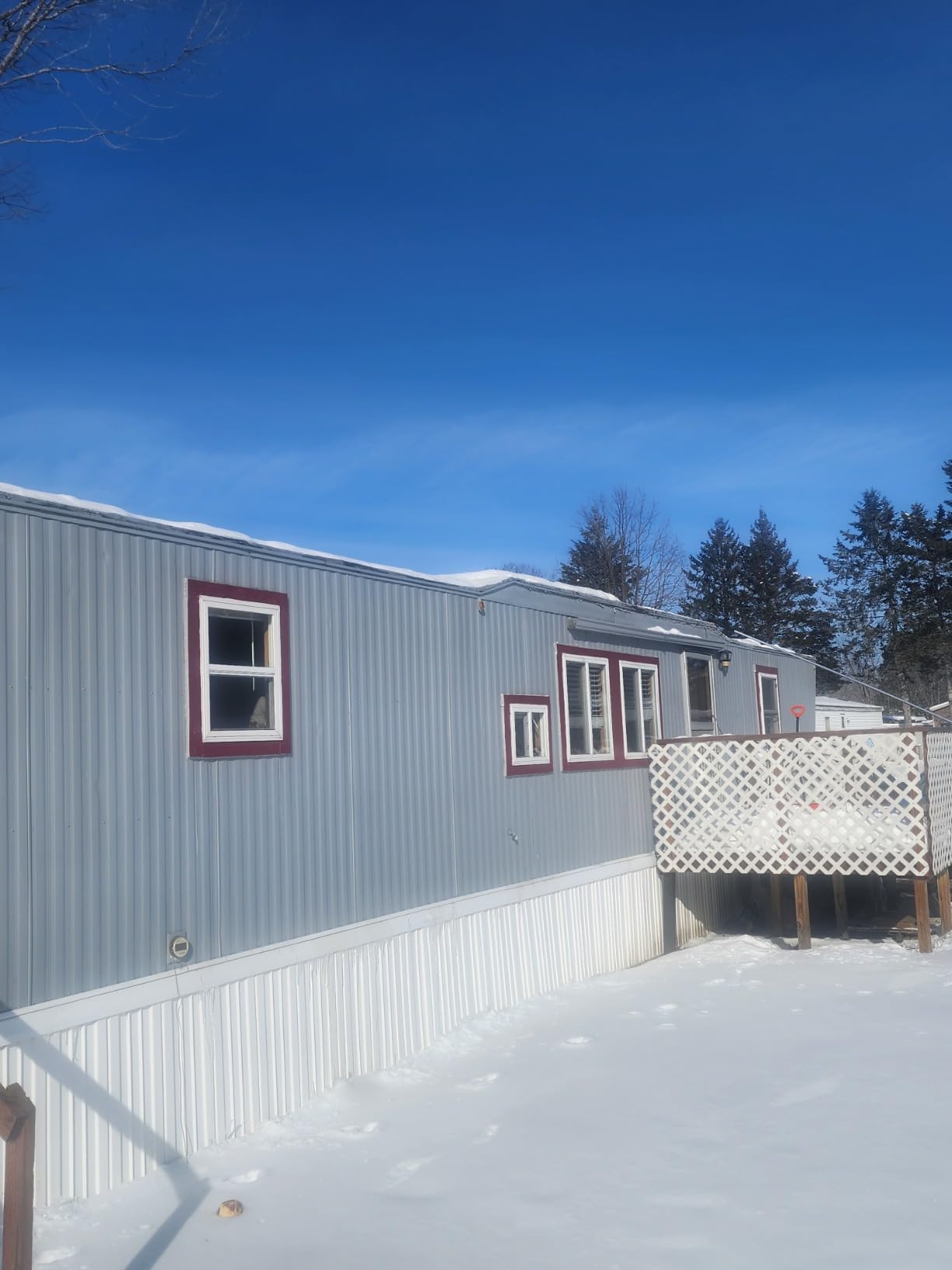
This suits shingle owners who take clearing seriously and expect to use the same tool for many winters, plus anyone whose roof pitch is gentle enough that a straight-head rake would skim off the top of the snowpack. The 24 inch blade and 21 foot reach cover most residential roofs in a single setup.
It is also the one to buy if you have a workshop. Because the tubes and blades are separate parts, a bent section is an afternoon with a wrench rather than a new purchase.
Where it falls short
Every part of this rake is sharp-edged metal, including during assembly. Owners warn about cutting fingers on the raw aluminum before anything is deburred, so wear gloves the first time you put it together. The black plastic rollers also pop off more easily than they should, and a missing roller is a scraping blade.
Do not store it inside with snow still packed onto the tube. Snow carrying moisture will dent aluminum in a way that makes the next season’s assembly frustrating.
3. SNOWPEELER Premium 30 ft Roof Rake – Best for Two-Story Homes and Hard-Packed Snow
- 30 ft reach clears high eaves from ground
- Commercial-grade blade cuts hard-packed snow
- Slide halves or thirds removal time
- Manufacturer sent free replacement poles
- Leaves about 2 inches of snow behind
- Bungee slide can tear in minutes
- Awkward to lift fully extended
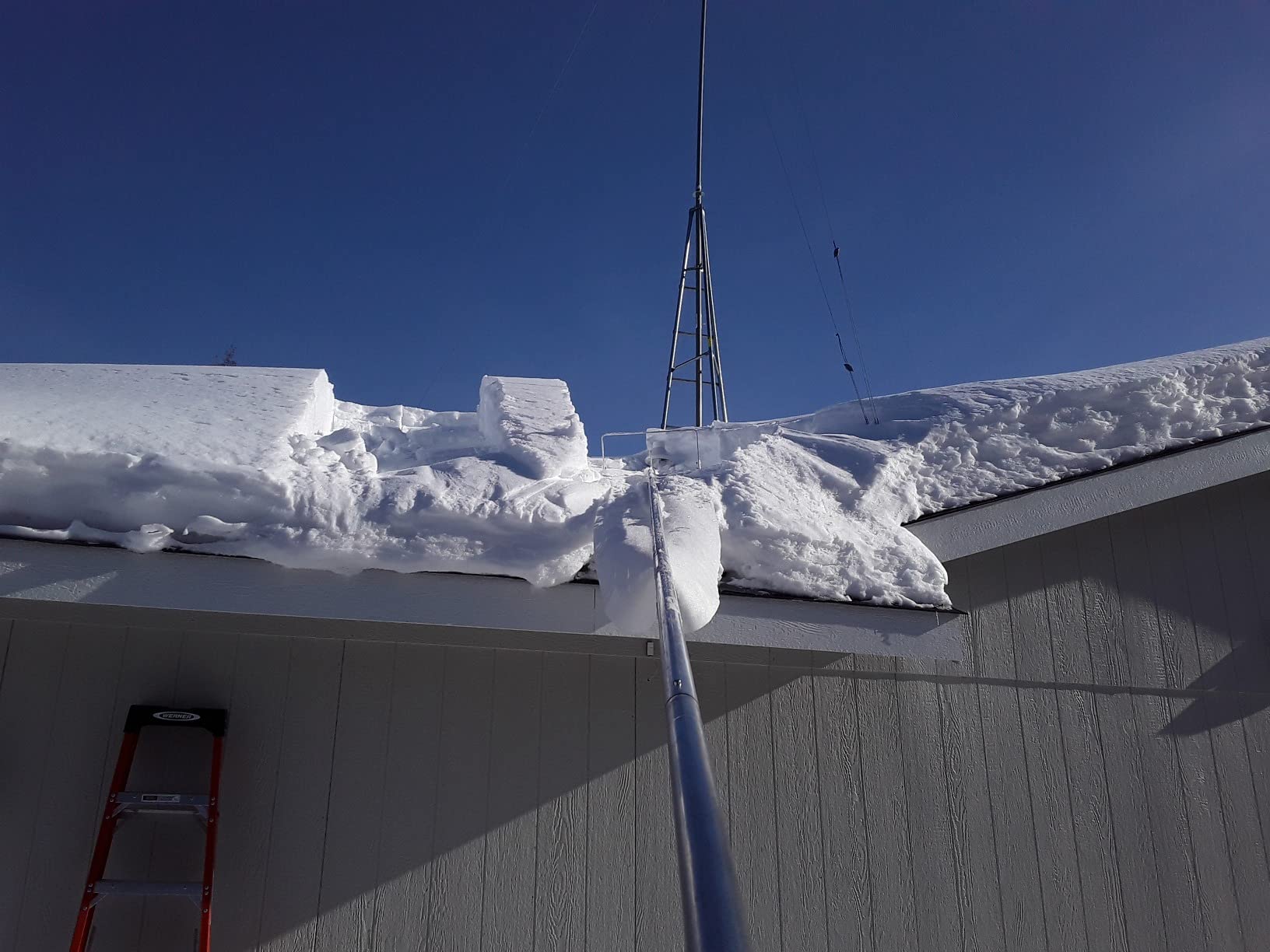
The SNOWPEELER works in a way almost nothing else in this roundup does. Instead of dragging a blade through snow and dropping it off the eave, its head cuts the pack into blocks that ride down a ten-foot tear-resistant slide attached under the blade. Owners put the speed gain at roughly double a conventional rake, and on a long eave line you feel that immediately.
Thirty feet of sectional telescopic reach is the reason this tool exists. It is the pick for tall houses, steep gables and anything where a 20-foot pole simply stops short of the section that matters. You can get to a high ridge or a valley behind a chimney without a ladder in the picture.
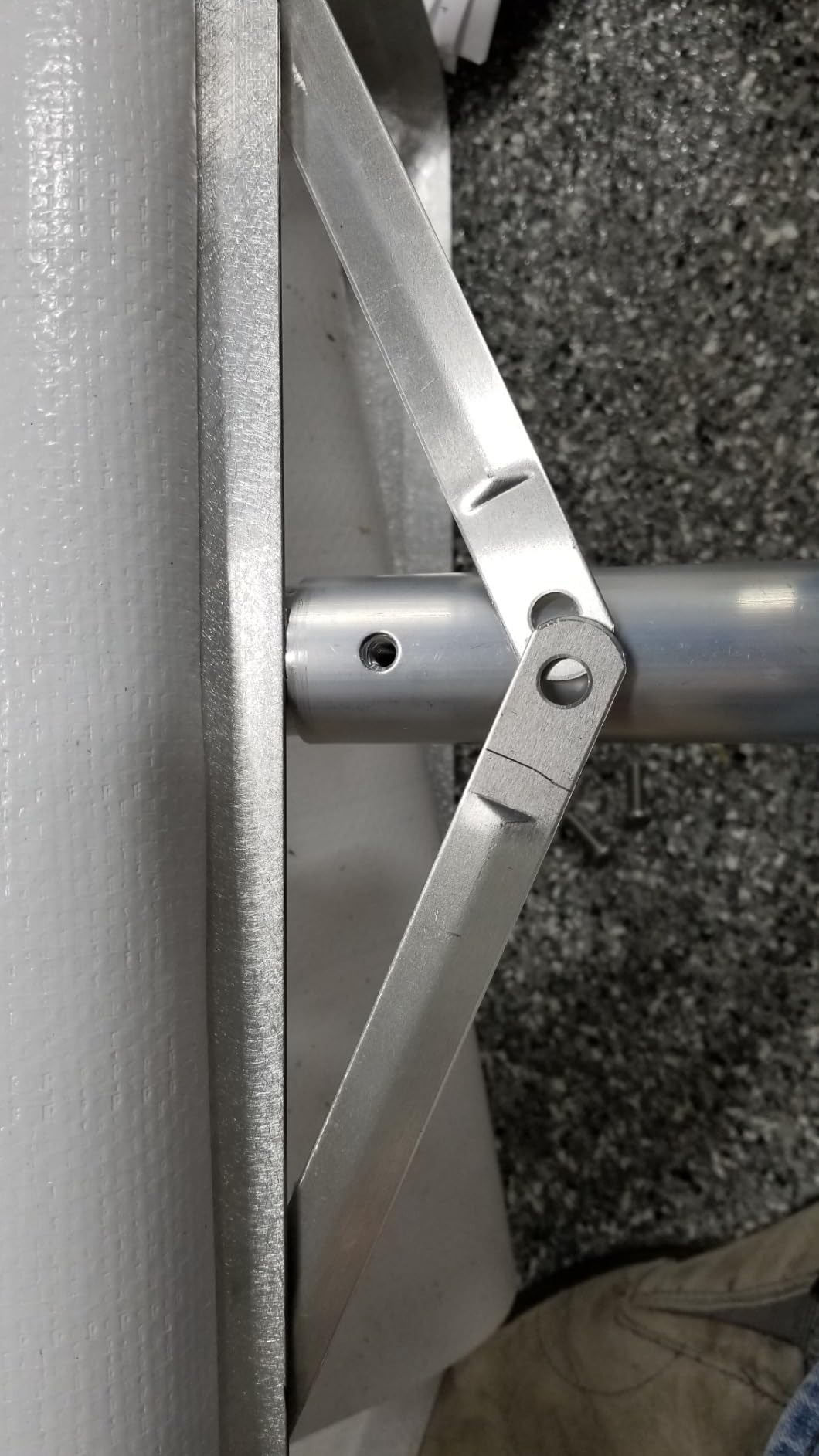
The head uses commercial-grade aluminum, so this is the rake for hard-packed, drifted and refrozen snow rather than the light fluff the poly heads handle. Glide pads under the head keep it from scuffing the roof surface as the blocks travel down the slide.
Technique is everything here, and owners who figure it out say the results are transformative. Place the head at the eave first, then add pole sections. Owners who try to lift the fully extended unit before the head is on the roof report finding it nearly unusable, which tells you most of the frustration in reviews is setup order, not design.
A second weighted 15-foot slide is included for longer runs. The manufacturer is also praised for shipping free replacement pole sections after a break, which is a durability signal in its own right.
Who this rake suits
You want this one if clearing a two-story roof is a once-a-season event rather than a monthly habit, if your snow tends to arrive wet and heavy, and if you would rather finish the job in one session than make four trips out to the driveway afterward. The bungee-attached slide keeps the snow from dumping down the back of your head, which is a real consideration with 30 feet of overhead reach.
Roofing professionals quoted on homeowner forums point people toward a rake of this reach class rather than toward a ladder. That is the strongest endorsement this category gets.
Where it falls short
It leaves roughly two inches of snow behind, so a conventional rake is still useful for the final pass. The plastic slide and its bungee cord are the weak consumables, and the bungee has been reported wearing through within minutes on rough work. Tapering junctions between pole sections are the other stress point under heavy sliding snow.
At 13 pounds fully assembled it is the heaviest thing in this roundup, and lifting it overhead needs a clear plan. Assembly instructions are vague, and some extension sections have arrived without bungee holes or a grip. Budget ten minutes the first time and read the parts carefully.
4. Avalanche! Original 500 Roof Snow Rake – Best for Ice Dam Control at the Eaves
- Wheels float the slide above asphalt shingles
- Smooth 17 inch slide releases snow cleanly
- Tool-free snap-together assembly
- Consistently credited with fewer ice dams
- Shorter reach than most competitors
- Light fiberglass flexes under load
- Not built for thick wet snow
The Avalanche Original 500 is a specialist tool, and understanding its specialty is the whole buying decision. It is not built to strip a roof. It is built to control meltwater at the lower edge of the roof, and owners report noticeably fewer ice dams when they run it along the eaves after each significant snowfall.
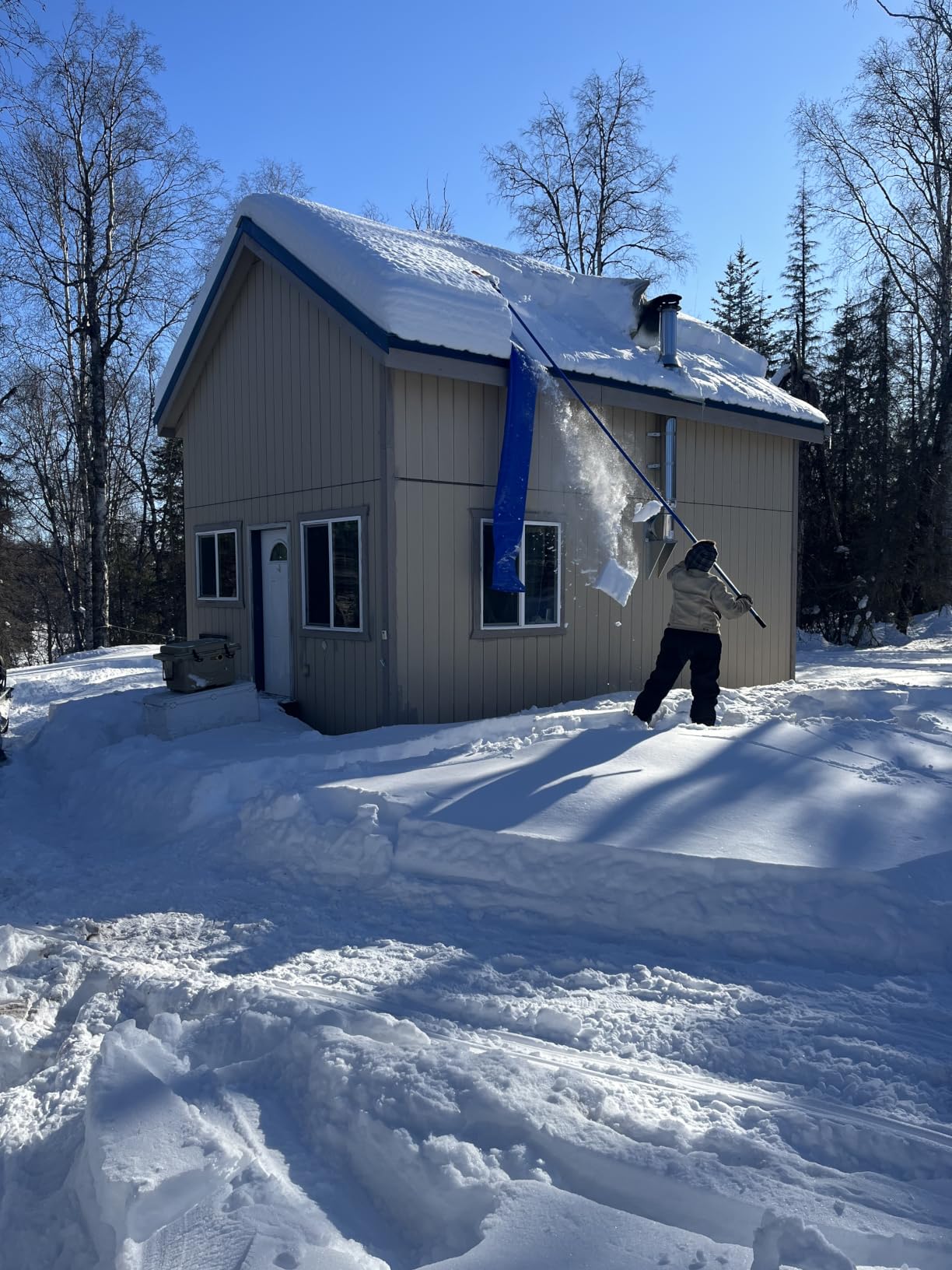
The mechanism is the 1.5 inch wheels paired with a smooth 17 inch wide plastic slide. The wheels hold the slide just above the shingle surface while the slick plastic gives up its grip on the snow, so the snow releases as a sheet instead of grinding across granules.
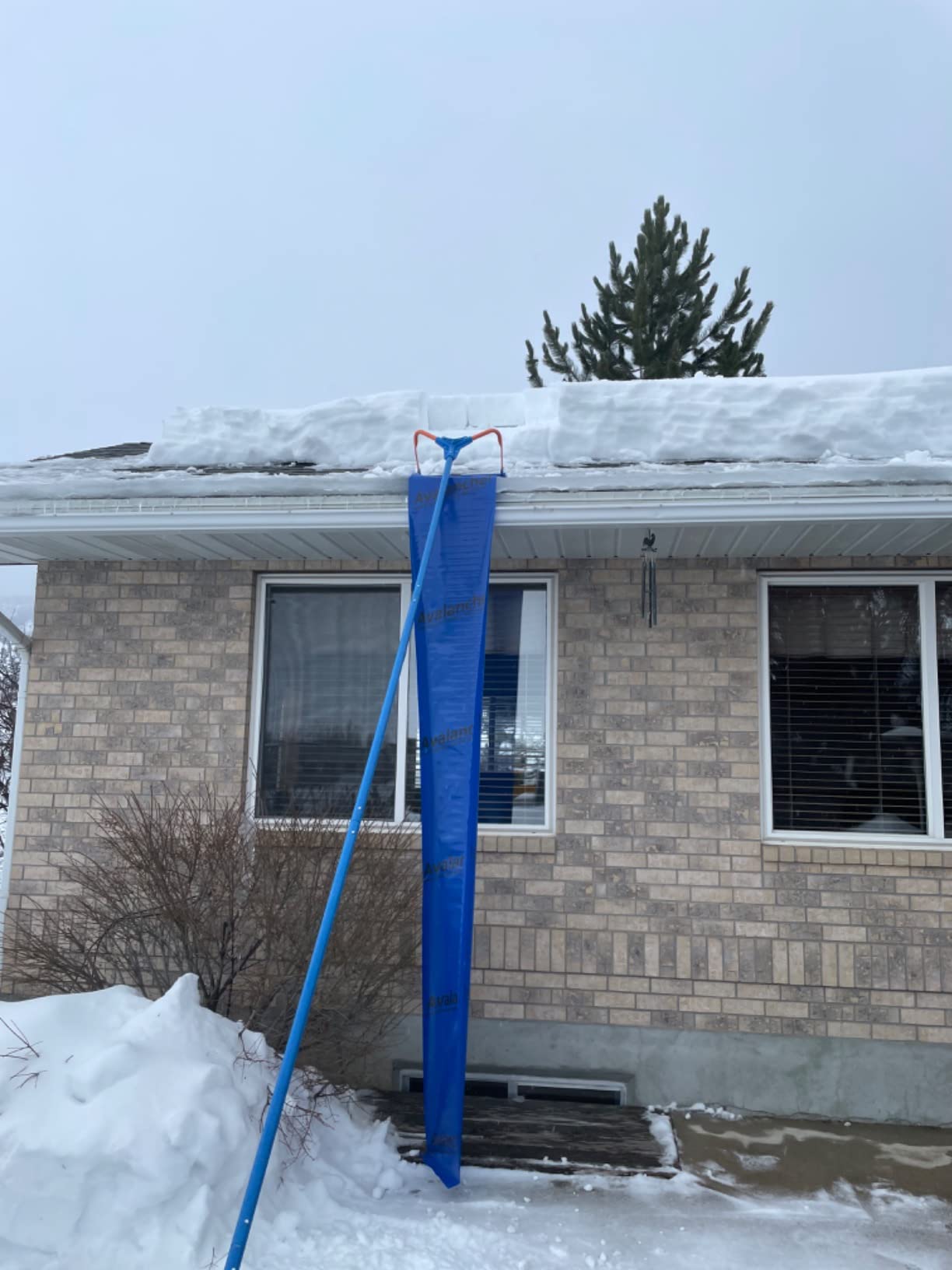
Assembly is four fiberglass sections snapped together into a 15.5 foot pole, with no tools at all. That matters more than it sounds, because a four-piece snap joint is something you can put together in a freezing driveway in a coat and gloves. The twelve-foot slide is long enough to carry a meaningful load off the eave in one pull.
This is also the model that gets recommended when a homeowner asks whether a rake can hurt their shingles. Wheels plus a plastic surface is the gentlest combination available, and it is the one to copy if you are nervous about your roof covering.
One practical note from owners switching up: people who moved from this to a heavier aluminum rake describe the fiberglass sections as flexible and easy to bend. That is a fair trade for weight and gentleness, but it is a trade.
Who this rake suits
Owners of asphalt shingle roofs in moderate-snow regions get the most out of this. If your pattern is a few inches every storm rather than a foot at a time, gentle repeated passes along the eave line are exactly the right strategy, and this is the gentlest tool for the job.
It is also a good second rake to own. Many households keep something like this for ice dam control and a heavier head for the occasional deep load, which is a division of labor that works well.
Where it falls short
Fifteen and a half feet is short for this category, and that will limit you on tall two-story roofs, steep gables and anything with a high ridge. You may be able to clear the eaves and not much else.
It is also the wrong tool for thick, wet or drifted snow compared with an aluminum-blade rake. Using it that way bends the fiberglass, and a bent section does not recover.
5. USA-Made 20 Foot Snow Roof Rake – Best Shingle-Saver Roller Design
- Highest average rating in this group at 4.6
- Rollers keep the head off the roof entirely
- Light but strong aluminum build
- Five minute snap-together assembly
- Three mounting bolts need periodic retightening
- 20 ft falls short of a tall ridge
- Some reports of rollers detaching
This is a modern redesign of the classic Garelick-style roof rake, and it carries the highest average rating in our group at 4.6 stars with about 75 percent five-star scores. The review base is much smaller than the established brands, which we will come back to, but the satisfaction level is notably higher.
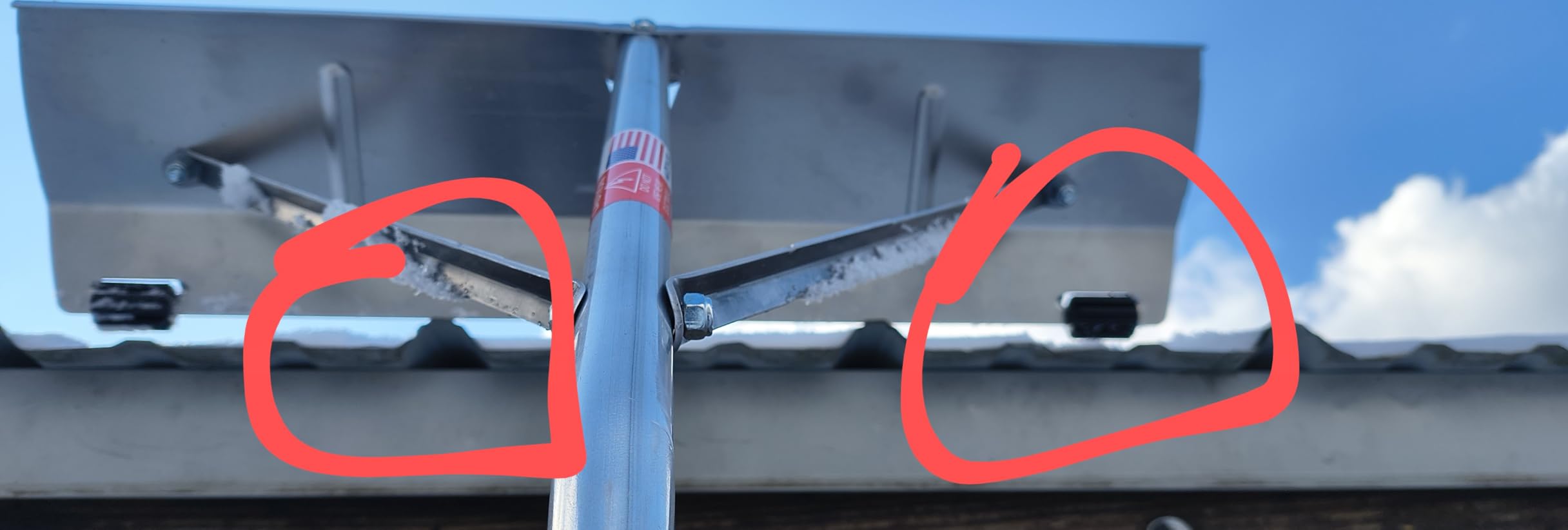
Its distinguishing feature is that the Shingle Saver rollers keep the shovel head from ever touching the roof surface. Not floating just above it, not scraping under load, simply not touching. For owners who are genuinely worried about damaging a new asphalt roof, that is the whole pitch, and it is why users credit it with eliminating ice dams on two-story homes.
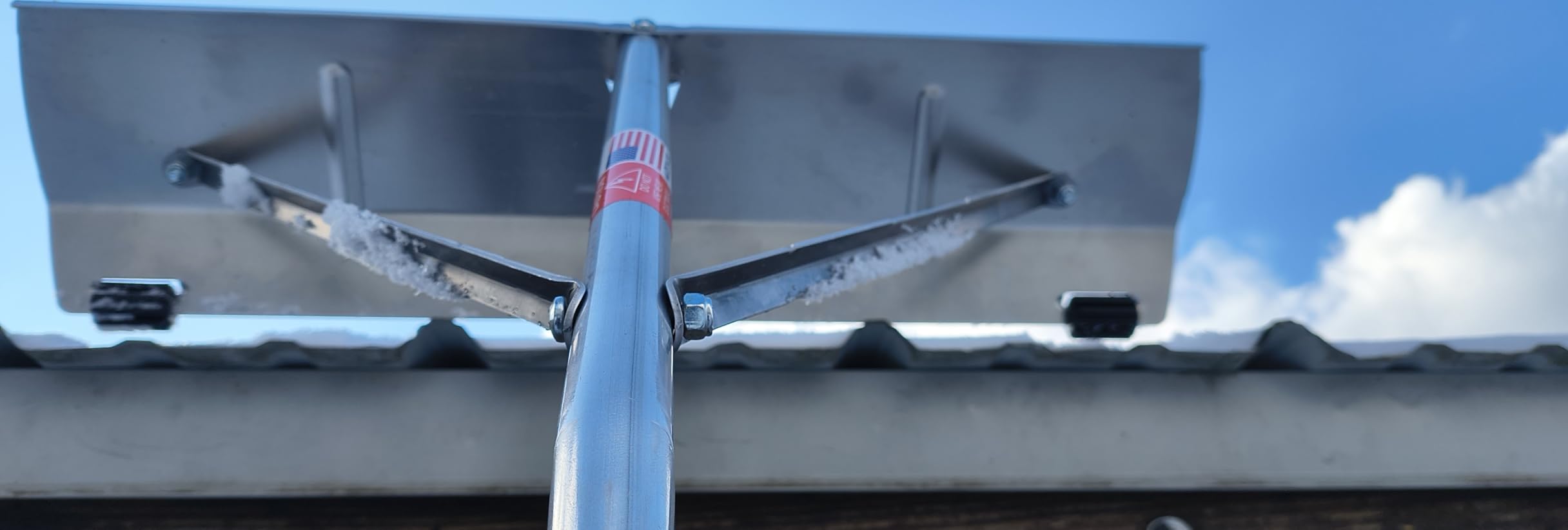
Construction is American-made aluminum, described as rugged yet light, and assembly takes about five minutes. The same head is used for moss and roof debris, so it earns its garage space in spring and fall as well as in January.
Typical use is clearing the lower two to three feet of the roof to break melt cycles rather than stripping everything. That is the right job for it, and doing it on a schedule is how the reported ice dam results happen.
The maintenance note that comes up repeatedly is simple: check the three mounting bolts. Owners who add a minute to check them after each session report no further problems.
Who this rake suits
Shingle owners on a two-story home who want the gentlest possible contact and care about build provenance will like this one most. A tool made in the U.S. with replaceable-looking hardware also ages better in a household that plans to pass it down.
It suits a maintenance mindset: small, frequent passes at the eaves rather than one heroic weekend excavation.
Where it falls short
Twenty feet is the limit. On a tall two-story roof it will not reach the peak, and you should measure your eave height before you commit to it as your only rake.
Blade support struts are a little light for the weight they carry, and a few owners report rollers detaching after use. The other caution is the small review pool, so long-term field data is thinner here than it is for the four-star incumbents.
6. EZ Smart Adjustable Snow Roof Rake – Best for Small Storage and Tight Roof Details
- Adjustable blade changes width without tools
- Bag solves the storage problem
- Collapses for garage or vehicle use
- Roof-safe polyethylene resists bending
- Shortest reach here at 16 ft
- Plastic handle sections flex at full extension
- Smaller review base limits long-term data
The design feature that makes the EZ Smart different is the patented umbrella-style blade, which adjusts from 3 to 36 inches wide without tools. Wide for open roof fields where speed matters, narrow for working around chimneys, skylights, vents and the tight geometry of valleys.
That range is genuinely useful, because most rakes force you to choose between a head that is too wide for detail work and too narrow to be efficient on a big slope. Being able to change the blade width on the fly solves a problem owners rarely think about until they hit a chimney with a 26 inch head.
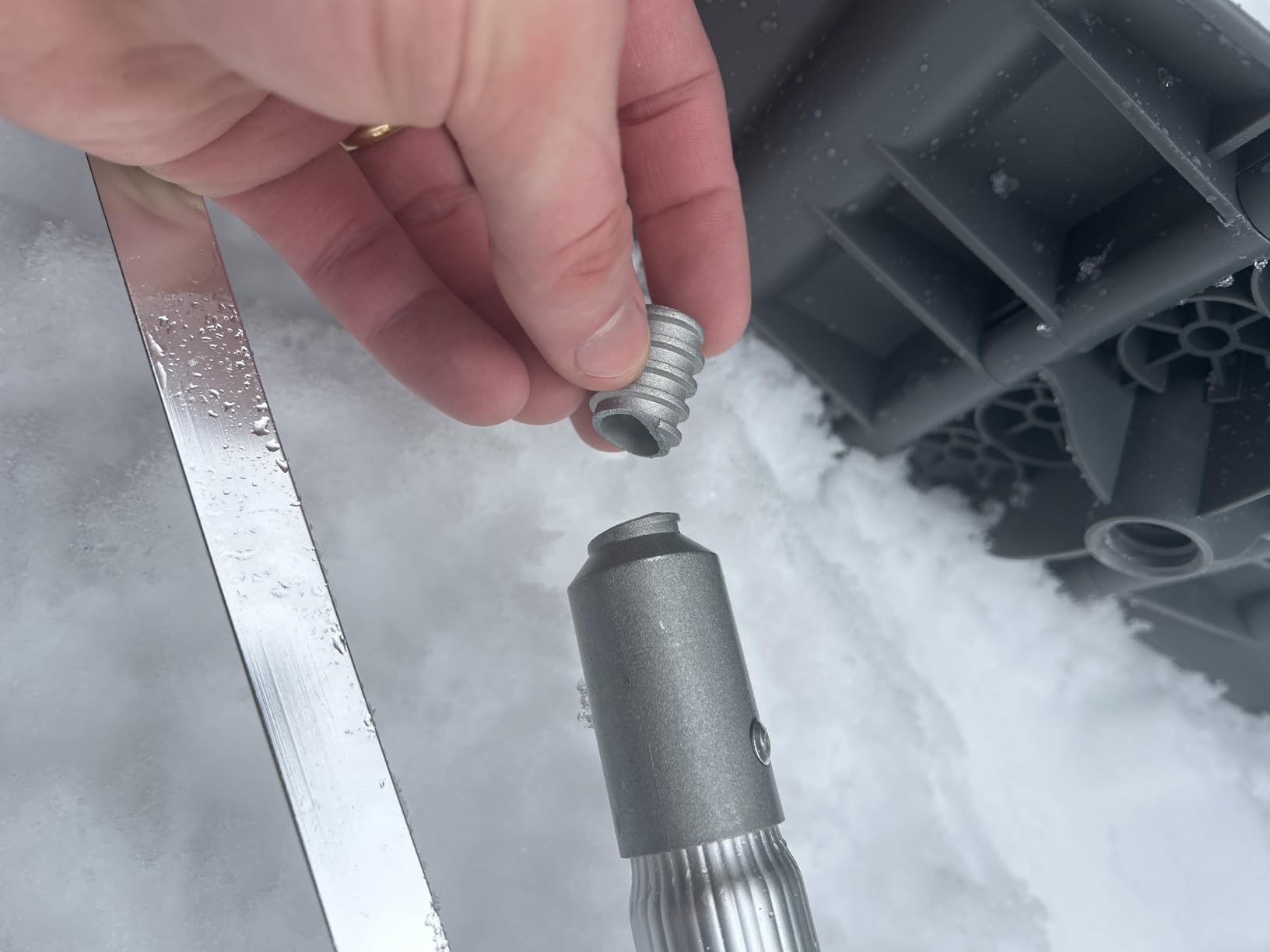
The complete 16-foot system includes the sectional extension pole and a mesh storage bag, and the whole thing collapses into that bag. For anyone in a condo, a small garage or a seasonal cabin, this is the storage solution that conventional 21 and 30 foot rakes never offer. A rake you cannot get into the garage is a rake you do not use.
The blade is roof-safe polyethylene, designed to resist bending, and the whole tool works from the ground so you never approach a ladder.
Reception is positive but rests on a much smaller review base than the aluminum incumbents. You are buying an inventive, well-packaged design with less proven long-term field performance, which is a fair description rather than a warning.
Who this rake suits
This suits people with complicated roof geometry, small houses, low-slope porches or garages, and anyone who needs the tool to live in a bag between seasons. Condo and townhouse owners will find the adjustable blade genuinely useful on the small roof areas they actually own.
It also makes sense as a supplemental tool, since the narrow position reaches places a wide blade simply cannot go.
Where it falls short
Sixteen feet is the shortest reach in this roundup, and that is the limiting factor on anything tall. If your eave line sits above roughly one and a half stories, you will be working at the bottom of your range.
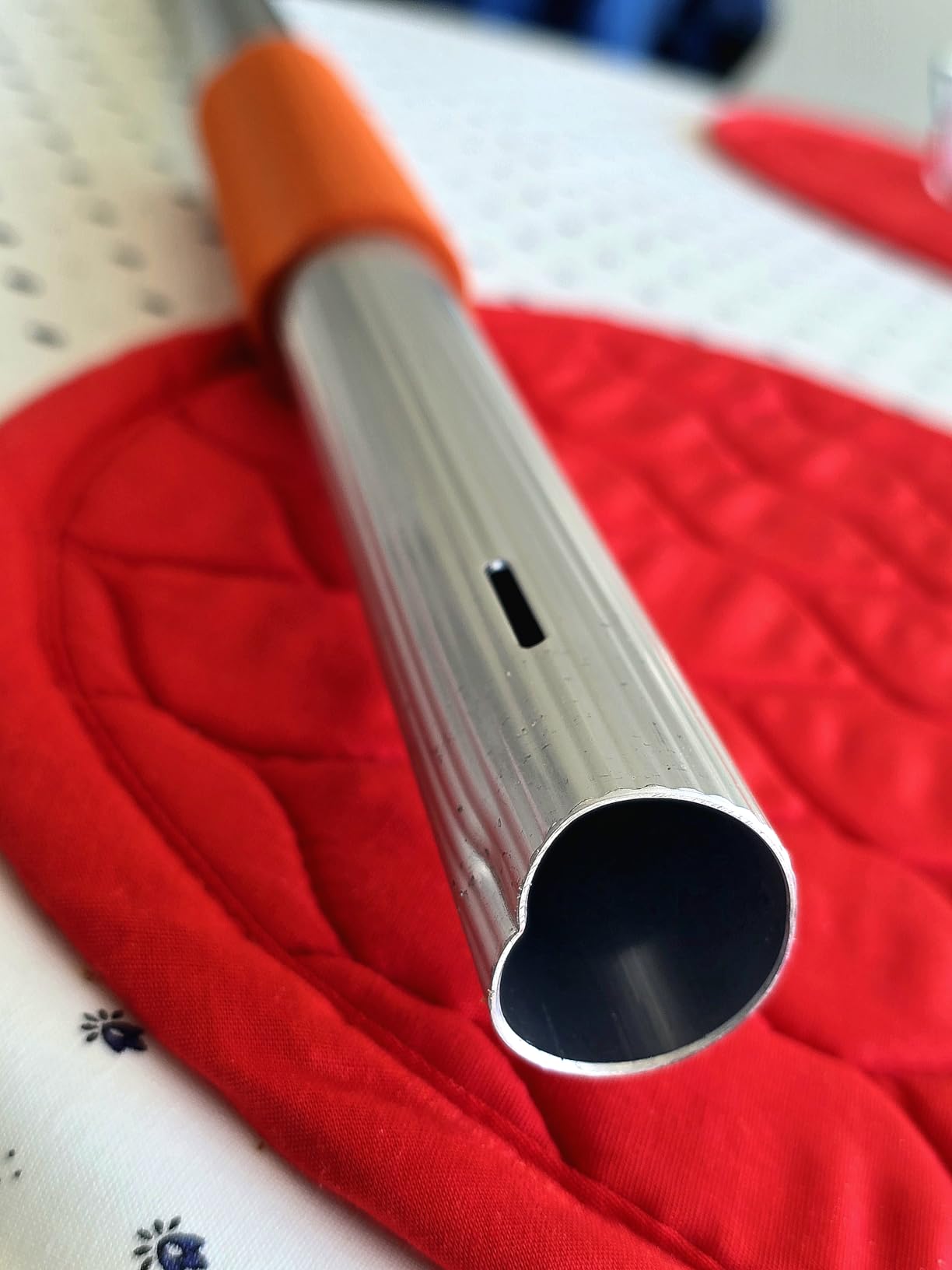
Plastic handle sections are less rigid than aluminum at full extension, and with 150 reviews there is not yet a long record of how the joints hold up over a decade of freeze-thaw cycles.
7. MinnSnowta Dynamo Snow Roof Rake – Best for the Least Physical Effort
- All-aluminum throughout with no plastic parts
- Reported to clear snow with less effort
- Shingle-friendly by design
- 24 inch head covers a wide swath
- Listing gives no pole length
- Small and undifferentiated review pool
- Thin published specification detail
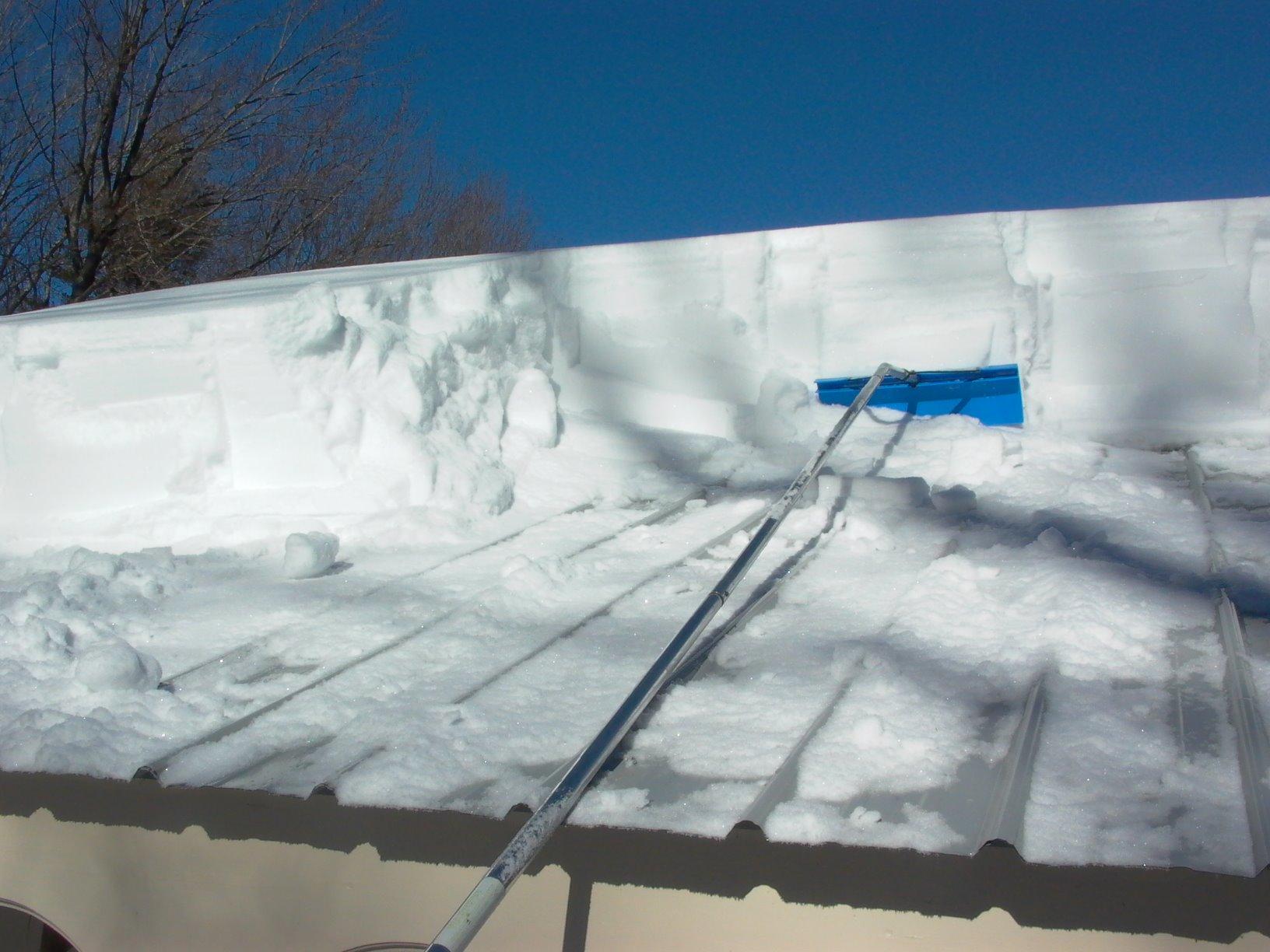
The Dynamo is sold on one promise: clearing snow with less effort than a traditional roof rake, and with less shingle damage than a regular one. Owners who bought it back that claim with a 4.5 average, and several describe it as a redesign that simply works better with less pulling.
Everything on this rake is aluminum: grip, handle and a 24 inch head. No plastic parts means nothing to snap off, and rigid construction means you can attack a heavier pack than a poly or fiberglass head will tolerate.
Shoulder fatigue is the most common complaint about this entire category, and a design that reduces the force needed is more valuable than another two feet of reach. Homeowners in r/DIY have specifically recommended it to people who have a bad shoulder and still need to clear a roof.
It functions as the boutique option in this group rather than a mainstream choice. It sits at the premium end of the price range, and the only reason that price makes sense to us is a specific one: you are buying a rigid all-metal tool with a large head and a genuinely different approach to the work.
Be aware of what you are buying, though. The listing is thin on specification detail and does not state a pole length clearly, so measure your eave height and confirm the reach before you commit.
Who this rake suits
This suits older homeowners, anyone with a shoulder or back that makes pulling painful, and people on smaller roofs who can work a 24 inch head across an eave line without the reach of a telescoping pole.
It also suits buyers who would rather own one rigid tool for a decade than replace plastic-headed rakes every few seasons.
Where it falls short
The evidence base is thin. A hundred and forty-seven reviews from a small buyer pool tells you the people who bought it like it, and very little about how it performs for everyone else. We would want more field history before recommending it as a first rake.
With no clearly stated pole length and minimal published specs, it is also hard to compare directly against the rest of this list. Ask the seller what the actual reach is, and check the assembly before snow arrives.
8. VEVOR 26 Inch Adjustable Roof Snow Rake – Best Budget Pick for Steep Roofs
- 26 inch blade clears wide swath fast
- Adjustable 7.5 to 20 ft reach
- Sliding wheels prevent scratching
- Tool-free assembly and detachable handle
- No bend section limits low-pitch roofs
- Heavy at full 20 ft extension
- One report of breakage after three uses
The VEVOR is the one to consider if your roof is steep and gabled and you want a wide blade for speed. Owners report taking it through a full winter with 18 inches of accumulation, knocking down icicles and pulling ice dams off the eaves along the way.
Twenty-six inches of aluminum blade is a genuinely wide head, so you cover a lot of roof per pull. The handle adjusts from 7.5 to 20 feet, which lets you set a comfortable length for a low section and extend for the upper slope without swapping tools.
Sliding wheels under the head prevent scratching the roof surface, and the rubber anti-slip grip holds in cold, wet conditions when bare hands would not. Aluminum alloy resists corrosion and deformation, which is a good long-term story for a tool stored in a damp garage.
Assembly is tool-free and the handle detaches for compact storage, which is a nicer touch than it sounds when a 20 foot pole has to live in a corner.
The limiting problem here is geometry, not build. There is no bend section, so on a low-pitch or ranch-style roof the straight pole only gets a couple of feet up before the head is dragging on shingles. It suits gables and steep roofs far better.
Who this rake suits
This suits owners of steep, gabled roofs who want maximum blade width per pull and a tool that stays in the budget conversation. At 6.9 pounds it is heavier than the Snow Joe but far lighter than a 30 foot sectional, which is a sensible middle ground for one-person use.
It also makes sense if you want something that disassembles for storage without wrestling with screws and braces.
Where it falls short
No bend section is the real problem, and it is not a small one. If your pitch is gentle, this rake will not get up the roof far enough to matter, and you will end up working the bottom two feet like you were holding a broom.
It is also heavy at full 20-foot extension, which is where shoulder fatigue shows up, and durability feedback is mostly positive with a single outlier report of breakage after only three uses. With 85 reviews there is not much history to draw on yet.
How to Use a Snow Roof Rake Safely From the Ground
Every step below happens with your feet on the ground. That is the entire point of a roof rake, and the moment you climb onto a snowy roof or set a ladder against a wet one, you have traded a small maintenance job for a serious injury risk.
- Set the pole length before you approach the house. Extend to roughly the length of your eave line, check the twist lock or bolts are seated, and confirm the head and braces are tight.
- Stand back from the wall at a distance where the head can reach the eave without the pole being steeply angled. Working from directly under the edge forces you to pull in a way that twists the handle.
- Lower the head onto the roof from the eave side. Lift it, place it flat on the snow, and let the weight settle before you pull.
- Pull straight down the slope toward you in one continuous stroke. Do not push, and do not rake back and forth, since both load the head in the direction its brackets cannot handle.
- Work along the eave line in passes, and stop when the head clears the shingle edge rather than digging into the next strip. This is a control job, not an excavation job.
- Clear the ground under the eave last, and never stand where a slab of snow is likely to slide off. Watch for the avalanche case that homeowners on r/solar describe as the most under-estimated hazard of this job.
If you are choosing one tool to do all of this well, the reach and weight numbers matter more than anything else in the listing. A rake you cannot lift is a rake you will not use, and a rake that stops short of the eave is a rake that only half solves the ice dam problem.
What to Look for When Buying a Snow Roof Rake
Reach length beats everything else
Measure your eave height, not your roof length, because the eave line is what you are clearing. A 20 to 21 foot pole handles most one-and-a-half to two-story homes. Thirty feet is for tall houses, steep gables and hard-to-reach sections behind chimneys, and it comes with a real weight penalty.
Two-story homes generate the most questions on these searches, and the honest answer is that a 20 foot rake works if you can stand back far enough from the wall to use the full length. If you cannot, you need 30 feet or you need a contractor.
Wheels, rollers or poly: three different answers to shingle safety
There are three shingle-protection mechanisms and they are not equal. Polyethylene blades are inherently gentle and cheap but too weak for hard snow. Wheels and rollers float a hard head above the surface, which is the strongest combination of cutting power and protection. Coated and slick plastic slides release snow without scraping, which protects the roof but limits what you can remove.
Against metal roofs, a hard blade with wheels is fine and a poly blade is fine. Against concrete or clay tile, rollers matter more, because tiles crack under a concentrated point load. Against solar panels, a poly or wheeled head is the only sensible choice, and r/solar threads about raking panel roofs repeat the same advice: never let bare metal cross glass or mounting rails.
Weight and the shoulder problem
The most consistent complaint across owner reports is that pulling a roof rake is a major shoulder and arm workout. The fix is a lighter head, not a stronger back. Rakes in this group run from 4.8 pounds to 13 pounds, and that spread shows up in your shoulders after one session.
For heavy wet snow you want enough mass to cut the pack. For frequent light passes on moderate snow, weight is pure liability. Buy for your climate, not for the biggest number in the listing.
Telescoping versus sectional shafts
Telescoping poles adjust length quickly and store compactly, which is why they dominate. Sectional poles snap together, are more rigid, and give you the 30 foot class, but they need more assembly and more storage space. Several products here also include a bag or a detachable handle, which is the feature most people undervalue before they try to squeeze a 21 foot tool into a one-car garage.
Durability across seasons is worth thinking about. Telescoping joints loosen, blades crack, and plastic hardware fatigues after three to five winters. A manufacturer that sells replacement blades, tubes and wheels extends the life of the tool, and that is a real buying criterion rather than a nice-to-have.
When to rake, and when to stop
Raking matters most for managing severe weight loads and preventing ice dams, not for clearing every dusting. If you get two inches of dry powder that will blow off on its own, doing nothing is fine. If wet snow is stacking at the eaves, clear it before a thaw cycle, because that is the load that causes damage.
Skip the rake entirely on very steep, very high or fragile roofs, and on any roof you are not fully confident about. Call a roofer instead. Contractors quoted on homeowner forums consistently redirect people toward a rake or a professional rather than a DIY climb, and that is the correct guidance for roofs outside a simple two-story gable.
Finally, buy in the autumn. Roof rake demand spikes hard in the first cold snap of the season, and having one assembled and in the garage before the first storm is the difference between a plan and a scramble. Once you own it, the same head clears leaves and roof debris in the fall, so it earns its space twice a year.
Frequently Asked Questions
What is the best tool for removing snow from roofs?
A ground-operated roof rake is the best tool for most homeowners. It has a long telescoping or sectional pole with a blade, roller or slide head at the far end, so you can pull snow off a pitched roof without climbing. For very heavy or hard-packed snow, an all-aluminum head with wheels cuts faster, while a polyethylene head is gentler on asphalt shingles. Avoid reaching for a ladder whenever a rake can cover the section you need.
Are snow roof rakes worth it?
In regions with regular snowfall, yes. Raking clears the lower two to three feet of the roof, which breaks the melt-and-refreeze cycle that creates ice dams and takes weight off trusses and gutters. In moderate climates you may only need one before a large predicted accumulation. Keep in mind that raking is maintenance, not a repair, and that attic insulation and ventilation remain the real fix for recurring ice dams.
Is there a 30-foot roof rake that can remove snow?
Yes, 30-foot models exist and they are built as sectional telescoping poles so you can work entirely from the ground. They reach high eaves, steep gables and areas behind chimneys that a 20 or 21 foot rake cannot touch. The trade-off is weight, so expect a heavier tool and a longer assembly, and expect to leave a thin layer behind that a conventional rake can finish.
What’s the best way to remove snow from a roof?
Set the pole length first, then stand back far enough from the wall to use the full reach. Lift the head onto the snow at the eave and let it settle, then pull straight down the slope toward you in one continuous stroke. Never push and never rake back and forth, because both bend the head brackets. Work the eave line in passes, then clear the ground underneath last and never stand where snow will slide down on you.
Can a roof rake damage shingles?
A bare aluminum blade dragged across asphalt shingles can abrade the granules, so pick a head with wheels, rollers, a slick poly surface or a coated blade. Pull rather than push, since pushing loads the brackets and can bend them. Inspect the head before each use and replace any missing roller. Raking is low risk when the head floats above the surface, which is why wheeled and poly designs are the common recommendation for shingle owners.
How often should I remove snow from my roof?
Rake after heavy wet snowfall and again before a predicted thaw cycle, since that is when meltwater refreezes at the eaves and forms dams. Light dry powder that will blow off on its own does not need clearing. In heavy snow regions homeowners treat it as a routine winter chore alongside driveway shoveling, while moderate climates typically act only before a large accumulation.
Final Verdict on the Best Roof Rakes for Snow Removal
The Snow Joe RJ204M takes our top spot among the best roof rakes for snow removal for a simple reason: at 4.8 pounds with a 25 inch poly blade and 27 feet of reach, it asks the least of your shoulders while still covering a typical two-story eave line. It is the tool we would hand to a first-time owner, a smaller homeowner, or anyone clearing a panel roof.
Pick the SNOWPEELER if you have a tall or steep house and want to finish in one session. Pick the Extreme Max if you plan to own the same rake for a decade and want parts. Pick the Avalanche or the USA-Made 20 footer if your roof is shingle and gentle, and ice dam control is the goal. Measure your eave height first, check the fasteners before every use, and never climb onto a snowy roof to do a job a rake can do from the ground.