
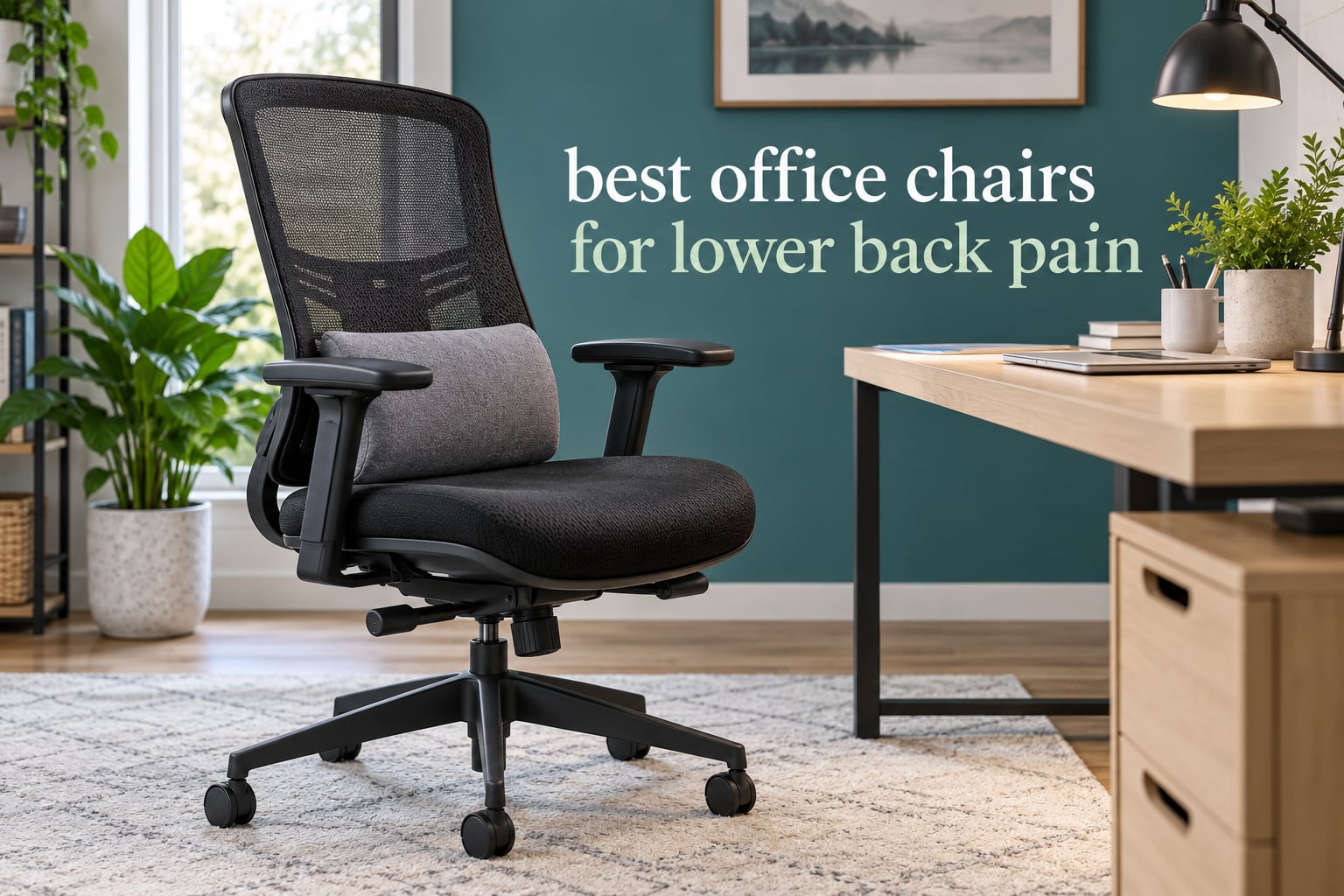
Our best overall pick for lower back pain is the GTPLAYER big and tall gaming chair, a 400-pound-rated frame with a pocket-spring lumbar cushion and a 22 inch seat that fits larger bodies without the sizing guesswork that trips up most desk chairs. It is also the model in this roundup with by far the most owners reporting back, which matters when you are buying something you plan to sit in for eight hours a day for the next several years.
That said, no chair on this list treats a herniated disc, sciatica or a torn muscle. What an office chair for lower back pain can do is take the compressive load off your lower spine while you sit, keep your pelvis in a position that stops you sliding forward, and let you change position through the day. Persistent pain, numbness, tingling or shooting pain down a leg is a doctor or physical therapist conversation, not a shopping one, and we have said so plainly wherever it matters below.
We went through twelve chairs that sit in the mid-to-low price bands where most home and small-office buyers actually shop, and we read thousands of verified owner reviews to see which ones hold up past the first month. The field is almost entirely mesh task chairs and padded big-and-tall recliners, which tells you something about what is available: very few of these chairs adjust lumbar support in more than one direction, and the ones that do stand out immediately.
Two questions narrow the field fast. How many hours a day do you sit, and do you run hot or cold in a room without air conditioning? Hours seated decides whether you need a real recline and a thick seat, or just a decent lumbar pad. Temperature decides mesh versus foam and leather, because a leather back in a warm room is a complaint you will write about later.
Top 3 Picks for Lower Back Pain in 2026

GTPLAYER Big and Tall Chair
- 400 lb capacity
- 22 inch seat depth
- Pocket spring lumbar
- 90-150 degree recline


All 12 Chairs Compared Side by Side in 2026
| Product | Specifications | Action |
|---|---|---|
| GTPLAYER Big and Tall Chair |
|
Check Latest Price |
| TRALT Mesh Lumbar Chair |
|
Check Latest Price |
 Amazon Basics Executive Chair Amazon Basics Executive Chair |
|
Check Latest Price |
 COMHOMA Big and Tall Chair COMHOMA Big and Tall Chair |
|
Check Latest Price |
 X XISHE Mesh and Leather Chair X XISHE Mesh and Leather Chair |
|
Check Latest Price |
 COLAMY Padded High Back Chair COLAMY Padded High Back Chair |
|
Check Latest Price |
| CLOUVOU Ergonomic Mesh Chair |
|
Check Latest Price |
 NEO CHAIR Mesh Task Chair NEO CHAIR Mesh Task Chair |
|
Check Latest Price |
 FelixKing Five Point Mesh Chair FelixKing Five Point Mesh Chair |
|
Check Latest Price |
 Marsail High Back Mesh Chair Marsail High Back Mesh Chair |
|
Check Latest Price |
 ELABEST X100 Ergonomic Chair ELABEST X100 Ergonomic Chair |
|
Check Latest Price |
 CAPOT 400 Pound Mesh Chair CAPOT 400 Pound Mesh Chair |
|
Check Latest Price |
1. GTPLAYER Big and Tall Chair – The One With the Most Owners
- Widest seat and frame in the group at 400 lbs rated
- Segmented pocket spring lumbar plus 3D saddle shaped seat
- Reclines 90-150 degrees without tipping
- Assembly takes 15-45 minutes with labeled hardware
- PU leather wipes clean
- Seat foam is very firm and reads as board-like to some heavier users
- Supplied casters feel cheap and are worth upgrading
- Footrest tubes and brackets feel flimsy
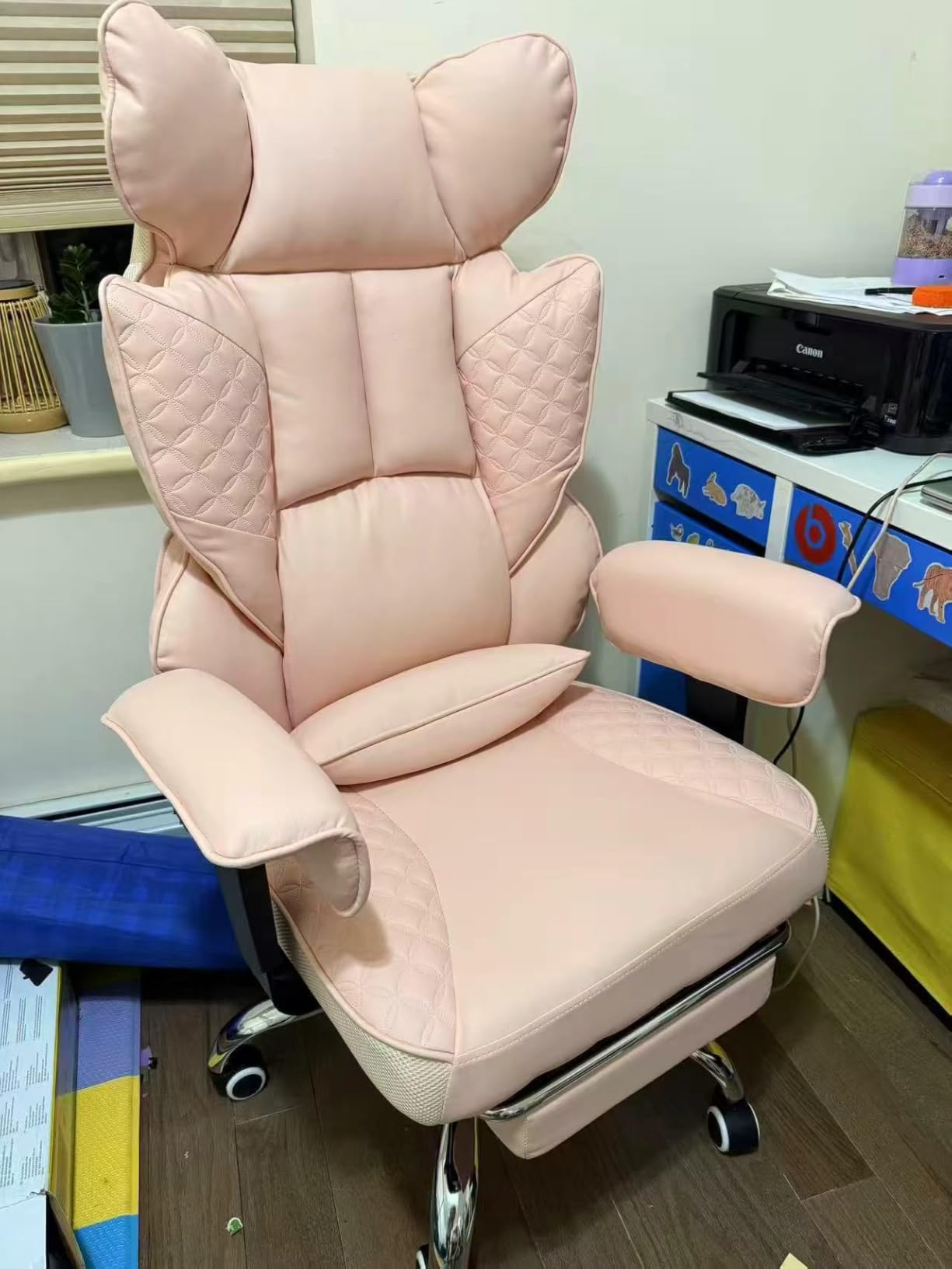
The reason this chair leads our list is not the spec sheet, it is the volume of long-term feedback. It is the most widely owned model we evaluated, at a review count nothing else here approaches, and the complaints that do appear are consistent and narrow, which is what you want to see in a product that many people have lived with for years.
The lower back story here is a built-in lumbar pillow stuffed with pocket springs rather than a plastic pad bolted to the backrest. Because the springs give slightly under load, the support settles into the curve of your back instead of pushing against one fixed point, and for a dull, achy lower back that difference is noticeable within a few hours.
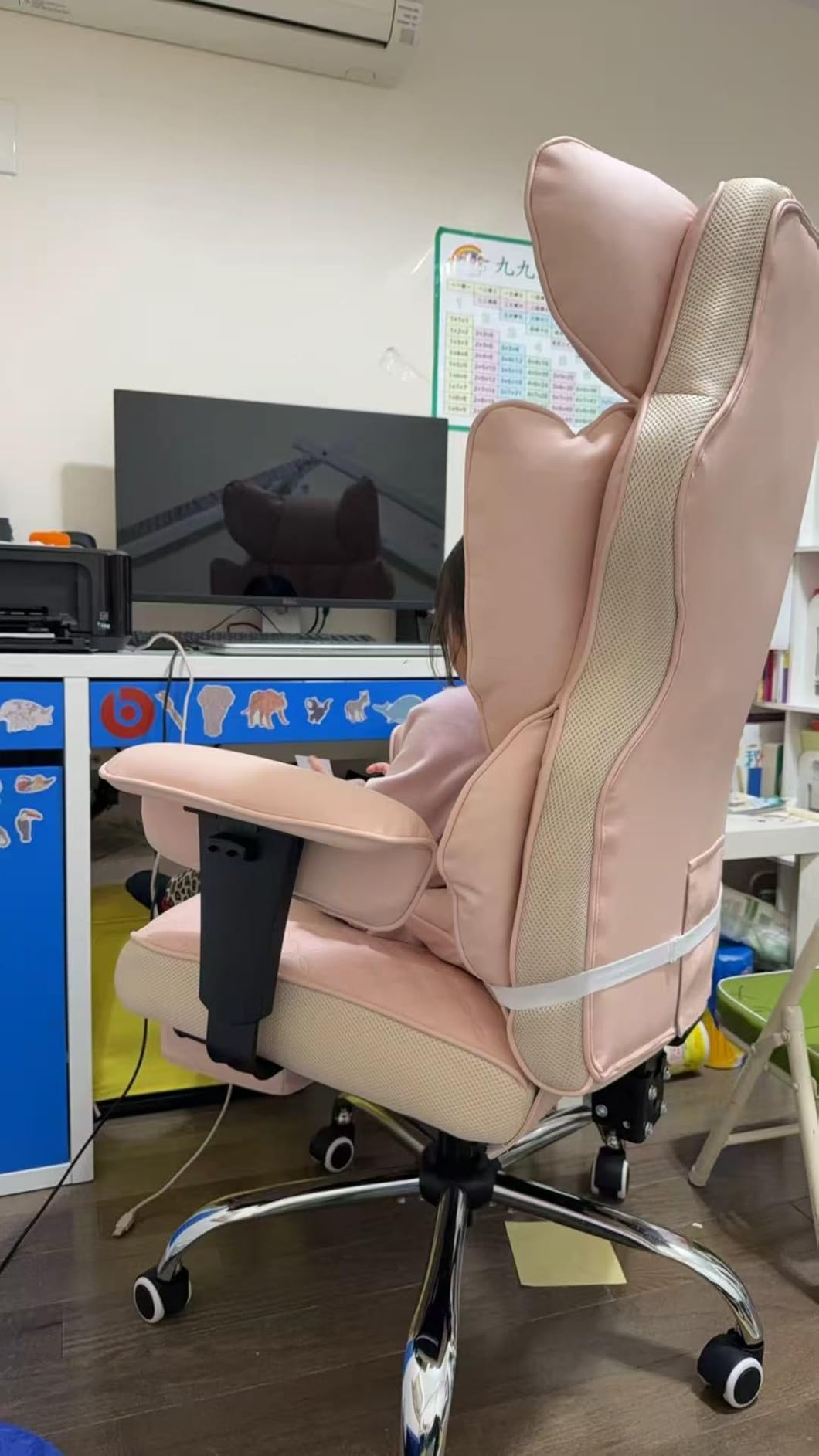
The seat is the reason to look twice. At 22 inches deep, with a backrest 22.05 inches wide, it is a genuinely oversized frame, and the saddle shape keeps your thighs apart so you do not slide forward into a slump. Most task chairs run 17 to 20 inches deep, which quietly assumes a body size and leaves taller users dangling.
Three things to know before you commit. The seat foam is dense and firm, and a number of heavier owners add a memory foam pad on top of it, so budget for that if you are over 200 pounds. The 3-level gas lift still leaves the chair sitting fairly high off the floor at its lowest setting, which can put your knees under a low desk. And the recline is a genuinely useful 90 to 150 degrees, so this doubles as a reading chair.
Who it suits, and who should skip it
This is the chair for someone above 300 pounds, or six feet tall, or both, who has already had chairs that were too small. Very little else in this roundup has that much room, and the 400 pound rating is matched by a metal frame and base rather than a plastic one.
Skip it if your room is small. A 40 inch tall, 31.5 inch wide recliner with a footrest is a substantial footprint, and if you are working in a spare bedroom you will feel it every time you turn around. It is also a gaming chair, so the styling is not what a formal home office wants.
What the ownership reports tell you
Long-term owners describe the same two things repeatedly: the saddle seat holds up, and the armrests and gas lift keep working. The headrest is the part that gets replaced first, since the included pillow is held on by an elastic strap that reviewers describe as awkward, and the caster set is the cheap part that most owners replace within a year.
That is a reasonable long-term profile. The frame, base and recline are the expensive parts and they are holding up, while the consumable parts are the cheap parts. If you are weighing this against a more conventional mesh task chair, the deciding question is body size, not back support quality.
2. TRALT Mesh Chair – Adjustable Lumbar Depth at a Low Price
- Lumbar support adjusts in depth
- not just height
- Breathable mesh stays cool in warm rooms
- Class 3 BIFMA certified gas lift resists sinking
- Metal core reinforced base at a low price
- Swivel up arms suit compact offices
- Compact backrest leaves taller users feeling like they are sliding out
- Firm molded foam is not for people who like a soft sit
Most chairs in this group give you a lumbar support that moves up and down and nothing else. This one moves in depth as well, and that single extra axis is what separates a lumbar support from a lump in the middle of your back.
Depth matters because lumbar curvature varies enormously between people, and the ones that move in only one direction force a flat back or a pronounced arch. Adjusting depth lets the pad sit in the hollow of your back rather than somewhere in the general neighbourhood, and owners with back complaints single this out as the reason the chair works for them.
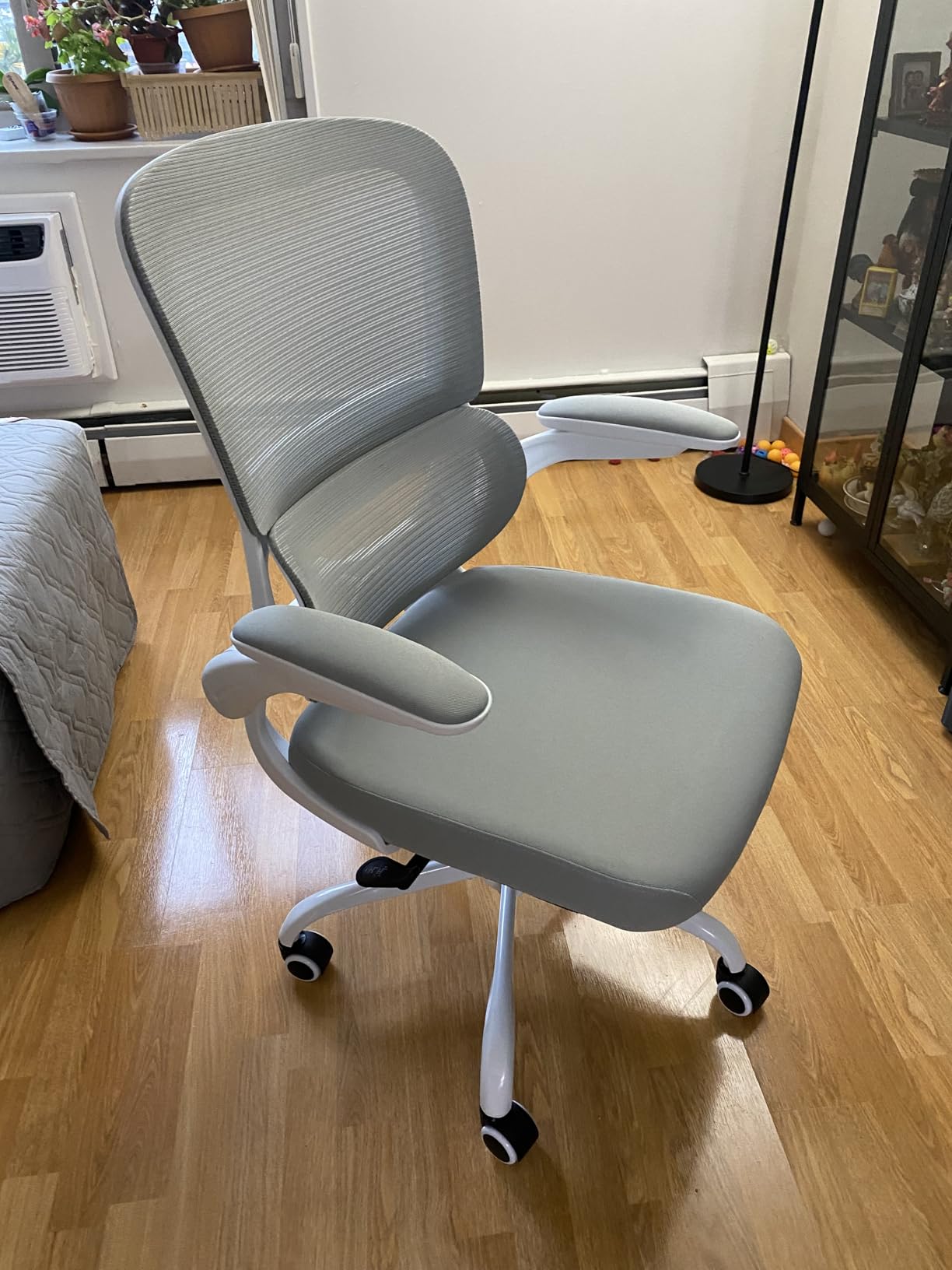
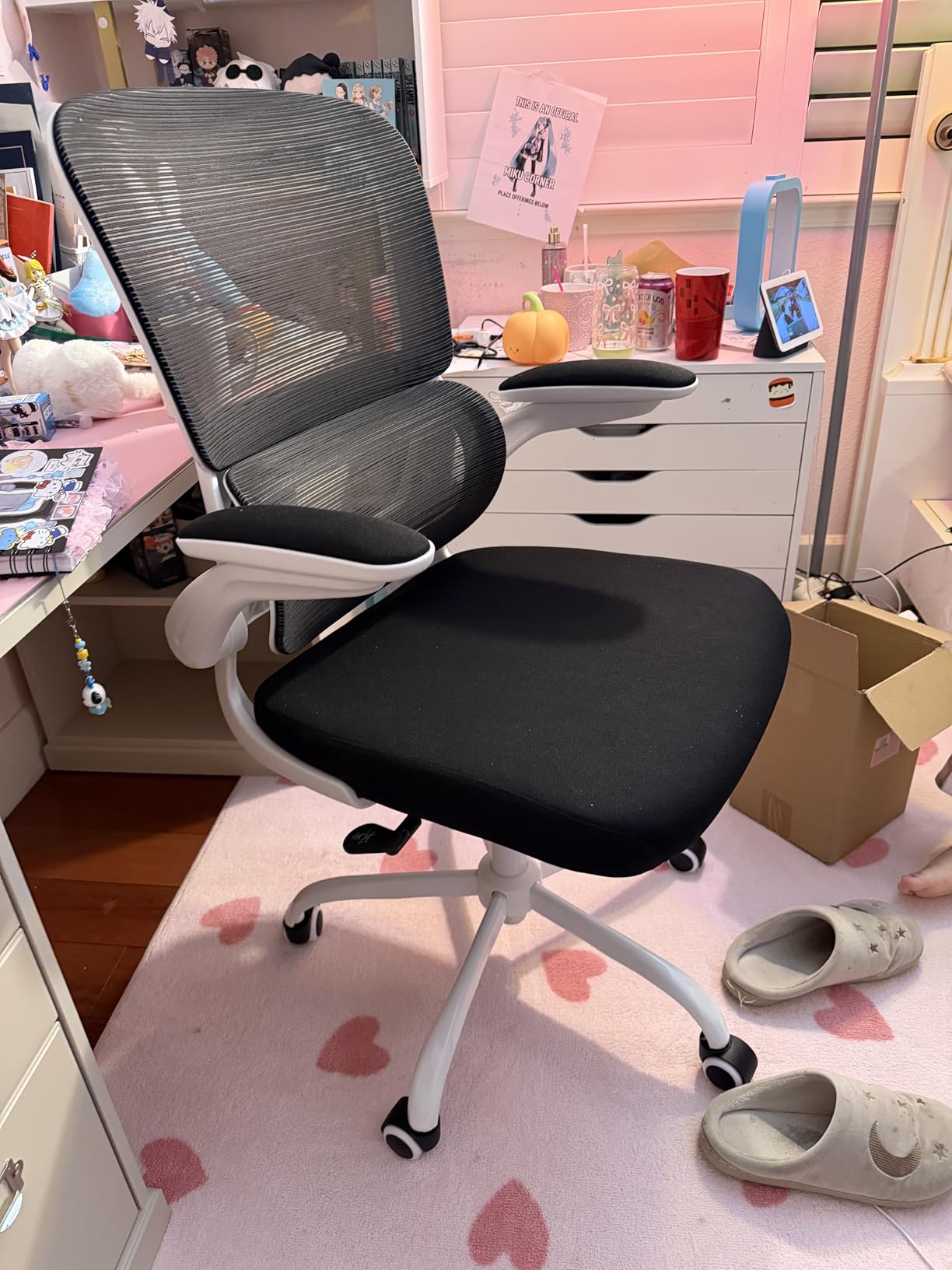
The rest is a sensible budget task chair. The mesh back is high-tension and genuinely breathable, which matters in a room without air conditioning, and the gas lift is Class 3 BIFMA certified, the detail that actually predicts whether a chair sinks after two years. A metal-core reinforced nylon base rated to 330 pounds is more than most chairs at this level offer.
Seat height runs 17.7 to 21.7 inches, which suits roughly 5 foot 4 inch to 6 foot 2 inch users. Assembly is about 15 minutes with tools included, and the warranty is two years, longer than most in this set.
Who it suits, and who should skip it
Buy this if you sit in a warm room, want a mesh back, and need lumbar support that does more than move up and down. It is also the pick for anyone working in a small home office, because the armrests swivel up and the whole footprint is compact.
Skip it if you are tall. The backrest is genuinely small, and taller users report the sensation of sliding out of the chair rather than being held. If you are over six foot two, look at a chair with an 18 inch or deeper seat and a taller back instead.
What the ownership reports tell you
Owners consistently describe the build as feeling above the tier it sits in, and phone-based customer service comes up unusually often as a positive. The negative mentions are mostly logistics rather than design, such as a missing screw in one box or light scratches on arrival.
The fit is the real limitation, and it is consistent enough to plan around. Treat this as a chair for average and shorter frames, and check the seat height range against your desk before you order.
3. Amazon Basics Executive Chair – The Lumbar Pad Owners Recommend Most
- Lumbar pad is the single most praised feature for back relief
- Plush well stitched bonded leather with generous padding
- Flip up arms let the chair slide fully under a desk
- Simple assembly with clear instructions
- Solid mid tier build
- Low maximum seat height leaves taller users with knees under the desk
- Backrest angle is fixed at a slight recline
- Pleather upholstery begins to flake after a few years
This is the chair owners mention by name when they describe a lumbar support that finally hit the right spot, and it has been selling for years, which means a lot of people have lived with it long enough to report honestly on how it ages.
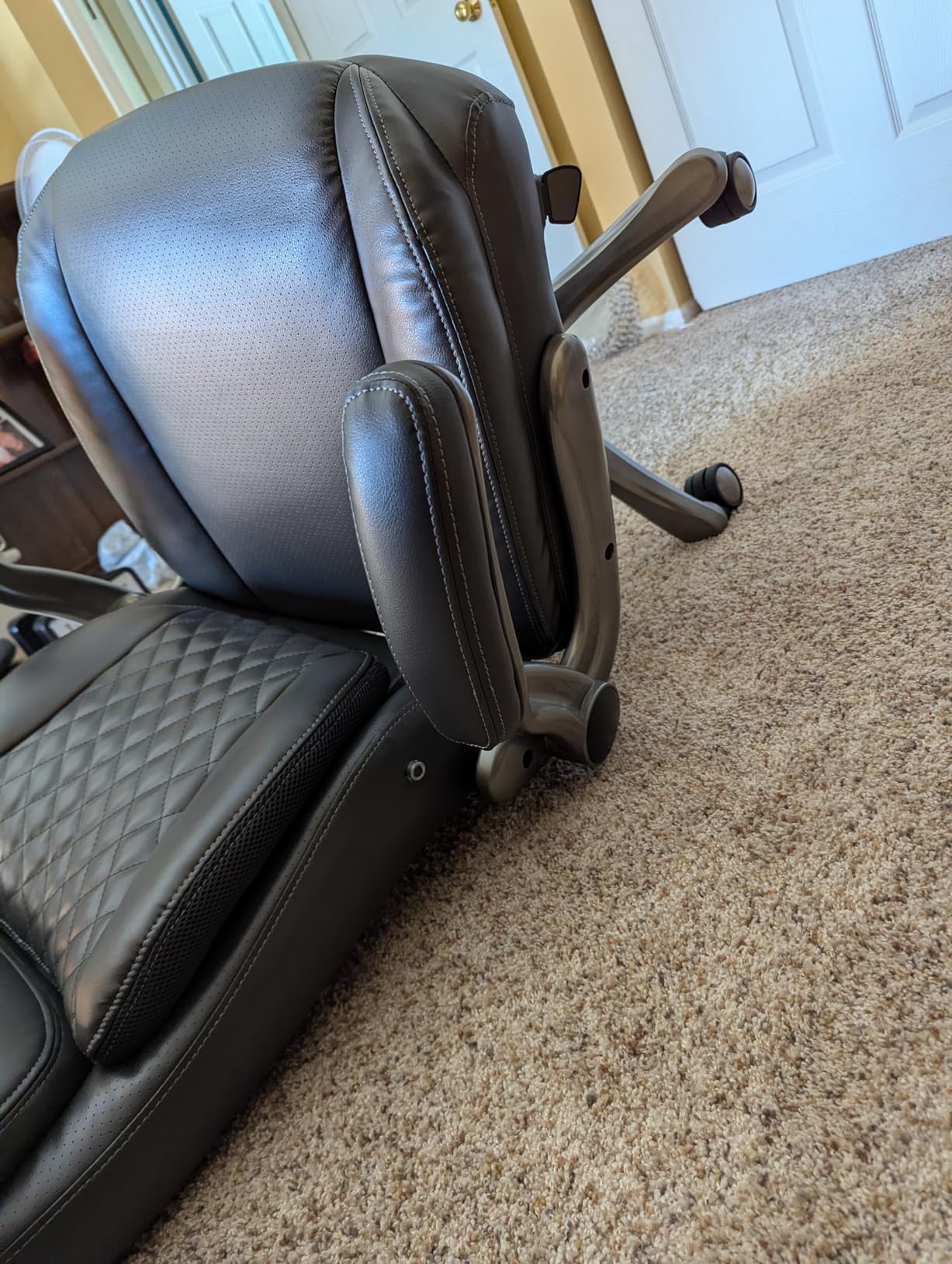
The lumbar system here is a padded pad that moves up and down along the backrest, often described as 3D in the listing copy. It is not depth adjustable, so it will not fit every curvature, but for the many people whose pain is a dull midline ache from sitting too long without support, holding that curve is enough to notice a difference by mid-afternoon.
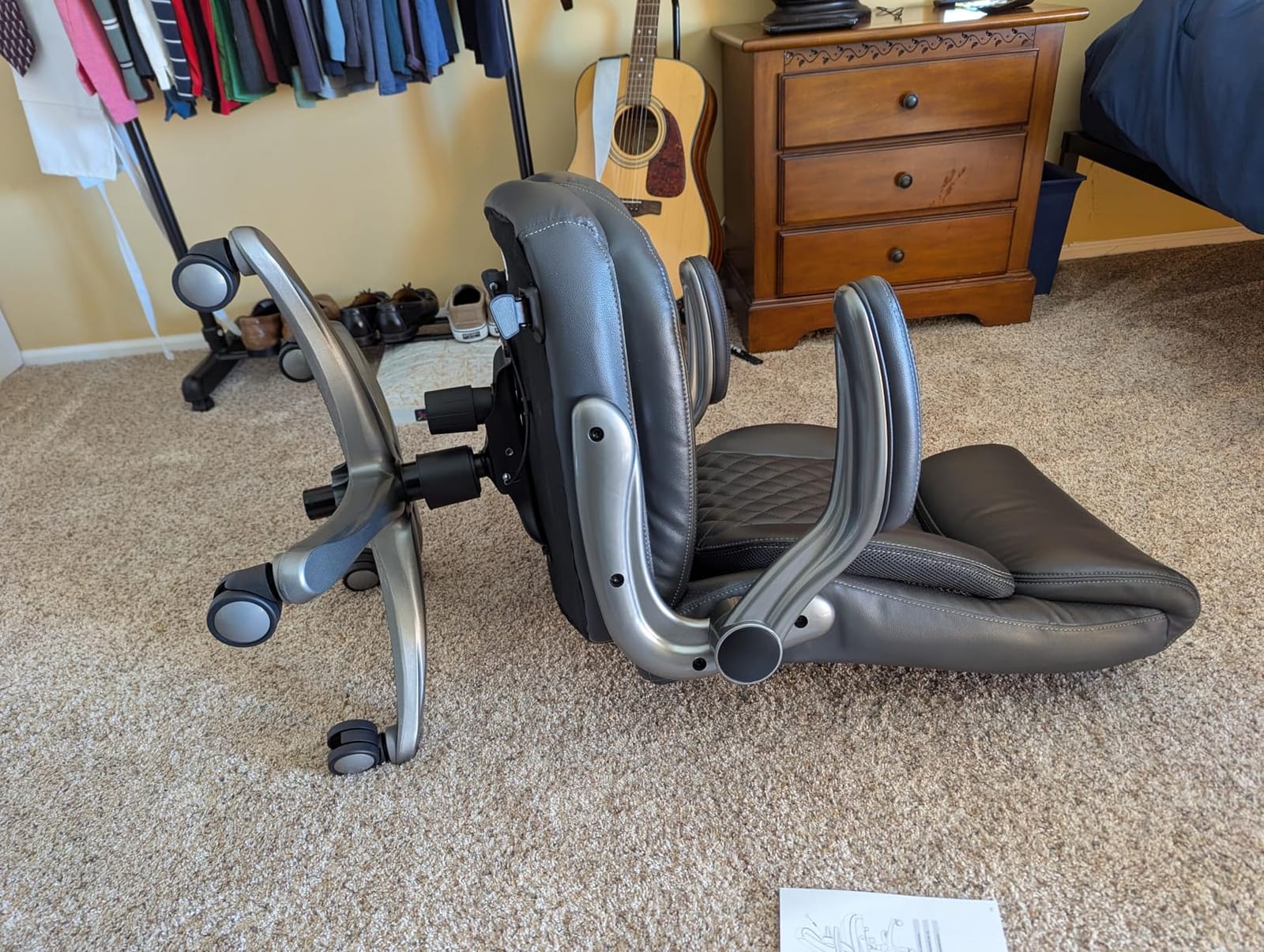
At 21.5 inches the seat is deep, and the padding is generous rather than thin, so it is a chair you can sink into. The flip-up armrests are the practical hero in a home office, because they let you pull the chair all the way under the desk and get your thighs out from under the surface.
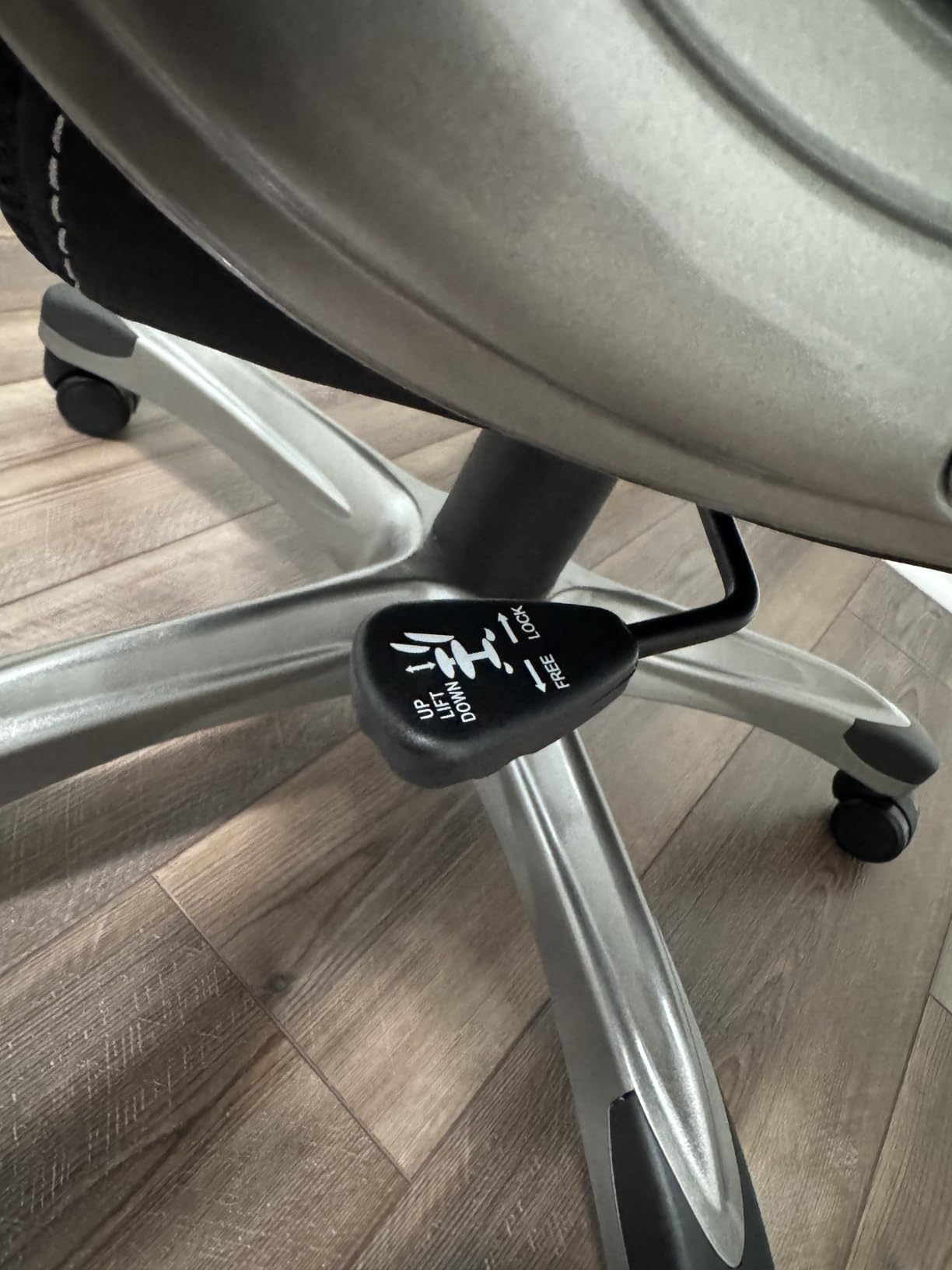
Cable-actuated height and tilt with a tension knob means the controls sit under the seat rather than on it, which keeps the profile clean. There is no second recline position, and the back angle is fixed at a slight recline, so this is a work chair rather than a rest chair.
Who it suits, and who should skip it
This suits anyone who wants a padded executive look, runs cold, or simply prefers not to have mesh against their back. It is also a good gifting choice for a parent with chronic back pain, since the padded lumbar and the deep seat are forgiving and the flip-up arms make it easy to sit down in without negotiating with the desk.
Skip it if you are over six foot. The maximum seat height is the reported weak point, and taller users end up with their knees under the desktop. It is also rated to 275 pounds, which is below several chairs here.
What the ownership reports tell you
The complaints cluster around two predictable things. Pleather begins to flake after a few years, which is a material issue rather than a build issue, and a small number of units arrive with misaligned screw holes that prevent full assembly, so check the box before you start.
Against that, owners repeatedly compare the build favourably to chairs costing several times more, and the lumbar pad is described as hitting the right spot for lower back relief more than any other feature in this price range.
4. COMHOMA Big and Tall Chair – Wide Seat and Deep Recline
- Sofa width seat fits larger bodies and crossed legs
- Pocket spring lumbar with thick padding
- Height adjustable armrests suit different users
- Footrest and 150 degree recline add real rest value
- 12 month warranty included
- Bulkier footprint than mesh task chairs in a small room
- Handmade construction means slight variation piece to piece
If your pain is worse when you sit cross-legged or perching forward, this is the chair in the roundup designed for it. The seat is wide enough to take a cross-legged posture without the frame complaining, and at 400 pounds rated it is one of three here with that capacity.
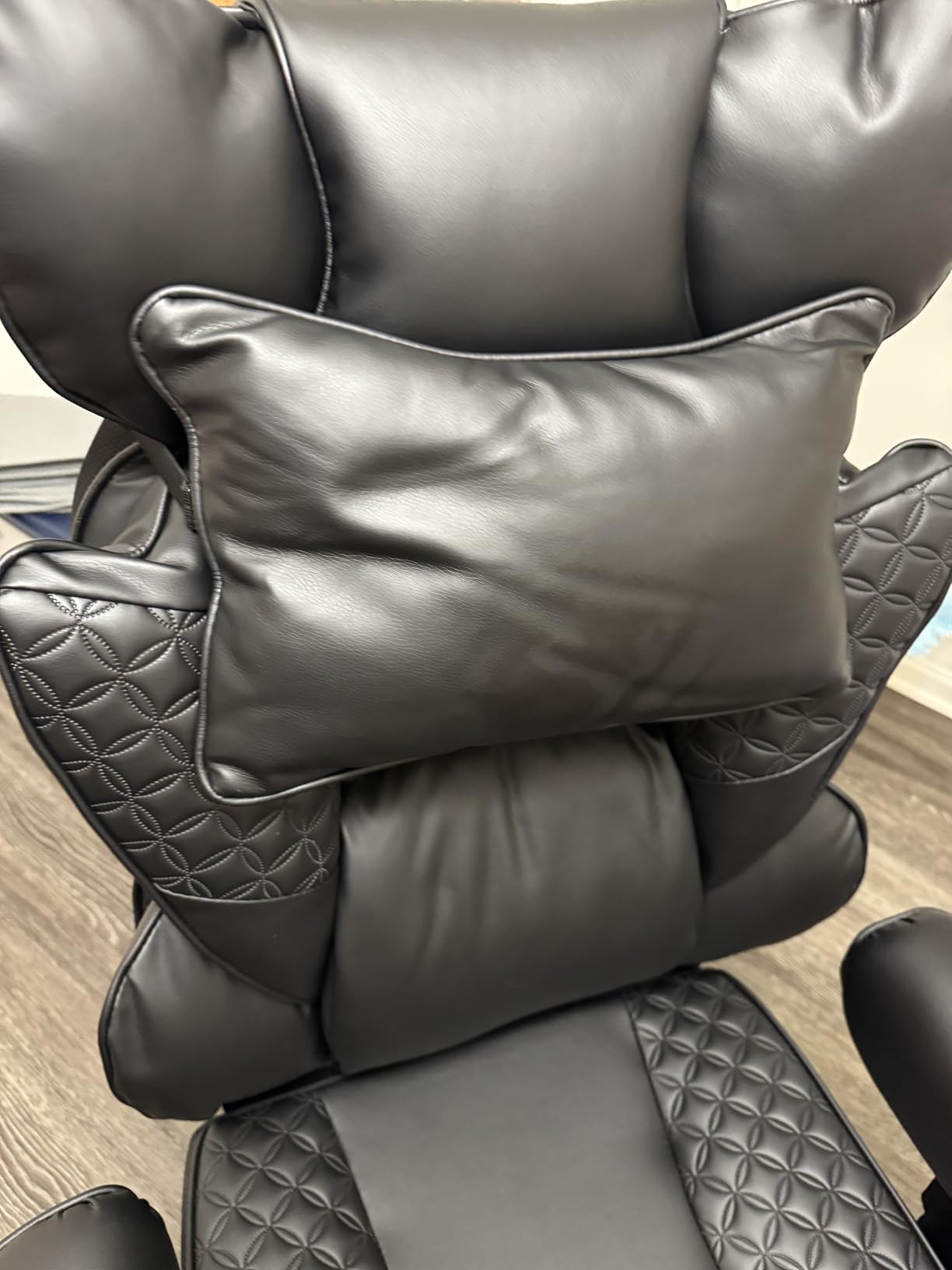
The back uses built-in pocket springs under thick memory foam padding, similar in principle to the GTPLAYER approach. Because the springs compress, the support follows your back rather than resisting it, and the wider backrest spreads the load across a larger area, which helps if your pain comes from pressure rather than pure posture.
Recline runs to 150 degrees across three positions, among the deepest available here, and the footrest is integrated into the frame rather than clipped on afterwards. Armrests adjust in height, which matters when two people share the chair or when you switch between sitting upright and leaning back.
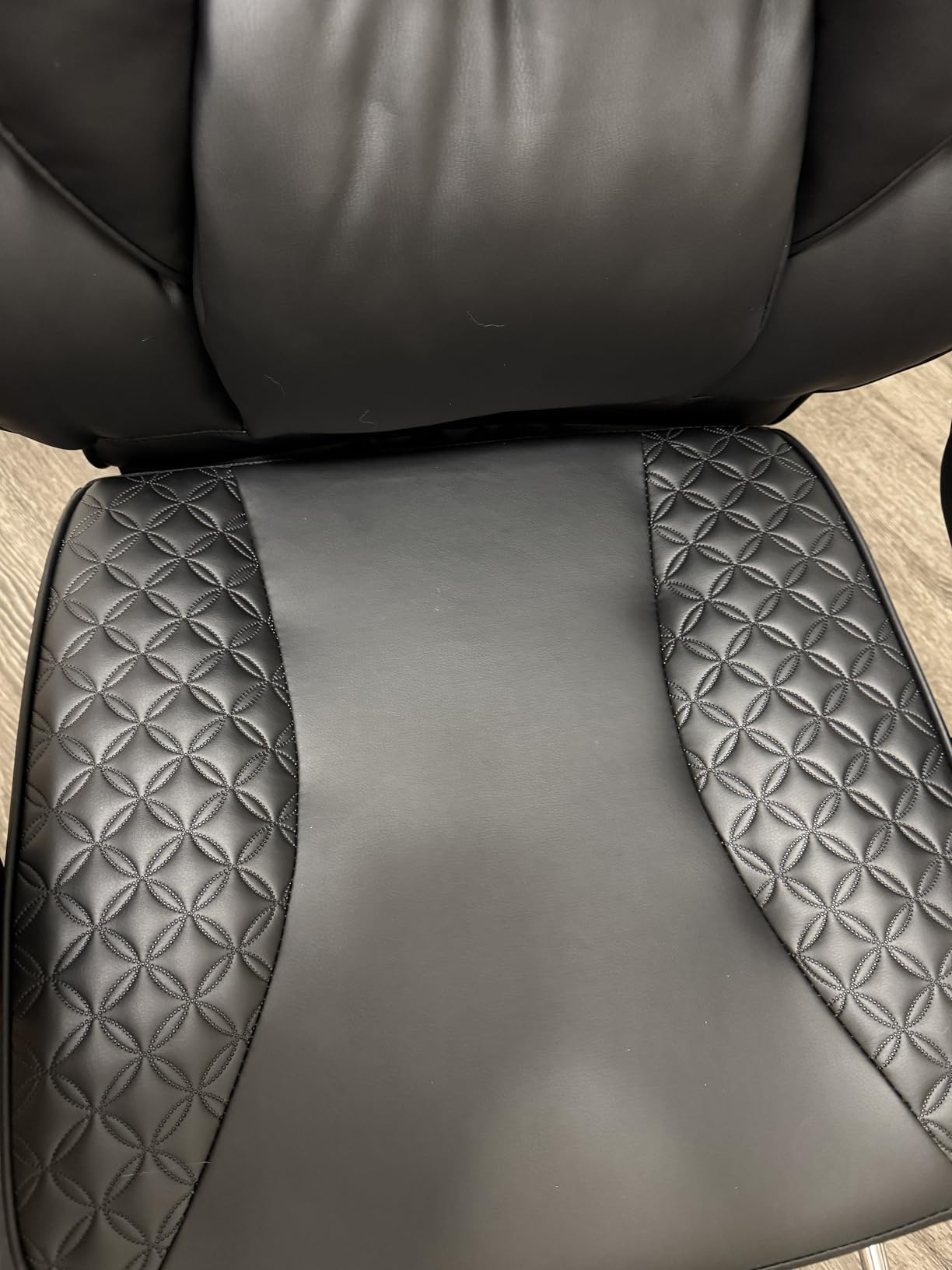
Assembly takes 20 to 30 minutes with all hardware included, and the warranty runs 12 months from purchase covering both initial defects and what follows. The embossed PU leather is more decorative than most gaming chair upholstery.
Who it suits, and who should skip it
This is a strong pick for larger frames who also want to use the chair outside work hours, because the recline and footrest make it a reasonable reading chair. It also works for anyone whose pain improves when they shift position, since there is nowhere uncomfortable to sit.
Skip it in a small room. At 45 inches tall and 22 inches wide with a footrest, it has the largest footprint of anything we evaluated. Reviewers who rate the finish slightly lower also note that each chair is handmade, so expect minor variation between units.
What the ownership reports tell you
Owners focus on the same three things: the seat size, the pocket spring support, and the footrest. The 70 percent five-star share sits below several others in this group, and the difference shows up as finish variability rather than as a comfort complaint.
That makes it a reasonable choice if size is your binding constraint and a slightly less consistent finish does not bother you. If you care more about the chair looking identical to the photo, pick one of the mesh task chairs instead.
5. X XISHE Mesh and Leather Chair – A Hybrid That Works
Office Chair Ergonomic Desk Chair, Computer PU Leather Home Office Chair, Swivel Mesh Back Adjustable Lumbar Support Flip-up Arms Executive Task Chair
- Mesh back with PU leather seat splits heat and comfort
- Thickened high resilience sponge holds up in long hours
- Height adjustable lumbar plus a wide seat
- Flip up arms and 360 swivel for tight spaces
- SGS certified and BIFMA tested to 300 lb
- Sponge seat softens and loses some support over time
- Mesh back edges can press on the lower back
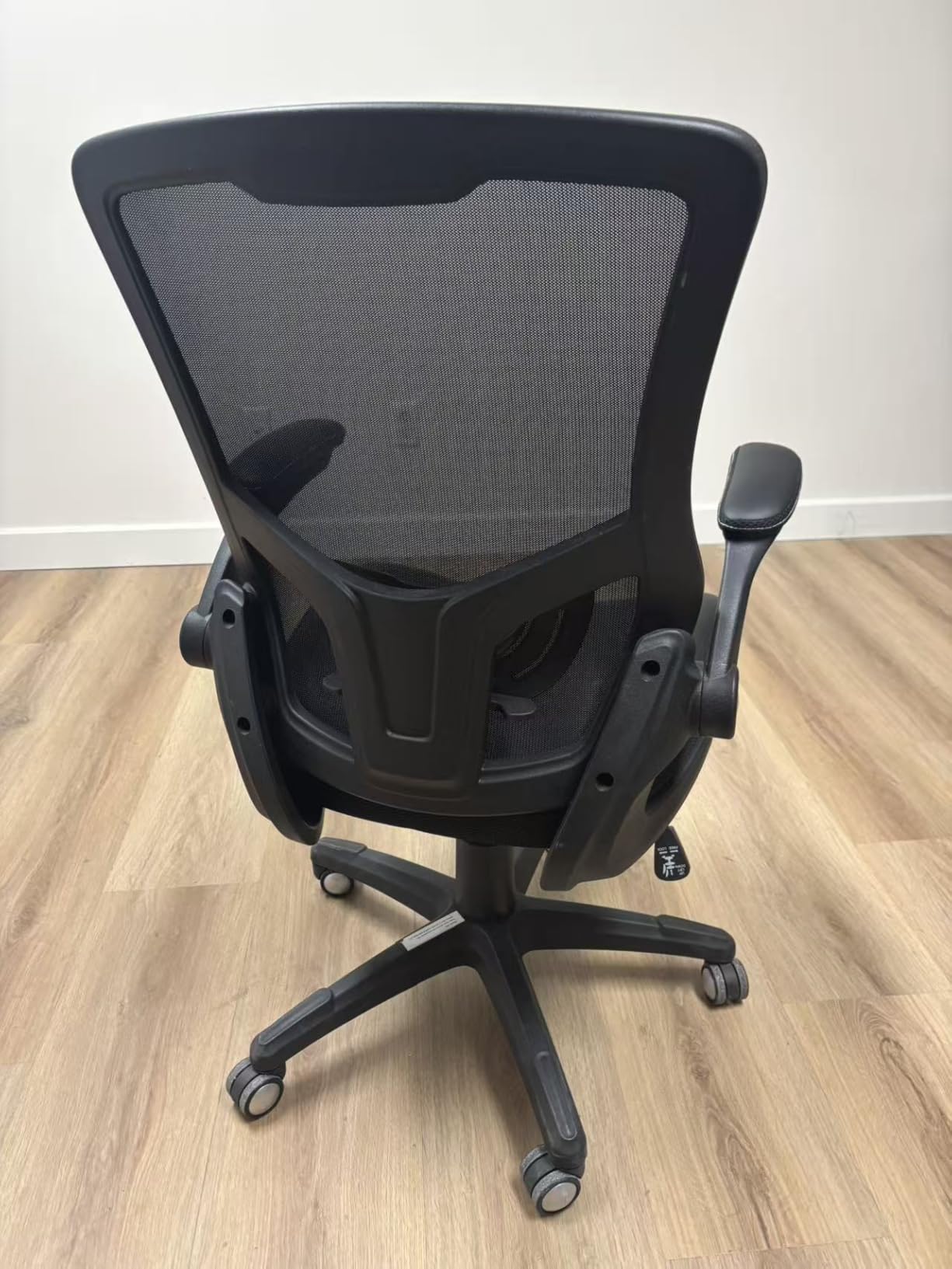
The logic of this chair is a compromise that works better than it has any right to: a breathable mesh back for heat dissipation, and a padded PU leather seat for comfort, with the two materials meeting at the lumbar line.
The backrest follows an S-curve designed to track the lumbar spine, and the lumbar support slides up and down within that curve. Because the mesh is tensioned rather than rigid, the curve is a property of the frame, not just of the pad, which is why the support keeps working after months of use instead of drifting.
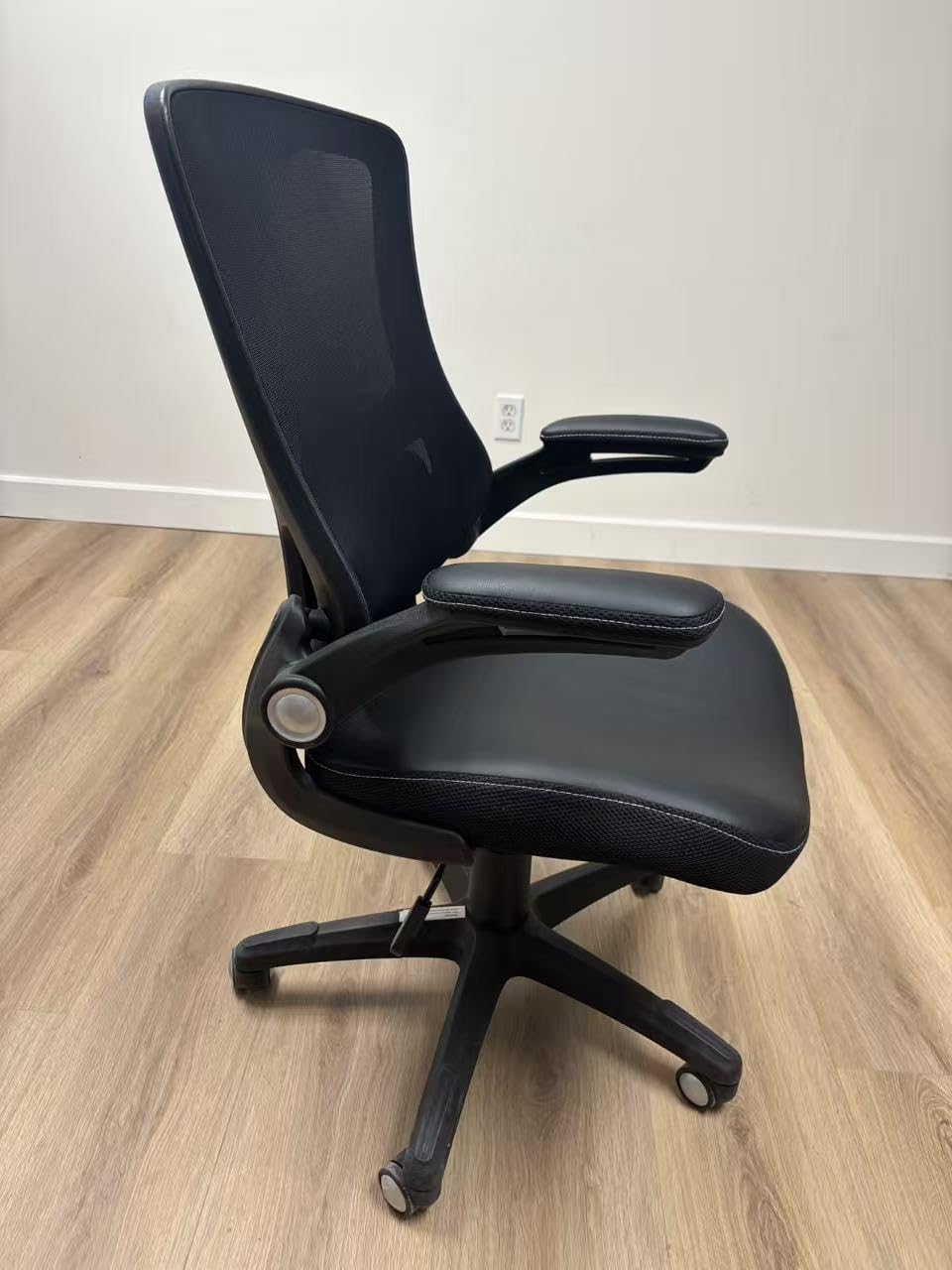
Seat height runs 17.72 to 22.44 inches, one of the taller ranges among the mesh chairs here, and the seat is 19.29 inches deep, so it accommodates a wider range of body sizes than most. The sponge cushion is described as thick and high-resilience, and the frame is SGS certified and BIFMA tested to 300 pounds.
Tilt rocking with adjustable tension covers the recline function, the arms flip up 90 degrees to clear a desk, and a cup holder is included, which tells you what kind of chair this is. Assembly is 15 to 20 minutes with a manual and a video.
Who it suits, and who should skip it
Buy this if you find mesh comfortable on your back but want a padded seat, or if you get cold in mesh but run warm in all leather. It is also a good fit for taller users among the budget options, given that 22.44 inch maximum seat height.
Skip it if pressure on the mesh edges is a problem for you. That is the specific limitation reviewers with pronounced lower back pressure points report, and no amount of lumbar adjustment solves an edge that digs in.
What the ownership reports tell you
At 4.5 stars this is one of the strongest ratings in the group, with 75 percent of reviews at five stars. Reviewers repeatedly point at the same combination, a breathable back with a plush seat, as the reason they got through a long workday without the usual ache.
The long-term note is about the cushion rather than the frame. The sponge softens over time, so expect a pad to be added after a few years of daily use, and treat that as maintenance rather than a defect.
6. COLAMY Padded High Back Chair – Built for Pressure Relief
- Full padded high back with adjustable lumbar for long days
- Extra thick seat spreads pressure across hips and thighs
- Flip up arms clear the desk in tight rooms
- 90-110 degree recline with adjustable tension
- Stable base with smooth rolling casters
- Listed capacity of 275 lb is below the 300 lb in the product copy
- Dry clean only care is less convenient than wipe clean
- Firm foam is not for people who want a soft sit
This is the chair to consider when your pain is pressure rather than posture. The seat cushion is extra thick, and a thick seat spreads load across a wider area of the pelvis and thighs, which is the mechanism behind the perching technique that people with lower back pain use instinctively.
Perching means sitting on the front third of the seat with your feet planted, which takes weight off the back of your thighs and the coccyx and therefore unloads the lower spine. A chair with a deep, heavily padded front edge supports that position well, which is why this shape suits tailbone discomfort better than a slim mesh task chair.
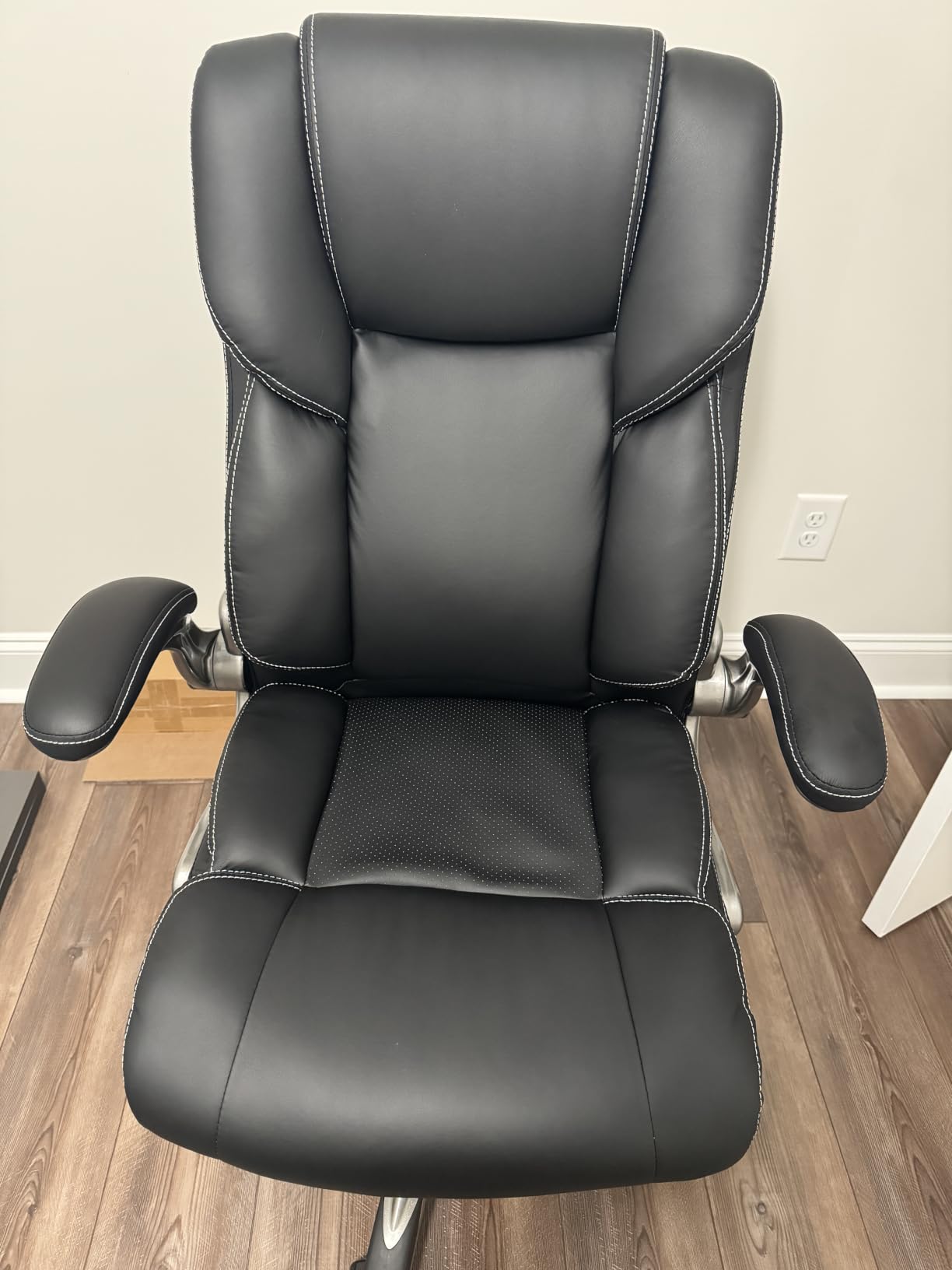
The backrest is fully padded from shoulder to lumbar with a support that adjusts in height. Recline runs 90 to 110 degrees with a tension control, so you can lean back into the padding at the end of the day without the mechanism fighting you.
Two things to check before buying. The listed weight capacity is 275 pounds while the product copy says 300, and the discrepancy is worth resolving in your head before you order for a heavier body. Care is dry clean only, which is less convenient than a wipe-clean surface if you have pets or children.
Who it suits, and who should skip it
Good fit for anyone whose pain is concentrated in the lower back or tailbone after long sitting, and for people who like a substantial, upholstered look rather than an exposed mesh frame. The flip-up arms are genuinely useful in a compact home office.
Skip it if you are over 275 pounds, or if you want a chair you can wipe down after a spill. It is also a 90 to 110 degree recliner rather than a deep lounger, so it will not double as a reading chair the way the two big-and-tall models do.
What the ownership reports tell you
Owners describe the padded high back and the thick seat as the reason it holds up over a long workday, and the flip-up arms as the practical feature they did not expect to care about but do. The 69 percent five-star share is solid rather than exceptional.
The most useful thing owners report is the product page inconsistency itself. Several noticed the 275 versus 300 pound conflict, so treat the lower figure as the one to plan around. Firm foam is the other recurring note, and it is a matter of taste rather than quality.
7. CLOUVOU Ergonomic Chair – Highest Rated in the Roundup
- 4.7 stars with 84 percent five-star ratings
- Lumbar and pelvic support credited with removing end of day stiffness
- Exceptionally quiet casters on hard floors and tile
- 4D armrests plus headrest seat depth and recline tension
- Metal base feels sturdier than the price tier implies
- Oversized seat is wrong for petite users
- Armrests can feel loose and move too freely
- Headrest arm is short for taller users
This chair carries the highest average rating of anything we evaluated, at 4.7 stars from more than 3,600 reviews, with 84 percent of those reviews at five stars. That distribution is unusual, because it means very few owners had a bad time, which is more informative than the average alone.
Owners credit the lumbar and pelvic support with removing the end-of-day stiffness that comes from a fixed posture. The lumbar is built to a more deliberate shape than a simple pad, described as orthopedic-style and sized for users up to 6.5 feet, and the frame uses a stable polymer with a metal base rated to 330 pounds.
![Ergonomic Office Chair Comfy [#1 in Tests] customer photo 1](https://www.talkofthehouse.com/wp-content/uploads/2026/10/B0FR981Z25_customer_1.jpg)
The casters are the sleeper feature here. They are quiet rubber wheels that roll well on hard floors and tile, and European reviewers in particular single them out. On a hard floor, a chair with cheap nylon casters is a constant background irritation, so this matters more than it sounds.
Adjustment covers 4D armrests, headrest, seat depth and recline tension, with a backrest tilt of up to 135 degrees. Assembly includes a glove, hex key and spare hardware, and the guide is multilingual. A 27 pound frame also makes it one of the easiest to move between rooms.
![Ergonomic Office Chair Comfy [#1 in Tests] customer photo 2](https://www.talkofthehouse.com/wp-content/uploads/2026/10/B0FR981Z25_customer_2.jpg)
Who it suits, and who should skip it
Buy this if you sit on hard flooring, want a chair you can move easily between a home and an office, and are at least about 5 foot 7 inch tall. The four-way armrests and adjustable seat depth give it more shaping options than anything cheaper in this list.
Skip it if you are under 5 foot 5 inch. The seat is explicitly oversized, and petite users report that it does not suit them. The short headrest arm is a related problem for anyone tall who wants real neck positioning.
What the ownership reports tell you
The repeated theme is that this chair feels more substantial than its tier suggests, with a metal base and armrests doing most of the work. Buyers name lumbar support and adjustability as the reasons to buy, and quiet rolling as the thing they noticed first.
The complaints cluster in one place, sizing and small hardware. Loose armrests, a back angle that does not come forward as far as some prefer, and a firm cushion that heavier sitters may want to pad are all recurring but minor against that distribution.
8. NEO CHAIR Mesh Task Chair – The Budget Floor
NEO CHAIR Office Desk Chair High Back Mesh Chair Adjustable Lumbar, Black
- Breathable mesh back at the entry price point of the set
- Plush foam seat reduces hip and tailbone pressure
- Flip up arms clear a low desk or allow cross legged sitting
- Tool free assembly with clear instructions
- Quiet rolling on hardwood
- Lumbar travel is short and adds little depth support
- Armrests are short thinly foamed and stiff
- Material quality is at the low end for heavy daily use
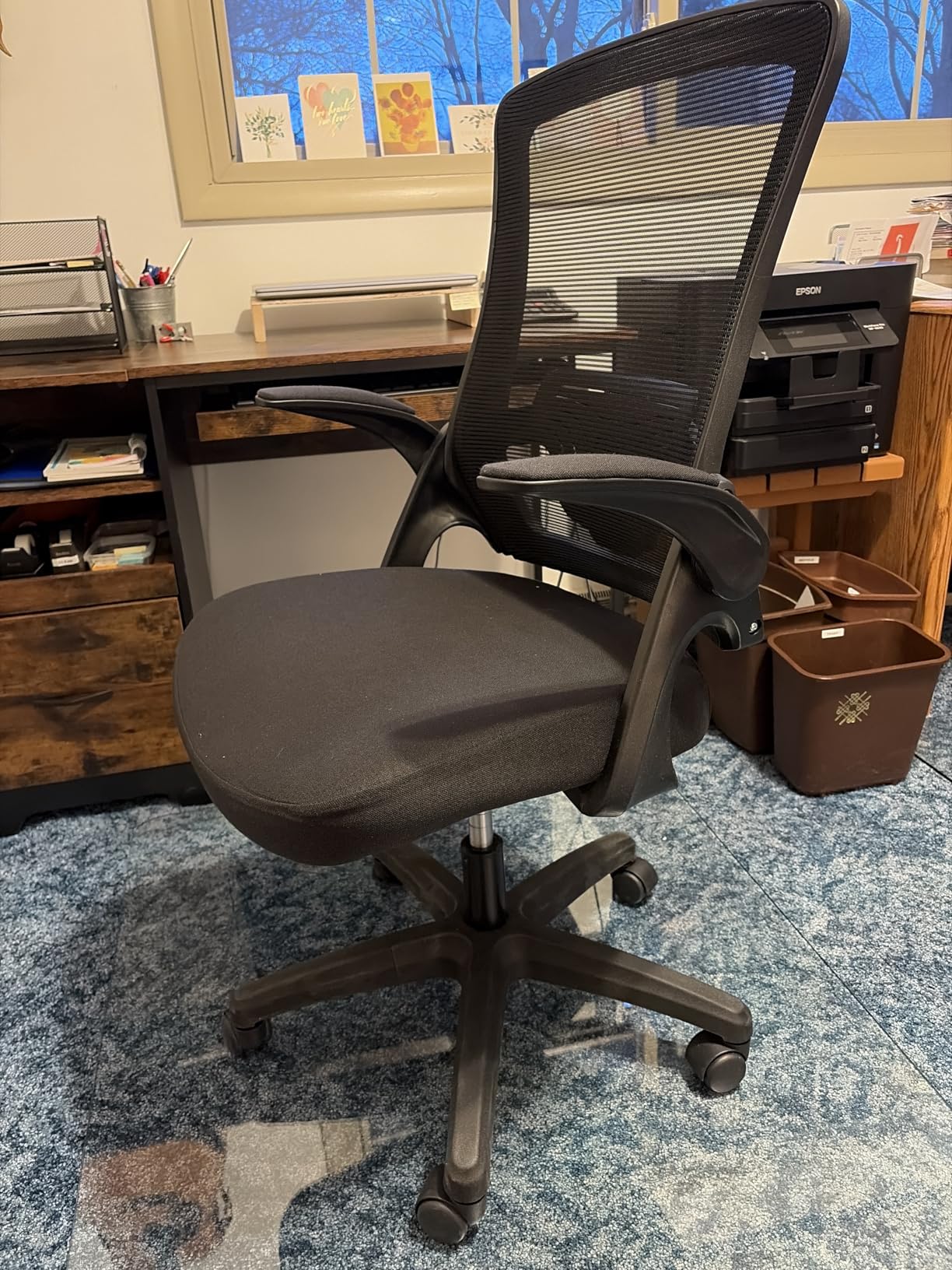
This sits at the entry point of the set, and the honest way to describe it is that the frame is a compromise. It will get you through a working day with support, and the waterfall seat edge is a genuinely good ergonomic detail, but the adjustability is minimal.
The waterfall edge is the part that helps a lower back. Instead of a hard horizontal lip across the front of the seat, the edge curves down away from the backs of your thighs, which reduces the pressure that creates the sensation of needing to shift position. It is a small design decision with a real effect over eight hours.
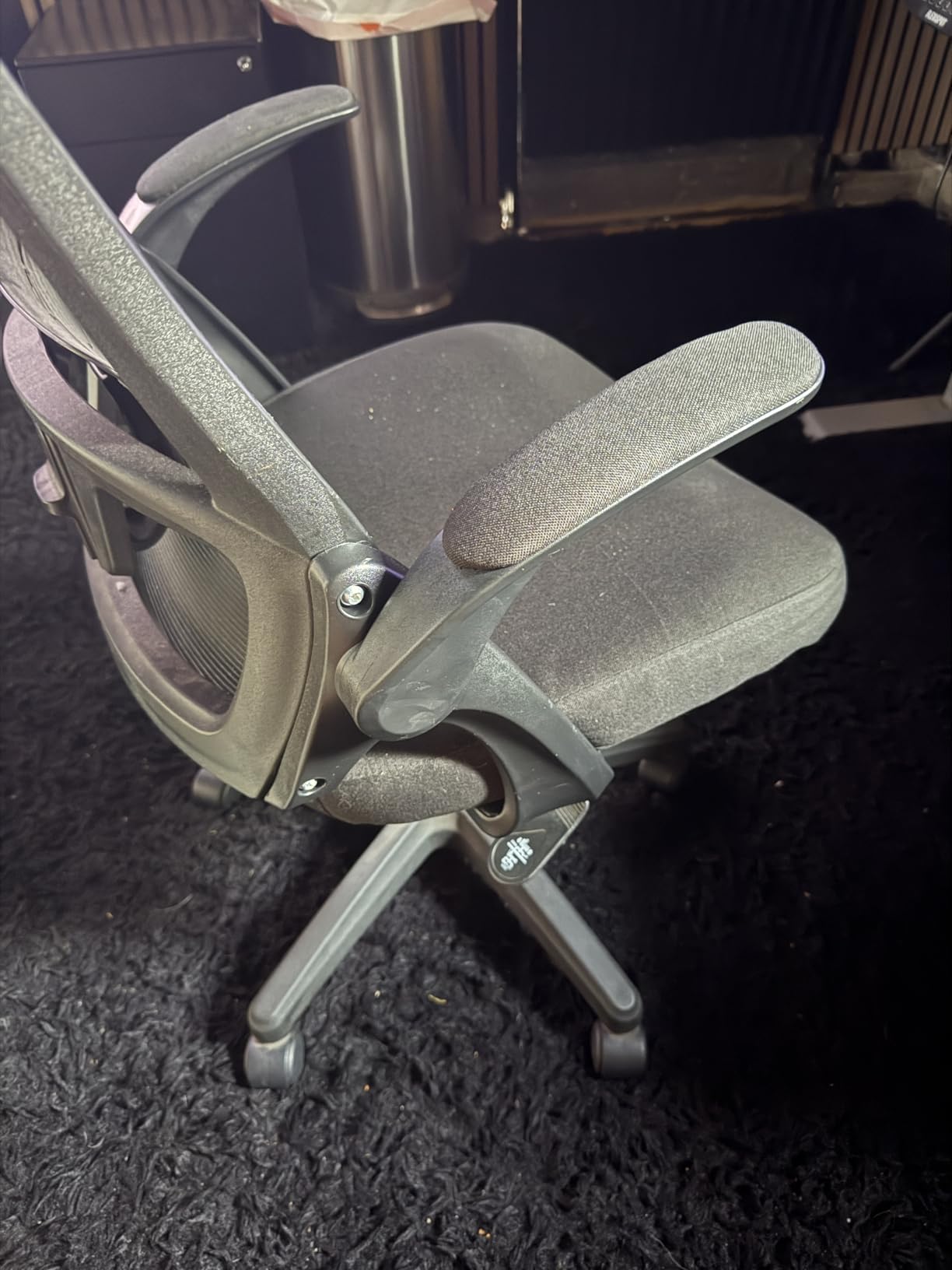
Beyond that you have a breathable mesh back, an SGS-certified gas lift, and flip-up armrests that let you slide under a low desk or cross your legs. Height, tilt and 360-degree swivel are all adjustable, the seat is 19.5 inches deep, and capacity is 275 pounds.
Owners frame it as a solid value that handles 8 to 10 hour days with real support for the money, and it ranks high in its category for volume of feedback. Five colour options are available, and the warranty is one year from receipt.
Who it suits, and who should skip it
Good for a student room, a first home office, or anyone who needs to stop slouching this month rather than solve a chronic problem. The flip-up arms and low weight also make it easy to move, which suits renters.
Skip it if you need real lumbar shaping. Reviewers are blunt about the adjuster having a short range and adding little depth support, and if your pain is specific rather than general, that is the wrong place to economise. It is also not built for wider-hipped users or plush long-session comfort.
What the ownership reports tell you
The 4.1 rating comes with a 62 percent five-star share, and the pattern is consistent: people like the mesh and the waterfall seat, and they are unimpressed by the armrests and the general material quality.
Some owners add a separate lumbar pillow because the mesh itself is not cushioned, which tells you the built-in support is doing limited work. If you go this route, budget for the pillow as part of the cost.
9. FelixKing Five Point Support Chair – Longest Service Commitment
- Five point support holds the spine upright and eases shoulder tension
- Breathable mesh with high density foam stays cool
- Three stage air rod and reinforced base to 300 lb
- Silent PU casters that will not mark floors
- Five year service commitment is unusual at this tier
- Seat cushion thins out after a few hours of continuous sitting
- Armrests raise and lower but will not lock in place
- Backrest does not truly recline and the range is shallow
The distinguishing offer here is not a feature, it is the service commitment. Five years of parts replacement for quality problems is longer than anything else in this roundup, and for a chair you plan to keep for a decade it is the number that matters most.
Long-term buyers tend to talk about warranties more than any single ergonomic feature, because a chair that cannot be repaired is a chair you replace. A five-year commitment covers the failure modes that actually occur, which are gas lifts, casters and arm hardware rather than the frame.
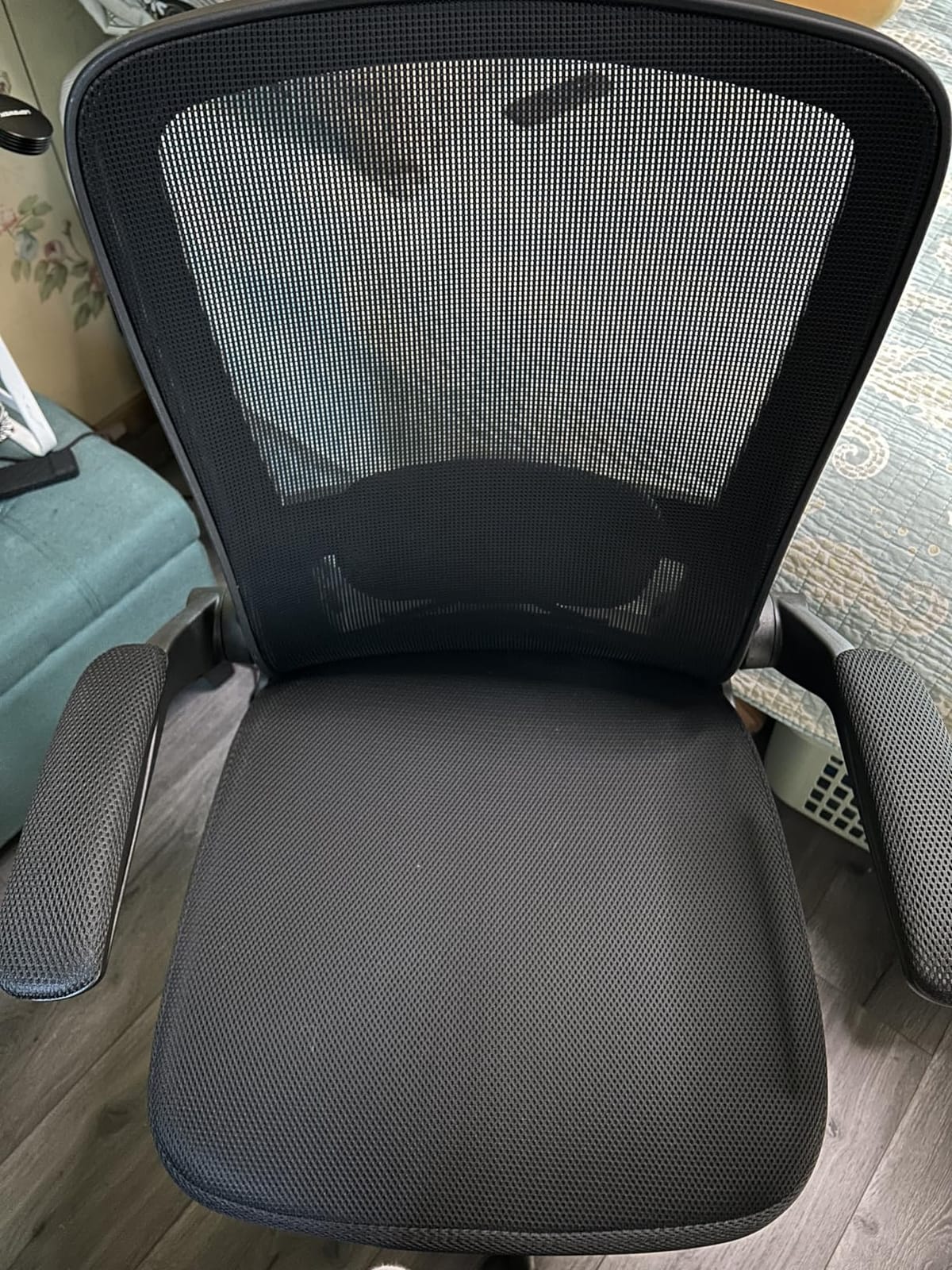
The back uses adjustable lumbar support inside a breathable mesh frame, paired with high-density collapse-resistant foam. The five-point framing covers head, shoulder, back, hips and hands, and owners describe the effect as holding the spine upright and easing shoulder and neck tension as a secondary effect.
The base is a three-stage air rod with a thickened plate rated to 300 pounds, and the casters are silent PU that protect hard flooring. Assembly takes about 15 minutes with tools and a manual or video included. The seat is 19.7 inches deep.

Who it suits, and who should skip it
Pick this if you want a chair you can keep and repair, work on carpet or hard floor without worrying about marks, and are near or under 300 pounds. The service commitment makes it a low-risk first ergonomic purchase.
Skip it if you want to lean back. The backrest does not recline independently and the tilt range is shallow, so this is an upright work chair. It is also the wrong choice if you plan to perch on the front edge, since the armrests do not lock and flop down under weight.
What the ownership reports tell you
Owners like the supportive posture, the breathable mesh, and the fifteen-minute assembly. The criticism is concentrated almost entirely in the tilt mechanism, which is the same cluster of complaints across the whole category at this tier.
The seat thinning out after a few hours of continuous sitting is the one report worth acting on, because continuous sitting without a break is the real enemy of a lower back. If you buy this, use it with the microbreak habit rather than as an all-day static seat.
10. Marsail High Back Mesh Chair – Lumbar That Moves in Two Axes
- Lumbar adjusts in both depth and height to match body shape
- 3D armrests move swivel and flip up for multiple postures
- 3.14 inch foam seat is deep and stays resilient
- Headrest holds position better than chairs costing more
- Mesh back stays cool through extended use
- Tilt is a rocking function rather than a true recline and the tension knob is awkward to reach
- Headrest protrudes the head forward
- PU armrest padding wears over time
The lumbar support on this chair moves 1.18 inch forward and back and 2.16 inch up and down, and those are real numbers rather than marketing adjectives. Giving you two axes of travel at once is unusual at this level, and it is what makes this support adaptable to a wider range of lower back shapes than a single-direction pad.
That matters most for people whose pain is positional. If a chair works for you at one setting and fails at another, the problem is usually that the support cannot follow the curve of your back through a recline, and this one can.
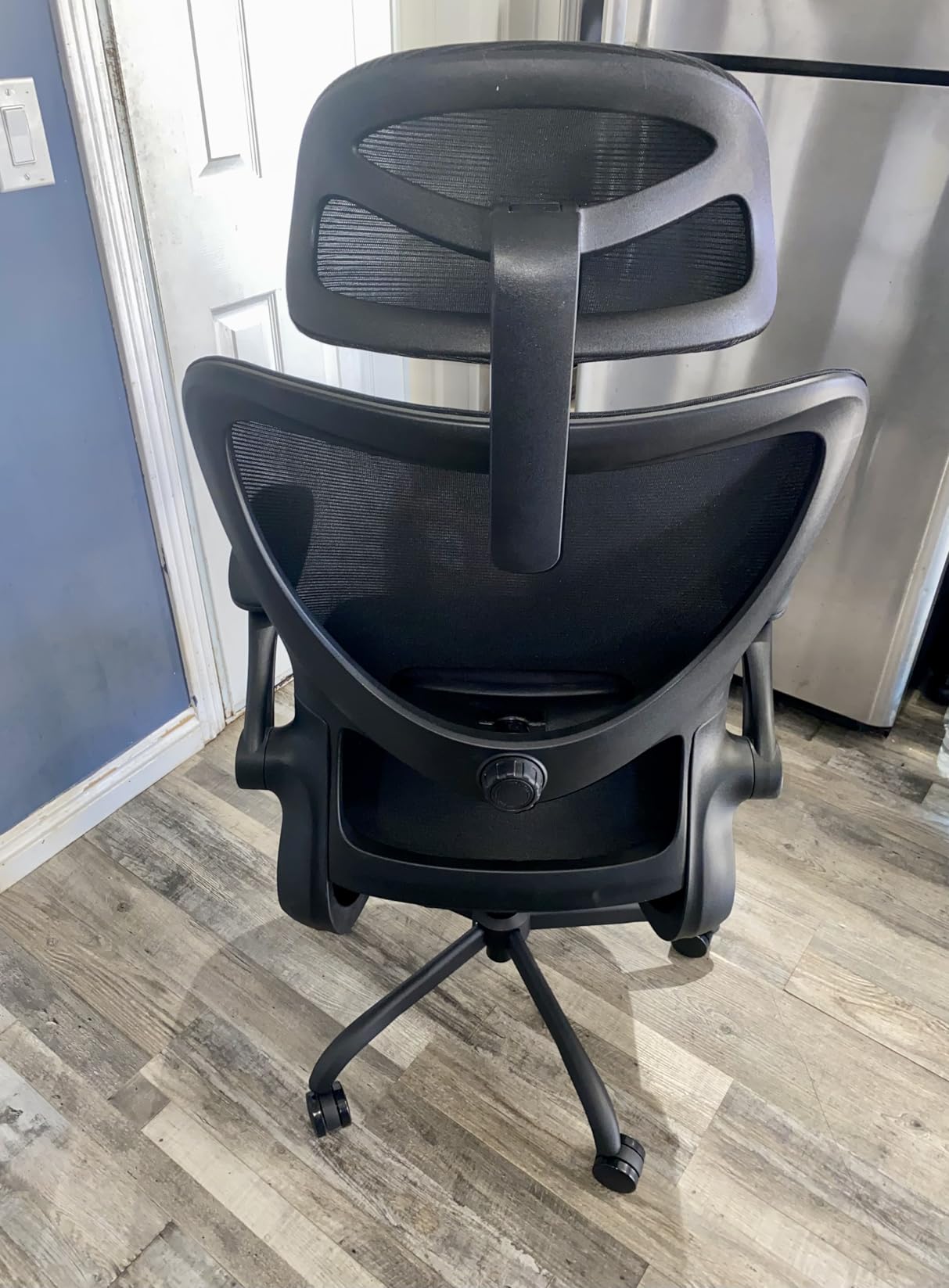
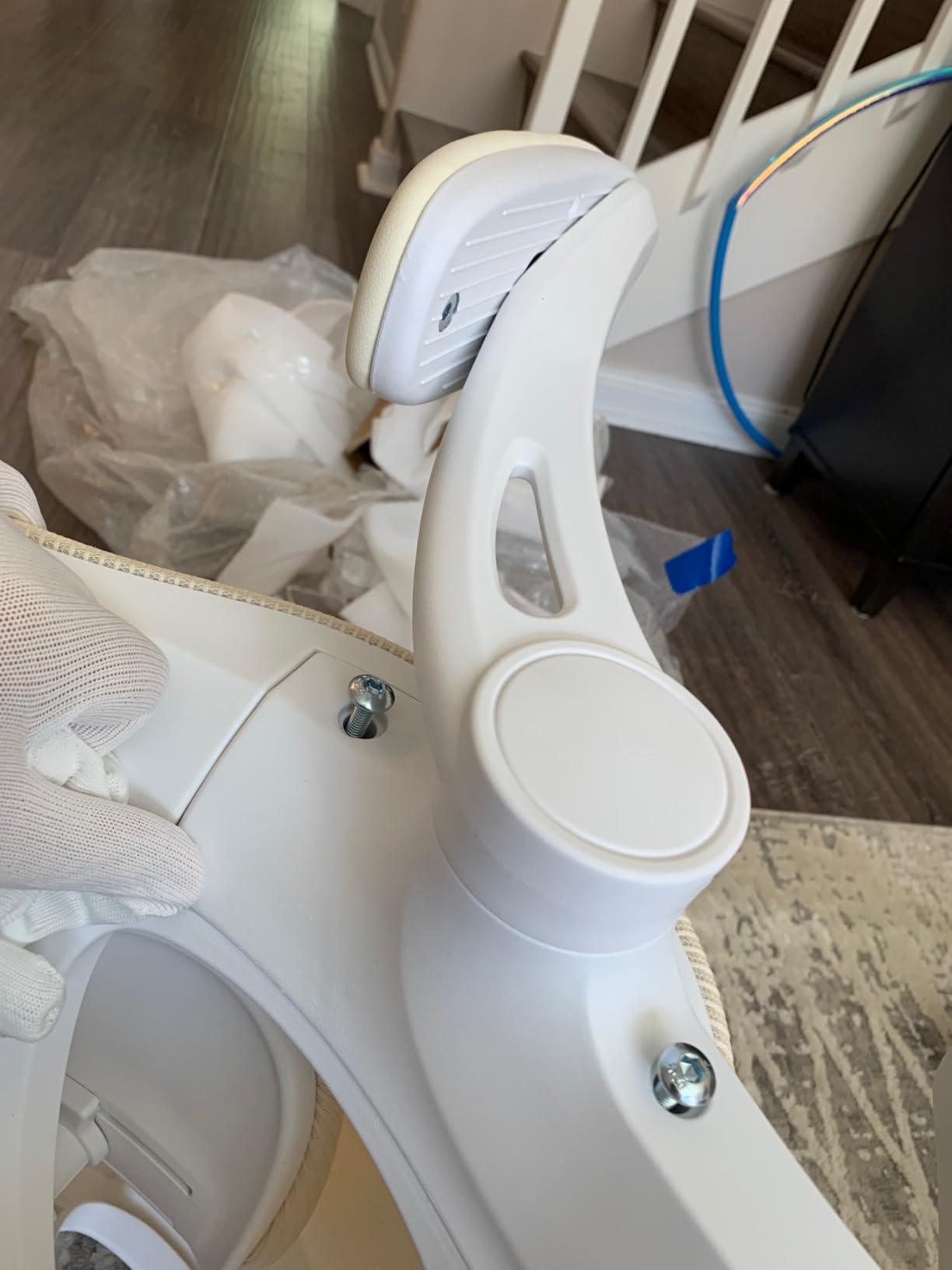
The rest of the specification is equally serious. Armrests are 3D, moving forward and back, swivelling left and right, and flipping up to clear a desk, and the backrest reclines from 90 to 120 degrees with a 2D headrest. The seat is 3.14 inches of high-density foam rated to 330 pounds.
Multiple reviewers note it still holds up well after a year of daily use, and the packaging is well organised with extra hardware and bilingual instructions, taking about 30 to 45 minutes. Five colour combinations are offered.
Who it suits, and who should skip it
This is the pick if you have tried chairs with fixed lumbar support and could never get the support to sit in the right place. It also suits anyone who works in different positions through the day, since the 3D arms and moving lumbar cover upright work, cross-legged sitting and leaning back.
Skip it if reclining is your main goal. The tilt is a rocking function rather than a true recline, and the tension knob sits under the seat where it is awkward to reach mid-work. The headrest is also the weak point, since it protrudes the head forward.
What the ownership reports tell you
Buyers single out the adjustable lumbar, the 3D armrests and the thick seat, in that order, and several report durability after a year of daily use. The mesh back is repeatedly described as not heating up, which matters in a warm room.
The negatives cluster around the headrest and armrest durability, and one reviewer received an armrest that would not lock at all. Check the arm hinges on arrival, since that is a two-minute job.
11. ELABEST X100 – A Lumbar System That Adjusts in Three Directions
- Lumbar adjusts in height depth and angle so it fits an individual spine
- 5D arms with about 6 inch horizontal travel and a 90 degree flip
- Footrest is solid and folds away cleanly with three tilt locks
- Squeak free with wheels that glide quietly on carpet and hardwood
- Free seat pad or wheel upgrade on warranty registration
- Armrests mount to the backrest in this variant which limits vertical range and makes the chair lean forward
- Mesh seat is firm and the front edge can dig into knees for shorter users
- Footrest is stiff to extend and not long enough for full leg support
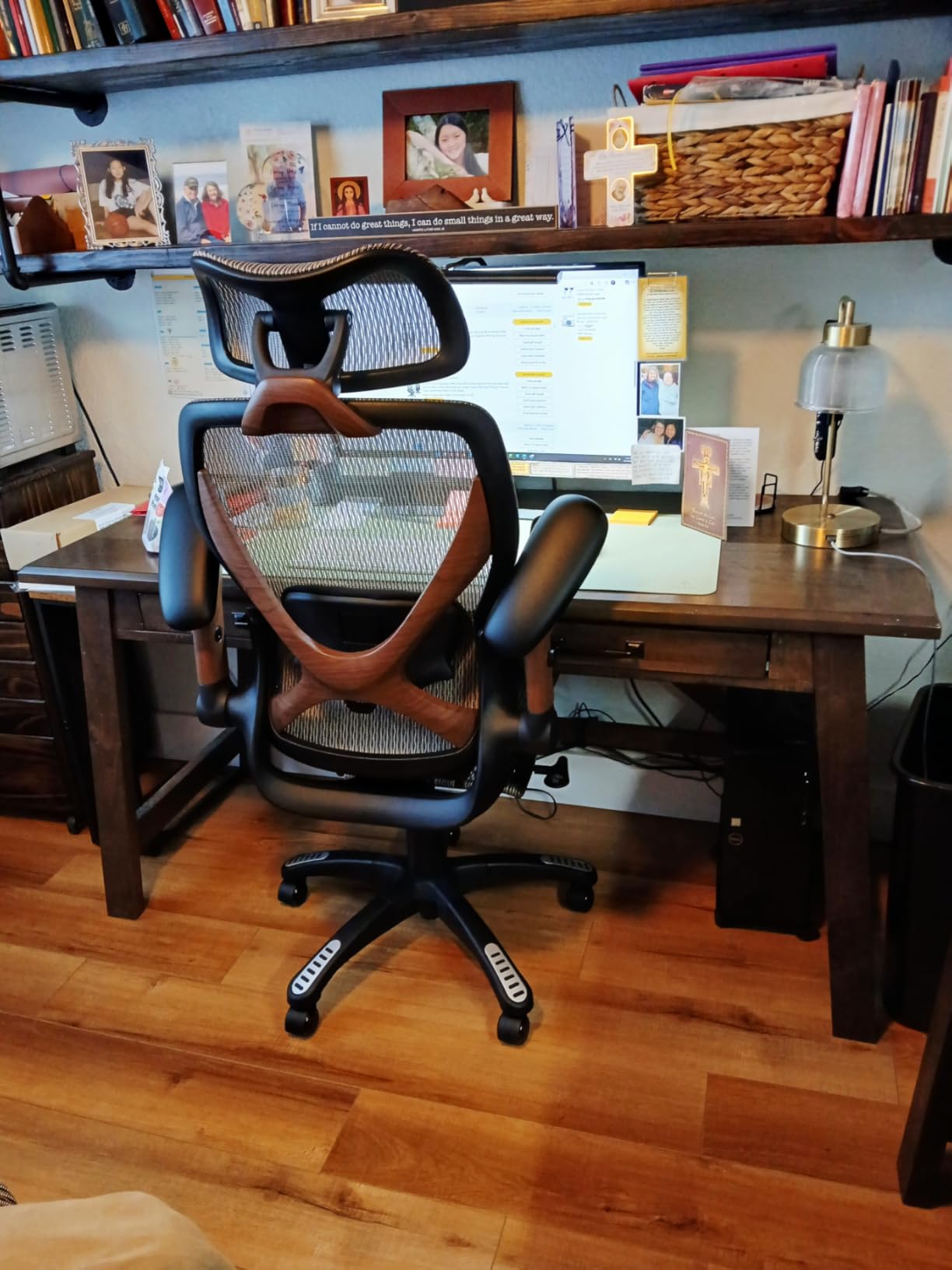
The back support here is the deepest specification in the group, and the chair sits in a higher price band than everything else here. The lumbar support is a synchro-tilt system that moves in depth on a lockable spring, adjusts two inch in height, and rotates fifteen degrees, so it can follow the curve of your back rather than pushing against it.
Owners describe the result as relief from chronic lower back pain and neck strain, and several compare the support to much costlier models. If your pain has resisted cheaper chairs, the difference between a one-axis lumbar and a three-axis one is exactly the kind of upgrade that pays for itself.
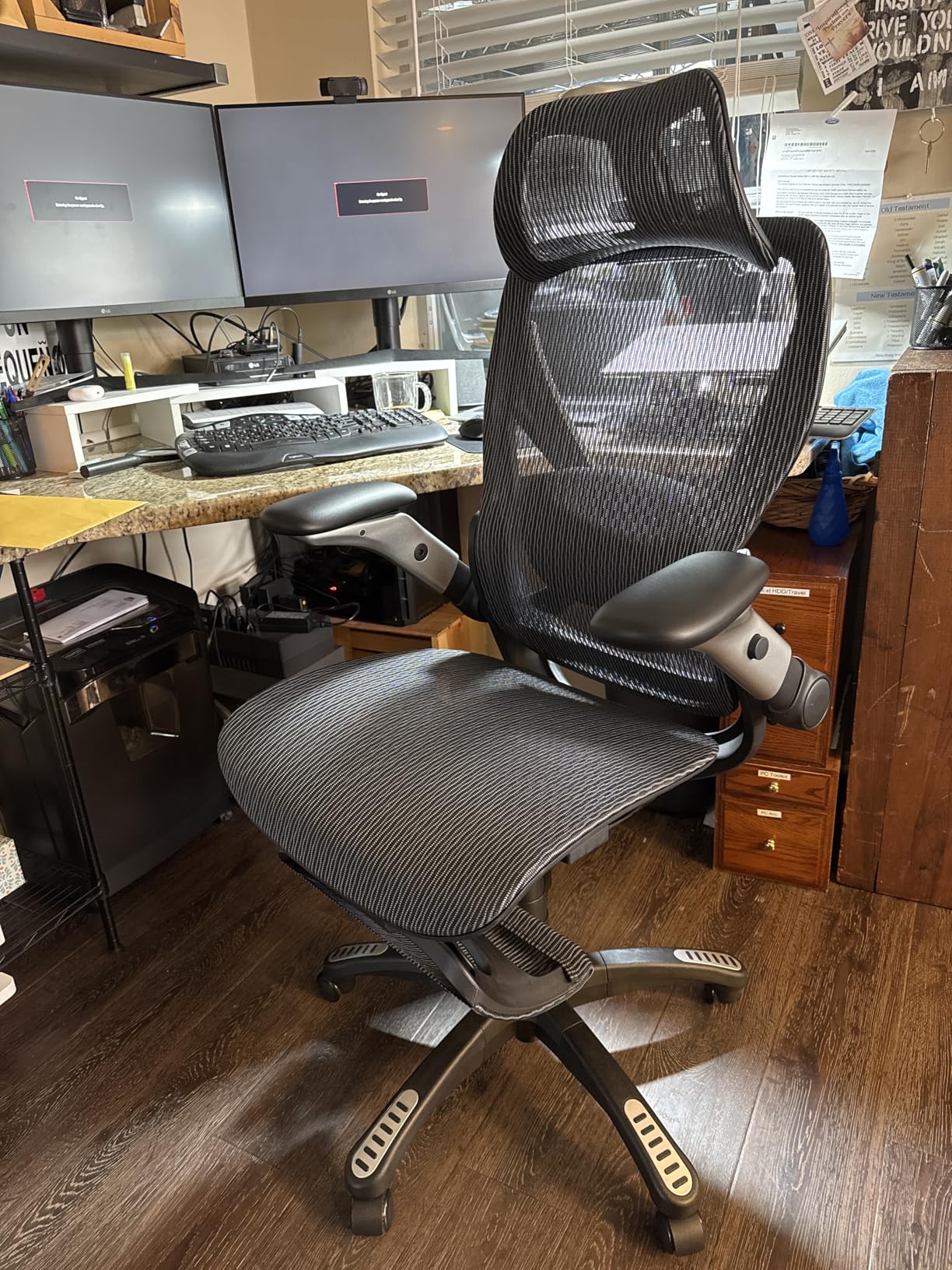
Armrests are 5D with roughly six inches of horizontal travel, a 45 degree cant and a 90 degree flip, and they carry denser EVA foam padding than most. The headrest is a 28 cm 3D design that maps a cervical curve, and it stays where you put it, which is more than most headrests manage.
There is a three-stage recline with an 18 inch extendable footrest at two angles, and the back and seat use a mesh described as more elastic and better for airflow than standard mesh. It is BIFMA certified to 300 pounds, tool-free assembly takes about 15 minutes, and there is a five-year care period with a free seat pad or wheel upgrade on registration.
Who it suits, and who should skip it
Buy this if lower back pain has followed you through several cheaper chairs, if you sit eight hours or more, and if you want a chair you can recline in rather than just work upright. The 3D lumbar and 3D headrest make it the best match here for someone whose pain is neck and upper lumbar rather than purely low lumbar.
Two caveats. In this variant the armrests attach to the backrest, which limits their vertical range and makes the chair lean forward when you load the arms, and the firm mesh seat can dig into the backs of shorter users’ knees. ELABEST also makes seat-attached armrest variants, so check which one you are actually buying.
What the ownership reports tell you
At 4.6 stars with 82 percent five-star, this has one of the strongest distributions in the set. Reviewers mention the lumbar fitting an individual spine, the armrest travel, the solid footrest, and customer service that shipped parts within days of a request.
The footrest is the feature most often criticised, described as stiff to extend even after lubrication and too short to fully support the legs. Note also that adding a padded seat cover removes the extending leg-rest function, so those two choices conflict.
12. CAPOT 400 Pound Chair – Most Levels of Lumbar Adjustment
- Micro adjust lumbar across 8 levels gives fine control of the curve
- Aerovith mesh seat stays cool without adding heat
- Three position ratcheted tilt holds position without sinking
- Packaging has labelled bolts thread locked and spare hardware
- Stainless steel base with 5 year warranty and free parts
- Mesh sides pinch the thighs and the seat is firm for heavier or wider users
- Lumbar support does not always stay in its set position
- Headrest adjustment is awkward and not clearly labelled
The lumbar here travels two inches across eight levels, aligned to the L1 to L5 section of the spine, and that fine control is the reason owners single it out. Most chairs offer one or two positions, so eight gives you a much closer match to a specific spinal level.
The backrest also locks at 90, 110 and 125 degrees on a ratcheted mechanism, and it holds that position without sinking under you. For a lower back that tires in a fixed posture, having a chair that stays where you put it is worth more than a mechanism with a wider but weaker range.
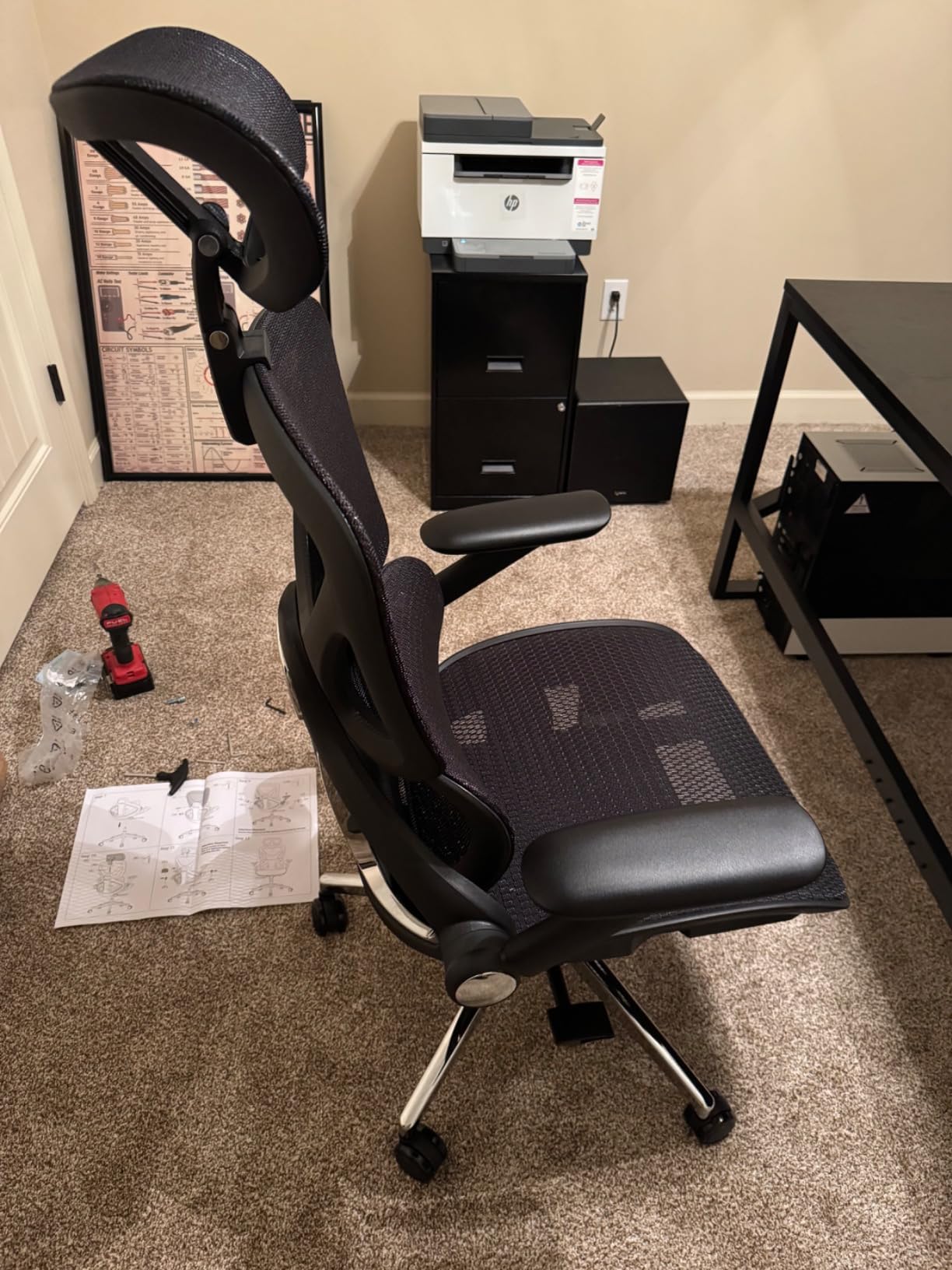
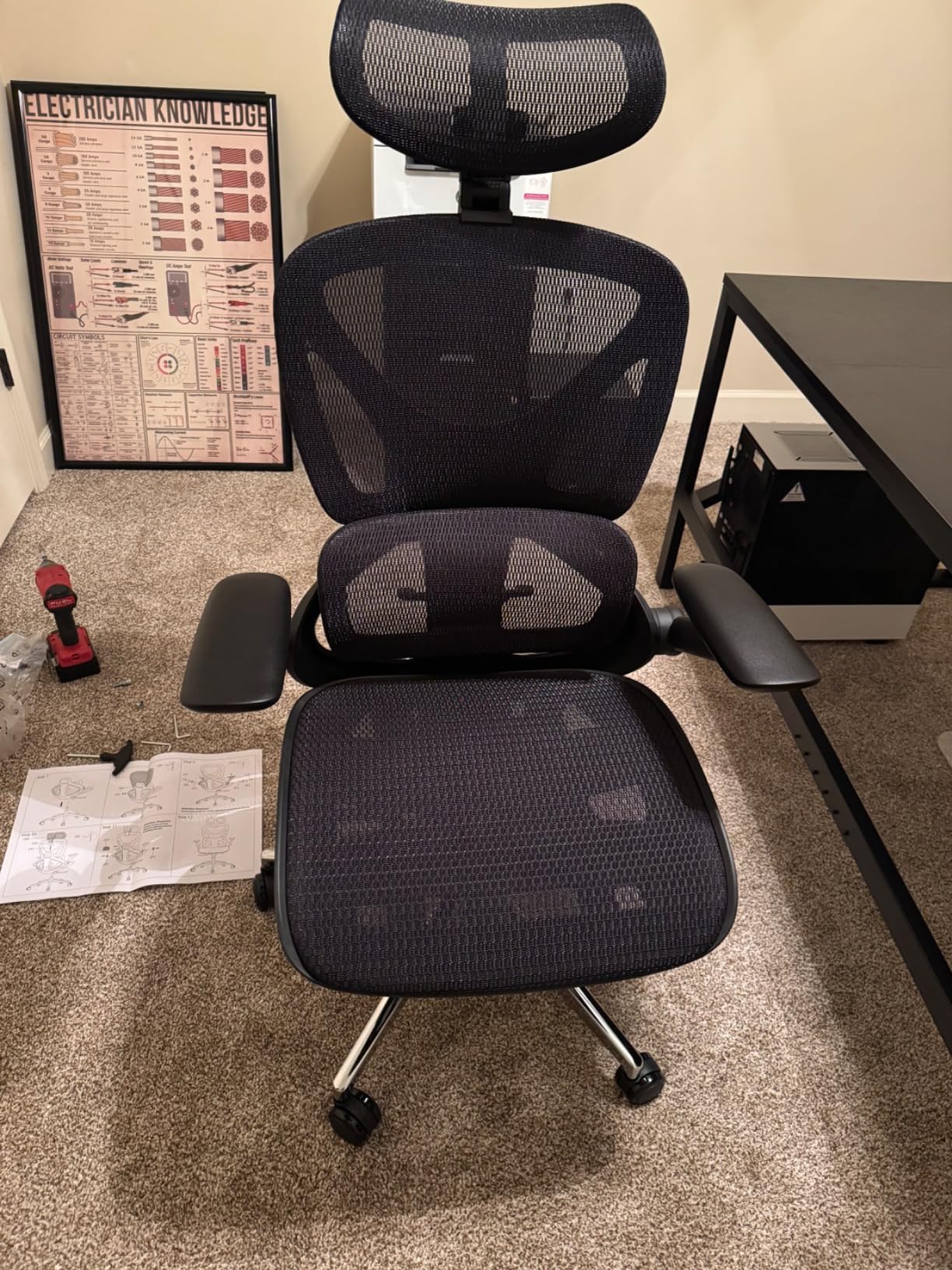
Capacity is 400 pounds on a stainless steel base with a leak-proof SGS gas lift, and the arms fold completely out of the way, which several reviewers call rare among competitors. The 3D headrest adjusts in both height and depth, the seat is 19.3 by 20 inches, and the height range is 18.5 to 22.05 inches for users roughly 5 foot 5 inch to 6 foot 2 inch.
The warranty is five years with complimentary part replacement, and the packaging is genuinely well organised with every bolt labelled and thread-locked. That is a small thing until you are assembling a chair at eight in the evening.
Who it suits, and who should skip it
Suit this if you want precise lumbar control and a tilt that locks where you put it, and you are near or under 200 pounds. The 400 pound rating and the folding arms also make it practical for shared desks where the chair has to disappear at the end of the day.
Skip it if you are heavier or wider. Despite the 400 pound rating, users near and above 200 pounds report thigh pressure from the mesh sides and insufficient padding, so the rating is a structural limit rather than a comfort guarantee.
What the ownership reports tell you
At 4.1 stars with 13 percent one-star reviews, this is one of the more polarised chairs here, and the split is almost entirely about fit rather than build. The 8-level lumbar and the three-stage tilt draw consistent praise, and so does the packaging.
Two long-term concerns are worth knowing. The lumbar support does not always stay in the position you set it, and one owner reported the stainless steel leg section where the wheels attach breaking twice in about a year. Fit is the dividing line between a very good chair and a frustrating one.
How to Adjust Your Chair in 5 Steps
A chair that is set up wrong will not fix your back, and this matters more than which chair you buy. Every one of the twelve here needs about fifteen minutes of adjustment the first time you sit in it, and again two weeks later once your body has settled into it.
Step 1 – Seat height. Put both feet flat on the floor with your weight evenly distributed, then raise the seat until your knees are level with or slightly below your hips. The usual target is 90 to 100 degrees at the knee. If your feet dangle, you need a footrest rather than a lower chair setting.
Step 2 – Seat depth. Slide forward so your back is against the backrest, then check the gap between the front edge of the seat and the crease of your knee. You want two to four fingers there. Too deep and you are pushed forward, which rounds your lower back; too shallow and your thighs are unsupported.
Step 3 – Lumbar. Set the lumbar support so its top edge sits at your belt line, roughly level with the dimples at the back of your hips, which corresponds to the lower part of the L3 to L5 region. If you can slide a flat hand between the pad and your back, that is about right. If you have to squeeze it in, it is too low or too shallow.
Step 4 – Armrests. Adjust height so your elbows are at roughly 90 degrees and your shoulders are relaxed, not lifted. Your forearms should rest flat, and the armrests should be close enough to stop your arms splaying outward. If the desk is too tall, lower the chair and raise the desk, not the armrests.
Step 5 – Tilt and recline. Set the recline at its most upright position and unlock the tilt, then deliberately lean back until you feel the mechanism engage. Most lumbar systems are designed to work as you recline, not only when you are sitting straight. Leave the tilt unlocked for the rest of the day so you can move.
Then add the habit that outperforms any of these settings. Change position and move for two minutes every 45 to 60 minutes. A chair that lets you shift easily is worth more than a chair with a better pad, because the muscles supporting your lower back are designed to move, and no fixed shape holds up indefinitely.
The 7 Features That Actually Matter for Lower Back Pain
Most of what is written about office chairs is a list of features that have nothing to do with your back. Headrests, armrest materials and swivel smoothness are pleasant, but seven things actually determine whether a chair supports a lower back, and here is how to read them in a product listing.
1. Lumbar support, and how many directions it moves. This is the single most important feature and the most often faked. A fixed plastic pad is decoration. Height adjustment alone helps most people. Height plus depth adjustment helps many more. A dynamic or weight-activated support that follows your movement helps everyone, and it is the reason the more expensive chairs here exist. Read the listing for the word depth or depth adjustment, not just lumbar support.
2. Seat depth. This is the most commonly wrong specification in the category. A seat that is too deep pushes your lower back into a rounded C shape no matter how good the lumbar support is, and that is exactly the posture that causes the dull ache people are trying to escape. Check the stated seat depth against your own thigh length, and remember the 2 to 4 finger test above.
3. Seat height range. Look at the range, not the maximum. A chair that goes from 17 to 21.5 inches suits far more people than one that goes from 20 to 24, because a low minimum is what lets a short user sit with feet flat instead of dangling. Most short users fail on height before they fail on anything else.
4. Tilt and recline quality. A chair that rocks loosely and returns you to upright is a chair that makes you work. Look for a tension control, a recline range past 110 degrees, and a lockable position. A backrest that reclines independently is better than one that only rocks with the seat, because it lets you open the hip angle without sliding forward.
5. Armrest height and adjustability. Armrests that are too high push your shoulders up, which tightens everything down to the lower back. Look for 3D or 4D arms rather than height-only, and for arms that lock, because unlocked arms that drop under weight stop you leaning back properly.
6. Seat foam and edge shape. High-density foam holds its support longer than low-density foam, and a waterfall edge that curves down away from the backs of your thighs reduces the pressure that makes you shift around. If your pain is pressure-based or tailbone-related, a thick well-padded seat with a waterfall or contoured edge matters more than a premium lumbar.
7. Weight capacity and warranty. Capacity is a structural number, not a comfort promise, since several chairs here rate to 400 pounds and are reported as uncomfortable by users over 200. Warranty length is the better longevity signal, because it tells you the manufacturer expects the gas lift, casters and arm hardware to keep working.
Two material questions come up constantly, so here is the short version. Mesh backrests are cooler, more breathable and less smelly over a long day, which makes them the right call in a warm room or if you sweat. Mesh also has no cushion, so a pressure-sensitive lower back may prefer foam or leather, and mesh edges can dig into a smaller frame. PU leather and bonded leather look more formal and wipe clean easily, but they do not breathe and they flake after a few years.
There is also a technique worth knowing that almost no roundup mentions. Perching on the front third of the seat with your feet planted takes weight off the back of your thighs and your coccyx, which unloads the lower spine. If your pain is worse at the end of the day, try sitting forward for twenty minutes before sitting back, and see whether it makes a difference. It costs nothing and it works for a large number of people.
Match the Chair to Your Pain Type
Lower back pain is not one condition, and the best chair for a dull postural ache is often wrong for sharp or radiating pain. Here is how to narrow the field based on what your day actually feels like.
A dull ache that arrives mid-afternoon and clears when you stand up. This is the classic posture pattern, and it is the most responsive to a chair. You need a lumbar support that moves in at least two directions and a recline you can lock at a comfortable angle. The ELABEST X100 and the TRALT are the strongest fits here, and either will outlast a fixed-pad chair for this pattern.
Sharp or radiating pain, or anything that travels down the leg. Do not shop for a chair first. Shooting pain, numbness or tingling can indicate nerve involvement, and no amount of lumbar adjustment addresses that. See a doctor or physical therapist, and once you have clearance, choose a chair with a very short, very firm seat edge so you can perch and vary your posture, which is the Marsail or the COLAMY.
Tailbone and sitting-bone discomfort. A hard front seat edge is the enemy here, so choose a waterfall edge or a thick contoured cushion and expect to perch forward. Avoid thin mesh seats entirely, and skip narrow arms so you can change position freely.
Stiffness on standing up in the morning that eases during the day. This pattern often points to a seat that is too deep or too high, rather than to missing back support. Measure your thigh length against the stated seat depth before you buy anything, and prioritise a low minimum seat height.
Anyone over 300 pounds. Body size, not back support, should drive the decision. The GTPLAYER, COMHOMA and CAPOT are the three rated to 400 pounds here, and all three have seats above 19 inches deep. Be sceptical of a 400 pound rating on a chair with a firm mesh seat, because the rating is structural rather than a comfort guarantee.
Anyone under 5 foot 5 inch. The failure mode is the opposite: chairs that are too tall and seats that are too deep, with armrests that hit the underside of the desk. Look for a low minimum seat height, a shallow seat, and flip-up arms. The NEO CHAIR and the TRALT are the safer picks at this size.
When a Chair Is Not Enough
Be direct about this: no office chair fixes a herniated disc, a torn muscle, an infection or a structural spinal problem. What a chair does is reduce the compressive load on your lower spine and make it easier to move, and that is meaningful general comfort, not treatment.
Book a doctor or a physical therapist if you have pain that travels down a leg, numbness, tingling, weakness in a leg, or bowel or bladder changes. Those are signs that need assessment rather than shopping. If your pain is mechanical but has lasted more than a few weeks with no improvement, a clinician can often tell you in one appointment what a chair cannot.
What genuinely helps beyond a chair is unglamorous. Raise the monitor so the top of the screen is at eye level, so you are not looking down all day. Keep your feet on the floor or a footrest. Move for two minutes every 45 to 60 minutes, since no chair holds one shape safely for eight hours. And if your employer offers a sit-stand desk or a physiotherapy referral, both beat any upgrade at the top of this list. We have covered the chair side of that in more detail in our [office chairs for back pain guide](https://www.talkofthehouse.com/best-office-chairs-for-back-pain/).
We would rather you buy a mid-range chair from this page and adjust it properly than a top-of-range chair you never set up. The adjustment takes fifteen minutes, and it makes more difference than the gap between the least and the most expensive chair here.
Frequently Asked Questions
What chairs do chiropractors recommend at an office?
The general ergonomic consensus is to look for a chair with adjustable lumbar support in at least two directions, a seat depth and height you can set to your own body, and a tilt mechanism that lets you change position freely. No clinician recommends one brand, and recommendations vary with the condition, so confirm the fit with your own chiropractor or physical therapist.
Which office chair is best for back pain relief?
Our pick for most people is the GTPLAYER big and tall chair, because its 400 pound frame, 22 inch seat and pocket spring lumbar support fit larger bodies and hold a curve without a rigid pad. If you are a smaller frame, the TRALT offers adjustable lumbar depth at a lower tier.
What office chair is best for supporting back pain?
The criteria that matter are adjustable lumbar height and depth, correct seat depth, a seat height range that puts your feet flat, a tilt or recline you can lock, firm high-density foam, and a weight capacity above your own. Judge every chair against those six points rather than against headrests and armrest materials.
How to sit in office with lower back pain?
Feet flat on the floor, knees at 90 to 100 degrees, two to four fingers of space between the seat edge and your knee crease, lumbar support at your belt line, and elbows at 90 degrees with relaxed shoulders. Then change position and move for two minutes every 45 to 60 minutes, because no single posture is safe indefinitely.
Can an office chair fix a herniated disc?
No. A chair can reduce the load on your lower spine and make movement easier, but a herniated disc, radiating leg pain, numbness or tingling need medical assessment. See a doctor or physical therapist for those symptoms rather than shopping for a chair.
Should I sit with a cushion in my office chair?
A lumbar cushion helps when the built-in support cannot reach your curve, particularly on a chair with fixed lumbar padding. A seat pad helps more on firm foam, though a cushion that is too thick raises your hips and can arch your lower back, so keep it thin and check that your feet stay flat.
Which Office Chair for Lower Back Pain Should You Buy?
Our pick for the best office chairs for lower back pain depends mostly on your body and your day rather than on the spec sheet. The GTPLAYER big and tall chair is the one we would buy first, because its 400 pound frame, deep 22 inch seat and spring lumbar support fit more body shapes than the other eleven, and it has the longest ownership history of any chair we evaluated. If you run hot, sit under six foot five and want a compact footprint, the TRALT is the better-value answer, and the CLOUVOU has the highest rating in the group with adjustability most rivals lack.
Whichever you choose, spend fifteen minutes on the five-step adjustment before you judge it. A chair set up for somebody else’s body is the most common reason an expensive purchase ends up on a resale site within a year, and it is entirely fixable for nothing. We also cover the same ground in our [guide to desk chairs for back pain](https://www.talkofthehouse.com/best-desk-chairs-for-back-pain/) and our [picks for long working hours](https://www.talkofthehouse.com/best-office-chairs-for-long-hours/), which is worth reading if your problem is fatigue rather than pain. If your discomfort carries into your neck and shoulders, our [massage chair picks for neck pain](https://www.talkofthehouse.com/best-massage-chairs-for-neck-pain/) cover the other half of that picture.
If your discomfort comes with shooting pain, numbness or tingling, stop here and see a professional first. Everything above assumes mechanical discomfort from sitting, and a chair is only ever a comfort tool, not a treatment.