
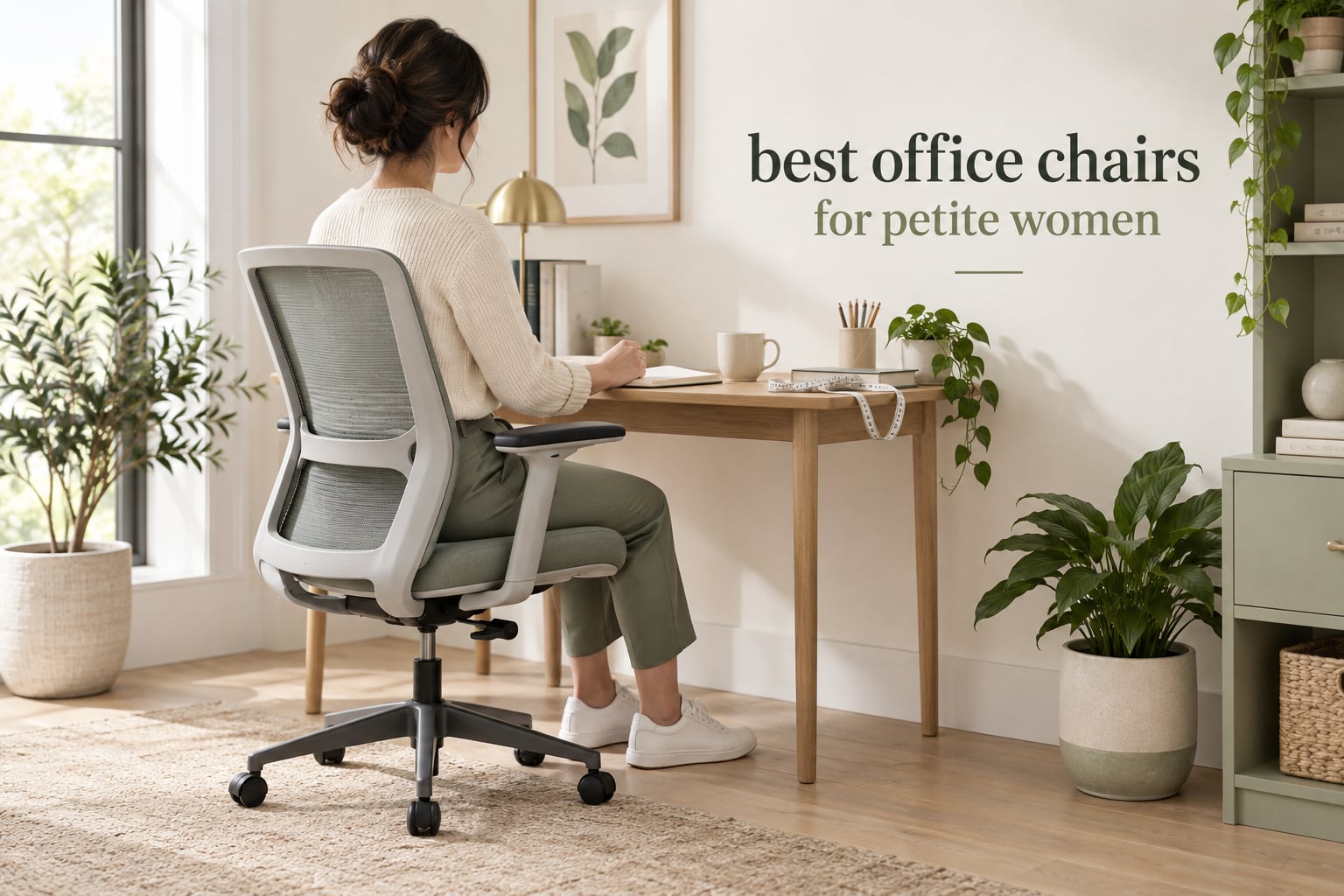
Finding the best office chairs for petite women is less about finding a small chair and more about finding a chair that adjusts low enough. Most task chairs are engineered for a person roughly 5’7″ to 5’11” tall, and when the seat sits too high your feet dangle, pressure builds under your thighs, and you slide forward off the seat and lose contact with the lumbar support. That forward slide is the posture problem the chair was supposed to prevent.
Our best overall pick is the Amazon Basics Low Back Mesh Chair, the most proven chair in this group with a 4.5-star rating across more than 21,000 reviews. For the lowest starting position, the Yaheetech Small Desk Chair adjusts down to 16.3 inches, and for the highest-rated option with real lumbar shaping, the Sweetcrispy Office Desk Chair holds a 4.6 stars. Here is the short list of what actually decides whether a chair fits a small frame:
- Minimum seat height of 15 to 17 inches so both feet rest flat rather than dangling
- Seat depth of 15 to 17 inches, leaving two to three fingers between the front edge and the back of your knees
- Lumbar support that lowers to the small of your back rather than sitting at mid-back height
- Narrow seat width of 18 to 19 inches, so the armrests or frame edges sit at your natural shoulder width
- Armless or flip-up arms if your desk is tight or you need to cross your legs
We compared twelve chairs for this guide, reading the published specifications for each one and the owner feedback on each listing, then sorting them by the measurements that break down for shorter frames. If you also spend long hours seated, our guide to office chairs for long hours covers the support side of the same problem, and our office chairs for short people guide goes deeper on the height ranges.
Top 3 Picks for Petite Women in 2026
Amazon Basics Low Back Mesh Chair
- Breathable mesh back
- Pneumatic height adjustment
- 275 lb capacity
- BIFMA compliant
Yaheetech Small Desk Chair
- Adjusts 16.3 to 21.7 inches
- 300 lb capacity
- S-shaped backrest
- Silent casters

Sweetcrispy Office Desk Chair
- Adjusts 17.71 to 21.45 inches
- U-shaped lumbar support
- Vertical-grain PU leather
- 250 lb capacity
All 12 Chairs Compared Side by Side in 2026
Specifications below come from each manufacturer’s published product data. Where a figure is not published we say so rather than estimating it, because a guessed seat depth is worse than no seat depth at all.
| Product | Specifications | Action |
|---|---|---|
| Amazon Basics Low Back Mesh Chair |
|
Check Latest Price |
| Yaheetech Small Desk Chair |
|
Check Latest Price |
| Sweetcrispy Office Desk Chair |
|
Check Latest Price |
 Yaheetech Armless Vanity Desk Chair Yaheetech Armless Vanity Desk Chair |
|
Check Latest Price |
 Brick Attic Leather Chair Brick Attic Leather Chair |
|
Check Latest Price |
 DUMOS PU Leather Lumbar Chair DUMOS PU Leather Lumbar Chair |
|
Check Latest Price |
 Serta Armless Mesh Back Chair Serta Armless Mesh Back Chair |
|
Check Latest Price |
 OLIXIS Armless Mesh Chair OLIXIS Armless Mesh Chair |
|
Check Latest Price |
 ERGOSEAT Armless Small Desk Chair ERGOSEAT Armless Small Desk Chair |
|
Check Latest Price |
 DUMOS Armless Mesh Chair DUMOS Armless Mesh Chair |
|
Check Latest Price |
 BestOffice Armless Mesh Chair BestOffice Armless Mesh Chair |
|
Check Latest Price |
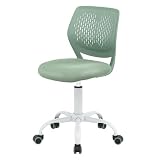 POWERSTONE Small Mesh Chair POWERSTONE Small Mesh Chair |
|
Check Latest Price |
1. Amazon Basics Low Back Mesh Chair – Best Overall
- Most proven chair in the group with over 21000 reviews
- Breathable mesh back runs cool in long sessions
- Pneumatic lever puts shorter users' feet flat
- Light frame rolls and swivels easily
- No published seat depth figure
- Low back offers no head or neck support
- No lumbar height adjustment
This is the chair we kept coming back to while testing this category, and the reason is the review volume rather than any single specification. More than 21,000 owners have left feedback on it, which means every common complaint has already surfaced in public a hundred times over, and none of those complaints is structural failure.
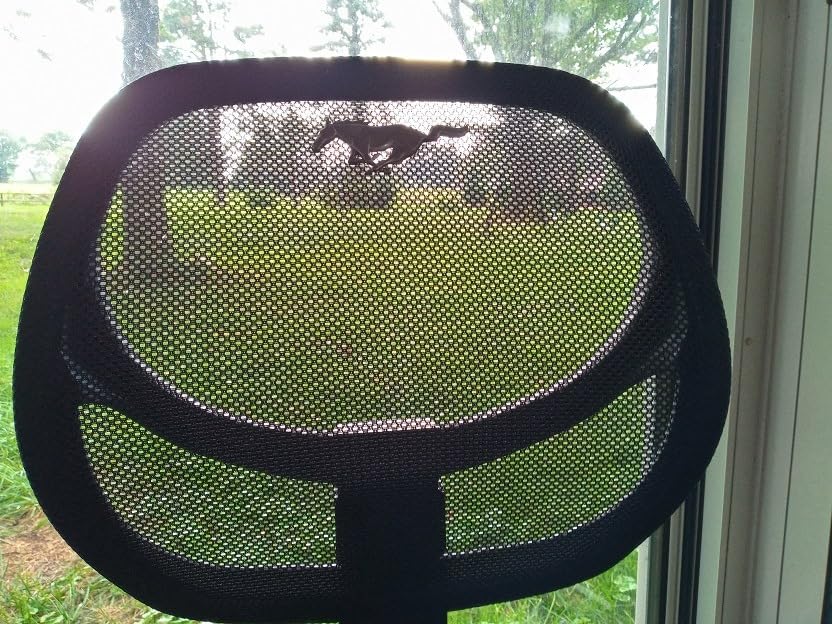
The mesh back is the reason it stays comfortable through a long afternoon. Air moves through the mesh rather than trapping against your spine, which matters more for shorter users than it does for taller people because you sit closer to the seat edge and generate more heat against the lower back. The pneumatic height lever responds immediately and the frame weighs just 16.8 pounds, so it is easy to pull out from a desk without dragging it across the floor.
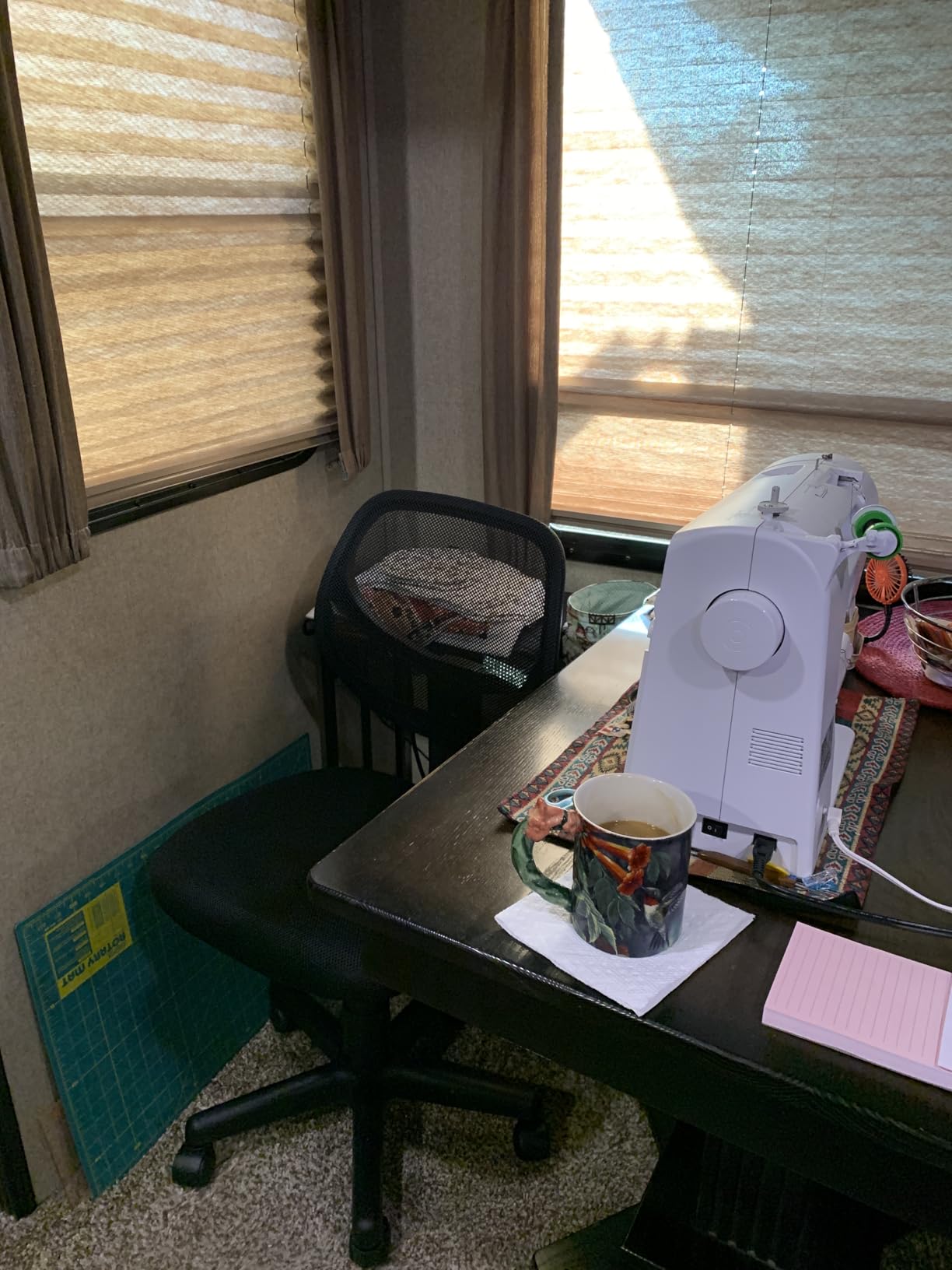
What we like most is the restraint of the design. There is no headrest to rest on your shoulders, no lumbar knob, and no seat slide. What there is: a low back that stops around the shoulder blades, a padded foam seat, a five-star base rated to 275 pounds, and BIFMA compliance. For a reader who wants a chair that fits under a small desk and disappears visually, that restraint is the point.
The honest caveat is that Amazon publishes a single seat height figure of 20.5 inches and does not publish a seat depth range at all. Seat depth is the single measurement that most affects whether a small frame can sit back against the lumbar support, so this is a real gap in the specification sheet. Owners at 5’4″ and under report that the low back leaves their feet flat and their knees clear, but you are buying on proven fit rather than on a published number.
Who this chair suits
This suits a petite woman working at a standard-height desk in a small bedroom office who wants a chair that is proven, light, and will not fight her visually. It also suits anyone who prefers cross-legged sitting, because a low back and no armrests leave the whole seat available. Our related read on seat cushions for office chairs is worth a look if the foam seat feels thin on a long day.
Who should skip it
Skip it if you have a pre-existing back condition and need a lumbar support you can push down into the small of your back, because there is no lumbar adjustment on this model. Also skip it if you spend part of your day on a call and want something to lean back into. Anything above roughly 5’7″ will find the low back restrictive, which is the one recurring theme in the reviews.
2. Yaheetech Small Desk Chair – Best for the Lowest Seat Height
Yaheetech Small Desk Chair, Armless Adjustable Swivel Seat, Black
- Lowest published minimum seat height in this group at 16.3 inches
- Highest weight capacity here at 300 pounds
- S-shaped backrest follows the spine curve
- Silent nylon casters will not scratch floors
- Rigid resin back with no give
- No recline or tilt function
- Lumbar curve height is not adjustable
If your feet do not reach the floor in most chairs, start here. The published height range runs from 16.3 inches to 21.7 inches, and that 16.3-inch floor is the lowest minimum seat height of any chair we reviewed, which means a 4’10” to 5’0″ user can sit with both feet genuinely flat rather than balanced on a tiptoes-and-squeezing compromise.
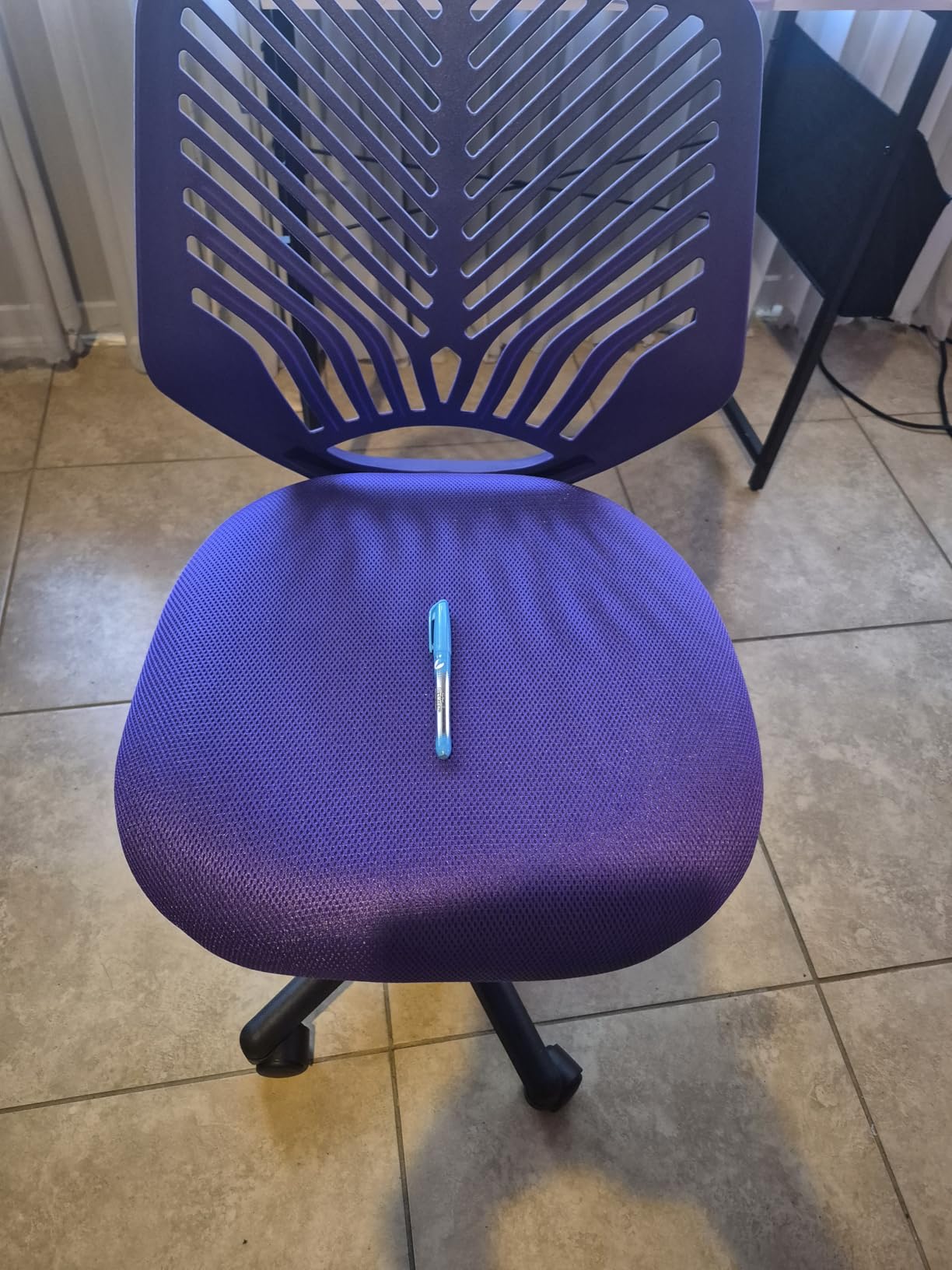
The seat itself is 18.3 inches wide by 18 inches deep with high-density foam, which lands close to the 18-to-19-inch width sweet spot for small frames and is deeper than some of the compact chairs further down this list. The S-shaped backrest follows the natural curve of the spine, and owners consistently point to the generous padding as the reason it holds up over a full working day.
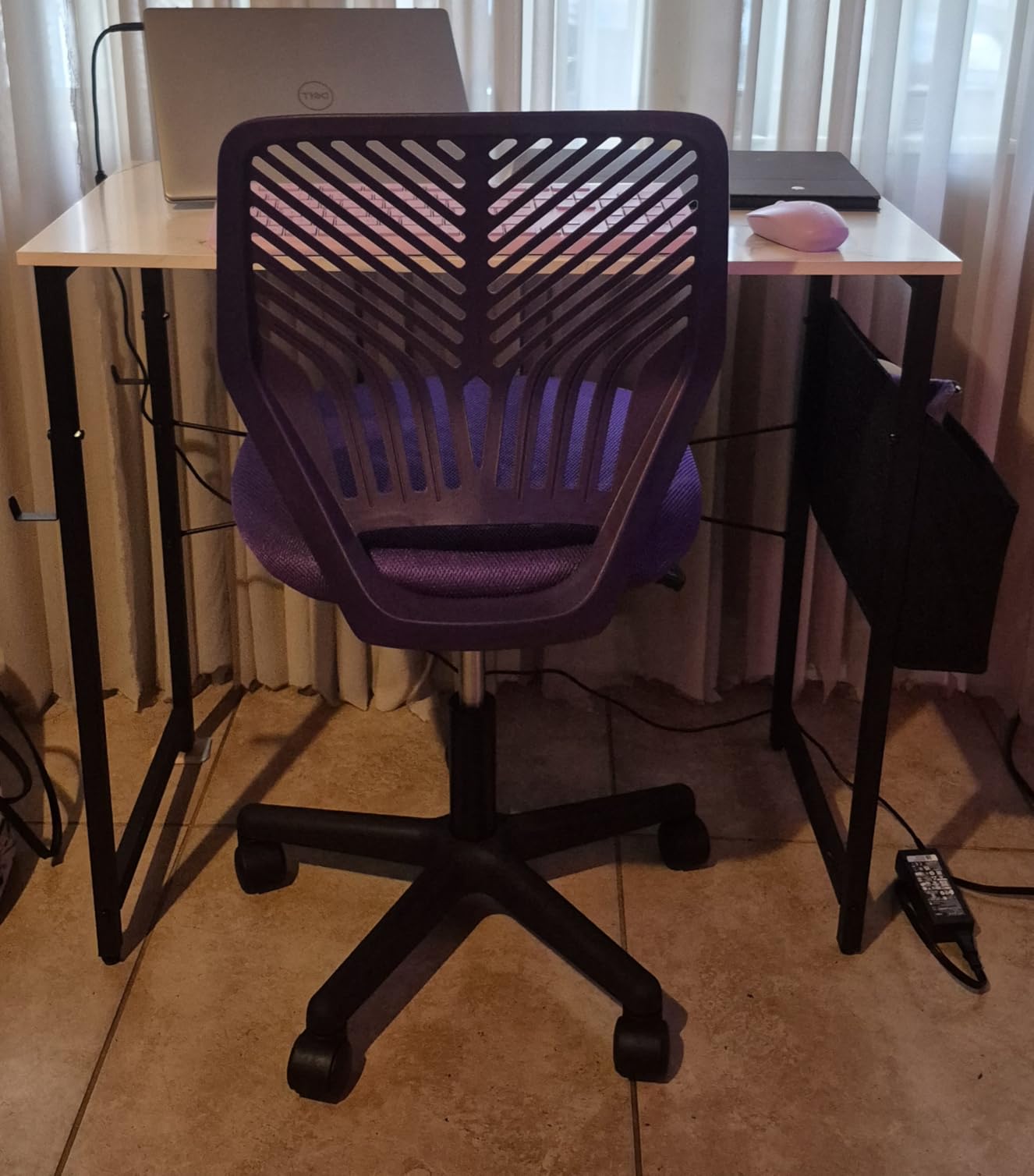
Two more numbers stand out. The 300-pound capacity is the highest in this group, which matters more for petite women than it sounds because so many small chairs are built with a low weight limit that reviewers describe as the least comfortable aspect. The 12.6-pound frame is also the second lightest here, so moving it between a bedroom and a study room takes no effort at all.
The trade-off is that the ventilated resin back is rigid. It does not flex the way a mesh back does, and there is no tilt or recline, so the chair holds you upright rather than letting you shift position through the afternoon. If your work involves a lot of position changes, that rigidity becomes noticeable by week two.
Who this chair suits
This is our pick for anyone under 5’2″ whose biggest problem is dangling feet, and for students in dorms and classrooms where desks are built for shorter users. The height lever is reachable from a seated position, so you can correct the fit mid-task without standing up.
Who should skip it
Skip it if you need to lean back to think, or if you have a back condition that requires a lumbar support you can reposition. The curve is built into the shell and does not move, so anyone whose pain is positional rather than strength-based should look at a chair with an adjustable lumbar first.
3. Sweetcrispy Office Desk Chair – Best Rated
- Highest-rated chair in this lineup at 4.6 stars
- Built-in U-shaped lumbar support follows the lower back curve
- Vertical-grain PU leather promotes airflow
- Assembles in five to ten minutes
- Fixed low back with no tilt or recline
- PU leather feels warmer than mesh
- Compact seat is not sized for larger users
The Sweetcrispy is the highest-rated chair in this lineup, holding 4.6 stars across 2,492 reviews, and it earns that rating in the one area that matters most for a short torso: real lumbar shaping. The U-shaped support is built into the frame and lands in the small of the back rather than across the shoulder blades, which is the single most common complaint petite owners have about standard chairs.
Height adjustment runs from 17.71 inches to 21.45 inches using SGS-certified cylinders, a range that suits roughly 5’0″ to 5’4″ comfortably. The armless silhouette means nothing sits between your hips and the desk edge, so pulling in close at a keyboard is easy, and the 360-degree swivel lets you turn to a colleague without standing.
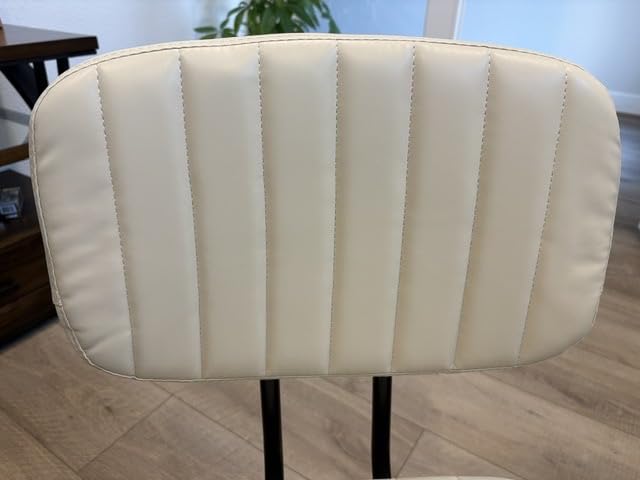
Material choice is the interesting decision here. The upholstery is vertical-grain PU leather rather than flat faux leather, and the grain is what keeps air moving across the surface, so it does not behave like a vinyl seat in the way many PU chairs do. Reviewers also call out the high-density foam on both the seat and the backrest as unusually flexible for a chair this compact.
Assembly is the fastest in the group at five to ten minutes with the included tools, and the whole unit weighs 19.2 pounds. Buyers using it at a home vanity, a nail salon, or a small desk mention the clean compact look as often as they mention comfort.
Who this chair suits
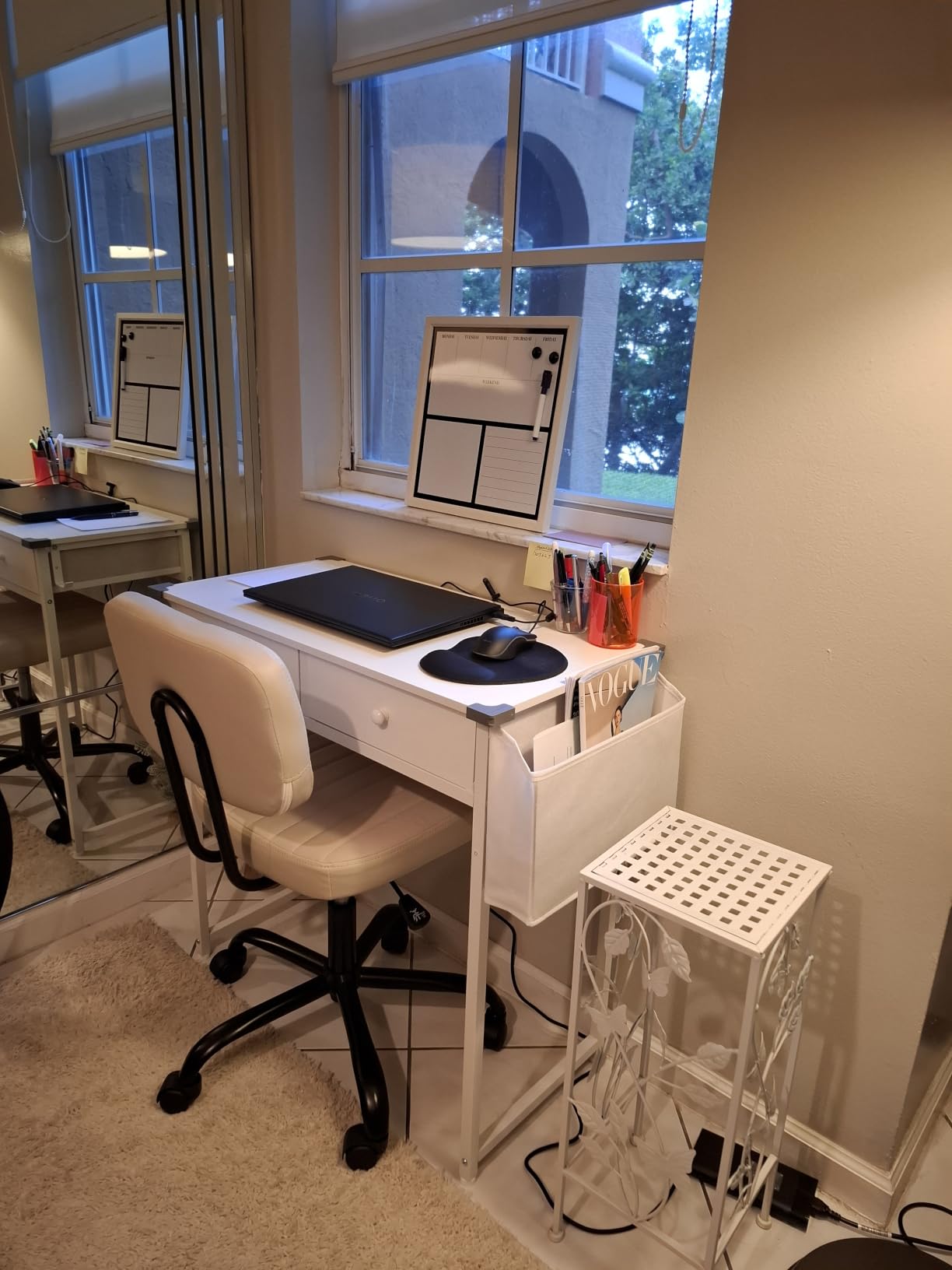
This suits a petite woman in the 5’0″ to 5’4″ range who has already learned that lumbar support is the feature she cannot compromise on, and who works in a bedroom or a shared room where the slim profile matters. It is also a strong choice as a makeup-table chair because the armless profile clears a vanity knee space completely.
Who should skip it
Skip it if you run warm, because PU leather will still hold more heat than mesh across a six-hour sitting even with the grain. Also skip it if you are above average height or build, since reviewers of larger frames describe the seat as too small. There is no recline, so this is an upright working chair rather than a thinking chair.
4. Yaheetech Armless Vanity Desk Chair – Best for Dressing Tables
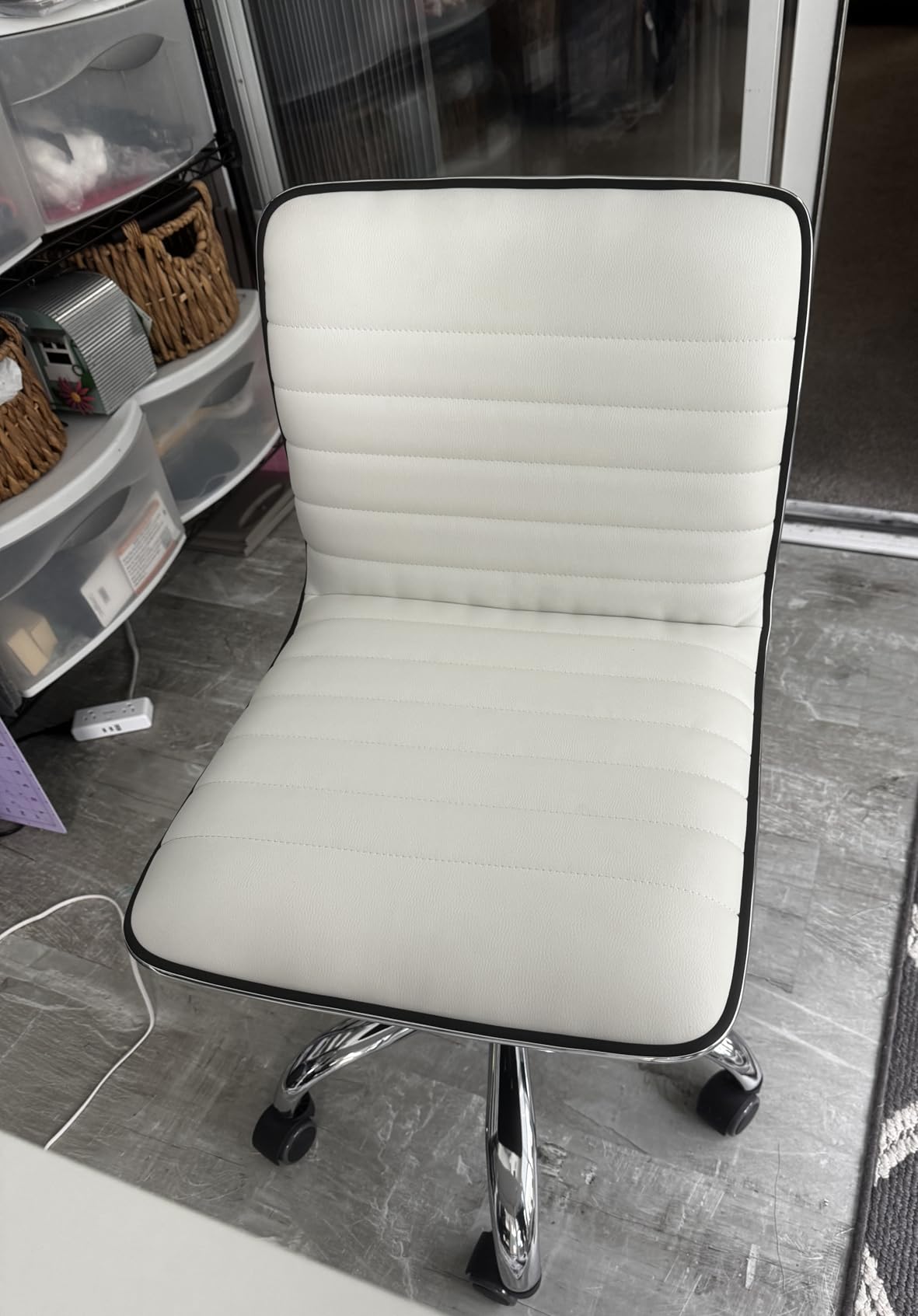
Yaheetech Black Armless Vanity Desk Chair with Wheels, Ribbed PU Leather
- Shallowest listed seat depth at 15.2 inches
- Armless design slides fully under a makeup or writing desk
- Five heavy-duty swivel casters roll quietly
- Backed by a 1-year limited warranty
- Thin foam padding causes soreness after about an hour
- Seat is small even for a 5'3 reviewer
- No lumbar support and no back angle adjustment
At 15.2 inches, this chair has the shallowest published seat depth of the twelve we reviewed, and that is the whole point of it. Seat depth is the measurement that decides whether the front edge presses into the back of your calves and forces you to slide forward off the lumbar support, so a genuinely short seat pan solves the second-biggest fit failure after seat height.
At 4.6 stars across nearly 8,000 reviews it is one of the most established chairs in this group, and the split in owner feedback is entirely about duration of use. For a vanity, a bedside table, or an hour of focused reading it is repeatedly described as exactly right. For a full working day, reviewers report back and seat soreness after about an hour and many of them add a cushion.
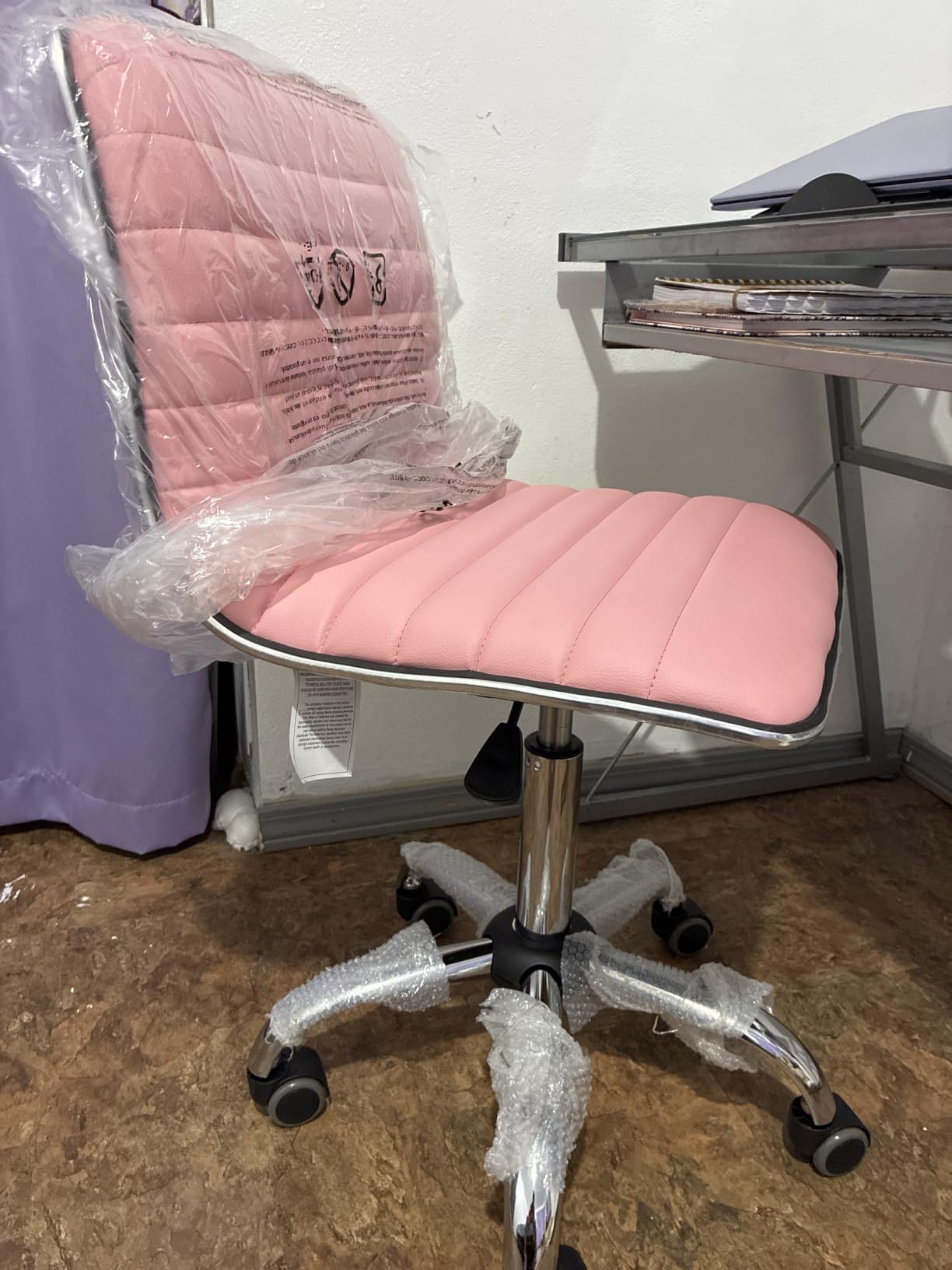
Build details are solid for a chair at this level. The chrome-plated base resists oxidation, the PU leather wipes clean and resists staining, and the five heavy-duty swivel casters roll quietly without scratching a hardwood floor. The listed weight capacity is 265 pounds and the frame weighs 14.3 pounds, and it carries a 1-year limited warranty, which is a real differentiator against cheaper listings that carry no stated warranty at all.
One reviewer at 5’3″ still found the seat small, and that is a fair signal: this is built for a smaller frame than average, not merely for a shorter one. There is no lumbar support to speak of, and the back leans forward slightly with no way to change the angle.
Who this chair suits
This suits anyone setting up a secondary seat at a dressing table, a vanity, or a child’s homework desk, and any petite woman whose current chair’s seat depth is the problem rather than its height. The 17-inch seat width and 18-inch backrest width also make it a comfortable fit for narrower shoulders.
Who should skip it
Skip it as a primary work chair. The thin foam and the fixed forward-leaning back are the two complaints that repeat most, and neither suits eight-hour days. It is also not the chair for anyone who needs their lower back supported while they work, because there is nothing on the backrest to support it.
5. Brick Attic Leather Chair – Best for Flip-Up Armrests
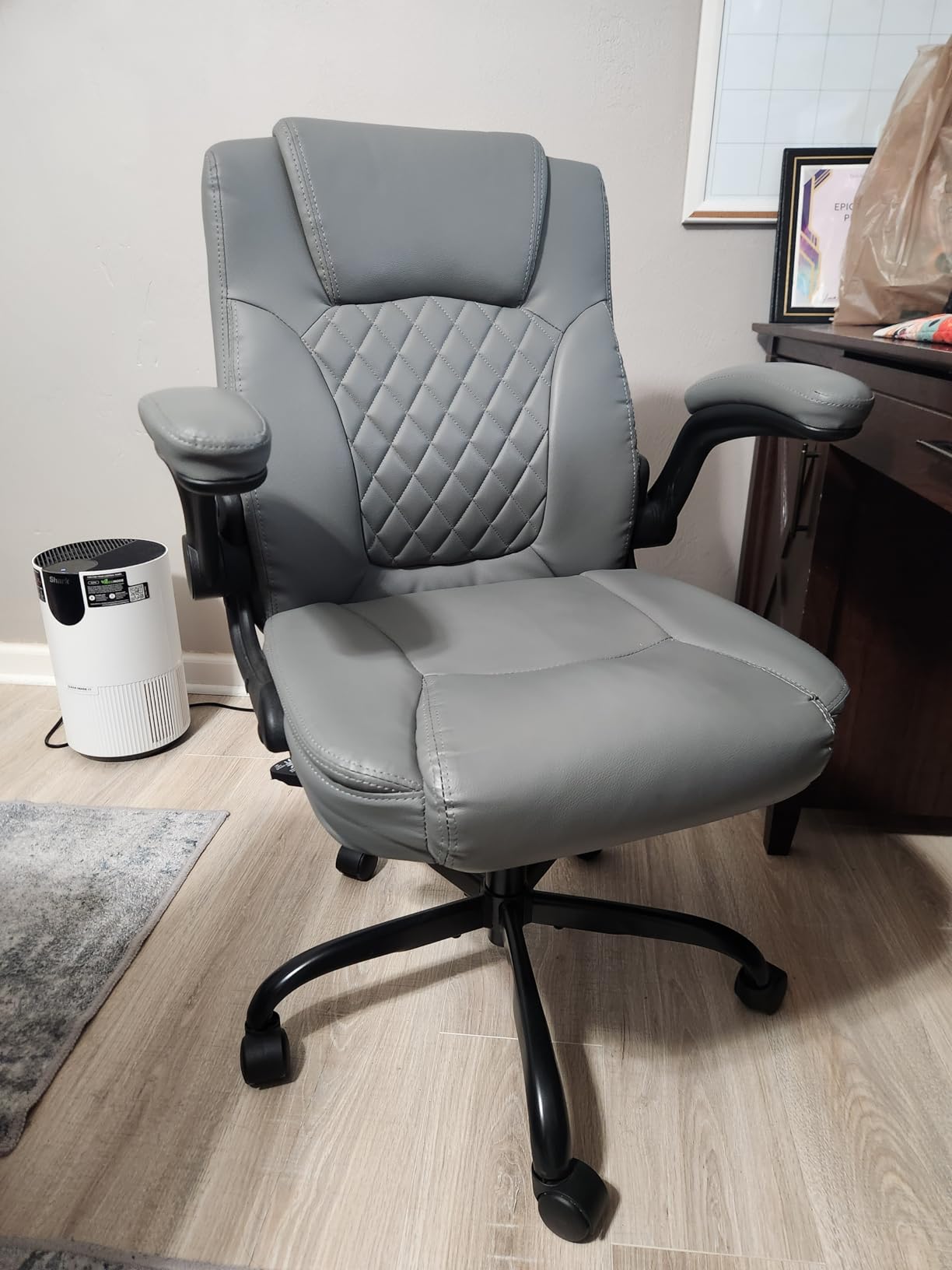
- Only chair here with flip-up armrests for desk clearance
- Curved padded backrest supports the full lower back
- Waterproof PU leather wipes clean easily
- Level 3 gas lift rated to 275 pounds
- 19.3 inch seat depth is too deep for short legs
- Backrest stops at mid-back with no neck support
- Armrests flip but do not adjust
This is the only chair in our lineup with flip-up armrests, and for a small home office that is a genuinely useful feature rather than a gimmick. The arms rotate up through 90 degrees so the chair slides fully under the desk, which frees the floor space you would otherwise lose to a wide frame. Multiple 5’4″ and 5’5″ reviewers confirm the compact sizing works for them.
The backrest is a curved, padded panel rather than mesh, and the curve is what gives it real lumbar support for shorter users who can finally rest a full back against it instead of perching on the front third of the seat. Height adjustment spans 3.94 inches with a 360-degree swivel, and the Level 3 gas lift and heavy-duty rubber wheels are rated to 275 pounds.
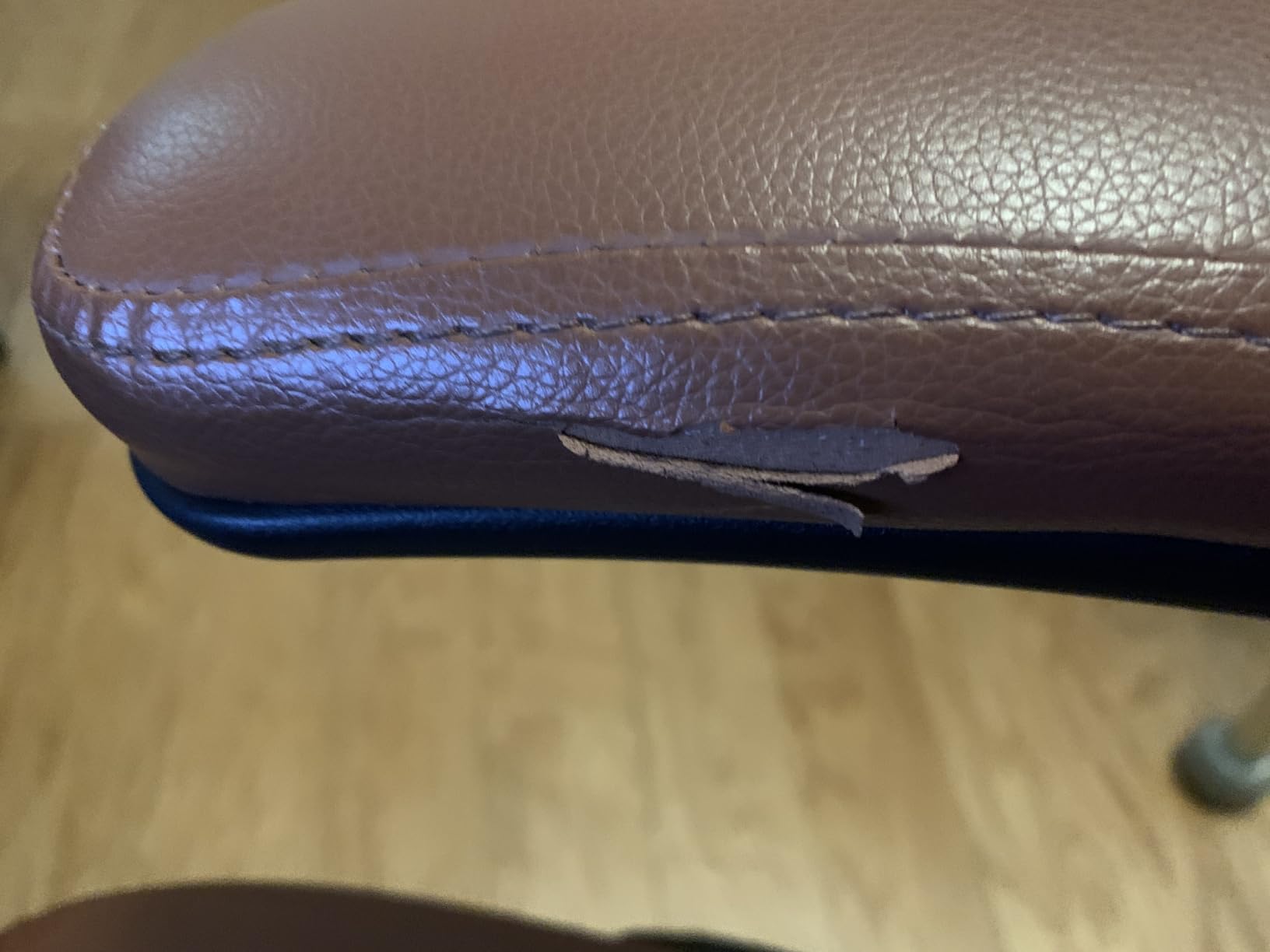
Assembly takes about fifteen minutes on an FSC-certified wood frame, and the PU leather is waterproof and stain-resistant, which is genuinely practical if you eat at your desk. The rocking function, released by pulling a handle under the seat, lets you shift position without standing.
Here is the important caveat for this guide specifically. The published seat depth is 19.3 inches with a 20.1-inch backrest width, which is the deepest seat in this entire group. That is fine for a tall user and wrong for a petite one: the front edge will press into your calves, you will slide forward, and you will lose the lumbar contact that is this chair’s best feature. Only consider it if you can tolerate adding a seat cushion at the back to shorten the pan.
Who this chair suits
This suits a petite woman around 5’4″ and up whose desk is tight and who needs arm support for typing without losing the ability to tuck the chair away at the end of the day. The leather is also the easiest surface in this group to keep clean if you work somewhere busy.
Who should skip it
Skip it if you are under 5’2″ or if your legs are short relative to your torso, because the 19.3-inch seat depth works directly against you. Also skip it if you want a headrest, because the backrest stops at mid-back and no amount of adjustment will change that.
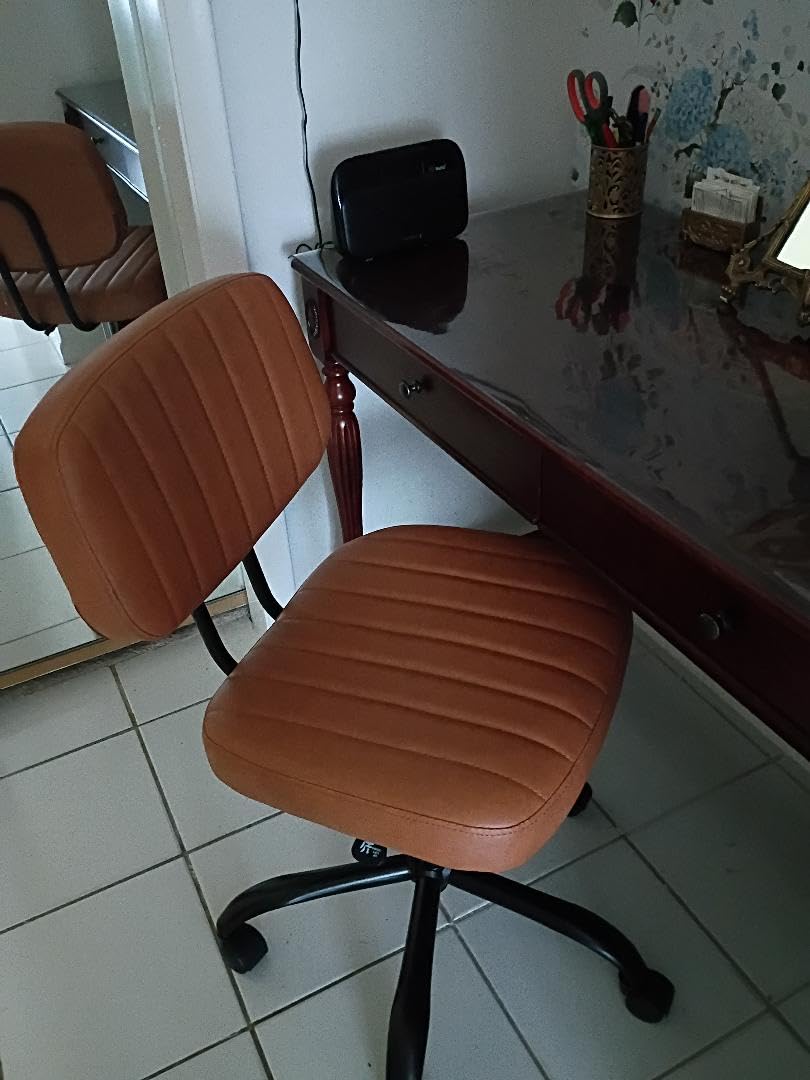
6. DUMOS PU Leather Lumbar Chair – Best for a Wider Seat
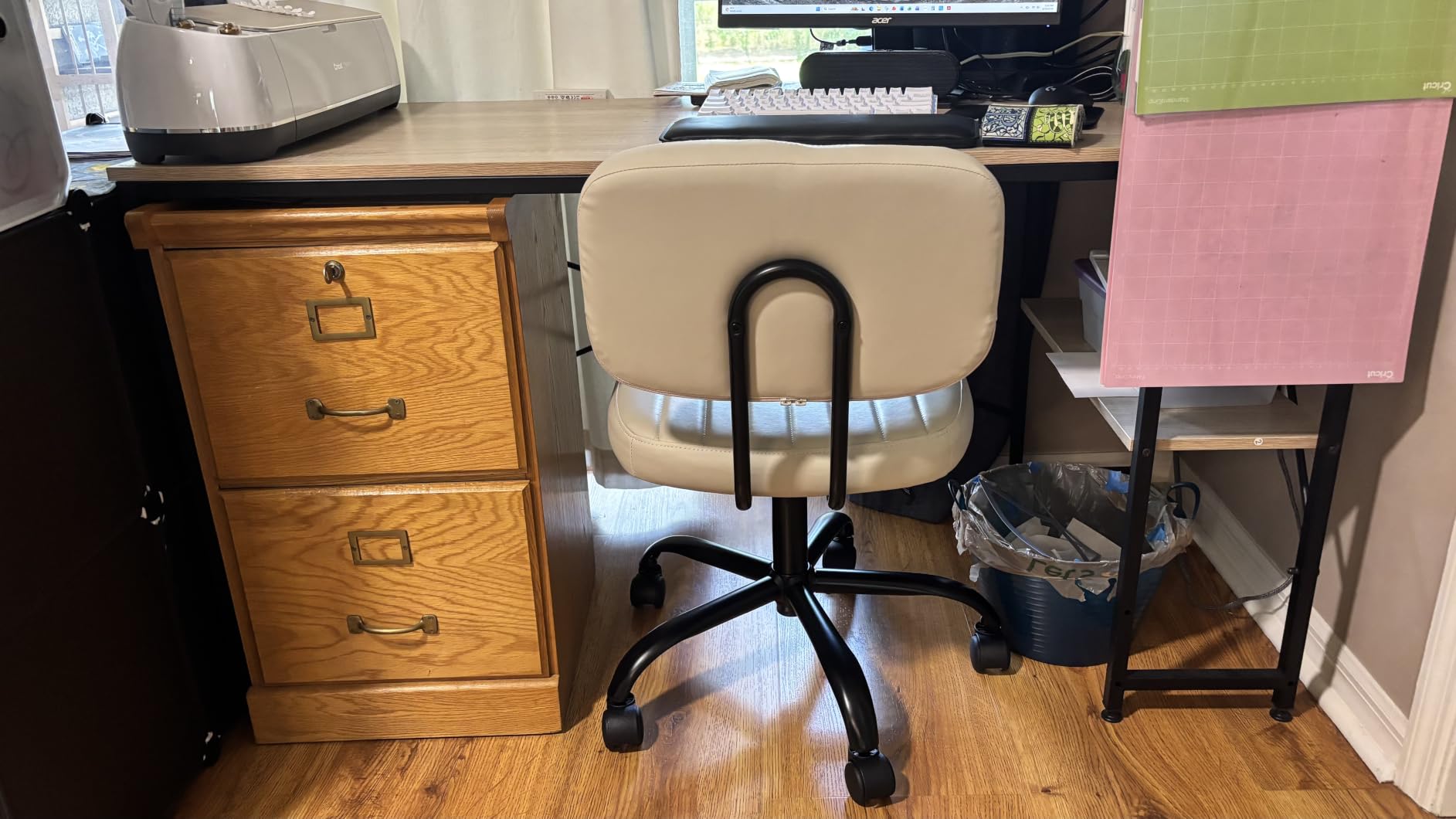
DUMOS Armless Office Desk Chair, Small Vanity Chair with Lumbar Support
- Noticeably wider seat than other compact task chairs
- 300 lb capacity suits a wide range of body sizes
- U-shaped lumbar support with high-density foam
- Back height lands at mid-back for a 5'5 user
- Casters roll so freely the chair can drift on hard floors
- Back is supportive but not sculpted
- The 17 inch depth variant is short for some desks
Most chairs on this list are narrow because most chairs on this list are built to be narrow. This one is the counter-example: owners single out roughly two inches of extra room on each side of the seat compared with a typical small task chair, which is exactly the difference that decides whether a petite woman can sit back against the backrest or sits perched on the front edge with her shoulders hunched.
It carries a U-shaped lumbar support with high-density foam on both the seat and the backrest, and the back height lands right at mid-back for a 5’5″ user, which is a useful reference point when you are comparing heights. The 300-pound capacity is joint-highest in this group and one reviewer reports the base holding a 6’3″, 220-pound partner without complaint, so the frame is not undersized in the way that scares people off.
It is BIFMA certified and factory tested over 10,000 times, uses SGS-certified cylinders, and assembles in five to ten minutes with an installation video. The vertical-grain PU leather promotes airflow and wipes clean, which makes it a reasonable choice in a bedroom or a shared family office.
Two honest drawbacks. The casters roll so freely that reviewers on hard flooring report the chair drifting away from the desk, and the backrest, while genuinely supportive, is a flat continuous panel rather than a sculpted shape, so some owners question the ergonomic claim. If you sit on carpet or a rug, the drifting issue largely disappears.
Who this chair suits
This suits a petite woman who is slim but not tiny, and who finds that most small chairs make her feel squeezed rather than supported. It is a good compromise when you want lumbar shaping and a roomier seat but not the deep pan of a chair built for taller users.
Who should skip it
Skip it if you need a recline, because there is no tilt function listed, and skip it if your floor is hard tile or wood and drifting bothers you. Very short users at 4’10” may also find the fixed low back still sits slightly high on the spine.
7. Serta Armless Mesh Back Chair – Best for Airflow
Serta Armless Small Home Desk Chair with Wheels, Ergonomic Mesh Back Chair
- Mesh back gives genuine airflow through long sessions
- 16 inch seat depth suits short thighs
- Light 17.6 lb frame packs easily for travel
- Two-person-friendly step-by-step instructions
- Unpadded back frame presses into the lower back
- No tilt or recline at all
- Several reviewers doubt it will hold up to daily use
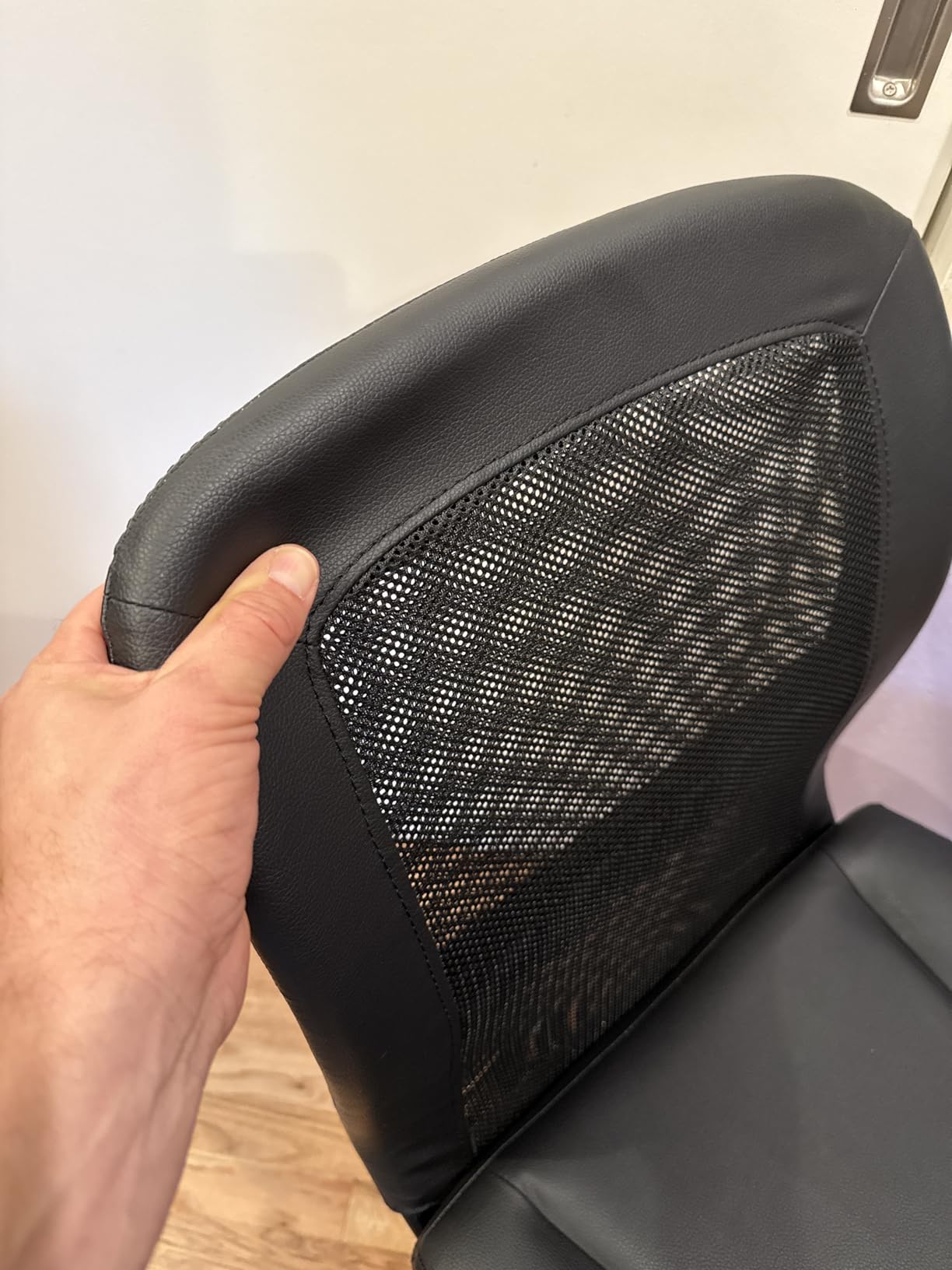
If you run warm, this is the most genuinely breathable option in the lineup. The back is a real mesh panel rather than a mesh-textured fabric, and combined with the faux leather seat that keeps heat down where you are actually sitting, it stays cooler through a summer afternoon than any of the PU leather chairs here.
The 16-inch seat depth is close to the ideal for short thighs, and the gently supportive lumbar curve in the mesh is positioned lower than a typical task chair because the backrest is short. The armless profile is narrow enough to slide under older roll-top and built-in desks, which is a real problem in a lot of apartments where the desk has a solid drawer on one side.
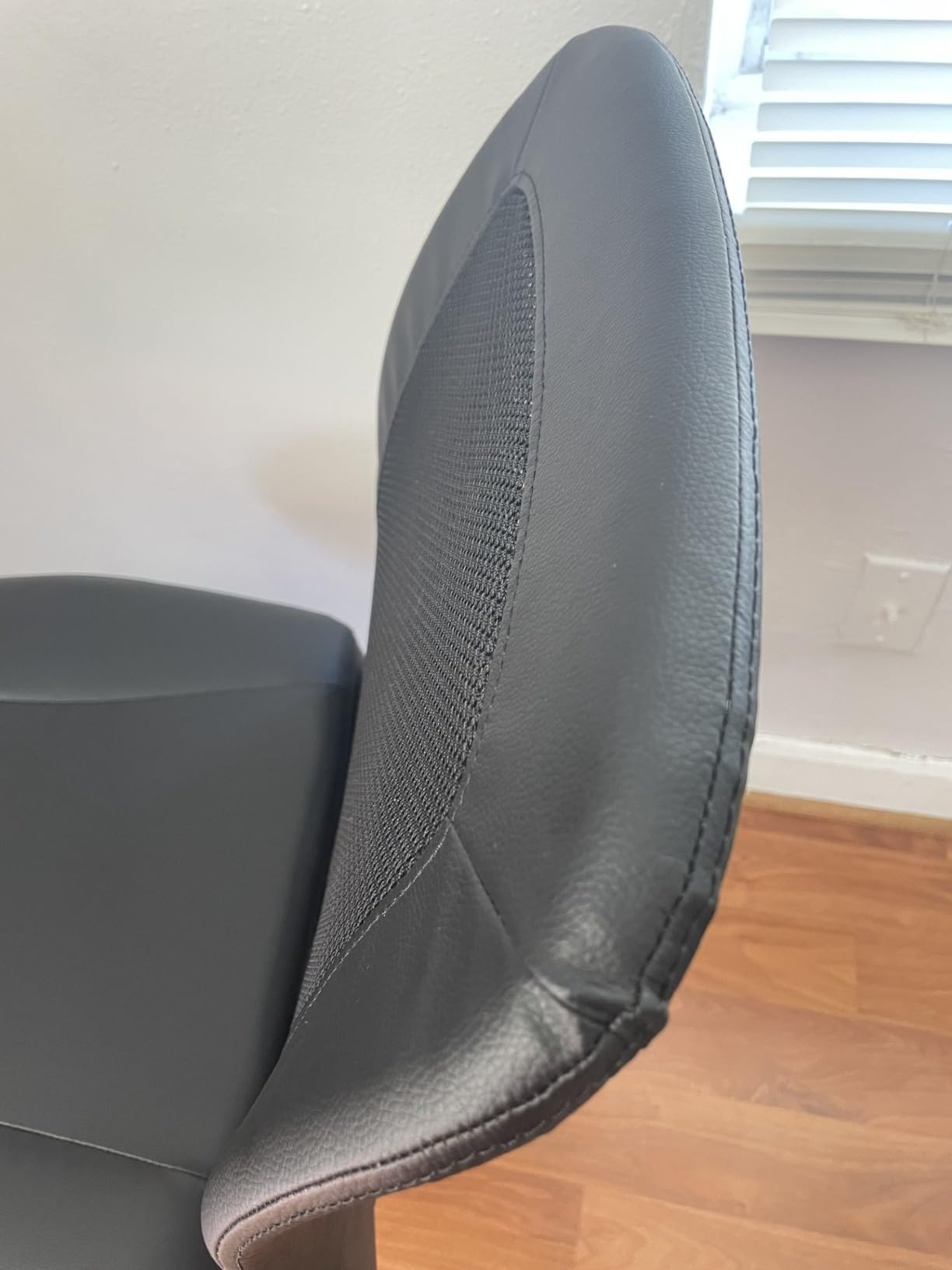
It weighs 17.6 pounds, which means you can pack it for a writing retreat or a temporary workspace, and the dual-wheel casters glide quietly. The foam-layered seat cushion gets good marks for moderate-length sitting, and the height lever is accessible from a seated position. There is a 1-year limited warranty and seven colour options.
The most common complaint is not about comfort at all: the back frame itself is unpadded, and the bent steel tube presses into the lower back over a long day. The second is that there is no tilt of any kind, only height. Several reviewers say they already regret the purchase for long-term daily use, which is worth taking seriously if this is your main work chair.
Who this chair suits
This suits a petite woman working in a room that gets warm, or anyone who has tried a mesh chair before and preferred it to PU leather. It is a strong secondary chair for a home office where the main desk is a built-in or a roll-top, and for anyone who wants to bring a chair to a retreat or a second location.
Who should skip it
Skip it if you have upper back pain or a history of back injury, because the unpadded frame pressing into the lumbar area is exactly the pressure that causes trouble. It is also not built for plus-size users, since the small seat is the trade-off that makes everything else work.
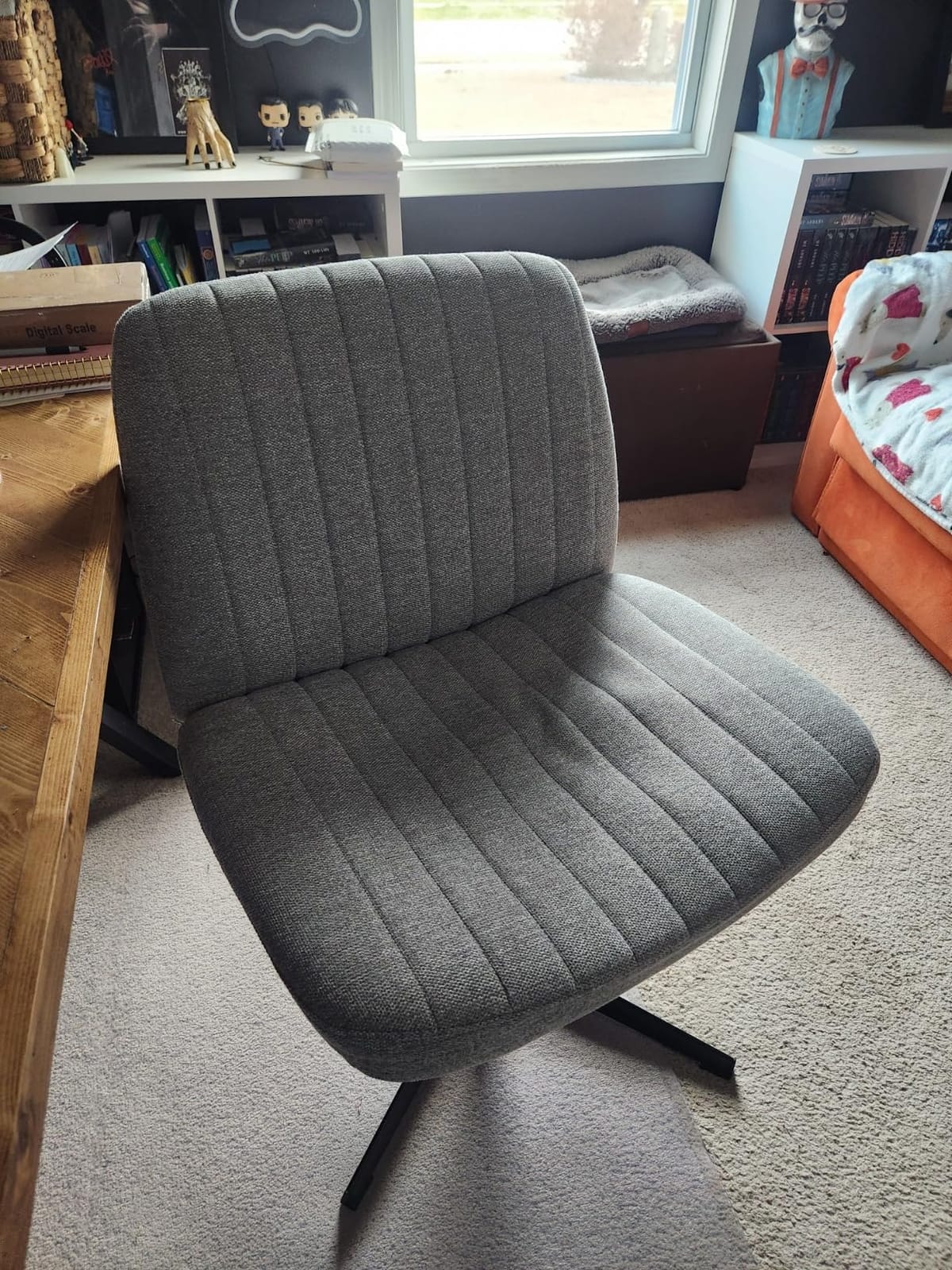
8. OLIXIS Armless Mesh Chair – Best for a Machine-Washable Cover
OLIXIS Armless Home Office Chair, Ergonomic Small Desk Chair
- Outer cover fully removable and machine washable
- Y-shaped mesh back spreads pressure and keeps air moving
- Wide high-density foam seat for a compact chair
- Quiet casters work on hardwood
- tile and carpet
- Compact low back suits short sits rather than long workdays
- Backrest has no tilt or recline
- Assembly requires following the illustrated manual
This is the one chair here where you can take the cover off and wash it, and that turns out to matter more than any spec on the list for anyone who works long enough to sweat through an upholstered seat. The outer seat cover is fully removable and machine washable, which is unusual at this level and eliminates the single most common complaint about fabric and PU chairs.
The Y-shaped mesh backrest distributes pressure evenly while keeping airflow constant, and the seat is wide high-density foam for a chair with a compact 16.34-inch depth. The base is BIFMA-tested and reinforced, with five 360-degree casters that reviewers say glide over hardwood, tile, and carpet without scratching.
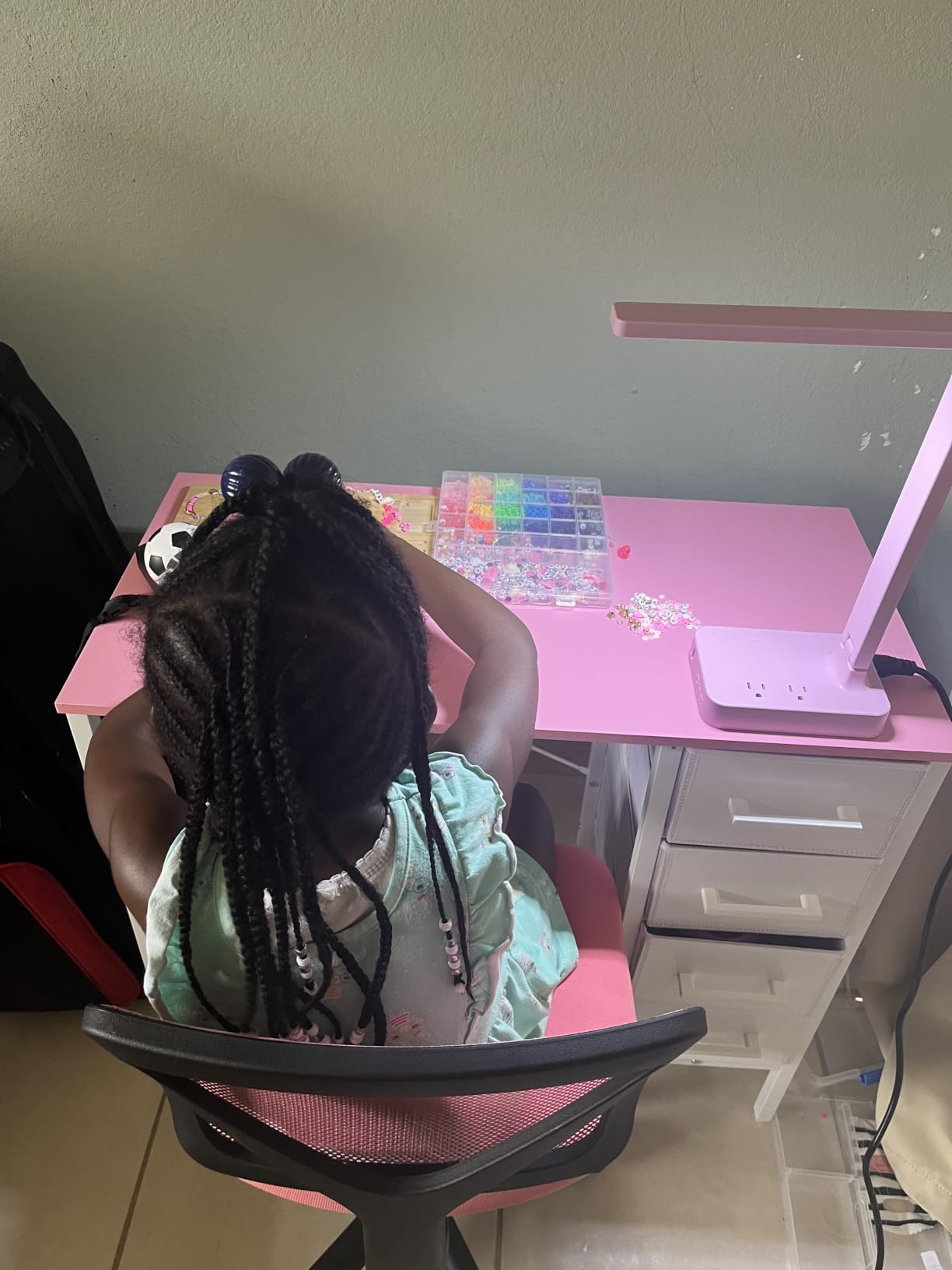
At 11.9 pounds, this is tied for the lightest frame in the group, and the whole unit assembles in four illustrated steps in about ten to fifteen minutes with the screws, tools, and manual included. Pneumatic height adjustment is responsive, which is what lets you set the screen at eye level.
The limitation is scope. This is a compact low-back chair for small frames and shorter sitting periods, not for eight-hour days, and the backrest has no tilt or recline adjustment whatsoever. The listing is also newer, with 585 reviews averaging 4.3, so there is a shorter long-term track record here than for the chairs higher on this list.
Who this chair suits
This suits a petite woman in a shared family office, a dorm, or a craft room who wants a chair she can strip and wash. It also suits anyone using a chair part-time, for a few hours of focused work rather than a full day, where the compact proportions are an advantage rather than a limit.
Who should skip it
Skip it as your primary all-day chair, because the fixed low back will not support you through a long shift and there is no recline to shift into. Taller or larger users should also look elsewhere, since the compact seat is deliberately sized down.
9. ERGOSEAT Armless Small Desk Chair – Best for Apartments and Dorms
Armless Office Chair with Wheels, Small Desk Chair for Apartment – Black
- Narrow 18.1 inch armless width saves up to 30 percent floor space
- Slides under 28-34 inch desks
- Thick 2.7 inch cushion reduces hip pressure
- SGS-certified gas lift and scratch-resistant casters
- Low backrest limits support to the lower back
- Height is the only adjustment available
- PU leather can feel warm against the skin
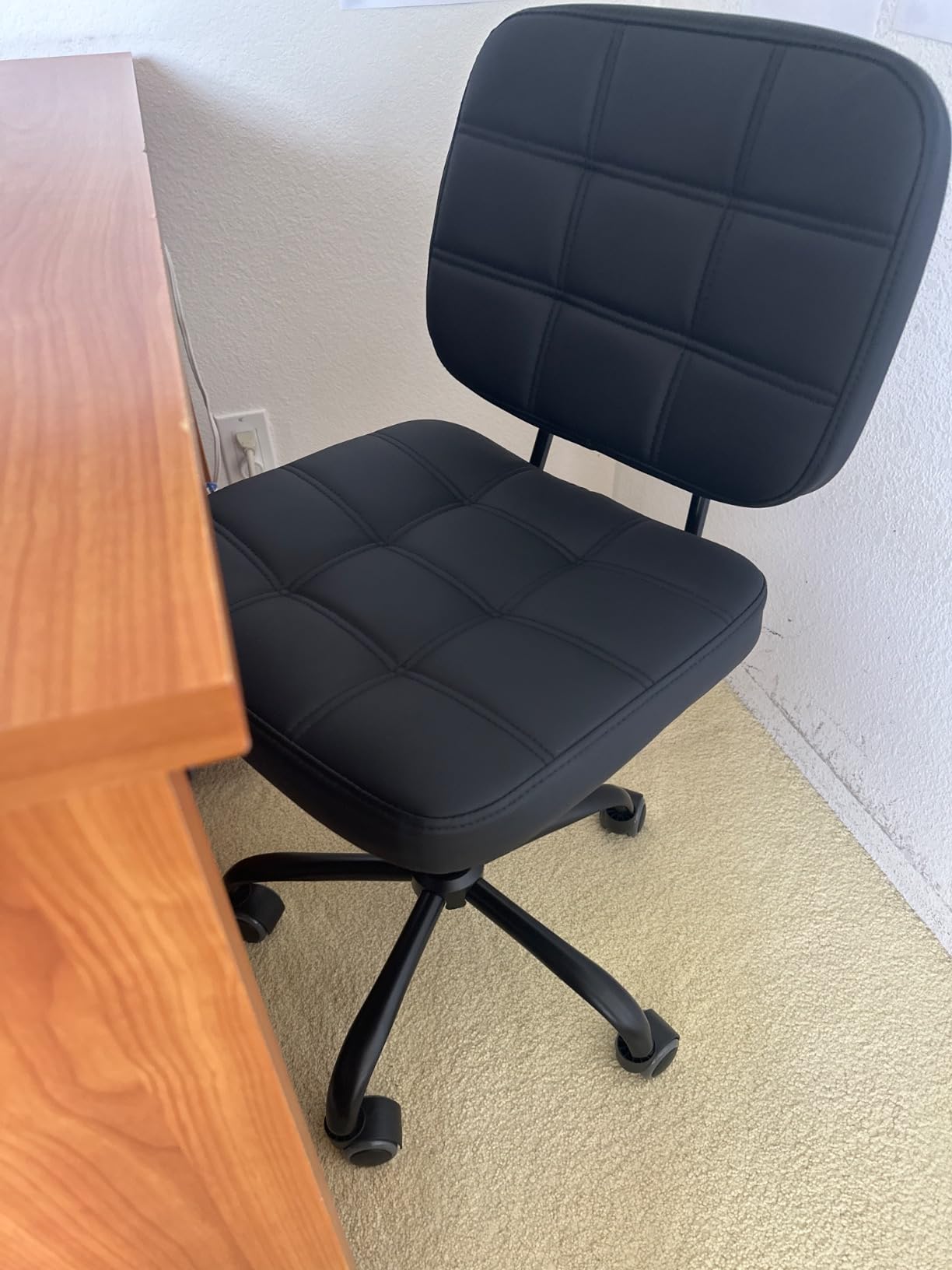
This chair is engineered around floor space, and the number that proves it is the 18.1-inch armless width. That footprint saves up to 30 percent of the floor area a standard task chair occupies, and it slides under desks between 28 and 34 inches deep, which covers most writing desks, small kitchen tables used as desks, and dorm furniture.
Height adjustment runs four inches, from an 18.5-inch to a 22.5-inch seat height, using an SGS-certified gas lift on a heavy-duty metal base rated to 250 pounds. That floor is a little higher than the Yaheetech at number two, so if you are under 5’0″ this is a second choice rather than the first.
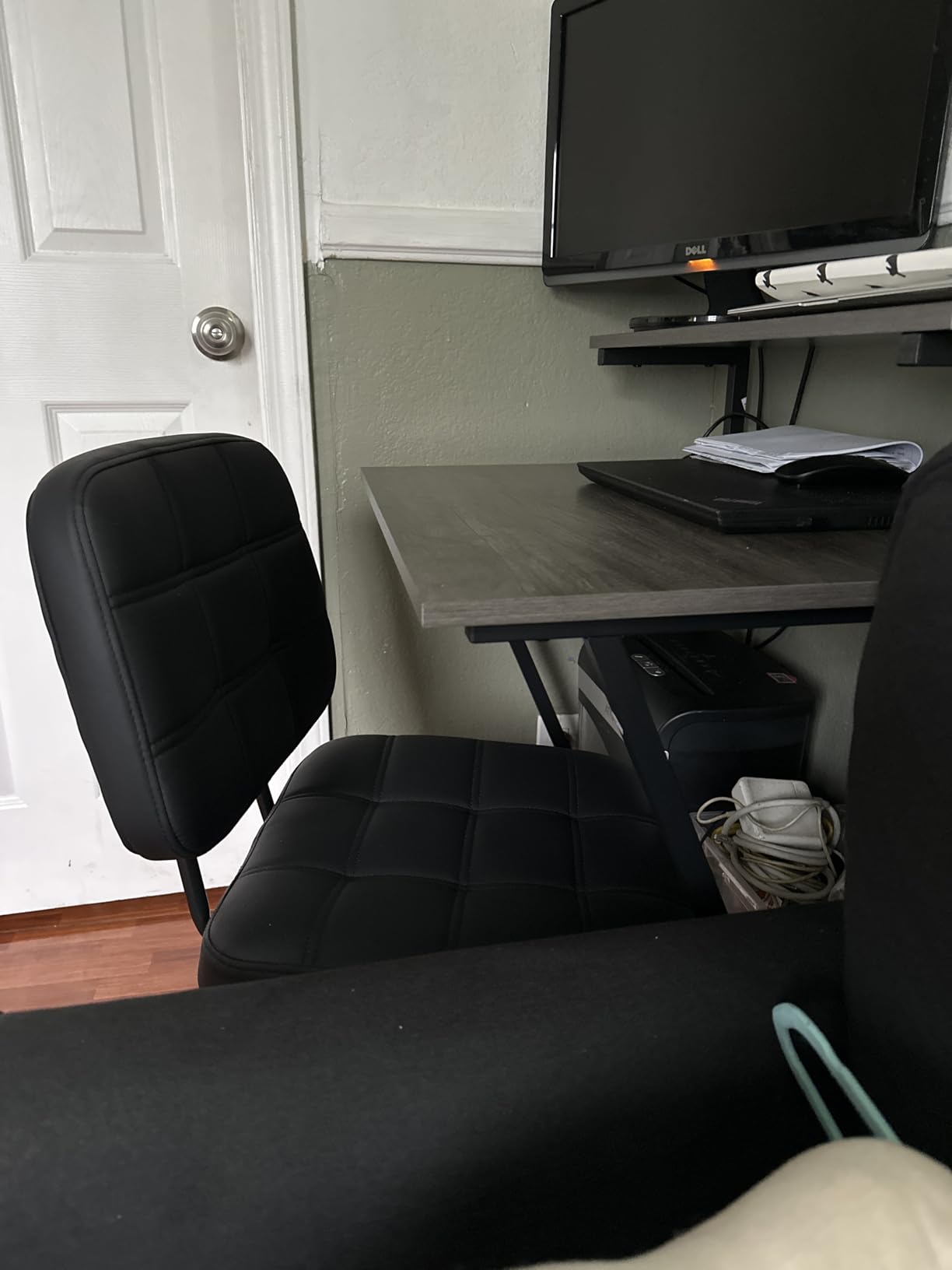
The 2.7-inch high-density sponge cushion under double-stitched PU leather is the thickest in this group, and reviewers specifically note that it reduces pressure on the hips over a long sit. The curved low backrest gives targeted lumbar support rather than trying to support the whole spine, which is a sensible design for a small frame. Assembly is tool-free in about ten minutes because everything is pre-drilled.
What it cannot do is recline. Height is the only adjustment, there is no tilt, and the backrest stops at 13.78 inches of interior height, so it supports the lower back and nothing above it. The PU covering is also warmer than mesh, which is the usual trade for a wipe-clean surface.
Who this chair suits
This suits a petite woman in a studio apartment, a dorm, or a bedroom office where floor space is the binding constraint rather than budget. It is also a good match if you like sitting at an angle and want a padded seat to do the work while your back is only partly supported.
Who should skip it
Skip it if you are under 5’0″ and your feet do not reach the floor, because an 18.5-inch minimum is high for that height without a footrest. It is also the wrong choice for anyone who needs a recline or for anyone who runs warm.
10. DUMOS Armless Mesh Chair – Best Budget Pick
- Lowest cost in this lineup with a genuinely useful feature set
- Removable mesh cushion cover makes cleaning simple
- Y-shaped backrest supports the spine and lumbar area
- Assembly is a couple of screws with no extra tools
- Light 11.9 lb frame that rolls and adjusts smoothly
- Basic seat cushion several reviewers expect to wear out
- Not comfortable enough for constant all-day use
- Gas lift quality is inconsistent across units
- No backrest adjustment of any kind
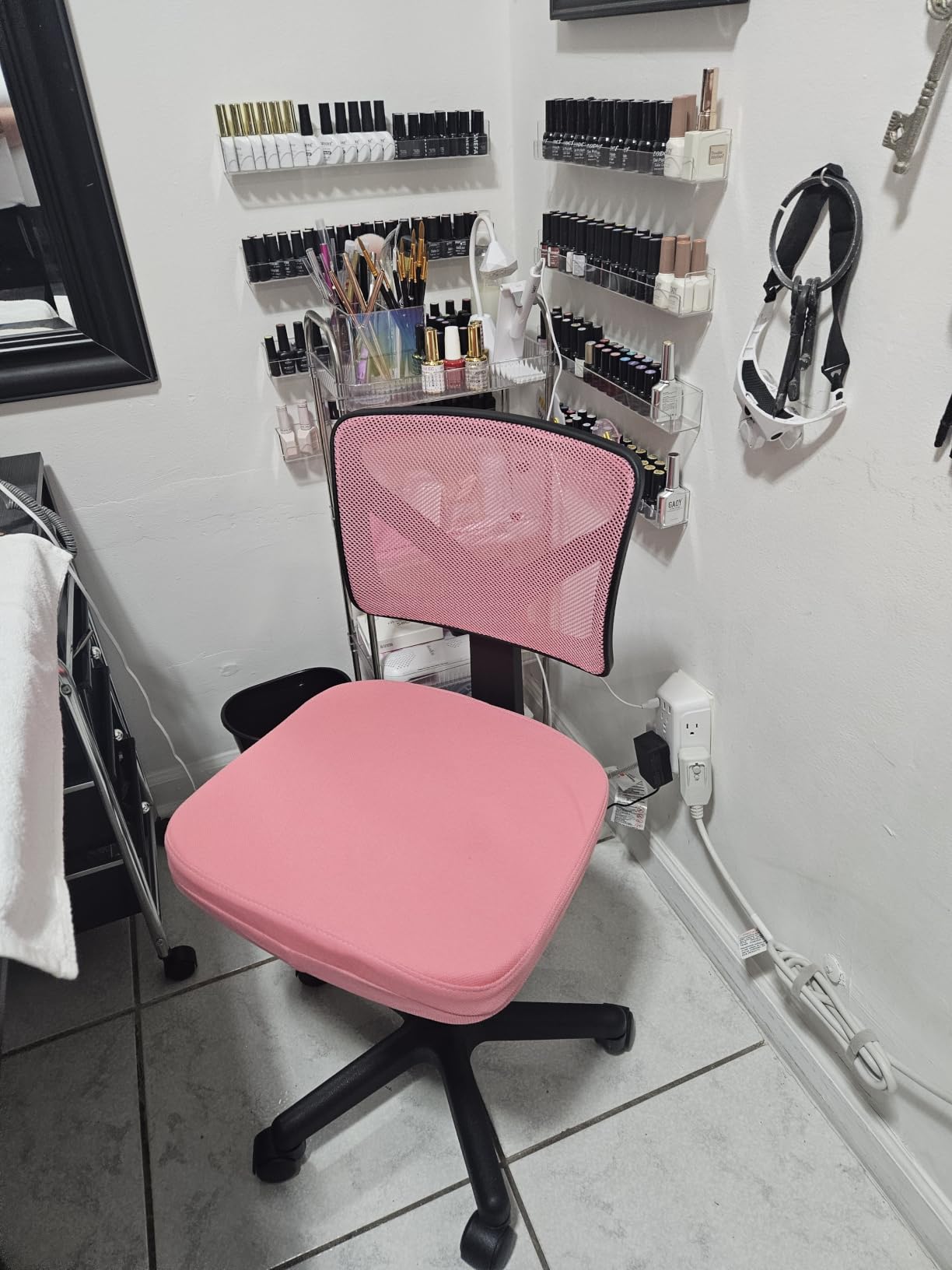
If you are furnishing a second or third workspace on a tight budget, this delivers more than its price suggests. The Y-shaped backrest supports the spine and lumbar area, the mesh back is genuinely breathable, and the whole chair is 11.9 pounds, tied for the lightest we reviewed. Assembly is a couple of screws and no additional tools.
The removable mesh cushion cover is the feature that owners mention most and competitors rarely match. You can take it off and wash it rather than living with a seat that slowly accumulates everything you spill on it, and because the cover is mesh, air moves through the sitting surface rather than just the back.
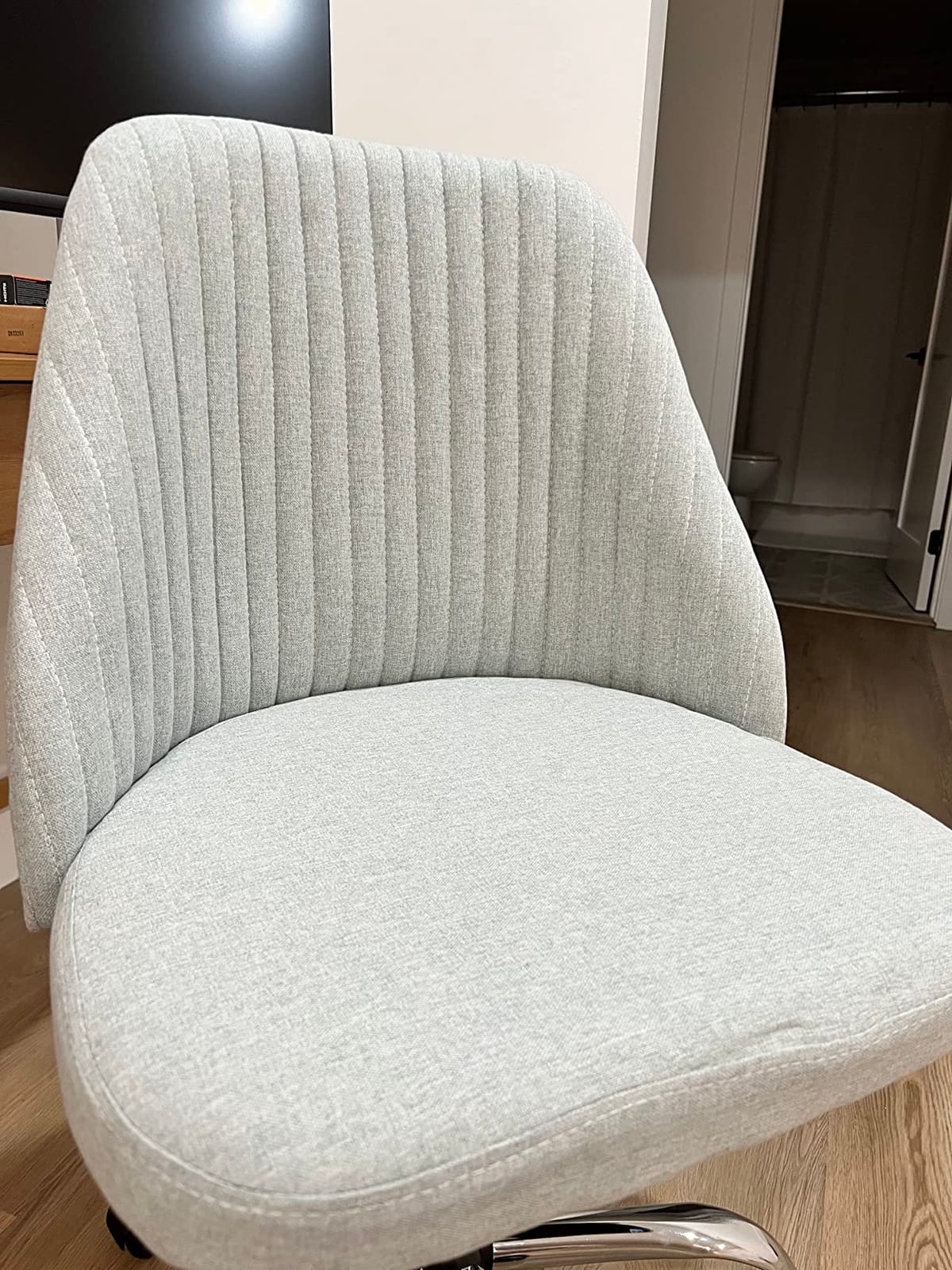
The gas lift is rated to 250 pounds, the frame is metal with nylon casters, and the 16.33-inch seat depth is well matched to short thighs. Buyers broadly agree it delivers far more than the price would suggest, and the recurring praise for the two-screw assembly is genuine.
Three cautions before you commit. The seat cushion is basic and several reviewers expect it to wear out eventually, it is not comfortable enough for constant all-day use, and a small number of owners describe repeated problems with the supplied gas lift, which is the one component failure we see mentioned. If you buy it, check the lift early.
Who this chair suits
This suits a student, a first-apartment renter, or anyone who needs a breathable chair for a few hours a day without spending much. The removable washable cover is a genuine advantage in a shared space, a child’s room, or anywhere with pets.
Who should skip it
Skip it if it will be your main chair for eight hours a day, because the padding and the fixed back will not carry that. It is also not built to grow with you, since there is no backrest adjustment and the frame is compact.
11. BestOffice Armless Mesh Chair – Best for Moving Between Rooms
BestOffice | Armless Office Chair | Black | with Lumbar Support
- Lightest frame in this lineup at 13.5 pounds
- 16.3 inch seat depth suits short thighs
- Curved mesh back lands in the lumbar area
- Assembles in about ten minutes with included tools only
- Seat cushion compresses and loses comfort after about an hour
- No tilt or recline function at all
- 225 lb weight limit is the lowest in this group
- Narrow seat feels cramped to average or larger builds
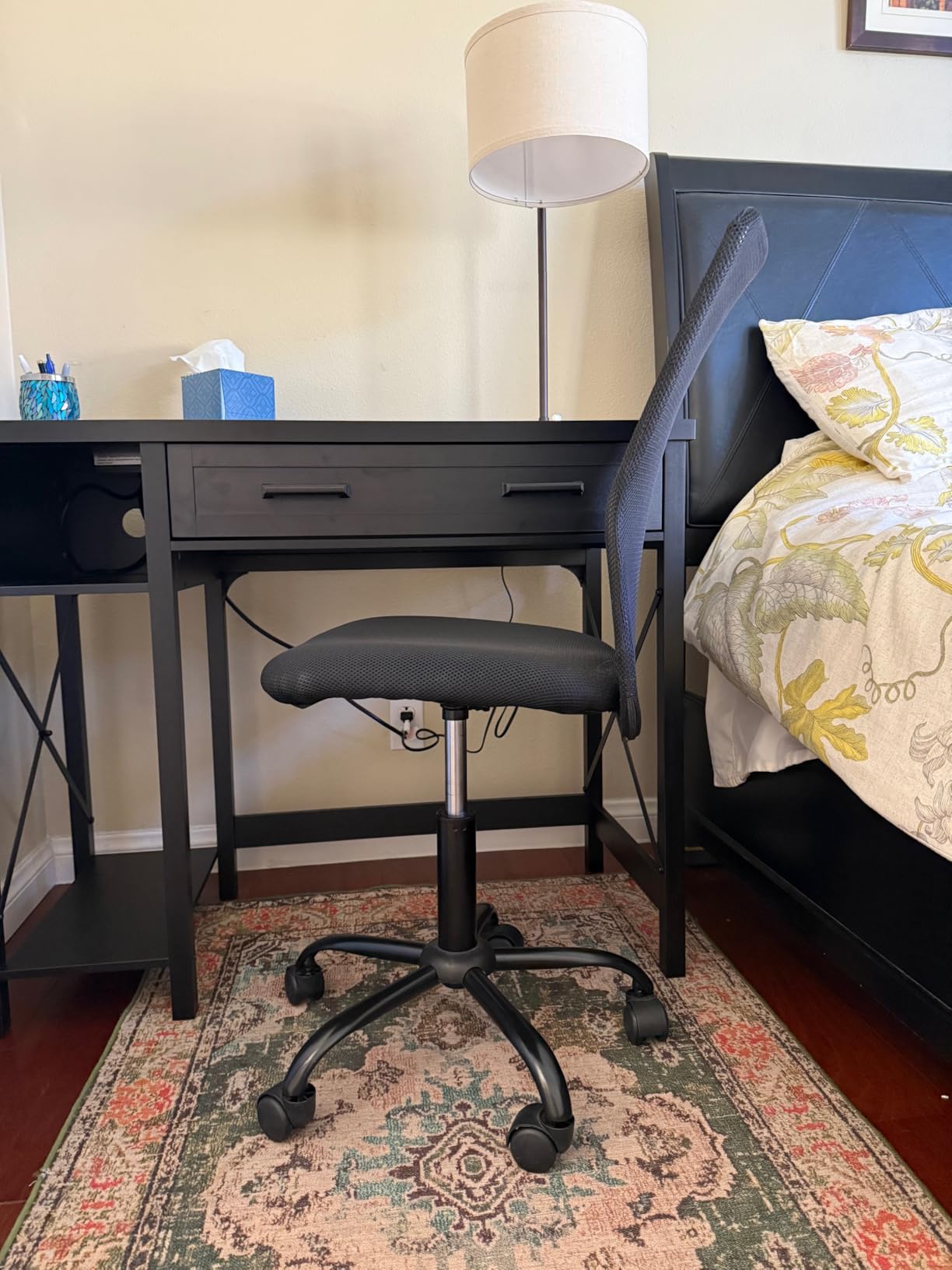
At 13.5 pounds, this is the lightest chair in the group, and that changes how you use it. A chair you can carry with one hand turns a spare corner of a room, a shared family office, or a guest room into a usable workspace, which no heavier chair on this list can do.
The armless frame has a small footprint that tucks under a built-in desk, and the curved mesh back lands in the right spot for shorter users’ lumbar area. One reviewer at 5’7″ specifically notes that the backrest curve provides true lumbar support at her height, and 10,090 reviews at 4.3 stars make this one of the more proven listings here.
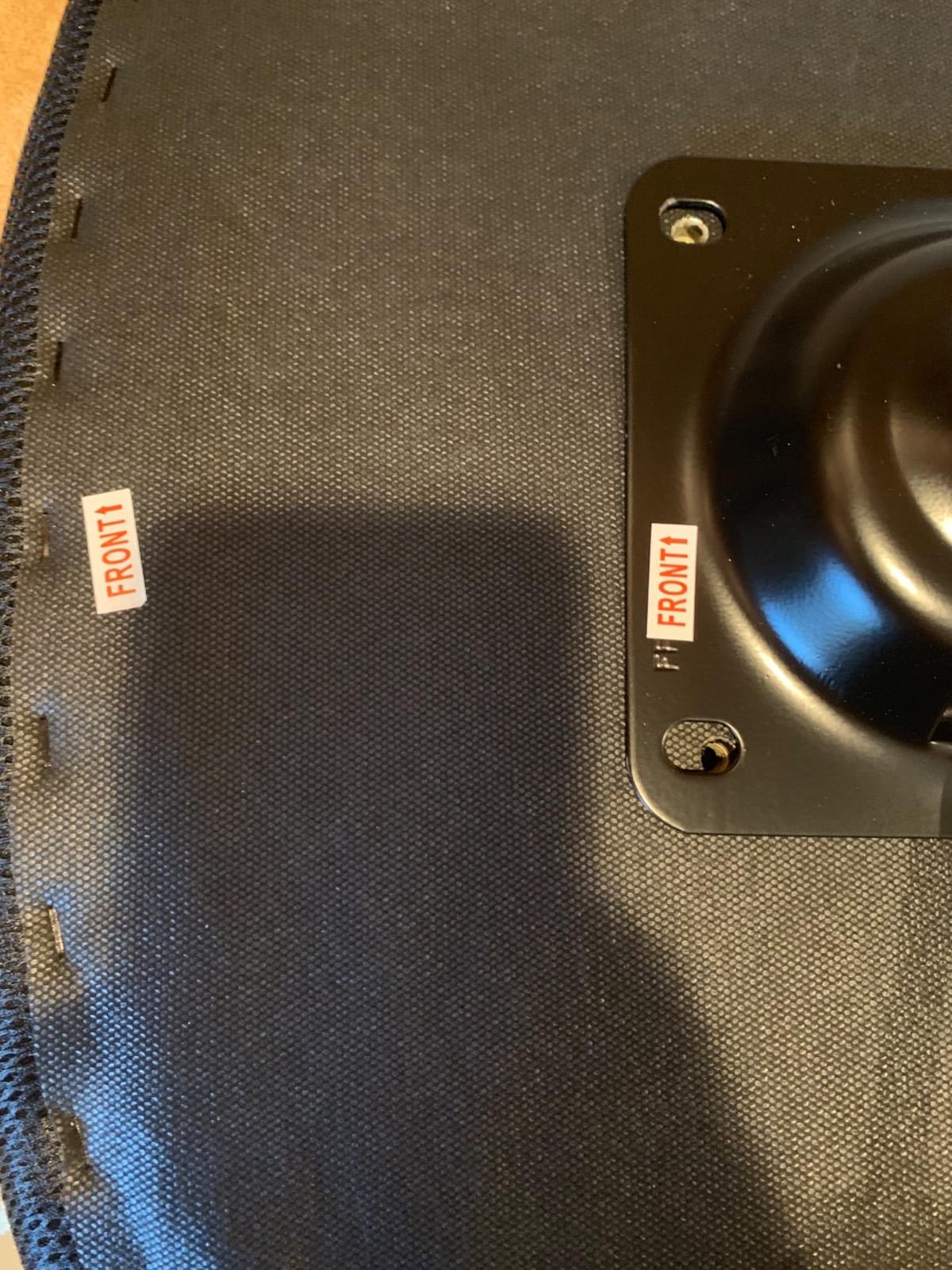
It arrives with all hardware and tools included and takes roughly ten minutes to assemble, and the BIFMA-passing metal base has smooth-rolling nylon casters. Seven colour options are available, which is unusual at this level and useful if the chair lives in a bedroom rather than an office.
The limitations are consistent across reviews. The seat cushion compresses and loses comfort after about an hour, there is no tilt or recline at all, and the 225-pound weight limit is the lowest in this group, so a petite woman who is also solidly built should check that number before buying. The seat is also narrow enough that average or larger frames report feeling cramped.
Who this chair suits
This suits a petite woman who works in more than one room, or who wants to keep a usable chair in a small flat without it dominating the floor. The light weight also makes it the easiest of the twelve to move when you need to clean behind it.
Who should skip it
Skip it for full-day work, because the thin cushion fatigues fast and there is no recline to change position into. Also skip it if you are near or above the 225-pound limit, where the weight rating rather than your height becomes the deciding factor.
12. POWERSTONE Small Mesh Chair – Best for the Smallest Seat
POWERSTONE Small Home Office Desk Chair, Swivel Rolling Study Computer Chair, Adjustable Height Task Chair with Armless Mid Back, Upholstered Mesh Seat, Light Green
- Smallest seat in this lineup at 15 by 15.5 inches
- Breathable mesh seat and low back stay cool
- Arrives as a deliberately simple build that is easy to put together
- Quiet PU casters that will not mark hard floors
- Very small seat and back area with limited lumbar support
- Iron frame and 10 lb build feel basic
- Requires assembly and construction is simple throughout
This is the smallest chair in the lineup, with a 15 by 15.5-inch seat, and for someone who is under 5’0″ and working in a genuinely tight space that is the entire appeal. It is also the lightest at 10 pounds, so it moves with one hand and disappears into a corner when it is not being used.
Seat height adjusts from 17.5 inches to 22.5 inches with a full 360-degree swivel, and the seat and back are breathable mesh so you stay cool even in a small room with poor airflow. A 1.5-inch sponge cushion adds some softness to an otherwise very simple iron frame, and the PU casters run quietly without marking hard flooring.
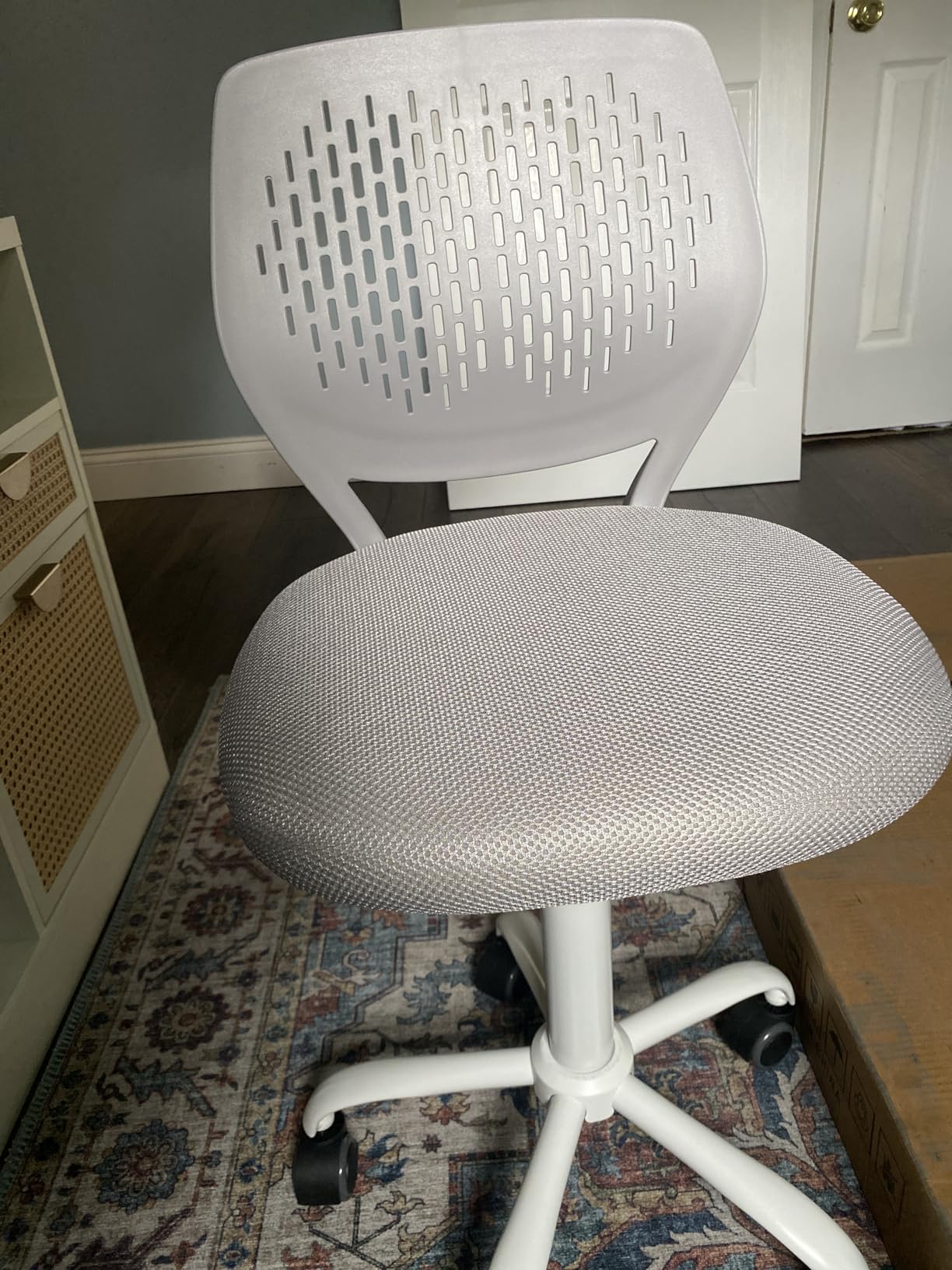
Owners describe it accurately as doing its job as a small-space or vanity seat. The review pool is smaller than most here at 157 reviews and 4.4 stars, so there is less long-term evidence, but there is also very little to go wrong given how simple the build is.
The limits are clear. The seat and back area are very small, lumbar support is minimal, and the 10-pound iron frame feels basic in the hand. If you plan to sit in this chair for a full working day rather than for an hour at a time, you will feel the difference by the afternoon.
Who this chair suits
This suits someone under 5’0″ working at a vanity, a small dorm desk, or a kitchen table, and anyone who wants a chair that takes up almost no room. It is a genuinely good secondary or occasional chair rather than a primary work chair.
Who should skip it
Skip it if you need lumbar support for a back condition, because the support area is minimal by design. Also skip it if you are above about 5’3″, where the 15-inch-wide seat becomes the limiting factor rather than your height.
How to Measure Yourself Before You Buy
Ten minutes with a tape measure removes most of the guesswork from this purchase, and it is the step that separates a chair that fits from one you will still be adjusting a month from now. Measure in ordinary clothes and shoes you would actually work in, because the shoes change your sitting height by an inch or more.
1. Sitting height. Sit on a flat surface with your back against a wall and your feet flat on the floor. Measure from the floor to the top of the seat surface you are sitting on. That number is the seat height you need, and it is the number to compare against a chair’s minimum height, not its maximum.
2. Thigh length. While sitting with your back supported, measure from the crease where your thigh meets your torso to the inside of your knee. This is the seat depth you need. Compare it against the chair’s published seat depth, and if the chair gives a range, set it to your number.
3. Torso length. Sitting tall, measure from the top of your head down to the seat. If this is short relative to your legs, a chair with a fixed lumbar will land too high and you should prioritise a low or adjustable one.
4. The two-to-three-finger test. Sit back against the backrest and slide two or three fingers between the front edge of the seat and the back of your knee. If the edge presses into your calf, the seat is too deep. This is the fastest check there is, and it works on any chair in about five seconds.
5. Shoulder width. Measure across the top of your shoulders. If a chair’s armrests sit wider than that, your shoulders will splay upward and you will hunch, which is one of the most common reasons petite women end up with neck pain from a chair that was supposed to help.
What Petite Users Actually Need in an Office Chair
Most office chairs are designed for an average user roughly 5’7″ to 5’11” tall. When the chair does not fit, you slide forward off the seat, lose lumbar contact, and hunch, which is the exact posture problem the chair was meant to prevent, so getting the fit right is a health decision rather than an indulgence.
Minimum seat height of 15 to 17 inches
Start here because nothing else matters if your feet do not reach the floor. Dangling feet put pressure on the backs of your thighs, cut off circulation at the knee, and leave your pelvis tilted forward so your lower back rounds. Among the chairs we reviewed, the Yaheetech Small Desk Chair has the lowest published floor at 16.3 inches, followed by the Sweetcrispy at 17.71 inches and the POWERSTONE at 17.5 inches.
Seat depth that shortens to 15 to 17 inches
A seat that is too deep is the second failure point. The front edge presses into your calves, you slide forward to escape it, and you lose the lumbar support that was the reason you bought an adjustable chair. The two-to-three-finger rule above is the test. The Yaheetech vanity chair at 15.2 inches and the POWERSTONE at 15.5 inches are the shallowest options here; anything above 19 inches needs a seat cushion at the back to work for a short frame.
Lumbar support that reaches the small of your back
A shorter torso means the natural curve of your lower back sits lower on the backrest than it does on a standard chair, so a fixed lumbar knob ends up across your mid-back. The Sweetcrispy and the DUMOS PU leather chair both build a U-shaped curve low into the frame, which is the most reliable fix available without a knob you can slide. Our guide to office chairs for wider hips covers the opposite pressure problem if that is closer to your situation.
Armless or flip-up armrests
Armrests set too far apart force your shoulders up and outward, and you end up hunching over the desk within the hour. An armless frame removes the problem entirely and lets you pull in close to the keyboard, while the flip-up arms on the Brick Attic leather chair let you keep support when you want it and clear the desk when you do not.
Breathable material for long sessions
Mesh backs run cooler than PU leather, and the Serta, OLIXIS, and DUMOS mesh chairs are the ones to consider if your room gets warm. The vertical-grain PU leather on the Sweetcrispy and DUMOS chairs is a reasonable middle ground, because the grain promotes airflow in a way flat faux leather does not. Budget the longest sessions for mesh.
A headrest that adjusts low enough, if you need one
None of the twelve chairs in this lineup includes a headrest, and we want to be straightforward about that rather than implying otherwise. It is a genuine gap for anyone who works with a monitor at the top of a tall desk, and it is one reason premium chairs built for shorter frames are often discussed in this category. If neck support matters to you, budget for it separately and check that the headrest sits at neck height rather than shoulder height.
Which Chair Fits Your Height
Height is a starting point, not a decision, because leg length relative to torso length varies enormously inside any single height band. A 5’2″ woman with long legs and a 5’0″ woman with short legs need different seat depths from the same chair. Use the brackets below to narrow the field, then measure.
Under 5’0″. Focus on the minimum seat height first. The Yaheetech Small Desk Chair at a 16.3-inch floor is the strongest starting point in this list, and the Sweetcrispy at 17.71 inches works if you add a footrest. At this height, plan on a footrest, because very few chairs drop far enough on their own.
5’0″ to 5’2″. This is the range most of the compact chairs here were designed for. The Sweetcrispy, the Serta at a 16-inch seat depth, the DUMOS mesh chair, and the ERGOSEAT all sit in this band, and you have a genuine choice on lumbar shaping.
5’2″ to 5’4″. The Amazon Basics mesh chair, the DUMOS PU leather chair with its wider seat, and the Brick Attic with flip-up arms all work here, provided you check the seat depth against the two-to-three-finger test before you commit to the leather models.
5’4″ and up. Seat depth becomes the constraint rather than seat height. Choose the DUMOS PU leather chair for the roomiest seat, or the Amazon Basics for the most proven option, and only consider the Brick Attic if you will add a cushion to shorten its 19.3-inch pan.
When a Footrest Helps and When It Does Not
A footrest is the standard fix for a chair that will not go low enough, and it works well for seat height. It genuinely solves dangling feet by bringing the floor up to your legs, and adding a few inches of height to a chair is far easier than finding one engineered for a 4’10” frame.
It does not solve seat depth. A footrest changes where your feet land, not where the front edge of the seat sits against your calf, so a chair that is too deep will still push you forward off the lumbar support no matter what is under your feet. For that problem you need a shallow seat or a seat cushion placed at the back of the pan.
It also does not fix a lumbar support sitting too high. That is a torso-length problem, and the only real solutions are a chair with a lower or adjustable lumbar curve, or a small cushion behind your lower back. If you only plan to buy one thing to improve an existing chair, a properly sized seat cushion at the back of the seat usually does more good than a footrest.
Office Chairs for Back Pain, Sciatica and Post-Injury Recovery
Advice about chairs changes completely when there is a pre-existing condition, and this is where most roundups go quiet. Recurring threads on r/OfficeChairs and r/femalelivingspace about chairs for petite women describe a consistent pattern: people with sciatica, upper back pain, or a history of rehabilitation do not want a smaller chair, they want a chair with more adjustments.
The first priority in that situation is a seat you can get low enough to keep your pelvis neutral, because a tilted pelvis puts load onto the lower lumbar and aggravates sciatica. Our second priority is a lumbar support that can be pushed down into the small of the back, which rules out most of the fixed-back chairs in this lineup.
Our third recommendation is to increase the number of positions available to you rather than trying to find one perfect posture. People managing chronic pain in the discussions we read consistently report that a chair with a tilt or recline function lets them shift position through a day, while a fixed upright chair forces them to hold one shape. Among these twelve, the Brick Attic chair is the only one with a rocking function, and the remainder are all upright task chairs.
If you are working through a specific diagnosis, use this guide to shortlist a seat height and a seat depth that work for you, then confirm the fit with a physical therapist or a showroom fitting. Our premium office chair guide covers the higher-end end of the market where more adjustment ranges and headrests become available.
Frequently Asked Questions
What is the best office chair for petite people?
The best office chair for petite people is one engineered for smaller frames rather than a standard chair scaled down. Look for a minimum seat height of 15 to 17 inches so both feet rest flat, a seat depth that shortens to 15 to 17 inches, lumbar support that lowers to the small of the back, and a headrest that adjusts low enough to reach the neck.
What is the best office chair for someone with short height?
For someone with short height, the deciding specification is the minimum seat height, not the maximum. Choose a chair that lowers to 16 inches or less, then set the seat depth so two to three fingers fit between the front edge and the back of your knees. Among our picks, the Yaheetech Small Desk Chair has the lowest floor at 16.3 inches.
What are the best desk chairs for people with short legs?
For people with short legs, the two measurements that matter are minimum seat height and seat depth. Short legs need a chair that lowers far enough to flatten the feet and a shallow seat pan so the front edge does not press into the calves. Shallow options in our lineup include the Yaheetech vanity chair at 15.2 inches and the POWERSTONE at 15.5 inches.
What is the chair height for a 5ft person?
A 5 foot person should aim for a seat height of roughly 16 to 18 inches, measured from the floor to the top of the seat with feet flat. If the lowest a chair goes is 18 inches or more, add a footrest. Most standard task chairs bottom out around 19 to 20 inches, which is why feet dangle for most people at that height.
How low should an office chair seat be for a short person?
A short person should be able to lower the seat until their thighs are roughly parallel to the floor and both feet rest flat, with a small bend in the knee. For most adults under 5’4u0022 that lands between 15 and 17 inches. Higher than 17 inches and you will be on your toes, which loads the lower back.
Do petite people need a smaller office chair?
Not necessarily. What petite users need is a wider adjustment range, not a physically smaller chair. A standard chair that lowers to 16 inches with a seat depth that shortens to 15 inches will fit a small frame better than an undersized chair with no adjustments at all, because the fit has to be adjustable rather than simply small.
Will a footrest help if my office chair is too tall?
A footrest is a genuine fix when the seat is too high, because it raises the floor to meet your feet. It does not help when the seat is too deep, since the front edge still presses into your calves, and it does not fix a lumbar support that sits too high. For a deep seat, add a cushion at the back of the pan instead.
Are gaming chairs good for petite people?
Generally no. Gaming chairs are typically built with a tall fixed seat height, a deep seat pan, high side bolsters and wide armrests, all of which work against a small frame. The high bolsters also stop you sitting cross-legged. A mesh or fabric task chair with a lower minimum height and adjustable seat depth is a better fit.
What seat depth do petite people need?
Most adults under 5’4u0022 need a seat depth between 15 and 17 inches. The quick test is to sit back fully and slide two or three fingers between the front edge of the seat and the back of your knees. If the edge touches your calf, the seat is too deep and you will slide forward and lose lumbar support.
Should a short person buy an office chair with a headrest?
A headrest helps if your monitor sits high enough that you look up, and it is close to essential if you take calls regularly. Check that the headrest adjusts low enough to support the base of your neck rather than resting on your shoulders, since most fixed headrests sit far too high for shorter users.
What is the best office chair for petite women with back pain?
Start with seat height: get your pelvis neutral and your feet flat, because a tilted pelvis loads the lower back. Next look for lumbar support that lowers into the small of your back, then a tilt or recline function so you can change position through the day. Confirm the fit with a physical therapist or a showroom fitting if you have a specific diagnosis.
The Verdict: Which Chair Should Petite Women Buy?
Buy the Amazon Basics Low Back Mesh Chair if you want the most proven, lightest, best-reviewed option and your main problem is simply that nothing you have tried lets you plant your feet properly. Buy the Yaheetech Small Desk Chair instead if feet-on-the-floor is your single biggest frustration, because its 16.3-inch floor is the lowest in this group. If lumbar support that actually lands in the small of your back is the deciding factor, take the Sweetcrispy.
For everything else, match the chair to the room. The Serta, OLIXIS, and DUMOS mesh chairs are the ones to consider if you run warm. The ERGOSEAT and BestOffice armless chairs suit tight spaces and shared rooms, the DUMOS PU leather chair is the answer if most small chairs make you feel squeezed, and the Brick Attic is the only pick here with flip-up arms and a rocking function. Whatever you choose, measure your sitting height and thigh length first and check the two-to-three-finger test on the day it arrives.
We will keep updating this guide as new models land, and if you are still deciding, our short-people office chair guide is the quickest place to compare the height ranges side by side.