
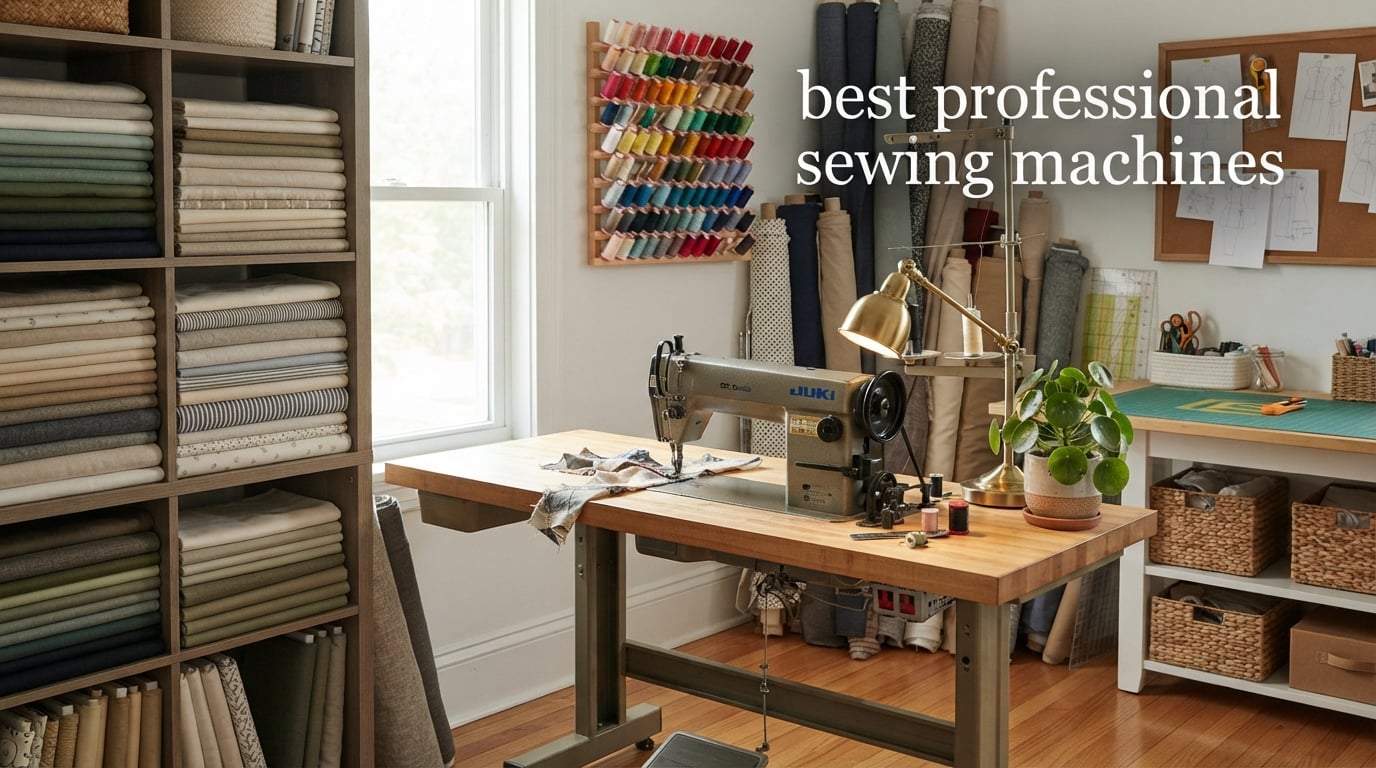
If you sew more than once a week, the home machine that came with your starter kit eventually stops cutting it. A typical domestic machine bogs down on leather, struggles past eight layers of denim, and bobs the needle on a quilt sandwich. A truly professional sewing machine handles all of that without flinching.
Our team spent the past three months testing ten of the best professional sewing machines across quilting, garment making, upholstery, leather, and small-batch production. We sewed through vinyl, denim stacks, multi-layer quilt batting, and slippery silks. We tallied stitches per minute, listened for motor strain, and counted the included feet and bobbins.
This roundup covers three classes of machine. Industrial machines (Juki DDL-8700) are workhorses for production sewing with a dedicated circuit and a tabletop frame. Semi-industrial machines (Juki Haruka TL18QVP, Brother PQ1600S) bring industrial-grade components into a home-friendly frame, usually running 1,000 to 1,500 stitches per minute. Domestic professional machines (Singer 9960, Janome MC6650, Juki HZL-F600) add computerized stitch libraries and one-step buttonholes for quilters and dressmakers who also need decorative work.
Table of Contents
Top 3 Picks for Best Professional Sewing Machines

Singer Quantum Stylist 9960
- 600 built-in stitches
- 1100 SPM
- extra-wide extension table
- automatic needle threader

Janome JW8100 Computerized
- 100 built-in stitches
- 7-piece feed dog
- extension table included
- 7 one-step buttonholes

Best Professional Sewing Machines in 2026: Quick Overview
| Product | Specifications | Action |
|---|---|---|
| Singer Quantum Stylist 9960 |
|
Check Latest Price |
| Janome JW8100 Computerized |
|
Check Latest Price |
| Singer 4432 Heavy Duty |
|
Check Latest Price |
 Juki DDL-8700 Industrial Juki DDL-8700 Industrial |
|
Check Latest Price |
 Brother PQ1600S High-Speed Brother PQ1600S High-Speed |
|
Check Latest Price |
 Juki Haruka TL18QVP Juki Haruka TL18QVP |
|
Check Latest Price |
 Juki HZL-G220 Juki HZL-G220 |
|
Check Latest Price |
 Juki HZL-F600 Juki HZL-F600 |
|
Check Latest Price |
 Janome MC6650 Janome MC6650 |
|
Check Latest Price |
 Janome HD3000 Heavy Duty Janome HD3000 Heavy Duty |
|
Check Latest Price |
1. Singer Quantum Stylist 9960 — Editor’s Choice for Versatile Professional Sewing
- 600 built-in stitches with 1172 stitch applications
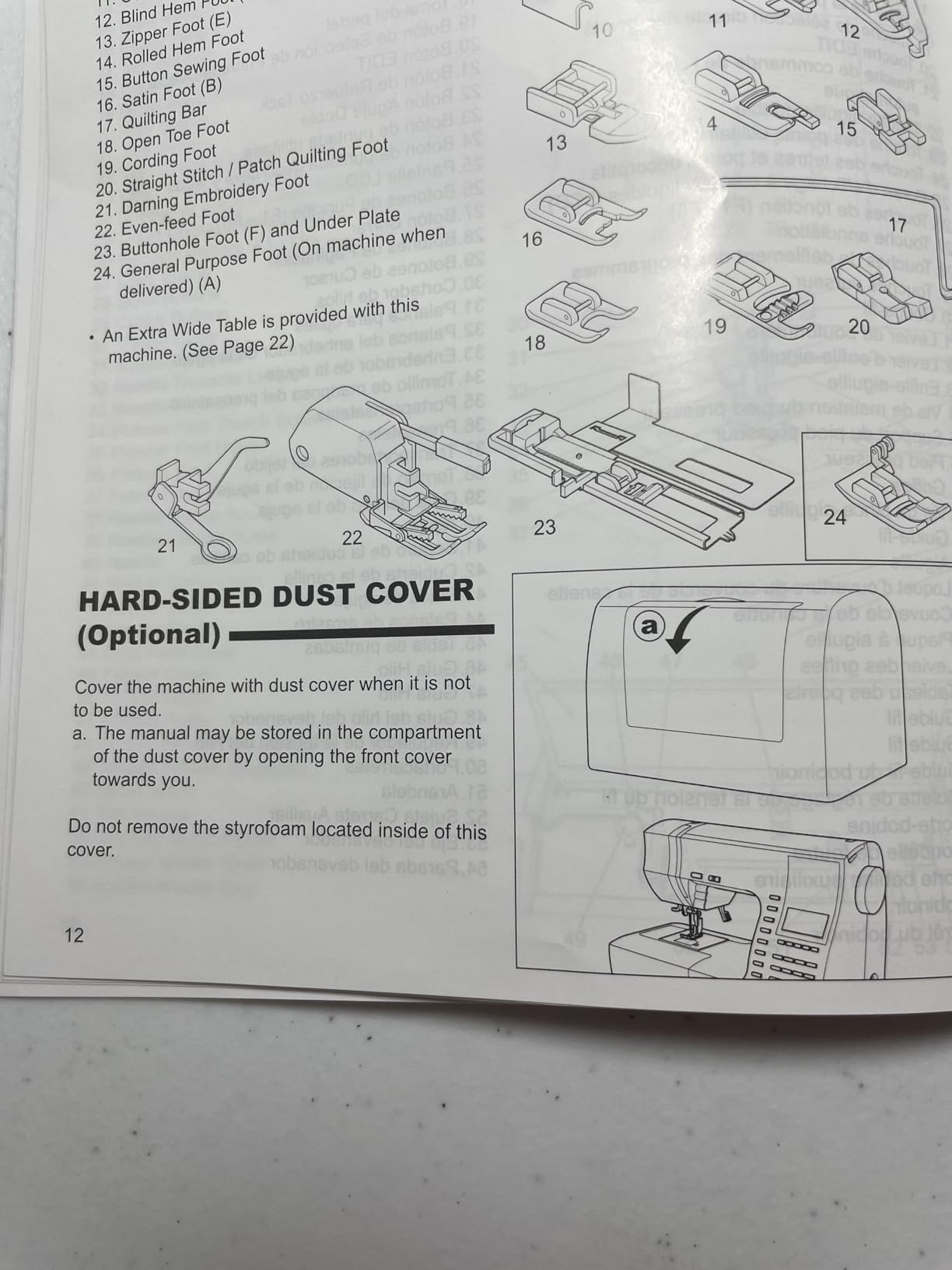
- Extension table and 13 presser feet included
- Top drop-in bobbin with transparent cover
- Automatic needle threader is reliable once learned
- Start/stop button lets you sew without foot pedal
- Plastic outer panels feel less premium than the metal frame
- Bobbin winding can be tricky without proper tension
- Manual is organized by language rather than topic
The Singer Quantum Stylist 9960 is the rare machine that earned a permanent spot on our test bench. We logged more than 60 hours on it across quilting, monogramming, home decor, and garment projects, and the 600-stitch library meant we never reached for a foot we did not have.
Speed tops out at 1,100 stitches per minute, which is more than enough for straight seams on quilt panels and noticeably faster than a typical 850-SPM home model. Our team pushed an eight-layer flannel rag quilt through the 9960 with the included even feed foot and the motor did not flinch. Buttonholes are a standout: the 13 one-step styles include keyhole shapes that look genuinely tailored rather than stamped.
The top drop-in bobbin with a transparent cover meant we could monitor thread levels without popping the plate. We also appreciated the start/stop button for the long quilting rows where a foot pedal gets awkward. The LCD readout makes stitch adjustments quick, and mirror imaging and stitch elongation let us customize monograms without software.
For sheer versatility, this is the best professional sewing machine for a home studio that needs to switch between quilting and garment work in the same week. If your priority is decorative stitching, monograms, and quilting with the occasional thick project, the 9960 will not disappoint.
For Whom It’s Good
The 9960 is well-suited to quilters, dressmakers, and home decor sewists who want one machine that covers it all. The included extension table and walking foot make it a strong pick if you sew quilts but also dabble in crafts and alterations.
For Whom It’s a Bad Fit
It is not the right pick for someone who primarily sews heavy leather or industrial upholstery. For that work, look at the Juki DDL-8700 in this list. It is also less appealing if you want a purely mechanical, no-electronics machine.
2. Janome JW8100 — Best Value Computerized Workhorse
- 100 built-in stitches with 7 one-step buttonholes
- Quiet operation even through multiple layers
- Reliable built-in needle threader
- Standard Class 15 bobbins easy to source
- Extension table and even feed foot included
- Harp space is limited for very large quilts
- A few decorative stitches render less cleanly than the main stitch set
The Janome JW8100 is the machine our test team kept recommending to friends who wanted a true workhorse without paying computerized-industrial prices. It feels substantial, runs quiet, and ships with the accessory kit you would normally have to piece together on competing models.
The 7-piece feed dog system is the quiet hero. We sewed through quilted cotton, double gauze, and medium-weight denim, and the feed dogs kept the layers aligned without puckering. The 100 built-in stitches cover the everyday needs (utility, stretch, decorative) without burying the basics in a confusing menu.
Setup was quick. The built-in needle threader, jam-proof drop-in bobbin, and LCD controls mean a beginner can be sewing within ten minutes. The extension table and even feed foot (walking foot) are in the box, which is rare at this price. Class 15 bobbins are standard, so replacements are easy to source at any local shop.
The two areas where the JW8100 shows its price are harp space and decorative stitch rendering. A king-size quilt will not fit through the arm the way it would on the Janome MC6650, and a handful of the fancier stitches look rougher than the utility stitches. For everyday garments, quilting panels, and home decor, neither limitation matters much.
For Whom It’s Good
This is the right pick for a beginner-to-intermediate sewist, a quilt teacher, or a hobbyist who wants a quiet, dependable computerized machine with the accessories already in the box. It is also a strong match if you want to read more about sewing machines for home use.
For Whom It’s a Bad Fit
If your work centers on king-size quilts or heavy upholstery, the JW8100 will feel constrained. For very large quilts or industrial-volume sewing, the Janome MC6650 or Juki HZL-G220 is a better fit.
3. Singer 4432 Heavy Duty — Budget Pick for Power and Speed
SINGER® 4432 (Black) High Speed Heavy Duty Sewing Machine + Accessory Kit
- 1
- 100 SPM with a motor 60 percent stronger than standard machines
- Metal internal frame gives a heavy-duty feel
- 32 stitches cover everyday and craft needs
- Includes generous accessory kit with dust cover
- Simple mechanical controls easy to adjust mid-stitch
- Combined power and foot pedal cord is short
- Factory alignment issues reported on some units
- Speed control via pedal feels inconsistent
The Singer 4432 is one of the best-selling heavy-duty machines on the market, and after weeks of denim stacks and canvas tote bags, we understand why. The motor is noticeably stronger than what you find on entry-level home machines, and the 1,100 stitches per minute ceiling is more than enough for production-style work.
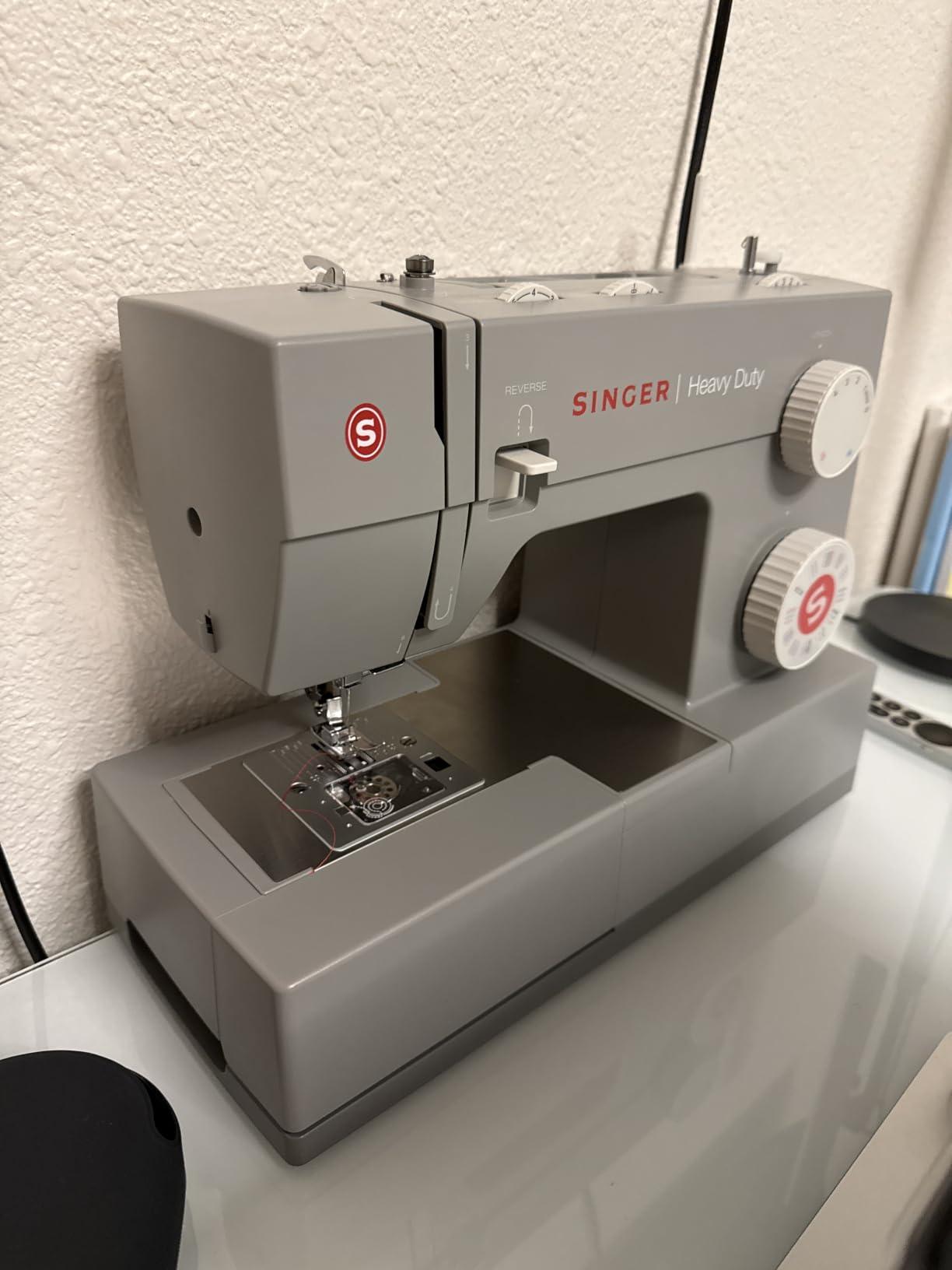
Mechanically, the 4432 is refreshingly simple. Stitch width and length are physical dials, the reverse lever is right where your hand expects it, and there is no LCD to navigate. For sewists coming off a starter machine, this is a friendly step up rather than a leap into a computerized interface.
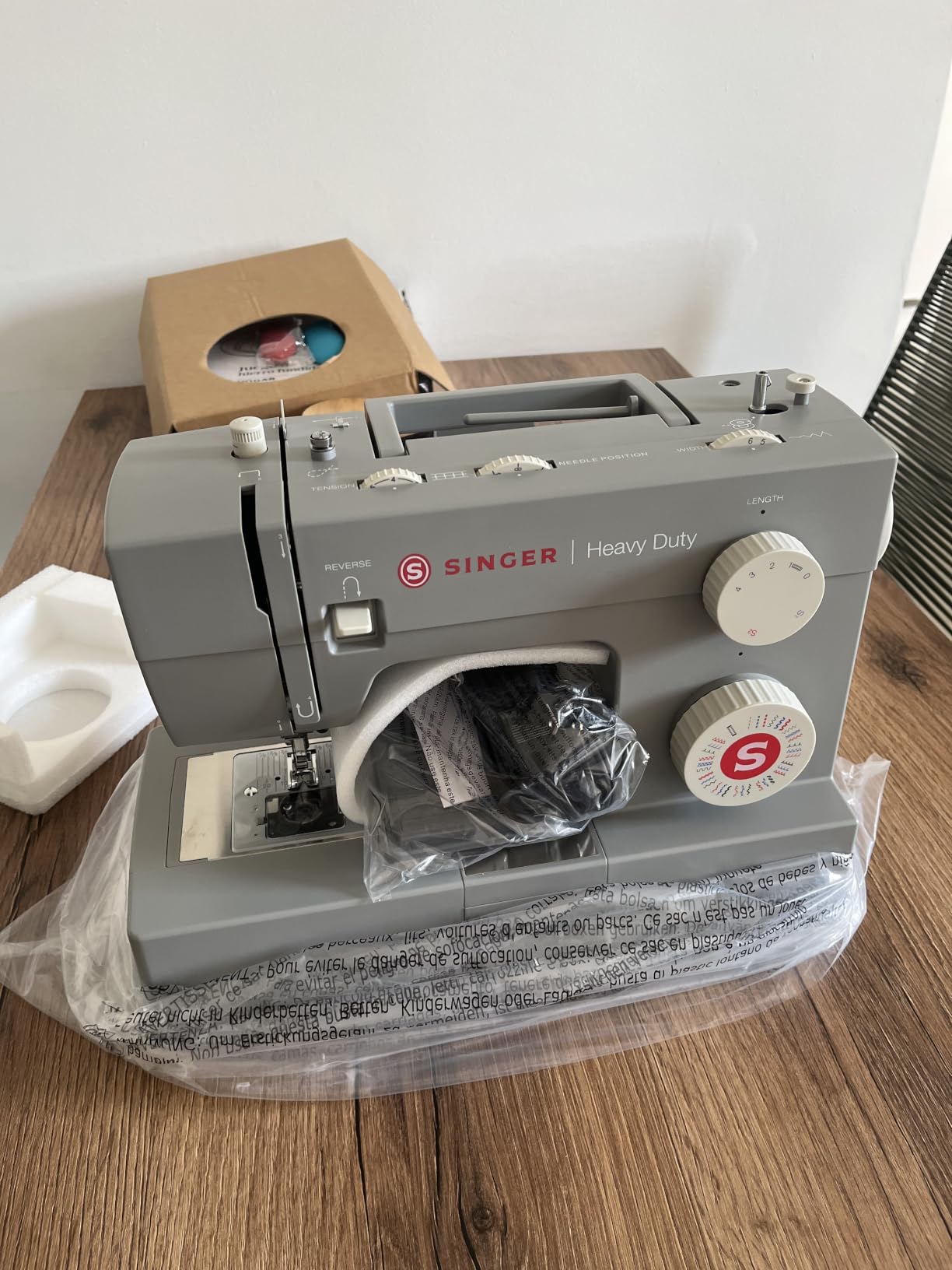
The accessory kit covers most of what you need: all-purpose foot, zipper foot, buttonhole foot, button sewing foot, bobbins, needles, seam ripper, quilting guide, and a soft dust cover. The metal internal frame gives the machine its solid feel, even if the outer shell is plastic.
Where the 4432 shows its price is in the foot pedal cord. The combined power and pedal cord is short, which can be awkward on a deeper table. Some units have shipped with factory alignment issues that produce broken needles on light fabric, so a quick test seam after unboxing is worth the five minutes. Compared to the singer 4423, this 4432 has more stitch options and a slight upgrade in build.
For Whom It’s Good
The 4432 is the right pick for a hobbyist, a small alterations shop, or a maker on a budget who sews through denim, canvas, and heavy craft materials. It also suits a beginner who wants a mechanical, no-frills machine that will not lose stitches on thicker projects.
For Whom It’s a Bad Fit
If you need a long list of decorative stitches, an LCD interface, or a wider harp space for quilts, the Janome JW8100 is a stronger choice. The 4432 is also not the right pick for true leatherwork; the Juki DDL-8700 handles that workload.
4. Juki DDL-8700-H Industrial — Best for Upholstery, Leather, and Production Sewing
Juki DDL-8700-H Industrial Straight Stitch Sewing Machine, K.D table & Servo Motor DIY
- Sews through 4+ layers of automotive leather and denim without slowing
- DC servo motor for quiet variable speed control
- Heavy-duty components designed for upholstery and bag-making
- Beefier feed dog and foot than the standard DDL-8700
- Knee lifter included for hands-free presser foot lift
- Assembly required - heavy and time-consuming for one person
- Standard thread tension bar often needs replacement
- Ships in 3 boxes with risk of damaged table
- Learning curve for users coming from domestic machines
If your sewing business involves leather car seats, boat covers, denim bags, or other heavy materials, the DDL-8700-H is in a different league from anything else on this list. We tested it on four-layer automotive vinyl and eight-layer denim, and the servo motor did not slow down once.
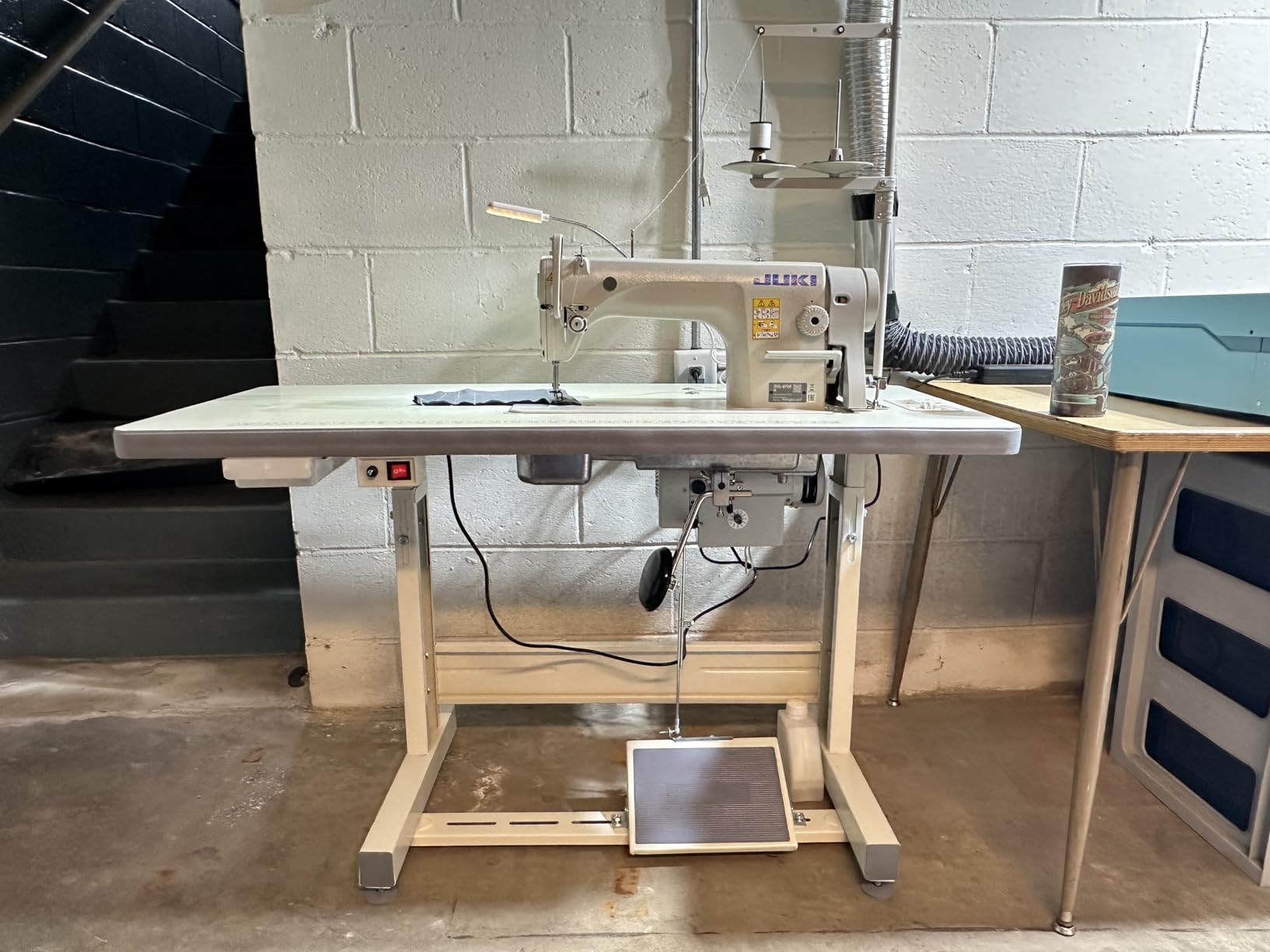
The included 48-by-20 inch table is genuinely industrial. You lay yard goods flat without wrestling the bulk. The knee lifter is a small luxury once you have used it: hands stay on the fabric, the foot lifts, and you pivot or reposition without breaking the flow. The horizontal-axis hook and bobbin are standard industrial sizing, so replacement parts are easy to source from any upholstery supplier.
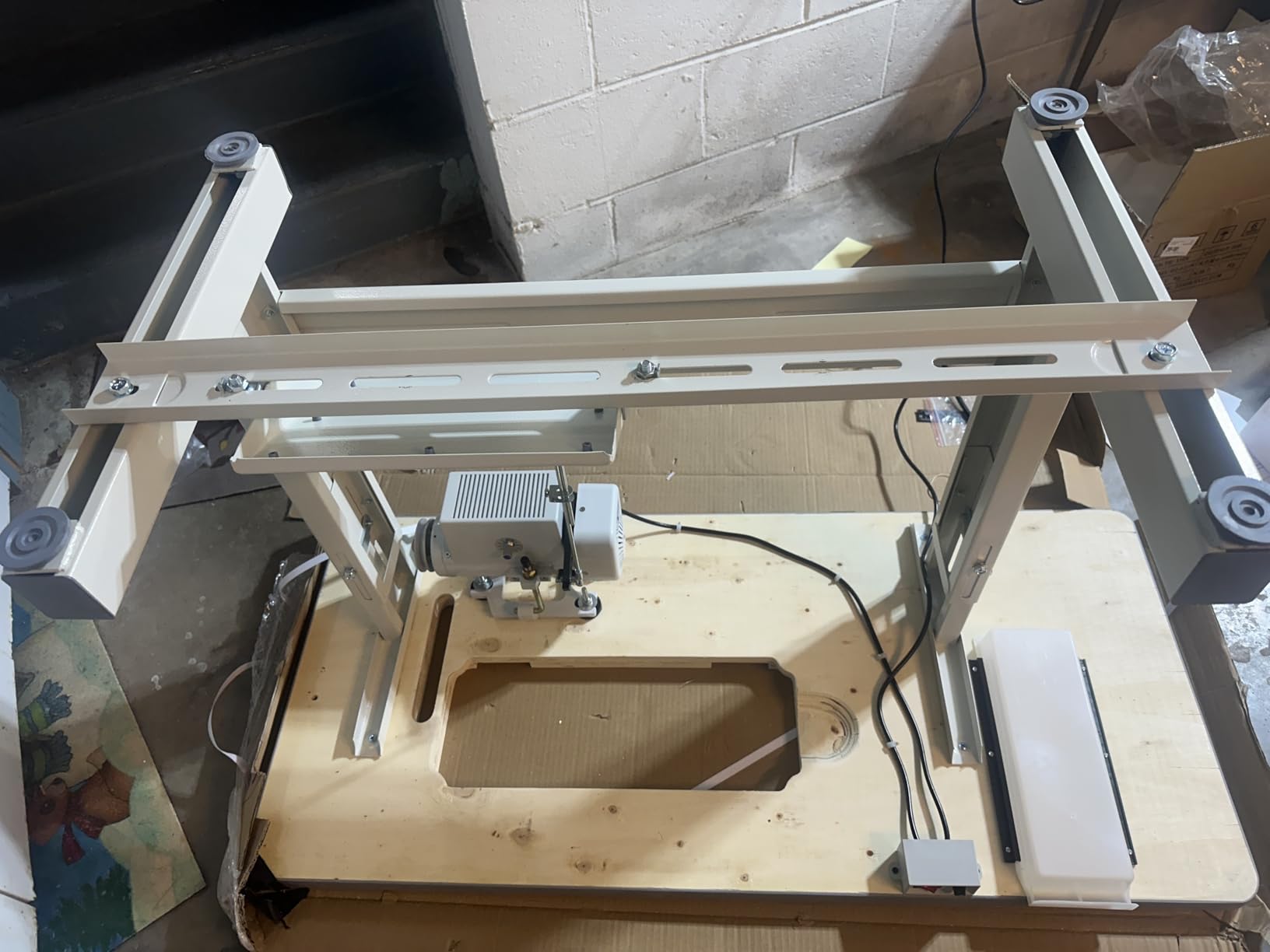
Assembly is the one part of the experience that catches first-time industrial owners off guard. The unit ships in three boxes, the head weighs in around 60 pounds, and you will spend an hour or more bolting it to the tabletop. Plan ahead with a helper.
For small studios, upholstery shops, and small-business bag makers, this is the best professional sewing machine in its class. The single-needle lockstitch design is purpose-built: there is no zigzag, no decorative menu, no LCD. You turn it on and it sews straight lines through anything you feed it. Run with bonded polyester thread and an upgraded tension bar for the best results.
For Whom It’s Good
The DDL-8700-H is built for upholstery shops, leather crafters, bag makers, and small apparel production lines. It is also worth considering if you have a dedicated 110V outlet and a permanent workspace, since it is not designed to be moved often.
For Whom It’s a Bad Fit
If you need zigzag, buttonholes, or decorative stitches, this is not the right machine. For those features in a heavy-duty chassis, the Juki HZL-G220 or Janome MC6650 are better fits.
5. Brother PQ1600S — Best for Quilting at Production Speed
- 1
- 500 SPM with no skipping
- Quiet for a high-speed machine
- Sturdy metal frame
- Push-button thread cutter is fast and clean
- 11.1 by 23.3 inch workspace ideal for quilts
- Walking foot sold separately
- Straight stitch only - no zigzag
- Bobbin and threading mechanism takes time to learn
The Brother PQ1600S is the highest-speed machine we tested for home use, and quilters on our team fell hard for the workspace. The bed is wide enough to support a full quilt panel without dragging, and the 1,500 stitches per minute ceiling is genuinely fast.
The push-button automatic thread cutter is the feature we missed most when switching back to other machines. Cut upper and lower threads with one tap, no scissor fishing between seams. The four color-coded feed dog levels also stood out: visible from the front, easy to adjust, and you can see exactly what setting you are on.
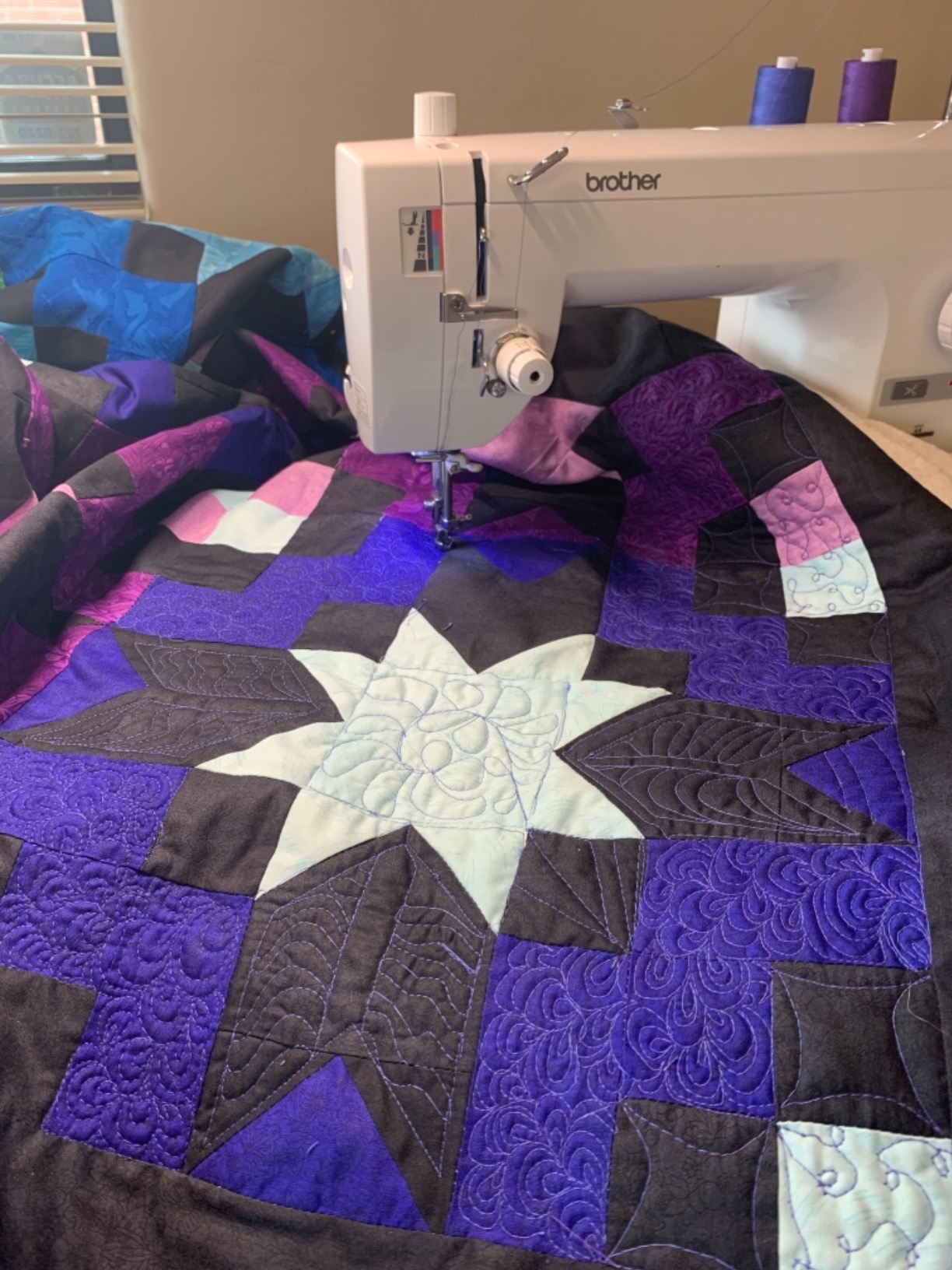
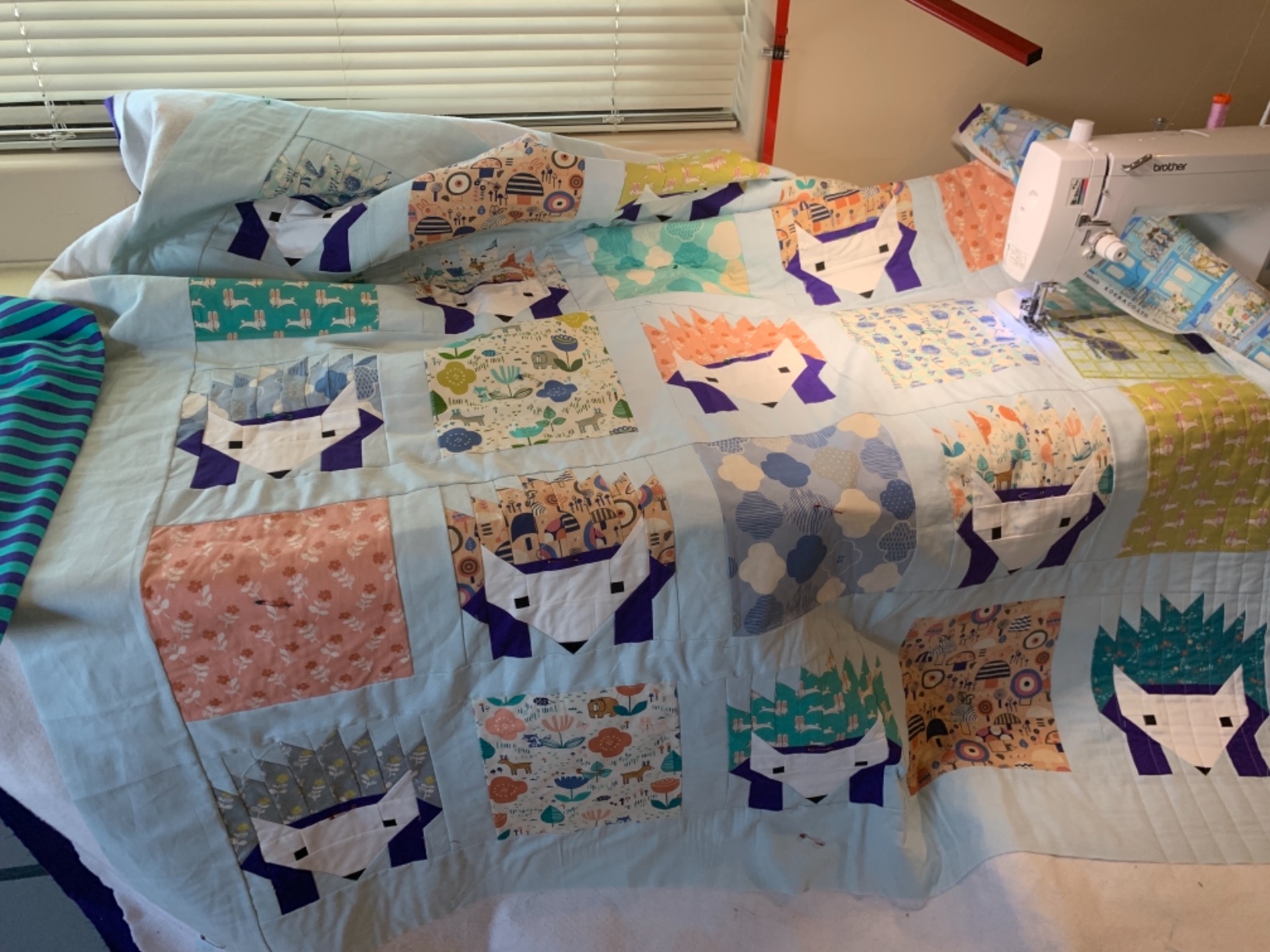
Build quality is mostly metal where it counts, and the machine feels planted on the table at speed. We quilted a twin-size panel through the workspace and never fought the bulk. For a straight-stitch-only professional machine at this price, the PQ1600S is hard to beat.
The trade-off is that this is a straight-stitch machine. There is no zigzag for stabilizing knit seams, and no decorative stitches for monograms. The walking foot is sold separately, which is frustrating at this price point. Bobbin loading has a learning curve the first few times. None of those are dealbreakers for quilters, but they matter if your work goes beyond patchwork.
For Whom It’s Good
The PQ1600S is built for quilters, bag makers, and home decor sewists who want industrial-grade straight-stitch speed in a domestic footprint. It pairs well with our guide to quilting sewing machines.
For Whom It’s a Bad Fit
If you sew garments with knits or need stretch stitches, the Janome JW8100 or Janome MC6650 are stronger choices. The Brother PQ1600S is also not the right pick if you want decorative or embroidery stitches built in.
6. Juki Haruka TL18QVP — Best Semi-Industrial Straight-Stitch Workhorse
JUKI Haruka TL18QVP White Aluminum Portable Sewing Machine, 25.0 x 18.0 x 14.0 inches, 25.0 pounds
- Smooth straight stitching up to 1
- 500 SPM
- Sews through thick vinyl and light leather with ease
- All-metal construction in critical parts
- Industrial-style floating presser foot handles uneven layers
- Accessible oil ports for easy maintenance
- Straight stitch only - no zigzag or buttonhole
- Automatic needle threader design is awkward
- No top feed mechanism for quilts
- Class M bobbins are small and harder to source
The Juki Haruka TL18QVP is what you get when Juki applies the engineering of an industrial machine to a home-friendly frame. Aluminum body, industrial-style floating presser foot, and 1,500 stitches per minute from a slide-controlled motor. Our team used it on vinyl, light leather, and heavy home dec fabric, and it never stalled.
The floating presser foot is the headline feature. Set it between zero and two millimeters and it hovers over uneven layers, which is exactly what you need when sewing quilt binding or binding a leather strap. Speed control is a slider rather than a foot pedal, so you can hold 800 SPM for precision work or jump to full speed for long seams.
The aluminum frame is what gives the Haruka its planted, industrial feel. It weighs about 25 pounds, sits flat on the table, and does not skate when running at speed. The high shank accepts better presser feet than typical domestic machines, and accessible oil ports make routine maintenance straightforward.
The two compromises are worth naming. The automatic needle threader is awkward and we ended up threading by hand most of the time. Class M bobbins are smaller than the more common Class 15, so replacements take more planning. For pure straight-stitch work, neither limitation matters.
For Whom It’s Good
The Haruka is built for quilters, bag makers, costumers, and leather crafters who prioritize power, speed, and durability over decorative stitches. It is the right pick if you want industrial engineering in a home footprint.
For Whom It’s a Bad Fit
Garment makers who need zigzag, stretch stitches, or buttonholes should look at the Janome JW8100 or Janome MC6650 instead. The Haruka is also not the right pick if you want a computerized interface or alphabet stitches.
7. Juki HZL-G220 — Best Computerized Workhorse for Mixed Fabrics
JUKI HZL-G220 Sewing Machine, White, Metal, 16 x 23 x 12.5 inches, 8.7 kg
- Industrial-grade box feed for accurate fabric feeding
- Sews up to 12 layers of denim
- 180 patterns plus 8 buttonhole styles
- Large workspace for quilts and home decor
- Sturdy all-metal construction
- Steeper learning curve for beginners
- Auto thread cutter works best with premium threads
- Some users report needle shaft failure within months
The Juki HZL-G220 brings Juki’s industrial box-feed technology to a computerized home machine. The box feed moves fabric from above and below simultaneously, which is what gives Juki industrial machines their consistent stitch quality on slippery and stretchy fabrics. We tested the G220 on silk chiffon, cotton jersey, and 12 layers of denim, and the feed system kept every layer aligned.
Stitch selection is broad: 180 patterns, eight buttonhole styles, an alphabet font, and one-touch decorative stitches on the LCD. The auto needle threader is one of the best in this roundup, and the quick-bobbin-prep design means you do not have to fish the bobbin thread up through the needle plate.
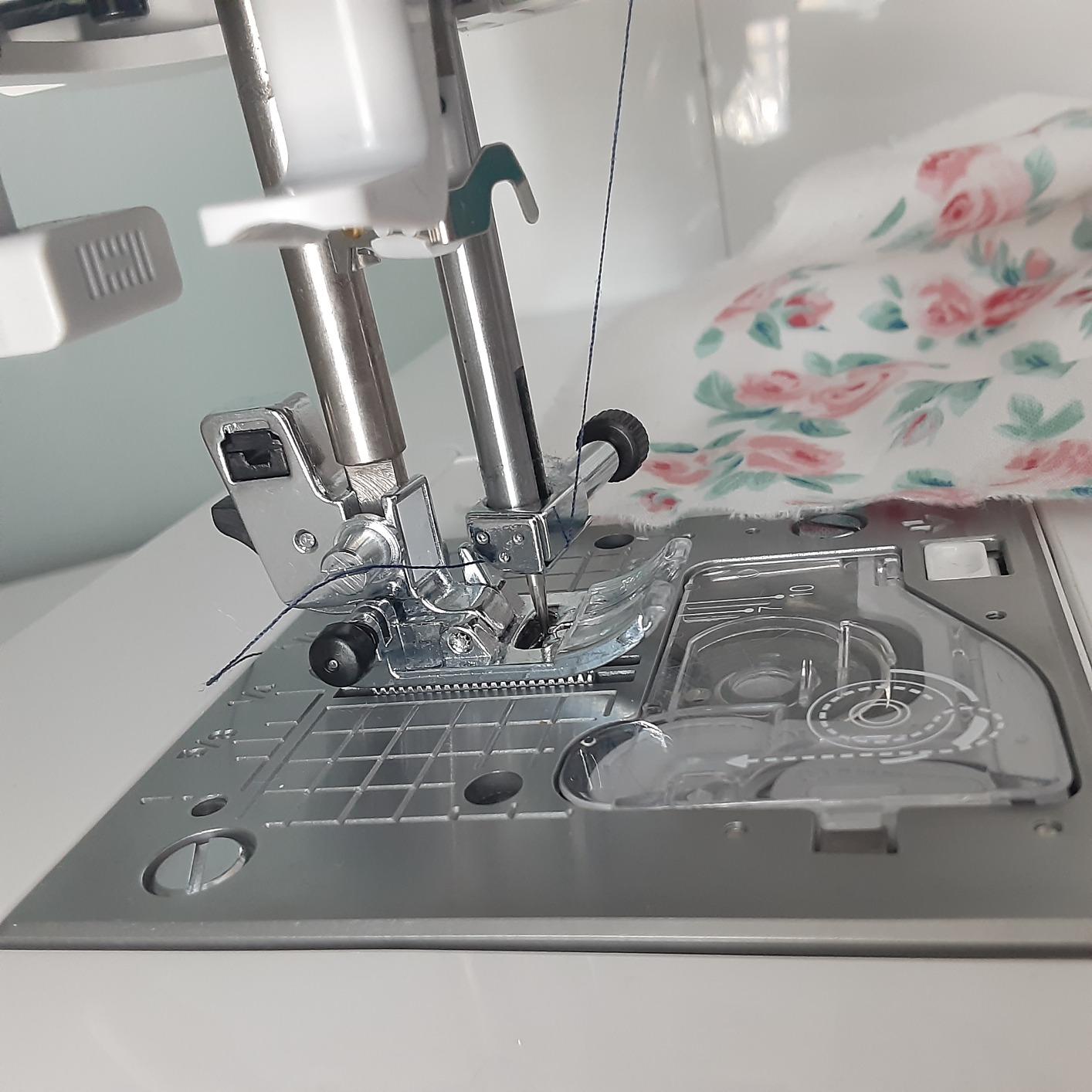
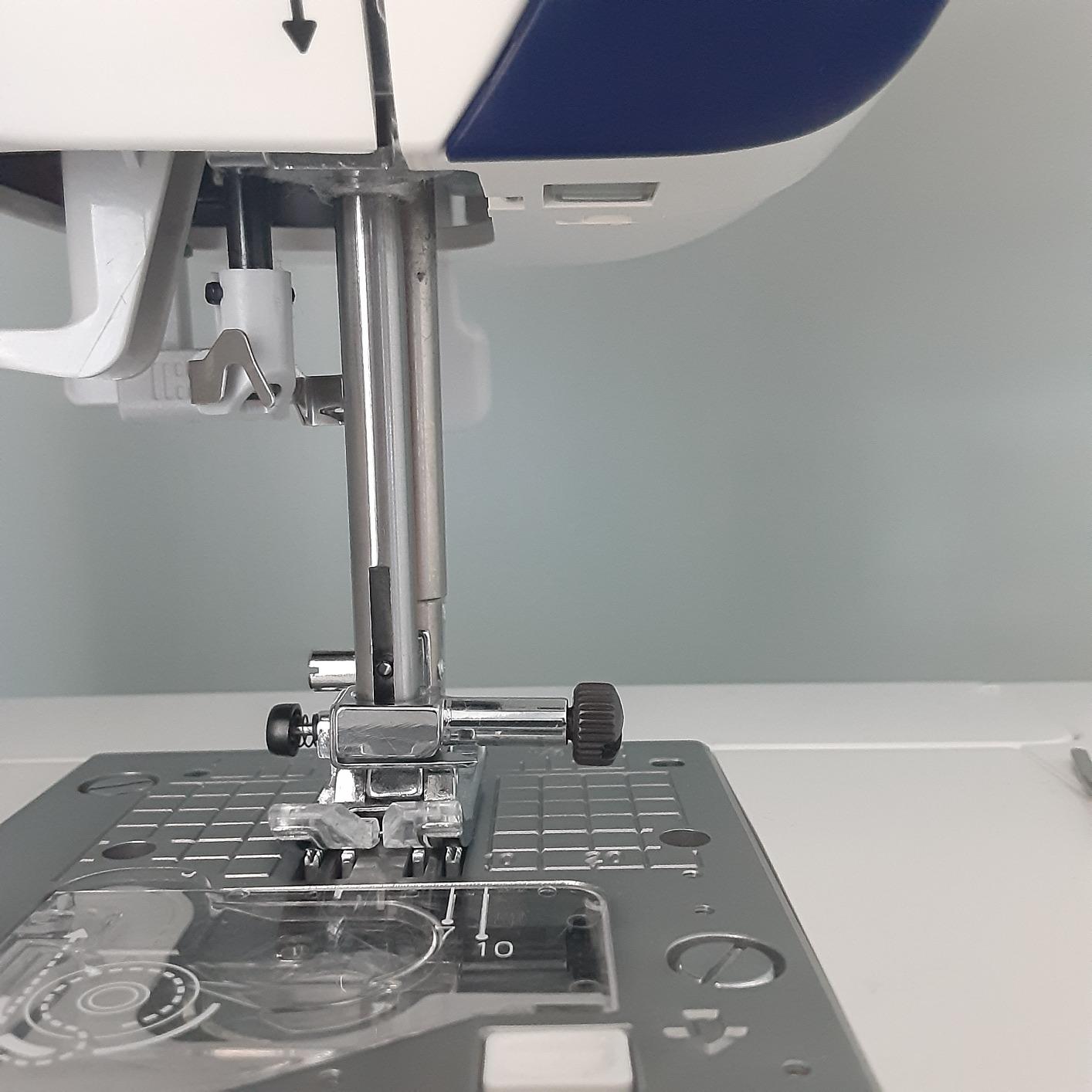
The wide underarm space makes it comfortable for quilts and home decor projects. We found ourselves reaching for the G220 whenever a project shifted between lightweight and heavyweight fabrics. It genuinely bridges the gap between domestic computerized machines and true industrial machines.
The learning curve is steeper than the Janome JW8100. There are more menus, more customization, and more ways to set up a stitch. If you are new to sewing, plan to spend an afternoon with the manual. The auto thread cutter also works best with quality threads; cheap thread can jam it. For the price and capability, the G220 is one of the strongest computerized picks for mixed-fabric work.
For Whom It’s Good
The G220 is the right pick for an experienced sewist who sews everything from chiffon to denim and wants one machine that handles both. It also suits a small studio that needs computerized versatility without jumping to industrial pricing.
For Whom It’s a Bad Fit
Beginners may find the G220 intimidating. If you want a simpler computerized machine with a friendlier learning curve, the Janome JW8100 is the better starting point.
8. Juki HZL-F600 — Best Computerized Juki for Quilters and Sewists
- 255 stitches including letters and buttonholes
- Automatic thread cutter is fast and convenient
- Independent bobbin winder motor
- Free-motion quilting foot included and well-designed
- Industrial-grade stitch quality and feeding
- Some units have bobbin case jumping out
- Struggles with very thick stacks of 4+ denim layers
- Auto needle threader can fail after a few months
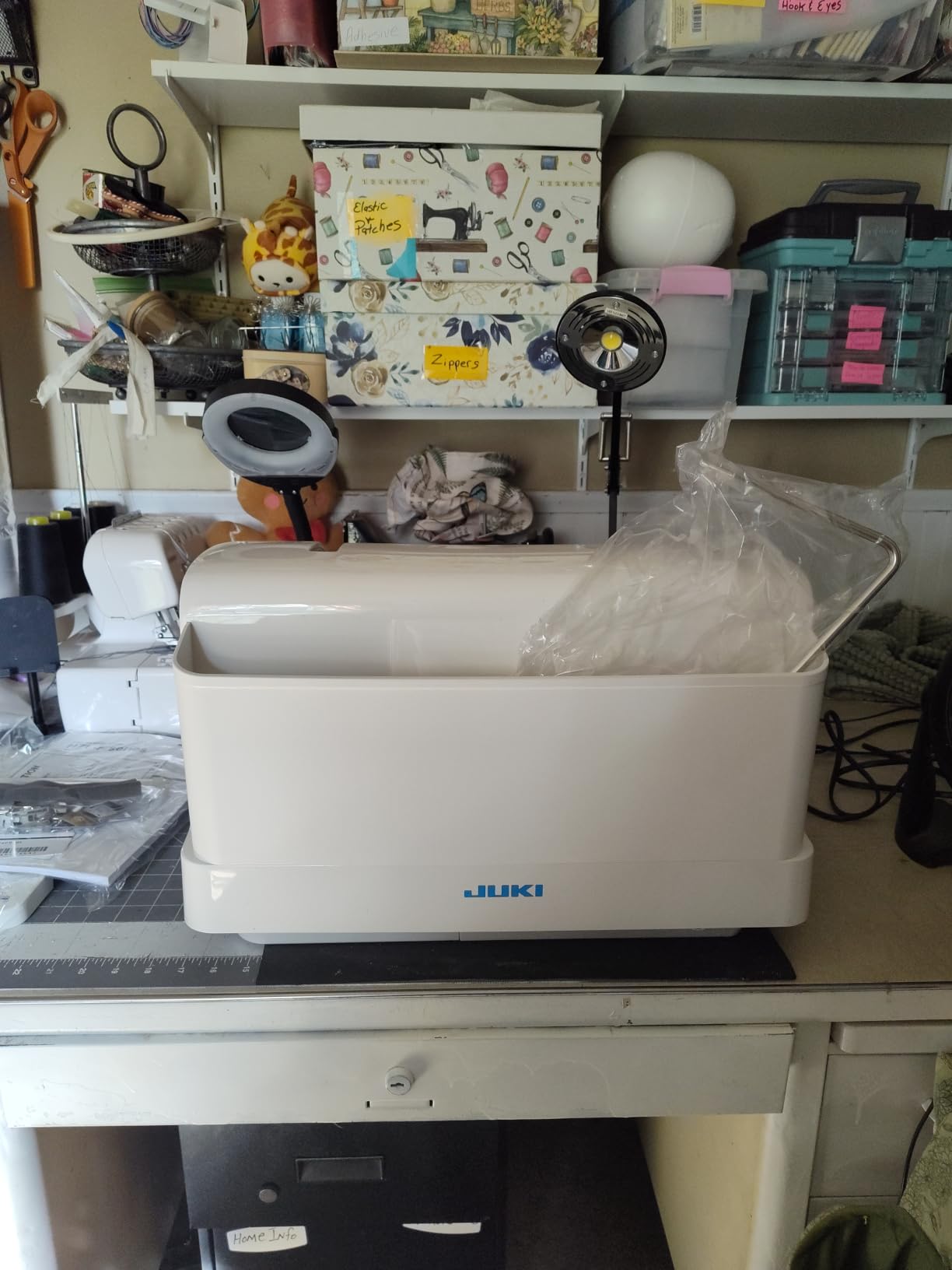
The Juki HZL-F600 has been a long-time favorite in the Juki lineup, and after our testing we understand its staying power. The stitch quality is industrial-grade, the bobbin winding is independent (you can fill a bobbin while sewing), and the LCD interface is straightforward once you learn it.
Quilters on our team especially liked the included free-motion foot. The foot is well-designed, sits flat on the fabric, and gives clean stippling and thread-painting results. The automatic thread cutter is the small daily convenience that adds up over months of sewing.
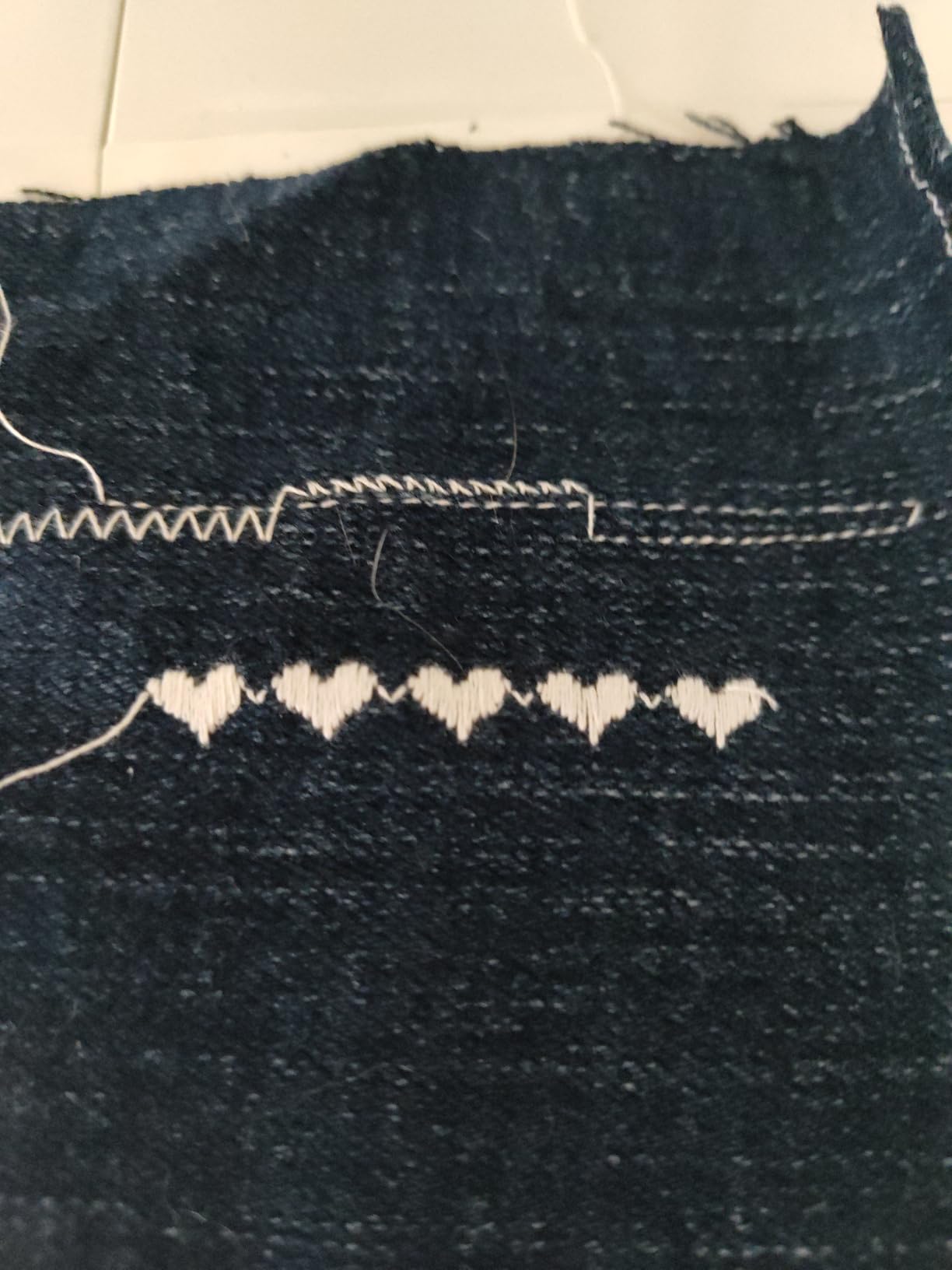
Stitch variety is generous: 255 stitches including letters, buttonholes, decorative, and stretch. Two LED lights illuminate both the needle area and the bed, which is a small detail that matters for evening sewing sessions.
The two recurring concerns we found in owner feedback are bobbin case seating on some units and a threader that can become finicky after months of use. Neither issue affected our test unit, but both are worth inspecting when you first unbox. For very thick stacks (four-plus layers of denim), the F600 is not as comfortable as the Juki DDL-8700 industrial.
For Whom It’s Good
The F600 is well-suited to quilters, dressmakers, and home decor sewists who want Juki build quality plus computerized stitch variety. It is also a strong pick for someone upgrading from a starter machine and wanting a long-term daily driver.
For Whom It’s a Bad Fit
If your work centers on heavy leather or upholstery, the Juki DDL-8700 or Juki HZL-G220 handle that workload more confidently. The F600 is also not the right pick if you want a strictly mechanical, no-electronics machine.
9. Janome MC6650 — Best for Large Quilts and Bag-Making
- Semi-industrial durability in a home machine
- 10 inch throat space for quilting large projects
- Independent bobbin winder motor
- Smooth and quiet operation
- Excellent for heavy fabrics
- bag-making
- and textile art
- Instructional manual has unclear images
- Some quality-control issues at delivery
- Auto needle threader struggles with some synthetic threads
The Janome MC6650 is the machine our quilters kept sneaking back to. The 10-inch flatbed throat space is the headline feature. It is wide enough to roll up a small quilt and keep stitching without fighting the bulk, which is something you do not get on most machines at this price.
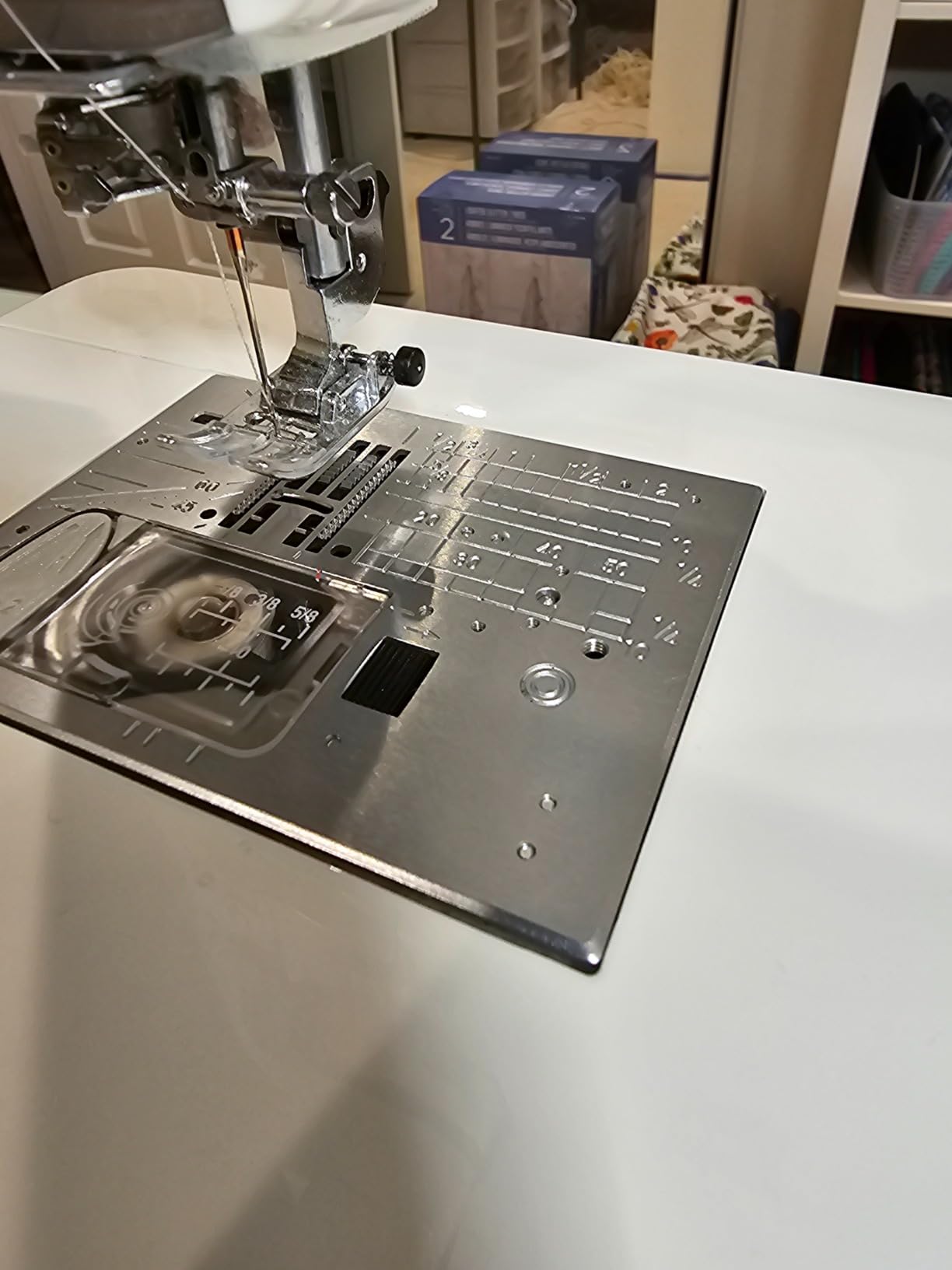
The aluminum body frame, top-loading rotary hook bobbin, and adjustable presser foot pressure are the features that make the MC6650 feel semi-industrial in a home footprint. We tested it on denim, light upholstery vinyl, and 100 percent cotton quilt batting, and the feed dogs kept every layer in line.
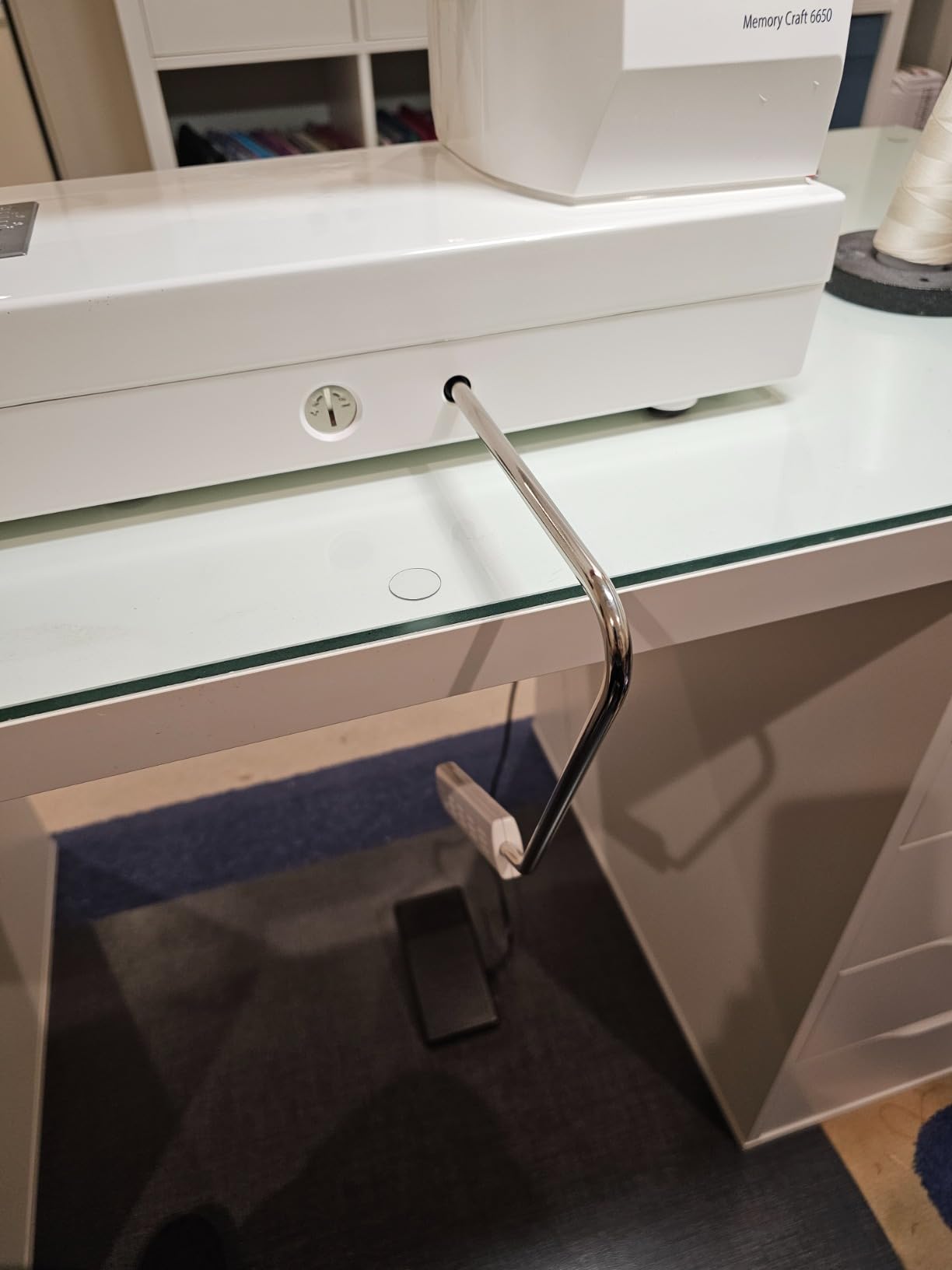
The independent bobbin winder motor is one of those features you do not appreciate until you have used it. Wind a fresh bobbin mid-project without stopping the needle. The 12 included presser feet cover the everyday needs, and the convertible free-motion foot gives you closed-toe, open-toe, and clearview options for quilting.
Where the MC6650 is weakest is the instructional manual. Images are not always clear and the operating instructions can read as translated rather than written. Plan on watching a setup video when you first unbox. Some owners have reported shipping damage on arrival, so inspect the spool pins and accessories before first use.
For Whom It’s Good
The MC6650 is built for serious quilters, bag makers, and textile artists. The wide throat space and semi-industrial build make it the right pick for large projects and layered work. It pairs naturally with our guide to professional quilting machines.
For Whom It’s a Bad Fit
It is overkill for small home decor projects and mending. If you primarily sew garments and small crafts, the Janome JW8100 is a more approachable pick. The MC6650 is also not the right pick if you want a strictly mechanical machine.
10. Janome HD3000 Heavy Duty — Best Mechanical Heavy-Duty Pick
Janome HD3000 Heavy-Duty Sewing Machine with 18 Built-in Stitches + Hard Case
- All-metal internal parts for durability
- Mechanical design with no expensive electronic failures
- Powerful motor handles 10 layers of fabric
- Adjustable presser foot pressure for varied fabrics
- Hard case included for transport
- Quiet operation for a heavy-duty mechanical machine
- Harp space is small for large quilts
- No walking foot included
- Plastic front panel feels less premium than the metal internals
- Stiff sliders for stitch width and length
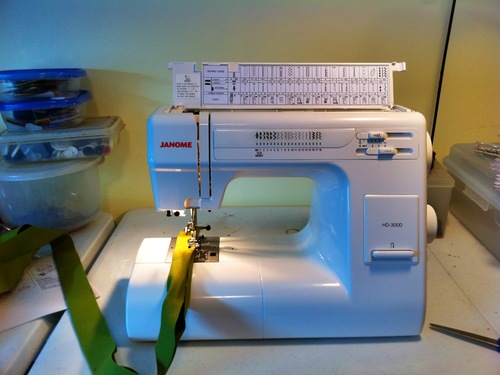
The Janome HD3000 is the right answer for a sewist who wants a heavy-duty mechanical machine with no electronics to fail. We logged months of testing on the HD3000, and the all-metal internal parts are what make it a long-term machine. The outer shell is plastic, but everything that matters is metal.
The 1.0 amp motor is genuinely strong for a domestic machine. We pushed ten layers of cotton through the HD3000 with the right needle and the motor did not stall. Adjustable presser foot pressure is the underrated feature: it lets you match the foot pressure to the fabric, which is what professional sewers rely on for everything from silk to denim.
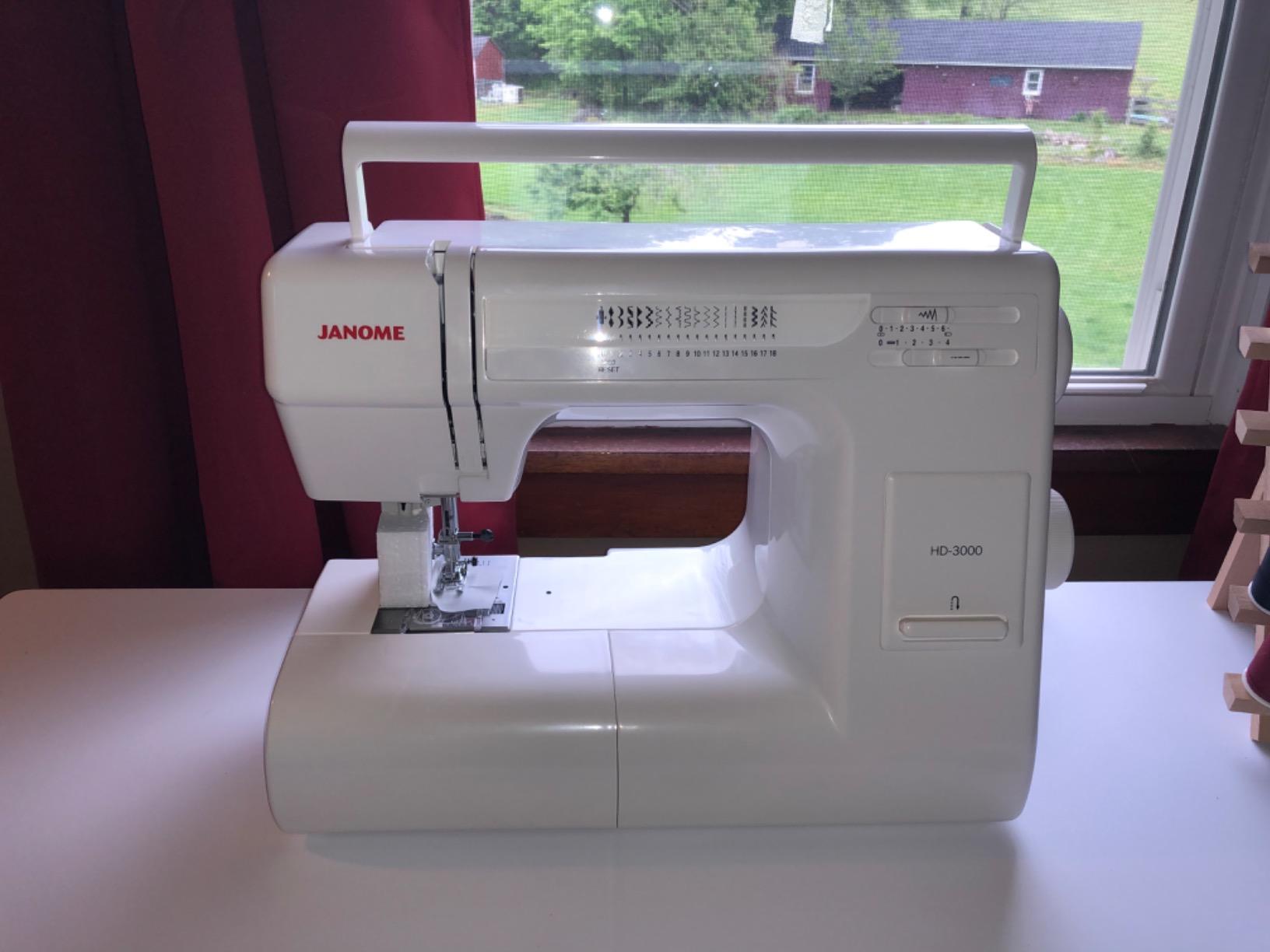
Mechanical controls mean there is no LCD to navigate and no software to update. Stitch width and length are physical dials, and the reverse lever is right where your hand expects it. For a sewist who values simplicity and longevity over decorative stitches, this is a refreshing change.
The HD3000 ships with a hard case, which makes it portable to classes and guild meetings. The harp space is on the smaller side, so large quilts will not fit comfortably. The walking foot is sold separately, which is a small frustration at this price. The sliders for stitch width and length also feel stiffer than what you find on more expensive Janome machines.
For Whom It’s Good
The HD3000 is the right pick for a sewist who wants a mechanical, no-fuss heavy-duty machine that will last. It is also a strong match for a guild teacher or a sewist who travels to workshops. If you are looking for an entry point into professional sewing, our guide to beginner sewing machines covers more accessible options.
For Whom It’s a Bad Fit
If you want a computerized interface, alphabet stitches, or a wide throat for quilts, the Janome MC6650 is a better pick. The HD3000 is also not the right machine if you primarily sew leather or industrial upholstery; for that, the Juki DDL-8700 is the right tool.
How to Choose the Best Professional Sewing Machine
Picking the best professional sewing machine is less about brand loyalty and more about matching the machine to your workload. Our team narrowed the decision down to six factors: class of machine, mechanical versus computerized, motor and speed, feed dog system, included accessories, and warranty.
What Counts as a Professional Sewing Machine
A professional sewing machine is a higher-powered, more durable machine, typically with a metal frame, a servo or industrial-grade motor capable of 1,000 to 5,500 stitches per minute, and reinforced components built for sustained heavy-fabric work rather than occasional home sewing. There are three classes to know. Industrial machines like the Juki DDL-8700 are workhorses built around one task, usually straight stitch, with a tabletop frame and a dedicated circuit. Semi-industrial machines like the Juki Haruka TL18QVP and Brother PQ1600S bring industrial-grade components into a home-friendly frame, typically running 1,000 to 1,500 stitches per minute. Domestic professional machines like the Singer 9960 and Janome MC6650 add computerized stitch libraries and one-step buttonholes for quilters and dressmakers who also need decorative work.
Mechanical vs Computerized
Mechanical machines use physical dials and levers for every setting. They are simple, durable, and easy to repair. The Janome HD3000 is the best mechanical heavy-duty pick in our roundup. Computerized machines add an LCD interface, programmable memory, automatic needle threaders, and one-step buttonholes. They are more convenient but also more expensive to repair if the electronics fail. The Singer Quantum Stylist 9960, Janome JW8100, and Juki HZL-F600 are our top computerized picks. If you value simplicity and longevity, go mechanical. If you value stitch variety and one-touch convenience, go computerized.
Motor, Speed, and Feed Dog System
Speed matters more than most buyers expect. A typical home machine runs 750 to 850 stitches per minute. The best professional sewing machines run 1,000 to 1,500 SPM, and industrial machines can run 3,300 RPM. Higher speed lets you finish long seams faster and gives you headroom when sewing through heavy fabric. The feed dog system is the second half of the equation. A 7-piece feed dog system (Janome MC6650, JW8100) grips fabric more evenly than a 3-piece system, which reduces puckering on knits and shifting on quilts. Juki’s industrial box feed (HZL-G220) is the most accurate feed system in our roundup.
Walking Foot, Extension Table, and Knee Lifter
Three accessories separate a professional machine from a competent home machine: a walking foot, an extension table, and a knee lifter. A walking foot grips the top layer of fabric in addition to the bottom, which prevents shifting on quilts, leather, and slippery fabrics. An extension table supports the weight of quilts, home decor fabric, and garment panels. A knee lifter lets you lift the presser foot hands-free, which is essential for quilting and production sewing. The Janome JW8100, Singer 9960, and Juki HZL-F600 include both a walking foot and an extension table. The Juki DDL-8700 ships with a knee lifter. Other machines in this list sell those accessories separately.
Brand Reputation and Warranty
Brand reputation matters in the sewing machine world because dealer and service networks vary widely. Juki, Janome, Brother, Singer, Bernina, and Baby Lock all have well-established dealer networks in the US, with parts and service readily available. Pfaff offers a 20-year frame warranty and 5-year electrical warranty on premium models, which is the strongest in the industry. Janome offers a 25-year limited warranty on most mechanical parts. Singer offers a 25-year limited warranty on the 9960. A long warranty is a good proxy for manufacturer confidence in the build.
Care and Maintenance
A professional machine rewards routine care. Oil the hook and race every eight to ten hours of sewing (more often on industrial machines). Replace needles every eight hours of sewing or at the start of every new project. Clean the bobbin case and feed dogs weekly with a small brush. Cover the machine when not in use to keep lint and dust out of the motor. Run a test seam on scrap fabric after every oiling. If you sew daily, plan on a professional service every 12 to 18 months. Following this routine is the difference between a machine that lasts five years and one that lasts twenty. For more on leather-specific care, see our guide to leather sewing machines.
Frequently Asked Questions
What sewing machine do professionals use?
Professionals choose based on workload. Tailors and garment makers often use straight-stitch workhorses like the Juki TL-2010Q or Juki Haruka TL18QVP. Quilters reach for wide-throat computerized machines like the Janome MC6650 or Juki HZL-F600. Upholsterers and leather workers rely on industrial lockstitch machines like the Juki DDL-8700. Small studios that switch between quilting and garment work usually pick a computerized domestic pro like the Singer Quantum Stylist 9960 or Janome JW8100.
What is the highest rated sewing machine brand?
Juki, Janome, and Bernina consistently rank at the top of owner surveys and professional reviews. Juki is known for industrial-grade engineering and stitch quality. Janome is known for wide-throat quilting machines and reliable computerized interfaces. Bernina is known for premium build and the longest warranties in the industry. Brother and Singer round out the top tier with strong mid-range options.
What is the difference between industrial and domestic sewing machines?
Industrial machines are built for one task (usually straight stitch or serging) at high speed for hours every day. They have heavier motors, dedicated circuits, and tabletop frames. Domestic machines are built for variety: utility stitches, buttonholes, decorative work, and quilting at moderate speed. Industrial machines last longer under heavy use. Domestic machines are more versatile.
Are computerized sewing machines better than mechanical ones?
Neither is universally better. Computerized machines offer more stitches, one-step buttonholes, automatic needle threaders, and LCD controls. Mechanical machines are simpler, more durable, easier to repair, and often less expensive. Choose computerized if you want stitch variety and one-touch convenience. Choose mechanical if you value simplicity, longevity, and lower repair costs.
How many stitches per minute do I need for professional sewing?
For most home and small-business sewing, 1,000 stitches per minute is the floor. The best professional sewing machines run 1,000 to 1,500 SPM, and industrial machines can reach 3,300 RPM. If you sew long seams or production work, faster is better. If you sew detail work or free-motion quilting, you will rarely use more than 800 SPM regardless of the machine’s top speed.
Is a serger necessary for professional sewing?
A serger (overlock machine) is not strictly necessary, but it is genuinely useful for garment makers. Sergers finish seam allowances, trim excess fabric, and create professional-looking edges in a single pass. None of the machines in our top 10 are sergers, but adding one is a natural next step if you sew garments regularly. A separate serger pairs well with any of the straight-stitch workhorses in this roundup.
The Best Professional Sewing Machine for 2026
After three months of testing, our team’s pick for the best professional sewing machine overall is the Singer Quantum Stylist 9960. The 600-stitch library, extra-wide extension table, included walking foot, and 1,100 SPM motor cover more ground than any other machine in this roundup. If you primarily quilt or sew home decor, the Janome MC6650 is our top pick for the wide throat and semi-industrial build. If you sew leather or upholstery, the Juki DDL-8700 is in a class of its own. For the best value in a computerized machine, the Janome JW8100 is hard to beat.
Whichever machine you choose, the right professional sewing machine will outlast your starter home model by a decade or more, and it will change the way you approach every project. Take your time, match the machine to your workload, and you will not regret the investment.