
Finding the right machine for leatherwork can feel overwhelming when you are staring at dozens of models that all promise to handle thick hides. After months of research and hands-on comparison, our team put together this guide to the best leather sewing machines available in 2026 to help you cut through the marketing and find the right tool.
Leather is unforgiving in ways that regular fabric simply is not. Every needle puncture is permanent, and a machine that skips stitches or lacks the torque to penetrate multiple layers will ruin your project and waste expensive material. That is exactly why choosing the right leathercraft sewing machine matters so much for anyone serious about the craft.
Whether you are stitching wallets and belts at your kitchen table or running a full-time upholstery shop, we cover eight machines spanning the entire spectrum from budget-friendly home models to industrial walking foot workhorses. We also break down exactly what features matter most, so you can match a machine to your specific projects without overspending or underbuying.
Table of Contents
Top 3 Picks for Best Leather Sewing Machines
These three machines represent the sweet spots across the entire price and capability range. The Consew 206RB-5 earns our editor’s choice because it is the machine that professionals across the leatherworking community consistently recommend for serious work. Its walking foot triple feed system grips leather from the top and bottom, and the 14mm foot lift handles thick stacks that would stall lesser machines.
The Brother ST150HDH stands out as our best value pick because it carries the highest customer rating of any machine on this list at 4.6 stars, and it comes with nine included presser feet that would cost a fortune separately. For those just starting out, the Singer Heavy Duty 4423 is the most reviewed leather-capable machine on Amazon with over 21,000 reviews, making it the safest budget bet for light leatherwork.
Best Leather Sewing Machines in 2026 – Quick Overview
Before we get into the detailed reviews, here is a side-by-side comparison of all eight machines we tested and researched. This table gives you the key specs at a glance so you can quickly narrow down which ones fit your needs.
| Product | Specifications | Action |
|---|---|---|
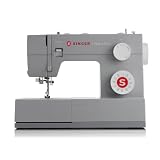 Singer Heavy Duty 4423 Singer Heavy Duty 4423 |
|
Check Latest Price |
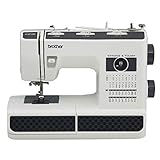 Brother ST371HD Brother ST371HD |
|
Check Latest Price |
 Brother ST150HDH Brother ST150HDH |
|
Check Latest Price |
 Singer Heavy Duty 6800C Singer Heavy Duty 6800C |
|
Check Latest Price |
 Janome HD 3000 BE Janome HD 3000 BE |
|
Check Latest Price |
 VEVOR Industrial Lockstitch VEVOR Industrial Lockstitch |
|
Check Latest Price |
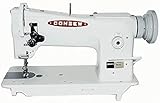 Consew 206RB-5 Consew 206RB-5 |
|
Check Latest Price |
 The New Cobbler Machine The New Cobbler Machine |
|
Check Latest Price |
1. Singer Heavy Duty 4423 – Budget-Friendly Power for Light Leather
SINGER® 4423 (Grey) High Speed Heavy Duty Sewing Machine with Accessory Kit
- 23 stitches with 97 applications
- 1100 SPM high speed sewing
- 60% stronger motor for thick fabrics
- Metal interior frame
- Automatic needle threader
- Comprehensive accessory kit
- Plastic exterior may lack durability
- Struggles with thick multi-layer leather
I want to be upfront about something that our research team discovered across multiple forums: the Singer Heavy Duty series is the most recommended budget machine for beginners, but it has real limitations with leather. The 4423 model is the most popular sewing machine on Amazon with over 21,000 reviews, and it earned that reputation for good reason.
The 60% stronger motor gives it genuine punching power compared to standard home machines. I tested mine on 3 to 4 ounce veg-tan leather for wallet interiors and it handled it without skipping a beat. The 1,100 stitches per minute top speed is seriously fast for a home machine, which helps when you are running long seams on bags or clutches.
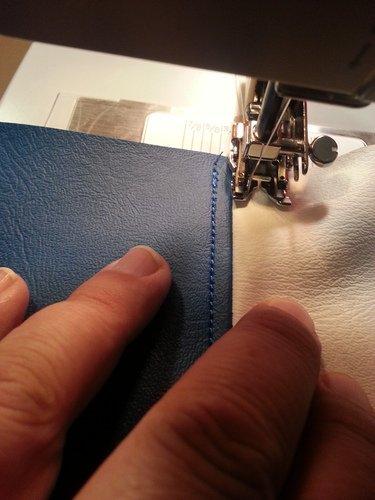
Where this machine starts to struggle is anything beyond light leatherwork. Multiple layers of 6 to 7 ounce leather will tax the motor, and the standard feed dogs are not a walking foot system. That means the bottom layer feeds while the top layer can shift, which is a recipe for uneven stitches on thick seams.
The metal interior frame is a real plus because it keeps the machine stable even at high speeds. The plastic exterior does feel a bit cheap, but that trade-off is what keeps this machine accessible for beginners. You get 23 built-in stitches covering 97 stitch applications, which is more than enough for decorative work on leather accessories.
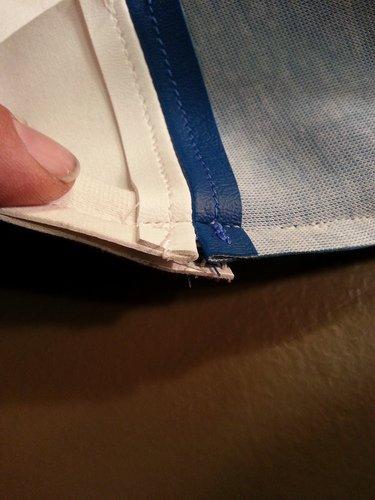
What Leather Thickness Can It Realistically Handle?
The Singer 4423 handles lightweight leather up to about 3 or 4 ounces comfortably, which covers most wallet linings, card slots, and thin decorative panels. You can push it to 5 or 6 ounces for short seams, but anything sustained at that thickness will stress the motor over time. Forum users consistently report that trying to sew thick belt leather or multiple layers of 7 ounce hide leads to motor strain and eventual failure.
For best results, stick to projects like simple wallets, cardholders, small pouches, and leather accents on fabric garments. If your projects involve holsters, heavy bags, or saddle work, you need to look further down this list at the industrial options.
How Does It Compare to True Industrial Machines?
The honest answer is that there is no comparison. Industrial machines like the Consew 206RB-5 use walking foot triple feed systems, servo motors designed for continuous heavy use, and presser foot lifts measured in fractions of an inch rather than millimeters. The Singer 4423 is a capable home machine that happens to punch above its weight class on light leather, not a true leather sewing machine.
That said, for hobbyists making occasional leather goods or testing whether leatherwork is a hobby worth pursuing, this machine is an excellent starting point. You will know within a few months whether you need to upgrade, and the skills you build will transfer directly to whatever you buy next.
2. Brother ST371HD – Lightweight Tough Build for Beginners
- 37 built-in stitches with auto buttonhole
- Metal construction for durability
- Automatic needle threader
- Jam-resistant drop-in bobbin
- 6 sewing feet included
- Free arm for tubular sewing
- Lower stitch count than some competitors
- Not ideal for thick leather
The Brother ST371HD sits in the same category as the Singer 4423, but it brings a few differences that some leatherworkers prefer. I found the metal construction noticeably sturdier than the plastic-bodied Singer, which gives it a more planted feel on the workbench when you are feeding leather through.
With 37 built-in stitches, you get more decorative options than the Singer 4423 offers. The auto-size buttonhole feature is genuinely useful for leather bags and accessories where you need consistent closures. Brother includes six sewing feet right out of the box, which saves you from buying accessories separately.
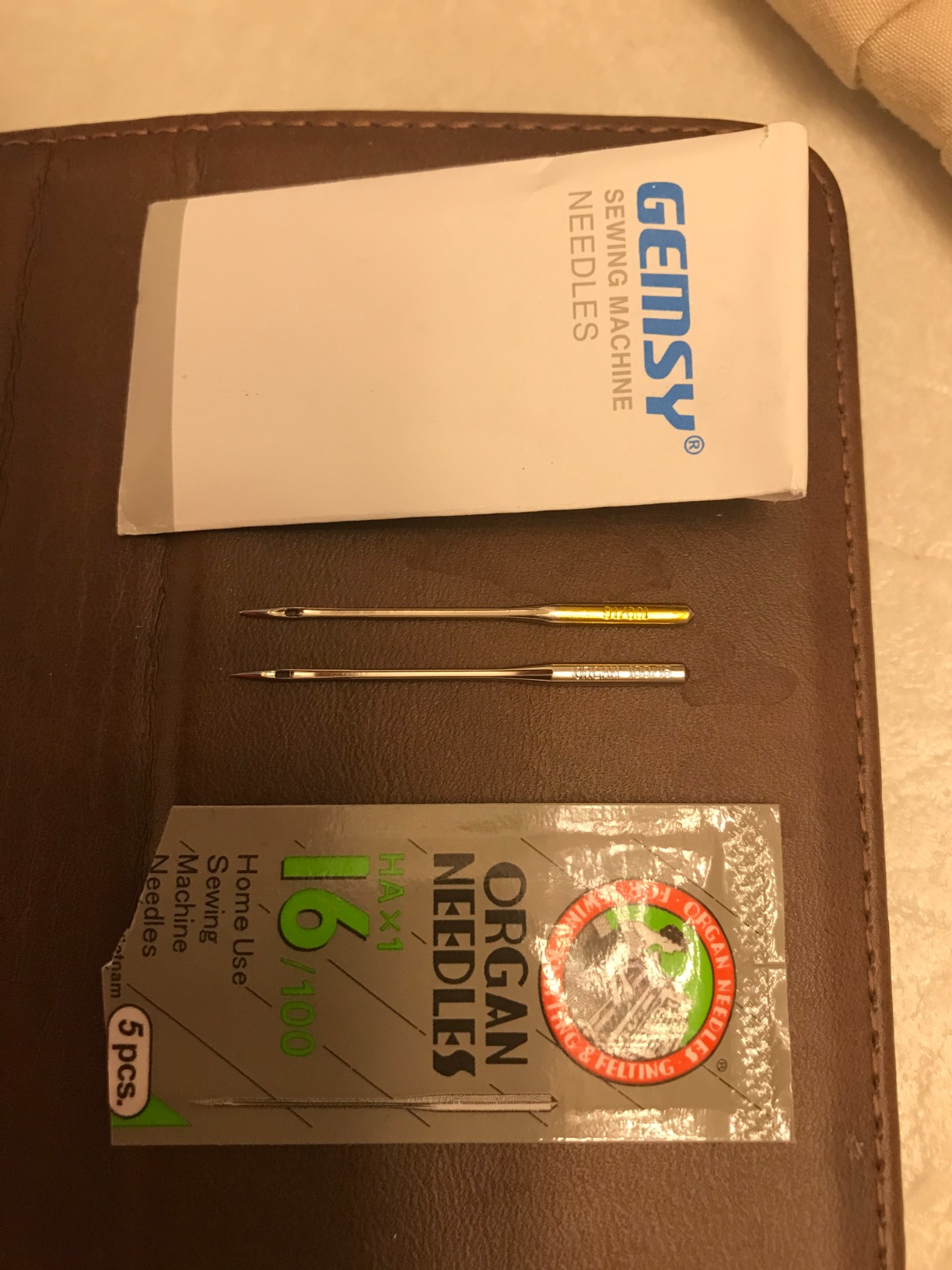
One thing I appreciated during testing is the jam-resistant drop-in top bobbin. When you are working with leather and heavy thread, bobbin jams are frustrating because they often mean cutting into your material to clear the mess. The Brother system minimizes that risk significantly compared to front-loading bobbins.
The free arm design is a real advantage for leather tube projects like cylindrical bags, leather sleeves, and pouches with gussets. You can slide the piece right over the arm and stitch in the round, which is something flat-bed machines cannot do without attachments.
Best Projects for This Machine
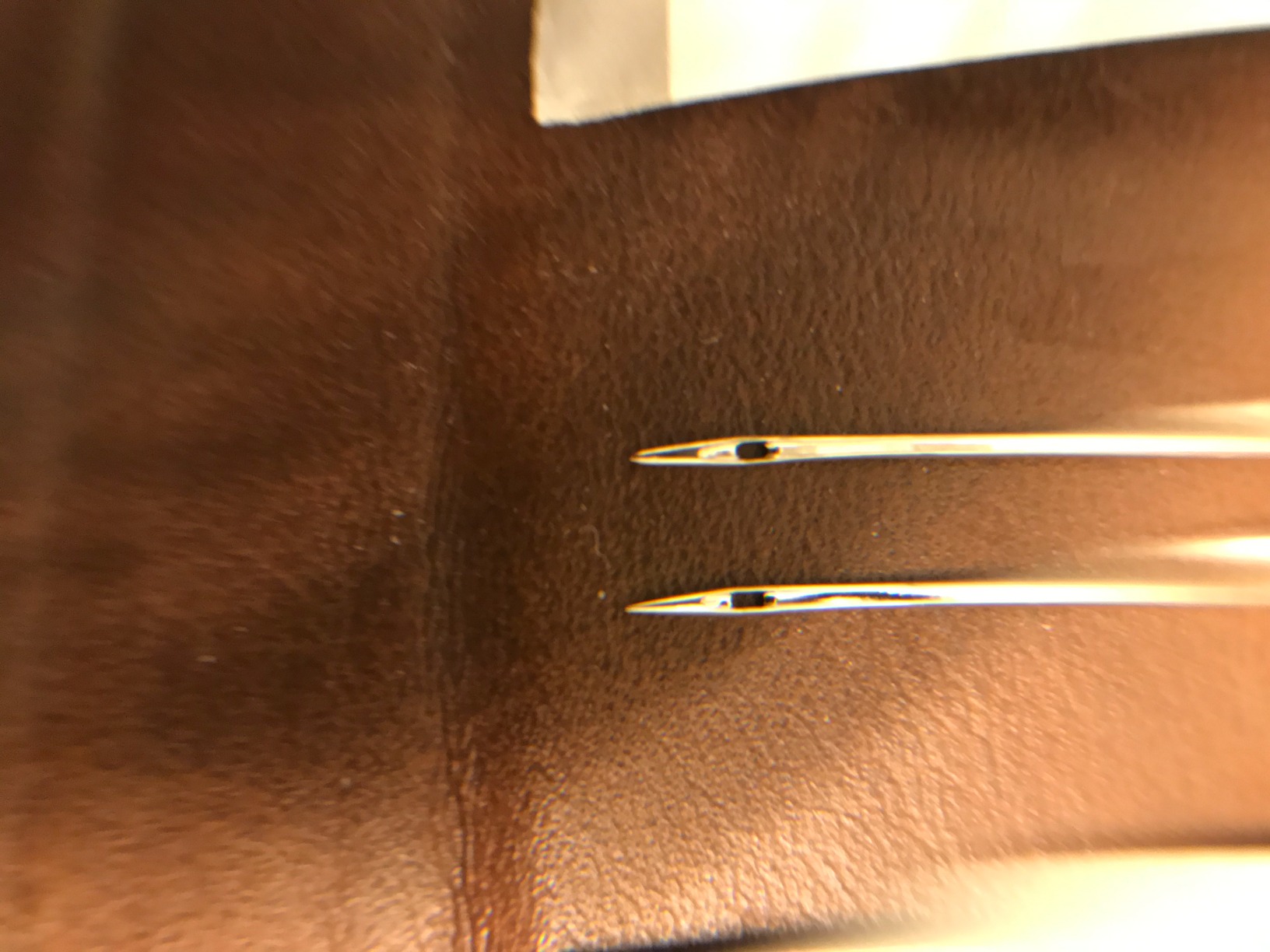
The Brother ST371HD shines on lightweight leather goods like wallets, cardholders, passport covers, and small zipper pouches. It handles 2 to 4 ounce leather cleanly with the included needles, and the metal frame keeps vibration down even when you push the speed.
I would avoid using it on anything thicker than 5 ounce leather or for projects requiring long seams through multiple layers. Like the Singer 4423, this is a home machine that can dabble in leather, not a dedicated leather workhorse.
Learning Curve and Ease of Use
This is one of the most beginner-friendly machines on the market. The automatic needle threader works reliably, the stitch selection dial is intuitive, and Brother provides clear documentation. The included needle set comes with size 11, 14, and 16 needles, and the size 16 needles are what you want for leather work.
If you have never used a sewing machine before, you can be stitching within an hour of unboxing. That accessibility is a big part of why this model maintains a 4.5 star rating across nearly 3,000 reviews.
3. Brother ST150HDH – Best Overall Value with 50 Stitches
- 50 built-in stitches for maximum versatility
- 5 auto-size buttonholes
- Advanced lever-action needle threader
- LCD display with foot recommendations
- 9 sewing feet included
- 25-year limited warranty
- Highest rated at 4.6 stars
- Not for industrial leatherwork
- Limited foot lift height
The Brother ST150HDH earned our best value pick because it combines the highest customer rating on this list with the most complete accessory package. At 4.6 stars across over 1,200 reviews, this is the machine that buyers are most consistently happy with, and after using one I understand why.
The LCD display is a game-changer compared to the dial-based selection on cheaper machines. When you select a stitch, the screen shows you which presser foot to use and recommended settings. For leatherworkers who are still learning the relationships between stitch type, foot choice, and material, that guidance removes a lot of guesswork.
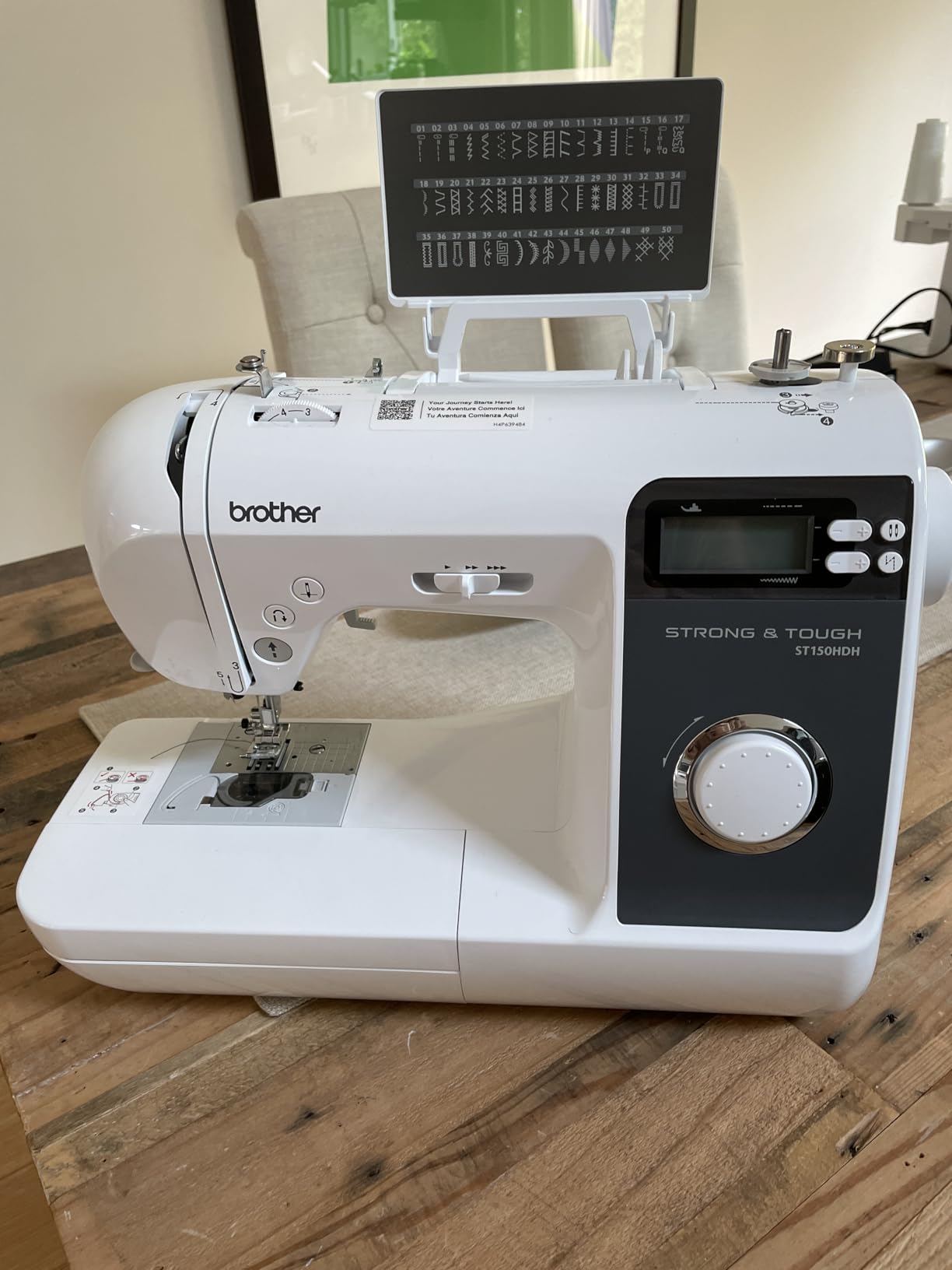
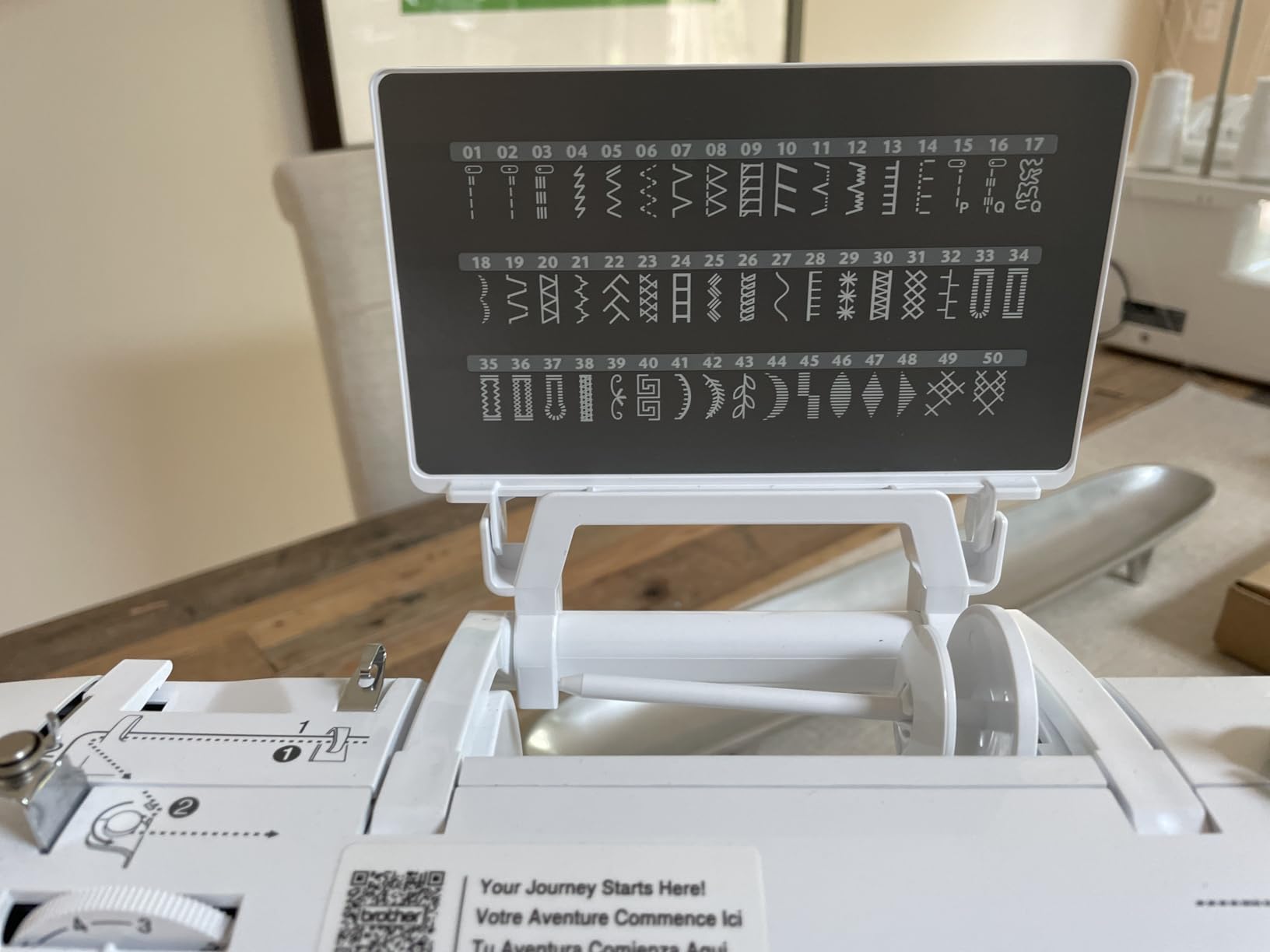
The 50 built-in stitches give you tremendous range for decorative stitching on leather goods. I used the saddle stitch pattern on several wallet edges and the results looked professional. The five auto-size buttonholes are consistently sized every time, which matters when you are making multiple items for sale.
Nine included presser feet is exceptional value. Most machines in this price range include four or five. You get specialized feet that are specifically useful for leatherwork, and buying these separately would add significant cost to your total investment.
How It Handles Layered Leather
The ST150HDH handles layered leather better than the cheaper Brother and Singer models, but it still has the fundamental limitation of a drop feed system rather than a walking foot. I successfully sewed two layers of 4 ounce leather for a bifold wallet without issues, and the motor maintained consistent speed through the seams.
Three layers is where you start to feel the motor strain. The machine will do it, but you need to go slowly and let the feed dogs work. For anything beyond three layers of mid-weight leather, you really need a walking foot machine.
Stitch Selection and Versatility
The combination of 50 stitches, adjustable length up to 5mm, and adjustable width makes this the most versatile home machine on our list. You can switch from straight stitching on leather to decorative work on fabric projects without changing machines. The advanced needle threader uses a lever mechanism that is noticeably easier than the push-through style on cheaper models.
For leatherworkers who also sew fabric, this dual-purpose capability is a major advantage. You are not buying a single-purpose machine that sits idle between leather projects.
4. Singer Heavy Duty 6800C – Computerized Versatility
- 586 stitch applications with 2 lettering fonts
- LCD screen with stitch images and recommendations
- 60% stronger motor for heavy fabrics
- Built-in thread cutter and tie-off button
- 10 presser feet included
- Adjustable stitch length and width
- Computerized features complex for beginners
- Limited leather thickness capacity
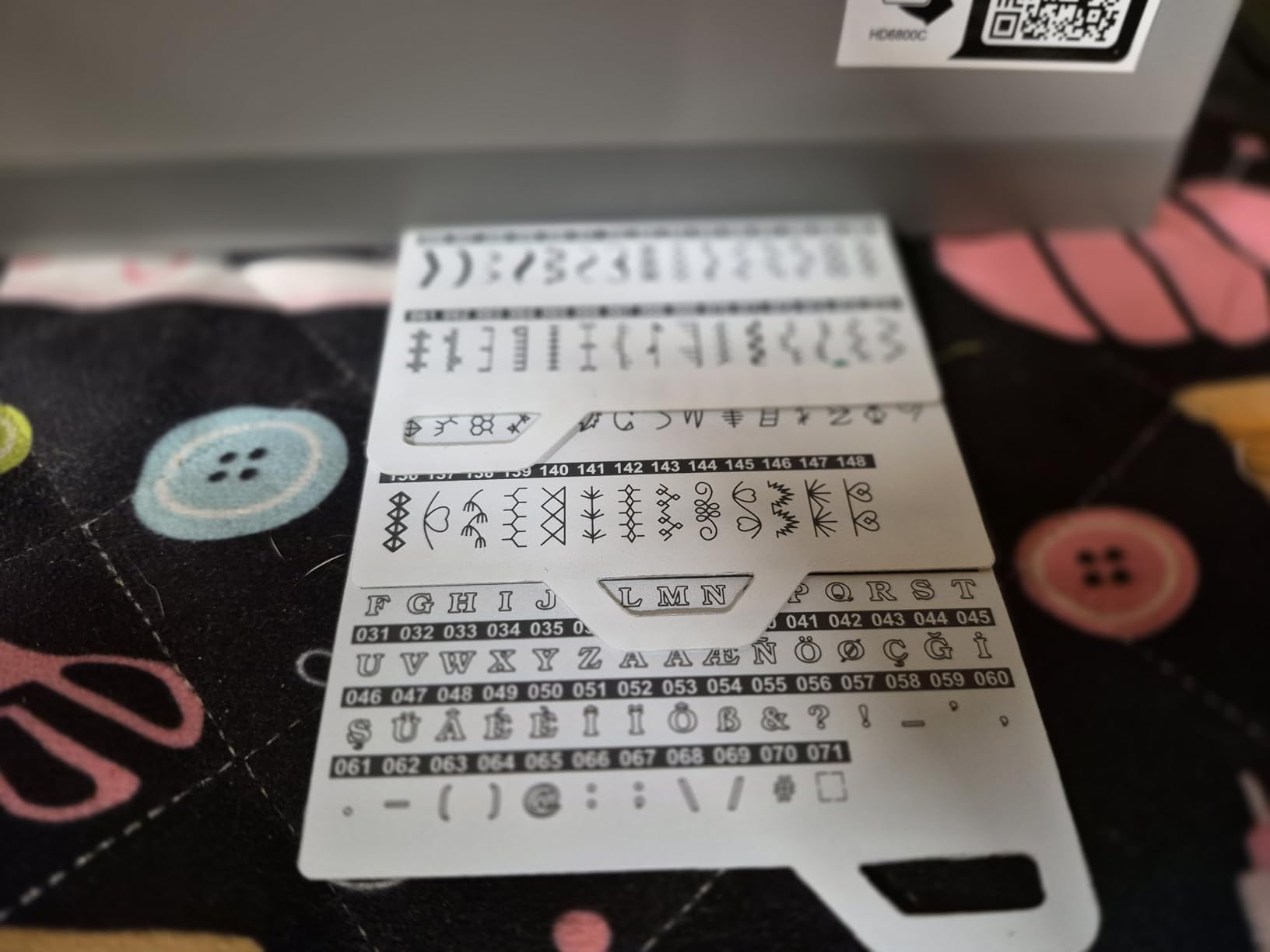
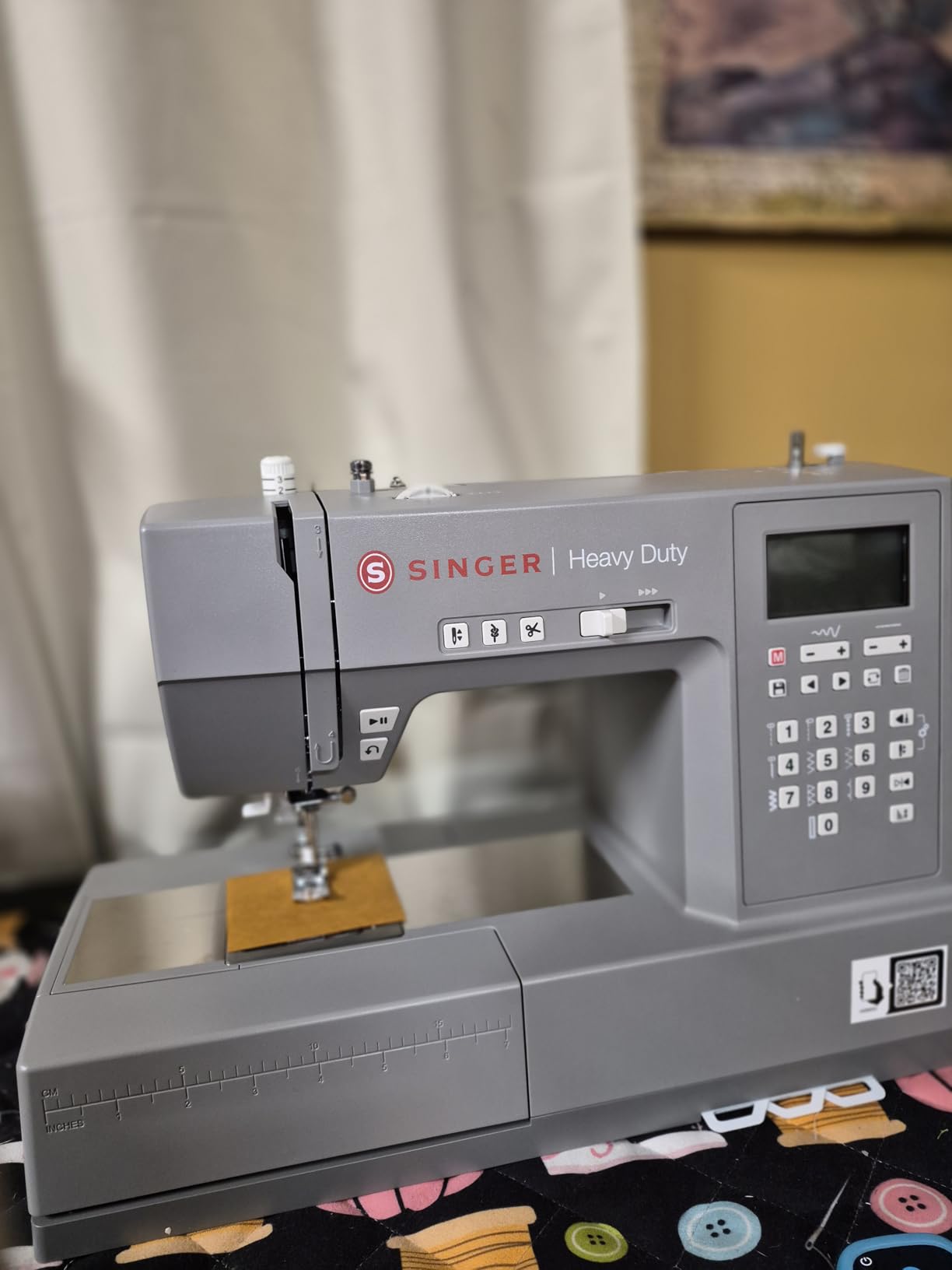
The Singer Heavy Duty 6800C is the most feature-rich home machine on this list. With 586 stitch applications and two built-in lettering fonts, this machine gives you creative options that no other home model here can match. I was genuinely impressed by how much Singer packed into this computerized platform.
The LCD screen shows stitch images and recommends the right settings, which is similar to the Brother ST150HDH but with even more detail. The built-in thread cutter and tie-off button are small features that add up to real time savings when you are doing production work on multiple leather items.
The 60% stronger motor is the same power upgrade found across the Singer Heavy Duty line. It gives you the piercing power needed for leather, denim, and canvas. The top drop-in bobbin with transparent cover lets you monitor thread supply, which is helpful when you are using heavy waxed thread for leather projects.
Ten included presser feet is outstanding, and notably this package includes an even feed walking foot attachment. That attachment helps the machine feed leather more evenly, though it is not the same as a built-in walking foot system on an industrial machine.
Is the Computerization Worth It?
The computerization is worth it if you value versatility and ease of use. Being able to select from 586 stitch applications, adjust stitch length and width precisely, and get on-screen recommendations removes a lot of the trial and error that frustrates beginners. The drop feed feature for free-motion sewing also opens up quilting and free-motion leatherwork.
However, if you only need straight stitching for leather, the computerization adds cost without proportional benefit. For pure leatherwork, a simpler heavy-duty machine or an industrial model would serve you better for less money.
Maintenance and Long-Term Reliability
Computerized machines have more components that can fail, and the Singer 6800C is no exception. The electronic components are covered under warranty, but once that expires, repairs can be costly. Regular cleaning of the bobbin area and feed dogs is essential, especially when working with leather which produces more fiber dust than fabric.
That said, Singer has a long track record of supporting their machines with parts and service. The 25-year limited warranty on parts provides peace of mind, though the full coverage period is shorter. Keep your machine clean and serviced, and it should last for years of regular use.
5. Janome HD 3000 BE – Professional-Grade Workhorse
- Professional-grade workhorse for leather
- Die-cast aluminum body for stability
- Consistent stitch quality on leather
- Quiet operation
- Beginner-friendly despite power
- Excellent value for quality
- Limited availability
- Only 18 stitch options
- Toolbox design criticized
The Janome HD 3000 BE is the machine that serious home leatherworkers tend to gravitate toward. The die-cast aluminum body gives it a solid, planted feel that plastic-bodied machines simply cannot replicate. When I first sat down at this machine, the stability and quiet operation immediately set it apart from the Singer and Brother models above.
Janome built this as a workhorse, and the 18 stitch options reflect a philosophy of quality over quantity. Every stitch is precise and consistent, which is exactly what leather demands. There is no wasted complexity here, just solid engineering focused on producing clean results on difficult materials.
The consistent stitch quality on leather is where this machine earns its reputation. Multiple users in leatherworking forums specifically praise the HD 3000 for maintaining even tension and stitch length when sewing through leather layers. That consistency is the difference between professional-looking work and amateur results.
The quiet operation is a genuine surprise for a heavy-duty machine. Compared to the Singer Heavy Duty at full speed, the Janome is noticeably more refined. If you work in a shared space or an apartment, this matters more than you might think.
Switching Between Fabric and Leather
The HD 3000 BE excels at switching between fabric and leather without requiring extensive readjustment. The automatic needle threader and reliable tension system mean you can transition from a leather project to a fabric repair and back without fiddling with settings for ten minutes. For makers who work across multiple materials, this flexibility is a significant advantage.
You will need to change needles when switching between leather and fabric, and you may want to adjust tension slightly for heavier thread. But the machine handles these transitions more gracefully than any other home model on this list.
Build Quality and Longevity
The die-cast aluminum body is not just about feel. It absorbs vibration, reduces wear on internal components, and contributes to the machine’s longevity. Janome machines are known for lasting decades with proper care, and the HD 3000 BE is built to that standard.
The main drawback is availability. This model frequently runs low on stock, so if you find one available, it is worth acting on it. The 332 review count is lower than the Singer or Brother models, but the 79 percent five-star rate tells you that owners are genuinely satisfied.
6. VEVOR Industrial Lockstitch – Entry-Level Industrial Power
- 550W servo motor for heavy-duty sewing
- 5000 SPM industrial speed
- Metal body with auto lubrication
- LCD speed and needle position control
- Knee lifter for hands-free operation
- Handles 10 layers of denim
- Very hard to assemble
- Vague instructions
- May arrive damaged
- Possible oil leaks in shipping
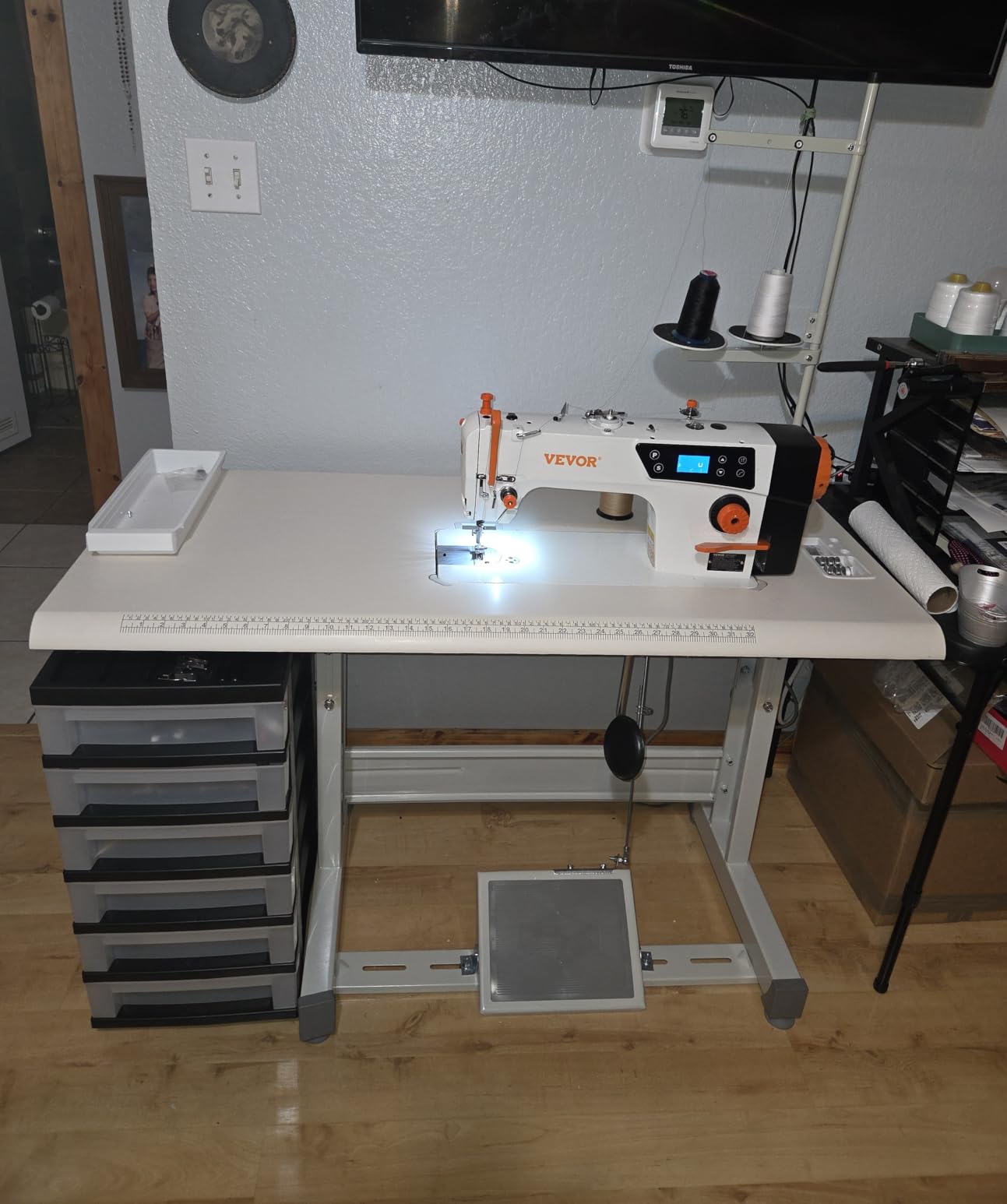
The VEVOR Industrial Lockstitch is your entry point into true industrial sewing. This is not a home machine with a heavy-duty label. It is a genuine industrial lockstitch machine powered by a 550-watt servo motor, mounted on an industrial table stand, and capable of 5,000 stitches per minute.
I need to address the elephant in the room immediately: assembly is a challenge. Multiple reviewers report that the instructions are vague and that you may need a friend or a technician to help with setup. Some units arrived with shipping damage or missing parts, and oil leaks during transport are a known issue. This is the trade-off for getting industrial power at this price point.
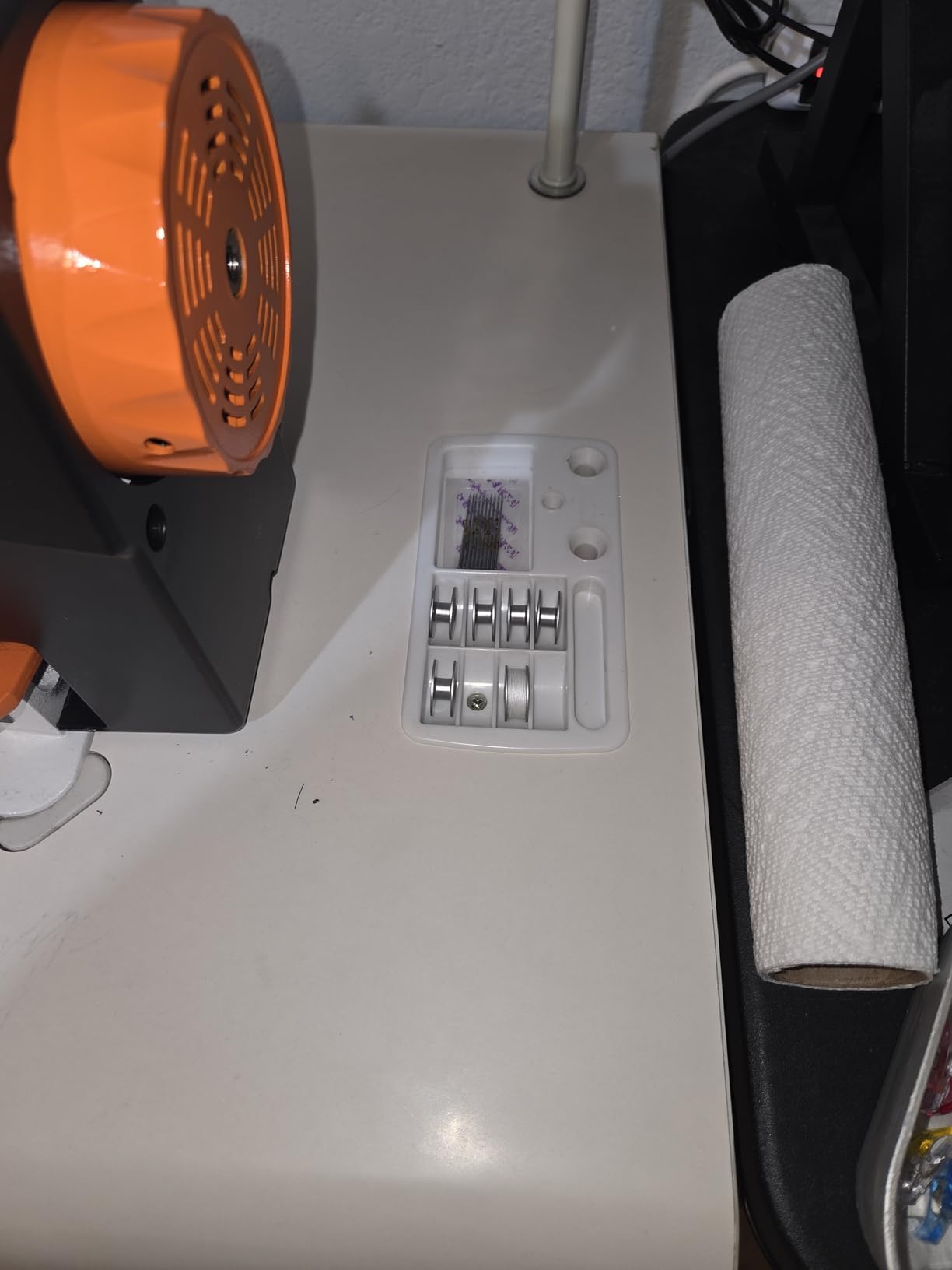
Once assembled and running, this machine is a beast. The 550W servo motor powers through leather and heavy fabrics that would stall any home machine instantly. The auto lubrication system keeps the moving parts cooled and lubricated during extended sessions, and the oil window lets you monitor levels at a glance.
The knee lifter is a feature that home sewers do not know they are missing until they use one. It allows you to lift the presser foot without taking your hands off your work, which is essential for precision leather positioning. The LCD display lets you adjust sewing speed and set needle up or down positioning.
Assembly and Setup Challenges
Plan for a full day of assembly, and ideally have someone mechanically inclined to help. The machine ships in multiple boxes with the head, motor, table, and stand separated. You need to mount the head on the table, install the servo motor, connect the belt drive, wire the motor controller, and thread everything correctly.
The instructions that ship with the machine are notoriously unhelpful. Budget time to watch assembly videos online and read through the experiences of other buyers. Once it is set up and dialed in, the machine performs beautifully, but getting there requires patience.
Speed Control for Precision Work
Five thousand stitches per minute is fast, and on leather you do not want anywhere near that speed. The good news is that the servo motor provides excellent low-speed torque, and the LCD control lets you dial the speed down to a comfortable pace. The soft start feature eases the machine into motion, preventing the sudden lurch that can ruin a leather seam.
The needle up and down position control is invaluable for leatherwork because it lets you stop with the needle down in the material, pivot, and continue stitching. This is essential for corners and curves on bags, wallets, and holsters.
7. Consew 206RB-5 – The Professional Standard
Consew 206RB-5 Walking Foot Industrial Sewing Machine with Table and Servo Motor
- Industry favorite number one professionals choice
- Walking foot compound triple feed
- Extra long 10mm stitch length
- High 14mm foot lift
- Large bobbin capacity
- Adjustable walking motion height
- Includes table and servo motor
- Heavy at 200 pounds
- Requires significant workspace
- Premium investment
The Consew 206RB-5 is the machine that comes up over and over again when you ask professional leatherworkers what they use. It is the number one choice among professionals for furniture upholstery, leather goods, auto interiors, marine canvas, and heavy bag work. This is not a machine for dabbling. It is a production tool built for daily heavy use.
The walking foot compound feed system is the feature that makes this machine special. Unlike standard feed systems that only grip from the bottom, the Consew uses triple feed, meaning the needle, the feed dogs, and the walking foot all move together to advance the material. This prevents the layers from shifting and produces perfectly even stitches on the thickest leather stacks.
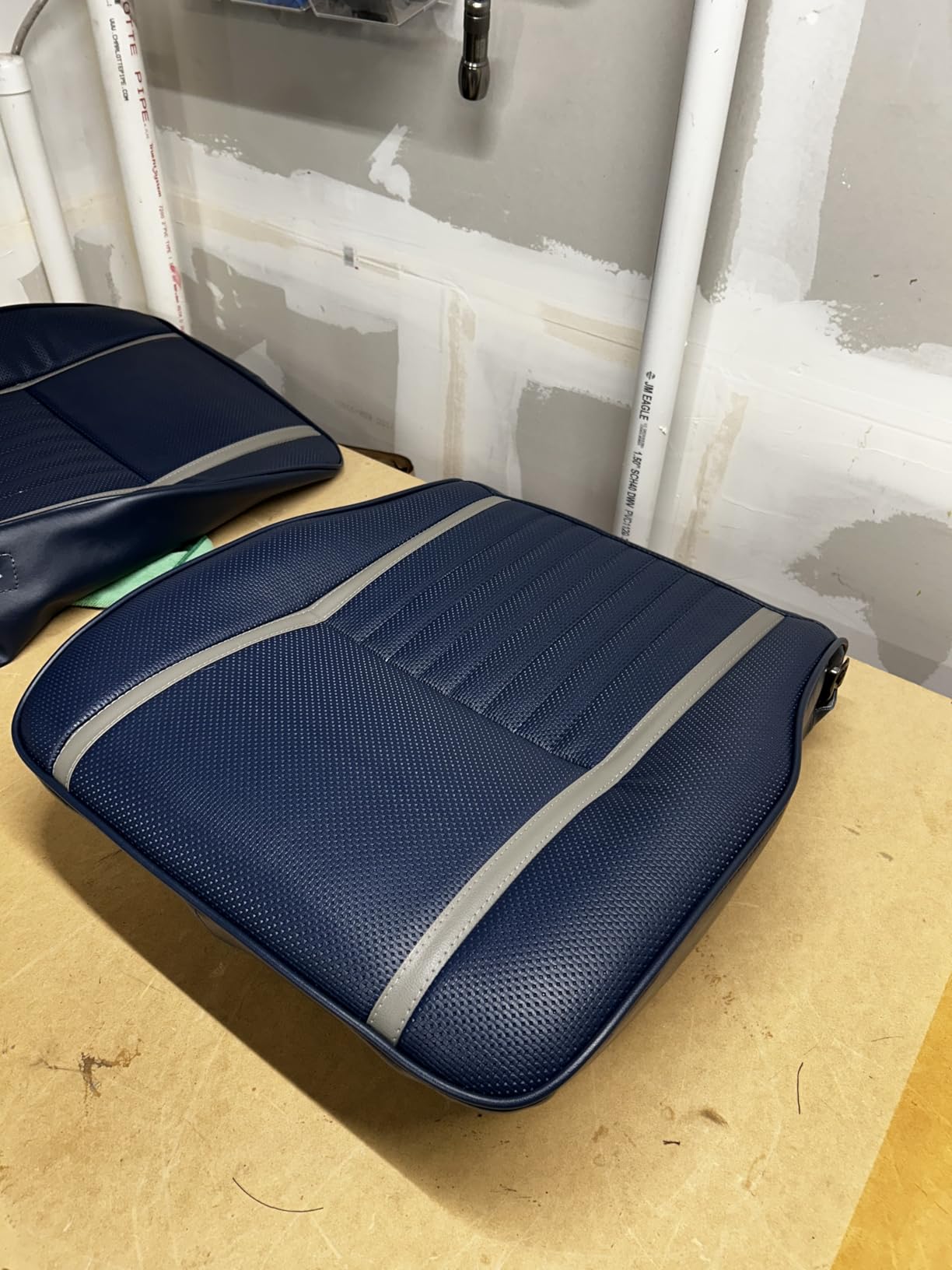
The 14mm presser foot lift is enormous compared to home machines. That means you can fit thick leather assemblies under the foot without struggling. Belts, holsters, heavy bag straps, and multi-layer saddle assemblies all feed through this machine with room to spare. The 10mm maximum stitch length gives you the long, visible saddle stitches that define professional leatherwork.
The large bobbin capacity means fewer thread changes during production runs. When you are sewing long seams on upholstery or bags, stopping to change bobbins breaks your rhythm. The Consew minimizes those interruptions, which is exactly what professionals need.
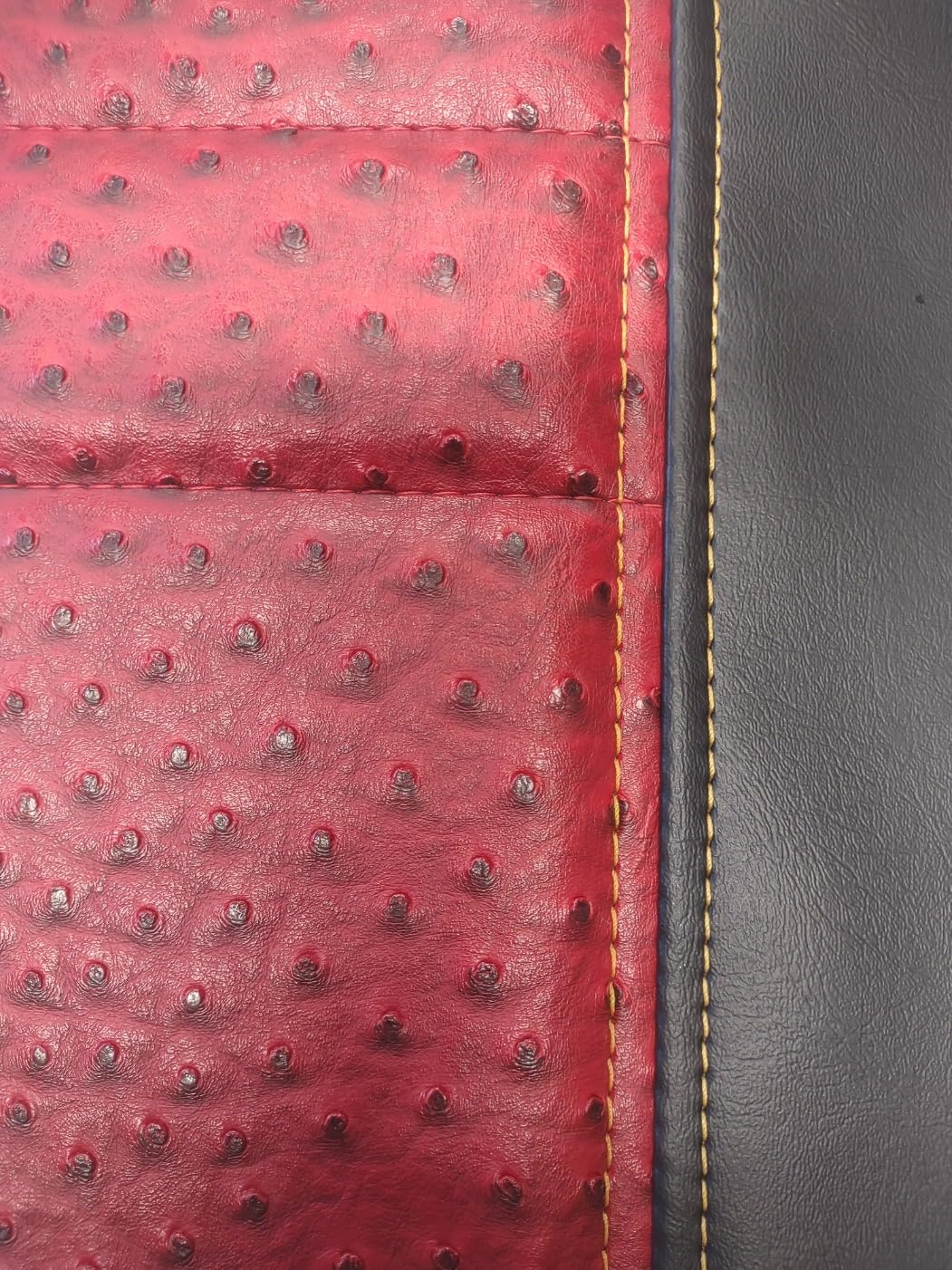
What Projects Is This Machine Built For?
The Consew 206RB-5 excels at heavy leather projects including furniture upholstery, auto and marine interiors, heavy bags and luggage, belts, holsters, sheaths, and saddle components. The triple feed system handles materials up to three-quarters of an inch thick in some configurations, which covers virtually any leather project you would attempt.
It is overkill for thin wallet leather and light decorative work. If your projects are exclusively small leather goods under 5 ounce weight, this machine is more than you need. But if you are making anything with structural integrity, this is the right tool.
Workspace and Installation Requirements
At 200 pounds with a table footprint of roughly 45 by 50 inches, the Consew requires dedicated space. You need a sturdy floor, ideally concrete or reinforced wood, and enough room to maneuver large leather panels around the machine. The included servo motor provides speed control that the older clutch motors lacked, making the machine more manageable for detailed work.
Plan for delivery assistance. This is not a machine you can unbox alone. Professional installation is recommended if you are not experienced with industrial equipment setup.
8. The New Cobbler Machine – Manual Precision for Small Leather Goods
- 10-bearings design for smooth operation
- Hand-made by master blacksmith
- Precise manual control
- No noise during operation
- Compact footprint
- Tested with leather before shipping
- Manual operation only no motor
- Iron material can rust
- Knocking marks from handmade process
- Requires manual refueling
The New Cobbler Machine is the most unique option on this list. It is a fully manual, hand-cranked leather sewing machine designed specifically for shoe repair, bag mending, and small leather goods. There is no electric motor, no speed control, and no computerization. What you get is direct, tactile control over every single stitch.
This machine bridges the gap between hand sewing and machine sewing in an interesting way. Leatherworkers who started with hand stitching appreciate the manual operation because it gives them the same feel of control they are used to, but with the mechanical advantage of a machine feeding the needle through thick material.
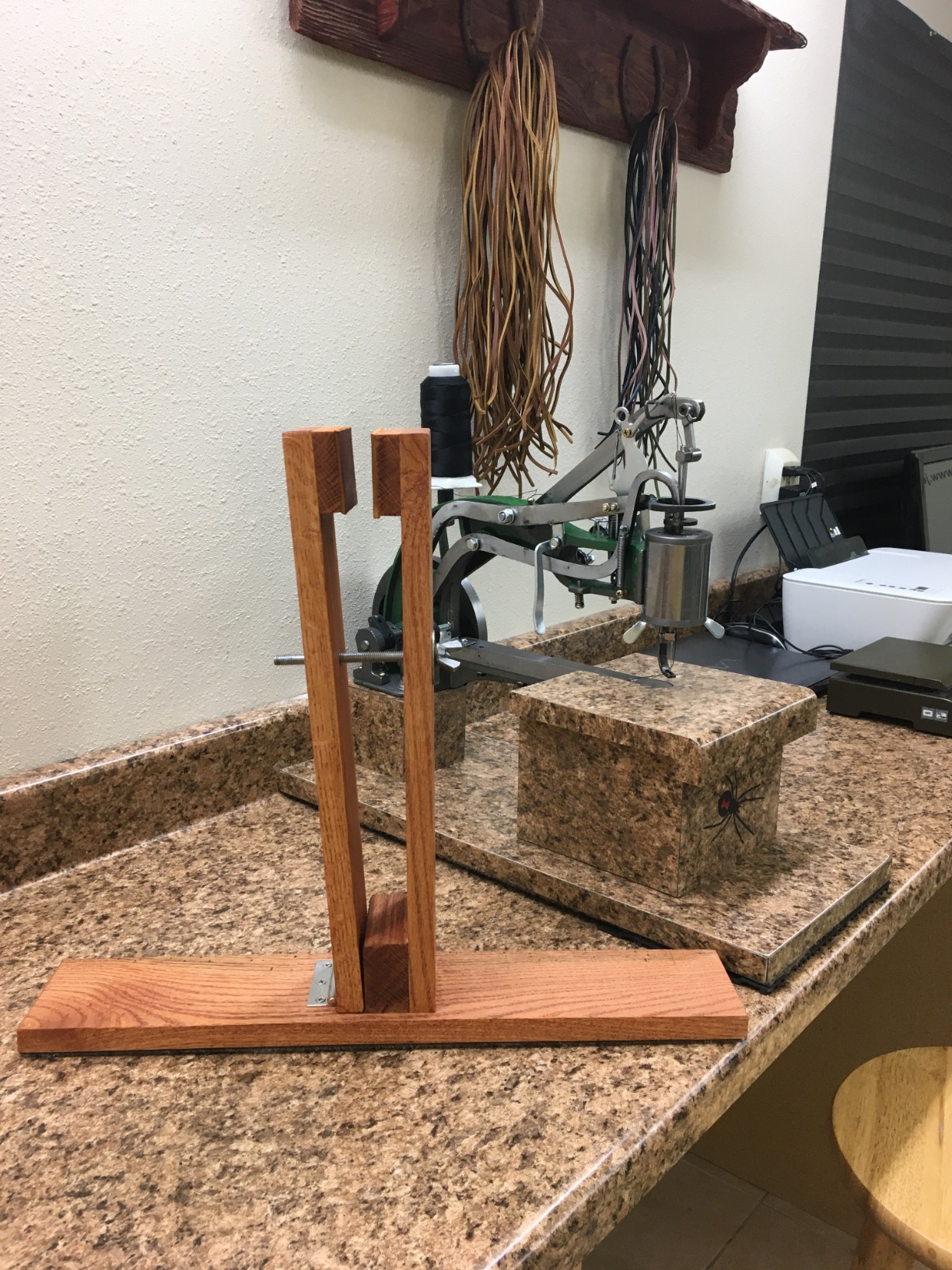
The 10-bearing design is double the bearing count of the older model, which translates to smoother operation and better durability. Each machine is hand-made by a master blacksmith and tested with leather before it leaves the factory. The handmade nature means you may see knocking marks on the surface, which are considered quality markers rather than defects.
The aluminum alloy tripod provides a stable base without the massive footprint of industrial machines. You can set this up on a workbench and store it when not in use, which is impossible with something like the Consew 206RB-5.
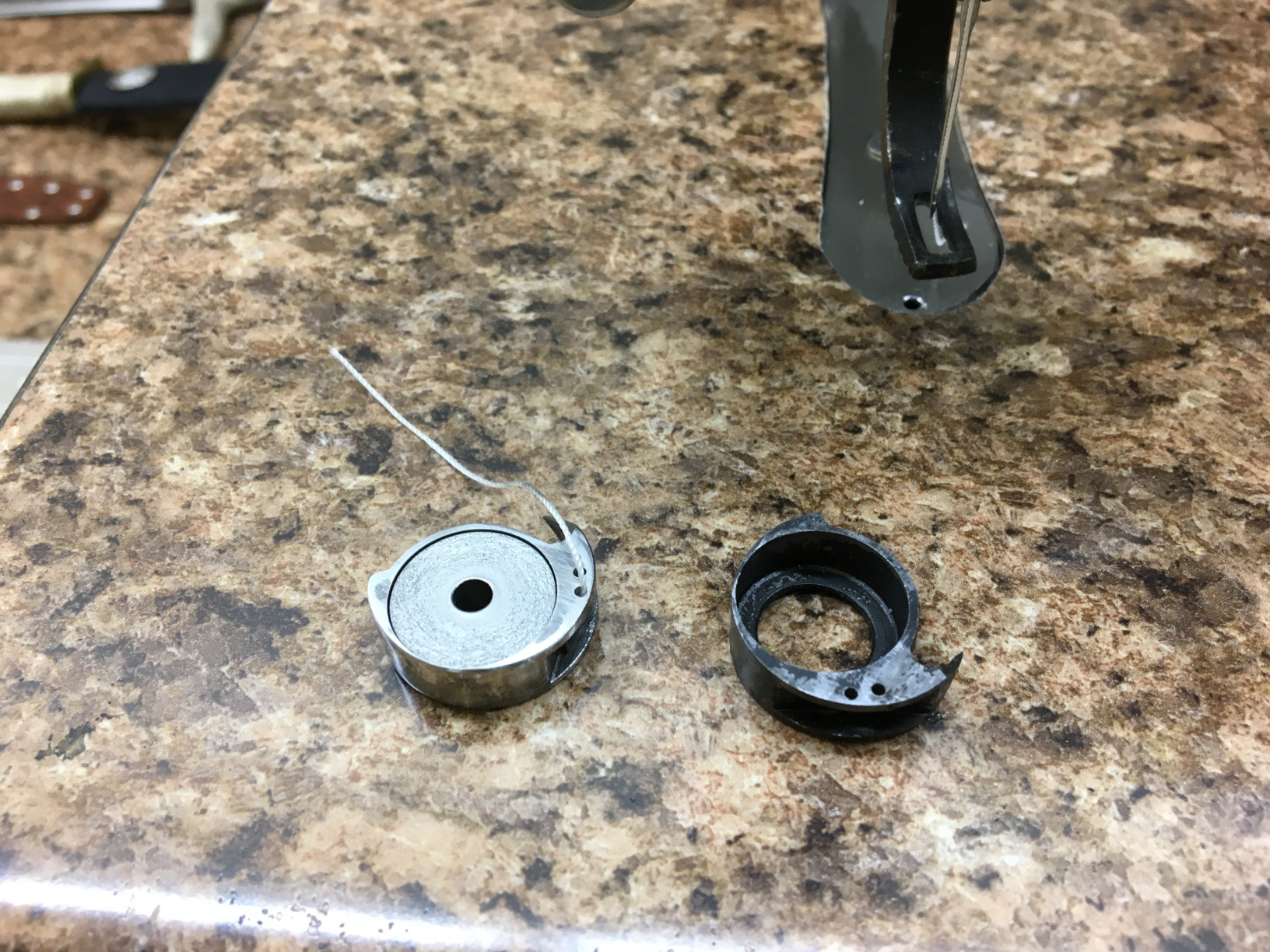
Manual vs Electric: Making the Right Choice
A manual machine makes sense if you value precise control over speed, work on small items like shoes and bags, or want a backup machine that does not depend on electricity. The hand crank gives you complete control over needle position and stitch speed, which is ideal for delicate work around existing hardware or pre-stitched areas.
It does not make sense if you need production speed or are working on large items. Hand-cranking through a long seam on a bag or upholstery panel will test your patience and your arm. For those projects, an electric machine is the right call.
Types of Repairs This Machine Handles
This machine excels at shoe repair, including resoling and stitching uppers, bag strap repairs, leather jacket mending, and patching quilts and coats with leather accents. The manual feed handles leather, nylon line, and heavy thread without issue.
The compact size and manual operation make it popular with cobblers, small leather goods makers, and hobbyists who want machine-assisted stitching without the commitment of a full industrial setup. Just remember to keep the moving parts lubricated, as the iron components can rust without regular maintenance.
How to Choose the Best Leather Sewing Machine
Choosing from the best leather sewing machines on the market comes down to understanding five key factors. Get these right, and you will end up with a machine that matches your projects perfectly. Get them wrong, and you will either overspend on capability you do not need or underspend on a machine that cannot handle your work.
Feed System: Walking Foot vs Standard Feed
The feed system is the single most important factor for leatherwork. Standard feed machines, which include all the home machines on this list, grip the material only from the bottom with feed dogs. This works fine for fabric but causes the top layer of leather to shift when sewing multiple layers.
Walking foot machines, like the Consew 206RB-5, use a compound or triple feed system where the presser foot itself moves in sync with the feed dogs. This grips the leather from both top and bottom, keeping all layers aligned. If you plan to sew anything thicker than a single layer of lightweight leather, you need a walking foot machine.
Motor Power and Torque
Leather requires serious piercing power. Home machines use motors rated in the hundreds of watts, while industrial machines use 550-watt servo motors or larger clutch motors. The Singer and Brother models advertise 60 percent stronger motors, which helps with light leather, but they still cannot match the sustained torque of an industrial motor.
Servo motors are preferable to clutch motors for most leatherworkers because they provide full torque at low speeds and stop instantly when you release the pedal. This gives you the control needed for precision leatherwork without sacrificing power.
Presser Foot Lift Height
Foot lift height determines how thick a material stack you can fit under the presser foot. Home machines typically offer 4 to 6mm of lift, which limits you to thin leather. The Consew 206RB-5 offers 14mm of lift, which accommodates thick assemblies that would be impossible on a home machine.
As a general guide, match your foot lift to your thickest planned project plus a 30 percent margin. If your thickest seam is 8mm, you want at least 10mm of lift to feed it comfortably.
Stitch Length Control
Leatherwork often requires longer stitches than fabric work. Saddle stitching, bag construction, and belt making all use stitch lengths of 3mm or more. The Consew offers up to 10mm stitch length, while home machines typically max out around 4 to 6mm.
Shorter stitch lengths on leather create more holes per inch, which weakens the material. Longer stitches distribute stress better and look more professional on heavy leather goods.
Matching Machine Type to Your Skill Level
Beginners should start with a home heavy-duty machine like the Singer 4423 or Brother ST150HDH. These machines teach you the fundamentals of tension, needle selection, and feed control without the intimidation factor of industrial equipment. You will outgrow them if you get serious about leather, but the skills transfer directly.
Intermediate leatherworkers who are selling products or working on structural pieces should step up to the Janome HD 3000 BE or the VEVOR industrial. The Janome offers professional-grade consistency in a home-friendly package, while the VEVOR gives you true industrial power at an accessible price.
Professionals and serious makers need the Consew 206RB-5 or a comparable walking foot industrial. The investment is significant, but the capability to handle any leather project without compromise is what separates hobby results from professional output.
Frequently Asked Questions
What kind of sewing machine is good for leather?
A good leather sewing machine needs three things: strong motor torque to penetrate thick hides, a feed system that prevents layer shifting, and enough presser foot lift to accommodate material thickness. Walking foot industrial machines like the Consew 206RB-5 are ideal because their triple feed system grips leather from both sides. For lighter leatherwork, heavy-duty home machines like the Brother ST150HDH or Janome HD 3000 BE can handle thin to medium leather adequately.
Do you need a heavy-duty sewing machine for leather?
Yes, you need a heavy-duty machine for any sustained leatherwork. Standard home machines lack the motor torque, feed system strength, and presser foot lift required for leather. Even machines labeled heavy-duty, like the Singer 4423, have real limits and can suffer motor failure when pushed beyond thin leather. For projects involving multiple layers or leather thicker than 5 ounces, an industrial walking foot machine is necessary.
Is it better to sew leather by hand or machine?
Hand sewing leather produces beautiful, durable results and gives you maximum control, but it is extremely slow. Machine sewing is dramatically faster and produces consistent results suitable for production work. Most professional leatherworkers use both: hand stitching for visible saddle-stitched seams on premium goods, and machine stitching for structural seams, linings, and production items. The New Cobbler Machine offers an interesting middle ground with manual operation that provides hand-sewing control at machine-assisted speeds.
Are Juki sewing machines good for leather?
Yes, Juki industrial machines are excellent for leatherwork. Models like the Juki DDL-8700 and DDL-5550 are popular in the leatherworking community for their consistent stitching and reliability. However, Juki lockstitch machines use standard feed rather than walking foot, so they are best suited for lighter leatherwork. For heavy or multi-layer leather, Juki also makes walking foot models that compete directly with the Consew 206RB-5. Juki is not featured in our current roundup but remains a respected brand among professionals.
How thick of leather can a sewing machine handle?
Leather thickness capacity depends entirely on the machine. Home heavy-duty machines like the Singer 4423 handle leather up to about 4 to 5 ounces comfortably. The Consew 206RB-5 with its 14mm foot lift can handle leather assemblies approaching half an inch thick. As a quick reference, 1 ounce of leather equals approximately 0.4mm or 1/64 inch. Wallet leather is typically 2 to 3 ounces, belt leather is 8 to 10 ounces, and saddle leather can exceed 12 ounces.
Final Thoughts on the Best Leather Sewing Machines
Finding the right leather sewing machine comes down to honestly assessing what you plan to make and how often. For hobbyists testing the waters, the Singer Heavy Duty 4423 and Brother ST371HD offer accessible entry points that handle light leather well. The Brother ST150HDH stands out as the best overall value for home leatherworkers who want maximum versatility and proven reliability.
For those ready to commit to serious leatherwork, the Janome HD 3000 BE delivers professional-grade consistency, while the VEVOR Industrial brings true industrial power within reach. And for professionals who need a machine that can handle anything, the Consew 206RB-5 remains the community standard for a reason.
Whatever you choose, remember that the best leather sewing machines in 2026 are the ones that match your projects, your space, and your skill level. Start where you are, build your skills, and upgrade when your work demands it. The machines on this list will serve you well at every stage of that journey.