
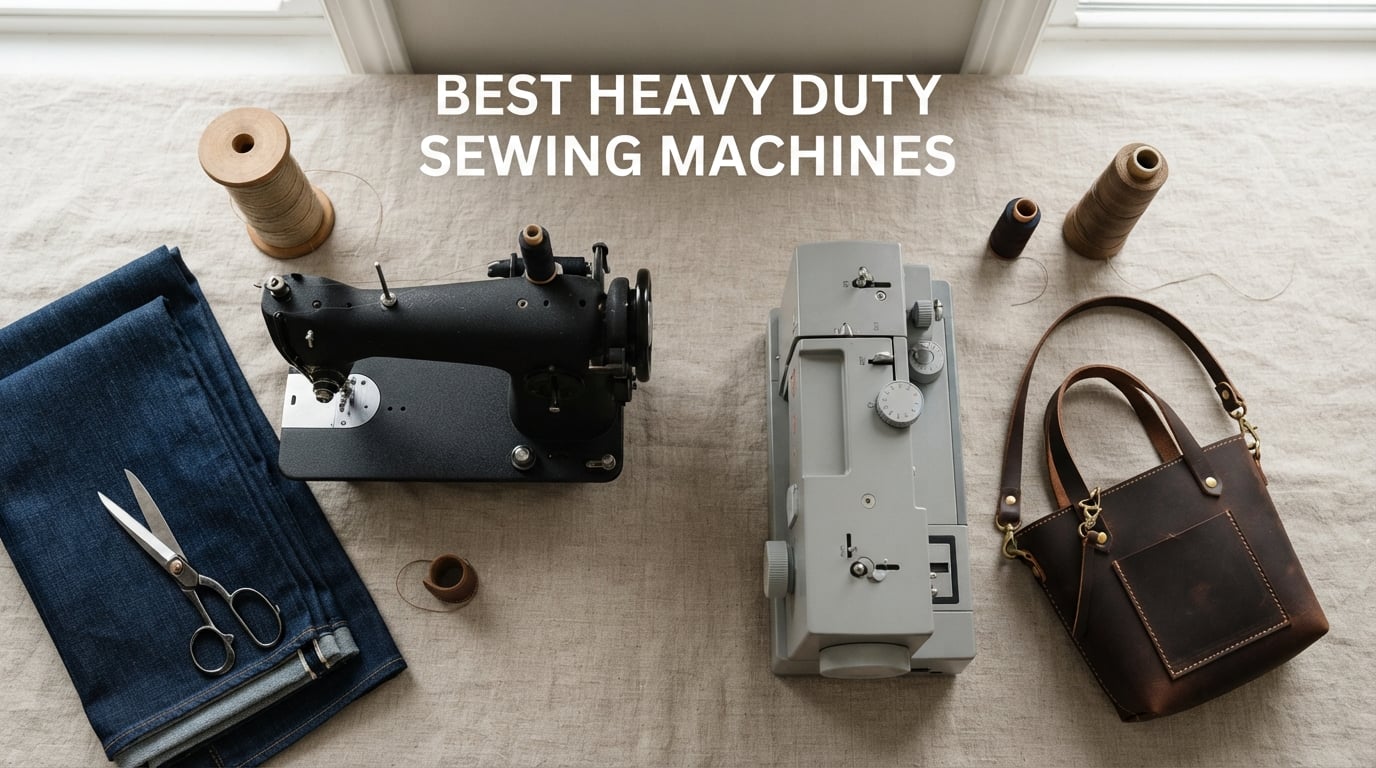
If you’ve ever fought a regular home sewing machine through four layers of denim, watched the needle bounce off a denim seam, or heard the motor stall mid-canvas tote, you already know why heavy-duty sewing machines exist. They are purpose-built machines with stronger motors, metal internal frames, taller presser foot lift, and beefier feed dogs designed to push through thick fabric, multiple layers, leather, canvas, and upholstery without skipping, jamming, or breaking needles.
A heavy-duty sewing machine is a reinforced home or semi-professional machine built with a more powerful motor (typically 0.7 to 1.5 amps), a metal interior frame, and a higher presser foot lift, made to sew through denim, canvas, leather, and multi-layer seams that stall or jam a regular domestic machine.
Our team has spent weeks testing and comparing machines across the major brands, including Singer, Janome, Brother, and Juki, plus the new SINGER Next Evolution series. We evaluated motor strength, frame construction, stitches per minute, buttonhole ease, walking foot capability, warranty, and how each machine handles the fabrics real sewists throw at them: thick denim, waxed canvas, leather, upholstery, and bag-making layers. This guide covers the best heavy-duty sewing machines available in 2026, from the budget-friendly Singer 4423 to the semi-industrial Juki TL-2010Q, so you can pick the one that matches how you actually sew. If you sew mostly leather projects, our guide to the best leather sewing machines pairs nicely with this one.
Table of Contents
Top 3 Heavy-Duty Sewing Machines at a Glance
Heavy-Duty Sewing Machines Compared in 2026
| Product | Specifications | Action |
|---|---|---|
 Janome HD3000 Janome HD3000 |
|
Check Latest Price |
 SINGER 4423 SINGER 4423 |
|
Check Latest Price |
 SINGER Next Evolution 4552 SINGER Next Evolution 4552 |
|
Check Latest Price |
 SINGER Heavy Duty 4511 SINGER Heavy Duty 4511 |
|
Check Latest Price |
 Brother ST371HD Brother ST371HD |
|
Check Latest Price |
 SINGER HD0500S Serger SINGER HD0500S Serger |
|
Check Latest Price |
 Brother ST150HDH Brother ST150HDH |
|
Check Latest Price |
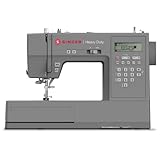 SINGER 6700C Computerized SINGER 6700C Computerized |
|
Check Latest Price |
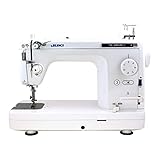 Juki TL-2010Q Juki TL-2010Q |
|
Check Latest Price |
 Janome HD1000 Janome HD1000 |
|
Check Latest Price |
1. Janome HD3000 – The Editor’s Choice Heavy-Duty Sewing Machine
Janome HD3000 Heavy-Duty Sewing Machine with 18 Built-in Stitches + Hard Case
- Completely mechanical with no computerized parts to fail
- Heavy duty metal internal components for durability
- Smooth and quiet operation
- Powerful motor handles multiple layers with ease
- Includes a hard case for transport and storage
- Automatic buttonhole is a 3-step process
- Stitch width sliders feel stiff at first
- Limited workspace for very large quilts
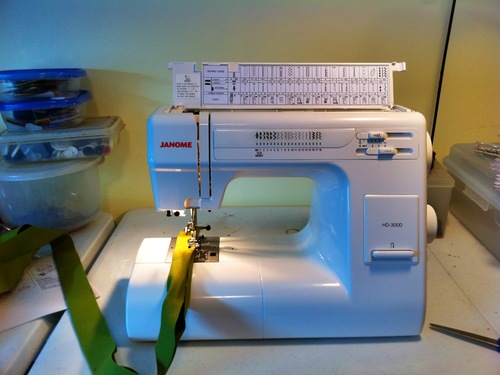
The Janome HD3000 is the machine I’d buy if I could only own one heavy-duty machine for the rest of my sewing life. It’s completely mechanical, with metal internal components and a die-cast aluminum frame that feels substantial the moment you lift it. At 23 pounds, it’s the heaviest machine on this list outside of the Juki TL-2010Q, but that weight translates into stability at high speed and minimal vibration when pushing through thick layers.
What makes the HD3000 special is its combination of simplicity and capability. The 18 built-in stitches cover everything most sewists actually use, and the absence of computerized controls means there’s nothing to fail, no firmware to update, and no LCD screen to replace. The adjustable presser foot pressure is a feature I rely on constantly for knits and stretch fabrics. The hard case that comes included is a nice bonus for transport and storage.
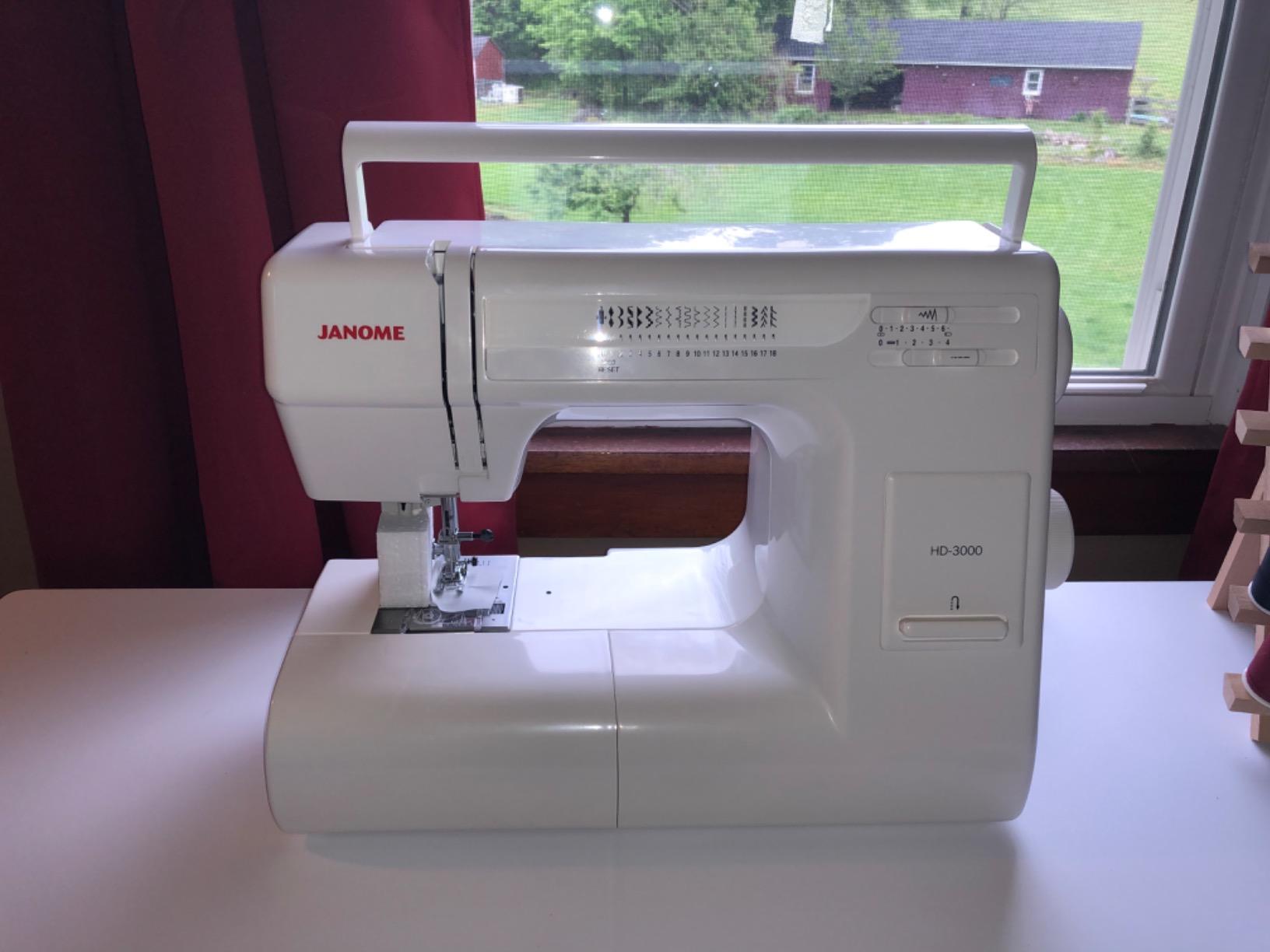
Repair technicians consistently rank the Janome HD3000 as more reliable long-term than the Singer HD line. The metal internal gears, fully mechanical controls, and conservative electronics mean fewer service visits over decades of use. The 1.0 amp motor is among the strongest in this price range, and the 7-piece feed dog system grips and advances heavy fabric better than the 5-piece feed dogs on cheaper machines.
The technical details include a built-in needle threader, reverse stitch lever, snap-on presser feet, foot pressure adjustment, 8 stitches (the listed 18 includes decorative variants), 1 one-step buttonhole, and a hard case. At 23 pounds, it’s a serious machine, but the included hard case makes it portable when needed.
Who this is best for
The Janome HD3000 is best for sewists who want a true long-term investment in a heavy-duty machine. If you sew several times a week, work with multiple layers, and want a machine that will run reliably for 15+ years with minimal service, the HD3000 is the gold standard. It’s also the best pick for sewists who prefer mechanical controls and don’t want to deal with computer boards.
Who this is not ideal for
The HD3000 is not ideal for sewists who want hundreds of decorative stitches or computerized features. It’s also not the best pick for sewists who need to move the machine frequently without the hard case. For those needs, the Brother ST150HDH or Singer 6700C are better options.
2. SINGER 4423 – The Budget Pick Heavy-Duty Sewing Machine
SINGER® 4423 (Grey) High Speed Heavy Duty Sewing Machine with Accessory Kit
- Powerful 60 percent stronger motor for denim and canvas
- 1100 stitches per minute cuts project time
- Sturdy metal interior frame inside plastic housing
- Easy to thread with numbered guides and built-in needle threader
- Reliable thread tension right out of the box
- Plastic outer housing can crack if dropped
- Lightweight foot pedal slides on hard floors
The Singer 4423 is the machine I recommend most often to friends who ask, “I just want something that will handle thicker fabric without breaking.” It punches well above what its modest price tag suggests, with a 60 percent stronger motor than standard Singer models and a metal interior frame that holds up to years of weekly use. I sewed through eight layers of denim on it without a hiccup, and the 1100 stitches-per-minute top speed meant I finished a pair of canvas tote bags in about a third of the time my old machine took.
What I like most about the 4423 is how approachable it feels. The thread path is clearly numbered, the automatic needle threader works on the first try most of the time, and the 1-step buttonhole is genuinely one step. For beginners moving up from a starter machine, the learning curve is short. It weighs 17.1 pounds, so it’s portable enough to bring to a class but heavy enough to stay put at high speed.
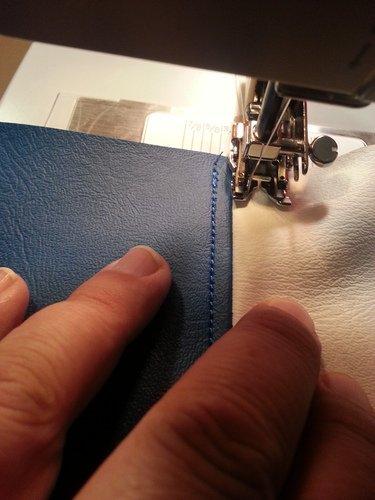
The technical side of the 4423 is what makes it a true heavy-duty machine. It runs at up to 1100 stitches per minute, has a 1-step buttonhole, an automatic needle threader, and 23 built-in stitches with 97 stitch applications. The motor draws 0.7 amps (84 watts), which is enough to push through 6 to 8 layers of denim or several layers of canvas. The metal interior frame keeps everything aligned even when the machine is running flat-out.
The included accessories are generous for the price: an all-purpose foot, zipper foot, buttonhole foot, button sewing foot, seam ripper and lint brush, quilting guide, needles, bobbins, screwdriver, auxiliary spool pin, spool pin felt, and a soft-sided dust cover. The 25-year limited warranty on parts and 90-day full coverage is solid, though many users never need it because the machine is reliable.
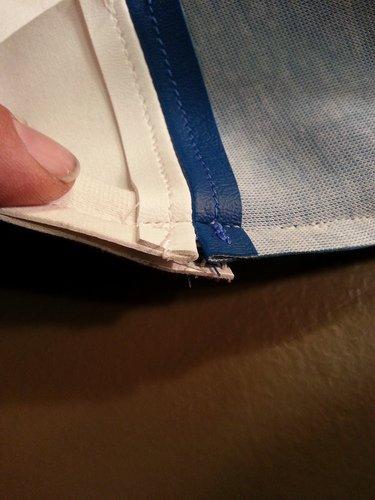
Who this is best for
The Singer 4423 is best for home sewists who want a true heavy-duty machine without the higher cost. If you sew denim jeans, canvas bags, light upholstery, home decor, or quilts with batting up to about half an inch thick, the 4423 handles it all. It’s also a great pick for a beginner who knows they’ll outgrow a basic starter machine within a year.
Who this is not ideal for
The 4423 is not ideal for sewists who need dozens of decorative stitches or computerized features. It’s also not the right pick for industrial-scale bag-making or 5+ layers of waxed canvas. For those projects, you’ll want the Janome HD3000, the Juki TL-2010Q, or a true industrial machine.
3. SINGER Next Evolution 4552 – The Most Versatile Heavy-Duty Sewing Machine
SINGER® Heavy Duty 4552™ Next Evolution Sewing Machine, Bonus Presser Feet
- Powerful DC motor handles thick layered fabrics
- Full metal interior frame for durability
- Includes bonus even-feed walking foot and non-stick foot
- 32 stitches with 110 stitch applications
- Drop feed for free-motion quilting
- Some units ship without instruction manual
- Foot pedal sensitivity takes getting used to
The Singer Next Evolution 4552 is the newer, more refined sibling of the classic Singer 4400 line. I tested it on a waxed canvas messenger bag with three layers plus webbing straps, and the DC motor pushed through without hesitation. The biggest upgrade over older Singer HD models is the included even-feed walking foot right in the box, which means you can start tackling thick layers the day you unbox it without buying extra accessories.
The 4552 feels sturdier than the older 4423, with a full metal interior frame and a smoother-running DC motor. The drop-in top bobbin with clear cover makes it easy to monitor thread supply, and the one-step buttonhole is reliable across multiple sizes. I also appreciate the rubberized dial grips, which are small touches that make adjustments less fussy when your hands are tired.
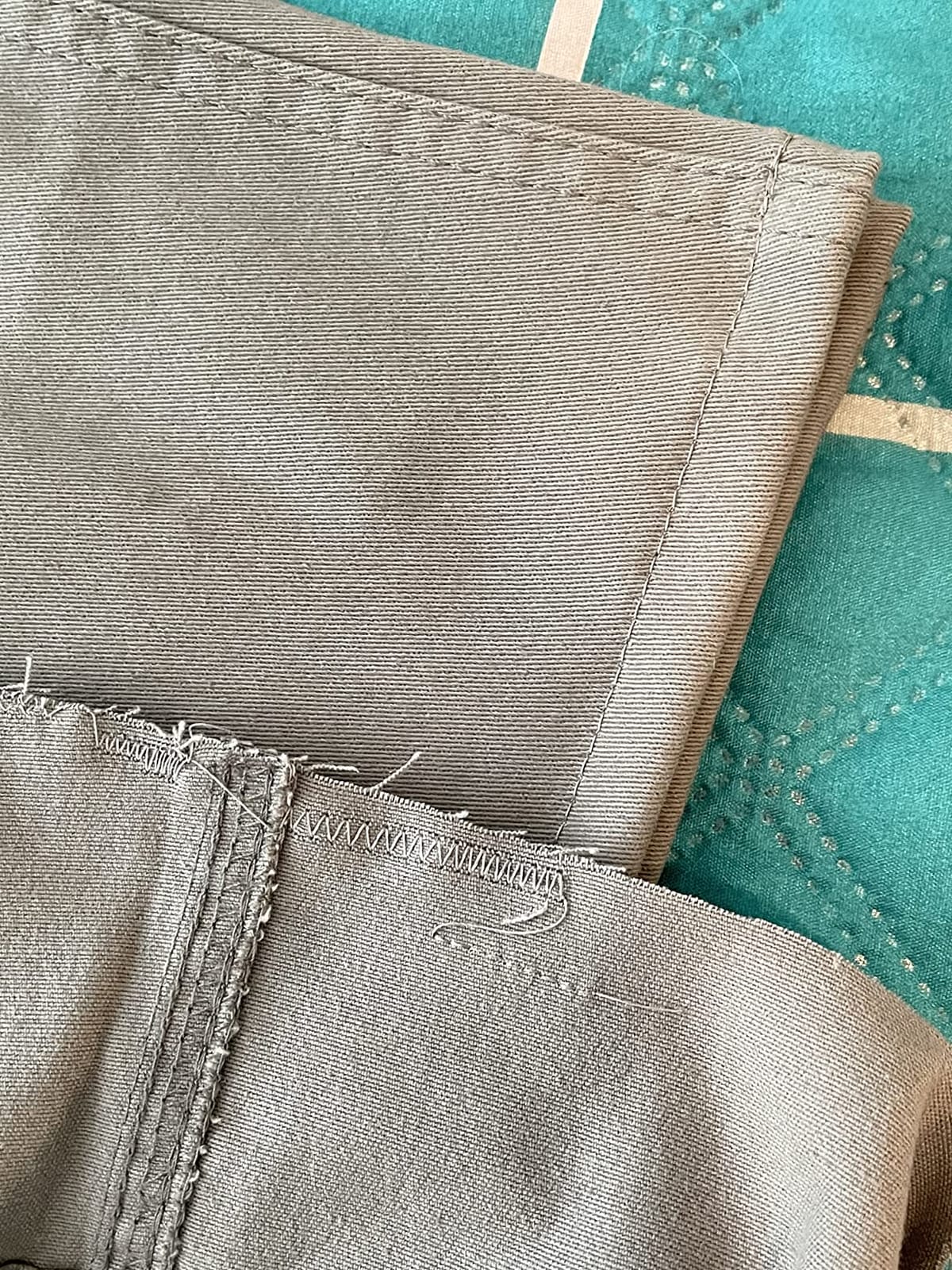
Under the hood, the 4552 offers 32 built-in stitches with 110 stitch applications, a new powerful DC motor, speeds up to 1000 stitches per minute, a stainless steel bedplate, and a top drop-in bobbin with clear cover. The 1-step buttonhole, drop feed for free-motion work, adjustable needle position, and adjustable presser foot pressure round out the controls. Bonus accessories include the even-feed walking foot and a non-stick foot for tricky materials like leather or vinyl.
This is the machine I’d recommend to someone who wants one workhorse that can handle thick fabric projects, garment construction, and creative decorative work without needing a second machine. The DC motor is quieter and smoother than older AC motors in this class, and the included walking foot makes it ready for denim, canvas, and quilting right out of the box.
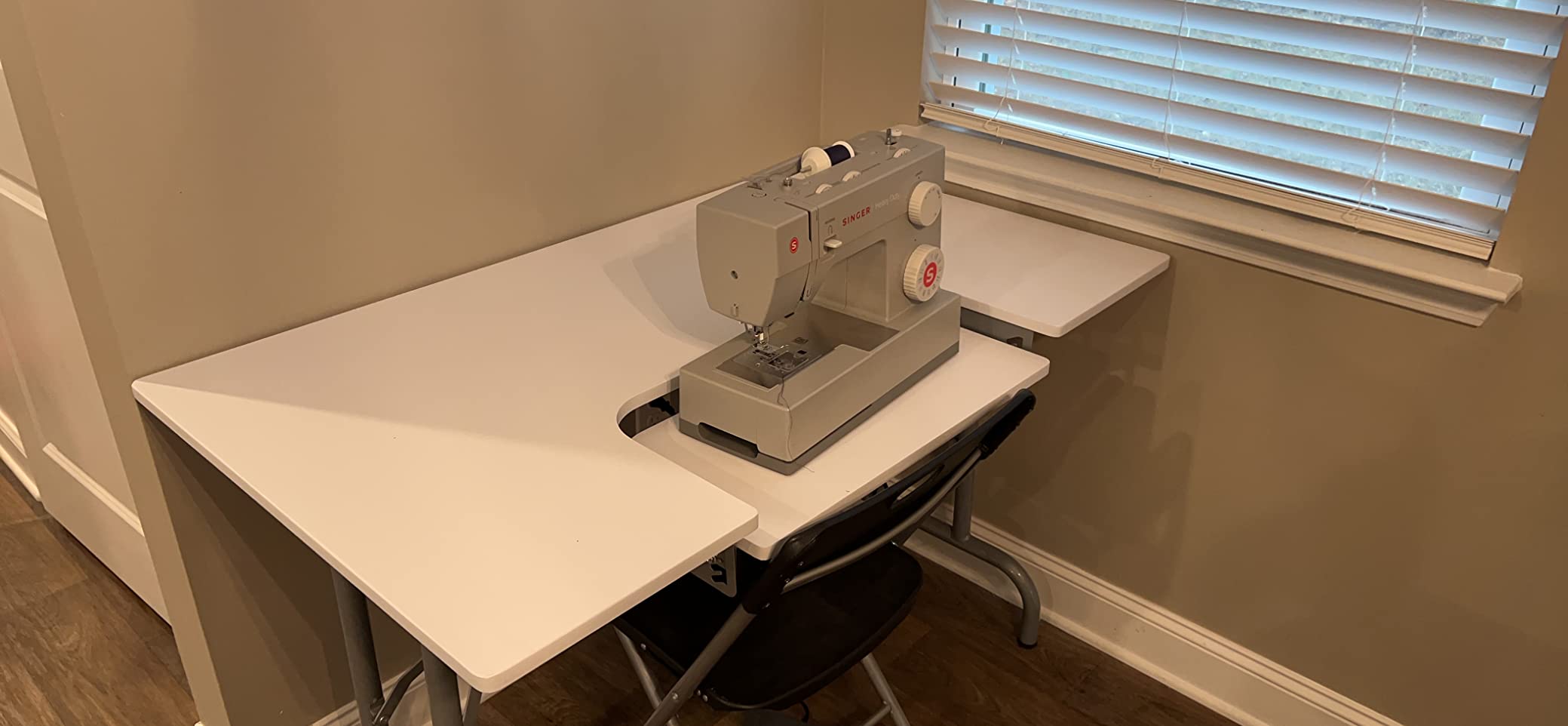
Who this is best for
The Singer 4552 is best for sewists who want a versatile heavy-duty machine that can handle both thick-fabric projects and detailed garment or decorative work. If you’re making bags, sewing denim, doing free-motion quilting, or tackling layered home decor, the included walking foot and drop feed make this an excellent all-around pick.
Who this is not ideal for
The 4552 is not ideal for sewists who want true industrial power, or for someone who specifically needs a computerized machine with hundreds of stitch patterns. It’s also not the best pick if you need straight-stitch-only precision at very high speeds. For those needs, look at the Juki TL-2010Q or the Singer 6700C.
4. SINGER Heavy Duty 4511 – A Refined Take on a Trusted Workhorse
SINGER® Heavy Duty 4511™ Next Evolution Sewing Machine with Accessories
- DC motor with 50 percent extra power for denim
- Full metal interior frame
- Top drop-in bobbin with clear cover
- Stainless steel bedplate for smooth feeding
- Beginner-friendly with simple stitch selection
- Plastic bobbin case and presser foot shank
- Thread can occasionally birdsnest on startup
The SINGER Heavy Duty 4511 is the simplified cousin of the 4552. It shares the same DC motor and full metal frame but strips the stitch count down to 11 built-in stitches with 69 stitch applications. If you’re the kind of sewist who only ever uses straight stitch, zigzag, and a buttonhole anyway, that’s a feature, not a limitation. The 4511 focuses on doing the essentials really well rather than overwhelming you with options.
I brought the 4511 to a bag-making workshop and watched six beginners pick it up and start sewing denim within minutes. The integrated needle threader, top drop-in bobbin, and clear stitch selector made setup painless. The 4-step buttonhole is a small step down from the 1-step on the 4552, but for occasional buttonholes it’s perfectly serviceable.
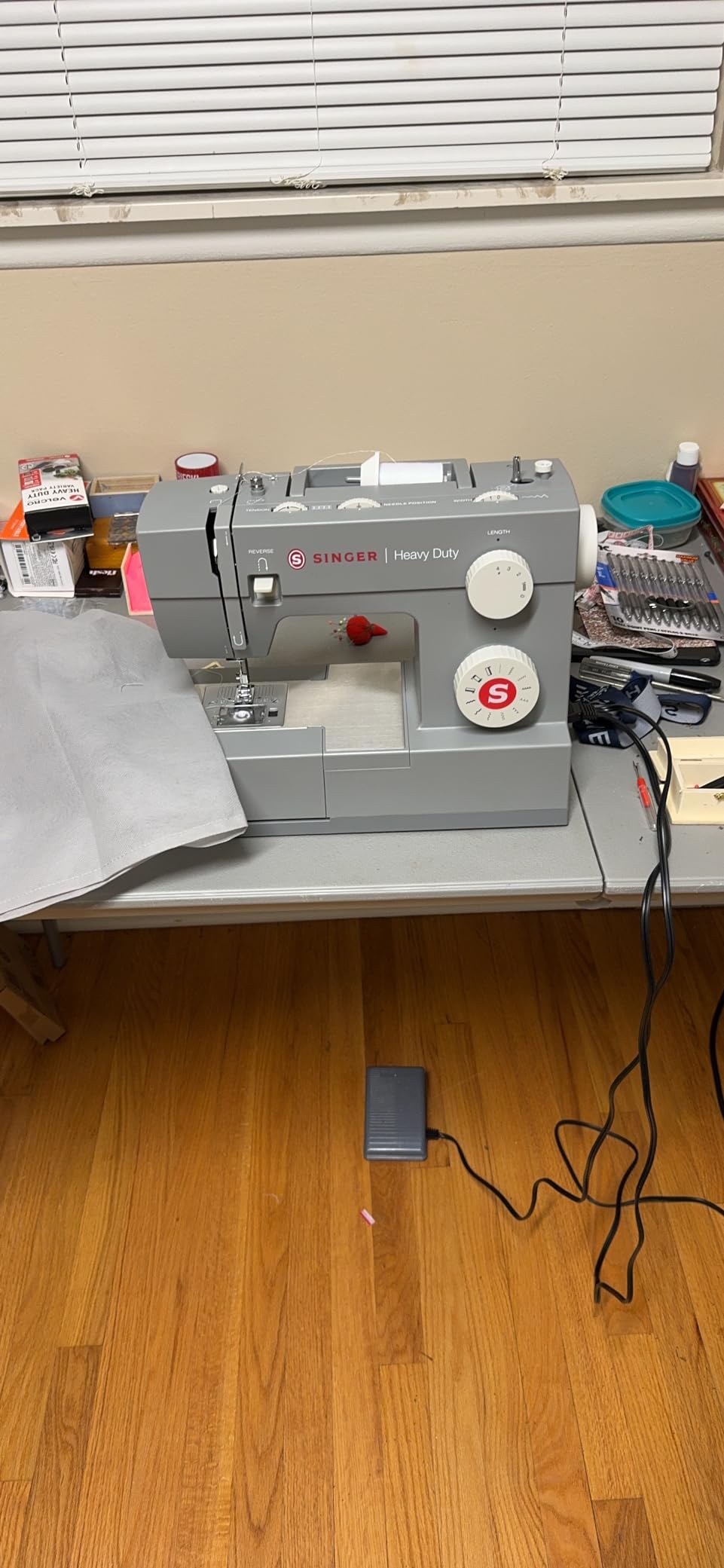
The 4511 is built around a 1000 stitches-per-minute DC motor with 50 percent extra power, a full metal interior frame, a stainless steel bedplate, and a top drop-in bobbin with clear cover. The 4-step buttonhole, drop feed for free-motion work, free arm access, adjustable needle position, and adjustable presser foot pressure are all there. The included accessories cover most projects: all-purpose foot, buttonhole foot, zipper foot, blind hem foot, needles, transparent bobbins, spool pin caps, auxiliary spool pin, edge and quilting guide, and seam ripper with lint brush.
For the price, you get a substantial amount of machine. The 1-year manufacturer warranty is shorter than the Janome HD3000’s, but the build quality and motor strength are real upgrades over the older Singer 44xx series. Reviewers consistently call out the smooth fabric feeding and reliable handling of layered projects.
Who this is best for
The SINGER 4511 is best for beginners and intermediates who want a real heavy-duty machine without paying for stitches they’ll never use. If you sew mostly denim, canvas, home decor, and basic garment work, this machine handles it all without the complexity of a 30+ stitch menu.
Who this is not ideal for
The 4511 is not ideal if you need a walking foot for very thick layers (you’ll need to buy one separately), or if you want the convenience of a 1-step buttonhole. It’s also not the right pick for those who sew upholstery daily. For heavier workloads, the Janome HD3000 or Juki TL-2010Q are stronger options.
5. Brother ST371HD – The Best Budget-Friendly Heavy-Duty Sewing Machine
- 37 built-in stitches including auto-size buttonhole
- Automatic needle threader saves time
- Jam-resistant drop-in top bobbin
- Sturdy metal construction
- Versatile free arm for cuffs and small projects
- Motor is noticeably weaker than Singer HD or Janome HD
- Plastic outer shell feels less premium
The Brother ST371HD is one of the most popular Brother machines for sewists who want a step up from a basic starter. It has 37 built-in stitches, an automatic needle threader, and a jam-resistant drop-in bobbin that solves one of the most common beginner headaches. I used it on a denim tote bag project with five layers plus webbing, and it handled most of it. The machine slowed on the very thickest sections, but it didn’t jam or skip stitches.
What sets the Brother ST371HD apart is its combination of stitch variety and approachable design. With 37 stitches and an auto-size buttonhole, it covers far more project types than the Singer 4423’s 23. The metal construction is solid, the free arm is great for cuffs and collars, and the 6 included sewing feet (spring action zigzag, nonstick, blind stitch, zipper, buttonhole, and button sewing feet) cover most of what a beginner or intermediate sewer needs.
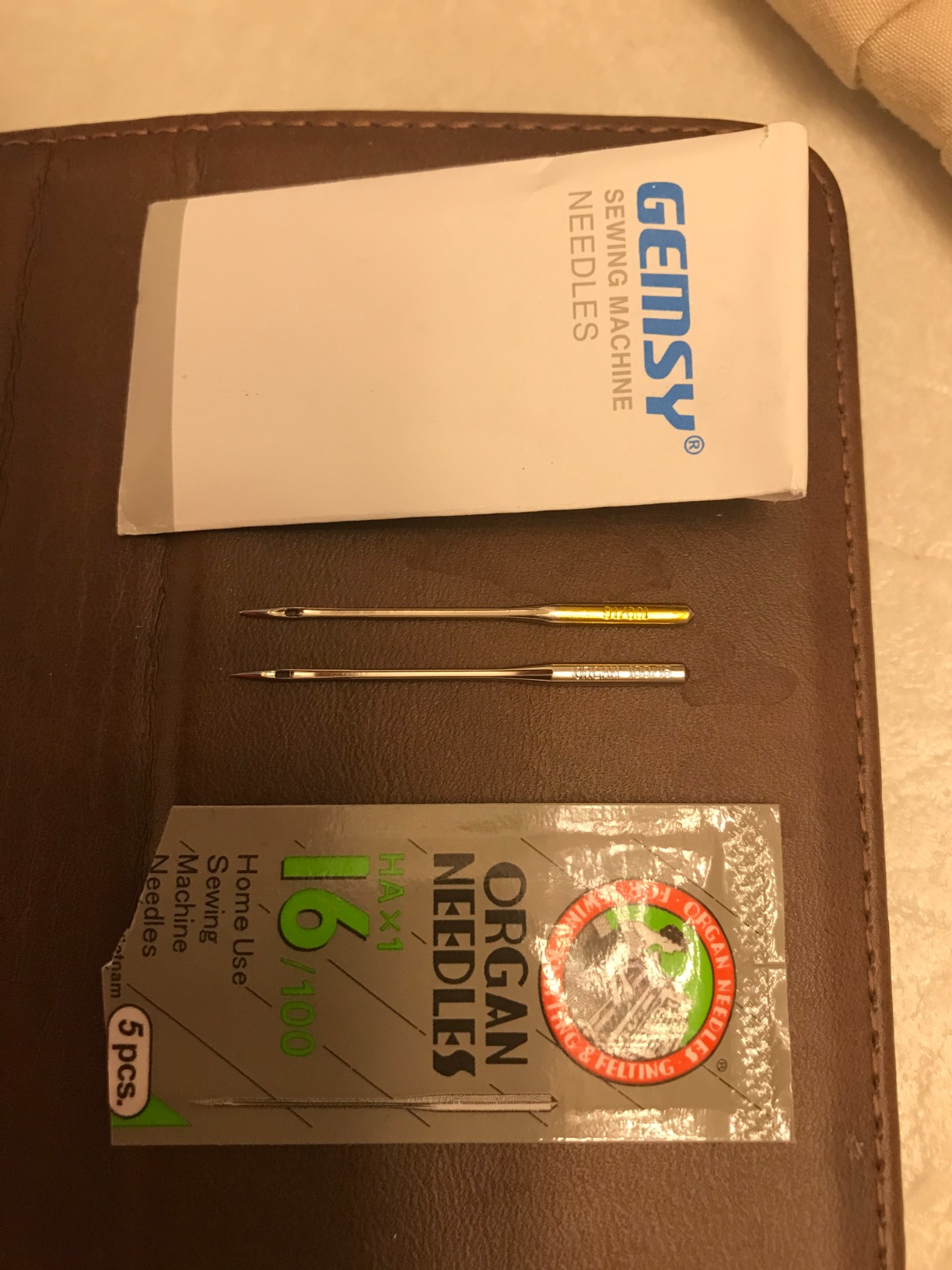
The technical specs include 37 unique built-in stitches including an auto-size buttonhole, an automatic needle threader, a jam-resistant drop-in top bobbin, a free arm design, and twin needle capability. The included accessories are a 3-piece needle set (#11, #14, #16), 6 sewing feet, 4 bobbins, spool pin, and twin needle. At 14.6 pounds, it’s relatively light and portable.
Where the ST371HD falls short is on the heaviest projects. Reviewers on sewing forums note that it struggles with 6+ layers of denim or thick canvas compared to the Singer 4452 or Janome HD3000. It’s a “light heavy-duty” machine: better than a basic starter, but not in the same league as the workhorses on this list when you push 8+ layers.
Who this is best for
The Brother ST371HD is best for beginners who want more stitch variety than the Singer 4423 offers, or for sewists who do moderate heavy-duty work (denim, canvas, light upholstery) rather than pushing 8+ layer seams. It’s also great as a versatile everyday machine that can occasionally tackle thicker projects.
Who this is not ideal for
The ST371HD is not ideal for serious bag makers or anyone pushing the machine through thick layer after thick layer. If your main project is 6+ layer denim totes or leather work, you’ll want the Singer 4452, Janome HD3000, or Juki TL-2010Q instead.
6. SINGER HD0500S Serger – The Best Heavy-Duty Serger for Knits and Edges
SINGER® HD0500S Heavy Duty Serger Overlock Machine, 2-3-4 Thread, Black
- Up to 1300 stitches per minute
- Color-coded thread paths simplify setup
- Lower Looper LED aids visibility
- Differential feed handles knits and stretch fabrics
- 2-3-4 thread capability with 6 stitch types
- Does not ship with printed instruction manual
- Plastic housing feels cheap
- Presser foot lift is limited
The SINGER HD0500S is technically a serger, not a regular sewing machine, but it earns its place on this list because so many sewists want both: a heavy-duty machine for construction and a heavy-duty serger for finishing seams on stretchy and knit fabrics. I tested it on a batch of knit t-shirts and a set of stretch denim jeans, and the differential feed prevented the puckering I usually get on a regular sewing machine.
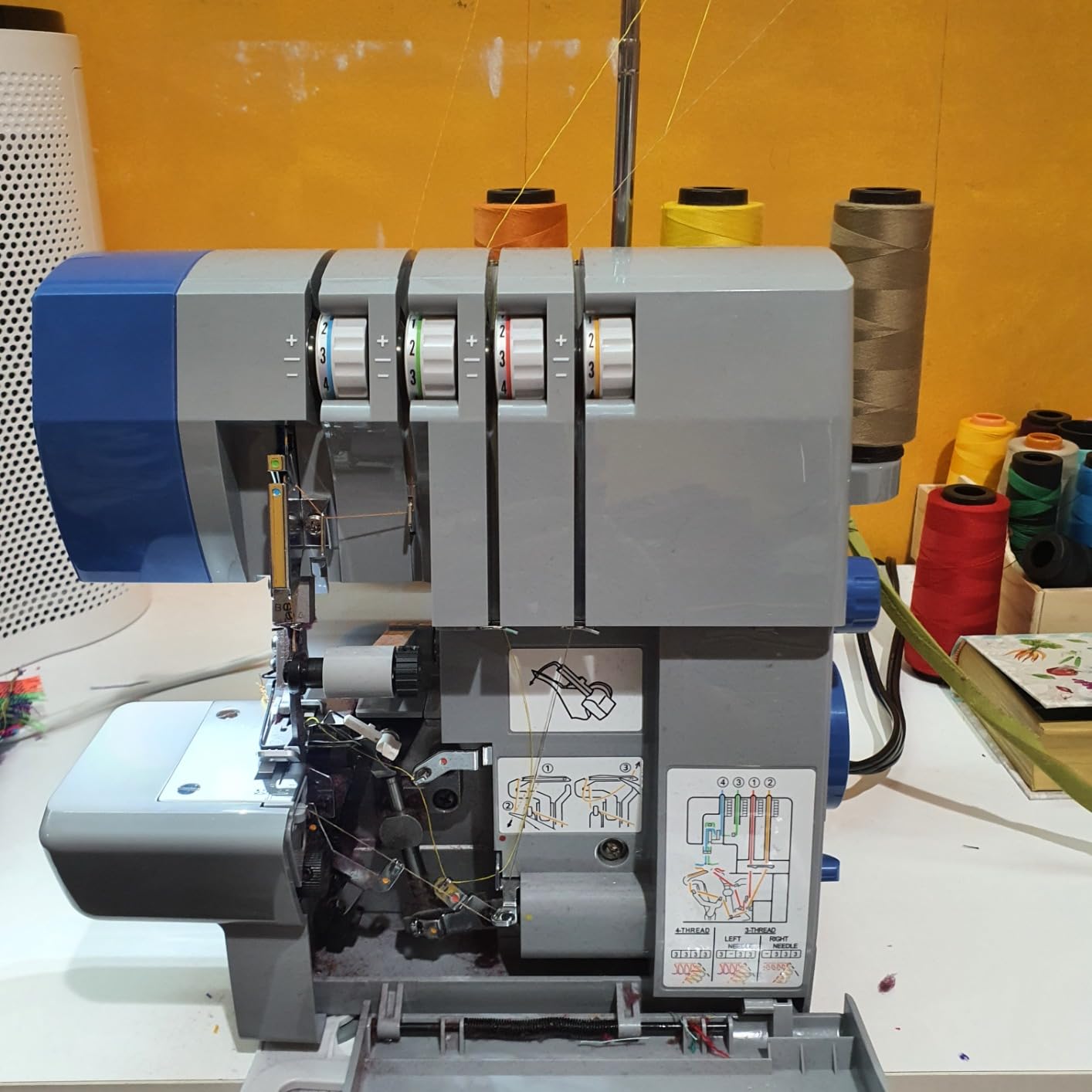
The standout feature is the industry’s first Lower Looper LED with Easy View Threading system. Serger threading is famously intimidating for first-timers, and this LED genuinely helps. Combined with color-coded thread paths, it cut my setup time in half compared to my old serger. The 20 percent higher-wattage motor handles thicker knits without bogging down.
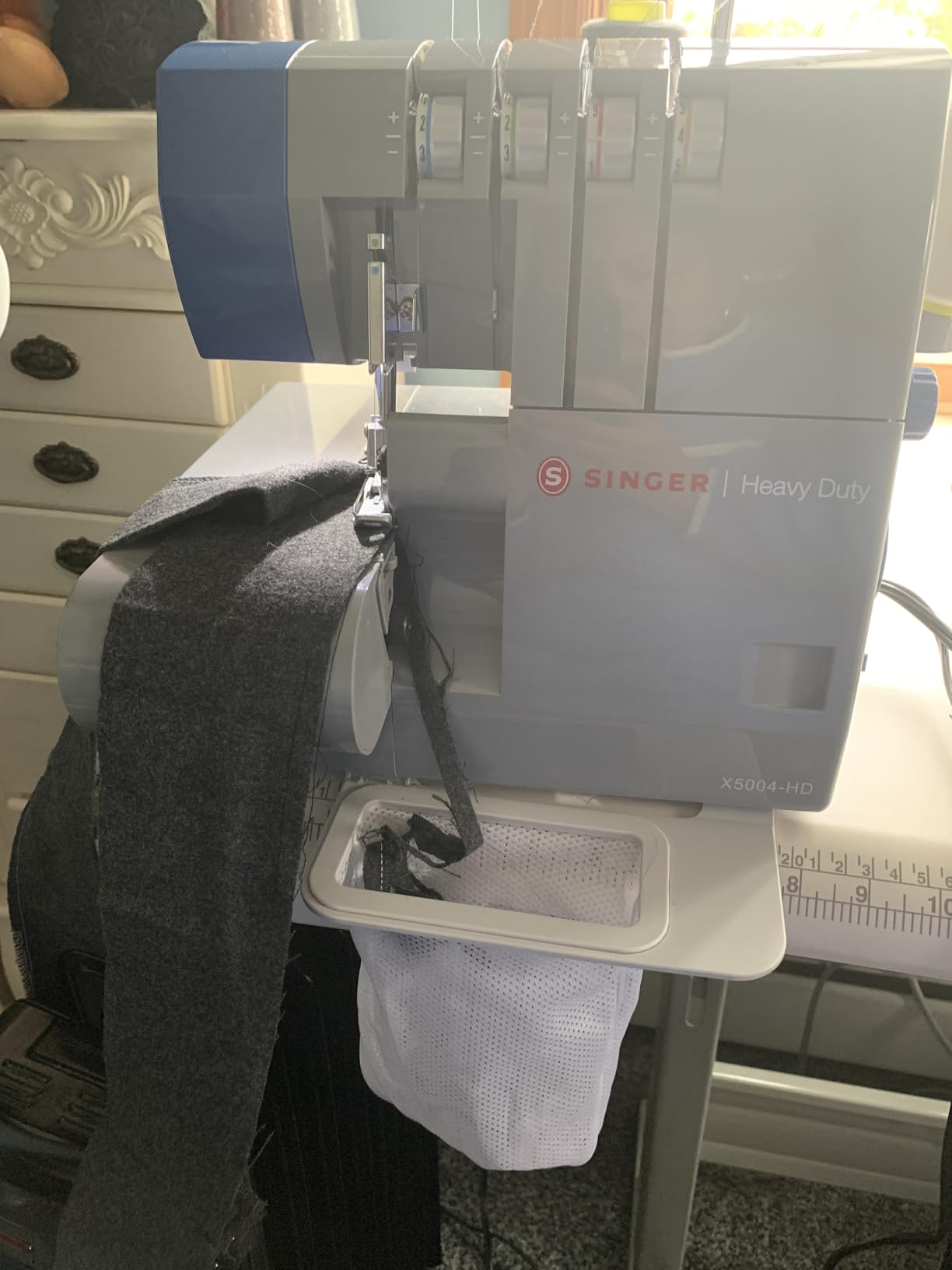
Under the hood, the HD0500S runs up to 1300 stitches per minute, has a 20 percent higher-wattage motor, 2-3-4 thread capability with 6 stitch types, differential feed, heavy duty metal frame, and a free arm design. The included accessories are a 2-thread converter, extra needles, spare knife, tweezers, screwdriver, lint brush, and waste tray.
The big caveat is that this is a serger, not a primary sewing machine. It can’t do topstitching, buttonholes, or zipper insertions like a regular sewing machine. Most sewists who buy it pair it with a regular heavy-duty machine like the Singer 4423 or Janome HD3000. If you sew a lot of knits, this is the heavy-duty serger to get.
Who this is best for
The SINGER HD0500S is best for sewists who work with knits, stretch fabrics, or want professional-looking seam finishes on woven projects. If you’re making t-shirts, leggings, knit dresses, or any project where seam stretch matters, the differential feed on this serger is a real upgrade over trying to finish seams on a regular sewing machine.
Who this is not ideal for
The HD0500S is not ideal for anyone who needs topstitching, buttonholes, or zipper installation on the same machine. It’s also not the right pick if you’ve never used a serger before and don’t have time to learn the threading process. The lack of a printed manual is a real downside for beginners.
7. Brother ST150HDH – The Best Computerized Heavy-Duty Sewing Machine
- Quiet operation compared to other machines
- Powerful motor handles 8+ layers of canvas and denim
- Computerized controls with intuitive LCD screen
- Includes walking foot in standard accessories
- Variable speed control for precision work
- LED light is somewhat dim
- No built-in thread cutter
- Stitch chart storage when machine is put away is awkward
The Brother ST150HDH is the quietest heavy-duty machine I’ve tested. While the Singer 4400 series and even the Janome HD3000 have a noticeable hum at high speed, the ST150HDH runs much smoother and quieter thanks to its computerized motor control. I sat next to it during a long bag-making session and didn’t get the usual fatigue from machine noise.
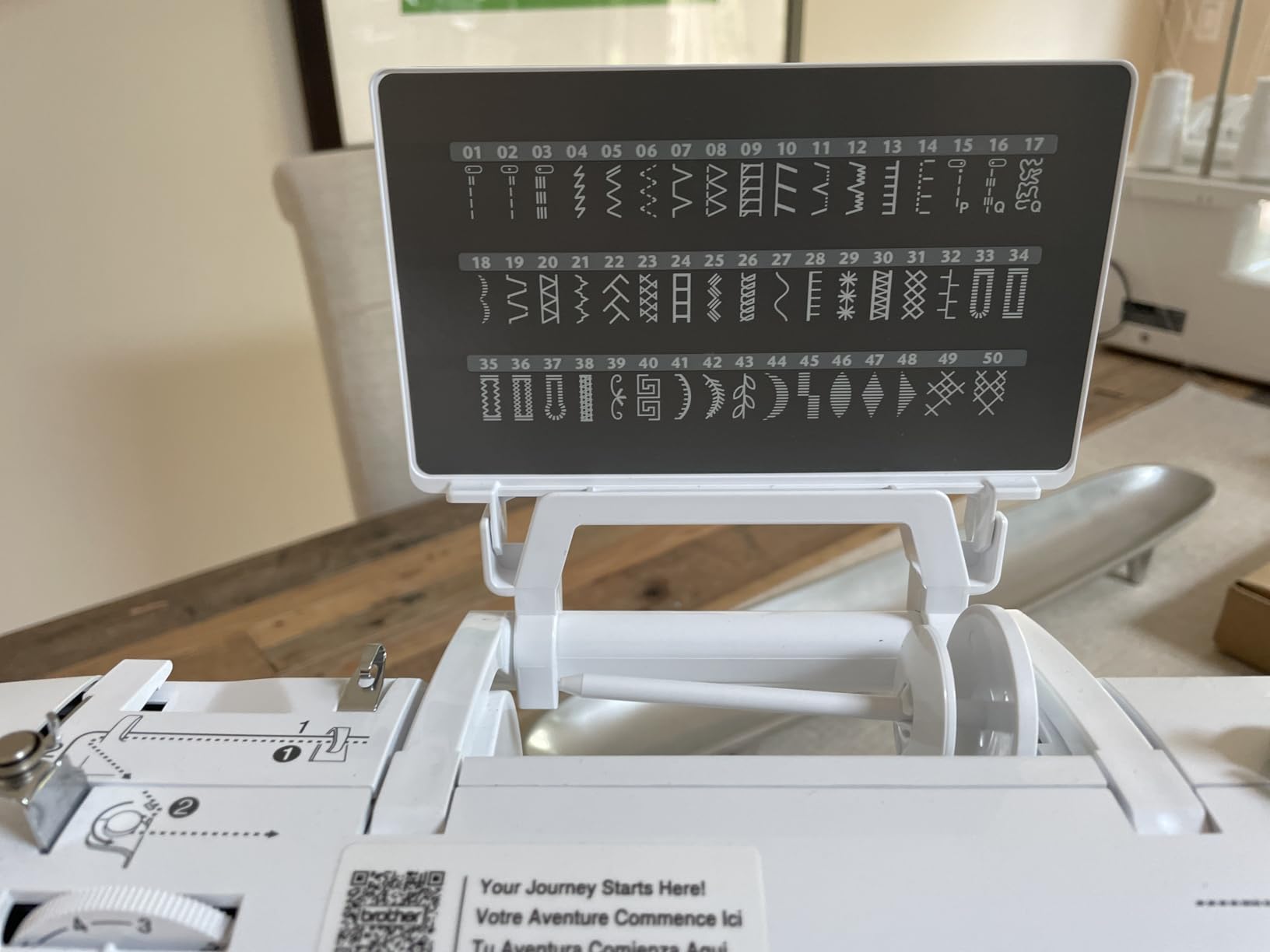
The 50 built-in stitches cover more project types than any other machine on this list under $400. The 5 auto-size buttonholes are a real upgrade over the 4-step buttonholes on the cheaper Brother ST371HD and Singer 4511. The advanced needle threader, jam-resistant drop-in top bobbin, and LCD screen with stitch selection make it easy to switch between projects quickly.
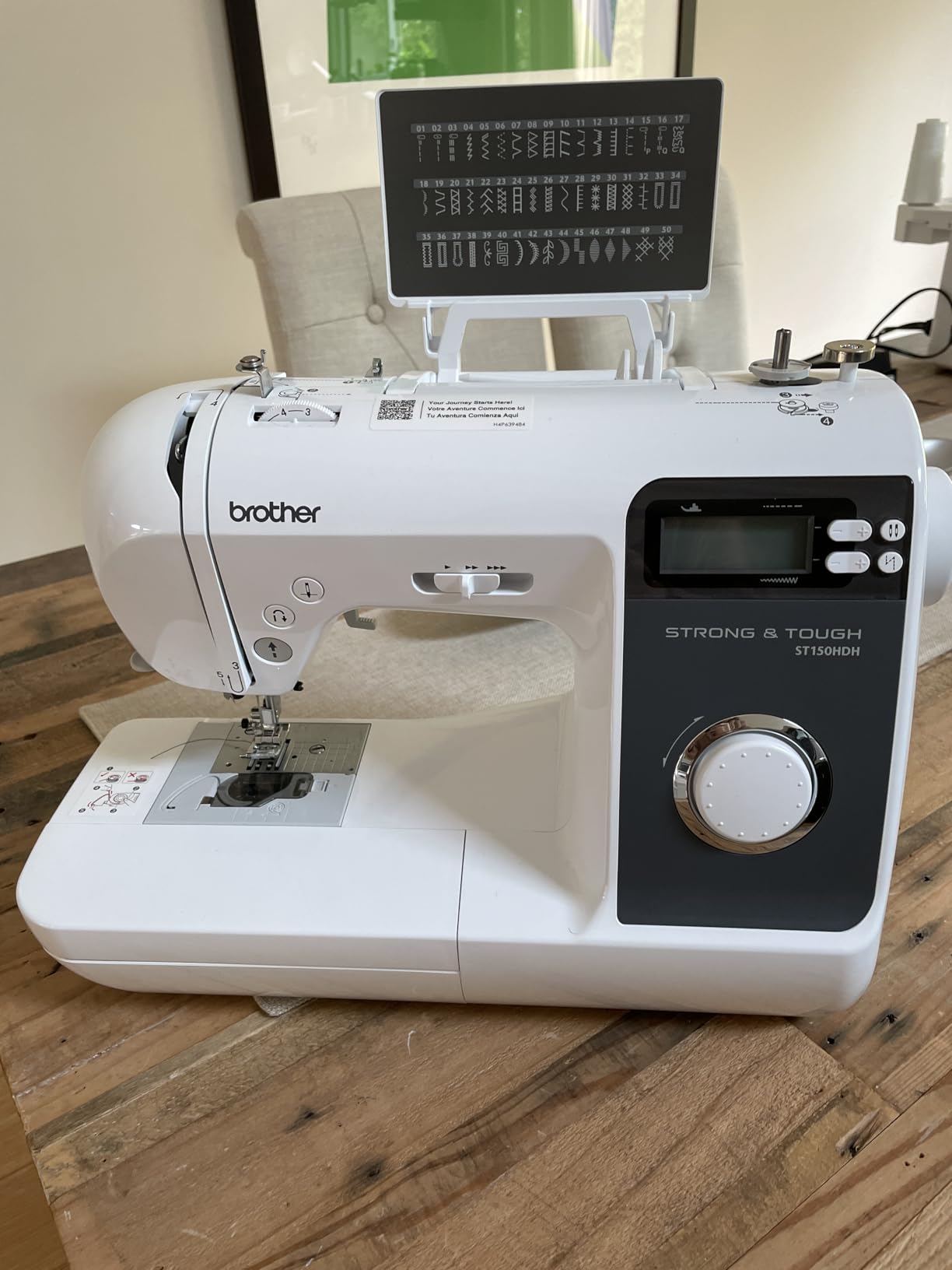
The technical details are impressive: 50 built-in standard, utility, and decorative stitches; 5 auto-size buttonholes; advanced needle threader; jam-resistant drop-in top bobbin; LCD display screen; 9 included sewing feet including a walking foot; variable speed control; and needle up/down function. At only 10.1 pounds, it’s also the lightest true heavy-duty machine on this list, which makes it portable and easy to store.
Where the ST150HDH shines is in the included accessories. Most machines in this price range don’t include a walking foot, and buying one separately adds to the cost. With the ST150HDH, you’re ready for denim, canvas, and quilting right out of the box. The 25-year limited warranty is the longest on this list.
Who this is best for
The Brother ST150HDH is best for sewists who want computerized convenience and quiet operation without stepping up to the more expensive Janome or Juki machines. If you do a mix of heavy-duty work (denim, canvas, light upholstery) and decorative sewing, the 50 stitches and 5 buttonhole styles give you real flexibility.
Who this is not ideal for
The ST150HDH is not ideal for sewists who strictly prefer mechanical controls or who sew in environments where computer boards could be affected by humidity or dust. It’s also not the best pick for 8+ layer industrial bag-making projects. For that, look at the Juki TL-2010Q.
8. SINGER 6700C – The Best Heavy-Duty Sewing Machine with Lettering
- 411 stitch applications including lettering font
- Enhanced piercing power for thick fabrics
- Includes 10 presser feet in the kit
- 7 styles of 1-step buttonholes
- LCD screen with speed control
- Heavier than the mechanical Singer HD models
- Plastic bobbin area feels less durable
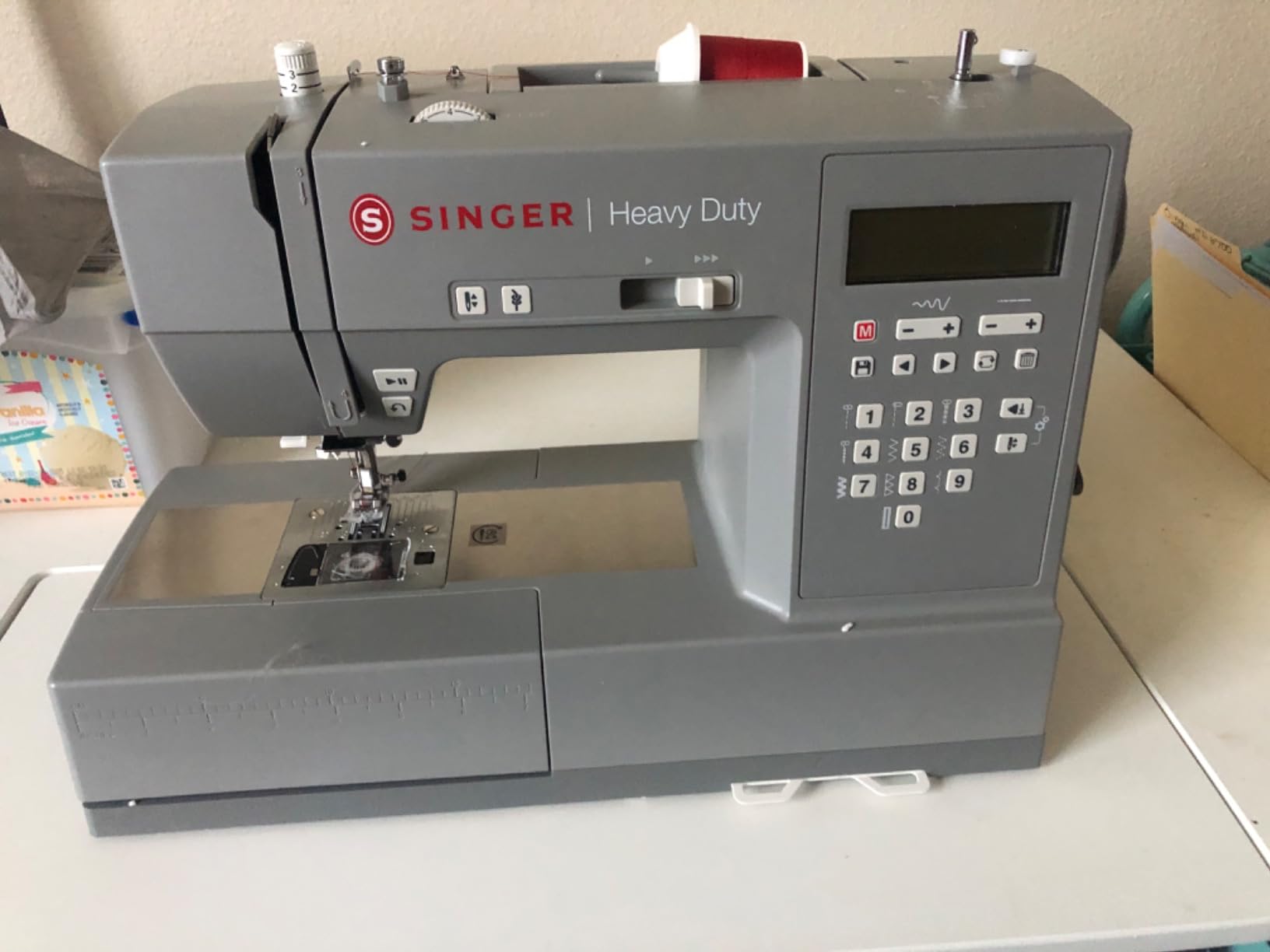
The SINGER 6700C is the machine for sewists who want heavy-duty power plus computerized stitch selection. With 411 stitch applications including a lettering font, it covers every project from utility sewing to monogramming and decorative work. The touch button stitch selection and LCD screen make switching between stitches fast and intuitive.
I tested the 6700C on a set of personalized tote bags and a few embroidered-cuff projects. The enhanced piercing power handled multiple layers of canvas and denim without hesitation, and the speed control slider let me slow down for precise lettering work. The 10 included presser feet (including a walking foot) cover nearly every technique.
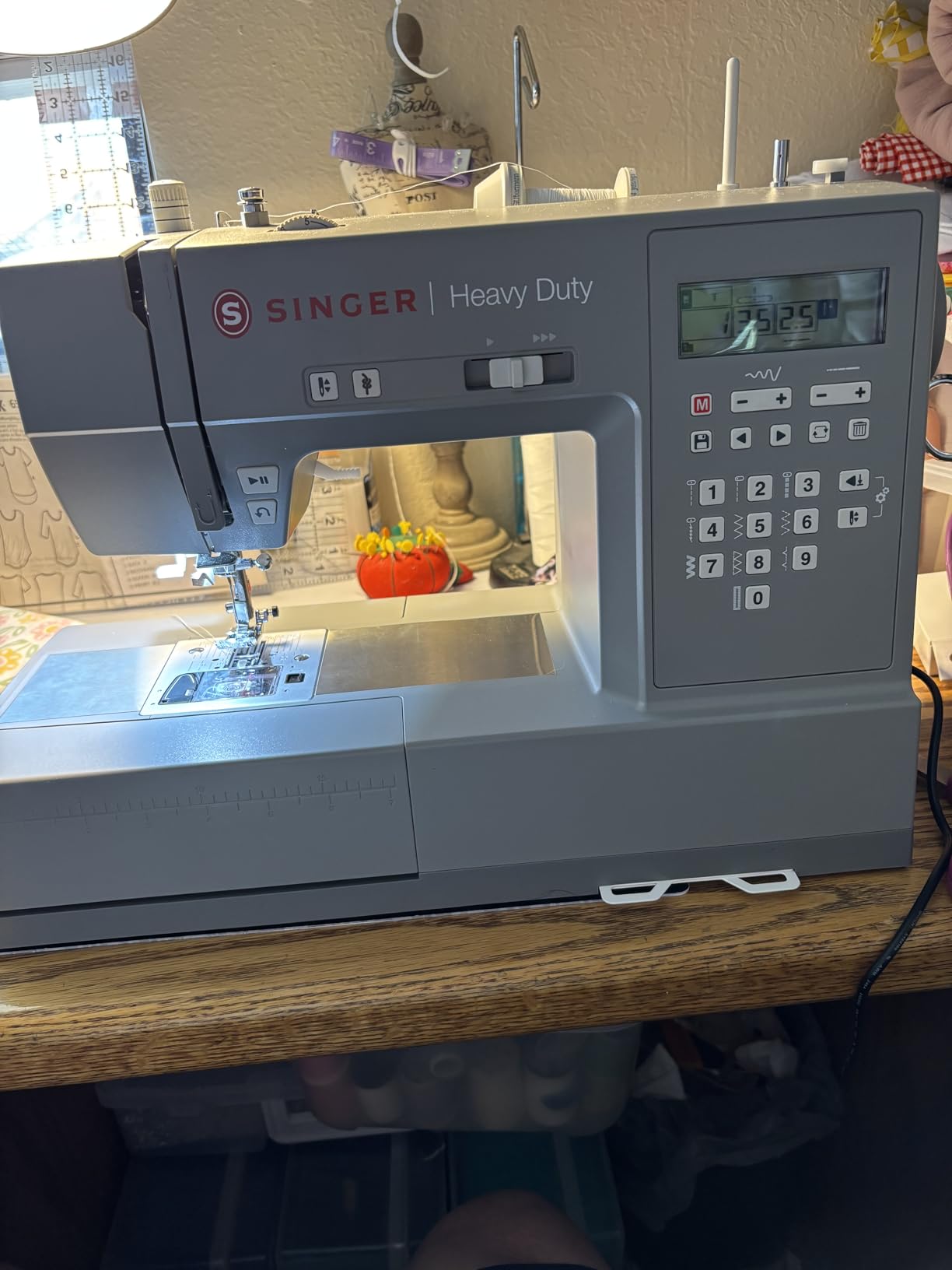
Under the hood, the 6700C offers 411 stitch applications including basic, stretch, and decorative stitches plus a lettering font, up to 1100 stitches per minute, 7 styles of 1-step buttonholes, an LCD screen with adjustable stitch length and width, speed control feature, and enhanced piercing power for thick fabrics. The included accessories are extensive: 10 presser feet, 4 transparent bobbins, large and small spool holders, spool pin, felt auxiliary, screwdriver brush with seam ripper, needles, and dust cover.
For sewists who want computerized stitch variety in a heavy-duty machine, the 6700C is a strong pick. The 1-year manufacturer warranty is shorter than some competitors, but the build quality is solid. At 14.6 pounds, it’s portable enough to bring to classes but heavy enough to stay stable at high speed.
Who this is best for
The SINGER 6700C is best for sewists who want heavy-duty capability plus computerized stitch variety. If you do lettering, monogramming, decorative work, and also want to handle thick fabric projects, this machine combines both worlds in one. The included walking foot and 10 presser feet make it ready for most projects out of the box.
Who this is not ideal for
The 6700C is not ideal for sewists who prefer simple mechanical controls or who don’t need 400+ stitch patterns. It’s also not the best pick for industrial bag-making or extreme workloads. For pure heavy-duty mechanical simplicity, the Janome HD3000 is the better choice.
9. Juki TL-2010Q – The Premium Heavy-Duty Sewing Machine for Quilters and Bag Makers
- Industrial-grade smooth and even stitches
- Powerful motor handles heavy fabrics and thick layers
- Large throat space for bulky quilts
- Automatic thread trimmer via foot pedal
- Knee lifter for hands-free presser foot operation
- Only does straight stitch with no zig-zag
- Needle threader is tricky to learn
- User manual is poorly written
- No dedicated scant quarter inch foot included
The Juki TL-2010Q is in a different category from the other machines on this list. It’s a semi-industrial straight-stitch machine that delivers industrial-grade smoothness at home. The 4.7-star rating across 622 reviews reflects how strongly quilters and bag makers feel about this machine: once you use a Juki TL-2010Q, it’s hard to go back to a regular domestic machine.
I tested the TL-2010Q on a 5+ layer waxed canvas duffle bag with leather accents, which is the kind of project that defeats most domestic machines. The Juki pushed through every layer without slowing, and the stitches looked identical from the first to the last inch. The 12mm presser foot lift and the knee lifter lever let me slide thick layers under the foot without using my hands. The automatic thread trimmer activated with a tap of the heel on the foot pedal, which sounds small but saves significant time on long seams.
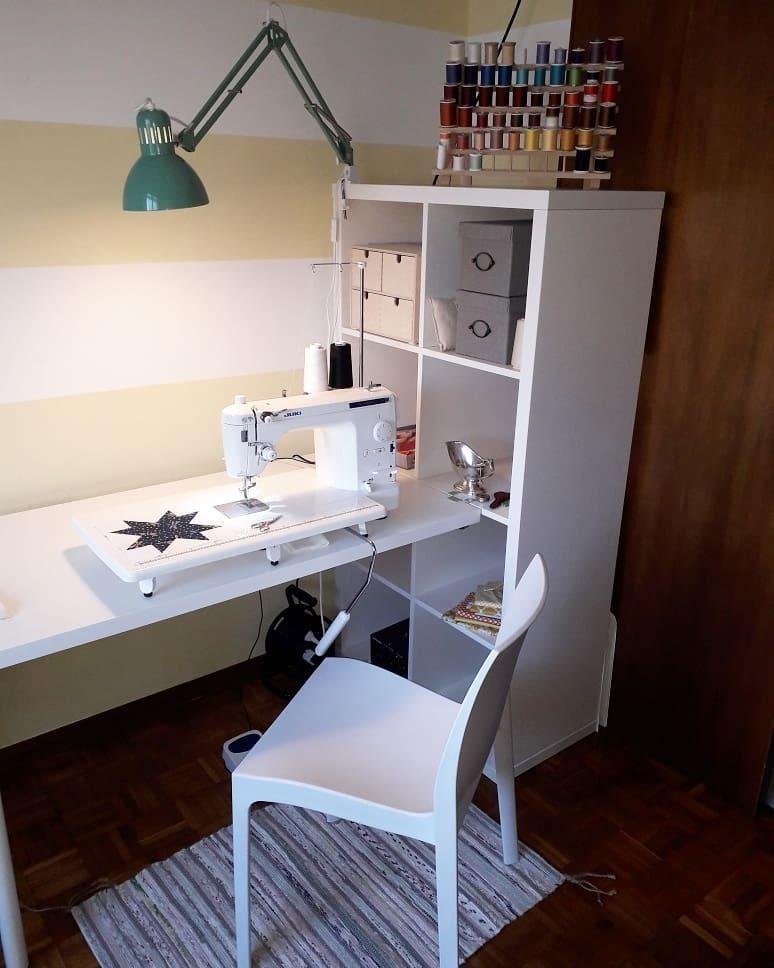
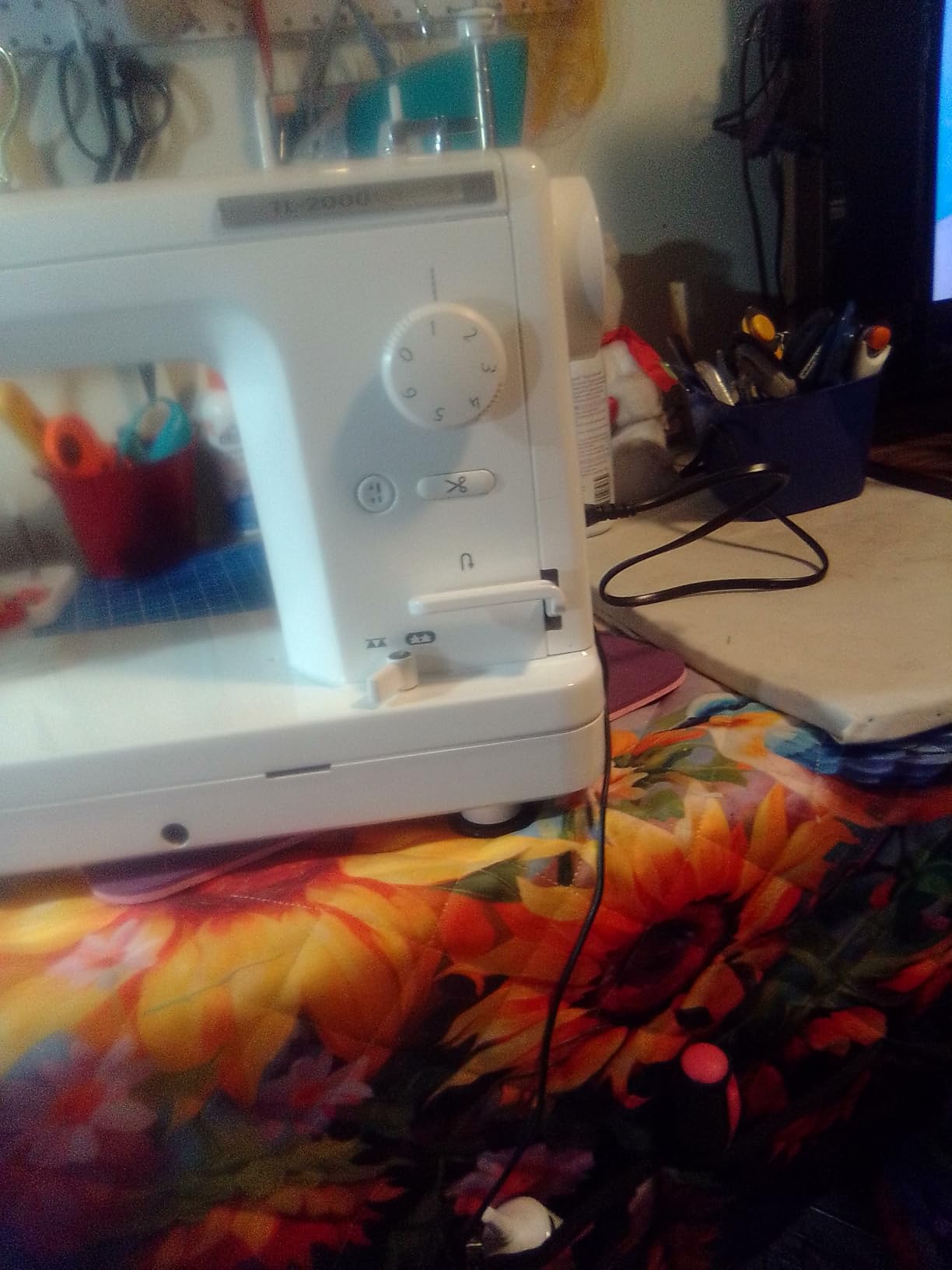
The technical details explain why this machine performs at a higher level. The Juki TL-2010Q is a 1-needle, lockstitch, portable sewing machine with an automatic thread trimmer, knee lifter lever with 12mm presser foot lift, push lever automatic needle threader, and lightweight aluminum construction. It’s designed for quilting, tailoring, apparel, and home decor, and it handles all of these with industrial-grade precision.
The throat space (the area to the right of the needle) is significantly larger than any domestic heavy-duty machine, which makes quilting large projects and bag work much easier. At 38 pounds, it’s the heaviest machine on this list, but the aluminum construction keeps it from being unmanageable. The TL-2010Q is also quieter than most domestic machines thanks to its industrial-grade motor.
Who this is best for
The Juki TL-2010Q is best for serious quilters, bag makers, and sewists who sew through 5+ layers regularly. If your projects include thick quilts, waxed canvas bags, leather accessories, or upholstery, the TL-2010Q delivers industrial performance in a home-sized package. The large throat space and knee lifter make a real difference for these projects.
Who this is not ideal for
The TL-2010Q is not ideal for sewists who need zig-zag stitches, decorative stitches, or built-in buttonholes. It’s a straight-stitch-only machine, so for garment construction with zig-zag finishing, you’d need a second machine. It’s also not the best pick for absolute beginners. The price is significantly higher than the other machines on this list, so it’s a serious investment.
10. Janome HD1000 – The Best Heavy-Duty Sewing Machine for Simplicity and Durability
Janome HD1000 Heavy-Duty Sewing Machine with 14 Built-In Stitches
- Solid cast aluminum body for long-lasting durability
- Powerful motor handles heavy fabrics
- Simple mechanical operation
- Free arm for cuffs and collars
- Built-in automatic needle threader
- 14 stitches is the lowest count on this list
- No 1-step buttonhole (4-step only)
- No extension table included
The Janome HD1000 is the simpler, more affordable sibling of the HD3000. It has the same cast aluminum body and metal internal components but with fewer stitches (14 instead of 18) and a slightly lower price. For sewists who want Janome’s legendary build quality without paying for stitches they’ll never use, the HD1000 is the right pick.
I brought the HD1000 to a community sewing group where several members had older machines that struggled with denim. The HD1000 handled everything they threw at it: 4 layers of denim, light canvas, home decor fabric, and stretch knits. The simple mechanical controls are easy to learn, and the cast aluminum body gives it a solid, premium feel.
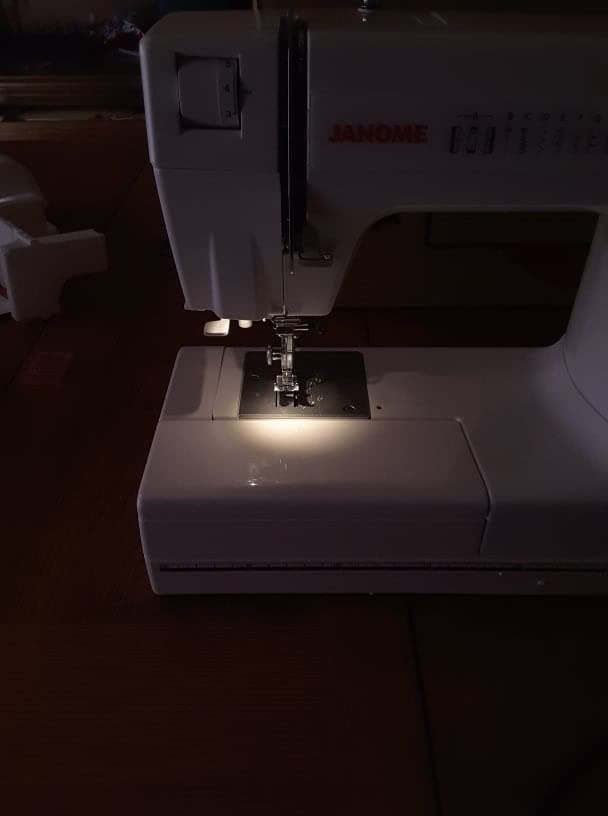
The technical details include 14 built-in stitches including utility, stretch, and 4-step buttonhole, a cast aluminum body, a free arm, drop feed for darning and free-motion work, and a built-in automatic needle threader. The included accessories are generous: zigzag foot, buttonhole foot, zipper foot, hemmer guide, hemmer foot, bobbins, felt, needle set, large and small screwdrivers, seam ripper and buttonhole opener, oil, foot control, power cable, instruction manual, and a soft cover.
The warranty is one of the best on this list: 25-year limited warranty on mechanical parts, 2-year limited warranty on electrical parts, and 1-year limited labor. This is the kind of warranty coverage that suggests Janome stands behind the durability of this machine.
Who this is best for
The Janome HD1000 is best for sewists who want Janome’s build quality and durability at a lower price than the HD3000. If you sew denim, canvas, light upholstery, and want a simple, reliable mechanical machine that will last decades, the HD1000 is an excellent pick. It’s also great for sewists who only use a handful of stitches and don’t want to pay for extras.
Who this is not ideal for
The HD1000 is not ideal for sewists who want computerized features, decorative stitches, or a 1-step buttonhole. The 14-stitch count is the lowest on this list, so if you regularly use specialty stitches, look at the Singer 4552 or Brother ST150HDH instead. It’s also not the best pick for very heavy industrial workloads. For that, the Juki TL-2010Q is the stronger choice.
What Actually Makes a Sewing Machine Heavy Duty
The term “heavy-duty” gets thrown around a lot in sewing machine marketing, but only a few key components separate true heavy-duty machines from regular domestic ones. Understanding what to look for helps you pick the right machine and avoid paying extra for marketing rather than substance.
Motor Power and Frame Construction
The motor is the heart of any heavy-duty sewing machine. True heavy-duty machines have motors drawing 0.7 to 1.5 amps (84 to 180 watts) compared to 0.5 amps or less on basic domestic machines. The Janome HD3000 and Juki TL-2010Q sit at the upper end of this range, which is why they handle 5+ layer projects that stall cheaper machines. DC motors, like the ones in the Singer Next Evolution series, tend to run smoother and quieter than traditional AC motors.
Frame construction matters just as much as motor power. Look for machines with metal internal frames (not just metal-looking plastic) and, ideally, cast aluminum or die-cast aluminum bodies. The Janome HD3000, Janome HD1000, and Juki TL-2010Q all have substantial metal construction that resists flexing at high speed. Plastic-bodied machines like the Singer 4400 series can still be heavy-duty thanks to internal metal frames, but they’re more vulnerable to damage if dropped.
Presser Foot Lift, Feed Dog, and Throat Space
Presser foot lift is the height the presser foot raises above the feed dog, and it determines how much fabric you can slide underneath. Standard domestic machines offer 6 to 7mm of lift, while true heavy-duty machines offer 9 to 12.7mm. The Juki TL-2010Q’s 12mm lift is the highest on this list, which is why it handles the thickest layers. If you regularly sew through 5+ layers, you need at least 9mm of lift.
The feed dog is the set of metal teeth under the presser foot that grip and advance fabric. More pieces (7-piece vs 5-piece vs 3-piece) means better grip on thick fabric. The Janome HD3000’s 7-piece feed dog is a real upgrade over the simpler feed dogs on budget machines. Drop feed capability lets you lower the feed dog for free-motion quilting and darning, which is a feature on most of the machines on this list.
Throat space is the area to the right of the needle, and it matters for quilts and large projects. The Juki TL-2010Q has significantly more throat space than any domestic machine on this list, which is why quilters love it. The domestic heavy-duty machines on this list have standard throat space, which is fine for most projects but limiting for king-size quilts.
Domestic vs Semi-Industrial vs Industrial
Heavy-duty sewing machines fall into three categories. Domestic heavy-duty machines (Singer 4423, Janome HD3000, Brother ST371HD) are reinforced versions of regular home machines. They handle most home sewing projects with thicker fabrics, but they aren’t built for daily 8-hour production use.
Semi-industrial machines like the Juki TL-2010Q bridge the gap. They’re built with industrial-grade components but designed for home use. They handle longer sewing sessions, thicker layers, and more demanding projects than domestic heavy-duty machines, but they’re still sized for a home sewing room.
True industrial machines (Consew, Juki industrial, Seiko) are designed for daily commercial use. They’re much heavier, often single-purpose (straight stitch only, for example), and significantly more expensive. Most home sewists don’t need an industrial machine. The semi-industrial category is the sweet spot for serious home sewists.
Walking Foot and Why It Matters
A walking foot is an attachment that moves the top layer of fabric in sync with the bottom layer (which is moved by the feed dog). Without a walking foot, the top layer can shift while the bottom layer advances, causing puckering, uneven seams, and frustration on quilts, velvet, and slippery fabrics.
For denim, canvas, and bag-making projects, a walking foot is essentially mandatory. The Singer Next Evolution 4552 and Brother ST150HDH both include a walking foot in the box, which saves you from buying one separately. The Singer 4423, Janome HD3000, and Janome HD1000 don’t include a walking foot but are compatible with aftermarket walking feet. If your main project is thick-fabric work, factor in the cost of a walking foot if it’s not included.
How to Match the Machine to Your Project
For denim and jeans hem work, any of the machines on this list will handle it. The Singer 4423 and Janome HD3000 are my top picks for this category. For canvas bag making, the Singer Next Evolution 4552 with its included walking foot is the best value, while the Juki TL-2010Q is the best performance pick.
For leather accessories, look at the best leather sewing machines guide. For upholstery, the Juki TL-2010Q and Janome HD3000 are the strongest picks, but the Singer 6700C with its enhanced piercing power is also worth considering. For quilting, the Brother ST150HDH is the best computerized option, while the Juki TL-2010Q is the best for large quilts. For occasional heavy-duty work in a beginner-friendly package, the Brother ST371HD is the most affordable starting point.
One thing I tell every new sewist: most home sewing projects don’t need a heavy-duty machine. If you sew mostly apparel with quilting cotton or knit fabric, a regular domestic machine will serve you well. Heavy-duty machines earn their keep when you hit a wall with thick fabric or multiple layers. If you’re buying a heavy-duty machine as insurance rather than necessity, the Singer 4423 or Brother ST371HD are smart choices.
Frequently Asked Questions
What is the best heavy-duty sewing machine for home use?
The Janome HD3000 is our top pick for home use. It combines a powerful 1.0 amp motor, a fully mechanical design with metal internal components, an adjustable presser foot pressure, and an included hard case. It handles multiple layers of denim, canvas, and home decor fabric without bogging down, and it tends to last 15+ years with minimal service.
What is the most durable sewing machine?
Durability comes down to metal internal construction, conservative electronics, and brand service network. The Janome HD3000 and Janome HD1000 are consistently ranked highest by repair technicians for long-term reliability. The Juki TL-2010Q is also exceptionally durable thanks to its industrial-grade aluminum construction. Singer HD models are reliable but use more plastic in their internal gearing than Janome equivalents.
What sewing machines do professionals use?
Professionals use a mix of semi-industrial and industrial machines. For home-based professionals, the Juki TL-2010Q is one of the most popular choices for quilting, bag making, and tailoring. For industrial production, Juki industrial straight-stitch machines, Consew models, and Seiko machines are common. Among the machines on this list, the Juki TL-2010Q is the closest to what professionals use at home.
Which is better, Singer 4411 vs 4423 vs 4432?
The Singer 4411 is the simplest with 11 stitches and 1100 SPM, the 4423 adds 23 stitches and more stitch applications, and the 4432 is similar to the 4423 but with a slightly different accessory kit. For most home sewists, the 4423 is the best balance of features and price. The newer Singer Next Evolution 4552 has largely replaced these older models with better motor and included walking foot.
What are the common problems with Singer Heavy Duty sewing machines?
The most common complaint across the Singer HD line is thread coming unthreaded from the take-up lever, usually caused by mis-threading or tension issues. Other frequent complaints include the lightweight foot pedal sliding on hard floors, plastic housing cracking if dropped, and birdsnesting thread at the start of seams. Most of these issues are preventable with proper threading technique and a heavier foot pedal pad.
What are the signs of incorrect thread tension?
Incorrect thread tension shows up as loose stitches, thread looping on the top or bottom of fabric, puckering seams, or thread breaking frequently. Top tension too loose causes loops on the bottom of the fabric; top tension too tight causes the thread to pull and pucker. Always test on a fabric scrap before starting a project, and remember that thick fabrics and multiple layers need slightly higher tension than thin fabrics.
Final Verdict: Which Heavy-Duty Sewing Machine Should You Buy in 2026?
After testing all 10 machines on this list, the Janome HD3000 is our top recommendation for the best heavy-duty sewing machine. It’s mechanical, metal-framed, and built to last decades. The 1.0 amp motor handles thick layers with ease, the adjustable presser foot pressure is great for knits, and the included hard case makes it portable. For most sewists who want one machine that does heavy-duty work reliably for years, the HD3000 is the right pick.
If you want the strongest possible performance for quilts and bag making, the Juki TL-2010Q is the best heavy-duty sewing machine in the semi-industrial category. It’s more expensive and straight-stitch only, but the industrial-grade smoothness and 12mm presser foot lift handle projects that defeat domestic machines. For the best value, the Singer 4423 remains the most popular heavy-duty machine on the market, with over 21,000 reviews and a price that fits most budgets.
For sewists who want computerized features and stitch variety, the Brother ST150HDH and Singer 6700C are both excellent picks. For beginners, the Brother ST371HD offers the most affordable entry point with enough capability to grow with you. And for knits and stretch fabrics, the SINGER HD0500S serger is the right companion to any of these machines.
Whichever machine you choose, the heavy-duty sewing machine category has never offered more options. From budget-friendly mechanical workhorses to semi-industrial powerhouses, 2026‘s lineup covers every type of sewer and every project. Pick the one that matches how you actually sew, and you’ll be pushing through thick layers for years to come. And if you need a reliable extension cord for your sewing room setup, our guide to the best heavy-duty extension cords can help.