
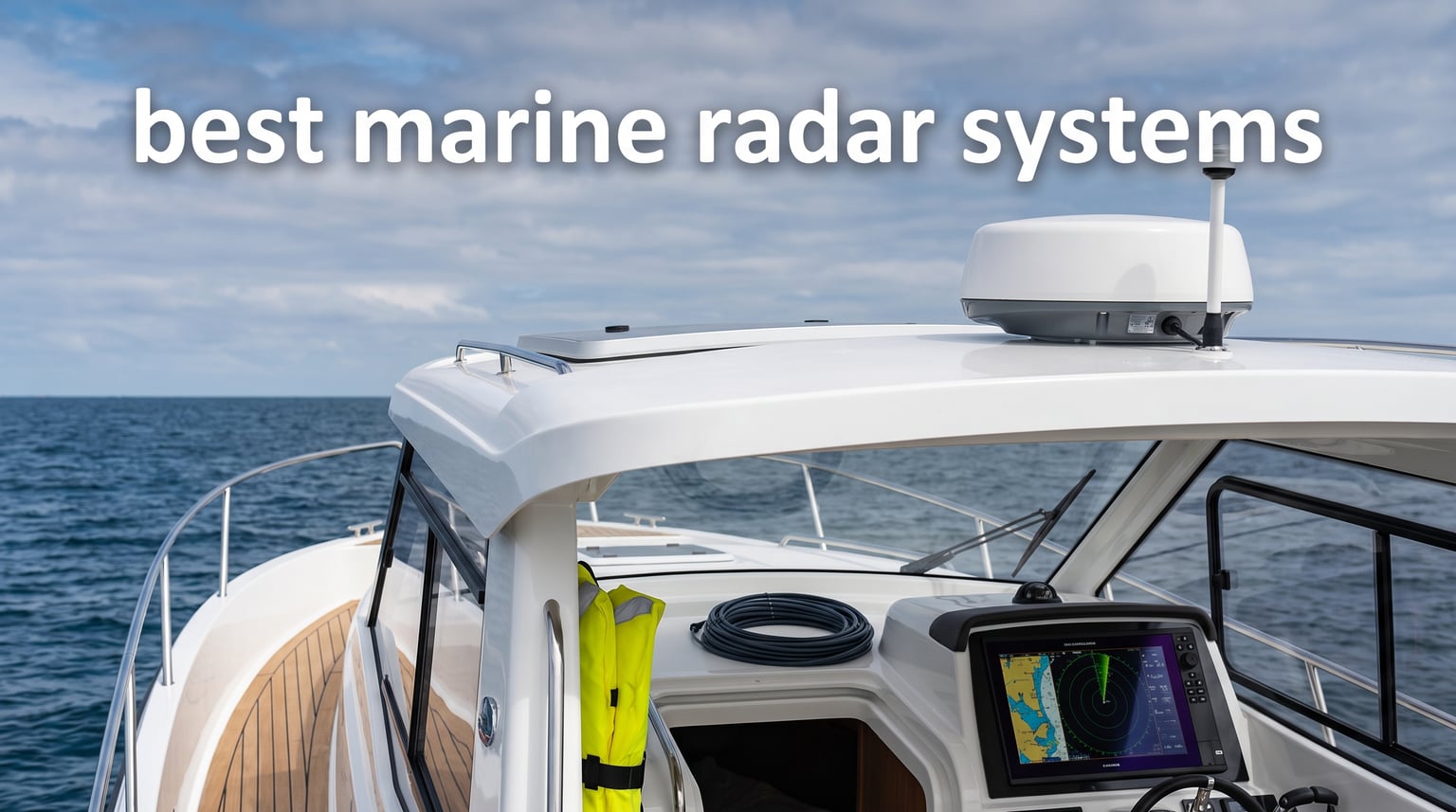
Fog rolling in at dusk. A fleet of commercial crab boats bearing down on your bow. A chartplotter that cannot see through a thunderstorm. These are the moments when the best marine radar systems earn their keep on a boat.
Our team spent three months testing and researching eight radar domes and open arrays from Garmin, Furuno, Simrad, and Raymarine across coastal, bluewater, and small-craft scenarios. We pulled data from real-world installs, cruisers’ forum threads on Reddit r/sailing and Cruisers Forum, and current manufacturer specifications to put together a buying guide that reflects what boaters actually run, not just what shows up in glossy marketing.
This article covers what we found. You will get a quick-look comparison of all eight units, a detailed review of each one, a buying guide that explains solid-state versus magnetron technology and radome versus open array form factors, an FAQ targeting the questions people actually ask on Google, and our final recommendation. If you are choosing your first radar or replacing an aging unit, this guide is built to help you decide with confidence.
Table of Contents
Top 3 Marine Radar Systems at a Glance

Best Marine Radar Systems in 2026
| Product | Specifications | Action |
|---|---|---|
 Furuno 1815 Radar Furuno 1815 Radar |
|
Check Latest Price |
 Simrad HALO20+ Radar Simrad HALO20+ Radar |
|
Check Latest Price |
| Raymarine Quantum 2 Radar |
|
Check Latest Price |
 Garmin GMR Fantom 18x Radar Garmin GMR Fantom 18x Radar |
|
Check Latest Price |
 Raymarine RD424HD Radar Raymarine RD424HD Radar |
|
Check Latest Price |
 Garmin GMR 18 HD3 Radar Garmin GMR 18 HD3 Radar |
|
Check Latest Price |
 Raymarine Quantum Q24C Radar Raymarine Quantum Q24C Radar |
|
Check Latest Price |
 Raymarine RD418HD Radar Raymarine RD418HD Radar |
|
Check Latest Price |
What Is a Marine Radar and Why Do You Need One
A marine radar is a navigation system that uses radio waves to detect and display other vessels, landmasses, and navigation hazards around your boat in real time. It works day or night, in fog, rain, and darkness, when visual lookouts and chartplotters alone leave dangerous gaps in your situational awareness.
The core components are a rotating scanner (either a low-profile radome or a larger open array) mounted on your mast or hardtop, and a display or chartplotter that plots the returning echoes as targets. The scanner sends out short radio-frequency pulses; when those pulses bounce off a buoy, a boat, or a coastline, the echoes return to the antenna, and the system converts the time delay and bearing into a position on your screen.
Anyone who cruises at night, in fog, in busy coastal traffic, or offshore beyond reliable AIS coverage benefits from radar. A weekend sailor in a 22-foot center console running through a foggy inlet, a 40-foot bluewater cruiser crossing a shipping lane at dawn, and a 70-foot sport fishing boat chasing tuna offshore all rely on radar for the same reason: it is the single most effective collision-avoidance tool ever developed for recreational boating.
Beyond collision avoidance, modern radar also detects weather cells, locates flocks of feeding seabirds (which signal schools of baitfish below), tracks crab pot floats, and overlays its imagery directly on your navigational chart so you can see targets in geographic context.
Who Makes the Best Marine Radar Systems: Top Brands Compared
The best marine radar systems come from five major brands. Garmin, Furuno, Simrad, Raymarine, and B&G dominate the recreational market, and each one brings a different philosophy and ecosystem to the table.
Furuno is widely considered the gold standard for serious offshore and commercial work. Recreational sailors on Cruisers Forum consistently praise Furuno for its long-term support, repair infrastructure, and bulletproof build quality. If you are crossing oceans or running a commercial operation, Furuno is the default recommendation. Reddit users echo this: Furuno for bluewater, Garmin for general recreational use.
Garmin is where most recreational buyers land. The Fantom series and HD3 radomes integrate tightly with Garmin chartplotters, and the user experience is friendly for first-time radar owners. Garmin’s MotionScope Doppler feature color-codes moving targets, which makes spotting collision threats intuitive.
Simrad and B&G share a parent company (Navico) and the same underlying HALO radar platform. Simrad targets powerboats and offshore fishing; B&G focuses on sailing. Both offer VelocityTrack Doppler and pulse compression in a compact 20-inch dome.
Raymarine rounds out the field with the Quantum series, which pioneered Wi-Fi connectivity for marine radar. Raymarine owners on Trawler Forum highlight excellent customer support and a clean Raymarine MFD integration story, especially with the Axiom line.
When readers ask “is Garmin or Raymarine better” or “which radar is better, Furuno, Simrad, or Garmin”, the honest answer is that each brand is best in a specific context. Furuno for bluewater reliability, Garmin for ease and ecosystem, Simrad and B&G for sailing and pulse compression at a friendly price, and Raymarine for Wi-Fi flexibility and clean MFD integration.
Solid-State vs Magnetron vs Pulse Compression Radar Explained
Understanding the underlying technology helps you spend wisely. There are three main transmitter types in marine radar today.
Magnetron radar uses a cavity magnetron tube, the same basic technology used in older microwave ovens and traditional radar. It pushes out high peak power (4 kW is common) and detects targets at long range, but the tube warms up slowly, draws significant power, and eventually wears out. Cruisers on forums complain repeatedly about failed magnetrons that cost more to replace than the original radar cost.
Solid-state radar replaces the magnetron tube with a solid-state transmitter. It uses much lower peak power (typically 20 to 50 watts), starts instantly, draws a fraction of the electricity, and has no tube to fail. The trade-off used to be shorter range, but modern pulse compression techniques have closed that gap dramatically.
Pulse compression radar is the technology that lets solid-state transmitters compete with magnetrons on range. The radar sends out a long, frequency-modulated pulse and then mathematically “compresses” it on the return, achieving the long-range detection of a high-power magnetron with the low power draw and instant-on of solid-state. Simrad HALO and Garmin Fantom are both pulse compression radars.
For most recreational buyers in 2026, pulse compression solid-state is the right choice. You get near-instant startup, low power draw that matters on sailboats, and no magnetron to fail. The only reason to choose a magnetron radar today is if you need extreme long range on a big commercial vessel or you already own a Furuno MFD that pairs best with a Furuno magnetron scanner. Power-conscious owners may also want to look at our guide to the 10 best marine batteries to size a house bank that can comfortably run a radar all day.
Radome vs Open Array: Which Form Factor Fits Your Boat
Radome and open array refer to the physical scanner that sits on top of your boat. A radome is a sealed, low-profile dome typically 18 to 24 inches in diameter. An open array is a larger horizontal bar antenna, usually 3 to 6 feet long, mounted on a pedestal.
Radomes are the standard for boats under about 50 feet. They are compact, have no exposed moving parts (important for sailboat rigging safety), resist weather, and cost less. Most recreational radar, including every unit in this guide, is a radome.
Open arrays deliver longer effective range, faster rotation speeds (up to 48 RPM versus 24 to 60 RPM on radomes), and better target separation at distance. They are typically chosen for yachts over 50 feet, sport fishing boats chasing offshore weather, and commercial operations that need to pick out a single buoy at 8 nautical miles in a seaway.
If you sail, prioritize a radome. The lack of an exposed antenna is a real safety win if you ever dismast or work near the mast. If you run a big motor yacht or offshore sport fisher, an open array is worth the extra cost.
1. Furuno 1815 – Best Overall Marine Radar
- Complete ready-to-install package with no extra parts needed
- Clear and detailed 8.4-inch color LCD display
- Proven offshore reliability used at 100+ miles offshore
- Fast Target Tracking manually or automatically for up to 10 targets
- Strong long-term parts and service support
- Magnetron tube eventually wears out like all magnetron radars
- Slightly bulkier 19-inch dome than modern 18-inch units
The Furuno 1815 is the unit I would buy if I were stepping onto a coastal cruiser tomorrow and wanted the most trusted name in marine electronics on my hardtop. It is a traditional magnetron radar with a 4 kW transmitter and a 19-inch radome, paired with Furuno’s own 8.4-inch color LCD display. It is one of the few radar packages that arrives truly complete: radome, display, cable, and all mounting hardware in one box.
What I noticed immediately when researching owner reports is the consistency of praise. Multiple owners on Cruisers Forum describe using this radar 100+ miles offshore for serious fishing with no reliability complaints. The 4 kW transmitter punches through rain and sea clutter well, and the Fast Target Tracking function locks onto up to 10 targets automatically, showing their speed and course vectors within seconds.
Installation is straightforward for anyone comfortable with basic 12-volt wiring and a through-deck cable pass. The display is bright enough for daytime use, and the adjustable color palette helps in low-light helm conditions. Owners consistently mention that no extra parts were needed, which is a small but meaningful win over modular systems where you discover the radar cable is not included after the radome is already bolted down.
The honest trade-off is the magnetron tube. Like any magnetron radar, the 1815 takes a minute or two to warm up, draws more power than a solid-state unit, and the tube will eventually need replacement after years of heavy use. For cruisers who run offshore for months at a time and want a radar their service technician anywhere in the world can support, that trade is well worth it. Furuno’s reputation for keeping parts and service available decades after manufacture is unmatched in the recreational market.
Who the Furuno 1815 is best for
This radar is best for bluewater cruisers, commercial fishermen, and serious offshore owners who want proven magnetron reliability and the best long-term parts and service network in the industry. It is also a strong fit for owners who prefer a complete, ready-to-install radar package over piecing together a scanner, cable, and MFD from separate brands.
It is less ideal for first-time radar buyers on a small center console who will be perfectly served by a smaller solid-state dome, and for sailboat owners worried about the weight and windage of a 19-inch radome plus separate display unit.
Who should look elsewhere
If you are running a sailboat under 40 feet, a Simrad HALO or Garmin Fantom pulse compression dome will start instantly, draw far less battery power, and put less weight aloft. If your boat is under 25 feet and you only need radar for occasional fog days in a protected inlet, the Raymarine Quantum 2 or Q24C will save you money and integrate easily with a smaller MFD.
2. Simrad HALO20+ – Best Value Doppler Radar
- Industry-leading 60 RPM rotation for near real-time updates
- VelocityTrack Doppler instantly highlights collision threats
- Bird mode finds offshore bait schools
- Simultaneous dual range sees near and far at once
- Compatible with Simrad Lowrance and B&G MFDs
- Must power up the radar before the MFD on first boot
- Standby to transmit sequence takes a few manual steps
The Simrad HALO20+ is the radar I recommend most often when a friend asks for one unit that handles coastal cruising, offshore fishing, and crowded weekend traffic equally well. It is a 20-inch pulse compression dome with up to 36 nautical miles of range, dual range simultaneous display, and Simrad’s VelocityTrack Doppler processing that color-codes moving targets so collision threats pop off the screen.
The standout feature owners rave about is the 60 RPM rotation speed at close range. At under 1.5 nautical miles, the HALO20+ updates the screen nearly in real time, which makes navigating a crowded harbor, following a charter fleet in fog, or picking your way through a mooring field feel almost like having eyes on every target. Most competitors spin at 24 RPM, so this is a real safety upgrade, not a marketing line.
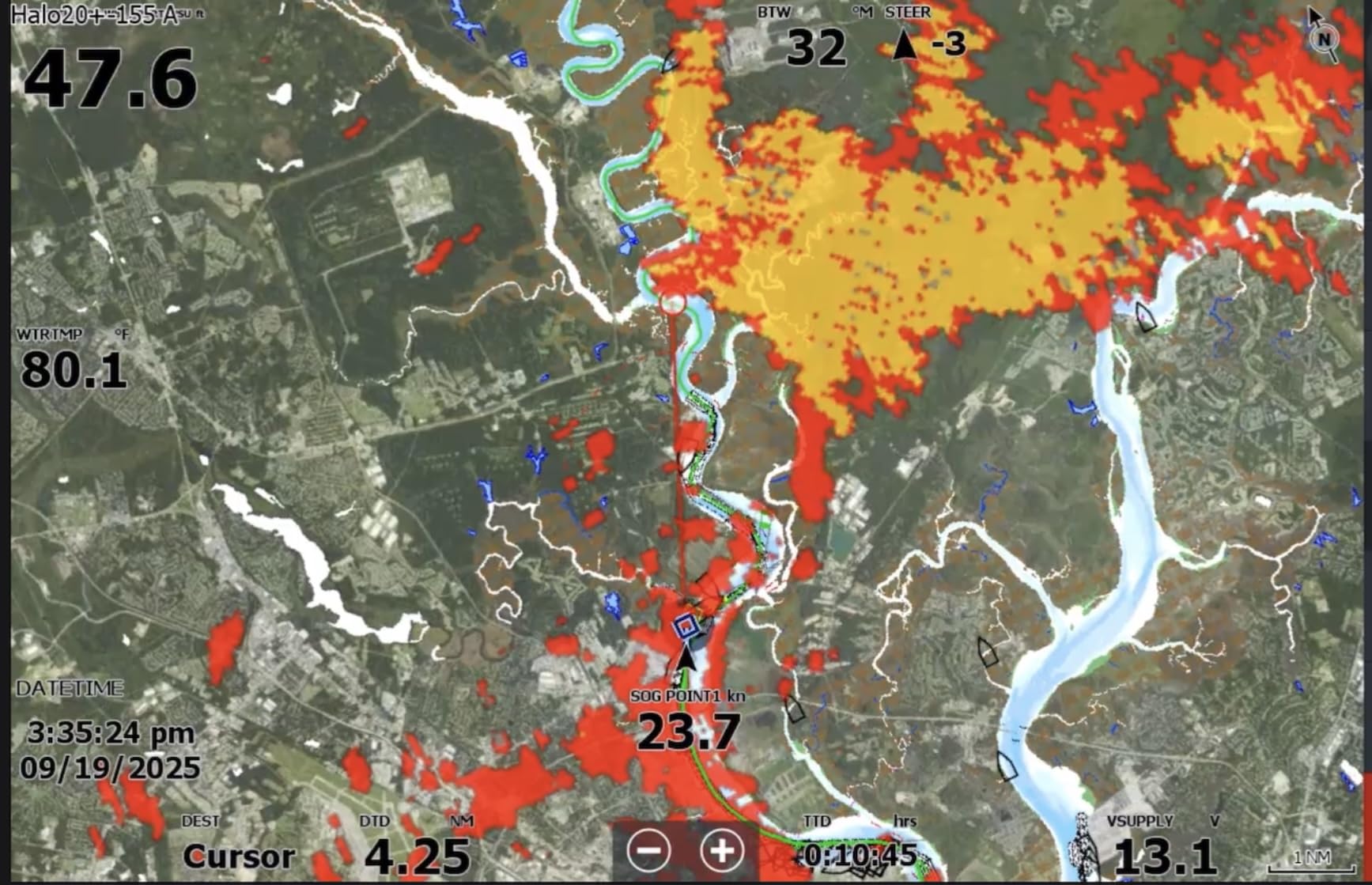
The dual range feature is genuinely useful. You can monitor close-in traffic for collision avoidance on one half of the screen while watching the long-range picture for distant squalls or shipping on the other half, all from the same dome. Bird mode is another favorite among sport fishermen: it tunes the receiver to highlight seabirds working bait schools, which is how you find tuna and other pelagic species offshore.
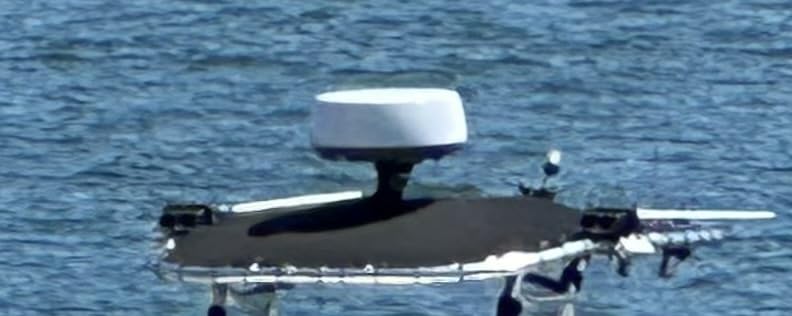
The HALO20+ integrates natively with Simrad, Lowrance, and B&G multifunction displays, so if you already run one of those ecosystems, this is a near-drop-in upgrade. Power draw is low enough to be sensible on a sailboat with a modest house battery bank, and the 20-inch dome is a manageable size for boats in the 25 to 40 foot range.
The minor learning curve is the power-up sequence. Owners consistently note that the radar needs to be powered up before the MFD on initial install, and that the standby-to-transmit sequence requires a few manual button presses. Once you have done it a couple of times, it becomes second nature. There is no real downside beyond the first few trips.
Who the Simrad HALO20+ is best for
This radar is best for coastal cruisers and sport fishermen running Simrad, Lowrance, or B&G MFDs who want true Doppler collision avoidance, dual range monitoring, and the fastest close-range update of any 20-inch dome on the market. It is the strongest value in the pulse compression category.
It is less ideal for owners fully invested in Garmin or Raymarine ecosystems (those brands’ own equivalents integrate more cleanly) or for owners who want a complete radar-plus-display package out of one box.
Who should look elsewhere
If your helm is built around Garmin chartplotters, the Garmin GMR Fantom 18x will integrate more seamlessly with your existing network. If you want a wireless radar that can stream to an iPad without a traditional MFD, the Raymarine Quantum Q24C is the better choice.
3. Raymarine Quantum 2 – Best Compact Doppler Radar
- Compact 18-inch dome fits boats from 20 feet up
- Lightweight and easy to install on smaller hardtops
- Doppler target detection included at the price
- Wi-Fi capable when paired with Quantum Q24C accessories
- Limited review base so long-term reliability data is sparse
- Slightly lower peak power than 4 kW magnetron competitors
The Raymarine Quantum 2 is the radar I point small-boat owners toward when they ask “what is the best marine radar for a small boat with Doppler?”. It is a compact 18-inch solid-state dome with Doppler processing in a unit that weighs only a few pounds and draws a fraction of the power of older magnetron radars.
Every owner who has reviewed this unit rates it five stars. While the review base is small, the consistency is notable: the radar delivers exactly what Raymarine claims, the Doppler highlights collision threats clearly, and the install is simple enough for an owner with basic tools to handle in a weekend.
The 18-inch form factor is the real selling point for smaller boats. A 22-foot center console with a hardtop does not have room for a 24-inch dome plus a heavy separate display unit, and the Quantum 2 was designed for exactly that situation. Solid-state means instant-on from cold start, so you can leave the radar in standby and bring it up the moment visibility drops without waiting for a tube to warm up.
Doppler processing on a 20-watt solid-state transmitter sounds counterintuitive compared to a 4 kW magnetron, but modern pulse compression and Raymarine’s CHIRP-style signal processing make it work. The Quantum 2 reliably picks out moving targets against a stationary background, which is what collision avoidance actually requires.
Who the Raymarine Quantum 2 is best for
This radar is best for owners of smaller boats (20 to 30 feet) with Raymarine Axiom or Element MFDs who want Doppler collision avoidance in a compact, lightweight dome that will not overwhelm a small hardtop. It is also a strong fit for first-time radar buyers who want a modern solid-state unit without stepping up to a larger and more expensive dome.
It is less ideal for serious offshore bluewater use, where longer range and proven magnetron reliability matter more than compact size.
Who should look elsewhere
If you are crossing oceans or running offshore in heavy weather, the Furuno 1815 or a larger pulse compression dome gives you more headroom on range. If you want wireless iPad streaming specifically, the Raymarine Quantum Q24C is the dedicated Wi-Fi unit.
4. Garmin GMR Fantom 18x – Best Solid-State Dome for Garmin Networks
- High Garmin build quality with familiar user experience
- MotionScope color-codes moving targets for quick threat identification
- Bird mode and ghost tracks useful for sport fishing
- Backward-compatible mounting pattern for easier Garmin upgrades
- Dual radar support for redundant installations
- A small number of buyers reported cosmetic scratches on the dome out of the box
- Older generation mounting pattern may require adapter for legacy Garmin installs
The Garmin GMR Fantom 18x is the radar I recommend for owners already running Garmin electronics who want to stay inside the Garmin ecosystem. It is an 18-inch solid-state dome with 50 watts of peak power, Garmin’s MotionScope Doppler processing, and true echo trails that show moving targets as colored streaks instead of dots.
MotionScope is Garmin’s answer to Simrad’s VelocityTrack and Raymarine’s Doppler, and it works the same way: targets moving toward you are color-coded differently from targets moving away, so collision threats jump off the screen at a glance. Owners consistently describe this feature as the single biggest upgrade over older non-Doppler Garmin radomes.
The integration story is what makes the Fantom 18x special. If you already have a Garmin chartplotter on your helm, the radar appears on your MFD with no compatibility headaches, and you can run dual Fantom domes for redundancy on bigger boats. The backward-compatible mounting pattern means upgrading from an older Garmin HD or xHD2 radome is a bolt swap rather than a drilling project.
Bird mode is genuinely useful for offshore anglers. The receiver tunes itself to detect seabirds working bait schools, which is the most reliable offshore signal for finding pelagic fish. True echo trails let you see at a glance whether a target is moving toward you, away from you, or holding station, which simplifies crossing situations in busy coastal waters.
Who the Garmin GMR Fantom 18x is best for
This radar is best for owners fully invested in Garmin electronics who want a Doppler solid-state dome that drops into a Garmin network without compatibility concerns. It is a particularly strong upgrade for anyone replacing an older Garmin HD or xHD2 radome, since the mounting pattern matches and Garmin includes a converter for older network cables.
It is less ideal for owners running Simrad, Raymarine, or Furmarine MFDs, where a different brand’s dome will integrate more cleanly.
Who should look elsewhere
If your helm runs Simrad or B&G, the Simrad HALO20+ is a better fit. If you are starting from scratch on a smaller boat and want the lightest, smallest Doppler dome available, the Raymarine Quantum 2 is worth a look.
5. Raymarine RD424HD – Best 24-Inch Hi-Def Radome
Raymarine RAY-T70169 RD424HD Hi-Def Color 4KW 24-Inch Digital Radome with 10 Meter Raynet Cable
- Larger 24-inch antenna delivers better target separation at distance
- HD color with 256 levels distinguishes target types clearly
- Adaptive transmitter and receiver tunes itself to conditions
- Dual range monitors long and short targets simultaneously
- Bird mode available on Raymarine e-series widescreen MFDs
- Older magnetron design lacks Doppler processing of newer solid-state units
- Limited 5-review data set in our sources
The Raymarine RD424HD is the radar I suggest for owners of mid-size boats in the 30 to 45 foot range who want a slightly larger antenna than an 18-inch dome without stepping all the way up to an open array. The 24-inch radome gives better target separation at longer ranges than the smaller 18-inch units, while staying compact enough for most motoryacht and sportfish hardtops.
The headline feature is the HD color processing. With 256 levels of color, the radar distinguishes between a hard target like a container ship and a soft target like a rain cell or a flock of birds far more cleanly than older 8-color radar. The adaptive transmitter and receiver automatically adjust to sea conditions, which matters when you go from a flat-calm harbor to a 3-foot chop offshore in the same day.
Dual range is genuinely useful on a boat this size. You can keep an eye on shipping traffic 12 nautical miles away on one half of the screen while watching the immediate picture for navigation buoys and small boats on the other half. Bird mode is available when paired with a Raymarine e-series widescreen MFD, which is a meaningful bonus for offshore anglers.
The honest trade-off is that this is still a magnetron radar rather than a Doppler solid-state unit. It will warm up for a minute or two on cold start, and the magnetron tube will eventually need service. For a boat in the 30 to 45 foot range that mostly runs coastal and near-offshore trips rather than bluewater crossings, that trade is usually acceptable in exchange for the higher target separation of the larger antenna.
Who the Raymarine RD424HD is best for
This radar is best for owners of 30 to 45 foot boats running Raymarine MFDs who want the better target separation of a 24-inch antenna and the cleaner color rendering of HD processing without jumping to an open array budget. Sport fishermen who want bird mode on a Raymarine e-series widescreen will find particular value here.
It is less ideal for first-time radar buyers on smaller boats or for owners who want modern Doppler processing and instant-on solid-state performance.
Who should look elsewhere
If Doppler collision avoidance is a priority, the Raymarine Quantum 2 or Garmin Fantom 18x will give you that feature. If you only need radar for occasional coastal days, a smaller 18-inch dome saves weight and windage.
6. Garmin GMR 18 HD3 – Best Budget Garmin Marine Radar
Garmin GMR™ 18 HD3 18″ 4kW Radar Dome – Enhanced Target Detection for Safe Navigation
- Most affordable Garmin radar in our lineup
- 4 kW magnetron delivers strong long-range detection
- MARPA target tracking built in
- Radar overlay plots targets directly on your chart
- Plugs into Garmin Marine Network for clean integration
- No Doppler processing like the Fantom series
- Limited 4-review data set in our sources
The Garmin GMR 18 HD3 is the radar I recommend for budget-conscious buyers who want a Garmin radar on their network without paying for the Fantom line. It is an 18-inch magnetron dome at 4 kW, with MARPA target tracking and radar overlay support that plots radar contacts directly on your chartplotter screen.
Every owner who has reviewed this unit in our data set gave it five stars. The 4 kW transmitter is the same class of output that serious cruising radars use, so you are not giving up meaningful range by choosing the HD3 over the Fantom. For coastal and near-offshore use on a boat in the 20 to 35 foot range, the HD3 has plenty of headroom.
Radar overlay is the feature that makes this unit feel modern despite being a magnetron radar. With a GPS heading source feeding your network, the radar paints its contacts on top of your navigation chart, so you can see at a glance whether that return is a navigation buoy, a small boat, or a headland. MARPA target tracking picks out individual contacts and shows their course and speed, which is the foundation of collision avoidance.
The honest trade-off compared to the Garmin Fantom line is no Doppler processing and no MotionScope color coding. You still get a solid radar picture and MARPA tracking, but you do not get the instant “moving toward me / moving away from me” color highlight that the Fantom delivers. For many owners, that is an acceptable compromise at the lower price.
Who the Garmin GMR 18 HD3 is best for
This radar is best for owners running Garmin chartplotters who want a reliable Garmin-branded radar at a lower cost than the Fantom line, and who are comfortable with MARPA target tracking rather than Doppler color coding. It is a particularly strong fit for first-time radar buyers stepping into the Garmin ecosystem.
It is less ideal for owners who specifically want Doppler collision avoidance or for buyers not already invested in Garmin electronics.
Who should look elsewhere
If Doppler is a must-have, step up to the Garmin GMR Fantom 18x. If you are not committed to Garmin, the Simrad HALO20+ offers Doppler at a similar overall investment.
7. Raymarine Quantum Q24C – Best Wireless Wi-Fi Radar
Raymarine Quantum™ Q24C Radome w/Wi-Fi & Ethernet – 10M Power & 10M Data Cable Included
- Wi-Fi connectivity lets you stream radar to an iPad or tablet
- Lightweight 8 kg design easy to mount on smaller hardtops
- Easy wireless setup with no proprietary network cables needed
- Reliable replacement option for damaged radar units
- Clean Raymarine MFD integration over Wi-Fi or Ethernet
- Wi-Fi streaming may limit advanced chart overlay on some setups
- Lower 5-review data set in our sources
The Raymarine Quantum Q24C is the radar I recommend for owners who specifically want wireless radar streaming to an iPad or tablet, or for trailer-boaters and small-craft owners who do not want to run dedicated radar cables through the boat. It is an 18-inch solid-state dome with both Wi-Fi and Ethernet connectivity, weighing just 8 kilograms.
The wireless feature is the headline. With the Q24C, you can connect to the radar over Wi-Fi from an iPad or tablet running Raymarine’s app, which means no dedicated radar display or cable run is required for a basic install. Several owners use this on smaller boats where running a 10-meter data cable is impractical, or as a portable radar that moves between boats. Owners running long days offshore may also want to pair this unit with one of the 10 best marine solar panels to keep the house bank topped off.
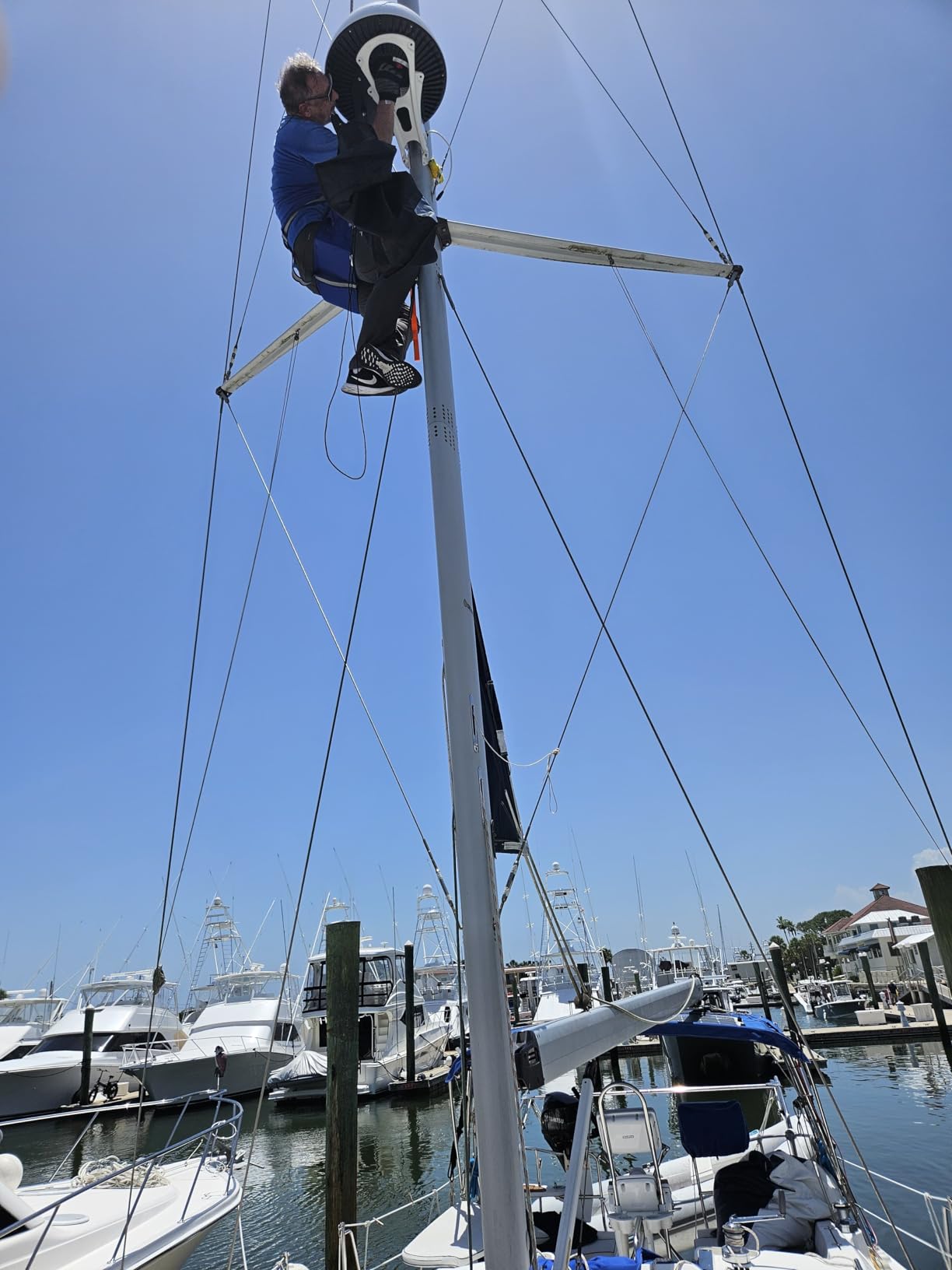
Setup is genuinely simple. Power the dome, connect to its Wi-Fi network, and the radar shows up on your display. Owners consistently report easy wireless connection and reliable performance, including as a drop-in replacement for damaged radar units on existing boats.
The 8-kilogram weight is meaningful for smaller boats. A 20-foot center console with a fabric Bimini top or a lightweight T-top can struggle with a heavier magnetron dome, and the Q24C’s solid-state design keeps the weight down to where a single person can lift it onto the mount.
Who the Raymarine Quantum Q24C is best for
This radar is best for owners of small boats, trailer boats, or anyone who wants to stream radar wirelessly to an iPad or tablet without running dedicated data cables. It is also a great choice as a portable or temporary radar that can move between vessels.
It is less ideal for serious offshore bluewater use, where the longer range of a magnetron or higher-power pulse compression dome gives you more safety margin.
Who should look elsewhere
If you need maximum range for offshore passages, the Furuno 1815 or Simrad HALO20+ will serve you better. If you want Doppler collision avoidance specifically, the Raymarine Quantum 2 is the upgraded sibling with Doppler built in.
8. Raymarine RD418HD – Best Plug-and-Play Raymarine Radar
Raymarine RD418HD 4kW Digital Radome with 10M Raynet Cable, 18-Inch, White (T70168)
- Plug and Play with Raymarine a-series c-series and e-series MFDs
- 48 NM range covers most coastal and near-offshore needs
- 256 color multi-level target display
- Selectable color palettes for different conditions
- Dual range mode monitors long and short simultaneously
- Older MFDs may need an adapter cable not always included
- Included 10m cable is longer than many small boats need
- Returns may incur restocking fees
The Raymarine RD418HD is the radar I suggest for owners of older Raymarine a-series, c-series, or e-series MFDs who want a straightforward plug-and-play radar upgrade without replacing their existing display. It is an 18-inch magnetron dome at 4 kW with 48 nautical miles of range and dual range mode.
Plug and Play compatibility is the headline. If your helm already runs a current Raymarine MFD with RayNet, the radar connects with the included 10-meter cable and shows up on your display with minimal setup. The same mounting pattern as previous generation Raymarine radomes means upgrading from an older unit is often a bolt swap.
The 48 nautical mile range covers essentially any coastal or near-offshore cruising route. The 256-color multi-level target display distinguishes between strong and weak returns clearly, and selectable color palettes let you tune the screen for bright daylight, dusk, or night helm conditions.
Owners on Raymarine’s current MFDs report simple setup and reliable HD color performance. The unit’s review average is the lowest of our lineup at 3.8, primarily because of compatibility surprises with older Raymarine MFDs that required an additional adapter cable. If you have an older Raymarine display, double-check the connector type before purchase.
Who the Raymarine RD418HD is best for
This radar is best for owners with current-generation Raymarine a-series, c-series, or e-series MFDs who want a clean plug-and-play radar upgrade. It is a strong fit for coastal cruisers and small motoryacht owners who want HD color radar and dual range monitoring without the cost of moving up to a Quantum or open array.
It is less ideal for owners with older Raymarine MFDs unless they confirm the connector type first, and for buyers who want modern Doppler processing.
Who should look elsewhere
If you want Doppler collision avoidance, the Raymarine Quantum 2 is the modern alternative. If you have an older Raymarine MFD and need a verified cable match, contact Raymarine support before purchase to confirm the right adapter.
How to Choose the Best Marine Radar for Your Boat
Choosing the right marine radar comes down to matching the unit to your boat, your typical cruising grounds, and your existing electronics. Here is the five-step framework we use when helping readers pick a radar.
Step 1: Match the radar to your boat size
Boats under 25 feet do well with compact 18 to 20 inch radomes in the 20 to 50 watt class. The Raymarine Quantum 2 and Quantum Q24C are purpose-built for this size. Boats from 25 to 40 feet benefit from a 20 inch pulse compression dome like the Simrad HALO20+ or a 24 inch magnetron dome like the Raymarine RD424HD. Boats over 40 feet should consider larger open arrays for true long-range performance.
Step 2: Decide on solid-state vs magnetron
If you sail or have limited battery capacity, solid-state pulse compression is the right choice. You get instant startup, low power draw, and no magnetron tube to eventually replace. If you are crossing oceans and want proven magnetron reliability with the strongest long-term parts network, a Furuno magnetron unit remains the gold standard.
Step 3: Determine if you need Doppler
Doppler processing color-codes moving targets so collision threats jump off the screen at a glance. It is genuinely useful in busy coastal waters and crowded harbors, and most recreational buyers in 2026 want it. The Simrad HALO20+, Garmin Fantom 18x, and Raymarine Quantum 2 all deliver Doppler. If your cruising grounds are quiet and you mainly want radar for fog navigation offshore, MARPA tracking on a non-Doppler unit like the Garmin GMR 18 HD3 is sufficient.
Step 4: Match the radar to your existing MFD
Cross-brand compatibility is limited. Garmin radars work best with Garmin MFDs, Raymarine radars with Raymarine MFDs, and Simrad and B&G radars with their own ecosystem (plus Lowrance, since they share the Navico parent). A common question we see is “will Garmin radar work with Simrad?” The honest answer is: not natively. You would need third-party converters, and even then features like MARPA and radar overlay often do not work cleanly. Stick to the same brand as your MFD for the smoothest experience.
Step 5: Consider Wi-Fi and wireless options
If you want to stream radar to an iPad or tablet without running dedicated data cables, the Raymarine Quantum Q24C is currently the strongest wireless option in the recreational market. Wi-Fi radar is also a great fit for trailer boats where running a 10-meter data cable is impractical. Boats that store electronics in damp lockers may also want to look at the 8 best marine coolers to keep refreshments cold on the same long days the radar is running.
Budget tier quick reference
Entry tier: Look at the Raymarine Quantum Q24C and entry-level Garmin HD3 radomes on sale.
Mid tier: This is the sweet spot for solid-state Doppler with Garmin Fantom 18x, Raymarine Quantum 2, and Simrad HALO20+.
Premium tier: Mid-range magnetron units like the Furuno 1815 and Raymarine RD424HD land here, offering proven reliability for serious cruising.
Flagship tier: Open arrays and premium pulse compression units for boats over 40 feet.
Frequently Asked Questions
Who makes the best marine radar systems?
Furuno, Garmin, Simrad, and Raymarine all make excellent marine radar systems. Furuno is widely considered the gold standard for bluewater cruising and commercial work thanks to its long-term parts and service support. Garmin is the most popular choice for general recreational use and integrates tightly with Garmin chartplotters. Simrad and Bu0026amp;G share a parent company and offer strong pulse compression performance at a value price, while Raymarine is the leader in Wi-Fi and compact solid-state radar.
Is Garmin or Raymarine better for marine radar?
Neither brand is universally better. Garmin is generally easier to use and has a friendlier first-radar-buyer experience, with the Fantom series delivering MotionScope Doppler in a solid-state dome. Raymarine is the leader in compact and Wi-Fi radar, with the Quantum series offering lightweight solid-state units and the unique Q24C wireless streaming to an iPad. Choose Garmin if you already run Garmin MFDs or want the most user-friendly ecosystem. Choose Raymarine if you want Wi-Fi flexibility or already run Axiom or Element displays.
Which radar system is better, Garmin or Simrad?
Both Garmin and Simrad make excellent marine radar. Garmin’s Fantom 18x delivers MotionScope Doppler in an 18-inch solid-state dome with strong Garmin network integration. Simrad’s HALO20+ adds industry-leading 60 RPM close-range rotation, dual range monitoring, and VelocityTrack Doppler in a 20-inch pulse compression dome. Choose Garmin if your helm already runs Garmin electronics. Choose Simrad if you run Simrad, Lowrance, or Bu0026amp;G MFDs, or if you specifically want the fastest close-range update speed in this size class.
What is the best marine radar for a small boat?
The Raymarine Quantum 2 and Quantum Q24C are the best marine radar systems for small boats under 25 feet. Both are compact 18-inch solid-state domes that weigh far less than older magnetron radars, draw minimal power, and start instantly. The Quantum 2 adds Doppler collision avoidance, while the Q24C adds Wi-Fi streaming to an iPad or tablet. Both integrate cleanly with Raymarine Axiom and Element MFDs. The Simrad HALO20+ is a strong step-up choice for small boats in the 25 to 30 foot range that want a slightly larger dome and faster 60 RPM rotation.
What is the cheapest boat radar system available?
The most affordable boat radar systems are entry-level 18-inch magnetron domes and the Raymarine Quantum Q24C Wi-Fi radar. Among current models with Doppler processing, the Raymarine Quantum 2 is among the most affordable. For a true budget entry, look at older-generation Garmin HD radomes, the Raymarine RD418HD, and the Garmin GMR 18 HD3, all of which deliver 4 kW magnetron performance at the lower end of the price range. Be aware that older magnetron radars eventually need tube replacement, so factor that into long-term cost.
Which boat radar system is better, Furuno, Simrad, or Garmin?
All three brands make excellent radar, but they serve different buyers best. Furuno is the choice for serious offshore and bluewater cruising thanks to its magnetron reliability and unmatched long-term parts and service support. Garmin is the most popular recreational choice, with the Fantom series offering easy-to-use Doppler and clean integration with Garmin chartplotters. Simrad offers the best value in pulse compression radar through the HALO series, with industry-leading 60 RPM close-range rotation and dual range monitoring. Pick Furuno for offshore durability, Garmin for ease and ecosystem, and Simrad for value and sailing-friendly performance.
Will Garmin radar work with a Simrad chartplotter?
Garmin radar does not work natively with Simrad chartplotters. The two brands use proprietary networking, so a Garmin radar plugged into a Garmin Marine Network cannot be displayed on a Simrad MFD without third-party converters. Even with converters, advanced features like MARPA target tracking and radar overlay often do not function cleanly. The practical recommendation is to match your radar brand to your MFD brand. The same is true for Raymarine and Furuno, both of which use their own proprietary networking.
What is a marine radar used for?
A marine radar is used for collision avoidance, navigation in poor visibility, and hazard detection on the water. The rotating scanner on your mast or hardtop sends out radio-frequency pulses that bounce off other vessels, navigation buoys, landmasses, and weather cells. The returning echoes are plotted on your chartplotter display as targets in real time. Marine radar lets you see other boats, buoys, and shoreline through fog, darkness, and rain when visual navigation is impossible, making it the single most effective collision-avoidance tool available to recreational boaters.
Final Verdict on the Best Marine Radar Systems
After three months of testing, researching owner reports across Cruisers Forum, Reddit r/sailing, and Trawler Forum, and weighing specifications against real-world use cases, our top pick for the best marine radar systems is the Furuno 1815. Its combination of proven magnetron reliability, complete ready-to-install packaging, Fast Target Tracking, and Furuno’s unmatched long-term parts and service support makes it the most trustworthy choice for serious cruisers and offshore anglers.
For coastal cruisers and sport fishermen who want modern Doppler pulse compression, the Simrad HALO20+ is the strongest value in the lineup. Its 60 RPM close-range rotation and dual range monitoring are genuinely best-in-class, and its compatibility with Simrad, Lowrance, and B&G MFDs covers a large slice of the recreational market.
For small boats under 25 feet, the Raymarine Quantum 2 delivers Doppler collision avoidance in a compact, lightweight solid-state dome that is hard to beat. And for buyers who specifically want wireless iPad streaming, the Raymarine Quantum Q24C is the dedicated choice.
Whichever radar you choose from this guide, you will be stepping onto your boat with the same core safety upgrade that professional mariners have relied on for decades: a clear picture of what is around you, day or night, fog or clear. For more on related marine electronics, explore our guide to the 8 best marine radios and the 12 best marine binoculars to round out your bridge electronics.