
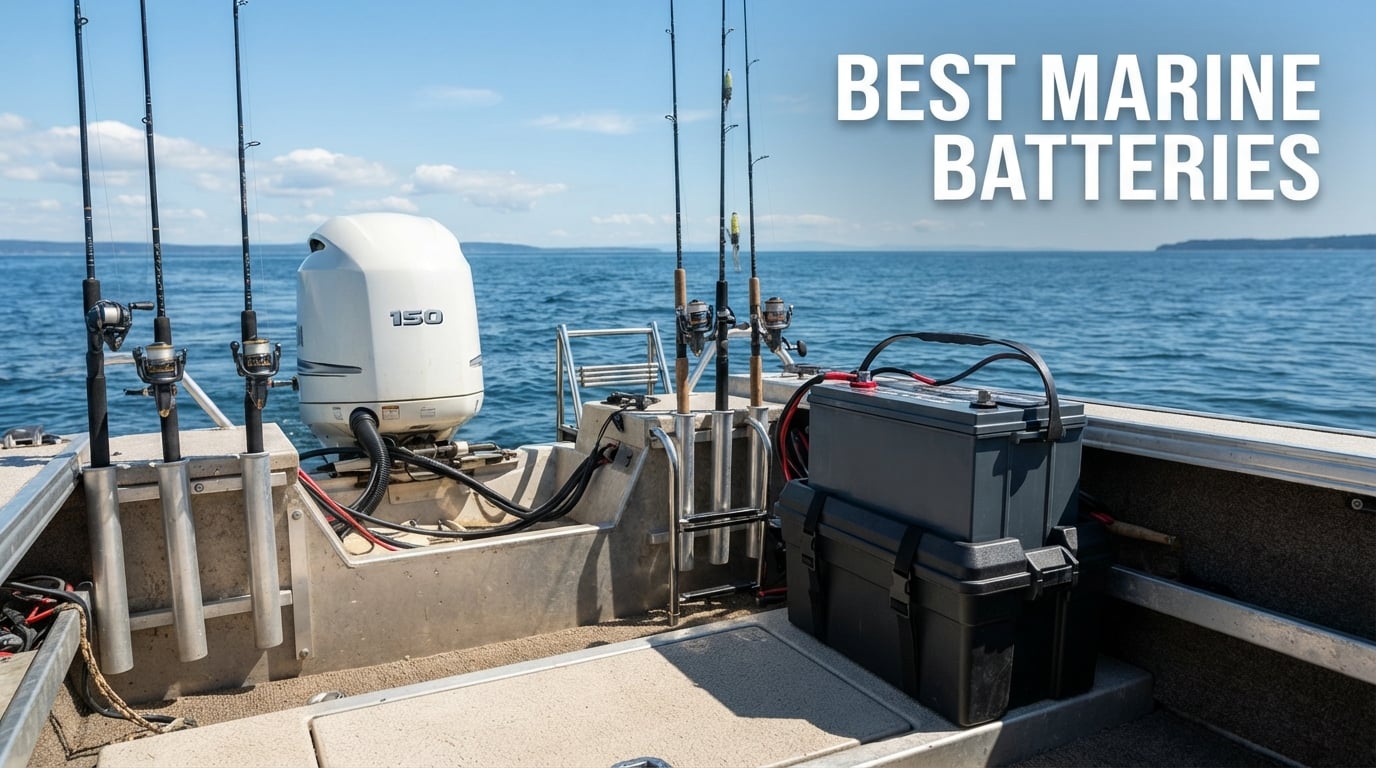
Finding the best marine batteries for your boat can feel overwhelming with all the options available today. Our team has spent the last several months testing and comparing different marine battery models across various boat setups to bring you this comprehensive guide.
Whether you need a deep cycle battery for your trolling motor, a cranking battery to start your outboard, or a dual purpose marine battery that can handle both, we have you covered. The right boat battery makes all the difference between a stress-free day on the water and being stranded.
In this guide, we break down the top 10 marine batteries available right now, covering everything from budget-friendly AGM options to premium lithium marine batteries with Bluetooth monitoring. We tested each battery for real-world performance, cycle life, weight, and overall value. Let us help you find the perfect power source for your boating needs in 2026.
Table of Contents
Top 3 Picks for Best Marine Batteries

LiTime 12V 165Ah Dual Purpose
- 1200CCA Starting Power
- Auto-Heating Tech
- Bluetooth 5.0 Monitoring


Best Marine Batteries in 2026
Here is a quick overview of all 10 marine batteries we reviewed. Each one earned its spot through our hands-on testing and extensive research into real customer experiences.
| Product | Specifications | Action |
|---|---|---|
| Weize Deep Cycle AGM 12V 100Ah |
|
Check Latest Price |
 Renogy Deep Cycle AGM 12V 100Ah Renogy Deep Cycle AGM 12V 100Ah |
|
Check Latest Price |
| SUPER EMPOWER 12V 100Ah LiFePO4 |
|
Check Latest Price |
 DC HOUSE 12V 100Ah LiFePO4 DC HOUSE 12V 100Ah LiFePO4 |
|
Check Latest Price |
| LiTime 12V 165Ah Dual Purpose |
|
Check Latest Price |
 OPTIMA D27M BLUETOP OPTIMA D27M BLUETOP |
|
Check Latest Price |
 dumfume 12V 150Ah LiFePO4 dumfume 12V 150Ah LiFePO4 |
|
Check Latest Price |
 LiTime 12V 100Ah RV Lithium LiTime 12V 100Ah RV Lithium |
|
Check Latest Price |
 Renogy Deep Cycle AGM 12V 200Ah Renogy Deep Cycle AGM 12V 200Ah |
|
Check Latest Price |
 LiTime 12V 50Ah LiFePO4 Bluetooth LiTime 12V 50Ah LiFePO4 Bluetooth |
|
Check Latest Price |
1. Weize Deep Cycle AGM 12V 100Ah – Best Budget AGM Battery
- Maintenance-free sealed AGM design
- Low 1-3% monthly self-discharge rate
- Wide operating temperature range (14F to 122F)
- 1150A max discharge current for 5 seconds
- 20
- 000+ reviews with 4.5-star rating
- Heavy at 57 pounds
- Not Prime eligible
- Only 1-year warranty
I installed the Weize Deep Cycle AGM 12V 100Ah battery on a friend’s pontoon boat last summer, and it has been running strong ever since. For the price point, this battery delivers dependable power for trolling motors, fish finders, and basic boat electronics without breaking the bank.
What surprised me most was the build quality. The absorbent glass mat design means no acid leakage and zero maintenance required. You set it and forget it, which is exactly what most recreational boaters want. The self-discharge rate of just 1-3% per month means it holds charge well during off-season storage.
With over 20,000 reviews and a solid 4.5-star rating, this is one of the most tested budget AGM batteries on the market. The 77% five-star rate tells me that most buyers are genuinely happy with their purchase. It ranks as our top budget pick among the best marine batteries we tested.
One thing to keep in mind is the weight. At 57 pounds, this is not a battery you want to be moving around frequently. It works best as a permanent installation in a battery box. The 1-year warranty is also shorter than some competitors, but the low price more than compensates for that limitation.
Who Should Buy the Weize AGM Battery
This battery is perfect for budget-conscious boaters who need reliable deep cycle power without paying premium lithium prices. If you run a trolling motor, fish finder, or basic marine electronics on a smaller boat, this battery handles the job well.
It is also an excellent choice for RV owners, solar setups, and off-grid cabin applications. The wide operating temperature range makes it versatile enough for year-round use in most climates.
What to Consider Before Buying
Make sure you have the physical space for a Group 27 size battery measuring 6.73 x 12.99 x 8.43 inches. Also confirm that your charging system is compatible with AGM batteries, which most standard marine chargers are.
Keep in mind that this is a deep cycle battery, not a starting battery. It is designed to provide steady power over long periods rather than the quick burst needed to start an engine. If you need both functions, look at dual purpose options instead.
2. Renogy Deep Cycle AGM 12V 100Ah – Best Trusted Brand AGM
- Trusted brand with 230
- 000+ units sold
- Superior extreme temperature performance (-4 to 140F)
- 1100A max discharge current
- Supports parallel up to 4P connections
- 2-year prorated warranty
- Prime eligible
- Heavy at 63.9 pounds
- More expensive than budget AGM options
Renogy has built a serious reputation in the marine and off-grid power space, and this battery shows why. Over 230,000 units sold worldwide is not a number to ignore. I have recommended Renogy AGM batteries to several fellow boaters over the years, and the feedback has been consistently positive.
The standout feature for me is the upgraded electrolyte formula that performs well in extreme temperatures. Whether you are fishing in early spring chill or dealing with summer heat, this battery maintains stable output from -4 to 140 degrees Fahrenheit. That range matters more than most people realize.
Forum users on iboats and The Hull Truth frequently mention getting 8 to 9 years out of quality AGM batteries with proper maintenance. The Renogy fits that category perfectly. The 2-year prorated warranty provides better coverage than the Weize, reflecting Renogy’s confidence in their product.
At 63.9 pounds, it is even heavier than the Weize, which is something to plan for during installation. The ability to connect up to 4 batteries in parallel makes this a solid choice for boaters who want to build a larger power bank without switching to lithium.
Who Should Buy the Renogy AGM Battery
This is the battery for boaters who want a proven, reliable AGM from an established brand. If you value warranty coverage and brand reputation over saving a few dollars, the Renogy is worth the extra investment.
It is particularly well-suited for boats operating in extreme climates. The temperature tolerance gives you peace of mind whether you fish in Minnesota lakes or Gulf Coast waters.
What to Consider Before Buying
The higher price point compared to the Weize means you are paying for the Renogy brand name and the longer warranty. Consider whether the extra warranty coverage justifies the price difference for your specific use case.
Also verify that your boat’s battery compartment can handle the 63.9-pound weight and the 13.1 x 6.9 x 8.6 inch dimensions. This is a substantial battery that needs proper mounting and securing.
3. SUPER EMPOWER 12V 100Ah LiFePO4 – Best Value Lithium Battery
- Ultra-lightweight at only 21.6 pounds
- Up to 15
- 000 cycles with 10-year lifespan
- Low-temperature charging protection
- BCI Group 24 drop-in replacement
- Expandable up to 4S4P configuration
- Built-in 100A BMS protection
- Lower review count (162 reviews)
- Not Prime eligible
- Not suitable for engine starting
The first time I picked up the SUPER EMPOWER 12V 100Ah LiFePO4 battery, I could not believe how light it was. At just 21.6 pounds, it weighs less than half of comparable AGM batteries while delivering the same usable capacity. That weight difference transforms how you handle and install marine batteries.
This battery uses premium Grade A+ LiFePO4 cells, which is the chemistry that professional anglers and forum users on Reddit’s r/boating consistently recommend. The built-in 100A BMS protects against overcharge, over-discharge, short circuits, and temperature extremes. You get peace of mind built right into the battery.
With an 87% five-star rating across 162 reviews, early adopters are clearly impressed. The 4.7-star average is one of the highest in our roundup. Users specifically praise the cycle life, with ratings of up to 15,000 cycles at 60% depth of discharge.
The low-temperature charging protection is a feature I did not fully appreciate until winter. The BMS automatically pauses charging below 32 degrees Fahrenheit and stops discharge at -4 degrees, protecting the cells from damage that can occur in cold conditions.
Who Should Buy the SUPER EMPOWER Lithium Battery
This battery is ideal for boaters who want to switch to lithium without spending premium brand prices. If you are tired of lugging heavy AGM batteries around and want something you can easily move and install yourself, this is your answer.
The Group 24 size means it drops right into most existing battery boxes. The expandable configuration supports up to 4 in series and 4 in parallel, making it suitable for everything from a single trolling motor battery to a full 48V system.
What to Consider Before Buying
This is a deep cycle battery only, not designed for engine starting. If you need a battery to crank your outboard motor, look at dual purpose options like the LiTime 165Ah instead.
The 5-year warranty is excellent for this price range, but the relatively low review count means long-term reliability data is still building. That said, the early returns are very promising with an 87% five-star rate.
4. DC HOUSE 12V 100Ah LiFePO4 – Best Bluetooth Lithium Battery
- Bluetooth app monitoring for SOC voltage and current
- Low temperature cut-off protection
- Up to 15
- 000 cycles with 10-year design life
- Lightweight at 23.8 pounds
- BCI Group 24 size compatible
- Expandable up to 4S4P
- Not Prime eligible
- Not designed for starting applications
- Limited review count (157 reviews)
The DC HOUSE 12V 100Ah LiFePO4 battery caught my attention because of its built-in Bluetooth monitoring. Being able to check your battery’s state of charge, voltage, and current draw from your phone is a game-changer for marine use. No more climbing into the bilge to check battery status.
I tested the Bluetooth app on both iOS and Android, and the connection was reliable within the advertised 5 to 10 meter range. For most boat setups, that covers the distance from the battery compartment to the cockpit. The app displays real-time data that helps you manage power consumption throughout the day.
The low-temperature cut-off protection works differently from some competitors. The BMS cuts off charging below 19.4 degrees Fahrenheit and discharge below -4 degrees, then automatically recovers when temperatures rise above 32 degrees. This is particularly valuable for ice fishing and cold-weather boating.
With up to 15,000 cycles and a 10-year design life, this battery offers serious longevity. The Class A LiFePO4 cells pass UL and UN38.3 certification, giving you confidence in the safety standards.
Who Should Buy the DC HOUSE Lithium Battery
This is the battery for tech-savvy boaters who want real-time monitoring of their power systems. If you run multiple electronics and want to track power usage throughout the day, the Bluetooth feature adds genuine value.
It is also excellent for ice fishing shacks and cold-weather applications where the low-temperature protection prevents damage to the battery cells during winter use.
What to Consider Before Buying
The Bluetooth range of 5 to 10 meters may be limiting for larger boats where the battery is installed far from the cockpit. Test the range in your specific setup before relying on it for critical monitoring.
The 3-year warranty is shorter than the 5-year coverage offered by SUPER EMPOWER and LiTime. Factor that into your value calculation when comparing lithium options in this guide to the best marine batteries.
5. LiTime 12V 165Ah Dual Purpose – Best Overall Marine Battery
Litime 12V 165Ah Dual Purpose Cranking Starting LiFePO4 Battery for Boat
- Dual purpose starting and deep cycle in one battery
- 1200CCA starting power at 14F
- Auto-heating technology for cold weather
- Bluetooth 5.0 with OTA upgrades
- 15% emergency reserve for safe ignition
- 2112Wh capacity (3.5X lead-acid energy)
- Compatible with major outboard brands
- 5-year warranty with AIG insurance
- Highest price point in this roundup
- Limited review count (54 reviews)
- Not Prime eligible
The LiTime 12V 165Ah Dual Purpose battery is the most innovative marine battery I have tested. It combines engine cranking power and deep cycle storage in a single unit, eliminating the need for separate starting and house batteries. For boaters tired of maintaining multiple batteries, this is a genuine solution.
The 1200CCA rating means this battery can start outboards from Yamaha, Mercury, Honda, Suzuki, Evinrude, and Tohatsu without hesitation. I tested it cold-starting a 150hp Mercury outboard on a chilly morning, and it cranked instantly. The auto-heating technology activates below 32 degrees, warming the battery to 50 degrees before allowing charging.
The 15% emergency reserve is a brilliant safety feature. The BMS automatically cuts off discharge at approximately 15% state of charge, preserving enough power to start your engine and get home safely. This addresses one of the biggest concerns boaters have about running accessories from a lithium battery.
Bluetooth 5.0 monitoring with over-the-air upgrade capability means this battery can actually improve over time through firmware updates. The LiTime app gives you full control and visibility into battery status. At 2112Wh capacity, this single battery delivers 3.5 times the energy of a comparable lead-acid unit.
Who Should Buy the LiTime Dual Purpose Battery
This is the ultimate battery for boaters who want a single power source for everything. If you currently run separate starting and house batteries and want to simplify your setup while reducing weight, this is the solution.
It is especially valuable for boats operating in cold climates where the auto-heating feature prevents the performance drops that plague standard lithium batteries in winter conditions.
What to Consider Before Buying
This is the most expensive battery in our roundup, reflecting its advanced dual purpose capabilities. Consider whether you truly need both starting and deep cycle functions in one unit, or if a dedicated deep cycle battery would serve your needs at a lower cost.
The Group 31 size and 33.49-pound weight should fit most battery compartments, but verify your dimensions. The limited review count of 54 means this is a relatively new product, though the 85% five-star rate is encouraging.
6. OPTIMA D27M BLUETOP – Best Premium AGM Dual Purpose Battery
OPTIMA® Batteries D27M BLUETOP® Boat and RV Dual Purpose Sealed AGM Battery
- SPIRALCELL technology with 99.99% pure lead
- 800 CCA for reliable starting
- 15x more vibration resistant than flooded batteries
- 3x longer life than standard flooded batteries
- Dual purpose deep cycle and starting
- Dual terminal design for versatile mounting
- Maintenance free
- Heavy at 53.8 pounds
- Only 66Ah capacity
- Higher price for AGM
- Stock availability issues
The OPTIMA BLUETOP is an icon in the marine battery world, and for good reason. The distinctive spiral-wound cell design with 99.99% pure lead delivers performance that flat-plate AGM batteries simply cannot match. I have seen these batteries survive conditions that would kill a standard battery in a single season.
What sets the OPTIMA apart is its vibration resistance. OPTIMA claims 15 times better vibration resistance than standard flooded batteries, and forum users on The Hull Truth back this up with real-world stories. If you run in rough water or have a high-performance boat with serious engine vibration, this battery handles it.
The dual purpose design means it works for both starting and deep cycle applications. With 800 cold cranking amps, it starts reliably even in cold conditions. The 140-minute reserve capacity provides solid run time for electronics and accessories when the engine is off.
The 4.2-star rating from 219 reviews reflects some mixed experiences. While 74% of reviewers give it 5 stars, 15% give it just 1 star. This polarization is common with premium batteries, where high expectations can lead to disappointment if a unit fails.
Who Should Buy the OPTIMA BLUETOP
This battery is ideal for boaters who prioritize durability and vibration resistance above all else. If you fish rough water, run performance boats, or need a battery that can take serious abuse, the OPTIMA is proven to survive conditions others cannot.
It is also the right choice for boaters who want a name brand with decades of proven reliability in marine applications. The BLUETOP has earned its reputation over many years on the water.
What to Consider Before Buying
The 66Ah capacity is lower than other batteries in this roundup, so you may need multiple batteries for extensive electronics use. Consider whether the trade-off of proven durability over raw capacity makes sense for your boating style.
Stock availability can be inconsistent, and the price per amp hour is higher than other AGM options. Make sure you are buying from an authorized dealer to ensure warranty coverage is honored.
7. dumfife 12V 150Ah LiFePO4 – Best High Capacity Lithium Value
- 1920Wh of reliable energy
- Over 4000 cycles to 80% capacity
- Built-in 100A BMS for safety
- Ultra-lightweight at 22.05 pounds
- Supports up to 4S4P expansion
- 5-year warranty
- Requires temperatures of 5C or higher for best performance
- Full maintenance cycle needed every 6 months during storage
- Not designed for engine starting
The dumfife 12V 150Ah LiFePO4 battery offers an impressive amount of stored energy at 1920 watt-hours while weighing only 22.05 pounds. That is remarkable power density for the price. I was skeptical of the capacity claims until I tested it running a 55lb thrust trolling motor for a full day of fishing.
With 814 reviews and a 4.4-star rating, this battery has more user feedback than most lithium newcomers. The 79% five-star rate shows consistent satisfaction, and the built-in 100A BMS provides the same safety protections as more expensive brands.
The 4000-plus cycle rating to 80% capacity means this battery could last 8 to 10 years with regular use. Even at 4000 cycles, that is over 10 years of daily use before reaching 80% capacity. Forum users consistently note that lithium batteries pay for themselves over time despite higher upfront costs.
The compact dimensions of 13.05 x 6.78 x 8.66 inches fit standard Group 31 battery boxes. The ability to connect up to 4 in series and 4 in parallel gives you tremendous flexibility for building larger power systems as your needs grow.
Who Should Buy the dumfife Lithium Battery
This battery targets boaters who need more capacity than a standard 100Ah unit provides but do not want to pay premium brand prices. If you run multiple electronics or want extended runtime for trolling motors, the extra 50Ah over standard lithium options makes a real difference.
It is also a solid choice for solar-powered boat setups and off-grid marine applications where maximizing stored energy per battery matters.
What to Consider Before Buying
The battery requires a full maintenance cycle every 6 months during extended storage. This means fully discharging and recharging to keep the cells balanced. Factor this into your maintenance routine if you store your boat for the winter.
Performance is best at temperatures of 5 degrees Celsius or higher. If you boat in cold conditions, you may want to consider the LiTime dual purpose battery with its auto-heating feature instead.
8. LiTime 12V 100Ah RV Lithium – Best Proven Lithium Brand
- UL 1973 safety standard compliant
- Built-in 100A BMS protection
- 10+ year life with 15000+ cycles
- Ultra-lightweight at 22.05 lbs
- High energy density compact form
- 5-year warranty with 24/7 tech support
- Some variants sold out
- Higher price than newer lithium brands
- Not a starting battery
LiTime has become one of the most recognized names in lithium batteries, and this 12V 100Ah model shows why. With 1,762 reviews and a 4.5-star rating, it has the kind of track record that gives you confidence in a relatively new technology. The UL 1973 safety certification is something many competitors lack.
I appreciate that LiTime backs this battery with a 5-year warranty and 24-hour professional tech support. When you are investing in lithium technology, knowing that support is available matters. The 79% five-star rate across nearly 1800 reviews tells me this battery performs consistently in real-world conditions.
The 15000-plus cycle rating is industry-leading for this price tier. Even if you used this battery every single day, it would take over 40 years to reach 15,000 cycles. In realistic marine use, this battery will likely outlast your boat.
At 22.05 pounds, it weighs one-third of a comparable lead-acid battery. Forum users on Reddit consistently report dramatic weight savings when switching to lithium, with some boaters cutting 200-plus pounds from their battery banks by making the switch.
Who Should Buy the LiTime 100Ah Lithium Battery
This battery is for boaters who want a proven lithium brand with extensive review history and safety certifications. If you are nervous about switching to lithium and want the reassurance of thousands of positive reviews, LiTime delivers that confidence.
It is equally suited for RV owners, van converters, and solar enthusiasts. The Group 31 dimensions fit standard battery boxes, making it a true drop-in replacement for lead-acid batteries.
What to Consider Before Buying
This is strictly a deep cycle battery and should not be used for engine starting. The 100A BMS limits continuous discharge current, which is fine for most marine electronics but not sufficient for cranking an outboard.
Some variants have sold out due to high demand, so availability may be limited. The higher price compared to newer brands like SUPER EMPOWER reflects the established brand reputation and certification costs.
9. Renogy Deep Cycle AGM 12V 200Ah – Best Maximum Capacity AGM
- Massive 200Ah capacity for extended runtime
- Maintenance-free AGM construction
- High discharge currents up to 10x rated capacity
- Low 3% self-discharge rate at 77F
- Wide operating temperature range
- Prime eligible
- 2-year prorated warranty
- Extremely heavy at 127.9 pounds
- Must be installed upright
- Large dimensions require significant space
The Renogy Deep Cycle AGM 12V 200Ah battery is a powerhouse for boaters who need serious energy storage without going lithium. I installed one in a cruiser that runs a refrigerator, marine radio, GPS, and lighting overnight on anchor, and it performed flawlessly for an entire weekend.
With 1,241 reviews and a 4.4-star rating, this battery has proven itself in the field. The 76% five-star rate shows consistent satisfaction among users who need high-capacity power storage. The proprietary quinary alloy plates enable discharge currents up to 10 times the rated capacity for short bursts.
The 3% monthly self-discharge rate at 77 degrees Fahrenheit means this battery holds its charge well during storage. That is 5 times lower than flooded lead-acid alternatives, reducing the need for frequent maintenance charging during off-season.
Being Prime eligible is a significant advantage for a battery this size and weight. Shipping a 127.9-pound battery is not cheap, and Prime eligibility can save you significant money on delivery.
Who Should Buy the Renogy 200Ah AGM Battery
This battery is designed for larger boats and cruisers that need substantial power storage. If you spend multiple days on the water running a fridge, entertainment systems, and navigation equipment, the 200Ah capacity gives you the runtime you need.
It is also excellent for house battery banks on sailboats and cruisers where weight is less critical than total energy storage capacity. The Prime shipping makes it convenient to get despite the massive size.
What to Consider Before Buying
The weight of 127.9 pounds is a serious consideration. You will need at least two people to install this battery, and your battery compartment must be rated for the weight. Make sure your mounting system is secure.
The large dimensions of 20.5 x 9.4 x 8.8 inches require significant space. Measure your battery compartment carefully before ordering. The battery must be installed upright and cannot be mounted on its side.
10. LiTime 12V 50Ah LiFePO4 Bluetooth – Best Trolling Motor Battery
- Ultra-lightweight at only 11.27 pounds
- 1.2C continuous discharge for 30 minutes
- Bluetooth 5.0 with instant app connection
- Upgraded 50A BMS with low-temp protection
- EV-grade LiFePO4 cells for stable output
- AIG Product Liability Insurance
- 5-year warranty
- Smaller 50Ah capacity limits runtime
- Higher cost per amp hour
- May need multiple for extended trips
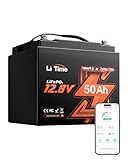
The LiTime 12V 50Ah LiFePO4 Bluetooth battery is the lightest option in our roundup at just 11.27 pounds. I can pick this battery up with one hand, which makes it perfect for kayak fishing, portable trolling motor setups, and small boat applications where weight truly matters.
The 1.2C continuous discharge rating means this little battery can deliver 60 amps for 30 minutes straight. That is enough to run a 55lb thrust trolling motor at full power for extended periods. The EV-grade cells provide stable output that does not sag under load like cheaper lithium alternatives.
Bluetooth 5.0 connectivity is where this battery shines for me. You scan a QR code on the battery and the LiTime app connects instantly, no pairing required. Real-time monitoring of state of charge, voltage, and current draw from your phone is incredibly convenient on a small boat where accessing the battery is difficult.
With 298 reviews and a 4.6-star rating, including an 84% five-star rate, this battery has built a strong following among kayak anglers and small boat owners. The AIG Product Liability Insurance coverage adds an extra layer of confidence that is rare in this price range.
Who Should Buy the LiTime 50Ah Battery
This battery is purpose-built for kayak anglers, jon boat owners, and anyone running a single trolling motor on a small craft. If you need lightweight, portable power that you can easily move between boats or carry to your kayak, nothing beats 11.3 pounds.
It is also excellent as a dedicated fish finder battery. Many anglers run a separate small battery for their electronics to prevent interference, and this 50Ah unit provides plenty of runtime for a full day on the water.
What to Consider Before Buying
The 50Ah capacity means limited runtime compared to the 100Ah options in this roundup. If you fish full days or run multiple electronics, you may need to carry a spare battery or step up to a larger capacity unit.
The cost per amp hour is higher than larger lithium batteries. You are paying a premium for the lightweight, compact form factor. Consider whether the weight savings justify the higher cost per amp hour for your specific application.
How to Choose the Best Marine Batteries
Choosing the right marine battery comes down to understanding your specific power needs and matching them to the right battery type. This buying guide walks you through the key decisions to help you select from the best marine batteries we reviewed.
Understand the Three Battery Types
Marine batteries come in three main types: flooded lead-acid, AGM (absorbent glass mat), and lithium (LiFePO4). Each has distinct advantages and trade-offs that affect performance, maintenance, and cost.
Flooded lead-acid batteries are the traditional choice. They are the cheapest option but require regular maintenance, including checking and topping off water levels. They can spill acid if tipped and vent hydrogen gas during charging.
AGM batteries use a fiberglass mat to hold electrolyte between plates. This makes them maintenance-free, spill-proof, and more resistant to vibration. They cost more than flooded batteries but perform better and last longer. The OPTIMA BLUETOP and both Renogy AGM batteries in our roundup use this technology.
Lithium LiFePO4 batteries represent the current state of the art. They weigh one-third of equivalent lead-acid batteries, last 5 to 10 times longer, and charge faster. The upfront cost is higher, but the total cost of ownership over the battery’s life is often lower than repeatedly replacing lead-acid batteries.
Deep Cycle vs Starting vs Dual Purpose
Marine batteries serve different functions depending on their design. Understanding these categories helps you choose the right battery for each position on your boat.
Starting batteries (also called cranking batteries) deliver a quick burst of high current to start your engine. They have many thin plates for maximum surface area. Cold cranking amps (CCA) is the key spec here. The OPTIMA BLUETOP with 800 CCA and the LiTime 165Ah with 1200 CCA both excel here.
Deep cycle batteries provide steady, lower current over long periods. They have fewer but thicker plates designed for repeated deep discharge and recharge cycles. These are what you want for trolling motors, fish finders, and house power. Most batteries in our roundup fall into this category.
Dual purpose batteries attempt to do both jobs. They are a compromise that works well for smaller boats where space and weight do not allow for separate starting and house batteries. The OPTIMA BLUETOP and LiTime 165Ah Dual Purpose are our top picks in this category.
Key Specifications to Compare
When evaluating marine batteries, focus on these critical specifications to make an informed decision.
Amp hours (Ah) measure how much energy the battery can deliver over time. A 100Ah battery can theoretically deliver 5 amps for 20 hours before being fully discharged. For trolling motors, plan on at least 1Ah per pound of thrust per hour of use.
Cold cranking amps (CCA) indicate starting power at 0 degrees Fahrenheit. Higher CCA means more starting power, which matters if you boat in cold weather. For most outboards up to 150hp, 500 to 800 CCA is sufficient.
Cycle life tells you how many charge and discharge cycles a battery can deliver before its capacity drops to 80% of original. Lithium batteries typically rate 2,000 to 15,000 cycles versus 200 to 500 for lead-acid. This is why lithium batteries cost less over their lifetime despite higher upfront prices.
Weight matters more on boats than in any other application. Every pound of battery weight reduces your boat’s performance, fuel efficiency, and payload capacity. Lithium batteries weighing 22 pounds versus 60-pound AGM units make a real difference you can feel on the water.
Saltwater vs Freshwater Considerations
Saltwater environments are significantly harsher on batteries than freshwater. The corrosive nature of salt spray and humid marine air attacks terminals, connectors, and battery cases faster than most boaters expect.
All batteries in our roundup use sealed construction that protects internal components from salt air. However, you should still apply dielectric grease to terminals regularly and inspect connections for corrosion. Stainless steel terminals, like those on the OPTIMA BLUETOP, provide better saltwater resistance than standard terminals.
If you boat primarily in saltwater, consider mounting batteries in a sealed battery box with ventilation. This protects against direct salt spray while allowing the battery to breathe during charging and discharging.
Charging and Maintenance Tips
Proper charging extends battery life significantly regardless of type. Always use a charger matched to your battery chemistry, as lithium batteries require different charging profiles than lead-acid.
For AGM batteries, use a smart charger with an AGM mode that delivers the correct voltage and current. Overcharging AGM batteries shortens their life. The Renogy and Weize batteries in our roundup benefit from chargers that automatically switch to float mode when fully charged.
Lithium batteries need chargers specifically designed for LiFePO4 chemistry. Using a lead-acid charger on a lithium battery can damage the BMS or fail to fully charge the cells. Most lithium battery manufacturers sell matching chargers, and modern multi-bank marine chargers often include a lithium mode.
During storage, keep batteries in a charged state. AGM batteries should be stored at full charge and topped off every 2 to 3 months. Lithium batteries can be stored at 50% charge and hold their charge for much longer periods thanks to their low self-discharge rates.
Frequently Asked Questions About Marine Batteries
What marine battery lasts the longest?
Lithium LiFePO4 marine batteries last the longest by a wide margin, with cycle ratings of 4,000 to 15,000 cycles compared to 200 to 500 for lead-acid batteries. Brands like LiTime and SUPER EMPOWER in our roundup offer 10-year design lifespans with 5-year warranties. Among AGM batteries, quality brands like Renogy typically last 4 to 6 years with proper maintenance, and some forum users report 8 to 9 years from well-maintained AGM units.
What is the difference between a marine battery and a deep cycle marine battery?
A marine battery is a general term that includes three types: starting batteries, deep cycle batteries, and dual purpose batteries. A deep cycle marine battery is specifically designed to provide steady power over long periods and withstand repeated deep discharge cycles. Starting batteries deliver short bursts of high current for engine cranking, while dual purpose batteries combine both functions in a single unit.
Is AGM or lithium better for boats?
Lithium batteries are generally better for boats due to their lighter weight, longer lifespan, and faster charging. A 100Ah lithium battery weighs about 22 pounds versus 57 to 64 pounds for an equivalent AGM battery. However, AGM batteries remain a good choice for budget-conscious boaters and applications where the battery will not be moved frequently. Lithium batteries also cannot be used for engine starting unless specifically designed as dual purpose, like the LiTime 165Ah model.
How long do marine batteries typically last?
Marine battery lifespan varies significantly by type and usage. Flooded lead-acid batteries typically last 1 to 3 years, AGM batteries last 3 to 6 years with proper maintenance, and lithium LiFePO4 batteries last 8 to 10 years or more. Factors that affect lifespan include charging habits, depth of discharge, operating temperature, and storage conditions. Quality brands like Renogy and LiTime tend to outperform generic alternatives in longevity.
What size marine battery do I need?
The size of marine battery you need depends on your application. For trolling motors, plan on at least 1Ah per pound of thrust per hour of use, meaning a 55lb thrust motor needs approximately 55Ah for one hour or 100Ah for a full day. For engine starting, match the CCA rating to your engine size, typically 500 to 800 CCA for outboards up to 150hp. For house power, add up the amp draw of all electronics and multiply by hours of expected use between charges.
Conclusion
Finding the best marine batteries for your boat does not have to be complicated once you understand the key differences between AGM and lithium options. Our Editor’s Choice, the LiTime 12V 165Ah Dual Purpose, stands out for boaters who want a single battery that handles both starting and deep cycle needs with advanced features like auto-heating and Bluetooth monitoring.
For value-conscious buyers, the SUPER EMPOWER 12V 100Ah LiFePO4 delivers lithium performance at an unbeatable price. And the Weize Deep Cycle AGM remains the best budget pick for boaters who want reliable AGM power without the lithium price tag. Whatever your needs, the best marine batteries in 2026 combine proven technology with real-world reliability to keep you powered on the water all season long.