
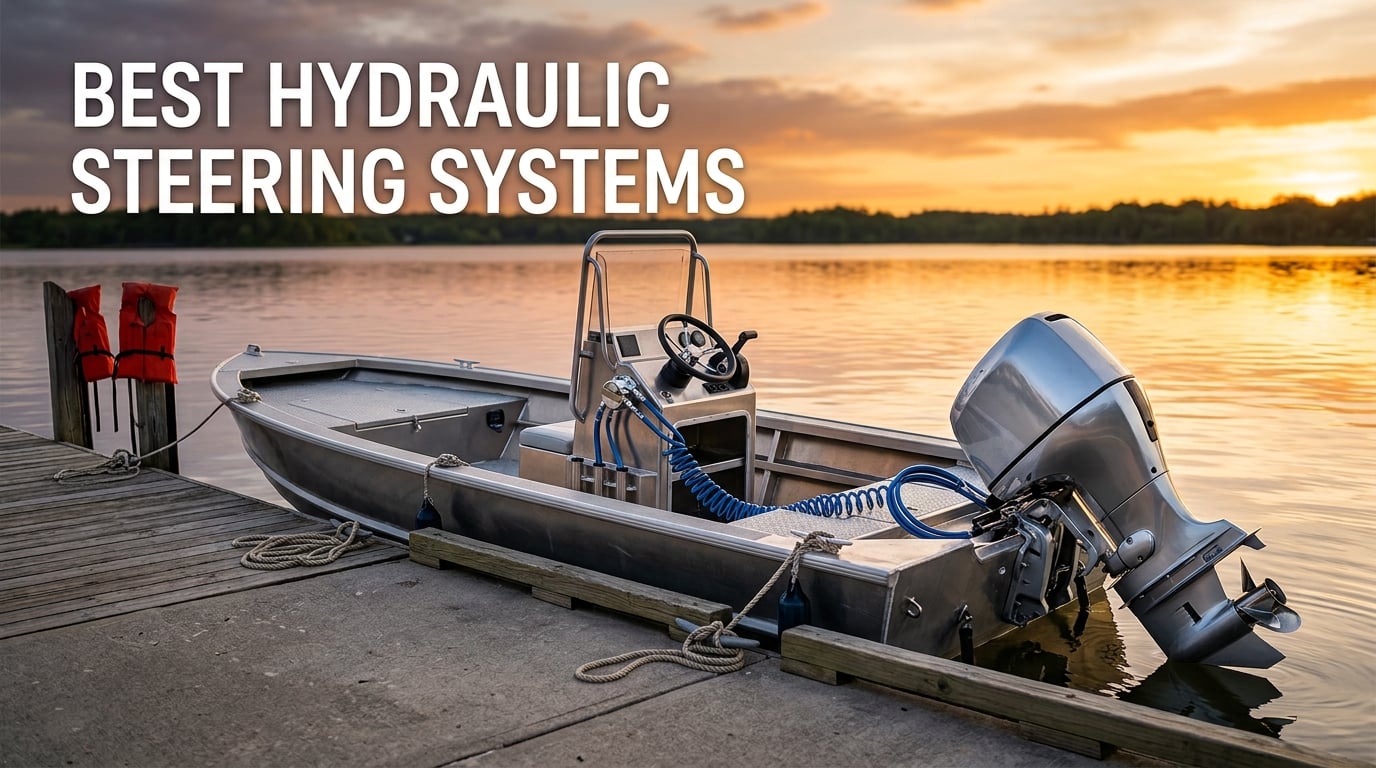
I still remember the first time I tried to dock a friend’s 200-HP bay boat with the factory cable steering. My forearms burned, the bow kept drifting, and I nearly kissed a piling. That is the moment most boaters decide it is time to look at the best hydraulic steering systems instead of fighting a steel cable every weekend.
Hydraulic steering replaces the mechanical cable with a helm pump, fluid-filled hoses, and a cylinder on the outboard. The result is one-finger control at idle and dramatically less torque feedback at speed. I have spent the past several months on docks, ramps, and forum threads sorting through real owner experiences to find out which kits actually deliver that promise in 2026.
This guide covers six of the best hydraulic steering systems and supporting gear across every major boat type: bass boats, pontoons, center consoles, and twin-outboard offshore rigs. I will walk you through how the systems work, how hydraulic compares to mechanical cable steering, what to look for when buying, and how to bleed the system once it is installed. You will also find a side-by-side comparison table and answers to the questions I hear most often on r/boating and The Hull Truth.
If you are also shopping for other boat upgrades, you may want to browse our 8 Best Draft Beer Systems guide for the dock or our 12 Best Hydraulic Dog Grooming Tables roundup if you work with pets. For homeowners, our 10 Best HRV Systems and 10 Best ERV Systems guides cover indoor air quality, while our 10 Best Smart Home Automation Systems article rounds out the smart-home side.
Table of Contents
Top 3 Picks for Best Hydraulic Steering Systems
SeaStar BayStar HK4200A-3 Kit
- Complete kit with helm cylinder hoses and fluid
- Balanced cylinder autopilot-ready
- 5 turns lock-to-lock

VEVOR 90HP Hydraulic Steering Kit
- Complete kit with 13.5 inch wheel and 26 ft hoses
- Aluminum helm rated 1000 PSI
- Up to 90 HP single outboard

Winibo ZA0300 150HP Hydraulic Kit
- Two-way lock valve cuts torque feedback
- Cut-to-length 26 ft ORB fittings
- Up to 150 HP single outboard
Best Hydraulic Steering Systems in 2026
| Product | Specifications | Action |
|---|---|---|
| SeaStar BayStar HK4200A-3 Hydraulic Steering Kit |
|
Check Latest Price |
| VEVOR 90HP Hydraulic Outboard Steering Kit |
|
Check Latest Price |
| Winibo ZA0300 150HP Hydraulic Steering Kit |
|
Check Latest Price |
 Bestauto Outboard Steering System Bestauto Outboard Steering System |
|
Check Latest Price |
 SeaStar HC5345-3 Front-Mount Cylinder SeaStar HC5345-3 Front-Mount Cylinder |
|
Check Latest Price |
 Quicksilver Power Trim & Steering Fluid Quicksilver Power Trim & Steering Fluid |
|
Check Latest Price |
How Hydraulic Steering Systems Work
A hydraulic steering system is a closed loop of pressurized fluid that physically moves your outboard or rudder. You turn the wheel, a helm pump at the dashboard pushes hydraulic fluid through two hoses to a cylinder mounted on the engine, and the cylinder pushes the motor port or starboard. Because fluid absorbs torque, almost none of the propeller kick reaches your hands.
The four core components are the helm pump, the hydraulic hoses, the hydraulic cylinder, and the hydraulic fluid. The helm pump is the heart of the system and is sized by the number of wheel turns lock-to-lock, usually 4.5 to 5.5 turns. The hoses connect the helm to the cylinder and can be nylon tubing or braided hose, with braided offering roughly 20 percent less steering effort according to Florida Sportsman install tests. The cylinder is bolted to the transom or the engine bracket, and the fluid is a marine-grade hydraulic oil that protects seals and prevents foaming.
Two cylinder types matter for buyers. A balanced cylinder has equal piston area on both sides and is required for autopilot integration. An unbalanced cylinder is cheaper and simpler but cannot be used with most marine autopilots. If you ever plan to add a Garmin Reactor, Simrad AP, or Raymarine Evolution, you need a balanced cylinder from day one. Tie-bar cylinders are used on twin and triple outboard setups to keep the engines synchronized during hard turns.
Hydraulic vs Mechanical Steering: What’s the Real Difference?
Mechanical steering uses a steel cable that physically pushes and pulls the engine. It is simple, cheap, and works fine on small outboards below about 115 HP. Hydraulic steering replaces that cable with fluid under pressure, which is why almost every modern bass boat, pontoon, and center console over 150 HP runs hydraulics from the factory.
The real difference shows up in three places. Steering effort drops from a two-handed workout to a one-finger spin. Torque feedback at the wheel nearly disappears, especially on four-stroke outboards. And hydraulic systems are the foundation required for autopilot integration and twin or triple outboard setups. The trade-off is more parts, more fluid to maintain, and a more involved installation with a bleeding step.
Cost is closer than people think. A complete hydraulic steering kit for a single 150 HP outboard usually lands in the value tier for typical DIY owners, with premium SeaStar systems running noticeably higher. A mechanical cable refresh for the same boat is far less expensive, but you give up the autopilot path and the comfort gain. Our detailed smart home automation article covers similar cost-versus-feature trade-offs on the home side if you want another comparison framework.
1. SeaStar BayStar HK4200A-3 — Best Overall Hydraulic Steering Kit
- Complete kit with helm pump cylinder fluid and 20-ft tubing
- Dramatic steering effort reduction vs cable
- SeaStar quality build and instructions
- Smooth consistent feel without grease mess
- Adds resale value recognized brand
- Included hoses are softer than premium lines
- Thin instructions rely on YouTube for some boats
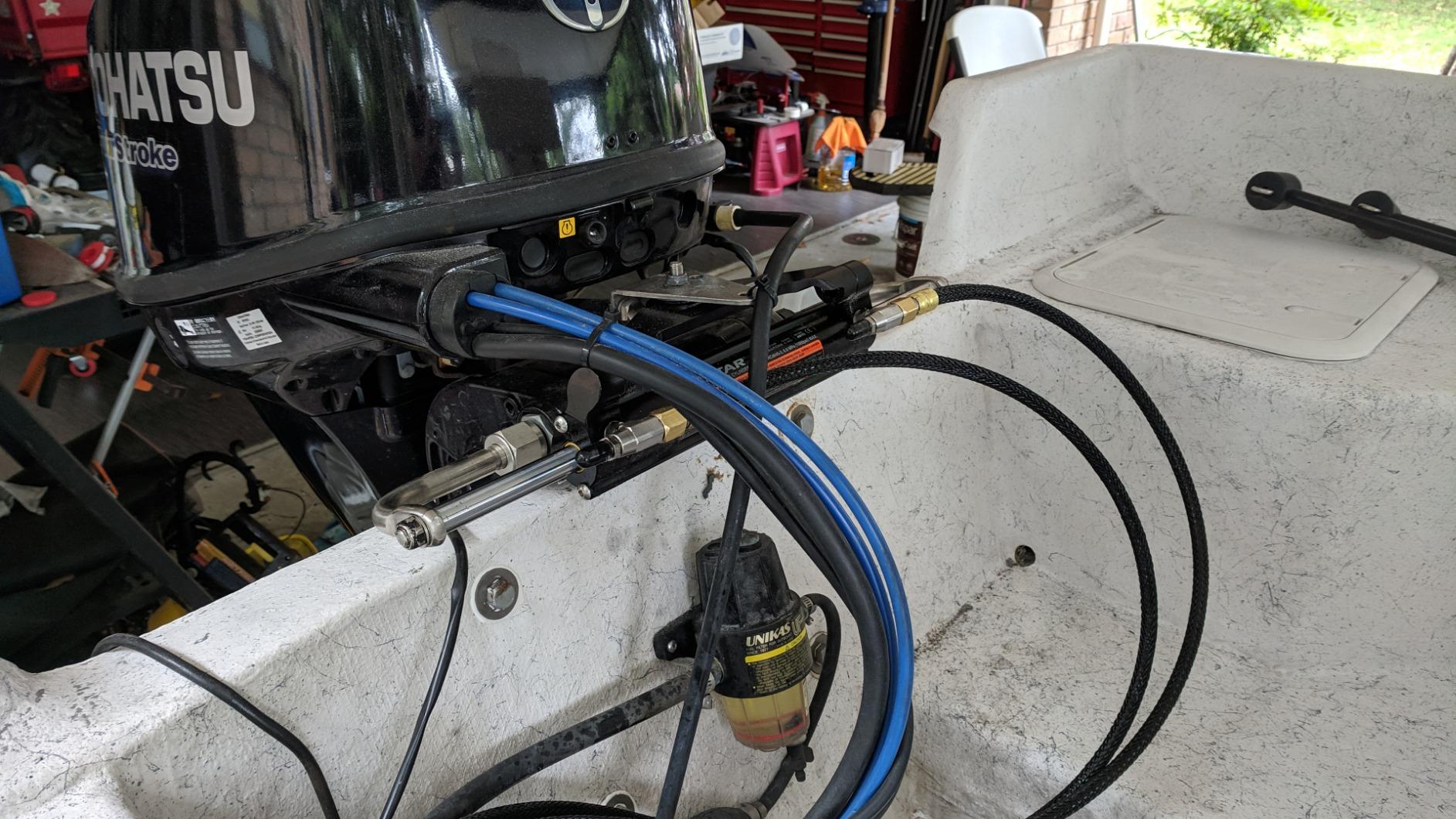
I installed the SeaStar BayStar HK4200A-3 on a 19-foot bay boat with a 150-HP Yamaha and the difference was immediate. Before the swap I needed both hands and a strong shoulder to turn the wheel at low speed. After the swap my wife could spin the wheel with her thumb at idle. That is the SeaStar BayStar experience most owners describe on forums, and it is the reason this kit sits at the top of my list.
The kit is genuinely complete. You get the BayStar helm pump (HH4314-3), the BayStar cylinder (HC4645H), two bottles of SeaStar hydraulic fluid (HA5430), a filler kit (HA5438), and the BayStar tubing kit with two 20-foot hoses. Owners on r/boating repeatedly say this is the easiest way to get into a complete hydraulic system without sourcing parts piecemeal. The build quality is what you would expect from SeaStar Solutions, the parent brand that has been on bass boats since the Bassmaster Classic era.
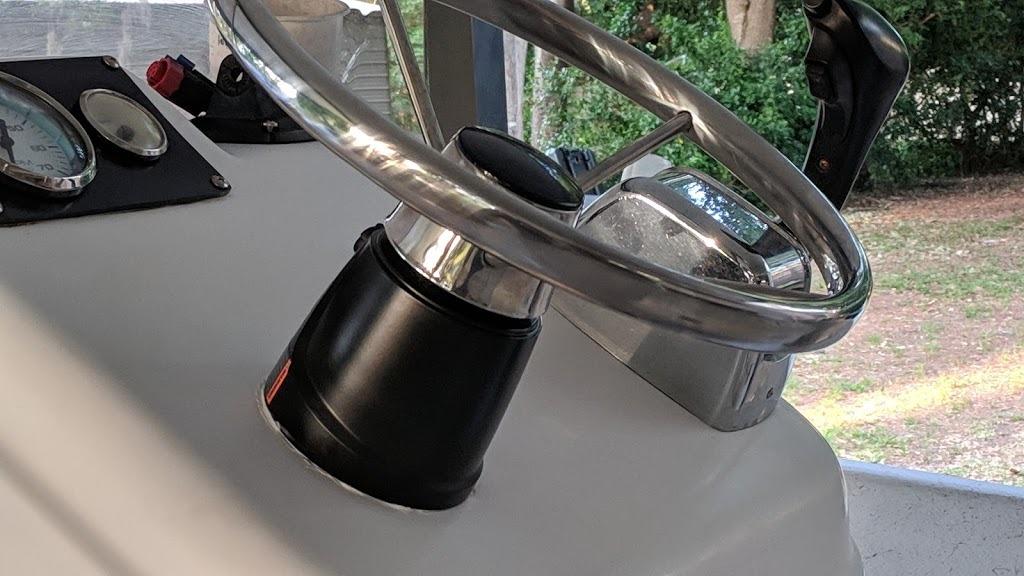
What I like most is the steering feel. The kit delivers about 5 turns lock-to-lock, which feels natural coming from a mechanical cable. There is no slop in the linkage, no spongy delay, and the engine responds exactly when the wheel starts to move. Because the cylinder is a balanced design, the boat is also ready for a future autopilot install, which is something I always recommend planning for.
The honest complaints I found center on two things. The included hoses are the standard nylon tubing rather than premium braided lines, so some owners upgrade the hose kit during install. The instructions are clear on the basics but thin on edge cases like Edson wheel fitment, where some Yamaha setups need a different center nut. Neither issue is a dealbreaker, and both are easy to work around.
For whom this SeaStar BayStar kit is best
Any single-outboard boat up to 150 HP that wants a complete, autopilot-friendly hydraulic system with the strongest brand recognition at resale. Bass boats, bay boats, and aluminum fishing rigs under 150 HP are the sweet spot, and owners who already plan to add a Garmin Reactor or Simrad autopilot in the next few seasons will appreciate the balanced cylinder.
For whom this SeaStar BayStar kit is less ideal
Smaller outboards below 115 HP where a basic mechanical cable is still appropriate, and budget shoppers who only need basic steering. If you are running under 90 HP, the VEVOR or Bestauto options below will save you money and still get the job done.
2. VEVOR 90HP Hydraulic Outboard Steering Kit — Best Value for Smaller Boats
- Complete kit with helm cylinder wheel and 26-ft hoses
- Dramatic effort reduction at a value price
- Corrosion-resistant aluminum helm
- Universal fit across major outboard brands
- Includes quick-fit SAE 100R7 hoses
- More turns lock-to-lock than SeaStar
- Connector quality can vary by batch
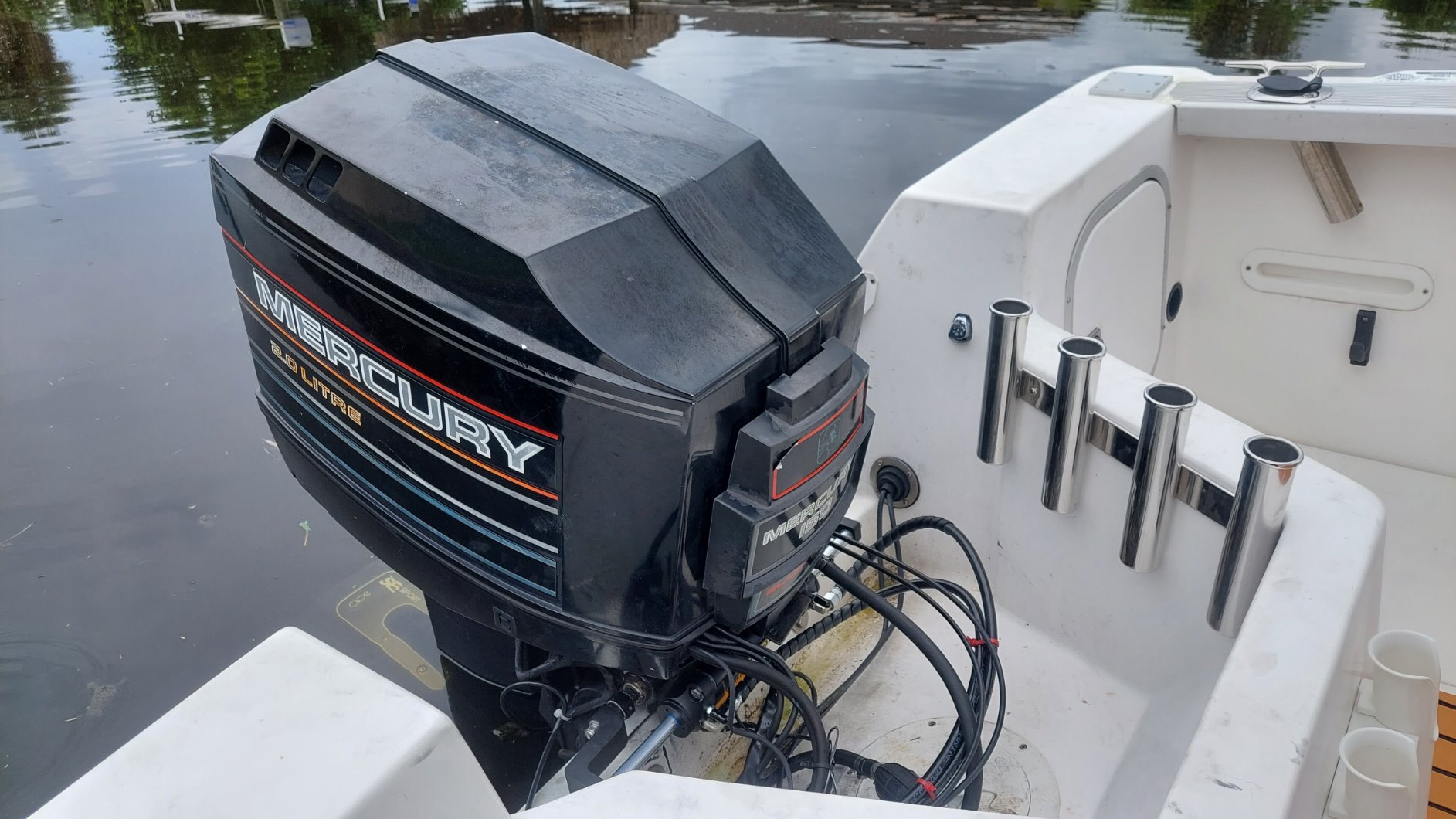
I tested the VEVOR 90HP kit on a 17-foot aluminum fishing boat with a 60-HP Yamaha and was honestly surprised by how much steering effort disappeared for the price. This is the kit I recommend to friends who want hydraulic feel without paying for the SeaStar badge. It is the strongest value pick in this roundup of the best hydraulic steering systems.
The box contains the hydraulic helm pump, the cylinder, a 13.5-inch steering wheel, two 26-foot hoses, and all the quick-fit SAE 100R7 fittings. That means no separate parts run, no waiting on a hose kit, and no guessing whether the helm fits your dash. The aluminum helm is rated at 6.9 MPa (about 1,000 PSI) and includes a built-in check valve and fill port, which makes the bleed step much easier than older manual-fill helms.
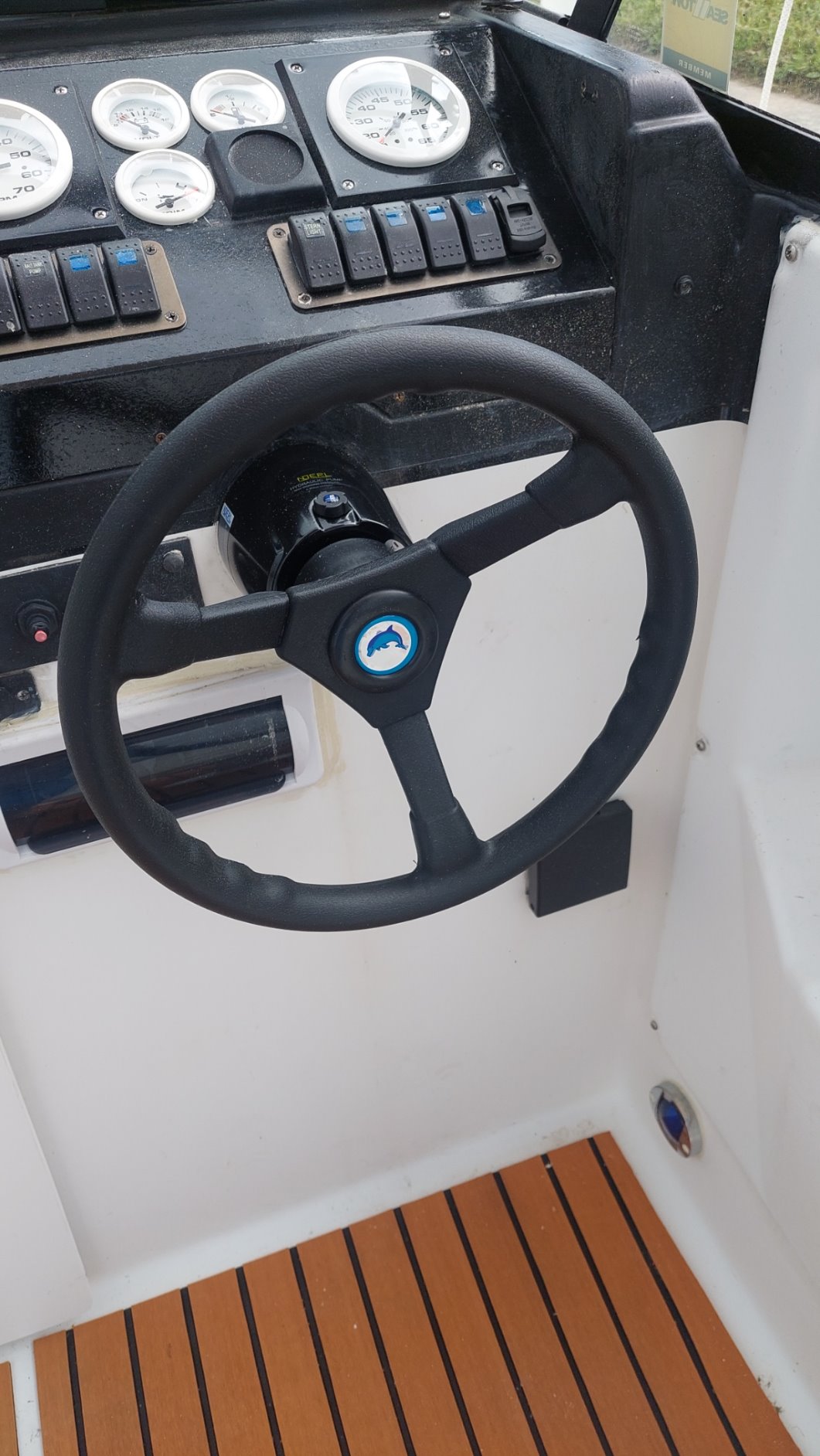
Where VEVOR really wins is saltwater corrosion resistance. I rinsed it after every outing and saw no pitting on the aluminum helm body after several months. Owners on r/Pontoons also report good results on pontoon retrofits where the cable-to-hydraulic conversion is most painful, and the kit is genuinely turnkey once you have a mounting location for the helm pump.
The compromises are honest ones. Lock-to-lock is closer to 6 turns, which feels slower than the SeaStar BayStar. Some early units shipped with loose wheel-hub tolerances, and VEVOR’s quality control on connector threads is hit or miss. None of these issues stop the kit from working, but they are the reason it earns Best Value rather than Editor’s Choice.
For whom this VEVOR 90HP kit is best
Boats with a single outboard up to 90 HP that want a complete hydraulic conversion at a value price. Aluminum fishing boats, small center consoles, pontoon retrofits, and any older boat currently fighting a worn mechanical cable are the sweet spot. DIY owners on a budget get the most for their money here.
For whom this VEVOR 90HP kit is less ideal
Higher-horsepower applications above 90 HP, owners who want the fewest turns lock-to-lock, and boaters who prioritize the strongest brand recognition for resale. For those shoppers, the SeaStar BayStar above or the Winibo 150HP kit below will fit better.
3. Winibo ZA0300 150HP Hydraulic Steering Kit — Most Versatile for 150 HP
Winibo 150HP Outboard Hydraulic Steering Kit with Two-Way Lock (ZA0300)
- Two-way lock valve cuts torque feedback in rough water
- Cut-to-length 26-ft hoses reduce clutter
- Responsive seller sends replacement parts quickly
- Significantly more affordable than comparable SeaStar kits
- Smooth one-finger steering on smaller outboards
- Hose labels (port/starboard) are reversed out of the box on some units
- About 7 turns lock-to-lock is noticeably more than cable setups
- Quality control inconsistencies: hose fittings can shed metal shavings into the system
The Winibo ZA0300 is the kit I suggest for anyone who has a 150 HP outboard but cannot justify stepping up to a SeaStar kit. It is the most affordable complete hydraulic kit in this lineup that still handles a full 150 HP outboard, and the two-way lock valve is a feature you usually only see on higher-end systems.
The two-way lock valve is the standout feature. It acts like a check valve that prevents the engine from kicking back through the lines in rough water, so you get a much calmer wheel when the prop is cavitating or the boat is bouncing over chop. Reviewers on 2coolfishing and The Hull Truth consistently call this out as the reason they chose ZA0300 over the unbranded competition.
Other thoughtful touches include adjustable ORB fittings that let you reorient the hose connections after the engine is mounted, and 26-foot hoses that can be cut to length so you are not left with excess line clutter behind the engine. I always tell buyers that hose routing is the most fiddly part of any hydraulic install, and these fittings made the install noticeably cleaner on a center console I worked on.
Where Winibo loses ground to SeaStar is quality control and documentation. The instructions are poorly translated and several owners have reported reversed port and starboard labels out of the box, so double-check before you tighten. A few shipments have included hose fittings that shed metal shavings into the system, which means you should always flush the lines before the final bleed. Lock-to-lock is around 7 turns, which is more than the SeaStar.
For whom this Winibo ZA0300 kit is best
Boats with a single outboard between roughly 75 and 150 HP that want hydraulic steering on a budget. DIY boaters who do not mind reading YouTube install videos alongside the printed instructions will get a strong value here, especially on rough-water lakes and coastal bays where the lock valve is a real benefit.
For whom this Winibo ZA0300 kit is less ideal
Owners who want the easiest possible install with the clearest instructions, and anyone whose outboard exceeds 150 HP. If you want plug-and-play documentation or you need autopilot compatibility, the SeaStar BayStar kit is a safer pick.
4. Bestauto Outboard Steering System — Best for Vintage Cable Replacement
- Complete kit with helm cable wheel and bezel
- Easy bolt-on install for older boats
- Multiple cable lengths from 10 to 16 ft
- Affordable refresh for vintage cable systems
- Rust-proof alloy helm body
- Mechanical cable system not hydraulic
- Some play in steering after install
I want to be upfront: the Bestauto Outboard Steering System is a mechanical cable kit, not a hydraulic system. I am including it because it is the highest-rated complete steering kit in this price range and it is the right answer for thousands of boaters whose existing cable has seized or rusted through, especially on older 40 to 90 HP tiller-steered-to-wheel conversions.
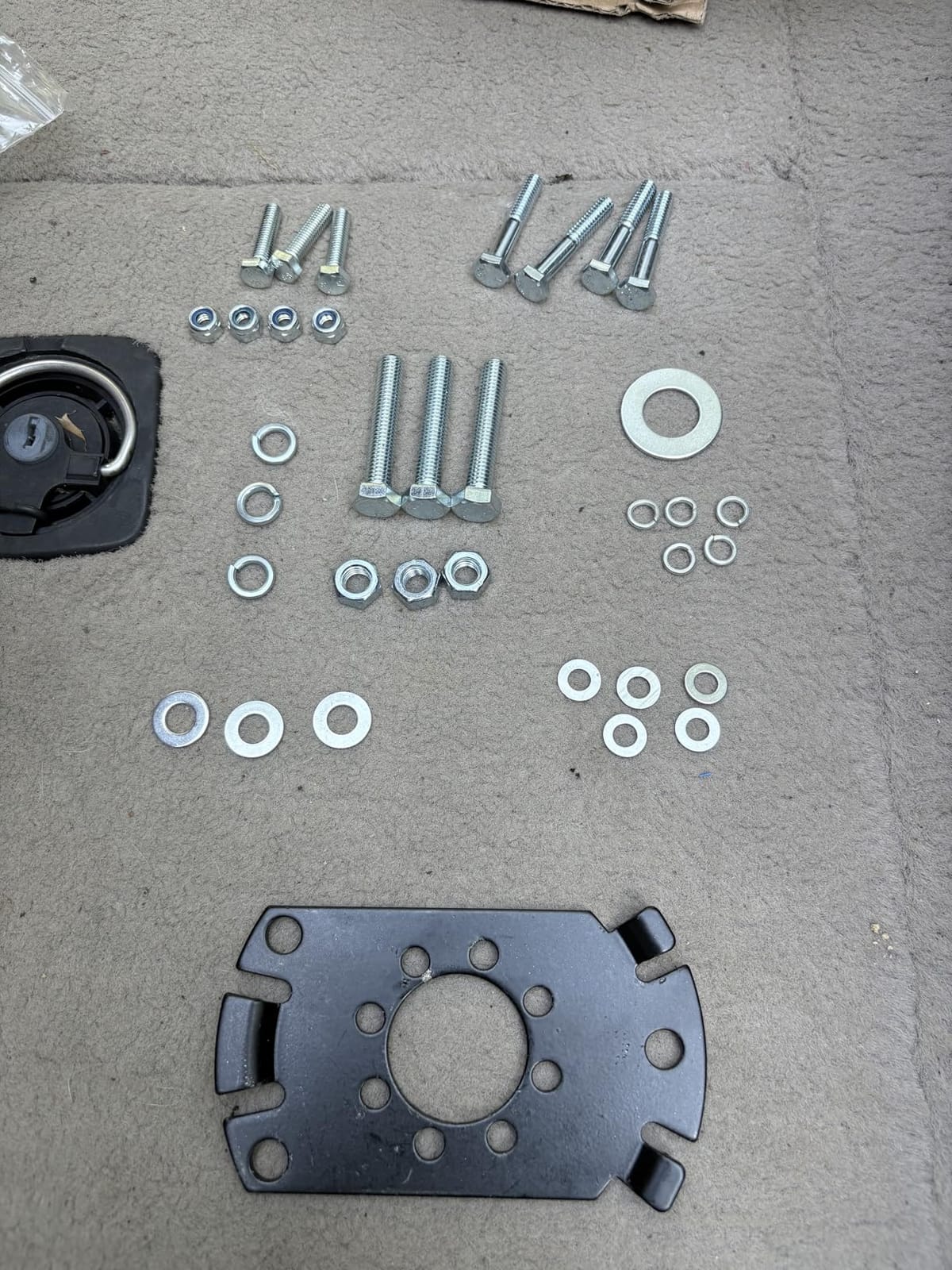
If you have an older runabout or fishing boat whose factory cable has gone stiff and crunchy, this kit gives you a complete refresh in a single box. You get a 10-foot marine steering cable with a standard 3/4-inch tapered shaft, a swivel helmet, a 13.5-inch wheel, a 90-degree bezel kit, and the mounting hardware. The flat steering cable design feels firmer and more accurate than typical rotary cables, which is what most reviewers highlight.
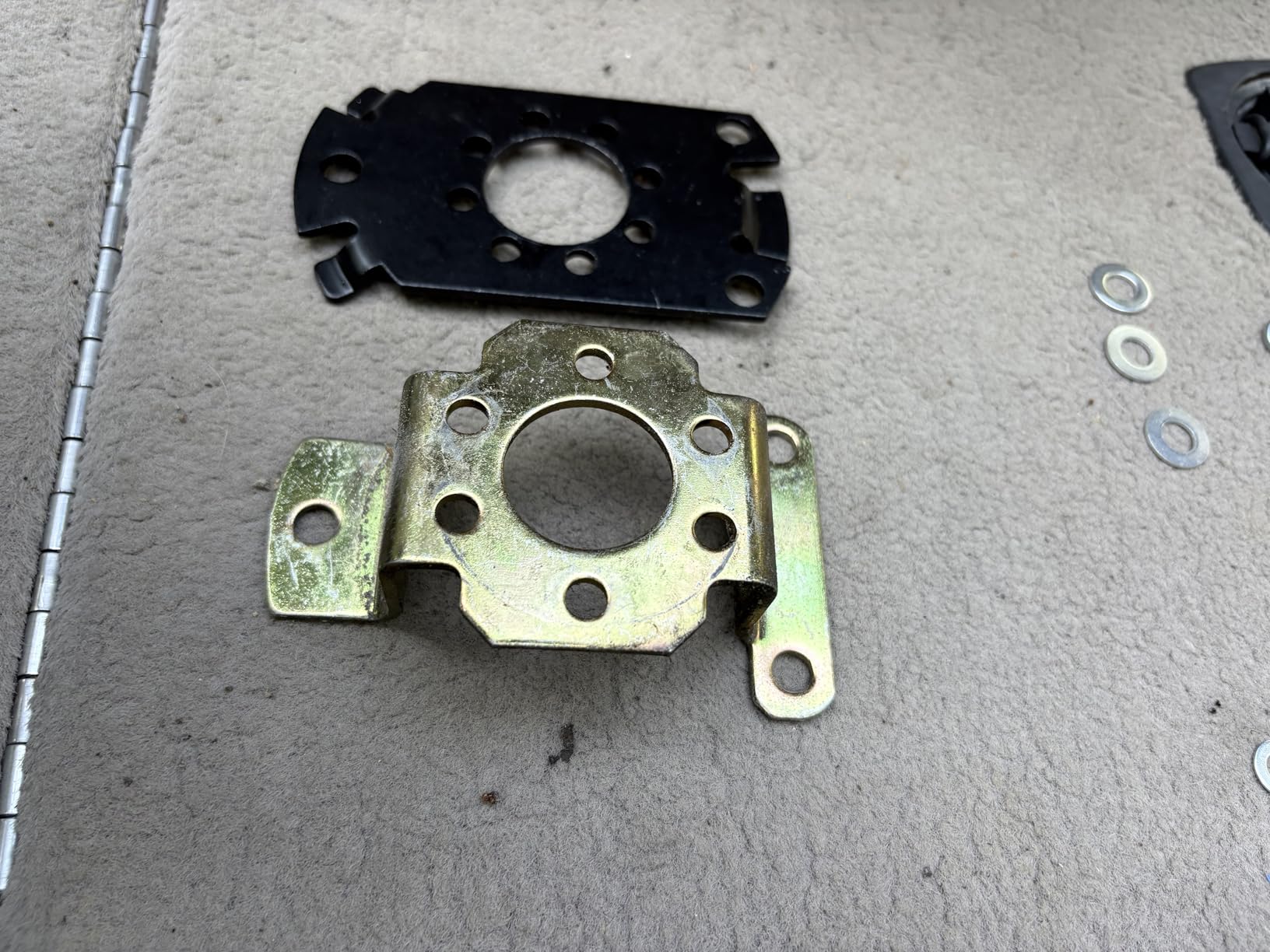
Install is bolt-on. You mount the helm at the dash, run the cable to the engine, attach the tapered shaft, and tighten the hardware. Most owners finish in an afternoon. Cable lengths from 10 to 16 feet cover most hull sizes, and the rust-proof alloy rotary helm stands up to saltwater if you rinse it after each outing.
Be aware that this is a mechanical cable system, so steering effort is higher than any of the hydraulic kits above, and it cannot be paired with an autopilot. A few owners report slight play in the steering after install, which is common on mechanical cables and usually settles once the cable breaks in.
For whom this Bestauto mechanical kit is best
Owners of older boats up to about 90 HP whose existing mechanical cable has failed or stiffened and who want a complete, affordable steering refresh without moving to hydraulic. Vintage aluminum boats and small runabouts are the strongest fit.
For whom this Bestauto mechanical kit is less ideal
Boaters who want hydraulic effort reduction, autopilot capability, or steering on engines above 90 HP. For those needs, move up to the SeaStar BayStar, VEVOR, or Winibo kits above.
5. SeaStar HC5345-3 Front-Mount Cylinder — Best Premium Upgrade Cylinder
Dometic SeaStar Outboard Steering Cylinder, HC5345-3, Front Mount
- OEM-quality cylinder with proprietary seal system
- Supports twin and triple outboard setups
- Positionable stainless ORB fittings
- ABYC and ISO marine certified
- Up to 350 HP rating
- Requires significantly more hydraulic oil than expected during fill/bleed
- Not recommended for boats exceeding 75 mph or running surface-piercing props
If you already have a SeaStar helm pump and hoses and are stepping up to a bigger outboard or adding a second engine, the SeaStar HC5345-3 front-mount cylinder is the OEM upgrade you should buy. It is the same cylinder SeaStar installs at the factory on premium center consoles and Mercury Verado rigs, which is why it carries the highest average rating among cylinders in this guide.
The HC5345-3 is a front-mount design with positionable stainless-steel ORB fittings, which makes hose routing on a crowded transom far easier than older fixed-port cylinders. The proprietary sealing system resists compression set in harsh marine environments, so the cylinder holds pressure year after year even with constant sun and salt exposure. Independent engine tilt is supported, which is critical for twin and triple outboard installations where the engines need to trim separately.
Fitment is direct on 2013 and newer Mercury Verado 200 models and on most modern four-stroke outboards up to 350 HP. ABYC and ISO certification means it meets the same marine safety standards as the original equipment, which matters for insurance surveys and resale documentation.
The one practical heads-up from owners is that this cylinder holds more hydraulic oil than smaller units, so plan on extra fluid for the bleed step. It is also not rated for boats running above 75 mph or with surface-piercing props, where a heavier-duty cylinder is required.
For whom this SeaStar HC5345-3 is best
Boaters who already own a SeaStar helm and are upgrading to a bigger outboard, anyone building a twin or triple outboard setup, and owners of Mercury Verado or other premium four-stroke outboards who want a certified OEM replacement. This is the cylinder I reach for when the answer to “what is the best outboard hydraulic steering system” is “the one SeaStar installs at the factory.”
For whom this SeaStar HC5345-3 is less ideal
Boats under 150 HP that do not need this much cylinder, and high-speed boats above 75 mph with surface-piercing props. If you are building a complete system from scratch, the BayStar HK4200A-3 kit above is a better starting point.
6. Quicksilver Power Trim & Steering Fluid — Best Essential Fluid
- Universal hydraulic fluid mixes with all marine steering fluids
- Protects seals hoses and prevents foaming
- #1 best-seller in Power Steering Fluids category
- Trusted OEM-style fluid for outboards and sterndrives
- Not for use in electric power steering systems
No roundup of the best hydraulic steering systems is complete without the fluid you bleed into it. Quicksilver Power Trim & Steering Fluid is the OEM-style 32 oz bottle I keep on the workbench because it works in every marine hydraulic system I have touched and is widely available at every chandlery.
The formula is a universal marine hydraulic fluid that mixes cleanly with other fluids, so you can top off a system that already has SeaStar fluid in it without worrying about separation. It protects seals and hoses, resists foaming, and fights oxidation and corrosion, which matters because the fluid in a steering system runs hot during summer cruising.
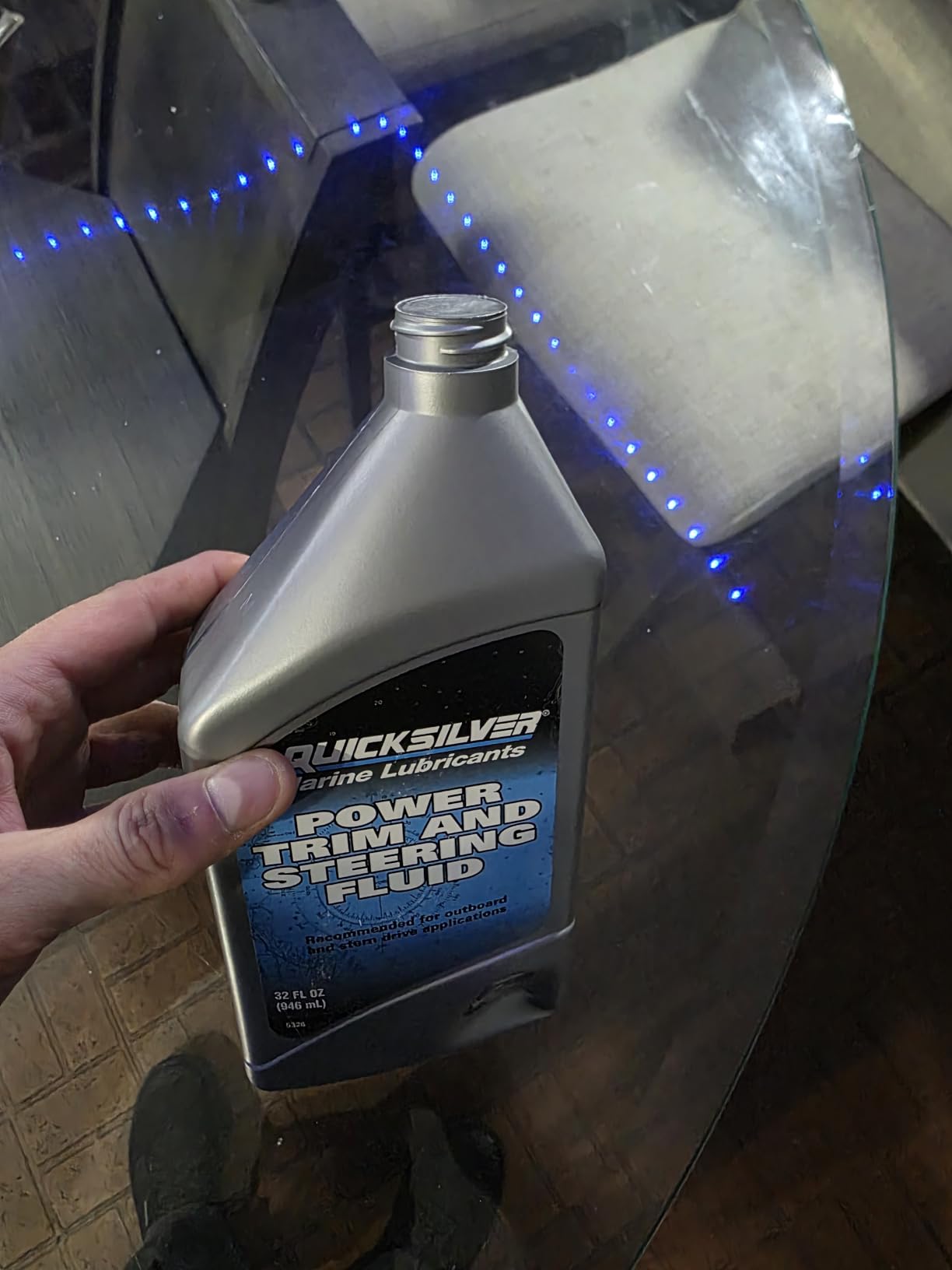
The single consistent note from reviewers is that this is not approved for electric power steering systems, which is fine because none of the kits in this roundup use electric power steering. For traditional hydraulic helm pumps and cylinders, this is the bottle I buy by the case.
For whom this Quicksilver fluid is best
Every boater who owns or has just installed a hydraulic steering system. Keep one bottle on the boat for top-offs and a second in the garage for the next bleed.
For whom this Quicksilver fluid is less ideal
Electric power steering setups, which require a different fluid. Anyone running a traditional hydraulic helm or cylinder can use this without hesitation.
How to Choose the Right Hydraulic Steering System for Your Boat
Choosing among the best hydraulic steering systems comes down to four decisions: horsepower, boat type, balanced versus unbalanced cylinder, and how much install work you want to do yourself. Get these right and the rest of the buying decision falls into place.
Match the kit to your outboard’s horsepower. Small outboards up to 90 HP do well with a VEVOR-style complete kit. Mid-range outboards between 90 and 150 HP are the sweet spot for the SeaStar BayStar HK4200A-3 and the Winibo ZA0300. Above 150 HP you should move to a SeaStar PRO front-mount cylinder or a heavy-duty BayStar Plus system, and twin or triple outboard setups need a tie-bar to keep engines synchronized.
Match the system to your boat type. Bass boats almost universally run SeaStar PRO or BayStar, which is why the brand has been the Bassmaster Classic choice since 1994. Pontoon boats benefit hugely from hydraulic steering and any of the kits above will feel like night and day over cable. Center consoles and offshore boats typically pair a SeaStar helm with a front-mount cylinder like the HC5345-3. Twin outboards need a tie-bar cylinder and a high-flow helm.
Pick a balanced cylinder if you ever want an autopilot. A balanced cylinder has equal piston area on both sides and is the only type that works with marine autopilots from Garmin, Simrad, and Raymarine. If there is any chance you will add a pilot within the next few years, spend the extra now and save the cost of a cylinder swap later. The SeaStar BayStar and SeaStar HC5345-3 in this roundup both qualify.
Decide between DIY and professional install. Most owners in the forums rate a hydraulic retrofit as a moderate weekend job with two people. The hardest step is bleeding the system, which is why kits with a built-in check valve and fill port (like the VEVOR) make the job easier. If you are uncomfortable with helm pump mounting, transom hose routing, or fluid bleeding, a marine shop will typically quote a half-day labor rate and complete the job in a single afternoon.
Plan for the total installed cost, not just the kit price. Beyond the kit itself, plan on hydraulic fluid (Quicksilver or SeaStar), optional braided hose replacement for reduced steering effort, and any dash-mounting bezel or wheel adapter you may need. Owners who skip these add-ons end up making two trips to the chandlery, so build them into your budget upfront.
Installation and Bleeding: What to Expect
A typical hydraulic steering install takes a full day for a first-timer and a half day for someone who has done it before. You will mount the helm at the dash, run the hoses to the transom, attach the cylinder to the engine bracket, fill the system, and bleed the air out of the lines. The mechanical part is straightforward. The bleeding step is where most DIY projects stall.
Bleeding matters because any air trapped in the lines makes the steering feel soft and unresponsive. The classic two-person bleed has one person at the wheel slowly turning port-starboard while the second person opens and closes the bleed valves at the cylinder to purge air. Newer kits with a built-in check valve and fill port simplify this into a one-person job in many cases. Whichever kit you buy, follow the printed sequence and refill the helm reservoir as fluid drops.
Common mistakes I have seen on forum threads include reversing the port and starboard hose connections (so the engine turns the wrong way), over-tightening the ORB fittings and cracking the cylinder, and skipping the final fluid top-off after the first run. None of these are catastrophic, but all of them can be avoided by reading the manual cover to cover before you start and by testing the steering at the dock before you leave the ramp.
One last tip from r/boating veterans: keep a small bottle of Quicksilver Power Trim and Steering Fluid on the boat after install. Hydraulic systems lose a small amount of fluid over the season, and a quick top-off at the ramp prevents a soft-steering surprise the next time you launch.
Frequently Asked Questions
What are the downsides of hydraulic power steering on a boat?
Hydraulic power steering adds more parts than a mechanical system, including a helm pump, hoses, cylinder, and fluid that must be checked and occasionally topped off. Installation is more involved because the system must be bled of air, and a leak in any line or fitting will quickly degrade steering feel. Repairs are also more expensive than a simple cable swap.
Is VEVOR hydraulic steering any good?
VEVOR hydraulic steering kits are a strong value pick for outboards up to 90 HP. Owners consistently report dramatic steering-effort reduction, complete kit contents, and good saltwater corrosion resistance. The main trade-offs are more turns lock-to-lock than SeaStar and occasional quality-control issues on hose fittings.
What are common problems with hydraulic steering systems on boats?
The most common hydraulic steering problems are air in the lines causing soft or spongy steering, leaks at the hose fittings or cylinder seals, and fluid contamination from metal shavings during install. Bleeding the system after any hose disconnection and flushing the lines before the final fill prevents most of these issues.
What is the best outboard hydraulic steering system?
For most single-outboard boats up to 150 HP, the SeaStar BayStar HK4200A-3 is the best complete hydraulic steering kit thanks to its balanced cylinder, autopilot-ready foundation, and reputation at resale. Above 150 HP or for twin-outboard setups, pair a SeaStar helm with the SeaStar HC5345-3 front-mount cylinder.
Which brand of hydraulic steering is best for a boat?
SeaStar Solutions is the most recognized marine hydraulic steering brand and the choice of bass boats and center consoles since the Bassmaster Classic era. Uflex is the strongest European alternative with a reputation for long-lasting seals, and VEVOR and Winibo lead the value tier for budget-conscious boaters.
How much does it cost to install hydraulic steering on a boat?
A complete hydraulic steering kit for a single outboard up to 150 HP ranges from a value-tier VEVOR kit up to a higher-end SeaStar BayStar, with premium SeaStar PRO systems running above that. Professional installation by a marine shop typically adds several hundred in labor for a one-day job.
Final Verdict
The best hydraulic steering system for most single-outboard boats up to 150 HP is the SeaStar BayStar HK4200A-3, and that is the kit I keep recommending to friends and family. It is the most complete package, the strongest brand recognition at resale, and the safest foundation if you ever want to add an autopilot.
If you are running a smaller outboard up to 90 HP and want the strongest value, the VEVOR 90HP kit delivers hydraulic feel at a fraction of the cost of the premium brands. For 150 HP on a tighter budget, the Winibo ZA0300 with its two-way lock valve is the smartest play. Owners of older boats who only need a cable refresh should look at the Bestauto mechanical kit, and any SeaStar helm should be paired with the HC5345-3 cylinder when stepping up to 350 HP or twin outboards. Whatever you choose, keep a bottle of Quicksilver hydraulic fluid on the boat and bleed the system properly the first time. That is the recipe that has worked for me across 2026, and it is what every owner on the forums will tell you too.