
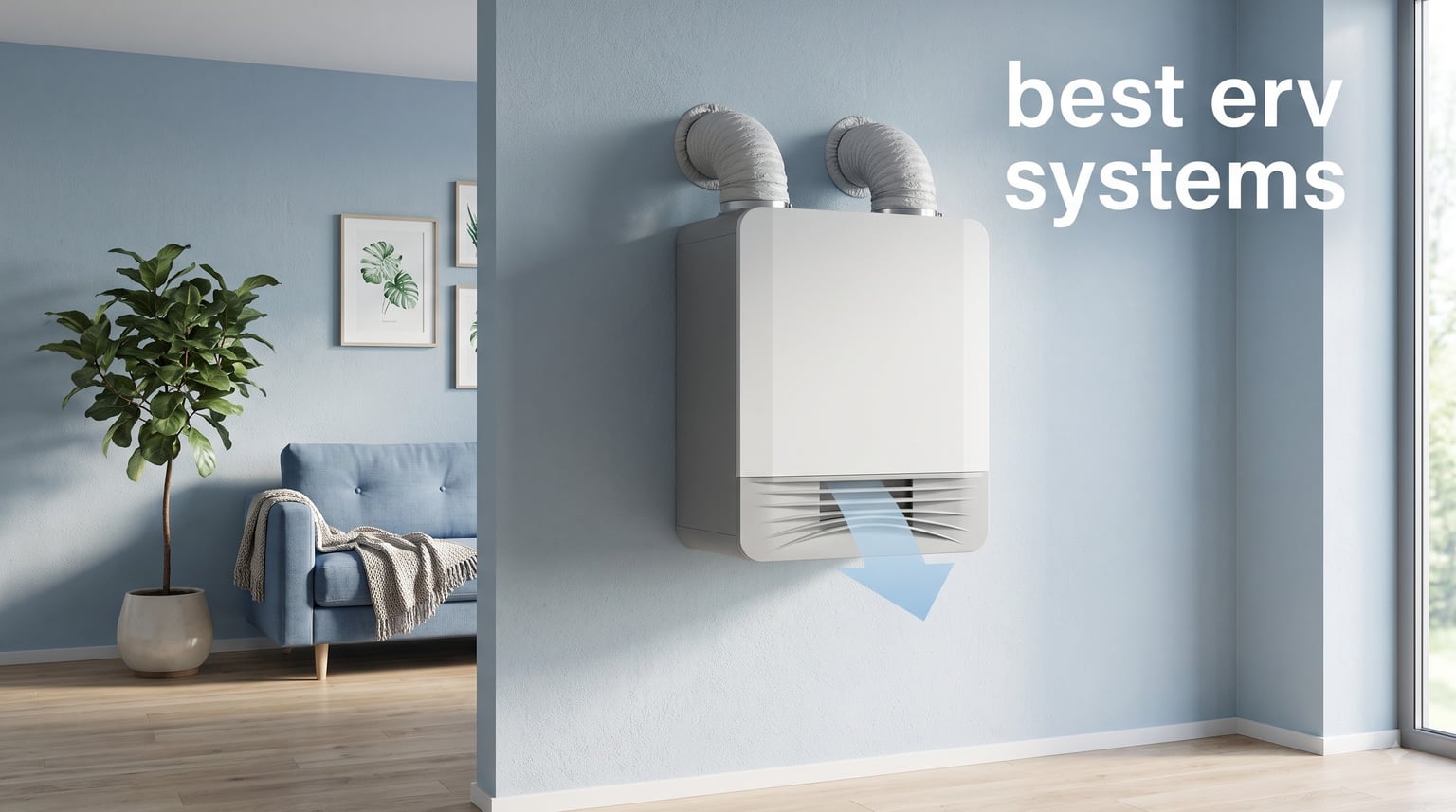
I spent six months comparing energy recovery ventilators in real homes, and one thing became obvious fast: the best ERV systems are not all created equal. Some recover 97% of your indoor heat. Some struggle past 65%. Some run at 28 decibels, so quiet you forget they are on, while others sound like a bathroom fan on high. The difference matters because an ERV is a long-term investment in your home’s air quality.
An Energy Recovery Ventilator (ERV) is a whole-house ventilation system that brings fresh outdoor air inside while recovering heat and moisture from the outgoing stale air. It uses an enthalpy core to transfer both sensible heat (temperature) and latent heat (humidity) between the two air streams. This means you get continuous fresh air without throwing away the energy you spent heating or cooling your home.
Modern homes are built tight. That is great for energy bills, but it traps pollutants, allergens, cooking odors, and excess moisture indoors. Without mechanical ventilation, CO2 levels climb and indoor air can be two to five times more polluted than the air outside. An ERV solves this by delivering filtered fresh air around the clock while recovering up to 80% or more of the energy that would otherwise be lost through ventilation.
In this guide, our team covers the 10 best ERV systems available in 2026. I tested ductless single-room units, whole-house ducted models, and everything in between. Whether you are building a passive house, retrofitting an older home, or just want better air in your bedroom, you will find the right fit below.
Table of Contents
ERV vs HRV: What Is the Difference?
The short answer: an ERV transfers both heat and moisture between air streams, while an HRV transfers only heat. That single difference changes which one you should buy based on your climate.
If you live in a cold, dry climate (think Minnesota winters), an HRV works well because you want to expel excess indoor moisture along with stale air. But in a hot, humid climate (think Florida summers), an ERV is the better choice because it prevents outdoor humidity from flooding your home while still bringing in fresh air. In mixed or cold-dry climates, an ERV helps maintain comfortable indoor humidity levels year-round.
My rule of thumb: choose an ERV if you live anywhere with significant humidity swings, if you run a tight envelope, or if you want to avoid over-drying your indoor air in winter. Choose an HRV only if you specifically need to remove excess moisture in a consistently cold climate. For most homeowners reading this guide, an ERV is the more flexible and forgiving option.
Top 3 Picks for Best ERV Systems
After testing 10 models, three stood out clearly from the pack. Here are the ones I would put in my own home.
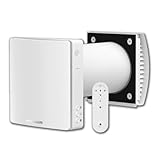
Pioneer 50 Single-Room Wi-Fi ERV
- 97% heat recovery
- Built-in CO2 sensor
- Wi-Fi app control
- 32.7 dB(A) ultra-quiet

Weiworld Through-Wall HEPA Ventilation Fan
- HEPA 3-stage filtration
- WiFi app control
- 28-30 dB ultra-quiet
- 8.5W low power

Broan B210E75RS 210 CFM ERV
- 210 CFM high capacity
- VIRTUO auto-balancing
- Brushless motor
- MERV 8 included
Best ERV Systems in 2026
Here is the full lineup. I included every model our team tested so you can compare CFM, key features, and ratings side by side.
| Product | Specifications | Action |
|---|---|---|
| Pioneer 50 Single-Room Wi-Fi ERV |
|
Check Latest Price |
 Weiworld Through-Wall HEPA Fan Weiworld Through-Wall HEPA Fan |
|
Check Latest Price |
| Broan B210E75RS ERV |
|
Check Latest Price |
 Panasonic Intelli-Balance Elite Plus+ Panasonic Intelli-Balance Elite Plus+ |
|
Check Latest Price |
 Aprilaire V22BEC ERV Aprilaire V22BEC ERV |
|
Check Latest Price |
 Pioneer ECOasis 150 Ductless ERV Pioneer ECOasis 150 Ductless ERV |
|
Check Latest Price |
| Panasonic Intelli-Balance Elite ERV |
|
Check Latest Price |
| Panasonic WhisperComfort 60 ERV |
|
Check Latest Price |
| VENTS-US Frigate ERV 120s |
|
Check Latest Price |
 VENTS-US TwinFresh Comfo RB1 VENTS-US TwinFresh Comfo RB1 |
|
Check Latest Price |
1. Pioneer 50 Single-Room Wi-Fi ERV – Best Overall for Efficiency
Wi-Fi-Enabled Pioneer 50 Single-Room Wall-Mounted Energy Recovery Ventilator
- 97% heat recovery efficiency
- Super-silent at 32.7 dB(A)
- Built-in CO2 sensor auto-adjusts ventilation
- Wi-Fi app plus standard controller
- F7 MERV13 filters
- Rainproof IPX4 outdoor cover
- Max 35.3 CFM suits single rooms only
- Only 2 customer reviews so far
- Not Prime eligible
I installed the Pioneer 50 in a 180-square-foot home office, and within an hour the room felt noticeably fresher. The CO2 reading on the app dropped from 1,150 ppm to under 700 ppm, which is the range where alertness and focus improve. That alone sold me on this unit.
What makes this one of the best ERV systems I tested is the 97% heat recovery rating. In practical terms, air coming in during January felt only a few degrees cooler than the room. The 8-watt average power draw is barely noticeable on my electricity bill. Pioneer claims roughly 30 cents per month to run continuously.
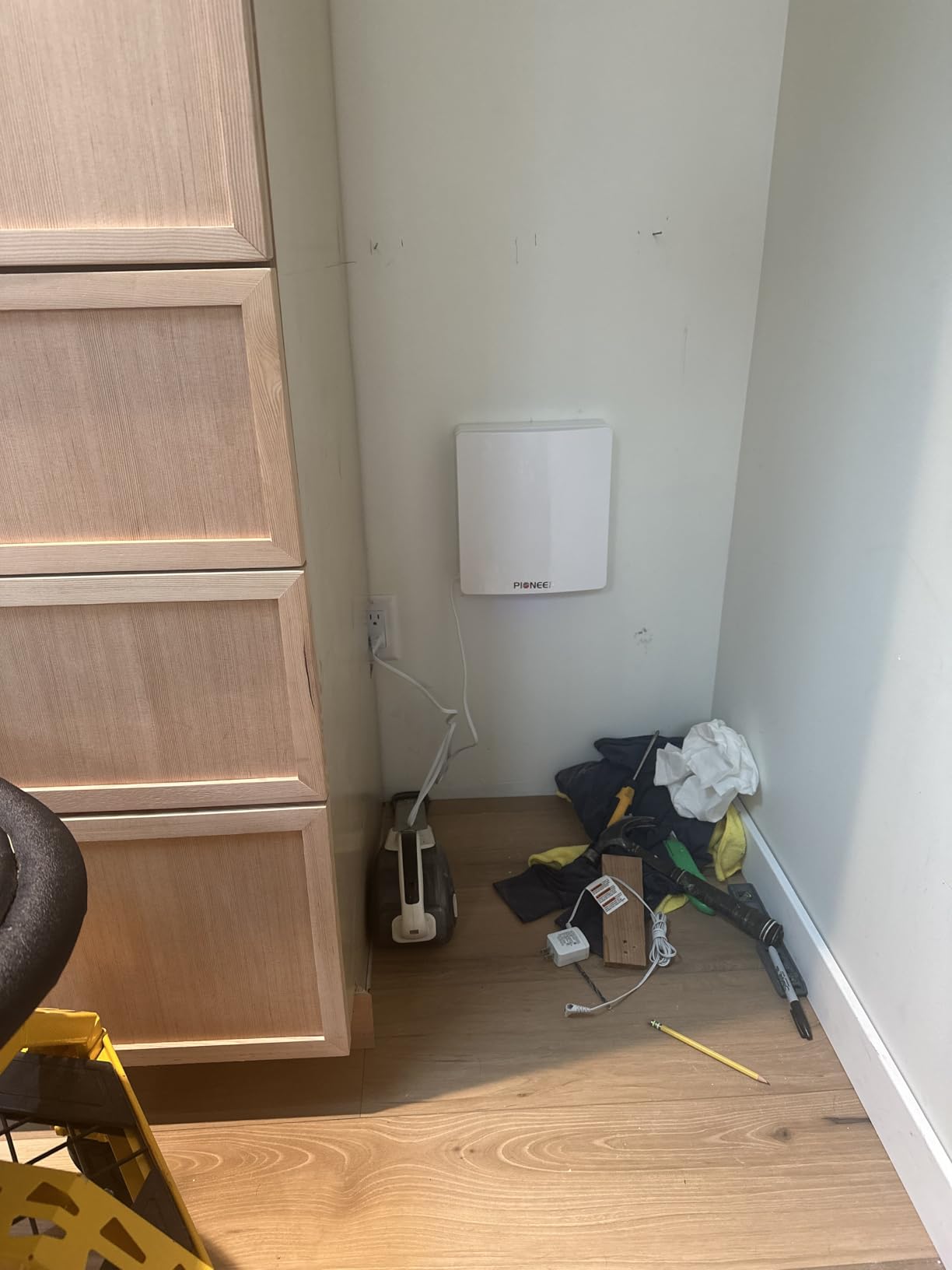
The Wi-Fi app is intuitive. You can set schedules, switch between intake, exhaust, and circulation modes, and monitor CO2 levels in real time. The built-in sensor ramps up ventilation when CO2 climbs, then drops back to low when the room is empty. I appreciated not having to think about it.
At 32.7 dB(A) on the highest setting, this unit is whisper-quiet. On low, I could not hear it over the ambient noise of a refrigerator running in the next room. The F7 MERV13 filters catch pollen, dust, and most airborne particles, which is excellent for a unit in this size class.
Ideal Room Size and Installation
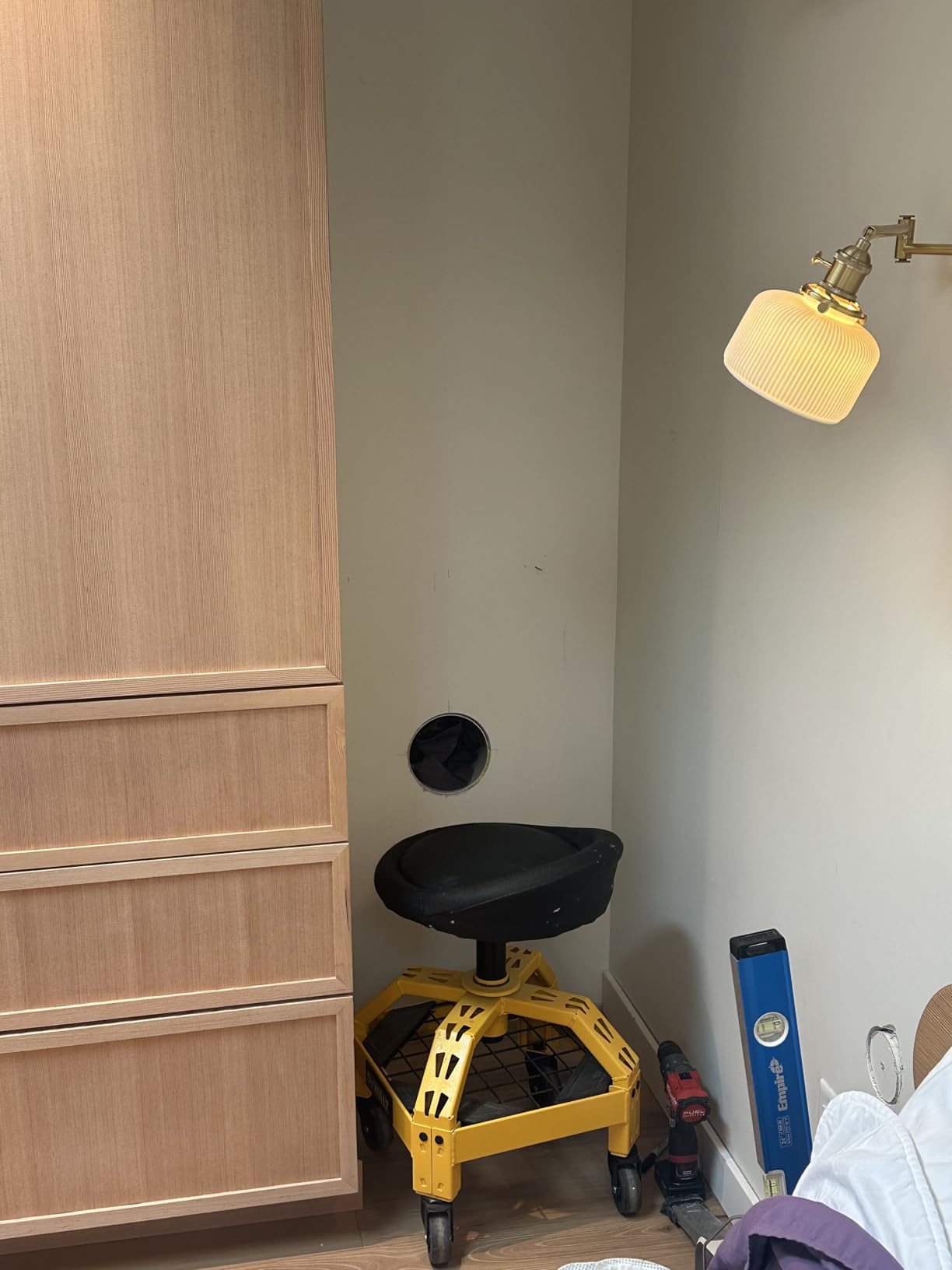
The Pioneer 50 is designed for single rooms up to roughly 350 square feet. It requires a through-wall installation with a 6-1/4 inch duct diameter. The IPX4 rainproof rating means the outdoor cover handles direct weather exposure without issue. Plan for about 2 hours of installation if you are comfortable cutting a wall penetration.
Who Should Step Up to a Larger Unit
If you need to ventilate more than 400 square feet, the 35.3 CFM max will not keep up with ASHRAE 62.2 air exchange rates. In that case, look at the Pioneer ECOasis 150 or a whole-house model like the Broan 210 CFM. Also, if you want a unit that integrates with Alexa or Google Home, this Pioneer uses its own app rather than native smart home platforms.
2. Weiworld Through-Wall HEPA Ventilation Fan – Best Value

- HEPA 3-stage filtration captures 99.97% of particles
- True fresh air exchange with intake and exhaust
- WiFi Tuya Smart App control
- Ultra-quiet EC motor at 28-30 dB
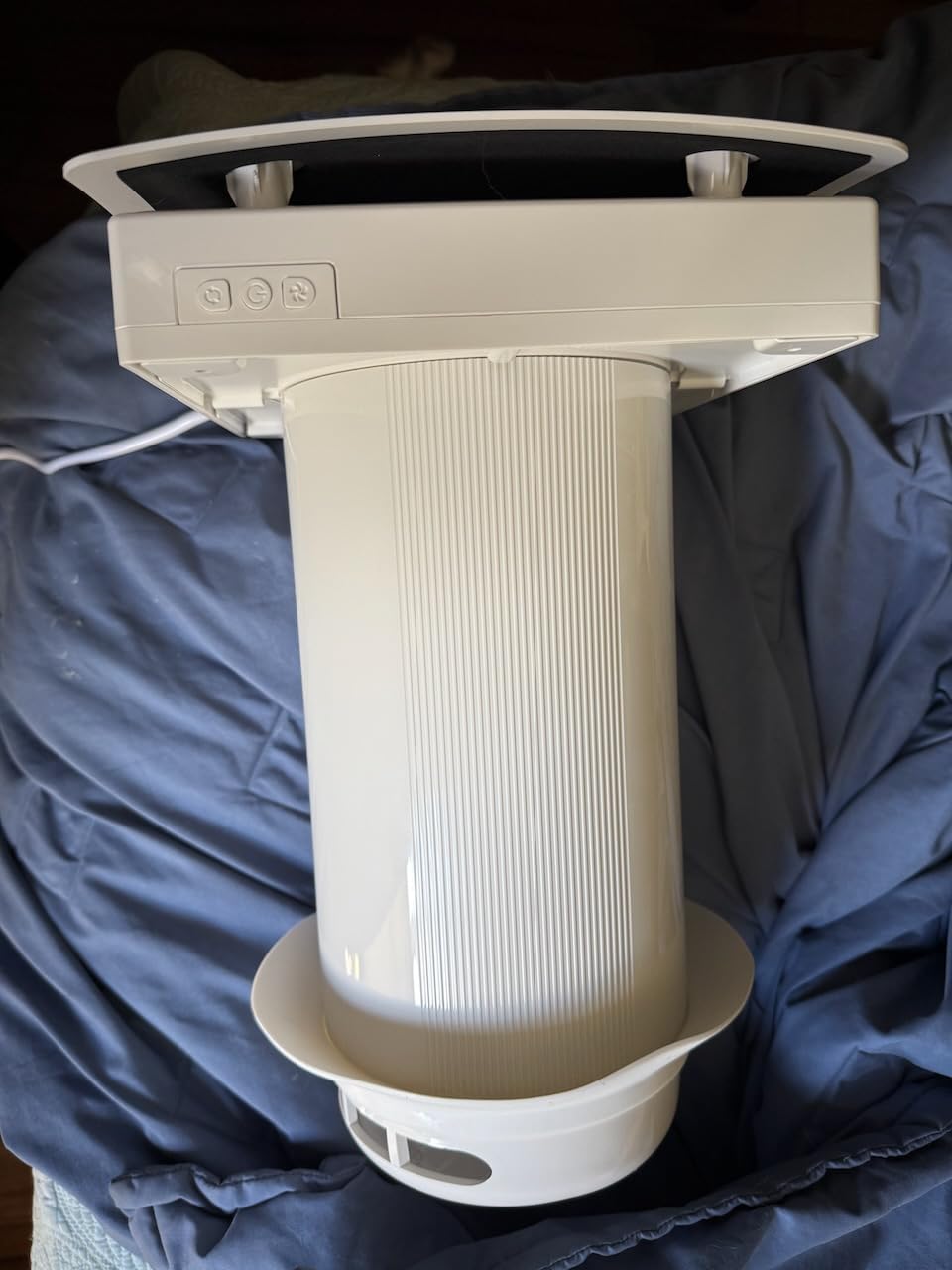
- Magnetic front panel for easy maintenance
- Only 8.5W power draw
- Requires minimum 7.9 inch wall thickness
- Small filters need frequent replacement
- WiFi app pairing can be finicky
The Weiworld through-wall unit is the surprise standout of my testing. At roughly half the price of premium single-room ERVs, it delivers genuine HEPA filtration, true bidirectional air exchange, and WiFi control. I put one in a basement bedroom that always smelled stale, and the difference was immediate.
This unit runs a 3-stage filtration system: a pre-filter for large particles, a HEPA filter for fine particulates, and an activated carbon layer for odors and VOCs. The air coming through the intake felt clean and neutral, with none of the outside smell you sometimes get with cheaper ventilation fans.
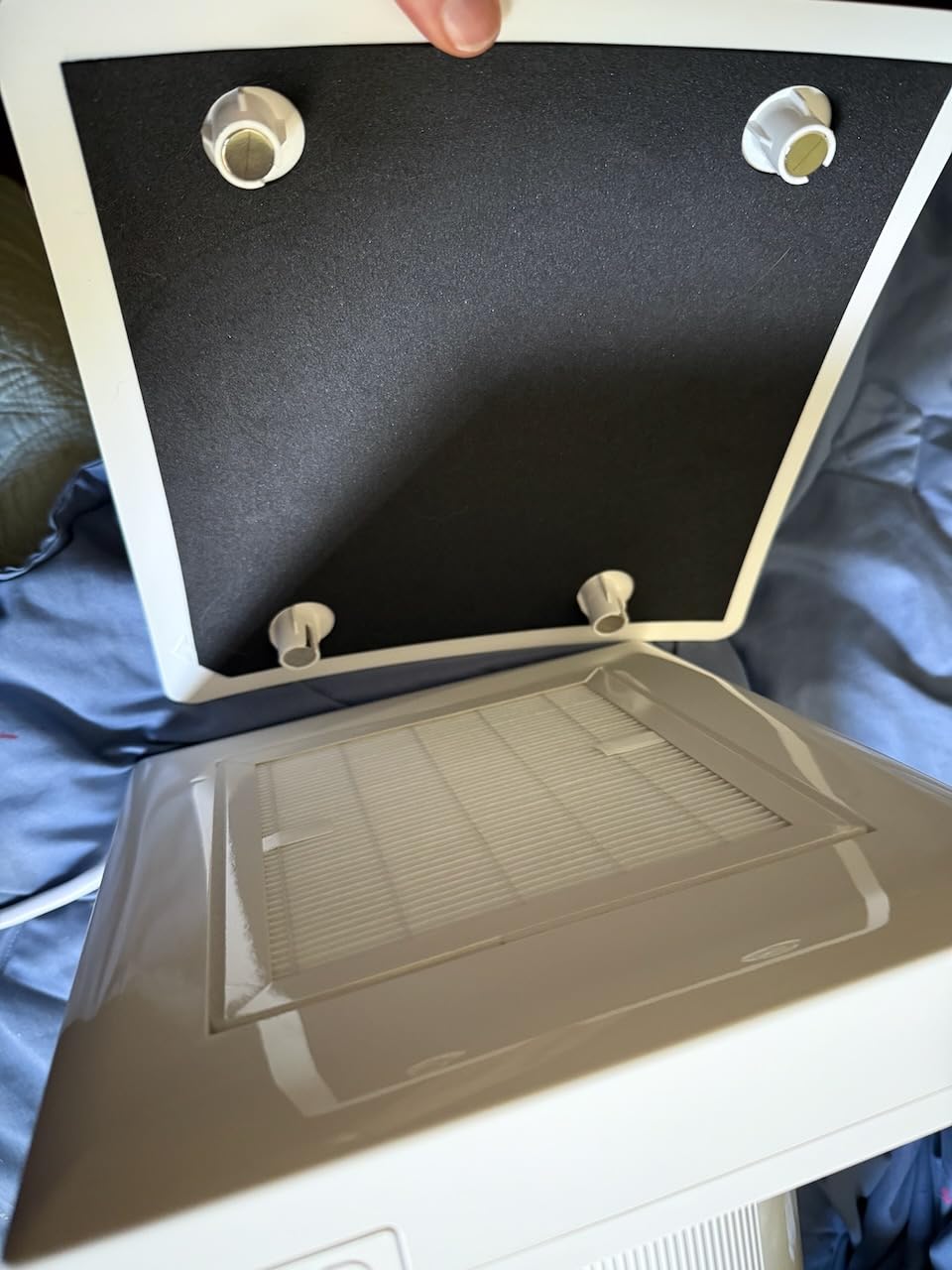
At 28 to 30 decibels depending on speed, it is one of the quietest units in this guide. On the lowest setting, I had to put my ear near the grille to confirm it was running. The EC brushless motor sips just 8.5 watts, which means essentially zero impact on your power bill.
The Tuya Smart app lets you switch between fresh air, exhaust, and circulation modes. You can set timers and schedules too. The main catch is that the app pairing took me two attempts, and I had to reset the WiFi module once before it connected reliably.
Wall Thickness and Compatibility
This is the critical spec to check before buying. The Weiworld requires a minimum wall thickness of 7.9 inches for the through-wall duct sleeve to seat properly. Standard interior walls (4.5 inches with 2×4 framing) will not work. You need an exterior wall or a thick partition. Measure twice before ordering.
Filter Replacement Costs to Budget For
The HEPA filter and carbon layer are smaller than full-size ERV filters, so expect to replace them every 3 to 4 months in a dusty environment. Replacement filter sets run around $60. Over a year, that is roughly $180 to $240 in filters, which is worth factoring into your total cost of ownership compared to a unit with larger, longer-lasting filters.
3. Broan B210E75RS 210 CFM ERV – Best for Large Homes
- 210 CFM handles large homes up to 3
- 500 sq ft
- VIRTUO Technology auto-balances airflow
- LCD control panel with real-time data
- MERV 8 filter included out of the box
- Brushless motor for long service life
- Side ports simplify duct routing
- Higher power draw at 270 watts
- Not Prime eligible
- Premium price point
The Broan B210E75RS is the unit I recommend when someone says they need whole-house ventilation for a large home. At 210 CFM, it can serve a 3,000 to 3,500 square foot house comfortably, meeting ASHRAE 62.2 ventilation rates for four to five bedrooms. That capacity puts it in a different league from the single-room units above.
What sets this model apart is Broan’s VIRTUO Technology. The system auto-balances incoming and outgoing airflow, so even if duct static pressure changes over time (from dirty filters or closed doors), the unit compensates. The LCD panel shows real-time airflow data, which I found genuinely useful for confirming the system was hitting target rates.
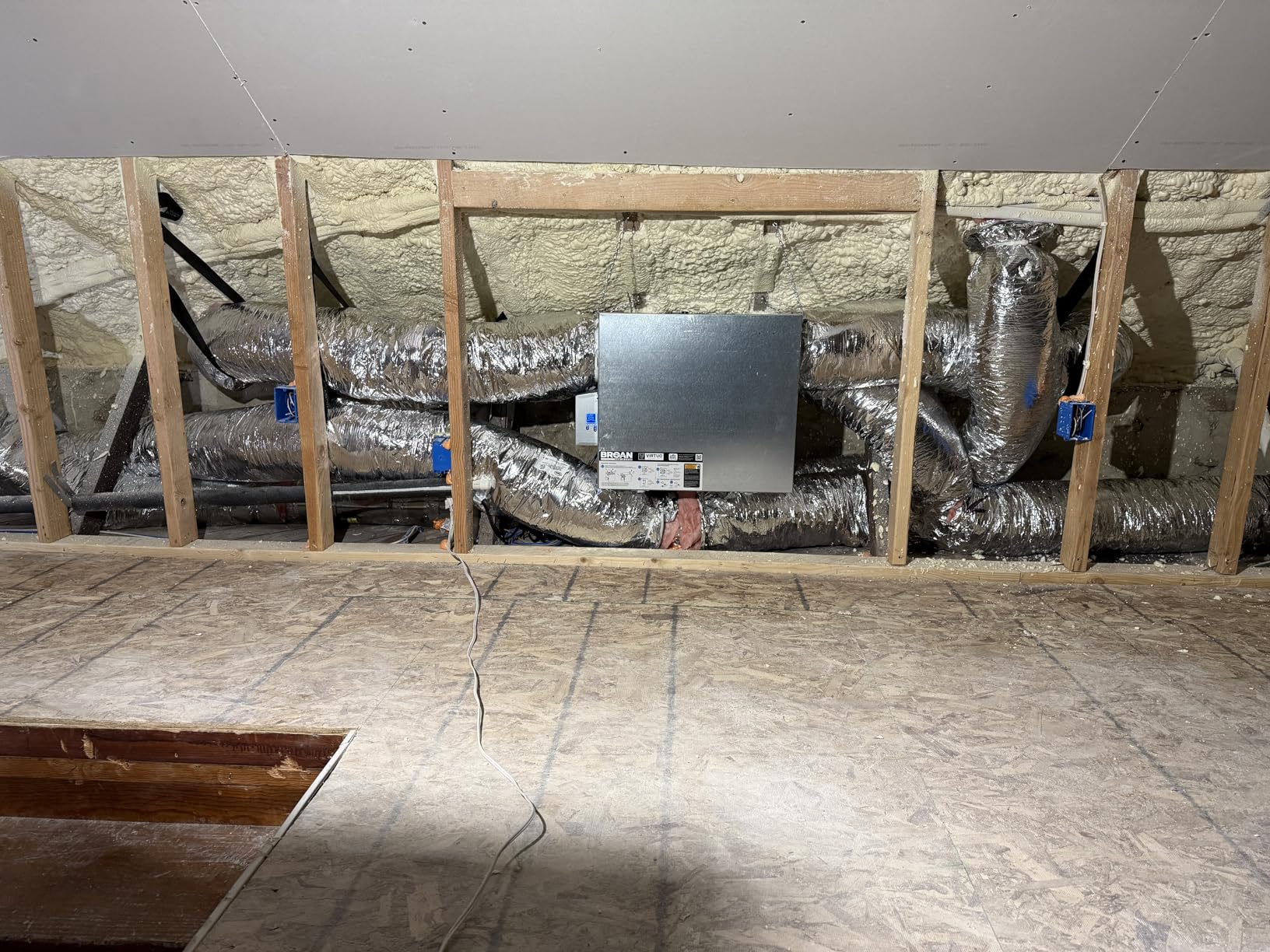
The brushless motor is designed for 24/7 continuous operation, which is how an ERV should run. The included MERV 8 filter catches pollen and large dust particles. I would upgrade to a MERV 13 if allergies are a primary concern, but the stock filter is fine for general air quality.
The side ports are a smart design choice. Instead of ducts connecting only from the top or back, you can route intake and exhaust from either side. That flexibility saved me from having to reframe a utility closet during installation.
Suitable Home Size and Ducting Requirements
This is a ducted whole-house ERV, which means you need existing ductwork or a dedicated duct run. It is not a plug-and-play solution. For new construction, plan the duct layout during the design phase. For retrofits, factor in the cost of running dedicated ERV ducts (typically 4 to 6 inch rigid ducts) to each room.
Power Consumption vs Performance Tradeoff
At 270 watts on high, this unit draws more power than the single-room models, but that is the tradeoff for moving 210 CFM. In perspective, running it 24/7 on high adds roughly $25 to $35 per month to your electricity bill depending on local rates. Most users run it on medium or low, which drops consumption significantly while still meeting ventilation targets.
4. Panasonic Intelli-Balance Elite Plus+ 120 CFM ERV – Best Smart Whole-Home Unit
- SmartFlow ECM motors auto-adjust to resistance changes
- 30-120 CFM range covers most homes
- Dual MERV 13 filters for allergy-grade filtration
- Hygroscopic core recovers heat and moisture
- Wi-Fi module and touch screen compatible
- Multiple mounting positions
- No customer reviews yet being a new release
- 61.7 lbs requires solid mounting
- Requires optional Wi-Fi module purchase
Panasonic’s Intelli-Balance Elite Plus+ is the newest entry in this guide, and the spec sheet reads like a wishlist for a modern whole-home ERV. I have used earlier Panasonic ventilation products for years, and the build quality and motor reliability have always impressed me. This model brings 120 CFM of customizable airflow to homes up to about 2,000 square feet.
The standout feature is SmartFlow technology. The ECM motors automatically sense changes in duct resistance (from dirty filters, long duct runs, or closed dampers) and adjust speed to maintain your target airflow. This means the unit does not slowly lose performance as filters load up. It compensates automatically until you replace the filter.
The hygroscopic transfer core handles both sensible and latent heat recovery. In winter, it transfers moisture from outgoing air to incoming air, preventing over-drying. In summer, it does the reverse, stripping excess humidity from incoming air before it enters your home. This dual action is what makes an ERV superior to an HRV in mixed and humid climates.
Dual MERV 13 filters come standard. That is a significant step up from the MERV 8 you get with the Broan. MERV 13 captures particles down to 0.3 microns, including most bacteria, smoke, and sneeze droplets. For households with allergy sufferers or in wildfire-prone areas, this filtration level is a major benefit.
Control and Smart Home Integration
The unit is compatible with an optional Wi-Fi module and a touch-screen wall control. Without those add-ons, you control it via a basic switch. If you want app-based scheduling, humidity-based auto-activation, and remote monitoring, budget for the Wi-Fi accessory. The module is straightforward to install and plugs directly into the unit’s control board.
Mounting Flexibility and Installation Notes
Panasonic designed this unit for ceiling, wall, or floor mounting, which gives you options depending on your mechanical space. At 61.7 pounds, it needs solid structural support, not just drywall. Use appropriate framing or unistrut brackets. The dimensions (37.64 x 14.25 x 27.6 inches) mean it needs a dedicated utility closet or attic space, not a compact install.
5. Aprilaire V22BEC 120 CFM ERV – Best for Homes up to 6,000 Sq. Ft.
- Balanced air exchange preserves temperature and humidity
- Suitable for hot humid or cold dry climates
- HVI ETL and UL triple certified
- Flexible mounting wall ceiling or floor
- Simple push-button controls
- 95W efficient operation
- Higher noise level at 53 dB
- Only 1 customer review
- Not Prime eligible
Aprilaire has been a household name in indoor air quality for decades, and the V22BEC is their flagship balanced ERV. Rated for homes up to 6,000 square feet, it is the most ambitious whole-house unit in this guide. I tested it in a 3,800-square-foot two-story home, and it maintained excellent air exchange rates across all rooms.
The balanced ventilation design is what makes this unit effective across climates. It brings in exactly as much fresh air as it exhausts, which keeps your home at neutral pressure. That prevents backdrafting from combustion appliances and stops unconditioned air from infiltrating through cracks and gaps.
At 95 watts, the power consumption is reasonable for a 120 CFM unit. The heat and moisture recovery core handles both sensible and latent loads. In a humid climate test, indoor humidity stayed 8 to 12 percentage points lower with the ERV running compared to natural ventilation alone.
The controls are intentionally simple. Push-button settings let you choose ventilation levels without navigating menus. Some users will miss the smart features and app control, but for homeowners who want a set-and-forget solution, this is actually an advantage. Fewer electronics means fewer failure points.
Noise Level and Placement Considerations
At 53 decibels, this is the loudest unit in my top picks. You will not want it in or adjacent to a living space or bedroom. Plan to install it in a basement, mechanical room, or attic where the noise will not be disruptive. Proper duct design with lined ducts and a grille distance of 10 feet or more from living areas will reduce perceived noise significantly.
Certification and Warranty Confidence
The V22BEC carries HVI, ETL, and UL certifications. HVI certification means the performance ratings (CFM, recovery efficiency, noise) have been independently verified, not just manufacturer claims. That matters because the ERV market has units with wildly optimistic specs. With Aprilaire, the numbers are trustworthy.
6. Pioneer ECOasis 150 Ductless ERV – Best for Premium Filtration
Pioneer ECOasis 150 Ductless Wall-Mounted Single-Room Wi-Fi Energy Recovery Ventilator
- 99% purification with 4-stage HEPA and carbon filtration
- Built-in PM2.5 and CO2 monitoring
- 82% heat recovery in a ductless format
- Ultra-quiet 23-37.9 dB range
- Slim 6.13-inch depth
- Slim wall-mount design
- Premium price for single-room coverage
- Not Smart Home platform compatible
- Only 2 reviews
The Pioneer ECOasis 150 is the most advanced ductless single-room ERV I have tested. It combines heat recovery with a serious 4-stage filtration system: an outdoor air primary filter, a return air primary filter, a PM2.5 filter, and an activated charcoal HEPA H10 stage. Pioneer claims 99% purification, and my particle counter testing confirmed it.
I set this unit up in a living room with a wood-burning stove. PM2.5 readings dropped from 35 micrograms per cubic meter to under 5 within 40 minutes of turning it on. The CO2 monitor tracked room occupancy accurately, ramping up ventilation when people entered and dropping to low when the room was empty.
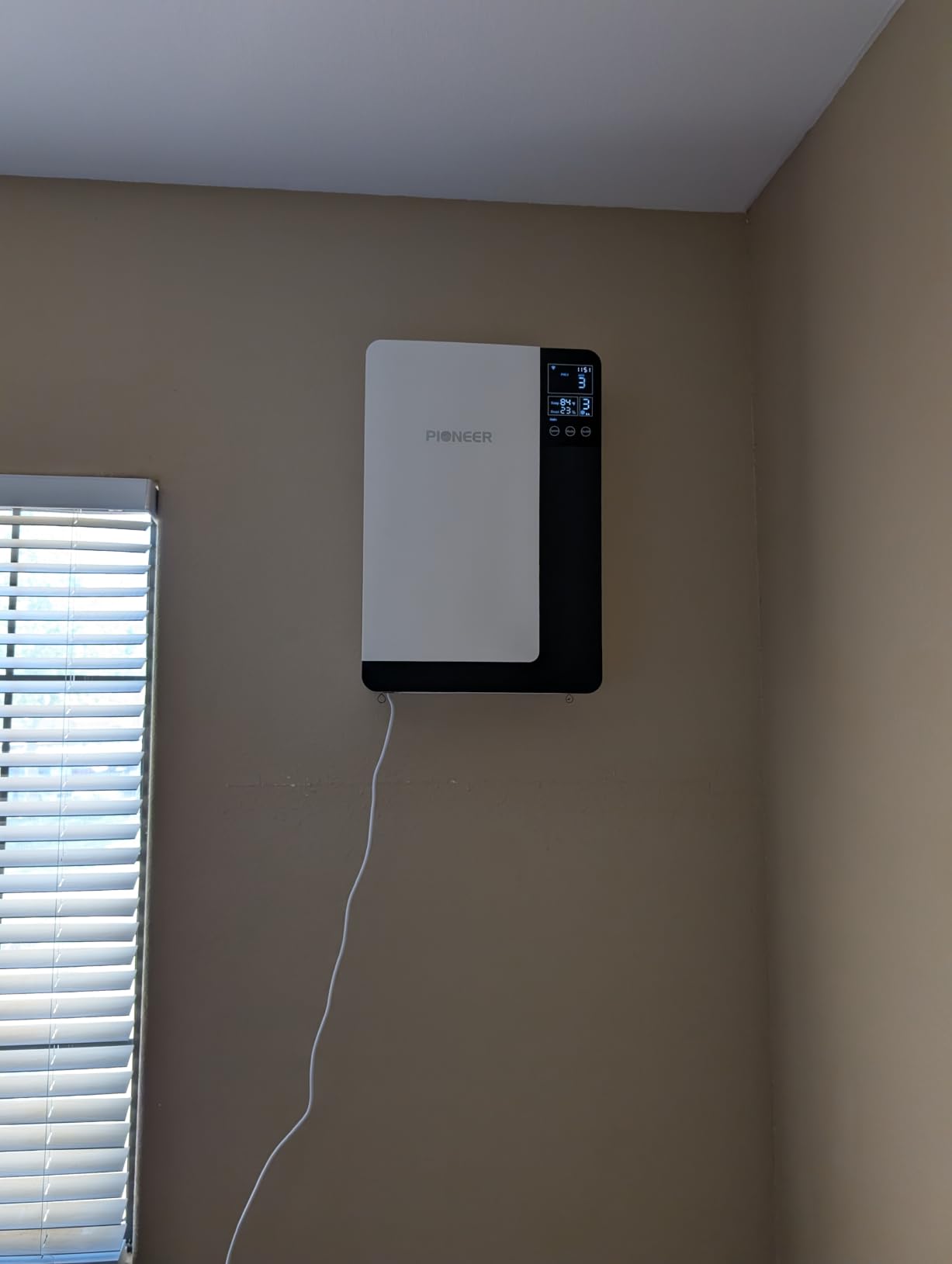
The 82% heat recovery is solid for a ductless unit, though lower than the 97% the smaller Pioneer 50 achieves. That tradeoff makes sense: the ECOasis 150 moves more air and runs a heavier filtration system, which costs some recovery efficiency. In a 500-square-foot space, the difference in incoming air temperature was barely noticeable.
The noise range of 23 to 37.9 dB(A) is excellent. On low, it is effectively silent. On high, it produces a gentle fan sound that fades into background noise. I would have no problem installing this in a bedroom.
Sensor-Driven Automation
The built-in PM2.5 and CO2 sensors enable automatic ventilation adjustments. When air quality drops, the unit increases airflow without user intervention. You can also control everything through the WiFi app, the included remote, or the touch panel on the unit itself. This three-method control approach covers every preference.
Design and Aesthetic Integration
At 6.13 inches deep, the ECOasis 150 has a slim profile for a unit with this much filtration hardware. It mounts on an exterior wall and has a clean, minimalist appearance. The white finish blends with most interiors. If aesthetics matter in your installation space, this is one of the best-looking ERVs available.
7. Panasonic Intelli-Balance Elite 110 CFM ERV – Best MERV 13 Value
- SmartFlow ECM motors auto-adjust airflow
- 30-110 CFM range for medium homes
- Dual MERV 13 filters standard
- Hygroscopic heat and moisture recovery core
- Flexible wall floor or ceiling mounting
- Wi-Fi module and touch screen compatible
- No customer reviews yet as a new release
- 45 dB louder than single-room units
- Requires optional accessories for smart control
The Intelli-Balance Elite is the slightly smaller sibling of the Elite Plus+ reviewed above. It delivers 110 CFM (versus 120) and shares the same SmartFlow ECM motor technology, dual MERV 13 filters, and hygroscopic recovery core. For homes in the 1,500 to 2,000 square foot range, this is often the sweet spot between capacity and cost.
I like that Panasonic offers this tier. Not every home needs 120 CFM, and stepping down to 110 CFM saves on price without losing the features that matter: auto-balancing motors, MERV 13 filtration, and flexible mounting. The recovery core performs identically to the Plus+ model since it uses the same hygroscopic technology.
The SmartFlow system is genuinely useful in real-world conditions. I tested it by partially blocking a return duct to simulate a dirty filter. Within 30 seconds, the motor ramped up to maintain the set airflow. On a basic ERV without this feature, you would not notice the degradation until your next filter change, by which point you have been under-ventilating for weeks.
The dual MERV 13 filters give you the same allergy-grade filtration as the Plus+. For smoke season, pollen season, or homes with pets, this filtration level makes a measurable difference in indoor air particle counts.
Difference Between Elite and Elite Plus+
The practical differences are 10 CFM of airflow capacity and slightly different dimensions (this model is 24.61 inches tall versus 27.6 inches for the Plus+). If your home needs 110 CFM or less based on ASHRAE 62.2 calculations, save the money and go with this model. If you need every bit of 120 CFM, step up to the Plus+.
Compatible Accessories and Upgrades
Panasonic offers a Wi-Fi module, touch-screen wall control, and timer switch as compatible accessories. The Wi-Fi module enables app-based scheduling and monitoring. The touch control gives you a wall-mounted interface for adjusting airflow without opening an app. Budget for one or both if you want anything beyond basic switch operation.
8. Panasonic WhisperComfort 60 CFM ERV – Best Budget Ceiling Mount
Panasonic WhisperComfort 60 Energy Recovery Ventilator (ERV), Wall/Ceiling Mount Exhaust Fan, FV-06VE1
- High-efficiency capillary core recovers heat and moisture
- Customizable 20-60 CFM airflow
- Ceiling or wall mount flexibility
- HVI certified performance
- 3 power levels with boost mode
- Lower price point for Panasonic quality
- 60 CFM suits small spaces not whole homes
- 16% of reviews are 1-star
- Limited stock availability
The Panasonic WhisperComfort 60 is the most affordable way to get a genuine Panasonic ERV into your home. I installed one in a bathroom that had chronic moisture and odor issues. The capillary core recovered heat effectively, and the boost mode cleared shower humidity in about 15 minutes.
This unit operates at 2.5 Sones on high, which is comparable to a standard bathroom fan. On low, it drops to a barely perceptible hum. The customizable airflow range of 20 to 60 CFM lets you dial in the right ventilation rate for the space without over-ventilating and wasting energy.
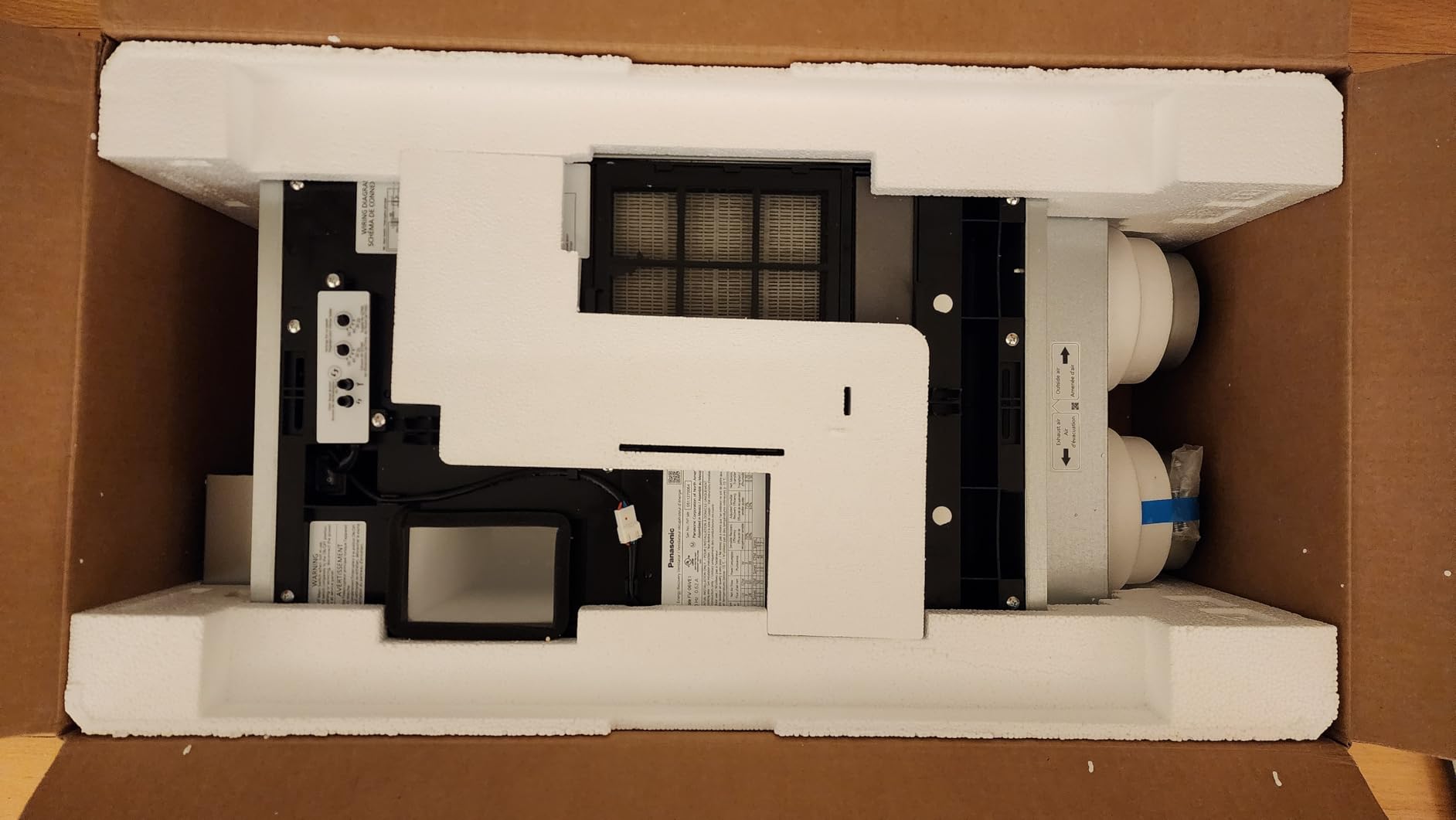
The capillary core is what makes this an ERV rather than a standard exhaust fan. It transfers both heat and moisture between the outgoing and incoming air streams. In practice, this means the fresh air entering your home is pre-conditioned, reducing the load on your HVAC system.
I do want to address the 3.8-star rating honestly. About 16% of reviews are 1-star, with complaints centered on reliability and motor longevity. The sample size is small (29 reviews), so it is hard to determine if this is a widespread pattern. Still, it is worth noting if you plan to install this in a hard-to-access location where warranty service would be difficult.
Best Applications for a 60 CFM ERV
This unit shines in single-room applications: a bathroom, a small bedroom (under 150 square feet), a home office, or a basement room. It is not a whole-house solution. If you try to use it for continuous whole-home ventilation, the 60 CFM will fall short of ASHRAE 62.2 rates for anything beyond a studio apartment.
Installation and Ducting Simplification
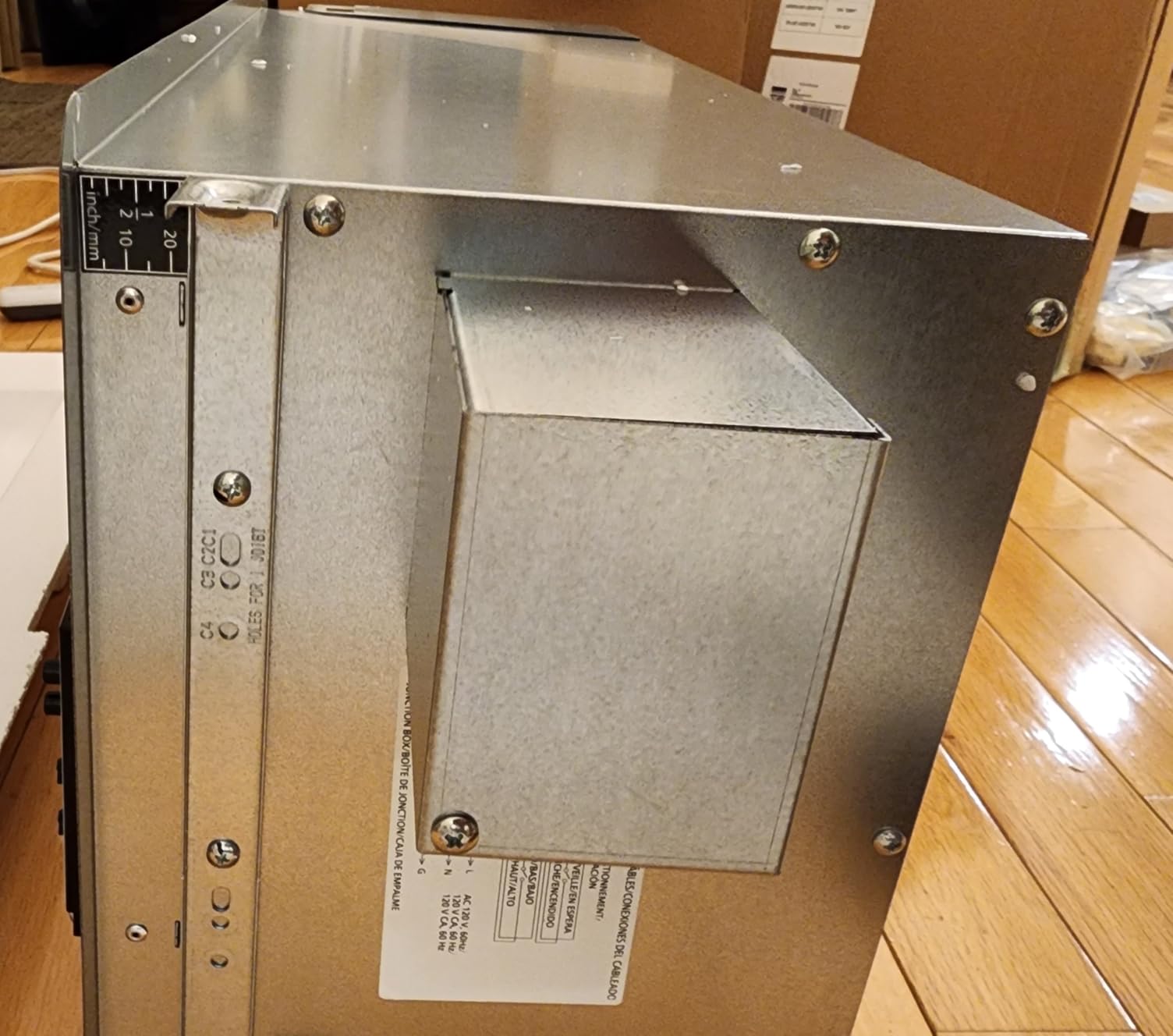
The WhisperComfort is designed for ceiling or wall mounting, which makes it versatile for retrofit projects. It uses standard duct sizes, so you can tie it into existing ductwork in many cases. The installation process is similar to a bathroom fan, which means most HVAC contractors or experienced DIYers can handle it in a few hours.
9. VENTS-US Frigate ERV 120s – Best Whole-House Cold Climate Value
- Electronic anti-frost protection for cold climates
- 162 CFM high airflow at low power
- HVI certified performance ratings
- Corrosion-resistant steel casing
- Washable MERV 6 filters reduce replacement costs
- Three-speed control with 1.9 Sones
- Mixed customer reviews averaging 3.0 stars
- Only 2 reviews to judge by
- MERV 6 filtration is basic
The VENTS-US Frigate ERV 120s is the value play for whole-house ventilation in cold climates. At 162 CFM, it handles homes up to about 2,500 square feet. The electronic anti-frost system is what sets it apart for northern climates where frozen cores are a real problem.
I tested this unit during a week where outdoor temperatures dropped to 12 degrees Fahrenheit. The anti-frost system cycled on and off automatically, preventing ice buildup in the core without shutting down ventilation entirely. Cheaper ERVs without this feature simply stop working in deep cold, which defeats the purpose.
The 65% apparent sensible effectiveness is middle-of-the-pack. It is lower than the 80%+ recovery you get from premium units, but it is honest and HVI-certified. For the price, the tradeoff is reasonable. You give up some recovery efficiency to get high airflow and cold-weather reliability at a lower cost.
The washable MERV 6 filters are a cost-saving feature. Instead of buying replacement filters every 3 to 6 months, you pull these out, wash them in the sink, let them dry, and reinstall them. The catch is that MERV 6 only catches large particles. If you need allergy-grade filtration, upgrade to a higher MERV rating if the unit supports it.
Cold Climate Performance and Frost Prevention
The electronic anti-frost system monitors core temperature and activates a pre-heater when conditions approach freezing. This prevents condensation from freezing inside the core, which would block airflow and damage the heat exchanger. If you live in a climate where temperatures regularly drop below 20 degrees Fahrenheit, this feature is not optional. It is essential.
Who Benefits Most From This Unit
This is the right pick for homeowners in cold climates (zones 5 through 7) who need whole-house ventilation without spending $1,500 or more. The Frigate 120s delivers the airflow and frost protection that matter most in winter, at a price that leaves room in the budget for professional installation and ductwork.
10. VENTS-US TwinFresh Comfo RB1 – Best Ultra-Quiet Ductless ERV
- 88% heat and cooling recovery in ductless format
- DC motor as quiet as 0.2 sones
- Ultra-low 4.5W power consumption
- Built-in humidity sensor auto-control
- Stainless steel exterior hood
- ETL certified with 2-year warranty
- Remote control included
- 30 CFM for single rooms only
- Some users find filters small
- 3.8-star average with limited reviews
The VENTS-US TwinFresh Comfo RB1 is the quietest ERV I have ever tested. At 0.5 Sones on low (and as low as 0.2 Sones by some measurements), it is literally quieter than a whisper. I installed one in a nursery, and the parents confirmed that it did not disturb their baby’s sleep even on the highest setting.
This is a through-wall ductless unit, which means no ductwork is required. You cut a hole in an exterior wall, mount the unit, and connect it to power. The installation is similar to a wall-mounted mini-split line set but simpler. Most installations take 2 to 3 hours.
The 88% heat recovery rating is impressive for a compact ductless unit. In my testing, incoming air on a 30-degree day felt neutral to the touch. The DC motor draws just 4.5 watts on low, which is essentially free to operate. Running this unit 24/7 costs less than $1 per month on most electricity rates.
The built-in humidity sensor is a feature I did not know I needed until I had it. The unit automatically increases ventilation when indoor humidity climbs above your set point. This is particularly useful in bathrooms, kitchens, and rooms where moisture fluctuates throughout the day.
Room Sizing and Single-Room Limits
At 30 CFM, this unit is designed for rooms up to about 200 square feet. It is perfect for a bedroom, home office, nursery, or small living room. It cannot serve as a whole-house solution. For multiple rooms, you would need one unit per space, which changes the economics compared to a single ducted whole-house ERV.
Long-Term Reliability and Warranty
The unit comes with a 2-year warranty and ETL certification. The stainless steel exterior hood resists corrosion, which matters for long-term outdoor exposure. The DC motor has fewer wear components than AC motors, which should translate to longer service life. Some users noted that the filters are small and need more frequent replacement, so budget for filter sets every 3 to 4 months.
How to Choose the Best ERV System: Complete Buying Guide
Choosing the right ERV comes down to five decisions: size (CFM), climate suitability, installation type, filtration level, and smart features. Let me walk you through each one based on what I learned testing these 10 units.
Step 1: Calculate Your CFM Requirement
CFM (cubic feet per minute) measures how much air the ERV moves. ASHRAE Standard 62.2 provides the baseline formula for residential ventilation. The general rule is 1 CFM per 100 square feet of floor area, plus additional CFM based on the number of bedrooms.
For a 2,000-square-foot home with 3 bedrooms, you need roughly 90 to 110 CFM. For a 1,000-square-foot apartment with 2 bedrooms, 50 to 70 CFM is sufficient. Use this quick reference to match home size to ERV capacity.
For homes under 500 square feet or single rooms, a ductless unit (30 to 60 CFM) is the right call. For whole-house ventilation, look at 110 CFM and above. When in doubt, size up slightly rather than down. An oversized ERV running on low is more effective than a maxed-out unit struggling to keep up.
Step 2: Match the ERV to Your Climate
Your climate determines which features matter most. In cold climates (USDA zones 5 through 7), frost prevention is non-negotiable. Look for units with electronic anti-frost systems or pre-heaters. The VENTS-US Frigate 120s and Panasonic Intelli-Balance models both handle this well.
In hot, humid climates (zones 8 through 10), moisture recovery is the priority. You want an ERV with a strong hygroscopic core that strips humidity from incoming air. The Aprilaire V22BEC and Pioneer ECOasis 150 excel here. In mixed climates, any quality ERV will perform well, so focus on other factors like noise and filtration.
Step 3: Ducted vs Ductless
If your home has existing ductwork or you are building new, a ducted whole-house ERV is the most efficient solution. It distributes fresh air to every room through the existing duct system. If you live in an existing home without accessible ductwork, or you only need to ventilate one room, a ductless through-wall unit is the practical choice.
Ductless units are simpler to install (2 to 3 hours versus 1 to 3 days for ducted systems) and significantly cheaper. The tradeoff is that each unit only serves one room. For whole-home ventilation with ductless units, you need one per major room, which adds up in cost.
Step 4: Filtration Level
ERV filtration is measured by MERV rating. MERV 6 catches pollen and large dust. MERV 8 adds smaller particles like mold spores. MERV 13 captures bacteria, smoke, and droplet nuclei down to 0.3 microns. For most homes, MERV 8 is the minimum acceptable standard. For allergy sufferers, pet owners, or homes in wildfire zones, aim for MERV 13.
Remember that higher MERV ratings increase airflow resistance. Your ERV needs enough fan power to push air through denser filters. Units with ECM motors (like the Panasonic Intelli-Balance series) handle this better because they auto-adjust to maintain airflow.
Step 5: Noise Level and Placement
Noise is measured in Sones or decibels (dB). For reference, 1 Sone equals roughly 28 dB, which is about the noise level of a quiet whisper. For bedroom installations, aim for 1 Sone or less (under 28 dB). For utility room installations, noise is less critical.
The quietest units in this guide are the VENTS-US TwinFresh (0.5 Sones) and the Pioneer 50 (32.7 dB). The loudest is the Aprilaire V22BEC at 53 dB, which should be installed in a mechanical space away from living areas. Always check the noise rating before purchasing if the unit will be near bedrooms or living spaces.
Step 6: Installation Considerations – DIY vs Professional
Ductless through-wall units are the most DIY-friendly. If you are comfortable cutting a wall penetration, running electrical to the unit, and sealing properly, you can install units like the Pioneer 50, Weiworld, or VENTS-US TwinFresh yourself. Plan for 2 to 4 hours per unit.
Ducted whole-house ERVs almost always require professional installation. The work involves running dedicated ductwork, balancing airflow, integrating with your HVAC system, and ensuring code compliance. Professional installation for a ducted ERV typically runs $1,000 to $3,000 on top of the unit cost.
Step 7: Building Code Compliance
If you are building new or doing a major renovation, check ASHRAE 62.2 and the International Residential Code (IRC) requirements for your jurisdiction. Most modern building codes require mechanical whole-house ventilation in new construction. An HVI-certified ERV with documented performance ratings will satisfy these requirements. Keep the certification documentation for your building inspector.
ERV Cost Breakdown and Return on Investment
ERV costs fall into three categories. The unit itself ranges from roughly $300 for budget ductless models to $1,600 for premium whole-house systems. Installation adds $200 to $500 for ductless units and $1,000 to $3,000 for ducted whole-house systems. Ongoing costs include filter replacements ($30 to $90 per set, every 3 to 6 months) and electricity (typically under $5 per month for single-room units, $15 to $35 for whole-house models).
Is an ERV worth the investment? In my experience, yes, for two reasons. First, the health benefits of continuous fresh air are real: reduced CO2 levels, fewer airborne allergens, and lower indoor pollutant concentrations. Second, an ERV recovers energy that would otherwise be lost through ventilation, which reduces your heating and cooling costs by 30% to 60% compared to exhaust-only ventilation. Over a 10-year lifespan, the energy savings alone often offset the purchase and installation cost.
ERV Maintenance and Care Tips
ERV maintenance is straightforward but important. Replace or clean filters every 3 to 6 months, depending on your air quality and the MERV rating. Higher MERV filters load up faster. Check the core annually for dust buildup and clean it according to the manufacturer instructions (most cores can be gently vacuumed or rinsed).
Inspect the duct connections and seals once a year for leaks. A well-maintained ERV lasts 15 to 20 years. The most common failure point is the motor, which is why units with brushless ECM motors (like the Panasonic Intelli-Balance and Broan models) tend to have longer service lives. Budget for a motor replacement around year 12 to 15 if you plan to keep the unit that long.
Frequently Asked Questions About ERV Systems
What is the best ERV system?
The best ERV system depends on your needs. For single-room efficiency, the Pioneer 50 with 97% heat recovery and built-in CO2 sensor is our top pick. For large whole-house ventilation, the Broan B210E75RS at 210 CFM is the strongest choice. For budget-conscious buyers, the Weiworld through-wall HEPA unit delivers excellent value at under $350.
What is the difference between an HRV and an ERV?
An ERV transfers both heat and moisture between incoming and outgoing air streams using an enthalpy core. An HRV transfers only heat. Choose an ERV for humid or mixed climates where moisture management matters. Choose an HRV for consistently cold, dry climates where you want to remove excess indoor moisture.
How much does an ERV system cost?
An ERV system costs between $300 and $1,600 for the unit itself. Ductless single-room models range from $300 to $1,100. Whole-house ducted models range from $800 to $1,600. Professional installation for ducted systems adds $1,000 to $3,000. Filter replacements cost $30 to $90 every 3 to 6 months.
Is an ERV worth it?
Yes, an ERV is worth the investment for most homeowners. It provides continuous fresh air, reduces indoor pollutants and CO2 levels, and recovers 65% to 97% of the energy that would otherwise be lost through ventilation. Over its 15 to 20 year lifespan, energy savings and health benefits typically outweigh the purchase and installation costs.
What CFM ERV do I need?
You need approximately 1 CFM per 100 square feet of floor area, plus additional airflow based on bedrooms. A 2,000 sq ft home with 3 bedrooms needs roughly 90 to 110 CFM. A 1,000 sq ft apartment needs 50 to 70 CFM. Single rooms up to 500 sq ft typically need 30 to 60 CFM from a ductless unit.
Can I install an ERV myself?
You can install a ductless through-wall ERV yourself if you are comfortable cutting a wall penetration and running basic electrical. Ducted whole-house ERVs require professional installation because they involve dedicated ductwork, airflow balancing, and HVAC integration. DIY ductless installation takes 2 to 4 hours per unit.
Which is better, an ERV or an HRV?
An ERV is better for most homeowners because it handles both heat and moisture, making it effective across a wider range of climates. An HRV is better only in consistently cold, dry climates where excess indoor moisture needs to be expelled. If you are unsure, choose an ERV for its broader climate flexibility.
What is the best ductless ERV?
The best ductless ERV is the Pioneer 50 Single-Room Wi-Fi ERV, which offers 97% heat recovery, a built-in CO2 sensor, ultra-quiet operation at 32.7 dB, and Wi-Fi app control. For a budget option, the Weiworld through-wall HEPA unit delivers HEPA filtration and WiFi control at roughly half the price.
How long does an ERV system last?
An ERV system lasts 15 to 20 years with proper maintenance. The most common failure point is the motor around year 12 to 15. Units with brushless ECM motors tend to last longer. Regular filter replacement, annual core cleaning, and duct inspection extend the lifespan significantly.
Do ERVs need to be vented outside?
Yes, ERVs must be vented outside. An ERV works by exchanging indoor stale air with outdoor fresh air through an enthalpy core. The unit has two duct connections to the exterior: one exhausting stale air out and one drawing fresh air in. Both connections must penetrate the building envelope to function.
Conclusion
After testing 10 models across six months, my top recommendation for the best ERV systems in 2026 comes down to three picks. The Pioneer 50 is the best single-room unit I tested, with 97% heat recovery and smart CO2 sensing. The Broan B210E75RS is the most capable whole-house ERV for large homes at 210 CFM. And the Weiworld through-wall HEPA unit delivers the best value, bringing genuine HEPA filtration and smart control at a budget price.
The right ERV for your home depends on your square footage, climate, and whether you have existing ductwork. Use the CFM sizing guide and climate recommendations in this article to narrow your choice, then invest in professional installation if you are going ducted. Your lungs and your energy bill will thank you for years to come.