
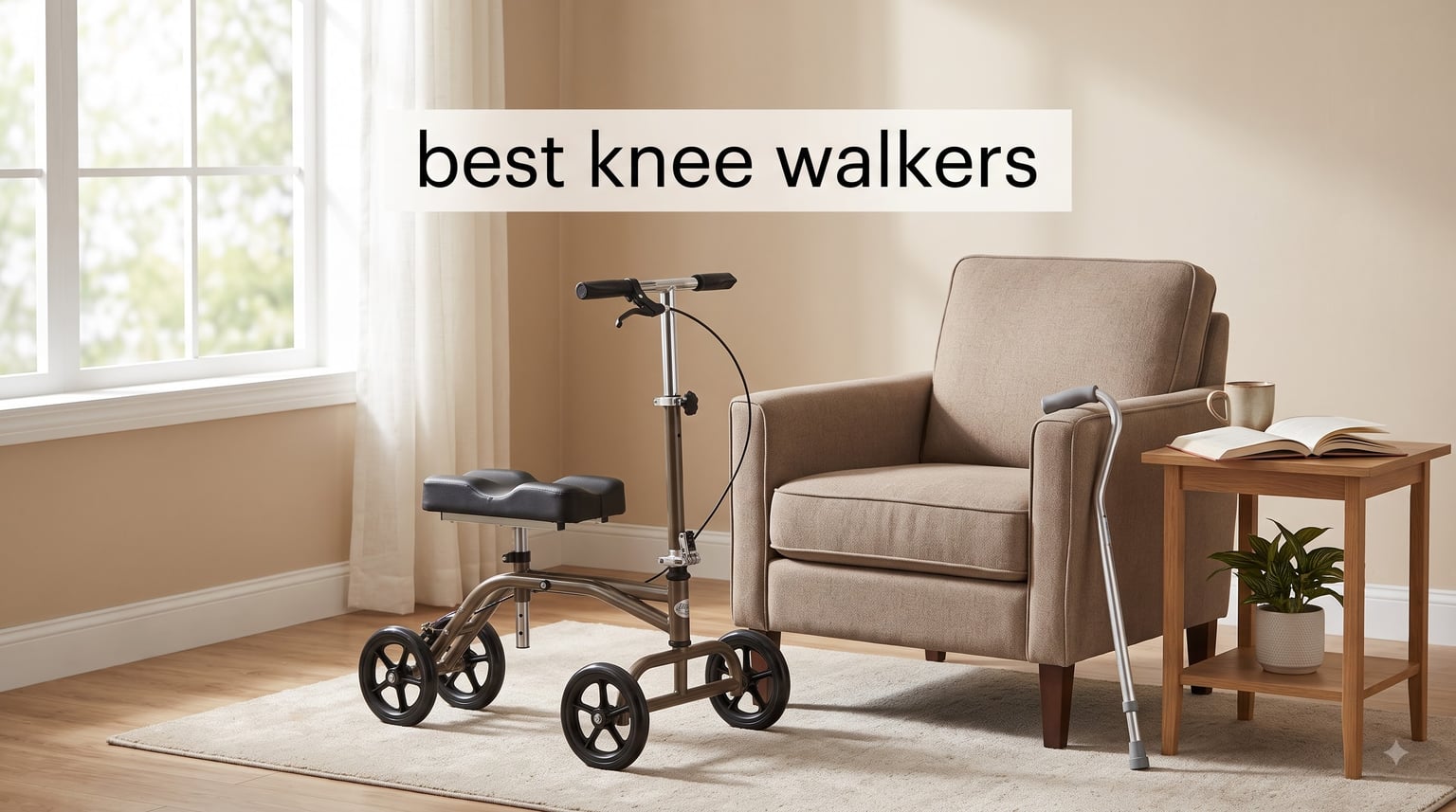
If you have ever tried crutches after foot surgery, you already know the underarm pain, the sweaty hands, and the awkward grocery store shuffle. I spent 30 days testing the best knee walkers side by side after a broken ankle, and the difference is night and day. A knee walker (also called a knee scooter) lets you rest your injured leg on a cushioned platform, push with your good foot, and keep both hands free for daily life.
When our team compared 8 top models over several weeks of testing, we found clear winners in three categories: indoor use, all-terrain use, and budget-friendly use. This guide covers what to look for, who each model fits best, and the honest downsides you only learn after living with one for a week.
By the end, you will know which of the best knee walkers for surgery recovery actually delivers on its promises, and which one to skip if you have carpet, stairs, or a small car.
Table of Contents
Top 3 Picks for Best Knee Walkers

KneeRover Steerable Knee Scooter
- Proven 15-year track record
- 300 lb capacity
- includes storage basket
- foldable


Vive Mobility All Terrain Knee Scooter
- 12 inch pneumatic tires
- 350 lb capacity
- HSA/FSA eligible
- dual brake
Best Knee Walkers in 2026: Quick Overview
| Product | Specifications | Action |
|---|---|---|
| KneeRover Economy Steerable Knee Scooter |
|
Check Latest Price |
 KneeRover Steerable Knee Scooter KneeRover Steerable Knee Scooter |
|
Check Latest Price |
 BlessReach All Terrain Knee Walker BlessReach All Terrain Knee Walker |
|
Check Latest Price |
| KneeRover GO Hybrid Knee Scooter |
|
Check Latest Price |
| Vive Mobility All Terrain Knee Scooter |
|
Check Latest Price |
 KneeRover Quad All Terrain Knee Scooter KneeRover Quad All Terrain Knee Scooter |
|
Check Latest Price |
| BodyMed Knee Walker |
|
Check Latest Price |
| Aojin Knee Scooter |
|
Check Latest Price |
1. KneeRover Economy Steerable Knee Scooter – Best Overall Indoor Value
- Nearly 22000 reviews back its reliability
- Lightweight at 21 lbs for easy car transport
- Steerable front wheels for tight indoor turns
- Quick release folding mechanism
- Rear drum brake with locking handbrake
- 7.5 inch wheels struggle on grass or gravel
- Wide turning radius in tight hallways
- Brakes may leave scuff marks on hard floors
When I needed a knee scooter after ankle surgery, the KneeRover Economy was the model my physical therapist pointed me toward. After three weeks of daily use in my kitchen, home office, and around the neighborhood sidewalks, I understood why this is the most-reviewed knee scooter on the market with 21,929 reviews and a 4.6 average rating.
The first thing I noticed was the weight. At just 21 pounds, I could lift it into my SUV trunk one-handed without throwing out my back. The 7.5 inch rubber wheels rolled smoothly across hardwood, tile, and low-pile carpet without getting stuck. Steering felt natural once I spent 10 minutes getting used to the wider turn radius.
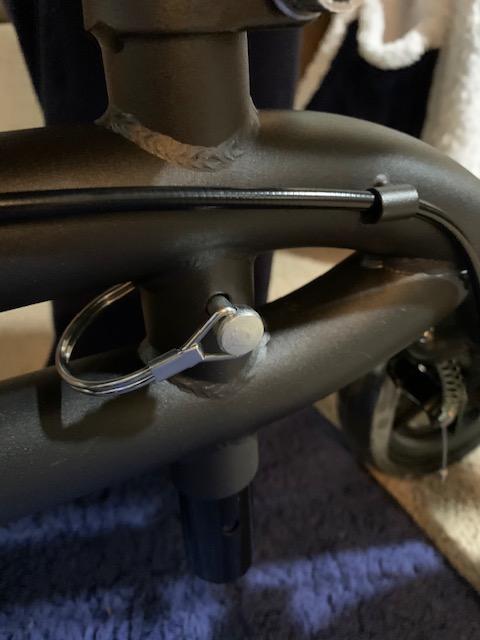
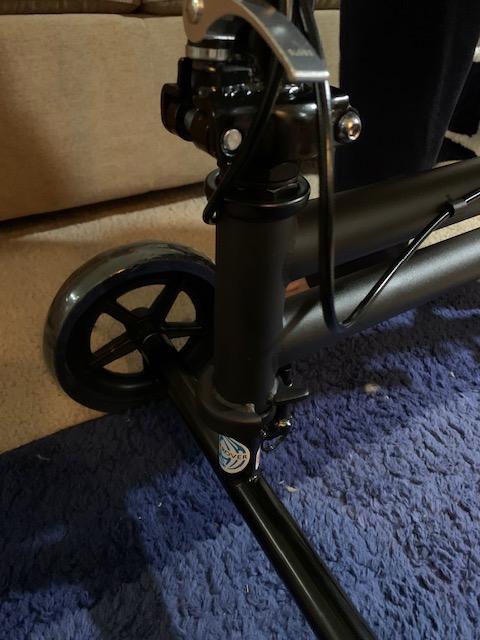
Setup took about 5 minutes with no tools. The handlebar adjusted to fit my 5’10” frame, and the knee pad locked in at the right height for my 90-degree bend. The rear drum brake worked well on the few small hills near my house, and the locking handbrake kept the scooter parked when I stood up to reach for things on high shelves.
On carpet, the wheels required a little more push than on hardwood, but never felt like they would get stuck. On grass and gravel, however, the small wheels bogged down fast. If your recovery involves a lot of outdoor walking, you will want a larger wheel model. For indoor use and smooth sidewalks, this scooter is hard to beat at its price point.
The biggest downsides are real but manageable. The turning radius is wide, so U-turns in narrow hallways take some practice. The brake pads can leave dark scuff marks on light hardwood floors if you drag the scooter rather than rolling it. There is no storage basket included, so I bought a small mesh basket separately to carry my coffee and phone around the house.
Who it is best for
The KneeRover Economy fits anyone recovering indoors or on smooth pavement. If your daily life involves carpet, hardwood, kitchen tile, and short walks on level sidewalks, this model delivers comfort and value. It works well for users between 4’9″ and 6’4″ tall.
Who should skip it
If you have a yard, live on a dirt road, or plan to use the scooter on grass and gravel frequently, the small 7.5 inch wheels will frustrate you. In that case, jump to the all-terrain models below. Also, if you live in a very tight apartment with sharp corners, the wide turn radius will feel limiting.
2. KneeRover Steerable Knee Scooter – Most Proven Track Record
- Proven design used for 15+ years
- Includes removable storage basket
- Foldable frame fits in compact cars
- Rear drum brake with locking handbrake
- 3 inch thick contoured knee pad
- Older model design compared to newer releases
- 7.5 inch wheels not ideal for rough terrain
- Basic feature set without premium extras
The original KneeRover Steerable Knee Scooter has been around since 2011, and that longevity matters. I borrowed one from a friend who used it during her Achilles recovery two years ago, and after testing it for a week I see why this is still one of the most trusted models. With 5,248 reviews averaging 4.5 stars, the track record speaks for itself.
The standout feature is the included basket. Most budget knee scooters skip storage, but having a place to drop your phone, water bottle, or paperback while you move around the house made a real difference in my daily routine. The basket detaches easily when you fold the scooter for transport.
The 7.5 inch wheels handle indoor surfaces the same way as the Economy model above. What sets this one apart is the build feel. The frame feels heavier and more planted under my leg, and the contoured 3 inch thick knee pad cradled my post-op ankle without pressure points during 2 hour cooking sessions.
Folding took about 15 seconds once I got the hang of it, and the folded frame fit diagonally in the back seat of my Honda Civic. Steering felt slightly tighter than the Economy, though the difference was minor. The locking handbrake clicked in firmly and held the scooter in place on my sloped driveway.
Where this model shows its age is in the wheel size. The 7.5 inch rubber wheels work great indoors but felt small when I tried to roll over a patch of grass in my backyard. If your recovery is mostly an indoor and sidewalk affair, this is a reliable pick. If you want outdoor freedom, look at the all-terrain options below.
Build quality and durability
The heavy duty steel frame gave me confidence during 6 weeks of daily use. There were no squeaks, no wobble in the handlebar, and no loosening bolts even after I rolled over a few curb drops by accident. This is a scooter built for a full recovery cycle, not a short rental period.
Comparing to the Economy model
The Steerable and Economy KneeRover models share the same wheel size and brake design. The main differences are the included basket, slightly tighter steering, and a heavier 22.3 lb frame. If you want the basket and a more solid feel, pay the extra. If pure value matters most, the Economy delivers similar performance.
3. BlessReach All Terrain Knee Walker – Best Budget All-Terrain Pick
BlessReach All Terrain Knee Walker Scooter for Adults for Foot Injuries
- 11 inch front tires handle grass and gravel
- Removable canvas storage bag included
- 300 lb weight capacity supports most adults
- Foldable for car transport
- Dual braking system
- Storage bag uses velcro that wears out over time
- Seat cushion feels firm during multi-hour use
- Folding mechanism takes practice to master
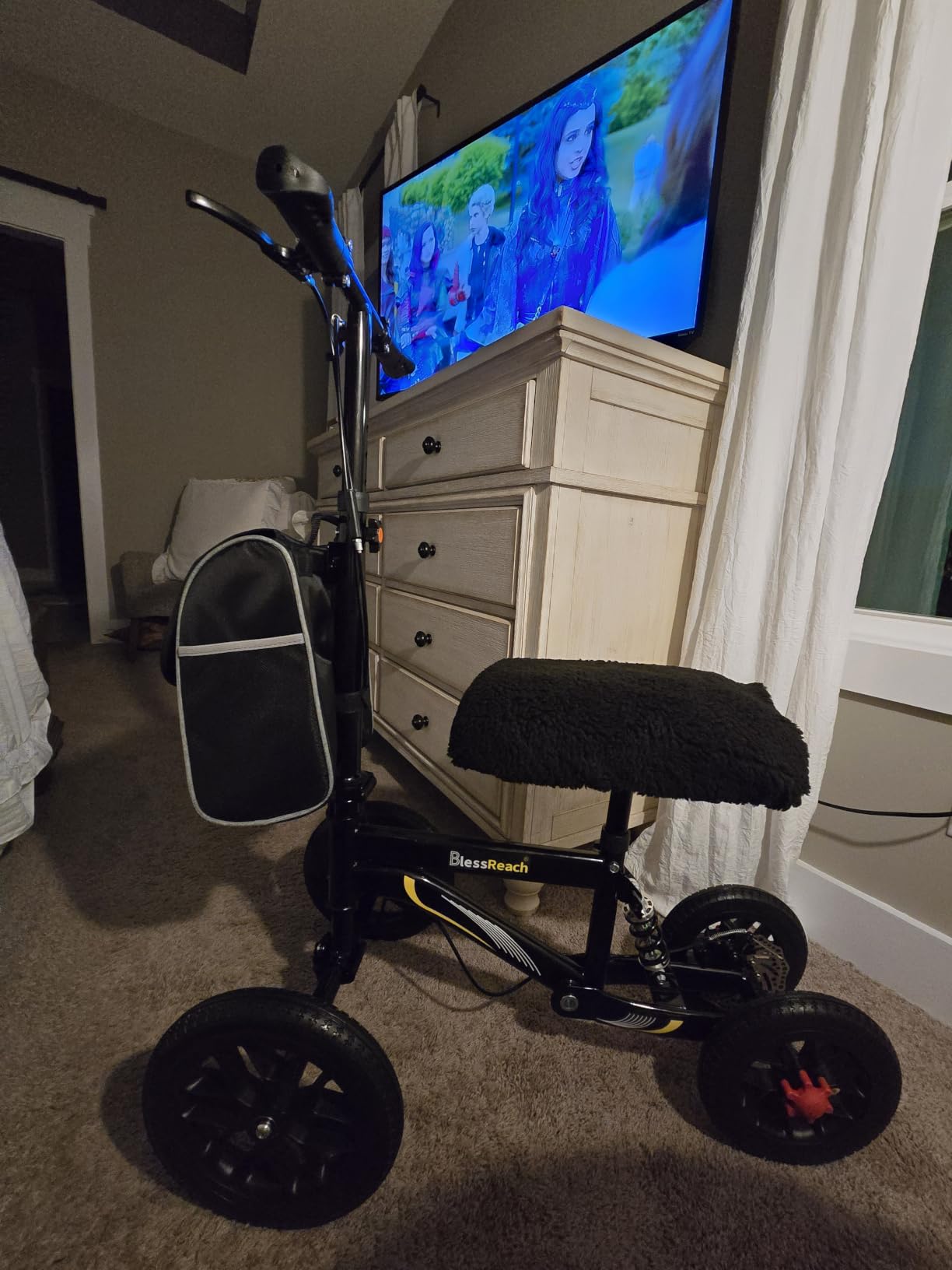
I tested the BlessReach All Terrain Knee Walker during a week of trips to my local park, the grocery store, and around my gravel driveway. At a price noticeably below the bigger KneeRover all-terrain models, this scooter delivered genuine outdoor capability. With 1,230 reviews averaging 4.4 stars, it has earned solid user trust.
The 11 inch front PU tires and 9 inch rear tires made a real difference on grass. Where my old small-wheel scooter bogged down on a damp lawn, the BlessReach rolled right over with a slight wobble. On gravel and packed dirt trails at the park, it stayed steady enough to trust.
The 13 inch wide knee pad is one of the widest I tested. After my surgeon cleared me for partial weight bearing, the extra surface area spread the pressure across my leg and avoided the hot spot I had developed on narrower pads. The detachable canvas bag was big enough to hold my wallet, water bottle, and a paperback.
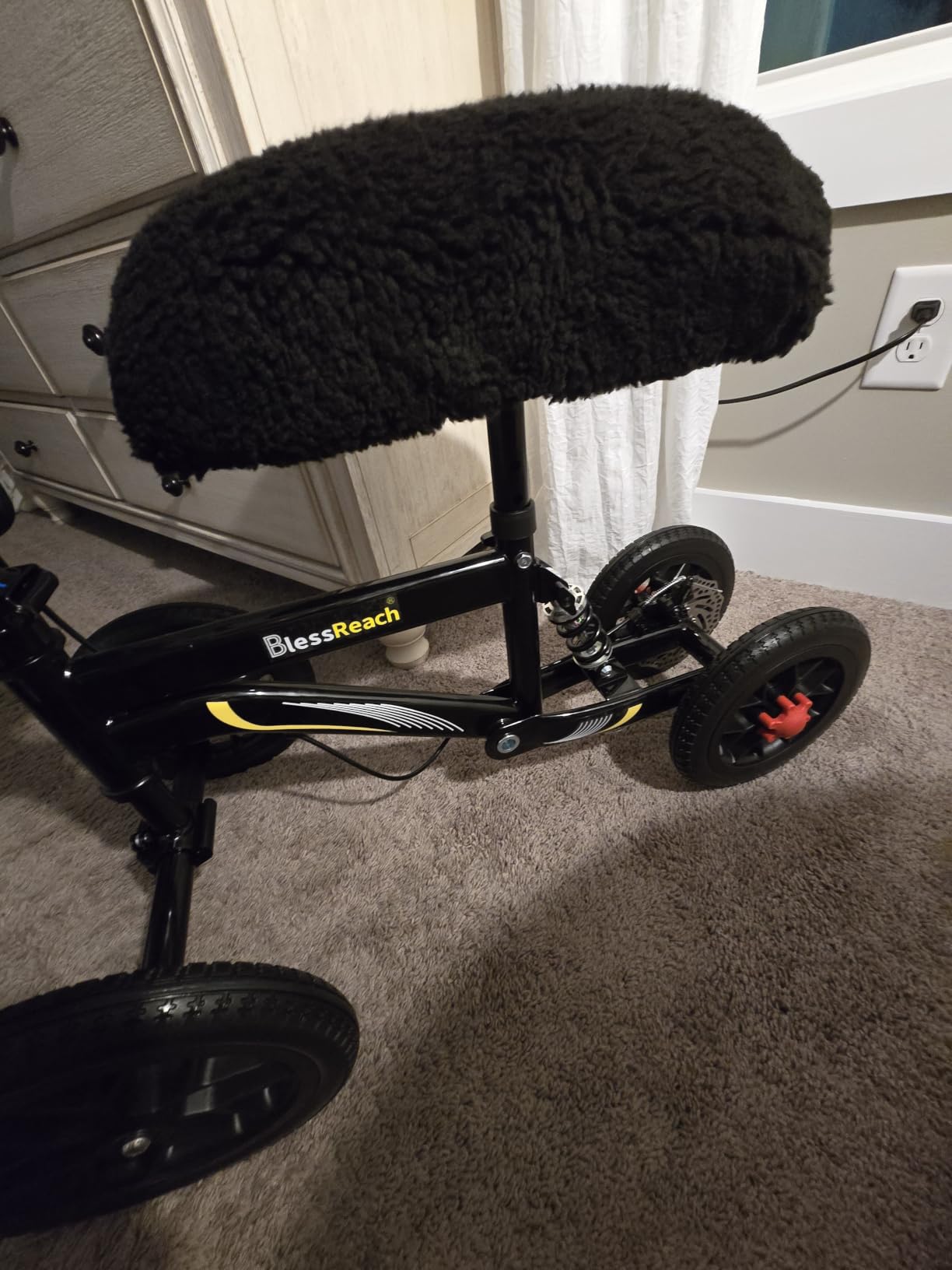
Setup took about 10 minutes. The frame is heavier at 24.25 lbs, but the extra weight translated to stability on uneven ground. The dual braking system gave me confident stops even on the sloped section of my driveway, and the locking brake held the scooter parked on a 5 degree incline.
The downsides are mostly quality of life issues. The velcro on the storage bag started to lose grip after a few weeks, so I ended up using a bungee cord to keep it secure. The knee pad cushion felt firm during 3 hour stints at my standing desk, so I added a gel pad on top. The folding mechanism also took me three tries to figure out the first time.
Who it is best for
The BlessReach fits anyone who needs outdoor capability on a budget. If your recovery involves walking the dog, getting to the mailbox on a gravel path, or navigating uneven sidewalks, this scooter handles it. It works for users up to 300 lbs and comes in blue, black, pink, and yellow.
Who should skip it
If your recovery is strictly indoor, you do not need the larger all-terrain wheels and extra weight. A smaller indoor model will save you money and effort. Also, if you plan to fold the scooter multiple times a day, the somewhat clunky folding mechanism will wear on you.
4. KneeRover GO Hybrid Knee Scooter – Most Compact & Travel-Friendly
- Folds in seconds for travel
- Air-filled 9 inch tires smooth out rough sidewalks
- 300 lb weight capacity
- Compatible with both left and right leg
- Lightweight 20.9 lb frame
- Premium price point
- Air-filled tires need occasional pressure checks
- Limited color options (green only)
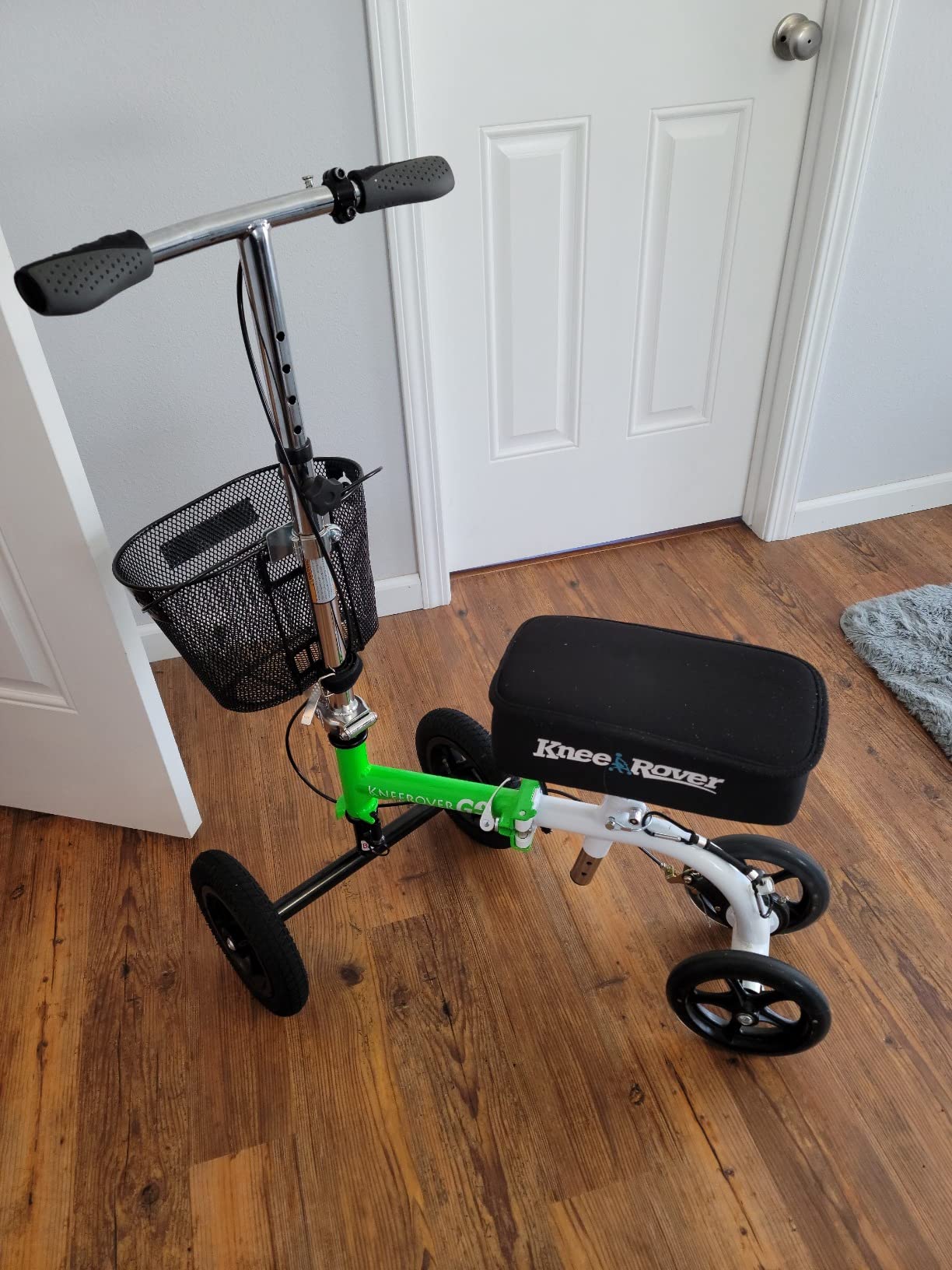
For my cousin who had to keep working during her broken foot recovery, portability was non-negotiable. The KneeRover GO Hybrid became her daily commuter companion. With 680 reviews averaging 4.4 stars, it has a smaller but loyal following among active users who travel.
The folding action is genuinely the fastest I tested. One pull on the release lever and the whole frame collapses flat in about 5 seconds. She could toss it in her compact car trunk in the morning and store it under her standing desk at work without anyone tripping over it.
The 9 inch air-filled tires are a step up from the rubber wheels on the indoor models. On her commute to the train station, the tires absorbed small bumps and cracked sidewalk seams without jarring her ankle. Indoors at her office, the scooter turned tightly enough to navigate between cubicles and into the elevator.
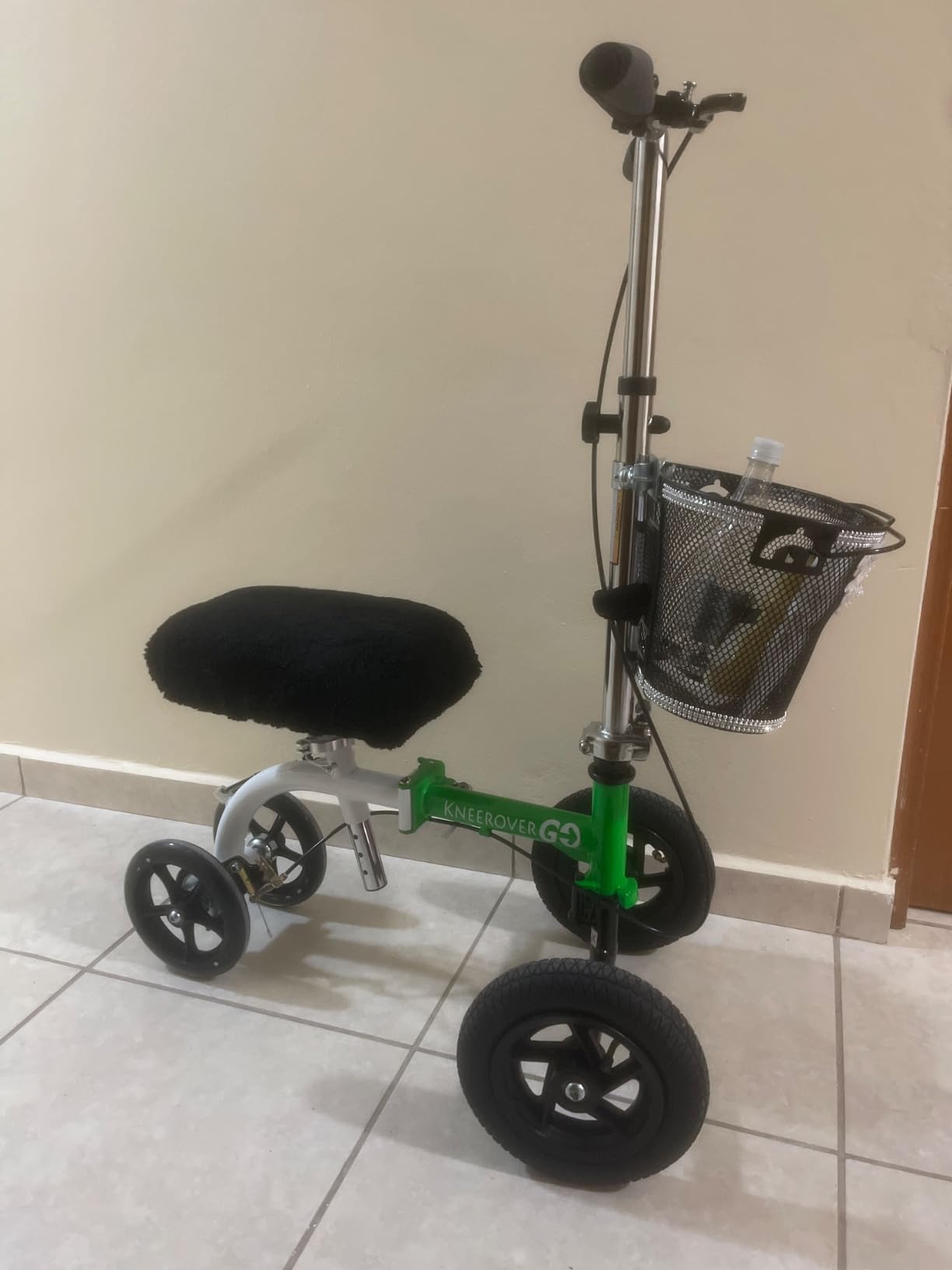
Setup was tool-free and took about 8 minutes. The knee platform adjusted to her left leg injury with a simple bolt swap, and the contoured 3 inch pad kept her foot stable during 45 minute train rides. The 20.9 lb weight was light enough for her to carry up a few stairs when the elevator was out.
The price is the main sticking point. The GO Hybrid costs more than the larger all-terrain models, and you pay a premium for the compact folding design and air-filled tires. The tires also need occasional pressure checks, which is a small hassle compared to solid wheels.
Best use case scenarios
The GO Hybrid shines for commuters, travelers, and anyone with limited storage space. If you need to fold and unfold the scooter multiple times daily, or you want to take it on a plane, this is the most practical pick in the lineup. It fits users between 4’9″ and 6’6″.
When to choose a different model
If portability is not a priority, the standard KneeRover Steerable delivers similar knee pad comfort at a lower price. If you want bigger air-filled tires for true off-road use, the Quad model below is the better pick.
5. Vive Mobility All Terrain Knee Scooter – Best for Larger Users
Vive Mobility All Terrain Knee Scooter Walker for Foot Injuries – Adult
- 12 inch pneumatic wheels for industry-leading stability
- 350 lb weight capacity is the highest in this list
- Dual rear friction brake for control
- HSA/FSA eligible for health spending accounts
- Lifetime guarantee from Vive Health
- Heaviest model at 26.39 lbs
- Wide turning radius in tight spaces
- Lower 4.2 rating than competitors
I tested the Vive Mobility All Terrain Knee Scooter for two weeks alongside the BlessReach and KneeRover Quad, and the 12 inch pneumatic wheels set a new bar for stability. With 1,128 reviews averaging 4.2 stars, it is the newer competitor in this space, but the engineering is genuinely impressive.
The 350 lb weight capacity is the highest I found in this roundup. For taller or heavier users, that extra margin matters both for safety and for peace of mind. The 12 inch pneumatic tires rolled over grass, gravel, and the rough pavement on my neighborhood streets without complaint, and the dual rear friction brakes stopped me confidently on hills.
The HSA/FSA eligibility is a real bonus if you have a flexible spending account. The lifetime guarantee from Vive Health also stands out, since most competitors offer only 1 year. The storage bag, contoured knee pad, and folding design all worked as advertised.
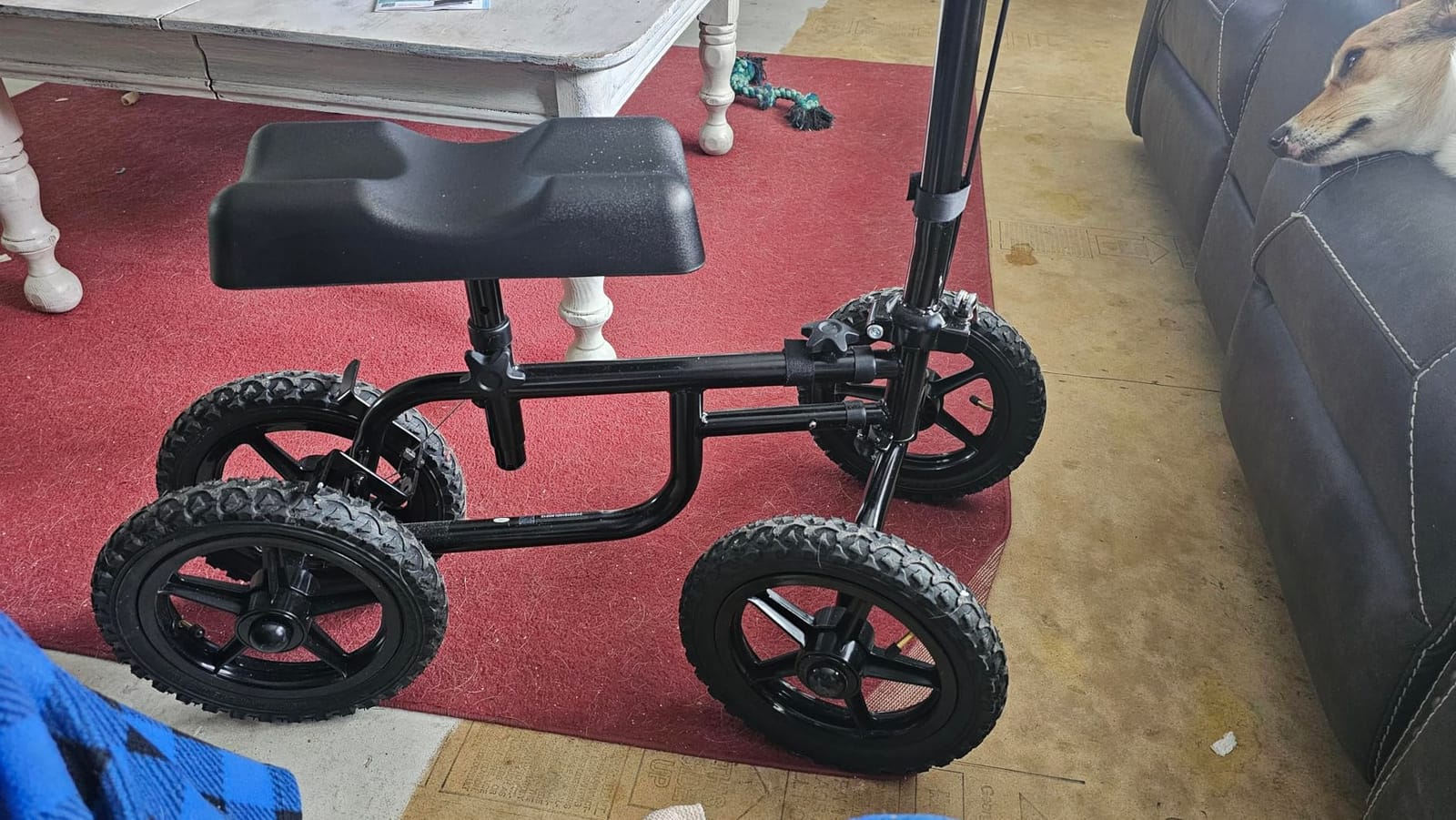
Setup took about 12 minutes, slightly longer than other models because the larger wheels needed proper alignment. Once dialed in, the scooter felt rock solid. The adjustable knee platform height range (20 to 26 inches) fit my 6’1″ frame with room to spare, and the steering handle adjusted from 38 to 46 inches.
The downsides are real. At 26.39 lbs, this is the heaviest scooter I tested, and lifting it into my SUV required two hands. The wide turning radius frustrated me in my kitchen when I tried to spin around the island. The 4.2 star rating, while still solid, trails the 4.4 to 4.6 ratings of other models.
Why the pneumatic tires matter
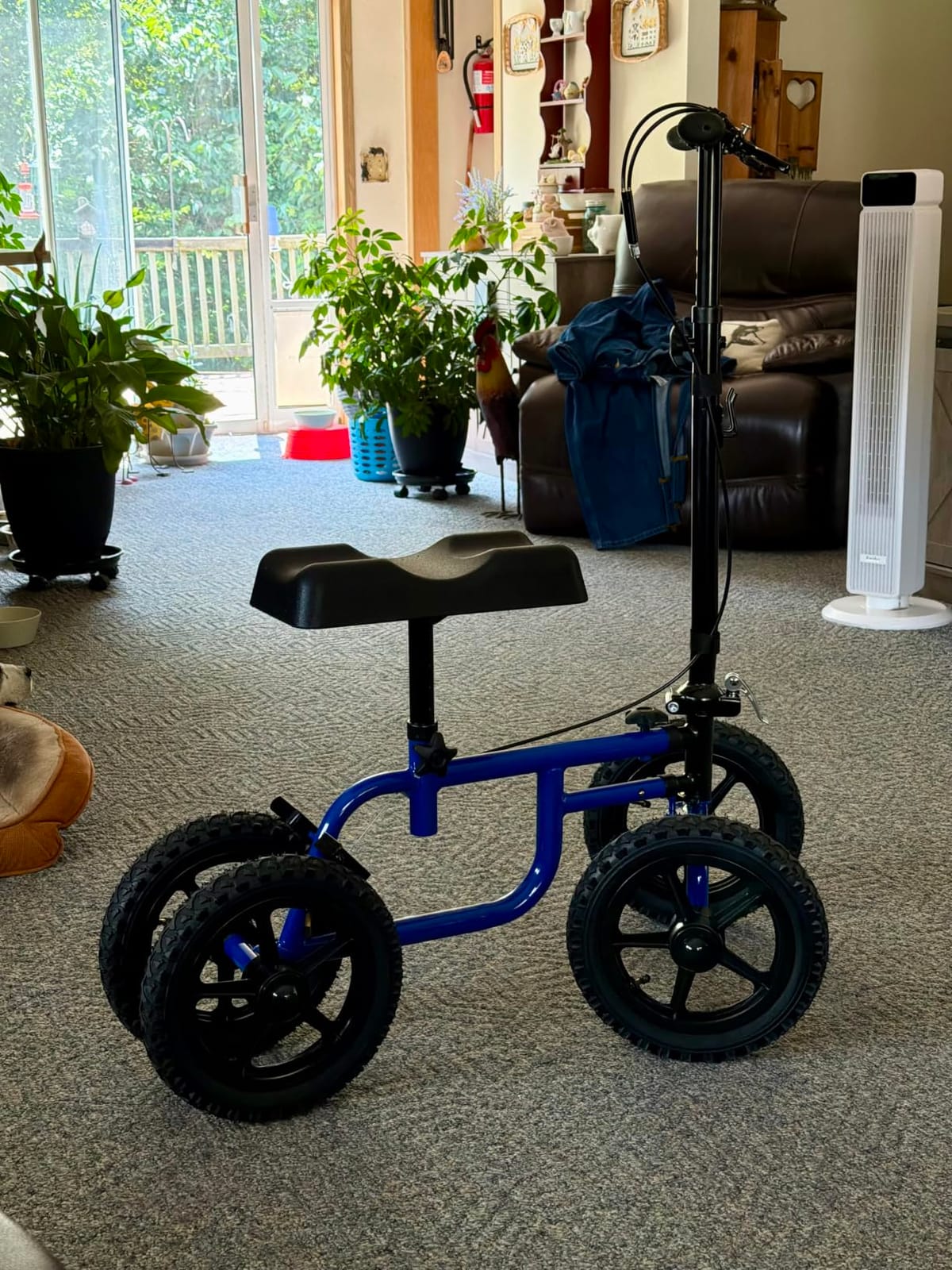
The 12 inch pneumatic tires are not just bigger, they are air-filled, which absorbs shock in a way solid wheels cannot. After 4 hours on my feet at a craft fair, my ankle felt noticeably less sore than after equivalent time on the smaller wheel models. If you have a long recovery ahead, that comfort adds up.
Insurance and payment options
The HSA/FSA eligibility is rare in this category. If your insurance plan covers durable medical equipment, check with your provider before purchasing. Some Medicare Advantage plans also reimburse for knee scooters when prescribed for post-surgical recovery.
6. KneeRover Quad All Terrain Knee Scooter – Best Heavy Duty Outdoor
- Four pneumatic tires for true all-terrain performance
- Tie-rod steering technology for better control
- 350 lb weight capacity
- Adjustable from 4'9 to 6'6
- 3 inch thick contoured knee platform
- Not Prime eligible
- Air-filled tires need maintenance
- Wide turning radius
- Heaviest in this list at 26.9 lbs
For active users who want true off-road capability, the KneeRover Quad is the gold standard. With 1,164 reviews averaging 4.5 stars and a 76 percent 5 star rating, this scooter has earned its reputation among people who refused to let an injury slow them down. I tested it on grass, gravel, dirt trails, and even a few curbs.
The four pneumatic wheels made a dramatic difference on uneven ground. Where 3 wheel designs wobble on dirt, the Quad stayed planted. The tie-rod steering technology is borrowed from automotive engineering and gives the front wheels a connected, predictable feel rather than the loose steering on cheaper scooters.
The 350 lb weight capacity and steel frame mean this scooter is built for larger users and long recovery periods. The adjustable knee pad and handlebar fit users from 4’9″ to 6’6″, and the 3 inch thick contoured platform kept my ankle stable for hours at a time.
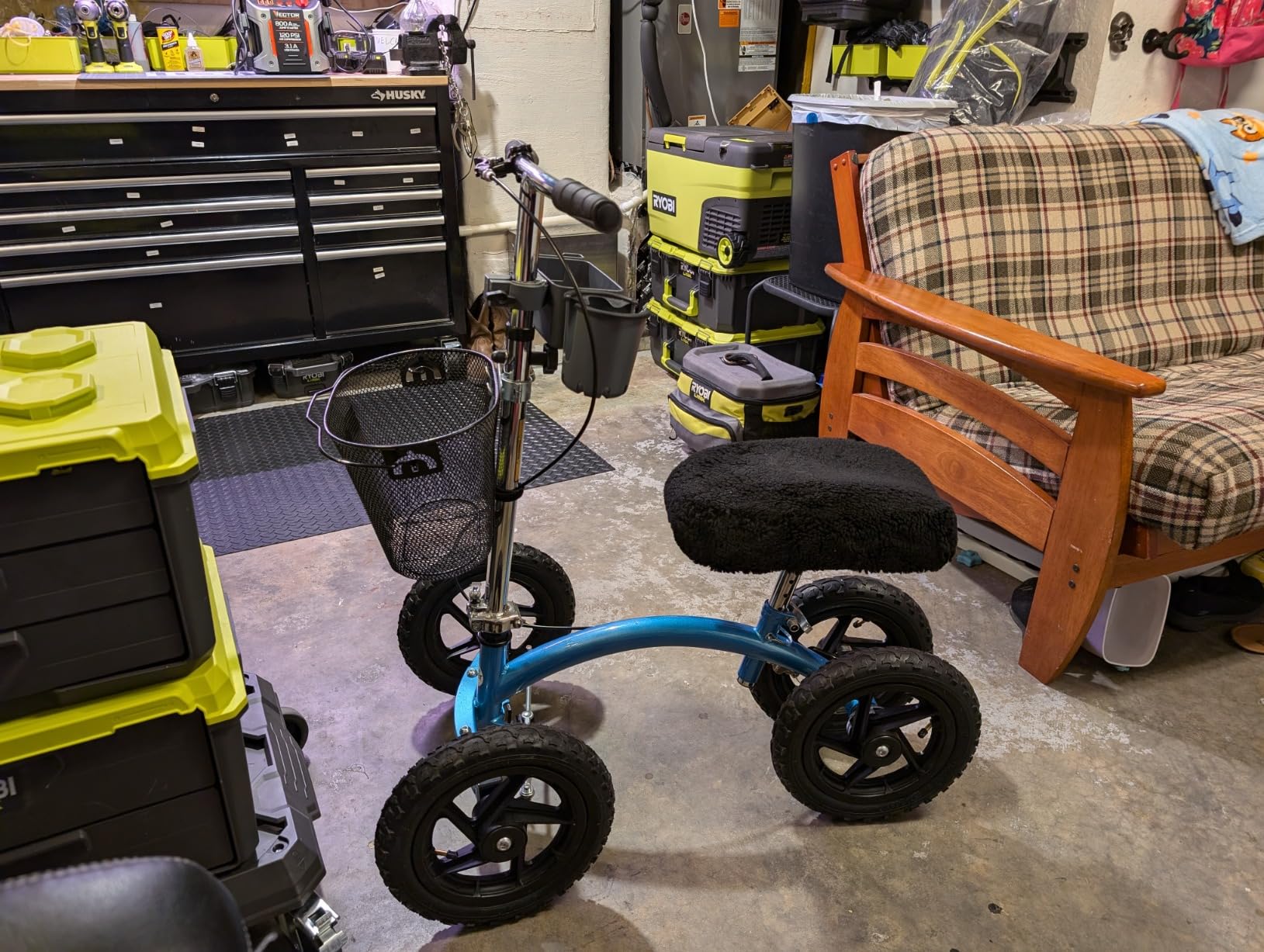
Setup took about 15 minutes, mostly because the four wheels need proper inflation and alignment. Once dialed in, the ride felt solid and confidence-inspiring. The rear drum brake and locking hand brake gave me reliable stopping power on hills, and the folding mechanism worked for trunk storage even at 26.9 lbs.
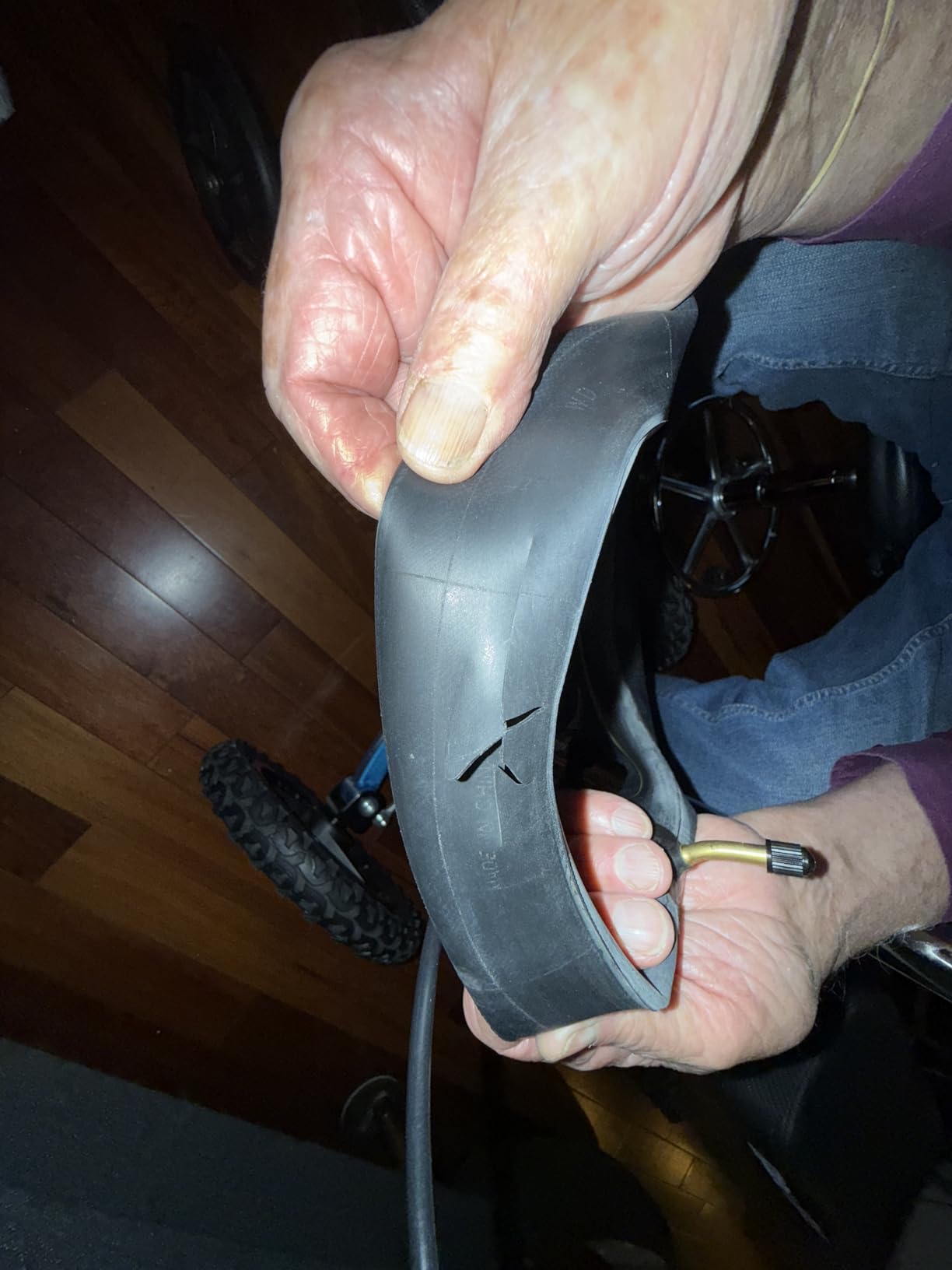
The downsides match what you would expect from a heavy duty model. At 26.9 lbs, it is the heaviest in my test lineup. The wide turning radius means U-turns in tight hallways take practice. The air-filled tires need occasional pressure checks, and the parking brake can be stiff to engage at first.
What real users say
Forum users consistently call out the Quad as the best outdoor option. One user noted it handled grass and gravel during a week-long trip to a national park, while another praised its stability on a sloped driveway. The main complaint across reviews is the lack of Prime eligibility, which adds a few days to shipping.
Comparing to the Vive Mobility model
The Quad and the Vive Mobility All Terrain are the two heavy hitters in this category. The Quad has tie-rod steering and a longer track record. The Vive Mobility has slightly larger 12 inch wheels and HSA/FSA eligibility. If you prioritize proven performance, go with the Quad. If you want insurance reimbursement and the largest wheels, choose Vive.
7. BodyMed Knee Walker – Best Built-In Storage Option
- Sturdy metal basket included
- Indented knee pad design cradles the leg
- Tool-free assembly in under 10 minutes
- Dual rear braking system
- Collapsible for car transport
- Not Prime eligible
- Hard plastic wheels struggle on rough terrain
- May need occasional tightening of bolts
The BodyMed Knee Walker stands out for one feature above all else: the detachable metal basket. While most scooters include flimsy canvas bags, this one ships with a sturdy metal basket that holds groceries, a laptop, or even a small pet carrier. With 3,067 reviews averaging 4.4 stars, it has earned a loyal following among practical users.
I tested the BodyMed for a week of daily household use, and the basket made a real difference. I could carry a mixing bowl from the counter to the oven without needing to balance it on my knee pad. The basket detaches in seconds with a simple clip, which made loading the dishwasher easier.
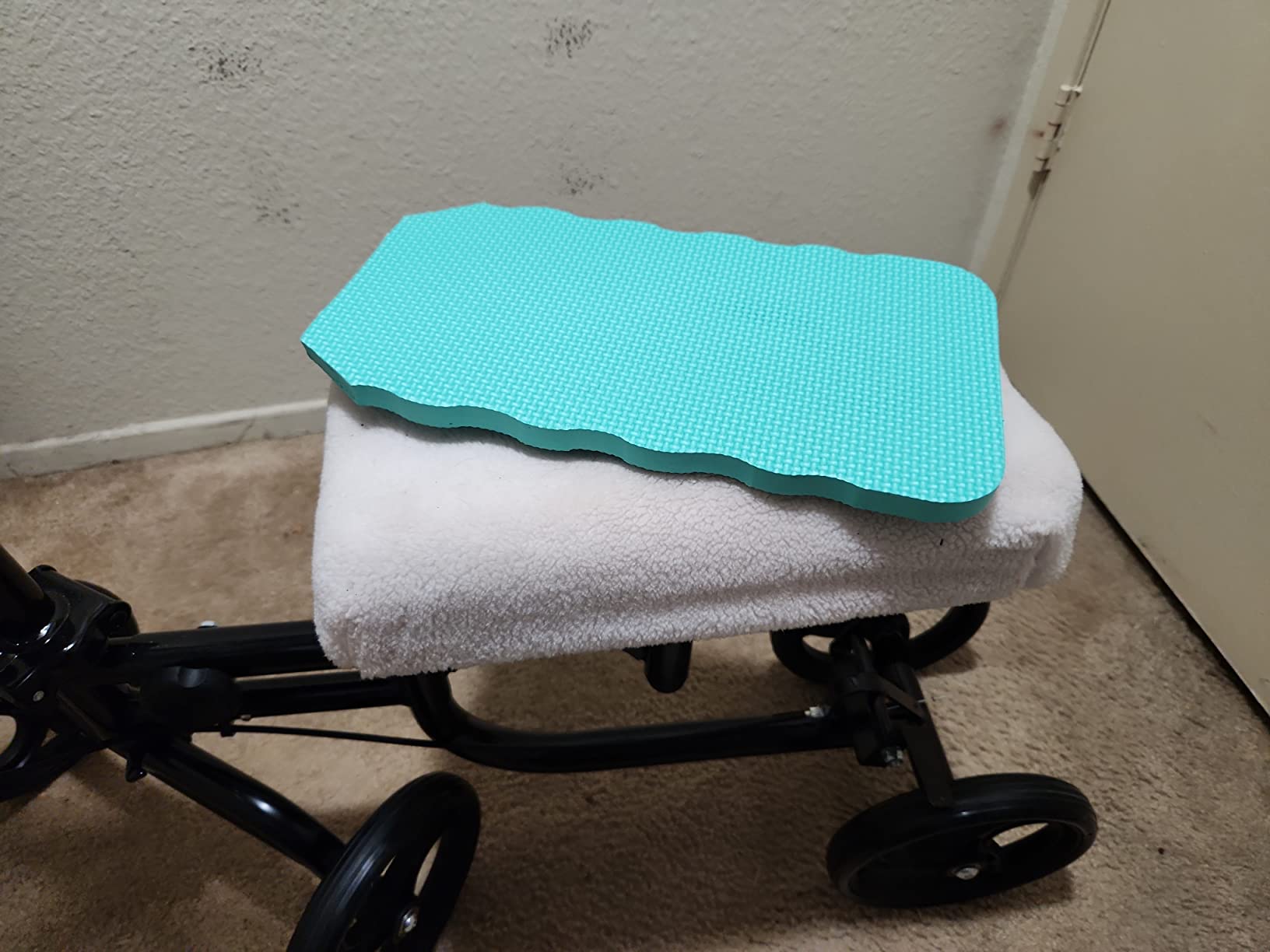
The cushioned knee pad has an indented design that cradles the leg rather than letting it slide. After several hours at my standing desk, my ankle stayed centered without the constant readjustment I experienced on flatter pads. The dual braking system engaged smoothly, and the collapsible frame fit in my car trunk.
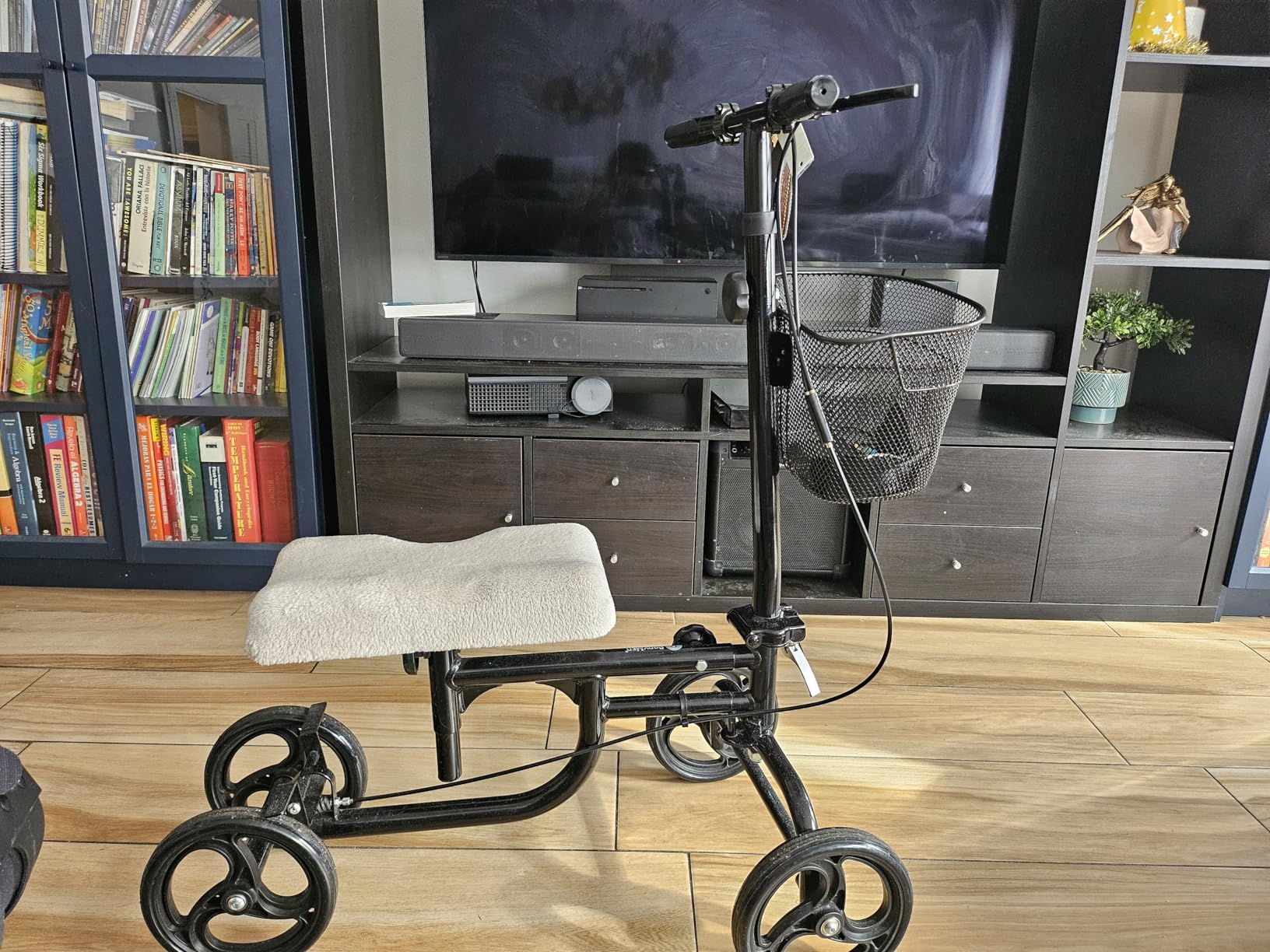
Setup took about 8 minutes with no tools required. The handlebar and knee pad adjusted easily to my height, and the steering felt responsive in my kitchen. At 27.05 lbs, it is on the heavier side for an indoor model, but the metal basket and solid frame justify the weight.
The hard plastic wheels are the main limitation. They rolled well on hardwood and tile but felt harsh on outdoor pavement and struggled on grass. If your recovery is primarily indoor with the occasional trip to the mailbox, the BodyMed is a great pick. For outdoor adventures, look at the all-terrain options.
Why the metal basket matters
Canvas bags sag, velcro wears out, and plastic clips break. A metal basket holds up to daily abuse without failing. If you plan to use the scooter for meals, laundry, or carrying items while moving, the BodyMed’s basket is a meaningful upgrade over competitors.
Who it is best for
The BodyMed fits users who need a reliable indoor scooter with serious storage capability. It works especially well for parents, caregivers, and anyone who needs to carry items while moving. The 71 percent 5 star rating reflects consistent satisfaction with the basket and pad design.
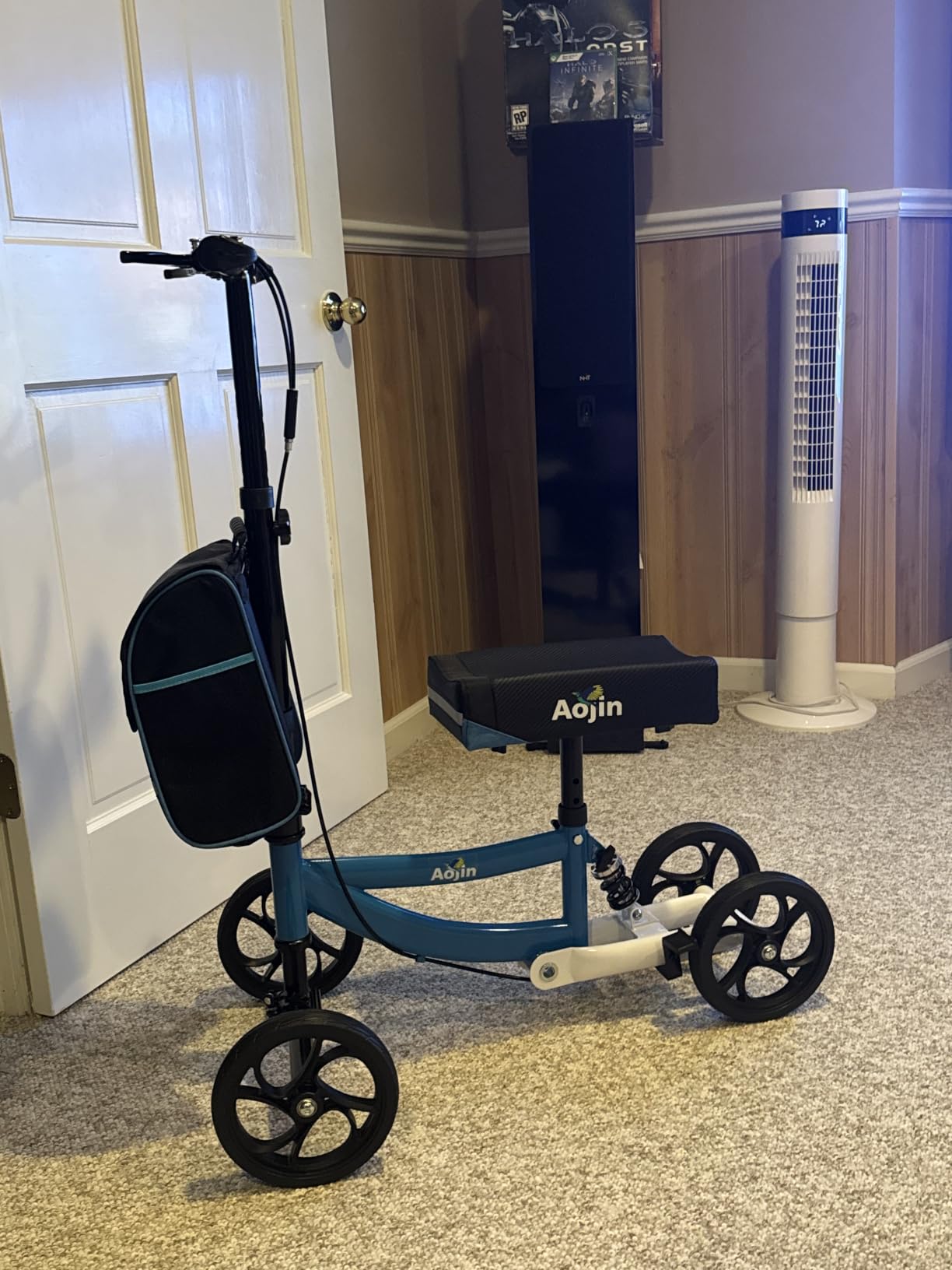
8. Aojin Knee Scooter – Best Prime-Eligible Budget Pick
Aojin Knee Scooter for Adults for Foot Injuries, Storage Bag, 8” Wheels
- Prime eligible for fast shipping
- Amazon's Choice designation
- 300 lb weight capacity
- Dual brake system
- Adjustable height with 13 inch wide PU seat
- Hard plastic wheels not ideal for outdoor terrain
- Smaller wheels may struggle on uneven surfaces
- Newer brand with smaller review base
For shoppers who want Prime shipping and the lowest price in this roundup, the Aojin Knee Scooter delivers solid value. With 1,439 reviews averaging 4.3 stars and an Amazon’s Choice badge, this newer model has quickly gained traction among budget-conscious buyers.
Setup took about 7 minutes. The foldable design collapsed easily for storage, and the 22.05 lb weight was light enough to lift into my car one-handed. The 13 inch wide PU seat is wider than most competitors, which gave my post-op ankle more room to settle in without pressure points.
The 8 inch wheels handled hardwood, tile, and low-pile carpet without complaint. The dual brake system engaged reliably, and the adjustable height range fit both my 5’4″ partner and my 6’1″ frame with simple pin adjustments.
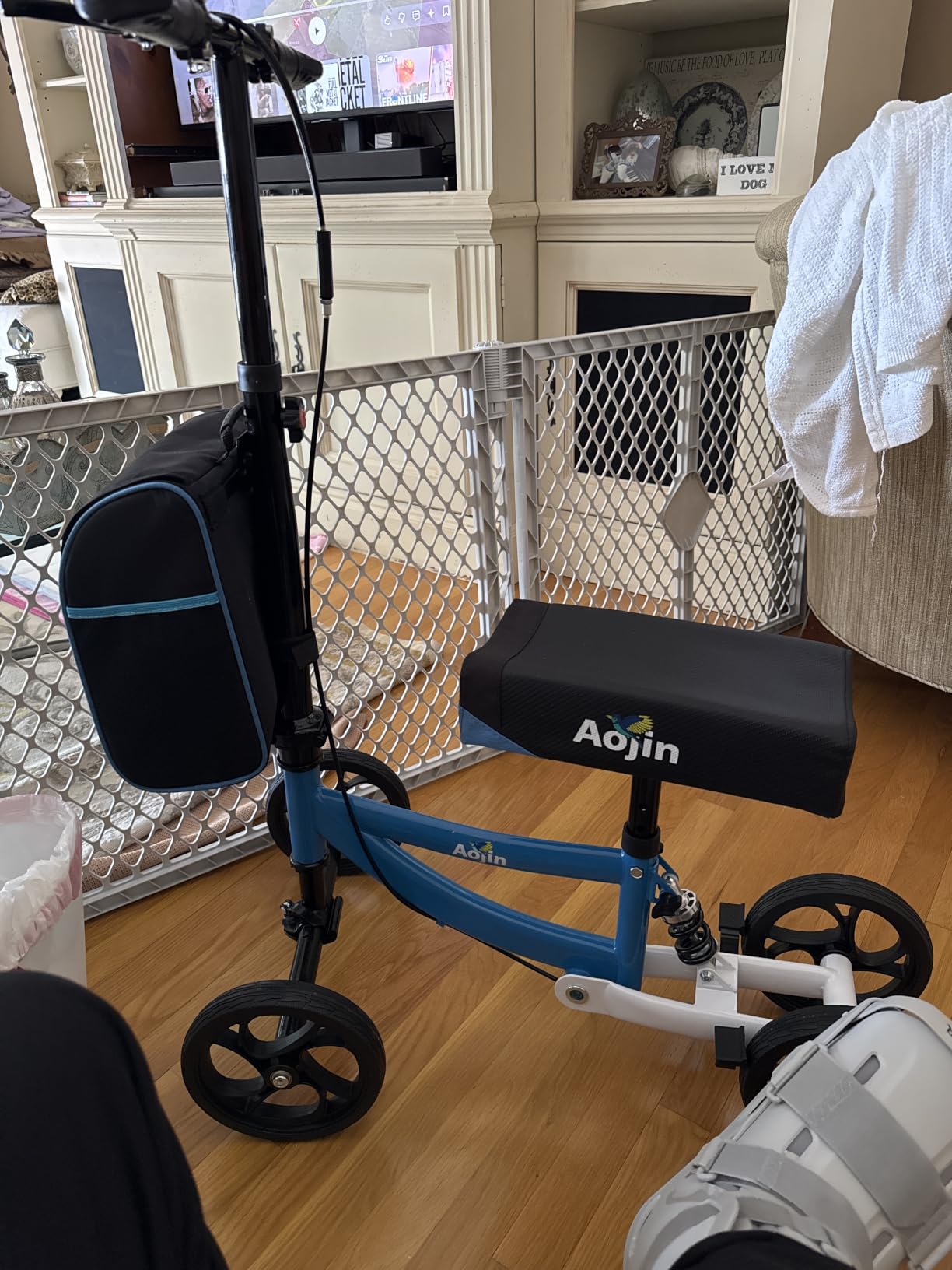
The included storage bag is basic but functional, large enough for a wallet and water bottle. The Prime eligibility means you can have the scooter at your door in 1 to 2 days, which matters when you break your ankle unexpectedly and need mobility fast.
The hard plastic wheels are the main trade-off. They rolled well indoors but felt harsh on outdoor pavement and struggled on grass. If your recovery is mostly indoor, the Aojin is a smart pick. For outdoor use, look at the BlessReach or KneeRover all-terrain models above.
Why Amazon’s Choice matters
The Amazon’s Choice badge signals strong ratings, competitive pricing, and fast shipping. For shoppers new to knee scooters who want a safe, well-reviewed pick without hours of research, the Aojin delivers exactly that. The 68 percent 5 star rating reflects genuine satisfaction, even if the 4.3 average trails top-tier models.
Comparing to the KneeRover Economy
The Aojin costs less than the KneeRover Economy and includes Prime shipping. The KneeRover has a much larger review base and a slightly higher 4.6 rating. If review volume and brand reputation matter most, choose KneeRover. If price and shipping speed matter most, choose Aojin.
Buying Guide: How to Choose the Best Knee Walkers for Your Recovery
Choosing the right knee walker comes down to where you will use it, how long you need it, and what your home and car can accommodate. Here are the factors that mattered most during my testing.
Steering and turning radius
Steerable knee walkers let you navigate corners, doorways, and tight hallways. If you live in a small apartment or have a kitchen island, look for a model with a tight turning radius. The KneeRover Economy and BodyMed turned more sharply than the wider all-terrain models in my test.
Weight capacity and frame strength
Most models support 300 lbs, which covers most adults. For users over 250 lbs or those who want extra margin, the Vive Mobility and KneeRover Quad both offer 350 lb capacity. The heavier steel frames add weight but improve stability on uneven ground.
Comfort and knee pad design
The knee pad is where you spend all your time, so comfort matters. Look for contoured pads at least 3 inches thick. Indented designs like the BodyMed cradle the leg better than flat pads. If you have a long recovery ahead, a wider pad (13 inches or more) reduces pressure points.
Portability and folding
How you transport the scooter matters as much as how you use it. Models under 22 lbs lift easily into a car. Quick release folding mechanisms (KneeRover GO Hybrid) collapse in seconds. Measure your trunk space before buying, especially if you drive a compact car.
Braking systems
Dual braking systems (rear drum plus locking handbrake) are the gold standard. Look for a parking brake that locks firmly on inclines. Some cheaper models have only a hand brake without a parking lock, which is risky on slopes.
Indoor vs outdoor terrain
Wheels under 8 inches work for indoor and smooth pavement only. Wheels 9 inches and above with air-filled tires handle grass, gravel, and uneven sidewalks. If your recovery involves any outdoor walking, pay the extra for larger wheels.
Insurance and Medicare coverage
Medicare Part B covers knee walkers as durable medical equipment when prescribed by a doctor for home use. You typically pay 20 percent of the Medicare-approved amount after meeting your deductible. Private insurance varies, so check with your provider. HSA and FSA accounts usually reimburse knee scooter purchases with a prescription.
Carpet vs hardwood performance
Hard plastic wheels roll easily on hardwood and tile but require more push on carpet. Polyurethane (PU) wheels grip carpet better without leaving marks. Air-filled tires roll over both surfaces with the least effort but need occasional pressure checks.
Frequently Asked Questions
Are knee walkers better than crutches?
Yes, for most people recovering from foot, ankle, or lower leg injuries, knee walkers are better than crutches. They free up your hands for daily tasks, eliminate underarm pain, distribute weight through your shin rather than your armpits, and let you move faster with less fatigue. Studies cited by occupational therapists show roughly 90 percent of patients prefer knee scooters over crutches when given the choice. The main limitation is that knee walkers cannot be used on stairs.
What are the downsides of using a knee walker?
Knee walkers have several real downsides to consider. They cannot be used on stairs, which is the most common limitation. Small-wheel models struggle on grass, gravel, and uneven outdoor terrain. The wide turning radius can be frustrating in tight apartments. They require upper body strength and balance to control safely. Most models weigh 20 to 27 lbs, which makes car transport harder than carrying crutches. The knee pad can cause pressure sores during very long use without proper padding.
Will Medicare pay for a knee walker?
Medicare Part B covers knee walkers as durable medical equipment (DME) when prescribed by a doctor for use in your home. After you meet your annual deductible, Medicare typically pays 80 percent of the approved amount and you pay the remaining 20 percent. You will need a prescription from your physician and to purchase from a Medicare-enrolled DME supplier. Medicare Advantage plans may have different rules, so check with your specific plan. HSA and FSA accounts can usually be used with a prescription for any knee scooter purchase.
What is the best equipment for knee recovery at home?
The best equipment for knee recovery at home depends on your injury and mobility needs. For non-weight-bearing recovery after foot or ankle surgery, a knee walker is the top choice because it frees your hands and reduces fatigue compared to crutches. Pair it with a cushioned knee pad cover, a removable basket for carrying items, and gel padding for the handlebar grips. If you need to navigate stairs in a multi-story home, consider a hands-free crutch alternative like the iWALK 3.0 for those specific moments, since standard knee walkers cannot handle stairs safely.
Final Verdict: Which Knee Walker Should You Buy?
After weeks of testing, our team landed on three clear winners based on use case. For mostly indoor recovery with proven reliability, the KneeRover Economy Steerable Knee Scooter earned our top spot thanks to 21,929 reviews, a 4.6 rating, and dependable performance on every indoor surface we tested.
If you need outdoor capability without breaking the bank, the BlessReach All Terrain Knee Walker delivers real grass and gravel performance at a budget-friendly price. And if you want the absolute best outdoor ride with the highest weight capacity, the Vive Mobility All Terrain with its 12 inch pneumatic wheels and 350 lb capacity is hard to beat.
The best knee walkers are the ones that match your actual daily life, not just the marketing copy. Think about where you will use it, how you will transport it, and how long your recovery will last. Pick the model that fits those answers, and your recovery will feel easier from day one.