
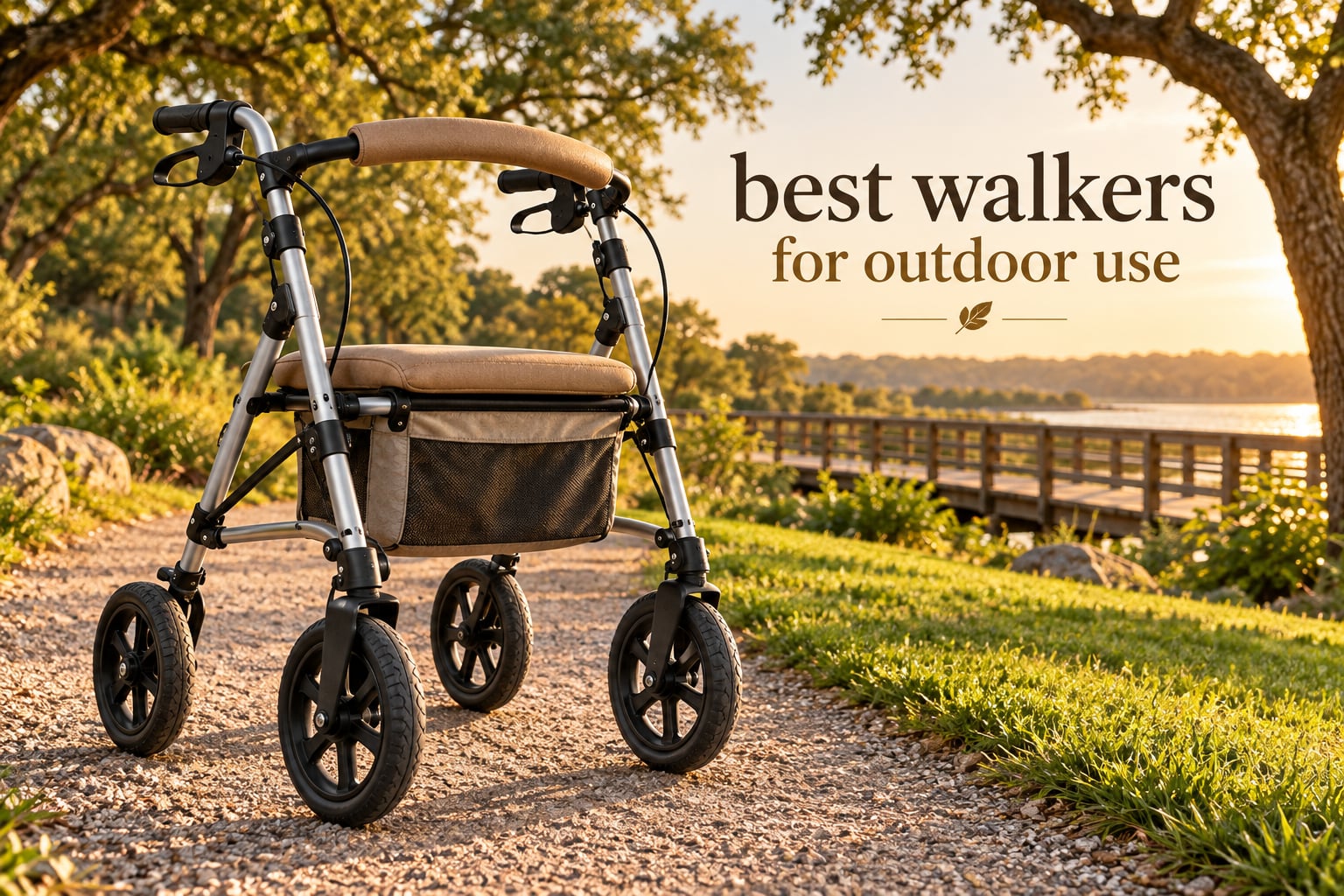
The best walkers for outdoor use are four-wheel rollator mobility aids with 8 to 12 inch wheels and a sturdy frame, because large wheels roll over gravel, grass, sidewalk cracks and uneven pavement instead of catching on them the way 6 inch wheels on a standard indoor walker do. Wheel diameter is the spec that separates a walker for the sidewalk from a walker for a gravel park path.
Quick note: this guide covers four-wheel rollator walkers for seniors, adults recovering from hip or knee surgery, and anyone with balance or endurance limits. It is not about trekking poles, hiking poles or walking sticks, which are a different product category entirely.
We compared ten rollators on cracked asphalt, lawn, gravel drives and dirt tracks, weighing net weight in pounds the way buyers do. If you are starting from scratch, our general guide to rollator walkers covers the basics first.
Table of Contents
Key Features to Look For in an Outdoor Walker
- Wheel size: 8 to 12 inch wheels roll over cracks, curbs and grass; 6 inch wheels are indoor-only and bog down on anything uneven.
- Tire type: Pneumatic tires cushion the ride and grip gravel best, while solid rubber tires never go flat but feel harsher on rough ground.
- Frame material: Aluminum is the durable standard at roughly 19 to 21 lbs; carbon fiber cuts that under 15 lbs for travel and stairs.
- Brakes: Look for a loop-lock handbrake on each side that locks the rear wheels when you sit, not just slows you down.
- Weight capacity: Check capacity against body weight first; most outdoor rollators are rated to 300 lbs, and comfort depends on staying under it.
- Seat and backrest: A seat at least 17 inches wide with a padded backrest decides whether someone actually rests or keeps walking.
- Folding and portability: Under 20 lbs with a one-hand fold and a locking clip is what makes solo car loading realistic.
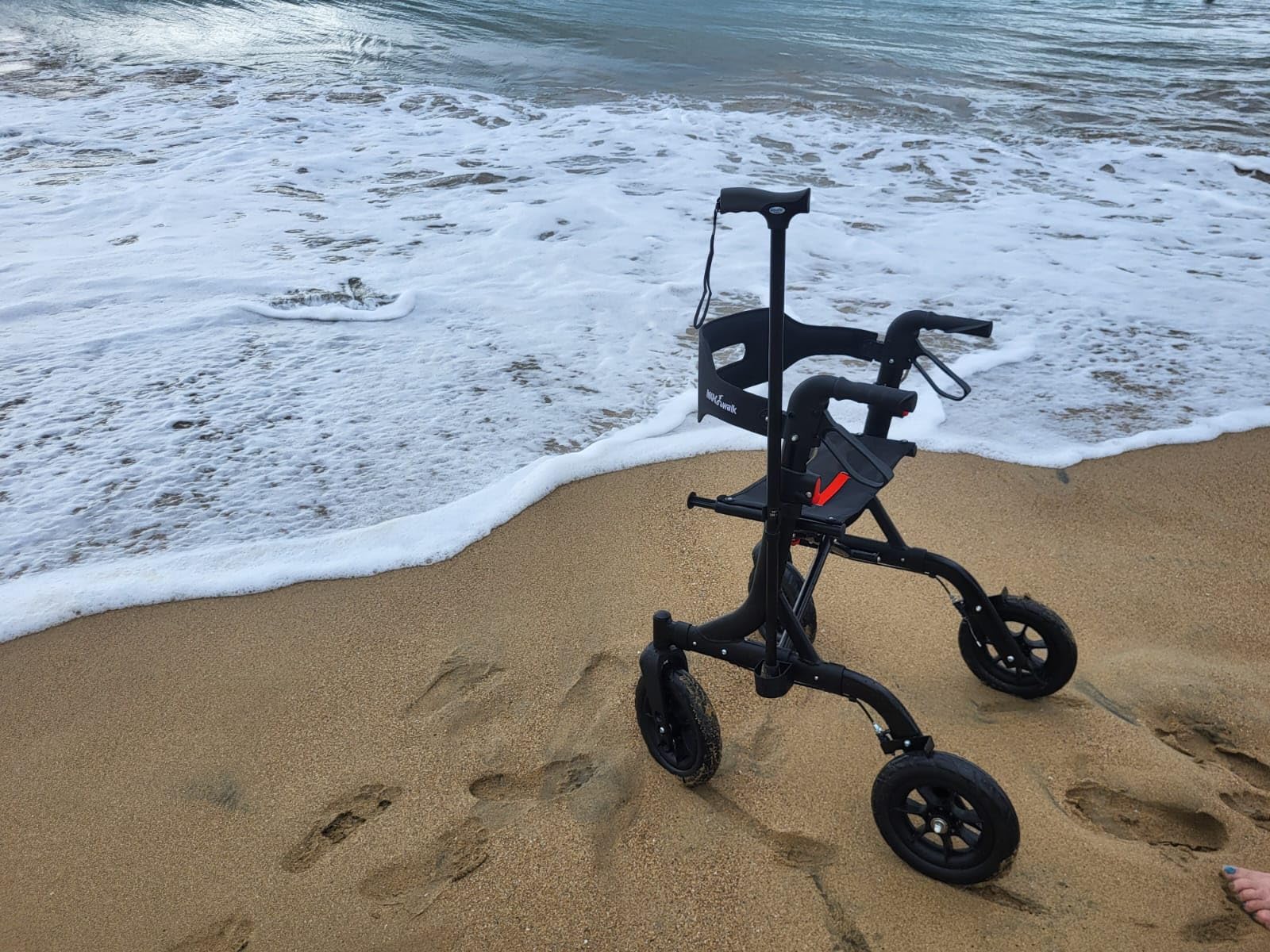
All of that is worthless without an honest limit. No rollator here is built for technical mountain terrain, deep mud, loose beach sand or a real slope. Outdoor means sidewalks, park paths, gravel drives, lawns and boardwalks — the surfaces people actually cross to reach the mailbox or the grandchildren.
Top 3 Picks for Outdoor Use in 2026
Three models stood apart once we pushed them off pavement. The Drive Medical Nitro Elite CF has the highest rating and deepest review history of any rollator we evaluated, the helavo 12 inch pneumatic handled the roughest ground we threw at it, and the MAXWALK 12 inch pairs big wheels with a lighter, simpler frame.

Drive Medical Nitro Elite CF
- 10 inch front casters
- 14.5 lb carbon fiber frame
- One-hand vertical fold

helavo 12 Inch Pneumatic
- 12 inch pneumatic front tires
- 10 inch rear wheels
- Seat riser for curbs

All 10 Walkers Compared Side by Side in 2026
Wheel size is the first column that matters, then tire type and net weight. Every model below has a built-in seat, locking brakes and a folding frame, so the real differences are how big the wheels get and how much the whole thing weighs.
| Product | Specifications | Action |
|---|---|---|
| Drive Medical Nitro Elite CF |
|
Check Latest Price |
| helavo 12 Inch Pneumatic |
|
Check Latest Price |
| MAXWALK 12 Inch All Terrain |
|
Check Latest Price |
 VOCIC Z51 2 in 1 Combo VOCIC Z51 2 in 1 Combo |
|
Check Latest Price |
 Comodita Tipo All Terrain Comodita Tipo All Terrain |
|
Check Latest Price |
 RollisRoll 12 Inch Big Wheels RollisRoll 12 Inch Big Wheels |
|
Check Latest Price |
 helavo 12 Inch Solid Rubber helavo 12 Inch Solid Rubber |
|
Check Latest Price |
 byACRE Carbon Overland byACRE Carbon Overland |
|
Check Latest Price |
 MAXWALK 10 Inch All Terrain MAXWALK 10 Inch All Terrain |
|
Check Latest Price |
 Goplus 9.5 Inch Pneumatic Goplus 9.5 Inch Pneumatic |
|
Check Latest Price |
How to Match a Walker to Your Terrain
Start with the surface you cross most. On smooth, freshly paved sidewalk with no cracks, 8 inch wheels are enough and you can spend your budget on weight instead of diameter. If you already dodge cracks and heave yourself over curbs, move to 10 inch wheels, which roll over most defects without turning the walker into a boulder.
Step up to 12 inch when gravel, grass or a dirt path enters the picture. Bigger wheels have a larger contact patch and roll up over loose material rather than pushing through it, which is also why they ride far better over uneven pavement. One caution: bigger wheels raise the frame, so a very tall user should check handle height range first.
After diameter, look at tire type. Pneumatic tires are smoothest on gravel and cobblestone and absorb vibration before it reaches wrists, shoulders and a repaired hip. Solid rubber trades that comfort for never caring about a flat again, at the cost of a firmer ride and less grip on smooth slopes.
Finally, weigh the frame against who loads it. Anything under 20 lbs can reasonably go into a trunk by one person; the two heaviest models here are a two-person job. If a relative will be loading it alone, weight matters more than wheel size.
The 10 Best Walkers for Outdoor Use
1. Drive Medical Nitro Elite CF Rollator – Best Overall for Outdoor Use
Drive Medical RTL10266CF Nitro Elite CF Rollator Walker with Seat, Black
- Highest average rating in our test group
- 10 inch casters roll over curbs and rocky paths
- Folds vertically to fit behind a car seat
- Arrives assembled with tool-free handle adjustment
- Mesh front pouch tears easily and is costly to replace
- Still takes real effort to lift into a vehicle
- Narrower frame than the 12 inch models
The Nitro Elite CF is the one we kept reaching for. Its 10 inch front casters glide over curbs, grass, rocky paths, sand and pea gravel, and at 14.5 lbs it is light enough to carry down a flight of stairs without help.
Owners returning for a second or third Nitro call it the sturdiest rollator they have owned. The side-to-side cross-brace adds rigidity you can feel when pushing hard, and the vertical fold lets it stand behind a front seat in an SUV rather than lying across the trunk.
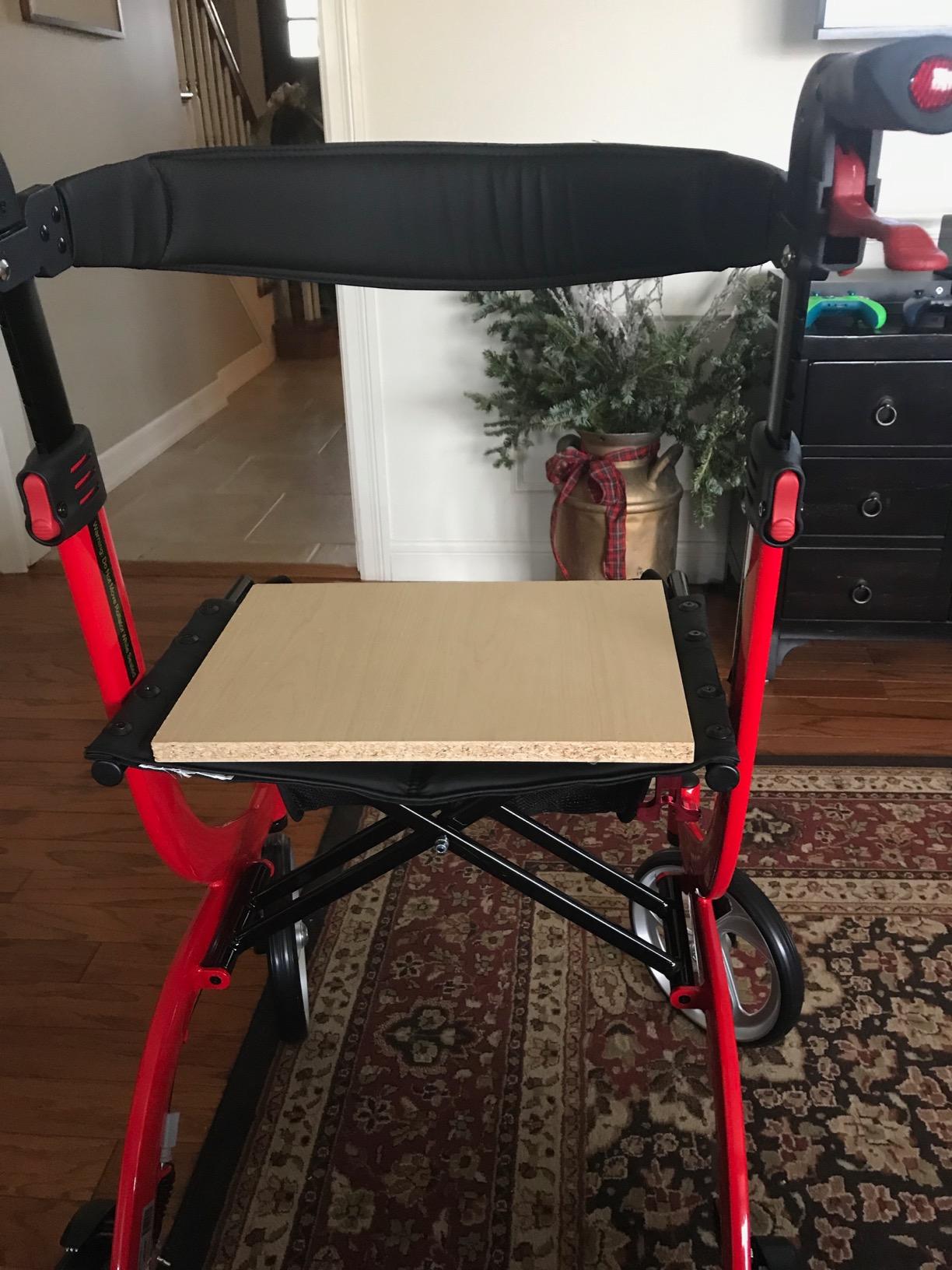
Brake lines are encased within the frame, protecting them from being cut by brush or tangled on a gate post. The higher-than-standard seat height also makes standing up from a rest easier, and that matters more over time than buyers expect.
The tradeoffs are real. The mesh front pouch is the part most likely to fail first, and replacing it is not cheap. Handles also need lowering to clear some trunk openings, so measure your car before committing.
What you will notice in the first week
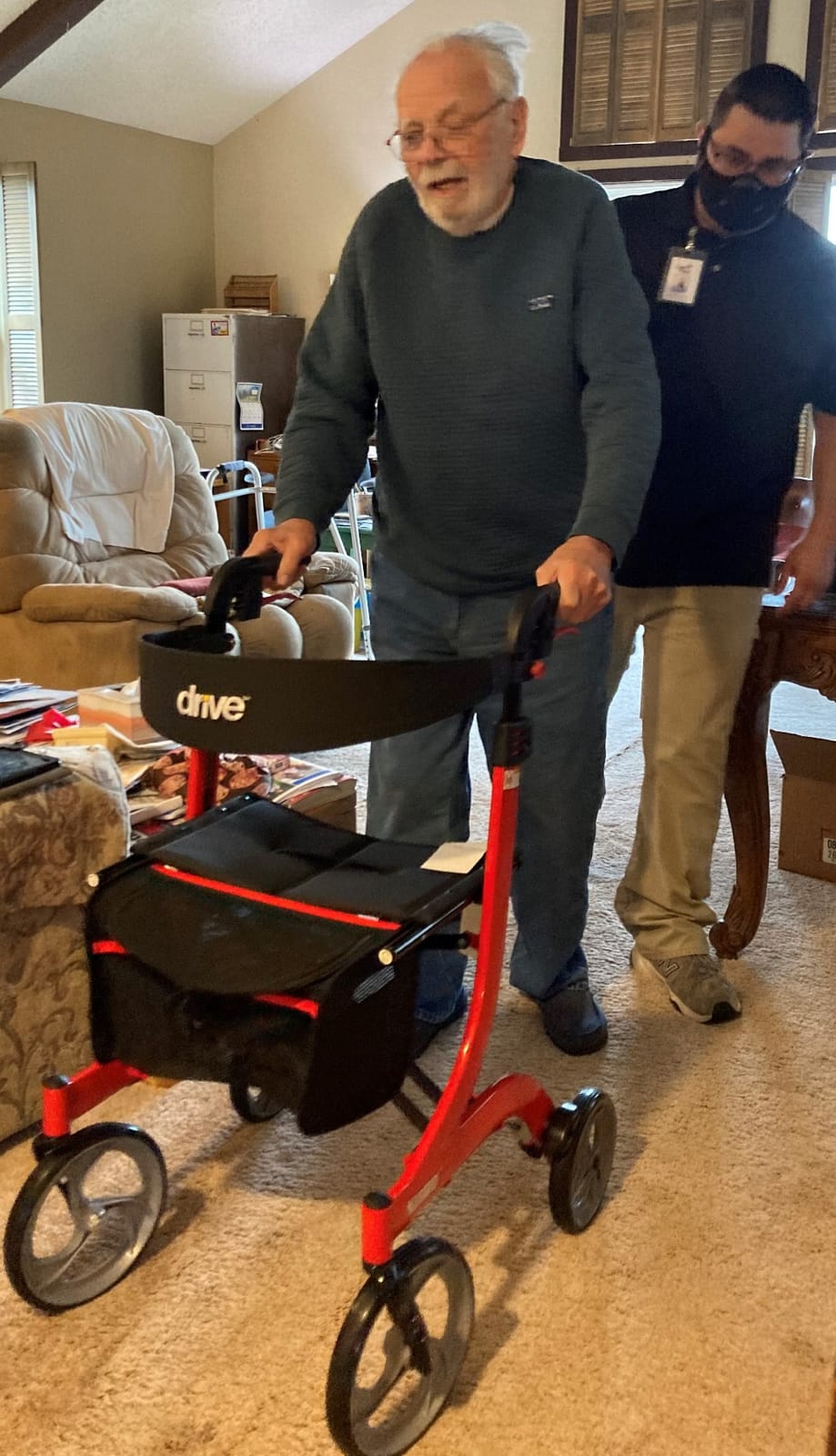
The vertical fold. Pull the side release, tip it back, and it collapses into a shape you can walk into a kitchen with one hand — exactly what an adult child handling a parent plus a walker needs.
Ride quality is the second surprise. Casters on a carbon frame absorb a surprising amount of chatter from expansion joints, with far less vibration in the hands than a steel-framed walker of the same size.
Where it falls short
These are 10 inch front wheels, so on loose gravel or a rutted dirt track the 12 inch models will feel calmer. It is also narrower, which means less deck to stand on while stopping downhill.
For a smooth sidewalk on a light budget, the Goplus later in this list covers the basics. Buy the Nitro when the outing itself is the point.
2. helavo All Terrain 12 Inch Pneumatic – Best for Gravel and Dirt
Helavo All Terrain Walker, 12″ Pneumatic Tires, Outdoor Rollator Walker
- Smoothest ride we tested on gravel and dirt
- Large wheels clear roots
- ruts and mud without tipping
- Seat riser steps the front wheels over curbs
- Folds in seconds using a seat strap
- Pneumatic tires need regular inflation checks
- Brake cables can snag in tight garden spaces
- Supplied storage tote is small and flimsy
This is the model that explains why people call a rollator the best walkers for outdoor use rather than just a walker. Twelve inch pneumatic front tires and 10 inch rear wheels soak up ruts, roots and loose gravel, and the air keeps vibration out of the wrists and shoulders.
Across more than 2,000 ratings the pattern is consistent. Owners describe gliding, pivoting and steering over mud without tipping, and several say the smooth ride is what let a relative return to outdoor activities after months indoors.
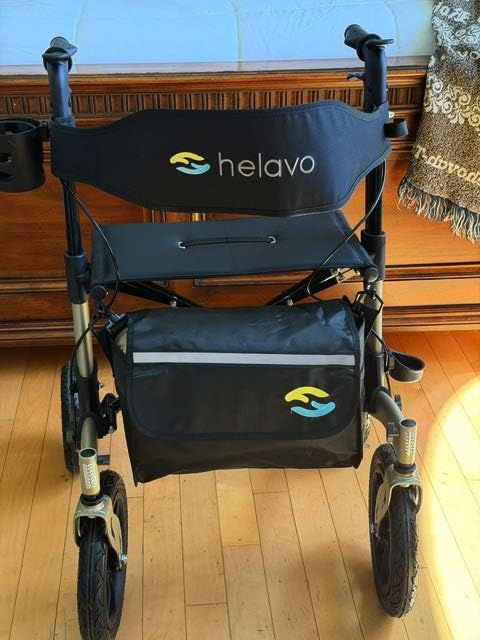
The rear-wheel step riser deserves more attention than it gets. Tip the walker back and you can lift the 12 inch front wheels over a curb or threshold instead of dragging them — the single trick that separates an outdoor walker from an indoor one in daily use.
Handles adjust from 31.9 to 37.0 inches, covering roughly 4 foot 11 to 6 foot 3, and the reinforced seat and curved padded backrest stayed comfortable on long walks.
What you will notice in the first week
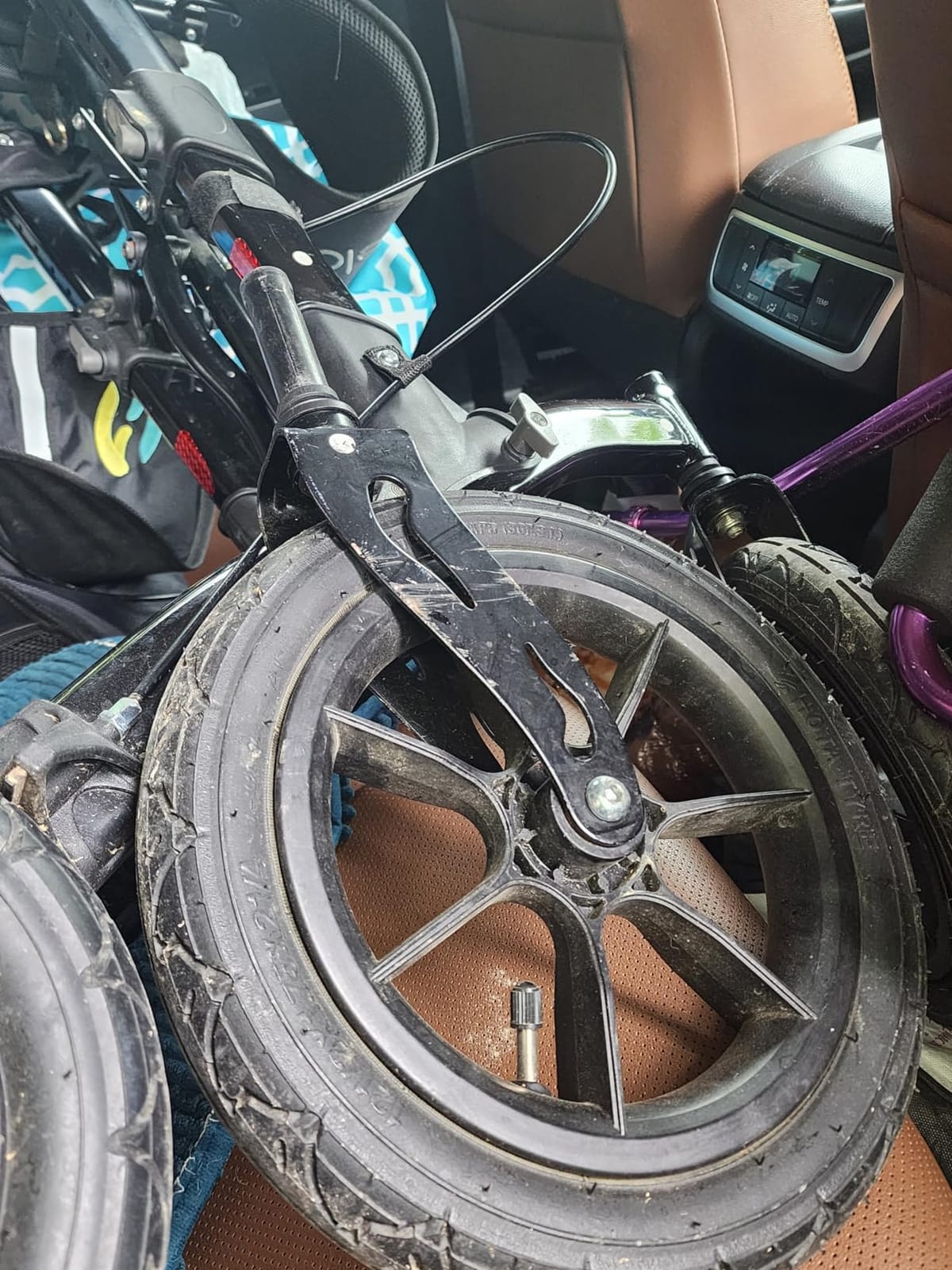
The fold. It collapses in seconds by pulling a strap under the seat to about 30 by 11 by 32 inches, small enough for a hatchback cargo area or a hall closet. Caregivers who load a walker daily feel the difference immediately.
You will also notice the ride. On a rough rural lane the difference from a solid-tire walker is not subtle — it is the difference between a walk and an effort.
Where it falls short
Pneumatic means maintenance: check pressure before every outing, carry a pump, and know that a thorn ends the walk until you fix it. If you expect regular flats, look at the solid rubber version of this model below.
At 20.9 lbs it sits at the line where one-person loading gets difficult, and one owner received a tire slightly out of round that caught the brake pad. Inspect the tires before the first outing.
3. MAXWALK 12 Inch All Terrain Rollator – Best Rated for Outdoor Use
MAXWALK Rollator Walker for Seniors with Seat, 12″ All Terrain Wheels, Gold
- 12 inch all-terrain tires with a large contact area
- Brake cables routed inside the frame to prevent snagging
- Triangular frame supports 300 lb at 20.3 lb
- Folds in seconds by pulling the seat cord
- Seat sits at 22.2 inch which is high for shorter users
- Not recommended for very soft or deep sand
- Heavier feel than travel rollators
MAXWALK’s 12 inch model is the middle path most buyers should start from. Rubber all-terrain wheels with 360 degree swivel give a bigger contact patch on gravel, lawn and carpet alike, and you get pneumatic-free simplicity without losing the diameter that makes outdoor use work.
At 4.5 stars across 997 ratings it is among the best-reviewed large-wheel rollators we evaluated, and the built-in brake cable routing comes up constantly. Cables inside the frame cannot snag on the frame or trip a caregiver walking behind.
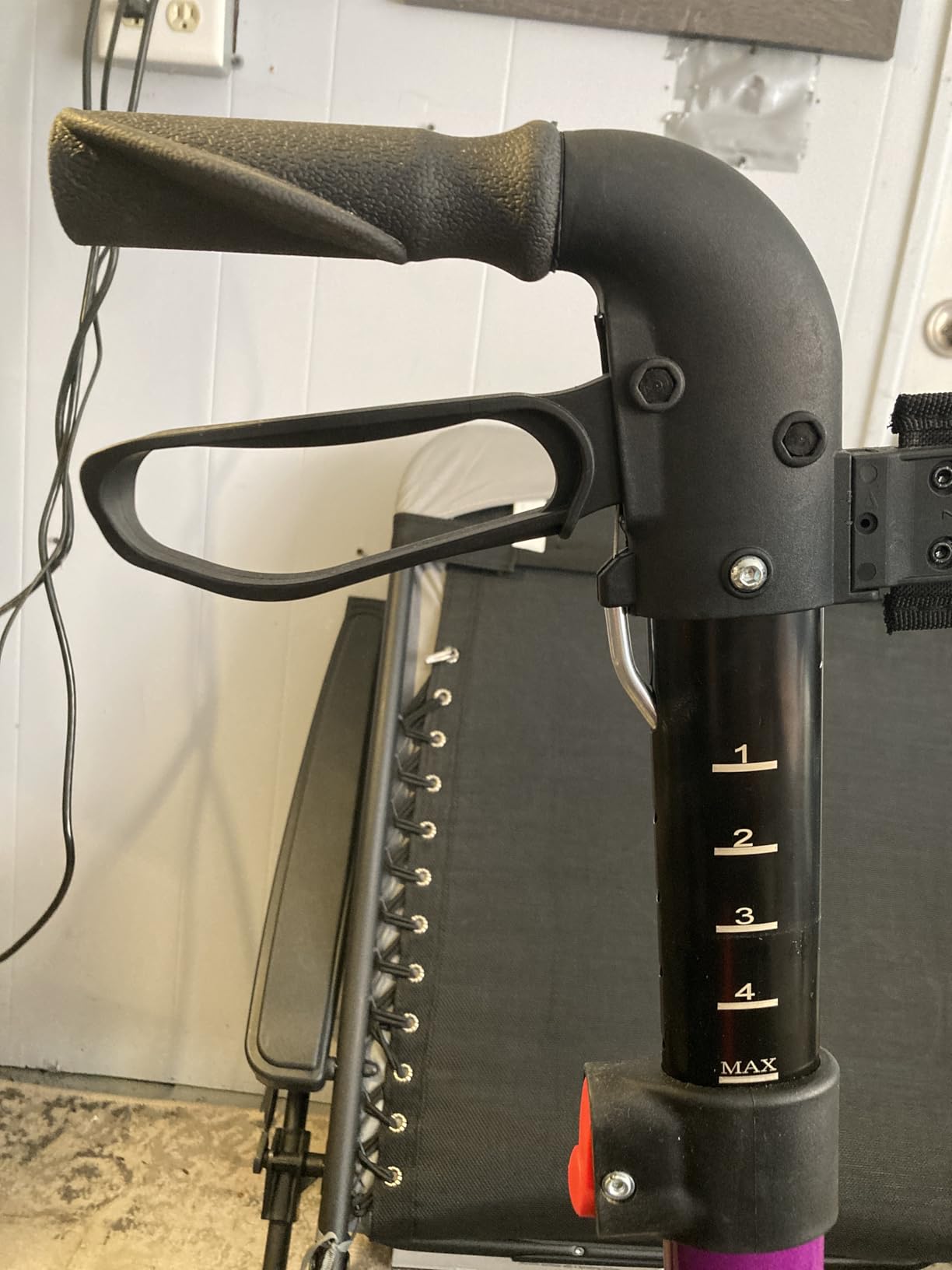
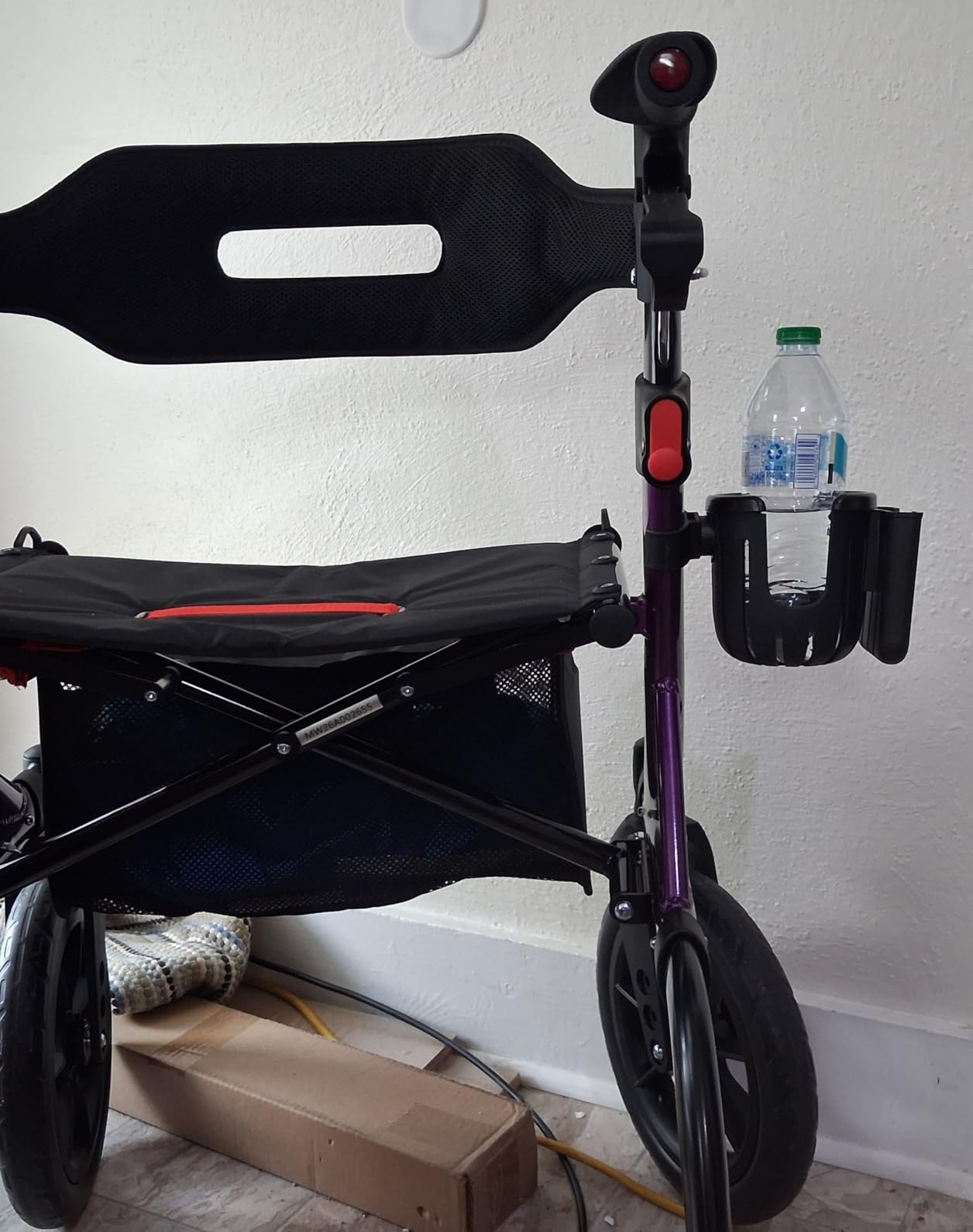
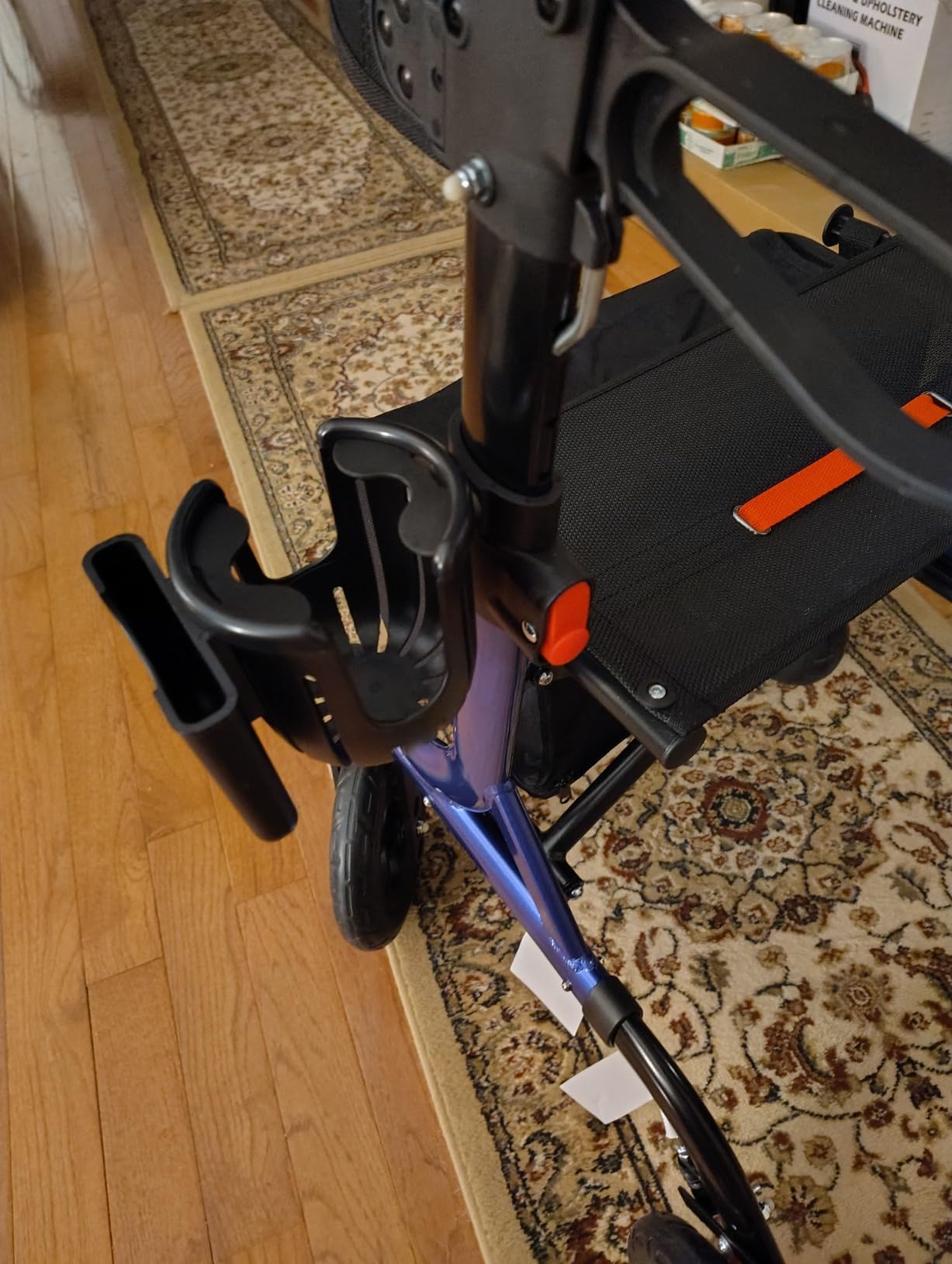
The triangular aluminum structure carries up to 300 lbs at 20.3 lbs, and the seat folds via a red pull cord most people find on the first try. Removable cup holder, cane holder and a storage pouch come standard, which is more than several rivals manage at this weight.
Handles adjust across five levels from 33.5 to 37.4 inches, fitting roughly 5 foot to 6 foot 5, and the manufacturer backs it with an 18-month warranty and lifetime support.
What you will notice in the first week
Quietness. On laminate, carpet and hardwood these 12 inch rubber wheels produce far less noise than pneumatic versions, which matters if the walker lives in a hallway and gets used early in the morning.
The swivel front wheels make tight turns easier too. Pivoting in a doorway or lining up with a grocery aisle takes one hand and a small nudge rather than a shuffle.
Where it falls short
The 22.2 inch seat height is the most repeated reservation in the reviews, and it deserves a test sit. A shorter or weaker user may find standing up from that height difficult.
Rubber also means a firmer ride on broken asphalt than air-filled tires give you, and deep soft sand is outside what this tread can manage. For a paved suburb with gravel shoulders it fits well. For rough farm tracks, step up to the pneumatic model above it.
4. VOCIC Z51 2 in 1 Combo – Best for Long Outings With a Caregiver
VOCIC Z51 Walker for Seniors, 2 in 1 Walker Wheelchair Combo, All Terrain
- Converts from walking rollator to transport chair in seconds
- Flat-proof rubber wheels add traction and friction
- Extended backrest makes seated users more stable
- One-hand fold for car and closet storage
- At 26.7 lb the transport chair is not self-propelled
- 10 inch wheels are smaller than the 12 inch all-terrain models
- Backrest adjustment is limited
The Z51 answers a question the rest of this list ignores: what happens when someone tires halfway? It walks as a rollator, then converts into a pushed transport chair in seconds, so the person who planned a two-hour garden visit still reaches the car.
With more than 1,000 ratings this is one of the better-established 2-in-1 designs available, and the feature owners praise most is the backrest extended by 4 inches. Shifting the center of gravity backward makes a seated user noticeably more stable on a slope or uneven ground.
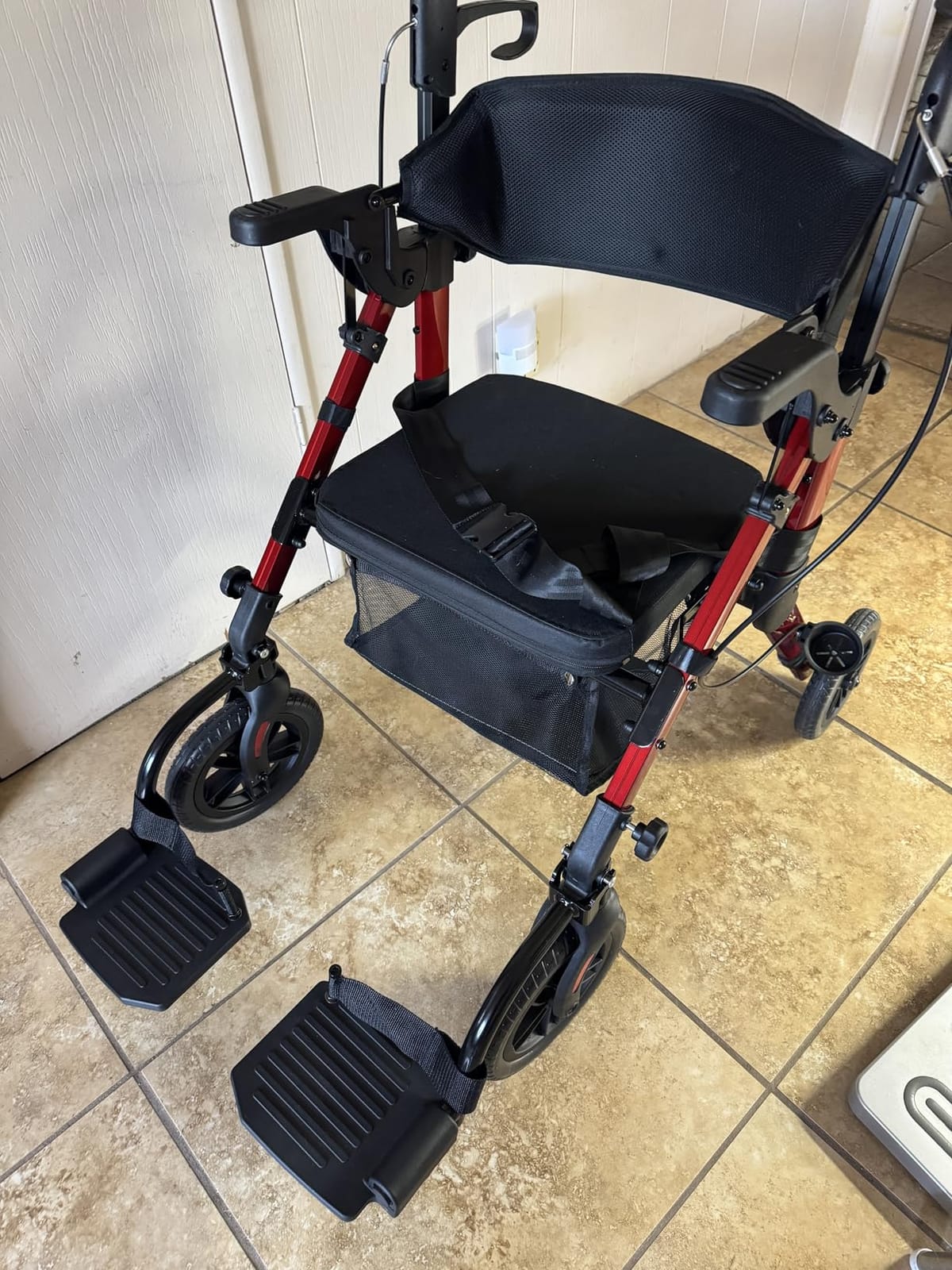
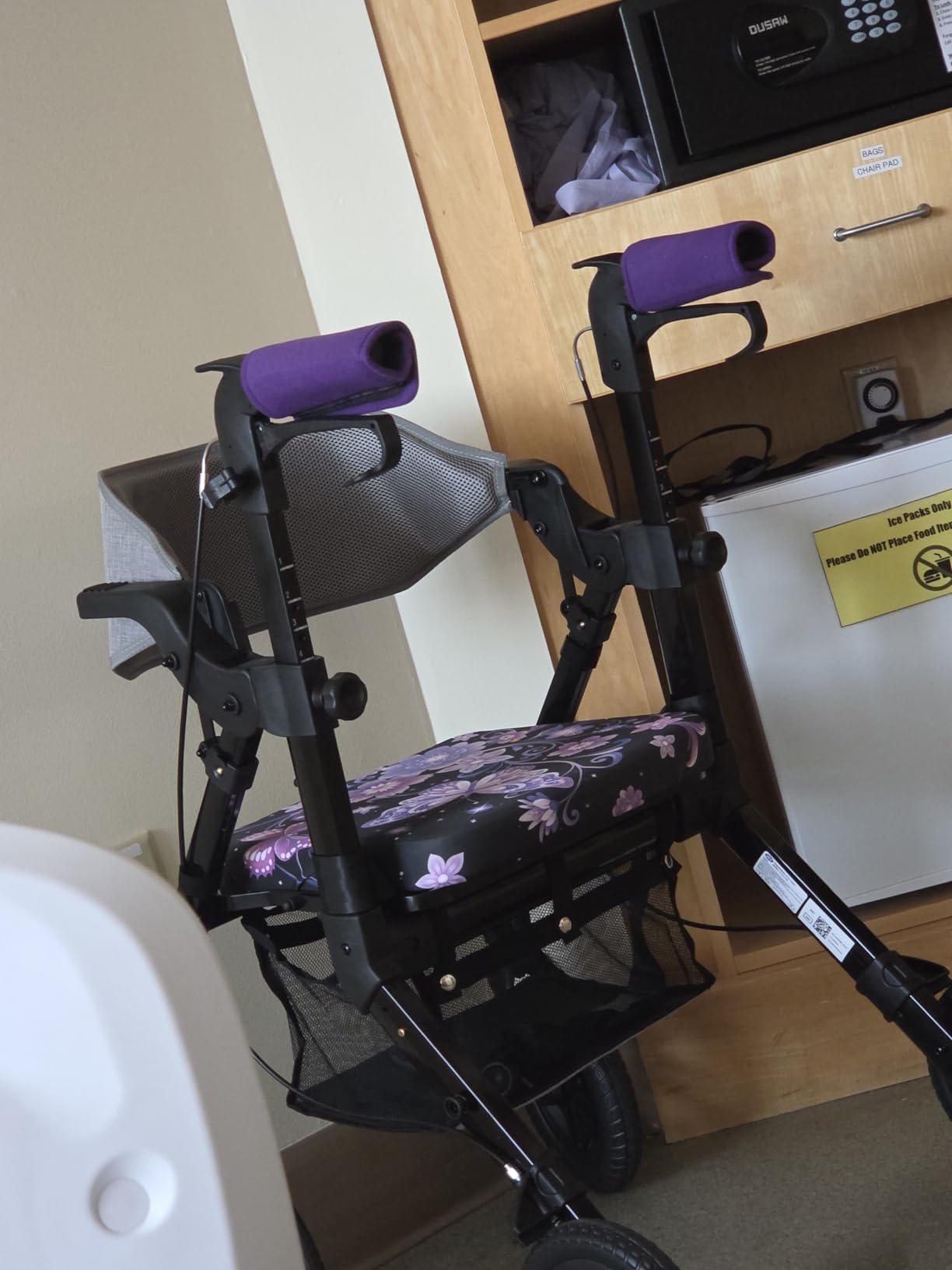
The non-inflatable rubber wheels are a deliberate choice for people done worrying about punctures, and they add traction and friction compared with a plain plastic caster. Ten inch front wheels handle a reasonable range of surfaces, and the frame clears doorways of 24 inches or wider.
Handles and backrest both adjust, and there are handbrakes plus a security strap for the seated position. The one-hand fold takes it to about 20 by 25 by 34 inches for a trunk.
What you will notice in the first week
The conversion. Anyone who has helped a parent at the end of a long walk recognizes the value of not calling for help. The chair position is for being pushed, not propelling yourself, and it does not replace a wheelchair for someone who cannot bear weight at all.
The wide 24 inch profile is a quiet second advantage. Roomier frames fit larger users and wider doorways, and shoppers above average size often find standard rollator frames too narrow.
Where it falls short
At 26.7 lbs it is one of the heavier models here, and that weight is exactly what makes the transport chair function push-only. It is a two-person car load, so plan for a caregiver rather than solo loading.
The 10 inch wheels also give ground to the true 12 inch models. If your route is gravel or a dirt trail rather than sidewalk and lawn, the ride will be firmer than the picks above.
5. Comodita Tipo All Terrain Rollator – Best for an Extra Wide Seat
- Extra wide seat is easy to rest on and rise from
- Pneumatic tires absorb bumps before vibration reaches the neck
- Double fold fits between car passengers
- Longer wheelbase adds stability for heavier users
- Smooth slick tires can slide on sloped surfaces
- Tires arrive with no air and need a pump
- Heaviest model here with a fixed backrest
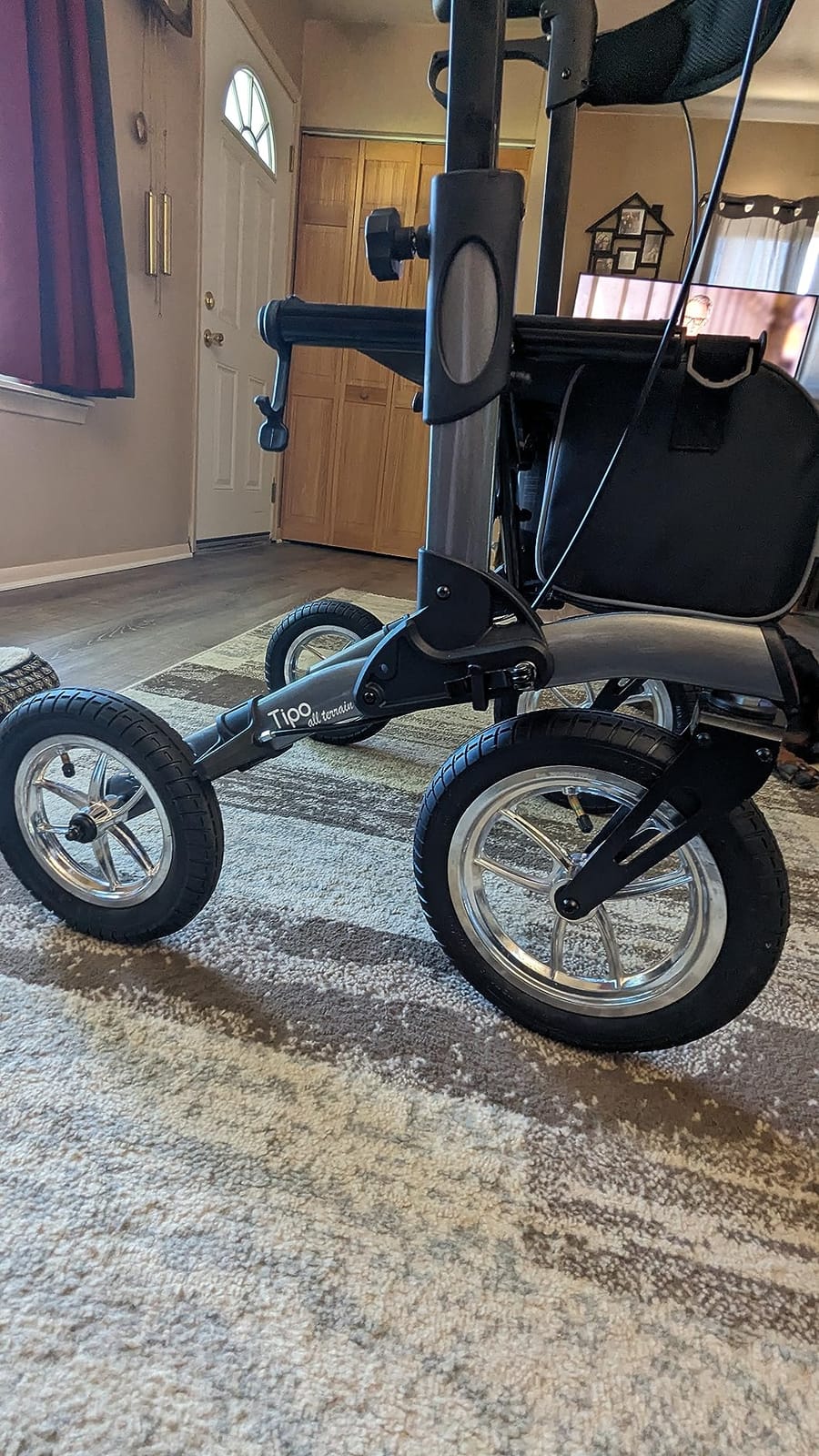
Seat size is why this one earns its place. A 17.5 inch wide nylon seat with a padded ergonomic backrest is meaningfully larger than the seats on most competitors, and it is the pick for anyone disappointed by a seat too narrow to actually sit on for a real break.
Long-term owners report it holding up through a year and a half of daily outdoor use, and they consistently note the absence of front-wheel shudder. The longer wheelbase and larger footprint add real stability, which is what a heavier user needs on a slope.
The double-fold action collapses side to side into a narrow shape that can travel between car passengers or sit in a tight hallway. A transport bag is included, along with a cup holder, a cane holder and four light reflectors for evening walks.
Recommended for users roughly 5 foot 4 to 6 foot 4, with hand brakes that lock the rear wheels when you sit. Durability is the story here, not light weight.
What you will notice in the first week
Rolling quality. Twelve inch aluminum front wheels with pneumatic tires move over cobblestone, boardwalks and firm sand with a smoothness smaller casters cannot match, and the tires take the sting out of uneven pavement.
Double folding solves a real storage problem. Side-to-side folding gets it into a narrow closet or the gap between two front seats, where a front-to-back fold simply will not fit.
Where it falls short
At 27 lbs it is the least portable model in this group and a two-person lift into a vehicle. Buy it for the ride and the seat, not for solo transport.
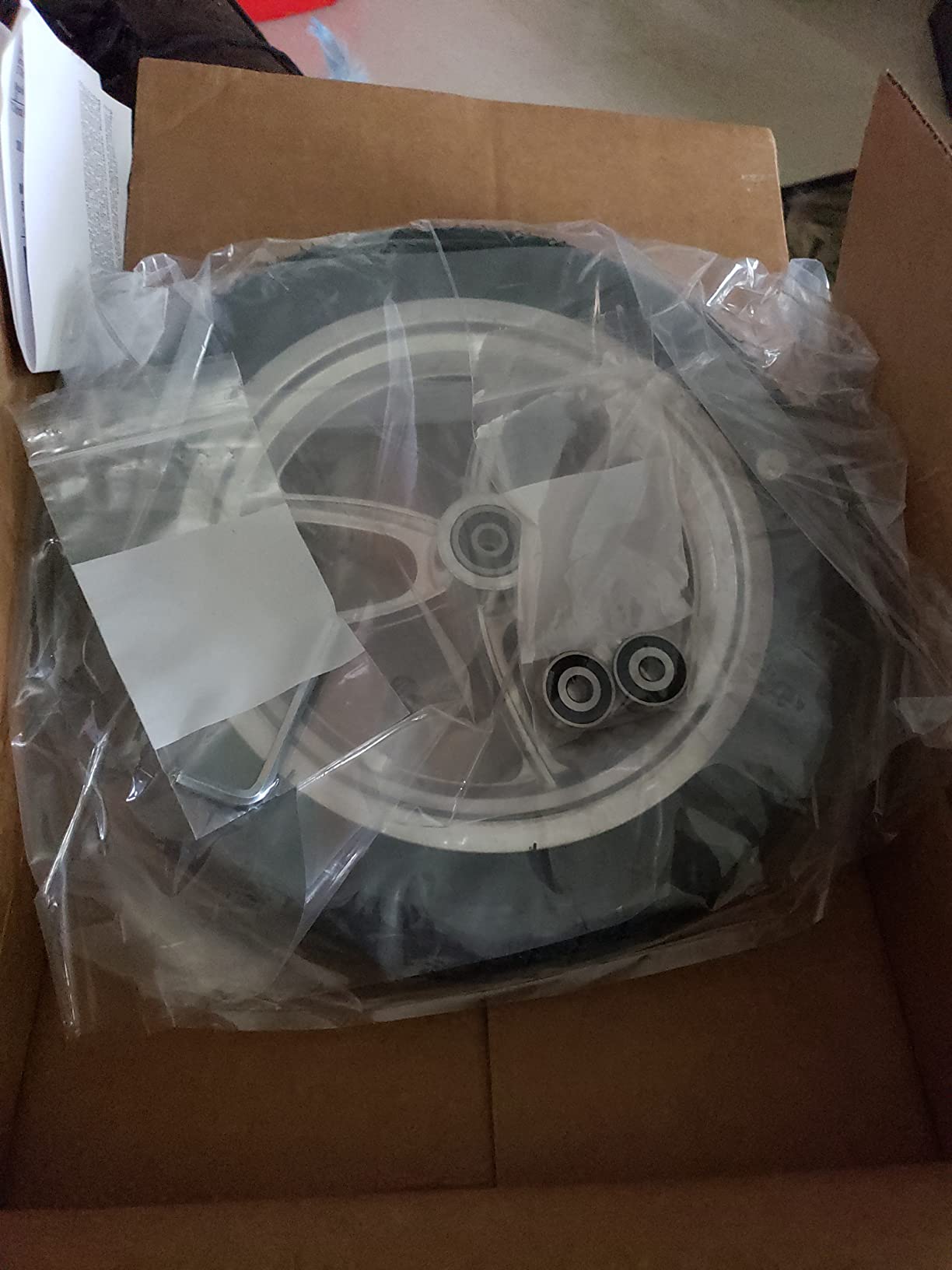
The tires are smooth slicks with little tread, and owners report they can slide even with the brakes applied on sloped surfaces. They also arrive with no air, so you need a pump before the first outing, and some owners report inner tubes going flat repeatedly.
6. RollisRoll 12 Inch Big Rubber Wheels – Best for Narrow Doorways
- Oversized wheels roll over sidewalk cracks and gravel without wobble
- Frame feels solid at 19.2 lb
- Folds in three seconds and stands upright on its wheels
- Reflective strips improve visibility outdoors
- Strong odor out of the box that takes days to fade
- Cup holder suits tall thin bottles rather than mugs
- Seat could be larger for some users
Most big-wheel rollators are wide, and width is what people hit first in an older house. At 23.8 inches overall, this one clears narrow doorways and older elevators while still running 12 inch front and 10 inch rear rubber wheels with 360 degree swivel.
Reviewers of this model talk about using it on hikes and rough farm tracks, and the 4.5 rating across 307 reviews puts it in solid company. The reinforced aluminum alloy frame supports 300 lbs at 19.2 lbs, a good ratio for something this size.
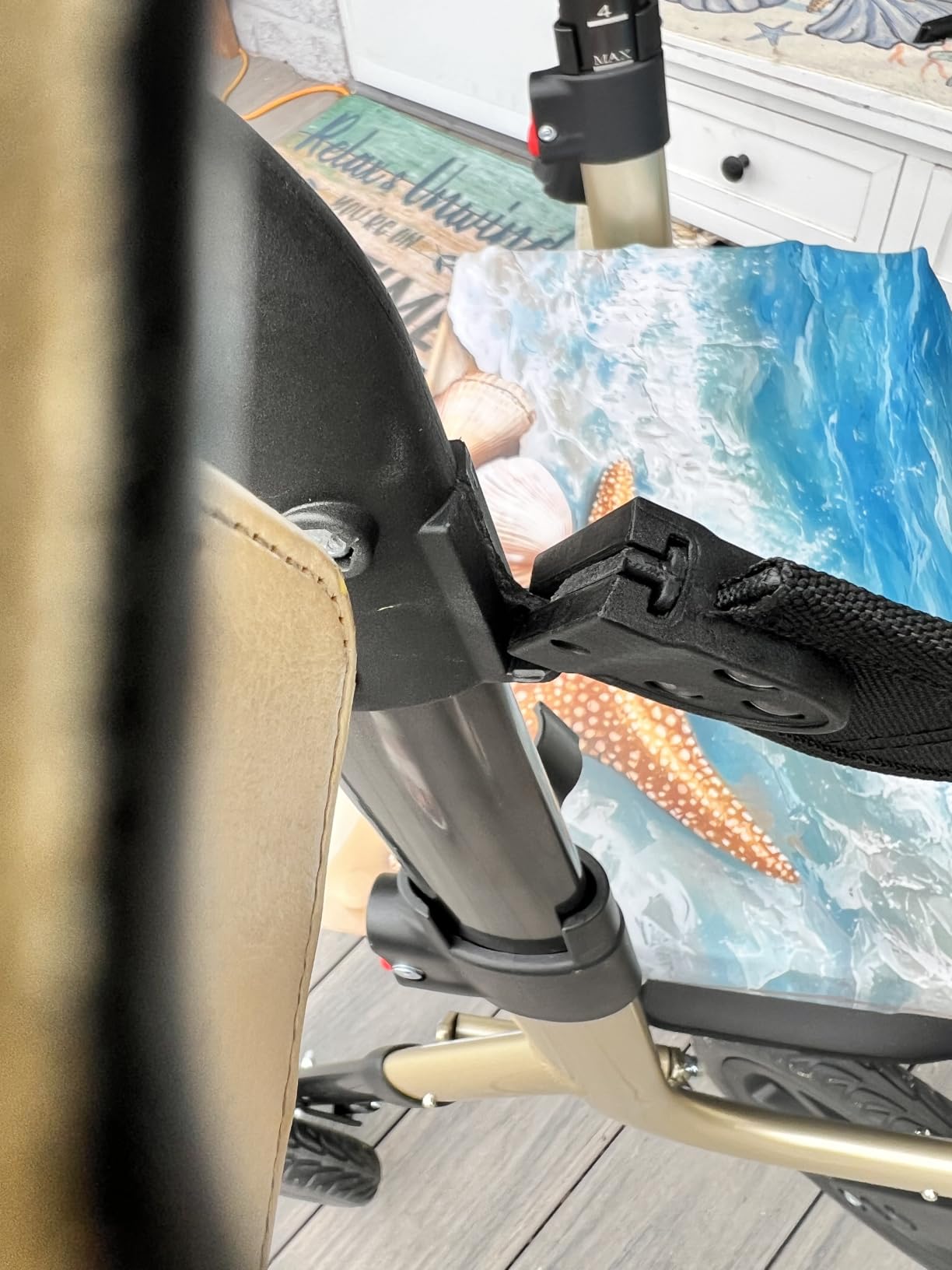
The three-second quick fold is unusual at this size, and the folded frame stands upright on its wheels, so it leans in a corner instead of lying on the floor. Tool-free assembly takes about five minutes, backed by an 18-month warranty.
Cup holder, large storage bag, cane holder and reflective strips are included, and the reflective tape is genuinely useful for anyone walking at dusk.
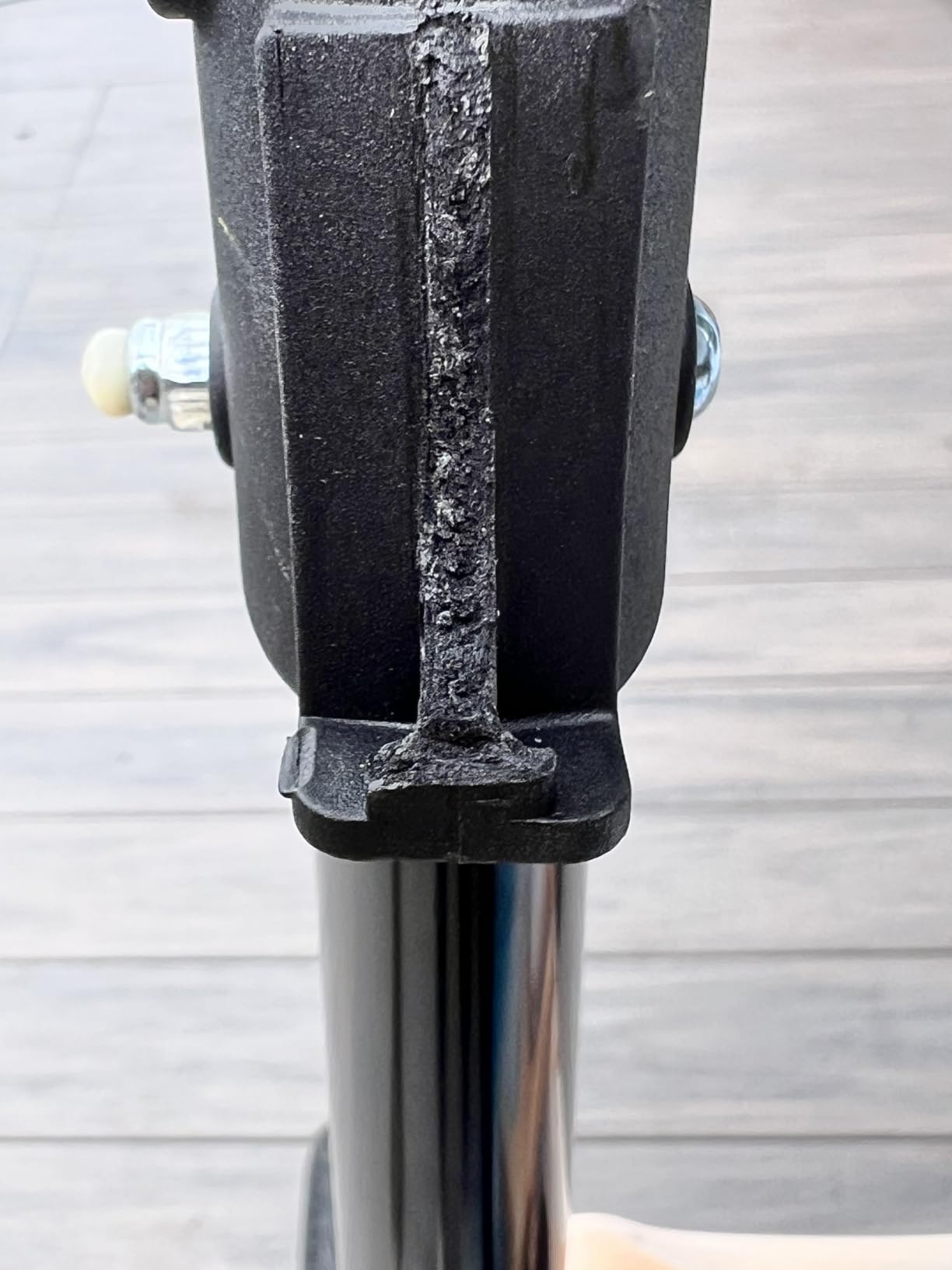
What you will notice in the first week
No front-wheel wobble. That sounds minor until you have pushed a walker with a shimmy, which makes the frame rattle and can unbalance someone already relying on it for stability.
The upright fold also saves space in a hallway, which is where most of these walkers actually live between outings.
Where it falls short
It arrives with a strong manufacturing smell that can take days of airing to dissipate. Not a defect, but worth knowing if the walker sleeps in a bedroom or a small apartment.
Accessories are mixed. The cup holder fits tall thin bottles rather than a mug, the under-seat bag is impractical for shopping where store staff may object, and the seat could be larger above average. Some users remove the backrest because it blocks a seated person’s view.
7. helavo 12 Inch Solid Rubber Tires – Best for Thorny Trails and Sharp Gravel
Helavo All Terrain Walker, 12″ Solid Rubber Tires, Outdoor Rollator Walker
- Flat-free tires never need inflating
- 12 inch wheels handle gravel drives and thick grass well
- Roughly 20 lb and foldable for a vehicle
- Tires swap with the pneumatic version of the same model
- Solid tires have less grip and feel harsher over rough ground
- One owner reported a front wheel locking on smooth pavement
- Seat depth is shallow and the seat height is fixed
This is the same walker as our gravel pick with a different tire, and the difference in how people buy it is the whole story. Owners choose it specifically to stop worrying about flats on thorny trails, farm tracks and sharp gravel, where a puncture ends the outing.
It shares the 12 inch front and 10 inch rear diameter, the aluminum frame rated to 300 lbs, and handle adjustment from 31.9 to 37.0 inches. At 789 ratings it is one of the better-established large-wheel options, and the brand sends replacement parts quickly.
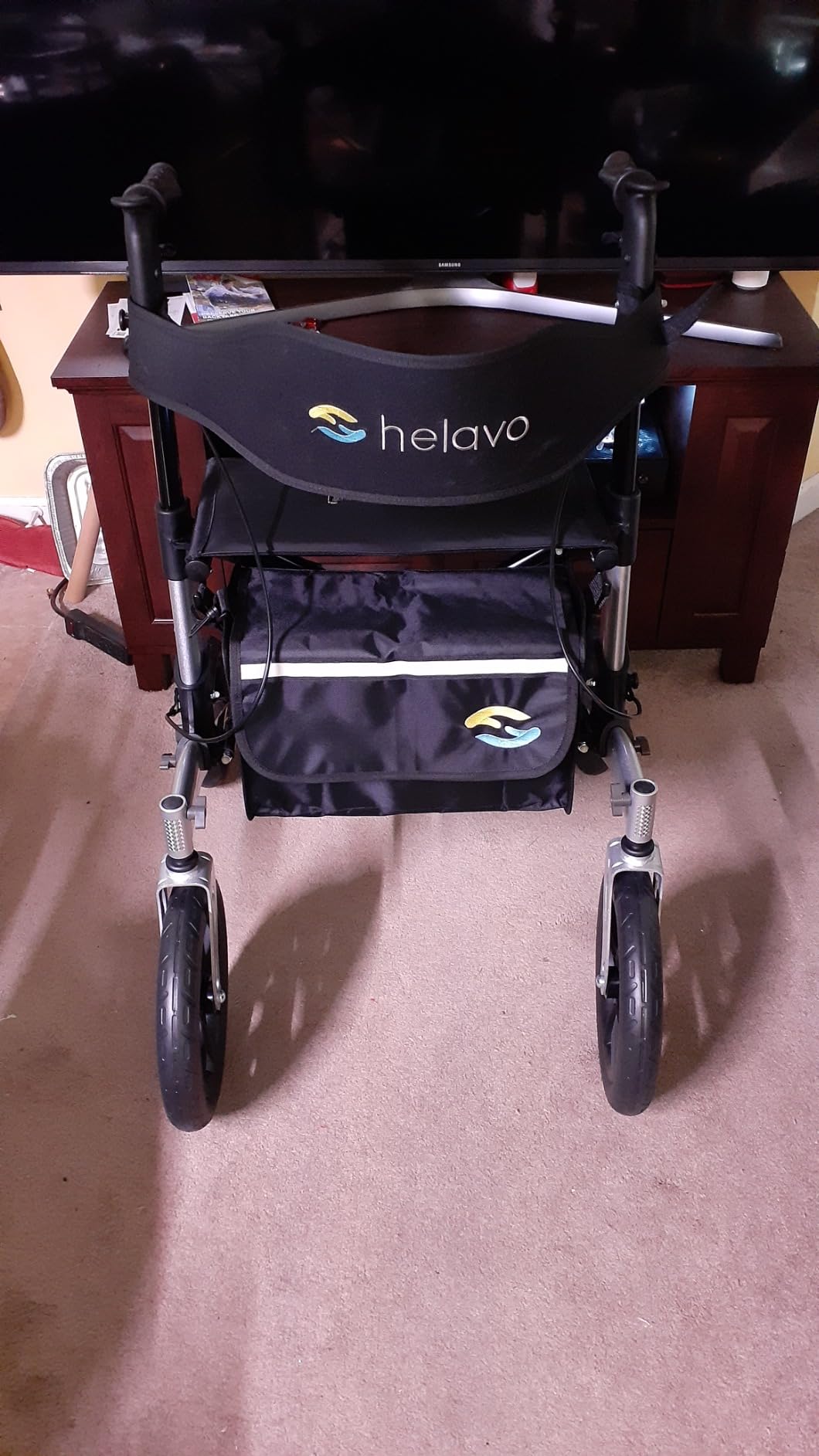
The clever detail is interchangeability. The tires swap with the pneumatic version of the same model, so you can start flat-free and move to air-filled if the ride matters more to you than the punctures.
A cup holder, cane holder and parking brake are included, and the folded package matches the pneumatic model at roughly 30 by 11 by 32 inches.
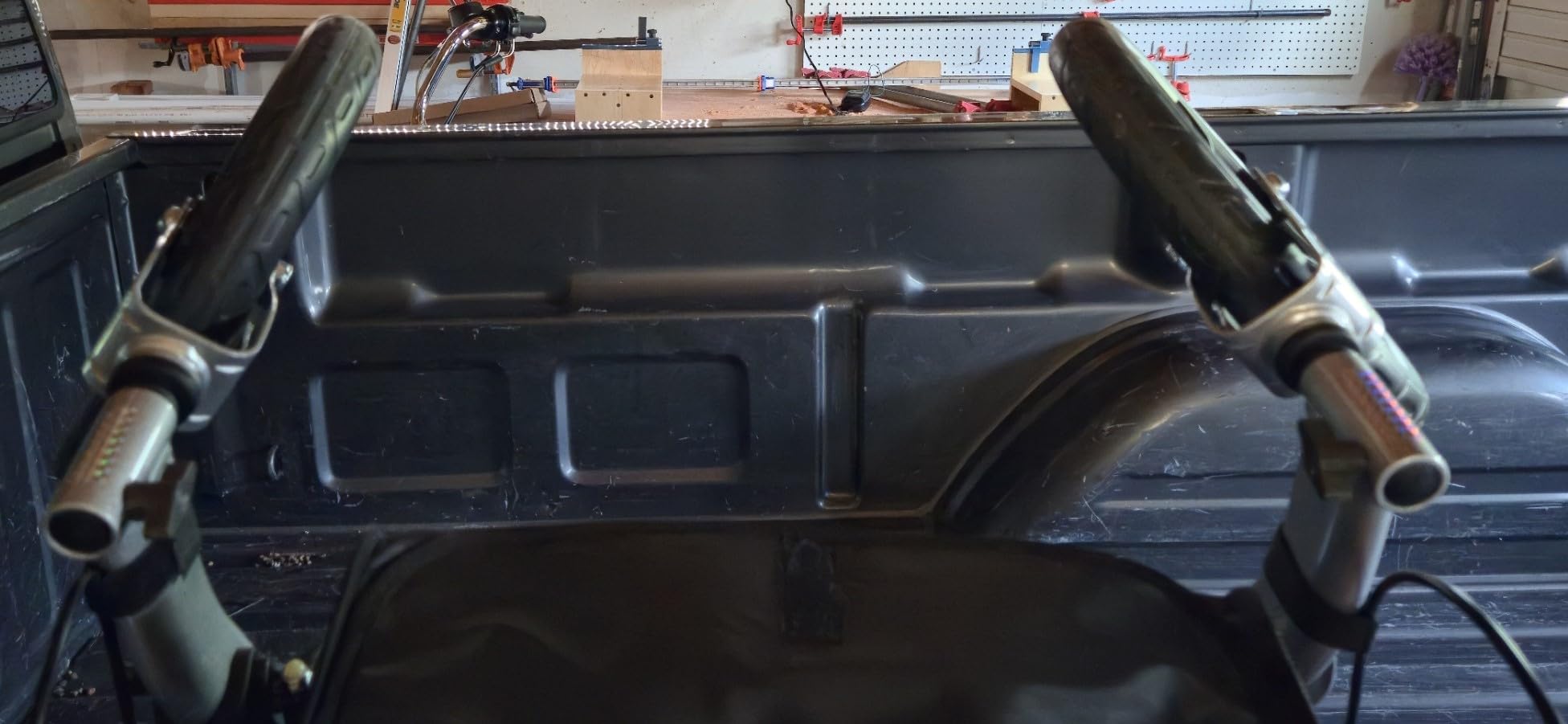
What you will notice in the first week
Not maintaining tires. There is no pressure to check, no tube to patch and no pump to carry, and for anyone crossing gravel, rose bushes or a gravel driveway that removes the most common reason a walk gets cut short.
Wheel size is the other surprise. Owners report these 12 inch solid wheels handling gravel drives and thick grass far better than a standard walker, which is a fair argument for buying a larger wheel even with a harder tire.
Where it falls short
Solid rubber has less grip and a firmer ride than pneumatic tires, and that shows most on rough ground and anything sloped. One owner reported a front wheel locking up on smooth pavement, a rare but real failure worth knowing about.
Assembly takes longer than budget models and some users had to file burrs off drilled holes. The seat is high, fixed and shallow, and the seat-lift strap hardware can break or rust. If someone sits down often, test the seat first.
8. byACRE Carbon Overland – Best for Air Travel and Stairs
byACRE Carbon Overland All Terrain Rollator Walker, 14.8 lbs, Royal Blue
- Light enough to carry down stairs and stow in a vehicle
- Arrives fully assembled needing no tools
- Folds narrow enough for a plane cabin or cruise gangway
- Internal brake cables avoid snagging
- Seat fabric can fray early and replacements are not sold
- Some units arrived without a backrest
- Lowest average rating here at 4.1
When the walking is the holiday, weight rules everything. The Carbon Overland weighs 14.8 lbs on a carbon fiber frame, carries up to 330 lbs, and folds narrow enough for a plane cabin, a cruise gangway or a crowded terminal — a range of use nothing else here covers.
It arrives fully assembled with no tools required and backs the frame with a lifetime warranty. Owners praise the one-second fold, the internal brake cables and the way the wheels handle grass, mud and park tracks off the pavement.
Two details matter for travel. The narrow fold fits where a 12 inch-wheel walker cannot, and the light frame means one person can carry it up a jet bridge staircase without asking a stranger for help.
Handle height adjusts from 32.7 to 37.8 inches. The finishes also run a step above the rest of this list, and several owners mention that the appearance changes how someone feels about using it.
What you will notice in the first week
Weight, immediately. If the buyer is a caregiver loading a walker into a car alone, this is the difference between a two-handed lift and one hand. The same applies to stairs in a home with bedrooms upstairs.
It also rolls away if the brakes are not applied, so make the parking brake a habit from day one rather than learning that on a slope.
Where it falls short
The seat fabric can fray within a few uses, and replacement seats are not sold on the company’s own site. Several owners also received units without a backrest, or with one torn by a previous customer, so inspect the box on arrival.
Handle height tops out at 37.8 inches, lower than some users want on a steep trail, and at a 4.1 average across 256 ratings it carries the lowest rating in this group. If the trip is a rough trail rather than a travel corridor, pick a 12 inch model with a bigger tire.
9. MAXWALK 10 Inch All Terrain – Best for Grass and Park Paths
MAXWALK Foldable Rollator Walker for Seniors with Seat, 10″ All Terrain
- 10 inch wheels roll over uneven grass
- gravel and bumpy park paths
- Rubber tires are quiet on indoor floors
- Side-to-side fold lets it stand on its wheels
- Brake cables mounted inside the frame
- Mesh seat is less comfortable than a solid or foam seat
- Removable cup holder pops off and catches on doorways
- Storage pouch velcro flaps do not close securely
If your outdoor walking is lawn, park paths and neighborhood pavement rather than genuine gravel, 10 inch wheels are the efficient choice. You get most of the obstacle-clearing benefit of a larger wheel at a lighter 19.7 lbs and a folded package that stands on its own.
The 10 inch front and rear rubber wheels with 360 degree swivel roll smoothly over uneven grass and bumpy park paths, and the welded triangular aluminum frame carries up to 300 lbs. Reviewers rate it 4.5 across 276 ratings and warranty service has been responsive.
The side-to-side fold is a genuinely useful design choice. Because it collapses standing on its wheels, it leans against a wall or stands in a hatchback without lying down and collecting road grit, and the folded depth fits narrower trunks.
Handles adjust across five levels from 33 to 37 inches, and cup holder, cane holder and a storage pouch are included. Worth noting for indoor use: these rubber tires are quiet on laminate and hardwood.
What you will notice in the first week
Rolling on lawn is where the 10 inch diameter earns its keep. It tracks over uneven grass without the constant sideways correction smaller wheels demand, and turning at a driveway mouth takes a moment rather than a fight.
The upright fold also means the walker stays usable indoors between outings, which matters for anyone with a long hall.
Where it falls short
The mesh seat is the main complaint and it is a real one. For a walker whose whole job is letting someone rest, mesh is less comfortable over a long afternoon than the padded seats on the picks above.
The accessories need attention too. The cup and phone holder detaches and can catch on a doorway, and the storage pouch has velcro flaps sewn in opposing directions so it will not stay shut. On deep gravel, a 12 inch front wheel is meaningfully calmer.
10. Goplus 9.5 Inch Pneumatic Rollator – Best Budget Pick for Paved Outdoors
- Light at 18 lb with a compact folded footprint
- Quiet pneumatic rolling on asphalt
- brick and wood floors
- Aluminum structure rated to 300 lb with two hand brakes
- Six-level handle adjustment for a tailored fit
- 9.5 inch wheels are least sure on deep gravel
- ruts and mud
- Seat and backrest are smaller than full-size 12 inch models
- Backrest height is not independently adjustable
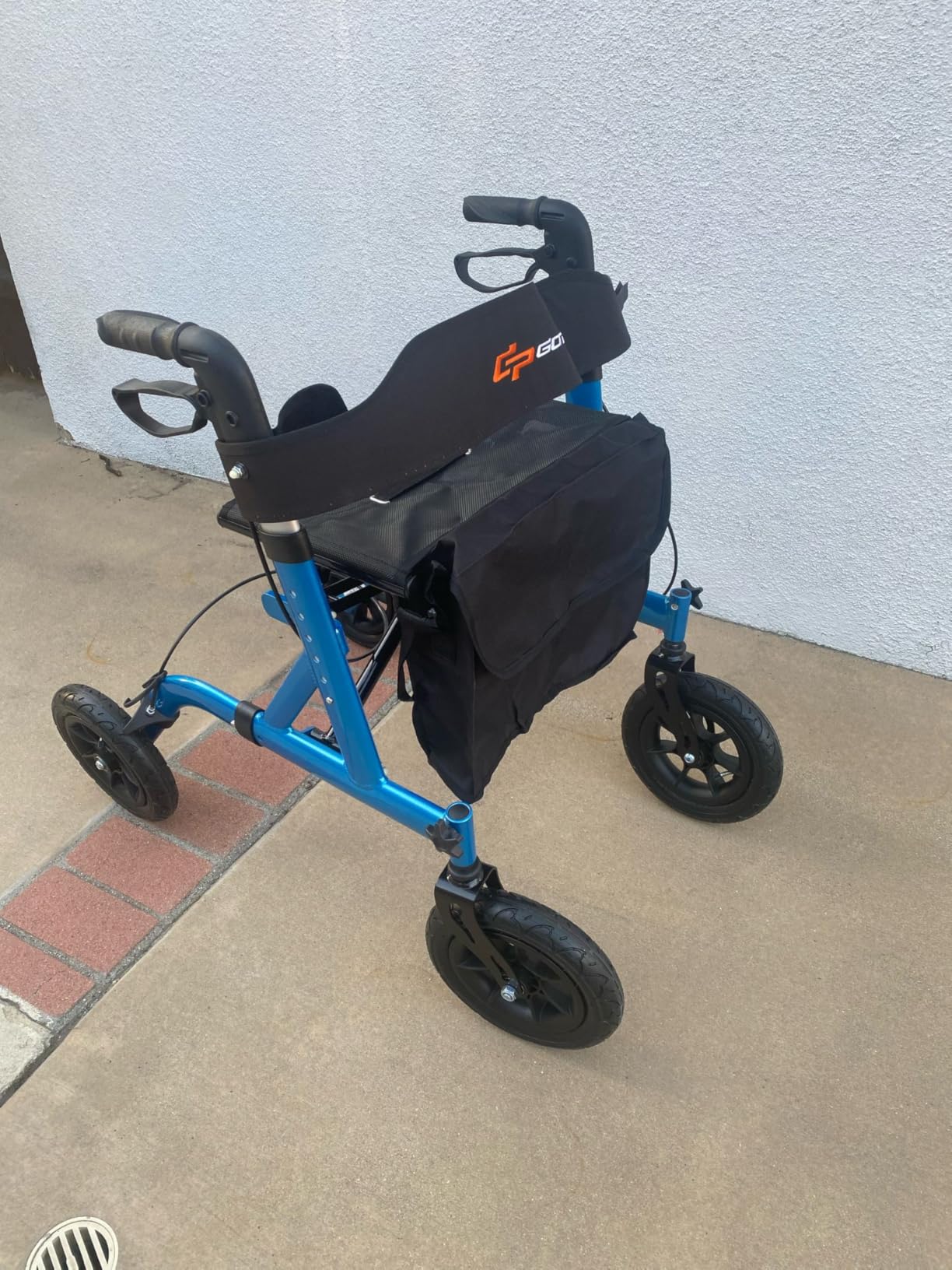
The Goplus is the value entry here, and at 18 lbs it is one of the lighter frames with a folded size of about 30 by 10 by 32 inches. Four 9.5 inch pneumatic wheels roll quietly across asphalt, concrete, brick, wood floors and outdoor paths, which covers most suburban walking.
The 4.6 average across 109 ratings is high for the segment, and the aluminum structure carries a 300 lb load capacity with non-slip handles and two hand brakes. A storage bag and umbrella holder are included.
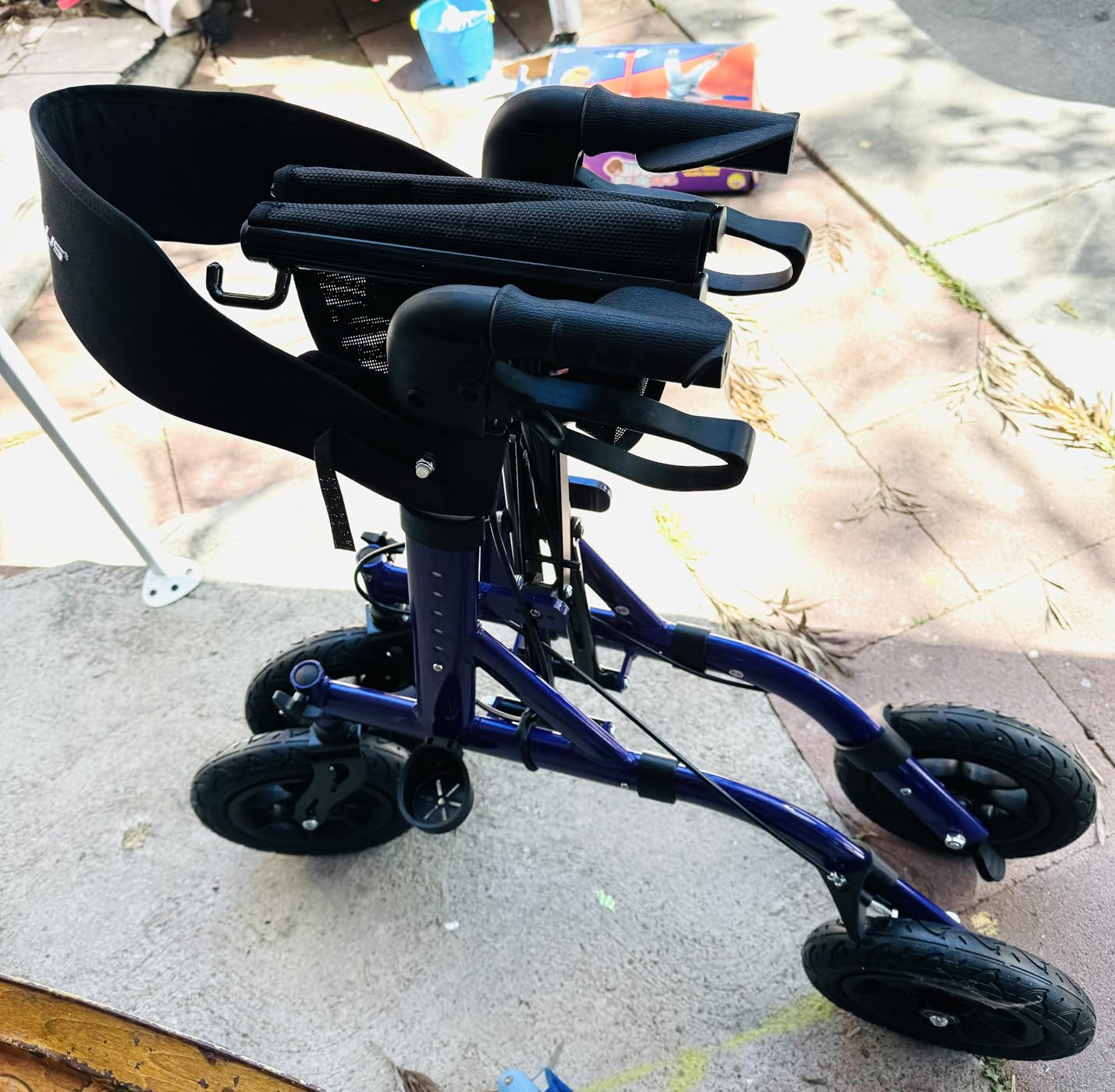
Handles adjust through six levels between 32 and 37 inches, and the large seat, backrest and armrests give a proper rest stop. The pneumatic tires are genuinely quiet for air-filled wheels, which is unusual and easy to notice.
What you trade away is diameter. At 9.5 inches these are the smallest wheels in the group, and that is a real limitation rather than a rounding error once the ground turns to deep gravel or mud.
What you will notice in the first week
Weight. At 18 lbs this is close to the point where one person can load it into a trunk without assistance, and the compact fold means it does not take over a hall closet.
Quietness is the second surprise. Pneumatic tires are often assumed to be loud, and on smooth asphalt and indoor floors these are among the quietest large-wheel models we tested.
Where it falls short
Wheel size is the honest limit. 9.5 inches will not clear a deep gravel rut, a root crossing or soft mud the way a 12 inch front wheel does, so treat this as a paved-and-path walker rather than an all-terrain one.
The seat and backrest are correspondingly smaller than full-size 12 inch models, and the backrest height cannot be adjusted independently of the handles. If long sits and tall users are part of the picture, spend up.
Pneumatic vs Solid Rubber Tires: Which One for Outdoor Use?
Pneumatic tires win on comfort and grip. Air-filled tires deform over gravel and cobblestone rather than bouncing off them, so vibration stays away from wrists, shoulders and a recently repaired hip, and the tread tends to bite better on a slope. The price is upkeep: pressure checks, a pump in the bag and a repair when a thorn finds the sidewall.
Solid rubber wins on durability and predictability. They cannot go flat, so they suit thorny trails, gravel drives and anyone who stores a walker in a shed and forgets about it for a month. Owners also report less grip and a firmer feel over broken ground, and that firmer ride is their most common complaint.
A third option appears here by design. The VOCIC uses non-inflatable rubber wheels that add traction and friction compared with a plain plastic caster, a middle ground between air and solid. If you are undecided, ask which failure you can live with: a flat on a long walk, or a harsh ride every day.
Rollator vs Standard Walker: Which Is Better Outdoors?
A standard two-wheel walker is lighter, cheaper and more familiar, and it stays in the car for short clinical trips. It also requires lifting and lowering the frame at every curb, exactly the moment falls happen, and it has no seat for anyone who tires halfway.
A rollator has four larger wheels, loop brakes that lock the rear wheels when you sit, and a padded seat. You push rather than lift, ride over cracks instead of catching on them, and can rest when you need to. The cost is weight and bulk, and a narrow hallway is harder in four.
Posture is the underrated difference. Upright rollators add forearm supports and a higher hand position, keeping the spine straighter for someone who would otherwise hunch over a handle all day. During recovery from hip or knee surgery that can be the difference between a short walk and no walk. If you are recovering from a lower-leg injury rather than a balance problem, our guide to knee walkers covers a different support style.
Medicare and Insurance Coverage for Walkers
This is the question buyers ask most and almost no roundup answers it, so here is the short version. Original Medicare Part B treats a standard walker as a covered item when a doctor documents a mobility limitation, and it is one of the few mobility aids that does not require prior authorization. A rollator is generally treated the same way.
You pay the standard Part B cost-share rather than the full retail figure, and the equipment must come from a supplier that accepts the assignment or bills Medicare directly. If a supplier is not enrolled, you can be asked to pay up front and file for reimbursement yourself, which is worth checking before buying.
Two things trip people up. A premium carbon fiber model may be billed above the plan allowance, leaving a balance you are responsible for, and upgrading purely for travel or a heavy-duty frame sometimes requires a note from the ordering clinician. Medigap and many Medicare Advantage plans cover the remaining cost-share, so check with your plan rather than assuming. Walkers are also commonly an eligible expense for a flexible spending account or health savings account.
Maintenance and Care Tips
Check tire pressure on pneumatic models monthly and before any long walk, and keep a pump with the walker rather than in a house drawer. Look for cuts, bulges and exposed casing on solid rubber, especially near thorns or broken glass.
Tighten handle and seat bolts every few months, because outdoor vibration loosens them faster than indoor use does. Check that both brake pads contact the rear tires evenly and that the brakes lock firmly enough that the walker will not roll when you sit down.
Wipe the frame after a muddy or salty walk, dry the seat fabric, and keep the folding mechanism free of grit. Store it folded indoors out of standing damp, and take it out for a short push around the block periodically so the bearings do not seize over a winter of sitting still.
Frequently Asked Questions
What are some good outdoor walkers for seniors?
Look for four-wheel rollator walkers with 8 to 12 inch wheels, loop-lock brakes that hold while seated, and a folding frame. Ten inch wheels handle cracked pavement and grass, while 12 inch front wheels are the choice for gravel and dirt paths. The models in our roundup range from 18 lbs to 27 lbs, so match the weight to whoever will load the car.
What is better, a rollator or a standard walker?
A rollator is better for outdoor use. Its larger wheels roll over cracks and curbs instead of catching on them, its loop brakes lock the rear wheels when you sit, and its padded seat lets someone rest before they are exhausted. A standard two-wheel walker is lighter and simpler, which makes it fine for short trips across smooth indoor floors.
What kind of walker will Medicare pay for?
Original Medicare Part B generally covers a standard walker and a rollator walker when a clinician documents the mobility need, and it usually does not require prior authorization. The device needs to come from a Medicare-enrolled supplier, and you pay the standard Part B cost-share instead of the full retail amount. A premium carbon fiber model may be billed above the plan allowance, leaving a balance for you.
How much will Medicare pay for a rollator walker?
Medicare Part B pays a set allowance for a rollator walker and you are responsible for the Part B cost-share on whatever your supplier charges. If the supplier bills more than the allowance, the difference is yours. Medigap and many Medicare Advantage plans cover that remaining cost-share, and walkers are also commonly an eligible expense for a flexible spending account or health savings account.
What is the best rollator for rough terrain?
The best rollator for rough terrain pairs 12 inch front wheels with a high-grip tire. Pneumatic tires roll the smoothest over gravel and cobblestone, while solid rubber tires hold up against thorns and sharp stone at the cost of a firmer ride. In our roundup the helavo 12 inch pneumatic model handled the roughest ground we tested, and the MAXWALK 12 inch is the flat-free alternative.
What wheel size do I need for grass and gravel?
Ten inch wheels are enough for lawn, park paths and cracked pavement, and they are the efficient middle choice. Move up to 12 inch front wheels for loose gravel, dirt tracks and anything with ruts, because the larger diameter rolls over the defect rather than pushing through it. Below 8 inches, a walker is an indoor product and will bog down at the first curb.
Are these walkers or trekking poles?
These are four-wheel rollator mobility walkers, not trekking poles or hiking walking sticks. A rollator has a seat, brakes, a basket and four large wheels, and it is pushed rather than planted. Trekking poles are two lightweight shafts with grips and straps, used for balance while hiking. If you are shopping for a walking aid with a seat and brakes, you are in the right place here.
The Best Walkers for Outdoor Use in 2026
After comparing ten rollators across pavement, gravel, grass and dirt, the Drive Medical Nitro Elite CF is our pick for the best walkers for outdoor use overall. Its 10 inch casters handle curbs and rough paths, its 14.5 lb carbon frame can be carried by one person, and it carries the highest rating and deepest review history in the group.
Choose the helavo 12 inch pneumatic if gravel and dirt are your terrain, the MAXWALK 12 inch if you want big wheels without air pressure to manage, and the VOCIC Z51 if someone tires halfway and a caregiver is pushing. Match the wheel diameter to the ground you actually cross, and check that whoever will lift it into the car can.
Testing lights and other outdoor gear matters for evenings spent outside, so we keep a running list of our best light bulbs for outdoor use alongside this guide.