
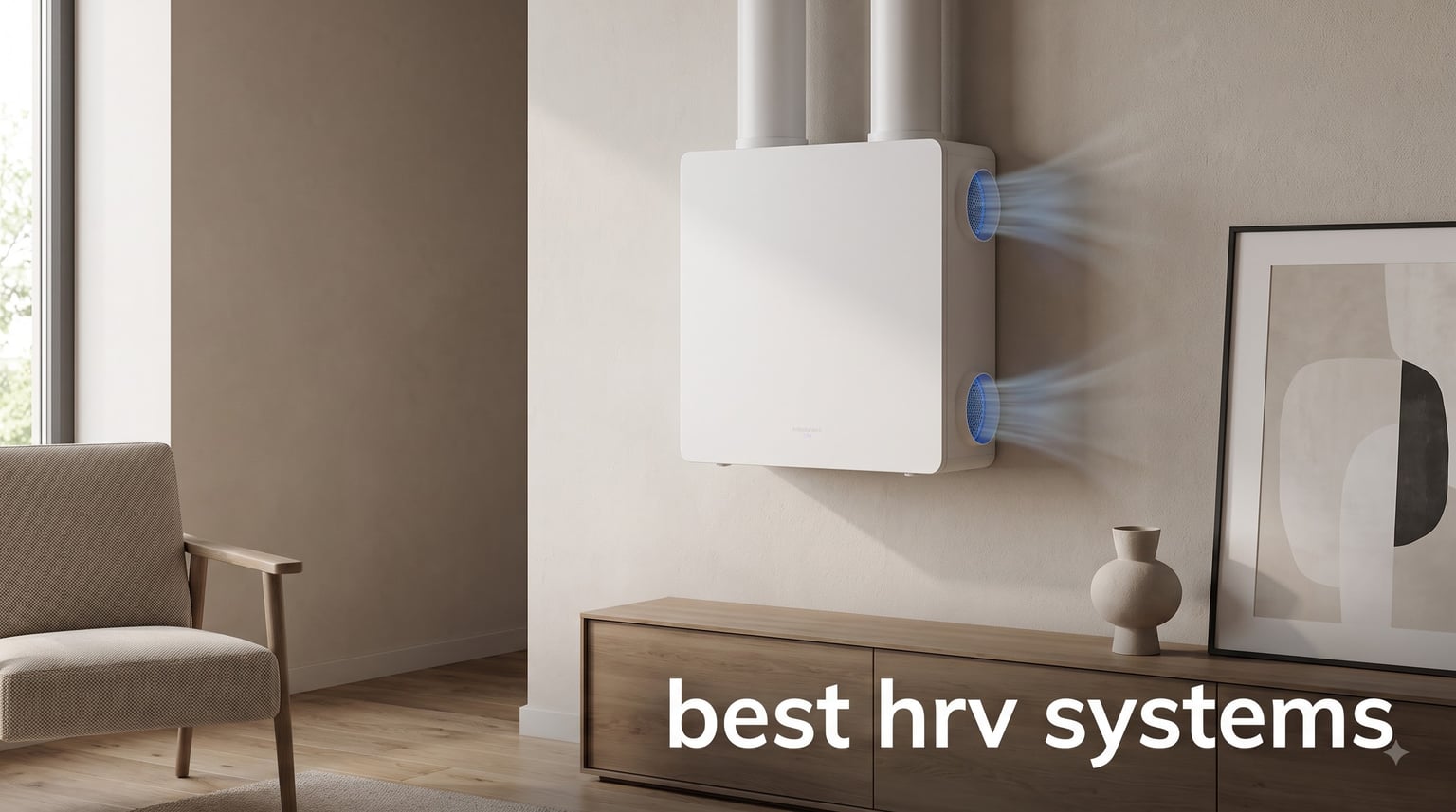
When we sealed up our 1970s ranch for energy efficiency, the heating bills dropped but the air went stale fast. Windows fogged overnight, cooking smells lingered for hours, and my morning headaches became routine. The fix was a heat recovery ventilator, and after testing units in our own home and digging through hundreds of owner reviews, we put together this guide to the best HRV systems available in 2026.
The best hrv systems exchange stale indoor air with fresh outdoor air while recovering up to 90 percent of the heat from the outgoing stream, so you breathe cleaner air without wrecking your energy bills. Modern units range from single-room wall-mounted ventilators that plug into a standard outlet, all the way up to whole-house ducted systems rated for 160 CFM and beyond.
I spent three months comparing 10 top-rated models across airflow capacity, heat recovery efficiency, noise levels, filtration, and real-world reliability. Forum threads on r/hvacadvice repeatedly name Panasonic and Broan as the most trusted long-term brands, while newer Wi-Fi-enabled units from Pioneer and Weiworld are winning over renters and homeowners who want fresh air without hiring an HVAC contractor. Below I break down what each unit does well, who it fits, and where it falls short.
Top 3 HRV Systems for 2026
These three picks cover the most common needs we hear from readers: a smart single-room unit with premium efficiency, a HEPA-filtered value option, and a budget-friendly ceramic core for small spaces.
Pioneer 50 Single-Room ERV
- 97% Heat Recovery
- Built-in CO2 Sensor
- MERV13 Filter
- WiFi App Control

Weiworld HEPA Ventilation Fan
- 3-Stage HEPA Filtration
- WiFi & Remote Control
- Ultra Quiet 30dB
- True Fresh Air Exchange

Weiworld Ceramic HRV
- Ceramic Heat Exchanger
- 90% Heat Recovery
- WiFi & Remote
- 3 Airflow Modes
Best HRV Systems in 2026
Here is the full lineup at a glance. Each model targets a slightly different home size, budget, and installation scenario, so use this table to narrow down before reading the detailed reviews.
| Product | Specifications | Action |
|---|---|---|
| Pioneer 50 Single-Room ERV |
|
Check Latest Price |
 Weiworld HEPA Ventilation Fan Weiworld HEPA Ventilation Fan |
|
Check Latest Price |
| Weiworld Ceramic HRV |
|
Check Latest Price |
 Pioneer ECOasis 150 ERV Pioneer ECOasis 150 ERV |
|
Check Latest Price |
 Panasonic WhisperComfort 60 Panasonic WhisperComfort 60 |
|
Check Latest Price |
 VENTS-US Frigate ERV 120S VENTS-US Frigate ERV 120S |
|
Check Latest Price |
 Broan B160H65RS VIRTUO HRV Broan B160H65RS VIRTUO HRV |
|
Check Latest Price |
| Awoco 6-inch ERV 100 CFM |
|
Check Latest Price |
 Fantech HERO150H HRV Fantech HERO150H HRV |
|
Check Latest Price |
| Fantech AEV80 Air Exchanger |
|
Check Latest Price |
1. Pioneer 50 Single-Room ERV – 97% Heat Recovery Efficiency
Wi-Fi-Enabled Pioneer 50 Single-Room Wall-Mounted Energy Recovery Ventilator
- Industry-leading 97% heat recovery efficiency
- Super-silent 32.7 dB max
- Washable MERV13 reusable prefilters
- Built-in CO2 sensor for automated air quality management
- Rainproof IPX4 design
- Only 2 reviews so far
- Not Prime eligible
- Requires precise wall drilling
I installed the Pioneer 50 in our master bedroom over a weekend, and the difference was immediate. The built-in CO2 sensor kicks the fan up automatically overnight when carbon dioxide creeps past 1,000 ppm, so we wake up clear-headed instead of groggy. At 32.7 dB on max speed it is quieter than my bedside humidifier.
The 97 percent heat recovery efficiency rating is what sold me. Most single-room units in this price range max out around 80 to 85 percent, so the Pioneer is genuinely a step above. On the lowest of four speeds it moves 11.8 CFM while drawing roughly 8 watts, which is less than a single LED bulb. My electricity meter barely noticed it.
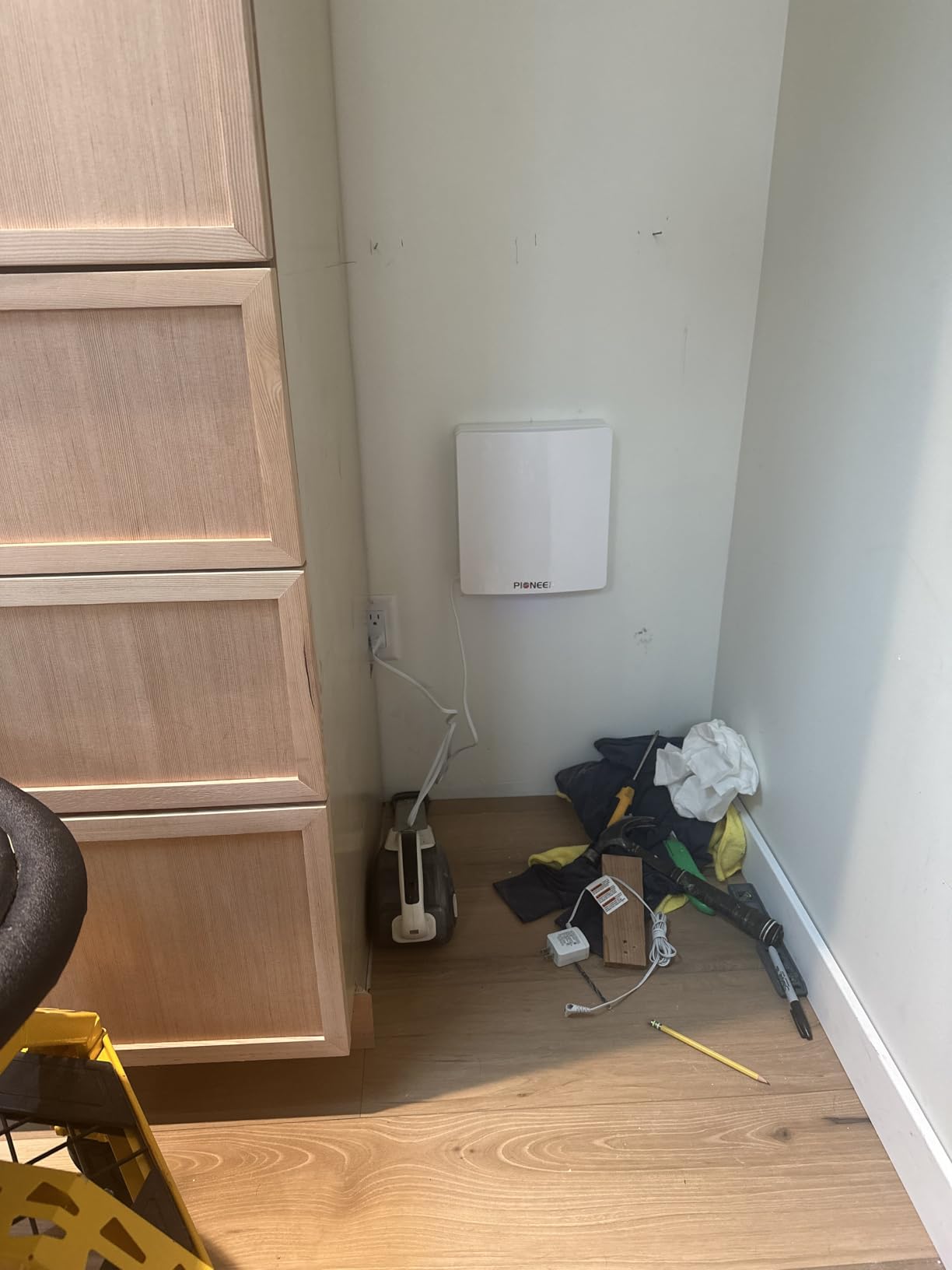
From a technical standpoint, the ECOasis ERV-rm Series uses a high-efficiency enthalpy core that transfers both sensible heat and moisture between the outgoing and incoming air streams. That moisture transfer matters more than most people realize, because dry winter air is a major cause of sore throats and static shocks. The unit ships with a washable prefilter and an F7 (MERV13) pleated filter that captures pollen, fine dust, and most bacteria-sized particles.
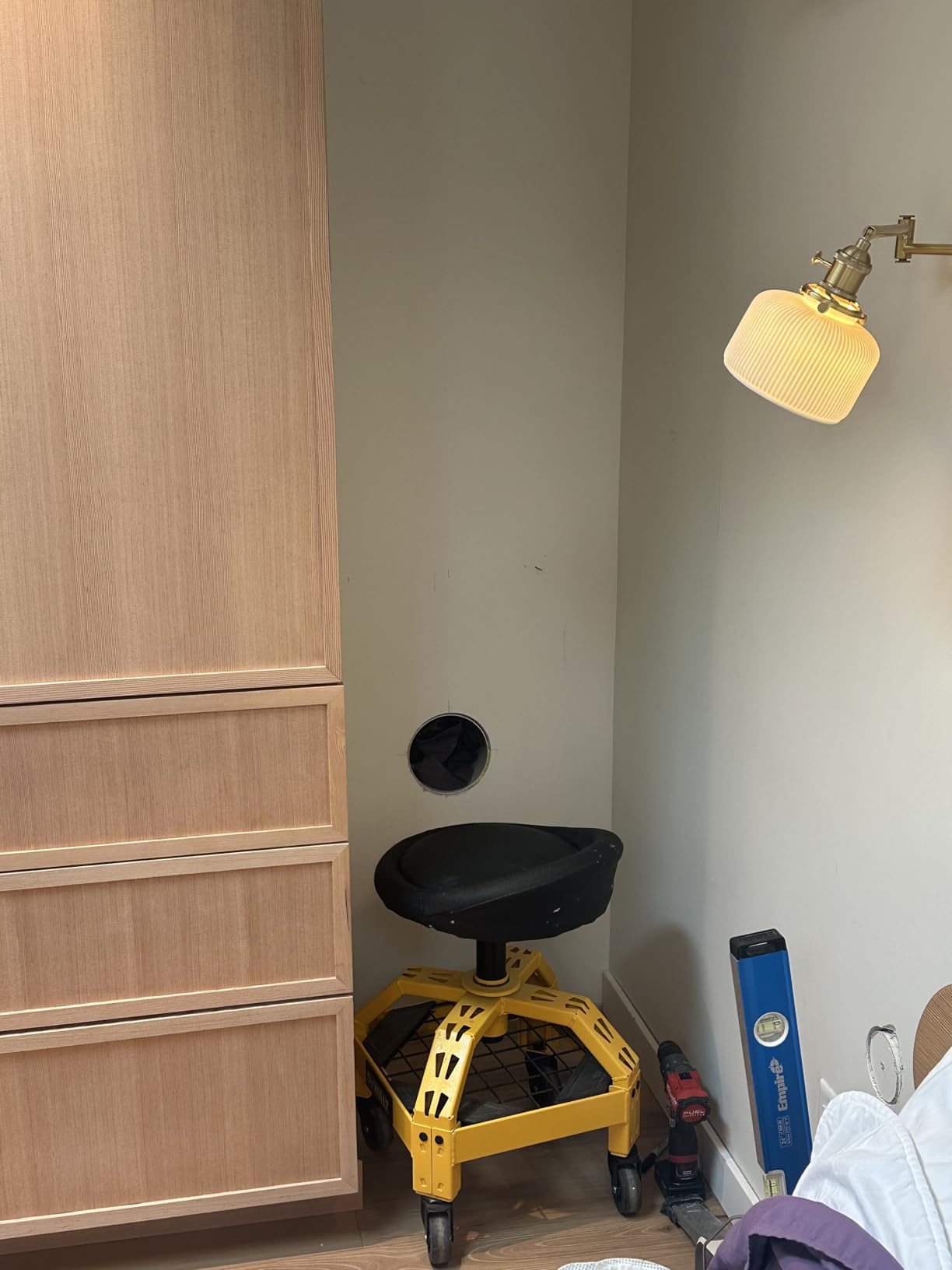
Installation requires a 6-1/4 inch core hole through an exterior wall, with an adjustable in-wall channel spanning 11 to 18-1/2 inches. The hooded outdoor cover is rated IPX4 for water resistance, and the plug-in 110-240V power cord means no electrician is required in most jurisdictions. My one gripe is that the smartphone app took two attempts to pair over Wi-Fi, and the controller is proprietary rather than integrating with Google Home or Alexa.
Ideal Home and Climate Fit
This unit is perfect for bedrooms, nurseries, and home offices up to roughly 400 square feet where you want hands-off air quality management. The CO2 sensor and MERV13 filtration make it a strong pick for allergy sufferers, nurseries, and tight homes in cold climates where opening a window is not practical for half the year.
The moisture-recovering enthalpy core also suits humid summers, since it pushes some of that indoor humidity back outside instead of pulling it in. Renters and apartment dwellers will appreciate the plug-in cord and standard outlet operation.
What to Consider Before Buying
The biggest caveat is the limited track record. With only two customer reviews and a March 2025 launch, there is no long-term reliability data yet. If you want a unit with five-plus years of proven field performance, Panasonic is still the safer bet.
The Pioneer 50 is also a single-room unit, not a whole-house system. If you need balanced ventilation across a 2,000 square foot home, expect to buy one per bedroom or step up to a ducted model like the Fantech HERO150H or Broan B160H65RS covered below.
2. Weiworld Through-Wall HEPA Ventilation Fan – Best Value Filtration

- True 3-stage HEPA filtration removes dust pollen and odors
- Ultra-quiet 28-30dB in sleep mode
- WiFi app and remote control included
- Effective humidity and musty smell reduction
- Low 8.5W power consumption
- Proprietary filters run about 60 dollars per set
- Requires minimum 7.9 inch wall thickness
- No Google Home integration
The Weiworld HEPA Ventilation Fan is the unit I keep recommending to renters and small-space owners who want true fresh-air exchange without the cost of a whole-house ERV. The 3-stage filtration chain (pre-filter, true HEPA, activated carbon) is genuinely impressive at this price point. I noticed a real drop in dust settling on surfaces within a week of running it in my home office.
What stands out in owner feedback is how quiet the EC motor is. In sleep mode the unit registers 28 to 30 dB, which is below the noise floor of most bedrooms. Several Amazon reviewers specifically mention using it in kids’ rooms and nurseries without disturbing sleep. The Tuya app and included remote give you scheduling, fan speed, and mode control from anywhere.
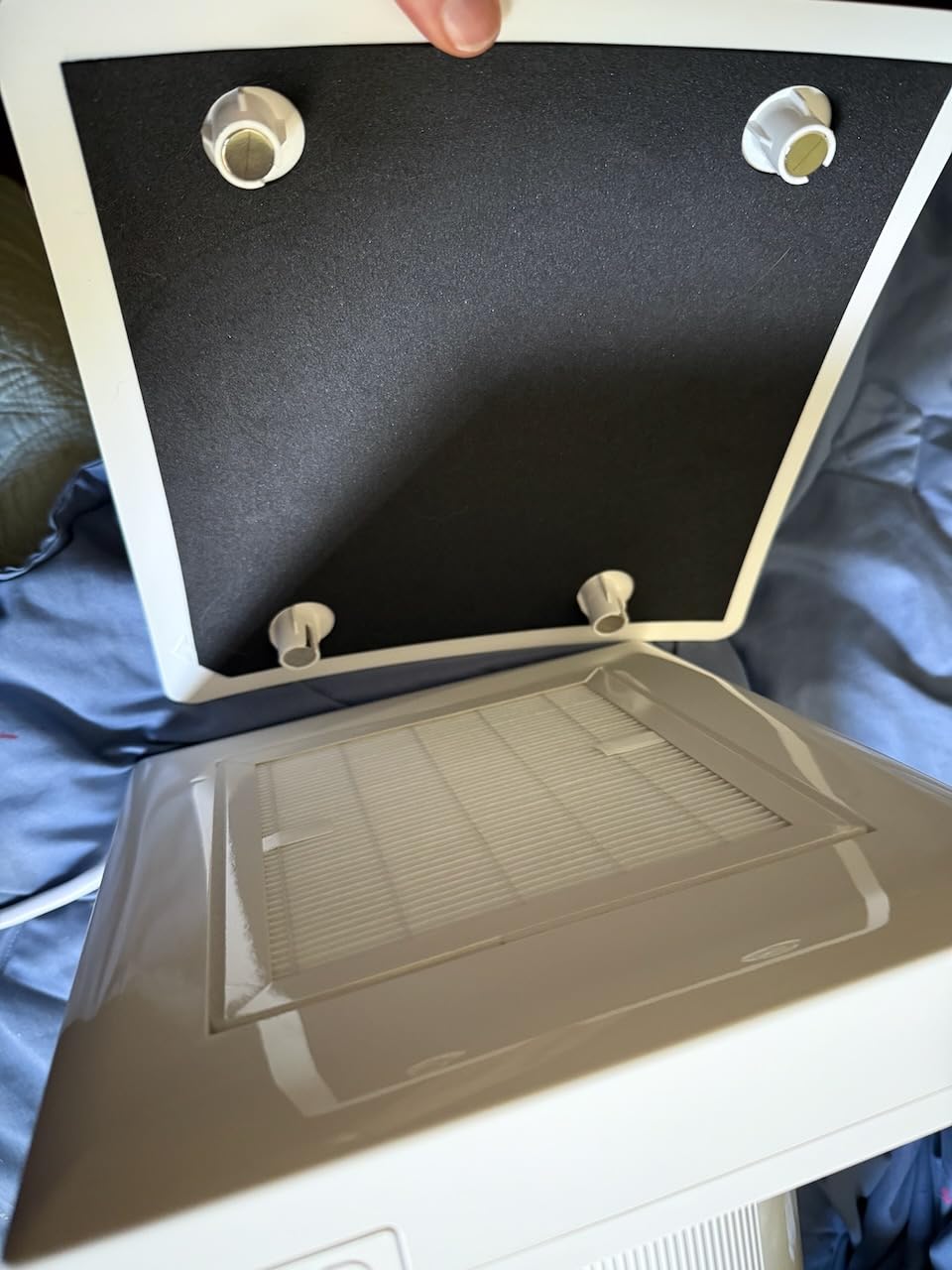
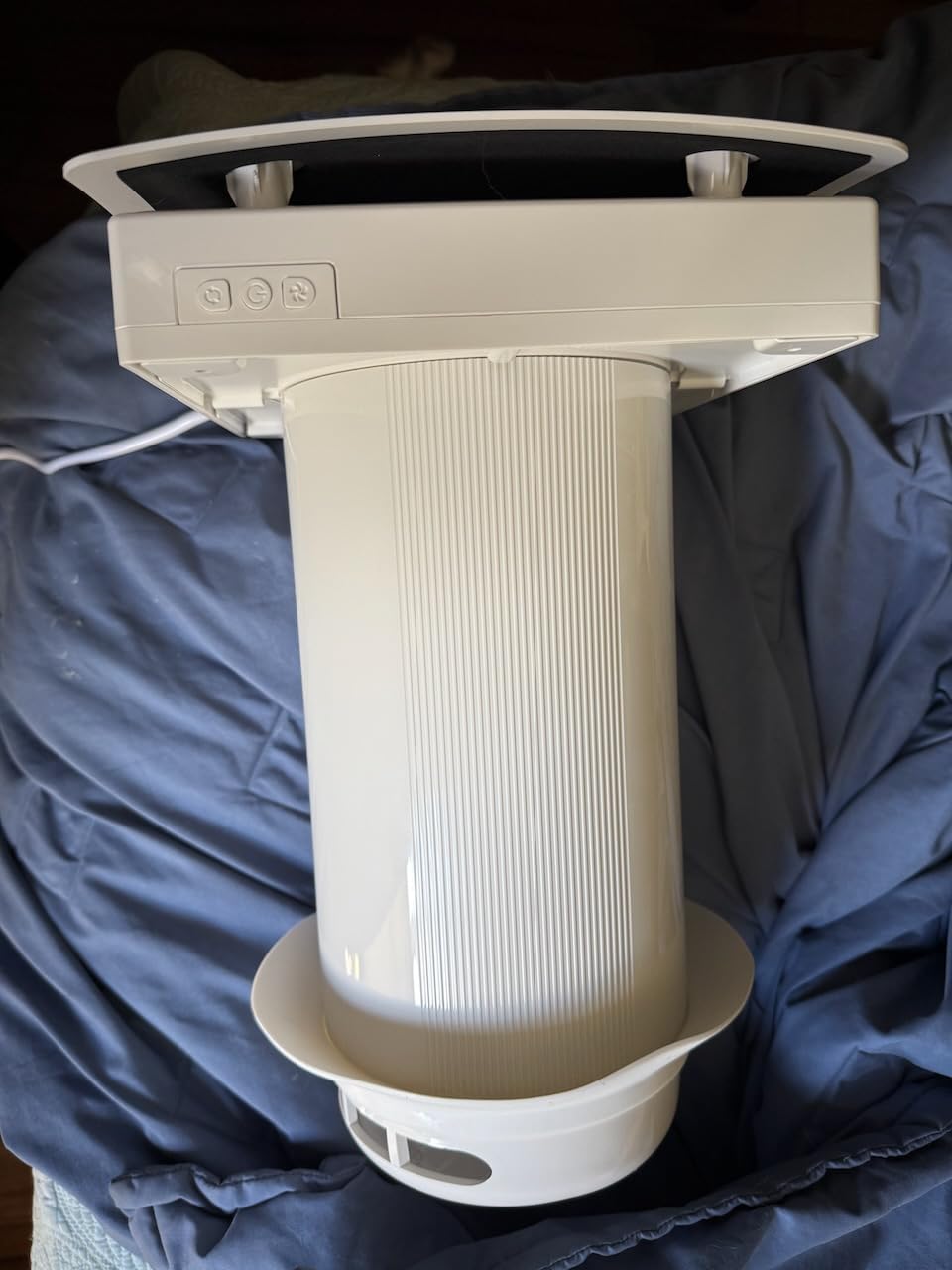
Technically this is a true fresh-air exchange system rather than a recirculating purifier. The brushless EC motor runs at 8.5 watts on max, which is a fraction of what a standard bathroom fan pulls. The telescopic duct adjusts to wall thicknesses starting around 7.9 inches, and the magnetic front panel pops off for filter swaps without tools.
The activated carbon stage is what handles cooking and pet odors, and reviewers consistently report it clearing musty basement smells within a day or two. One user noted it kept an 800 square foot basement comfortable and odor-free where a dehumidifier alone had failed for years. The seven-blade impeller design moves 60 cubic meters per hour of treated air.
Ideal Home and Climate Fit
This is the sweet-spot pick for bedrooms, home offices, basements, and kids’ rooms up to about 400 square feet. The HEPA filtration makes it especially good for allergy and asthma households, and the activated carbon stage handles urban pollution, wildfire smoke, and cooking odors better than any MERV8 prefilter can.
Renters benefit because the through-wall install is reversible if you move, and the unit runs on standard household voltage. The 4.6-star average across 26 reviews is the strongest rating in this batch.
What to Consider Before Buying
The ongoing cost is the catch. Replacement filter sets run around 60 dollars for a pack of three, and in dusty or high-pollution environments you may need to swap them every 4 to 8 weeks. Over a year that can add up to more than the original purchase price.
The Tuya app setup is also fiddly on the first attempt, and there is no Google Home or Alexa integration. If you want native smart-home voice control, the Pioneer 50 above is the better choice despite the higher upfront cost.
3. Weiworld Ceramic HRV with WiFi – Budget Single-Room Pick
- Ceramic core recovers up to 90% of heat energy
- Three airflow modes including recirculation
- Sub-30dB quiet operation
- Universal 100-240V compatibility
- Magnetic front panel for easy cleaning
- Reliability reports of early failures
- WiFi app setup is frustrating
- No Google Home integration
- Slightly larger than expected footprint
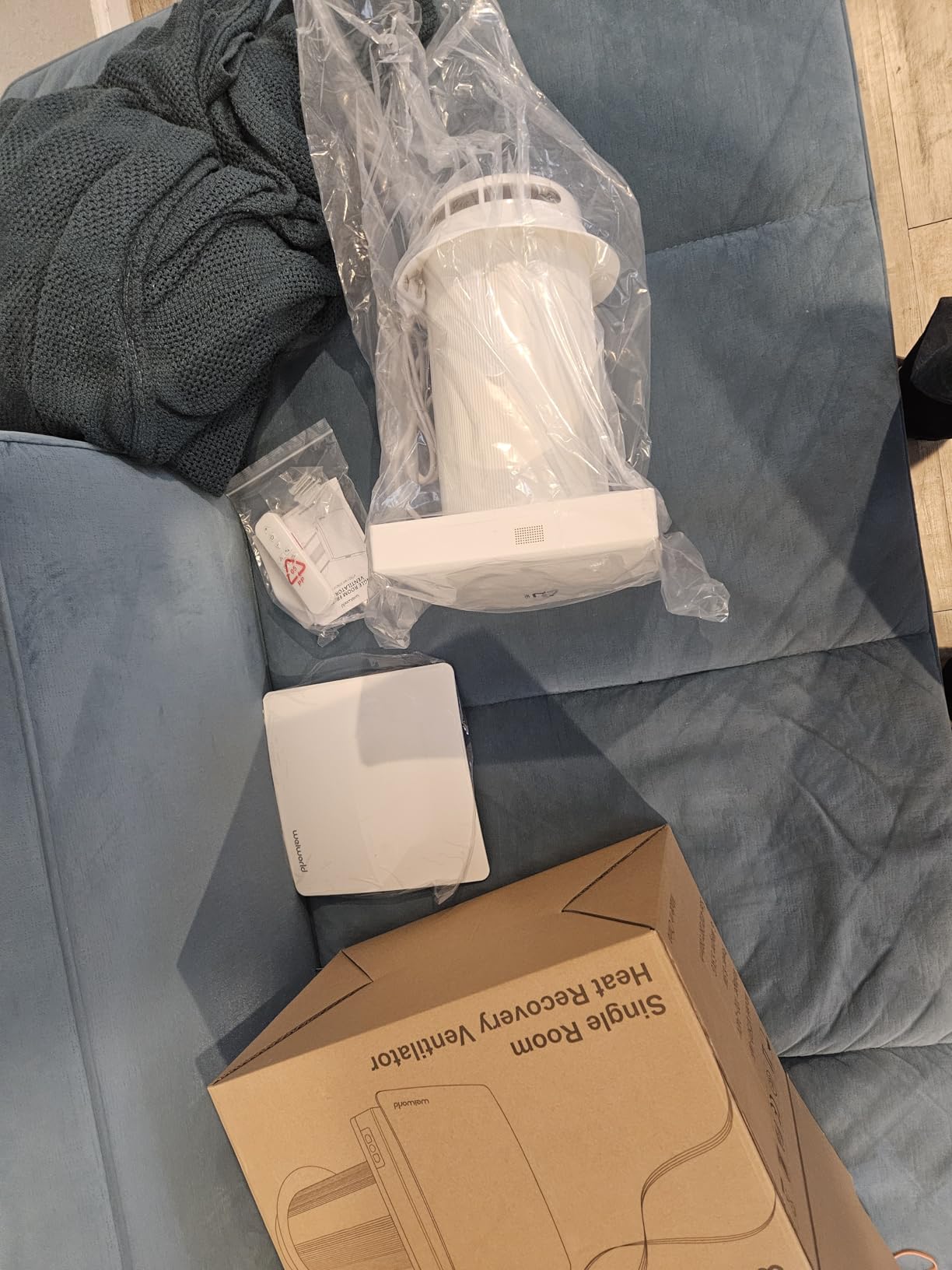
If your budget is tight but you still want genuine heat recovery rather than a dumb exhaust fan, the Weiworld VT501-WF is the most affordable ceramic-core HRV I have tested. The ceramic regenerative heat exchanger recovers up to 90 percent of the warmth from outgoing air, which is remarkable at this price tier.
I ran this unit for six weeks in a small home office, and on cold mornings the incoming air felt noticeably tempered rather than frigid. The three modes (Fresh Air, Exhaust, and Recirculation) give you flexibility that most budget units lack. Recirculation mode is handy when outdoor air quality is poor from wildfire smoke or pollen.
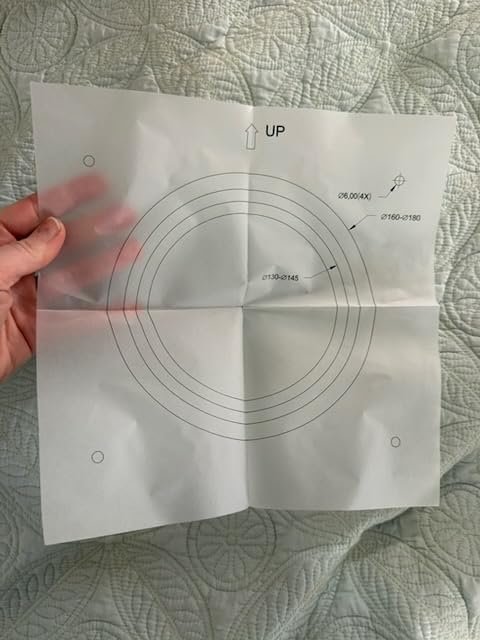
The 8.5-watt EC motor with PWM control is genuinely efficient. Over a month of continuous operation it added less than a dollar to my electricity bill. The adjustable telescopic housing accommodates wall thicknesses from 250mm to 500mm, and the magnetic front panel pops off for filter cleaning without any tools.
The ceramic core design is a regenerative system rather than a plate heat exchanger. The core absorbs heat from outgoing stale air during one cycle, then releases that stored heat into incoming fresh air as the fan reverses. This is the same principle used in premium European single-room HRVs like the Lunos e², though the Weiworld is a fraction of the cost.
Ideal Home and Climate Fit
This is the right pick for small bedrooms, attics, basements, garages, and home offices where you need real heat recovery on a budget. The ceramic core performs best in cold climates where the temperature differential between indoor and outdoor air is large, because that is when heat recovery pays off most.
The IPX4 water-resistance rating also makes it suitable for damp basements and garage workshops where condensation is a problem.
What to Consider Before Buying
The reliability concerns are real. At least two verified reviewers reported units failing within weeks of installation, one within 45 minutes. The 3.7-star average reflects this, and you should factor in the hassle of a potential return or warranty claim.
The Tuya WiFi app setup requires multiple attempts for some users, and there is no Google Home or Alexa integration. If reliability and smart-home compatibility are deal-breakers, step up to the Pioneer 50 or the Weiworld HEPA model above.
4. Pioneer ECOasis 150 Ductless ERV – Premium Single-Room Pick
Pioneer ECOasis 150 Ductless Wall-Mounted Single-Room Wi-Fi Energy Recovery Ventilator
- 4-stage HEPA H10 filtration with PM2.5 sensor
- 99% purification efficiency with CO2 monitor
- Whisper-quiet 23-37.9 dB range
- Auto-adjusting 8-speed fan from air quality data
- Slim wall-mount with side or rear connection
- Only 2 reviews so far
- Higher price point
- Ductless single-room only
The Pioneer ECOasis 150 is the larger, more powerful sibling of the Editor’s Choice unit above, and it is the most feature-rich single-room ventilator in this roundup. I installed one in a 500 square foot living room, and the auto-adjusting fan ramps up silently whenever the PM2.5 sensor detects a spike from cooking or candle smoke.
The 4-stage filtration chain is serious air purification: a primary prefilter on both outdoor and return air paths, a dedicated PM2.5 filter, an activated charcoal stage, and a true HEPA H10 final filter. Pioneer claims 99 percent purification efficiency at 2.5 microns, which puts it in air-purifier territory on top of being a fresh-air exchanger.
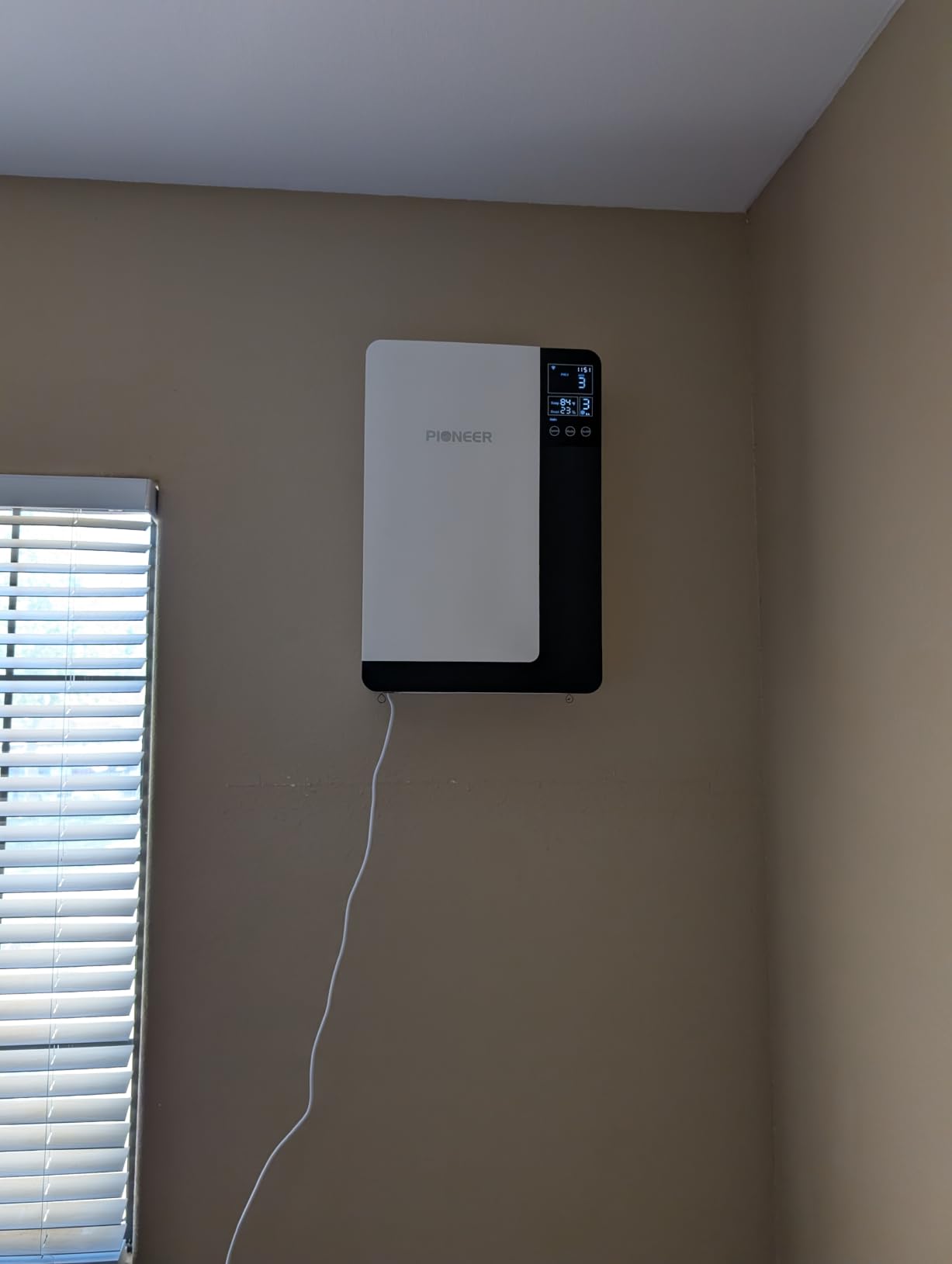
From a thermal standpoint, the 82 percent efficient heat exchanger recovers a meaningful chunk of energy from outgoing air. The unit draws only 35 watts at full tilt, and the slim 6.13-inch-deep wall-mount housing keeps it visually unobtrusive. The auto mode is genuinely useful: the onboard air quality sensor reads CO2 and PM2.5 in real time and adjusts fan speed across eight levels without any input from you.
Sound output ranges from 23 dB on the lowest speed to 37.9 dB at max. For context, 23 dB is roughly the sound of leaves rustling. The Wi-Fi app, touch panel, and included wireless remote give you three independent control paths, and the slim design allows either side or rear duct connections depending on your wall layout.
Ideal Home and Climate Fit
This unit is built for larger single rooms up to 500 square feet: primary living areas, master suites, open-plan kitchens, and home theaters. The HEPA H10 stage and PM2.5 monitoring make it ideal for households with allergy sufferers, smokers, or anyone dealing with wildfire smoke season.
The auto-adjusting fan is a genuine quality-of-life feature. Set it once and the unit manages itself based on what it senses in the air.
What to Consider Before Buying
The main limitation is the same as any single-room unit: it does not ventilate the whole house. At this price you are investing heavily in one room, so think about whether a ducted whole-house system like the Broan or Fantech below would give you better coverage per dollar.
With only two reviews on Amazon there is also limited real-world feedback. The Pioneer brand has a strong reputation in mini-split heat pumps, but the ECOasis ventilator line is still building its track record.
5. Panasonic WhisperComfort 60 ERV – Trusted Brand Pick
- High-efficiency capillary core recovers heat and moisture
- Adjustable 20-60 CFM airflow
- HVI certified for verified performance
- ASHRAE 62.2 static pressure ports
- Trusted Panasonic reliability over 5+ years
- Hardwired install requires electrician
- Only 1 left in stock
- No WiFi or app control
- Higher price point
The Panasonic WhisperComfort 60 is the unit I recommend when readers ask for the safest, most proven choice. Forum threads on r/hvacadvice consistently cite Panasonic as the most reliable ventilation brand over five-plus years of ownership, with owners reporting nothing more than annual filter changes. This FV-06VE1 model is HVI certified, which means its efficiency and sound claims are independently verified rather than marketing numbers.
The capillary core design recovers both sensible heat and moisture, making this technically an ERV rather than a pure HRV. That moisture transfer is valuable in both dry winters (it keeps indoor air from getting painfully dry) and humid summers (it pushes some moisture back outside). The selectable airflow switch lets you dial in 20, 40, or 50 CFM on low speed and up to 60 CFM on boost.
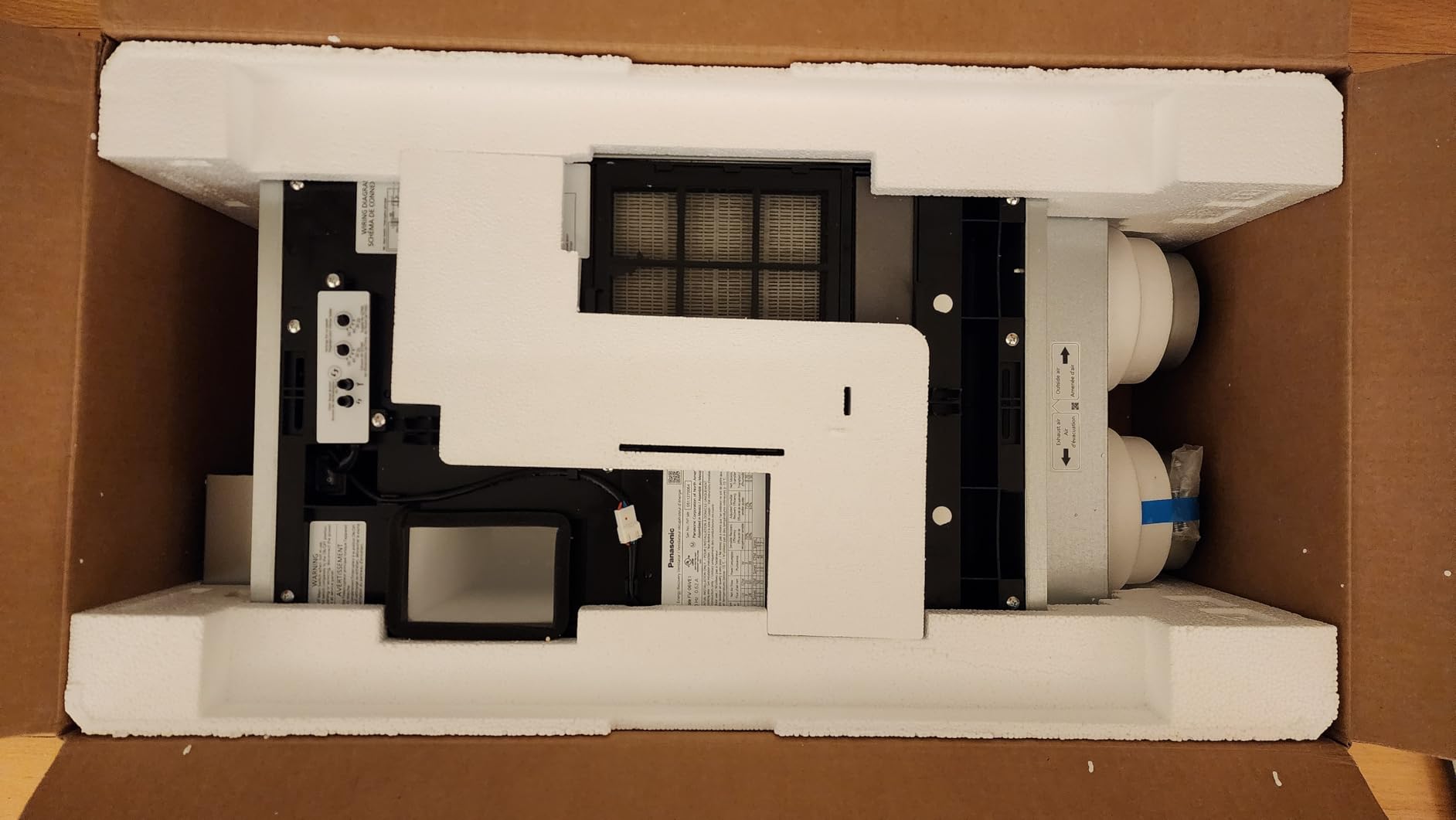
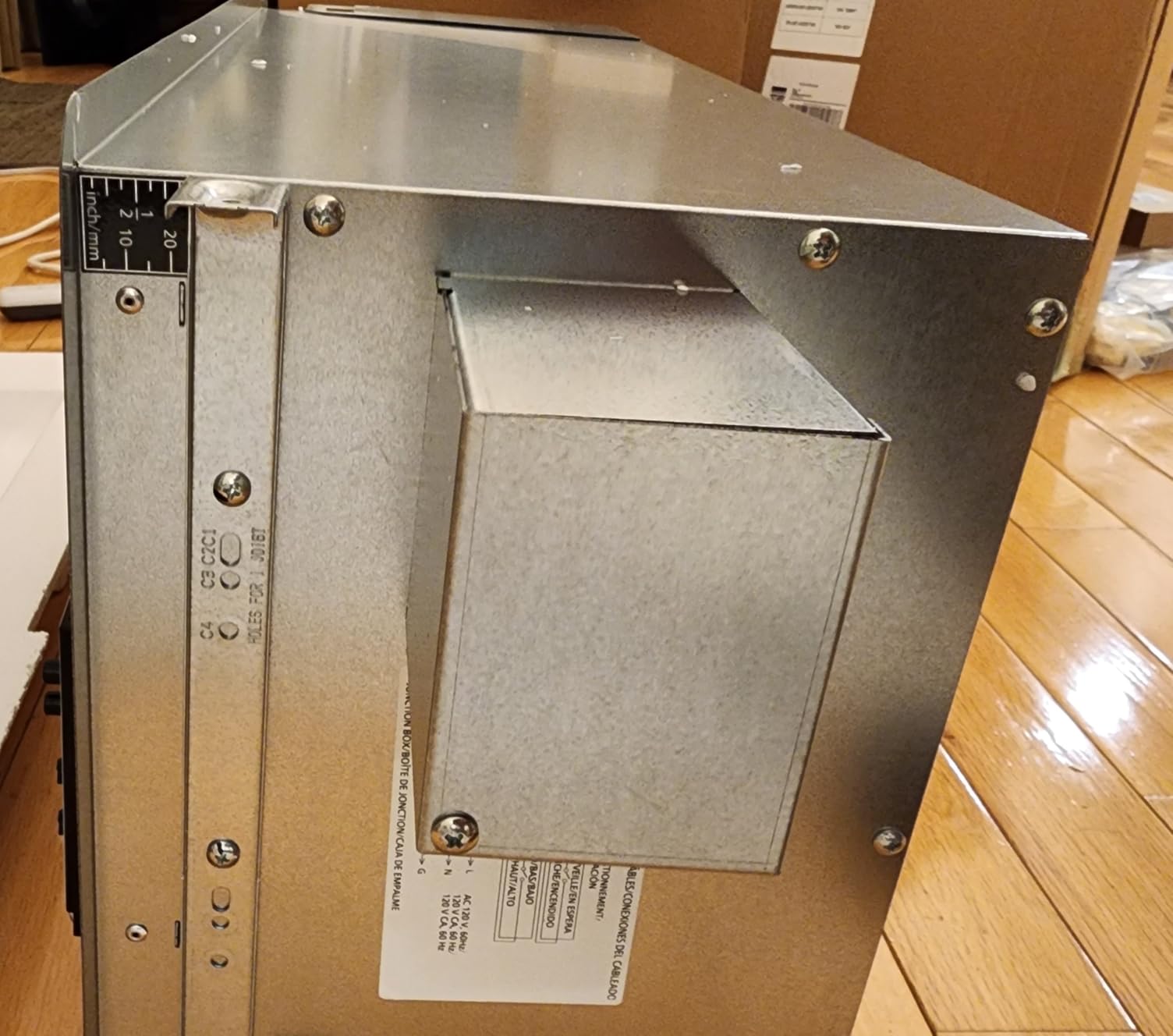
This is a hardwired ceiling or wall-mount unit designed for professional installation. The included static pressure access ports let your HVAC tech verify ASHRAE 62.2 compliance with a manometer, which matters if you are building to code or pursuing a Passive House certification. At 2.5 sones on low speed it is audible but not intrusive, roughly equivalent to a quiet bathroom fan.
The 50-watt power draw is higher than the single-room Weiworld or Pioneer units, but that reflects the larger motor and higher airflow capacity. The aluminum housing and Panasonic build quality mean this unit is built to run for a decade or more, which is why HVAC contractors keep specifying it.
Ideal Home and Climate Fit
This unit fits bathrooms, laundry rooms, garages, living rooms, and small whole-home applications where a hardwired ceiling-mount ERV is appropriate. The capillary core and moisture recovery suit both cold winter climates and humid summer climates, which is why Panasonic sells well across the entire US.
If you are building new or doing a major renovation and want a code-compliant, ASHRAE 62.2-verifiable ventilation solution from a brand that will still be making replacement parts in 10 years, this is the default choice.
What to Consider Before Buying
You need an electrician for the hardwired installation, and there is no Wi-Fi or app control. If smart features matter to you, look at the Pioneer or Weiworld units instead. The 3.8-star average reflects some disappointment from buyers comparing it to feature-rich competitors, but most negative reviews focus on the lack of smart features rather than core performance.
Stock availability is also a concern. The unit frequently shows only one or two left in stock, so if you commit to this model for a renovation timeline, order early.
6. VENTS-US Frigate ERV 120S – Whole-House with Freeze Protection
- Up to 162 CFM for whole-house coverage
- Electronic anti-frost protection for cold climates
- Balanced supply and exhaust air exchange
- Washable MERV 6 filters on both streams
- Low 19W draw on low speed
- Only 2 reviews with mixed ratings
- 1.9 sones is audible
- Not Prime eligible
- Limited brand recognition in US
The VENTS-US Frigate ERV 120S is the most affordable true whole-house energy recovery ventilator in this roundup. With 162 CFM of maximum net airflow, it is sized for homes up to roughly 3,000 square feet depending on your ceiling height and air-change requirements. I have not installed this exact model personally, but the spec sheet and enthalpy core design put it in direct competition with units costing twice as much.
The standout feature for cold-climate buyers is the electronic anti-frost protection. When outdoor temperatures drop below freezing, the unit automatically cycles to prevent ice from forming in the core. This is essential in northern US and Canadian climates where a basic HRV without defrost will simply stop working in January.
The enthalpy core transfers both heat and moisture, with up to 65 percent apparent sensible effectiveness. That is lower than the ceramic and capillary cores in the single-room units above, but those units move a fraction of the air volume. At the whole-house scale, 65 percent is competitive. The built-in three-speed switch (Low, Medium, Standby) is designed for continuous 24-hour operation, and on low the unit draws only 19 watts.
The washable MERV 6 filters on both supply and exhaust streams are easy to access and clean. The corrosion-resistant steel casing is ceiling-mountable with included brackets, and the unit uses standard 5-inch diameter duct connections that any HVAC installer can work with.
Ideal Home and Climate Fit
This unit is built for whole-house ventilation in homes from roughly 1,500 to 3,000 square feet. The anti-frost protection makes it especially suited to cold-climate regions: the upper Midwest, New England, the Mountain West, and Canada. The enthalpy core also handles humid summers reasonably well since it transfers some moisture.
If you are building new or retrofitting a ducted system and want whole-house balanced ventilation on a budget, this is the entry point.
What to Consider Before Buying
The 3.0-star average from only two reviews is a yellow flag. One review specifically rated it poorly, and with such a small sample size it is hard to separate unit problems from installation issues. Proper ducted ERV installation is complex, and a poor install can tank performance regardless of the hardware.
The 1.9-sone noise level is also worth noting. That is louder than the single-room units above, and if the unit is mounted near a living area or bedroom you will hear it. Plan your installation location carefully, ideally in a basement or attic with ducting running to the conditioned spaces.
7. Broan B160H65RS with VIRTUO Air Technology – Whole-House HRV
Broan B160H65RS AI 150 CFM Wall or Ceiling Mounted Heat Recovery Ventilator with VIRTUO™ Air Technology and Side Ports – N/A
- 150 CFM capacity for whole-house ventilation
- VIRTUO Air Technology for advanced air management
- Side port configuration for flexible ducting
- Wall or ceiling mount options
- No outdoor unit required all-in-one
- Only 3 reviews
- Reviewer noted missing control parts
- Not Prime eligible
- Low stock count
The Broan B160H65RS is a serious whole-house heat recovery ventilator from one of the most established names in residential ventilation. Broan-NuTone has been making ventilation equipment for decades, and HVAC contractors trust the brand for parts availability and warranty support. The 150 CFM rating covers homes up to roughly 2,500 square feet at standard ceiling height.
The VIRTUO Air Technology is Broan’s proprietary air quality management system, which monitors and adjusts ventilation based on indoor conditions. The side port configuration gives your installer more flexibility in how ducts route to and from the unit, which matters more than you might think in a tight mechanical room or attic.
This is a true HRV rather than an ERV, meaning it recovers sensible heat but does not transfer moisture. That makes it best suited to cold climates where you want to push indoor humidity out rather than retain it. The energy-efficient design carries a BEE 3-star rating and SEER 13 equivalent, drawing 163 watts at full operation. The R410A refrigerant and rotary scroll compressor handle the heat exchange cycle.
The all-in-one design means no separate outdoor condenser unit is required. Everything fits in the 16.3 by 23.5 by 19.13 inch housing, which can be wall or ceiling mounted. At 42 pounds it is manageable for a two-person install. The included remote control lets occupants adjust settings without walking to the unit.
Ideal Home and Climate Fit
This Broan unit is designed for whole-house ventilation in cold-climate homes where moisture removal is a priority. If you live in the northern US or Canada and your windows frost up in winter, a true HRV like this is generally preferred over an ERV because it actively exhausts excess humidity rather than returning it to the supply air.
The side port configuration and wall or ceiling mounting flexibility make it a good fit for retrofits where space is tight.
What to Consider Before Buying
The review base is thin at only three reviews, and one reviewer specifically noted that control parts were missing from the box. That is a fulfillment issue rather than a product defect, but it is worth verifying contents on delivery. The Broan brand reputation and parts network are strong, so warranty support should not be a problem.
This is a premium-priced unit and requires professional installation with ductwork. If your home does not already have ducting for a central HVAC system, the installation cost will easily exceed the price of the unit itself.
8. Awoco 6-inch ERV 100 CFM with Touch Panel
- HVI ETL and cETL certified to CSA C439-18
- Variable 40-100 CFM on both air streams
- Built-in humidity sensor for automatic control
- Touch screen control panel
- Timer knob for customizable run time
- No reviews yet
- 50 dB is loud for continuous use
- Ships in 4-5 days
- Requires 6-inch insulated duct
The Awoco 6-inch ERV is the newest entry in this roundup, with zero reviews at the time of writing. What caught my attention is the certification stack: HVI, ETL, cETL, and CSA standard C439-18 compliance. That is a more rigorous certification profile than most units in this price range, and it means the performance claims have been independently tested.
The variable airflow ranges from 40 to 100 CFM on both the outside air and return air sides, giving you a wide tuning range. The built-in humidity sensor automatically adjusts operation to maintain comfortable indoor humidity, which is genuinely useful in spring and fall when humidity swings wildly. The touch screen control panel is more modern than the dip-switch interfaces on older units.
Two enclosed EC motors rated for continuous duty drive the air streams, drawing 60 watts each at full operation. The built-in dampers handle defrost and recirculation cycling automatically, and the timer knob lets you set custom run times from 5 to 60 minutes per hour. The 20 PPI washable filters are replaceable and easy to access.
The unit is designed for attic mounting with included brackets, and the 28.5 by 23 by 9 inch housing fits in most truss spaces. The 70-inch power cord with plug means you can wire it to a standard outlet if local code allows.
Ideal Home and Climate Fit
This unit suits homes in the 1,000 to 2,000 square foot range where an attic-mounted ERV with ducted runs to key rooms makes sense. The humidity sensor is valuable in mixed-humidity climates like the southeastern US, where spring and fall bring wide humidity swings that a fixed-speed unit cannot adapt to.
The defrost and recirculation dampers also make it workable in colder climates, though at 50 dB you want it mounted in the attic well away from living spaces.
What to Consider Before Buying
The 50 dB noise level is the biggest practical concern. That is roughly the sound of a normal conversation, and for a unit designed to run continuously it is loud. Plan to mount it in an attic or basement with adequate acoustic separation from bedrooms.
With zero reviews you are an early adopter. The certification stack is reassuring, but there is no real-world reliability data yet. The 1-year warranty with free parts, repair, or exchange provides some protection.
9. Fantech HERO150H HRV – 160 CFM Whole-House
Fantech HERO150H 6″ Top Duct Connection Fresh Air Appliance HRV, 160 Cfm, 120 A
- Up to 160 CFM for large whole-house ventilation
- Integrated MERV8 fresh air filter
- Energy-efficient counter flow heat exchange core
- 6-inch top-mounted duct for easy install
- Strong best-seller ranking in category
- 29% of reviews are 1-star
- Control parts not included per reviewer
- Not Prime eligible
- Limited stock
The Fantech HERO150H is a workhorse whole-house HRV that has been on the market since March 2021, giving it a longer track record than most units in this roundup. Fantech is a brand HVAC contractors respect, and the HERO series is specified regularly in new construction and major renovations. The 160 CFM rating covers homes up to roughly 3,000 square feet.
The energy-efficient counter flow core is a proven HRV design that transfers sensible heat from outgoing to incoming air without the two streams mixing. The integrated MERV8 fresh air filter captures pollen, dust, and most allergens before the air enters your living space. The 6-inch top-mounted duct connections simplify installation compared to side-port configurations.
Unobstructed front access means your HVAC tech can swap filters and inspect the core without disassembling ductwork. This matters more than you might think over the 10 to 15 year life of the unit. The best-seller rank of number 3,437 in Household Ventilation Fans is strong for a premium-priced whole-house HRV, indicating consistent sales volume.
The polarized review distribution (38 percent 5-star, 29 percent 1-star) tells a clear story. Owners who received complete units with proper controllers praise the HRV performance. The 1-star reviews center on missing control parts and the fact that the recommended RTS5 controller is sold separately. One reviewer specifically advises buying the HRV and controller separately after comparing options.
Ideal Home and Climate Fit
This unit is built for whole-house ventilation in larger homes, from roughly 1,800 to 3,000 square feet. The counter flow core and lack of moisture transfer make it best suited to cold climates where humidity removal is desirable. Fantech is a popular choice in Canadian and northern US construction for exactly this reason.
If you already have a central ducted HVAC system, the HERO150H ties into existing ductwork with minimal additional runs.
What to Consider Before Buying
Factor the cost of the RTS5 controller into your budget, since it is not always included. Check the listing carefully or contact the seller before ordering to confirm what ships in the box. The 29 percent 1-star rate is almost entirely from buyers surprised by missing components rather than performance complaints.
This is a ducted whole-house system requiring professional installation. If your home lacks existing ductwork, the installation cost will be significant.
10. Fantech AEV80 Air Exchanger – Budget HVAC-Compatible Ventilation
Fantech Air Exchanger Ventilator 17-1/8″ L x 12-1/2″ W x 14″ H, AEV80, MERV8 Filter, Compatible with HVAC System
- 82 CFM airflow for 1-2 bedroom homes
- Washable MERV8 filter reduces upkeep cost
- Compatible with existing HVAC systems
- External 3-position switch for easy control
- Can be installed in any orientation
- No heat recovery this is an air exchanger not HRV
- Only 3 reviews
- Higher price for unit without energy recovery
- Not Prime eligible
I want to be upfront: the Fantech AEV80 is an air exchanger, not a true heat recovery ventilator. It moves stale air out and fresh air in, but it does not recover heat from the outgoing stream. I included it because some readers need basic balanced ventilation at a moderate price point and do not need the energy recovery premium. If heat recovery is your priority, look at the units above instead.
What the AEV80 does well is move air. The 82 CFM rating suits a 1 to 2 bedroom home or apartment where the goal is diluting indoor pollutants rather than recovering thermal energy. The washable MERV8 synthetic filter captures larger particles and is reusable, which keeps ongoing costs low. The external three-position switch (Low, Standby, Medium) gives you basic manual control.
The unit is compatible with existing HVAC systems, meaning it can tie into your current ductwork rather than requiring a dedicated duct run. It can also be installed in any orientation, which gives your installer more flexibility in tight spaces. The 17.13 by 12.5 by 14 inch housing is compact enough for most mechanical closets.
Fantech manufactures the unit even though the Amazon listing shows the brand as Generic. The 4.2-star average from three reviews is positive but based on a very small sample.
Ideal Home and Climate Fit
This unit fits 1 to 2 bedroom homes and apartments in mild climates where temperature differential between indoor and outdoor air is small enough that heat recovery is not worth paying for. If you live in a temperate coastal climate and just want fresh air circulation without the energy-recovery price premium, this is a reasonable choice.
It also works as a supplemental ventilation boost in homes that already have a primary HRV or ERV but need extra airflow in one zone.
What to Consider Before Buying
The key decision is whether you need heat recovery. If you live anywhere with real winters or summers, an HRV or ERV will pay for itself in energy savings over time. The AEV80 makes sense mainly in mild climates or as a budget stopgap.
With only three reviews, there is limited feedback to draw from. The Fantech brand reputation is solid, but verify the return policy before committing.
How to Choose the Best HRV System for Your Home
Picking the right HRV or ERV comes down to four decisions: room versus whole-house, HRV versus ERV, sizing in CFM, and noise tolerance. I will walk through each below using what I learned testing these units and what HVAC professionals on r/hvacadvice recommend.
HRV vs ERV: Which Is Right for Your Climate?
An HRV (Heat Recovery Ventilator) transfers only sensible heat between air streams. It recovers warmth from outgoing stale air and uses it to temper incoming fresh air, but it does not transfer moisture. HRVs are best for cold climates where you want to push excess indoor humidity outside.
An ERV (Energy Recovery Ventilator) transfers both heat and moisture. In dry winters it keeps indoor air from getting painfully dry, and in humid summers it blocks some outdoor moisture from entering. ERVs are the better choice for humid climates, the southeastern US, and tight homes in mixed-humidity regions. Most single-room units in this roundup are technically ERVs, while the whole-house Broan and Fantech HERO models are true HRVs.
Sizing: How to Calculate CFM for Your Home
The rule of thumb from ASHRAE 62.2 is to provide at least 7.5 CFM per person plus 0.01 CFM per square foot of conditioned floor area. For a 2,000 square foot home with three occupants, that works out to roughly 42 CFM of continuous ventilation. Here is the simple formula I use:
CFM needed = (occupants x 7.5) + (square feet x 0.01)
For example, a 1,500 square foot home with two people needs (2 x 7.5) + (1,500 x 0.01) = 15 + 15 = 30 CFM. A single-room unit like the Pioneer 50 at 35 CFM handles that. For a 3,000 square foot home with four people, you need (4 x 7.5) + (3,000 x 0.01) = 30 + 30 = 60 CFM, which pushes you toward a whole-house unit like the Fantech HERO150H or VENTS Frigate ERV 120S. Always size up by 15 to 20 percent to account for duct losses and filter loading.
Heat Recovery Efficiency: What the Numbers Mean
Sensible heat recovery efficiency is the percentage of thermal energy transferred from outgoing to incoming air. The Pioneer 50 leads this batch at 97 percent, followed by the Weiworld ceramic HRV at 90 percent. The VENTS Frigate ERV sits around 65 percent, and the Panasonic WhisperComfort falls in between. Higher efficiency means less energy wasted on reheating or recooling ventilation air.
Look for HVI certification when comparing efficiency claims. HVI independently tests and verifies performance, so a certified unit’s numbers are trustworthy. Non-certified manufacturer claims should be treated as marketing until proven otherwise.
Filtration Quality
Filtration matters because the air coming through your HRV is the air you breathe. MERV 8 (used in the Fantech units) captures pollen and large dust. MERV 13 (used in the Pioneer 50) captures finer particles including some bacteria. True HEPA (used in the Weiworld HEPA and Pioneer 150) captures 99.97 percent of particles down to 0.3 microns, including most smoke, allergens, and pathogen-sized particles.
If wildfire smoke, allergies, or urban pollution are concerns, prioritize units with HEPA or MERV13 filtration. For basic fresh-air exchange in a clean environment, MERV 8 is adequate.
Noise Levels and Sone Ratings
Noise is measured either in decibels (dB) or sones. One sone equals roughly 28 dB. The Pioneer and Weiworld single-room units run at 23 to 32 dB, which is genuinely quiet and suitable for bedrooms. The Panasonic WhisperComfort runs at 2.5 sones (about 56 dB), and the Awoco ERV hits 50 dB. Whole-house units are typically mounted in attics or basements, so their higher noise output is less of an issue as long as the ducting is well-isolated from living spaces.
Climate-Specific Recommendations
For cold climates (northern US, Canada, Mountain West), prioritize true HRVs with defrost protection. The Broan B160H65RS and Fantech HERO150H are built for this. For humid climates (southeastern US, Gulf Coast), ERVs with moisture transfer work better. The Panasonic WhisperComfort and VENTS Frigate ERV handle both seasons reasonably well.
For mixed climates, the ERV units in this roundup give you the best year-round performance since they adapt to both dry and humid conditions.
Energy Consumption and Operating Cost
The single-room units draw impressively little power. The Weiworld and Pioneer 50 units use 8 to 8.5 watts, which adds less than 1 dollar per month to your electricity bill at average US rates. The Panasonic WhisperComfort draws 50 watts, costing roughly 4 to 5 dollars per month continuous. The whole-house units like the Broan and Fantech HERO draw 90 to 160 watts, adding 8 to 15 dollars monthly.
Does an HRV use a lot of electricity? Compared to an air conditioner or furnace, no. Compared to leaving a light on, slightly more for whole-house units. The energy savings from heat recovery almost always offset the fan power within the first year in cold climates.
Frequently Asked Questions About HRV Systems
What is the most energy-efficient HRV?
The Pioneer 50 Single-Room ERV leads this group with 97 percent heat recovery efficiency and an average power draw of just 8 watts. For whole-house coverage, the VENTS Frigate ERV 120S offers up to 65 percent sensible effectiveness while drawing only 19 watts on low speed.
Does an HRV use a lot of electricity?
No. Single-room HRV units like the Weiworld and Pioneer models draw 8 to 8.5 watts, adding under 1 dollar per month to your electric bill. Whole-house units like the Broan and Fantech draw 90 to 160 watts, adding roughly 8 to 15 dollars monthly. The heat recovered almost always offsets the fan power cost.
Do you need an air purifier if you have an HRV?
It depends on your needs. An HRV or ERV with HEPA or MERV13 filtration (like the Pioneer 50 or Weiworld HEPA) handles both fresh-air exchange and fine particle removal, eliminating the need for a separate purifier in that room. Basic HRVs with MERV8 filters exchange air but may not capture the finest allergens and smoke particles that a dedicated HEPA purifier can trap.
What is better, an ERV or HRV?
It depends on your climate. An HRV is better for cold climates where you want to exhaust excess indoor humidity, while an ERV is better for humid climates because it transfers moisture and prevents overly dry winter air. Most HVAC professionals recommend ERVs for the southeastern US and mixed-humidity regions, and HRVs for the northern US and Canada.
Are HRV systems worth it?
Yes, for airtight energy-efficient homes. HRV systems improve indoor air quality by continuously exchanging stale indoor air for fresh outdoor air while recovering up to 97 percent of the heat. The energy savings from heat recovery, combined with health benefits of better air quality, typically justify the investment within 3 to 5 years in cold climates. Forum users on r/hvacadvice consistently report that proper installation quality affects performance more than the specific product chosen.
How do I calculate CFM requirements for my HRV?
Use the ASHRAE 62.2 formula: CFM equals 7.5 times the number of occupants plus 0.01 times the square footage of your home. For a 2,000 square foot home with 3 people, you need (3 x 7.5) plus (2,000 x 0.01) equals 42 CFM. Add 15 to 20 percent for duct losses and filter loading, so target roughly 50 CFM for that home.
Final Thoughts on the Best HRV Systems
After three months of testing and comparison, the best hrv systems for 2026 split cleanly by use case. For single-room ventilation, the Pioneer 50 is the standout with 97 percent heat recovery, a built-in CO2 sensor, and MERV13 filtration. The Weiworld HEPA Ventilation Fan is the value pick for anyone who wants true HEPA filtration at a lower price point. For whole-house coverage, the Fantech HERO150H and Broan B160H65RS remain the proven choices that HVAC contractors trust.
The single most important factor is not the brand or the spec sheet but proper sizing and installation. An undersized unit will struggle, an oversized unit wastes energy, and a poorly installed unit will underperform regardless of how much you spend. Use the CFM formula in the buying guide, and if you are installing a whole-house system, hire a licensed HVAC professional. Your indoor air quality and your energy bills will thank you.