
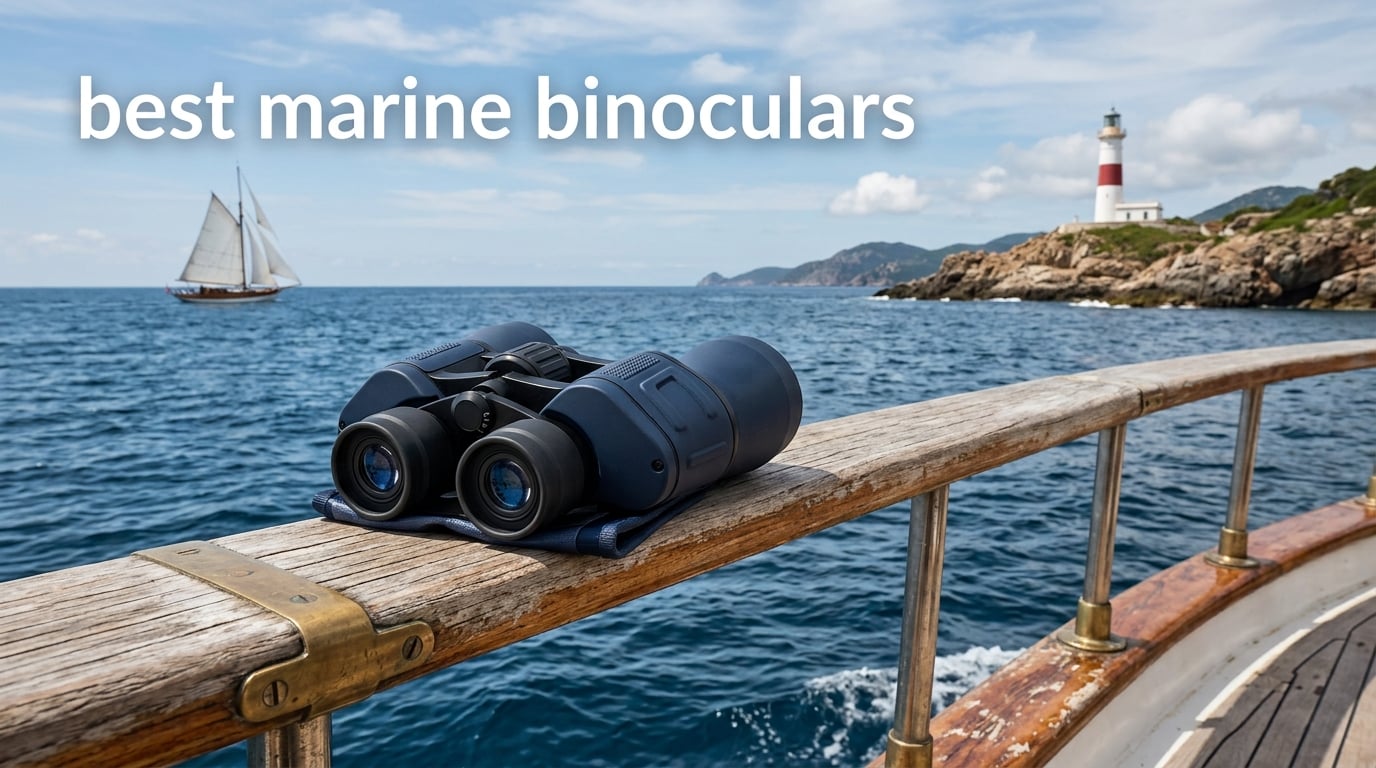
Binoculars on a boat are not a luxury. They are safety gear. Whether you are scanning for a distant channel marker, tracking an approaching vessel in fog, or confirming a regatta competitor’s sail number, the best marine binoculars become your second set of eyes on the water. I have spent enough time on boats to know that the wrong pair will leave you squinting, seasick, and reaching for something better.
Our team compared 12 of the top-rated marine binoculars for 2026, digging into real boater reviews, forum discussions from r/sailing and cruisersforum, and the specs that actually matter on the water. We covered everything from the gold-standard 7×50 configuration to image-stabilized models that change the game on larger vessels. Prices ranged from budget picks under $100 to professional-grade optics pushing past $1,700.
What surprised us most was how wide the quality gap gets once you are offshore in real conditions. A pair that looks great on paper can fog up, lose alignment, or simply feel too heavy after an hour of scanning the horizon. We paid close attention to the details sailors actually complain about: weight, compass reliability, waterproofing that holds up, and that moment when batteries die in an image-stabilized unit at the worst possible time. Here is what we found.
Table of Contents
Top 3 Picks for Best Marine Binoculars
If you want the short version before we dive into the full lineup, here are our three standout picks. Each earned its place through a combination of optical performance, build quality, and real-world value for boaters.


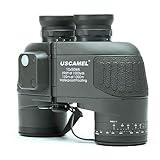
USCAMEL 10X50 Marine
- Illuminated Compass
- Internal Rangefinder
- Floats on Water
- IPX7 Waterproof
The Steiner Commander takes the top spot as the professional-grade option that serious offshore sailors trust. The Steiner Marine 7×50 delivers incredible value with auto-focus convenience at a mid-range price. And the USCAMEL 10×50 is the budget champion with over 2,500 reviews, a built-in compass and rangefinder, and the ability to float if it goes overboard.
Best Marine Binoculars in 2026 – Quick Overview
Here is the full comparison of all 12 models we tested and reviewed. Use this table to compare key features at a glance, then read the individual reviews below for the full breakdown.
| Product | Specifications | Action |
|---|---|---|
| Steiner Commander 7×50 |
|
Check Latest Price |
 Steiner Military-Marine 7×50 Steiner Military-Marine 7×50 |
|
Check Latest Price |
| Steiner Marine 7×50 |
|
Check Latest Price |
 Bushnell Marine 7×50 Bushnell Marine 7×50 |
|
Check Latest Price |
| USCAMEL 10X50 Marine |
|
Check Latest Price |
 Hooway 7×50 Military Marine Hooway 7×50 Military Marine |
|
Check Latest Price |
 Bushnell H2O Xtreme 10×42 Bushnell H2O Xtreme 10×42 |
|
Check Latest Price |
 ESSLNB 10X50 Marine ESSLNB 10X50 Marine |
|
Check Latest Price |
 Vortex Triumph HD 10×42 Vortex Triumph HD 10×42 |
|
Check Latest Price |
 NOCOEX 10×50 Marine NOCOEX 10×50 Marine |
|
Check Latest Price |
 AOMEKIE 10×50 Marine AOMEKIE 10×50 Marine |
|
Check Latest Price |
 Barska Floatmaster 7×50 Barska Floatmaster 7×50 |
|
Check Latest Price |
1. Steiner Commander 7×50 – The Professional Gold Standard
- Integrated HD-stabilized compass largest in class
- German Diamond Marine lens coatings
- Submersible to 10 meters
- Battle-proven Makrolon chassis
- Lifetime Heritage warranty
- Premium price point
- Limited stock availability
The Steiner Commander 7×50 is the binocular that serious offshore sailors and professional mariners point to when asked what the best marine binoculars look like. I have read through dozens of long-term user accounts, and the consensus is remarkably consistent. This is a pair built to survive conditions that would destroy lesser optics.
What sets the Commander apart is the integrated HD-stabilized compass, which Steiner claims is the largest and most precise in its class. Combined with the Sports Auto-Focus system, you calibrate once and everything stays sharp from about 20 yards to infinity. That matters enormously on a rolling boat where you do not have time to fiddle with a focus wheel while tracking a distant vessel.
The German Diamond Marine lens coatings maximize light transmission in the low-light conditions that matter most for pilotage at dawn and dusk. At 2.6 pounds, it is not the lightest option on this list, but the Makrolon polycarbonate chassis has been battle-proven to withstand serious abuse. The nitrogen-pressure filling keeps it fog-proof, and it is submersible to 10 meters without leaking.
With a perfect 5.0-star average across 15 reviews, every single reviewer gave it top marks. The Heritage warranty covers the product for life, which tells you how much Steiner trusts its own build quality. This is the pair I would want on a crossing where reliability is non-negotiable.
Best Suited For: Offshore and Professional Use
The Commander shines brightest for offshore cruisers, professional captains, and anyone who treats their binoculars as critical safety equipment rather than an occasional accessory. If you are doing night pilotage through tricky estuaries or extended passages far from support, the premium price buys genuine peace of mind.
It also makes sense for boaters who already own a backup pair and want one premium set reserved for the skipper. Many experienced sailors we encountered in forums keep two pairs aboard. The Commander is the one that stays in the skipper’s hands.
Where It Falls Short
The obvious drawback is the price. At the top of the marine binocular market, this is a significant investment that many casual boaters will struggle to justify. You are paying for professional-grade construction and optical quality that exceeds what most weekend sailors need.
The stock situation is also worth watching. With limited availability at times, you may need to plan your purchase ahead rather than grabbing one the day before a trip. For coastal day-trippers or those just starting out, a mid-range Steiner Marine will deliver 90 percent of the practical benefit at a fraction of the cost.
2. Steiner Military-Marine 7×50 – Rugged Do-Everything Optics
- Military-grade Makrolon housing
- Sports-Auto-Focus sharp from 20 yards to infinity
- Superior low-light performance
- Floating prism shock absorption
- Heritage lifetime warranty
- Auto-focus may not suit all users
- Higher price than some alternatives
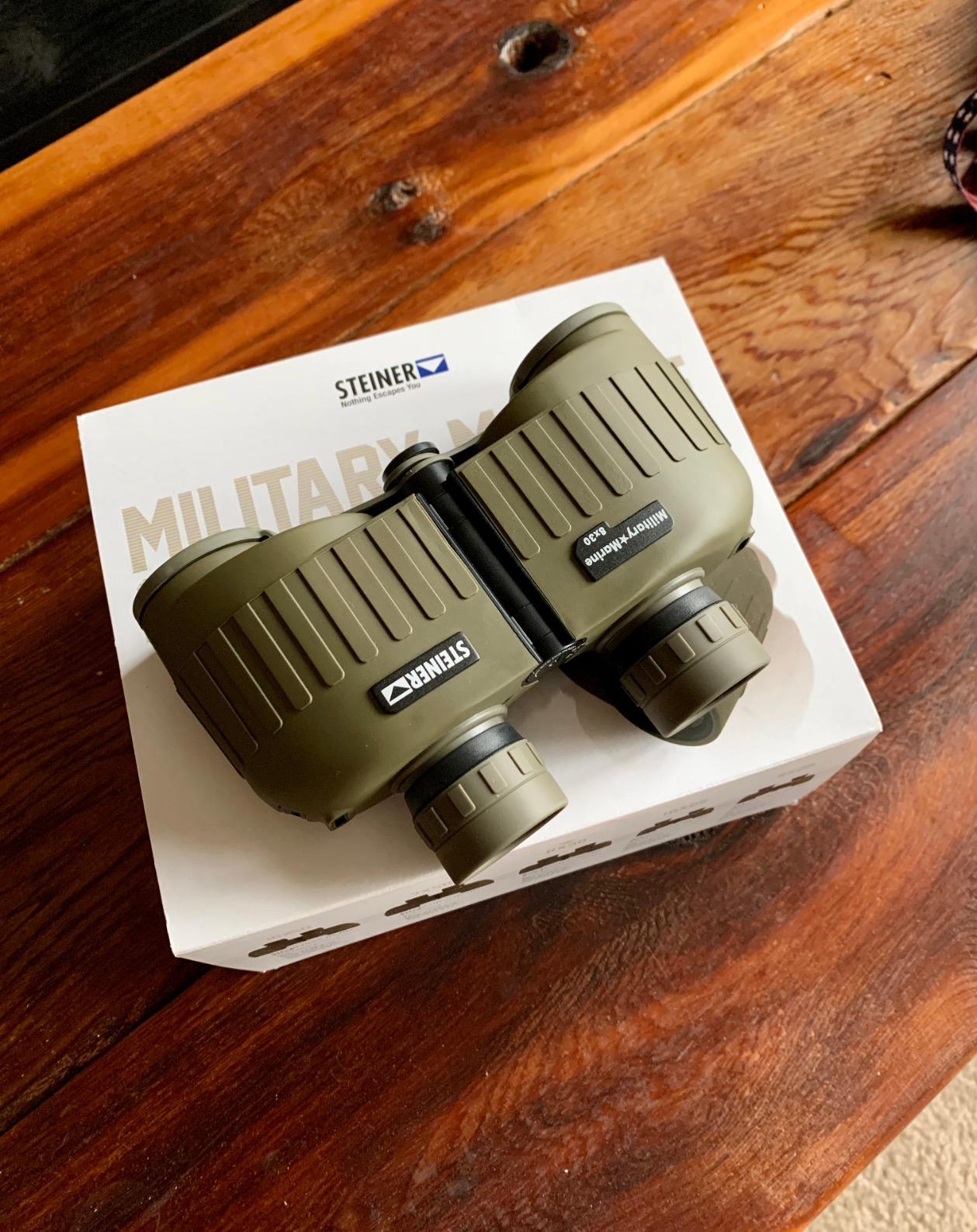
The Steiner Military-Marine 7×50 sits in a sweet spot that a lot of boaters will appreciate. It brings the same Sports-Auto-Focus technology and military-grade construction philosophy as the Commander, but at roughly a fifth of the price. With 671 reviews and a 4.7-star average, it has earned its reputation through years of real-world use.
I was struck by how many forum users describe this model as their go-to for both boating and hunting. The Makrolon polycarbonate housing is rated to withstand 11 Gs of impact, which is military-spec shock resistance. That translates to a pair that survives drops on deck, knocks against railings, and the general abuse that comes with life on the water.
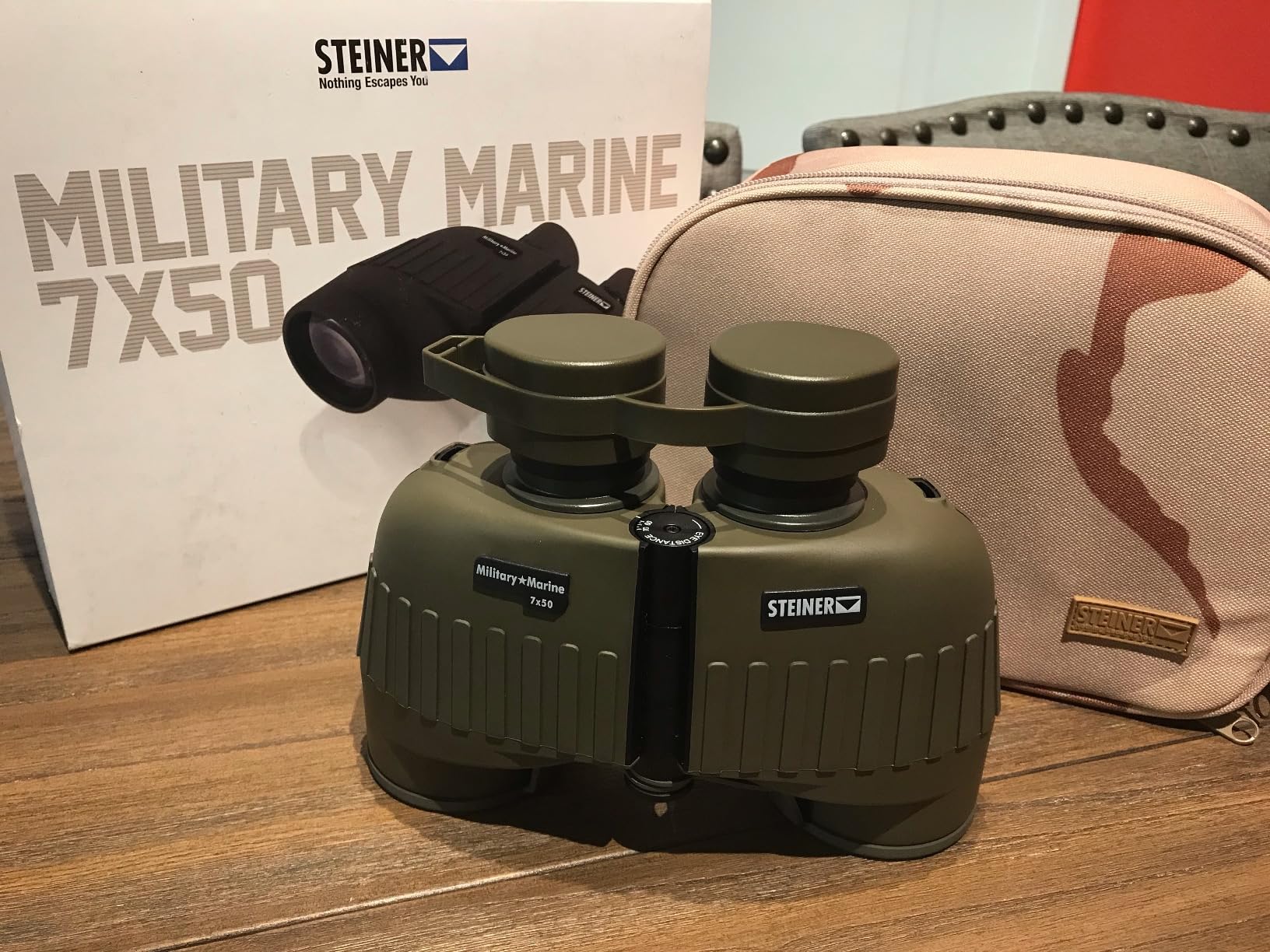
The floating prism shock-absorption system is the engineering detail that keeps the optics aligned even after severe jolts. Steiner uses flexible silicone lens mounts that absorb impact energy before it reaches the glass. Combined with the NBR Long Life rubber armoring, this is a pair designed to be used hard.
The 7×50 configuration gives you the classic marine balance of magnification and stability, with a 7.1mm exit pupil that gathers plenty of light for dawn and dusk scanning. At 36 ounces it sits in the middle of the weight range, substantial enough to feel solid but not so heavy that extended viewing becomes a chore.
Best Suited For: Multi-Use Boaters and Hunters
If you want one pair of binoculars that serves double duty on the boat and in the field, the Military-Marine is built for exactly that. The rugged construction and auto-focus system make it equally useful for spotting game at dawn and reading channel markers in the afternoon chop.
It is also a strong choice for boaters who want Steiner quality without the Commander’s premium price tag. You get the Heritage lifetime warranty, the same prism technology, and optics that 83 percent of reviewers rated five stars.
Where It Falls Short
The auto-focus system is polarizing. Some users love the set-it-and-forget-it convenience, while others prefer the control of a center-focus wheel for fine adjustments at varying distances. If you have very different vision in each eye or prefer manual control, the auto-focus may feel limiting.
There is also no built-in compass on this model. If bearing-taking is important to your navigation routine, you will need to look at a compass-equipped option like the Commander or the USCAMEL further down this list.
3. Steiner Marine 7×50 – The Best Value Workhorse
- High contrast optics with true-to-life color
- Sports Auto Focus once calibrated always sharp
- Floating prism absorbs severe shock
- Waterproof and rubber armored
- Heritage lifetime warranty
- Heavier than some plastic alternatives
- No built-in compass
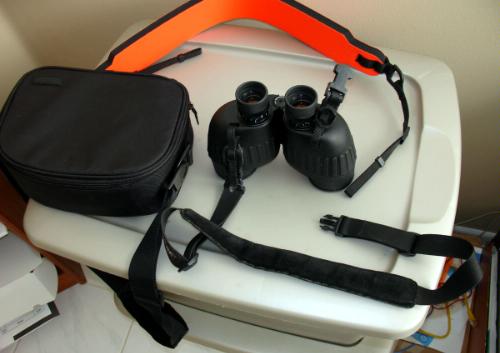
The Steiner Marine 7×50 is the pair I would recommend to most boaters who want genuine Steiner quality without stepping up to Commander pricing. At a mid-range price point with a 4.8-star rating across 499 reviews, it hits a value sweet spot that is hard to beat in the best marine binoculars category.
What stands out immediately is the high-contrast optics with true-to-life color reproduction. Reading the reviews, users consistently mention how bright and clear the image is compared to cheaper alternatives they have owned. The multi-coated lenses and Sports Auto Focus system mean you calibrate once for your eyes and then everything from 20 yards to infinity stays sharp.
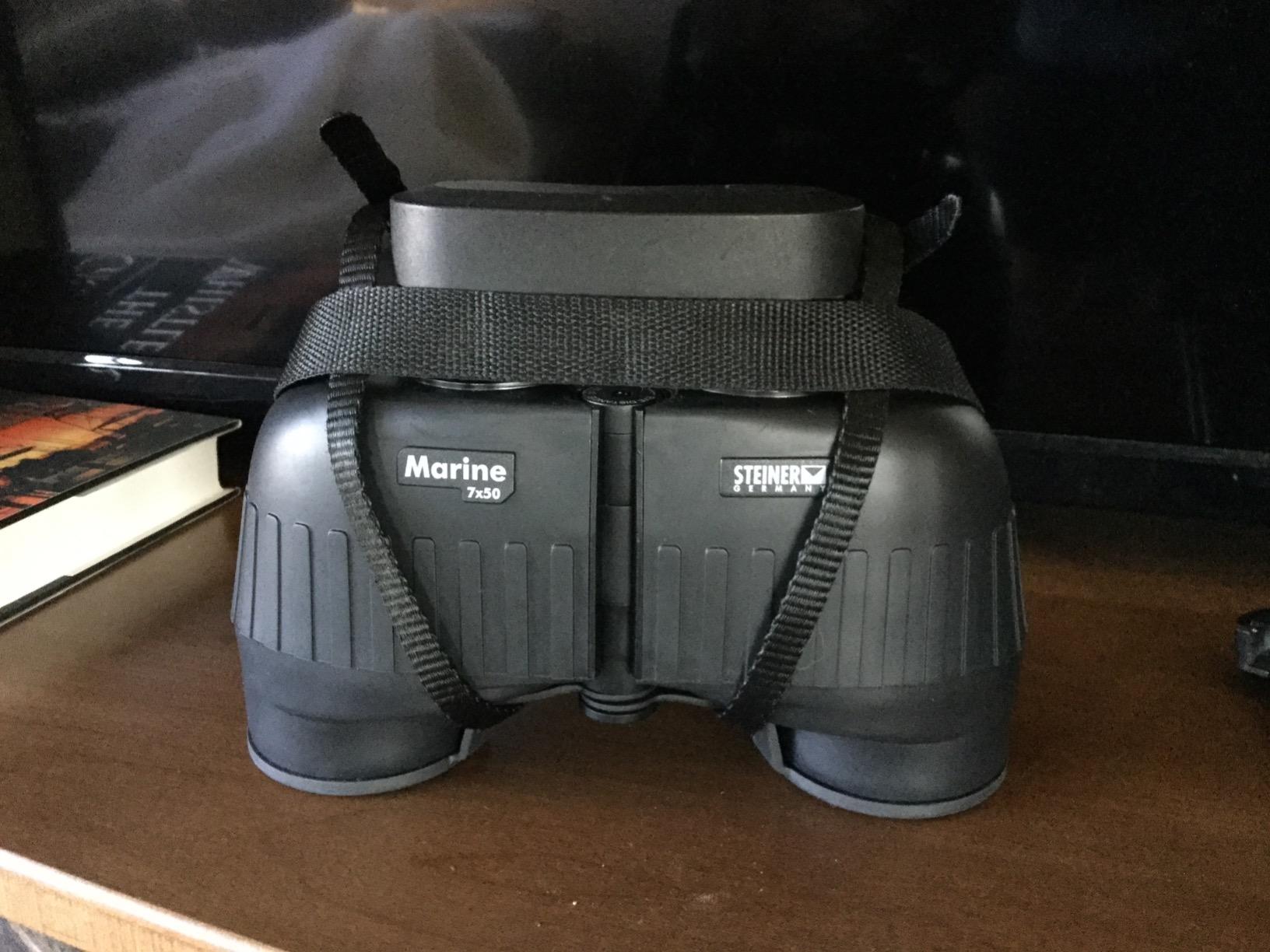
The floating prism system uses flexible silicone lens mounts that absorb shock and keep the optics aligned even after rough handling. The rubber-armored waterproof construction has held up for years of saltwater exposure according to long-term owners. At roughly 1 kilogram, it is a substantial pair but manageable for extended scanning sessions.
The 20mm eye relief makes this model comfortable for glasses wearers, which is a detail many budget binoculars get wrong. Combined with the Heritage lifetime warranty, you are buying a pair designed to last decades rather than seasons.
Best Suited For: Value-Conscious Serious Boaters
If you want premium optics and build quality but cannot justify the Commander’s price, the Steiner Marine is the smart money choice. You get the same auto-focus convenience, the same prism technology, and the same lifetime warranty at a fraction of the cost.
It is particularly well-suited for coastal cruisers, day-sailors, and fishing enthusiasts who use their binoculars regularly but do not need the submersible-to-10m rating or the HD compass of the Commander. For most recreational boating, this is all the binocular you will ever need.
Where It Falls Short
At 1 kilogram, it is heavier than some of the compact roof-prism options on this list. If you are sensitive to weight or plan to carry them around your neck for hours, the Bushnell H2O Xtreme compact might feel better.
There is no built-in compass, which means you cannot take bearings directly through the optics. For navigation that requires bearing-taking, you would need to pair these with a separate handheld compass or step up to a compass-equipped model.
4. Bushnell Marine 7×50 – Coast Guard Recommended Classic
- Quality optics with HD clarity
- Coast Guard recommended 7x50 configuration
- Hermetically sealed and corrosion resistant
- BaK-4 prisms fully multi-coated
- Durable non-slip rubber armor
- Limited lifetime warranty
- Manual focus rather than auto-focus
- Lower magnification than some competitors
The Bushnell Marine 7×50 carries something no other binocular on this list can claim so directly: it is built to the Coast Guard recommended 7×50 configuration. That endorsement matters to a lot of boaters who want assurance that their optics meet a recognized professional standard. With a 4.6-star rating across 299 reviews, it has earned broad trust.
Bushnell brings over 70 years of optics experience to this model. The BaK-4 porro prisms and fully multi-coated optics deliver the brightness and clarity you expect at this price point. The hermetically sealed waterproof construction and corrosion-resistant materials are specifically designed for saltwater environments.
The UV protection coating is a thoughtful addition that reduces glare from water reflections, which can be genuinely fatiguing during long days on the water. At 1.02 kilograms, it sits in the typical weight range for full-size 7×50 marine binoculars.
Reviewers consistently praise the solid build quality and clear optics. With 84 percent five-star ratings, the value proposition here is strong for boaters who want a recognized brand name at an accessible price.
Best Suited For: Entry-Level and Brand-Conscious Boaters
The Bushnell Marine is ideal for boaters buying their first dedicated marine binocular who want a trusted brand name and Coast Guard pedigree without the premium pricing of European optics. It delivers reliable performance for channel marker identification, harbor navigation, and general on-water observation.
It is also a solid backup pair for a boat that already has a premium primary binocular. Many boaters keep a rugged, dependable pair like this for crew use while reserving their top-tier optics for the skipper.
Where It Falls Short
The manual center focus requires adjustment each time you change viewing distance, unlike the Steiner auto-focus models. On a bouncing boat, this can be a minor annoyance compared to set-and-forget optics.
There is no built-in compass or rangefinder, which limits its usefulness for bearing-taking and distance estimation. If those features matter to your navigation style, the USCAMEL or Hooway models below offer them at similar or lower prices.
5. USCAMEL 10X50 Marine – The Budget Feature Champion
USCAMEL 10X50 Marine Binoculars for Adults: Binoculars for Sailing Boating
- Built-in illuminated compass and rangefinder
- 10x magnification for longer range viewing
- IPX7 waterproof floats on water
- BAK4 prism with FMC coating
- Foldable eyecups for glasses wearers
- Lower rating than Steiner alternatives
- Individual focus requires per-eye adjustment
- 1-year warranty only
The USCAMEL 10X50 Marine is the most reviewed binocular on this list by a wide margin, with 2,574 ratings and a 4.4-star average. That kind of volume tells you something important: this is the pair that budget-conscious boaters are actually buying, and most of them are happy with the choice.
What makes the USCAMEL stand out in the budget category is the sheer feature density. You get a built-in illuminated compass, an internal rangefinder on the left eyepiece, BAK4 prisms with FMC coating, IPX7 waterproofing, nitrogen filling, and O-ring seals that let it float on water. At under 0.88 kilograms, it is also one of the lighter full-size options here.

The 10x magnification gives you more reach than the traditional 7×50 marine standard, which is useful for spotting distant markers or wildlife. The trade-off is that higher magnification is harder to hold steady on a moving boat, so this pair favors calmer conditions or users with steady hands.
I noticed that 70 percent of reviewers gave it five stars, with particular praise for the value-for-money proposition. The illuminated compass and rangefinder work well for the price, and the floating design is a genuine safety feature that could save your investment if it goes over the side.
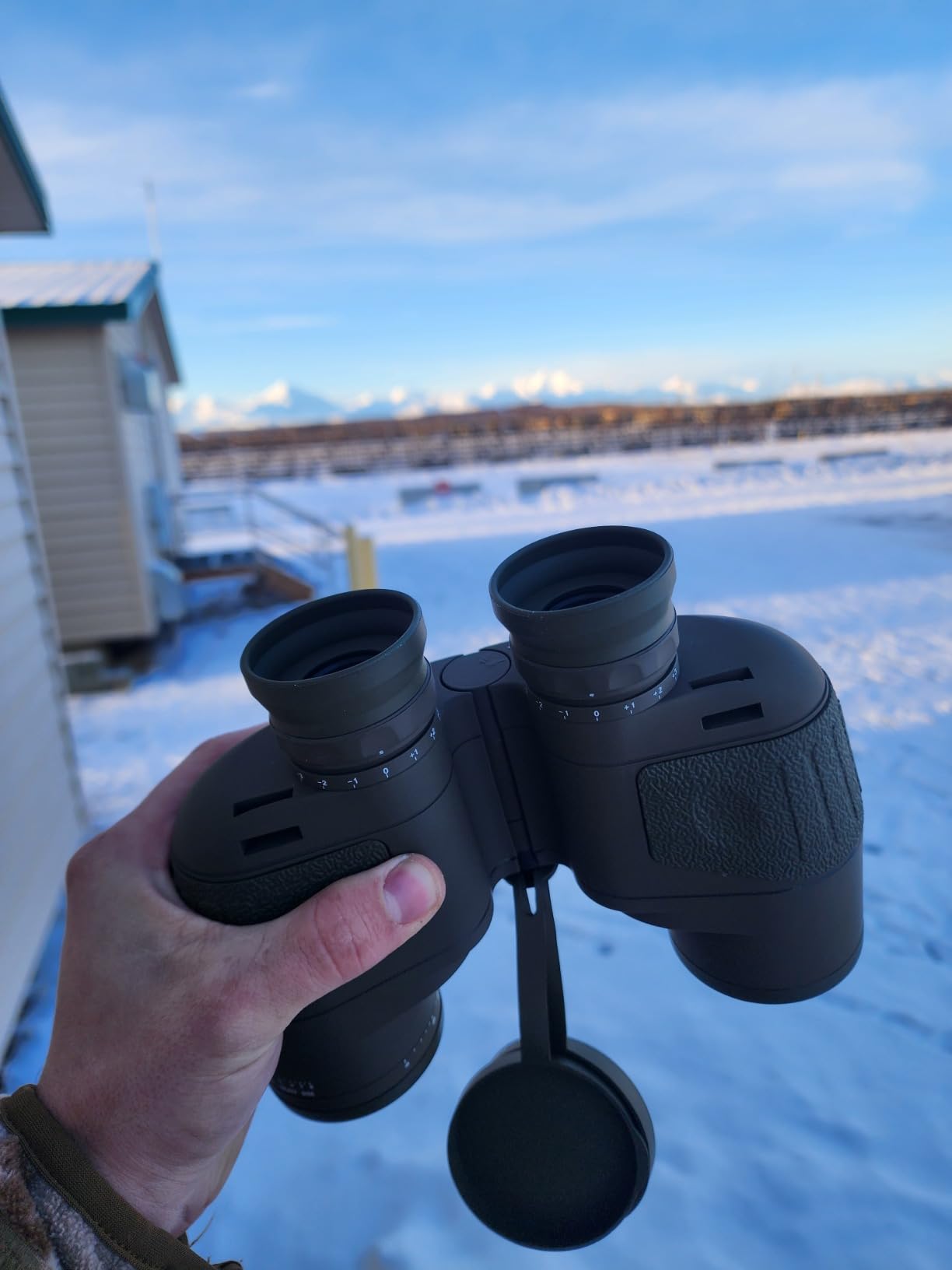
Best Suited For: Budget-Conscious Boaters Who Want Features
If you want compass and rangefinder functionality without spending Steiner money, the USCAMEL is the obvious choice. It packs more features per dollar than anything else on this list, and the massive review base gives you confidence that thousands of other boaters have put it through real-world testing.
It is a great first pair for new boaters, a solid backup for a larger vessel, or a practical choice for casual day-trippers who want functional marine optics without a major investment.
Where It Falls Short
The 1-year warranty is significantly shorter than the lifetime coverage Steiner and Bushnell offer. If long-term durability is your primary concern, that is a real limitation. The individual focus system requires adjusting each eyepiece separately, which takes more time than a center-focus or auto-focus design.
The optical quality, while good for the price, does not match the brightness and edge-to-edge sharpness of premium European optics. You are getting a lot of features, but the glass itself reflects the budget positioning.
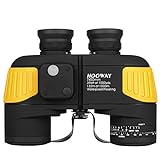
6. Hooway 7×50 Military Marine – Classic Marine Specs on a Budget
- Classic 7x50 marine configuration
- Waterproof and floats in water
- Nitrogen-purged fog proof
- Built-in illuminated compass and rangefinder
- Bright BAK4 prism images
- Individual focus requires adjustment time
- Heavier than some alternatives
The Hooway 7×50 Military Marine binoculars stick to the traditional 7×50 formula that experienced sailors consider the standard for marine use. With 1,176 reviews and a 4.4-star rating, it has built a solid following among boaters who want the proven configuration at a budget price.
What I appreciate about the Hooway is that it does not try to reinvent the wheel. The 7x magnification with 50mm objective lenses gives you a 6.8mm exit pupil that gathers plenty of light, and the 22mm eye relief is generous enough for comfortable use with glasses. The 396-foot field of view at 1,000 yards is wide enough for scanning the horizon effectively.
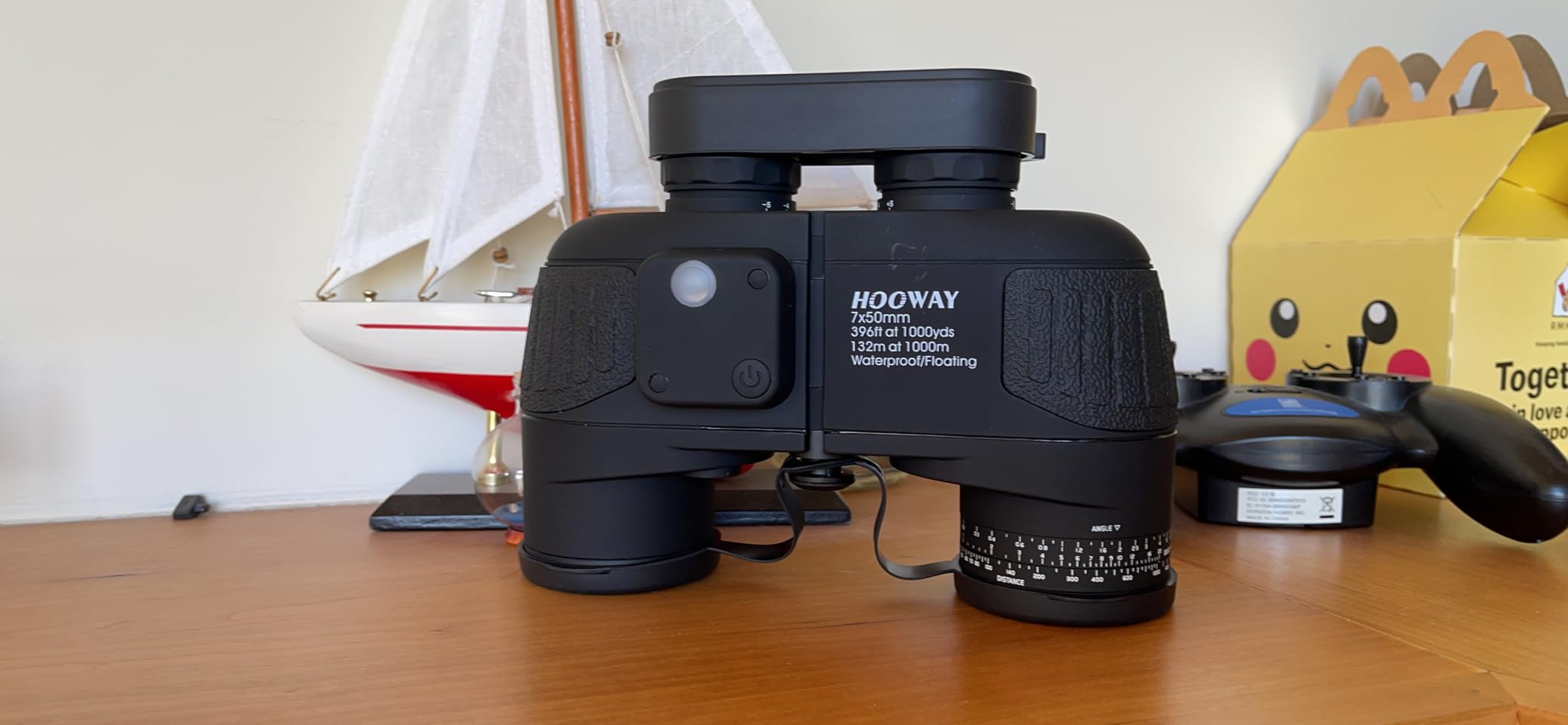
The built-in illuminated compass and internal rangefinder give you navigation tools that you would normally pay significantly more for. The nitrogen-purged fog-proofing and waterproof construction with floating capability mean this pair is genuinely designed for marine conditions, not just marketed that way.
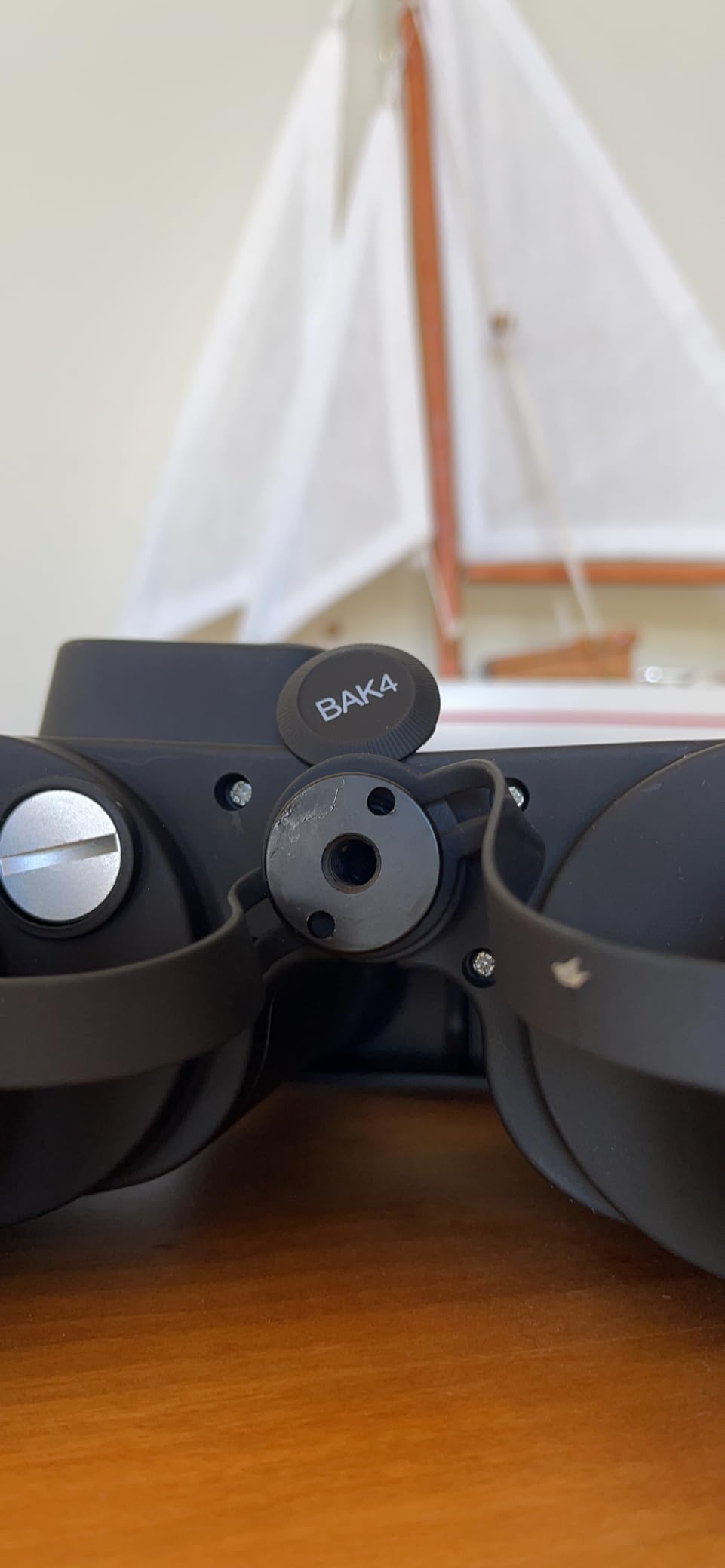
The non-slip rubber armor absorbs shock and provides a secure grip even with wet hands. There is also a tripod adapter fitting, which is useful if you want to mount the binoculars for extended stationary observation.
Best Suited For: Traditionalists and Navigation-Focused Boaters
If you believe in the 7×50 standard and want a pair that follows the proven marine formula without compromise, the Hooway delivers. The classic configuration means steadier images on rolling water compared to 10x alternatives, which matters for navigation and pilotage.
The compass and rangefinder make this a practical choice for boaters who actively use bearings and distance estimation as part of their navigation routine. At this price, getting both features in a floating, fog-proof package is impressive value.
Where It Falls Short
The individual focus system means you adjust each eyepiece separately rather than using a single center wheel. This takes a moment longer to set up, though once dialed in for your eyes it stays consistent. Some users find this slower than center-focus designs.
At 2.2 pounds, it is on the heavier side for extended handheld use. The optical quality is good for the price tier but will not match the brightness and clarity of Steiner or premium Bushnell glass.
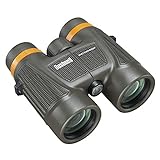
7. Bushnell H2O Xtreme 10×42 – Compact Waterproof Performer
- Trusted Bushnell brand 70 years experience
- Excellent image brightness
- IPX7 waterproof survives submersion
- Premium BaK-4 prisms fully multi-coated
- Compact lightweight design
- Compact size may be smaller than some prefer
- 42mm lens less light than 50mm marine standard
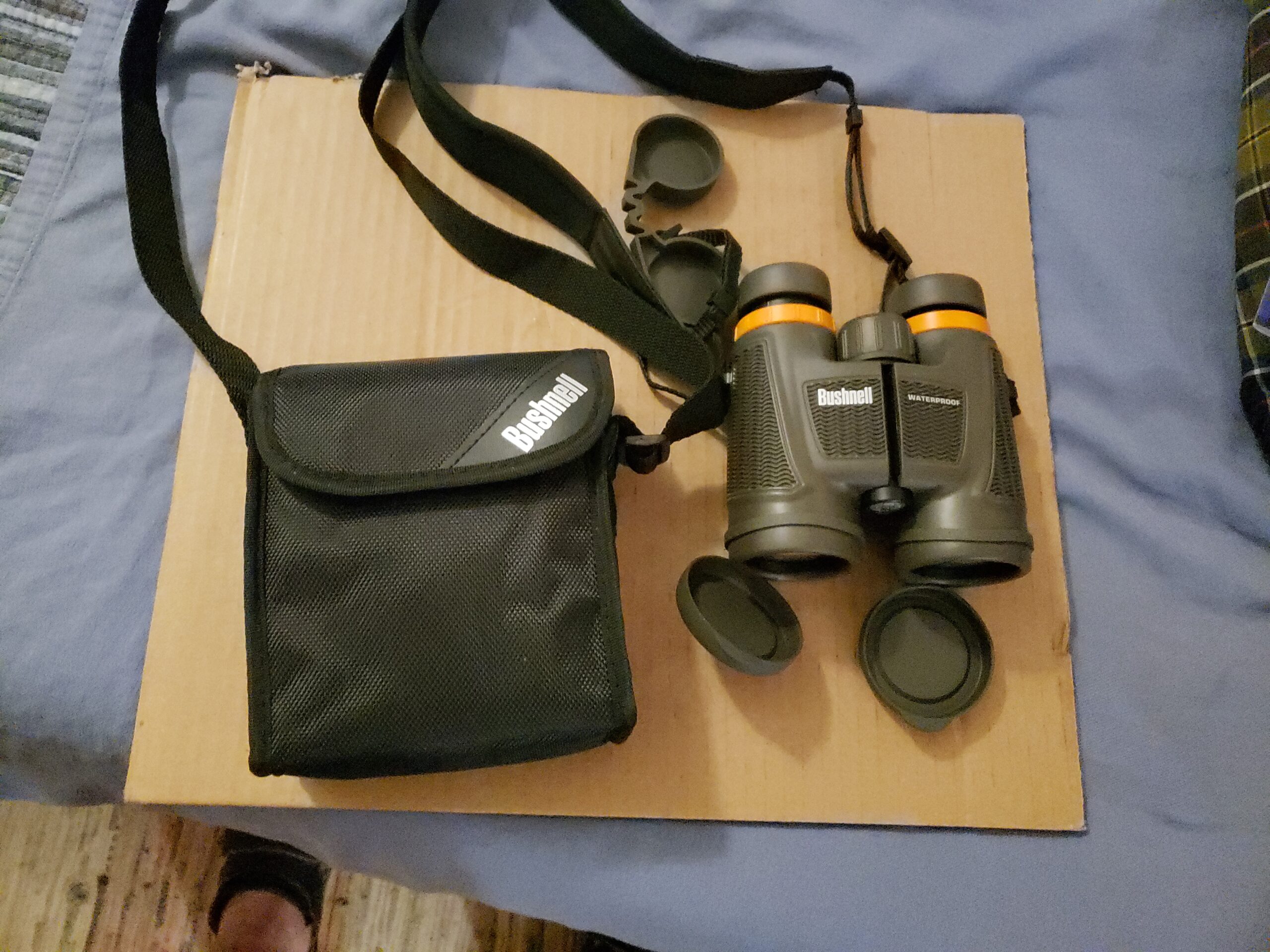
The Bushnell H2O Xtreme 10×42 takes a different approach from the traditional 7×50 marine binocular. It is a compact, roof-prism design that prioritizes portability and everyday versatility. With 1,005 reviews and a 4.7-star rating, it has clearly found an enthusiastic audience.
At just 709 grams, this is one of the lightest options on the list and dramatically easier to carry for extended periods. The O-ring sealed optical system carries an IPX7 waterproof rating, meaning it survives accidental submersion up to 1 meter for 30 minutes. Nitrogen purging prevents internal fogging when temperatures shift.
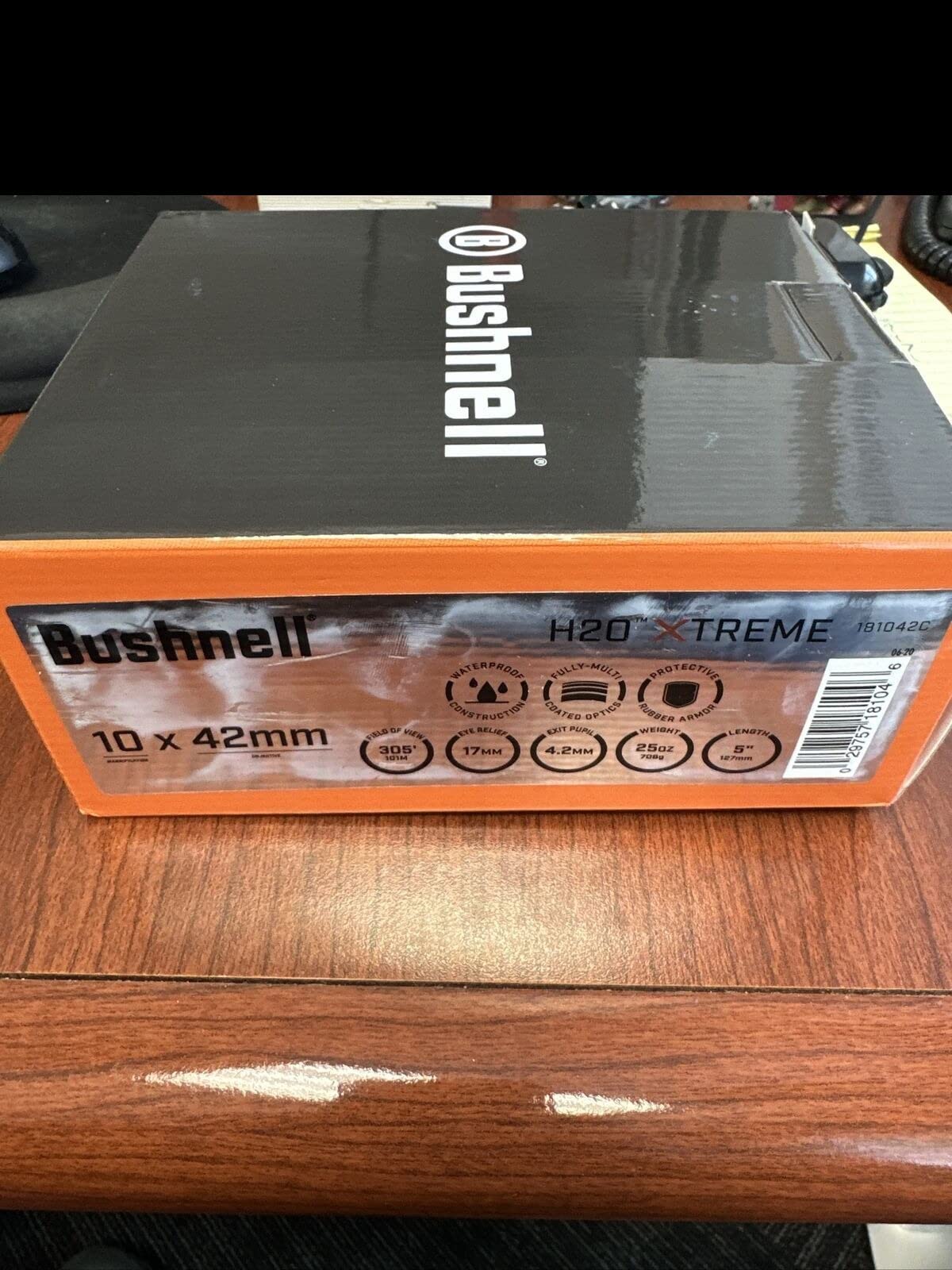
The premium BaK-4 prisms and fully multi-coated glass surfaces deliver the image brightness and clarity you expect from Bushnell. The rubber armor with soft non-slip grips feels secure in wet hands, which is exactly the condition you will be using them in most often.
Reviewers love the compact size for travel and everyday carry. While it lacks a compass, it earns its place as a versatile option for boaters who also want binoculars for birding, hiking, and other shore activities.
Best Suited For: Boaters Who Want Compact Versatility
If you want one pair of binoculars that works on the boat and everywhere else, the H2O Xtreme is the most portable option on this list. The compact roof-prism design fits easily in a day pack or glove compartment, and the IPX7 rating means it can handle real marine conditions.
It is particularly well-suited for kayakers, small-boat owners, and boaters who prioritize weight savings over the maximum light-gathering of a full 50mm objective lens.
Where It Falls Short
The 42mm objective lens gathers less light than the 50mm marine standard, which means slightly dimmer images at dawn and dusk. For night pilotage or low-light navigation, a 7×50 or 10×50 configuration would serve you better.
The 10x magnification in a lightweight body is harder to hold steady than a 7x, especially on moving water. There is no compass or rangefinder, so this pair is purely for observation rather than navigation.
8. ESSLNB 10X50 Marine – Feature-Packed with Metal Construction
- 10X real magnification not upscaled
- Built-in rangefinder and compass
- IPX7 waterproof rated
- BAK4 Porro prisms with FMC coating
- Metal body construction for durability
- Low light enhancement
- Not Prime eligible
- Heavier at 3.7 pounds
- Limited review count
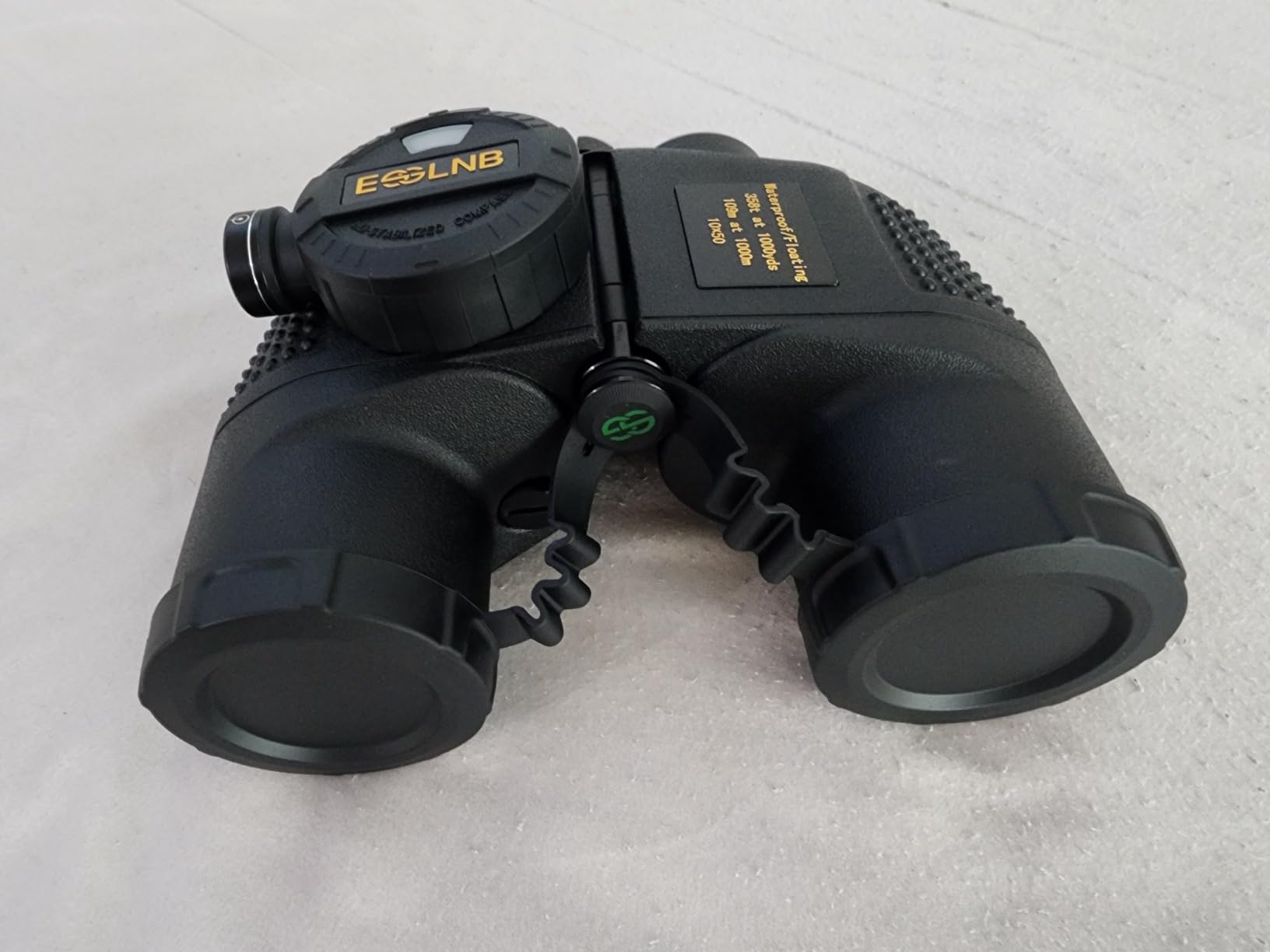
The ESSLNB 10X50 Marine is a feature-rich option that distinguishes itself with a metal body construction rather than the polycarbonate or plastic chassis common at this price point. With 120 reviews and a 4.4-star rating, it is a newer entrant that is building a following among budget-conscious boaters.
The 10x magnification is described by the manufacturer as real magnification rather than upscaled, which is an important distinction in a market where some budget brands inflate their numbers. The 23mm eyepiece provides a wide, comfortable viewing experience.
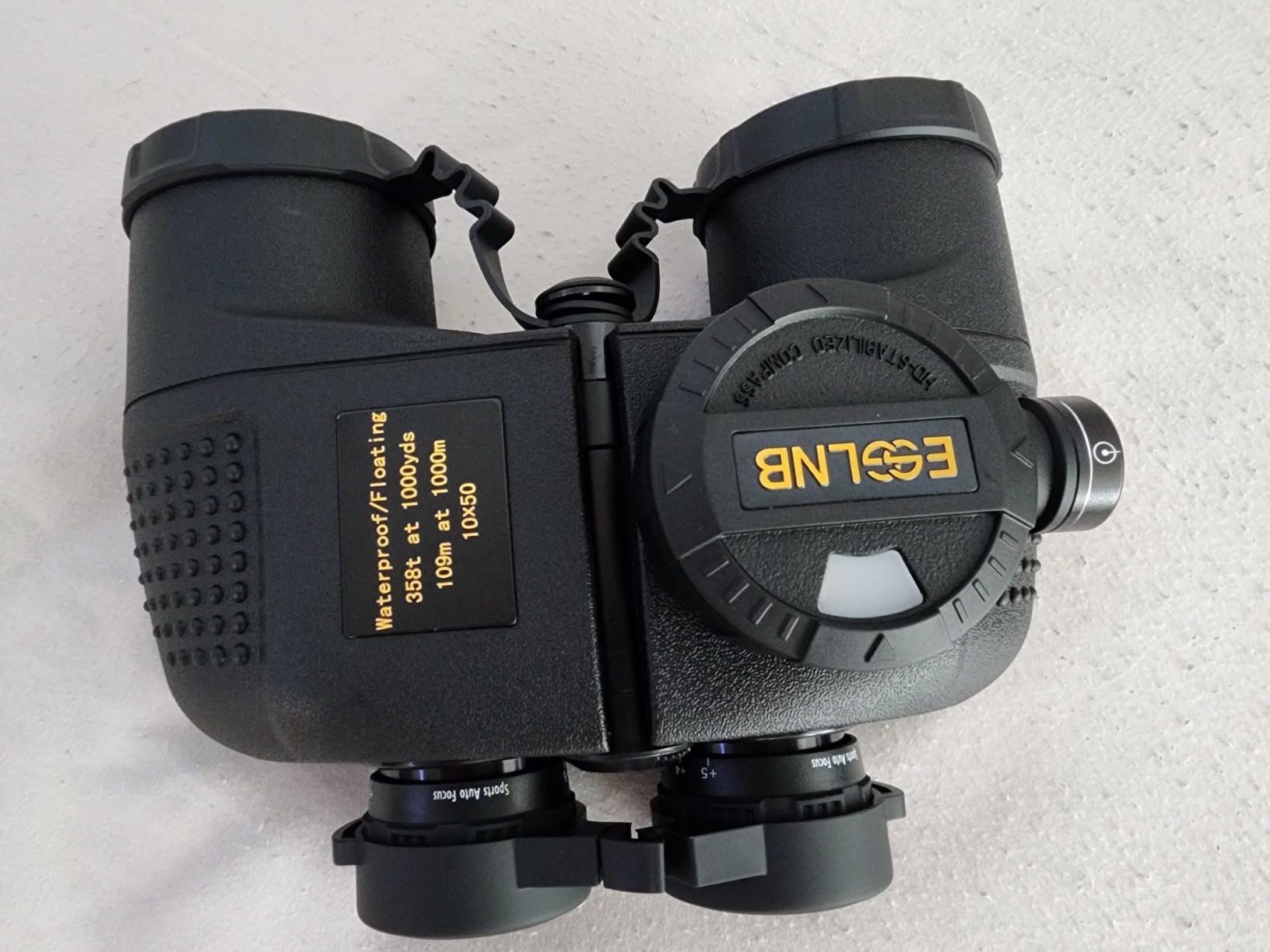
The BAK4 porro prisms use FMC green film anti-reflex coating across 8 pieces and 6 groups of lenses, which is designed to minimize image edge distortion. The internal rangefinder scale and built-in illuminated compass give you navigation tools that competitors at this price often omit.
The IPX7 waterproof rating means it survives 1.5-meter depth submersion for 30 minutes, which is more than enough for accidental drops overboard. The foldable eye cups accommodate glasses wearers, and the floating strap is included.
Best Suited For: Boaters Who Want Metal Construction on a Budget
If you prefer the heft and perceived durability of a metal-body binocular over plastic alternatives, the ESSLNB is one of the few budget options that delivers that. The compass and rangefinder add genuine navigation utility for the price.
It suits boaters who want a feature-complete marine binocular with rangefinding capability and are willing to accept a heavier unit in exchange for the metal construction and included accessories.
Where It Falls Short
At 3.7 pounds, this is the heaviest binocular on the list by a significant margin. Extended handheld scanning will fatigue your arms, and the weight makes one-handed use at the helm impractical. A tripod mount would help, but that limits mobility.
The review count of 120 is relatively low compared to established competitors, and the pair is not Prime eligible. That means longer shipping times and less community feedback to evaluate long-term durability.
9. Vortex Triumph HD 10×42 – HD Optics with Unlimited Warranty
- Top-rated HD optical system
- Excellent image quality and color fidelity
- Nitrogen purged waterproof and fog proof
- Durable shockproof construction
- Includes GlassPak harness
- Unlimited lifetime warranty
- Premium price point
- No compass or rangefinder
The Vortex Triumph HD 10×42 brings something different to this lineup: a focus on optical excellence backed by Vortex’s famous unlimited, unconditional lifetime warranty. With 2,202 reviews and a 4.8-star rating, it is one of the highest-rated binoculars on this list, period.
The HD optical system uses optimized glass elements that deliver exceptional resolution and color fidelity. Reading through the reviews, users consistently describe the image quality as punchy, bright, and sharp from center to edge. The fully multi-coated lenses maximize light transmission for clear viewing in varied conditions.
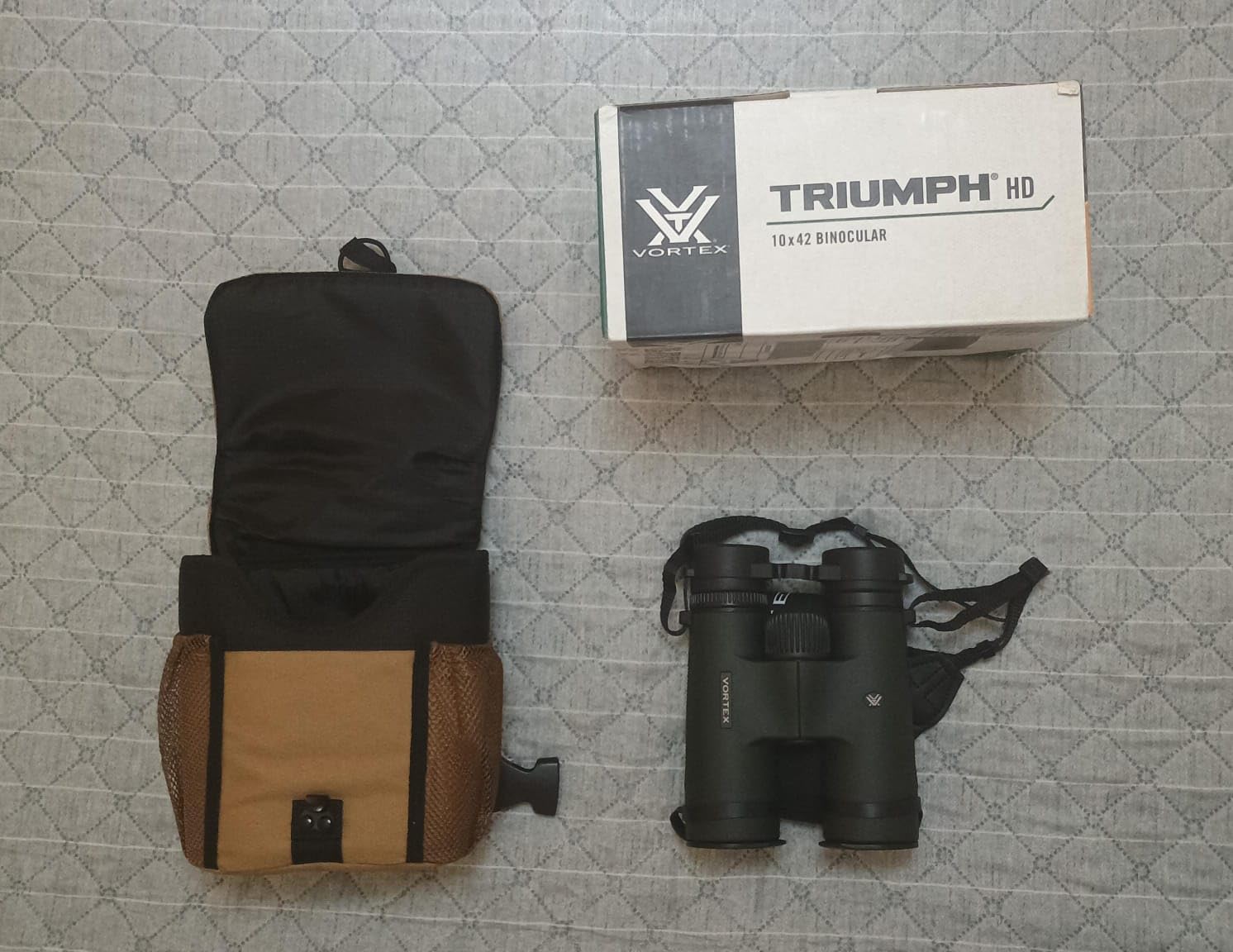
The polycarbonate chassis with full rubber armor is nitrogen purged for waterproof and fog-proof performance, and the shockproof construction shrugs off drops and impacts. The included GlassPak harness is a genuine value-add that distributes weight across your shoulders instead of concentrating it on your neck.
Vortex backs this model with their unlimited, unconditional lifetime warranty. That is not a limited manufacturer warranty. It covers the binoculars for life regardless of how the damage occurred, which is the most generous coverage on this list.

Best Suited For: Optics Enthusiasts Who Want Warranty Peace of Mind
If image quality is your top priority and you want a pair that will be repaired or replaced for life no matter what happens, the Vortex Triumph HD is the answer. The included harness and the reputation of Vortex’s warranty service make this a compelling long-term investment.
It suits boaters who also use binoculars for birding, hunting, and other shore activities and want a pair that excels across all of them. The HD optics genuinely outperform standard coated lenses in side-by-side comparisons.
Where It Falls Short
There is no compass or rangefinder, which limits this pair’s usefulness for active marine navigation. It is an observation tool rather than a navigation instrument. The 10×42 configuration also gathers less light than a 50mm objective, making it less ideal for low-light pilotage.
For a pair without marine-specific features like a compass or floating design, the price sits at the higher end of the budget category. If marine navigation is your primary use case, a feature-rich option like the USCAMEL may offer better value.
10. NOCOEX 10×50 Marine – Ultra-Budget with Navigation Features
- Budget-friendly price point
- 10x50 magnification for marine use
- Waterproof construction
- Built-in rangefinder and compass
- BAK4 prism optics
- Autofocus description inconsistent with manual focus
- Limited technical specifications available
The NOCOEX 10×50 Marine is the most affordable option on this list, and for boaters on the tightest budget, it packs a surprising amount of functionality. With 494 reviews and a 4.4-star rating, it has found an audience among casual boaters and first-time buyers.
For the price, you get a 10×50 magnification with a built-in rangefinder and compass, BAK4 prism with FMC lens coating, waterproof construction, and a fog-proof design. The military-style construction gives it a rugged appearance that appeals to boaters who want something that looks the part.
At 2.2 pounds, the weight is manageable for a full-size 50mm binocular. The manual focus system gives you direct control over image sharpness, though it requires adjustment when switching between near and far subjects.
Reviewers note that the rangefinder and compass work adequately for the price, though they do not match the precision of more expensive optics. For casual boating, wildlife spotting, and basic navigation reference, the functionality is sufficient.
Best Suited For: First-Time Buyers and Casual Boaters
If this is your first marine binocular purchase and you want to test the waters without a significant investment, the NOCOEX gives you all the key features at the lowest price on this list. It is a practical entry point that lets you experience compass and rangefinder functionality before deciding whether to upgrade.
It also works well as a backup or crew pair on a larger vessel where the primary binoculars are reserved for the skipper.
Where It Falls Short
The product descriptions are inconsistent, with some marketing materials mentioning autofocus while the actual product uses manual focus. This has caused confusion among buyers expecting set-and-forget operation.
Detailed technical specifications are limited compared to established brands, making it harder to evaluate optical quality before purchase. The build quality reflects the budget price, so long-term durability in harsh marine conditions is less certain than with lifetime-warranty options.
11. AOMEKIE 10×50 Marine – Compass and Rangefinder Value
- Hi-index BAK4 prism bright sharp images
- Green FMC coating improves light transmission
- IPX7 waterproof and fogproof
- Built-in rangefinder and illuminated compass
- 22mm eye relief for eyeglass wearers
- Lens caps do not stay in place securely
- Carrying case is too narrow
- Range finder markings can be obtrusive
The AOMEKIE 10×50 Marine binoculars have built a strong following with 1,019 reviews and a 4.4-star rating. What makes this model notable is the combination of hi-index BAK4 prisms, green FMC anti-reflective coating, and a genuine IPX7 waterproof rating at a budget-friendly price.
The built-in rangefinder with ruler on the left eyepiece and illuminated compass on the right give you practical navigation tools. The 22mm eye relief is one of the most generous on this list, making these binoculars genuinely comfortable for glasses wearers. The apparent 7.5-degree angle of view provides a wide, immersive image.
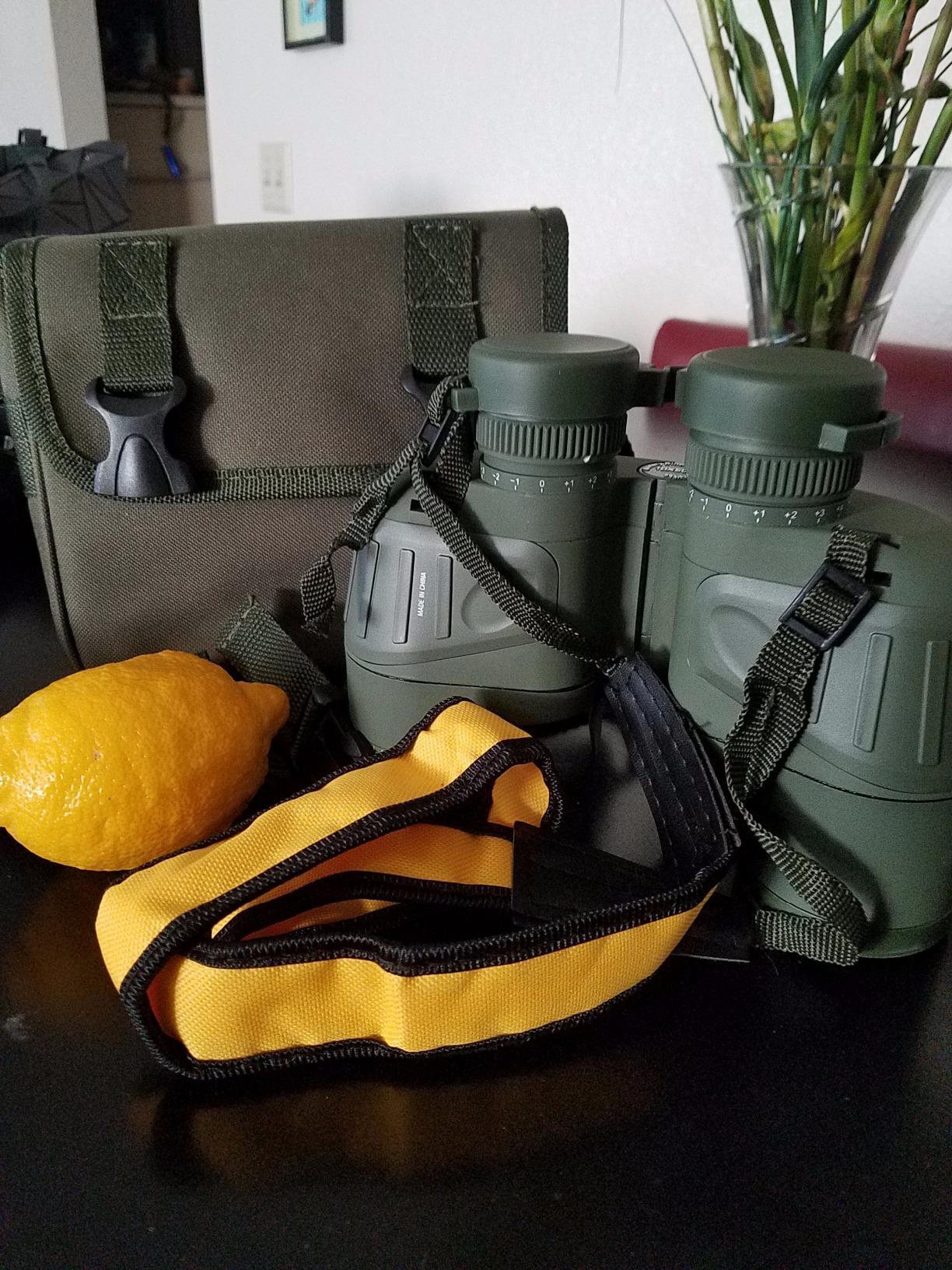
The nitrogen-filled anti-fog design and IPX7 rating mean these binoculars can handle immersion up to 1 meter for 30 minutes. The diopter adjustment range of plus or minus 5 diopters lets you fine-tune for differences between your eyes.
Reviewers praise the clear optics, solid construction, and useful rangefinder and compass features. At 70 percent five-star ratings, the value proposition resonates with budget-conscious boaters who want marine-specific functionality without premium pricing.
Best Suited For: Glasses Wearers and Budget Navigators
If you wear glasses, the 22mm eye relief on the AOMEKIE is a standout feature that makes comfortable viewing possible without removing your spectacles. Combined with foldable eyecups and a diopter adjustment, this pair accommodates a wide range of vision needs.
The rangefinder and compass make it practical for boaters who want navigation reference tools at a budget price. The two-year warranty is also better than the one-year coverage offered by some competitors in this tier.
Where It Falls Short
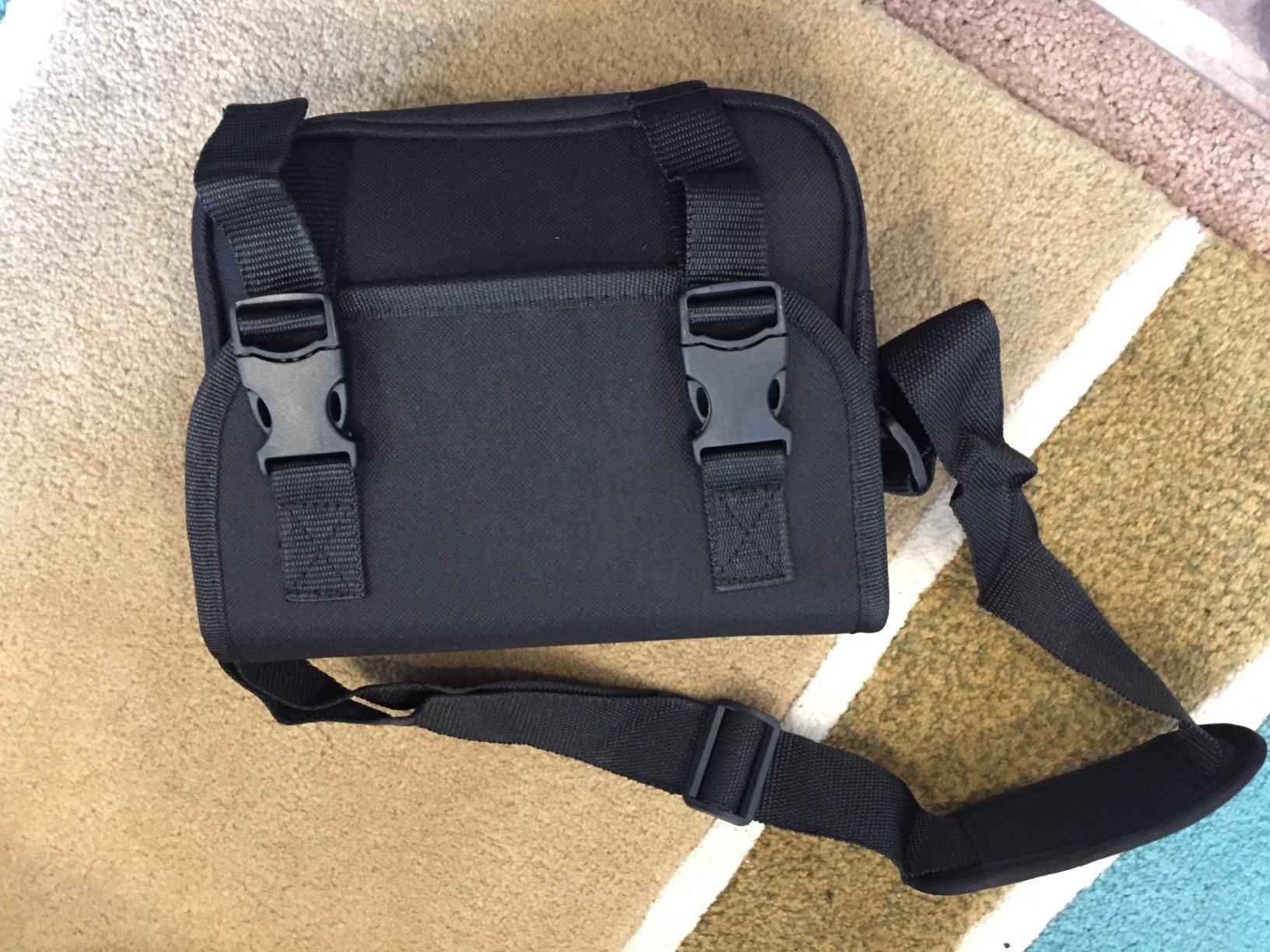
The lens caps are a common complaint, with multiple reviewers noting they do not stay securely in place. This is a minor but annoying quality-control issue that affects daily usability. The carrying case is also described as too narrow for comfortable storage.
The rangefinder markings in the field of view can feel obtrusive for users who primarily want a clean observation image. If you do not use the rangefinding function regularly, the etched reticle may be more distracting than helpful.
12. Barska Floatmaster 7×50 – The Binocular That Floats
- Fully multi-coated optics for clear views
- Floats on water for marine use
- Waterproof fogproof and shockproof
- Ergonomic non-slip rubber design
- Classic 7x50 magnification
- 23mm eye relief for glasses
- Limited stock availability
- Heavier design at 36.5 ounces
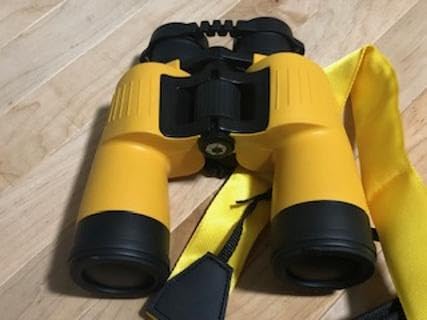
The Barska Floatmaster 7×50 earns its name with a genuinely useful feature for marine use: it floats. For boaters who have watched a pair of binoculars sink to the bottom of a harbor, this is not a gimmick. It is a practical safety feature that could save your investment.
The classic 7×50 configuration follows the marine standard, giving you the stability and light-gathering that experienced sailors trust. The BAK-4 porro prisms and fully multi-coated optics deliver clear, bright images. The dry nitrogen-purged and sealed construction prevents fogging in humid marine conditions.
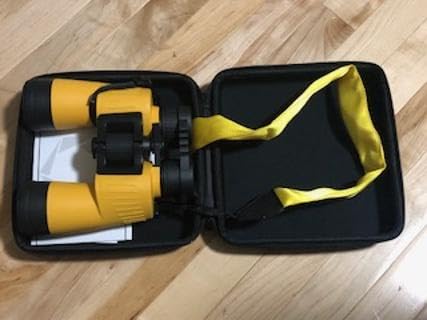
With a 4.5-star rating across 175 reviews and 78 percent five-star ratings, the Floatmaster has earned positive feedback for its optical clarity and rugged build. The 23mm eye relief accommodates glasses wearers comfortably.
The non-slip rubber armor provides a secure grip in wet conditions, and the shockproof design adds another layer of durability. At 367 feet field of view at 1,000 yards, the viewing area is generous for scanning horizons and tracking moving objects.
Best Suited For: Boaters Who Worry About Drops Overboard
If losing a pair of binoculars over the side is a realistic concern, the Floatmaster is your insurance policy. The floating design means a moment of carelessness does not become a costly mistake. For small-boat owners, kayakers, and anyone working in conditions where gear goes overboard, this feature alone justifies the purchase.
The 7×50 configuration also makes it suitable for traditional marine navigation and pilotage, with the stability that the classic magnification provides on rolling water.
Where It Falls Short
At 36.5 ounces, this is a heavier pair for its category, which can contribute to arm fatigue during extended scanning sessions. The weight is a trade-off for the rugged, floating construction.
Stock availability is a concern, with limited units remaining at times. There is no built-in compass or rangefinder, so navigation reference tools are absent. For boaters who need bearing-taking capability, a compass-equipped model would be a better choice.
How to Choose the Best Marine Binoculars – Buying Guide
Choosing the right marine binoculars comes down to understanding a handful of specifications that genuinely matter on the water. Our team sifted through forum discussions, expert reviews, and real boater feedback to identify the factors that separate a great marine pair from a disappointing one.
Why 7×50 Is the Marine Standard
The 7×50 configuration is considered the gold standard for marine binoculars, and the reasoning is practical rather than arbitrary. Seven-power magnification provides enough zoom to identify distant markers and vessels while remaining steady enough to hold on a moving boat. Higher magnifications like 10x amplify every wave and handshake, making the image bounce unpredictably.
The 50mm objective lens gathers maximum light, producing a 7.1mm exit pupil that matches the dilated human eye in low light. This matters enormously for dawn and dusk pilotage when you need every photon you can collect. The combination of moderate magnification and large exit pupil is why the Coast Guard recommends 7×50 for marine use.
Waterproofing and Nitrogen Filling
Saltwater destroys optics that are not properly sealed. Look for O-ring sealed construction with an IPX7 rating or better, which means the binoculars can survive submersion in 1 meter of water for 30 minutes. Nitrogen purging or filling is equally critical because it prevents internal fogging when the binoculars move between temperature extremes, which happens constantly on the water.
A common pain point from forum users is compass fogging during use, which is dangerous in critical moments. Quality nitrogen filling eliminates this problem. Models that claim to be waterproof without nitrogen purging are not truly marine-grade.
Built-in Compass and Rangefinder
A built-in compass lets you take bearings without removing your hands from the binoculars, which is a significant safety advantage at the helm. Illuminated compasses are readable in low light, and the best ones are stabilized to reduce swing on moving boats. The Steiner Commander’s HD-stabilized compass is the benchmark here.
Internal rangefinders with reticle scales let you estimate distance to objects of known height, such as lighthouses or channel markers. This is a navigation skill that takes practice but adds genuine utility for coastal piloting.
Eye Relief for Glasses Wearers
If you wear glasses, eye relief is the specification that determines whether you can use the binoculars comfortably. Look for at least 18mm of eye relief, with 20mm or more being ideal. The AOMEKIE and Barska Floatmaster both offer 22-23mm, which accommodates most prescription glasses without vignetting the image.
Foldable or twist-up eyecups let glasses wearers position their eyes at the correct distance from the ocular lens. This is a detail that budget binoculars sometimes get wrong, making them unusable for a significant portion of boaters.
Image Stabilization and Battery Life
Image-stabilized binoculars use electronic gyroscopes to counteract hand shake and boat motion, producing remarkably steady images at higher magnifications. Canon’s IS series is the best-known example. For larger boats where stability is an issue, image stabilization can be transformative.
The catch is battery life. Forum users consistently express frustration about batteries dying at bad times, leaving them with a heavy, non-functional pair of optics. If you choose an image-stabilized model, carry spare batteries and check them before every trip. For most recreational boaters, a quality 7×50 pair without electronics will deliver better long-term reliability.
Weight, Armor, and Handling
Heavy binoculars cause arm fatigue during extended scanning, which is one of the most common complaints in forum discussions. Look for rubber-armored construction that provides a secure grip with wet hands and absorbs impact if the binoculars are dropped. The Steiner floating prism system and Makrolon polycarbonate chassis represent the engineering standard for combining light weight with durability.
Consider how you will carry the binoculars. A neck strap works for short sessions, but a harness like the Vortex GlassPak distributes weight across your shoulders and prevents the binoculars from swinging as you move around the boat.
Price Tiers and Value
Budget options under $130 like the USCAMEL, Hooway, and AOMEKIE deliver impressive feature density with compasses, rangefinders, and floating designs. They are excellent entry points but reflect their price in optical quality and warranty coverage.
Mid-range options from $130 to $400, including the Steiner Marine and Military-Marine, deliver significant jumps in optical clarity, build quality, and warranty coverage. This is where most serious recreational boaters find the best balance of performance and value.
Premium options above $600 like the Steiner Commander offer professional-grade optics, advanced compass systems, and submersible ratings. These make sense for offshore cruisers and professional mariners who depend on their binoculars for safety.
FAQs
What is the best magnification for marine binoculars?
7x magnification is considered the best for marine binoculars because it provides enough power to see distant objects clearly while maintaining a steady image on a moving boat. Paired with 50mm objective lenses (7×50), this combination offers optimal light gathering and a wide field of view essential for maritime navigation. The Coast Guard recommends the 7×50 configuration for marine use.
What binoculars do Navy SEALs use?
While specific military specifications are classified, Fraser Optics is widely recognized as the choice of US Navy and Coast Guard units for image-stabilized binoculars. For civilian marine use, the Steiner Commander and Fujinon Polaris series are often compared to these professional-grade optics and are trusted by offshore sailors worldwide.
What binoculars does the Coast Guard use?
Fraser Optics has the reputation for making the best image-stabilized binoculars for Coast Guard and law enforcement use, with their S250 model specifically designed for maritime conditions. The Coast Guard also recommends the 7×50 configuration for general marine use. For recreational boaters, Steiner and Bushnell offer comparable professional-grade options that meet similar standards.
What binoculars do sailors use?
Experienced sailors typically use 7×50 marine binoculars with nitrogen filling and waterproof construction. Popular choices include the Steiner Navigator Pro, Steiner Commander, and Fujinon Polaris. Many sailors prefer models with built-in compasses for bearing-taking without removing hands from the helm, and the RNLI uses the Bynolyt Searanger as a major trust signal.
Are image-stabilized marine binoculars worth it?
Image-stabilized binoculars can be transformative for larger boats where stability is challenging, producing remarkably steady images at higher magnifications. However, they depend on batteries that can die at critical moments, and they are significantly more expensive than traditional optics. For most recreational boaters, a quality 7×50 pair without electronics delivers better long-term reliability and value.
Final Thoughts on the Best Marine Binoculars for 2026
Finding the best marine binoculars for your needs comes down to matching your budget and boating style to the right combination of features. For professional-grade performance, the Steiner Commander 7×50 remains the gold standard with its HD-stabilized compass and submersible construction. For most serious boaters seeking exceptional value, the Steiner Marine 7×50 delivers premium optics and lifetime warranty at a mid-range price. And for budget-conscious buyers who want compass and rangefinder functionality, the USCAMEL 10X50 offers more features per dollar than anything else we reviewed.
Whatever pair you choose, treat it as safety equipment rather than an accessory. Keep it accessible at the helm, rinse it with fresh water after saltwater exposure, and store it in a dry case when not in use. The right marine binoculars will serve you for decades and could one day make the difference between a safe passage and a dangerous situation on the water.