
Cell signal does not disappear gradually. It disappears at the point where the trail narrows, the drainage crosses, and the weather turns, which is usually the same place where you most need to reach the rest of your group. A handheld radio keeps working there, on the same channel, with no tower, no subscription and no bars to check. That is why the best handheld radios for hiking stay in the top pocket rather than the bottom of the pack where the phone lives.
We spent six weeks with ten radios across forest trails, open ridge line and a canyon with switchbacks, comparing what each one actually does on a group hike. Along the way we checked license requirements, water ratings, battery chemistry below freezing and the gap between advertised miles and miles you will really get. Some of our findings contradict the packaging, and a few contradict the forums.
One thing to sort out before anything else: a radio is a coordination tool, not an emergency service. Nobody is obliged to pick up, and no ranger station is monitoring your channel. If you need a device that reaches a real emergency service, that is a satellite messenger, and we cover that comparison in the buying guide. For coordinating with the four people you hiked in with, a handheld radio is the right tool.
Below you will find the full list, a side-by-side table, and a buying guide that explains licensing, band behaviour, water ratings and antenna placement. If you want a broader view of emergency kit, we also rank the best emergency radios and the best hand crank radios elsewhere on the site.
Top 3 Picks: The Best Handheld Radios for Hiking in 2026
These are the three that earned the most time in our pack. Each one solves a different problem, and the choice depends more on your group and terrain than on wattage.
Baofeng UV-5R
- Dual band VHF/UHF
- 128 channels
- 50 CTCSS and 104 DCS codes
- 1800mAh Li-ion battery

Midland GXT1000VP4
- 50 GMRS channels
- 142 privacy codes
- NOAA weather alert scan
- Dual power NiMH or AA

All 10 Handheld Radios for Hiking Side by Side in 2026
This table is the quick version. Every radio below is written up in detail further down, and the features listed here are the ones that actually changed how each performed on trail.
| Product | Specifications | Action |
|---|---|---|
| Baofeng UV-5R |
|
Check Latest Price |
| Midland GXT1000VP4 |
|
Check Latest Price |
| Retevis RT22 |
|
Check Latest Price |
 Baofeng GM-15 Pro Baofeng GM-15 Pro |
|
Check Latest Price |
 Retevis RB48PLUS Retevis RB48PLUS |
|
Check Latest Price |
 Motorola Talkabout T475 Motorola Talkabout T475 |
|
Check Latest Price |
 Retevis RB48 Retevis RB48 |
|
Check Latest Price |
 Baofeng AR-5RM Baofeng AR-5RM |
|
Check Latest Price |
 Wishouse M9 Wishouse M9 |
|
Check Latest Price |
 pxton PX-888S pxton PX-888S |
|
Check Latest Price |
1. Baofeng UV-5R – Best Overall for Hikers Who Want Range and Flexibility
- Dual band with 128 channels and 50 CTCSS and 104 DCS codes
- Impressive receive sensitivity for scanning
- Removable antenna accepts aftermarket upgrades
- Long standby life lasting several days with power saving
- Survives repeated drops
- No water resistance despite listing metadata
- Charging needs the included desktop stand rather than USB-C
- Menu system and programming have a real learning curve
Our first pick for most hikers is the radio that appears in the most field reports from hikers we know: the Baofeng UV-5R. It is not the prettiest unit in our test group and it is not the smallest, but it does two things the others cannot. It listens on both VHF and UHF, and it takes a better antenna without a fuss.
That second point matters more than the wattage number on the sticker. The supplied antenna is the weak link on most budget handhelds, and on the UV-5R it is a screw-on part. We swapped in a longer aftermarket whip and the difference was immediate on a ridge, where the group had been fading out at roughly a mile and a half.
The build is plain molded plastic with a rubberized side panel, and the buttons are stiff enough that you can find them with a glove on but not so stiff that you hit the wrong one. The keypad lock is worth using every single time, because the most common radio mistake on trail is pocketing the set and changing the channel.
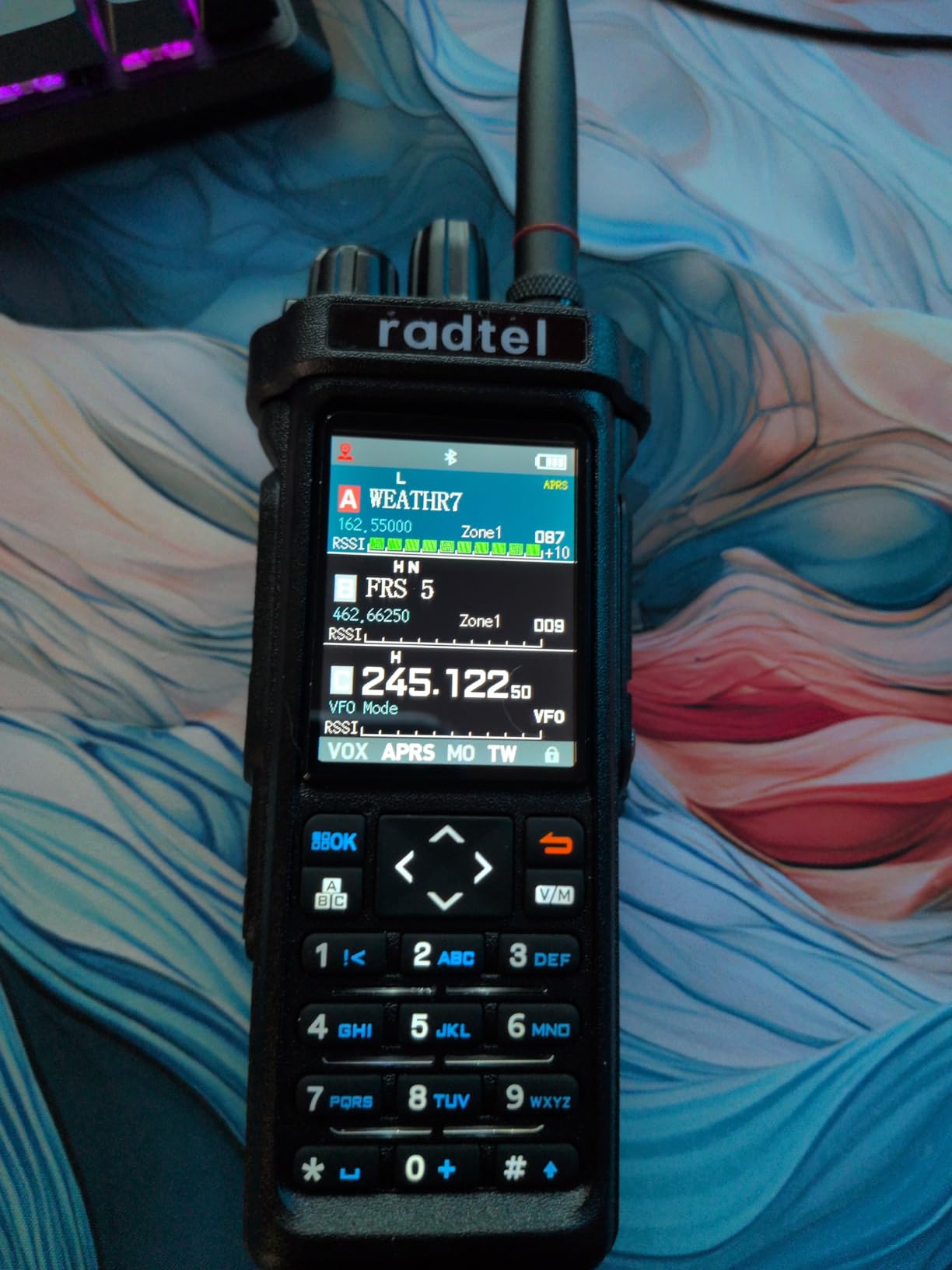
The 1800mAh battery is the reason this radio keeps showing up on multi-day trips. Reviewers consistently report several days of standby with the power saving feature enabled, which is exactly what you want from a radio that mostly listens rather than transmits. Transmit time is the drain, so a group that talks constantly will exhaust the pack far sooner.
There is no water resistance here, and that is the honest weakness. Listing metadata on some versions mentions an IPX7 rating, but the unit in our hands has no sealing and no gasket around the accessory port. In sustained rain, keep it in a dry bag or a pack pocket, the same way you would treat a phone.
Charging uses the included desktop cradle, which means packing one more cable and one more brick. There is no USB-C port on the radio itself, so charging from a shared power bank in camp is a little more ceremony than it needs to be.
The menu system is the other learning curve. Programming 128 channels by hand takes patience, and a programming cable with CHIRP software makes it faster for anyone willing to install it on a laptop. Read the manual before the trip, not on the trailhead.
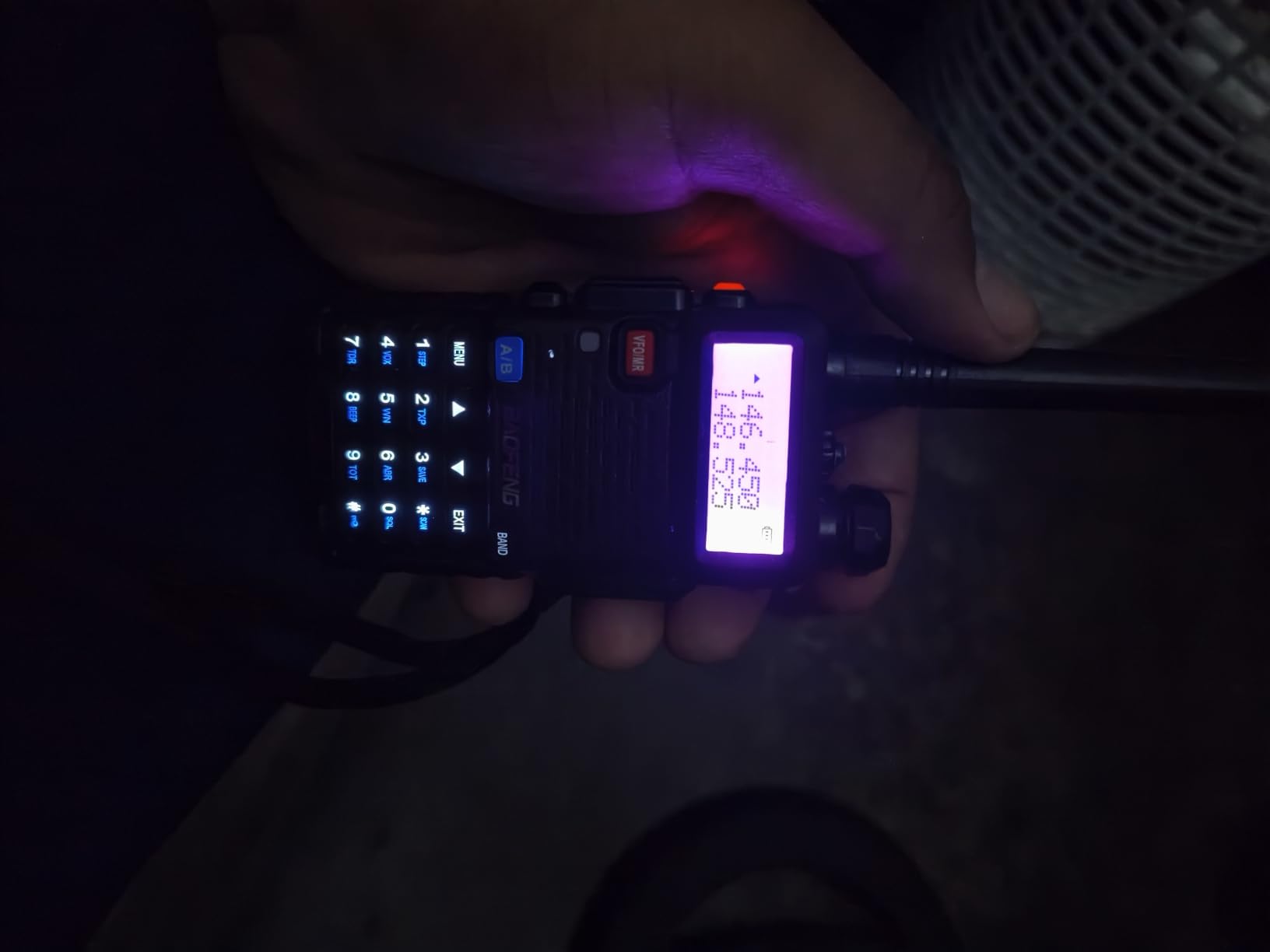
Who the UV-5R suits best
This is the radio for a group that splits up on a trail, wants more than one band, and has someone willing to spend twenty minutes setting channels before leaving. Because it transmits on amateur bands, anyone using it within the United States needs a Technician license to legally key up outside the amateur allocation.
It also suits hikers who like monitoring and scanning between camps. Receive sensitivity is genuinely good for a unit at this level, and the wide memory channel count means you can load local repeaters rather than fighting over one channel.
Where it falls short
Skip it if your trip is wet, if nobody on the trip wants to take a license exam, or if the group includes people who will fumble with menus. The programming overhead is real, and an unprogrammed UV-5R on the wrong channel is a dead weight in the pack.
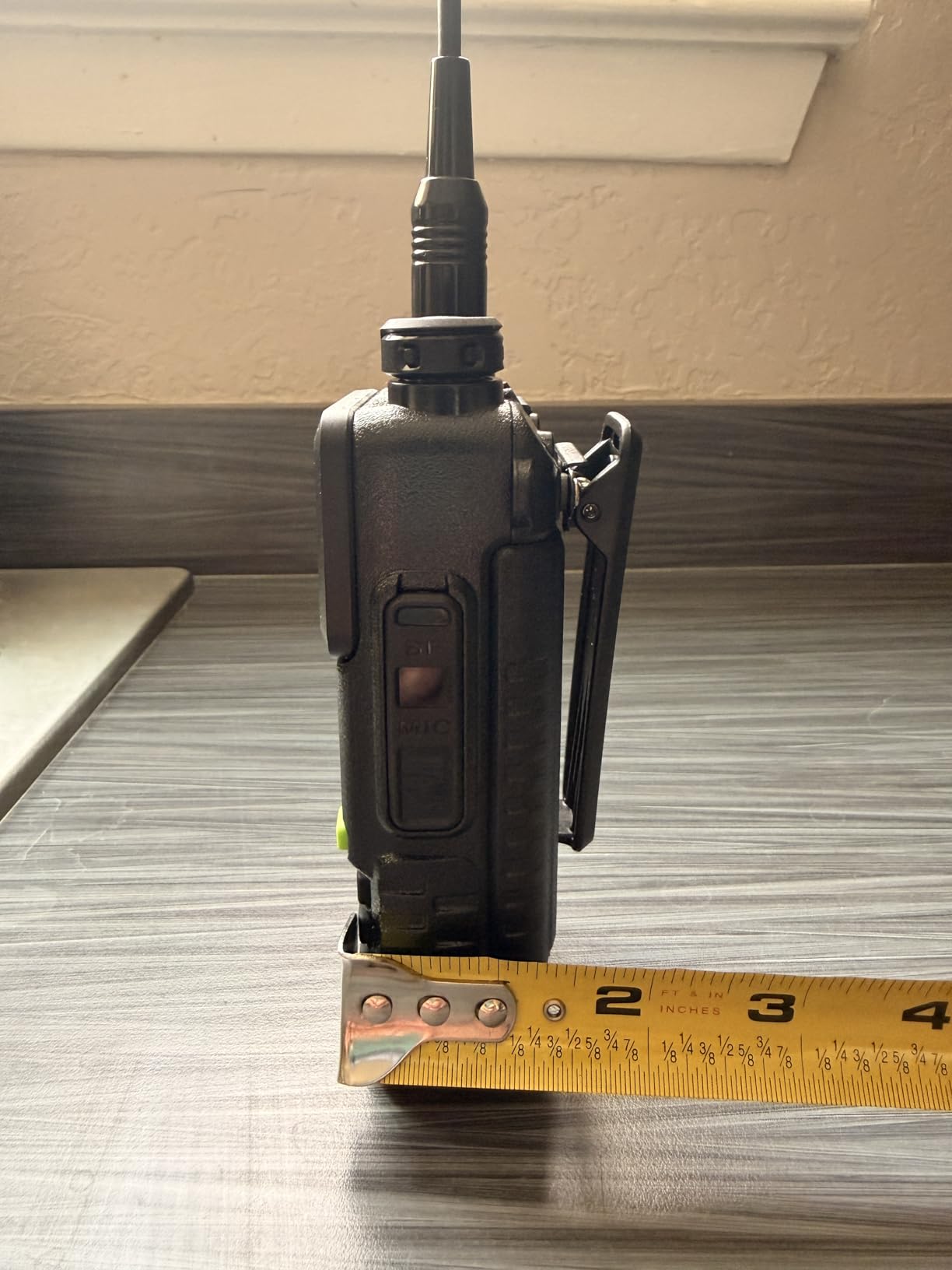
It is also not the first choice for a fast hiker counting every gram. The body is a full 10.2 inches tall, which is tall enough that you will feel it clipped to a chest strap.
2. Midland GXT1000VP4 – Best Value Two-Way Radio for Groups
- NOAA weather alert scanning built in
- Dual power lets you swap to AA batteries mid-trip
- Whisper-Clear EVOX hands-free works reliably
- Comfortable grip and simple button layout
- Headsets included in the pack
- Rechargeable NiMH packs run about 10 hours
- Bulky next to slim FRS-only handhelds
- Privacy codes do not always interoperate with other brands
If your group wants one answer that works for everyone with no license debate, the Midland GXT1000VP4 is the safest recommendation we make. It ships as a two-pack, it powers up and works, and every member of the group can find the volume knob without instruction.
The dual power design is the underrated feature. The radios come with rechargeable NiMH packs, and each radio also takes two AA cells, so a group that runs a multi-day trip can carry a handful of alkalines as backup and never worry about a dead pack at a trail junction.
NOAA weather alert scanning is built in, and on a day when a storm cell develops over a ridge you are hiking, having the alert tone in your radio rather than only in a phone app is worth a lot. The scan runs in the background on these units, so you do not have to stop what you are doing to hear it.
Range is the honest part of the equation. The 36 mile figure on the box is an open-water and open-flat claim, and on our forest routes with rolling terrain we got clean copy at low single-digit miles, which is a realistic expectation for a group walking through trees on different sides of a ridge. Judged against the other units here, the Midland held its signal well and the audio stayed clear longer than most.
Battery life on the rechargeable packs is where the marketing and the reality separate. Owners consistently report around ten hours from the NiMH packs, which covers a day hike comfortably and a long weekend only with AA backup or a spare pack.
The privacy code system is the quiet limitation. Midland’s codes do not always line up with other manufacturers out of the box, so if half your group buys Midland and half buys something else, you will be re-coding radios in the parking lot. Buy the same model for everyone, and this problem disappears.
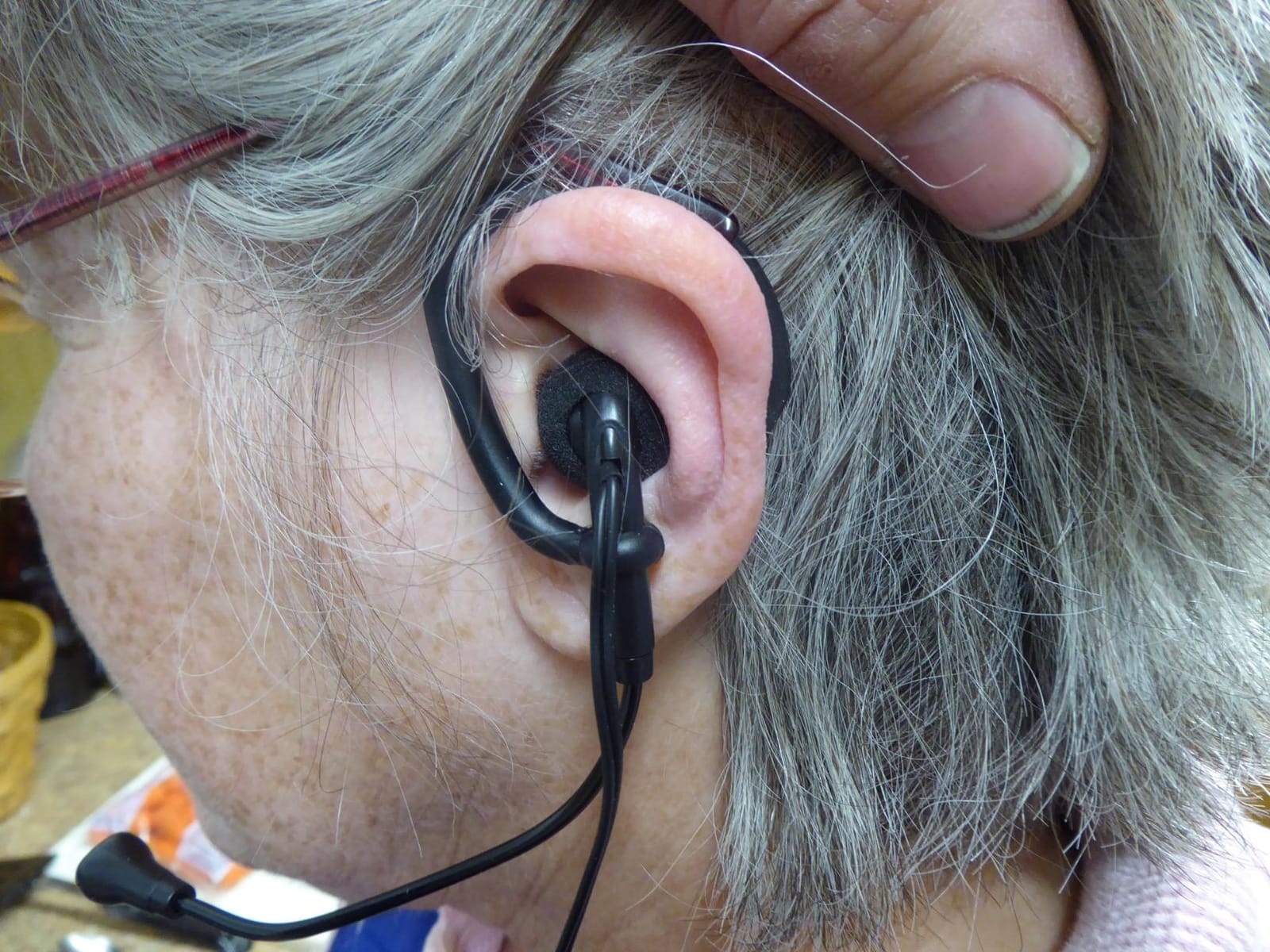
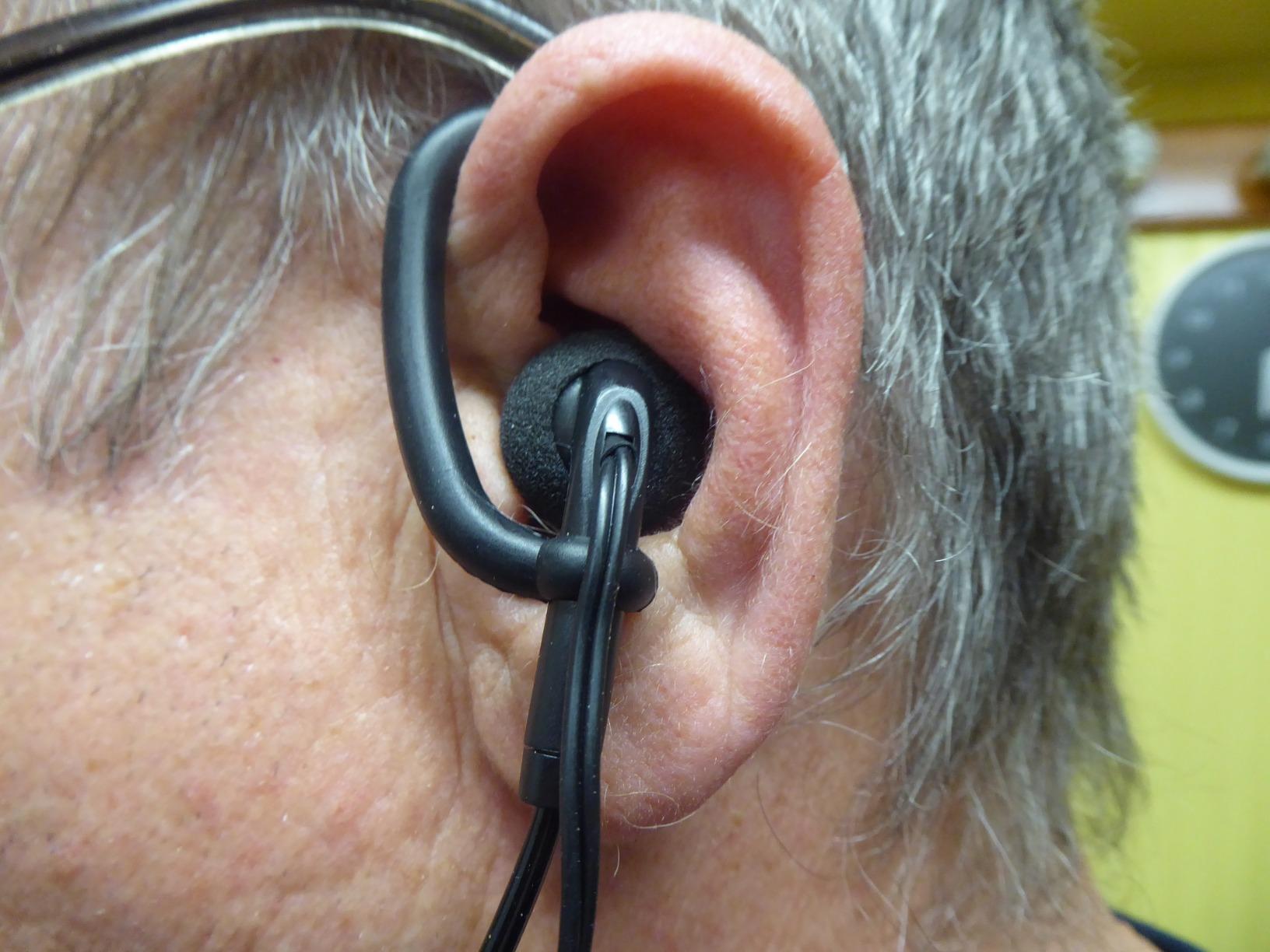
VOX hands-free transmission works well enough to use while climbing, where you need both hands on rock. The Whisper-Clear system chops wind noise better than the FRS units at a similar price, which is a genuine advantage on exposed ridgelines.
Who the GXT1000VP4 suits best
This is the pick for families, mixed-ability groups and anyone coordinating with a partner who does not want to fiddle with settings. Two radios in the box, headsets included, and a button layout that does not need explaining.
It is also a good fit for guided trips or work crews where you want weather alerts and a battery plan in the same package. Weather scanning plus AA fallback is a combination that few cheaper sets offer together.
Where it falls short
Skip it for alpine trips where every gram and every cubic inch matters, since the body is bulkier than the slim FRS units. It is also the wrong choice for winter overnighters unless you plan on AA cells, because ten hours from the rechargeable packs is not enough for a cold night out.
If your group already owns radios from other brands, the privacy code mismatch makes this a mediocre choice for mixing in.
3. Retevis RT22 – Best Lightweight Pick for Day Hiking
Retevis RT22 Rechargeable Walkie Talkies, Long Range 2 Way Radio for Adults
- Light and pocketable at 108g per radio
- USB-C charging from a phone charger
- Only three controls to learn
- Charge held about three days with intermittent use
- Bright orange housing is hard to lose
- Default squelch codes block other brands until reprogrammed
- Range drops sharply in dense urban settings
- 16 channels with no weather channel scanning
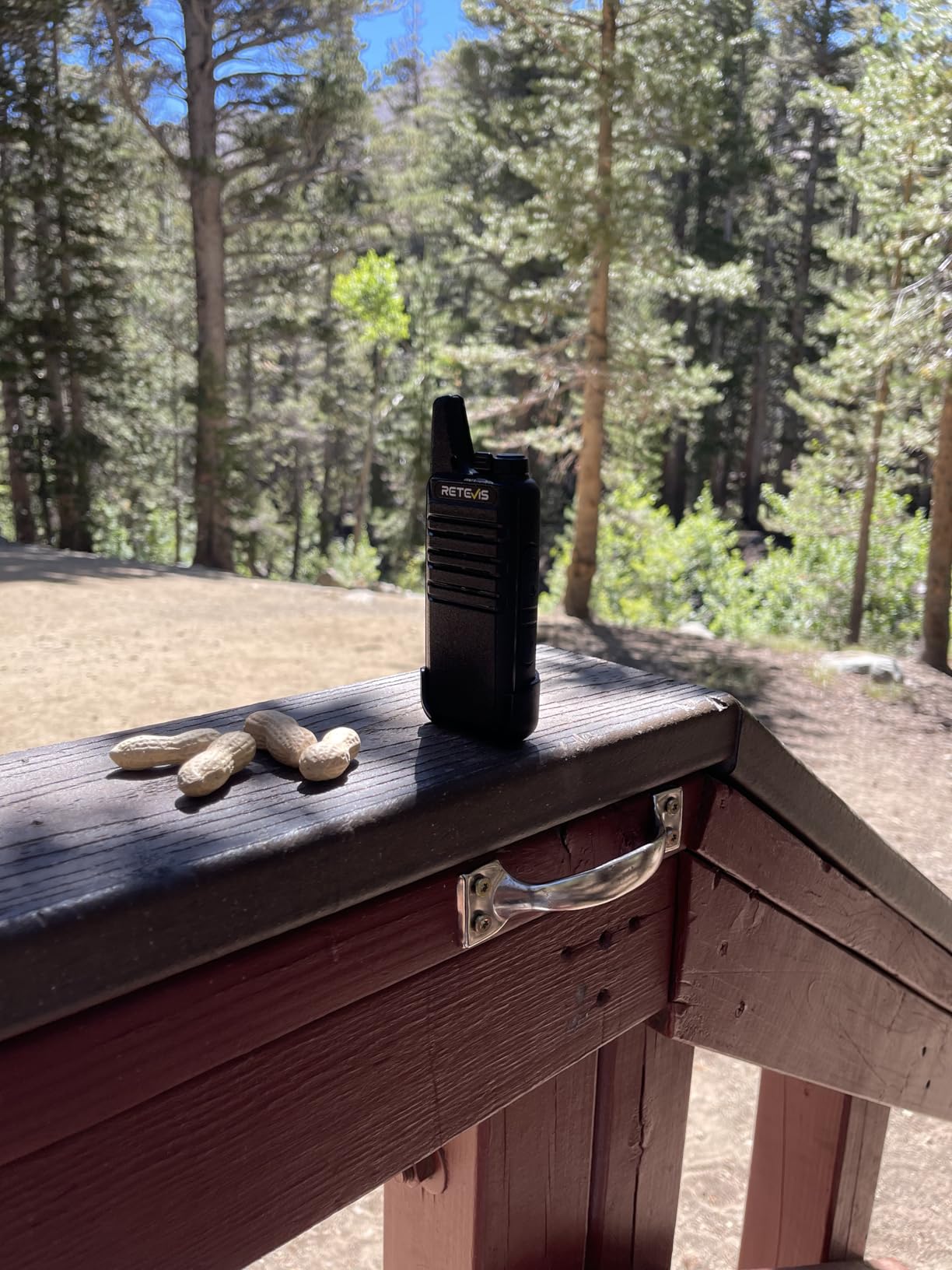
At 3.8 ounces each, the Retevis RT22 is the radio you forget you are carrying. For a day hike where the group stays within a mile or two of the trailhead, that is exactly what you want, and it is the model we reached for most often on shorter walks.
USB-C charging is the feature that quietly changes trip planning. No cradle, no proprietary brick, no spare pack. You charge these the same way you charge your phone, which means one cable for the whole camp.
The four-pack format is generous, and the bright orange housing is genuinely useful when a radio ends up in wet grass. Owners report that the set survives drops and exposure to rain, snow and heat, which fits our experience on short routes.
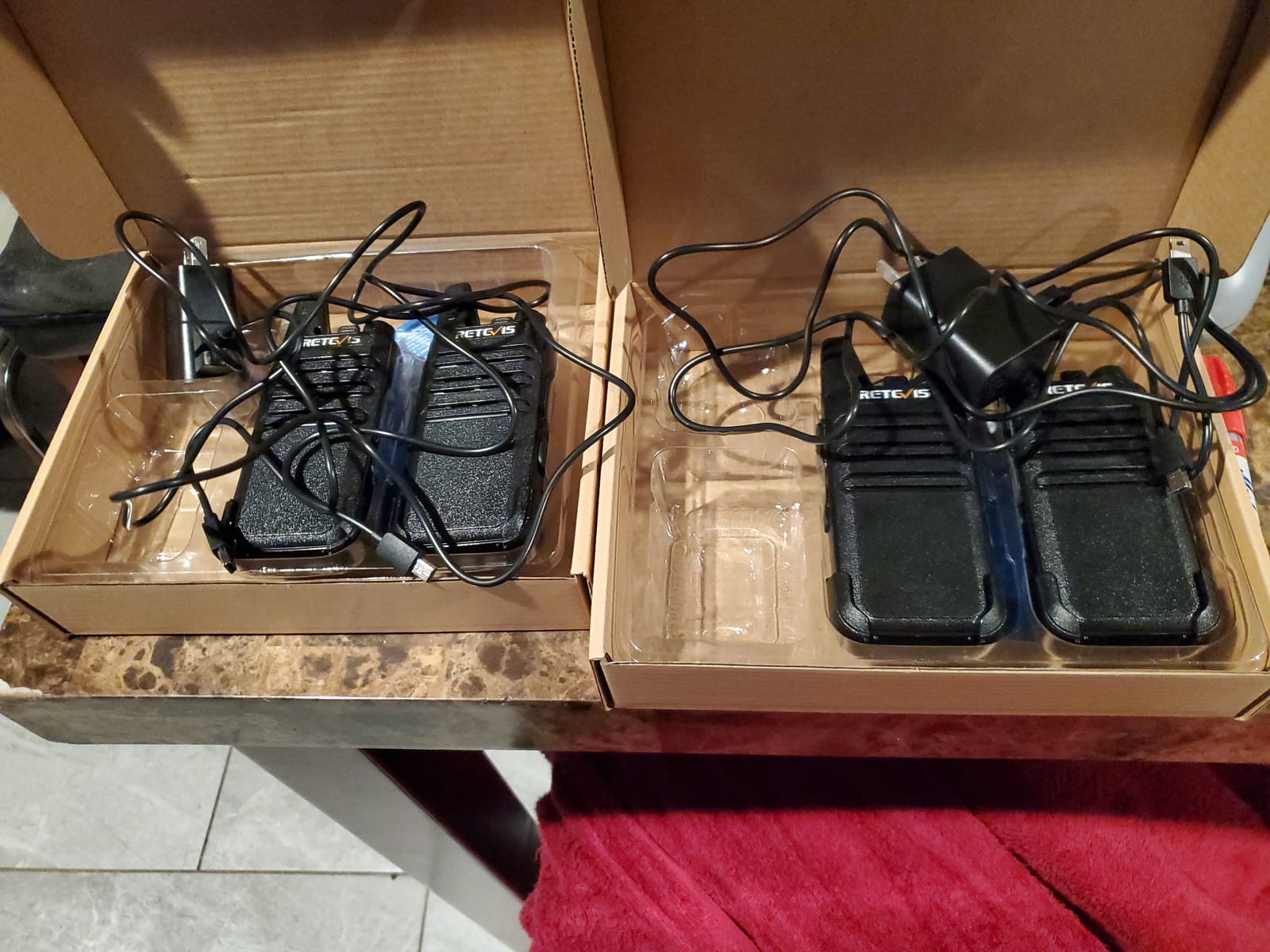
There is one setting that will frustrate you on day one. The factory privacy codes are preloaded on every channel, so the radios will not talk to other brands until you reprogram them. If everyone in the group buys the same model, this never comes up, which is why we recommend it as a matched set rather than an individual purchase.
Range is the other limitation. The 3 km claim is realistic in open country, and reviewers report performance that falls apart in dense urban settings. On a wooded trail the same thing happens: trees and terrain do most of the damage, not the radio.
With 16 channels and no weather channel scanning, these are purely group communication tools. If you want severe weather alerts, choose a different pick or carry a separate receiver for that job.
Audio is average rather than impressive. Voices are intelligible and that is what matters on a moving group, but this is not the radio you would choose to relay a long story to a search coordinator.
Who the RT22 suits best
Day hikers, families with kids, and anyone splitting off from a group at a junction and wanting a radio that weighs nothing. The simple three-control layout also means a child can be handed one without a briefing.
They are a good fit for hikers who lose gear regularly, since the orange shell is easy to spot and the whole set charges off one cable.
Where it falls short
Skip these for a trip with real terrain in it. Sixteen channels, no weather scan and a modest range ceiling make them a poor choice for backpacking routes that cross ridges or drainage crossings.
They are also the wrong pick if your group already owns mixed-brand radios, because the default codes will not interoperate until you change them.
4. Baofeng GM-15 Pro – Best Budget Pick for Long Range GMRS
- 250 channel memory with repeater support at a budget level
- Scans beyond GMRS including NOAA and VHF/UHF
- USB-C charging from a power bank or car
- Claimed 4-5 mile open-area range is competitive here
- SOS alarm and flashlight add trail value
- No water resistance despite outdoor and survival marketing
- Programming needs a PC or keypad menu
- Antenna is tuned for ham frequencies rather than GMRS
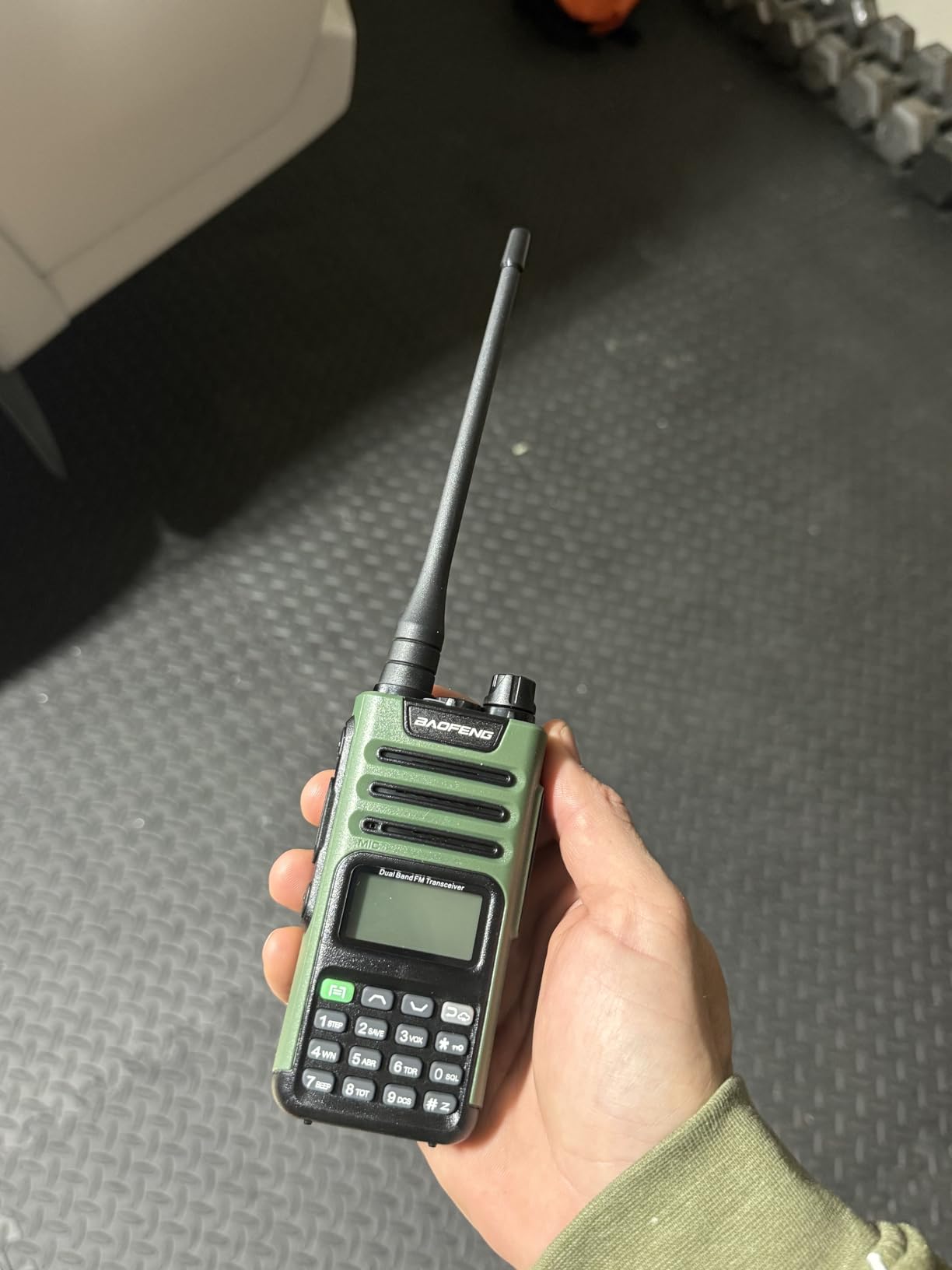
The GM-15 Pro is the unit to look at if you want more than plain channel talking without paying for a full amateur radio. The 250-channel memory, the repeater capability and the 11 NOAA weather channels pack a lot of function into a two-pack.
For a hiking group that wants to use a local GMRS repeater to reach a car at the trailhead from a far ridge, that repeater support is the reason to choose it. Without a repeater, your coverage is line of sight between whoever is holding the radio.
It can also scan VHF and UHF in channel or VFO mode, which means it behaves like a light scanner as well as a talker. That is useful for hearing local emergency traffic when the group is spread out and you want more than one source of information.
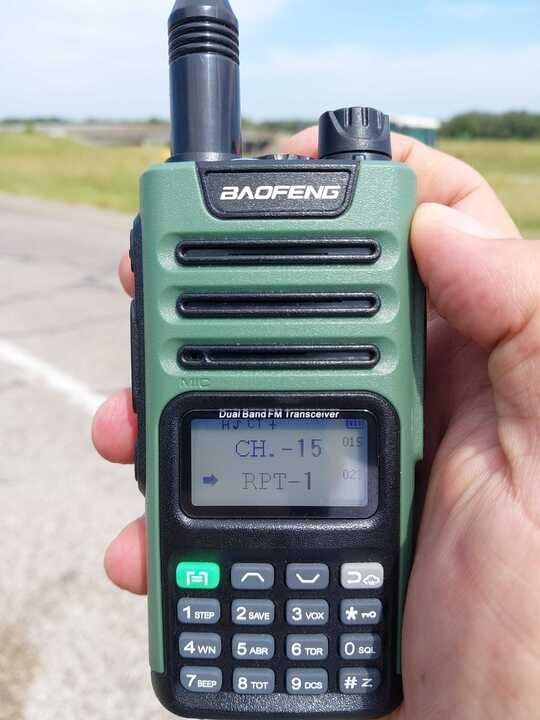
The stated range figure is unusually specific for a radio at this level: 4 to 5 miles in open country, 3 to 4 in forest, and 2 to 3 in a city. That honesty is a good sign, and it matches how the rest of the pack performed. Real numbers in terrain beat a single inflated mileage claim.
Water resistance is the drawback. This is marketed for outdoor and survival use, yet there is no sealing and no IP rating, so rain and river spray are real risks. We used it in a drizzle for an afternoon and it was fine, but that is not a specification.
The bundled antenna is tuned for ham frequencies rather than GMRS, which costs a little of the performance you are paying for. Replacing it is a two-minute job with a screwdriver and is worth doing before a trip that depends on range.
Programming through the PC or keypad menu is not intuitive, and the review base is smaller here than for the other picks, so there is less community troubleshooting available if something goes sideways.
Who the GM-15 Pro suits best
Groups that want repeater access and weather channels on a budget, and hikers who already know how to program a radio. It is a sensible step up for someone who found the entry-level FRS sets too limited.
It also works for a trip where a family member is a ham operator and wants to reach a local repeater, while everyone else stays on a simple GMRS channel.
Where it falls short
Skip it for wet-weather trips. With no water resistance and an outdoor-focused marketing message, that mismatch is worth being blunt about.
It is also a poor fit for anyone who will not spend time on programming, and the smaller installed base means less help when a channel plan fails.
5. Retevis RB48PLUS – Best Waterproof Radio for Rain, Rivers and Winter
Retevis RB48PLUS GMRS Walkie Talkies Long Range,IP67 Waterproof 2 Way Radio
- Genuine IP67 waterproof and dustproof sealing
- Survives 2 meter drops and heavy rain
- 2000mAh battery gives a full day with 100 hour standby
- Dual large PTT buttons work with gloves
- NOAA channels plus an emergency alarm
- 3 mile range claim is modest for the price
- Heavier and bulkier than slim FRS models
- GMRS use on higher power channels needs an FCC license
If your route involves rain, snow, river crossings or a wet pack that will inevitably end up in a creek, water rating matters more than every other spec on this list. The Retevis RB48PLUS is one of only two radios here with a genuine IP67 sealing, and that is the reason it earns a place in our pack.
IP67 means protection against dust ingress and immersion in fresh water up to one meter for thirty minutes. In practical hiking terms, you can drop this radio in a shallow stream, get caught in a squall with the pack open, and expect it to keep working.
The battery figures are the second reason. A 2000mAh pack with around 18 hours of use and roughly 100 hours of standby covers a full day of active transmitting with power left, which is more headroom than most units at this tier give you.
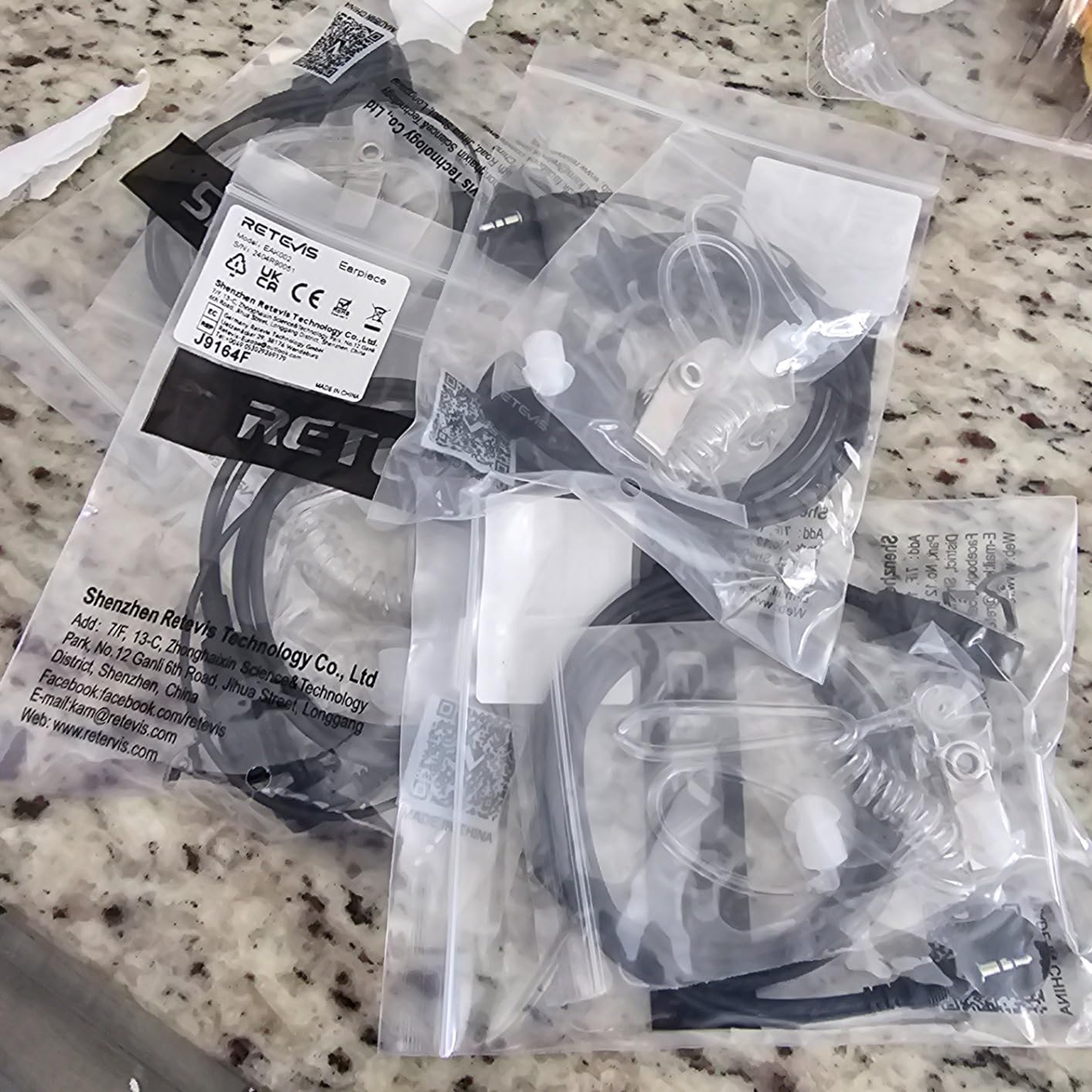
Handling in winter is better than the size suggests. The dual large push-to-talk buttons are separated and easy to locate through gloves, and the button lock stops a radio in a jacket pocket from changing channel while you are scrambling up a slope.
NOAA weather channels and an emergency alarm that sounds on a shared channel round out the safety case. For a solo hiker or a group separated at a trail junction, an audible distress tone on a shared channel is a real, if modest, benefit.
The trade-off is weight and range. At a stated 3 mile maximum, this is not the radio for reaching a far ridge, and the housing is larger and heavier than the slim FRS sets. You are paying for sealing and battery, not for distance.
Also note that these are GMRS radios, so a license is required for the higher power channels in the United States. That is a bigger consideration for a group of friends than for a family.
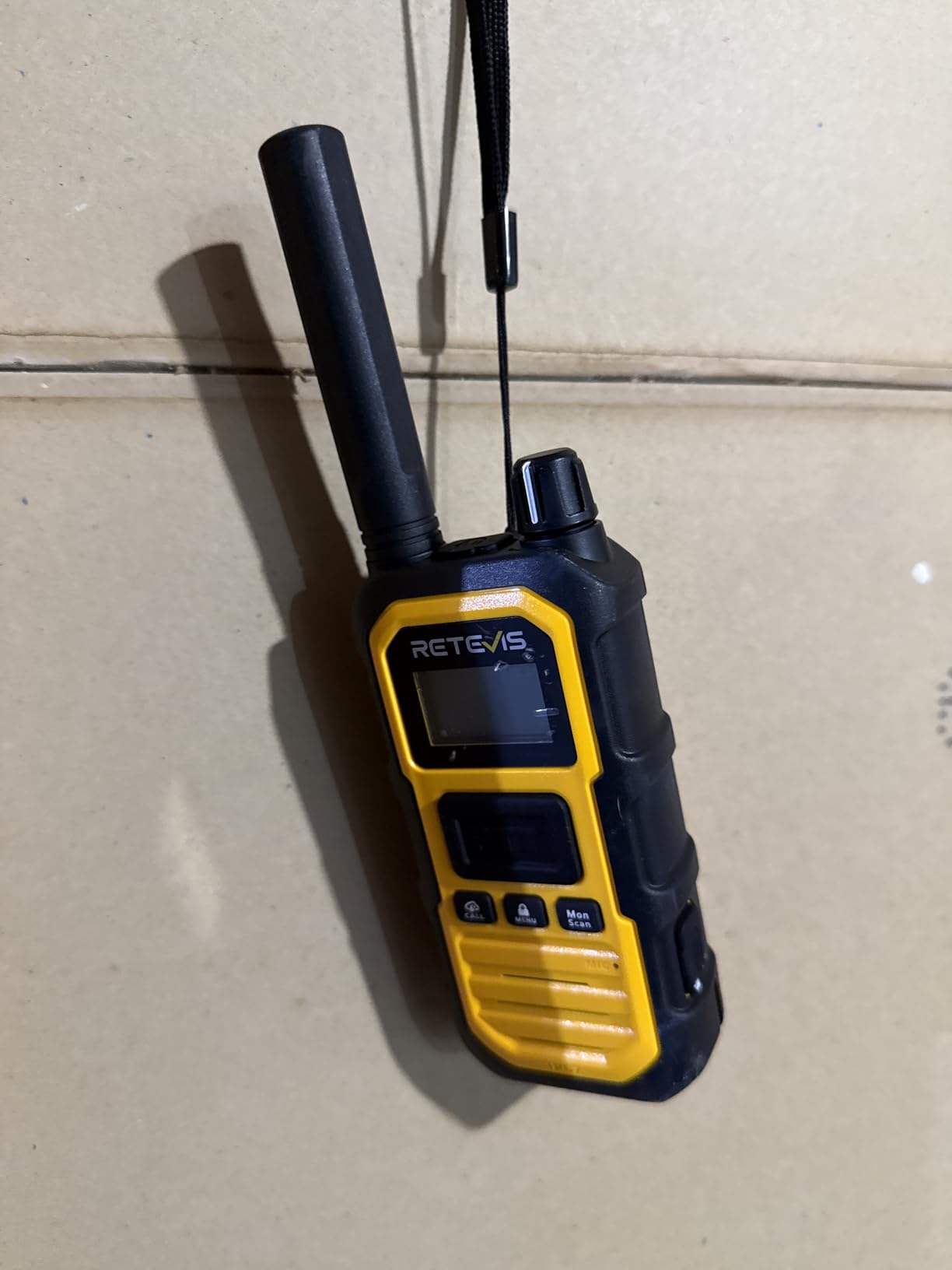
Who the RB48PLUS suits best
Winter trips, river routes, whitewater paddling and anyone who has ever had a radio die in the rain. It is our pick for the best waterproof radio for outdoors in this group, and the only reason it is not the top pick is the modest range.
It is also a good choice for a group hiker carrying the group radio in the external pack pocket where the rest of the kit is exposed.
Where it falls short
Skip it if the plan is to climb away from the group and stay out of contact for hours, since three miles of nominal range will not cover a long solo objective.
Fast hikers counting grams will also find it bulky, and anyone without a GMRS license is limited to the lower power channels.
6. Motorola Talkabout T475 – Best for Loud, Windy Trails
Motorola Solutions Talkabout T475 Extreme Two-Way Radio Black W/Yellow Rechargeable Two Pack
- Very rugged build that survives drops and abuse
- Loud speaker output that cuts through wind and machinery
- Excellent wind cancellation at full volume
- Clear copy at nearly 4 miles line of sight
- VibraCall detects a transmission over a running mower
- Included NiMH batteries are the weak point
- Only IPX4 so it is not rated for immersion
- Earpiece with mic is fiddly to position
Volume is the reason the Motorola T475 is on this list. On an exposed ridge with a full headwind, or on a trail that runs past a road with traffic noise, the ability to crank the speaker and still have the far end understand you is worth more than another two miles of theoretical range.
The build is genuinely tough. Owners report radios surviving drops, and one describes a set that was run over by a vehicle and kept working. That matters for a device that clips to a pack strap and spends its life being knocked against rock.
Wind cancellation is the second strength. The microphone handling cuts wind noise better than the other FRS sets we carried, which is the difference between a usable transmission and a message lost every time someone moves.
Real-world range on this radio held up well for its class. Reviewers report clear copy at nearly four miles with line of sight, which is a more useful figure than the 35 mile headline on the box, and it is in the same territory as the other mid-tier units here.
Water rating is where it falls behind. IPX4 is a splash rating, not a waterproof rating, so it handles drizzle and spray but should not be counted on for a river crossing or a downpour with the pack open. If wet weather is the main scenario, the two IP67 sets on this list are a better match.
The included 800mAh NiMH packs are the most repeated complaint in the reviews. Several owners replaced them with third-party rechargeable cells, and a few report short run time and drain while the radio is switched off. Budget for better cells if you are buying this for a multi-day trip.
VibraCall is a small feature with a real use case. A vibrating alert lets a hiker know a transmission is coming without anyone hearing it, which helps on a quiet ridge or when a group is spread out and someone is not listening constantly.
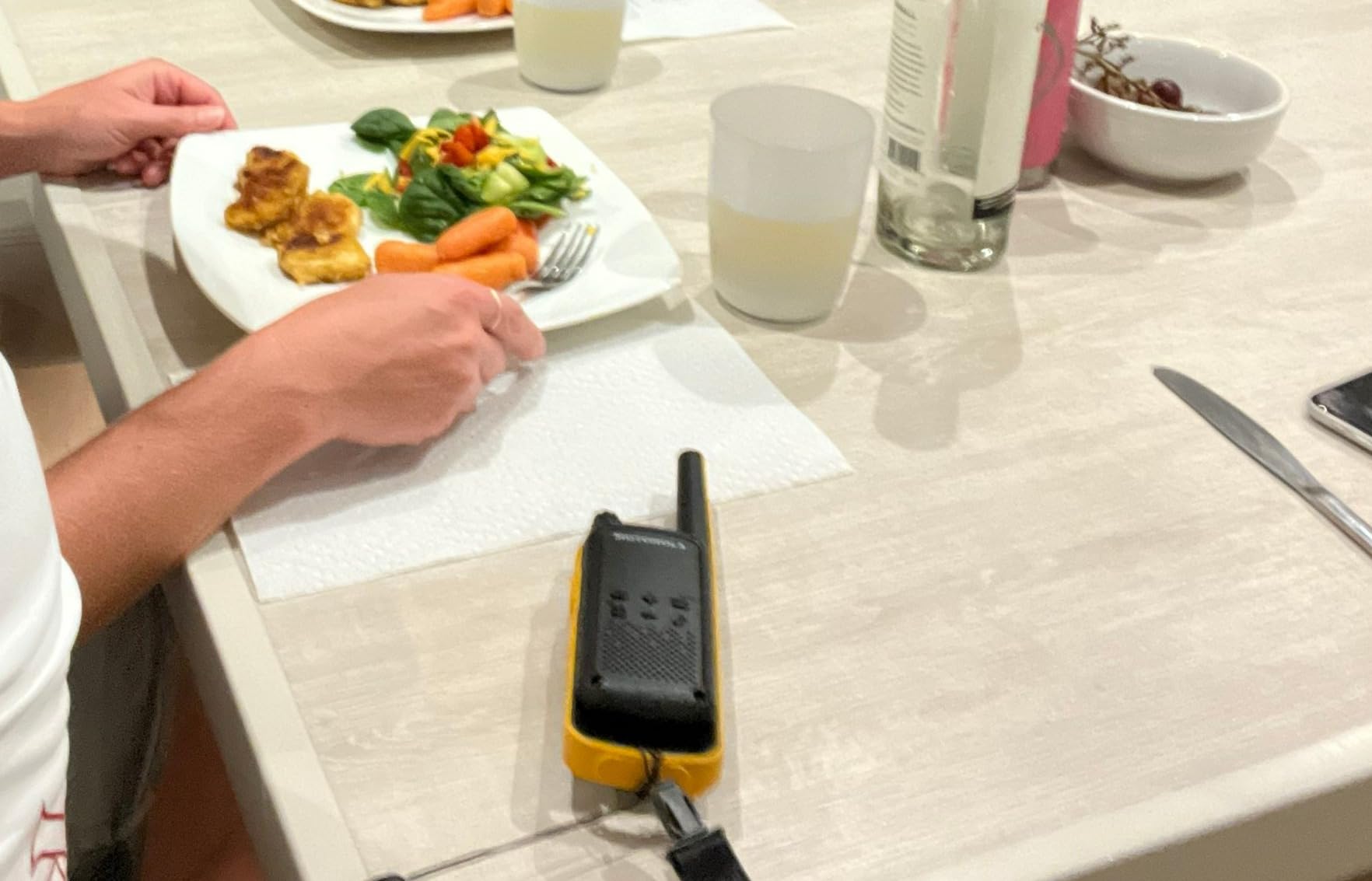
Who the T475 suits best
Hikers on exposed, windy terrain, and groups that will be spread along a trail rather than clustered. It is also a strong choice for ski touring and snow travel because loudness matters more when everyone is wearing helmets and moving fast.
Anyone who has broken radios before will appreciate the build quality, and the license-free FRS operation means a group can buy and go.
Where it falls short
Skip it for river crossings and sustained rain, because IPX4 does not cover immersion. It is also a weak match for long winter nights unless you replace the supplied batteries.
Some users report inconsistent signal stability at close range, which is unusual and worth considering if your group works at short distances under tree cover.
7. Retevis RB48 – Best Rugged Value for Backpacking
Retevis RB48 FRS Walkie Talkies Long Range,Mil-Standards 810H Two Way Radio
- Tested to MIL-STD-810H for drops
- dust
- vibration and temperature
- Truly waterproof and dustproof with IP67 sealing
- 2000mAh battery covers a full day of use
- High-visibility yellow housing is easy to spot
- Dual PTT with silicone button covers
- FRS only so it cannot reach GMRS channels
- Waterproofing claims are not independently detailed by most reviewers
- Only 22 channels
The RB48 is our pick when the deciding factor is how the radio handles after a season of abuse. It is tested to MIL-STD-810H for drops, dust, vibration, heat and cold, and the manufacturer claims it passed one thousand two-meter drop tests, which is the sort of number that matters when your radio spends weeks clipped to a loaded pack.
It carries the same IP67 sealing as the RB48PLUS, so it survives rain, splash and dust ingress in the same situations. The two differ in service and extras, not in basic protection.
Battery life is strong for the category: a 2000mAh pack rated for up to 20 hours of use, which comfortably covers a full day of transmitting and leaves reserve for a next-morning check-in.
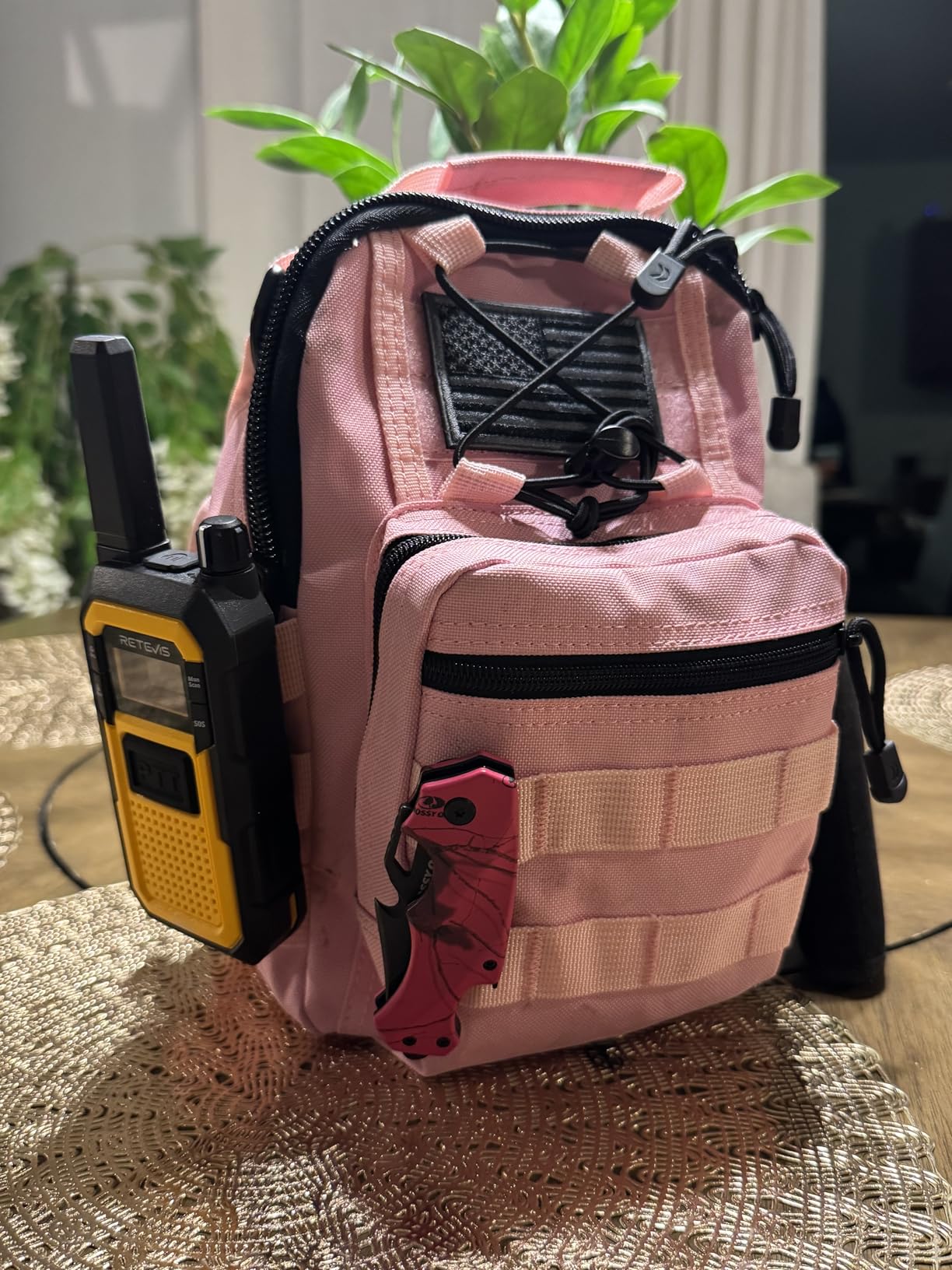
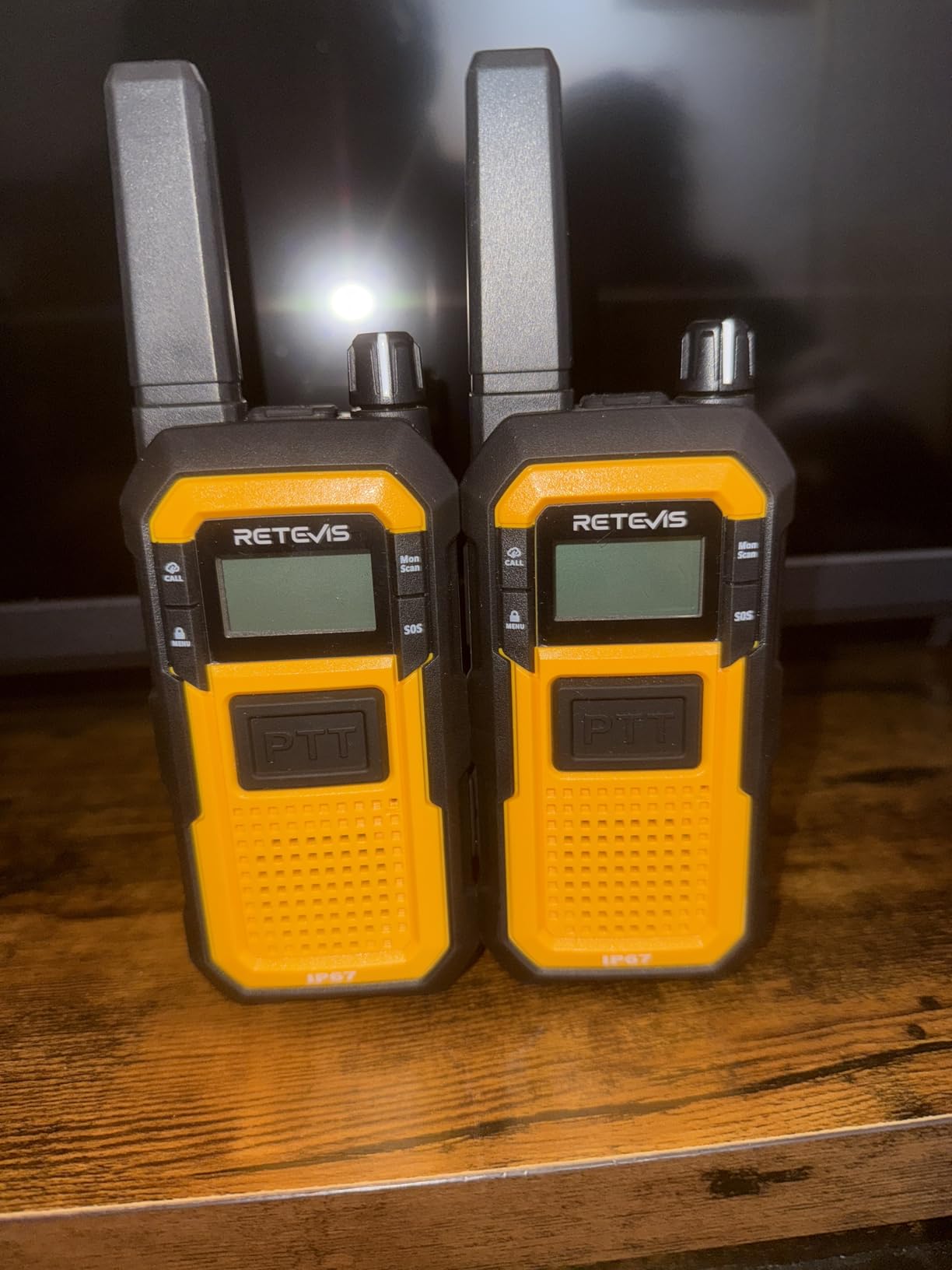
The high-visibility yellow housing and dual push-to-talk buttons with silicone covers are designed for gloved hands and wet conditions. That combination is not a styling decision, it is a handling decision, and it showed up every time we reached for the radio with cold fingers.
It is FRS only, which means no GMRS channels and no repeaters. For most family and friend hiking groups that is the whole point, because it removes the license question entirely.
One caveat worth stating plainly: while the manufacturer publishes the IP67 and military standard test claims, most reviewers in the comments have not independently verified the sealing. We are reporting the rating as listed rather than vouching for it with a lab result.
Twenty-two channels is enough for a hiking group, though it leaves no room for local area chatter. A roger beep option is available if you want confirmation that a transmission completed before you put the radio down.
Who the RB48 suits best
Backpackers who want a radio that will still work in the third season, and groups without a license who need something that can handle rain and drop off a talus slope without concern.
The five year warranty on the radio body also makes it a sensible choice for a household that will hand the same set to each kid in turn.
Where it falls short
Skip it if you need repeater access or GMRS channels, because FRS-only hardware cannot reach them. Lightweight hikers will notice the extra bulk against a 108g pocket set.
It is also not the right tool for long-distance reach across multiple ridges, where you would want a higher power amateur handheld instead.
8. Baofeng AR-5RM – Best Ham Radio Pick for Long Trips
- Much more solid feel and weight than the original UV-5R
- Huge receive coverage including air band
- marine VHF and NOAA
- 1.77 inch color screen is easy to read
- Three antenna lengths let you tailor range to the trip
- Frequency copy and CHIRP make channel setup quick
- Batteries are not interchangeable with UV-5R packs
- Thin instruction booklet assumes prior radio knowledge
- Not waterproof at all
The AR-5RM is the radio to buy if you already hold a Technician license and want the most capability per trip rather than the least complication. It is a clear step up from the original UV-5R in feel, screen and receive coverage.
That receive coverage is the quiet superpower. It covers air band, marine VHF and NOAA, so a group can monitor aviation weather and marine traffic in addition to talking to itself. For a backcountry trip in complex terrain, that extra situational awareness is genuinely useful.
Three antenna lengths ship in the box, which lets you switch between a short whip for pack efficiency and a longer one for a ridge stop. Owners upgrading from the UV-5R consistently call that bundle excellent value.
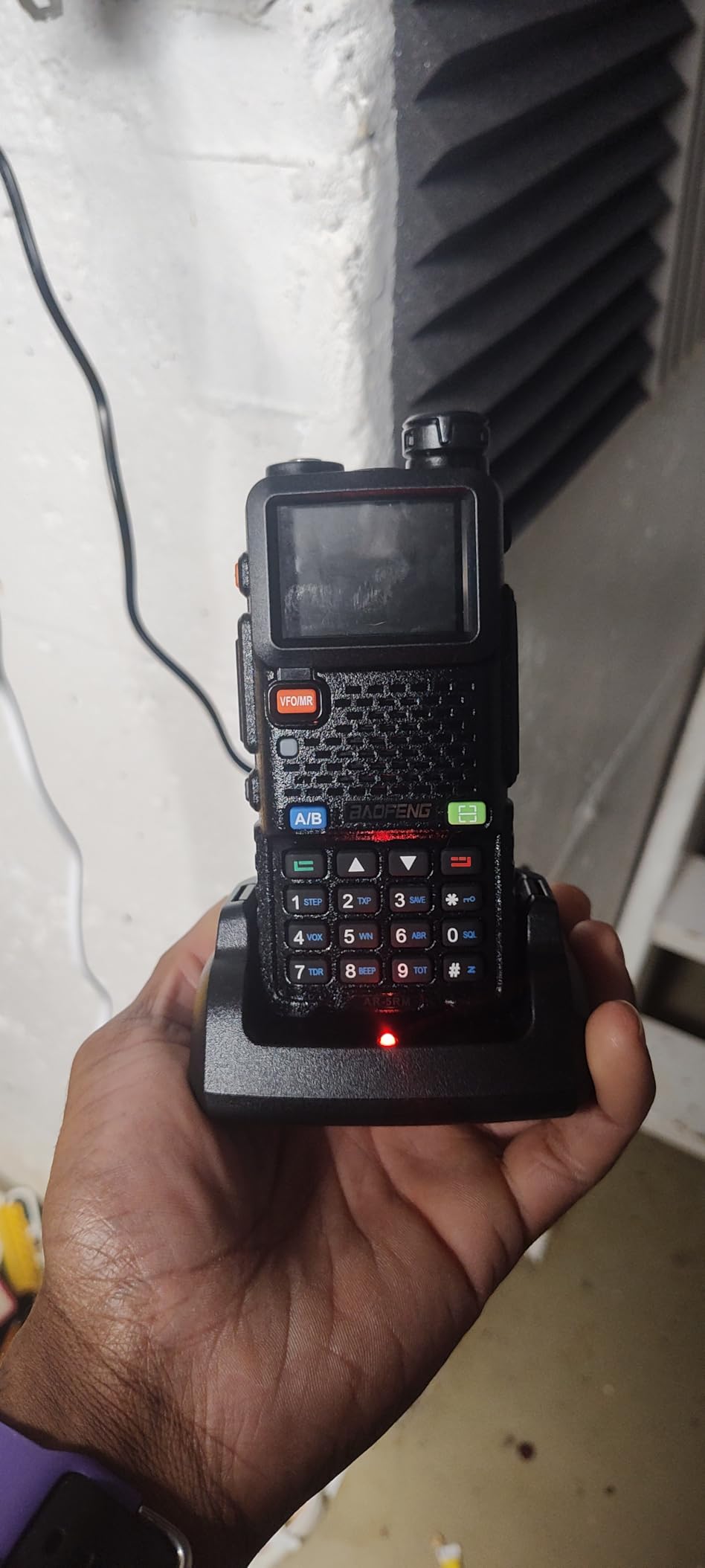
The 999 channel memory and CHIRP programming support mean you can load a full local repeater plan before the trip and then leave the radio alone. The frequency copy function clones a channel setup from another radio, which makes matching a group fast.
Two speaker mics are included, and the large PTT is easy to find through a glove or with a pack strap across the shoulder. Clipping one to a pack strap with the radio on the chest is the single best handling change most hikers can make.
There is no waterproofing at all, so this one lives in a dry bag. The batteries do not fit the older UV-5R packs or existing gang chargers, which matters if you are upgrading from that radio and already own spare cells.
Documentation is thin. If you have never used an amateur handheld, this is not the model to learn on, because the menu assumes you already understand bands, offsets and repeater directions.
Who the AR-5RM suits best
Licensed amateur operators who want range, monitoring ability and a large readable screen, and experienced hikers who value receive capability over simplicity. It is a strong match for multi-day routes where you might reach a valley several miles away.
Anyone who plans to use local repeaters or wants to log contacts along the trail will get more out of this than from any FRS set on the list.
Where it falls short
Skip it if the trip is wet or if nobody in the group holds a license. Zero water resistance plus a complex interface is a poor combination for a casual family hike.
It is also the bulkiest unit here, which conflicts directly with a fast hiking weight budget, and the PTT position is easy to bump by accident.
9. Wishouse M9 – Best for Families and Kids on the Trail
- Four unit pack covers a whole group at a low per-radio cost
- Quick ten second setup that children can handle
- USB rechargeable AA batteries avoid disposable cells
- Flashlight and SOS siren are useful for solo hikers
- NOAA alerts add preparedness value
- Not water resistant despite the IP65 metadata
- Range drops quickly with buildings
- trees and walls
- Basic 22 channel FRS feature set
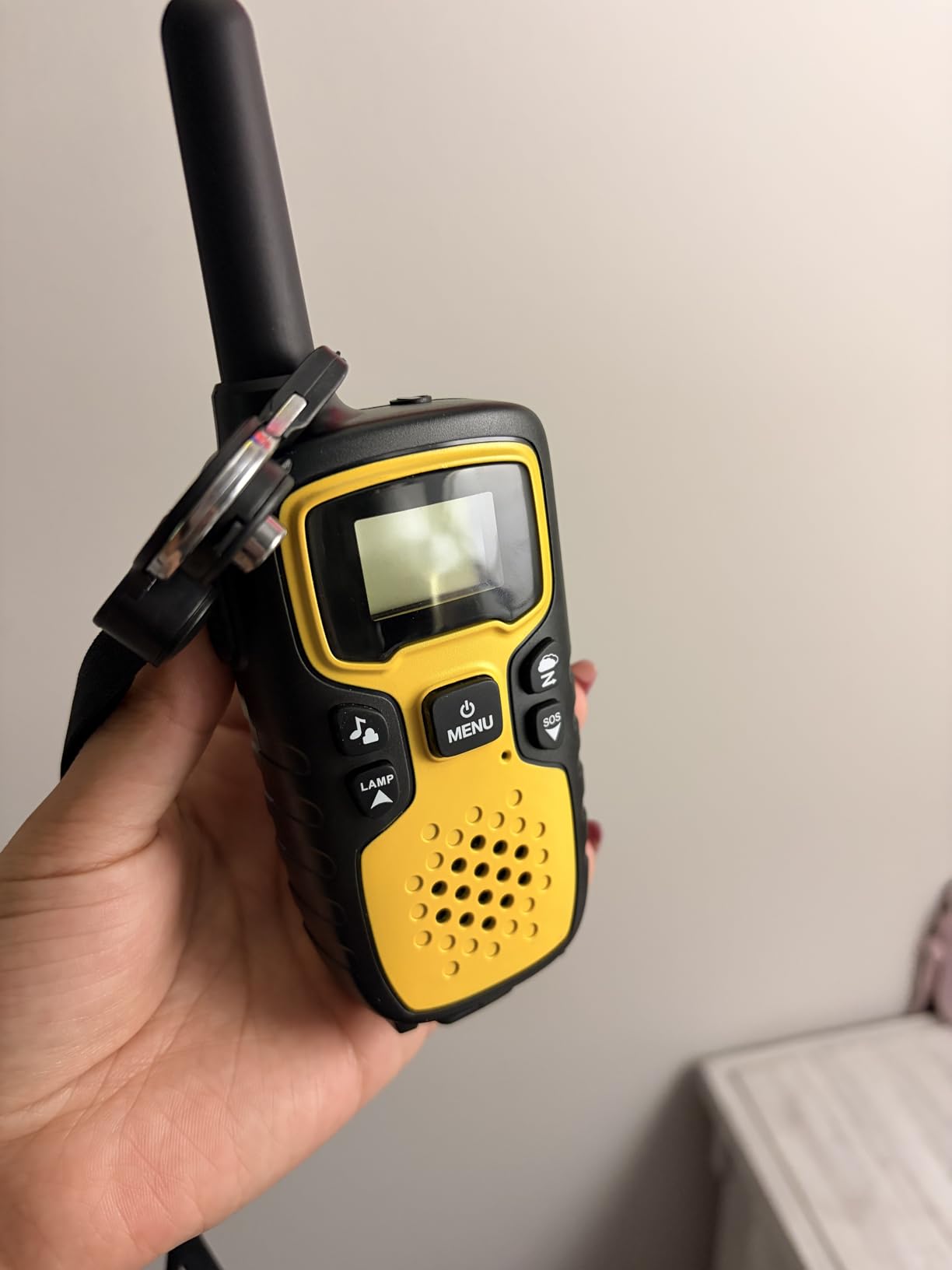
If your group includes children, this is the radio that gets handed out fastest. The four-pack covers a family without splitting pairs, and the setup takes about ten seconds, which matters when you are doing it with a restless group at a parking lot.
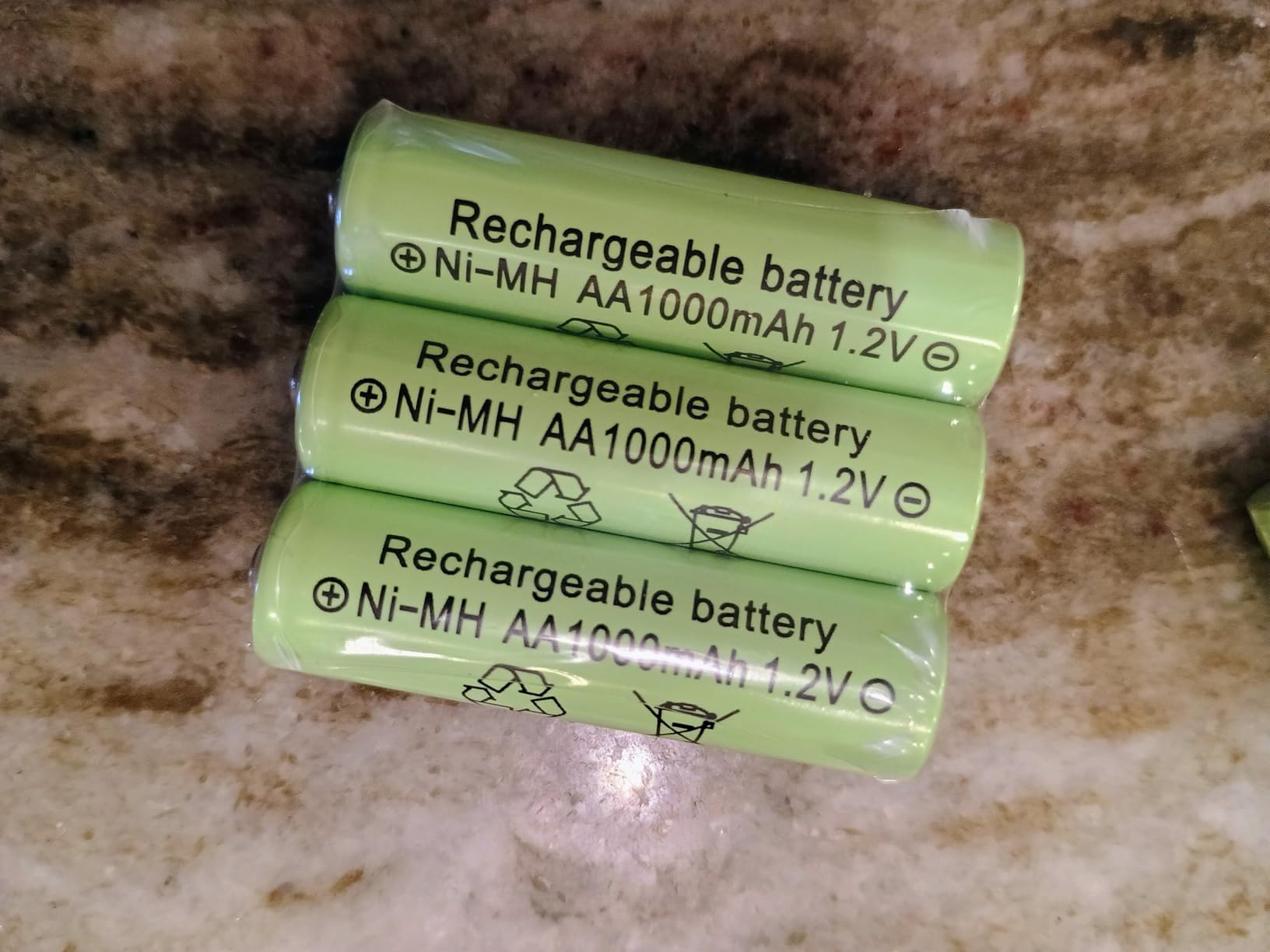
The rechargeable AA batteries are a smart choice for a family set. They charge over USB, so there are no disposable cells in the pack and no charging cradle, and a family with four radios can run them off one power bank.
The built-in flashlight and SOS siren give a child an obvious, simple way to signal. In a group that wanders, a flashing light and a siren carry further than a voice call, and it turns a piece of gear into a comfort object.
NOAA emergency weather broadcast alerts are included, which is a reasonable preparedness feature for a family radio at this tier. Many cheaper four-packs leave it out entirely.
Water resistance is the honest weakness here. The listing carries IP65 metadata, but owners consistently report that the units are not water resistant in practice, so a downpour or a splash at a river crossing is a real risk. Keep them in a pocket rather than clipped outside the pack.
Range falls off quickly with buildings, trees and walls, which is a description of most trailheads. Expect low single-digit miles in open country and much less if the group splits around a ridge or a stand of trees.
The 4.2 average is the lowest in this group, and the pattern in reviews is build consistency rather than any single dramatic failure. On a family trip where the radio is a backup tool, that trade is usually acceptable, which is why it still makes the list.
Who the M9 suits best
Families with young hikers, and any group where more than two people need a radio but nobody wants to buy four premium units. The per-radio cost and the kid-friendly setup are the whole argument.
It is also a sensible first radio set for a scout group or a large casual walking group where the primary goal is keeping everyone together on the trailhead approach.
Where it falls short
Skip it for wet weather, for technical routes, and for anyone who cares about audio quality. It is also a poor choice when the group plans to deliberately split across a long ridge.
The size is the other issue. Compared with a slim two-pack, these are noticeably larger and heavier, and four of them add up fast in a pack.
10. pxton PX-888S – Best Simple Two-Pack for Day Hikes
- Affordable entry point with a 4.5 average across thousands of reviews
- Lightweight and pocketable for day hiking
- Rechargeable Li-ion batteries with a charger
- 16 channels plus programmable CTCSS and CDCSS codes
- VOX
- scanning
- low battery alarm and flashlight
- 2 mile range claim is the shortest in this group
- Only 16 channels and no NOAA weather function
- Needs a separate charging cradle instead of USB-C
The pxton PX-888S is the most straightforward pair on the list. Sixteen channels, a rotating channel knob, one push-to-talk, and it just works, which makes it a good match for a couple or a family who want a spare radio in the closet without a project.
Channel selection by knob rather than by menu is a genuine usability decision. You turn it to the number you need, with no button sequence to remember, and a group that has never used a radio before can do it without a briefing.
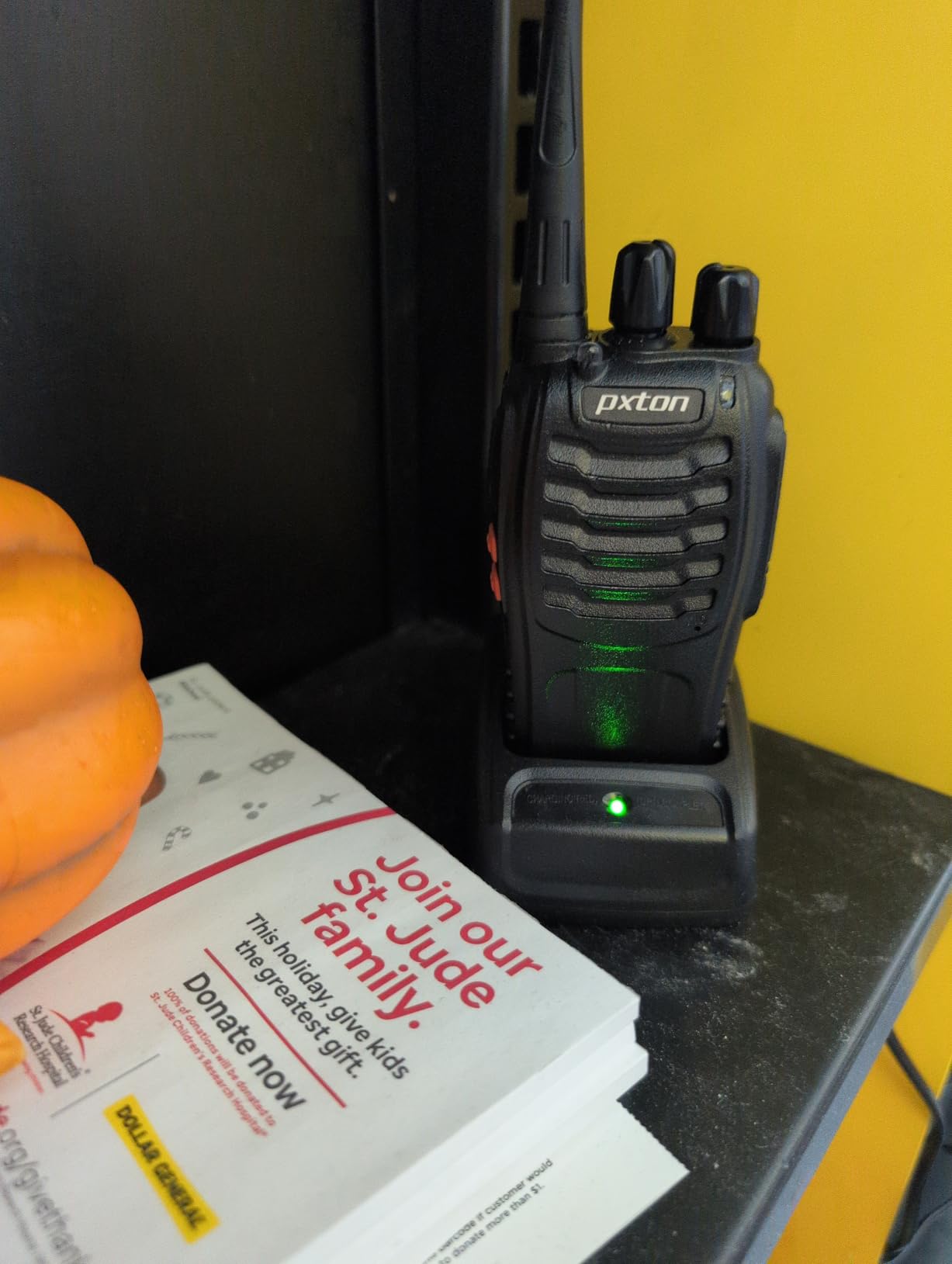
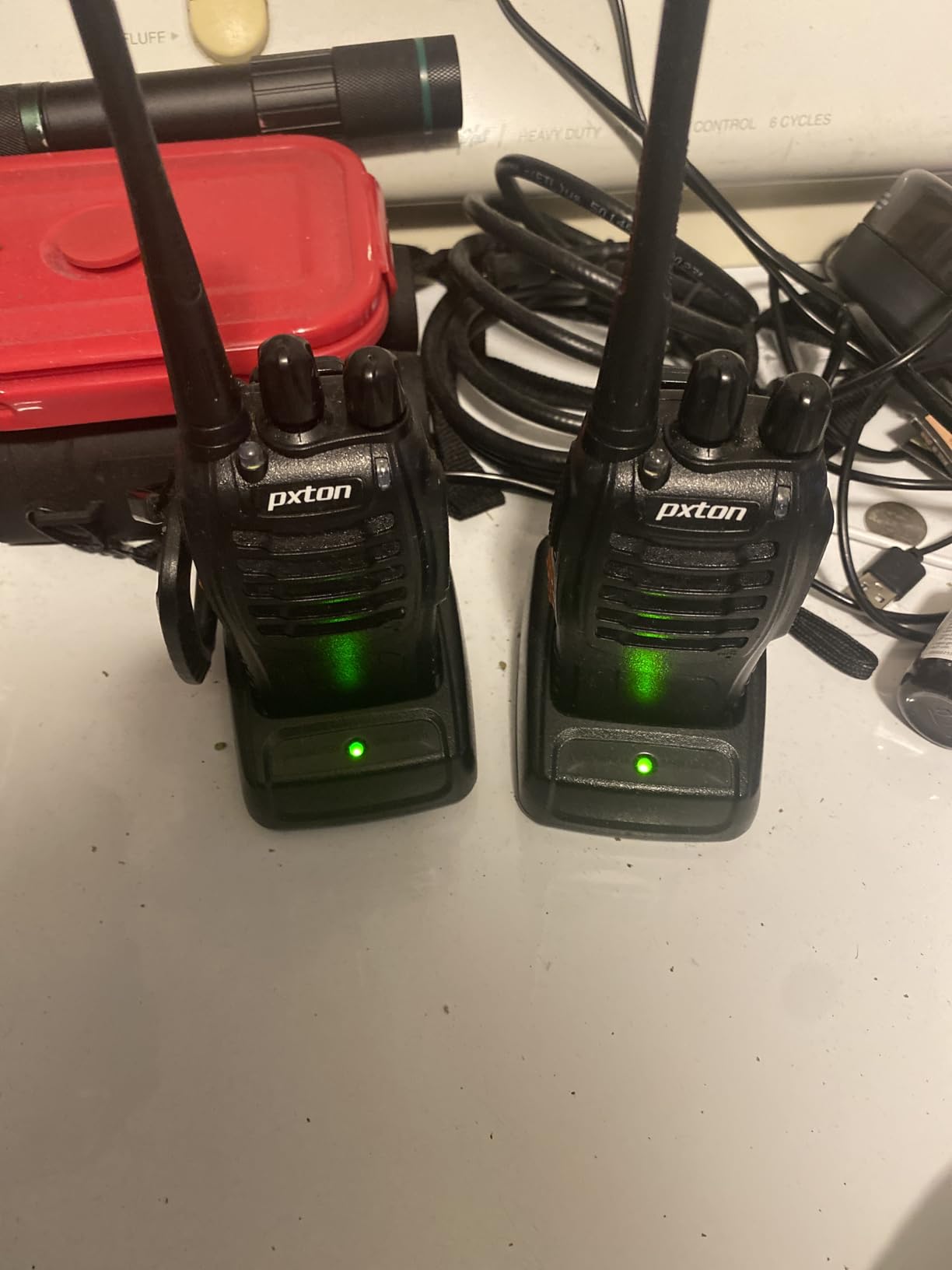
Battery life is the sleeper feature. The stated range is 8 to 96 hours depending on use, with 8 to 12 hours of continuous operation and three to four hours to a full charge on the cradle. For a day hike that is more than enough, and for a weekend it is workable.
The two-mile range claim is the shortest here, and it is the main limitation. In open country that is fine for a group walking together, but it disappears quickly once trees, buildings or a bend in the canyon come between you.
There are no NOAA weather functions, which removes one of the safety features that several other picks on this list include. If severe weather alerts matter to you, this is not the set.
Charging uses a dedicated cradle rather than USB-C, so you pack a small charging base. The batteries are standard rechargeable Li-ion, which is better than disposable cells but less convenient than charging the radio directly from a shared power bank.
The drop-proof shell with rain resistance handled our normal trail abuse without complaint. It is not rated for immersion, so treat it as a splash-resistant device and put it in a dry bag during a downpour.
Who the PX-888S suits best
Couples and small family groups on day hikes where everyone stays together. It is a good house radio to keep in a closet, car or emergency kit rather than something to plan a trip around.
It also suits anyone who wants a radio with no menus to learn, since channel selection is physical and obvious.
Where it falls short
Skip it for backpacking, alpine routes or any plan that puts group members more than a mile apart. Two miles of nominal range is not a mountain radio range.
It is also the wrong choice for winter trips, since there is no weather function and the charge cycle needs a cradle at camp.
How to Choose a Handheld Radio for Hiking
Most buying mistakes in this category come from comparing the number printed on the box instead of answering three questions: who is on your trip, what terrain are you crossing, and what happens when it rains. Answer those first and the shortlist gets short fast.
FRS vs GMRS vs amateur radio: which license you actually need
FRS, or Family Radio Service, is license free. You can buy a radio, key it up and talk, and the legal limits on power are low enough that the FCC does not require an exam. This is the correct tier for families and for any group that does not want paperwork.
GMRS, or General Mobile Radio Service, permits higher power and more channels but requires an FCC license. Here is the part that catches people out and that almost no roundup explains: a GMRS license covers the license holder and their immediate family only. If you are hiking with friends, every one of them needs their own license.
Amateur radio, or ham, requires passing a Technician class exam. In exchange you get far higher power, a huge channel and repeater access, and the ability to talk to anyone on the planet with a license on the same frequency. In the United States, modifying a radio to transmit outside its certified bands is a violation, so buy the factory configuration you intend to use.
There is also MURS, or Multi-Use Radio Service, which sits between FRS and GMRS and is license by rule. It is uncommon in hiking circles and uncommon on this list, but it is worth knowing the category exists.
VHF vs UHF in mountains and canyons
Most consumer FRS and GMRS radios transmit on UHF, in the 462 to 468 MHz band. Amateur handhelds typically cover VHF on 2 meters near 144 MHz as well as UHF on 70 centimeters. That difference matters more in the mountains than almost any other spec.
VHF waves bend around terrain and obstacles better and lose less energy when they pass through rock and vegetation. UHF does more penetrating in a town, getting into buildings and around cars. If your terrain is ridges, treelines and switchbacks, a radio that transmits on VHF will usually hold a signal where a UHF-only set drops out.
That is the practical argument for the ham handhelds on this list, and the argument against a cheap UHF-only FRS set for a long backcountry route. Where you are walking matters as much as how far you are walking.
Advertised range versus real range
Those 30 and 35 mile claims assume two people standing on mountaintops with clear line of sight and factory antennas. On a forest trail, reviewers regularly report usable communications at two to four miles, and that matches what we saw.
Line of sight is the governing rule. Range collapses behind a ridge, into a drainage, or through a stand of trees, because the radio signal is a straight line. Higher wattage helps, but antenna height and terrain matter more than the wattage number.
There is one free improvement that costs nothing: clip the radio to your pack strap high on the shoulder rather than wearing it on your belt or in a pocket. Your body absorbs radio energy, and the same radio mounted high will be heard further with a vertical antenna. Test your range on flat ground before you leave, so the group knows what to expect.
IP and JIS water ratings decoded
Most budget radios carry no water rating at all, and several carry listing metadata that overstates it. Where a rating is published, the scheme is the international IP code, where the first digit is dust protection and the second is water protection.
IPX4 means splash resistant from any direction, which is what the Motorola T475 carries. IP65 means dust tight and protected against water jets. IP67 means dust tight and submersible to one meter for up to thirty minutes, and that is the rating we treat as the minimum for rain, river crossings and winter trips.
JIS4 is the older Japanese standard and means roughly the same thing as IPX4, a splash rating. It is a weaker claim than IP67. For anything involving whitewater, snow or an open pack in a squall, IP67 is the floor rather than the ceiling.
Battery chemistry and cold weather
Lithium-ion packs, the type most of these radios use, hold capacity reasonably well in cold but lose it noticeably below freezing, and they should not be charged when cold. Keep the radio inside your jacket between uses rather than clipped outside the pack.
NiMH packs, supplied with the Midland and the Motorola, tolerate cold better than lithium-ion but drain noticeably faster, and the low-battery warning can be inaccurate. If you are heading into winter conditions, test the run time at home in a cold car rather than discovering it on a ridge.
Alkaline AA cells are the reliable cold-weather fallback, which is why dual power designs like the Midland GXT1000VP4 are worth extra attention for winter trips. Carry a spare set in a sealed bag, and remember that cold weather shortens the life of every chemistry compared with a bench test.
NOAA weather channels and alerts
Several picks here receive NOAA weather broadcasts, including the Midland, the Motorola, the Wishouse set, the Baofeng GM-15 Pro and the Retevis RB48PLUS. A weather alert tone in the radio is worth having on a route that crosses exposed terrain where a storm can build faster than a forecast updates.
Keep the alert tone on but do not treat the radio as a forecast. It tells you that a warning has been issued for your county, not what the conditions will be at your specific elevation or drainage, and a handheld radio does not show you a radar picture.
If you want the full package for emergencies rather than group chat, our guides to the best emergency radios and the best hand crank radios cover the battery-free and hand-powered options. For boating and coastal trips, the best marine radios roundup is a better fit than any unit on this page.
Before you leave the trailhead: a group radio protocol
Agree on one channel and one privacy code before anyone walks, and make every radio the same model if you can, because privacy codes do not always match across brands. Label each radio with a piece of tape and a number so nobody is guessing who is calling.
Agree on a check-in rhythm, such as a call at every junction, and agree on what to do when someone does not answer. The single most useful sentence a group can agree in advance is what constitutes a search, and what it does not.
Then do a range test on flat ground before the trail, walking the planned separation distance and confirming both directions of the conversation. Five minutes at the trailhead is the cheapest insurance available in this entire guide.
Handheld radio versus satellite messenger
A handheld radio reaches other people who have a radio on your channel. A satellite messenger reaches a monitoring service, and that is the single most important difference between the two categories.
Nobody is obliged to answer a handheld, and no professional rescue service monitors hiking channels. If your actual concern is summoning help when you are alone with an injury, a satellite messenger is the correct device, and a two-way radio is not a substitute for one.
The trade is cost and complexity. A satellite messenger needs a subscription, a clear view of the sky, and practice with the interface before you need it. A radio needs nothing but working batteries and a group that agreed on a channel.
For most hikers, the right answer is to carry both, with the messenger reserved for the genuine emergency and the radio handling everyday coordination.
Frequently Asked Questions
Who makes the best handheld radio?
For most hikers, the Baofeng UV-5R is the strongest all-round choice because it covers both VHF and UHF, takes a better antenna, and runs for days on standby. The Midland GXT1000VP4 is the best pick for groups that want no licensing questions, built-in NOAA weather alerts and AA battery fallback. Families with children are usually best served by a four-pack set such as the Wishouse M9.
What is a good portable radio for hiking?
A good portable radio for hiking should be light, run on USB-C or accept standard AA cells, carry a real water rating if rain is possible, and have a keypad lock so it does not change channel in your pocket. License-free FRS models suit families and casual groups. Higher power GMRS and amateur handhelds reach further but require an FCC license to transmit.
What is the best walkie talkie for hiking in the mountains?
For mountain terrain, look for a radio that transmits on VHF as well as UHF, because VHF loses less energy passing through rock and vegetation and holds up better around ridges. The Baofeng UV-5R and the Baofeng AR-5RM both cover VHF, though they require a Technician license to key up. For long ridges without a license, expect low single-digit miles in forest and forest-edge terrain.
Are there waterproof walkie-talkies?
Yes. Look for an IP67 rating, which means dust tight and submersible to one meter for thirty minutes. On this list the Retevis RB48PLUS and the Retevis RB48 carry genuine IP67 claims, and both are also tested to MIL-STD-810H for drops and dust. IPX4 units such as the Motorola Talkabout T475 are splash resistant only, and most budget radios carry no water rating at all.
What is the best emergency radio for hiking?
A handheld two-way radio is a coordination tool, not an emergency service. Nobody is obliged to answer, and no rescue service monitors hiking channels. If you may need to summon help alone, carry a satellite messenger such as a Garmin inReach model, which reaches a monitoring service but requires a subscription and a clear view of the sky. Most hikers should carry both devices.
What is the Baofeng radio controversy?
The controversy centers on power and legality. Some Baofeng models are widely discussed as capable of transmissions above legal limits, and using a radio outside its certified frequency bands violates FCC rules. Within the United States, the UV-5R and AR-5RM may be legally operated on amateur bands by licensed operators, and GMRS models such as the GM-15 Pro need an FCC GMRS license for the higher power channels.
How far do walkie talkies actually work?
Expect two to four miles in forest and rolling terrain, which is what reviewers consistently report against claims of 30 or 35 miles. Those headline figures assume clear line of sight between two mountaintops. Range collapses behind a ridge or into a drainage, and clipping the radio high on your pack strap with a vertical antenna is the cheapest way to improve it.
Do I need a license for a 5 watt radio?
It depends on the service, not the wattage. FRS radios are license free, though they transmit at low power. GMRS radios at 5 watts or more require an FCC GMRS license, and that license covers the holder and their immediate family only, so every friend on the trip needs their own. Amateur radios require a passing Technician class exam before you may transmit.
Conclusion: Which Handheld Radio Belongs in Your Pack in 2026
Pick the Baofeng UV-5R if you want the most capability and will take the time to program it. Pick the Midland GXT1000VP4 if your group wants one uncomplicated answer with weather alerts and AA fallback. Pick the Retevis RT22 if the trip is short and weight matters. Pick the Retevis RB48 or RB48PLUS if rain is likely, and the Baofeng AR-5RM if you hold a license and want real range.
Whatever you choose, buy the same model for everyone, agree on one channel at the trailhead, and test your range on flat ground first. Those three habits will do more for your best handheld radios for hiking than any wattage figure on the box.