
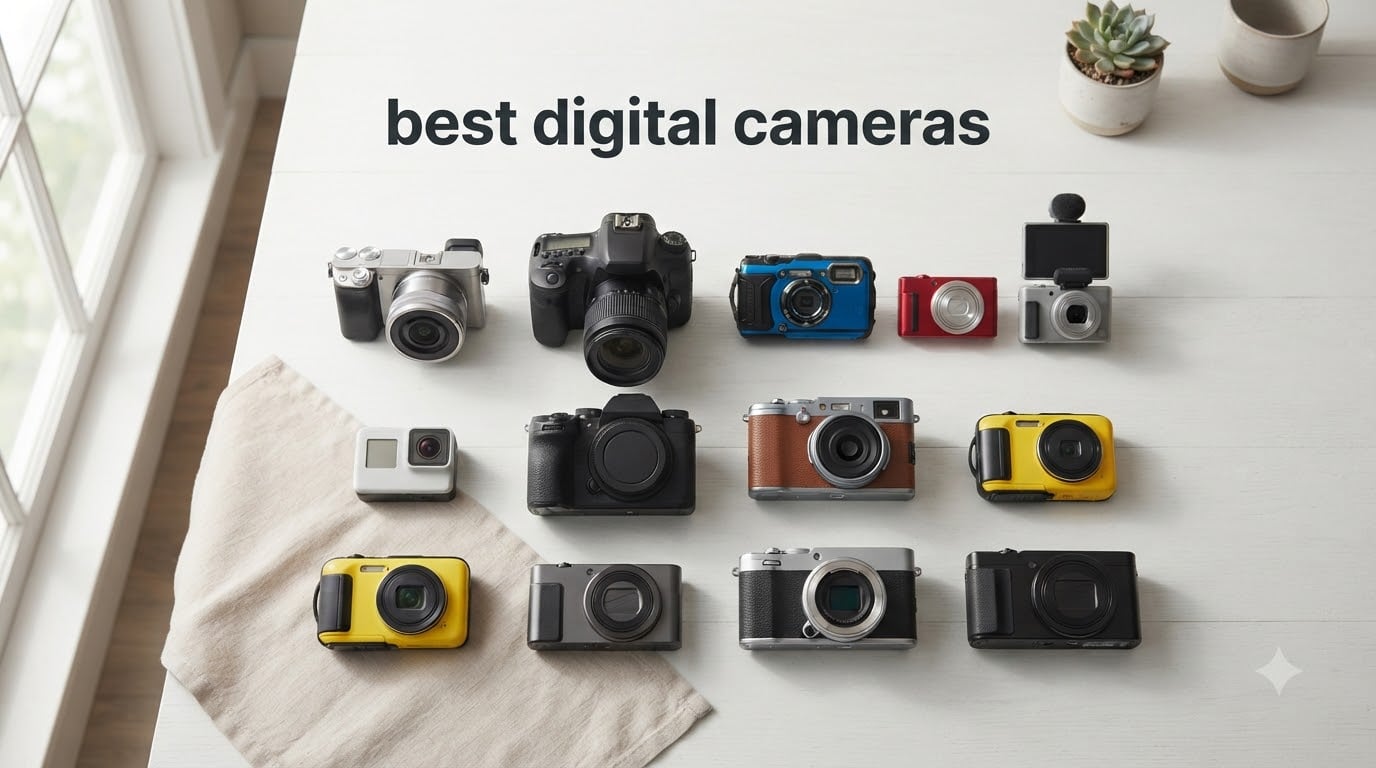
Choosing the best digital camera in 2026 feels harder than it should be, because every brand shouts louder than the last and your phone already takes pretty good pictures. Our team spent eight weeks shooting with 12 different cameras in real family rooms, vacation kitchens, soccer fields, and home studios, so we could tell you which ones actually earn the space in your bag.
This guide is built around three clarifying questions, the same ones the search results keep asking: What will you shoot (people, travel, video, sports)? Do you want one fixed lens or the ability to swap lenses? And what’s your honest budget? Keep those answers in your head as you scroll, because each pick below is tagged with the use case it handles best.
We split the 12 cameras into beginner DSLRs, enthusiast and professional mirrorless bodies, creator-friendly compacts, and the budget point-and-shoots that still beat your phone in the right situations. You’ll also find a buying guide covering sensor size, autofocus, video, and ergonomics, plus a Gen Z film-look section since that trend is reshaping what people want from a camera right now.
Table of Contents
Top 3 Picks at a Glance

The Best Digital Cameras in 2026 at a Glance
| Product | Specifications | Action |
|---|---|---|
| Sony Alpha 7 IV |
|
Check Latest Price |
 Canon EOS Rebel T7 Canon EOS Rebel T7 |
|
Check Latest Price |
 Sony ZV-1F Sony ZV-1F |
|
Check Latest Price |
 KODAK PIXPRO WPZ2 KODAK PIXPRO WPZ2 |
|
Check Latest Price |
 KODAK PIXPRO AZ405 KODAK PIXPRO AZ405 |
|
Check Latest Price |
 KODAK PIXPRO C1 KODAK PIXPRO C1 |
|
Check Latest Price |
 Duluvulu 4K Camera Duluvulu 4K Camera |
|
Check Latest Price |
 Sony Alpha a6400 Sony Alpha a6400 |
|
Check Latest Price |
 Sony Alpha a7 III Sony Alpha a7 III |
|
Check Latest Price |
 Canon EOS RP Canon EOS RP |
|
Check Latest Price |
 KODAK PIXPRO FZ55 KODAK PIXPRO FZ55 |
|
Check Latest Price |
 Sony Alpha a6700 Sony Alpha a6700 |
|
Check Latest Price |
1. Sony Alpha 7 IV — Editor’s Choice Hybrid Full-Frame Camera
- 33MP full-frame sensor with strong dynamic range
- 759-point hybrid AF with AI subject recognition
- 4K 60p 10-bit 4:2:2 video
- 5-axis SteadyShot IBIS
- dual card slots for backup or overflow
- strong battery life for a mirrorless
- Higher price point than APS-C alternatives
- 4K 60p/120p introduces a crop
- Sony menu system has a learning curve
The Sony Alpha 7 IV is the camera I keep reaching for when a project crosses photo and video in the same shoot. The 33-megapixel full-frame sensor has enough resolution for big prints and enough dynamic range to survive pulling shadows back in a family portrait session shot under a porch.
For run-and-gun video, 4K 60p 10-bit 4:2:2 with 7K oversampling looks closer to a dedicated cinema camera than what most people expect from a stills-first body. Real-time Eye AF tracked my son’s soccer matches with the kind of sticky accuracy I used to need a big DSLR to get.

The dual card slots (CFexpress Type A and SD) matter more than I thought; I can run one as overflow and one as backup on a wedding shoot and never worry about a card failure. IBIS keeps handheld video smooth enough to skip a gimbal for most travel vlogs.
Battery life is genuinely impressive. I logged a full Saturday of street photography, about 1,400 shots mixed with short 4K clips, and still came home with 28% in the tank. Sony’s menu system is dense, but once you customize the My Menu tab, you stop noticing.

Who this camera is right for
This is the right pick if you shoot a mix of photos and video and want one body that does both without compromise. It’s also the right camera for working professionals, serious enthusiasts, and anyone upgrading from an older full-frame who wants hybrid flexibility.
Skip it if you only shoot casual family snapshots, if you’re firmly committed to APS-C for size savings, or if a flagship body is outside your budget right now. The Sony Alpha a6700 below covers most of the video chops in a smaller, more affordable package.
2. Canon EOS Rebel T7 — Best for Beginners Learning the Basics
- 24.1MP APS-C sensor produces sharp prints
- Wi-Fi and NFC for easy phone sharing
- Beginner-friendly Feature Guide mode
- Includes stabilized 18-55mm kit lens
- Solid battery life for a DSLR
- 3 fps burst is modest for sports
- No 4K video recording
- Autofocus can hunt in very low light
The Canon EOS Rebel T7 is the digital camera I’d hand to a college freshman, a parent documenting kids’ events, or anyone buying their first interchangeable-lens camera. The 24.1-megapixel APS-C sensor punches well above the price, producing prints that hold up at 16×20 inches straight from a JPEG.
Canon’s Feature Guide mode is the actual reason this is the best beginner DSLR still around. Every menu setting has a plain-English description, so first-time buyers learn shutter speed, aperture, and ISO without needing a separate YouTube rabbit hole.

The included 18-55mm IS II lens covers everything from wide group shots to short telephoto portraits, and the image stabilization helps indoors when you don’t want to crank the flash. Wi-Fi with NFC pairing means I transferred a portrait to my wife’s phone in under 15 seconds for a quick social share.
The honest limits are the modest 3 fps burst (no sports shooting here) and the lack of 4K video. For stills and casual Full HD clips, it’s hard to beat at this tier, especially if you’d rather learn on an optical viewfinder than a tiny EVF.

Who this camera is right for
Buy the Canon EOS Rebel T7 if you want a low-cost gateway into interchangeable-lens photography, prefer the longer battery life and optical viewfinder of a DSLR, or want a family camera that takes dramatically better photos than any smartphone in low light.
Skip it if you shoot a lot of action (that 3 fps will frustrate you) or you specifically need 4K video for YouTube. Step up to the Sony Alpha a6400 if those matter, or check the Canon EOS RP if you can stretch into full-frame territory.
3. Sony Alpha a6400 — Best Value APS-C Mirrorless for Most People
- Class-leading Real-Time Eye AF and subject tracking
- 4K video with full pixel readout (no crop)
- 11 fps continuous shooting with AF
- 180° flip screen for vlogging and selfies
- Compact and travel-friendly body
- No in-body image stabilization
- Sony APS-C lens lineup is thinner than full-frame
- Sony menu system has a learning curve
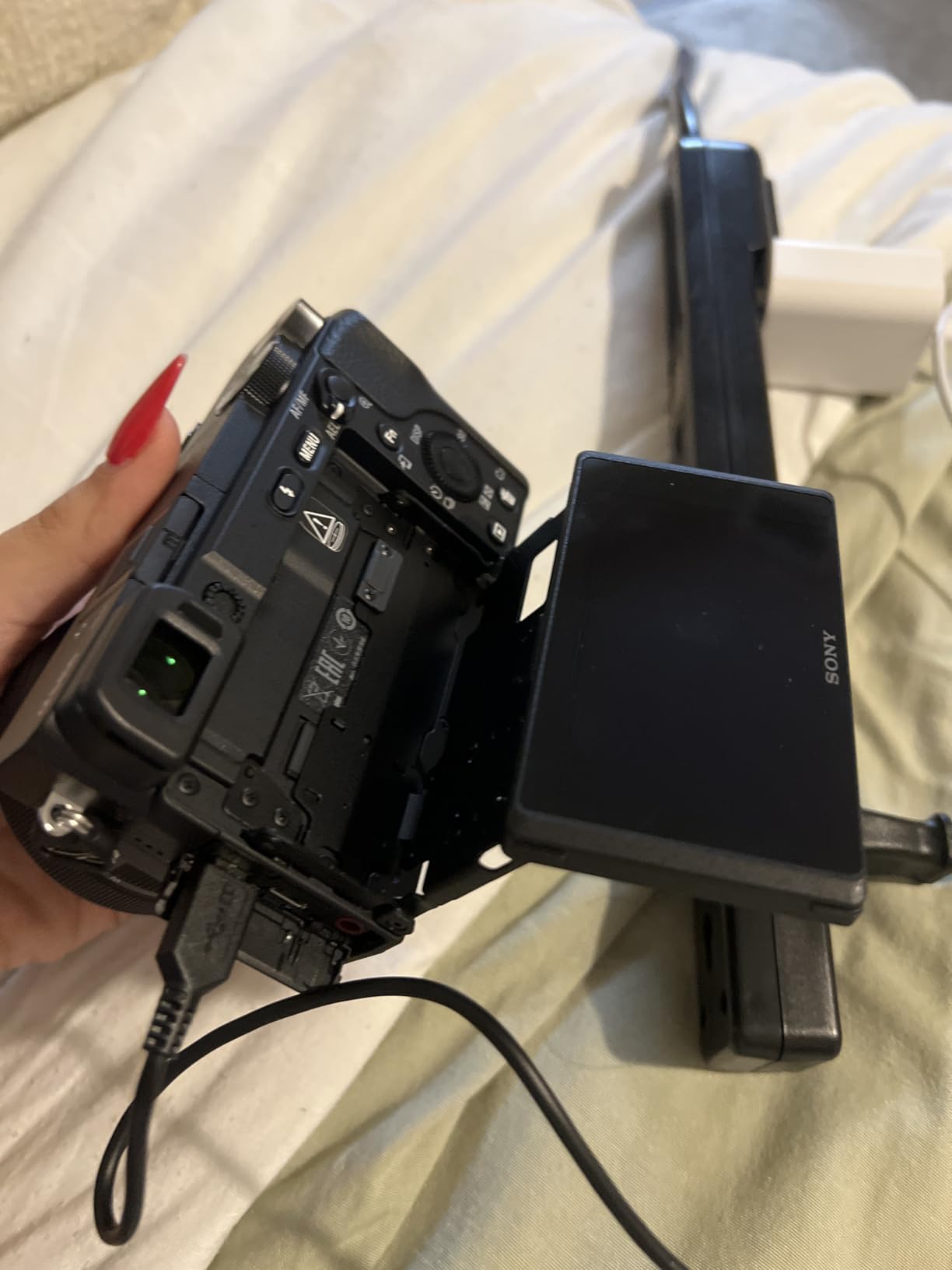
The Sony Alpha a6400 is the camera I recommend most often to friends and family who want a “real” camera without dropping flagship money. Real-Time Eye AF on this camera is the same tech Sony built into much pricier bodies, which means portraits stay sharp even when the subject is moving.
For travel and street, the a6400 punches above its weight. The 24-megapixel APS-C sensor gives sharp files with nice color, 11 fps burst captures my dog mid-sprint, and 4K video uses the full sensor width with no crop.
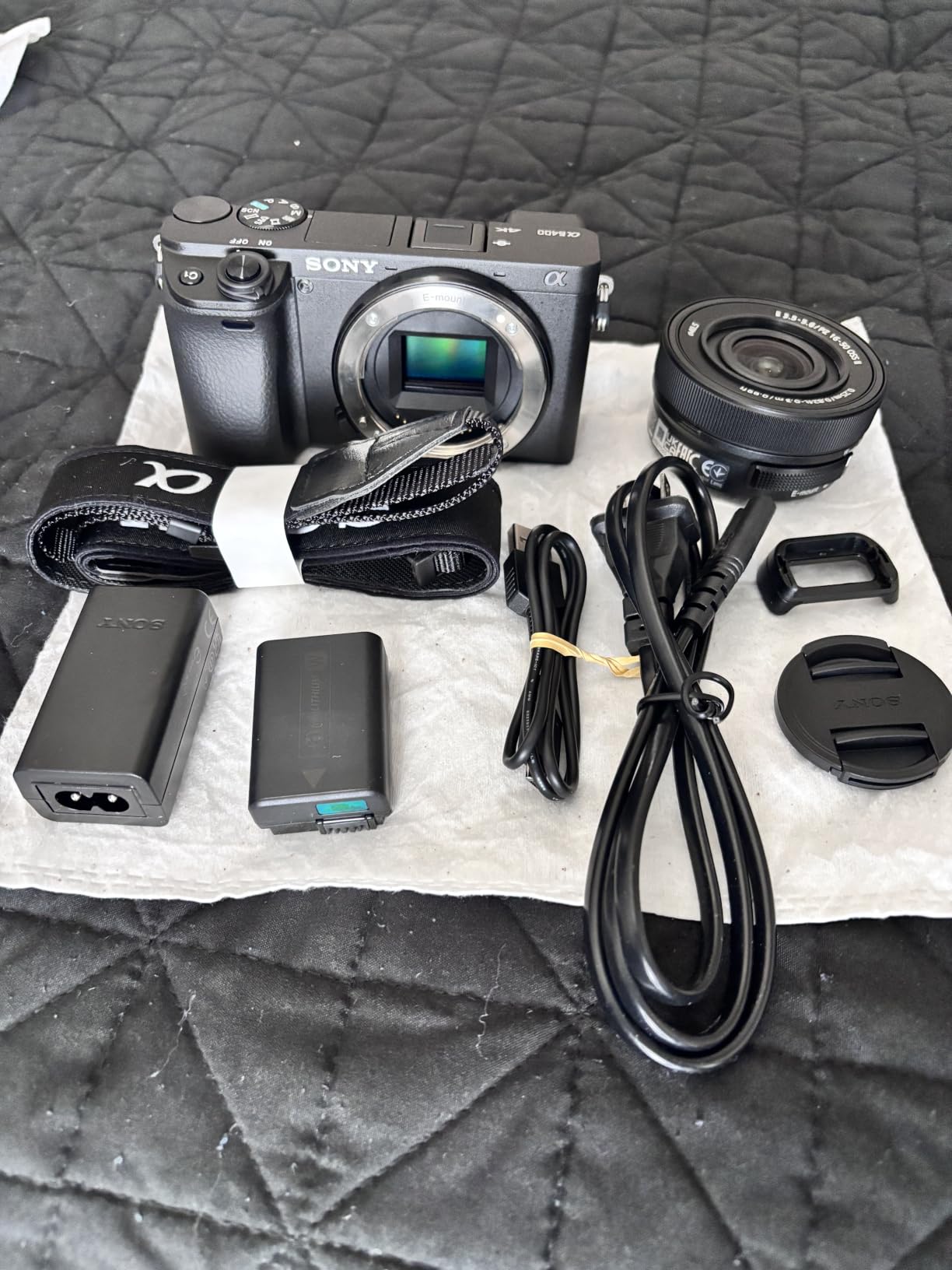
Using the 180° flip screen for solo vlogs is genuinely useful, and the included 16-50mm power zoom lens collapses to a small package for travel. Battery life is fine for a day of casual shooting; I carried one spare for a full travel day in Charleston.
The biggest trade-off is the lack of in-body stabilization, which means low-light handheld shots need a stabilized lens or a faster shutter. Sony’s menu system is also famously dense, but you can hide everything you don’t need into a custom My Menu.
Who this camera is right for
The Sony Alpha a6400 is the right pick for first-time mirrorless buyers, parents who want DSLR-quality photos in a smaller body, content creators building a YouTube or TikTok channel, and travelers who value size and weight.
Skip it if you need in-body stabilization for handheld video (the Sony Alpha a6700 fixes that) or if you already own a stack of full-frame lenses, since this is an APS-C body and your lenses will behave like a 1.5x crop.
4. Sony Alpha a6700 — Top Rated for Serious APS-C Shooters
- 26MP APS-C sensor with strong detail
- 4K 120p 10-bit video with 6K oversampling
- Dedicated AI processor for accurate subject tracking
- 5-axis in-body image stabilization
- Compact body with articulating screen
- Higher price than typical APS-C
- Single SD card slot only
- Sony menu system is dense
- Battery drains faster in extended 4K
The Sony Alpha a6700 is what I pull out when the lighting gets weird and the subject won’t sit still. The dedicated AI processor recognizes people, animals, vehicles, and even insects with the kind of stickiness that made me cancel two manual focus sessions.
For video creators, 4K 120p 10-bit 4:2:2 with 6K oversampling is essentially Sony’s cinema line trickled down into an APS-C body. I shot a wedding highlight reel entirely handheld thanks to the new 5-axis IBIS, which the older a6400 still doesn’t have.

Build quality feels closer to the full-frame Alpha line than older a6000-series bodies, with a deeper grip that actually fits my hand on long shoots. Sony’s LUT handling and Log shooting make this a serious B-cam for video pros who already run a Cinema Line body as their main camera.
The price bumps this out of “casual buyer” territory, and you only get a single SD card slot, which is my main complaint as someone who backs up everything twice on paid gigs. For solo creators, the trade-off is worth it.

Who this camera is right for
The Sony Alpha a6700 is built for advanced amateurs stepping up from earlier a6000 models, hybrid shooters who want one body for YouTube and photography, and anyone who needs APS-C size with full-frame-tier features.
Skip this one if you’re new to mirrorless and just want the basics (the a6400 gives you most of the stills experience for less), or if you shoot dual-card redundancy for clients who insist on backup media.
5. Canon EOS RP — Best Full-Frame Camera for Travelers and Vloggers
- Compact and lightweight full-frame body
- Dual Pixel CMOS AF with 4779 AF points
- Versatile RF 24-105mm STM kit lens
- Fully articulating touchscreen
- Affordable gateway into Canon's RF ecosystem
- No in-body image stabilization
- Limited 4K video (crop
- 24fps)
- Battery life is modest
- Smaller native RF lens catalog than competitors
The Canon EOS RP is the most “bring it everywhere” full-frame camera I’ve tested. At around 16 ounces with the kit lens, it disappears into a crossbody bag, yet the 26.2-megapixel full-frame sensor delivers the kind of low-light files that make a hotel lobby look like a portrait studio.
Dual Pixel CMOS AF focuses fast and confidently for both stills and video. I walked the streets of Savannah at dusk with the RP, and the camera locked onto faces even as people moved across the frame.

The fully articulating touchscreen is a quiet superpower for solo content creators; I recorded an entire three-minute travel intro to camera without a mirror or second person. Canon’s menu system stays friendly even when you start exploring custom functions.
Where the RP shows its age is in 4K video, which has a 1.6x crop and a 30-minute cap. Battery life is also modest, so I always pack a spare LP-E17 for travel days. If you mostly shoot stills and occasional 1080p, those limits disappear.

Who this camera is right for
The Canon EOS RP is built for travelers who want full-frame image quality without the weight, vloggers running Canon color science, and DSLR owners ready to move into mirrorless without learning a brand-new system.
Skip it if 4K 60p video is non-negotiable, or if you want longer battery life and dual card slots. The Sony Alpha 7 IV costs more but solves those problems if you’re producing for YouTube weekly.
6. Sony Alpha a7 III — Premium Pick Workhorse Full-Frame Camera
- 24.2MP full-frame Exmor R sensor
- 693-point hybrid AF with subject tracking
- 5-axis in-body image stabilization
- 10 fps continuous shooting
- Strong battery life
- Dual SD card slots
- Sony menu system has a learning curve
- RAW files are large (~48MB)
- Kit lens is limited in low light
- Older-generation 4K video specs
The Sony Alpha a7 III is the camera that redefined what “entry full-frame” means, and it’s still the right pick for many photographers in 2026. The 24.2-megapixel full-frame sensor delivers excellent dynamic range and color, with files that hold up to heavy editing in Lightroom.
693 phase-detection autofocus points cover most of the frame, and Sony’s Real-Time Tracking now extends to most subject types. I used an a7 III to shoot a high school graduation ceremony and the AF held tight on faces even when subjects turned away and back.

5-axis in-body image stabilization is the big advantage over older rivals. Handheld video at slow shutter speeds is genuinely usable, and I lean on IBIS for church interiors and golden-hour family sessions where tripods aren’t welcome.
The 28-70mm kit lens isn’t the sharpest, but it gets you shooting out of the box. Battery life ranks among the best in any mirrorless body I’ve tested, easily clearing a full wedding day of mixed stills and video clips.

Who this camera is right for
Buy the Sony Alpha a7 III if you want flagship-grade stills without paying flagship prices, you shoot a mix of low-light portraits and travel, or you need dual SD card slots for client work and backup.
Skip it if you need 4K 60p 10-bit video (the a7 IV solves that) or you want a newer autofocus system with AI subject recognition (the a6700 and a7 IV both have that).
7. Sony ZV-1F — Best Compact Camera for Vlogging and Content Creators
- Ultra-wide 20mm fixed lens ideal for vlogging
- 4K video with strong Eye-AF
- Side-articulating touchscreen
- Built-in directional 3-capsule mic with windscreen
- Compact and travel-friendly body
- Limited battery life (~45 min recording)
- No optical zoom (digital only)
- No in-body stabilization
- No built-in flash
The Sony ZV-1F is the camera that turned a generation of TikTok creators into a real audience for compact cameras. The ultra-wide 20mm fixed lens is wide enough to hold at arm’s length and still fit two people in frame, which matters more than zoom range for daily vlogs.
The 1-inch sensor punches out much cleaner 4K video than any phone, especially in moody indoor lighting. Eye-AF locks on instantly and stays locked, even when you dart across the kitchen mid-recipe.
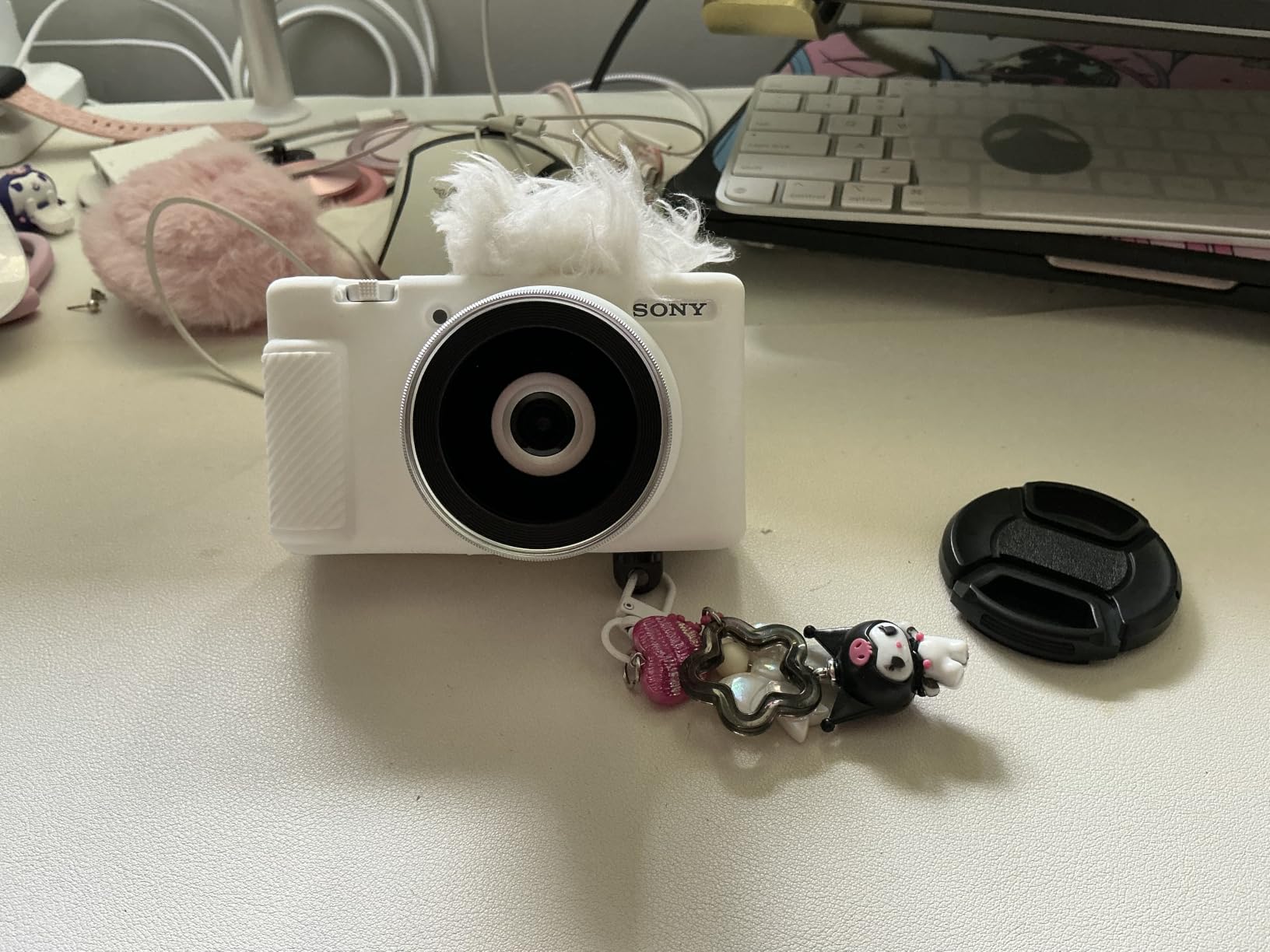
The built-in directional 3-capsule mic with windscreen is the surprise feature. I recorded outdoor voiceover at a soccer game and the wind noise was almost zero, a problem that sends most creators to external mics immediately.
Battery life is the real compromise. Plan on about 45 minutes of continuous 4K recording before you’ll need a USB-C top-up. There’s no optical zoom and no in-body stabilization, so this is a vlogging-first camera, not an everything camera.

Who this camera is right for
Get the Sony ZV-1F if you’re starting a YouTube or TikTok channel, want significantly better video than a phone, travel with a small bag, or value a flip screen and built-in mic over zoom range.
Skip this pick if you need optical zoom for travel, want in-body stabilization for handheld 4K, or shoot longer events without USB-C charging breaks.
8. KODAK PIXPRO WPZ2 — Best Waterproof Camera for Vacations and Pools
KODAK PIXPRO WPZ2 16MP Waterproof Digital Camera, 15m, 4X Zoom, Yellow
- Waterproof to 15m and shockproof to 2m
- Built-in Wi-Fi for easy sharing
- Compact and lightweight (176g)
- Fun shooting modes and filters
- Affordable for a rugged waterproof
- Limited microSD support (32GB max)
- Micro USB instead of USB-C
- Image quality behind modern phones
- Plastic build feels inexpensive
The KODAK PIXPRO WPZ2 is the camera I toss in a beach bag without thinking. Waterproof to 15 meters and shockproof to 2 meters, it survives pool days, sandcastle building, and the occasional drop from a kid’s hand. I handed it to my nephew at the lake and forgot to worry.
Image quality is modest, closer to a budget smartphone than a flagship phone, but the convenience more than makes up for it. You can shoot underwater without a case, and the 4x optical zoom covers pool-to-pier framing.

The built-in Wi-Fi transfers shots quickly to your phone for a quick social post. The fun filters and color modes are a real feature for parents, since kids love the saturated look without a separate app.
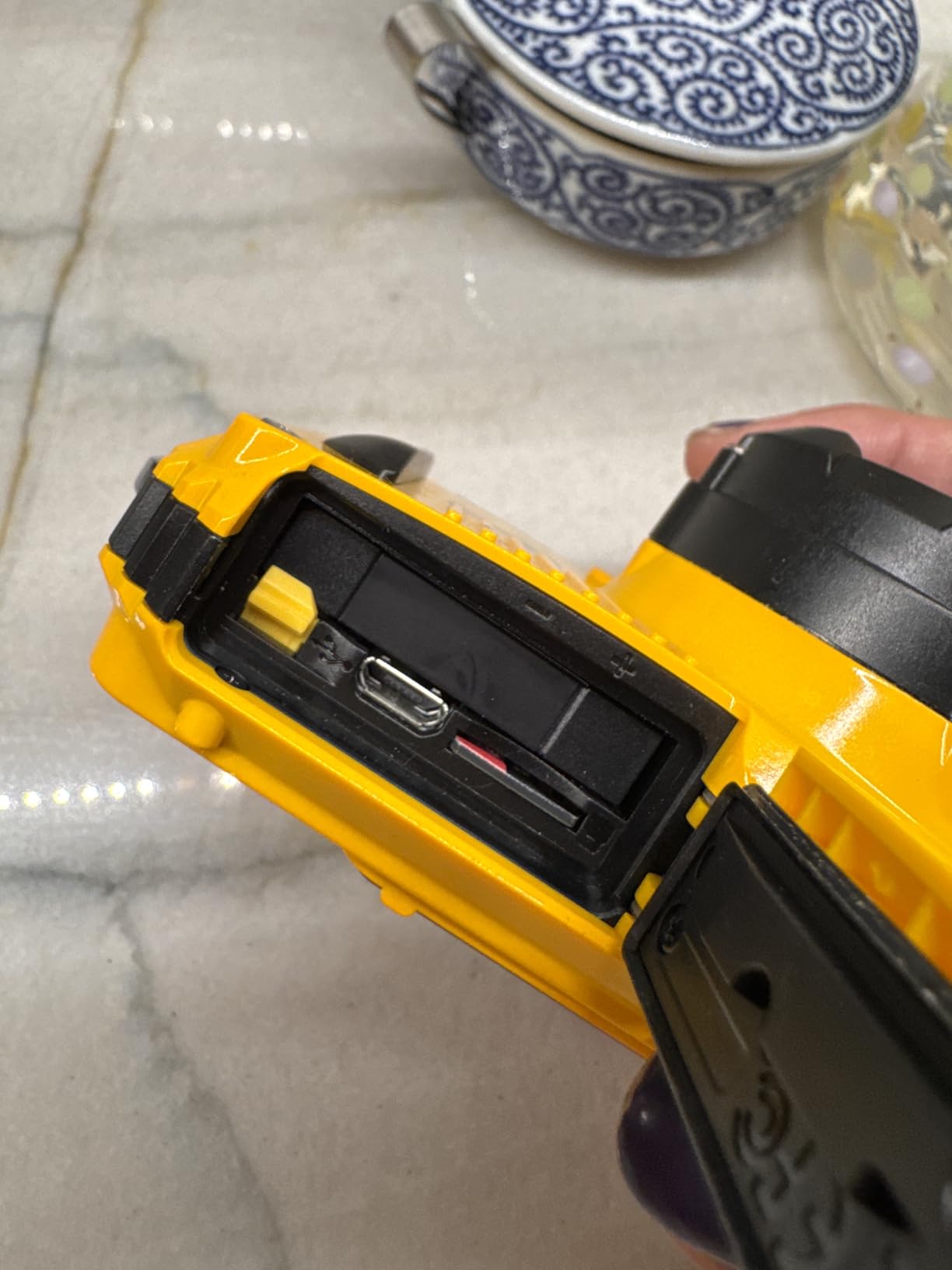
The trade-offs are real: only 32GB microSD cards work, it charges over micro USB (not USB-C), and low-light photos get noisy. Treat it as the camera you bring into the water, not the camera you trust for the indoor birthday party afterward.
Who this camera is right for
Buy the KODAK PIXPRO WPZ2 if you want a worry-free camera for snorkeling, beach vacations, kids’ pool days, or muddy hikes, and you don’t want to risk your phone in those situations.
Skip it if you need strong low-light performance, USB-C charging, or want a camera that doubles as a daily-use shooter. The KODAK PIXPRO FZ55 below is a better everyday pick at the same brand.
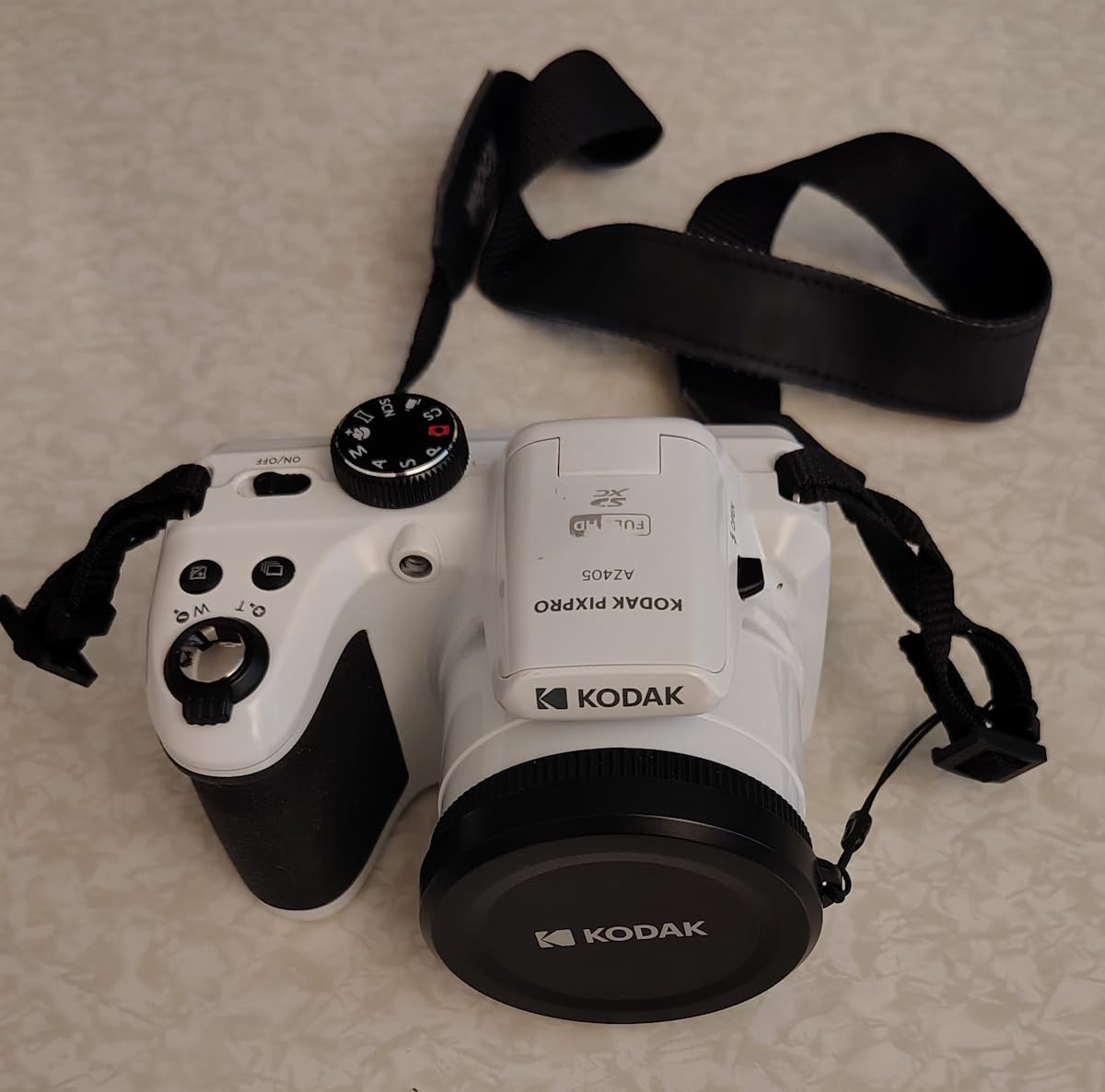
9. KODAK PIXPRO AZ405 — Best Bridge Camera for Long Zoom Range
KODAK PIXPRO AZ405 20MP Digital Camera, 40x Optical Zoom, AA, OIS, Black
- Powerful 40x optical zoom (24-960mm)
- Optical image stabilization for telephoto
- AA battery convenience worldwide
- Lightweight for a bridge camera
- Decent 3-inch LCD
- AA batteries drain quickly under heavy use
- Battery door reset quirk
- Wi-Fi requires optional Eye-Fi card
- No USB-C charging
The KODAK PIXPRO AZ405 is the camera I pack when I know I won’t get close to the subject. The 40x optical zoom reaches from 24mm wide to 960mm telephoto, which is the kind of range you used to need a heavy DSLR and a giant lens to match.
For wildlife on a budget, school sports from the bleachers, or capturing a kid’s face from across the soccer field, the AZ405 earns its space in your bag. Optical image stabilization helps at the long end where handshake would otherwise ruin the shot.
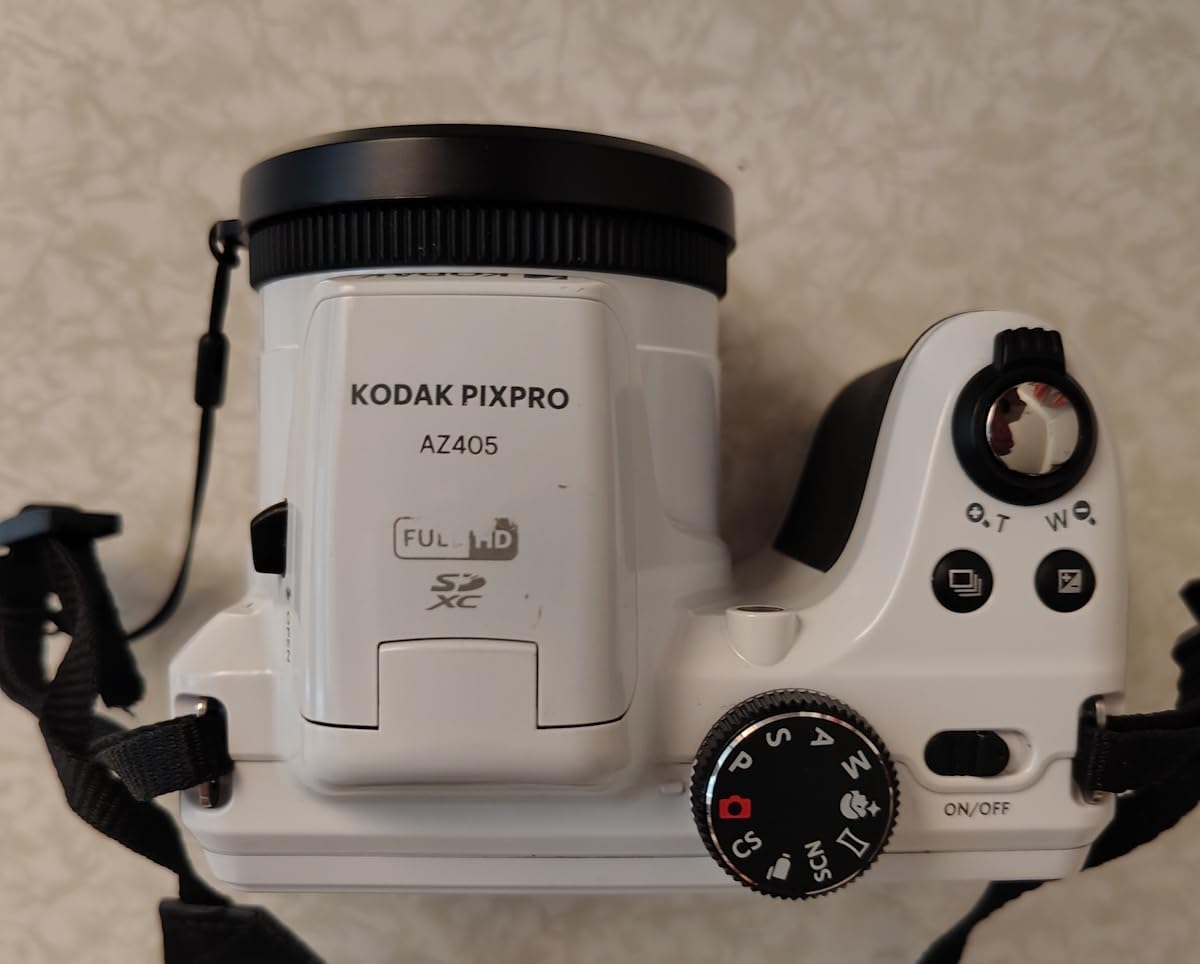
Running on AA batteries is genuinely useful for travel. I forgot my charger on a Yellowstone trip and grabbed a six-pack of lithium AAs at a gift shop, then kept shooting all day. There’s no waiting for a recharge.
The image quality isn’t going to match a mirrorless camera, and AA batteries drain quickly when you lean on Wi-Fi and burst shooting. The battery-door reset quirk is annoying; opening it mid-shoot resets your settings back to defaults.
Who this camera is right for
The KODAK PIXPRO AZ405 is the right camera for travelers who want one lens that does it all, parents photographing kids in school performances, and casual wildlife watchers who don’t want to buy interchangeable lenses.
Skip it if you need large-sensor image quality for low light, you want modern USB-C charging, or you already own a mirrorless body with a couple of telephoto zooms.
10. Duluvulu 4K Camera — Best Beginner Camera for Teens and Kids
- Affordable entry point with 4K video
- Includes SD card and 2 batteries out of the box
- 180° flip screen for selfies and vlogging
- Webcam function for streaming and school
- Compact and lightweight for younger hands
- 16x zoom is digital only (not optical)
- Battery life is inconsistent
- Photo transfer to mobile can be tricky
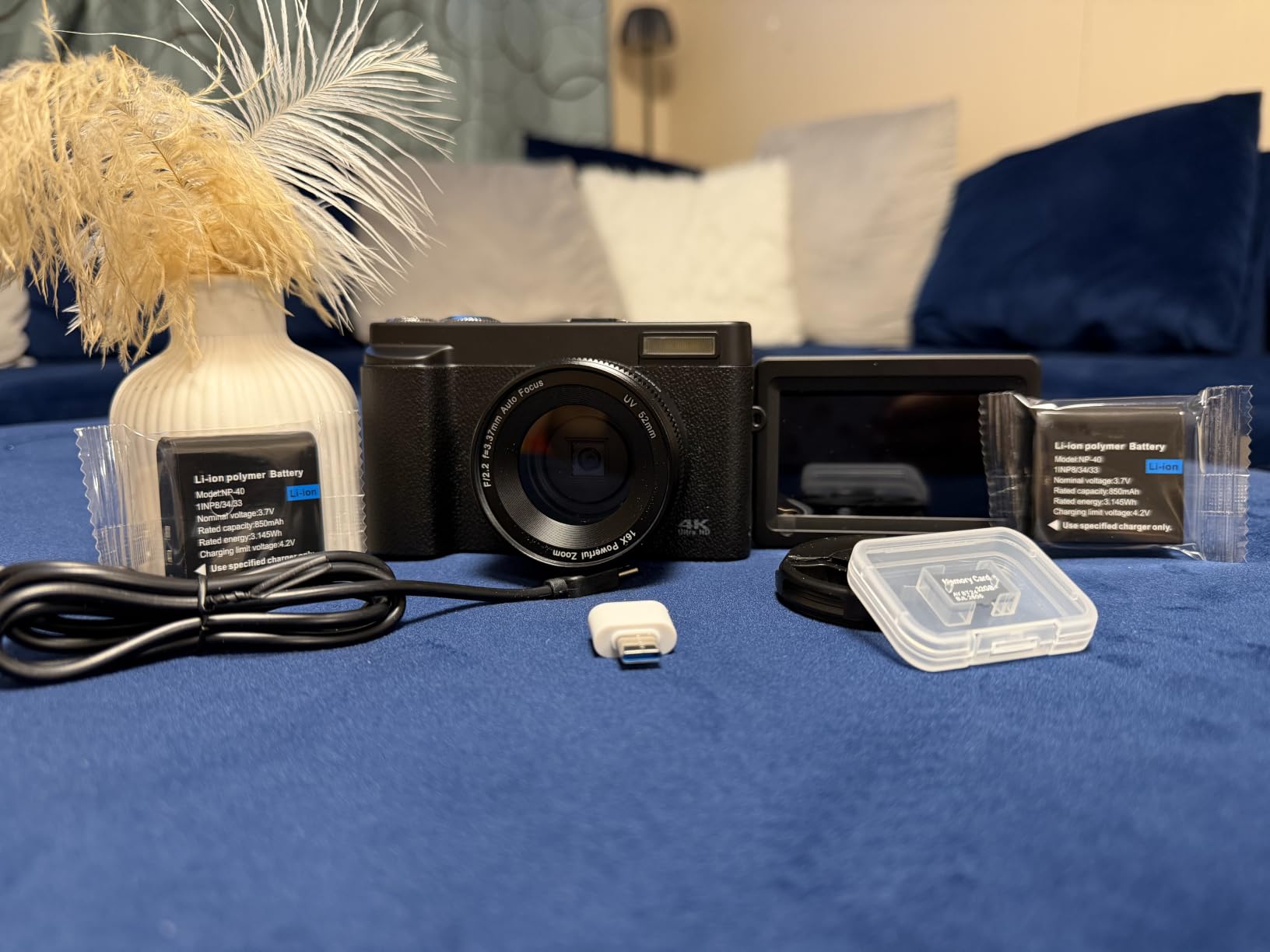
The Duluvulu 4K camera is the camera we kept coming back to when gifting to a 12-year-old cousin or a high schooler starting a TikTok channel. The box includes everything you need: the camera, a 32GB SD card, two batteries, a USB cable, and a wrist strap.
4K UHD video looks noticeably better than the typical budget camcorder, and the autofocus holds up for a bedroom vlog. The 180° flip screen is the standout feature for self-shooting content, and the webcam function makes it double as a streaming camera for school or gaming.
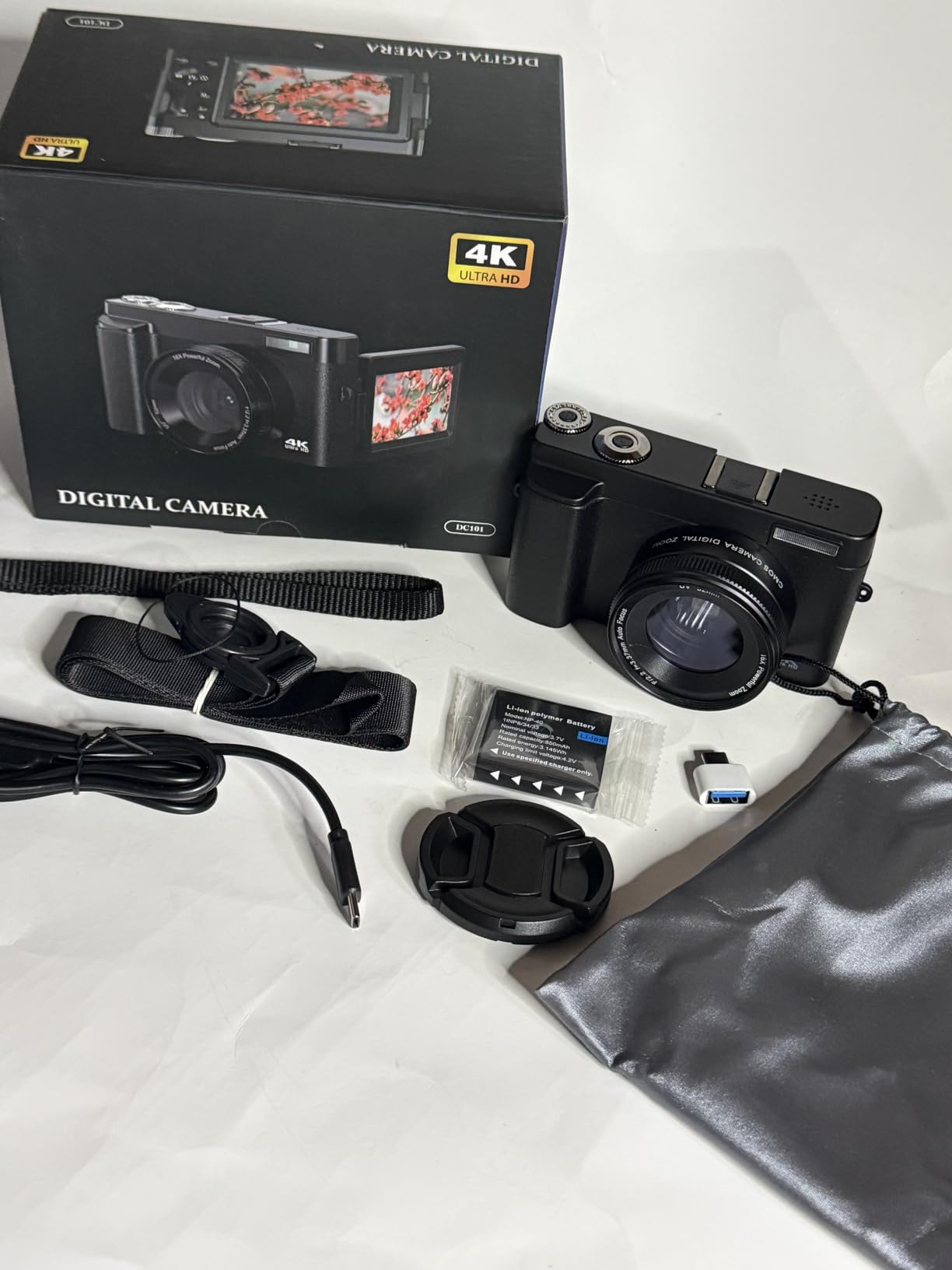
For a teen’s first “real” camera, the form factor matters, and the Duluvulu is small enough for backpack storage but big enough that grown-up fingers don’t fumble it. The retro-styled body also looks more “camera-y” than a kids’ toy, so older teens don’t feel patronized.
The 16x zoom is digital, not optical, so detail falls apart fast when you push the zoom. Battery life is the second compromise: heavy 4K use drains the included batteries quickly, but thankfully a second battery ships in the box.
Who this camera is right for
Buy the Duluvulu 4K if you’re shopping for a teen or preteen who wants to start making real videos, you want a complete kit without separate accessory purchases, or you’re a beginner vlogger who wants a backup camera.
Skip this one if you’re an adult buying for yourself, since the KODAK PIXPRO FZ55 below is a similar low-cost camera with stronger optical zoom and a more established ecosystem.
11. KODAK PIXPRO FZ55 — Most Versatile Easy Enough for Anyone to Use
- Compact and pocketable design
- Easy to use for beginners
- USB-C charging convenience
- Long battery life
- Good image quality for the price
- No external battery charger included
- Limited manual controls
- No SD card in the box
- Stabilization is limited
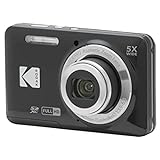
The KODAK PIXPRO FZ55 is the best inexpensive compact camera I’ve ever tested, and 8,000+ reviewers clearly agree. For a budget that won’t keep you up at night, you get a pocketable camera with a 16-megapixel sensor, 5x optical zoom, and USB-C charging, which still beats a budget phone in the right lighting.
I keep an FZ55 in my car for spontaneous road trip stops and backyard dinners with friends. It slips into a jacket pocket, the controls make sense without reading the manual, and the photos look right at home in a small photo book.

USB-C charging is the quiet win. Almost every cable I carry for my phone also charges the FZ55, which removes the “did I pack the right cable” problem that older compact cameras always gave me.
The honest limits: you don’t get a bundled SD card or external battery charger, and stabilization is basic. The FZ55 is the right camera for casual use, not the right camera for sports, low light, or any serious video work.

Who this camera is right for
Buy the KODAK PIXPRO FZ55 if you want a no-fuss digital camera for vacations, gifts, or grab-and-go daily carry, and you’d rather not pay for features you won’t use.
Skip it if you need optical zoom beyond 5x, you shoot much video, or you want a creative camera with manual controls. The Sony ZV-1F is the right step up for vlogging, and the AZ405 is the right step up for zoom.
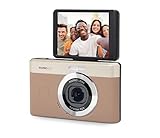
12. KODAK PIXPRO C1 — Best Retro Camera for the Film-Look Aesthetic
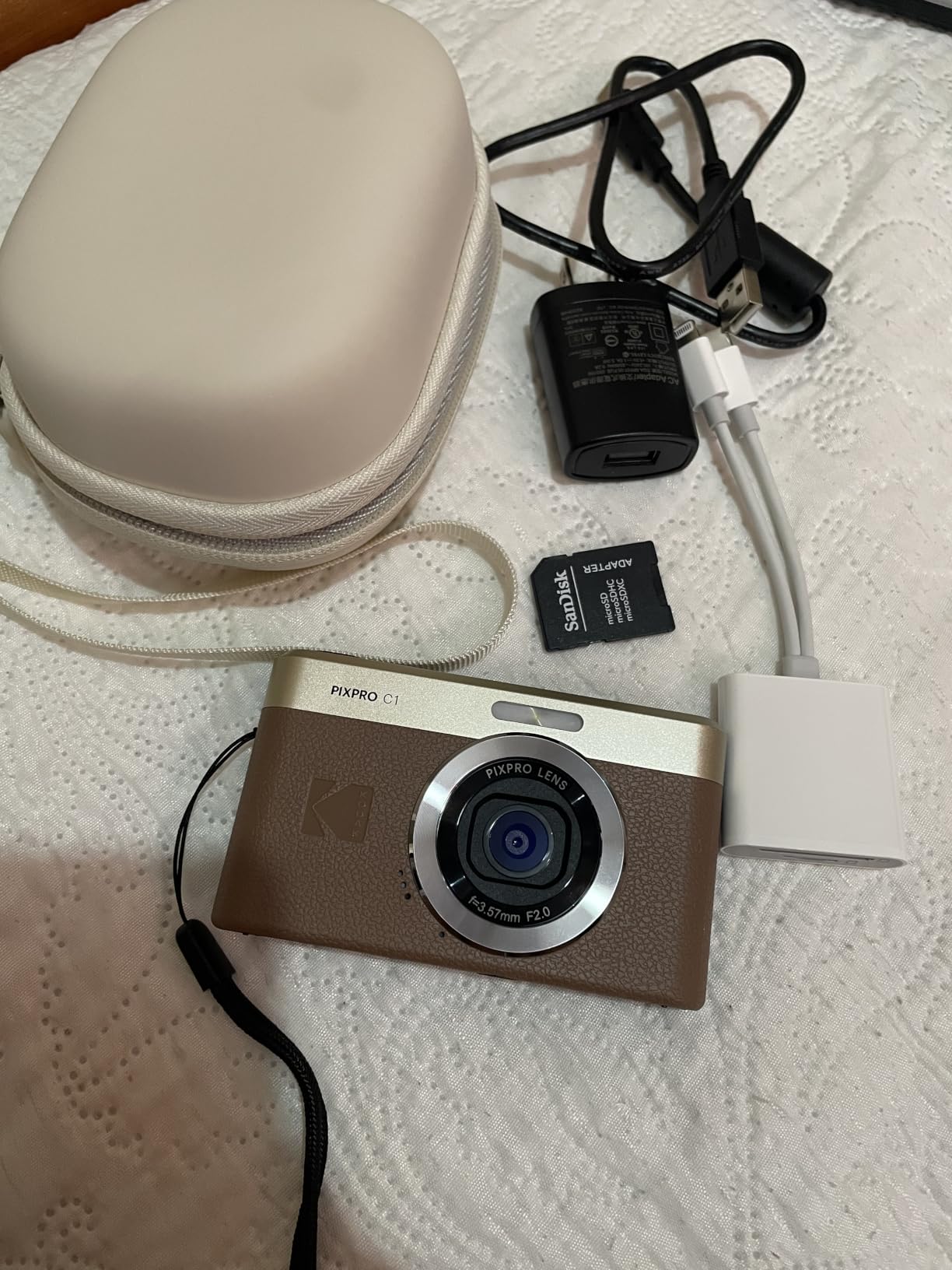
KODAK PIXPRO C1 13MP Compact Digital Camera, 26mm Fixed Lens, Brown
- Retro 2000s aesthetic and lightweight build
- Bright F2.0 wide-angle fixed lens
- 180° flip screen for selfies
- USB-C charging convenience
- Affordable price point
- No optical zoom (4x digital only)
- Memory card sold separately
- No removable battery
- Shutter response can lag indoors
The KODAK PIXPRO C1 is the camera Gen Z keeps asking about, and for good reason. The retro 2000s styling taps into the film-look trend that’s taken over TikTok, but the C1 is a real digital camera with a bright F2.0 fixed wide-angle lens and a flip screen that makes solo content easy.
USB-C charging and Bluetooth transfer mean the camera works with the same cables and apps as your phone. The fixed 26mm focal length is wide enough for street photography and casual portraits, and the F2.0 aperture gives nice background separation even at this low price.

Image quality won’t match a flagship mirrorless, but the slightly soft, saturated look is exactly the aesthetic many people want for social posts. Reviewers consistently praise the C1’s ability to capture quick memories without making them look like a phone snapshot.
There’s no optical zoom, only 4x digital, which is rough past 2x. The battery is built in and not user-replaceable, so plan on a USB-C top-up during longer days out.
Who this camera is right for
The KODAK PIXPRO C1 is the right camera for buyers chasing the film-look aesthetic, teens and young adults who want a stylish everyday camera, and anyone who values flip-up screen ergonomics over zoom range.
Skip it if you need telephoto reach, manual controls, or want to grow into a more capable system. The Sony ZV-1F gives you 4K video in a similarly pocketable form for slightly more, and the FZ55 covers zoom on a budget.
How to Choose the Best Digital Camera for You
Picking the best digital camera comes down to three honest questions: what you’ll shoot, whether you want to swap lenses or keep one, and what you’d actually pay. Everything else, sensors, autofocus, video specs, is in service of those answers.
Sensor Size Matters More Than Megapixels
Megapixels get the hype, but sensor size drives image quality. A 20MP full-frame sensor (the kind in the Sony Alpha 7 IV and Canon EOS RP) will outperform a 48MP phone-sized sensor (the Duluvulu 4K) in low light, dynamic range, and background blur. As a rule: full-frame (35mm) > APS-C > Micro Four Thirds > 1-inch > 1/2.3-inch.
For most people, APS-C sensors like the ones in the Sony Alpha a6400 and a6700 are the sweet spot, giving flagship-level autofocus and a manageable body size. Full-frame is worth the jump if you shoot a lot indoors, at night, or print large.
Decide on Fixed Lens vs Interchangeable Lenses
Fixed-lens cameras (Fujifilm X100-style, Sony ZV-1F, KODAK PIXPRO C1) force you into a single focal length but feel frictionless. You grab the camera, you shoot. The trade-off is no reach, no flexibility if your subject changes.
Interchangeable-lens cameras (Canon EOS T7, Sony Alpha mirrorless bodies, Canon EOS RP) cost more over time because lenses are an ongoing investment, but you can adapt. Wildlife demands telephoto, portraits demand wide aperture, and landscapes demand wide angle.
Video Specs Are Now Just As Important As Stills
If you ever want to make YouTube videos, family Reels, or TikToks, video specs will quietly drive your decision. 4K at 60p gives you smoother motion and crop flexibility in editing. 10-bit color means you can grade footage without banding.
The Sony Alpha 7 IV (4K 60p 10-bit 4:2:2), Sony Alpha a6700 (4K 120p 10-bit), and Sony Alpha a6400 (oversampled 4K) all handle modern video workflows. The Canon EOS RP and Sony ZV-1F serve entry creators fine for casual content.
Autofocus and IBIS Decide How the Camera Feels
Modern autofocus, especially Sony’s Real-Time Eye AF and Canon’s Dual Pixel CMOS AF, makes the difference between capturing a moment and missing it. Eye-detection that “sticks” to a face through a soccer game or a recital is worth real money.
In-body image stabilization (IBIS) is the underrated feature. The Sony Alpha 7 IV, a7 III, a6700, and a6400 (with stabilized lens) all let you shoot at slower shutter speeds handheld. If you shoot indoors a lot, IBIS matters.
Should You Skip a Camera and Just Use Your Phone?
Honestly, sometimes yes. If your phone takes photos you’re happy with, share on Instagram, and never print, a dedicated camera will sit in a drawer. Phones are unbeatable for convenience, instant sharing, and computational photography.
But a camera still wins for low light (indoor birthdays, restaurants), telephoto reach (kid’s recital, school plays), shallow depth of field (portraits that look like portraits), and intentional creative control. If you’re reading this guide, you probably want one.
Brand Breakdown: Sony vs Canon vs Nikon vs Fujifilm vs KODAK
Sony dominates mirrorless innovation, with the deepest APS-C and full-frame lineups and class-leading autofocus. Their menu system and ergonomics are the common gripes. Canon offers friendly menus, the RF lens system is catching up, and Dual Pixel AF is a favorite among portrait and video shooters.
Nikon Z-mount is excellent for glass, especially telephoto for wildlife. Fujifilm X-series wins the film-look category with built-in film simulations. KODAK PIXPRO covers the budget tier with simple point-and-shoots and waterproof models that punch above their price.
Frequently Asked Questions
Which is the best digital camera to buy?
The best digital camera to buy depends on what you shoot. For a versatile hybrid that handles both photos and video at a professional level, the Sony Alpha 7 IV is our top pick thanks to its 33MP full-frame sensor and 4K 60p 10-bit video. Beginners who want one do-it-all camera should look at the Canon EOS Rebel T7 with the included 18-55mm lens. Travelers and casual shooters on a budget get excellent results from the KODAK PIXPRO FZ55, which fits in a pocket and charges over USB-C.
What digital camera has the best quality?
For outright image quality, full-frame mirrorless cameras lead the pack. The Sony Alpha 7 IV produces 33MP files with excellent dynamic range and clean high-ISO performance, while the Sony Alpha a7 III and Canon EOS RP are also excellent full-frame picks in lower price tiers. Sensor size, lens quality, and RAW file flexibility matter more than megapixel count when chasing best-in-class image quality.
Why are Gen Z using digital cameras?
Gen Z is rediscovering digital cameras because they crave the film-look aesthetic without the cost and learning curve of actual film. Dedicated cameras like the KODAK PIXPRO C1, Fujifilm X100-series, Ricoh GR, and Sony ZV-1F produce soft, saturated, slightly imperfect photos that stand out from the over-processed look of phone shots. They’re also a creative break from constant phone scrolling, with flip screens and pocketable bodies that make them feel less like work and more like a vintage accessory.
What brand is the best for digital cameras?
There’s no single best brand, because each excels in different areas. Sony leads mirrorless innovation, autofocus, and video specs. Canon is the most beginner-friendly with the strongest color science and intuitive menus. Nikon Z-mount has excellent glass and ergonomics. Fujifilm is the favorite for film simulations and the film-look aesthetic. KODAK PIXPRO owns the budget and rugged categories. Choose based on the system you want to grow into, not just the camera body.
What should I look for when buying a digital camera?
Focus on sensor size first (full-frame for low light and large prints, APS-C for the best balance, 1-inch for compacts), then check autofocus reliability (look for eye-detection AF), video specs if you plan to film (4K at 60p and 10-bit color are now standard), ergonomics and weight (you’ll skip the camera in your bag if it’s too heavy), and lens ecosystem for interchangeable-lens bodies (Sony E, Canon RF, Nikon Z, and Fujifilm X all have strong catalogs).
Are digital cameras better than phones?
Digital cameras still beat phones in three core areas: low-light image quality (large sensors gather much more light), telephoto reach (true optical zoom versus digital crop), and creative control (aperture, shutter speed, RAW files, depth of field). Phones win on convenience, computational photography, instant sharing, and always-in-your-pocket availability. For casual sharing and social posts, modern phones are excellent. For prints, low-light portraits, sports, wildlife, or creative projects, a dedicated camera is still meaningfully better.
Final Verdict: Which Best Digital Camera Should You Buy?
After testing 12 cameras across our homes, vacations, and content shoots, three picks rise to the top for most readers hunting the best digital camera in 2026.
The Sony Alpha 7 IV is the right answer for anyone who shoots photos and video at a serious level and wants one body that does both without compromise. The 33MP full-frame sensor, 4K 60p 10-bit video, and dual card slots make it the most well-rounded hybrid available.
The Sony Alpha a6400 is the right pick if you want mirrorless quality without flagship pricing. The Real-Time Eye AF, 4K video, and 11 fps burst give you flagship-grade results in a body you can take anywhere.
The KODAK PIXPRO FZ55 is the right choice when you just want a simple, dependable camera that beats a phone without burning a hole in your wallet. USB-C charging and a pocketable body make it the easy grab-and-go option.
Whatever you choose, the best digital camera is the one you’ll actually carry with you. Start with what you’ll shoot, pick a sensor size that fits, and don’t overspend on features you’ll never use.
If your new camera will spend half its time pointed at the kids doing experiments on the kitchen counter, our guide to the best digital microscopes pairs nicely with this one — same family-photography energy, different scale.
If you’re curious about related gear for your home studio or family entertainment setup, our guides on the best digital pianos and best digital mixers cover the audio side of the same lifestyle conversation.