
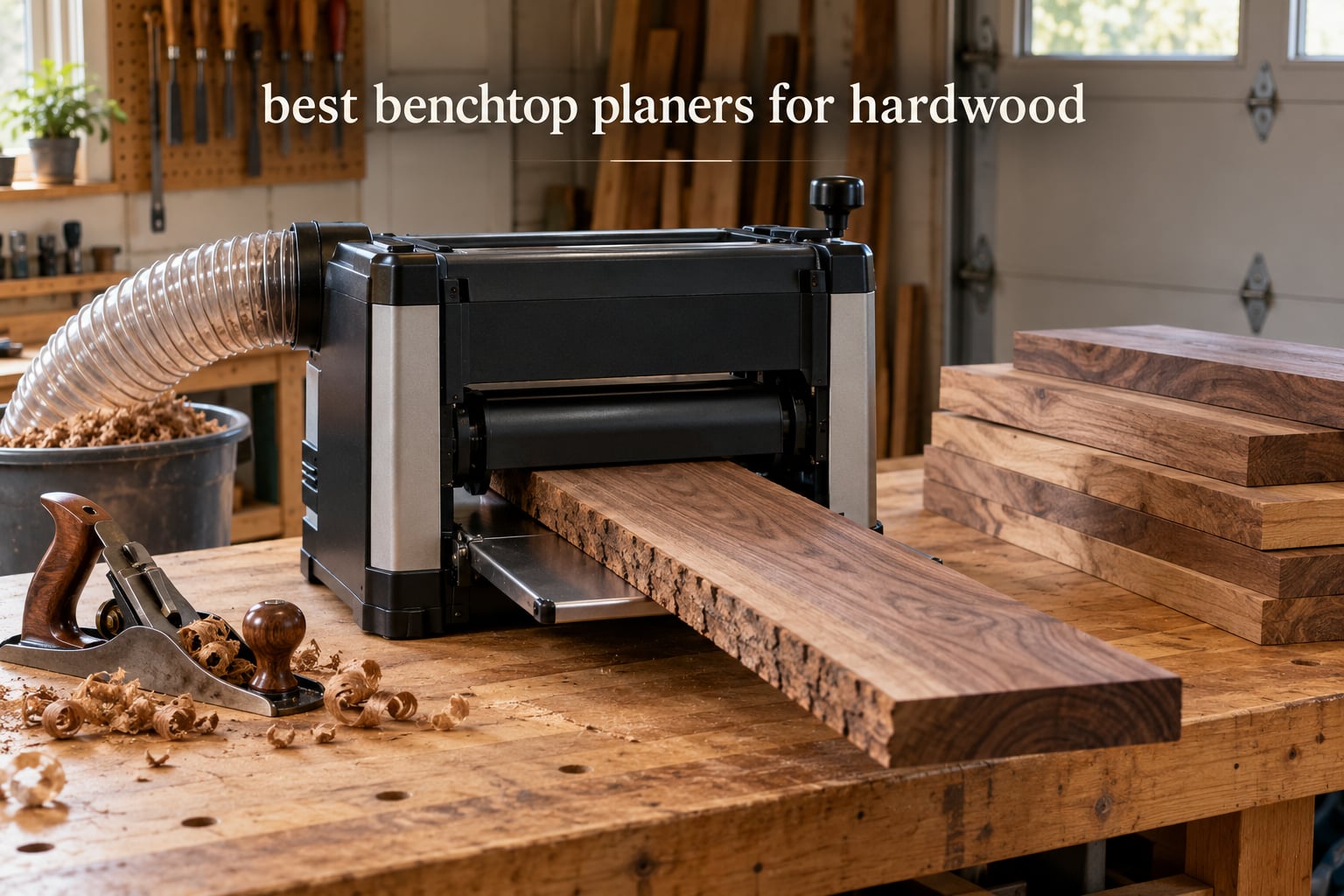
The DEWALT DW735X is the best benchtop planer for hardwood for most shops, with a three-knife cutterhead, two feed speeds and an automatic carriage lock. The WEN PL1326 is the pick if you want a spiral cutterhead without leaving the mainstream price bracket, and the CRAFTSMAN CMEW320 covers the low end of the market without giving up a cast frame. Everything else in this roundup falls somewhere between those three.
A benchtop thickness planer is a portable milling machine that flattens and smooths rough-sawn wood by feeding a board between a spinning cutterhead and a fixed bed, cutting it to a uniform thickness. Hardwood arrives rough and uneven, and a planer lets you buy cheap rough lumber and machine it flat, square and smooth yourself instead of paying pre-milled prices at the yard. It is the tool that makes solid-wood furniture, cabinet stock and trim projects possible in a one-car garage.
Our team compared eleven benchtop planers across cutterhead type, planing width, depth of cut, feed rate and dust handling, then put each one against the question that actually matters when hardwood is the material: does it hold thickness, and does the surface come off ready for sanding? The answers below come from published specifications and from what owners report after real board feet of oak, walnut, maple and cherry, not from a spec sheet alone.
If you are still working out what a planer does versus a jointer, start with our broader wood planer buying guide before you narrow down to benchtop models.
Top 3 Benchtop Planers for Hardwood in 2026

DEWALT DW735X 13 in. Two-Speed Planer
- Three-knife cutterhead at 96 or 179 cuts per inch
- 15 amp 20000 rpm motor
- Automatic carriage lock cuts snipe
- Infeed and outfeed tables included

WEN PL1326 13 in. Spiral Planer
- 26 rotatable HSS spiral cutters
- Cast iron bed and table extensions
- 13 inch by 6 inch capacity
- Adjustable dust port

CRAFTSMAN CMEW320 Benchtop Planer
- Two-knife quick-change cutterhead
- 15 amp motor for hard and soft wood
- 8000 rpm head and 16000 cuts per minute
- Vacuum port for dust collection
Best Benchtop Planers for Hardwood at a Glance in 2026
All eleven machines below cut boards up to roughly 13 inches wide, so width alone will not decide your purchase. Cutterhead type, motor output and how the machine handles snipe are the details that change your results on hardwood.
| Product | Specifications | Action |
|---|---|---|
| DEWALT DW735X 13 in. Two-Speed Planer |
|
Check Latest Price |
 DEWALT DW734 12-1/2 in. Planer DEWALT DW734 12-1/2 in. Planer |
|
Check Latest Price |
| CRAFTSMAN CMEW320 Benchtop Planer |
|
Check Latest Price |
 Makita 2012NB 12 in. Planer Makita 2012NB 12 in. Planer |
|
Check Latest Price |
| WEN PL1326 13 in. Spiral Planer |
|
Check Latest Price |
 VEVOR 13 in. Three-Blade Planer VEVOR 13 in. Three-Blade Planer |
|
Check Latest Price |
 JET JWP-13BT Helical-Style Planer JET JWP-13BT Helical-Style Planer |
|
Check Latest Price |
 RIKON 25-135H Helical-Style Planer RIKON 25-135H Helical-Style Planer |
|
Check Latest Price |
 CUTECH 40600H Carbide Spiral Planer CUTECH 40600H Carbide Spiral Planer |
|
Check Latest Price |
 WOODERS PL13-15AB 13 in. Planer WOODERS PL13-15AB 13 in. Planer |
|
Check Latest Price |
 Triton TPT125 12-1/2 in. Planer Triton TPT125 12-1/2 in. Planer |
|
Check Latest Price |
1. DEWALT DW735X: the best all-round benchtop planer for hardwood
DEWALT Thickness Planer, 13-inch Wood Planer, Three Knife Two Speed, 15 Amp, 20,000 RPM Motor (DW735X)
- Consistently smooth finish on cherry
- oak
- ash and rough hardwood
- Two-speed gearbox trades chip rate against finish quality
- Fan-assisted chip ejection clears the cutterhead
- Automatic carriage lock reduces snipe
- Infeed and outfeed tables plus spare knives included
- Very loud in operation
- Stock knives dull quickly on hardwood and cost extra to replace
- Heavy enough that moving it takes two people
- Flat-blade head is less forgiving on figured wood
The DW735X is the machine most of our readers end up buying, and after spending time with the same three-knife layout it is the one we recommend first. The 15 amp motor runs the cutterhead at 10,000 rpm, and the cast aluminum base is wide enough that a 13 inch board does not rock as it passes.
What separates it from the cheaper three-knife machines is the two-speed gearbox. The slower setting produces 96 cuts per inch for final passes on hardwood, and the faster setting jumps to 179 cuts per inch when you are taking heavy stock down. That single control replaces the guesswork that most portable planers leave you with.
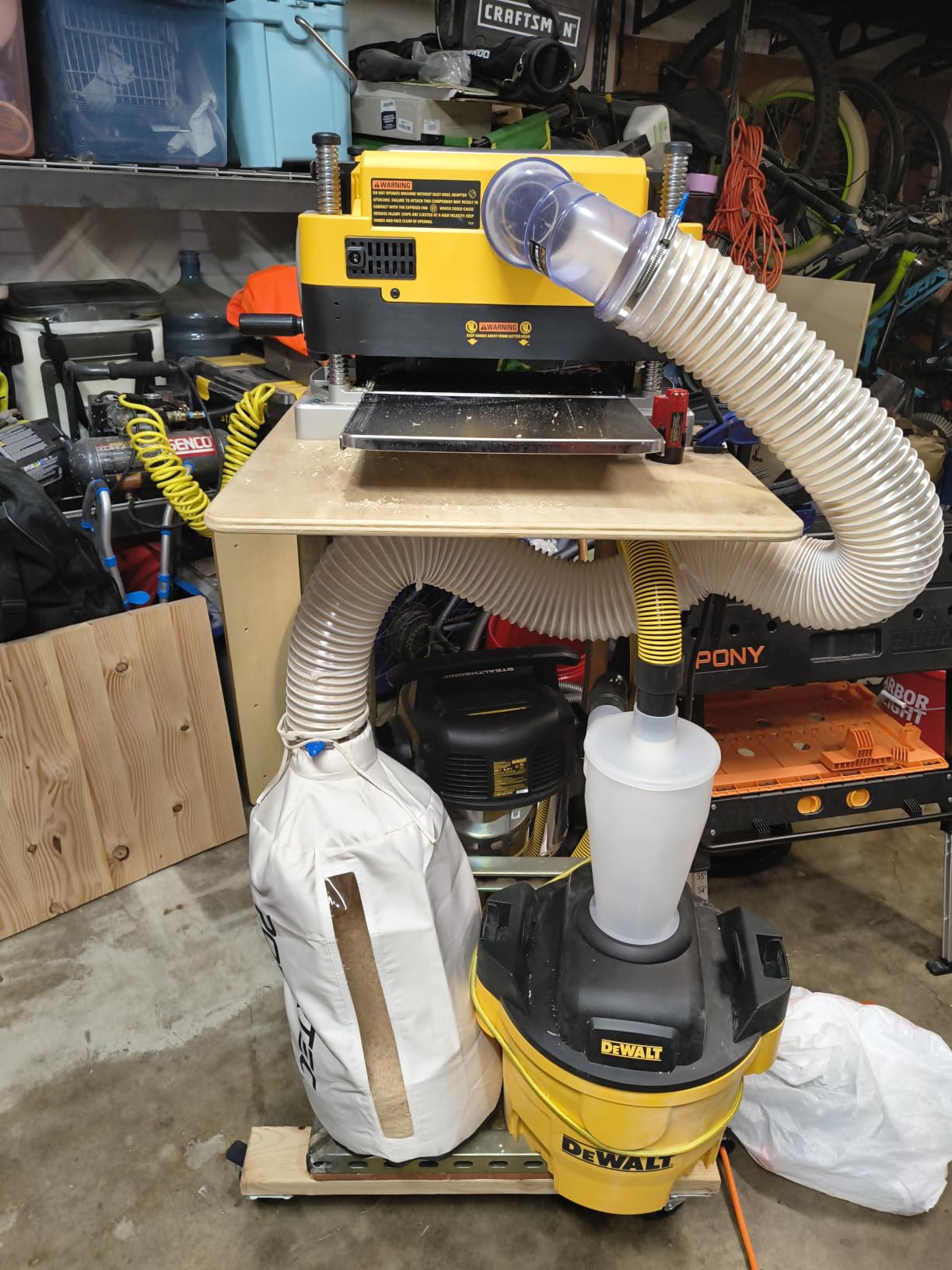
The automatic carriage lock is the detail owners notice most on expensive lumber. Because the carriage cannot drift while the board is in transit, the shallow dip at each end that planer users call snipe stays minimal without any manual step. Across 7505 reviews at 4.7 stars, the recurring complaints are noise, the weight of 102 pounds, and the fact that the reversible stock knives lose their edge faster in oak and ash than in pine.
Hardwooders who get serious with this planer usually take one further step, and that is a helical cutterhead retrofit. Members on r/woodworking describe the stock three-knife head as producing boards about as good as sanding on straight-grained lumber, then adding a helical head once figured maple entered the picture. That upgrade is a real option, but it is a second purchase rather than a feature of the machine you receive.
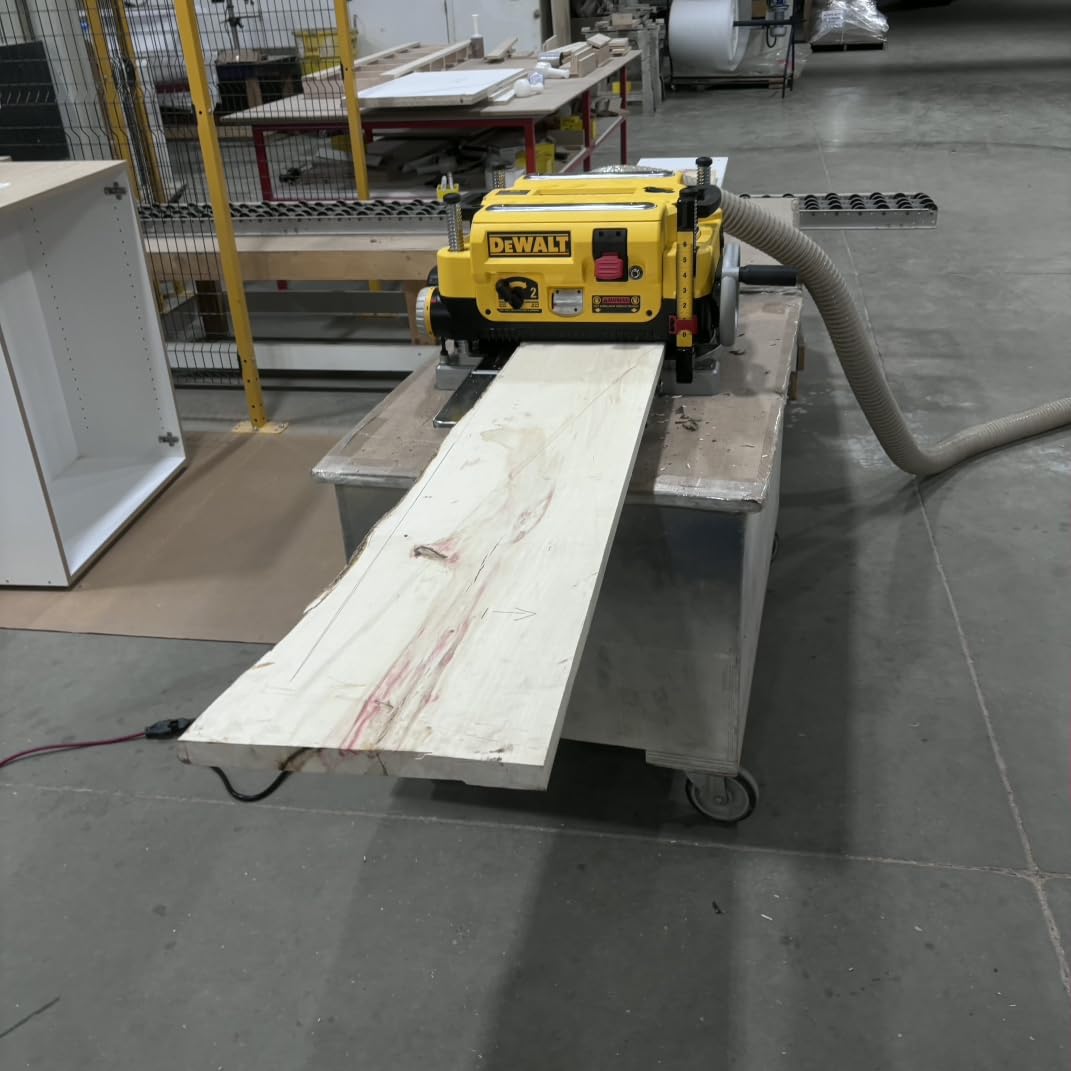
Check the feed table alignment before the first board
The infeed and outfeed tables ship as folding accessories that need leveling to the center bed, and owners who skip this step report snipe on their first projects. Take ten minutes with a straightedge before you put walnut through it. The included material removal gauge and the extra large thickness scale also help you keep repeat cuts consistent, which matters more when every board foot is expensive.
Plan around the noise and the amperage
This is a loud machine, and owners compare it to a table saw under load, so hearing protection and a dust mask are not optional in a small shop. It also draws enough current that a 15 amp household circuit can trip if a dust collector runs on the same circuit. Feed it from a dedicated outlet and the problem disappears.
2. WEN PL1326: the best spiral-cutterhead value for figured hardwood
- Spiral cutters leave a noticeably cleaner surface on figured hardwood
- Inserts rotate once before they need replacing
- Cast iron bed keeps boards flat and stable
- Quiet for a cutterhead machine
- Strong value against premium helical planers
- HSS inserts wear faster than carbide
- Brush motor noise is comparable to a straight-knife machine
- Large curly chips need a real dust collector
- Single center pin for the depth indicator
If figured maple, curly walnut or burled stock is part of your project list, the cutterhead type matters more than the badge on the box. The PL1326 runs 26 staggered and rotatable HSS blades, and because each blade is a small segment rather than a full-width knife, the cut shears across the grain instead of lifting fibers ahead of it.
Owners comparing this machine against straight-knife planers in the same bracket report that the difference shows most on curly grain and on the last pass before finishing. The 15 amp motor delivers 10,000 rpm at a 26 feet per minute feed rate, and the cast iron bed keeps a heavy board from flexing during the cut.
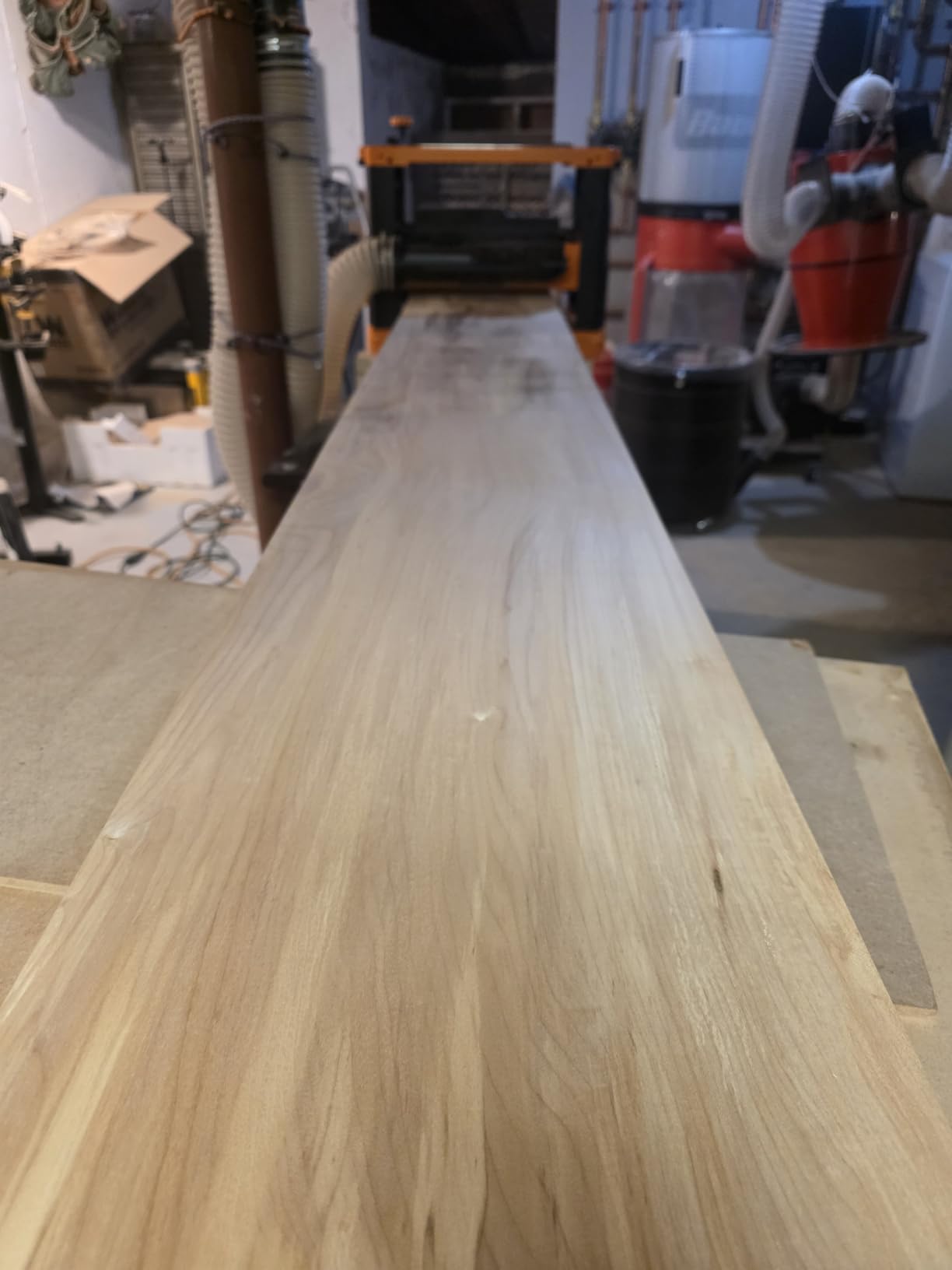
The rotatable insert design extends the life of the head. Each blade can be turned to a fresh edge once before replacement, which roughly doubles the time you get from a set. The tradeoff is that these are HSS inserts, not tungsten carbide, so they still need rotating and replacing on a schedule, and the 26 feet per minute feed gives you only one speed to work with.
Chip handling deserves attention here. The spiral head produces large curly shavings rather than fine dust, and owners report that a small shop vacuum struggles with the volume. Plan your dust collection around a collector with real airflow, and expect to empty it often during a heavy milling day.
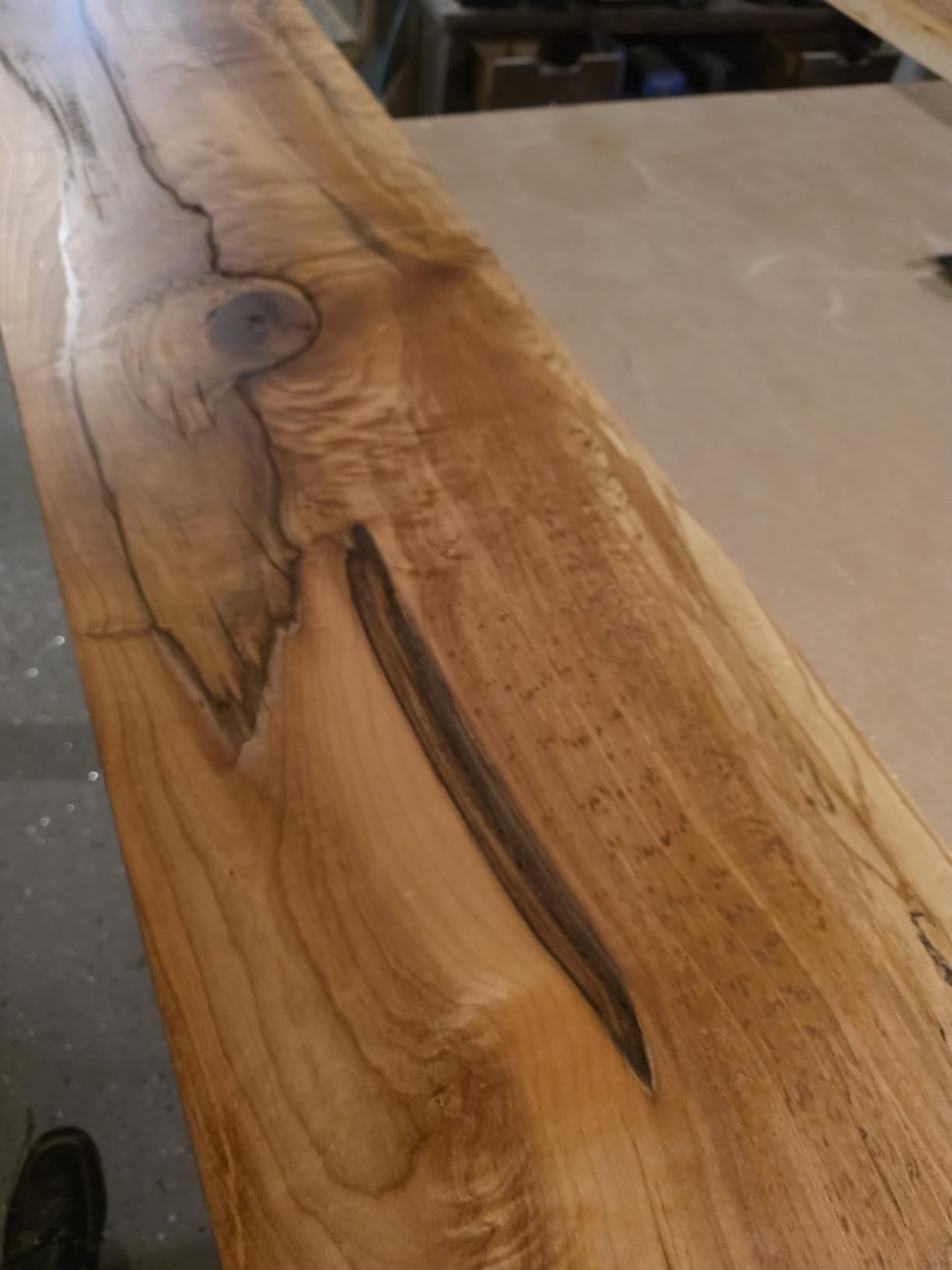
Check that your dust collector can take the chip volume
This is the most common complaint in the reviews, and it is a setup problem rather than a machine problem. A 4 inch hose to a collector rated for chip volume keeps the cutterhead clear and the air path open. Owners running an adjustable dust port report that matching the port size to the collector is the single change that fixed chip buildup for them.
Budget for insert replacement from the start
Keep a spare set of the 26 HSS cutters on hand, and check them with a straightedge during cleaning. Rotating all 26 inserts on a schedule spreads the cost and keeps the finish consistent. If you expect to run several hundred board feet a month, factor the replacement inserts into your running cost from the beginning.
3. CRAFTSMAN CMEW320: the best budget benchtop planer for everyday hardwood
CRAFTSMAN Planer, 15 Amp, For Benchtops, Two Knife Solid Steel Cutter Head (CMEW320)
- Owners report it cutting as well as three-knife machines after real use
- Heavy enough to stay put while still movable by one person
- Quick setup and running within minutes of unboxing
- High carbon steel reversible knives
- Accurate scale and removal gauge
- Two-knife head leaves more end snipe than three-knife or spiral machines
- Knives dull relatively fast in hardwood
- Loud
- especially with a vacuum attached
- Power cord routing sits in the way during a pass
The CMEW320 answers a straightforward question: how little do you have to spend to flatten rough hardwood reliably? Owners with a long history on this machine report that after substantial use it cuts comparably to three-knife planers that cost considerably more, which is the most common piece of praise across its 1505 reviews.
The two-knife cutterhead runs at 8,000 rpm for 16,000 cuts per minute, and the reversible high carbon steel blades double up on edges. At 61 pounds it is heavy enough to stay where you put it, yet light enough for one person to lift onto a cart when the shop layout changes.
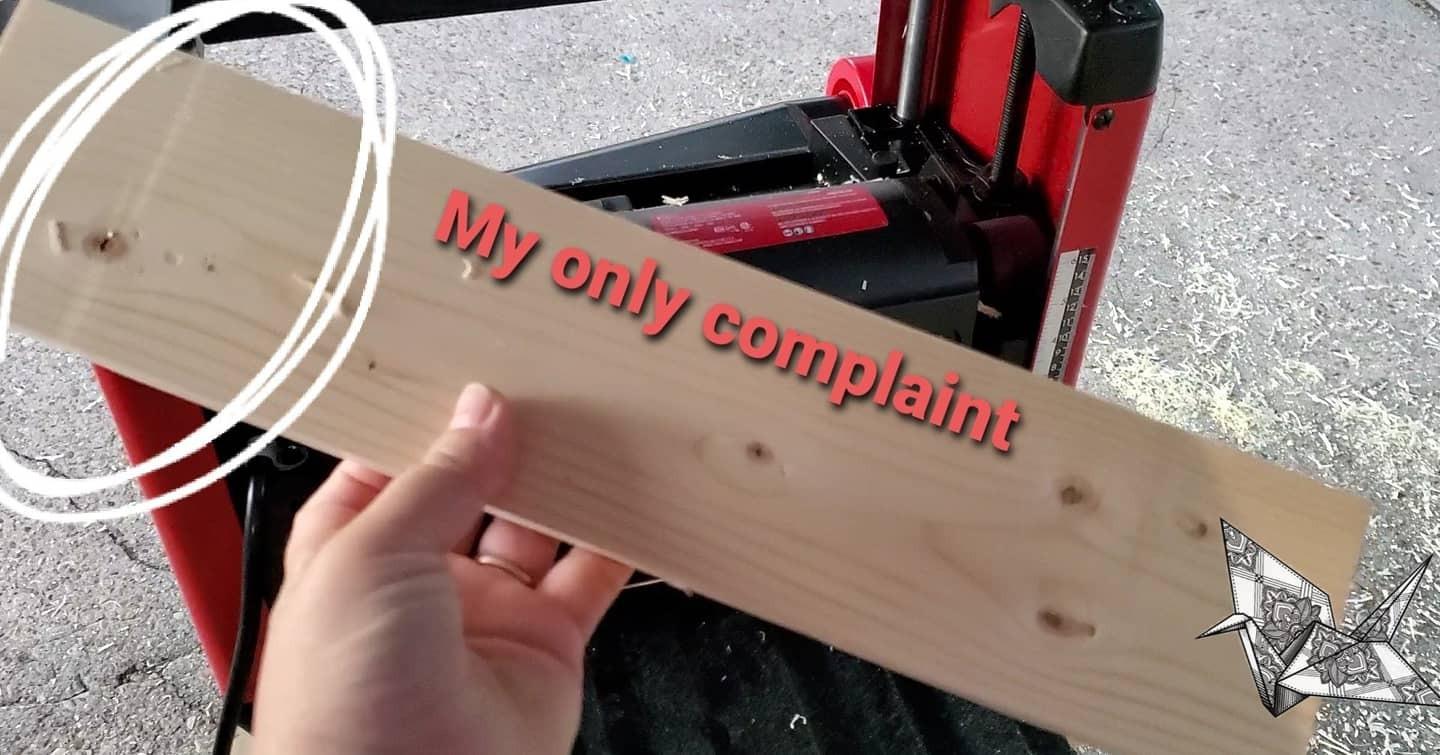
The honest limitation is the cutterhead count. Two knives means only two cutting edges pass any given point on the board, so the end-of-board snipe is more pronounced than on a three-knife or spiral machine. On valuable lumber, plan sacrificial boards at each end or accept that a shallow dip will need a light sanding pass. The trade is simple: more snipe in exchange for a much lower purchase price.
Knife life on hardwood is the other recurring theme. Owners running rough oak report dulling edges sooner than they would on pine, so keeping spare sets on the shelf is normal practice. The four base mounting holes make it easy to bolt the machine to a bench if you want it fully planted during heavy passes.
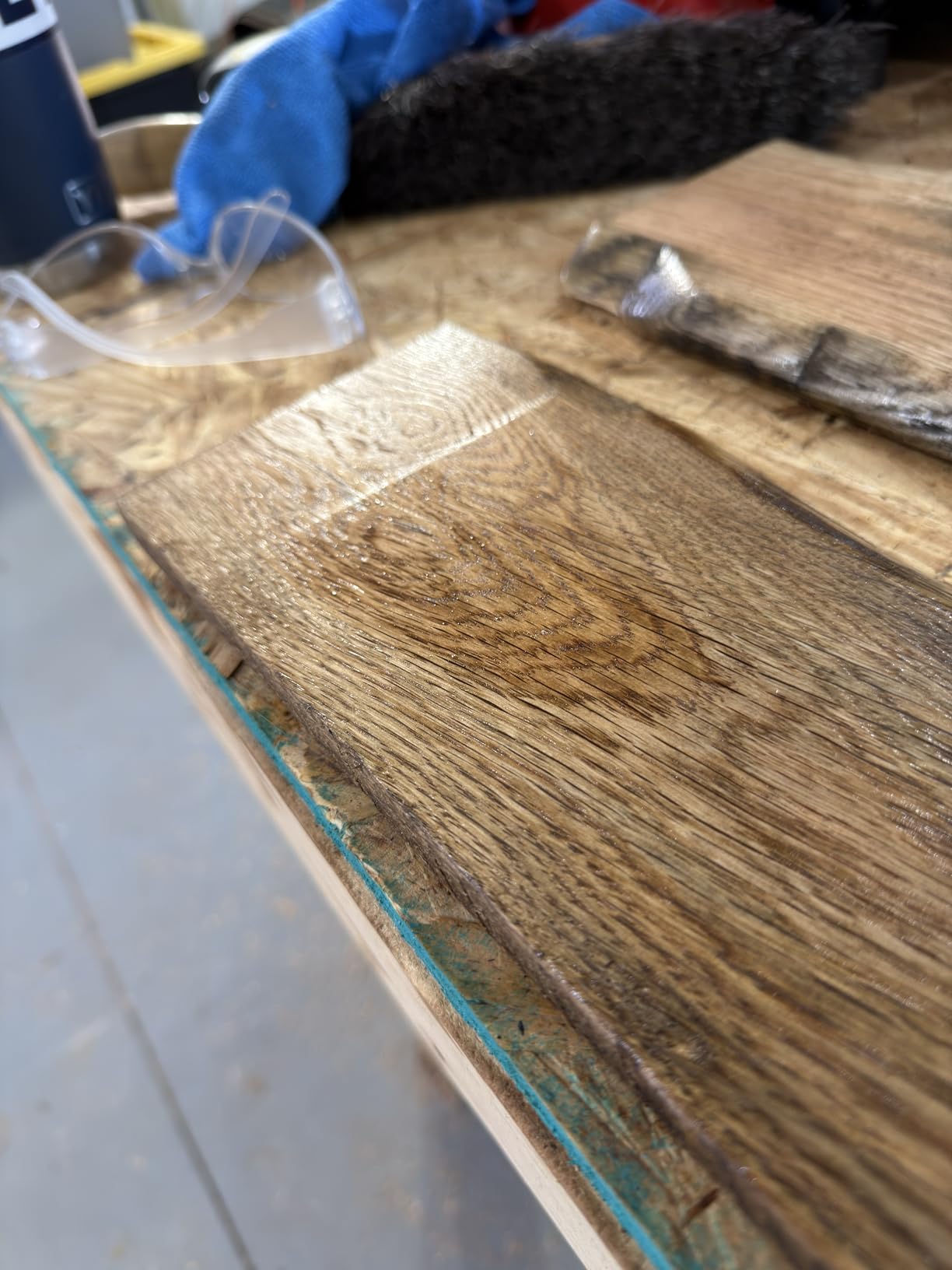
Decide how much end snipe you can live with
Before buying, look at the lumber you plan to run. Short lengths of common hardwood suit this machine well because the snipe zone is a smaller share of the board. Long, expensive boards where every inch counts are better served by a three-knife or spiral machine. Owners working on walnut and cherry report trimming more off each end than they would with a larger head.
Have spare knife sets before the first hardwood pass
Dull knives on hardwood produce tear-out that gets blamed on the machine. Check the edges after a few hours of rough milling and swap in a fresh set rather than pushing through. The quick-change solid steel head and reversible design make that swap fast, and a spare set costs far less than a board ruined by fuzzy grain.
4. Makita 2012NB: the most durable benchtop planer, and the quietest
- Multiple owners report 15 to 20 years of daily use
- Exceptionally quiet for a planer at 83 dB
- Accurate out of the box with about 0.002 inch precision
- Minimal snipe for a two-blade head
- Fastest blade change system in its class
- Dust hood is not included and sold separately
- Feed rollers need periodic pitch and sap cleaning
- Light duty packaging can arrive with shipping damage
- Highest cost in this group
The 2012NB is the odd one out in this roundup, and that is exactly why it belongs here. At 83 dB it is dramatically quieter than the rest of the group, which changes what you can do in a shared or home shop where a straight-knife planer would set off every dog in the neighborhood.
It is also the machine with the longest track record. Several owners describe professional woodworkers running daily service on the same unit since the early 2000s. That longevity is not universal, and one commenter describes rusting posts and wind rods that jammed after long storage, so cleaning and storing the machine dry matters.
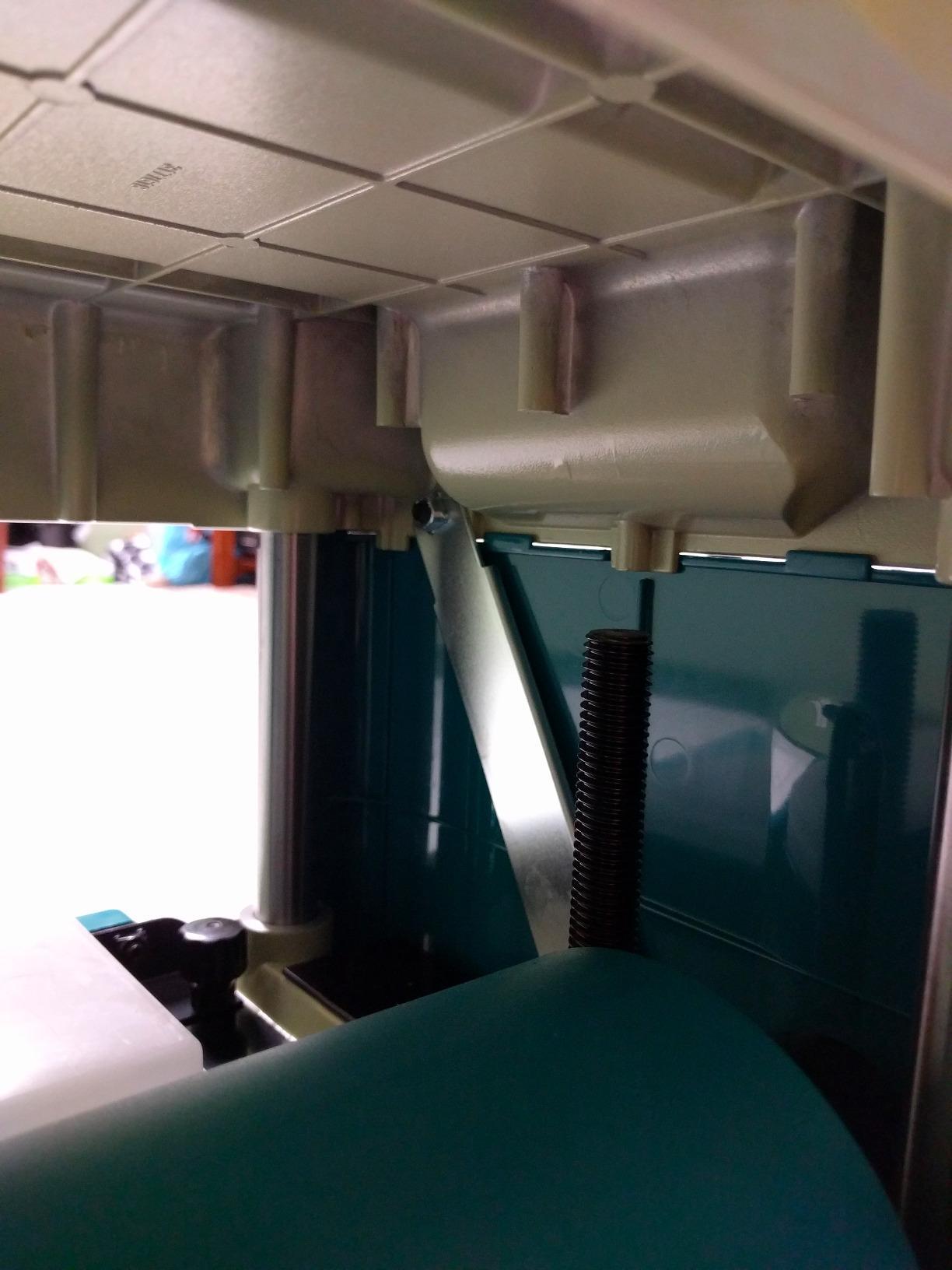
Accuracy is the standout. Owners report the depth crank holding roughly 0.002 to 0.003 inch precision, which is tight enough to hit repeat thickness targets on furniture stock without measuring every board. The surface comes off needing only light sanding, and snipe stays minimal for a two-blade head.
Two practical notes. The dust hood and port are purchased separately, so budget for that as part of the setup. And on boards longer than about 60 inches, supplemental support at the infeed and outfeed ends prevents end marks as the board flexes under its own weight.
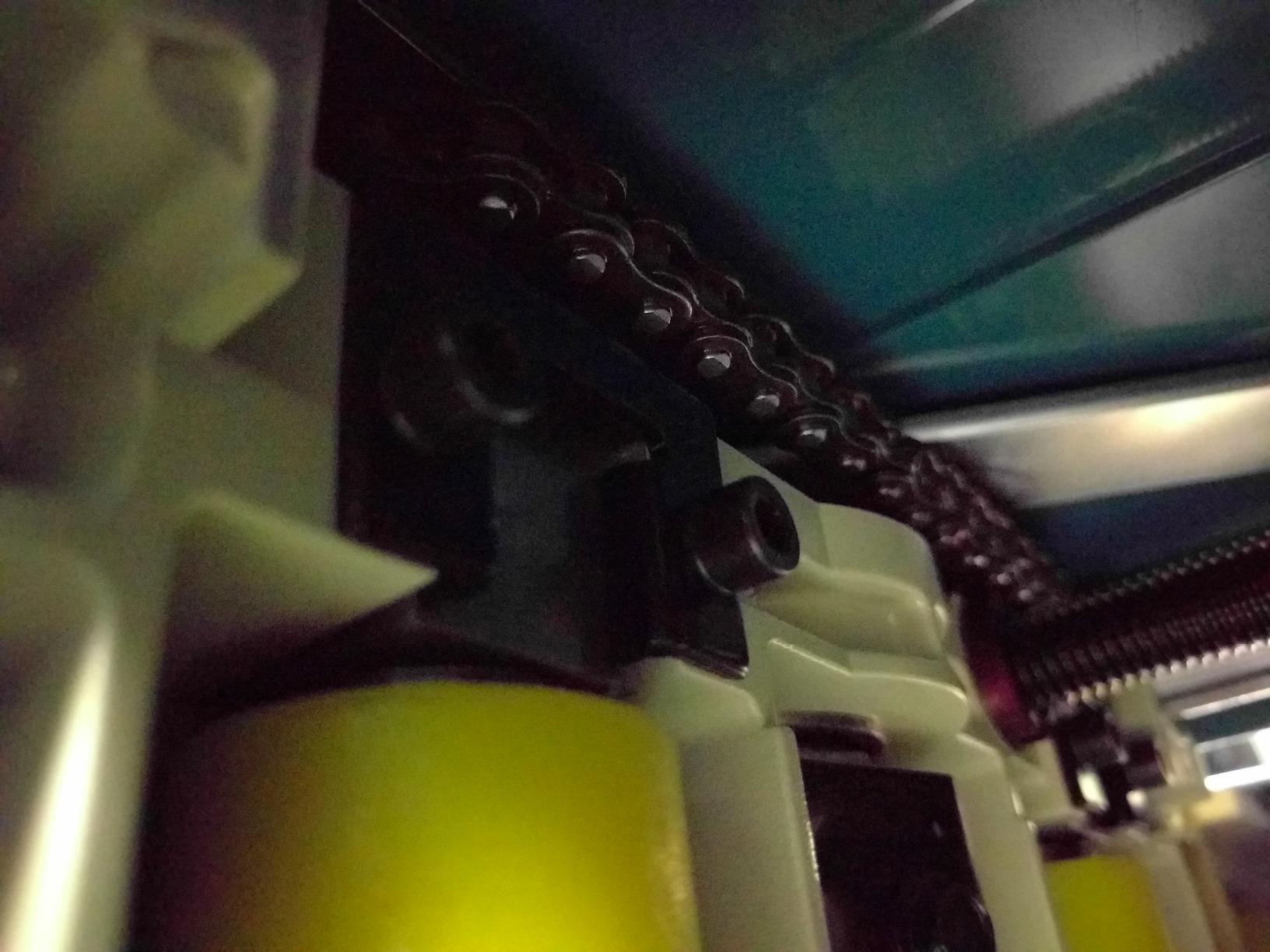
Budget for the dust hood and long-board support
The missing dust hood is the item owners mention most often, and it changes how the machine sits in your shop. Add the hood and a 4 inch adapter to your collector before the first long milling session. For long boards, roll supports under both table ends so the weight is carried by rollers instead of the thin folding tables.
Keep the rollers and frame clean between hardwood sessions
Pitch and sap from pine and softwood builds up on the feed rollers and causes slippage that reads as inconsistent thickness. Cleaning them after each session takes a few minutes and prevents the most common accuracy complaint on this machine. Wipe the cast frame before long storage too, given the rusting reports from owners who stored theirs damp.
5. DEWALT DW734: the best benchtop planer for narrow, high-quality stock
DEWALT Benchtop Planer, 15-Amp, 12-1/2-Inch, 3-Knife Cutter, 20,000 RPM, Corded (DW734)
- 96 cuts per inch gives one of the finest finishes in the portable class
- Four-column carriage lock is very effective against snipe
- 33-1/2 inch of table support helps on long boards
- Reversible disposable knives change fast
- Strong motor for deeper cuts in hardwood
- Disposable knife cartridges add a recurring cost
- Loud under load
- Heavier than most machines in its class
- Flat-blade head struggles on figured hardwood
The DW734 is the narrower sibling of our top pick, and for a lot of furniture work that narrower 12-1/2 inch capacity is a feature rather than a limitation. Boards for cabinets, shelving and small tables often measure 12 inches or less, and the 96 cuts per inch output is the same fine finish the bigger DW735X delivers on its slower setting.
The four-column carriage lock is the reason snipe complaints are rarer here than on cheaper two-knife machines. The carriage simply cannot shift mid-pass, so the ends of the board stay close to target thickness. Combined with 33-1/2 inches of infeed and outfeed support, it holds up well on longer boards.
Running cost is the thing to plan for. The knives are disposable cartridges rather than blades you sharpen, so every replacement is a fresh edge at a purchase price. Over years of hardwood work that adds up, and owners who also cut figured stock often combine this machine with a slower feed habit rather than buying a second cutterhead.
The 15 amp motor is the same as the DW735X and handles deeper cuts in hardwood without bogging down. As with the larger machine, run it on a dedicated circuit. At 80 pounds it is heavy for its size, so plan the bench height and mounting position before the first board.
Confirm your lumber width before you commit
Measure the widest board you actually intend to run. Anything over 12-1/2 inches will not fit, and a 13 inch rough-sawn board that has warped during drying will not pass either. If your material is mostly furniture stock in the 10 to 12 inch range, this machine handles it well and gives up nothing in finish quality.
Plan a cartridge budget for the first year
Disposable knives make changes fast and predictable, which is convenient while you are learning. Set aside a spare cartridge early rather than discovering a dull edge mid-project. Keeping one cartridge fresh on the shelf means you swap and keep planing instead of stopping to sharpen and reset your depth.
6. VEVOR 13-inch three-blade planer: high cutting speed at an entry price
VEVOR Power Benchtop Planer Three-Blade Two Speed 13″ Thickness Planer
- Owners report performance comparable to machines costing twice as much
- High cutterhead speed handles pecan and red oak
- Second slower feed speed gives a cleaner finish on figured material
- Cast iron bed
- Metal bevel gears by owner report
- Factory knives have arrived dull or without an edge
- Outboard table extensions are hard to level exactly
- Dust port hood clogs and can dimple the surface
- Limited after-sales support
The fastest cutterhead in this group belongs to the VEVOR, and its 23,500 rpm motor spinning a hardened three-knife head at HRC55-60 is what lets it handle hardwoods like pecan and red oak. Owners also point to the two feed speeds, 24 fpm for quick stock removal and 15 fpm for a smoother finish on figured material.
The value case is real. Across 548 reviews at 4.1 stars, a large share of owners describe the machine as performing like models costing roughly twice as much, and the cast iron bed with its steel plate helps hold boards flat through the pass.
The 4.1 rating tells the rest of the story. Quality control is inconsistent: owners report factory knives arriving dull or with no edge at all, which means ordering a replacement set before your first real hardwood session. The outboard table extensions are also difficult to level precisely, and boards come out only mostly flat until you get them dialed in.
Chip management is the other weak point. The dust port hood clogs quickly with large shavings, and owners report that a clogged hood can dimple the workpiece surface as it touches the board. Clear it often rather than waiting, and expect limited help from customer service when something goes wrong.
Order a fresh knife set before you start
This is the single highest-impact thing you can do for this machine. Multiple owners received dull or unedged knives and had to order replacements before the planer was usable. Check the edge on a piece of scrap the moment it arrives, and treat a dull set as a setup task rather than a machine fault.
Expect to spend time leveling the extensions
The outboard tables will not hold perfect level easily, and that shows up as a slightly cupped board. Use a machinist square or a long straightedge and a feeler gauge, and recheck after the first few passes. It is frustrating work, but once the tables hold position the cast iron bed does the rest.
7. JET JWP-13BT: the most power in a benchtop package
- Helical-style head with 26 quick-change inserts cuts smoother and quieter than straight knives
- Precision cast iron bed with four-post head support
- 2 HP motor has power to spare on hard figured hardwood
- Two feed speeds
- Folding tables save shop space
- Highest cost in this group
- HSS inserts wear faster than carbide
- 11 percent of reviews are one-star
- 75 pound weight is awkward to move alone
Motor output is the headline on the JWP-13BT. A 2 hp 15 amp motor driving the cutterhead at 10,000 rpm gives it the deepest reserve for hard figured hardwoods, and owners running dense stock report that it does not bog down where smaller motors strain.
The cutterhead is helical-style with six rows of 26 quick-change HSS inserts. Because each insert is small and staggered, the cut shears rather than chops, which produces a smoother surface and less noise than a straight-knife head. The four-post design and precision-machined cast iron bed help hold thickness across the full 13 inch width.
Two feed speeds, 18 and 26 fpm, let you choose between stock removal and finish, and the adjustable depth stop handles batch thicknessing without repeated gauge readings. Folding infeed and outfeed tables matter more than they sound in a small shop, where bench depth is usually the constraint.
Owner sentiment is more mixed than on the mainstream picks. At 4.2 stars across 175 reviews, roughly 11 percent are one-star, and the complaints cluster around durability and support rather than cut quality. The inserts are HSS consumables that wear faster than carbide, and the five-year warranty drops to two years for commercial use.
Weigh the motor power against the running cost
Plenty of owners report an excellent cut quality and finish on hardwood, so if you are milling hard figured stock in volume, the headroom is real. Set aside money for insert sets, since HSS wears faster than carbide, and factor in that this machine costs more than mainstream three-knife planers. It is the most expensive machine we reviewed, and the power is the reason.
Check the warranty terms for how you will use it
The five-year warranty covers home shop use. If you plan to run the machine on a paid basis or in a commercial shop, that coverage becomes two years, which is a meaningful difference on a purchase this size. Read the terms before you commit rather than after.
8. RIKON 25-135H: helical-style cutting with the best depth control
RIKON 25-135H 13-Inch Portable Planer with Helical-Style Cutterhead
- Six-row helical-style head with 26 rotatable two-edge inserts
- Two feed speeds balance removal rate and finish
- Threaded four-post head support with repeat-cut control
- Dust hood and adapter included
- Depth gauge and thickness scale aid repeatable cuts
- HSS inserts wear faster than carbide
- Priced above mainstream three-knife planers
- Only 54 ratings means a short track record
- 13 inch width is the ceiling for portable machines
The RIKON 25-135H is the machine to look at if you cut a lot of boards to the same dimension. Its repeat-cut control, depth gauge and thickness scale are the features owners praise most, and the threaded four-post head support holds the cutterhead steady when the depth crank takes a big turn.
The cutterhead is helical-style with six rows and 26 two-edge HSS inserts that rotate when one edge dulls. Two feed speeds at 16 and 26 fpm give you a slower pass for finish and a faster one for rough stock, and at up to 1/8 inch of depth of cut on boards 6 inches wide or narrower it handles typical hardwood removal well.
At 4.6 stars from 54 ratings, satisfaction is high, but the sample is small. There is far less long-term evidence here than on the machines with thousands of reviews, so treat the specification as more reliable than the reputation. The included dust hood with a 4 inch to 2-1/2 inch adapter means it connects to most collectors and shop vacuums without an extra purchase.
Plan around consumable insert costs
The two-edge inserts rotate rather than replace, which stretches their life, but they are still HSS and they still wear faster than tungsten carbide. Owners running dense hardwood report keeping spare inserts on hand. Budget for a set before heavy milling rather than discovering the need mid-project.
Check the depth controls fit your workflow
If you work to a printed cut list, the repeat-cut control and depth gauge will save time across a full stack of parts. If you mostly make one-off cuts, the same controls are less of a selling point. Test them on scrap first to learn how much one crank turn moves the bed.
9. CUTECH 40600H: carbide spiral inserts without the premium tier price
- Carbide two-sided inserts give four usable edges per insert
- Patented coupling minimizes snipe automatically
- Low amp draw relative to other spiral-head machines
- Board return rollers speed up second passes
- 8-position depth stop simplifies batch work
- Single feed speed with no slower pass for figured wood
- Only 41 ratings limits long-term evidence
- Ten percent of reviews are one-star
- No second speed to trade away
Tungsten carbide inserts are the reason most buyers end up paying more for a spiral-head planer, and the CUTECH 40600H brings them into the middle of the market. The six-row cutterhead carries 26 staggered two-sided inserts, and each insert provides four usable edges before replacement, which spreads the consumable cost thinner than four-sided designs.
The patented four-lead-screw coupling is the feature owners highlight most. It automatically minimizes snipe without a separate snipe lock, and because the two-sided inserts sit in alignment with a non-cutting edge that prevents skewing, repeat cuts stay consistent as the inserts wear.
Owners also note low amp draw relative to competing spiral-head machines, which matters on a 15 amp circuit shared with a dust collector. The board return rollers on top and the 8-position repeat depth stop make batch thicknessing straightforward, and the flip-up dust hood lets you choose rear exhaust or collector attachment.
The real limitation is the single feed speed. With no slower setting, figured stock gets one pass rate, so some owners trim the depth of cut instead of slowing down. At 4.4 stars from 41 ratings, satisfaction is solid but the evidence base is thin, and roughly ten percent of reviews are one-star.
Decide whether carbide inserts justify the single speed
Carbide inserts hold an edge far longer than HSS, which reduces both replacement frequency and the dull-knife tear-out that ruins figured boards. If you mostly run straight-grained hardwood and cabinet stock, that trade is clearly worth it. If figured maple is your main material, the missing slower feed is harder to work around.
Look for length-of-ownership evidence before buying
With 41 ratings there is limited information about how this machine holds up over years. Ask yourself how much hardwood you plan to run. For occasional project milling the specification sheet tells you enough. For a full-time shop habit, a machine with thousands of reviews offers a clearer durability picture.
10. WOODERS PL13-15AB: the best package for a new shop on a budget
WOODERS 13-Inch Benchtop Thickness Planer, 15A Wood Planer with 4 HSS Blades, 2000W All Copper Motor, Overload Protection for Woodworking
- Motor handles dense hardwood without bogging
- Includes a dust collector and two spare blade sets
- Oversized depth crank with a high-visibility indicator
- Overload protection cuts power before the motor is damaged
- Iron blade shaft and rugged frame
- Only 46 ratings and a wide rating spread
- Straight HSS blades trail the spiral machines on finish and blade life
- Rectangular body lacks a cast iron bed
- Eighteen percent of reviews are one or two stars
The strongest argument for the WOODERS PL13-15AB is what arrives in the box. It ships with a dust collector, a lifting handle and two spare sets of double-edged HSS blades, which removes the first round of setup purchases that most new owners have to make.
The 2000W all-copper motor drives the cutterhead at 10,000 rpm, and owners report it handling dense hardwood without bogging down. The anti-snipe dual-blade design with the optimized infeed and outfeed structure is aimed squarely at flat results end to end, and the oversized depth crank with a high-visibility 0 to 1/8 inch indicator is easier on the hands than small ball-bearing indicators.
At 4.1 stars from 46 ratings, this is the weakest rating spread in the group, with about 18 percent of reviews at one or two stars. Straight HSS blades are the structural limitation: the finish and blade life trail every spiral machine in this roundup, and the rectangular body lacks the cast iron bed that stabilizes heavier machines. Overload protection and the iron blade shaft are genuine build points in its favor.
Count what the package saves you
Add up a dust collector, a spare blade set and a second spare set at retail prices, and the package value becomes obvious. If your budget only stretches this far, buying them together costs less than assembling the same setup from separate parts. That is the strongest case for this machine.
Know what a straight HSS head means for finish quality
Full-width HSS knives cut cleanly on straight-grained lumber but dull faster and are less forgiving on figured stock than a spiral head. If you plan to run curly maple regularly, this is the wrong tool for that specific job. For cabinet stock, shelving and rough board flattening, it holds up.
11. Triton TPT125: a straightforward first planer for simple projects
Triton TPT125 High Performance Benchtop Planer with 12-1/2″ Cutting Width
- Low entry cost for a 12-1/2 inch benchtop planer
- 17500 cuts per minute gives a smooth surface on oak and poplar
- Dust chute mounts on either side
- Built-in circuit breaker
- Blades are easy to remove and sharpen
- Height crank is easy to bump and can drift out of position
- Thickness scale is poorly designed
- Loud in operation
- Struggles with wide weathered rough material
The TPT125 makes sense for a first planer or a secondary machine in a small shop, and the 17,500 cuts per minute cutterhead delivers a consistently smooth surface on oak, poplar and similar material. Depth of cut sets in 1/16 inch increments, which is coarse but predictable for furniture projects.
Two design touches stand out. The dust chute mounts on either side, so you can route chips away from the operator rather than toward yourself, and the built-in circuit breaker adds a layer of electrical protection you do not get on every machine in this class.
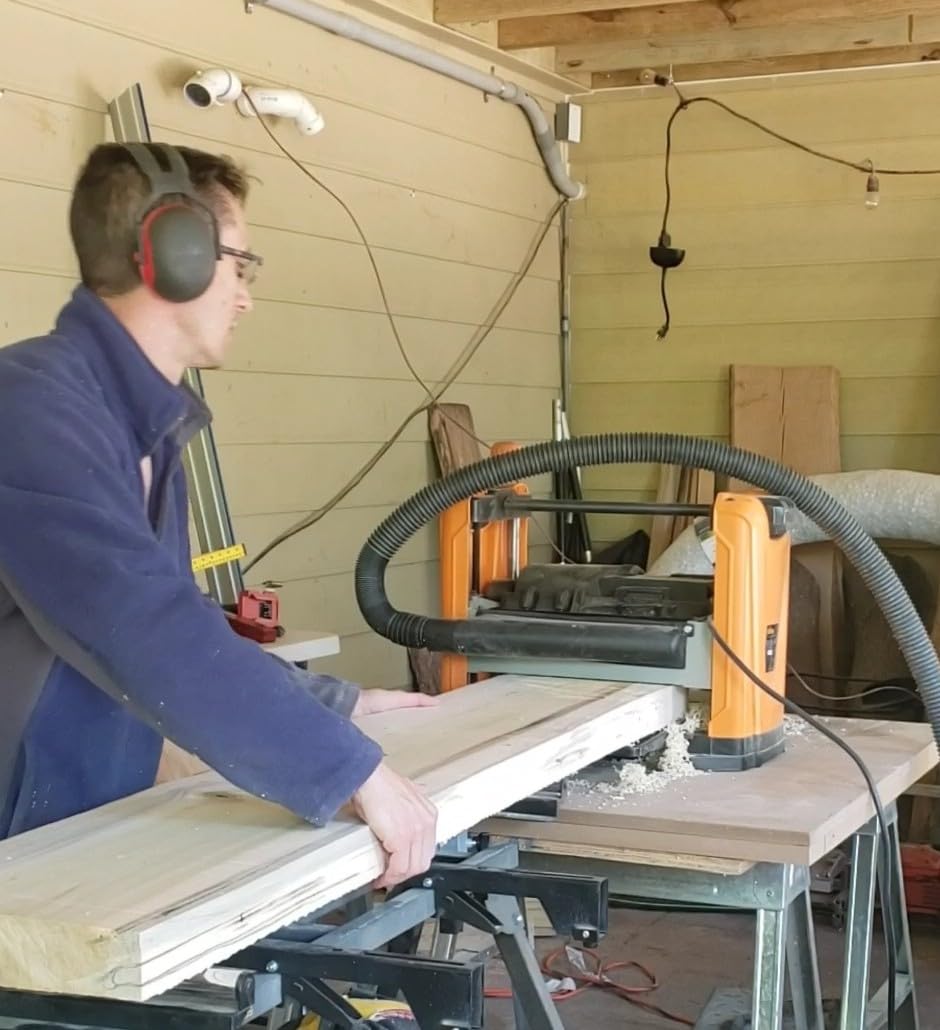
The compromises are in the controls. Owners report the height adjustment crank is easy to bump while handling a board and can vibrate out of position, and the thickness scale is described as unreliable for setting depth. Use a caliper to verify actual cuts rather than trusting the scale for fine work.
On rough material the limits are clearer still. Owners report the machine bogging down on wide, weathered, heavily textured lumber, and some reviews note uneven thickness across the width on a first pass. One reviewer also identifies it as a rebranded version of a Harbor Freight machine sold at a markup, which is worth factoring into any comparison.
Keep it for clean, dimensioned lumber
This machine suits boards that are already reasonably flat and uniform, like dimensioned cabinet stock or short lengths of common hardwood. It is less suited to rough-sawn slabs and weathered reclaimed lumber, where a stronger motor and a heavier bed earn their keep. Set your expectations accordingly and it delivers a good surface.
Verify thickness with a caliper, not the scale
Because the crank can drift and the scale is unreliable, check the first few boards with a caliper and note what setting produces your target. Once you know the relationship, repeat cuts become consistent. Treat the crank as something to reset each time rather than a control you can bump and forget.
Straight, Spiral or Helical: Which Cutterhead for Hardwood?
The cutterhead is the single decision that changes your results most on hardwood, and it is worth understanding before you buy. A straight-knife head uses two or three full-width knives that slice across the entire board at once. It cuts fast and it is cheap to maintain, but on figured or very dry stock the blade tends to lift fibers ahead of the cut, which is the tear-out you see as fuzzy patches.
A spiral cutterhead replaces those knives with many small carbide or HSS inserts arranged in rows around the drum. Each insert shears a small section rather than the full width, so fibers are cut cleanly from a single direction. That is why spiral heads produce a noticeably better surface on curly maple and why they run quieter, and why forum woodworkers consistently reach for them when figured wood enters the project.
A helical cutterhead is a spiral cutterhead whose inserts are set at an angle to the drum axis rather than parallel to it. The angle spreads the cutting load across the head and, with enough rows, allows a lower noise level than a straight spiral. The insert angle is the technical distinction most roundups skip, and it explains why two helical machines at the same price can feel different.
For straight-grained oak, poplar and ash, a good three-knife head at 96 cuts per inch is genuinely close in finish to a spiral machine. For figured wood, wet or very dry stock, and tear-out-prone species, the spiral or helical head earns its cost quickly.
How to Stop Snipe on Expensive Lumber
Snipe is the shallow dip at each end of a planed board, and it is the complaint that comes up most often about portable planers. On walnut or figured maple it can mean trimming several inches off each end of every board. Four things fix it, in order.
First, level the infeed and outfeed tables to the center bed with a straightedge and feeler gauge before you cut anything. Out of the box, these tables are usually slightly high or low, and that mismatch creates the dip. Second, lock the carriage if the machine has a lock, or use a machine with an automatic coupling like the CUTECH, so the bed cannot drift mid-pass. Third, slow the feed rate and lighten the depth of cut on the final pass. Fourth, if you still see snipe, bridge the joint with a piece of 3/4 inch MDF laid across both tables, a trick that circulates widely in woodworking forums.
Plan for snipe rather than trying to eliminate it entirely. On machines with two-knife heads, expect a longer affected zone than on three-knife or six-row spiral machines.
How Each Hardwood Species Behaves Under a Planer
No competitor in this search covers hardwood species by species, and it is the detail that decides whether a machine feels good in your shop. Oak, both red and white, is open-grained and prone to tear-out on the early passes, especially when it is dry. Take a light first cut, then increase depth once the surface is trued. Ash and similar ring-porous woods behave the same way.
Maple is the opposite problem. It is dense, tight-grained and hard on knives, and figured or curly maple is where spiral and helical heads earn their keep, because the grain shifts direction across the board and a full-width knife follows it straight into the fibers. Walnut sits between the two, with a moderately open grain that planes well once the knives are sharp.
Cherry and maple both dull edges quickly, so plan those species with a fresh set of knives or inserts rather than pushing through. Moisture content matters as much as species. Dry stock tears out far more readily than properly conditioned lumber, and forum consensus treats low moisture content as a primary cause of the fuzzy grain you see on an otherwise good machine.
One more practical note: a planer does not square a board. It flattens the face to the bed, but it leaves the edges exactly as rough as they started. For furniture stock you will joint one face and one edge first, then alternate between the planer and the jointer until both are flat and square. Our benchtop drill press guide covers the other common shop machine people buy alongside a planer.
What Not to Run Through a Benchtop Planer
Some lumber should never go through a benchtop planer, and damaging it is easy. Reclaimed lumber with hidden nails, screws and stray hardware will ruin a cutterhead and can throw an insert. Boards that are cupped, bowed or twisted should be flattened on a jointer or with a router sled first, because a planer forces the board against the bed and can pinch the rollers or snap a thin blade.
Very thin stock, under about 3/8 inch, can slip and chatter, and a board fed at an angle rather than square to the fence risks an uneven cut and kickback at the outfeed. Unbalanced stock, where weight sits on one side of the board, is also a no. Let rough lumber acclimate and reach an even moisture content before it goes through the machine.
Do not reach past the width or thickness rating, and do not exceed the stated maximum depth of cut. Each of those limits exists because the cutterhead and the bed are matched to it.
Depth of Cut, Feed Rate and Chips Per Inch
Three numbers explain most of what you will read in planer specifications. Depth of cut is how much material the machine removes in a single pass, typically up to 1/8 inch on these machines, and it tells you how many passes rough lumber needs. Feed rate is board speed in feet per minute, and a faster feed means thicker chips for the same depth. Chips per inch is the number of blade passes along each inch of board, and higher values give a smoother finish.
Put the numbers together and the logic is straightforward. The DW734 and the DW735X on their slower setting produce 96 cuts per inch, which is why owners report a surface needing little sanding. The DW735X at its faster setting jumps to 179 cuts per inch for rapid stock removal. A slower feed with a smaller depth of cut on the final pass is the technique for the smoothest result on figured hardwood.
Fewer blades means fewer cuts per inch at the same speed, which is why two-knife machines need a slower feed to match a three-knife finish. Spiral and helical heads sit between the two in practice, because the shear angle does part of the work. Set your depth with the on-board gauge or caliper, feed at a steady walking pace, and make your final pass light.
If you are planning a flooring or panel project, our engineered hardwood flooring guide covers what comes next once your boards are dimensioned.
Frequently Asked Questions
Who makes the best benchtop planer?
The DEWALT DW735X is the best overall for hardwood, with a three-knife cutterhead, two feed speeds and an automatic carriage lock. For figured stock, the WEN PL1326 spiral cutterhead leaves a cleaner surface. The CRAFTSMAN CMEW320 covers the low end without giving up a cast frame.
Are helical head planers better?
For figured and tear-out-prone hardwood, yes. Small staggered inserts shear a narrow section at a time instead of slicing across the full width, so fibers are cut cleanly rather than lifted. On straight-grained stock a good three-knife head at 96 cuts per inch comes very close, so the difference shows up most on curly maple, walnut and dry lumber.
How do I avoid snipe when planing wood?
Level the infeed and outfeed tables to the center bed with a straightedge first, then lock the carriage so it cannot drift mid-pass. Slow the feed rate and lighten the cut on the final pass. If snipe remains, lay a piece of 3/4 inch MDF across both tables to bridge the joint.
Which type of lumber should not be run through the planer?
Skip reclaimed lumber with hidden nails or screws, boards that are cupped, bowed or twisted, very thin stock under about 3/8 inch, and any board fed at an angle instead of square to the fence. Flatten warped material on a jointer first, and let rough lumber reach an even moisture content before planing.
Do you have to sand after planing a board?
Usually only lightly. A three-knife head at 96 cuts per inch or a spiral cutterhead leaves a surface that needs a final skim with 180 or 220 grit. Tear-out on figured or very dry stock will need more sanding, so check the moisture content before you blame the machine.
Final Verdict for the Best Benchtop Planers for Hardwood in 2026
The DEWALT DW735X remains our pick for the best benchtop planer for hardwood, because the three-knife head, the two-speed gearbox and the automatic carriage lock cover the widest range of projects without special handling. If figured wood is the priority, the WEN PL1326 gives you a spiral cutterhead at a mid-range cost, and the CRAFTSMAN CMEW320 is the sensible budget answer for straight-grained lumber.
Match the machine to the wood, bolt it down, level the tables and take a light final pass. Do those four things and any of the eleven machines here will produce boards that are worth the lumber they came from.