
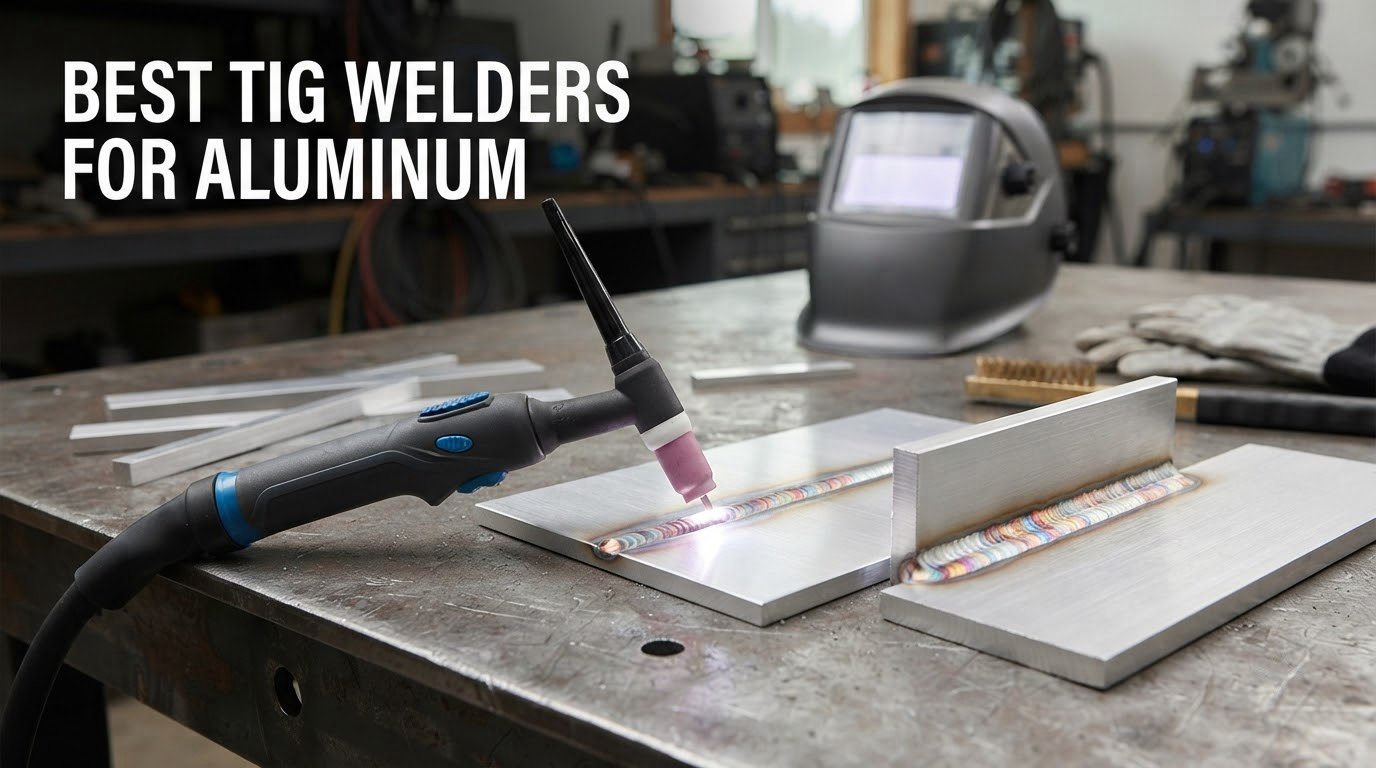
Aluminum is the metal that exposes a bad TIG welder in about ten minutes. It forms an oxide layer on contact with air that a straight DC arc simply cannot break through, so a machine sold as a TIG welder that only pushes DC will spit a molten blob and refuse to wet out no matter how good its steel beads look.
That is why every machine in this guide has to deliver real alternating current, confirmed against the manufacturer spec sheet rather than the listing title. We looked at twelve AC/DC TIG welders for 2026 and filtered out the DC-only budget units that dominate roundups on this topic. If you are still narrowing the field, our best welders for home use guide covers the broader machine shortlist.
Here is the short version of how AC solves the problem. An AC TIG arc reverses polarity many times per second. On the electrode-positive half cycle the tungsten scrubs the oxide layer off the aluminum, and on the electrode-negative half cycle the arc drives heat into the metal and into the filler rod. The ratio between those two halves is called AC balance, and how fast the machine switches between them is called AC frequency. A machine that lets you tune both is a machine that can weld aluminum. A machine that does not is a paperweight with a gas line.
Aluminum also moves heat roughly five times faster than steel, which is why the low end of the amperage range matters more than the peak number on the box. Two machines rated at 200 amps can behave completely differently on 0.040 inch sheet if one bottoms out at 10 amps and the other starts at 5.
Table of Contents
Top 3 Picks for the Best TIG Welders for Aluminum
Our overall pick is the PRIMEWELD TIG225X, which pairs 225 amps of AC/DC output with adjustable AC frequency, 200 Hz pulse, a genuine CK Worldwide Superflex 17 torch, and the largest review base of any machine we evaluated. The best value option is the Weldpro 200A 5-in-1, which gives you fully adjustable AC balance, frequency, and pulse on a dual-voltage machine that comes with a foot pedal. The third slot goes to the AHP AlphaTig 203Xi, which owners run as a main-shop machine thanks to its duty cycle around 155 amps and a stick arc most budget imports cannot match.

PRIMEWELD TIG225X 225A AC/DC Pulse
- Adjustable AC frequency
- 200 Hz pulse
- 1/4 inch aluminum
- CK Superflex 17 torch

Weldpro 200A 5-in-1 AC/DC Pulse
- Adjustable AC balance
- 0.5-200 Hz pulse
- 110/220V auto switch
- foot pedal included
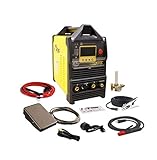
AHP AlphaTig 203Xi AC/DC Pulse
- 100 percent duty cycle near 155 amps
- 1/4 inch aluminum
- 110/220V with adapter
- three year warranty
The Best TIG Welders for Aluminum in 2026 Compared
All twelve machines below are verified AC/DC from their spec sheets. Use this table to narrow the field by amperage class, pulse capability, and the aluminum thickness each one is rated for.
| Product | Specifications | Action |
|---|---|---|
| PRIMEWELD TIG225X 225A AC/DC Pulse TIG |
|
Check Latest Price |
| Weldpro 200A 5-in-1 AC/DC Pulse TIG |
|
Check Latest Price |
| AHP AlphaTig 203Xi AC/DC Pulse TIG |
|
Check Latest Price |
 Lincoln Electric Square Wave TIG 200 Lincoln Electric Square Wave TIG 200 |
|
Check Latest Price |
 ARCCAPTAIN 200A 7-in-1 AC/DC TIG ARCCAPTAIN 200A 7-in-1 AC/DC TIG |
|
Check Latest Price |
 LOTOS TIG200ACDC 200A Square Wave TIG LOTOS TIG200ACDC 200A Square Wave TIG |
|
Check Latest Price |
 Sunstac TIG-250 TP 250A AC/DC Pulse Sunstac TIG-250 TP 250A AC/DC Pulse |
|
Check Latest Price |
 Everlast PowerTIG 200DV 200A Everlast PowerTIG 200DV 200A |
|
Check Latest Price |
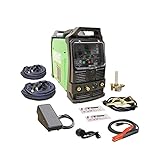 Everlast PowerTIG 210EXT 210A Everlast PowerTIG 210EXT 210A |
|
Check Latest Price |
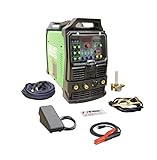 Everlast PowerTIG 250EX 250A Everlast PowerTIG 250EX 250A |
|
Check Latest Price |
 TOOLIOM 200A 6-in-1 AC/DC TIG TOOLIOM 200A 6-in-1 AC/DC TIG |
|
Check Latest Price |
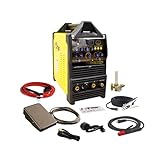 AHP AlphaTig 225Xi 225A AC/DC Pulse AHP AlphaTig 225Xi 225A AC/DC Pulse |
|
Check Latest Price |
1. PRIMEWELD TIG225X: The Best All-Round AC/DC TIG Welder for Aluminum
PRIMEWELD TIG225X 225 Amp IGBT AC DC Tig/Stick Welder with Pulse CK17 Flex Torch and Cable
- AC frequency and balance adjustments comparable to far costlier machines
- CK Worldwide Superflex 17 torch with 35-70 DINSE connector included
- Handles 1/4 inch aluminum and 3/8 inch mild steel
- 57 page English manual plus responsive after-sales support
- Plain knobs instead of nested digital menus
- Dial and setting labels are hard to read in low light
- Power switch is mounted on the rear panel
- Cooling fans run loudly and continuously
This is the machine we keep coming back to. Owners consistently describe a stable, clean AC arc on aluminum and steady DC penetration on mild steel, and the 1426 ratings behind it give you the deepest ownership history in the group. My own draw toward it is the adjustability, which is where most budget machines quietly stop.
For aluminum that means the cleaning versus penetration balance is tunable, and the AC frequency control lets you narrow the arc cone for thin material or widen it for plate. The pulse function runs to 200 Hz, which is enough to keep heat in check on sheet metal without changing filler technique.
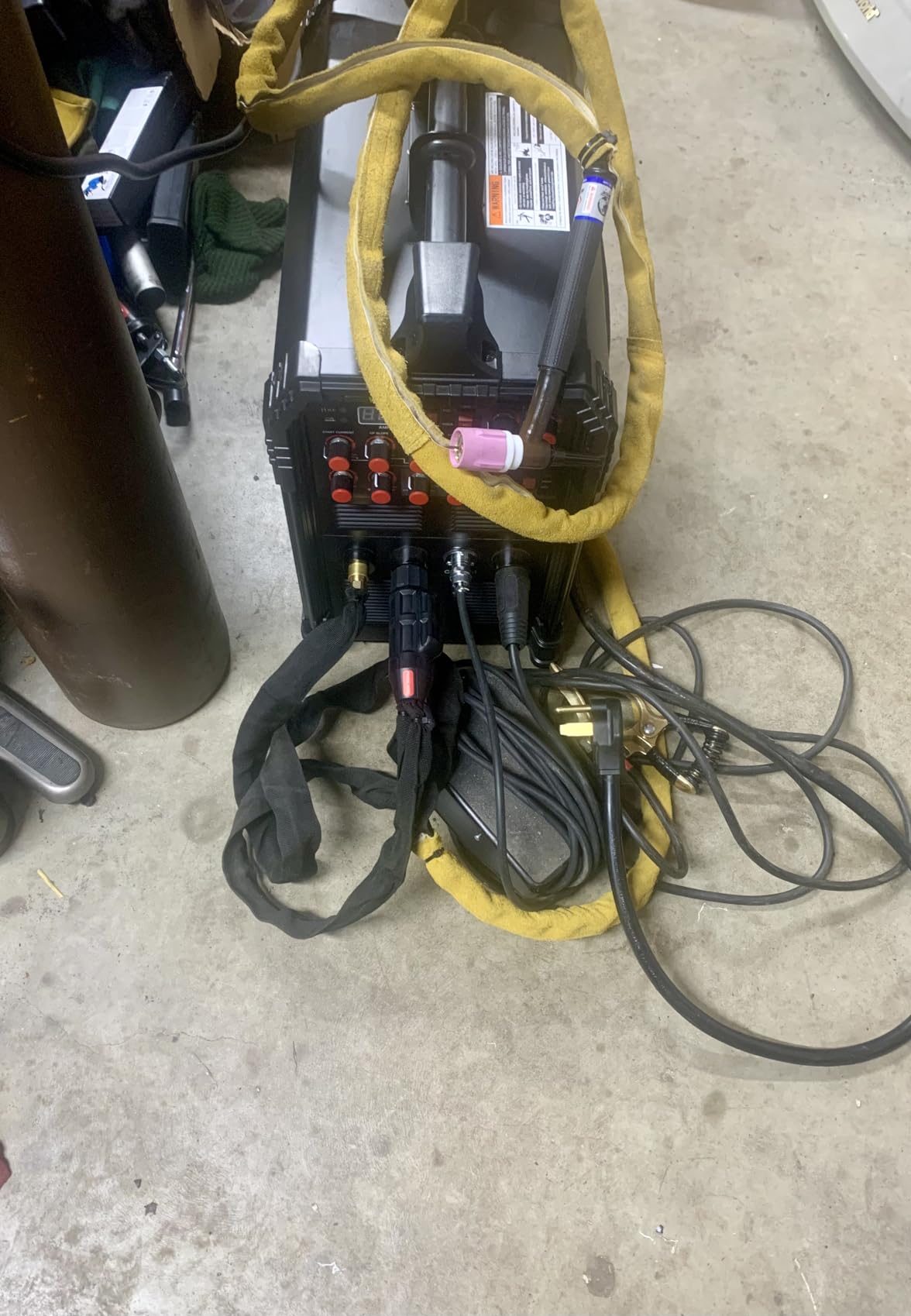
The CK Worldwide Superflex 17 torch is the quiet hero here. It is the same style of torch a lot of professional shops run, and because it uses 35-70 DINSE connectors you are not locked into one brand of consumables. That matters more over a few years of aluminum work than any single menu feature.
Reviewers flag that the machine welds 1/4 inch aluminum and 3/8 inch mild steel, and that 7018 and 6013 electrodes both strike easily on the stick side. The IGBT inverter with pulse width modulation is what keeps the arc consistent once you get into a long pass on a trailer frame.
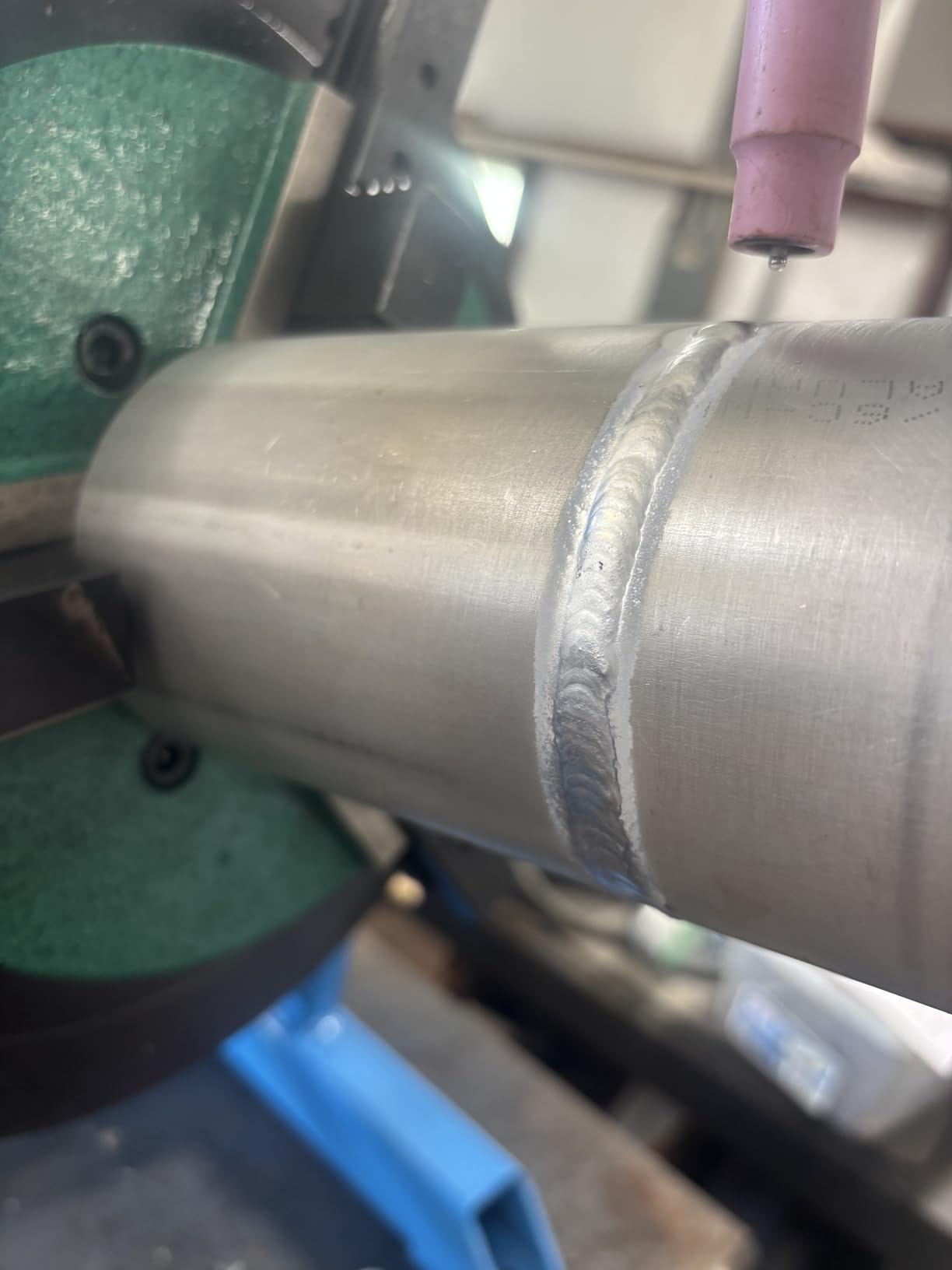
Why this one handles aluminum better than its rivals
Adjustable AC frequency is the feature most often missing from cheaper imports, and it is what lets you dial the bead profile in for a given alloy rather than living with one compromise setting. Paired with a 200 Hz pulse and simple knobs, you can change jobs without relearning a menu.
The included argon regulator is a weak spot, with some owners reporting a pinched O ring and a poorly machined fitting. Budget for a replacement regulator before your first aluminum project rather than troubleshooting a leak at half past nine at night.
When you should pick something else
If your work is mostly thin sheet and you want the lightest chassis you can carry, the TOOLIOM at 27.9 lb is easier on your back. If you need water-cooled torch capability for long production passes, the Everlast PowerTIG 250EX ships with that torch in the box.
Noisy fans are a genuine annoyance in a quiet garage, and the rear-mounted power switch means you walk around the machine every time. Neither is deal-breaking, but if you weld late at night you will notice both.
2. Weldpro 200A 5-in-1: The Best Value AC/DC TIG Welder With Full Pulse Control
- Fully adjustable AC balance and frequency
- good for aluminum and magnesium
- 0.5-200 Hz pulse with peak amps plus upslope and downslope
- Automatic 110V and 220V switching with carry handle
- Complete kit covers torch foot pedal ground clamp and gas hose
- 61.8 lb body is heavy to move around a site
- Menu-driven digital controls are slower to adjust than analog knobs
If you want the widest control surface per dollar, this is the one. Fully adjustable AC balance, AC frequency, and pulse parameters outclass several machines priced well above it, and 836 buyers have already confirmed the results on aluminum and magnesium.
The pulse range of 0.5 to 200 Hz with adjustable peak current and both upslope and downslope is the spec that makes it useful beyond simple bead welding. It is how you tame heat on thin aluminum without sacrificing deposition rate on plate.
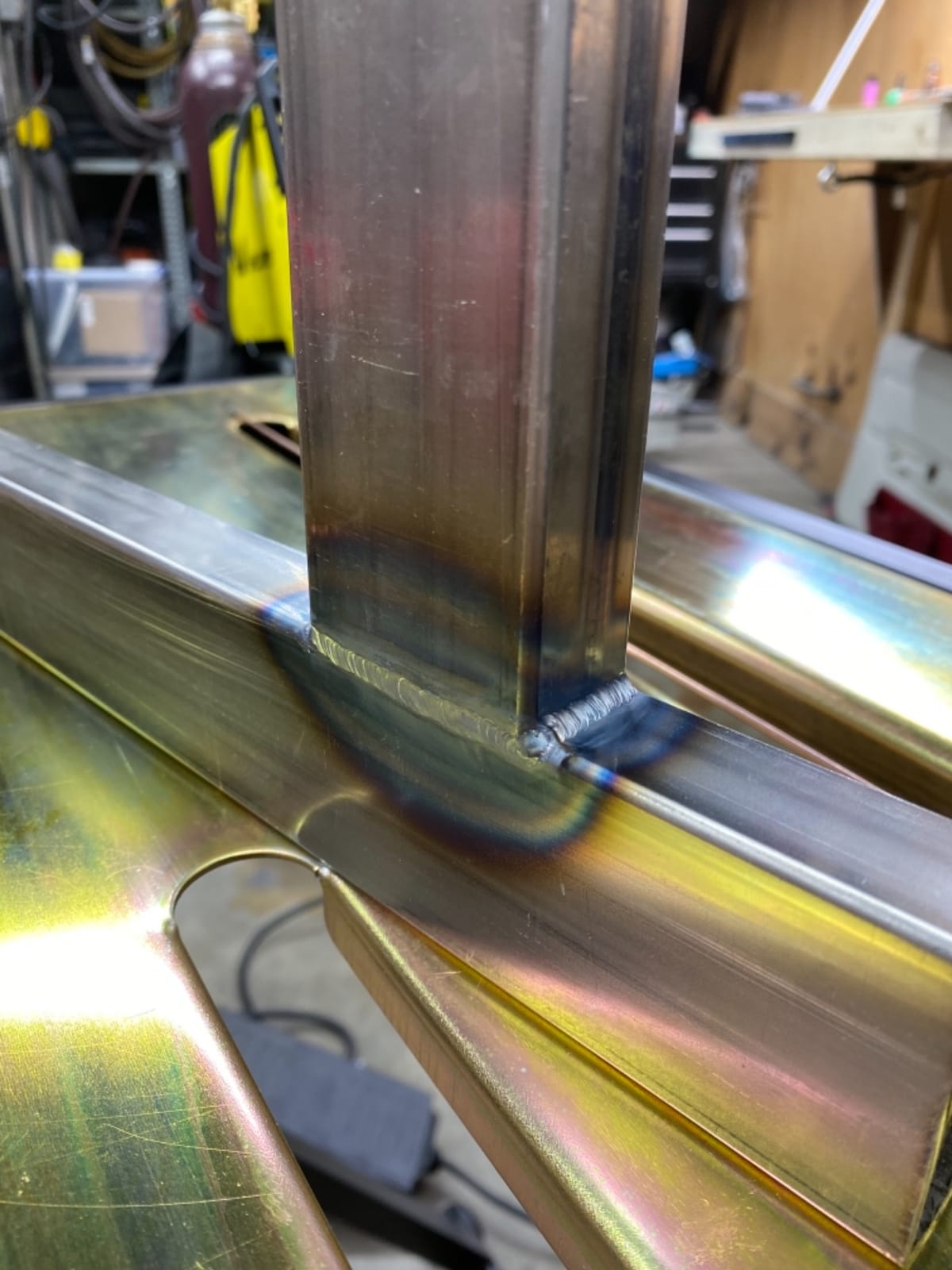
At 40 percent duty cycle at full 200A output, it is honest about what it can sustain. Overheat, over-current, over-voltage, and under-voltage protection are all present, which matters when you are pushing a machine hard on a long bead and the input voltage dips.
The high-contrast LED display is a genuine upgrade in the shop, where glare off metal and a dark garage both make small screens unreadable. 2T and 4T trigger modes let you set the machine to latch on for long continuous welds instead of riding the pedal.
What makes it the value pick here
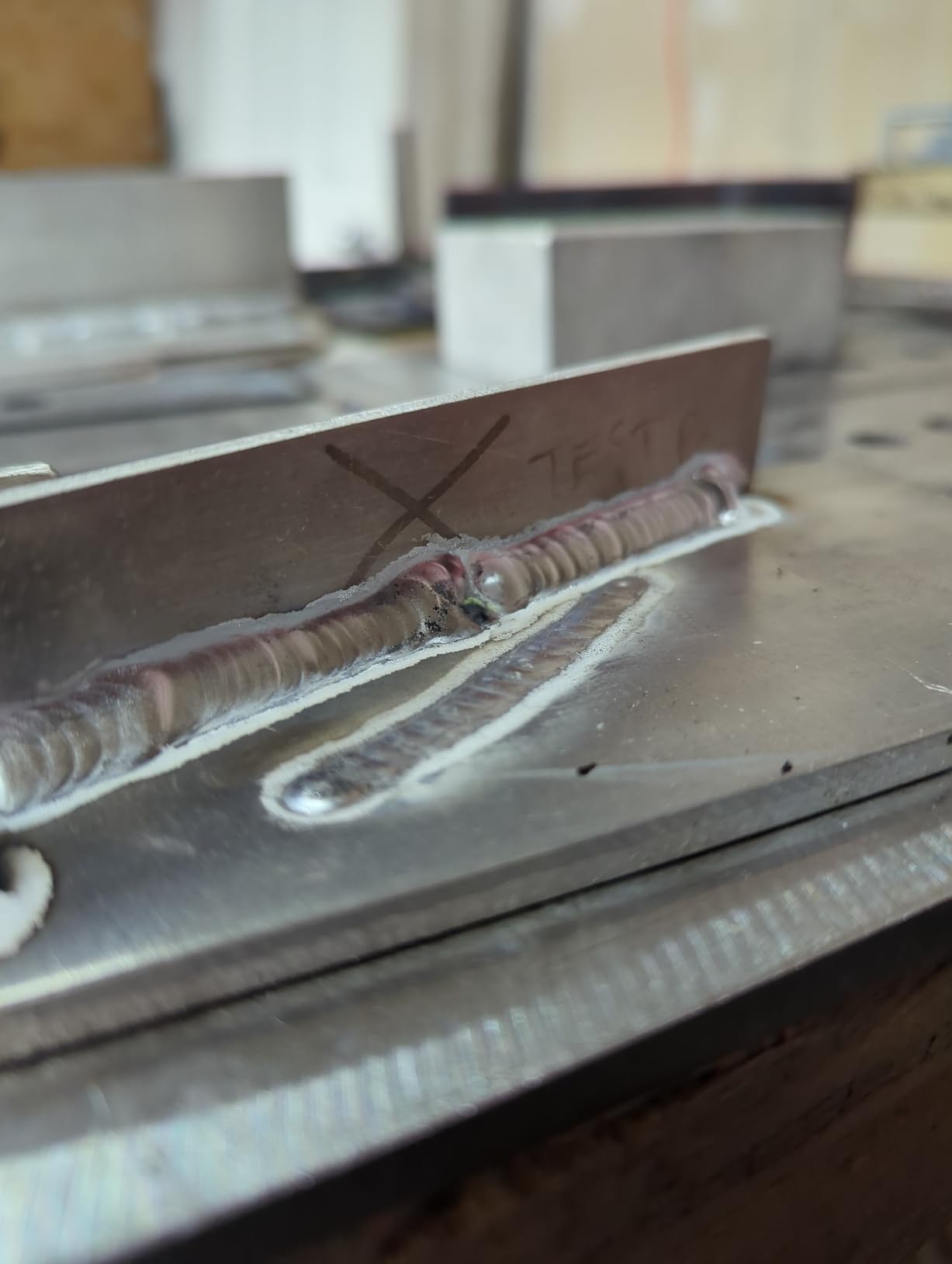
Very few machines in this class let you set AC balance and AC frequency independently. That combination is what separates a real aluminum welder from a machine that simply has an AC label on the panel, and it is the reason this one edges out cheaper alternatives.
Everything you need to start is in the box: flow meter, foot pedal, gas hose, ground clamp, and torch. For a first aluminum project, that removes the most common beginner complaint about cheap kits that arrive with a torch but no way to control amperage.
Where it falls short for you
At 61.8 lb it is one of the heavier machines in this roundup, so it is a shop machine rather than a move-to-the-job machine. If you are welding a trailer frame in a driveway more than a few times a year, that weight becomes the limiting factor.
The digital menu is a real learning curve compared with the PRIMEWELD’s knobs. Owners who like adjusting parameters mid-pass report that the extra navigation slows them down until they learn the button sequence.
3. AHP AlphaTig 203Xi: The Best Duty Cycle You Get at This Price
NEW 2024 AHP AlphaTIG 203Xi Amp IGBT AC DC Tig/Stick Welder with PULSE 110/220v 3 YEARS WARRANTY
- Runs at 100 percent duty cycle around 155 amps
- Exceptionally smooth stick arc
- Knob controls are quick to dial in
- Works reliably on 120V with a 25 ft 12 gauge extension cord
- Light flexible Rotaflex torch hose
- On 120V the readout does not match delivered amperage
- 10 amp minimum TIG output is restrictive on very thin material
- Included ground clamp and flow meter are cheaply made
Long-term owners treat this as a main-shop machine, and the 4.6 rating across 603 reviews backs that up. The duty cycle claim is the headline: roughly 100 percent at 155 amps, which is unusual hardware at this level.
For aluminum that headroom means you can lay a long bead on a 1/4 inch plate without watching the machine crawl. The 2024 revision added an electronic solid-state high voltage start, so there is no point gap to service, and the adjustable AC frequency also lets it run AC stick.
Knob-based controls are a genuine advantage once you know what they do. You can feel your way to an amperage without looking away from the puddle, which matters far more on aluminum than it does on steel because the work is so heat sensitive.
The included kit is unusually complete: a plug adapter for 120V, a 250A electrode holder, a floating ball type billet brass argon regulator, a Nova Rotaflex 9/17 torch with 35-70 DINSE and 9mm quick connect, and a 25 foot foot pedal. That is a full working setup rather than a machine in a box.
Where it outruns the machines below it
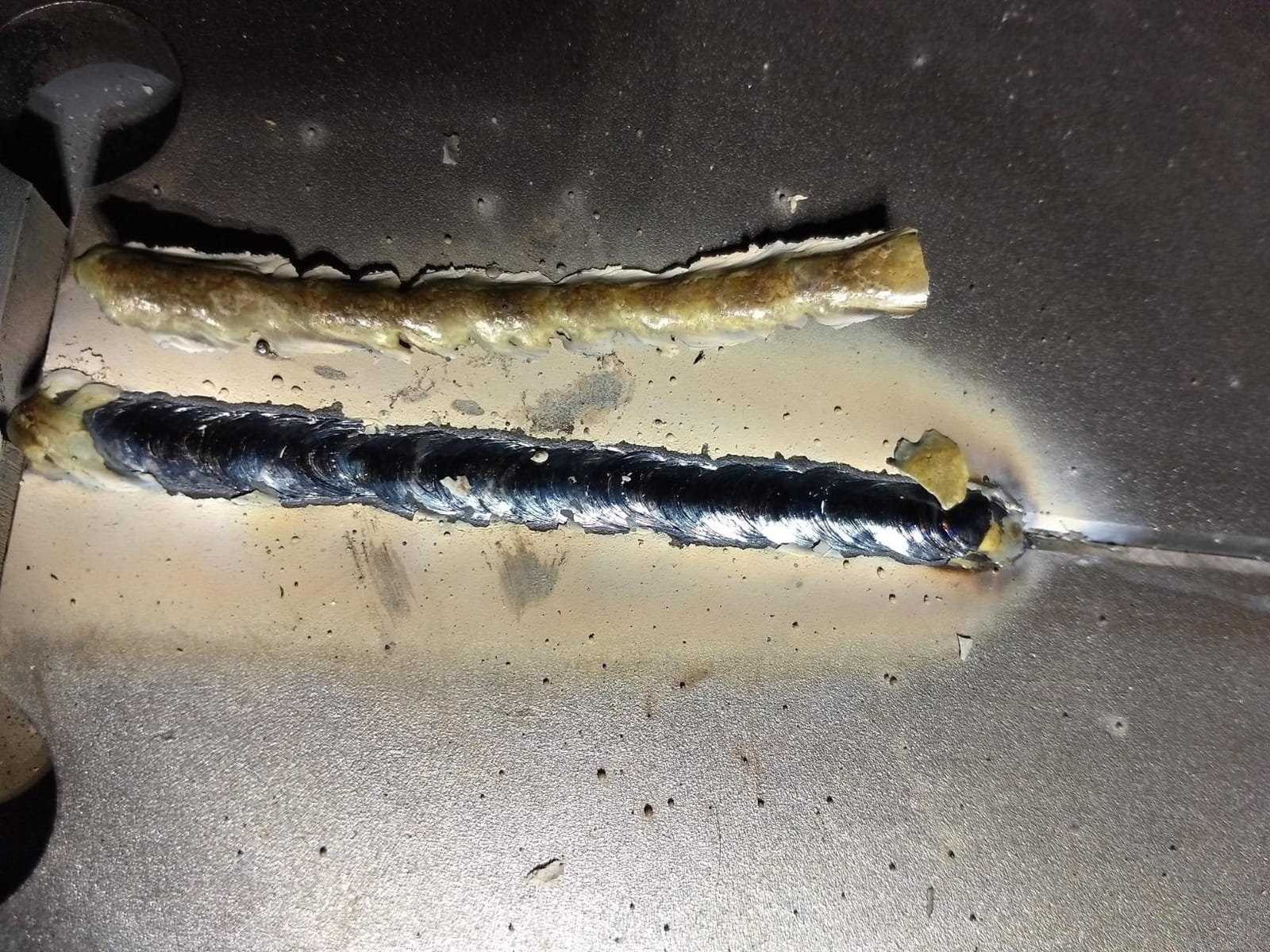
The stick arc is repeatedly called one of the smoothest owners have used, and the 110/220V flexibility with the included adapter means it works on a normal household outlet. For a home shop that does both aluminum and mild steel, that combination is hard to argue with.
At 100 percent duty cycle around 155 amps it simply runs cooler and longer than most competitors in the same tier. If you are welding all day, thermal headroom is a quality feature you feel in the third hour rather than the first.
What to plan around
On 120V the digital readout does not match the amperage actually delivered, and the machine will draw full rated current on that circuit. Plan a dedicated 120V line and use an extension cord no longer than about 25 feet of 12 gauge.
The 10 amp minimum output is the real limit for aluminum. That is fine for 0.040 inch and heavier, but if you work in 0.020 inch foil or 24 gauge, look at a machine that starts at 5 amps instead.
4. Lincoln Electric Square Wave TIG 200: The Best Brand-Backed Aluminum Welder
- Purpose-built for aluminum with dedicated AC frequency and AC balance controls
- Pulse gives a steady drumbeat rhythm for filler deposition
- Runs on either 120V or 230V
- Portable at 46.5 lb
- Backed by a widely recognized welding brand with real service and parts
- 4.2 average trails the cheaper imports in this group
- Controls are less granular than premium machines
- No stick-specific features to match multi-process units
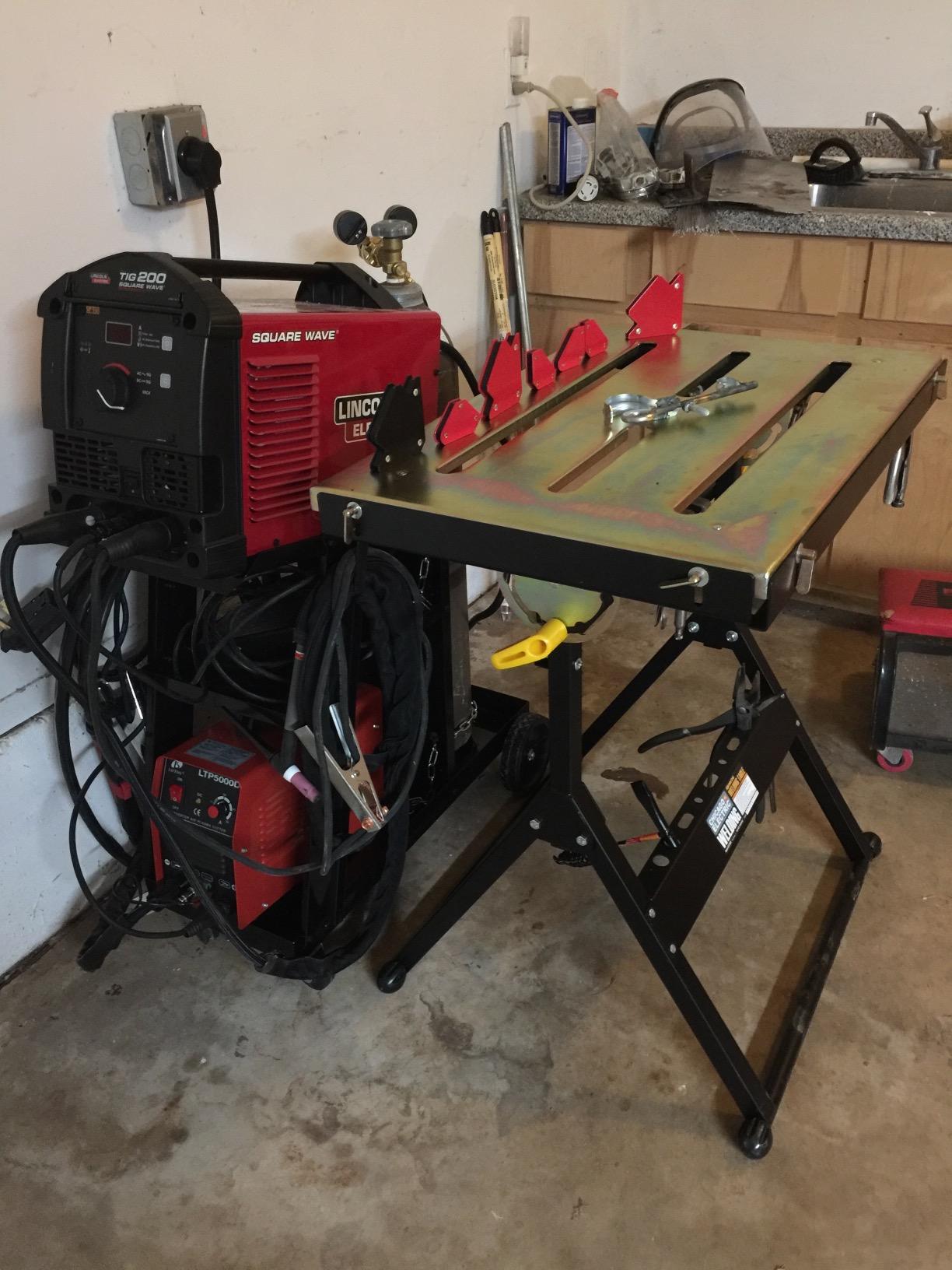
This is the buy when support and parts availability matter more than price. Lincoln has a service network that no import on this list can match, and the square wave platform is purpose-designed for aluminum rather than adapted from a steel machine.
Adjustable AC frequency sets bead width, and AC balance chooses between more cleaning action or deeper penetration. Those two controls are exactly what forum users consistently name as the real quality markers for aluminum work, and they are here as standard.
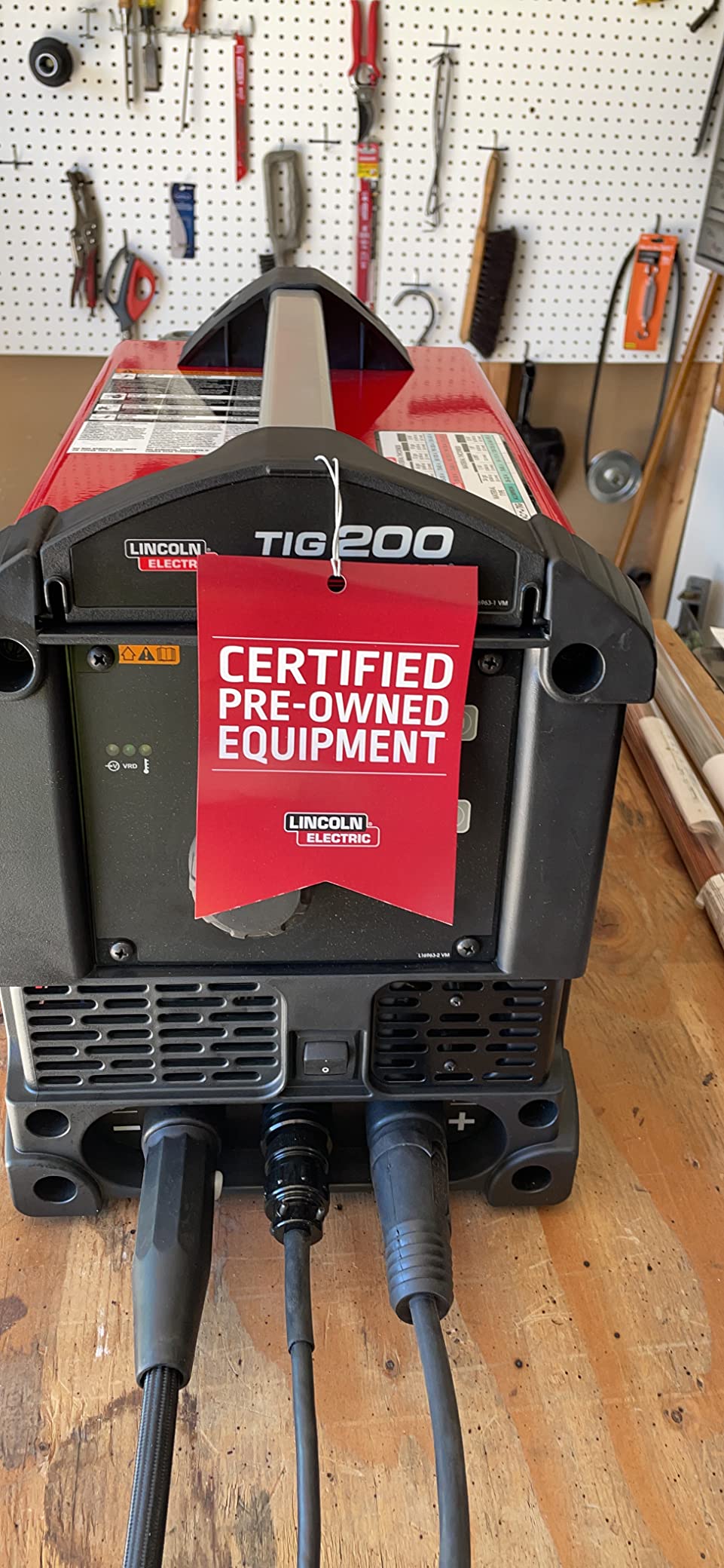
The pulse function is described as giving a drumbeat-like rhythm to filler deposition, which is a genuinely useful way to think about technique. It slows the deposition to a metronome pace and makes feeding 5356 rod far more consistent for a learner.
At 46.5 lb it is one of the lighter machines here despite being the premium pick, and it runs on a standard 120V circuit or 230V for full output when you need it in a shop.
Why shops keep buying it
When a machine goes down on a Friday, the deciding factor is who answers the phone and whether parts are on a shelf. That is the argument for this machine, and it holds up regardless of what a spec sheet comparison says about amp ranges.
The user interface is built for fast setup rather than granular experimentation. If you want simple, repeatable aluminum settings, that is an advantage. If you want to bury yourself in waveform options, it is not.
Where you might regret it
The 4.2 average is the lowest among the four machines here with three-digit review counts, and a meaningful share of one-star ratings points to occasional unit issues. That is a real caveat at this price, and it is worth checking your local service support before committing.
There are no stick-specific features comparable to a multi-process unit, so if you do serious stick work on structural steel, the PRIMEWELD or the AHP covers more ground for less.
5. ARCCAPTAIN 200A 7-in-1: The Best Choice for Thin Aluminum Sheet
ARCCAPTAIN TIG Welder AC/DC 200A with Pulse 7 in 1 Aluminum Welding Machine
- Square wave and triangular wave modes for aluminum and thin material
- Full MCU parameter control including AC balance and frequency
- Large LED readout that is readable in any environment
- On-demand cooling fan rather than one running endlessly
- Weighs 42.7 lb
- Foot pedal is not included and uses an unusual XS12 aviation connector
- Some buyers reported cracked gas connections or damaged power cords on arrival
- Warranty service drew heavy criticism from a few buyers
Most machines give you one AC waveform. This one gives you square wave for aggressive oxide cleaning and triangular wave to cut heat input, and on thin aluminum having both in the same machine saves a lot of trial and error.
The parameter list is unusually deep: pre-flow, initial current, upslope, peak and base current, downslope, crater current, post-flow, pulse duty, AC frequency, AC balance, and pulse frequency are all adjustable from the panel.
It is rated for 0.5 to 5 mm aluminum, so think 0.020 inch through about 0.20 inch. That range covers flashing, HVAC sheet, and most of the light-gauge work in this roundup, and 2T, 4T, and spot TIG modes handle tack welding and reinforcement passes.
At 42.7 lb with a spike-resistant IGBT design it moves around a shop without much complaint, and the on-demand fan is a quiet luxury compared with machines that run their cooling continuously.
Why thin aluminum benefits most here
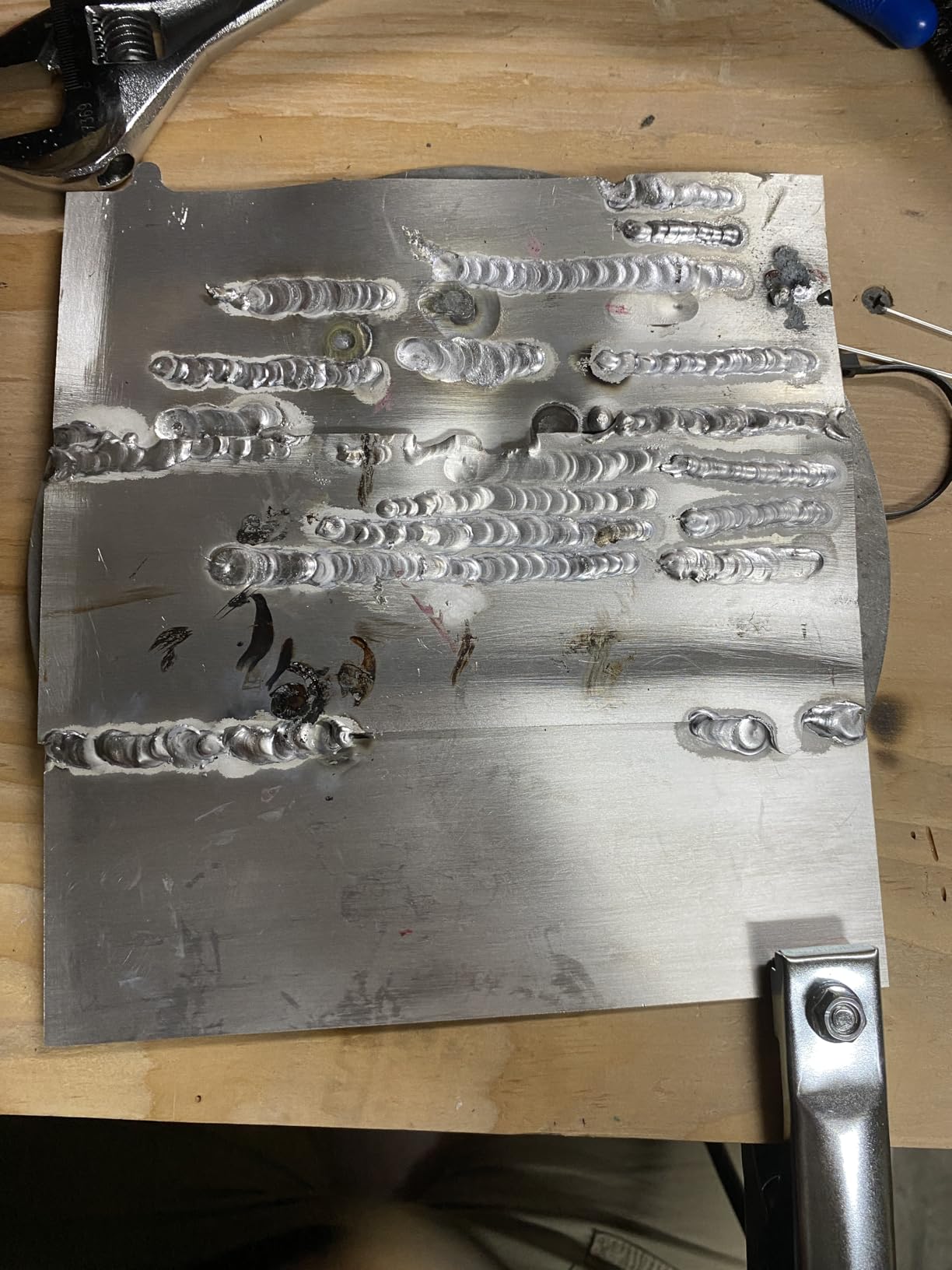
Triangular wave spreads heat more gently than square wave, which on material as thin as 0.020 inch is the difference between a bead and a hole. Having that as a mode rather than a compromise setting is what makes this machine stand out on sheet work.
Spot TIG and adjustable crater current are the features experienced users ask for most on thin material, because both stop the puddle from cratering at the end of a pass. They are all present here.
What could go wrong for you
The foot pedal is not included, and it uses an unusual XS12 aviation connector rather than the standard 8 pin plug, so third-party replacement pedals are hard to source. Budget for the proprietary pedal or a compatible remote from the same maker.
There is a cluster of reports about units arriving with cracked gas fittings or sliced power cords, and a few strongly negative warranty experiences. Inspect the machine the day it arrives rather than the first time you need it.
6. LOTOS TIG200ACDC: The Most Versatile for First-Time Aluminum Work
- Lowest entry point here for a true 200A AC/DC square wave TIG
- Foot pedal and argon regulator are in the box
- Automatic 110/120V and 220/240V dual voltage
- 10-200A AC/DC TIG output at 80 percent efficiency
- 37 lb and easy to move
- No pulse function in this base 200A configuration
- Dated analog interface compared with newer digital machines
- Hot striking arc is adjustable but stick performance is secondary
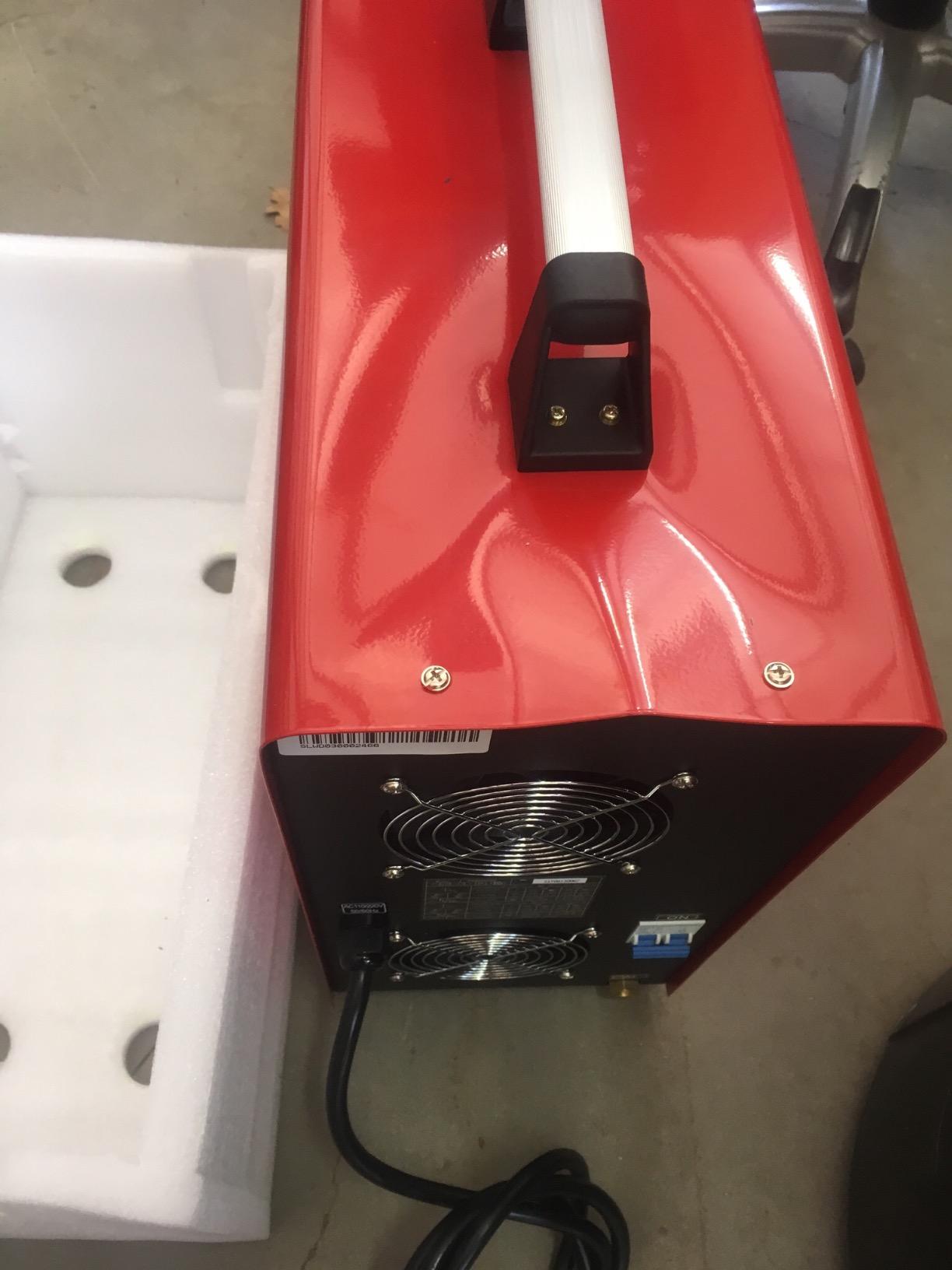
If your goal is to find out whether you like welding aluminum before spending real money, this is the honest starting point. It is a genuine 200 amp AC/DC square wave machine, not a DC unit with AC printed on the box, and that distinction matters more than any other spec here.
Owners report stable arcs and clean results on aluminum, stainless, and mild steel once the settings are dialled in. The welding capacity is rated at 0.02 to 0.20 inch aluminum, which covers 0.040 inch and 0.063 inch sheet comfortably.
Everything you need to weld is in the box: the TIG torch, MMA clamp, foot pedal, argon regulator, a 220V to 110V converter pigtail, ground clamp, and a consumable set. For a first machine that is the most complete package on this list at the entry level.
Automatic dual voltage and dual frequency across 110/120V and 220/240V means it works on a household outlet without a converter, and the advanced cooling system keeps duty performance stable through a long session.
Why it makes sense as a first machine
At 37 lb it is light enough to carry to a friend’s garage, and the included foot pedal means you get real amperage control rather than torch button tapping. That is important on aluminum, where heat control is the whole job.
The warranty is unusually generous for a budget machine: a 30 day money-back guarantee, one year replacement, and three years limited, with US-based phone and email support. That matters more than the feature list when something arrives faulty.
Where you will want an upgrade
There is no pulse function in this configuration, and that is the first thing you will miss on thin material or when welding on castings. Adjustable AC balance is also limited, so you have less room to tune for a specific alloy.
The analog interface is dated next to the digital machines here, with no parameter memory between jobs. If you are adding a second machine later for production work, this is the one to keep as your aluminum learner.
7. Sunstac TIG-250 TP: The Best High Amp Output for the Money
Sunstac 250A Aluminum TIG Welder with Pulse ACDC Foot Pedal Control
- Up to 250 amps of AC/DC output for the money
- Lightest 250 amp machine in this roundup at 29.8 lb
- LCD screen readable while wearing a welding helmet
- Spot TIG and pulse modes help control heat on thin aluminum
- 118 inch 300A rated work clamp and electrode holder cables
- Foot pedal is not included
- AC mode current readout is approximate so amperage must be judged by feel
- 4.1 average with a higher share of negative reviews
Two hundred fifty amps for the money is the pitch, and it is real: seven modes covering HF AC, HF DC, pulsed AC, pulsed DC, AC spot, DC spot, and stick, all on 110/220V dual voltage.
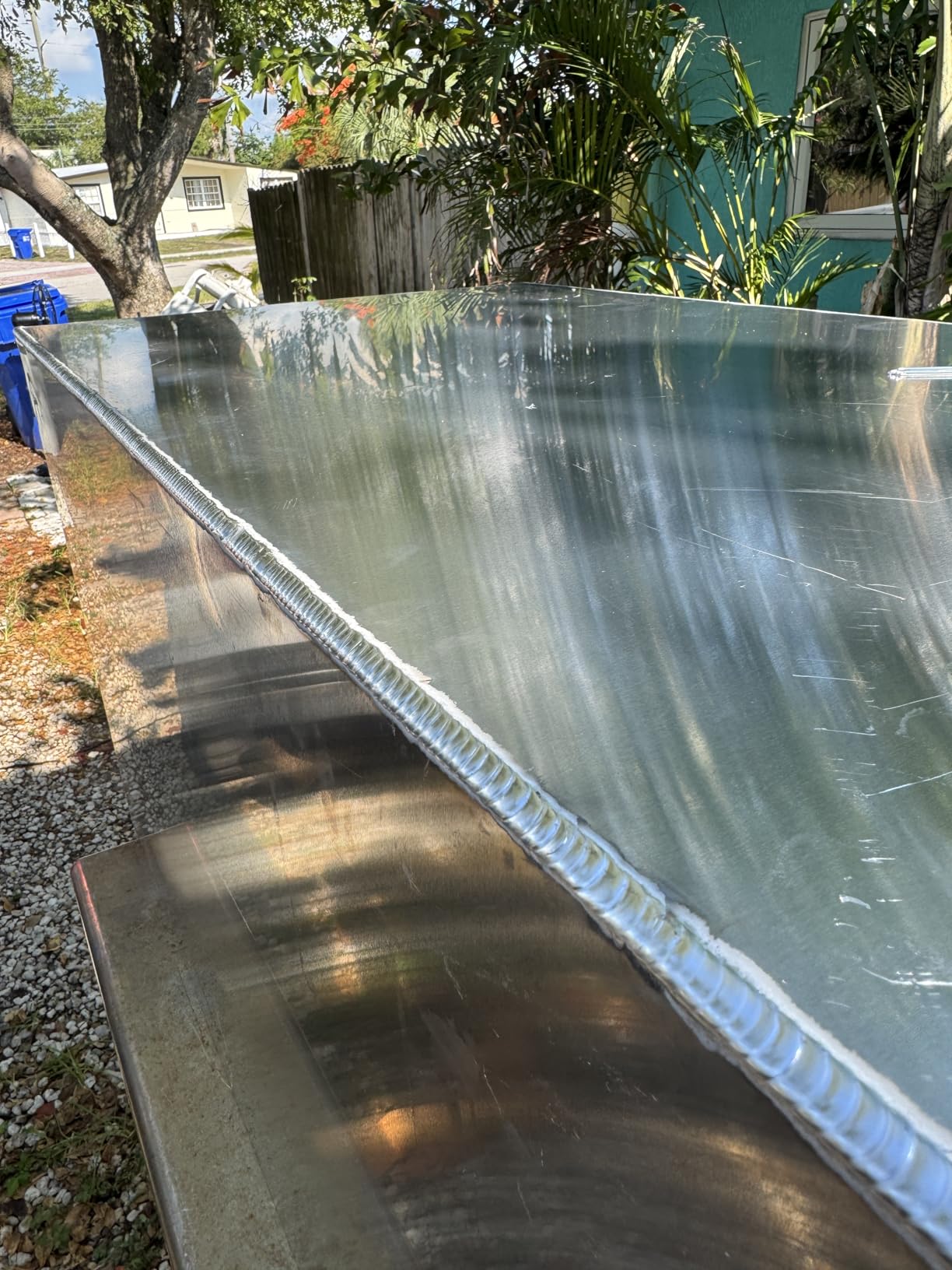
The aluminum rating is 5/32 inch at 110V and 6 mm at 220V, so plugged into a proper circuit it handles plate as well as sheet. That headroom is what you want if you ever take on a trailer frame or a cast housing repair.
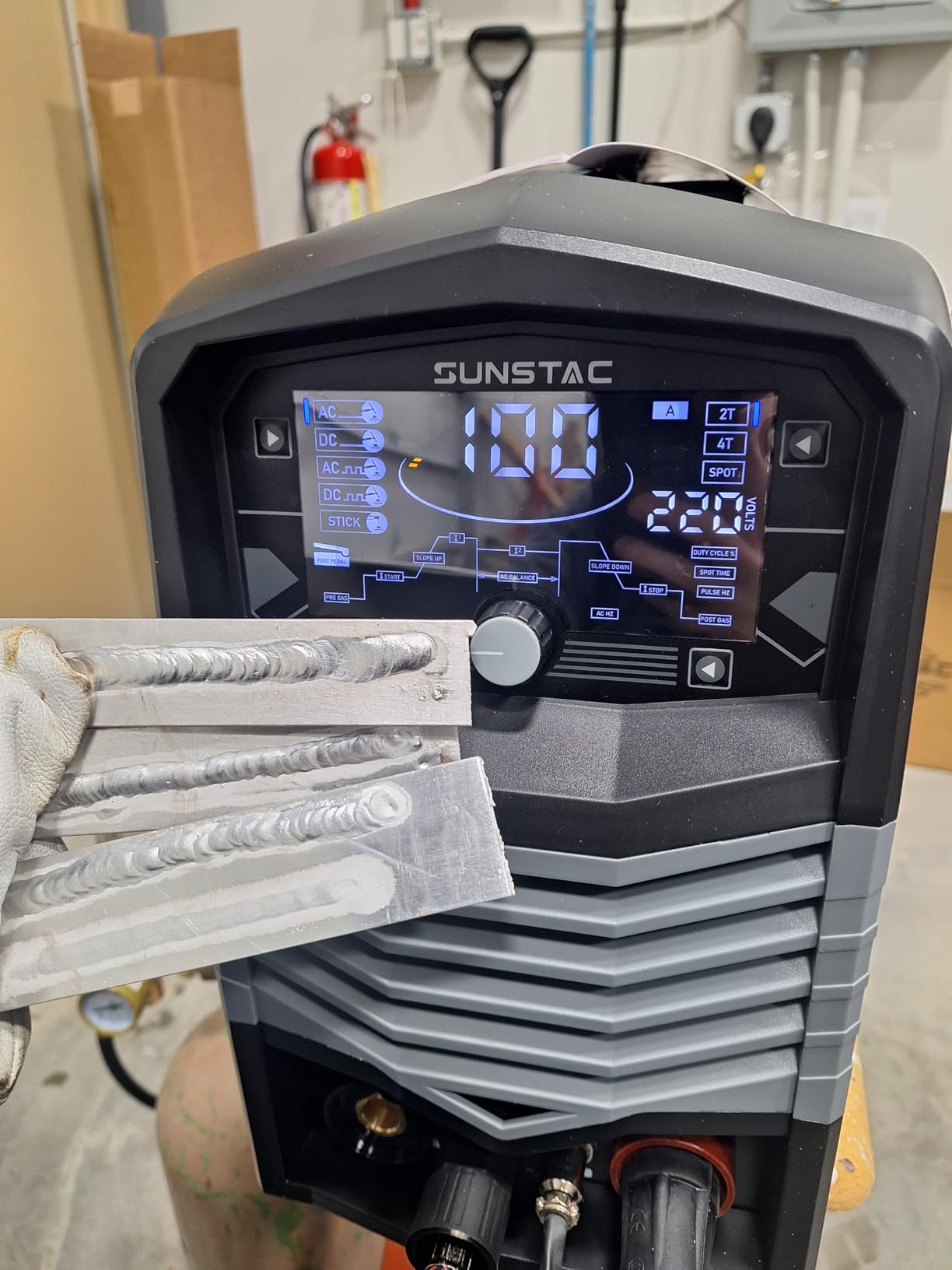
At 29.8 lb it is the lightest 250 amp unit we evaluated, and that weight matters when you are hauling a machine to a job rather than wheeling it around a shop. The new LCD screen replacing the older LED is a genuine readability upgrade through a welding helmet.
Parameter memory stores your previous settings, which saves time when you alternate between jobs. The 2T, 4T, and spot TIG modes cover tack welding and long continuous passes without riding the pedal.
Why the output rating is worth paying attention to
Higher rated output gives you headroom to control the puddle rather than being pinned at the top of the machine’s range. When you can run 60 percent of rated amps and still have clean AC cleaning, the bead is far easier to manage on aluminum.
Pulse and spot modes both help on thin material, where sustained AC at high amperage burns straight through. Having them standard at this output level is unusual among budget machines.
What gives us pause
The manufacturer notes that AC mode current measurement is approximate, so you are judging actual amperage by the sound and feel of the arc. That is workable but frustrating when you are trying to set up a repeatable procedure.
The 4.1 average with 145 ratings is the second lowest in this roundup, and the foot pedal is an add-on. If you want a gentler learning curve, the LOTOS at the same tier includes one.
8. Everlast PowerTIG 200DV: The Best Low Start Amp Range for Delicate Work
New Everlast PowerTIG 200DV 110/220 Dual Voltage 200amp Pulse ACDC Welder
- Very low start amperage of 5 amps in DC and 20 amps in AC
- Lift start option for situations where high frequency start is unwanted
- IGBT modules deliver smooth consistent inverter output
- Dual voltage allows 120V or 240V operation
- Pre and post flow gas control protects small welds
- 60 lb body is heavy for the feature set
- Listed as a combo set so torch and accessories are a separate choice
- Modest review count at 116 ratings
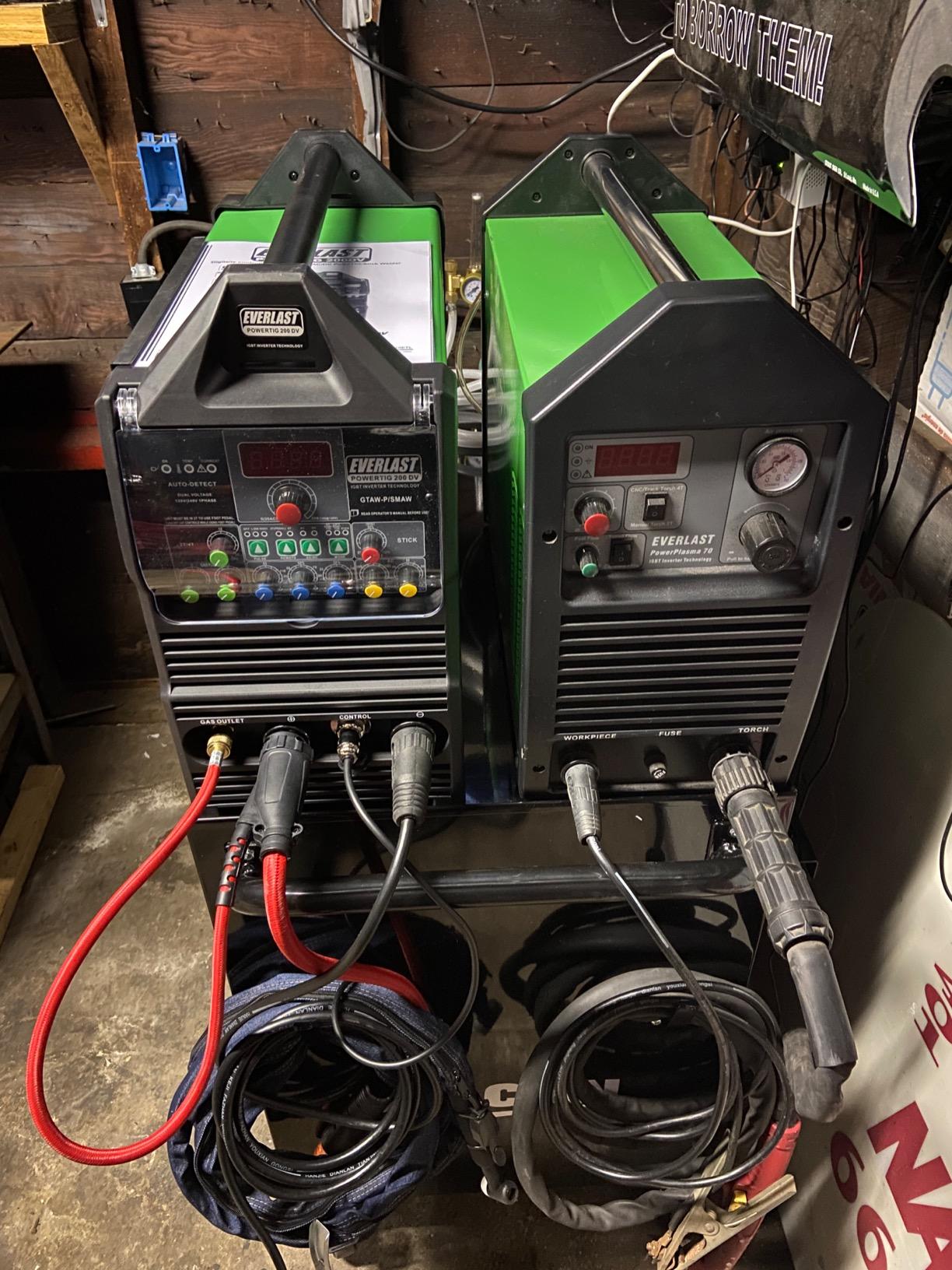
Forum users repeatedly point out that on aluminum the low end of the amperage range matters more than peak output, and this machine has the lowest start figure of anything here: 5 amps in DC and 20 amps in AC.
That is what makes it a good fit for thin aluminum and small workpieces where a machine starting at 20 amps will scorch through the material before you settle. The lift start function is a bonus for anyone working near electronics or sensitive coatings.
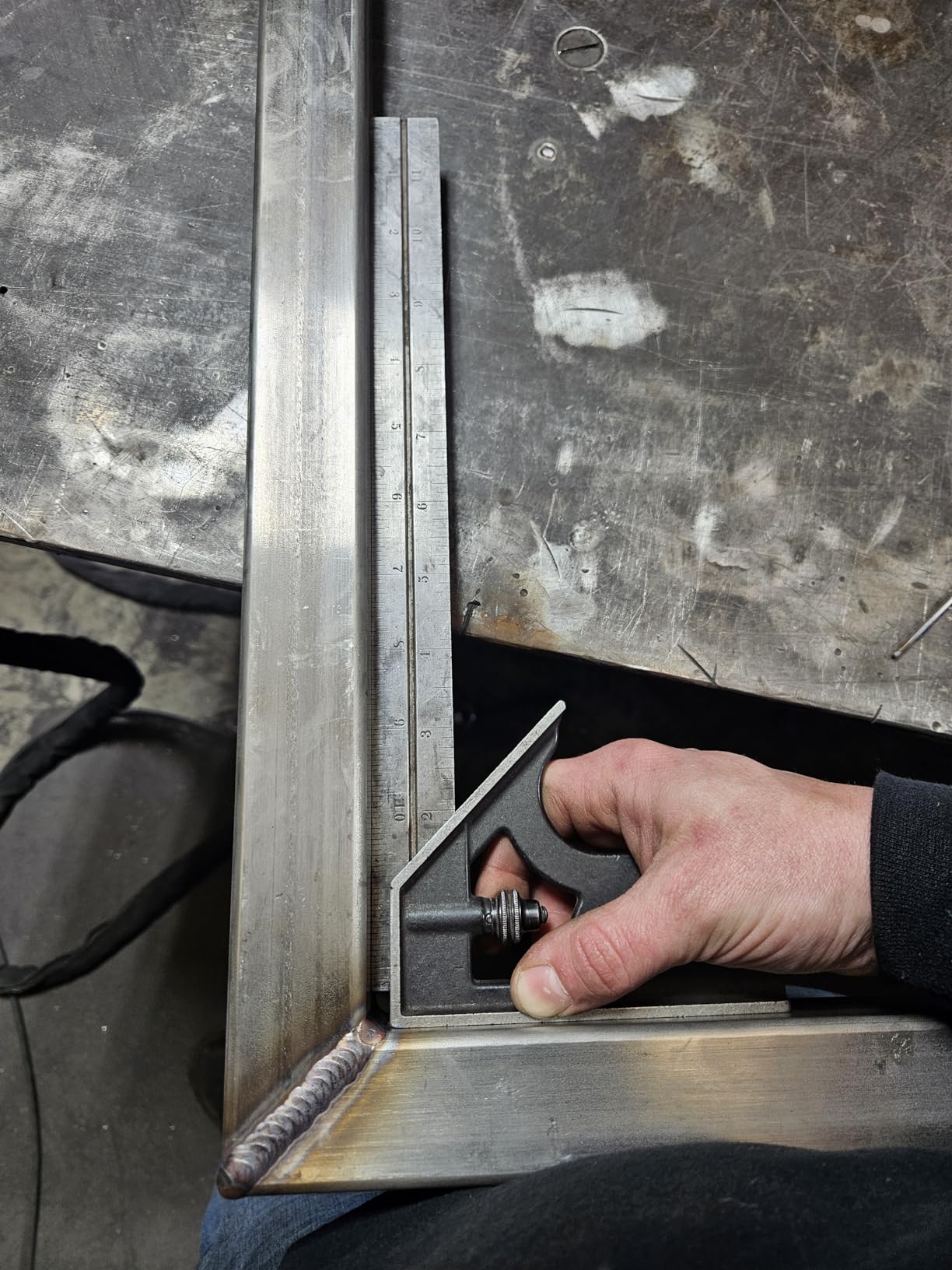
Pre and post flow gas control is a detail that quietly matters on aluminum. Post flow keeps the shielding gas on as the puddle solidifies, which is the simplest defense against the porosity that beginners usually blame on the machine.
Arc force, often labelled DIG, improves the DC stick arc and cuts spatter, and the digital display with adjustable pulse rate keeps your aluminum settings visible across jobs.
Why low start amps change the work
On a 0.025 inch aluminum sheet, the difference between a 5 amp start and a 20 amp start is the difference between a bead with reinforcement and a hole with a bead around it. This machine gives you the room to creep into a puddle that hot.
Owners rate the IGBT electronics highly for arc consistency, and 120V/240V dual input means you are not locked to one circuit. Lift start also sidesteps the high frequency start entirely when you need to.
Where it is not the right tool
At 60 lb it is heavy, and it is listed as a combo set, so the torch and accessories are a separate decision. If you want a machine that arrives complete, the PRIMEWELD and the AHP both bundle what you need.
With 116 ratings the long-term track record is thinner than the top three here. The electronics look right on paper and the reviews are largely positive, but you are trusting a smaller installed base.
9. Everlast PowerTIG 210EXT: The Best AC Waveform Control on a Welder
Everlast PowerTIG 210EXT 210Amp Ac Dc Tig Stick Advance Pulse Welder 110/220 Volt Inverter-Based IGBT Technology
- Three selectable AC waveforms give the widest aluminum tuning range in this roundup
- Advanced AC pulse mode increases travel speed and cuts warping
- Nine programmable parameter slots plus programmable stick functions
- HV start removes the older high frequency point gap design
- Fan on demand cooling and a flip-down panel visor
- 60 lb weight limits shop portability
- Finger amp control torch and water cooler are add-on purchases
- Smallest review base in the premium tier at 64 ratings
Three AC waveforms is the feature that sets this machine apart: triangular, advanced square wave, and soft square wave. Nothing else in this roundup gives you that much room to change the arc character on aluminum.
Advanced pulse is the other headline. It is designed for thin material, and owners credit it with higher travel speed and noticeably less warping, which is exactly the behaviour you want when welding a formed aluminum panel.
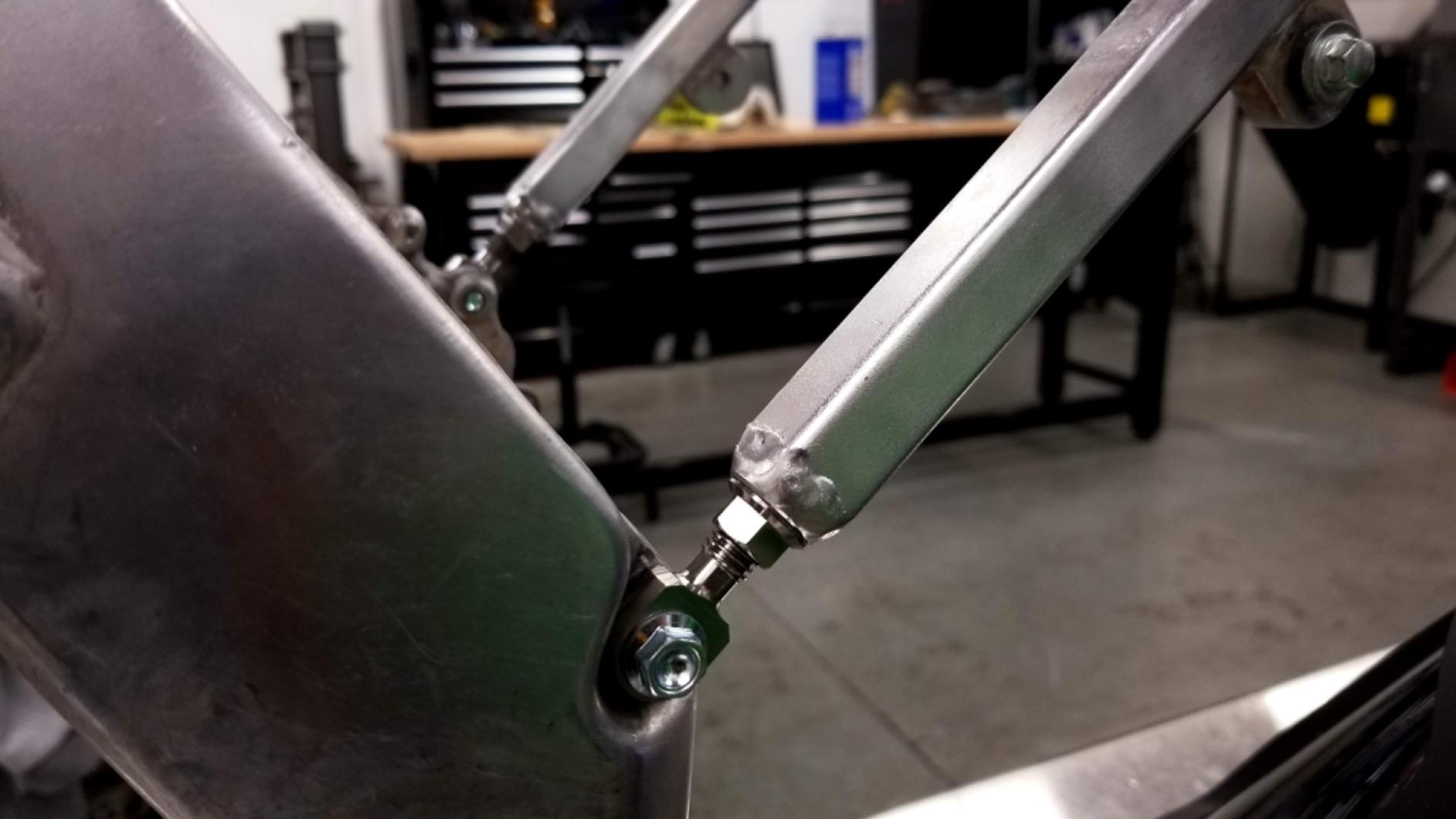
Nine programmable memory slots mean you can store a setting for 0.040 inch sheet, one for 0.063 inch, and one for a cast housing, then recall them without rebuilding the parameters. Stick functions including hot start time, intensity, and arc force are programmable as well.
HV start removes the point gap design that older machines needed, and the flip-down visor protects the control panel from sparks. Fan on demand cooling means the machine is quiet when you are not welding.
Why waveform choice beats raw amperage
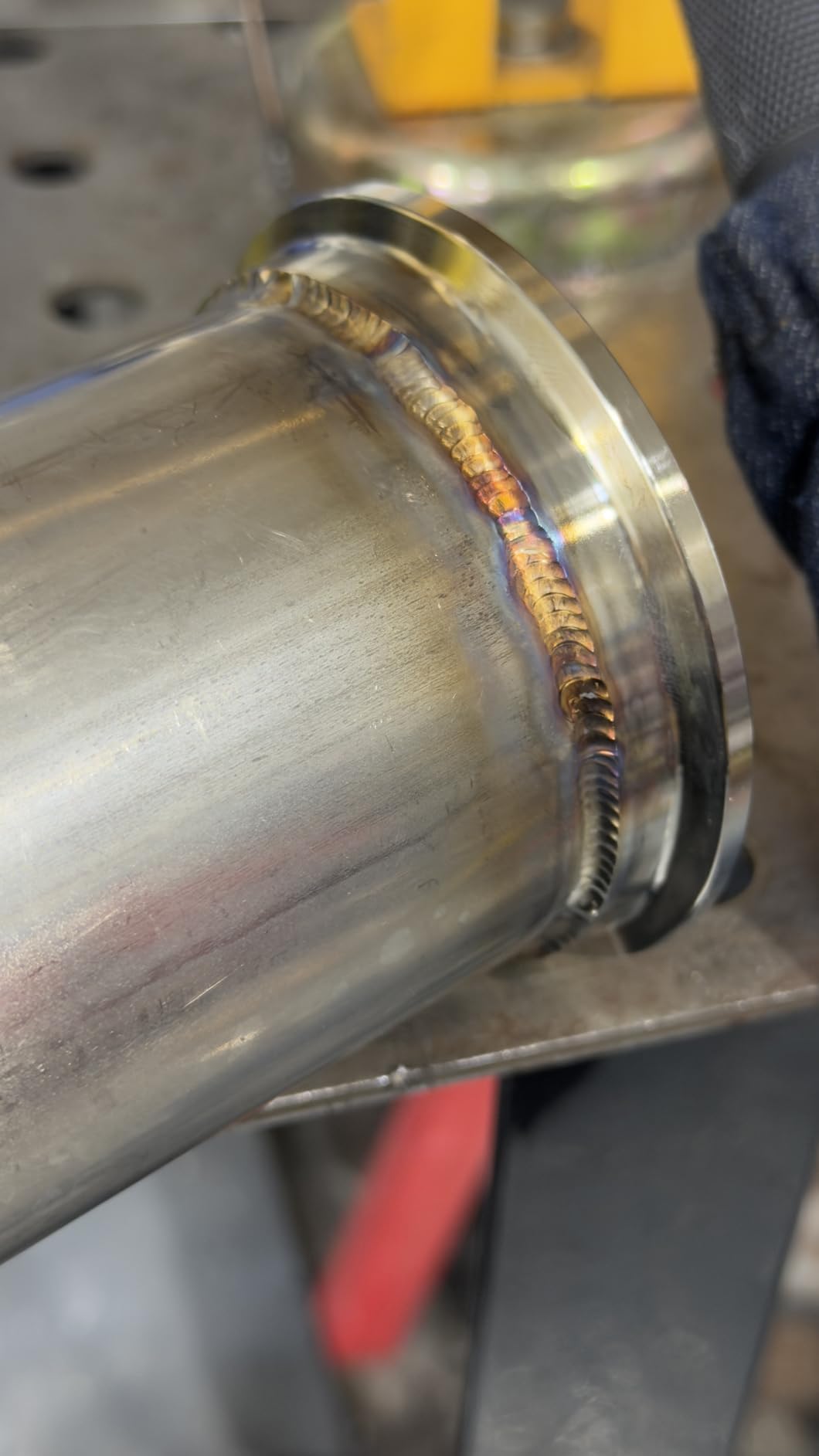
On aluminum, the shape of the AC cycle matters as much as its strength. Triangular wave is gentler on thin material, soft square wave balances cleaning and penetration, and advanced square wave scrubs oxide hard for dirty or anodized surfaces.
Owners who work on varied aluminum choose this machine precisely because they can change waveform instead of compensating with amperage alone. That is a level of control normally found well above this tier.
Where it costs you
At 60 lb the chassis is heavy for a machine you might want to move between a garage and a shop. The optional finger amp control torch and a water cooler are both extra purchases, so budget for them if you plan sustained work.
Only 64 ratings back it, so the track record is small. Feedback is positive, but you are buying into a proven brand and a less proven listing.
10. Everlast PowerTIG 250EX: The Best Ready for Long Water-Cooled Aluminum Passes
PowerTIG 250EX AC/DC Pulse TIG Stick Welder, IGBT, 1 or 3 Phase 220v
- Pulse up to 500 Hz in AC or DC modes
- 12 ft Everlast 18 series water-cooled torch with 35 series DINSE connectors
- 5 amp start in both AC and DC for very thin aluminum
- Expanded AC cleaning range for aluminum adjustability
- Works on single or three phase 220V
- Heaviest machine here at 65 lb
- 4.2 average on only 39 ratings
- 220V only so it cannot run on a standard household circuit
This is the most capable aluminum machine on the list, and the reason is the torch. A 12 foot water-cooled 18 series torch with 35 series DINSE connectors is included, which means you can run long passes without the torch overheating in your hand.
Overheating an air-cooled torch on sustained aluminum work is one of the most common complaints in the forums, and a water-cooled torch solves it outright. That is the single biggest practical reason to choose this machine for production work.
On sustained aluminum work this is the practical difference. The 500 Hz pulse ceiling is far above anything else here, and the expanded AC cleaning range gives you more room to tune the cleaning versus penetration split than the other Everlasts. Both matter on cast and oxidized aluminum.
What the water-cooled torch actually buys you
It is a 2025 model on IGBT power modules, with color coded controls, arc force for stick, lift start alongside HF start, and operation on single or three phase 220V for shop flexibility.
Because the coolant keeps the torch handle and cup at a stable temperature, your amperage setting stops drifting as the pass gets longer. On a long aluminum weld that is the difference between a consistent bead profile and a taper you have to grind out afterward.
Where we would hesitate
At 65 lb it is the heaviest machine in the roundup, and it needs a 220V circuit, so a 120V household outlet is not an option. If you are still setting up a home shop, the 203Xi or the PRIMEWELD covers the same jobs on a normal outlet.
The 4.2 average on 39 ratings is the weakest showing in the premium tier, with a 14 percent one-star share. This is a recent model with a small track record, so warranty and service access matter to you here.
11. TOOLIOM 200A 6-in-1: The Best Lightweight Portable AC/DC Machine
TOOLIOM 6-in-1 AC/DC TIG Welder with Pulse, 110V/220V Dual Voltage
- Lightest machine in this roundup at 27.9 lb
- Six modes including AC TIG
- DC TIG
- AC pulse
- DC pulse
- stick
- and spot
- Fish-scale square waveform produces clean weld beads
- Large digital display with real-time parameter readout
- Dual 110V/220V operation works on household outlets
- 4.1 average with the highest share of one-star ratings here at 17 percent
- Foot pedal is not included
- Aluminum capacity limited to 3 mm at 110V and 5 mm at 220V
At 27.9 lb this is the easiest machine here to carry, and for a welder who moves between jobs that is not a small thing. The six modes cover AC TIG, DC TIG, AC pulse, DC pulse, stick, and TIG spot.
The fish-scale square waveform is marketed for weld appearance, and that is a fair claim to check yourself, because bead cosmetics are where budget machines show their age on aluminum.
Aluminum capability is rated at 1/8 inch at 110V and 3/16 inch at 220V, so it covers sheet and light plate rather than structural section. The large digital display shows mode, voltage, and current in real time, which is helpful when you are new to reading arc behavior.
Software controlled square wave AC/DC on an IGBT inverter, with foot pedal compatibility for remote arc start, stop, and current adjustment. The pedal itself is a separate purchase, so add it to your first order.
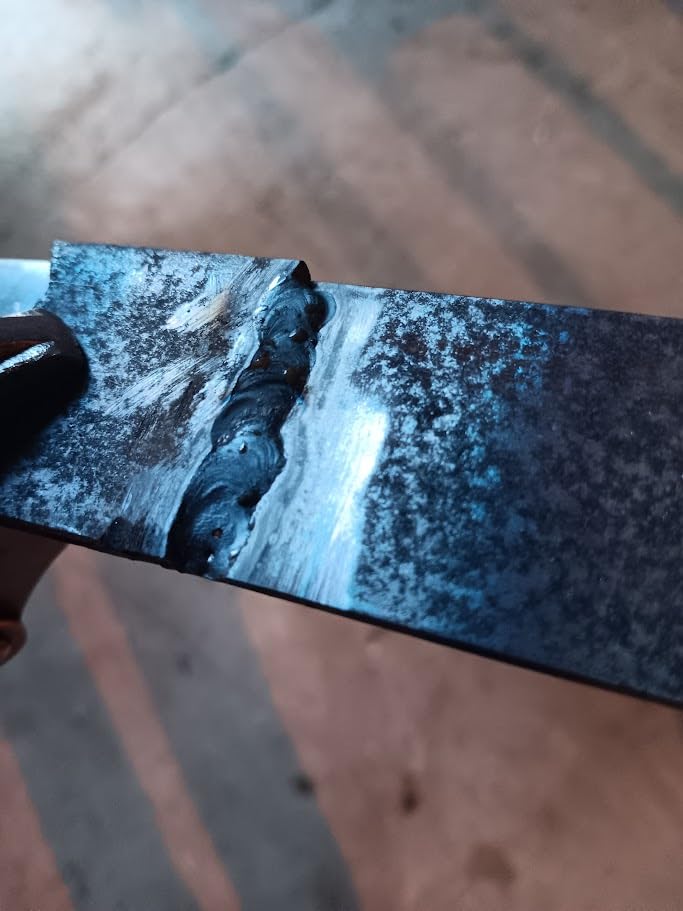
Why portability changes the buying decision
A 27.9 lb machine is a genuine one-hand carry, which means you can weld on a rooftop, in a boat hull, or at the far end of a driveway without a cart. On this list only the Sunstac at 29.8 lb is close.
Spot TIG mode is included, and that is more useful than most buyers expect. It makes tack welding and adding reinforcement passes to a finished part quick and repeatable without setting amperage by hand.
What the reviews warn about
The 4.1 average and 17 percent one-star share are the weakest consistency signals in this roundup, and with only 32 ratings there is no long-term data to offset that. Treat it as a machine to test on scrap before you rely on it for a project.
The 3 mm aluminum ceiling at 110V is the hard limit. If your work is 0.040 inch and thinner you are fine, but anyone planning plate work should step up a tier.
12. AHP AlphaTig 225Xi: The Best Gas Flow and Pulse Control Per Dollar
New 2024 AHP Alpha-TIG 225Xi 200 Amp IGBT AC/DC Pulse TIG/Stick Welder 110v/220v Dual Voltage
- 4.7 average with no 1 or 2 star ratings reported
- Delivers 150 amps on 120V and 225 amps on 240V
- Very low start amps of 5 in DC and 20 in AC for thin aluminum
- Pre-flow and post-flow adjustable from 0 to 10 seconds plus down slope control
- Rear water cooler outlet for extended work
- Only 42 ratings so the long-term record is thin
- Water-cooled torch and cooler are additional purchases
- Weight and dimensions are not published in the listing data
The 4.7 average with no one or two star ratings in the sample is the highest rating of any machine we evaluated. Owners credit it with delivering 225 amp class capability and fine gas control features at well under the premium Everlast tier.
That gas control is the aluminum story here. Pre-flow and post-flow both adjustable from 0 to 10 seconds, plus down slope control, is how you stop porosity on thin material and control the crater at the end of a bead.
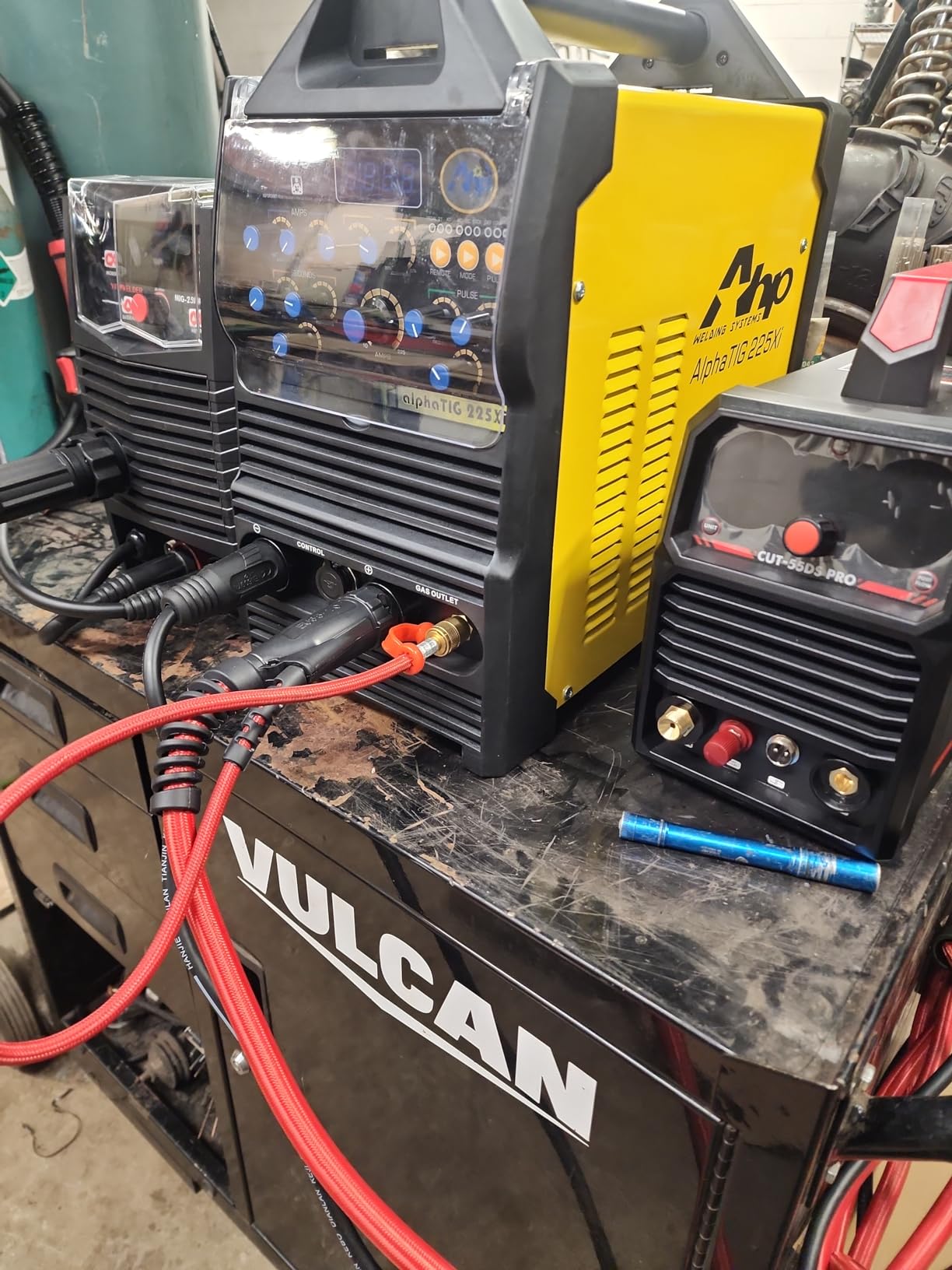
Minimum start amps of 5 in DC and 20 in AC put it in the same class as the Everlast 200DV for delicate work, and pulse frequency adjustable from 0.5 to 200 Hz covers both thin sheet and steady deposition.
It delivers 150 amps on 120V and the full 225 amps on 240V, with 2T and 4T functions and start and end amperage adjustment in 4T mode. A water cooler outlet on the rear panel means a water-cooled torch setup is possible if you outgrow the air-cooled one.
Why gas control matters more than most people expect
Aluminum is fussy about shielding. Too little argon flow and you get porosity; too much and you destabilize the arc on thin material. Having pre-flow and post-flow on a dial instead of fixed is a real advantage for anyone doing production work.
Down slope control lets you taper the amperage at the end of a pass, which is how you get a clean, reinforced crater fill rather than a pinhole. It is one of those features that looks minor until you have welded without it.
What we would want to know first
Only 42 ratings means the long-term track record is thin, and eight percent sit at three stars, which hints at a setup learning curve. Ask the seller what support looks like before you commit to a machine you will depend on.
The water-cooled torch and cooler are extra purchases, so the real cost of a sustained aluminum setup is higher than the headline. Budget for that on day one rather than being surprised in month three.
What to Look for in a TIG Welder for Aluminum
Start with the one filter that cannot be negotiated: verified AC output with adjustable AC balance and AC frequency. Everything else on this list is secondary. DC-only machines are common in the budget tier and are often listed with AC in the title while the spec sheet says otherwise, so check the manufacturer sheet rather than the product name.
Next, look at the cleaning control and the low amperage range together. A wide AC cleaning range lets you scrub stubborn oxide and anodized surfaces, while a 5 amp start versus a 20 amp start decides whether thin sheet is weldable at all. Forum users consistently put more weight on the low end than on peak amps.
Duty cycle at the amperage you actually use matters next. We rate the AHP 203Xi highly here for running at 100 percent near 155 amps, which means a long bead on plate does not stall the machine. Pulse frequency ceiling is worth comparing too, since higher pulse rates keep heat input low on thin material.
Voltage and circuit requirements are unglamorous and frequently mishandled. A 120V machine with no amperage limiting can trip a household breaker when run hot, and the 250EX needs 220V, so a dedicated circuit may be a project in itself. Our broader beginner welder buying guide covers power setup in more detail.
Finally, consider the torch ecosystem. A 35-70 DINSE connector means standard 17, 26, and 9 series consumables are available from several sources, while a proprietary connector locks you into one supplier. For sustained aluminum passes, decide now whether you need a water-cooled torch and whether the machine has an outlet for one.
Matching machine class to material thickness keeps expectations honest. As a working guide, 0.020 to 0.040 inch aluminum suits a 130 to 150 amp class machine, 0.040 to 0.063 inch works well on a 200 amp class, and 0.125 inch plate wants 200 to 250 amps with heat sinking and 0.25 inch plate needs a 250 amp class on 220V. Thin material also means you want a low minimum amperage, and anything past 0.25 inch means preheat and a heat sink are not optional.
Do not forget argon, tungsten, and accessories in the budget. 100 percent argon rather than a mix, a zirconiated or lanthanated tungsten ground for your torch, a gas lens, and a foot pedal are what turn a machine into an aluminum setup. Several machines here include a pedal and regulator, and the ones that do not, including the ARCCAPTAIN, Sunstac, and TOOLIOM, need that added at the start.
Frequently Asked Questions
Do I need an AC TIG welder to weld aluminum?
Yes. Aluminum forms an oxide layer the instant it is exposed to air, and a DC arc cannot penetrate it, so a DC-only machine will not wet out the metal no matter how good its steel welds are. AC reverses polarity so the electrode-positive half cycle scrubs the oxide away while the electrode-negative half cycle drives heat into the work. Look for AC output plus adjustable AC balance and AC frequency, and confirm it in the manufacturer spec sheet rather than the listing title.
How thick can a 200 amp TIG welder weld aluminum?
A 200 amp AC/DC machine handles 0.020 inch to 0.063 inch sheet comfortably and 0.125 inch plate with heat sinking behind the joint. Aluminum needs roughly 1 amp per 0.001 inch of thickness as a starting point, so 0.063 inch lands near 60 to 70 amps and 0.125 inch near 120 to 150 amps. Past 0.25 inch you want a 250 amp class machine on 220V plus preheat, because aluminum pulls heat away from the puddle far faster than steel.
Are Harbor Freight TIG welders any good?
We did not include a Harbor Freight machine in this roundup for one reason: we could not verify AC and DC output with adjustable AC balance from the manufacturer spec sheet, and that is the one spec that decides whether a TIG welder can physically weld aluminum. Forum threads ask this question constantly, and the honest answer is to check the spec sheet for AC output before anything else. If the machine is DC only, it is a good steel welder and nothing more for aluminum.
What is a good starter TIG welder for aluminum?
The PRIMEWELD TIG225X is our pick for a first serious aluminum machine because it combines 225 amps, adjustable AC frequency, 200 Hz pulse, a CK Superflex 17 torch, and the largest review base here. The LOTOS TIG200ACDC is the lower-commitment option and includes a foot pedal and argon regulator in the box. Whichever you choose, buy 100 percent argon, a zirconiated or lanthanated tungsten, and a gas lens on the same order.
Is the PrimeWeld Tig225x worth the money?
Owner feedback supports it. Across 1426 ratings it holds a 4.8 average, and the most repeated praise is for the aluminum AC arc, the included CK Worldwide Superflex 17 torch, build quality, and after-sales support. The most repeated complaints are hard-to-read dial labels, a rear-mounted power switch, loud cooling fans, and the quality of the included argon regulator. It is listed as a 225 amp machine rated to weld 1/4 inch aluminum and 3/8 inch mild steel.
Conclusion: Our Final Aluminum Picks for 2026
For most people, the best TIG welder for aluminum in 2026 is the PRIMEWELD TIG225X, because adjustable AC frequency, 200 Hz pulse, and the included CK Superflex 17 torch make it a genuinely complete aluminum setup. The Weldpro 200A 5-in-1 is the value answer when you want full AC balance and pulse control for less, and the AHP AlphaTig 203Xi is the one to buy when duty cycle around 155 amps matters more than a large review count.
Shop-based fabricators who want brand support should look at the Lincoln Square Wave TIG 200, production welders should look at the Everlast PowerTIG 250EX for its included water-cooled torch, and anyone moving machines around should look at the TOOLIOM for its 27.9 lb weight. Whatever you pick, verify AC output with adjustable balance and frequency, and skip any machine sold as a TIG welder that cannot show you both on the spec sheet.