
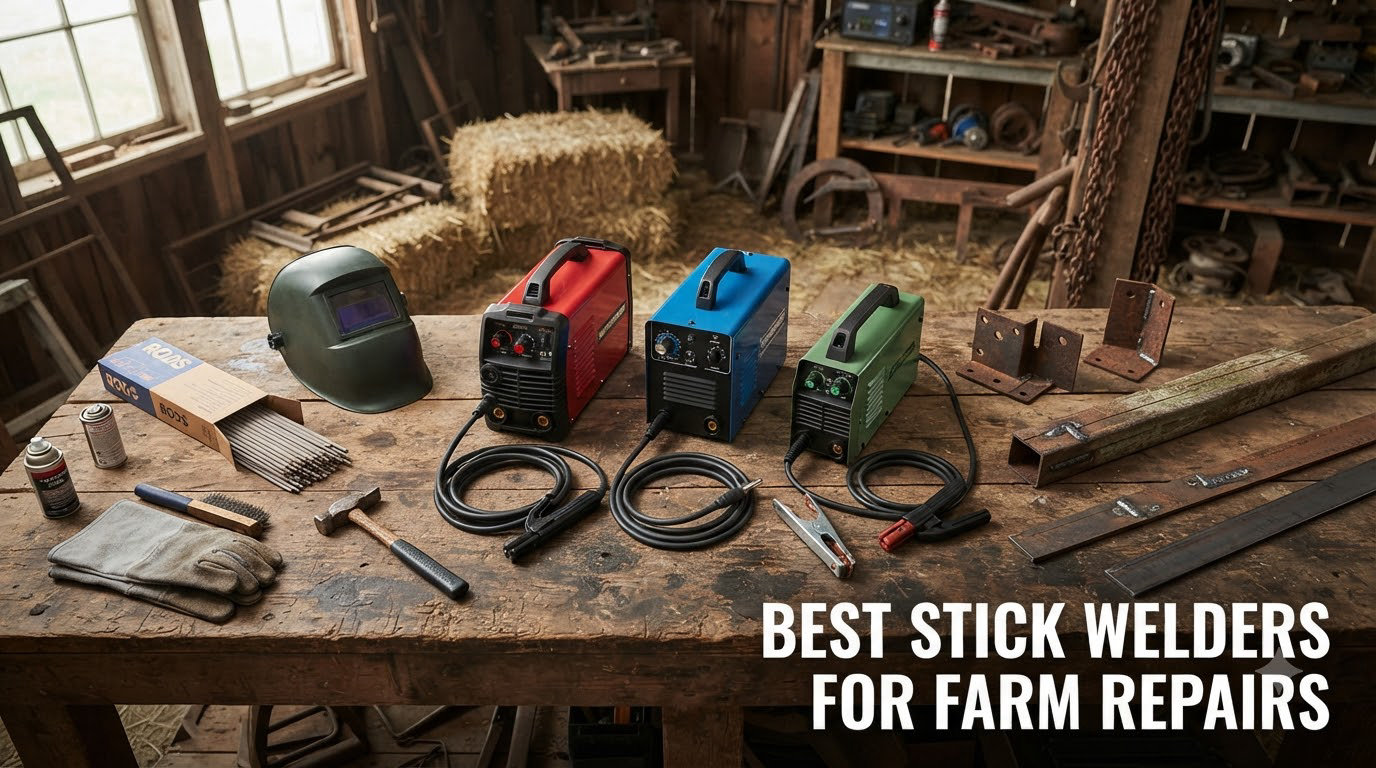
A gate hinge sheared off in a windstorm at 6 a.m. does not care that you have a flux-core gun in the truck. Neither does a cultivator shank snapped across three acres of stubble, a trailer rail folded under a hay wagon, or a loader bracket that let go halfway up a barn door. Farm steel is almost never clean, almost never flat, and almost never welded in a shop with the door shut. That single fact is why the best stick welders for farm repairs still outsell every other process in farm shops across the country, and it is the standard we used to sort the ten machines below.
Stick welding (SMAW) forms an arc between a flux-coated electrode held in an electrode holder and the workpiece. The coating burns off to create its own shielding atmosphere, which is why a stick machine needs no gas bottles, no regulator, and no clean shop. Mud, scale, leftover paint, a light drizzle and a crosswind barely register. MIG and flux-core are faster and cleaner on new steel, but they punish dirt, and farm dirt is the default condition. One user on AgTalk put it plainly: stick “works good for quick farm repairs through rust/paint and on thick metal,” while MIG “really shines on clean thinner steel.”
Before we start, one framing note that comes up more than anything else in the farm forums. Stick welding is not outdated. Modern inverter stick machines are lighter, more efficient and far easier to start than the transformer machines your grandfather used.
If you are also outfitting a home shop rather than a working farm, our guide to the best welders for home use covers the general-purpose picks, but the farm-specific criteria here are stricter.
Top 3 Stick Welders for Farm Repairs in 2026

DEKOPRO 160A 110/220V MMA Welder
- 110/220V dual voltage
- IGBT inverter with hot start and anti-stick
- ETL certified
- 11.11 lb

YESWELDER 205A IGBT Stick Welder
- Up to 205 amps with adjustable hot start
- 60% duty cycle at 205A on 240V
- Runs 6013 and 7018 rod
- 8.8 lb
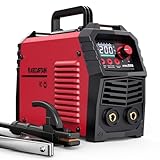
ARCCAPTAIN 200A Stick and Lift TIG
- 28V maximum welding voltage suits 6010 rod
- Synergic rod diameter selection
- 7.2 lb body with shoulder strap
- 110V and 220V
Quick Overview: Best Stick Welders for Farm Repairs in 2026
Every machine in this roundup is a portable inverter that runs off household power, handles rusty steel, and fits in a farm shop or the bed of a pickup. Here is the short version before the detailed reviews.
| Product | Specifications | Action |
|---|---|---|
| DEKOPRO 160A 110/220V MMA Welder |
|
Check Latest Price |
| YESWELDER 205A IGBT Stick Welder |
|
Check Latest Price |
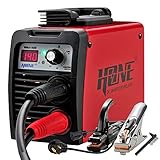 HONE 140A 110/220V Stick Welder HONE 140A 110/220V Stick Welder |
|
Check Latest Price |
| ARCCAPTAIN 200A Stick and Lift TIG |
|
Check Latest Price |
 S7 200A DC TIG and Stick Welder S7 200A DC TIG and Stick Welder |
|
Check Latest Price |
 HGNVGZ 250A 110V MMA Stick Welder HGNVGZ 250A 110V MMA Stick Welder |
|
Check Latest Price |
 S7 250A 110V/220V Inverter Stick Welder S7 250A 110V/220V Inverter Stick Welder |
|
Check Latest Price |
 FEIFANKE 250A 110V Mini Stick Welder FEIFANKE 250A 110V Mini Stick Welder |
|
Check Latest Price |
 HONE 205A 110V Stick and Lift TIG HONE 205A 110V Stick and Lift TIG |
|
Check Latest Price |
 Siasky Mini 250A 110V Stick Welder Siasky Mini 250A 110V Stick Welder |
|
Check Latest Price |
The DEKOPRO takes our Editor’s Choice for the simplest reason on a farm: the highest volume of real owner feedback in the group, a 4.6 average, and a 160 amp ceiling that still covers gate hinges, fence rails and mower frames without needing a dedicated 220V circuit. The YESWELDER is the value pick for anyone who will ever plug in near an implement frame, since it is the only machine here quoting a 60% duty cycle at its rated amperage. The ARCCAPTAIN is the one to buy if 6010 cellulose rod is on your list, because its 28V maximum welding voltage is genuinely built for that rod.
1. DEKOPRO 160A 110/220V MMA Welder – The Most Proven Farm Shop Inverter
- More than 6k owner reviews to learn from
- ETL certified with per-unit inspection
- Hot start and anti-stick built in
- Carry handle makes it easy to move
- 160A output is limited on thick plate
- No published duty cycle figure
- Includes a power adapter rather than a proper plug
With more than 6k reviews and a 4.6 average, the DEKOPRO has the deepest owner history of anything in this roundup, and on a farm that matters more than any spec sheet. When a machine has been run by thousands of people through real gate repairs, mower frames and trailer work, the failure modes are already documented. You will not be the one discovering them.
It is a dual-voltage 110V/220V IGBT inverter rated to 160 amps, and it weighs 11.11 lb. That combination puts it squarely in the class of machine that most farm work actually needs. A cattle guard rail, a gate frame, a hay rack bracket: that is 1/8 inch mild steel territory, and 160 amps handles it with 1/8 inch rod without the machine fighting you.
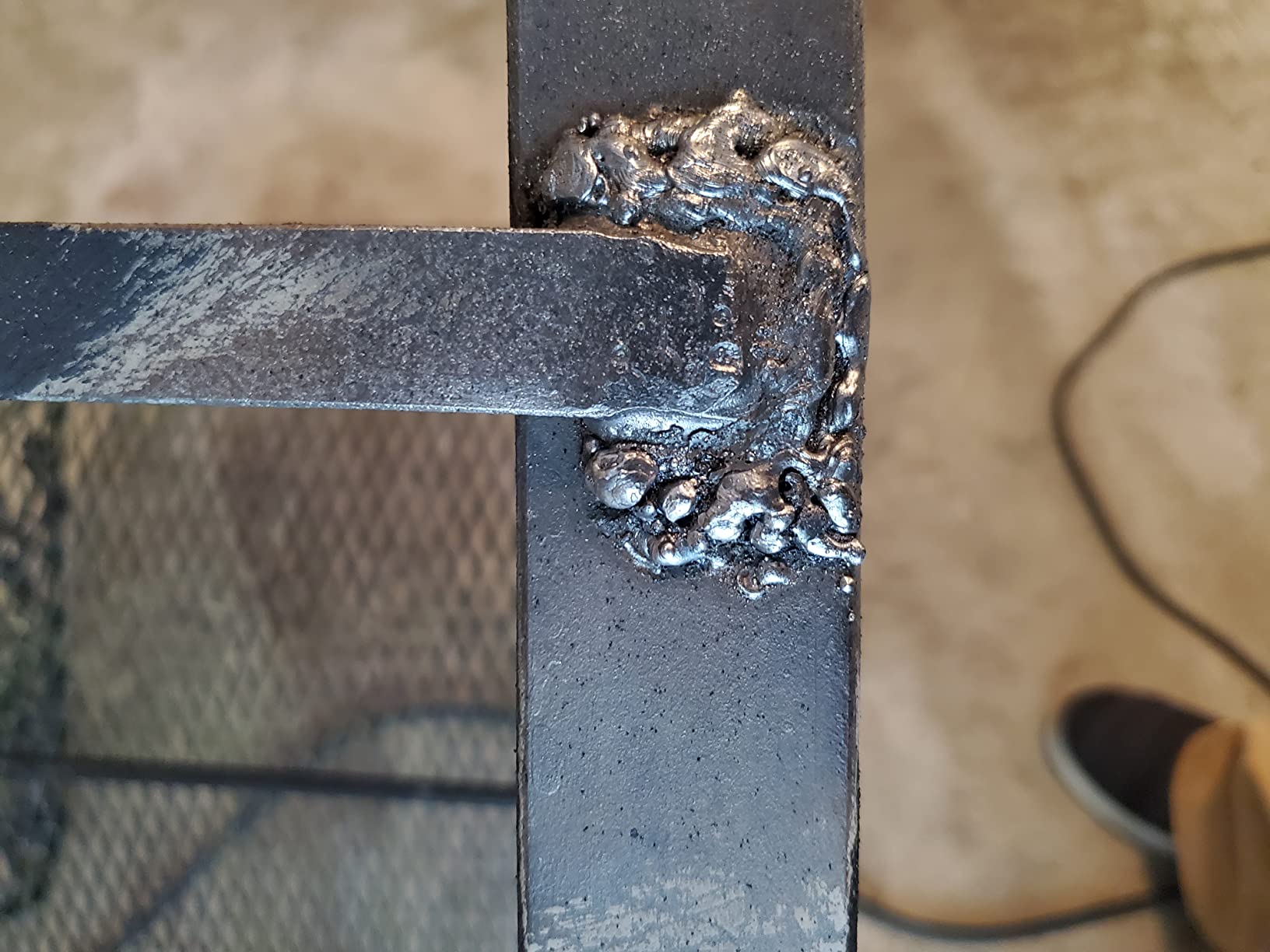
The technical details are unremarkable in the best way. It is ETL certified with per-unit inspection, uses IGBT inverter technology with closed-loop feedback control to hold output voltage steady, and ships with built-in anti-stick and hot start. The listed materials are mild steel, stainless steel and cast iron, and the listing describes aluminum capability as well. The 14.88 x 11.5 x 6.34 inch footprint means it shelves easily in a small shop.
Owners consistently talk about a stable arc and simple setup. Several describe learning on this machine and never needing anything larger. For a farm that welds a few times a month rather than daily, that is exactly the right outcome, because the machine is not asking you to learn inverter settings or manage a duty cycle curve.
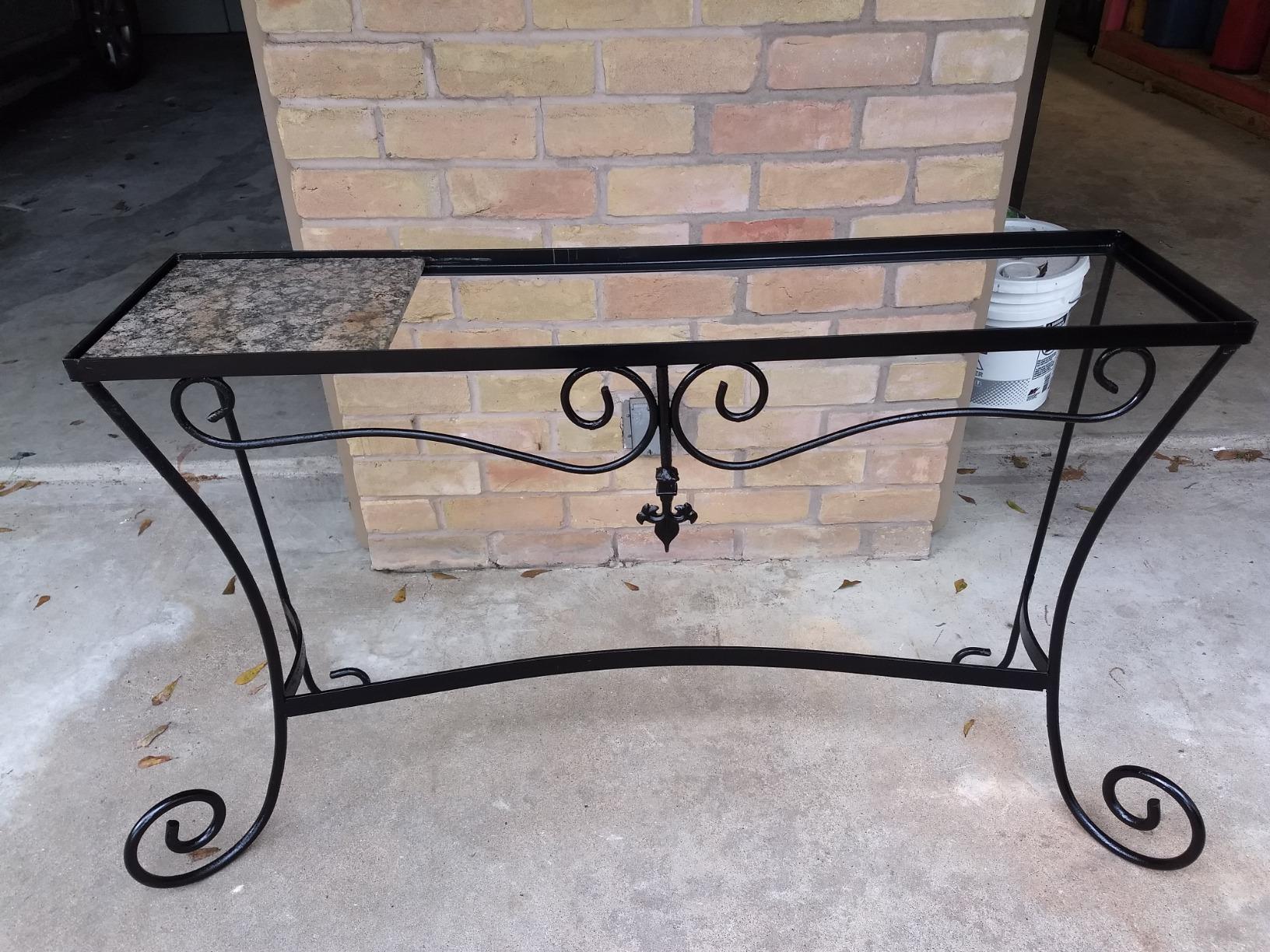
Who This Machine Suits
This is the welder to buy if your repair list runs to gates, fence rails, cattle guard frames, mower decks, post driver brackets and light trailer work. It is also the safest recommendation for a first-time farm welder who wants forgiving arc behavior and a carry handle rather than a shoulder harness. If your shop has a 220V outlet, the machine runs on it, but it does not require one.
It is a genuinely bad fit for continuous structural work. A 160 amp ceiling with no published duty cycle figure means you should expect pauses on a 1/4 inch implement frame. If the heaviest thing you own is a loader bracket in 1/4 inch plate, step up to the YESWELDER or the ARCCAPTAIN instead.
What to Watch Before You Buy
The 160 amp limit is the whole conversation. It is a comfortable limit for most farm chores and a hard wall for heavy fabrication. Also note the package includes an input power adapter cable and a wire brush rather than a long, heavy ground lead, so plan to replace the clamp early if you work on gates far from an outlet.
Forum consensus on a machine like this is straightforward: it will not replace a 225 amp shop machine, and it does not need to. One reminder that keeps coming up in agricultural forums is that good stick welders do not really wear out, they just get broken in properly, which is a fair expectation for a machine with this much field history.
2. YESWELDER 205A IGBT Stick Welder – The Duty Cycle Champion for Implement Work
- 60% duty cycle at rated output
- Adjustable hot start and arc force on 1-10 levels
- Handles 6010 6011 6013 and 7018 rod
- Lightest of the full-size machines at 8.8 lb
- Digital amperage readout runs high
- Ground clamp feels flimsy
- Lift TIG needs a separately sold torch
- 6013 starts cold on this machine
Owners who already own Lincoln and Miller machines rate this one as a capable, lightweight value, and the numbers back that up. A 4.5 average across 2375 reviews from people who had a frame of reference for expensive welders is a good signal in a category full of unverified ratings.
The spec that matters most here is duty cycle: 60% at 205 amps and 100% at 158 amps on 240V. Do the math on a 10-minute cycle and you get roughly six minutes of arc time at full output. That is the difference between welding an implement frame in one session and stopping every four minutes to let the inverter cool. For a farm that fights a deadline during harvest, that number alone justifies the machine.
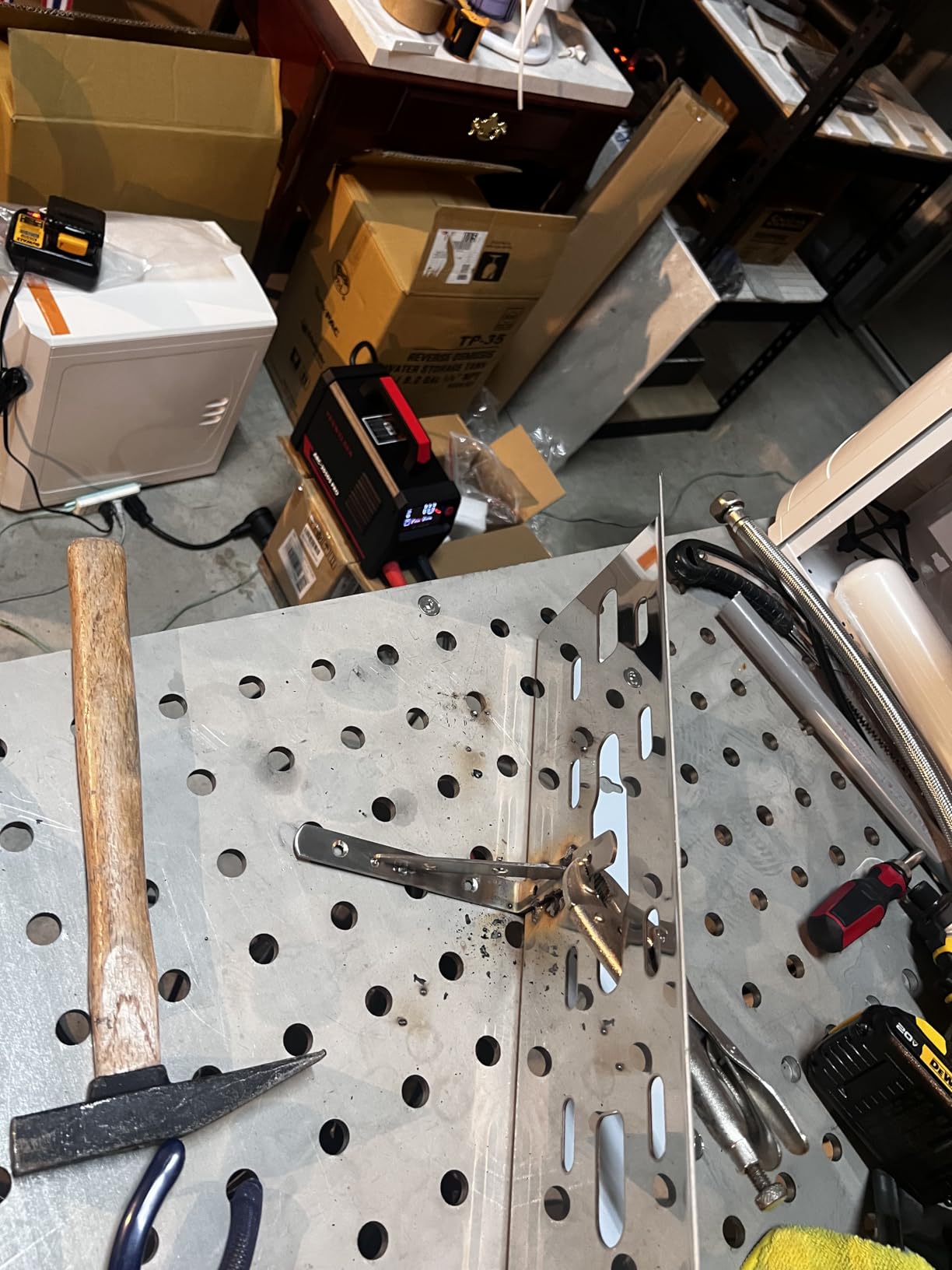
It is also the only machine in this group that explicitly lists compatibility with 6010, 6011, 6013 and 7018 rods, which covers essentially every farm welding task. Hot start and arc force are adjustable across ten levels rather than fixed, and it carries overcurrent, overload, temperature and thermal overload protection. At 8.8 lb with a carry handle, it is the easiest full-output machine here to move between the shop and the yard.
The 15.35 x 13.07 x 7.8 inch body includes a large LED display with a precision value knob sized for gloved adjustment, plus a 220V to 110V adapter in the box. The marketing calls it commercial use, and the 5 kwh wattage figure reflects that class of draw.
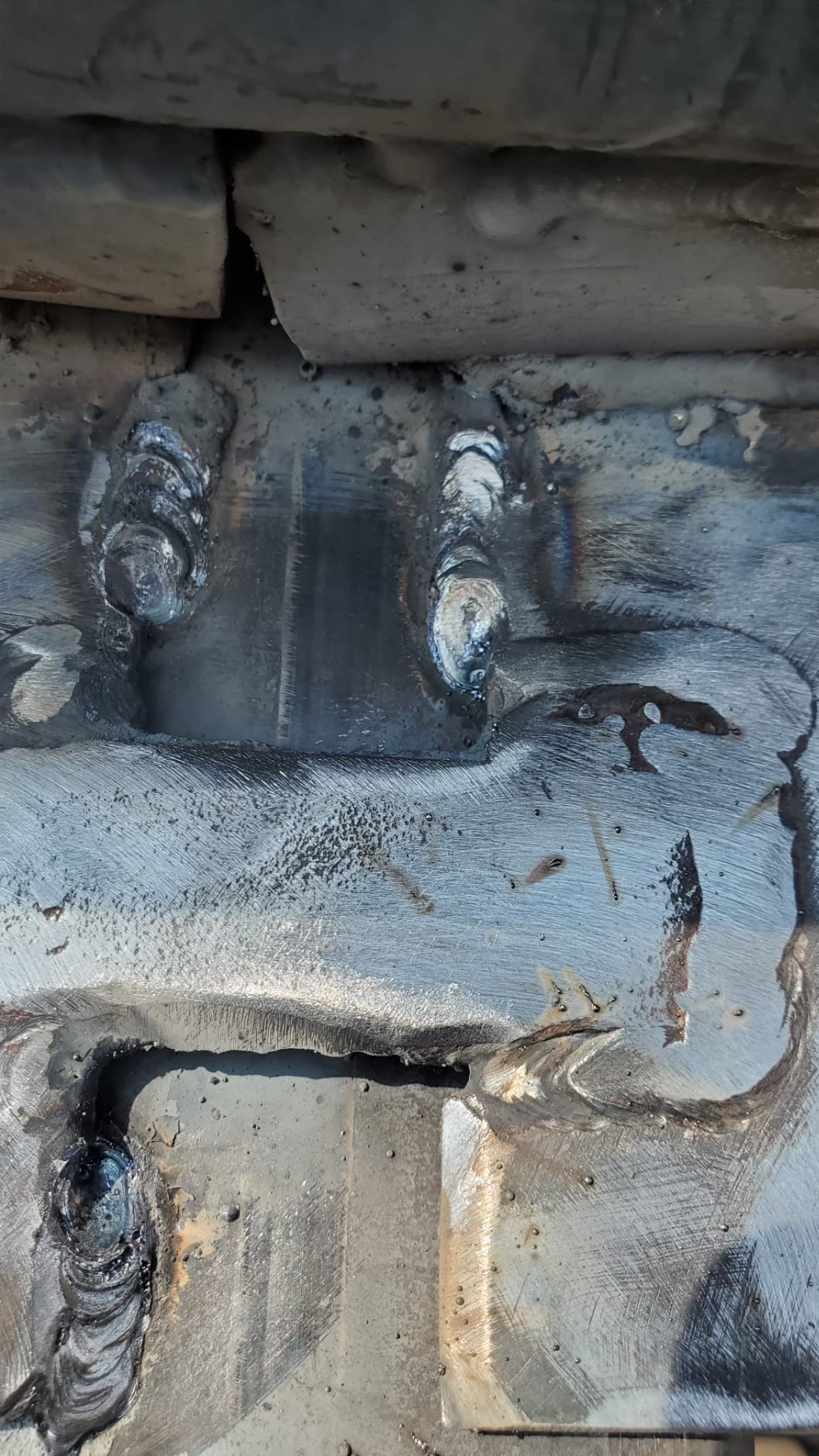
Who This Machine Suits
Buy this one if you weld thicker plate than a hobbyist does. Implement frames, loader brackets, hitch receivers, cattle guard frames in solid steel and trailer rails are all within reach at 205 amps with 1/8 inch rod. The adjustable hot start and arc force also make it a good teacher, because a new welder can dial the arc behavior to match their own hand speed.
It also suits anyone who welds from a generator, since owners report it working well off the 240V plug. Just be honest with yourself about the 110V side: the full 205 amps is a 240V number, and on 120V the machine delivers substantially less.
What to Watch Before You Buy
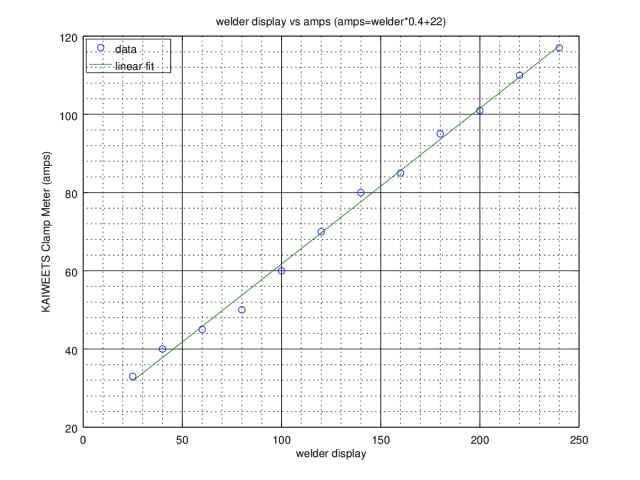
The most repeated caveat is that the digital amperage display is not accurate, and the most repeated instruction from owners is to stop trusting it and learn your dial settings by rod type. Plan on calibrating yourself, because a machine that reads 160 amps while putting out less will always feel weak on the first try.
Two smaller issues: the included ground clamp is described by owners as flimsy, and the lift TIG function requires a torch you buy separately, so treat that as a future expense rather than a feature of the box. Owners also report 6013 rods starting cold on this machine, so if you like fast-starting rod, plan to favor 6011 or 7018 instead.
3. HONE 140A 110/220V Stick Welder – The Rusty-Steel Workhorse With Real Farm References
- Owners weld skid steer buckets and mower frames with it
- Duty cycle of 40% at both voltage tiers
- Digital display reads close to true current
- IGBT inverter with strong arc force
- Will not reliably run E6010 cellulose rod
- 140A ceiling limits heavy plate work
- Display and knob sticker are not accurate at most settings
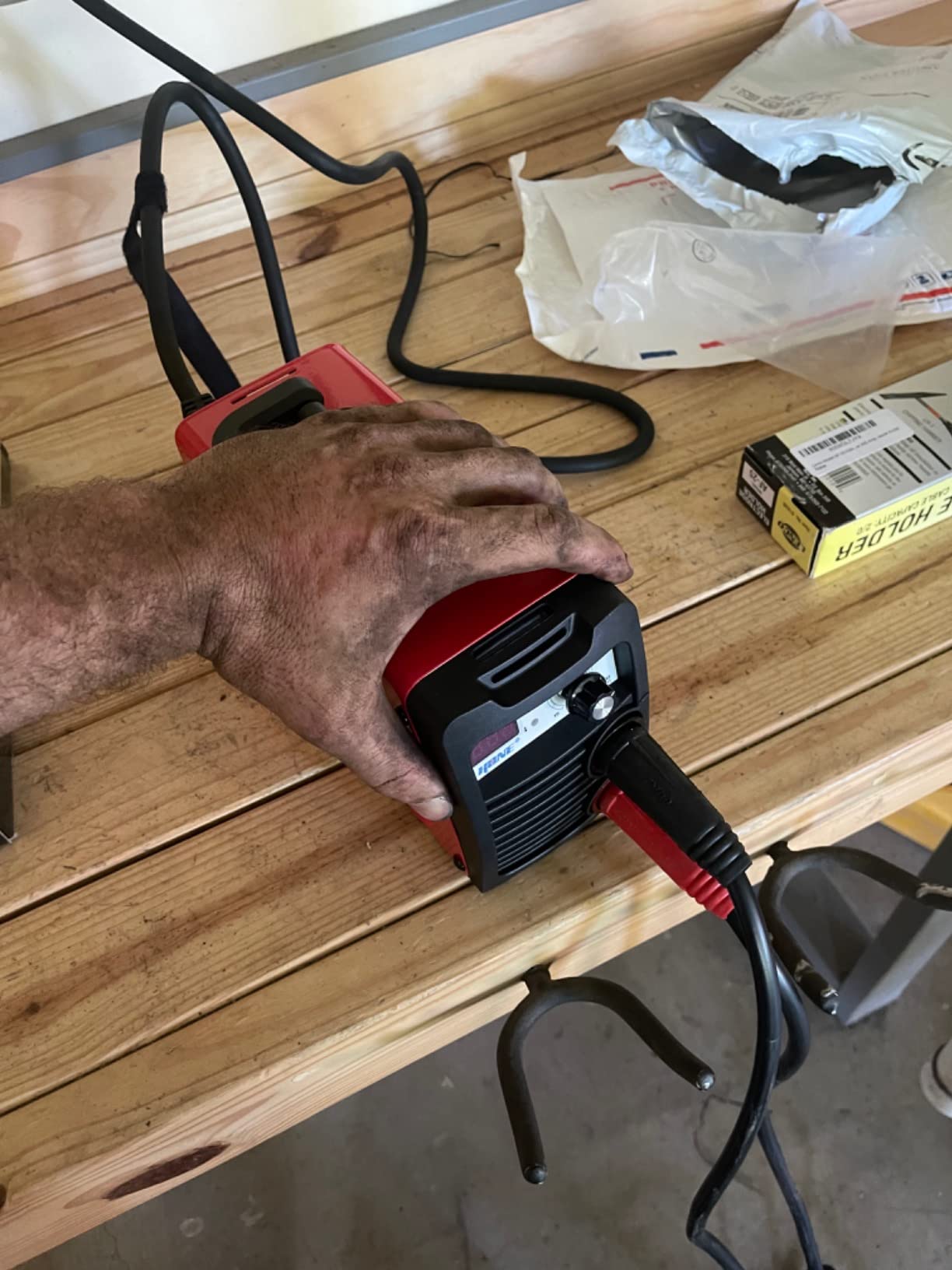
The owner reviews on this one name specific farm jobs rather than generic praise. Skid steer buckets, zero-turn mower frames, rusted trailer hitches and railings all show up repeatedly in the 4.6 average across 1761 reviews. If you want evidence that a machine survives contact with actual farm equipment rather than a garage, that is worth more than any feature bullet.
This is a dual-voltage machine rated 10 to 120 amps on 110V and 10 to 140 amps on 220V, with a 40% duty cycle at both tiers. It weighs 9.44 lb and measures just 9 x 3.9 x 5.6 inches, which is a genuinely small box to find room for in a crowded shop. The wattage draw is 4.29 KW.
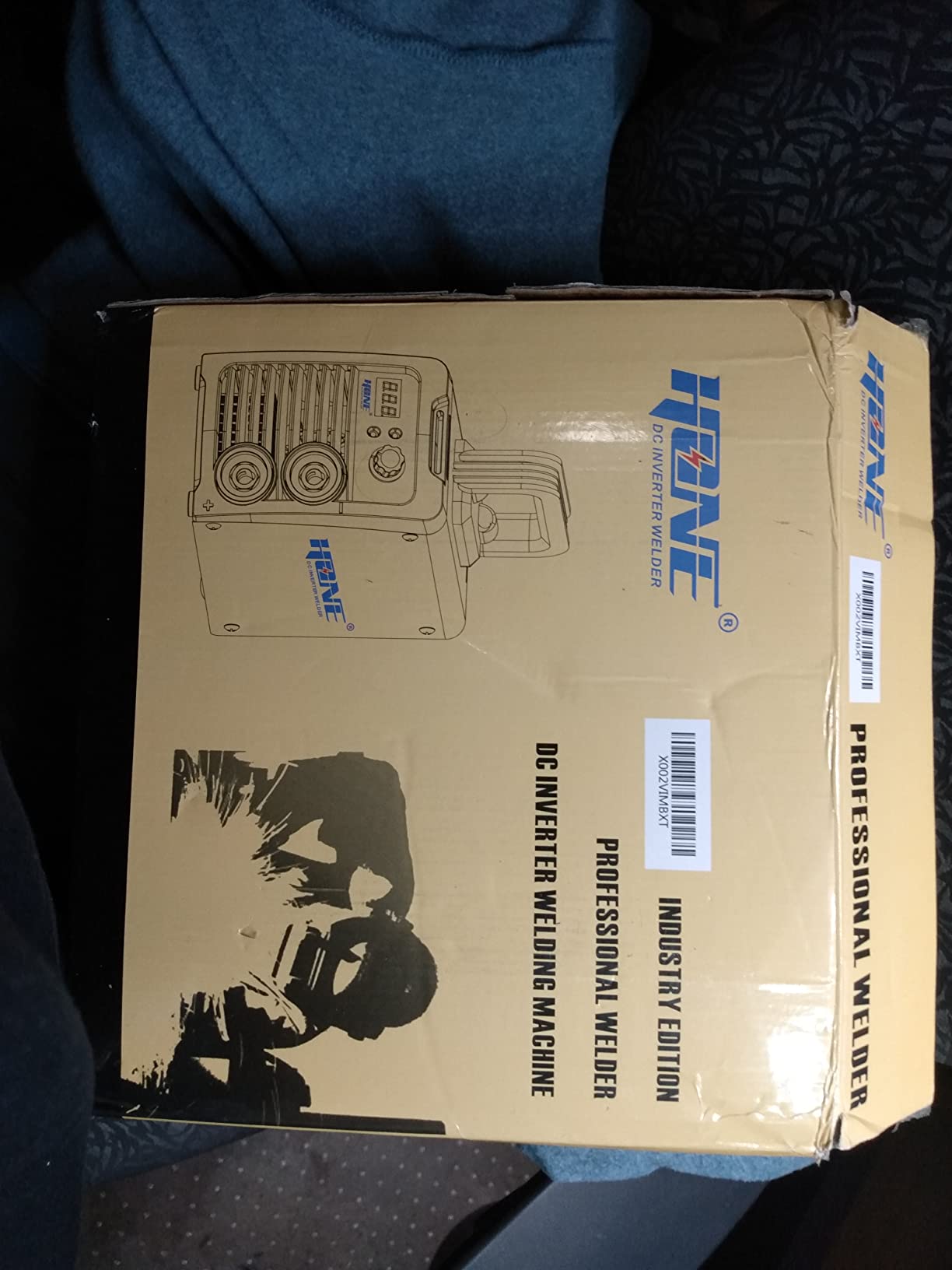
Under the cover it is an IGBT inverter with closed-loop feedback control and protection for over-heat, over-current, over-voltage, under-voltage and short-circuit conditions. It handles AWS E6013, E7018 and E6011 rods from 1/16 to 1/8 inch. Owners specifically praise that the digital display reads close to true current and stays consistent, which is more than several competitors in this roundup can say.
For a farm, the practical case is simple. If your repairs run from 1/16 to 1/8 inch material and you want something you can carry to a fence line with one hand, this is a well-matched tool. Hot start and arc force make the first-time arc predictable, and the top-mounted handle keeps the machine out of the way on a workbench.
Who This Machine Suits
This suits the small acreage owner or part-time farmer whose worst job is a mower deck, a bucket lip or a trailer hitch. It runs 6011 smoothly on a standard 120V outlet, which is the most common farm outlet in the country, and 7018 gives you a low-hydrogen option for anything that carries real load.
It is a poor fit for pipeline work. Owners confirm the machine will not reliably run E6010 cellulose despite the listing claim, which is the exact rod that deep-penetration farm jobs often call for. Know that going in.
What to Watch Before You Buy
Two things. The 140 amp ceiling is real: on 1/8 inch plate you will be near the limit, and anything heavier is out of reach. And while the current readout is more honest than most, owners still report the amp display and the knob sticker disagreeing with reality at many settings, so expect a learning period.
The forum view on machines in this class is worth repeating because it saves money later: a 140 amp unit cannot handle 1/8 and 5/32 inch rod for implement frames, and buying one anyway often means buying a second machine within a year. If a tractor frame is on your 12-month list, save up for the 205 amp class instead.
4. ARCCAPTAIN 200A Stick and Lift TIG Welder – The Best Rod Compatibility for Pipeline and Tractor Work
ARCCAPTAIN Stick Welder, 200A ARC/Lift TIG Welding Machine, 110V/220V
- One of few budget machines that runs 6010 well on both voltages
- 7.2 lb body with included shoulder strap
- Synergic rod diameter selection holds amperage in range
- LED readable with an auto-darkening helmet on
- Supplied leads are copper-plated aluminum that run hot above 100 amps
- Fan is high pitched and noisy
- Hitting rated 200A requires replacing the leads
- Steeper learning curve for new users
The headline spec here is 28V maximum welding voltage, and that number is the entire reason this machine exists in this roundup. Open circuit voltage is what determines whether a stick welder can sustain an arc on 6010 cellulose rod, and most budget inverters simply cannot. Forum users name this as a dealbreaker for anyone expecting pipeline or deep-penetration work.
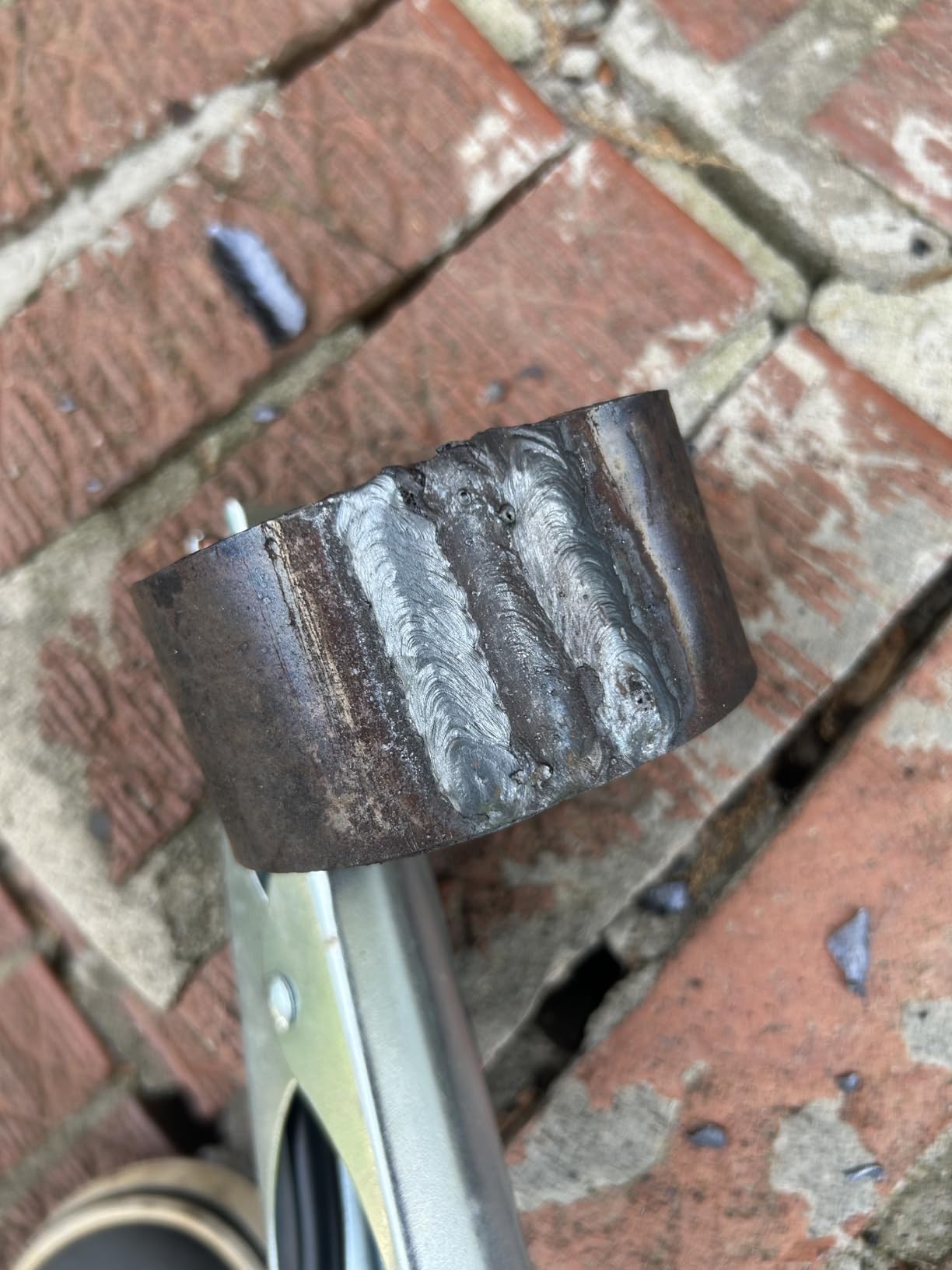
Beyond that, the 200A rated output puts it in implement-frame territory, and the 4.6 average across 1391 reviews suggests it holds up. One owner reports welding over 2000 feet of drill pipe fence and building livestock sheds on this machine, which is a farm-relevant endurance claim rather than a bench test.
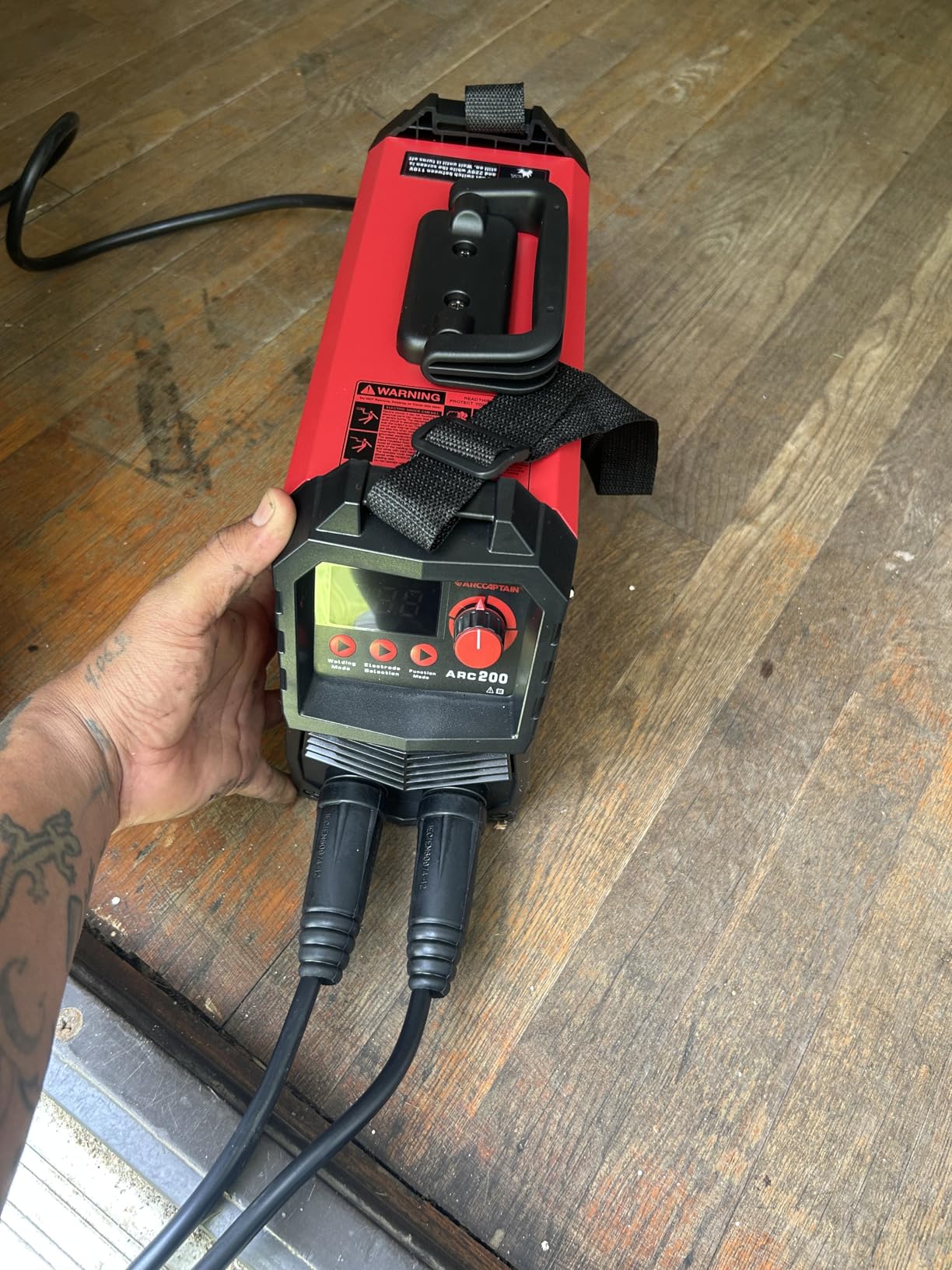
The synergic rod-diameter selection is genuinely useful and underappreciated. Instead of setting amperage by feel, you select the rod diameter and the machine matches current and voltage to it. That is a real safety and consistency gain when you are welding alone in a barn with a grain cart parked too close.
It is also a 2-in-1 stick and lift TIG machine, though the TIG torch is not included. Portability is a highlight at 7.2 lb with a shoulder strap in the box, and the LED display is large enough to read through an auto-darkening helmet. Certification is TÜV and ANSI with a 2-year quality service, and protection covers over-current, over-voltage, overload and overheating.
Who This Machine Suits
Buy this one if you weld pipe, drill pipe fence, water troughs, tractor frames or anything where deep penetration and rod choice matter. It is also the right pick for a farmer who wants to add TIG for stainless or aluminum without buying a second machine, provided you budget for a torch.
It suits a truck-bed repair kit well at 7.2 lb, and the strap makes it workable on a pipe fence run away from any outlet. The dual voltage means you can start a job light and switch to full power once you reach the shop.
What to Watch Before You Buy
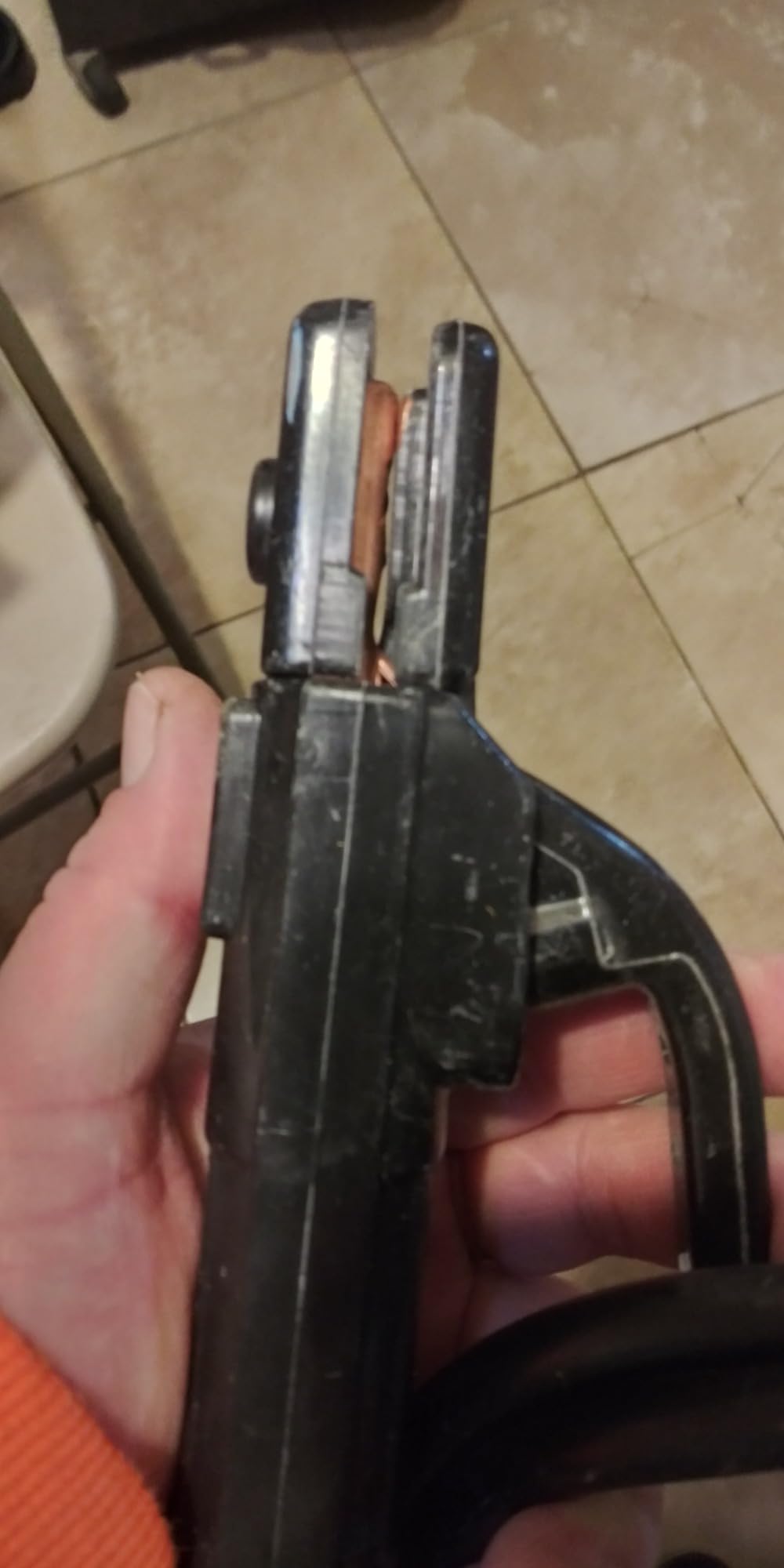
The leads are the catch, and experienced welders flag this clearly. The supplied cables are undersized copper-plated aluminum that run very hot above 100 amps, and reaching the rated 200A output effectively means replacing them with heavier copper. Budget for a proper electrode holder and ground clamp as a first-week purchase.
Two more honest notes: the fan is high pitched and noticeable in a quiet shop, and there is a real learning curve. Owners who already weld regularly rate it highly; complete beginners describe the first sessions as frustrating until the syneric settings click.
5. S7 200A DC TIG and Stick Welder – Two Processes From One Box
- Genuine DC TIG plus stick from a single box
- High frequency arc start is reliable and quiet
- Post-gas flow dial is rare at this level
- Owners report outdoor use in heat rain and mud without overheating
- No argon bottle regulator or shielding gas included
- Stiff short torch lead is awkward on large workpieces
- Torch trigger is on and off only with no amperage control
- Accessories and leads described as low quality
Most of this roundup is stick only, and if your farm work includes stainless or aluminum anywhere, this is the machine that changes that. It combines DC TIG and stick welding in one 200A box, and the 4.4 average across 1530 reviews reflects a machine that does both jobs adequately rather than one that does either job excellently.
The technical details are farm-friendly in a specific way: 110V and 220V dual voltage, high frequency arc start, a post-gas flow dial, and compatibility with standard tungsten electrodes, ceramic cups and collets. It also carries overheat and overload protection, which matters in a barn in July.
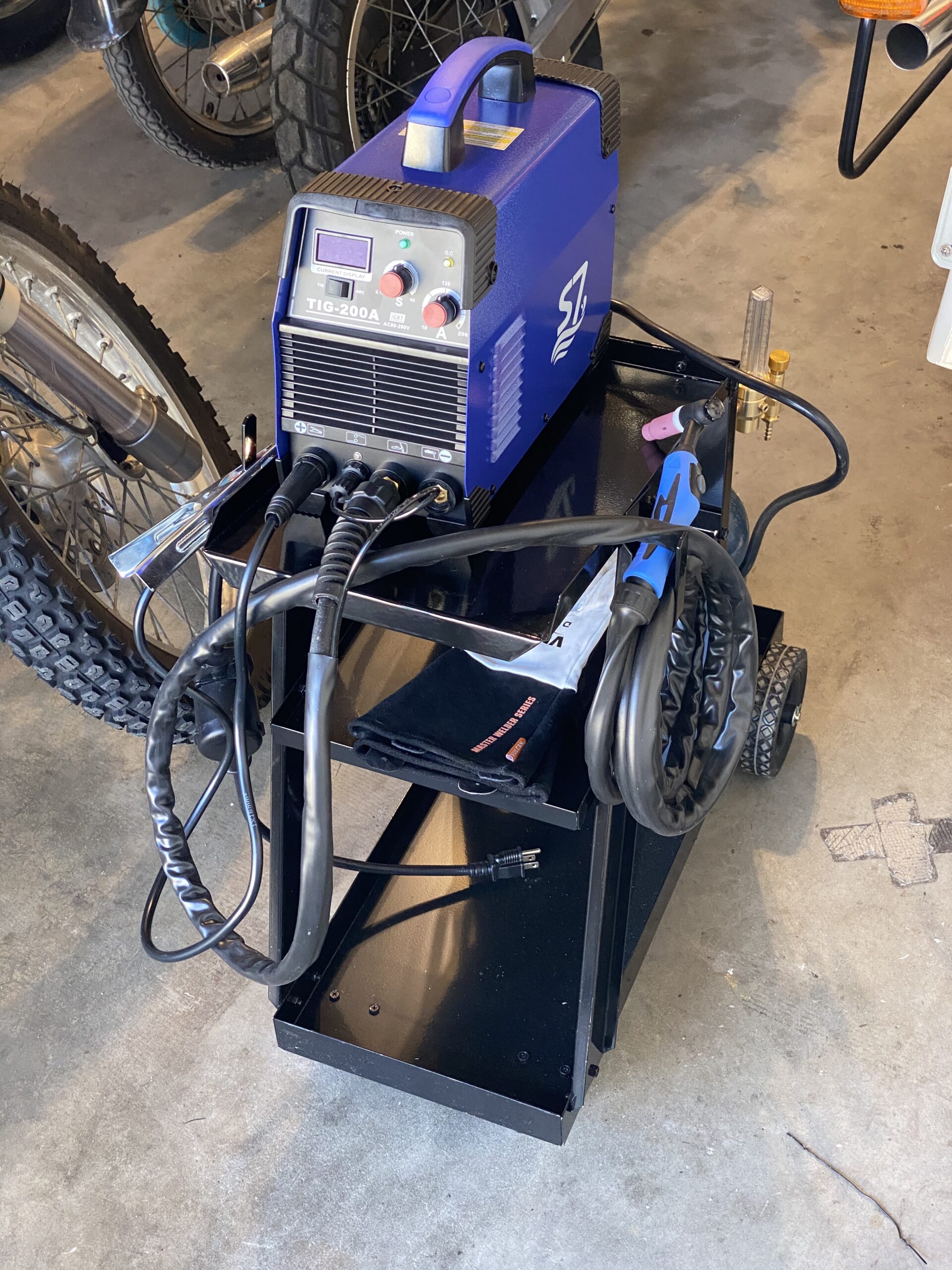
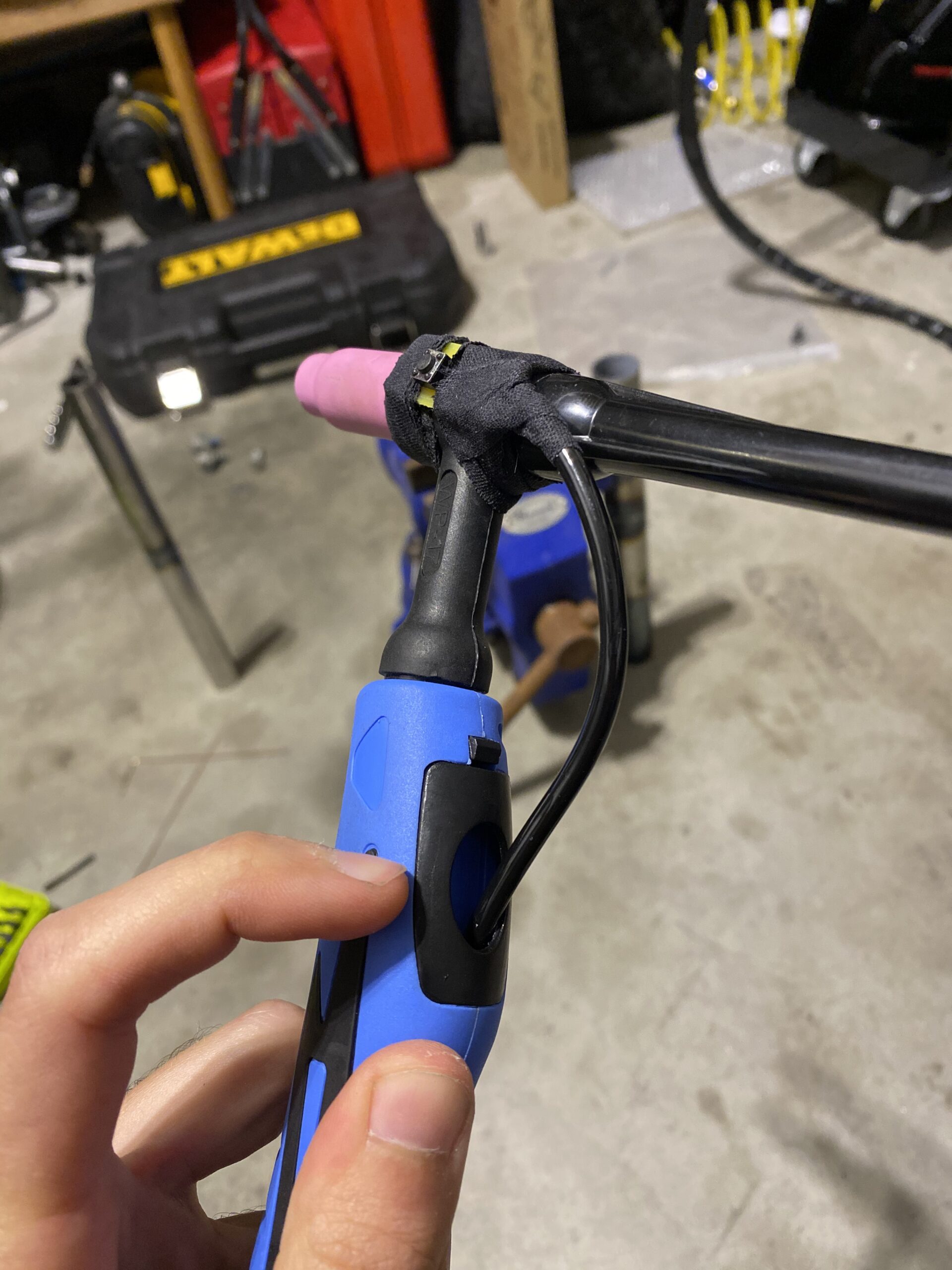
Owners report smooth, good quality welds when set correctly, particularly on thin stainless, and specifically call out that it handles outdoor field work in heat, rain and mud without overheating. That is a durability claim for the conditions on this site actually is. At 18.01 lb and 17 x 10 x 13 inches, it is by far the heaviest machine here, so it lives in a shop rather than a truck bed.
The post-gas flow dial deserves more credit than it gets. On stainless, controlling how long shielding gas continues after the arc stops is the difference between a clean bead and one that clouds at the end of every pass. Having that as a physical dial on a budget machine is unusual.
Who This Machine Suits
This suits a farm with stainless water tanks, aluminum trailer rails, or any repair where a clean cosmetic finish matters more than speed. It also suits someone who wants to learn TIG without buying a dedicated machine, because the controls are simple and the digital current display helps with setup.
It is a good fit for a shop that has a 220V circuit available and a dedicated corner for it. Do not buy it as a portable field welder, though, since 18 lb with a stiff torch lead is a two-person carry at best.
What to Watch Before You Buy
The gas. There is no argon bottle, regulator or shielding gas included, and owners consistently put the added cost in the range of a few hundred dollars before you make your first TIG weld. Factor that into the total before deciding.
The torch is also basic: a stiff, short lead that is awkward around larger workpieces, an on/off trigger rather than variable amperage control, and a push-on gas nozzle with poor instructions. One owner also reported unit failure after years of light use, so treat it as a value entry point rather than a long-term shop machine.
6. HGNVGZ 250A 110V MMA Stick Welder – The Lightest Full-Output Machine for Field Work
HGNVGZ 250A MMA Stick Welder 110V, Portable IGBT Inverter Arc Welder
- Only 3.7 lb with an adjustable shoulder strap
- 60% duty cycle at rated output
- Works with 6013 7018 6011 and E308 rods up to 5mm
- Large heat dissipation area reduces shutdowns
- Requires a 20A circuit and will not run on 15A
- Best suited to small light jobs rather than production work
- Poorly translated manual with no troubleshooting section
- A minority report early unit failure
The headline number here is 3.7 lb, which makes this the lightest machine that still claims 250 amps and a 60% duty cycle. Owners frame it as a light-duty, highly portable unit for mower decks, gates and small household repairs, and one reports three years of service with roughly 160 lb of rod consumed.
Everything runs from standard 110V 60Hz household power, and that is a genuine farm advantage. The spec sheet is explicit that it requires a standard 20A household circuit breaker for reliable operation, which tells you immediately this is not a 15A outlet machine.
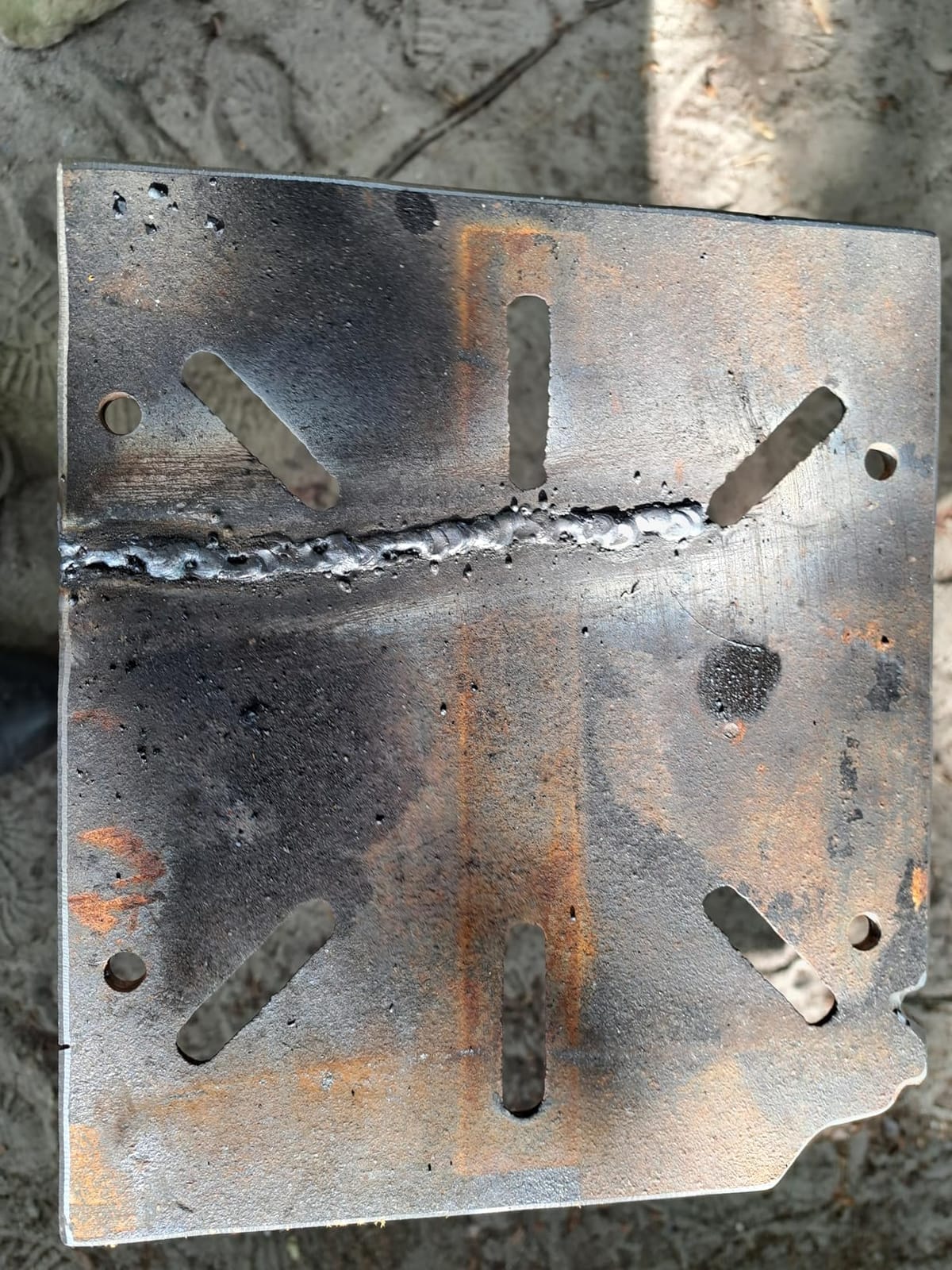
It handles 1/16 to 1/8 inch E6013, E7018, E6011 and E308 rods on material up to 0.2 inch (5mm). The cooling story is the part that matters for a long repair: a 360-degree heat dissipation design with a high-performance fan and an ABS insulated shell, rated 60% at 250A. Overheat, overcurrent and overload protection round out the electrical safety set.
At 7.63 lb as shipped with a 11.5 x 10.59 x 6.3 inch body, it is small enough to live in a toolbox. The LCD display and beginner-friendly controls get new users welding quickly, according to owners, and the shoulder strap makes the difference when the work is 200 feet from the outlet.
Who This Machine Suits
This is the machine for the farmer who repairs from the tailgate. A 3.7 lb body with a shoulder strap fits a backpack, and the 250A ceiling is enough for 1/8 inch rod on gate latches, mower blades, fence hardware and small brackets without a 220V outlet anywhere on the property.
It is also a strong second machine for a household that already has a larger welder but wants something that goes in the truck. You will not be limited to hobby work, but you will not be doing production either.
What to Watch Before You Buy
The 20A circuit requirement is the dealbreaker for older farm wiring. If your shop is on a 15A circuit, this machine will not behave, and neither will any other 250A inverter. Check the circuit before you buy anything in this class.
Also weigh the reliability signal honestly. Owners describe it as best suited to small, light jobs rather than a shop or production welder, the manual is poorly translated with no troubleshooting section, and a minority of owners report units that stopped producing an arc after very little use. Against three years of service from other owners, that is a spread you should think about rather than ignore.
7. S7 250A 110V/220V Inverter Stick Welder – The Best Satisfaction Ratio in the Group
- Highest share of five-star ratings in this roundup at 80%
- Dual voltage for both light and heavy jobs
- Compatible with 6010 6011 6013 and 7018 rods
- Compact and easy to move between work areas
- No published duty cycle rating
- Requires cooling time during extended operation
- Digital current readout accuracy is unverified by owners
- Needs a suitable circuit for higher output
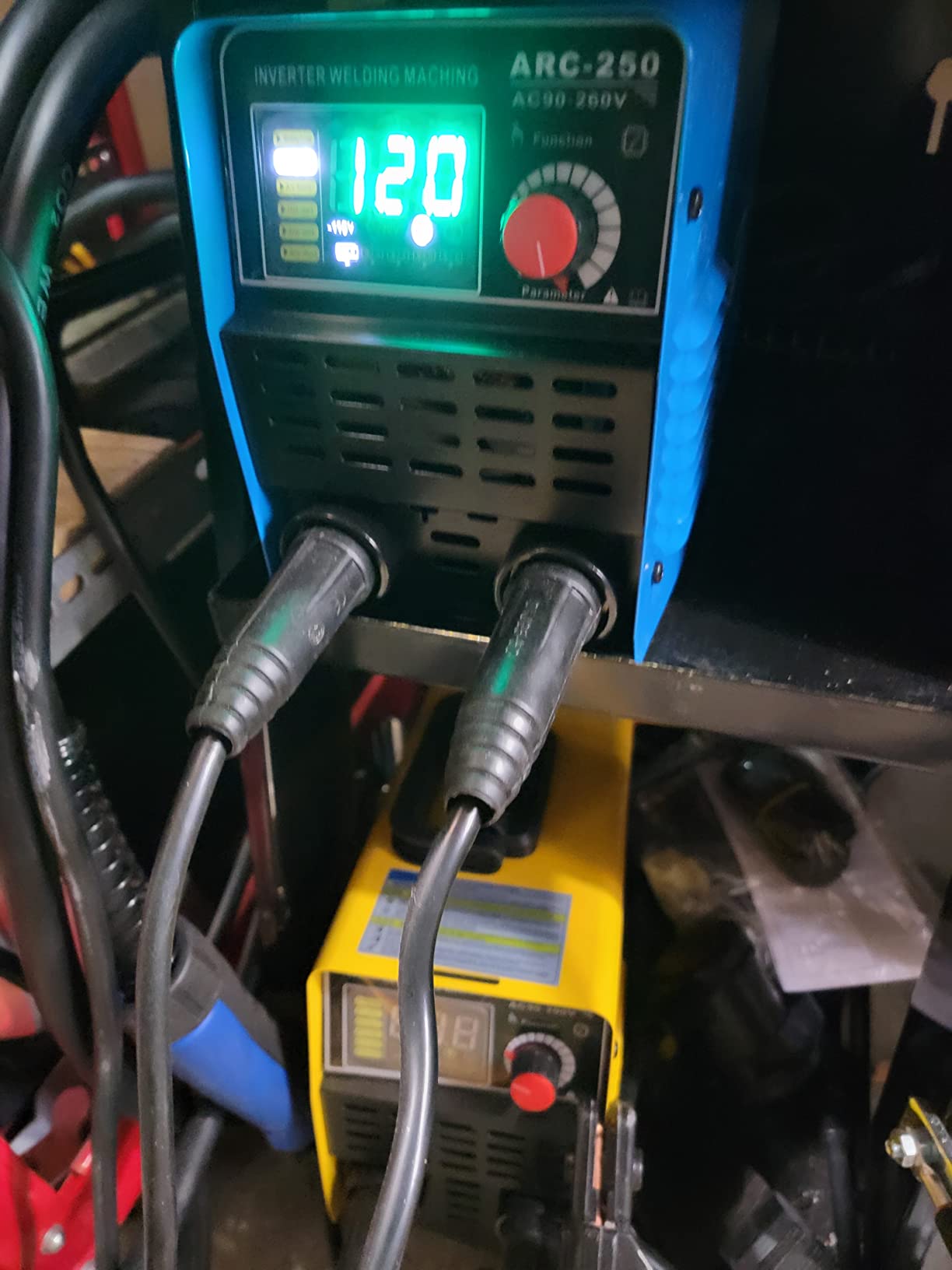
An 80% five-star share is the strongest satisfaction ratio in this roundup, and the 4.6 average across 1054 reviews backs it up. When two machines carry the same rating, the one where more owners gave full marks is usually the better bet.
The dual voltage is what farm buyers care about. You can start a light repair on 110V, then plug into 220V when you move to something structural, without owning two machines. At 9.13 lb and 12.5 x 10 x 9.5 inches, it is a reasonable size to move from the shop to the yard and back.
Rod compatibility is broad for the class: E6010, E6011, E6013 and E7018. That is the same list as the machines costing well over twice as much, and it means you are not choosing your rod based on what the machine can do. Hot start, arc force and anti-stick are all present, with a digital current display for adjustment, and the IGBT inverter design handles the rest.
Owners describe it as targeting exactly the jobs we care about here: gates, fences, trailer parts and mower decks. That is not a marketing line, it is how buyers describe what they used it on, and it lines up with what a farm needs far better than a machine built for continuous production work.
Who This Machine Suits
This suits the farm with mixed work. Light 110V jobs and heavier 220V jobs in the same week is the normal pattern on a working farm, and this machine covers both without a second purchase. The 1/16 to 1/8 inch rod range handles everything from fence staples to a welded gate frame.
It is also a good fit for someone who is not sure yet whether they need a bigger machine. If you outgrow it, you will know, and you will have learned on a machine that was not fighting you the whole time.
What to Watch Before You Buy
There is no published duty cycle rating, which is the biggest gap in the specification sheet. Owners note that it needs cooling time during extended operation and a suitable power circuit for higher output. Treat long structural sessions as something to plan around rather than something to expect to power through.
The digital current readout accuracy is not independently confirmed by owners, so calibrate by feel and rod type rather than trusting the number. Everything else about this machine is straightforward, and the 80% five-star share suggests you will not be doing extensive calibration at all.
8. FEIFANKE 250A 110V Mini Stick Welder – The Grab-and-Go Kit With Rods Included
FEIFANKE 250A Stick Welder Machine, 20Pcs Welding Rod Mini Welding Machine
- Smallest and lightest at 3.9 lb
- Kit includes 20 rods brush hammer gloves and copper holder
- IGBT arc force gives deep penetration for the size
- DCEP for acidic rod and DCEN for alkaline rod
- 110V only with no 220V option
- Ground clamp and electrode holder leads are short
- Rod polarity must be set manually by rod type
- Smallest support base of the group
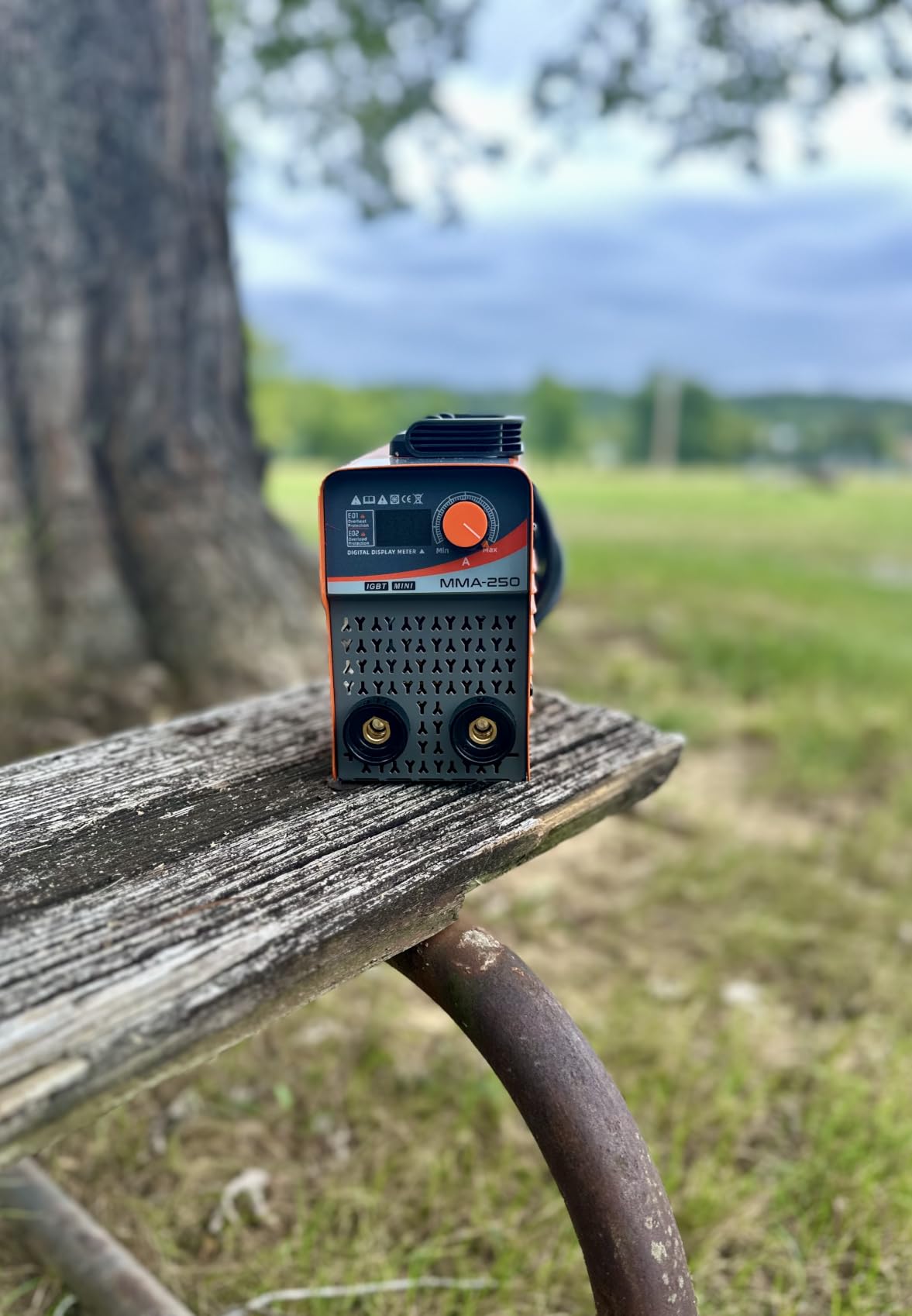
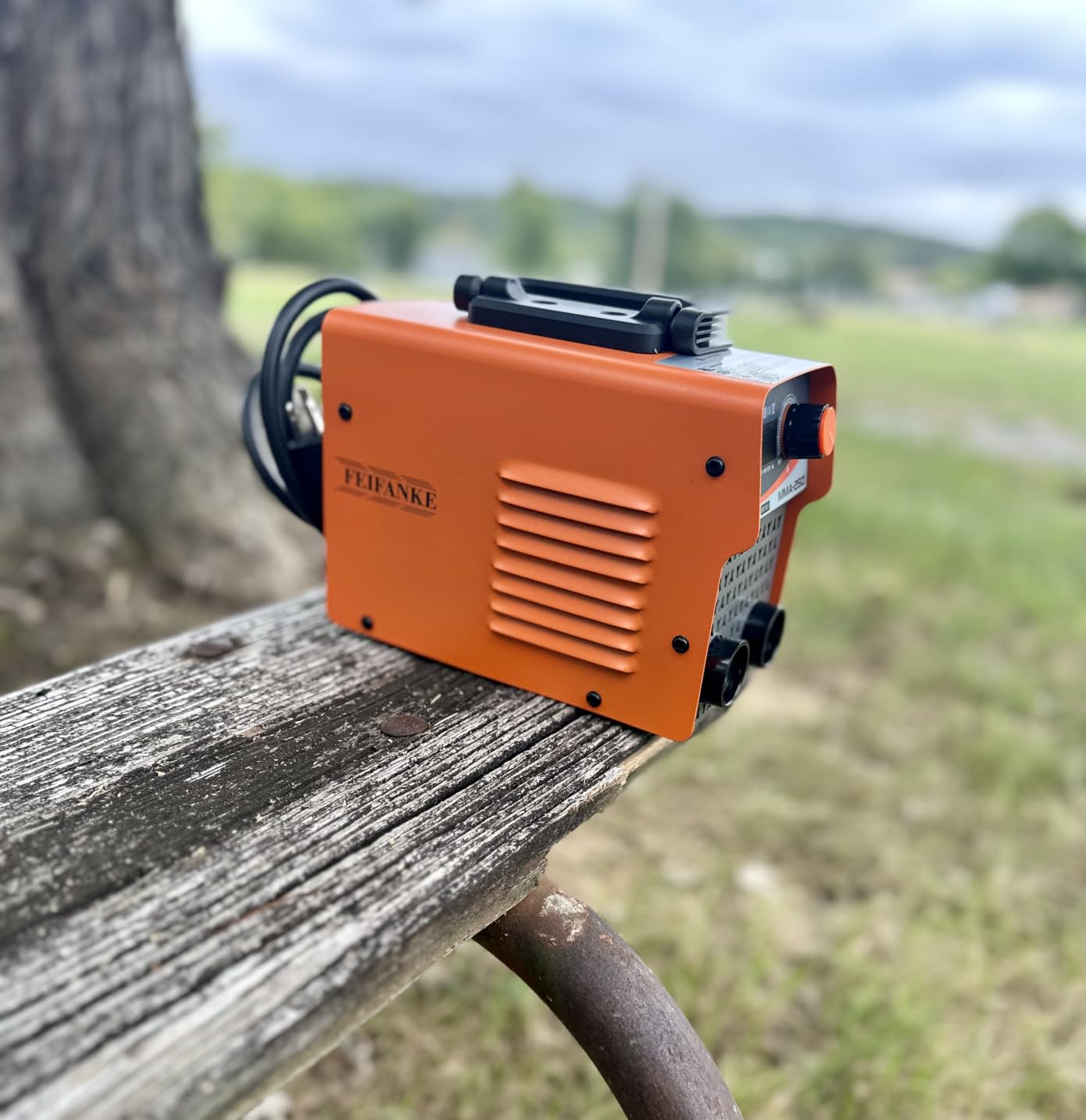
This is the machine to consider if you have never stick welded and want to be welding this weekend. The box includes 20 sticks of 1/16 inch E6013 rod, a 1.2 m ground clamp, a 1.8 m electrode holder, a chipping hammer, a brush and a manual. Nothing else needs to be bought before the first bead.
It is rated 20 to 250 amps on 110V, handles workpiece thickness of 0.05 to 0.22 inch, and the body measures 8.5 x 3.7 x 5.9 inches with a listed size of 3.9 lb. Rod compatibility covers E6013, E6011, E6010 and E7018 from 1/16 to 1/8 inch.
The polarity detail is worth pausing on, because it is the one specification that trips up beginners on every machine: DCEP for acidic rod, DCEN for alkaline rod. Getting it backwards produces a poor arc and a lot of confusion. This machine tells you which way to set it rather than leaving you to guess, and its digital IGBT inverter control with arc force is designed to smooth that learning curve.
The 4.6 average across 846 reviews is strong, though this is the newest listing in the group and carries the lowest sales rank of the ten. That is not a quality judgment, it is simply less long-term history to draw comfort from.
Who This Machine Suits
It suits a first-time welder, a hobby farm, or anyone who wants a genuinely portable unit for fence hardware, gate latches and small equipment repairs away from a building. At 3.9 lb it fits a backpack, and with the included rods you can open the box and weld the same afternoon.
It is a good emergency kit to keep in a vehicle. A machine that weighs almost nothing and has consumables in the box is exactly what you want when a hitch pin shears two miles down a lane at dusk.
What to Watch Before You Buy
It is 110V only, with no 220V option, which puts a hard ceiling on thick work. The leads are also the practical constraint: 1.2 m and 1.8 m are short for larger pieces, so plan to buy a longer ground clamp before tackling anything full-size.
And set the polarity correctly the first time. Owners flag manual polarity setting as a common beginner mistake, and this is a machine where that mistake is easy to make and annoying to debug. Otherwise, the accessory bundle is the best in this roundup at this size, and the 24-hour customer service support is a genuine plus.
9. HONE 205A 110V Stick and Lift TIG – The Compact Unit That Ships Fully Equipped
- 4.4 lb body fits a truck or a small shop shelf
- Lift TIG adds a second process without a second machine
- Kit includes 25 rods brush hammer glove and face shield
- VRD safety function for newer users
- 110V only with no 220V option
- 6.5 ft leads are short for larger workpieces
- TIG torch not included for the lift TIG mode
- Newer listing with a smaller review base
Everything you need to weld arrives in the box. Twenty-five 3/32 inch rods, a 6.5 ft ground clamp, a 6.5 ft electrode holder, a steel wire brush, a chipping hammer, a leather welding glove, a welding mask and a manual. On a farm where the parts trailer is a shelf in a truck bed, that completeness matters as much as the machine.
The machine itself is 20 to 205 amps on 110V for 0.05 to 0.22 inch workpiece thickness, with a body of 8.4 x 3.7 x 5.3 inches weighing 4.4 lb. It is a 2-in-1 stick and lift TIG unit, though the TIG torch is not included.
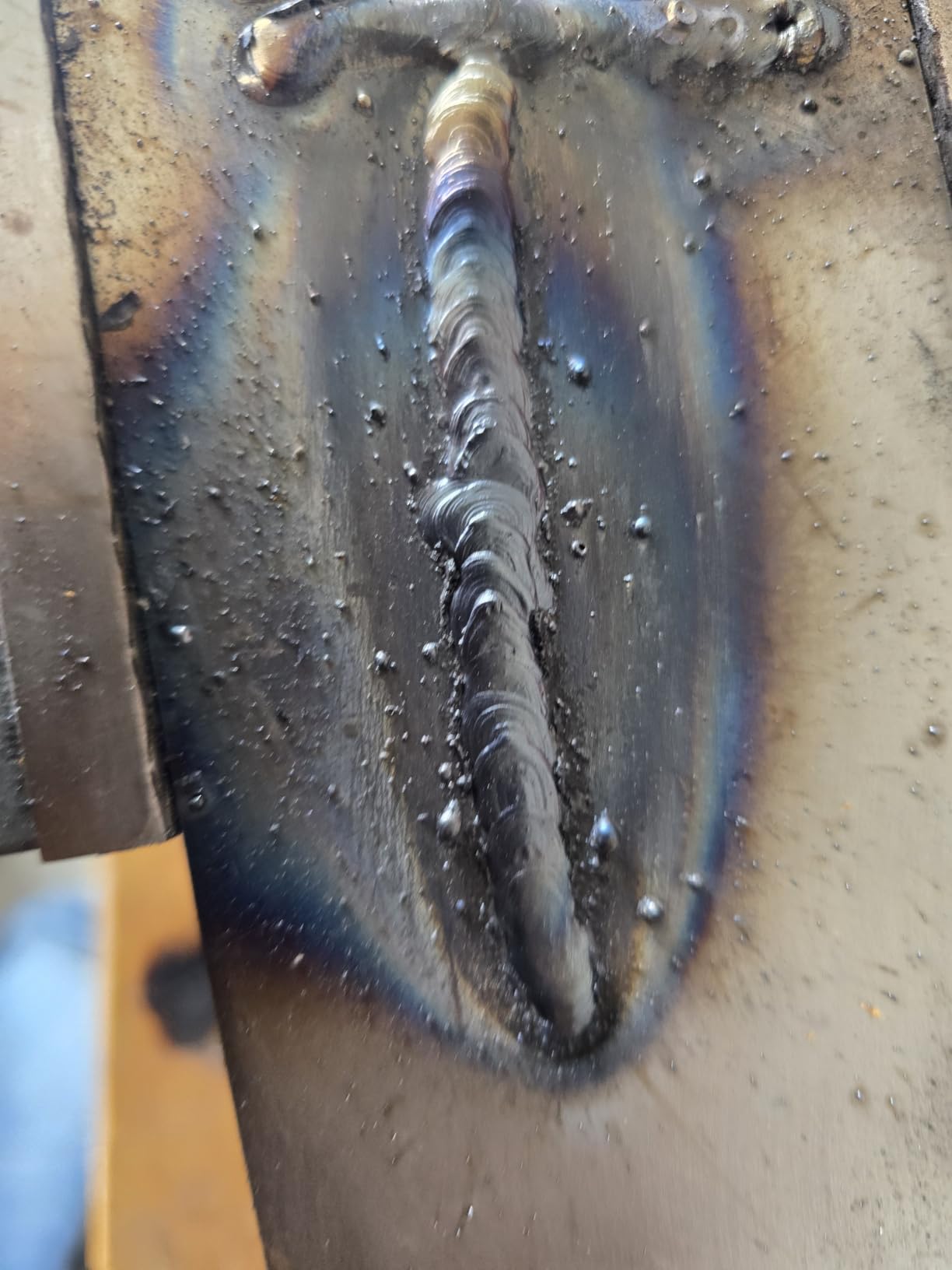
Rod support is broad: AWS E6013, E6011, E6010, E7018 and E308 from 1/16 to 1/8 inch. The upgraded IGBT inverter adds hot start, arc force, anti-stick and a VRD safety function, with protection against over-voltage, over-current, heat and load. The VRD feature is the one worth noting, because voltage reduction device logic matters if you are new to arc equipment.
At 4.5 across 606 reviews, it holds a good score, though this is a newer listing with a smaller review base than the other HONE machine in this roundup. Judge it on the accessory package and the compact size, which is what buyers actually cite as the reasons to pick it.
Who This Machine Suits
This suits a farmer who wants one small box that does stick now and TIG later. The 110V-only design works anywhere on the property, and 4.4 lb means it lives in a truck rather than a shop. It is a natural fit for stainless repair on a water tank or for aluminum trailer work once you add a torch.
It is also a good choice for a beginner who will benefit from hot start and arc force doing most of the work. The included 25 rods mean a new welder gets through practice beads before the rod supply runs out.
What to Watch Before You Buy
No 220V means the 205 amp rating is a 110V number, so on thicker material you will be managing heat rather than pushing the machine. The 6.5 ft leads are short for larger workpieces, which is the first thing to replace.
The lift TIG mode needs a separately purchased torch, so treat it as a future upgrade rather than a capability of the box today. And with 606 reviews, there is less long-term evidence here than for the picks above, so keep the accessory bundle, not the spec sheet, as the reason to buy.
10. Siasky Mini 250A 110V Stick Welder – The Lightest Machine in the Roundup
Siasky Mini Welding Machine, Upgraded Welder Machine 110V, Portable Stick Welder MMA-250A, IGBT Inverter Welder with Hot Start, Arc Force, Anti-Stick (20 welding rods)
- Lightest machine here at 3.3 lb with an ergonomic carry handle
- Owners weld 1/8 in steel and 5/16 in angle iron successfully
- LED screen with automatic current matching helps beginners
- Kit includes 20 rods face shield brush and clips
- Included hood and gloves are not safety adequate
- Ground clamp can fail quickly
- Power cord and lead wires are short
- 110V only with no dual voltage option
At 3.3 lb this is the lightest machine we tested, and owners are genuinely surprised by what it does. Reports include welding 1/8 inch steel and 5/16 inch angle iron, one owner completing a full wall of window frames. That is real farm-fabrication work from a box you can carry with one hand.
It is a 110V MMA-250A IGBT inverter with hot start, arc force and anti-stick, and it includes a 4.4 average across 426 reviews. The intelligent LED screen with automatic current matching is a genuine assist for a first-time welder, and the fan motor handles cooling, heat dissipation and dust prevention, which matters in a hay barn.
The upgraded IGBT inverter is claimed to deliver stronger arc force for smoother, deeper penetration welds relative to its size. The kit contents cover electrode clips, work clips, a face shield, a brush, 20 sticks of 2.5 mm rod and a manual, so again you can start immediately.
Anti-stick electrode behavior is reported by owners as reducing electrode sticking, which is a real annoyance in cold-weather shop work where your gloves are the problem. The 15.96 x 11.58 x 5.2 inch shipping box is larger than the machine itself, so factor that into where you plan to store it.
Who This Machine Suits
This suits anyone who repairs away from a building. A fence line, a field edge, a ditch crossing, a breakdown two miles down a road: 3.3 lb and 110V operation means no generator and no shop required. It is also a solid first machine for a new welder who needs encouragement more than headroom.
Expect it to handle non-structural repairs well. Brackets, gate hardware, small frames and general farm fabrication at 1/8 inch are comfortably inside what owners report.
What to Watch Before You Buy
Replace the safety gear. Owners across the board describe the included hood and gloves as low quality and not safety adequate, and that is not a small thing when you are looking at an arc. Budget for a proper auto-darkening helmet before the first weld rather than after an injury.
The ground clamp is another known weak point, with one owner replacing it within a week, and the power cord and lead wires are short compared to a MIG setup. Weld quality is described as adequate for a pinch rather than finished work, and there is no 220V option, so treat this as a mobile repair tool rather than a shop machine.
How to Match a Stick Welder to the Farm Job in Front of You
Match the machine class to the job, not the other way around. Nearly every disappointing purchase in this category comes from a 140 amp machine being asked to do implement-frame work, or a 250 amp machine being carried to a fence line once a year. The repair list decides the class.
For gate hinges, latches, fence rails and cattle guards built from 1/8 inch material, anything in this roundup works. Stick is the right process for it because the metal is often painted, rusted or dirty at the hinge, and 6011 rod is described by forum users as more than sufficient for these jobs.
For tractor implements, loader brackets and cultivator shanks, move up. You are now into 1/4 inch plate territory, which means 3/32 or 1/8 inch rod and real amperage, and that rules out the 140 amp and 110V-only machines. The YESWELDER and the ARCCAPTAIN are the two picks that hold up here, and only because of output and lead quality respectively.
For equipment frames, trailer rails and anything carrying structural load, you want 200 amps or more, a 220V connection, and 7018 rod. Forum consensus points consistently in one direction here: for high strength, buy American-made Lincoln AC 7018 over cheaper imports, and on imported machines the electrode brand you buy changes the weld.
For field and off-grid work, weight and voltage matter more than amperage. The ARCCAPTAIN at 7.2 lb, the Siasky at 3.3 lb and the FEIFANKE at 3.9 lb are the three that make sense to carry. For anything beyond a short stretch of field work, an engine-driven welder or a welder-generator combo is the real answer, and members on TractorByNet and Reddit r/Welding both point to the Hobart Champion and multi-process setups when stick and TIG have to travel together.
AC vs DC Stick Welder: What Actually Matters on a Farm
Buy DC output if you can. Every machine in this roundup runs DC, and the reason is rod compatibility and spatter control. AC machines put out a less stable arc, throw noticeably more spatter, and restrict you to specific electrode types. For dirty, rusted farm steel that must hold structural load, DC is the better tool.
The trade-off is cost and resale. AC-only machines are cheaper to buy and were the farm standard for decades, which is why a used Lincoln or Miller AC machine is a reasonable secondhand option if the budget is tight. But stepping down from DC to AC means giving up the ability to run a wide range of rods, and forum users warn that it can take burning through many rod brands before you find one the machine likes.
Electrode polarity is the part that confuses people. DC electrode positive is used for most common mild steel rods, and DC electrode negative is used for alkaline rods like 7018. The FEIFANKE in this roundup states both explicitly, and getting it wrong is the single most common reason a first weld looks wrong.
One older forum post is worth keeping in mind as a counterweight. A veteran who worked 40 years with Lincoln and Miller gas-powered machines retired and bought a Miller Thunderbolt 235AC, reporting more spatter and describing the machine as finicky, but welding it up around the farm anyway once he found the rod it liked. That is the realistic version of the DC case: DC is better, AC is workable if you are patient with it.
Choosing the Right Welding Rod for Farm Work
For most farm repairs, 6011 is the rod to buy. Forum users describe it as more than sufficient for gates and cattle guards, and it starts easily, runs well on dirty metal, and produces a bead that takes abuse. If you only ever keep one rod in the farm shop, keep this one.
6013 is the smoother, lower-spatter option for thinner material and visible work where appearance matters. It is a general purpose rod that many beginners start with, but note that on the YESWELDER, owners report 6013 starting cold and needing close attention to puddle control. 6013 also does not like AC-only machines nearly as much as 7018 does.
7018 is the low-hydrogen rod for anything carrying load, anything structural, and anything that will be inspected. It produces a stronger, cleaner weld and it runs on both AC and DC machines, which is why it is the safest structural choice on a secondhand AC welder. Its coating is alkaline, so set the polarity to DC electrode negative on a DC machine.
6010 cellulose is the deep-penetration rod, and it is the one most budget inverters cannot run. Cellulose rods need high open circuit voltage to sustain an arc, and small machines simply do not produce enough. Owners of budget units in this roundup confirm the arc goes out. The ARCCAPTAIN, with 28V maximum welding voltage, and the YESWELDER are the two here that can handle it. If pipeline work or deep penetration is part of your job list, filter the machines on open circuit voltage before anything else.
A quick practical note on stick-start problems. If a rod will not strike, drying it and coating it lightly with a penetrating oil is a common field fix that costs nothing. Storing rods properly matters more, especially in a damp farm shop over winter, and keeping them in a sealed container with desiccant prevents the moisture that causes porosity.
Mistakes That Ruin a New Stick Welder on a Farm
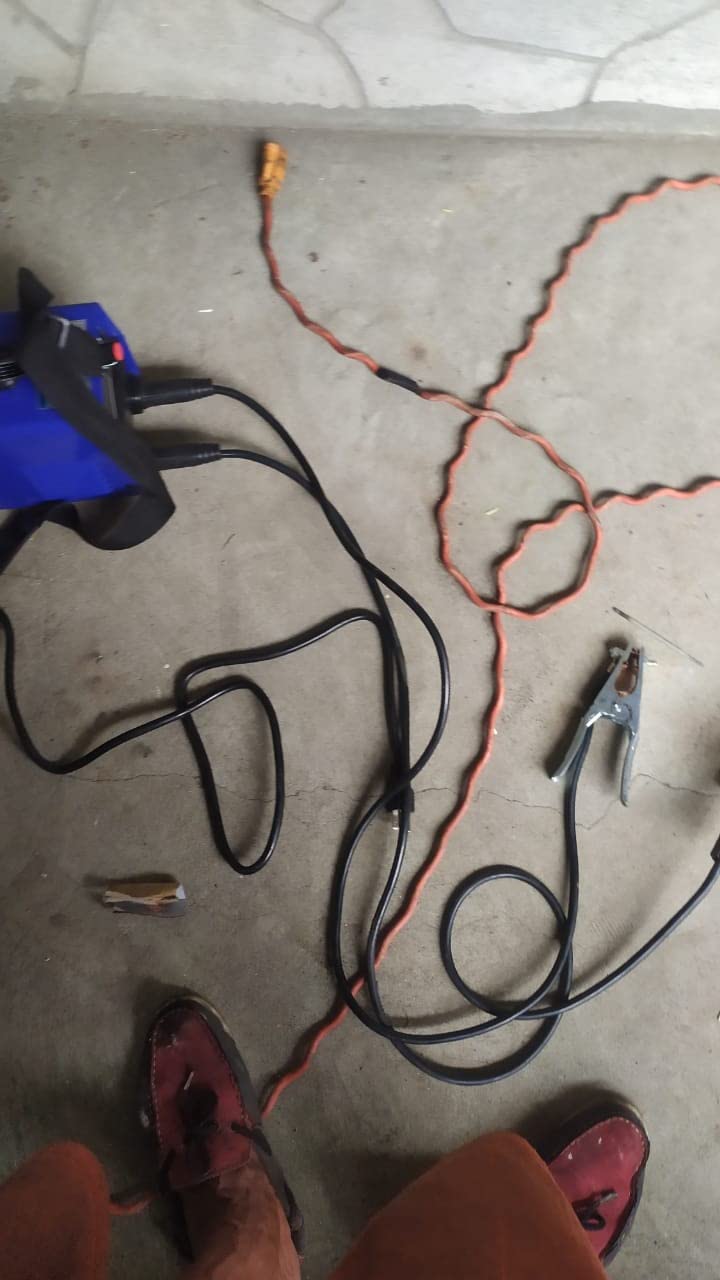
Using an undersized extension cord is the number one problem in farm shops. An inverter starved by a long, thin cord will sputter, lose the arc, overheat and eventually shut down, and owners frequently blame the machine for a wiring problem. Use the shortest cord you can and the heaviest gauge you can afford.
Undersizing the amperage for the rod is the second mistake. Running a 1/8 inch rod on a 3/32 inch setting produces a cold, narrow bead that will not hold. Match the rod diameter to the plate and let the amperage setting follow the rod chart, not the other way around.
Blocking the cooling vents is the third. A welker shelf, a stack of rod boxes or a bale of hay against the intake will cause thermal overload shutdowns in the middle of a repair. Keep the case clear on all sides and remember that most machines here are cooled by a single high-speed fan, which is also the first part you will hear when it is working hard.
Running a big inverter on a 15A circuit is the fourth. Several machines in this roundup explicitly require a 20A circuit, and forum threads on tripped breakers trace almost every instance back to too thin a cord or too small a breaker rather than a fault in the welder.
Skipping PPE is the fifth and the most expensive. The hoods and gloves included with the budget kits in this roundup are widely considered inadequate, and auto-darkening helmets are the single best upgrade a new farm welder can make. Weld outdoors or ventilate, because fume extraction around livestock matters as much as it does around people.
Finally, store the machine like it lives on a farm. Damp barns, big temperature swings and rodents are all enemies of electronics and cables. Wipe the case, coil the leads loosely, keep the machine off the concrete floor and put something over the cord reel before spring.
Frequently Asked Questions
What is the best stick welder for farm use?
The DEKOPRO 160A dual-voltage inverter is our top pick for most farms because it has the largest owner review base in its class, handles 1/16 to 1/8 inch rod on either 110V or 220V, and weighs just over 11 lb. If you weld implement frames regularly, the YESWELDER 205A is worth the step up because it holds a 60 percent duty cycle at rated output. If you work with pipe or 6010 cellulose rod, choose the ARCCAPTAIN for its 28V maximum welding voltage.
Is 6013 or 6011 better?
For farm repairs, 6011 is the better all-round choice because it starts easily, tolerates dirty and rusted metal, and is described by forum users as more than sufficient for gates and cattle guards. Choose 6013 when you want lower spatter on thin material and the joint will be visible. Choose 7018 instead when the repair carries structural load.
What type of welding rod is best for farmers?
Keep 6011 as your everyday rod for gates, fence rails, latches and general farm repair. Add 7018 for anything structural or load bearing, and add 6010 cellulose only if you weld pipe or need deep penetration, because budget inverters often cannot sustain an arc on it.
Which is harder, 6011 or 7018?
7018 is the harder and stronger weld. It is a low-hydrogen electrode producing a tensile bead rated around 70,000 psi, while 6011 is a general purpose electrode rated closer to 60,000 psi. For load bearing frames, brackets and trailer rails, use 7018 with DC electrode negative polarity.
How thick can a 225 amp stick welder weld?
A 225 amp stick welder is a production machine and can handle up to 1/2 inch of material with 5/32 inch rod, and 1 inch or more in vertical or overhead position with 3/32 inch rod. The practical limit is the rod diameter range of the machine, so check the stated electrode range before you buy.
Is stick welding outdated?
No. Modern IGBT inverter stick welders are lighter, more efficient and far easier to arc start than the old transformer machines. Stick remains the most common farm welding process because it needs no shielding gas, handles rusty and painted metal, and works in wind and dust that stop a MIG gun.
What is the best welder for a farmer?
For most farms the best value is a dual-voltage 140 to 205 amp IGBT stick welder, because it covers gate, fence, implement and trailer work on both 110V and 220V power. Add a lift TIG capable model only if you repair stainless or aluminum. The most common mistake is buying too small a machine, not too large.
What are the common problems with stick welding?
The most common problems are arc instability from an undersized extension cord, spatter from low amperage settings, electrode sticking, and difficulty striking cellulose rod on a low open circuit voltage machine. Set the amperage to the rod chart, use the shortest heaviest cord you can, and match rod type to machine voltage.
Can a stick welder run on a 110V outlet?
Yes, and most of the machines in this roundup do. On 110V expect roughly two thirds of the 220V output, so a machine rated 250 amps at 240V may deliver around 160 amps at 120V. Check your circuit first, as several 250 amp models need a 20A breaker and will not work on a 15A outlet.
Should I buy an AC or DC stick welder?
Buy DC if you can. DC gives a more stable arc, less spatter and access to a wider range of electrodes, and every machine we recommend runs DC. AC is cheaper and a used Lincoln or Miller AC machine can be a good farm budget buy, but it produces more spatter and is fussier about rod selection.
The Best Stick Welder for Your Farm Repairs
If a general-purpose shop welder is on your list too, our picks for the best welders for home use overlap with several of these, but the farm criteria we have applied here are stricter about rod range, duty cycle and what happens on a dirty hinge.
For most farms, the DEKOPRO 160A dual-voltage inverter is the pick. It has the deepest owner history in this group, a 4.6 average across more than 6k reviews, and it covers the overwhelming majority of farm repair work on either voltage. If you weld thick implement frames often, step up to the YESWELDER 205A for its 60% duty cycle at rated output. If pipe and 6010 cellulose rod are part of the job, the ARCCAPTAIN is the only budget machine here with the open circuit voltage to do it properly.
Match the class to the job rather than buying the biggest machine you can find, and remember that a good stick welder does not wear out, it just gets broken in. Buy the right 20A circuit, the heaviest extension cord you own, and a proper auto-darkening helmet before the first bead.