
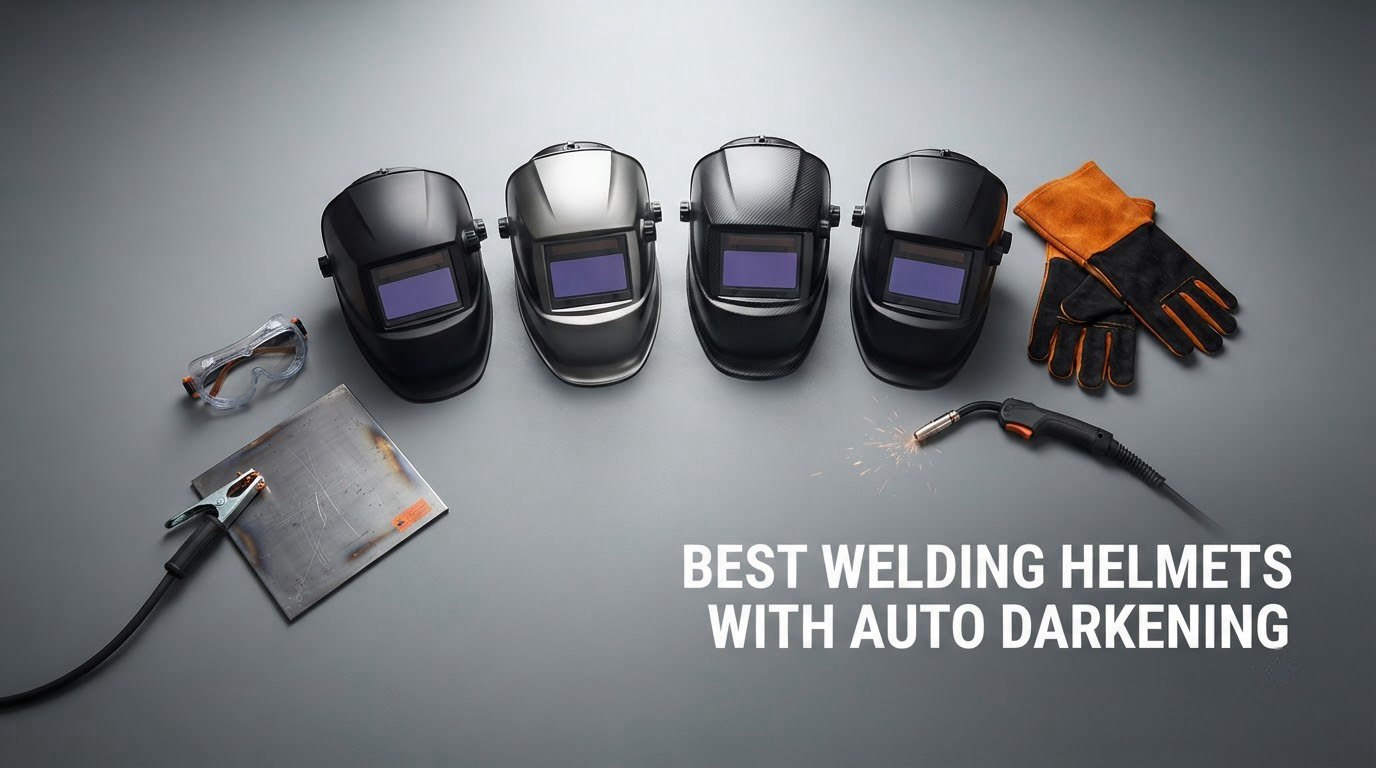
An auto darkening welding helmet is a hood whose lens contains an electro-optical filter that switches from a clear light state to a dark welding shade the instant it detects an arc, then fades back to light when you stop. That removes the constant flipping up and down that fixed-shade helmets force on you, and it is the reason most welders move up to one within their first year.
The filter is driven by arc sensors that pick up the ultraviolet and infrared flash of a struck arc and trigger the darkening in roughly 1/25,000 of a second, then return to the light state after an adjustable delay. The arc itself throws off radiation intense enough to cause arc eye and permanent retinal damage, so the helmet is not a comfort item. A clearer and faster lens also makes you a better welder, because you can actually read the puddle and spot undercut or poor fusion before the bead is cold.
This roundup covers ten of the best welding helmets with auto darkening available in 2026, starting with a large-viewing-area budget model and running through a professional fabrication hood. Every helmet here states a certification, a switching speed, a shade range and a sensor count, and we weighed those figures alongside owner feedback before ranking anything.
Two things surprise most first-time buyers. First, the gap between an entry-level model and a professional one is narrower than the marketing suggests, and a mid-priced hood with a 1/1/1/1 lens can outperform a premium shell with a weaker optic. Second, the most common complaint is not optical. It is arc detection on low-amperage TIG, which is a settings problem more often than a hardware problem, and we cover the fix in the buying guide.
If you want a related read on head protection in other categories, our guides to the best ski helmets and the best road cycling helmets follow the same fit-and-certification logic.
Table of Contents
Top 3 Picks for the Best Welding Helmets With Auto Darkening
Three picks cover the widest range of buyers. The first leads the list on proven owner satisfaction, the second wins on viewing area and arc sensor count, and the third adds the certification paperwork that entry-level helmets often leave vague.

YESWELDER LYG-L600A
- True color 1/1/1/1 lens
- 2 arc sensors
- 1/30000 sec switching
- Shade 3/7-13
- Solar plus CR2450 battery

ARCCAPTAIN HSH-S800
- 1/25000 sec response
- 4 arc sensors
- ANSI EN and CSA certified
- Solar plus CR2450
The 10 Best Welding Helmets With Auto Darkening in 2026
Every helmet below appears in the numbered reviews that follow, in the same order, with the full spec breakdown and who each one suits. Use this as the short version and the reviews as the detail.
| Product | Specifications | Action |
|---|---|---|
| YESWELDER LYG-L600A True Color |
|
Check Latest Price |
 YESWELDER LYG-M800H Large View YESWELDER LYG-M800H Large View |
|
Check Latest Price |
| ARCCAPTAIN HSH-S800 |
|
Check Latest Price |
 TOOLIOM TL-M800D TOOLIOM TL-M800D |
|
Check Latest Price |
 TRQWH TRQ-HS01 with Work Light TRQWH TRQ-HS01 with Work Light |
|
Check Latest Price |
 Hobart 770890 Auto Darkening Helmet Hobart 770890 Auto Darkening Helmet |
|
Check Latest Price |
 Jackson Safety Insight ADF Hood Jackson Safety Insight ADF Hood |
|
Check Latest Price |
 Sunstac SS-A800D Sunstac SS-A800D |
|
Check Latest Price |
 ESAB Sentinel A60 ESAB Sentinel A60 |
|
Check Latest Price |
 Lincoln Electric K4983-1 Lincoln Electric K4983-1 |
|
Check Latest Price |
1. YESWELDER LYG-L600A: the best auto darkening welding helmet overall
YESWELDER Auto Darkening Welding Helmet 1/1/1/1 True Color, LYG-L600A
- True color lens gives a natural-looking view of the puddle
- Fast darkening with adjustable sensitivity and delay
- External shade knob for process changes without removing the helmet
- Comfortable adjustable headgear for long sessions
- Includes spare battery spare lenses and a storage bag
- Viewing area is smaller than full-face or panoramic styles
- Shell and headgear feel lighter duty than professional helmets
- Coin-cell battery shipped with some units arrived drained
This is the helmet I hand to friends who ask me to pick one for them. The LYG-L600A pairs a 1/1/1/1 true color lens with a 1/30000 second switch time, and in practice that combination removes almost every complaint I hear about entry-level auto darkening hoods.
The optic is the reason it ranks here. True color technology means you look at the workpiece and the arc rather than at a green-tinted world, which makes a real difference when you are judging penetration on thin material or cleaning slag off a bead. Sensitivity and delay are both adjustable, and the shade knob sits on the outside, so you can step from stick to MIG to grinding without taking the helmet off.
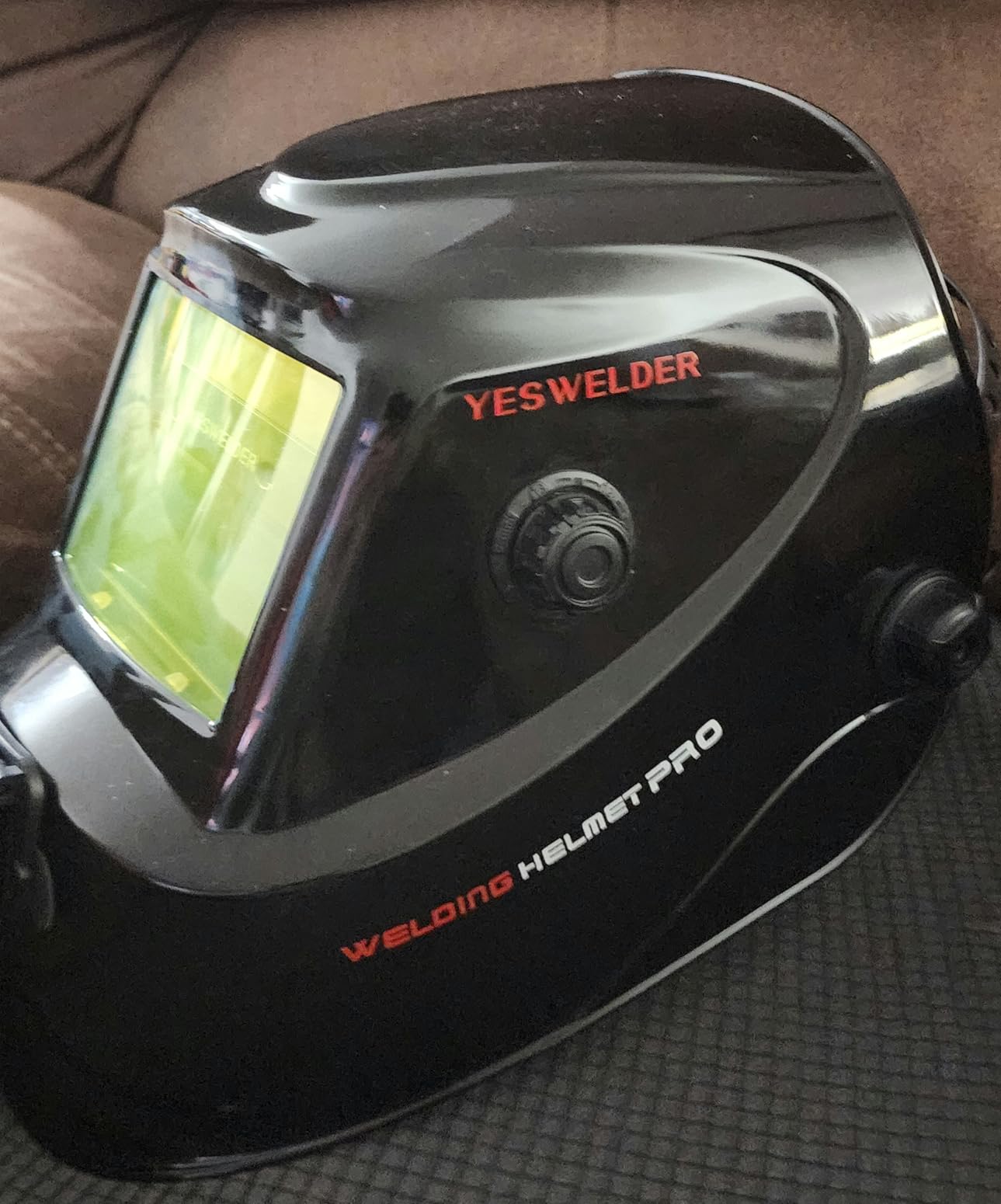
The build is a thickened PP shell with pivot style headgear at 16 ounces, and it stays comfortable through a full afternoon. Owners also get more in the box than the specification suggests: a spare CR2450 battery, replacement inner and outer lenses and a carry bag, so the consumables that wear out over time are already covered.
It carries ANSI Z87.1 and CSA Z94.3 certification, and it ranks number one in welding helmets on Amazon’s tools category, which tells you how much real use it absorbs. The viewing window is 3.64 inch by 1.67 inch, which is the compromise here. It is a horizontal card-style window rather than a tall square, so your peripheral view of the joint is narrower than on a large-view model.
What you will like about the fit and controls
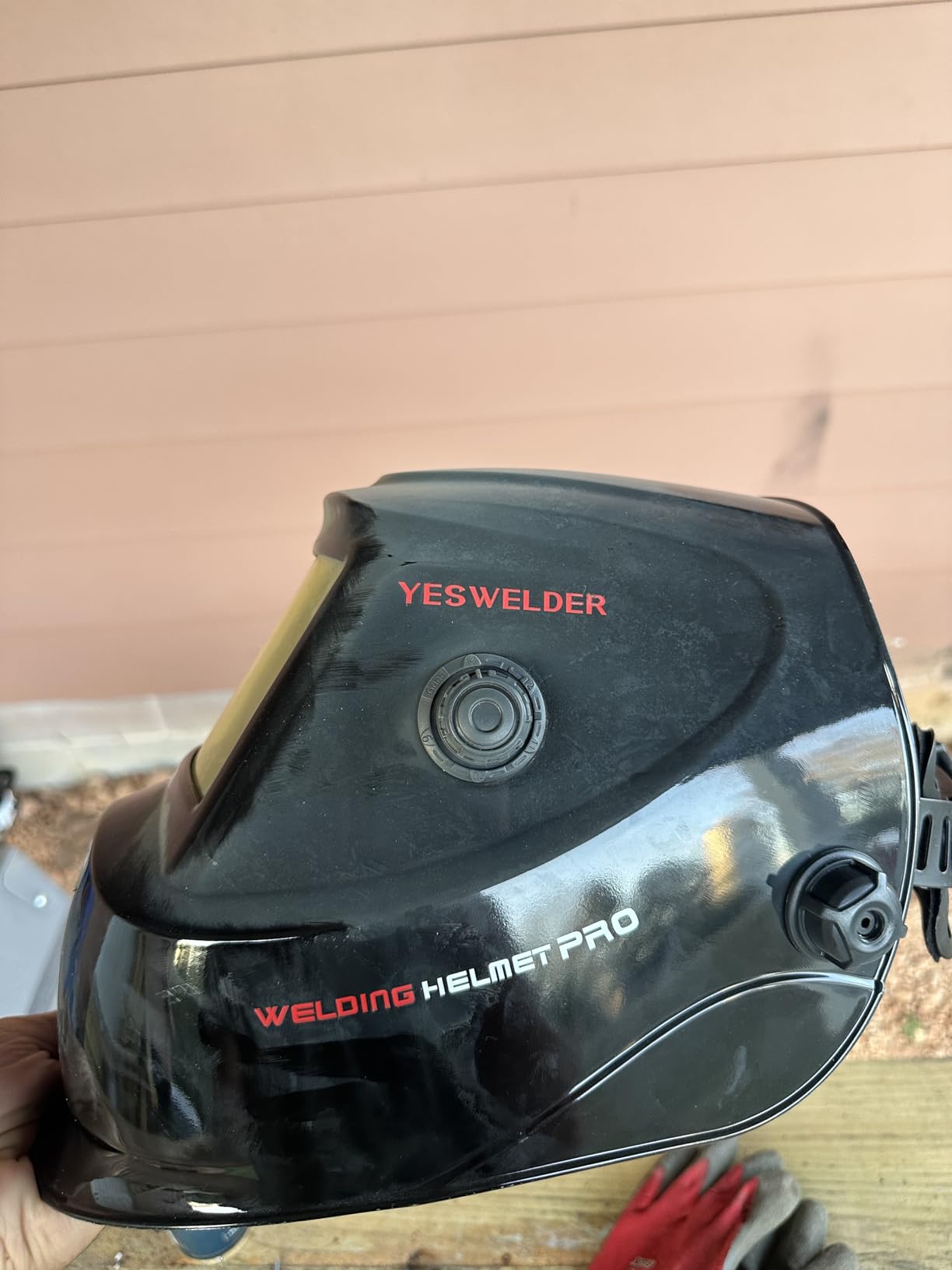
Everything you adjust on this helmet can be reached with a gloved hand, which sounds minor until you have fumbled with a small dial in a welding glove. Shade, sensitivity and delay are all outside the shell, and the flip-up pivot holds position well enough for checking a joint without removing the hood.
The headgear adjusts through a range that fits most adult head sizes, and the padding is enough for a few hours. Mag or cheater lens compatibility means you can dial in magnification for close TIG work without a second helmet.
Where it falls short
The small window is the honest drawback. If your work involves a lot of out-of-position welding or overhead joints, the wide peripheral view on the model at number two is a better fit, and we cover that one next.
Shell and headgear materials are light duty, so it is not the hood for a shipyard or a fabrication shop where the helmet gets dropped. One recurring owner report is a coin-cell battery that arrived drained or installed backwards. It is a ten-second fix, but check it before your first weld.
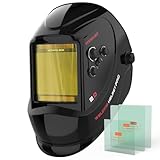
2. YESWELDER LYG-M800H: the best value for a large viewing area
- Exceptionally clear true color view of the weld puddle
- Large viewing area makes joint tracking easier
- Lightweight shell with well distributed weight
- All controls reachable outside the helmet
- Reliable darkening across MIG TIG stick and flux core
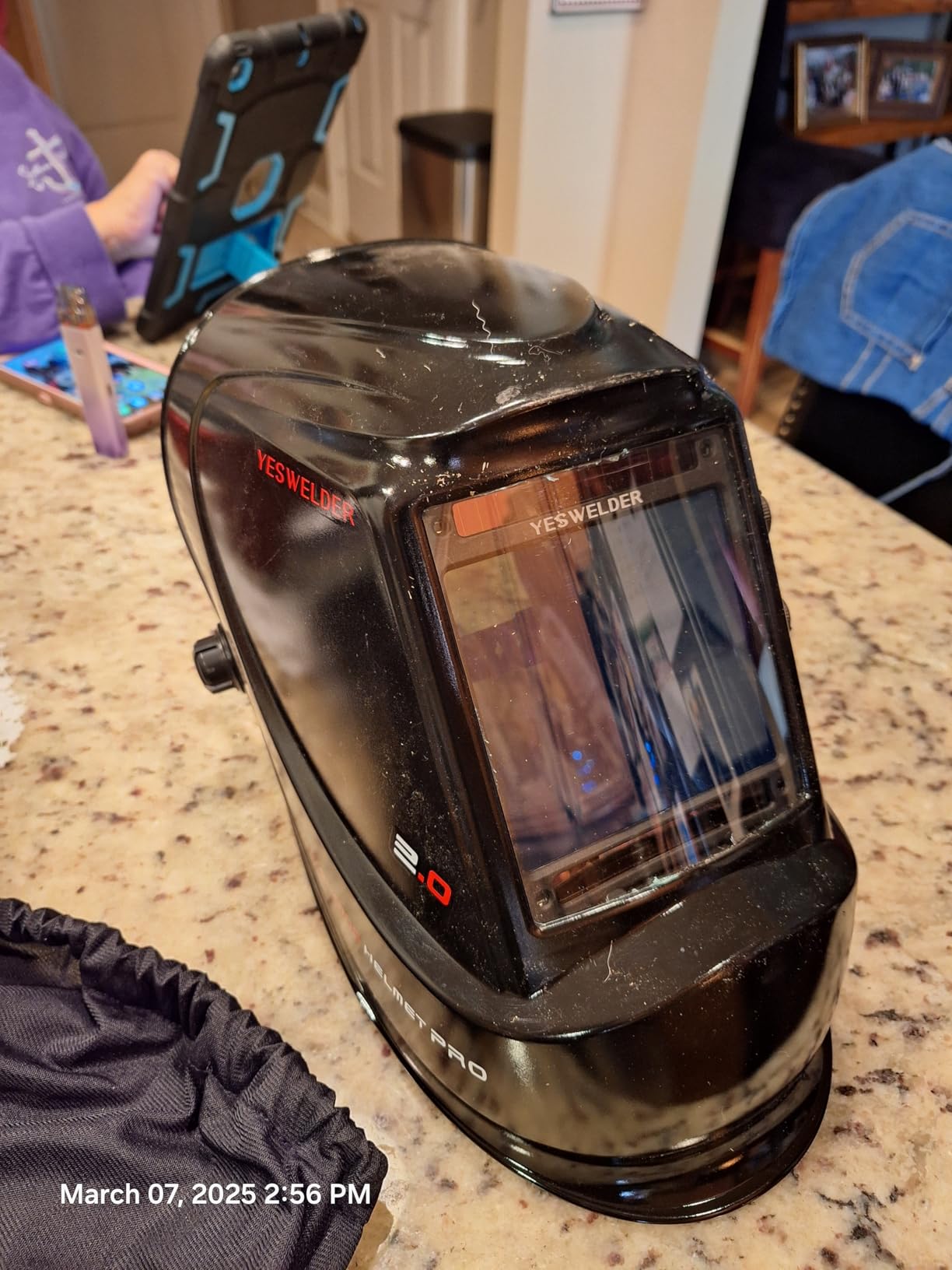
- Plastic shell and headband feel thin beside professional hoods
- Side tension knobs holding the helmet up can slip
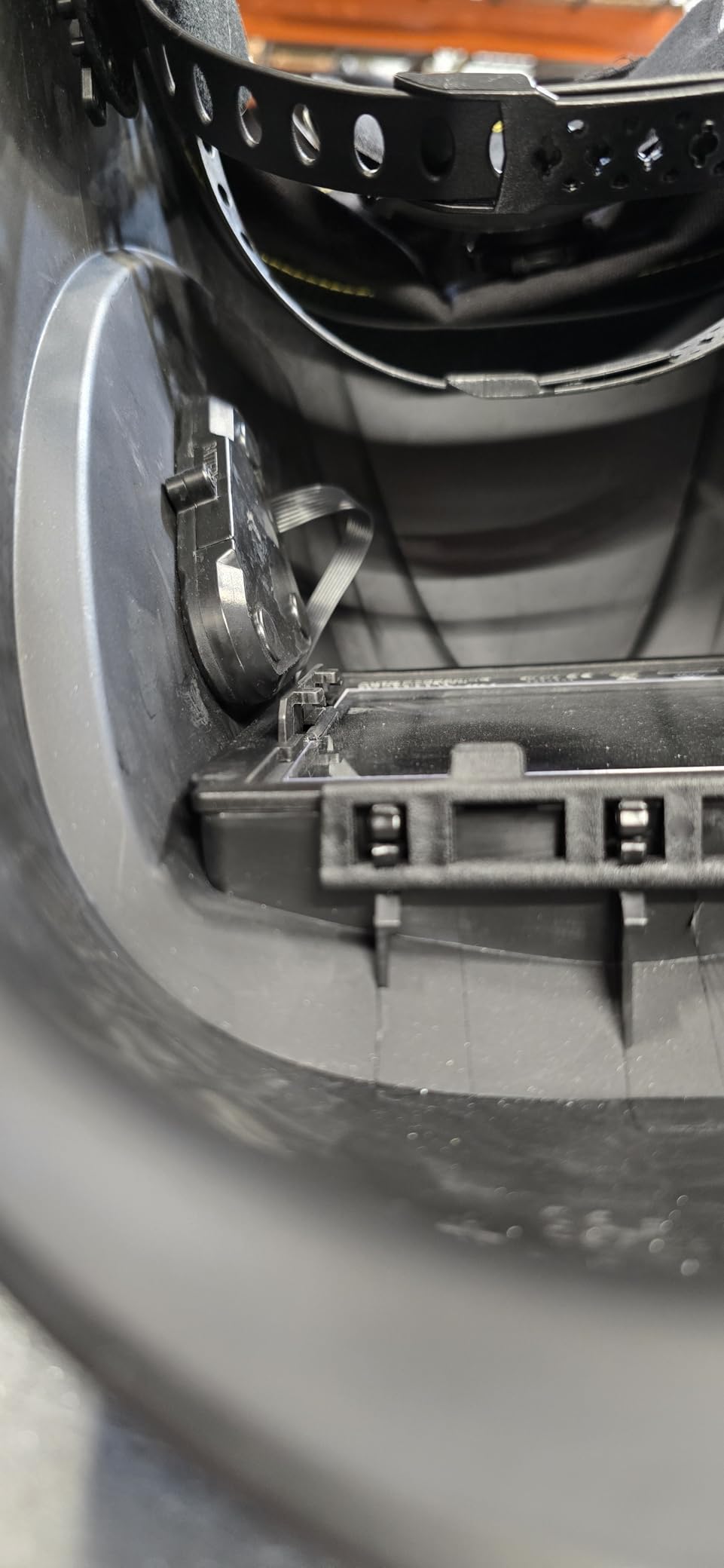
- Inner lens and battery are awkward to extract
If the number one pick feels too narrow for your work, this is the one to look at. The M800H widens the viewing area to 3.93 inch by 3.66 inch and moves from two arc sensors to four, both of which matter on real jobs.
Four sensors spread around the lens detect the arc from more angles, which is what keeps the shade from failing to trigger when you are welding a vertical or overhead joint with the torch at an angle. A big window plus four sensors is the combination that makes position work and joint tracking noticeably easier than on a card-style helmet.
It darkens in 1/30,000 second at 1/1/1/1 true color clarity, with shade 3 in the light state, 5-9 for cutting and 9-13 for welding, plus a grind position. It runs on a CR2450 lithium cell, and the box includes a bag, spare outer lenses and a spare inner lens.
Owners describe the optics as an immediate upgrade over older helmets, and the light weight keeps it comfortable on long days. The shell is described as roughly 1.32 lb in the feature list, and the weight distribution matters more than the number when you are welding overhead for an hour.
Why the large window changes how you weld
A larger viewing area does two things. It lets you see both sides of a joint and the incoming edge of the plate, which speeds up fit-up checks, and it keeps your head in a more natural position because you are not leaning forward to see through a letterbox window.
Four arc sensors also make it a better low-amperage TIG candidate than the two-sensor model above. That is not a guarantee, but it removes one of the reasons a helmet can fail to trigger on a small TIG arc.
What to watch out for
The construction is light plastic, and owners on heavy shop duty eventually notice it. The side tension knobs that hold the helmet in the raised position are the most common gripes, since they can slip when you move your head quickly.
Service access is awkward. Removing the inner lens and pulling the battery both take more effort than they should, so budget a little extra care when changing consumables. A minority of owners also report that pointing the sensors at daylight does not trigger darkening, which confuses people who test the helmet out of the shop and assume it is broken.
3. ARCCAPTAIN HSH-S800: the most versatile pick with four arc sensors
ARCCAPTAIN Welding Helmet Auto Darkening, 1/25000s Response, Shade 4/9-13
- Lens clarity some owners rate above professional hoods
- Fast consistent darkening on MIG and stick
- Grind mode works without removing the helmet
- Lightweight with a comfortable padded adjustable headband
- Multiple styles and replacement lenses included
- Shell material feels cheap in the hand
- A minority report slow response or the lens stopping mid-session
- Viewing window is narrower than panoramic models
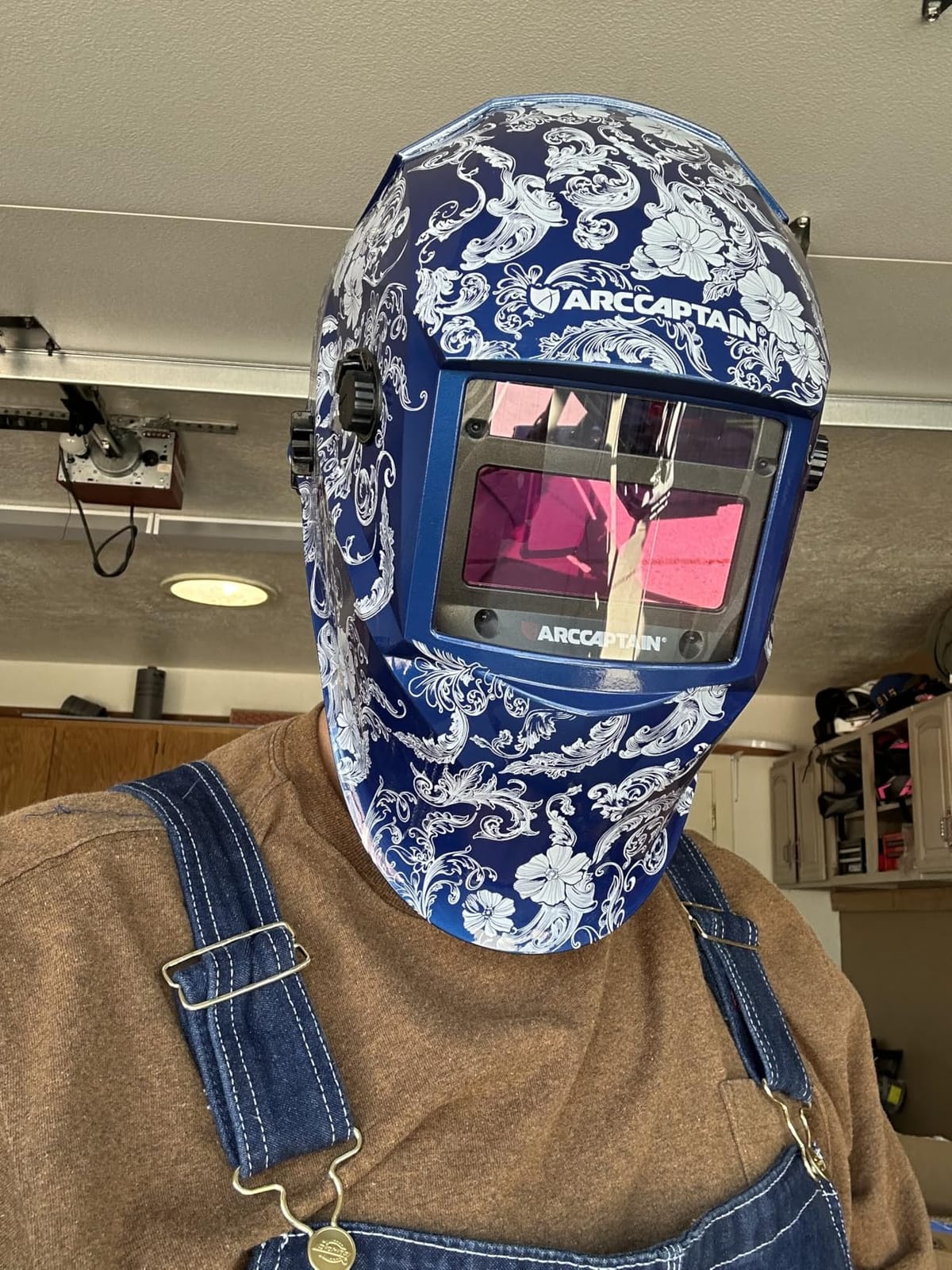
The ARCCAPTAIN is the pick to make if certification paperwork is what worries you. It is listed against ANSI/ISEA Z87.1-2010, CSA Z94.3, DIN EN 175 and DIN EN 379, which is a broader stack of standards than the entry-level field usually lists.
Those standards are what a school, a trade program or a shop safety audit will ask for, and they matter more than most shoppers assume. Forum regulars raise the same worry repeatedly on welding forums: with eye damage being irreversible, people want a written certification rather than a listing that says auto darkening welding helmet on the front.
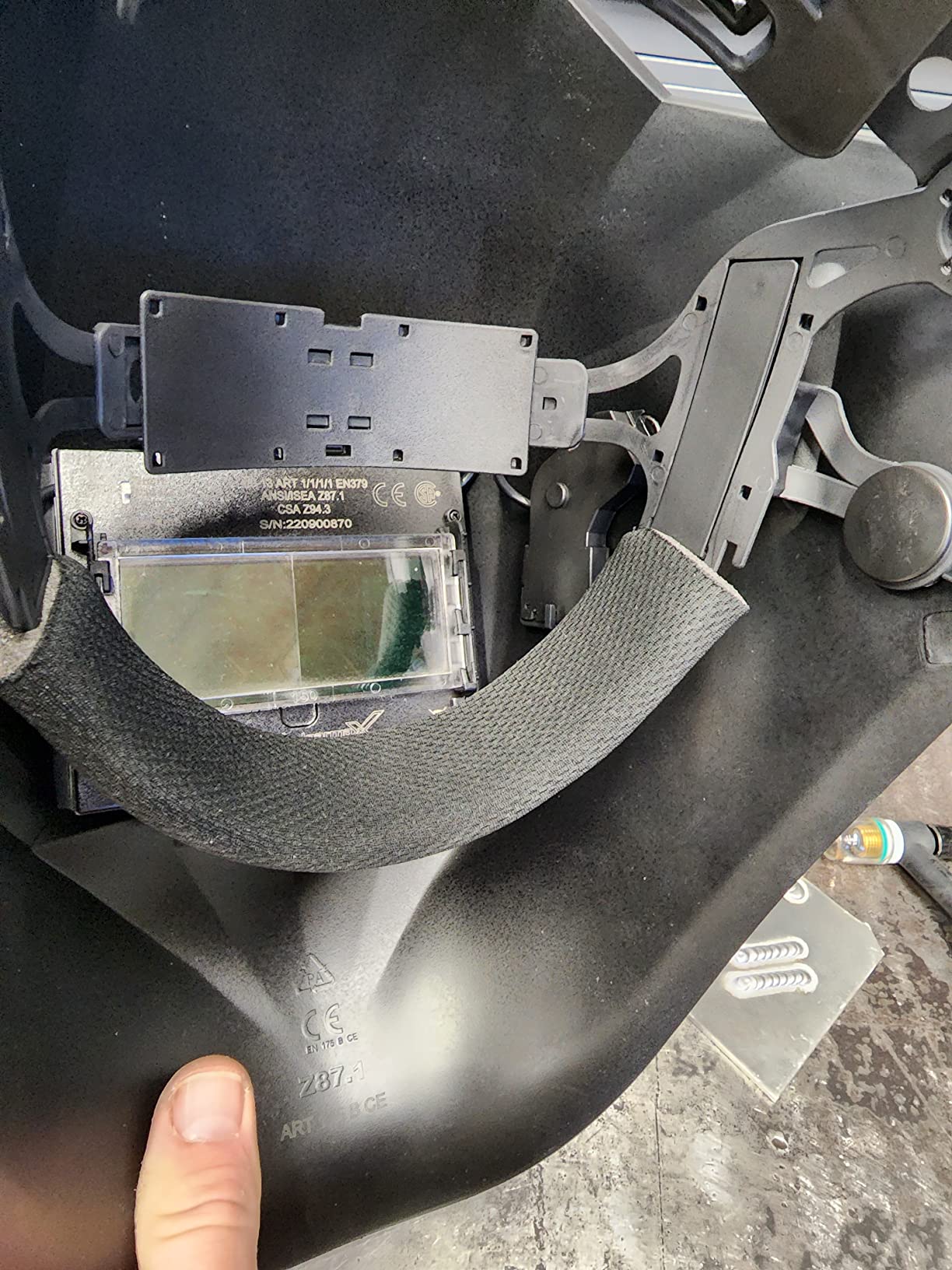
Optically it holds a 1/1/1/1 true color rating with a 1/25,000 second switch across four premium arc sensors, and the shade range is 4 in the light state with 9-13 dark. The filter is described as a 12-in-1 smart filter with automatic DIN 16 UV and IR protection, and it weighs 1 lb.
It runs on solar cells with a replaceable CR2450 lithium cell as backup, which is the arrangement you want for long sessions, since the battery carries the load once the light drops. Grinders get a separate grind mode, and a cheater lens slot is available for close work.
What makes this a safe first purchase
The certification stack is the headline. DIN EN 379 and DIN EN 175 are European standards, and combining them with ANSI Z87.1 and CSA Z94.3 covers what most shops and programs check across either side of the border.
Four arc sensors at 1/25,000 second also mean this is not a stripped-down two-sensor unit. On MIG and stick work the darkening is fast and consistent, which is where most beginners spend their first year.
Where buyers report problems
The nylon and PA shell feels inexpensive, and that is the trade. It is a helmet to learn on or to keep in a car for occasional work, not one to buy for a production booth.
A small number of owners report slower response times or the lens ceasing to darken partway through a session. That is an individual unit fault rather than a design flaw, but if you buy one, test it on a scrap piece before you rely on it. The viewing window at 3.86 inch by 1.69 inch is also narrower than the large models above.
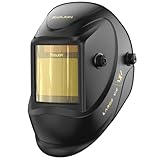
4. TOOLIOM TL-M800D: the best for separate weld, cut and grind modes
TOOLIOM True Color Auto Darkening Welding Helmet with Large View
- Large 12.9 square inch viewing area in a lightweight hood
- 1/1/1/1 true color removes the traditional green tint
- Separate weld cut and grind shade modes
- Delay and sensitivity tuning for your lighting
- Includes battery and spare outer and inner lenses
- Plastic shell and strap limit ruggedness in a heavy shop
- Replacement lenses are the main ongoing consumable cost
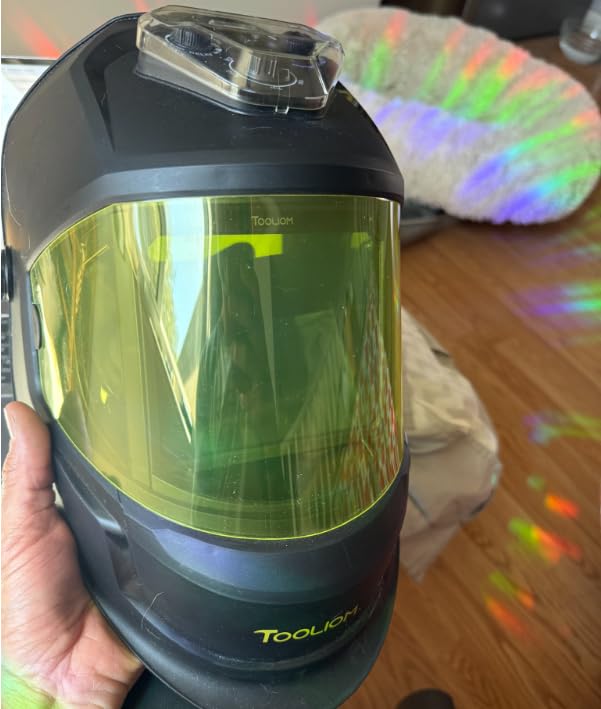
The TL-M800D is built around a 3.94 inch by 3.27 inch window, which works out to 12.9 square inches of viewing area, and it separates the shade ranges by process instead of running one continuous band.
Weld mode sits at 9-13, cut mode at 5-9 and grind mode at 3.0. That matters when you are switching between tacking, cutting and cleaning up a bead, because you are not overshooting the light state every time you change task.
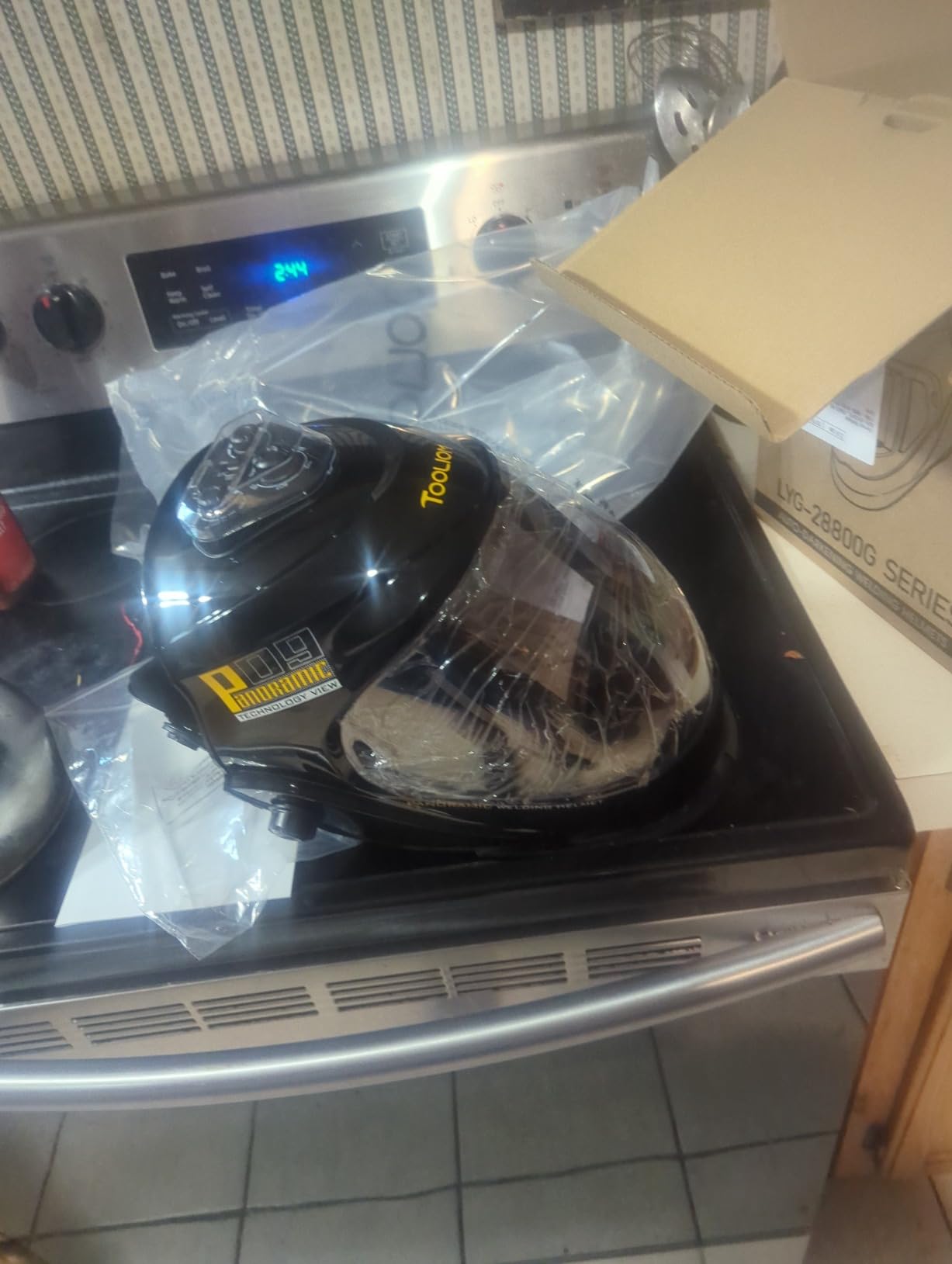
Four arc sensors and 1/1/1/1 true color clarity put it in line with pricier hoods optically, and delay and sensitivity are both adjustable so you can tune it to a dim shop or a bright outdoor job. The listing notes ANSI Z89.1 for eye and face protection alongside the welding standard.
It comes with a replaceable battery, two replacement outer lenses and an inner lens, which is a generous consumables package. Owners like the combination of a large screen and true color at a mid-level price, and it covers most hobby and light fabrication work comfortably.
Why separate modes beat one shade band
Grinding at a welding shade is genuinely unpleasant work. You are looking through near-black glass at a bright, hot surface, and you will either strain your eyes or lift the helmet constantly. A dedicated 3.0 grind mode is one of those small conveniences that shows up every time you clean a weld.
The same logic applies to cutting, where 5-9 is a better starting point than a welding shade. Having the three modes pre-set means less fumbling with the dial in the middle of a job.
Where it falls short
The shell and strap are plastic, and owners doing heavy shop work describe them as limited. If you drop helmets regularly, expect to replace this one sooner than a nylon professional shell.
Replacement lenses are the recurring cost, and the cheater lens is sold separately. Budget for a spare inner lens if you weld thin gauge often, because clarity degrades fast once the inner lens sputters.
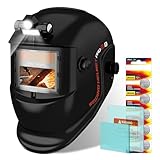
5. TRQWH TRQ-HS01: the best for dark garage work with a built-in light
TRQWH Auto Darkening Welding Helmet with Light ANSI Z87.1 Certified
- A practical first welding helmet
- Built in rechargeable LED light illuminates dark workspaces
- Thickened sponge padding at forehead and ears
- Comes with spare CR2032 batteries
- Single external knob simplifies shade and grind selection
- Helmet will not lock in the raised position and drops when you move
- Thin lenses wear quickly under heavy shop use
- Included head lamp is functional but of poor quality
- Some units arrive with headgear that is hard to seat
The TRQWH is the one to consider if you weld in a basement, a garage after dark or anywhere else with almost no ambient light. Its distinguishing feature is a rechargeable LED work light built into the shell, charged over USB.
That lamp is the feature that actually matters in a dark shop. A helmet with an auto darkening filter still needs enough light to see the joint before you strike, and in a dim space a welder ends up holding a work light in their teeth or stopping constantly.
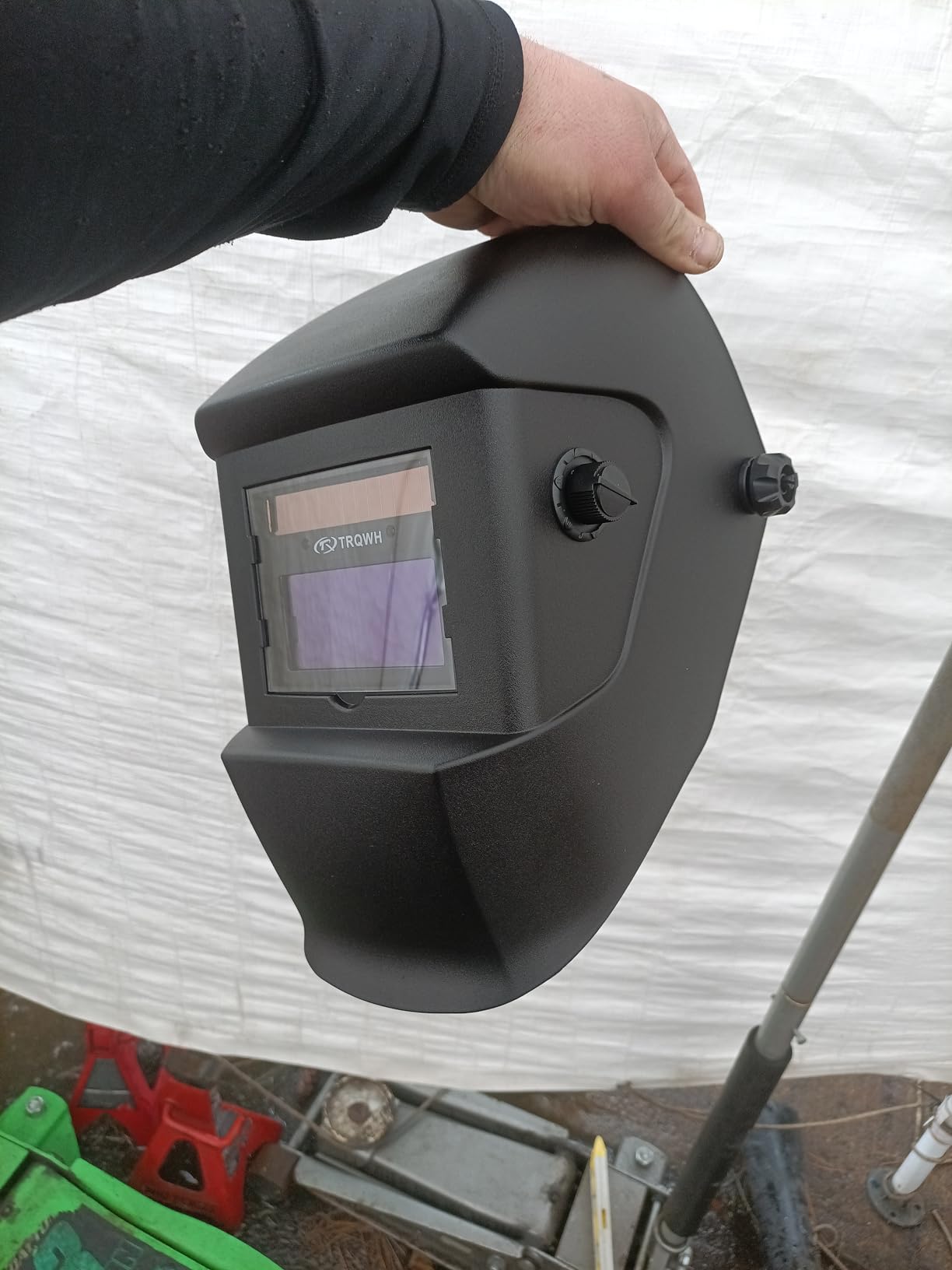
It is a straightforward entry point into auto darkening welding, and reviewers describe it as the helmet that let them return to welding after an expensive one degraded. Optical clarity is rated 1/1/1/2 with true color technology, two arc sensors switch in 1/20,000 second, and the shade runs DIN 4 in the light state to 9-13 dark.
Power is solar cells with replaceable CR2032 lithium backup, and the manufacturer is Wuhan Tuoerqi Photoelectric Technology. It carries ANSI Z87.1, EN 379 CE and CSA Z94.3 compliance, and it is listed for plasma cutting, grinding, DC and AC TIG, MIG and MAG, and MMA stick work.
What the work light is good for
It lights the workpiece rather than the arc, so you can set up a joint, check fit-up and read your layout before striking. That is exactly the gap that dark-shop welders complain about, and it also helps when you are doing a lot of grinding and cleanup where the filter is not the limiting factor.
The two arc sensors are the compromise. That is the same weakness that shows up on TIG, so if pipe or thin-gauge TIG is your main work, spend up on a four-sensor model instead.
Where buyers report problems
The most repeated complaint is the raised position. The helmet will not lock when flipped up and drops when you move your head, which is a genuine nuisance in a shop where you are constantly lifting the hood to check work.
The lenses are thin and wear quickly under heavy spatter, and the included work lamp is functional rather than good. Some owners also find the headgear difficult to seat and tighten properly out of the box.
6. Hobart 770890: a dependable pick for everyday shop work
- Well regarded brand with reliable arc detection and consistent shading
- Comfortable balance for extended wear
- Easy to turn analog controls for shade sensitivity and delay
- Smooth weld to grind mode switching
- Protective lens kit included
- Analog controls are less precise than digital interfaces on premium hoods
- Viewing area and feature set are modest for this class
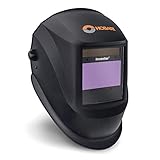
When someone asks for a helmet that will not let them down on a Tuesday, the Hobart 770890 is the one I point them at. It is a polyamide nylon shell with a 9.3 inch widescreen viewing area and PureColor lens technology, and it carries a limited 2 year manufacturer warranty.
Auto on and off power control is triggered at arc strike, so the helmet wakes when you start and sleeps when you stop without any button hunting. Four independent arc sensors handle detection, and switching from weld to grind mode is smooth enough that you stay in the work.
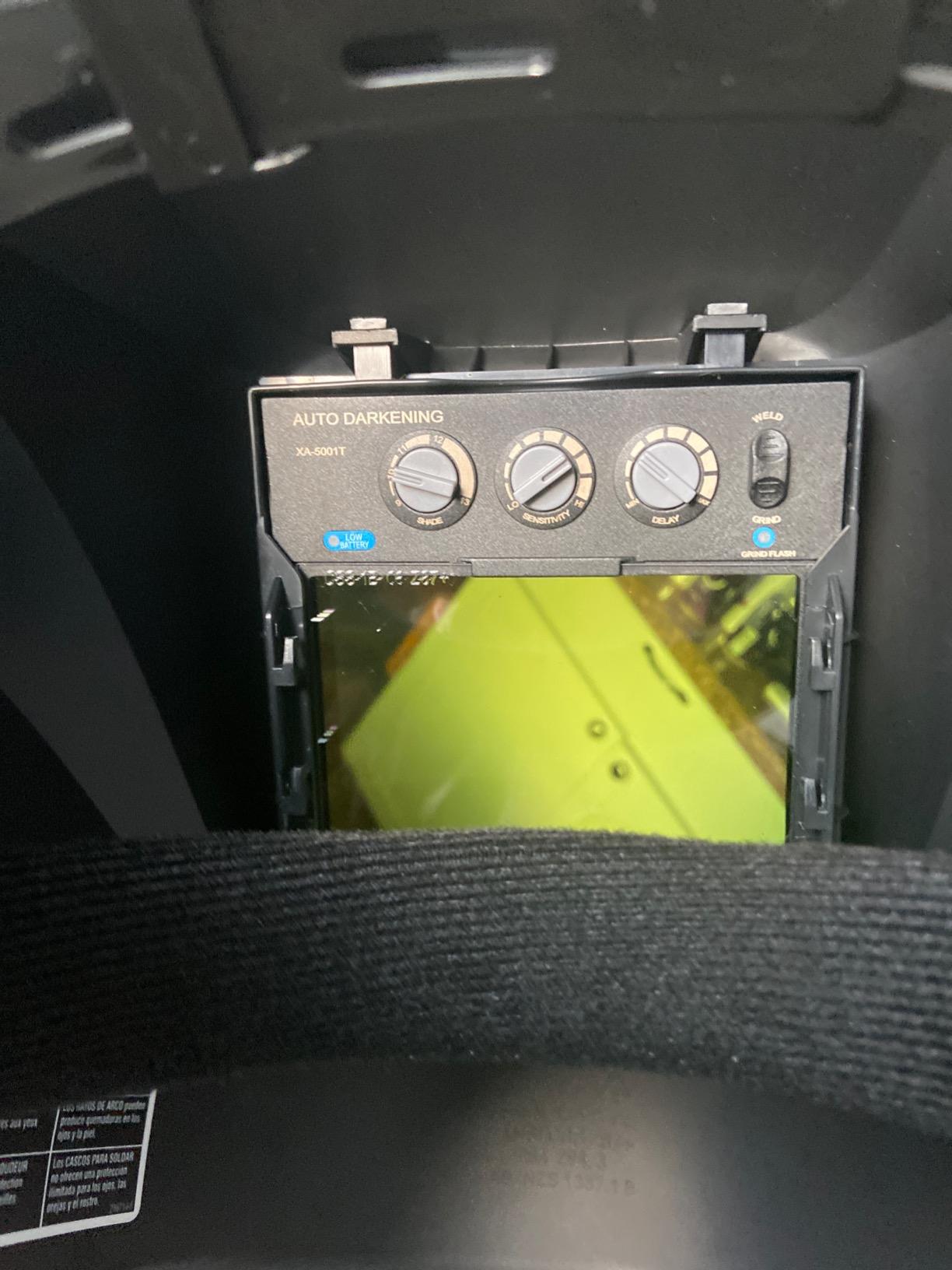
It weighs 1.25 lb and runs on a single included CR2 lithium cell, which is a small but real convenience compared with hunting for the right coin cell in a dark shop. The controls are analog knobs for shade, sensitivity and delay, and that simplicity is the point for anyone who does not want to navigate a menu.
Owners rate the detection and shading as consistent, and the comfortable balance shows up in reviews of people wearing it for full production days. A protective lens kit is included, so you are not buying lenses on day one.
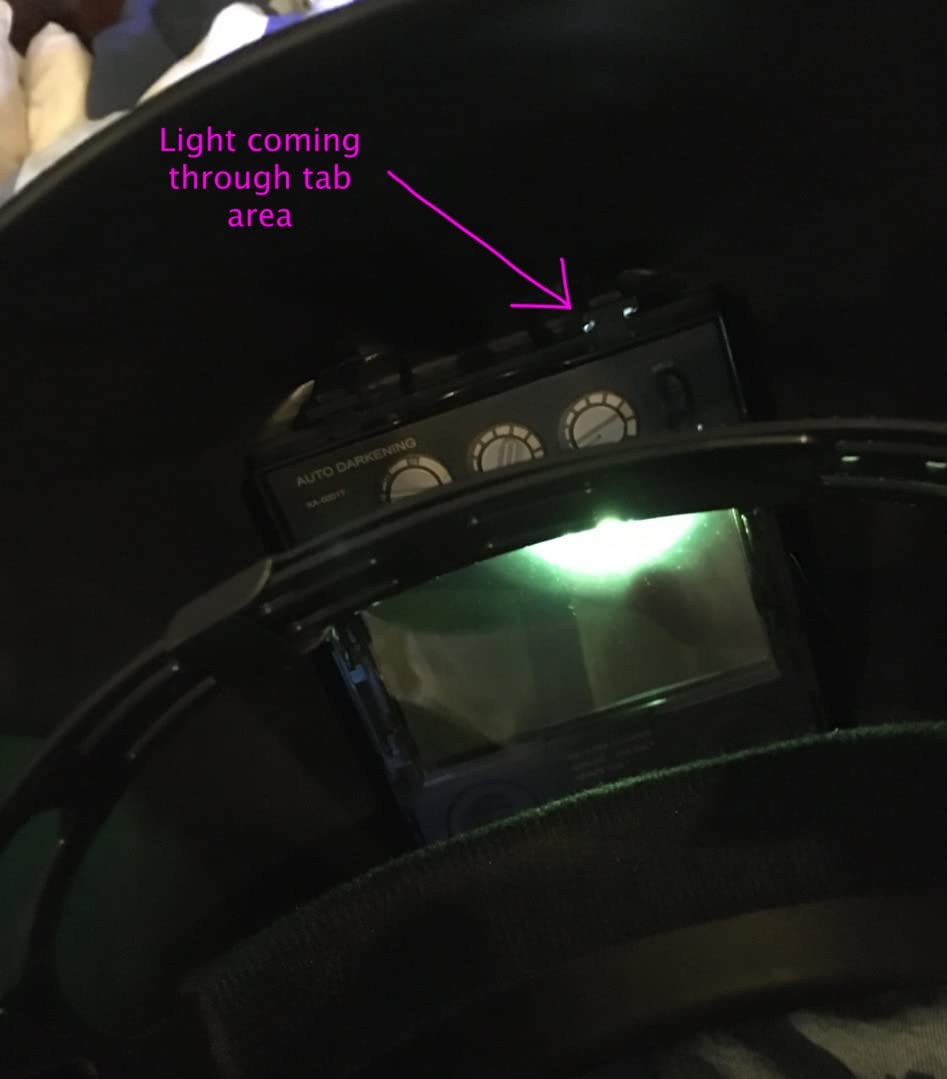
Why analog controls still make sense
Three knobs and you are done. You can put on gloves, set the shade, and start welding without reading a manual, which is why owners of digital premium helmets sometimes end up back on an analog hood.
The widescreen window is large and the balance is good, so it stays comfortable on a long shift. If neck fatigue is already a problem for you, this is a safer choice than a heavier digital unit.
Where it falls short
Analog dials are less precise than a digital interface. There are no half-shade steps, no stored settings and no readout, so fine tuning on thin gauge or TIG means adjusting by feel.
The feature set is modest for a helmet in this bracket. There is no memory, no work light and no half-step shade control, and the viewing area trails several larger screens on the list. It is a dependable workhorse rather than a feature leader, and if your priority is premium optics, look at the ESAB later in this list instead.
7. Jackson Safety Insight ADF: the lightest shell for long sessions
Jackson Safety Insight Auto Darkening Welding Helmet, ADF Hood – ANSI Z87.1
- Extremely light and flexible shell that works in tight spaces
- Four sensors give reliable switching including on inverter machines
- Headgear locks securely in the up or down position
- Cover lens seals tightly against spatter and smoke
- Up detent and ratcheting back make donning quick
- Light state is somewhat dark for indoor shop work
- Less rugged than heavier shells in abusive environments
- Digital mode settings take reading the instructions
At 6 ounces, the Jackson Safety Insight is the lightest hood here by a wide margin, and on a long day that difference is felt in the neck and shoulders before it is felt anywhere else.
The HLX shell is thin and flexible, which also makes it a good fit for tight spaces where a bulky rigid shell catches on structure. Neck strain is the complaint welders most often bring up after the first few months, and weight is the first thing to address.
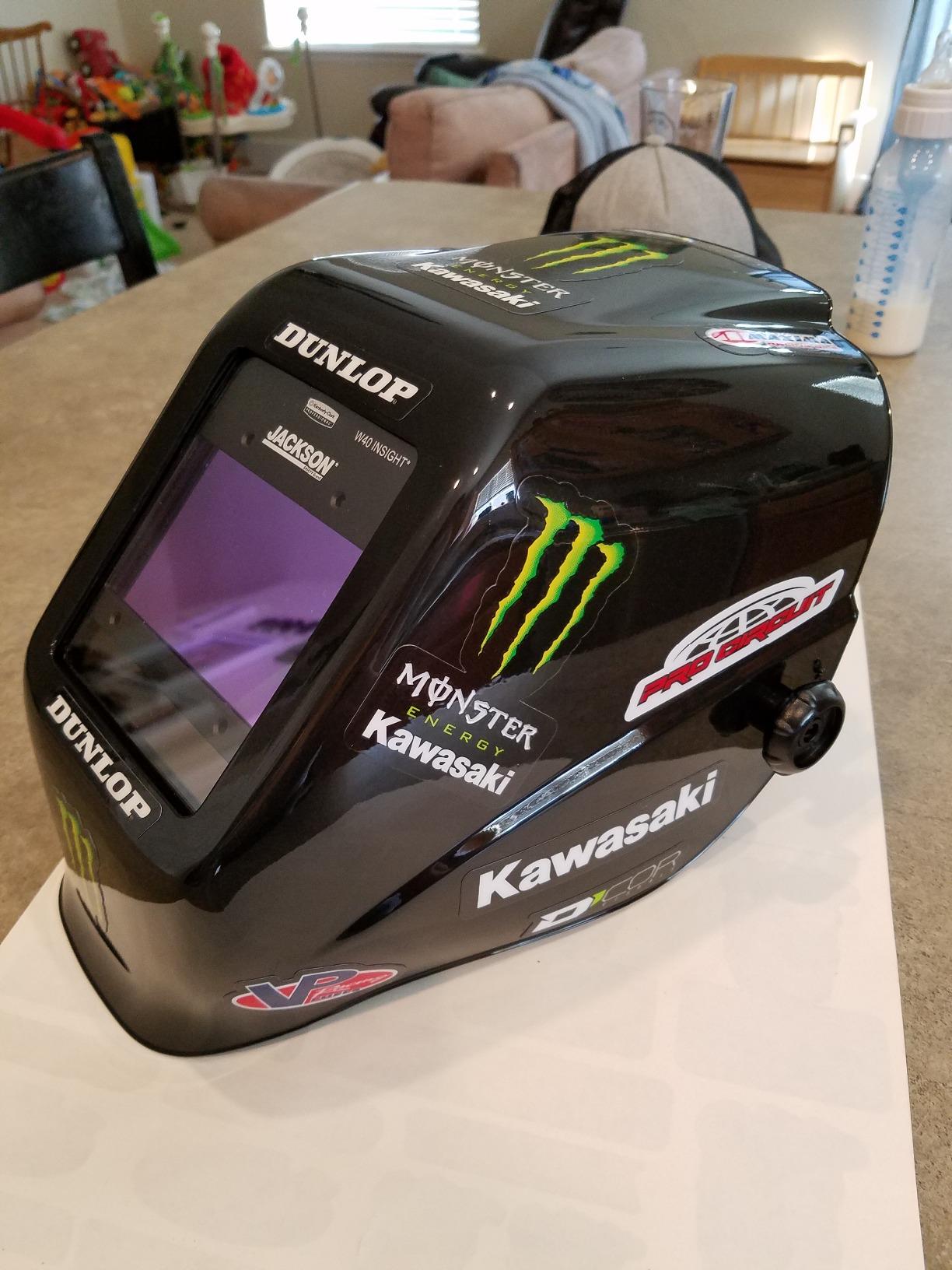
Optically it is 1/1/1/1 with true color technology, variable shade 9 to 13, and four arc sensors placed around the lens that switch reliably even on inverter machines, which are notorious for confusing cheaper filters. Digital controls handle sensitivity and delay, with weld, torch and grind modes.
The headgear is the patented 370 Speed Dial ratcheting system with a Qwik-Fit rear swivel band, and owners single it out for staying locked where it is set. The cover lens also seals tightly so spatter and smoke stay off the shaded lens, which protects clarity over time. It is certified to ANSI Z87.1 and CSA Z94.3.
What the ratcheting headgear actually fixes
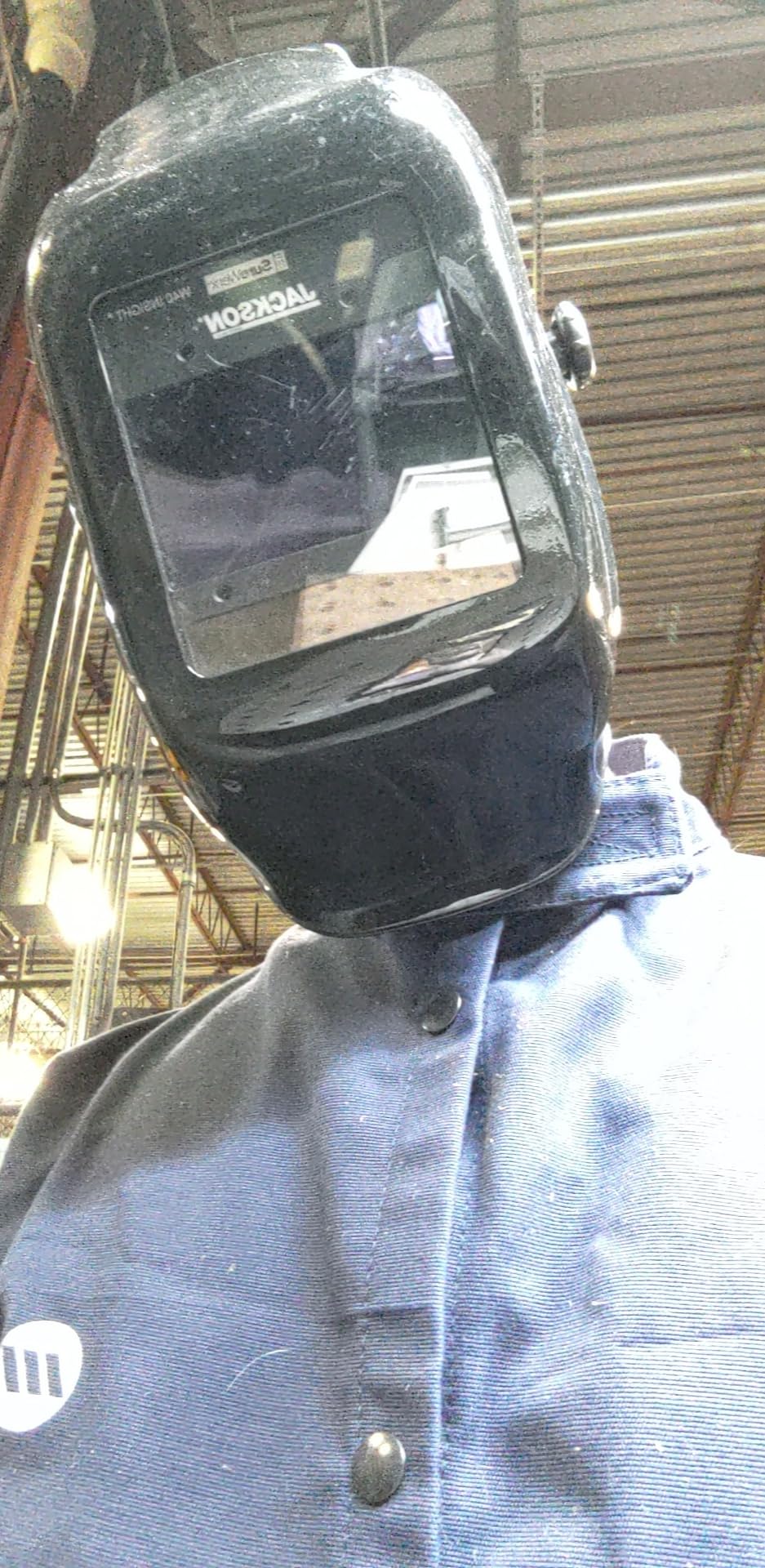
Most helmet complaints that are not about optics are about the headgear drifting. The Speed Dial ratchets in small increments and holds position, so the hood stays where you put it instead of creeping down an hour into a session.
The Qwik-Fit swivel band also adjusts for head size and shell distance, which helps if you wear safety glasses or work in a knit cap during cold shop work.
Where it falls short
The light state is on the dark side for indoor shop work. In a poorly lit space you may find yourself lifting the hood to check the joint more often than you would with a brighter light state, which is the opposite of what you bought the helmet for.
Thin shells are not as rugged. In an abusive environment where helmets get dropped off scaffolds or knocked off benches, a flexible shell offers less impact protection than a heavy nylon one. The digital mode settings also need a read-through of the instructions to set correctly.
8. Sunstac SS-A800D: a big screen with a rechargeable work light
Sunstac Auto-Darkening Welding Helmet 3.94 x 3.27″ View with Light
- Large viewing area with fast non overshooting darkening
- Comfortable fully adjustable padded headband
- Rechargeable work light with focused and flood modes
- Multiple color and view size options
- Dual power supply extends battery life
- Filter can take a moment longer to engage on the first arc
- Battery compartment is awkward to access
- Side tension buttons are delicate and the hood can flop down
- Deep headpiece can interfere with glasses on smaller heads
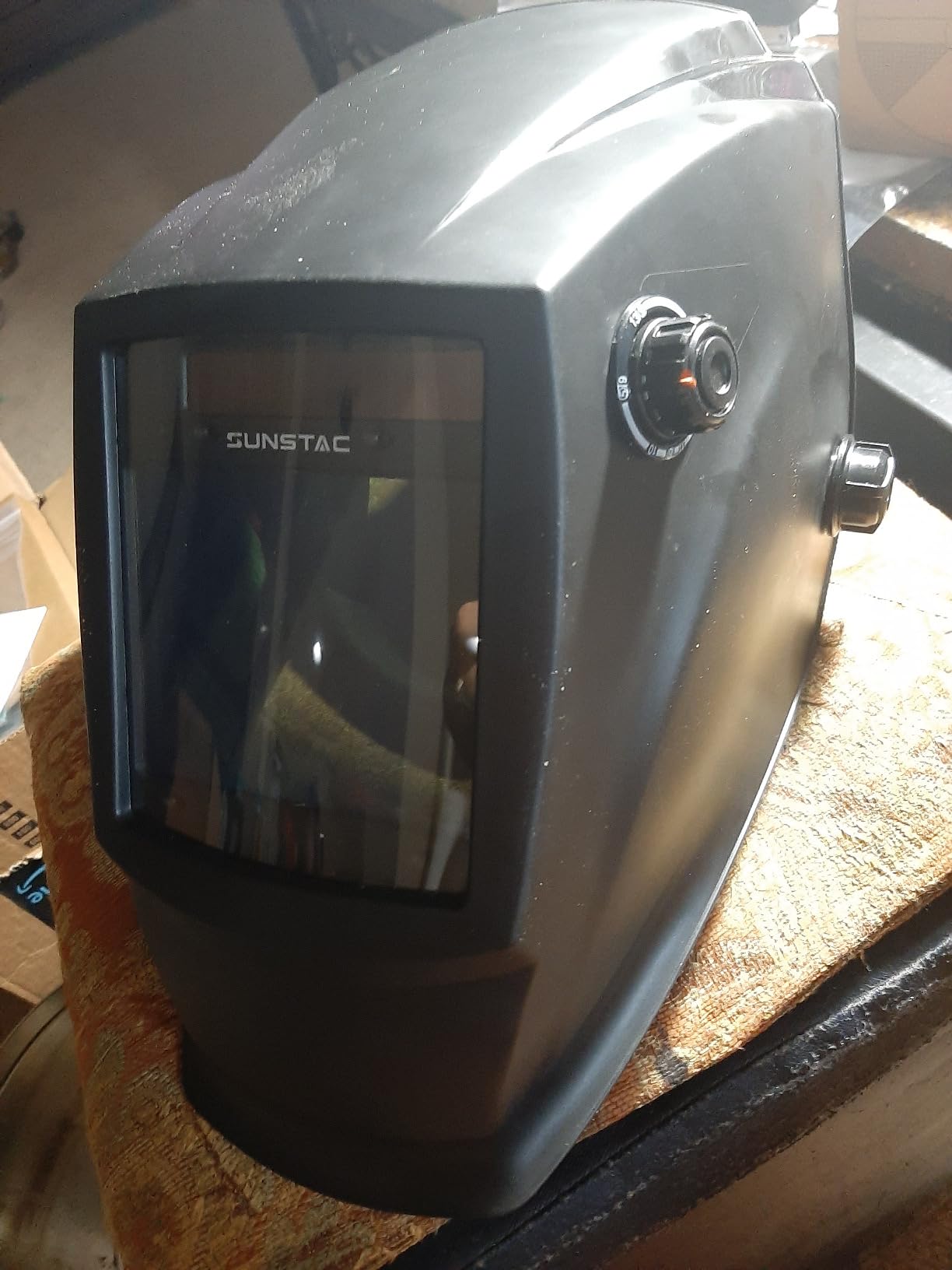
The Sunstac SS-A800D combines a 3.94 inch by 3.27 inch screen with four arc sensors and 1/30000 second darkening, and it adds a rechargeable work light with both a concentrated and a wide flood mode on a swivel mount.
Two light modes is a real improvement over a single lamp. A flood mode washes the whole work area, which is what you want for setting up and checking fit-up, while a concentrated beam is for a specific joint in a dark shop.
The lens is rated 1/1/1/1 true color with a wide shade of 4/5-9/9-13, so the same helmet covers welding and cutting, and it carries UV, IR and arc protection. Power is dual, using a lithium ion cell or solar, and interior padding plus multiple adjustment points handle comfort.
Owners like the large screen, quick darkening and the light, and several compare the view favorably to more expensive reference hoods. It is listed for stick, TIG, MIG, cut, MMA and plasma work with a grinding mode, and a cheater lens is sold separately.
Who this screen size suits
A 3.94 inch by 3.27 inch window sits in the sweet spot for general fabrication. It gives you enough peripheral view to follow a joint without moving your head constantly, while staying narrow enough to keep the shell from snagging in a confined space.
Four arc sensors make it a better low-amperage TIG candidate than a two-sensor budget hood, and the fast switching shows the puddle clearly rather than overshooting into darkness.
Where buyers report problems
There is a reported filter lag on the very first exposure to an arc. Owners describe the darkening taking a moment longer to engage initially, which is worth knowing about if you strike an arc for one second and stop.
The battery compartment is hard to reach, the side tension buttons that hold the helmet up are delicate, and the hood can flop down when raised. Several owners also note the deep headpiece interferes with glasses on smaller heads, so if you wear prescription eyewear, try it on before committing.
9. ESAB Sentinel A60: the best for all-day professional fabrication
ESAB® Sentinel™ A60 Welding Helmet, Black Low-Profile Design, High Impact Resistance Nylon, Large Viewing Area 4.65 in x 2.80 in
- Crisp clear vision with no flash through
- Light well balanced shell that reduces neck fatigue
- Low profile rounded shell works in tight spaces and with a respirator
- Stiff grind button that is hard to trigger by accident
- Internal controls and stored settings are well liked
- Headgear ratchet feels cheap for the class
- Lock nuts do not always hold the hood in the flipped up position
- Cover lenses scratch easily when set face down
- Accessories and replacement lenses add up over time
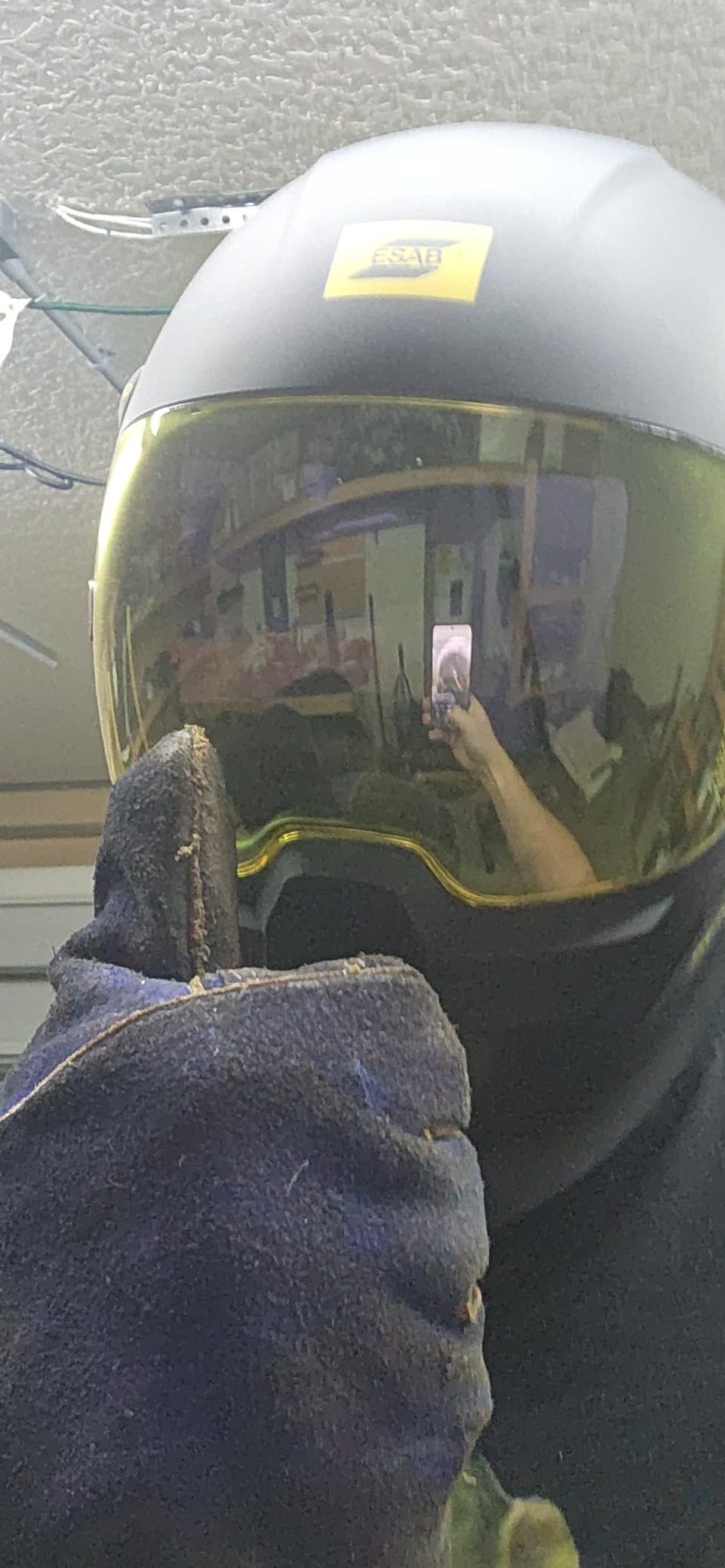
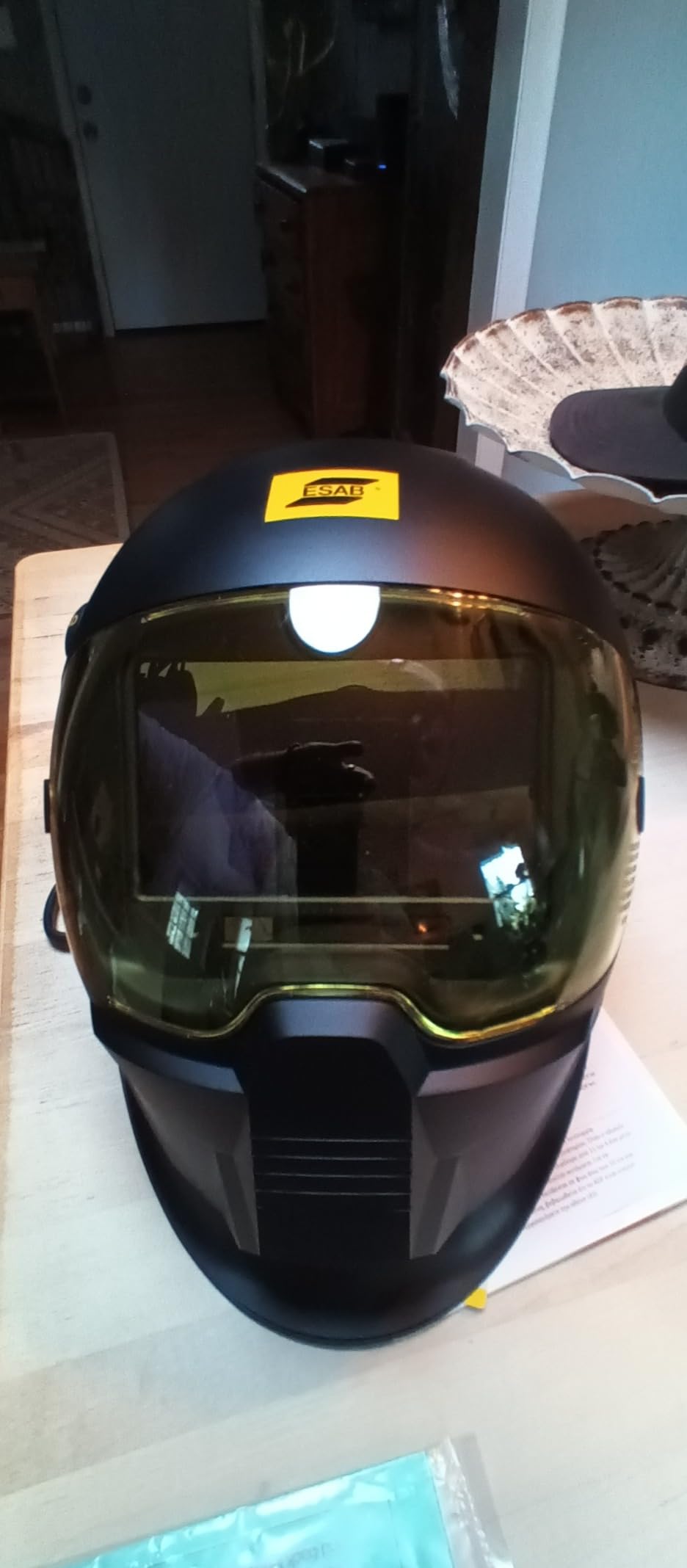
The Sentinel A60 is the professional end of this list. It has a wide 4.65 inch by 2.80 inch viewing area, ESAB OpTCS true color lens technology, and a shade range that adjusts in half DIN steps rather than full steps.
Half steps are a small thing that a full-time fabricator notices. On thin material and stainless work, being able to set 11.5 instead of jumping between 11 and 12 is the difference between a comfortable bead and squinting.
It also stores up to 9 settings on board. A welder who alternates between stainless, mild steel and aluminium can keep three different shade and sensitivity combinations loaded instead of resetting knobs between every job, which is a genuine time saver in a production environment.
Switching time is listed at 0.08 millisecond across four arc sensors, and the replaceable CR2450 keeps service simple. Low battery, grind mode and shade lock each get their own indicator LED, so the state of the helmet is readable at a glance. The shell is low-profile high impact resistance nylon at 16 ounces.
Why professionals pick the low profile shell
The rounded low-profile shape is the reason ironworkers and fabricators like this hood. It clears a respirator facepiece, slides into tight structure and does not catch the way a squared-off shell does when you are welding in a confined space.
Weight is another point in its favour at 16 ounces, and professional owners report it staying comfortable through a full day. The internal ADF controls for sensitivity and delay mean nothing on the outside of the lens to snag or fill with spatter.
Where it falls short
For a shell at this level, the headgear ratchet feels inexpensive and the lock nuts do not reliably hold the hood in the flipped up position. Owners moving up from entry-level hoods tend to notice that immediately.
The cover lenses scratch easily if the helmet is set face down on a bench, and replacement lenses and accessories for this model add up over a year of work. On optics and all-day comfort, this is where we would point a full-time fabricator.
10. Lincoln Electric K4983-1: the best for site work and hard hat compatibility
- Trusted major brand construction
- Lightweight at 17.5 oz with an adjustable ratchet headgear
- Oversized absorbent sweatband for long wear
- Shade 7-13 plus grind mode covers most processes
- Hard hat compatibility is useful on site
- Two extra inner and outer lenses and two AAA batteries included
- Fixed shade range starts at 7 which limits very light work
- No built-in work light
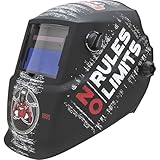
The Lincoln Electric K4983-1 is the pick for anyone who works outside or on a construction site, because it is designed to fit over a hard hat. That single feature removes a whole category of problem that shop-only helmets ignore.
On site you are often working at height, in wind, in rain and around other trades, and a helmet that only works on its own is a liability. The adjustable ratchet headgear with an oversized absorbent sweatband handles a long shift better than most, and the 17.5 oz nylon shell keeps weight down.
The viewing area is 4.33 inch by 3.54 inch, which is generous for the class, and the shade runs 7 to 13 with a separate grind mode shade. Solar power with battery backup means it will not die mid-job because the cell had no light to charge it.
It is listed for stick, TIG, pulsed TIG, MIG, pulsed MIG, flux core and gouging, and TIG performance is rated from 5 amps upward, which is a useful number if you work thin material. It is ANSI Z87.1 certified and the box includes two extra impact resistant inner and outer lenses plus two AAA batteries.
Why hard hat compatibility is a real feature
On a site, the hard hat does not come off, and most auto darkening helmets are shaped so a hat will not sit over them. A helmet that accepts a hat means one piece of head protection stays on your head, which is both safer and less annoying.
Variable shade 7-13 with a dedicated grind shade also covers the range of work typical of site fabrication and repair, from structural steel to cleanup, without needing a second hood.
Where it falls short
The shade range starts at 7 and does not reach lower numbers, so it is less versatile for very light work such as thin-gauge TIG or tinning than a hood that runs down to 3 or 4 in the light state. If that is your main process, pick a model with a wider range.
There is no built-in work light, which rules it out for dark garage work. The feature set is also more modest than the digital premium models, with no memory, no half-shade steps and no app connectivity. What you get instead is straightforward construction from a major brand, which is a fair trade for site work.
Miller or Lincoln Electric: Which Brand Should You Buy?
Miller and Lincoln Electric are the two names that come up most when welders compare helmets, and the honest answer is that both are sound choices aimed at slightly different priorities. Pick Lincoln for fit, headgear refinement and a wider process range. Pick Miller if you prioritize lens technology and the widest retail and service network.
It is worth saying plainly that neither of those brands is a differentiator on its own. A weldingweb commenter in our research notes that essentially every welding helmet brand now has manufacturing in China or elsewhere in Asia, so made in USA is not a meaningful differentiator in this category. Judge the model, not the country of assembly.
What genuinely differs is the design philosophy. Miller leans on lens technology and colour reproduction, and the helmets tend to be shaped by what the optic can show you. Lincoln leans on ergonomics, headgear, viewing area and process coverage, and tends to pack more adjustability into the shell.
On the upgrade question, a long-time forum participant on the naxja.org welding helmet thread traced their own gear ladder from a Miller economy series through Speedglas and an Airgas house brand up to a Miller Elite, and noted the Elite cost roughly twice the previous step. That pattern matches what we see: the jump from an entry model to a mid-range brand name is a real upgrade, and the jump from mid-range to premium is incremental.
Our roundup did not land on a Miller model for the top slot, but the Hobart and ESAB picks both share Miller-style priorities, dependable optics and a compact shell. If you already own Miller or Lincoln equipment, staying inside that ecosystem makes sense for service and replacement parts.
How to Choose an Auto Darkening Welding Helmet in 2026
Optical clarity: aim for 1/1/1/1
The four digits of an optical clarity rating each measure a different optical defect. The first is light transmission, how much light passes through, the second is how evenly that light is distributed, the third is the absence of blur, and the fourth is shade consistency, meaning the filter holds an even darkness rather than mottling.
For anything beyond occasional work, 1/1/1/1 is the threshold worth paying for. A 1/1/1/2 rating is perfectly serviceable and appears on capable budget models. Anything that simply says true color without a numeric rating is a marketing claim, not a measurement.
Switching speed and shade range
Switching speed is written as a fraction of a second, and 1/25,000 second or faster is the practical target. Slower filters let light through on arc strike, which is the flash that causes arc eye, and they also lag on the trailing edge so the lens brightens while you are still finishing a bead.
For shade range, MIG work usually sits around DIN 9 to 13, low amperage work sits nearer DIN 9, and heavier cutting and stick work pushes toward 13. A range that reaches down to DIN 3 or 4 in the light state is more versatile, because the light state is what you wear between welds. Half-step adjustments, which most premium helmets offer, give finer control on thin and stainless work.
Arc sensors: two versus four
Arc sensors detect the flash before the filter darkens, and more sensors means the helmet detects an arc starting from more angles. That matters most when your arc is not pointed straight at the lens, for example on vertical joints, overhead work, or TIG with a torch angled around a pipe.
This is the single most repeated complaint on welding forums, and it is why budget two-sensor models struggle on low-amperage TIG. If TIG is more than an occasional process for you, buy four sensors.
Solar versus battery power in a dim shop
Solar helmets are convenient because there is no battery to die, but the failure mode is specific and it catches people out. In a dim workshop or basement the solar cell has little to charge from, and responsiveness degrades until you add a battery.
The fix is a replaceable coin cell. Most models in this roundup take a CR2450, and some budget models take a CR2032, so check which your helmet uses before you buy spares. A solar plus battery arrangement is the one to look for. If you can not tell which cell a model takes, that is a poor sign for parts support.
TIG troubleshooting when the helmet will not trigger
If your helmet works on MIG but will not darken on TIG, the arc is almost always too dim for the sensors rather than the helmet being faulty. Work through these in order.
First, raise sensitivity to its maximum, and start your shade at the darker end of the range, around DIN 9 to 12, since a low shade setting can leave the filter under threshold.
Next, add ambient light to the work area, because a brighter shop gives the sensors more to detect, and shorten the delay only if the lens is staying dark too long. The most reliable fix of all is a helmet with four arc sensors.
Comfort, headgear, glasses and hard hats
Comfort is a spec, not a nicety. Look for an adjustable ratchet or dial headgear that holds position, a padded sweatband, and a shell under 20 ounces if you weld overhead. A headgear that drifts down during a session will have you tilting your head all day.
Prescription eyewear is a real compatibility question. Most auto darkening helmets fit over safety glasses, but deep headpieces can press against the temple on smaller heads, so try it on. The same applies to knit caps in cold shops, and to hard hats, which only a small number of models are shaped to accept.
Safety standards worth insisting on
ANSI Z87.1 is the American standard and the one most shops and programs check. EN 379 and EN 175 are the European equivalents, and CSA Z94.3 is the Canadian standard. A model listing two or three of them is a safer bet than one that lists none, and the marks should appear somewhere other than a marketplace listing title.
Look for the plus on ANSI Z87.1, which indicates the higher impact rating, and check that the UV and IR protection figure covers the shade range you will actually use. If a listing does not name a standard, ask the manufacturer before you buy.
When a fixed shade helmet still wins
A fixed shade 10 flip-front is not obsolete. Some welders prefer it for TIG, and a hobbyist on a Land Rover build forum cited the much larger window and more consistent shade as the reason. There is no filter to fail, no sensors to miss a strike and no battery, and the light state is permanently clear.
The tradeoff is that you flip the hood by hand for every pass, and the fixed window is dark while you are welding. For a student who cannot see through a dark classroom hood, an auto darkening model is the better answer. For occasional short welds in a bright space, a fixed shade is still hard to beat on simplicity.
One more buying note for anyone starting out. A widely read thread on r/Autobody asked for reputable auto darkening brands on a student budget after a first-timer could not see through the fixed shade classroom helmets they were issued. That question comes up more than any other, and the answer is the same: any model on this list with a written certification will solve it, and the budget picks solve it best.
For shops that work with gas appliances as well as metal, our guide to the best gas stoves with auto ignition covers a similar auto-shutoff principle in a different room.
Frequently Asked Questions
Can I trust an auto darkening welding helmet?
Yes, provided it carries a written safety certification such as ANSI Z87.1 with the plus marking, EN 379 or CSA Z94.3, and it comes from a brand that publishes its switching speed and optical clarity rating. The auto darkening filter reacts to the arc in roughly 1/25,000 of a second, which is fast enough to prevent arc eye when the filter is working correctly. Buy from a brand with real owner volume and available replacement lenses, and test the helmet on a scrap piece before relying on it.
What is the best helmet for TIG welding?
For TIG you want four arc sensors, adjustable sensitivity, and a shade range that reaches a low number such as DIN 9 for thin-gauge work. A two-sensor budget helmet is the most common reason TIG welders think their helmet is faulty, because low-amperage arcs are dim and get missed. Raise sensitivity to maximum, set the shade darker, and add ambient light to the shop. If TIG is your main process, a large-window model with four sensors is the safer purchase.
Which welding helmet is better, the Miller or the Lincoln?
Pick Lincoln Electric for fit, headgear refinement, larger viewing areas and wide process coverage, including models shaped to fit over a hard hat. Pick Miller for lens technology emphasis, colour reproduction and a wider retail and service footprint. Both are credible choices, and neither is meaningfully different on country of assembly, since most brands in this category manufacture in Asia. If you already own one brand of welder, staying inside that ecosystem simplifies service and parts.
Do solar welding helmets work indoors?
They work, but dim indoor shops are the failure mode people hit. A solar cell has little to charge from in a dark workshop, and responsiveness degrades until you add a battery. The fix is simple and worth doing on day one: most solar helmets accept a replaceable CR2450 coin cell, and some budget models use a CR2032 instead. A solar plus battery arrangement is what you want if your shop lighting is uneven or you weld at night.
What optical clarity rating should a welding helmet have?
Look for 1/1/1/1. The four digits each measure a different defect: the first is light transmission, the second is how evenly light is distributed, the third is the absence of blur, and the fourth is shade consistency, or how evenly the filter holds its darkness. A 1/1/1/2 rating is still serviceable, and plenty of capable budget helmets carry it. A claim of true color with no numeric rating is marketing rather than a measurement.
What shade number should I use for MIG welding?
Most MIG work sits in the DIN 9 to 13 range, with the darker end for heavier material and cutting. Start at DIN 10 or 11 for thin sheet and move up from there, because a shade that is too light leaves your eyes strained while a shade that is too dark makes it hard to read the puddle. Premium helmets that adjust in half steps give you finer control, which pays off on thin and stainless work.
Can you wear glasses with an auto darkening welding helmet?
Most auto darkening helmets fit over safety glasses, since the filter sits in the front of the shell and the headgear is behind. The exception is a deep headpiece that presses against the temple on smaller heads, which is a common complaint on some large-screen models. If you wear prescription safety glasses, try the helmet on in person before you buy, and add a cheater or magnifying lens insert if you need more detail up close.
The Bottom Line
The best welding helmets with auto darkening in 2026 come down to process and shop conditions rather than brand. The YESWELDER LYG-L600A is the pick most people should buy: a true color 1/1/1/1 lens, fast switching, external controls and the most owners of any helmet in this group. Move up to the YESWELDER LYG-M800H if you want a bigger window and four arc sensors, which is what TIG and overhead work call for.
Buy the TRQWH or Sunstac if your shop is dark and you need a work light. Buy the Jackson Safety Insight if neck fatigue is already a problem, and the Lincoln Electric K4983-1 if you need hard hat compatibility on site. For full-time production work, the ESAB Sentinel A60 has the clarity and the adjustability professional work calls for. Whatever you choose, check the certification mark and put a coin cell in the helmet before your first weld.