
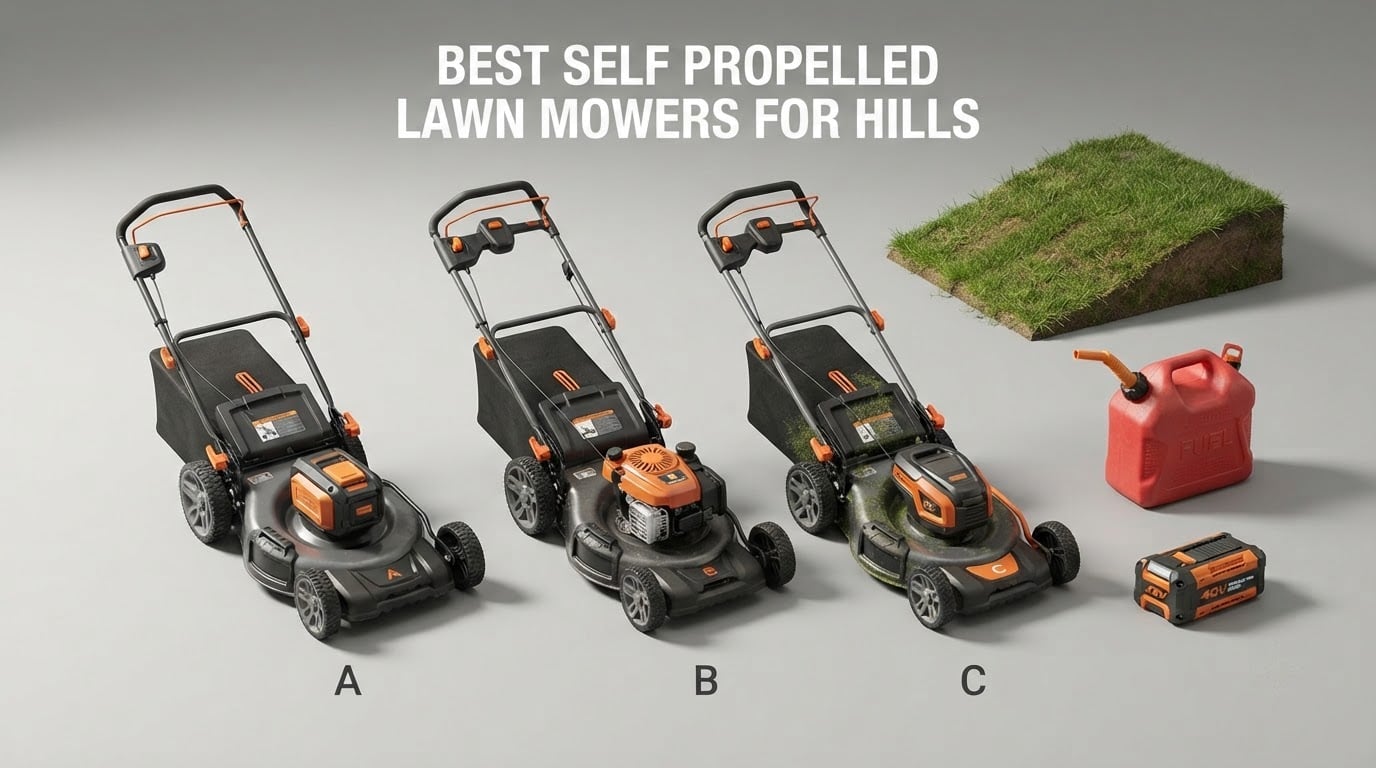
Rear-wheel drive and all-wheel drive are the two drive systems that hold a self-propelled lawn mower on a slope, and front-wheel drive is the one to avoid. On an incline your weight shifts onto the rear wheels, so powered rear wheels keep the drive wheels loaded and gripping. Below is the short version: pick a rear-wheel drive or all-wheel drive mower, choose variable speed so you can crawl uphill and creep downhill, and pay attention to weight, because a 79-pound gas mower that stalls mid-slope is a problem you cannot push back up.
That is the whole argument. The best self propelled lawn mowers for hills are not the biggest or the most powerful, they are the ones that put their drive wheels under the heavy end of the machine and let you control the pace. I have spent the last few weeks working through eight of them, reading owner reports on sloped ground, and checking the drive layout, transmission type, deck size and weight for each one.
If you are still working out the basics of walk-behind mowers, our general self-propelled lawn mower roundup covers the category without the hill focus. If your property is steep enough that mower choice is the least of your problems, start with our guide to lawn mowers for hills instead, because at some grade the answer is not a walk-behind at all.
Table of Contents
What to look for on hills
- Rear-wheel drive or all-wheel drive. The powered wheels need to sit under the heaviest part of the mower or the drive wheels unload on a grade and lose grip.
- Variable speed control. A CVT or multi-speed drive lets you set a crawl uphill and a slow crawl downhill. A single-speed drive is either too fast uphill or uncontrollable coming down.
- Weight you can handle. Heavy gives you stability and torque. Heavy also means that if the mower stalls halfway up a slope, you are not pushing 80 pounds back to the top.
- Torque that holds under load. Damp grass on an incline multiplies the load on the blade. Brushless motors rated in ft-lbs of torque give you a clearer picture than horsepower claims.
- Large rear wheels or high wheels. Tire diameter decides how much of your weight the drive system has to hold. Bigger tires bridge ruts and soft ground.
Top 3 Self-Propelled Lawn Mowers for Hills in 2026

Greenworks 80V 21-Inch Cordless
- Rear-wheel drive with variable speed
- 45 minute runtime on 4.0Ah
- 64.2 pounds
- 3-in-1 mulch bag side discharge

EGO POWER+ LM2135SP
- 7.0 ft-lbs cutting torque
- 60 minute runtime
- 0.9 to 3.1 mph speed range
- 55.3 pounds

SENIX 201cc 22-Inch Gas
- Rear-wheel drive
- 11-inch rear wheels
- 79 pounds
- 201cc four-cycle engine
The Greenworks 80V is the pick I keep coming back to because rear-wheel drive with genuine variable speed is the exact combination a slope asks for, and at 64.2 pounds it is not so heavy that recovering a stall becomes a workout. The EGO LM2135SP earns its spot on torque and speed range, since 7.0 ft-lbs and a 0.9 to 3.1 mph dial is the widest margin to slow down on a steep grade. The SENIX 201cc is the value gas option for people who want a steel deck and 11-inch rear wheels without moving up a tier.
All Eight Picks Compared for Hills in 2026
| Product | Specifications | Action |
|---|---|---|
| Greenworks 80V 21-Inch Cordless Self-Propelled |
|
Check Latest Price |
| EGO POWER+ LM2135SP 21-Inch Cordless |
|
Check Latest Price |
| SENIX 201cc 22-Inch Variable Speed Gas |
|
Check Latest Price |
 PowerSmart 22-Inch 150cc Gas Self-Propelled PowerSmart 22-Inch 150cc Gas Self-Propelled |
|
Check Latest Price |
 Greenworks 60V 21-Inch Dual-Battery Kit Greenworks 60V 21-Inch Dual-Battery Kit |
|
Check Latest Price |
 YARDMAX 22-Inch 201cc Select PACE CVT YARDMAX 22-Inch 201cc Select PACE CVT |
|
Check Latest Price |
 SENIX 22-Inch 201cc Rear-Wheel Drive SENIX 22-Inch 201cc Rear-Wheel Drive |
|
Check Latest Price |
 EGO POWER+ LM2114SP 21-Inch Cordless EGO POWER+ LM2114SP 21-Inch Cordless |
|
Check Latest Price |
Two things stand out when the eight sit next to each other. Every cordless pick here is rear-wheel drive, which tells you how strongly the category has answered the hill question, and the only front-wheel drive machine in the group is also the heaviest one at 84.9 pounds, which is a rough combination on an incline.
How to Choose a Self-Propelled Mower for Hills
Rear-wheel drive beats front-wheel drive because of where your weight goes
Walk a push mower onto a ramp and the same thing happens. Going up, gravity pulls the machine back and the rear wheels carry more load. Coming down, the machine leans forward and the front wheels take the weight. A front-wheel drive mower is powered at the wheels that get lighter on an incline, so drive force falls away exactly when you need it most, and a mower that cannot push itself forward on a grade will tip or slide downhill.
Rear-wheel drive puts the powered wheels under the heavy end of the deck, so the drive wheels stay loaded whether you are going up or coming back. All-wheel drive adds powered front wheels for grip and control on the steepest grades. Community consensus across mower forums lands in the same place: rear-wheel drive is the sweet spot for flat to moderate slopes, and genuinely steep ground is where all-wheel drive earns its extra money.
One honest wrinkle, because the forums are not unanimous. A commenter looking at an all-wheel drive machine was warned by owner reviews that it performs badly on very steep ground, while another owner running a basic all-wheel drive mower reports it is far better than the rear-wheel drive alternative on steep hills. The lesson is that the drive label is a strong signal but not a guarantee, and the drive system, the transmission and the motor all have to agree with each other.
Match the drive system to your slope severity
Nobody in this category will hand you a slope chart, so here is one. If your lawn rolls only slightly and you can push a full wheelbarrow up it without straining, any rear-wheel drive mower on this list will do the job and you can spend your attention on deck width instead.
For a moderate grade that makes you slow down, rear-wheel drive plus variable speed is the target. That is the Greenworks 80V, the EGO LM2135SP and the SENIX 201cc, and it is the band most hilly yards actually fall into.
For a steep grade where you would hesitate to walk a lawnmower up it, you want all-wheel drive, the widest speed range you can find, and a machine light enough to turn around on the incline. None of the eight here is all-wheel drive, so on truly severe ground you are looking at a zero-turn riding mower, which we cover in the section on when a walk-behind is the wrong answer.
Beyond roughly 25 degrees, treat the project carefully whatever you buy. If a mower stalls halfway on that kind of slope, the recovery is a two-person job, and no drive system solves it for you.
Battery or gas on a hilly yard
The honest trade-off is torque and recovery against noise, weight and maintenance. A gas mower has a fuel tank and an engine that keeps working at the same output for an hour, and a heavier machine is more stable coming down a grade. It is also louder, it needs oil changes and a spark plug, and 72 to 85 pounds is a real number to feel when you are turning on a slope.
A cordless mower runs quiet enough for an early start, starts with a button, and in the 50 to 65 pound range is far easier to control on an incline. The weakness is that battery output dips as the charge falls and when the blade loads up, and that is exactly the moment you are halfway up a slope on wet grass.
On runtime, do the arithmetic for your own yard rather than trusting a headline. The EGO LM2135SP runs up to 60 minutes on its included 7.5Ah battery, the LM2114SP runs up to 50 minutes on 6.0Ah, the Greenworks 80V gets 45 minutes on 4.0Ah, and the Greenworks 60V kit ships with two 4.0Ah batteries and covers up to three-quarters of an acre per charge. On a hilly half-acre where you are travelling slowly and turning often, plan on two charges rather than one.
Deck width, weight and the number of risky passes
Deck width is a safety feature on a slope, not just a speed feature. A 22-inch deck covers more ground per pass, and fewer passes across a grade means fewer times you have to start and stop on the fall line. Four of the picks here run 22-inch decks, and the two gas mowers with the widest decks are also the two heaviest.
Cutting height adjustment matters more than usual on uneven ground, because a mower set to a fixed low height bounces over dips and scalps the crowns. All eight have a single-lever or central height adjustment with six or seven positions, so you can raise the deck a notch on the rough sections.
Roughly 50.9 pounds is the lightest machine here and roughly 84.9 pounds is the heaviest, and that 34-pound spread is the single biggest handling difference you will feel on a slope. Heavier is steadier going downhill. Heavier is also much harder to turn around when you are stopped facing uphill.
1. Greenworks 80V 21-Inch Cordless Self-Propelled Mower: Best Overall for Hills
- Rear-wheel drive and variable speed give real traction on steep slopes
- Very quiet
- roughly a quarter the noise of a gas mower
- No gas oil or pull start and stores vertically
- Good mulching with fine clippings
- Self-propel can drive the mower home with the blade motor off
- Self-propel motor takes a few seconds to spin up and stop
- Lowest self-propel speed may still be too fast for slow walkers
- Battery release lever needs a hard press and the instructions are unclear
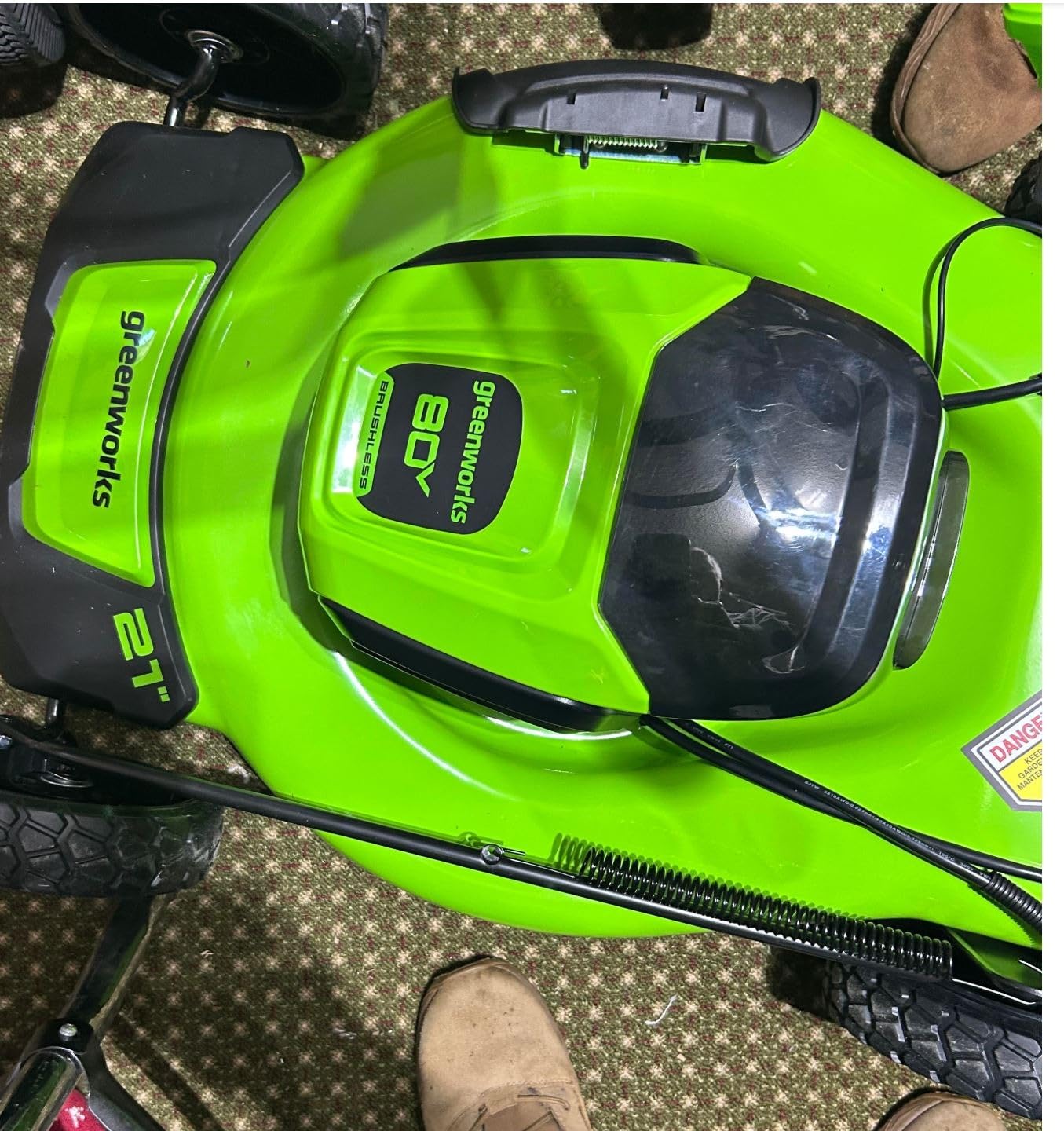
The drive layout is why this is first. Rear-wheel drive with variable speed control is precisely the arrangement you want on a slope, and one owner in the review data mows 35-degree ditch banks with it, which is a steeper test than most backyards will ever ask for. The brushless motor provides more torque and longer life than a brushed design, and SmartCut senses grass load and adjusts power on the fly.
At 64.2 pounds it sits in the middle of this group. That matters twice on a hill: it is heavy enough to feel planted going downhill, and light enough that a stall does not become a rescue mission. Owners also like that you can engage the self-propel with the blade motor off and drive the mower back to the garage without starting the cutting system.
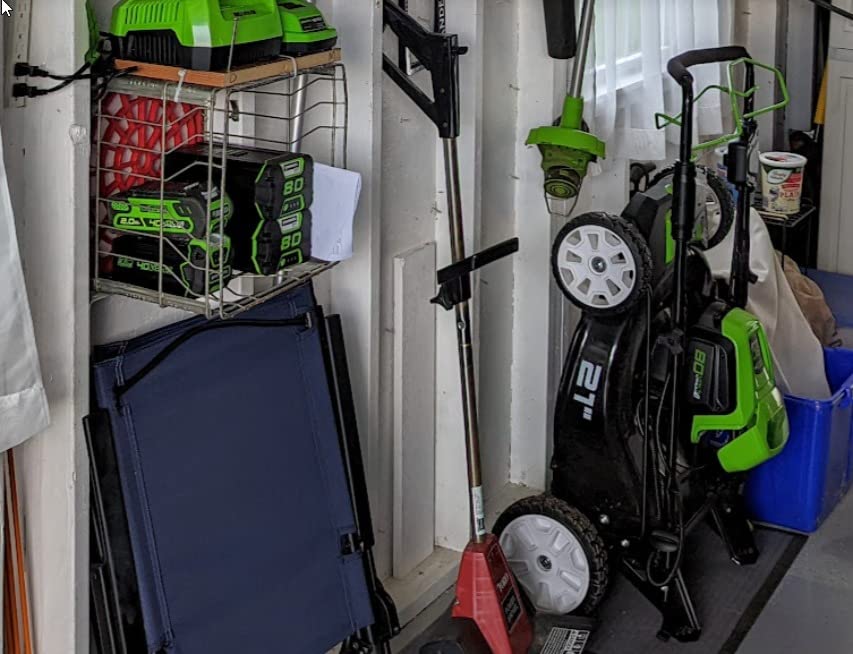
There are real drawbacks. The self-propel motor takes a few seconds to spin up and a few seconds to stop, which is very noticeable on a turn at the top of a slope because the mower is still moving when you expected it to have slowed. The slowest self-propel setting may still be too quick for a slow walker, and on a narrow incline that can feel like the machine is walking away from you.
The battery release lever also takes a firm press and the documentation does not explain it well, which is frustrating the first time. Owners report a single-blade deck that can leave strips in very tall grass and clump clippings when mulching, and a few report an electronic no-start that took repeated attempts. None of that touches the drive system, which is what you are buying this mower for.
What this mower handles well on a slope
Moderate to steep grades on a yard up to about a quarter acre, and any yard where noise matters. Test the variable speed before you start: engage the bail bar at the crawl setting and check that the slowest setting still feels controllable facing downhill.
Where it will disappoint you
Very tall or wet grass on a steep slope, because the single blade is working harder while SmartCut trims power. If you regularly mow after rain, the EGO LM2135SP has more torque headroom. Large acreage is also out of reach at 45 minutes per charge.
2. EGO POWER+ LM2135SP 21-Inch Cordless: Best Torque for Damp Slopes
EGO POWER+ 21″ Cordless Electric Lawn Mower Kit, Self-Propelled – LM2135SP
- High 7.0 ft-lbs torque handles dense or damp grass without bogging
- 60 minutes of runtime covers large lawns on one charge
- Touch Drive self-propel is easy to engage and modulate on inclines
- Wide 0.9 to 3.1 mph range lets you pick a slow crawl for hills
- Select Cut swaps mulching
- bagging and runtime blades
- Brushless motor
- LED headlights and 5-year warranty
- Included battery and charger are among the largest and heaviest in the cordless class
- Costs more than comparable 21-inch cordless kits
- Metal deck adds weight against plastic-deck rivals
Torque is the headline on a wet slope, and 7.0 ft-lbs is the highest figure in this group. Damp grass on an incline is the worst combination a battery mower meets, because the blade is loaded and the battery is being drawn hard at the same time. This is the machine I would pick if your hill gets mowed right after rain.
The speed range matters just as much as the torque. Touch Drive self-propel engages with palm pressure and the speed dial sits under your fingertips, and it adjusts from 0.9 to 3.1 mph. That crawl at the bottom end is what makes a steep pass manageable, and it is the widest spread of any pick here.
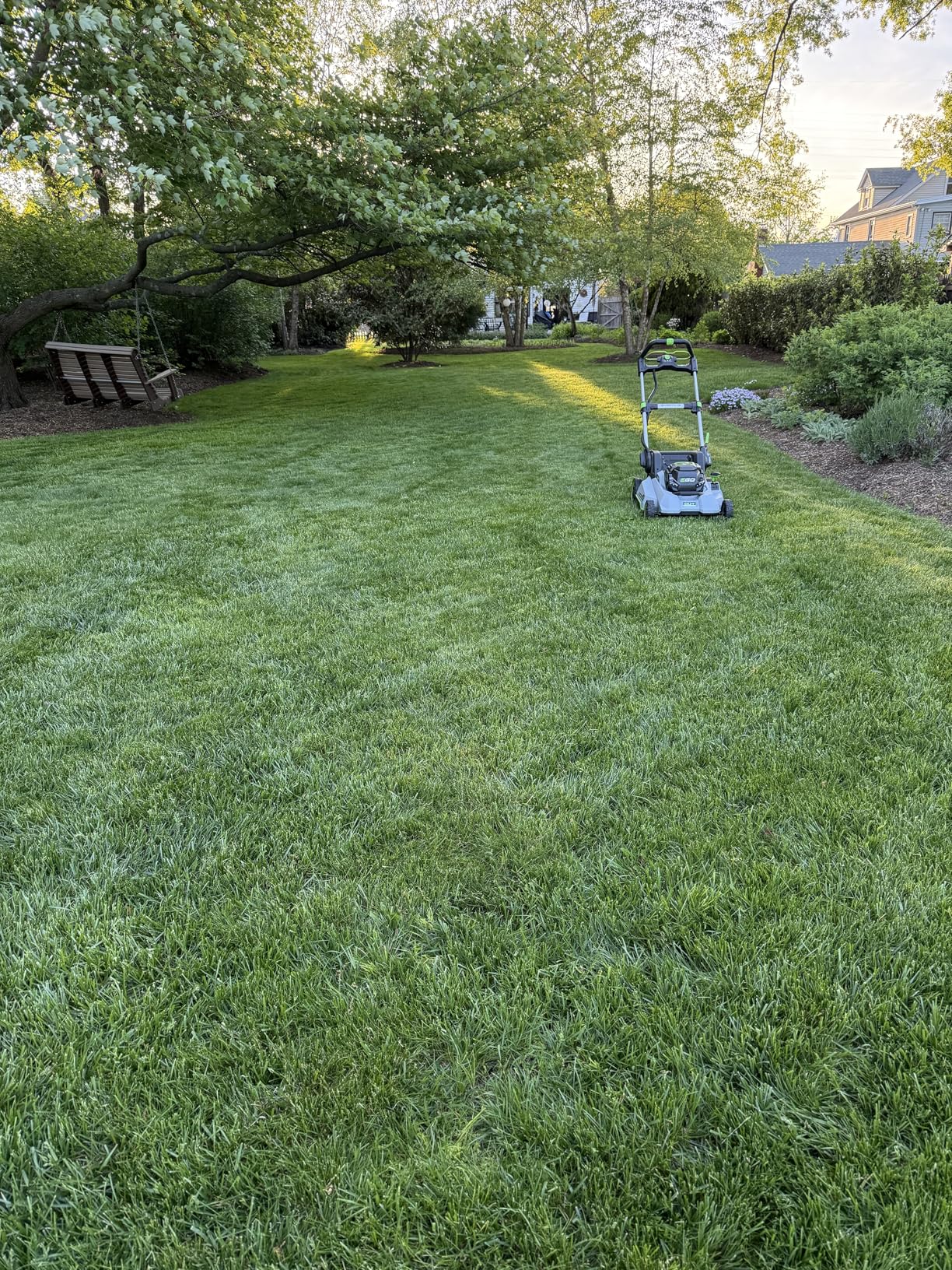
The Select Cut system is the quiet advantage. Interchangeable lower blades let you run a mulching blade, a high-lift bagging blade or an extended-runtime blade, so on a day when the grass is wet and heavy you can change the blade rather than change the mower. Runtime is up to 60 minutes on the included 56V 7.5Ah battery, and the rapid charger refills it in 60 minutes.
The trade-offs are size and cost. The included battery and charger are among the largest and heaviest in the cordless class, and the metal deck adds weight compared with plastic-deck rivals at 55.3 pounds total. You pay more than comparable 21-inch cordless kits, and you should decide whether the torque figure earns that back on your particular slope.
What this mower handles well on a slope
Damp grass, dense grass and grades steep enough that you need to crawl. The 0.9 mph floor is the lowest in the roundup, which is what you want facing downhill, and seven cutting positions from 1 to 4 inches let you back the deck off on ruts.
Where it will disappoint you
Carrying the battery up a steep path is the real complaint. The pack and charger are the bulkiest here, and on a hill where you are already managing roll-back risk, awkward weight in your hands is a genuine drawback.
3. SENIX 201cc 22-Inch Variable Speed Gas Mower: Best Value Gas Pick
- Rear-wheel drive with 11-inch rear wheels gives solid traction on slopes and rough ground
- Variable speed self-propel matches pace to terrain
- 22-inch steel deck covers more ground per pass
- Three cutting modes and six quick height settings
- Heaviest handling profile in this group at 79 pounds
- Gas engine needs fuel and oil upkeep and is louder than cordless
- Lowest owner rating among these picks with an 18 percent one-star share
This is the value route into hill-capable mowing. You get rear-wheel drive, variable speed and 11-inch rear wheels, which is the combination that actually climbs, and you skip the battery platform entirely. The 201cc four-cycle OHV engine keeps working at the same output for as long as the tank lasts, so a long hilly job is not a charge-management exercise.
The 22-inch steel deck with a sharp steel blade covers more ground per pass than a 20-inch, and on a slope that means fewer exposed passes across the grade. Six positions on a single lever from 1.25 to 4 inches handle seasonal height changes quickly.
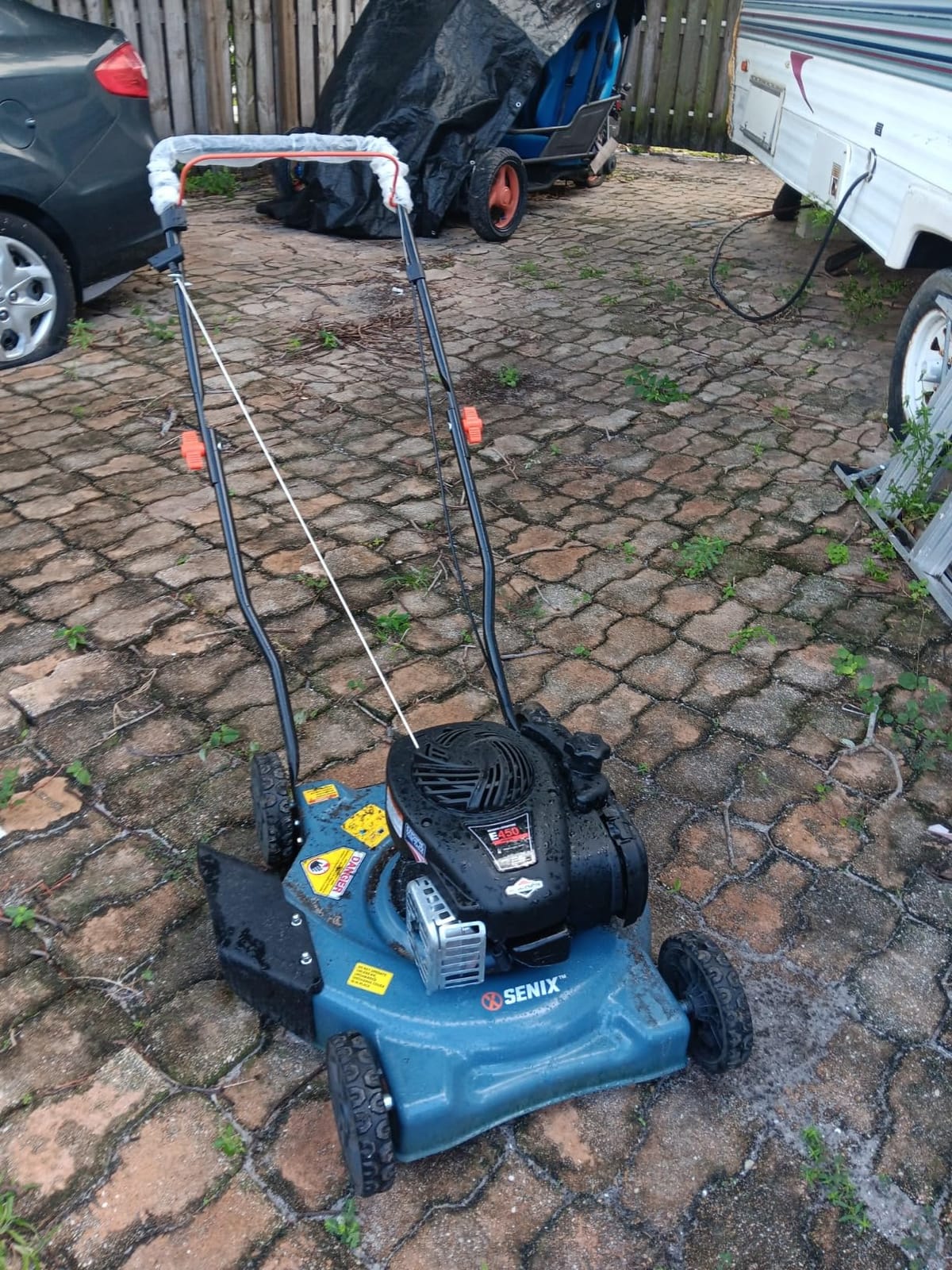
Be clear-eyed about the weight: 79 pounds is heavy. Owners regularly flag that as the deciding negative, because turning a mower of that mass around while it is pointed uphill on an incline is genuinely tiring. It is also the lowest-rated pick here at 3.9, with an 18 percent one-star share, so expectations should be set accordingly.
The gas upkeep is the other running cost. Fuel, oil changes, air filter and a spark plug are all on your schedule, and the noise level is a factor if you have close neighbours or local rules on equipment sound. Check your municipality before you commit.
What this mower handles well on a slope
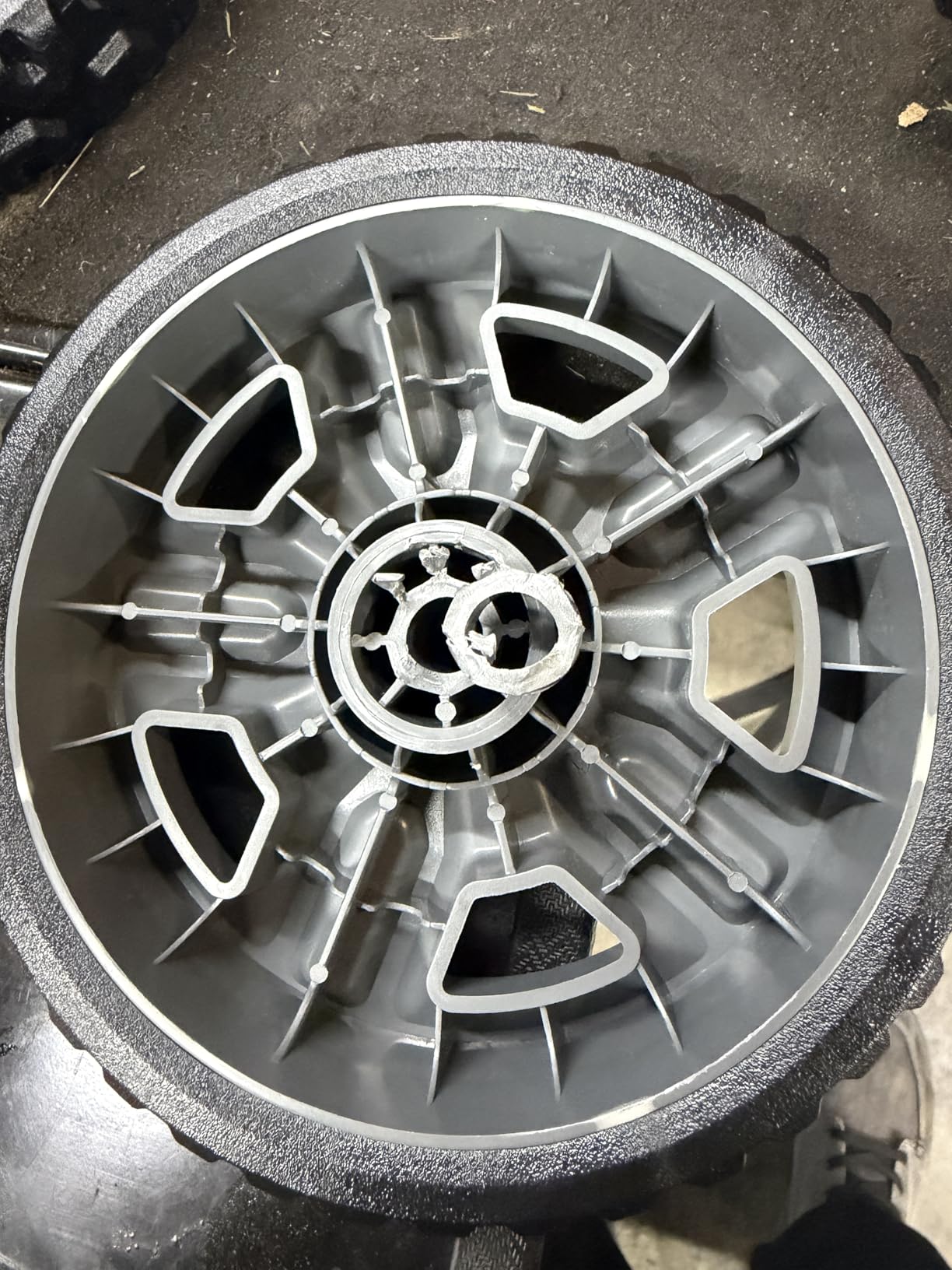
Long jobs on a moderate grade, especially if the grass is wet and you would rather not plan charge swaps. The 11-inch rear wheels are taller than the drive wheels on most compact walk-behinds, and tire diameter is what lets the drive system hold on rutted ground.
Where it will disappoint you
Any slope where you need to turn around on the incline, and any property where noise is restricted. The 79-pound weight and the 3.9 owner rating are the two things to weigh against the low purchase cost. The SENIX 22-inch later in this roundup has more torque and a stronger consensus, but only one speed.
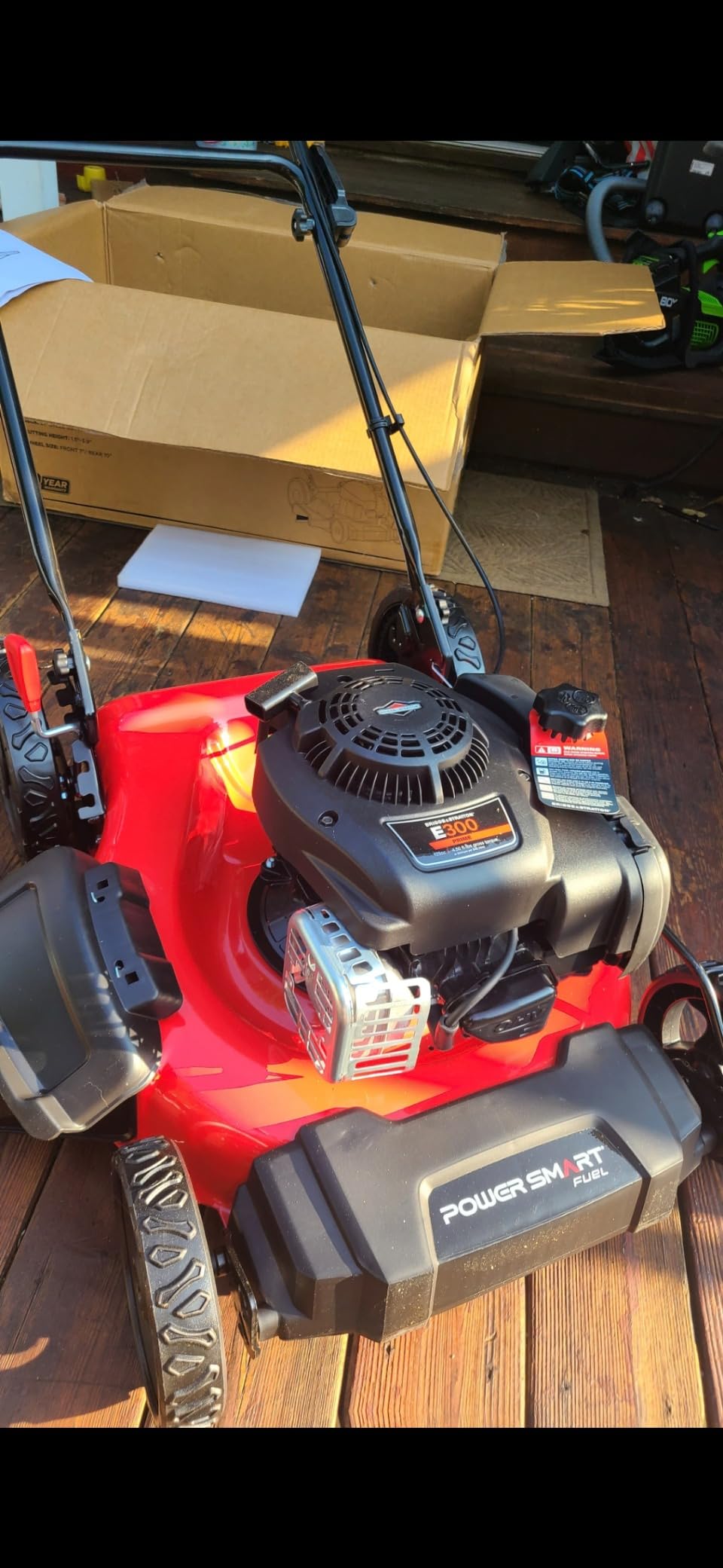
4. PowerSmart 22-Inch 150cc Gas Mower: Best Steel Deck Under Load
PowerSmart 22-Inch Gas Lawn Mower, 150cc B&S Engine, Self-Propelled, 3-in-1 Mulching System, 6 Cutting Heights, Rear-Wheel Drive, Durable Steel Deck
- Rear-wheel drive is tuned for traction on incline slopes
- Briggs and Stratton EX625 with ReadyStart simplifies cold starts
- Durable steel deck with a brand-name engine
- Single-lever six-position height adjustment
- Three discharge options including a 1.4-bushel bag
- 72 pounds is demanding on steep or uneven ground
- Gas engine means fuel mixing
- oil changes and pull starts
- 150cc engine works harder than the 201cc units on thick hillside grass
The attraction here is the engine and the deck rather than the drive system. A USA-made Briggs and Stratton EX625 150cc with ReadyStart means no priming and no choke fiddling on a cold morning, and a steel deck is what you want if your ground has rocks and roots coming through it. The heavy-duty blade produces very fine clippings, which matters if you are mulching into a slope.
Rear-wheel drive here is explicitly marketed for traction on incline slopes, and the single-lever six-position adjustment from 1.5 to 3.9 inches is quick to work with one hand while you are standing on uneven ground. The 1.4-bushel bag is the largest collector in this group.
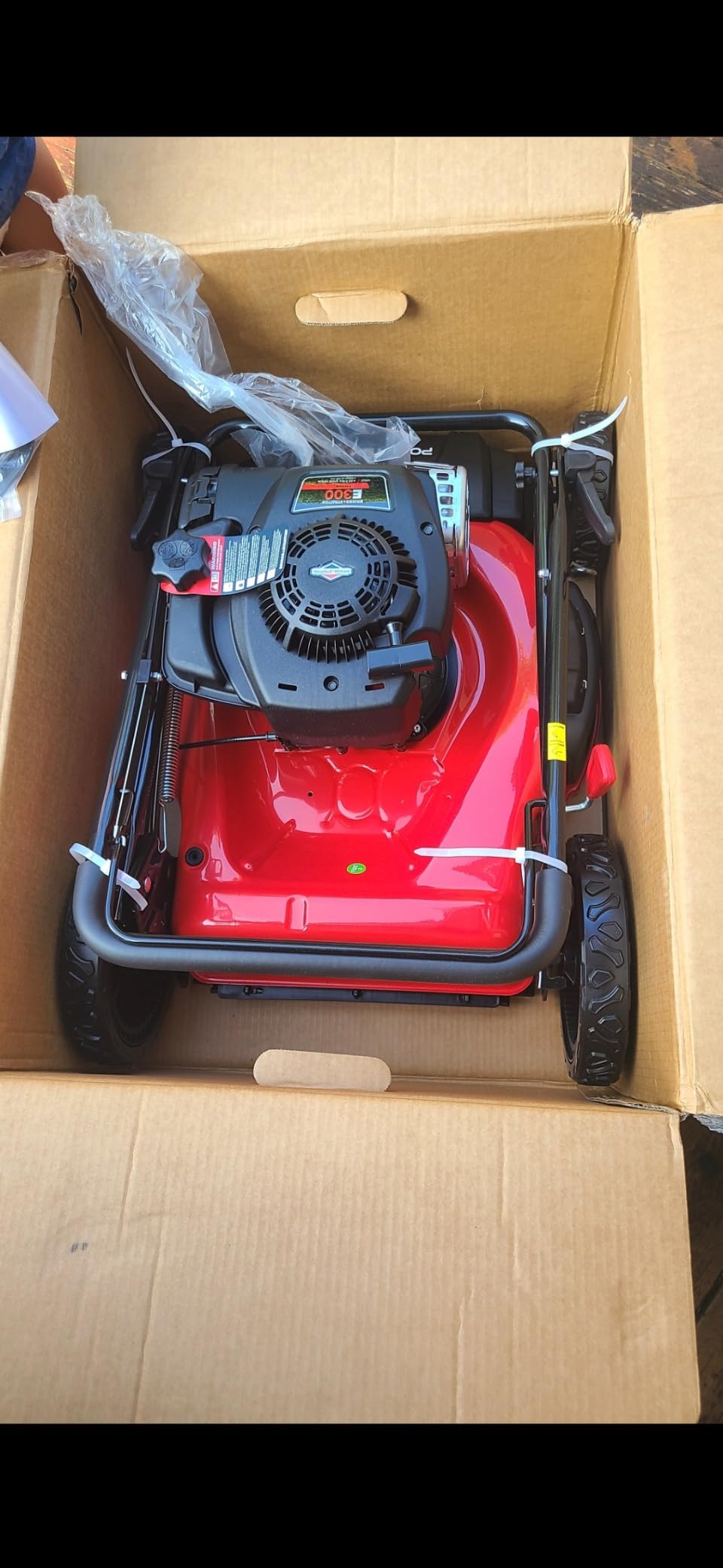
At 72 pounds this is still a heavy machine, and the trade-off is the same one all the gas decks here share. If it stalls on a grade, you are not casually restarting it. The 150cc engine is also the smallest on the list, so on thick hillside grass it is working harder than the 201cc units and you will feel the difference on a long climb.
Routine gas upkeep is the other cost line: fuel mixing, oil changes and pull starting. Budget for a season of it before you decide the savings were worth it.
What this mower handles well on a slope
Rough, rocky or rooty ground where a plastic deck worries you, at moderate grade. It is also the pick if you bag a lot, since the 1.4-bushel bag means fewer stops, and fewer stops on a slope is a safety decision.
Where it will disappoint you
Steep grades with tall growth, where a 150cc engine and a heavy deck together is a lot to ask. Any buyer who does not want gas maintenance should skip past this and consider the Greenworks 80V.
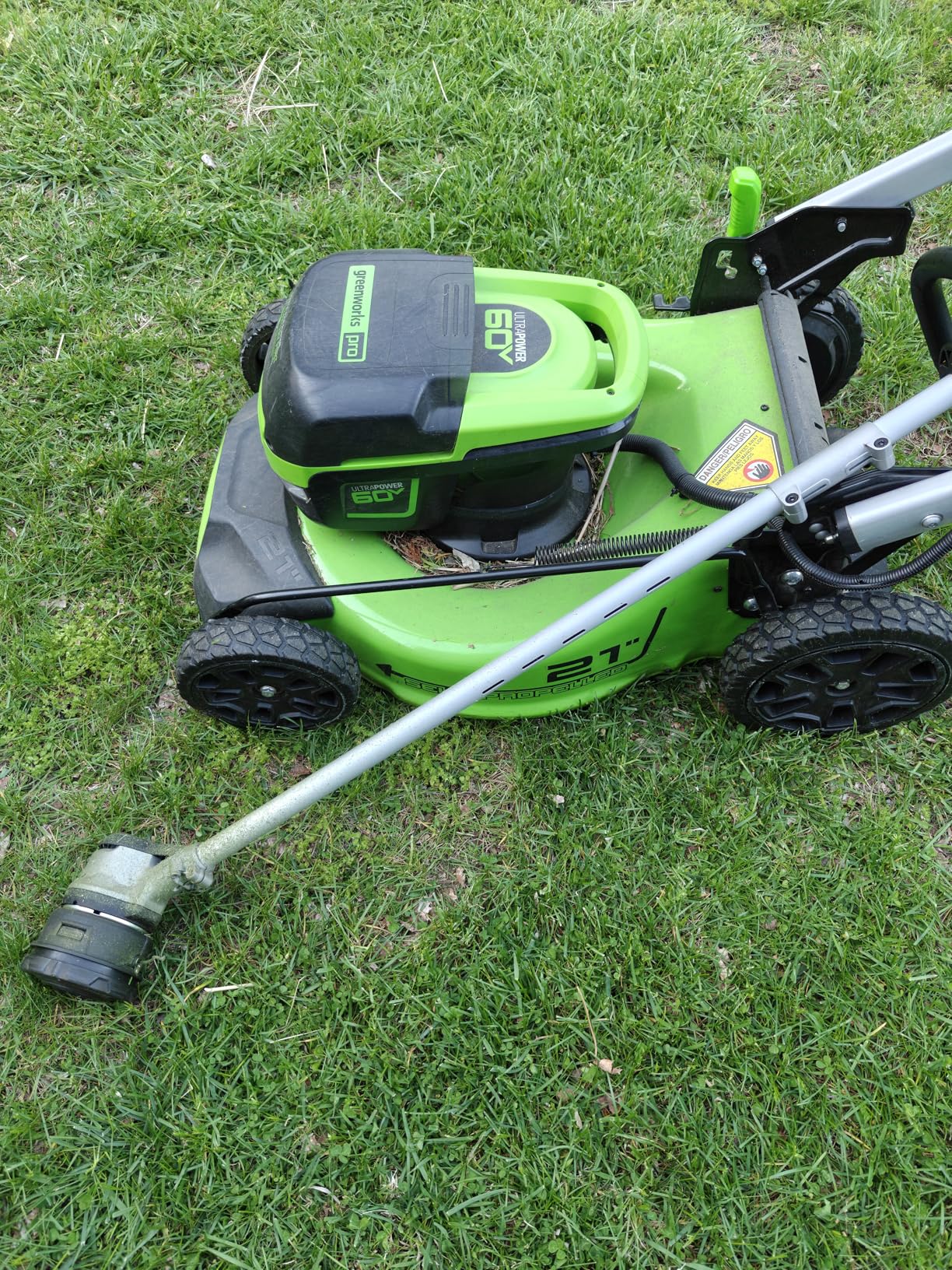
5. Greenworks 60V 21-Inch Dual-Battery Kit: Best for a Large Hilly Yard
Greenworks 60V 21in Self-Propelled Lawn Mower, (2) 4.0 Ah Battery Kit
- Two included 4.0Ah batteries roughly double your available runtime on a long or hilly lawn
- Rear-wheel drive traction designed for slopes and thick grass
- 4.4 rating with a low 9 percent one-star share
- Very quiet with instant start and no emissions
- Turbo leaf pickup mode and LED headlight
- 65 pounds is heavy for pushing back uphill or turning on a slope
- Two-battery kit format is a longer bulkier package to store
- Plastic deck is less durable than the steel-deck gas alternatives
Runtime is the reason this one exists. Two 4.0Ah batteries cover up to three-quarters of an acre per charge, and on a hilly lawn where you are travelling slowly and turning often, a second battery is the difference between finishing in one session and breaking the job in half. That is the single most common complaint we saw against single-battery kits, and this one answers it.
The drive system is right for the terrain too. Rear-wheel drive traction is specified for slopes and thick grass, and the self-propel speed is adjustable on the go rather than fixed at setup, so you can slow down for the steep section without stopping.
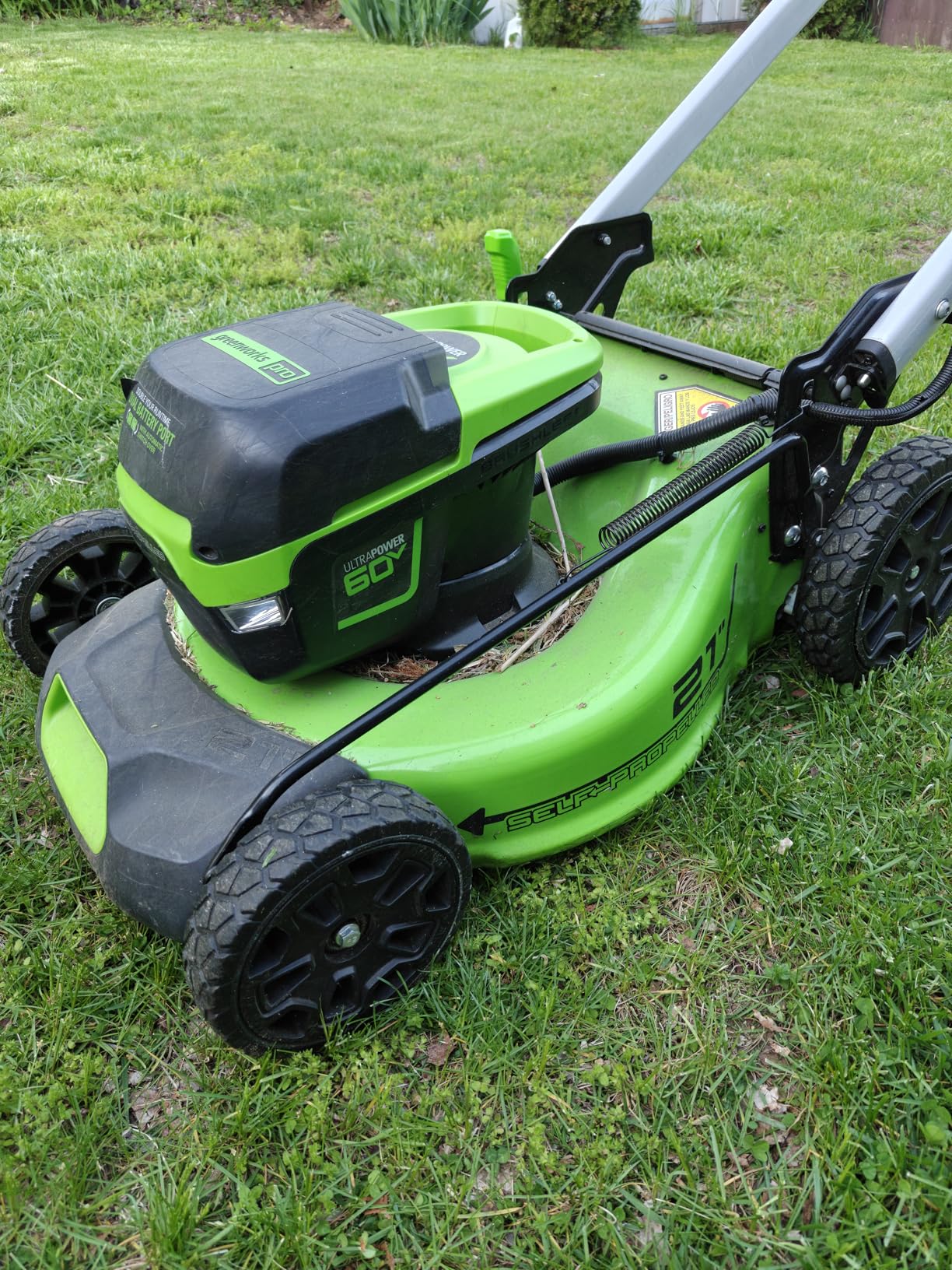
Owner satisfaction is the strongest in the group: a 4.4 rating with a 9 percent one-star share, and the lowest complaint rate of the eight. The turbo leaf pickup mode and the ultra-bright LED headlight stretch it into autumn and early evening, which is useful when your slope is the last thing in the yard to catch light.
Two things cost you. At 65 pounds it is heavier than the single-battery EGO models, and the plastic deck is less durable than the steel decks on the gas machines here. The two-battery kit format is also a longer, bulkier package to find garage space for, which undoes part of the quiet-storage advantage a cordless mower otherwise gives you.
What this mower handles well on a slope
Larger hilly properties, roughly a half acre to three-quarters acre, where a single charge would not finish the job. The 4-in-1 system covers mulching, bagging, side discharge and turbo leaf pickup, and it also suits anyone with neighbours close enough to hear a gas engine.
Where it will disappoint you
Very steep grades with a lot of turning, where 65 pounds is more mass to control than you want face-on. The EGO LM2114SP at 50.9 pounds handles better. It is also not the durability pick if your ground is rocky.
6. YARDMAX 22-Inch 201cc Select PACE: Budget Contrast Pick on Front-Wheel Drive
- CVT with six speeds lets you dial the pace precisely to a slope
- Spiked rubber tires and high wheels add traction on incline ground
- Automatic choke means no priming and easier starts
- Deck cleanout port makes underside maintenance straightforward
- Front-wheel drive is the wrong layout for the steepest grades
- Heaviest mower in the group at 84.9 pounds
- Only a 2-year residential warranty and gas upkeep to maintain
This pick is here as a contrast, and the contrast is instructive. The transmission is genuinely good on a slope: a CVT with a six-speed shift lever lets you set a precise pace for the grade, which is the single most useful hill feature on any mower. The 201cc engine with automatic choke needs no priming, and the spiked rubber tires are aggressive.
Then there is the drive layout. This is high-wheel front-wheel drive, which is precisely the configuration we opened by telling you to avoid. On moderate ground the big front tires and the CVT can mask that. On a steep grade, the powered wheels unload as the machine leans back and the mower can lose drive exactly when you need it.
The 84.9-pound weight is the heaviest in the group by a wide margin, and combining that with front-wheel drive makes recovery after a stall a genuinely difficult task. The 2-year residential warranty is the shortest here, and spare part availability is listed at five years, which matters more than usual when drive components wear faster on slopes.
There is one thing it does better than most: the deck cleanout port. If you mow wet grass on an incline, clippings pack into the deck underside, and a cleanout port saves a lot of kneeling on a slope. Spare part availability of five years is also worth something for a drive system that works harder than on flat ground.
What this mower handles well on a slope
Gentle to moderate grades and uneven ground where the tall high wheels bridge ruts. If your slope is a mild roll and traction over rough ground is the real problem rather than a true incline, the CVT control and spiked tires do a good job.
Where it will disappoint you
Steep hills, and this is the plain answer. Front-wheel drive plus 84.9 pounds is the worst pairing here for the exact situation this article is about. The 2-year residential warranty is also the shortest in the group.
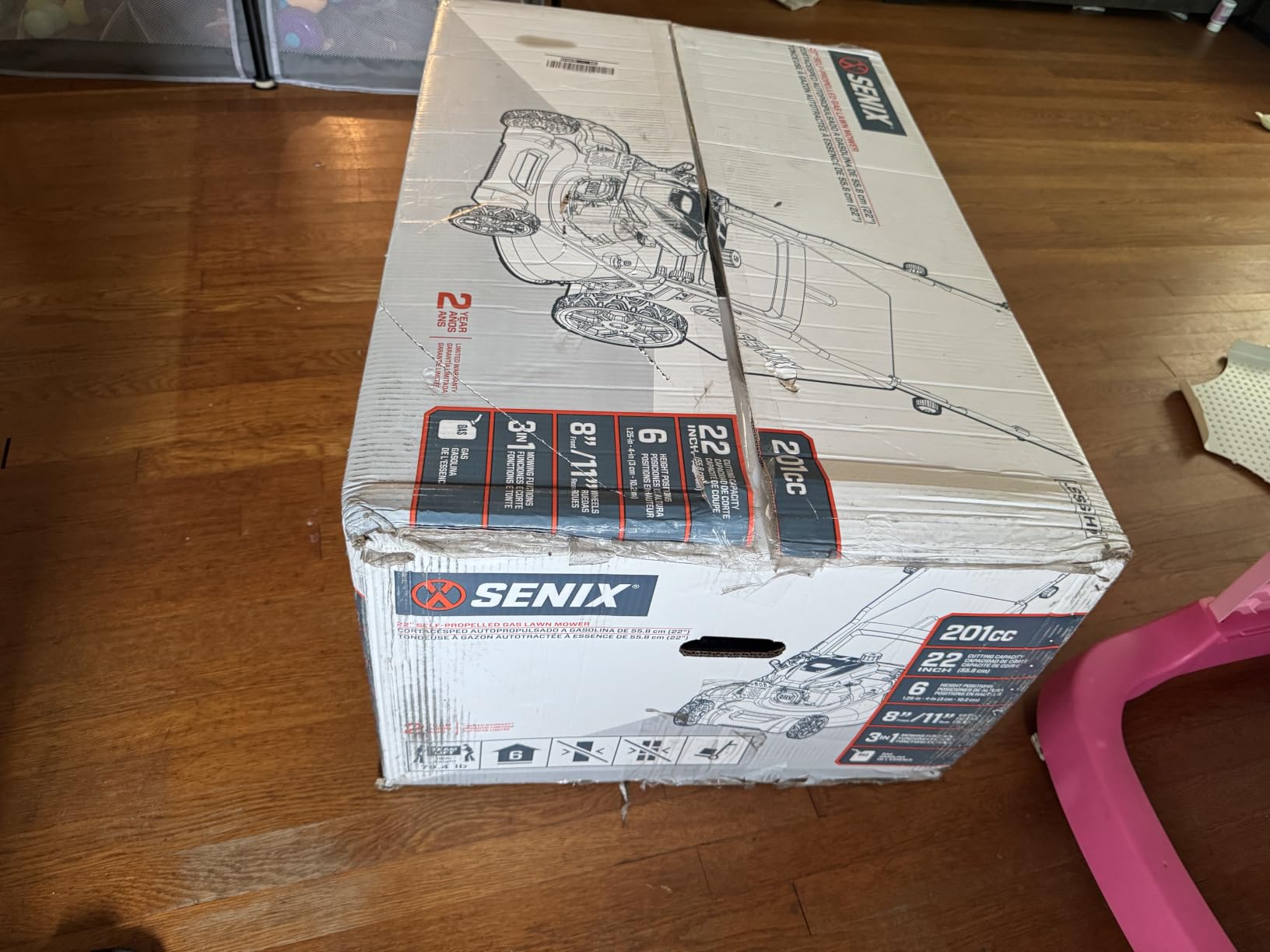
7. SENIX 22-Inch 201cc Rear-Wheel Drive Mower: Best for a Steady Climb
SENIX 22Inch 201cc 3-in-1 Gas Lawn Mower, Rear Wheel Self-Propelled Mower
- Rear-wheel drive with 8.8 ft-lb of engine torque gives steady pull on inclines
- Manganese steel blades hold an edge in thick grass
- High-strength steel deck is built for impact resistance
- 4.2 rating with a 73 percent five-star share
- Folding handle saves shed space
- Single-speed drive only
- so pace cannot be varied to match slope steepness
- 72 pounds is heavy to reposition on slopes
- Rated for lawns up to about 1/20 acre
- smaller than the 22-inch rivals
8.8 ft-lb of engine torque is the highest figure on the list, and on a climb where the mower is not going fast anyway, raw pull is what you feel. Paired with rear-wheel drive, this is a machine that leans into a grade. The 201cc OHV four-cycle engine is rated at 4.7HP with manganese steel blades hardened to 45-50 HRC, so the cutting edge holds up in thick growth.
The deck is heavy-duty high-strength low-carbon steel with vortex tunnel airflow, which is a sensible build for uneven ground, and the folding handle is a small courtesy if your garage is already crowded.
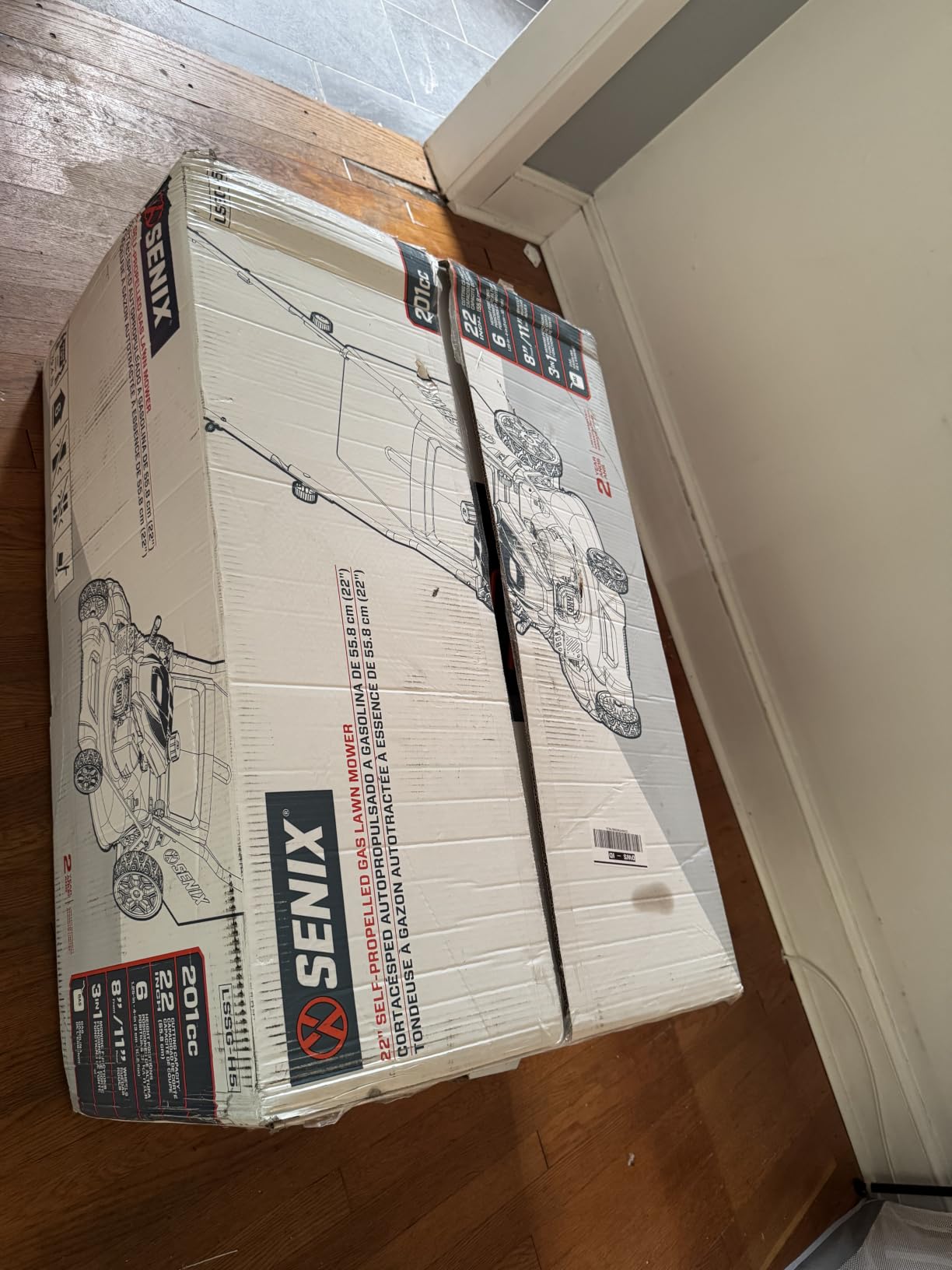
The compromise is honest and it is the transmission. This is a single-speed rear-wheel drive unit running up to 2.9 mph, and on a hill you cannot slow it to a crawl the way you can with the CVT or variable-speed machines here. Owners who want to modulate pace to the grade say this is the limitation that matters most.
It is also rated for lawns up to about 1/20 acre, which is smaller than the 22-inch rivals here, so on a large sloped property it is the wrong size. At 72 pounds it is heavy to reposition on a slope, and the warranty is 2 years.
What this mower handles well on a slope
Steep-ish but even grades where you want the mower to pull itself rather than be nursed upward. The 8.8 ft-lb torque and manganese blades are the pair for thick hillside grass, and 6-position central height adjustment handles seasonal changes one-handed.
Where it will disappoint you
Anywhere you need to change pace mid-slope, and anywhere the lawn is large. A single-speed drive at up to 2.9 mph is either a match or a mismatch for a given grade. For adjustable control on hills, the SENIX 201cc variable-speed model is the better fit.
8. EGO POWER+ LM2114SP 21-Inch Cordless: Best Lightweight Mower for Steep Ground
EGO POWER+ 21″ Cordless Electric Lawn Mower Kit, Self-Propelled – LM2114SP
- Dual-toggle handleset engages self-propel from either grip
- useful on a climb
- 6.0 ft-lbs of torque for gas-comparable cutting in thick grass
- Lightest machine here at 50.9 pounds and the easiest to control on a slope
- Highest five-star share in the group at 75 percent
- LED headlights and adjustable handle height
- Only one battery is included
- so runtime is shorter than the dual-battery Greenworks kit
- Plastic deck is lighter but less rugged than the steel-deck gas mowers
- Toggle self-propel differs from the palm-pressure Touch Drive on the LM2135SP
Weight is the deciding factor on steep ground, and at 50.9 pounds this is the lightest machine in the roundup. On a slope, light means you can turn around while pointed uphill without a two-person recovery, and it means the mower is far less likely to tip forward on a downhill pass when you are adjusting your stance.
The torque is not the sacrifice you would expect. Six foot-pounds of cutting torque is enough for gas-comparable cutting in thick or tall grass, and the dual-toggle handleset is a genuinely smart detail for hilly work: you can engage self-propel from either grip, so when you lean forward on a climb or shift your stance on a descent, the control is under the hand you are actually using.
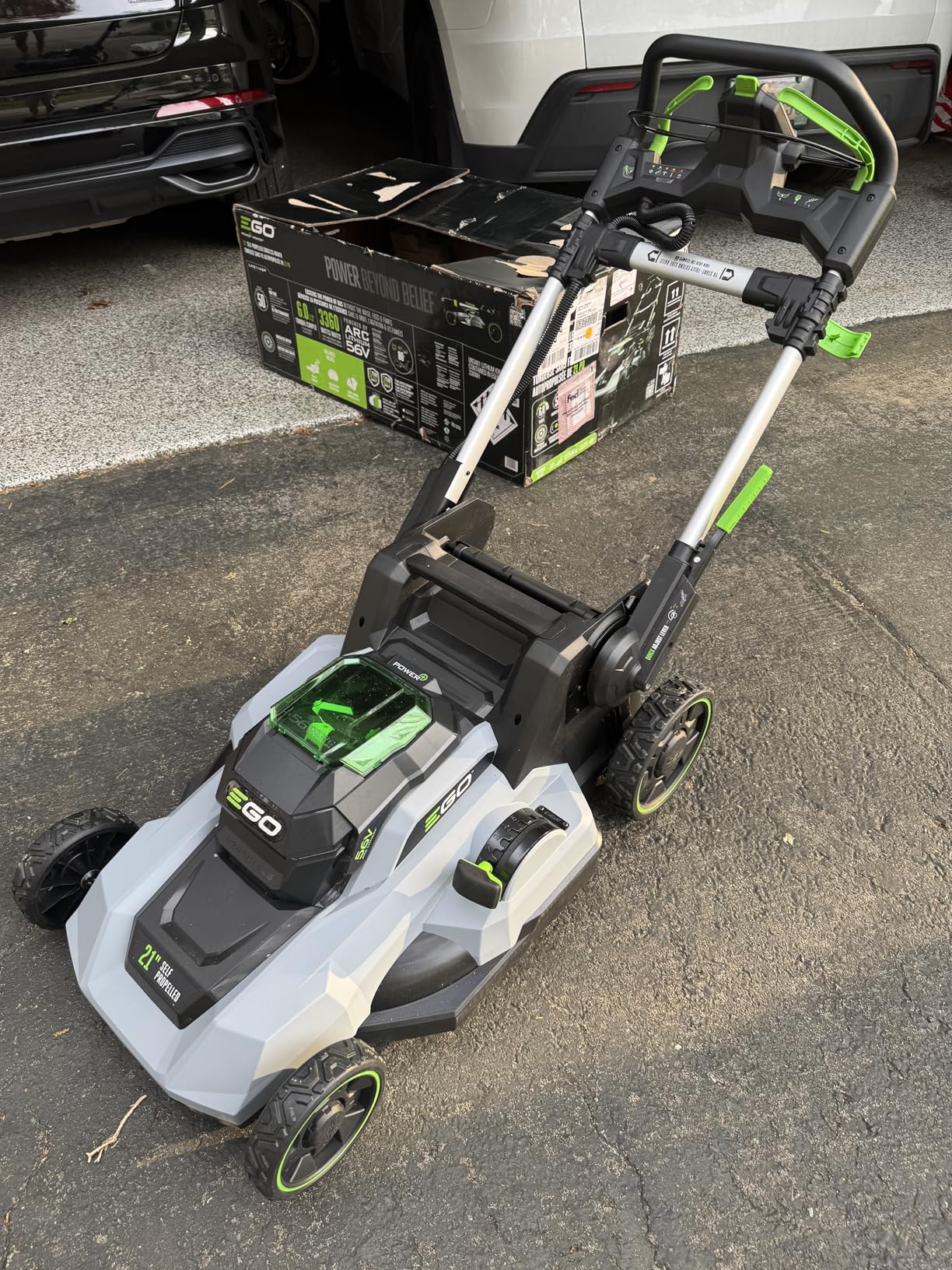
Owner satisfaction tells the story. A 4.4 rating with the highest five-star share in the group at 75 percent is the strongest consensus here, and the high-efficiency brushless motor runs with low vibration. Seven height positions from 1.25 to 4 inches, LED headlights and an adjustable handle height round out a well-considered package.
The limit is runtime. Only one 6.0Ah battery is included, giving up to 50 minutes, and on a large hilly lawn that is where you will feel it. The plastic deck is lighter but less rugged than the steel-deck gas mowers, which matters on rocky or rooty ground. The toggle self-propel also behaves differently from the palm-pressure Touch Drive on the LM2135SP, so test it before you commit.
What this mower handles well on a slope
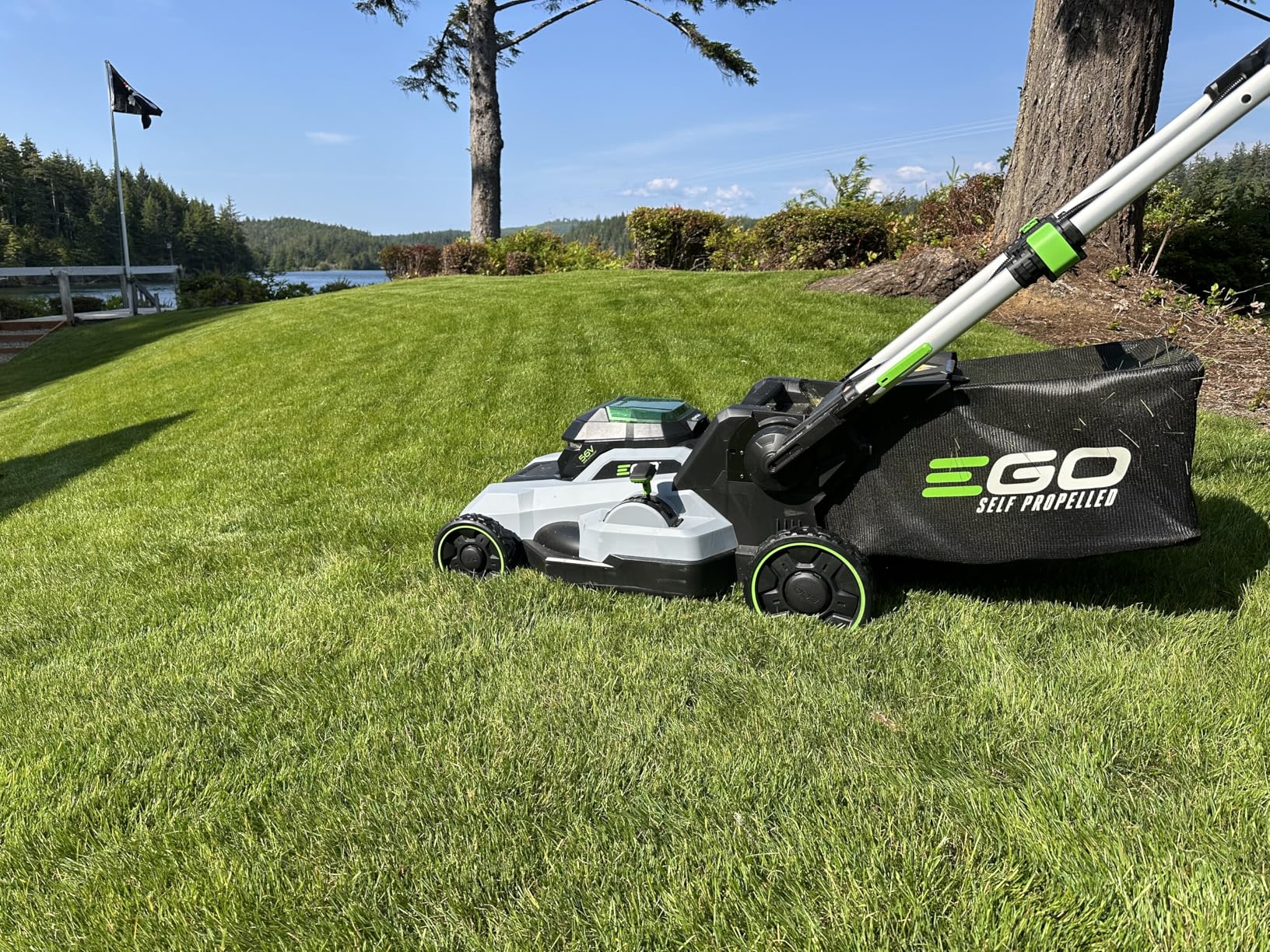
Steep ground with a small to medium yard, especially if you are the kind of owner who worries about control rather than raw power. At 50.9 pounds it is the easiest of the eight to turn around, reposition and carry, and the dual-toggle engagement handles a changing stance well. Quiet operation means you can work early without negotiating with neighbours.
Where it will disappoint you
Large acreage, because one battery is 50 minutes and hills take longer per pass. If your lot is a half acre or more, the Greenworks 60V dual-battery kit solves the charge problem. Rough rocky ground is the other gap, because the plastic deck gives up the durability of the steel-deck gas mowers here.
Mowing Hills Safely: Downhill Control and Wet Grass
Almost every conversation about self-propelled mowers on slopes is about traction going uphill, and almost none of it is about what happens coming back down. The most common fear in owner discussions is roll-back, the mower running away downhill when the bail bar is released, and that fear is well founded on anything steeper than a gentle roll.
The rule that helps most is simple: mow across the slope, never straight up and down. Contour mowing keeps the drive wheels working laterally rather than fighting gravity, and it breaks a long fall-line pass into short manageable ones. On the steepest sections, take one pass at a time and stop with the machine pointed across the grade, never straight downhill.
On the way up, halve your speed. Variable speed control exists for exactly this, and a machine that crawls at its slowest setting will hold a grade that the same mower cannot hold at full pace. If the mower bogs halfway up, do not lean on the bail bar and muscle it, because a stall on a grade is a tip-over risk.
Wet grass changes the maths entirely. Water on the blades and the tire tread means less grip on every grade, and forum owners report battery mowers bogging or losing power partway up a slope in exactly those conditions. If you mow a slope after rain, match your speed to the conditions rather than to the spec sheet, and consider that higher torque is worth more than more battery capacity on a wet climb.
For anyone who has been putting off the job because of the slope, our general lawn mower buying guide covers deck sizes and cutting features across every mower type, which is worth knowing before you commit to a walk-behind at all.
When a Self-Propelled Walk-Behind Is the Wrong Answer
A walk-behind has a hard ceiling. Once your slope passes roughly 25 degrees, or your property runs over an acre of uneven ground, the physics of a 50 to 85 pound machine you are holding upright starts to argue with you. At that point the right product is a different category, not a better pick from this one.
For steep ground with a large property, a zero-turn riding mower is the usual answer. The wide stance sits across the slope rather than on it, the deck sits low and centred between the front wheels, and you are seated rather than walking uphill behind the machine. We have a dedicated guide to zero-turn mowers for hills that goes into how they handle grades in detail.
If the slope is gentle rather than severe and the real problem is time, a robot mower changes the equation by removing you from the equation. They handle moderate unevenness and moderate slopes well, and they work best on a schedule you set rather than on impulse. What they do not do well is a 45-degree bank or ground with tree roots and buried rocks, so treat that as a specific limitation rather than a general one.
For very large flat or gently rolling acreage where you are simply mowing more than a walk-behind can cover, our riding mower roundup covers the seated options, and the lawn mowers for hills guide maps every type against slope severity.
Frequently Asked Questions
Is a self-propelled mower good for hills?
Yes, a self-propelled mower is good for hills as long as the drive wheels sit under the heavy end of the machine. Rear-wheel drive keeps the drive wheels loaded on an incline, so traction holds going up and control holds coming down. Front-wheel drive is the layout to avoid, because the powered wheels lighten on a grade and lose grip exactly when you need it. Add variable speed so you can crawl uphill and creep downhill.
Is FWD or RWD better for a self-propelled lawn mower?
Rear-wheel drive is better on hills, and it is not a close call. On an incline your weight shifts onto the rear wheels, so rear-wheel drive keeps the drive wheels pressed into the ground where they can push. Front-wheel drive powers the wheels that get lighter as you climb, which reduces drive force and can tip the mower forward on a downhill pass. All-wheel drive adds powered front wheels and is the right answer on the steepest grades.
Are AWD lawn mowers worth it?
Worth it on genuinely steep ground, and not much else. All-wheel drive costs more and adds weight, so on flat or gently rolling lawns you are paying for grip you will never use. If your slope is a moderate roll, rear-wheel drive with variable speed is the better value. If you are regularly mowing a grade steep enough to slow you to a crawl, all-wheel drive is where the extra money earns its place.
Do self-propelled mowers work on hills?
They do, within limits. All eight of the mowers in this roundup are self-propelled and designed to climb, and the owner reports describe steady pull on moderate to steep grades. The real constraints are roll-back on the way down, wet grass reducing grip, and the weight of the machine if it stalls mid-climb. Past roughly 25 degrees, or on more than an acre of uneven ground, a zero-turn riding mower is the better tool.
What is the best lawn mower for mowing sloped lawns?
For a small or medium sloped lawn, a rear-wheel drive mower with variable speed control is the right answer, and a lighter cordless model is easier to control on the grade. For a large sloped property or a grade past 25 degrees, a zero-turn riding mower wins because its wide stance sits across the slope. A front-wheel drive mower is the wrong choice for any lawn with a real incline.
What ride-on mower is best for mowing steep hills?
A zero-turn riding mower is the standard answer for steep hills, because the wide stance straddles the slope, the deck sits low and centred, and the wide tires bridge uneven ground. Seated riding mowers with a narrow conventional front axle are harder to control on a grade for the same reason a push mower is. On very gentle slopes a robot mower is also worth considering if your priority is getting the mowing done without walking it.
The Bottom Line for Mowing Hills in 2026
For most hilly yards the winner here is the Greenworks 80V 21-inch cordless mower. Rear-wheel drive with variable speed control, 45 minutes of runtime, and 64.2 pounds is the combination that suits a slope without becoming a recovery problem, and the owner base behind it is the largest in the group.
Match the machine to the grade. The EGO LM2135SP has the torque and the widest speed range for damp grass and steeper climbs, the Greenworks 60V dual-battery kit has the runtime for a half acre or more, and the EGO LM2114SP at 50.9 pounds is the one to buy if control on steep ground matters more than anything else. On a budget and a steep slope, do not compromise on the drive system.
Last thing, and it is the one nobody repeats: mow across the slope, not down it. Check your municipality’s noise rules before choosing gas, and if your grade passes 25 degrees, go read our zero-turn mowers for hills guide before you buy a walk-behind at all.