
If you want a straight answer: the best whetstones for beginners are the stones that do one hard job well, keep a consistent angle for you, and do not punish a first session. My first choice is the Sharp Pebble 1000/6000 whetstone with its angle guide and bamboo base, because the guide removes the single hardest part of learning to sharpen and the second grit gives you a place to finish the edge.
I have sharpened more knives than I can count on wet stones, and the pattern never changes. Beginners do not fail because they bought the wrong brand. They fail because they held a 20 degree angle on a knife that wants 15, never formed a burr, and then decided the whole hobby was not for them. Fix those three things and almost any decent stone in this list will serve you for years.
What follows is a straight comparison of ten sharpening stones, plus the grit logic, the technique, and the mistakes that trip up first-timers. We have covered the wider range of stone types in our beginner to enthusiast whetstone guide if you want the longer view first.
Here is the short version, and it is the same short version most sharpening forums give:
- Best overall: Sharp Pebble 1000/6000 with angle guide and bamboo base. The guide holds a repeatable angle and the 6000 side refines the edge, so one stone covers a full beginner cycle.
- Best low-maintenance: S SATC 400/1000 diamond sharpening plate. No soaking, no slurry, no flattening plate, and it will not dish.
- Best single stone to grow with: Shapton K0702 1000 grit. The highest-rated stone in this group and the one enthusiasts most often name as an anchor stone for Japanese steel.
- Best value kit: Intelitopia complete set. Two stones, a flattening stone, a leather strop, an angle guide and a base in one box.
Every stone below was picked for what it actually does on a counter in a home kitchen, not for its spec sheet. Ratings and review counts come from the manufacturer listings, and the trade-offs listed are the ones buyers repeat most often.
Top 3 Beginner Whetstone Picks in 2026

Sharp Pebble 1000/6000 with Angle Guide
- Angle guide locks blade angle
- 1000 and 6000 grit in one stone
- Water based with bamboo base

King KW65 1000/6000 Combination Stone
- Classic Japanese waterstone
- 1000 grit sets edge and 6000 refines it
- Hard stone that resists dishing

Shapton K0702 1000 Grit Whetstone
- Highest rated stone in the group
- Fast consistent cut at 1000 grit
- Compact 8.3 inch blade size
All 10 Beginner Whetstones at a Glance
| Product | Specifications | Action |
|---|---|---|
| Sharp Pebble 1000/6000 with Angle Guide |
|
Check Latest Price |
| King KW65 1000/6000 Combination Stone |
|
Check Latest Price |
 Intelitopia Complete Sharpening Kit Intelitopia Complete Sharpening Kit |
|
Check Latest Price |
 Wucgea Eight-Piece Sharpening Kit Wucgea Eight-Piece Sharpening Kit |
|
Check Latest Price |
 KEENBEST 400/1000 Silicon Carbide Set KEENBEST 400/1000 Silicon Carbide Set |
|
Check Latest Price |
| Shapton K0702 1000 Grit Whetstone |
|
Check Latest Price |
 Amazon Basics 400/1000 with Angle Guide Amazon Basics 400/1000 with Angle Guide |
|
Check Latest Price |
 HiramWare 400/1000 Corundum Whetstone HiramWare 400/1000 Corundum Whetstone |
|
Check Latest Price |
 Angerstone 1000/6000 Sharpening Kit Angerstone 1000/6000 Sharpening Kit |
|
Check Latest Price |
 S SATC 400/1000 Diamond Plate S SATC 400/1000 Diamond Plate |
|
Check Latest Price |
What Grit Number Should a Beginner Start With?
Start at 1000 grit. That is the number that repairs a dull everyday knife, forms a burr you can feel, and forgives the uneven pressure of a beginner’s hand. Anything coarser than about 600 is for fixing chips and deep damage, and anything finer than 3000 is for refining an edge you have already made.
The grit scale is just particle size. A low number means large, fast-cutting particles. A high number means small, slow particles that polish rather than grind.
- Coarse, roughly 200 to 600 grit: resets a damaged edge, removes chips, and shaves metal quickly. Slow and blunt afterward, so you never finish here.
- Medium, roughly 800 to 1500 grit: the beginner zone. 1000 grit is where most learning happens because the feedback is fast and visible.
- Fine, roughly 2000 to 6000 grit: refines the edge you just made and removes the burr. 6000 grit is the usual finishing step on a home stone.
- Extra fine, 8000 grit and up: polishing for a mirror-like apex. Nice on Japanese knives, unnecessary for chopping vegetables.
So if you are choosing one number to start with, it is 1000. A 1000/6000 combination stone is the most useful pairing, because one side does the work and the other side cleans up after it. Our full guide to sharpening stones covers the abrasive and bond differences in more depth if you want to go further.
One more thing about grit that beginners miss: a finer stone is not automatically a better stone. A very fine grit on a soft stone glazes over quickly and stops cutting, and a beginner who cannot feel the difference may just keep grinding at a dead surface for ten minutes.
1. Sharp Pebble 1000/6000 Whetstone With Angle Guide – Best Overall
Sharp Pebble Whetstone Knife Sharpener – 1000/6000 Grit Sharpening Stone
- Angle guide removes the hardest beginner problem
- Dual grit covers repair and refine in one tool
- Bamboo base holds steady when wet
- Water only with no oil or mess
- Handles scissors and chisels too
- No flattening stone included
- No printed guide instructions
- Still needs practice to use well
This is the stone I hand to friends who say they will never sharpen a knife. The plastic angle guide hooks onto the spine of the blade and holds it at a repeatable angle, which turns the hardest beginner skill into something you can repeat instead of something you can only hope for. With more than 25,000 reviews averaging 4.6 stars, it is also the most proven option in the group.
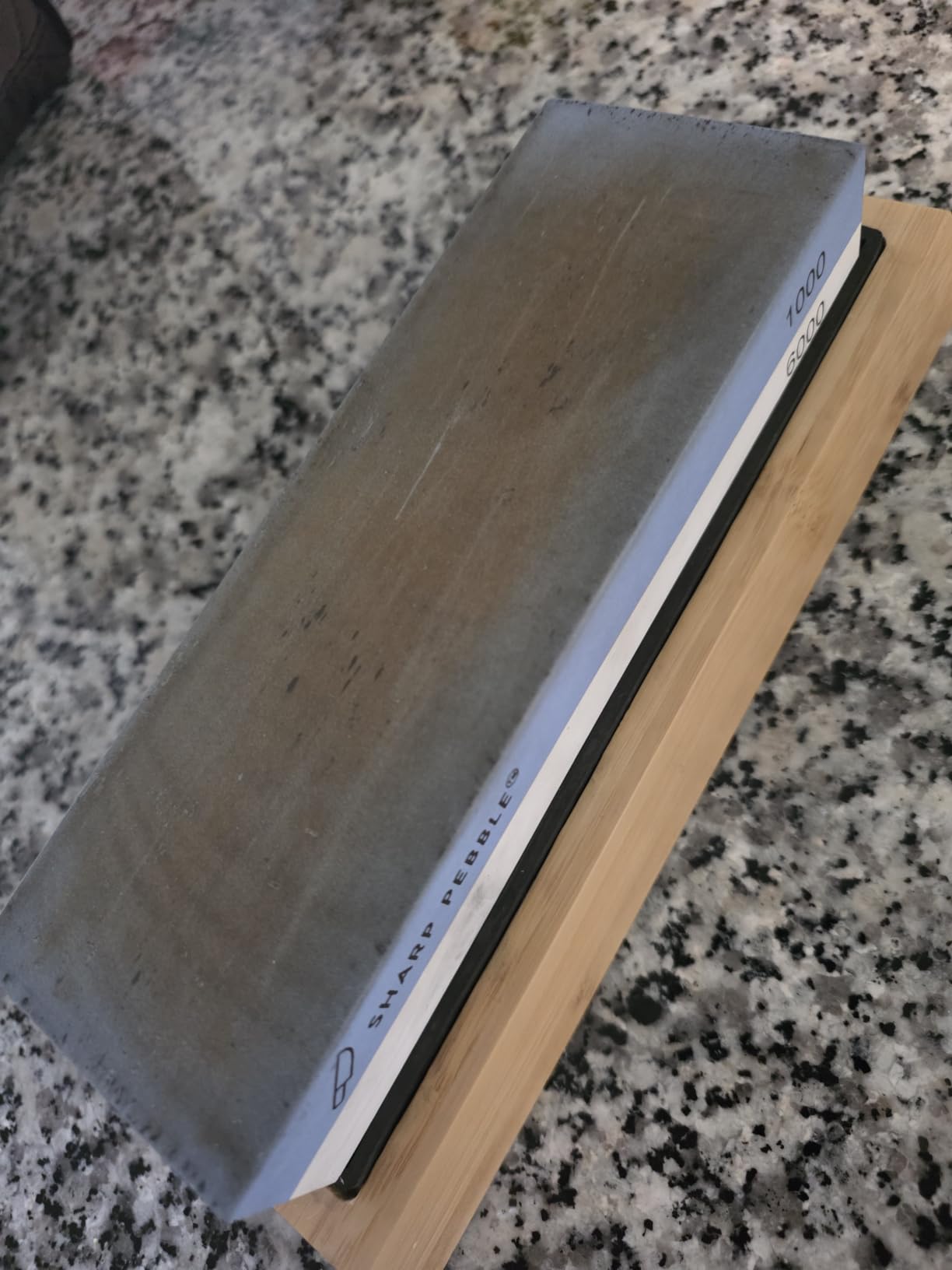
The stone itself is corundum, 7.25 by 2.25 by 1 inch, and it sits in a bamboo base that stays planted on a wet counter. That stability matters more than beginners expect. A stone that shifts halfway through a stroke is how you get a rounded tip and an uneven bevel.
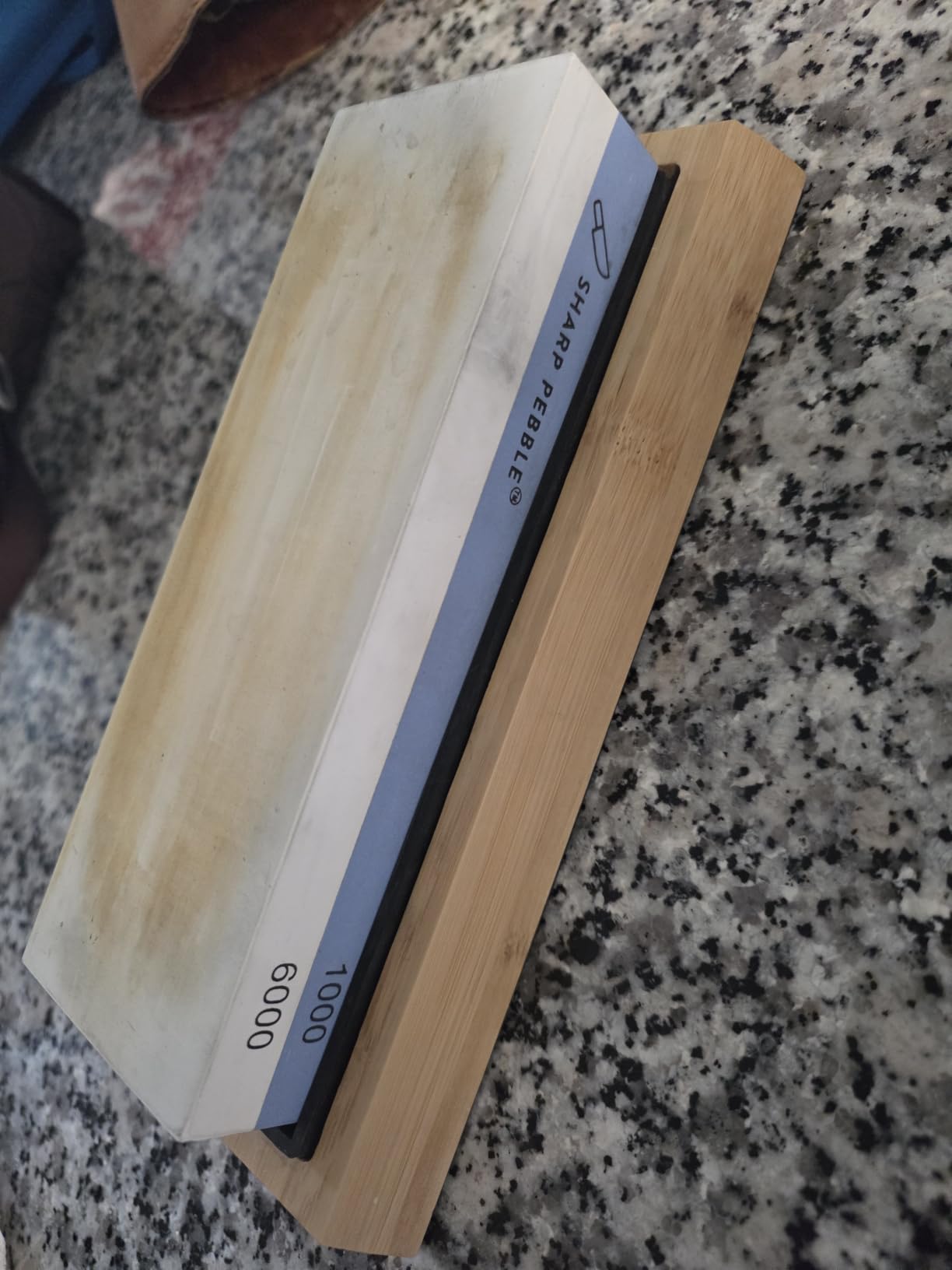
The 1000 grit side is where you spend most of your time. It cuts fast enough that a genuinely dull chef’s knife goes from cutting poorly to cutting properly in a minute or two, and the tactile feedback is clear enough that you can hear when the grit stops cutting and wants a soak or a rewet.
The 6000 grit side is the reason I recommend this over a plain 1000 grit stone. Sharpening is not finished when the burr appears. You still have to remove the wire edge, and 6000 grit is the cheapest way to do that without buying a separate strop or a second stone.
What you give up for the guide is a little control. Once you learn freehand, the guide can hold you at one angle when a chef’s knife really wants a different one. For a first stone, though, that trade is worth it, and plenty of owners use the guide to learn the feel of a good angle before setting it aside.
Who This Stone Suits
This suits anyone who owns a mixed kit of kitchen knives, from a cheap high-carbon chef’s knife to a santoku and a few utility blades, and wants one tool that handles all of them. The listing also covers scissors, chisels and razors, so it makes sense as a general sharpening kit rather than a knife-only purchase.
It also suits people who sharpen in a hurry. Because the guide sets the angle, a session on a single knife takes a few minutes of real work, and the water-only setup means cleanup is rinsing the stone and standing it upright to dry.
Where It Falls Short
No flattening stone is included, and that is the one real gap. Over months of use the 1000 grit side dishes into a shallow hollow, and once that happens the middle of the blade no longer contacts the stone cleanly. Adding a diamond lapping plate later is a normal part of stone ownership, not a sign you chose badly.
There are also no printed instructions for the angle guide, so you will be looking up how it fits on day one. And the guide itself does not make you good. You still need to learn to feel for the burr, which is the skill that separates a sharp knife from a ground knife.
2. King KW65 1000/6000 Combination Whetstone – Best Premium Starter
- Holds a fine edge well
- Harder than many soft waterstones
- Works on chisels and plane irons
- Compact size suits small kitchens
- No instructions and unlabelled grit sides
- Plastic base can slide on the counter
- Some buyers receive chipped corners
King has been making waterstones for decades, and the KW65 is the shape of stone most sharpening communities picture when they say a reliable entry point. It is a 1000 and 6000 grit combination stone, 8 by 2 by 1 inch, and it is the pick for anyone who wants a traditional waterstone feel rather than a guided or mess-free shortcut.
It earns a 4.6 average across more than 7,500 reviews, and the praise is consistent: it produces a keen edge, the stone is harder than most cheap waterstones so it wears slowly, and one stone covers knives, chisels and plane irons. That last point matters if you also work with hand tools.
Because it is a real waterstone, you soak it before use and rewet it as you go. The clay-like slurry the 1000 grit side throws off is normal, but several buyers mention it staining work surfaces, so put a towel down if you care about your counter.
Who This Stone Suits
It suits sharpeners who want to learn on a conventional waterstone and understand what they are doing. The 1000 grit side behaves predictably, the 6000 grit side takes the burr off cleanly, and neither side punishes a slightly heavy hand the way a very hard plate can.
It is also a good fit for small kitchens and travel sharpening kits, since 8 inches is compact but still long enough for a full-size chef’s knife. And the harder stone means fewer flattening cycles, which is one less chore during the first months.
Where It Falls Short
The plastic base is the weak point. Owners report the whole unit sliding on a wet counter, and a sliding stone is the fastest route to a rounded tip. A damp dish towel under the base fixes this in seconds, but you have to know to do it.
There are no instructions and the grit sides are not labelled, so a beginner has to work out which side is 1000 and which is 6000 on the first day. A few buyers also received stones with chipped or cracked corners, which is worth checking the moment the box arrives.
3. Intelitopia Complete Sharpening Kit – Best Full Kit
- Most complete kit in the roundup
- Full grit range from 400 to 8000
- Flattening stone included
- Angle guide for first-timers
- Stones dry out fast without rewetting
- Bamboo base slips for some users
- Bulky and heavy on the counter
- Strop leather is average grade
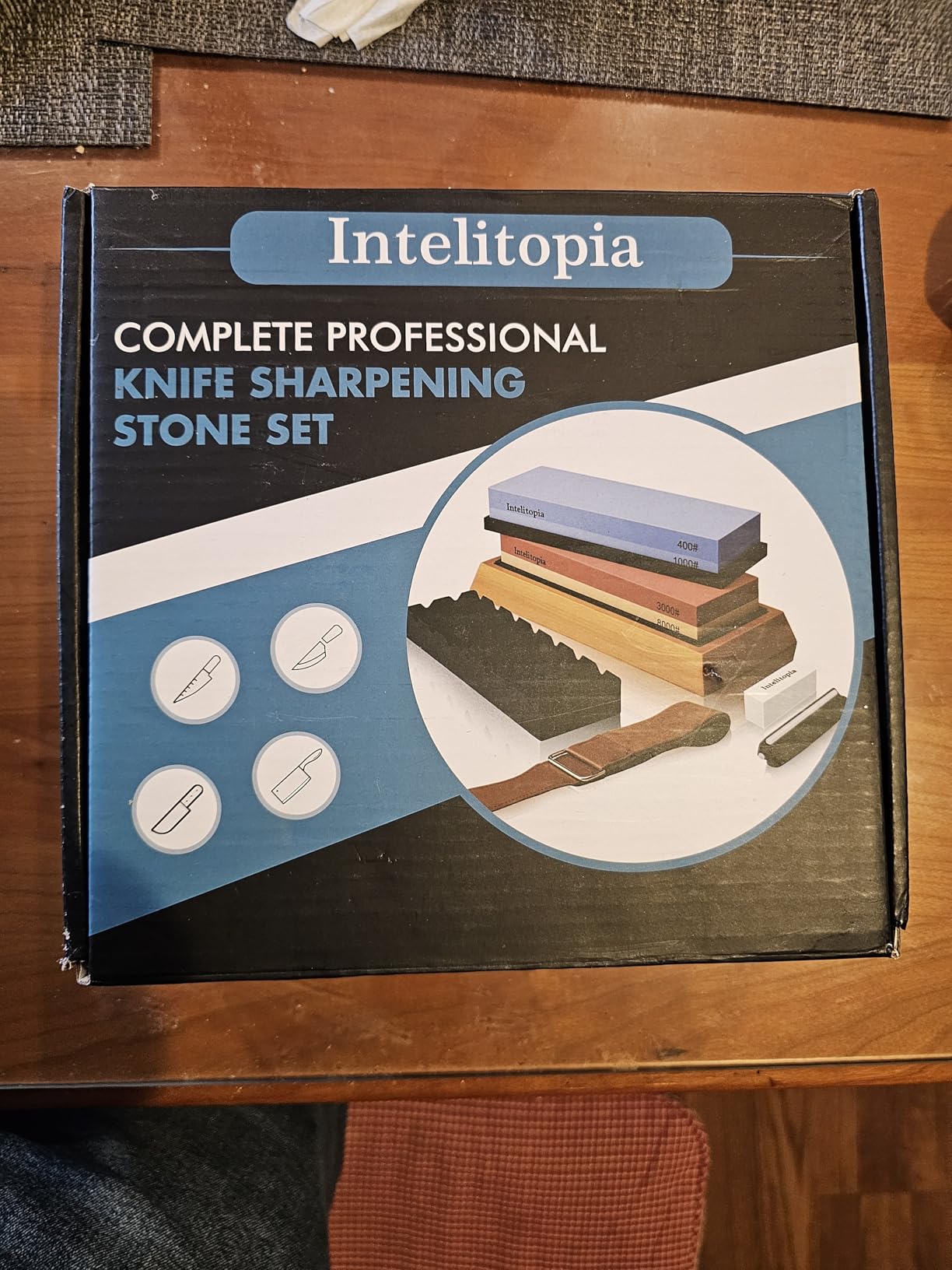
The Intelitopia set is the buy-it-once answer. It includes a 400/1000 stone, a 3000/8000 stone, a coarse flattening stone, a genuine cowhide leather strop with polishing compound, an angle guide, a bamboo base and three non-slip rubber bases. Nothing else in this list gives you a full grit ladder and the maintenance tool in the same box.
It holds a 4.5 average from more than 7,200 reviews, and the most common reaction is relief. You open the box, you soak the stones, and you have every step of the process available without buying anything else for years.
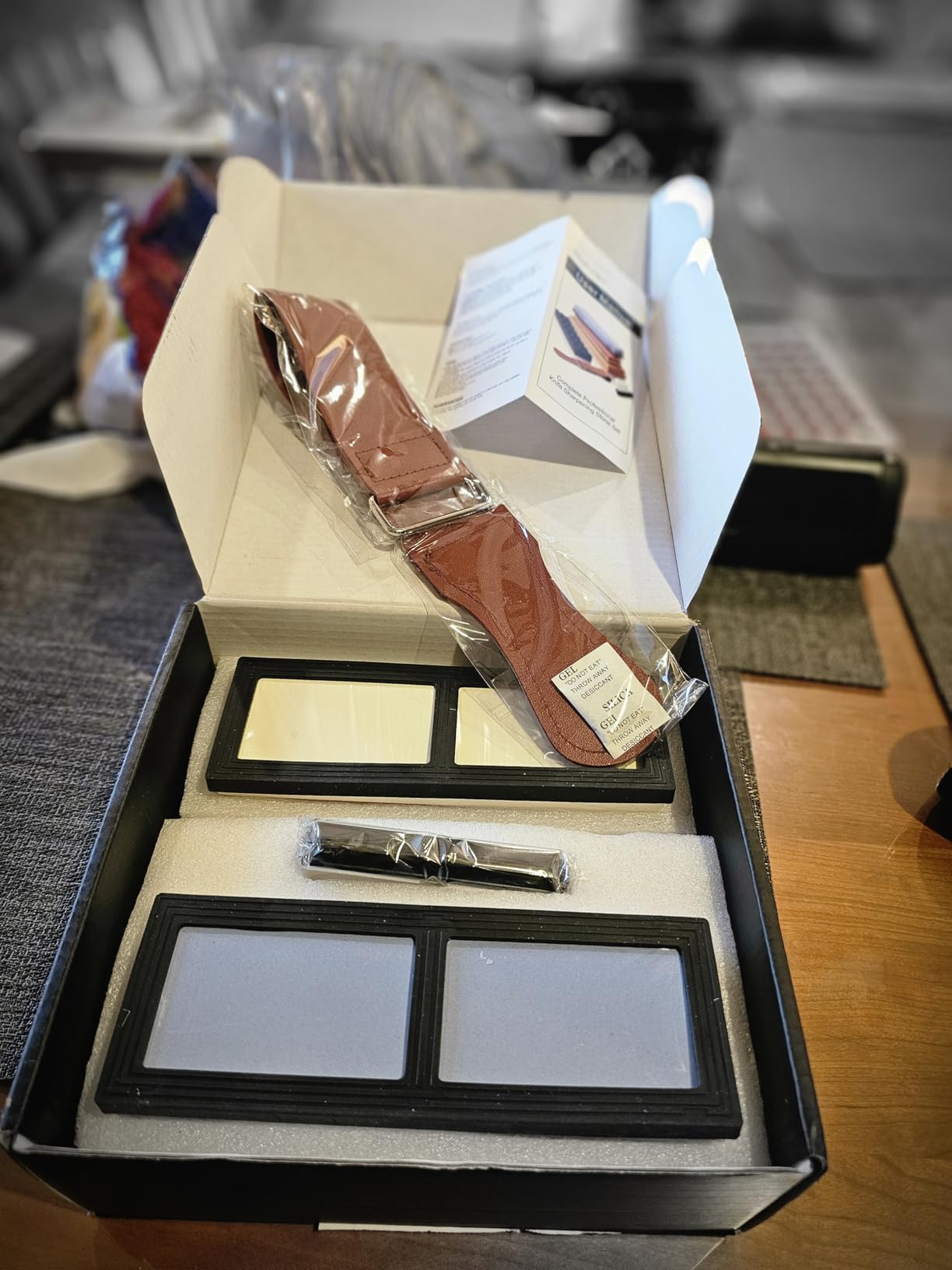
The two stones are aluminum oxide, and the 3000/8000 side is what separates this kit from a simple combination stone. After you have a burr on the 1000 grit, the 3000 side refines it, the 8000 side polishes it, and the strop takes off anything still fuzzy along the edge.
Owners describe the stones as heavy and solid with consistent results, and the wide grit range means you can go from a chipped blade to a polished edge in one session. That matters early on, because a beginner with two grits often has nowhere to go when an edge feels right but still slices badly.
Hydration is the thing to read before you buy. These stones drink water and dry out mid-session, which leaves a glazed surface and a frustrating loss of feedback. Several owners describe this plainly: soak beforehand, and keep a water bottle or pitcher next to the stone while you work.
Who This Stone Suits
This is the kit for someone who knows they will stay with this hobby. If you sharpen regularly, own a range of blades from chef’s knives to chisels and scissors, and would rather not keep track of which accessory is missing, the completeness is genuinely worth it.
It also suits a household sharpening corner. At 5 pounds and 9 by 8 by 3 inches, the kit is substantial and stays put, which is more than you can say for a small stone on a slick counter. The included flattening stone means you can maintain both stones from day one.
Where It Falls Short
It is the bulkiest option here, and if counter space is tight you will feel that every session. One reviewer also judged the bamboo base as not truly anti-slip, and the strop leather is not the quality you would buy separately.
The 400 grit side is also more than many beginners need. Starting coarse means more metal removal and more work to recover from if your angle is too steep, so if you have good knives and a steady hand, the 1000 and 3000 stones are the ones you will actually use.
4. Wucgea Eight-Piece Sharpening Kit – Best All-In-One Bundle
- Eight pieces cover four grits and finishing
- White corundum works on steel knives
- Non-slip rubber holders in the base
- Water only
- No written review text available for this listing
- Bulkier than a single two-sided stone
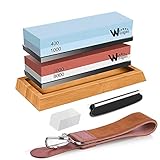
The Wucgea set is the budget version of a full sharpening station. You get a 400/1000 white corundum stone, a 3000/8000 stone, a wood base with non-slip rubber holders, an angle guide, a flattening stone and a leather strop with polishing compound.
It carries a 4.6 average from close to 4,900 reviews, with roughly three quarters of ratings at five stars. Buyers tend to buy it as a gift or as a first sharpening setup, and the marketing leans into exactly that beginner framing.
Soak the stones for 5 to 10 minutes before use, and keep water on them during the session. No oil is needed, which keeps cleanup simple and the kit usable on a normal kitchen counter.
Who This Stone Suits
This suits a beginner who wants the whole ladder available without thinking about what to add later. Because the base has rubber holders sized for the stones, they stay seated while you work, which is more stability than a loose stone gives you.
It also suits anyone sharpening more than knives. The set is marketed for kitchen knives, hunting knives, pocket knives, scissors and chisels, so a single setup covers hand tools as well as the kitchen drawer.
Where It Falls Short
No written customer review text came back with this listing, so the sentiment picture here is thinner than the others. The rating distribution is strong, but the specific quality complaints that buyers raise about other kits, like base grip and stone hardness, are simply less documented for this one.
It is also bulkier than a single two-sided stone, and you are carrying four grit surfaces when most home kitchens need two. If you have never sharpened before, a 1000/6000 combination stone plus an angle guide is a leaner place to start.
5. KEENBEST 400/1000 Silicon Carbide Set – Best Value
- One of the highest-rated stones in the group
- Two stones so you can work both grits at once
- Water only with a 10 to 15 minute soak
- Works on knives
- chisels
- hatchets and axes
- No angle guide or strop included
- Stops at 1000 grit with no finishing step
- Short stone is tight on long blades
The KEENBEST set is two separate stones, each 7 by 2.2 by 1.1 inch, one at 400 grit and one at 1000 grit, made from silicon carbide. Two stones instead of one double-sided block is an underrated beginner advantage, because you can alternate between grits without flipping anything over.
It holds a 4.7 average across more than 4,500 reviews, the second-highest rating in this roundup, with about 79 percent of ratings at five stars. The material is the reason: silicon carbide is a harder abrasive than aluminum oxide, so the stones stay sharp longer and self-renew as the surface wears.
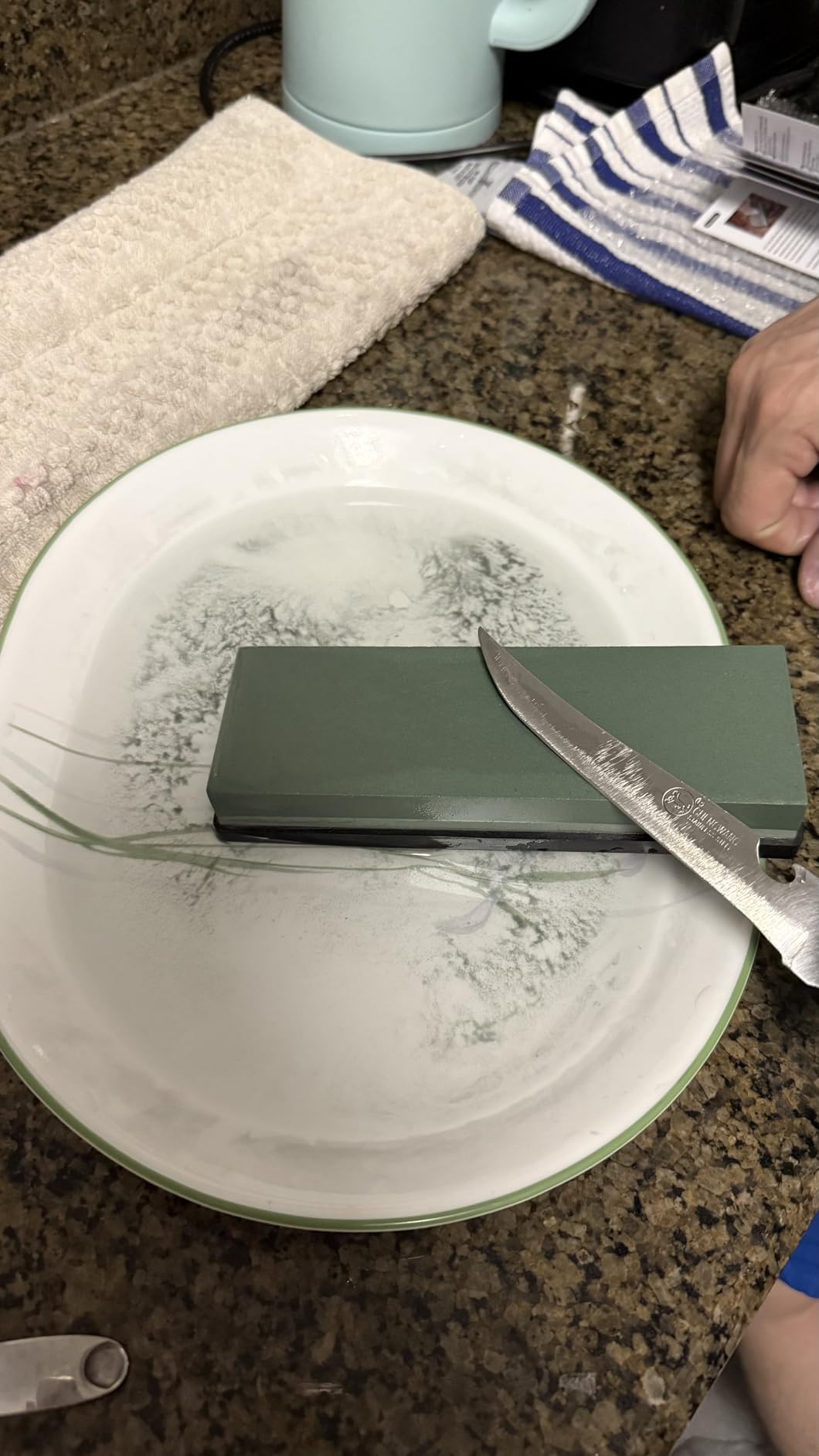
Usage is simple. Soak for 10 to 15 minutes, add water as you sharpen, and rinse when you are done. The stone surface is forgiving, which is exactly what you want while you are still learning how much pressure is too much.
It handles a wide range of tools, including chef’s knives, pocket and hunting knives, Japanese and butcher knives, scissors, chisels, hatchets, axes and garden tools. For a household that wants one purchase to cover the shed and the kitchen, that reach is useful.
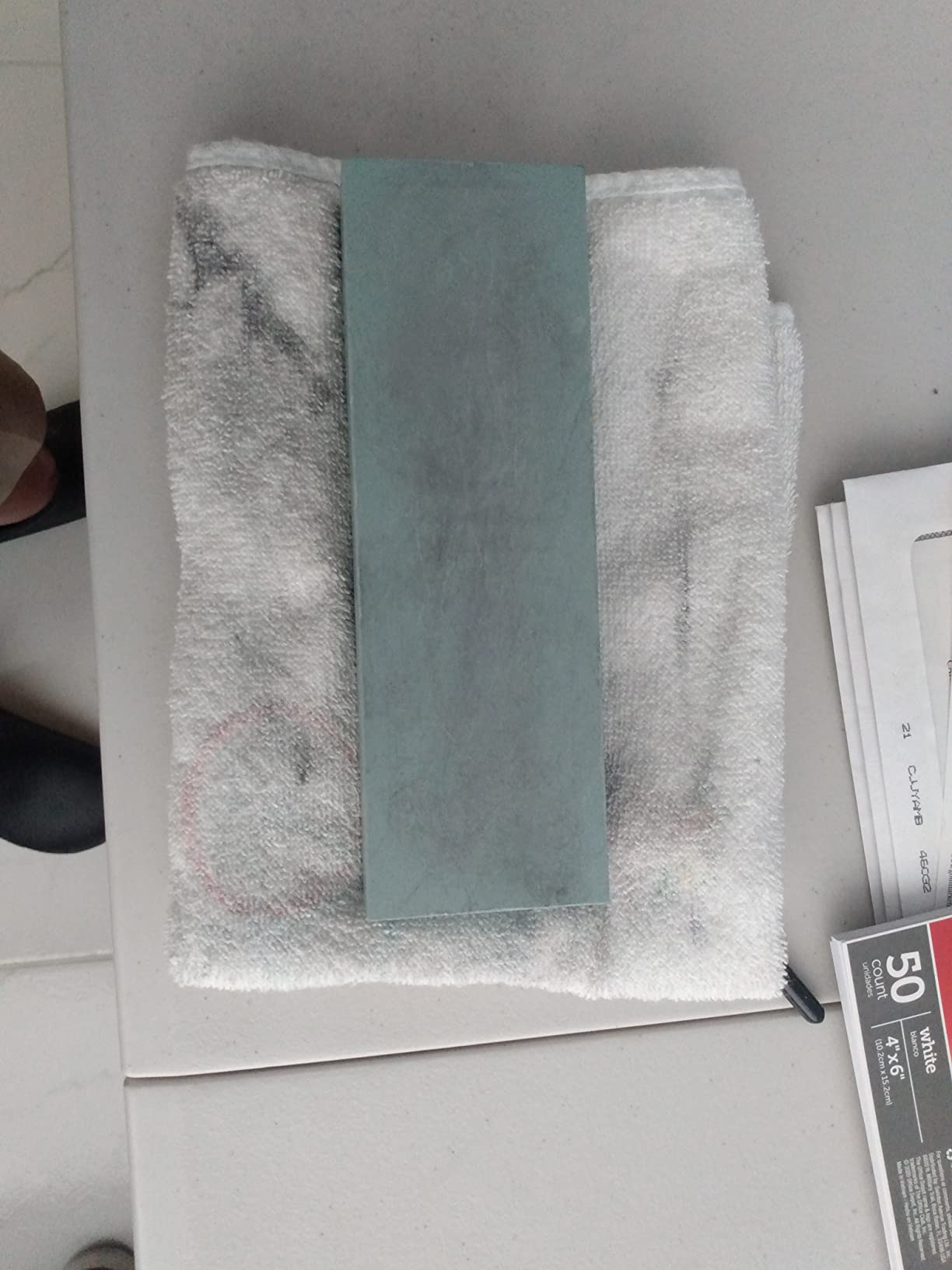
The 400 grit side is genuinely coarser than most entry stones and it will take down a neglected blade quickly. The 1000 grit side smooths and refines. There is nothing finer than 1000, so this set gets you a working edge rather than a polished one, and finishing has to come from a strop or a finer stone later.
Who This Stone Suits
This suits a beginner on a strict budget who wants two grits and a hard, dependable abrasive. The 4.7 rating is well supported by owner reports describing it as an effective, uncomplicated starter set.
It also suits anyone who sharpens axes, hatchets or garden tools alongside kitchen knives. The 400 grit side is coarse enough to be useful on heavier steel, and the stones are light enough at 16 ounces to move around a workbench.
Where It Falls Short
There is no angle guide and no strop, so you are learning freehand from the first stroke. That is a real learning curve, and forum discussion is consistent on this point: inconsistent angle is the single biggest beginner frustration.
The 7 inch length is also snug on a long chef’s knife or a slicing blade, and the grit range ends at 1000. If your knives are already reasonably sharp and you want a keener finish, you will be adding a finer stone or a strop soon anyway.
6. Shapton K0702 1000 Grit Whetstone – Best For Japanese Steel
- Highest average rating in the roundup
- Fast consistent cut that stays flat
- Single grit keeps the first step simple
- Compact size fits most kitchen knives
- No fine grit for finishing an edge
- No base
- guide or strop included
- Needs soaking and a separate flattening stone
The Shapton K0702 is a single 1000 grit whetstone, 8.3 by 2.8 by 0.6 inch, and it carries a 4.8 average from more than 4,500 reviews with about 88 percent five-star ratings. That is the highest-rated stone in this entire roundup, and it is the one enthusiasts most often call an anchor stone for hard Japanese steel.
There is a philosophy here, and sharpening communities make it loudly. Start with one good 1000 grit stone, learn the angle, learn to feel the burr, and only then add a finer stone. Buying four stones on day one is how people convince themselves they are sharpening when they are still just moving metal around.
In use, the stone cuts fast and consistently and stays flat with normal care. It is a soaked waterstone, so it needs water on the surface throughout the session, and it works best with a towel underneath to stop the blade from sliding.
The blade is short, which some buyers like because the stone is easy to control and cheap to replace, and others dislike because the 8.3 inch length is a little cramped on a full chef’s knife. If you mostly sharpen gyuto, santoku and utility knives, it is more than enough surface.
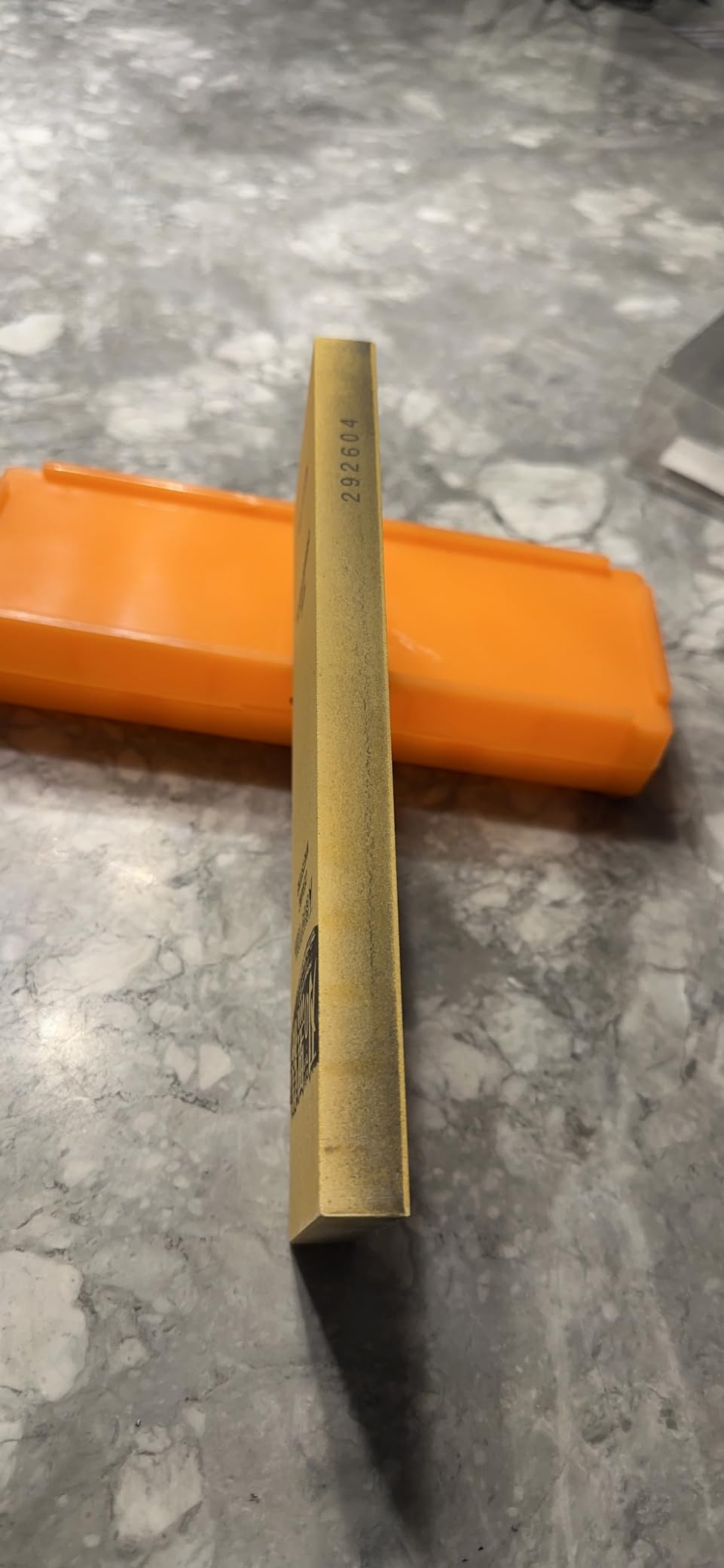
The single-grit design is both the strength and the limitation. It keeps the first stage of sharpening clean and unconfusing, and it leaves finishing entirely up to you. Most owners pair it with a strop or a high-grit stone within a few months.
Who This Stone Suits
This suits someone who owns Japanese knives, or plans to, and wants a stone that is easy on hard steels at 60 HRC and above. A softer stone struggles on those edges, while a harder one cuts cleanly and holds its shape.
It also suits a purist who would rather own one excellent stone than a drawer full of duplicates. The rating and the volume of owner feedback both point to a stone that performs the same way session after session, which is what you want when you are training your hand.
Where It Falls Short
Nothing is included. No base, no angle guide, no strop, no instructions, and no flattening stone. You need a wet towel or a proper base to work on, and a lapping plate eventually.
It is also a single-grit stone, so a complete session is not possible with it alone. If you want to go from very dull to fully refined in one sitting, this is not the tool. For a beginner building one step at a time, that is a feature.
7. Amazon Basics 400/1000 Whetstone With Angle Guide – Best For First-Time Learners
Amazon Basics Dual Sided Whetstone Knife Sharpening Stone 400/1000 Grit with Angle Guide, Non-Slip Bamboo Base, Black & Grey
- Angle guide holds a consistent 20 degree angle
- Different side colors make grits easy to tell apart
- Water based and easy to rinse
- Silicone base inside bamboo holder
- Bamboo base coating loses grip when wet
- 400 grit is too fine for real edge repair
- Guide does not fit narrow blades without shims
The Amazon Basics stone is the most explicitly beginner-labelled option here. A 400 grit side, a 1000 grit side, an angle guide that holds roughly 20 degrees per side, a silicone base seated in a bamboo holder, and a one-year limited warranty behind it.
It holds a 4.5 average from a little over 2,100 reviews, with about 77 percent five stars. First-time sharpeners mention the angle guide in positive terms more than anything else, and the different colors on each side make a small quality-of-life difference when you are new to reading a stone.
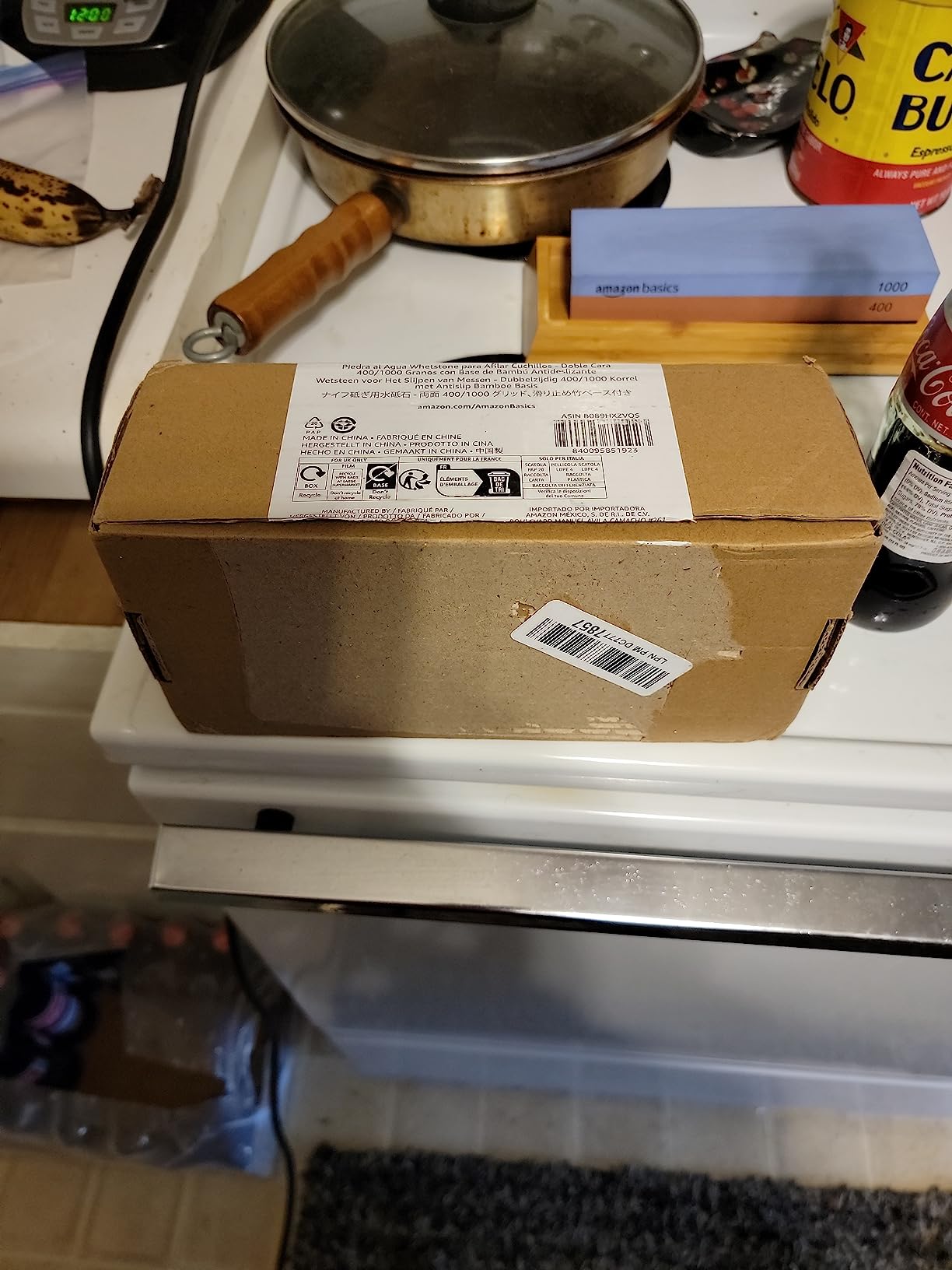
Sharpening with water instead of oil keeps it clean and fast to set up, and the listed range covers kitchen knives, scissors, pocket knives and hunting knives. That makes it a sensible general-purpose first stone rather than a specialist tool.
Be aware of what 20 degrees per side means. That is a fine angle for most Western kitchen knives and too steep for a thin Japanese single-bevel blade, which wants something closer to 15. On a Japanese knife, a guide set at 20 will thin the blade faster than you want.
The base is the weak link. Buyers report the bamboo coating losing traction once wet, and a stone that moves is how angles go wrong. A damp towel under the holder, or a small suction-style mat, makes the difference between a clean edge and a frustrating session.
Who This Stone Suits
This suits a first-time buyer who wants the learning curve reduced rather than embraced. The guide removes the guesswork on your first few sessions, and when you are ready to learn freehand you can take the guide off and keep the stone.
It also suits anyone who wants a simple two-grit stone with a warranty and a simple cleanup. Water-based sharpening means no oil to stain counters or utensils, and rinsing the stone is the whole maintenance routine on day one.
Where It Falls Short
400 grit is genuinely too fine for heavy repair work. A knife with a chip or a rolled edge needs something in the 200 to 400 range to remove damage, and this stone starts there. The 400 side refines and sets edges, it does not reshape them.
The guide also does not fit blades narrower than roughly 1.5 inches without shims, so a narrow paring knife or a small utility blade may need a different approach. Add to that the wet-base grip problem and you have a stone that is fine for most knives and a compromise for a few.
8. HiramWare 400/1000 Corundum Whetstone – Budget Pick
- Least costly stone in the roundup
- 400 grit sets and 1000 refines on one stone
- Water only and easy to clean
- Rubber base holds steady when wet
- No instructions included
- Soft stone is not ideal for very hard steels
- No angle guide
- strop or tray
The HiramWare stone is a plain, well-made 400/1000 white corundum whetstone, 7 by 2.3 by 1.1 inch, with a non-slip rubber boot. It is the least expensive stone in this roundup and it holds a 4.7 average from around 1,090 reviews, with about 82 percent five stars.
Buyers often describe it in terms of rescued knives. Dull store-brand blades, German steel chef’s knives that had been through an electric sharpener and lost their bite, utility knives that had not cut well in years. The 400 grit side establishes an edge and the 1000 refines it on the same block.
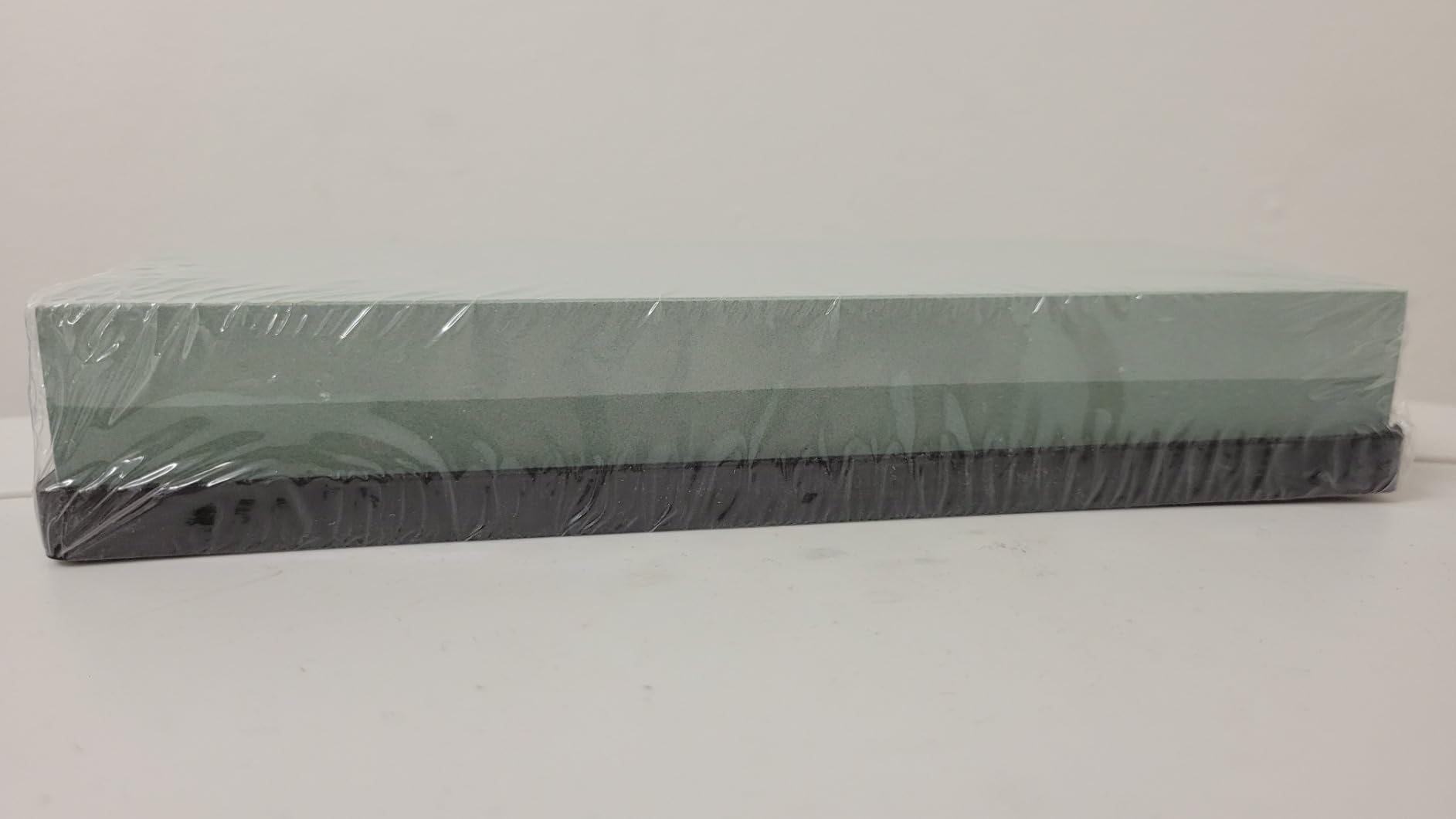
Use it with water rather than oil, and the rubber base is one of the better ones here because it holds the stone even with water running over the surface. It also handles scissors, chisels and axes, so it is not limited to a knife drawer.
The honest limitation is hardness. This is a soft stone, and soft stones cut ordinary kitchen steel easily but work much harder on very hard modern alloys. If your knives are conventional stainless or European steel, it is fine. If you own hard Japanese knives, a harder stone is a better long-term buy.
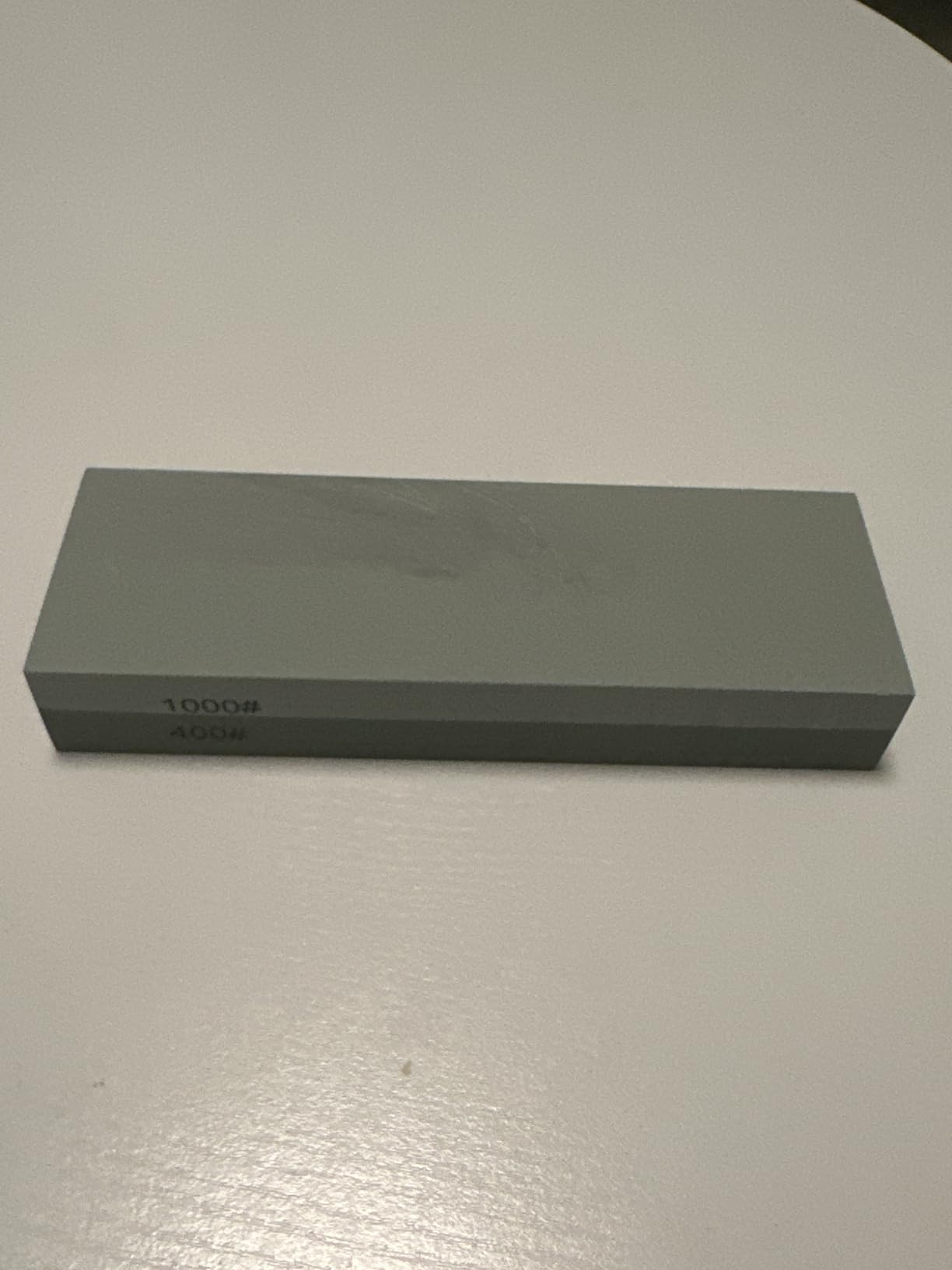
There are no instructions in the box, so the first session means learning from videos or from a friend who knows the technique. That is not a dealbreaker, but it is the reason this sits below the guided kits in my ranking despite the strong rating.
Who This Stone Suits
This suits a beginner who wants to try sharpening without a large commitment, or a household that has inherited dull knives and wants them usable again this week. Two grits and a stable base is a complete enough setup to learn on.
It also suits anyone who wants a simple, repeatable routine. Water only, one block, no oil, no slurry management, and a stone large enough for knives of several sizes. That simplicity is the product.
Where It Falls Short
It stops at 1000 grit, so there is no finishing step and no strop. You can get a working, food-safe edge, but not the keen, polished finish that a fine waterstone or a leather strop gives you.
And the softness is a genuine cap rather than a nitpick. Owners looking for a stone that will handle a full range of steels, including hard alloys, should look at a harder option. This one is a very good first stone for normal kitchen knives and a stopgap for the rest.
9. Angerstone 1000/6000 Sharpening Kit – Best Splash-And-Go Kit
- Flattening stone
- strop and angle guide included
- 1000 repairs and 6000 polishes
- Works on knives
- chisels and garden tools
- Angle guide does not seat on short pocket knives
- Not suitable for serrated or ceramic blades
- Consistent results take practice
The Angerstone kit threads a middle line. It is a 1000/6000 corundum wetstone, 7.08 by 2.36 by 1.18 inch, but it only needs a couple of minutes of soaking rather than a full bath, and the box includes a silicone base, an anti-slip bamboo holder, a flattening stone, an angle guide and a towel.
It holds a 4.5 average from just under 2,000 reviews, with about 71 percent five stars. Several owners describe it as a good first kit, and a few mention buying it specifically to rescue knives that an electric sharpener had left dull and hollow.
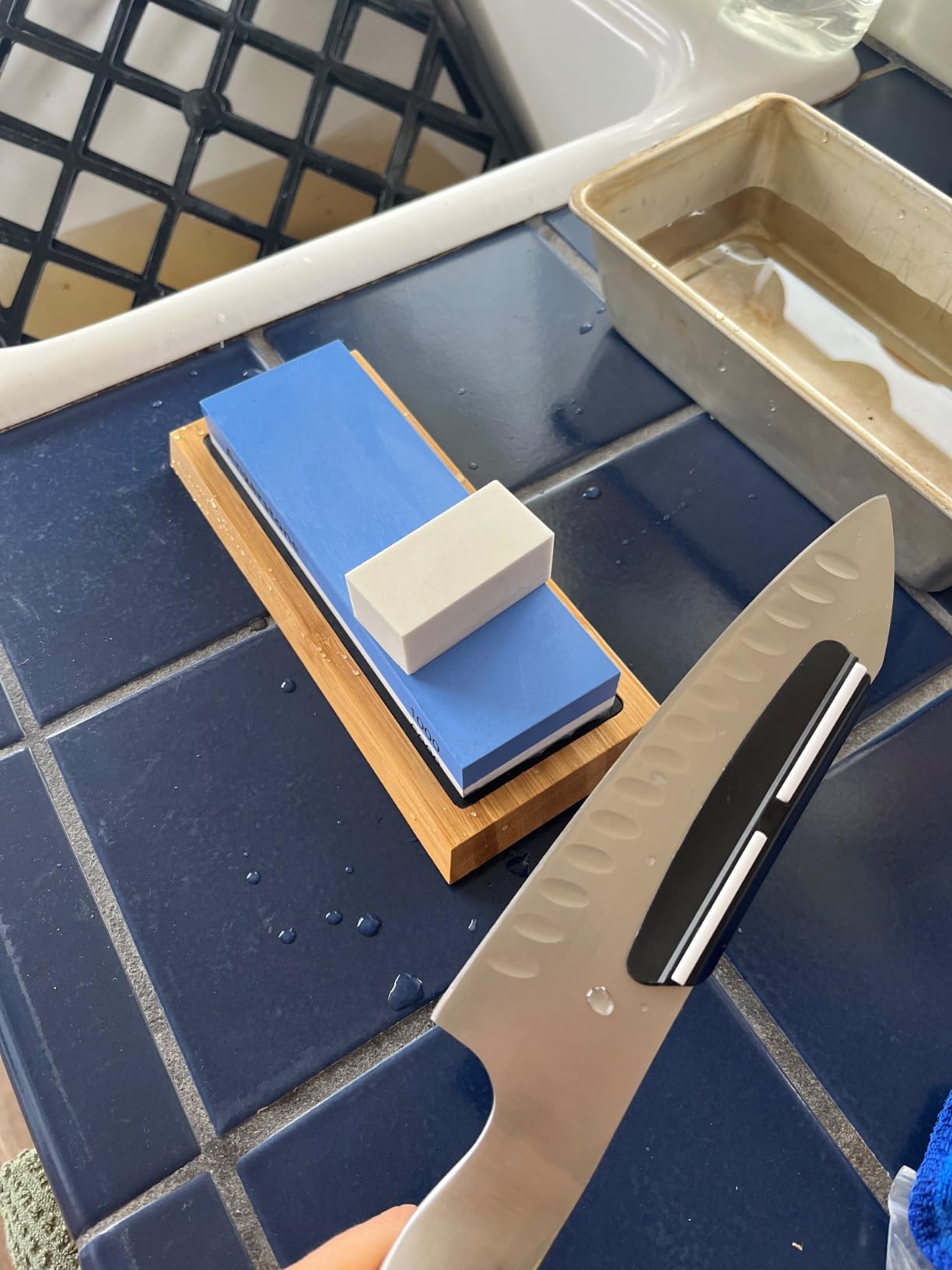
That short soak time is the practical headline. A beginner who has never used a waterstone will often skip a 20 minute soak because the kitchen is busy and the stone seems ready, and a short-soak stone removes that excuse entirely.
The 1000 grit side restores dull edges and the 6000 grit side gives a polished finish, so a single stone handles both halves of a session. The silicone base inside the bamboo holder keeps it planted, which matters more for beginners than the spec sheet suggests.
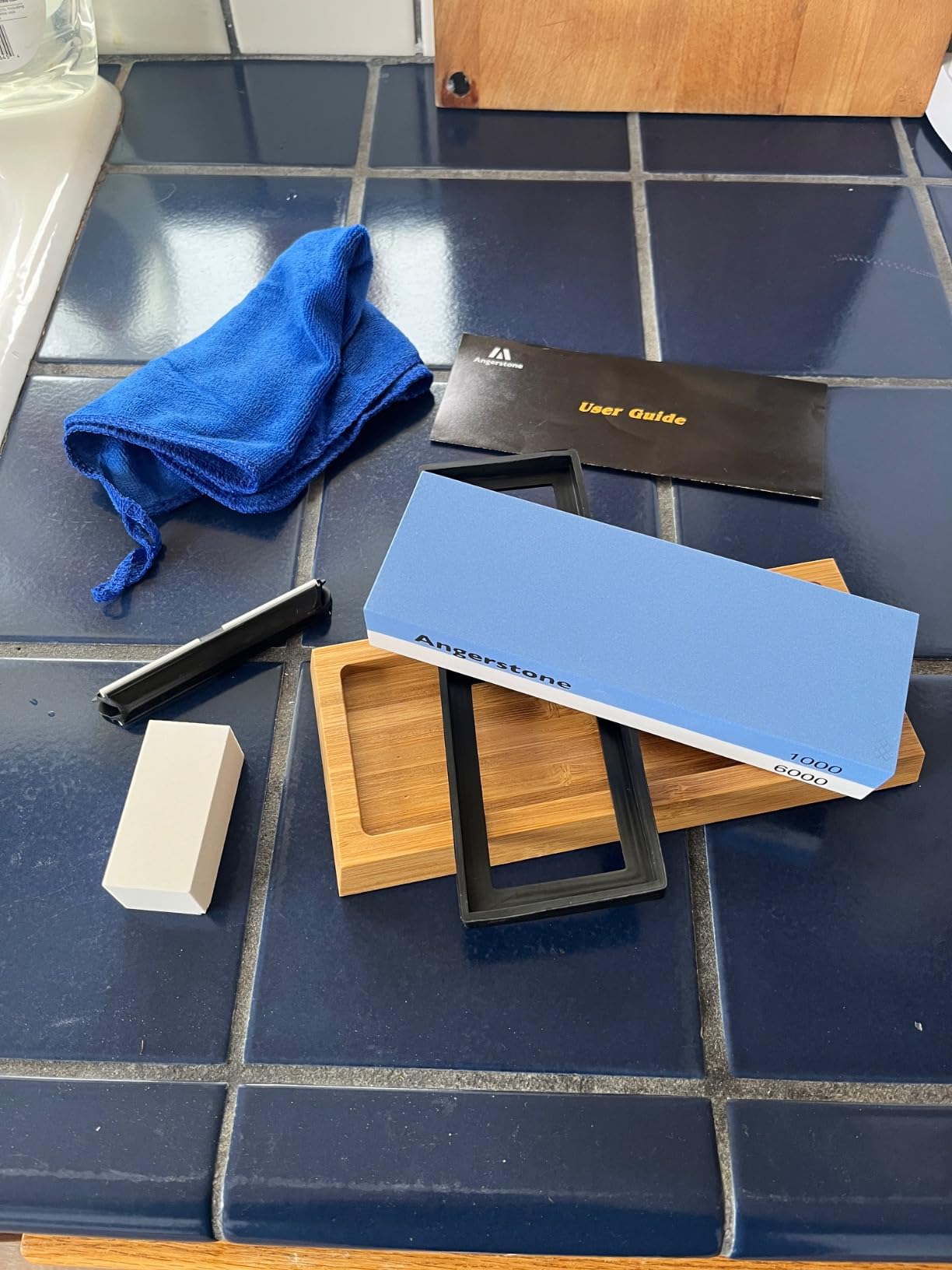
It is versatile, working on kitchen knives, hunting and pocket knives, scissors, chisels, garden tools, straight razors and axes. Each stone is inspected and durability tested before shipping, which reduces the chipped-corner problem that turns up with some stones.
Who This Stone Suits
This suits a beginner who has limited time or a small kitchen, where a long soaking ritual is not going to happen. Grab it, splash it, sharpen, rinse. The maintenance kit is included too, which is unusual at this level of completeness.
It also suits someone who wants to replace an electric sharpener. A pull-through sharpener rounds edges away over time, and owners here report getting usable edges back on blades that had been ground down.
Where It Falls Short
It is not for serrated or ceramic blades, and the listing is clear about that. Serrated teeth need a different approach entirely, and a ceramic blade will not respond to an abrasive stone at all.
The angle guide is basic and does not seat well on short pocket knives, and consistent results take practice regardless. The five-star share is also lower than most of the stones here, which usually reflects finish quality on the polished edge rather than any problem with basic sharpening.
10. S SATC Diamond Sharpening Plate – Best for Mess-Free Sharpening
S SATC Diamond Sharpening Stone 2 Side Grit 400/1000 Diamond Plate Honing Stone 8-inch Hone Sharpener White
- Never dishes and never needs flattening
- No soaking
- no oil and no slurry
- Long plate handles long blades
- Steel core electroplated with monocrystalline diamond
- Stops at a functional edge rather than a keen polished finish
- Less forgiving on very soft or very hard steels
- No base or angle guide included
The S SATC is not a waterstone at all. It is a steel plate electroplated with monocrystalline diamond, 400 grit on one side and 1000 on the other, 9.05 by 2.75 inches, and about a third of an inch thick. That design removes most of the maintenance that defines a traditional stone.
No soaking. No oil. No slurry. No flattening plate, because the plate does not dish. It holds a 4.6 average from more than 2,200 reviews with about 73 percent five stars, and the repeated praise is exactly that simplicity. Owners like being able to sharpen right at the cutting board and wipe the plate clean with a damp cloth.
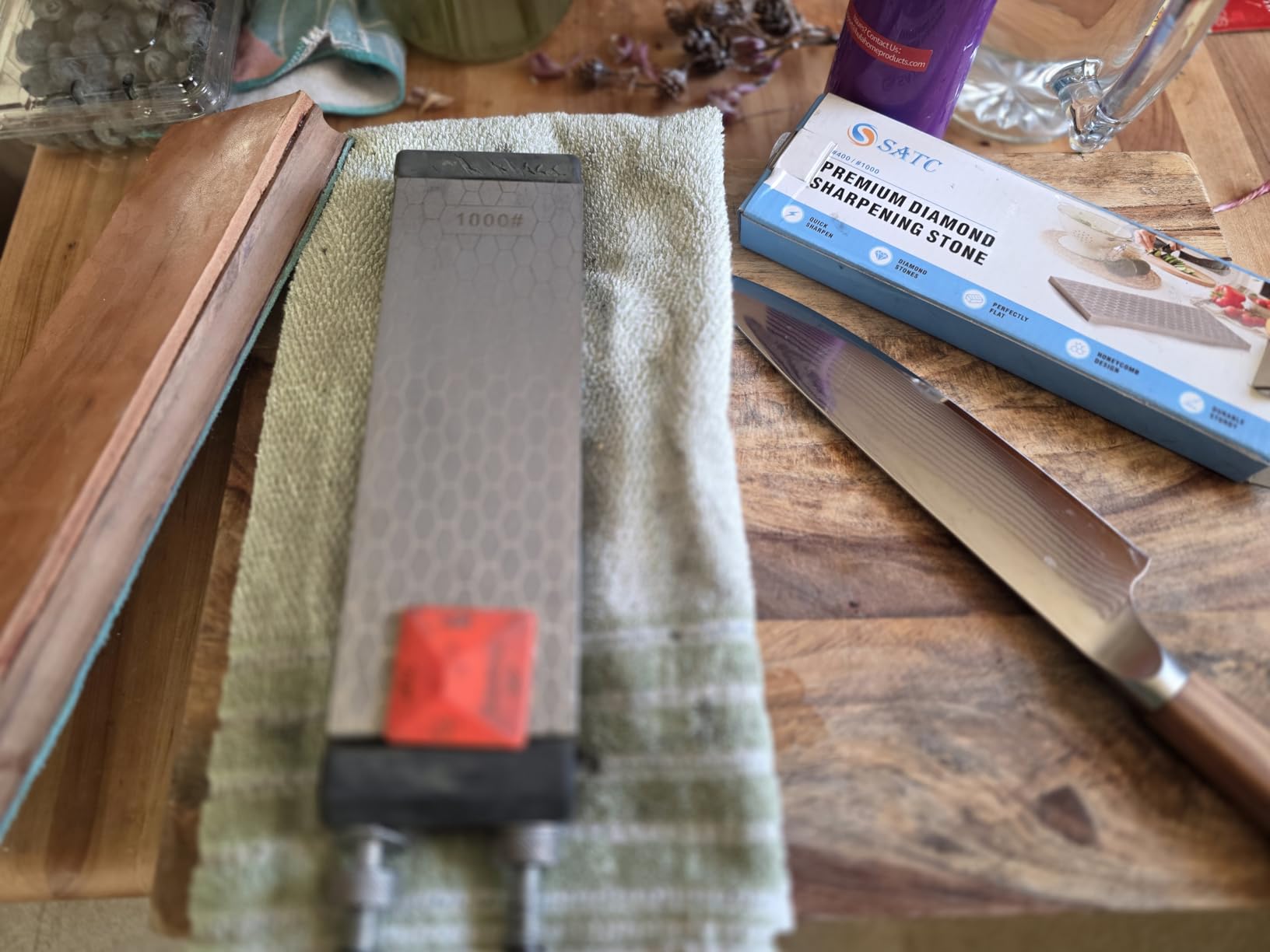
The diamond layer is what makes it durable. Because the abrasive is a plated layer on steel rather than a bonded block, the cutting surface renews itself as you use it, and the plate will outlast several conventional stones before it needs anything.
At 9 inches it is also one of the longest tools in this roundup, so long blades and chef’s knives have room to travel. It handles straight-edged tools well, including chisels and plane blades, and it is not fussy about how you set it up.
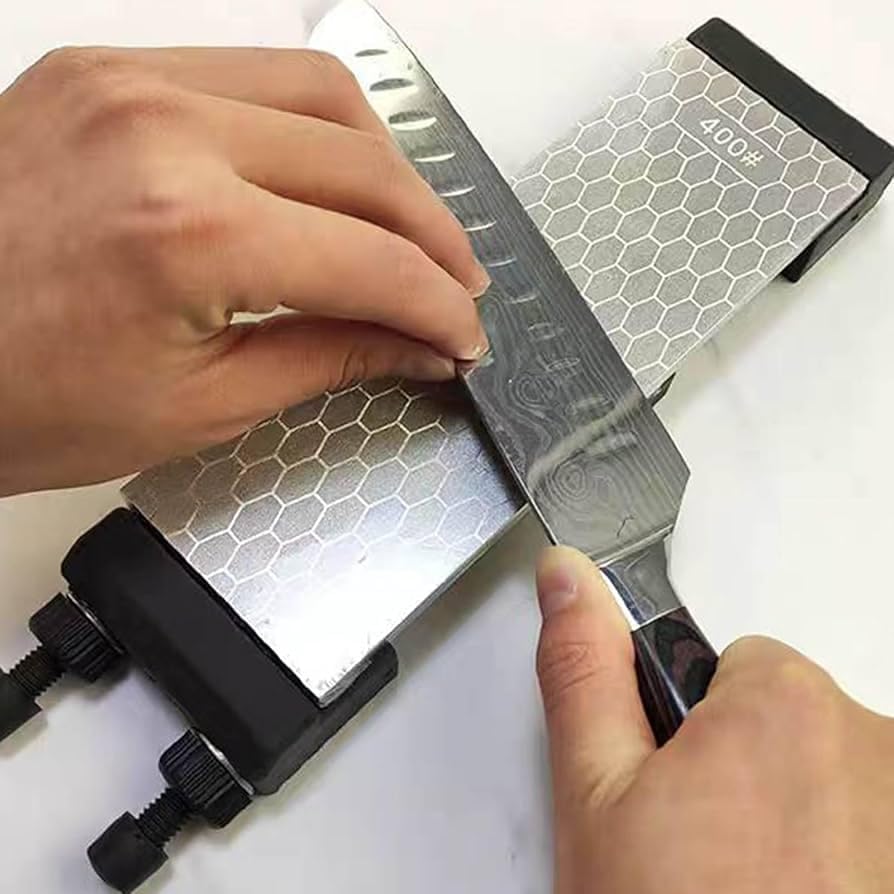
What you give up is the finish. A 1000 grit diamond plate produces a functional, biting edge rather than the keen polished apex a 6000 grit waterstone or a strop delivers. If all you do is slice vegetables and prep herbs, you will not notice the difference most days.
Who This Stone Suits
This suits anyone who wants sharpening with zero setup ritual. No soaking means no waiting, no oil means no mess on a worktop, and a plate that never dishes means no lapping plate to buy in a year. For a small kitchen, that is a real quality of life gain.
It also suits beginners who fear messing up a good stone, and anyone who wants one tool for knives, chisels and plane blades without managing water. It is the most approachable entry into sharpening as a habit.
Where It Falls Short
Diamond is less forgiving than a waterstone at both extremes. On very soft steel it can glaze before it cuts, and on very hard alloys the feedback changes in ways that are harder to read. Waterstones are more adjustable once you know what you are doing.
You also get no angle guide, no base and no strop, and the plate tops out at 1000 grit. For hard Japanese steel, communities generally caution against reaching for a diamond plate, since the aggressive cut is not what those edges need. Use it for your everyday kitchen knives and keep a stone for the delicate ones.
How to Sharpen on a Whetstone: The Five-Step Beginner Routine
This is the routine that works, and it takes about five minutes per knife once your hand knows what to do. Angle first, then burr, then even strokes, then deburr, then refine.
- Set the angle. Western kitchen knives are usually sharpened at 15 to 20 degrees per side. Japanese single-bevel blades want closer to 15, and going steeper than the knife needs thins the blade without making it sharper. If you have an angle guide, use it. If not, rest the blade on the stone and lower the spine slowly until it feels like resistance, then hold that.
- Soak or splash the stone. Follow the stone’s own rule. Full-soak stones go in the water for the stated time. Splash-and-go stones want water spread across the surface and reapplied as it dries. A dry or glazed stone will not cut, and no amount of pressure fixes that.
- Raise a burr on both sides. Use steady strokes with light pressure, a few per inch, and alternate sides. A burr is the thin metal flange that folds over the apex. You do not need to feel it with your fingers, which is how beginners cut themselves. Check by looking down the edge in good light, or by drawing the blade very lightly away from the stone against a thumbnail.
- Work both sides evenly. Match the number of strokes on each side. Unbalanced strokes produce a bevel that is fine on one side and rounded on the other, and that knife will never feel sharp no matter how much time you spend.
- Remove the burr and refine. Change to the finer grit, or to a strop, and take the wire edge off completely. A remaining burr is the reason a knife feels razor sharp for one cut and then slices down. Pull the blade trailing edge first, then push from the spine to the tip, until it feels smooth along the whole length.
Push and pull are both valid. Most beginners do better pulling the blade toward themselves, heel to tip, with the burr trailing, because the pressure is easier to control. Some Japanese steel enthusiasts prefer the opposite direction for a polished finish, and a strop wants a trailing pull so the leather does not fold the edge over.
Common Beginner Mistakes and How to Fix Them
Almost every frustrating first session comes down to one of these, and all of them are fixable within a week of practice.
1. Sharpening without forming a burr. You are grinding, not sharpening, if no burr appears. The usual cause is too little pressure, too many strokes, or too fine a grit for a dull knife. Slow down, add a little more pressure, and raise the angle slightly until a burr shows along the edge.
2. Leaving the burr on. A wire edge feels extremely sharp for about a cut and then folds over. Change to the finer grit, or strop, and keep going until the edge feels smooth when drawn away from the stone.
3. Using too steep an angle. This is the quiet one. Holding 20 degrees or more on a knife that wants 15 makes a heavy wedge, feels hard to use, and thins the blade over time. Sharpening communities say this is the most common long-term mistake beginners make.
4. Not flattening the stone. A dished stone produces an uneven edge that no technique can fix. Test by drawing a straightedge across it, and lap on a diamond plate when the center dips. Several stones in this roundup include a flattening stone for exactly this reason.
5. Letting the stone dry mid-session. Once the surface goes grey and slick, it is glazing, not cutting. Keep water on it. This one catches out almost everyone on a splash-and-go stone, because people expect a quick splash to last the whole session.
6. Buying four stones at once. You will spread your practice thin and learn nothing. Start with one 1000 grit stone or one 1000/6000 combination, master the angle and the burr, then upgrade. Most experienced sharpeners made this exact mistake first.
7. Cutting your fingers. Never run a fingertip along the edge to find the burr. Look for it, or test with a light draw across a thumbnail held away from the blade. Most hand injuries in sharpening come from checking sharpness this way.
How to Choose a Whetstone: A Beginner’s Decision Framework
Ask yourself four honest questions, and the answer nearly picks the stone for you.
One stone or a combination stone? Sharpening communities overwhelmingly recommend starting with a single 1000 grit stone, or a 1000/6000 combination, rather than a full kit. One stone means one skill to learn. Buy the rest when you can already produce a burr.
Do you want zero maintenance? If the answer is that you will not soak a stone, flatten a stone, or clean slurry, buy a diamond plate. It is not a worse product, it is a different trade, and the simplicity is genuinely useful for a busy kitchen.
Do you own Japanese knives? Hard Japanese steel prefers harder stones. Traditional waterstones cut it well and give the best polished finish, and diamond plates are the option communities caution against for those edges. Western kitchen knives are happy on anything in this list.
Do you need help holding the angle? If yes, buy a kit with an angle guide for the first few months, then drop the guide once your hand knows the angle. It is a training aid, not a permanent fixture.
Two more details decide satisfaction more than brands do. Check the base, because a stone that slides on a wet counter will ruin your angle no matter how good the grit is. And check the included accessories, because a kit with a flattening stone and a strop removes two future purchases.
For the long view, work out cost per session rather than cost per stone. A modest stone you use weekly for years is a better investment than an expensive one you leave in a drawer. A waterstone also has a real running cost of water, a towel and occasional lapping, but no consumables beyond that.
Flattening, Soaking and Storing Your Stone
Flat stones make straight edges. That is the whole job of maintenance, and it is the part most beginners skip until their edges stop matching.
Test for flatness. Draw a straightedge across the surface, or rest a known-flat glass sheet on the stone. If you can slide a thin piece of paper under the middle with no resistance at the edges, the stone is dished.
Lap it flat. Wet both surfaces, place the coarse flattening stone on a flat hard surface, and rub the stone back and forth with light even pressure until it no longer rocks. Sandpaper on glass also works. Three of the kits in this roundup include a flattening stone for this step.
Soak properly. Check the listing for the recommended time, since it varies. A splash-and-go stone wants a wet surface and rewetting as you work. A full waterstone wants a real soak, and using it half-absorbed is the fastest way to get a glazed, useless surface.
Dry it standing up. Rinse, shake off excess water, and stand the stone upright to air dry. Storing a stone wet invites mildew, odor and a degraded surface, and it will shorten the life of the abrasive.
And clean up the slurry. Rinse the stone and the base after each session, because dried slurry glazes the surface and the next session starts slower than it should.
Frequently Asked Questions
What grit whetstone is best for a beginner?
A 1000 grit stone is the best starting point for a beginner. It cuts fast enough to repair a dull everyday knife, forms a burr you can see and feel, and is forgiving of uneven pressure. A 1000/6000 combination stone is the most useful single purchase, because the coarser side does the work and the finer side removes the burr.
Are cheap whetstones okay?
Yes, most cheap whetstones are fine for learning. Several of the lower-cost options in this roundup hold ratings of 4.5 or higher across thousands of reviews. What matters more than cost is that the surface is flat, the base does not slide, and the grit is honest about what it is. Buy a cheaper stone and replace it once you have learned the angle.
Do you start with 1000 or 6000 grit?
You start with 1000 grit. The 6000 grit side is for finishing: it removes the wire edge left behind after the burr forms. Starting on 6000 grit just polishes an edge that is still uneven, and you end up with a sharp-looking blade that still cuts poorly.
Do you push or pull on a whetstone?
Both work, and most beginners do better pulling the blade toward themselves, heel to tip, so the burr trails behind and pressure stays easy to control. Many sharpeners use a push stroke on the coarser side and a trailing pull on the finer side or a strop, since pulling over leather avoids folding the edge over.
Do I need a flattening plate for a whetstone?
Eventually, yes, if you use a traditional waterstone. Soft stones dish into a shallow hollow over time, and once the center dips the middle of a blade stops contacting the surface, which produces an edge you cannot fix by improving technique. Three of the kits in this roundup include one. Diamond sharpening plates never need flattening.
The Verdict: Where to Start Sharpening in 2026
The best whetstones for beginners in 2026 come down to how much help you want. Buy the Sharp Pebble 1000/6000 with its angle guide if you want the shortest distance between a dull knife and a sharp one, and it is the pick we would hand to anyone starting out in 2026.
Choose the S SATC diamond plate instead if you will not soak, flatten or clean a stone. Choose the Shapton K0702 if you want a single excellent 1000 grit stone and you own Japanese steel. Choose the Intelitopia or Angerstone kits if you would rather have the flattening stone, the strop and the angle guide in the box on day one.
Whichever one you pick, give it three sessions before you judge it. The angle feels wrong, the burr is hard to see, and the slurry is confusing, and then one afternoon it suddenly clicks. That moment is the entire reason people stay with this hobby.