
Last updated: October 2026
A STEM kit is a boxed set of materials that lets a child build, test, or experiment with science, technology, engineering, or math concepts, usually with an instruction guide, instead of a full written curriculum. The best STEM kits for homeschool science are the ones a child returns to week after week, not the ones that entertain for a single afternoon.
We pulled 11 kits into one comparison and worked through the details that actually decide a purchase: the stated age range, the real difficulty, how long each kit keeps running, how much adult supervision it needs, and how much cleanup it creates. Three of the kits here have crossed 20,000 reviews, so you are looking at products with a long public track record rather than a short-lived listing.
Disclosure: we earn a commission when you buy through the links on this page. That never changes which kits make the list or how we rank them.
If you want a wider look at the category before you narrow it down, our picks for the best educational STEM kits overall and our guide to the best science kits for kids are good places to start.
Table of Contents
How We Picked These 11 Kits
We looked for kits that teach a real concept rather than just occupy an afternoon. That meant weighting four things heavily: repeat sessions, a manual a child can follow without an adult hovering, a subject your homeschool week does not already cover, and build quality that survives a year of use.
We also set two rules for ourselves. No kit earns a spot on name recognition alone, and no kit gets recommended without an honest note on what to watch out for. Several of the picks below have flaws we call out plainly, because a kit that quietly disappoints costs you more than one you never bought.
Age ranges come from the manufacturer. Where reviewers reported that the stated age did not match real difficulty, we say so in that product’s section.
Top 3 Picks For Best STEM Kits for Homeschool Science

Snap Circuits Jr. SC-100
- 100+ electronics projects
- No soldering or tools
- Color-coded beginner manual

All 11 Kits at a Glance
| Product | Specifications | Action |
|---|---|---|
| Snap Circuits Jr. SC-100 |
|
Check Latest Price |
| National Geographic Earth Science Kit |
|
Check Latest Price |
| National Geographic Rock Tumbler Kit |
|
Check Latest Price |
 Insect Lore Butterfly Garden Insect Lore Butterfly Garden |
|
Check Latest Price |
 Sillbird 12-in-1 Solar Robot Sillbird 12-in-1 Solar Robot |
|
Check Latest Price |
 Teach Tech Mech-5 Coding Robot Teach Tech Mech-5 Coding Robot |
|
Check Latest Price |
 Doctor Jupiter My First Science Doctor Jupiter My First Science |
|
Check Latest Price |
 National Geographic Amazing Chemistry Set National Geographic Amazing Chemistry Set |
|
Check Latest Price |
 Makeblock mBot Coding Robot Makeblock mBot Coding Robot |
|
Check Latest Price |
 GobiDex Human Body Model GobiDex Human Body Model |
|
Check Latest Price |
 Butterfly EduFields 30-in-1 Butterfly EduFields 30-in-1 |
|
Check Latest Price |
1. Snap Circuits Jr. STEM Electronics Kit – Best Overall for Ages 8+
SNAP CIRCUITS Jr. SC-100 STEM Electronics Kit, 100+ Projects, Ages 8+
- One box covers 100+ electronics projects
- No soldering or extra tools needed
- Color-coded numbered parts suit beginners
- Combines with other Snap Circuits kits
- Small parts are fiddly for younger hands
- Alkaline batteries are not included
- First build needs the manual before play
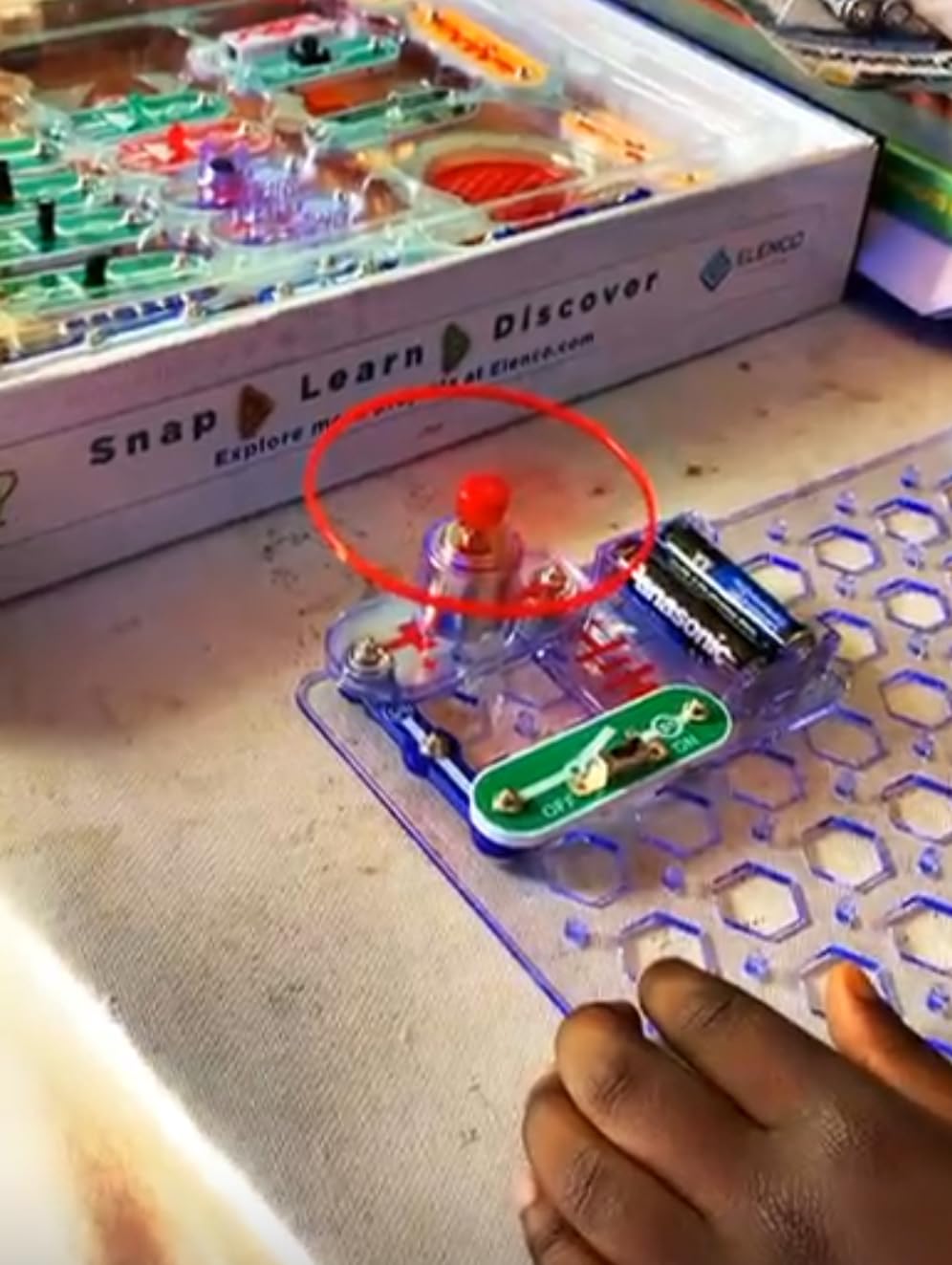
Our whole family reached for this one first, and it never lost its pull. The Snap Circuits Jr. kit ships with more than 30 snap-together modules and a four-color manual that walks through over 100 projects, from a simple doorbell to a fan with a switch.
Everything mounts on a snap board, so there is no soldering, no wiring with loose wire, and no tool to lose. A child can build a circuit and see the result in a couple of minutes, which is exactly the observe-and-explain loop that makes a concept stick.
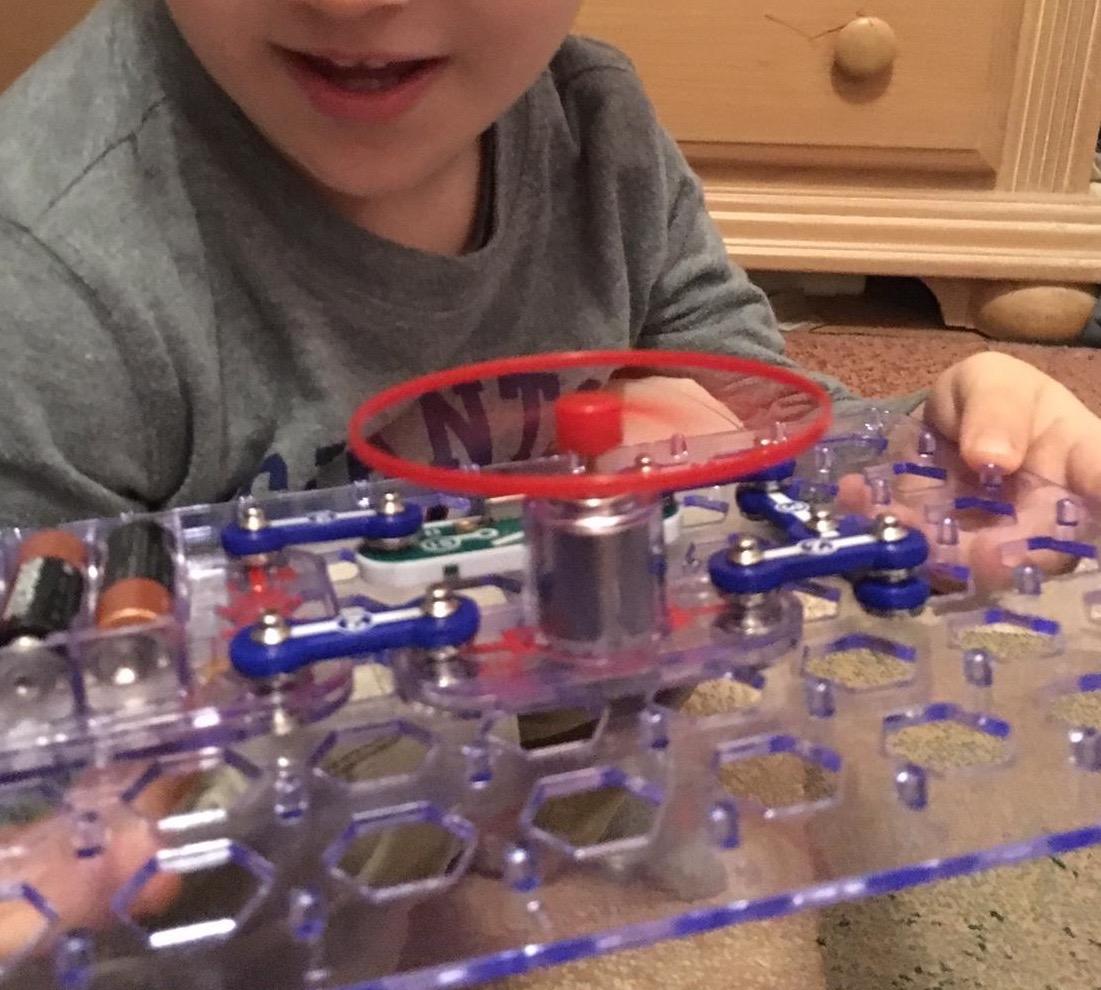
The parts are color-coded and numbered, and they snap only one way, which removes most of the frustration that kills a first electronics project. If a child mistypes a step, the circuit simply does not fire, and the manual helps them trace the mistake.
At 4.8 stars across more than 29k reviews, this is the most validated kit in the group, and it also holds the number one sales rank in Educational Science Kits on Amazon right now. That volume matters for you: replacement parts and expansion modules exist because a large installed base uses them.
One parent in a comment thread on a competing roundup described the same Snap Circuits family being educational and entertaining for several of their boys across ages 2 to 13, which is the strongest reusability evidence we found anywhere in our research. The modules stay compatible as children move up the Snap Circuits line.
How you will actually use it
Buy this before you plan a unit on electricity, because the kit supplies its own curriculum. Work through three or four projects in a sitting, then step back a week and let your child rebuild one from memory.
Over a school year, most families get through 30 or 40 projects out of the 100-plus available, which is roughly one project a week for a term. That is a much better return than finishing a kit in a single session.
When to skip it
Skip it for a child under 7. The modules are small enough to be a genuine choking risk for a preschooler, and the fiddliness shows up in reviews as a common complaint from parents of younger children.
Also plan on supplying alkaline batteries yourself. Nothing else in the box runs without them, and that trips up more than one family on the first project.
2. National Geographic Earth Science Kit – Best Value for Ages 8-12
- Fifteen-plus activities with materials supplied
- Full-color guide explains the science
- Step-by-step instructions build confidence
- Enough materials for two children
- Some activities need household supplies
- The two dig kits are single-use
- Bottle packaging is bulky to store
This is the kit we hand to a family that wants a broad earth science sampler without building a lab. The National Geographic Earth Science Kit covers water tornadoes, an erupting volcano, crystal growing, and a pair of geologic dig kits that split open real specimens.
For the money, the supplied-material count is the strongest in this roundup. Fifteen of the activities come with everything needed in the box, which means you are not hunting for baking soda at 8pm on a Tuesday.

The full-color learning guide does the teaching for you in a way most kits skip. Each activity has a short explanation of the mechanism behind the result, so a volcano is not just a mess on the table, it is a lesson in pressure and gas.
At 4.7 stars from more than 17k reviews, this is a strong second-place pick on confidence alone. It also holds a top-15 sales rank in Educational Science Kits, which tells you it is moving in volume right now rather than sitting on a legacy listing.
One honest limit: the two geologic dig kits are consumed. Once your child splits them, that part of the box is done, so treat the dig kits as a one-time treat inside a much larger set rather than as the main event.

Best for a co-op or multiple children
Reviewers specifically call out having enough material for siblings or a small group, which is unusual for a kit at this level. Two children can work on different activities at the same table without competing for the same beaker.
It is also our pick for pairing with a weather or earth science unit study, because the water tornado and erosion-style activities map cleanly onto a weather theme.
What to watch out for
Several activities call for common household ingredients that are not included, so keep vinegar, food colouring, and salt within reach before you start. Budget a few extra sessions for a supply run the first time you open it.
The bottle-style box is tall and awkward on a shelf. It is easy to store, it is just not compact, which matters if your science corner is a closet.
3. National Geographic Rock Tumbler Kit – Best Multi-Week Project for Ages 8+
National Geographic Hobby Rock Tumbler Kit for Kids and Adults Ages 8+
- Multi-week geology project with visible results
- Leakproof rubber barrel runs about 75 percent quieter
- One-touch timer with automatic shutoff
- Spare belt included for easy swapping
- Each full cycle takes four to six days of running
- The final polish stage is less shiny than earlier grits
- Grits must be repurchased for each extra batch
This one behaves nothing like a kit. It behaves like a slow science project, and that is the appeal. A full tumbling cycle runs continuously for four to six days, taking rough stones through four grit stages until they come out polished and sparkly.
Your child checks the barrel, notes what they see, and waits. The included learning guide turns that waiting into earth science vocabulary about erosion, abrasion, and mineral hardness, and the STEM Journal idea works here almost as well as it does on a live habitat kit.

The hardware is the best-engineered part of this roundup. The leakproof rubber barrel runs about 75 percent quieter than other plastic models, which matters a great deal in a house where science happens in the room where people also sleep and work.
There is a one-touch timer with automatic shutoff, so you set a stage and walk away instead of supervising a barrel that only works when plugged in. A spare belt is in the box, and swapping it takes minutes.
Nine types of real rough gemstones are included alongside four polishing grits, a sifter, and a full-color guide. Owners consistently report satisfaction with the polished results, and the brand’s replacement service comes up often in positive reviews.

Why it outlasts other kits
A kit that takes a week to finish cannot be abandoned after one afternoon. The bar keeps turning whether or not anyone is watching, and the reveal at the end of each stage gives a real payoff that a snap-together model cannot match.
It is also one of the few kits here that teaches patience and delayed gratification as a side effect, which is a real part of scientific work rather than a personality trait you can lecture into a child.
What to watch out for
Buy extra grit when you order. Each additional batch of stones needs fresh grit for every stage, and running out mid-cycle is the single most common complaint in reviews.
Expect the last polish stage to look duller than the intermediate ones. Reviewers note the final finish is less shiny than the earlier grit stages, so manage expectations before your child opens the barrel on day six.
4. Insect Lore Raise and Release Butterfly Garden – Best Life Cycle Kit for Ages 4+
- Immersive three-week metamorphosis project
- STEM Journal supports daily observation
- Reusable mesh habitat with zippered top
- Works well in homeschool and co-op settings
- Live caterpillars are not included
- Plastic feeder is small and needs homemade nectar
- Messy to clean once butterflies feed
- Seasonal timing can deliver pupated caterpillars
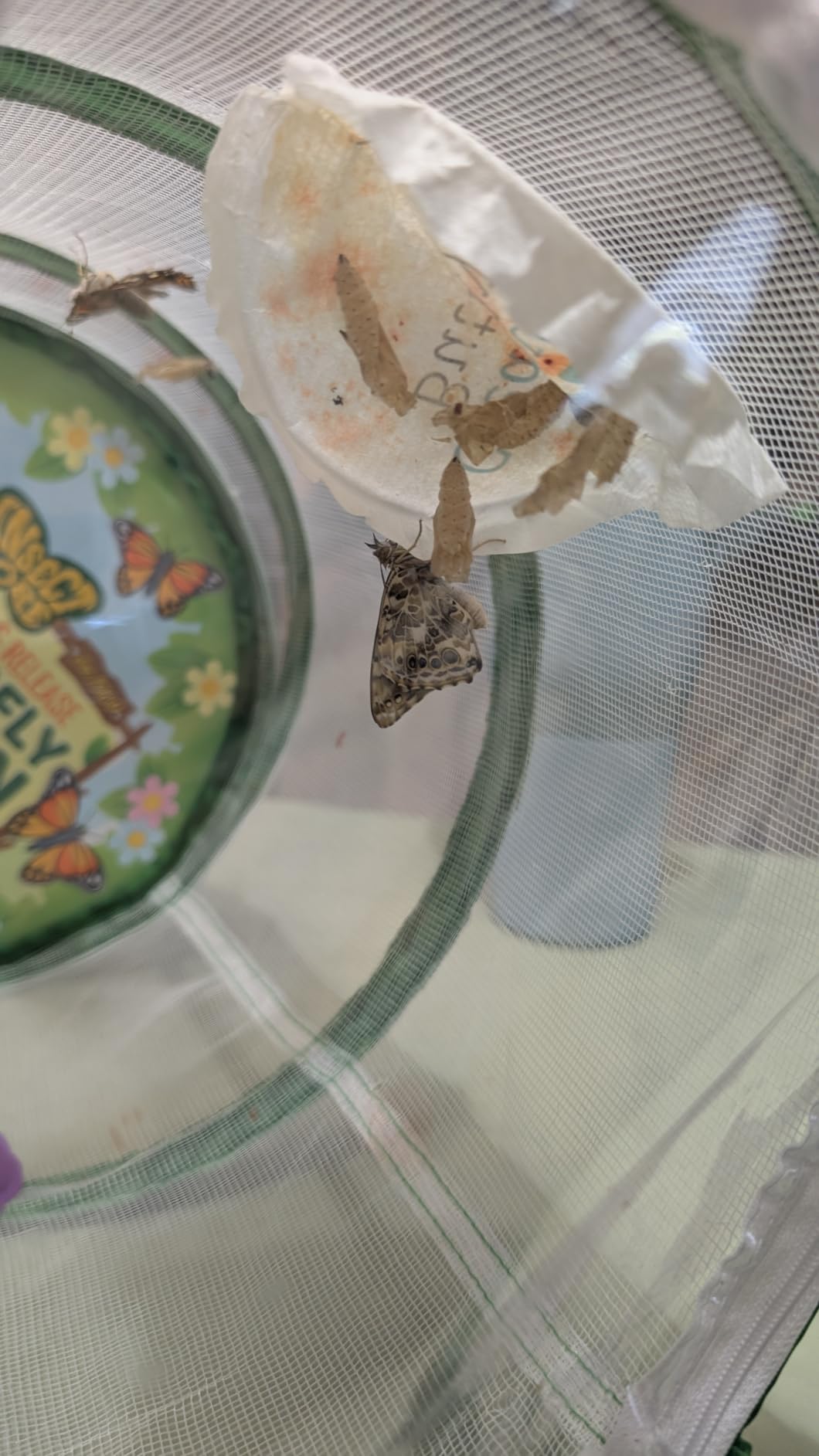
Ask a child whether a caterpillar becomes a butterfly and they will say yes. Ask them to watch it happen over three weeks and describe the stages, and that is a different conversation entirely. This kit forces the second conversation.
You receive a 12-inch tall mesh habitat with a zippered top, a reusable butterfly feeder, a pipette, and a voucher redeemable for five live caterpillars shipped in a Chrys-A-Lid log. The caterpillars are raised by the manufacturer in California.
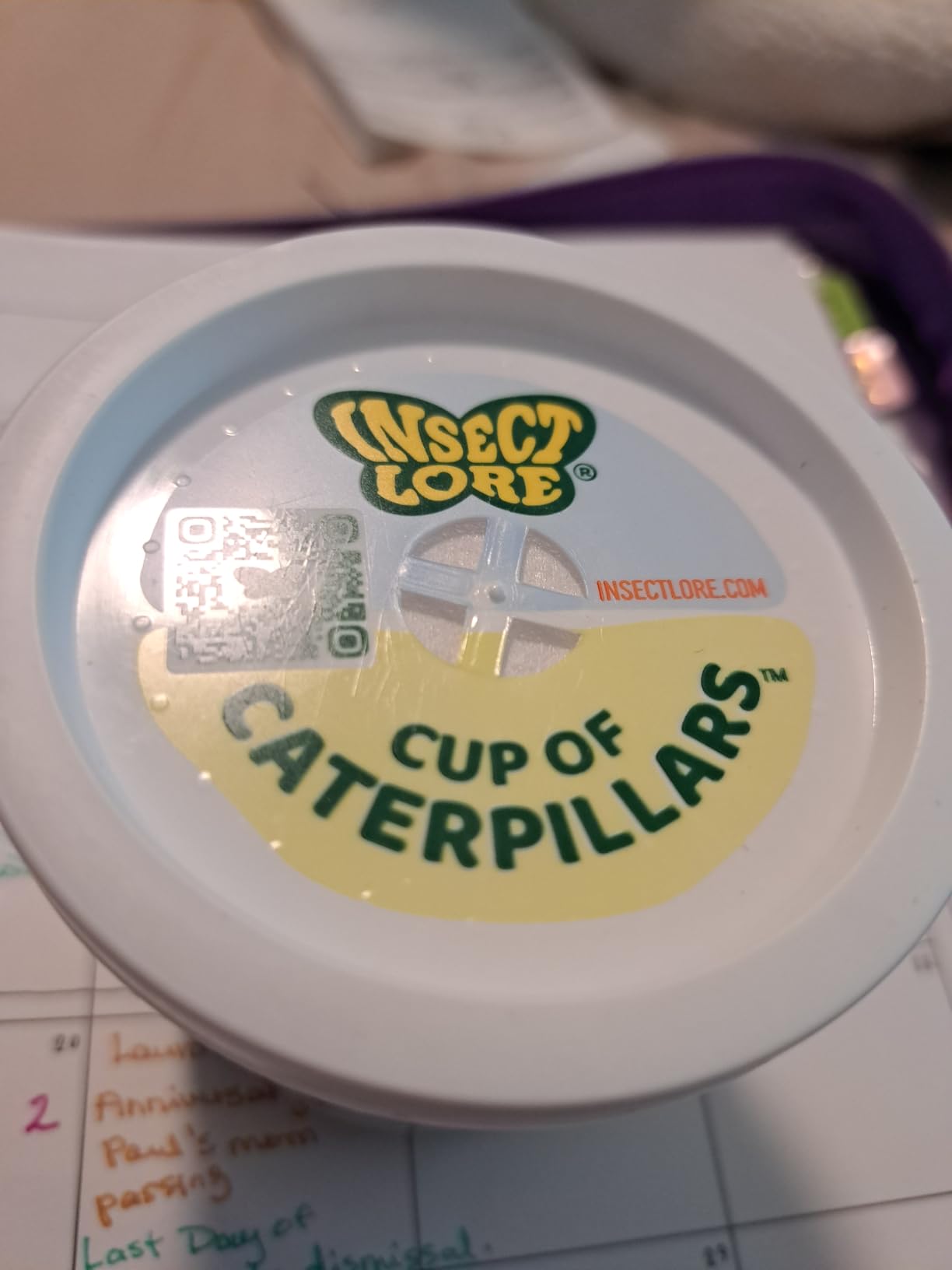
The STEM Journal included is the part we would not do without. A daily observation log turns a fun project into a record-keeping exercise, and it gives you a written artifact from the unit that a screenshot-free homeschool record can actually use.
Across more than 23k reviews at 4.5 stars, long-term owners describe it as one of the most memorable science experiences a child can have, and homeschool families rate the observation journal as a highlight. Our own experience matched that.
The habitat is reusable, which softens the environmental question and extends the life of the kit. Once the butterflies are released, you can use the same mesh enclosure for caterpillars again the following season.
How to run it without losing a week
Plan the start date around your school calendar, not the delivery date. The voucher ships in a specific season window, and the full cycle runs about three weeks from arrival to release.
Have sugar nectar ingredients ready before the caterpillars arrive, because the included plastic feeder is small and designed to be filled with homemade nectar. That is the one extra step that catches families out.
What to watch out for
Live caterpillars are not in the box. The separate voucher step means you have two deliveries to track, and reviews report the occasional shipment arriving with caterpillars that had already pupated in transit.
Cleanup is genuinely messy once the butterflies start feeding. Put the habitat somewhere you do not mind wiping down, and expect to wash the feeder more than once during the cycle.
5. Sillbird 12-in-1 Solar Robot – Best Budget Solar Build for Ages 8-13
Sillbird 12-in-1 Solar Robot Building Kit STEM Gift for Boys Ages 8-13
- Builds 12 models of rising difficulty
- Larger solar panel gives stronger output in weak light
- No batteries needed at all
- Step-by-step instructions allow independent assembly
- Models perform poorly under indoor lighting
- Panel stores no energy so it only runs in direct light
- Small parts are hard for younger children
- Advanced model instructions are terse
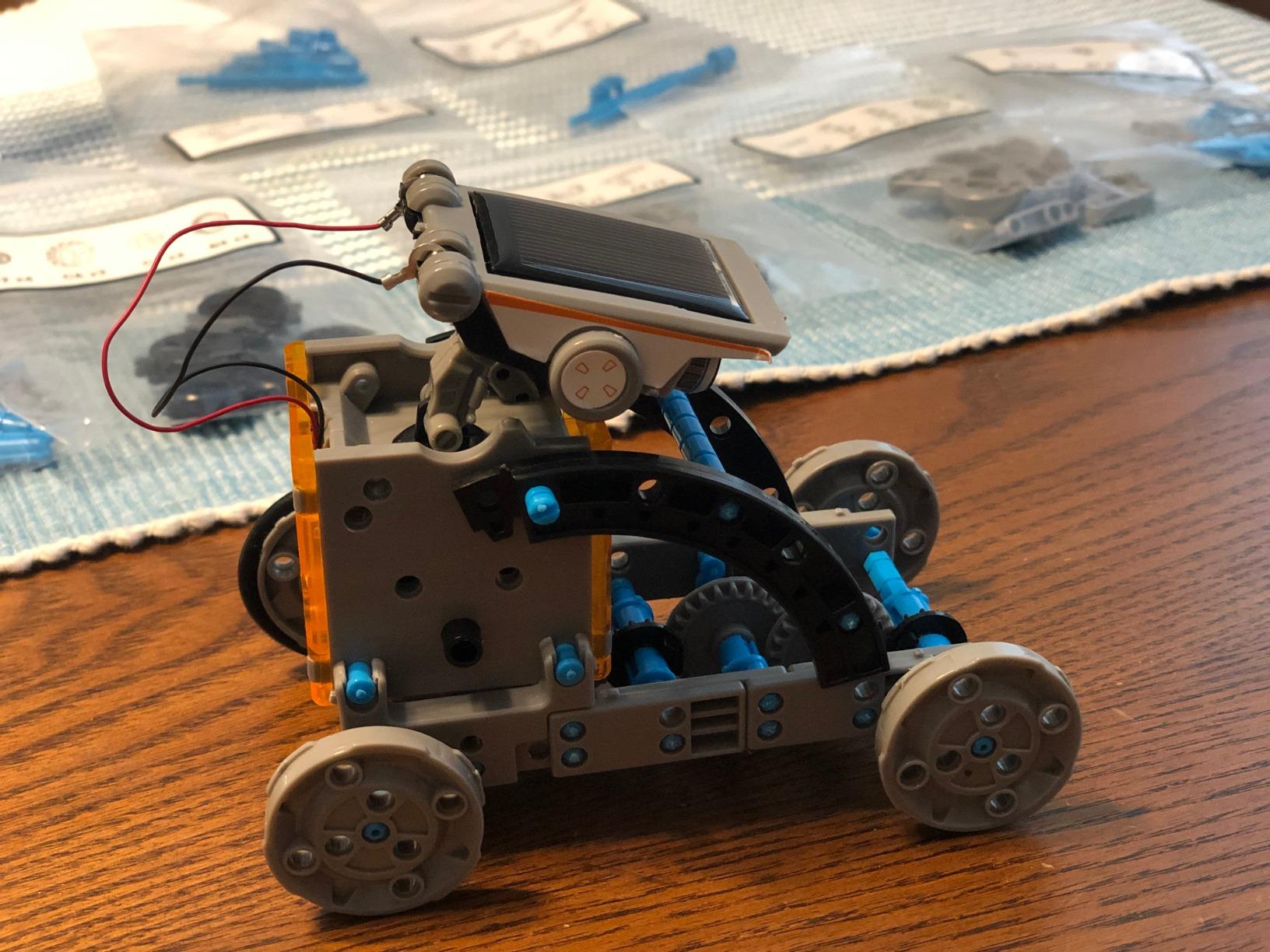
The lowest cost per session in this roundup, and a genuinely different kind of project. The Sillbird kit builds twelve models from 190 ABS parts, from simple wheeled robots up to a robotic arm, with difficulty climbing as you go.
There are no batteries anywhere in the box. The models run off the included solar panel, which means the kit teaches renewable energy by making the energy source the visible, necessary part of the project.
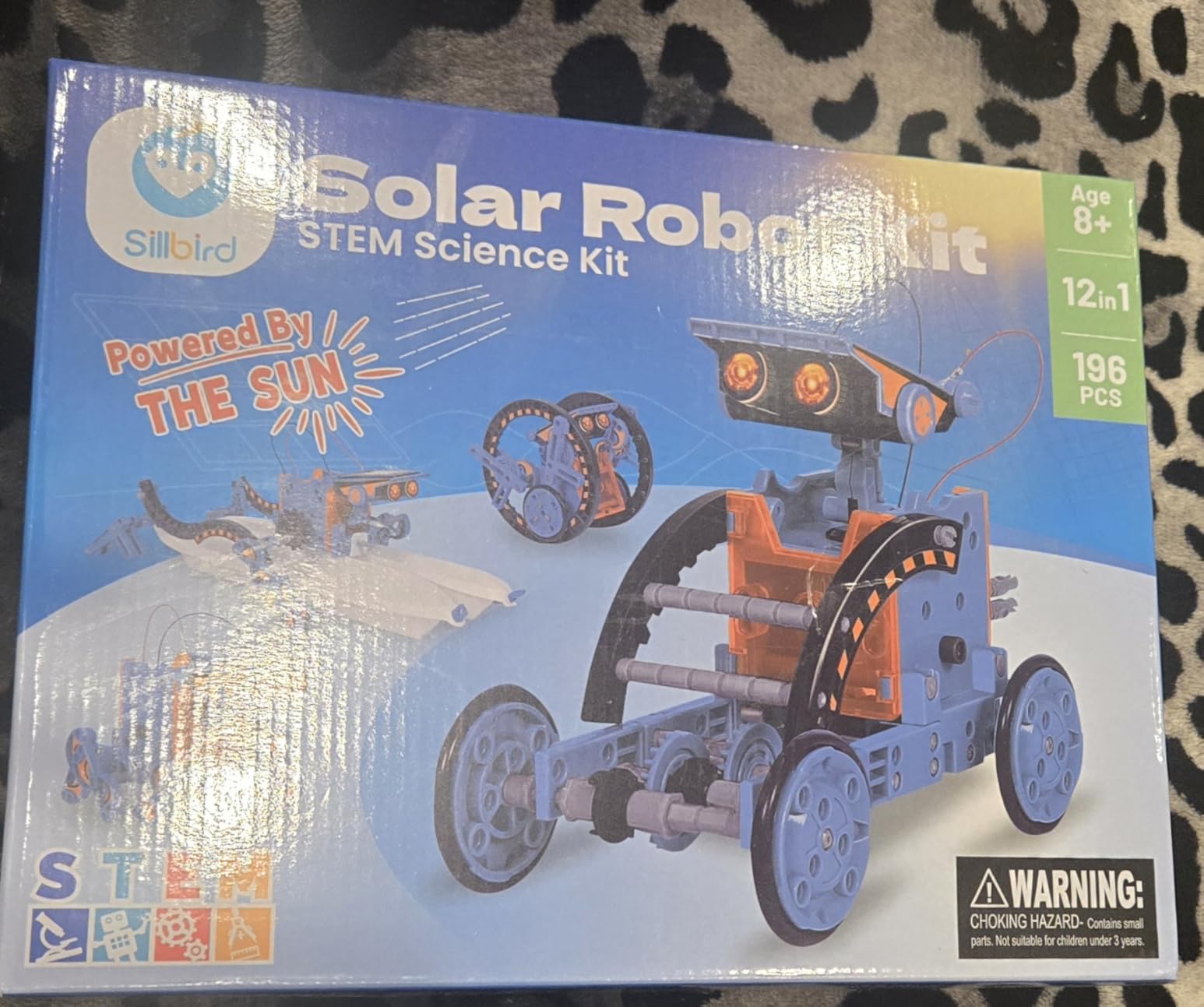
Twelve models is real reuse. A child who finishes the first three still has nine more designs waiting, which is a better answer to the one-and-done problem than a single finished model sitting on a shelf.
The instructions are clear enough for independent assembly on the easier designs, and 190 parts give fine motor practice along with the engineering content. At just over 15,000 reviews, the volume behind it is solid.
This is the only kit in the group that is entirely screen-free and entirely outdoors, which makes it valuable for families limiting device time. Our kids used it on the driveway with a glass of lemonade for a week straight.
Where it earns its place
Weather is the lesson here, whether you planned it or not. Cloud cover, time of day, and direct versus shaded sunlight become variables the child has to manage, and that is a real science skill rather than a worksheet answer.
It also fits a unit study on energy and the environment, and the parts are simple enough to explain on a whiteboard before the first build.
What to watch out for
Set expectations on indoor use. The panel does not store energy, so the models only run in direct light, and several reviews report weak performance under indoor artificial lighting. This kit needs a sunny spot.
At 4.3 stars it carries the lowest average rating here, and the rating drop comes from assembly and lighting, not from quality control. The advanced models have terse instructions, so an adult should sit nearby for the harder builds.
6. Teach Tech Mech-5 Coding Robot – Best Screen-Free Coding for Ages 10+
TEACH TECH Mech-5 STEM Coding Robot Building Kit for Kids Ages 10+
- Mechanical coding wheel teaches logic with no screen
- Robot performs throwing lifting kicking and drawing
- Real build rather than a pre-assembled toy
- Detailed step-by-step assembly instructions
- Several hours of assembly before any play
- Age 10 and up limit
- Requires 2 AAA batteries
- Limited number of programmable routines
Every screen-free coding option we looked at is really a robot that already does the thinking for the child. The Teach Tech Mech-5 is different, because the programming happens in the child’s hands.
You snap coding buttons onto a mechanical wheel to set a sequence, and the robot then throws, lifts, kicks, or draws. There is no app, no account, and no software update to break in two years.
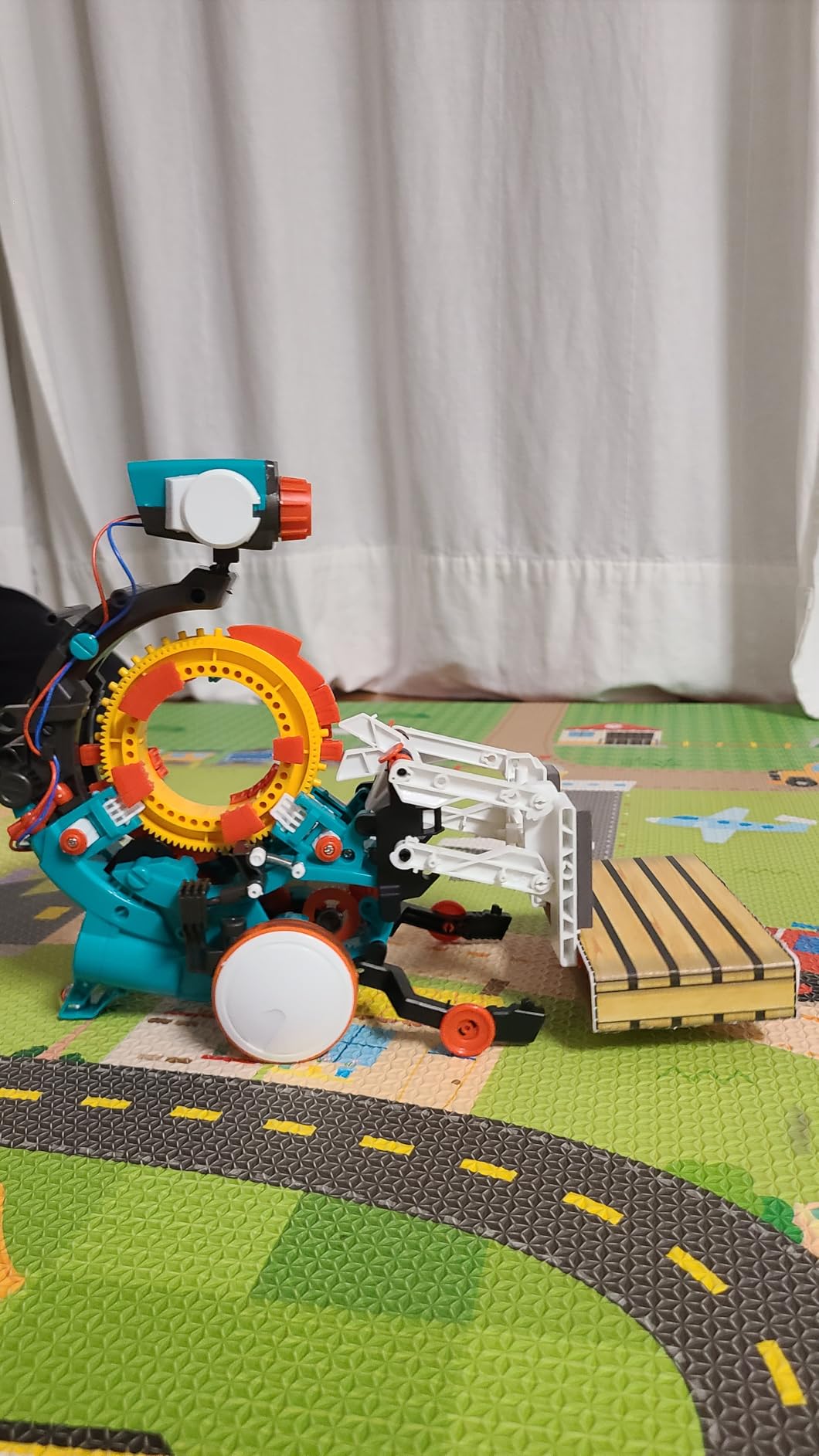
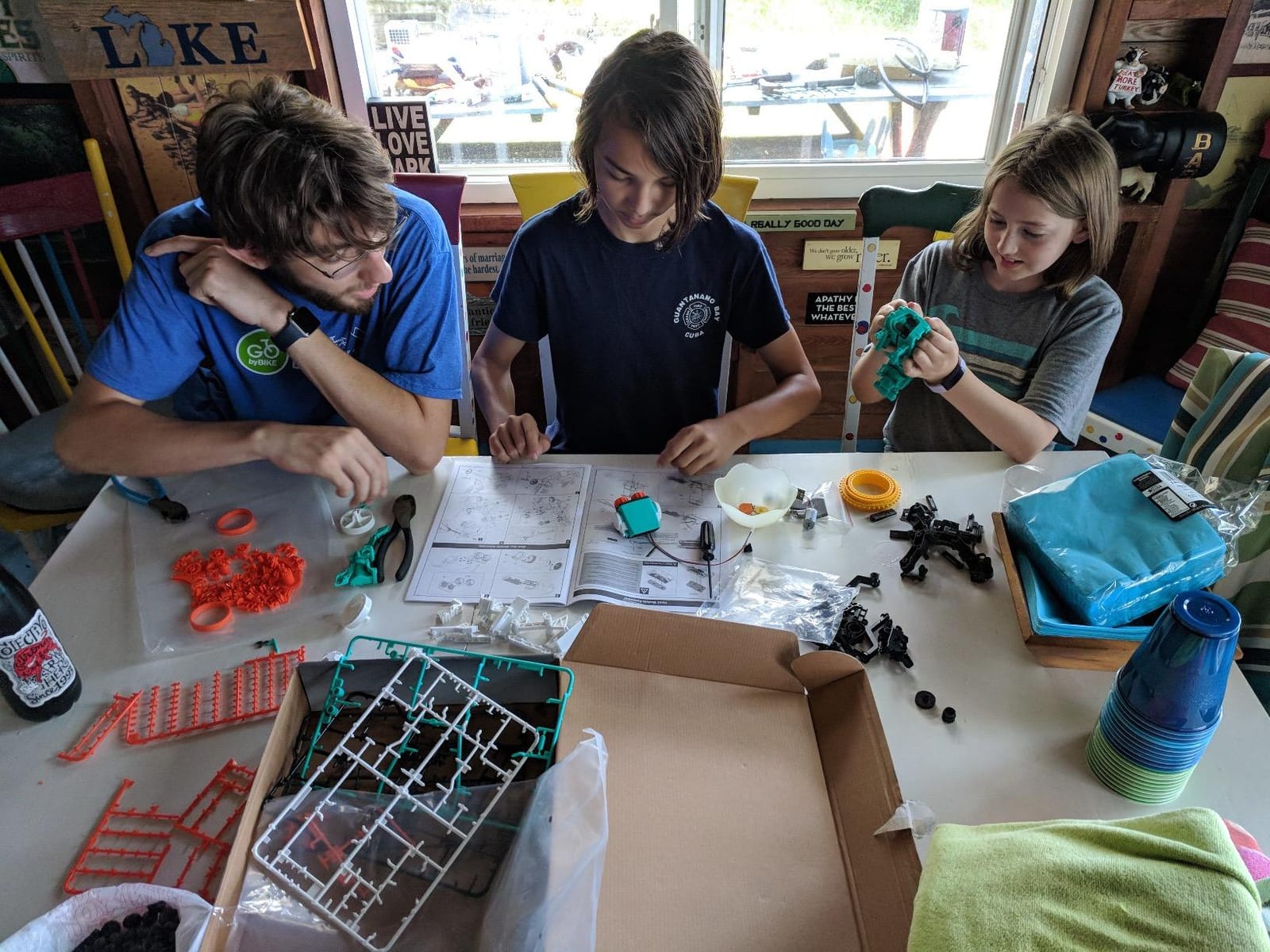
Because it ships as parts and assembles into the robot, this is a build project first. Reviewers value it as a genuine engineering experience, and our sense is that the assembly is half the educational content.
At 4.5 stars from just under 5,000 reviews, it has a smaller base than the big sellers but strong satisfaction, with 72 percent of reviewers giving five stars.
The manufacturers of this kit also make the Snap Circuits line, and the same practical advice applies to both. Read the manual before handing it over, and keep spare parts somewhere sensible.
Why the screen-free part matters
Children who are already spending hours on a tablet often disengage from screen-based coding within a week. A mechanical wheel produces the same planning and sequencing thought with nothing to look at except the robot.
It also travels. No internet connection is required for anything except the instructions, so it works on a co-op day, in a cabin, or on a long drive.
When to skip it
Do not buy it for a child under 10. The rating is not a formality here; the assembly alone runs several hours according to reviewers, and younger children lose interest before the coding ever starts.
Budget one dedicated afternoon for the build and supply two AAA batteries. The routines you can program are also fairly limited, so once your child has the sequence down, they will want a new project and this kit cannot provide one.
7. Doctor Jupiter My First Science Experiments Kit – Best for Preschool and Ages 4-8
- 100+ experiments in the bonus booklet
- Manual separates solo work from adult-help sections
- Real labware including beakers funnel and goggles
- Meets ASTM F963-17 toy safety standards
- Does not include every ingredient
- Squeeze bottles are hard for a 4 to 5 year old
- Large bottle is stiff in its plastic rack
- Occasional reports of missing goggles
The youngest child in our house could not read the Snap Circuits manual, and that gap is why this kit is on the list. The Doctor Jupiter kit is rated for ages 4 and up, and its instructions are illustrated rather than text-heavy.
What makes it work for preschoolers is the way the manual is split. Sections are divided into what a child can do alone and what needs an adult, so a five-year-old can run a real activity without waiting for you at every step.

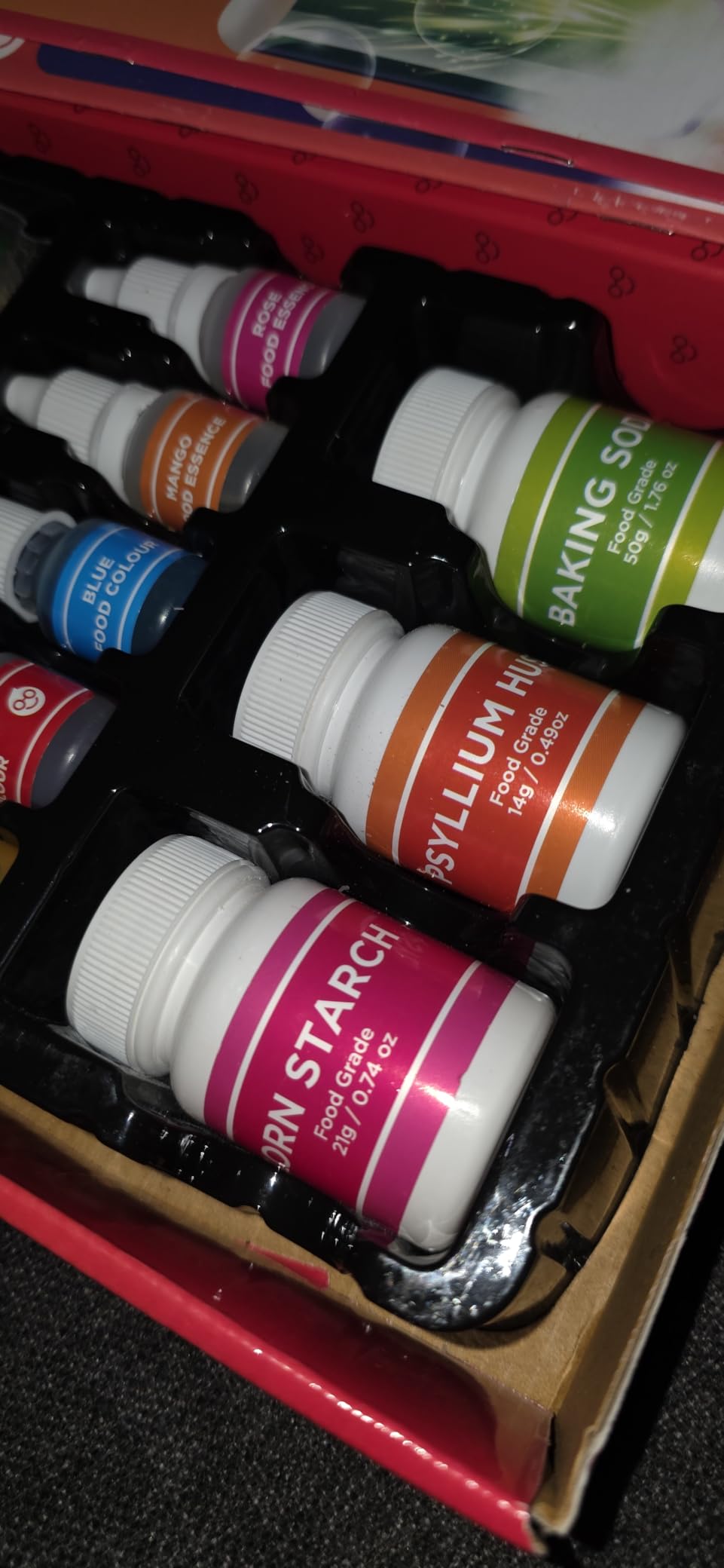
The labware is genuine rather than pretend. Two beakers, a conical flask, a spatula, two stirring sticks, two spray bottles, two cups, a funnel, safety goggles, and a tray are all included, along with food essences, additives, dried leaves, and colours.
Add a bonus booklet with 100-plus experiments on top of the main manual. Activities like water fireworks and walking water are the kind that produce a genuine reaction from a small child, and that reaction is the point.
It also meets ASTM F963-17 US toy safety standards, which is a reasonable baseline to expect from anything marketed to four-year-olds. Parents of preschoolers in reviews single out the clear instructions and included labware as the reasons it holds attention.
How to get the most out of a preschool science hour
Pick three activities, not ten. Preschool science works in short bursts, and a full booklet run in one session ends in a melted child and a tidied-up box.
Do the ingredient sweep first. Household basics like vinegar are not included, and finding them at the moment of enthusiasm is where these sessions usually collapse.
What to watch out for
The tiny colouring bottles defeat the youngest users. A four- or five-year-old cannot reliably squeeze them, so either help with that step or focus on the activities that do not need them.
Check the box on arrival. Reviewers occasionally report arriving sets missing the safety goggles, and goggles are the one component you should confirm before the first experiment.
8. National Geographic Amazing Chemistry Set – Best Chemistry Kit for Ages 8-12
National Geographic Amazing Chemistry Set with 100+ Experiments Ages 8-12
- Over 100 chemistry experiments included
- Real test tubes beakers pipettes and gloves
- Favorites like a crystal tree and glowing test tubes
- Step-by-step instructions suit beginners
- Bottle-style box is bulky to store
- Many bonus experiments need household supplies
- Some reviewers find the reactions repetitive
Chemistry is the subject most homeschool families want to demonstrate and least want to source. This National Geographic set ships with the labware to do it properly, including test tubes, beakers, pipettes, safety goggles, and gloves.
The structure is honest about scope. Fifteen experiments come fully supplied, and 85 bonus experiments use common household items, which is where the 100-plus headline comes from.

The supplied fifteen are the ones to do first. They include a crystal tree, glowing test tubes, glowing worms, and a bouncy ball, and each one delivers a visible result that no worksheet can match.
At 4.7 stars from more than 3,600 reviews, this is a highly rated chemistry option, and 83 percent of reviewers give five stars. Reviewers repeatedly mention how much screen-free time the set buys, which is a fair way to measure a homeschool science purchase.
Families using it alongside a chemistry unit study report that the activities line up well with written lessons, which is the ideal pairing: the kit supplies the demonstration, the curriculum supplies the vocabulary.

How to sequence the chemistry year
Run one supplied experiment per week for the first fifteen weeks and let the bonus experiments fill gaps. That pacing prevents the familiar pattern of opening the box on a Saturday and losing interest by Sunday.
Keep a simple lab notebook alongside it. Recording the before and after of each reaction costs five minutes and turns a fun set into evidence a portfolio can point at.
What to watch out for
The box is bottle-shaped and eats shelf space. If storage is tight, that matters more than the headline number of experiments.
A minority of reviewers find the reactions visually repetitive once the novelty wears off, so the notebook habit matters. And as with the earth science kit, the bonus experiments assume you have household ingredients on hand.
9. Makeblock mBot Coding Robot – Best Expandable Robotics for Ages 8-12
Makeblock mBot STEM Coding Toys Robotics for Kids Ages 8-12
- Assembles in about 15 minutes from clear instructions
- Teaches Scratch block coding and moves to Arduino
- Line-follow obstacle-avoid and remote modes
- Expands with 100+ modules and LEGO-compatible parts
- Batteries are not included for robot or remote
- Software and app setup adds a learning curve
- Costs more than most entry-level robotics kits
The mBot is the only kit here that grows with a child instead of being replaced. It assembles in roughly 15 minutes, runs as a remote-controlled car out of the box, and then becomes a programmable robot once you move past the defaults.
Programming starts in Scratch, the block-based language most children meet first, and progresses to Arduino, which is real hardware programming. That arc is why this one suits a child who is already bored of kits designed for eight-year-olds.
It is also the most expandable product in the roundup by a wide margin. The platform works with more than 100 electronic modules, more than 500 parts, and LEGO-compatible pieces, so it is closer to a platform than a kit.
What makes it different from the screen-free options
The Mech-5 teaches sequence with buttons. The mBot teaches programming with software, and the transition from dragging blocks to writing lines of code is the moment older children start treating it as a real tool.
Line-follow and obstacle-avoidance modes are where the engineering content is richest, because your child has to decide what the robot should do when reality disagrees with the plan.
Where the friction shows up
Batteries are not included, for either the robot or the remote, and the requirements are specific: four AA batteries plus one CR2025 for the remote. Check that before the first build, not after.
The mBlock software and the companion apps take some time to get comfortable with, and this kit costs more than most entry-level robotics options. Neither is a dealbreaker for a child who will grow into it, but both matter if you need something working in ten minutes.
10. GobiDex Human Body Skeleton Model – Best Anatomy Kit for Ages 8-16
GobiDex Human Body Skeleton Model Kit, Glow in The Dark Science Kit for Kid
- Glow-in-the-dark bones add real visual appeal
- 40 pieces covering bones muscles and organs
- Self-standing model displays on a desk or shelf
- Illustrated manual supports self-directed study
- Plastic parts feel less solid than a full skeleton
- Manual is thin next to a dedicated anatomy reference
- Small organ pieces need adult help to assemble
Anatomy is the subject where a physical model earns its money most clearly. The GobiDex kit gives you a 12.6-inch self-standing human body model with 40 pieces covering bones, muscles, and organs, plus an illustrated science manual.
The glow-in-the-dark bones are not a gimmick in a homeschool setting. A model that is visible on a bedroom wall at 8pm becomes a reference point for questions your child will not ask while looking at a textbook diagram.
It is a useful supplement to a human body unit study rather than a replacement for one. Use the kit to handle, label, and point, and use the curriculum for the vocabulary and the sequencing.
Why a physical model beats a diagram
Children retain the spatial relationships better when they can hold the structure. Muscle groups connect to bones in ways that a flat diagram hides, and a standing model lets your child check a fact against something real in seconds.
It also disassembles for repeat use, so a co-op group or a classroom can put it together more than once.
Where it falls short
At 4.4 stars from 441 reviews, this carries the smallest review base in the roundup, and the plastic parts feel less solid than a full skeleton model. That is fine for a desk reference and not fine for a child who routinely disassembles things.
The included manual is light on detail next to a dedicated anatomy reference, so pair it with a proper reference. The smallest organ pieces also need adult help to fit together, which is a real slowdown on day one.
11. Butterfly EduFields 30-in-1 STEM Projects Kit – Best Electricity and Magnetism Set for Ages 8+
Butterfly EduFields 30in1 STEM Science Projects Kit for Kids Ages 8-10-12
- 30+ genuine working models
- Includes an electromagnetic crane DC motor and electroscope
- Color-coded component boxes match the manual pages
- Well-illustrated step-by-step instructions
- Projects skew advanced for younger children
- Small parts get scattered or misused
- Infrared sensor parts are unreliable in daylight
- Occasional broken pieces on arrival
If your child is past snap-together modules and wants to understand current itself, this is the kit. The Butterfly EduFields set has 30-plus working models built from more than 100 components including wires, bulbs, switches, connectors, and LEDs.
The project list is the strongest argument for it. You get an electromagnetic crane, an electroscope, a DC motor, an electrolysis setup, an electroplating project, a yoga magnet, and a rheostat, which is a genuine survey of electricity and magnetism rather than one demonstration repeated.
Organization is unusually good for a kit of this size. The component boxes are color-coded and match the instruction pages, so a child can find the right part without sorting a pile of identical-looking resistors.
How to use it as a real course
Treat it as a term rather than an afternoon. Two or three models a week gives you most of a school term of material, and each model has an obvious concept attached to it for a written follow-up.
Have older children log the variable they changed and predict the result before building. That single habit is what turns a construction kit into science.
What to watch out for
The stated age starts at 8, but reviewers consistently find the projects skew more advanced than that, and younger children need substantial adult guidance. Treat the age label as a floor rather than a target.
Two practical notes from reviews: infrared sensor components do not work reliably in daylight, so run those experiments indoors at the right time, and small parts invite improvisation that breaks the project sequence. Sort parts back into the color-coded boxes every session.
How to Choose a STEM Kit for Your Homeschool
The hardest part of choosing is not finding options, it is filtering them. Six questions will narrow a large catalog to two or three realistic choices, and most of them are answerable before you buy anything.
1. Will the child actually finish a session independently? Read the review comments for the words “needed help” and “adult required” rather than the star rating. A kit that needs you sitting beside it for 40 minutes is a supervised activity, not an independent one, and that is a different thing to plan for in a week.
2. How many distinct sessions does it support? Reusability is the real price. A 30-plus model kit that runs for a term is cheaper per session than a small kit that takes an afternoon, and the difference compounds across a school year.
3. Does the stated age match the real difficulty? Manufacturer ratings are set conservatively and then ignored in both directions. One parent in a comment thread bought a set rated 7 and up for a 4-year-old, then found the designs came with no written instructions and that attaching the pieces demanded more dexterity than some adults had.
That same parent also noted that building systems vary enormously in how far they stretch. Their experience was that one brick type yielded only a few finished designs and was then over, while rod-and-connector systems allowed far more variation and adaptation. If you build kits, check how many distinct outcomes the part set supports before you commit.
4. What is the real mess and cleanup load? Classify kits honestly. Low mess means a tray and a wipe. Medium means a few dishes and a sink run. High means food coloring, soil, or live insects, which is fine if you have a table you do not mind wiping down and a bad day if you do not.
5. Does it fill a gap in your curriculum? A kit that repeats what your child already studies adds cost, not value. A kit that supplies the hands-on half of a unit study you are already teaching is the better buy, and the chemistry and earth science kits here both work that way.
6. Can two children share it? If you are homeschooling more than one, check the material count before you buy. Reviewers single out the earth science kit and the chemistry set as having enough supplied material for two children at once. For everything else, plan a shared schedule or buy the build once and rotate.
On kits versus a full curriculum: a kit is materials and instructions, while a curriculum is a sequenced plan with lessons, reading, and records. Most families need both, and a kit never covers state homeschool science requirements on its own. If you want a broader view of the building side, our guide to the best STEM building sets for 8 year olds covers the construction kits in more detail.
A practical plan for a school year: pick two kits, one that runs a term and one that runs a term, and add a subscription box only if you have a specific gap to fill. More than three concurrent kits is how the pile of unopened boxes starts.
Kits We Skipped and Why
Nobody publishes the kits they rejected, so here are ours. We excluded any kit whose core activity finishes in a single sitting with nothing to return to, any kit whose instructions assume a photography degree, and any kit whose small parts present a choking risk without a clear age floor.
We also excluded anything where the listed age and the actual build difficulty disagreed, because that mismatch is the most common reason a STEM kit ends up unused in a closet by week three.
Finally, we left out oversized all-in-one lab boxes. A parent in a homeschool group described exactly this problem: a huge kit does not help you decide which branch of science your child actually enjoys. Buy one focused kit, learn what they gravitate toward, then buy the second one.
Frequently Asked Questions
Are STEM kits worth the money?
STEM kits are worth the money when they are reusable and age-appropriate, and poor value as a one-afternoon novelty. The useful way to judge one is cost per session: a kit supporting 30 sessions over a term costs far less per session than a small kit used once. They also do not replace a sequenced science curriculum, so most families need both.
What are the best STEM kits for homeschool science?
The strongest all-round kits in this roundup are the Snap Circuits Jr. for electronics, the National Geographic Earth Science Kit for broad earth science, and the National Geographic Rock Tumbler for long multi-week projects. Best value per kit is the Doctor Jupiter set for ages 4 and up, and the Butterfly EduFields kit covers electricity and magnetism in more depth than anything else here.
What are some good STEM kits for 12-year-olds?
For a 12-year-old, avoid kits aimed at eight-year-olds and pick something with depth. The Butterfly EduFields 30-in-1 set suits this age well with 30 working models, and the Makeblock mBot moves from block coding into Arduino programming. The Snap Circuits Jr. kit also holds up at this age once the child is past the simplest projects.
What is the best STEM curriculum for homeschooling?
A STEM curriculum is a sequenced plan with lessons, reading assignments, and progress records, while a kit is a box of materials with instructions. For homeschool science requirements, the curriculum is what documents coverage. Kits supply the hands-on half and are most valuable when paired with a unit study on the same topic.
Do STEM kits really teach anything?
They do, when they are used more than once and the child is asked to explain the result. The learning comes from predicting, building, observing, and accounting for what happened, not from the kit itself. A kit opened once and abandoned teaches very little, which is why reusability matters more than the number of experiments printed on the box.
Bottom Line
For most homeschool families, the Snap Circuits Jr. kit is the single best STEM kit for homeschool science to start with, because it combines the highest rating, the largest review base, and the widest usable age span of anything we looked at. Add the National Geographic Earth Science Kit for earth science coverage and the Doctor Jupiter set if you have a preschooler in the house.
For an older child, go deeper rather than bigger. The Butterfly EduFields kit and the Makeblock mBot both reward a 12-year-old with real projects, and the rock tumbler is the best choice when you want something that runs for weeks without you.
Whichever you pick in 2026, buy one kit, plan the sessions before you open the box, and write down what your child predicts. That last habit is the part that makes a kit teach. Our other science roundups, including our picks for the best science kits for kids and the best educational STEM kits, cover other subjects and age bands in more detail.