
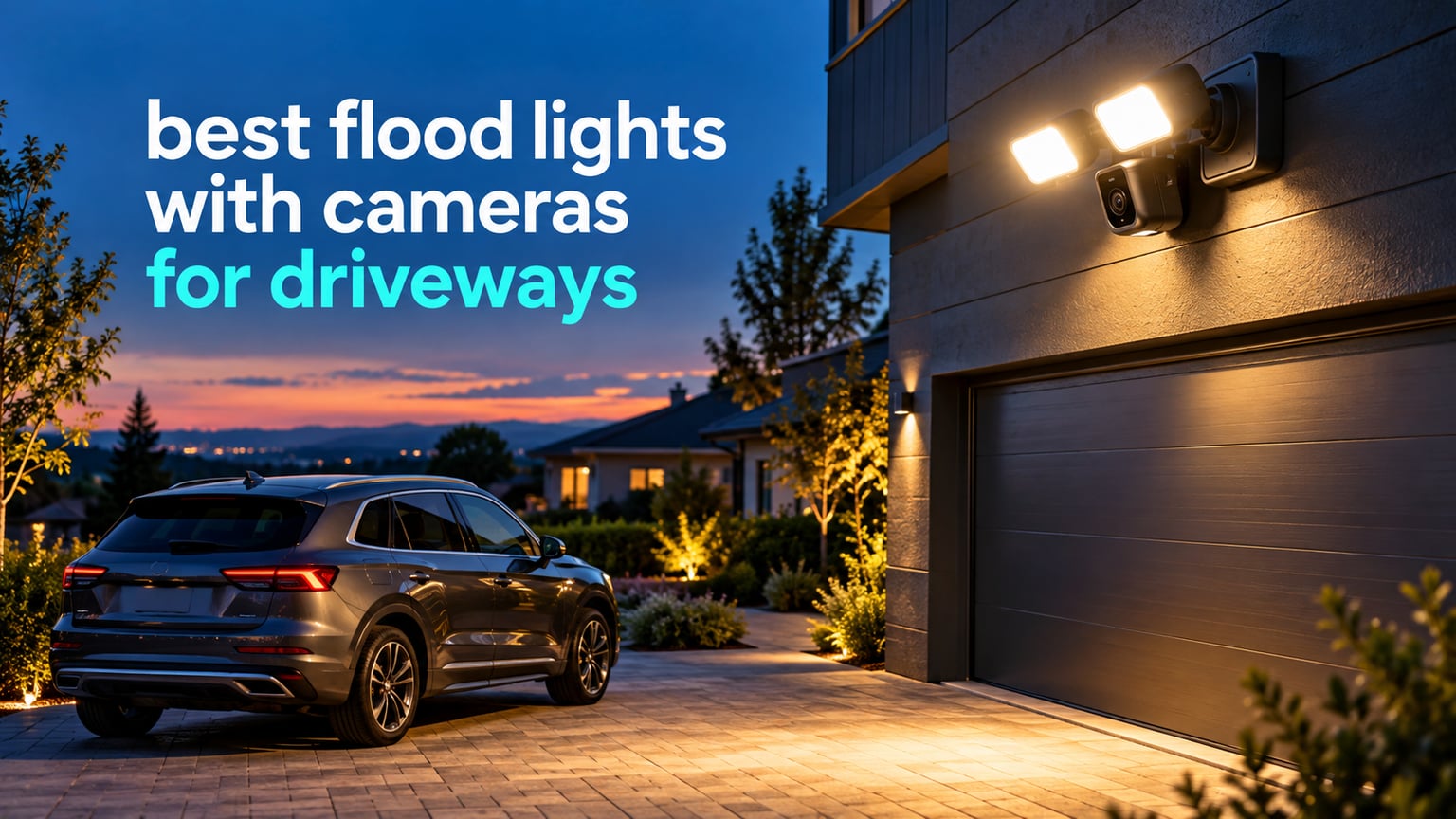
The best flood lights with cameras for driveways are hardwired fixtures that pair a bright motion-activated LED with a wide-angle security camera, and the Ring Floodlight Cam Wired Plus leads our list for a simple reason: 2000 lumens, a 105dB siren and dependable motion zones in a unit most homeowners can install in an afternoon. Every pick below was chosen for the specific job of lighting and watching a driveway at night, not for a backyard or a front door.
A driveway is harder to cover than a yard. It is long, it is usually the darkest part of the property, and the thing you actually want from the footage is a face or a license plate rather than a vague silhouette. That single goal changes which specs matter: field of view and light output first, night vision and zoom second, and app extras a distant third.
We spent weeks reading manufacturer specs and thousands of owner reviews across eight models, then cross-checked the recurring complaints in homeowner communities. Nobody handed us these cameras for a formal lab test, so we are not claiming hands-on hours we did not log. What we did do was filter out anything that could not deliver light, color night footage and reliable recording in the conditions a real driveway throws at it.
If you are still lighting your driveway with a bare bulb and want the camera side handled too, our guide to the best flood lights covers the lighting side on its own. And if your driveway is long enough that a single fixture cannot reach the far end, the best pathway lights are the cheaper way to close that gap.
Top 3 Picks for Driveway Cameras in 2026


eufy Floodlight Camera E30
- 360 degree pan and tilt
- 2K night color
- 2000 lumens
- no monthly fee
The Ring Floodlight Cam Wired Plus wins on the combination most homeowners care about: the highest rating and by far the largest review base in this group, with lighting bright enough for a two-car drive and an app that almost anyone can set up. The WYZE Floodlight Camera v2 is the value pick, adding 2K resolution, a 160-degree view and microSD recording at a fraction of what the premium tier costs. The eufy Floodlight Camera E30 is one of two models here with motorized pan and tilt plus auto-tracking, and the one that pairs it with 2K color night footage, which matters when a car pulls in from the street instead of straight up the drive.
Best Flood Lights With Cameras for Driveways in 2026
| Product | Specifications | Action |
|---|---|---|
| Ring Floodlight Cam Wired Plus |
|
Check Latest Price |
 Blink Wired Floodlight Camera Blink Wired Floodlight Camera |
|
Check Latest Price |
| WYZE Floodlight Camera v2 |
|
Check Latest Price |
 REOLINK Elite Floodlight WiFi 4K REOLINK Elite Floodlight WiFi 4K |
|
Check Latest Price |
 Tapo 2K Pan/Tilt C615F KIT Tapo 2K Pan/Tilt C615F KIT |
|
Check Latest Price |
| eufy Floodlight Camera E30 |
|
Check Latest Price |
 Tapo 2K+ Outdoor Wired C720 Tapo 2K+ Outdoor Wired C720 |
|
Check Latest Price |
 Arlo Wired Floodlight Camera 2K HDR Arlo Wired Floodlight Camera 2K HDR |
|
Check Latest Price |
Two things stand out in that comparison. First, light output varies more than resolution does: the Tapo C615F solar kit puts out 800 lumens while the REOLINK Elite Floodlight pushes 3000, and that gap shows up in your driveway every single night. Second, five of these eight record to a memory card or a hub with no monthly fee, which changes the three-year math more than any other single feature.
1. Ring Floodlight Cam Wired Plus: the most dependable all-rounder
- Easy DIY install with all screw sizes and a multi-tool included
- Bright 2000-lumen motion-activated lighting
- Clear 1080p day and night video with good zoom
- Reliable motion detection with few false alerts
- Brightness and dwell time and light aim are all adjustable
- Fixed camera head with no pan or tilt
- Light is fully on or fully off with no dim ambient mode
- AI alerts and video history need a paid Ring plan
This is the fixture we keep coming back to because nothing about it is a compromise you will notice at 2am. Owners consistently describe the install as straightforward, with the mounting screws and a multi-tool in the box, and the Ring app walks you through the junction box wiring without assuming you have done this before. At 2000 lumens the light covers a standard two-car driveway end to end, and the brightness and dwell time are adjustable from the app once you see how it reads against your own paving.
Motion detection is where the Ring earns its rating in our view. The 3D motion sensing and custom motion zones let you draw the driveway out and ignore the street behind it, and reviewers rarely mention nuisance alerts the way they do with cheaper units. Zoom and image quality at 1080p are more than adequate for checking whether a car is sitting where it should be at night.
The honest limitation is hardware, not software. The camera head is fixed, so if you install it beside the garage instead of above the drive you will be looking at a corner forever. The light also switches fully on or fully off, with no low ambient setting, which means an all-night porch glow is not an option here. Adjustable brightness, dwell time and aim go a long way toward softening that.
Video history and AI alerts sit behind a Ring Protect plan, which is the reason to keep it in mind rather than treat it as a dealbreaker. If you plan to check clips live and use the siren yourself, you can do that without subscribing. If you want a month of searchable history without thinking about it, the plan is straightforward. Long-term owners on hardware forums describe the hardwired Pro version lighting the whole front yard on the app-configured settings, and that is the same behavior this wired Plus delivers.
What the Ring Floodlight Cam Wired Plus does well in a driveway
It pairs with the wider Ring doorbell ecosystem, so a driveway unit and a doorbell camera can live in one app with one set of motion zones. For most households that coherence is worth more than any spec-sheet advantage elsewhere on this list.
It also holds its video quality past the useful range for confirming activity. A 1080p sensor at 20 to 30 feet from the mount is enough to tell a person apart from a shadow, which is the job most owners are actually buying it for.
Where the Ring falls short
There is no pan, tilt or zoom motor, so placement is a one-time decision. If your driveway curves or the interesting angle is above the mounting point, you will want a different unit.
The absence of an ambient dim mode means light leaks into neighboring windows at full brightness on every trigger. Checking the app’s brightness and motion settings before you walk away from the ladder is worth five minutes.
2. Blink Wired Floodlight Camera: 2600 lumens on existing outdoor wiring
Blink Wired Floodlight Camera, Smart security camera, 2600 lumens, HD live view, enhanced motion detection, built-in siren, Works with Alexa, 1 camera (White)
- 2600 lumens of light for broad outdoor coverage
- 1080p live view with color night view and clear two-way audio
- Customizable dual-zone motion detection limits unnecessary alerts
- Works on existing outdoor wiring with no battery charging
- Usable with a 30-day trial or local Sync Module storage
- Dusk-to-dawn sensor behavior is unreliable for some owners
- Person detection and video history need a paid Blink plan
- Cloud storage or a separate Sync Module is needed for clip retention
- 1-star reviews are a comparatively high share
If you already have an exterior light on a junction box, the Blink is the least disruptive swap in this roundup: the wiring you need is almost certainly already there, and the 2600 lumens out-light the Ring while sitting in the same 1080p resolution class. That extra light matters most on a wider or double driveway where the Ring’s 2000 lumens just about covers the cars.
The dual-zone motion detection is a genuinely useful feature here. You set one zone for the drive and one for the sidewalk or street, and the camera only reacts to the zone you care about, which cuts the notification noise that drives people to disable alerts entirely. Two-way audio comes through clearly enough to warn someone off the property, and the built-in siren adds an audible deterrent at the moment a clip is recorded.
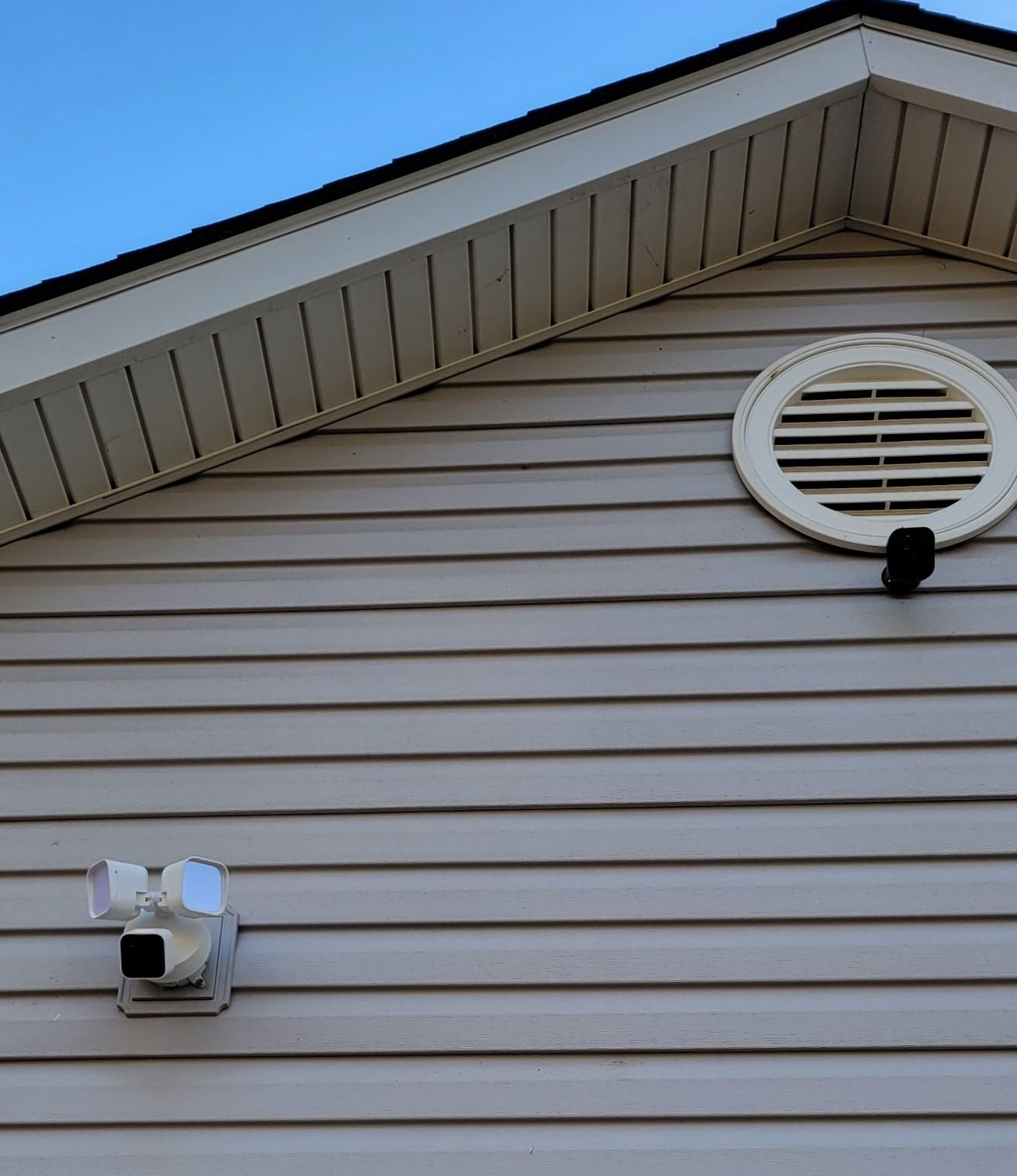
The recurring theme in owner feedback is the dusk-to-dawn scheduling. Several people report the light staying on or failing to come on as configured, and the fix is usually the app’s light schedule rather than the hardware. More consequential is the storage story: video history and person detection both require a Blink subscription, though a Sync Module 2 with a USB drive or a Sync Module XR with a microSD card keeps recording local.
Blink’s rating distribution also carries a heavier share of 1-star reviews than the Ring or eufy, and connectivity reliability comes up often enough that we would not bury this unit at the far end of a driveway where signal is marginal. The 30-day trial means you can run it without committing to a plan while you test whether the Wi-Fi holds up where you need it.
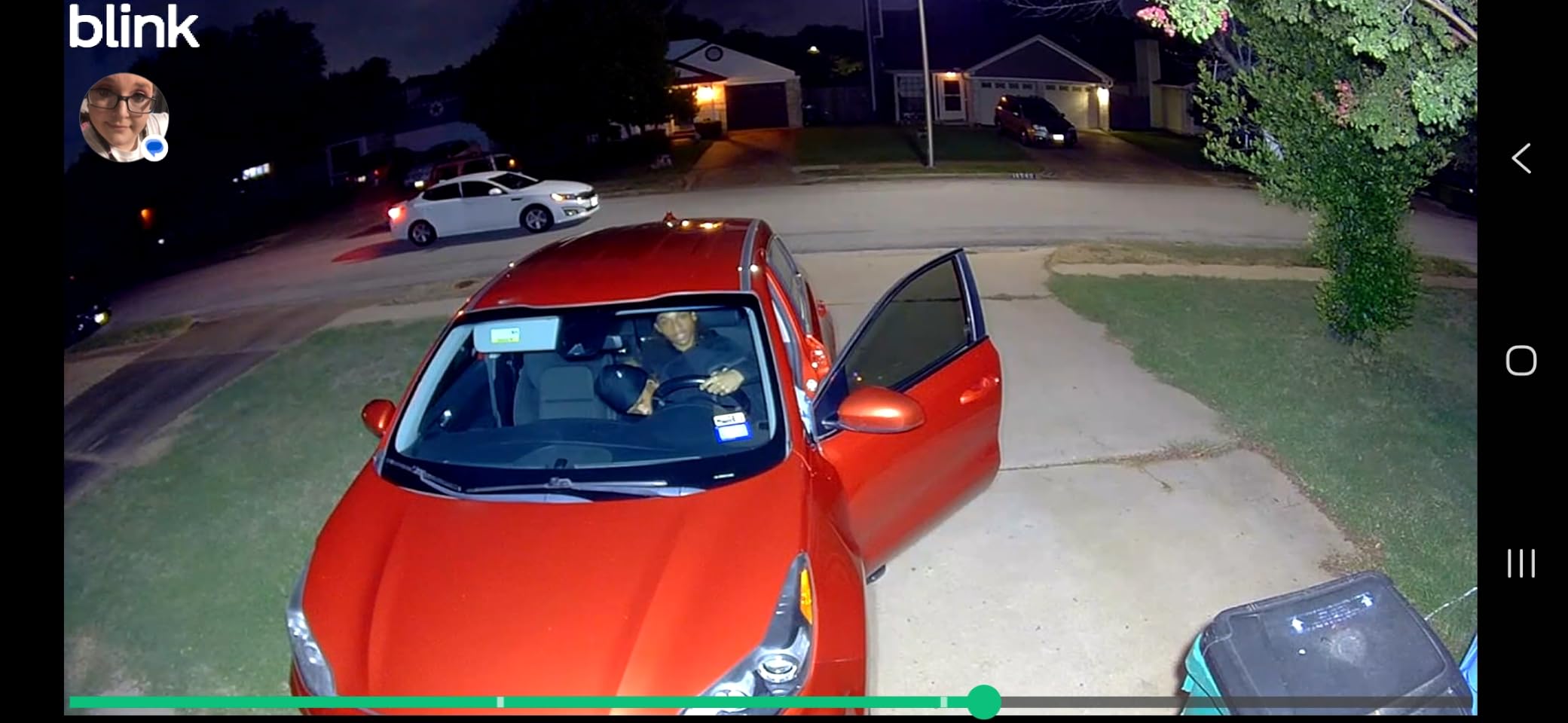
What the Blink Wired Floodlight Camera handles best
A long or double driveway where light reach matters more than fine detail. At 2600 lumens it fills a wide apron that a 2000-lumen unit only half-covers.
Homes that already run Blink doorbells or cameras, since adding the floodlight to an existing Sync Module avoids a second storage subscription.
Where the Blink is the wrong buy
Anyone who wants person detection and a full video library without a monthly plan. Local storage is possible, but it requires buying a Sync Module separately.
Driveways far from the router or behind a brick wall are a poor fit, given the repeat connectivity complaints in reviews.
3. WYZE Floodlight Camera v2: 2K detail and local recording at a step below wired rivals
- Sharp 2K video with vivid color night vision
- Bright 2800-lumen lights with dimmable ambient mode
- 160 degree wide angle covers an entire driveway
- microSD storage removes the need for a subscription
- Straightforward installation and intuitive app
- Some owners report repeated offline behavior needing a power-cycle
- Fixed camera with limited tilt and no pan
- Event recording without a subscription captures snapshots rather than clips
- Fog can repeatedly trigger the motion sensor
The WYZE Floodlight Camera v2 is the spec-sheet surprise of the group. It records 2K video with color night vision, throws 2800 lumens, and covers a 160-degree field of view, all while writing 24/7 recordings to a microSD card with no subscription attached. For a driveway where you want to check a plate rather than confirm a shape, that resolution tier is the meaningful upgrade over 1080p.
Two lighting modes matter more here than on the other wired units. Ambient Light Mode brightens on motion, and the built-in ambient light sensor supports proper dusk-to-dawn automation, so you can have a dim glow at night and full brightness the instant something moves. Owners also praise how wide the 160-degree view is, noting it captures a whole driveway in a single frame without fisheye distortion at the edges.
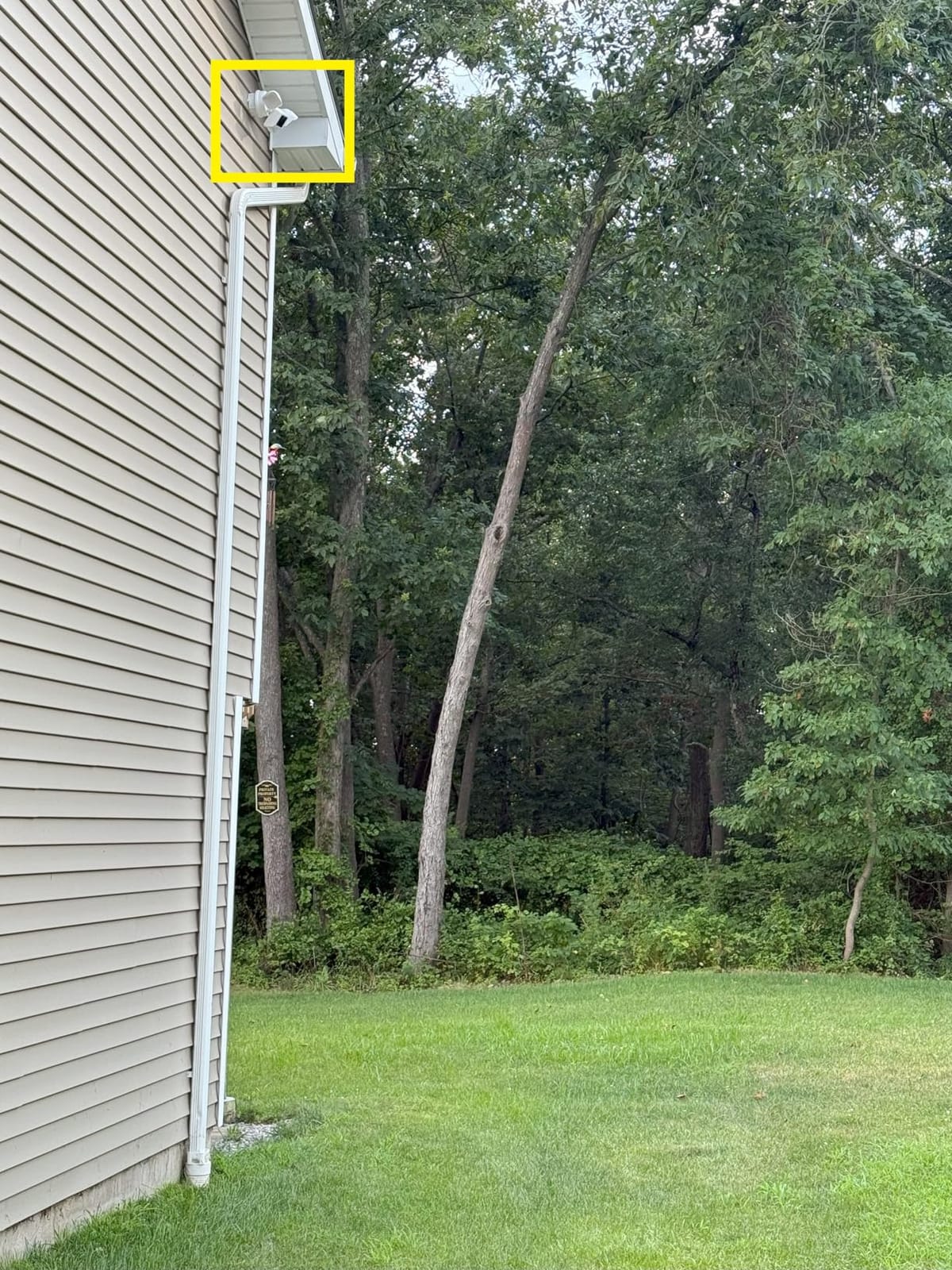
There are two real tradeoffs. Without a subscription, event recording saves snapshots rather than video clips, which is a meaningful loss if you mostly care about events. And a recurring set of reviews describes the unit dropping offline and needing a power-cycle reset, so a stable Wi-Fi path matters more here than the spec sheet suggests.
The camera head is fixed with limited tilt, so plan the mounting angle carefully before you drill. Fog and drifting mist can trigger the PIR sensor repeatedly, and playback in the app is occasionally not smooth. The card slot accepts cards for local storage up to 30 days, and IP65 weather resistance plus ceiling or wall mounting cover the usual outdoor install.
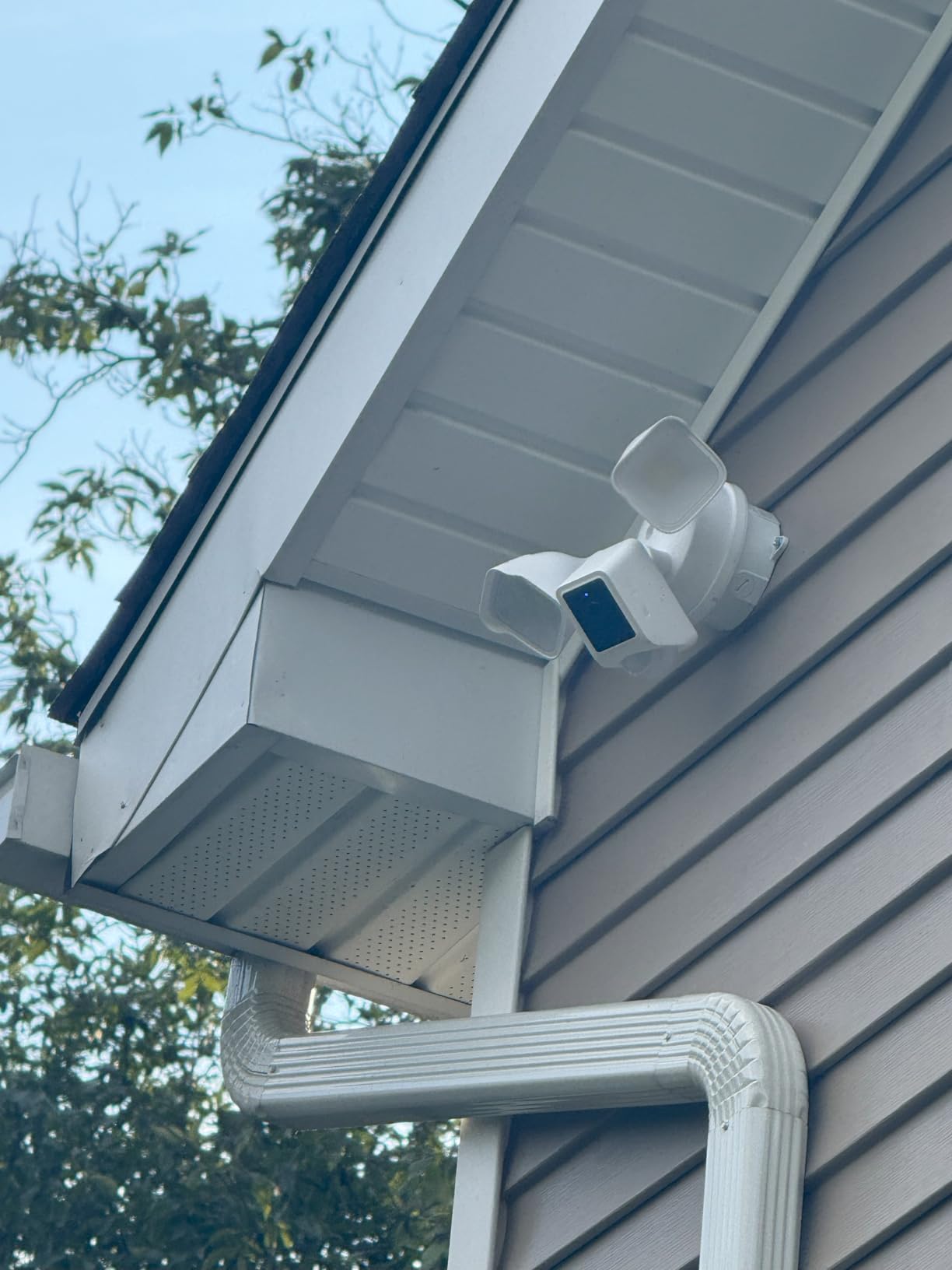
What the WYZE Floodlight Camera v2 does well
Local 24/7 recording with up to 30 days on a microSD card, no plan required. That removes the biggest objection people have to cloud-first brands.
Night identification: 2K resolution plus color night vision gives you the best chance of reading a plate in owner-submitted clips, and that is where the extra pixels over 1080p actually pay off.
Where the WYZE falls short
Its 2.4GHz-only Wi-Fi and reported dropouts make it a poor choice on a long driveway far from the router, since every alert and clip has to travel down that connection.
Event-only video without a plan means snapshots, not clips, and the fixed head offers no way to reframe later.
4. REOLINK Elite Floodlight WiFi 4K: the widest, sharpest view with no subscription
REOLINK Elite Floodlight WiFi 4K 8MP 180° Panoramic Wired Floodlight Camera
- Very wide 180 degree 4K panoramic coverage with no blind spots
- Very bright 3000-lumen lights with adjustable color temperature
- Runs fully local to microSD or NVR or NAS over RTSP and ONVIF
- Clean Home Assistant and Blue Iris and Frigate integration
- Improved base plate and leveling notch simplify install
- Floodlight strobing can alternate bright and black frames at night
- Motion detection triggers on rain and wind and insects and spider webs
- On-camera AI classification is imperfect and noisy out of the box
- Stitched dual-lens image shows a slight seam with less vertical coverage
Nothing else on this list covers as much ground in a single shot. The dual-lens 180-degree panoramic 4K view is the answer to long, wide driveways where a conventional 150-degree camera leaves a dark wedge near the curb, and the 3000 lumens are the highest output in the group with adjustable color temperature from 3000K to 6500K.
The storage story is the strongest here too. A microSD card up to 512GB, a Reolink NVR, a Home Hub, or your own NAS over RTSP and ONVIF all work, and no monthly plan is required for any of it. Owners running Home Assistant, Frigate or Blue Iris single out the clean integration as a reason to stay, and the improved wall-mount base plate with a leveling notch makes getting the angle right far less frustrating than on earlier versions.
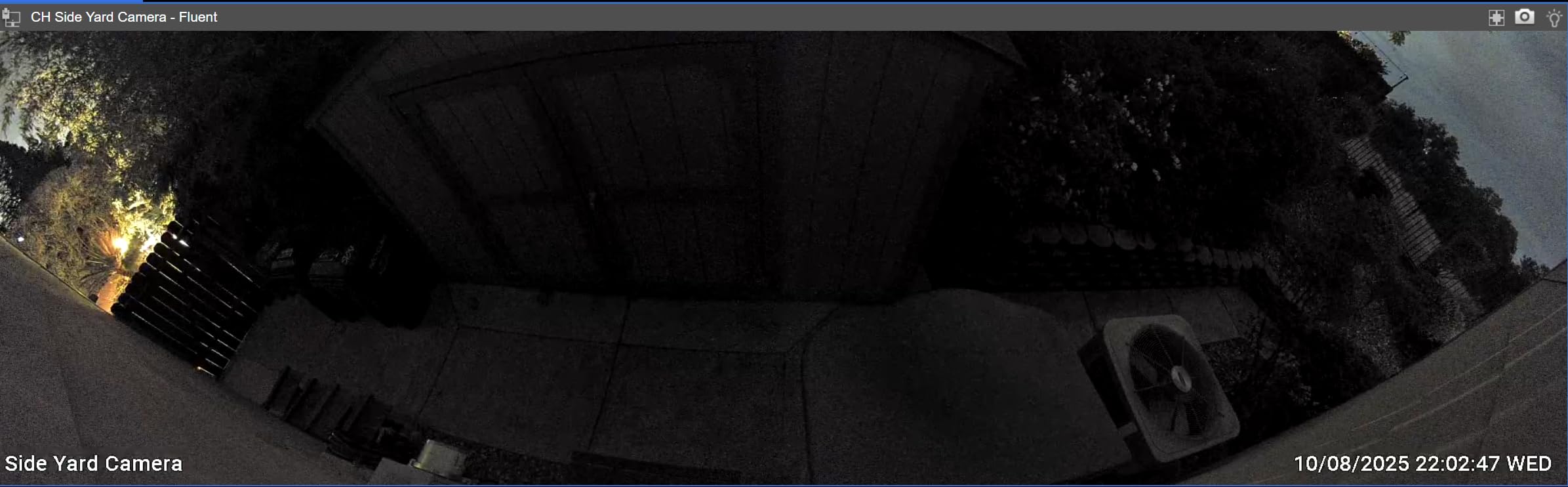
The 1-star share here is higher than the Ring’s, and the reasons are specific enough to plan around. Several owners report the floodlight strobing at night, producing alternating bright and black frames. Rain, wind, insects and spider webs can all trigger motion detection even at low sensitivity, which on a long drive means a lot of empty clips.
Stitching two lenses to reach 180 degrees leaves a faint seam and gives up some vertical coverage compared with a single-lens camera. On-device AI identification of people, vehicles and animals is also inconsistent, with excess notifications out of the box until you tune the virtual fence and zone settings. Dual-band Wi-Fi 6 is a genuine plus, but note that the 5V/2A adapter and USB-C cable are not included.
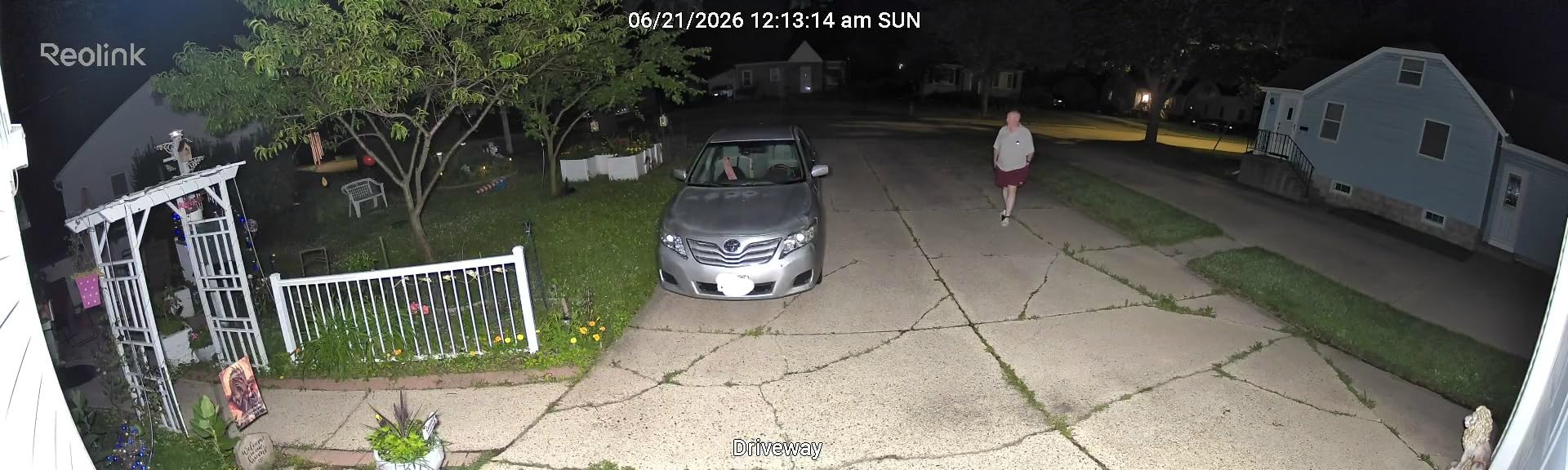
What the REOLINK Elite Floodlight WiFi does well
Total driveway coverage from one mount point, which is the whole reason to choose a panoramic lens when you have a long drive or a wide apron.
Long-term ownership without a recurring fee. microSD, NVR, Home Hub or NAS all work indefinitely with no plan attached.
Where the REOLINK is the wrong buy
Anyone who wants turnkey AI filtering on day one. You will spend real time tuning zones and virtual fences before the notifications settle down.
Sensitive night-recording setups, because strobing on some units can ruin otherwise excellent 4K footage.
5. Tapo 2K Outdoor Pan/Tilt C615F KIT: solar power and tracking with no wiring
Tapo 2K Outdoor Pan/Tilt Wireless Floodlight Security Camera, C615F KIT
- Floodlight plus 360 degree pan/tilt plus solar battery in one unit
- Solar charging means no wiring and no charging routine
- AI detection for people
- pets and vehicles without a subscription
- 360 degree AI tracking follows motion across the view
- Included solar panel and extension cable in the box
- 800 lumens is dimmer than most competing wired floodlight cameras
- 2.4GHz Wi-Fi only
- Solar charging does not work in temperatures below 32F
- Real 24/7 recording beyond snapshots needs a microSD or the H500 hub
This is the pick for anyone who cannot or will not run a power line to the garage. The C615F KIT ships with the camera, a solar panel and bracket, the base cover, a USB charging cable and a solar extension cable, so the whole install is a drill, a bracket and a Wi-Fi password. The integrated 10400mAh battery takes about 45 minutes of direct sun for a full day and holds up to 140 days on cloudy weather.
The star feature is the motorized head. It sweeps 360 degrees horizontally and 130 degrees vertically with 360-degree AI tracking, so a car pulling in from the street gets followed rather than lost off the edge of a fixed frame. AI detection for people, pets and vehicles runs without a subscription, and 2K 3MP night color vision reaches 32.8 feet, which suits a two-car drive.
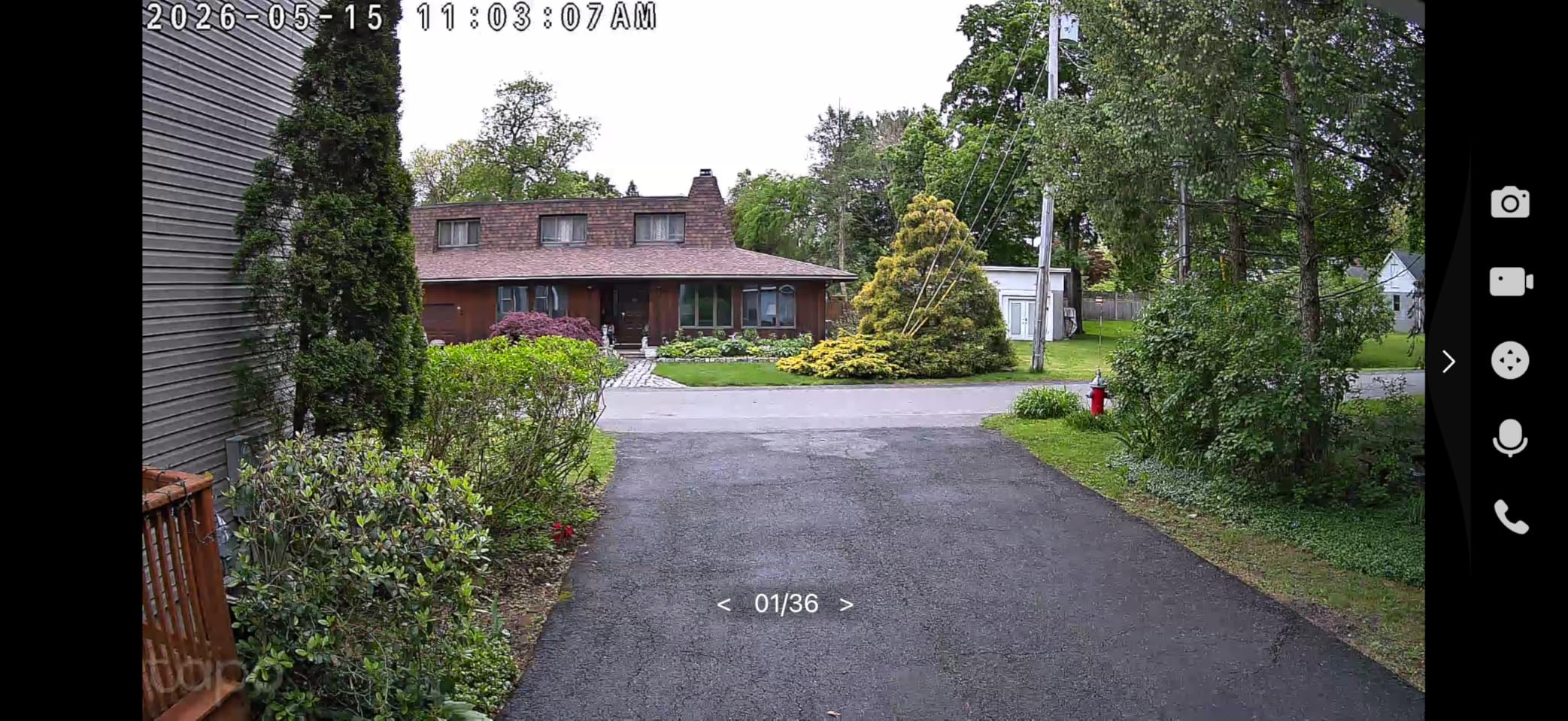
800 lumens is the honest weakness, and it is a big step down from the 2800 to 3000 lumens the wired units put out. The light is there to make the camera work and to signal that something is moving, not to light a driveway you might park in. Owners who expected porch-level brightness tend to be disappointed; owners who wanted no wiring and no monthly fee tend to be delighted.
Two hard limits are worth knowing before you buy. Solar charging stops below 32F, so a shaded northern driveway in deep winter is a poor match, and the panel needs genuinely direct sun rather than a north-facing wall. Recording beyond snapshots also needs a microSD card up to 512GB or the H500 CentralHub, and Wi-Fi is 2.4GHz only.
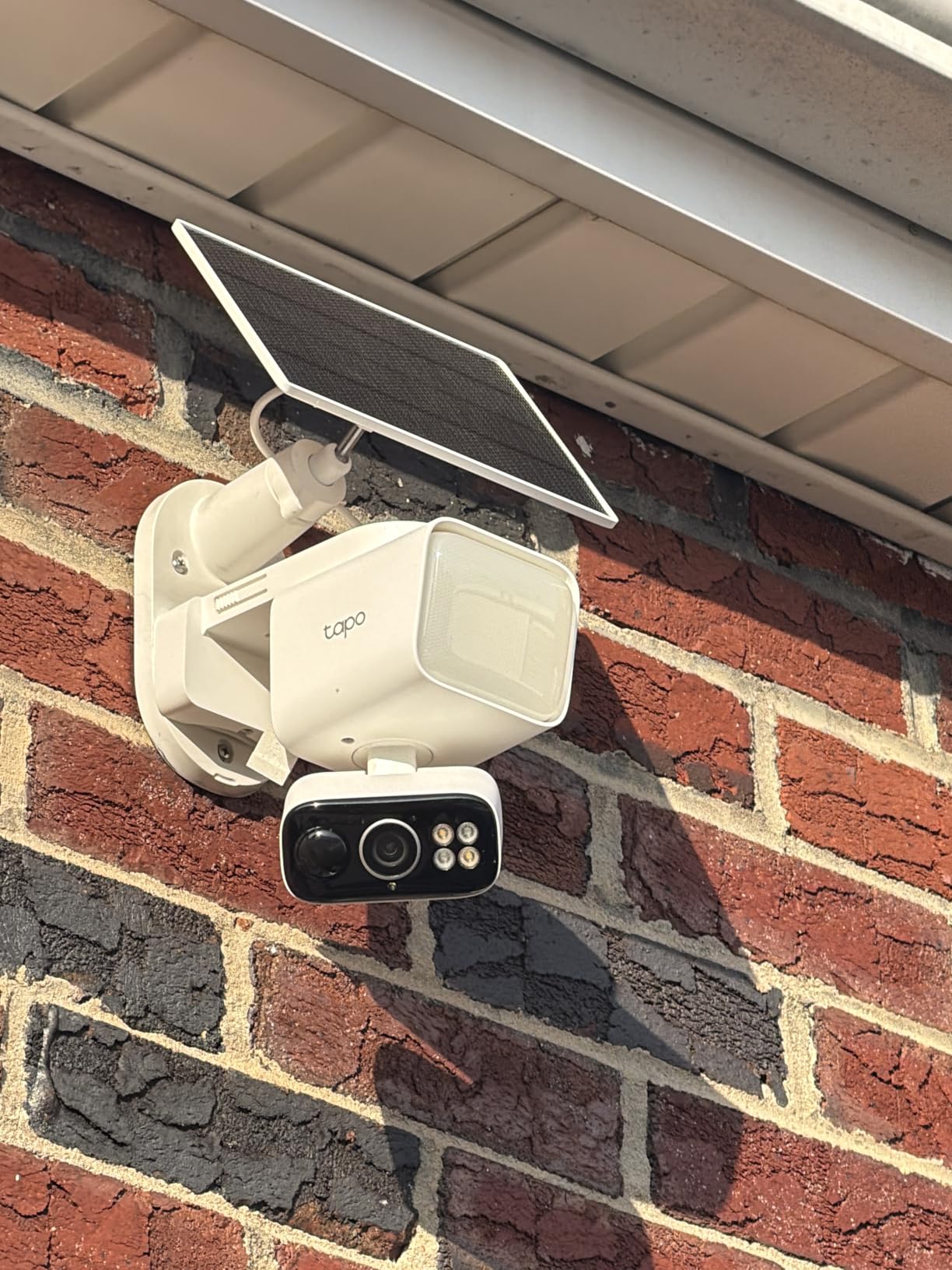
What the Tapo C615F does well
Rental properties and rental units, or any driveway where running a cable is off the table. Nothing to connect to power in the ground.
Wide driveways where the camera needs to follow a vehicle rather than hold one fixed angle, which no other solar option in this roundup offers.
Where the Tapo C615F is the wrong buy
Long, dark driveways. At 800 lumens you are getting a security light, not a lit parking pad, and a solar panel is not going to fix that.
Cold, shaded installs. Below 32F the panel stops charging, and a north-facing driveway gets very little sun year-round.
6. eufy Security Floodlight Camera E30: motorized pan and tilt with no monthly fee
eufy Security Floodlight Camera E30, 2K, AI Detection & Tracking, Outdoor
- Motorized 360 degree pan and tilt with AI auto-tracking of people and vehicles
- 2K HD video with 2000-lumen full-color night footage
- Power Amplifier improves wall penetration and range on 2.4GHz
- Hardwired 24/7 recording with no battery to maintain
- No monthly fee for basic detection and local functionality
- 20 fps frame rate is lower than competing cameras
- 2000 lumens is modest next to 2800 and 3000-lumen rivals
- Hardwiring required so an existing fixture box is needed
The E30 answers the driveway problem the Ring cannot: what to do when the action happens above your mounting point. The motorized head pans and tilts through 360 degrees, supports a scheduled patrol mode, and auto-tracks people and vehicles as they cross the drive. For a sloped driveway, a wraparound curb or a spot where a fixed lens would only catch the corner, that flexibility is worth more than extra lumens.
Video is 2K with color night vision, and the 2000-lumen motion-activated LEDs are enough to light a two-car drive while keeping color detail in the footage instead of falling back to infrared black-and-white. The Power Amplifier boosts the 2.4GHz signal and range by roughly half again, which helps when the router sits inside and the camera is out by the garage. Hardwiring gives constant power and 24/7 recording, and there is no monthly fee for basic detection.
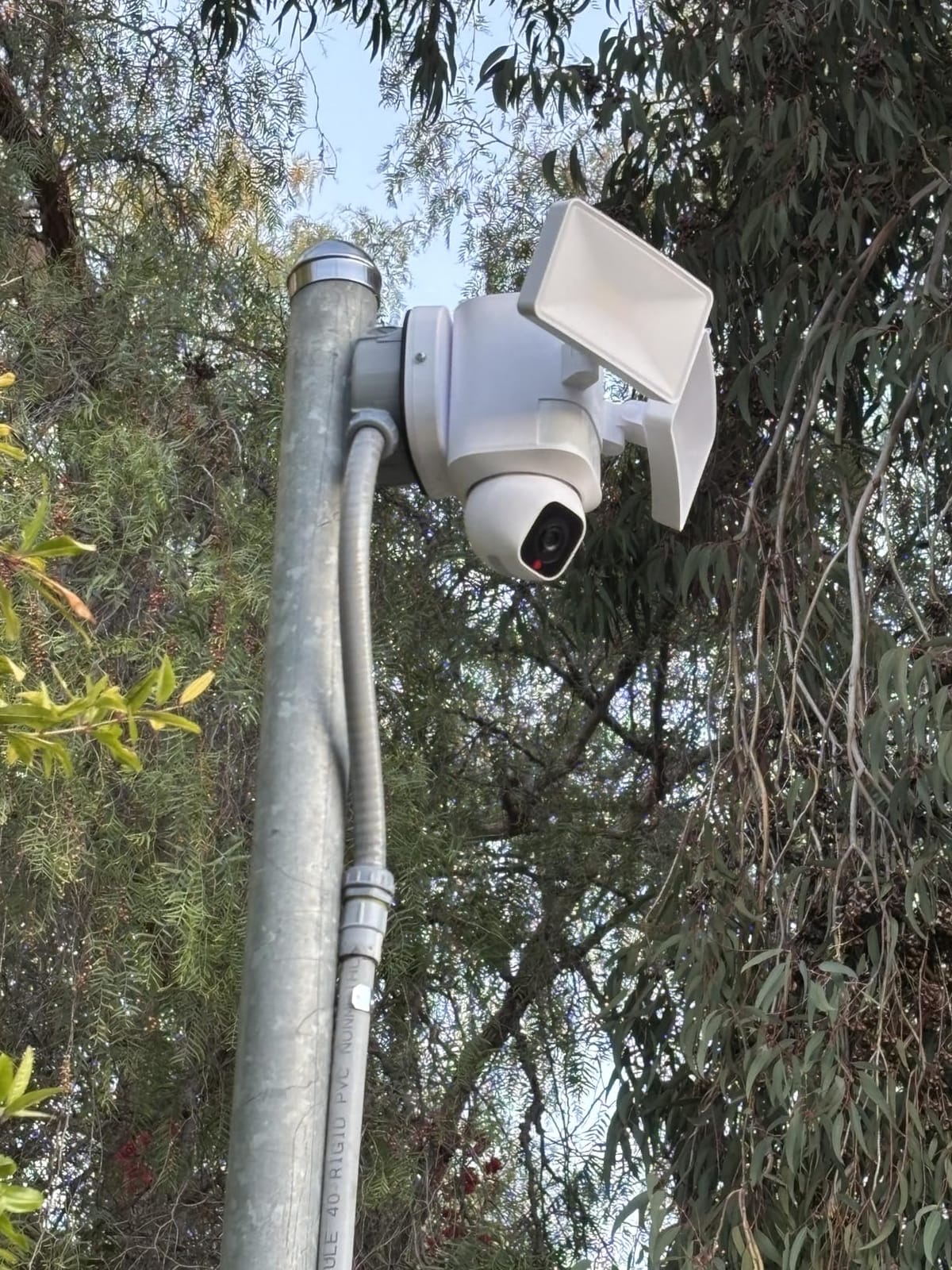
The compromises are specific. Recording runs at 20 frames per second, below the 30 fps of the Arlo, which shows up as slightly less fluid motion when someone walks quickly through the frame. Two thousand lumens is also the lower end here, roughly 800 lumens short of the Tapo C720 and 1000 short of the REOLINK.
Installation is hardwired, so you need an existing fixture box, and leaving the original wall switch in place means a homeowner can switch off power to the camera from inside the house. The unit itself is 4 pounds and mounts on a wall, with an IP65 weatherproof rating for year-round exposure.
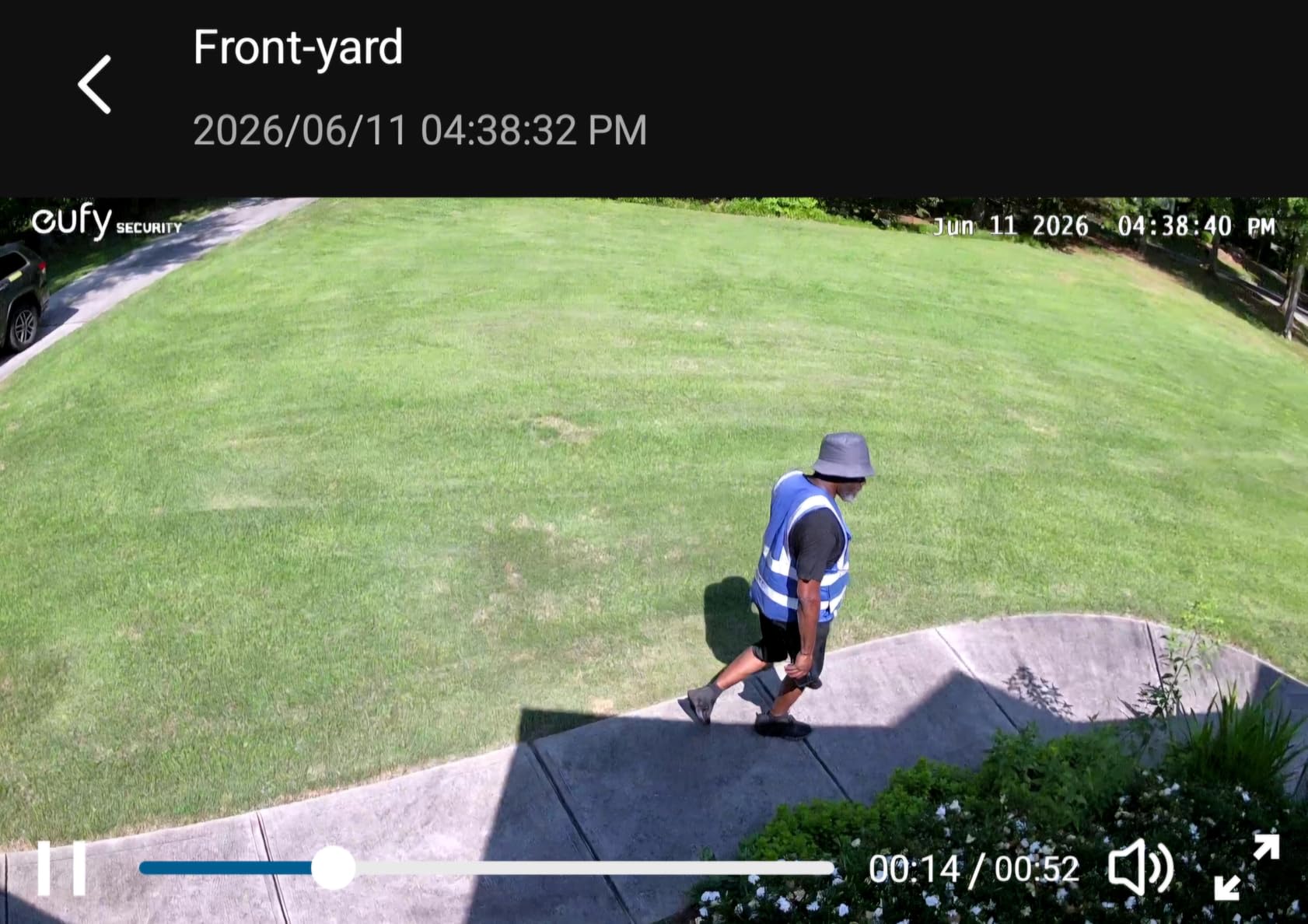
What the eufy Floodlight Camera E30 does well
Curved, sloped or unusually shaped driveways where a fixed camera head would miss the interesting part of the frame. Auto-tracking handles the motion the rest.
Homes that want color night footage and motorized coverage without paying a monthly plan for basic detection and local functionality.
Where the eufy is the wrong buy
Driveways that need to be lit properly for people to park or walk in. The 2000 lumens cover detection, not ambience.
Renters and anyone without an existing fixture box, since there is no battery or plug-in option here.
7. Tapo 2K+ Outdoor Wired C720: bright light and the cleanest AI filtering
Tapo 2K+ Outdoor Wired Floodlight Security Camera, C720, 2800LM
- Very bright 2800-lumen floodlight with brightness and schedule control
- 2K QHD clarity across a wide 150-degree-plus field of view
- 270 degree motion detection zone covers large driveways
- AI detection separates people
- pets and cars to reduce false alarms
- Subscription-free local recording plus optional Tapo Care cloud
- 2.4GHz Wi-Fi band only
- Fixed camera version cannot pan or tilt
- Hardwiring to an existing junction box is required
- Cloud features such as extended history still require Tapo Care
The C720 is the practical middle of this roundup: 2800 lumens, 2K QHD at 4MP, and a 270-degree motion zone that is wide enough to see a car entering from the street without any zone tuning. Local recording works without a subscription, so if you want bright light and accurate filtering and nothing else, this is the one we would put on a standard driveway.
Color night vision reaches 30 feet, which lines up nicely with the end of a two-car drive. The light is fully adjustable from the app, including brightness and schedule, and a 270-degree adjustable angle on the body lets you aim it without guessing. Owners highlight the AI detection as the quiet advantage: separating people, pets and cars cuts the false alarms that make people turn notifications off.
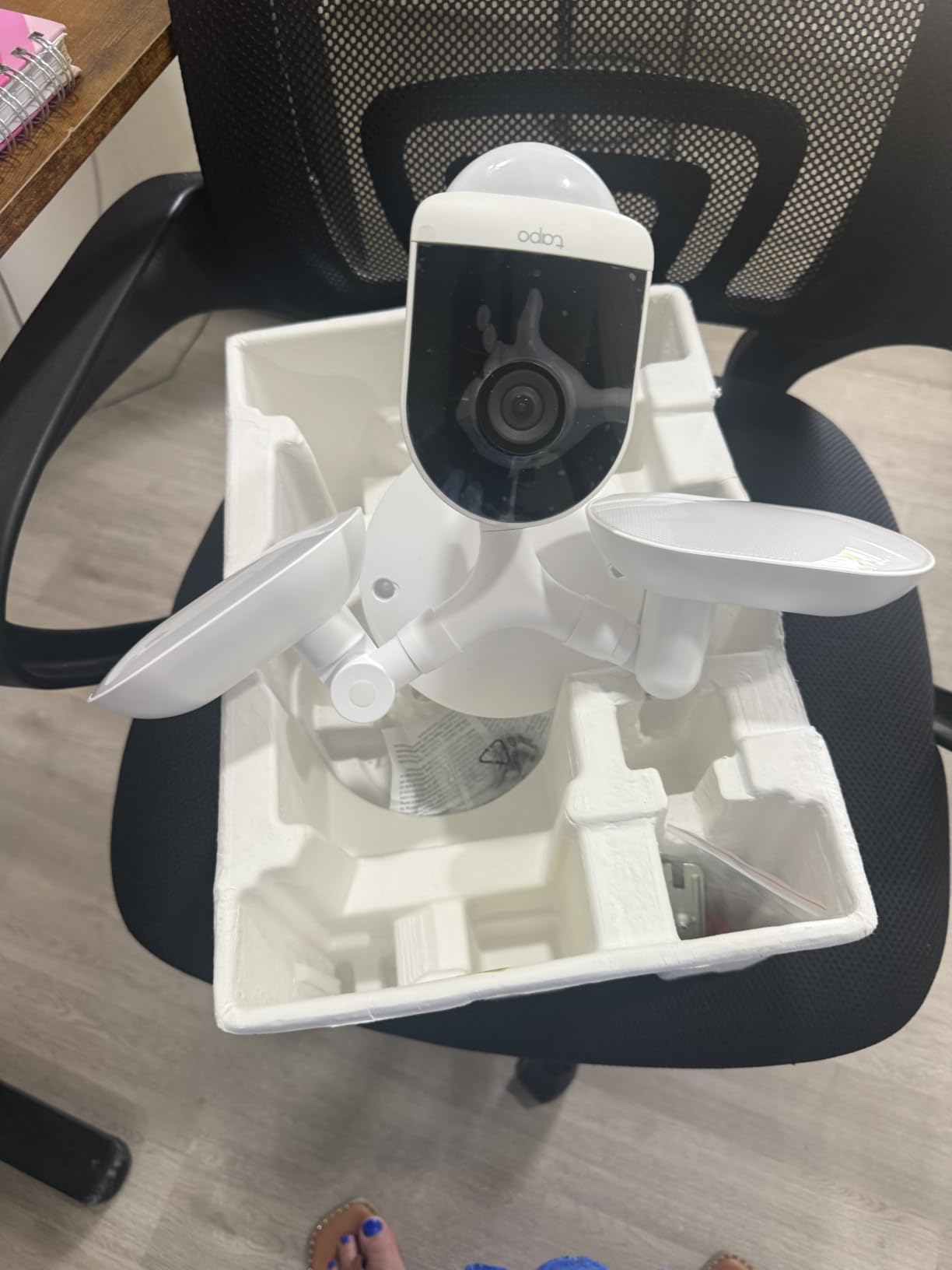
What you give up is movement. The fixed version of the C720 cannot pan or tilt, so the angle you install is the angle you keep. There is also no dual-band Wi-Fi, which matters on a driveway at the far end of a property with older routers or a crowded 2.4GHz channel.
Hardwiring to an existing junction box is required, so budget the same electrical work as any other wired unit here. Tapo Care remains optional and only affects cloud extras like extended history; the local path is unaffected. The box includes the mounting plate, wire nuts, extension cords, screws, anchors and a template, which is everything a standard install needs.
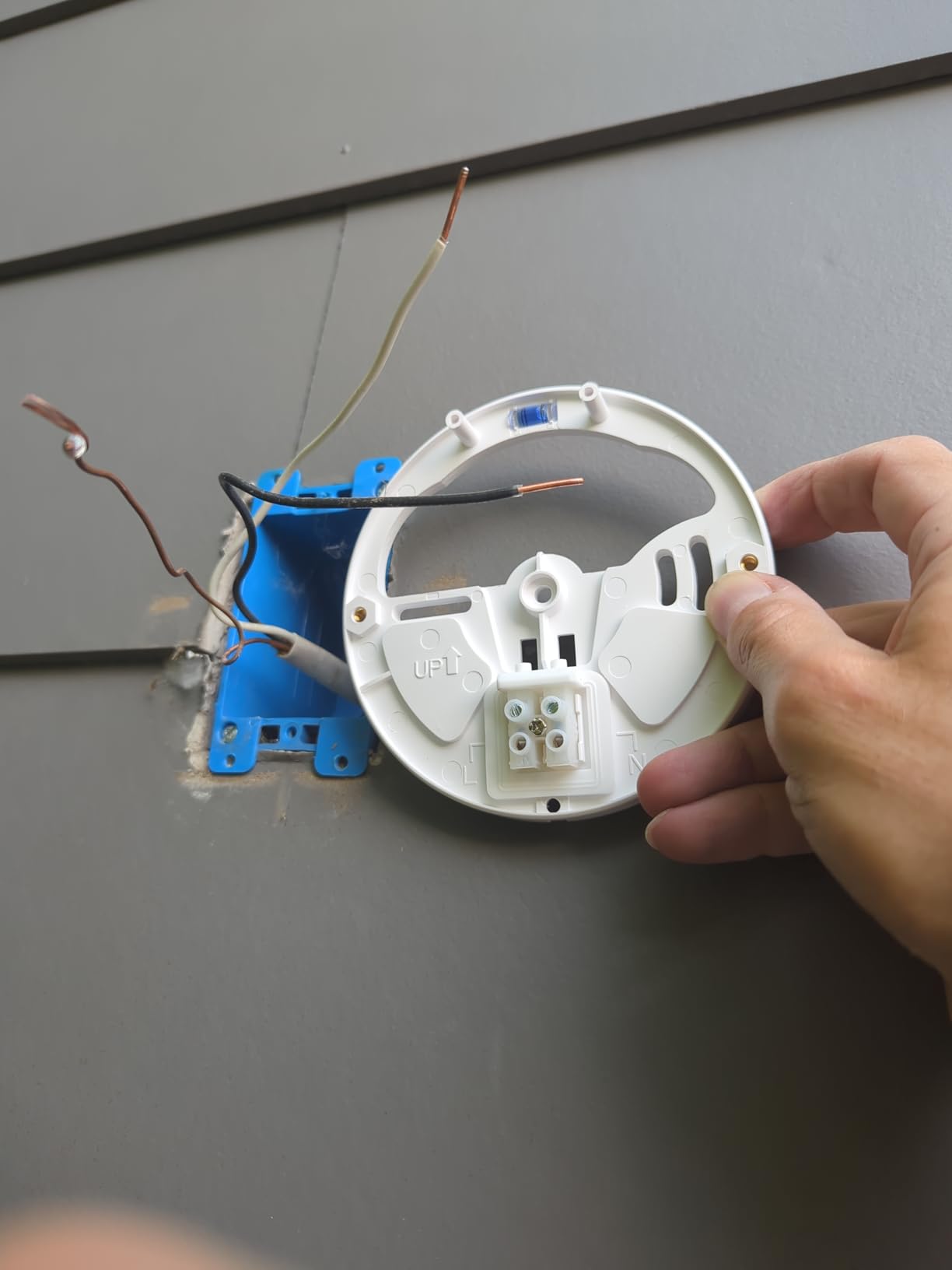
What the Tapo C720 does well
Wide driveways where light reach and detection area matter most. The 270-degree zone plus 2800 lumens covers a wide apron without adjustment.
Households already tired of false alerts. Person, pet and vehicle separation is the feature owners mention most often, and it runs locally.
Where the Tapo C720 is the wrong buy
Anything shaped like a curve or a loop, because the fixed head cannot follow movement around a bend. The eufy E30 covers that case.
Installs without an existing junction box, since the C720 is wired only with no plug-in cord in this kit.
8. Arlo Wired Floodlight Security Camera 2K HDR: 2K HDR inside the Arlo app
- Clear 2K HDR video with 160 degree coverage and color night vision
- Bright 2000-lumen floodlight with articulating light panels
- Hardwired continuous power so no battery charging
- Quick install that replaces an existing floodlight
- Works in the same app as other Arlo cameras
- 60-day history and AI detection and emergency response need a paid Arlo plan
- Some owners report frequent false siren alarms from animals
- Floodlight cannot stay on constantly and the setting resets
- App organization is confusing and geofencing is unreliable
If your home already runs Arlo cameras or doorbells, this is the fixture that keeps everything in one app and one account. The 2K HDR sensor records at 30 frames per second, twice the rate of the eufy E30, with a 160-degree field of view and color night vision, and a 12x digital zoom for narrowing in on a vehicle. The articulating light panels are the detail most people notice first, because you can aim the glare away from the lens and toward the drive.
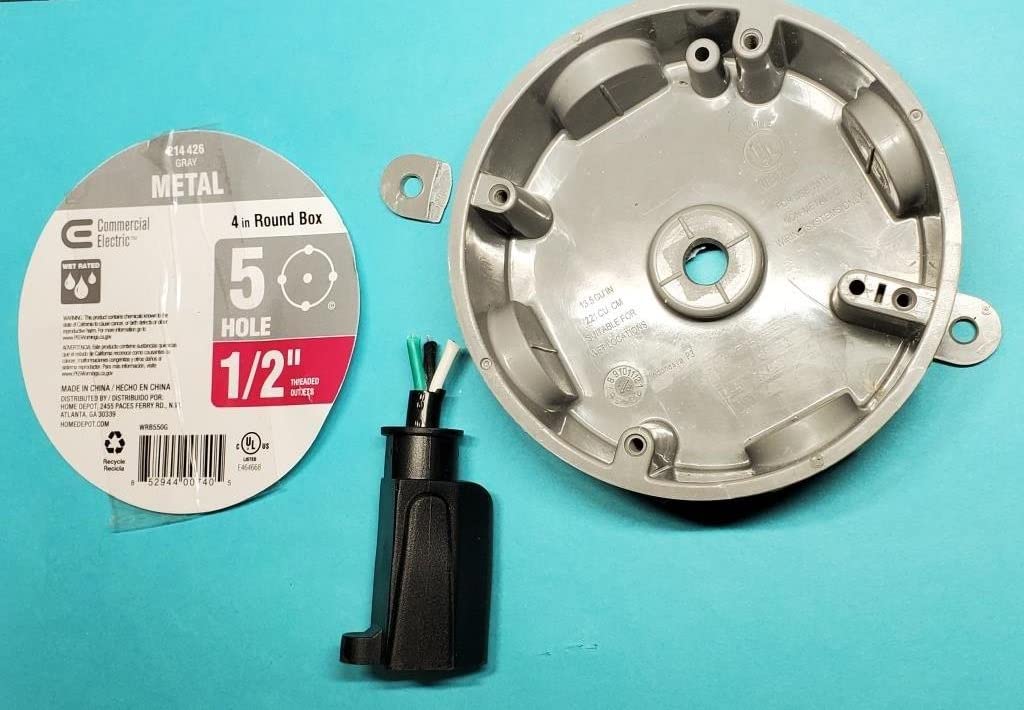
Installing it over an existing floodlight is quick, and the hardwire to a 4-inch round UL-listed weatherproof junction box gives continuous power with nothing to charge. Live streaming and basic alerts work without a subscription, and the emergency response trigger is a genuine differentiator if you want a one-tap call to police, fire or medical services from a clip.
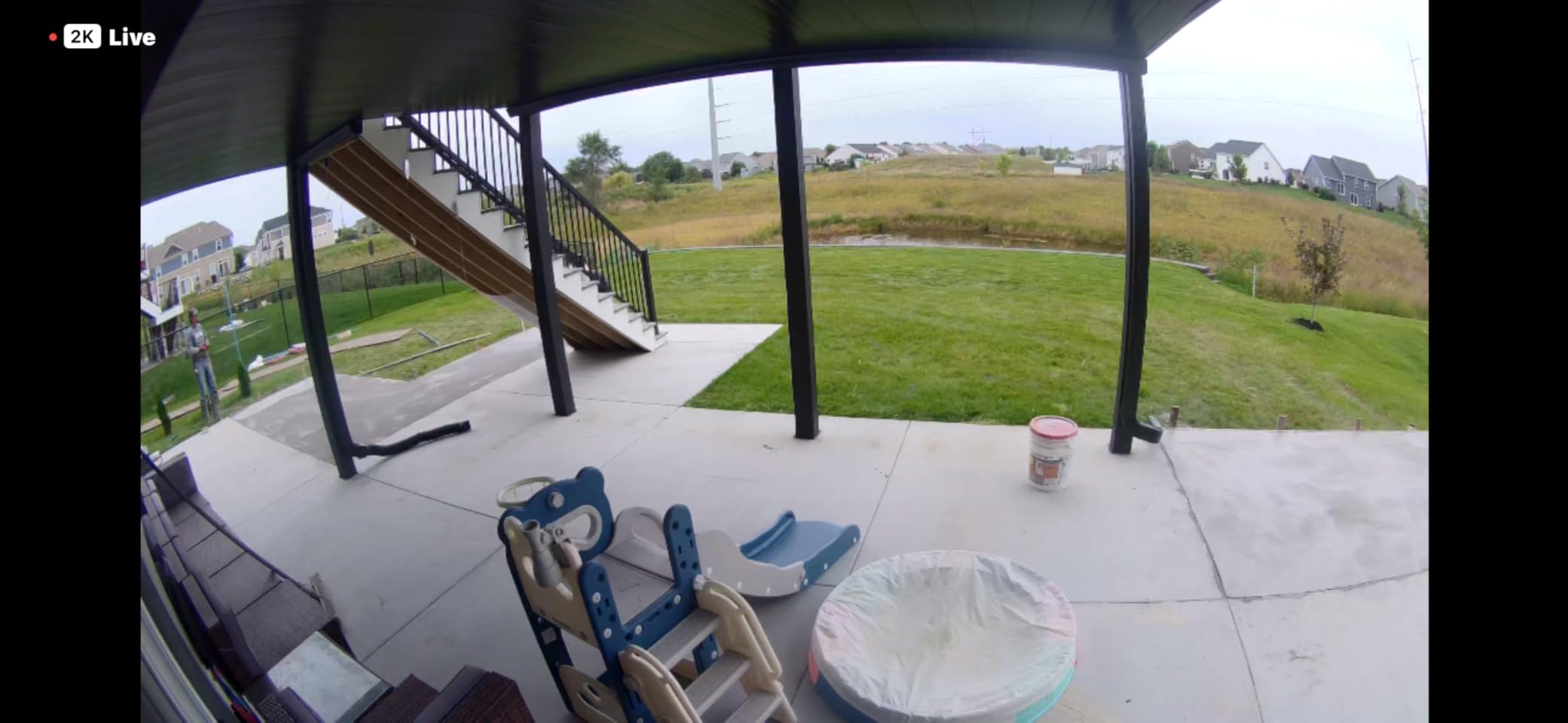
The catch is how much sits behind Arlo Secure. Sixty-day video history, AI detection and emergency response all need a paid plan after the trial, which is a long list for a camera you can already stream live. Owners also report the floodlight resetting its setting when modes change, and it cannot be forced to stay on continuously, so you cannot use it as a permanent security light.
False siren alarms from animals come up repeatedly in reviews, which is more annoying than a false notification because it is audible. App navigation is described as confusing, some siren alerts do not surface in phone notifications, and geofencing reportedly does not work reliably. IP65 weather resistance and a 25-foot night vision range round out a solid unit that asks you to live inside the Arlo ecosystem.
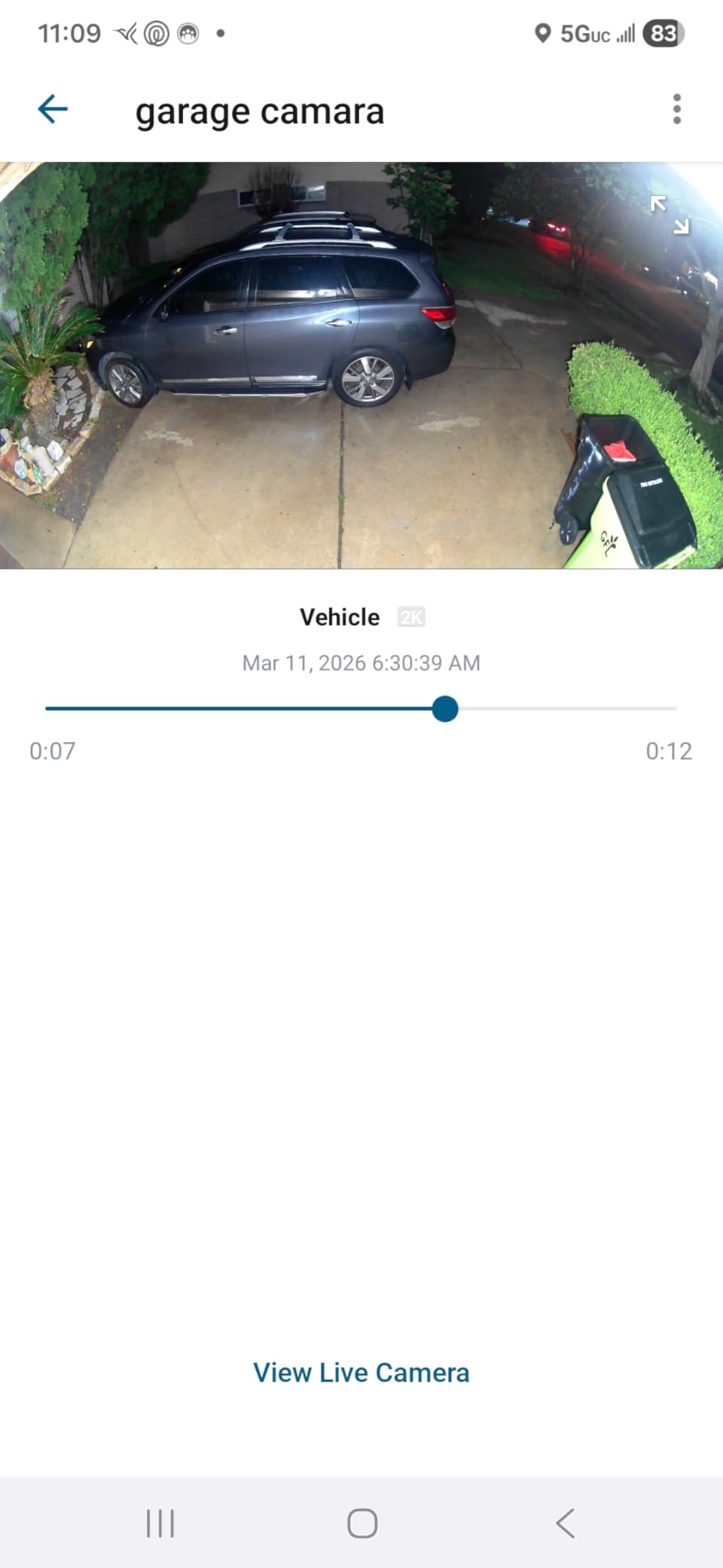
What the Arlo Wired Floodlight does well
Homes already invested in Arlo, where one account, one app and one subscription covering all your cameras beats a cheaper unit from another brand.
Raw detail and motion, with 2K HDR at 30 fps and a 12x zoom for pulling a plate or a face out of a wide frame.
Where the Arlo is the wrong buy
Households that want their footage stored without a recurring charge. Everything past live view and basic alerts points to a plan.
Driveways near trees or animal routes, where the repeat siren activations would be a daily annoyance.
How to Choose a Flood Light with Camera for a Driveway
Mounting height and how far these cameras actually see
Mount a driveway floodlight camera between 10 and 12 feet high, close to where you want the view to start. At that height you see the tops of cars and hoods without fisheye distortion, and you avoid shooting the underside of every vehicle that pulls in.
Night color vision is one of the more useful specs here: Tapo rates the C615F at 32.8 feet and the C720 at 30 feet, and Arlo lists 25 feet for its wired unit. Those published ranges line up with a two-car driveway, which is the limit at which you can realistically expect to make out a face or a plate.
Field of view decides how wide a drive one mount can cover. A 150 to 160-degree lens handles a standard two-car drive; the REOLINK Elite’s 180-degree panoramic view covers a long or wide driveway from a single point, at the cost of a stitched image with a faint seam.
How bright is bright enough: lumens matched to driveway length
Think in terms of area, not brand. Around 2000 lumens covers a short two-car driveway and lights a face well enough for color night footage. Push to 2600 or 2800 lumens for a double driveway or one with a side path, and to 3000 lumens when the drive runs past 60 feet or has to light an RV or boat pad.
Below 1000 lumens, as on the solar Tapo C615F, the fixture works as a security signal rather than a usable light. If you also want to walk the drive comfortably, add low-voltage path lighting along the edge. Our solar flood light picks are built for exactly that job.
Hardwired, plug-in or solar: pick your power before you pick a camera
Hardwired is the default and the best answer for a driveway. Constant power means no battery to charge, no panel to aim, and no cold-weather dead spots. Every unit in this roundup except the Tapo C615F requires wiring to a junction box, and if you do not have one an electrician is the honest answer.
Solar solves the renter problem. The Tapo C615F kit needs no wiring at all, but its panel requires direct sun and stops charging below 32F, which rules it out for shaded driveways in cold climates.
Plug-in models avoid wiring at the cost of light output and a cord you have to route safely. None of the eight picks here ships as a plug-in unit, so treat that as a signal about what this category has settled on.
Local storage or a cloud subscription
This is where three years of cost is decided. Five picks record locally with no monthly fee: the WYZE v2 to microSD for up to 30 days, the Tapo C615F and Tapo C720 to microSD up to 512GB, the eufy E30 for basic detection and local functionality, and the REOLINK Elite to microSD up to 512GB, an NVR, a Home Hub or NAS over RTSP and ONVIF.
The other three lean on a plan. Ring and Blink hold video history and AI features behind Ring Protect and the Blink Subscription Plan, though Blink can record locally through a Sync Module. Arlo puts 60-day history, AI detection and emergency response behind Arlo Secure after the trial.
One caution before you commit to local-only: no monthly fee sometimes means fewer conveniences. The WYZE v2 saves snapshots rather than video clips for events without a plan, and continuous recording is what you are really buying. Anyone who wants no recurring charge and full event clips should look at the Tapo pair or the REOLINK first.
Avoiding night glare and washed-out footage
A floodlight mounted beside a lens can bounce off the wall, the eaves or a wet driveway straight back into the sensor, which is the single most common reason night footage looks worse than expected. Use the articulating or adjustable light panels to angle the beam down the drive rather than across it, and keep the camera head from being directly behind a light source.
Color night vision and infrared are different tools. Color night mode uses the floodlight to light the scene in visible light, so it depends entirely on lumens and aiming. Infrared night vision works without the light but returns a black-and-white image with the telltale dark background of a spotlit scene, so a unit with weak light output falls back to infrared sooner. Lower the brightness rather than maxing it out; overexposed pavement reads as washed-out white even at 2K.
Aiming rules, neighbors and driveway privacy
Yes, you can aim a security camera at your own driveway. You cannot record the interior of your home, and you should not point a camera at a neighbor’s property or window. Keep the field of view inside your own lot, use motion zones to cut the border, and check the recording before you walk away from the install.
Shared driveways and public rights of way are the awkward case. If the drive serves more than one household, a talk-first approach works better than a legal argument, and keeping the mount aimed low along the drive reduces how much of anyone else’s vehicle enters the frame. Masking private areas in the app, if your model supports it, is a cleaner fix than tilting the camera.
Frequently Asked Questions
What is the best flood light with camera?
For most driveways, the Ring Floodlight Cam Wired Plus is the best all-round choice, pairing 2000 lumens of motion-activated light with a 1080p camera, a 105dB siren and reliable motion zones. The WYZE Floodlight Camera v2 is the better value option with 2K video and local microSD recording, and the eufy E30 wins when you need motorized pan and tilt.
What is a good driveway camera?
A good driveway camera needs roughly 150 to 160 degrees of field of view, enough light output to reach the end of the drive, and color night vision. Around 2000 lumens covers a two-car driveway, while 2600 to 3000 lumens suits a long or double drive. Resolution matters less than light: 2K helps read a license plate at 30 to 40 feet.
What is the best floodlight camera without a subscription?
The Tapo 2K+ Outdoor Wired C720, the Tapo C615F KIT and the REOLINK Elite Floodlight WiFi all record locally to a microSD card with no monthly fee, and the WYZE Floodlight Camera v2 stores 24/7 recordings on a card for up to 30 days. The eufy E30 also has no monthly fee for basic detection and local functionality.
Can I have a camera facing my driveway?
You can aim a security camera at your own driveway. Aim it so the field of view stays on your own property, use motion zones or privacy masks to exclude borders, and avoid pointing it at a neighbor’s driveway, windows or yard. Shared driveways are best handled by keeping the mount low and the view tight to the surface you share.
How bright should a driveway floodlight be?
Around 2000 lumens is enough for a short two-car driveway. Use 2600 to 3000 lumens for a double driveway, a drive longer than 60 feet, or an area that also needs lighting for walking and parking. Below 1000 lumens, as on many solar units, the fixture signals activity but does not light the space.
Do floodlight cameras work without Wi-Fi?
No. Every floodlight camera here needs a 2.4GHz or dual-band Wi-Fi connection for live view, alerts and recording, so a weak signal on a long driveway is a real problem. Several picks support local recording to a microSD card or hub, but the camera still has to reach your network. Only the Tapo C615F solves the wiring problem, and it still needs Wi-Fi.
Which Flood Light with Camera Fits Your Driveway
The Ring Floodlight Cam Wired Plus is our pick for most driveways in 2026, because 2000 lumens, dependable motion detection and a large support ecosystem add up to the fewest surprises. Go brighter with the Tapo C720 or Blink if the drive is long or double, wider with the REOLINK Elite if one mount has to cover everything, and add the eufy E30 when the camera has to move.
If you want no recurring charge, start with the Tapo pair or the REOLINK Elite. If you cannot run a wire, the Tapo C615F is the only pick here that works without one, provided it gets direct sun. We wrote this roundup without hands-on lab testing, so every claim above comes from manufacturer specifications and the thousands of owner reviews behind them, and we have told you where reviewers disagree.